EP4546233A1 - Quality assurance process using human resources to improve the effectiveness of the quality management system - Google Patents
Quality assurance process using human resources to improve the effectiveness of the quality management system Download PDFInfo
- Publication number
- EP4546233A1 EP4546233A1 EP24206642.1A EP24206642A EP4546233A1 EP 4546233 A1 EP4546233 A1 EP 4546233A1 EP 24206642 A EP24206642 A EP 24206642A EP 4546233 A1 EP4546233 A1 EP 4546233A1
- Authority
- EP
- European Patent Office
- Prior art keywords
- worker
- parameter sets
- block
- given
- monitor
- Prior art date
- Legal status (The legal status is an assumption and is not a legal conclusion. Google has not performed a legal analysis and makes no representation as to the accuracy of the status listed.)
- Pending
Links
Images

Classifications
-
- G—PHYSICS
- G06—COMPUTING OR CALCULATING; COUNTING
- G06Q—INFORMATION AND COMMUNICATION TECHNOLOGY [ICT] SPECIALLY ADAPTED FOR ADMINISTRATIVE, COMMERCIAL, FINANCIAL, MANAGERIAL OR SUPERVISORY PURPOSES; SYSTEMS OR METHODS SPECIALLY ADAPTED FOR ADMINISTRATIVE, COMMERCIAL, FINANCIAL, MANAGERIAL OR SUPERVISORY PURPOSES, NOT OTHERWISE PROVIDED FOR
- G06Q10/00—Administration; Management
- G06Q10/06—Resources, workflows, human or project management; Enterprise or organisation planning; Enterprise or organisation modelling
- G06Q10/063—Operations research, analysis or management
- G06Q10/0639—Performance analysis of employees; Performance analysis of enterprise or organisation operations
- G06Q10/06398—Performance of employee with respect to a job function
-
- G—PHYSICS
- G06—COMPUTING OR CALCULATING; COUNTING
- G06N—COMPUTING ARRANGEMENTS BASED ON SPECIFIC COMPUTATIONAL MODELS
- G06N20/00—Machine learning
-
- A—HUMAN NECESSITIES
- A61—MEDICAL OR VETERINARY SCIENCE; HYGIENE
- A61B—DIAGNOSIS; SURGERY; IDENTIFICATION
- A61B3/00—Apparatus for testing the eyes; Instruments for examining the eyes
- A61B3/10—Objective types, i.e. instruments for examining the eyes independent of the patients' perceptions or reactions
- A61B3/11—Objective types, i.e. instruments for examining the eyes independent of the patients' perceptions or reactions for measuring interpupillary distance or diameter of pupils
- A61B3/112—Objective types, i.e. instruments for examining the eyes independent of the patients' perceptions or reactions for measuring interpupillary distance or diameter of pupils for measuring diameter of pupils
-
- A—HUMAN NECESSITIES
- A61—MEDICAL OR VETERINARY SCIENCE; HYGIENE
- A61B—DIAGNOSIS; SURGERY; IDENTIFICATION
- A61B3/00—Apparatus for testing the eyes; Instruments for examining the eyes
- A61B3/10—Objective types, i.e. instruments for examining the eyes independent of the patients' perceptions or reactions
- A61B3/113—Objective types, i.e. instruments for examining the eyes independent of the patients' perceptions or reactions for determining or recording eye movement
-
- G—PHYSICS
- G06—COMPUTING OR CALCULATING; COUNTING
- G06Q—INFORMATION AND COMMUNICATION TECHNOLOGY [ICT] SPECIALLY ADAPTED FOR ADMINISTRATIVE, COMMERCIAL, FINANCIAL, MANAGERIAL OR SUPERVISORY PURPOSES; SYSTEMS OR METHODS SPECIALLY ADAPTED FOR ADMINISTRATIVE, COMMERCIAL, FINANCIAL, MANAGERIAL OR SUPERVISORY PURPOSES, NOT OTHERWISE PROVIDED FOR
- G06Q10/00—Administration; Management
- G06Q10/06—Resources, workflows, human or project management; Enterprise or organisation planning; Enterprise or organisation modelling
- G06Q10/063—Operations research, analysis or management
- G06Q10/0631—Resource planning, allocation, distributing or scheduling for enterprises or organisations
- G06Q10/06311—Scheduling, planning or task assignment for a person or group
- G06Q10/063112—Skill-based matching of a person or a group to a task
-
- G—PHYSICS
- G06—COMPUTING OR CALCULATING; COUNTING
- G06Q—INFORMATION AND COMMUNICATION TECHNOLOGY [ICT] SPECIALLY ADAPTED FOR ADMINISTRATIVE, COMMERCIAL, FINANCIAL, MANAGERIAL OR SUPERVISORY PURPOSES; SYSTEMS OR METHODS SPECIALLY ADAPTED FOR ADMINISTRATIVE, COMMERCIAL, FINANCIAL, MANAGERIAL OR SUPERVISORY PURPOSES, NOT OTHERWISE PROVIDED FOR
- G06Q10/00—Administration; Management
- G06Q10/06—Resources, workflows, human or project management; Enterprise or organisation planning; Enterprise or organisation modelling
- G06Q10/063—Operations research, analysis or management
- G06Q10/0631—Resource planning, allocation, distributing or scheduling for enterprises or organisations
- G06Q10/06311—Scheduling, planning or task assignment for a person or group
- G06Q10/063114—Status monitoring or status determination for a person or group
-
- G—PHYSICS
- G06—COMPUTING OR CALCULATING; COUNTING
- G06Q—INFORMATION AND COMMUNICATION TECHNOLOGY [ICT] SPECIALLY ADAPTED FOR ADMINISTRATIVE, COMMERCIAL, FINANCIAL, MANAGERIAL OR SUPERVISORY PURPOSES; SYSTEMS OR METHODS SPECIALLY ADAPTED FOR ADMINISTRATIVE, COMMERCIAL, FINANCIAL, MANAGERIAL OR SUPERVISORY PURPOSES, NOT OTHERWISE PROVIDED FOR
- G06Q10/00—Administration; Management
- G06Q10/06—Resources, workflows, human or project management; Enterprise or organisation planning; Enterprise or organisation modelling
- G06Q10/063—Operations research, analysis or management
- G06Q10/0639—Performance analysis of employees; Performance analysis of enterprise or organisation operations
- G06Q10/06393—Score-carding, benchmarking or key performance indicator [KPI] analysis
-
- G—PHYSICS
- G06—COMPUTING OR CALCULATING; COUNTING
- G06Q—INFORMATION AND COMMUNICATION TECHNOLOGY [ICT] SPECIALLY ADAPTED FOR ADMINISTRATIVE, COMMERCIAL, FINANCIAL, MANAGERIAL OR SUPERVISORY PURPOSES; SYSTEMS OR METHODS SPECIALLY ADAPTED FOR ADMINISTRATIVE, COMMERCIAL, FINANCIAL, MANAGERIAL OR SUPERVISORY PURPOSES, NOT OTHERWISE PROVIDED FOR
- G06Q10/00—Administration; Management
- G06Q10/06—Resources, workflows, human or project management; Enterprise or organisation planning; Enterprise or organisation modelling
- G06Q10/063—Operations research, analysis or management
- G06Q10/0639—Performance analysis of employees; Performance analysis of enterprise or organisation operations
- G06Q10/06395—Quality analysis or management
-
- G—PHYSICS
- G06—COMPUTING OR CALCULATING; COUNTING
- G06Q—INFORMATION AND COMMUNICATION TECHNOLOGY [ICT] SPECIALLY ADAPTED FOR ADMINISTRATIVE, COMMERCIAL, FINANCIAL, MANAGERIAL OR SUPERVISORY PURPOSES; SYSTEMS OR METHODS SPECIALLY ADAPTED FOR ADMINISTRATIVE, COMMERCIAL, FINANCIAL, MANAGERIAL OR SUPERVISORY PURPOSES, NOT OTHERWISE PROVIDED FOR
- G06Q50/00—Information and communication technology [ICT] specially adapted for implementation of business processes of specific business sectors, e.g. utilities or tourism
- G06Q50/04—Manufacturing
-
- G—PHYSICS
- G06—COMPUTING OR CALCULATING; COUNTING
- G06T—IMAGE DATA PROCESSING OR GENERATION, IN GENERAL
- G06T7/00—Image analysis
-
- G—PHYSICS
- G06—COMPUTING OR CALCULATING; COUNTING
- G06V—IMAGE OR VIDEO RECOGNITION OR UNDERSTANDING
- G06V10/00—Arrangements for image or video recognition or understanding
- G06V10/70—Arrangements for image or video recognition or understanding using pattern recognition or machine learning
-
- G—PHYSICS
- G06—COMPUTING OR CALCULATING; COUNTING
- G06F—ELECTRIC DIGITAL DATA PROCESSING
- G06F3/00—Input arrangements for transferring data to be processed into a form capable of being handled by the computer; Output arrangements for transferring data from processing unit to output unit, e.g. interface arrangements
- G06F3/01—Input arrangements or combined input and output arrangements for interaction between user and computer
- G06F3/011—Arrangements for interaction with the human body, e.g. for user immersion in virtual reality
- G06F3/013—Eye tracking input arrangements
Definitions
- the subject matter of the present invention is a quality assurance procedure using human resources to improve the effectiveness of the quality management system where the viewing direction of a worker representing the human resource at a given place of work in a situation facing a monitor of a given phase of a manufacturing process is displayed.
- the worker's presence is perceived mechanically by cameras and/or lidars on the basis of methods known per se, the viewing direction of the worker's eyes and the pupil size of the eyes are determined and at given intervals time stamps are generated and stored containing this information.
- the system includes at least one server connected informatically to the monitor.
- the Japanese patent specification JP2019191990 describes a procedure to verify the operation of a production plant. According to an embodiment of the invention it has a risk assessment unit to assess the risk of equipment and groups of equipment in a process and quality assurance database and by using the various information stored in the maintenance and inspection results. Unit defining the operational mode and human resource information are stored in a human resource information database. Nevertheless this human resource information database does not provide real-time, online information about the concentration status of the worker participating in the control process.
- the objective of the present invention is to be able to evaluate automatically the attention, effectiveness of the quality control worker, taking her/his personal data protection into account.
- the invention is based on the realisation that nowadays - with cameras, lidars by methods known per se - the presence of the worker, the viewing direction of her/his eyes and the current pupil sizes of the eyes can also be determined. Such or similar devices are used among others in some virtual reality applications, games, simulators, for example in the case of helmet mounted devices. If the measured viewing results are compared with their expected counterpart, by forming their deviation the concentration state of the worker involved in the inspection and her/his work pattern can be qualified. By evaluating this data important parameters can be obtained in a given quality assurance system.
- the process according to the introductory paragraph is that the screen of the monitor is devided into parts containing smaller blocks according to a predefined pattern.
- Worker parameter sets are assigned to each block, where the worker parameter sets include at least the viewing direction of the eyes, their time duration related to a given block and pupil size.
- step S2 expectation parameter sets are assigned to each block 6, they are compared to the worker parameter sets.
- An example of this is the following: if a predefined percentage (e.g. 80%) of the worker parameters is corresponding to the expectation parameters based on samples fed into the system 7, then the process proceeds with step S19 and it means the system 7 full automation.
- step S6 one or more objects to be inspected are displayed on the monitor 2 at the operator.
- the viewing direction 1 of the worker is (re)-navigated to the given area by flashing the block and it is asked to check the block more carefully. If a block has been inspected in at least 2 seconds but no more than 10 seconds (worker parameter), the given block is faded away. If the viewing direction 1 related to the given block exceeds the 10 seconds (worker parameter), the system 7 gives visual and/or acoustic signal to the worker to raise awareness.
- the advantage of the invention is that it complements automatic quality control solutions with the possibility of operating workstations with improved efficiency using human resources, workers and operators.
Landscapes
- Business, Economics & Management (AREA)
- Engineering & Computer Science (AREA)
- Human Resources & Organizations (AREA)
- Strategic Management (AREA)
- Economics (AREA)
- Physics & Mathematics (AREA)
- Theoretical Computer Science (AREA)
- Entrepreneurship & Innovation (AREA)
- Educational Administration (AREA)
- General Physics & Mathematics (AREA)
- Health & Medical Sciences (AREA)
- Development Economics (AREA)
- Marketing (AREA)
- Life Sciences & Earth Sciences (AREA)
- Tourism & Hospitality (AREA)
- General Business, Economics & Management (AREA)
- Game Theory and Decision Science (AREA)
- Operations Research (AREA)
- Quality & Reliability (AREA)
- Medical Informatics (AREA)
- General Health & Medical Sciences (AREA)
- Computer Vision & Pattern Recognition (AREA)
- Software Systems (AREA)
- Biophysics (AREA)
- Public Health (AREA)
- Computing Systems (AREA)
- Artificial Intelligence (AREA)
- Veterinary Medicine (AREA)
- Animal Behavior & Ethology (AREA)
- Surgery (AREA)
- Molecular Biology (AREA)
- Evolutionary Computation (AREA)
- Heart & Thoracic Surgery (AREA)
- Ophthalmology & Optometry (AREA)
- Biomedical Technology (AREA)
- Multimedia (AREA)
- Human Computer Interaction (AREA)
- Mathematical Physics (AREA)
- General Engineering & Computer Science (AREA)
- Databases & Information Systems (AREA)
Abstract
The invention is a quality assurance procedure using human resources to improve the effectiveness of the quality management system where the viewing direction (1) of a worker representing the human resource at a given place of work in a situation facing a monitor (2) of a given phase of a manufacturing process is displayed. The worker's presence is perceived mechanically by cameras and/or lidars (3) on the basis of methods known per se, the viewing direction (1) of the worker's eyes (4) and the pupil size of the eyes (4) are determined and at given intervals time stamps are generated and stored containing this information. The system (7) includes at least one server (5) connected informatically to the monitor (2). The screen of the monitor (2) is devided into parts containing smaller blocks (6) according to a predefined pattern. Worker parameter sets are assigned to each block (6), where the worker parameter sets include at least the viewing direction (1) of the eyes (4), their time duration related to a given block (6) and pupil size. Expectation parameter sets are also assigned to each block (6), which include at least parameters corresponding to the worker parameter sets. The worker parameter sets and the expectation parameter sets related to each block (6) are compared one by block (6) by an application running on at least one server (5) with a given set of criteria, which consists the maximum permitted deviation of the worker and the expectation parameter sets and in case of exceeding the maximum permitted deviation an intervention is carried out by block (6) on the monitor (2) and in the system (7).
Description
- The subject matter of the present invention is a quality assurance procedure using human resources to improve the effectiveness of the quality management system where the viewing direction of a worker representing the human resource at a given place of work in a situation facing a monitor of a given phase of a manufacturing process is displayed.
- The worker's presence is perceived mechanically by cameras and/or lidars on the basis of methods known per se, the viewing direction of the worker's eyes and the pupil size of the eyes are determined and at given intervals time stamps are generated and stored containing this information. The system includes at least one server connected informatically to the monitor.
- From the state of art in respect of technology there are several procedures known for the operation of a quality system involving human resources where the worker representing the human resources verifies the result of a given process. Such as the product produced at the end of a manufacturing process where the worker verifies visually if the end product is correct or not.
- The Japanese patent specification
JP2019191990 - The objective of the present invention is to be able to evaluate automatically the attention, effectiveness of the quality control worker, taking her/his personal data protection into account.
- The invention is based on the realisation that nowadays - with cameras, lidars by methods known per se - the presence of the worker, the viewing direction of her/his eyes and the current pupil sizes of the eyes can also be determined. Such or similar devices are used among others in some virtual reality applications, games, simulators, for example in the case of helmet mounted devices. If the measured viewing results are compared with their expected counterpart, by forming their deviation the concentration state of the worker involved in the inspection and her/his work pattern can be qualified. By evaluating this data important parameters can be obtained in a given quality assurance system.
- In its most general embodiment according to the invention, the process according to the introductory paragraph is that the screen of the monitor is devided into parts containing smaller blocks according to a predefined pattern. Worker parameter sets are assigned to each block, where the worker parameter sets include at least the viewing direction of the eyes, their time duration related to a given block and pupil size.
- Expectation parameter sets are also assigned to each block, which include at least parameters corresponding to worker parameter sets. The worker parameter sets and the expectation parameter sets related to each blocks are compared one by block by an application running on at least one server with a given set of criteria, which consists the maximum permitted deviation of the worker and the expectation parameter sets and in case of exceeding the maximum permitted deviation an intervention is carried out by block on the monitor and in the system.
- Some further embodiments of the invention are defined by the attached sub-claims.
- In the following, the invention is presented in more detail by means of diagrams, where the
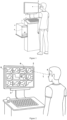
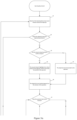
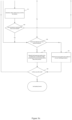
Figure 1 displays a worker involved in the inspection with a dedicated control panel,Figure 2 displays the monitor of the control panel according to 1. Figure with a given block layout,Figures 3 /a., 3/b. and 3/c. together form a flow chart, which illustrates the procedure's steps. -
Figure 1 shows a worker involved in the inspection with a dedicated control panel, whoseeyes 4 are directed to amonitor 2 at a given workplace in front of amonitor 2. Themonitor 2 represents a given phase of a manufacturing process, e.g. completion phase. The worker'seyes 4 are observed by cameras and/orlidars 3 automatically by machine, using methods known per se, which for this reason will not be described here. On this basis the presence of the worker, theviewing direction 1 of her/hiseyes 4 and the pupil sizes of theeyes 4 are also determined and at given intervals time stamps are generated and stored containing this information. The panel or other part of thesystem 7 contain at least oneserver 5 connected informatically to themonitor 2, which can also use aneural network 8, if applicable. -
Figure 2 displays the control panel according toFigure 1 with its content with a given block layout. Themonitor 2 is diveded into parts containingsmaller blocks 6 according to a predefined pattern, the worker parameter sets are assigned to eachblocks 6, where the worker parameter sets include at least theviewing direction 1 of theeyes 4, their time duration related to a givenblock 6 and pupil size. Expectation parameter sets are also assigned to eachblocks 6, which include at least parameters corresponding to worker parameter sets. - The worker parameter sets and the expectation parameter sets related to each
blocks 6 are compared one byblock 6 by an application running on at least oneserver 5 with a given set of criteria, which consists the maximum permitted deviation of the worker and the expectation parameter sets and in case of exceeding the maximum permitted deviation an intervention is carried out by block on the screen and in the system. A maximum permitted deviation is defined and if these are exceeded an intervention is carried out byblock 6 on themonitor 2 and in thesystem 7. An application running on the latter may use a 8 neural network. An intervention can be e.g. the visual highlight of therelevant blocks 6, e.g. flashing and/or colouring of therelevant blocks 6, which draws the worker's attention to a greater attention. The intervention can also be combined with an additional acoustic signal. - For a given embodiment the worker, the product and the work process can be assigned - proving the performance of the work and the quality of the products - for a given work process by a related digital validation certificate.
- The procedure can also contain the statistical data analysis of the
relevant blocks 6. - The steps of the procedure are described below with reference to
Figures 3 /a-3/b-3/c. This example also assumes the use of aneural network 8. - First, in step S1 the
neural network 8 examines the object(s) so theblocks 6 embodying them on the basis of learned patterns, using methods known in the technology per se. - In step S2 expectation parameter sets are assigned to each
block 6, they are compared to the worker parameter sets. An example of this is the following: if a predefined percentage (e.g. 80%) of the worker parameters is corresponding to the expectation parameters based on samples fed into thesystem 7, then the process proceeds with step S19 and it means thesystem 7 full automation. - In step S3 it is examined if the
neural network 8 can make further analysis? If yes, in step S4 theneural network 8 highlights the critical area of the object(s) and transmits it to the operator. - If not, in step S5 the object(s) are forwarded to the operator, i.e. to worker.
- In step S6 one or more objects to be inspected are displayed on the
monitor 2 at the operator. - In step S7 the
system 7 examines if the operator looks at themonitor 2 or not. - If not, in step S8 it gives a signal to pay attention. This can be visual and/or acoustic signal. In step S9 it is examined if there is a time-out in order to avoid an infinite loop. If there is a time-out, in step S9 a signal is given to raise awareness and in step S10 the work process is stopped with a "Time-out" message.
- In step S11 it is examined if there is a need for navigating the operator's attention?
- If yes, in step S12 the operator's attention is navigated to the relevant part.
- If not, in step S13 the operator is informed which area of the screen has already been checked.
- In step S14 it is examined if there is a need for analyzing and visualizing the operator's eye movement and its pattern.
- If yes, in step S15 the operator's eye movement and its pattern are prepared for statistical analysis and visualization.
- If not, in step S16 it is examined if the operator has done her/his job? If not, in step S17 a signal is given which area has been left out and in step S18 it is examined if the operator has covered the total area to be checked or not.
- If not, the process restarts. If yes, in step S19 a data sheet is generated containing all relevant inspection data of the work process and stored in the
system 7 and it is examined if the objects meet the quality standards. If yes, in step S20 a certification badge is given to the objects with approved quality by thesystem 7. If not, step S21 comes, in which the objects identified as scrap are indicated and an error handling procedure is initiated. - In step S22 it is examined if there is an additional task? If yes, the process restarts, if not the process ends.
- The following is an example of this: at the end of a production line pictures of the cable harnesses and connectors of the electronic components manufactured on it are inspected by neural network and if necessary they are forwarded to the worker (operator) to monitor 2. If cameras and/or
lidars 3 do not see theeyes 4 of the worker, i.e. 15 seconds (expectation parameter), thesystem 7 gives a visual and/or acoustic signal to the worker to pay attention and look at themonitor 2. If according to the set of criteria a given block has to be inspected e.g. not less than 2 seconds but not more than 10 seconds (expectation parameter) for proper quality control but from the data obtained from theviewing direction 1 of the worker (worker parameter) it seems that less time has passed than that when inspecting the block, then theviewing direction 1 of the worker is (re)-navigated to the given area by flashing the block and it is asked to check the block more carefully. If a block has been inspected in at least 2 seconds but no more than 10 seconds (worker parameter), the given block is faded away. If theviewing direction 1 related to the given block exceeds the 10 seconds (worker parameter), thesystem 7 gives visual and/or acoustic signal to the worker to raise awareness. - The entire process is only illustrative, other equivalent solutions can also be considered.
- The advantage of the invention is that it complements automatic quality control solutions with the possibility of operating workstations with improved efficiency using human resources, workers and operators.
-
- 1
- Viewing direction
- 2
- Monitor
- 3
- Cameras and/or Lidars
- 4
- Eyes
- 5
- Server
- 6
- Blocks
- 7
- System
- 8
- Neural network
Claims (7)
- A quality assurance procedure using human resources to improve the effectiveness of the quality management system where the viewing direction (1) of a worker representing the human resource at a given place of work in a situation facing a monitor (2) of a given phase of a manufacturing process is displayed,the worker's presence is perceived mechanically by cameras and/or lidars (3) on the basis of methods known per se, the viewing direction (1) of the worker's eyes (4) and the pupil size of the eyes (4) are determined and at given intervals time stamps are generated and stored containing this information, the system (7) includes at least one server (5) connected informatically to the monitor (2),
characterised in thatthe screen of the monitor (2) is devided into parts containing smaller blocks (6) according to a predefined pattern, worker parameter sets are assigned to each block (6), where the worker parameter sets include at least the viewing direction (1) of the eyes (4), their time duration related to a given block (6) and pupil size,expectation parameter sets are also assigned to each block (6), which include at least parameters corresponding to the worker parameter sets,the worker parameter sets and the expectation parameter sets related to each blocks (6) are compared one by block (6) by an application running on at least one server (5) with a given set of criteria, which consists the maximum permitted deviation of the worker and the expectation parameter setsand in case of exceeding the maximum permitted deviation an intervention is carried out by block (6) on the monitor (2) and in the system (7). - The method according to claim 1, characterised in that the application also makes use of a neural network (8).
- The method according to any one of claims 1 to 2, characterized in that the intervention comprises visually highlighting the respective blocks (6).
- The method according to claim 3, characterised in that the visual highlighting comprises flashing and/or colouring relevant blocks (6).
- The method according to any one of claims 1 to 4, characterized in that the intervention is further coupled with an additional acoustic signal.
- The method according to any one of claims 1 to 5, characterized in that the worker, the product and the work process are provided with a digital certification badge associated with a given work process, certifying the performance of the work and the quality of the products.
- A method according to any one of claims 1 to 6, characterised in that it comprises statistical data analysis of the relevant blocks (6).
Applications Claiming Priority (1)
| Application Number | Priority Date | Filing Date | Title |
|---|---|---|---|
| HU2300358A HUP2300358A1 (en) | 2023-10-24 | 2023-10-24 | Procedure for increasing the effectiveness of a quality assurance system that also uses human resources |
Publications (1)
| Publication Number | Publication Date |
|---|---|
| EP4546233A1 true EP4546233A1 (en) | 2025-04-30 |
Family
ID=93155502
Family Applications (1)
| Application Number | Title | Priority Date | Filing Date |
|---|---|---|---|
| EP24206642.1A Pending EP4546233A1 (en) | 2023-10-24 | 2024-10-15 | Quality assurance process using human resources to improve the effectiveness of the quality management system |
Country Status (2)
| Country | Link |
|---|---|
| EP (1) | EP4546233A1 (en) |
| HU (1) | HUP2300358A1 (en) |
Citations (5)
| Publication number | Priority date | Publication date | Assignee | Title |
|---|---|---|---|---|
| US20180374026A1 (en) * | 2016-01-08 | 2018-12-27 | Mitsubishi Electric Corporation | Work assistance apparatus, work learning apparatus, and work assistance system |
| WO2019098835A1 (en) * | 2017-11-16 | 2019-05-23 | Joa Scanning Technology B.V. | A computer-controlled method of and apparatus and computer program product for supporting visual clearance of physical content |
| JP2019191990A (en) | 2018-04-26 | 2019-10-31 | 株式会社日立製作所 | Maintenance and management support system and maintenance and management support method |
| CN110458441A (en) * | 2019-08-06 | 2019-11-15 | 北京七鑫易维信息技术有限公司 | Checking method, device, system and the storage medium of quality inspection |
| WO2020079390A1 (en) * | 2018-10-19 | 2020-04-23 | Sintef Tto As | Manufacturing assistance system |
-
2023
- 2023-10-24 HU HU2300358A patent/HUP2300358A1/en unknown
-
2024
- 2024-10-15 EP EP24206642.1A patent/EP4546233A1/en active Pending
Patent Citations (5)
| Publication number | Priority date | Publication date | Assignee | Title |
|---|---|---|---|---|
| US20180374026A1 (en) * | 2016-01-08 | 2018-12-27 | Mitsubishi Electric Corporation | Work assistance apparatus, work learning apparatus, and work assistance system |
| WO2019098835A1 (en) * | 2017-11-16 | 2019-05-23 | Joa Scanning Technology B.V. | A computer-controlled method of and apparatus and computer program product for supporting visual clearance of physical content |
| JP2019191990A (en) | 2018-04-26 | 2019-10-31 | 株式会社日立製作所 | Maintenance and management support system and maintenance and management support method |
| WO2020079390A1 (en) * | 2018-10-19 | 2020-04-23 | Sintef Tto As | Manufacturing assistance system |
| CN110458441A (en) * | 2019-08-06 | 2019-11-15 | 北京七鑫易维信息技术有限公司 | Checking method, device, system and the storage medium of quality inspection |
Non-Patent Citations (1)
| Title |
|---|
| REDDY G S RAJSHEKAR ET AL: "Synerg-eye-zing: Decoding Nonlinear Gaze Dynamics Underlying Successful Collaborations in Co-located Teams", PROCEEDINGS OF THE 54TH ACM TECHNICAL SYMPOSIUM ON COMPUTER SCIENCE EDUCATION V. 2, ACMPUB27, NEW YORK, NY, USA, 9 October 2023 (2023-10-09), pages 545 - 554, XP059585058, ISBN: 979-8-4007-0073-6, DOI: 10.1145/3577190.3614104 * |
Also Published As
| Publication number | Publication date |
|---|---|
| HUP2300358A1 (en) | 2025-04-28 |
Similar Documents
| Publication | Publication Date | Title |
|---|---|---|
| JP4911080B2 (en) | Quality improvement system | |
| GB2586105A (en) | Quality review management system | |
| US20160334778A1 (en) | Method and system for integrated manufacturing production quality inspections | |
| CN112100868B (en) | A maintainability virtual analysis method and system | |
| JP7474303B2 (en) | Management System | |
| DE102020134680B4 (en) | Procedure and arrangement for the quality inspection of an object | |
| CN106022613A (en) | Mobile standard maintenance system of wind generating set based on enterprise maintenance file package | |
| KR102573540B1 (en) | Smart Risk Assessment System | |
| CN111178778A (en) | Machine learning-based security activity plan generation method, system and security activity management system | |
| DE102021108738A1 (en) | WELDING POINT ANALYSIS | |
| CN110895832A (en) | Engineering management and control method and device | |
| WO2023057365A1 (en) | Control system for a technical installation with reduced-size views of installation images | |
| Saeed et al. | Technology role in safety management of Iraqi construction projects | |
| US20200117179A1 (en) | Method for Operating a Plant Apparatus and Plant Device | |
| US20060129879A1 (en) | System and method for monitoring the status and progress of a technical process or of a technical project | |
| CN112862438A (en) | Violation data processing method and device, electronic equipment and storage medium | |
| CN113094800A (en) | Method and system for supervising engineering quality in municipal engineering supervision | |
| CN117649193A (en) | Dangerous source real-time dynamic management and control system for safety operation of hydropower station personnel | |
| CN119578820A (en) | A method, device, equipment and medium for emergency handling of enterprise information | |
| JP2002223293A (en) | Network maintenance management method and device | |
| JP7070655B2 (en) | Information processing equipment, control methods, and programs | |
| CN114727058B (en) | A video linkage system based on large-scale video surveillance | |
| CN117787885A (en) | An enterprise production safety management method and system | |
| EP4261629A1 (en) | Control system for a technical plant and method of operation | |
| KR102672362B1 (en) | Visualization Apparatus For Manufacturing Execution |
Legal Events
| Date | Code | Title | Description |
|---|---|---|---|
| PUAI | Public reference made under article 153(3) epc to a published international application that has entered the european phase |
Free format text: ORIGINAL CODE: 0009012 |
|
| STAA | Information on the status of an ep patent application or granted ep patent |
Free format text: STATUS: REQUEST FOR EXAMINATION WAS MADE |
|
| 17P | Request for examination filed |
Effective date: 20241015 |
|
| AK | Designated contracting states |
Kind code of ref document: A1 Designated state(s): AL AT BE BG CH CY CZ DE DK EE ES FI FR GB GR HR HU IE IS IT LI LT LU LV MC ME MK MT NL NO PL PT RO RS SE SI SK SM TR |