EP4545522A1 - Compound, composition, cured product, and compound manufacturing method - Google Patents
Compound, composition, cured product, and compound manufacturing method Download PDFInfo
- Publication number
- EP4545522A1 EP4545522A1 EP23826863.5A EP23826863A EP4545522A1 EP 4545522 A1 EP4545522 A1 EP 4545522A1 EP 23826863 A EP23826863 A EP 23826863A EP 4545522 A1 EP4545522 A1 EP 4545522A1
- Authority
- EP
- European Patent Office
- Prior art keywords
- formula
- compound
- compound represented
- cured product
- composition
- Prior art date
- Legal status (The legal status is an assumption and is not a legal conclusion. Google has not performed a legal analysis and makes no representation as to the accuracy of the status listed.)
- Withdrawn
Links
Images

Classifications
-
- C—CHEMISTRY; METALLURGY
- C07—ORGANIC CHEMISTRY
- C07D—HETEROCYCLIC COMPOUNDS
- C07D405/00—Heterocyclic compounds containing both one or more hetero rings having oxygen atoms as the only ring hetero atoms, and one or more rings having nitrogen as the only ring hetero atom
- C07D405/14—Heterocyclic compounds containing both one or more hetero rings having oxygen atoms as the only ring hetero atoms, and one or more rings having nitrogen as the only ring hetero atom containing three or more hetero rings
-
- C—CHEMISTRY; METALLURGY
- C07—ORGANIC CHEMISTRY
- C07D—HETEROCYCLIC COMPOUNDS
- C07D307/00—Heterocyclic compounds containing five-membered rings having one oxygen atom as the only ring hetero atom
- C07D307/02—Heterocyclic compounds containing five-membered rings having one oxygen atom as the only ring hetero atom not condensed with other rings
- C07D307/04—Heterocyclic compounds containing five-membered rings having one oxygen atom as the only ring hetero atom not condensed with other rings having no double bonds between ring members or between ring members and non-ring members
- C07D307/10—Heterocyclic compounds containing five-membered rings having one oxygen atom as the only ring hetero atom not condensed with other rings having no double bonds between ring members or between ring members and non-ring members with substituted hydrocarbon radicals attached to ring carbon atoms
- C07D307/14—Radicals substituted by nitrogen atoms not forming part of a nitro radical
-
- C—CHEMISTRY; METALLURGY
- C08—ORGANIC MACROMOLECULAR COMPOUNDS; THEIR PREPARATION OR CHEMICAL WORKING-UP; COMPOSITIONS BASED THEREON
- C08F—MACROMOLECULAR COMPOUNDS OBTAINED BY REACTIONS ONLY INVOLVING CARBON-TO-CARBON UNSATURATED BONDS
- C08F122/00—Homopolymers of compounds having one or more unsaturated aliphatic radicals each having only one carbon-to-carbon double bond, and at least one being terminated by a carboxyl radical and containing at least one other carboxyl radical in the molecule; Salts, anhydrides, esters, amides, imides or nitriles thereof
- C08F122/36—Amides or imides
- C08F122/40—Imides, e.g. cyclic imides
-
- C—CHEMISTRY; METALLURGY
- C08—ORGANIC MACROMOLECULAR COMPOUNDS; THEIR PREPARATION OR CHEMICAL WORKING-UP; COMPOSITIONS BASED THEREON
- C08F—MACROMOLECULAR COMPOUNDS OBTAINED BY REACTIONS ONLY INVOLVING CARBON-TO-CARBON UNSATURATED BONDS
- C08F22/00—Homopolymers and copolymers of compounds having one or more unsaturated aliphatic radicals each having only one carbon-to-carbon double bond, and at least one being terminated by a carboxyl radical and containing at least one other carboxyl radical in the molecule; Salts, anhydrides, esters, amides, imides or nitriles thereof
- C08F22/36—Amides or imides
- C08F22/40—Imides, e.g. cyclic imides
-
- C—CHEMISTRY; METALLURGY
- C08—ORGANIC MACROMOLECULAR COMPOUNDS; THEIR PREPARATION OR CHEMICAL WORKING-UP; COMPOSITIONS BASED THEREON
- C08G—MACROMOLECULAR COMPOUNDS OBTAINED OTHERWISE THAN BY REACTIONS ONLY INVOLVING UNSATURATED CARBON-TO-CARBON BONDS
- C08G73/00—Macromolecular compounds obtained by reactions forming a linkage containing nitrogen with or without oxygen or carbon in the main chain of the macromolecule, not provided for in groups C08G12/00 - C08G71/00
- C08G73/06—Polycondensates having nitrogen-containing heterocyclic rings in the main chain of the macromolecule
- C08G73/10—Polyimides; Polyester-imides; Polyamide-imides; Polyamide acids or similar polyimide precursors
- C08G73/12—Unsaturated polyimide precursors
- C08G73/128—Unsaturated polyimide precursors the unsaturated precursors containing heterocyclic moieties in the main chain
Definitions
- the present invention relates to a compound, a composition, a cured product, and a method for producing the compound.
- Bismaleimide resin is generally known as a highly heat resistant thermosetting resin and is widely used in the fields of molding materials, composite materials, electrical and electronic components, and the like. In the field of recent electrical and electronic components, the development of microelectronics has been remarkable. Especially for large computers, high-speed signal transmission is essential due to the introduction of multilayer circuit boards and the like, but if the dielectric constant of a substrate material is large, the delay of signal transmission will occur and become an obstacle to achieving higher speeds. Bismaleimide is used as an interlayer insulating film in multilayer wiring structures. For these reasons, the need for bismaleimide that maintains heat resistance and has a low dielectric constant has gained prominent attention.
- Patent Literature 1 the bismaleimide resin shown below is disclosed as bismaleimide resin suitable for electronic material applications.
- X and Y are structures containing a predetermined aromatic ring, and a and b are integers of 0 to 100, of which at least one is not 0.
- Patent Literature 1 Japanese Patent Laid-Open No. 2010-018791
- the present invention aims to solve such problems, and to provide a maleimide compound having a low coefficient of thermal expansion (CTE) while maintaining excellent heat resistance, and a composition, a cured product, and a method for producing the compound.
- CTE coefficient of thermal expansion
- the present inventors conducted research to address the above-mentioned problems, and as a result, the problems described above are solved by the following means.
- a compound having a low coefficient of thermal expansion (CTE) while maintaining excellent heat resistance and a composition, a cured product, and a method for producing the compound have been provided.
- CTE coefficient of thermal expansion
- the present embodiment an embodiment for implementing the present invention (hereinafter simply referred to as "the present embodiment") will be described in detail. Also, the following embodiment is an example for describing the present invention, and the present invention is not limited to the present embodiment only.
- relative permittivity is a ratio of a dielectric constant of a substance to the dielectric constant of vacuum.
- the relative permittivity is sometimes simply referred to as " dielectric constant ".
- a compound of the present embodiment is represented by Formula (1).
- Such a compound when made into a cured product, can effectively achieve a low coefficient of thermal expansion (CTE) while maintaining excellent heat resistance.
- the compound represented by Formula (1) is represented by the following Formula (2) or Formula (3), preferably represented by the Formula (2).
- the compound represented by Formula (1) can be produced, for example, by reacting 2,5-bis(aminomethyl)tetrahydrofuran (hereinafter sometimes referred to as aminomethylfuran A) and/or 2,5-bis(aminomethyl)furan (hereinafter sometimes referred to as aminomethylfuran B) and maleic anhydride under a solvent.
- a catalyst may be used.
- the catalyst examples include toluene sulfonic acid hydrate, phosphoric acid, and sulfuric acid, preferably the toluene sulfonic acid hydrate.
- the solvent examples include an aromatic hydrocarbon solvent, an amide solvent, an ether solvent, an alcohol solvent, and a halogen solvent, preferably the aromatic hydrocarbon solvent and the amide solvent, and more preferably N-methyl-2-pyrrolidone and toluene. These organic solvents may be used alone or in a mixture of two or more.
- An upper limit of a reaction temperature when the above described intermediate of Formula (4) is produced by reacting of the aminomethylfuran A or B with the maleic anhydride is preferably 60°C or less, and more preferably 50°C or less.
- a lower limit of the reaction temperature is preferably 0°C or more, and more preferably 10°C or more.
- reaction time is preferably 0.5 hours or more and 100 hours or less, and more preferably 5 hours or more and 48 hours or less.
- the resulting intermediate is then heated under a catalyst for certain time to produce the compound represented by Formula (1).
- An upper limit of a reaction temperature when the compound represented by Formula (1) is produced from the above intermediate of Formula (4) is preferably 250°C or less, and more preferably 200°C or less.
- a lower limit of the reaction temperature is preferably 25°C or more, and more preferably 100°C or more.
- an upper limit of reaction time is preferably 24 hours or less, and more preferably 15 hours or less.
- a lower limit of the reaction time is preferably 1 hour or more.
- purification and the like may be performed after completion of the reaction to purify the compound represented by Formula (1).
- aminomethylfuran A and/or B used may be those obtained by the synthetic method described in paragraphs 0011 to 0016 of International Publication No. WO 2019/073987 , the contents of which are incorporated herein. Commercially available products may also be used.
- a composition of the present embodiment includes the compound represented by Formula (1).
- An upper limit of a content of the compound represented by Formula (1) in the composition is preferably 100 parts by mass or less with respect to 100 parts by mass of a resin solid content.
- a lower limit of the content is preferably 0.1 parts by mass or more.
- composition of the present embodiment may include only one compound represented by Formula (1), or may include two or more compounds. When two or more compounds are included, the total content is preferably within the range described above.
- the resin solid content refers to the component excluding a filler and a solvent, and includes the compound represented by Formula (1) and other resin additive components (additives and the like, such as a flame retardant).
- the composition of the present embodiment may include a thermosetting compound other than the compound represented by Formula (1).
- thermosetting compound include an epoxy resin, an oxetane resin, a compound having a polymerizable unsaturated group, a cyanate ester compound, a benzoxazine resin, and a phenolic compound.
- thermosetting compounds As specific thermosetting compounds, reference may be made to the compounds described in paragraphs 0034 to 0039 of Japanese Patent Laid-Open No. 2010-018791 and paragraphs 0047 to 0056 of International Publication No. WO 2021/172317 , the contents of which are incorporated herein.
- the composition of the present embodiment may include other components other than the thermosetting compound.
- other components include a filler, a solvent, a thermoplastic resin (including a thermoplastic elastomer), and resin additives such as a photo and/or thermal polymerization initiator, a photo sensitizing agent, a curing agent, a coupling agent, a coloring pigment, a defoaming agent, a surface modifier, a flame retardant, a dispersant, a curing accelerator, an ultraviolet absorbent, an antioxidant, and a flow control agent.
- a filler a solvent
- a thermoplastic resin including a thermoplastic elastomer
- resin additives such as a photo and/or thermal polymerization initiator, a photo sensitizing agent, a curing agent, a coupling agent, a coloring pigment, a defoaming agent, a surface modifier, a flame retardant, a dispersant, a curing accelerator, an ultraviolet absorbent, an antioxidant, and a flow
- solvent examples include ketones, Cellosolves, esters, amides, and aromatic hydrocarbons.
- specific solvents reference may be made to those described in paragraph 0077 of International Publication No. WO 2021/172317 , the contents of which are incorporated herein.
- the cured product of the present embodiment has a glass transition temperature (Tg) according to DMA (Dynamic Mechanical Measurement) of preferably 150°C or more, and more preferably 250°C or more.
- Tg glass transition temperature
- DMA Dynamic Mechanical Measurement
- Such a high glass transition temperature is mainly achieved by using the compound represented by Formula (1).
- An upper limit of the glass transition temperature is, for example, 400°C or less in practice.
- the glass transition temperature (Tg) is measured by the method described in Examples described later.
- the cured product of the present embodiment has a low coefficient of thermal expansion (CTE).
- CTE coefficient of thermal expansion
- the coefficient of linear thermal expansion in the direction perpendicular to the plane measured by the TMA method specified in JIS C 6481 5.19 when formed into a cured plate of 1 mm thickness is preferably 100 ppm/°C or less, and more preferably 80 ppm/°C or less.
- a lower limit is ideally 0 ppm/°C, but in practice 50 ppm/°C or more.
- the compound represented by Formula (1) thus obtained, the composition described above, or the cured product described above is useful for various applications such as an insulating material for printed wiring boards, a resin for resists, a semiconductor packaging material, a resin for semiconductor encapsulation, an adhesive for printed wiring boards, a build-up laminate material, a resin for fiber reinforced plastics, a resin for encapsulation of liquid crystal display panels, a resin for color filters of liquid crystals, a paint, a variety of coating agents, and an adhesive.
- Tetrahydrofuran (H-AMF, molecular weight 130.19) used in the present Examples was synthesized in accordance with paragraph 0033 of International Publication No. WO 2019/073987 .
- the yellow solid obtained above was heated in a vacuum press machine using a die of 70 mm ⁇ 30 mm, made of SUS (Steel Use Stainless), at 5°C/min to 220°C and then held at 250°C for 3 hours while continuously pressing under a condition of 2 MPa to obtain a cured product of 1 mm thickness.
- the glass transition temperature was determined as follows: for a sample of 12.7 mm ⁇ 30 mm downsized from the cured product obtained, dynamic viscoelasticity was measured using a dynamic viscoelasticity measuring device, in accordance with JIS-K7244-4:1999 (Plastics-Determination of dynamic mechanical properties-Part 4: Tensile vibration-Non resonance method), at a starting temperature of 30°C, a final temperature of 300°C, a heating rate of 5°C/min, a measurement frequency of 1 Hz, and under a nitrogen atmosphere, and the temperature at which the loss tangent (Tan ⁇ ) obtained became the maximum value was set as the glass transition temperature.
- the dynamic viscoelasticity measuring device EXSTAR6000 DMS6100 produced by Seiko Instruments Inc. was used.
- the coefficient of thermal expansion was measured by the TMA (Thermo-Mechanical Analysis) method specified in JIS C 6481 5.19. Specifically, for a sample of 5 mm ⁇ 5 mm downsized from the cured product obtained, a temperature was raised at a heating rate of 10°C/min from 30°C to 340°C using a thermo-mechanical analyzer (produced by TA Instruments) to measure the coefficient of linear thermal expansion (CTE(Z)) (unit: ppm/°C) in the direction perpendicular to the surface from 30°C to 300°C. ppm is the volume ratio. Other details are in accordance with the above JIS C 6481 5.19.
- Example 2 the yellow solid was changed to the same amount of 4,4'-bismaleimidodiphenylmethane (BMI-H, produced by K ⁇ I Chemical Industry Inc., LTD.), and others are performed in the same manner.
- BMI-H 4,4'-bismaleimidodiphenylmethane
- Example 2 the yellow solid was changed to the same amount of 1,6'-bismaleimido-(2,2,4-trimethyl)hexane (BMI-TMH, produced by Daiwakasei Industry Co., LTD.), and others are performed in the same manner.
- BMI-TMH 1,6'-bismaleimido-(2,2,4-trimethyl)hexane
- Example 2 Comparative Example 1 Comparative Example 2 Bismaleimide H-AMF-BMI BMI-H BMI-TMH Tg 300°C or more 146°C 300°C or more CTE 60.11 54.6 116.1
- the cured product of Example was a cured product having a low coefficient of thermal expansion while maintaining excellent heat resistance.
Landscapes
- Chemical & Material Sciences (AREA)
- Organic Chemistry (AREA)
- Health & Medical Sciences (AREA)
- Chemical Kinetics & Catalysis (AREA)
- Medicinal Chemistry (AREA)
- Polymers & Plastics (AREA)
- Addition Polymer Or Copolymer, Post-Treatments, Or Chemical Modifications (AREA)
- Macromolecular Compounds Obtained By Forming Nitrogen-Containing Linkages In General (AREA)
- Heterocyclic Carbon Compounds Containing A Hetero Ring Having Oxygen Or Sulfur (AREA)
- Organic Low-Molecular-Weight Compounds And Preparation Thereof (AREA)
Abstract
Description
- The present invention relates to a compound, a composition, a cured product, and a method for producing the compound.
- Bismaleimide resin is generally known as a highly heat resistant thermosetting resin and is widely used in the fields of molding materials, composite materials, electrical and electronic components, and the like. In the field of recent electrical and electronic components, the development of microelectronics has been remarkable. Especially for large computers, high-speed signal transmission is essential due to the introduction of multilayer circuit boards and the like, but if the dielectric constant of a substrate material is large, the delay of signal transmission will occur and become an obstacle to achieving higher speeds. Bismaleimide is used as an interlayer insulating film in multilayer wiring structures. For these reasons, the need for bismaleimide that maintains heat resistance and has a low dielectric constant has gained prominent attention.
- In Patent Literature 1, the bismaleimide resin shown below is disclosed as bismaleimide resin suitable for electronic material applications. In the following structural formula, X and Y are structures containing a predetermined aromatic ring, and a and b are integers of 0 to 100, of which at least one is not 0.

- [Patent Literature 1]
Japanese Patent Laid-Open No. 2010-018791 - Although the above bismaleimide resin is an excellent material, there is a need to further improve the functionality of maleimide compounds along with the recent demand for higher performance in the field of electronic materials. In particular, there is a need for maleimide compounds having high heat resistance and a low coefficient of thermal expansion (CTE).
- The present invention aims to solve such problems, and to provide a maleimide compound having a low coefficient of thermal expansion (CTE) while maintaining excellent heat resistance, and a composition, a cured product, and a method for producing the compound.
- The present inventors conducted research to address the above-mentioned problems, and as a result, the problems described above are solved by the following means.
- <1> A compound represented by Formula (1):

- <2> The compound according to <1>, wherein the compound represented by Formula (1) is a compound represented by Formula (2):

- <3> A compound represented by Formula (4):

- <4> A composition comprising the compound according to <1> or <2>.
- <5> A cured product formed from the composition according to <4>.
- <6> A method for producing the compound according to <1> or <2>, the method comprising using an intermediate represented by Formula (4):

- According to the present invention, a compound having a low coefficient of thermal expansion (CTE) while maintaining excellent heat resistance, and a composition, a cured product, and a method for producing the compound have been provided.
-
- [
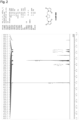
Figure 1] Figure 1 shows NMR spectra of an intermediate synthesized in Example 1. - [
Figure 2] Figure 2 shows NMR spectra of a compound represented by Formula (2) in Example 1. - Hereinafter, an embodiment for implementing the present invention (hereinafter simply referred to as "the present embodiment") will be described in detail. Also, the following embodiment is an example for describing the present invention, and the present invention is not limited to the present embodiment only.
- Still, in the present specification, "to" is used in the sense that it includes the numerical numbers described before and after it as lower and upper limits.
- In the present specification, various physical properties and characteristic values are those obtained at 23°C, unless otherwise stated.
- In the present specification, relative permittivity is a ratio of a dielectric constant of a substance to the dielectric constant of vacuum. In the present specification, the relative permittivity is sometimes simply referred to as " dielectric constant ".
- When the standards referred to herein differ in measurement methods and the like depending on the year, they are based on the standards as of January 1, 2022, unless otherwise stated.
- A compound of the present embodiment is represented by Formula (1). Such a compound, when made into a cured product, can effectively achieve a low coefficient of thermal expansion (CTE) while maintaining excellent heat resistance.

- In the compound represented by Formula (1), the dotted line portions each independently represent *-CH-CH2- or *-C=CH-.
- In the present embodiment, the compound represented by Formula (1) is represented by the following Formula (2) or Formula (3), preferably represented by the Formula (2).


- The compound represented by Formula (1) can be produced, for example, by reacting 2,5-bis(aminomethyl)tetrahydrofuran (hereinafter sometimes referred to as aminomethylfuran A) and/or 2,5-bis(aminomethyl)furan (hereinafter sometimes referred to as aminomethylfuran B) and maleic anhydride under a solvent. In this instance, a catalyst may be used.
- Examples of the catalyst include toluene sulfonic acid hydrate, phosphoric acid, and sulfuric acid, preferably the toluene sulfonic acid hydrate.
- Examples of the solvent include an aromatic hydrocarbon solvent, an amide solvent, an ether solvent, an alcohol solvent, and a halogen solvent, preferably the aromatic hydrocarbon solvent and the amide solvent, and more preferably N-methyl-2-pyrrolidone and toluene. These organic solvents may be used alone or in a mixture of two or more.
- Hereinafter, an example of a specific production method of the compound represented by Formula (1) is described.
- The aminomethylfuran A and/or B and the maleic anhydride are each dissolved in a solvent, and a solution of the aminomethylfuran A and/or B is added (e.g., dropwise) to a maleic anhydride solution to produce an intermediate represented by the following Formula (4):

- An upper limit of a reaction temperature when the above described intermediate of Formula (4) is produced by reacting of the aminomethylfuran A or B with the maleic anhydride is preferably 60°C or less, and more preferably 50°C or less. In addition, a lower limit of the reaction temperature is preferably 0°C or more, and more preferably 10°C or more.
- Furthermore, reaction time is preferably 0.5 hours or more and 100 hours or less, and more preferably 5 hours or more and 48 hours or less.
- The resulting intermediate is then heated under a catalyst for certain time to produce the compound represented by Formula (1).
- An upper limit of a reaction temperature when the compound represented by Formula (1) is produced from the above intermediate of Formula (4) is preferably 250°C or less, and more preferably 200°C or less. In addition, a lower limit of the reaction temperature is preferably 25°C or more, and more preferably 100°C or more.
- Furthermore, an upper limit of reaction time is preferably 24 hours or less, and more preferably 15 hours or less. In addition, a lower limit of the reaction time is preferably 1 hour or more.
- For the reaction liquid obtained above, purification and the like may be performed after completion of the reaction to purify the compound represented by Formula (1).
- The aminomethylfuran A and/or B used may be those obtained by the synthetic method described in paragraphs 0011 to 0016 of International Publication No.
WO 2019/073987 , the contents of which are incorporated herein. Commercially available products may also be used. - A composition of the present embodiment includes the compound represented by Formula (1).
- An upper limit of a content of the compound represented by Formula (1) in the composition is preferably 100 parts by mass or less with respect to 100 parts by mass of a resin solid content. In addition, a lower limit of the content is preferably 0.1 parts by mass or more.
- The composition of the present embodiment may include only one compound represented by Formula (1), or may include two or more compounds. When two or more compounds are included, the total content is preferably within the range described above.
- The resin solid content refers to the component excluding a filler and a solvent, and includes the compound represented by Formula (1) and other resin additive components (additives and the like, such as a flame retardant).
- The composition of the present embodiment may include a thermosetting compound other than the compound represented by Formula (1). Examples of the thermosetting compound include an epoxy resin, an oxetane resin, a compound having a polymerizable unsaturated group, a cyanate ester compound, a benzoxazine resin, and a phenolic compound.
- As specific thermosetting compounds, reference may be made to the compounds described in paragraphs 0034 to 0039 of
Japanese Patent Laid-Open No. 2010-018791 WO 2021/172317 , the contents of which are incorporated herein. - The composition of the present embodiment may include other components other than the thermosetting compound. Examples of other components include a filler, a solvent, a thermoplastic resin (including a thermoplastic elastomer), and resin additives such as a photo and/or thermal polymerization initiator, a photo sensitizing agent, a curing agent, a coupling agent, a coloring pigment, a defoaming agent, a surface modifier, a flame retardant, a dispersant, a curing accelerator, an ultraviolet absorbent, an antioxidant, and a flow control agent.
- As specific other components, reference may be made to the compounds described in paragraphs 0040 to 0051 of
Japanese Patent Laid-Open No. 2010-018791 WO 2021/172317 , the contents of which are incorporated herein. - Examples of the solvent include ketones, Cellosolves, esters, amides, and aromatic hydrocarbons. As specific solvents, reference may be made to those described in paragraph 0077 of International Publication No.
WO 2021/172317 , the contents of which are incorporated herein. - A cured product of the present embodiment is obtained by curing the composition described above in accordance with a known method, for example, a curing method by heat, an ultraviolet ray, or an electron beam. When curing by the heat, after filling the composition within a temperature range of a molten state in a die or the like, the temperature is raised above a predetermined polymerization temperature to promote a cross-linking reaction, to obtain the cured product. When curing by using the ultraviolet ray, a low-pressure mercury lamp, a medium-pressure mercury lamp, a high-pressure mercury lamp, an ultra-high-pressure mercury lamp, a xenon lamp or a metal halide lamp, etc. can be used as a light source for the ultraviolet ray.
- A curing time of the composition when obtaining the cured product of the present embodiment is preferably 0.1 hours or more and 5 hours or less. Also, a curing temperature is preferably 100°C or more and 300°C or less.
- The cured product of the present embodiment has a glass transition temperature (Tg) according to DMA (Dynamic Mechanical Measurement) of preferably 150°C or more, and more preferably 250°C or more. Such a high glass transition temperature is mainly achieved by using the compound represented by Formula (1). An upper limit of the glass transition temperature is, for example, 400°C or less in practice.
- The glass transition temperature (Tg) is measured by the method described in Examples described later.
- It is preferable that the cured product of the present embodiment has a low coefficient of thermal expansion (CTE). Specifically, the coefficient of linear thermal expansion in the direction perpendicular to the plane measured by the TMA method specified in JIS C 6481 5.19 when formed into a cured plate of 1 mm thickness is preferably 100 ppm/°C or less, and more preferably 80 ppm/°C or less. A lower limit is ideally 0 ppm/°C, but in practice 50 ppm/°C or more.
- The measurement of CTE is performed by the method described in Examples described later.
- The compound represented by Formula (1) thus obtained, the composition described above, or the cured product described above is useful for various applications such as an insulating material for printed wiring boards, a resin for resists, a semiconductor packaging material, a resin for semiconductor encapsulation, an adhesive for printed wiring boards, a build-up laminate material, a resin for fiber reinforced plastics, a resin for encapsulation of liquid crystal display panels, a resin for color filters of liquid crystals, a paint, a variety of coating agents, and an adhesive.
- Hereinafter, the present invention will be described more specifically with Examples. Materials, amounts used, proportions, processing details, processing procedures, etc. shown in the following Examples may be modified as appropriate, as long as they do not depart from the intent of the present invention. Therefore, the scope of the present invention is not limited to the specific examples shown below.
- In case that measuring instruments and the like used in Examples are not available due to discontinuation or other reasons, the measurement may be performed using other instruments having equivalent performance.
- Tetrahydrofuran (H-AMF, molecular weight 130.19) used in the present Examples was synthesized in accordance with paragraph 0033 of International Publication No.
WO 2019/073987 . - In a 200 mL flask, 45.19 g of maleic anhydride (produced by FUJIFILM Wako Pure Chemical Corporation, molecular weight 130.19), 80 mL of N-methyl-2-pyrrolidone (NMP, produced by KANTO CHEMICAL CO., INC.), and 80 mL of toluene (produced by KANTO CHEMICAL CO., INC.) were added and stirred. Then, 20.00 g of H-AMF synthesized above was dissolved in 40 mL of NMP and dropped into the above flask for 70 minutes and stirred overnight at room temperature.
- After overnight, sampling was performed and NMR of the purified solid was got to confirm the formation of the intermediate. The NMR of the intermediate obtained is shown in
Figure 1 . - Next, 5.84 g of toluene sulfonic acid hydrate (produced by FUJIFILM Wako Pure Chemical Corporation, molecular weight 190.2) was added to the flask and heated at 140°C for 6.5 hours. After radiational cooling, it was left to stand overnight, then divided, dehydrated with magnesium sulfate, and dried to obtain 18.34 g of a yellow solid (yield 41.1%). NMR of the yellow solid obtained was got to confirm formation of the compound represented by Formula (1) (hereinafter sometimes referred to as H-AMF-BMI). The NMR of the compound obtained is shown in
Figure 2 . - The yellow solid obtained above was heated in a vacuum press machine using a die of 70 mm × 30 mm, made of SUS (Steel Use Stainless), at 5°C/min to 220°C and then held at 250°C for 3 hours while continuously pressing under a condition of 2 MPa to obtain a cured product of 1 mm thickness.
- The glass transition temperature was determined as follows: for a sample of 12.7 mm × 30 mm downsized from the cured product obtained, dynamic viscoelasticity was measured using a dynamic viscoelasticity measuring device, in accordance with JIS-K7244-4:1999 (Plastics-Determination of dynamic mechanical properties-Part 4: Tensile vibration-Non resonance method), at a starting temperature of 30°C, a final temperature of 300°C, a heating rate of 5°C/min, a measurement frequency of 1 Hz, and under a nitrogen atmosphere, and the temperature at which the loss tangent (Tan δ) obtained became the maximum value was set as the glass transition temperature.
- The dynamic viscoelasticity measuring device, EXSTAR6000 DMS6100 produced by Seiko Instruments Inc. was used.
- For the cured product obtained, the coefficient of thermal expansion was measured by the TMA (Thermo-Mechanical Analysis) method specified in JIS C 6481 5.19. Specifically, for a sample of 5 mm × 5 mm downsized from the cured product obtained, a temperature was raised at a heating rate of 10°C/min from 30°C to 340°C using a thermo-mechanical analyzer (produced by TA Instruments) to measure the coefficient of linear thermal expansion (CTE(Z)) (unit: ppm/°C) in the direction perpendicular to the surface from 30°C to 300°C. ppm is the volume ratio. Other details are in accordance with the above JIS C 6481 5.19.
- In Example 2, the yellow solid was changed to the same amount of 4,4'-bismaleimidodiphenylmethane (BMI-H, produced by K·I Chemical Industry Inc., LTD.), and others are performed in the same manner.
- In Example 2, the yellow solid was changed to the same amount of 1,6'-bismaleimido-(2,2,4-trimethyl)hexane (BMI-TMH, produced by Daiwakasei Industry Co., LTD.), and others are performed in the same manner.
[Table 1] Example 2 Comparative Example 1 Comparative Example 2 Bismaleimide H-AMF-BMI BMI-H BMI-TMH Tg 300°C or more 146°C 300°C or more CTE 60.11 54.6 116.1 - As shown in Table 1 above, the cured product of Example was a cured product having a low coefficient of thermal expansion while maintaining excellent heat resistance.
Claims (6)
- A compound represented by Formula (1):

- The compound according to claim 1, wherein the compound represented by Formula (1) is a compound represented by Formula (2):

- A compound represented by Formula (4):

- A composition comprising a compound according to claim 1 or 2.
- A cured product formed from a composition according to claim 4.
- A method for producing a compound according to claim 1 or 2, the method comprising using an intermediate represented by Formula (4):

Applications Claiming Priority (2)
| Application Number | Priority Date | Filing Date | Title |
|---|---|---|---|
| JP2022099809 | 2022-06-21 | ||
| PCT/JP2023/019051 WO2023248675A1 (en) | 2022-06-21 | 2023-05-23 | Compound, composition, cured product, and compound manufacturing method |
Publications (2)
| Publication Number | Publication Date |
|---|---|
| EP4545522A1 true EP4545522A1 (en) | 2025-04-30 |
| EP4545522A4 EP4545522A4 (en) | 2025-08-06 |
Family
ID=89379726
Family Applications (1)
| Application Number | Title | Priority Date | Filing Date |
|---|---|---|---|
| EP23826863.5A Withdrawn EP4545522A4 (en) | 2022-06-21 | 2023-05-23 | Compound, composition, cured product and method for producing a compound |
Country Status (7)
| Country | Link |
|---|---|
| US (1) | US20250376465A1 (en) |
| EP (1) | EP4545522A4 (en) |
| JP (1) | JPWO2023248675A1 (en) |
| KR (1) | KR20250025670A (en) |
| CN (1) | CN119384418A (en) |
| TW (1) | TW202413330A (en) |
| WO (1) | WO2023248675A1 (en) |
Family Cites Families (12)
| Publication number | Priority date | Publication date | Assignee | Title |
|---|---|---|---|---|
| US2857397A (en) * | 1956-02-27 | 1958-10-21 | Arthur C Cope | 2, 5-bis(phthalimidomethyl)-tetrahydrofuran |
| BE578410A (en) * | 1958-05-16 | 1959-11-05 | Merck & Co Inc | Substituted furans. |
| JP3247901B2 (en) * | 1992-02-19 | 2002-01-21 | 三井化学株式会社 | Novel bismaleimide and method for producing the same |
| JPH06293830A (en) * | 1992-05-19 | 1994-10-21 | Noriyuki Kuramoto | Polymerization / depolymerization Reversible copolymer |
| EP0585205A3 (en) * | 1992-08-26 | 1994-08-17 | Ciba Geigy Ag | Curable compositions of furylallylnovolaks and bismaleimides |
| JPH09157333A (en) * | 1995-10-03 | 1997-06-17 | Sumitomo Bakelite Co Ltd | Thermosetting resin composition |
| US5726391A (en) * | 1996-12-16 | 1998-03-10 | Shell Oil Company | Thermosetting Encapsulants for electronics packaging |
| US8043534B2 (en) * | 2005-10-21 | 2011-10-25 | Designer Molecules, Inc. | Maleimide compositions and methods for use thereof |
| ATE541879T1 (en) | 2008-06-09 | 2012-02-15 | Mitsubishi Gas Chemical Co | BISMALEAMIC ACID, BISMALEIMIDE AND HARDENED PRODUCT THEREOF |
| JP2011219539A (en) * | 2010-04-05 | 2011-11-04 | Mitsui Chemicals Inc | Bisimide compound, bisamic acid compound and method for producing those |
| WO2019073987A1 (en) | 2017-10-11 | 2019-04-18 | 三菱瓦斯化学株式会社 | Method for producing 2,5-bis (aminomethyl) tetrahydrofuran |
| CN115175951B (en) | 2020-02-25 | 2024-07-12 | 三菱瓦斯化学株式会社 | Resin composition, cured product, prepreg, metal foil-clad laminate, resin sheet and printed circuit board |
-
2023
- 2023-05-23 JP JP2024528431A patent/JPWO2023248675A1/ja active Pending
- 2023-05-23 CN CN202380047699.4A patent/CN119384418A/en active Pending
- 2023-05-23 KR KR1020257000539A patent/KR20250025670A/en active Pending
- 2023-05-23 EP EP23826863.5A patent/EP4545522A4/en not_active Withdrawn
- 2023-05-23 WO PCT/JP2023/019051 patent/WO2023248675A1/en not_active Ceased
- 2023-05-23 US US18/876,500 patent/US20250376465A1/en active Pending
- 2023-06-15 TW TW112122294A patent/TW202413330A/en unknown
Also Published As
| Publication number | Publication date |
|---|---|
| US20250376465A1 (en) | 2025-12-11 |
| WO2023248675A1 (en) | 2023-12-28 |
| JPWO2023248675A1 (en) | 2023-12-28 |
| CN119384418A (en) | 2025-01-28 |
| EP4545522A4 (en) | 2025-08-06 |
| TW202413330A (en) | 2024-04-01 |
| KR20250025670A (en) | 2025-02-24 |
Similar Documents
| Publication | Publication Date | Title |
|---|---|---|
| US8748541B2 (en) | Resin composition, prepreg and their uses | |
| KR102413139B1 (en) | Allyl ether-modified biphenyl aralkyl novolac resin, allyl-modified biphenyl aralkyl novolac resin, method for producing same and composition using same | |
| TWI923774B (en) | Resin compositions and prepregs using the same, resin-coated films, resin-coated metal foils, metal-clad laminates and wiring boards | |
| EP3075783A1 (en) | Curable compositions | |
| CN113121586A (en) | Modified maleimide compound and preparation method and application thereof | |
| KR102787278B9 (en) | Resin composition, prepreg, metal foil-clad laminate, resin composite sheet, and printed wiring board | |
| TWI589618B (en) | An Isocyanate Modified Epoxy Resin and Its Application | |
| WO2017204249A1 (en) | Metal-clad laminate, printed wiring board and semiconductor package | |
| EP4737512A1 (en) | Hydroxyl-containing dopo composite flame retardant, and preparation method therefor and use thereof | |
| US20250376465A1 (en) | Compound, composition, cured product, and method for producing compound | |
| CN113105498A (en) | Halogen-free silicon flame-retardant allyl compound, preparation method thereof and application thereof in copper-clad plate | |
| KR102047682B1 (en) | Epoxy resin mixture, epoxy resin composition, and cured product thereof | |
| CN102159584B (en) | Phosphorus-containing phenol compounds, manufacturing method therefor, curable resin compositions and cured products using same | |
| JP2024167588A (en) | Adhesive and electronic device using same | |
| JP7767804B2 (en) | Low dielectric constant resin forming composition, low dielectric member, and electronic device using same | |
| EP4267652B1 (en) | Curable compound product | |
| CN112745503B (en) | Modified bismaleimide resin, preparation method thereof, prepreg, copper foil substrate and printed circuit board | |
| JPH05306357A (en) | Modified bisimide composition | |
| WO2021124938A1 (en) | Curable composition | |
| CN113185751A (en) | Halogen-free silicon flame-retardant vinyl resin, preparation method thereof and application thereof in copper-clad plate | |
| TW202432540A (en) | Ester compound, ester compound composition for resin raw material | |
| WO2010008035A1 (en) | Phosphorus-containing epoxy resin using phosphorus-containing phenol compound produced by specific production process, phosphorus-containing epoxy resin composition using the resin, and cured product | |
| CN110872374B (en) | A kind of intrinsic structure damping integrated material with reversible shape memory property and preparation method thereof | |
| TWI548693B (en) | Polyphenylene ether modified phenol-benzaldehyde multifunctional epoxy resin and use | |
| KR20250151398A (en) | Preparation and application of 9,9-bis[alkylidene(benzocyclobutene)]fluorene derivatives and their thermosetting hydrocarbon resins |
Legal Events
| Date | Code | Title | Description |
|---|---|---|---|
| STAA | Information on the status of an ep patent application or granted ep patent |
Free format text: STATUS: THE INTERNATIONAL PUBLICATION HAS BEEN MADE |
|
| PUAI | Public reference made under article 153(3) epc to a published international application that has entered the european phase |
Free format text: ORIGINAL CODE: 0009012 |
|
| STAA | Information on the status of an ep patent application or granted ep patent |
Free format text: STATUS: REQUEST FOR EXAMINATION WAS MADE |
|
| 17P | Request for examination filed |
Effective date: 20241219 |
|
| AK | Designated contracting states |
Kind code of ref document: A1 Designated state(s): AL AT BE BG CH CY CZ DE DK EE ES FI FR GB GR HR HU IE IS IT LI LT LU LV MC ME MK MT NL NO PL PT RO RS SE SI SK SM TR |
|
| A4 | Supplementary search report drawn up and despatched |
Effective date: 20250704 |
|
| RIC1 | Information provided on ipc code assigned before grant |
Ipc: C07D 405/14 20060101AFI20250630BHEP Ipc: C08F 26/00 20060101ALI20250630BHEP Ipc: C08L 39/00 20060101ALI20250630BHEP Ipc: C07D 307/14 20060101ALI20250630BHEP |
|
| DAV | Request for validation of the european patent (deleted) | ||
| DAX | Request for extension of the european patent (deleted) | ||
| STAA | Information on the status of an ep patent application or granted ep patent |
Free format text: STATUS: THE APPLICATION IS DEEMED TO BE WITHDRAWN |
|
| 18D | Application deemed to be withdrawn |
Effective date: 20260123 |