EP4543080A1 - Inter-cell interference coordination method and device, and storage medium - Google Patents
Inter-cell interference coordination method and device, and storage medium Download PDFInfo
- Publication number
- EP4543080A1 EP4543080A1 EP23822613.8A EP23822613A EP4543080A1 EP 4543080 A1 EP4543080 A1 EP 4543080A1 EP 23822613 A EP23822613 A EP 23822613A EP 4543080 A1 EP4543080 A1 EP 4543080A1
- Authority
- EP
- European Patent Office
- Prior art keywords
- cluster
- cell
- cells
- strategy
- state
- Prior art date
- Legal status (The legal status is an assumption and is not a legal conclusion. Google has not performed a legal analysis and makes no representation as to the accuracy of the status listed.)
- Pending
Links
Images


Classifications
-
- H—ELECTRICITY
- H04—ELECTRIC COMMUNICATION TECHNIQUE
- H04W—WIRELESS COMMUNICATION NETWORKS
- H04W36/00—Hand-off or reselection arrangements
- H04W36/16—Performing reselection for specific purposes
- H04W36/22—Performing reselection for specific purposes for handling the traffic
-
- H—ELECTRICITY
- H04—ELECTRIC COMMUNICATION TECHNIQUE
- H04W—WIRELESS COMMUNICATION NETWORKS
- H04W24/00—Supervisory, monitoring or testing arrangements
- H04W24/02—Arrangements for optimising operational condition
-
- H—ELECTRICITY
- H04—ELECTRIC COMMUNICATION TECHNIQUE
- H04W—WIRELESS COMMUNICATION NETWORKS
- H04W16/00—Network planning, e.g. coverage or traffic planning tools; Network deployment, e.g. resource partitioning or cells structures
- H04W16/02—Resource partitioning among network components, e.g. reuse partitioning
- H04W16/10—Dynamic resource partitioning
-
- H—ELECTRICITY
- H04—ELECTRIC COMMUNICATION TECHNIQUE
- H04W—WIRELESS COMMUNICATION NETWORKS
- H04W16/00—Network planning, e.g. coverage or traffic planning tools; Network deployment, e.g. resource partitioning or cells structures
- H04W16/14—Spectrum sharing arrangements between different networks
-
- H—ELECTRICITY
- H04—ELECTRIC COMMUNICATION TECHNIQUE
- H04W—WIRELESS COMMUNICATION NETWORKS
- H04W16/00—Network planning, e.g. coverage or traffic planning tools; Network deployment, e.g. resource partitioning or cells structures
- H04W16/22—Traffic simulation tools or models
-
- H—ELECTRICITY
- H04—ELECTRIC COMMUNICATION TECHNIQUE
- H04W—WIRELESS COMMUNICATION NETWORKS
- H04W28/00—Network traffic management; Network resource management
- H04W28/02—Traffic management, e.g. flow control or congestion control
-
- H—ELECTRICITY
- H04—ELECTRIC COMMUNICATION TECHNIQUE
- H04W—WIRELESS COMMUNICATION NETWORKS
- H04W28/00—Network traffic management; Network resource management
- H04W28/02—Traffic management, e.g. flow control or congestion control
- H04W28/0231—Traffic management, e.g. flow control or congestion control based on communication conditions
- H04W28/0236—Traffic management, e.g. flow control or congestion control based on communication conditions radio quality, e.g. interference, losses or delay
-
- H—ELECTRICITY
- H04—ELECTRIC COMMUNICATION TECHNIQUE
- H04W—WIRELESS COMMUNICATION NETWORKS
- H04W40/00—Communication routing or communication path finding
- H04W40/02—Communication route or path selection, e.g. power-based or shortest path routing
- H04W40/12—Communication route or path selection, e.g. power-based or shortest path routing based on transmission quality or channel quality
- H04W40/16—Communication route or path selection, e.g. power-based or shortest path routing based on transmission quality or channel quality based on interference
-
- H—ELECTRICITY
- H04—ELECTRIC COMMUNICATION TECHNIQUE
- H04W—WIRELESS COMMUNICATION NETWORKS
- H04W16/00—Network planning, e.g. coverage or traffic planning tools; Network deployment, e.g. resource partitioning or cells structures
- H04W16/02—Resource partitioning among network components, e.g. reuse partitioning
- H04W16/04—Traffic adaptive resource partitioning
Definitions
- This disclosure relates to the technical field of mobile wireless networks, and in particular to an inter-cell interference coordination method, device and computer-readable storage medium.
- DSS Dynamic Spectrum Sharing
- DSS orchestration refers to a DSS state in which a cell supports simultaneous deployment of wireless access network services of a plurality of standards on a single spectrum (such as 3G/4G/5G DSS), and a state in which service of only one single standard is provided (such as pure 5G), whereas the real-time state of the cell is dynamically adjusted with changes of real-time proportion of loads of users of each standard.
- DSS orchestration can be used to on one hand dynamically adapt to the trend of changes of services of different standards, and on the other hand significantly improve the efficiency of spectrum resource usage by eliminating fixed overhead of DSS rate matching.
- a primary object of this disclosure is to provide an inter-cell interference coordination method, apparatus, device and computer-readable storage medium.
- this disclosure further provides an inter-cell interference coordination device, the inter-cell interference coordination device comprises a processor, a memory, and an inter-cell interference coordination program that is stored in the memory and is executable by the processor, and the inter-cell interference coordination program, when executed by the processor, implements the above-mentioned inter-cell interference coordination method.
- this disclosure further provides a computer-readable storage medium, the computer-readable storage medium stores an inter-cell interference coordination program thereon, wherein the inter-cell interference coordination program, when executed by a processor, implements the above-mentioned inter-cell interference coordination method.
- inter-cell interference coordination method involved in embodiments of this disclosure is mainly applied to an inter-cell interference coordination device
- the inter-cell interference coordination device can be a PC, a portable computer, a mobile terminal, or other devices with display and processing functions.
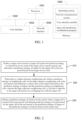
- FIG. 1 is a schematic diagram of the hardware structure of an inter-cell interference coordination device involved in an embodiment of this disclosure.
- the inter-cell interference coordination device can comprise a processor 1001 (for example a CPU), a communication bus 1002, a user interface 1003, a network interface 1004, and a memory 1005.
- the communication bus 1002 is used to enable connection and communication among these components;
- the user interface 1003 can comprise a display, and an input unit such as a keyboard;
- the network interface 1004 can optionally comprise a standard wired interface, a wireless interface (such as a WI-FI interface);
- the memory 1005 can be a high-speed RAM memory or a stable memory (non-volatile memory), for example a disk memory, the memory 1005 can optionally be a storage device independent of the aforementioned processor 1001.
- the hardware structure shown in FIG. 1 does not constitute a limitation on the inter-cell interference coordination device, and the inter-cell interference coordination device can comprise more or less components than those illustrated, a combination of certain components, or a different arrangement of components.
- the memory 1005 in FIG. 1 as a computer-readable storage medium can comprise an operating system, a network communication module, and an inter-cell interference coordination program.
- the network communication module is primarily connected to the server and performs data communication with the server; and the processor 1001 can call the inter-cell interference coordination program that is stored in the memory 1005 and perform the inter-cell interference coordination method provided in an embodiment of this disclosure.
- An embodiment of this disclosure provides an inter-cell interference coordination method.
- FIG. 2 is a schematic flow diagram of a first embodiment of the inter-cell interference coordination method of this disclosure.
- the inter-cell interference coordination method comprises steps S10 to S30 as follows.
- Step S10 a target service load of a target cell in the next period is predicted according to a historical service load of the target cell in a preset period, and a prediction strategy of targets for the target cell in the next period is determined based on the target service load.
- predicting a service load in the next period is based on a historical service load of the target cell in a preset period.
- the preset period can be a latest period, three periods, or a customized period.
- the centralized point divides all of its cells of the specified frequency point and the specified type into one or more clusters according to the overlapping coverage relationship among cells.
- the specified type refers to a specified standard (for example 4G or 5G wireless access network) and/or a specified cell state (for example a DSS cell, a super cell, etc.).
- a high-coherence neighboring cell refers to all co-frequency neighboring cells that have an overlapping coverage area with this cell.
- FIG. 3 provides the cell distribution and mutual coverage relationship of this embodiment.
- the high-coherence relationship among 8 cells is shown in Table 1.
- Table 1 40001 40002 40003 40004 40005 40006 40007 40008 40001 high-coherence high-coherence high-coherence 40002 high-coherence high-coherence 40003 high-coherence 40004 high-coherence high-coherence high-coherence 40005 high-coherence 40006 high-coherence 40007 high-coherence 40008
- the centralized point obtains a list of high-coherence co-frequency cells of the above 8 cells and marks these 8 cells as "to be queried".
- the centralized point generates a cluster "cluster 1" where a target cell is located, adds cell 40001 to the "cluster 1", and marks it as “queried”; the centralized point adds all high-coherence neighboring cells 40002, 40003 and 40004 of the cell 40001 to the "cluster 1", and marks these 3 cells as “queried”; and the centralized point adds a high-coherence neighboring cell 40005 of the cell 40004 to the "cluster 1", and marks it as "queried”.
- the high-coherence neighboring cells of all cells in the "cluster 1" are comprised in the "cluster 1", as a result, the division of the "cluster 1" is completed; the centralized point generates a cluster "cluster 2" where a target cell is located, adds cell 40006 to the "cluster 2", and marks it as “queried”; and the centralized point adds a high-coherence neighboring cell 40007 of the cell 40006 to the "cluster 2", and marks it as "queried”.
- the high-coherence neighboring cells of all cells in the "cluster 2" are comprised in the "cluster 2", as a result, the division of the "cluster 2" is completed; the centralized point generates a cluster "cluster 3" where a target cell is located, adds cell 40008 to the "cluster 3", and marks it as "queried”.
- S20 when there is a high-coherence neighboring cell, a prediction strategy of neighboring cells for the high-coherence neighboring cell in the next period is obtained, and a cluster state of the target cell is determined based on the prediction strategy of targets and the prediction strategy of neighboring cells, wherein the high-coherence neighboring cell is a cell that is adjacent to the target cell and has an overlapping area with the target cell.
- the centralized point determines a selectable strategy for each of its clusters in the next period. Since this method adopts periodic adjustment based on a cluster-based centralized inter-cell interference coordination mechanism and the period is set in advance, the next period refers to the most recent period in the future.
- a selectable strategy in the next period refers to a strategy that is selected by each cell in the next period based on its prediction of loads in the next period and other related information.
- the load here includes but is not limited to the uplink/downlink PRB utilization rate of logical cells, the number of RRC users, the number of activated users, etc.
- FIG. 4 shows selectable strategies for the 8 cells in the next period, the cells with an ID in bold font indicate that they are intended to enter a pure 5G state in the next period, and the other cells are intended to be in a 4G/5G DSS state in the next period.
- the DSS 4G of cells 40004, 40005, 40007 and 40008 predicts a light load in the next period, and the load of their basic coverage cells in the next period is light, too, therefore, the above 4 cells are intended to turn off DSS 4G in the next period and make the entire spectrum resource available to 5G, that is, they enter the pure 5G state.
- the DSS 4G of cells 40001, 40002, 40003 and 40006 predicts a heavy load in the next period, therefore, they are intended to remain in the 4G/5G DSS state in the next period.
- the selectable strategy for the entire cluster in the next period is the 4G/5G DSS state, otherwise it is the pure 5G state. Then the selectable strategy for the "cluster 1" and the "cluster 2" in the next period is the 4G/5G DSS state, and the selectable strategy for the "cluster 3" in the next period is the pure 5G state.
- S30 a prediction strategy of clusters for the cluster where a target cell is located in the next period is obtained, and it is determiend that the strategy to be performed by the target cell in the next period is the prediction strategy of targets or the prediction strategy of clusters based on the cluster state.
- the centralized point determines the cluster state of all its cells of the specified frequency point and the specified type according to the division of clusters and whether selectable strategies of neighboring cells in the next period are consistently coordinated.
- the centralized point determines the cluster state of all its cells of the specified frequency point and the specified type.
- the centralized point adds a high-coherence neighboring cell 40001 of the cell 40003 to the "small cluster 1-1"; all high-coherence neighboring cells of the "potential intra-cluster” cells in the "small cluster 1-1” are comprised in the "small cluster 1-1", therefore, the generation of the "small cluster 1-1" is completed; the "potential intra-cluster” cells + the “cluster-edge” cells in the "small cluster 1-1” account for 50%, which exceeds the predetermined threshold of 30%, therefore, the mark of cell 40003 in the "small cluster 1-1” is changed to "intra-cluster", and the mark of cell 40001 is changed to "cluster-edge".
- the centralized point generates a "small cluster 1-2", and adds the "potential intra-cluster” cell 40005 to the "small cluster 1-2"; the centralized point adds a high-coherence neighboring cell 40004 of the cell 40005 to the "small cluster 1-2"; all high-coherence neighboring cells of the "potential intra-cluster” cells in the "small cluster 1-2" are comprised in the "small cluster 1-2", therefore, the generation of the "small cluster 1-2" is completed.
- the centralized point selects the "cluster 3", marks it as “queried”, and marks cell 40008 as a "potential intra-cluster” cell.
- the centralized point generates a "small cluster 1-3", and adds the "potential intra-cluster” cell 40008 to the "small cluster 1-3"; all high-coherence neighboring cells of "potential intra-cluster” cells in the "small cluster 1-3" are comprised in the "small cluster 1-3", therefore, the generation of the "small cluster 1-3" is completed; the "potential intra-cluster” cells + the “cluster-edge” cells in the "small cluster 1-3" account for 100%, which exceeds the predetermined threshold of 30%, therefore, the mark of cell 40008 in the "small cluster 1-3" is changed to "intra-cluster".
- This embodiment provides an inter-cell interference coordination method, the method comprises: predicting a target service load of a target cell in the next period according to a historical service load of the target cell in a preset period, and determining a prediction strategy of targets for the target cell in the next period based on the target service load; when there is a high-coherence neighboring cell, obtaining a prediction strategy of neighboring cells for the high-coherence neighboring cell in the next period, and determining a cluster state of the target cell based on the prediction strategy of targets and the prediction strategy of neighboring cells, wherein the high-coherence neighboring cell is a cell that is adjacent to the target cell and has an overlapping area with the target cell; and obtaining a prediction strategy of clusters for the cluster where the target cell is located in the next period, and determining that the strategy to be performed by the target cell in the next period is the prediction strategy of targets or the prediction strategy of clusters based on the cluster state.
- this embodiment comprises: predicting a load in the next period according to the load of the target cell so as to obtain a prediction interference coordination strategy, then determining the cluster state of the target cell by the relationship between the prediction interference coordination strategy and the cluster interference coordination strategy, and determining the interference coordination strategy to be performed by the target cell in the next period according to the cluster state of the target cell.
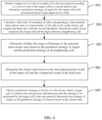
- FIG. 5 is a schematic flow diagram of a second embodiment of the inter-cell interference coordination method of this disclosure.
- this embodiment further comprises steps S21 to S23 prior to the step S30.
- Step S21 a target service load of each cell in the next period is predicted according to a service load of each cell in the cluster where a target cell is located, and a predicted load corresponding to each cell is obtained.
- Step S22 a prediction strategy of neighboring cells corresponding to each cell is obtained based on the predicted load, wherein the prediction strategy of neighboring cells is a first strategy or a second strategy.
- the step S23 comprises: obtaining a total number of cells in the cluster where a target cell is located, and calculating a first ratio and a second ratio, wherein the first ratio is the ratio of the first number of cells to the total number of cells, and the second ratio is the ratio of the second number of cells to the total number of cells; and determining the prediction strategy of clusters based on a first threshold, the first ratio and the second ratio.
- the 8 cells each perform a periodic prediction of loads and a selectable strategy for each cell in the next period is selected based on the prediction results, the selection results are described below.
- the prediction period 15 min, which is also the period for each cell to adjust its inter-cell interference coordination means.
- FIG. 4 shows selectable strategies for the 8 cells in the next period, the cells with an ID in bold font indicate that they are intended to enter the pure 5G state in the next period, and the other cells are intended to be in the 4G/5G DSS state in the next period.
- the DSS 4G of cells 40004, 40005, 40007 and 40008 predicts a light load in the next period, and the load of their basic coverage cells in the next period is light, too, therefore, the above 4 cells are intended to turn off DSS 4G in the next period and make the entire spectrum resource available to 5G, that is, they enter the pure 5G state.
- the DSS 4G of cells 40001, 40002, 40003 and 40006 predicts a heavy load in the next period, therefore, they are intended to remain in the 4G/5G DSS state in the next period.
- the selectable strategy for the entire cluster in the next period is the 4G/5G DSS state, otherwise it is the pure 5G state. Then the selectable strategy for the "cluster 1" and the "cluster 2" in the next period is the 4G/5G DSS state, and the selectable strategy for the "cluster 3" in the next period is the pure 5G state.
- the centralized point determines the cluster state of all its cells of the specified frequency point and the specified type.
- the centralized point marks the "cluster 1", the "cluster 2" and the “cluster 3" as “to be queried”, and deletes marks of the 8 cells; the centralized point selects the “cluster 1” and marks it as “queried”, and marks cells 40003 and 40005 as "potential intra-cluster” cells; the centralized point generates a "small cluster 1-1", and adds the "potential intra-cluster” cell 40003 to the "small cluster 1-1".
- the centralized point adds a high-coherence neighboring cell 40001 of the cell 40003 to the "small cluster 1-1"; all high-coherence neighboring cells of the "potential intra-cluster” cells in the "small cluster 1-1” are comprised in the "small cluster 1-1", therefore, the generation of the "small cluster 1-1" is completed; the "potential intra-cluster” cells + the “cluster-edge” cells in the "small cluster 1-1” account for 50%, which exceeds the predetermined threshold of 30%, therefore, the mark of cell 40003 in the "small cluster 1-1” is changed to "intra-cluster", and the mark of cell 40001 is changed to "cluster-edge".
- the centralized point generates a "small cluster 1-2", and adds the "potential intra-cluster” cell 40005 to the "small cluster 1-2", the centralized point adds a high-coherence neighboring cell 40004 of cell 40005 to the "small cluster 1-2"; all high-coherence neighboring cells of the "potential intra-cluster” cells in the "small cluster 1-2" are comprised in the "small cluster 1-2", therefore, the generation of the "small cluster 1-2" is completed.
- the centralized point selects the "cluster 3", marks it as “queried”, and marks cell 40008 as a "potential intra-cluster” cell.
- the centralized point generates a "small cluster 3-1", and adds the "potential intra-cluster” cell 40008 to the "small cluster 3-1"; all high-coherence neighboring cells of the "potential intra-cluster” cells in the "small cluster 3-1" are comprised in the "small cluster 3-1", therefore, the generation of the "small cluster 3-1" is completed; the "potential intra-cluster” cells + the “cluster-edge” cells in the "small cluster 3-1” account for 100%, which exceeds the predetermined threshold of 30%, therefore, the mark of cell 40008 in the "small cluster 3-1" is changed to "intra-cluster".
- This embodiment provides an inter-cell interference coordination method, the method comprises: predicting a target service load of a target cell in the next period according to a historical service load of the target cell in a preset period, and determining the prediction strategy of targets for the target cell in the next period based on the target service load; when there is a high-coherence neighboring cell, obtaining a prediction strategy of neighboring cells for the high-coherence neighboring cell in the next period, and determining a cluster state of the target cell based on the prediction strategy of targets and the prediction strategy of neighboring cells, wherein the high-coherence neighboring cell is a cell that is adjacent to the target cell and has an overlapping area with the target cell; and obtaining a prediction strategy of clusters for the cluster where the target cell is located in the next period, and determining that the strategy to be performed by the target cell in the next period is the prediction strategy of targets or the prediction strategy of clusters based on the cluster state.
- this embodiment comprises: predicting a load in the next period according to a load of the target cell so as to obtain a prediction interference coordination strategy, then determining the cluster state of the target cell by the relationship between the prediction interference coordination strategy and the cluster interference coordination strategy, and determining the interference coordination strategy to be performed by the target cell in the next period according to the cluster state of the target cell.
- FIG. 6 is a schematic flow diagram of a third embodiment of an inter-cell interference coordination method of this disclosure.
- the step S20 comprises steps S24 to S26.
- Step S24 a third ratio of a number of cells corresponding to the "potential intra-cluster" state to a total number of all cells in the small cluster is calculated, and the third ratio is compared with a second threshold, wherein the small cluster comprises the target cell and the high-coherence neighboring cell.
- Step S25 it is determined whether the target cell belongs to the "potential intra-cluster" state based on the prediction strategy of targets and the prediction strategy of all neighboring cells.
- Step S26 the cluster state is determined based on the state determination result of the target cell and the comparison result of the third ratio.
- the centralized point determines the cluster state of all its cells of the specified frequency point and the specified type.
- the centralized point marks the "cluster 1", the "cluster 2" and the “cluster 3" as “to be queried”, and deletes marks of the 8 cells; the centralized point selects the “cluster 1” and marks it as “queried”, and marks cells 40003 and 40005 as "potential intra-cluster” cells; the centralized point generates a "small cluster 1-1", and adds the "potential intra-cluster” cell 40003 to the "small cluster 1-1".
- the centralized point adds a high-coherence neighboring cell 40001 of the cell 40003 to the "small cluster 1-1"; all high-coherence neighboring cells of the "potential intra-cluster” cells in the “small cluster 1-1” are comprised in the "small cluster 1-1", therefore, the generation of the "small cluster 1-1" is completed; the "potential intra-cluster” cells + the “cluster-edge” cells in the "small cluster 1-1” account for 50%, which exceeds the predetermined threshold of 30%, therefore, the mark of cell 40003 in the "small cluster 1-1” is changed to "intra-cluster", and the mark of the cell 40001 is changed to "cluster-edge".
- the centralized point generates a "small cluster 1-2", and adds the "potential intra-cluster” cell 40005 to the "small cluster 1-2", the centralized point adds a high-coherence neighboring cell 40004 of the cell 40005 to the "small cluster 1-2"; all high-coherence neighboring cells of the "potential intra-cluster” cells in the "small cluster 1-2" are comprised in the "small cluster 1-2", therefore, the generation of the "small cluster 1-2" is completed.
- the centralized point selects the "cluster 3", marks it as “queried”, and marks cell 40008 as a "potential intra-cluster” cell.
- the centralized point generates a "small cluster 3-1", and adds the "potential intra-cluster” cell 40008 to the "small cluster 3-1"; all high-coherence neighboring cells of the "potential intra-cluster” cells in the "small cluster 3-1" are comprised in the "small cluster 3-1", therefore, the generation of the "small cluster 3-1" is completed; the "potential intra-cluster” cells + the “cluster-edge” cells in the "small cluster 3-1” account for 100%, which exceeds the predetermined threshold of 30%, therefore, the mark of the cell 40008 in the "small cluster 3-1" is changed to "intra-cluster".
- This embodiment provides an inter-cell interference coordination method, the method comprises: predicting a target service load of a target cell in the next period according to a historical service load of the target cell in a preset period, and determining the prediction strategy of targets for the target cell in the next period based on the target service load; when there is a high-coherence neighboring cell, obtaining a prediction strategy of neighboring cells for the high-coherence neighboring cell in the next period, and determining a cluster state of the target cell based on the prediction strategy of targets and the prediction strategy of neighboring cells, wherein the high-coherence neighboring cell is a cell that is adjacent to the target cell and has an overlapping area with the target cell; and obtaining a prediction strategy of clusters for the cluster where the target cell is located in the next period, and determining that the strategy to be performed by the target cell in the next period is the prediction strategy of targets or the prediction strategy of clusters based on the cluster state.
- this embodiment comprises: predicting a load in the next period according to a load of the target cell so as to obtain a prediction interference coordination strategy, then determining the cluster state of the target cell by the relationship between the prediction interference coordination strategy and the cluster interference coordination strategy, and determining the interference coordination strategy to be performed by the target cell in the next period according to the cluster state of the target cell.
- the step S26 comprises: if the target cell belongs to the "potential intra-cluster” state and the third ratio is greater than the second threshold, then it is determined that the cluster state is the "intra-cluster” state; if the target cell belongs to the "potential intra-cluster” state and the third ratio is not greater than the second threshold, then it is determined that the cluster state is the "outside-the-cluster” state.
- this embodiment further comprises: if the target cell does not belong to the "potential intra-cluster” state and the third ratio is greater than the second threshold, then it is determed that the cluster state is the "cluster-edge” state; if the target cell does not belong to the "potential intra-cluster” state and the third ratio is not greater than the second threshold, then it is determined that the cluster state is the "outside-the-cluster” state.
- the centralized point marks the "cluster 1", the "cluster 2" and the “cluster 3" as "to be queried", and deletes marks of the 8 cells.
- the centralized point selects the "cluster 1", marks it as “queried”, and marks cell 40003 and 40005 as "potential intra-cluster” cells.
- the centralized point generates a "small cluster 1-1", and adds the "potential intra-cluster” cell 40003 to the "small cluster 1-1".
- the centralized point adds a high-coherence neighboring cell 40001 of the cell 40003 to the "small cluster 1-1"; all high-coherence neighboring cells of the "potential intra-cluster” cells in the “small cluster 1-1” are comprised in the "small cluster 1-1", therefore, the generation of the "small cluster 1-1" is completed; the "potential intra-cluster” cells + the “cluster-edge” cells in the "small cluster 1-1” account for 50%, which exceeds the predetermined threshold of 30%, therefore, the mark of the cell 40003 in the "small cluster 1-1” is changed to "intra-cluster", and the mark of the cell 40001 is changed to "cluster-edge".
- the centralized point generates a "small cluster 1-2", and adds the "potential intra-cluster” cell 40005 to the "small cluster 1-2", the centralized point adds a high-coherence neighboring cell 40004 of the cell 40005 to the "small cluster 1-2"; all high-coherence neighboring cells of the "potential intra-cluster” cells in the "small cluster 1-2" are comprised in the "small cluster 1-2", therefore, the generation of the "small cluster 1-2" is completed.
- the centralized point selects the "cluster 3", marks it as “queried”, and marks cell 40008 as a "potential intra-cluster” cell.
- the centralized point generates a "small cluster 3-1", and adds the "potential intra-cluster” cell 40008 to the "small cluster 3-1"; all high-coherence neighboring cells of the "potential intra-cluster” cells in the "small cluster 3-1" are comprised in the "small cluster 3-1", therefore, the generation of the "small cluster 3-1" is completed; the "potential intra-cluster” cells + the “cluster-edge” cells in the "small cluster 3-1” account for 100%, which exceeds the predetermined threshold of 30%, therefore, the mark of the cell 40008 in the "small cluster 3-1" is changed to "intra-cluster".
- the centralized point determines the cluster state of all its cells of the specified frequency point and the specified type.
- the centralized point marks the "cluster 1", the "cluster 2" and the “cluster 3" as “to be queried”, and deletes marks of the 8 cells; the centralized point selects the “cluster 1” and marks it as “queried”, and marks cells 40003 and 40005 as "potential intra-cluster” cells; the centralized point generates the "small cluster 1-1", and adds the "potential intra-cluster” cell 40003 to the "small cluster 1-1".
- the centralized point adds a high-coherence neighboring cell 40001 of the cell 40003 to the "small cluster 1-1"; all high-coherence neighboring cells of the "potential intra-cluster” cells in the “small cluster 1-1” are comprised in the "small cluster 1-1", therefore, the generation of the "small cluster 1-1" is completed; the "potential intra-cluster” cells + the “cluster-edge” cells in the "small cluster 1-1” account for 50%, which exceeds the predetermined threshold of 30%, therefore, the mark of the cell 40003 in the "small cluster 1-1” is changed to "intra-cluster", and the mark of cell 40001 is changed to "cluster-edge".
- the centralized point generates the "small cluster 1-2", and adds the "potential intra-cluster” cell 40005 to the "small cluster 1-2", the centralized point adds a high-coherence neighboring cell 40004 of the cell 40005 to the "small cluster 1-2"; all high-coherence neighboring cells of the "potential intra-cluster” cells in the "small cluster 1-2" are comprised in the "small cluster 1-2", therefore, the generation of the "small cluster 1-2" is completed.
- the centralized point selects the "cluster 3", marks it as “queried”, and marks cell 40008 as a "potential intra-cluster” cell.
- the centralized point generates the "small cluster 3-1", and adds the "potential intra-cluster” cell 40008 to the "small cluster 3-1"; all high-coherence neighboring cells of the "potential intra-cluster” cells in the "small cluster 3-1" are comprised in the "small cluster 3-1", therefore, the generation of the "small cluster 3-1" is completed; the "potential intra-cluster” cells + the “cluster-edge” cells in the "small cluster 3-1” account for 100%, which exceeds the predetermined threshold of 30%, therefore, the mark of cell 40008 in the "small cluster 3-1" is changed to "intra-cluster".
- This embodiment provides an inter-cell interference coordination method, the method comprises: predicting a target service load of a target cell in the next period according to a historical service load of the target cell in a preset period, and determining a prediction strategy of targets for the target cell in the next period based on the target service load; when there is a high-coherence neighboring cell, obtaining a prediction strategy of neighboring cells for the high-coherence neighboring cell in the next period, and determining a cluster state of the target cell based on the prediction strategy of targets and the prediction strategy of neighboring cells, wherein the high-coherence neighboring cell is a cell that is adjacent to the target cell and has an overlapping area with the target cell; and obtaining a prediction strategy of clusters for the cluster where the target cell is located in the next period, and determining that the strategy to be performed by the target cell in the next period is the prediction strategy of targets or the prediction strategy of clusters based on the cluster state.
- this embodiment comprises: predicting a load in the next period according to a load of the target cell so as to obtain a prediction interference coordination strategy, then determining the cluster state of the target cell by the relationship between the prediction interference coordination strategy and the cluster interference coordination strategy, and determining the interference coordination strategy to be performed by the target cell in the next period according to the cluster state of the target cell.
- this embodiment further comprises: dividing the target cell, the high-coherence neighboring cell, and cells having an overlapping area with the high-coherence neighboring cell into a new cluster, and making the new cluster as the cluster where the target cell is located.
- determining that the strategy to be performed by the target cell in the next period is the prediction strategy of targets or the prediction strategy of clusters based on the cluster state further comprises: if the cluster state is the "cluster-edge" state or the "intra-cluster” state, then it is determined that the strategy to be performed in the next period is the prediction strategy of targets; and if the cluster state is the "outside-of-cluster” state, then it is determined that the strategy to be performed in the next period is the cluster interference coordination strategy.
- the centralized point determines the interference coordination strategy to be performed by all of its cells of the specified frequency point and the specified type in the next period.
- Table 2 mark of cells Strategy to be performed by the cell in the next period Outside-of-c luster Enable the selectable strategies for the cluster where the cell is located in the next period and the corresponding inter-cell interference coordination strategy Intra-cluster Enable the selectable strategies for the cell in the next period and the state and the inter-cell interference coordination strategy corresponding to the "intra-cluster” state
- Cluster-edge Enable the selectable strategies for the cell in the next period and the state and the inter-cell interference coordination strategy corresponding to the "cluster-edge" state
- Cells 40005 and 40008 are in the "intra-cluster” state and the selectable strategy for these cells in the next period is the “pure 5G”: the "5G” state will be enabled in the next period without adopting any specific inter-cell interference coordination strategy.
- Cells 40003, 40006 and 40007 are in the "intra-cluster" state and the selectable strategy for these cells in the next period is the "4G/5G DSS" state: the cells will enable the "4G/5G DSS” state in the next period, and dynamically adjust whether to enable a symbol-level rate matching, by means of adaptive switching for the same, and based on the intensity of CRS interference from neighboring co-frequency 4G cells with varying PCI (Physical Cell Identifier) mod 3 that effects each user.
- PCI Physical Cell Identifier
- RBs Resource Block
- Cell 40004 is in the "cluster-edge” state and the selectable strategy for the cell in the next period is the "pure 5G” state: the cell will enable the “pure 5G” state in the next period, and dynamically adjust whether to enable the symbol-level rate matching, by means of adaptive switching for the same, and based on the intensity of CRS interference from neighboring co-frequency 4G cells that effects each user.
- CSI IM Channel State Information Interference Measurement
- Cell 40001 is in the "cluster-edge" state and the selectable strategy for the cell in the next period is the "4G/5G DSS" state: the cell will enable the "4G/5G DSS” state in the next period, and dynamically adjust whether to enable the symbol-level rate matching, by means of adaptive switching for the same, and based on the intensity of CRS interference from neighboring co-frequency 4G cells with varying PCF mod 3 that effects each user.
- the selectable strategy for the cell in the next period is the "4G/5G DSS” state: the cell will enable the "4G/5G DSS” state in the next period, and dynamically adjust whether to enable the symbol-level rate matching, by means of adaptive switching for the same, and based on the intensity of CRS interference from neighboring co-frequency 4G cells with varying PCF mod 3 that effects each user.
- bandwidth adaptation and according to the interference when measuring different RBs by each user on CSI IM, RBs that are stable and have high interference can be avoided during scheduling.
- Cell 40002 is in the "outside-of-cluster" state and the selectable strategy for the cluster where the cell is located in the next period is the "4G/5G DSS" state: the cell will enable the "4G/5G DSS” state in the next period, and dynamically adjust whether to enable the symbol-level rate matching, by means of adaptive switching for the same, and based on the intensity of CRS interference from neighboring co-frequency 4G cells with varying PCF mod 3 that effects each user.
- bandwidth adaptation and according to the interference when measuring different RBs by each user on CSI IM RBs that are stable and have high interference can be avoided during scheduling.
- This embodiment provides an inter-cell interference coordination method, the method comprises: predicting a target service load of a target cell in the next period according to a historical service load of the target cell in a preset period, and determining a prediction strategy of targets for the target cell in the next period based on the target service load; when there is a high-coherence neighboring cell, obtaining a prediction strategy of neighboring cells for the high-coherence neighboring cell in the next period, and determining a cluster state of the target cell based on the prediction strategy of targets and the prediction strategy of neighboring cells, wherein the high-coherence neighboring cell is a cell that is adjacent to the target cell and has an overlapping area with the target cell; and obtaining a prediction strategy of clusters for the cluster where the target cell is located in the next period, and determining that the strategy to be performed by the target cell in the next period is the prediction strategy of targets or the prediction strategy of clusters based on the cluster state.
- this embodiment comprises: predicting a load in the next period according to a load of the target cell so as to obtain a prediction interference coordination strategy, then determining the cluster state of the target cell by the relationship between the prediction interference coordination strategy and the cluster interference coordination strategy, and determining the interference coordination strategy to be performed by the target cell in the next period according to the cluster state of the target cell.
- an embodiment of this disclosure further provides a computer-readable storage medium.
- the computer-readable storage medium of this disclosure stores an inter-cell interference coordination program thereon, wherein the inter-cell interference coordination program, when executed by a processor, implements the steps of the above-mentioned inter-cell interference coordination method.
- the method implemented by the inter-cell interference coordination program can refer to various embodiments of the inter-cell interference coordination method in this disclosure, and will not be repeated here.
- the terms “include”, “comprise” or any other variations thereof are intended to cover a non-exclusive inclusion, such that a process, method, article, or system that comprises a series of elements not only comprises those elements, but also comprises other elements that are not explicitly listed, or further comprises elements that are inherent to the process, method, article, or system. Without further limitations, an element limited by “comprising a" does not exclude the presence of other identical elements in the process, method, article, or system that comprises the element.
- This disclosure can be used in numerous general or special computer system environments or configurations. For example: a personal computer, a server computer, a handheld or portable device, a tablet device, a multiprocessor system, a microprocessor-based system, a set-top box, a programmable consumer electronics device, a network PC, a minicomputer, a mainframe computer, and a distributed computing environment comprising any of the above systems or devices, etc.
- This disclosure can be described in the general context of computer-executable instructions that can be executed by a computer, such as program modules.
- program modules comprise routines, programs, objects, components, data structures and the like that perform specific tasks or implement specific abstract data types.
- This disclosure can also be practiced in a distributed computing environment where tasks can be performed by remote processing devices that are connected by a communication network.
- program modules can be located in both local and remote computer storage media that comprises storage devices therein.
- the technical solution of this disclosure essentially or the part contributing to the related art may be embodied in the form of a software product, the computer software product is stored in a storage medium (such as a ROM/RAM, a magnetic disk, and an optical disk), and comprises a number of instructions for instructing a terminal device (which may be a mobile phone, a computer, a server, an air conditioner, or a network device) to execute the methods described in various embodiments of this disclosure.
- a storage medium such as a ROM/RAM, a magnetic disk, and an optical disk
- a terminal device which may be a mobile phone, a computer, a server, an air conditioner, or a network device
Landscapes
- Engineering & Computer Science (AREA)
- Computer Networks & Wireless Communication (AREA)
- Signal Processing (AREA)
- Mobile Radio Communication Systems (AREA)
Abstract
This disclosure provides an inter-cell interference coordination method, apparatus, device, and storage medium, the method comprises: predicting a target service load of a target cell in the next period, obtaining a prediction strategy of neighboring cells for a high-coherence neighboring cell in the next period, and determining a cluster state of the target cell based on the prediction strategy of targets and the prediction strategy of neighboring cells; obtaining a prediction strategy of clusters for the cluster where the target cell is located in the next period, and determining that the strategy to be performed by the target cell in the next period is the prediction strategy of targets or the prediction strategy of clusters based on the cluster state. According to this method, the accuracy of selecting the interference coordination strategy by different cells is improved, mutual signal interference among cells is avoided, signal strength among centralized cells is improved, and the technical problem of signal difference among centralized cells is solved.
Description
- This disclosure claims priority to Chinese patent application
CN202210675300.4 filed on June 15, 2022 - This disclosure relates to the technical field of mobile wireless networks, and in particular to an inter-cell interference coordination method, device and computer-readable storage medium.
- How to efficiently use spectrum resources has become a research focus in the field of mobile wireless networks, and a series of novel technologies are constantly emerging. Among them, DSS (Dynamic Spectrum Sharing) orchestration is one of the representatives.
- DSS orchestration refers to a DSS state in which a cell supports simultaneous deployment of wireless access network services of a plurality of standards on a single spectrum (such as 3G/4G/5G DSS), and a state in which service of only one single standard is provided (such as pure 5G), whereas the real-time state of the cell is dynamically adjusted with changes of real-time proportion of loads of users of each standard. DSS orchestration can be used to on one hand dynamically adapt to the trend of changes of services of different standards, and on the other hand significantly improve the efficiency of spectrum resource usage by eliminating fixed overhead of DSS rate matching.
- A primary object of this disclosure is to provide an inter-cell interference coordination method, apparatus, device and computer-readable storage medium.
- In a first aspect, this disclosure provides an inter-cell interference coordination method, the method comprises: predicting a target service load of a target cell in the next period according to a historical service load of the target cell in a preset period, and determining a prediction strategy of targets for the target cell in the next period based on the target service load; when there is a high-coherence neighboring cell, obtaining a prediction strategy of neighboring cells for the high-coherence neighboring cell in the next period, and determining a cluster state of the target cell based on the prediction strategy of targets and the prediction strategy of neighboring cells, wherein the high-coherence neighboring cell is a cell that is adjacent to the target cell and has an overlapping area with the target cell; and obtaining a prediction strategy of clusters for the cluster where the target cell is located in the next period, and determining that the strategy to be performed by the target cell in the next period is the prediction strategy of targets or the prediction strategy of clusters based on the cluster state.
- In a second aspect, this disclosure further provides an inter-cell interference coordination device, the inter-cell interference coordination device comprises a processor, a memory, and an inter-cell interference coordination program that is stored in the memory and is executable by the processor, and the inter-cell interference coordination program, when executed by the processor, implements the above-mentioned inter-cell interference coordination method.
- In a third aspect, this disclosure further provides a computer-readable storage medium, the computer-readable storage medium stores an inter-cell interference coordination program thereon, wherein the inter-cell interference coordination program, when executed by a processor, implements the above-mentioned inter-cell interference coordination method.
-
-
FIG. 1 is a schematic diagram of the hardware structure of an inter-cell interference coordination device involved in an embodiment of this disclosure; -
FIG. 2 is a schematic flow diagram of a first embodiment of an inter-cell interference coordination method of this disclosure; -
FIG. 3 is a schematic diagram of cell distribution and mutual coverage relationship in the inter-cell interference coordination method of this disclosure; -
FIG. 4 is a schematic diagram of selectable strategies for cells in the next period in the inter-cell interference coordination method of this disclosure; -
FIG. 5 is a schematic flow diagram of a second embodiment of the inter-cell interference coordination method of this disclosure; and -
FIG. 6 is a schematic flow diagram of a third embodiment of the inter-cell interference coordination method of this disclosure. - The realization of the purpose, functional features and advantages of this disclosure will be further illustrated with reference to the accompanying drawings in conjunction with embodiments.
- It should be understood that the specific embodiments described here are merely used to illustrate this disclosure and not intended to be limiting.
- Since there may be significant difference in the proportion of services of different standards among different cells, it is highly possible that the cell states among neighboring cells cannot be aligned after DSS orchestration is enabled. If co-frequency neighboring cells are in a 4G/5G DSS state while this cell is in a pure 5G state, then the CRS (Cell Reference Signal) of co-frequency neighboring DSS 4G will cause severe interference to the PDSCH (Physical Downlink Shared Channel) of this cell. When the proportion of services of each cell is different, it is not possible to select an appropriate interference coordination strategy, which results in signal difference among cells. Therefore, how to solve the signal difference among centralized cells has become an urgent technical problem that needs to be solved.
- The inter-cell interference coordination method involved in embodiments of this disclosure is mainly applied to an inter-cell interference coordination device, the inter-cell interference coordination device can be a PC, a portable computer, a mobile terminal, or other devices with display and processing functions.
- Referring to
FIG. 1, FIG. 1 is a schematic diagram of the hardware structure of an inter-cell interference coordination device involved in an embodiment of this disclosure. In an embodiment of this disclosure, the inter-cell interference coordination device can comprise a processor 1001 (for example a CPU), acommunication bus 1002, auser interface 1003, anetwork interface 1004, and amemory 1005. Thecommunication bus 1002 is used to enable connection and communication among these components; theuser interface 1003 can comprise a display, and an input unit such as a keyboard; thenetwork interface 1004 can optionally comprise a standard wired interface, a wireless interface (such as a WI-FI interface); thememory 1005 can be a high-speed RAM memory or a stable memory (non-volatile memory), for example a disk memory, thememory 1005 can optionally be a storage device independent of theaforementioned processor 1001. - Those skilled in the art can understand that the hardware structure shown in
FIG. 1 does not constitute a limitation on the inter-cell interference coordination device, and the inter-cell interference coordination device can comprise more or less components than those illustrated, a combination of certain components, or a different arrangement of components. - Continuing to refer to
FIG. 1 , thememory 1005 inFIG. 1 as a computer-readable storage medium can comprise an operating system, a network communication module, and an inter-cell interference coordination program. - In
FIG. 1 , the network communication module is primarily connected to the server and performs data communication with the server; and theprocessor 1001 can call the inter-cell interference coordination program that is stored in thememory 1005 and perform the inter-cell interference coordination method provided in an embodiment of this disclosure. - An embodiment of this disclosure provides an inter-cell interference coordination method.
- Referring to
FIG. 2, FIG. 2 is a schematic flow diagram of a first embodiment of the inter-cell interference coordination method of this disclosure. - In this embodiment, the inter-cell interference coordination method comprises steps S10 to S30 as follows.
- Step S10: a target service load of a target cell in the next period is predicted according to a historical service load of the target cell in a preset period, and a prediction strategy of targets for the target cell in the next period is determined based on the target service load.
- In this embodiment, predicting a service load in the next period is based on a historical service load of the target cell in a preset period. The preset period can be a latest period, three periods, or a customized period. The centralized point divides all of its cells of the specified frequency point and the specified type into one or more clusters according to the overlapping coverage relationship among cells. The specified type refers to a specified standard (for example 4G or 5G wireless access network) and/or a specified cell state (for example a DSS cell, a super cell, etc.). A high-coherence neighboring cell refers to all co-frequency neighboring cells that have an overlapping coverage area with this cell.
-
FIG. 3 provides the cell distribution and mutual coverage relationship of this embodiment. In accordance with the scenario inFIG. 3 , the high-coherence relationship among 8 cells is shown in Table 1.Table 1 40001 40002 40003 40004 40005 40006 40007 40008 40001 high-coherence high-coherence high- coherence 40002 high-coherence high- coherence 40003 high- coherence 40004 high-coherence high-coherence high- coherence 40005 high- coherence 40006 high- coherence 40007 high- coherence 40008 - The centralized point obtains a list of high-coherence co-frequency cells of the above 8 cells and marks these 8 cells as "to be queried".
- The centralized point generates a cluster "cluster 1" where a target cell is located, adds
cell 40001 to the "cluster 1", and marks it as "queried"; the centralized point adds all high-coherence neighboring cells cell 40001 to the "cluster 1", and marks these 3 cells as "queried"; and the centralized point adds a high-coherence neighboring cell 40005 of thecell 40004 to the "cluster 1", and marks it as "queried". - The high-coherence neighboring cells of all cells in the "cluster 1" are comprised in the "cluster 1", as a result, the division of the "cluster 1" is completed; the centralized point generates a cluster "cluster 2" where a target cell is located, adds
cell 40006 to the "cluster 2", and marks it as "queried"; and the centralized point adds a high-coherence neighboring cell 40007 of thecell 40006 to the "cluster 2", and marks it as "queried". - The high-coherence neighboring cells of all cells in the "cluster 2" are comprised in the "cluster 2", as a result, the division of the "cluster 2" is completed; the centralized point generates a cluster "
cluster 3" where a target cell is located, addscell 40008 to the "cluster 3", and marks it as "queried". - The high-coherence neighboring cells of all cells in the "
cluster 3" are comprised in the "cluster 3", as a result, the division of the "cluster 3" is completed. - All 8 cells of the centralized point have been marked as "queried".
- S20: when there is a high-coherence neighboring cell, a prediction strategy of neighboring cells for the high-coherence neighboring cell in the next period is obtained, and a cluster state of the target cell is determined based on the prediction strategy of targets and the prediction strategy of neighboring cells, wherein the high-coherence neighboring cell is a cell that is adjacent to the target cell and has an overlapping area with the target cell.
- In this embodiment, the centralized point determines a selectable strategy for each of its clusters in the next period. Since this method adopts periodic adjustment based on a cluster-based centralized inter-cell interference coordination mechanism and the period is set in advance, the next period refers to the most recent period in the future. A selectable strategy in the next period refers to a strategy that is selected by each cell in the next period based on its prediction of loads in the next period and other related information. The load here includes but is not limited to the uplink/downlink PRB utilization rate of logical cells, the number of RRC users, the number of activated users, etc.
-
FIG. 4 shows selectable strategies for the 8 cells in the next period, the cells with an ID in bold font indicate that they are intended to enter a pure 5G state in the next period, and the other cells are intended to be in a 4G/5G DSS state in the next period. - The DSS 4G of
cells cells - Assuming that we define that if more than 40% of cells in a cluster are intended to be in the 4G/5G DSS state in the next period, then the selectable strategy for the entire cluster in the next period is the 4G/5G DSS state, otherwise it is the pure 5G state. Then the selectable strategy for the "cluster 1" and the "cluster 2" in the next period is the 4G/5G DSS state, and the selectable strategy for the "
cluster 3" in the next period is the pure 5G state. - S30: a prediction strategy of clusters for the cluster where a target cell is located in the next period is obtained, and it is determiend that the strategy to be performed by the target cell in the next period is the prediction strategy of targets or the prediction strategy of clusters based on the cluster state.
- In this embodiment, the centralized point determines the cluster state of all its cells of the specified frequency point and the specified type according to the division of clusters and whether selectable strategies of neighboring cells in the next period are consistently coordinated.
- In this embodiment, the centralized point determines the cluster state of all its cells of the specified frequency point and the specified type.
- The centralized point marks the "cluster 1", the "cluster 2" and the "
cluster 3" as "to be queried", and deletes marks of the 8 cells; the centralized point selects the "cluster 1" and marks it as "queried", and markscells cell 40003 to the "small cluster 1-1". - The centralized point adds a high-
coherence neighboring cell 40001 of thecell 40003 to the "small cluster 1-1"; all high-coherence neighboring cells of the "potential intra-cluster" cells in the "small cluster 1-1" are comprised in the "small cluster 1-1", therefore, the generation of the "small cluster 1-1" is completed; the "potential intra-cluster" cells + the "cluster-edge" cells in the "small cluster 1-1" account for 50%, which exceeds the predetermined threshold of 30%, therefore, the mark ofcell 40003 in the "small cluster 1-1" is changed to "intra-cluster", and the mark ofcell 40001 is changed to "cluster-edge". - The centralized point generates a "small cluster 1-2", and adds the "potential intra-cluster"
cell 40005 to the "small cluster 1-2"; the centralized point adds a high-coherence neighboring cell 40004 of thecell 40005 to the "small cluster 1-2"; all high-coherence neighboring cells of the "potential intra-cluster" cells in the "small cluster 1-2" are comprised in the "small cluster 1-2", therefore, the generation of the "small cluster 1-2" is completed. - The "potential intra-cluster" cells + the "cluster-edge" cells in the "small cluster 1-2" account for 50%, which exceeds the predetermined threshold of 30%, therefore, the mark of
cell 40005 in the "small cluster 1-2" is changed to "intra-cluster", and the mark ofcell 40004 is changed to "cluster-edge". - There are no "potential intra-cluster" cells in the "cluster 1", therefore, the
unmarked cell 40002 in the "cluster 1" is marked as "outside-the-cluster"; the centralized point selects the "cluster 2" and marks it as "queried". - There are no "potential intra-cluster" cells or "intra-cluster" cells or "cluster-edge" cells in the "cluster 2", therefore,
cells - The centralized point selects the "
cluster 3", marks it as "queried", and markscell 40008 as a "potential intra-cluster" cell. - The centralized point generates a "small cluster 1-3", and adds the "potential intra-cluster"
cell 40008 to the "small cluster 1-3"; all high-coherence neighboring cells of "potential intra-cluster" cells in the "small cluster 1-3" are comprised in the "small cluster 1-3", therefore, the generation of the "small cluster 1-3" is completed; the "potential intra-cluster" cells + the "cluster-edge" cells in the "small cluster 1-3" account for 100%, which exceeds the predetermined threshold of 30%, therefore, the mark ofcell 40008 in the "small cluster 1-3" is changed to "intra-cluster". - There are no "potential intra-cluster" cells in the "
cluster 3", and all clusters of the centralized point are marked as "queried". - This embodiment provides an inter-cell interference coordination method, the method comprises: predicting a target service load of a target cell in the next period according to a historical service load of the target cell in a preset period, and determining a prediction strategy of targets for the target cell in the next period based on the target service load; when there is a high-coherence neighboring cell, obtaining a prediction strategy of neighboring cells for the high-coherence neighboring cell in the next period, and determining a cluster state of the target cell based on the prediction strategy of targets and the prediction strategy of neighboring cells, wherein the high-coherence neighboring cell is a cell that is adjacent to the target cell and has an overlapping area with the target cell; and obtaining a prediction strategy of clusters for the cluster where the target cell is located in the next period, and determining that the strategy to be performed by the target cell in the next period is the prediction strategy of targets or the prediction strategy of clusters based on the cluster state. By means of the above method, this embodiment comprises: predicting a load in the next period according to the load of the target cell so as to obtain a prediction interference coordination strategy, then determining the cluster state of the target cell by the relationship between the prediction interference coordination strategy and the cluster interference coordination strategy, and determining the interference coordination strategy to be performed by the target cell in the next period according to the cluster state of the target cell. As a result, this improves the accuracy of selecting the interference coordination strategy by different cells, avoids mutual signal interference among cells, improves signal strength among centralized cells, and solves the technical problem of signal difference among centralized cells.
- Referring to
FIG. 5, FIG. 5 is a schematic flow diagram of a second embodiment of the inter-cell interference coordination method of this disclosure. - Based on the above embodiment shown in
FIG. 2 , this embodiment further comprises steps S21 to S23 prior to the step S30. - Step S21: a target service load of each cell in the next period is predicted according to a service load of each cell in the cluster where a target cell is located, and a predicted load corresponding to each cell is obtained.
- Step S22: a prediction strategy of neighboring cells corresponding to each cell is obtained based on the predicted load, wherein the prediction strategy of neighboring cells is a first strategy or a second strategy.
- Step S23: a first number of cells corresponding to the first strategy and a second number of cells corresponding to the second strategy in the cluster where a target cell is located are obtained, and a prediction strategy of clusters is determined based on the first number of cells and the second number of cells.
- Further, in this embodiment, the step S23 comprises: obtaining a total number of cells in the cluster where a target cell is located, and calculating a first ratio and a second ratio, wherein the first ratio is the ratio of the first number of cells to the total number of cells, and the second ratio is the ratio of the second number of cells to the total number of cells; and determining the prediction strategy of clusters based on a first threshold, the first ratio and the second ratio.
- In this embodiment, as shown in
FIG. 4 , the 8 cells each perform a periodic prediction of loads and a selectable strategy for each cell in the next period is selected based on the prediction results, the selection results are described below. Here we set the prediction period to 15 min, which is also the period for each cell to adjust its inter-cell interference coordination means.FIG. 4 shows selectable strategies for the 8 cells in the next period, the cells with an ID in bold font indicate that they are intended to enter the pure 5G state in the next period, and the other cells are intended to be in the 4G/5G DSS state in the next period. - The DSS 4G of
cells cells - Assuming that we define that if more than 40% of cells in a cluster are intended to be in the 4G/5G DSS state in the next period, then the selectable strategy for the entire cluster in the next period is the 4G/5G DSS state, otherwise it is the pure 5G state. Then the selectable strategy for the "cluster 1" and the "cluster 2" in the next period is the 4G/5G DSS state, and the selectable strategy for the "
cluster 3" in the next period is the pure 5G state. - The centralized point determines the cluster state of all its cells of the specified frequency point and the specified type.
- The centralized point marks the "cluster 1", the "cluster 2" and the "
cluster 3" as "to be queried", and deletes marks of the 8 cells; the centralized point selects the "cluster 1" and marks it as "queried", and markscells cell 40003 to the "small cluster 1-1". - The centralized point adds a high-
coherence neighboring cell 40001 of thecell 40003 to the "small cluster 1-1"; all high-coherence neighboring cells of the "potential intra-cluster" cells in the "small cluster 1-1" are comprised in the "small cluster 1-1", therefore, the generation of the "small cluster 1-1" is completed; the "potential intra-cluster" cells + the "cluster-edge" cells in the "small cluster 1-1" account for 50%, which exceeds the predetermined threshold of 30%, therefore, the mark ofcell 40003 in the "small cluster 1-1" is changed to "intra-cluster", and the mark ofcell 40001 is changed to "cluster-edge". - The centralized point generates a "small cluster 1-2", and adds the "potential intra-cluster"
cell 40005 to the "small cluster 1-2", the centralized point adds a high-coherence neighboring cell 40004 ofcell 40005 to the "small cluster 1-2"; all high-coherence neighboring cells of the "potential intra-cluster" cells in the "small cluster 1-2" are comprised in the "small cluster 1-2", therefore, the generation of the "small cluster 1-2" is completed. - The "potential intra-cluster" cells + the "cluster-edge" cells in the "small cluster 1-2" account for 50%, which exceeds the predetermined threshold of 30%, therefore, the mark of
cell 40005 in the "small cluster 1-2" is changed to "intra-cluster", and the mark ofcell 40004 is changed to "cluster-edge". - There are no "potential intra-cluster" cells in the "cluster 1", therefore, the
unmarked cell 40002 in the "cluster 1" is marked as "outside-the-cluster"; the centralized point selects the "cluster 2" and marks it as "queried". - There are no "potential intra-cluster" cells or "intra-cluster" cells or "cluster-edge" cells in the "cluster 2", therefore,
cells - The centralized point selects the "
cluster 3", marks it as "queried", and markscell 40008 as a "potential intra-cluster" cell. - The centralized point generates a "small cluster 3-1", and adds the "potential intra-cluster"
cell 40008 to the "small cluster 3-1"; all high-coherence neighboring cells of the "potential intra-cluster" cells in the "small cluster 3-1" are comprised in the "small cluster 3-1", therefore, the generation of the "small cluster 3-1" is completed; the "potential intra-cluster" cells + the "cluster-edge" cells in the "small cluster 3-1" account for 100%, which exceeds the predetermined threshold of 30%, therefore, the mark ofcell 40008 in the "small cluster 3-1" is changed to "intra-cluster". - There are no "potential intra-cluster" cells in the "
cluster 3", and all clusters of the centralized point are marked as "queried". - This embodiment provides an inter-cell interference coordination method, the method comprises: predicting a target service load of a target cell in the next period according to a historical service load of the target cell in a preset period, and determining the prediction strategy of targets for the target cell in the next period based on the target service load; when there is a high-coherence neighboring cell, obtaining a prediction strategy of neighboring cells for the high-coherence neighboring cell in the next period, and determining a cluster state of the target cell based on the prediction strategy of targets and the prediction strategy of neighboring cells, wherein the high-coherence neighboring cell is a cell that is adjacent to the target cell and has an overlapping area with the target cell; and obtaining a prediction strategy of clusters for the cluster where the target cell is located in the next period, and determining that the strategy to be performed by the target cell in the next period is the prediction strategy of targets or the prediction strategy of clusters based on the cluster state. By means of the above method, this embodiment comprises: predicting a load in the next period according to a load of the target cell so as to obtain a prediction interference coordination strategy, then determining the cluster state of the target cell by the relationship between the prediction interference coordination strategy and the cluster interference coordination strategy, and determining the interference coordination strategy to be performed by the target cell in the next period according to the cluster state of the target cell. As a result, this improves the accuracy of selecting the interference coordination strategy by different cells, avoids signal interference among cells, improves signal strength among centralized cells, and solves the technical problem of signal difference among centralized cells.
- Referring to
FIG. 6, FIG. 6 is a schematic flow diagram of a third embodiment of an inter-cell interference coordination method of this disclosure. - Based on the above embodiment shown in
FIG. 2 , in this embodiment, the step S20 comprises steps S24 to S26. - Step S24: a third ratio of a number of cells corresponding to the "potential intra-cluster" state to a total number of all cells in the small cluster is calculated, and the third ratio is compared with a second threshold, wherein the small cluster comprises the target cell and the high-coherence neighboring cell.
- Step S25: it is determined whether the target cell belongs to the "potential intra-cluster" state based on the prediction strategy of targets and the prediction strategy of all neighboring cells.
- Step S26: the cluster state is determined based on the state determination result of the target cell and the comparison result of the third ratio.
- In this embodiment, the centralized point determines the cluster state of all its cells of the specified frequency point and the specified type.
- The centralized point marks the "cluster 1", the "cluster 2" and the "
cluster 3" as "to be queried", and deletes marks of the 8 cells; the centralized point selects the "cluster 1" and marks it as "queried", and markscells cell 40003 to the "small cluster 1-1". - The centralized point adds a high-
coherence neighboring cell 40001 of thecell 40003 to the "small cluster 1-1"; all high-coherence neighboring cells of the "potential intra-cluster" cells in the "small cluster 1-1" are comprised in the "small cluster 1-1", therefore, the generation of the "small cluster 1-1" is completed; the "potential intra-cluster" cells + the "cluster-edge" cells in the "small cluster 1-1" account for 50%, which exceeds the predetermined threshold of 30%, therefore, the mark ofcell 40003 in the "small cluster 1-1" is changed to "intra-cluster", and the mark of thecell 40001 is changed to "cluster-edge". - The centralized point generates a "small cluster 1-2", and adds the "potential intra-cluster"
cell 40005 to the "small cluster 1-2", the centralized point adds a high-coherence neighboring cell 40004 of thecell 40005 to the "small cluster 1-2"; all high-coherence neighboring cells of the "potential intra-cluster" cells in the "small cluster 1-2" are comprised in the "small cluster 1-2", therefore, the generation of the "small cluster 1-2" is completed. - The "potential intra-cluster" cells + the "cluster-edge" cells in the "small cluster 1-2" account for 50%, which exceeds the predetermined threshold of 30%, therefore, the mark of
cell 40005 in the "small cluster 1-2" is changed to "intra-cluster", and the mark of thecell 40004 is changed to "cluster-edge". - There are no "potential intra-cluster" cells in the "cluster 1", therefore, the
unmarked cell 40002 in the "cluster 1" is marked as "outside-the-cluster"; the centralized point selects the "cluster 2" and marks it as "queried". - There are no "potential intra-cluster" cells or "intra-cluster" cells or "cluster-edge" cells in the "cluster 2", therefore,
cells - The centralized point selects the "
cluster 3", marks it as "queried", and markscell 40008 as a "potential intra-cluster" cell. - The centralized point generates a "small cluster 3-1", and adds the "potential intra-cluster"
cell 40008 to the "small cluster 3-1"; all high-coherence neighboring cells of the "potential intra-cluster" cells in the "small cluster 3-1" are comprised in the "small cluster 3-1", therefore, the generation of the "small cluster 3-1" is completed; the "potential intra-cluster" cells + the "cluster-edge" cells in the "small cluster 3-1" account for 100%, which exceeds the predetermined threshold of 30%, therefore, the mark of thecell 40008 in the "small cluster 3-1" is changed to "intra-cluster". - There are no "potential intra-cluster" cells in the "
cluster 3", and all clusters of the centralized point are marked as "queried". - This embodiment provides an inter-cell interference coordination method, the method comprises: predicting a target service load of a target cell in the next period according to a historical service load of the target cell in a preset period, and determining the prediction strategy of targets for the target cell in the next period based on the target service load; when there is a high-coherence neighboring cell, obtaining a prediction strategy of neighboring cells for the high-coherence neighboring cell in the next period, and determining a cluster state of the target cell based on the prediction strategy of targets and the prediction strategy of neighboring cells, wherein the high-coherence neighboring cell is a cell that is adjacent to the target cell and has an overlapping area with the target cell; and obtaining a prediction strategy of clusters for the cluster where the target cell is located in the next period, and determining that the strategy to be performed by the target cell in the next period is the prediction strategy of targets or the prediction strategy of clusters based on the cluster state. By means of the above method, this embodiment comprises: predicting a load in the next period according to a load of the target cell so as to obtain a prediction interference coordination strategy, then determining the cluster state of the target cell by the relationship between the prediction interference coordination strategy and the cluster interference coordination strategy, and determining the interference coordination strategy to be performed by the target cell in the next period according to the cluster state of the target cell. As a result, this improves the accuracy of selecting the interference coordination strategy by different cells, avoids signal interference among cells, improves signal strength among centralized cells, and solves the technical problem of signal difference among centralized cells.
- Based on the above embodiment shown in
FIG. 6 , in this embodiment, the step S26 comprises: if the target cell belongs to the "potential intra-cluster" state and the third ratio is greater than the second threshold, then it is determined that the cluster state is the "intra-cluster" state; if the target cell belongs to the "potential intra-cluster" state and the third ratio is not greater than the second threshold, then it is determined that the cluster state is the "outside-the-cluster" state. - Based on the above embodiment shown in
FIG. 6 , after the step S24, this embodiment further comprises: if the target cell does not belong to the "potential intra-cluster" state and the third ratio is greater than the second threshold, then it is determed that the cluster state is the "cluster-edge" state; if the target cell does not belong to the "potential intra-cluster" state and the third ratio is not greater than the second threshold, then it is determined that the cluster state is the "outside-the-cluster" state. - In this embodiment, the centralized point marks the "cluster 1", the "cluster 2" and the "
cluster 3" as "to be queried", and deletes marks of the 8 cells. - The centralized point selects the "cluster 1", marks it as "queried", and marks
cell - The centralized point generates a "small cluster 1-1", and adds the "potential intra-cluster"
cell 40003 to the "small cluster 1-1". - The centralized point adds a high-
coherence neighboring cell 40001 of thecell 40003 to the "small cluster 1-1"; all high-coherence neighboring cells of the "potential intra-cluster" cells in the "small cluster 1-1" are comprised in the "small cluster 1-1", therefore, the generation of the "small cluster 1-1" is completed; the "potential intra-cluster" cells + the "cluster-edge" cells in the "small cluster 1-1" account for 50%, which exceeds the predetermined threshold of 30%, therefore, the mark of thecell 40003 in the "small cluster 1-1" is changed to "intra-cluster", and the mark of thecell 40001 is changed to "cluster-edge". - The centralized point generates a "small cluster 1-2", and adds the "potential intra-cluster"
cell 40005 to the "small cluster 1-2", the centralized point adds a high-coherence neighboring cell 40004 of thecell 40005 to the "small cluster 1-2"; all high-coherence neighboring cells of the "potential intra-cluster" cells in the "small cluster 1-2" are comprised in the "small cluster 1-2", therefore, the generation of the "small cluster 1-2" is completed. - The "potential intra-cluster" cells + the "cluster-edge" cells in the "small cluster 1-2" account for 50%, which exceeds the predetermined threshold of 30%, therefore, the mark of the
cell 40005 in the "small cluster 1-2" is changed to "intra-cluster", and the mark of thecell 40004 is changed to "cluster-edge". - There are no "potential intra-cluster" cells in the "cluster 1", therefore, the
unmarked cell 40002 in the "cluster 1" is marked as "outside-the-cluster"; the centralized point selects the "cluster 2" and marks it as "queried". - There are no "potential intra-cluster" cells or "intra-cluster" cells or "cluster-edge" cells in the "cluster 2", therefore,
cells - The centralized point selects the "
cluster 3", marks it as "queried", and markscell 40008 as a "potential intra-cluster" cell. - The centralized point generates a "small cluster 3-1", and adds the "potential intra-cluster"
cell 40008 to the "small cluster 3-1"; all high-coherence neighboring cells of the "potential intra-cluster" cells in the "small cluster 3-1" are comprised in the "small cluster 3-1", therefore, the generation of the "small cluster 3-1" is completed; the "potential intra-cluster" cells + the "cluster-edge" cells in the "small cluster 3-1" account for 100%, which exceeds the predetermined threshold of 30%, therefore, the mark of thecell 40008 in the "small cluster 3-1" is changed to "intra-cluster". - There are no "potential intra-cluster" cells in the "
cluster 3", and all clusters of the centralized point are marked as "queried". - In this embodiment, the centralized point determines the cluster state of all its cells of the specified frequency point and the specified type.
- The centralized point marks the "cluster 1", the "cluster 2" and the "
cluster 3" as "to be queried", and deletes marks of the 8 cells; the centralized point selects the "cluster 1" and marks it as "queried", and markscells cell 40003 to the "small cluster 1-1". - The centralized point adds a high-
coherence neighboring cell 40001 of thecell 40003 to the "small cluster 1-1"; all high-coherence neighboring cells of the "potential intra-cluster" cells in the "small cluster 1-1" are comprised in the "small cluster 1-1", therefore, the generation of the "small cluster 1-1" is completed; the "potential intra-cluster" cells + the "cluster-edge" cells in the "small cluster 1-1" account for 50%, which exceeds the predetermined threshold of 30%, therefore, the mark of thecell 40003 in the "small cluster 1-1" is changed to "intra-cluster", and the mark ofcell 40001 is changed to "cluster-edge". - The centralized point generates the "small cluster 1-2", and adds the "potential intra-cluster"
cell 40005 to the "small cluster 1-2", the centralized point adds a high-coherence neighboring cell 40004 of thecell 40005 to the "small cluster 1-2"; all high-coherence neighboring cells of the "potential intra-cluster" cells in the "small cluster 1-2" are comprised in the "small cluster 1-2", therefore, the generation of the "small cluster 1-2" is completed. - The "potential intra-cluster" cells + the "cluster-edge" cells in the "small cluster 1-2" account for 50%, which exceeds the predetermined threshold of 30%, therefore, the mark of the
cell 40005 in the "small cluster 1-2" is changed to "intra-cluster", and the mark of thecell 40004 is changed to "cluster-edge". - There are no "potential intra-cluster" cells in the "cluster 1", therefore, the
unmarked cell 40002 in the "cluster 1" is marked as "outside-the-cluster"; the centralized point selects the "cluster 2" and marks it as "queried". - There are no "potential intra-cluster" cells or "intra-cluster" cells or "cluster-edge" cells in the "cluster 2", therefore,
cells - The centralized point selects the "
cluster 3", marks it as "queried", and markscell 40008 as a "potential intra-cluster" cell. - The centralized point generates the "small cluster 3-1", and adds the "potential intra-cluster"
cell 40008 to the "small cluster 3-1"; all high-coherence neighboring cells of the "potential intra-cluster" cells in the "small cluster 3-1" are comprised in the "small cluster 3-1", therefore, the generation of the "small cluster 3-1" is completed; the "potential intra-cluster" cells + the "cluster-edge" cells in the "small cluster 3-1" account for 100%, which exceeds the predetermined threshold of 30%, therefore, the mark ofcell 40008 in the "small cluster 3-1" is changed to "intra-cluster". - There are no "potential intra-cluster" cells in the "
cluster 3", and all clusters of the centralized point are marked as "queried". - This embodiment provides an inter-cell interference coordination method, the method comprises: predicting a target service load of a target cell in the next period according to a historical service load of the target cell in a preset period, and determining a prediction strategy of targets for the target cell in the next period based on the target service load; when there is a high-coherence neighboring cell, obtaining a prediction strategy of neighboring cells for the high-coherence neighboring cell in the next period, and determining a cluster state of the target cell based on the prediction strategy of targets and the prediction strategy of neighboring cells, wherein the high-coherence neighboring cell is a cell that is adjacent to the target cell and has an overlapping area with the target cell; and obtaining a prediction strategy of clusters for the cluster where the target cell is located in the next period, and determining that the strategy to be performed by the target cell in the next period is the prediction strategy of targets or the prediction strategy of clusters based on the cluster state. By means of the above method, this embodiment comprises: predicting a load in the next period according to a load of the target cell so as to obtain a prediction interference coordination strategy, then determining the cluster state of the target cell by the relationship between the prediction interference coordination strategy and the cluster interference coordination strategy, and determining the interference coordination strategy to be performed by the target cell in the next period according to the cluster state of the target cell. As a result, this improves the accuracy of selecting the interference coordination strategy by different cells, avoids signal interference among cells, improves signal strength among centralized cells, and solves the technical problem of signal difference among centralized cells.
- Based on the above embodiment shown in
FIG. 2 , prior to step S10, this embodiment further comprises: dividing the target cell, the high-coherence neighboring cell, and cells having an overlapping area with the high-coherence neighboring cell into a new cluster, and making the new cluster as the cluster where the target cell is located. - Based on the above embodiment shown in
FIG. 2 , determining that the strategy to be performed by the target cell in the next period is the prediction strategy of targets or the prediction strategy of clusters based on the cluster state further comprises: if the cluster state is the "cluster-edge" state or the "intra-cluster" state, then it is determined that the strategy to be performed in the next period is the prediction strategy of targets; and if the cluster state is the "outside-of-cluster" state, then it is determined that the strategy to be performed in the next period is the cluster interference coordination strategy. - In this embodiment, referring to Table 2, the centralized point determines the interference coordination strategy to be performed by all of its cells of the specified frequency point and the specified type in the next period.
Table 2 mark of cells Strategy to be performed by the cell in the next period Outside-of-c luster Enable the selectable strategies for the cluster where the cell is located in the next period and the corresponding inter-cell interference coordination strategy Intra-cluster Enable the selectable strategies for the cell in the next period and the state and the inter-cell interference coordination strategy corresponding to the "intra-cluster" state Cluster-edge Enable the selectable strategies for the cell in the next period and the state and the inter-cell interference coordination strategy corresponding to the "cluster-edge" state -
Cells -
Cells mod 3 that effects each user. In conjunction with bandwidth adaptation and according to the interference when measuring different RBs by each user on CSI IM, RBs (Resource Block) that are stable and have high interference can be avoided during scheduling. -
Cell 40004 is in the "cluster-edge" state and the selectable strategy for the cell in the next period is the "pure 5G" state: the cell will enable the "pure 5G" state in the next period, and dynamically adjust whether to enable the symbol-level rate matching, by means of adaptive switching for the same, and based on the intensity of CRS interference from neighboring co-frequency 4G cells that effects each user. In conjunction with bandwidth adaptation and according to the interference when measuring different RBs by each user on CSI IM (Channel State Information Interference Measurement), RBs that are stable and have high interference can be avoided during scheduling. -
Cell 40001 is in the "cluster-edge" state and the selectable strategy for the cell in the next period is the "4G/5G DSS" state: the cell will enable the "4G/5G DSS" state in the next period, and dynamically adjust whether to enable the symbol-level rate matching, by means of adaptive switching for the same, and based on the intensity of CRS interference from neighboring co-frequency 4G cells with varyingPCF mod 3 that effects each user. In conjunction with bandwidth adaptation and according to the interference when measuring different RBs by each user on CSI IM, RBs that are stable and have high interference can be avoided during scheduling. -
Cell 40002 is in the "outside-of-cluster" state and the selectable strategy for the cluster where the cell is located in the next period is the "4G/5G DSS" state: the cell will enable the "4G/5G DSS" state in the next period, and dynamically adjust whether to enable the symbol-level rate matching, by means of adaptive switching for the same, and based on the intensity of CRS interference from neighboring co-frequency 4G cells with varyingPCF mod 3 that effects each user. In conjunction with bandwidth adaptation and according to the interference when measuring different RBs by each user on CSI IM, RBs that are stable and have high interference can be avoided during scheduling. - This embodiment provides an inter-cell interference coordination method, the method comprises: predicting a target service load of a target cell in the next period according to a historical service load of the target cell in a preset period, and determining a prediction strategy of targets for the target cell in the next period based on the target service load; when there is a high-coherence neighboring cell, obtaining a prediction strategy of neighboring cells for the high-coherence neighboring cell in the next period, and determining a cluster state of the target cell based on the prediction strategy of targets and the prediction strategy of neighboring cells, wherein the high-coherence neighboring cell is a cell that is adjacent to the target cell and has an overlapping area with the target cell; and obtaining a prediction strategy of clusters for the cluster where the target cell is located in the next period, and determining that the strategy to be performed by the target cell in the next period is the prediction strategy of targets or the prediction strategy of clusters based on the cluster state. By means of the above method, this embodiment comprises: predicting a load in the next period according to a load of the target cell so as to obtain a prediction interference coordination strategy, then determining the cluster state of the target cell by the relationship between the prediction interference coordination strategy and the cluster interference coordination strategy, and determining the interference coordination strategy to be performed by the target cell in the next period according to the cluster state of the target cell. As a result, this improves the accuracy of selecting the interference coordination strategy by different cells, avoids signal interference among cells, improves signal strength among centralized cells, and solves the technical problem of signal difference among centralized cells.
- In addition, an embodiment of this disclosure further provides a computer-readable storage medium.
- The computer-readable storage medium of this disclosure stores an inter-cell interference coordination program thereon, wherein the inter-cell interference coordination program, when executed by a processor, implements the steps of the above-mentioned inter-cell interference coordination method.
- The method implemented by the inter-cell interference coordination program can refer to various embodiments of the inter-cell interference coordination method in this disclosure, and will not be repeated here.
- It should be noted that, as used herein, the terms "include", "comprise" or any other variations thereof are intended to cover a non-exclusive inclusion, such that a process, method, article, or system that comprises a series of elements not only comprises those elements, but also comprises other elements that are not explicitly listed, or further comprises elements that are inherent to the process, method, article, or system. Without further limitations, an element limited by "comprising a..." does not exclude the presence of other identical elements in the process, method, article, or system that comprises the element.
- The numbers of embodiments in this disclosure are for description only and do not represent the advantages or disadvantages of the embodiments.
- This disclosure can be used in numerous general or special computer system environments or configurations. For example: a personal computer, a server computer, a handheld or portable device, a tablet device, a multiprocessor system, a microprocessor-based system, a set-top box, a programmable consumer electronics device, a network PC, a minicomputer, a mainframe computer, and a distributed computing environment comprising any of the above systems or devices, etc. This disclosure can be described in the general context of computer-executable instructions that can be executed by a computer, such as program modules. In general, program modules comprise routines, programs, objects, components, data structures and the like that perform specific tasks or implement specific abstract data types. This disclosure can also be practiced in a distributed computing environment where tasks can be performed by remote processing devices that are connected by a communication network. In a distributed computing environment, program modules can be located in both local and remote computer storage media that comprises storage devices therein.
- With the description of the above implementations, those skilled in the art can clearly understand that the above implementation methods can be effected via software and necessary general hardware platforms, as well as hardware, in many cases, the former is the preferred implementation. Based on such understanding, the technical solution of this disclosure essentially or the part contributing to the related art may be embodied in the form of a software product, the computer software product is stored in a storage medium (such as a ROM/RAM, a magnetic disk, and an optical disk), and comprises a number of instructions for instructing a terminal device (which may be a mobile phone, a computer, a server, an air conditioner, or a network device) to execute the methods described in various embodiments of this disclosure.
- The above are merely interference coordination embodiments of this disclosure, and are not intended to limit the scope of this disclosure, any equivalent structures or equivalent process changes that are made using the content of this disclosure and the accompanying drawings, or techniques that are directly or indirectly applied in other related technical fields, are equally included in the scope of patent protection of this disclosure.
Claims (10)
- An inter-cell interference coordination method, comprising:predicting a target service load of a target cell in the next period according to a historical service load of the target cell in a preset period, and determining a prediction strategy of targets for the target cell in the next period based on the target service load;when there is a high-coherence neighboring cell, obtaining a prediction strategy of neighboring cells for the high-coherence neighboring cell in the next period, and determining a cluster state of the target cell based on the prediction strategy of targets and the prediction strategy of neighboring cells, wherein the high-coherence neighboring cell is a cell that is adjacent to the target cell and has an overlapping area with the target cell; andobtaining a prediction strategy of clusters for the cluster where the target cell is located in the next period, and determining that the strategy to be performed by the target cell in the next period is the prediction strategy of targets or the prediction strategy of clusters based on the cluster state.
- The inter-cell interference coordination method of claim 1, wherein prior to obtaining a prediction strategy of clusters for the cluster where the target cell is located in the next period, the method further comprises:predicting a target service load of each cell in the next period according to a service load of each cell in the cluster where the target cell is located, and obtaining a predicted load corresponding to each cell;obtaining a prediction strategy of neighboring cells corresponding to each cell based on the predicted load, wherein the prediction strategy of neighboring cells is a first strategy or a second strategy; andobtaining a first number of cells corresponding to the first strategy and a second number of cells corresponding to the second strategy in the cluster where the target cell is located, and determining the prediction strategy of clusters based on the first number of cells and the second number of cells.
- The inter-cell interference coordination method of claim 1, wherein obtaining a first number of cells corresponding to the first strategy and a second number of cells corresponding to the second strategy in the cluster where the target cell is located, and determining the prediction strategy of clusters based on the first number of cells and the second number of cells comprises:obtaining a total number of cells in the cluster where the target cell is located, and calculating a first ratio and a second ratio, wherein the first ratio is the ratio of the first number of cells to the total number of cells, and the second ratio is the ratio of the second number of cells to the total number of cells; anddetermining the prediction strategy of clusters based on a first threshold, the first ratio and the second ratio.
- The inter-cell interference coordination method of claim 1, wherein when there is a high-coherence neighboring cell, obtaining a prediction strategy of neighboring cells for the high-coherence neighboring cell in the next period, and determining a cluster state of the target cell based on the prediction strategy of targets and the prediction strategy of neighboring cells comprises:calculating a third ratio of the number of cells corresponding to a "potential intra-cluster" state to the total number of all cells in a small cluster, and comparing the third ratio with a second threshold, wherein the small cluster comprises the target cell and the high-coherence neighboring cell;determining whether the target cell belongs to the "potential intra-cluster" state based on the prediction strategy of targets and the prediction strategy of all neighboring cells; anddetermining the cluster state based on the state determination result of the target cell and the comparison result of the third ratio.
- The inter-cell interference coordination method of claim 4, wherein determining the cluster state based on the state determination result of the target cell and the comparison result of the third ratio comprises:where the target cell belongs to the "potential intra-cluster" state and the third ratio is greater than the second threshold, then determining that the cluster state is an "intra-cluster" state; andwhere the target cell belongs to the "potential intra-cluster" state and the third ratio is not greater than the second threshold, then determining that the cluster state is an "outside-of-cluster" state.
- The inter-cell interference coordination method of claim 4, wherein determining the cluster state based on the state determination result of the target cell and the comparison result of the third ratio comprises:where the target cell does not belong to the "potential intra-cluster" state and the third ratio is greater than the second threshold, then determining that the cluster state is a "cluster-edge" state; andwhere the target cell does not belong to the "potential intra-cluster" state and the third ratio is not greater than the second threshold, then determining that the cluster state is the "outside-of-cluster" state.
- The inter-cell interference coordination method of claim 1, wherein determining that the strategy to be performed by the target cell in the next period is the prediction strategy of targets or the prediction strategy of clusters based on the cluster state comprises:where the cluster state is the "cluster-edge" state or the "intra-cluster" state, then determining that the strategy to be performed in the next period is the prediction strategy of targets; andwhere the cluster state is the "outside-of-cluster" state, then determining that the strategy be performed in the next period is the cluster interference coordination strategy.
- The inter-cell interference coordination method of any one of claims 1-7, wherein prior to predicting a target service load of a target cell in the next period according to a historical service load of the target cell in a preset period, and determining a prediction strategy of targets for the target cell in the next period based on the target service load, the method further comprises:
dividing the target cell, the high-coherence neighboring cell, and cells having an overlapping area with the high-coherence neighboring cell into a new cluster, and making the new cluster as the cluster where the target cell is located. - An inter-cell interference coordination device, comprising a processor, a memory, and an inter-cell interference coordination program that is stored in the memory and is executable by the processor, wherein the inter-cell interference coordination program, when executed by the processor, implements the inter-cell interference coordination method of any one of claims 1 to 8.
- A computer-readable storage medium, the computer-readable storage medium stores an inter-cell interference coordination program thereon, wherein the inter-cell interference coordination program, when executed by a processor, implements the inter-cell interference coordination method of any one of claims 1 to 8.
Applications Claiming Priority (2)
| Application Number | Priority Date | Filing Date | Title |
|---|---|---|---|
| CN202210675300.4A CN117279033A (en) | 2022-06-15 | 2022-06-15 | Inter-cell interference coordination method, equipment and storage medium |
| PCT/CN2023/072162 WO2023241041A1 (en) | 2022-06-15 | 2023-01-13 | Inter-cell interference coordination method and device, and storage medium |
Publications (1)
| Publication Number | Publication Date |
|---|---|
| EP4543080A1 true EP4543080A1 (en) | 2025-04-23 |
Family
ID=89193085
Family Applications (1)
| Application Number | Title | Priority Date | Filing Date |
|---|---|---|---|
| EP23822613.8A Pending EP4543080A1 (en) | 2022-06-15 | 2023-01-13 | Inter-cell interference coordination method and device, and storage medium |
Country Status (4)
| Country | Link |
|---|---|
| US (1) | US20250142361A1 (en) |
| EP (1) | EP4543080A1 (en) |
| CN (1) | CN117279033A (en) |
| WO (1) | WO2023241041A1 (en) |
Families Citing this family (1)
| Publication number | Priority date | Publication date | Assignee | Title |
|---|---|---|---|---|
| CN114885336B (en) * | 2022-06-09 | 2024-06-07 | 中国联合网络通信集团有限公司 | Interference coordination method, device and storage medium |
Family Cites Families (6)
| Publication number | Priority date | Publication date | Assignee | Title |
|---|---|---|---|---|
| CN101282566B (en) * | 2007-04-03 | 2011-10-26 | 中兴通讯股份有限公司 | Interference suppression method |
| WO2008155732A2 (en) * | 2007-06-19 | 2008-12-24 | Nokia Corporation | Resource-block-cluster-based load indication |
| CN104105173A (en) * | 2013-04-03 | 2014-10-15 | 中国移动通信集团公司 | Cell architecture, layout, working method and device |
| CN105611545A (en) * | 2014-11-19 | 2016-05-25 | 中兴通讯股份有限公司 | Base station interference coordination method, base station interference coordination device and base station interference coordination system |
| CN112954707B (en) * | 2019-12-11 | 2022-09-16 | 中国电信股份有限公司 | Energy saving method and device for base station, base station and computer readable storage medium |
| US12512934B2 (en) * | 2020-09-04 | 2025-12-30 | Qualcomm Incorporated | Handling CRS interference in dynamic spectrum sharing |
-
2022
- 2022-06-15 CN CN202210675300.4A patent/CN117279033A/en active Pending
-
2023
- 2023-01-13 US US18/835,743 patent/US20250142361A1/en active Pending
- 2023-01-13 EP EP23822613.8A patent/EP4543080A1/en active Pending
- 2023-01-13 WO PCT/CN2023/072162 patent/WO2023241041A1/en not_active Ceased
Also Published As
| Publication number | Publication date |
|---|---|
| CN117279033A (en) | 2023-12-22 |
| US20250142361A1 (en) | 2025-05-01 |
| WO2023241041A1 (en) | 2023-12-21 |
Similar Documents
| Publication | Publication Date | Title |
|---|---|---|
| Tabassum et al. | Downlink performance of cellular systems with base station sleeping, user association, and scheduling | |
| US10469205B2 (en) | Application-based multi-band transmission | |
| JP6069325B2 (en) | Resource allocation method and apparatus for multiple remote radio units sharing a cell | |
| CN103404188B (en) | Spectrum resource sharing method and base station | |
| EP2874432A1 (en) | Full spectrum sharing | |
| EP2888911B1 (en) | Self adaptive multi-level downlink power control for noise-limited wireless cellular networks | |
| CN103813462B (en) | Method and device for co-cell resource distribution of multiple remote radio units | |
| Jia et al. | Resource partitioning and user association with sleep-mode base stations in heterogeneous cellular networks | |
| EP3210425A1 (en) | Application-based multi-band transmission | |
| Shajaiah et al. | Robust resource allocation with joint carrier aggregation in multi-carrier cellular networks | |
| EP3349525B1 (en) | Resource configuration method and network device | |
| EP4543080A1 (en) | Inter-cell interference coordination method and device, and storage medium | |
| EP3300436B1 (en) | Cell power management method and network node | |
| CN103313408B (en) | A kind of more sector coordinated scheduling methods and device | |
| CN106454855B (en) | Spectrum sharing method and device | |
| Kim et al. | Self-organizing spectrum breathing and user association for load balancing in wireless networks | |
| CN103688587A (en) | Packet scheduling in a cellular communication network for the purpose of device -to -device communications | |
| Kim et al. | Downlink transmit power allocation in soft fractional frequency reuse systems | |
| KR102391248B1 (en) | Method and apparatus for cooperated communication in a wireless communications system | |
| WO2025077748A1 (en) | Csi-rs configuration method and apparatus, satellite base station, and ue | |
| CN109151831A (en) | A kind of method and apparatus of serving cell and cooperation cell resource allocation | |
| CN103260221B (en) | Cell accessing method and device | |
| CN107801238B (en) | Method and device for inter-cell power cooperation in LTE scene | |
| CN106550401A (en) | A kind of cell biasing and the associated disposition method and device of ABS ratios | |
| Chen et al. | Coverage planning for optimizing HSDPA performance and controlling R99 soft handover |
Legal Events
| Date | Code | Title | Description |
|---|---|---|---|
| STAA | Information on the status of an ep patent application or granted ep patent |
Free format text: STATUS: THE INTERNATIONAL PUBLICATION HAS BEEN MADE |
|
| PUAI | Public reference made under article 153(3) epc to a published international application that has entered the european phase |
Free format text: ORIGINAL CODE: 0009012 |
|
| STAA | Information on the status of an ep patent application or granted ep patent |
Free format text: STATUS: REQUEST FOR EXAMINATION WAS MADE |
|
| 17P | Request for examination filed |
Effective date: 20240731 |
|
| AK | Designated contracting states |
Kind code of ref document: A1 Designated state(s): AL AT BE BG CH CY CZ DE DK EE ES FI FR GB GR HR HU IE IS IT LI LT LU LV MC ME MK MT NL NO PL PT RO RS SE SI SK SM TR |
|
| DAV | Request for validation of the european patent (deleted) | ||
| DAX | Request for extension of the european patent (deleted) |