EP4542914A2 - Anzeige der benutzergerätefähigkeit für strahlfehlerdetektion - Google Patents
Anzeige der benutzergerätefähigkeit für strahlfehlerdetektion Download PDFInfo
- Publication number
- EP4542914A2 EP4542914A2 EP25161390.7A EP25161390A EP4542914A2 EP 4542914 A2 EP4542914 A2 EP 4542914A2 EP 25161390 A EP25161390 A EP 25161390A EP 4542914 A2 EP4542914 A2 EP 4542914A2
- Authority
- EP
- European Patent Office
- Prior art keywords
- reference signals
- beam failure
- failure detection
- aspects
- supports
- Prior art date
- Legal status (The legal status is an assumption and is not a legal conclusion. Google has not performed a legal analysis and makes no representation as to the accuracy of the status listed.)
- Pending
Links
Images




Classifications
-
- H—ELECTRICITY
- H04—ELECTRIC COMMUNICATION TECHNIQUE
- H04L—TRANSMISSION OF DIGITAL INFORMATION, e.g. TELEGRAPHIC COMMUNICATION
- H04L41/00—Arrangements for maintenance, administration or management of data switching networks, e.g. of packet switching networks
- H04L41/06—Management of faults, events, alarms or notifications
- H04L41/0677—Localisation of faults
-
- H—ELECTRICITY
- H04—ELECTRIC COMMUNICATION TECHNIQUE
- H04L—TRANSMISSION OF DIGITAL INFORMATION, e.g. TELEGRAPHIC COMMUNICATION
- H04L43/00—Arrangements for monitoring or testing data switching networks
- H04L43/16—Threshold monitoring
-
- H—ELECTRICITY
- H04—ELECTRIC COMMUNICATION TECHNIQUE
- H04L—TRANSMISSION OF DIGITAL INFORMATION, e.g. TELEGRAPHIC COMMUNICATION
- H04L5/00—Arrangements affording multiple use of the transmission path
- H04L5/003—Arrangements for allocating sub-channels of the transmission path
- H04L5/0048—Allocation of pilot signals, i.e. of signals known to the receiver
-
- H—ELECTRICITY
- H04—ELECTRIC COMMUNICATION TECHNIQUE
- H04L—TRANSMISSION OF DIGITAL INFORMATION, e.g. TELEGRAPHIC COMMUNICATION
- H04L5/00—Arrangements affording multiple use of the transmission path
- H04L5/003—Arrangements for allocating sub-channels of the transmission path
- H04L5/0048—Allocation of pilot signals, i.e. of signals known to the receiver
- H04L5/005—Allocation of pilot signals, i.e. of signals known to the receiver of common pilots, i.e. pilots destined for multiple users or terminals
-
- H—ELECTRICITY
- H04—ELECTRIC COMMUNICATION TECHNIQUE
- H04L—TRANSMISSION OF DIGITAL INFORMATION, e.g. TELEGRAPHIC COMMUNICATION
- H04L5/00—Arrangements affording multiple use of the transmission path
- H04L5/0091—Signalling for the administration of the divided path, e.g. signalling of configuration information
- H04L5/0094—Indication of how sub-channels of the path are allocated
-
- H—ELECTRICITY
- H04—ELECTRIC COMMUNICATION TECHNIQUE
- H04W—WIRELESS COMMUNICATION NETWORKS
- H04W24/00—Supervisory, monitoring or testing arrangements
- H04W24/04—Arrangements for maintaining operational condition
-
- H—ELECTRICITY
- H04—ELECTRIC COMMUNICATION TECHNIQUE
- H04W—WIRELESS COMMUNICATION NETWORKS
- H04W24/00—Supervisory, monitoring or testing arrangements
- H04W24/08—Testing, supervising or monitoring using real traffic
-
- H—ELECTRICITY
- H04—ELECTRIC COMMUNICATION TECHNIQUE
- H04W—WIRELESS COMMUNICATION NETWORKS
- H04W8/00—Network data management
- H04W8/22—Processing or transfer of terminal data, e.g. status or physical capabilities
-
- H—ELECTRICITY
- H04—ELECTRIC COMMUNICATION TECHNIQUE
- H04L—TRANSMISSION OF DIGITAL INFORMATION, e.g. TELEGRAPHIC COMMUNICATION
- H04L5/00—Arrangements affording multiple use of the transmission path
- H04L5/0001—Arrangements for dividing the transmission path
- H04L5/0003—Two-dimensional division
- H04L5/0005—Time-frequency
- H04L5/0007—Time-frequency the frequencies being orthogonal, e.g. OFDM(A) or DMT
-
- H—ELECTRICITY
- H04—ELECTRIC COMMUNICATION TECHNIQUE
- H04L—TRANSMISSION OF DIGITAL INFORMATION, e.g. TELEGRAPHIC COMMUNICATION
- H04L5/00—Arrangements affording multiple use of the transmission path
- H04L5/0001—Arrangements for dividing the transmission path
- H04L5/0014—Three-dimensional division
- H04L5/0023—Time-frequency-space
-
- H—ELECTRICITY
- H04—ELECTRIC COMMUNICATION TECHNIQUE
- H04W—WIRELESS COMMUNICATION NETWORKS
- H04W16/00—Network planning, e.g. coverage or traffic planning tools; Network deployment, e.g. resource partitioning or cells structures
- H04W16/24—Cell structures
- H04W16/28—Cell structures using beam steering
-
- H—ELECTRICITY
- H04—ELECTRIC COMMUNICATION TECHNIQUE
- H04W—WIRELESS COMMUNICATION NETWORKS
- H04W8/00—Network data management
- H04W8/22—Processing or transfer of terminal data, e.g. status or physical capabilities
- H04W8/24—Transfer of terminal data
Definitions
- aspects of the present disclosure generally relate to wireless communication and specifically, to techniques and apparatuses for indicating user equipment capability for beam failure detection.
- Wireless communication systems are widely deployed to provide various telecommunication services such as telephony, video, data, messaging, and broadcasts.
- Typical wireless communication systems may employ multiple-access technologies capable of supporting communication with multiple users by sharing available system resources (for example, bandwidth or transmit power).
- multiple-access technologies include code division multiple access (CDMA) systems, time division multiple access (TDMA) systems, frequency-division multiple access (FDMA) systems, orthogonal frequency-division multiple access (OFDMA) systems, single-carrier frequency-division multiple access (SC-FDMA) systems, time division synchronous code division multiple access (TD-SCDMA) systems, and Long Term Evolution (LTE).
- LTE/LTE-Advanced is a set of enhancements to the Universal Mobile Telecommunications System (UMTS) mobile standard promulgated by the Third Generation Partnership Project (3GPP).
- UMTS Universal Mobile Telecommunications System
- New Radio which may also be referred to as 5G, is a set of enhancements to the LTE mobile standard promulgated by the 3GPP.
- NR is designed to better support mobile broadband Internet access by improving spectral efficiency, lowering costs, improving services, making use of new spectrum, and better integrating with other open standards using orthogonal frequency division multiplexing (OFDM) with a cyclic prefix (CP) (CP-OFDM) on the downlink (DL), using CP-OFDM or SC-FDMA (for example, also known as discrete Fourier transform spread OFDM (DFT-s-OFDM)) on the uplink (UL), as well as supporting beamforming, multiple-input multiple-output (MIMO) antenna technology, and carrier aggregation.
- OFDM orthogonal frequency division multiplexing
- SC-FDMA for example, also known as discrete Fourier transform spread OFDM (DFT-s-OFDM)
- MIMO multiple-input multiple-output
- LTE and NR technologies Preferably, these improvements are applicable to other multiple access technologies and the telecommunication standards that employ these technologies.
- a base station may transmit one or more reference signals to a UE for beam failure detection.
- the UE may attempt to detect and measure the reference signals. Based at least in part on the UE failing to detect a threshold quantity of the reference signals or measurements of a threshold quantity of the reference signals satisfying a measurement threshold, the UE may determine that beam failure has occurred.
- a method of wireless communication performed by a user equipment includes transmitting an indication of a quantity of reference signals that the UE supports for measuring for beam failure detection within one or more slots; receiving one or more reference signals in a slot of the one or more slots based at least in part on transmitting the indication of the quantity of reference signals; and transmitting an indication of beam failure detection of the wireless connection based at least in part on measurements of the received one or more reference signals.
- a method of wireless communication performed by a base station includes receiving an indication of a quantity of reference signals that a UE supports for beam failure detection of a wireless connection; transmitting one or more reference signals in a slot of the one or more slots based at least in part on transmitting the indication of the quantity of reference signals; and receiving an indication of beam failure detection of the wireless connection based at least in part on measurements of the transmitted one or more reference signals.
- a UE for wireless communication includes a memory and one or more processors operatively coupled to the memory, the memory and the one or more processors configured to: transmit an indication of a quantity of reference signals that the UE supports for measuring for beam failure detection within one or more slots; receive one or more reference signals in a slot of the one or more slots based at least in part on transmitting the indication of the quantity of reference signals; and transmit an indication of beam failure detection of the wireless connection based at least in part on measurements of the received one or more reference signals.
- a base station for wireless communication includes a memory and one or more processors operatively coupled to the memory, the memory and the one or more processors configured to: receive an indication of a quantity of reference signals that a UE supports for beam failure detection of a wireless connection; transmit one or more reference signals in a slot of the one or more slots based at least in part on transmitting the indication of the quantity of reference signals; and receiving an indication of beam failure detection of the wireless connection based at least in part on measurements of the transmitted one or more reference signals.
- a non-transitory computer-readable medium storing a set of instructions for wireless communication includes one or more instructions that, when executed by one or more processors of a UE, cause the UE to: transmit an indication of a quantity of reference signals that the UE supports for beam failure detection of a wireless connection; receive one or more reference signals in a slot of the one or more slots based at least in part on transmitting the indication of the quantity of reference signals; and transmit an indication of beam failure detection of the wireless connection based at least in part on measurements of the received one or more reference signals.
- a non-transitory computer-readable medium storing a set of instructions for wireless communication includes one or more instructions that, when executed by one or more processors of a base station, cause the base station to: receive an indication of a quantity of reference signals that a UE supports, for measuring within a slot, for beam failure detection of a wireless connection; transmit one or more reference signals in a slot of the one or more slots based at least in part on transmitting the indication of the quantity of reference signals; and receive an indication of beam failure detection of the wireless connection based at least in part on measurements of the transmitted one or more reference signals.
- an apparatus for wireless communication includes means for transmitting an indication of a quantity of reference signals that the apparatus supports, for measuring within a slot, for beam failure detection of a wireless connection; means for receiving one or more reference signals in a slot of the one or more slots based at least in part on transmitting the indication of the quantity of reference signals; and means for transmitting an indication of beam failure detection of the wireless connection based at least in part on measurements of the received one or more reference signals.
- an apparatus for wireless communication includes means for receiving an indication of a quantity of reference signals that a UE supports for beam failure detection of a wireless connection; means for transmitting one or more reference signals in a slot of the one or more slots based at least in part on transmitting the indication of the quantity of reference signals; and means for receiving an indication of beam failure detection of the wireless connection based at least in part on measurements of the transmitted one or more reference signals.
- aspects generally include a method, apparatus, system, computer program product, non-transitory computer-readable medium, user equipment, base station, wireless communication device, or processing system as substantially described with reference to and as illustrated by the drawings and specification.
- Various aspects relate generally to a UE transmitting, and a base station receiving, an indication of a quantity of reference signals that the UE supports for beam failure detection (for example, secondary cell beam failure detection) of a wireless connection. Some aspects more specifically relate to the UE transmitting an indication of a quantity of reference signals, across all component carriers (for example, of the wireless connections), that the UE supports for beam failure detection. In some aspects, the UE may transmit an indication of a quantity of reference signals supported across all component carriers per frequency range (for example, frequency range 1 (FR1) or frequency range 2 (FR2), among other examples) or an indication of a quantity of reference signals supported across all component carriers (for example, a total number of component carriers supported in all frequency ranges).
- FR1 frequency range 1
- FR2 frequency range 2
- the component carriers may include a special cell (SPCell) and one or more secondary cells (SCells).
- a numerology or a subcarrier spacing (SCS) of a slot, sub-slot, or other time domain resource during which the UE supports the quantity of reference signals may be associated with a numerology or an SCS of a downlink bandwidth part of a component carrier of the wireless connection.
- the numerology may be a smallest numerology of all component carriers of the wireless connection or the SCS may be a largest subcarrier spacing of all component carriers of the wireless connection.
- a numerology or an SCS of a slot, sub-slot, or other time domain resource during which the UE supports the quantity of reference signals may be associated with a reference numerology or SCS (for example, a configured numerology or SCS).
- a base station may determine a quantity of reference signals to transmit to the UE based at least in part on the indication.
- the UE may receive, and the base station may transmit, one or more reference signals in a slot of the one or more slots based at least in part on transmitting the indication of the quantity of reference signals.
- the UE may transmit an indication of beam failure detection (for example, an indication of beam failure or an indication of no beam failure) based at least in part on measurements of the one or more reference signals.
- an indication of beam failure detection for example, an indication of beam failure or an indication of no beam failure
- the described techniques can be used by a base station to configure a quantity of reference signals used to perform beam failure detection, with the quantity based at least in part on a number of reference signals supported by the UE.
- the base station may conserve power, computing, communication, or network resources that may otherwise have been consumed by transmitting a quantity of reference signals for beam failure detection that is greater than the quantity of reference signals supported by the UE.
- the base station may transmit an increased quantity of reference signals, based at least in part on the UE supporting the increased quantity of reference signals, which may reduce a latency in detecting beam failure of the secondary cells. In this way, the base station may conserve power, computing, communication, or network resources that may otherwise have been consumed by attempting to communicate after an undetected beam failure.
- FIG. 1 is a diagram illustrating an example of a wireless network in accordance with the present disclosure.
- the wireless network may be or may include elements of a 5G (NR) network or an LTE network, among other examples.
- the wireless network may include one or more base stations 110 (shown as BS 110a, BS 110b, BS 110c, and BS 110d) and other network entities.
- a base station (BS) is an entity that communicates with user equipment (UEs) and may also be referred to as an NR BS, a Node B, a gNB, a 5G node B (NB), an access point, or a transmit receive point (TRP), among other examples.
- Each BS may provide communication coverage for a particular geographic area.
- the term "cell" can refer to a coverage area of a BS or a BS subsystem serving this coverage area, depending on the context in which the term is used.
- a BS may provide communication coverage for a macro cell, a pico cell, a femto cell, or another type of cell.
- a macro cell may cover a relatively large geographic area (for example, several kilometers in radius) and may allow unrestricted access by UEs with service subscription.
- a pico cell may cover a relatively small geographic area and may allow unrestricted access by UEs with service subscription.
- a femto cell may cover a relatively small geographic area (for example, a home) and may allow restricted access by UEs having association with the femto cell (for example, UEs in a closed subscriber group (CSG)).
- a BS for a macro cell may be referred to as a macro BS.
- a BS for a pico cell may be referred to as a pico BS.
- a BS for a femto cell may be referred to as a femto BS or a home BS.
- a BS may support one or multiple (for example, three) cells.
- the wireless network may be a heterogeneous network that includes BSs of different types, such as macro BSs, pico BSs, femto BSs, or relay BSs. These different types of BSs may have different transmit power levels, different coverage areas, and different impacts on interference in the wireless network.
- macro BSs may have a high transmit power level (for example, 5 to 40 watts) whereas pico BSs, femto BSs, and relay BSs may have lower transmit power levels (for example, 0.1 to 2 watts).
- a cell may not be stationary, rather, the geographic area of the cell may move in accordance with the location of a mobile BS.
- the BSs may be interconnected to one another or to one or more other BSs or network nodes (not shown) in the wireless network through various types of backhaul interfaces, such as a direct physical connection or a virtual network, using any suitable transport network.
- the wireless network may also include relay stations.
- a relay station is an entity that can receive a transmission of data from an upstream station (for example, a BS or a UE) and send a transmission of the data to a downstream station (for example, a UE or a BS).
- a relay station may also be a UE that can relay transmissions for other UEs.
- a relay BS 110d may communicate with macro BS 110a and a UE 120d in order to facilitate communication between BS 110a and UE 120d.
- a relay BS may also be referred to as a relay station, a relay base station, or a relay, among other examples.
- UEs 120 may be dispersed throughout the wireless network, and each UE may be stationary or mobile.
- a UE may also be referred to as an access terminal, a terminal, a mobile station, a subscriber unit, or a station, among other examples.
- a UE may be a cellular phone (for example, a smart phone), a personal digital assistant (PDA), a wireless modem, a wireless communication device, a handheld device, a laptop computer, a cordless phone, a wireless local loop (WLL) station, a tablet, a camera, a gaming device, a netbook, a smartbook, an ultrabook, a medical device or equipment, biometric sensors/devices, wearable devices (smart watches, smart clothing, smart glasses, smart wrist bands, smart jewelry (for example, smart ring, smart bracelet)), an entertainment device (for example, a music or video device, or a satellite radio), a vehicular component or sensor, smart meters/sensors, industrial manufacturing equipment, a global positioning system device, or any other suitable device that is configured to communicate via a wireless medium.
- PDA personal digital assistant
- WLL wireless local loop
- Some UEs may be considered machine-type communication (MTC) or evolved or enhanced machine-type communication (eMTC) UEs.
- MTC and eMTC UEs include, for example, robots, drones, remote devices, sensors, meters, monitors or location tags, among other examples, that may communicate with a base station, another device (for example, remote device), or some other entity.
- a wireless node may provide, for example, connectivity for or to a network (for example, a wide area network such as Internet or a cellular network) via a wired or wireless communication link.
- Some UEs may be considered Internet-of-Things (IoT) devices, or may be implemented as NB-IoT (narrowband internet of things) devices.
- Some UEs may be considered a Customer Premises Equipment (CPE).
- UE 120 may be included inside a housing that houses components of UE 120, such as processor components or memory components, among other examples.
- any quantity of wireless networks may be deployed in a given geographic area.
- Each wireless network may support a particular radio access technology (RAT) and may operate on one or more frequencies or frequency channels.
- RAT radio access technology
- a frequency may also be referred to as a carrier among other examples.
- Each frequency may support a single RAT in a given geographic area in order to avoid interference between wireless networks of different RATs.
- NR or 5G RAT networks may be deployed.
- two or more UEs 120 may communicate directly with one another using one or more sidelink channels (for example, without using a base station 110 as an intermediary).
- the UEs 120 may communicate using peer-to-peer (P2P) communications, device-to-device (D2D) communications, a vehicle-to-everything (V2X) protocol (for example, which may include a vehicle-to-vehicle (V2V) protocol or a vehicle-to-infrastructure (V2I) protocol), a mesh network, or a combination thereof.
- V2X vehicle-to-everything
- the UE 120 may perform scheduling operations, resource selection operations, or other operations described elsewhere herein as being performed by the base station 110.
- Devices of the wireless network may communicate using the electromagnetic spectrum, which may be subdivided based on frequency or wavelength into various classes, bands, or channels.
- devices of the wireless network may communicate using an operating band having a first frequency range (FR1), which may span from 410 MHz to 7.125 GHz.
- devices of the wireless network may communicate using an operating band having a second frequency range (FR2), which may span from 24.25 GHz to 52.6 GHz.
- FR1 and FR2 are sometimes referred to as mid-band frequencies.
- FR1 is often referred to as a "sub-6 GHz" band.
- FR2 is often referred to as a "millimeter wave” band despite being different from the extremely high frequency (EHF) band (30 GHz - 300 GHz) which is identified by the International Telecommunications Union (ITU) as a “millimeter wave” band.
- EHF extremely high frequency
- sub-6 GHz may broadly represent frequencies less than 6 GHz, frequencies within FR1, mid-band frequencies (for example, greater than 7.125 GHz), or a combination thereof.
- millimeter wave may broadly represent frequencies within the EHF band, frequencies within FR2, mid-band frequencies (for example, less than 24.25 GHz), or a combination thereof.
- the frequencies included in FR1 and FR2 may be modified, and techniques described herein are applicable to those modified frequency ranges.
- Figure 2 is a diagram illustrating an example base station in communication with a UE in a wireless network in accordance with the present disclosure.
- the base station may correspond to base station 110 of Figure 1 .
- the UE may correspond to UE 120 of Figure 1 .
- Base station 110 may be equipped with T antennas 234a through 234t, and UE 120 may be equipped with R antennas 252a through 252r, where in general T ⁇ 1 and R ⁇ 1.
- a transmit processor 220 may receive data from a data source 212 for one or more UEs, select one or more modulation and coding schemes (MCSs) for each UE based at least in part on channel quality indicators (CQIs) received from the UE, process (for example, encode) the data for each UE based at least in part on the MCS(s) selected for the UE, and provide data symbols for all UEs.
- MCSs modulation and coding schemes
- Transmit processor 220 may also process system information (for example, for semi-static resource partitioning information (SRPI) among other examples) and control information (for example, CQI requests, grants, or upper layer signaling) and provide overhead symbols and control symbols. Transmit processor 220 may also generate reference symbols for reference signals and synchronization signals.
- a transmit (TX) multiple-input multiple-output (MIMO) processor 230 may perform spatial processing (for example, precoding) on the data symbols, the control symbols, the overhead symbols, or the reference symbols, if applicable, and may provide T output symbol streams to T modulators (MODs) 232a through 232t. Each MOD 232 may process a respective output symbol stream (for example, for OFDM among other examples) to obtain an output sample stream.
- TX transmit
- MIMO multiple-input multiple-output
- Each MOD 232 may process a respective output symbol stream (for example, for OFDM among other examples) to obtain an output sample stream.
- Each MOD 232 may further process (for example, convert to analog, amplify, filter, and upconvert) the output sample stream to obtain a downlink signal.
- T downlink signals from MODs 232a through 232t may be transmitted via T antennas 234a through 234t, respectively.
- antennas 252a through 252r may receive the downlink signals from base station 110 or other base stations and may provide received signals to R demodulators (DEMODs) 254a through 254r, respectively.
- Each DEMOD 254 may condition (for example, filter, amplify, downconvert, and digitize) a received signal to obtain input samples.
- Each DEMOD 254 may further process the input samples (for example, for OFDM) to obtain received symbols.
- a MIMO detector 256 may obtain received symbols from all R DEMODs 254a through 254r, perform MIMO detection on the received symbols if applicable, and provide detected symbols.
- a receive processor 258 may process (for example, decode) the detected symbols, provide decoded data for UE 120 to a data sink 260, and provide decoded control information and system information to a controller/processor 280.
- controller/processor may refer to one or more controllers, one or more processors, or a combination of one or more controllers and one or more processors.
- a channel processor may determine one or more of a reference signal received power (RSRP) parameter, a received signal strength indicator (RSSI) parameter, a reference signal received quality (RSRQ) parameter, or a channel quality indicator (CQI) parameter, among other examples.
- RSRP reference signal received power
- RSSI received signal strength indicator
- RSSQ reference signal received quality
- CQI channel quality indicator
- one or more components of UE 120 may be included in a housing.
- Network controller 130 may include communication unit 294, controller/processor 290, and memory 292.
- Network controller 130 may include, for example, one or more devices in a core network.
- Network controller 130 may communicate with base station 110 via communication unit 294.
- Antennas may include, or may be included within, one or more antenna panels, antenna groups, sets of antenna elements, or antenna arrays, among other examples.
- An antenna panel, an antenna group, a set of antenna elements, or an antenna array may include one or more antenna elements.
- An antenna panel, an antenna group, a set of antenna elements, or an antenna array may include a set of coplanar antenna elements or a set of non-coplanar antenna elements.
- An antenna panel, an antenna group, a set of antenna elements, or an antenna array may include antenna elements within a single housing or antenna elements within multiple housings.
- An antenna panel, an antenna group, a set of antenna elements, or an antenna array may include one or more antenna elements coupled to one or more transmission or reception components, such as one or more components of Figure. 2 .
- a transmit processor 264 may receive and process data from a data source 262 as well as control information (for example, for reports including RSRP, RSSI, RSRQ, or CQI) from controller/processor 280. Transmit processor 264 may also generate reference symbols for one or more reference signals. The symbols from transmit processor 264 may be precoded by a TX MIMO processor 266 if applicable, further processed by MODs 254a through 254r (for example, for discrete Fourier transform spread orthogonal frequency division multiplexing (DFT-s-OFDM) or orthogonal frequency division multiplexing (OFDM) with a cyclic prefix (CP) (CP-OFDM)), and transmitted to base station 110.
- DFT-s-OFDM discrete Fourier transform spread orthogonal frequency division multiplexing
- OFDM orthogonal frequency division multiplexing
- CP-OFDM cyclic prefix
- a modulator and a demodulator (for example, MOD/DEMOD 254) of the UE 120 may be included in a modem of the UE 120.
- the UE 120 includes a transceiver.
- the transceiver may include any combination of antenna(s) 252, modulators 254, demodulators 254, MIMO detector 256, receive processor 258, transmit processor 264, or TX MIMO processor 266.
- the transceiver may be used by a processor (for example, controller/processor 280) and memory 282 to perform aspects of any of the methods described herein.
- the uplink signals from UE 120 and other UEs may be received by antennas 234, processed by DEMODs 232, detected by a MIMO detector 236 if applicable, and further processed by a receive processor 238 to obtain decoded data and control information sent by UE 120.
- Receive processor 238 may provide the decoded data to a data sink 239 and the decoded control information to controller/processor 240.
- Base station 110 may include communication unit 244 and communicate to network controller 130 via communication unit 244.
- Base station 110 may include a scheduler 246 to schedule UEs 120 for downlink and uplink communications.
- a modulator and a demodulator (for example, MOD/DEMOD 232) of the base station 110 may be included in a modem of the base station 110.
- the base station 110 includes a transceiver.
- the transceiver may include any combination of antenna(s) 234, modulators 232, demodulators 232, MIMO detector 236, receive processor 238, transmit processor 220, or TX MIMO processor 230.
- the transceiver may be used by a processor (for example, controller/processor 240) and memory 242 to perform aspects of any of the methods described herein.
- Controller/processor 240 of base station 110, controller/processor 280 of UE 120, or any other component(s) of Figure 2 may perform one or more techniques associated with indicating user equipment capability for beam failure detection, as described in more detail elsewhere herein.
- controller/processor 240 of base station 110, controller/processor 280 of UE 120, or any other component(s) of Figure 2 may perform or direct operations of, for example, process 400 of Figure 4 , process 500 of Figure 5 , or other processes as described herein.
- Memories 242 and 282 may store data and program codes for base station 110 and UE 120, respectively.
- memory 242 or memory 282 may include a non-transitory computer-readable medium storing one or more instructions (for example, code or program code) for wireless communication.
- the one or more instructions when executed (for example, directly, or after compiling, converting, or interpreting) by one or more processors of the base station 110 or the UE 120, may cause the one or more processors, the UE 120, or the base station 110 to perform or direct operations of, for example, process 400 of Figure 4 , process 500 of Figure 5 , or other processes as described herein.
- executing instructions may include running the instructions, converting the instructions, compiling the instructions, or interpreting the instructions, among other examples.
- the UE includes means for transmitting an indication of a quantity of reference signals that the UE supports for measuring for beam failure detection within one or more slots; means for measuring one or more reference signals in a slot of the one or more slots based at least in part on transmitting the indication of the quantity of reference signals; and/or means for transmitting an indication of beam failure detection of the wireless connection based at least in part on measurements of the received one or more reference signals.
- the means for the UE to perform operations described herein may include, for example, one or more of antenna 252, demodulator 254, MIMO detector 256, receive processor 258, transmit processor 264, TX MIMO processor 266, modulator 254, controller/processor 280, or memory 282.
- the UE includes means for determining the quantity of reference signals that the UE supports for beam failure detection of the wireless connection.
- the base station includes means for receiving an indication of a quantity of reference signals that a UE supports for beam failure detection of a wireless connection; transmitting one or more reference signals in a slot of the one or more slots based at least in part on transmitting the indication of the quantity of reference signals; and/or receiving an indication of beam failure detection of the wireless connection based at least in part on measurements of the transmitted one or more reference signals.
- the means for the base station to perform operations described herein may include, for example, one or more of transmit processor 220, TX MIMO processor 230, modulator 232, antenna 234, demodulator 232, MIMO detector 236, receive processor 238, controller/processor 240, memory 242, or scheduler 246.
- the base station includes means for determining a quantity of reference signals to transmit to the UE for beam failure detection of the wireless connection based at least in part on the indication.
- a base station may transmit one or more reference signals to a UE for beam failure detection.
- the UE may attempt to detect and measure the reference signals. Based at least in part on the UE failing to detect a threshold quantity of the reference signals or measurements of a threshold quantity of the reference signals satisfying a measurement threshold, the UE may determine that beam failure has occurred.
- the base station may unnecessarily consume power, computing, communication, or network resources based at least in part on transmitting a quantity of reference signals for beam failure detection that is greater than a quantity of reference signals supported by the UE.
- the base station may consume power, computing, communication, or network resources by attempting to communicate after an undetected beam failure based at least in part on transmitting fewer reference signals for beam failure detection than the quantity of reference signals supported by the UE.
- a UE may transmit an indication of a quantity of reference signals that the UE supports, for receiving during a slot, for beam failure detection of a wireless connection.
- the UE may communicate via the wireless connection based at least in part on the indication. For example, the UE may receive a quantity of reference signals (for example, in a slot), for beam failure detection, with the quantity of received reference signals being less than or equal to the indicated quantity of reference signals that the UE supports for beam failure detection.
- the UE may use the quantity of reference signals for beam failure detection and/or may transmit an indication of beam failure detection for the secondary cells.
- the base station may conserve power, computing, communication, or network resources that may otherwise have been consumed by transmitting a quantity of reference signals for beam failure detection that is greater than the quantity of reference signals supported by the UE. Additionally or alternatively, the base station may transmit an increased quantity of reference signals, based at least in part on the UE supporting the increased quantity of reference signals, which may reduce a latency in detecting beam failure of the secondary cells. In this way, the base station may conserve power, computing, communication, or network resources that may otherwise have been consumed by attempting to communicate after an undetected beam failure.
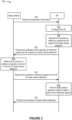
- FIG 3 is a diagram illustrating an example 300 of indicating user equipment capability for beam failure detection, in accordance with the present disclosure.
- a UE for example, UE 120
- a base station for example, base station 110
- the UE and the base station may be part of a first wireless network (for example, wireless network 100).
- the UE and the base station may communicate via one or more of a primary cell group or a secondary cell group.
- the secondary cell group may include a special cell (SPCell) or one or more secondary cells (SCells).
- the UE may receive configuration information (for example, from a base station) or determine the configuration information based at least in part on a communication standard.
- the UE may receive the configuration information via one or more of a system information block, radio resource control (RRC) signaling, medium access control control elements (MAC CEs), or a sidelink communication, among other examples.
- the configuration information may include an indication of one or more configuration parameters (for example, already known to the UE) for selection by the UE, or explicit configuration information for the UE to use to configure the UE, among other examples.
- the configuration information may indicate that the UE is to determine a quantity of reference signals that the UE supports for beam failure detection. In some aspects, the configuration information may indicate how the UE is to determine the quantity of reference signals that the UE supports for beam failure detection. In some aspects, the configuration information may indicate that the UE is to transmit an indication of the quantity of reference signals that the UE supports for beam failure detection. In some aspects, the configuration information may indicate how the UE is to transmit the indication of the quantity of reference signals that the UE supports for beam failure detection.
- the UE may be configured based at least in part on the configuration information.
- the UE may be configured to perform one or more operations described herein.
- the UE may determine the quantity of reference signals that the UE supports for beam failure detection (for example, secondary cell beam failure detection).
- the quantity based at least in part on a configuration of the UE (for example, a power state of the UE), components of the UE (for example, a quantity of baseband components, a quantity of antenna groups, or computing components, among other examples), or an operation mode of the UE (for example, a dual connectivity mode).
- the configuration of the UE may be based at least in part on the configuration information received, for example, from the base station.
- the quantity of reference signals that the UE supports for beam failure detection may include a maximum quantity of reference signals that the UE supports for beam failure detection of the wireless connection. In some aspects, the quantity of reference signals that the UE supports for beam failure detection may include a selected quantity, that is less than or equal to the maximum quantity, of reference signals that the UE supports for beam failure detection.
- the quantity of reference signals that the UE supports for beam failure detection may include a quantity of reference signals that the UE supports for beam failure detection on a first set of component carriers of a first frequency range or a quantity of reference signals that that the UE supports for beam failure detection on a second set of component carriers of a second frequency range (for example, separate quantities per frequency range ( maxNumberResWithinSlotAcrossCC-OneFR-r16) ).
- the first set of component carriers of the first frequency range may include a special cell and one or more secondary cells of the first frequency range.
- the second set of component carriers of the second frequency range may include a special cell and one or more secondary cells of the second frequency range.
- the quantity of reference signals that the UE supports for beam failure detection may include a quantity of reference signals that the UE supports for beam failure detection on a set of component carriers of multiple frequency ranges ( maxTotalResourcesForAcrossFreqRanges-r16).
- the quantity of reference signals that the UE supports for beam failure detection may include a total quantity of reference signals that the UE supports for the first frequency range and the second frequency range (for example, a combined quantity for two or more frequency ranges).
- the set of component carriers of the multiple frequency ranges may include one or more special cells (for example, a special cell per frequency range) and one or more secondary cells of the multiple frequency ranges.
- the quantity of reference signals that the UE supports for beam failure detection may include a quantity of reference signals that the UE supports for beam failure detection during a slot, a sub-slot, a set of slots, or another time-domain resource.
- a numerology of the time domain resource (for example, a slot) for measuring the reference signals may be based at least in part on a particular numerology of a particular bandwidth part of component carriers over which the UE supports the quantity of reference signals.
- the particular bandwidth part may be a bandwidth part having a smallest numerology among bandwidth parts of the component carriers over which the UE supports the quantity of reference signals.
- a numerology of a time domain resource for measuring the reference signals may be based at least in part on a configured numerology (for example, specified in configuration information or a communication standard, among other examples).
- a subcarrier spacing of a time domain resource for measuring the reference signals is based at least in part on a particular subcarrier spacing of a particular bandwidth part of component carriers over which the UE supports the quantity of reference signals.
- the particular bandwidth part may be a bandwidth part having a largest subcarrier spacing among bandwidth parts of the component carriers over which the UE supports the quantity of reference signals.
- a subcarrier spacing of a time domain resource for measuring the reference signals is based at least in part on a configured subcarrier spacing (for example, specified in configuration information or a communication standard, among other examples).
- the UE may transmit, and the base station may receive, an indication of the quantity of reference signals that the UE supports for beam failure detection (for example, maxTotalResourcesForAcrossFreqRanges-r16 or maxNumberResWithinSlotAcrossCC-OneFR-r16 ).
- the indication may indicate a quantity of resources associated with the reference signals that the UE supports for beam failure detection (for example, to measure for beam failure detection).
- the quantity of resources may be a quantity of resources across all component carriers in a single frequency range, or in all frequency ranges, among other examples.
- the indication may indicate a quantity of reference signals the UE supports for beam failure detection (for example, to measure) within a slot (for example, across all component carriers in a frequency range) (for example, maxNumberResWithinSlotAcrossCC-AcrossFR-r16 ).
- the UE may transmit the indication via a control message.
- the UE may transmit the indication via a physical uplink control channel communication.
- the UE may communicate with the base station (for example, via an associated wireless connection) based at least in part on the indication of the quantity of reference signals that the UE supports for beam failure detection.
- the UE may receive one or more reference signals for beam failure detection from the base station or may transmit an indication of beam failure detection.
- the base station may determine a quantity of reference signals to transmit to the UE for beam failure detection.
- the quantity may be based in part on the indication of the quantity of reference signals that the UE supports for beam failure detection.
- the quantity of reference signals to transmit to the UE may be a same quantity as, or a quantity that is less than, the quantity of reference signals that the UE supports for beam failure detection.
- the base station may determine to transmit a quantity that is less than the quantity of reference signals that the UE supports for beam failure detection based at least in part on cell traffic or a likelihood of beam failure detection (for example, based at least in part on channel condition metrics, RSRP parameters, RSSI parameters, RSRQ parameters, or CQI parameters, among other examples).
- the UE may receive, and the base station may transmit, the quantity of reference signals to the UE for beam failure detection (for example, within a slot).
- the reference signals may include synchronization signal physical broadcast channel blocks or channel state information reference signals (CSI-RSs).
- the CSI-RSs may include one or more non-zero-power (NZP) CSI-RSs, one or more aperiodic CSI-RSs, one or more periodic CSI-RSs, or one or more semi-persistent CSI-RSs.
- Receiving the quantity of reference signals may include measuring the quantity of reference signals, attempting to measure the quantity of reference signals, and/or generating a report of measurements of the quantity of reference signals.
- the UE may perform beam failure detection.
- the UE may attempt to detect and measure the quantity of reference signals (for example, using the secondary cells).
- the UE may determine whether secondary beam failure has occurred for a secondary cell based at least in part on the UE failing to detect a threshold quantity of the reference signals or measurements of a threshold quantity of the reference signals satisfying a measurement threshold.
- the UE may transmit an indication of beam failure detection.
- the UE may transmit the indication of beam failure detection via a secondary cell, a special cell, or a primary cell.
- the UE may transmit the indication of beam failure detection via a control message.
- the indication of beam failure detection may include an indication (for example, an explicit indication) of beam failure for the secondary cell.
- the indication of beam failure detection may include an indication (for example, an implicit indication or an explicit indication) of no beam failure for the secondary cell.
- the base station may conserve power, computing, communication, or network resources that may otherwise have been consumed by transmitting a quantity of reference signals for beam failure detection that is greater than the quantity of reference signals supported by the UE. Additionally or alternatively, the base station may transmit an increased quantity of reference signals, based at least in part on the UE supporting the increased quantity of reference signals, which may reduce a latency in detecting beam failure of the secondary cells. In this way, the base station may conserve power, computing, communication, or network resources that may otherwise have been consumed by attempting to communicate after an undetected beam failure.
- FIG. 4 is a flowchart illustrating an example process 400 performed, for example, by a UE in accordance with the present disclosure.
- Example process 400 is an example where the UE (for example, UE 120) performs operations associated with indicating user equipment capability for beam failure detection.
- process 400 may include transmitting an indication of a quantity of reference signals that the UE supports for measuring for beam failure detection within one or more slots (block 410).
- the UE (such as by using transmission component 606, depicted in Figure 6 ) may transmit an indication of a quantity of reference signals that the UE supports for measuring for beam failure detection within one or more slots, as described above.
- process 400 may include receiving one or more reference signals in a slot of the one or more slots based at least in part on transmitting the indication of the quantity of reference signals (block 420).
- the UE (such as by using reception component 602, depicted in Figure 6 ) may receive one or more reference signals in a slot of the one or more slots based at least in part on transmitting the indication of the quantity of reference signals, as described above.
- process 400 may include transmitting an indication of beam failure detection of the wireless connection based at least in part on measurements of the received one or more reference signals (block 440).
- the UE (such as by using reception component 602 or transmission component 606, depicted in Figure 6 ) may transmit an indication of beam failure detection of the wireless connection based at least in part on measurements of the received one or more reference signals, as described above.
- Process 400 may include additional aspects, such as any single aspect or any combination of aspects described below or in connection with one or more other processes described elsewhere herein.
- the quantity of reference signals that the UE supports for beam failure detection of the wireless connection comprises a maximum quantity of reference signals that the UE supports for beam failure detection of the wireless connection.
- the reference signals include one or more of synchronization signal physical broadcast channel blocks or channel state information reference signals.
- the channel state information reference signals include one or more of a non-zero-power channel state information reference signal, an aperiodic channel state information reference signal, a periodic channel state information reference signal, or a semi-persistent channel state information reference signal.
- the reference signals that the UE supports for beam failure detection of the wireless connection include reference signals that the UE supports for beam failure detection of the wireless connection on a set of component carriers of a frequency range.
- the set of component carriers of the frequency range corresponds to a special cell and one or more secondary cells of the frequency range.
- the quantity of reference signals that the UE supports for beam failure detection of the wireless connection includes a quantity of reference signals that the UE supports for beam failure detection on a set of component carriers of multiple frequency ranges.
- the set of component carriers of the multiple frequency ranges includes one or more special cells and one or more secondary cells of the multiple frequency ranges.
- transmitting the indication of the quantity of reference signals that the UE supports for beam failure detection of the wireless connection comprises transmitting the indication within a control message.
- a numerology of the slot is based at least in part on a particular numerology of a particular bandwidth part of component carriers over which the UE supports the quantity of reference signals.
- the particular bandwidth part is a bandwidth part having a smallest numerology among bandwidth parts of the component carriers over which the UE supports the quantity of reference signals.
- a numerology of the slot is based at least in part on a configured numerology.
- a subcarrier spacing of the slot is based at least in part on a particular subcarrier spacing of a particular bandwidth part of component carriers over which the UE supports the quantity of reference signals.
- the particular bandwidth part is a bandwidth part having a largest subcarrier spacing among bandwidth parts of the component carriers over which the UE supports the quantity of reference signals.
- a subcarrier spacing of the slot is based at least in part on a configured subcarrier spacing.
- process 400 includes determining the quantity of reference signals that the UE supports for beam failure detection of the wireless connection.
- the quantity of reference signals that the UE supports for beam failure detection of the wireless connection is based at least in part on one or more of a configuration of the UE, components of the UE, or an operation mode of the UE.
- process 400 may include additional blocks, fewer blocks, different blocks, or differently arranged blocks than those depicted in Figure 4 . Additionally or alternatively, two or more of the blocks of process 400 may be performed in parallel.
- FIG. 5 is a flowchart illustrating an example process 500 performed, for example, by a base station in accordance with the present disclosure.
- Example process 500 is an example where the base station (for example, base station 110) performs operations associated with indicating user equipment capability for beam failure detection.
- process 500 may include receiving an indication of a quantity of reference signals that a UE supports for beam failure detection of a wireless connection (block 510).
- the base station (such as by using reception component 702, depicted in Figure 7 ) may receive an indication of a quantity of reference signals that a UE supports for beam failure detection of a wireless connection, as described above.
- process 500 may include transmitting one or more reference signals in a slot of the one or more slots based at least in part on transmitting the indication of the quantity of reference signals (block 520).
- the base station (such as by using transmission component 706, depicted in Figure 7 ) may transmit one or more reference signals in a slot of the one or more slots based at least in part on transmitting the indication of the quantity of reference signals, as described above.
- process 500 may include receiving an indication of beam failure detection of the wireless connection based at least in part on measurements of the transmitted one or more reference signals (block 530).
- the base station (such as by using reception component 702 or transmission component 706, depicted in Figure 7 ) may receive an indication of beam failure detection of the wireless connection based at least in part on measurements of the transmitted one or more reference signals, as described above.
- Process 500 may include additional aspects, such as any single aspect or any combination of aspects described below or in connection with one or more other processes described elsewhere herein.
- the quantity of reference signals that the UE supports for beam failure detection of the wireless connection comprises a maximum quantity of reference signals that the UE supports for beam failure detection of the wireless connection.
- the reference signals include one or more of synchronization signal physical broadcast channel blocks or channel state information reference signals.
- the channel state information reference signals include one or more of a non-zero-power channel state information reference signal, an aperiodic channel state information reference signal, a periodic channel state information reference signal, or a semi-persistent channel state information reference signal.
- the reference signals that the UE supports for beam failure detection of the wireless connection include reference signals that the UE supports for beam failure detection of the wireless connection on a set of component carriers of a frequency range.
- the set of component carriers of the frequency range corresponds to a special cell and one or more secondary cells of the frequency range.
- the quantity of reference signals that the UE supports for beam failure detection of the wireless connection includes a quantity of reference signals that the UE supports for beam failure detection on a set of component carriers of multiple frequency ranges.
- the set of component carriers of the multiple frequency ranges includes one or more special cells and one or more secondary cells of the multiple frequency ranges.
- receiving the indication of the quantity of reference signals that the UE supports for beam failure detection of the wireless connection comprises receiving the indication within a control message.
- a numerology of the slot is based at least in part on a particular numerology of a particular bandwidth part of component carriers over which the UE supports the quantity of reference signals.
- the particular bandwidth part is a bandwidth part having a smallest numerology among bandwidth parts of the component carriers over which the UE supports the quantity of reference signals.
- a numerology of the slot is based at least in part on a configured numerology.
- a subcarrier spacing of the slot is based at least in part on a particular subcarrier spacing of a particular bandwidth part of component carriers over which the UE supports the quantity of reference signals.
- the particular bandwidth part is a bandwidth part having a largest subcarrier spacing among bandwidth parts of the component carriers over which the UE supports the quantity of reference signals.
- a subcarrier spacing of the slot is based at least in part on a configured subcarrier spacing.
- process 500 includes determining a quantity of reference signals to transmit to the UE for beam failure detection of the wireless connection based at least in part on the indication.
- the quantity of reference signals that the UE supports for beam failure detection of the wireless connection is based at least in part on one or more of a configuration of the UE, components of the UE, or an operation mode of the UE.
- process 500 may include additional blocks, fewer blocks, different blocks, or differently arranged blocks than those depicted in Figure 5 . Additionally or alternatively, two or more of the blocks of process 500 may be performed in parallel.
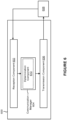
- FIG. 6 is a block diagram of an example apparatus 600 for wireless communication in accordance with the present disclosure.
- the apparatus 600 may be a UE, or a UE may include the apparatus 600.
- the apparatus 600 includes a reception component 602, a communication manager 604, and a transmission component 606, which may be in communication with one another (for example, via one or more buses).
- the apparatus 600 may communicate with another apparatus 608 (such as a UE, a base station, or another wireless communication device) using the reception component 602 and the transmission component 606.
- another apparatus 608 such as a UE, a base station, or another wireless communication device
- the apparatus 600 may be configured to perform one or more operations described herein in connection with Figure 3 . Additionally or alternatively, the apparatus 600 may be configured to perform one or more processes described herein, such as process 400 of Figure 4 . In some aspects, the apparatus 600 may include one or more components of the UE described above in connection with Figure 2 .
- the reception component 602 may receive communications, such as reference signals, control information, data communications, or a combination thereof, from the apparatus 608.
- the reception component 602 may provide received communications to one or more other components of the apparatus 600, such as the communication manager 604.
- the reception component 602 may perform signal processing on the received communications (such as filtering, amplification, demodulation, analog-to-digital conversion, demultiplexing, deinterleaving, de-mapping, equalization, interference cancellation, or decoding, among other examples), and may provide the processed signals to the one or more other components.
- the reception component 602 may include one or more antennas, a demodulator, a MIMO detector, a receive processor, a controller/processor, a memory, or a combination thereof, of the UE described above in connection with Figure 2 .
- the transmission component 606 may transmit communications, such as reference signals, control information, data communications, or a combination thereof, to the apparatus 608.
- the communication manager 604 may generate communications and may transmit the generated communications to the transmission component 606 for transmission to the apparatus 608.
- the transmission component 606 may perform signal processing on the generated communications (such as filtering, amplification, modulation, digital-to-analog conversion, multiplexing, interleaving, mapping, or encoding, among other examples), and may transmit the processed signals to the apparatus 608.
- the transmission component 606 may include one or more antennas, a modulator, a transmit MIMO processor, a transmit processor, a controller/processor, a memory, or a combination thereof, of the UE described above in connection with Figure 2 . In some aspects, the transmission component 606 may be co-located with the reception component 602 in a transceiver.
- the communication manager 604 may transmit or may cause the transmission component 606 to transmit an indication of a quantity of reference signals that the UE supports for beam failure detection of a wireless connection.
- the communication manager 604 may communicate via the wireless connection based at least in part on the indication.
- the communication manager 604 may receive or may cause the reception component 602 to receive one or more reference signals in a slot of the one or more slots based at least in part on transmitting the indication of the quantity of reference signals.
- the communication manager 604 may transmit or may cause the transmission component 606 to transmit an indication of one or more measurements of the received one or more reference signals.
- the communication manager 604 may perform one or more operations described elsewhere herein as being performed by one or more components of the communication manager 604.
- the communication manager 604 may include a controller/processor, a memory, or a combination thereof, of the UE described above in connection with Figure 2 .
- the communication manager 604 includes a set of components, such as a determination component.
- the set of components may be separate and distinct from the communication manager 604.
- one or more components of the set of components may include or may be implemented within a controller/processor, a memory, or a combination thereof, of the UE described above in connection with Figure 2 .
- one or more components of the set of components may be implemented at least in part as software stored in a memory.
- a component (or a portion of a component) may be implemented as instructions or code stored in a non-transitory computer-readable medium and executable by a controller or a processor to perform the functions or operations of the component.
- the transmission component 606 may transmit an indication of a quantity of reference signals that the UE supports for beam failure detection of a wireless connection.
- the reception component 602 may receive one or more reference signals in a slot of the one or more slots based at least in part on transmitting the indication of the quantity of reference signals.
- the transmission component 606 may transmit an indication of beam failure detection of the wireless connection based at least in part on measurements of the received one or more reference signals.
- the determination component 610 may determine the quantity of reference signals that the UE supports for beam failure detection of the wireless connection.
- the quantity of reference signals that the UE supports for beam failure detection of the wireless connection comprises a maximum quantity of reference signals that the UE supports for beam failure detection of the wireless connection.
- the reference signals include one or more of synchronization signal physical broadcast channel blocks or channel state information reference signals.
- the channel state information reference signals include one or more of: a non-zero-power channel state information reference signal, an aperiodic channel state information reference signal, a periodic channel state information reference signal, or a semi-persistent channel state information reference signal.
- the reference signals that the UE supports for beam failure detection of the wireless connection include reference signals that the UE supports for beam failure detection of the wireless connection on a set of component carriers of a frequency range.
- the quantity of reference signals that the UE supports for beam failure detection of the wireless connection includes a quantity of reference signals that the UE supports for beam failure detection on a set of component carriers of multiple frequency ranges.
- the set of component carriers of the multiple frequency ranges includes one or more special cells and one or more secondary cells of the multiple frequency ranges.
- transmitting the indication of the quantity of reference signals that the UE supports for beam failure detection of the wireless connection comprises transmitting the indication within a control message.
- a numerology of the slot is based at least in part on a particular numerology of a particular bandwidth part of component carriers over which the UE supports the quantity of reference signals.
- the particular bandwidth part is a bandwidth part having a smallest numerology among bandwidth parts of the component carriers over which the UE supports the quantity of reference signals.
- a numerology of the slot is based at least in part on a configured numerology.
- a subcarrier spacing of the slot is based at least in part on a particular subcarrier spacing of a particular bandwidth part of component carriers over which the UE supports the quantity of reference signals.
- the particular bandwidth part is a bandwidth part having a largest subcarrier spacing among bandwidth parts of the component carriers over which the UE supports the quantity of reference signals.
- a subcarrier spacing of the slot is based at least in part on a configured subcarrier spacing.
- the quantity of reference signals that the UE supports for beam failure detection of the wireless connection is based at least in part on one or more of: a configuration of the UE; components of the UE; or an operation mode of the UE.
- FIG. 6 The number and arrangement of components shown in Figure 6 are provided as an example. In practice, there may be additional components, fewer components, different components, or differently arranged components than those shown in Figure 6 . Furthermore, two or more components shown in Figure 6 may be implemented within a single component, or a single component shown in Figure 6 may be implemented as multiple, distributed components. Additionally or alternatively, a set of (one or more) components shown in Figure 6 may perform one or more functions described as being performed by another set of components shown in Figure 6 .
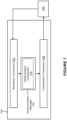
- FIG. 7 is a block diagram of an example apparatus 700 for wireless communication in accordance with the present disclosure.
- the apparatus 700 may be a base station, or a base station may include the apparatus 700.
- the apparatus 700 includes a reception component 702, a communication manager 704, and a transmission component 706, which may be in communication with one another (for example, via one or more buses).
- the apparatus 700 may communicate with another apparatus 708 (such as a UE, a base station, or another wireless communication device) using the reception component 702 and the transmission component 706.
- another apparatus 708 such as a UE, a base station, or another wireless communication device
- the apparatus 700 may be configured to perform one or more operations described herein in connection with Figure 3 . Additionally or alternatively, the apparatus 700 may be configured to perform one or more processes described herein, such as process 500 of Figure 5 . In some aspects, the apparatus 700 may include one or more components of the base station described above in connection with Figure 2 .
- the reception component 702 may receive communications, such as reference signals, control information, data communications, or a combination thereof, from the apparatus 708.
- the reception component 702 may provide received communications to one or more other components of the apparatus 700, such as the communication manager 704.
- the reception component 702 may perform signal processing on the received communications (such as filtering, amplification, demodulation, analog-to-digital conversion, demultiplexing, deinterleaving, de-mapping, equalization, interference cancellation, or decoding, among other examples), and may provide the processed signals to the one or more other components.
- the reception component 702 may include one or more antennas, a demodulator, a MIMO detector, a receive processor, a controller/processor, a memory, or a combination thereof, of the base station described above in connection with Figure 2 .
- the transmission component 706 may transmit communications, such as reference signals, control information, data communications, or a combination thereof, to the apparatus 708.
- the communication manager 704 may generate communications and may transmit the generated communications to the transmission component 706 for transmission to the apparatus 708.
- the transmission component 706 may perform signal processing on the generated communications (such as filtering, amplification, modulation, digital-to-analog conversion, multiplexing, interleaving, mapping, or encoding, among other examples), and may transmit the processed signals to the apparatus 708.
- the transmission component 706 may include one or more antennas, a modulator, a transmit MIMO processor, a transmit processor, a controller/processor, a memory, or a combination thereof, of the base station described above in connection with Figure 2 . In some aspects, the transmission component 706 may be co-located with the reception component 702 in a transceiver.
- the communication manager 704 may receive or may cause the reception component 702 to receive an indication of a quantity of reference signals that a UE supports for measuring for beam failure detection within one or more slots.
- the communication manager 704 may communicate via the wireless connection based at least in part on the indication.
- the communication manager 704 may transmit or may cause the transmission component 706 to transmit one or more reference signals in a slot of the one or more slots based at least in part on receiving the indication of the quantity of reference signals.
- the communication manager 704 may receive or may cause the reception component 702 to receive an indication of one or more measurements of the transmitted one or more reference signals.
- the communication manager 704 may perform one or more operations described elsewhere herein as being performed by one or more components of the communication manager 704.
- the communication manager 704 may include a controller/processor, a memory, a scheduler, a communication unit, or a combination thereof, of the base station described above in connection with Figure 2 .
- the communication manager 704 includes a set of components, such as a determination component 710.
- the set of components may be separate and distinct from the communication manager 704.
- one or more components of the set of components may include or may be implemented within a controller/processor, a memory, a scheduler, a communication unit, or a combination thereof, of the base station described above in connection with Figure 2 .
- one or more components of the set of components may be implemented at least in part as software stored in a memory.
- a component (or a portion of a component) may be implemented as instructions or code stored in a non-transitory computer-readable medium and executable by a controller or a processor to perform the functions or operations of the component.
- the reception component 702 may receive an indication of a quantity of reference signals that a UE supports for beam failure detection of a wireless connection.
- the transmission component 706 may transmit one or more reference signals in a slot of the one or more slots based at least in part on transmitting the indication of the quantity of reference signals.
- the reception component 702 may receive an indication of beam failure detection of the wireless connection based at least in part on measurements of the transmitted one or more reference signals.
- the determination component 710 may determine a quantity of reference signals to transmit to the UE for beam failure detection of the wireless connection based at least in part on the indication.
- the quantity of reference signals that the UE supports for beam failure detection of the wireless connection comprises a maximum quantity of reference signals that the UE supports for beam failure detection of the wireless connection.
- the reference signals include one or more of synchronization signal physical broadcast channel blocks or channel state information reference signals.
- the channel state information reference signals include one or more of: a non-zero-power channel state information reference signal, an aperiodic channel state information reference signal, a periodic channel state information reference signal, or a semi-persistent channel state information reference signal.
- the reference signals that the UE supports for beam failure detection of the wireless connection include reference signals that the UE supports for beam failure detection of the wireless connection on a set of component carriers of a frequency range.
- the set of component carriers of the frequency range corresponds to a special cell and one or more secondary cells of the frequency range.
- the quantity of reference signals that the UE supports for beam failure detection of the wireless connection includes a quantity of reference signals that the UE supports for beam failure detection on a set of component carriers of multiple frequency ranges.
- the set of component carriers of the multiple frequency ranges includes one or more special cells and one or more secondary cells of the multiple frequency ranges.
- receiving the indication of the quantity of reference signals that the UE supports for beam failure detection of the wireless connection comprises receiving the indication within a control message.
- a numerology of the slot is based at least in part on a particular numerology of a particular bandwidth part of component carriers over which the UE supports the quantity of reference signals.
- the particular bandwidth part is a bandwidth part having a smallest numerology among bandwidth parts of the component carriers over which the UE supports the quantity of reference signals.
- a numerology of the slot is based at least in part on a configured numerology.
- a subcarrier spacing of the slot is based at least in part on a particular subcarrier spacing of a particular bandwidth part of component carriers over which the UE supports the quantity of reference signals.
- the particular bandwidth part is a bandwidth part having a largest subcarrier spacing among bandwidth parts of the component carriers over which the UE supports the quantity of reference signals.
- a subcarrier spacing of the slot is based at least in part on a configured subcarrier spacing.
- the quantity of reference signals that the UE supports for beam failure detection of the wireless connection is based at least in part on one or more of: a configuration of the UE; components of the UE; or an operation mode of the UE.
- FIG. 7 The number and arrangement of components shown in Figure 7 are provided as an example. In practice, there may be additional components, fewer components, different components, or differently arranged components than those shown in Figure 7 . Furthermore, two or more components shown in Figure 7 may be implemented within a single component, or a single component shown in Figure 7 may be implemented as multiple, distributed components. Additionally or alternatively, a set of (one or more) components shown in Figure 7 may perform one or more functions described as being performed by another set of components shown in Figure 7 .
- the term "component” is intended to be broadly construed as hardware, firmware, or a combination of hardware and software.
- a processor is implemented in hardware, firmware, or a combination of hardware and software. It will be apparent that systems or methods described herein may be implemented in different forms of hardware, firmware, or a combination of hardware and software. The actual specialized control hardware or software code used to implement these systems or methods is not limiting of the aspects. Thus, the operation and behavior of the systems or methods were described herein without reference to specific software code-it being understood that software and hardware can be designed to implement the systems or methods based, at least in part, on the description herein.
- satisfying a threshold may, depending on the context, refer to a value being greater than the threshold, greater than or equal to the threshold, less than the threshold, less than or equal to the threshold, equal to the threshold, or not equal to the threshold, among other examples.
- "at least one of: a, b, or c" is intended to cover a, b, c, a-b, a-c, b-c, and a-b-c, as well as any combination with multiples of the same element (for example, a-a, a-a-a, a-a-b, a-a-c, a-b-b, a-c-c, b-b, b-b-b, b-b-c, c-c, and c-c-c or any other ordering of a, b, and c).
- the terms “has,” “have,” “having,” and similar terms are intended to be open-ended terms. Further, the phrase “based on” is intended to mean “based, at least in part, on” unless explicitly stated otherwise. Also, as used herein, the term “or” is intended to be inclusive when used in a series and may be used interchangeably with “or,” unless explicitly stated otherwise (for example, if used in combination with “either” or “only one of”).
- a user equipment (UE) for wireless communication comprising:
- the quantity of reference signals that the UE supports, for measuring within a slot, for beam failure detection of the wireless connection comprises a maximum quantity of reference signals that the UE supports for beam failure detection of the wireless connection.
- the reference signals include one or more of synchronization signal physical broadcast channel blocks or channel state information reference signals.
- the channel state information reference signals include one or more of:
- the reference signals that the UE supports for beam failure detection of the wireless connection include reference signals that the UE supports for beam failure detection of the wireless connection on a first set of component carriers of a first frequency range and reference signals that the UE supports for beam failure detection of the wireless connection on a second set of component carriers of a second frequency range.
- the set of component carriers of the frequency range corresponds to a special cell and one or more secondary cells of the frequency range.
- the quantity of reference signals that the UE supports for beam failure detection of the wireless connection includes a quantity of reference signals that the UE supports for beam failure detection on a set of component carriers of multiple frequency ranges.
- the set of component carriers of the multiple frequency ranges includes one or more special cells and one or more secondary cells of the multiple frequency ranges.
- the one or more processors when transmitting the indication of the quantity of reference signals that the UE supports for beam failure detection of the wireless connection, are configured to transmit the indication within a control message.
- a numerology of the slot is based at least in part on a particular numerology of a particular bandwidth part of component carriers over which the UE supports the quantity of reference signals.
- the particular bandwidth part is a bandwidth part having a smallest numerology among bandwidth parts of the component carriers over which the UE supports the quantity of reference signals.
- a numerology of the slot is based at least in part on a configured numerology.
- a subcarrier spacing of the slot is based at least in part on a particular subcarrier spacing of a particular bandwidth part of component carriers over which the UE supports the quantity of reference signals.
- the particular bandwidth part is a bandwidth part having a largest subcarrier spacing among bandwidth parts of the component carriers over which the UE supports the quantity of reference signals.
- the quantity of reference signals that the UE supports for beam failure detection of the wireless connection is based at least in part on one or more of:
- a method of wireless communication performed by a user equipment comprising:
- the quantity of reference signals that the UE supports for beam failure detection of the wireless connection comprises a maximum quantity of reference signals that the UE supports for beam failure detection of the wireless connection.
- the reference signals include one or more of synchronization signal physical broadcast channel blocks or channel state information reference signals.
- the channel state information reference signals include one or more of:
- the reference signals that the UE supports for beam failure detection of the wireless connection include reference signals that the UE supports for beam failure detection of the wireless connection on a set of component carriers of a frequency range.
- the set of component carriers of the frequency range corresponds to a special cell and one or more secondary cells of the frequency range.
- the quantity of reference signals that the UE supports for beam failure detection of the wireless connection includes a quantity of reference signals that the UE supports for beam failure detection on a set of component carriers of multiple frequency ranges.
- the set of component carriers of the multiple frequency ranges includes one or more special cells and one or more secondary cells of the multiple frequency ranges.
- transmitting the indication of the quantity of reference signals that the UE supports for beam failure detection of the wireless connection comprises transmitting the indication within a control message.
- a numerology of the slot is based at least in part on a particular numerology of a particular bandwidth part of component carriers over which the UE supports the quantity of reference signals.
- the particular bandwidth part is a bandwidth part having a smallest numerology among bandwidth parts of the component carriers over which the UE supports the quantity of reference signals.
- a numerology of the slot is based at least in part on a configured numerology.
- a subcarrier spacing of the slot is based at least in part on a particular subcarrier spacing of a particular bandwidth part of component carriers over which the UE supports the quantity of reference signals.
- the particular bandwidth part is a bandwidth part having a largest subcarrier spacing among bandwidth parts of the component carriers over which the UE supports the quantity of reference signals.
- the quantity of reference signals that the UE supports for beam failure detection of the wireless connection is based at least in part on one or more of:
Landscapes
- Engineering & Computer Science (AREA)
- Signal Processing (AREA)
- Computer Networks & Wireless Communication (AREA)
- Databases & Information Systems (AREA)
- Mobile Radio Communication Systems (AREA)
Applications Claiming Priority (4)
| Application Number | Priority Date | Filing Date | Title |
|---|---|---|---|
| US202062968936P | 2020-01-31 | 2020-01-31 | |
| US17/157,681 US11855836B2 (en) | 2020-01-31 | 2021-01-25 | Indicating user equipment capability for beam failure detection |
| EP21706439.3A EP4098014B1 (de) | 2020-01-31 | 2021-01-26 | Anzeige der benutzergerätefähigkeit für strahlfehlerdetektion |
| PCT/US2021/015081 WO2021154723A1 (en) | 2020-01-31 | 2021-01-26 | Indicating user equipment capability for beam failure detection |
Related Parent Applications (2)
| Application Number | Title | Priority Date | Filing Date |
|---|---|---|---|
| EP21706439.3A Division EP4098014B1 (de) | 2020-01-31 | 2021-01-26 | Anzeige der benutzergerätefähigkeit für strahlfehlerdetektion |
| EP21706439.3A Division-Into EP4098014B1 (de) | 2020-01-31 | 2021-01-26 | Anzeige der benutzergerätefähigkeit für strahlfehlerdetektion |
Publications (2)
| Publication Number | Publication Date |
|---|---|
| EP4542914A2 true EP4542914A2 (de) | 2025-04-23 |
| EP4542914A3 EP4542914A3 (de) | 2025-07-02 |
Family
ID=77063076
Family Applications (2)
| Application Number | Title | Priority Date | Filing Date |
|---|---|---|---|
| EP21706439.3A Active EP4098014B1 (de) | 2020-01-31 | 2021-01-26 | Anzeige der benutzergerätefähigkeit für strahlfehlerdetektion |
| EP25161390.7A Pending EP4542914A3 (de) | 2020-01-31 | 2021-01-26 | Anzeige der benutzergerätefähigkeit für strahlfehlerdetektion |
Family Applications Before (1)
| Application Number | Title | Priority Date | Filing Date |
|---|---|---|---|
| EP21706439.3A Active EP4098014B1 (de) | 2020-01-31 | 2021-01-26 | Anzeige der benutzergerätefähigkeit für strahlfehlerdetektion |
Country Status (4)
| Country | Link |
|---|---|
| US (3) | US11855836B2 (de) |
| EP (2) | EP4098014B1 (de) |
| CN (2) | CN115004757B (de) |
| WO (1) | WO2021154723A1 (de) |
Families Citing this family (8)
| Publication number | Priority date | Publication date | Assignee | Title |
|---|---|---|---|---|
| US11855836B2 (en) | 2020-01-31 | 2023-12-26 | Qualcomm Incorporated | Indicating user equipment capability for beam failure detection |
| US12047792B2 (en) * | 2020-01-31 | 2024-07-23 | Qualcomm Incorporated | Indicating user equipment capability for channel state information measurement |
| WO2021221319A1 (en) * | 2020-04-29 | 2021-11-04 | Lg Electronics Inc. | Method and apparatus for measurement failure reporting in a wireless communication system |
| CN117015940A (zh) * | 2021-01-14 | 2023-11-07 | 中兴通讯股份有限公司 | 确定波束故障恢复信息的系统和方法 |
| CN115606295A (zh) * | 2021-03-31 | 2023-01-13 | 苹果公司(Us) | 对参考信号的资源计数 |
| US20230199516A1 (en) * | 2021-12-22 | 2023-06-22 | Intel Corporation | Configurable hybrid beamforming |
| WO2024040401A1 (en) * | 2022-08-22 | 2024-02-29 | Nokia Shanghai Bell Co., Ltd. | Mechanism for failure detection |
| CN119948821A (zh) * | 2022-09-28 | 2025-05-06 | 高通股份有限公司 | 用于波束管理的逻辑资源的能力 |
Family Cites Families (26)
| Publication number | Priority date | Publication date | Assignee | Title |
|---|---|---|---|---|
| US9136997B2 (en) * | 2010-05-04 | 2015-09-15 | Qualcomm Incorporated | Methods and apparatuses for using channel state information reference signals |
| KR101769375B1 (ko) * | 2010-10-21 | 2017-08-18 | 엘지전자 주식회사 | 무선 통신 시스템에서 릴레이 노드가 기지국으로부터 데이터를 수신하는 방법 및 이를 위한 장치 |
| KR102394074B1 (ko) * | 2016-03-03 | 2022-05-06 | 아이디에이씨 홀딩스, 인크. | 빔 포밍 기반의 시스템에서의 빔 제어를 위한 방법 및 장치 |
| US10887939B2 (en) * | 2017-08-10 | 2021-01-05 | Comcast Cable Communications, Llc | Transmission power control for beam failure recovery requests |
| CN111052839B (zh) * | 2017-08-31 | 2022-11-25 | 中兴通讯股份有限公司 | 连接不连续接收中的波束恢复 |
| US11316798B2 (en) * | 2018-02-06 | 2022-04-26 | Apple Inc. | Control signaling of beam failure detection |
| CN110167035B (zh) * | 2018-02-13 | 2021-02-26 | 华为技术有限公司 | 波束管理方法、终端、网络设备以及存储介质 |
| WO2019193420A1 (en) * | 2018-04-05 | 2019-10-10 | Lenovo (Singapore) Pte. Ltd. | Ue power control for multiple uplink carriers |
| EP4529074A3 (de) * | 2018-05-04 | 2025-06-25 | Lenovo (Singapore) Pte. Ltd. | Pusch-übertragung unter verwendung eines aggregationsfaktors |
| CN112425089B (zh) | 2018-05-18 | 2024-03-12 | 株式会社Ntt都科摩 | 终端及其无线通信方法、基站以及系统 |
| CN110611921B (zh) * | 2018-06-15 | 2021-06-01 | 维沃移动通信有限公司 | 一种无线链路状态判断方法及终端 |
| US11330506B2 (en) * | 2018-06-21 | 2022-05-10 | Mediatek Singapore Pte. Ltd. | Method and apparatus for multiple bandwidth parts operation in mobile communications |
| US10925116B2 (en) | 2018-06-26 | 2021-02-16 | Apple Inc. | Beam indication for semi-persistent and grant-free transmissions |
| WO2020032653A1 (ko) * | 2018-08-08 | 2020-02-13 | 엘지전자 주식회사 | 사이드링크를 지원하는 무선통신시스템에서 단말이 무선 링크 모니터링을 수행하는 방법 및 이를 위한 장치 |
| WO2020032657A1 (ko) * | 2018-08-08 | 2020-02-13 | 엘지전자 주식회사 | 무선통신시스템에서 단말이 사이드링크 신호의 전송 전력을 제어하는 방법 및 이를 위한 장치 |
| CN110830200B (zh) * | 2018-08-09 | 2021-09-07 | 华为技术有限公司 | 一种带宽部分处理方法及装置 |
| CN110831189B (zh) * | 2018-08-11 | 2022-05-10 | 华为技术有限公司 | 链路失败恢复方法及相关设备 |
| US12126577B2 (en) * | 2019-01-10 | 2024-10-22 | Interdigital Patent Holdings, Inc. | User equipment and base station for managing beam failure detection |
| CN113647139B (zh) * | 2019-02-11 | 2025-01-07 | 苹果公司 | Ne-dc模式的测量间隙设计 |
| KR102834671B1 (ko) * | 2019-03-08 | 2025-07-16 | 샤프 가부시키가이샤 | 사이드링크 통신 관리들을 위한 방법 및 장치 |
| WO2020198419A1 (en) * | 2019-03-28 | 2020-10-01 | Apple Inc. | Beam failure recovery |
| EP3955625A4 (de) * | 2019-04-10 | 2022-11-23 | Beijing Xiaomi Mobile Software Co., Ltd. | Verfahren und vorrichtung zur bestimmung eines strahlausfalls |
| US20220209919A1 (en) * | 2019-05-03 | 2022-06-30 | Nokia Technologies Oy | Search space design for nr-u wb operations |
| CN114097266B (zh) * | 2019-07-22 | 2023-07-04 | 鸿颖创新有限公司 | 执行波束故障恢复的方法和相关装置 |
| US11863373B2 (en) * | 2019-10-03 | 2024-01-02 | FG Innovation Company Limited | Method and user equipment for beam failure recovery procedure |
| US11855836B2 (en) | 2020-01-31 | 2023-12-26 | Qualcomm Incorporated | Indicating user equipment capability for beam failure detection |
-
2021
- 2021-01-25 US US17/157,681 patent/US11855836B2/en active Active
- 2021-01-26 CN CN202180009854.4A patent/CN115004757B/zh active Active
- 2021-01-26 EP EP21706439.3A patent/EP4098014B1/de active Active
- 2021-01-26 CN CN202411321201.1A patent/CN118945706A/zh active Pending
- 2021-01-26 EP EP25161390.7A patent/EP4542914A3/de active Pending
- 2021-01-26 WO PCT/US2021/015081 patent/WO2021154723A1/en not_active Ceased
-
2023
- 2023-09-29 US US18/477,687 patent/US12237968B2/en active Active
-
2025
- 2025-02-19 US US19/057,503 patent/US20250193069A1/en active Pending
Also Published As
| Publication number | Publication date |
|---|---|
| CN115004757A (zh) | 2022-09-02 |
| EP4098014C0 (de) | 2025-04-30 |
| EP4098014A1 (de) | 2022-12-07 |
| WO2021154723A1 (en) | 2021-08-05 |
| US11855836B2 (en) | 2023-12-26 |
| EP4542914A3 (de) | 2025-07-02 |
| US12237968B2 (en) | 2025-02-25 |
| EP4098014B1 (de) | 2025-04-30 |
| US20240022468A1 (en) | 2024-01-18 |
| CN115004757B (zh) | 2024-10-15 |
| US20210243075A1 (en) | 2021-08-05 |
| US20250193069A1 (en) | 2025-06-12 |
| CN118945706A (zh) | 2024-11-12 |
Similar Documents
| Publication | Publication Date | Title |
|---|---|---|
| EP4098014B1 (de) | Anzeige der benutzergerätefähigkeit für strahlfehlerdetektion | |
| EP3987862A1 (de) | Strahlgeformtes kanalbesetzungverhältnis | |
| WO2021114157A1 (en) | Device-to-device periodic signal configuration | |
| EP4268408A1 (de) | Dynamische bestimmung verfügbarer slots zur übertragung von sounding-referenzsignal (srs)-informationen | |
| WO2022109531A1 (en) | Allocation of resources for beam management operations | |
| WO2022011369A1 (en) | Indications of physical downlink control channel monitoring occasion aggregation via demodulation reference signal parameters | |
| US11546032B2 (en) | Beam direction selection for transmission and reception in full duplex operation | |
| US11871422B2 (en) | Frequency allocation for channel state information reference signals | |
| US11665683B2 (en) | User equipment reporting for full duplex multi-beam selection | |
| WO2022011368A1 (en) | Physical downlink control channel candidates aggregated over different numbers of monitoring occasions | |
| US12047792B2 (en) | Indicating user equipment capability for channel state information measurement | |
| US11558221B2 (en) | Sounding reference signal resource indicator group indication | |
| WO2022165744A1 (en) | Signaling synchronization signal block transmission power of a non-serving cell | |
| WO2022041101A1 (en) | Cross-link interference measurement using sounding reference signal resources | |
| WO2022094515A1 (en) | Techniques for tracking reference signal with concentrated power per tone | |
| WO2022135452A1 (en) | Dynamic determination of available slots for transmission of sounding reference signal (srs) information | |
| WO2022000224A1 (en) | Backhaul aware bandwidth management | |
| WO2022170609A1 (en) | Resource signal reception capability for multiple component carriers | |
| WO2022061579A1 (en) | Performance of secondary cell group adding procedures or handover or redirection procedures |
Legal Events
| Date | Code | Title | Description |
|---|---|---|---|
| PUAI | Public reference made under article 153(3) epc to a published international application that has entered the european phase |
Free format text: ORIGINAL CODE: 0009012 |
|
| STAA | Information on the status of an ep patent application or granted ep patent |
Free format text: STATUS: THE APPLICATION HAS BEEN PUBLISHED |
|
| AC | Divisional application: reference to earlier application |
Ref document number: 4098014 Country of ref document: EP Kind code of ref document: P |
|
| AK | Designated contracting states |
Kind code of ref document: A2 Designated state(s): AL AT BE BG CH CY CZ DE DK EE ES FI FR GB GR HR HU IE IS IT LI LT LU LV MC MK MT NL NO PL PT RO RS SE SI SK SM TR |
|
| REG | Reference to a national code |
Ref country code: DE Ref legal event code: R079 Free format text: PREVIOUS MAIN CLASS: H04L0005000000 Ipc: H04W0024080000 |
|
| PUAL | Search report despatched |
Free format text: ORIGINAL CODE: 0009013 |
|
| AK | Designated contracting states |
Kind code of ref document: A3 Designated state(s): AL AT BE BG CH CY CZ DE DK EE ES FI FR GB GR HR HU IE IS IT LI LT LU LV MC MK MT NL NO PL PT RO RS SE SI SK SM TR |
|
| RIC1 | Information provided on ipc code assigned before grant |
Ipc: H04L 5/00 20060101ALN20250527BHEP Ipc: H04W 8/24 20090101ALN20250527BHEP Ipc: H04W 16/28 20090101ALN20250527BHEP Ipc: H04W 24/04 20090101ALI20250527BHEP Ipc: H04W 24/08 20090101AFI20250527BHEP |