EP4542504A1 - A vehicle trunk monitoring system - Google Patents
A vehicle trunk monitoring system Download PDFInfo
- Publication number
- EP4542504A1 EP4542504A1 EP23204069.1A EP23204069A EP4542504A1 EP 4542504 A1 EP4542504 A1 EP 4542504A1 EP 23204069 A EP23204069 A EP 23204069A EP 4542504 A1 EP4542504 A1 EP 4542504A1
- Authority
- EP
- European Patent Office
- Prior art keywords
- trunk
- monitoring system
- vehicle
- user interface
- sensors
- Prior art date
- Legal status (The legal status is an assumption and is not a legal conclusion. Google has not performed a legal analysis and makes no representation as to the accuracy of the status listed.)
- Pending
Links
Images
Classifications
-
- G—PHYSICS
- G06—COMPUTING OR CALCULATING; COUNTING
- G06V—IMAGE OR VIDEO RECOGNITION OR UNDERSTANDING
- G06V20/00—Scenes; Scene-specific elements
- G06V20/50—Context or environment of the image
- G06V20/59—Context or environment of the image inside of a vehicle, e.g. relating to seat occupancy, driver state or inner lighting conditions
-
- G—PHYSICS
- G06—COMPUTING OR CALCULATING; COUNTING
- G06V—IMAGE OR VIDEO RECOGNITION OR UNDERSTANDING
- G06V10/00—Arrangements for image or video recognition or understanding
- G06V10/70—Arrangements for image or video recognition or understanding using pattern recognition or machine learning
- G06V10/764—Arrangements for image or video recognition or understanding using pattern recognition or machine learning using classification, e.g. of video objects
-
- G—PHYSICS
- G06—COMPUTING OR CALCULATING; COUNTING
- G06V—IMAGE OR VIDEO RECOGNITION OR UNDERSTANDING
- G06V20/00—Scenes; Scene-specific elements
- G06V20/50—Context or environment of the image
- G06V20/52—Surveillance or monitoring of activities, e.g. for recognising suspicious objects
Definitions
- the field of the present invention is that of a vehicle trunk monitoring system.
- the invention proposes a vehicle trunk monitoring system comprising:
- the vehicle trunk monitoring system comprises a plurality of trunk sensors.
- the trunk sensor comprises at least one of the following sensors:
- An RGB camera provides images that reflect colors and textures of objects in the trunk.
- a 3D scanner or lidar enable to capture images with more accurate dimensions and depth.
- the plurality of trunk sensors provide a multi-view or multi-modal representation of the trunk's contents, addressing various features.
- the invention enables to monitor the content of the trunk using multiple sensors for multiple intuitive views.
- the multiple intuitive views include RGB camera images, X-Ray images, and thermal images.
- an RGB camera may be combined with an X-Ray sensor to provide images that reflect colors and textures of objects and disclose hidden contents inside luggage or boxes.
- the processing unit is configured to send an image captured by the trunk sensor to the user interface.
- the invention enables an easy access to the vehicle trunk.
- the driver or passenger of the vehicle can check if a certain object is present in the trunk without having to pull over on the side of the road, thanks to the trunk sensors. Additionally, the user can be away from the vehicle and can look for a certain object in the trunk of the vehicle without having to physically go to and open the trunk.
- the user interface comprises a screen, in particular:
- the user interface comprises at least one vehicle onboard touch screen for monitoring the vehicle trunk monitoring system.
- the user interface may comprise at least two touch screens each for a passenger (including the driver).
- the user interface is configured to allow the passenger to select the type of trunk view to be displayed on the user interface.
- the user interface is configured to provide a 3D zoomable view generated from images captured by the trunk sensors.
- the user interface is configured to allow the user to control the vehicle trunk monitoring system, in particular the sensors.
- the user interface is configured to allow the user to select the trunk sensors to be used to generate the trunk image.
- the user interface is configured to provide a trunk's history through time-stamped screenshots derived from detected trunk change. Screenshots may be made across all the enabled sensors or according to the user's entered preferences.
- the vehicle trunk monitoring system comprises a memory to memorize time-stamped screenshots generated by the trunk sensors.
- the user interface which is a smartphone, is configured to enable monitoring and control of the vehicle trunk monitoring system, in particular through a secure connection between the smartphone and the processing unit of the vehicle trunk monitoring system.
- the processing unit of the vehicle trunk monitoring system is set up to operate a deep learning computer vision model capable of detecting specified objects, preferably across all the sensors.
- the processing unit of the vehicle trunk monitoring system is configured to operate a neural network deep learning method to detect specified objects.
- the neural network deep learning method provides preferably both high detection accuracy and speed.
- the neural network deep learning method uses an object detection model based on the boundary of the detected object (such as bounding box, or polygon for instance), in addition to the classification of the detected objects.
- Such neural network deep learning method can be the YOLOv8 model or any other opensource or proprietary model.
- the processing unit of the vehicle trunk monitoring system is configured to receive a request to locate a specific object, such as a red suitcase, and to conduct an image analysis using data provided by the trunk sensors to ascertain whether the specific object is present in the trunk or not.
- the vehicle trunk monitoring system is configured to deliver notifications or alarms based on detections made in the trunk by the trunk sensors.
- the user could get notifications/alarms on either a vehicle screen, a mobile phone, or any connected/authenticated device.
- the vehicle trunk monitoring system is configured to deliver notifications or alarms if a weapon, food, or an animal is detected for an extended period of time in the trunk.
- Users may receive notifications or alarms based on their chosen configuration. For instance, they may receive an alarm if a weapon, food, or an animal is detected for an extended period of time. This feature proves particularly useful in car rental scenarios.
- the user interface is configured to enable the user to inquire about the status of specific objects using either text or voice, through either a phone or the car's interior user interface.
- the processing unit of the vehicle trunk monitoring system is configured to display information of the historical content of the trunk.
- the invention also relates to a vehicle equipped with a trunk monitoring system as disclosed above.
- the invention also relates to a vehicle trunk monitoring method comprising the following steps:
- the method may comprise the following steps:
- the method may comprise the following steps:
- the method may comprise the following steps:
- the status of the object can be "Normal” or “Abnormal” depending on detected movements or change I the temperature of the object.
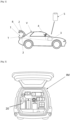
- Figure 1 is a schematic view of a vehicle V equipped with a trunk monitoring system 1 according to an embodiment of the present invention.
- the vehicle trunk monitoring system 1 comprises trunk sensors 2 placed in the vehicle trunk T configured to capture images of the interior of the trunk T.
- the vehicle trunk monitoring system 1 further comprises a processing unit 3 configured to analyze images captured by the trunk sensors 2, and a user interface 4, 5 configured to display an information such as images, based on the images processed by the processing unit 3.
- the trunk sensors 2 comprise at least some of the following sensors:
- the plurality of trunk sensors 2 provide a multi-view or multi-modal representation of the trunk's contents, addressing various features.
- the user interface 4, 5 may be configured to display images of multiple views including RGB camera images, X-Ray images, and thermal images.
- the RGB camera may be combined with the X-Ray sensor to provide images that reflect colors and textures of objects and disclose hidden contents inside luggage or boxes.
- An RGB camera image IM displayed on a screen of the user interface 4, 5 is represented on figure 2 .
- the user interface 4, 5 comprises a screen, in particular:
- the onboard user interface 4 is connected to the processing unit 3 using a wired connection.
- the user interface 5 (smartphone) is connected to the processing unit 3 using a wireless connection such as a Bluetooth connection.
- the user interface which is a smartphone 5, is configured to enable monitoring and control of the vehicle trunk monitoring system, in particular through a secure connection between the smartphone and the processing unit of the vehicle trunk monitoring system.
- the user interface 4, 5 enables controlling of the vehicle trunk monitoring system 1.
- the user interface 4, 5 is configured to allow the user to select the trunk sensors 2 to be used to generate the trunk image IM.
- the user interface 4, 5 is configured to allow the passenger (for instance the driver) to select the type of trunk view to be displayed on the user interface 4, 5.
- the user interface 4, 5 is configured to provide a 3D zoomable view generated from images captured by the trunk sensors.
- the user interface 4, 5 is configured to provide a trunk's history through time-stamped screenshots derived from detected trunk change.
- the vehicle trunk monitoring system 1 comprises a memory to memorize time-stamped screenshots generated by the trunk sensors 2.
- the processing unit 3 of the vehicle trunk monitoring system is configured to display information of this historical content of the trunk.
- the processing unit 3 of the vehicle trunk monitoring system is set up to operate a deep learning computer vision model capable of detecting specified objects, for instance using a neural network deep learning method to detect specified objects.
- the neural network deep learning method uses an object detection model based on the boundary of the detected object (such as bounding box, or polygon for instance), in addition to the classification of the detected objects.
- object detection model based on the boundary of the detected object (such as bounding box, or polygon for instance), in addition to the classification of the detected objects.
- such neural network deep learning method can be the YOLOv8 model.
- the processing unit 3 of the vehicle trunk monitoring system 1 is configured to receive a request from the user to locate a specific object, such as a red suitcase, and to conduct an image analysis using data provided by the trunk sensors 2 to ascertain whether the specific object is present in the trunk or not.
- the vehicle trunk monitoring system 1 is also configured to deliver notifications or alarms based on detections made in the trunk by the trunk sensors 2.
- the vehicle trunk monitoring system 1 is configured to deliver notifications or alarms if a weapon, food, or an animal is detected for an extended period of time in the trunk.
- the user interface 4,5 is configured to enable the user to inquire about the status of specific objects using either text or voice, through either a phone or the car's interior user interface 4,5.
- the vehicle trunk monitoring system 1 is configured to operate the following steps:
- the vehicle trunk monitoring system 1 is also configured to operate the following steps:
- the vehicle trunk monitoring system 1 is also configured to operate the following steps:
- the status of the object can be "Normal” or “Abnormal” depending on detected movements or change I the temperature of the object.
Landscapes
- Engineering & Computer Science (AREA)
- Theoretical Computer Science (AREA)
- Multimedia (AREA)
- General Physics & Mathematics (AREA)
- Physics & Mathematics (AREA)
- Evolutionary Computation (AREA)
- Health & Medical Sciences (AREA)
- General Health & Medical Sciences (AREA)
- Medical Informatics (AREA)
- Software Systems (AREA)
- Databases & Information Systems (AREA)
- Computing Systems (AREA)
- Computer Vision & Pattern Recognition (AREA)
- Artificial Intelligence (AREA)
- Alarm Systems (AREA)
Abstract
The proposed invention concerns a vehicle trunk monitoring system (1) comprising:- at least one trunk sensor (2) configured to capture an image of the interior of the trunk (T);- a processing unit (3) configured to analyze images received from the trunk sensor (2);- a user interface (4, 5) configured to display an information (IM) based on the images processed by the processing unit.
Description
- The field of the present invention is that of a vehicle trunk monitoring system.
- On long-distance drives, vehicle passengers (the users) may encounter situations where they need to check if a certain object is present in the vehicle's trunk and/or the status of these objects, leading to potential safety hazards when pulling over on the side of the road. There is a need for a convenient and safe solution that enables users to verify the presence of trunk contents without interrupting the journey. In another situation, the user may be away from the vehicle and need to locate a specific item in the trunk.
- For this purpose, the invention proposes a vehicle trunk monitoring system comprising:
- at least one trunk sensor configured to capture an image of the interior of the trunk;
- a processing unit configured to analyze images received from the trunk sensor;
- a user interface configured to display an information based on the images processed by the processing unit.
- According to an aspect of the invention, the vehicle trunk monitoring system comprises a plurality of trunk sensors.
- According to an aspect of the invention, the trunk sensor comprises at least one of the following sensors:
- a camera, in particular an RGB camera that captures images using red, green, and blue color channels, the camera being coupled with a light source configured to illuminate the trunk;
- an X-Ray sensor configured to detect for instance hidden contents inside luggage or boxes;
- a thermal camera configured to detect temperature on variable temperature objects;
- a 3D scanner or lidar.
- An RGB camera provides images that reflect colors and textures of objects in the trunk.
- A 3D scanner or lidar enable to capture images with more accurate dimensions and depth.
- According to an aspect of the invention, the plurality of trunk sensors provide a multi-view or multi-modal representation of the trunk's contents, addressing various features.
- The invention enables to monitor the content of the trunk using multiple sensors for multiple intuitive views. For instance, the multiple intuitive views include RGB camera images, X-Ray images, and thermal images.
- For instance, an RGB camera may be combined with an X-Ray sensor to provide images that reflect colors and textures of objects and disclose hidden contents inside luggage or boxes.
- According to an aspect of the invention, the processing unit is configured to send an image captured by the trunk sensor to the user interface.
- The invention enables an easy access to the vehicle trunk. The driver or passenger of the vehicle can check if a certain object is present in the trunk without having to pull over on the side of the road, thanks to the trunk sensors. Additionally, the user can be away from the vehicle and can look for a certain object in the trunk of the vehicle without having to physically go to and open the trunk.
- According to an aspect of the invention, the user interface comprises a screen, in particular:
- a screen permanently mounted on the vehicle, or
- a screen of a smartphone, or
- a screen on a headset or glasses to be worn by a passenger of the vehicle.
- According to an aspect of the invention, the user interface comprises at least one vehicle onboard touch screen for monitoring the vehicle trunk monitoring system.
- According to an aspect of the invention, the user interface may comprise at least two touch screens each for a passenger (including the driver).
- According to an aspect of the invention, the user interface is configured to allow the passenger to select the type of trunk view to be displayed on the user interface.
- According to an aspect of the invention, the user interface is configured to provide a 3D zoomable view generated from images captured by the trunk sensors.
- According to an aspect of the invention, the user interface is configured to allow the user to control the vehicle trunk monitoring system, in particular the sensors.
- According to an aspect of the invention, the user interface is configured to allow the user to select the trunk sensors to be used to generate the trunk image.
- According to an aspect of the invention, the user interface is configured to provide a trunk's history through time-stamped screenshots derived from detected trunk change. Screenshots may be made across all the enabled sensors or according to the user's entered preferences.
- According to an aspect of the invention, the vehicle trunk monitoring system comprises a memory to memorize time-stamped screenshots generated by the trunk sensors.
- According to an aspect of the invention, the user interface, which is a smartphone, is configured to enable monitoring and control of the vehicle trunk monitoring system, in particular through a secure connection between the smartphone and the processing unit of the vehicle trunk monitoring system.
- According to an aspect of the invention, the processing unit of the vehicle trunk monitoring system is set up to operate a deep learning computer vision model capable of detecting specified objects, preferably across all the sensors.
- According to an aspect of the invention, the processing unit of the vehicle trunk monitoring system is configured to operate a neural network deep learning method to detect specified objects.
- According to an aspect of the invention, the neural network deep learning method provides preferably both high detection accuracy and speed.
- According to an aspect of the invention, the neural network deep learning method uses an object detection model based on the boundary of the detected object (such as bounding box, or polygon for instance), in addition to the classification of the detected objects.
- Such neural network deep learning method can be the YOLOv8 model or any other opensource or proprietary model.
- According to an aspect of the invention, the processing unit of the vehicle trunk monitoring system is configured to receive a request to locate a specific object, such as a red suitcase, and to conduct an image analysis using data provided by the trunk sensors to ascertain whether the specific object is present in the trunk or not.
- According to an aspect of the invention, the vehicle trunk monitoring system is configured to deliver notifications or alarms based on detections made in the trunk by the trunk sensors. The user could get notifications/alarms on either a vehicle screen, a mobile phone, or any connected/authenticated device.
- According to an aspect of the invention, the vehicle trunk monitoring system is configured to deliver notifications or alarms if a weapon, food, or an animal is detected for an extended period of time in the trunk.
- Users may receive notifications or alarms based on their chosen configuration. For instance, they may receive an alarm if a weapon, food, or an animal is detected for an extended period of time. This feature proves particularly useful in car rental scenarios.
- According to an aspect of the invention, the user interface is configured to enable the user to inquire about the status of specific objects using either text or voice, through either a phone or the car's interior user interface.
- According to an aspect of the invention, the processing unit of the vehicle trunk monitoring system is configured to display information of the historical content of the trunk.
- The invention also relates to a vehicle equipped with a trunk monitoring system as disclosed above.
- The invention also relates to a vehicle trunk monitoring method comprising the following steps:
- capture an image of the interior of the trunk by using at least one trunk sensor;
- display an information, such as an image, derived from of the captured images.
- The method may comprise the following steps:
- capture an image of the interior of the trunk by using at least one trunk sensor;
- display images captured by the trunk sensor(s) so that the user can inspect the content of the trunk.
- The method may comprise the following steps:
- receive a request to locate a specific object in the trunk,
- conduct an image analysis using data provided by the trunk sensors to ascertain whether the specific object is present in the trunk or not.
- The method may comprise the following steps:
- continuously monitor the trunk content;
- analyze a status of the object to detect abnormal conditions such as a movement or a change in the temperature;
- deliver notifications or alarms based on detections made in the trunk by the trunk sensors.
- The status of the object can be "Normal" or "Abnormal" depending on detected movements or change I the temperature of the object.
- Further features, details and advantages of the invention will become more clearly apparent from reading the description given below by way of indication with reference to the drawings, in which:
- [
Fig 1 ] is a schematic view of a trunk monitoring system according to an embodiment of the invention; - [
Fig. 2 ] represent an image displayed by the trunk monitoring system offigure 1 ; - [
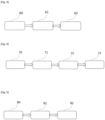
Fig. 3 ] is a block diagram representing a method carried out by the trunk monitoring system offigure 1 , - [
Fig. 4 ] is a block diagram representing another method carried out by the trunk monitoring system offigure 1 , - [
Fig. 5 ] is a block diagram representing another method carried out by the trunk monitoring system offigure 1 . -
Figure 1 is a schematic view of a vehicle V equipped with atrunk monitoring system 1 according to an embodiment of the present invention. - The vehicle
trunk monitoring system 1 comprisestrunk sensors 2 placed in the vehicle trunk T configured to capture images of the interior of the trunk T. - The vehicle
trunk monitoring system 1 further comprises aprocessing unit 3 configured to analyze images captured by thetrunk sensors 2, and auser interface processing unit 3. - The
trunk sensors 2 comprise at least some of the following sensors: - an RGB camera that captures images using red, green, and blue color channels, the camera being coupled with a
light source 8 configured to illuminate the trunk T; - an X-Ray sensor configured to detect hidden contents inside objects 20 (luggage or boxes) placed in the trunk T;
- a thermal camera configured to detect temperature on
objects 20; - a 3D scanner or lidar.
- The plurality of
trunk sensors 2 provide a multi-view or multi-modal representation of the trunk's contents, addressing various features. - The
user interface - An RGB camera image IM displayed on a screen of the
user interface figure 2 . - The
user interface - a
touch screen 4 permanently mounted on the vehicle, and - a screen 11 of a
smartphone 5. - The
onboard user interface 4 is connected to theprocessing unit 3 using a wired connection. - The user interface 5 (smartphone) is connected to the
processing unit 3 using a wireless connection such as a Bluetooth connection. The user interface, which is asmartphone 5, is configured to enable monitoring and control of the vehicle trunk monitoring system, in particular through a secure connection between the smartphone and the processing unit of the vehicle trunk monitoring system. - The
user interface trunk monitoring system 1. In particular, theuser interface trunk sensors 2 to be used to generate the trunk image IM. - The
user interface user interface - The
user interface - The
user interface - The vehicle
trunk monitoring system 1 comprises a memory to memorize time-stamped screenshots generated by thetrunk sensors 2. Theprocessing unit 3 of the vehicle trunk monitoring system is configured to display information of this historical content of the trunk. - The
processing unit 3 of the vehicle trunk monitoring system is set up to operate a deep learning computer vision model capable of detecting specified objects, for instance using a neural network deep learning method to detect specified objects. The neural network deep learning method uses an object detection model based on the boundary of the detected object (such as bounding box, or polygon for instance), in addition to the classification of the detected objects. For example, such neural network deep learning method can be the YOLOv8 model. - The
processing unit 3 of the vehicletrunk monitoring system 1 is configured to receive a request from the user to locate a specific object, such as a red suitcase, and to conduct an image analysis using data provided by thetrunk sensors 2 to ascertain whether the specific object is present in the trunk or not. - The vehicle
trunk monitoring system 1 is also configured to deliver notifications or alarms based on detections made in the trunk by thetrunk sensors 2. - For instance, the vehicle
trunk monitoring system 1 is configured to deliver notifications or alarms if a weapon, food, or an animal is detected for an extended period of time in the trunk. - The
user interface interior user interface - The vehicle
trunk monitoring system 1 is configured to operate the following steps: - request by the user to inspect the content of the trunk T while driving, said request being made via the
user interface 4,5 (step 60 infigure 3 ); - capture an image of the interior of the trunk T by using the trunk sensors 2 (step 61);
- display images IM captured by the
trunk sensors 2 so that the user can inspect the content of the trunk T (step 62). - The vehicle
trunk monitoring system 1 is also configured to operate the following steps: - request by the user to locate a specific object inside the trunk T while driving or not, said request being made via the
user interface 4,5 (step 70 infigure 4 ); - capture images of different views of the interior of the trunk T by using the trunk sensors 2 (step 71);
- detect and locate the specific object by analyzing the captured images (step 72);
- display images IM captured by the
trunk sensors 2 to present the specific object, if present in the trunk T (step 73). - The vehicle
trunk monitoring system 1 is also configured to operate the following steps: - continuously monitor the trunk content using the sensors 2 (
step 80 infigure 4 ); - analyze a status of the objects in the trunk T to detect abnormal conditions such as a movement or a change in the temperature (step 81);
- deliver notifications or alarms based on detections made in the trunk by the trunk sensors 2 (step 82).
- The status of the object can be "Normal" or "Abnormal" depending on detected movements or change I the temperature of the object.
- Since several sensors 2 (for instance: thermal, X-Ray, LiDAR ) are available and an AI support is available, it is possible to check several features reflecting the status of the object, for instance:
- Temperature of the object;
- Position of the object;
- Dimensions of the object.
Claims (15)
- A vehicle trunk monitoring system (1) comprising:- at least one trunk sensor (2) configured to capture an image of the interior of the trunk (T);- a processing unit (3) configured to analyze images received from the trunk sensor (2);- a user interface (4, 5) configured to display an information (IM) based on the images processed by the processing unit.
- The vehicle trunk monitoring system (1) according to the preceding claim, wherein comprising a plurality of trunk sensors (2).
- The vehicle trunk monitoring system according to any one of the preceding claims, wherein the trunk sensor (2) comprises at least one of the following sensors:- a camera, in particular an RGB camera that captures images using red, green, and blue color channels, the camera being coupled with a light source configured to illuminate the trunk;- an X-Ray sensor configured to detect for instance hidden contents inside luggage or boxes;- a thermal camera configured to detect temperature on variable temperature objects;- a 3D scanner or lidar.
- The vehicle trunk monitoring system according to any one of the preceding claims, wherein the plurality of trunk sensors (2) provide a multi-view or multi-modal representation of the trunk's contents.
- The vehicle trunk monitoring system according to any one of the preceding claims, wherein the user interface comprises a screen, in particular:- a screen (4) permanently mounted on the vehicle, or- a screen of a smartphone (5), or- a screen on a headset or glasses to be worn by a passenger of the vehicle.
- The vehicle trunk monitoring system according to any one of the preceding claims, wherein the user interface (4, 5) is configured to allow the passenger to select the type of trunk view to be displayed on the user interface.
- The vehicle trunk monitoring system according to any one of the preceding claims, wherein the user interface (4, 5) is configured to provide a trunk's history through time-stamped screenshots derived from detected trunk change.
- The vehicle trunk monitoring system according to any one of the preceding claims, wherein the processing unit (3) of the vehicle trunk monitoring system is set up to operate a deep learning computer vision model capable of detecting specified objects.
- The vehicle trunk monitoring system according to any one of the preceding claims, wherein the processing unit (3) of the vehicle trunk monitoring system is configured to receive a request to locate a specific object, such as a red suitcase, and to conduct an image analysis using data provided by the trunk sensors to ascertain whether the specific object is present in the trunk or not.
- The vehicle trunk monitoring system according to any one of the preceding claims, wherein the vehicle trunk monitoring system (1) is configured to deliver notifications or alarms based on detections made in the trunk by the trunk sensors.
- The vehicle trunk monitoring system according to any one of the preceding claims, wherein the user interface (4, 5) is configured to enable the user to inquire about the status of specific objects using either text or voice, through either a phone or the car's interior user interface.
- Vehicle (V) equipped with a trunk monitoring system (1) according to any one of the preceding claims.
- A vehicle trunk monitoring method comprising the following steps:- capture an image of the interior of the trunk by using at least one trunk sensor (2);- display an information, such as an image (IM), derived from of the captured images.
- The method according to the preceding claim, comprising the following steps:- receive a request to locate a specific object in the trunk (T),- conduct an image analysis using data provided by the trunk sensors to ascertain whether the specific object is present in the trunk or not.
- The method according to the preceding claim 13 or 14, comprising the following steps:- continuously monitor the trunk content;- analyze a status of the object to detect abnormal conditions such as a movement or a change in the temperature;- deliver notifications or alarms based on detections made in the trunk by the trunk sensors.
Priority Applications (1)
| Application Number | Priority Date | Filing Date | Title |
|---|---|---|---|
| EP23204069.1A EP4542504A1 (en) | 2023-10-17 | 2023-10-17 | A vehicle trunk monitoring system |
Applications Claiming Priority (1)
| Application Number | Priority Date | Filing Date | Title |
|---|---|---|---|
| EP23204069.1A EP4542504A1 (en) | 2023-10-17 | 2023-10-17 | A vehicle trunk monitoring system |
Publications (1)
| Publication Number | Publication Date |
|---|---|
| EP4542504A1 true EP4542504A1 (en) | 2025-04-23 |
Family
ID=88417536
Family Applications (1)
| Application Number | Title | Priority Date | Filing Date |
|---|---|---|---|
| EP23204069.1A Pending EP4542504A1 (en) | 2023-10-17 | 2023-10-17 | A vehicle trunk monitoring system |
Country Status (1)
| Country | Link |
|---|---|
| EP (1) | EP4542504A1 (en) |
Citations (3)
| Publication number | Priority date | Publication date | Assignee | Title |
|---|---|---|---|---|
| US20170098364A1 (en) * | 2015-10-02 | 2017-04-06 | Lg Electronics Inc. | Apparatus, method and mobile terminal for providing object loss prevention service in vehicle |
| US20210295069A1 (en) * | 2019-12-18 | 2021-09-23 | Waymo Llc | Interior Camera System for a Self Driving Car |
| US20220114817A1 (en) * | 2019-02-17 | 2022-04-14 | Guardian Optical Technologies, Ltd. | System, device, and methods for detecting and obtaining information on objects in a vehicle |
-
2023
- 2023-10-17 EP EP23204069.1A patent/EP4542504A1/en active Pending
Patent Citations (3)
| Publication number | Priority date | Publication date | Assignee | Title |
|---|---|---|---|---|
| US20170098364A1 (en) * | 2015-10-02 | 2017-04-06 | Lg Electronics Inc. | Apparatus, method and mobile terminal for providing object loss prevention service in vehicle |
| US20220114817A1 (en) * | 2019-02-17 | 2022-04-14 | Guardian Optical Technologies, Ltd. | System, device, and methods for detecting and obtaining information on objects in a vehicle |
| US20210295069A1 (en) * | 2019-12-18 | 2021-09-23 | Waymo Llc | Interior Camera System for a Self Driving Car |
Similar Documents
| Publication | Publication Date | Title |
|---|---|---|
| US10867195B2 (en) | Systems and methods for monitoring driver state | |
| EP3682429B1 (en) | System and method for gate monitoring during departure or arrival of an autonomous vehicle | |
| US10322696B2 (en) | Vehicle environment imaging systems and methods | |
| US9714037B2 (en) | Detection of driver behaviors using in-vehicle systems and methods | |
| US20220089127A1 (en) | Information processing apparatus, program, computer readable recording medium, and information processing method | |
| US20250046095A1 (en) | Systems and methods of legibly capturing vehicle markings | |
| CN103839046B (en) | Automatic driver attention identification system and identification method thereof | |
| CN112836563A (en) | Job site classification system and method | |
| JP2018032950A (en) | Information processing apparatus and method, and computer program | |
| KR102040774B1 (en) | Around view monitoring system and responsing method for self-propelled type agricultural machinery in emergency using the same | |
| CN110171357A (en) | Vehicle and its control method | |
| CN106427826A (en) | Automobile, user terminal, as well as reminding control method and reminding control system based on driving data | |
| Shaily et al. | Smart driver monitoring system | |
| JP6140436B2 (en) | Shooting system | |
| CN115471969A (en) | An online monitoring device for cable breakage prevention based on image recognition technology | |
| JP2019220084A (en) | Analysis device, on-vehicle device, and pattern analysis support device | |
| US20230267751A1 (en) | Vehicle safety assistance system | |
| JP2016045678A (en) | Price display system, price determination apparatus, display device, price determination method, and price determination program | |
| EP4542504A1 (en) | A vehicle trunk monitoring system | |
| JP6163302B2 (en) | Monitoring system | |
| CN106183986A (en) | A kind of intelligent driving safety system and method | |
| CA2894793A1 (en) | Mobile computer peripheral | |
| KR102909061B1 (en) | Ai-based heavy equipment accident prevention alert system | |
| CN208861343U (en) | A car unlocking system based on face recognition | |
| JP7462714B2 (en) | Information processing device, information processing program, and information processing method |
Legal Events
| Date | Code | Title | Description |
|---|---|---|---|
| PUAI | Public reference made under article 153(3) epc to a published international application that has entered the european phase |
Free format text: ORIGINAL CODE: 0009012 |
|
| STAA | Information on the status of an ep patent application or granted ep patent |
Free format text: STATUS: THE APPLICATION HAS BEEN PUBLISHED |
|
| AK | Designated contracting states |
Kind code of ref document: A1 Designated state(s): AL AT BE BG CH CY CZ DE DK EE ES FI FR GB GR HR HU IE IS IT LI LT LU LV MC ME MK MT NL NO PL PT RO RS SE SI SK SM TR |
|
| STAA | Information on the status of an ep patent application or granted ep patent |
Free format text: STATUS: REQUEST FOR EXAMINATION WAS MADE |
|
| 17P | Request for examination filed |
Effective date: 20251023 |