EP4541423A2 - Dosing regimen of avelumab for the treatment of cancer - Google Patents
Dosing regimen of avelumab for the treatment of cancer Download PDFInfo
- Publication number
- EP4541423A2 EP4541423A2 EP25150340.5A EP25150340A EP4541423A2 EP 4541423 A2 EP4541423 A2 EP 4541423A2 EP 25150340 A EP25150340 A EP 25150340A EP 4541423 A2 EP4541423 A2 EP 4541423A2
- Authority
- EP
- European Patent Office
- Prior art keywords
- cancer
- avelumab
- dosing regimen
- antibody
- trough
- Prior art date
- Legal status (The legal status is an assumption and is not a legal conclusion. Google has not performed a legal analysis and makes no representation as to the accuracy of the status listed.)
- Pending
Links
Images






Classifications
-
- C—CHEMISTRY; METALLURGY
- C07—ORGANIC CHEMISTRY
- C07K—PEPTIDES
- C07K16/00—Immunoglobulins [IG], e.g. monoclonal or polyclonal antibodies
- C07K16/18—Immunoglobulins [IG], e.g. monoclonal or polyclonal antibodies against material from animals or humans
- C07K16/28—Immunoglobulins [IG], e.g. monoclonal or polyclonal antibodies against material from animals or humans against receptors, cell surface antigens or cell surface determinants
- C07K16/2803—Immunoglobulins [IG], e.g. monoclonal or polyclonal antibodies against material from animals or humans against receptors, cell surface antigens or cell surface determinants against the immunoglobulin superfamily
- C07K16/2827—Immunoglobulins [IG], e.g. monoclonal or polyclonal antibodies against material from animals or humans against receptors, cell surface antigens or cell surface determinants against the immunoglobulin superfamily against B7 molecules, e.g. CD80, CD86
-
- A—HUMAN NECESSITIES
- A61—MEDICAL OR VETERINARY SCIENCE; HYGIENE
- A61P—SPECIFIC THERAPEUTIC ACTIVITY OF CHEMICAL COMPOUNDS OR MEDICINAL PREPARATIONS
- A61P35/00—Antineoplastic agents
-
- A—HUMAN NECESSITIES
- A61—MEDICAL OR VETERINARY SCIENCE; HYGIENE
- A61K—PREPARATIONS FOR MEDICAL, DENTAL OR TOILETRY PURPOSES
- A61K39/00—Medicinal preparations containing antigens or antibodies
- A61K2039/505—Medicinal preparations containing antigens or antibodies comprising antibodies
-
- A—HUMAN NECESSITIES
- A61—MEDICAL OR VETERINARY SCIENCE; HYGIENE
- A61K—PREPARATIONS FOR MEDICAL, DENTAL OR TOILETRY PURPOSES
- A61K39/00—Medicinal preparations containing antigens or antibodies
- A61K2039/545—Medicinal preparations containing antigens or antibodies characterised by the dose, timing or administration schedule
-
- C—CHEMISTRY; METALLURGY
- C07—ORGANIC CHEMISTRY
- C07K—PEPTIDES
- C07K2317/00—Immunoglobulins specific features
- C07K2317/10—Immunoglobulins specific features characterized by their source of isolation or production
- C07K2317/14—Specific host cells or culture conditions, e.g. components, pH or temperature
-
- C—CHEMISTRY; METALLURGY
- C07—ORGANIC CHEMISTRY
- C07K—PEPTIDES
- C07K2317/00—Immunoglobulins specific features
- C07K2317/20—Immunoglobulins specific features characterized by taxonomic origin
- C07K2317/24—Immunoglobulins specific features characterized by taxonomic origin containing regions, domains or residues from different species, e.g. chimeric, humanized or veneered
Definitions
- the present invention relates to dosing regimens of avelumab for the treatment of cancer.
- the invention relates to improved dosing regimens of avelumab for the treatment of cancer.
- Avelumab is a fully human mAb of the IgG1 isotype that specifically targets and blocks PD-L1.
- Avelumab is the International Nonproprietary Name (INN) for the anti-PD-L1 monoclonal antibody MSB0010718C and has been described by its full length heavy and light chain sequences in WO2013079174 , where it is referred to as A09-246-2. The glycosylation and truncation of the C-terminal Lysine in its heavy chain is described in WO2017097407 .
- Avelumab has been in clinical development for the treatment of Merkel Cell Carcinoma (MCC), non-small cell lung cancer (NSCLC), urothelial carcinoma (UC), renal cell carcinoma (RCC) and a number of other cancer conditions of a dosing regimen of 10 mg/kg Q2W.
- MCC Merkel Cell Carcinoma
- NSCLC non-small cell lung cancer
- UC urothelial carcinoma
- RRC renal cell carcinoma
- This invention relates to dosing regimens of avelumab for the treatment of cancer. More specifically, the invention relates method of treating cancer in a patient, comprising administering to the patient a dosing regimen that provides a higher mean exposure, as measured by C trough or other suitable PK parameters, of avelumab in the patient, than the current dosing regimen of 10mg/kg Q2W that are used in the clinical trials.
- the invention relates to a method of treating a cancer in a patient, comprising administering avelumab to the patient in a dosing regimen of 5-10 mg/Kg Q1W.
- the dosing regimen is 5 mg/kg Q1W, 6 mg/kg Q1W, 7 mg/kg Q1W, 8 mg/kg Q1W, 9 mg/kg Q1W or 10 mg/kg Q1W. More preferably, the dosing regimen is 5 mg/kg Q1W, 8 mg/kg Q1W or 10 mg/kg Q1W. Even more preferably, the dosing regimen is 10 mg/kg Q1W.
- the cancer is selected from the group consisting of MCC, NSCLC, RCC, bladder cancer, ovarian cancer, head and neck cancer, gastric cancer, mesothelioma, urothelial carcinoma, breast cancer, adenocarcinoma of the stomach and thymoma.
- the cancer is MCC, NSCLC, RCC, bladder cancer, ovarian cancer, head and neck cancer and gastric cancer. More preferably, the cancer is MSCLC or MCC.
- the invention in another embodiment, relates to a method of treating a cancer in a patient, comprising administering avelumab to the patient in a dosing regimen of 11-20 mg/kg Q2W.
- the dosing regimen is 11, 12, 13, 14, 15, 16, 17, 18, 19 or 20 mg/kg Q2W.
- the dosing regimen is 13, 15, 17 or 20 mg/kg Q2W. More preferably, the dosing regimen is 15 or 20 mg/kg Q2W. Even more preferably, the dosing regimen is 20 mg/kg Q2W.
- the cancer is selected from the group consisting of MCC, NSCLC, RCC, bladder cancer, ovarian cancer, head and neck cancer gastric cancer, mesothelioma, urothelial carcinoma, breast cancer, adenocarcinoma of the stomach and thymoma.
- the cancer is MCC, NSCLC, RCC, bladder cancer, ovarian cancer, head and neck cancer gastric cancer. More preferably, the cancer is MSCLC or MCC.
- the invention in another embodiment, relates to a method of treating a cancer in a patient, comprising administering avelumab to the patient in a dosing regimen of 15-30mg/kg Q3W.
- the dosing regimen is, 15, 16, 17, 18, 19, 20, 21, 22, 23, 24, 25, 26, 27, 28 29 or 30 mg/kg Q3W.
- the dosing regimen is 15, 20, 25 or 30 mg/kg Q3W. More preferably, the dosing regimen is 15, 20 or 25mg/kg Q3W. Even more preferably, the dosing regimen is 20mg/kg Q3W.
- the cancer is selected from the group consisting of MCC, NSCLC, RCC, bladder cancer, ovarian cancer, head and neck cancer gastric cancer, mesothelioma, urothelial carcinoma, breast cancer, adenocarcinoma of the stomach and thymoma.
- the cancer is MCC, NSCLC, RCC, bladder cancer, ovarian cancer, head and neck cancer gastric cancer. More preferably, the cancer is MSCLC or MCC.
- the invention in another embodiment, relates to a method of treating a cancer in a patient, comprising administering avelumab to the patient in a dosing regimen of X mg/kg Q1W for n weeks followed by Y mg/kg Q2W, wherein X is 5-20, Y is 10-20, n is 6, 12 or 18. In one aspect of this embodiment, n is 12. In another aspect of the embodiment, n is 6. In another aspect of the embodiment, and in combination with any other aspect of this embodiment, X is 5, 6, 7, 8, 9, 10, 11, 12, 13, 14, 15, 16, 19, 18, 19 or 20. Preferably, X is 5, 10, 15 or 20. More preferably, X is 5, 10, or 15. Even more preferably, X is 10.
- Y is 10, 11, 12, 13, 14, 15, 16, 17, 18, 19 or 20.
- Y is 10, 15 or 20.
- Y is 10.
- the cancer is selected from the group consisting of MCC, NSCLC, RCC, bladder cancer, ovarian cancer, head and neck cancer gastric cancer, mesothelioma, urothelial carcinoma, breast cancer, adenocarcinoma of the stomach and thymoma.
- the cancer is MCC, NSCLC, RCC, bladder cancer, ovarian cancer, head and neck cancer gastric cancer. More preferably, the cancer is MSCLC or MCC.
- a flat dose can be used in place of the mg/kg dose mentioned above. Correlation between mg/kg dose and the flat dose can be made, e.g., as follows: 5 mg/kg is about 500 mg flat dose; 10 mg/kg is about 800 mg; 11mg/mg is about 900mg; 15 mg/kg is about 1240 mg flat dose; 20 mg is about 1600 mg flat dose and 30 mg/kg is about 2400 mg flat dose. Therefore, in another embodiment of the invention, the aforementioned embodiments based on a mg/kg dosing regimen of avelumab can be replaced with the corresponding flat dosing regimen as described herein.
- the invention relates to a method of treating a cancer in a patient, comprising administering avelumab to the patient a flat dosing regimen of avelumab.
- the flat dosing regimen is 400-800 mg flat dose Q1W.
- the flat dosing regimen is 400 mg, 450 mg, 500 mg, 550 mg, 600 mg, 650 mg, 700 mg, 750 mg or 800 mg flat dose Q1W.
- the flat dosing regimen is 800 mg flat dose Q1W.
- the flat dosing regimen is 880 - 1600 mg flat dose Q2W.
- the flat dosing regimen is 880 mg, 900 mg, 950 mg, 1000 mg, 1050 mg, 1100 mg, 1150 mg, 1200 mg, 1250 mg, 1300 mg, 1350 mg, 1400 mg, 1450 mg, 1500 mg, 1550 mg or 1600 mg flat dose Q2W. More preferably, the flat dosing regimen is 1200 mg or 1600 mg flat dose Q2W. In another aspect of this embodiment, the flat dosing regimen is 1200 - 2400 mg flat dose Q3W, preferably 1200 mg Q3W.
- the flat dosing regimen is 1200 mg, 1250 mg, 1300 mg, 1350 mg, 1400 mg, 1450 mg 1500 mg, 1550 mg, 1600 mg, 1650 mg, 1700 mg, 1750 mg, 1800 mg, 1850 mg, 1900 mg, 1950mg, 2000 mg, 2050 mg, 2100 mg, 2150 mg, 2200 mg, 2250 mg, 2300 mg, 2350 mg or 2400 mg flat dose Q3W. More preferably, the dosing regimen is 1200 mg flat dose Q3W. In another aspect of the embodiment, the flat dosing regimen is 400-1600mg Q1W for n weeks followed by 800-1600mg Q2W, wherein n is 6, 12 or 18.
- the flat dosing regimen is 400 mg, 450 mg, 500 mg, 550 mg, 600 mg, 650 mg, 700mg, 725 mg, 750 mg, 775 mg, 800 mg, 825 mg, 850 mg, 875 mg, 900 mg, 925 mg, 950 mg, 975 mg, 1000 mg, 1050 mg, 1100 mg, 1150 mg, 1200 mg, 1250 mg, 1300 mg, 1350 mg, 1400 mg, 1450 mg, 1500 mg, 1550 mg or 1600 mg Q1W for n weeks followed by 800 mg, 850 mg, 900 mg, 950 mg, 1000 mg, 1050 mg, 1100 mg, 1150 mg, 1200 mg, 1250 mg, 1300 mg, 1350 mg, 1400 mg, 1450 mg, 1500 mg, 1550 mg or 1600 mg Q2W.
- the dosing regimen is 800 mg flat dose Q1W for n weeks followed by 800mg flat dose Q2W. Even more preferably, n is 12.
- the flat dosing regimen is 400-800 mg flat dose Q2W.
- the flat dosing regimen is 400 mg, 450 mg, 500 mg, 550 mg, 600 mg, 650 mg, 700 mg 750 mg or 800 mg flat dose Q2W. More preferably, the flat dosing regimen is 800 mg flat dose Q2W.
- the cancer is selected from the group consisting of MCC, NSCLC, RCC, bladder cancer, ovarian cancer, head and neck cancer, gastric cancer, mesothelioma, urothelial carcinoma, breast cancer, adenocarcinoma of the stomach and thymoma.
- the cancer is MCC, NSCLC, RCC, bladder cancer, ovarian cancer, head and neck cancer gastric cancer. More preferably, the cancer is NSCLC or MCC.
- the invention is directed to a method of treating a cancer comprising administering to the patient avelumab in a dosing regimen as described in any of the proceeding embodiments, wherein the patient has a TPS of PD-L1 expression of 1% and above, 5% and above, 10% and above, 20% and above, 30% and above, 40% and above, 50% and above, 60% and above, 70% and above, 80% and above 95% and above, or 95% and above.
- the TPS of PD-L1 expression is 20% and above. More preferably, the TPS of PD-L1 expression is 50% and above.
- the invention is directed to a method of treating a cancer in a patient, comprising administering avelumab to the patient in a dosing regimen selected from the group consisting of 800 mg Q1W for 12 weeks followed by 800 mg Q2W, 10 mg/kg Q1W for 12 weeks followed by 10 mg/kg Q2W and 1200 mg Q3W, and wherein the tumor proportion score of PD-L1 expression is 5% and above, 20% and above, 50% and above or 80% and above.
- tumor proportion score of PD-L1 expression is 20% and above.
- the TPS of PD-L1 expression is 50% and above.
- the cancer is selected from NSCLC, urothelial cancer, RCC, ovarian cancer, head and neck cancer gastric cancer. More preferably, the cancer is NSCLC.
- the invention is directed to a method of treating a cancer comprising administering to the patient avelumab in a dosing regimen as described in any of the proceeding embodiments, further comprising administering to the patient at least one of a second anti-cancer treatment.
- the method further comprising administering one or two of a second anti-cancer treatment.
- the second anti-cancer treatment is selected from the group consisting of a VEGFR antagonist, an anti-4-1BB antibody an anti-OX-40 antibody, an anti-MCSF antibody, an anti-PTK-7 antibody based antibody drug conjugate (ADC) wherein the drug payload is an antineoplastic agent, an IDO1 antagonist, an ALK antagonist, an anti-cancer vaccine, a radio therapy and a standard of care treatment of cancers of the relevant tumor type.
- ADC antibody drug conjugate
- the VEGFR antagonist is axitinib
- the anti-4-1BB antibody is PF0582566, the antiOX-40 antibody is PF4518600
- the anti-MCSF antibody is PF-0360324
- the ALK antagonist is crizotinib or lorlatinib (PF-06463922)
- the anti-PTK7 antibody based ADC is PF-06647020.
- AUC area under curve
- BOR best overall response
- ORR overall response rate
- anti-cancer treatment refers to any standard of care treatment of cancers in any relevant tumor types, or the administration of any single pharmaceutical agent, any fixed dose combinations of two or more single pharmaceutical agents, other than the standard of care treatment of cancer, documented in the state of the art as having or potentially having an effect toward the treatment of cancer or in the relevant tumor types.
- standard of care treatment of cancers refers to any non-surgical treatment of any particular tumor type that is suggested in the NCCN Guidelines Version 1 2017 .
- standard of care treatment of cancers may be radiation or, the administration of a single pharmaceutical agent, a fixed dose combinations of two or more single pharmaceutical agents or the combination of two or more single pharmaceutical agents, provided that standard of care treatment of cancers does not already contain any PD-1 or PD-L1 antagonist.
- single pharmaceutical agent means any composition that comprising a single substance as the only active pharmaceutical ingredient in the composition.
- tumor proportion score refers to the percentage of viable tumor cells showing partial or complete membrane staining in an immunohistochemistry test of a sample.
- Tuor proportion score of PD-L1 expression used here in refers to the percentage of viable tumor cells showing partial or complete membrane staining in a PD-L1 expression immunohistochemistry test of a sample.
- Exemplary samples include, without limitation, a biological sample, a tissue sample, a formalin-fixed paraffin-embedded (FFPE) human tissue sample and a formalin-fixed paraffin-embedded (FFPE) human tumor tissue sample.
- Exemplary PD-L1 expression immunohistochemistry tests include, without limitation, the PD-L1 IHC 22C3 PharmDx (FDA approved, Daco), Ventana PD-L1 SP263 assay, and the tests described in PCT/EP2017/073712 .
- administering refers to contact of an exogenous pharmaceutical, therapeutic, diagnostic agent, or composition to the animal, human, subject, cell, tissue, organ, or biological fluid.
- Treatment of a cell encompasses contact of a reagent to the cell, as well as contact of a reagent to a fluid, where the fluid is in contact with the cell.
- administering and “treatment” also means in vitro and ex vivo treatments, e.g., of a cell, by a reagent, diagnostic, binding compound, or by another cell.
- subject includes any organism, preferably an animal, more preferably a mammal (e.g., rat, mouse, dog, cat, and rabbit) and most preferably a human.
- Treatment as used in a clinical setting, is intended for obtaining beneficial or desired clinical results.
- beneficial or desired clinical results include, but are not limited to, one or more of the following: reducing the proliferation of (or destroying) neoplastic or cancerous cells, inhibiting metastasis of neoplastic cells, shrinking or decreasing the size of tumor, remission of a disease (e.g., cancer), decreasing symptoms resulting from a disease (e.g., cancer), increasing the quality of life of those suffering from a disease (e.g., cancer), decreasing the dose of other medications required to treat a disease (e.g., cancer), delaying the progression of a disease (e.g., cancer), curing a disease (e.g., cancer), and/or prolong survival of patients having a disease (e.g., cancer).
- a disease e.g., cancer
- decreasing symptoms resulting from a disease e.g., cancer
- increasing the quality of life of those suffering from a disease e.g., cancer
- decreasing the dose of other medications required to treat a disease e.g., cancer
- an “antibody” is an immunoglobulin molecule capable of specific binding to a target, such as a carbohydrate, polynucleotide, lipid, polypeptide, etc., through at least one antigen recognition site, located in the variable region of the immunoglobulin molecule.
- a target such as a carbohydrate, polynucleotide, lipid, polypeptide, etc.
- the term encompasses not only intact polyclonal or monoclonal antibodies, but also antigen binding fragments thereof (such as Fab, Fab', F(ab')2, Fv), single chain (scFv) and domain antibodies (including, for example, shark and camelid antibodies), and fusion proteins comprising an antibody, and any other modified configuration of the immunoglobulin molecule that comprises an antigen recognition site.
- the heavy-chain constant regions that correspond to the different classes of immunoglobulins are called alpha, delta, epsilon, gamma, and mu, respectively.
- the subunit structures and three-dimensional configurations of different classes of immunoglobulins are well known.
- antigen binding fragment or "antigen binding portion” of an antibody, as used herein, refers to one or more fragments of an intact antibody that retain the ability to specifically bind to a given antigen (e.g., PD-L1). Antigen binding functions of an antibody can be performed by fragments of an intact antibody.
- binding fragments encompassed within the term "antigen binding fragment" of an antibody include Fab; Fab'; F(ab')2; an Fd fragment consisting of the VH and CH1 domains; an Fv fragment consisting of the VL and VH domains of a single arm of an antibody; a single domain antibody (dAb) fragment ( Ward et al., Nature 341:544-546, 1989 ), and an isolated complementarity determining region (CDR).
- An antibody, an antibody conjugate, or a polypeptide that "preferentially binds” or “specifically binds” (used interchangeably herein) to a target is a term well understood in the art, and methods to determine such specific or preferential binding are also well known in the art.
- a molecule is said to exhibit "specific binding” or “preferential binding” if it reacts or associates more frequently, more rapidly, with greater duration and/or with greater affinity with a particular cell or substance than it does with alternative cells or substances.
- an antibody that specifically or preferentially binds to a PD-L1 epitope is an antibody that binds this epitope with greater affinity, avidity, more readily, and/or with greater duration than it binds to other PD-L1 epitopes or non-PD-L1 epitopes.
- an antibody (or moiety or epitope) that specifically or preferentially binds to a first target may or may not specifically or preferentially bind to a second target.
- “specific binding” or “preferential binding” does not necessarily require (although it can include) exclusive binding. Generally, but not necessarily, reference to binding means preferential binding.
- variable region of an antibody refers to the variable region of the antibody light chain or the variable region of the antibody heavy chain, either alone or in combination.
- variable regions of the heavy and light chain each consist of four framework regions (FR) connected by three complementarity determining regions (CDRs) also known as hypervariable regions.
- FR framework regions
- CDRs complementarity determining regions
- the CDRs in each chain are held together in close proximity by the FRs and, with the CDRs from the other chain, contribute to the formation of the antigen binding site of antibodies.
- There are at least two techniques for determining CDRs (1) an approach based on cross-species sequence variability (i.e., Kabat et al.
- a CDR may refer to CDRs defined by either approach or by a combination of both approaches.
- a "CDR" of a variable domain are amino acid residues within the variable region that are identified in accordance with the definitions of the Kabat, Chothia, the accumulation of both Kabat and Chothia, AbM, contact, and/or conformational definitions or any method of CDR determination well known in the art.
- Antibody CDRs may be identified as the hypervariable regions originally defined by Kabat et al. See, e.g., Kabat et al., 1992, Sequences of Proteins of Immunological Interest, 5th ed., Public Health Service, NIH, Washington D.C .
- the positions of the CDRs may also be identified as the structural loop structures originally described by Chothia and others. See, e.g.
- CDR identification includes the "AbM definition,” which is a compromise between Kabat and Chothia and is derived using Oxford Molecular's AbM antibody modeling software (now Accelrys ® ), or the "contact definition" of CDRs based on observed antigen contacts, set forth in MacCallum et al., J. Mol. Biol., 262:732-745, 1996 .
- the positions of the CDRs may be identified as the residues that make enthalpic contributions to antigen binding.
- CDR may refer to CDRs defined by any approach known in the art, including combinations of approaches. The methods used herein may utilize CDRs defined according to any of these approaches. For any given embodiment containing more than one CDR, the CDRs may be defined in accordance with any of Kabat, Chothia, extended, AbM, contact, and/or conformational definitions.
- isolated antibody and “isolated antibody fragment” refers to the purification status and in such context means the named molecule is substantially free of other biological molecules such as nucleic acids, proteins, lipids, carbohydrates, or other material such as cellular debris and growth media. Generally, the term “isolated” is not intended to refer to a complete absence of such material or to an absence of water, buffers, or salts, unless they are present in amounts that substantially interfere with experimental or therapeutic use of the binding compound as described herein.
- conventional (polyclonal) antibody preparations typically include a multitude of different antibodies having different amino acid sequences in their variable domains, particularly their CDRs, which are often specific for different epitopes.
- the modifier “monoclonal” indicates the character of the antibody as being obtained from a substantially homogeneous population of antibodies, and is not to be construed as requiring production of the antibody by any particular method.
- the monoclonal antibodies to be used in accordance with the present invention may be made by the hybridoma method first described by Kohler et al. (1975) Nature 256: 495 , or may be made by recombinant DNA methods (see, e.g., U.S. Pat. No. 4,816,567 ).
- the "monoclonal antibodies” may also be isolated from phage antibody libraries using the techniques described in Clackson et al. (1991) Nature 352: 624-628 and Marks et al. (1991) J. Mol. Biol. 222: 581-597 , for example. See also Presta (2005) J. Allergy Clin. Immunol. 116:731 .
- Chimeric antibody refers to an antibody in which a portion of the heavy and/or light chain is identical with or homologous to corresponding sequences in an antibody derived from a particular species (e.g., human) or belonging to a particular antibody class or subclass, while the remainder of the chain(s) is identical with or homologous to corresponding sequences in an antibody derived from another species (e.g., mouse) or belonging to another antibody class or subclass, as well as fragments of such antibodies, so long as they exhibit the desired biological activity.
- a particular species e.g., human
- another species e.g., mouse
- Human antibody refers to an antibody that comprises human immunoglobulin protein sequences only.
- a human antibody may contain murine carbohydrate chains if produced in a mouse, in a mouse cell, or in a hybridoma derived from a mouse cell.
- mouse antibody or rat antibody refer to an antibody that comprises only mouse or rat immunoglobulin sequences, respectively.
- Humanized antibody refers to forms of antibodies that contain sequences from non-human (e.g., murine) antibodies as well as human antibodies. Such antibodies contain minimal sequence derived from non-human immunoglobulin.
- the humanized antibody will comprise substantially all of at least one, and typically two, variable domains, in which all or substantially all of the hypervariable loops correspond to those of a non-human immunoglobulin and all or substantially all of the FR regions are those of a human immunoglobulin sequence.
- the humanized antibody optionally also will comprise at least a portion of an immunoglobulin constant region (Fc), typically that of a human immunoglobulin.
- Fc immunoglobulin constant region
- the prefix "hum”, "hu” or “h” is added to antibody clone designations when necessary to distinguish humanized antibodies from parental rodent antibodies.
- the humanized forms of rodent antibodies will generally comprise the same CDR sequences of the parental rodent antibodies, although certain amino acid substitutions may be included to increase affinity, increase stability of the humanized antibody, or for other reasons.
- Avelumab entered phase 1 clinical trial in early 2013 and has since then advanced to phase 3 trials in several different tumor types such as MCC, NSCLC, RCC, gastric cancer, ovarian cancer and bladder cancer.
- the dosing regimen in these trials was 10 mg/kg Q2W.
- Provided herein are improved dosing regimens for avelumab which could achieve a better overall response rate than the current 10mg/kg Q2W dosing regimen.
- Table 1 below provides the sequences of the anti-PD-L1 antibody avelumab for use in the treatment method, medicaments and uses of the present invention.
- Avelumab is described in International Patent Publication No. WO2013/079174 , the disclosure of which is hereby incorporated by references in its entirety. Table 1.
- Example 1 C trough and ORR correlation of 88 patients in a phase 3 MCC trial.
- 88 patients participated in a phase 3 MCC trial with the avelumab dosing of 10 mg/kg Q2W over one hour of IV infusion. Patients were divided into four quartiles based on the C through value of patients, with 22 patients in each quartile. The C trough value of each patient was calculated based on the existing model and the actual serum concentration of avelumab tested for each patient at various points during the trial. As shown in FIG. 1 , the four quartiles of patients were represented by the four vertical bars in the figure. The C trough value of each quartile is represented by the mean C trough value of the quartile. The heavy dot on each vertical bar represents the probability of overall response rate for the group.
- FIG. 1 A positive correlation between C trough and ORR was observed ( FIG. 1 ). Patients of the upper 4 th quartile have a probability of ORR of about 60% ( FIG.1 ). A mean C trough of around 44-50 ug/mL correlates to a probability of ORR of 50-60% ( FIG. 1 ).
- Example 2 C trough and ORR correlation of 156 patients in phase 3 first line NSCLC trial.
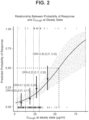
- 156 patients participated in a phase 3 first line NSCLC trial with the avelumab dosing of 10mg/kg Q2W over one hour of IV infusion. Patients were divided into four quartiles based on the C through value of patients, with 39 patients in each quartile. The C trough number of each patient was calculated based on the existing model and the actual serum concentration of avelumab tested for each patient at various points during the trial. As shown in FIG. 2 , the four quartiles of patients were represented by the four vertical bars in the figure. The C trough value of each quartile is represented by the mean C trough value of the quartile. The heavy dot on each vertical bar represents the probability of overall response rate for the group.
- TPS Tumor proportion score
- Table 3 provides a number of dosing regimens for avelumab.
- Avelumab dosing regimens Proposed dosing regimen Notes 5-10 mg/kg Q1W Dosing range - 10 mg/kg Q1W Preferred specific dose - 5 mg/kg Q1W additional Preferred specific dose within the range - 8 mg/kg Q1W 11-20 mg/kg Q2W Dosing range - 11 mg Q2W Preferred specific dose - 20 mg/kg Q2W Preferred specific dose - 13, 15, 17 mg/kg Q2W Additional preferred specific dose 15-30 mg/kg Q3W Range - 20 mg/kg Q3W Preferred specific doses - 15, 20, 25,30 mg/kg Q3W Additional Preferred specific dose within the range 5-20 mg/kg Q1W for n weeks followed by 10 mg/kg Q2W Dosing range n is 6 or 12 - 10 mg/kg Q1W for 12 weeks followed by 10 mg/kg Q2W Preferred specific dose - 5, 15, 20 mg/kg Q1W for 6 or 12 weeks followed by 10 mg/kg Q2W Additional Preferred specific dose within the range 500 -
- Dosing regimen Median Ctrough (ug/mL) 95% C trough prediction interval (ug/mL) 1 5 mg/kg Q1W 42.8 19.4-79.6 2 10 mg/kg Q1W 83.9 39.9-160.2 3 10 mg/kg/Q2W 20.6 4.8-51.2 4 11 mg/kg Q2W 22.2 5.8-56.6 5 20 mg/kg Q2W 39.9 11.5-96.3 6 10 mg/kg Q3W 6.3 0.0-20.1 7 15 mg/kg Q3W 9.1 0.2-34.1 8 20 mg/kg Q3W 12.8 0.5-46.7 9 25 mg/kg Q3W 14.2 0.9-54.6 10 30 mg/kg Q3W 17.6 1.8-66.7 11 5 mg/kg Q1W for 12 weeks followed by 10 mg/kgQ2W During Loading: 42.8 During loading: 19.4-79.6 After loading: 20.2 After loading: 5.2-47.5 12 10 mg/kg Q1W for 12 weeks followed by 10 mg/kgQ2W During loading: 83.9 During
- Examples 1-3 above demonstrate that the mean C trough has a positive correlation with the probability of ORR.
- a mean C trough of 44 ug/mL to 85 ug/mL corresponds to about 35% to about 50% probability of ORR, wherein the 4 th quartile probability of ORR in Examples 2 and 3 was 35% and 31% respectively.
- regimens Nos.1-2, 5 and 11-16 provide an expected mean C trough of about or over 44 ug/mL and thus could advantageously provide better probability of ORR in NSCLC patients.
- Other advantageous dosing regimens include, for example, regimens Nos. 2, 12-13 and 15-16, and the ranges within these regimens such as 10 mg - 20 mg/kg Q1W for 6 or 12 weeks followed by 10 mg/kg Q2W, all of which correspond to a median C trough of about or more than 85 ug/mL.
- Other advantageous regimens for NSCLC are those providing a mean C trough between 44 ug/mL and 85 ug/ml, i.e. dosing regimen Nos.
- dosing regimen 1-2, 5 and 11-16 shown in Table 6, or ranges therein, such as 5-10 mg/kg Q1W, 5-20 mg/kg Q1W for 6 or 12 weeks followed by 10 mg/kg Q2W, are advantageous for treatment of solid tumor types.
- Other advantageous dosing regimens to treat solid tumor include avelumab dosing regimen Nos. 2, 12-13 and 15-16 and the ranges within these regimens such as 10 mg - 20 mg/kg Q1W for 6 or 12 weeks followed by 10 mg/kg Q2W, all of which corresponding to a median C trough of about or more than 85ug/mL.
- Other advantageous avelumab dosing regimens include dosing regimen Nos.
- exemplary solid tumor types suitable for treatment with the avelumab dosing regimens provided herein include, without limitation, MCC, NSCLC, RCC, bladder cancer, ovarian cancer, head and neck cancer, gastric cancer, mesothelioma, urothelial carcinoma, breast cancer, adenocarcinoma of the stomach and thymoma.
- Example 5 Modeling of safety and efficacy for the 800 mg Q2W dosing in comparison with the 10 mg/kg Q2W dosing.
- the clinical profile of avelumab has been evaluated from data in more than 1800 subjects in ongoing Phase I, II, and III trials in adult subjects with various solid tumors.
- the clinical pharmacology results are obtained from 1827 subjects from three studies with PK information available as of June 9, 2016 (studies EMR100070-001 and EMR100070-003) and November 20, 2015 (study EMR100070-002).
- PK CYCLE model represents the PK model generated using PK data from the first dose of avelumab
- PK SS model represents the PK model generated using PK data after repeated dosing of avelumab.
- Such projected exposure metrics were then used in the below Exposure-efficacy correlation and Exposure-safety correlation simulation.
- FIG. 4A , FIG. 4B , FIG. 5A and FIG. 5B The distribution plot of such projected avelumab AUC 0-336 are shown in FIG. 4A , FIG. 4B , FIG. 5A and FIG. 5B .
- the plots depicted in FIG. 4A and FIG. 4B show that the simulated values of AUC 0-336 have a close correspondence between the two dosing regimens.
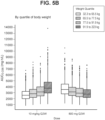
- the graphs in FIG. 5A and FIG. 5B show that the total variability of avelumab AUC 0-336 is lower in the 800 mg Q2W regimen than the 10 mg/kg Q2W regimen.
- Exposure - efficacy correlation and Exposure - safety correlation.
- the exposure values that were used for developing the logistic regression model were simulated from the PK CYCLE and PK SS models.
- Four hundred sets of parameter estimates were sampled from the uncertainty distribution of the exposure-BOR logistic regression model.
- the mean predicted probability of response was then obtained for each of the 400 sets of logistic model parameter estimates.
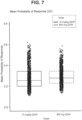
- the results are summarized in the graphs shown in FIG.6 and FIG.7 .
- the graph in FIG. 6 shows the probability of BOR in individual simulated patients with mMCC have large overlap between, and are similar for the 10mg/kg Q2W and the 800mg Q2W dosing regimens.
- the graph in FIG. 7 shows that the mean probability of BOR is very similar between the 10 mg/kg Q2W and 800mg Q2W dosing regimens for the UC with a lower variability for the 800mg Q2W dosing.
- Exposure - safety correlation was modelled similarly using the safety variables immune related AE of any grade (irAE) and infusion related reactions (IRR).
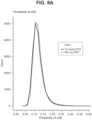
- the results are shown in FIG. 8A , FIG. 8B , FIG. 9A and FIG. 9B .
- the graphs depicted in FIG. 8A and FIG. 8B show very similar probability of experiencing an irAE between the two dosing regimens.
- the graphs depicted in FIG. 9A and FIG. 9B show that the 800 mg Q2W dosing regimen tends to have a lower variability comparing to the 10 mg/kg Q2W dosing.
- the invention may be described by reference to the following numbered paragraphs:
Landscapes
- Health & Medical Sciences (AREA)
- Immunology (AREA)
- Chemical & Material Sciences (AREA)
- Organic Chemistry (AREA)
- Medicinal Chemistry (AREA)
- Life Sciences & Earth Sciences (AREA)
- General Health & Medical Sciences (AREA)
- Chemical Kinetics & Catalysis (AREA)
- Animal Behavior & Ethology (AREA)
- Molecular Biology (AREA)
- Proteomics, Peptides & Aminoacids (AREA)
- Biophysics (AREA)
- Biochemistry (AREA)
- General Chemical & Material Sciences (AREA)
- Nuclear Medicine, Radiotherapy & Molecular Imaging (AREA)
- Pharmacology & Pharmacy (AREA)
- Genetics & Genomics (AREA)
- Public Health (AREA)
- Veterinary Medicine (AREA)
- Medicines Containing Antibodies Or Antigens For Use As Internal Diagnostic Agents (AREA)
- Pharmaceuticals Containing Other Organic And Inorganic Compounds (AREA)
- Measuring Or Testing Involving Enzymes Or Micro-Organisms (AREA)
- Medicinal Preparation (AREA)
- Acyclic And Carbocyclic Compounds In Medicinal Compositions (AREA)
- Peptides Or Proteins (AREA)
Abstract
Description
- The present invention relates to dosing regimens of avelumab for the treatment of cancer. In particular, the invention relates to improved dosing regimens of avelumab for the treatment of cancer.
- The programmed death 1 (PD-1) receptor and PD-1
ligands 1 and 2 (PD-L1 and PD-L2, respectively) play integral roles in immune regulation. Expressed on activated T25 cells, PD-1 is activated by PD-L1 (also known as B7-H1) and PD-L2 expressed by stromal cells, tumor cells, or both, initiating T-cell death and localized immune suppression (Dong et al., Nat Med 1999; 5:1365-69; Freeman et al. J Exp Med 2000; 192:1027-34), potentially providing an immune-tolerant environment for tumor development and growth. Conversely, inhibition of this interaction can enhance local T30 cell responses and mediate antitumor activity in nonclinical animal models (Iwai Y, et al.Proc Natl Acad Sci USA 2002; 99:12293-97). - Avelumab is a fully human mAb of the IgG1 isotype that specifically targets and blocks PD-L1. Avelumab is the International Nonproprietary Name (INN) for the anti-PD-L1 monoclonal antibody MSB0010718C and has been described by its full length heavy and light chain sequences in
WO2013079174 , where it is referred to as A09-246-2. The glycosylation and truncation of the C-terminal Lysine in its heavy chain is described inWO2017097407 . Avelumab has been in clinical development for the treatment of Merkel Cell Carcinoma (MCC), non-small cell lung cancer (NSCLC), urothelial carcinoma (UC), renal cell carcinoma (RCC) and a number of other cancer conditions of a dosing regimen of 10 mg/kg Q2W. - This invention relates to dosing regimens of avelumab for the treatment of cancer. More specifically, the invention relates method of treating cancer in a patient, comprising administering to the patient a dosing regimen that provides a higher mean exposure, as measured by Ctrough or other suitable PK parameters, of avelumab in the patient, than the current dosing regimen of 10mg/kg Q2W that are used in the clinical trials.
- In one embodiment, the invention relates to a method of treating a cancer in a patient, comprising administering avelumab to the patient in a dosing regimen of 5-10 mg/Kg Q1W. In one aspect of this embodiment, the dosing regimen is 5 mg/kg Q1W, 6 mg/kg Q1W, 7 mg/kg Q1W, 8 mg/kg Q1W, 9 mg/kg Q1W or 10 mg/kg Q1W. More preferably, the dosing regimen is 5 mg/kg Q1W, 8 mg/kg Q1W or 10 mg/kg Q1W. Even more preferably, the dosing regimen is 10 mg/kg Q1W. In another aspect of this embodiment, and in combination with any other aspects of this embodiment, the cancer is selected from the group consisting of MCC, NSCLC, RCC, bladder cancer, ovarian cancer, head and neck cancer, gastric cancer, mesothelioma, urothelial carcinoma, breast cancer, adenocarcinoma of the stomach and thymoma. Preferably, the cancer is MCC, NSCLC, RCC, bladder cancer, ovarian cancer, head and neck cancer and gastric cancer. More preferably, the cancer is MSCLC or MCC. In another embodiment, the invention relates to a method of treating a cancer in a patient, comprising administering avelumab to the patient in a dosing regimen of 11-20 mg/kg Q2W. In one aspect of this embodiment, the dosing regimen is 11, 12, 13, 14, 15, 16, 17, 18, 19 or 20 mg/kg Q2W. Preferably, the dosing regimen is 13, 15, 17 or 20 mg/kg Q2W. More preferably, the dosing regimen is 15 or 20 mg/kg Q2W. Even more preferably, the dosing regimen is 20 mg/kg Q2W. In another aspect of this embodiment, and in combination with any other aspects of this embodiment, the cancer is selected from the group consisting of MCC, NSCLC, RCC, bladder cancer, ovarian cancer, head and neck cancer gastric cancer, mesothelioma, urothelial carcinoma, breast cancer, adenocarcinoma of the stomach and thymoma. Preferably, the cancer is MCC, NSCLC, RCC, bladder cancer, ovarian cancer, head and neck cancer gastric cancer. More preferably, the cancer is MSCLC or MCC.
- In another embodiment, the invention relates to a method of treating a cancer in a patient, comprising administering avelumab to the patient in a dosing regimen of 15-30mg/kg Q3W. In one aspect of this embodiment, the dosing regimen is, 15, 16, 17, 18, 19, 20, 21, 22, 23, 24, 25, 26, 27, 28 29 or 30 mg/kg Q3W. Preferably, the dosing regimen is 15, 20, 25 or 30 mg/kg Q3W. More preferably, the dosing regimen is 15, 20 or 25mg/kg Q3W. Even more preferably, the dosing regimen is 20mg/kg Q3W. In another aspect of this embodiment, and in combination with any other aspects of this embodiment, the cancer is selected from the group consisting of MCC, NSCLC, RCC, bladder cancer, ovarian cancer, head and neck cancer gastric cancer, mesothelioma, urothelial carcinoma, breast cancer, adenocarcinoma of the stomach and thymoma. Preferably, the cancer is MCC, NSCLC, RCC, bladder cancer, ovarian cancer, head and neck cancer gastric cancer. More preferably, the cancer is MSCLC or MCC.
- In another embodiment, the invention relates to a method of treating a cancer in a patient, comprising administering avelumab to the patient in a dosing regimen of X mg/kg Q1W for n weeks followed by Y mg/kg Q2W, wherein X is 5-20, Y is 10-20, n is 6, 12 or 18. In one aspect of this embodiment, n is 12. In another aspect of the embodiment, n is 6. In another aspect of the embodiment, and in combination with any other aspect of this embodiment, X is 5, 6, 7, 8, 9, 10, 11, 12, 13, 14, 15, 16, 19, 18, 19 or 20. Preferably, X is 5, 10, 15 or 20. More preferably, X is 5, 10, or 15. Even more preferably, X is 10. In another aspect of the embodiment, and in combination with any other aspect of this embodiment, Y is 10, 11, 12, 13, 14, 15, 16, 17, 18, 19 or 20. Preferably, Y is 10, 15 or 20. More preferably, Y is 10. In another aspect of this embodiment, and in combination with any other aspects of this embodiment, the cancer is selected from the group consisting of MCC, NSCLC, RCC, bladder cancer, ovarian cancer, head and neck cancer gastric cancer, mesothelioma, urothelial carcinoma, breast cancer, adenocarcinoma of the stomach and thymoma. Preferably, the cancer is MCC, NSCLC, RCC, bladder cancer, ovarian cancer, head and neck cancer gastric cancer. More preferably, the cancer is MSCLC or MCC.
- In some embodiments, a flat dose can be used in place of the mg/kg dose mentioned above. Correlation between mg/kg dose and the flat dose can be made, e.g., as follows: 5 mg/kg is about 500 mg flat dose; 10 mg/kg is about 800 mg; 11mg/mg is about 900mg; 15 mg/kg is about 1240 mg flat dose; 20 mg is about 1600 mg flat dose and 30 mg/kg is about 2400 mg flat dose. Therefore, in another embodiment of the invention, the aforementioned embodiments based on a mg/kg dosing regimen of avelumab can be replaced with the corresponding flat dosing regimen as described herein.
- In other embodiments, the invention relates to a method of treating a cancer in a patient, comprising administering avelumab to the patient a flat dosing regimen of avelumab. In one aspect of the embodiment, the flat dosing regimen is 400-800 mg flat dose Q1W. Preferably, the flat dosing regimen is 400 mg, 450 mg, 500 mg, 550 mg, 600 mg, 650 mg, 700 mg, 750 mg or 800 mg flat dose Q1W. Preferably, the flat dosing regimen is 800 mg flat dose Q1W. In another aspect of this embodiment, the flat dosing regimen is 880 - 1600 mg flat dose Q2W. Preferably the flat dosing regimen is 880 mg, 900 mg, 950 mg, 1000 mg, 1050 mg, 1100 mg, 1150 mg, 1200 mg, 1250 mg, 1300 mg, 1350 mg, 1400 mg, 1450 mg, 1500 mg, 1550 mg or 1600 mg flat dose Q2W. More preferably, the flat dosing regimen is 1200 mg or 1600 mg flat dose Q2W. In another aspect of this embodiment, the flat dosing regimen is 1200 - 2400 mg flat dose Q3W, preferably 1200 mg Q3W. Preferably, the flat dosing regimen is 1200 mg, 1250 mg, 1300 mg, 1350 mg, 1400 mg, 1450
mg 1500 mg, 1550 mg, 1600 mg, 1650 mg, 1700 mg, 1750 mg, 1800 mg, 1850 mg, 1900 mg, 1950mg, 2000 mg, 2050 mg, 2100 mg, 2150 mg, 2200 mg, 2250 mg, 2300 mg, 2350 mg or 2400 mg flat dose Q3W. More preferably, the dosing regimen is 1200 mg flat dose Q3W. In another aspect of the embodiment, the flat dosing regimen is 400-1600mg Q1W for n weeks followed by 800-1600mg Q2W, wherein n is 6, 12 or 18. Preferably, the flat dosing regimen is 400 mg, 450 mg, 500 mg, 550 mg, 600 mg, 650 mg, 700mg, 725 mg, 750 mg, 775 mg, 800 mg, 825 mg, 850 mg, 875 mg, 900 mg, 925 mg, 950 mg, 975 mg, 1000 mg, 1050 mg, 1100 mg, 1150 mg, 1200 mg, 1250 mg, 1300 mg, 1350 mg, 1400 mg, 1450 mg, 1500 mg, 1550 mg or 1600 mg Q1W for n weeks followed by 800 mg, 850 mg, 900 mg, 950 mg, 1000 mg, 1050 mg, 1100 mg, 1150 mg, 1200 mg, 1250 mg, 1300 mg, 1350 mg, 1400 mg, 1450 mg, 1500 mg, 1550 mg or 1600 mg Q2W. More preferably, the dosing regimen is 800 mg flat dose Q1W for n weeks followed by 800mg flat dose Q2W. Even more preferably, n is 12. In another aspect of this embodiment, the flat dosing regimen is 400-800 mg flat dose Q2W. Preferably, the flat dosing regimen is 400 mg, 450 mg, 500 mg, 550 mg, 600 mg, 650 mg, 700 mg 750 mg or 800 mg flat dose Q2W. More preferably, the flat dosing regimen is 800 mg flat dose Q2W. In another aspect of this embodiment, and in combination with any other aspects of this embodiment not inconsistent, the cancer is selected from the group consisting of MCC, NSCLC, RCC, bladder cancer, ovarian cancer, head and neck cancer, gastric cancer, mesothelioma, urothelial carcinoma, breast cancer, adenocarcinoma of the stomach and thymoma. Preferably, the cancer is MCC, NSCLC, RCC, bladder cancer, ovarian cancer, head and neck cancer gastric cancer. More preferably, the cancer is NSCLC or MCC. - In another embodiment, the invention is directed to a method of treating a cancer comprising administering to the patient avelumab in a dosing regimen as described in any of the proceeding embodiments, wherein the patient has a TPS of PD-L1 expression of 1% and above, 5% and above, 10% and above, 20% and above, 30% and above, 40% and above, 50% and above, 60% and above, 70% and above, 80% and above 95% and above, or 95% and above. Preferably, the TPS of PD-L1 expression is 20% and above. More preferably, the TPS of PD-L1 expression is 50% and above.
- In another embodiment, the invention is directed to a method of treating a cancer in a patient, comprising administering avelumab to the patient in a dosing regimen selected from the group consisting of 800 mg Q1W for 12 weeks followed by 800 mg Q2W, 10 mg/kg Q1W for 12 weeks followed by 10 mg/kg Q2W and 1200 mg Q3W, and wherein the tumor proportion score of PD-L1 expression is 5% and above, 20% and above, 50% and above or 80% and above. Preferably, tumor proportion score of PD-L1 expression is 20% and above. More preferably, the TPS of PD-L1 expression is 50% and above. In one aspect of this embodiment and the cancer is selected from NSCLC, urothelial cancer, RCC, ovarian cancer, head and neck cancer gastric cancer. More preferably, the cancer is NSCLC.
- In another embodiment, the invention is directed to a method of treating a cancer comprising administering to the patient avelumab in a dosing regimen as described in any of the proceeding embodiments, further comprising administering to the patient at least one of a second anti-cancer treatment. In an aspect of this embodiment, the method further comprising administering one or two of a second anti-cancer treatment. Preferably, the second anti-cancer treatment is selected from the group consisting of a VEGFR antagonist, an anti-4-1BB antibody an anti-OX-40 antibody, an anti-MCSF antibody, an anti-PTK-7 antibody based antibody drug conjugate (ADC) wherein the drug payload is an antineoplastic agent, an IDO1 antagonist, an ALK antagonist, an anti-cancer vaccine, a radio therapy and a standard of care treatment of cancers of the relevant tumor type. Preferably, the VEGFR antagonist is axitinib, the anti-4-1BB antibody is PF0582566, the antiOX-40 antibody is PF4518600, the anti-MCSF antibody is PF-0360324, the ALK antagonist is crizotinib or lorlatinib (PF-06463922) and the anti-PTK7 antibody based ADC is PF-06647020.
-
-
FIG. 1 depicts the Ctrough v. ORR curve of 88 patients in phase III MCC trial. -
FIG. 2 . depicts the Ctrough v. ORR curve of 156 patients in phase III first line NSCLC patients -
FIG. 3 depicts the Ctrough v. ORR curve of 184 patients in phase I, 2nd line NSCLC patients. -
FIG. 4A andFIG. 4B depict the density plots showing the distribution of AUC0-336h (µgh/mL) after 10 mg/kg Q2W and flat 800 mg Q2W dosing using the PK SS model for the entire population (FIG. 4A ) and split by quartiles of weight (FIG. 4B ) -
FIG. 5A andFIG. 5B depict the box and whisker plots showing the AUC0-336h (µgh/mL) after 10 mg/kg Q2W and 800 mg Q2W dosing using the PK SS model for the entire population (FIG.5A ) and split by quartiles of weight (FIG. 5B ) -
FIG. 6 depicts the density plot of mean probability of best overall response (BOR) in simulated studies with metastatic MCC (mMCC) based on the PK CYCLE model, for the 10 mg/kg Q2W and the 800 mg Q2W dose. -
FIG. 7 depicts the box and whisker plot of mean probability of BOR in simulated studies with UC for the 10 mg/kg Q2W and 800 mg Q2W. -
FIG. 8A andFIG. 8B depict the density plot (FIG.8A ) and box and whisker plot (FIG.8B ), using the PK CYCLE model, showing the probably of experiencing an immune-related adverse event (irAE) after 10 mg/kg Q2W and 800mg Q2W dose. -
FIG. 9A andFIG. 9B depict the density plot (FIG. 9A ) and box and whisker plot (FIG. 9B ), using the PK SS model, showing the probably of experiencing an irAE after 10 mg/kg Q2W and 800 mg Q2W dose. - As used herein, the terms such as "area under curve" (AUC), Ctrough, Cmax, "best overall response" (BOR), "overall response rate" (ORR), Q1W, Q2W, Q3W have the meaning as they are generally known by one of the ordinary skill in the art.
- As used herein, the term "anti-cancer treatment" refers to any standard of care treatment of cancers in any relevant tumor types, or the administration of any single pharmaceutical agent, any fixed dose combinations of two or more single pharmaceutical agents, other than the standard of care treatment of cancer, documented in the state of the art as having or potentially having an effect toward the treatment of cancer or in the relevant tumor types.
- As used herein the term "standard of care treatment of cancers" refers to any non-surgical treatment of any particular tumor type that is suggested in the
NCCN Guidelines Version 1 2017 - As used herein the term "single pharmaceutical agent" means any composition that comprising a single substance as the only active pharmaceutical ingredient in the composition.
- As used herein, the term "tumor proportion score" or "TPS" as used herein refers to the percentage of viable tumor cells showing partial or complete membrane staining in an immunohistochemistry test of a sample. "Tumor proportion score of PD-L1 expression" used here in refers to the percentage of viable tumor cells showing partial or complete membrane staining in a PD-L1 expression immunohistochemistry test of a sample. Exemplary samples include, without limitation, a biological sample, a tissue sample, a formalin-fixed paraffin-embedded (FFPE) human tissue sample and a formalin-fixed paraffin-embedded (FFPE) human tumor tissue sample. Exemplary PD-L1 expression immunohistochemistry tests include, without limitation, the PD-L1 IHC 22C3 PharmDx (FDA approved, Daco), Ventana PD-L1 SP263 assay, and the tests described in
PCT/EP2017/073712 - "Administration" and "treatment," as it applies to an animal, human, experimental subject, cell, tissue, organ, or biological fluid, refers to contact of an exogenous pharmaceutical, therapeutic, diagnostic agent, or composition to the animal, human, subject, cell, tissue, organ, or biological fluid. Treatment of a cell encompasses contact of a reagent to the cell, as well as contact of a reagent to a fluid, where the fluid is in contact with the cell. "Administration" and "treatment" also means in vitro and ex vivo treatments, e.g., of a cell, by a reagent, diagnostic, binding compound, or by another cell. The term "subject" includes any organism, preferably an animal, more preferably a mammal (e.g., rat, mouse, dog, cat, and rabbit) and most preferably a human. "Treatment", as used in a clinical setting, is intended for obtaining beneficial or desired clinical results. For purposes of this invention, beneficial or desired clinical results include, but are not limited to, one or more of the following: reducing the proliferation of (or destroying) neoplastic or cancerous cells, inhibiting metastasis of neoplastic cells, shrinking or decreasing the size of tumor, remission of a disease (e.g., cancer), decreasing symptoms resulting from a disease (e.g., cancer), increasing the quality of life of those suffering from a disease (e.g., cancer), decreasing the dose of other medications required to treat a disease (e.g., cancer), delaying the progression of a disease (e.g., cancer), curing a disease (e.g., cancer), and/or prolong survival of patients having a disease (e.g., cancer).
- An "antibody" is an immunoglobulin molecule capable of specific binding to a target, such as a carbohydrate, polynucleotide, lipid, polypeptide, etc., through at least one antigen recognition site, located in the variable region of the immunoglobulin molecule. As used herein, the term encompasses not only intact polyclonal or monoclonal antibodies, but also antigen binding fragments thereof (such as Fab, Fab', F(ab')2, Fv), single chain (scFv) and domain antibodies (including, for example, shark and camelid antibodies), and fusion proteins comprising an antibody, and any other modified configuration of the immunoglobulin molecule that comprises an antigen recognition site. An antibody includes an antibody of any class, such as IgG, IgA, or IgM (or sub-class thereof), and the antibody need not be of any particular class. Depending on the antibody amino acid sequence of the constant region of its heavy chains, immunoglobulins can be assigned to different classes. There are five major classes of immunoglobulins: IgA, IgD, IgE, IgG, and IgM, and several of these may be further divided into subclasses (isotypes), e.g., IgG1, IgG2, IgG3, IgG4, IgA1 and IgA2. The heavy-chain constant regions that correspond to the different classes of immunoglobulins are called alpha, delta, epsilon, gamma, and mu, respectively. The subunit structures and three-dimensional configurations of different classes of immunoglobulins are well known.
- The term "antigen binding fragment" or "antigen binding portion" of an antibody, as used herein, refers to one or more fragments of an intact antibody that retain the ability to specifically bind to a given antigen (e.g., PD-L1). Antigen binding functions of an antibody can be performed by fragments of an intact antibody. Examples of binding fragments encompassed within the term "antigen binding fragment" of an antibody include Fab; Fab'; F(ab')2; an Fd fragment consisting of the VH and CH1 domains; an Fv fragment consisting of the VL and VH domains of a single arm of an antibody; a single domain antibody (dAb) fragment (Ward et al., Nature 341:544-546, 1989), and an isolated complementarity determining region (CDR).
- An antibody, an antibody conjugate, or a polypeptide that "preferentially binds" or "specifically binds" (used interchangeably herein) to a target (e.g., PD-L1 protein) is a term well understood in the art, and methods to determine such specific or preferential binding are also well known in the art. A molecule is said to exhibit "specific binding" or "preferential binding" if it reacts or associates more frequently, more rapidly, with greater duration and/or with greater affinity with a particular cell or substance than it does with alternative cells or substances. An antibody "specifically binds" or "preferentially binds" to a target if it binds with greater affinity, avidity, more readily, and/or with greater duration than it binds to other substances. For example, an antibody that specifically or preferentially binds to a PD-L1 epitope is an antibody that binds this epitope with greater affinity, avidity, more readily, and/or with greater duration than it binds to other PD-L1 epitopes or non-PD-L1 epitopes. It is also understood that by reading this definition, for example, an antibody (or moiety or epitope) that specifically or preferentially binds to a first target may or may not specifically or preferentially bind to a second target. As such, "specific binding" or "preferential binding" does not necessarily require (although it can include) exclusive binding. Generally, but not necessarily, reference to binding means preferential binding.
- A "variable region" of an antibody refers to the variable region of the antibody light chain or the variable region of the antibody heavy chain, either alone or in combination. As known in the art, the variable regions of the heavy and light chain each consist of four framework regions (FR) connected by three complementarity determining regions (CDRs) also known as hypervariable regions. The CDRs in each chain are held together in close proximity by the FRs and, with the CDRs from the other chain, contribute to the formation of the antigen binding site of antibodies. There are at least two techniques for determining CDRs: (1) an approach based on cross-species sequence variability (i.e., Kabat et al. Sequences of Proteins of Immunological Interest, (5th ed., 1991, National Institutes of Health, Bethesda MD)); and (2) an approach based on crystallographic studies of antigen-antibody complexes (Al-lazikani et al., 1997, J. Molec. Biol. 273:927-948). As used herein, a CDR may refer to CDRs defined by either approach or by a combination of both approaches.
- A "CDR" of a variable domain are amino acid residues within the variable region that are identified in accordance with the definitions of the Kabat, Chothia, the accumulation of both Kabat and Chothia, AbM, contact, and/or conformational definitions or any method of CDR determination well known in the art. Antibody CDRs may be identified as the hypervariable regions originally defined by Kabat et al. See, e.g., Kabat et al., 1992, Sequences of Proteins of Immunological Interest, 5th ed., Public Health Service, NIH, Washington D.C. The positions of the CDRs may also be identified as the structural loop structures originally described by Chothia and others. See, e.g., Chothia et al., Nature 342:877-883, 1989. Other approaches to CDR identification include the "AbM definition," which is a compromise between Kabat and Chothia and is derived using Oxford Molecular's AbM antibody modeling software (now Accelrys®), or the "contact definition" of CDRs based on observed antigen contacts, set forth in MacCallum et al., J. Mol. Biol., 262:732-745, 1996. In another approach, referred to herein as the "conformational definition" of CDRs, the positions of the CDRs may be identified as the residues that make enthalpic contributions to antigen binding. See, e.g., Makabe et al., Journal of Biological Chemistry, 283:1156-1166, 2008. Still other CDR boundary definitions may not strictly follow one of the above approaches, but will nonetheless overlap with at least a portion of the Kabat CDRs, although they may be shortened or lengthened in light of prediction or experimental findings that particular residues or groups of residues or even entire CDRs do not significantly impact antigen binding. As used herein, a CDR may refer to CDRs defined by any approach known in the art, including combinations of approaches. The methods used herein may utilize CDRs defined according to any of these approaches. For any given embodiment containing more than one CDR, the CDRs may be defined in accordance with any of Kabat, Chothia, extended, AbM, contact, and/or conformational definitions.
- "Isolated antibody" and "isolated antibody fragment" refers to the purification status and in such context means the named molecule is substantially free of other biological molecules such as nucleic acids, proteins, lipids, carbohydrates, or other material such as cellular debris and growth media. Generally, the term "isolated" is not intended to refer to a complete absence of such material or to an absence of water, buffers, or salts, unless they are present in amounts that substantially interfere with experimental or therapeutic use of the binding compound as described herein.
- "Monoclonal antibody" or "mAb" or "Mab", as used herein, refers to a population of substantially homogeneous antibodies, i.e., the antibody molecules comprising the population are identical in amino acid sequence except for possible naturally occurring mutations that may be present in minor amounts. In contrast, conventional (polyclonal) antibody preparations typically include a multitude of different antibodies having different amino acid sequences in their variable domains, particularly their CDRs, which are often specific for different epitopes. The modifier "monoclonal" indicates the character of the antibody as being obtained from a substantially homogeneous population of antibodies, and is not to be construed as requiring production of the antibody by any particular method. For example, the monoclonal antibodies to be used in accordance with the present invention may be made by the hybridoma method first described by Kohler et al. (1975) Nature 256: 495, or may be made by recombinant DNA methods (see, e.g.,
U.S. Pat. No. 4,816,567 ). The "monoclonal antibodies" may also be isolated from phage antibody libraries using the techniques described in Clackson et al. (1991) Nature 352: 624-628 and Marks et al. (1991) J. Mol. Biol. 222: 581-597, for example. See also Presta (2005) J. Allergy Clin. Immunol. 116:731. - "Chimeric antibody" refers to an antibody in which a portion of the heavy and/or light chain is identical with or homologous to corresponding sequences in an antibody derived from a particular species (e.g., human) or belonging to a particular antibody class or subclass, while the remainder of the chain(s) is identical with or homologous to corresponding sequences in an antibody derived from another species (e.g., mouse) or belonging to another antibody class or subclass, as well as fragments of such antibodies, so long as they exhibit the desired biological activity.
- "Human antibody" refers to an antibody that comprises human immunoglobulin protein sequences only. A human antibody may contain murine carbohydrate chains if produced in a mouse, in a mouse cell, or in a hybridoma derived from a mouse cell. Similarly, "mouse antibody" or "rat antibody" refer to an antibody that comprises only mouse or rat immunoglobulin sequences, respectively.
- "Humanized antibody" refers to forms of antibodies that contain sequences from non-human (e.g., murine) antibodies as well as human antibodies. Such antibodies contain minimal sequence derived from non-human immunoglobulin. In general, the humanized antibody will comprise substantially all of at least one, and typically two, variable domains, in which all or substantially all of the hypervariable loops correspond to those of a non-human immunoglobulin and all or substantially all of the FR regions are those of a human immunoglobulin sequence. The humanized antibody optionally also will comprise at least a portion of an immunoglobulin constant region (Fc), typically that of a human immunoglobulin. The prefix "hum", "hu" or "h" is added to antibody clone designations when necessary to distinguish humanized antibodies from parental rodent antibodies. The humanized forms of rodent antibodies will generally comprise the same CDR sequences of the parental rodent antibodies, although certain amino acid substitutions may be included to increase affinity, increase stability of the humanized antibody, or for other reasons.
- Avelumab entered
phase 1 clinical trial in early 2013 and has since then advanced tophase 3 trials in several different tumor types such as MCC, NSCLC, RCC, gastric cancer, ovarian cancer and bladder cancer. The dosing regimen in these trials was 10 mg/kg Q2W. Provided herein are improved dosing regimens for avelumab which could achieve a better overall response rate than the current 10mg/kg Q2W dosing regimen. - Table 1 below provides the sequences of the anti-PD-L1 antibody avelumab for use in the treatment method, medicaments and uses of the present invention. Avelumab is described in International Patent Publication No.
WO2013/079174 , the disclosure of which is hereby incorporated by references in its entirety.Table 1. Anti-human-PD-L1 antibody Avelumab Sequences Heavy chain CDR1 (CDRH1) SYIMM (SEQ ID NO:1) Heavy chain CDR2 (CDRH2) SIYPSGGITFY (SEQ ID NO:2) Heavy chain CDR3 (CDRH3) IKLGTVTTVDY (SEQ ID NO:3) Light chain CDR1 (CDRL1) TGTSSDVGGYNYVS (SEQ ID NO:4) Light chain CDR2 (CDRL2) DVSNRPS (SEQ ID NO:5) Light chain CDR3 (CDRL3) SSYTSSSTRV (SEQ ID NO:6) Heavy chain variable region (VR) 
Light chain VR 
Heavy chain 
Light chain 
- General methods for Examples 1-3: a population pharmacokinetic (PK) model was used to estimate individual exposure metrics using individual pharmacokinetic parameters for patients with MCC and NSCLC. The influence of exposure metrics (Ctrough,) on response was explored via logistic regression and was applied to model the relationships between exposure and the overall response rate (ORR). In the figures for each example, the heavy dot on each vertical bar represents a summary statistic of the observed data, divided into quartiles. The X axis for each quartile represents the mean Ctrough of the patients in each of the quartiles and the Y axis represents the probability of response for the individual quartile and it is corresponding 95% confidence interval. The curved thin line represents the logisitic regression model fit, about all the observed data along with the 95% prediction interval about the regression (shaded red area).
- 88 patients participated in a
phase 3 MCC trial with the avelumab dosing of 10 mg/kg Q2W over one hour of IV infusion. Patients were divided into four quartiles based on the Cthrough value of patients, with 22 patients in each quartile. The Ctrough value of each patient was calculated based on the existing model and the actual serum concentration of avelumab tested for each patient at various points during the trial. As shown inFIG. 1 , the four quartiles of patients were represented by the four vertical bars in the figure. The Ctrough value of each quartile is represented by the mean Ctrough value of the quartile. The heavy dot on each vertical bar represents the probability of overall response rate for the group. - A positive correlation between Ctrough and ORR was observed (
FIG. 1 ). Patients of the upper 4th quartile have a probability of ORR of about 60% (FIG.1 ). A mean Ctrough of around 44-50 ug/mL correlates to a probability of ORR of 50-60% (FIG. 1 ). - 156 patients participated in a
phase 3 first line NSCLC trial with the avelumab dosing of 10mg/kg Q2W over one hour of IV infusion. Patients were divided into four quartiles based on the Cthrough value of patients, with 39 patients in each quartile. The Ctrough number of each patient was calculated based on the existing model and the actual serum concentration of avelumab tested for each patient at various points during the trial. As shown inFIG. 2 , the four quartiles of patients were represented by the four vertical bars in the figure. The Ctrough value of each quartile is represented by the mean Ctrough value of the quartile. The heavy dot on each vertical bar represents the probability of overall response rate for the group. - A positive correlation between Ctrough and ORR was observed (
FIG. 2 ). Patients of the upper 4th quartile have a probability of ORR of about 35% (FIG. 2 ). A mean Ctrough of around 44-54 ug/mL correlates to a probability of ORR of 35-50% (FIG 2 ). Example 3. Ctrough and ORR correlation of 184 patients in phase 1b second line NSCLC trial. - 184 patients participated in a phase 1b second line NSCLC trial with the avelumab dosing of 10 mg/kg Q2W over one hour of IV infusion. Patients were divided into four quartiles based on the Cthrough value of patients, with 46 patients in each quartile. The Ctrough number of each patient was calculated based on the existing model and the actual serum concentration of avelumab tested for each patient at various points during the trial. As shown in
FIG. 3 , the four quartiles of patients were represented by the four vertical bars in the figure. The Ctrough value of each quartile is represented by the mean Ctrough value of the quartile. The heavy dot on each vertical bar represents the probability of overall response rate for the group. - A positive correlation between Ctrough and ORR was observed. Patients of the upper 4th quartile have a probability of ORR of about 31% (
FIG. 3 ). A mean Ctrough of around 60-85 ug/mL correlates to a probability of ORR of 35-50% (FIG. 3 ). - Tumor proportion score (TPS) of PD-L1 expression was tested of the tumor tissues collected during the clinical trial. TPS of PD-L1 expression was analyzed together with Cthrough and response rate. Surprising ORRs were observed among the subset of patients with both high exposure any increased PD-L1 expression in the tumor cells. Among the 184 patients, 142 patients evaluated for Ctrough exposure, and 71 patients were in the upper half (top two quartiles). For patients in the upper half (top two quartiles) of the Ctrough exposure, TPS PD-L1 expression cutoff values of ≥ 1%, ≥ 5%, ≥ 50%, and ≥ 80% yielded ORRs of 25.4%, 25.6%, 33.3%, and 42.9%, respectively (Table 2).
Table 2. Avelumab response in 2L NSCLC patients with high exposure and high TPS of PD-L1 PD-L1 TPS Patient number ORR Non selected 184 14.1% 1% and above 59 25.4% 5% and above 39 25.6% 50% and above 21 33.3% 80% and above 14 42.9% - A consistent positive correlation between mean Ctrough and the probability of ORR was observed (Examples 1-3). Taking into consideration of the best probability of the ORR in each Example, which occurs generally in the 4th quartile (Examples 1-3), the correlation of the Ctrough and ORR is expected to continue within reasonable range above the 4th quartile. These data indicate that a mean Ctrough of 44-85 ug/mL correlates with a probability of ORR of 50% in various tumor types.
- Table 3 provides a number of dosing regimens for avelumab. The population PK model generated for avelumab based on previous work, was used to simulate the Ctrough of selected dosing regimens, in MCC, SCCLC and in solid tumor types.
Table 3. Avelumab dosing regimens Proposed dosing regimen Notes 5-10 mg/kg Q1W Dosing range - 10 mg/kg Q1W Preferred specific dose - 5 mg/kg Q1W additional Preferred specific dose within the range - 8 mg/kg Q1W 11-20 mg/kg Q2W Dosing range - 11 mg Q2W Preferred specific dose - 20 mg/kg Q2W Preferred specific dose - 13, 15, 17 mg/kg Q2W Additional preferred specific dose 15-30 mg/kg Q3W Range - 20 mg/kg Q3W Preferred specific doses - 15, 20, 25,30 mg/kg Q3W Additional Preferred specific dose within the range 5-20 mg/kg Q1W for n weeks followed by 10 mg/kg Q2W Dosing range n is 6 or 12 - 10 mg/kg Q1W for 12 weeks followed by 10 mg/kg Q2W Preferred specific dose - 5, 15, 20 mg/kg Q1W for 6 or 12 weeks followed by 10 mg/kg Q2W Additional Preferred specific dose within the range 500 - 800 mg Q1W Correspond to 5-10 mg/kg Q1W 900 -1600 mg Q2W Correspond to 11-20 mg/kg Q2W 1250-2400 mg Q3W Correspond to 15-30 mg/kg Q2W 500-1600 mg Q1W for n weeks followed by 800 mg Q2W Correspond to 5-20 mg/kg Q1W for n weeks followed by 10 mg/kg Q2W - General methods: Pharmacokinetic simulations of the avelumab dosing regimens were performed using the NONMEM version 7.3 software (ICON Development Solutions, Hanover, MD). Two compartment IV model with linear elimination was used as the population PK model. This model is based on over three thousand PK observations from over seven hundred patients who participated in the avelumab clinical trials thus far. To conduct the simulations of the dosing regimen described in above Table 3, a dataset was created with dosing events, dosing amounts, a 1 hour rate of infusion, and covariates included in the population PK model. The steady-state Ctrough concentrations were calculated by removing the first 3 doses and then computing the average Ctrough from the remaining dosing event for the given dose amount. For loading dose schedules, the Ctrough was calculated for the loading portion of the regimen as well as for the continued dosing after the loading period.
- Results of the above simulation are shown in the below Tables 4-6.
Table 4 . Summary of median Ctrough for MCC under various dosing regimen No. Dosing regimen Median Ctrough (ug/mL) 95% Ctrough prediction interval (ug/mL) 1 5 mg/kg Q1W 59 29.0-109.8 2 10 mg/kg Q1W 116.5 56.3-208.5 3 10 mg/kg/Q2W 38.9 14.7-83.0 4 11 mg/kg Q2W 43.4 17.6-91.5 5 20 mg/kg Q2W 77.1 31.1-160.3 6 10 mg/kgQ3W 18.1 4.5-45.5 7 15 mg/kg Q3W 27.3 9.5-67.4 8 20 mg/kg Q3W 36.6 12.3-86.7 9 25 mg/kg Q3W 10 30 mg/kg Q3W 53.7 18.4-127.2 11 5 mg/kg Q1W for 12 weeks followed by 10mg/kgQ2W During Loading: 59.0 During loading: 29.0-109.8 After loading: 40.6 After loading: 15.7-90.2 12 10 mg/kg Q1W for 12 weeks followed by 10 mg/kg Q2W During loading: 116.5 During loading: 56.3-208.5 After loading: 45.3 After loading: 17.4-100.4 13 20 mg/kg Q1W for 12 weeks followed by 10 mg/kg Q2W During loading 225.8 During loading: 115.4-430.3 After loading: 55.3 After loading: 17.4-100.4 14 5 mg/kg Q1W for 6 weeks followed by 10 mg/kg Q2W During loading: 55.0 During loading: 27.6-105.4 After loading: 39.4 After loading: 16.2-88.3 15 10 mg Q1W for 6 weeks followed by 10 mg/kg Q2W During loading: 110.1 During loading: 53.6-206.0 After loading: 41.9 After loading: 17.1-88.3 16 20 mg Q1W for 6 weeks followed by 10 mg/kg Q2W During loading: 215.7 During loading: 107.7-382.6 After loading: 46.2 After loading: 17.9-105.2 - The dosing regimens Nos. 1-2, 4-5, 8-16 of Table 4, and ranges within these regimens such as 5-10 mg/kg Q1W, 11-20 mg/kg Q2W, 20-30 mg/kg Q3W, 5-20 mg/kg Q1W for 6-12 weeks followed by 10 mg/kg Q2W, provide an expected median Ctrough higher than the current 10 mg/kg Q2W dosing regimen (Table 4). From Example 1, a dosing regimen that provides a mean Ctrough of over 50 ug/mL correlates with a higher probability of ORR in MCC. The data shown in Table 4 for the avelumab dosing regimens 1-2, 10 and 11-16 indicate that these regimens could advantageously provide a higher expected probability of ORR for MCC.
Table 5 Summary of Median Ctrough under various dosing regimen for NSCLC. No. Dosing regimen Median Ctrough (ug/mL) 95% Ctrough prediction interval (ug/mL) 1 5 mg/kg Q1W 42.8 19.4-79.6 2 10 mg/kg Q1W 83.9 39.9-160.2 3 10 mg/kg/Q2W 20.6 4.8-51.2 4 11 mg/kg Q2W 22.2 5.8-56.6 5 20 mg/kg Q2W 39.9 11.5-96.3 6 10 mg/kg Q3W 6.3 0.0-20.1 7 15 mg/kg Q3W 9.1 0.2-34.1 8 20 mg/kg Q3W 12.8 0.5-46.7 9 25 mg/kg Q3W 14.2 0.9-54.6 10 30 mg/kg Q3W 17.6 1.8-66.7 11 5 mg/kg Q1W for 12 weeks followed by 10 mg/kgQ2W During Loading: 42.8 During loading: 19.4-79.6 After loading: 20.2 After loading: 5.2-47.5 12 10 mg/kg Q1W for 12 weeks followed by 10 mg/kg Q2W During loading: 83.9 During loading: 39.9-160 After loading: 20.2 After loading: 4.8-51.5 13 20 mg/kg Q1W for 12 weeks followed by 10mg/kg Q2W During loading 172.9 During loading: 74.6-342.6 After loading: 20.5 After loading: 4.6-63.9 14 5 mg/kg Q1W for 6 weeks followed by 10 mg/kg Q2W During loading: 42.9 During loading: 19.5-82.1 After loading: 20.9 After loading: 5.2-51.7 15 10 mg Q1W for 6 weeks followed by 10 mg/kg Q2W During loading: 86.7 During loading: 39.0-163 After loading: 20.5 After loading: 5.0-52.6 16 20 mg Q1W for 6 weeks followed by 10 mg/kg Q2W During loading: 163.4 During loading: 79.3-332.5 After loading: 19.6 After loading: 4.9-56.4 - The dosing regimens Nos. 1-2, 4-5, 10, 11-16 of Table 5, and ranges within these regimens, such as 5-10 mg/kg Q1W, 11-20 mg/kg Q2W, 5-20 mg/kg Q1W for 6-12 weeks followed by 10 mg/kg Q2W, provide an expected median Ctrough above the current 10 mg/kg Q2W dosing regimen (Table 5). Examples 1-3 above demonstrate that the mean Ctrough has a positive correlation with the probability of ORR. In Examples 2 and 3, a mean Ctrough of 44 ug/mL to 85 ug/mL corresponds to about 35% to about 50% probability of ORR, wherein the 4th quartile probability of ORR in Examples 2 and 3 was 35% and 31% respectively. The data from Table 5 demonstrate that regimens Nos.1-2, 5 and 11-16 provide an expected mean Ctrough of about or over 44 ug/mL and thus could advantageously provide better probability of ORR in NSCLC patients. Other advantageous dosing regimens include, for example, regimens Nos. 2, 12-13 and 15-16, and the ranges within these regimens such as 10 mg - 20 mg/kg Q1W for 6 or 12 weeks followed by 10 mg/kg Q2W, all of which correspond to a median Ctrough of about or more than 85 ug/mL. Other advantageous regimens for NSCLC are those providing a mean Ctrough between 44 ug/mL and 85 ug/ml, i.e. dosing regimen Nos. 1, 2, 5, 11, 12, 14, 15 of Table 5, and ranges within these regimens such as 5-10 mg/kg Q1W, 5-10mg/kg Q1W for 6-12 weeks followed by 10 mg/kg Q2W.
Table 6 Summary of Median Ctrough under various avelumab dosing regimen for all solid tumor types. No. Dosing regimen Median Ctrough (ug/mL) 95% Ctrough prediction interval (ug/mL) 1 5 mg/kg Q1W 43 19.5-84 2 10 mg/kg Q1W 83.6 36.6-160 3 10 mg/kg/Q2W 19.9 4.7-53.3 4 11 mg/kg Q2W 22.9 6.4-57.9 5 20 mg/kg Q2W 40.2 11.1-100.5 6 10 mg/kgQ3W 6.3 0.0-33.5 7 15 mg/kg Q3W 9.2 0.0-33.5 8 20 mg/kg Q3W 11.6 0.4-41.9 9 25 mg/kg Q3W 10 30 mg/kg Q3W 16.7 1.7-58.2 11 5 mg/kg Q1W for 12 weeks followed by 10 mg/kgQ2W During Loading: 43.0 During loading: 19.5-84.5 After loading: 20.2 After loading: 4.7-53.2 12 10 mg/kg Q1W for 12 weeks followed by 10 mg/kg Q2W During loading: 83.6 During loading: 36.6-160 After loading: 19.7 After loading: 4.3-51.6 13 20mg/kg Q1Wfor 12 weeks followed by 10 mg/kg Q2W During loading 160.7 During loading: 73.8-319 After loading: 19.3 After loading: 4.2-54.9 14 5 mg/kg Q1W for 6 weeks followed by 10 mg/kg Q2W During loading: 42.2 During loading: 19.6-83.7 After loading: 20.9 After loading: 5.1-51.1 15 10 mg Q1W for 6 weeks followed by 10 mg/kg Q2W During loading: 83.9 During loading: 39.6-158 After loading: 19.9 After loading: 5.5-48.6 16 20 mg Q1W for 6 weeks followed by 10 mg/kg Q2W During loading: 163.8 During loading: 78.0-314 After loading: 19.9 After loading: 5.3-52.0 - Avelumab dosing regimen Nos. 1-2, 4-5, 11-16 in Table 6, and ranges within these regimens such as 5-10 mg/kg Q1W, 11-20 mg/kg Q2W, 5-20 mg/kg Q1W for 6-12 weeks followed by 10 mg/kg Q2W, provide an expected median Ctrough above the current 10 mg/kg Q2W dosing regimen, and could advantageously provide a better probability of ORR (see, Examples 1-3). From Examples 1-3, a mean Ctrough of 44-85 ug/mL corresponds to about 50% of ORR respectively. Thus, dosing regimens that provide a mean Ctrough of over 44 ug/mL could advantageously provide a higher probability of ORR in patients with solid tumors. As such, dosing regimen 1-2, 5 and 11-16 shown in Table 6, or ranges therein, such as 5-10 mg/kg Q1W, 5-20 mg/kg Q1W for 6 or 12 weeks followed by 10 mg/kg Q2W, are advantageous for treatment of solid tumor types. Other advantageous dosing regimens to treat solid tumor include avelumab dosing regimen Nos. 2, 12-13 and 15-16 and the ranges within these regimens such as 10 mg - 20 mg/kg Q1W for 6 or 12 weeks followed by 10 mg/kg Q2W, all of which corresponding to a median Ctrough of about or more than 85ug/mL. Other advantageous avelumab dosing regimens include dosing regimen Nos. 1-2, 5, 11-12 and 14-15 shown in Table 6, and ranges within these regimens such as, for example, 5-10 mg/kg Q1W, 5-10 mg/kg Q1W for 6 or 12 weeks followed by 10 mg/kg Q2W, all of which correspond to a median Ctrough between about 44 ug/mL and about 85 ug/mL in solid tumors. Exemplary solid tumor types suitable for treatment with the avelumab dosing regimens provided herein include, without limitation, MCC, NSCLC, RCC, bladder cancer, ovarian cancer, head and neck cancer, gastric cancer, mesothelioma, urothelial carcinoma, breast cancer, adenocarcinoma of the stomach and thymoma.
- The clinical profile of avelumab has been evaluated from data in more than 1800 subjects in ongoing Phase I, II, and III trials in adult subjects with various solid tumors. The clinical pharmacology results are obtained from 1827 subjects from three studies with PK information available as of June 9, 2016 (studies EMR100070-001 and EMR100070-003) and November 20, 2015 (study EMR100070-002).
- Based on the clinical pharmacology results of these more than 1800 subjects mentioned above, 10000 and 4000 simulated subjects were generated using the PK CYCLE model and PK SS model respectively to project the avelumab exposure metrics of AUC, Cthough and Cmax for both the 10 mg/kg Q2W dosing and the 800 mg Q2W dosing. Where PK CYCLE model represents the PK model generated using PK data from the first dose of avelumab and PK SS model represents the PK model generated using PK data after repeated dosing of avelumab. Such projected exposure metrics were then used in the below Exposure-efficacy correlation and Exposure-safety correlation simulation. The distribution plot of such projected avelumab AUC 0-336 are shown in
FIG. 4A ,FIG. 4B ,FIG. 5A andFIG. 5B . The plots depicted inFIG. 4A andFIG. 4B show that the simulated values of AUC0-336 have a close correspondence between the two dosing regimens. The graphs inFIG. 5A andFIG. 5B show that the total variability of avelumab AUC0-336 is lower in the 800 mg Q2W regimen than the 10 mg/kg Q2W regimen. - A univariate logistic regression model has been developed to describe the exposure - best overall response (BOR) relationship for the n=88 observed subjects with mMCC. The exposure values that were used for developing the logistic regression model were simulated from the PK CYCLE and PK SS models. Four hundred sets of parameter estimates were sampled from the uncertainty distribution of the exposure-BOR logistic regression model. For each of these 400 parameter sets, 2500 subjects were sampled from the mMCC population of the n=10000 subjects simulated based on the PK CYCLE and PK SS models. The mean predicted probability of response (across the n=2500 simulated subjects) was then obtained for each of the 400 sets of logistic model parameter estimates.
- The same procedure was followed for the UC indication, with n=153 observed subjects with UC.
- The results are summarized in the graphs shown in
FIG.6 andFIG.7 . The graph inFIG. 6 shows the probability of BOR in individual simulated patients with mMCC have large overlap between, and are similar for the 10mg/kg Q2W and the 800mg Q2W dosing regimens. The graph inFIG. 7 shows that the mean probability of BOR is very similar between the 10 mg/kg Q2W and 800mg Q2W dosing regimens for the UC with a lower variability for the 800mg Q2W dosing. - Exposure - safety correlation was modelled similarly using the safety variables immune related AE of any grade (irAE) and infusion related reactions (IRR). The results are shown in
FIG. 8A ,FIG. 8B ,FIG. 9A andFIG. 9B . The graphs depicted inFIG. 8A andFIG. 8B show very similar probability of experiencing an irAE between the two dosing regimens. The graphs depicted inFIG. 9A andFIG. 9B show that the 800 mg Q2W dosing regimen tends to have a lower variability comparing to the 10 mg/kg Q2W dosing.
The invention may be described by reference to the following numbered paragraphs: - 1. Avelumab for use in treating a cancer in a patient, according to a dosing regimen of 5-10 mg/kg Q1W.
- 2. Avelumab for use in treating a cancer in a patient, according to a dosing regimen of 11-20 mg/kg Q2W.
- 3. Avelumab for use in treating a cancer in a patient, according to a dosing regimen of 15-30 mg/kg Q3W.
- 4. Avelumab for use in treating a cancer in a patient, according to a dosing regimen of X mg/kg Q1W for n weeks followed by Y mg/kg Q2W, wherein X is 5-20, Y is 10-20, n is 6, 12 or 18.
- 5. Avelumab for use in treating a cancer in a patient, according to a dosing regimen of 400-800 mg flat dose Q1W.
- 6. Avelumab for use according to paragraph 6, wherein the dosing regimen is 400, 800 or 600 mg flat dose Q1W.
- 7. Avelumab for use in treating a cancer in a patient, according to a dosing regimen of 880 - 1600 mg flat dose Q2W.
- 8. Avelumab for use according to paragraph 7, wherein the dosing regimen is 1200 or 1600 mg flat dose Q2W.
- 9. Avelumab for use in treating a cancer in a patient, according to a dosing regimen of 1200 - 2400 mg flat dose Q3W.
- 10. Avelumab for use according to paragraph 9, wherein the dosing regimen is 1200 mg flat dose Q3W.
- 11. Avelumab for use in treating a cancer in a patient, according to a dosing regimen of 400-1600mg Q1W for n weeks followed by 800-1600mg Q2W, wherein n is 6, 12 or 18.
- 12. Avelumab for use according to paragraph 11, wherein the dosing regimen is 800 mg Q1W for n weeks, followed by 800 mg Q2W, n is 6 or 12.
- 13. Avelumab for use according to paragraph 11, wherein the dosing regimen is 1200, 400 or 640 mg Q1W for n weeks followed by 800 mg Q2W, wherein n is 12.
- 14. Avelumab for use in treating a cancer in a patient, according to a dosing regimen of 400-800 mg flat dose Q2W.
- 15. Avelumab for use according to paragraph 14, wherein the dosing regimen is 800 mg flat dose Q2W.
- 16. Avelumab for use according to any of paragraphs 1-15, wherein the cancer is selected from the group consisting of MCC, NSCLC, RCC, bladder cancer, ovarian cancer, head and neck cancer and gastric cancer.
- 17. Avelumab for use according to any of the proceeding paragraphs, wherein the tumor proportion score of PD-L1 expression is 1% and above, 5% and above, 10% and above, 20% and above, 30% and above, 40% and above, 50% and above, 60% and above, 70% and above, 80% and above 95% and above, or 95% and above.
- 18. Avelumab for use in treating a cancer in a patient, according to a dosing regimen selected from the group consisting of 800 mg Q1W for 12 weeks followed by 800 mg Q2W, 10 mg/kg Q1W for 12 weeks followed by 10 mg/kg Q2W and 1200 mg Q3W, and wherein the tumor proportion score of PD-L1 expression is 5% and above, 20% and above, 50% and above or 80% and above.
- 19. Avelumab for use according to paragraph 18, wherein the tumor proportion score of PD-L1 expression is 50% and above and cancer is non-small cell lung cancer.
Claims (5)
- Avelumab for use in treating a cancer in a patient, according to a dosing regimen of 800 mg flat dose Q2W, wherein the cancer is a solid tumour.
- Use of avelumab according to a dosage regimen of 800mg flat dose Q2W for reducing total variability in drug exposure of cancer patients in comparison to avelumab administered according to a dosage regimen of 10mg/Kg Q2W.
- Avelumab for use according to claim 1 or claim 2, wherein the cancer is selected from the group consisting of MCC, NSCLC, RCC, bladder cancer, ovarian cancer, head and neck cancer and gastric cancer.
- Avelumab for use according to claim 3, wherein the cancer is selected from MCC and NSCLC.
- Avelumab for use according to any of the preceding claims, wherein the tumor proportion score of PD-L1 expression is 1% and above, 5% and above, 10% and above, 20% and above, 30% and above, 40% and above, 50% and above, 60% and above, 70% and above, 80% and above, or 95% and above.
Applications Claiming Priority (4)
| Application Number | Priority Date | Filing Date | Title |
|---|---|---|---|
| US201662405188P | 2016-10-06 | 2016-10-06 | |
| US201762565728P | 2017-09-29 | 2017-09-29 | |
| EP17784701.9A EP3522923A1 (en) | 2016-10-06 | 2017-10-05 | Dosing regimen of avelumab for the treatment of cancer |
| PCT/IB2017/056160 WO2018065938A1 (en) | 2016-10-06 | 2017-10-05 | Dosing regimen of avelumab for the treatment of cancer |
Related Parent Applications (1)
| Application Number | Title | Priority Date | Filing Date |
|---|---|---|---|
| EP17784701.9A Division EP3522923A1 (en) | 2016-10-06 | 2017-10-05 | Dosing regimen of avelumab for the treatment of cancer |
Publications (2)
| Publication Number | Publication Date |
|---|---|
| EP4541423A2 true EP4541423A2 (en) | 2025-04-23 |
| EP4541423A3 EP4541423A3 (en) | 2025-06-25 |
Family
ID=60117723
Family Applications (2)
| Application Number | Title | Priority Date | Filing Date |
|---|---|---|---|
| EP17784701.9A Ceased EP3522923A1 (en) | 2016-10-06 | 2017-10-05 | Dosing regimen of avelumab for the treatment of cancer |
| EP25150340.5A Pending EP4541423A3 (en) | 2016-10-06 | 2017-10-05 | Dosing regimen of avelumab for the treatment of cancer |
Family Applications Before (1)
| Application Number | Title | Priority Date | Filing Date |
|---|---|---|---|
| EP17784701.9A Ceased EP3522923A1 (en) | 2016-10-06 | 2017-10-05 | Dosing regimen of avelumab for the treatment of cancer |
Country Status (11)
| Country | Link |
|---|---|
| US (2) | US11274154B2 (en) |
| EP (2) | EP3522923A1 (en) |
| JP (2) | JP2019530704A (en) |
| KR (1) | KR20190062515A (en) |
| CN (1) | CN109843324A (en) |
| AU (1) | AU2017339856B2 (en) |
| BR (1) | BR112019006504A2 (en) |
| CA (1) | CA3039451A1 (en) |
| IL (1) | IL265762B2 (en) |
| MX (1) | MX2019003755A (en) |
| WO (1) | WO2018065938A1 (en) |
Families Citing this family (4)
| Publication number | Priority date | Publication date | Assignee | Title |
|---|---|---|---|---|
| KR20170132171A (en) | 2015-02-26 | 2017-12-01 | 메르크 파텐트 게엠베하 | Pd-1 / pd-l1 inhibitors for the treatment of cancer |
| RU2766890C2 (en) | 2015-06-16 | 2022-03-16 | Мерк Патент Гмбх | Combined methods for treating with pd-l1 antagonists |
| CN110914302A (en) | 2017-06-01 | 2020-03-24 | 赛托姆克斯治疗学股份有限公司 | Activatable anti-PDL1 antibodies and methods of using the same |
| KR102683876B1 (en) | 2020-11-11 | 2024-07-11 | 가톨릭대학교 산학협력단 | Antibody-Based Conjugate for Enhancing Therapeutic Effect of Targeted Therapeutics |
Citations (3)
| Publication number | Priority date | Publication date | Assignee | Title |
|---|---|---|---|---|
| US4816567A (en) | 1983-04-08 | 1989-03-28 | Genentech, Inc. | Recombinant immunoglobin preparations |
| WO2013079174A1 (en) | 2011-11-28 | 2013-06-06 | Merck Patent Gmbh | Anti-pd-l1 antibodies and uses thereof |
| WO2017097407A1 (en) | 2015-12-07 | 2017-06-15 | Merck Patent Gmbh | Aqueous pharmaceutical formulation comprising anti-pd-1 antibody avelumab |
Family Cites Families (119)
| Publication number | Priority date | Publication date | Assignee | Title |
|---|---|---|---|---|
| US6548640B1 (en) | 1986-03-27 | 2003-04-15 | Btg International Limited | Altered antibodies |
| GB8823869D0 (en) | 1988-10-12 | 1988-11-16 | Medical Res Council | Production of antibodies |
| DE3920358A1 (en) | 1989-06-22 | 1991-01-17 | Behringwerke Ag | BISPECIFIC AND OLIGO-SPECIFIC, MONO- AND OLIGOVALENT ANTI-BODY CONSTRUCTS, THEIR PRODUCTION AND USE |
| US6150584A (en) | 1990-01-12 | 2000-11-21 | Abgenix, Inc. | Human antibodies derived from immunized xenomice |
| EP1690935A3 (en) | 1990-01-12 | 2008-07-30 | Abgenix, Inc. | Generation of xenogeneic antibodies |
| US6075181A (en) | 1990-01-12 | 2000-06-13 | Abgenix, Inc. | Human antibodies derived from immunized xenomice |
| ES2246502T3 (en) | 1990-08-29 | 2006-02-16 | Genpharm International, Inc. | TRANSGENIC NON-HUMAN ANIMALS ABLE TO PRODUCE HETEROLOGICAL ANTIBODIES. |
| US5625126A (en) | 1990-08-29 | 1997-04-29 | Genpharm International, Inc. | Transgenic non-human animals for producing heterologous antibodies |
| US5633425A (en) | 1990-08-29 | 1997-05-27 | Genpharm International, Inc. | Transgenic non-human animals capable of producing heterologous antibodies |
| US5545806A (en) | 1990-08-29 | 1996-08-13 | Genpharm International, Inc. | Ransgenic non-human animals for producing heterologous antibodies |
| DE69233528T2 (en) | 1991-11-25 | 2006-03-16 | Enzon, Inc. | Process for the preparation of multivalent antigen-binding proteins |
| JPH07263576A (en) | 1994-03-25 | 1995-10-13 | Hitachi Ltd | Semiconductor integrated circuit device and manufacturing method thereof |
| US5641870A (en) | 1995-04-20 | 1997-06-24 | Genentech, Inc. | Low pH hydrophobic interaction chromatography for antibody purification |
| CA2219361C (en) | 1995-04-27 | 2012-02-28 | Abgenix, Inc. | Human antibodies derived from immunized xenomice |
| WO1996034096A1 (en) | 1995-04-28 | 1996-10-31 | Abgenix, Inc. | Human antibodies derived from immunized xenomice |
| EP1972194A1 (en) | 1996-12-03 | 2008-09-24 | Amgen Fremont Inc. | Transgenic mammals having human ig loci including plural vh and vk regions and antibodies produced therefrom |
| WO1999029888A1 (en) | 1997-12-05 | 1999-06-17 | The Scripps Research Institute | Humanization of murine antibody |
| US7141581B2 (en) | 1999-07-02 | 2006-11-28 | Agouron Pharmaceuticals, Inc. | Indazole compounds and pharmaceutical compositions for inhibiting protein kinases, and methods for their use |
| TWI262914B (en) | 1999-07-02 | 2006-10-01 | Agouron Pharma | Compounds and pharmaceutical compositions for inhibiting protein kinases |
| US7794710B2 (en) | 2001-04-20 | 2010-09-14 | Mayo Foundation For Medical Education And Research | Methods of enhancing T cell responsiveness |
| DE60334303D1 (en) | 2002-07-03 | 2010-11-04 | Tasuku Honjo | IMMUNO-POTENTIAL COMPOSITIONS |
| ES2367430T3 (en) | 2002-12-23 | 2011-11-03 | Wyeth Llc | ANTIBODIES AGAINST PD-1 AND ITS USES. |
| US7563869B2 (en) | 2003-01-23 | 2009-07-21 | Ono Pharmaceutical Co., Ltd. | Substance specific to human PD-1 |
| KR20050119671A (en) | 2003-04-03 | 2005-12-21 | 화이자 인코포레이티드 | Dosage forms comprising ag013736 |
| AR045563A1 (en) | 2003-09-10 | 2005-11-02 | Warner Lambert Co | ANTIBODIES DIRECTED TO M-CSF |
| ES2689328T3 (en) | 2004-01-07 | 2018-11-13 | Novartis Vaccines And Diagnostics, Inc. | M-CSF-specific monoclonal antibody and uses thereof |
| KR20070060145A (en) | 2004-11-02 | 2007-06-12 | 화이자 인코포레이티드 | Polymorphic form of 6- [2- (methylcarbamoyl) phenylsulfanyl] -3-E- [2- (pyridin-2-yl) ethenyl] indazole |
| CN101052633A (en) | 2004-11-02 | 2007-10-10 | 辉瑞大药厂 | Methods of preparing indazole compounds |
| JP2008518900A (en) | 2004-11-02 | 2008-06-05 | ファイザー・インク | Method for preparing indazole compounds |
| BRPI0517921A (en) | 2004-11-02 | 2008-10-21 | Pfizer | methods for preparing indazole compounds |
| CN101094836A (en) | 2004-11-02 | 2007-12-26 | 辉瑞大药厂 | Process for preparing indazole compounds |
| EP3530736A3 (en) | 2005-05-09 | 2019-11-06 | ONO Pharmaceutical Co., Ltd. | Human monoclonal antibodies to programmed death 1 (pd-1) and methods for treating cancer using anti-pd-1 antibodies alone or in combination with other immunotherapeutics |
| US20080274192A1 (en) | 2005-05-19 | 2008-11-06 | Pfizer Inc. | Pharmaceutical Compositions Comprising an Amorphous Form of a Vegf-R-Inhibitor |
| KR101704734B1 (en) | 2005-07-01 | 2017-02-09 | 이. 알. 스퀴부 앤드 선즈, 엘.엘.씨. | Human monoclonal antibodies to programmed death ligand 1(pd-l1) |
| US20100055111A1 (en) | 2007-02-14 | 2010-03-04 | Med. College Of Georgia Research Institute, Inc. | Indoleamine 2,3-dioxygenase, pd-1/pd-l pathways, and ctla4 pathways in the activation of regulatory t cells |
| CN101679356A (en) | 2007-04-05 | 2010-03-24 | 辉瑞产品公司 | Crystalline forms of 6- [ 2- (methyl-carbamoyl) phenylsulfanyl ] -3-E- [ 2- (pyridin-2-yl) ethenyl ] indazole useful for treating abnormal cell growth in mammals |
| PT2170959E (en) | 2007-06-18 | 2014-01-07 | Merck Sharp & Dohme | ANTIBODIES FOR THE PD-1 PROGRAMMED DEATH HUMAN RECEPTOR |
| SI2242771T1 (en) | 2007-12-14 | 2013-09-30 | Bristol-Myers Squibb Company | Binding molecules to the human ox40 receptor |
| US8168757B2 (en) | 2008-03-12 | 2012-05-01 | Merck Sharp & Dohme Corp. | PD-1 binding proteins |
| WO2010098788A2 (en) | 2008-08-25 | 2010-09-02 | Amplimmune, Inc. | Pd-i antagonists and methods for treating infectious disease |
| WO2010036959A2 (en) | 2008-09-26 | 2010-04-01 | Dana-Farber Cancer Institute | Human anti-pd-1, pd-l1, and pd-l2 antibodies and uses therefor |
| US8563735B2 (en) | 2008-12-05 | 2013-10-22 | Abbvie Inc. | Bcl-2-selective apoptosis-inducing agents for the treatment of cancer and immune diseases |
| MX356367B (en) | 2008-12-09 | 2018-05-25 | Genentech Inc | Anti-pd-l1 antibodies and their use to enhance t-cell function. |
| WO2010089411A2 (en) | 2009-02-09 | 2010-08-12 | Universite De La Mediterranee | Pd-1 antibodies and pd-l1 antibodies and uses thereof |
| EP3279215B1 (en) | 2009-11-24 | 2020-02-12 | MedImmune Limited | Targeted binding agents against b7-h1 |
| EP2504028A4 (en) | 2009-11-24 | 2014-04-09 | Amplimmune Inc | Simultaneous inhibition of pd-l1/pd-l2 |
| CN102892786B (en) | 2010-03-11 | 2016-03-16 | Ucb医药有限公司 | Pd-1 antibody |
| SG10201408229WA (en) | 2010-08-31 | 2015-02-27 | Genentech Inc | Biomarkers and methods of treatment |
| NZ729044A (en) | 2010-09-09 | 2020-07-31 | Pfizer | 4-1bb binding molecules |
| DK2714738T3 (en) | 2011-05-24 | 2019-01-28 | Zyngenia Inc | MULTIVALENT AND MONOVALENT MULTISPECIFIC COMPLEXES AND THEIR APPLICATIONS |
| BR112014002353B1 (en) | 2011-08-01 | 2022-09-27 | Genentech, Inc | USES OF PD-1 AXIS BINDING ANTAGONISTS AND MEK INHIBITORS, PHARMACEUTICAL COMPOSITIONS, AND KIT |
| JP6038920B2 (en) | 2011-08-23 | 2016-12-07 | ボード・オブ・リージエンツ,ザ・ユニバーシテイ・オブ・テキサス・システム | Anti-OX40 antibody and method of using the same |
| TW201531309A (en) | 2011-09-30 | 2015-08-16 | Pfizer | Pharmaceutical compositions of N-methyl-2-[3-((E)-2-pyridin-2-yl-vinyl)-1H-indazol-6-ylsulfanyl]-benzamide |
| JP2014533262A (en) | 2011-11-11 | 2014-12-11 | ファイザー・インク | N-methyl-2- [3-((E) -2-pyridin-2-yl-vinyl) -1H-indazol-6-ylsulfanyl] -benzamide for the treatment of chronic myeloid leukemia |
| US9828432B2 (en) | 2012-02-06 | 2017-11-28 | Providence Health & Services—Oregon | Cancer treatment and monitoring methods using OX40 agonists |
| PL2844282T3 (en) | 2012-05-04 | 2019-11-29 | Pfizer | Prostate-associated antigens and vaccine-based immunotherapy regimens |
| US9856320B2 (en) | 2012-05-15 | 2018-01-02 | Bristol-Myers Squibb Company | Cancer immunotherapy by disrupting PD-1/PD-L1 signaling |
| ES2742379T3 (en) | 2012-05-31 | 2020-02-14 | Hoffmann La Roche | Cancer treatment procedures using PD-1 axis binding antagonists and VEGF antagonists |
| US9682143B2 (en) | 2012-08-14 | 2017-06-20 | Ibc Pharmaceuticals, Inc. | Combination therapy for inducing immune response to disease |
| AR093984A1 (en) | 2012-12-21 | 2015-07-01 | Merck Sharp & Dohme | ANTIBODIES THAT JOIN LEGEND 1 OF SCHEDULED DEATH (PD-L1) HUMAN |
| KR20150131269A (en) | 2013-03-15 | 2015-11-24 | 제넨테크, 인크. | Biomarkers and methods of treating pd-1 and pd-l1 related conditions |
| CN105073128A (en) | 2013-04-03 | 2015-11-18 | Ibc药品公司 | Combination therapy for inducing an immune response to disease |
| AU2014253090B2 (en) | 2013-04-12 | 2018-10-25 | Morphosys Ag | Antibodies targeting M-CSF |
| DE102013008118A1 (en) | 2013-05-11 | 2014-11-13 | Merck Patent Gmbh | Arylchinazoline |
| IL321966A (en) | 2013-09-11 | 2025-09-01 | Medimmune Ltd | Anti-b7-h1 antibodies for treating tumors |
| AR097584A1 (en) | 2013-09-12 | 2016-03-23 | Hoffmann La Roche | ANTIBODY COMBINATION THERAPY AGAINST HUMAN CSF-1R AND ANTIBODIES AGAINST HUMAN PD-L1 |
| US10202454B2 (en) | 2013-10-25 | 2019-02-12 | Dana-Farber Cancer Institute, Inc. | Anti-PD-L1 monoclonal antibodies and fragments thereof |
| EA201690912A1 (en) | 2013-11-05 | 2016-10-31 | Когнейт Биосервисис, Инк. | COMBINATION INHIBITORS OF CONTROL POINTS AND THERAPEUTIC REMEDIES FOR THE TREATMENT OF CANCER |
| AU2013404949B2 (en) | 2013-11-07 | 2018-10-18 | Deciphera Pharmaceuticals, Llc | Methods for inhibiting TIE2 kinase useful in the treatment of cancer |
| US9457019B2 (en) | 2013-11-07 | 2016-10-04 | Deciphera Pharmaceuticals, Llc | Methods for inhibiting tie-2 kinase useful in the treatment of cancer |
| US20160303231A1 (en) | 2013-12-11 | 2016-10-20 | Robert Iannone | Treating cancer with a combination of a pd-1 antagonist and a vegfr inhibitor |
| US9045545B1 (en) | 2014-07-15 | 2015-06-02 | Kymab Limited | Precision medicine by targeting PD-L1 variants for treatment of cancer |
| ES2763429T5 (en) | 2013-12-17 | 2023-06-21 | Hoffmann La Roche | Methods of treating cancers using PD-1 axis binding antagonists and taxanes |
| US20150210772A1 (en) | 2013-12-17 | 2015-07-30 | Genentech, Inc. | Methods of treating cancer using pd-1 axis binding antagonists and an anti-cd20 antibody |
| MX2016007965A (en) | 2013-12-17 | 2016-10-28 | Genentech Inc | Combination therapy comprising ox40 binding agonists and pd-1 axis binding antagonists. |
| UA122479C2 (en) | 2014-01-24 | 2020-11-25 | Дана-Фарбер Кенсер Інстітьют, Інк. | Isolated ANTIBODY MOLECULE BINDS TO HUMAN PROGRAMMED DEATH-1 (PD-1) PROTEIN |
| US10570202B2 (en) | 2014-02-04 | 2020-02-25 | Pfizer Inc. | Combination of a PD-1 antagonist and a VEGFR inhibitor for treating cancer |
| EP3107538B1 (en) | 2014-02-18 | 2020-05-27 | Health Research, Inc. | Combination therapy for hepatocellular carcinoma |
| EP3114144A1 (en) | 2014-03-05 | 2017-01-11 | Bristol-Myers Squibb Company | Treatment of renal cancer using a combination of an anti-pd-1 antibody and another anti-cancer agent |
| US9649309B2 (en) | 2014-04-11 | 2017-05-16 | The University Of North Carolina At Chapel Hill | Therapeutic uses of selected pyrimidine compounds with anti-Mer tyrosine kinase activity |
| JP2017515859A (en) | 2014-05-15 | 2017-06-15 | ブリストル−マイヤーズ スクイブ カンパニーBristol−Myers Squibb Company | Treatment of lung cancer using a combination of anti-PD-1 antibodies and other anticancer agents |
| CN112546230A (en) * | 2014-07-09 | 2021-03-26 | 博笛生物科技有限公司 | Combination therapeutic compositions and combination therapeutic methods for treating cancer |
| CN106604933B (en) | 2014-07-11 | 2021-08-10 | 文塔纳医疗系统公司 | Anti-PD-L1 antibody and its diagnostic use |
| US10517875B2 (en) | 2014-07-23 | 2019-12-31 | Mayo Foundation for Medical Engineering and Research | Targeting DNA-PKcs and B7-H1 to treat cancer |
| US9539245B2 (en) | 2014-08-07 | 2017-01-10 | Aerpio Therapeutics, Inc. | Combination of immunotherapies with activators of Tie-2 |
| US10695426B2 (en) | 2014-08-25 | 2020-06-30 | Pfizer Inc. | Combination of a PD-1 antagonist and an ALK inhibitor for treating cancer |
| ES2774380T3 (en) * | 2014-08-29 | 2020-07-20 | Hoffmann La Roche | Tumor-directed IL-2 variant immunocytokine polytherapy and antibodies to human PD-L1 |
| EA201790543A1 (en) * | 2014-09-08 | 2017-07-31 | Селджин Корпорейшн | METHODS OF TREATING DISEASES OR DISORDERS USING COMPOSITIONS FOR ORAL APPLICATION CONTAINING CYTIDINE ANALOGUES IN COMBINATION WITH MONOCLONAL ANTIBODY TO PD1 OR PDL1 |
| EP3191126B1 (en) | 2014-09-13 | 2020-05-13 | Novartis AG | Combination therapies of alk inhibitors |
| KR20170066546A (en) | 2014-10-03 | 2017-06-14 | 노파르티스 아게 | Combination therapies |
| SG11201702401RA (en) | 2014-10-14 | 2017-04-27 | Novartis Ag | Antibody molecules to pd-l1 and uses thereof |
| WO2016059602A2 (en) | 2014-10-16 | 2016-04-21 | Glaxo Group Limited | Methods of treating cancer and related compositions |
| HUE054012T2 (en) | 2014-10-29 | 2021-08-30 | Five Prime Therapeutics Inc | Combination therapy for cancer |
| CN106999583A (en) | 2014-11-17 | 2017-08-01 | 豪夫迈·罗氏有限公司 | Combination treatment comprising OX40 combinations activator and the axle binding antagonists of PD 1 |
| CA2968680A1 (en) | 2014-12-02 | 2016-06-09 | Celgene Corporation | Combination therapies |
| GB201421647D0 (en) | 2014-12-05 | 2015-01-21 | Amcure Gmbh And Ruprecht-Karls-Universitat And Karlsruher Institut F�R Technologie | CD44v6-derived cyclic peptides for treating cancers and angiogenesis related diseases |
| TWI595006B (en) | 2014-12-09 | 2017-08-11 | 禮納特神經系統科學公司 | Anti-PD-1 antibodies and methods of using same |
| EP3233918A1 (en) | 2014-12-19 | 2017-10-25 | Novartis AG | Combination therapies |
| KR20170132171A (en) * | 2015-02-26 | 2017-12-01 | 메르크 파텐트 게엠베하 | Pd-1 / pd-l1 inhibitors for the treatment of cancer |
| US10722523B2 (en) * | 2015-03-17 | 2020-07-28 | The Regents Of The University Of California | Chemoimmunotherapy for epithelial cancer |
| WO2016196389A1 (en) | 2015-05-29 | 2016-12-08 | Bristol-Myers Squibb Company | Treatment of renal cell carcinoma |
| EP3303397A1 (en) * | 2015-06-08 | 2018-04-11 | H. Hoffnabb-La Roche Ag | Methods of treating cancer using anti-ox40 antibodies and pd-1 axis binding antagonists |
| RU2766890C2 (en) | 2015-06-16 | 2022-03-16 | Мерк Патент Гмбх | Combined methods for treating with pd-l1 antagonists |
| WO2017004092A1 (en) * | 2015-06-29 | 2017-01-05 | Syndax Pharmaceuticals, Inc. | Combination of hdac inhibitor and anti-pd-l1 antibody for treatment of cancer |
| DK3858859T3 (en) * | 2015-07-14 | 2025-12-15 | Bristol Myers Squibb Co | METHOD OF TREATING CANCER USING AN IMMUNE CHECKPOINT INHIBITOR; ANTIBODY THAT BINDS TO PROGRAMMED DEATH-1 RECEPTOR (PD-1) OR PROGRAMMED DEATH LIGAND 1 (PD-L1) |
| CA2991628C (en) * | 2015-07-16 | 2020-04-07 | Bioxcel Therapeutics, Inc. | A novel approach for treatment of cancer using immunomodulation |
| JP2018529719A (en) | 2015-09-30 | 2018-10-11 | メルク パテント ゲゼルシャフト ミット ベシュレンクテル ハフツングMerck Patent Gesellschaft mit beschraenkter Haftung | Combination of PD-1 system binding antagonist and ALK inhibitor for treating ALK negative cancer |
| PT3393504T (en) * | 2015-12-22 | 2025-12-30 | Novartis Ag | Mesothelin chimeric antigen receptor (CAR) and anti-PD-L1 inhibitor antibody for combined use in anticancer therapy. |
| BR112018011029A2 (en) * | 2016-01-08 | 2018-11-21 | Hoffmann La Roche | methods for treating or delaying cancer progression and improving immune function in a cancer individual, uses of a binding antagonist and a bispecific antibody, compositions and kits |
| TWI794171B (en) * | 2016-05-11 | 2023-03-01 | 美商滬亞生物國際有限公司 | Combination therapies of hdac inhibitors and pd-l1 inhibitors |
| CA3025391A1 (en) * | 2016-05-26 | 2017-11-30 | Merck Patent Gmbh | Pd-1 / pd-l1 inhibitors for cancer treatment |
| CN109689102A (en) * | 2016-08-12 | 2019-04-26 | 基因泰克公司 | Combination therapy with MEK inhibitor, PD-1 axis inhibitor, and VEGF inhibitor |
| AU2017329780B2 (en) * | 2016-09-20 | 2024-11-14 | Merck Patent Gmbh | Diagnostic anti-PD-L1 antibody and use thereof |
| SG11201909064RA (en) | 2017-03-30 | 2019-10-30 | Merck Patent Gmbh | Combination of an anti-pd-l1 antibody and a dna-pk inhibitor for the treatment of cancer |
| KR20200020662A (en) * | 2017-04-03 | 2020-02-26 | 온콜로지, 인크. | How to Treat Cancer Using PS-Targeted Antibodies with Immuno-Oncology Agent |
| KR102461885B1 (en) * | 2017-04-03 | 2022-11-03 | 에프. 호프만-라 로슈 아게 | Immunoconjugates of an anti-pd-1 antibody with a mutant il-2 or with il-15 |
| AU2018347331A1 (en) * | 2017-10-13 | 2020-04-09 | Merck Patent Gmbh | Combination of a PARP inhibitor and a PD-1 axis binding antagonist |
| TW201938165A (en) * | 2017-12-18 | 2019-10-01 | 美商輝瑞股份有限公司 | Methods and combination therapy to treat cancer |
| CN114761012B (en) * | 2019-09-24 | 2025-03-21 | 米拉蒂治疗股份有限公司 | Combination therapy |
-
2017
- 2017-10-05 BR BR112019006504-0A patent/BR112019006504A2/en not_active Application Discontinuation
- 2017-10-05 MX MX2019003755A patent/MX2019003755A/en unknown
- 2017-10-05 CA CA3039451A patent/CA3039451A1/en active Pending
- 2017-10-05 WO PCT/IB2017/056160 patent/WO2018065938A1/en not_active Ceased
- 2017-10-05 US US16/339,779 patent/US11274154B2/en active Active
- 2017-10-05 AU AU2017339856A patent/AU2017339856B2/en active Active
- 2017-10-05 CN CN201780061738.0A patent/CN109843324A/en active Pending
- 2017-10-05 JP JP2019518485A patent/JP2019530704A/en not_active Ceased
- 2017-10-05 KR KR1020197012805A patent/KR20190062515A/en not_active Ceased
- 2017-10-05 IL IL265762A patent/IL265762B2/en unknown
- 2017-10-05 EP EP17784701.9A patent/EP3522923A1/en not_active Ceased
- 2017-10-05 EP EP25150340.5A patent/EP4541423A3/en active Pending
-
2022
- 2022-02-09 US US17/668,125 patent/US20220220205A1/en not_active Abandoned
- 2022-11-11 JP JP2022181075A patent/JP2023025036A/en active Pending
Patent Citations (3)
| Publication number | Priority date | Publication date | Assignee | Title |
|---|---|---|---|---|
| US4816567A (en) | 1983-04-08 | 1989-03-28 | Genentech, Inc. | Recombinant immunoglobin preparations |
| WO2013079174A1 (en) | 2011-11-28 | 2013-06-06 | Merck Patent Gmbh | Anti-pd-l1 antibodies and uses thereof |
| WO2017097407A1 (en) | 2015-12-07 | 2017-06-15 | Merck Patent Gmbh | Aqueous pharmaceutical formulation comprising anti-pd-1 antibody avelumab |
Non-Patent Citations (12)
| Title |
|---|
| AL-LAZIKANI ET AL., J. MOLEC. BIOL., vol. 273, 1997, pages 927 - 948 |
| CHOTHIA ET AL., NATURE, vol. 342, 1989, pages 877 - 883 |
| CLACKSON ET AL., NATURE, vol. 352, 1991, pages 624 - 628 |
| DONG ET AL., NAT MED, vol. 5, 1999, pages 1365 - 69 |
| FREEMAN ET AL., J EXP MED, vol. 192, 2000, pages 1027 - 34 |
| IWAI Y, PROC NATL ACAD SCI USA, vol. 99, 2002, pages 12293 - 97 |
| KABAT ET AL.: "Sequences of Proteins of Immunological Interest", 1992, NATIONAL INSTITUTES OF HEALTH |
| KOHLER ET AL., NATURE, vol. 256, 1975, pages 495 |
| MACCALLUM ET AL., J. MOL. BIOL., vol. 262, 1996, pages 732 - 745 |
| MAKABE ET AL., JOURNAL OF BIOLOGICAL CHEMISTRY, vol. 283, 2008, pages 1156 - 1166 |
| MARKS ET AL., J. MOL. BIOL., vol. 222, 1991, pages 581 - 597 |
| PRESTA, J. ALLERGY CLIN. IMMUNOL., vol. 116, 2005, pages 731 |
Also Published As
| Publication number | Publication date |
|---|---|
| US20190330352A1 (en) | 2019-10-31 |
| BR112019006504A2 (en) | 2019-06-25 |
| IL265762A (en) | 2019-06-30 |
| WO2018065938A1 (en) | 2018-04-12 |
| AU2017339856A1 (en) | 2019-05-23 |
| CN109843324A (en) | 2019-06-04 |
| KR20190062515A (en) | 2019-06-05 |
| JP2023025036A (en) | 2023-02-21 |
| AU2017339856B2 (en) | 2024-09-05 |
| JP2019530704A (en) | 2019-10-24 |
| RU2019112816A (en) | 2020-11-06 |
| MX2019003755A (en) | 2019-08-12 |
| EP3522923A1 (en) | 2019-08-14 |
| IL265762B1 (en) | 2023-12-01 |
| US20220220205A1 (en) | 2022-07-14 |
| IL265762B2 (en) | 2024-04-01 |
| EP4541423A3 (en) | 2025-06-25 |
| RU2019112816A3 (en) | 2021-01-29 |
| US11274154B2 (en) | 2022-03-15 |
| CA3039451A1 (en) | 2018-04-12 |
Similar Documents
| Publication | Publication Date | Title |
|---|---|---|
| JP6812512B2 (en) | Combination of PD-1 antagonist and IDO1 inhibitor to treat cancer | |
| US20220220205A1 (en) | Dosing regimen of avelumab for the treatment of cancer | |
| JP2023039448A (en) | Combination of PD-1 antagonists and VEGFR/FGFR/RET tyrosine kinase inhibitors for treating cancer | |
| AU2019371816B2 (en) | Methods of treating cancer with a combination of an anti-VEGF antibody and an anti-tissue factor antibody-drug conjugate | |
| BR112020015915A2 (en) | USES OF AN ANTI-PD-1 ANTIBODY AND ANTI-CTLA4 ANTIBODY OR ANTIGEN BINDING FRAGMENTS OF THE SAME AS WELL AS A KIT FOR TREATING A PATIENT WITH CANCER | |
| US20210030888A1 (en) | Anti-tissue factor antibody-drug conjugates and their use in the treatment of cancer | |
| BR112020008593A2 (en) | method of treating cervical cancer in an individual | |
| JP2023133432A (en) | Use of beta-catenin as a biomarker to treat cancer using anti-DKK-1 antibodies | |
| CN109689102A (en) | Combination therapy with MEK inhibitor, PD-1 axis inhibitor, and VEGF inhibitor | |
| CN115443152A (en) | Methods of treating cancer using a combination of a PD-1 antagonist, a CTLA4 antagonist, and ranvatinib or a pharmaceutically acceptable salt thereof | |
| TW202448943A (en) | Antitumor combinations containing anti-ceacam5 antibody-drug conjugates, anti-vegfr-2 antibodies and anti-pd1/pd-l1 antibodies | |
| US20260077043A1 (en) | Combination therapy | |
| CN112638392A (en) | Combination therapy | |
| US20190167790A1 (en) | Abt-165 in combination with folinic acid, 5-fluorouracil, and irinotecan for the treatment of cancers | |
| CN117815387A (en) | Combination drug composition of CDK4/6 inhibitor and anti-PD-L1 antibody | |
| RU2777363C2 (en) | Avelumab dosing mode for treatment of malignant neoplasm | |
| JP2023539506A (en) | Use of anti-PD-1 antibodies and cytotoxic anticancer drugs in the treatment of non-small cell lung cancer | |
| HK40119150A (en) | Methods and compositions for treating cancer | |
| TW202615102A (en) | The method of using antibody drug conjugates for the treatment of cancer | |
| WO2025188583A1 (en) | Combination therapies for the treatment of hr+/her2- metastatic or locally advanced breast cancer | |
| CN118871463A (en) | Methods and compositions for treating cancer | |
| HK40007829A (en) | Combination therapy with a mek inhibitor, a pd-1 axis inhibitor, and a vegf inhibitor |
Legal Events
| Date | Code | Title | Description |
|---|---|---|---|
| PUAI | Public reference made under article 153(3) epc to a published international application that has entered the european phase |
Free format text: ORIGINAL CODE: 0009012 |
|
| STAA | Information on the status of an ep patent application or granted ep patent |
Free format text: STATUS: THE APPLICATION HAS BEEN PUBLISHED |
|
| AC | Divisional application: reference to earlier application |
Ref document number: 3522923 Country of ref document: EP Kind code of ref document: P |
|
| AK | Designated contracting states |
Kind code of ref document: A2 Designated state(s): AL AT BE BG CH CY CZ DE DK EE ES FI FR GB GR HR HU IE IS IT LI LT LU LV MC MK MT NL NO PL PT RO RS SE SI SK SM TR |
|
| REG | Reference to a national code |
Ref country code: DE Ref legal event code: R079 Free format text: PREVIOUS MAIN CLASS: A61P0035000000 Ipc: A61K0039395000 |
|
| PUAL | Search report despatched |
Free format text: ORIGINAL CODE: 0009013 |
|
| AK | Designated contracting states |
Kind code of ref document: A3 Designated state(s): AL AT BE BG CH CY CZ DE DK EE ES FI FR GB GR HR HU IE IS IT LI LT LU LV MC MK MT NL NO PL PT RO RS SE SI SK SM TR |
|
| RIC1 | Information provided on ipc code assigned before grant |
Ipc: A61P 35/00 20060101ALI20250520BHEP Ipc: A61K 39/395 20060101AFI20250520BHEP |
|
| STAA | Information on the status of an ep patent application or granted ep patent |
Free format text: STATUS: REQUEST FOR EXAMINATION WAS MADE |
|
| 17P | Request for examination filed |
Effective date: 20251222 |