EP4539480A1 - Verfahren und vorrichtung zur verarbeitung von medieninformationen, verfahren und vorrichtung zur wiedergabe von medieninformationen und speichermedium - Google Patents
Verfahren und vorrichtung zur verarbeitung von medieninformationen, verfahren und vorrichtung zur wiedergabe von medieninformationen und speichermedium Download PDFInfo
- Publication number
- EP4539480A1 EP4539480A1 EP23818897.3A EP23818897A EP4539480A1 EP 4539480 A1 EP4539480 A1 EP 4539480A1 EP 23818897 A EP23818897 A EP 23818897A EP 4539480 A1 EP4539480 A1 EP 4539480A1
- Authority
- EP
- European Patent Office
- Prior art keywords
- media
- viewpoint
- information
- real
- virtual
- Prior art date
- Legal status (The legal status is an assumption and is not a legal conclusion. Google has not performed a legal analysis and makes no representation as to the accuracy of the status listed.)
- Pending
Links
Images




Classifications
-
- H—ELECTRICITY
- H04—ELECTRIC COMMUNICATION TECHNIQUE
- H04N—PICTORIAL COMMUNICATION, e.g. TELEVISION
- H04N21/00—Selective content distribution, e.g. interactive television or video on demand [VOD]
- H04N21/20—Servers specifically adapted for the distribution of content, e.g. VOD servers; Operations thereof
- H04N21/23—Processing of content or additional data; Elementary server operations; Server middleware
- H04N21/234—Processing of video elementary streams, e.g. splicing of video streams or manipulating encoded video stream scene graphs
- H04N21/2343—Processing of video elementary streams, e.g. splicing of video streams or manipulating encoded video stream scene graphs involving reformatting operations of video signals for distribution or compliance with end-user requests or end-user device requirements
- H04N21/234381—Processing of video elementary streams, e.g. splicing of video streams or manipulating encoded video stream scene graphs involving reformatting operations of video signals for distribution or compliance with end-user requests or end-user device requirements by altering the temporal resolution, e.g. decreasing the frame rate by frame skipping
-
- H—ELECTRICITY
- H04—ELECTRIC COMMUNICATION TECHNIQUE
- H04N—PICTORIAL COMMUNICATION, e.g. TELEVISION
- H04N21/00—Selective content distribution, e.g. interactive television or video on demand [VOD]
- H04N21/20—Servers specifically adapted for the distribution of content, e.g. VOD servers; Operations thereof
- H04N21/21—Server components or server architectures
- H04N21/218—Source of audio or video content, e.g. local disk arrays
- H04N21/21805—Source of audio or video content, e.g. local disk arrays enabling multiple viewpoints, e.g. using a plurality of cameras
-
- H—ELECTRICITY
- H04—ELECTRIC COMMUNICATION TECHNIQUE
- H04L—TRANSMISSION OF DIGITAL INFORMATION, e.g. TELEGRAPHIC COMMUNICATION
- H04L65/00—Network arrangements, protocols or services for supporting real-time applications in data packet communication
- H04L65/60—Network streaming of media packets
-
- H—ELECTRICITY
- H04—ELECTRIC COMMUNICATION TECHNIQUE
- H04N—PICTORIAL COMMUNICATION, e.g. TELEVISION
- H04N21/00—Selective content distribution, e.g. interactive television or video on demand [VOD]
- H04N21/20—Servers specifically adapted for the distribution of content, e.g. VOD servers; Operations thereof
- H04N21/23—Processing of content or additional data; Elementary server operations; Server middleware
- H04N21/234—Processing of video elementary streams, e.g. splicing of video streams or manipulating encoded video stream scene graphs
-
- H—ELECTRICITY
- H04—ELECTRIC COMMUNICATION TECHNIQUE
- H04N—PICTORIAL COMMUNICATION, e.g. TELEVISION
- H04N21/00—Selective content distribution, e.g. interactive television or video on demand [VOD]
- H04N21/20—Servers specifically adapted for the distribution of content, e.g. VOD servers; Operations thereof
- H04N21/23—Processing of content or additional data; Elementary server operations; Server middleware
- H04N21/234—Processing of video elementary streams, e.g. splicing of video streams or manipulating encoded video stream scene graphs
- H04N21/23412—Processing of video elementary streams, e.g. splicing of video streams or manipulating encoded video stream scene graphs for generating or manipulating the scene composition of objects, e.g. MPEG-4 objects
-
- H—ELECTRICITY
- H04—ELECTRIC COMMUNICATION TECHNIQUE
- H04N—PICTORIAL COMMUNICATION, e.g. TELEVISION
- H04N21/00—Selective content distribution, e.g. interactive television or video on demand [VOD]
- H04N21/20—Servers specifically adapted for the distribution of content, e.g. VOD servers; Operations thereof
- H04N21/23—Processing of content or additional data; Elementary server operations; Server middleware
- H04N21/234—Processing of video elementary streams, e.g. splicing of video streams or manipulating encoded video stream scene graphs
- H04N21/2343—Processing of video elementary streams, e.g. splicing of video streams or manipulating encoded video stream scene graphs involving reformatting operations of video signals for distribution or compliance with end-user requests or end-user device requirements
-
- H—ELECTRICITY
- H04—ELECTRIC COMMUNICATION TECHNIQUE
- H04N—PICTORIAL COMMUNICATION, e.g. TELEVISION
- H04N21/00—Selective content distribution, e.g. interactive television or video on demand [VOD]
- H04N21/20—Servers specifically adapted for the distribution of content, e.g. VOD servers; Operations thereof
- H04N21/23—Processing of content or additional data; Elementary server operations; Server middleware
- H04N21/234—Processing of video elementary streams, e.g. splicing of video streams or manipulating encoded video stream scene graphs
- H04N21/2343—Processing of video elementary streams, e.g. splicing of video streams or manipulating encoded video stream scene graphs involving reformatting operations of video signals for distribution or compliance with end-user requests or end-user device requirements
- H04N21/234363—Processing of video elementary streams, e.g. splicing of video streams or manipulating encoded video stream scene graphs involving reformatting operations of video signals for distribution or compliance with end-user requests or end-user device requirements by altering the spatial resolution, e.g. for clients with a lower screen resolution
-
- H—ELECTRICITY
- H04—ELECTRIC COMMUNICATION TECHNIQUE
- H04N—PICTORIAL COMMUNICATION, e.g. TELEVISION
- H04N21/00—Selective content distribution, e.g. interactive television or video on demand [VOD]
- H04N21/20—Servers specifically adapted for the distribution of content, e.g. VOD servers; Operations thereof
- H04N21/23—Processing of content or additional data; Elementary server operations; Server middleware
- H04N21/234—Processing of video elementary streams, e.g. splicing of video streams or manipulating encoded video stream scene graphs
- H04N21/2343—Processing of video elementary streams, e.g. splicing of video streams or manipulating encoded video stream scene graphs involving reformatting operations of video signals for distribution or compliance with end-user requests or end-user device requirements
- H04N21/23439—Processing of video elementary streams, e.g. splicing of video streams or manipulating encoded video stream scene graphs involving reformatting operations of video signals for distribution or compliance with end-user requests or end-user device requirements for generating different versions
-
- H—ELECTRICITY
- H04—ELECTRIC COMMUNICATION TECHNIQUE
- H04N—PICTORIAL COMMUNICATION, e.g. TELEVISION
- H04N21/00—Selective content distribution, e.g. interactive television or video on demand [VOD]
- H04N21/20—Servers specifically adapted for the distribution of content, e.g. VOD servers; Operations thereof
- H04N21/25—Management operations performed by the server for facilitating the content distribution or administrating data related to end-users or client devices, e.g. end-user or client device authentication, learning user preferences for recommending movies
- H04N21/262—Content or additional data distribution scheduling, e.g. sending additional data at off-peak times, updating software modules, calculating the carousel transmission frequency, delaying a video stream transmission, generating play-lists
- H04N21/26258—Content or additional data distribution scheduling, e.g. sending additional data at off-peak times, updating software modules, calculating the carousel transmission frequency, delaying a video stream transmission, generating play-lists for generating a list of items to be played back in a given order, e.g. playlist, or scheduling item distribution according to such list
-
- H—ELECTRICITY
- H04—ELECTRIC COMMUNICATION TECHNIQUE
- H04N—PICTORIAL COMMUNICATION, e.g. TELEVISION
- H04N21/00—Selective content distribution, e.g. interactive television or video on demand [VOD]
- H04N21/80—Generation or processing of content or additional data by content creator independently of the distribution process; Content per se
- H04N21/81—Monomedia components thereof
- H04N21/816—Monomedia components thereof involving special video data, e.g 3D video
-
- H—ELECTRICITY
- H04—ELECTRIC COMMUNICATION TECHNIQUE
- H04N—PICTORIAL COMMUNICATION, e.g. TELEVISION
- H04N21/00—Selective content distribution, e.g. interactive television or video on demand [VOD]
- H04N21/80—Generation or processing of content or additional data by content creator independently of the distribution process; Content per se
- H04N21/83—Generation or processing of protective or descriptive data associated with content; Content structuring
- H04N21/84—Generation or processing of descriptive data, e.g. content descriptors
-
- H—ELECTRICITY
- H04—ELECTRIC COMMUNICATION TECHNIQUE
- H04N—PICTORIAL COMMUNICATION, e.g. TELEVISION
- H04N21/00—Selective content distribution, e.g. interactive television or video on demand [VOD]
- H04N21/80—Generation or processing of content or additional data by content creator independently of the distribution process; Content per se
- H04N21/83—Generation or processing of protective or descriptive data associated with content; Content structuring
- H04N21/845—Structuring of content, e.g. decomposing content into time segments
-
- H—ELECTRICITY
- H04—ELECTRIC COMMUNICATION TECHNIQUE
- H04N—PICTORIAL COMMUNICATION, e.g. TELEVISION
- H04N21/00—Selective content distribution, e.g. interactive television or video on demand [VOD]
- H04N21/80—Generation or processing of content or additional data by content creator independently of the distribution process; Content per se
- H04N21/83—Generation or processing of protective or descriptive data associated with content; Content structuring
- H04N21/845—Structuring of content, e.g. decomposing content into time segments
- H04N21/8455—Structuring of content, e.g. decomposing content into time segments involving pointers to the content, e.g. pointers to the I-frames of the video stream
-
- H—ELECTRICITY
- H04—ELECTRIC COMMUNICATION TECHNIQUE
- H04N—PICTORIAL COMMUNICATION, e.g. TELEVISION
- H04N21/00—Selective content distribution, e.g. interactive television or video on demand [VOD]
- H04N21/80—Generation or processing of content or additional data by content creator independently of the distribution process; Content per se
- H04N21/83—Generation or processing of protective or descriptive data associated with content; Content structuring
- H04N21/845—Structuring of content, e.g. decomposing content into time segments
- H04N21/8456—Structuring of content, e.g. decomposing content into time segments by decomposing the content in the time domain, e.g. in time segments
-
- H—ELECTRICITY
- H04—ELECTRIC COMMUNICATION TECHNIQUE
- H04N—PICTORIAL COMMUNICATION, e.g. TELEVISION
- H04N21/00—Selective content distribution, e.g. interactive television or video on demand [VOD]
- H04N21/80—Generation or processing of content or additional data by content creator independently of the distribution process; Content per se
- H04N21/85—Assembly of content; Generation of multimedia applications
- H04N21/854—Content authoring
- H04N21/85406—Content authoring involving a specific file format, e.g. MP4 format
Definitions
- Embodiments of the present disclosure relate to the field of computer technologies, and in particular, to a media information processing method and apparatus, a media information playback method and apparatus, and a storage medium.
- the processing and playing of free-viewpoint videos are mainly realized through two schemes: stitching and real-time synthesis.
- the stitching scheme occupies high transmission bandwidth and loses the original image quality of video frames, while the real-time view synthesis scheme can hardly ensure the playback effect and requires high equipment performance. Therefore, finding a solution that preserves playback quality while conserving bandwidth resources is an urgent challenge that needs to be addressed.
- Embodiments of the present disclosure provide a media information processing method and apparatus, a media information playback method and apparatus, and a storage medium, to ensure the playback quality while saving bandwidth resources.
- an embodiment provides a media information processing method, including: acquiring media of a plurality of viewpoints, where the plurality of viewpoints include at least two real viewpoints and at least one virtual viewpoint, and the media of the at least one virtual viewpoint is generated according to the media of the at least two real viewpoints; generating a media stream according to the media of the plurality of viewpoints, where the media stream is a media file including media information; and performing segmentation and packing of the media stream and generating a Media Presentation Description (MPD) text of the media, where the MPD text includes a description of the real viewpoints and a description of the at least one virtual viewpoint, and the MPD text is used for acquiring media stream information of a viewpoint to be played.
- MPD Media Presentation Description
- an embodiment provides a media information playback method, including: acquiring an MPD text, where the MPD text describes index file information and media segment file information; acquiring an index file according to the index file information in the MPD text; acquiring a to-be-played media frame according to the index file; and rendering and playing the to-be-played media frame according to the media segment file information.
- an embodiment provides a media information processing apparatus, including: a memory, a processor, and a computer program stored in the memory and executable by the processor which, when executed by the processor, causes the processor to perform the media information processing method in accordance with the first aspect.
- an embodiment provides a media information playback apparatus, including: a memory, a processor, and a computer program stored in the memory and executable by the processor which, when executed by the processor, causes the processor to perform the media information playback method in accordance with the second aspect.
- an embodiment provides a computer-readable storage medium, storing a computer-executable instruction which, when executed by a processor, causes the processor to perform the media information processing method in accordance with the first aspect, or the media information playback method in accordance with the second aspect.
- virtual viewpoints are additionally provided, and a description of real viewpoints and a description of virtual viewpoints are recorded in an MPD text.
- bandwidth resources can be saved and the delay in view interaction can be reduced, thereby ensuring the image quality of playback.
- the embodiments of the present disclosure may be applied to various devices related to image and video playback, such as a mobile phone, a tablet computer, a desktop computer, a notebook computer, a wearable device, a vehicle-mounted device, a liquid crystal display, a cathode ray tube display, a holographic imaging display, a projector, and other terminal devices, and may also be applied to various devices for processing image and video data, such as a mobile phone, a tablet computer, a desktop computer, a notebook computer, a wearable device, a vehicle-mounted device, and other server devices, which is not limited in the embodiments of the present disclosure.
- Free-viewpoint video is a novel Virtual Reality (VR) video technology, which generally uses multiple cameras to shoot around a target scene, and uses a virtual view synthesis technology to acquire a virtual view image.
- VR Virtual Reality
- the free-viewpoint video technology enables the users to view the target scene from any view and obtain a better viewing experience than a panoramic video.
- FIG. 1 is a schematic diagram of a scenario of shooting and playing a free-viewpoint video in the existing technology.
- a free-viewpoint video is usually a collection of videos acquired by shooting the same three-dimensional scene from different views using a multi-camera matrix array.
- the user can freely perform view switching during viewing the free-viewpoint video, to view a corresponding video image at a real viewpoint or a synthesized virtual viewpoint.
- this embodiment is described using an example where the real viewpoints are obtained through shooting by cameras at real shooting positions 100, and the virtual viewpoints are synthetic images corresponding to virtual shooting positions 200.
- a stitching method In existing free-viewpoint technologies, two methods are mainly used to synthesize a free-viewpoint video image: a stitching method and a real-time synthesis method.
- the stitching method In the stitching method, synchronized texture maps of multiple views and depth maps corresponding to the views are stitched, and stitched images of multiple frame moments are compressed in a unified format and transmitted to a terminal device for decoding.
- the stitching method occupies high transmission bandwidth, and the use of existing coding methods leads to great compression loss of the stitched images, affecting the image quality of free-viewpoint video images reconstructed by the terminal device.
- the real-time synthesis method requires high performance of the equipment for real-time synthesis of video images, consumes a lot of equipment performance when running, and cannot ensure the effect of view synthesis.
- the embodiments of the present disclosure provide a media information processing method and apparatus, a media information playback method and apparatus, and a storage medium.
- a description of the real viewpoints and a description of the virtual viewpoints are recorded in an MPD text of media.
- bandwidth resources can be saved and the delay in view interaction can be reduced, thereby ensuring the image quality of playback.
- FIG. 2 is a schematic diagram of a system architecture of an application scenario of a media information processing method according to an embodiment of the present disclosure.
- the system architecture includes a video image capturing apparatus 110, a video image capturing apparatus 120, a server 130, and a terminal device 140.
- the video image capturing apparatus 110 and the video image capturing apparatus 120 are configured for capturing image information of a plurality of viewpoints, forming media information corresponding to the plurality of viewpoints, and sending the media information of the plurality of viewpoints to the server 130.
- the server 130 is configured for processing the media information of the plurality of viewpoints and generating a free-viewpoint media stream including at least one virtual viewpoint, performing segmentation and packing of the media stream, and generating an MPD text capable of describing the real viewpoints and the at least one virtual viewpoint.
- the MPD text is to be downloaded and parsed by the terminal device 140 when the terminal device 140 plays a video.
- the terminal device 140 downloads the MPD text, parses the MPD text to obtain index file information and media segment file information, obtains a to-be-played media frame according to the index file information, and renders and plays the to-be-played media frame according to the media segment file information.
- Dynamic Adaptive Streaming over HTTP is an adaptive bitrate streaming technique. Its principle is that a media server segments a media file into segments having the same length in terms of time, and encodes the segments at different bitrates or resolutions, such that a terminal device needing to play the media file can download the segments with the corresponding bitrate and resolution based on an evaluation of its own performance and bandwidth. For example, the terminal device downloads the segment with a high bitrate when having high bandwidth, and downloads the segment with a low bitrate when having low bandwidth. Because the segments of different quality are aligned in terms of time, switching between the segments of different quality can be performed smoothly, thereby achieving a seamless switching effect.
- An MPD file is a media description file in the DASH protocol, which is an XML file that completely records information related to a video, including a video length, a bitrate, resolution, and other media information.
- a description of real viewpoints and a description of virtual viewpoints are recorded in an MPD text, such that when playing the video, the terminal device can perform indexing as required and download data on a per-frame basis, thereby saving bandwidth resources.
- the viewpoint switching does not affect image rendering and shooting position switching, thereby ensuring the smoothness of picture switching and optimizing the user experience of video playback.
- FIG. 3 is a flowchart of a media information processing method according to an embodiment of the present disclosure. As shown in FIG. 3 , the media information processing method is applied to a media server. In the embodiment shown in FIG. 3 , the media information processing method may include, but not limited to, the following steps S1000, S2000, and S3000.
- media of a plurality of viewpoints is acquired, where the plurality of viewpoints include at least two real viewpoints and at least one virtual viewpoint, and the media of the at least one virtual viewpoint is generated according to the media of the at least two real viewpoints.
- a media stream is generated according to the media of the plurality of viewpoints, where the media stream is a media file including media information.
- cameras are arranged at different angles and positions to capture images of a scene or an object to be photographed, to obtain video images of a plurality of real viewpoints, which are divided into a plurality of channels and input to a source end of the media server.
- the media server acquires a plurality of channels of original media streams corresponding to the real viewpoints, and generates a virtual viewpoint using a virtual viewpoint algorithm.
- the media server stores media information of at least two real viewpoints and at least one virtual viewpoint, and the media information corresponding to the real viewpoints and the at least one virtual viewpoint is used for video playback of the terminal device.
- segmentation and packing of the media stream are performed, and an MPD text of the media is generated, where the MPD text includes a description of the real viewpoints and a description of the at least one virtual viewpoint, and the MPD text is used for acquiring media stream information of a viewpoint to be played.
- the media server segments and packs a real viewpoint media stream and a virtual viewpoint media stream, and generates a corresponding MPD text.
- the MPD text can help the terminal device to acquire the media stream information of the viewpoint to be played after the terminal device selects the viewpoint to be played.
- FIG. 4 is a flowchart of a process of generating an MPD text according to an embodiment of the present disclosure.
- the generation of the MPD text includes, but not limited to, the following steps S3100, S3200, and S3300.
- segmentation and packing of all the real viewpoint media streams are performed to obtain a real viewpoint media segment file, where the real viewpoint media segment file includes a plurality of real viewpoint media frames; and segmentation and packing of all the virtual viewpoint media streams are performed to obtain a virtual viewpoint media segment file, where the virtual viewpoint media segment file includes a plurality of virtual viewpoint media frames.
- the media server performs frame synchronization on all the real viewpoint media streams, then merges all the frame-synchronized real viewpoint media streams into a single real viewpoint media stream, and finally segments and packs the single real viewpoint media stream to obtain the real viewpoint media segment file.
- the media server performs frame synchronization on all the real viewpoint media streams, then merges all the frame-synchronized real viewpoint media streams into a single real viewpoint media stream, and finally segments and packs the single real viewpoint media stream based on a DASH protocol to obtain the real viewpoint media segment file.
- the media server performs frame synchronization on all the virtual viewpoint media streams, then merges all the frame-synchronized virtual viewpoint media streams into a single virtual viewpoint media stream, and finally segments and packs the single virtual viewpoint media stream to obtain the virtual viewpoint media segment file.
- the media server performs frame synchronization on all the virtual viewpoint media streams, then merges all the frame-synchronized virtual viewpoint media streams into a single virtual viewpoint media stream, and finally segments and packs the single virtual viewpoint media stream based on a DASH protocol to obtain the virtual viewpoint media segment file.
- a real viewpoint media index file is generated according to the real viewpoint media segment file, where the real viewpoint media index file includes frame information of each of the real viewpoint media frames in the real viewpoint media segment file; and a virtual viewpoint media index file is generated according to the virtual viewpoint media segment file, where the virtual viewpoint media index file includes frame information of each of the virtual viewpoint media frames in the virtual viewpoint media segment file.
- the MPD text is generated according to the real viewpoint media segment file, the virtual viewpoint media segment file, the real viewpoint media index file, and the virtual viewpoint media index file.
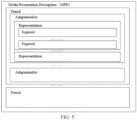
- the structure of the MPD file includes, from outside to inside, Period -> AdaptationSet -> Representation -> Segment.
- One or more Periods form an MPD file. Each Period represents media in a period of time. In the same Period, available media contents and their respective available bitrates do not change.
- AdaptationSet describes different types of media data in the same Period, such as subtitles, audio, and video.
- One or more AdaptationSets form a Period, and the AdaptationSets contain logically consistent media presentation formats.
- Segment is the smallest unit of the media concept in DASH, and represents a small media segment, to facilitate the terminal device in switching between different Representations during playback.
- the terminal device accesses a Uniform Resource Locator (URL) corresponding to the Segment to obtain media data that the terminal device can play.
- URL Uniform Resource Locator
- the following embodiments provide a description of the real viewpoint media segment file in the MPD text.
- the MPD text includes an AdaptationSet field; and when the AdaptationSet field includes a cameras field, the AdaptationSet field is used for describing information of the real viewpoint media segment file, and the cameras field is used for representing a quantity of real viewpoints.
- the following embodiments provide a description of the real viewpoint media index file in the MPD text.
- the MPD text includes a MultiIdrIndex field, which may be a field at the same level as AdaptationSet.
- the MultiIdrIndex field is used for describing information of the real viewpoint media index file. In other words, if the MultiIdrIndex field is included in the MPD text, it indicates that the media stream is an index file media stream corresponding to a real viewpoint.
- a format value of the real viewpoint media index file is an MPI type value.
- a mimetype type value "mpi" of the index file is added, where "i” refers to a first letter of the word "index”.
- the following embodiments provide a description of the virtual viewpoint media segment file in the MPD text.
- the MPD text includes an AdaptationSet field; and when the AdaptationSet field includes an "insert” field, the AdaptationSet field is used for describing information of the virtual viewpoint media segment file, and a value of the "insert" field represents a quantity of virtual viewpoints added between adjacent real viewpoints.
- the following embodiments provide a description of the virtual viewpoint media index file in the MPD text.
- the MPD text includes a MultiIdrIndex field, and the MultiIdrIndex field further includes an "insert" field.
- the MultiIdrIndex field is used for describing information of the virtual viewpoint media index file, and a value of the "insert" field represents a quantity of virtual viewpoints added between adjacent real viewpoints.
- the MultiIdrIndex field includes the "insert” field, it indicates that the media stream is an index file media stream corresponding to a virtual viewpoint.
- the media index file is packed based on a Moving Picture Experts Group Audio Layer IV (MP4) format, i.e., each channel of video corresponds to a "MOOF" box.
- the "MOOF” box includes a frame size of each channel of video. According to the frame size of each channel of video, a frame offset value can be obtained.
- the terminal device can download frames based on the frame size and the frame offset value.
- MP4 Moving Picture Experts Group Audio Layer IV
- FIG. 6 is a schematic flowchart of media information processing by a media server according to an embodiment of the present disclosure.
- N physical cameras are arranged at N shooting positions for video image capturing.
- a real shooting position 1, a real shooting position 2, a real shooting position 3, and a real shooting position N are illustrated in FIG. 6 by way of example.
- Viewpoint information captured by these physical cameras at the real shooting positions is real viewpoint information.
- N channels of free-viewpoint media streams captured by the N shooting positions are input to a media server 620.
- the media server 620 synthesizes m virtual shooting positions between every two adjacent real shooting positions using a virtual viewpoint generation algorithm.
- the media server 620 generates a virtual shooting positions 2-1, a virtual shooting position 2-2, ..., and a virtual shooting position 2-m between the real shooting position 2 and the real shooting position 3. These virtual shooting positions correspond to m channels of virtual viewpoint media streams. Then, the media server 620 packs the real viewpoint media streams and the virtual viewpoint media streams using an ISO BMFF file format to obtain a free viewpoint media file.
- the free viewpoint media file includes a description of information such as real shooting positions and virtual shooting positions corresponding to media.
- the media server 620 segments and packs all the real viewpoint media streams to obtain a real viewpoint media segment file, segments and packs all the virtual viewpoint media streams to obtain a virtual viewpoint media segment file, generates a real viewpoint media index file according to the real viewpoint media segment file, generate a virtual viewpoint media index file according to the virtual viewpoint media segment file, and finally generates an MPD text according to the real viewpoint media segment file, the virtual viewpoint media segment file, the real viewpoint media index file, and the virtual viewpoint media index file.
- the terminal device 630 initiates a video playback request
- the video playback request is delivered based on a Content Delivery Network (CDN).
- CDN Content Delivery Network
- the viewpoint information or camera information corresponding to the viewpoint is described using descriptors, which exist at the AdaptationSet level or the Representation level.
- the descriptors are used to describe the viewpoint information or the camera information corresponding to the viewpoint and are included in a "MOOF” box or a "MOOV” box in the form of boxes.
- the viewpoint is respectively described from the perspective of the viewpoint information and the perspective of the camera information corresponding to the viewpoint.
- a camera descriptor AvsFreeViewCamInfo may include camera indication information, position information of the camera, identification information of the camera, and identification information of the physical camera associated with the virtual camera. It can be understood that in practical applications, one camera descriptor may be selected for description, or a plurality of or even all camera descriptors may be selected for description.
- the free-viewpoint camera descriptor AvsFreeViewCamInfo is a SupplementalProperty element.
- the camera descriptor may exist at the AdaptationSet level or the Representation level. When the camera descriptor exists at the AdaptationSet level, the camera descriptor describes cameras corresponding to all the Representations in the AdaptationSet layer. When the camera descriptor exists at the Representation level, the camera descriptor describes a camera corresponding to the Representation. Table 1 below is a table of specific attributes of the camera descriptor.
- AvsFreeViewCam 0...N avs:ims:2018:av31 The attribute of this element indicates an attribute of a free-viewpoint camera corresponding to the corresponding representation or representation set.
- a plurality of such elements may exist.
- a free viewpoint descriptor AvsFreeViewlnfo which may include identification information of a viewpoint, camera identification information corresponding to the viewpoint, camera indication information, and identification information of the physical camera associated with the virtual camera. It can be understood that in practical applications, one free viewpoint descriptor may be selected for description, or a plurality of or even all free viewpoint descriptors may be selected for description.
- the free viewpoint descriptor AvsFreeViewInfo is a SupplementalProperty element.
- the free viewpoint descriptor may exist at the AdaptationSet level or the Representation level.
- the free viewpoint descriptor describes viewpoints corresponding to all the Representations in the AdaptationSet layer.
- the free viewpoint descriptor describes a viewpoint corresponding to the Representation.
- Table 2 below is a table of specific attributes of the free viewpoint descriptor.
- a value of 0 indicates a physical viewpoint. By default, it indicates a physical viewpoint.
- free viewpoint media data is packed based on an International Organization for Standardization Base Media File Format (ISO BMFF) format.
- ISO BMFF International Organization for Standardization Base Media File Format
- ISO basic media file formats of an information box, a track reference box, a track group box, and the like reference may be made to MPEG-4 Part 12 ISO Base Media File Format formulated by ISO/IEC JTC1/SC29/WG11.
- the ISO basic media file format includes several boxes, each of which has a type and length, and can be regarded as a data object.
- a box that can accommodate other boxes is called a container box.
- the real viewpoint media frame and the virtual viewpoint media frame are both packed in an ISO BMFF media file
- the ISO BMFF media file includes a free viewpoint information box
- the free viewpoint information box is used for describing viewpoint information in a media track or track fragment.
- the viewpoint information includes at least one of a quantity of cameras or viewpoint indication information corresponding to a viewpoint, and the viewpoint indication information is used for indicating that a camera corresponding to the viewpoint is a physical camera or a virtual camera.
- media description metadata is packed in a MOOV box or a MOOF box, and detailed information of the corresponding media track or media segment is described by a track fragment box or a media track box included in the MOOV or MOOF.
- the free viewpoint information box AvsFreeViewInfoBox is used to describe information of a viewpoint in the media track or track fragment, including a data amount of the viewpoint included in the track and whether the viewpoint corresponding to the track is a virtual viewpoint. If the viewpoint corresponding to the track is a virtual viewpoint, the free viewpoint information box may include an image quality level of the virtual viewpoint, etc.
- the free viewpoint information box is used for indicating one or more free viewpoints included in a corresponding track and camera metadata information corresponding to the one or more free viewpoints. Details are as follows.
- a group type is used for identification.
- a specific implementation is as follows.
- a reference type is used for identification.
- a specific implementation is as follows.
- FIG. 7 is a flowchart of a media information playback method according to an embodiment of the present disclosure. As shown in FIG. 7 , the media information playback method is applied to a terminal device. In the embodiment shown in FIG. 7 , the media information playback method may include, but not limited to, the following steps S4000, S5000, S6000, and S7000.
- an MPD text is acquired, where the MPD text describes index file information and media segment file information.
- the MPD text acquired by the terminal device is the MPD text generated by the media server in the above embodiments, and index file information and media segment file information are recorded in the MPD text.
- the media segment file information may include video segment information, audio segment information, and the like.
- an index file is acquired according to the index file information in the MPD text.
- the terminal device acquires the corresponding index file according to the index file information in the MPD text.
- the index file can help the terminal device quickly find target frame information.
- a to-be-played media frame is acquired according to the index file.
- the terminal device After determining a specific view, bitrate, and other parameters, the terminal device acquires a to-be-played media frame according to the index file.
- the to-be-played media frame is rendered and played according to the media segment file information.
- the terminal device performs frame reading, decoding, rendering, and other operations on the acquired to-be-played media frame, and finally realizes media information playback.
- the terminal device when the terminal device has a new view in response to a view switching operation, acquires viewpoint information that is after the view switching, acquires a new to-be-played media frame according to the viewpoint information and the index file, and finally renders and plays the new to-be-played media frame according to the media segment file information.
- the new to-be-played media frame is a next media frame that is after the view switching.
- the new to-be-played media frame is the current media frame that is after the view switching. In this way, a slow motion or even time-lapse effect can be achieved.
- the viewpoint information acquired by the terminal device after view switching may be viewpoint information of a real viewpoint or viewpoint information of a virtual viewpoint.
- the viewpoint information when the terminal device is selected to play only media information of a real viewpoint, the viewpoint information only includes the viewpoint information of the real viewpoint, and the viewpoint information of the virtual viewpoint is blocked.
- FIG. 8 is a schematic flowchart of media information playback by a terminal device according to an embodiment of the present disclosure.
- the terminal device first downloads and parses an MPD text to obtain a real viewpoint media index file and a virtual viewpoint media index file whose format values are an MPI type value, downloads the media index files, and parses frame information.
- the frame information is information of a media frame to be played. Based on a shooting position or a bitrate that the terminal device is currently selected to execute, the terminal device downloads a corresponding media frame from the media server, and performs reading, decoding, rendering, and other operations on the media frame to realize the playback of the media information.
- the terminal device further detects in real time whether the user has performed a view switching operation. If the user does not perform a view switching operation, the terminal device continues to remain in a detection state without making any response. If detecting that the user has performed a view switching operation, the terminal device acquires, in response to the view switching operation, viewpoint information that is after the view switching, i.e., new viewpoint information, which may correspond to a new shooting position or a new bitrate, and repeats the above steps. That is, based on the new shooting position or bitrate that the terminal device is selected to execute, the terminal device downloads a corresponding media frame from the media server, and performs reading, decoding, rendering, and other operations on the media frame to realize the playback of the media information.
- viewpoint information that is after the view switching
- new viewpoint information which may correspond to a new shooting position or a new bitrate
- the view switching operation may be performed by the user or trigged by other program settings.
- the terminal device When detecting a view switching request, the terminal device changes shooting position value information in response to the request, and then downloads a frame according to the changed shooting position value to complete view switching.
- a description of real viewpoints and a description of the virtual viewpoints are recorded in an MPD text of media.
- bandwidth resources can be saved and the delay in view interaction can be reduced, thereby ensuring the image quality of playback.
- Scenario One corresponds to a live streaming scenario.
- Video capturing apparatuses such as cameras, capture a plurality of channels of real shooting position video streams, and send the plurality of channels of real shooting position video streams to a media server.
- the media server generates virtual view video stream according to the plurality of channels of real shooting position video streams.
- the media server respectively performs frame synchronization on all the real viewpoint media streams and the virtual viewpoint media streams, merges all the frame-synchronized real viewpoint media streams into a single real viewpoint media stream, and merges all the frame-synchronized virtual viewpoint media streams into a single virtual viewpoint media stream.
- the media server performs segmentation and packing of the single real viewpoint media stream and the single virtual viewpoint media stream respectively to obtain a real viewpoint media segment file and a virtual viewpoint media segment file.
- the media server generates a real viewpoint media index file according to the real viewpoint media segment file, and generates a virtual viewpoint media index file according to the virtual viewpoint media segment file.
- the real viewpoint media index file includes frame information of each of the real viewpoint media frames in the real viewpoint media segment file.
- the virtual viewpoint media index file includes frame information of each of the virtual viewpoint media frames in the virtual viewpoint media segment file.
- the media server generates an MPD text according to the real viewpoint media segment file, the virtual viewpoint media segment file, the real viewpoint media index file, and the virtual viewpoint media index file.
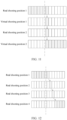
- FIG. 9 is a schematic diagram of switching frames in virtual view switching corresponding to a live streaming scenario according to an embodiment of the present disclosure.
- a client in the terminal device downloads an MPD text and parses the MPD text to obtain a media index file and a media segment file.
- the media segment file includes a video segment, an audio segment, a subtitle segment, etc.
- a media frame corresponding to a real shooting position 1 is played.
- Media frames that have been played, are being played, or are to be played are denoted by shadows in FIG. 9 . It can be seen from FIG.
- the terminal device when the user performs view switching, e.g., switches from the real shooting position 1 to a virtual shooting position 1, the terminal device changes the current shooting position value, and downloads and plays a next frame of the shooting position that is after the view switching, i.e., a shaded media frame corresponding to the virtual shooting position 1 in FIG. 9 .
- the terminal device executes similar operations, i.e., downloads and plays a next frame of the shooting position that is after the view switching.
- the playback of the free viewpoint media is smooth and jitter-free with satisfactory image quality, low delay in view interaction, occupation of relatively small bandwidth, and low requirements on the performance of the terminal device.
- Scenario Two corresponds to an on-demand scenario, which is different from the live streaming scenario mainly in that media information is not captured in real time by video capturing apparatuses, but is recorded in advance, and the virtual viewpoint media streams may be generated by a media server or other servers.
- the media server respectively performs segmentation and packing of the single real viewpoint media stream and the single virtual viewpoint media stream to obtain a real viewpoint media segment file and a virtual viewpoint media segment file. Then, the media server generates a real viewpoint media index file according to the real viewpoint media segment file, and generates a virtual viewpoint media index file according to the virtual viewpoint media segment file.
- the real viewpoint media index file includes frame information of each of the real viewpoint media frames in the real viewpoint media segment file.
- the virtual viewpoint media index file includes frame information of each of the virtual viewpoint media frames in the virtual viewpoint media segment file.
- the media server generates an MPD text according to the real viewpoint media segment file, the virtual viewpoint media segment file, the real viewpoint media index file, and the virtual viewpoint media index file.
- FIG. 10 is a schematic diagram of switching frames in virtual view switching corresponding to an on-demand scenario according to an embodiment of the present disclosure.
- a client in the terminal device downloads an MPD text and parses the MPD text to obtain a media index file and a media segment file.
- the media segment file includes a video segment, an audio segment, a subtitle segment, etc.
- a media frame corresponding to a virtual shooting position 2 is played.
- Media frames that have been played, are being played, or are to be played are denoted by shadows in FIG. 10 . It can be seen from FIG.
- the terminal device changes the current shooting position value, and downloads and plays a next frame of the shooting position that is after the view switching, i.e., a shaded media frame corresponding to the real shooting position 2 in FIG. 10 .
- the terminal device executes similar operations, i.e., downloads and plays a next frame of the shooting position that is after the view switching.
- Scenario Three corresponds to a bullet time scenario.
- Bullet time is a special effect that refers to a simulation of variable-speed photography used in films, broadcast advertisements, and video games, so as to achieve enhanced slow motion, time-lapse, and other effects.
- the bullet time scenario is different from the live streaming scenario mainly in that media information is not captured in real time by video capturing apparatuses, but is recorded in advance, and the virtual viewpoint media streams may be generated by a media server or other servers; and is different from the on-demand scenario mainly in the media frame played after the view switching.
- the media server respectively performs segmentation and packing of the single real viewpoint media stream and the single virtual viewpoint media stream to obtain a real viewpoint media segment file and a virtual viewpoint media segment file. Then, the media server generates a real viewpoint media index file according to the real viewpoint media segment file, and generates a virtual viewpoint media index file according to the virtual viewpoint media segment file.
- the real viewpoint media index file includes frame information of each of the real viewpoint media frames in the real viewpoint media segment file.
- the virtual viewpoint media index file includes frame information of each of the virtual viewpoint media frames in the virtual viewpoint media segment file.
- the media server generates an MPD text according to the real viewpoint media segment file, the virtual viewpoint media segment file, the real viewpoint media index file, and the virtual viewpoint media index file.
- FIG. 11 is a schematic diagram of switching frames in virtual view switching corresponding to a bullet time scenario according to an embodiment of the present disclosure.
- a client in the terminal device downloads an MPD text and parses the MPD text to obtain a media index file and a media segment file.
- the media segment file includes a video segment, an audio segment, a subtitle segment, etc.
- a media frame corresponding to a real shooting position 1 is played.
- Media frames that have been played, are being played, or are to be played are denoted by shadows in FIG. 11 . It can be seen from FIG.
- the terminal device changes the current shooting position value, and downloads and plays the same frame of the shooting position that is after the view switching, i.e., a shaded media frame corresponding to the virtual shooting position 1 in FIG. 11 .
- the terminal device executes similar operations, i.e., downloads and plays the same frame of the shooting position that is after the view switching.
- Scenario Four corresponds to a virtual viewpoint blocking scenario, and is different from the on-demand scenario mainly in the media frame of the shooting position played after the view switching.
- the media server respectively performs segmentation and packing of the single real viewpoint media stream and the single virtual viewpoint media stream to obtain a real viewpoint media segment file and a virtual viewpoint media segment file. Then, the media server generates a real viewpoint media index file according to the real viewpoint media segment file, and generates a virtual viewpoint media index file according to the virtual viewpoint media segment file.
- the real viewpoint media index file includes frame information of each of the real viewpoint media frames in the real viewpoint media segment file.
- the virtual viewpoint media index file includes frame information of each of the virtual viewpoint media frames in the virtual viewpoint media segment file.
- the media server generates an MPD text according to the real viewpoint media segment file, the virtual viewpoint media segment file, the real viewpoint media index file, and the virtual viewpoint media index file.
- FIG. 12 is a schematic diagram of switching frames in virtual view switching corresponding to a virtual viewpoint blocking scenario according to an embodiment of the present disclosure.
- a client downloads an MPD text and parses the MPD text to obtain a media index file and a media segment file.
- the media segment file includes a video segment, an audio segment, a subtitle segment, etc.
- only media information corresponding to real viewpoints is played. Therefore, based on a selection currently made by the user, only media frames corresponding to real shooting positions 1 to 4 are played, and media frames corresponding to virtual shooting positions are not displayed. It can be seen from FIG.
- the terminal device changes the current shooting position value, and downloads and plays a next frame of the shooting position that is after the view switching, i.e., a shaded media frame corresponding to the real shooting position 2 in FIG. 12 .
- the terminal device executes similar operations, i.e., downloads and plays a next frame of the real shooting position that is after the view switching.
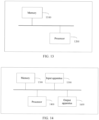
- FIG. 13 is a schematic structural diagram of a media information processing apparatus according to an embodiment of the present disclosure.
- the media information processing apparatus includes a memory 1100 and a processor 1200.
- the device may include one or more memories 1100 and one or more processors 1200.
- FIG. 13 uses one memory 1100 and one processor 1200 as an example.
- the memory 1100 and the processor 1200 may be connected by a bus or in other ways. Connection by a bus is taken as an example in FIG. 13 .
- the memory 1100 may be configured for storing a software program, a computer-executable program, and modules, for example, program instructions/modules corresponding to the media information processing method provided in any embodiment of the present disclosure.
- the processor 1200 runs the software program, instructions, and modules stored in the memory 1100, to implement the media information processing method.
- the memory 1100 may mainly include a program storage area and a data storage area.
- the program storage area may store an operating system, and an application required by at least one function.
- the memory 1100 may include a high-speed random access memory, and may also include a nonvolatile memory, e.g., at least one magnetic disk storage device, flash memory device, or other nonvolatile solid-state storage device.
- the memory 1100 may further include memories located remotely from the processor 1200, and the remote memories may be connected to the device via a network. Examples of the network include, but not limited to, the Internet, an intranet, a local area network, a mobile communication network, and combinations thereof.
- FIG. 14 is a schematic structural diagram of a media information playback apparatus according to an embodiment of the present disclosure.
- the media information playback apparatus may include a memory 1300, a processor 1400, an input apparatus 1500, and an output apparatus 1600.
- the input apparatus 1500 may be configured for receiving inputted numerical or character information, and generating a key signal input related to user settings and function control of the device.
- the output apparatus 1600 may include a display device such as a display screen.
- An embodiment of the present disclosure further provides a computer-readable storage medium storing a computer-executable instruction which, when executed by a processor, causes the processor to implement the media information processing method or the media information playback method provided in any embodiment of the present disclosure.
- the division of the functional modules/units mentioned in the above description does not necessarily correspond to the division of physical components.
- one physical component may have multiple functions, or one function or step may be jointly executed by several physical components.
- Some or all physical components may be implemented as software executed by a processor, such as a central processing unit, a digital signal processor, or a microprocessor, or as hardware, or as an integrated circuit, such as an application-specific integrated circuit.
- a processor such as a central processing unit, a digital signal processor, or a microprocessor
- Such software may be distributed on a computer-readable medium, which may include a computer storage medium (or non-transitory medium) and a communication medium (or transitory medium).
- the term "computer storage medium” includes volatile and nonvolatile, removable and non-removable media implemented in any method or technology for storage of information (such as computer-readable instructions, data structures, program modules, or other data).
- the computer storage medium includes, but not limited to, a random access memory (RAM), a read-only memory (ROM), an electrically erasable programmable read-only memory (EEPROM), a flash memory or other memory technology, a compact disc read-only memory (CD-ROM), a digital versatile disc (DVD) or other optical storage, a cassette, a magnetic tape, a magnetic disk storage or other magnetic storage device, or any other medium which can be used to store the desired information and which can be accessed by a computer.
- the communication medium typically includes computer-readable instructions, data structures, program modules, or other data in a modulated data signal such as a carrier or other transport mechanism, and can include any information delivery medium.
- a component may be, but not limited to, a process running on a processor, a processor, an object, an executable file, a thread of execution, a program, or a computer.
- An application running on a computing device and the computing device may both be illustrated as components.
- One or more components may reside in a process or thread of execution.
- a component may be located on one computer or distributed on two or more computers.
- the components may be executed from various computer-readable media having various data structures stored therein.
- the components may communicate via local and/or remote processes such as in accordance with a signal having one or more data packets (e.g., data from one component interacting with another component in a local system, distributed system, and/or across a network such as the Internet with other systems via the signal).
- a signal having one or more data packets (e.g., data from one component interacting with another component in a local system, distributed system, and/or across a network such as the Internet with other systems via the signal).
Landscapes
- Engineering & Computer Science (AREA)
- Multimedia (AREA)
- Signal Processing (AREA)
- Databases & Information Systems (AREA)
- Computer Networks & Wireless Communication (AREA)
- Computer Security & Cryptography (AREA)
- Two-Way Televisions, Distribution Of Moving Picture Or The Like (AREA)
Applications Claiming Priority (2)
| Application Number | Priority Date | Filing Date | Title |
|---|---|---|---|
| CN202210651448.4A CN117255233A (zh) | 2022-06-10 | 2022-06-10 | 媒体信息处理方法、媒体信息播放方法、装置及存储介质 |
| PCT/CN2023/094337 WO2023236732A1 (zh) | 2022-06-10 | 2023-05-15 | 媒体信息处理方法、媒体信息播放方法、装置及存储介质 |
Publications (1)
| Publication Number | Publication Date |
|---|---|
| EP4539480A1 true EP4539480A1 (de) | 2025-04-16 |
Family
ID=89117519
Family Applications (1)
| Application Number | Title | Priority Date | Filing Date |
|---|---|---|---|
| EP23818897.3A Pending EP4539480A1 (de) | 2022-06-10 | 2023-05-15 | Verfahren und vorrichtung zur verarbeitung von medieninformationen, verfahren und vorrichtung zur wiedergabe von medieninformationen und speichermedium |
Country Status (4)
| Country | Link |
|---|---|
| US (1) | US20250240464A1 (de) |
| EP (1) | EP4539480A1 (de) |
| CN (1) | CN117255233A (de) |
| WO (1) | WO2023236732A1 (de) |
Family Cites Families (5)
| Publication number | Priority date | Publication date | Assignee | Title |
|---|---|---|---|---|
| WO2017108064A1 (en) * | 2015-12-23 | 2017-06-29 | Vestas Wind Systems A/S | Improved electro-thermal heating |
| CN109565610B (zh) * | 2016-05-25 | 2021-03-30 | 皇家Kpn公司 | 处理全向视频的方法、装置以及存储介质 |
| JP7085816B2 (ja) * | 2017-09-26 | 2022-06-17 | キヤノン株式会社 | 情報処理装置、情報提供装置、制御方法、及びプログラム |
| US20210058600A1 (en) * | 2018-04-04 | 2021-02-25 | Sharp Kabushik Kaisha | Systems and methods for signaling sub-picture composition information for virtual reality applications |
| JP7401453B2 (ja) * | 2018-04-05 | 2023-12-19 | ヴィド スケール インコーポレイテッド | 全方位ビデオに対する視点メタデータ |
-
2022
- 2022-06-10 CN CN202210651448.4A patent/CN117255233A/zh active Pending
-
2023
- 2023-05-15 US US18/853,883 patent/US20250240464A1/en active Pending
- 2023-05-15 EP EP23818897.3A patent/EP4539480A1/de active Pending
- 2023-05-15 WO PCT/CN2023/094337 patent/WO2023236732A1/zh not_active Ceased
Also Published As
| Publication number | Publication date |
|---|---|
| US20250240464A1 (en) | 2025-07-24 |
| CN117255233A (zh) | 2023-12-19 |
| WO2023236732A1 (zh) | 2023-12-14 |
Similar Documents
| Publication | Publication Date | Title |
|---|---|---|
| US11632571B2 (en) | Media data processing method and apparatus | |
| US12088862B2 (en) | Method, device, and computer program for transmitting media content | |
| US11412017B2 (en) | Method, device, and computer program for encoding inter-layer dependencies in encapsulating multi-layer partitioned timed media data | |
| CN109076255B (zh) | 发送、接收360度视频的方法及设备 | |
| CN108702528B (zh) | 发送360视频的方法、接收360视频的方法、发送360视频的设备和接收360视频的设备 | |
| RU2652099C2 (ru) | Устройство передачи, способ передачи, устройство приема и способ приема | |
| US11094130B2 (en) | Method, an apparatus and a computer program product for video encoding and video decoding | |
| CN110800311B (zh) | 用于传输媒体内容的方法、装置和计算机程序 | |
| US20170223083A1 (en) | Methods, devices, and computer programs for improving streaming of partitioned timed media data | |
| CN112514398A (zh) | 用于针对全向内容而标记在覆盖物上的用户交互并将对背景的覆盖物分组的方法和装置 | |
| KR20190008901A (ko) | 가상 현실 미디어 콘텐트의 스트리밍을 개선하는 방법, 디바이스, 및 컴퓨터 프로그램 | |
| KR20190045934A (ko) | 제어된 관찰 포인트 및 배향 선택 시청각 콘텐츠에 대한 방법 및 장치 | |
| US20210250568A1 (en) | Video data processing and transmission methods and apparatuses, and video data processing system | |
| US20200145736A1 (en) | Media data processing method and apparatus | |
| CN114930869B (zh) | 用于视频编码和视频解码的方法、装置和计算机程序产品 | |
| CN110351492B (zh) | 一种视频数据处理方法、装置及介质 | |
| EP4539480A1 (de) | Verfahren und vorrichtung zur verarbeitung von medieninformationen, verfahren und vorrichtung zur wiedergabe von medieninformationen und speichermedium | |
| KR102233667B1 (ko) | 네트워크 시스템에서 데이터를 전송하는 방법 및 장치 | |
| US12598333B2 (en) | Data processing method and apparatus, and device, storage medium and program product | |
| WO2023194648A1 (en) | A method, an apparatus and a computer program product for media streaming of immersive media | |
| CN121569490A (zh) | 用于交互式多视角多平面成像视频流传输的架构 |
Legal Events
| Date | Code | Title | Description |
|---|---|---|---|
| STAA | Information on the status of an ep patent application or granted ep patent |
Free format text: STATUS: THE INTERNATIONAL PUBLICATION HAS BEEN MADE |
|
| PUAI | Public reference made under article 153(3) epc to a published international application that has entered the european phase |
Free format text: ORIGINAL CODE: 0009012 |
|
| STAA | Information on the status of an ep patent application or granted ep patent |
Free format text: STATUS: REQUEST FOR EXAMINATION WAS MADE |
|
| 17P | Request for examination filed |
Effective date: 20241001 |
|
| AK | Designated contracting states |
Kind code of ref document: A1 Designated state(s): AL AT BE BG CH CY CZ DE DK EE ES FI FR GB GR HR HU IE IS IT LI LT LU LV MC ME MK MT NL NO PL PT RO RS SE SI SK SM TR |
|
| DAV | Request for validation of the european patent (deleted) | ||
| DAX | Request for extension of the european patent (deleted) |