EP4539355A1 - Verfahren, vorrichtung und system zur kommunikation über nichtterrestrisches netzwerk - Google Patents
Verfahren, vorrichtung und system zur kommunikation über nichtterrestrisches netzwerk Download PDFInfo
- Publication number
- EP4539355A1 EP4539355A1 EP23834789.2A EP23834789A EP4539355A1 EP 4539355 A1 EP4539355 A1 EP 4539355A1 EP 23834789 A EP23834789 A EP 23834789A EP 4539355 A1 EP4539355 A1 EP 4539355A1
- Authority
- EP
- European Patent Office
- Prior art keywords
- terminal
- cell
- satellite
- information
- network device
- Prior art date
- Legal status (The legal status is an assumption and is not a legal conclusion. Google has not performed a legal analysis and makes no representation as to the accuracy of the status listed.)
- Pending
Links
Images




Classifications
-
- H—ELECTRICITY
- H04—ELECTRIC COMMUNICATION TECHNIQUE
- H04W—WIRELESS COMMUNICATION NETWORKS
- H04W56/00—Synchronisation arrangements
- H04W56/004—Synchronisation arrangements compensating for timing error of reception due to propagation delay
- H04W56/0045—Synchronisation arrangements compensating for timing error of reception due to propagation delay compensating for timing error by altering transmission time
-
- H—ELECTRICITY
- H04—ELECTRIC COMMUNICATION TECHNIQUE
- H04W—WIRELESS COMMUNICATION NETWORKS
- H04W36/00—Hand-off or reselection arrangements
- H04W36/08—Reselecting an access point
-
- H—ELECTRICITY
- H04—ELECTRIC COMMUNICATION TECHNIQUE
- H04B—TRANSMISSION
- H04B7/00—Radio transmission systems, i.e. using radiation field
- H04B7/14—Relay systems
- H04B7/15—Active relay systems
- H04B7/185—Space-based or airborne stations; Stations for satellite systems
-
- H—ELECTRICITY
- H04—ELECTRIC COMMUNICATION TECHNIQUE
- H04B—TRANSMISSION
- H04B7/00—Radio transmission systems, i.e. using radiation field
- H04B7/14—Relay systems
- H04B7/15—Active relay systems
- H04B7/185—Space-based or airborne stations; Stations for satellite systems
- H04B7/1851—Systems using a satellite or space-based relay
- H04B7/18513—Transmission in a satellite or space-based system
-
- H—ELECTRICITY
- H04—ELECTRIC COMMUNICATION TECHNIQUE
- H04B—TRANSMISSION
- H04B7/00—Radio transmission systems, i.e. using radiation field
- H04B7/14—Relay systems
- H04B7/15—Active relay systems
- H04B7/185—Space-based or airborne stations; Stations for satellite systems
- H04B7/1853—Satellite systems for providing telephony service to a mobile station, i.e. mobile satellite service
- H04B7/18539—Arrangements for managing radio, resources, i.e. for establishing or releasing a connection
- H04B7/18541—Arrangements for managing radio, resources, i.e. for establishing or releasing a connection for handover of resources
-
- H—ELECTRICITY
- H04—ELECTRIC COMMUNICATION TECHNIQUE
- H04W—WIRELESS COMMUNICATION NETWORKS
- H04W36/00—Hand-off or reselection arrangements
- H04W36/24—Reselection being triggered by specific parameters
- H04W36/32—Reselection being triggered by specific parameters by location or mobility data, e.g. speed data
- H04W36/322—Reselection being triggered by specific parameters by location or mobility data, e.g. speed data by location data
-
- H—ELECTRICITY
- H04—ELECTRIC COMMUNICATION TECHNIQUE
- H04W—WIRELESS COMMUNICATION NETWORKS
- H04W56/00—Synchronisation arrangements
- H04W56/001—Synchronization between nodes
- H04W56/0015—Synchronization between nodes one node acting as a reference for the others
Definitions
- Introduction of a satellite into a future 5th generation (5th Generation, 5G) mobile network can provide communication services for areas, such as a sea and a forest, that are difficult to be covered by a terrestrial network, can enhance reliability of 5G communication, for example, provide more stable communication services with better quality for a train, an airplane, and users on such means of transportation, and can further provide more data transmission resources, and support more connections.
- 5G 5th Generation
- Embodiments of this application provide a communication method, apparatus, and system, to trigger a terminal to sense whether the terminal is located within a coverage area of a cell served by a new satellite on the ground when identifiers of cells served by the new satellite and an old satellite are the same during alternation of the new satellite and the old satellite, so as to ensure subsequent normal communication of the terminal.
- an embodiment of this application provides a communication method, including: A terminal receives a first message from a first network device.
- the first message indicates that a satellite that provides a service for a first cell is updated from a first satellite to a second satellite.
- the first cell is a cell accessed by the terminal, the first network device corresponds to the first satellite, the first message includes first information, and the first information is used to determine a coverage area of a second cell served by the second satellite on the ground.
- the terminal determines, based on a location of the terminal and the coverage area of the second cell on the ground, whether the terminal is located within the coverage area or outside the coverage area.
- the first cell and the second cell have a same cell identifier.
- This embodiment of this application provides the communication method.
- the first network device when it is determined that the satellite that provides a service for the first cell is updated from the first satellite to the second satellite, that is, during alternation of a new satellite and an old satellite, the first network device sends the first message to the terminal. Because the first message indicates, to the terminal, that the satellite that provides a service for the first cell is updated from the first satellite to the second satellite, the terminal can sense that the satellite that covers the first cell changes.
- the second satellite serves the second cell, and the first cell and the second cell have the same cell identifier. Although the first cell and the second cell have the same cell identifier, coverage areas of the first cell and the second cell on the ground may be different.
- the terminal may be located outside the coverage area of the second cell on the ground, or may be located within the coverage area of the second cell on the ground. Therefore, to avoid communication interruption caused by a case in which the terminal cannot normally access the second cell when the terminal is located outside the coverage area of the second cell, in this application, the first network device sends, to the terminal, information about the coverage area of the second cell served by the second satellite on the ground, so that the terminal can further determine, with reference to the location of the terminal, whether the terminal is located within the coverage area of the second cell on the ground or outside the coverage area, and take an appropriate processing measure.
- the method provided in this embodiment of this application may further include: The terminal sends a second message to the first network device.
- the second message indicates that the terminal is located within a coverage area of the second satellite on the ground, or the second message indicates that the terminal is located outside a coverage area of the second satellite on the ground.
- the second message is sent, so that the first network device determines whether the terminal is located within the coverage area of the second satellite on the ground, and the first network device performs subsequent processing.
- the second message includes second indication information, and the second indication information indicates that the terminal is located within the coverage area of the second cell served by the second satellite on the ground.
- the second indication information indicates that the terminal is located outside the coverage area of the second cell served by the second satellite on the ground.
- the second indication information may be a first indicator, and the first indicator indicates that the terminal is located within the coverage area of the second cell served by the second satellite on the ground.
- the second indication information may be a second indicator, and the second indicator indicates that the terminal is located outside the coverage area of the second cell served by the second satellite on the ground.
- the second indication information is carried in the second message, so that the second indication information may be indicated to the first network device in an explicit manner.
- the location information of the terminal and/or the measurement report information of the terminal may be carried in the second message. In this way, signaling overheads can be reduced.
- the method provided in this embodiment of this application further includes: The terminal performs downlink synchronization in the second cell, to synchronize with a second network device to which the second cell belongs.
- the terminal performs downlink synchronization again in a current serving cell (that is, the first cell). In this way, after the terminal synchronizes with the second network device to which the second cell belongs, the terminal can receive a downlink broadcast message from the second network device, to ensure subsequent normal communication.
- the terminal when the following first condition is met, the terminal initiates the random access process to the second network device.
- the first condition includes any one of the following: before the coverage end time of the first satellite on the ground; after the coverage start time of the second satellite on the ground; data transmission is needed; or an uplink time alignment timer of the terminal does not expire.
- the method provided in this embodiment of this application further includes: The terminal receives a first command (for example, an uplink time alignment command) from the second network device in the random access process.
- the terminal restarts the uplink time alignment timer of the terminal based on the uplink time alignment command.
- the method provided in this embodiment of this application further includes: The terminal skips evaluating another CHO condition; or the terminal skips measuring a candidate target cell corresponding to a CHO configuration; or the terminal releases another CHO configuration.
- the method provided in this embodiment of this application further includes: The terminal receives a third message from the first network device.
- the third message indicates the terminal to switch to a target cell, the target cell and the first cell have different cell identifiers, and the terminal is located within a coverage area of the target cell.
- the terminal changes a serving cell of the terminal from the first cell to the target cell based on the third message.
- the third message includes indication information indicating the terminal to switch to the target cell.
- the third message may be a cell handover message.
- the third message includes first configuration information, and the first configuration information is used by the terminal to determine information about the target cell.
- that the terminal changes a serving cell of the terminal from the first cell to the target cell based on the third message includes: The terminal determines the information about the target cell based on the first configuration information; and the terminal changes the serving cell of the terminal from the first cell to the target cell based on the information about the target cell.
- the third message includes second configuration information
- the second configuration information includes a cell handover condition configured for the terminal. That the terminal changes a serving cell of the terminal from the first cell to the target cell based on the third message includes: When the cell handover condition included in the second configuration information is met, the terminal changes the serving cell of the terminal from the first cell to the target cell.
- the first message includes a first time parameter and/or a second time parameter; the first time parameter is used to determine coverage start time of the second satellite corresponding to the second cell on the ground; and the second time parameter is used to determine coverage end time of the second satellite corresponding to the second cell on the ground.
- the method provided in this embodiment of this application further includes: Based on the first time parameter and/or the second time parameter, the terminal synchronizes with the second network device corresponding to the second satellite after the coverage start time of the second satellite on the ground, or sends the second message to the first network device before the coverage start time of the second satellite on the ground.
- the first message further includes one or more of the following information: time information for performing, by the terminal, downlink synchronization in the second cell;
- an embodiment of this application provides a communication method, including: A first network device corresponding to a first satellite sends a first message, where the first message indicates that a satellite that provides a service for a first cell is updated from the first satellite to a second satellite, the first message includes first information, the first information is used to determine a coverage area of a second cell served by the second satellite on the ground, and the first cell and the second cell have a same cell identifier.
- the first message includes a first time parameter and/or a second time parameter; the first time parameter is used to determine coverage start time of the second satellite corresponding to the second cell on the ground; and the second time parameter is used to determine coverage end time of the second satellite corresponding to the second cell on the ground.
- the first message further includes one or more of the following information: time information for performing, by a terminal, downlink synchronization in the second cell through the second satellite; NTN parameter information of the second satellite, where the NTN parameter information includes parameter information needed for a terminal to access the second cell; third indication information, where the third indication information indicates location information of NTN parameter information; or information about a measurement timing configuration, indicating a terminal to search, based on the measurement timing configuration, for a downlink synchronization signal of the second cell in the second satellite.
- the first message includes the information about the measurement timing configuration, and the measurement timing configuration is configured based on a downlink timing relationship of the first cell in the first satellite, or the measurement timing configuration is configured based on a downlink timing relationship of the second cell in the second satellite, and the downlink timing relationship is used to determine a 1 st subframe number and a 1 st system frame number of the downlink synchronization signal of the second cell.
- the method provided in this embodiment of this application further includes: The first network device sends a third message to the accessing first terminal, where the third message indicates the first terminal to switch to a target cell, the target cell and the first cell have different cell identifiers, and the first terminal is located within a coverage area of the target cell.
- the method provided in this embodiment of this application further includes: The first network device sends first configuration information and/or second configuration information to the first terminal, where the first configuration information is used by the first terminal to determine information about the target cell, and the second configuration information is used by the first terminal to determine a cell handover condition.
- one or both of the first configuration information and the second configuration information are determined based on location information of the first terminal and/or measurement report information of the first terminal, and the measurement report information includes information indicating signal quality of a neighboring cell of the first terminal.
- the second message includes the location information of the first terminal
- that the first network device determines, based on the second message, that the first terminal is located outside the coverage area of the second cell on the ground, or the first terminal is located within the coverage area of the second cell on the ground includes: The first network device determines, based on the location information of the first terminal and the coverage area of the second cell on the ground, that the first terminal is located outside the coverage area of the second cell on the ground, or the first terminal is located within the coverage area of the second cell on the ground.
- an embodiment of this application provides a communication apparatus.
- the communication apparatus is a terminal or a chip used in the terminal.
- the communication apparatus includes a communication unit and a processing unit.
- the processing unit is configured to process information.
- the communication unit is configured to receive or send information.
- the communication unit is configured to receive a first message from a first network device, where the first message indicates that a satellite that provides a service for a first cell is updated from a first satellite to a second satellite, the first cell is a cell accessed by the terminal, the first network device corresponds to the first satellite, the first message includes first information, the first information is used to determine a coverage area of a second cell served by the second satellite on the ground, and the first cell and the second cell have a same cell identifier.
- the processing unit is configured to determine whether the terminal is located within the coverage area or outside the coverage area based on the first message, a location of the terminal, and the coverage area of the second cell on the ground.
- the third message includes first configuration information
- the first configuration information is used by the terminal to determine information about the target cell.
- the processing unit is specifically configured to determine the information about the target cell based on the first configuration information.
- the processing unit is configured to change the serving cell of the terminal from the first cell to the target cell based on the information about the target cell.
- the first message includes a first time parameter and/or a second time parameter; the first time parameter is used to determine coverage start time of the second satellite corresponding to the second cell on the ground; and the second time parameter is used to determine coverage end time of the second satellite corresponding to the second cell on the ground.
- the processing unit is further configured to synchronize, based on the first time parameter and/or the second time parameter, with the second network device corresponding to the second satellite after the coverage start time of the second satellite on the ground, or send the second message to the first network device before the coverage start time of the second satellite on the ground.
- the first message further includes one or more of the following information: time information for performing, by the terminal, downlink synchronization in the second cell; NTN parameter information of the second satellite, where the NTN parameter information includes parameter information needed for the terminal to access an NTN corresponding to the second satellite; third indication information indicating location information of NTN parameter information; or information about a measurement timing configuration, indicating the terminal to search, based on the measurement timing configuration, for a downlink synchronization signal of the second cell in the second satellite.
- an embodiment of this application provides a communication apparatus.
- the communication apparatus can implement the method in any one of the second aspect or the possible implementations of the second aspect, and therefore can also achieve beneficial effects in any one of the second aspect or the possible implementations of the second aspect.
- the communication apparatus may be a first network device, or may be an apparatus that supports the first network device in implementing the method in any one of the second aspect or the possible implementations of the second aspect, for example, a chip used in the first network device.
- the communication apparatus may implement the foregoing method by using software or hardware, or by executing corresponding software by hardware.
- an embodiment of this application provides a communication apparatus.
- the communication apparatus is a first network device or a chip used in the first network device.
- the communication apparatus includes a communication unit and a processing unit.
- the processing unit is configured to process information.
- the communication unit is configured to receive or send information.
- the communication unit is configured to send a first message, where the first message indicates that a satellite that provides a service for a first cell is updated from a first satellite to a second satellite, the first message includes first information, the first information is used to determine a coverage area of a second cell served by the second satellite on the ground, and the first cell and the second cell have a same cell identifier.
- the first message includes a first time parameter and/or a second time parameter; the first time parameter is used to determine coverage start time of the second satellite corresponding to the second cell on the ground; and the second time parameter is used to determine coverage end time of the second satellite corresponding to the second cell on the ground.
- the first message further includes one or more of the following information: time information for performing, by a terminal, downlink synchronization in the second cell through the second satellite; NTN parameter information of the second satellite, where the NTN parameter information includes parameter information needed for a terminal to access the second cell; third indication information, where the third indication information indicates location information of NTN parameter information; or information about a measurement timing configuration, indicating a terminal to search, based on the measurement timing configuration, for a downlink synchronization signal of the second cell in the second satellite.
- the first message includes the information about the measurement timing configuration, and the measurement timing configuration is configured based on a downlink timing relationship of the first cell in the first satellite, or the measurement timing configuration is configured based on a downlink timing relationship of the second cell in the second satellite, and the downlink timing relationship is used to determine a 1 st subframe number and a 1 st system frame number of the downlink synchronization signal of the second cell.
- the communication unit is further configured to send first configuration information and/or second configuration information to the first terminal.
- the first configuration information is used by the first terminal to determine information about the target cell
- the second configuration information is used by the first terminal to determine a cell handover condition.
- one or both of the first configuration information and the second configuration information are determined based on location information of the first terminal and/or measurement report information of the first terminal, and the measurement report information includes information indicating signal quality of a neighboring cell of the first terminal.
- the communication unit is further configured to receive a second message from the first terminal, where the first terminal is a terminal accessing the first cell.
- the processing unit is further configured to determine, based on the second message, that the first terminal is located outside the coverage area of the second cell on the ground, or the first terminal is located within the coverage area of the second cell on the ground.
- an embodiment of this application provides a computer-readable storage medium.
- the computer-readable storage medium stores a computer program or instructions.
- the computer program or the instructions are run on a computer, the computer is enabled to perform the communication method described in any one of the first aspect or the possible implementations of the first aspect.
- an embodiment of this application provides a computer program product including instructions.
- the instructions When the instructions are run on a computer, the computer is enabled to perform the communication method described in any one of the first aspect or the possible implementations of the first aspect.
- an embodiment of this application provides a communication apparatus.
- the communication apparatus includes at least one processor and a communication interface.
- the processor executes computer-executable instructions or a program stored in the communication apparatus, to enable the communication apparatus to perform the method in any one of the possible implementations of either of the first aspect and the second aspect.
- the communication apparatus may be a terminal, or a component used in the terminal.
- the communication apparatus may be a first network device, or a component used in the first network device.
- an embodiment of this application provides a communication apparatus.
- the communication apparatus includes at least one processor.
- the at least one processor is coupled to a memory.
- the processor executes computer-executable instructions or a program stored in the memory, to enable the communication apparatus to perform the method in any one of the possible designs of either of the first aspect and the second aspect.
- the communication apparatus may be a first network device, or a chip used in the first network device.
- an embodiment of this application provides a communication apparatus.
- the communication apparatus includes one or more modules, configured to implement the method in either of the first aspect and the second aspect, and the one or more modules may correspond to the steps in the method in either of the first aspect and the second aspect.
- an embodiment of this application provides a chip.
- the chip includes a processor and a communication interface.
- the communication interface is coupled to the processor, and the processor is configured to run a computer program or instructions, to implement the communication method described in the first aspect or the possible implementations of the first aspect.
- the communication interface is configured to communicate with a module other than the chip.
- an embodiment of this application provides a chip.
- the chip includes a processor and a communication interface.
- the communication interface is coupled to the processor, and the processor is configured to run a computer program or instructions, to implement the communication method described in the second aspect or the possible implementations of the second aspect.
- the communication interface is configured to communicate with a module other than the chip.
- the chip provided in this embodiment of this application further includes a memory, configured to store the computer program or the instructions.
- At least one item (piece) of a, b, or c may indicate: a, b, c, a and b, a and c, b and c, or a, b, and c, where a, b, and c may be singular or plural.
- an NTN is introduced.
- a base station or some functions of the base station are deployed on a high-altitude platform or a satellite to provide seamless coverage for a terminal.
- a satellite moves around the earth, and a terminal also moves relative to the earth, a satellite corresponding to a cell accessed by a terminal that currently uses a network service changes from one satellite to another satellite.
- the terminal needs to sense alternation of a new satellite and an old satellite, and determine whether the terminal is located within a coverage area of a cell served by the new satellite on the ground.
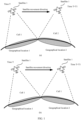
- the terminal is located on the surface of the earth, and the satellite 200 and the following satellite 400 are located in the earth orbit.
- the satellite 200 or the satellite 400 may provide a communication service for a physical area (for example, the cell 300 or a cell 500) covered by a signal, and may communicate with a terminal located within the physical area covered by the signal.
- a satellite generally generates one or more beams (beams, also referred to as beam footprints) on the ground, and the one or more beams form a cell on the ground.
- beams also referred to as beam footprints
- the satellite 200 serves the cell 300 in a first time period.
- Start time of the first time period is coverage start time of the satellite 200 on the ground
- end time of the first time period is coverage end time of the satellite 200 on the ground.
- the network device 100 corresponds to the satellite 200 in the first time period.
- a coverage area of the satellite 200 on the ground at the moment T1 includes a coverage area of the cell 300 on the ground.
- the satellite 400 moves to a location that can cover the cell 300, and the satellite 200 gradually moves to a location that is away from the cell 300.
- the satellite 400 may cover a coverage area of the cell 300 on the ground, or it may be considered that a coverage area of the cell 500 covered by the satellite 400 on the ground is the same as a coverage area of the cell 300.
- a coverage area of the satellite 200 on the ground no longer includes the coverage area of the cell 300.
- a coverage area of the cell 300 is covered by the satellite 400, or it may be considered that the cell 500 covered by the satellite 400 on the ground at the moment T3 is the cell 300.
- the cell 300 may be one of one or more cells covered by the network device 100.
- any one of the terminal 1 to the terminal n may communicate with the satellite 200 via the network device 100.
- the satellite 400 provides a service for the cell 500
- the cell 500 may be one of one or more cells covered by a network device 600.
- any one of the terminal 1 to the terminal n may communicate with the satellite 200 via the network device 600.
- the network device 100 and the network device 600 may be a same network device. To be specific, although a satellite that provides a service for a cell changes, a network device accessed by the terminal remains unchanged.
- the network device 600 and the network device 100 may be a same network device.
- a satellite that provides a service for the cell 300 changes from the satellite 200 to the satellite 400, a network device to which the cell 300 belongs remains unchanged.
- the network device 600 and the network device 100 are different network devices.
- a satellite that provides a service for the cell 300 changes from the satellite 200 to the satellite 400, and a network device to which the cell 300 belongs also changes.
- a coverage area of the cell 500 served by the satellite 400 on the ground may be the same as a coverage area of the cell 300 served by the satellite 200 on the ground, as shown in (b) in FIG. 2 .
- a scenario shown in (b) in FIG. 3 may exist.
- a coverage area of the cell 500 served by the satellite 400 on the ground is different from a coverage area of the cell 300 served by the satellite 200 on the ground.
- there is an intersection of the coverage areas Certainly, there may be no intersection of the coverage area of the cell 500 served by the satellite 400 on the ground and the coverage area of the cell 300 served by the satellite 200 on the ground. In conclusion, a difference between FIG.
- FIG. 2 a satellite of the cell 300 changes from the satellite 200 to the satellite 400, but the coverage area of the cell 500 covered by the satellite 400 on the ground is the same as the coverage area of the cell 300 served by the satellite 200 on the ground. It may be understood that the cell 500 and the cell 300 are a same cell and have a same cell identifier.
- the satellite of the cell 300 changes from the satellite 200 to the satellite 400.
- a coverage area of the cell 500 covered by the satellite 400 on the ground is different from a coverage area of the cell 300 served by the satellite 200 on the ground.
- the terminal 1 is located outside the coverage area of the cell 500 on the ground, and the terminal 2 to the terminal n are located within the coverage area of the cell 500 on the ground.
- the communication system shown in FIG. 2 or FIG. 3 may further include a core network device (not shown).
- the core network device is a device in a core network (core network, CN) that provides service support for a terminal.
- core network core network
- examples of some core network devices are: an access and mobility management function (access and mobility management function, AMF) entity, a session management function (session management function, SMF) entity, and a user plane function (user plane function, UPF) entity, which are not listed one by one herein.
- AMF entity access and mobility management function
- SMF session management function
- UPF user plane function
- the AMF entity may be responsible for access management and mobility management of a terminal.
- the SMF entity may be responsible for session management, for example, user session establishment.
- the UPF entity may be a function entity on a user plane, and is mainly responsible for connecting to an external network. It should be noted that, an entity in this application may also be referred to as a network element or a function entity.
- the AMF entity may also be referred to as an AMF network element or an AMF function entity.
- the SMF entity may also be referred to as an SMF network element or an SMF function entity.
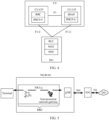
- the network device may include a central unit (central unit, CU) node, a distributed unit (distributed unit, DU) node, or a RAN device including a CU node and a DU node.
- the RAN device including the CU node and the DU node splits protocol layers of a gNB in an NR system. Functions of some protocol layers are controlled by the CU in a centralized manner. Functions of some or all of remaining protocol layers are distributed in the DU, and the CU controls the DU in a centralized manner.
- FIG. 4 the network device may include a central unit (central unit, CU) node, a distributed unit (distributed unit, DU) node, or a RAN device including a CU node and a DU node.
- the RAN device including the CU node and the DU node splits protocol layers of a gNB in an NR system. Functions of some protocol layers are controlled by the CU in a
- the SDAP layer is mainly responsible for processing data of the core network and mapping a flow to a bearer.
- the PDCP-U is responsible for encryption and decryption, integrity protection, header compression, sequence number maintenance, data transmission, and the like on a data plane.
- the CU-CP and the CU-UP are connected through an E1 interface.
- the CU-CP On behalf of the gNB, the CU-CP is connected to the core network through an NG interface, and is connected to the DU through an F1 interface-control plane, namely, F1-C.
- the CU-UP is connected to the DU through an F1 interface-user plane, namely, F1-U.
- the PDCP-C is alternatively in the CU-UP.
- NTN-based NG-RAN architectures five NTN-based RAN architectures (NTN-based NG-RAN architectures).
- a method provided in embodiments of this application is applicable to any one of the following architectures.
- the NG-RAN includes a remote radio unit (remote radio unit, RRU) and a gNB.
- RRU remote radio unit
- the RRU includes a satellite and an NTN gateway (gateway).
- the terminal, the non-terrestrial network gateway, and the gNB are located on the surface of the earth, and the satellite is located in the earth orbit.
- the satellite, the non-terrestrial network gateway, and the gNB may be used as a 5G radio access network (NG-radio access network, NG-RAN), and the NG-RAN is connected to the 5G core network through a second interface (for example, an NG interface).
- NG-radio access network NG-radio access network
- NG-RAN 5G radio access network
- the terminal communicates with the gNB through a first interface (for example, NR Uu).
- the 5G core network communicates with the data network through an N6 interface.
- functions of a satellite are radio frequency filtering (Radio Frequency filtering) and frequency conversion and amplification (Frequency conversion and amplification). That is, the satellite is mainly used as an L1 relay (relay) to regenerate a physical layer signal and does not have other higher protocol layers.
- radio frequency filtering Radio Frequency filtering
- frequency conversion and amplification Frequency conversion and amplification
- a regenerative satellite without an inter-satellite link and with a processing function of a base station (Regenerative satellite without ISL, gNB processed payload) in the architecture 2, where a link between satellites is an inter-satellite link (inter-satellite link, ISL).
- ISL inter-satellite link
- Architecture 3 shown in FIG. 7 A common point between the architecture 3 and the architecture 2 lies in that a satellite is used as a gNB. However, a difference between the architecture 3 and the architecture 2 lies in that an ISL exists in a scenario shown in the architecture 3.
- an access network node (NG-RAN) in the architecture 4 includes a satellite and a network device.
- the satellite is used as a gNB-DU
- the network device is used as a gNB-CU
- the gNB-DU communicates with the gNB-CU through an F1 interface
- the terminal communicates with the gNB-DU through a first interface.
- a regenerative satellite with a DU processing function of a base station (NG-RAN with a regenerative satellite based on gNB-DU).
- the satellite is used as a DU.
- the network side triggers the terminal to perform intra-cell handover.
- the network side sends a handover command (for example, referred to as a reconfiguration with sync message) to the terminal, and the terminal performs random access in the cell again based on the handover command (where it is noted that, a current protocol requires that the terminal needs to perform random access, and the terminal may not need to perform random access in subsequent protocol evolution).
- a new satellite provides a service only after the old satellite cannot provide a service for a physical area on the ground (where a coverage area of the satellite is a physical area of the satellite on the surface of the ground).
- services are provided by other satellites in a same orbit. Due to a spacing between satellites, a distance between two satellites is long.
- downlink signals received by the terminal from a same cell are asynchronous, and uplink signals of the terminal arrive at the two satellites at different moments (where it is noted that the downlink signal asynchronization herein means that a moment at which the terminal detects a downlink pilot signal changes, or a start point or an end point of a frame number, a subframe number, a slot number, or a symbol detected by the terminal changes).
- the terminal may fail to perform downlink synchronization with the new satellite when the new satellite provides the coverage.
- a specific structure of an execution entity of a communication method is not specially limited in embodiments of this application, provided that the execution entity can run a program that records code of the communication method in embodiments of this application, to perform communication according to the communication method in embodiments of this application.
- the execution body of the communication method provided in embodiments of this application may be a function module that is in a first network device and that can invoke a program and execute the program, or may be a communication apparatus, for example, a chip, used in the first network device.
- the execution body of the communication method provided in embodiments of this application may be a function module that is in a terminal and that can invoke and execute a program, or may be a communication apparatus, for example, a chip, used in the terminal. This is not limited in this application.
- the following embodiments are described by using an example in which execution entities of a communication method are a first network device and a terminal.
- the first network device corresponds to the first satellite.
- the first satellite is the first network device, for example, a base station.
- the first network device is a gNB-CU, and the first satellite is a gNB-DU.
- the first message may carry first information.
- the first information indicates the coverage area of the second cell served by the second satellite on the ground.
- the second cell and the first cell have a same cell identifier.
- the first cell and the second cell are a same cell, that is, the first cell and the second cell are the same.
- the terminal may be any terminal that accesses the first cell.
- step 901 may be implemented in the following manner:
- the first network device broadcasts the first message to the terminal, that is, the first message is a broadcast message sent by the first network device.
- a plurality of terminals accessing the first cell or a plurality of terminals located in the first cell may receive the first message, so that the terminal may determine that a satellite serving the first cell is to change.
- terminals accessing the first cell include a terminal A and a terminal B, and the first message is sent in a broadcast manner.
- the first network device may send a broadcast message once, so that the terminal A and the terminal B sense that a satellite that provides a service for the first cell is updated from the first satellite to the second satellite, and sense the coverage area of the second cell served by the second satellite on the ground.
- Step 902 The terminal determines, based on the first message, a location of the terminal and the coverage area of the second cell served by the second satellite on the ground, whether the terminal is located within the coverage area of the second cell on the ground or outside the coverage area of the second cell on the ground.
- the first network device may be the network device 100.
- the first satellite may be the satellite 200.
- the first cell may be the cell 300.
- the second satellite may be the satellite 400.
- the second cell may be the cell 500.
- the terminal may alternatively request the first network device to provide, for the terminal, the coverage area of the second cell served by the second satellite on the ground.
- This embodiment of this application provides the communication method.
- the first network device when it is determined that the satellite that provides a service for the first cell is updated from the first satellite to the second satellite, that is, during alternation of a new satellite and an old satellite, the first network device sends the first message to the terminal. Because the first message indicates, to the terminal, that the satellite that provides a service for the first cell is updated from the first satellite to the second satellite, the terminal can sense that the satellite that covers the first cell changes.
- the second satellite serves the second cell, and the first cell and the second cell have the same cell identifier. Although the first cell and the second cell have the same cell identifier, coverage areas of the first cell and the second cell on the ground may be different.
- the terminal may be located outside the coverage area of the second cell on the ground, or may be located within the coverage area of the second cell on the ground. Therefore, to avoid communication interruption caused by a case in which the terminal cannot normally access the second cell when the terminal is located outside the coverage area of the second cell, in this application, the first network device sends, to the terminal, information about the coverage area of the second cell served by the second satellite on the ground, so that the terminal can further determine, with reference to the location of the terminal, whether the terminal is located within the coverage area of the second cell on the ground or outside the coverage area, and take an appropriate processing measure.
- the method provided in this embodiment of this application may further include: The first network device determines that the satellite that provides a service for the first cell is updated from the first satellite to the second satellite.
- that the first network device determines that the satellite that provides a service for the first cell is updated from the first satellite to the second satellite may be implemented in the following manner: An operator sends information about the second satellite to the first network device. Alternatively, a satellite control function of the second satellite sends ephemeris information of the second satellite to the first network device (base station); or a satellite control function of the second satellite sends ephemeris information of the second satellite to a core network, and then the core network forwards the ephemeris information of the second satellite to the first network device (base station).
- a second network device for example, a second base station
- the first network device for example, a first base station
- the first message may further carry seventh indication information.
- the seventh indication information indicates the terminal to determine whether the location of the terminal is within the coverage area of the second cell served by the second satellite on the ground. In this way, after receiving the seventh indication information, the terminal may perform an action of determining whether the terminal is located within the coverage area of the second cell on the ground.
- the seventh indication information may be carried in a message other than the first message. This is not limited in embodiments of this application.
- the first message does not need to carry seventh indication information. After receiving the first message, the terminal may perform, based on the first information, an action of determining whether the terminal is located within the coverage area of the second cell on the ground.
- the first network device does not need to perform indication on the terminal, and after receiving the first information, the terminal actively reports, to the first network device, a result of determining whether the terminal is located within the coverage area of the second cell on the ground.
- the first network device may alternatively indicate the terminal to report a result of determining whether the terminal is located within the coverage area of the second cell on the ground.
- the first message may carry indication information x, or the first network device sends a message other than the first message to the terminal, to notify the terminal to report the determining result.
- the indication information x indicates the terminal to report the determining result when the terminal is located outside the coverage area of the second cell on the ground.
- the first network device may determine that the terminal is located within the coverage area of the second cell on the ground.
- the first network device may determine that the terminal is located outside the coverage area of the second cell on the ground.
- the indication information x indicates the terminal to report the determining result when the terminal is located within the coverage area of the second cell on the ground.
- the indication information x indicates that the terminal needs to report the determining result regardless of whether the location of the terminal is within or outside the coverage area of the second satellite.
- the first network device sends, to the terminal, the indication information x or a message for notifying the terminal whether to report the result of determining whether the terminal is located within the coverage area of the second cell, so that the terminal performs a corresponding action based on an indication from the first network device.
- the indication information x indicates the terminal to perform reporting when the determining result is a first determining result, and perform no reporting when the determining result is a second determining result.
- the first determining result is different from the second determining result.
- the first determining result is that the terminal is located within the coverage area of the second satellite on the ground.
- the second determining result is that the terminal is located outside the coverage area of the second satellite on the ground.
- time at which the first network device sends the first message to the terminal is earlier than coverage start time of the second satellite serving the second cell on the ground.
- the coverage start time indicates time at which the second satellite corresponding to the second cell starts to cover, on the ground, a physical area (including the first cell) of the first cell corresponding to the first satellite.
- the first message may be a predefined message specially used to notify the terminal that the satellite serving the cell is updated. In this way, the terminal may learn, after receiving the first message, that satellite alternation is to occur.
- the first message may alternatively be an existing message between the terminal and the first network device. This is not limited in embodiments of this application.
- the first message includes first indication information, and the first indication information indicates that the satellite that provides a service for the first cell is updated from the first satellite to the second satellite, or the satellite serving the first cell is to change.
- the terminal may determine, based on the first indication information, that the satellite of the first cell accessed by the terminal is updated from the first satellite to the second satellite. This manner may be considered as that the first network device indicates to the terminal in an explicit manner.
- the first message may be the first indication information, or the first indication information is a field in the first message. This is not limited in embodiments of this application.
- the first indication information may be information about the physical area covered by the second cell served by the second satellite on the ground.
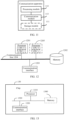
- the communication interface 1330 is configured to perform receiving and sending steps of the terminal and the first network device in the embodiments shown in FIG. 9 and FIG. 10 .
- the processor 1310 is configured to perform processing steps of the terminal and the first network device in the embodiments shown in FIG. 6 to FIG. 10 .
- a computer program product including instructions is provided.
- the computer program product includes the instructions, and when the instructions are run, a function performed by the terminal in FIG. 6 is implemented.
- a computer program product including instructions.
- the computer program product includes the instructions. When the instructions are run, a function performed by the first network device in FIG. 9 or FIG. 10 is implemented.
- a chip is provided.
- the chip is used in a terminal, and the chip includes at least one processor and a communication interface.
- the communication interface is coupled to the at least one processor.
- the processor is configured to run instructions, to implement a function performed by the terminal in FIG. 9 or FIG. 10 .
- an embodiment of this application provides a chip.
- the chip is used in an access management network element.
- the chip includes at least one processor and a communication interface.
- the communication interface is coupled to the at least one processor.
- the processor is configured to run instructions, to implement a function performed by the first network device in FIG. 9 or FIG. 10 .
- An embodiment of this application provides a communication system.
- the communication system includes a first network device and a terminal.
- the first network device is configured to perform a function performed by the first network device in FIG. 9 or FIG. 10
- the terminal is configured to perform a function performed by the terminal in FIG. 9 or FIG. 10 .
- All or some of the foregoing embodiments may be implemented by using software, hardware, firmware, or any combination thereof.
- software is used to implement the embodiments, all or some of the embodiments may be implemented in a form of a computer program product.
- the computer program product includes one or more computer programs or instructions. When the computer program or the instructions are loaded and executed on a computer, the procedures or functions in embodiments of this application are all or partially executed.
- the computer may be a general-purpose computer, a dedicated computer, a computer network, a network device, user equipment, or another programmable apparatus.
- the computer program or the instructions may be stored in a computer-readable storage medium, or may be transmitted from a computer-readable storage medium to another computer-readable storage medium.
- the computer program or the instructions may be transmitted from a website, computer, server, or data center to another website, computer, server, or data center in a wired or wireless manner.
- the computer-readable storage medium may be any usable medium that can be accessed by the computer, or a data storage device, for example, a server or a data center, integrating one or more usable media.
- the usable medium may be a magnetic medium, for example, a floppy disk, a hard disk, or a magnetic tape, may be an optical medium, for example, a digital video disc (digital video disc, DVD), or may be a semiconductor medium, for example, a solid state drive (solid state drive, SSD).
Landscapes
- Engineering & Computer Science (AREA)
- Computer Networks & Wireless Communication (AREA)
- Signal Processing (AREA)
- Physics & Mathematics (AREA)
- Astronomy & Astrophysics (AREA)
- Aviation & Aerospace Engineering (AREA)
- General Physics & Mathematics (AREA)
- Mobile Radio Communication Systems (AREA)
- Radio Relay Systems (AREA)
Applications Claiming Priority (3)
| Application Number | Priority Date | Filing Date | Title |
|---|---|---|---|
| CN202210798859 | 2022-07-06 | ||
| CN202210957934.9A CN117411533A (zh) | 2022-07-06 | 2022-08-10 | 一种非地面网络的通信方法、装置及系统 |
| PCT/CN2023/105245 WO2024008022A1 (zh) | 2022-07-06 | 2023-06-30 | 一种非地面网络的通信方法、装置及系统 |
Publications (2)
| Publication Number | Publication Date |
|---|---|
| EP4539355A1 true EP4539355A1 (de) | 2025-04-16 |
| EP4539355A4 EP4539355A4 (de) | 2025-10-01 |
Family
ID=89454380
Family Applications (1)
| Application Number | Title | Priority Date | Filing Date |
|---|---|---|---|
| EP23834789.2A Pending EP4539355A4 (de) | 2022-07-06 | 2023-06-30 | Verfahren, vorrichtung und system zur kommunikation über nichtterrestrisches netzwerk |
Country Status (5)
| Country | Link |
|---|---|
| US (1) | US20250133461A1 (de) |
| EP (1) | EP4539355A4 (de) |
| JP (1) | JP2025523569A (de) |
| MX (1) | MX2024016001A (de) |
| WO (1) | WO2024008022A1 (de) |
Families Citing this family (3)
| Publication number | Priority date | Publication date | Assignee | Title |
|---|---|---|---|---|
| US20250240693A1 (en) * | 2024-01-22 | 2025-07-24 | Qualcomm Incorporated | Enhanced position reporting during handover for location services |
| CN118363051B (zh) * | 2024-06-19 | 2024-09-03 | 银河航天(北京)通信技术有限公司 | 低轨卫星导航方法、装置、电子设备及存储介质 |
| CN119481734B (zh) * | 2024-10-12 | 2025-06-17 | 威海天拓合创电子工程有限公司 | 一种用于卫星设备的可动反射面天线系统及装置 |
Family Cites Families (7)
| Publication number | Priority date | Publication date | Assignee | Title |
|---|---|---|---|---|
| US10674417B2 (en) * | 2018-07-23 | 2020-06-02 | Hughes Network Systems, Llc | Hitless satellite-to-satellite handovers using a phased array antenna |
| AU2018436759B2 (en) * | 2018-09-28 | 2022-08-18 | Zte Corporation | Tracking area update and paging method for non-terrestrial satellite networks |
| CN114268387B (zh) * | 2019-03-26 | 2024-06-11 | 华为技术有限公司 | 卫星通信中的切换方法和装置 |
| US11303353B2 (en) * | 2019-11-07 | 2022-04-12 | Qualcomm Incorporated | Systems and methods for supporting satellite access from mobile devices to public land mobile networks |
| CN113498127B (zh) * | 2020-04-02 | 2023-01-17 | 海能达通信股份有限公司 | 一种切换方法及终端、基站 |
| EP3905546A1 (de) * | 2020-04-30 | 2021-11-03 | Panasonic Intellectual Property Corporation of America | Benutzergerät und basisstation |
| EP4002719A1 (de) * | 2020-11-20 | 2022-05-25 | Mitsubishi Electric R&D Centre Europe B.V. | Unterstützung des rachverfahrens in nicht-terrestrischen netzwerken |
-
2023
- 2023-06-30 JP JP2024576951A patent/JP2025523569A/ja active Pending
- 2023-06-30 EP EP23834789.2A patent/EP4539355A4/de active Pending
- 2023-06-30 WO PCT/CN2023/105245 patent/WO2024008022A1/zh not_active Ceased
-
2024
- 2024-12-18 MX MX2024016001A patent/MX2024016001A/es unknown
- 2024-12-31 US US19/006,455 patent/US20250133461A1/en active Pending
Also Published As
| Publication number | Publication date |
|---|---|
| EP4539355A4 (de) | 2025-10-01 |
| JP2025523569A (ja) | 2025-07-23 |
| MX2024016001A (es) | 2025-04-02 |
| WO2024008022A1 (zh) | 2024-01-11 |
| US20250133461A1 (en) | 2025-04-24 |
Similar Documents
| Publication | Publication Date | Title |
|---|---|---|
| US20250067877A1 (en) | Method and device for processing global navigation satellite system validity | |
| CN112787712B (zh) | 面向低轨道卫星基站-飞行器用户终端的通信连接建立方法 | |
| EP4539355A1 (de) | Verfahren, vorrichtung und system zur kommunikation über nichtterrestrisches netzwerk | |
| EP4307767A1 (de) | Drahtloskommunikationsverfahren, -vorrichtung und -system | |
| EP4661492A1 (de) | Verfahren und vorrichtung zur drahtlosen kommunikation | |
| US12495341B1 (en) | Cell handover method, terminal device, and network device | |
| US20240196310A1 (en) | Providing neighbour cell information in non-terrestrial network | |
| US20240340076A1 (en) | Communication method and apparatus | |
| CN116235540A (zh) | 通信方法及装置 | |
| CN118476272A (zh) | 通信方法、终端设备及网络设备 | |
| US20230292275A1 (en) | Transceiver device, network entity and base station | |
| US20240314882A1 (en) | Communication method, terminal device, and network device | |
| US20260025695A1 (en) | Method for wireless communication, terminal device, and network device | |
| US20250220532A1 (en) | Communication method and apparatus | |
| US20240179592A1 (en) | Method and device for timing control in a non-terrestrial network | |
| US20260089588A1 (en) | Communication method and apparatus | |
| CN117411533A (zh) | 一种非地面网络的通信方法、装置及系统 | |
| US20250016703A1 (en) | Communication method, terminal, and network device | |
| EP4618624A1 (de) | Kommunikationsverfahren und kommunikationsvorrichtung | |
| WO2025066554A1 (zh) | 一种通信方法及装置 | |
| CN117561733A (zh) | 信息传输方法、相关设备及介质 | |
| US20240275475A1 (en) | Methods, Apparatuses and Systems for Multi-RTT Positioning in Non-Terrestrial Network | |
| CN116326132B (zh) | 无线通信的方法及装置 | |
| US20240224105A1 (en) | Communication method, terminal device and network device | |
| US20260067769A1 (en) | Handover method and apparatus |
Legal Events
| Date | Code | Title | Description |
|---|---|---|---|
| STAA | Information on the status of an ep patent application or granted ep patent |
Free format text: STATUS: THE INTERNATIONAL PUBLICATION HAS BEEN MADE |
|
| PUAI | Public reference made under article 153(3) epc to a published international application that has entered the european phase |
Free format text: ORIGINAL CODE: 0009012 |
|
| STAA | Information on the status of an ep patent application or granted ep patent |
Free format text: STATUS: REQUEST FOR EXAMINATION WAS MADE |
|
| 17P | Request for examination filed |
Effective date: 20250110 |
|
| AK | Designated contracting states |
Kind code of ref document: A1 Designated state(s): AL AT BE BG CH CY CZ DE DK EE ES FI FR GB GR HR HU IE IS IT LI LT LU LV MC ME MK MT NL NO PL PT RO RS SE SI SK SM TR |
|
| A4 | Supplementary search report drawn up and despatched |
Effective date: 20250901 |
|
| RIC1 | Information provided on ipc code assigned before grant |
Ipc: H04B 7/185 20060101AFI20250827BHEP Ipc: H04W 56/00 20090101ALI20250827BHEP |
|
| DAV | Request for validation of the european patent (deleted) | ||
| DAX | Request for extension of the european patent (deleted) |