EP4538950A1 - Store server, method, and storage medium - Google Patents
Store server, method, and storage medium Download PDFInfo
- Publication number
- EP4538950A1 EP4538950A1 EP24192980.1A EP24192980A EP4538950A1 EP 4538950 A1 EP4538950 A1 EP 4538950A1 EP 24192980 A EP24192980 A EP 24192980A EP 4538950 A1 EP4538950 A1 EP 4538950A1
- Authority
- EP
- European Patent Office
- Prior art keywords
- cloud server
- transaction information
- store
- communication
- server
- Prior art date
- Legal status (The legal status is an assumption and is not a legal conclusion. Google has not performed a legal analysis and makes no representation as to the accuracy of the status listed.)
- Pending
Links
Images



Classifications
-
- H—ELECTRICITY
- H04—ELECTRIC COMMUNICATION TECHNIQUE
- H04L—TRANSMISSION OF DIGITAL INFORMATION, e.g. TELEGRAPHIC COMMUNICATION
- H04L67/00—Network arrangements or protocols for supporting network services or applications
- H04L67/01—Protocols
- H04L67/10—Protocols in which an application is distributed across nodes in the network
- H04L67/1001—Protocols in which an application is distributed across nodes in the network for accessing one among a plurality of replicated servers
- H04L67/1004—Server selection for load balancing
- H04L67/1008—Server selection for load balancing based on parameters of servers, e.g. available memory or workload
-
- G—PHYSICS
- G06—COMPUTING OR CALCULATING; COUNTING
- G06Q—INFORMATION AND COMMUNICATION TECHNOLOGY [ICT] SPECIALLY ADAPTED FOR ADMINISTRATIVE, COMMERCIAL, FINANCIAL, MANAGERIAL OR SUPERVISORY PURPOSES; SYSTEMS OR METHODS SPECIALLY ADAPTED FOR ADMINISTRATIVE, COMMERCIAL, FINANCIAL, MANAGERIAL OR SUPERVISORY PURPOSES, NOT OTHERWISE PROVIDED FOR
- G06Q20/00—Payment architectures, schemes or protocols
- G06Q20/08—Payment architectures
- G06Q20/20—Point-of-sale [POS] network systems
- G06Q20/202—Interconnection or interaction of plural electronic cash registers [ECR] or to host computer, e.g. network details, transfer of information from host to ECR or from ECR to ECR
-
- G—PHYSICS
- G07—CHECKING-DEVICES
- G07G—REGISTERING THE RECEIPT OF CASH, VALUABLES, OR TOKENS
- G07G1/00—Cash registers
- G07G1/12—Cash registers electronically operated
- G07G1/14—Systems including one or more distant stations co-operating with a central processing unit
-
- G—PHYSICS
- G06—COMPUTING OR CALCULATING; COUNTING
- G06Q—INFORMATION AND COMMUNICATION TECHNOLOGY [ICT] SPECIALLY ADAPTED FOR ADMINISTRATIVE, COMMERCIAL, FINANCIAL, MANAGERIAL OR SUPERVISORY PURPOSES; SYSTEMS OR METHODS SPECIALLY ADAPTED FOR ADMINISTRATIVE, COMMERCIAL, FINANCIAL, MANAGERIAL OR SUPERVISORY PURPOSES, NOT OTHERWISE PROVIDED FOR
- G06Q20/00—Payment architectures, schemes or protocols
- G06Q20/08—Payment architectures
- G06Q20/20—Point-of-sale [POS] network systems
-
- G—PHYSICS
- G07—CHECKING-DEVICES
- G07G—REGISTERING THE RECEIPT OF CASH, VALUABLES, OR TOKENS
- G07G1/00—Cash registers
- G07G1/0009—Details of the software in the checkout register, electronic cash register [ECR] or point of sale terminal [POS]
-
- H—ELECTRICITY
- H04—ELECTRIC COMMUNICATION TECHNIQUE
- H04L—TRANSMISSION OF DIGITAL INFORMATION, e.g. TELEGRAPHIC COMMUNICATION
- H04L43/00—Arrangements for monitoring or testing data switching networks
- H04L43/08—Monitoring or testing based on specific metrics, e.g. QoS, energy consumption or environmental parameters
- H04L43/0876—Network utilisation, e.g. volume of load or congestion level
-
- H—ELECTRICITY
- H04—ELECTRIC COMMUNICATION TECHNIQUE
- H04L—TRANSMISSION OF DIGITAL INFORMATION, e.g. TELEGRAPHIC COMMUNICATION
- H04L67/00—Network arrangements or protocols for supporting network services or applications
- H04L67/01—Protocols
- H04L67/10—Protocols in which an application is distributed across nodes in the network
- H04L67/1001—Protocols in which an application is distributed across nodes in the network for accessing one among a plurality of replicated servers
-
- H—ELECTRICITY
- H04—ELECTRIC COMMUNICATION TECHNIQUE
- H04L—TRANSMISSION OF DIGITAL INFORMATION, e.g. TELEGRAPHIC COMMUNICATION
- H04L67/00—Network arrangements or protocols for supporting network services or applications
- H04L67/50—Network services
- H04L67/56—Provisioning of proxy services
- H04L67/59—Providing operational support to end devices by off-loading in the network or by emulation, e.g. when they are unavailable
Definitions
- Embodiments described herein relate generally to a store server, a method, and a storage medium.
- the cloud server transmits and receives information to and from many apparatuses
- the communication traffic and the communication load may increase when, for example, stores are busy. In this case, the quality of communication between the cloud server and the in-store apparatuses may become poor.
- An embodiment of the present disclosure provides an information processing apparatus that makes it possible to use in-store apparatuses without any problem even when the communication load of a cloud server is high.
- a store server for managing point-of-sale (POS) terminals used in a store a method performed by a store server for managing point-of-sale (POS) terminals used in a store and non-transitory computer-readable storage medium storing a program for causing a computer to execute a method according to appended claims are provided.
- the store server comprises a communication interface connectable to the POS terminals and a cloud server configured to manage transaction information about a sales transaction performed by the POS terminals; a storage device; and a processor configured to: determine a communication load of the cloud server, determine whether the transaction information is to be transmitted to the cloud server based on the communication load, when the transaction information is to be transmitted to the cloud server, control the communication interface to output to the POS terminals a first instruction to set a communication destination of the transaction information to the cloud server, and when the transaction information is not to be transmitted to the cloud server, control the communication interface to output to the POS terminals a second instruction to set the communication destination of the transaction information to the store server, and upon receipt of the transaction information from the POS terminals, store the received transaction information in the storage device.
- the store server and the POS terminals are installed in the store, and the cloud server is installed outside the store.
- the method may further comprise the following features:
- FIG. 1 is a diagram illustrating an example of a configuration of a system according to the embodiment.
- the system includes a cloud server 1, a server 3, and various terminals (POS terminals 5, POS tablets 6, and payment machines 7).
- the cloud server 1, the server 3, and the various terminals are connected to each other via a router 2.
- the router 2, the server 3, the POS terminals 5, the POS tablets 6, and the payment machines 7 are installed in a store.
- Each POS terminal 5 is a sales data processing apparatus mainly operated by a store clerk and executes item registration processes and payment processes for items according to operations performed by the store clerk.
- Each POS tablet 6 is a sales data processing apparatus mainly operated by a customer and executes item registration processes according to operations performed by the customer.
- Each payment machine 7 is a sales data processing apparatus mainly operated by a customer and executes payment processes for items registered by the POS tablet 6 or the POS terminal 5 according to operations performed by the customer.
- FIG. 1 shows an example in which multiple POS terminals 5, multiple POS tablets 6, and multiple payment machines 7 exist in each store.
- the present invention is not limited to this example. At least one POS terminal 5, one POS tablet 6, or one payment machine 7 may be provided in each store.
- Each of the cloud server 1 and the server 3 is not necessarily implemented by a single apparatus. That is, each of the cloud server 1 and the server 3 may be implemented by multiple apparatuses.
- the cloud server 1 centrally manages (or stores) information (including transaction information) related to all stores belonging to a group.
- the router 2 connects apparatuses (the server 3, the POS terminals 5, the POS tablets 6, and the payment machines 7) in the store to the cloud server 1 to be able to transmit and receive information (or to communicate with each other). Communications between the apparatuses in the store and the cloud server 1 are performed, for example, via a Virtual Private Network (VPN) implemented by a public network such as the Internet.
- VPN Virtual Private Network
- the apparatuses (the servers 3, the POS terminals 5, the POS tablets 6, and the payment machines 7) in the store are connected to each other via a network, such as a Local Area Network (LAN), provided in the store and can transmit and receive information to and from each other (or communicate with each other).
- a network such as a Local Area Network (LAN)
- LAN Local Area Network
- the server 3 is an example of an information processing apparatus or a store server configured to be able to communicate with the cloud server 1 and the sales data processing apparatuses in the store.
- the server 3 is installed in, for example, the back room of the store, stores information received (acquired) from the cloud server 1, provides the information to various terminals or sales data processing apparatuses (the POS terminals 5, the POS tablets 6, and the payment machines 7) in the store, and transmits information generated in the store to the cloud server 1.
- Each of the POS terminals 5, the POS tablets 6, and the payment machines 7 is an example of a sales data processing apparatus. Each of the POS terminals 5, the POS tablets 6, and the payment machines 7 performs sales data processing using information received from the server 3 and transmits transaction information generated by the sales data processing to the server 3.
- FIG. 2 is a block diagram illustrating an example of a configuration of the cloud server 1.
- the cloud server 1 includes a Central Processing Unit (CPU) 11, a Read Only Memory (ROM) 12, a Random Access Memory (RAM) 13, a communication unit 14, and a storage unit 19.
- CPU Central Processing Unit
- ROM Read Only Memory
- RAM Random Access Memory
- the CPU 11 is an example of a processor and controls other components of the cloud server 1.
- the ROM 12 stores various programs.
- the RAM 13 is a workspace into which programs and various types of data are loaded.
- the CPU 11, the ROM 12, and the RAM 13 are connected to each other via a bus or the like and constitute a control unit 10 of the cloud server 1.
- the communication unit 14 is a communication interface for connecting the control unit 10 to the apparatuses in the store (for example, the server 3 and the POS terminals 5) via a network for communication.
- the storage unit 19 includes a storage medium, such as a Hard Disk Drive (HDD), a Solid State Drive (SSD), or a flash memory, and retains information even when the power supply is cut off.
- the storage unit 19 stores various programs and data, such as a program 191 that can be executed by the CPU 11 and an item master 192. Furthermore, the storage unit 19 stores transaction information 193 received from stores.
- the item master 192 is an example of item information and contains information (item information) on items being sold by stores in, for example, a table format.
- the item master 192 includes, for example, the following fields.
- the item code is an example of information (identification information) for identifying an item and is, for example, a JAN code.
- Other information items (the item name, the classification, and the unit price) are stored in association with the item code.
- the "item name” field stores the name of an item.
- the "classification” field stores the classification (a section or a category), such as "fruits and vegetables”, “daily foods”, “processed foods”, or “sundry goods", of an item.
- the "unit price” field stores the price of an item.
- the transaction information 193 contains information on items purchased by customers in, for example, a table format.
- the transaction information 193 includes, for example, the following fields.
- the transaction ID is an example of information (identification information) for identifying a transaction.
- the date and time indicates the date and time when a recorded transaction is performed.
- the store ID, the terminal ID, and the store clerk ID are identification information of a store, a terminal (such as the POS terminal 5), and a clerk related to a recorded transaction.
- the item information includes, for example, the following fields.
- the total price indicates the amount of money for all items purchased in a recorded transaction.
- the item code is described above.
- the quantity indicates, for example, the number of pieces, the weight, or the volume of an item that is indicated by the item code and purchased in a recorded transaction.
- the price is a value obtained by multiplying the unit price by the quantity.
- FIG. 3 is a block diagram illustrating an example of a configuration of the server 3.
- the servers 3 include a CPU 31, a ROM 32, a RAM 33, a communication unit 34, and a storage unit 39.
- the CPU 31 is an example of a processor and controls other components of the servers 3.
- the ROM 32 stores various programs.
- the RAM 33 is a workspace into which programs and various types of data are loaded.
- the CPU 31, the ROM 32, and the RAM 33 are connected to each other via a bus or the like and constitute a control unit 30 of the server 3.
- the storage unit 39 includes a storage medium, such as an HDD, an SSD, or a flash memory, and retains information even when the power supply is cut off.
- the storage unit 39 stores a program 391 that can be executed by the CPU 31, an item master 392, transaction information 393, setting information 394, and the like.
- the storage unit 39 is an example of a storage device.
- the item master 392 includes fields that are the same as the fields of the item master 192 illustrated in FIG. 2 .
- the item master 392 is generated by acquiring, from the item master 192 stored in the cloud server 1, pieces of item information related to the store (that is, records associated with the store ID of the store).
- the server 3 receives the item information related to the store from the cloud server 1 at a predetermined timing (for example, during a time period after the closing time and before the opening time) and updates the item master 392 based on the received item information.
- the transaction information 393 includes fields that are the same as the fields of the transaction information 193.
- the server 3 receives the transaction information 193 newly generated in the store from the cloud server 1 at a predetermined timing (for example, at predetermined time intervals or during a time period in which the communication load is low). That is, the storage unit 39 accumulates (stores) at least transaction information related to the store among the transaction information 393 being managed (or accumulated) by the cloud server 1.
- the server 3 transmits the item registration information 593 to the cloud server 1 at a predetermined timing (for example, at predetermined time intervals or during a time period in which the communication load is low).
- the setting information 394 includes, for example, the following information items.
- the store information includes, for example, a store ID and a store name associated with the store ID.
- the store name is the name of the store.
- the terminal information includes, for example, a terminal ID and a terminal type associated with the terminal ID. Examples of terminal types include a Personal Computer (PC), a tablet PC, and a smart phone.
- the store clerk information includes, for example, a store clerk ID and the name of a store clerk associated with the store clerk ID.
- the coupon information includes, for example, a coupon ID and a reward associated with the coupon ID.
- FIG. 4 is a block diagram illustrating an example of a configuration of the POS terminal 5.
- the POS terminal 5 includes a CPU 51, a ROM 52, a RAM 53, a communication unit 54, a display unit 55, an operating unit 56, a scanner 57, an audio output unit 58, a deposit and withdrawal unit 60, a storage unit 59, and the like.
- the CPU 51 is an example of a processor and controls other components of the POS terminal 5.
- the ROM 52 stores various programs.
- the RAM 53 is a workspace into which programs and various types of data are loaded.
- the CPU 51, the ROM 52, and the RAM 53 are connected to each other via a bus or the like and constitute a control unit 50 of the POS terminal 5.
- the communication unit 54 is a communication interface for connecting the control unit 50 to an external apparatus (for example, the cloud server 1 or the server 3) via a network for communication.
- the communication unit 54 mediates the input and output of data to and from USB peripheral devices.
- the display unit 55 includes a display device, such as a Liquid Crystal Display (LCD), and displays various types of information under the control of the CPU 51.
- a display device such as a Liquid Crystal Display (LCD)
- LCD Liquid Crystal Display
- the operating unit 56 includes an input device, such as a touch panel disposed on the surface of the display unit 55, a keyboard, or a pointing device, and outputs instructions input via the input device to the CPU 51.
- an input device such as a touch panel disposed on the surface of the display unit 55, a keyboard, or a pointing device, and outputs instructions input via the input device to the CPU 51.
- the scanner 57 reads a code symbol (for example, a bar code or a two-dimensional code) provided on the surface of an item and outputs a decoded value. That is, when the code symbol is a code representing an item code, the scanner 57 outputs the item code.
- a code symbol for example, a bar code or a two-dimensional code
- the audio output unit 58 includes a speaker and a buzzer and outputs sound under the control of the CPU 51.
- the deposit and withdrawal unit 60 is, for example, a change machine (or a cash drawer) that stores cash (coins and bills), accepts payment, and dispenses change.
- the storage unit 59 includes a storage medium, such as an HDD, an SSD, or a flash memory, and retains information even when the power supply is cut off.
- the storage unit 59 stores a program 591 that can be executed by the CPU 51, item registration information 593, and setting information 594.
- the program 591 is application software for causing the POS terminal 5 to function.
- POS is an abbreviation for "Point of Sale” and means “point-of-sale information management.”
- the POS terminal 5 performs point-of-sale information management.
- the item registration information 593 contains information on items registered and to be purchased by a customer in, for example, a table format.
- the item registration information 593 includes fields that are substantially the same as the fields of the transaction information 193 and the transaction information 393.
- the POS terminal 5 transmits new transaction information to the cloud server 1 (or the server 3) each time a transaction is completed.
- the item registration information 593 may be stored in the RAM 53 instead of the storage unit 59.
- the storage unit 59 or the RAM 53 stores the item registration information 593 related to items registered from the start to the completion of at least one transaction.
- the setting information 594 is, for example, terminal information (a terminal ID and a terminal type) of the POS terminal 5 itself.
- the POS tablet 6 has substantially the same configuration as the POS terminal 5 except that the deposit and withdrawal unit 60 is omitted. Also, the scanner 57 may be implemented as a functional unit that decodes a code symbol included in an image output by a camera provided in the POS tablet 6.
- the payment machine 7 has substantially the same configuration as the POS terminal 5 described above. Note that the scanner 57 may be omitted from the payment machine 7.
- each of the POS terminal 5, the POS tablet 6, and the payment machine 7 refers to the item master 192 stored in the cloud server 1 to register an item. Also, each of the POS terminal 5, the POS tablet 6, and the payment machine 7 basically transmits the item registration information 593 to the cloud server 1. As a result, the communication load rate of the cloud server 1 increases during a time period in which the store is crowded by many customers.
- each of the POS terminal 5, the POS tablet 6, and the payment machine 7 switches the communication destination from the cloud server 1 to the server 3 (or the storage unit 39) in the store, refers to the item master 392 stored in the server 3 to register an item, and transmits the item registration information 593 to the server 3.
- the server 3 (the control unit 30 or the processor) outputs an instruction to switch the communication destination of the terminals (the POS terminals 5, the POS tablets 6, and the payment machines 7) via the communication unit 34 (or the communication interface).
- FIG. 5 is a block diagram illustrating an example of various functional units included in the control units 10, 30, and 50 and the relationships among the functional units.
- the control units 10, 30, and 50 implement various functional units illustrated in FIG. 5 by executing the programs 191, 391, and 591.
- the control unit 10 of the cloud server 1 functions as a transaction information update unit 101 and a master distribution unit 105.
- the control unit 30 of the server 3 in the store functions as a transaction information update unit 301, a monitoring unit 302, a determination unit 303, a switching unit 304, and a master update unit 305.
- the control unit 50 of each of the POS terminal 5, the POS tablet 6, and the payment machine 7 functions as an item registering unit 501, a payment processing unit 502, and a switching unit 504.
- the master distribution unit 105 distributes information in the item master 192 to the server 3 of each store, for example, during a time period after the closing time of the store and before the opening time of the store or when the store is not busy.
- records of item information associated with the store ID of the store to which the server 3 belongs are distributed to the server 3.
- the master update unit 305 receives the information (or item information) of the item master 192 distributed from the cloud server 1 and updates the item master 392 of the server 3 based on the received information.
- the item registering unit 501 refers to a site that is set as an information acquisition source (or a communication destination) to acquire item information and performs item registration, that is, edits the item registration information 593. Since the information acquisition source is basically the cloud server 1, the item registering unit 501 refers to the item master 192.
- the information acquisition source is basically the cloud server 1 that collects and manages (or accumulates) information from all stores in the group.
- the server 3 functions as a proxy. To function as a proxy, the server 3 acquires, in advance, information related to the store among information accumulated by the cloud server 1 and stores (or accumulates and manages) the acquired information in the storage unit 39.
- the payment processing unit 502 transmits the item registration information 593 to a site set as an information storage unit (or a communication destination). Since the information storage unit is basically the cloud server 1, the payment processing unit 502 transmits the item registration information 593 to the cloud server 1. When the communication destination is switched to the server 3, the payment processing unit 502 transmits the item registration information 593 to the server 3.
- the transaction information update unit 301 transmits information, which is accumulated in the storage unit 39 while the communication destination is set to the storage unit 39, to the cloud server 1 when the communication destination is set to the cloud server 1.
- the control unit 30 (or the processor) of the server 3 controls the communication unit 34 (or the communication interface) to transmit, to the cloud server 1, information accumulated in the storage unit 39 (or the storage device) while the communication destination is set to the storage unit 39.
- the transaction information update unit 301 keeps (or stores) the item registration information 593 as the transaction information 393 in the storage unit 39.
- the transaction information update unit 301 transmits the item registration information 593 of the store, which has been stored as the transaction information 393, to the cloud server 1.
- the monitoring unit 302 monitors the communication load status of the cloud server 1.
- the communication load status is represented by, for example, a communication load rate.
- the communication load rate is a value indicating the current status of the communication load when 100% indicates the maximum communication load that can be processed by the cloud server 1 and 0% indicates a state in which no communication is being performed.
- the cloud server 1 updates the current value of its communication load rate as needed.
- the cloud server 1 provides the communication load status (for example, a communication load rate) so that other communication-capable apparatuses can refer to the communication load status as needed.
- the monitoring unit 302 periodically (for example, once every tens of seconds) acquires the communication load rate updated and provided by the cloud server 1.
- the control unit 30 (or the processor) of the server 3 monitors the communication load rate of the cloud server 1 via the communication unit 34 (or the communication interface).
- the cloud server 1 communicates with terminals of multiple stores, even when the amount of communication performed by the terminals of a certain store with the cloud server 1 is small, the amount of communication performed by the terminals of another store with the cloud server 1 may be large. That is, the communication load rate of the cloud server 1 is not directly proportional to the amount of communication performed by the terminals of each store.
- the determination unit 303 determines whether it is necessary to switch the communication destination of the terminals in the store based on the communication load status of the cloud server 1 output by the monitoring unit 302. This determination is performed using, for example, the communication load rate of the cloud server 1 acquired by the monitoring unit 302 and threshold values.
- the determination unit 303 determines that the communication load of the cloud server 1 is low and the cloud server 1 can be used as the communication destination.
- the determination unit 303 determines that the cloud server 1 cannot be used as the communication destination because the communication load of the cloud server 1 is high. In this case, the server 3 is used as the communication destination in place of the cloud server 1.
- a second threshold value for example, 70%
- the determination unit 303 determines to switch the communication destination of, for example, about one half of the sales data processing apparatuses in the store.
- the switching unit 304 receives the determination result from the determination unit 303 and transmits an instruction to switch the communication destination to some or all of the terminals (the POS terminals 5, the POS tablets 6, and the payment machines 7) in the store.
- the switching unit 304 outputs an instruction to switch the communication destination of the sales data processing apparatuses to the storage unit 39.
- the switching unit 304 outputs an instruction to switch the communication destination back to the cloud server 1.
- Each terminal receiving the instruction from the switching unit 304 switches the communication destination in accordance with the received instruction. That is, when the instruction from the switching unit 304 is for switching the communication destination from the cloud server 1 to the server 3, the terminal receiving the instruction switches the communication destination to the server 3. On the other hand, when the instruction from the switching unit 304 is for switching the communication destination from the server 3 to the cloud server 1, the terminal receiving the instruction switches the communication destination to the cloud server 1.
- the control unit 30 (or the processor) of the server 3 is configured to output, via the communication unit 34 (or the communication interface), an instruction to switch the communication destination between the cloud server 1 and the server 3 (or the storage unit 39) according to the communication load rate of the cloud server 1.
- the percentage of the sales data processing apparatuses whose communication destination is switched to (or set to) the cloud server 1 or the storage unit 39 can be changed in accordance with the communication load rate of the cloud server 1. For example, as the communication load rate increases, the communication destination of a greater number of sales data processing apparatuses in the store is set to the storage unit 39. On the other hand, as the communication load decreases, the communication destination of a greater number of sales data processing apparatuses in the store is switched back to the cloud server 1.
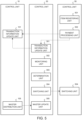
- FIG. 6 is a flowchart of a process performed by the control unit 30 of the server 3.
- each step in FIG. 6 is performed by the control unit 30 (or the processor) of the server 3 by controlling other components of the server 3.
- the monitoring unit 302 of the control unit 30 monitors the communication load rate of the cloud server 1 (step S 1).
- the determination unit 303 of the control unit 30 determines whether the communication load rate is less than 30% (step S2).
- the determination unit 303 of the control unit 30 determines, whether the communication load rate is greater than or equal to 30% and less than 70% (step S3).
- the control unit 30 causes all terminals in the store to communicate with the servers 3 (step S4).
- the switching unit 304 of the control unit 30 switches the communication destination of terminals in the store, whose communication destination has been set to the cloud server 1, to the server 3. That is, the communication destination of all terminals is set to the server 3 (or the storage unit 39).
- step S2 when the communication load rate is less than 30% (Yes at step S2), the control unit 30 causes all terminals in the store to communicate with the cloud server 1 (step S5).
- the switching unit 304 of the control unit 30 switches the communication destination of terminals in the store, whose communication destination has been set to the server 3, to the cloud server 1. That is, the communication destination of all terminals is set to the cloud server 1.
- the control unit 30 causes 50% of the terminals in the store to communicate with the cloud server 1 and causes the other 50% of the terminals to communicate with the server 3 (step S6).
- the switching unit 304 of the control unit 30 switches the communication destination of the terminals in the store as appropriate. That is, the communication destination of one half of the terminals in the store is set to the cloud server 1, and the communication destination of the other half of the terminals in the store is set to the server 3 (or the storage unit 39).
- the server 3 since the server 3 performs the process of instructing the sales data processing apparatuses in the store to appropriately switch their communication destinations, the sales data processing apparatuses (or the terminals) in the store can be used without any problem even when the communication load of the cloud server 1 is high.
- Programs to be executed by each of the apparatuses of the above-described embodiment may be provided in a ROM or the like in advance.
- Programs to be executed by each of the apparatuses of the above-described embodiment may be provided in a computer-readable recording medium, such as a CD-ROM, a flexible disk (FD), a CD-R, or a Digital Versatile Disk (DVD), in an installable format or an executable format.
- a computer-readable recording medium such as a CD-ROM, a flexible disk (FD), a CD-R, or a Digital Versatile Disk (DVD)
- programs to be executed by each of the apparatuses of the above-described embodiment may be stored in a computer connected to a network, such as the Internet, and may be downloaded via the network. Furthermore, programs to be executed by each of the apparatuses of the above-described embodiment may be provided or distributed via a network, such as the Internet.
Landscapes
- Engineering & Computer Science (AREA)
- Business, Economics & Management (AREA)
- Computer Networks & Wireless Communication (AREA)
- Physics & Mathematics (AREA)
- General Physics & Mathematics (AREA)
- Accounting & Taxation (AREA)
- Signal Processing (AREA)
- Finance (AREA)
- Strategic Management (AREA)
- General Business, Economics & Management (AREA)
- Theoretical Computer Science (AREA)
- Environmental & Geological Engineering (AREA)
- Computer Hardware Design (AREA)
- General Engineering & Computer Science (AREA)
- Cash Registers Or Receiving Machines (AREA)
- Management, Administration, Business Operations System, And Electronic Commerce (AREA)
- Financial Or Insurance-Related Operations Such As Payment And Settlement (AREA)
Abstract
A store server for managing POS terminals used in a store, includes an interface connectable to the terminals and a cloud server configured to manage transaction information about a sales transaction performed by the terminals and a processor configured to: determine a communication load of the cloud server, determine whether the transaction information is to be transmitted to the cloud server based on the load, when the transaction information is to be transmitted, control the interface to output to the terminals an instruction to set a destination of the transaction information to the cloud server, and when the transaction information is not to be transmitted, control the interface to output to the terminals an instruction to set the destination to the store server, and upon receipt of the transaction information from the terminals, store the transaction information.
Description
- Embodiments described herein relate generally to a store server, a method, and a storage medium.
- Conventionally, a cloud server for centrally managing information for all stores in a group is provided in addition to an in-store system including sales data processing apparatuses and a store server. Also, in a system that has been put into practical use in recent years, in-store sales data processing apparatuses directly refer to information stored in a cloud server and directly store transaction information in the cloud server.
- However, since the cloud server transmits and receives information to and from many apparatuses, the communication traffic and the communication load may increase when, for example, stores are busy. In this case, the quality of communication between the cloud server and the in-store apparatuses may become poor.
- An embodiment of the present disclosure provides an information processing apparatus that makes it possible to use in-store apparatuses without any problem even when the communication load of a cloud server is high.
- According to the present invention, a store server for managing point-of-sale (POS) terminals used in a store a method performed by a store server for managing point-of-sale (POS) terminals used in a store and non-transitory computer-readable storage medium storing a program for causing a computer to execute a method according to appended claims are provided.
- The store server comprises a communication interface connectable to the POS terminals and a cloud server configured to manage transaction information about a sales transaction performed by the POS terminals; a storage device; and a processor configured to: determine a communication load of the cloud server, determine whether the transaction information is to be transmitted to the cloud server based on the communication load, when the transaction information is to be transmitted to the cloud server, control the communication interface to output to the POS terminals a first instruction to set a communication destination of the transaction information to the cloud server, and when the transaction information is not to be transmitted to the cloud server, control the communication interface to output to the POS terminals a second instruction to set the communication destination of the transaction information to the store server, and upon receipt of the transaction information from the POS terminals, store the received transaction information in the storage device.
- Preferably, the store server and the POS terminals are installed in the store, and the cloud server is installed outside the store.
- Preferably, the method may further comprise the following features:
- the certain percentage varies depending on the communication load;
- after the second instruction is transmitted, a step of transmitting to the cloud server the transaction information stored in the storage device when the communication load becomes lower than the second threshold;
- step of storing an item master in which item information is stored;
- after the second instruction is transmitted, in response to a request from one of the POS terminals, a step of transmitting the item information stored in the item master to said one of the POS terminals;
- a step of acquiring, from the cloud server, information for updating the item master stored in the storage device.
-
-
FIG. 1 is a diagram of a configuration of a system according to an embodiment. -
FIG. 2 is a block diagram of a configuration of a cloud server according to the embodiment. -
FIG. 3 is a block diagram of a configuration of a server according to the embodiment. -
FIG. 4 is a block diagram of a configuration of a POS terminal according to the embodiment. -
FIG. 5 is a block diagram illustrating various functional units included in control units and relationships among the functional units. -
FIG. 6 is a flowchart of a process performed by a control unit of the server. - Hereinafter, an embodiment will be described in detail with reference to the drawings. The present invention is not limited to the embodiment described below.
-
FIG. 1 is a diagram illustrating an example of a configuration of a system according to the embodiment. The system includes acloud server 1, aserver 3, and various terminals (POS terminals 5,POS tablets 6, and payment machines 7). Thecloud server 1, theserver 3, and the various terminals are connected to each other via arouter 2. Therouter 2, theserver 3, thePOS terminals 5, thePOS tablets 6, and thepayment machines 7 are installed in a store. - Each
POS terminal 5 is a sales data processing apparatus mainly operated by a store clerk and executes item registration processes and payment processes for items according to operations performed by the store clerk. EachPOS tablet 6 is a sales data processing apparatus mainly operated by a customer and executes item registration processes according to operations performed by the customer. Eachpayment machine 7 is a sales data processing apparatus mainly operated by a customer and executes payment processes for items registered by thePOS tablet 6 or thePOS terminal 5 according to operations performed by the customer. - Note that
FIG. 1 shows an example in whichmultiple POS terminals 5,multiple POS tablets 6, andmultiple payment machines 7 exist in each store. However, the present invention is not limited to this example. At least onePOS terminal 5, onePOS tablet 6, or onepayment machine 7 may be provided in each store. - Each of the
cloud server 1 and theserver 3 is not necessarily implemented by a single apparatus. That is, each of thecloud server 1 and theserver 3 may be implemented by multiple apparatuses. - The
cloud server 1 centrally manages (or stores) information (including transaction information) related to all stores belonging to a group. - The
router 2 connects apparatuses (theserver 3, thePOS terminals 5, thePOS tablets 6, and the payment machines 7) in the store to thecloud server 1 to be able to transmit and receive information (or to communicate with each other). Communications between the apparatuses in the store and thecloud server 1 are performed, for example, via a Virtual Private Network (VPN) implemented by a public network such as the Internet. - The apparatuses (the
servers 3, thePOS terminals 5, thePOS tablets 6, and the payment machines 7) in the store are connected to each other via a network, such as a Local Area Network (LAN), provided in the store and can transmit and receive information to and from each other (or communicate with each other). - The
server 3 is an example of an information processing apparatus or a store server configured to be able to communicate with thecloud server 1 and the sales data processing apparatuses in the store. - The
server 3 is installed in, for example, the back room of the store, stores information received (acquired) from thecloud server 1, provides the information to various terminals or sales data processing apparatuses (thePOS terminals 5, thePOS tablets 6, and the payment machines 7) in the store, and transmits information generated in the store to thecloud server 1. - Each of the
POS terminals 5, thePOS tablets 6, and thepayment machines 7 is an example of a sales data processing apparatus. Each of thePOS terminals 5, thePOS tablets 6, and thepayment machines 7 performs sales data processing using information received from theserver 3 and transmits transaction information generated by the sales data processing to theserver 3. -
FIG. 2 is a block diagram illustrating an example of a configuration of thecloud server 1. Thecloud server 1 includes a Central Processing Unit (CPU) 11, a Read Only Memory (ROM) 12, a Random Access Memory (RAM) 13, acommunication unit 14, and astorage unit 19. - The
CPU 11 is an example of a processor and controls other components of thecloud server 1. TheROM 12 stores various programs. TheRAM 13 is a workspace into which programs and various types of data are loaded. TheCPU 11, theROM 12, and theRAM 13 are connected to each other via a bus or the like and constitute acontrol unit 10 of thecloud server 1. - The
communication unit 14 is a communication interface for connecting thecontrol unit 10 to the apparatuses in the store (for example, theserver 3 and the POS terminals 5) via a network for communication. - The
storage unit 19 includes a storage medium, such as a Hard Disk Drive (HDD), a Solid State Drive (SSD), or a flash memory, and retains information even when the power supply is cut off. Thestorage unit 19 stores various programs and data, such as aprogram 191 that can be executed by theCPU 11 and anitem master 192. Furthermore, thestorage unit 19stores transaction information 193 received from stores. - The
item master 192 is an example of item information and contains information (item information) on items being sold by stores in, for example, a table format. Theitem master 192 includes, for example, the following fields. - Item code
- Item name
- Classification
- Unit price
- The item code is an example of information (identification information) for identifying an item and is, for example, a JAN code. Other information items (the item name, the classification, and the unit price) are stored in association with the item code.
- The "item name" field stores the name of an item. The "classification" field stores the classification (a section or a category), such as "fruits and vegetables", "daily foods", "processed foods", or "sundry goods", of an item. The "unit price" field stores the price of an item.
- The
transaction information 193 contains information on items purchased by customers in, for example, a table format. Thetransaction information 193 includes, for example, the following fields. - Transaction ID
- Date and time
- Store ID
- Terminal ID
- Store clerk ID
- Item information
- Total price
- The transaction ID is an example of information (identification information) for identifying a transaction. The date and time indicates the date and time when a recorded transaction is performed. The store ID, the terminal ID, and the store clerk ID are identification information of a store, a terminal (such as the POS terminal 5), and a clerk related to a recorded transaction.
- Here, although one total price is provided for each combination of the transaction ID, the date and time, and the store ID, multiple sets of item information may be associated with the combination. The item information includes, for example, the following fields.
- Item code
- Quantity
- Price
- The total price indicates the amount of money for all items purchased in a recorded transaction. The item code is described above. The quantity indicates, for example, the number of pieces, the weight, or the volume of an item that is indicated by the item code and purchased in a recorded transaction. The price is a value obtained by multiplying the unit price by the quantity.
- Note that the
program 191, theitem master 192, and thetransaction information 193 do not need to be stored in thesame storage unit 19. -
FIG. 3 is a block diagram illustrating an example of a configuration of theserver 3. Theservers 3 include aCPU 31, aROM 32, aRAM 33, acommunication unit 34, and astorage unit 39. - The
CPU 31 is an example of a processor and controls other components of theservers 3. TheROM 32 stores various programs. TheRAM 33 is a workspace into which programs and various types of data are loaded. TheCPU 31, theROM 32, and theRAM 33 are connected to each other via a bus or the like and constitute acontrol unit 30 of theserver 3. - The
communication unit 34 is a communication interface for connecting the control unit 30 (or the server 3) to external apparatuses (for example, thecloud server 1 and the POS terminal 5) via a network for communication. - The
storage unit 39 includes a storage medium, such as an HDD, an SSD, or a flash memory, and retains information even when the power supply is cut off. Thestorage unit 39 stores aprogram 391 that can be executed by theCPU 31, anitem master 392,transaction information 393, settinginformation 394, and the like. Thestorage unit 39 is an example of a storage device. - The
storage unit 39 stores information (the item master 392) acquired from theitem master 192 of thecloud server 1 so that the information can be referred to from each sales data processing apparatus in the store when the communication destination of the sales data processing apparatus is set to thestorage unit 39. - The
item master 392 includes fields that are the same as the fields of theitem master 192 illustrated inFIG. 2 . Theitem master 392 is generated by acquiring, from theitem master 192 stored in thecloud server 1, pieces of item information related to the store (that is, records associated with the store ID of the store). Theserver 3 receives the item information related to the store from thecloud server 1 at a predetermined timing (for example, during a time period after the closing time and before the opening time) and updates theitem master 392 based on the received item information. - The
transaction information 393 includes fields that are the same as the fields of thetransaction information 193. Theserver 3 receives thetransaction information 193 newly generated in the store from thecloud server 1 at a predetermined timing (for example, at predetermined time intervals or during a time period in which the communication load is low). That is, thestorage unit 39 accumulates (stores) at least transaction information related to the store among thetransaction information 393 being managed (or accumulated) by thecloud server 1. - Furthermore, when
item registration information 593 is received from thePOS terminals 5, thePOS tablets 6, and thepayment machines 7 in the store, theserver 3 transmits theitem registration information 593 to thecloud server 1 at a predetermined timing (for example, at predetermined time intervals or during a time period in which the communication load is low). - The setting
information 394 includes, for example, the following information items. - Store information
- Terminal information
- Store clerk information
- Coupon information
- The store information includes, for example, a store ID and a store name associated with the store ID. The store name is the name of the store. The terminal information includes, for example, a terminal ID and a terminal type associated with the terminal ID. Examples of terminal types include a Personal Computer (PC), a tablet PC, and a smart phone. The store clerk information includes, for example, a store clerk ID and the name of a store clerk associated with the store clerk ID. The coupon information includes, for example, a coupon ID and a reward associated with the coupon ID.
-
FIG. 4 is a block diagram illustrating an example of a configuration of thePOS terminal 5. ThePOS terminal 5 includes aCPU 51, aROM 52, aRAM 53, acommunication unit 54, adisplay unit 55, an operatingunit 56, ascanner 57, anaudio output unit 58, a deposit andwithdrawal unit 60, astorage unit 59, and the like. - The
CPU 51 is an example of a processor and controls other components of thePOS terminal 5. TheROM 52 stores various programs. TheRAM 53 is a workspace into which programs and various types of data are loaded. TheCPU 51, theROM 52, and theRAM 53 are connected to each other via a bus or the like and constitute acontrol unit 50 of thePOS terminal 5. - The
communication unit 54 is a communication interface for connecting thecontrol unit 50 to an external apparatus (for example, thecloud server 1 or the server 3) via a network for communication. In addition, thecommunication unit 54 mediates the input and output of data to and from USB peripheral devices. - The
display unit 55 includes a display device, such as a Liquid Crystal Display (LCD), and displays various types of information under the control of theCPU 51. - The operating
unit 56 includes an input device, such as a touch panel disposed on the surface of thedisplay unit 55, a keyboard, or a pointing device, and outputs instructions input via the input device to theCPU 51. - The
scanner 57 reads a code symbol (for example, a bar code or a two-dimensional code) provided on the surface of an item and outputs a decoded value. That is, when the code symbol is a code representing an item code, thescanner 57 outputs the item code. - The
audio output unit 58 includes a speaker and a buzzer and outputs sound under the control of theCPU 51. - The deposit and
withdrawal unit 60 is, for example, a change machine (or a cash drawer) that stores cash (coins and bills), accepts payment, and dispenses change. - The
storage unit 59 includes a storage medium, such as an HDD, an SSD, or a flash memory, and retains information even when the power supply is cut off. Thestorage unit 59 stores aprogram 591 that can be executed by theCPU 51,item registration information 593, and settinginformation 594. - The
program 591 is application software for causing thePOS terminal 5 to function. Note that "POS" is an abbreviation for "Point of Sale" and means "point-of-sale information management." ThePOS terminal 5 performs point-of-sale information management. - The
item registration information 593 contains information on items registered and to be purchased by a customer in, for example, a table format. Theitem registration information 593 includes fields that are substantially the same as the fields of thetransaction information 193 and thetransaction information 393. ThePOS terminal 5 transmits new transaction information to the cloud server 1 (or the server 3) each time a transaction is completed. - The
item registration information 593 may be stored in theRAM 53 instead of thestorage unit 59. Thestorage unit 59 or theRAM 53 stores theitem registration information 593 related to items registered from the start to the completion of at least one transaction. - The setting
information 594 is, for example, terminal information (a terminal ID and a terminal type) of thePOS terminal 5 itself. - The
POS tablet 6 has substantially the same configuration as thePOS terminal 5 except that the deposit andwithdrawal unit 60 is omitted. Also, thescanner 57 may be implemented as a functional unit that decodes a code symbol included in an image output by a camera provided in thePOS tablet 6. - The
payment machine 7 has substantially the same configuration as thePOS terminal 5 described above. Note that thescanner 57 may be omitted from thepayment machine 7. - Basically, each of the
POS terminal 5, thePOS tablet 6, and thepayment machine 7 refers to theitem master 192 stored in thecloud server 1 to register an item. Also, each of thePOS terminal 5, thePOS tablet 6, and thepayment machine 7 basically transmits theitem registration information 593 to thecloud server 1. As a result, the communication load rate of thecloud server 1 increases during a time period in which the store is crowded by many customers. - Therefore, in the present embodiment, when it is determined that the communication load rate of the
cloud server 1 is excessively high, each of thePOS terminal 5, thePOS tablet 6, and thepayment machine 7 switches the communication destination from thecloud server 1 to the server 3 (or the storage unit 39) in the store, refers to theitem master 392 stored in theserver 3 to register an item, and transmits theitem registration information 593 to theserver 3. The server 3 (thecontrol unit 30 or the processor) outputs an instruction to switch the communication destination of the terminals (thePOS terminals 5, thePOS tablets 6, and the payment machines 7) via the communication unit 34 (or the communication interface). -
FIG. 5 is a block diagram illustrating an example of various functional units included in thecontrol units control units FIG. 5 by executing theprograms - The
control unit 10 of thecloud server 1 functions as a transactioninformation update unit 101 and amaster distribution unit 105. - The
control unit 30 of theserver 3 in the store functions as a transactioninformation update unit 301, amonitoring unit 302, adetermination unit 303, aswitching unit 304, and amaster update unit 305. - The
control unit 50 of each of thePOS terminal 5, thePOS tablet 6, and thepayment machine 7 functions as anitem registering unit 501, apayment processing unit 502, and aswitching unit 504. - The
master distribution unit 105 distributes information in theitem master 192 to theserver 3 of each store, for example, during a time period after the closing time of the store and before the opening time of the store or when the store is not busy. Here, records of item information associated with the store ID of the store to which theserver 3 belongs are distributed to theserver 3. - The
master update unit 305 receives the information (or item information) of theitem master 192 distributed from thecloud server 1 and updates theitem master 392 of theserver 3 based on the received information. - The
item registering unit 501 refers to a site that is set as an information acquisition source (or a communication destination) to acquire item information and performs item registration, that is, edits theitem registration information 593. Since the information acquisition source is basically thecloud server 1, theitem registering unit 501 refers to theitem master 192. - The information acquisition source is basically the
cloud server 1 that collects and manages (or accumulates) information from all stores in the group. When the communication load of thecloud server 1 is high, theserver 3 functions as a proxy. To function as a proxy, theserver 3 acquires, in advance, information related to the store among information accumulated by thecloud server 1 and stores (or accumulates and manages) the acquired information in thestorage unit 39. - When the payment of the registered items is completed, the
payment processing unit 502 transmits theitem registration information 593 to a site set as an information storage unit (or a communication destination). Since the information storage unit is basically thecloud server 1, thepayment processing unit 502 transmits theitem registration information 593 to thecloud server 1. When the communication destination is switched to theserver 3, thepayment processing unit 502 transmits theitem registration information 593 to theserver 3. - The transaction
information update unit 101 stores theitem registration information 593 received from the sales data processing apparatuses of respective stores in thestorage unit 19 as thetransaction information 193. - The transaction
information update unit 301 transmits information, which is accumulated in thestorage unit 39 while the communication destination is set to thestorage unit 39, to thecloud server 1 when the communication destination is set to thecloud server 1. In other words, when the communication destination is set to thecloud server 1, the control unit 30 (or the processor) of theserver 3 controls the communication unit 34 (or the communication interface) to transmit, to thecloud server 1, information accumulated in the storage unit 39 (or the storage device) while the communication destination is set to thestorage unit 39. - That is, when the
item registration information 593 is received from the sales data processing apparatuses of the store, the transactioninformation update unit 301 keeps (or stores) theitem registration information 593 as thetransaction information 393 in thestorage unit 39. When thecloud server 1 recovers from a high load state, the transactioninformation update unit 301 transmits theitem registration information 593 of the store, which has been stored as thetransaction information 393, to thecloud server 1. - The
monitoring unit 302 monitors the communication load status of thecloud server 1. - The communication load status is represented by, for example, a communication load rate. The communication load rate is a value indicating the current status of the communication load when 100% indicates the maximum communication load that can be processed by the
cloud server 1 and 0% indicates a state in which no communication is being performed. Thecloud server 1 updates the current value of its communication load rate as needed. Furthermore, thecloud server 1 provides the communication load status (for example, a communication load rate) so that other communication-capable apparatuses can refer to the communication load status as needed. - The
monitoring unit 302 periodically (for example, once every tens of seconds) acquires the communication load rate updated and provided by thecloud server 1. In other words, the control unit 30 (or the processor) of theserver 3 monitors the communication load rate of thecloud server 1 via the communication unit 34 (or the communication interface). - When the
cloud server 1 communicates with terminals of multiple stores, even when the amount of communication performed by the terminals of a certain store with thecloud server 1 is small, the amount of communication performed by the terminals of another store with thecloud server 1 may be large. That is, the communication load rate of thecloud server 1 is not directly proportional to the amount of communication performed by the terminals of each store. - The
determination unit 303 determines whether it is necessary to switch the communication destination of the terminals in the store based on the communication load status of thecloud server 1 output by themonitoring unit 302. This determination is performed using, for example, the communication load rate of thecloud server 1 acquired by themonitoring unit 302 and threshold values. - When the communication load rate is lower than a first threshold value (for example, 30%), the
determination unit 303 determines that the communication load of thecloud server 1 is low and thecloud server 1 can be used as the communication destination. - When the communication load rate exceeds a second threshold value (for example, 70%), the
determination unit 303 determines that thecloud server 1 cannot be used as the communication destination because the communication load of thecloud server 1 is high. In this case, theserver 3 is used as the communication destination in place of thecloud server 1. - Furthermore, when the communication load rate is between the first threshold value and the second threshold value, the
determination unit 303 determines to switch the communication destination of, for example, about one half of the sales data processing apparatuses in the store. - The
determination unit 303 also performs determination in an opposite way. That is, when the communication load rate of thecloud server 1 decreases from a high value to a low value, thedetermination unit 303 switches the communication destination from theserver 3 to thecloud server 1. Also in this case, the communication load rate and the first and second threshold values described above are used for the determination. - The
switching unit 304 receives the determination result from thedetermination unit 303 and transmits an instruction to switch the communication destination to some or all of the terminals (thePOS terminals 5, thePOS tablets 6, and the payment machines 7) in the store. - For example, when the
determination unit 303 determines that the communication load of thecloud server 1 is high based on the output of themonitoring unit 302, theswitching unit 304 outputs an instruction to switch the communication destination of the sales data processing apparatuses to thestorage unit 39. - Also, for example, when the
determination unit 303 determines that thecloud server 1 can be used as the communication destination without any problem, that is, the communication load of thecloud server 1 is low, based on the output of themonitoring unit 302, theswitching unit 304 outputs an instruction to switch the communication destination back to thecloud server 1. - Each terminal receiving the instruction from the
switching unit 304 switches the communication destination in accordance with the received instruction. That is, when the instruction from theswitching unit 304 is for switching the communication destination from thecloud server 1 to theserver 3, the terminal receiving the instruction switches the communication destination to theserver 3. On the other hand, when the instruction from theswitching unit 304 is for switching the communication destination from theserver 3 to thecloud server 1, the terminal receiving the instruction switches the communication destination to thecloud server 1. Thus, the control unit 30 (or the processor) of theserver 3 is configured to output, via the communication unit 34 (or the communication interface), an instruction to switch the communication destination between thecloud server 1 and the server 3 (or the storage unit 39) according to the communication load rate of thecloud server 1. - The percentage of the sales data processing apparatuses whose communication destination is switched to (or set to) the
cloud server 1 or thestorage unit 39 can be changed in accordance with the communication load rate of thecloud server 1. For example, as the communication load rate increases, the communication destination of a greater number of sales data processing apparatuses in the store is set to thestorage unit 39. On the other hand, as the communication load decreases, the communication destination of a greater number of sales data processing apparatuses in the store is switched back to thecloud server 1. -
FIG. 6 is a flowchart of a process performed by thecontrol unit 30 of theserver 3. Here, each step inFIG. 6 is performed by the control unit 30 (or the processor) of theserver 3 by controlling other components of theserver 3. - First, the
monitoring unit 302 of thecontrol unit 30 monitors the communication load rate of the cloud server 1 (step S 1). Next, thedetermination unit 303 of thecontrol unit 30 determines whether the communication load rate is less than 30% (step S2). - When the communication load rate is greater than or equal to 30% (No at step S2), the
determination unit 303 of thecontrol unit 30 determines, whether the communication load rate is greater than or equal to 30% and less than 70% (step S3). - When the communication load rate is greater than or equal to 70% (No at step S3), the
control unit 30 causes all terminals in the store to communicate with the servers 3 (step S4). In this case, theswitching unit 304 of thecontrol unit 30 switches the communication destination of terminals in the store, whose communication destination has been set to thecloud server 1, to theserver 3. That is, the communication destination of all terminals is set to the server 3 (or the storage unit 39). - At step S2, when the communication load rate is less than 30% (Yes at step S2), the
control unit 30 causes all terminals in the store to communicate with the cloud server 1 (step S5). In this case, theswitching unit 304 of thecontrol unit 30 switches the communication destination of terminals in the store, whose communication destination has been set to theserver 3, to thecloud server 1. That is, the communication destination of all terminals is set to thecloud server 1. - At step S3, when the communication load rate is greater than or equal to 30% and less than 70% (Yes at step S3), the
control unit 30 causes 50% of the terminals in the store to communicate with thecloud server 1 and causes the other 50% of the terminals to communicate with the server 3 (step S6). In this case, theswitching unit 304 of thecontrol unit 30 switches the communication destination of the terminals in the store as appropriate. That is, the communication destination of one half of the terminals in the store is set to thecloud server 1, and the communication destination of the other half of the terminals in the store is set to the server 3 (or the storage unit 39). - As described above, according to the present embodiment, since the
server 3 performs the process of instructing the sales data processing apparatuses in the store to appropriately switch their communication destinations, the sales data processing apparatuses (or the terminals) in the store can be used without any problem even when the communication load of thecloud server 1 is high. - It should be noted that the above-described embodiment can be modified as appropriate by changing a part of the configurations or functions of the above-described apparatuses.
- Programs to be executed by each of the apparatuses of the above-described embodiment may be provided in a ROM or the like in advance. Programs to be executed by each of the apparatuses of the above-described embodiment may be provided in a computer-readable recording medium, such as a CD-ROM, a flexible disk (FD), a CD-R, or a Digital Versatile Disk (DVD), in an installable format or an executable format.
- Also, programs to be executed by each of the apparatuses of the above-described embodiment may be stored in a computer connected to a network, such as the Internet, and may be downloaded via the network. Furthermore, programs to be executed by each of the apparatuses of the above-described embodiment may be provided or distributed via a network, such as the Internet.
- While certain embodiments have been described, these embodiments have been presented by way of example only, and are not intended to limit the scope of the disclosure. Indeed, the novel embodiments described herein may be embodied in a variety of other forms; furthermore, various omissions, substitutions and changes in the form of the embodiments described herein may be made without departing from the spirit of the disclosure. The accompanying claims and their equivalents are intended to cover such forms or modifications as would fall within the scope and spirit of the disclosure.
Claims (15)
- A store server for managing point-of-sale (POS) terminals (5) used in a store, the store server comprising:a communication interface connectable to the POS terminals and a cloud server (1) configured to manage transaction information about a sales transaction performed by the POS terminals (5);a storage device; anda processor configured to:determine a communication load of the cloud server,determine whether the transaction information is to be transmitted to the cloud server based on the communication load,when the transaction information is to be transmitted to the cloud server, control the communication interface to output to the POS terminals a first instruction to set a communication destination of the transaction information to the cloud server, andwhen the transaction information is not to be transmitted to the cloud server,control the communication interface to output to the POS terminals a second instruction to set the communication destination of the transaction information to the store server, andupon receipt of the transaction information from the POS terminals, store the received transaction information in the storage device.
- The store server according to claim 1, wherein
the processor determines that the transaction information is not to be transmitted to the cloud server when the communication load is higher than or equal to a first threshold. - The store server according to claim 2, wherein
the processor determines that the transaction information is to be transmitted to the cloud server when the communication load is lower than a second threshold that is lower than the first threshold. - The store server according to claim 3, wherein
the processor is configured to, when the communication load is higher than or equal to the second threshold and lower than the first threshold, control the communication interface to output the second instruction to a certain percentage of the POS terminals. - The store server according to claim 4, wherein when the communication load is higher than or equal to the second threshold and lower than the first threshold, the processor controls the communication interface to output the second instruction to half of the POS terminals.
- The store server according to claim 4 or 5, wherein the certain percentage varies depending on the communication load.
- The store server according to any one of claims 3 to 6, wherein
the processor is configured to, after the second instruction is transmitted, control the communication interface to transmit to the cloud server the transaction information stored in the storage device when the communication load becomes lower than the second threshold. - The store server according to any one of claims 1 to 7, whereinthe storage device stores an item master in which item information is stored, andthe processor is configured to, after the second instruction is transmitted, in response to a request from one of the POS terminals, control the communication interface to transmit the item information stored in the item master to said one of the POS terminals.
- The store server according to claim 8, wherein
the processor is configured to acquire, from the cloud server, information for updating the item master stored in the storage device. - A method performed by a store server for managing point-of-sale (POS) terminals used in a store, the method comprising:determining a communication load of a cloud server that is configured to manage transaction information about a sales transaction performed by the POS terminals;determining whether the transaction information is to be transmitted to the cloud server based on the communication load;when the transaction information is to be transmitted to the cloud server, outputting to the POS terminals a first instruction to set a communication destination of the transaction information to the cloud server; andwhen the transaction information is not to be transmitted to the cloud server,outputting to the POS terminals a second instruction to set the communication destination of the transaction information to the store server, andreceiving the transaction information from the POS terminals, and storing the received transaction information in a storage device.
- The method according to claim 10, wherein
the transaction information is not to be transmitted to the cloud server when the communication load is higher than or equal to a first threshold. - The method according to claim 11, wherein
the transaction information is to be transmitted to the cloud server when the communication load is lower than a second threshold that is lower than the first threshold. - The method according to claim 12, further comprising:
when the communication load is higher than or equal to the second threshold and lower than the first threshold, outputting the second instruction to a certain percentage of the POS terminals. - The method according to claim 13, wherein when the communication load is higher than or equal to the second threshold and lower than the first threshold, the second instruction is output to half of the POS terminals.
- A non-transitory computer-readable storage medium storing a program for causing a computer to execute a method comprising:determining a communication load of a cloud server that is configured to manage transaction information about a sales transaction performed by POS terminals used in a store;determining whether the transaction information is to be transmitted to the cloud server based on the communication load;when the transaction information is to be transmitted to the cloud server, outputting to the POS terminals a first instruction to set a communication destination of the transaction information to the cloud server; andwhen the transaction information is not to be transmitted to the cloud server,outputting to the POS terminals a second instruction to set the communication destination of the transaction information to the computer, andreceiving the transaction information from the POS terminals, and storing the received transaction information in a storage device .
Applications Claiming Priority (1)
| Application Number | Priority Date | Filing Date | Title |
|---|---|---|---|
| JP2023177402A JP7884490B2 (en) | 2023-10-13 | 2023-10-13 | Information processing device |
Publications (1)
| Publication Number | Publication Date |
|---|---|
| EP4538950A1 true EP4538950A1 (en) | 2025-04-16 |
Family
ID=92214139
Family Applications (1)
| Application Number | Title | Priority Date | Filing Date |
|---|---|---|---|
| EP24192980.1A Pending EP4538950A1 (en) | 2023-10-13 | 2024-08-05 | Store server, method, and storage medium |
Country Status (5)
| Country | Link |
|---|---|
| US (1) | US12657562B2 (en) |
| EP (1) | EP4538950A1 (en) |
| JP (1) | JP7884490B2 (en) |
| KR (1) | KR102991857B1 (en) |
| CN (1) | CN119829266A (en) |
Citations (6)
| Publication number | Priority date | Publication date | Assignee | Title |
|---|---|---|---|---|
| US20160379196A1 (en) * | 2015-06-26 | 2016-12-29 | Seiko Epson Corporation | Network System, Control Method of a Network System, and Management Server |
| US20190182317A1 (en) * | 2015-10-09 | 2019-06-13 | Capital One Services, Llc | System and method for risk-aware server load balancing |
| US10395225B2 (en) * | 2014-09-30 | 2019-08-27 | Lg Cns Co., Ltd. | Distributed processing system for processing transportation fees and operating method thereof |
| US11341474B2 (en) * | 2020-06-03 | 2022-05-24 | PredictSpring, Inc. | Systems, devices, and methods for network management at a point of sale (POS) device |
| US20230057832A1 (en) * | 2021-08-23 | 2023-02-23 | Shopify Inc. | Systems and methods for server load balancing |
| US20230102134A1 (en) * | 2021-09-30 | 2023-03-30 | Verifone, Inc. | Hybrid multi-tenant cloud and single-tenant on-premises point-of-sale systems |
Family Cites Families (10)
| Publication number | Priority date | Publication date | Assignee | Title |
|---|---|---|---|---|
| JP2003143212A (en) | 2001-11-01 | 2003-05-16 | Fujitsu Ltd | Connection method between server and client and router device |
| JP3900062B2 (en) | 2002-10-28 | 2007-04-04 | 松下電工株式会社 | On-premises communication system |
| JP2004265055A (en) | 2003-02-28 | 2004-09-24 | Fujitsu Ltd | POS system |
| JP6550900B2 (en) | 2015-04-30 | 2019-07-31 | セイコーエプソン株式会社 | Network system, control method of network system, and control device |
| DE102016102218A1 (en) | 2016-02-09 | 2017-08-10 | Atm Gmbh | Ripper |
| CN109478281A (en) | 2016-07-14 | 2019-03-15 | 阿普斯商业逻辑有限公司 | System, apparatus and method for capturing and managing point-of-sale transaction related data |
| JP6474480B1 (en) | 2017-11-10 | 2019-02-27 | アイテック阪急阪神株式会社 | Monitoring system |
| JP7205267B2 (en) | 2019-02-06 | 2023-01-17 | 日本電信電話株式会社 | ENUM server and congestion control method |
| EP4055551A4 (en) | 2019-11-05 | 2023-12-06 | Strong Force VCN Portfolio 2019, LLC | CONTROL TOWER AND BUSINESS MANAGEMENT PLATFORM FOR VALUE CHAIN NETWORKS |
| JP2022146549A (en) | 2021-03-22 | 2022-10-05 | グローリー株式会社 | Electronic settlement system, settlement terminal, program, and electronic settlement method |
-
2023
- 2023-10-13 JP JP2023177402A patent/JP7884490B2/en active Active
-
2024
- 2024-06-27 US US18/757,421 patent/US12657562B2/en active Active
- 2024-07-03 CN CN202410885353.8A patent/CN119829266A/en active Pending
- 2024-07-18 KR KR1020240094769A patent/KR102991857B1/en active Active
- 2024-08-05 EP EP24192980.1A patent/EP4538950A1/en active Pending
Patent Citations (6)
| Publication number | Priority date | Publication date | Assignee | Title |
|---|---|---|---|---|
| US10395225B2 (en) * | 2014-09-30 | 2019-08-27 | Lg Cns Co., Ltd. | Distributed processing system for processing transportation fees and operating method thereof |
| US20160379196A1 (en) * | 2015-06-26 | 2016-12-29 | Seiko Epson Corporation | Network System, Control Method of a Network System, and Management Server |
| US20190182317A1 (en) * | 2015-10-09 | 2019-06-13 | Capital One Services, Llc | System and method for risk-aware server load balancing |
| US11341474B2 (en) * | 2020-06-03 | 2022-05-24 | PredictSpring, Inc. | Systems, devices, and methods for network management at a point of sale (POS) device |
| US20230057832A1 (en) * | 2021-08-23 | 2023-02-23 | Shopify Inc. | Systems and methods for server load balancing |
| US20230102134A1 (en) * | 2021-09-30 | 2023-03-30 | Verifone, Inc. | Hybrid multi-tenant cloud and single-tenant on-premises point-of-sale systems |
Also Published As
| Publication number | Publication date |
|---|---|
| KR20250053694A (en) | 2025-04-22 |
| JP7884490B2 (en) | 2026-07-03 |
| JP2025067431A (en) | 2025-04-24 |
| CN119829266A (en) | 2025-04-15 |
| US20250124417A1 (en) | 2025-04-17 |
| KR102991857B1 (en) | 2026-07-16 |
| US12657562B2 (en) | 2026-06-16 |
Similar Documents
| Publication | Publication Date | Title |
|---|---|---|
| JP2011186659A (en) | Electronic shelf label system, advertisement terminal and program | |
| US10362147B2 (en) | Network system and communication control method using calculated communication intervals | |
| JP2025178471A (en) | Product registration device, control method, and program | |
| JP6655427B2 (en) | Information processing device and program | |
| US20170185987A1 (en) | Product information print device and product information print system | |
| JP5747005B2 (en) | Device connection unit, product sales processing system and program | |
| JP2021185536A (en) | Self-checkout device and program | |
| US20250124417A1 (en) | Store server, method, and storage medium | |
| JP2011175557A (en) | Information processing apparatus and program | |
| CN119850267A (en) | Information processing apparatus and store support system | |
| JP5457422B2 (en) | Information processing apparatus and program | |
| JP2017059139A (en) | Information processing apparatus and program | |
| JP7577480B2 (en) | Freshness information management device and program | |
| JP6470021B2 (en) | Input support apparatus and program | |
| JP2019105987A (en) | Information processing device and program | |
| JP2018147410A (en) | Sales data processing apparatus and program | |
| US20250104035A1 (en) | Store server, sales information management system, and method | |
| US20240242179A1 (en) | Information processing apparatus and information processing method | |
| US20200167817A1 (en) | Information processing apparatus and information processing method | |
| JP2022099169A (en) | Server apparatus, program, and discount notification system | |
| KR101709594B1 (en) | Method for managing online shopping mall through server | |
| JP2021033459A (en) | Product recommendation device, information processing program and product recommendation method | |
| JP7113151B1 (en) | Information processing device and information processing method | |
| JP2020077052A (en) | Information providing device and information processing program | |
| JP7092822B2 (en) | Management server and management system |
Legal Events
| Date | Code | Title | Description |
|---|---|---|---|
| PUAI | Public reference made under article 153(3) epc to a published international application that has entered the european phase |
Free format text: ORIGINAL CODE: 0009012 |
|
| STAA | Information on the status of an ep patent application or granted ep patent |
Free format text: STATUS: THE APPLICATION HAS BEEN PUBLISHED |
|
| AK | Designated contracting states |
Kind code of ref document: A1 Designated state(s): AL AT BE BG CH CY CZ DE DK EE ES FI FR GB GR HR HU IE IS IT LI LT LU LV MC ME MK MT NL NO PL PT RO RS SE SI SK SM TR |
|
| STAA | Information on the status of an ep patent application or granted ep patent |
Free format text: STATUS: REQUEST FOR EXAMINATION WAS MADE |
|
| 17P | Request for examination filed |
Effective date: 20251016 |