EP4538357A1 - Cleaning composition with dosing indication - Google Patents
Cleaning composition with dosing indication Download PDFInfo
- Publication number
- EP4538357A1 EP4538357A1 EP23203679.8A EP23203679A EP4538357A1 EP 4538357 A1 EP4538357 A1 EP 4538357A1 EP 23203679 A EP23203679 A EP 23203679A EP 4538357 A1 EP4538357 A1 EP 4538357A1
- Authority
- EP
- European Patent Office
- Prior art keywords
- cleaning
- cleaning composition
- colour
- dose
- wet room
- Prior art date
- Legal status (The legal status is an assumption and is not a legal conclusion. Google has not performed a legal analysis and makes no representation as to the accuracy of the status listed.)
- Pending
Links
Images

Classifications
-
- C—CHEMISTRY; METALLURGY
- C11—ANIMAL OR VEGETABLE OILS, FATS, FATTY SUBSTANCES OR WAXES; FATTY ACIDS THEREFROM; DETERGENTS; CANDLES
- C11D—DETERGENT COMPOSITIONS; USE OF SINGLE SUBSTANCES AS DETERGENTS; SOAP OR SOAP-MAKING; RESIN SOAPS; RECOVERY OF GLYCEROL
- C11D1/00—Detergent compositions based essentially on surface-active compounds; Use of these compounds as a detergent
- C11D1/66—Non-ionic compounds
- C11D1/83—Mixtures of non-ionic with anionic compounds
-
- C—CHEMISTRY; METALLURGY
- C11—ANIMAL OR VEGETABLE OILS, FATS, FATTY SUBSTANCES OR WAXES; FATTY ACIDS THEREFROM; DETERGENTS; CANDLES
- C11D—DETERGENT COMPOSITIONS; USE OF SINGLE SUBSTANCES AS DETERGENTS; SOAP OR SOAP-MAKING; RESIN SOAPS; RECOVERY OF GLYCEROL
- C11D17/00—Detergent materials or soaps characterised by their shape or physical properties
- C11D17/06—Powder; Flakes; Free-flowing mixtures; Sheets
-
- C—CHEMISTRY; METALLURGY
- C11—ANIMAL OR VEGETABLE OILS, FATS, FATTY SUBSTANCES OR WAXES; FATTY ACIDS THEREFROM; DETERGENTS; CANDLES
- C11D—DETERGENT COMPOSITIONS; USE OF SINGLE SUBSTANCES AS DETERGENTS; SOAP OR SOAP-MAKING; RESIN SOAPS; RECOVERY OF GLYCEROL
- C11D3/00—Other compounding ingredients of detergent compositions covered in group C11D1/00
- C11D3/02—Inorganic compounds ; Elemental compounds
- C11D3/04—Water-soluble compounds
- C11D3/10—Carbonates ; Bicarbonates
-
- C—CHEMISTRY; METALLURGY
- C11—ANIMAL OR VEGETABLE OILS, FATS, FATTY SUBSTANCES OR WAXES; FATTY ACIDS THEREFROM; DETERGENTS; CANDLES
- C11D—DETERGENT COMPOSITIONS; USE OF SINGLE SUBSTANCES AS DETERGENTS; SOAP OR SOAP-MAKING; RESIN SOAPS; RECOVERY OF GLYCEROL
- C11D3/00—Other compounding ingredients of detergent compositions covered in group C11D1/00
- C11D3/16—Organic compounds
- C11D3/20—Organic compounds containing oxygen
- C11D3/2075—Carboxylic acids-salts thereof
- C11D3/2086—Hydroxy carboxylic acids-salts thereof
-
- C—CHEMISTRY; METALLURGY
- C11—ANIMAL OR VEGETABLE OILS, FATS, FATTY SUBSTANCES OR WAXES; FATTY ACIDS THEREFROM; DETERGENTS; CANDLES
- C11D—DETERGENT COMPOSITIONS; USE OF SINGLE SUBSTANCES AS DETERGENTS; SOAP OR SOAP-MAKING; RESIN SOAPS; RECOVERY OF GLYCEROL
- C11D3/00—Other compounding ingredients of detergent compositions covered in group C11D1/00
- C11D3/40—Dyes ; Pigments
-
- E—FIXED CONSTRUCTIONS
- E03—WATER SUPPLY; SEWERAGE
- E03D—WATER-CLOSETS OR URINALS WITH FLUSHING DEVICES; FLUSHING VALVES THEREFOR
- E03D9/00—Sanitary or other accessories for lavatories ; Devices for cleaning or disinfecting the toilet room or the toilet bowl; Devices for eliminating smells
- E03D9/002—Automatic cleaning devices
-
- C—CHEMISTRY; METALLURGY
- C11—ANIMAL OR VEGETABLE OILS, FATS, FATTY SUBSTANCES OR WAXES; FATTY ACIDS THEREFROM; DETERGENTS; CANDLES
- C11D—DETERGENT COMPOSITIONS; USE OF SINGLE SUBSTANCES AS DETERGENTS; SOAP OR SOAP-MAKING; RESIN SOAPS; RECOVERY OF GLYCEROL
- C11D2111/00—Cleaning compositions characterised by the objects to be cleaned; Cleaning compositions characterised by non-standard cleaning or washing processes
- C11D2111/10—Objects to be cleaned
- C11D2111/14—Hard surfaces
-
- C—CHEMISTRY; METALLURGY
- C11—ANIMAL OR VEGETABLE OILS, FATS, FATTY SUBSTANCES OR WAXES; FATTY ACIDS THEREFROM; DETERGENTS; CANDLES
- C11D—DETERGENT COMPOSITIONS; USE OF SINGLE SUBSTANCES AS DETERGENTS; SOAP OR SOAP-MAKING; RESIN SOAPS; RECOVERY OF GLYCEROL
- C11D2111/00—Cleaning compositions characterised by the objects to be cleaned; Cleaning compositions characterised by non-standard cleaning or washing processes
- C11D2111/40—Specific cleaning or washing processes
- C11D2111/44—Multi-step processes
Definitions
- the present invention relates to a surface cleaning composition in powder form, more specifically to a surface cleaning composition in powder form for cleaning surfaces in a wet room or on a wet room appliance.
- the present invention relates to a method for cleaning a first and a second surface, in particular a bathroom surface such as a toilet bowl surface, to a self-cleaning wet room appliance, more specifically a self-cleaning toilet, and to a device for cleaning a wet room appliance, more specifically a toilet.
- a toilet cleaner in gel form is typically packaged in a squeeze bottle or a tub and is applied directly to the surfaces of the toilet bowl, including the rim, the inside of the bowl, and the underside of the rim.
- Toilet cleaners in gel form are generally easier to apply and more accurate than liquid cleaners, as they tend to stay in place and are less likely to drip or run off of the surfaces they are applied to. This can make them especially useful for targeting specific areas of the toilet bowl, such as hard-to-reach crevices or areas that are prone to accumulating dirt and grime.
- the user typically applies some amount of the product to the surfaces of the toilet bowl, often randomly dosed due to the lack of better knowledge.
- One specific advantage of the cleaning composition of the present invention that the cleaning composition is less prone to being underdosed by the user and consequently that efficient cleaning and effective hygiene of the toilet are safeguarded.
- the surface cleaning composition of the present invention is configured to indicate to the user whether the composition was not overdosed or not underdosed, preferably properly dosed for the desired cleaning step.
- the indication may be achieved by showing a first colour when the surface cleaning composition us underdosed and a second colour when the surface cleaning composition is overdosed.
- the present invention provides a surface cleaning composition in powder form.
- the surface cleaning composition comprises a surfactant.
- the surface cleaning composition further comprises colouring agent.
- the colouring agent shows a first colour upon contact with an aqueous environment having a pH above 8 and a second colour upon contact with an aqueous environment having a pH below 6.
- the first colour and the second colour are visibly different from the colour of cleaning composition in powder form prior to coming into contact with the aqueous environment.
- the first the second colour is visibly different from the first colour.
- the present invention provides a surface cleaning composition in powder form. It may have the form of a dry, bulk solid comprising of a plurality of fine particles.
- the cleaning composition in powder form may flow freely under gravity forces. The forces between the individual particle may be low in order not to disturb the free flowability of the powder.
- the cleaning composition may be a powdered or granular cleaning composition.
- the particle size of the individual particle or granules, preferably their size distribution, is preferably chosen to avoid articles becoming airborne and carried for longer distances so that they can be inspirated by humans or animals.
- a cleaning composition in powder or granular form is that the volume or the weight of the cleaning composition are reduced in comparison to cleaning compositions in liquid or gel form.
- the latter compositions comprise in addition to the active cleaning ingredients water or other liquid to maintain their liquid or gel form.
- the reduction in weight or volume of the cleaning composition in powder or granular form leads to less storage volume needed and to easier transportation from the production facility to the storage facility or the point of sale. It is also easier to transport from the storage facility to the point of use.
- the amount of cleaning composition is critical for efficient cleaning.
- the cleaning composition requires transportation to each individual surface to be cleaned.
- the amount of cleaning composition that can be transported by an individual or a device performing the cleaning is limited.
- the amount of cleaning composition that can be transported into the individual facilities such as restrooms or toilet stalls is also limited by the limited size of these facilities.
- the surfactant used in the surface cleaning composition of the present invention of the present invention may be an anionic surfactant.
- Anionic surfactants are generally known for their strong cleaning power.
- Many suitable anionic surfactants are known to the person skilled in the art.
- Suitable surfactants may be derived from fossil sources.
- Suitable anionic surfactants may be derived from non-fossil sources.
- Suitable anionic surfactants derived from non-fossil sources include (i) sulfosuccinates derived from succinic acid, which can be produced from renewable resources such as corn, sugarcane, and wheat, (ii) sodium cocoyl isethionate (SCI which may be derived from renewable resources such as coconut oil, (iii) sodium lauryl sulfate (SLS) which may be derived from renewable resources such as coconut oil or palm kernel oil, and (iv) sodium lauryl sulfoacetate (SLSA)which may be derived from coconut oil and is considered to be a more environmentally considerate alternative to SLS.
- SCI sodium cocoyl isethionate
- SLS sodium lauryl sulfate
- SSA sodium lauryl sulfoacetate
- the surfactant used in the surface cleaning composition of the present invention of the present invention may be a non-ionic surfactant.
- Non-ionic surfactants are generally known for their mildness and ability to stabilize emulsions.
- Many suitable non-ionic surfactants are known to the person skilled in the art.
- Suitable non-ionic surfactants may be derived from fossil sources.
- the surface composition further comprises colouring agent.
- the colouring agent shows a first colour upon contact with an aqueous environment having a pH above 8.
- the terms “exhibit a colour” or “show a colour” in respect to a colouring agent having come into contact with an aqueous environment means that a human observer with regular eyesight (or a spectral sensitive light sensor operating in the visible part of the electromagnetic spectrum) is able to perceive a colour which is different from a colourless impression such as that from distilled water, and preferably also different from white or black.
- the colouring agent shows a second colour upon contact with an aqueous environment having a pH below 6.
- the second colour is visibly different from the first colour.
- the colouring agent is suitable for being comprised in a powder.
- the colouring agent is stable at normal ambient and storage temperatures for extended periods of time such as days, preferably weeks, more preferably months, or yet more preferably years.
- the colouring may be light stable so that its effectiveness is not unduly affected by exposition to electromagnetic radiation such as light, preferably prolonged exposition.
- the colouring agent is preferably not unduly sensitive to ambient humidity during storage, preferable during extended storage periods.
- the cleaning composition of the present invention has the advantage that the user or the device for cleaning can easily detect whether the cleaning composition was properly dosed, preferably not underdosed, and preferably not overdosed, yet more preferably neither underdosed nor overdosed.
- the colouring agent may further be useful in combination with the mechanical removal of soil on the surface to be cleaned.
- a brushing implement can be distributed to further areas of the surface to be cleaned which have not been reached during the initial distribution of the cleaning composition such as by distributing it with a powder dispenser.
- the term "brushing implement” means any tool which comprises with bristles, wire or other filaments, or any combination thereof.
- a brushing implement may generally consist of a handle or block to which filaments are affixed in either a parallel or perpendicular orientation, depending on the way the brushing implement is to be gripped during use.
- the colouring agent is used as a micronized powder when preparing the cleaning composition of the present invention.
- Micronized powders allow for a homogeneous colour effect, with a high perceived colour appearance, and improve the mixing stability for cleaning compositions in powder form.
- a suitable anionic surfactant for the present invention is a strong anionic surfactant such as sodium lauryl sulphate commercially available from Sirius International under the commercial designation "Britens SLS”.
- the bacterial composition comprises at least 5*10 ⁇ 9 colony forming units (cfu) per gram of composition, more preferably 10*10 ⁇ 9 colony forming units (cfu), yet more preferably 25*10 ⁇ 9 colony forming units (cfu), yet more preferably 50*10 ⁇ 9 colony forming units (cfu).
- the bacterial composition comprises at least 3 different microbial strains, more preferably at least 5 different bacterial strains, yet more preferably 10 different bacterial strains.
- the bacterial strains are not gene modified.
- the bacterial strains are not mutagenic.
- the bacterial strains are taken from different international collections.
- the cleaning composition of the present invention comprising probiotic microorganisms
- the new build-up of soil, pathogens, or malodours on the cleaned surfaces after a successful cleaning is delayed or reduced.
- the dosage for the cleaning composition of the present invention can be further reduced and such lower dosage will be indicated to the user through the colour change of the colouring agent.
- the cleaning composition is acidic.
- a 1 %-solution of the cleaning composition in powder form of the present invention in water (1g of cleaning composition in 100g of water) shows a pH of 6.5 or less, more preferably a pH of 6 or less.
- a 1 %-solution of the cleaning composition in powder form of the present invention in water (1g of cleaning composition in 100g of water) shows a pH of at least 4, more preferably a pH of at least 5, yet more preferably of at least 5.5.
- the pH is measured after the cleaning composition is completely dissolved or suspended and the effervescent effect, if any, is no longer observable for at least 10min. This slightly acidic behaviour in aqueous solution ensures a proper amount of the weak. A very low pH would indicate overdosing of the weak acid. A high pH would indicate underdosage leading to decreased cleaning effectiveness.
- the term "effervescent powder” as used herein refers to the effervescence that occurs when the effervescent powder comes into contact with water. Effervescence is the escape of gas from an aqueous solution together with the foaming or fizzing which results from that release.
- the cleaning composition of the present invention may comprise an effervescent component, preferably an effervescent component that produces the effervescence in conjunction with the weak acid. Suitable effervescent components include without limitation sodium carbonate (Na2CO3), sodium bicarbonate (sodium hydrogen carbonate, NaHCOS), or a combination thereof.
- the cleaning compositions of the present invention comprise one or more detergent builders or builder systems. In some embodiments incorporating at least one builder, the cleaning compositions comprise at least about 1%, from about 3% to about 60% or even from about 5% to about 40% builder by weight of the cleaning composition.
- the cleaning compositions of the present invention contain at least one chelating agent.
- Suitable chelating agents include, but are not limited to copper, iron and/or manganese chelating agents and mixtures thereof.
- the cleaning compositions of the present invention comprise from about 0.1% to about 15% or even from about 3.0% to about 10% chelating agent by weight of the subject cleaning composition.
- the cleaning composition may further comprise a silica such as a carrier silica for improving the powder attributes such as flowability and dryness.
- a silica such as a carrier silica for improving the powder attributes such as flowability and dryness.
- a suitable carrier silica is commercially available from Evonik under the commercial designation "SIPERNAT ® 50".
- the key steps involved in this cleaning method may include the following steps: Wetting the First Surface: To initiate the cleaning process, the first surface (e.g., a portion of the internal toilet bowl surface) is dampened or wetted using water or a suitable wetting agent. This ensures that the surface is moist and ready to receive the surface cleaning composition in powder form.
- Wetting the First Surface To initiate the cleaning process, the first surface (e.g., a portion of the internal toilet bowl surface) is dampened or wetted using water or a suitable wetting agent. This ensures that the surface is moist and ready to receive the surface cleaning composition in powder form.
- the present invention encompasses a method for effectively cleaning a first and a second surface, specifically configured for bathroom surfaces such as a toilet bowl surface, utilizing a cleaning composition in powder form according to the present invention.
- the method employs a systematic approach to ensure efficient and visually guided cleaning, enhancing overall cleanliness and hygiene.
- the colour of the cleaning composition on the first surface is observed.
- the change in colour may advantageously indicate the extent to which the surface cleaning composition has interacted with and prepared the scale and other staining for removal from the surface or may indicate the amount of remaining scale or other staining which stills requires removal.
- the dispensing mechanism with its rotary auger, dosing chamber, adjustable dosing mechanism, sealing mechanism, and release nozzle, guarantees a controlled and consistent dispensing of the cleaning composition. This precision contributes to the efficiency and effectiveness of the cleaning process, ensuring optimal results in maintaining cleanliness and hygiene.
- the dispensing mechanism may include a precision nozzle or outlet that directs the cleaning composition to the desired location with precision.
- the nozzle's design prevents clogging and enables uniform distribution.
- the dispenser may be equipped with a motor or actuator responsible for activating the dispensing process. It ensures that the cleaning composition is released in a controlled and even manner, facilitating consistent coverage.
- Sensors such as proximity sensors or optical sensors, can be integrated to monitor the proximity of the dispenser to the target surface. This feedback system helps the dispenser release the cleaning composition at the right time and in the right amount.
- wet room appliance covers both conventional and technologically advanced variants, acknowledging the need for efficient cleaning and upkeep to ensure optimal hygiene and user satisfaction.
- toilet encompasses a wide range of receptacles or fixtures used for human waste disposal and hygiene maintenance. It refers to any apparatus designed for the collection, containment, and management of bodily waste, including faeces and urine.
- the term includes traditional toilets, bidets, commodes, urinals, and any other sanitary fixtures or devices utilized for the purpose of human waste elimination and cleanliness within a wet room or bathroom setting.
- the toilet as broadly defined herein, comprises both conventional and technologically advanced variations, accommodating diverse designs and functionalities aimed at promoting sanitation, water efficiency, and overall user comfort.
- the device includes a fluid reservoir intended for holding a flushing fluid and is equipped with a nozzle.
- the nozzle is arranged in fluid communication with the fluid reservoir. It is designed to discharge the flushing fluid effectively onto at least a portion of the internal surface of the receptacle. This functionality facilitates the removal of waste and helps maintain the cleanliness of the internal surfaces.
- the cleaning device incorporates a cleaning composition reservoir, which securely holds a suitable cleaning composition according to the present invention.
- the cleaning composition is intended to aid in the cleaning process, promoting effective removal of scale, stains, odour, and other residues from the internal surfaces of the wet room appliance.
- a dispenser is integrated into the cleaning device to precisely dispense a predefined dose of the cleaning composition.
- the dispenser ensures the accurate and controlled release of the cleaning composition, either into the flushing fluid or directly onto the internal surface of the receptacle, facilitating thorough cleaning and sanitation.
- the device integrates sophisticated orientation sensors that enable precise mapping, navigation, and orientation within the wet room or specified area. These sensors include, but are not limited to, LiDAR, ultrasonic sensors, infrared sensors, and cameras. They provide real-time data, helping the device navigate, identify obstacles, and adapt its cleaning path for maximum efficiency.
- the cleaning device further incorporates diverse cleaning mechanisms, ranging from brushes, sprayers, scrubbers, to other cleaning tools, depending on the specific design. These mechanisms are strategically positioned and designed to effectively clean various surfaces, corners, and hard-to-reach areas within the wet room and wet room appliances.
- the cleaning device offers various automation modes, including semi-automatic, fully autonomous, and robotic self-driving capabilities. In the semi-automatic mode, the device can be operated with user guidance and control.
- the device can independently plan and execute cleaning tasks based on pre-programmed instructions and environmental inputs.
- the device autonomously navigates within the wet room, utilizing orientation sensors for dynamic path planning and obstacle avoidance.
- the device may incorporate systems for dispensing cleaning solutions, detergents, or disinfectants as needed during the cleaning process.
- the integration of a cleaning solution enhances the cleaning efficiency and effectiveness, ensuring a thorough and sanitized wet room environment.
- This automated cleaning device revolutionizes the way wet rooms and wet room appliances are cleaned by offering an adaptable and efficient cleaning solution. Its ability to operate in different modes, ranging from user-guided to fully autonomous, allows for seamless integration into various environments, promoting superior cleanliness and hygiene.
- the device for cleaning a wet room appliance may further comprises a mechanical cleaning implement (as described above) configured to mechanically clean at least a portion of the internal surface of the receptacle.
- the device for cleaning a wet room appliance may be configured to adjust the operation of the mechanical cleaning implement in dependence on the optical signal received from the optical sensor. In case the optical signal is indicative of an alkaline pH, the operation of the mechanical cleaning implement may be adjusted to a cleaning mode with higher intensity. In case the optical signal is indicative of an acid pH, the operation of the mechanical cleaning implement may be adjusted to a cleaning mode with lower intensity.
- the flushing valve can be actuated externally, for example mechanically or electronically.
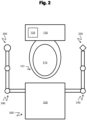
- Two robotic arms 130 and 140 preferably attached at their respective proximal ends to cabinet 120, each carry at its distal end an operative unit.
- the operative unit 150 on the robotic first arm 130 comprises a powder dispensing system for dispensing the cleaning composition in powder form according to the present invention as well as an optic sensor.
- a cleaning powder reservoir may be disposed either on the robotic arm for refilling the powder dispenser or adjacent to cabinet 120 such that the robotic arm can move the dispenser to the reservoir for refilling.
- the second robotic arm 140 carries operative unit 160 which comprises a mechanical cleaning implement such as rotary or oscillating soft brushes.
Landscapes
- Chemical & Material Sciences (AREA)
- Life Sciences & Earth Sciences (AREA)
- Engineering & Computer Science (AREA)
- Oil, Petroleum & Natural Gas (AREA)
- Chemical Kinetics & Catalysis (AREA)
- Wood Science & Technology (AREA)
- Organic Chemistry (AREA)
- Health & Medical Sciences (AREA)
- Public Health (AREA)
- Hydrology & Water Resources (AREA)
- Water Supply & Treatment (AREA)
- Epidemiology (AREA)
- Inorganic Chemistry (AREA)
- Emergency Medicine (AREA)
- Detergent Compositions (AREA)
Abstract
The present invention provides a surface cleaning composition in powder form. The surface cleaning composition comprises a surfactant. The surface cleaning composition further comprises colouring agent. The colouring agent shows a first colour upon contact with an aqueous environment having a pH above 8 and a second colour upon contact with an aqueous environment having a pH below 6. The first colour and the second colour are visibly different from the colour of cleaning composition in powder form prior to coming into contact with the aqueous environment. The first the second colour is visibly different from the first colour. In another aspect, the present invention provides a method for cleaning a first surface, in particular a bathroom surface such as a toilet bowl surface, with a surface cleaning composition in powder form according to the present invention. In another aspect, the present invention provides a method for cleaning a first and a second surface, in particular a bathroom surface such as a toilet bowl surface, with a surface cleaning composition in powder form according to the present invention. In another aspect, the present invention provides a self-cleaning wet room appliance, preferably a self-cleaning toilet, configured to self-clean with the surface cleaning composition according to the present invention.
Description
- The present invention relates to a surface cleaning composition in powder form, more specifically to a surface cleaning composition in powder form for cleaning surfaces in a wet room or on a wet room appliance. In further aspects, the present invention relates to a method for cleaning a first and a second surface, in particular a bathroom surface such as a toilet bowl surface, to a self-cleaning wet room appliance, more specifically a self-cleaning toilet, and to a device for cleaning a wet room appliance, more specifically a toilet.
- The United Nations currently estimate, in connection with the Sustainable Development Goal 6 "Clean Water and Sanitation", that at current rates 2.8 billion people will lack safely managed sanitation in 2030. Considering that the Earth's population is projected to be around 8.5 billion people the same year, it follows that adequate sanitation and hygiene systems for at least 6 billion people must be maintained - assuming the desirable achievement of the UN SDG 6 even for 8.5 billion. This maintenance includes the regular cleaning of these systems, often more than once per day, with water and specifically composed cleaning compositions to maintain hygienic conditions by avoiding the build-up of soil, pathogens, and malodour on the surfaces of the toilet receptacles. In the context of this necessary and perpetual maintenance activities, it is important to understand that underdosing the cleaning composition leads to suboptimal cleaning results and hygiene. Overdosing results in waste of cleaning composition as well as in increased efforts to remove the unused composition from the wastewater in treatment plants.
- Typical toilet cleaning compositions which enjoy widespread use around the globe, often comprise a surfactant system and a complexing agent. Surfactants are surface-active agents that help to reduce the surface tension of water and allow it to spread more easily over the surfaces of the toilet bowl. They can also help to emulsify and suspend dirt and other debris, making it easier to remove. In a toilet bowl cleaner, surfactants are typically combined with other cleaning agents and a complexing agent, which helps to remove mineral deposits and other tough stains. The complexing agent works by chemically binding to the mineral ions in hard water and preventing them from reacting with other chemicals in the cleaner. When the cleaner is applied to the surface of the toilet bowl, the surfactants help to spread it evenly over the surface, while the complexing agent works to break down mineral deposits and other stains. The combination of surfactants and complexing agents allows the cleaner to effectively remove stubborn stains and leave the toilet bowl clean and shiny. In addition to the surfactant system and complexing agent, toilet bowl cleaners may also contain other ingredients such as acids, abrasives, and disinfectants, depending on the specific formulation and intended use.
- Many toilet cleaning compositions are provided in liquid or gel form. A toilet cleaner in gel form is typically packaged in a squeeze bottle or a tub and is applied directly to the surfaces of the toilet bowl, including the rim, the inside of the bowl, and the underside of the rim. Toilet cleaners in gel form are generally easier to apply and more accurate than liquid cleaners, as they tend to stay in place and are less likely to drip or run off of the surfaces they are applied to. This can make them especially useful for targeting specific areas of the toilet bowl, such as hard-to-reach crevices or areas that are prone to accumulating dirt and grime. To use a toilet cleaner in gel form, the user typically applies some amount of the product to the surfaces of the toilet bowl, often randomly dosed due to the lack of better knowledge. The cleaning composition is then allowed to remain on the surface for a few minutes to allow the chemicals to work. Then, the user will typically employ a toilet brush or a scrubber to scrub the surfaces of the bowl, paying particular attention to any areas that are heavily soiled or stained. Once the surfaces have been thoroughly cleaned, the toilet can be flushed to rinse away the cleaner and any remaining dirt and grime.
- Other toilet cleaning compositions are provided in powder or granular from. Such toilet cleaners may not spread evenly or adhere well to the surfaces of the toilet bowl. As a result, they may not effectively clean hard-to-reach areas or provide consistent coverage throughout the bowl. In most cases, the powder is more or less colourless and therefor hard to see on the surfaces which are in most cases coloured white to support an impression of cleanliness and hygiene. Another common disadvantage is that it can be challenging to measure the appropriate amount of granular composition for effective cleaning. Pouring too much or too little may lead to inefficient cleaning results or wastage of the product.
- Some toilet cleaning compositions further comprise microorganisms. A probiotic cleaner is a cleaning product that contains live cultures of beneficial microorganisms. These microorganisms are similar to the beneficial bacteria that are found in the human gut and are believed to have a variety of health benefits. Probiotic cleaners are often made with natural ingredients, such as plant extracts and essential oils, and are designed to be safe and gentle on surfaces. They are typically used to clean a wide variety of surfaces, including counters, floors, and bathroom fixtures, and are generally considered to be environmentally friendly and biodegradable. Overall, probiotic cleaners are a type of cleaning product that is designed to help maintain a healthy and balanced environment by removing contaminants and promoting the growth of beneficial microorganisms.
- It is the principal objective of the cleaning composition of the present invention to overcome, at least partially, the disadvantages and shortcomings of the prior art cleaning compositions.
- One specific advantage of the cleaning composition of the present invention that the cleaning composition is less prone to being overdosed by the user and consequently that the loading of the wastewater with unused cleaning composition is reduced.
- One specific advantage of the cleaning composition of the present invention that the cleaning composition is less prone to being underdosed by the user and consequently that efficient cleaning and effective hygiene of the toilet are safeguarded.
- One specific advantage of the cleaning composition of the present invention that the cleaning composition is both less prone to being overdosed and less prone to being underdosed by the user.
- One specific advantage of the cleaning composition of the present invention that the cleaning composition has reduced weight and therefore is more sustainable to store, transport, and apply.
- The surface cleaning composition of the present invention is configured to indicate to the user whether the composition was not overdosed or not underdosed, preferably properly dosed for the desired cleaning step. The indication may be achieved by showing a first colour when the surface cleaning composition us underdosed and a second colour when the surface cleaning composition is overdosed.
- In one aspect, the present invention provides a surface cleaning composition in powder form. The surface cleaning composition comprises a surfactant. The surface cleaning composition further comprises colouring agent. The colouring agent shows a first colour upon contact with an aqueous environment having a pH above 8 and a second colour upon contact with an aqueous environment having a pH below 6. The first colour and the second colour are visibly different from the colour of cleaning composition in powder form prior to coming into contact with the aqueous environment. The first the second colour is visibly different from the first colour.
- In another aspect, the present invention provides a method for cleaning a first surface, in particular a bathroom surface such as a toilet bowl surface, with a surface cleaning composition in powder form according to the present invention. The method comprises the following steps: wetting the first surface, distributing a first dose of the cleaning composition across the first surface, the colour of the cleaning composition on the first surface a pre-determined time interval after the distribution of the cleaning composition across the first surface proving an observable visual clue whether the first does was adequately dosed, overdose, or underdosed, and optionally mechanically cleaning the first surface.
- In another aspect, the present invention provides a method for cleaning a first and a second surface, in particular a bathroom surface such as a toilet bowl surface, with a surface cleaning composition in powder form according to the present invention. The method comprises the following steps: wetting the first surface, distributing a first dose of the cleaning composition across the first surface, observing the colour of the cleaning composition on the first surface a pre-determined time interval after the distribution of the cleaning composition across the first surface, optionally mechanically cleaning the first surface, determining a second dose of the cleaning composition in response to the observed colour of the cleaning composition on the first surface, distributing the second dose of the cleaning composition across the second surface, and optionally mechanically cleaning the second surface.
- In another aspect, the present invention provides a self-cleaning wet room appliance, preferably a self-cleaning toilet, configured to self-clean with the surface cleaning composition according to the present invention. The self-cleaning wet room appliance comprises a receptacle for bodily waste or wastewater, the receptable having at least one internal surface which is exposed to bodily waste or wastewater, a fluid reservoir for holding a flushing fluid and a nozzle, the nozzle being in fluid communication with the fluid reservoir, the nozzle being configured for discharging flushing fluid onto at least a portion of the internal surface of the receptacle, a cleaning composition reservoir for holding the surface cleaning composition, and a dispenser for dispensing a pre-defined dose of the surface cleaning composition into the flushing fluid or onto the internal surface of the receptacle. The dispenser comprises a controllable dosing unit, which is configured to adjust the pre-defined dose. The wet room appliance further comprises a control unit operatively connected to the dosing unit, an optical sensor unit configured to sense an optical signal from at least a portion of the internal surface of the receptacle, the optical signal being at least partially representative of the colour spectrum prevalent in the optical signal, and the optical sensor being operatively connected to the control unit. The control unit is configured to receive a sensor signal from the sensor unit, the signal being at least partially representative of the optical signal, and to send a control signal to the controllable dosing unit for adjusting the pre-defined dose in response to the sensor signal.
- In another aspect, the present invention provides a device for cleaning a wet room appliance, preferably a toilet, configured to clean the wet room appliance with the surface cleaning composition according to the present invention. The wet room appliance comprises a receptacle for bodily waste or wastewater, the receptable having at least internal surface which is exposed to bodily waste or wastewater. The device for cleaning a wet room comprises a fluid reservoir for holding a flushing fluid and a nozzle, the nozzle being in fluid communication with the fluid reservoir and the nozzle being configured for discharging flushing fluid onto at least a portion of the internal surface of the receptacle. The device for cleaning a wet room further comprises a cleaning composition reservoir for holding a cleaning composition and a dispenser for dispensing a pre-defined dose of cleaning composition into the flushing fluid or onto the internal surface of the receptacle. The device for cleaning a wet room further comprises a control unit operatively connected to the dosing unit and an optical sensor unit configured to sense an optical signal from at least a portion of the internal surface of the receptacle, the optical signal being at least partially representative of the colour spectrum prevalent in the optical signal and the optical sensor being operatively connected to the control unit. The control unit is configured to receive a sensor signal from the sensor unit, the signal being at least partially representative of the optical signal, and to send a control signal to the controllable dosing unit for adjusting the pre-defined dose in response to the sensor signal.
- The present invention provides a surface cleaning composition.
- As used herein, the term "surface cleaning composition" is a subset of professional and consumer products that includes facility, object, and home care products. Such products include, but are not limited to, products for treating hard surfaces and any other surfaces in the area of facility, object, and home care, including car care, hard surface cleaning and/or treatment including floor and toilet bowl cleaners, kitchen cleaners, bathroom cleaners, granular or powder-form all-purpose or "heavy-duty" cleaning agents, especially cleaning detergents.
- The surface cleaning composition is preferably suitable for cleaning hard surfaces, more preferably hard surfaces in environments where elevated levels of hygiene are desired, such as kitchen, toilets, bathrooms, hospitals, laboratories, shopping areas, public access areas, zoos, and other surfaces that are likely to be touched regularly by persons or animals.
- In the context of restroom cleaning in a commercial context, specifically toilet bowl cleaning, two main factors are critical for achieving optimum performance of the surface cleaning composition. First, at least an adequate amount of cleaning composition needs to be applied to and distributed over the surface to be cleaned. The amount must be adequate so that the after the cleaning process, the surface is as clean as desired. Specifically, the stains, scale, and other types of dirt and grime from surfaces shall be removed from the surface to the desired or a generally desirable extent. The surface shall not longer emit undesirable levels of malodour. The build-up of new malodour shall be reduced or delayed. The surface shall appear visibly clean for the next user. Second, it is further important not to overdose the cleaning composition for several reasons. Unused cleaning composition needs to be removed from the wastewater in a treatment plant before the cleaned wastewater can be released into the environment. Minimizing the unused amount of cleaning composition thus reduces the cleaning efforts required at the wastewater treatment plant and in turn has a positive effect on the environment. Avoiding wasteful overdosing of cleaning composition also reduces the cost of raw materials used in the cleaning process as well as the transport cost since only the required amount must be transported from the manufacturing plant to the point of use as well as inside the facility between different points of use such as a sequence of toilet cabins within the same restroom.
- The present invention provides a surface cleaning composition in powder form. It may have the form of a dry, bulk solid comprising of a plurality of fine particles. The cleaning composition in powder form may flow freely under gravity forces. The forces between the individual particle may be low in order not to disturb the free flowability of the powder. The cleaning composition may be a powdered or granular cleaning composition. The particle size of the individual particle or granules, preferably their size distribution, is preferably chosen to avoid articles becoming airborne and carried for longer distances so that they can be inspirated by humans or animals.
- One advantageous aspect of a cleaning composition in powder or granular form is that the volume or the weight of the cleaning composition are reduced in comparison to cleaning compositions in liquid or gel form. The latter compositions comprise in addition to the active cleaning ingredients water or other liquid to maintain their liquid or gel form. In turn, the reduction in weight or volume of the cleaning composition in powder or granular form leads to less storage volume needed and to easier transportation from the production facility to the storage facility or the point of sale. It is also easier to transport from the storage facility to the point of use. The amount of cleaning composition is critical for efficient cleaning. The cleaning composition requires transportation to each individual surface to be cleaned. The amount of cleaning composition that can be transported by an individual or a device performing the cleaning is limited. The amount of cleaning composition that can be transported into the individual facilities such as restrooms or toilet stalls is also limited by the limited size of these facilities.
- The surface cleaning composition of the present invention comprises a surfactant. The surfactant molecule may comprise a hydrophilic portion. The surfactant molecule may comprise a lipophilic portion.
- The surfactant used in the surface cleaning composition of the present invention of the present invention may be an anionic surfactant. Anionic surfactants are generally known for their strong cleaning power. Many suitable anionic surfactants are known to the person skilled in the art. Suitable surfactants may be derived from fossil sources. Suitable anionic surfactants may be derived from non-fossil sources. Other suitable anionic surfactants derived from non-fossil sources include (i) sulfosuccinates derived from succinic acid, which can be produced from renewable resources such as corn, sugarcane, and wheat, (ii) sodium cocoyl isethionate (SCI which may be derived from renewable resources such as coconut oil, (iii) sodium lauryl sulfate (SLS) which may be derived from renewable resources such as coconut oil or palm kernel oil, and (iv) sodium lauryl sulfoacetate (SLSA)which may be derived from coconut oil and is considered to be a more environmentally considerate alternative to SLS.
- The surfactant used in the surface cleaning composition of the present invention of the present invention may be a non-ionic surfactant. Non-ionic surfactants are generally known for their mildness and ability to stabilize emulsions. Many suitable non-ionic surfactants are known to the person skilled in the art. Suitable non-ionic surfactants may be derived from fossil sources. Other suitable non-ionic surfactants derived from non-fossil sources include (i) alkyl polyglucosides (APG) which may be made from natural sugars and fatty alcohols derived from renewable resources such as corn, coconut, and palm kernel oil, (ii) polysorbates which may be derived from sorbitol, which can be produced from renewable resources such as corn, sugarcane, and wheat, (iii) fatty acid esters which may be derived from natural fats and oils such as palm kernel oil, sunflower oil, and soybean oil, (iv) glyceryl esters which may be derived from natural fats and oils such as coconut oil, palm kernel oil, and sunflower oil, and (v) ethoxylated fatty alcohols which maty be derived from natural fatty alcohols such as lauryl alcohol, cetyl alcohol, and stearyl alcohol, which can be derived from renewable resources.
- The surface composition further comprises colouring agent.
- As used herein, the term "colouring agent" means an agent that is dissolvable or suspensible in water and causes to the aqueous solution or suspension of the colouring agent to exhibit a colour that is visibly different from the generally colourless appearance of regular or distilled water. Preferably, the colouring agent comprised in the cleaning composition of the present invention is dissolvable in water. The colour change may be caused by the colouring agent absorbing at least frequency electromagnetic radiation in the visible spectrum so that ambient light shining through the aqueous solution or suspension is perceived as coloured by the human eye or a spectral sensitive light sensor.
- The colouring agent may be a pH sensitive colouring agent. The absorbed frequency and hence the perceived colouring of the aqueous solution or suspension may be dependent on the pH of the aqueous solution or suspension.
- The pH of an aqueous solution is a measure of its acidity or alkalinity. It is determined by the concentration of hydrogen ions (H+) in the solution. The pH scale ranges from 0 to 14, with 7 being neutral. Solutions with a pH less than 7 are considered acidic, indicating a higher concentration of hydrogen ions. Conversely, solutions with a pH greater than 7 are alkaline or basic, indicating a lower concentration of hydrogen ions and a higher concentration of hydroxide ions (OH-). The pH scale is logarithmic, meaning each unit change represents a tenfold difference in hydrogen ion concentration. The pH of an aqueous solution is typically measured using a pH meter or pH indicator strips. A pH meter consists of a special electrode that is sensitive to the concentration of hydrogen ions in the solution. The electrode is immersed in the solution, and it generates a voltage proportional to the pH, which is then displayed on the meter. pH indicator strips, on the other hand, are small pieces of paper or plastic infused with a pH-sensitive dye. When dipped into the solution, the colour of the strip changes based on the pH of the solution, allowing for an approximate pH reading to be determined by comparing the colour change to a provided colour chart. Both methods provide a quick and accurate way to ascertain the pH of an aqueous solution, enabling precise control and analysis in various scientific, industrial, and research applications.
- Preferably, the colouring agent shows a first colour upon contact with an aqueous environment having a pH above 8. As used herein, the terms "exhibit a colour" or "show a colour" in respect to a colouring agent having come into contact with an aqueous environment means that a human observer with regular eyesight (or a spectral sensitive light sensor operating in the visible part of the electromagnetic spectrum) is able to perceive a colour which is different from a colourless impression such as that from distilled water, and preferably also different from white or black. Preferably, the colouring agent shows a second colour upon contact with an aqueous environment having a pH below 6. Preferably, the second colour is visibly different from the first colour. As used herein, the term "visibly different" in relation to a first colour and second colour means that a human observer with regular eyesight is able to detect a difference between the first colour and the second colour. More preferably, the second colour is visibly different from the first colour in dark rooms. As used herein, the term "visibly different" in relation to a first colour and second colour means that a human observer with regular eyesight is able to detect a difference between the first colour and the second colour in a room having an illumination of 400 lux or less, preferably 300 lux or less, yet more preferably less than 200 lux. The first colour being visible different from the second colour allows the user to usefully apply and to properly dose the cleaning composition also in bathrooms and toilets which are not properly lighted. In particular when cleaning the inside of toilet bowl, the actual illumination of the surfaces to be cleaned is reduced in comparison to the regularly illuminated parts of the room, so that is beneficial to have a first colour that is visibly different from the second colour also in dark rooms.
- Preferably, the first colour and the second colour are visibly different from the colour of cleaning composition in powder form prior to coming into contact with the aqueous environment. Yet more preferably, the first colour and the second colour are visibly different from the colour of cleaning composition in powder form prior to coming into contact with the aqueous environment in dark rooms.
- The colouring agent is suitable for being comprised in a powder. The colouring agent is stable at normal ambient and storage temperatures for extended periods of time such as days, preferably weeks, more preferably months, or yet more preferably years. The colouring may be light stable so that its effectiveness is not unduly affected by exposition to electromagnetic radiation such as light, preferably prolonged exposition. The colouring agent is preferably not unduly sensitive to ambient humidity during storage, preferable during extended storage periods.
- The cleaning composition of the present invention has the advantage that the user or the device for cleaning can easily detect whether the cleaning composition was properly dosed, preferably not underdosed, and preferably not overdosed, yet more preferably neither underdosed nor overdosed.
- Underdosing the cleaning composition may lead to several undesirable effects. For example, the lime scale or urine scale that may be present on the surfaces to be cleaned may be incompletely removed. In turn, the incompletely removed lime scale may build up over time leading to visible stains of the surface or even of the drain of a sink or toilet. Underdosing may also lead to the buildup of malodour due to the incomplete removal of bacteria and other staining or fouling. Bacteria build-up is often quicker and more persistent when lime or urine scale are present.
- Overdosing on the other hand, while supporting proper removal of dirt and other contaminations, also has negative consequences. The unused amount of cleaning composition will end up in the wastewater or, even worse, in the environment. Unused cleaning compositions in the wastewater in turn require increased efforts in treating the wastewater before in can be leased again into surface waters. Unused amounts also lead to a higher consumption and thus to higher cost and effort for production and transportation.
- The surface cleaning composition of the present invention may be configured to indicate proper dosage in response to the conditions of the surface to be cleaned, such as amount and type of staining present, or to the conditions affecting the cleanability of the surface such as the hardness of the water to which the surface is frequently exposed. The inventors have found, however, that the proper dosage depends very much on the individual state of the surface to be cleaned. It has been observed that generally it is not possible to prescribe a single pre-defined proper dosage of a cleaning composition without first examining the state of the surface to be cleaned. It is generally necessary to then adjust the proper dosage from an initial estimate accordingly. Even for the same surface, the degree of staining may vary over time such as by being influenced through changes of cleaning frequency or the usage type, frequency, or intensity. In turn, even for the same surface, individual adjustment of the proper dosage is required for each cleaning iteration.
- One of the main undesired deposits on surface in bathrooms and toilets is lime scale or urine scale. While lime scale and urine scale generally have quite variable and complex chemistries which depends on many factors such as the type of hardness of the water used for flushing the surfaces as well as the physiology and diet of the person excreting the urine, it is generally observable that the pH of water present on the surface of the scale tends to be high (alkaline). It can be above 8, maybe above 10, or maybe even above 12, depending on the type and amount of deposit.
- The colouring agent of the present invention may cause the aqueous solution of the cleaning composition of the present invention to exhibit a first colour indicating the presence of lime scale or urine scale. Preferably, the intensity of the colour changes, preferably increases, with the amount of deposit present on the surface such as by changing with an increasing pH. For the user, the presence and location of scale thus becomes immediately visible. This allows the user to direct the focus of the mechanical aspect of the cleaning to the affected areas of the surface. The colour, or its fading intensity, will also indicate that lime scale and urine scale have been removed. The user is thus enables to immediately confirm that the cleaning composition has been sufficiently dosed to achieve the desired level of deposit removal. It is important to note that, while the described colour indications primarily depend on the presence of scale, other dirt is also removed when the scale deposits are removed.
- The presence or absence of scale deposited is generally seen as a reliable and convenient as well as representative indicator for the overall state of cleanliness of a surface. As a result of the colouring agent comprised in the cleaning composition of the present invention, the user may thus become enabled to visually detect underdosing of the cleaning composition as well as improperly cleaned portions of the surface in a convenient and time efficient manner.
- In some aspects, the colouring agent may further be useful in combination with the mechanical removal of soil on the surface to be cleaned. During the mechanical cleaning process, such as by using a brushing implement, can be distributed to further areas of the surface to be cleaned which have not been reached during the initial distribution of the cleaning composition such as by distributing it with a powder dispenser. As used herein, the term "brushing implement" means any tool which comprises with bristles, wire or other filaments, or any combination thereof. A brushing implement may generally consist of a handle or block to which filaments are affixed in either a parallel or perpendicular orientation, depending on the way the brushing implement is to be gripped during use. It is generally observable that, especially in toilet bowls, the degree of siling varies across the various parts of the surfaces to be cleaned. For example, some areas may exhibit more buildup of lime and urine scale whereas other areas are less affected. One possible reason is how the soiling fluids hit and the then run across the surfaces. Another reason may be how water runs across the surface during the cleaning process and how the surface dries after the cleaning.
- Preferably, the colouring agent is used as a micronized powder when preparing the cleaning composition of the present invention. Micronized powders allow for a homogeneous colour effect, with a high perceived colour appearance, and improve the mixing stability for cleaning compositions in powder form.
- Suitable colouring agents may be obtained coloured fruits, vegetables, and edible plants. These colouring agents may offer the additional advantage to have limited or even no environmental impact and being non-toxic for the user of the cleaning composition. A suitable class of colouring agents are anthocyanins which are water-soluble natural colorants found in fruits (grapes, raspberries), vegetables (cabbage), cereals (red and blue corn), and flowers (roses, tulips). Another class of suitable colouring agents are carotenoids. Carotenoids are a diverse group of naturally occurring organic pigments that provide vibrant colours ranging from red and orange to yellow in various plants, fruits, and vegetables. Beta-carotene for example presents a bright orange hue. Another significant carotenoid is lutein, prevalent in leafy greens like kale and spinach, contributing to a yellow colour. Lycopene, another carotenoid found in tomatoes and watermelon, gives a red colour. Zeaxanthin is often present in corn and saffron, imparting a yellow hue. Astaxanthin, a carotenoid found in salmon and shrimp, is known for its red colour. Other suitable colouring agents include natural dyes such as curcumin, alizarin, shikonin. Curcumin is a common yellow dye extracted from the roots of curcuma plants. Shikonin and alizarin are red dyes extracted from Boracaceae and Rubiaceae, respectively. Suitable colouring agents are for example commercially available from the members of the Natural Food Colours Association (natcol.org).
- In some aspects, the colouring agent may be approved for use as food colouring. Such approval will ascertain lack of environmental toxicity.
- In some aspects, in particular when using the cleaning composition of the present invention in automated cleaning systems such as robotic cleaning system (for example those available under the commercial designation "SOMATIC"), the colouring agent used in the cleaning composition of the present invention may be fluorescent. A fluorescent dye is easier to detect in automated sensors. A suitable range of pH sensitive fluorescent dyes is available from ThermoFisher under the designations "SNARF" indicators, "HPTS" (pyranine), "BCECF", "Fluoresceins" and "carboxyfluoresceins", "LysoSensor Green DND-189", "LysoSensor Yellow/Blue DND-160". Further suitable pH sensitive fluorescent dyes are described in the Molecular Probes Handbook, 11th edition published by ThermoFisher.
- In some embodiments, the cleaning compositions according to the present invention comprise at least one surfactant and/or a surfactant system wherein the surfactant is selected from non-ionic surfactants, anionic surfactants, cationic surfactants, ampholytic surfactants, zwitterionic surfactants, semi-polar non-ionic surfactants and mixtures thereof. In some low pH cleaning composition embodiments (e.g., compositions having a neat pH of from about 3 to about 5), the composition typically does not contain alkyl ethoxylated sulfate, as it is believed that such surfactant may be hydrolysed by such compositions the acidic contents. In some embodiments, the surfactant is present at a level of from about 0.1% to about 60%, while in alternative embodiments the level is from about 1% to about 50%, while in still further embodiments the level is from about 5% to about 40%, by weight of the cleaning composition. One suitable type of surfactant which may be used in the surface cleaning composition of the present invention is a blend of anionic and non-ionic surfactants. Anionic surfactants are typically derived from petroleum or other sources and are known for their ability to reduce surface tension and help remove dirt and grime from surfaces. Non-ionic surfactants are often made from vegetable oils or other natural sources and are known for their mildness and ability to stabilize emulsions.
- In addition to anionic and non-ionic surfactants, some toilet bowl cleaners may also contain cationic surfactants. These types of surfactants are positively charged and are often used for their disinfectant properties, as they can help to kill bacteria and other types of microorganisms.
- A suitable anionic surfactant for the present invention is a strong anionic surfactant such as sodium lauryl sulphate commercially available from Sirius International under the commercial designation "Britens SLS".
- A suitable non-ionic surfactant for the present invention is a mild non-ionic surfactant based on RSPO palm kernel oil such as ethoxylated fatty alcohols commercially available from Sirius International. A particularly suitable ethoxylated fatty alcohols has an even number of C atoms and is commercially available under the commercial designation "Ethoxybrite EFA C12C14.7EO".
- The surface cleaning composition of the present composition may comprise probiotic microorganisms. Suitable probiotic microorganism and their use in cleaning products is known. For instance,
WO 2016/170479 A1 relates to products for "cleaning, sanification and hygienization", comprising a base solution to which probiotic bacteria and bacteriophage elements are mixed; the probiotic bacteria being preferably of the Bacillus subtilis, Bacillus megaterium and Bacillus pumilus genera, while the bacteriophage elements comprise, as an alternative or in combination, bacteriophages of the Caudavirales, Microviridae, Leviviridae, inoviridae, Tactiviridae, Corticoviridae families.CN 103122327 B relates to a bacterial culture and compositions comprising them, and their use for washing clothes.US 7951767 B2 andUS 7795199 B2 relate to antimicrobial and cleaning compositions including an amine antimicrobial agent; a borate salt; and spores (bacterial or fungal), vegetative bacteria, fungi, or enzyme, and to methods of using the composition.EP 2873723 A1 relates to a composition for use as a cleaning agent, comprising an anolyte, and lactic acid bacteria belonging to the genus Lactobacillus, as well as a method for cleaning a surface and a method for delaying regrowth of microbes, and a method for reducing the number of resistant microbes on a surface.WO 2015/000812 A1 relates to a process for cleaning a surface wherein said surface is treated with at least one culture of at least one organism or a formulation comprising the culture.EP 2759590 A1 relates to compositions for deodorizing and cleaning, the compositions comprising one or more Bacillus subtilis strain(s) and/or extract(s) thereof, one or more surfactant(s), one or more fragrance(s), one or more descaling agent(s), and one or more effervescent agent(s).EP2705140 A1 relates to a microorganism, of the order of lactic acid bacteria or analogue, fragment, derivative, mutant or combination thereof, which can be co-aggregated with at least Staphylococcus aureus or Pseudomonas aeruginosa.WO 201 0/130541 A1 relates to a cleaner for hard surfaces, especially a sanitary cleaner which contains microorganisms for the decomposition and/or removal of inorganic stains and/or residues and to the use thereof for cleaning and/or finishing hard surfaces, especially for cleaning and/or finishing ceramic surfaces in and around toilets and urinals.WO 2008021761 A2 relates to bacteria cultures and composition comprising one or more cultures, in addition to methods of washing or cleaning laundry or fabrics and surfaces.WO 2002/033035 A1 relates to an aqueous hard surface cleaning composition containing anionic and non-ionic surfactants, an enzyme mixture such as lipase/alpha-amylase for breaking down organic compounds; an activator for rendering the enzyme more active; water; and a culture of Bacillus subtilis and Bacillus amyloliquefaciens for degrading and assimilating organic compounds.US 6387874 B1 relates to an aqueous cleaning composition comprising: an organic acid of at least 5% by weight of the cleaning compositions; a spore forming microbial composition; a blend of wetting agents; a thickening agent and water.WO 2000/063338 A1 relates to an aqueous disinfectant and hard surface cleaning composition comprising: a quaternary ammonium compound; a spore forming microbial composition; and a surfactant, the composition being used to clean a hard surface containing a diverse microbial flora, cleaning and disinfecting by killing off undesirable microorganisms and leaving behind Bacillus spores which then germinate and degrade any remaining ongoing residues.US 20130184196 A1 relates to aqueous compositions comprising at least one strain of Class 1 Bacillus bacterial spores, selected from Bacillus Cirulans, Bacillus Megaterium, Bacillus Lichenforms, Bacillus Pumilus, Bacillus Sphaericus, Bacillus Subtilis sub species 10144 and Bacillus Subtilis sub species 8646, a terpene and one or more surfactants.WO 2018/232087 A1 describes a composition comprising a microbial consortium comprising one or more ammonium-oxidizing strains which are generally recognized as safe (GRAS) and which are selected from the group of Nitrosomonas, Nitrosospira, Nitrosopumilus, Cenarchaeum, Nitrosoarchaeum, Nitrosocaldus, Caldiarchaeum; and one or more GRAS strains which are commensal to the one or more ammonium-oxidizing strains, and which are selected from the group of Acinetobacter, Alcaligenes, Arthrobacter, Azospirillum, Azotobacter, Bacillus, Beijerinckia, Enterobacter, Erwinia, Flavobacterium, Rhizobium, Serratia and Deinococcus, especially for treating hard surfaces and treating textiles. - Suitable bacterial compositions for use in cleaning powders are commercially available from BBA Ecotech. The bacterial compositions are available in the form of a powdered blend of microorganisms, preferably concentrated or super concentrated. The powder is ready to formulate in solid products such as powders for the treatment of drains, grease traps, septic tanks, and various cleaning applications. The bacteria produce enzymes when in contact with soiling to clean the surface and reduce malodour. Preferably, the bacterial composition comprises at least 5*10^9 colony forming units (cfu) per gram of composition, more preferably 10*10^9 colony forming units (cfu), yet more preferably 25*10^9 colony forming units (cfu), yet more preferably 50*10^9 colony forming units (cfu). Preferably, the bacterial composition comprises at least 3 different microbial strains, more preferably at least 5 different bacterial strains, yet more preferably 10 different bacterial strains. Preferably, the bacterial strains are not gene modified. Preferably, the bacterial strains are not mutagenic. Preferably, the bacterial strains are taken from different international collections.
- The probiotic microorganisms may be present in any effective amount. The effective amount may be selected based on the type and/or concentration of bacterial strains in the bacterial composition.
- For the cleaning composition of the present invention comprising probiotic microorganisms, it has been observed that the new build-up of soil, pathogens, or malodours on the cleaned surfaces after a successful cleaning is delayed or reduced. As a result, the dosage for the cleaning composition of the present invention can be further reduced and such lower dosage will be indicated to the user through the colour change of the colouring agent.
- The cleaning composition preferably comprises a weak acid in its anhydrous form. More preferably, thew weak acid is an organic weak acid. The cleaning composition comprising such a weak acid have been observed to be effective to remove urine scale, limes scale as well as salts and stains caused by continuous and/or repeated exposure to water, for example iron salts such as rust and the like.
- Suitable organic weak acids are water soluble and comprises at least one carboxyl group (-COOH) in its structure, preferably at least two carboxyl groups, more preferably at least three carboxyl groups. Suitable weak organic acids include citric acid, sorbic acid, acetic acid, boric acid, formic acid, maleic acid, adipic acid, lactic acid, malic acid, malonic acid, glycolic acid, tartaric acid, ascorbic acid, fumaric acid, succinic acid, and mixtures thereof. Most preferably for its availability and degradability, the cleaning composition of the present invention comprises citric acid in its anhydrous for as weak organic acid.
- The weak acid may be present in an effective amount. The effective amount may depend on the other components of the cleaning composition. The effective amount may depend on the expected level of soiling of the surfaces to be cleaned, more soiling such as urine scale and lime scale would generally require a higher amount of weak acid to achieve the desired level of cleaning and hygiene. It may be desirable to have a slightly acidic environment in the surface to be cleaned after the cleaning composition in powder has been applied to the wetted surface.
- In one aspect, the cleaning composition is acidic. Preferably, a 1 %-solution of the cleaning composition in powder form of the present invention in water (1g of cleaning composition in 100g of water) shows a pH of 6.5 or less, more preferably a pH of 6 or less. Preferably, a 1 %-solution of the cleaning composition in powder form of the present invention in water (1g of cleaning composition in 100g of water) shows a pH of at least 4, more preferably a pH of at least 5, yet more preferably of at least 5.5. The pH is measured after the cleaning composition is completely dissolved or suspended and the effervescent effect, if any, is no longer observable for at least 10min. This slightly acidic behaviour in aqueous solution ensures a proper amount of the weak. A very low pH would indicate overdosing of the weak acid. A high pH would indicate underdosage leading to decreased cleaning effectiveness.
- A weak acid suitable for the cleaning composition of the present invention for commercially available from Jungbunzlauer under the commercial designation "Citric Acid Anhydrous".
- The term "effervescent powder" as used herein refers to the effervescence that occurs when the effervescent powder comes into contact with water. Effervescence is the escape of gas from an aqueous solution together with the foaming or fizzing which results from that release. The cleaning composition of the present invention may comprise an effervescent component, preferably an effervescent component that produces the effervescence in conjunction with the weak acid. Suitable effervescent components include without limitation sodium carbonate (Na2CO3), sodium bicarbonate (sodium hydrogen carbonate, NaHCOS), or a combination thereof. Together with the weak acid, the effervescent component may release a gas such as carbon dioxide which in turn is believed to improve the cleaning effect of the cleaning composition with regard to urine and lime scale. The released CO2 is further believed to facilitate the breakdown of the granules of the cleaning composition which turn leads to faster dissolution and thus efficacy.
- In some aspects, the cleaning compositions of the present invention comprise one or more detergent builders or builder systems. In some embodiments incorporating at least one builder, the cleaning compositions comprise at least about 1%, from about 3% to about 60% or even from about 5% to about 40% builder by weight of the cleaning composition. Builders include, but are not limited to, the alkali metal, ammonium and alkanolammonium salts of polyphosphates, alkali metal silicates, alkaline earth and alkali metal carbonates, aluminosilicates, polycarboxylate compounds, ether hydroxypolycarboxylates, copolymers of maleic anhydride with ethylene or vinyl methyl ether, 1, 3, 5-trihydroxy benzene-2, 4, 6-trisulphonic acid, and carboxymethyloxysuccinic acid, the various alkali metal, ammonium and substituted ammonium salts of polyacetic acids such as ethylenediamine tetraacetic acid and nitrilotriacetic acid, as well as polycarboxylates such as mellitic acid, succinic acid, citric acid, oxydisuccinic acid, polymaleic acid, benzene 1,3,5-tricarboxylic acid, carboxymethyloxysuccinic acid, and soluble salts thereof. Indeed, it is contemplated that any suitable builder will find use in various embodiments of the present invention.
- In some embodiments, the cleaning compositions of the present invention contain at least one chelating agent. Suitable chelating agents include, but are not limited to copper, iron and/or manganese chelating agents and mixtures thereof. In embodiments in which at least one chelating agent is used, the cleaning compositions of the present invention comprise from about 0.1% to about 15% or even from about 3.0% to about 10% chelating agent by weight of the subject cleaning composition.
- A suitable chelating agent for the present invention is the Trisodium salt of methylglycinediacetic acid commercially available from BASF under the commercial designation "Trilon® M Max Gran" or "Trilon® M Max EcoBalanced Gran".
- The cleaning composition may further comprise a silica such as a carrier silica for improving the powder attributes such as flowability and dryness. A suitable carrier silica is commercially available from Evonik under the commercial designation "SIPERNAT® 50".
- In another aspect, the present invention encompasses a method for effectively cleaning a first surface, specifically configured for bathroom surfaces such as a toilet bowl surface, utilizing a cleaning composition in powder form according to the present invention. The method employs a systematic approach to ensure efficient and visually guided cleaning, enhancing overall cleanliness and hygiene.
- The key steps involved in this cleaning method may include the following steps:
Wetting the First Surface: To initiate the cleaning process, the first surface (e.g., a portion of the internal toilet bowl surface) is dampened or wetted using water or a suitable wetting agent. This ensures that the surface is moist and ready to receive the surface cleaning composition in powder form. - Distributing a First Dose of Cleaning Composition: A measured quantity of the cleaning composition in powder form according to the present invention is applied or otherwise distributed across the wetted first surface. The distribution of the cleaning composition may be even. Alternatively, the distribution may be deliberately uneven to address the varying level of lime or staining on various parts of the first surface. The powder may advantageously adhere to the wet first surface, allowing the cleaning agents within the surface cleaning composition to start breaking down and loosening scale, dirt, stains, or residues. The first dose of the surface cleaning powder may be dispensed manually from container or may be dispensed from a powder dispenser.
- The Colour of the Cleaning Composition Providing an Observable Visual Clue Whether the First Does Was Adequately Dosed, Overdose, Or Underdosed: After a predetermined time interval, typically specified based on the type of colouring agent used, the colour of the cleaning composition on the first surface is observed and provides a visual clue, observable by the human eye or an optic sensor, whether first dose was chosen adequately. The change in colour may advantageously indicate the extent to which the surface cleaning composition has interacted with and prepared the scale and other staining for removal from the surface or may indicate the amount of remaining scale or other staining which stills requires removal. The observed colour may indicate the efficacy of the initial dose and provide guidance whether a stronger, weaker, or similar dose is needed for subsequent cleaning steps. The observed colour is indicative of the pH of the wet surface. In turn, an alkaline pH may be indicative of a high level of remaining scale or other staining on the surface and provide guidance that a higher dose of surface cleaning composition is necessary for better scale and other deposits. Alternatively, an acid pH may be indicative of the low level of remaining scale or other staining on the surface and provide guidance that a lower dose of surface cleaning composition is sufficient for effective scale and other deposits and that overdosing should be avoided. In case of a human operator, the visual guide indicating how to adjust the dosing in response to the observed colour of the surface cleaning composition may be provided.
- In another aspect, the present invention encompasses a method for effectively cleaning a first and a second surface, specifically configured for bathroom surfaces such as a toilet bowl surface, utilizing a cleaning composition in powder form according to the present invention. The method employs a systematic approach to ensure efficient and visually guided cleaning, enhancing overall cleanliness and hygiene.
- The first and second surface may refer to the same surface portion in the same wet room appliance being cleaned a first and a subsequent second time. Alternatively, the first and second surfaces may refer to different portions of the internal surface of the same wet room appliance in which case the dosing of the surface cleaning composition is adjusted while the internal surface of the wet room appliance is cleaned in two or more subsequent steps. Yet alternatively, the first and second surfaces may refer to a first surface in a first wet room appliance and to a second surface in a second wet room appliance, such first and second wet room appliances being cleaned sequentially.
- The key steps involved in this cleaning method may include the following steps:
Wetting the First Surface: To initiate the cleaning process, the first surface (e.g., a portion of the internal toilet bowl surface) is dampened or wetted using water or a suitable wetting agent. This ensures that the surface is moist and ready to receive the surface cleaning composition in powder form. - Distributing a First Dose of Cleaning Composition: A measured quantity of the cleaning composition in powder form according to the present invention is applied or otherwise distributed across the wetted first surface. The distribution of the cleaning composition may be even. Alternatively, the distribution may be deliberately uneven to address the varying level of lime or staining on various parts of the first surface. The powder may advantageously adhere to the wet first surface, allowing the cleaning agents within the surface cleaning composition to start breaking down and loosening scale, dirt, stains, or residues. The first dose of the surface cleaning powder may be dispensed manually from container or may be dispensed from a powder dispenser.
- Observing the Colour of the Cleaning Composition: After a predetermined time interval, typically specified based on the type of colouring agent used, the colour of the cleaning composition on the first surface is observed. The change in colour may advantageously indicate the extent to which the surface cleaning composition has interacted with and prepared the scale and other staining for removal from the surface or may indicate the amount of remaining scale or other staining which stills requires removal.
- Optional Mechanical Cleaning of the First Surface: Mechanically cleaning the first surface may involve using brushes, scrubbers, or similar cleaning tools to assist in the surface cleaning process. The mechanical action aids in dislodging and removing stubborn scale and other deposits from the surface, working in conjunction with the cleaning agents present in the composition.
- Determining a Second Dose of Cleaning Composition: Based on the observed colour of the cleaning composition on the first surface, a second dose of the cleaning composition is determined for cleaning the second surface. The observed colour may indicate the efficacy of the initial dose and provide guidance whether a stronger, weaker, or similar dose is needed for subsequent cleaning steps. The observed colour is indicative of the pH of the wet surface. In turn, an alkaline pH may be indicative of a high level of remaining scale or other staining on the surface and provide guidance that a higher dose of surface cleaning composition is necessary for better scale and other deposits. Alternatively, an acid pH may be indicative of the low level of remaining scale or other staining on the surface and provide guidance that a lower dose of surface cleaning composition is sufficient for effective scale and other deposits and that overdosing should be avoided.
- Distributing the Second Dose of Cleaning Composition on the Second Surface: The determined second dose of the cleaning composition in powder form is evenly distributed across the second surface (e.g., another section of the toilet bowl). The application is systematic to ensure comprehensive coverage, allowing the cleaning agents to effectively target and clean this section. The second dose of the surface cleaning powder may be dispensed manually from container or may be dispensed from a powder dispenser.
- Optional Mechanical Cleaning of the Second Surface: Similar to the cleaning of the first surface, mechanical cleaning can be optionally performed on the second surface to enhance the cleaning process. The chosen cleaning tools assist in thoroughly cleaning the surface and complement the action of the cleaning composition. A second set of rotating brushes or scrubbers can be employed to enhance the cleaning process on the second surface.
- As used herein, the term "powder dispenser" means a powder dispensing device designed to accurately and evenly distribute a cleaning composition in powder form across surfaces, such as a wet room appliance or toilet bowl. This device enhances the cleaning process by ensuring precise application and coverage of the cleaning composition, promoting optimal cleanliness and hygiene. The powder dispenser may feature a hopper where the cleaning composition in powder form is stored. The hopper is designed to securely contain the cleaning powder and prevent contamination or moisture intrusion. The powder dispenser comprises a dispensing mechanism which is responsible for releasing a controlled quantity of the cleaning composition onto the target surface. This mechanism can be tailored to the specific requirements of the cleaning process. The dispensing mechanism may incorporate a rotary auger system, featuring a helical screw-like structure. This auger may be responsible for feeding and transporting the cleaning composition from the hopper to the dispensing point. Adjacent to the rotary auger, there may be a dosing chamber. The dosing chamber measures and holds the predetermined dose of the cleaning composition as it is transported by the auger. The dosing mechanism is adjustable, allowing for precise control over the amount of cleaning composition to be dispensed. This adjustment can be manual or automated, enabling customization of the cleaning process based on specific cleaning needs. The dosing mechanism may comprise a sealing mechanism ensures that the cleaning composition remains securely contained within the dosing chamber until the dispensing process is initiated. It prevents premature dispensing or spillage. At the end of the dosing chamber, there may be a precision release nozzle. The release nozzle may be responsible for directing and controlling the dispensing of the cleaning composition onto the target surface.
- The dispensing mechanism, with its rotary auger, dosing chamber, adjustable dosing mechanism, sealing mechanism, and release nozzle, guarantees a controlled and consistent dispensing of the cleaning composition. This precision contributes to the efficiency and effectiveness of the cleaning process, ensuring optimal results in maintaining cleanliness and hygiene.
- Dosage Control: The dispenser incorporates a dosage control system that enables adjustment of the amount of cleaning composition to be dispensed. This feature ensures flexibility in accommodating varying degrees of soiling or cleaning needs.
- The dispensing mechanism may include a precision nozzle or outlet that directs the cleaning composition to the desired location with precision. The nozzle's design prevents clogging and enables uniform distribution. The dispenser may be equipped with a motor or actuator responsible for activating the dispensing process. It ensures that the cleaning composition is released in a controlled and even manner, facilitating consistent coverage. Sensors, such as proximity sensors or optical sensors, can be integrated to monitor the proximity of the dispenser to the target surface. This feedback system helps the dispenser release the cleaning composition at the right time and in the right amount.
- The operation of the powder dispenser is straightforward. It may involve the following steps: The cleaning composition in powder form is loaded into the hopper. The user or an automated control system initiates the dispensing process. The motor or actuator activates, causing the dispensing mechanism to release the predetermined quantity of cleaning composition. The precision nozzle directs the powder evenly onto the target surface, ensuring uniform coverage. The dispenser can be configured for use in various cleaning processes, particularly in applications like toilet bowl cleaning. Its precision and flexibility make it a valuable addition to the overall cleaning system, enhancing the effectiveness of the method for cleaning surfaces using a cleaning composition in powder form.
- In another aspect, the invention provides a self-cleaning wet room appliance, preferably a self-cleaning toilet. As used herein, the term "wet room appliance" encompasses a comprehensive array of fixtures, devices, or equipment found in bathrooms, restrooms, or similar environments, wherein surfaces are regularly exposed to moisture, bodily waste, or cleaning requirements. Wet room appliances include but are not limited to toilets, bidets, sinks, showers, bathtubs, urinals, and any other installations or furnishings designed for personal hygiene, waste disposal, or related activities within a wet room setting. These appliances encompass various designs, configurations, and technological features, and are intended to facilitate cleanliness, sanitation, and maintenance within wet room environments. The term "wet room appliance" covers both conventional and technologically advanced variants, acknowledging the need for efficient cleaning and upkeep to ensure optimal hygiene and user satisfaction. As used herein, the term "toilet" encompasses a wide range of receptacles or fixtures used for human waste disposal and hygiene maintenance. It refers to any apparatus designed for the collection, containment, and management of bodily waste, including faeces and urine. The term includes traditional toilets, bidets, commodes, urinals, and any other sanitary fixtures or devices utilized for the purpose of human waste elimination and cleanliness within a wet room or bathroom setting. The toilet, as broadly defined herein, comprises both conventional and technologically advanced variations, accommodating diverse designs and functionalities aimed at promoting sanitation, water efficiency, and overall user comfort.
- The wet room appliance comprises a receptacle for bodily waste or wastewater. The receptable has at least one internal surface which is, at least sporadically, exposed to bodily waste or wastewater. The wet room appliance comprises a fluid reservoir for holding a flushing fluid and a nozzle. The wet room appliance comprises the nozzle being in fluid communication with the fluid reservoir. The wet room appliance comprises the nozzle being configured for discharging flushing fluid onto at least a portion of the internal surface of the receptacle. The wet room appliance comprises a cleaning composition reservoir for holding a cleaning composition. The wet room appliance comprises a dispenser for dispensing a pre-defined dose of cleaning composition into the flushing fluid or onto the internal surface of the receptacle. The dispenser comprises a controllable dosing unit and is configured to adjust the pre-defined dose.
- The wet room appliance further comprises a control unit operatively connected to the dosing unit. As used herein, the term "control unit" broadly refers to an electronic system or device equipped with computational capabilities for overseeing, managing, and coordinating the functionalities, operations, or features of the described invention. The digital control unit may encompass microcontrollers, microprocessors, digital signal processors, integrated circuits, computer chips, or any other programmable electronic components capable of executing pre-defined algorithms, commands, or instructions. It further includes associated software, firmware, or programming that enables control, regulation, or automation of the various aspects, components, or processes within the disclosed system. The digital control unit, in its broadest sense, embraces both standalone and integrated digital control systems, and may encompass wired or wireless communication capabilities for interconnectivity and data exchange with other components or external systems to optimize performance, efficiency, and user experience.
- The wet room appliance further comprises an optical sensor unit configured to sense an optical signal from at least a portion of the internal surface of the receptacle. As used herein, the term "optical sensor unit" refers to a versatile and adaptable device or component capable of detecting and discerning different colours within the visible spectrum of light. The optical sensor unit employs advanced optical technologies, including but not limited to photodiodes, phototransistors, image sensors, colour sensors, or any combination thereof, to capture and analyse light signals across various wavelengths corresponding to visible colours. This unit is designed to convert the optical information into electronic signals, allowing for precise colour detection and analysis. The optical sensor unit, in its broadest interpretation, encompasses sensors that can discern and differentiate colours, hues, or shades, facilitating applications such as colour recognition, colorimetry, and colour-based control mechanisms. The sensor may further include associated circuitry, firmware, or software that processes the collected data for accurate colour identification and integration into the overall functioning of the disclosed wet room appliance.
- The optical signal is at least partially representative of the colour spectrum prevalent in the optical signal. The optical sensor is operatively connected to the control unit and maybe configured to send optical sensing data to the control unit.
- The control unit is configured to receive a sensor signal from the sensor unit whereby the signal is at least partially representative of the optical signal. The control unit is further configured to send a control signal to the controllable dosing unit for adjusting the pre-defined dose in response to the sensor signal.
- The bathroom appliance may further comprise mechanical cleaning implement for cleaning the at least one internal surface of the wet room appliance. As used herein, the term "mechanical cleaning implement" refers to a versatile and adaptable system or mechanism designed for the purpose of cleaning the at least a portion of the at least one internal surface of the wet room appliance, particularly focusing on areas prone to scale, rust and debris accumulation, such as the water line and under-the-rim of the appliance. The mechanical cleaning means may encompass various components, configurations, and functionalities, aimed at providing efficient and thorough cleaning.
- At its core, the mechanical cleaning means may comprise an electrically powered motor that drives the cleaning means. The motor may power flexible yet rigid circular brushes, which may be suitably sized in length to the height of and/or geometrically configured to conform with the bowl in both vertical and horizontal directions. These brushes may be strategically positioned to clean not only around the bowl but also along the height of the bowl, ensuring a comprehensive cleaning process. Special attention is given to the critical areas of the bowl, namely the water line and under-the-rim, where rust and debris tend to accumulate. The brushes are designed to effectively address these areas, promoting a more sanitized and visually appealing wet room appliance. The mechanical cleaning means, as broadly defined herein, can accommodate various brush designs, rotational speeds, brush materials, and other parameters to tailor the cleaning process to the specific wet room appliance's requirements, ensuring optimal cleaning performance and user satisfaction.
- The self-cleaning wet room appliance may be configured to adjust the operation of the mechanical cleaning implement in dependence on the optical signal received from the optical sensor. In case the optical signal is indicative of an alkaline pH, the operation of the mechanical cleaning implement may be adjusted to a cleaning mode with higher intensity. In case the optical signal is indicative of an acid pH, the operation of the mechanical cleaning implement may be adjusted to a cleaning mode with lower intensity.
- In another aspect, the present invention relates to a device for cleaning a wet room appliance, with a particular focus on toilets. The cleaning device is adept at maintaining hygiene and sanitation within the wet room appliance, ensuring optimal user experience and improved cleanliness. The cleaning device is designed to be compatible with wet room appliances, such as toilets, which comprise a receptacle for collecting bodily waste or wastewater. The receptacle features at least one internal surface that is exposed to bodily waste or wastewater.
- The device includes a fluid reservoir intended for holding a flushing fluid and is equipped with a nozzle. The nozzle is arranged in fluid communication with the fluid reservoir. It is designed to discharge the flushing fluid effectively onto at least a portion of the internal surface of the receptacle. This functionality facilitates the removal of waste and helps maintain the cleanliness of the internal surfaces.
- Additionally, the cleaning device incorporates a cleaning composition reservoir, which securely holds a suitable cleaning composition according to the present invention. The cleaning composition is intended to aid in the cleaning process, promoting effective removal of scale, stains, odour, and other residues from the internal surfaces of the wet room appliance.
- A dispenser is integrated into the cleaning device to precisely dispense a predefined dose of the cleaning composition. The dispenser ensures the accurate and controlled release of the cleaning composition, either into the flushing fluid or directly onto the internal surface of the receptacle, facilitating thorough cleaning and sanitation.
- The device, as described herein, offers a comprehensive and automated cleaning solution for wet room appliances, particularly toilets. By combining the flushing fluid with the cleaning composition, the device ensures effective cleaning and maintenance, ultimately enhancing hygiene and user satisfaction.
- The device for cleaning a wet room further comprises a control unit operatively connected to the dosing unit. The device for cleaning a wet room further comprises an optical sensor unit configured to sense an optical signal from at least a portion of the internal surface of the receptacle. Whereby the optical signal is at least partially representative of the colour spectrum prevalent in the optical signal. The optical sensor is operatively connected to the control unit. The control unit is configured to receive a sensor signal from the sensor unit, the signal being at least partially representative of the optical signal. The control unit is further configured to send a control signal to the controllable dosing unit for adjusting the pre-defined dose in response to the sensor signal.
- As used herein, the term "device for cleaning a wet room appliance" encompasses automated cleaning device specifically designed for cleaning wet rooms and wet room appliances, including but not limited to toilets. The device is versatile, capable of semi-automatic, fully autonomous, and even robotic self-driving operations within wet room environments. It employs advanced orientation sensors and cleaning mechanisms to ensure efficient and effective cleaning, thus maintaining optimal cleanliness and hygiene.
- The device integrates sophisticated orientation sensors that enable precise mapping, navigation, and orientation within the wet room or specified area. These sensors include, but are not limited to, LiDAR, ultrasonic sensors, infrared sensors, and cameras. They provide real-time data, helping the device navigate, identify obstacles, and adapt its cleaning path for maximum efficiency. The cleaning device further incorporates diverse cleaning mechanisms, ranging from brushes, sprayers, scrubbers, to other cleaning tools, depending on the specific design. These mechanisms are strategically positioned and designed to effectively clean various surfaces, corners, and hard-to-reach areas within the wet room and wet room appliances. The cleaning device offers various automation modes, including semi-automatic, fully autonomous, and robotic self-driving capabilities. In the semi-automatic mode, the device can be operated with user guidance and control. In the fully autonomous mode, the device can independently plan and execute cleaning tasks based on pre-programmed instructions and environmental inputs. In the robotic self-driving mode, the device autonomously navigates within the wet room, utilizing orientation sensors for dynamic path planning and obstacle avoidance. The device may incorporate systems for dispensing cleaning solutions, detergents, or disinfectants as needed during the cleaning process. The integration of a cleaning solution enhances the cleaning efficiency and effectiveness, ensuring a thorough and sanitized wet room environment. This automated cleaning device revolutionizes the way wet rooms and wet room appliances are cleaned by offering an adaptable and efficient cleaning solution. Its ability to operate in different modes, ranging from user-guided to fully autonomous, allows for seamless integration into various environments, promoting superior cleanliness and hygiene.
- The device for cleaning a wet room appliance may further comprises a mechanical cleaning implement (as described above) configured to mechanically clean at least a portion of the internal surface of the receptacle. The device for cleaning a wet room appliance may be configured to adjust the operation of the mechanical cleaning implement in dependence on the optical signal received from the optical sensor. In case the optical signal is indicative of an alkaline pH, the operation of the mechanical cleaning implement may be adjusted to a cleaning mode with higher intensity. In case the optical signal is indicative of an acid pH, the operation of the mechanical cleaning implement may be adjusted to a cleaning mode with lower intensity.
- It should be noted that the embodiments described herein are presented as exemplary implementations of the invention and are not exhaustive of all possible embodiments or features. Various modifications, alterations, and adaptations can be made based on specific requirements or preferences. Furthermore, features from different embodiments may be combined to create new embodiments within the scope of the invention. The skilled person will appreciate that the disclosed embodiments are illustrative and not limiting, and the invention encompasses all variations and modifications within the scope of the appended claims.
-
Fig. 1 shows and exemplary embodiment of the self-cleaning wet room appliance of the present invention in the form of a self-cleaningtoilet 100. The appliance comprises a receptacle for bodily waste or wastewater in the form of atoilet bowl 110 which is generic in form and function. The present invention can be adapted to clean various different shapes and sizes of such receptacles including those generally commercially available. Arranged adjacent to thetoilet bowl 110 iscabinet 120. Thecabinet 120 may comprise a reservoir for flushingliquid 125. The reservoir for flushing liquid 125 may be in liquid communication with thetoilet bowl 110 which controlled by a flushing valve. The liquid communication is configured such that the flushing liquid can be released into thetoilet bowl 110 for flushing its soiled internal surfaced. The flushing valve can be actuated externally, for example mechanically or electronically. Tworobotic arms cabinet 120, each carry at its distal end an operative unit. Theoperative unit 150 on the roboticfirst arm 130 comprises a powder dispensing system for dispensing the cleaning composition in powder form according to the present invention as well as an optic sensor. A cleaning powder reservoir may be disposed either on the robotic arm for refilling the powder dispenser or adjacent tocabinet 120 such that the robotic arm can move the dispenser to the reservoir for refilling. The secondrobotic arm 140 carries operative unit 160 which comprises a mechanical cleaning implement such as rotary or oscillating soft brushes. Therobotic arms operative units 150 and 160 can reach surfaces inside thetoilet bowl 110 during the performance of the method for cleaning according to the present invention. Therobotic arms operative units 150 and 160 can be moved continuously in all three dimensions and can rotated around at least two perpendicular axes. -
Fig. 2 shows and exemplary embodiment of the device for cleaning awet room appliance 200. In this example, the appliance istoilet 101. The appliance comprises a receptacle for bodily waste or wastewater in the form of atoilet bowl 110 which is generic in form and function. The present invention can be adapted to clean various different shapes and sizes of such receptacles including those generally commercially available. Arranged adjacent to thetoilet bowl 110 iscabinet 120. Thecabinet 120 may comprise a reservoir for flushingliquid 125. The reservoir for flushing liquid 125 may be in liquid communication with thetoilet bowl 110 which controlled by a flushing valve. The liquid communication is configured such that the flushing liquid can be released into the toilet bowl 11 0 for flushing its soiled internal surfaced. The flushing valve can be actuated externally, for example mechanically or electronically. The device for cleaning awet room appliance 200 comprises a main housing. The main housing may be suspended on a plurality of rotatable wheels such that thedevice 200 is positionable in proximity to the wet room appliance and movable between wet room appliances. Thedevice 200 may equipped with motors such as electric motors so it can be actuated for movement or positioning. Alternatively, the device may be configured for being moved and positioned by an external operator. Thedevice 200 may be equipped with sensors for measuring the positioning of the device relative to the wet room appliance. Tworobotic arms main housing 220, each carry at its distal end an operative unit. Theoperative unit 250 on the roboticfirst arm 230 comprises a powder dispensing system for dispensing the cleaning composition in powder form according to the present invention as well as an optic sensor. A cleaning powder reservoir may be disposed either on the robotic arm for refilling the powder dispenser or adjacent tomain housing 200 such that the robotic arm can move the dispenser to the reservoir for refilling. The secondrobotic arm 240 carriesoperative unit 260 which comprises a mechanical cleaning implement such as rotary or oscillating soft brushes. Therobotic arms operative units toilet bowl 110 during the performance of the method for cleaning according to the present invention. Therobotic arms operative units 150 and 160 can be moved continuously in all three dimensions and can rotated around at least two perpendicular axes. - In conclusion, the present invention introduces a novel and versatile approach to surface cleaning compositions in powder form, automated cleaning methods and devices which take advantage of the inventive properties of the inventive surface cleaning compositions, particularly focusing on wet room appliances such as toilet systems. The disclosed embodiments and innovative features, including automated surface cleaning composition chemistry with pH-sensitive colouring agents, flushing, precise cleaning composition dispensing, mechanical cleaning means, and colour-guided cleaning, collectively contribute to enhanced hygiene, efficiency, and user convenience. The integration of digital control units and orientation sensors further elevates the automation and adaptability of the system. It is emphasized that the described embodiments are exemplary, and variations, combinations, and improvements can be made within the scope of the invention. The invention represents a significant advancement in the field of effective yet environment-friendly surface cleaning in wet room environments, automated cleaning technology, promising a cleaner, more efficient, more sustainable, and user-friendly experience within wet room environments.
Claims (15)
- Surface cleaning composition in powder form
characterized in that
the composition comprises• a colouring agent whereby∘ the colouring agent shows a first colour upon contact with an aqueous environment having a pH above 8,∘ the colouring agent shows a second colour upon contact with an aqueous environment having a pH below 6,▪ whereby the first colour and the second colour are visibly different from the colour of cleaning composition in powder form prior to coming into contact with the aqueous environment and▪ whereby the second colour is visibly different from the first colour - Surface cleaning composition in powder form according to any of the preceding claims wherein• the surfactant comprises a surfactant and• preferably a surfactant system,∘ the surfactant system comprising a blend of an anionic surfactant and a non-ionic surfactant.
- Surface cleaning composition in powder form according to any of the preceding claims wherein• the surface cleaning composition further comprises probiotic microorganisms, preferably probiotic bacteria.
- Surface cleaning composition in powder form according to any of the preceding claims wherein
the surface cleaning composition further comprises• an anhydrous form of a weak acid. - Surface cleaning composition in powder form according to any of the preceding claims wherein
the salt of a weak acid is a citrate. - Surface cleaning composition in powder form according to any of the preceding claims wherein
the cleaning composition further comprises• an effervescent component, preferably selected from the group of sodium carbonate, sodium bicarbonate, or a combination thereof. - Surface cleaning composition in powder form according to any of the preceding claims wherein
the cleaning composition further comprises• a builder. - Surface cleaning composition in powder form according to any of the preceding claims wherein
the cleaning composition further comprises• a chelating agent. - Method for cleaning a first surface, in particular a bathroom surface such as a toilet bowl surface, with a surface cleaning composition in powder form according to any of Claims 1 to 8,
characterized in that
the method comprises the following steps:• wetting the first surface,• distributing a first dose of the cleaning composition across the first surface,• the colour of the cleaning composition on the first surface a pre-determined time interval after the distribution of the cleaning composition across the first surface proving an observable visual clue whether the first does was adequately dosed, overdose, or underdosed, and• optionally mechanically cleaning the first surface. - Method for cleaning a first and a second surface, in particular a bathroom surface such as a toilet bowl surface, with a surface cleaning composition in powder form according to any of Claims 1 to 8,
characterized in that
the method comprises the following steps:• wetting the first surface,• distributing a first dose of the cleaning composition across the first surface,• observing the colour of the cleaning composition on the first surface a pre-determined time interval after the distribution of the cleaning composition across the first surface,• optionally mechanically cleaning the first surface,• determining a second dose of the cleaning composition in response to the observed colour of the cleaning composition on the first surface,• distributing the second dose of the cleaning composition across the second surface, and• optionally mechanically cleaning the second surface. - Method for cleaning a first and a second surface, in particular a bathroom surface according to Claim 10
whereby
in the step of determining the second dose,• the second dose is chosen to be lower than the first dose in case the observed colour indicates an acidic pH, or• the second dose is chosen to be higher than the first dose in case the observed colour indicates an alkaline pH. - A self-cleaning wet room appliance, preferably a self-cleaning toilet, configured to self-clean with the surface cleaning composition according to any of Claim 1 to 8,
comprising• a receptacle for bodily waste or wastewater,∘ the receptable having at least one internal surface which is exposed to bodily waste or wastewater,• a fluid reservoir for holding a flushing fluid and a nozzle,∘ the nozzle being in fluid communication with the fluid reservoir,∘ the nozzle being configured for discharging flushing fluid onto at least a portion of the internal surface of the receptacle,• a cleaning composition reservoir for holding the surface cleaning composition,• a dispenser for dispensing a pre-defined dose of the surface cleaning composition into the flushing fluid or onto the internal surface of the receptacle,characterized in that• the dispenser comprises a controllable dosing unit,and in that∘ which is configured to adjust the pre-defined dose
the wet room appliance further comprises• a control unit operatively connected to the dosing unit,• a optical sensor unit configured to sense an optical signal from at least a portion of the internal surface of the receptacle,∘ the optical signal being at least partially representative of the colour spectrum prevalent in the optical signal,∘ the optical sensor being operatively connected to the control unit,and in that
the control unit is configured to• receive a sensor signal from the sensor unit, the signal being at least partially representative of the optical signal,• to send a control signal to the controllable dosing unit for adjusting the pre-defined dose in response to the sensor signal. - A self-cleaning wet room appliance, preferably a self-cleaning toilet according to Claim 12 wherein
the wet room appliance• further comprises a mechanical cleaning implement configured to mechanically clean at least a portion of the internal surface of the receptacle, and• is configured to adjust operation of the mechanical cleaning implement in dependence on the optical signal received from the optical sensor. - A device for cleaning a wet room appliance, preferably a toilet, configured to clean the wet room appliance with the surface cleaning composition according to any of Claim 1 to 8, the wet room appliance• comprising a receptacle for bodily waste or wastewater,the device for cleaning a wet room comprising
∘ the receptable having at least internal surface which is exposed to bodily waste or wastewater,• a fluid reservoir for holding a flushing fluid and a nozzle,∘ the nozzle being in fluid communication with the fluid reservoir,∘ the nozzle being configured for discharging flushing fluid onto at least a portion of the internal surface of the receptacle,• a cleaning composition reservoir for holding a cleaning composition, and• a dispenser for dispensing a pre-defined dose of cleaning composition into the flushing fluid or onto the internal surface of the receptacleand in that
the device for cleaning a wet room further comprises• a control unit operatively connected to the dosing unit and• an optical sensor unit configured to sense an optical signal from at least a portion of the internal surface of the receptacle,and in that∘ the optical signal being at least partially representative of the colour spectrum prevalent in the optical signal and∘ the optical sensor being operatively connected to the control unit,
the control unit is configured• to receive a sensor signal from the sensor unit, the signal being at least partially representative of the optical signal, and• to send a control signal to the controllable dosing unit for adjusting the pre-defined dose in response to the sensor signal. - A device for cleaning a wet room appliance according to Claim 14,
whereby
the device for cleaning a wet room appliance• further comprises a mechanical cleaning implement configured to mechanically clean at least a portion of the internal surface of the receptacle, and• is configured to adjust the operation of the mechanical cleaning implement in dependence on the optical signal received from the optical sensor.
Priority Applications (1)
| Application Number | Priority Date | Filing Date | Title |
|---|---|---|---|
| EP23203679.8A EP4538357A1 (en) | 2023-10-15 | 2023-10-15 | Cleaning composition with dosing indication |
Applications Claiming Priority (1)
| Application Number | Priority Date | Filing Date | Title |
|---|---|---|---|
| EP23203679.8A EP4538357A1 (en) | 2023-10-15 | 2023-10-15 | Cleaning composition with dosing indication |
Publications (1)
| Publication Number | Publication Date |
|---|---|
| EP4538357A1 true EP4538357A1 (en) | 2025-04-16 |
Family
ID=88416984
Family Applications (1)
| Application Number | Title | Priority Date | Filing Date |
|---|---|---|---|
| EP23203679.8A Pending EP4538357A1 (en) | 2023-10-15 | 2023-10-15 | Cleaning composition with dosing indication |
Country Status (1)
| Country | Link |
|---|---|
| EP (1) | EP4538357A1 (en) |
Citations (18)
| Publication number | Priority date | Publication date | Assignee | Title |
|---|---|---|---|---|
| WO2000063338A1 (en) | 1999-04-16 | 2000-10-26 | Spartan Chemical Company, Inc. | Aqueous disinfectant and hard surface cleaning composition and method of use |
| WO2002033035A1 (en) | 2000-10-20 | 2002-04-25 | Innu-Science Canada Inc. | Hard surface cleaning composition |
| US6387874B1 (en) | 2001-06-27 | 2002-05-14 | Spartan Chemical Company, Inc. | Cleaning composition containing an organic acid and a spore forming microbial composition |
| WO2008021761A2 (en) | 2006-08-11 | 2008-02-21 | Novozymes Biologicals, Inc. | Bacteria cultures and compositions comprising bacteria cultures |
| US20080045433A1 (en) * | 2002-01-18 | 2008-02-21 | Reckitt Benckiser (Uk) Limited | Dilutable Cleaning Compositions and Their Uses |
| EP1967578A1 (en) * | 2007-02-23 | 2008-09-10 | Bolton Manitoba SpA | Composition for water closets with a continuous action |
| US7795199B2 (en) | 2000-06-29 | 2010-09-14 | Ecolab Inc. | Stable antimicrobial compositions including spore, bacteria, fungi, and/or enzyme |
| WO2010130541A1 (en) | 2009-05-12 | 2010-11-18 | Henkel Ag & Co. Kgaa | Probiotic cleaner for hard surfaces |
| US20130184196A1 (en) | 2010-10-01 | 2013-07-18 | Cleveland Biotech Limited | Cleaning Compositions |
| US20130331308A1 (en) * | 2012-06-08 | 2013-12-12 | Wayne M. Rees | Self-Adhesive Detergent Compositions With Color-Changing Systems |
| EP2705140A1 (en) | 2011-05-06 | 2014-03-12 | Organobalance Medical AG | Novel lactic acid bacteria and compositions containing them |
| EP2759590A1 (en) | 2013-01-25 | 2014-07-30 | Pollet S.A. | Cleaning and deodorizing compositions and methods |
| WO2015000812A1 (en) | 2013-07-03 | 2015-01-08 | Basf Se | Process for cleaning surfaces |
| EP2873723A1 (en) | 2013-11-18 | 2015-05-20 | Clean 4U Sweden AB | A new composition for use as a cleaning agent |
| WO2016170479A1 (en) | 2015-04-22 | 2016-10-27 | Copma S.C.A.R.L. | Product for cleaning, sanitizing and hygienization |
| WO2018232087A1 (en) | 2017-06-16 | 2018-12-20 | The Procter & Gamble Company | Surface treatment composition comprising microbial consortium for suppressing non-gras microorganisms on a surface |
| GB2583177A (en) * | 2019-02-20 | 2020-10-21 | One Home Brands Inc | Stable anhydrous cleanser concentrate formulation and method of making same |
| US20210115360A1 (en) * | 2017-05-29 | 2021-04-22 | Dow Global Technologies Llc | A hard surface cleaning composition and method of using same |
-
2023
- 2023-10-15 EP EP23203679.8A patent/EP4538357A1/en active Pending
Patent Citations (20)
| Publication number | Priority date | Publication date | Assignee | Title |
|---|---|---|---|---|
| WO2000063338A1 (en) | 1999-04-16 | 2000-10-26 | Spartan Chemical Company, Inc. | Aqueous disinfectant and hard surface cleaning composition and method of use |
| US7951767B2 (en) | 2000-06-29 | 2011-05-31 | Ecolab Usa Inc. | Stable antimicrobial compositions including spore, bacteria, fungi and/or enzyme |
| US7795199B2 (en) | 2000-06-29 | 2010-09-14 | Ecolab Inc. | Stable antimicrobial compositions including spore, bacteria, fungi, and/or enzyme |
| WO2002033035A1 (en) | 2000-10-20 | 2002-04-25 | Innu-Science Canada Inc. | Hard surface cleaning composition |
| US6387874B1 (en) | 2001-06-27 | 2002-05-14 | Spartan Chemical Company, Inc. | Cleaning composition containing an organic acid and a spore forming microbial composition |
| US20080045433A1 (en) * | 2002-01-18 | 2008-02-21 | Reckitt Benckiser (Uk) Limited | Dilutable Cleaning Compositions and Their Uses |
| WO2008021761A2 (en) | 2006-08-11 | 2008-02-21 | Novozymes Biologicals, Inc. | Bacteria cultures and compositions comprising bacteria cultures |
| CN103122327B (en) | 2006-08-11 | 2015-11-18 | 诺维信生物股份有限公司 | Bacterial cultures and the composition comprising bacterial cultures |
| EP1967578A1 (en) * | 2007-02-23 | 2008-09-10 | Bolton Manitoba SpA | Composition for water closets with a continuous action |
| WO2010130541A1 (en) | 2009-05-12 | 2010-11-18 | Henkel Ag & Co. Kgaa | Probiotic cleaner for hard surfaces |
| US20130184196A1 (en) | 2010-10-01 | 2013-07-18 | Cleveland Biotech Limited | Cleaning Compositions |
| EP2705140A1 (en) | 2011-05-06 | 2014-03-12 | Organobalance Medical AG | Novel lactic acid bacteria and compositions containing them |
| US20130331308A1 (en) * | 2012-06-08 | 2013-12-12 | Wayne M. Rees | Self-Adhesive Detergent Compositions With Color-Changing Systems |
| EP2759590A1 (en) | 2013-01-25 | 2014-07-30 | Pollet S.A. | Cleaning and deodorizing compositions and methods |
| WO2015000812A1 (en) | 2013-07-03 | 2015-01-08 | Basf Se | Process for cleaning surfaces |
| EP2873723A1 (en) | 2013-11-18 | 2015-05-20 | Clean 4U Sweden AB | A new composition for use as a cleaning agent |
| WO2016170479A1 (en) | 2015-04-22 | 2016-10-27 | Copma S.C.A.R.L. | Product for cleaning, sanitizing and hygienization |
| US20210115360A1 (en) * | 2017-05-29 | 2021-04-22 | Dow Global Technologies Llc | A hard surface cleaning composition and method of using same |
| WO2018232087A1 (en) | 2017-06-16 | 2018-12-20 | The Procter & Gamble Company | Surface treatment composition comprising microbial consortium for suppressing non-gras microorganisms on a surface |
| GB2583177A (en) * | 2019-02-20 | 2020-10-21 | One Home Brands Inc | Stable anhydrous cleanser concentrate formulation and method of making same |
Similar Documents
| Publication | Publication Date | Title |
|---|---|---|
| ES2264139T3 (en) | COMMERCIAL ARTICLE TO CLEAN AGRICULTURAL PRODUCTS, ESPECIALLY FRUITS AND VEGETABLES. | |
| CN104023539B (en) | Antimicrobial composition | |
| Sabharwal | Health issues and environmental impact of cleaning agents | |
| CN1193340A (en) | Method, composition and/or article for cleaning/cleaning of non-food inanimate surfaces | |
| EP4538357A1 (en) | Cleaning composition with dosing indication | |
| US9107546B2 (en) | Toilet bowl hygienic cleaning unit | |
| Marriott et al. | Foodservice sanitation | |
| JP6241948B2 (en) | Cleaning composition | |
| US20080076822A1 (en) | Disinfectant | |
| WO2019014470A1 (en) | Cleaning and antimicrobial composition and its uses | |
| Andrews | Methods of sanitizing eating and drinking utensils | |
| JP2020105390A (en) | Cartridge cleaning agent, cleaning method, and microbial sterilization method or flora clot removal method | |
| CA2225118C (en) | Biodegradable compound for cleaning, disinfecting and descaling water dispensers and method of use thereof | |
| US20090196807A1 (en) | Sponge Sanitizer | |
| WO2022256369A1 (en) | Antimicrobial composition | |
| FR3056897A1 (en) | DEVICE AND METHOD FOR AUTOMATICALLY WASHING AND DISINFECTING HANDS | |
| US8361403B2 (en) | Ultrasonic ozone-generating unit | |
| JP2020105391A (en) | Cartridge cleaning agent, cleaning method, microbial decontamination method or bacterial lawn clot removal method, and cartridge cleaning agent manufacturing method | |
| Ford et al. | Homemade Cleaners: Quick-and-Easy, Toxin-Free Recipes to Replace Your Kitchen Cleaner, Bathroom Disinfectant, Laundry Detergent, Bleach, Bug Killer, Air Freshener, and moreÉ | |
| US7246628B1 (en) | Method for cleaning floor drains | |
| US20250213096A1 (en) | Container cleaners and methods of use | |
| Plus | Directions for use | |
| CN107129873A (en) | A kind of detergent of closet ball | |
| Strauss | Household Cleaning: Self-Sufficiency | |
| US20240279573A1 (en) | Chlorine dioxide cleaner and disinfectant for use on food contact surfaces |
Legal Events
| Date | Code | Title | Description |
|---|---|---|---|
| PUAI | Public reference made under article 153(3) epc to a published international application that has entered the european phase |
Free format text: ORIGINAL CODE: 0009012 |
|
| STAA | Information on the status of an ep patent application or granted ep patent |
Free format text: STATUS: THE APPLICATION HAS BEEN PUBLISHED |
|
| AK | Designated contracting states |
Kind code of ref document: A1 Designated state(s): AL AT BE BG CH CY CZ DE DK EE ES FI FR GB GR HR HU IE IS IT LI LT LU LV MC ME MK MT NL NO PL PT RO RS SE SI SK SM TR |
|
| STAA | Information on the status of an ep patent application or granted ep patent |
Free format text: STATUS: REQUEST FOR EXAMINATION WAS MADE |
|
| 17P | Request for examination filed |
Effective date: 20251008 |
|
| RAP3 | Party data changed (applicant data changed or rights of an application transferred) |
Owner name: BAST, TIM |
|
| RIN1 | Information on inventor provided before grant (corrected) |
Inventor name: BAST, TIM |