EP4535705A1 - Verfahren und kommunikationsvorrichtung zur handhabung einer kommunikation mit einer versorgenden zelle - Google Patents
Verfahren und kommunikationsvorrichtung zur handhabung einer kommunikation mit einer versorgenden zelle Download PDFInfo
- Publication number
- EP4535705A1 EP4535705A1 EP24202944.5A EP24202944A EP4535705A1 EP 4535705 A1 EP4535705 A1 EP 4535705A1 EP 24202944 A EP24202944 A EP 24202944A EP 4535705 A1 EP4535705 A1 EP 4535705A1
- Authority
- EP
- European Patent Office
- Prior art keywords
- transmission
- symbols
- special symbol
- configuration
- communication device
- Prior art date
- Legal status (The legal status is an assumption and is not a legal conclusion. Google has not performed a legal analysis and makes no representation as to the accuracy of the status listed.)
- Pending
Links
Images






Classifications
-
- H—ELECTRICITY
- H04—ELECTRIC COMMUNICATION TECHNIQUE
- H04L—TRANSMISSION OF DIGITAL INFORMATION, e.g. TELEGRAPHIC COMMUNICATION
- H04L5/00—Arrangements affording multiple use of the transmission path
- H04L5/0001—Arrangements for dividing the transmission path
- H04L5/0003—Two-dimensional division
- H04L5/0005—Time-frequency
- H04L5/0007—Time-frequency the frequencies being orthogonal, e.g. OFDM(A) or DMT
- H04L5/001—Time-frequency the frequencies being orthogonal, e.g. OFDM(A) or DMT the frequencies being arranged in component carriers
-
- H—ELECTRICITY
- H04—ELECTRIC COMMUNICATION TECHNIQUE
- H04W—WIRELESS COMMUNICATION NETWORKS
- H04W72/00—Local resource management
- H04W72/04—Wireless resource allocation
- H04W72/044—Wireless resource allocation based on the type of the allocated resource
- H04W72/0446—Resources in time domain, e.g. slots or frames
-
- H—ELECTRICITY
- H04—ELECTRIC COMMUNICATION TECHNIQUE
- H04L—TRANSMISSION OF DIGITAL INFORMATION, e.g. TELEGRAPHIC COMMUNICATION
- H04L5/00—Arrangements affording multiple use of the transmission path
- H04L5/003—Arrangements for allocating sub-channels of the transmission path
- H04L5/0042—Intra-user or intra-terminal allocation
-
- H—ELECTRICITY
- H04—ELECTRIC COMMUNICATION TECHNIQUE
- H04L—TRANSMISSION OF DIGITAL INFORMATION, e.g. TELEGRAPHIC COMMUNICATION
- H04L5/00—Arrangements affording multiple use of the transmission path
- H04L5/003—Arrangements for allocating sub-channels of the transmission path
- H04L5/0053—Allocation of signalling, i.e. of overhead other than pilot signals
-
- H—ELECTRICITY
- H04—ELECTRIC COMMUNICATION TECHNIQUE
- H04L—TRANSMISSION OF DIGITAL INFORMATION, e.g. TELEGRAPHIC COMMUNICATION
- H04L5/00—Arrangements affording multiple use of the transmission path
- H04L5/003—Arrangements for allocating sub-channels of the transmission path
- H04L5/0053—Allocation of signalling, i.e. of overhead other than pilot signals
- H04L5/0055—Physical resource allocation for ACK/NACK
-
- H—ELECTRICITY
- H04—ELECTRIC COMMUNICATION TECHNIQUE
- H04L—TRANSMISSION OF DIGITAL INFORMATION, e.g. TELEGRAPHIC COMMUNICATION
- H04L5/00—Arrangements affording multiple use of the transmission path
- H04L5/0091—Signalling for the administration of the divided path, e.g. signalling of configuration information
- H04L5/0096—Indication of changes in allocation
- H04L5/0098—Signalling of the activation or deactivation of component carriers, subcarriers or frequency bands
-
- H—ELECTRICITY
- H04—ELECTRIC COMMUNICATION TECHNIQUE
- H04W—WIRELESS COMMUNICATION NETWORKS
- H04W72/00—Local resource management
- H04W72/04—Wireless resource allocation
- H04W72/044—Wireless resource allocation based on the type of the allocated resource
- H04W72/0453—Resources in frequency domain, e.g. a carrier in FDMA
-
- H—ELECTRICITY
- H04—ELECTRIC COMMUNICATION TECHNIQUE
- H04W—WIRELESS COMMUNICATION NETWORKS
- H04W72/00—Local resource management
- H04W72/20—Control channels or signalling for resource management
- H04W72/21—Control channels or signalling for resource management in the uplink direction of a wireless link, i.e. towards the network
Definitions
- the present invention is related to methods and a communication device used in a wireless communication system, and more particularly, to methods and a communication device for handling a communication with a serving cell.
- LTE long-term evolution
- 3GPP 3rd Generation Partnership Project
- 3GPP Rel-8 3rd Generation Partnership Project
- 3GPP Rel-9 3rd Generation Partnership Project
- LTE-A LTE-advanced
- eNB evolved Node-B
- CA carrier aggregation
- UL uplink
- UL-MIMO multiple-input multiple-output
- a next generation radio access network (NG-RAN) supporting the 3GPP Rel-15 standard - 3GPP Rel-19 standard is developed for further enhancing the LTE-A system.
- the NG-RAN includes one or more next generation Node-Bs (gNBs), and has properties of wider operation bands, different numerologies for different frequency ranges, massive MIMO, advanced channel codings, etc.
- gNBs next generation Node-Bs
- a claimed method for handling a communication with a serving cell of a communication device comprises: receiving a first configuration from a network, wherein the first configuration indicates at least one of a set of downlink (DL) symbols, a set of flexible symbols, and a set of uplink (UL) symbols in a time period; receiving a second configuration for the serving cell from the network, wherein the second configuration indicates a set of special symbols in at least one of the set of DL symbols and the set of flexible symbols, and the set of special symbols comprises at least one DL sub-band and at least one UL sub-band in different frequency regions of the serving cell; receiving a third configuration from the network, wherein the third configuration comprises a first power information and a second power information for a first UL transmission, the first power information corresponds to a UL symbol in the set of UL symbols, and the second power information corresponds to a special symbol in the set of special symbols; receiving an indicator for the first UL transmission in a bandwidth part (BW
- a claimed method for a network handling a communication with a communication device comprises: transmitting a first configuration to the communication device, wherein the first configuration indicates at least one of a set of downlink (DL) symbols, a set of flexible symbols, and a set of uplink (UL) symbols in a time period; transmitting a second configuration for the serving cell to the communication device, wherein the second configuration indicates a set of special symbols in at least one of the set of DL symbols and the set of flexible symbols, and the set of special symbols comprises at least one DL sub-band and at least one UL sub-band in different frequency regions of the serving cell; transmitting a third configuration to the communication device, wherein the third configuration comprises a first power information and a second power information for a first UL transmission, the first power information corresponds to a UL symbol in the set of UL symbols, and the second power information corresponds to a special symbol in the set of special symbols; transmitting an indicator for the first UL transmission in a bandwidth part (BWP) of the serving cell to the communication
- a new radio is a standard defined for a 5G system (or 5G network) to provide a unified air interface with better performance.
- gNBs are deployed to realize the 5G system, which supports advanced features such as enhanced Mobile Broadband (eMBB), Ultra Reliable Low Latency Communications (URLLC), massive Machine Type Communications (mMTC), etc.
- eMBB provides broadband services with a greater bandwidth and a low/moderate latency.
- URLLC provides applications (e.g., end-to-end communication) with properties of a higher reliability and a low latency.
- the examples of the applications include an industrial internet, smart grids, infrastructure protection, remote surgery and an intelligent transportation system (ITS).
- the mMTC is able to support internet-of-things (IoT) of the 5G system which include billions of connected devices and/or sensors.
- IoT internet-of-things
- the UTRAN/E-UTRAN/NG-RAN may forward the information to the core network, and the decisions corresponding to the information are made at the core network after the core network processes the information.
- the information may be processed by both the UTRAN/E-UTRAN/NG-RAN and the core network, and the decisions are made after coordination and/or cooperation are performed by the UTRAN/E-UTRAN/NG-RAN and the core network.
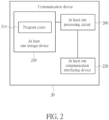
- Examples of the at least one storage device 210 include, but are not limited to, a subscriber identity module (SIM), read-only memory (ROM), flash memory, random-access memory (RAM), Compact Disc Read-Only Memory (CD-ROM), digital versatile disc-ROM (DVD-ROM), Blu-ray Disc-ROM (BD-ROM), magnetic tape, hard disk, optical data storage device, non-volatile storage device, non-transitory computer-readable medium (e.g., tangible media), etc.
- SIM subscriber identity module
- ROM read-only memory
- flash memory random-access memory
- RAM Compact Disc Read-Only Memory
- DVD-ROM digital versatile disc-ROM
- BD-ROM Blu-ray Disc-ROM
- magnetic tape hard disk
- optical data storage device non-volatile storage device
- non-transitory computer-readable medium e.g., tangible media
- the at least one communication interfacing device 220 is preferably at least one transceiver and is used to transmit and receive signals (e.g., data, messages
- the first UCI of the first PUCCH comprises (e.g., is) a first HARQ-ACK.
- the second UCI of the second PUCCH comprises (e.g., is) a second HARQ-ACK.
- the set of UCIs of the second PUCCH comprises a third HARQ-ACK and a scheduling request (SR).
- a HARQ-ACK (e.g., the first HARQ-ACK, the second HARQ-ACK and/or the third HARQ-ACK) may be a HARQ-ACK for a semi persistent scheduling physical DL shared channel (SPS-PDSCH).
- SPS-PDSCH semi persistent scheduling physical DL shared channel
- the special slot is composited of a set (e.g., 14) of special symbols.
- the communication device disables performing the first UL transmission (e.g., with the network) in the special symbol, in response to the special symbol being configured as the flexible symbol according to the first configuration.
- the communication device disables performing the first UL transmission (e.g., with the network) in the special symbol, in response to the special symbol being configured as the flexible symbol according to the first configuration and a direction of the flexible symbol not being indicated.
- the direction of the flexible symbol is indicated by a DCI. That is, the direction of the flexible symbol is not indicated, when the communication device does not detect/receive the DCI.
- the communication device performs the first UL transmission (e.g., with the network) in the special symbol, in response to the indicator being indicated by a DCI.
- the first UL transmission comprises at least one of a PUSCH scheduled/triggered by the DCI, a PUCCH carrying a HARQ-ACK scheduled/triggered by the DCI, and a SRS triggered by the DCI.
- the communication device disables performing the first UL transmission (e.g., with the network) in the special symbol, in response to the indicator being not indicated by the DCI.
- the first UL transmission comprises at least one of a PUCCH (e.g., carrying a SR and/or a CSI) and a periodic SRS.
- the first UL transmission is transmitted without at least one repetition.
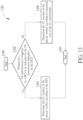
- the communication device performs the first UL transmission (e.g., with the network) in the special symbol, in response to the first UL transmission comprising a third set of UCIs. That is, the communication device may determine the UL resource for the first UL transmission according to the first configuration and the second configuration (e.g., if the first UL transmission comprises the third set of UCIs). In one example, the communication device disables performing the first UL transmission (e.g., with the network) in the special symbol, in response to the first UL transmission comprising a fourth set of UCIs.
- the communication device is configured with time information.
- the time information indicates whether at least one resource is available for the first UL transmission.
- a resource of the at least one resource comprises (e.g., is) a radio frame, a slot, a special slot or a slot comprising at least one special symbol.
- the time information comprises (e.g., is) a bitmap.
- at least one bit in the bitmap corresponds to the at least one resource.
- a bit in the bitmap with a third value indicates that the first UL transmission is available to be performed in a corresponding resource.
- the bit in the bitmap with a fourth value indicates that the first UL transmission is not available to be performed in the corresponding resource.
- the third value is "1", but is not limited herein.
- the fourth value is "0", but is not limited herein.
- the communication device performs the first UL transmission (e.g., with the network) in the special symbol, in response to a bit in the bitmap corresponding to the special symbol being the third value.
- the communication device disables performing the first UL transmission (e.g., with the network) in the special symbol, in response to the bit in the bitmap corresponding to the special symbol being the fourth value.
- the time information is configured for at least one of the communication device, the BWP, a UL channel, and a UL signal.
- the communication device determines whether to perform the first UL transmission (e.g., with the network) according to at least one of an ID of the communication device, an index of a slot which comprises the special symbol, and at least one parameter, in response to the first UL transmission overlapping with a special symbol in the set of special symbols in time.
- one of the at least one parameter is configured by at least one of a communication device specific, a BWP specific, and a higher-layer signal (e.g., a RRC signal).
- the communication device performs the first UL transmission (e.g., with the network) in the special symbol, in response to an equation (Eq1) being fulfilled.
- the communication device disables performing the first UL transmission (e.g., with the network) in the special symbol, in response to the equation (Eq1) not being fulfilled. That is, whether a UL transmission is transmitted in the special symbol is determined according to time domain information.
- the communication device transmits the dropped HARQ-ACK in a first slot after the special symbol, when the network triggers a HARQ-ACK feedback (e.g., type-3 HARQ-ACK feedback) or configures a HARQ-ACK deferring.
- the first slot is selected by the network via the DCI.
- a slot (e.g., the first slot) comprises a plurality of symbols (e.g., multiple continuous symbols).
- the first DL reception has a lower priority than or a same priority as the first UL transmission with the first priority index being the second value.
- the first DL reception comprises a RS (e.g., a CSI-RS or a positioning reference signal (PRS)).
- the first DL reception corresponds to a first search space (SS) set.
- the first SS set comprises at least one of a common SS (CSS) set (e.g., Type3-PDCCH CSS set) and a UE specific SS (USS) set.
- the first DL reception comprises a PDSCH scheduled by a DCI from the first SS set.
- the first DL reception has a higher priority than or a same priority as the first UL transmission with the first priority index being the first value.
- the first DL reception corresponds to a second SS set.
- the second SS set comprises at least one CSS set.
- the at least one CSS set comprises at least one of a Type0-PDCCH CSS set, a Type1-PDCCH CSS set, a Type2-PDCCH CSS set, a 0A-PDCCH CSS set, a 0B-PDCCH CSS set, a 1A-PDCCH CSS set, and a 2A-PDCCH CSS set.
- the first DL reception comprises a PDSCH scheduled by a DCI from the second SS set.
- the DL reception comprises a synchronization signal and physical broadcast channel (SS/PBCH) block.
- SS/PBCH physical broadcast channel
- the first DL reception comprising a PDSCH has a higher priority than a second DL reception, in response to the first UL transmission with the first priority index being the first value comprising a HARQ-ACK corresponding to the PDSCH.
- the first DL reception comprising the PDSCH has a lower priority than the second DL reception, in response to the first UL transmission with the first priority index being the second value comprising the HARQ-ACK corresponding to the PDSCH.
- the communication device determines a UL resource (e.g., in the at least one UL sub-band) according to at least one of the first resource configuration and a starting PRB. In one example, the communication device performs the first UL transmission (or the second/third UL transmission) (e.g., with the network) on the UL resource in the special symbol. The first UL transmission corresponds to the first priority index being the first value or the second value. In one example, a first number of PRB of the UL resource is the same as a second number of PRB for the first UL transmission overlapping with the UL symbol in the set of UL symbols.
- the starting PRB is determined according to at least one of an offset, the indicator, the first resource configuration, a DCI, and a higher-layer signal (e.g., a RRC signal).
- the offset indicates a set of frequency domain resource (e.g., a number of at least one PRB).
- the offset is selected from a set of candidate offsets which is configured by a higher-layer signal.
- the offset is a specific offset value for the first UL transmission configured by a higher-layer signal.
- the resource configuration is configured for the first UL transmission.
- the starting PRB is indicated for the first UL transmission.
- the starting PRB is indicated for the first UL transmission which is transmitted in the at least one special symbol. In one example, the starting PRB is specific for the at least one special symbol. In one example, the first UL transmission is a PUCCH or a PUSCH.
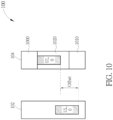
- the communication device performs the first UL transmission (e.g., with the network) in the special symbol via a part of a resource for the first UL transmission within the at least one UL sub-band, in response to the resource overlapping with the at least one DL sub-band in the special symbol.
- the first UL transmission corresponds to the first priority index being the first value or the second value. That is, the first UL transmission is not performed via a remaining part of the resource for the first UL transmission within the at least one DL sub-band.
- the communication device determines a 1st PRB for performing the first UL transmission as a 1st PRB of the at least one UL sub-band. In one example, if a last PRB of the resource for the first UL transmission overlaps with the at least one DL sub-band, the communication device determines a last PRB for performing the first UL transmission as a last PRB of the at least one UL sub-band.
- the communication device determines a UL resource for the first UL transmission in the special symbol according to a second resource configuration. In one example, the communication device determines the UL resource for the first UL transmission in the special symbol according to the second resource configuration and a third resource configuration. In one example, the communication device performs the first UL transmission (e.g., with the network) via the UL resource, after determining the UL resource for the first UL transmission in the special symbol according to the second resource configuration.
- the second resource configuration is associated with a fourth priority index being the first value.
- the third resource configuration is associated with a fifth priority index being the second value.
- the second resource configuration comprises a first list of a first plurality of UL resources for the special symbol.
- the first plurality of UL resources comprises (e.g., is) a first plurality of PUCCH resources.
- the third resource configuration comprises a second list of a second plurality of UL resources for the special symbol.
- the second plurality of UL resources comprises (e.g., is) a second plurality of PUCCH resources.
- each resource of the first plurality of UL resources and the second plurality of UL resources is configured with at least one of a resource ID and a payload size.
- the communication device determines the UL resource for the first UL transmission in the special symbol according to a first payload size of the first UL transmission. In one example, the communication device performs the first UL transmission (e.g., with the network) via the UL resource, after determining the UL resource for the first UL transmission in the special symbol according to the first payload size of the first UL transmission.
- the UL resource is selected from a third plurality of UL resources. In one example, at least one UL resource of the third plurality of UL resources is associated with a second payload size.
- the first UL transmission comprises more than one UCI type.
- the communication device receives an indicator (different from the indicator in the process 30) for a fourth UL transmission in a BWP of the serving cell from the network.
- the communication device performs the fourth UL transmission (e.g., with the network) according to the first resource configuration, in response to the fourth UL transmission (e.g., fully) overlapping with a UL symbol (or at least one UL symbol) in the set of UL symbols.
- the communication device determines whether to perform the fourth UL transmission (e.g., with the network), in response to the fourth UL transmission (e.g., fully) overlapping with a special symbol (or at least one special symbol) in the set of special symbols in time. Examples for the fourth UL transmission can be referred to the previous examples for the first UL transmission, and are not narrated herein.
- the first value has a higher priority than the second value.
- the first value is "1", but is not limited herein.
- the second value is "0", but is not limited herein.
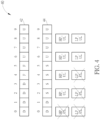
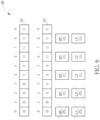
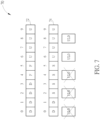
- FIG. 4 is a schematic diagram of a communication 40 between a communication device and a network according to an example of the present invention.
- the communication device receives a UL-DL configuration and a special resource configuration from the network (not shown in FIG. 4 ).
- the UL-DL configuration and the special resource configuration may be the first configuration and the second configuration in the process 30, respectively, and are used to indicate types (e.g., directions) of slots 0-9 in a frame (e.g., a frame 42 or a frame 44).
- the UL-DL configuration indicates that the slots 0-3 are DL slots, the slots 4-5 are flexible slots, and the slots 6-9 are UL slots.
- the special resource configuration indicates that the slots 2-5 are special slots.
- a UL slot, a DL slot, a flexible slot and a special slot are represented as "U”, “D”, “F” and "S", respectively.
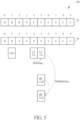
- the communication device determines the types of the slots 0-9 of the frame according to the UL-DL configuration.
- the determined frame can be represented as the frame 42.
- the communication device re-determines the slots 2-5 as the special slots according to the special resource configuration.
- the re-determined frame can be represented as the frame 44.
Landscapes
- Engineering & Computer Science (AREA)
- Signal Processing (AREA)
- Computer Networks & Wireless Communication (AREA)
- Mobile Radio Communication Systems (AREA)
Applications Claiming Priority (2)
| Application Number | Priority Date | Filing Date | Title |
|---|---|---|---|
| US202363542779P | 2023-10-06 | 2023-10-06 | |
| US18/885,753 US20250119879A1 (en) | 2023-10-06 | 2024-09-16 | Method and Communication Device for Handling a Communication with a Serving Cell |
Publications (1)
| Publication Number | Publication Date |
|---|---|
| EP4535705A1 true EP4535705A1 (de) | 2025-04-09 |
Family
ID=92925699
Family Applications (1)
| Application Number | Title | Priority Date | Filing Date |
|---|---|---|---|
| EP24202944.5A Pending EP4535705A1 (de) | 2023-10-06 | 2024-09-26 | Verfahren und kommunikationsvorrichtung zur handhabung einer kommunikation mit einer versorgenden zelle |
Country Status (3)
| Country | Link |
|---|---|
| US (1) | US20250119879A1 (de) |
| EP (1) | EP4535705A1 (de) |
| CN (1) | CN119789216A (de) |
-
2024
- 2024-09-16 US US18/885,753 patent/US20250119879A1/en active Pending
- 2024-09-26 EP EP24202944.5A patent/EP4535705A1/de active Pending
- 2024-09-30 CN CN202411378948.0A patent/CN119789216A/zh active Pending
Non-Patent Citations (3)
| Title |
|---|
| LEI WANG ET AL: "Discussion on subband non-overlapping full duplex", vol. RAN WG1, no. Toulouse, FR; 20230821 - 20230825, 11 August 2023 (2023-08-11), XP052436607, Retrieved from the Internet <URL:https://www.3gpp.org/ftp/TSG_RAN/WG1_RL1/TSGR1_114/Docs/R1-2307382.zip R1-2307382 Discussion on subband non-overlapping full duplex-final.docx> [retrieved on 20230811] * |
| NTT DOCOMO ET AL: "Discussion on subband non-overlapping full duplex", vol. RAN WG1, no. e-Meeting; 20221010 - 20221019, 30 September 2022 (2022-09-30), XP052259375, Retrieved from the Internet <URL:https://ftp.3gpp.org/tsg_ran/WG1_RL1/TSGR1_110b-e/Docs/R1-2209902.zip R1-2209902.docx> [retrieved on 20220930] * |
| PATRICK MERIAS ET AL: "Summary #2 of subband non-overlapping full duplex", vol. RAN WG1, no. Athens, GR; 20230227 - 20230303, 2 March 2023 (2023-03-02), XP052250889, Retrieved from the Internet <URL:https://www.3gpp.org/ftp/TSG_RAN/WG1_RL1/TSGR1_112/Docs/R1-2301934.zip R1-2301934.docx> [retrieved on 20230302] * |
Also Published As
| Publication number | Publication date |
|---|---|
| JP2025065008A (ja) | 2025-04-17 |
| US20250119879A1 (en) | 2025-04-10 |
| CN119789216A (zh) | 2025-04-08 |
Similar Documents
| Publication | Publication Date | Title |
|---|---|---|
| US10383142B2 (en) | Device and method of handling channel status information reports for transmission time intervals | |
| US20250261191A1 (en) | Device of Handling PUSCH Transmissions | |
| US11894952B2 (en) | Device and method of handling an uplink transmission with sounding reference signals | |
| US11902967B2 (en) | Device of handling a HARQ retransmission | |
| EP4535707A1 (de) | Verfahren und kommunikationsvorrichtung zur handhabung einer kommunikation mit einer versorgenden zelle | |
| AU2023201831B2 (en) | Device and method for handling a multi-cell scheduling | |
| US12309802B2 (en) | Device and method for handling a hybrid automatic repeat request transmission | |
| US11647507B2 (en) | Device and method for handling physical uplink control channel collision | |
| EP4535705A1 (de) | Verfahren und kommunikationsvorrichtung zur handhabung einer kommunikation mit einer versorgenden zelle | |
| EP4535706A1 (de) | Verfahren und kommunikationsvorrichtung zur handhabung einer kommunikation mit einer versorgenden zelle | |
| EP4535884A1 (de) | Verfahren und kommunikationsvorrichtung zur handhabung einer kommunikation mit einer versorgenden zelle | |
| JP7811250B2 (ja) | サービングセルとの通信を処理する方法及び通信装置 |
Legal Events
| Date | Code | Title | Description |
|---|---|---|---|
| PUAI | Public reference made under article 153(3) epc to a published international application that has entered the european phase |
Free format text: ORIGINAL CODE: 0009012 |
|
| STAA | Information on the status of an ep patent application or granted ep patent |
Free format text: STATUS: THE APPLICATION HAS BEEN PUBLISHED |
|
| AK | Designated contracting states |
Kind code of ref document: A1 Designated state(s): AL AT BE BG CH CY CZ DE DK EE ES FI FR GB GR HR HU IE IS IT LI LT LU LV MC ME MK MT NL NO PL PT RO RS SE SI SK SM TR |
|
| STAA | Information on the status of an ep patent application or granted ep patent |
Free format text: STATUS: REQUEST FOR EXAMINATION WAS MADE |
|
| 17P | Request for examination filed |
Effective date: 20250926 |