EP4535349A2 - Äusserungsklassifizierer - Google Patents
Äusserungsklassifizierer Download PDFInfo
- Publication number
- EP4535349A2 EP4535349A2 EP25160056.5A EP25160056A EP4535349A2 EP 4535349 A2 EP4535349 A2 EP 4535349A2 EP 25160056 A EP25160056 A EP 25160056A EP 4535349 A2 EP4535349 A2 EP 4535349A2
- Authority
- EP
- European Patent Office
- Prior art keywords
- utterance
- server
- classifier
- automated assistant
- spoken utterance
- Prior art date
- Legal status (The legal status is an assumption and is not a legal conclusion. Google has not performed a legal analysis and makes no representation as to the accuracy of the status listed.)
- Pending
Links
Images

Classifications
-
- G—PHYSICS
- G06—COMPUTING OR CALCULATING; COUNTING
- G06F—ELECTRIC DIGITAL DATA PROCESSING
- G06F3/00—Input arrangements for transferring data to be processed into a form capable of being handled by the computer; Output arrangements for transferring data from processing unit to output unit, e.g. interface arrangements
- G06F3/16—Sound input; Sound output
- G06F3/167—Audio in a user interface, e.g. using voice commands for navigating, audio feedback
-
- G—PHYSICS
- G10—MUSICAL INSTRUMENTS; ACOUSTICS
- G10L—SPEECH ANALYSIS TECHNIQUES OR SPEECH SYNTHESIS; SPEECH RECOGNITION; SPEECH OR VOICE PROCESSING TECHNIQUES; SPEECH OR AUDIO CODING OR DECODING
- G10L15/00—Speech recognition
- G10L15/08—Speech classification or search
- G10L15/16—Speech classification or search using artificial neural networks
-
- G—PHYSICS
- G10—MUSICAL INSTRUMENTS; ACOUSTICS
- G10L—SPEECH ANALYSIS TECHNIQUES OR SPEECH SYNTHESIS; SPEECH RECOGNITION; SPEECH OR VOICE PROCESSING TECHNIQUES; SPEECH OR AUDIO CODING OR DECODING
- G10L15/00—Speech recognition
- G10L15/08—Speech classification or search
- G10L15/18—Speech classification or search using natural language modelling
-
- G—PHYSICS
- G10—MUSICAL INSTRUMENTS; ACOUSTICS
- G10L—SPEECH ANALYSIS TECHNIQUES OR SPEECH SYNTHESIS; SPEECH RECOGNITION; SPEECH OR VOICE PROCESSING TECHNIQUES; SPEECH OR AUDIO CODING OR DECODING
- G10L15/00—Speech recognition
- G10L15/22—Procedures used during a speech recognition process, e.g. man-machine dialogue
-
- G—PHYSICS
- G10—MUSICAL INSTRUMENTS; ACOUSTICS
- G10L—SPEECH ANALYSIS TECHNIQUES OR SPEECH SYNTHESIS; SPEECH RECOGNITION; SPEECH OR VOICE PROCESSING TECHNIQUES; SPEECH OR AUDIO CODING OR DECODING
- G10L15/00—Speech recognition
- G10L15/28—Constructional details of speech recognition systems
- G10L15/30—Distributed recognition, e.g. in client-server systems, for mobile phones or network applications
-
- G—PHYSICS
- G10—MUSICAL INSTRUMENTS; ACOUSTICS
- G10L—SPEECH ANALYSIS TECHNIQUES OR SPEECH SYNTHESIS; SPEECH RECOGNITION; SPEECH OR VOICE PROCESSING TECHNIQUES; SPEECH OR AUDIO CODING OR DECODING
- G10L17/00—Speaker identification or verification techniques
-
- G—PHYSICS
- G10—MUSICAL INSTRUMENTS; ACOUSTICS
- G10L—SPEECH ANALYSIS TECHNIQUES OR SPEECH SYNTHESIS; SPEECH RECOGNITION; SPEECH OR VOICE PROCESSING TECHNIQUES; SPEECH OR AUDIO CODING OR DECODING
- G10L15/00—Speech recognition
- G10L15/22—Procedures used during a speech recognition process, e.g. man-machine dialogue
- G10L2015/223—Execution procedure of a spoken command
-
- G—PHYSICS
- G10—MUSICAL INSTRUMENTS; ACOUSTICS
- G10L—SPEECH ANALYSIS TECHNIQUES OR SPEECH SYNTHESIS; SPEECH RECOGNITION; SPEECH OR VOICE PROCESSING TECHNIQUES; SPEECH OR AUDIO CODING OR DECODING
- G10L15/00—Speech recognition
- G10L15/22—Procedures used during a speech recognition process, e.g. man-machine dialogue
- G10L2015/226—Procedures used during a speech recognition process, e.g. man-machine dialogue using non-speech characteristics
- G10L2015/227—Procedures used during a speech recognition process, e.g. man-machine dialogue using non-speech characteristics of the speaker; Human-factor methodology
Definitions
- This specification relates generally to classification and more specifically to classification using neural networks.
- a speech-enabled environment is one in which a user can speak a query or command aloud and a computer-based system will obtain the query, answer the query, and/or cause the command to be performed using speech recognition techniques.
- the speech-enabled environment may include a network of connected microphone devices distributed throughout the various rooms or areas of the environment.
- a user has the power to orally query the computer-based system from essentially anywhere in the speech-enabled environment without the need to have a computer or other device in front of him/her or even nearby. For example, while getting dressed in the morning, a user might ask the computer-based system "what's the temperature outside?" and, in response, receive an answer from the system, e.g., in the form of synthesized voice output. In other examples, a user might ask the computer-based system questions such as "what time does my favorite restaurant open?" or "where is the nearest gas station?"
- the computer-based system may obtain potentially all utterances and noises made in the speech-enabled environment including those utterances not directed towards the computer-based system.
- the computer-based system must have some way to discern between utterances directed towards the computer-based system and utterances not directed towards the computer-based system, but rather, to other individuals present in the speech-enabled environment.
- One way to accomplish this is for the user to use a predetermined word, such as a hotword or keyword, to signify the attention of the computer-based system.
- the other individuals in the speech-enabled environment understand that the use of the predetermined word is only for the computer-based system. For example, a user may speak "OK computer," followed by a query, to ask the computer-based system a question. However, the user having to speak a predetermined word each time he or she asks the computer-based system a question disrupts the flow of normal conversation and imposes a cognitive burden on the user. In order to alleviate this cognitive burden, the computer-based system can keep the microphone open for any follow on questions the user may have after a user asks a first question using the predetermined word. The follow on questions would not require the use of the predetermined word.
- the computer-based system would still need to discern follow on questions directed towards the computer-based system and other utterances obtained not directed towards the computer-based system. Accordingly, if the computer-based system determines a follow on utterance looks like a question likely directed to the computer-based system, then the follow on utterance is accepted and processed. Otherwise, the computer-based system closes the microphone and waits for the next utterance from a user that includes the predetermined word. Accordingly, an improved mechanism can be provided to facilitate user input, such as user commands, to the computer-based system.
- the computer-based system allows free form conversations with the user once the computer-based system listens for follow on questions. The user no longer needs to use the predetermined hotword to communicate with the computer-based system.
- the computer-based system uses both the acoustic characteristics of the obtained utterance and recognized text of the obtained utterance to determine whether the follow on question is directed towards the computer-based system.
- a classification system includes a classifier to discern content of human speech. Specifically, the content includes a determination that the audience for the human speech is likely directed towards the automated assistant server.
- the classification system includes a speech recognizer, a transcription representation generator, an acoustic feature generator, a concatenation module, and a classifier to perform this determination function.
- the speech recognizer can obtain utterance information spoken by a user and generate a transcription of the spoken utterance from the user.
- the acoustic feature generator can receive the utterance information spoken by the user and output speech unit representations, such as feature vectors that describe the audio characteristics of the received spoken utterance.
- the transcription representation generator can receive the transcription of the spoken utterance from the speech recognizer and output transcriptions including word embeddings.
- the concatenation module can receive the acoustic information and the word embeddings, concatenate the acoustic information and the word embeddings into a matrix representation, and provide the matrix representation to the classifier.
- the classifier provides an indication that the audience for the obtained utterance is likely directed towards the automated assistant server.
- the classifier includes one or more neural network elements to process the spoken utterance.
- the classifier trains the neural network elements with examples of queries previously spoken by users not likely directed towards the automated assistant server. This type of training allows the classifier to detect these types of queries and additionally, provide an indication that the audience for the obtained queries is likely directed towards the automated assistant server.
- a method is performed by one or more computers of a classification system.
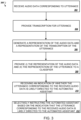
- the method includes: receiving audio data corresponding to an utterance;, obtaining a transcription of the utterance, generating a representation of the audio data; generating a representation of the transcription of the utterance; providing (i) the representation of the audio data and (ii) the representation of the transcription of the utterance to a classifier that, based on a given representation of audio data and a given representation of a transcription of an utterance, is trained to output an indication of whether the utterance associated with the given representation is likely directed to an automated assistant or is likely not directed to an automated assistant; receiving, from the classifier, an indication of whether the utterance corresponding to the received audio data is likely directed to the automated assistant or is likely not directed to the automated assistant; and selectively instructing the automated assistant based at least on the indication of whether the utterance corresponding to the received audio data is likely directed to the automated assistant or is likely not directed to the automated assistant.
- inventions of this and other aspects of the disclosure include corresponding systems, apparatus, and computer programs, configured to perform the actions of the methods, encoded on computer storage devices.
- a system of one or more computers can be so configured by virtue of software, firmware, hardware, or a combination of them installed on the system that in operation cause the system to perform the actions.
- One or more computer programs can be so configured by virtue having instructions that, when executed by data processing apparatus, cause the apparatus to perform the actions.
- Implementations may include one or more of the following features. For example, in some implementations, wherein providing (i) the representation of the audio data and (ii) the representation of the transcription of the utterance to the classifier, further comprises: generating an input representation of a concatenation between (i) the representation of the audio data and (ii) the representation of the utterance; and providing the concatenated input representation to the classifier.
- the method further comprises generating the input representation of the concatenation between (i) the representation of the audio data and (ii) the representation of the transcription of the utterance, further comprises: generating one or more numeric vectors converted from one or more words recognized in the representation of the transcription of the utterance; and generating a matrix of numeric vectors comprising the one or more numeric vectors to provide to the classifier.
- the method further comprises receiving, from a speech recognizer at a word-embedding model, recognizable text corresponding to the utterance; generating, at the word-embedding model, the transcription of the utterance from the recognizable text; and providing, from the word-embedding model, the transcription of the utterance to the classifier.
- the representation of the audio data comprises acoustic mel-frequency cepstral coefficients (MFCCs) values.
- MFCCs mel-frequency cepstral coefficients
- the method further comprising providing, by a max pooling layer of the word embedding model, the transcription of the utterance comprising embedding units; providing, by an acoustic neural network, the representation of the audio data comprising audio units; concatenating the embedding units and the audio units to a representation unit input; and providing the representational unit input as input to the classifier.
- selectively instructing the automated assistant further comprises: selectively instructing the automated assistant to process the utterance when the classifier provides the indication that the utterance corresponding to the received audio data is likely directed to the automated assistant; and selectively instructing the automated assistant to not process the utterance when the classifier provides the indication that the utterance corresponding to the received audio data is not likely directed to the automated assistant.
- the specification describes a technique for performing speech classification to determine whether an obtained utterance is likely directed towards the computer-based system.
- the computer-based system does not require that the obtained utterance include a predetermined word, such as a hotword, to invoke the computer-based system's attention. Rather, the computer-based system's microphone remains open for any obtained utterance of follow on questions following a user's first query that does include the predetermined word.
- the technique uses neural networks for both the acoustic characteristics and the recognized text of the obtained utterance to train a neural network to produce an indication of whether the audience for the obtained utterance is likely directed towards the computer-based system. This may be beneficial because users can converse in a more fluent manner with the computer-based system without the use of the hotword.
- the classifier server 108 may transmit the statement 112 to the client device 110 associated with a user, such as user 102. For example, the classifier server 108 may determine from the obtained recorded utterance 104 that the speaker is user 102. The classifier server 108 may store an audio representation of a user, such as user 102, in a profile each time a new user speaks an utterance likely directed towards the automated assistant server 116. This may be beneficial and improve delay in responding to a user's utterance because the classifier 108 can receive an utterance and determine which user is speaking. If an utterance is received does not have a corresponding utterance associated with a user profile, the classifier server 108 creates a new user profile and stores the newly obtained utterance with the new user profile in memory.
- stages (A) to (D) and (A') to (B') illustrate one or more iterations of using the classifier server 108 to determine an audience the obtained utterance is likely directed towards.
- the classifier server 108 can repeat the operations of stages (A) to (D) and (A') to (B') for many other iterations.
- the classifier server 108 may perform the operations illustrated in FIG. 1 simultaneously.
- the classifier server 108 may determine the operations illustrated in FIG. 1 for more utterances than just two utterances at a time, such as utterance 104 and utterance 122.
- FIG.1 illustrates two utterances for exemplary purposes only.
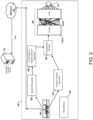
- FIG. 2 is a block diagram that illustrates an example of a classification system.
- FIG. 2 illustrates examples of the classifier server 108 of the system 100 discussed above.
- the classifier server 108 includes a microphone 201 for recording the obtained utterances, a speech recognizer 202, an acoustic feature generator, a transcription representation generator, a concatenation module 208, a neural network 209, and a sigma 211.
- the classifier server 108 obtains a recorded utterance 104 from a user 102.
- classifier server 108 propagates the recorded utterance 104 through the speech recognizer 202, the acoustic feature generator 204, the transcription representation generator 206, the concatenation module 208, the neural network 209, and the sigma 211 to judge a likelihood that the audience for the obtained utterance 104 is likely directed towards the automated assistant server 116.
- the speech recognizer 202 may be a device including a combination of hardware, software, and firmware configured to identify words and phrases in a spoken language.
- the speech recognizer 202 converts the obtained utterance 104 to a machine-readable format.
- the machine-readable format may include one or more words in a sentence-structured format that represents the obtained utterance 104.
- the speech recognizer 202 may use various combinations of methodologies to perform speech recognition.
- the speech recognizer 202 may include a Hidden Markov model approach, dynamic time warping (DTW)-based, neural networks, a deep feedforward and recurrent neural network approach, or some combination of the various approaches.
- the classifier server 108 provides the output of the speech recognizer 202 to a transcription representation generator 206. Simultaneously, the classifier server 108 provides the obtained utterance 104 to an acoustic feature generator 204.
- the acoustic feature generator 204 may be a device including a combination of hardware, software, and firmware configured to extract feature vectors from the obtained utterance 104 and provide the extracted feature vectors as input to the recurrent neural network elements.
- the acoustic feature generator 204 analyzes different segments or analysis windows of the obtained utterance 104. These windows can be w 0 , ... w n , are referred to as frames of the audio.
- each window or frame represents the same fixed-size amount of audio, e.g., five milliseconds (ms) of audio.
- the windows may partially overlap or may not overlap.
- a first frame w 0 may represent the segment from 0 ms to 5 ms
- a second window wi may represent a segment from 5 ms to 10 ms, and so on.
- a feature vector, or a set of acoustic feature vectors may be determined for each frame of the obtained utterance 104.
- the acoustic feature generator can perform a Fast Fourier Transform (FFT) on the audio in each window w 0 , ... w n ; map the powers of the spectrum using a mel-frequency scale; take the logarithms of the powers at each mel-frequency; take the discrete cosine transform of the list of mel log powers; and, analyze the amplitude content of the features to determine the acoustic features for each window.
- the acoustic features may be mel-frequency cepstral coefficients (MFCCs), the features determined using a perceptual linear prediction (PLP) transform, or features determined using other techniques.
- FFT Fast Fourier Transform
- the classifier server 108 provides the feature vectors one at a time to the recurrent neural network elements in the acoustic feature generator 204.
- the recurrent neural network elements can be one or more long short-term memory (LSTM) layers.
- the acoustic feature generator 204 may be a deep-layered LSTM neural network architecture built by stacking multiple LSTM layers.
- the classifier server 108 can train the neural network in the acoustic feature generator 204 to provide an output of a fixed-size speech unit representation or an embedding.
- the embedding may be a 64-unit vector.
- the units may be bits or bytes.
- One embedding is output for each feature vector.
- the classifier server 108 includes the acoustic feature generator 204 along with the speech recognizer 202 to enhance the recognition of the context of the obtained utterance 104.
- the classifier server 108 records future utterances that may contain faint background noise or speech incorrectly recognized by the speech recognition system.
- the classifier server 108 may transcribe the misrecognitions to common phrases, such as "Stop" or "Play.”
- the recognized text becomes insufficiently discriminative when the classifier server 108 classifies these utterances.
- the classifier server 108 can reduce the failure cases of misrecognitions.
- people's utterances include distinctive acoustic elements not captured by the text of the utterance.
- acoustic elements may include characteristics such as pitch, speech tempo, and accent, to name a few.
- the distinctive acoustic elements can assist in determining whether the audience for the utterance is likely directed towards the automated assistant server 116.
- the transcription representation generator 206 can include one or more neural network layers.
- the transcription representation generator 206 can include a convolutional neural network (CNN) word-embedding model.
- CNN convolutional neural network
- the transcription representation generator 206 can include one or more LSTM layers and may be a deep LSTM neural network architecture build by stacking multiple LSTM layers.
- the classifier server 108 trains the neural network in the transcription representation generator 206 to provide output of a transcription of the obtained utterance 104.
- the transcription of the utterance includes fixed-size text unit representations or embeddings.
- each embedding output can be a 100-unit vector.
- the units may be floating point or integer values.
- the transcription includes each of the embedding units provided as output.
- the classifier server 108 provides input that includes the sentence produced by the speech recognizer 202 to the transcription representation generator 206.
- the classifier server 108 inputs one word at a time from the sentence into the CNN word-embedding model of the transcription representation generator 206.
- the CNN word-embedding model may max pool the sentence data provided to the CNN word-embedding model to decrease the input data in order to reduce the computational complexity of the network. Max pooling allows for significant reduction in data throughput through the CNN word-embedding model by filtering and averaging the input data. This speeds up the process performed by the transcription representation generator 206 without suffering detail in output quality.
- the classifier server 108 utilizes both outputs of the transcription representation generator 206 and the acoustic feature generator 204.
- the concatenation module 208 may be a device in software, hardware, firmware, or a combination of each that combines the embedding output from the transcription representation generator 206 and the embedding output from the acoustic feature generator 204.
- the concatenation module 208 combines the 100-unit vector output from the transcription representation generator 206 and the 64-unit vector output from the acoustic feature generator 204 output to create a 164-unit vector output.
- the concatenation module 208 may create a matrix of 164-unit vector outputs.
- the matrix may include one or more columns of 164-unit vectors.
- This concatenation module 208 may convert the 100-unit embeddings to a semantically meaningful vector that include one or more numbers.
- the concatenation module 208 converts the 100-unit embeddings to the semantically meaningful vector that includes one or more numbers using one or more functional calls in a programming language, such as word2vec or GloVe.
- the concatenation module 208 may generate a matrix of the numeric vectors from the transcription representation generator 208 and a matrix of embeddings from the acoustic feature generator 204.
- the concatenation module 208 may create a 10x100 matrix and concatenate that with the matrix from the acoustic feature generator 204.
- the matrix from the acoustic feature generator 204 may include 10 feature vectors that each includes a 64-unit embedding.
- the concatenation module 208 may create a 10x64 matrix to concatenate with a 10x100 matrix from the transcription representation generator 206.
- the resultant matrix created by the concatenation module 208 may be 10x164.
- each matrix includes the same number of rows, which allow for a horizontal concatenation. Assuming the number of columns between respective matrices is similar, the concatenation module 208 would create a vertical concatenation. In some implementations, the concatenation module 208 provides the concatenated matrix to the neural network 209.
- the concatenation module 208 may buffer the number of 164-unit vectors in the matrix until the neural network 209 has processed one 164-unit vector. Once the neural network 209 processes one 164-unit vector, the concatenation module 208 provides the next 164-unit vector into the neural network 209.
- the speech recognizer 202, the acoustic feature generator 204, the transcription representation generator 206, and the concatenation module 208 may create 164-unit vectors faster than the neural network 209 can process one 164-unit vector. Therefore, the concatenation module 208 creates a matrix buffer of 164-unit vectors to store and ready to be processed.
- classifier server 108 includes a neural network 209 to process the concatenated matrix.
- the neural network 209 includes a classifier 210-A and another LSTM 210-B.
- the classifier server 108 can train the classifier 210-A and the LSTM 210-B to produce an output that indicates a likelihood that the audience for the obtained utterance 104 is likely directed towards the automated assistant server 116.
- the classifier 210-A and the LSTM 210-B are trained using examples of queries previously spoken by users and recorded dialog not directed towards the automated assistant server 116. For example, the classifier server 108 may retrieve multiple phrases spoken and in text format not directed towards the automated assistant server 116.
- the classifier server 108 may retrieve other phrases from one or more databases across the internet that include phrases not directed towards the automated assistant server 116.
- one of the phrases may include "Bob said, what's the temperature outside , and I shook" or "What time are your parents coming over?”
- the audience for these types of questions is another individual in the room, even though the classifier server 108 may interpret the audience to be likely directed towards the automated assistant server 116 for these types of questions.
- these types of questions are the optimal phrases to use for training the neural network 209.
- the classifier 210-A can learn to identify phrases that closely identify and seem to include an audience likely directed towards the automated assistant server 116, yet are actually background noises, or directed towards other individuals in a room.
- Such examples include, "What time are your parents coming over,” “How much do you weigh,” or “What did you buy at the grocery store?” Each of these questions do not include an identifier indicating who the speaker is talking to but do include a pronoun that may indicate to the classifier 210-A to look away when identifying phrases not directed towards the automated assistant server 116.
- the classifier server 108 updates the weights of the classifier 210-A and the weights of the LSTM 210-B during training. For example, the classifier server 108 can update the weights of the classifier 210-A and the LSTM 210-B using back-propagation of errors through time with stochastic gradient descent.
- the output of the classifier 210-A and the LSTM 210-B can include an indication that the audience for the obtained utterance 104 was likely directed towards the automated assistant server 116.
- the indication may include a probability that the output of the 164-unit vector indicates the audience for the obtained utterance is likely directed towards the automated assistant server 116.
- the output of the classifier 210-A and the LSTM 210B collectively may include a score ranging from 0 to 100.
- the sigma 211 sums each of the outputs provided by the LSTM 210-B.
- the sigma 211 receives output probabilities or output scores for each of the 164-unit vectors for each utterance that propagates through the neural network 209.
- the sigma 211 cumulatively sums each output probability or score from the neural network 209 for the entire obtained utterance 104.
- the classifier server 108 may determine the final output probability or score does not exceed the predetermined threshold. In response, the classifier server 108 may delete the obtained utterance 104 from memory and proceed to wait until a new obtained utterance. In other implementations, the classifier server 108 may generate instructions for the automated assistant server 116 indicating to not process the obtained utterance 104. In addition, the instructions may convey to the automated assistant server 116 to store the obtained utterance 104 in the database of stored utterances not directed towards the automated assistant server 116. The classifier server 108 packages the obtained utterance 104 and the generated instructions into data 109, and transmits the data to the automated assistant server 116 for processing.
- the sigma 211 compares the final output probability or score to a predetermined threshold. If the sigma 211 determines the final output probability or score exceeds the predetermined threshold, then the classifier server 208 indicates a likelihood that the audience for the obtained utterance 104 is likely directed towards the automated assistant server 116. Alternatively, the classifier server 108 indicates a likelihood that the audience for the obtained utterance 104 is likely directed towards the automated assistant server 114 if the final output probability or score is below the predetermined threshold.
- the classifier server 108 may determine from the output of the sigma 211 whether to provide the obtained utterance 104 to the automated assistant server 116. For example, should the classifier server 108 determine that the final output probability or score exceeds the predetermined threshold, the classifier server 108 generates instructions to provide to the automated assistant server 116. The instructions instruct the automated assistant server 116 to process the obtained utterance 104. The classifier server 108 packages the obtained utterance 104 and the generated instructions into data 109, and transmits the data 109 to the automated assistant server 116 for processing.
- the classifier server 108 may determine the final output probability or score does not exceed the predetermined threshold. In response, the classifier server 108 may delete the obtained utterance 104 from memory and proceed to wait until the next obtained utterance.
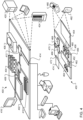
- FIG. 4 shows an example of a computing device 400 and a mobile computing device 450 that can be used to implement the techniques described here.
- the computing device 400 is intended to represent various forms of digital computers, such as laptops, desktops, workstations, personal digital assistants, servers, blade servers, mainframes, and other appropriate computers.
- the mobile computing device 450 is intended to represent various forms of mobile devices, such as personal digital assistants, cellular telephones, smart-phones, and other similar computing devices.
- the components shown here, their connections and relationships, and their functions, are meant to be examples only, and are not meant to be limiting.
- the computing device 400 includes a processor 402, a memory 404, a storage device 406, a high-speed interface 408 connecting to the memory 404 and multiple high-speed expansion ports 410, and a low-speed interface 412 connecting to a low-speed expansion port 414 and the storage device 406.
- Each of the processor 402, the memory 404, the storage device 406, the high-speed interface 408, the high-speed expansion ports 410, and the low-speed interface 412 are interconnected using various busses, and may be mounted on a common motherboard or in other manners as appropriate.
- the processor 402 can process instructions for execution within the computing device 400, including instructions stored in the memory 404 or on the storage device 406 to display graphical information for a GUI on an external input/output device, such as a display 416 coupled to the high-speed interface 408.
- an external input/output device such as a display 416 coupled to the high-speed interface 408.
- multiple processors and/or multiple buses may be used, as appropriate, along with multiple memories and types of memory.
- multiple computing devices may be connected, with each device providing portions of the necessary operations (e.g., as a server bank, a group of blade servers, or a multi-processor system).
- the memory 404 stores information within the computing device 400.
- the memory 404 is a volatile memory unit or units.
- the memory 404 is a non-volatile memory unit or units.
- the memory 404 may also be another form of computer-readable medium, such as a magnetic or optical disk.
- the storage device 406 is capable of providing mass storage for the computing device 400.
- the storage device 406 may be or contain a computer-readable medium, such as a floppy disk device, a hard disk device, an optical disk device, or a tape device, a flash memory or other similar solid state memory device, or an array of devices, including devices in a storage area network or other configurations.
- Instructions can be stored in an information carrier.
- the instructions when executed by one or more processing devices (for example, processor 402), perform one or more methods, such as those described above.
- the instructions can also be stored by one or more storage devices such as computer- or machine-readable mediums (for example, the memory 404, the storage device 406, or memory on the processor 402).
- the high-speed interface 408 manages bandwidth-intensive operations for the computing device 400, while the low-speed interface 412 manages lower bandwidth-intensive operations. Such allocation of functions is an example only.
- the high-speed interface 408 is coupled to the memory 404, the display 416 (e.g., through a graphics processor or accelerator), and to the high-speed expansion ports 410, which may accept various expansion cards (not shown).
- the low-speed interface 412 is coupled to the storage device 406 and the low-speed expansion port 414.
- the low-speed expansion port 414 which may include various communication ports (e.g., USB, Bluetooth, Ethernet, wireless Ethernet) may be coupled to one or more input/output devices, such as a keyboard, a pointing device, a scanner, or a networking device such as a switch or router, e.g., through a network adapter.
- input/output devices such as a keyboard, a pointing device, a scanner, or a networking device such as a switch or router, e.g., through a network adapter.
- the computing device 400 may be implemented in a number of different forms, as shown in the figure. For example, it may be implemented as a standard server 420, or multiple times in a group of such servers. In addition, it may be implemented in a personal computer such as a laptop computer 422. It may also be implemented as part of a rack server system 424. Alternatively, components from the computing device 400 may be combined with other components in a mobile device (not shown), such as a mobile computing device 450. Each of such devices may contain one or more of the computing device 400 and the mobile computing device 450, and an entire system may be made up of multiple computing devices communicating with each other.
- the mobile computing device 450 includes a processor 452, a memory 464, an input/output device such as a display 454, a communication interface 466, and a transceiver 468, among other components.
- the mobile computing device 450 may also be provided with a storage device, such as a micro-drive or other device, to provide additional storage.
- a storage device such as a micro-drive or other device, to provide additional storage.
- Each of the processor 452, the memory 464, the display 454, the communication interface 466, and the transceiver 468, are interconnected using various buses, and several of the components may be mounted on a common motherboard or in other manners as appropriate.
- the processor 452 can execute instructions within the mobile computing device 450, including instructions stored in the memory 464.
- the processor 452 may be implemented as a chipset of chips that include separate and multiple analog and digital processors.
- the processor 452 may provide, for example, for coordination of the other components of the mobile computing device 450, such as control of user interfaces, applications run by the mobile computing device 450, and wireless communication by the mobile computing device 450.
- the processor 452 may communicate with a user through a control interface 458 and a display interface 456 coupled to the display 454.
- the display 454 may be, for example, a TFT (Thin-Film-Transistor Liquid Crystal Display) display or an OLED (Organic Light Emitting Diode) display, or other appropriate display technology.
- the display interface 456 may comprise appropriate circuitry for driving the display 454 to present graphical and other information to a user.
- the control interface 458 may receive commands from a user and convert them for submission to the processor 452.
- an external interface 462 may provide communication with the processor 452, so as to enable near area communication of the mobile computing device 450 with other devices.
- the external interface 462 may provide, for example, for wired communication in some implementations, or for wireless communication in other implementations, and multiple interfaces may also be used.
- the memory 464 stores information within the mobile computing device 450.
- the memory 464 can be implemented as one or more of a computer-readable medium or media, a volatile memory unit or units, or a non-volatile memory unit or units.
- An expansion memory 474 may also be provided and connected to the mobile computing device 450 through an expansion interface 472, which may include, for example, a SIMM (Single In Line Memory Module) card interface.
- SIMM Single In Line Memory Module
- the expansion memory 474 may provide extra storage space for the mobile computing device 450, or may also store applications or other information for the mobile computing device 450.
- the expansion memory 474 may include instructions to carry out or supplement the processes described above, and may include secure information also.
- the expansion memory 474 may be provided as a security module for the mobile computing device 450, and may be programmed with instructions that permit secure use of the mobile computing device 450.
- secure applications may be provided via the SIMM cards, along with additional information, such as placing identifying information on the SIMM card in a non-hackable manner.
- the memory may include, for example, flash memory and/or NVRAM memory (non-volatile random access memory), as discussed below.
- instructions are stored in an information carrier, such that the instructions, when executed by one or more processing devices (for example, processor 452), perform one or more methods, such as those described above.
- the instructions can also be stored by one or more storage devices, such as one or more computer- or machine-readable mediums (for example, the memory 464, the expansion memory 474, or memory on the processor 452).
- the instructions can be received in a propagated signal, for example, over the transceiver 468 or the external interface 462.
- the mobile computing device 450 may communicate wirelessly through the communication interface 466, which may include digital signal processing circuitry where necessary.
- the communication interface 466 may provide for communications under various modes or protocols, such as GSM voice calls (Global System for Mobile communications), SMS (Short Message Service), EMS (Enhanced Messaging Service), or MMS messaging (Multimedia Messaging Service), CDMA (code division multiple access), TDMA (time division multiple access), PDC (Personal Digital Cellular), WCDMA (Wideband Code Division Multiple Access), CDMA2000, or GPRS (General Packet Radio Service), among others.
- GSM voice calls Global System for Mobile communications
- SMS Short Message Service
- EMS Enhanced Messaging Service
- MMS messaging Multimedia Messaging Service
- CDMA code division multiple access
- TDMA time division multiple access
- PDC Personal Digital Cellular
- WCDMA Wideband Code Division Multiple Access
- CDMA2000 Code Division Multiple Access
- GPRS General Packet Radio Service
- a GPS (Global Positioning System) receiver module 470 may provide additional navigation- and location-related wireless data to the mobile computing device 450, which may be used as appropriate by applications running on the mobile computing device 450.
- the mobile computing device 450 may also communicate audibly using an audio codec 460, which may receive spoken information from a user and convert it to usable digital information.
- the audio codec 460 may likewise generate audible sound for a user, such as through a speaker, e.g., in a handset of the mobile computing device 450.
- Such sound may include sound from voice telephone calls, may include recorded sound (e.g., voice messages, music files, etc.) and may also include sound generated by applications operating on the mobile computing device 450.
- the mobile computing device 450 may be implemented in a number of different forms, as shown in the figure. For example, it may be implemented as a cellular telephone 480. It may also be implemented as part of a smart-phone 482, personal digital assistant, or other similar mobile device.
- implementations of the systems and techniques described here can be realized in digital electronic circuitry, integrated circuitry, specially designed ASICs (application specific integrated circuits), computer hardware, firmware, software, and/or combinations thereof.
- ASICs application specific integrated circuits
- These various implementations can include implementation in one or more computer programs that are executable and/or interpretable on a programmable system including at least one programmable processor, which may be special or general purpose, coupled to receive data and instructions from, and to transmit data and instructions to, a storage system, at least one input device, and at least one output device.
- the systems and techniques described here can be implemented on a computer having a display device (e.g., a CRT (cathode ray tube) or LCD (liquid crystal display) monitor) for displaying information to the user and a keyboard and a pointing device (e.g., a mouse or a trackball) by which the user can provide input to the computer.
- a display device e.g., a CRT (cathode ray tube) or LCD (liquid crystal display) monitor
- a keyboard and a pointing device e.g., a mouse or a trackball
- Other kinds of devices can be used to provide for interaction with a user as well; for example, feedback provided to the user can be any form of sensory feedback (e.g., visual feedback, auditory feedback, or tactile feedback); and input from the user can be received in any form, including acoustic, speech, or tactile input.
- the computing system can include clients and servers.
- a client and server are generally remote from each other and typically interact through a communication network.
- the relationship of client and server arises by virtue of computer programs running on the respective computers and having a client-server relationship to each other.
- the delegate(s) may be employed by other applications implemented by one or more processors, such as an application executing on one or more servers.
- the logic flows depicted in the figures do not require the particular order shown, or sequential order, to achieve desirable results.
- other actions may be provided, or actions may be eliminated, from the described flows, and other components may be added to, or removed from, the described systems. Accordingly, other implementations are within the scope of the following claims.
Landscapes
- Engineering & Computer Science (AREA)
- Health & Medical Sciences (AREA)
- Audiology, Speech & Language Pathology (AREA)
- Human Computer Interaction (AREA)
- Physics & Mathematics (AREA)
- Multimedia (AREA)
- Acoustics & Sound (AREA)
- Computational Linguistics (AREA)
- Theoretical Computer Science (AREA)
- Artificial Intelligence (AREA)
- General Physics & Mathematics (AREA)
- General Engineering & Computer Science (AREA)
- General Health & Medical Sciences (AREA)
- Evolutionary Computation (AREA)
- Machine Translation (AREA)
- User Interface Of Digital Computer (AREA)
- Telephonic Communication Services (AREA)
Applications Claiming Priority (3)
| Application Number | Priority Date | Filing Date | Title |
|---|---|---|---|
| US15/659,016 US10311872B2 (en) | 2017-07-25 | 2017-07-25 | Utterance classifier |
| EP18720903.6A EP3659028B8 (de) | 2017-07-25 | 2018-04-09 | Äusserungsklassifizierer |
| PCT/US2018/026723 WO2019022797A1 (en) | 2017-07-25 | 2018-04-09 | STATEMENT CLASSIFIER |
Related Parent Applications (2)
| Application Number | Title | Priority Date | Filing Date |
|---|---|---|---|
| EP18720903.6A Division EP3659028B8 (de) | 2017-07-25 | 2018-04-09 | Äusserungsklassifizierer |
| EP18720903.6A Division-Into EP3659028B8 (de) | 2017-07-25 | 2018-04-09 | Äusserungsklassifizierer |
Publications (2)
| Publication Number | Publication Date |
|---|---|
| EP4535349A2 true EP4535349A2 (de) | 2025-04-09 |
| EP4535349A3 EP4535349A3 (de) | 2025-04-30 |
Family
ID=62067866
Family Applications (2)
| Application Number | Title | Priority Date | Filing Date |
|---|---|---|---|
| EP25160056.5A Pending EP4535349A3 (de) | 2017-07-25 | 2018-04-09 | Äusserungsklassifizierer |
| EP18720903.6A Active EP3659028B8 (de) | 2017-07-25 | 2018-04-09 | Äusserungsklassifizierer |
Family Applications After (1)
| Application Number | Title | Priority Date | Filing Date |
|---|---|---|---|
| EP18720903.6A Active EP3659028B8 (de) | 2017-07-25 | 2018-04-09 | Äusserungsklassifizierer |
Country Status (6)
| Country | Link |
|---|---|
| US (5) | US10311872B2 (de) |
| EP (2) | EP4535349A3 (de) |
| JP (2) | JP6740504B1 (de) |
| KR (3) | KR102474941B1 (de) |
| CN (1) | CN110959159A (de) |
| WO (1) | WO2019022797A1 (de) |
Families Citing this family (63)
| Publication number | Priority date | Publication date | Assignee | Title |
|---|---|---|---|---|
| KR20180084392A (ko) | 2017-01-17 | 2018-07-25 | 삼성전자주식회사 | 전자 장치 및 그의 동작 방법 |
| ES2993990T3 (en) * | 2017-03-03 | 2025-01-15 | Pindrop Security Inc | Method and apparatus for detecting spoofing conditions |
| US10311872B2 (en) | 2017-07-25 | 2019-06-04 | Google Llc | Utterance classifier |
| US11461628B2 (en) * | 2017-11-03 | 2022-10-04 | Samsung Electronics Co., Ltd. | Method for optimizing neural networks |
| US11676220B2 (en) | 2018-04-20 | 2023-06-13 | Meta Platforms, Inc. | Processing multimodal user input for assistant systems |
| US11715042B1 (en) | 2018-04-20 | 2023-08-01 | Meta Platforms Technologies, Llc | Interpretability of deep reinforcement learning models in assistant systems |
| US20190327330A1 (en) | 2018-04-20 | 2019-10-24 | Facebook, Inc. | Building Customized User Profiles Based on Conversational Data |
| US11886473B2 (en) | 2018-04-20 | 2024-01-30 | Meta Platforms, Inc. | Intent identification for agent matching by assistant systems |
| US11307880B2 (en) * | 2018-04-20 | 2022-04-19 | Meta Platforms, Inc. | Assisting users with personalized and contextual communication content |
| US10621990B2 (en) * | 2018-04-30 | 2020-04-14 | International Business Machines Corporation | Cognitive print speaker modeler |
| US10803865B2 (en) * | 2018-06-05 | 2020-10-13 | Voicify, LLC | Voice application platform |
| JP2021144065A (ja) * | 2018-06-12 | 2021-09-24 | ソニーグループ株式会社 | 情報処理装置および情報処理方法 |
| CN110364166B (zh) * | 2018-06-28 | 2022-10-28 | 腾讯科技(深圳)有限公司 | 实现语音信号识别的电子设备 |
| US11580145B1 (en) * | 2018-09-25 | 2023-02-14 | Amazon Technologies, Inc. | Query rephrasing using encoder neural network and decoder neural network |
| GB2577570A (en) * | 2018-09-28 | 2020-04-01 | Cirrus Logic Int Semiconductor Ltd | Sound event detection |
| CN112352276B (zh) | 2018-11-21 | 2024-04-09 | 谷歌有限责任公司 | 要经由自动助理执行的一系列所请求的动作的协调执行 |
| CN118675519A (zh) | 2019-02-20 | 2024-09-20 | 谷歌有限责任公司 | 利用事件前和事件后输入流来接洽自动化助理 |
| KR20210013607A (ko) * | 2019-02-27 | 2021-02-04 | 구글 엘엘씨 | 컴퓨팅 장치를 사용한 지속적인 대화 감지 |
| US11676582B2 (en) | 2019-02-27 | 2023-06-13 | Google Llc | Detecting conversations with computing devices |
| US10943598B2 (en) * | 2019-03-18 | 2021-03-09 | Rovi Guides, Inc. | Method and apparatus for determining periods of excessive noise for receiving smart speaker voice commands |
| US10930301B1 (en) * | 2019-08-27 | 2021-02-23 | Nec Corporation | Sequence models for audio scene recognition |
| CN112530419B (zh) * | 2019-09-19 | 2024-05-24 | 百度在线网络技术(北京)有限公司 | 语音识别控制方法、装置、电子设备和可读存储介质 |
| CN112581945A (zh) * | 2019-09-29 | 2021-03-30 | 百度在线网络技术(北京)有限公司 | 语音控制方法、装置、电子设备和可读存储介质 |
| CN112581969A (zh) * | 2019-09-29 | 2021-03-30 | 百度在线网络技术(北京)有限公司 | 语音控制方法、装置、电子设备和可读存储介质 |
| CN112669831B (zh) * | 2019-09-29 | 2022-10-21 | 百度在线网络技术(北京)有限公司 | 语音识别控制方法、装置、电子设备和可读存储介质 |
| EP3841459B1 (de) * | 2019-11-08 | 2023-10-04 | Google LLC | Verwendung von korrekturen von automatisierten hilfsfunktionen zum trainieren von maschinenlernmodellen auf einer vorrichtung |
| US11276392B2 (en) * | 2019-12-12 | 2022-03-15 | Sorenson Ip Holdings, Llc | Communication of transcriptions |
| US12086558B2 (en) | 2020-03-09 | 2024-09-10 | Warner Bros. Entertainment Inc. | Systems and methods for generating multi-language media content with automatic selection of matching voices |
| US11430426B2 (en) | 2020-04-01 | 2022-08-30 | International Business Machines Corporation | Relevant document retrieval to assist agent in real time customer care conversations |
| EP4136637A4 (de) | 2020-04-15 | 2024-04-17 | Pindrop Security, Inc. | Passive und kontinuierliche sprachbiometrik mit mehreren sprechern |
| WO2021211716A1 (en) * | 2020-04-15 | 2021-10-21 | University Of Pittsburgh-Of The Commonwealth System Of Higher Education | System and method for automated observation and analysis of instructional discourse |
| KR102948992B1 (ko) * | 2020-05-15 | 2026-04-03 | 구글 엘엘씨 | 자동화된 어시스턴트 응답 제시의 핫워드 프리 선점 |
| US11521597B2 (en) * | 2020-09-03 | 2022-12-06 | Google Llc | Correcting speech misrecognition of spoken utterances |
| KR102590540B1 (ko) * | 2020-11-30 | 2023-10-18 | 주식회사 마음에이아이 | 인공 신경망 학습 방법과 이를 이용한 발음 평가 방법 |
| EP4033414A4 (de) | 2020-11-30 | 2022-12-07 | Minds Lab Inc. | Trainingsverfahren für künstliches neuronales netzwerk und aussprachebeurteilungsverfahren unter verwendung desselben |
| WO2022162767A1 (ja) * | 2021-01-27 | 2022-08-04 | 日本電信電話株式会社 | 誤り訂正装置、誤り訂正方法、プログラム |
| US11705125B2 (en) * | 2021-03-26 | 2023-07-18 | International Business Machines Corporation | Dynamic voice input detection for conversation assistants |
| US12131733B2 (en) | 2021-04-21 | 2024-10-29 | Meta Platforms, Inc. | Active listening for assistant systems |
| US11861315B2 (en) | 2021-04-21 | 2024-01-02 | Meta Platforms, Inc. | Continuous learning for natural-language understanding models for assistant systems |
| US12125297B2 (en) | 2021-04-21 | 2024-10-22 | Meta Platforms, Inc. | Task execution based on real-world text detection for assistant systems |
| US12118790B2 (en) | 2021-04-21 | 2024-10-15 | Meta Platforms, Inc. | Auto-capture of interesting moments by assistant systems |
| US12087280B2 (en) * | 2021-06-11 | 2024-09-10 | Harman International Industries, Incorporated | System and method for robust wakeword detection in presence of noise in new unseen environments without additional data |
| WO2023056920A1 (en) * | 2021-10-05 | 2023-04-13 | Huawei Technologies Co., Ltd. | Multilayer perceptron neural network for speech processing |
| US12027156B2 (en) * | 2021-10-06 | 2024-07-02 | Cypress Semiconductor Corporation | Noise robust representations for keyword spotting systems |
| US20230128422A1 (en) | 2021-10-27 | 2023-04-27 | Meta Platforms, Inc. | Voice Command Integration into Augmented Reality Systems and Virtual Reality Systems |
| US11967314B2 (en) * | 2021-11-02 | 2024-04-23 | Capital One Services, Llc | Automatic generation of a contextual meeting summary |
| US12443797B1 (en) | 2021-12-06 | 2025-10-14 | Meta Platforms, Inc. | Low-resource task-oriented semantic parsing via intrinsic modeling for assistant systems |
| US12142298B1 (en) | 2022-02-14 | 2024-11-12 | Meta Platforms, Inc. | Creating digital stories based on memory graphs and multi-turn dialogs for assistant systems |
| KR102574165B1 (ko) | 2022-02-23 | 2023-09-01 | 고려대학교 산학협력단 | 스파이킹 신경망에서 신경 암호 기반 소리 분류 장치 및 그 방법 |
| CN114970666B (zh) * | 2022-03-29 | 2023-08-29 | 北京百度网讯科技有限公司 | 一种口语处理方法、装置、电子设备及存储介质 |
| US12495098B2 (en) | 2022-04-28 | 2025-12-09 | Meta Platforms, Inc. | Presenting personalized content during idle time for assistant systems |
| US12353897B2 (en) | 2022-07-29 | 2025-07-08 | Meta Platforms, Inc. | Dynamically morphing virtual assistant avatars for assistant systems |
| US12249014B1 (en) | 2022-07-29 | 2025-03-11 | Meta Platforms, Inc. | Integrating applications with dynamic virtual assistant avatars |
| US12340799B2 (en) | 2022-10-03 | 2025-06-24 | Google Llc | Identifying and correcting automatic speech recognition (ASR) misrecognitions in a decentralized manner |
| US12223952B2 (en) | 2022-10-04 | 2025-02-11 | Google Llc | Generation and utilization of pseudo-correction(s) to prevent forgetting of personalized on-device automatic speech recognition (ASR) model(s) |
| US11983329B1 (en) | 2022-12-05 | 2024-05-14 | Meta Platforms, Inc. | Detecting head gestures using inertial measurement unit signals |
| WO2024176673A1 (ja) * | 2023-02-22 | 2024-08-29 | 国立大学法人大阪大学 | プログラム、情報処理方法、情報処理装置、及びロボット |
| US12112001B1 (en) | 2023-03-14 | 2024-10-08 | Meta Platforms, Inc. | Preventing false activations based on don/doff detection for assistant systems |
| US12573391B2 (en) | 2023-03-22 | 2026-03-10 | Meta Platforms, Inc. | Generating contextual responses for out-of-coverage requests for assistant systems |
| WO2024258921A2 (en) * | 2023-06-12 | 2024-12-19 | University Of Vermont And State Agricultural College | Conversation analytics for identifying conversational features, and related systems, methods, and software |
| US12592017B2 (en) | 2023-07-17 | 2026-03-31 | Meta Platforms, Inc. | Rendering XR avatars based on acoustical features |
| KR102795375B1 (ko) * | 2023-08-11 | 2025-04-11 | 코클 아이엔씨 | 향상된 신뢰도를 가진 음향 인식 결과 제공 방법, 장치 및 컴퓨터 프로그램 |
| US20260011327A1 (en) * | 2024-07-02 | 2026-01-08 | Google Llc | Accurate response for noisy user speech by cross-attention stitching encoded audio features into large language models |
Family Cites Families (30)
| Publication number | Priority date | Publication date | Assignee | Title |
|---|---|---|---|---|
| US6925432B2 (en) | 2000-10-11 | 2005-08-02 | Lucent Technologies Inc. | Method and apparatus using discriminative training in natural language call routing and document retrieval |
| US6795808B1 (en) | 2000-10-30 | 2004-09-21 | Koninklijke Philips Electronics N.V. | User interface/entertainment device that simulates personal interaction and charges external database with relevant data |
| KR100414064B1 (ko) * | 2001-04-12 | 2004-01-07 | 엘지전자 주식회사 | 음성인식에 의한 이동통신 단말기 제어시스템 및 방법 |
| US20030167167A1 (en) | 2002-02-26 | 2003-09-04 | Li Gong | Intelligent personal assistants |
| US7606714B2 (en) | 2003-02-11 | 2009-10-20 | Microsoft Corporation | Natural language classification within an automated response system |
| US20060200350A1 (en) | 2004-12-22 | 2006-09-07 | David Attwater | Multi dimensional confidence |
| WO2008134625A1 (en) | 2007-04-26 | 2008-11-06 | Ford Global Technologies, Llc | Emotive advisory system and method |
| US20090006085A1 (en) | 2007-06-29 | 2009-01-01 | Microsoft Corporation | Automated call classification and prioritization |
| CN101546556B (zh) * | 2008-03-28 | 2011-03-23 | 展讯通信(上海)有限公司 | 用于音频内容识别的分类系统 |
| EP2954514B1 (de) * | 2013-02-07 | 2021-03-31 | Apple Inc. | Sprachtrigger für einen digitalen assistenten |
| US9123340B2 (en) * | 2013-03-01 | 2015-09-01 | Google Inc. | Detecting the end of a user question |
| US9489625B2 (en) * | 2013-05-10 | 2016-11-08 | Sri International | Rapid development of virtual personal assistant applications |
| US9594983B2 (en) * | 2013-08-02 | 2017-03-14 | Digimarc Corporation | Learning systems and methods |
| US9286897B2 (en) * | 2013-09-27 | 2016-03-15 | Amazon Technologies, Inc. | Speech recognizer with multi-directional decoding |
| KR101671308B1 (ko) | 2014-05-19 | 2016-11-01 | 주식회사 노나메기 | 캠핑용 난로 |
| US9484022B2 (en) * | 2014-05-23 | 2016-11-01 | Google Inc. | Training multiple neural networks with different accuracy |
| US9715875B2 (en) * | 2014-05-30 | 2017-07-25 | Apple Inc. | Reducing the need for manual start/end-pointing and trigger phrases |
| US10783900B2 (en) * | 2014-10-03 | 2020-09-22 | Google Llc | Convolutional, long short-term memory, fully connected deep neural networks |
| US10476872B2 (en) * | 2015-02-20 | 2019-11-12 | Sri International | Joint speaker authentication and key phrase identification |
| KR101760898B1 (ko) * | 2015-08-27 | 2017-07-24 | 허철균 | 상황 인지 기반 양방향 안내 시스템 및 그의 제어 방법 |
| US20170092278A1 (en) | 2015-09-30 | 2017-03-30 | Apple Inc. | Speaker recognition |
| CN105427869A (zh) * | 2015-11-02 | 2016-03-23 | 北京大学 | 一种基于深度学习的会话情感自动分析方法 |
| JP2017090611A (ja) * | 2015-11-09 | 2017-05-25 | 三菱自動車工業株式会社 | 音声認識制御システム |
| US9628286B1 (en) * | 2016-02-23 | 2017-04-18 | Echostar Technologies L.L.C. | Television receiver and home automation system and methods to associate data with nearby people |
| US9984682B1 (en) * | 2016-03-30 | 2018-05-29 | Educational Testing Service | Computer-implemented systems and methods for automatically generating an assessment of oral recitations of assessment items |
| US10332513B1 (en) * | 2016-06-27 | 2019-06-25 | Amazon Technologies, Inc. | Voice enablement and disablement of speech processing functionality |
| US10147423B2 (en) * | 2016-09-29 | 2018-12-04 | Intel IP Corporation | Context-aware query recognition for electronic devices |
| JP6659514B2 (ja) * | 2016-10-12 | 2020-03-04 | 東芝映像ソリューション株式会社 | 電子機器及びその制御方法 |
| US12411880B2 (en) * | 2017-02-16 | 2025-09-09 | Globality, Inc. | Intelligent matching system with ontology-aided relation extraction |
| US10311872B2 (en) | 2017-07-25 | 2019-06-04 | Google Llc | Utterance classifier |
-
2017
- 2017-07-25 US US15/659,016 patent/US10311872B2/en active Active
-
2018
- 2018-04-09 WO PCT/US2018/026723 patent/WO2019022797A1/en not_active Ceased
- 2018-04-09 KR KR1020227003955A patent/KR102474941B1/ko active Active
- 2018-04-09 KR KR1020227042199A patent/KR102509464B1/ko active Active
- 2018-04-09 EP EP25160056.5A patent/EP4535349A3/de active Pending
- 2018-04-09 CN CN201880049126.4A patent/CN110959159A/zh active Pending
- 2018-04-09 JP JP2020503953A patent/JP6740504B1/ja active Active
- 2018-04-09 KR KR1020207002950A patent/KR102360924B1/ko active Active
- 2018-04-09 EP EP18720903.6A patent/EP3659028B8/de active Active
-
2019
- 2019-05-02 US US16/401,349 patent/US11545147B2/en active Active
-
2020
- 2020-07-21 US US16/935,112 patent/US11361768B2/en active Active
- 2020-07-21 JP JP2020124302A patent/JP6945695B2/ja active Active
-
2022
- 2022-05-31 US US17/804,657 patent/US11848018B2/en active Active
-
2023
- 2023-12-01 US US18/526,991 patent/US12230271B2/en active Active
Also Published As
| Publication number | Publication date |
|---|---|
| US20240096326A1 (en) | 2024-03-21 |
| US10311872B2 (en) | 2019-06-04 |
| CN110959159A (zh) | 2020-04-03 |
| US20190304459A1 (en) | 2019-10-03 |
| KR20220021037A (ko) | 2022-02-21 |
| US12230271B2 (en) | 2025-02-18 |
| EP3659028A1 (de) | 2020-06-03 |
| KR102509464B1 (ko) | 2023-03-14 |
| JP6740504B1 (ja) | 2020-08-12 |
| KR20200023456A (ko) | 2020-03-04 |
| US20190035390A1 (en) | 2019-01-31 |
| KR102474941B1 (ko) | 2022-12-06 |
| JP2020173483A (ja) | 2020-10-22 |
| JP6945695B2 (ja) | 2021-10-06 |
| US11545147B2 (en) | 2023-01-03 |
| US20200349946A1 (en) | 2020-11-05 |
| WO2019022797A1 (en) | 2019-01-31 |
| KR102360924B1 (ko) | 2022-02-09 |
| US11361768B2 (en) | 2022-06-14 |
| JP2020527758A (ja) | 2020-09-10 |
| EP3659028B1 (de) | 2025-02-26 |
| EP3659028B8 (de) | 2025-07-02 |
| US11848018B2 (en) | 2023-12-19 |
| US20220293101A1 (en) | 2022-09-15 |
| KR20220162891A (ko) | 2022-12-08 |
| EP4535349A3 (de) | 2025-04-30 |
Similar Documents
| Publication | Publication Date | Title |
|---|---|---|
| US12230271B2 (en) | Utterance classifier | |
| US12475916B2 (en) | Context-based detection of end-point of utterance | |
| US11227611B2 (en) | Determining hotword suitability | |
| JP7136868B2 (ja) | 話者ダイアライゼーション | |
| US10365887B1 (en) | Generating commands based on location and wakeword | |
| JP2021033051A (ja) | 情報処理装置、情報処理方法およびプログラム | |
| CN115428066A (zh) | 合成语音处理 | |
| US9401146B2 (en) | Identification of communication-related voice commands | |
| CN110825340A (zh) | 提供预先计算的热词模型 | |
| US12555577B2 (en) | Hotphrase triggering based on a sequence of detections | |
| US10866948B2 (en) | Address book management apparatus using speech recognition, vehicle, system and method thereof | |
| US20180018961A1 (en) | Audio slicer and transcription generator |
Legal Events
| Date | Code | Title | Description |
|---|---|---|---|
| PUAI | Public reference made under article 153(3) epc to a published international application that has entered the european phase |
Free format text: ORIGINAL CODE: 0009012 |
|
| STAA | Information on the status of an ep patent application or granted ep patent |
Free format text: STATUS: THE APPLICATION HAS BEEN PUBLISHED |
|
| PUAL | Search report despatched |
Free format text: ORIGINAL CODE: 0009013 |
|
| AC | Divisional application: reference to earlier application |
Ref document number: 3659028 Country of ref document: EP Kind code of ref document: P |
|
| AK | Designated contracting states |
Kind code of ref document: A2 Designated state(s): AL AT BE BG CH CY CZ DE DK EE ES FI FR GB GR HR HU IE IS IT LI LT LU LV MC MK MT NL NO PL PT RO RS SE SI SK SM TR |
|
| AK | Designated contracting states |
Kind code of ref document: A3 Designated state(s): AL AT BE BG CH CY CZ DE DK EE ES FI FR GB GR HR HU IE IS IT LI LT LU LV MC MK MT NL NO PL PT RO RS SE SI SK SM TR |
|
| RIC1 | Information provided on ipc code assigned before grant |
Ipc: G10L 17/00 20130101ALN20250324BHEP Ipc: G06F 3/16 20060101ALI20250324BHEP Ipc: G10L 15/22 20060101AFI20250324BHEP |
|
| RIN1 | Information on inventor provided before grant (corrected) |
Inventor name: VASUDEVAN, SRINIVAS Inventor name: ARUMUGAM, GURU PRAKASH Inventor name: KALYANASUNDARAM, RAMKARTHIK Inventor name: PARADA SAN MARTIN, MARIA CAROLINA Inventor name: SIMKO, GABOR Inventor name: HOWARD, NATHAN DAVID |
|
| STAA | Information on the status of an ep patent application or granted ep patent |
Free format text: STATUS: REQUEST FOR EXAMINATION WAS MADE |
|
| 17P | Request for examination filed |
Effective date: 20251029 |