EP4535291A1 - Verfahren und vorrichtung zur bestimmung von kalibrierungsinformationen, elektronische vorrichtung und speichermedium - Google Patents
Verfahren und vorrichtung zur bestimmung von kalibrierungsinformationen, elektronische vorrichtung und speichermedium Download PDFInfo
- Publication number
- EP4535291A1 EP4535291A1 EP23909795.9A EP23909795A EP4535291A1 EP 4535291 A1 EP4535291 A1 EP 4535291A1 EP 23909795 A EP23909795 A EP 23909795A EP 4535291 A1 EP4535291 A1 EP 4535291A1
- Authority
- EP
- European Patent Office
- Prior art keywords
- detection data
- dimensional
- sampling
- target device
- information
- Prior art date
- Legal status (The legal status is an assumption and is not a legal conclusion. Google has not performed a legal analysis and makes no representation as to the accuracy of the status listed.)
- Pending
Links
Images

Classifications
-
- G—PHYSICS
- G06—COMPUTING OR CALCULATING; COUNTING
- G06F—ELECTRIC DIGITAL DATA PROCESSING
- G06F3/00—Input arrangements for transferring data to be processed into a form capable of being handled by the computer; Output arrangements for transferring data from processing unit to output unit, e.g. interface arrangements
- G06F3/01—Input arrangements or combined input and output arrangements for interaction between user and computer
- G06F3/011—Arrangements for interaction with the human body, e.g. for user immersion in virtual reality
-
- G—PHYSICS
- G06—COMPUTING OR CALCULATING; COUNTING
- G06T—IMAGE DATA PROCESSING OR GENERATION, IN GENERAL
- G06T19/00—Manipulating three-dimensional [3D] models or images for computer graphics
- G06T19/006—Mixed reality
-
- G—PHYSICS
- G06—COMPUTING OR CALCULATING; COUNTING
- G06T—IMAGE DATA PROCESSING OR GENERATION, IN GENERAL
- G06T7/00—Image analysis
- G06T7/70—Determining position or orientation of objects or cameras
-
- G—PHYSICS
- G06—COMPUTING OR CALCULATING; COUNTING
- G06T—IMAGE DATA PROCESSING OR GENERATION, IN GENERAL
- G06T7/00—Image analysis
- G06T7/80—Analysis of captured images to determine intrinsic or extrinsic camera parameters, i.e. camera calibration
-
- G—PHYSICS
- G06—COMPUTING OR CALCULATING; COUNTING
- G06T—IMAGE DATA PROCESSING OR GENERATION, IN GENERAL
- G06T2207/00—Indexing scheme for image analysis or image enhancement
- G06T2207/30—Subject of image; Context of image processing
- G06T2207/30204—Marker
Definitions
- the present disclosure relates to the field of mixed reality technologies, and in particular, to a calibration information determining method and apparatus, an electronic device, and a storage medium.
- a calibration information determining method includes:
- a calibration information determining apparatus includes:
- exemplary embodiments of the present disclosure provide a calibration information determining method, which can complete calibration of an image acquisition device in a virtual reality world by a single person without fixing the image acquisition device, simplify calibration steps, and improve calibration accuracy.
- the method of the exemplary embodiments of the present disclosure may be performed by an electronic device, which may be a smart phone (e.g., an Android phone, an iOS phone), a wearable device, an AR (augmented reality) / VR device, an ultra-mobile personal computer (UMPC), a netbook, a Personal Digital Assistant (PDA), a tablet computer, a palmtop computer, a Mobile Internet Device (MID), and the like, using a flash memory storage device.
- a smart phone e.g., an Android phone, an iOS phone
- a wearable device e.g., an AR (augmented reality) / VR device, an ultra-mobile personal computer (UMPC), a netbook, a Personal Digital Assistant (PDA), a tablet computer, a palmtop computer, a Mobile Internet Device (MID), and the like
- PDA Personal Digital Assistant
- MID Mobile Internet Device
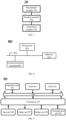
- Fig. 1 illustrates an implementation scenario diagram of a calibration information determining method according to an exemplary embodiment of the present disclosure.
- the implementation scenario 100 includes a VR device 101 and an image acquisition apparatus 102.
- the image acquisition apparatus 102 may be located at any position in any posture, and it does not need to be fixed by a fixing apparatus as long as the captured image data includes the target device.
- the VR device 101 may display various virtual reality images, and may further obtain pose data of the target device and corresponding acquisition time (i.e., a timestamp for obtaining the pose data of the target device), and the image acquisition apparatus 102 may obtain an image of the target device.
- the implementation scenario shown in Fig. 1 is only an exemplary illustration, and that other relative positions of the VR device and the image acquisition apparatus may be provided in an actual scenario.
- the VR device 101 may establish a communication link with the image acquisition apparatus 102.
- the VR device 101 and the image acquisition apparatus 102 may be connected to the same network.
- the VR device 101 may be a head-mounted virtual reality device, such as virtual reality glasses, and the target device 103 may be a device that can be worn or held by any part of the user, for example: handles, wristband, masks, shoes, ankle band, etc.
- the image acquisition apparatus 102 may be a camera or a mobile phone, a tablet computer, a smart watch and the like with an image acquisition function.
- the user may wear VR glasses and hold the target device to capture an image containing the target device through a camera on a cell phone.
- Fig. 2 illustrates a flowchart of a calibration information determining method according to an exemplary embodiment of the present disclosure.
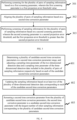
- a method of an embodiment of the present disclosure may include: Step 201: during a process of a movement along a plurality of dimensional directions of a target device, obtaining a plurality of pairs of sampling information of the target device corresponding to the plurality of dimensional directions, different pairs of sampling information correspond to different poses of the target device, and each pair of sampling information includes: two-dimensional detection data of the target device and three-dimensional detection data of the target device.
- the two-dimensional detection data is obtained by an image acquisition device
- the three-dimensional detection data is obtained by a VR device.
- the three-dimensional detection data may be pose data of the target device, and a sampling time parameter of the three-dimensional detection data is a detection time when the virtual reality device detects the three-dimensional detection data.
- the VR device may obtain pose data of the target device at a plurality of different times, and record a timestamp corresponding to each time as a sampling time parameter of the three-dimensional detection data, where the timestamp is defined as a first timestamp.
- the VR device can send the pose data of the target device at different times and the corresponding first timestamps to the calibration apparatus.
- the coordinates of the three-dimensional key points of the target device in the coordinate system of the VR world and the coordinates of the two-dimensional key points of the target device in the two-dimensional image may have the correspondence between the number of key points and between the positions of the key points.
- a certain key point of the target device has corresponding coordinate of the two-dimensional key point in a two-dimensional image, and has corresponding coordinate of the three-dimensional key point in a coordinate system of the VR world.
- the two-dimensional detection data may include not only the coordinates of the two-dimensional key points of the target device in the two-dimensional image, but also the pose of the image acquisition device, and the pose of the image acquisition device may be the pose data of the image acquisition device in a Simultaneous Localization and Mapping (SLAM) world coordinate system.
- SLAM Simultaneous Localization and Mapping
- the method of the exemplary embodiment of the present disclosure may implement the above calibration process without fixing the image acquisition device, and determine the calibration information of the image acquisition device in the coordinate system of the VR world.
- the method of the exemplary embodiment of the present disclosure controls the target device to move along a plurality of dimensional directions and obtains a plurality of pairs of sampling information of the target device corresponding to the plurality of dimensional directions during the process that the target device moves along the plurality of dimensional directions, so that calibration information of the image acquisition device in the plurality of dimensional directions in the coordinate system of the virtual reality world can be determined, and the calibration accuracy is effectively improved.
- the sampling information determines a first time correction parameter based on a sampling time parameter of the two-dimensional detection data and a sampling time parameter of the three-dimensional detection data of the target device corresponding to the same pose, and aligns the sampling time parameter of a plurality of the two-dimensional detection data and the sampling time parameter of a plurality of the three-dimensional detection data based on the first time correction parameter.
- the sampling time parameter may be a timestamp.
- the image acquisition device and the virtual reality device may employ different timestamp formats.
- the start time in the timestamp format employed by the virtual reality device is not consistent with the start time in the timestamp format employed by the image acquisition device. Therefore, when the target device is in any pose, the timestamp difference of the first timestamp corresponding to the three-dimensional detection data of the target device and the second timestamp corresponding to the two-dimensional detection data of the target device can be determined as the first time correction parameter.
- the first timestamps corresponding to the obtained plurality of three-dimensional detection data are corrected based on the timestamp difference, or the second timestamps corresponding to the obtained a plurality of two-dimensional detection data are corrected based on the timestamp difference.
- the second timestamp corresponding to each two-dimensional detection data may be corrected based on T delta to achieve the purpose of timestamp alignment, or the first timestamp corresponding to each three-dimensional detection data may be corrected based on T delta to achieve the purpose of timestamp alignment.
- the second method the three-dimensional detection data which is aligned with the sampling time of the two-dimensional detection data is determined based on at least two three-dimensional detection data in a plurality of three-dimensional detection data of the target device corresponding to the plurality of dimensional directions.
- the system clocks are not synchronous, and therefore, in the actual data collecting process, when the virtual reality device obtains three-dimensional detection data of the target device at a certain time, the image acquisition device may not capture a two-dimensional image including the target device, that is, the obtained first timestamps of the plurality of three-dimensional detection data and the second timestamps of the plurality of two-dimensional detection data cannot be aligned one by one in the time dimension.
- a method of data fitting or data interpolation may be used to determine the three-dimensional detection data aligned with the two-dimensional detection data in the time dimension, so as to obtain a plurality of pairs of sampling information of the target device corresponding to a plurality of dimensional directions.
- the second timestamp corresponding to a certain two-dimensional detection data of the target device is T2
- two first timestamps T1A and T1B adjacent to the second timestamp T2 in the time dimension may be determined from the first timestamps of the obtained plurality of three-dimensional detection data.
- the second timestamp T2 represents a time between the times represented by the two first timestamps T1A and T1B, and three-dimensional detection data which is time-aligned with the second timestamp T2 can be obtained by interpolating the two three-dimensional detection data corresponding to the two first timestamps T1A and T1B.
- the first method and the second method described above may be used in combination.
- the sampling time parameters of the plurality of two-dimensional detection data and the sampling time parameters of the plurality of three-dimensional detection data that are obtained in a plurality of dimensional directions may be aligned by using the first time correction parameter, and then the three-dimensional detection data aligned with the obtained two-dimensional detection data in the time dimension may be determined by data interpolation or data fitting process, so as to obtain a plurality of pairs of sampling information of the target device corresponding to a plurality of dimensional directions.
- the method of the exemplary embodiment of the present disclosure may further include: determining that a plurality of pairs of sampling information of the target device in the plurality of the dimensional directions meet a sampling termination condition.
- the sampling termination condition includes at least one of the following.
- the first condition is that: the number of the obtained pairs of sampling information is larger than the preset number. That is to say, when the number of pairs of obtained sampling information of the target device in each dimensional direction reaches a preset number, the calibration accuracy of the image acquisition device in each dimensional direction can be ensured.
- the second condition is that: the distribution of the obtained plurality of pairs of sampling information in different dimensional directions meets the preset distribution uniformity, so that the calibration result of the image acquisition device in each dimensional direction is not influenced by data distribution. That is, when the target device moves in a plurality of dimensional directions, the obtained sampling information in each dimensional direction corresponds to a plurality of movement positions of the target device in such dimensional direction, and the movement positions of the target device corresponding to the obtained pairs of sampling information should be distributed as uniformly as possible in the plurality of dimensional directions.
- a plurality of theoretical sampling positions on the movement path of the target device may be determined based on a theoretical sampling interval, and corresponding detection data may be saved to form a plurality of pairs of sampling information, where a distance between two adjacent theoretical sampling positions is the theoretical sampling interval, and the theoretical sampling interval may be set empirically.
- the collected two-dimensional detection data and three-dimensional detection data may be aligned in a time dimension to form a plurality of pairs of candidate sampling information, where each pair of candidate sampling information corresponds to one position of the target device during the moving process.
- a plurality of pairs of sampling information can be determined from the plurality of pairs of candidate sampling information according to a preset theoretical sampling interval from the position corresponding to the first pair of candidate sampling information.
- the VR device may prompt the user to control the target device to move according to a movement path that circles first and then moves back and forth, and may take the starting circle as a movement start point and the completion of the back and forth movement as a movement end point.
- the target device may be considered to have completed movement in a plurality of dimensional directions along the preset movement path.
- the method according to the exemplary embodiment of the present disclosure may further include: Step 301: performing screening for the plurality of pairs of sampling information based on a first screening parameter, the first screening parameter is a first projection error threshold value.
- a method of combining the RANSAC method with the PnP solution may be used to screen out the sampling information corresponding to two-dimensional detection data with a high detection error.
- the first screening parameter may then be the first projection error.
- a conversion matrix T slam _ w vr _ w from the coordinate system of the SLAM world to the coordinate system of the VR world is determined based on the pose of the target device in the coordinate system of the SLAM world and the pose of the target device in the coordinate system of the VR world.
- the calibration information of the image acquisition device in the coordinate system of the VR world namely the conversion matrix T vr _ w c from the coordinate system of the camera to the coordinate system of the VR world, can be determined based on the conversion matrix from the coordinate system of the SLAM world to the coordinate system of the VR world and the pose of the image acquisition device in the SLAM coordinate system.
- the number of the pairs of the sampling information used in the PnP algorithm can be determined according to the number of the unknown parameters contained in the calibration information. Based on this, after the calibration information of the image acquisition device in the virtual reality world is determined, each pair of sampling information can be combined with the calibration information of the image acquisition device in the coordinate system of the virtual reality world to determine the calibration error.
- the calibration error average value corresponding to different sampling information is calculated to be less than or equal to the preset error, and then considering that the calibration is successful and returning the calibration result.
- the two-dimensional detection data included in each pair of sampling information may be converted into predicted three-dimensional detection data through the calibration information, and a difference between the predicted three-dimensional detection data and the actual three-dimensional detection data may be determined, where the difference may be defined as a calibration error.
- the calibration errors corresponding to different sampling information are collected and analyzed to determine a calibration error average value, and when the calibration error average value is determined to be smaller than or equal to the preset error, a calibration result is returned. If the average value of the calibration errors is larger than the preset error, the calibration result is abnormal, and the two-dimensional detection data and the three-dimensional detection data are continuously obtained to carry out the second calibration.
- Aiming at the condition that the operating system is an Android software operating system, the pose of the image acquisition device and the internal reference of the image acquisition device in the coordinate system of the SLAM world are calculated according to the image of the real scene captured by the image acquisition device by combining an SLAM software algorithm.
- Fig. 5 illustrates a flow chart of another calibration information determining method of an exemplary embodiment of the present disclosure.
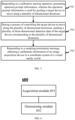
- a calibration information determining method may include: Step 501: responding to a calibration starting operation, presenting operation prompt information, and the operation prompt information is used for guiding a target device to move along a plurality of dimensional directions.
- the operation prompt information can be presented through VR device, and the presentation mode can be picture presentation or voice presentation.
- the picture presentation may be presented in the form of a video image, or may be presented in the form of a text description, which is not limited herein.
- the operation prompt information when the operation prompt information is presented, the user can complete a preset action under the corresponding track of the operation prompt information so as to realize that the target device moves along a plurality of dimensional directions.
- the plurality of dimensional directions at least include three dimensional directions perpendicular to each other in space, and in this case, the preset action may include controlling the target device to move for one circle along the circular movement path.
- the preset action may include controlling the target device to move along the circular movement path for one circle, and controlling the target device to move back and forth along the linear movement path, and the movement direction of the linear movement path intersects the plane defined by the circular movement path.
- Step 502 during a process of controlling the target device to move along the plurality of dimensional directions, sending a plurality of three-dimensional detection data of the target device corresponding to the plurality of dimensional directions.
- the VR device may send a plurality of three-dimensional detection data of the target device corresponding to a plurality of dimensional directions to the calibration apparatus, so that the calibration apparatus may implement calibration.
- Step 503 responding to a sampling termination message, obtaining a calibration information of an image acquisition device in a coordinate system of a virtual reality world.
- a sampling termination message can be sent to the VR device.
- the VR device stops sampling, and may obtain the calibration result, that is, the calibration information of the image acquisition device in the coordinate system of the virtual reality world, from the calibration apparatus.
- two-dimensional detection data of the target device and three-dimensional detection data of the target device included in each pair of sampling information substantially correspond to the same pose of the target device. That is to say, the image acquisition device and the virtual reality device can obtain the two-dimensional detection data and the three-dimensional detection data in different poses in a time-divisional manner.
- the calibration information of the image acquisition device in the coordinate system of the virtual reality world can be determined based on a plurality of pairs of sampling information corresponding to a plurality of dimensional directions. Therefore, according to the exemplary embodiment of the present disclosure, calibration information of the image acquisition device in the coordinate system of the virtual reality world can be automatically determined without operating the VR device and the image acquisition device back and forth, so that the calibration steps are simplified.
- the image acquisition device can obtain the calibration information of the image acquisition device in the coordinate system of the virtual reality world at any pose through the spatial projection relationship, and therefore, the method according to the exemplary embodiment of the present disclosure can complete the calibration of the image acquisition device in the coordinate system of the virtual reality world without fixing the image acquisition device.
- the method of the exemplary embodiment of the present disclosure obtains a plurality of pairs of sampling information of the target device corresponding to each dimensional direction, and therefore, the exemplary embodiment of the present disclosure can determine calibration information of the image acquisition device in a plurality of dimensional directions in the coordinate system of the virtual reality world, so that the calibration accuracy is improved.
- the electronic device includes corresponding hardware structures and/or software modules for performing the respective functions in order to realize the functions.
- the present disclosure is capable of being implemented in hardware or a combination of hardware and computer software for performing the various illustrative elements and algorithm steps described in connection with the embodiments disclosed herein. Whether a function is performed in hardware or computer software drives hardware depends upon the particular application and design constraints imposed on the solution. Skilled artisans may implement the described functionality in varying ways for each particular application, but such implementation should not be interpreted as departing from the scope of the present disclosure.
- each functional module may be divided corresponding to respective function, or two or more functions may be integrated into one processing module.
- the integrated module can be realized in a hardware mode, and can also be realized in a software functional module mode. It should be noted that, the division of the modules in the embodiment of the present disclosure is illustrative, and is only logical function division, and there may be another division manner in actual implementation.
- the exemplary embodiments of the present disclosure provide a calibration information determining apparatus, which may be an electronic device or a chip applied to an electronic device.
- Fig. 6 illustrates a schematic block diagram of functional modules of a calibration information determining apparatus according to an exemplary embodiment of the present disclosure.
- the calibration information determining apparatus 600 includes:
- the acquisition module 601 is configured to determine a first time correction parameter based on a sampling time parameter of the two-dimensional detection data and a sampling time parameter of the three-dimensional detection data of the target device corresponding to the same pose;
- the acquisition module 601 is configured to align the sampling time parameter of a plurality of the two-dimensional detection data and the sampling time parameter of a plurality of the three-dimensional detection data based on the first time correction parameter.
- the sampling time parameter of the two-dimensional detection data is an image acquisition time when the image acquisition device obtains the two-dimensional detection data
- the sampling time parameter of the three-dimensional detection data is a detection time when the virtual reality device detects the three-dimensional detection data.
- the determining module 602 is further configured to determine that a plurality of pairs of sampling information of the target device in the plurality of the dimensional directions meet a sampling termination condition, and the sampling termination condition includes at least one of the following conditions:
- Fig. 8 illustrates a schematic block diagram of a chip according to an exemplary embodiment of the present disclosure.
- the chip 800 includes one or more processors 801 and a communication interface 802.
- the communication interface 802 can support the electronic device to perform the data transceiving step in the above method, and the processor 801 can support the electronic device to perform the data processing step in the above method.
- An exemplary embodiment of the present disclosure also provides an electronic device, including at least one processor; and a memory communicatively connected with the at least one processor.
- the memory stores a computer program that can be executed by the at least one processor, and the computer program, when executed by the at least one processor, is used for causing the electronic device to perform the method according to the embodiment of the present disclosure.
- Exemplary embodiments of the present disclosure also provide a computer program product including instructions, and the instructions, when executed by a processor of a computer, are used to cause the processor to perform the method according to the embodiment of the present disclosure.
- Exemplary embodiments of the present disclosure also provide a computer program including instructions for causing a processor of a computer to perform a method according to an embodiment of the present disclosure.
- FIG. 9 a structural block diagram of an electronic device 900 that can be a server or a client of the present disclosure will now be described, which is an example of a hardware device that can be applied to various aspects of the present disclosure.
- Electronic devices are intended to represent various forms of digital electronic computer devices, such as laptop computers, desktop computers, workstations, personal digital assistants, servers, blade servers, mainframe computers, and other suitable computers.
- Electronic devices can also represent various forms of mobile devices, such as personal digital processing, cellular phones, smart phones, wearable devices and other similar computing devices.
- the components shown herein, their connections and relationships, and their functions are only examples, and are not intended to limit the implementation of the present disclosure described and/or claimed herein.
- an electronic device 900 includes a calculation unit 901, which can perform various appropriate actions and processes according to a computer program stored in a read-only memory (ROM) 902 or a computer program loaded from a storage unit 908 into a random access memory (RAM) 903.
- ROM read-only memory
- RAM random access memory
- a computing unit 901, a ROM 902 and a RAM 903 are connected to each other through a bus 904.
- I/O input/output
- a plurality of components in the electronic device 900 are connected to the I/O interface 905, including an input unit 906, an output unit 907, a storage unit 908 and a communication unit 909.
- the input unit 906 may be any type of device capable of inputting information to the electronic device 900, and the input unit 906 may receive input numeric or character information and generate key signal input related to user settings and/or function control of the electronic device.
- the output unit 907 may be any type of device capable of presenting information, and may include but not limited to a display, a speaker, a video/audio output terminal, a vibrator and/or a printer.
- the storage unit 908 may include, but is not limited to, a magnetic disk and an optical disk.
- the communication unit 909 allows the electronic device 900 to exchange information/data with other devices through a computer network such as the Internet and/or various telecommunication networks, and may include but not limited to a modem, a network card, an infrared communication device, a wireless communication transceiver and/or a chipset, such as a Bluetooth TM device, a WiFi device, a WiMax device, a cellular communication device and/or the like.
- the computing unit 901 may be various general and/or special processing components with processing and computing capabilities. Some examples of the computing unit 901 include, but are not limited to, a central processing unit (CPU), a graphics processing unit (GPU), various specialized artificial intelligence (AI) computing chips, various computing units running machine learning model algorithms, a digital signal processor (DSP), and any suitable processor, controller, microcontroller, etc.
- the computing unit 901 performs the various methods and processes described above.
- the method of the exemplary embodiment of the present disclosure may be implemented as a computer software program tangibly embodied in a machine-readable medium, such as the storage unit 908.
- part or all of the computer program may be loaded and/or installed on the electronic device 900 via the ROM 902 and/or the communication unit 909.
- the computing unit 901 may be configured to perform the methods of the exemplary embodiments of the present disclosure by any other suitable means (for example, by means of firmware).
- the program code for implementing the method of the present disclosure can be written in any combination of one or more programming languages. These program codes may be provided to a processor or controller of a general-purpose computer, a special-purpose computer or other programmable data processing apparatus, so that the program codes, when executed by the processor or controller, cause the functions/operations specified in the flowcharts and/or block diagrams to be implemented.
- the program code can be completely executed on a machine, partially executed on a machine, partially executed on a machine as a separate software package and partially executed on a remote machine or completely executed on a remote machine or server.
- a machine-readable medium may be a tangible medium that may contain or store a program for use by or in connection with an instruction execution system, apparatus or device.
- the machine-readable medium may be a machine-readable signal medium or a machine-readable storage medium.
- a machine-readable medium may include, but is not limited to, an electronic, magnetic, optical, electromagnetic, infrared, or semiconductor system, device or equipment, or any suitable combination of the above.
- machine-readable storage medium may include an electrical connection based on one or more lines, a portable computer disk, a hard disk, a random access memory (RAM), a read-only memory (ROM), an erasable programmable read-only memory (EPROM or flash memory), an optical fiber, a convenient compact disk read-only memory (CD-ROM), an optical storage device, a magnetic storage device, or any suitable combination of the above.
- RAM random access memory
- ROM read-only memory
- EPROM or flash memory erasable programmable read-only memory
- CD-ROM compact disk read-only memory
- magnetic storage device or any suitable combination of the above.
- machine-readable medium and “computer-readable medium” refer to any computer program product, device, and/or device (e.g., magnetic disk, optical disk, memory, programmable logic device (PLD)) for providing machine instructions and/or data to a programmable processor, including machine-readable media that receive machine instructions as machine-readable signals.
- machine-readable signal refers to any signal used to provide machine instructions and/or data to a programmable processor.
- the systems and techniques described herein can be implemented on a computer having a display device (for example, a CRT (cathode ray tube) or an LCD (liquid crystal display) monitor) for displaying information to users; And a keyboard and a pointing device (for example, a mouse or a trackball) through which a user can provide input to the computer.
- a display device for example, a CRT (cathode ray tube) or an LCD (liquid crystal display) monitor
- a keyboard and a pointing device for example, a mouse or a trackball
- Other kinds of devices can also be used to provide interaction with users;
- the feedback provided to the user can be any form of sensory feedback (for example, visual feedback, auditory feedback, or tactile feedback);
- the input from the user can be received in any form, including acoustic input, voice input or tactile input.
- the systems and techniques described herein may be implemented in or include a computing system that includes a back-end component (e.g., as a data server), a computing system that includes a middleware component (e.g., an application server), or a computing system that includes a front-end component (e.g., a user computer with a graphical user interface or a web browser through which a user can interact with embodiments of the systems and techniques described herein).
- Components of the system can be interconnected by any form or medium of digital data communication (for example, communication network). Examples of communication networks include local area network (LAN), wide area network (WAN) and Internet.
- a computer system may include a client and a server.
- the client and server are generally far away from each other and usually interact through a communication network.
- the relationship between client and server is generated by computer programs running on corresponding computers and having a client-server relationship with each other.
- the computer program product includes one or more computer programs or instructions.
- the computer can be a general-purpose computer, a special-purpose computer, a computer network, a terminal, user equipment or other programmable devices.
- the computer program or instructions can be stored in a computer-readable storage medium or transmitted from one computer-readable storage medium to another.
- the computer program or instructions can be transmitted from one website, computer, server or data center to another website, computer, server or data center by wired or wireless means.
- the computer-readable storage medium can be any available medium that a computer can access or a data storage device such as a server or a data center that integrates one or more available media.
- the available media can be magnetic media, such as floppy disk, hard disk, magnetic tape. It can also be an optical medium, such as a digital video disc (DVD). It can also be a semiconductor medium, for example, a solid state drive (SSD).
Landscapes
- Engineering & Computer Science (AREA)
- Theoretical Computer Science (AREA)
- Physics & Mathematics (AREA)
- General Physics & Mathematics (AREA)
- General Engineering & Computer Science (AREA)
- Computer Vision & Pattern Recognition (AREA)
- Computer Graphics (AREA)
- Computer Hardware Design (AREA)
- Software Systems (AREA)
- Human Computer Interaction (AREA)
- Length Measuring Devices By Optical Means (AREA)
Applications Claiming Priority (2)
| Application Number | Priority Date | Filing Date | Title |
|---|---|---|---|
| CN202211678806.7A CN115937478B (zh) | 2022-12-26 | 2022-12-26 | 一种标定信息确定方法、装置、电子设备和存储介质 |
| PCT/CN2023/133208 WO2024139863A1 (zh) | 2022-12-26 | 2023-11-22 | 标定信息确定方法、装置、电子设备和存储介质 |
Publications (1)
| Publication Number | Publication Date |
|---|---|
| EP4535291A1 true EP4535291A1 (de) | 2025-04-09 |
Family
ID=86648961
Family Applications (1)
| Application Number | Title | Priority Date | Filing Date |
|---|---|---|---|
| EP23909795.9A Pending EP4535291A1 (de) | 2022-12-26 | 2023-11-22 | Verfahren und vorrichtung zur bestimmung von kalibrierungsinformationen, elektronische vorrichtung und speichermedium |
Country Status (3)
| Country | Link |
|---|---|
| EP (1) | EP4535291A1 (de) |
| CN (1) | CN115937478B (de) |
| WO (1) | WO2024139863A1 (de) |
Families Citing this family (5)
| Publication number | Priority date | Publication date | Assignee | Title |
|---|---|---|---|---|
| CN115937478B (zh) * | 2022-12-26 | 2023-11-17 | 北京字跳网络技术有限公司 | 一种标定信息确定方法、装置、电子设备和存储介质 |
| CN117036460B (zh) * | 2023-04-18 | 2026-04-28 | 北京字跳网络技术有限公司 | 空间内物体的标定方法、装置、设备、介质和程序 |
| CN118470136B (zh) * | 2024-07-08 | 2024-11-26 | 阿里云计算有限公司 | 相机标定方法、装置及系统、图像采集方法及装置 |
| CN119105921B (zh) * | 2024-11-08 | 2025-06-24 | 舜宇光学(浙江)研究院有限公司 | 延时测试方法、延时检测设备、电子设备及存储介质 |
| CN119847445B (zh) * | 2025-01-15 | 2025-11-18 | 合肥开梦科技有限责任公司 | 数据写入方法及存储器控制器 |
Family Cites Families (16)
| Publication number | Priority date | Publication date | Assignee | Title |
|---|---|---|---|---|
| CN104315995B (zh) * | 2014-11-15 | 2017-02-01 | 中国科学院光电研究院 | 基于虚拟多立方体标准目标的tof深度相机三维坐标标定装置和方法 |
| CN107170024A (zh) * | 2017-04-01 | 2017-09-15 | 武汉市真意境文化科技有限公司 | 一种基于vr环境二维视图生成方法及系统 |
| CN107329593B (zh) * | 2017-06-28 | 2020-10-09 | 歌尔科技有限公司 | 一种vr手柄定位方法及装置 |
| WO2020149462A1 (ko) * | 2019-01-17 | 2020-07-23 | 주식회사 비전소프트 | 정밀도가 향상된 동영상 검출 장치 |
| CN110378965B (zh) * | 2019-05-21 | 2022-04-15 | 北京百度网讯科技有限公司 | 确定路侧成像设备坐标系转换参数的方法、装置、设备 |
| CN110717994A (zh) * | 2019-10-21 | 2020-01-21 | 联想(北京)有限公司 | 远程视频交互的实现方法及相关设备 |
| CN110866977B (zh) * | 2019-10-31 | 2023-06-16 | Oppo广东移动通信有限公司 | 增强现实处理方法及装置、系统、存储介质和电子设备 |
| WO2021249390A1 (zh) * | 2020-06-12 | 2021-12-16 | 贝壳技术有限公司 | 实现增强现实的方法和装置、存储介质、电子设备 |
| CN112000228B (zh) * | 2020-09-04 | 2024-04-05 | 河北大学 | 一种沉浸式虚拟现实中控制移动的方法及系统 |
| WO2022241638A1 (zh) * | 2021-05-18 | 2022-11-24 | 华为技术有限公司 | 一种投影方法及装置、车辆及ar-hud |
| CN113538591B (zh) * | 2021-06-18 | 2024-03-12 | 深圳奥锐达科技有限公司 | 一种距离测量装置与相机融合系统的标定方法及装置 |
| CN113538700A (zh) * | 2021-06-28 | 2021-10-22 | 浙江商汤科技开发有限公司 | 增强现实设备的标定方法及装置、电子设备和存储介质 |
| CN115100276B (zh) * | 2022-05-10 | 2024-01-19 | 北京字跳网络技术有限公司 | 处理虚拟现实设备的画面图像的方法、装置及电子设备 |
| CN114882121A (zh) * | 2022-05-19 | 2022-08-09 | 中国商用飞机有限责任公司北京民用飞机技术研究中心 | 一种基于混合现实头显的人机交互虚实融合方法及装置 |
| CN115082520B (zh) * | 2022-06-14 | 2024-10-11 | 歌尔股份有限公司 | 定位追踪方法、装置、终端设备及计算机可读存储介质 |
| CN115937478B (zh) * | 2022-12-26 | 2023-11-17 | 北京字跳网络技术有限公司 | 一种标定信息确定方法、装置、电子设备和存储介质 |
-
2022
- 2022-12-26 CN CN202211678806.7A patent/CN115937478B/zh active Active
-
2023
- 2023-11-22 WO PCT/CN2023/133208 patent/WO2024139863A1/zh not_active Ceased
- 2023-11-22 EP EP23909795.9A patent/EP4535291A1/de active Pending
Also Published As
| Publication number | Publication date |
|---|---|
| WO2024139863A1 (zh) | 2024-07-04 |
| CN115937478A (zh) | 2023-04-07 |
| CN115937478B (zh) | 2023-11-17 |
Similar Documents
| Publication | Publication Date | Title |
|---|---|---|
| EP4535291A1 (de) | Verfahren und vorrichtung zur bestimmung von kalibrierungsinformationen, elektronische vorrichtung und speichermedium | |
| US12002239B2 (en) | Data processing method and device used in virtual scenario | |
| US11954870B2 (en) | Dynamic scene three-dimensional reconstruction method, apparatus and system, server, and medium | |
| US20210271321A1 (en) | Method and apparatus for training gaze tracking model, and method and apparatus for gaze tracking | |
| KR102558473B1 (ko) | 이미지를 표시하기 위한 방법 및 그 전자 장치 | |
| CN109410285B (zh) | 一种校准方法、装置、终端设备及存储介质 | |
| US10885639B2 (en) | Hand detection and tracking method and device | |
| US20190196180A1 (en) | Method and Apparatus For Adjusting Scanning Status | |
| CN114584836B (zh) | 电子产品使用行为检测方法、装置、系统及介质 | |
| KR20140086463A (ko) | 영상 변형 장치 및 그 방법 | |
| WO2024125217A1 (zh) | 一种光斑追踪方法、装置、电子设备及存储介质 | |
| CN112994980A (zh) | 时延测试方法、装置、电子设备和存储介质 | |
| CN111276244B (zh) | 骨折复位的计算机辅助方法 | |
| US11995840B2 (en) | Anthropometric data portable acquisition device and method of collecting anthropometric data | |
| US20250061667A1 (en) | Control method and apparatus based on mixed reality, electronic device, and storage medium | |
| EP3160122A1 (de) | Tönungsmonitor, tönungssystem und tönungsverfahren | |
| CN118262078B (zh) | 三维人脸模型的摆正处理方法、装置、设备及介质 | |
| US20250329023A1 (en) | Image segmentation method and apparatus, electronic device, and storage medium | |
| US12547145B2 (en) | Human action recognition and assistance to AR device | |
| CN117892374A (zh) | 一种基于视觉设计的缝制方法及装置 | |
| US8755819B1 (en) | Device location determination using images | |
| CN114972415A (zh) | 机器人视觉跟踪方法、系统、电子设备及介质 | |
| EP4694168A2 (de) | Verfahren, vorrichtung, elektronische vorrichtung und medium zur verarbeitung von kamerabilddaten | |
| US20250139824A1 (en) | Modeling, drift detection and drift correction for visual inertial odometry | |
| US20250104322A1 (en) | Method, and apparatus, device, and storage medium for generating effect image |
Legal Events
| Date | Code | Title | Description |
|---|---|---|---|
| STAA | Information on the status of an ep patent application or granted ep patent |
Free format text: STATUS: THE INTERNATIONAL PUBLICATION HAS BEEN MADE |
|
| PUAI | Public reference made under article 153(3) epc to a published international application that has entered the european phase |
Free format text: ORIGINAL CODE: 0009012 |
|
| STAA | Information on the status of an ep patent application or granted ep patent |
Free format text: STATUS: REQUEST FOR EXAMINATION WAS MADE |
|
| 17P | Request for examination filed |
Effective date: 20241231 |
|
| AK | Designated contracting states |
Kind code of ref document: A1 Designated state(s): AL AT BE BG CH CY CZ DE DK EE ES FI FR GB GR HR HU IE IS IT LI LT LU LV MC ME MK MT NL NO PL PT RO RS SE SI SK SM TR |
|
| DAV | Request for validation of the european patent (deleted) | ||
| DAX | Request for extension of the european patent (deleted) |