EP4535280A1 - Strahlungsbildverarbeitungsvorrichtung, strahlungsbildverarbeitungsverfahren und strahlungsbildverarbeitungsprogramm - Google Patents
Strahlungsbildverarbeitungsvorrichtung, strahlungsbildverarbeitungsverfahren und strahlungsbildverarbeitungsprogramm Download PDFInfo
- Publication number
- EP4535280A1 EP4535280A1 EP24201198.9A EP24201198A EP4535280A1 EP 4535280 A1 EP4535280 A1 EP 4535280A1 EP 24201198 A EP24201198 A EP 24201198A EP 4535280 A1 EP4535280 A1 EP 4535280A1
- Authority
- EP
- European Patent Office
- Prior art keywords
- component
- image
- radiation image
- radiation
- attenuation
- Prior art date
- Legal status (The legal status is an assumption and is not a legal conclusion. Google has not performed a legal analysis and makes no representation as to the accuracy of the status listed.)
- Pending
Links
Images






Classifications
-
- G—PHYSICS
- G06—COMPUTING OR CALCULATING; COUNTING
- G06T—IMAGE DATA PROCESSING OR GENERATION, IN GENERAL
- G06T5/00—Image enhancement or restoration
- G06T5/50—Image enhancement or restoration using two or more images, e.g. averaging or subtraction
-
- G—PHYSICS
- G06—COMPUTING OR CALCULATING; COUNTING
- G06T—IMAGE DATA PROCESSING OR GENERATION, IN GENERAL
- G06T7/00—Image analysis
- G06T7/0002—Inspection of images, e.g. flaw detection
- G06T7/0012—Biomedical image inspection
- G06T7/0014—Biomedical image inspection using an image reference approach
-
- A—HUMAN NECESSITIES
- A61—MEDICAL OR VETERINARY SCIENCE; HYGIENE
- A61B—DIAGNOSIS; SURGERY; IDENTIFICATION
- A61B6/00—Apparatus or devices for radiation diagnosis; Apparatus or devices for radiation diagnosis combined with radiation therapy equipment
- A61B6/48—Diagnostic techniques
- A61B6/481—Diagnostic techniques involving the use of contrast agents
-
- A—HUMAN NECESSITIES
- A61—MEDICAL OR VETERINARY SCIENCE; HYGIENE
- A61B—DIAGNOSIS; SURGERY; IDENTIFICATION
- A61B6/00—Apparatus or devices for radiation diagnosis; Apparatus or devices for radiation diagnosis combined with radiation therapy equipment
- A61B6/48—Diagnostic techniques
- A61B6/482—Diagnostic techniques involving multiple energy imaging
-
- A—HUMAN NECESSITIES
- A61—MEDICAL OR VETERINARY SCIENCE; HYGIENE
- A61B—DIAGNOSIS; SURGERY; IDENTIFICATION
- A61B6/00—Apparatus or devices for radiation diagnosis; Apparatus or devices for radiation diagnosis combined with radiation therapy equipment
- A61B6/50—Apparatus or devices for radiation diagnosis; Apparatus or devices for radiation diagnosis combined with radiation therapy equipment specially adapted for specific body parts; specially adapted for specific clinical applications
- A61B6/505—Apparatus or devices for radiation diagnosis; Apparatus or devices for radiation diagnosis combined with radiation therapy equipment specially adapted for specific body parts; specially adapted for specific clinical applications for diagnosis of bone
-
- G—PHYSICS
- G06—COMPUTING OR CALCULATING; COUNTING
- G06T—IMAGE DATA PROCESSING OR GENERATION, IN GENERAL
- G06T2207/00—Indexing scheme for image analysis or image enhancement
- G06T2207/10—Image acquisition modality
- G06T2207/10072—Tomographic images
-
- G—PHYSICS
- G06—COMPUTING OR CALCULATING; COUNTING
- G06T—IMAGE DATA PROCESSING OR GENERATION, IN GENERAL
- G06T2207/00—Indexing scheme for image analysis or image enhancement
- G06T2207/10—Image acquisition modality
- G06T2207/10116—X-ray image
-
- G—PHYSICS
- G06—COMPUTING OR CALCULATING; COUNTING
- G06T—IMAGE DATA PROCESSING OR GENERATION, IN GENERAL
- G06T2207/00—Indexing scheme for image analysis or image enhancement
- G06T2207/20—Special algorithmic details
- G06T2207/20212—Image combination
- G06T2207/20224—Image subtraction
-
- G—PHYSICS
- G06—COMPUTING OR CALCULATING; COUNTING
- G06T—IMAGE DATA PROCESSING OR GENERATION, IN GENERAL
- G06T2207/00—Indexing scheme for image analysis or image enhancement
- G06T2207/30—Subject of image; Context of image processing
- G06T2207/30004—Biomedical image processing
-
- G—PHYSICS
- G06—COMPUTING OR CALCULATING; COUNTING
- G06T—IMAGE DATA PROCESSING OR GENERATION, IN GENERAL
- G06T2207/00—Indexing scheme for image analysis or image enhancement
- G06T2207/30—Subject of image; Context of image processing
- G06T2207/30004—Biomedical image processing
- G06T2207/30008—Bone
Definitions
- the present disclosure relates to a radiation image processing device, a radiation image processing method, and a radiation image processing program.
- the energy subtraction processing is a method in which respective pixels of the two radiation images obtained as described above are associated with each other, and subtraction is performed after multiplying a weight coefficient based on an attenuation coefficient according to a composition between pixels to acquire an image in which specific compositions, such as a bone part and a soft part, included in the radiation image are separated.
- the attenuation coefficient of the soft part is necessary.
- the attenuation coefficient of the soft part can be directly obtained from the radiation image.
- the soft part and the bone part overlap each other in the bone region in the radiation image, the attenuation coefficient of the soft part cannot be directly obtained from the radiation image.
- the soft part does not consist of a single composition, but a plurality of compositions, such as the fat and the muscle, are mixed in a complicated manner. Also, the composition of the soft part varies greatly among individuals.
- the present disclosure has been made in view of the above circumstances, and is to accurately separate a plurality of components included in a radiation image.
- the present disclosure relates to a radiation image processing device comprising at least one processor, in which the processor acquires a first radiation image and a second radiation image which are acquired by imaging a subject, which includes a first component consisting of a plurality of compositions and a second component consisting of a single composition, with radiation having different energy distributions, derives an initial second component image in which the second component is emphasized, based on the first radiation image and the second radiation image, specifies a second component region including the second component in the first radiation image or the second radiation image based on the initial second component image, specifies a region other than the second component region in the first radiation image or the second radiation image as a first component region including only the first component, derives a characteristic of the first component related to attenuation of the radiation based on the first radiation image and the second radiation image in the specified first component region in the first radiation image or the second radiation image, derives the characteristic of the first component in the specified second component region in the first radiation image or the second radiation image based on the characteristic of the first component
- the processor may update the initial second component image with the second component image, and may repeat the specification of the first component region, the specification of the second component region, the derivation of the characteristic of the first component in the specified first component region, the derivation of the characteristic of the first component in the specified second component region, and the derivation of the first component image and the second component image using the updated initial second component image until a predetermined condition is satisfied.
- the processor may derive an attenuation characteristic related to the attenuation of the radiation in at least the region of the subject in the first radiation image or the second radiation image, and may use the attenuation characteristic derived for the first component region as the characteristic of the first component for the first component region.
- the processor may derive a first attenuation image and a second attenuation image, which represent attenuation amounts of the radiation due to the subject, from the first radiation image and the second radiation image, respectively, and may derive an attenuation ratio, which is a ratio between corresponding pixels of the first attenuation image and the second attenuation image, as the characteristic of the first component.
- the processor may derive a first attenuation image and a second attenuation image, which represent attenuation amounts of the radiation due to the subject, from the first radiation image and the second radiation image, respectively, and may derive an attenuation ratio, which is a ratio between corresponding pixels of the first attenuation image and the second attenuation image, as the attenuation characteristic.
- the processor may derive an initial second component attenuation image in which the second component is emphasized, based on the first attenuation image, the second attenuation image, and the characteristic of the first component, may derive a second component attenuation image by matching a contrast of the second component included in the initial second component attenuation image with a contrast of the second component included in the first attenuation image or the second attenuation image, may derive a first component attenuation image in which the first component is emphasized, based on the first attenuation image or the second attenuation image, and the second component attenuation image, and may derive the first component image and the second component image from the first component attenuation image and the second component attenuation image, respectively.
- the processor may derive information related to thicknesses of the plurality of compositions in at least the region of the subject in the first radiation image or the second radiation image, and may derive an attenuation coefficient of the first component as the characteristic of the first component based on an attenuation coefficient of the radiation of each of the plurality of compositions included in the first component and information related to a thickness of each of the plurality of compositions.
- the processor may derive a first attenuation image and a second attenuation image, which represent attenuation amounts of the radiation due to the subject, from the first radiation image and the second radiation image, respectively, may derive a thickness of the first component and a thickness of the second component based on the first attenuation image, the second attenuation image, the characteristic of the first component, and a characteristic of the second component, and may derive the first component image and the second component image based on the thickness of the first component and the thickness of the second component.
- the processor may specify a provisional first component region and a provisional second component region in the first radiation image or the second radiation image based on a pixel value of the first radiation image or the second radiation image, may derive a characteristic of a provisional first component related to the attenuation of the radiation based on the first radiation image and the second radiation image in the provisional first component region in the first radiation image or the second radiation image, may derive the characteristic of the provisional first component in the provisional second component region in the first radiation image or the second radiation image based on the characteristic of the provisional first component derived in the provisional first component region around the provisional second component region, and may derive the initial second component image based on the characteristic of the provisional first component in at least the region of the subject in the first radiation image or the second radiation image.
- the first component may be a soft part of the subject
- the first component image may be a soft part image
- the second component may be a bone part of the subject
- the second component image may be a bone part image
- the plurality of compositions included in the first component may be fat and muscle.
- the processor may derive an evaluation result representing a state of a bone based on a region of the bone part in the bone part image.
- the evaluation result representing the state of the bone may be a bone mineral density or a value correlated with the bone mineral density.
- the value correlated with the bone mineral density may be a value representing a likelihood of osteoporosis.
- the processor may determine the state of the bone based on the evaluation result.
- the determination of the state of the bone may be determination of whether or not osteoporosis is suspected.
- the present disclosure relates to a radiation image processing method comprising, via a computer, acquiring a first radiation image and a second radiation image which are acquired by imaging a subject, which includes a first component consisting of a plurality of compositions and a second component consisting of a single composition, with radiation having different energy distributions, deriving an initial second component image in which the second component is emphasized, based on the first radiation image and the second radiation image, specifying a second component region including the second component in the first radiation image or the second radiation image based on the initial second component image, specifying a region other than the second component region in the first radiation image or the second radiation image as a first component region including only the first component, deriving a characteristic of the first component related to attenuation of the radiation based on the first radiation image and the second radiation image in the specified first component region in the first radiation image or the second radiation image, deriving the characteristic of the first component in the specified second component region in the first radiation image or the second radiation image based on the characteristic of the first component
- the present disclosure relates to a radiation image processing program causing a computer to execute a procedure of acquiring a first radiation image and a second radiation image which are acquired by imaging a subject, which includes a first component consisting of a plurality of compositions and a second component consisting of a single composition, with radiation having different energy distributions, a procedure of deriving an initial second component image in which the second component is emphasized, based on the first radiation image and the second radiation image, a procedure of specifying a second component region including the second component in the first radiation image or the second radiation image based on the initial second component image, a procedure of specifying a region other than the second component region in the first radiation image or the second radiation image as a first component region including only the first component, a procedure of deriving a characteristic of the first component related to attenuation of the radiation based on the first radiation image and the second radiation image in the specified first component region in the first radiation image or the second radiation image, a procedure of deriving the characteristic of the first component in the
- Fig. 1 is a schematic block diagram showing a configuration of a radiography system to which a radiation image processing device according to a first embodiment of the present disclosure is applied.
- the radiography system according to the first embodiment comprises an imaging apparatus 1 and a radiation image processing device 10 according to the present embodiment.
- the imaging apparatus 1 is an imaging apparatus for performing energy subtraction imaging by a so-called one-shot method for changing energy of each of radiation, such as X-rays, emitted from a radiation source 3 and transmitted through a subject H and irradiating a first radiation detector 5 and a second radiation detector 6 with the converted radiation.
- the first radiation detector 5, a radiation energy conversion filter 7 made of a copper plate or the like, and the second radiation detector 6 are disposed in order from a side closest to the radiation source 3, and the radiation source 3 is driven. Note that the first and second radiation detectors 5 and 6 are closely attached to the radiation energy conversion filter 7.
- a first radiation image G1 of the subject H by low-energy radiation also including so-called soft rays is acquired.
- a second radiation image G2 of the subj ect H by high-energy radiation from which the soft rays are removed is acquired.
- the first and second radiation images G1 and G2 are input to the radiation image processing device 10.
- the first and second radiation detectors 5 and 6 can perform recording and reading-out of the radiation image repeatedly.
- a so-called direct-type radiation detector that directly receives emission of the radiation and generates an electric charge may be used, or a so-called indirect-type radiation detector that converts the radiation into visible light and then converts the visible light into an electric charge signal may be used.
- a so-called thin film transistor (TFT) readout method in which the radiation image signal is read out by turning a TFT switch on and off
- a so-called optical readout method in which the radiation image signal is read out by emission of read out light.
- other methods may also be used without being limited to these methods.
- the radiation image processing device 10 is a computer, such as a workstation, a server computer, and a personal computer, and comprises a central processing unit (CPU) 11, a non-volatile storage 13, and a memory 16 as a transitory storage region.
- the radiation image processing device 10 comprises a display 14, such as a liquid crystal display, an input device 15, such as a keyboard and a mouse, and a network interface (I/F) 17 connected to a network (not shown).
- the CPU 11, the storage 13, the display 14, the input device 15, the memory 16, and the network I/F 17 are connected to a bus 18.
- the CPU 11 is an example of a processor according to the present disclosure.
- the storage 13 is realized by a hard disk drive (HDD), a solid state drive (SSD), a flash memory, and the like.
- a radiation image processing program 12 installed in the radiation image processing device 10 is stored in the storage 13 as a storage medium.
- the CPU 11 reads out the radiation image processing program 12 from the storage 13, expands the read out radiation image processing program 12 to the memory 16, and executes the expanded radiation image processing program 12.
- the radiation image processing program 12 is stored in a storage device of the server computer connected to the network or in a network storage in a state of being accessible from the outside, and is downloaded and installed in the computer that configures the radiation image processing device 10 in response to the request.
- the radiation image processing program 12 is distributed in a state of being recorded on a recording medium, such as a digital versatile disc (DVD) or a compact disc read only memory (CD-ROM), and is installed in the computer that configures the radiation image processing device 10 from the recording medium.
- a recording medium such as a digital versatile disc (DVD) or a compact disc read only memory (CD-ROM
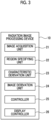
- Fig. 3 is a diagram showing the functional configuration of the radiation image processing device according to the first embodiment.
- the radiation image processing device 10 comprises an image acquisition unit 21, a region specifying unit 22, a characteristic derivation unit 23, an image derivation unit 24, a controller 25, and a display controller 26.
- the CPU 11 functions as the image acquisition unit 21, the region specifying unit 22, the characteristic derivation unit 23, the image derivation unit 24, the controller 25, and the display controller 26.
- the image acquisition unit 21 acquires the first radiation image G1 and the second radiation image G2 of the subject H from the first and second radiation detectors 5 and 6 by causing the imaging apparatus 1 to perform the energy subtraction imaging of the subject H.
- imaging conditions such as an imaging dose, an energy distribution, a tube voltage, a source image receptor distance (SID) which is a distance between the radiation source 3 and the surfaces of the first and second radiation detectors 5 and 6, and a source object distance (SOD) which is a distance between the radiation source 3 and the surface of the subject H, are set.
- the imaging conditions need only be set by input from the input device 15 by a user.
- the set imaging conditions are stored in the storage 13.
- the first and second radiation images G1 and G2 may be acquired by a program different from the radiation image processing program according to the first embodiment.
- the image acquisition unit 21 reads out the first and second radiation images G1 and G2 stored in the storage 13 from the storage 13 for processing.
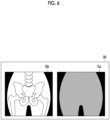
- the soft regions of the first and second radiation images G1 and G2 include only the soft part component of the subject H.
- the bone regions of the first and second radiation images G1 and G2 are actually regions in which the bone part component and the soft part component are mixed.
- the soft region is an example of a first component region including only the first component according to the present disclosure
- the bone region is an example of a second component region including the second component according to the present disclosure.
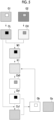
- the region specifying unit 22 derives a first attenuation image CL and a second attenuation image CH, which represent the attenuation amounts of the radiation due to the subject H, from the first radiation image G1 and the second radiation image G2, respectively, and derives an attenuation ratio, which is a ratio between corresponding pixels of the first attenuation image CL and the second attenuation image CH, as the attenuation characteristic.
- a pixel value of the first attenuation image CL represents the attenuation amount of the low-energy radiation due to the subject H
- a pixel value of the second attenuation image CH represents the attenuation amount of the high-energy radiation due to the subject H.
- the first attenuation image CL and the second attenuation image CH are derived from the first radiation image G1 and the second radiation image G2 by Expression (1) and Expression (2).
- Gd1 is the pixel value of the direct radiation region in the first radiation image G1.
- Gd2 is the pixel value of the direct radiation region in the second radiation image G2.
- CL x y Gd 1 ⁇ G 1 x y CH
- x y Gd 2 ⁇ G 2 x y
- the region specifying unit 22 derives an attenuation ratio map representing the attenuation ratio of the radiation between the first radiation image G1 and the second radiation image G2.
- an attenuation ratio map M1 is derived by deriving a ratio between the corresponding pixels of the first attenuation image CL and the second attenuation image CH by Expression (3).
- the attenuation ratio is an example of a characteristic related to attenuation of the radiation according to the present disclosure.
- M 1 x y CL x y / CH x y
- the region specifying unit 22 compares the attenuation ratios of the respective pixels of the attenuation ratio map M1, specifies a region consisting of the pixel in which the attenuation ratio is larger than a predetermined threshold value as the bone region, and specifies a region other than the bone region as the soft region.
- the region specifying unit 22 may compare the attenuation ratio between each pixel of the attenuation ratio map M1 with the surrounding pixels, and may specify the pixel having a larger attenuation ratio than surrounding pixels as the pixel in the bone region.
- the characteristic derivation unit 23 derives a characteristic of a first component related to the attenuation of the radiation based on the first radiation image G1 and the second radiation image G2 in the first component region including only the first component in the first radiation image G1 or the second radiation image G2, that is, in the soft region.
- the characteristic derivation unit 23 derives the characteristic of the first component in the second component region, that is, the bone region, based on the characteristic of the first component derived in the soft region around the bone region.
- the characteristic derivation unit 23 derives the attenuation ratio between the first radiation image G1 and the second radiation image G2 as the characteristic of the first component.
- the region specifying unit 22 derives the attenuation ratio, which is the characteristic related to the attenuation of the radiation, in the region of the subject H in the first radiation image G1 or the second radiation image G2. Therefore, the characteristic derivation unit 23 uses the attenuation ratio of the soft region in the attenuation ratio map M1 derived by the region specifying unit 22 as the characteristic of the first component in the soft region. That is, in the first embodiment, the region specifying unit 22 also has a function as the characteristic derivation unit 23.
- the attenuation ratio of the soft region around the bone region is interpolated to derive the characteristic of the first component for the bone region, that is, the attenuation ratio.
- a median value of the attenuation ratio of the soft region in the attenuation ratio map M1 an average value thereof, or a value thereof that is a predetermined ratio from the small attenuation ratio side may be derived as the attenuation ratio for the bone region.
- the region around the bone region is a region in a range of, for example, 5 mm or more and 30 mm or less from the boundary of the specified bone region.
- an average value of the soft region around the bone region can be used. Note that, instead of the average value, a median value, a maximum value, a minimum value, or the like may be used.
- the characteristic derivation unit 23 derives the characteristic of the first component for the region of the subj ect H of the first radiation image G1 or the second radiation image G2.
- the characteristic of the first component is the attenuation ratio of the soft region.
- the derived characteristic of the first component is used as a soft part removal coefficient K1 for removing the soft part in a case in which the image derivation unit 24, which will be described below, derives the bone part image.
- the image derivation unit 24 derives a first component image in which the first component is emphasized and a second component image in which the second component is emphasized, based on the characteristic of the first component derived in each of the soft region and the bone region in a region of the subject H in the first radiation image G1 or the second radiation image G2. Specifically, the image derivation unit 24 derives a soft part image Gs in which the soft part component is emphasized and a bone part image Gb in which the bone part component is emphasized.
- the image derivation unit 24 derives an initial second component attenuation image in which the second component is emphasized, that is, an initial bone part attenuation image in which the bone part is emphasized, based on the first attenuation image CL, the second attenuation image CH, and the soft part removal coefficient K1, which is the characteristic of the first component. Specifically, the image derivation unit 24 derives an initial bone part attenuation image Cb0 by Expression (4).
- Cb 0 x y CL x y ⁇ CH x y ⁇ K 1 x y
- the pixel value of the bone region of the initial bone part attenuation image Cb0 derived as described above there are the pixel value obtained by replacing the attenuation amount of the bone part with the attenuation amount of the soft part by assuming that the soft part corresponding to the thickness of the bone part is present, and the pixel value representing a difference from an actual attenuation amount of the bone part. Therefore, a contrast is low with respect to the bone part attenuation image that is originally desired to be derived.
- the bone part attenuation image having such a low contrast in a case in which the bone part attenuation image having such a low contrast is used, in a case in which a soft part attenuation image is derived by subtracting the bone part attenuation image from the first attenuation image CL or the second attenuation image CH as will be described below, the bone part component cannot be removed satisfactorily.
- the image derivation unit 24 derives a bone part attenuation image Cb 1 by matching a contrast of the initial bone part attenuation image Cb0 with a contrast of the first attenuation image CL or the second attenuation image CH.
- the contrast of the initial bone part attenuation image Cb0 is matched with the contrast of the first attenuation image CL. Therefore, the image derivation unit 24 converts the contrast of the initial bone part attenuation image Cb0 by multiplying the initial bone part attenuation image Cb0 by a contrast conversion coefficient.
- a correlation between a difference image ⁇ CG derived by subtracting the initial bone part attenuation image Cb0 after the contrast conversion from the first attenuation image CL and the initial bone part attenuation image Cb0 is derived. Then, the contrast conversion coefficient is determined so that the correlation is minimized, and the determined contrast conversion coefficient is multiplied by the initial bone part attenuation image Cb0 to derive the bone part attenuation image Cb1.
- the image derivation unit 24 derives a soft part attenuation image Cs1 by subtracting the bone part attenuation image Cb 1 from the first attenuation image CL by Expression 5.
- Cs 1 x y CL x y ⁇ Cb 1 x y
- the image derivation unit 24 derives the bone part image Gb and the soft part image Gs by Expression (6) and Expression (7).
- Gb x y Gd 1 x y ⁇ Cb 1 x y
- Gs x y Gd 2 x y ⁇ Cs 1 x y
- the controller 25 repeats the specification of the bone region and the soft region, the derivation of the characteristic of the first component, and derivation of a soft part image Gsk+1 and a bone part image Gbk+1 using the derived bone part image Gbk until a predetermined condition is satisfied.
- the predetermined condition may be, for example, a condition that a representative value of the difference value between the corresponding pixel values of the bone part image Gbk and the bone part image Gbk+1 is smaller than a threshold value, but the present disclosure is not limited thereto.
- the representative value a sum of the absolute values of the difference values, an average value of the absolute values of the difference values, and the like can be used.
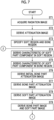
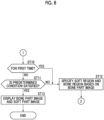
- the controller 25 determines whether or not the bone part image Gb and the soft part image Gs are derived for the first time (step ST10). In a case in which a determination result in step ST10 is NO, it is determined whether or not the bone part image Gbk derived this time and a bone part image Gbk-1 derived last time satisfy the predetermined condition (step ST11). In a case in which the determination result in step ST10 is YES and a determination result in step ST11 is NO, the controller 25 controls the region specifying unit 22 to specify the soft region and the bone region in the first and second radiation images G1 and G2 based on the bone part image Gb (step ST12).
- step ST12 the processing returns to step ST4, and the processing after step ST4 is repeated.
- the display controller 26 displays the bone part image Gb and the soft part image Gs (step ST13), and the processing is terminated.
- the bone region and the soft region are specified based on the bone part image Gb, and further, the attenuation ratio in the bone region including the bone part component in the first radiation image G1 or the second radiation image G2 is derived based on the attenuation ratio of the soft part component derived in the soft region around the bone region. Then, the soft part image Gs in which the soft part component is emphasized and the bone part image Gb in which the bone part component is emphasized are derived based on the attenuation ratio in at least the region of the subject H in the first radiation image G1 or the second radiation image G2. Further, the processing is repeated until the predetermined condition is satisfied.
- the bone part image Gb is an image in which the bone region in the first radiation image G1 and the second radiation image G2 is emphasized, the bone region can be specified more accurately than the bone region specified based on the first processing, that is, the attenuation ratio map M1. Accordingly, since the separation accuracy between the bone region and the soft region can be improved, it is possible to accurately obtain the characteristic of the first component in the soft region and the characteristic of the first component in the bone region. Therefore, the attenuation ratio of the soft part component in the bone region can be derived more accurately, and as a result, the soft part image Gs and the bone part image Gb in which the soft part component and the bone part component are separated accurately can be derived.
- the first attenuation image CL and the second attenuation image CH representing the attenuation amounts of the radiation are derived from the first radiation image G1 and the second radiation image G2, and the soft part image Gs and the bone part image Gb are derived by using the first attenuation image CL and the second attenuation image CH. Therefore, in a case in which the derived attenuation amount is used as the soft part removal coefficient K1 for removing the soft part component, the soft part component can be removed satisfactorily by Expression (4). Therefore, it is possible to derive the soft part image Gs and the bone part image Gb in which the soft part component and the bone part component are separated accurately.
- a functional configuration of the radiation image processing device according to the second embodiment is the same as the functional configuration of the radiation image processing device according to the first embodiment shown in Fig. 3 , and the detailed description for the functional configuration will be omitted.
- the processing performed by the region specifying unit 22 is different from the processing in the first embodiment.
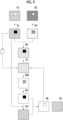
- Fig. 9 is a diagram schematically showing the processing performed in the second embodiment.
- the region specifying unit 22 detects the bone region from the first attenuation image CL or the second attenuation image CH. Note that the bone region may be detected from the first radiation image G1 or the second radiation image G2.
- the region specifying unit 22 uses a trained model constructed by subjecting a neural network to machine learning so as to detect the bone region from the radiation image or the attenuation image.
- the trained model is constructed to detect the bone region by learning the bone region based on the pixel value of the radiation image or the attenuation image.
- the bone region may be detected from the radiation image or the attenuation image by performing the threshold value processing on the radiation image or the attenuation image.
- the shape of the bone region is specified by the difference between the pixel value of the bone region and the pixel value of the soft region including only the soft part component. Therefore, the bone region may be detected from the radiation image or the attenuation image by the template matching using the shape of the bone region according to a part of the subject H included in the radiation image or the attenuation image.
- the characteristic derivation unit 23 derives the attenuation ratio of the soft part component in the bone region specified by the region specifying unit 22 based on the pixel value of the radiation image or the attenuation image as described above. Since the processing after the derivation of the attenuation ratio of the soft part component in the bone region is the same as the processing in the first embodiment, the detailed description thereof will be omitted here.
- the characteristic derivation unit 23 may derive the first attenuation image CL and the second attenuation image CH.
- the characteristic derivation unit 23 need only derive the attenuation ratio of the soft region, the attenuation ratio of the soft part component for the bone region, and the attenuation ratio map M1.
- the initial bone part attenuation image Cb0, the bone part attenuation image Cb1, and the soft part attenuation image Cs1 are derived by using the first attenuation image CL, the second attenuation image CH, and the soft part removal coefficient K1, and then the bone part image Gb and the soft part image Gs are derived.
- the bone part image Gb and the soft part image Gs may be derived by Expression (8) and Expression (9) by using the first radiation image G1, the second radiation image G2, and the soft part removal coefficient K1.
- Gb x y G 1 x y ⁇ K 1 x y ⁇ G 2 x y
- Gs x y G 1 x y ⁇ Gb x y
- a functional configuration of the radiation image processing device according to the third embodiment is the same as the functional configuration of the radiation image processing device according to the first embodiment shown in Fig. 3 , and the detailed description for the functional configuration will be omitted.
- the attenuation ratio of the soft part component is derived as the characteristic of the first component.
- the third embodiment is different from the first embodiment in that a soft part attenuation coefficient, which is the attenuation coefficient of the low-energy radiation and the high-energy radiation due to the soft part component is derived as the characteristic of the first component.
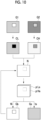
- Fig. 10 is a diagram schematically showing the processing performed in the third embodiment.
- the processing until the region specifying unit 22 derives the first attenuation image CL and the second attenuation image CH is the same as the processing in the first and second embodiments, the detailed description thereof will be omitted.
- the region specifying unit 22 in the first processing of deriving the bone part image Gb and the soft part image Gs, derives a ratio of the fat at each pixel position of the first and second radiation images G1 and G2 by using the attenuation coefficients of the fat and the muscle for each of the high-energy radiation and the low-energy radiation. Then, the region specifying unit 22 specifies the bone region and the soft region based on the derived ratio of the fat.
- the attenuation amount of the radiation due to the subject H is determined depending on the thicknesses of the soft part and the bone part and a radiation quality (whether high energy or low energy). Therefore, in a case in which the attenuation coefficient representing an attenuation rate per unit thickness is ⁇ , attenuation amounts CL0 and CH0 of the radiation at each pixel position in each of the low-energy image and the high-energy image can be represented by Expression (10) and Expression (11).
- ts is a thickness of the soft part
- tb is a thickness of the bone part
- ⁇ Ls is the soft part attenuation coefficient of the low-energy radiation
- ⁇ Lb is a bone part attenuation coefficient of the low-energy radiation
- ⁇ HS is the soft part attenuation coefficient of the high-energy radiation
- ⁇ HB is the bone part attenuation coefficient of the high-energy radiation.
- the region specifying unit 22 derives the soft part attenuation coefficient ⁇ Ls for the low-energy radiation and the soft part attenuation coefficient ⁇ Hs for the high-energy radiation by using the first attenuation image CL and the second attenuation image CH.
- the derivation of the soft part attenuation coefficients ⁇ Ls and ⁇ Hs will be described.
- the region specifying unit 22 calculates a body thickness TN in a case in which the ratio of the fat is N% by Expression (14) from the pixel value of the first attenuation image CL and the provisional soft part attenuation coefficient ⁇ 0Ls for the low-energy image.
- the body thickness TN is calculated on the assumption that the pixel including the bone part is also composed of only the soft part.
- TN x y CL x y / ⁇ 0 Ls x y
- the region specifying unit 22 calculates an attenuation amount CHN1 of the high-energy radiation according to Expression (15) from the body thickness TN calculated by Expression (14) and the provisional soft part attenuation coefficient ⁇ 0Hs for the high-energy radiation. Then, the second attenuation image CH is subtracted from the attenuation amount CHN1 by Expression (16) to calculate a difference value ⁇ CH.
- a case in which the difference value ⁇ CH is a negative value means that the provisional soft part attenuation coefficients ⁇ 0Ls and ⁇ 0Hs are smaller than a correct answer soft part attenuation coefficient, that is, closer to the fat.
- a case in which the difference value ⁇ CH is a positive value means that the provisional soft part attenuation coefficients ⁇ 0Ls and ⁇ 0Hs are closer to the muscle.
- the region specifying unit 22 calculates the provisional soft part attenuation coefficients ⁇ 0Ls and ⁇ 0Hs for all the pixels of the first attenuation image CL and the second attenuation image CH while changing N such that the difference value ⁇ CH approaches 0.
- N in a case in which the difference value ⁇ CH is 0 or equal to or smaller than a predetermined threshold value is determined as the ratio of the fat for the pixel.
- the region specifying unit 22 determines the provisional soft part attenuation coefficients ⁇ 0Ls and ⁇ 0Hs in the calculation of the determined ratio N of the fat as the soft part attenuation coefficients ⁇ Ls and ⁇ Hs. Note that, the ratio N of the fat need only be increased in a case in which the difference value ⁇ CH is a negative value, and the ratio N of the fat need only be decreased in a case in which the difference value ⁇ CH is a positive value.
- the region specifying unit 22 specifies the region consisting of the pixel at which the ratio N of the fat in the first radiation image G1 and the second radiation image G2 is a value close to 0 (for example, a value smaller than the predetermined threshold value) or a negative value, as the bone region in the first radiation image G1 and the second radiation image G2.
- the region specifying unit 22 specifies the region other than the bone region in the first radiation image G1 and the second radiation image G2 as the soft region.
- the characteristic derivation unit 23 derives the soft part attenuation coefficients ⁇ Ls and ⁇ Hs as the characteristics of the first component.
- the region specifying unit 22 derives the soft part attenuation coefficients ⁇ Ls and ⁇ Hs for each pixel of the first radiation image G1 or the second radiation image G2. Therefore, the characteristic derivation unit 23 uses the soft part attenuation coefficients ⁇ Ls and ⁇ Hs derived by the region specifying unit 22 as the characteristics of the first component in the soft region. That is, in the third embodiment, the region specifying unit 22 also has the function as the characteristic derivation unit 23.
- the characteristic derivation unit 23 derives the soft part attenuation coefficients ⁇ Ls and ⁇ Hs in the bone region by interpolating the soft part attenuation coefficient of the soft region around the bone region. Note that, instead of the interpolation, a median value of the soft part attenuation coefficients ⁇ Ls and ⁇ Hs in the soft region, an average value thereof, or a value thereof that is a predetermined ratio from the small attenuation coefficient side may be derived as the soft part attenuation coefficients ⁇ Ls and ⁇ Hs for the bone region. As a result, the characteristic derivation unit 23 derives the characteristic of the first component for at least the region of the subject H of the first radiation image G1 or the second radiation image G2.
- the image derivation unit 24 derives the soft part image Gs in which the soft part component is emphasized and the bone part image Gb in which the bone part component is emphasized.
- the thickness ts of the soft part and the thickness tb of the bone part are derived based on the soft part attenuation coefficients ⁇ Ls and ⁇ Hs derived by the characteristic derivation unit 23 and the bone part attenuation coefficients ⁇ Lb and ⁇ Hb derived in advance, and the soft part image Gs and the bone part image Gb are derived based on the thickness ts of the soft part and the thickness tb of the bone part, which are derived.
- Expression (12) and Expression (13) are used to derive the thickness ts of the soft part and the thickness tb of the bone part.
- the image derivation unit 24 derives the thickness ts of the soft part and the thickness tb of the bone part by solving Expression (12) and Expression (13) with the thickness ts of the soft part and the thickness tb of the bone part as variables. Note that the thickness ts of the soft part and the thickness tb of the bone part, which are derived, are derived for each pixel of the first attenuation image CL and the second attenuation image CH. However, in the following description, (x,y) representing the pixel position will be omitted.
- the image derivation unit 24 calculates a thickness tb0 of the bone part in a case in which the thickness ts of the soft part is 0 by Expression (13).
- Fig. 12 is a diagram showing a relationship between the attenuation amounts according to the thickness of the bone part and the thickness of the soft part.
- an attenuation amount 33 indicates the attenuation amount which is the pixel value of the low-energy image and the attenuation amount which is the pixel value of the high-energy image which are derived by actually imaging the subject. Note that, for description, in the attenuation amount 33, the attenuation amount which is the pixel value of the low-energy image and the attenuation amount which is the pixel value of the high-energy image are assigned the same reference numerals CL and CH as the first attenuation image and the second attenuation image, respectively.
- the pixel value that is, the attenuation amount of the first attenuation image (here, a provisional first attenuation image CL') derived by Expression (12) is smaller than the pixel value of the first attenuation image CL derived from the actual thickness of the bone part and the actual thickness of the soft part (that is, CL > CL') as shown in an attenuation amount 34 of Fig. 12 .
- a provisional thickness tsk of the soft part is calculated by using the pixel value of the second attenuation image CH and the soft part attenuation coefficient ⁇ Hs derived for each pixel. Note that 0 is used as an initial value of a provisional thickness tbk of the bone part.
- a provisional first attenuation image CL' is calculated by Expression (12) by using the calculated provisional thickness tsk of the soft part, the provisional thickness tbk of the bone part, and the soft part attenuation coefficient ⁇ Ls and the bone part attenuation coefficient ⁇ Lb for the low-energy radiation.
- the difference value ⁇ CL between each pixel of the provisional first attenuation image CL' and the first attenuation image CL is calculated.
- the provisional thickness tbk of the bone part is updated on the assumption that the difference value ⁇ CL is the pixel value corresponding to the amount of the radiation attenuated by the bone.
- a provisional second attenuation image CH' is calculated by Expression (13) by using the updated provisional thickness tbk of the bone part and the provisional thickness tsk of the soft part.
- the difference value ⁇ CH between the provisional second attenuation image CH' and the second attenuation image CH is calculated.
- the provisional thickness tsk of the soft part is updated on the assumption that the difference value ⁇ CH is the pixel value corresponding to the amount of the radiation attenuated by the soft part.
- the thickness ts of the soft part and the thickness tb of the bone part are derived by repeating the processing of steps 1 to 5 until the absolute values of the difference values ⁇ CL and ⁇ CH are smaller than a predetermined threshold value.
- the thickness ts of the soft part and the thickness tb of the bone part may be derived by repeating the processing of steps 1 to 5 a predetermined number of times.
- the image derivation unit 24 derives the soft part image Gs based on the derived thickness ts of the soft part, and derives the bone part image Gb based on the derived thickness tb of the bone part.
- the soft part image Gs has the pixel value of the size corresponding to the thickness ts of the soft part
- the bone part image Gb has the pixel value of the size corresponding to the thickness Gb of the bone part.
- the controller 25 controls the region specifying unit 22 such that the bone region and the soft region in the first radiation image G1 and the second radiation image G2 are specified based on the second component image, that is, the bone part image Gb, in the same manner as in the first and second embodiments. Then, the controller 25 derives the soft part attenuation coefficients ⁇ Ls and ⁇ Hs as the characteristics of the first component in each of the bone region and the soft region which are specified by the region specifying unit 22 based on the bone part image Gb.
- the controller 25 derives the thickness ts of the soft part and the thickness tb of the bone part based on the soft part attenuation coefficients ⁇ Ls and ⁇ Hs derived in each of the bone region and the soft region and the bone part attenuation coefficients ⁇ Lb and ⁇ Hb derived in advance, and derives the soft part image Gs2 and the bone part image Gb2 based on the thickness ts of the soft part and the thickness tb of the bone part, which are derived.
- the controller 25 repeats the specification of the bone region and the soft region, the derivation of the characteristic of the first component, and the derivation of the soft part image Gsk+1 and the bone part image Gbk+1 using the derived bone part image Gbk until the predetermined condition is satisfied.
- the predetermined condition can be, for example, the condition that the representative value of the difference value between the corresponding pixel values of the bone part image Gbk and the bone part image Gbk+1 is smaller than the threshold value, but the present disclosure is not limited thereto.
- the representative value a sum of the absolute values of the difference values, an average value of the absolute values of the difference values, and the like can be used.
- Figs. 13 and 14 are flowcharts showing the processing performed in the third embodiment.
- the image acquisition unit 21 causes the imaging apparatus 1 to perform the energy subtraction imaging of the subject H to acquire the first and second radiation images G1 and G2 (radiation image acquisition: step ST21).
- the region specifying unit 22 derives the first attenuation image CL and the second attenuation image CH from the first radiation image G1 and the second radiation image G2 (attenuation image derivation: step ST22), and specifies the soft region including only the soft part component and the bone region including the bone part in the first attenuation image CL or the second attenuation image CH (step ST23).
- the controller 25 determines whether or not the bone part image Gb and the soft part image Gs are derived for the first time (step ST28). In a case in which a determination result in step ST28 is NO, it is determined whether or not the bone part image Gbk derived this time and the bone part image Gbk-1 derived last time satisfy the predetermined condition (step ST29). In a case in which the determination result in step ST28 is YES and a determination result in step ST29 is NO, the controller 25 controls the region specifying unit 22 to specify the soft region and the bone region based on the bone part image Gb (step ST30). Subsequent to step ST30, the processing returns to step ST24, and the processing after step ST24 is repeated. In a case in which the determination result in step ST29 is YES, the display controller 26 displays the bone part image Gb and the soft part image Gs (step ST31), and the processing is terminated.
- the soft part attenuation coefficient is derived based on the characteristic of the soft part component derived in the soft region around the bone region, that is the soft part attenuation coefficient in the bone region including the bone part component in the first radiation image G1 or the second radiation image G2. Then, the soft part image Gs in which the soft part component is emphasized and the bone part image Gb in which the bone part component is emphasized are derived based on the soft part attenuation coefficient in at least the region of the subject H in the first radiation image G1 or the second radiation image G2. Further, the processing is repeated until the predetermined condition is satisfied.
- the soft part attenuation coefficient in the bone region can be derived more accurately, and as a result, the soft part image Gs and the bone part image Gb in which the soft part component and the bone part component are separated accurately can be derived.
- a fourth embodiment of the present disclosure will be described.
- a functional configuration of the radiation image processing device according to the fourth embodiment is the same as the functional configuration of the radiation image processing device according to the first embodiment shown in Fig. 3 , and the detailed description for the functional configuration will be omitted.
- the processing performed by the region specifying unit 22 is different from the processing in the third embodiment.
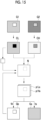
- Fig. 15 is a diagram schematically showing the processing performed in the fourth embodiment.
- the region specifying unit 22 detects the bone region from the first attenuation image CL or the second attenuation image CH. Note that the bone region may be detected from the first radiation image G1 or the second radiation image G2.
- the region specifying unit 22 uses a trained model constructed by subjecting a neural network to machine learning so as to detect the bone region from the radiation image or the attenuation image, as in the second embodiment.
- the trained model is constructed to detect the bone region by learning the bone region based on the pixel value of the radiation image or the attenuation image.
- the bone region may be detected from the radiation image or the attenuation image by performing the threshold value processing on the radiation image or the attenuation image.
- the shape of the bone region is specified by the difference between the pixel value of the bone region and the pixel value of the soft region including only the soft part component. Therefore, the bone region may be detected from the radiation image or the attenuation image by the template matching using the shape of the bone region according to a part of the subject H included in the radiation image or the attenuation image.
- the characteristic derivation unit 23 derives the soft part attenuation coefficient in the bone region specified by the region specifying unit 22 based on the pixel value of the radiation image or the attenuation image as described above. Since the processing after the derivation of the soft part attenuation coefficient in the bone region is the same as the processing of the third embodiment, the detailed description thereof will be omitted here.
- the characteristic derivation unit 23 may derive the first attenuation image CL and the second attenuation image CH. In addition, in this case, the characteristic derivation unit 23 may derive the ratio of the fat and the soft part attenuation coefficient.
- the soft part attenuation coefficient is derived by using the first attenuation image CL and the second attenuation image CH to derive the bone part image Gb and the soft part image Gs, but the present disclosure is not limited to this.
- the soft part attenuation coefficient may be derived from the first radiation image G1 and the second radiation image G2, and the thickness of the bone part and the thickness of the soft part may be derived to derive the bone part image Gb and the soft part image Gs.
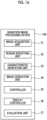
- Fig. 16 is a diagram showing the functional configuration of the radiation image processing device according to the fifth embodiment. Further, in Fig. 16 , the same configurations as those in Fig. 3 are denoted by the same reference numerals, and the detailed description thereof will be omitted here. As shown in Fig. 16 , a radiation image processing device 10A according to the fifth embodiment is different from those of the first to fourth embodiments in that it comprises an evaluation unit 27 that derives an evaluation result representing a state of a bone based on a region of the bone part in the bone part image.
- the evaluation unit 27 derives, for example, a bone mineral density as the evaluation result representing the state of the bone.
- the evaluation unit 27 derives a bone mineral density for each pixel of the bone part image Gb.
- the evaluation unit 27 derives a bone mineral density B by converting each pixel value of the bone part image Gb into a pixel value of a bone image in a case of being acquired under a standard imaging condition.
- the evaluation unit 27 derives the bone mineral density by correcting each pixel value of the bone part image Gb using a correction coefficient acquired from a look-up table described below.
- a contrast between a soft part and a bone part in the radiation image is lower as the tube voltage in the radiation source 3 is higher and the energy of the radiation emitted from the radiation source 3 is higher.
- a low-energy component of the radiation is absorbed by the subject H, and beam hardening occurs in which the radiation energy is increased.
- the increase in the radiation energy due to the beam hardening is larger as the body thickness of the subject H is larger.
- the contrast between the bone part and the soft part with respect to the body thickness of the subject H is lower.
- the contrast is lower as the body thickness is larger.
- the contrast between the bone part and the soft part is higher. Therefore, the contrast shifts to a higher side as the pixel value of the bone region in the bone part image Gb is increased.
- the look-up table for acquiring the correction coefficient for correcting the difference in the contrast depending on the tube voltage during the imaging and the decrease in the contrast due to the influence of the beam hardening in the bone part image Gb is stored in the storage 13 of the radiation image processing device 10A.
- the correction coefficient is a coefficient for correcting each pixel value of the bone part image Gb.
- Fig. 17 is a diagram showing an example of a look-up table for acquiring a correction coefficient.
- a look-up table (hereinafter, simply referred to as a table) LUT1 in which the standard imaging condition is set to the tube voltage of 90 kV is shown.
- the correction coefficient is set to be larger as the tube voltage is higher and the body thickness of the subject H is larger.
- the standard imaging condition is the tube voltage of 90 kV
- the correction coefficient is 1 in a case in which the tube voltage is 90 kV and the body thickness is 0.
- the table LUT1 is shown in two dimensions in Fig. 17 , the correction coefficient differs depending on the pixel value of the bone region. Therefore, the table LUT1 is actually a three-dimensional table to which an axis representing the pixel value of the bone region is added.
- the evaluation unit 27 derives the body thickness (body thickness distribution) of the subject H for each pixel in the soft part image Gs.
- body thickness distribution any method may be used, such as a method disclosed in JP2015-043959A .
- the body thickness distribution can be obtained by subtracting the SOD from the SID.
- the evaluation unit 27 extracts the body thickness distribution T(x,y) of the subject H and a correction coefficient C0(x,y) for each pixel depending on the imaging condition including a set value of the tube voltage stored in the storage 13 from the table LUT1. Then, as shown in Expression (19), the evaluation unit 27 derives a bone mineral density B(x,y) (g/cm 2 ) of each pixel of the bone part image Gb by multiplying each pixel (x,y) of the bone region in the bone part image Gb by the correction coefficient C0(x,y).
- the bone mineral density B(x,y) derived in this way is acquired by imaging the subject H by the tube voltage of 90 kV, which is the standard imaging condition, and represents the pixel value in the bone region included in the radiation image from which the influence of the beam hardening is removed.
- B x y C 0 x y ⁇ Gb x y
- Fig. 18 is a diagram showing a display screen of the bone mineral density. As shown in Fig. 18 , a display screen 40 has a bone mineral density display region 41.
- the evaluation unit 27 may derive a value correlated with the bone mineral density as the evaluation result.
- the value correlated with the bone mineral density include an evaluation value representing a likelihood of osteoporosis.
- the evaluation unit 27 includes a trained model that outputs the evaluation value indicating the likelihood of osteoporosis in a case in which the distribution of the pixel values of the image of the region of the target bone such as a lumbar vertebra, that is, the target bone in the bone part image Gb is input.
- the neural network is subj ected to machine learning so that the output in a case in which the first teacher data 51 is input is 0, and is subjected to machine learning so that the output in a case in which the second teacher data 52 is input is 1.
- the trained model is constructed to output the evaluation value having a value close to 1 in a case in which the input image of the lumbar vertebra is the osteoporosis.
- the neural network learns the distribution of the pixel values of the image of the lumbar vertebra and the microstructure of the bone beam, and as a result, the trained model is constructed to output the evaluation value indicating the likelihood of osteoporosis from the distribution of the pixel values of the image of the lumbar vertebra and the microstructure.
- the evaluation unit 27 may use the evaluation value itself output by the trained model as the evaluation result, or may determine whether or not the osteoporosis is suspected by comparing the evaluation value with the threshold value.
- the first and second radiation images G1 and G2 are acquired by the one-shot method, but the present disclosure is not limited to this.
- the first and second radiation images G1 and G2 may be acquired by a so-called two-shot method in which the imaging is performed twice by using only one radiation detector.
- a position of the subject H included in the first radiation image G1 and the second radiation image G2 may shift due to a body movement of the subject H. Therefore, in the first radiation image G1 and the second radiation image G2, it is preferable to perform the processing according to the present embodiment after registration of the subject is performed.
- the radiation image acquired in the system that images the subject H using the first and second radiation detectors 5 and 6 is used, but it is needless to say that the technology of the present disclosure can be applied even in a case in which the first and second radiation images G1 and G2 are acquired using an accumulative phosphor sheet instead of the radiation detector.
- the first and second radiation images G1 and G2 need only be acquired by stacking two accumulative phosphor sheets, emitting the radiation transmitted through the subject H, accumulating and recording radiation image information of the subject H in each of the accumulative phosphor sheets, and photoelectrically reading the radiation image information from each of the accumulative phosphor sheets.
- the two-shot method may also be used in a case in which the first and second radiation images G1 and G2 are acquired by using the accumulative phosphor sheet.
- the radiation in the embodiments described above is not particularly limited, and ⁇ -rays or ⁇ -rays can be used in addition to X-rays.
- various processors shown below can be used as the hardware structure of processing units that execute various types of processing, such as the image acquisition unit 21, the region specifying unit 22, the characteristic derivation unit 23, the image derivation unit 24, the controller 25, the display controller 26, and the evaluation unit 27.
- the various processors include, in addition to the CPU that is a general-purpose processor which executes software (program) and functions as various processing units, a programmable logic device (PLD) that is a processor whose circuit configuration can be changed after manufacture, such as a field programmable gate array (FPGA), and a dedicated electrical circuit that is a processor having a circuit configuration which is designed for exclusive use in order to execute specific processing, such as an application specific integrated circuit (ASIC).
- PLD programmable logic device
- FPGA field programmable gate array
- ASIC application specific integrated circuit
- One processing unit may be configured by one of these various processors, or may be configured by a combination of two or more processors of the same type or different types (for example, a combination of a plurality of FPGAs or a combination of the CPU and the FPGA).
- a plurality of the processing units may be configured by one processor.
- the various processing units are configured by using one or more of the various processors described above.
- circuitry circuitry in which circuit elements, such as semiconductor elements, are combined.
- a radiation image processing device comprising at least one processor, in which the processor acquires a first radiation image and a second radiation image which are acquired by imaging a subject, which includes a first component consisting of a plurality of compositions and a second component consisting of a single composition, with radiation having different energy distributions, derives an initial second component image in which the second component is emphasized, based on the first radiation image and the second radiation image, specifies a second component region including the second component in the first radiation image or the second radiation image based on the initial second component image, specifies a region other than the second component region in the first radiation image or the second radiation image as a first component region including only the first component, derives a characteristic of the first component related to attenuation of the radiation based on the first radiation image and the second radiation image in the specified first component region in the first radiation image or the second radiation image, derives the characteristic of the first component in the specified second component region in the first radiation image or the second radiation image based on the characteristic of the first component derived in the first component region
- the radiation image processing device updates the initial second component image with the second component image, and repeats the specification of the first component region, the specification of the second component region, the derivation of the characteristic of the first component in the specified first component region, the derivation of the characteristic of the first component in the specified second component region, and the derivation of the first component image and the second component image using the updated initial second component image until a predetermined condition is satisfied.
- the radiation image processing device in which the processor derives an attenuation characteristic related to the attenuation of the radiation in at least the region of the subject in the first radiation image or the second radiation image, and uses the attenuation characteristic derived for the first component region as the characteristic of the first component for the first component region.
- the radiation image processing device in which the processor derives a first attenuation image and a second attenuation image, which represent attenuation amounts of the radiation due to the subject, from the first radiation image and the second radiation image, respectively, and derives an attenuation ratio, which is a ratio between corresponding pixels of the first attenuation image and the second attenuation image, as the characteristic of the first component.
- the radiation image processing device in which the processor derives a first attenuation image and a second attenuation image, which represent attenuation amounts of the radiation due to the subject, from the first radiation image and the second radiation image, respectively, and derives an attenuation ratio, which is a ratio between corresponding pixels of the first attenuation image and the second attenuation image, as the attenuation characteristic.
- the radiation image processing device in which the processor derives an initial second component attenuation image in which the second component is emphasized, based on the first attenuation image, the second attenuation image, and the characteristic of the first component, derives a second component attenuation image by matching a contrast of the second component included in the initial second component attenuation image with a contrast of the second component included in the first attenuation image or the second attenuation image, derives a first component attenuation image in which the first component is emphasized, based on the first attenuation image or the second attenuation image, and the second component attenuation image, and derives the first component image and the second component image from the first component attenuation image and the second component attenuation image, respectively.
- the radiation image processing device specifies a provisional first component region and a provisional second component region in the first radiation image or the second radiation image based on a pixel value of the first radiation image or the second radiation image, derives a characteristic of a provisional first component related to the attenuation of the radiation based on the first radiation image and the second radiation image in the provisional first component region in the first radiation image or the second radiation image, derives the characteristic of the provisional first component in the provisional second component region in the first radiation image or the second radiation image based on the characteristic of the provisional first component derived in the provisional first component region around the provisional second component region, and derives the initial second component image based on the characteristic of the provisional first component in at least the region of the subject in the first radiation image or the second radiation image.
- the radiation image processing device in which the first component is a soft part of the subject, the first component image is a soft part image, the second component is a bone part of the subject, the second component image is a bone part image, and the plurality of compositions included in the first component are fat and muscle.
- the radiation image processing device in which the processor derives an evaluation result representing a state of a bone based on a region of the bone part in the bone part image.
- the radiation image processing device in which the evaluation result representing the state of the bone is a bone mineral density or a value correlated with the bone mineral density.
- the radiation image processing device in which the value correlated with the bone mineral density is a value representing a likelihood of osteoporosis.
- the radiation image processing device in which the determination of the state of the bone is determination of whether or not osteoporosis is suspected.
- a radiation image processing method comprising, via a computer, acquiring a first radiation image and a second radiation image which are acquired by imaging a subject, which includes a first component consisting of a plurality of compositions and a second component consisting of a single composition, with radiation having different energy distributions, deriving an initial second component image in which the second component is emphasized, based on the first radiation image and the second radiation image, specifying a second component region including the second component in the first radiation image or the second radiation image based on the initial second component image, specifying a region other than the second component region in the first radiation image or the second radiation image as a first component region including only the first component, deriving a characteristic of the first component related to attenuation of the radiation based on the first radiation image and the second radiation image in the specified first component region in the first radiation image or the second radiation image, deriving the characteristic of the first component in the specified second component region in the first radiation image or the second radiation image based on the characteristic of the first component derived in the first component region
- a radiation image processing program causing a computer to execute a procedure of acquiring a first radiation image and a second radiation image which are acquired by imaging a subject, which includes a first component consisting of a plurality of compositions and a second component consisting of a single composition, with radiation having different energy distributions, a procedure of deriving an initial second component image in which the second component is emphasized, based on the first radiation image and the second radiation image, a procedure of specifying a second component region including the second component in the first radiation image or the second radiation image based on the initial second component image, a procedure of specifying a region other than the second component region in the first radiation image or the second radiation image as a first component region including only the first component, a procedure of deriving a characteristic of the first component related to attenuation of the radiation based on the first radiation image and the second radiation image in the specified first component region in the first radiation image or the second radiation image, a procedure of deriving the characteristic of the first component in the specified second component region in the first
Landscapes
- Health & Medical Sciences (AREA)
- Engineering & Computer Science (AREA)
- Life Sciences & Earth Sciences (AREA)
- Medical Informatics (AREA)
- Physics & Mathematics (AREA)
- General Health & Medical Sciences (AREA)
- Radiology & Medical Imaging (AREA)
- Nuclear Medicine, Radiotherapy & Molecular Imaging (AREA)
- Biomedical Technology (AREA)
- Veterinary Medicine (AREA)
- Biophysics (AREA)
- Optics & Photonics (AREA)
- Pathology (AREA)
- High Energy & Nuclear Physics (AREA)
- Public Health (AREA)
- Heart & Thoracic Surgery (AREA)
- Molecular Biology (AREA)
- Surgery (AREA)
- Animal Behavior & Ethology (AREA)
- General Physics & Mathematics (AREA)
- Theoretical Computer Science (AREA)
- Orthopedic Medicine & Surgery (AREA)
- Dentistry (AREA)
- Oral & Maxillofacial Surgery (AREA)
- Quality & Reliability (AREA)
- Computer Vision & Pattern Recognition (AREA)
- Apparatus For Radiation Diagnosis (AREA)
- Image Processing (AREA)
Applications Claiming Priority (1)
| Application Number | Priority Date | Filing Date | Title |
|---|---|---|---|
| JP2023153874A JP2025045866A (ja) | 2023-09-20 | 2023-09-20 | 放射線画像処理装置、方法およびプログラム |
Publications (2)
| Publication Number | Publication Date |
|---|---|
| EP4535280A1 true EP4535280A1 (de) | 2025-04-09 |
| EP4535280A8 EP4535280A8 (de) | 2026-01-07 |
Family
ID=92909613
Family Applications (1)
| Application Number | Title | Priority Date | Filing Date |
|---|---|---|---|
| EP24201198.9A Pending EP4535280A1 (de) | 2023-09-20 | 2024-09-18 | Strahlungsbildverarbeitungsvorrichtung, strahlungsbildverarbeitungsverfahren und strahlungsbildverarbeitungsprogramm |
Country Status (3)
| Country | Link |
|---|---|
| US (1) | US20250095153A1 (de) |
| EP (1) | EP4535280A1 (de) |
| JP (1) | JP2025045866A (de) |
Citations (4)
| Publication number | Priority date | Publication date | Assignee | Title |
|---|---|---|---|---|
| EP2567659B1 (de) * | 2011-09-12 | 2014-05-21 | Agfa Healthcare | Kalibrierungsfreies Doppelenergie-Radiographieverfahren |
| JP2015043959A (ja) | 2013-07-31 | 2015-03-12 | 富士フイルム株式会社 | 放射線画像解析装置および方法並びにプログラム |
| WO2021054090A1 (ja) | 2019-09-18 | 2021-03-25 | 富士フイルム株式会社 | エネルギーサブトラクション処理装置、方法およびプログラム |
| WO2024189963A1 (ja) * | 2023-03-13 | 2024-09-19 | 富士フイルム株式会社 | 画像処理装置、方法およびプログラム |
-
2023
- 2023-09-20 JP JP2023153874A patent/JP2025045866A/ja active Pending
-
2024
- 2024-09-17 US US18/887,040 patent/US20250095153A1/en active Pending
- 2024-09-18 EP EP24201198.9A patent/EP4535280A1/de active Pending
Patent Citations (4)
| Publication number | Priority date | Publication date | Assignee | Title |
|---|---|---|---|---|
| EP2567659B1 (de) * | 2011-09-12 | 2014-05-21 | Agfa Healthcare | Kalibrierungsfreies Doppelenergie-Radiographieverfahren |
| JP2015043959A (ja) | 2013-07-31 | 2015-03-12 | 富士フイルム株式会社 | 放射線画像解析装置および方法並びにプログラム |
| WO2021054090A1 (ja) | 2019-09-18 | 2021-03-25 | 富士フイルム株式会社 | エネルギーサブトラクション処理装置、方法およびプログラム |
| WO2024189963A1 (ja) * | 2023-03-13 | 2024-09-19 | 富士フイルム株式会社 | 画像処理装置、方法およびプログラム |
Also Published As
| Publication number | Publication date |
|---|---|
| US20250095153A1 (en) | 2025-03-20 |
| JP2025045866A (ja) | 2025-04-02 |
| EP4535280A8 (de) | 2026-01-07 |
Similar Documents
| Publication | Publication Date | Title |
|---|---|---|
| US11234641B2 (en) | Body fat percentage measurement device, method and program | |
| EP3804623A1 (de) | Röntgengerät, röntgenverfahren und programm | |
| US12127850B2 (en) | Motor organ disease prediction device, motor organ disease prediction method, motor organ disease prediction program, learning device, learning method, learning program, and learned neural network | |
| US20250000467A1 (en) | Estimation device, estimation method, and estimation program | |
| US20240104797A1 (en) | Systems, Methods, and Media for Material Decomposition and Virtual Monoenergetic Imaging from Multi-Energy Computed Tomography Data | |
| US20230096694A1 (en) | Image processing device, image processing method, and image processing program | |
| US20240260891A1 (en) | Bone disease prediction device, method, program, learning device, method, program, and trained neural network | |
| US12471867B2 (en) | Image processing device, image processing method, and image processing program | |
| US12496028B2 (en) | Radiation image processing device, radiation image processing method, and radiation image processing program | |
| US20260000376A1 (en) | Image processing apparatus, image processing method, and image processing program | |
| US12524878B2 (en) | Radiation image processing device, radiation image processing method, and radiation image processing program | |
| EP4535280A1 (de) | Strahlungsbildverarbeitungsvorrichtung, strahlungsbildverarbeitungsverfahren und strahlungsbildverarbeitungsprogramm | |
| EP4527297A1 (de) | Bildverarbeitungsvorrichtung, bildverarbeitungsverfahren und bildverarbeitungsprogramm | |
| US10089728B2 (en) | Radiation-image processing device and method | |
| US12456195B2 (en) | Radiographic image processing device and non-transitory computer readable medium | |
| EP4616810A1 (de) | Strahlungsbildverarbeitungsvorrichtung, strahlungsbildverarbeitungsverfahren und strahlungsbildverarbeitungsprogramm | |
| EP4609791A1 (de) | Bildverarbeitungsvorrichtung, -verfahren und -programm sowie lernvorrichtung, -verfahren und -programm | |
| WO2021095447A1 (ja) | 画像処理装置、放射線撮影装置、画像処理方法及びプログラム | |
| US10475180B2 (en) | Radiation-image processing device and method | |
| EP4616807A1 (de) | Strahlungsbildverarbeitungsvorrichtung, strahlungsbildverarbeitungsverfahren und strahlungsbildverarbeitungsprogramm | |
| US12533098B2 (en) | Radiation image processing device, radiation image processing method, and radiation image processing program | |
| CN116887755B (zh) | 放射线成像装置、放射线成像方法、以及存储介质 | |
| JP2025004577A (ja) | 画像処理装置、放射線撮影システム、画像処理方法及びプログラム | |
| JP2023177980A (ja) | 放射線画像処理装置、方法およびプログラム | |
| JP2023055563A (ja) | X線画像処理装置、x線診断装置、方法及びプログラム |
Legal Events
| Date | Code | Title | Description |
|---|---|---|---|
| PUAI | Public reference made under article 153(3) epc to a published international application that has entered the european phase |
Free format text: ORIGINAL CODE: 0009012 |
|
| STAA | Information on the status of an ep patent application or granted ep patent |
Free format text: STATUS: THE APPLICATION HAS BEEN PUBLISHED |
|
| AK | Designated contracting states |
Kind code of ref document: A1 Designated state(s): AL AT BE BG CH CY CZ DE DK EE ES FI FR GB GR HR HU IE IS IT LI LT LU LV MC ME MK MT NL NO PL PT RO RS SE SI SK SM TR |
|
| STAA | Information on the status of an ep patent application or granted ep patent |
Free format text: STATUS: REQUEST FOR EXAMINATION WAS MADE |
|
| 17P | Request for examination filed |
Effective date: 20250728 |
|
| RAP3 | Party data changed (applicant data changed or rights of an application transferred) |
Owner name: FUJIFILM CORPORATION |