EP4534720A1 - Ultra-high strength cold-rolled steel sheet and manufacturing method therefor - Google Patents
Ultra-high strength cold-rolled steel sheet and manufacturing method therefor Download PDFInfo
- Publication number
- EP4534720A1 EP4534720A1 EP22945040.8A EP22945040A EP4534720A1 EP 4534720 A1 EP4534720 A1 EP 4534720A1 EP 22945040 A EP22945040 A EP 22945040A EP 4534720 A1 EP4534720 A1 EP 4534720A1
- Authority
- EP
- European Patent Office
- Prior art keywords
- steel sheet
- less
- rolled steel
- fraction
- ultra
- Prior art date
- Legal status (The legal status is an assumption and is not a legal conclusion. Google has not performed a legal analysis and makes no representation as to the accuracy of the status listed.)
- Pending
Links
Images





Classifications
-
- C—CHEMISTRY; METALLURGY
- C21—METALLURGY OF IRON
- C21D—MODIFYING THE PHYSICAL STRUCTURE OF FERROUS METALS; GENERAL DEVICES FOR HEAT TREATMENT OF FERROUS OR NON-FERROUS METALS OR ALLOYS; MAKING METAL MALLEABLE, e.g. BY DECARBURISATION OR TEMPERING
- C21D1/00—General methods or devices for heat treatment, e.g. annealing, hardening, quenching or tempering
- C21D1/18—Hardening; Quenching with or without subsequent tempering
- C21D1/19—Hardening; Quenching with or without subsequent tempering by interrupted quenching
-
- C—CHEMISTRY; METALLURGY
- C21—METALLURGY OF IRON
- C21D—MODIFYING THE PHYSICAL STRUCTURE OF FERROUS METALS; GENERAL DEVICES FOR HEAT TREATMENT OF FERROUS OR NON-FERROUS METALS OR ALLOYS; MAKING METAL MALLEABLE, e.g. BY DECARBURISATION OR TEMPERING
- C21D1/00—General methods or devices for heat treatment, e.g. annealing, hardening, quenching or tempering
- C21D1/18—Hardening; Quenching with or without subsequent tempering
- C21D1/25—Hardening, combined with annealing between 300 degrees Celsius and 600 degrees Celsius, i.e. heat refining ("Vergüten")
-
- C—CHEMISTRY; METALLURGY
- C21—METALLURGY OF IRON
- C21D—MODIFYING THE PHYSICAL STRUCTURE OF FERROUS METALS; GENERAL DEVICES FOR HEAT TREATMENT OF FERROUS OR NON-FERROUS METALS OR ALLOYS; MAKING METAL MALLEABLE, e.g. BY DECARBURISATION OR TEMPERING
- C21D1/00—General methods or devices for heat treatment, e.g. annealing, hardening, quenching or tempering
- C21D1/84—Controlled slow cooling
-
- C—CHEMISTRY; METALLURGY
- C21—METALLURGY OF IRON
- C21D—MODIFYING THE PHYSICAL STRUCTURE OF FERROUS METALS; GENERAL DEVICES FOR HEAT TREATMENT OF FERROUS OR NON-FERROUS METALS OR ALLOYS; MAKING METAL MALLEABLE, e.g. BY DECARBURISATION OR TEMPERING
- C21D8/00—Modifying the physical properties of ferrous metals or ferrous alloys by deformation combined with, or followed by, heat treatment
- C21D8/02—Modifying the physical properties of ferrous metals or ferrous alloys by deformation combined with, or followed by, heat treatment during manufacturing of plates or strips
-
- C—CHEMISTRY; METALLURGY
- C21—METALLURGY OF IRON
- C21D—MODIFYING THE PHYSICAL STRUCTURE OF FERROUS METALS; GENERAL DEVICES FOR HEAT TREATMENT OF FERROUS OR NON-FERROUS METALS OR ALLOYS; MAKING METAL MALLEABLE, e.g. BY DECARBURISATION OR TEMPERING
- C21D8/00—Modifying the physical properties of ferrous metals or ferrous alloys by deformation combined with, or followed by, heat treatment
- C21D8/02—Modifying the physical properties of ferrous metals or ferrous alloys by deformation combined with, or followed by, heat treatment during manufacturing of plates or strips
- C21D8/0221—Modifying the physical properties of ferrous metals or ferrous alloys by deformation combined with, or followed by, heat treatment during manufacturing of plates or strips characterised by the working steps
- C21D8/0226—Hot rolling
-
- C—CHEMISTRY; METALLURGY
- C21—METALLURGY OF IRON
- C21D—MODIFYING THE PHYSICAL STRUCTURE OF FERROUS METALS; GENERAL DEVICES FOR HEAT TREATMENT OF FERROUS OR NON-FERROUS METALS OR ALLOYS; MAKING METAL MALLEABLE, e.g. BY DECARBURISATION OR TEMPERING
- C21D8/00—Modifying the physical properties of ferrous metals or ferrous alloys by deformation combined with, or followed by, heat treatment
- C21D8/02—Modifying the physical properties of ferrous metals or ferrous alloys by deformation combined with, or followed by, heat treatment during manufacturing of plates or strips
- C21D8/0221—Modifying the physical properties of ferrous metals or ferrous alloys by deformation combined with, or followed by, heat treatment during manufacturing of plates or strips characterised by the working steps
- C21D8/0236—Cold rolling
-
- C—CHEMISTRY; METALLURGY
- C21—METALLURGY OF IRON
- C21D—MODIFYING THE PHYSICAL STRUCTURE OF FERROUS METALS; GENERAL DEVICES FOR HEAT TREATMENT OF FERROUS OR NON-FERROUS METALS OR ALLOYS; MAKING METAL MALLEABLE, e.g. BY DECARBURISATION OR TEMPERING
- C21D8/00—Modifying the physical properties of ferrous metals or ferrous alloys by deformation combined with, or followed by, heat treatment
- C21D8/02—Modifying the physical properties of ferrous metals or ferrous alloys by deformation combined with, or followed by, heat treatment during manufacturing of plates or strips
- C21D8/0247—Modifying the physical properties of ferrous metals or ferrous alloys by deformation combined with, or followed by, heat treatment during manufacturing of plates or strips characterised by the heat treatment
- C21D8/0273—Final recrystallisation annealing
-
- C—CHEMISTRY; METALLURGY
- C21—METALLURGY OF IRON
- C21D—MODIFYING THE PHYSICAL STRUCTURE OF FERROUS METALS; GENERAL DEVICES FOR HEAT TREATMENT OF FERROUS OR NON-FERROUS METALS OR ALLOYS; MAKING METAL MALLEABLE, e.g. BY DECARBURISATION OR TEMPERING
- C21D9/00—Heat treatment, e.g. annealing, hardening, quenching or tempering, adapted for particular articles; Furnaces therefor
- C21D9/46—Heat treatment, e.g. annealing, hardening, quenching or tempering, adapted for particular articles; Furnaces therefor for sheet metals
-
- C—CHEMISTRY; METALLURGY
- C22—METALLURGY; FERROUS OR NON-FERROUS ALLOYS; TREATMENT OF ALLOYS OR NON-FERROUS METALS
- C22C—ALLOYS
- C22C38/00—Ferrous alloys, e.g. steel alloys
- C22C38/001—Ferrous alloys, e.g. steel alloys containing N
-
- C—CHEMISTRY; METALLURGY
- C22—METALLURGY; FERROUS OR NON-FERROUS ALLOYS; TREATMENT OF ALLOYS OR NON-FERROUS METALS
- C22C—ALLOYS
- C22C38/00—Ferrous alloys, e.g. steel alloys
- C22C38/02—Ferrous alloys, e.g. steel alloys containing silicon
-
- C—CHEMISTRY; METALLURGY
- C22—METALLURGY; FERROUS OR NON-FERROUS ALLOYS; TREATMENT OF ALLOYS OR NON-FERROUS METALS
- C22C—ALLOYS
- C22C38/00—Ferrous alloys, e.g. steel alloys
- C22C38/04—Ferrous alloys, e.g. steel alloys containing manganese
-
- C—CHEMISTRY; METALLURGY
- C22—METALLURGY; FERROUS OR NON-FERROUS ALLOYS; TREATMENT OF ALLOYS OR NON-FERROUS METALS
- C22C—ALLOYS
- C22C38/00—Ferrous alloys, e.g. steel alloys
- C22C38/06—Ferrous alloys, e.g. steel alloys containing aluminium
-
- C—CHEMISTRY; METALLURGY
- C21—METALLURGY OF IRON
- C21D—MODIFYING THE PHYSICAL STRUCTURE OF FERROUS METALS; GENERAL DEVICES FOR HEAT TREATMENT OF FERROUS OR NON-FERROUS METALS OR ALLOYS; MAKING METAL MALLEABLE, e.g. BY DECARBURISATION OR TEMPERING
- C21D2211/00—Microstructure comprising significant phases
- C21D2211/001—Austenite
-
- C—CHEMISTRY; METALLURGY
- C21—METALLURGY OF IRON
- C21D—MODIFYING THE PHYSICAL STRUCTURE OF FERROUS METALS; GENERAL DEVICES FOR HEAT TREATMENT OF FERROUS OR NON-FERROUS METALS OR ALLOYS; MAKING METAL MALLEABLE, e.g. BY DECARBURISATION OR TEMPERING
- C21D2211/00—Microstructure comprising significant phases
- C21D2211/002—Bainite
-
- C—CHEMISTRY; METALLURGY
- C21—METALLURGY OF IRON
- C21D—MODIFYING THE PHYSICAL STRUCTURE OF FERROUS METALS; GENERAL DEVICES FOR HEAT TREATMENT OF FERROUS OR NON-FERROUS METALS OR ALLOYS; MAKING METAL MALLEABLE, e.g. BY DECARBURISATION OR TEMPERING
- C21D2211/00—Microstructure comprising significant phases
- C21D2211/005—Ferrite
-
- C—CHEMISTRY; METALLURGY
- C21—METALLURGY OF IRON
- C21D—MODIFYING THE PHYSICAL STRUCTURE OF FERROUS METALS; GENERAL DEVICES FOR HEAT TREATMENT OF FERROUS OR NON-FERROUS METALS OR ALLOYS; MAKING METAL MALLEABLE, e.g. BY DECARBURISATION OR TEMPERING
- C21D2211/00—Microstructure comprising significant phases
- C21D2211/008—Martensite
-
- C—CHEMISTRY; METALLURGY
- C22—METALLURGY; FERROUS OR NON-FERROUS ALLOYS; TREATMENT OF ALLOYS OR NON-FERROUS METALS
- C22C—ALLOYS
- C22C38/00—Ferrous alloys, e.g. steel alloys
- C22C38/18—Ferrous alloys, e.g. steel alloys containing chromium
- C22C38/22—Ferrous alloys, e.g. steel alloys containing chromium with molybdenum or tungsten
-
- C—CHEMISTRY; METALLURGY
- C22—METALLURGY; FERROUS OR NON-FERROUS ALLOYS; TREATMENT OF ALLOYS OR NON-FERROUS METALS
- C22C—ALLOYS
- C22C38/00—Ferrous alloys, e.g. steel alloys
- C22C38/18—Ferrous alloys, e.g. steel alloys containing chromium
- C22C38/24—Ferrous alloys, e.g. steel alloys containing chromium with vanadium
-
- C—CHEMISTRY; METALLURGY
- C22—METALLURGY; FERROUS OR NON-FERROUS ALLOYS; TREATMENT OF ALLOYS OR NON-FERROUS METALS
- C22C—ALLOYS
- C22C38/00—Ferrous alloys, e.g. steel alloys
- C22C38/18—Ferrous alloys, e.g. steel alloys containing chromium
- C22C38/26—Ferrous alloys, e.g. steel alloys containing chromium with niobium or tantalum
-
- C—CHEMISTRY; METALLURGY
- C22—METALLURGY; FERROUS OR NON-FERROUS ALLOYS; TREATMENT OF ALLOYS OR NON-FERROUS METALS
- C22C—ALLOYS
- C22C38/00—Ferrous alloys, e.g. steel alloys
- C22C38/18—Ferrous alloys, e.g. steel alloys containing chromium
- C22C38/28—Ferrous alloys, e.g. steel alloys containing chromium with titanium or zirconium
-
- C—CHEMISTRY; METALLURGY
- C22—METALLURGY; FERROUS OR NON-FERROUS ALLOYS; TREATMENT OF ALLOYS OR NON-FERROUS METALS
- C22C—ALLOYS
- C22C38/00—Ferrous alloys, e.g. steel alloys
- C22C38/18—Ferrous alloys, e.g. steel alloys containing chromium
- C22C38/34—Ferrous alloys, e.g. steel alloys containing chromium with more than 1.5% by weight of silicon
-
- C—CHEMISTRY; METALLURGY
- C22—METALLURGY; FERROUS OR NON-FERROUS ALLOYS; TREATMENT OF ALLOYS OR NON-FERROUS METALS
- C22C—ALLOYS
- C22C38/00—Ferrous alloys, e.g. steel alloys
- C22C38/18—Ferrous alloys, e.g. steel alloys containing chromium
- C22C38/38—Ferrous alloys, e.g. steel alloys containing chromium with more than 1.5% by weight of manganese
Definitions
- the tissue fraction is determined too sensitively to the rapid-cooling endpoint temperature.
- a difference in martensite fractions occurs due to Ms temperature and rapid cooling temperature, making it difficult to uniformly create a uniform microstructure and residual austenite.
- martensite or tempered martensite was used as a main microstructure to secure high strength and formability, and an elongation was secured through residual austenite or ferrite structures. The characteristics of rapid cooling and reheating are that the tissue fractions of tempered martensite, martensite, and remaining austenite vary depending on the rapid cooling end temperature.
- the optimal rapid-cooling end-point temperature section is determined depending upon alloy components to control the microstructure fraction. If the rapid-cooling endpoint temperature is too low, the size of the remaining austenite becomes fine, but its fraction becomes very small. If the rapid-cooling endpoint temperature is too high, the size of the austenite becomes large, the carbon enrichment is insufficient, and after the final cooling, it transforms into a martensite structure or becomes unstable, which makes little contribution to securing elongation.
- the present invention has been made in view of the above problems, and it is one object of the present invention to provide an ultra-high strength cold-rolled steel sheet whose microstructure has been controlled to have high strength and elongation, and a manufacturing method thereof.
- the ultra-high strength cold-rolled steel sheet may include a mixed structure in which tempered martensite, martensite, residual austenite, upper bainite, and lower bainite are mixed, wherein a fraction of the martensite is in a range of greater than 0% and 20% or less, a fraction of the residual austenite is in a range of 10% to 30%, a fraction of the upper bainite is in a range of greater than 0% and 30% or less, a fraction of the lower bainite is in a range of greater than 0% and 30% or less, and a fraction of the tempered martensite is a remaining fraction.
- Manganese has a solid solution-strengthening effect and increases hardenability, delaying the formation of ferrite and bainite during cooling.
- the content of manganese is less than 1.5%, the effect due to manganese addition may not be sufficient, making it difficult to secure hardenability.
- the content of manganese is greater than 3.0%, the transformation of bainite may be excessively delayed, the processability may be reduced due to the formation or segregation of inclusions such as MnS, and the weldability may be reduced due to increased carbon equivalent. Accordingly, it is preferred to add manganese in a content of 1.5% to 3.0% of the total weight of the steel sheet.
- Aluminum is used as a deoxidizer and, similar to silicon, can help suppress carbide formation.
- the content of aluminum is less than 0.01%, the deoxidation effect may be insufficient.
- the content of aluminum is greater than 0.05%, AlN may be formed during slab manufacturing, which can cause cracks during casting or hot rolling. Accordingly, it is preferred to add aluminum in a content of 0.01% to 0.05% based on the total weight of the steel sheet.
- Chromium has a solid solution-strengthening effect, contributes to strength improvement by increasing hardenability, and acts together with C and Mn to refine martensite and bainite structures and stabilize residual austenite.
- the content of chromium is greater than 1.0%, the transformation of bainite may be excessively delayed, and the manufacturing cost of steel may increase. Accordingly, it is preferred to add chromium in a content of greater than 0% and 1.0% or less of the total weight of the steel sheet.
- Nb niobium
- Ti titanium
- V vanadium
- Copper can help stabilize austenite and increase the hardenability of steel.
- the content of the copper is greater than 0.5%, it increases the manufacturing cost of the steel, which is not desirable. Accordingly, it is preferred to add copper in a content of greater than 0% and 0.5% or less of the total weight of the steel sheet.
- the total of nickel and copper in a content of greater than 0% and 1.0% or less.
- Boron can improve the hardenability as in Mn, Cr, and Mo.
- the content of the boron is greater than 0.005%, it may be concentrated on the surface and cause quality deterioration such as plating adhesion. Accordingly, it is preferred to add boron in a content of greater than 0% and 0.005% or less of the total weight of the steel sheet.
- the remaining component of the ultra-high strength cold-rolled steel sheet is iron (Fe).
- Fe iron
- the ultra-high strength cold-rolled steel sheet according to an embodiment of the present invention may include a mixed structure in which ferrite, tempered martensite, martensite, residual austenite, upper bainite, and lower bainite are mixed.
- the fraction of the ferrite may be 0% to 5% (including 0%), the fraction of the martensite may be greater than 0% and 20% or less, the fraction of the residual austenite may be 10% to 30%, the fraction of the upper bainite may be greater than 0% and 30% or less, the fraction of the lower bainite may be greater than 0% and 30% or less, and the fraction of the tempered martensite may be the remaining fraction.
- the minimum value of the sum of the fraction of the upper bainite and the fraction of the lower bainite may be 10%.
- the fractions mean area ratios derived from microstructure photographs through an image analyzer.
- the ferrite may include polygonal ferrite.
- the average diameter of the residual austenite may be, for example 1.0 ⁇ m or less, for example 0.1 ⁇ m to 1.0 ⁇ m.
- the residual austenite is finely distributed in the lath and grain boundaries of the tempered martensite and the bainite, so that the residual austenite can be stabilized, and the strength and elongation can be stably secured.
- the ultra-high strength cold-rolled steel sheet may not include ferrite.
- the ultra-high strength cold-rolled steel sheet may include a mixed structure in which tempered martensite, martensite, residual austenite, upper bainite, and lower bainite are mixed.
- the fraction of martensite may be greater than 0% and 20% or less
- the fraction of residual austenite may be 10% to 30%
- the fraction of the upper bainite may be greater than 0% and 30% or less
- the fraction of the lower bainite may be greater than 0% and 30% or less
- the fraction of the tempered martensite may be the remaining fraction.
- the sum of the fraction of the upper bainite and the fraction of the lower bainite may be 10% to 60%.
- the minimum value of the sum of the fraction of the upper bainite and the fraction of the lower bainite may be 10%.
- a ratio (B/A) of the area (B) of grains having a carbon content of 0.5% or less in austenite to the area (A) of austenite is less than 0.1.
- the ratio (B/A) can be understood as a measure of the compositional stability of the residual austenite (RA) generated in the steel sheet.
- the ratio (B/A) is 0.1 or more, the compositional stability of austenite is insufficient, so the effect of improving elongation due to residual austenite cannot be obtained.
- ⁇ ⁇ is an austenite lattice constant measured by a transmission electron microscope.
- the ratio (C/A) of the area (C) of martensite-austenite grains to the area (A) of austenite is smaller than 0.5.
- the ratio (C/A) can be understood as a measure of the stability for each position of the residual austenite (RA) generated within the steel sheet.
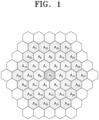
- FIG. 1 illustrates the concept of a way of calculating the average value (K) of crystal orientation differences by averaging differences in crystal orientations between comparison regions adj acent to one region according to a method of manufacturing an ultra-high strength cold-rolled steel sheet according to an embodiment of the present invention
- FIG. 2 illustrates the distribution pattern of the average values (K) of the crystal orientation differences.
- the average value (K) of crystal orientation differences obtained by averaging a difference in crystal orientations between comparison regions adjacent to the region (A 0 ) based on one arbitrary region (A 0 ) in the remaining austenite grain may be an average value (K) of crystal orientation differences obtained by averaging crystal orientation differences between the third comparison regions (A 19 to A 36 ) based on the arbitrary region (A 0 ).
- the average value (K) of the crystal orientation differences obtained by averaging crystal orientation differences between the third comparison regions (A 19 to A 36 ) based on the arbitrary region (A 0 ) may be represented by Equation 1 below.
- (MA) i represents a crystal orientation difference between one region of the third comparison regions (A 19 to A 36 ) and the region (A 0 )
- n may be 19, and m may be 36.
- the distribution of the average values (K) of the crystal orientation differences is from 0° to 5°, and, among these, the maximum value (Kmax), minimum value (Kmin), average value (Kavg) shown in a region in which the average value of the crystal orientation differences is 0° to 3° may be calculated.
- the maximum value (Kmax), minimum value (Kmin), and average value (Kavg) shown in the distribution of the region where the average value (K) of the crystal orientation differences is from 0° to 3° satisfy the relationship of (Kmax - Kavg)/ (Kmax - Kmin) > 0.4.
- the hot-rolled steel sheet is pickled with acid to remove a surface scale layer thereof.
- the hot-rolled steel sheet is cold-rolled at an average reduction ratio of, for example, 40% to 70% to form a cold-rolled steel sheet.
- the average reduction ratio increases, the formability increases due to the tissue refinement effect.
- the average reduction rate is less than 40%, it is difficult to obtain a uniform microstructure.
- the average reduction ratio is higher than 70%, the roll force increases and the process load increases.
- the cold-rolled steel sheet may have a final thickness.
- the cold-rolled steel sheet may have a structure in which the structure of the hot-rolled steel sheet is extended.
- the cold-rolled steel sheet is annealed in a continuous annealing furnace having a normal slow cooling section.
- the annealing is performed to form an austenite single-phase structure.
- the annealing heat treatment temperature and time can affect the austenite grain size, and accordingly, can have a great effect on the strength of the cold-rolled steel sheet.
- the annealing is performed at a heating rate of, for example, 2°C/sec or more, for example, in a range of 2°C/sec to 10°C/sec.
- a heating rate of, for example, 2°C/sec or more, for example, in a range of 2°C/sec to 10°C/sec.
- the annealing may be performed, for example, at a temperature of Ac3 or more, for example, at a temperature in a range of 830°C to 930°C, for example, at a temperature in a range of 830°C to 900°C, for example, for a time in a range of 30 sec to 120 sec.
- the cold-rolled structure is reversely transformed into austenite.
- the annealing temperature is less than 830°C, a single austenite phase cannot be formed to create the final structure, tempered martensite.
- annealing should be performed at A3 temperature or higher to form a single austenite phase.
- the austenite grains may become coarser, which may reduce the strength.
- the annealed cold-rolled steel sheet is slow-cooled at a cooling rate of, for example, 1°C/sec to 15°C/sec, for example, 3°C/sec to 10°C/sec, to a temperature section that suppresses ferrite transformation, for example, a first cooling end temperature of, for example, 650°C to 800°C.
- a first cooling end temperature of the slow cooling is lower than 650°C, ferrite transformation may occur in an undesirable amount, and thus the strength may be reduced. It is preferable that the fraction of ferrite generated by the ferrite transformation is limited to less than 0% to 5%.
- the time maintained at the second cooling end temperature may be in a range of 5 seconds to 90 seconds.
- the holding time is less than 5 seconds, the lower bainite transformation may not occur sufficiently.
- the holding time exceeds 90 seconds, the process cost may increase due to excessively long heat treatment time.
- some unstable austenite may be transformed into martensite during the final cooling to room temperature. If there is a lot of martensite generated at this time, the fraction of the final residual austenite decreases, which may adversely affect formability. Accordingly, it is desirable to control the generated martensite to less than 20%.
- the steel types A to D satisfy the composition ranges of the present invention, specifically, a composition range of carbon (C): 0.28% to 0.45%; silicon (Si): 1.0% to 2.5%; manganese (Mn): 1.5% to 3.0%; aluminum (Al): 0.01% to 0.05%; chromium (Cr): greater than 0% and 1.0% or less; molybdenum (Mo): greater than 0% and 0.5% or less; niobium (Nb); the total of titanium (Ti) and vanadium (V): greater than 0% and 0.1% or less; phosphorus (P): greater than 0% and 0.03% or less; sulfur (S): greater than 0% and 0.03% or less; nitrogen (N): greater than 0% and 0.01% or less; based on % by weight, and the remainder being iron (Fe).
- C carbon
- Si silicon
- Mn manganese
- aluminum (Al) 0.01% to 0.05%
- Cr chromium
- the steel type E is outside the composition range of the present invention and does not satisfy, specifically, a carbon (C) range of 0.28% to 0.45%.
- Table 2 shows the Ac3 temperature, Ms temperature, Ms-140°C temperature and Ms-30°C temperature for each steel type. The unit is °C. [Table 2] Steel type Ac3 Ms Ms-140 Ms-30 A 830 323 183 290 B 830 323 183 290 C 819 321 181 290 D 833 339 199 309 E 845 364 224 334
- the slab of the steel type was reheated at 1200°C and maintained for 3 hours, hot-rolled to a thickness of 2.4 mm at a finish delivery temperature of 950°C, and then coiled at 600°C.
- the coiled hot-rolled steel sheet was pickled to remove the scale on the surface, and cold-rolled to manufacture a cold-rolled steel sheet with a thickness of 1.2 mm.
- Table 3 shows condition values of the heat treatment process used to manufacture the cold-rolled steel sheets of the comparative examples and the examples.
- the "first heat treatment” means heat treatment performed after hot rolling coiling and before cold rolling.
- [Table 3] Ste el typ e Classific ation First heat treatme nt tempera ture (°C) Anneali ng tempera ture (°C) Anneal ing holdin g time First slow cooli ng rate (°C/s ec) First slow cooling tempera ture (°C) First rapid cooli ng rate (°C/s ec) Seco nd rapid cooli ng rate (°C/s ec) Second rapid cooling tempera ture (°C) Rapid cooli ng hold ing time (sec) Partitio ning tempera ture (°C) Partitio ning holding time (sec)
- Example 2 620 850 60 -
- Examples 1 to 4 satisfy the process ranges of the present invention.
- Comparative Example 1 adopted the steel type E which is outside the composition range of the present invention
- Comparative Example 2 exceeds and does not satisfy 500°C to 680°C which is the temperature range of the first heat treatment and is below and does not satisfy 830°C to 930°C which is the annealing temperature range
- Comparative Example 3 satisfies the annealing temperature range, but exceeds and does not satisfy 30 sec to 120 sec which is an annealing holding time, and is below and does not satisfy 5 sec to 90 sec which is a rapid cooling holding time at the second cooling end temperature (180°C to 300°C) after the second cooling (rapid cooling).
- Table 4 shows item values representing the microstructures of the cold-rolled steel sheets of the comparative examples and the examples.
- Examples 1 to 4 satisfy all of the following ranges: the first item value (B/A) ⁇ 0.1, the second item value (C/A) ⁇ 0.5, the third item value ((Kmax-Kavg)/ (Kmax-Kmin))>0.4
- the first item value (B/A) is greater than 0.1
- the third item value ((Kmax-Kavg)/ (Kmax-Kmin)) is smaller than 0.4. It can be confirmed that in the case of Comparative Example 2, the first item value (B/A) is greater than 0.1, and the second item value (C/A) is not smaller than 0.5.
- the second item value (C/A) is not smaller than 0.5.
- Table 5 shows the physical and mechanical properties, such as yield strength (YS), tensile strength (TS), and elongation (EL), yield ratio (YR), and 90-degree bendability (R/t), of the manufactured hot-rolled steel sheet and steel pipes.
- the examples satisfied the target ranges of the yield strength (YS), tensile strength (TS), and elongation (EL), yield ratio (YR), and 90-degree bendability (R/t).
- the TSxT.El value which is the product of the tensile strength and elongation, may be 20000 or more, preferably 21000 or more, more preferably 22000 or more.
- Comparative Example 1 is below and does not satisfy an elongation (EL) range of 15% or more and is below and does not satisfy a product range of tensile strength and elongation of 20000 or more
- Comparative Example 2 is below and does not satisfy an elongation (EL) range of 15% or more, is below and does not satisfy a yield ratio (YR) range of 75% or more, is above and does not satisfy a 90-degree bendability (R/t) range of 3.0 or less, and is below and does not satisfy a product range of tensile strength and elongation of 20000 or more
- Comparative Example 3 is below and does not satisfy a yield strength (YP) range of 1180 MPa or more, is below and does not satisfy a tensile strength (TS) range of 1470 MPa or more, is below and does not satisfy an elongation (EL) range of 15% or more, is below and does not satisfy a yield ratio (YR) range of 75% or more, is above and does not satisfy a 90
- the content of carbon is characterized by being low, and it failed to secure both a tensile strength of 1470 MPa and an elongation of 15% or more.
- the first heat treatment temperature was high, it was characterized by a low annealing temperature, and elongation was not sufficiently secured.
- the first heat treatment temperature is high and the annealing temperature is low, coarse martensite-austenite composite structures, compared to residual austenite, are excessively formed, and they do not show the TRIP effect, so they are considered not helpful in securing elongation.
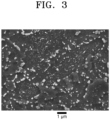
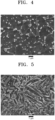
- microstructures were observed after the first heat treatment for Example 1 and Comparative Example 2 having the same composition, and, in the case of Comparative Example 2, coarse cementite with a grain size of 500 nm or more was formed in a large amount. As a result, although a large amount of residual austenite was secured, an elongation of 15% or more was not achieved.
Landscapes
- Chemical & Material Sciences (AREA)
- Engineering & Computer Science (AREA)
- Mechanical Engineering (AREA)
- Materials Engineering (AREA)
- Metallurgy (AREA)
- Organic Chemistry (AREA)
- Physics & Mathematics (AREA)
- Thermal Sciences (AREA)
- Crystallography & Structural Chemistry (AREA)
- Heat Treatment Of Sheet Steel (AREA)
Abstract
Description
- The technical idea of the present invention relates to a cold-rolled steel sheet, and more particularly to an ultra-high strength cold-rolled steel sheet whose microstructure has been controlled to have high strength and elongation, and a manufacturing method thereof.
- To achieve the purpose of collision safety and weight reduction of automobiles, the structural materials of automobiles require high strength and high formability. There are dual-phase steel, composed of ferrite and martensite structures, and deformation-induced plasticity steel (TRIP), which utilizes the phase transformation effect during the deformation of residual austenite, as ways to satisfy high strength and formability. Since TRIP whose matrix structure is composed of ferrite and bainite is disadvantageous in securing strength according to the mixing law, high-strength TRIP using martensite as a matrix structure is attracting attention. A method for making high-strength TRIP based on martensite can be achieved by rapid cooling and reheating (Quenching and Partitioning, QP) to implement martensite or tempered martensite and remaining austenite structures.
- High-strength and high-formability steels of 1.2 GPa or more, especially 1.5 GPa or more, require not only tensile strength but also high yield strength, and at the same time, an appropriate fraction of residual austenite structure and stability of residual austenite are required to secure elongation. In the case of existing technologies, there is a limitation in securing a tensile strength of 1470 MPa or more and an elongation of 15% or more simultaneously.
- In addition, when a microstructure is composed of only martensite and residual austenite, the tissue fraction is determined too sensitively to the rapid-cooling endpoint temperature. In particular, even in the case of micro-composition deviations, which are difficult to avoid, such as casting segregation, a difference in martensite fractions occurs due to Ms temperature and rapid cooling temperature, making it difficult to uniformly create a uniform microstructure and residual austenite. In addition, martensite or tempered martensite was used as a main microstructure to secure high strength and formability, and an elongation was secured through residual austenite or ferrite structures. The characteristics of rapid cooling and reheating are that the tissue fractions of tempered martensite, martensite, and remaining austenite vary depending on the rapid cooling end temperature. To secure the target properties, the optimal rapid-cooling end-point temperature section is determined depending upon alloy components to control the microstructure fraction. If the rapid-cooling endpoint temperature is too low, the size of the remaining austenite becomes fine, but its fraction becomes very small. If the rapid-cooling endpoint temperature is too high, the size of the austenite becomes large, the carbon enrichment is insufficient, and after the final cooling, it transforms into a martensite structure or becomes unstable, which makes little contribution to securing elongation.
- Therefore, to secure formability, the appropriate fraction of residual austenite, a fine shape, and stability through carbon enrichment should be secured. Meanwhile, in high-strength steel of 1470 MPa or higher, securing elongation using ferrite can lead to a decrease in yield strength or tensile strength, so ferrite should be limited.
- As a related document, there is
Korean Patent Application No. 10-2018-0047388 - Therefore, the present invention has been made in view of the above problems, and it is one object of the present invention to provide an ultra-high strength cold-rolled steel sheet whose microstructure has been controlled to have high strength and elongation, and a manufacturing method thereof.
- It will be understood that the technical problems are only provided as examples, and the technical idea of the present disclosure is not limited thereto.
- In accordance with an aspect of the present invention, the above and other objects can be accomplished by the provision of an ultra-high strength cold-rolled steel sheet whose microstructure has been controlled to have high strength and elongation, and a manufacturing method thereof.
- In accordance with another aspect of the present invention, there is provided an ultra-high strength cold-rolled steel sheet, including: carbon (C): 0.28% to 0.45%; silicon (Si): 1.0% to 2.5%; manganese (Mn): 1.5% to 3.0%; aluminum (Al): 0.01% to 0.05%; chromium (Cr): greater than 0% and 1.0% or less; molybdenum (Mo): greater than 0% and 0.5% or less; a total of niobium (Nb), titanium (Ti) and vanadium (V): greater than 0% and 0.1% or less; phosphorus (P): greater than 0% and 0.03% or less; sulfur (S): greater than 0% and 0.03% or less; and nitrogen (N): greater than 0% and 0.01% or less, based on % by weight,; and a remainder being Fe and other unavoidable impurities, wherein, when observing an area of 100 µm2 or more in a width direction of the steel sheet in a region between a surface portion and center portion of the cold-rolled steel sheet, a ratio (B/A) of an area of grain (B) having a carbon content of 0.5% or less in austenite to an area (A) of austenite is smaller than 0.1, and the ultra-high strength cold-rolled steel sheet satisfies a yield strength (YP) of 1180 MPa or more, a tensile strength (TS) of 1470 MPa or more, an elongation (El) of 15% or more, a yield ratio (YR) of 75% or more, and a bendability (R/t) of 3.0 or less.
- In accordance with an embodiment of the present invention, a ratio (C/A) of an area (C) of martensite-austenite (MA) grain to the area (A) of austenite may be smaller than 0.5.
- In accordance with an embodiment of the present invention, when observing remaining austenite grains in a width direction of the steel sheet using electron backscatter diffraction (EBSD) analysis in an area (t/4 thickness) between the surface portion and center portion of the cold-rolled steel sheet and, based on one arbitrary region in the remaining austenite grain, calculating the distribution of average values of the crystal orientation differences in the remaining austenite grain by corresponding an average value (K) of crystal orientation differences, obtained by averaging differences in crystal orientations between comparison regions adjacent to the region, to the region, a maximum value (Kmax), minimum value (Kmin), and average value (Kavg) of the crystal orientation differences whose average value is in a region distribution of 0° to 3° may satisfy a relationship of (Kmax - Kavg)/ (Kmax - Kmin) > 0.4.
- In accordance with an embodiment of the present invention, when observing remaining austenite grains in a width direction of the steel sheet using electron backscatter diffraction (EBSD) analysis in an area (t/4 thickness) between the surface portion and center portion of the cold-rolled steel sheet, comparison regions adjacent to the region may include first comparison regions positioned in contact with the region, second comparison regions positioned further apart from the region than the first comparison regions based on the region and positioned in contact with the first comparison regions, and third comparison regions positioned further apart from the region than the second comparison regions based on the region and positioned in contact with the second comparison regions, and an average crystal orientation difference value obtained by, based on one arbitrary region in the remaining austenite grain, averaging differences in crystal orientations between comparison regions adjacent to the region may be an average crystal orientation difference value obtained by averaging differences between the third comparison regions and crystal orientations based on the arbitrary region.
- In accordance with an embodiment of the present invention, the ultra-high strength cold-rolled steel sheet may include a mixed structure in which ferrite, tempered martensite, martensite, residual austenite, upper bainite, and lower bainite are mixed. A fraction of the ferrite may be in a range of greater than 0% and 5% or less, a fraction of the martensite may be in a range of greater than 0% and 20% or less, a fraction of the residual austenite may be in a range of 10% to 30%, a fraction of the upper bainite may be in a range of greater than 0% and 30% or less, a fraction of the lower bainite may be in a range of greater than 0% and 30% or less, and a fraction of the tempered martensite may be a remaining fraction. A minimum value of a sum of the fraction of the upper bainite and the fraction of the lower bainite may be 10%.
- In accordance with an embodiment of the present invention, the ultra-high strength cold-rolled steel sheet may include a mixed structure in which tempered martensite, martensite, residual austenite, upper bainite, and lower bainite are mixed, wherein a fraction of the martensite is in a range of greater than 0% and 20% or less, a fraction of the residual austenite is in a range of 10% to 30%, a fraction of the upper bainite is in a range of greater than 0% and 30% or less, a fraction of the lower bainite is in a range of greater than 0% and 30% or less, and a fraction of the tempered martensite is a remaining fraction.
- In accordance with an embodiment of the present invention, the average diameter of the residual austenite may be 1.0 µm or less.
- In accordance with the technical idea of the present invention, an ultra-high strength cold-rolled steel sheet is deformation-induced plasticity steel formed through rapid cooling and reheating heat treatment. The ultra-high strength cold-rolled steel sheet can have a yield strength of 1180 MPa or more, a high tensile strength of 1470 MPa or more, an elongation of 15% or more, a yield ratio of 75% or more, and a bending processability (R/t) of 3.0 or less based on 90-degree bending by performing heat treatment between hot-rolling coiling and cold rolling to appropriately control the carbon distribution and by appropriately controlling a carbon content in austenite after the cold rolling and heat treatment. The ultra-high strength cold-rolled steel sheet includes tempered-martensite, upper-bainite and lower-bainite deformed structures as microstructures, thereby refining and stabilizing residual austenite and stably providing a yield strength and a yield ratio.
- In particular, inducing multiple stages of phase transformations such as martensite transformation (first), lower-bainite transformation (second), upper-bainite transformation (third) in rapid cooling (second cooling), rapid cooling holding, reheating, and partitioning processes can help control the problem of structural inhomogeneity due to casting segregation, etc. which are inevitably present in steel, and can refine and stabilize residual austenite. When simply composed of martensite and residual austenite, the Ms point may be changed due to ingredient inhomogeneity, such as casting segregation, in the structure, and the martensite and residual austenite fraction may be different at the same rapid cooling temperature. However, the ultra-high strength cold-rolled steel sheet according to the technical idea of the present invention can address these problems.
- The effects of the present invention are described only as examples, and the scope of the present invention is not limited by these effects.
-
-
FIG. 1 illustrates the concept of a way of calculating the average value (K) of crystal orientation differences by averaging differences in crystal orientations between comparison regions adj acent to one region according to a method of manufacturing an ultra-high strength cold-rolled steel sheet according to an embodiment of the present invention, andFIG. 2 illustrates the distribution pattern of the average values (K) of the crystal orientation differences. -
FIG. 3 is a scanning electron microscope photograph showing the microstructure of steel after the first heat treatment of Example 1 among experimental examples of the present invention. -
FIG. 4 is a scanning electron microscope photograph showing the microstructure of steel after the first heat treatment of Comparative Example 2 among the experimental examples of the present invention. -
FIG. 5 illustrates the scanning electron microscope photograph of the final microstructure of the ultra-high strength cold-rolled steel sheet according to Example 1 of the experimental examples of the present invention. -
FIG. 6 illustrates the scanning electron microscope photograph of the final microstructure of the ultra-high strength cold-rolled steel sheet according to Comparative Example 1 of the experimental examples of the present invention. -
FIG. 7 illustrates the scanning electron microscope photograph of the final microstructure of the ultra-high strength cold-rolled steel sheet according to Comparative Example 2 of the experimental examples of the present invention. -
FIG. 8 illustrates the scanning electron microscope photograph of the final microstructure of the ultra-high strength cold-rolled steel sheet according to Comparative Example 3 of the experimental examples of the present invention. -
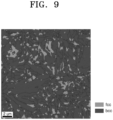
FIG. 9 illustrates the shape and distribution of remaining austenite through EBSD in the final microstructure of the ultra-high strength cold-rolled steel sheet according to Example 1 of the experimental examples of the present invention. -
FIG. 10 illustrates the shape and distribution of remaining austenite through EBSD in the final microstructure of the ultra-high strength cold-rolled steel sheet according to Comparative Example 1 of the experimental examples of the present invention. -
FIG. 11 illustrates the shape and distribution of remaining austenite through EBSD in the final microstructure of the ultra-high strength cold-rolled steel sheet according to Comparative Example 2 of the experimental examples of the present invention. - Hereinafter, preferred embodiments of the present invention will be described in detail with reference to the accompanying drawings. Embodiments of the present disclosure are provided to more completely explain the technical idea of the present disclosure to those skilled in the art, and the following embodiments may be modified in many different forms, but the scope of the technical idea of the present disclosure is not limited to the following embodiments. Rather, the embodiments are provided to make the disclosure thorough and complete and to fully convey the technical idea of the disclosure to those skilled in the art. Like reference numerals in the specification denote like elements. Further, various elements and regions in the drawings are schematically drawn. Therefore, the technical idea of the invention is not limited by the relative size or spacing drawn in the accompanying drawings.
- The technical idea of the present invention provides an ultra-high strength cold-rolled steel sheet having a yield strength of 1180 MPa or more, a tensile strength of 1470 MPa or more, an elongation of 15% or more, a yield ratio (yield strength/tensile strength) of 75% or more, and a 90-degree bending processability of 3.0 R/t or less, and a manufacturing method thereof.
- Hereinafter, the technical idea of the ultra-high strength cold-rolled steel sheet according to the present invention is described in detail.
- The ultra-high strength cold-rolled steel sheet according to an embodiment of the present invention includes: carbon (C): 0.28% to 0.45%; silicon (Si): 1.0% to 2.5%; manganese (Mn): 1.5% to 3.0%; aluminum (Al): 0.01% to 0.05%; chromium (Cr): greater than 0% and 1.0% or less; molybdenum (Mo): greater than 0% and 0.5% or less; a total of niobium (Nb), titanium (Ti) and vanadium (V): greater than 0% and 0.1% or less; phosphorus (P): greater than 0% and 0.03% or less; sulfur (S): greater than 0% and 0.03% or less; and nitrogen (N): greater than 0% and 0.01% or less, based on % by weight,; and the remainder being Fe and other unavoidable impurities.
- Hereinafter, the role and content of each component included in the ultra-high strength cold-rolled steel sheet according to the present invention are described. Here, the content of each component element means % by weight based on the total weight of the steel sheet.
- Carbon is added to secure the strength of steel, and in particular, it increases the strength of the martensite structure. In addition, sufficient carbon content is required because it can be classified to stabilize austenite and secure elongation through the deformation-induced plasticity (TRIP) effect. When the content of carbon is less than 0.28%, it may be difficult to obtain target strength and elongation at the same time. When the content of carbon is greater than 0.45%, weldability may be decreased, and hydrogen embrittlement may occur. Accordingly, it is preferred to carbon in a content of 0.28% to 0.45% based on the total weight of the steel sheet.
- Silicon is a ferrite-stabilizing element that delays the formation of carbides in ferrite and martensite and has a solid solution-strengthening effect. In particular, it is essential to delay the formation of carbides in martensite and to separate carbon into austenite. When the content of silicon is less than 1.0%, it may be difficult to sufficiently secure the stability of a residual austenite because the carbide formation suppression effect is small. When the content of the silicon is greater than 2.5%, the plating properties may be impaired due to the formation of oxides such as Mn2SiO4 during the manufacturing process, and the carbon equivalent may be increased, thereby reducing weldability. Accordingly, it is preferred to add silicon in a content of 1.0% to 2.5% of the total weight of the steel sheet.
- Manganese has a solid solution-strengthening effect and increases hardenability, delaying the formation of ferrite and bainite during cooling. When the content of manganese is less than 1.5%, the effect due to manganese addition may not be sufficient, making it difficult to secure hardenability. When the content of manganese is greater than 3.0%, the transformation of bainite may be excessively delayed, the processability may be reduced due to the formation or segregation of inclusions such as MnS, and the weldability may be reduced due to increased carbon equivalent. Accordingly, it is preferred to add manganese in a content of 1.5% to 3.0% of the total weight of the steel sheet.
- Aluminum is used as a deoxidizer and, similar to silicon, can help suppress carbide formation. When the content of aluminum is less than 0.01%, the deoxidation effect may be insufficient. When the content of aluminum is greater than 0.05%, AlN may be formed during slab manufacturing, which can cause cracks during casting or hot rolling. Accordingly, it is preferred to add aluminum in a content of 0.01% to 0.05% based on the total weight of the steel sheet.
- Chromium has a solid solution-strengthening effect, contributes to strength improvement by increasing hardenability, and acts together with C and Mn to refine martensite and bainite structures and stabilize residual austenite. When the content of chromium is greater than 1.0%, the transformation of bainite may be excessively delayed, and the manufacturing cost of steel may increase. Accordingly, it is preferred to add chromium in a content of greater than 0% and 1.0% or less of the total weight of the steel sheet.
- Molybdenum has a solid solution-strengthening effect, contributes to strength improvement by increasing hardenability, and acts together with C and Mn to refine martensite and bainite structures and stabilize residual austenite. When the content of molybdenum is greater than 0.5%, the transformation of bainite may be excessively delayed, and the manufacturing cost of steel may increase. Accordingly, it is preferred to add molybdenum in a content of greater than 0% and 0.5% or less of the total weight of the steel sheet.
- The present invention may contain at least one of niobium, titanium, and vanadium. Niobium, titanium, and vanadium are precipitate-forming elements, which can increase strength through the precipitation strengthening effect and can also obtain a grain refinement effect. When the total amount of niobium, titanium, and vanadium is respectively added in a content of greater than 0.1%, the manufacturing cost of steel may increase significantly, the rolling load may increase significantly due to a large amount of precipitation during rolling, and the elongation may decrease. Accordingly, the total amount of niobium, titanium, and vanadium is preferably greater than 0% and 0.1% or less of the total weight of the steel sheet, respectively. In addition, it is preferred to add each of niobium, titanium, and vanadium in a content of 0.1% or less of the total weight of the steel sheet. For example, each of niobium, titanium, and vanadium may be added in a content of greater than 0% and 0.05% or less.
- Phosphorus is an impurity included in the manufacturing process of steel, and although it can help improve strength through solid solution strengthening, it can cause low-temperature embrittlement when included in large amounts. Accordingly, it is preferred to limit the content of phosphorus to greater than 0% and 0.03% or less based on the total weight of the steel sheet.
- Sulfur is an impurity included in a steel manufacturing process, and can form non-metallic inclusions such as FeS and MnS, thereby reducing bendability, toughness, and weldability. Accordingly, it is preferred to limit the content of sulfur to greater than 0% and 0.03% or less based on the total weight of the steel sheet.
- Nitrogen is an element that is inevitably contained during the manufacture of steel, and can help stabilize austenite, but it can react with Al to form AlN, which can cause cracks during performance. Accordingly, it is preferred to limit the content of nitrogen to greater than 0% and 0.01% or less of the total weight of the steel sheet.
- Meanwhile, the ultra-high strength cold-rolled steel sheet according to a modified embodiment of the present invention may additionally include at least one of elements having the following composition range in addition to the above-described alloy elements.
- Nickel can help stabilize austenite and increase the hardenability of steel. When the content of the nickel is greater than 0.5%, it increases the manufacturing cost of the steel, which is not desirable. Accordingly, it is preferred to add nickel in a content of greater than 0% and 0.5% or less of the total weight of the steel sheet.
- Copper can help stabilize austenite and increase the hardenability of steel. When the content of the copper is greater than 0.5%, it increases the manufacturing cost of the steel, which is not desirable. Accordingly, it is preferred to add copper in a content of greater than 0% and 0.5% or less of the total weight of the steel sheet.
- In addition, it is preferred to add the total of nickel and copper in a content of greater than 0% and 1.0% or less.
- Boron can improve the hardenability as in Mn, Cr, and Mo. When the content of the boron is greater than 0.005%, it may be concentrated on the surface and cause quality deterioration such as plating adhesion. Accordingly, it is preferred to add boron in a content of greater than 0% and 0.005% or less of the total weight of the steel sheet.
- The remaining component of the ultra-high strength cold-rolled steel sheet is iron (Fe). However, since unintended impurities from raw materials or the surrounding environment may inevitably be mixed in a normal steelmaking process, this cannot be ruled out. Since these impurities are known to anyone skilled in the art of ordinary manufacturing processes, they are not specifically mentioned in this specification.
- The ultra-high strength cold-rolled steel sheet according to an embodiment of the present invention may include a mixed structure in which ferrite, tempered martensite, martensite, residual austenite, upper bainite, and lower bainite are mixed. The fraction of the ferrite may be 0% to 5% (including 0%), the fraction of the martensite may be greater than 0% and 20% or less, the fraction of the residual austenite may be 10% to 30%, the fraction of the upper bainite may be greater than 0% and 30% or less, the fraction of the lower bainite may be greater than 0% and 30% or less, and the fraction of the tempered martensite may be the remaining fraction. The minimum value of the sum of the fraction of the upper bainite and the fraction of the lower bainite may be 10%. The fractions mean area ratios derived from microstructure photographs through an image analyzer. The ferrite may include polygonal ferrite. In addition, the average diameter of the residual austenite may be, for example 1.0 µm or less, for example 0.1 µm to 1.0 µm.
- The residual austenite is finely distributed in the lath and grain boundaries of the tempered martensite and the bainite, so that the residual austenite can be stabilized, and the strength and elongation can be stably secured.
- In addition, the ultra-high strength cold-rolled steel sheet may not include ferrite. In this case, the ultra-high strength cold-rolled steel sheet may include a mixed structure in which tempered martensite, martensite, residual austenite, upper bainite, and lower bainite are mixed. The fraction of martensite may be greater than 0% and 20% or less, the fraction of residual austenite may be 10% to 30%, the fraction of the upper bainite may be greater than 0% and 30% or less, the fraction of the lower bainite may be greater than 0% and 30% or less, and the fraction of the tempered martensite may be the remaining fraction. In addition, the sum of the fraction of the upper bainite and the fraction of the lower bainite may be 10% to 60%. The minimum value of the sum of the fraction of the upper bainite and the fraction of the lower bainite may be 10%.
- In the ultra-high strength cold-rolled steel sheet according to the technical idea of the present invention, when observing an area of 100 µm2 or more in the width direction (TD) of the cold-rolled steel sheet in an area (t/4 thickness) between the surface portion and center portion of the sheet, a ratio (B/A) of the area (B) of grains having a carbon content of 0.5% or less in austenite to the area (A) of austenite is less than 0.1. The ratio (B/A) can be understood as a measure of the compositional stability of the residual austenite (RA) generated in the steel sheet. When the ratio (B/A) is 0.1 or more, the compositional stability of austenite is insufficient, so the effect of improving elongation due to residual austenite cannot be obtained. To measure the carbon content in an individual grain, the lattice interplanar spacing was measured through transmission electron microscopy (TEM) observation, and the carbon content was derived through the relationship Cγ = (αγ - 3.592)/0.033. αγ is an austenite lattice constant measured by a transmission electron microscope.
- In the ultra-high strength cold-rolled steel sheet according to the technical idea of the present invention, when observing an area of 100 µm2 or more in the width direction (TD) of the cold-rolled steel sheet in an area (t/4 thickness) between the surface portion and center portion of the sheet, the ratio (C/A) of the area (C) of martensite-austenite grains to the area (A) of austenite is smaller than 0.5. The ratio (C/A) can be understood as a measure of the stability for each position of the residual austenite (RA) generated within the steel sheet. When the ratio (C/A) is 0.5 or more, martensite-austenite grains that do not participate in deformation-induced martensite transformation become excessive, so sufficient elongation and processing hardenability cannot be obtained.
- When observing remaining austenite grains in the width direction (TD) of the steel sheet using electron backscatter diffraction (EBSD) analysis in an area (t/4 thickness) between the surface portion and center portion of the ultra-high strength cold-rolled steel sheet according to the technical idea of the present invention and, based on one arbitrary region in the remaining austenite grain, calculating the distribution of average values of the crystal orientation differences in the remaining austenite grain by corresponding the average value (K) of the crystal orientation differences, obtained by averaging differences in crystal orientations between comparison regions adjacent to the region, to the region, the maximum value (Kmax), minimum value (Kmin), and average value (Kavg) of the crystal orientation differences whose average value is in a region distribution of 0° to 3° satisfy the relationship of (Kmax - Kavg)/ (Kmax - Kmin) > 0.4. Meanwhile, the maximum value of (Kmax - Kavg)/(Kmax - Kmin) is 1.
-
FIG. 1 illustrates the concept of a way of calculating the average value (K) of crystal orientation differences by averaging differences in crystal orientations between comparison regions adj acent to one region according to a method of manufacturing an ultra-high strength cold-rolled steel sheet according to an embodiment of the present invention, andFIG. 2 illustrates the distribution pattern of the average values (K) of the crystal orientation differences. - Referring to
FIG. 1 , when observing residual austenite grains using an electron backscatter diffraction (EBSD) analysis method in the width direction of the steel sheet in the region between the surface portion and center portion of the cold-rolled steel sheet, comparison regions adjacent to the region (A0) may include first comparison regions (A1 to A6) positioned in contact with the region (A0), second comparison regions (A7 to A18) positioned further apart from the region than the first comparison regions (A1 to A6) based on the region (A0) and positioned in contact with the first comparison regions (A1 to A6), and third comparison regions (A19 to A36) positioned further apart from the region than the second comparison regions (A7 to A18) based on the region (A0) and positioned in contact with the second comparison regions (A7 to A18). In this case, the average value (K) of crystal orientation differences obtained by averaging a difference in crystal orientations between comparison regions adjacent to the region (A0) based on one arbitrary region (A0) in the remaining austenite grain may be an average value (K) of crystal orientation differences obtained by averaging crystal orientation differences between the third comparison regions (A19 to A36) based on the arbitrary region (A0). - For example, the average value (K) of the crystal orientation differences obtained by averaging crystal orientation differences between the third comparison regions (A19 to A36) based on the arbitrary region (A0) may be represented by
Equation 1 below. Here, (MA)i represents a crystal orientation difference between one region of the third comparison regions (A19 to A36) and the region (A0), n may be 19, and m may be 36.
- Referring to
FIG. 2 , the distribution of the average values (K) of the crystal orientation differences is from 0° to 5°, and, among these, the maximum value (Kmax), minimum value (Kmin), average value (Kavg) shown in a region in which the average value of the crystal orientation differences is 0° to 3° may be calculated. - In the method of manufacturing the ultra-high strength cold-rolled steel sheet according to the technical idea of the present invention, the maximum value (Kmax), minimum value (Kmin), and average value (Kavg) shown in the distribution of the region where the average value (K) of the crystal orientation differences is from 0° to 3° satisfy the relationship of (Kmax - Kavg)/ (Kmax - Kmin) > 0.4.
- In the deformation-induced martensite phase transformation reaction of austenite with FCC structure, defects within grains, such as dislocations or stacking defects, act as martensite nucleation sites. Therefore, when the average value of the crystal orientation differences, which is a value representing the distribution of defects within the grain, is too small, the transformation-induced plasticity (TRIP) nucleation is not sufficient, and thus the effect of increasing ductility × tensile strength due to the deformation-induced martensite phase transformation cannot be obtained. On the other hand, also when the average value of the crystal orientation differences is too high, the desired ductility increase effect cannot be obtained because the deformation-induced martensite phase transformation occurs concentratedly at the beginning of tensile deformation.
- An ultra-high strength cold-rolled steel sheet satisfying the specific ingredients and content ranges of the alloy composition described above and the above-described conditions may satisfy conditions as follows: for example yield strength (YP): 1180 MPa to 1330 MPa, tensile strength (TS): 1470 MPa to 1770 MPa, elongation (El): 15% or more, yield ratio (YR): 75% or more, and bendability (R/t): 3.0 or less.
- Hereinafter, the method of manufacturing the ultra-high strength cold-rolled steel sheet according to the present invention is described with reference to the accompanying drawings.
- In the manufacturing method according to the present invention, a semi-finished product that is the target of a hot rolling process may be, for example, a slab. A slab in a semi-finished state may be secured through a continuous casting process after obtaining molten steel of a predetermined composition through a steelmaking process.
- The method of manufacturing an ultra-high strength cold-rolled steel sheet according to an embodiment of the present invention includes a step of manufacturing a hot-rolled steel sheet using steel having the composition; a step of manufacturing a cold-rolled steel sheet by cold-rolling the hot-rolled steel sheet; a step of annealing the cold-rolled steel sheet; a step of multi-cooling the cold-rolled steel sheet; and a step of performing partitioning heat treatment of the cold-rolled steel sheet.
- In particular, to perform annealing of the cold-rolled steel sheet, the temperature is raised to Ac3 temperature or higher and maintained for a certain time, and then multi-cooling composed of two stages of slow cooling and rapid cooling is performed until a rapid-cooling end temperature. Next, after maintaining the rapid-cooling end temperature for a certain time, the temperature is increased to the Ms temperature or higher for partitioning heat treatment, and then the temperature is maintained at a constant level for the partitioning heat treatment time, and then finally cooled to the Mf temperature or lower.
- A steel slab having the above alloy composition is prepared, and the steel slab is reheated at a Slab Reheating Temperature (SRT) of, for example, 1,150°C to 1,250°C. Through this reheating, the re-dissolution of the segregated ingredient during casting and the re-dissolution of the precipitate may occur, homogenizing the material and making it possible for hot-rolling. When the reheating temperature is higher than 1,250°C, the size of the austenite grains may increase, and the process cost may increase due to the temperature increase. When the reheating temperature is higher than 1,250°C, the size of austenite grains may increase, and the process cost may increase due to the temperature increase. The reheating may be performed, for example for 1 hour to 4 hours. When the reheating time is shorter than 1 hour, homogenization of segregation may be insufficient. When the reheating time is longer than 4 hours, the size of austenite grain may increase, and the process cost may increase due to the temperature increase.
- After the reheating, hot rolling may be performed in a conventional manner, and hot finishing rolling may be performed at a finish delivery temperature (FDT) of, for example, 850°C to 970°C to manufacture a hot rolled steel sheet. When the FDT is less than 850°C, ferrite or pearlite may be generated. When the FDT is higher than 970°C, scale formation increases, the crystal grain size becomes coarser, and it may be difficult to achieve the fine uniformity of a structure.
- Next, the hot-rolled steel sheet is cooled to a coiling temperature of, for example, 400°C to 700°C. The cooling may be either air-cooling or water-cooling, and may be performed at a cooling rate of, for example, 10°C/sec to 30°C/sec. An increased cooling speed is advantage for reducing the average grain size. It is preferred to perform the cooling up to the coiling temperature.
- Next, the hot-rolled steel sheet is coiled at a coiling temperature (CT) of, for example, 400°C to 700°C. A range of the coiling temperature may be selected in consideration of cold rolling properties and surface properties. When the coiling temperature is lower than 400°C, a hard phase such as martensite is excessively generated so that the material of the hot-rolled steel sheet excessively increases, which may significantly increase the rolling load during cold rolling. When the coiling temperature is higher than 700°C, it may cause non-uniformity in the microstructure of a final product.
- Meanwhile, in the method of manufacturing the ultra-high strength cold-rolled steel sheet according to the technical idea of the present invention, a first heat treatment may be performed at 500°C to 680°C for 10 seconds to 12 hours before cold rolling after the above hot-rolling coiling. Here, the first heat treatment may be selected from a batch annealing process, a continuous heat treatment process, etc. After the first heat treatment, the steel sheet microstructure is distributed with two or less carbides having a grain size of 500 nm or more within an area of 100 µm2, and has a pearlite ratio of 5% or less. When the first heat treatment process is not performed or the temperature is lower than 500°C, the cold-rolling load increases, which increases the difficulty of the process. When the heat treatment process temperature is higher than 680°C or the heat treatment process time is longer than 12 hours, coarse carbides such as spherical cementite with a diameter of 500 nm or more are formed. This can aggravate carbon atom heterogeneity and create residual austenite with excessive carbon dissolved in the final microstructure after cold rolling. In the case of austenite with a carbon content of about 1.1% or more, the TRIP effect is expected to decrease as the ratio increases, resulting in a decrease in the strength × elongation characteristics. Therefore, the stability of the residual austenite was adjusted by appropriately adjusting the microstructure after the first heat treatment.
- The hot-rolled steel sheet is pickled with acid to remove a surface scale layer thereof. Next, the hot-rolled steel sheet is cold-rolled at an average reduction ratio of, for example, 40% to 70% to form a cold-rolled steel sheet. As the average reduction ratio increases, the formability increases due to the tissue refinement effect. When the average reduction rate is less than 40%, it is difficult to obtain a uniform microstructure. When the average reduction ratio is higher than 70%, the roll force increases and the process load increases. By the cold rolling, the finally produced steel sheet may have a final thickness. The cold-rolled steel sheet may have a structure in which the structure of the hot-rolled steel sheet is extended.
- The cold-rolled steel sheet is annealed in a continuous annealing furnace having a normal slow cooling section. The annealing is performed to form an austenite single-phase structure. The annealing heat treatment temperature and time can affect the austenite grain size, and accordingly, can have a great effect on the strength of the cold-rolled steel sheet.
- The annealing is performed at a heating rate of, for example, 2°C/sec or more, for example, in a range of 2°C/sec to 10°C/sec. When the heating rate is less than 2°C/sec, it takes a long time to reach the target annealing temperature, which reduces production efficiency and may increase the grain size.
- The annealing may be performed, for example, at a temperature of Ac3 or more, for example, at a temperature in a range of 830°C to 930°C, for example, at a temperature in a range of 830°C to 900°C, for example, for a time in a range of 30 sec to 120 sec. In this heating and annealing step, the cold-rolled structure is reversely transformed into austenite. When the annealing temperature is less than 830°C, a single austenite phase cannot be formed to create the final structure, tempered martensite. For reference, annealing should be performed at A3 temperature or higher to form a single austenite phase. When the annealing temperature is higher than 900°C, the austenite grains may become coarser, which may reduce the strength.
- As the annealing time increases, it affects the coarsening due to austenite grain growth, just like the annealing temperature, but the annealing time has less effect, compared to the annealing temperature. When the annealing time is longer than 120 sec, the heat treatment efficiency may be reduced. When the annealing time is shorter than 30 sec, the annealing effect may be insufficient.
- The annealed cold-rolled steel sheet is multi-cooled. The cooling step may be performed in the following two steps.
- First, the annealed cold-rolled steel sheet is slow-cooled at a cooling rate of, for example, 1°C/sec to 15°C/sec, for example, 3°C/sec to 10°C/sec, to a temperature section that suppresses ferrite transformation, for example, a first cooling end temperature of, for example, 650°C to 800°C. When the first cooling end temperature of the slow cooling is lower than 650°C, ferrite transformation may occur in an undesirable amount, and thus the strength may be reduced. It is preferable that the fraction of ferrite generated by the ferrite transformation is limited to less than 0% to 5%.
- Next, the cold-rolled steel sheet that has been first-cooled (slow-cooled) is secondarily cooled (rapidly cooled) by rapid cooling at a cooling rate of, for example, 20°C/sec or higher, for example, at a cooling rate in a range of 20°C/sec to 100°C/sec, for example, at the Ms temperature or lower, for example, at a temperature in a range of Ms-140°C to Ms-30°C, for example, at a secondary cooling end temperature in a range of 180°C to 300°C. The second cooling is a rapid cooling step, and may include a 2-1 rapid cooling step and 2-2 rapid cooling step sequentially performed. The cooling rate of the 2-1 rapid cooling step may be, for example, 20°C/sec or more, and may be rapidly cooled to a temperature of Ms-30°C or lower. During this cooling, some of the austenite transforms into martensite, and the amount thereof is approximately 20 to 80%. The cooling rate of the 2-2 rapid cooling step may be, for example, 30°C/sec or more, and the 2-2 rapid cooling step causes martensite transformation by cooling to the rapid cooling endpoint temperature (Ms-140°C to Ms-30°C).
- By the second cooling (rapid cooling), a portion of austenite may be transformed into martensite. The fraction of the generated martensite may be 20% to 80%.
- In this heat treatment, if the average cooling rate of the slow cooling to rapid cooling section can be secured faster than 70°C/sec, the 2-1 rapid cooling step and the 2-2 rapid cooling step may be performed without distinction.
- Next, the second-cooled (rapidly cooled) cold-rolled steel sheet is maintained at the second cooling end temperature for, for example, from 5 seconds to 90 seconds. In this holding time after the rapid cooling, initially, the temperature homogenization of the steel may proceed. Next, while maintaining it isothermally at the second cooling end temperature, a portion of the residual austenite may be transformed into lower bainite, etc.
- The multi-cooled cold-rolled steel sheet is reheated at a heating rate of, for example, 3°C/sec to 20°C/sec, and subjected to partitioning heat treatment by maintaining at, for example, a temperature in a range of 360°C to 500°C, for example, a temperature in a range of 360°C to 460°C, for example, a time in a range of 30 seconds to 500 seconds, for example, a time in a range of 30 seconds to 500 seconds.
- If the partitioning heat treatment temperature is lower than 360°C, the partitioning effect may be insufficient. When the partitioning heat treatment temperature is higher than 500°C, carbides may become coarser and, thus, the strength may decrease.
- The partitioning heat treatment holding time has a small effect compared to the partitioning temperature. When the partitioning heat treatment holding time is less than 30 seconds, it may be difficult to obtain a stable partitioning effect. When the partitioning heat treatment holding time is longer than 500 seconds, the heat treatment efficiency may decrease, the carbide size may increase, and the strength may decrease.
- The partitioning heat treatment step may be performed immediately after the multi-cooling, or after maintaining at room temperature for several minutes or more.
- After the partitioning heat treatment step is completed, it is cooled to room temperature, for example, to a temperature in a range of 0°C to 40°C.
- Hereinafter, in a process of performing the method of manufacturing the ultra-high strength cold-rolled steel sheet according to the technical idea of the present invention, a change in the microstructure of the ultra-high strength cold-rolled steel sheet is described in detail.
- In the annealing step, the microstructure of the cold-rolled steel sheet is reversely transformed into austenite.
- In the first cooling of the multi-cooling step, the fraction of ferrite generated by ferrite transformation is limited to less than 5%, and ferrite may not be generated. If 5% or more of ferrite is generated, the strength may be reduced and, thus, the target strength may not be achieved.
- In the second cooling of the multi-cooling step, as the cold-rolled steel sheet is cooled at a rapid cooling rate, ferrite transformation, pearlite transformation and bainite transformation are suppressed, and a portion of the austenite is transformed into martensite. Here, the martensite fraction generated by martensite transformation may be limited to 20% to 80%. When the fraction of martensite generated during the second cooling exceeds 80%, it may be difficult to secure an appropriate amount of residual austenite fraction. When the fraction is less than 20%, the fraction of residual austenite after cooling is too high, making it difficult to secure the stability of the residual austenite, and even if the bainite transformation structure is increased, the martensite fraction may be small, resulting in a decrease in strength. In addition, some martensite structures may increase the internal stress to increase the bainite nucleation rate, thereby rapidly progressing the bainite transformation even at a low temperature of Ms or lower.
- In the second cooling of the multi-cooling step, while maintaining at the second cooling end temperature after rapid cooling, a portion of the austenite is transformed into bainite, which may be mainly lower bainite. In addition, fine precipitates may be formed within the martensite generated in the previous step. Here, the time maintained at the second cooling end temperature may be in a range of 5 seconds to 90 seconds. When the holding time is less than 5 seconds, the lower bainite transformation may not occur sufficiently. When the holding time exceeds 90 seconds, the process cost may increase due to excessively long heat treatment time.
- In the partitioning heat treatment step, carbon may be diffused and concentrated into the interior of the residual austenite, thereby stabilizing the residual austenite. In addition, a portion of the residual austenite may undergo bainite transformation. The bainite transformation can refine the shape of the residual austenite after rapid cooling, and thus can contribute to stabilizing the residual austenite. For this function, the sum of the fraction of the upper bainite and the fraction of the lower bainite may be 10% or more.
- After performing the partitioning heat treatment step, some unstable austenite may be transformed into martensite during the final cooling to room temperature. If there is a lot of martensite generated at this time, the fraction of the final residual austenite decreases, which may adversely affect formability. Accordingly, it is desirable to control the generated martensite to less than 20%.
- To suppress martensite transformation in the final cooling, it is desirable to ensure that the second cooling end temperature, the holding time at the second cooling end temperature and the heat treatment step are performed without problems so that residual austenite is refined and stabilized.
- Below the Ms point, there are cases where the bainite transformation is not considered, but there are studies that bainite transformation is possible even below the Ms point, and there are studies that bainite nucleation increases more than right on the Ms point below the Ms point.
- After this heat treatment process, the final microstructure may include tempered martensite (20% to 80%), residual austenite (10% to 30%), lower bainite (0% to 30%), upper bainite (0% to 30%), some ferrite (0% to 5%) or martensite (0% to 20%). The sum of the fraction of the upper bainite and the fraction of the lower bainite may be 10% or more. The average diameter of the residual austenite may be 1.0 µm or less.
- Hereinafter, preferred experimental examples are presented to help understand the present invention. However, the following experimental examples are only intended to help understand the present invention, and the present invention is not limited to the following experimental examples.
- Steel having each of the compositions (unit: % by weight) of Table 1 below was prepared, and cold-rolled steel sheets according to examples and comparative examples were prepared through predetermined hot-rolling and cold-rolling processes and heat treatment process. The remainder was iron (Fe).
[Table 1] Steel type C Si Mn P S Al Cr Mo Nb N A 0.35 1.7 2 0.02 0.005 0.03 0.5 0.1 0.01 0.004 B 0.35 1.7 2 0.02 0.005 0.03 0.5 0.1 0.04 0.004 C 0.35 1.7 2.3 0.015 0.002 0.03 0.01 0.01 0.01 0.004 D 0.32 1.7 2 0.015 0.002 0.03 0.3 0.1 0.03 0.004 E 0.25 1.7 2.3 0.02 0.005 0.03 - 0.1 - - - Referring to Table 1, the steel types A to D satisfy the composition ranges of the present invention, specifically, a composition range of carbon (C): 0.28% to 0.45%; silicon (Si): 1.0% to 2.5%; manganese (Mn): 1.5% to 3.0%; aluminum (Al): 0.01% to 0.05%; chromium (Cr): greater than 0% and 1.0% or less; molybdenum (Mo): greater than 0% and 0.5% or less; niobium (Nb); the total of titanium (Ti) and vanadium (V): greater than 0% and 0.1% or less; phosphorus (P): greater than 0% and 0.03% or less; sulfur (S): greater than 0% and 0.03% or less; nitrogen (N): greater than 0% and 0.01% or less; based on % by weight, and the remainder being iron (Fe). In contrast, the steel type E is outside the composition range of the present invention and does not satisfy, specifically, a carbon (C) range of 0.28% to 0.45%. Table 2 shows the Ac3 temperature, Ms temperature, Ms-140°C temperature and Ms-30°C temperature for each steel type. The unit is °C.
[Table 2] Steel type Ac3 Ms Ms-140 Ms-30 A 830 323 183 290 B 830 323 183 290 C 819 321 181 290 D 833 339 199 309 E 845 364 224 334 - Referring to Table 2, the Ac3 temperature was calculated using Thermo-Calc and TCFE9 database. The Ms temperature was calculated using the following empirical formula. In the following empirical formula, for example "[C]" represents % by weight of carbon. Ms (°C) = 539 - 423[C] - 30.4[Mn] - 12.1[Cr] - 17.7[Ni] - 7.5[Mo]
- The slab of the steel type was reheated at 1200°C and maintained for 3 hours, hot-rolled to a thickness of 2.4 mm at a finish delivery temperature of 950°C, and then coiled at 600°C. Next, the coiled hot-rolled steel sheet was pickled to remove the scale on the surface, and cold-rolled to manufacture a cold-rolled steel sheet with a thickness of 1.2 mm.
- Next, heat treatment was performed under the conditions of Table 3.
- Table 3 shows condition values of the heat treatment process used to manufacture the cold-rolled steel sheets of the comparative examples and the examples. In Table 3, the "first heat treatment" means heat treatment performed after hot rolling coiling and before cold rolling.
[Table 3] Ste el typ e Classific ation First heat treatme nt tempera ture (°C) Anneali ng tempera ture (°C) Anneal ing holdin g time First slow cooli ng rate (°C/s ec) First slow cooling tempera ture (°C) First rapid cooli ng rate (°C/s ec) Seco nd rapid cooli ng rate (°C/s ec) Second rapid cooling tempera ture (°C) Rapid cooli ng hold ing time (sec) Partitio ning tempera ture (°C) Partitio ning holding time (sec) A Example 1 620 850 60 -1.8 780 - 124.8 - 124.8 200 19.5 400 240 B Example 2 620 850 60 -1.8 780 - 124.8 - 124.8 200 19.5 400 240 C Example 3 680 870 60 -2.3 780 - 120.4 - 120.4 220 19.5 400 240 D Example 4 650 900 120 -2.5 800 - 124.3 - 124.3 220 19.5 430 240 E Compara tive Example 1 620 870 60 -2.3 780 - 129.3 - 129.3 180 19.5 400 240 A Compara tive Example 2 700 800 60 -1.8 780 - 120.4 - 120.4 220 19.5 400 240 D Compara tive Example 3 650 900 180 -5 780 -76 -76 257 0.9 430 240 - Referring to Table 3, Examples 1 to 4 satisfy the process ranges of the present invention. Comparative Example 1 adopted the steel type E which is outside the composition range of the present invention, Comparative Example 2 exceeds and does not satisfy 500°C to 680°C which is the temperature range of the first heat treatment and is below and does not satisfy 830°C to 930°C which is the annealing temperature range, and Comparative Example 3 satisfies the annealing temperature range, but exceeds and does not satisfy 30 sec to 120 sec which is an annealing holding time, and is below and does not satisfy 5 sec to 90 sec which is a rapid cooling holding time at the second cooling end temperature (180°C to 300°C) after the second cooling (rapid cooling).
- Table 4 shows item values representing the microstructures of the cold-rolled steel sheets of the comparative examples and the examples.
- In Table 4, the first item value (B/A) means a ratio (B/A) of the area of grains (B) having a carbon content of 0.5% or less in austenite to the area (A) of austenite when observing an area of 100 µm2 or more in the width direction of the steel sheet in the region between the surface portion and center portion of the cold-rolled steel sheet, the second item value (C/A) means a ratio (C/A) of the area (C) of martensite-austenite grains to the area (A) of austenite when observing an area of 100 µm2 or more in the width direction of the steel sheet in the region between the surface portion and center portion of the cold-rolled steel sheet, and the third item value ((Kmax-Kavg)/(Kmax-Kmin)) refers to the relationship of the maximum value (Kmax), minimum value (Kmin), and average value (Kavg) shown in the distribution of a region in which the average value of the crystal orientation differences is 0° to 3°, when observing remaining austenite grains in the width direction of the steel sheet in the region between the surface portion and center portion of the cold-rolled steel sheet by an electron backscatter diffraction (EBSD) analysis method and when calculating the distribution of the average value of the crystal orientation differences within the remaining austenite grains by corresponding the average value of the crystal orientation differences, obtained by averaging differences in crystal orientations between comparison regions adjacent to the region based on one arbitrary region within the remaining austenite grains, to the region.
[Table 4] Steel type Classification B/A C/A (Kmax-Kavg)/ (Kmax-Kmin) A Example 1 0 0.05 0.61 B Example 2 0 0.02 0.62 C Example 3 0 0.05 0.51 D Example 4 0 0.03 0.63 E Comparative Example 1 0.2 0.01 0.38 A Comparative Example 2 0.3 0.52 0.61 D Comparative Example 3 0 0.89 0.53 - Referring to Table 4, Examples 1 to 4 satisfy all of the following ranges: the first item value (B/A)<0.1, the second item value (C/A)<0.5, the third item value ((Kmax-Kavg)/ (Kmax-Kmin))>0.4 In contrast, in the case of Comparative Example 1, the first item value (B/A) is greater than 0.1, and the third item value ((Kmax-Kavg)/ (Kmax-Kmin)) is smaller than 0.4. It can be confirmed that in the case of Comparative Example 2, the first item value (B/A) is greater than 0.1, and the second item value (C/A) is not smaller than 0.5. It can be confirmed that, in the case of Comparative Example 3, the second item value (C/A) is not smaller than 0.5. Table 5 shows the physical and mechanical properties, such as yield strength (YS), tensile strength (TS), and elongation (EL), yield ratio (YR), and 90-degree bendability (R/t), of the manufactured hot-rolled steel sheet and steel pipes.
[Table 5] Steel type Classification YS (MPa) TS (MPa) EL (%) YR (%) TS×T.EL (MPa %) 90-degree bending R/t A Example 1 1327 1585 15.6 82.1 24726 2.5 B Example 2 1,328 1,629 17 81.5 27693 2.8 C Example 3 1267 1479 15.2 85.7 22481 1.8 D Example 4 1305 1477 15.8 88.4 23337 2 E Comparative Example 1 1,364 1,482 7 92 10374 2.7 A Comparative Example 2 1,180 1,535 10.2 69.6 15657 4 D Comparative Example 3 985 1437 11.4 68.6 16396 3.5 - Referring to Table 5, the examples satisfied the target ranges of the yield strength (YS), tensile strength (TS), and elongation (EL), yield ratio (YR), and 90-degree bendability (R/t). Furthermore, the TSxT.El value, which is the product of the tensile strength and elongation, may be 20000 or more, preferably 21000 or more, more preferably 22000 or more. In contrast, Comparative Example 1 is below and does not satisfy an elongation (EL) range of 15% or more and is below and does not satisfy a product range of tensile strength and elongation of 20000 or more, Comparative Example 2 is below and does not satisfy an elongation (EL) range of 15% or more, is below and does not satisfy a yield ratio (YR) range of 75% or more, is above and does not satisfy a 90-degree bendability (R/t) range of 3.0 or less, and is below and does not satisfy a product range of tensile strength and elongation of 20000 or more, and Comparative Example 3 is below and does not satisfy a yield strength (YP) range of 1180 MPa or more, is below and does not satisfy a tensile strength (TS) range of 1470 MPa or more, is below and does not satisfy an elongation (EL) range of 15% or more, is below and does not satisfy a yield ratio (YR) range of 75% or more, is above and does not satisfy a 90-degree bendability (R/t) range of 3.0 or less, and is below and does not satisfy a product range of tensile strength and elongation of 20000 or more.
- Examining the comparative examples not satisfying the target properties, in the case of Comparative Example 1, the content of carbon is characterized by being low, and it failed to secure both a tensile strength of 1470 MPa and an elongation of 15% or more. In the case of Comparative Example 2, the first heat treatment temperature was high, it was characterized by a low annealing temperature, and elongation was not sufficiently secured. When the first heat treatment temperature is high and the annealing temperature is low, coarse martensite-austenite composite structures, compared to residual austenite, are excessively formed, and they do not show the TRIP effect, so they are considered not helpful in securing elongation. In the case of Comparative Example 3, the rapid cooling holding time after the second cooling was too short, and the yield strength, elongation, and yield ratio were low. After the second cooling, the yield strength increases due to lower bainite transformation or micro-precipitation within the martensite during the maintenance, but in this case, it is considered that the time is insufficient. In addition, it is considered that the austenite phase does not transform into lower bainite, but a portion of the austenite phase rather forms a martensite-austenite composite structure, and as a result, the martensite-austenite phase that does not exhibit the TRIP effect is excessively formed, which does not help in securing elongation.
-
FIG. 3 is a scanning electron microscope photograph showing the microstructure of steel after the first heat treatment of Example 1 among the experimental examples of the present invention, andFIG. 4 is a scanning electron microscope photograph showing the microstructure of steel after the first heat treatment of Comparative Example 2 among the experimental examples of the present invention. - Referring to
FIGS. 3 and4 , microstructures were observed after the first heat treatment for Example 1 and Comparative Example 2 having the same composition, and, in the case of Comparative Example 2, coarse cementite with a grain size of 500 nm or more was formed in a large amount. As a result, although a large amount of residual austenite was secured, an elongation of 15% or more was not achieved. - Specifically, in Example 1, two or more carbides having a grain size of 500 nm or more are distributed in an area of 100 µm2 in the steel sheet microstructure after the first heat treatment, and the pearlite ratio is 5% or less. In Comparative Example 2, coarse carbides such as spherical cementite having a diameter of 500 nm or more are formed when the heat treatment process temperature is higher than 680°C. This may aggravate carbon atom heterogeneity and create residual austenite with excessive carbon dissolved in the final microstructure after cold rolling. In the case of austenite with a carbon content of approximately 1.1% or more, the TRIP effect decreased as the ratio increases, which deteriorated the strength × elongation characteristics. Therefore, it was necessary to adjust the stability of the residual austenite by appropriately adjusting the microstructure after performing the first heat treatment.
-
FIG. 5 illustrates the scanning electron microscope photograph of the final microstructure of the ultra-high strength cold-rolled steel sheet according to Example 1 of the experimental examples of the present invention,FIG. 6 illustrates the scanning electron microscope photograph of the final microstructure of the ultra-high strength cold-rolled steel sheet according to Comparative Example 1 of the experimental examples of the present invention,FIG. 7 illustrates the scanning electron microscope photograph of the final microstructure of the ultra-high strength cold-rolled steel sheet according to Comparative Example 2 of the experimental examples of the present invention, andFIG. 8 illustrates the scanning electron microscope photograph of the final microstructure of the ultra-high strength cold-rolled steel sheet according to Comparative Example 3 of the experimental examples of the present invention.FIG. 9 illustrates the shape and distribution of remaining austenite through EBSD in the final microstructure of the ultra-high strength cold-rolled steel sheet according to Example 1 of the experimental examples of the present invention,FIG. 10 illustrates the shape and distribution of remaining austenite through EBSD in the final microstructure of the ultra-high strength cold-rolled steel sheet according to Comparative Example 1 of the experimental examples of the present invention, andFIG. 11 illustrates the shape and distribution of remaining austenite through EBSD in the final microstructure of the ultra-high strength cold-rolled steel sheet according to Comparative Example 2 of the experimental examples of the present invention. - Referring to
FIGS. 5 and9 , it can be confirmed that the final microstructure of the ultra-high strength cold-rolled steel sheet according to Example 1 may include a mixed structure in which ferrite, tempered martensite, martensite, residual austenite, upper bainite, and lower bainite are mixed, and specifically, the main microstructure is composed of tempered martensite and upper/lower bainite, and the residual austenite is distributed in grain boundaries between the martensite and bainite laths. In the drawings, the phases indicated as LB and T.MS represent lower bainite and tempered martensite, respectively. Furthermore, it can be confirmed that the fraction of ferrite is in a range of 0% to 5%, the fraction of martensite is in a range of greater than 0% and 20% or less, the fraction of residual austenite is in a range of 10% to 30%, the fraction of the upper bainite is in a range of greater than 0% and 30% or less, the fraction of the lower bainite is in a range of greater than 0% and 30% or less, and the fraction of the tempered martensite may be included as the remaining fraction. In addition, it can be confirmed that the average diameter of the residual austenite is 1.0 µm or less. - In contrast,
FIGS. 6 and10 differ fromFIG. 5 in that the final microstructure of the ultra-high strength cold-rolled steel sheet according to Comparative Example 1 is mainly composed of tempered martensite, and the fraction of the residual austenite is less than 10%. InFIG. 6 , an example of the tempered martensite region is indicated as T.MS. In addition, referring toFIG. 7 andFIG. 11 , the final microstructure of the ultra-high strength cold-rolled steel sheet according to Comparative Example 2 may include a mixed structure in which ferrite, tempered martensite, martensite, martensite-austenite composite structure, residual austenite, upper bainite, and lower bainite are mixed. The martensite-austenite composite structure is indicated as MA inFIG. 7 . In addition, referring toFIG. 8 , the final microstructure of the ultra-high strength cold-rolled steel sheet according to Comparative Example 3 is mainly composed of the tempered martensite and the martensite-austenite composite structure. - It will be apparent to a person skilled in the art that the technical idea of the present invention described above is not limited to the above-described embodiments and the attached drawings, and that various substitutions, modifications, and changes are possible within a scope that does not depart from the technical idea of the present invention.
Claims (9)
- An ultra-high strength cold-rolled steel sheet, comprising: carbon (C): 0.28% to 0.45%; silicon (Si): 1.0% to 2.5%; manganese (Mn): 1.5% to 3.0%; aluminum (Al): 0.01% to 0.05%; chromium (Cr): greater than 0% and 1.0% or less; molybdenum (Mo): greater than 0% and 0.5% or less; a total of niobium (Nb), titanium (Ti) and vanadium (V): greater than 0% and 0.1% or less; phosphorus (P): greater than 0% and 0.03% or less; sulfur (S): greater than 0% and 0.03% or less; and nitrogen (N): greater than 0% and 0.01% or less, based on % by weight,; and a remainder being Fe and other unavoidable impurities,wherein, when observing an area of 100 µm2 or more in a width direction of the steel sheet in a region between a surface portion and center portion of the cold-rolled steel sheet, a ratio (B/A) of an area of grain (B) having a carbon content of 0.5% or less in austenite to an area (A) of austenite is smaller than 0.1, andthe ultra-high strength cold-rolled steel sheet satisfies a yield strength (YP) of 1180 MPa or more, a tensile strength (TS) of 1470 MPa or more, an elongation (El) of 15% or more, a yield ratio (YR) of 75% or more, and a bendability (R/t) of 3.0 or less.
- The ultra-high strength cold-rolled steel sheet according to claim 1, wherein a ratio (C/A) of an area (C) of martensite-austenite grain to the area (A) of austenite is smaller than 0.5.
- The ultra-high strength cold-rolled steel sheet according to claim 1, wherein, when observing remaining austenite grains in a width direction of the steel sheet using electron backscatter diffraction (EBSD) analysis in an area (t/4 thickness) between the surface portion and center portion of the cold-rolled steel sheet and, based on one arbitrary region in the remaining austenite grain, calculating the distribution of average values of the crystal orientation differences in the remaining austenite grain by corresponding an average value (K) of crystal orientation differences, obtained by averaging differences in crystal orientations between comparison regions adjacent to the region, to the region, a maximum value (Kmax), minimum value (Kmin), and average value (Kavg) of the crystal orientation differences whose average value is in a region distribution of 0° to 3° satisfy a relationship of (Kmax - Kavg)/ (Kmax - Kmin) > 0.4.
- The ultra-high strength cold-rolled steel sheet according to claim 3, wherein, when observing remaining austenite grains in a width direction of the steel sheet using electron backscatter diffraction (EBSD) analysis in an area (t/4 thickness) between the surface portion and center portion of the cold-rolled steel sheet, comparison regions adjacent to the region comprise first comparison regions positioned in contact with the region, second comparison regions positioned further apart from the region than the first comparison regions based on the region and positioned in contact with the first comparison regions, and third comparison regions positioned further apart from the region than the second comparison regions based on the region and positioned in contact with the second comparison regions, and
an average crystal orientation difference value obtained by, based on one arbitrary region in the remaining austenite grain, averaging differences in crystal orientations between comparison regions adjacent to the region is an average crystal orientation difference value obtained by averaging differences between the third comparison regions and crystal orientations based on the arbitrary region. - The ultra-high strength cold-rolled steel sheet according to claim 1, wherein the ultra-high strength cold-rolled steel sheet comprises a mixed structure in which ferrite, tempered martensite, martensite, residual austenite, upper bainite, and lower bainite are mixed.
- The ultra-high strength cold-rolled steel sheet according to claim 5, wherein a fraction of the ferrite is in a range of greater than 0% and 5% or less,a fraction of the martensite is in a range of greater than 0% and 20% or less,a fraction of the residual austenite is in a range of 10% to 30%,a fraction of the upper bainite is in a range of greater than 0% and 30% or less,a fraction of the lower bainite is in a range of greater than 0% and 30% or less, anda fraction of the tempered martensite is a remaining fraction.
- The ultra-high strength cold-rolled steel sheet according to claim 6, wherein a minimum value of a sum of the fraction of the upper bainite and the fraction of the lower bainite is 10%.
- The ultra-high strength cold-rolled steel sheet according to claim 1, wherein the ultra-high strength cold-rolled steel sheet comprises a mixed structure in which tempered martensite, martensite, residual austenite, upper bainite, and lower bainite are mixed,wherein a fraction of the martensite is in a range of greater than 0% and 20% or less,a fraction of the residual austenite is in a range of 10% to 30%,a fraction of the upper bainite is in a range of greater than 0% and 30% or less,a fraction of the lower bainite is in a range of greater than 0% and 30% or less, anda fraction of the tempered martensite is a remaining fraction.
- The ultra-high strength cold-rolled steel sheet according to claim 5 or 8, wherein the residual austenite has an average diameter of 1.0 µm or less.
Applications Claiming Priority (2)
| Application Number | Priority Date | Filing Date | Title |
|---|---|---|---|
| KR1020220066960A KR102747793B1 (en) | 2022-05-31 | 2022-05-31 | Ultra high strength cold rolled steel sheet treated by softening heat process and method of manufacturing the same |
| PCT/KR2022/019634 WO2023234502A1 (en) | 2022-05-31 | 2022-12-05 | Ultra-high strength cold-rolled steel sheet and manufacturing method therefor |
Publications (2)
| Publication Number | Publication Date |
|---|---|
| EP4534720A1 true EP4534720A1 (en) | 2025-04-09 |
| EP4534720A4 EP4534720A4 (en) | 2025-11-19 |
Family
ID=89025153
Family Applications (1)
| Application Number | Title | Priority Date | Filing Date |
|---|---|---|---|
| EP22945040.8A Pending EP4534720A4 (en) | 2022-05-31 | 2022-12-05 | ULTRA-HIGH-STRENGTH COLD-ROLLED STEEL SHEET AND MANUFACTURING PROCESSES FOR IT |
Country Status (6)
| Country | Link |
|---|---|
| US (1) | US20250092497A1 (en) |
| EP (1) | EP4534720A4 (en) |
| JP (1) | JP2025519191A (en) |
| KR (1) | KR102747793B1 (en) |
| CN (1) | CN119403949A (en) |
| WO (1) | WO2023234502A1 (en) |
Family Cites Families (16)
| Publication number | Priority date | Publication date | Assignee | Title |
|---|---|---|---|---|
| JP5402007B2 (en) * | 2008-02-08 | 2014-01-29 | Jfeスチール株式会社 | High-strength hot-dip galvanized steel sheet excellent in workability and manufacturing method thereof |
| EP2683839B1 (en) * | 2011-03-07 | 2015-04-01 | Tata Steel Nederland Technology B.V. | Process for producing high strength formable steel and high strength formable steel produced therewith |
| US9896751B2 (en) * | 2011-07-29 | 2018-02-20 | Nippon Steel & Sumitomo Metal Corporation | High strength steel sheet and high strength galvanized steel sheet excellent in shapeability and methods of production of same |
| ES2651149T5 (en) * | 2012-03-30 | 2021-02-15 | Voestalpine Stahl Gmbh | Cold Rolled High Strength Steel Sheet And Manufacturing Process Of Such Sheet Steel |
| WO2017002883A1 (en) * | 2015-06-30 | 2017-01-05 | 新日鐵住金株式会社 | High-strength cold-rolled steel sheet, high-strength galvanized steel sheet, and high-strength galvannealed steel sheet |
| UA119946C2 (en) * | 2015-12-29 | 2019-08-27 | Арселорміттал | Method for producing a ultra high strength galvannealed steel sheet and obtained galvannealed steel sheet |
| KR101859068B1 (en) | 2016-10-31 | 2018-06-28 | 한전케이디엔주식회사 | Appratus for detecting electric power line state |
| CN108018484B (en) * | 2016-10-31 | 2020-01-31 | 宝山钢铁股份有限公司 | Cold-rolled high-strength steel having tensile strength of 1500MPa or more and excellent formability, and method for producing same |
| WO2019003448A1 (en) * | 2017-06-30 | 2019-01-03 | Jfeスチール株式会社 | Hot-pressed member and method for manufacturing same, and cold-rolled steel sheet for hot pressing |
| WO2019092482A1 (en) * | 2017-11-10 | 2019-05-16 | Arcelormittal | Cold rolled heat treated steel sheet and a method of manufacturing thereof |
| KR102276740B1 (en) * | 2018-12-18 | 2021-07-13 | 주식회사 포스코 | High strength steel sheet having excellent ductility and workability, and method for manufacturing the same |
| KR102209575B1 (en) * | 2018-12-18 | 2021-01-29 | 주식회사 포스코 | Steel sheet having excellent workability and balance of strength and ductility, and method for manufacturing the same |
| WO2020128574A1 (en) * | 2018-12-18 | 2020-06-25 | Arcelormittal | Cold rolled and heat-treated steel sheet and method of manufacturing the same |
| US12286682B2 (en) * | 2019-04-30 | 2025-04-29 | Tata Steel Nederland Technology B.V. | High strength steel product and a process to produce a high strength steel product |
| ES2911662T5 (en) * | 2019-06-17 | 2025-06-05 | Tata Steel Ijmuiden Bv | Method of heat treating a high strength cold rolled steel strip |
| KR20220071035A (en) * | 2020-11-23 | 2022-05-31 | 현대제철 주식회사 | Ultra high strength cold rolled steel sheet treated by softening heat process and method of manufacturing the same |
-
2022
- 2022-05-31 KR KR1020220066960A patent/KR102747793B1/en active Active
- 2022-12-05 JP JP2024570577A patent/JP2025519191A/en active Pending
- 2022-12-05 WO PCT/KR2022/019634 patent/WO2023234502A1/en not_active Ceased
- 2022-12-05 CN CN202280096580.1A patent/CN119403949A/en active Pending
- 2022-12-05 EP EP22945040.8A patent/EP4534720A4/en active Pending
-
2024
- 2024-11-27 US US18/961,786 patent/US20250092497A1/en active Pending
Also Published As
| Publication number | Publication date |
|---|---|
| WO2023234502A1 (en) | 2023-12-07 |
| EP4534720A4 (en) | 2025-11-19 |
| JP2025519191A (en) | 2025-06-24 |
| KR102747793B1 (en) | 2024-12-31 |
| US20250092497A1 (en) | 2025-03-20 |
| KR20230166684A (en) | 2023-12-07 |
| CN119403949A (en) | 2025-02-07 |
Similar Documents
| Publication | Publication Date | Title |
|---|---|---|
| JP6924284B2 (en) | Low-cost, high-formability 1180 MPa class cold-rolled annealed two-phase steel sheet and its manufacturing method | |
| EP3901299A1 (en) | Cold rolled steel sheet having excellent workability, hot-dip galvanized steel sheet, and manufacturing methods thereof | |
| EP3859041A1 (en) | High-strength cold rolled steel sheet having high hole expansion ratio, high-strength hot-dip galvanized steel sheet, and manufacturing methods therefor | |
| EP2615191B1 (en) | High-strength cold-rolled steel sheet having excellent stretch flange properties, and process for production thereof | |
| EP3235922B1 (en) | Hot dipped galvanized steel sheet with excellent hole expansibility, hot dipped galvannealed steel sheet, and manufacturing method therefor | |
| US20090260729A1 (en) | High-carbon hot-rolled steel sheet and method for producing the same | |
| EP1870483B1 (en) | Hot-rolled steel sheet, method for production thereof and workedd article formed therefrom | |
| EP3009527A1 (en) | High-strength cold-rolled steel sheet and method for manufacturing same | |
| KR20220071035A (en) | Ultra high strength cold rolled steel sheet treated by softening heat process and method of manufacturing the same | |
| KR20230082600A (en) | High-strength steel sheet having excellent formability and method for manufacturing thereof | |
| EP4234750A1 (en) | Ultra high strength steel sheet having excellent ductility and method for manufacturing thereof | |
| EP3561121B1 (en) | Cold-rolled steel sheet having excellent bendability and hole expandability and method for manufacturing same | |
| EP4600399A1 (en) | Steel sheet and method for manufacturing same | |
| KR20210080664A (en) | Steel sheet having excellent ductility and workablity, and method for manufacturing thereof | |
| KR20250093735A (en) | Steel sheet and method for manufacturing thereof | |
| EP4438761A1 (en) | Hot-rolled steel sheet and method for manufacturing same | |
| US20250092497A1 (en) | Ultra-high strength cold-rolled steel sheet and manufacturing method therefor | |
| KR20220125755A (en) | Ultra high strength cold rolled steel sheet having high elongation and local formality and method of manufacturing the same | |
| EP4636115A1 (en) | High strength steel sheet having high yield ratio, and manufacturing method therefor | |
| EP4640894A1 (en) | Cold-rolled steel sheet and method for manufacturing same | |
| KR102904561B1 (en) | High Strength cold rolled steel sheet and method of manufacturing the same | |
| KR102924259B1 (en) | High strength cold rolled steel sheet and method of manufacturing the same | |
| KR102845301B1 (en) | High strength cold rolled steel sheet and method of manufacturing the same | |
| KR102947806B1 (en) | High strength cold rolled steel sheet and method of manufacturing the same | |
| EP4640881A1 (en) | Steel sheet and manufacturing method therefor |
Legal Events
| Date | Code | Title | Description |
|---|---|---|---|
| STAA | Information on the status of an ep patent application or granted ep patent |
Free format text: STATUS: THE INTERNATIONAL PUBLICATION HAS BEEN MADE |
|
| PUAI | Public reference made under article 153(3) epc to a published international application that has entered the european phase |
Free format text: ORIGINAL CODE: 0009012 |
|
| STAA | Information on the status of an ep patent application or granted ep patent |
Free format text: STATUS: REQUEST FOR EXAMINATION WAS MADE |
|
| 17P | Request for examination filed |
Effective date: 20241211 |
|
| AK | Designated contracting states |
Kind code of ref document: A1 Designated state(s): AL AT BE BG CH CY CZ DE DK EE ES FI FR GB GR HR HU IE IS IT LI LT LU LV MC ME MK MT NL NO PL PT RO RS SE SI SK SM TR |
|
| DAV | Request for validation of the european patent (deleted) | ||
| DAX | Request for extension of the european patent (deleted) | ||
| A4 | Supplementary search report drawn up and despatched |
Effective date: 20251016 |
|
| RIC1 | Information provided on ipc code assigned before grant |
Ipc: C22C 38/38 20060101AFI20251010BHEP Ipc: C22C 38/34 20060101ALI20251010BHEP Ipc: C22C 38/22 20060101ALI20251010BHEP Ipc: C22C 38/28 20060101ALI20251010BHEP Ipc: C22C 38/24 20060101ALI20251010BHEP Ipc: C22C 38/00 20060101ALI20251010BHEP Ipc: C21D 8/02 20060101ALI20251010BHEP Ipc: C22C 38/06 20060101ALI20251010BHEP |