EP4534628A1 - Zusammensetzung für feuerlöschmaterial, herstellungsverfahren dafür, verfahren zur auswahl von bindemittelharz, feuerlöschmaterial, feuerlöschmaterialfolie und vorrichtung mit automatischer feuerlöschfunktion - Google Patents
Zusammensetzung für feuerlöschmaterial, herstellungsverfahren dafür, verfahren zur auswahl von bindemittelharz, feuerlöschmaterial, feuerlöschmaterialfolie und vorrichtung mit automatischer feuerlöschfunktion Download PDFInfo
- Publication number
- EP4534628A1 EP4534628A1 EP23816056.8A EP23816056A EP4534628A1 EP 4534628 A1 EP4534628 A1 EP 4534628A1 EP 23816056 A EP23816056 A EP 23816056A EP 4534628 A1 EP4534628 A1 EP 4534628A1
- Authority
- EP
- European Patent Office
- Prior art keywords
- fire
- extinguishing
- extinguishing material
- material composition
- resin
- Prior art date
- Legal status (The legal status is an assumption and is not a legal conclusion. Google has not performed a legal analysis and makes no representation as to the accuracy of the status listed.)
- Pending
Links
Images


Classifications
-
- A—HUMAN NECESSITIES
- A62—LIFE-SAVING; FIRE-FIGHTING
- A62C—FIRE-FIGHTING
- A62C2/00—Fire prevention or containment
- A62C2/06—Physical fire-barriers
-
- A—HUMAN NECESSITIES
- A62—LIFE-SAVING; FIRE-FIGHTING
- A62C—FIRE-FIGHTING
- A62C35/00—Permanently-installed equipment
-
- A—HUMAN NECESSITIES
- A62—LIFE-SAVING; FIRE-FIGHTING
- A62D—CHEMICAL MEANS FOR EXTINGUISHING FIRES OR FOR COMBATING OR PROTECTING AGAINST HARMFUL CHEMICAL AGENTS; CHEMICAL MATERIALS FOR USE IN BREATHING APPARATUS
- A62D1/00—Fire-extinguishing compositions; Use of chemical substances in extinguishing fires
- A62D1/0007—Solid extinguishing substances
-
- A—HUMAN NECESSITIES
- A62—LIFE-SAVING; FIRE-FIGHTING
- A62D—CHEMICAL MEANS FOR EXTINGUISHING FIRES OR FOR COMBATING OR PROTECTING AGAINST HARMFUL CHEMICAL AGENTS; CHEMICAL MATERIALS FOR USE IN BREATHING APPARATUS
- A62D1/00—Fire-extinguishing compositions; Use of chemical substances in extinguishing fires
- A62D1/0064—Gels; Film-forming compositions
-
- B—PERFORMING OPERATIONS; TRANSPORTING
- B32—LAYERED PRODUCTS
- B32B—LAYERED PRODUCTS, i.e. PRODUCTS BUILT-UP OF STRATA OF FLAT OR NON-FLAT, e.g. CELLULAR OR HONEYCOMB, FORM
- B32B27/00—Layered products comprising a layer of synthetic resin
- B32B27/18—Layered products comprising a layer of synthetic resin characterised by the use of special additives
-
- C—CHEMISTRY; METALLURGY
- C08—ORGANIC MACROMOLECULAR COMPOUNDS; THEIR PREPARATION OR CHEMICAL WORKING-UP; COMPOSITIONS BASED THEREON
- C08J—WORKING-UP; GENERAL PROCESSES OF COMPOUNDING; AFTER-TREATMENT NOT COVERED BY SUBCLASSES C08B, C08C, C08F, C08G or C08H
- C08J5/00—Manufacture of articles or shaped materials containing macromolecular substances
- C08J5/18—Manufacture of films or sheets
-
- C—CHEMISTRY; METALLURGY
- C08—ORGANIC MACROMOLECULAR COMPOUNDS; THEIR PREPARATION OR CHEMICAL WORKING-UP; COMPOSITIONS BASED THEREON
- C08J—WORKING-UP; GENERAL PROCESSES OF COMPOUNDING; AFTER-TREATMENT NOT COVERED BY SUBCLASSES C08B, C08C, C08F, C08G or C08H
- C08J7/00—Chemical treatment or coating of shaped articles made of macromolecular substances
- C08J7/04—Coating
- C08J7/0427—Coating with only one layer of a composition containing a polymer binder
-
- C—CHEMISTRY; METALLURGY
- C08—ORGANIC MACROMOLECULAR COMPOUNDS; THEIR PREPARATION OR CHEMICAL WORKING-UP; COMPOSITIONS BASED THEREON
- C08J—WORKING-UP; GENERAL PROCESSES OF COMPOUNDING; AFTER-TREATMENT NOT COVERED BY SUBCLASSES C08B, C08C, C08F, C08G or C08H
- C08J7/00—Chemical treatment or coating of shaped articles made of macromolecular substances
- C08J7/04—Coating
- C08J7/05—Forming flame retardant coatings or fire resistant coatings
-
- C—CHEMISTRY; METALLURGY
- C08—ORGANIC MACROMOLECULAR COMPOUNDS; THEIR PREPARATION OR CHEMICAL WORKING-UP; COMPOSITIONS BASED THEREON
- C08K—Use of inorganic or non-macromolecular organic substances as compounding ingredients
- C08K3/00—Use of inorganic substances as compounding ingredients
- C08K3/10—Metal compounds
- C08K3/105—Compounds containing metals of Groups 1 to 3 or of Groups 11 to 13 of the Periodic Table
-
- C—CHEMISTRY; METALLURGY
- C08—ORGANIC MACROMOLECULAR COMPOUNDS; THEIR PREPARATION OR CHEMICAL WORKING-UP; COMPOSITIONS BASED THEREON
- C08K—Use of inorganic or non-macromolecular organic substances as compounding ingredients
- C08K5/00—Use of organic ingredients
- C08K5/04—Oxygen-containing compounds
- C08K5/06—Ethers; Acetals; Ketals; Ortho-esters
-
- C—CHEMISTRY; METALLURGY
- C09—DYES; PAINTS; POLISHES; NATURAL RESINS; ADHESIVES; COMPOSITIONS NOT OTHERWISE PROVIDED FOR; APPLICATIONS OF MATERIALS NOT OTHERWISE PROVIDED FOR
- C09D—COATING COMPOSITIONS, e.g. PAINTS, VARNISHES OR LACQUERS; FILLING PASTES; CHEMICAL PAINT OR INK REMOVERS; INKS; CORRECTING FLUIDS; WOODSTAINS; PASTES OR SOLIDS FOR COLOURING OR PRINTING; USE OF MATERIALS THEREFOR
- C09D129/00—Coating compositions based on homopolymers or copolymers of compounds having one or more unsaturated aliphatic radicals, each having only one carbon-to-carbon double bond, and at least one being terminated by an alcohol, ether, aldehydo, ketonic, acetal, or ketal radical; Coating compositions based on hydrolysed polymers of esters of unsaturated alcohols with saturated carboxylic acids; Coating compositions based on derivatives of such polymers
- C09D129/02—Homopolymers or copolymers of unsaturated alcohols
- C09D129/04—Polyvinyl alcohol; Partially hydrolysed homopolymers or copolymers of esters of unsaturated alcohols with saturated carboxylic acids
-
- C—CHEMISTRY; METALLURGY
- C09—DYES; PAINTS; POLISHES; NATURAL RESINS; ADHESIVES; COMPOSITIONS NOT OTHERWISE PROVIDED FOR; APPLICATIONS OF MATERIALS NOT OTHERWISE PROVIDED FOR
- C09D—COATING COMPOSITIONS, e.g. PAINTS, VARNISHES OR LACQUERS; FILLING PASTES; CHEMICAL PAINT OR INK REMOVERS; INKS; CORRECTING FLUIDS; WOODSTAINS; PASTES OR SOLIDS FOR COLOURING OR PRINTING; USE OF MATERIALS THEREFOR
- C09D129/00—Coating compositions based on homopolymers or copolymers of compounds having one or more unsaturated aliphatic radicals, each having only one carbon-to-carbon double bond, and at least one being terminated by an alcohol, ether, aldehydo, ketonic, acetal, or ketal radical; Coating compositions based on hydrolysed polymers of esters of unsaturated alcohols with saturated carboxylic acids; Coating compositions based on derivatives of such polymers
- C09D129/14—Homopolymers or copolymers of acetals or ketals obtained by polymerisation of unsaturated acetals or ketals or by after-treatment of polymers of unsaturated alcohols
-
- C—CHEMISTRY; METALLURGY
- C09—DYES; PAINTS; POLISHES; NATURAL RESINS; ADHESIVES; COMPOSITIONS NOT OTHERWISE PROVIDED FOR; APPLICATIONS OF MATERIALS NOT OTHERWISE PROVIDED FOR
- C09D—COATING COMPOSITIONS, e.g. PAINTS, VARNISHES OR LACQUERS; FILLING PASTES; CHEMICAL PAINT OR INK REMOVERS; INKS; CORRECTING FLUIDS; WOODSTAINS; PASTES OR SOLIDS FOR COLOURING OR PRINTING; USE OF MATERIALS THEREFOR
- C09D5/00—Coating compositions, e.g. paints, varnishes or lacquers, characterised by their physical nature or the effects produced; Filling pastes
-
- C—CHEMISTRY; METALLURGY
- C09—DYES; PAINTS; POLISHES; NATURAL RESINS; ADHESIVES; COMPOSITIONS NOT OTHERWISE PROVIDED FOR; APPLICATIONS OF MATERIALS NOT OTHERWISE PROVIDED FOR
- C09D—COATING COMPOSITIONS, e.g. PAINTS, VARNISHES OR LACQUERS; FILLING PASTES; CHEMICAL PAINT OR INK REMOVERS; INKS; CORRECTING FLUIDS; WOODSTAINS; PASTES OR SOLIDS FOR COLOURING OR PRINTING; USE OF MATERIALS THEREFOR
- C09D5/00—Coating compositions, e.g. paints, varnishes or lacquers, characterised by their physical nature or the effects produced; Filling pastes
- C09D5/18—Fireproof paints including high temperature resistant paints
-
- C—CHEMISTRY; METALLURGY
- C09—DYES; PAINTS; POLISHES; NATURAL RESINS; ADHESIVES; COMPOSITIONS NOT OTHERWISE PROVIDED FOR; APPLICATIONS OF MATERIALS NOT OTHERWISE PROVIDED FOR
- C09D—COATING COMPOSITIONS, e.g. PAINTS, VARNISHES OR LACQUERS; FILLING PASTES; CHEMICAL PAINT OR INK REMOVERS; INKS; CORRECTING FLUIDS; WOODSTAINS; PASTES OR SOLIDS FOR COLOURING OR PRINTING; USE OF MATERIALS THEREFOR
- C09D7/00—Features of coating compositions, not provided for in group C09D5/00; Processes for incorporating ingredients in coating compositions
- C09D7/40—Additives
- C09D7/60—Additives non-macromolecular
-
- C—CHEMISTRY; METALLURGY
- C09—DYES; PAINTS; POLISHES; NATURAL RESINS; ADHESIVES; COMPOSITIONS NOT OTHERWISE PROVIDED FOR; APPLICATIONS OF MATERIALS NOT OTHERWISE PROVIDED FOR
- C09D—COATING COMPOSITIONS, e.g. PAINTS, VARNISHES OR LACQUERS; FILLING PASTES; CHEMICAL PAINT OR INK REMOVERS; INKS; CORRECTING FLUIDS; WOODSTAINS; PASTES OR SOLIDS FOR COLOURING OR PRINTING; USE OF MATERIALS THEREFOR
- C09D7/00—Features of coating compositions, not provided for in group C09D5/00; Processes for incorporating ingredients in coating compositions
- C09D7/40—Additives
- C09D7/60—Additives non-macromolecular
- C09D7/61—Additives non-macromolecular inorganic
-
- C—CHEMISTRY; METALLURGY
- C09—DYES; PAINTS; POLISHES; NATURAL RESINS; ADHESIVES; COMPOSITIONS NOT OTHERWISE PROVIDED FOR; APPLICATIONS OF MATERIALS NOT OTHERWISE PROVIDED FOR
- C09D—COATING COMPOSITIONS, e.g. PAINTS, VARNISHES OR LACQUERS; FILLING PASTES; CHEMICAL PAINT OR INK REMOVERS; INKS; CORRECTING FLUIDS; WOODSTAINS; PASTES OR SOLIDS FOR COLOURING OR PRINTING; USE OF MATERIALS THEREFOR
- C09D7/00—Features of coating compositions, not provided for in group C09D5/00; Processes for incorporating ingredients in coating compositions
- C09D7/40—Additives
- C09D7/60—Additives non-macromolecular
- C09D7/63—Additives non-macromolecular organic
-
- A—HUMAN NECESSITIES
- A62—LIFE-SAVING; FIRE-FIGHTING
- A62C—FIRE-FIGHTING
- A62C3/00—Fire prevention, containment or extinguishing specially adapted for particular objects or places
- A62C3/16—Fire prevention, containment or extinguishing specially adapted for particular objects or places in electrical installations, e.g. cableways
-
- C—CHEMISTRY; METALLURGY
- C08—ORGANIC MACROMOLECULAR COMPOUNDS; THEIR PREPARATION OR CHEMICAL WORKING-UP; COMPOSITIONS BASED THEREON
- C08J—WORKING-UP; GENERAL PROCESSES OF COMPOUNDING; AFTER-TREATMENT NOT COVERED BY SUBCLASSES C08B, C08C, C08F, C08G or C08H
- C08J2329/00—Characterised by the use of homopolymers or copolymers of compounds having one or more unsaturated aliphatic radicals, each having only one carbon-to-carbon double bond, and at least one being terminated by an alcohol, ether, aldehydo, ketonic, acetal, or ketal radical; Hydrolysed polymers of esters of unsaturated alcohols with saturated carboxylic acids; Derivatives of such polymer
- C08J2329/02—Homopolymers or copolymers of unsaturated alcohols
- C08J2329/04—Polyvinyl alcohol; Partially hydrolysed homopolymers or copolymers of esters of unsaturated alcohols with saturated carboxylic acids
-
- C—CHEMISTRY; METALLURGY
- C08—ORGANIC MACROMOLECULAR COMPOUNDS; THEIR PREPARATION OR CHEMICAL WORKING-UP; COMPOSITIONS BASED THEREON
- C08J—WORKING-UP; GENERAL PROCESSES OF COMPOUNDING; AFTER-TREATMENT NOT COVERED BY SUBCLASSES C08B, C08C, C08F, C08G or C08H
- C08J2329/00—Characterised by the use of homopolymers or copolymers of compounds having one or more unsaturated aliphatic radicals, each having only one carbon-to-carbon double bond, and at least one being terminated by an alcohol, ether, aldehydo, ketonic, acetal, or ketal radical; Hydrolysed polymers of esters of unsaturated alcohols with saturated carboxylic acids; Derivatives of such polymer
- C08J2329/14—Homopolymers or copolymers of acetals or ketals obtained by polymerisation of unsaturated acetals or ketals or by after-treatment of polymers of unsaturated alcohols
-
- C—CHEMISTRY; METALLURGY
- C08—ORGANIC MACROMOLECULAR COMPOUNDS; THEIR PREPARATION OR CHEMICAL WORKING-UP; COMPOSITIONS BASED THEREON
- C08J—WORKING-UP; GENERAL PROCESSES OF COMPOUNDING; AFTER-TREATMENT NOT COVERED BY SUBCLASSES C08B, C08C, C08F, C08G or C08H
- C08J2375/00—Characterised by the use of polyureas or polyurethanes; Derivatives of such polymers
- C08J2375/04—Polyurethanes
-
- C—CHEMISTRY; METALLURGY
- C08—ORGANIC MACROMOLECULAR COMPOUNDS; THEIR PREPARATION OR CHEMICAL WORKING-UP; COMPOSITIONS BASED THEREON
- C08J—WORKING-UP; GENERAL PROCESSES OF COMPOUNDING; AFTER-TREATMENT NOT COVERED BY SUBCLASSES C08B, C08C, C08F, C08G or C08H
- C08J2463/00—Characterised by the use of epoxy resins; Derivatives of epoxy resins
Definitions
- Fire-extinguishing agent compositions described in Patent Literatures 1 and 2 contain a salt such as potassium nitrate and sodium nitrate. These salts are deliquescent, and therefore, there is room for improvement to stably maintain the properties of a self-extinguishing molded article over a long period.
- a first object is to provide a fire-extinguishing material composition (hereinafter, sometimes also called a "fire-extinguishing agent composition) that can provide a fire-extinguishing material having excellent stability of properties, and to provide a fire-extinguishing material formed from the composition.
- a fire-extinguishing agent composition a fire-extinguishing material composition that can provide a fire-extinguishing material having excellent stability of properties, and to provide a fire-extinguishing material formed from the composition.
- a second object is to provide a fire-extinguishing material composition that can exhibit excellent fire-extinguishing ability in an initial ignition stage, and a method for producing the fire-extinguishing material composition, a fire-extinguishing material containing a fire-extinguishing material composition, and a device having an auto fire-extinguishing function, the device including the fire-extinguishing material, and a method for selecting a binder resin (hereinafter, sometimes also called a "binder”) that can impart an excellent initial fire-extinguishing ability to a fire-extinguishing material.
- a binder resin hereinafter, sometimes also called a "binder”
- the present disclosure provides a fire-extinguishing material composition containing: a fire-extinguishing agent containing at least one salt of a deliquescent organic salt or inorganic salt; and a compound having an acid anhydride group.
- the fire-extinguishing material composition may further contain a binder resin and/or a liquid medium.
- the inventors of the present invention have focused on a silane coupling agent as means for solving a problem attributed to deliquescent properties. That is, the inventors have considered that the object can be achieved by improving the density of film by a reaction between an organic functional group moiety of a silane coupling agent and a binder resin contained in a fire-extinguishing agent composition, and thus suppressing contact between a deliquescent salt and water. Therefore, the inventors have added a specific silane coupling agent into a fire-extinguishing agent composition, and, as expected, obtained a fire-extinguishing material having excellent stability of properties.
- the fire-extinguishing material composition may contain 10 to 250 parts by mass of the compound, with the mass of the binder resin set to 100 parts by mass.
- the fire-extinguishing material composition can strongly suppress deliquescence of a salt, and can realize more excellent stability of properties.
- a fire-extinguishing material according to one aspect of the present disclosure is formed from the fire-extinguishing material composition.
- one aspect of the present disclosure provides a fire-extinguishing material composition containing: a fire-extinguishing agent containing at least one salt of an organic salt or an inorganic salt; and a binder.
- This fire-extinguishing material composition satisfies the following requirements. That is, the binder has a weight reduction ratio up to a temperature of 400°C of 30% or more when heated from 30°C to 500°C at a temperature increase rate of 5°C/min in thermogravimetric measurement in an air atmosphere.
- Such a fire-extinguishing material composition has an excellent ability to extinguish a fire that has started.
- One aspect of the present disclosure relates to a fire-extinguishing material containing the fire-extinguishing material composition described above.
- One aspect of the present disclosure relates to a device having an auto fire-extinguishing function, the device including the fire-extinguishing material.
- the present disclosure provides a fire-extinguishing material sheet including a fire-extinguishing agent layer containing a fire-extinguishing agent, a binder resin, and an additive, wherein the proportion by weight of solid content of the fire-extinguishing agent to the total of the fire-extinguishing agent, the binder resin, and the additive is 60 wt% to 98 wt%.
- This fire-extinguishing material sheet is less likely to undergo cracking in the fire-extinguishing agent layer even when applied in a curve, and the fire-extinguishing agent becomes in a state of exhibiting a fire-extinguishing function using the thermal energy of a fire.
- the first aspect of the present disclosure can provide a fire-extinguishing material composition that can give a fire-extinguishing material having excellent stability of properties.
- the first aspect of the present disclosure can also provide a fire-extinguishing material formed from the composition.
- the third aspect of the present disclosure can provide a fire-extinguishing material sheet that has a fire-extinguishing function, and is less likely to undergo cracking in a fire-extinguishing agent layer even when applied to a curve.
- the third aspect of the present disclosure can also provide a fire-extinguishing agent composition appropriate for the fire-extinguishing material sheet.
- the fire-extinguishing agent contains at least one salt of a deliquescent organic salt or inorganic salt, and an oxidant.
- the deliquescent organic salt include a potassium salt, a sodium salt, and an ammonium salt.
- a potassium salt is preferably used as the organic salt.
- the organic potassium salt include potassium carboxylates such as potassium acetate, potassium citrate (mono-potassium citrate, di-potassium citrate, and tripotassium citrate), potassium tartrate, potassium lactate, potassium oxalate, and potassium maleate.
- potassium acetate or potassium citrate is preferably used from the viewpoint of usefulness of a negative catalysis effect on combustion.
- Examples of the deliquescent inorganic salt include a potassium salt and a sodium salt.
- a potassium salt is preferably used as the inorganic salt.
- Examples of the inorganic potassium salt include potassium tetraborate, potassium carbonate, potassium hydrogen carbonate, potassium dihydrogen phosphate, and dipotassium hydrogen phosphate.
- organic salts and inorganic salts may be used singly or in combination of two or more thereof.
- the compound having an acid anhydride group is not particularly limited as long as the compound has, in a molecule thereof, one or more acid anhydride groups formed by dehydration and condensation of two molecules of oxoacids.
- the oxoacids that form an acid anhydride group include a carboxylic acid, sulfuric acid, nitric acid, and phosphoric acid.
- the oxoacids that form an acid anhydride group are preferably carboxylic acids.
- the compound having an acid anhydride group may further have an alkoxysilyl group in a molecule of the compound.
- the fire-extinguishing material composition enables a molded article to more stably maintain the properties thereof over a long period. This reason for this is not clear, but it is presumed that an alkoxysilane is hydrolyzed and then undergoes a self-reaction to form a siloxane, thereby improving water resistance and the density of film and thus suppressing the contact between a deliquescent salt and water.
- the fire-extinguishing material composition may have blended therein a component other than described above.
- the other component include a colorant, an antioxidant, a flame retardant, an inorganic filler, a fluidity imparting agent, a moisture-proofing agent, a dispersant, a UV absorber, and a catalyst.
- these other components can be selected as appropriate according to, for example, the type of the salt, the compound having an acid anhydride group, the binder resin, or the liquid medium.
- the content of the other component contained in the fire-extinguishing material composition is, for example, 10 mass% or less on the basis of the total amount of the fire-extinguishing material composition.
- a fire-extinguishing material according to the first aspect can be formed from the fire-extinguishing material composition according to the first aspect.
- An example of a method for forming (method for producing) the fire-extinguishing material is described below.
- the fire-extinguishing material can be formed on an object by applying a fire-extinguishing material coating solution onto a surface to be treated of the object and drying the fire-extinguishing material coating solution.
- a material of the object include a metal, a resin, wood, ceramic, and glass, and the object may be non-porous or porous.
- the fire-extinguishing material coating solution can infiltrate the object.
- the fire-extinguishing material may be formed on an object by impregnating the object with the fire-extinguishing material coating solution and drying the fire-extinguishing material coating solution.
- the fire-extinguishing material can also be obtained by molding the fire-extinguishing material composition.
- the shape of the fire-extinguishing material may be selected according to the use thereof, and the fire-extinguishing material may be a particulate fire-extinguishing material, a tabular fire-extinguishing material, a columnar fire-extinguishing material, or the like.
- the fire-extinguishing agent contains at least one salt of an organic salt or an inorganic salt, and an oxidant.
- an organic salt and the inorganic salt the same organic salts and inorganic salts as used for the fire-extinguishing material composition according to the first aspect can be used.
- oxidant examples include potassium chlorate, sodium chlorate, strontium chlorate, ammonium chlorate, magnesium chlorate, potassium nitrate, sodium nitrate, strontium nitrate, ammonium perchlorate, potassium perchlorate, basic copper nitrate, copper(I) oxide, copper(II) oxide, iron(II) oxide, iron(III) oxide, and molybdenum trioxide.
- potassium chlorate is preferably used.
- the content of the fire-extinguishing agent contained in the fire-extinguishing material composition may be 70 to 97 mass% or 85 to 92 mass% on the basis of the total amount of the fire-extinguishing material composition.
- the fire-extinguishing material composition When the content of the fire-extinguishing agent is less than or equal to the above upper limit, the fire-extinguishing material composition easily suppresses deliquescence of a salt, and increases coatability, thus facilitating formation of a film.
- the content of the fire-extinguishing agent is more than or equal to the above lower limit, the fire-extinguishing material composition easily exhibits a sufficient fire-extinguishing ability.
- the same binder resins as described for the fire-extinguishing material composition according to the first aspect can be used.
- the glass transition temperature of the binder is not particularly limited, and the binder may have a glass transition temperature of -40°C or higher, 55°C or higher, or 80°C or higher, and 110°C or lower, or 100°C or lower.
- the binder having a glass transition temperature of higher than or equal to the above lower limit crystallizability is increased and therefore hydrophobicity of resin is easily secured.
- the binder having a glass transition temperature of lower than or equal to the above upper limit coatability is easily improved.
- the glass transition temperature can be measured by thermal analysis using a differential scanning calorimeter.
- the binder may have a viscosity at 20°C of 500 mPa•s or more, or 1000 mPa•s or more, and 10000 mPa•s or less, or 6000 mPa•s or less.
- the viscosity can be measured by a B-type rotational viscometer.
- the fire-extinguishing material composition may have mixed therein a component other than described above.
- the other component include a surfactant, a silane coupling agent, an anti-blocking agent, a colorant, an antioxidant, a flame retardant, an inorganic filler, a fluidity imparting agent, a moisture-proofing agent, a dispersant, a UV absorber, a softness imparting agent, and a catalyst.
- these other components can be selected as appropriate according to, for example, the type of the fire-extinguishing agent, the binder, or the liquid medium.
- the content of the other component contained in the fire-extinguishing material composition is, for example, 10 mass% or less on the basis of the total amount of the fire-extinguishing material composition.
- the fire-extinguishing material composition according to the second aspect can be produced by mixing: a fire-extinguishing agent containing at least one salt of an organic salt or an inorganic salt; a binder; and other components used as necessary. Any binder may be used as long as the binder is, in the method for selecting a binder described above, determined as capable of preparing a fire-extinguishing material composition that exerts good initial fire-extinguishing properties.
- the same fire-extinguishing agents and the binders as described in the first embodiment can be used.
- the first binder used in combination with the second binder one that further easily reduces weight by heat may be used. That is, in the thermogravimetric measurement performed under the conditions described above, the first binder preferably has a weight reduction rate of 50% or more, and may have a weight reduction rate of 52% or more, 54% or more, or 60% or more.
- the fire-extinguishing material composition enables a molded article to stably maintain the properties thereof over a long period. This reason is not clear, but it is presumed that the acid anhydride group can react with water and therefore traps water having entered, and thereby prevents deliquescence of a salt contained in a molded article. It is also presumed that the compound having an acid anhydride group modifies the surface of a salt and thus improves hydrophobicity, and thereby suppresses the contact of the salt with water.
- the compound having an acid anhydride group may further have an alkoxysilyl group in a molecule of the compound.
- the fire-extinguishing material composition enables a molded article to more stably maintain the properties thereof over a long period. This reason for this is not clear, but it is presumed that an alkoxysilane is hydrolyzed and then undergoes a self-reaction to form a siloxane, thereby improving water resistance and the density of film and thus suppressing the contact between a deliquescent salt and water.
- a device having an auto fire-extinguishing function includes a fire-extinguishing material.
- Examples of the device having an auto fire-extinguishing function include electric system equipment having mounted thereon electric wiring and cables, an electric transformer, an electric circuit, and the like.
- Specific examples of the device include a switchboard, a distribution board, a rechargeable battery (a lithium-ion battery and the like), a battery (a mobile battery, a battery for tools, an EV battery for vehicles, and the like), and an electricity storage system having those components mounted thereon.
- Examples of the device further include a location having an unintended ignition risk, such as a rechargeable battery recycling box, a trash box, and a plug cover.
- the polyvinyl alcohol resin can be obtained by saponification of a polyvinyl acetate resin.
- the polyvinyl acetate resin include polyvinyl acetate which is a homopolymer of vinyl acetate, and a copolymer of vinyl acetate and another monomer.
- the other monomer include unsaturated carboxylic acids, unsaturated sulfonic acids, olefins, vinyl ethers, and acrylamides having an ammonium group.
- the aldehyde used for acetalization is not particularly limited, and examples of the aldehyde include an aldehyde containing an aliphatic group or aromatic group having 1 to 10 carbon atoms.
- examples of the aldehyde include: aliphatic aldehydes such as formaldehyde, acetaldehyde, propionaldehyde, n-butyraldehyde, isobutyraldehyde, n-valeraldehyde, n-hexylaldehyde, 2-ethylbutyraldehyde, 2-ethylhexylaldehyde, n-hepthylaldehyde, n-octeraldehyde, n-nonylaldehyde, n-decylaldehyde, and amylaldehyde; and aromatic aldehydes such as benzaldehyde, cinnamal
- the amount of hydroxyl groups (residual hydroxyl group number) of the polyvinyl acetal resin may be 10 to 40 mol% or 15 to 25 mol%.
- the polyvinyl acetal resin having an amount of hydroxyl groups within the above range can obtain hydrophobicity due to the aliphatic group or aromatic group of the aldehyde and the ketone, and tends to decelerate the speed of moisture absorption.
- the amount of hydroxyl groups is proportion (mol%) of the amount of ethylene groups having a hydroxyl group bonded thereto, to the total amount of ethylene groups in the main chain.
- the amount of ethylene groups having a hydroxyl group bonded thereto can be calculated by, for example, a method in accordance with "Testing Methods for Polyvinyl Butyral" in JIS K 6728.
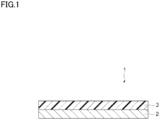
- the fire-extinguishing material sheet 11 formed as described above can be used by attaching to an object that can be ignited.
- the fire-extinguishing material sheet 11 is not only applicable for attachment to a compact and narrow place, but can also be bent or wound without occurrence of cracking and peeling of the fire-extinguishing agent layer 13 even when attached to a curved place (for example, the interior of a battery case, and winding around a battery itself) and a place with irregularities (for examples, a corner of a case) that have an ignition risk.
- the fire-extinguishing material sheet 11 is suitable for roll to roll processing because of the advantageous characteristics thereof.
- an adhesive layer 17 is provided on one water vapor barrier layer 16 of the water vapor barrier layers, and a release film 18 is laminated on the adhesive layer 17.
- the release film 18 is peeled when the fire-extinguishing material laminate 100 is attached to a desired location.
- the release film 18 may be made from a resin or paper.
- examples of a material of the resin layers 14, 14 include a polyolefin (such as PE, PP, and COP), polyester (such as PET), a fluororesin (such as PTFE, ETFE, EFEP, PFA, FEP, and PCTFE), a vinyl resin (such as PVC and PVA), an acrylic resin, an epoxy resin, a polyamide, and a polyimide.
- a polyolefin such as PE, PP, and COP
- polyester such as PET
- a fluororesin such as PTFE, ETFE, EFEP, PFA, FEP, and PCTFE
- a vinyl resin such as PVC and PVA
- acrylic resin such as epoxy resin, a polyamide, and a polyimide.
- the polyolefin resin may contain a low-density polyethylene resin (LDPE), a linear low-density polyethylene resin (LLDPE), or a cast polypropylene resin (CPP) from the viewpoint of having excellent heat-sealing properties, and having a low degree of water vapor transmission and easily suppressing degradation of the fire-extinguishing agent.
- LDPE low-density polyethylene resin
- LLDPE linear low-density polyethylene resin
- CPP cast polypropylene resin
- the resin layers 14, 14 have a larger area than the fire-extinguishing agent layer 13, and by bonding parts of the resin layers 14, 14 in contact with each other through thermal fusion (heat sealing), the fire-extinguishing agent layer 13 can be sealed in the resin layers 14, 14.
- the fire-extinguishing agent layer 13 obtained by peeling the resin film 12 from the fire-extinguishing material sheet 10 is used, but the fire-extinguishing material sheet 10 itself without peeling the resin film 12 therefrom may be sealed in the resin layers 14, 14.
- the resin layers 14, 14 can singly have a thickness of 25 ⁇ m to 150 ⁇ m, and may have a thickness of 30 ⁇ m to 100 ⁇ m.
- an adhesive forming the adhesive layers 15, 15 examples include an acrylic adhesive, an epoxy adhesive, a silicone adhesive, a polyolefin adhesive, a urethane adhesive, a polyvinyl ether adhesive, and a synthetic adhesive thereof.
- an epoxy-urethane synthetic adhesive can suitably be used as the adhesive from the viewpoint of achieving both adhesion to the resin layers 14, 14 in 85°C/85%RH high temperature and high humidity and low costs.
- examples of the water vapor barrier layers 16, 16 include: a polyester resin layer (for example, a PET layer) including a metal oxide vapor deposition layer such as an alumina vapor deposition layer and a silica vapor deposition layer; and a metal foil such as an aluminum foil.
- a polyester resin layer for example, a PET layer
- the metal oxide vapor deposition layer may be directed to the side of the fire-extinguishing agent.
- the water vapor barrier layers 16, 16 can singly have a thickness of 4.5 ⁇ m to 25 ⁇ m, and may have a thickness of 7 ⁇ m to 12 ⁇ m.
- the adhesive layer 17 a publicly known material can be used as appropriate.
- the adhesive layer 17 is provided on the side where the resin film 12 is present. The adhesive layer 17 enables attachment of the fire-extinguishing material laminate to an object.
- the following components were mixed to prepare a fire-extinguishing material composition.
- the fire-extinguishing material composition obtained was, using an applicator (gap: 450 ⁇ m), applied onto a polyethylene terephthalate (PET) film (trade name: E7002, manufactured by TOYOBO Co., Ltd., thickness: 50 ⁇ m) and dried in an oven set to 75°C for 7 minutes. Thereby, a laminate including a 200- ⁇ m-thick fire-extinguishing material formed on the PET film was obtained.
- PET polyethylene terephthalate
- the mixture of potassium citrate and potassium chlorate was crushed in an agate mortar and then filtered with a No. 800-count mesh to adjust the particle size D50 to 8 to 12 ⁇ m.
- Gantrez AN-119 manufactured by Ashland Japan Ltd.
- This compound is a polymethyl vinyl ether/maleic anhydride copolymer, and has, in a polymer skeleton thereof, an acid anhydride group but no alkoxysilyl group.
- a fire-extinguishing material composition was prepared in the same manner as in Example 2-1 except that 8.4 parts by mass of a PVB resin was used in place of 12.6 parts by mass of the ether urethane resin, 4.2 parts by mass of X-12-1287A (trade name, manufactured by Shin-Etsu Chemical Co., Ltd.) was used as a second binder, and as the liquid medium, the amount of the ethanol was changed to 148 parts by mass and the amount of the isopropyl alcohol to 7 parts by mass, and a fire-extinguishing material was produced using this fire-extinguishing material composition.
- a fire-extinguishing material composition was prepared in the same manner as in Example 2-1 except that the amount of the ether urethane resin was changed from 12.6 parts by mass to 4.2 parts by mass, and 8.4 parts by mass of X-12-1287A was used as a second binder, and a fire-extinguishing material was produced using this fire-extinguishing material composition.
- a fire-extinguishing material composition was prepared in the same manner as in Example 2-1 except that the amount of the ether urethane resin was changed from 12.6 parts by mass to 3.2 parts by mass, and 9.4 parts by mass of X-12-1287A was used as a second binder, and a fire-extinguishing material was produced using this fire-extinguishing material composition.
- An iron container having a length of 20 cm, a width of 30 cm, and a height of 40 cm was prepared.
- an 8.5-mm-diameter circular vent was provided on the side surfaces of the container at five locations of height positions of 5 cm, 12.5 cm, 20.0 cm, 27.5 cm, and 35.0 cm from the top surface of the container.
- the fire-extinguishing material, having an area of 50 mm x 50 mm was, with double sided tape, attached to the center of the top surface of the container.
- 1.5 g of a solid fuel (solid fuel fire-block ignition agent manufactured by CAPTAIN STAG) having a length of 15 mm, a width of 15 mm, and a height of 10 mm was placed.
- the evaluation sample obtained was measured for the total light transmittance by a method in accordance with JIS K 7361-1, using a haze meter (manufactured by BYK-Gardner GmbH, BYK-Gardner Haze-Guard Plus). The measurement was performed before putting the evaluation sample in a constant temperature and humidity chamber (under the conditions of 85°C/85%RH) (initial total light transmittance) and after the lapse of 24 hours from the putting (total light transmittance after storage), and the variation ⁇ of the total light transmittance between before and after the storage was calculated in accordance with the following equation.
- the fire-extinguishing material causes moisture absorption (deliquescence)
- the degree of transparency is increased. Therefore, by confirming the variation ⁇ in the degree of transparency, the degree of deliquescence was evaluated.
- Polyvinyl butyral as a binder resin was mixed with a mixed liquid of ethanol and isopropyl alcohol. Thus, a binder resin solution was obtained.
- a metal container including a glass plate as a bottom plate and having a volume of 139 x 109 x 30 mm was prepared.
- a vent hole was provided in a part of a side surface of this container.
- the fire-extinguishing material laminate made above had the release film peeled therefrom, and was attached to the center of the glass plate.
- Heptane (1.0 mL) was placed in a ⁇ 30-mm crucible, and ignited. The crucible was covered with the container and whether the fire-extinguishing material laminate extinguished the flame was observed. As a result, it was found that the fire-extinguishing material laminate extinguished the fire within 30 seconds.
- Examples 3-7 to 3-9 An application solution was prepared by reducing the addition amount of the epoxy compound to 0.5 times in each of Examples 3-1 to 3-3, and a fire-extinguishing agent layer was obtained and evaluated for the flexibility. These tests are referred to as Examples 3-7 to 3-9, respectively. In all of Examples 3-7 to 3-9, the proportion of solid content of the fire-extinguishing agent was 91.9 wt%.
- An application solution was prepared in the same manner as in Example 3-1 except that the mixed amount of the fire-extinguishing agent solution was reduced in the adjustment of the application solution so that the proportion of solid content of the fire-extinguishing agent was 50 wt%, and a fire-extinguishing agent layer was obtained and evaluated for flexibility.
- the fire-extinguishing agent layer was also evaluated for fire-extinguishing ability.
- the fire-extinguishing agent layer had no cracking observed even in the test with a diameter of 2 mm.
- the fire-extinguishing agent layer did not extinguish the flame even after the lapse of 3 minutes.
Landscapes
- Chemical & Material Sciences (AREA)
- Organic Chemistry (AREA)
- Engineering & Computer Science (AREA)
- Materials Engineering (AREA)
- Life Sciences & Earth Sciences (AREA)
- Wood Science & Technology (AREA)
- Chemical Kinetics & Catalysis (AREA)
- Health & Medical Sciences (AREA)
- Business, Economics & Management (AREA)
- Emergency Management (AREA)
- Polymers & Plastics (AREA)
- Medicinal Chemistry (AREA)
- General Chemical & Material Sciences (AREA)
- Inorganic Chemistry (AREA)
- Public Health (AREA)
- Manufacturing & Machinery (AREA)
- Fireproofing Substances (AREA)
Applications Claiming Priority (4)
| Application Number | Priority Date | Filing Date | Title |
|---|---|---|---|
| JP2022089732A JP2023177042A (ja) | 2022-06-01 | 2022-06-01 | 消火材シート、消火剤組成物 |
| JP2022099880 | 2022-06-21 | ||
| JP2022113814 | 2022-07-15 | ||
| PCT/JP2023/020107 WO2023234299A1 (ja) | 2022-06-01 | 2023-05-30 | 消火材用組成物及びその製造方法、バインダ樹脂の選定方法、消火材、消火材シート、並びに、自動消火機能を有する装置 |
Publications (2)
| Publication Number | Publication Date |
|---|---|
| EP4534628A1 true EP4534628A1 (de) | 2025-04-09 |
| EP4534628A4 EP4534628A4 (de) | 2025-12-10 |
Family
ID=89024848
Family Applications (1)
| Application Number | Title | Priority Date | Filing Date |
|---|---|---|---|
| EP23816056.8A Pending EP4534628A4 (de) | 2022-06-01 | 2023-05-30 | Zusammensetzung für feuerlöschmaterial, herstellungsverfahren dafür, verfahren zur auswahl von bindemittelharz, feuerlöschmaterial, feuerlöschmaterialfolie und vorrichtung mit automatischer feuerlöschfunktion |
Country Status (5)
| Country | Link |
|---|---|
| US (1) | US20250090884A1 (de) |
| EP (1) | EP4534628A4 (de) |
| KR (1) | KR20250020497A (de) |
| CN (1) | CN119213096A (de) |
| WO (1) | WO2023234299A1 (de) |
Families Citing this family (6)
| Publication number | Priority date | Publication date | Assignee | Title |
|---|---|---|---|---|
| WO2025023255A1 (ja) * | 2023-07-25 | 2025-01-30 | Toppanホールディングス株式会社 | 消火材用組成物、消火材及び自動消火機能を有する装置 |
| CN117899411A (zh) * | 2023-12-20 | 2024-04-19 | 湖北及安盾消防科技有限公司 | 一种抗老化热气溶胶灭火剂及其制备方法 |
| WO2025229920A1 (ja) * | 2024-04-30 | 2025-11-06 | Toppanホールディングス株式会社 | 消火材パッケージ及び電気設備 |
| WO2025243977A1 (ja) * | 2024-05-20 | 2025-11-27 | Toppanホールディングス株式会社 | 電池パック |
| WO2026079429A1 (ja) * | 2024-10-09 | 2026-04-16 | Toppanホールディングス株式会社 | 消火材、消火材パッケージ及び電気設備 |
| CN119455317B (zh) * | 2024-10-29 | 2025-08-29 | 江苏佳泰消防科技有限公司 | 一种用于灭a类b类和锂电池火灾的灭火剂及其配置的方法 |
Family Cites Families (19)
| Publication number | Priority date | Publication date | Assignee | Title |
|---|---|---|---|---|
| JPH0527194Y2 (de) | 1987-09-11 | 1993-07-09 | ||
| RU2058800C1 (ru) * | 1992-07-22 | 1996-04-27 | Российский научный центр "Прикладная химия" | Огнетушащий состав |
| JPH06340856A (ja) * | 1993-05-31 | 1994-12-13 | Nitto Denko Corp | 難燃性接着剤 |
| JPH09276440A (ja) | 1996-04-15 | 1997-10-28 | Kyoei Kogyosho:Kk | 消火液及びこれを用いた消火器 |
| CN100435892C (zh) * | 2007-07-10 | 2008-11-26 | 陕西坚瑞化工有限责任公司 | 适用于普通电器设备的气溶胶灭火组合物 |
| CN103170085A (zh) * | 2011-12-20 | 2013-06-26 | 陕西坚瑞消防股份有限公司 | 一种有机材料包覆的灭火组合物 |
| JP2015006302A (ja) | 2013-05-31 | 2015-01-15 | 鈴木 義雄 | 自動消火装置 |
| CN103785130A (zh) * | 2014-01-13 | 2014-05-14 | 西安坚瑞安全应急设备有限责任公司 | 一种含有羧酸衍生物的灭火组合物 |
| CN105061866A (zh) * | 2015-08-12 | 2015-11-18 | 国网山东省电力公司临沂供电公司 | 一种配电箱木塑材料壳体及其制备方法 |
| JP6509709B2 (ja) | 2015-10-27 | 2019-05-08 | 能美防災株式会社 | エアロゾル消火装置 |
| JP7246070B2 (ja) | 2016-09-12 | 2023-03-27 | ヤマトプロテック株式会社 | 自己消火性成形品 |
| CN107152568A (zh) * | 2017-07-14 | 2017-09-12 | 浙江巨丰管业有限公司 | 一种家用燃气管 |
| CN108047603A (zh) * | 2017-12-22 | 2018-05-18 | 安徽华塑股份有限公司 | 一种高阻燃性聚氯乙烯树脂及其制备方法 |
| US20200377690A1 (en) * | 2018-02-20 | 2020-12-03 | Sekisui Chemical Co., Ltd. | Fire-resistant resin composition, fire-resistant sheet, fire-resistant laminate, and battery |
| JP2020081809A (ja) | 2018-12-01 | 2020-06-04 | 株式会社Saikyo | マイクロカプセル及びそれを用いた消火性シート、消火性コードとその補助具 |
| JP2021078680A (ja) * | 2019-11-18 | 2021-05-27 | 株式会社クレハ | 消火方法および消火組成物 |
| EP4094809A4 (de) * | 2020-01-22 | 2024-02-28 | Yamato Protec Corporation | Feuerlöschfolie |
| JP7696133B2 (ja) * | 2020-03-05 | 2025-06-20 | Toppanホールディングス株式会社 | 消火用積層体の製造方法 |
| JP7473123B2 (ja) * | 2020-03-23 | 2024-04-23 | Toppanホールディングス株式会社 | 防火性積層体及び防火性積層体の製造方法 |
-
2023
- 2023-05-30 KR KR1020247042765A patent/KR20250020497A/ko active Pending
- 2023-05-30 WO PCT/JP2023/020107 patent/WO2023234299A1/ja not_active Ceased
- 2023-05-30 EP EP23816056.8A patent/EP4534628A4/de active Pending
- 2023-05-30 CN CN202380039648.7A patent/CN119213096A/zh active Pending
-
2024
- 2024-11-27 US US18/962,871 patent/US20250090884A1/en active Pending
Also Published As
| Publication number | Publication date |
|---|---|
| EP4534628A4 (de) | 2025-12-10 |
| CN119213096A (zh) | 2024-12-27 |
| KR20250020497A (ko) | 2025-02-11 |
| US20250090884A1 (en) | 2025-03-20 |
| WO2023234299A1 (ja) | 2023-12-07 |
Similar Documents
| Publication | Publication Date | Title |
|---|---|---|
| US20250090884A1 (en) | Composition for fire-extinguishing material, production method therefor, method for selecting binder resin, fire-extinguishing material, fire-extinguishing material sheet, and device having automatic fire-extinguishing function | |
| JP7364124B2 (ja) | 消火材形成用組成物、消火材並びに消火性部材及びその製造方法 | |
| JP7806444B2 (ja) | 電気設備 | |
| EP4556082A1 (de) | Feuerlöschmaterial und feuerlöschmaterialpaket | |
| JP7426529B1 (ja) | 消火材用組成物、消火材、及び自動消火機能を有する装置 | |
| JP2024000984A (ja) | 消火材用組成物及び消火材 | |
| JP2023177042A (ja) | 消火材シート、消火剤組成物 | |
| JP7619416B2 (ja) | 消火シート及びこれを備えた自動消火機能を有する装置 | |
| WO2025023255A1 (ja) | 消火材用組成物、消火材及び自動消火機能を有する装置 | |
| JP2025111951A (ja) | 消火材用組成物、消火材及び自動消火機能を有する装置 | |
| JP2024012106A (ja) | 消火材用組成物及びその製造方法、消火材、バインダの選定方法、並びに、自動消火機能を有する装置 | |
| EP4699668A1 (de) | Feuerlöschfolie und vorrichtung damit und mit automatischer feuerlöschfunktion | |
| JP7480904B1 (ja) | 消火材及び消火材パッケージ | |
| JP7444200B2 (ja) | 消火材及び消火材パッケージ | |
| JP2024153533A (ja) | 消火シート及びこれを備えた自動消火機能を有する装置 | |
| JP2025065126A (ja) | 消火シート及びこれを備えた自動消火機能を有する装置 | |
| CN117693384A (zh) | 灭火材料形成用组合物、灭火材料以及灭火性部件及其制造方法 | |
| JP2025128219A (ja) | 消火体 | |
| JP2024011631A (ja) | 消火材及び消火材パッケージ | |
| WO2026079429A1 (ja) | 消火材、消火材パッケージ及び電気設備 |
Legal Events
| Date | Code | Title | Description |
|---|---|---|---|
| STAA | Information on the status of an ep patent application or granted ep patent |
Free format text: STATUS: THE INTERNATIONAL PUBLICATION HAS BEEN MADE |
|
| PUAI | Public reference made under article 153(3) epc to a published international application that has entered the european phase |
Free format text: ORIGINAL CODE: 0009012 |
|
| STAA | Information on the status of an ep patent application or granted ep patent |
Free format text: STATUS: REQUEST FOR EXAMINATION WAS MADE |
|
| 17P | Request for examination filed |
Effective date: 20241127 |
|
| AK | Designated contracting states |
Kind code of ref document: A1 Designated state(s): AL AT BE BG CH CY CZ DE DK EE ES FI FR GB GR HR HU IE IS IT LI LT LU LV MC ME MK MT NL NO PL PT RO RS SE SI SK SM TR |
|
| DAV | Request for validation of the european patent (deleted) | ||
| DAX | Request for extension of the european patent (deleted) | ||
| RIC1 | Information provided on ipc code assigned before grant |
Ipc: C09K 21/00 20060101AFI20250821BHEP Ipc: A62C 3/16 20060101ALI20250821BHEP Ipc: A62D 1/00 20060101ALI20250821BHEP Ipc: A62D 1/06 20060101ALI20250821BHEP Ipc: B32B 27/18 20060101ALI20250821BHEP Ipc: C09D 5/18 20060101ALI20250821BHEP Ipc: C09D 7/60 20180101ALI20250821BHEP Ipc: C09D 7/63 20180101ALI20250821BHEP Ipc: C09D 129/04 20060101ALI20250821BHEP Ipc: C09D 129/14 20060101ALI20250821BHEP Ipc: C09D 201/00 20060101ALI20250821BHEP Ipc: A62C 2/06 20060101ALI20250821BHEP Ipc: C08J 5/18 20060101ALI20250821BHEP Ipc: C09D 5/00 20060101ALI20250821BHEP Ipc: C09D 7/61 20180101ALI20250821BHEP |
|
| A4 | Supplementary search report drawn up and despatched |
Effective date: 20251110 |
|
| RIC1 | Information provided on ipc code assigned before grant |
Ipc: C09K 21/00 20060101AFI20251104BHEP Ipc: A62C 3/16 20060101ALI20251104BHEP Ipc: A62D 1/00 20060101ALI20251104BHEP Ipc: A62D 1/06 20060101ALI20251104BHEP Ipc: B32B 27/18 20060101ALI20251104BHEP Ipc: C09D 5/18 20060101ALI20251104BHEP Ipc: C09D 7/60 20180101ALI20251104BHEP Ipc: C09D 7/63 20180101ALI20251104BHEP Ipc: C09D 129/04 20060101ALI20251104BHEP Ipc: C09D 129/14 20060101ALI20251104BHEP Ipc: C09D 201/00 20060101ALI20251104BHEP Ipc: A62C 2/06 20060101ALI20251104BHEP Ipc: C08J 5/18 20060101ALI20251104BHEP Ipc: C09D 5/00 20060101ALI20251104BHEP Ipc: C09D 7/61 20180101ALI20251104BHEP |