EP4534051A2 - Convex ostomy barrier and method of forming convex ostomy barriers of various softness - Google Patents
Convex ostomy barrier and method of forming convex ostomy barriers of various softness Download PDFInfo
- Publication number
- EP4534051A2 EP4534051A2 EP25158076.7A EP25158076A EP4534051A2 EP 4534051 A2 EP4534051 A2 EP 4534051A2 EP 25158076 A EP25158076 A EP 25158076A EP 4534051 A2 EP4534051 A2 EP 4534051A2
- Authority
- EP
- European Patent Office
- Prior art keywords
- convex
- ring
- convex insert
- barrier
- insert
- Prior art date
- Legal status (The legal status is an assumption and is not a legal conclusion. Google has not performed a legal analysis and makes no representation as to the accuracy of the status listed.)
- Pending
Links
Images



Classifications
-
- A—HUMAN NECESSITIES
- A61—MEDICAL OR VETERINARY SCIENCE; HYGIENE
- A61F—FILTERS IMPLANTABLE INTO BLOOD VESSELS; PROSTHESES; DEVICES PROVIDING PATENCY TO, OR PREVENTING COLLAPSING OF, TUBULAR STRUCTURES OF THE BODY, e.g. STENTS; ORTHOPAEDIC, NURSING OR CONTRACEPTIVE DEVICES; FOMENTATION; TREATMENT OR PROTECTION OF EYES OR EARS; BANDAGES, DRESSINGS OR ABSORBENT PADS; FIRST-AID KITS
- A61F5/00—Orthopaedic methods or devices for non-surgical treatment of bones or joints; Nursing devices ; Anti-rape devices
- A61F5/44—Devices worn by the patient for reception of urine, faeces, catamenial or other discharge; Colostomy devices
- A61F5/445—Colostomy, ileostomy or urethrostomy devices
- A61F5/448—Means for attaching bag to seal ring
-
- A—HUMAN NECESSITIES
- A61—MEDICAL OR VETERINARY SCIENCE; HYGIENE
- A61F—FILTERS IMPLANTABLE INTO BLOOD VESSELS; PROSTHESES; DEVICES PROVIDING PATENCY TO, OR PREVENTING COLLAPSING OF, TUBULAR STRUCTURES OF THE BODY, e.g. STENTS; ORTHOPAEDIC, NURSING OR CONTRACEPTIVE DEVICES; FOMENTATION; TREATMENT OR PROTECTION OF EYES OR EARS; BANDAGES, DRESSINGS OR ABSORBENT PADS; FIRST-AID KITS
- A61F5/00—Orthopaedic methods or devices for non-surgical treatment of bones or joints; Nursing devices ; Anti-rape devices
- A61F5/44—Devices worn by the patient for reception of urine, faeces, catamenial or other discharge; Colostomy devices
- A61F5/445—Colostomy, ileostomy or urethrostomy devices
- A61F2005/4483—Convex pressure ring
Definitions
- the following description generally relates to ostomy appliances, and in particular, to an ostomy barrier.
- Ostomy pouches for collecting bodily waste are used by individuals who have had surgery such as a colostomy, ileostomy, or urostomy.
- Two common types of ostomy pouch systems are available, to wit, a one-piece pouch system and a two-piece pouch system.
- an ostomy barrier is permanently attached to a pouch.
- the entire pouch system including the ostomy barrier is removed when a user wants to replace the pouch.
- Ostomy barriers are configured to seal against peristomal skin surfaces and protect the peristomal surfaces from exposure to stomal effluent.
- the topography of stomas and peristomal surfaces surrounding stomas varies among patients, and sealing an ostomy appliance against such different peristomal surfaces and stomas remain as an area for further improvements.
- a person having a stoma that is flush or recessed may find that applying external support or pressure from a barrier in the peristomal region aids in directing the discharge of effluent from the stoma directly into the ostomy pouch. Accordingly, the effectiveness of an adhesive seal between the ostomy barrier and the peristomal skin surface (i.e., a seal formed by the adhesive layer) may be prolonged.
- the present disclosure provides an improved flexible convex barrier and a method of making convex barriers of various softness/hardness according to various embodiments.
Landscapes
- Health & Medical Sciences (AREA)
- Epidemiology (AREA)
- Nursing (AREA)
- Orthopedic Medicine & Surgery (AREA)
- Engineering & Computer Science (AREA)
- Biomedical Technology (AREA)
- Heart & Thoracic Surgery (AREA)
- Vascular Medicine (AREA)
- Life Sciences & Earth Sciences (AREA)
- Animal Behavior & Ethology (AREA)
- General Health & Medical Sciences (AREA)
- Public Health (AREA)
- Veterinary Medicine (AREA)
- Orthopedics, Nursing, And Contraception (AREA)
Abstract
Description
- The following description generally relates to ostomy appliances, and in particular, to an ostomy barrier.
- Ostomy pouches for collecting bodily waste are used by individuals who have had surgery such as a colostomy, ileostomy, or urostomy. Two common types of ostomy pouch systems are available, to wit, a one-piece pouch system and a two-piece pouch system. In a one-piece pouch system, an ostomy barrier is permanently attached to a pouch. In such a one-piece pouch system, the entire pouch system including the ostomy barrier is removed when a user wants to replace the pouch.
- In a two-piece pouch system, a pouch and an ostomy barrier are provided as two separate devices. The two-piece pouch system typically includes a pair of coupling rings, one of which is fixedly attached to the ostomy barrier, while the other is attached to the pouch. The coupling rings are configured to mate with each other, such that the pouch may be securely and removeably attached to the ostomy barrier by engaging the coupling rings together. In use, the ostomy barrier is first attached to a user, and the pouch is secured to the faceplate by engaging the coupling rings together. Thus, two-piece pouch systems allow a user to remove and replace a pouch without removing the ostomy barrier from the user. This can help to reduce the discomfort and irritation associated with removing skin barrier adhesive from user's skin
- Ostomy barriers are configured to seal against peristomal skin surfaces and protect the peristomal surfaces from exposure to stomal effluent. However, the topography of stomas and peristomal surfaces surrounding stomas varies among patients, and sealing an ostomy appliance against such different peristomal surfaces and stomas remain as an area for further improvements. A person having a stoma that is flush or recessed may find that applying external support or pressure from a barrier in the peristomal region aids in directing the discharge of effluent from the stoma directly into the ostomy pouch. Accordingly, the effectiveness of an adhesive seal between the ostomy barrier and the peristomal skin surface (i.e., a seal formed by the adhesive layer) may be prolonged.
- The present disclosure provides an improved flexible convex barrier and a method of making convex barriers of various softness/hardness according to various embodiments.
- In one aspect, a convex ostomy barrier for attaching an ostomy appliance to a peristomal skin surrounding a stoma is provided. The convex ostomy barrier may include a skin barrier formed from a skin friendly adhesive, an inlet opening for receiving a stoma, and a convex insert system arranged adjacent the skin barrier and configured to provide a convex body-side contour of the convex ostomy barrier. The convex insert system may include a convex insert and a ring, which may be configured to be assembled together to form the convex insert system.
- In an embodiment, the convex insert may include a core-out portion configured to receive the ring. In such an embodiment, the ring may be arranged in the core-out portion of the convex insert to form the convex insert system having a convex ring-like body. The convex insert may include an inner flange, a middle portion including the core-out portion, and an outer flange. The inner flange and the outer flange may be connected by the middle portion and arranged in different axial planes, wherein the convex insert system is configured to support the skin barrier on a body-side surface. In an embodiment, the convex insert may include a radial wall radially extending from the outer flange toward the inlet opening and an axial wall extending axially from the radial wall in a body-side direction, wherein the core-out portion is defined by the radial wall and the axial wall on a body-side. The inner flange may extend from the axial wall toward the inlet opening, and wherein the outer flange, the middle portion, and the inner flange provides a step-like protrusion in the body-side direction.
- In some embodiments, the convex ostomy barrier may be configured for a two-piece ostomy pouch system comprising a flange including a coupling ring. The flange may be attached to a pouch-side surface of the radial wall of the convex insert.
- The convex ostomy barrier of any of the foregoing embodiments may be configured such that the convex ostomy barrier of various softness/hardness may be provided by using different rings in the convex insert system. For example, the convex ostomy barrier may be configured to have a first softness/hardness by incorporating the convex insert system formed from the convex insert and the ring having a first characteristic, or configured to have a second softness/hardness different than the first softness/hardness by incorporating the convex insert system formed from the convex insert and the ring having a second characteristic.
- In another aspect, a method of making convex ostomy barriers of various softness/hardness is provided. The method may include the step of providing a convex insert and a plurality of rings, wherein the convex insert is configured to be assembled with one of the plurality of the rings to form a convex insert system. Each of the rings may be configured to have a different characteristic to provide a different softness/hardness when assembled with the convex insert and used in a convex ostomy barrier. The method may also include the steps of selecting one of the plurality of the rings according to a desired softness/hardness of the convex ostomy barrier, assembling the convex insert and the selected ring together to form the convex insert system, and attaching a skin barrier formed from a skin friendly adhesive to a body-side surface of the convex insert system.
- In an embodiment, the plurality of the rings may include a first ring having a first characteristic and a second ring having a second characteristic. The convex insert may be assembled with the first ring to form a first convex insert system for a first convex ostomy barrier, or the convex insert may be assembled with the second ring to form a second convex insert system for a second convex ostomy barrier, wherein the first convex ostomy barrier has a first softness/hardness and the second convex ostomy barrier has a second softness/hardness that is different than the first softness/hardness.
- In some embodiments, the step of providing a convex insert and plurality of rings may include the step of providing the convex insert including a core-out portion configured to receive one of the plurality of rings. In such embodiments, the step of assembling the convex insert and the selected ring may comprise arranging the selected ring in the core-out portion of the convex insert to form the convex insert system having a convex ring-like body. The convex insert may include an inner flange, a middle portion including the core-out portion, and an outer flange, wherein the inner flange and the outer flange are connected by the middle portion and arranged in different axial planes. The convex insert system may be configured to support the skin barrier on a body-side surface.
- In an embodiment, the convex insert may include a radial wall radially extending from the outer flange toward the inlet opening and an axial wall extending axially from the radial wall in a body-side direction, wherein the core-out portion is defined by the radial wall and the axial wall on a body-side. The inner flange may extend from the axial wall toward the inlet opening, wherein the outer flange, the middle portion, and the inner flange provide a step-like protrusion in the body-side direction.
- The method of any of the foregoing embodiments may further include the step of providing a flange including a coupling ring, wherein the flange is attached to a pouch-side surface of the radial wall of the convex insert.
- Other aspects, objectives and advantages will become more apparent from the following detailed description when taken in conjunction with the accompanying drawings.
- The benefits and advantages of the present embodiments will become more readily apparent to those of ordinary skill in the relevant art after reviewing the following detailed description and accompanying drawings, wherein:
-
FIG. 1 is a perspective view of a convex ostomy barrier including a convex insert system according to an embodiment with a portion removed to illustrate its layered structure; -
FIG. 2 is a perspective view of a convex insert system including a convex insert and a ring according to an embodiment; -
FIG. 3 is a schematic top view of the convex insert system ofFIG. 2 ; -
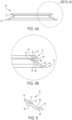
FIGS. 4A and 4B are schematic cross sectional views of the convex insert system ofFIG. 3 taken along 4-4; -
FIG. 5 is a schematic cross sectional view of the convex insert system ofFIGS. 4A and 4B showing the ring received in the convex insert; -
FIG. 6 is a perspective view of a convex insert and a plurality of rings according to an embodiment; and -
FIG. 7 is a perspective view of one of the rings ofFIG. 6 . - While the present disclosure is susceptible of embodiment in various forms, there is shown in the drawings and will hereinafter be described a presently preferred embodiment with the understanding that the present disclosure is to be considered an exemplification and is not intended to limit the disclosure to the specific embodiment illustrated.
- Referring to
FIG. 1 , aconvex ostomy barrier 10 according to an embodiment is shown with a portion removed and viewed from a pouch-side to illustrate a layered construction of theconvex ostomy barrier 10. Theconvex ostomy barrier 10 may be configured for a two-piece pouch system, and may generally comprise a skin barrier 12, a flange 16, aconvex insert system 18,release liners -
FIGS. 2-5 are illustrations of theconvex insert system 18 including aconvex insert 19 and aring 21 according to an embodiment. Theconvex insert 19 and thering 21 may be configured to be assembled together to form theconvex insert system 18 having a convex ring-like shaped body. The convexinsert system 18 may be configured to provide the convexity of theconvex ostomy barrier 10 to apply pressure around the peristomal area when theconvex ostomy barrier 10 is attached to a user. - The softness/hardness of the
convex ostomy system 18 may be determined by the combined softness/hardness of theconvex insert 19 and thering 21. As such, the softness/hardness of theconvex ostomy system 18 may be easily altered or controlled by incorporating aring 21 having a different softness/hardness. Such a feature may provide significant cost savings sinceconvex ostomy barriers 10 of various convexity hardness/softness may be manufactured by making and incorporatingrings 21 of various softness/hardness, instead of making convex inserts of various softness/hardness. - In
FIG. 6 , theconvex insert 19 is illustrated with threerings rings convex insert 19 and thering 21 may provide a first softness/hardness, and a convex insert system prepared by assembling theconvex insert 19 and the ring 21' may provide a second softness/hardness that is different from the first softness/hardness, and a convex insert system prepared by assembling theconvex insert 19 and thering 21" may provide a third softness/hardness that is different from the first or second softness/hardness. - The
convex insert 19 may be configured to protrude axially toward a body-side direction and configured to receive thering 21 as shown inFIGS. 2-5 . Theconvex insert 19 may include anouter flange 40, amiddle portion 42, and aninner flange 44, and aradial wall 60 providing a generally flat pouch-side surface 64 on a pouch-side of theconvex insert 19 for attachment of the flange 16. Theouter flange 40 may include a concave body-side surface 50, which is configured to conform to a curved contour of a lower base portion 20 of a convex portion of the skin barrier 12. Theradial wall 60 including the pouch-side surface 64 may be arranged in themiddle portion 42. Themiddle portion 42 also may include a core-out portion 54 configured to receive thering 21. The core-out portion 54 may be defined by theradial wall 60, which may radially extend from theouter flange 40 toward theinlet opening 28, and anaxial wall 62, which may axially extend from theradial wall 60 toward a body-side direction. Theinner flange 44 may radially extend from theaxial wall 62 toward theinlet opening 28. Themiddle portion 42 may be configured to provide a step-like axial protrusion in the body-side direction from theouter flange 40 to theinner flange 44. - The
ring 21 may have a relatively thin ring-like body as shown inFIGS. 6 and 7 . Thering 21 may be configured such that the pouch-side of thering 21 may fit in the core-out portion 54 of theconvex insert 19 as best shown inFIGS. 604B - and 5. In an embodiment, the
ring 21 may include a radial pouch-side surface 70 and an axial pouch-side surface 72, and a sloped body-side surface 74. When received in the core-out portion 54 of theconvex insert 19, the radial pouch-side surface 70 may be arranged adjacent theradial wall 60 of theconvex insert 19 and the axial pouch-side surface 72 may be arranged adjacent the axial wall 72 of theconvex insert 19. In such an embodiment, the body-side surface of theinner flange 44 of theconvex insert 19, the sloped body-side surface 74 of thering 21, and the body-side surface of the outer flange 49 of theconvex insert 19 may form a generally continuous body-side surface of theconvex insert system 18 as shown inFIG. 5 . - The
convex insert 19 and thering 21 may be formed from the same or different materials. Suitable materials for theconvex insert 19 and thering 21 may include, but are not limited to, polymeric materials, rubber, silicone, and metallic materials. For example, theconvex insert 19 and thering 21 may be formed from a heat sealable thermoplastic material, such as ethylene vinyl acetate (EVA), thermoplastic elastomer, or thermoplastic urethane. In another example, theconvex insert 19 and thering 21 may be formed from a foam or silicone. - In
FIG. 1 , theconvex insert system 18 is used in theconvex ostomy barrier 10 for a two-piece pouch system, which may include the flange 16 having a body-side coupling ring 22 for attaching an ostomy pouch. In other embodiments, theconvex insert system 18 including theconvex insert 19 and thering 21 may be used in a convex ostomy barrier for a one-piece pouch system. The body-side coupling ring 22 may be configured to mate with a pouch-side coupling ring (not shown), such that the ostomy pouch may be mechanically secured to theostomy barrier 10 when the coupling rings are engaged with each other. The flange 16 may be attached to theconvex insert 19 via aflange film 30. In the embodiment ofFIG. 1 , the flange 16 is attached to a pouch-side surface of theflange film 30 proximate an outer periphery of theflange film 30. Theconvex insert 19 may be attached to a body-side surface of theflange film 30 proximate an inner peripheral portion of theflange film 30, such that the flange 16 and theconvex insert 19 are attached on the opposite surfaces of theflange film 30 at opposite ends. Such a configuration provides a floating flange feature, in which a user may insert his/her finger between the flange 16 and theconvex insert 19 to facilitate engagement of the coupling rings to attach a pouch to theostomy barrier 10. - The skin barrier 12 may be arranged on the body-side surface of the
ostomy barrier 10 for attachment to a user. Theinlet opening 28 may be defined by an inner periphery of the skin barrier 12 for receiving a stoma (not shown.) The skin barrier 12 may be formed from a suitable medical-grade adhesive that can adhesively secure theostomy barrier 10 to a patient's skin in the peristomal region, such as a hydrocolloid adhesive composition. - The
ostomy barrier 10 may also include atape 14 including anadhesive layer 32 and abacking layer 34. In some embodiments, the skin barrier 12 may include abacking layer 36 laminated on the pouch-side surface of the skin barrier 12. Thebacking layer 36 may be formed from a suitable heat sealable polymeric material, such that thebacking layer 36 may be heat sealed to thetape 14. - In the embodiment of
FIG. 1 , the skin barrier 12 is attached to a portion of theadhesive layer 32 proximate the inlet opening 28 with thebacking layer 36 therebetween. In such an embodiment, an outer peripheral portion of theadhesive layer 32 may be attached to a user surrounding the skin barrier 12 to provide additional security. - The
adhesive layer 32 of thetape 14 may be formed from a suitable medical adhesive, such as an acrylic adhesive. Thebacking layer 34 may be formed from a suitable material, such as a nonwoven material or a thin polymeric film. - In other embodiments, the
ostomy barrier 10 may not include thetape 14. In such an embodiment, the skin barrier 12 may be the only means for attaching theostomy barrier 10 to a user. - In the embodiment of
FIG. 1 , theconvex insert system 18 may be attached to thebacking layer 34 of thetape 14 to provide a convexity to the skin barrier 12. In other embodiments, theconvex insert system 18 may be attached to a pouch-side surface of the skin barrier 12. - In the embodiment of
FIG. 1 , theflange film 30 may be attached to the pouch-side surface 64 of theconvex insert 19 to secure the flange 16. For example, theflange film 30 may be heat sealed to the pouch-side surface 64 of theconvex insert 19. As shown inFIG. 1 , the body-side surfaces of theouter flange 40 of theconvex insert 19, the sloped body-side surface 74 of thering 21, and the body-side surface of theinner flange 44 of theconvex insert 19 may be in contact with thetape 14, wherein at least some portions of which are attached to thebacking layer 34. For example, the body-side surface of theouter flange 40 may be heat sealed to thebacking layer 34 of thetape 14. In another example, an adhesive may be provided on the body-side surface of theconvex insert system 18 for attachment to thetape 14. - A release liner may be provided to cover the skin barrier 12 and the
tape 14. In the embodiment ofFIG. 1 , therelease liner 24 is provided to cover an outer peripheral portion of thetape 14, and therelease liner 26 is provided to cover the entire body-side surface of theostomy barrier 10 including the skin barrier 12 and thetape 14. In use, therelease liner 26 may be removed first for attachment of the skin barrier 12 to peristomal skin, and therelease liner 24 may be removed subsequently to expose thetape 14 for further attachment to user's skin. - All patents referred to herein, are hereby incorporated herein in their entirety, by reference, whether or not specifically indicated as such within the text of this disclosure.
- In the present disclosure, the words "a" or "an" are to be taken to include both the singular and the plural. Conversely, any reference to plural items shall, where appropriate, include the singular.
- From the foregoing it will be observed that numerous modifications and variations can be effectuated without departing from the true spirit and scope of the novel concepts of the present invention. It is to be understood that no limitation with respect to the specific embodiments illustrated is intended or should be inferred. The disclosure is intended to cover by the appended claims all such modifications as fall within the scope of the claims.
- Furthermore, one or more of the following numbered clauses may describe and relate to further aspects or features within the context of the present teaching:
- 1. A convex ostomy barrier for attaching an ostomy appliance to a peristomal skin surrounding a stoma, the convex ostomy barrier comprising:
- a skin barrier formed from a skin friendly adhesive;
- an inlet opening for receiving a stoma; and
- a convex insert system arranged adjacent the skin barrier and configured to provide a convex body-side contour of the convex ostomy barrier, wherein the convex insert system includes a convex insert and a ring, wherein the convex insert and the ring are configured to be assembled together to form the convex insert system.
- 2. The convex ostomy barrier of clause 1, wherein the convex insert includes a core-out portion configured to receive the ring, wherein the ring is arranged in the core-out portion of the convex insert to form the convex insert system having a convex ring-like body.
- 3. The convex ostomy barrier of
clause 2, wherein the convex insert comprises an inner flange, a middle portion including the core-out portion, and an outer flange, wherein the inner flange and the outer flange are connected by the middle portion and arranged in different axial planes, wherein the convex insert system is configured to support the skin barrier on a body-side surface. - 4. The convex ostomy barrier of clause 3, wherein the convex insert includes a radial wall radially extending from the outer flange toward the inlet opening, and an axial wall extending axially from the radial wall in a body-side direction, wherein the core-out portion is defined by the radial wall and the axial wall on a body-side, wherein the inner flange extends from the axial wall toward the inlet opening, and wherein the outer flange, the middle portion, and the inner flange provides a step-like protrusion in the body-side direction.
- 5. The convex ostomy barrier of any of clauses 1-4, further comprising a flange including a coupling ring, wherein the flange is attached to a pouch-side surface of the radial wall of the convex insert.
- 6. The convex ostomy barrier of any of clauses 1-5, wherein the convex ostomy barrier is configured to have a first softness/hardness comprising the convex insert system formed from the convex insert and the ring having a first characteristic, wherein the convex ostomy barrier is configured to have a second softness/hardness comprising the convex insert system formed from the convex insert and the ring having a second characteristic; wherein the first softness/hardness is different from the second softness/hardness and the first characteristic is different from the second characteristic.
- 7. A method of making convex ostomy barriers of various softness/hardness, comprising the steps of:
- providing a convex insert and a plurality of rings, wherein the convex insert is configured to be assembled with one of the plurality of the rings to form a convex insert system, wherein each of the rings has a different characteristic;
- selecting one of the plurality of the rings according to a desired hardness/softness of a convex ostomy barrier;
- assembling the convex insert and the selected ring together to form the convex insert system; and
- attaching a skin barrier to a body-side surface of the convex insert system; wherein the skin barrier is formed from a skin friendly adhesive.
- 8. The method of clause 7, wherein the plurality of the rings includes a first ring having a first characteristic, a second ring having a second characteristic, wherein the convex insert is assembled with the first ring to form a first convex insert system for a first convex ostomy barrier; wherein the convex insert is assembled with the second ring to form a second convex insert system for a second convex ostomy barrier; wherein the first convex ostomy barrier has a first softness/hardness, and the second convex ostomy barrier has a second softness/hardness, wherein the first softness/hardness is different than the second softness/hardness.
- 9. The method of any of clauses 7-8, wherein the step of providing a convex insert and plurality of rings comprises providing the convex insert including a core-out portion configured to receive one of the plurality of rings, wherein the step of assembling the convex insert and the selected ring comprises arranging the selected ring in the core-out portion of the convex insert to form the convex insert system having a convex ring-like body.
- 10. The method of clause 9, wherein the convex insert comprises an inner flange, a middle portion including the core-out portion, and an outer flange, wherein the inner flange and the outer flange are connected by the middle portion and arranged in different axial planes, wherein the convex insert system is configured to support the skin barrier on a body-side surface.
- 11. The method of
clause 10, wherein the convex insert includes a radial wall radially extending from the outer flange toward the inlet opening, and an axial wall extending axially from the radial wall in a body-side direction, wherein the core-out portion is defined by the radial wall and the axial wall on a body-side, wherein the inner flange extends from the axial wall toward the inlet opening, and wherein the outer flange, the middle portion, and the inner flange provide a step-like protrusion in the body-side direction. - 12. The method of clause 11, further comprising the step of providing a flange including a coupling ring, wherein the flange is attached to a pouch-side surface of the radial wall of the convex insert.
Claims (7)
- A convex ostomy barrier for attaching an ostomy appliance to a peristomal skin surrounding a stoma, the convex ostomy barrier comprising:a skin barrier formed from a skin friendly adhesive;an inlet opening for receiving a stoma; anda convex insert system arranged adjacent the skin barrier and configured to provide a convex body-side contour of the convex ostomy barrier, wherein the convex insert system includes a convex insert and a ring, wherein the convex insert and the ring are configured to be assembled together to form the convex insert system.
- The convex ostomy barrier of claim 1, wherein the convex insert includes a core-out portion configured to receive the ring, wherein the ring is arranged in the core-out portion of the convex insert to form the convex insert system having a convex ring-like body.
- The convex ostomy barrier of claim 2, wherein the convex insert comprises an inner flange, a middle portion including the core-out portion, and an outer flange, wherein the inner flange and the outer flange are connected by the middle portion and arranged in different axial planes, wherein the convex insert system is configured to support the skin barrier on a body-side surface.
- The convex ostomy barrier of claim 3, wherein the convex insert includes a radial wall radially extending from the outer flange toward the inlet opening, and an axial wall extending axially from the radial wall in a body-side direction, wherein the core-out portion is defined by the radial wall and the axial wall on a body-side, wherein the inner flange extends from the axial wall toward the inlet opening, and wherein the outer flange, the middle portion, and the inner flange provides a step-like protrusion in the body-side direction.
- The convex ostomy barrier of any of claims 1-4, further comprising a flange including a coupling ring, wherein the flange is attached to a pouch-side surface of the radial wall of the convex insert.
- The convex ostomy barrier of any of claims 1-5, wherein the ring is selected from a plurality of rings, wherein each of the plurality of the rings has a different characteristic.
- The convex ostomy barrier of claim 6, wherein the plurality of rings includes a first ring having a first characteristic and a second ring having a second characteristic, wherein the convex insert system formed from the convex insert and the first ring has a different convexity softness/hardness than the convex insert system formed from the convex insert and the second ring.
Applications Claiming Priority (3)
| Application Number | Priority Date | Filing Date | Title |
|---|---|---|---|
| US201862730109P | 2018-09-12 | 2018-09-12 | |
| EP19773690.3A EP3849480B1 (en) | 2018-09-12 | 2019-09-11 | Convex ostomy barrier and method of forming convex ostomy barriers of various softness |
| PCT/US2019/050607 WO2020055998A1 (en) | 2018-09-12 | 2019-09-11 | Convex ostomy barrier and method of forming convex ostomy barriers of various softness |
Related Parent Applications (2)
| Application Number | Title | Priority Date | Filing Date |
|---|---|---|---|
| EP19773690.3A Division EP3849480B1 (en) | 2018-09-12 | 2019-09-11 | Convex ostomy barrier and method of forming convex ostomy barriers of various softness |
| EP19773690.3A Division-Into EP3849480B1 (en) | 2018-09-12 | 2019-09-11 | Convex ostomy barrier and method of forming convex ostomy barriers of various softness |
Publications (2)
| Publication Number | Publication Date |
|---|---|
| EP4534051A2 true EP4534051A2 (en) | 2025-04-09 |
| EP4534051A3 EP4534051A3 (en) | 2025-06-11 |
Family
ID=68051997
Family Applications (2)
| Application Number | Title | Priority Date | Filing Date |
|---|---|---|---|
| EP25158076.7A Pending EP4534051A3 (en) | 2018-09-12 | 2019-09-11 | Convex ostomy barrier and method of forming convex ostomy barriers of various softness |
| EP19773690.3A Active EP3849480B1 (en) | 2018-09-12 | 2019-09-11 | Convex ostomy barrier and method of forming convex ostomy barriers of various softness |
Family Applications After (1)
| Application Number | Title | Priority Date | Filing Date |
|---|---|---|---|
| EP19773690.3A Active EP3849480B1 (en) | 2018-09-12 | 2019-09-11 | Convex ostomy barrier and method of forming convex ostomy barriers of various softness |
Country Status (7)
| Country | Link |
|---|---|
| US (2) | US12048642B2 (en) |
| EP (2) | EP4534051A3 (en) |
| AU (1) | AU2019338387B2 (en) |
| DK (1) | DK3849480T3 (en) |
| HU (1) | HUE071753T2 (en) |
| LT (1) | LT3849480T (en) |
| WO (1) | WO2020055998A1 (en) |
Families Citing this family (17)
| Publication number | Priority date | Publication date | Assignee | Title |
|---|---|---|---|---|
| EP2142149A1 (en) | 2007-04-24 | 2010-01-13 | Bristol-Myers Squibb Company | Closure system for a drainable pouch |
| CN102281840B (en) | 2007-06-12 | 2016-05-11 | 康沃特克科技公司 | Ostomy appliance |
| US10285847B2 (en) | 2011-09-29 | 2019-05-14 | Convatec Technologies Inc. | Ostomy pouch with filtering system |
| BR112016024816A2 (en) | 2014-04-24 | 2017-08-15 | Convatec Technologies Inc | ostomy pouch filtration system |
| CN111601545B (en) | 2017-11-09 | 2024-05-07 | 康沃特克科技公司 | Ostomy monitoring systems and methods |
| USD893514S1 (en) | 2018-11-08 | 2020-08-18 | 11 Health And Technologies Limited | Display screen or portion thereof with graphical user interface |
| AR116065A1 (en) | 2019-02-06 | 2021-03-31 | Consejo Nacional De Investigaciones Cientificas Y Tecn Conicet | NEUTRON DETECTOR AND GAMMA RADIATION USING A CHERENKOV DETECTOR IN WATER |
| EP3692956A1 (en) | 2019-02-07 | 2020-08-12 | ConvaTec Technologies Inc. | Adjustable convex ostomy device |
| EP3946178B1 (en) | 2019-04-25 | 2025-03-26 | ConvaTec Technologies Inc. | Perforated chamber ostomy wafers |
| WO2020220025A1 (en) | 2019-04-25 | 2020-10-29 | Convatec Technologies Inc. | Ostomy wafers incorporating adhesives and foam layers, devices including the same, and methods of applying |
| AU2020262496A1 (en) | 2019-04-25 | 2021-11-18 | Convatec Technologies Inc. | Ostomy wafers incorporating adhesives, ostomy devices including the same, and methods of applying |
| CA3198681A1 (en) | 2020-10-15 | 2022-04-21 | Convatec Technologies Inc. | Ostomy systems and methods |
| US12258692B2 (en) * | 2022-03-01 | 2025-03-25 | Elc Management Llc | Cosmetic sheet masks for improved product delivery |
| WO2024050157A1 (en) * | 2022-09-01 | 2024-03-07 | Hollister Incorporated | Ostomy appliance with customizable barrier ring for localized convex support |
| CA3207325C (en) * | 2022-09-01 | 2024-01-02 | James P. WINES | Ostomy appliance for providing customized and localized convex support |
| CA3214382C (en) * | 2022-09-01 | 2024-04-30 | James P. WINES | Ostomy appliance with customizable barrier ring for localized convex support |
| WO2025151316A1 (en) * | 2024-01-08 | 2025-07-17 | Hollister Incorporated | Ostomy barrier appliance including floating convex insert |
Family Cites Families (12)
| Publication number | Priority date | Publication date | Assignee | Title |
|---|---|---|---|---|
| GB1553450A (en) * | 1977-04-18 | 1979-09-26 | Squibb & Sons Inc | Ostomy bag |
| FI67297C (en) * | 1983-06-30 | 1985-03-11 | Hantaaki Oy | FISTELPAOSE |
| NZ234877A (en) * | 1989-08-28 | 1994-01-26 | Squibb & Sons Inc | Faceplate, for an ostomy device, having a convex upper surface portion |
| DK170739B1 (en) * | 1992-03-20 | 1996-01-08 | Coloplast As | Convex ring for use with ostomy equipment |
| DK172791B1 (en) * | 1997-05-26 | 1999-07-19 | Coloplast As | An ostomy appliance |
| WO1999030653A1 (en) | 1997-12-18 | 1999-06-24 | Bristol-Myers Squibb Company | Convex insert system for an ostomy appliance |
| GB9929517D0 (en) * | 1999-12-13 | 2000-02-09 | Bristol Myers Squibb Co | Ostomy coupling |
| US6673056B2 (en) | 2001-11-05 | 2004-01-06 | Hollister Incorporated | Snap-in insert for convex ostomy faceplate |
| EP2002811A1 (en) * | 2007-06-12 | 2008-12-17 | BioTap A/S | Coupling device and drainage assembly for collecting bodily waste excreted from a body drainage exit, and method of using the coupling and drainage assembly |
| CA3037598C (en) | 2016-10-03 | 2022-05-10 | Hollister Incorporated | Adjustable convexity ostomy barrier |
| EP3541331B1 (en) | 2016-11-15 | 2021-08-25 | Hollister Incorporated | Convex ostomy barrier |
| EP3692956A1 (en) * | 2019-02-07 | 2020-08-12 | ConvaTec Technologies Inc. | Adjustable convex ostomy device |
-
2019
- 2019-09-11 WO PCT/US2019/050607 patent/WO2020055998A1/en not_active Ceased
- 2019-09-11 LT LTEPPCT/US2019/050607T patent/LT3849480T/en unknown
- 2019-09-11 AU AU2019338387A patent/AU2019338387B2/en active Active
- 2019-09-11 EP EP25158076.7A patent/EP4534051A3/en active Pending
- 2019-09-11 HU HUE19773690A patent/HUE071753T2/en unknown
- 2019-09-11 DK DK19773690.3T patent/DK3849480T3/en active
- 2019-09-11 EP EP19773690.3A patent/EP3849480B1/en active Active
- 2019-09-11 US US17/263,039 patent/US12048642B2/en active Active
-
2024
- 2024-06-28 US US18/758,303 patent/US12589023B2/en active Active
Also Published As
| Publication number | Publication date |
|---|---|
| DK3849480T3 (en) | 2025-04-22 |
| US12048642B2 (en) | 2024-07-30 |
| LT3849480T (en) | 2025-05-26 |
| EP4534051A3 (en) | 2025-06-11 |
| EP3849480A1 (en) | 2021-07-21 |
| CA3108574A1 (en) | 2020-03-19 |
| US20210307952A1 (en) | 2021-10-07 |
| AU2019338387A1 (en) | 2021-02-18 |
| US12589023B2 (en) | 2026-03-31 |
| WO2020055998A1 (en) | 2020-03-19 |
| EP3849480B1 (en) | 2025-04-02 |
| AU2019338387B2 (en) | 2024-07-18 |
| HUE071753T2 (en) | 2025-09-28 |
| US20240350296A1 (en) | 2024-10-24 |
Similar Documents
| Publication | Publication Date | Title |
|---|---|---|
| US12589023B2 (en) | Convex ostomy barrier and method of forming convex ostomy barriers of various softness | |
| US11896515B2 (en) | Convex ostomy barrier | |
| US12109145B2 (en) | Adjustable convexity ostomy barrier | |
| EP2496193B1 (en) | Seal for an ostomy appliance | |
| EP2568932B1 (en) | Negative drawstring seal for an ostomy bag | |
| EP3445296B1 (en) | Ostomy barrier | |
| CA3108574C (en) | Convex ostomy barrier and method of forming convex ostomy barriers of various softness | |
| US20240268988A1 (en) | Ostomy appliance with customizable barrier ring for localized convex support | |
| AU2024288291A1 (en) | Convex ostomy barrier with flexible support convexity | |
| WO2025259495A1 (en) | Concave barrier ring or strip |
Legal Events
| Date | Code | Title | Description |
|---|---|---|---|
| PUAI | Public reference made under article 153(3) epc to a published international application that has entered the european phase |
Free format text: ORIGINAL CODE: 0009012 |
|
| STAA | Information on the status of an ep patent application or granted ep patent |
Free format text: STATUS: THE APPLICATION HAS BEEN PUBLISHED |
|
| AC | Divisional application: reference to earlier application |
Ref document number: 3849480 Country of ref document: EP Kind code of ref document: P |
|
| AK | Designated contracting states |
Kind code of ref document: A2 Designated state(s): AL AT BE BG CH CY CZ DE DK EE ES FI FR GB GR HR HU IE IS IT LI LT LU LV MC MK MT NL NO PL PT RO RS SE SI SK SM TR |
|
| PUAL | Search report despatched |
Free format text: ORIGINAL CODE: 0009013 |
|
| AK | Designated contracting states |
Kind code of ref document: A3 Designated state(s): AL AT BE BG CH CY CZ DE DK EE ES FI FR GB GR HR HU IE IS IT LI LT LU LV MC MK MT NL NO PL PT RO RS SE SI SK SM TR |
|
| RIC1 | Information provided on ipc code assigned before grant |
Ipc: A61F 5/448 20060101AFI20250506BHEP |
|
| STAA | Information on the status of an ep patent application or granted ep patent |
Free format text: STATUS: REQUEST FOR EXAMINATION WAS MADE |
|
| 17P | Request for examination filed |
Effective date: 20251110 |
|
| GRAP | Despatch of communication of intention to grant a patent |
Free format text: ORIGINAL CODE: EPIDOSNIGR1 |
|
| STAA | Information on the status of an ep patent application or granted ep patent |
Free format text: STATUS: GRANT OF PATENT IS INTENDED |
|
| INTG | Intention to grant announced |
Effective date: 20260325 |
|
| RAP3 | Party data changed (applicant data changed or rights of an application transferred) |
Owner name: HOLLISTER INCORPORATED |