EP4531496A1 - Cooktop that prevents cooking temperature from exceeding smoke point of included fat for the cooking operation and related methods - Google Patents
Cooktop that prevents cooking temperature from exceeding smoke point of included fat for the cooking operation and related methods Download PDFInfo
- Publication number
- EP4531496A1 EP4531496A1 EP24202863.7A EP24202863A EP4531496A1 EP 4531496 A1 EP4531496 A1 EP 4531496A1 EP 24202863 A EP24202863 A EP 24202863A EP 4531496 A1 EP4531496 A1 EP 4531496A1
- Authority
- EP
- European Patent Office
- Prior art keywords
- cooking
- controller
- temperature
- user
- cooktop
- Prior art date
- Legal status (The legal status is an assumption and is not a legal conclusion. Google has not performed a legal analysis and makes no representation as to the accuracy of the status listed.)
- Pending
Links
Images




Classifications
-
- H—ELECTRICITY
- H05—ELECTRIC TECHNIQUES NOT OTHERWISE PROVIDED FOR
- H05B—ELECTRIC HEATING; ELECTRIC LIGHT SOURCES NOT OTHERWISE PROVIDED FOR; CIRCUIT ARRANGEMENTS FOR ELECTRIC LIGHT SOURCES, IN GENERAL
- H05B6/00—Heating by electric, magnetic or electromagnetic fields
- H05B6/02—Induction heating
- H05B6/06—Control, e.g. of temperature, of power
- H05B6/062—Control, e.g. of temperature, of power for cooking plates or the like
-
- F—MECHANICAL ENGINEERING; LIGHTING; HEATING; WEAPONS; BLASTING
- F24—HEATING; RANGES; VENTILATING
- F24C—DOMESTIC STOVES OR RANGES ; DETAILS OF DOMESTIC STOVES OR RANGES, OF GENERAL APPLICATION
- F24C7/00—Stoves or ranges heated by electric energy
- F24C7/08—Arrangement or mounting of control or safety devices
- F24C7/082—Arrangement or mounting of control or safety devices on ranges, e.g. control panels, illumination
- F24C7/083—Arrangement or mounting of control or safety devices on ranges, e.g. control panels, illumination on tops, hot plates
-
- F—MECHANICAL ENGINEERING; LIGHTING; HEATING; WEAPONS; BLASTING
- F24—HEATING; RANGES; VENTILATING
- F24C—DOMESTIC STOVES OR RANGES ; DETAILS OF DOMESTIC STOVES OR RANGES, OF GENERAL APPLICATION
- F24C7/00—Stoves or ranges heated by electric energy
- F24C7/08—Arrangement or mounting of control or safety devices
- F24C7/087—Arrangement or mounting of control or safety devices of electric circuits regulating heat
-
- H—ELECTRICITY
- H05—ELECTRIC TECHNIQUES NOT OTHERWISE PROVIDED FOR
- H05B—ELECTRIC HEATING; ELECTRIC LIGHT SOURCES NOT OTHERWISE PROVIDED FOR; CIRCUIT ARRANGEMENTS FOR ELECTRIC LIGHT SOURCES, IN GENERAL
- H05B1/00—Details of electric heating devices
- H05B1/02—Automatic switching arrangements specially adapted to apparatus ; Control of heating devices
- H05B1/0227—Applications
- H05B1/0252—Domestic applications
- H05B1/0258—For cooking
- H05B1/0261—For cooking of food
- H05B1/0266—Cooktops
-
- H—ELECTRICITY
- H05—ELECTRIC TECHNIQUES NOT OTHERWISE PROVIDED FOR
- H05B—ELECTRIC HEATING; ELECTRIC LIGHT SOURCES NOT OTHERWISE PROVIDED FOR; CIRCUIT ARRANGEMENTS FOR ELECTRIC LIGHT SOURCES, IN GENERAL
- H05B2213/00—Aspects relating both to resistive heating and to induction heating, covered by H05B3/00 and H05B6/00
- H05B2213/07—Heating plates with temperature control means
Definitions
- the present disclosure pertains to cooktops, systems that use the cooktop, and related methods for performing a cooking operation including fat at a cooking temperature that does not exceed a smoke point of the fat.
- Cooktops provide users with a surface upon which to cook a food item disposed within a cooking vessel, such as a pan.
- a cooking medium is sometimes used to cook the food item, such as for sautéing, stir-frying, deep frying, and the like.
- Example cooking mediums include solid (at room temperature) fats, such as butter, shortening, and lard, and liquid (at room temperature) fats like oils, such as vegetable oil, canola oil, olive oil, and peanut oil, among others.
- Each fat has a different smoke point, which is the temperature at which the fat starts to undergo chemical and physical reactions the by-products of which are responsible for the off-flavor and undesired taste imparted to the food.
- the present disclosure addresses that problem in a couple of ways, both of which include the cooktop performing a cooking operation with a fat at a cooking temperature that does not exceed the smoke point of the fat.
- the cooktop (or a system incorporating the cooktop) determines the cooking temperature for the cooking operation and notifies the user of usable fats for the cooking operation at that cooking temperature.
- the cooktop (or a system incorporating the cooktop) determines the fat that the user will use for the cooking operation, and the cooktop performs the cooking operation at a cooking temperature that does not exceed the smoke point of the fat utilized.
- a cooktop comprises: (a) a heating element; and (b) a controller in communication with the heating element, the controller configured (i) to determine a target cooking temperature for a cooking operation of one or more food items within a cooking vessel that additionally calls for one or more usable fats, (ii) to determine the one or more usable fats having a smoke point that is greater than the target cooking temperature from a predetermined list of fats, and (iii) to cause a human-machine interface in communication with the controller to issue a notification of the one or more usable fats for the cooking operation.
- a cooktop comprises: (a) a heating element; and (b) a controller in communication with the heating element, the controller configured (i) to determine a fat that a user intends to use within a cooking vessel to perform a cooking operation on one or more food items within the cooking vessel, and (ii) to control the heating element during the cooking operation so that a temperature of the cooking vessel or the one or more food items is always less than a smoke point of the fat that the controller determined the user intends to use.
- a cooktop 10 includes a heating element 12 and a controller 14.
- the controller 14 is in communication with the heating element 12, such as with wiring or wireless devices.
- the cooktop 10 provides a surface 16 upon which a cooking vessel 18 can be placed so that the heating element 12 can cause a temperature of the cooking vessel 18 to rise and thereby to perform a cooking operation on one or more food items 20 disposed within the cooking vessel 18.
- the heating element 12 is an induction coil.
- the induction coil is disposed beneath the surface 16. The induction coil generates a high frequency alternating magnetic field when current is passed through the induction coil.
- the alternating magnetic field causes the formation of eddy currents within the ferromagnetic portion of the cooking vessel 18.
- the cooking vessel 18 resists the eddy currents and the resistance generates heat, which then raises the temperature of the cooking vessel 18 and the food items placed therein.
- the heating element 12 is an electric coil, a ceramic element, or a gas burner.
- the cooking vessel 18 can be any cooking vessel 18 suitable for the cooktop 10, such as a skillet, a frying pan, a saucepan, a saucier, a stockpot, a Dutch oven, a wok, a griddle, a grill pan, a roasting pan, and so on.
- the principles discussed herein apply to a heating element 12 of any variety.
- the cooktop 10 can include more than one heating element 12.
- the controller 14 controls the operation of the cooktop 10 to implement the methods and controls described herein.
- the controller 14 may be located within the cooktop 10, as illustrated. However, in other embodiments, the controller 14 can be located away from the cooktop 10, such as at a hood 22 disposed above the cooktop 10.
- the cooktop 10 may achieve the ends described herein alone or as part of a system 24 with more components, such as the hood 22, which will be introduced further in this description.
- the hood 22 can be incorporated with a microwave and hood combination unit (not separately illustrated).
- the controller 14 includes a non-transitory storage medium 26 and a processor 28.
- the non-transitory storage medium 26 may include any suitable computer-readable media, one nonlimiting example of which includes a memory.
- the non-transitory storage medium 26 may store communication software which is configured to effectuate communication between the controller 14 and an external network 30.
- the non-transitory storage medium 26 may also be used for storing control software that is configured to effectuate acts by the appliance, including the heating element 12, as described herein.
- the communication and control software can be executed by the processor 28.
- the non-transitory storage medium 26 may also be used to store information, such as a database or table, and to store data received from one or more components of the cooktop 10 that may be communicably coupled with the controller 14.
- the database or table may be used to store the various operating parameters for the acts described herein, including factory default values for the operating parameters and any adjustments to them effected by user command.
- a human-machine interface 32 is in communication with the controller 14.
- the human-machine interface 32 is a component of the cooktop 10 and is accessible to a user 34 from an external environment 36 around the cooktop 10.
- the human-machine interface 32 is disposed elsewhere in the system 24, such as the hood 22.
- the human-machine interface 32 can include buttons and/or displays, which may have touch screen capability, among other options such as a microphone to permit the user 34 to issue voice commands.
- the human-machine interface 32 is an electronic device 38 that the user 34 of the cooktop 10 can utilize as a temporary or permanent part of the system 24 to communicate with the cooktop 10 either directly or via the external network 30.
- the electronic device 38 can include networking capability (including Bluetooth) or ports to permit USB connectivity. Examples of the electronic device 38 include smartphones, tablets, laptops, smart watches, and so on.
- the controller 14 can include a wireless communication module 40, such as a combination transmitter and receiver, to permit two-way communication with the electronic device 38 directly or via the external network 30 (or both). Whether the human-machine interface 32 is a component of the cooktop 10 or elsewhere in the system 24, such as the electronic device 38, the human-machine interface 32 is in communication with the controller 14.
- the controller 14 is configured to determine a target cooking temperature for a cooking operation of the one or more food items 20 and a usable fat 42 within the cooking vessel 18.
- Example cooking operations that typically call for a usable fat 42 include deep-frying, stir-frying, pan frying, sauteing, among others, without specifying what the usable fat 42 is.
- the controller 14 is configured to determine the target cooking temperature as a function of output received from the human-machine interface 32.
- the user 34 can utilize the human-machine interface 32 to enter a user-commanded cooking temperature 44 and then press a send button 45.
- the human-machine interface 32 then transmits a signal indicative of the user-commanded cooking temperature 44 to the controller 14.
- the controller 14 then accepts the user-commanded cooking temperature 44 as the target cooking temperature.
- the human-machine interface 32 is configured to access a recipe 46 to perform the cooking operation on the one or more food items 20 in the presence of the usable fat 42.
- the human-machine interface 32 in such instances can access more than one recipe 46, such as via the Internet over the external network 30, or the non-transitory storage medium 26 of the controller 14 can have stored therein more than one recipe 46 that the human-machine interface 32 can access.
- the human-machine interface 32 presents the recipes 46 to the user 34 and allows the user 34 to select the recipe 46 of the user's 34 choice for the cooktop 10 to execute (e.g., with a select button 48).
- the recipe 46 describes a recipe cooking temperature 50, which may change as a function of cooking time.
- the human-machine interface 32 can communicate the recipe 46 to the controller 14.
- the controller 14 then deciphers the recipe cooking temperature 50 and then determines that the recipe cooking temperature 50 is the target cooking temperature for the cooking operation that will commence.
- the human-machine interface 32 can decipher the recipe cooking temperature 50 from the recipe 46 and transmit the recipe cooking temperature 50 to the controller 14, which then equates the recipe cooking temperature 50 with the target cooking temperature for the cooking operation that will commence.
- the controller 14 is further configured to determine the usable fats 42 for the cooking operation that have a smoke point that is greater than the target cooking temperature from a predetermined list of fats 64 and their associated smoke points.
- the predetermined list of fats 64 can be stored in the non-transitory storage medium 26 of the controller 14. Alternatively, the controller 14 can access the predetermined list from the Internet or a remote server via the external network 30. Each fat listed in the predetermined list of fats 64 has a smoke point associated therewith.
- the above smoke points are estimates based on publicly available reports, and actual smoke points can depend on a variety of factors including the source of the fat, manufacturing methods, purity, and level of refinement.
- the predetermined list that any individual cooktop 10 utilizes may present different fats and different smoke points, which may be determined by experimentation, regional or national position, user preference, or any other selection criteria.
- the controller 14 can compare the target cooking temperature with the listed smoke points.
- the controller 14 can determine that the usable fats 42 for the cooking operation having a smoke point of greater than 410 °F (210 °C) from the predetermined list are rice bran oil, beef tallow, and so on, down to avocado oil, and assign those fats as the usable fat 42.
- the controller 14 is additionally configured to cause the human-machine interface 32 to issue a notification 52 to the user 34 of the usable fats 42 for the cooking operation.
- the notification 52 the user 34 now understands what is or are the usable fats 42 for the cooking operation at the target cooking temperature. Assuming that the user 34 actually uses one of the usable fats 42, as determined by the controller 14 and notified to the user 34 by the human-machine interface 32 via the notification 52, the cooking operation does not thermally decompose the usable fat 42 utilized.
- the notification 52 can be visual or audible.
- the controller 14 is further configured to narrow the usable fats 42 that it communicates to the user 34 via the notification 52 as a function of the one or more food items 20 (e.g., ingredients) of the recipe 46. More particularly, the controller 14 is configured to determine the one or more food items 20 of the user selected recipe 46.
- the human-machine interface 32 can parse the one or more food items 20 from the user selected recipe 46 and communicate the one or more food items 20 to the controller 14. Alternatively, the human-machine interface 32 can communicate the user-selected recipe 46 to the controller 14, which can determine the one or more food items 20 from the user-selected recipe 46.
- the controller 14 After determining which the usable fats 42 having a smoke point that is greater than the target cooking temperature from the predetermined list of fats 64, the controller 14 narrows the usable fats 42 even more as a function of the determined one or more food items 20 from the user selected recipe 46, to the exclusion of at least one other fat.
- the controller 14 communicates this narrowed version of the one or more usable fats 42 to the user 34 via the notification 52. For example, accounting for the flavor that each of the one or more usable fats 42 would impart to the one or more food items 20, the controller 14 can narrow the usable fats 42 to only those fats the flavor of which will ensure a better taste and end result to the user 34.
- the controller 14 recognizes that the one or more food items 20 from the user selected recipe 46 includes pineapple and narrows the one or more usable fats 42 to rice bran oil, safflower oil, sunflower oil (refined), peanut oil (refined) and avocado oil (refined) to the exclusion of beef tallow, palm oil, and ghee.
- the former are more compatible with the pineapple than the latter, because of the sweetness of the pineapple.
- the controller 14 thus assigns to rice bran oil, safflower oil, sunflower oil (refined), peanut oil (refined) and avocado oil (refined) as the one or more usable fats 42 and causes the human-machine interface 32 to issue the notification 52 of such to the user 34.
- the controller 14 can use other criteria to narrow the usable fats 42 that it communicates to the user 34 via the notification 52.
- the controller 14 is in communication with a temperature sensor 54 that generates output from which the controller 14 can determine a temperature of the cooking vessel 18 or the one or more food items 20 within the cooking vessel 18.
- the cooktop 10 can include a temperature sensor 54 that is positioned to generate output from which the controller 14 can determine the temperature of the cooking vessel 18 or the one or more food items 20 within the cooking vessel 18.
- the controller 14 can include a different temperature sensor 54 associated with each of the heating elements 12.
- the temperature sensor 54 may be disposed below the surface 16 that the cooktop 10 provides. In such instances, the temperature sensor 54 can be a thermistor. Additionally or alternatively, the temperature sensor 54 can be part of the system 24 and disposed at the hood 22. In such instances, the temperature sensor 54 can be an infrared sensor.
- the cooking vessel 18 includes a temperature sensor 54 and a transmitter 56.
- the temperature sensor 54 is positioned to generate output indicative of the temperature of the cooking vessel 18 or the one or more food items 20 within the cooking vessel 18.
- the controller 14, with the wireless communication module 40 is able to receive the output from the temperature sensor 54 of the cooking vessel 18 as transmitted via the transmitter 56.
- the controller 14 can then determine the temperature of the cooking vessel 18 or the one or more food items 20 within the cooking vessel 18 as a function of the output received from the temperature sensor 54 via the transmitter 56 of the cooking vessel 18.
- the cooking vessel 18 determines the temperature of the cooking vessel 18 or the one or more food items 20 within the cooking vessel 18 as a function of the output of the temperature sensor 54 and transmits the temperature to the controller 14.
- the controller 14 is further configured to control the heating element 12 as a function of both the determined temperature of the cooking vessel 18 or the one or more food items 20 within the cooking vessel 18 and the target cooking temperature. For the cooking operation of the one or more food items 20, the controller 14 activates and deactivates the heating element 12 as necessary to achieve and maintain the target cooking temperature. The controller 14 determines, as a function of time, whether to activate, deactivate, or change power output of the heating element 12 based on the output received from the temperature sensor 54.
- the controller 14 deactivates or reduces the power level of the heating element 12 as necessary to prevent the temperature of the cooking vessel 18 or the one or more food items 20 from exceeding the smoke point of any of the one or more usable fats 42.
- the controller 14 after causing the human-machine interface 32 to issue the notification 52 of the one or more usable fats 42 for the cooking operation, the human-machine interface 32 prompts the user 34 to select which of the one or more usable fats 42 that the user 34 will use for the cooking operation. The user 34 can then select (such as by touching) a particular fat, which then becomes highlighted as a user selected fat 58. The user 34 can then confirm the selection by pressing a select button 59.
- the human-machine interface 32 transmits the selection to the controller 14.
- the controller 14 accepts the user-selected fat 58 as the fat that will be used for the cooking operation.
- the user-selected fat 58 has an associated smoke point.
- the controller 14 then controls the heating element 12 during the cooking operation so that the temperature of the cooking vessel 18 is always less than the smoke point of the user-selected fat 58.
- the controller 14 does not begin the cooking operation until the user-selected fat 58 is known.
- the controller 14 is configured to receive output that an image sensor 60 generates.
- the hood 22 can include the image sensor 60.
- the image sensor 60 can have a field of view 62 that includes the heating element 12 and thus the cooking vessel 18 placed upon the heating element 12 and the contents of the cooking vessel 18.
- the image sensor 60 generates image data of the cooking vessel 18 and the contents of the cooking vessel 18.
- the image sensor 60 is in communication with the controller 14 and transmits the output to the controller 14.
- the controller 14 is configured to receive image data from the image sensor 60 pertaining to the contents of the cooking vessel 18 upon the heating element 12.
- the controller 14 is configured to determine, based on the output of the image sensor 60, that the cooking vessel 18 includes one or more fats.
- the controller 14 can utilize image recognition software stored in non-transitory storage medium 26 to determine, based on the output image data from the image sensor 60, whether the cooking vessel 18 includes one or more fats.
- the determination that the cooking vessel 18 includes one or more fats can be a precursor to the controller 14 causing the human-machine interface 32 to prompt the user 34 to enter the target cooking temperature 50 for the cooking operation or the recipe 46 from which the recipe cooking temperature 50 can be extracted.
- the controller 14 then provides the user 34, via the human-machine interface 32, with the list of usable fats 42.
- the user 34 can then make certain that the fat already within the cooking vessel 18 is within the list of usable fats 42.
- the user 34 can replace the fat with one of the fats from the list of usable fats 42 at the target cooking temperature.
- the human-machine interface 32 allows the user 34 to select the fat that is already within the cooking vessel 18, although not identified as a usable fat 42, and the controller 14 revises the cooking temperature for the cooking operation to be lower than the smoke point of the user-selected fat 58 .
- the cooktop 10 prevents the cooking temperature from thermally decomposing the fat utilized for the cooking operation by informing the user 34 of the usable fats 42 that can be used for the cooking operation at the target cooking temperature. Further, the controller 14 controls the heating element 12 so that the temperature of the cooking vessel 18 is always below the smoke point of the user-selected fat 58 for the cooking operation.
- the controller 14 is configured to determine the fat that the user 34 intends to use within the cooking vessel 18 for the cooking operation. The controller 14 then controls the heating element 12 during the cooking operation so that the temperature of the cooking vessel 18 or the one or more food items 20 is always less than the smoke point of the fat that the controller determined that the user 34 intended to use.
- the controller 14 can cause the human-machine interface 32 (whether of the cooktop 10, the system 24 or of the electronic device 38) to display to the user 34 the predetermined list of fats 64.
- the user 34 can select, at the human-machine interface 32, the fat from the predetermined list of fats 64 that the user 34 intends to use for the cooking operation.
- the user 34 can then select, such as via touch, from the predetermined list of fats 64 the fat that the user 34 intends to use for the cooking operation, as the user-selected fat 58.
- the human-machine interface 32 then generates and transmits output indicative of the user's 34 selection (the user-selected fat 58) to the controller 14.
- the controller 14 determines that the user's 34 selection is the fat that the user 34 intends to use (e.g., is the user-selected fat 58).
- the controller 14 can cause the human-machine interface 32 to show the predetermined list of fats 64 set forth in the table above to the user 34.
- the user 34 can then select, such as via touch-screen, the fat from the predetermined list of fats 64 that the user 34 intends to use as the user-selected fat 58.
- the user 34 selects duck fat as the fat that the user 34 intends to use for the cooking operation.
- the human-machine interface 32 transmits the selection to the controller 14.
- the controller 14 understands that duck fat has been selected as the user-selected fat 58 and determines, such as from table data stored in non-transitory storage medium 26, that the smoke point associated with duck fat is a particular temperature such as 190 °C (374 °F). The controller 14 then controls the heating element 12 during the cooking operation so that the temperature of the cooking vessel 18 is always less than 190 °C (374 °F) - the smoke point of the user-selected duck fat. As discussed above, the controller 14 can be in communication with the temperature sensor 54 positioned to generate output from which the controller 14 can determine the temperature or the one or more food items 20 within the cooking vessel 18 as a function of time during the cooking operation.
- the controller 14 can deactivate or lower the power output of the heating element 12. After the temperature falls sufficiently from the smoke point, the controller 14 can activate the heating element 12 or increase the power output. The controller 14 can adjust the power output of the heating element 12 to maintain the temperature within a predetermined range below the smoke point.
- the controller 14 can be in communication with the image sensor 60.
- the controller 14 is further configured to determine, from the image data, whether the contents of the cooking vessel 18 include one or more fats before accepting input from which the controller 14 can determine the one or more fats that the user 34 intends to use within the cooking vessel 18.
- the controller 14 can utilize image recognition software stored in non-transitory storage medium 26 to determine whether the cooking vessel 18 includes a fat.
- the controller 14 determining that the cooking vessel 18 includes fat can prompt the controller 14 to query, through the human-machine interface 32, the user 34 as to what fat the user 34 intends to use for the cooking operation as the user-selected fat 58.
- controller 14 performs the cooking operation with the heating element 12 so that the temperature within the cooking vessel 18 is always less than the smoke point of the fat being used for the cooking operation (e.g., the user-selected fat 58).
- the method 100 includes determining the target cooking temperature for the cooking operation at the cooktop 10 that calls for the usable fat 42.
- the user 34 can enter the target cooking temperature as the user-commanded cooking temperature 44 at the human-machine interface 32.
- the controller 14 can be provided with a recipe cooking temperature 50, which the controller 14 determines is the target cooking temperature.
- the method 100 further includes determining which one or more fats from a predetermined list of fats 64 have a smoke point that is greater than the target cooking temperature. As discussed, the controller 14 can compare the smoke points of the predetermined list of fats 64 with the target cooking temperature.
- the method 100 further includes notifying the user 34 of the cooktop 10 of the one or more useable fats 42 for the cooking operation at the target cooking temperature so determined - the one or more useable fats 42 being the one or more fats determined from the predetermined list of fats 64 to have a smoke point that is greater than the target cooking temperature.
- the controller 14 can cause the human-machine interface 32 to issue the notification 52 to the user 34.
- the method 100 further includes performing the cooking operation at the target cooking temperature with the cooktop 10.
- the controller 14 controls the heating element 12 to cause the cooking vessel 18 or the one or more food items 20 within the cooking vessel 18 to have the target cooking temperature for a period of time.
- the method 100 further includes (i) determining the one or more food items 20 (e.g., the ingredients) that will be included for the cooking operation and (ii) narrowing the usable fats 42 as a function of the determined one or more food items 20, to the exclusion of at least one of the usable fats 42 that has a smoke point above the target cooking temperature.
- the user 34 is thus notified with the notification 52 of the narrowed version of the usable fats 42 (see, e.g., FIG. 7 ).
- the method 200 includes presenting to the user 34 of the cooktop 10 with the predetermined list of fats 64.
- the controller 14 can cause the human-machine interface 32 to present the user 34 with the predetermined list of fats 64.
- the method 200 further includes accepting the user-selected fat 58 from the predetermined list of fats 64 that the user 34 will use for the cooking operation with the cooktop 10. As discussed, the user 34 can make the selection at the human-machine interface 32, and the human-machine interface 32 transmits the user-selected fat 58 to the controller 14.
- the cooktop of the first aspect is presented, wherein the heating element is an induction coil.
- the cooktop of any one of the first through second aspects is presented, wherein the controller is further configured to determine the target cooking temperature as a function of output received from the human-machine interface.
- the cooktop of any one of the first through third aspects is presented, wherein (a) the human-machine interface that the controller is configured to communicate with is not a component of the cooktop, and (b) the controller is further configured (i) to accept a user-commanded cooking temperature from the human-machine interface, and (ii) to determine that the user-commanded cooking temperature is the target cooking temperature.
- the cooktop of any one of the first through third aspects further comprises the human-machine interface in communication with the controller, the human-machine interface configured (i) to access a recipe to perform the cooking operation of the one or more food items and the one or more usable fats, the recipe comprising a recipe cooking temperature, (ii) to allow a user to select the recipe as a user-selected recipe, and (iii) to communicate the recipe cooking temperature to the controller, wherein, the controller is further configured to determine that recipe cooking temperature of the user-selected recipe is the target cooking temperature.
- the cooktop of any one of the first through third aspects is presented, wherein (a) the human-machine interface that the controller is configured to communicate with is not of the cooktop, and (b) the controller is further configured (i) to accept a recipe with a recipe cooking temperature from the human-machine interface, and (ii) to determine that the recipe cooking temperature is the target cooking temperature.
- any one of the first through eighth aspects further comprises: a temperature sensor in communication with the controller, the temperature sensor positioned to generate output from which the controller can determine a temperature of a cooking vessel or the one or more food items within the cooking vessel during the cooking operation.
- the cooktop of the ninth aspect is presented, wherein the controller is further configured to control the heating element as a function of both (i) the determined temperature of the cooking vessel or the one or more food items within the cooking vessel and (ii) the target cooking temperature.
- the cooktop of any one of the first through tenth aspects is presented, wherein the controller is further configured (i) to receive output from a temperature sensor of the cooking vessel placed upon the heating element and (ii) to determine a temperature of the cooking vessel or the one or more food items within the cooking vessel as a function of the output received from the temperature sensor.
- the cooktop of the eleventh aspect is presented, wherein the controller is further configured to control the heating element as a function of both the determined temperature of the cooking vessel or the one or more food items within the cooking vessel and the target cooking temperature.
- the cooktop of any one of the first through twelfth aspect is presented, wherein the controller is further configured (i) after causing the human-machine interface to issue the notification of the one or more usable fats for the cooking operation, to accept a user-selected fat via the human-machine interface of the one or more usable fats that will be used for the cooking operation, and (ii) to control the heating element during the cooking operation so that a temperature of the cooking vessel or the one or more food items disposed therein is always less than the smoke point of the user selected fat.
- a cooktop comprises: (a) a heating element; and (b) a controller in communication with the heating element, the controller configured (i) to determine a fat that a user intends to use within a cooking vessel to perform a cooking operation on one or more food items within the cooking vessel, and (ii) to control the heating element during the cooking operation so that a temperature of the cooking vessel or the one or more food items is always less than a smoke point of the fat that the controller determined the user intends to use.
- the cooktop of the fifteenth aspect is presented, wherein the heating element is an induction coil.
- the cooktop of any one of the fifteenth through sixteenth aspects is presented, wherein the controller is further configured (i) to cause a human-machine interface to display to the user a predetermined list of fats that the user can select as the fat that the user intends to use, (ii) to accept output from the human-machine interface indicative of the user's selection, and (iii) to determine that the user's selection is the fat that the user intends to use.
- the cooktop of the seventeenth aspect further comprises: the human-machine interface in communication with the controller, the human-machine interface configured (i) to accept a user command of the fat that user intends to use for the cooking operation, and (ii) to generate output indicative of the user command and transmit the output to the controller.
- the cooktop of any one of the fifteenth through eighteenth aspects further comprises: a temperature sensor in communication with the controller, the temperature sensor positioned to generate output from which the controller can determine the temperature of the cooking vessel or the one or more food items disposed within the cooking vessel.
- the cooktop of any one of the fifteenth through nineteenth aspects is presented, wherein the controller is further configured (i) to receive image data from an image sensor pertaining to the cooking vessel upon the heating element, and (ii) to determine, from the image data, whether the cooking vessel includes one or more fats before accepting input from which the controller can determine the one or more fats that a user intends to use within the cooking vessel.
Landscapes
- Engineering & Computer Science (AREA)
- Physics & Mathematics (AREA)
- Electromagnetism (AREA)
- Chemical & Material Sciences (AREA)
- Combustion & Propulsion (AREA)
- Mechanical Engineering (AREA)
- General Engineering & Computer Science (AREA)
- Food Science & Technology (AREA)
- Electric Stoves And Ranges (AREA)
Abstract
A cooktop (10) including: (a) a heating element (12); and (b) a controller (14) in communication with the heating element (12), the controller (14) configured (i) to determine a target cooking temperature for a cooking operation of one or more food items (20) within a cooking vessel (18) that additionally calls for one or more usable fats (42), (ii) to determine the one or more usable fats (42) having a smoke point that is greater than the target cooking temperature from a predetermined list of fats (64), and (iii) to cause a human-machine interface (32) in communication with the controller (14) to issue a notification (52) of the one or more usable fats (42) for the cooking operation.
Description
- The present disclosure pertains to cooktops, systems that use the cooktop, and related methods for performing a cooking operation including fat at a cooking temperature that does not exceed a smoke point of the fat.
- Cooktops provide users with a surface upon which to cook a food item disposed within a cooking vessel, such as a pan. A cooking medium is sometimes used to cook the food item, such as for sautéing, stir-frying, deep frying, and the like. Example cooking mediums include solid (at room temperature) fats, such as butter, shortening, and lard, and liquid (at room temperature) fats like oils, such as vegetable oil, canola oil, olive oil, and peanut oil, among others. Each fat has a different smoke point, which is the temperature at which the fat starts to undergo chemical and physical reactions the by-products of which are responsible for the off-flavor and undesired taste imparted to the food.
- A few manufacturers of oil specific for deep-frying explicitly state the smoke point of the oil, in order to facilitate the professional use in deep-fryers. However, this is not the common practice in the food industry. Thus, there is a problem in that the user may not know the smoke point of the fat that the user intends to use, or that the smoke point exists, and therefore the user may conduct the cooking operation with whatever fat the user has available at a temperature above the smoke point of the fat. Thermal decomposition of the fat results, which causes the user to experience dissatisfaction with the cooking operation.
- The present disclosure addresses that problem in a couple of ways, both of which include the cooktop performing a cooking operation with a fat at a cooking temperature that does not exceed the smoke point of the fat. In one way, the cooktop (or a system incorporating the cooktop) determines the cooking temperature for the cooking operation and notifies the user of usable fats for the cooking operation at that cooking temperature. In another way, the cooktop (or a system incorporating the cooktop) determines the fat that the user will use for the cooking operation, and the cooktop performs the cooking operation at a cooking temperature that does not exceed the smoke point of the fat utilized.
- According to an aspect of the present disclosure, a cooktop comprises: (a) a heating element; and (b) a controller in communication with the heating element, the controller configured (i) to determine a target cooking temperature for a cooking operation of one or more food items within a cooking vessel that additionally calls for one or more usable fats, (ii) to determine the one or more usable fats having a smoke point that is greater than the target cooking temperature from a predetermined list of fats, and (iii) to cause a human-machine interface in communication with the controller to issue a notification of the one or more usable fats for the cooking operation.
- According to another aspect of the present disclosure, a cooktop comprises: (a) a heating element; and (b) a controller in communication with the heating element, the controller configured (i) to determine a fat that a user intends to use within a cooking vessel to perform a cooking operation on one or more food items within the cooking vessel, and (ii) to control the heating element during the cooking operation so that a temperature of the cooking vessel or the one or more food items is always less than a smoke point of the fat that the controller determined the user intends to use.
- In the Drawings:
-
FIG. 1 is a perspective view of a system for performing a cooking operation on one or more food items in the presence of a usable fat without the cooking temperature exceeding the smoke point of the usable fat, illustrating a cooktop with heating elements and a hood disposed above the cooktop; -
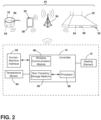
FIG. 2 is a schematic view of the system, illustrating the cooktop including a controller in communication with a human-machine interface, a temperature sensor, a heating element, a hood, an external network, an electronic device, and a cooking vessel; -
FIG. 3 shows the electronic device acting as the human-machine interface and allowing a user to set a user commanded cooking temperature; -
FIG. 4 shows the electronic device again acting as the human-machine interface and showing the user a recipe with a recipe cooking temperature that the user can select and which the controller will effectuate; -
FIG. 5 shows the electronic device again acting as the human-machine interface and providing a notification to the user of the usable fats that the user can use for the cooking operation at the cooking temperature (e.g., the user commanded cooking temperature or the recipe cooking temperature) without causing the cooking temperature to meet or exceed the smoke point of the fat used in the cooking operation; -
FIG. 6 shows the electronic device again acting as the human-machine interface and providing a notification to the user of a narrowed version of the usable fats, which were determined as a function of the one or more food items of the recipe; -
FIG. 7 shows the electronic device again acting as the human-machine interface and allowing the user to select which of the usable fats the user is going to use for the cooking operation, with the electronic device thereafter transmitting the user selected fat to the controller; -
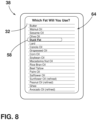
FIG. 8 shows the electronic device again acting as the human-machine interface and showing the user a list of predetermined fats and allowing the user to select which fat the user is going to use for the cooking operation, with the electronic device thereafter transmitting the user selected fat to the controller so that the controller can prevent the heating element from causing the cooking vessel or the one or more food items therein from meeting or exceeding the smoke point of the user selected fat; -
FIG. 9 is a schematic diagram of a method of performing a cooking operation with the cooktop so as not to meet or exceed the smoke point of the fat used during the cooking operation; and -
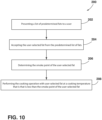
FIG. 10 is a schematic diagram of another method of performing a cooking operation with the cooktop so as not to meet or exceed the smoke point of the fat used during the cooking operation. - Referring to
FIGS. 1-2 , acooktop 10 includes aheating element 12 and acontroller 14. Thecontroller 14 is in communication with theheating element 12, such as with wiring or wireless devices. Thecooktop 10 provides asurface 16 upon which acooking vessel 18 can be placed so that theheating element 12 can cause a temperature of thecooking vessel 18 to rise and thereby to perform a cooking operation on one ormore food items 20 disposed within thecooking vessel 18. In embodiments, such as that illustrated, theheating element 12 is an induction coil. The induction coil is disposed beneath thesurface 16. The induction coil generates a high frequency alternating magnetic field when current is passed through the induction coil. When thecooking vessel 18 includes a ferromagnetic portion, the alternating magnetic field causes the formation of eddy currents within the ferromagnetic portion of thecooking vessel 18. Thecooking vessel 18 resists the eddy currents and the resistance generates heat, which then raises the temperature of thecooking vessel 18 and the food items placed therein. In other embodiments, theheating element 12 is an electric coil, a ceramic element, or a gas burner. Thecooking vessel 18 can be anycooking vessel 18 suitable for thecooktop 10, such as a skillet, a frying pan, a saucepan, a saucier, a stockpot, a Dutch oven, a wok, a griddle, a grill pan, a roasting pan, and so on. The principles discussed herein apply to aheating element 12 of any variety. Thecooktop 10 can include more than oneheating element 12. - The
controller 14 controls the operation of thecooktop 10 to implement the methods and controls described herein. Thecontroller 14 may be located within thecooktop 10, as illustrated. However, in other embodiments, thecontroller 14 can be located away from thecooktop 10, such as at ahood 22 disposed above thecooktop 10. Thecooktop 10 may achieve the ends described herein alone or as part of asystem 24 with more components, such as thehood 22, which will be introduced further in this description. Thehood 22 can be incorporated with a microwave and hood combination unit (not separately illustrated). - The
controller 14 includes anon-transitory storage medium 26 and aprocessor 28. Thenon-transitory storage medium 26 may include any suitable computer-readable media, one nonlimiting example of which includes a memory. Thenon-transitory storage medium 26 may store communication software which is configured to effectuate communication between thecontroller 14 and anexternal network 30. Thenon-transitory storage medium 26 may also be used for storing control software that is configured to effectuate acts by the appliance, including theheating element 12, as described herein. The communication and control software can be executed by theprocessor 28. Thenon-transitory storage medium 26 may also be used to store information, such as a database or table, and to store data received from one or more components of thecooktop 10 that may be communicably coupled with thecontroller 14. The database or table may be used to store the various operating parameters for the acts described herein, including factory default values for the operating parameters and any adjustments to them effected by user command. - In embodiments, a human-
machine interface 32 is in communication with thecontroller 14. In embodiments, the human-machine interface 32 is a component of thecooktop 10 and is accessible to auser 34 from anexternal environment 36 around thecooktop 10. In other embodiments, the human-machine interface 32 is disposed elsewhere in thesystem 24, such as thehood 22. The human-machine interface 32 can include buttons and/or displays, which may have touch screen capability, among other options such as a microphone to permit theuser 34 to issue voice commands. - In other embodiments, the human-
machine interface 32 is anelectronic device 38 that theuser 34 of thecooktop 10 can utilize as a temporary or permanent part of thesystem 24 to communicate with thecooktop 10 either directly or via theexternal network 30. To accommodate such interaction, theelectronic device 38 can include networking capability (including Bluetooth) or ports to permit USB connectivity. Examples of theelectronic device 38 include smartphones, tablets, laptops, smart watches, and so on. Similarly, thecontroller 14 can include awireless communication module 40, such as a combination transmitter and receiver, to permit two-way communication with theelectronic device 38 directly or via the external network 30 (or both). Whether the human-machine interface 32 is a component of thecooktop 10 or elsewhere in thesystem 24, such as theelectronic device 38, the human-machine interface 32 is in communication with thecontroller 14. - In embodiments, the
controller 14 is configured to determine a target cooking temperature for a cooking operation of the one ormore food items 20 and ausable fat 42 within thecooking vessel 18. Example cooking operations that typically call for ausable fat 42 include deep-frying, stir-frying, pan frying, sauteing, among others, without specifying what theusable fat 42 is. - In embodiments, in reference to
FIG. 3 , thecontroller 14 is configured to determine the target cooking temperature as a function of output received from the human-machine interface 32. Theuser 34 can utilize the human-machine interface 32 to enter a user-commandedcooking temperature 44 and then press asend button 45. The human-machine interface 32 then transmits a signal indicative of the user-commandedcooking temperature 44 to thecontroller 14. Thecontroller 14 then accepts the user-commandedcooking temperature 44 as the target cooking temperature. - As another example, in reference to
FIG. 4 , the human-machine interface 32 is configured to access arecipe 46 to perform the cooking operation on the one ormore food items 20 in the presence of theusable fat 42. The human-machine interface 32 in such instances can access more than onerecipe 46, such as via the Internet over theexternal network 30, or thenon-transitory storage medium 26 of thecontroller 14 can have stored therein more than onerecipe 46 that the human-machine interface 32 can access. The human-machine interface 32 presents therecipes 46 to theuser 34 and allows theuser 34 to select therecipe 46 of the user's 34 choice for thecooktop 10 to execute (e.g., with a select button 48). Therecipe 46 describes arecipe cooking temperature 50, which may change as a function of cooking time. Upon theuser 34 selecting therecipe 46, the human-machine interface 32 can communicate therecipe 46 to thecontroller 14. Thecontroller 14 then deciphers therecipe cooking temperature 50 and then determines that therecipe cooking temperature 50 is the target cooking temperature for the cooking operation that will commence. Alternatively, upon theuser 34 selecting therecipe 46, the human-machine interface 32 can decipher therecipe cooking temperature 50 from therecipe 46 and transmit therecipe cooking temperature 50 to thecontroller 14, which then equates therecipe cooking temperature 50 with the target cooking temperature for the cooking operation that will commence. - The
controller 14 is further configured to determine theusable fats 42 for the cooking operation that have a smoke point that is greater than the target cooking temperature from a predetermined list offats 64 and their associated smoke points. The predetermined list offats 64 can be stored in thenon-transitory storage medium 26 of thecontroller 14. Alternatively, thecontroller 14 can access the predetermined list from the Internet or a remote server via theexternal network 30. Each fat listed in the predetermined list offats 64 has a smoke point associated therewith. An example of the predetermined list offats 64, and their associated smoke points, follows in the table below:Table - Predetermined List of Fats and Their Respective Smoke Points Fat Smoke Point Butter 150 °C (302 °F) Walnut Oil 160 °C (320 °F) Sesame Oil 176 °C (350 °F) Olive Oil 190 °C (374 °F) Duck Fat 190 °C (374 °F) Lard 190 °C (374 °F) Canola Oil 190 °C (374 °F) Grapeseed Oil 200 °C (392 °F) Corn Oil 204 °C (400 °F) Soybean Oil 204 °C (400 °F) Macadamia Nut Oil 210 °C (410 °F) Rice Bran Oil 213 °C (415 °F) Beef Tallow 216 °C (420 °F) Palm Oil 224 °C (435 °F) Safflower Oil 227 °C (440 °F) Sunflower Oil (refined) 227 °C (440 °F) Peanut Oil (refined) 227 °C (440 °F) Ghee 241 °C (465 °F) Avocado Oil (refined) 250 °C (482 °F) individual cooktop 10 utilizes may present different fats and different smoke points, which may be determined by experimentation, regional or national position, user preference, or any other selection criteria. To determine theusable fats 42 having a smoke point that is greater than the target cooking temperature from the predetermined list offats 64, thecontroller 14 can compare the target cooking temperature with the listed smoke points. By way of hypothetical example, if the target cooking temperature is 410 °F (210 °C), then thecontroller 14 can determine that theusable fats 42 for the cooking operation having a smoke point of greater than 410 °F (210 °C) from the predetermined list are rice bran oil, beef tallow, and so on, down to avocado oil, and assign those fats as theusable fat 42. - Referring additionally to
FIG. 5 , thecontroller 14 is additionally configured to cause the human-machine interface 32 to issue anotification 52 to theuser 34 of theusable fats 42 for the cooking operation. With thenotification 52, theuser 34 now understands what is or are theusable fats 42 for the cooking operation at the target cooking temperature. Assuming that theuser 34 actually uses one of theusable fats 42, as determined by thecontroller 14 and notified to theuser 34 by the human-machine interface 32 via thenotification 52, the cooking operation does not thermally decompose theusable fat 42 utilized. Thenotification 52 can be visual or audible. - In embodiments, in reference to
FIG. 6 , thecontroller 14 is further configured to narrow theusable fats 42 that it communicates to theuser 34 via thenotification 52 as a function of the one or more food items 20 (e.g., ingredients) of therecipe 46. More particularly, thecontroller 14 is configured to determine the one ormore food items 20 of the user selectedrecipe 46. The human-machine interface 32 can parse the one ormore food items 20 from the user selectedrecipe 46 and communicate the one ormore food items 20 to thecontroller 14. Alternatively, the human-machine interface 32 can communicate the user-selectedrecipe 46 to thecontroller 14, which can determine the one ormore food items 20 from the user-selectedrecipe 46. After determining which theusable fats 42 having a smoke point that is greater than the target cooking temperature from the predetermined list offats 64, thecontroller 14 narrows theusable fats 42 even more as a function of the determined one ormore food items 20 from the user selectedrecipe 46, to the exclusion of at least one other fat. Thecontroller 14 communicates this narrowed version of the one or moreusable fats 42 to theuser 34 via thenotification 52. For example, accounting for the flavor that each of the one or moreusable fats 42 would impart to the one ormore food items 20, thecontroller 14 can narrow theusable fats 42 to only those fats the flavor of which will ensure a better taste and end result to theuser 34. Continuing the hypothetical example, after determining the one or moreusable fats 42 that has a smoke point above the target cooking temperature from the predetermined list offats 64, thecontroller 14 recognizes that the one ormore food items 20 from the user selectedrecipe 46 includes pineapple and narrows the one or moreusable fats 42 to rice bran oil, safflower oil, sunflower oil (refined), peanut oil (refined) and avocado oil (refined) to the exclusion of beef tallow, palm oil, and ghee. The former are more compatible with the pineapple than the latter, because of the sweetness of the pineapple. Thecontroller 14 thus assigns to rice bran oil, safflower oil, sunflower oil (refined), peanut oil (refined) and avocado oil (refined) as the one or moreusable fats 42 and causes the human-machine interface 32 to issue thenotification 52 of such to theuser 34. Thecontroller 14 can use other criteria to narrow theusable fats 42 that it communicates to theuser 34 via thenotification 52. - In embodiments, the
controller 14 is in communication with atemperature sensor 54 that generates output from which thecontroller 14 can determine a temperature of thecooking vessel 18 or the one ormore food items 20 within thecooking vessel 18. Referring back toFIG. 1 , thecooktop 10 can include atemperature sensor 54 that is positioned to generate output from which thecontroller 14 can determine the temperature of thecooking vessel 18 or the one ormore food items 20 within thecooking vessel 18. Thecontroller 14 can include adifferent temperature sensor 54 associated with each of theheating elements 12. Thetemperature sensor 54 may be disposed below thesurface 16 that thecooktop 10 provides. In such instances, thetemperature sensor 54 can be a thermistor. Additionally or alternatively, thetemperature sensor 54 can be part of thesystem 24 and disposed at thehood 22. In such instances, thetemperature sensor 54 can be an infrared sensor. - In embodiments, the
cooking vessel 18 includes atemperature sensor 54 and atransmitter 56. In such instances, thetemperature sensor 54 is positioned to generate output indicative of the temperature of thecooking vessel 18 or the one ormore food items 20 within thecooking vessel 18. Thecontroller 14, with thewireless communication module 40, is able to receive the output from thetemperature sensor 54 of thecooking vessel 18 as transmitted via thetransmitter 56. Thecontroller 14 can then determine the temperature of thecooking vessel 18 or the one ormore food items 20 within thecooking vessel 18 as a function of the output received from thetemperature sensor 54 via thetransmitter 56 of thecooking vessel 18. In some instances, thecooking vessel 18 determines the temperature of thecooking vessel 18 or the one ormore food items 20 within thecooking vessel 18 as a function of the output of thetemperature sensor 54 and transmits the temperature to thecontroller 14. - In embodiments, the
controller 14 is further configured to control theheating element 12 as a function of both the determined temperature of thecooking vessel 18 or the one ormore food items 20 within thecooking vessel 18 and the target cooking temperature. For the cooking operation of the one ormore food items 20, thecontroller 14 activates and deactivates theheating element 12 as necessary to achieve and maintain the target cooking temperature. Thecontroller 14 determines, as a function of time, whether to activate, deactivate, or change power output of theheating element 12 based on the output received from thetemperature sensor 54. - In some embodiments, the
controller 14 deactivates or reduces the power level of theheating element 12 as necessary to prevent the temperature of thecooking vessel 18 or the one ormore food items 20 from exceeding the smoke point of any of the one or moreusable fats 42. In some instances, in reference toFIG. 7 , thecontroller 14, after causing the human-machine interface 32 to issue thenotification 52 of the one or moreusable fats 42 for the cooking operation, the human-machine interface 32 prompts theuser 34 to select which of the one or moreusable fats 42 that theuser 34 will use for the cooking operation. Theuser 34 can then select (such as by touching) a particular fat, which then becomes highlighted as a user selectedfat 58. Theuser 34 can then confirm the selection by pressing aselect button 59. After theuser 34 makes the selection, the human-machine interface 32 transmits the selection to thecontroller 14. Thecontroller 14 accepts the user-selectedfat 58 as the fat that will be used for the cooking operation. The user-selectedfat 58 has an associated smoke point. Thecontroller 14 then controls theheating element 12 during the cooking operation so that the temperature of thecooking vessel 18 is always less than the smoke point of the user-selectedfat 58. In some embodiments, thecontroller 14 does not begin the cooking operation until the user-selectedfat 58 is known. - In embodiments, the
controller 14 is configured to receive output that animage sensor 60 generates. Referring back toFIG. 1 , thehood 22 can include theimage sensor 60. Theimage sensor 60 can have a field ofview 62 that includes theheating element 12 and thus thecooking vessel 18 placed upon theheating element 12 and the contents of thecooking vessel 18. Theimage sensor 60 generates image data of thecooking vessel 18 and the contents of thecooking vessel 18. Theimage sensor 60 is in communication with thecontroller 14 and transmits the output to thecontroller 14. Thecontroller 14 is configured to receive image data from theimage sensor 60 pertaining to the contents of thecooking vessel 18 upon theheating element 12. Thecontroller 14 is configured to determine, based on the output of theimage sensor 60, that thecooking vessel 18 includes one or more fats. For example, thecontroller 14 can utilize image recognition software stored innon-transitory storage medium 26 to determine, based on the output image data from theimage sensor 60, whether thecooking vessel 18 includes one or more fats. The determination that thecooking vessel 18 includes one or more fats can be a precursor to thecontroller 14 causing the human-machine interface 32 to prompt theuser 34 to enter thetarget cooking temperature 50 for the cooking operation or therecipe 46 from which therecipe cooking temperature 50 can be extracted. Thecontroller 14 then provides theuser 34, via the human-machine interface 32, with the list ofusable fats 42. Theuser 34 can then make certain that the fat already within thecooking vessel 18 is within the list ofusable fats 42. If not, then theuser 34 can replace the fat with one of the fats from the list ofusable fats 42 at the target cooking temperature. In a variation, the human-machine interface 32 allows theuser 34 to select the fat that is already within thecooking vessel 18, although not identified as ausable fat 42, and thecontroller 14 revises the cooking temperature for the cooking operation to be lower than the smoke point of the user-selectedfat 58 . - The above-described embodiment of the
cooktop 10 and of thesystem 24 addresses the problem explained in the Background, because thecooktop 10 prevents the cooking temperature from thermally decomposing the fat utilized for the cooking operation by informing theuser 34 of theusable fats 42 that can be used for the cooking operation at the target cooking temperature. Further, thecontroller 14 controls theheating element 12 so that the temperature of thecooking vessel 18 is always below the smoke point of the user-selectedfat 58 for the cooking operation. - In another embodiment of the
cooktop 10 and of thesystem 24, rather than being configured to determine the target cooking temperature and then to provide theuser 34 with the list ofusable fats 42 to use, thecontroller 14 is configured to determine the fat that theuser 34 intends to use within thecooking vessel 18 for the cooking operation. Thecontroller 14 then controls theheating element 12 during the cooking operation so that the temperature of thecooking vessel 18 or the one ormore food items 20 is always less than the smoke point of the fat that the controller determined that theuser 34 intended to use. - Referring now to
FIG. 8 , thecontroller 14 can cause the human-machine interface 32 (whether of thecooktop 10, thesystem 24 or of the electronic device 38) to display to theuser 34 the predetermined list offats 64. Theuser 34 can select, at the human-machine interface 32, the fat from the predetermined list offats 64 that theuser 34 intends to use for the cooking operation. Theuser 34 can then select, such as via touch, from the predetermined list offats 64 the fat that theuser 34 intends to use for the cooking operation, as the user-selectedfat 58. The human-machine interface 32 then generates and transmits output indicative of the user's 34 selection (the user-selected fat 58) to thecontroller 14. Thecontroller 14 then determines that the user's 34 selection is the fat that theuser 34 intends to use (e.g., is the user-selected fat 58). - By way of hypothetical example (see
FIG. 8 ), thecontroller 14 can cause the human-machine interface 32 to show the predetermined list offats 64 set forth in the table above to theuser 34. Theuser 34 can then select, such as via touch-screen, the fat from the predetermined list offats 64 that theuser 34 intends to use as the user-selectedfat 58. In the hypothetical example, theuser 34 selects duck fat as the fat that theuser 34 intends to use for the cooking operation. The human-machine interface 32 transmits the selection to thecontroller 14. Thecontroller 14 understands that duck fat has been selected as the user-selectedfat 58 and determines, such as from table data stored innon-transitory storage medium 26, that the smoke point associated with duck fat is a particular temperature such as 190 °C (374 °F). Thecontroller 14 then controls theheating element 12 during the cooking operation so that the temperature of thecooking vessel 18 is always less than 190 °C (374 °F) - the smoke point of the user-selected duck fat. As discussed above, thecontroller 14 can be in communication with thetemperature sensor 54 positioned to generate output from which thecontroller 14 can determine the temperature or the one ormore food items 20 within thecooking vessel 18 as a function of time during the cooking operation. As the temperature rises toward the smoke point, thecontroller 14 can deactivate or lower the power output of theheating element 12. After the temperature falls sufficiently from the smoke point, thecontroller 14 can activate theheating element 12 or increase the power output. Thecontroller 14 can adjust the power output of theheating element 12 to maintain the temperature within a predetermined range below the smoke point. - As mentioned, the
controller 14 can be in communication with theimage sensor 60. In embodiments, thecontroller 14 is further configured to determine, from the image data, whether the contents of thecooking vessel 18 include one or more fats before accepting input from which thecontroller 14 can determine the one or more fats that theuser 34 intends to use within thecooking vessel 18. Thecontroller 14 can utilize image recognition software stored innon-transitory storage medium 26 to determine whether thecooking vessel 18 includes a fat. Thecontroller 14 determining that thecooking vessel 18 includes fat can prompt thecontroller 14 to query, through the human-machine interface 32, theuser 34 as to what fat theuser 34 intends to use for the cooking operation as the user-selectedfat 58. - This embodiment of the
controller 14 and thesystem 24 addresses the problem set forth in the Background, because thecontroller 14 performs the cooking operation with theheating element 12 so that the temperature within thecooking vessel 18 is always less than the smoke point of the fat being used for the cooking operation (e.g., the user-selected fat 58). - Referring now to
FIG. 9 , amethod 100 of performing the cooking operation with thecooktop 10 is herein described. At astep 102, themethod 100 includes determining the target cooking temperature for the cooking operation at thecooktop 10 that calls for theusable fat 42. As discussed, theuser 34 can enter the target cooking temperature as the user-commandedcooking temperature 44 at the human-machine interface 32. Alternatively, thecontroller 14 can be provided with arecipe cooking temperature 50, which thecontroller 14 determines is the target cooking temperature. - At a
step 104, themethod 100 further includes determining which one or more fats from a predetermined list offats 64 have a smoke point that is greater than the target cooking temperature. As discussed, thecontroller 14 can compare the smoke points of the predetermined list offats 64 with the target cooking temperature. - At a
step 106, themethod 100 further includes notifying theuser 34 of thecooktop 10 of the one or moreuseable fats 42 for the cooking operation at the target cooking temperature so determined - the one or moreuseable fats 42 being the one or more fats determined from the predetermined list offats 64 to have a smoke point that is greater than the target cooking temperature. As discussed, thecontroller 14 can cause the human-machine interface 32 to issue thenotification 52 to theuser 34. - At a
step 108, themethod 100 further includes performing the cooking operation at the target cooking temperature with thecooktop 10. As discussed, thecontroller 14 controls theheating element 12 to cause thecooking vessel 18 or the one ormore food items 20 within thecooking vessel 18 to have the target cooking temperature for a period of time. - In embodiments, at a
step 110, which occurs before thestep 106, themethod 100 further includes (i) determining the one or more food items 20 (e.g., the ingredients) that will be included for the cooking operation and (ii) narrowing theusable fats 42 as a function of the determined one ormore food items 20, to the exclusion of at least one of theusable fats 42 that has a smoke point above the target cooking temperature. Theuser 34 is thus notified with thenotification 52 of the narrowed version of the usable fats 42 (see, e.g.,FIG. 7 ). - Referring now to
FIG. 10 , anothermethod 200 of performing the cooking operation with thecooktop 10 is herein described. At astep 202, themethod 200 includes presenting to theuser 34 of thecooktop 10 with the predetermined list offats 64. As discussed, thecontroller 14 can cause the human-machine interface 32 to present theuser 34 with the predetermined list offats 64. - At a
step 204, themethod 200 further includes accepting the user-selected fat 58 from the predetermined list offats 64 that theuser 34 will use for the cooking operation with thecooktop 10. As discussed, theuser 34 can make the selection at the human-machine interface 32, and the human-machine interface 32 transmits the user-selectedfat 58 to thecontroller 14. - At a
step 206, themethod 200 further includes determining the smoke point of the user-selectedfat 58. As discussed, thecontroller 14 can have the smoke point of each of the predetermined list offats 64 stored innon-transitory storage medium 26. - At a
step 208, themethod 200 further includes performing the cooking operation with the user-selectedfat 58 at a cooking temperature that is less than the smoke point of the user-selectedfat 58. As discussed, thecontroller 14 activates and deactivates, or adjusts the power level, of theheating element 12 as necessary to maintain thecooking vessel 18 or the one ormore food items 20 therein at the cooking temperature but below the smoke point of the user-selectedfat 58. Thecontroller 14 can rely upon input received from thetemperature sensor 54 to perform thestep 208. - Both the
method 100 and themethod 200 address the problem set forth in the Background by performing the cooking operation with thecooktop 10 at a cooking temperature that is less than the smoke point of the fat used for the cooking temperature. - According to a first aspect of the present disclosure, a cooktop comprises: (a) a heating element; and (b) a controller in communication with the heating element, the controller configured (i) to determine a target cooking temperature for a cooking operation of one or more food items within a cooking vessel that additionally calls for one or more usable fats, (ii) to determine the one or more usable fats having a smoke point that is greater than the target cooking temperature from a predetermined list of fats, and (iii) to cause a human-machine interface in communication with the controller to issue a notification of the one or more usable fats for the cooking operation.
- According to a second aspect of the present disclosure, the cooktop of the first aspect is presented, wherein the heating element is an induction coil.
- According to a third aspect of the present disclosure, the cooktop of any one of the first through second aspects is presented, wherein the controller is further configured to determine the target cooking temperature as a function of output received from the human-machine interface.
- According to a fourth aspect of the present disclosure, the cooktop of any one of the first through third aspects further comprises: the human-machine interface in communication with the controller, the human-machine interface configured to accept a user-commanded cooking temperature and transmit the user-commanded cooking temperature to the controller, wherein, the controller is further configured to determine that the user-commanded cooking temperature is the target cooking temperature.
- According to a fifth aspect of the present disclosure, the cooktop of any one of the first through third aspects is presented, wherein (a) the human-machine interface that the controller is configured to communicate with is not a component of the cooktop, and (b) the controller is further configured (i) to accept a user-commanded cooking temperature from the human-machine interface, and (ii) to determine that the user-commanded cooking temperature is the target cooking temperature.
- According to a sixth aspect of the present disclosure, the cooktop of any one of the first through third aspects further comprises the human-machine interface in communication with the controller, the human-machine interface configured (i) to access a recipe to perform the cooking operation of the one or more food items and the one or more usable fats, the recipe comprising a recipe cooking temperature, (ii) to allow a user to select the recipe as a user-selected recipe, and (iii) to communicate the recipe cooking temperature to the controller, wherein, the controller is further configured to determine that recipe cooking temperature of the user-selected recipe is the target cooking temperature.
- According to a seventh aspect of the present disclosure, the cooktop of the sixth aspect is presented, wherein the controller is further configured (i) to determine the one or more food items of the user-selected recipe and (ii) after determining the usable fats having a smoke point that is greater than the target cooking temperature, to narrow the usable fats as a function of the determined one or more food items of the user-selected recipe, to the exclusion of at least one of the usable fats.
- According to an eighth aspect of the present disclosure, the cooktop of any one of the first through third aspects is presented, wherein (a) the human-machine interface that the controller is configured to communicate with is not of the cooktop, and (b) the controller is further configured (i) to accept a recipe with a recipe cooking temperature from the human-machine interface, and (ii) to determine that the recipe cooking temperature is the target cooking temperature.
- According to a ninth aspect of the present disclosure, any one of the first through eighth aspects further comprises: a temperature sensor in communication with the controller, the temperature sensor positioned to generate output from which the controller can determine a temperature of a cooking vessel or the one or more food items within the cooking vessel during the cooking operation.
- According to a tenth aspect of the present disclosure, the cooktop of the ninth aspect is presented, wherein the controller is further configured to control the heating element as a function of both (i) the determined temperature of the cooking vessel or the one or more food items within the cooking vessel and (ii) the target cooking temperature.
- According to an eleventh aspect of the present disclosure, the cooktop of any one of the first through tenth aspects is presented, wherein the controller is further configured (i) to receive output from a temperature sensor of the cooking vessel placed upon the heating element and (ii) to determine a temperature of the cooking vessel or the one or more food items within the cooking vessel as a function of the output received from the temperature sensor.
- According to a twelfth aspect of the present disclosure, the cooktop of the eleventh aspect is presented, wherein the controller is further configured to control the heating element as a function of both the determined temperature of the cooking vessel or the one or more food items within the cooking vessel and the target cooking temperature.
- According to a thirteenth aspect of the present disclosure, the cooktop of any one of the first through twelfth aspect is presented, wherein the controller is further configured (i) after causing the human-machine interface to issue the notification of the one or more usable fats for the cooking operation, to accept a user-selected fat via the human-machine interface of the one or more usable fats that will be used for the cooking operation, and (ii) to control the heating element during the cooking operation so that a temperature of the cooking vessel or the one or more food items disposed therein is always less than the smoke point of the user selected fat.
- According to a fourteenth aspect of the present disclosure, the cooktop of any one of the first through thirteenth aspects is presented, wherein the controller is configured (i) to receive output that an image sensor generates and (ii) to determine, based on the output of the image sensor, that the cooking vessel includes one or more fats.
- According to a fifteenth aspect of the present disclosure, a cooktop comprises: (a) a heating element; and (b) a controller in communication with the heating element, the controller configured (i) to determine a fat that a user intends to use within a cooking vessel to perform a cooking operation on one or more food items within the cooking vessel, and (ii) to control the heating element during the cooking operation so that a temperature of the cooking vessel or the one or more food items is always less than a smoke point of the fat that the controller determined the user intends to use.
- According to a sixteenth aspect of the present disclosure, the cooktop of the fifteenth aspect is presented, wherein the heating element is an induction coil.
- According to a seventeenth aspect of the present disclosure, the cooktop of any one of the fifteenth through sixteenth aspects is presented, wherein the controller is further configured (i) to cause a human-machine interface to display to the user a predetermined list of fats that the user can select as the fat that the user intends to use, (ii) to accept output from the human-machine interface indicative of the user's selection, and (iii) to determine that the user's selection is the fat that the user intends to use.
- According to an eighteenth aspect of the present disclosure, the cooktop of the seventeenth aspect further comprises: the human-machine interface in communication with the controller, the human-machine interface configured (i) to accept a user command of the fat that user intends to use for the cooking operation, and (ii) to generate output indicative of the user command and transmit the output to the controller.
- According to a nineteenth aspect of the present disclosure, the cooktop of any one of the fifteenth through eighteenth aspects further comprises: a temperature sensor in communication with the controller, the temperature sensor positioned to generate output from which the controller can determine the temperature of the cooking vessel or the one or more food items disposed within the cooking vessel.
- According to a twentieth aspect of the present disclosure, the cooktop of any one of the fifteenth through nineteenth aspects is presented, wherein the controller is further configured (i) to receive image data from an image sensor pertaining to the cooking vessel upon the heating element, and (ii) to determine, from the image data, whether the cooking vessel includes one or more fats before accepting input from which the controller can determine the one or more fats that a user intends to use within the cooking vessel.
Claims (15)
- A cooktop (10) comprising:a heating element (12); anda controller (14) in communication with the heating element (12), the controller (14) configured (i) to determine a target cooking temperature for a cooking operation of one or more food items (20) within a cooking vessel (18) that additionally calls for one or more usable fats (42), (ii) to determine the one or more usable fats (42) having a smoke point that is greater than the target cooking temperature from a predetermined list of fats (64), and (iii) to cause a human-machine interface (32) in communication with the controller (14) to issue a notification (52) of the one or more usable fats (42) for the cooking operation.
- The cooktop (10) of claim 1, wherein
the heating element (12) is an induction coil. - The cooktop (10) of either one of claims 1 or 2, wherein
the controller (14) is further configured to determine the target cooking temperature as a function of output received from the human-machine interface (32). - The cooktop (10) of any one of claims 1-3, further comprising:the human-machine interface (32) in communication with the controller (14), the human-machine interface (32) configured to accept a user-commanded cooking temperature (44) and transmit the user-commanded cooking temperature (44) to the controller (14),wherein, the controller (14) is further configured to determine that the user-commanded cooking temperature (44) is the target cooking temperature.
- The cooktop (10) of any one of claims 1-3, whereinthe human-machine interface (32) that the controller (14) is configured to communicate with is not a component of said cooktop (10), andthe controller (14) is further configured (i) to accept a user-commanded cooking temperature (44) from the human-machine interface (32), and (ii) to determine that the user-commanded cooking temperature (44) is the target cooking temperature.
- The cooktop (10) of any one of claims 1-5, further comprising:
the human-machine interface (32) in communication with the controller (14), the human-machine interface (32) configured (i) to access a recipe (46) to perform the cooking operation of the one or more food items (20) and the one or more usable fats (42), the recipe (46) comprising a recipe cooking temperature (50), (ii) to allow a user (34) to select the recipe (46)_as a user-selected recipe (46), and (iii) to communicate the recipe cooking temperature (50) from the user-selected recipe (46) to the controller (14), - The cooktop (10) of claim 6, wherein, the controller (14) is further configured to determine that the recipe cooking temperature (50) of the user-selected recipe (46) is the target cooking temperature
- The cooktop (10) of either one of claims 6 or 7, wherein
the controller (14) is further configured (i) to determine the one or more food items (20) of the user-selected recipe (46) and (ii) after determining the one or more usable fats (42) having a smoke point that is greater than the target cooking temperature, to narrow the one or more usable fats (42) as a function of the determined one or more food items (20) of the user-selected recipe (46), to an exclusion of at least one of the usable fats (42). - The cooktop (10) of any one of claims 1-5, whereinthe human-machine interface (32) that the controller (14) is configured to communicate with is not of said cooktop (10), andthe controller (14) is further configured (i) to accept a recipe (46) with a recipe cooking temperature (50) from the human-machine interface (32), and (ii) to determine that the recipe cooking temperature (50) is the target cooking temperature.
- The cooktop (10) of any one of claims 1-9, further comprising:
a temperature sensor in communication with the controller (14), the temperature sensor positioned to generate output from which the controller (14) can determine a temperature of the cooking vessel (18) or the one or more food items within the cooking vessel (18) during the cooking operation. - The cooktop (10) of claim 10, wherein
the controller (14) is further configured to control the heating element (12) as a function of both (i) the determined temperature of the cooking vessel (18) or the one or more food items (20) within the cooking vessel (18) and (ii) the target cooking temperature. - The cooktop (10) of any one of claims 1-9, wherein
the controller (14) is further configured (i) to receive output from a temperature sensor (54) of the cooking vessel (18) placed upon the heating element (12) and (ii) to determine a temperature of the cooking vessel (18) or the one or more food items (20) within the cooking vessel (18) as a function of the output received from the temperature sensor (54). - The cooktop (10) of claim 12, wherein
the controller (14) is further configured to control the heating element (12) as a function of both the determined temperature of the cooking vessel (18) or the one or more food items (20) within the cooking vessel (18) and the target cooking temperature. - The cooktop (10) of any one of claims 1-9, wherein
the controller (14) is further configured (i) after causing the human-machine interface (32) to issue the notification (52) of the one or more usable fats (42) for the cooking operation, to accept a user-selected fat (58) via the human-machine interface (32) of the one or more usable fats (42) that will be used for the cooking operation, and (ii) to control the heating element (12) during the cooking operation so that a temperature of the cooking vessel (18) or the one or more food items (20) disposed therein is always less than the smoke point of the user-selected fat (58). - The cooktop (10) of any one of claims 1-14, wherein
the controller (14) is configured (i) to receive output that an image sensor (60) generates and (ii) to determine, based on the output of the image sensor (60), that the cooking vessel (18) includes one or more fats (42).
Applications Claiming Priority (1)
| Application Number | Priority Date | Filing Date | Title |
|---|---|---|---|
| US18/374,431 US20250113413A1 (en) | 2023-09-28 | 2023-09-28 | Cooktop that prevents cooking temperature from exceeding smoke point of included fat for the cooking operation and related methods |
Publications (1)
| Publication Number | Publication Date |
|---|---|
| EP4531496A1 true EP4531496A1 (en) | 2025-04-02 |
Family
ID=92926214
Family Applications (1)
| Application Number | Title | Priority Date | Filing Date |
|---|---|---|---|
| EP24202863.7A Pending EP4531496A1 (en) | 2023-09-28 | 2024-09-26 | Cooktop that prevents cooking temperature from exceeding smoke point of included fat for the cooking operation and related methods |
Country Status (3)
| Country | Link |
|---|---|
| US (1) | US20250113413A1 (en) |
| EP (1) | EP4531496A1 (en) |
| CA (1) | CA3254690A1 (en) |
Citations (3)
| Publication number | Priority date | Publication date | Assignee | Title |
|---|---|---|---|---|
| US20160014849A1 (en) * | 2013-01-14 | 2016-01-14 | Breville Pty Limited | Multi Cooker |
| US20220151436A1 (en) * | 2020-11-16 | 2022-05-19 | Haier Us Appliance Solutions, Inc. | Cooking assemblies and methods of operation based on a detected cooking oil |
| US11672050B2 (en) * | 2017-08-11 | 2023-06-06 | Brava Home, Inc. | Configurable cooking systems and methods |
-
2023
- 2023-09-28 US US18/374,431 patent/US20250113413A1/en active Pending
-
2024
- 2024-09-17 CA CA3254690A patent/CA3254690A1/en active Pending
- 2024-09-26 EP EP24202863.7A patent/EP4531496A1/en active Pending
Patent Citations (3)
| Publication number | Priority date | Publication date | Assignee | Title |
|---|---|---|---|---|
| US20160014849A1 (en) * | 2013-01-14 | 2016-01-14 | Breville Pty Limited | Multi Cooker |
| US11672050B2 (en) * | 2017-08-11 | 2023-06-06 | Brava Home, Inc. | Configurable cooking systems and methods |
| US20220151436A1 (en) * | 2020-11-16 | 2022-05-19 | Haier Us Appliance Solutions, Inc. | Cooking assemblies and methods of operation based on a detected cooking oil |
Also Published As
| Publication number | Publication date |
|---|---|
| CA3254690A1 (en) | 2025-10-31 |
| US20250113413A1 (en) | 2025-04-03 |
Similar Documents
| Publication | Publication Date | Title |
|---|---|---|
| US11398923B2 (en) | Method for data communication with a domestic appliance by a mobile computer device, mobile computer device and domestic appliance | |
| KR102128768B1 (en) | Auxiliary button for cooking system | |
| US9690462B2 (en) | Information terminal, information terminal control method, and information terminal control program | |
| US20160014849A1 (en) | Multi Cooker | |
| CN103513679B (en) | Pressure control method and device of pressure cooker | |
| KR200475704Y1 (en) | Cooking apparatus | |
| US20250211461A1 (en) | Method for data communication with a domestic appliance by a mobile computer device, mobile computer device and domestic appliance | |
| WO2019209371A1 (en) | Cooking system for tracking a cooking device | |
| JP2019027705A (en) | Heating cooker | |
| JP2022117570A (en) | Heating cooker and heating cooking system | |
| CN109696858B (en) | Cooking appliance and cooking control method and device thereof | |
| US20250113413A1 (en) | Cooktop that prevents cooking temperature from exceeding smoke point of included fat for the cooking operation and related methods | |
| CN109210583B (en) | Control method, control device and cooking set | |
| CN108378683A (en) | A kind of intelligent multi-function pot of accurate temperature control | |
| CN109407568B (en) | Cooking appliance, cooking control method and computer device | |
| CN107526305A (en) | The control method and device of cooking appliance | |
| CN115399639A (en) | Control method for kitchen system | |
| JP6567266B2 (en) | Cooker | |
| BR102024019598A2 (en) | COOKTOP THAT PREVENTS THE COOKING TEMPERATURE FROM EXCEEDING THE SMOKE POINT OF THE INCLUDED FAT FOR THE COOKING OPERATION AND RELATED METHODS | |
| CN109407723B (en) | Heating platform, appliance and control method of heating platform | |
| CN115623453A (en) | Cooking utensil, interactive system and terminal equipment of cooking utensil | |
| JP2013123569A (en) | Electric rice cooker | |
| HK1263103A1 (en) | Auxiliary button for a cooking system | |
| KR20140116279A (en) | Recipe sharing system for sharing new recipe |
Legal Events
| Date | Code | Title | Description |
|---|---|---|---|
| PUAI | Public reference made under article 153(3) epc to a published international application that has entered the european phase |
Free format text: ORIGINAL CODE: 0009012 |
|
| STAA | Information on the status of an ep patent application or granted ep patent |
Free format text: STATUS: THE APPLICATION HAS BEEN PUBLISHED |
|
| AK | Designated contracting states |
Kind code of ref document: A1 Designated state(s): AL AT BE BG CH CY CZ DE DK EE ES FI FR GB GR HR HU IE IS IT LI LT LU LV MC ME MK MT NL NO PL PT RO RS SE SI SK SM TR |
|
| STAA | Information on the status of an ep patent application or granted ep patent |
Free format text: STATUS: REQUEST FOR EXAMINATION WAS MADE |
|
| 17P | Request for examination filed |
Effective date: 20251002 |