EP4531348A2 - Abschwächung von computerangriffen - Google Patents
Abschwächung von computerangriffen Download PDFInfo
- Publication number
- EP4531348A2 EP4531348A2 EP25157833.2A EP25157833A EP4531348A2 EP 4531348 A2 EP4531348 A2 EP 4531348A2 EP 25157833 A EP25157833 A EP 25157833A EP 4531348 A2 EP4531348 A2 EP 4531348A2
- Authority
- EP
- European Patent Office
- Prior art keywords
- mitigation
- network
- mobile object
- traffic
- mobile
- Prior art date
- Legal status (The legal status is an assumption and is not a legal conclusion. Google has not performed a legal analysis and makes no representation as to the accuracy of the status listed.)
- Pending
Links
Images





Classifications
-
- H—ELECTRICITY
- H04—ELECTRIC COMMUNICATION TECHNIQUE
- H04L—TRANSMISSION OF DIGITAL INFORMATION, e.g. TELEGRAPHIC COMMUNICATION
- H04L63/00—Network architectures or network communication protocols for network security
- H04L63/14—Network architectures or network communication protocols for network security for detecting or protecting against malicious traffic
- H04L63/1441—Countermeasures against malicious traffic
- H04L63/1458—Denial of Service
-
- H—ELECTRICITY
- H04—ELECTRIC COMMUNICATION TECHNIQUE
- H04L—TRANSMISSION OF DIGITAL INFORMATION, e.g. TELEGRAPHIC COMMUNICATION
- H04L63/00—Network architectures or network communication protocols for network security
- H04L63/14—Network architectures or network communication protocols for network security for detecting or protecting against malicious traffic
- H04L63/1441—Countermeasures against malicious traffic
- H04L63/1466—Active attacks involving interception, injection, modification, spoofing of data unit addresses, e.g. hijacking, packet injection or TCP sequence number attacks
-
- H—ELECTRICITY
- H04—ELECTRIC COMMUNICATION TECHNIQUE
- H04L—TRANSMISSION OF DIGITAL INFORMATION, e.g. TELEGRAPHIC COMMUNICATION
- H04L63/00—Network architectures or network communication protocols for network security
- H04L63/14—Network architectures or network communication protocols for network security for detecting or protecting against malicious traffic
- H04L63/1408—Network architectures or network communication protocols for network security for detecting or protecting against malicious traffic by monitoring network traffic
- H04L63/1416—Event detection, e.g. attack signature detection
-
- H—ELECTRICITY
- H04—ELECTRIC COMMUNICATION TECHNIQUE
- H04L—TRANSMISSION OF DIGITAL INFORMATION, e.g. TELEGRAPHIC COMMUNICATION
- H04L63/00—Network architectures or network communication protocols for network security
- H04L63/14—Network architectures or network communication protocols for network security for detecting or protecting against malicious traffic
- H04L63/1408—Network architectures or network communication protocols for network security for detecting or protecting against malicious traffic by monitoring network traffic
- H04L63/1425—Traffic logging, e.g. anomaly detection
-
- H—ELECTRICITY
- H04—ELECTRIC COMMUNICATION TECHNIQUE
- H04L—TRANSMISSION OF DIGITAL INFORMATION, e.g. TELEGRAPHIC COMMUNICATION
- H04L63/00—Network architectures or network communication protocols for network security
- H04L63/14—Network architectures or network communication protocols for network security for detecting or protecting against malicious traffic
- H04L63/1441—Countermeasures against malicious traffic
-
- H—ELECTRICITY
- H04—ELECTRIC COMMUNICATION TECHNIQUE
- H04L—TRANSMISSION OF DIGITAL INFORMATION, e.g. TELEGRAPHIC COMMUNICATION
- H04L63/00—Network architectures or network communication protocols for network security
- H04L63/20—Network architectures or network communication protocols for network security for managing network security; network security policies in general
-
- B—PERFORMING OPERATIONS; TRANSPORTING
- B64—AIRCRAFT; AVIATION; COSMONAUTICS
- B64U—UNMANNED AERIAL VEHICLES [UAV]; EQUIPMENT THEREFOR
- B64U2101/00—UAVs specially adapted for particular uses or applications
Definitions
- the invention relates to the field of telecommunications, and in particular concerns the implementation of reliable and robust mechanisms for protecting resources (network, terminals connected to a network, servers connected to a network), to respond to computer attacks such as, for example, “denial of service” (or “DDoS”, for “Distributed Denial of Service”).
- resources network, terminals connected to a network, servers connected to a network
- computer attacks such as, for example, “denial of service” (or “DDoS", for “Distributed Denial of Service”).
- a DDoS attack is an attempt to make resources (e.g., network or computing resources) unavailable to their users. In most cases, such attacks can be deployed on a massive scale by compromising several hundred thousand endpoints and using these infected hosts to amplify their damaging power.
- DPS offerings are hosted in the cloud, not just within the infrastructure operated by access providers. These deployments raise issues such as early detection of attacks, as the DPS service is not necessarily present on the data routing paths to reach a network that has been the victim of an attack.
- a client/server architecture specified by the IETF Internet Engineering Task Force aims to provide a mechanism for reporting the detection of suspicious traffic, or even a confirmed attack, so that appropriate mitigation measures can be implemented as quickly as possible.
- This architecture is called “DOTS” (for "DDoS Open Threat Signaling”). It is designed to allow a DOTS client to inform a DOTS server that it has detected suspicious traffic potentially characteristic of an ongoing DDoS attack, and that appropriate mitigation actions are required.
- mitigation action we mean any type of action intended to reduce or even eliminate the impact of the detected or suspected attack (e.g., dynamic implementation of a traffic sink, etc.).
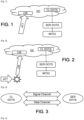
- the example of the Figure 1 shows the case of an ATT attack suffered by a DC client domain.
- the DOTS client (CL DOTS) of the domain Upon detection of the attack on a CiB target, the DOTS client (CL DOTS) of the domain sends a message to the SER DOTS server to request assistance for mitigation of the detected attack (MITIG).
- CL DOTS DOTS client
- MITIG SER DOTS server
- the latter coordinates actions so that the traffic associated with the denial of service attack is no longer routed to this domain, as illustrated in Figure 2 . Thus, only “consented” traffic is routed.
- DOTS is an architecture designed to facilitate the handling of attack mitigation requests issued by a client and received by a server typically operated by the DPS service provider.
- the DOTS mechanism may prove insufficient or even ineffective.
- the present invention improves the situation.
- a node requiring mitigation intervention is a node identified in a mitigation plan as the target, source or collateral victim of an attack, or a node involved in the implementation of this mitigation plan (for example, by executing a traffic redirection policy, by modifying its routing table).
- mitigation plan means the set of actions and measures implemented to mitigate an attack.
- the second node mentioned above corresponds to the first node. This is a mode detailed below with particular reference to the Figure 12 , and called “local loop”.
- the second node is distinct from the first node, which may correspond to a “parallel” or “bypass” mode detailed further below with reference to the figure 14 .
- a plurality of mobile objects are provided, each comprising at least one communication interface for communicating at least between mobile objects, and a first mobile object, among said plurality of mobile objects, is controlled to connect at least to said second node of the network.
- These mobile objects can be, for example, drones constituting a fleet of drones as presented in the examples of implementation below.
- the identification of the first node of the network and the traffic routing policy in the network can be carried out by a mitigation server linked to at least one of the mobile objects (including the case where the mitigation server is embedded in one of the mobile objects).
- the computer attack can be detected by a second mobile object, connected to the network, which may (or may not) be the same mobile object as the aforementioned first mobile object, connected to the second node of the network.
- the computer attack can be detected by a third node in the network.
- Detection can be performed by a node that does not require intervention and/or is not involved in the mitigation plan either.
- this third node may correspond to the first node mentioned above.
- the aforementioned traffic, characteristic of a computer attack can be sent from at least one node of the network (or not).
- This traffic, characteristic of a computer attack can also be intended for at least one node of the network.
- it can be local, in at least one node of the network (typically the case of viruses).
- the mobile object may be equipped with processing circuitry comprising computing resources providing computing capabilities to process at least said portion of traffic redirected to the mobile object.
- the required intervention may be traffic mitigation in response to a denial of service attack, for example (DDoS).
- DDoS denial of service attack
- the mobile object is configured to analyze and filter at least said portion of traffic redirected to the mobile object (notion of traffic cleaning or “scrubbing” in English).
- the mobile object can be configured to establish communication by radio frequency link to connect to at least said second node, the movement of the mobile object being remotely controllable to approach a geographical position of the second node.
- Routing rules can also be provided including an instruction for the gradual resumption of normal traffic by the first node requiring intervention, before the end of assistance.
- the transmission of these various messages can be carried out by at least one mitigation server linked to the mobile object.
- a computer program is thus implemented comprising instructions for implementing the above method, when said instructions are executed by a processor of a processing circuit, in particular of a mobile object as defined above.
- Such an implementation then makes it possible to block (or at least limit) attacks that can be multifaceted (typically denial of service, propagation of computer viruses, identity theft for the purpose of data theft, "ransomware”, etc.) on targets or relays used to propagate the attack traffic that can be extremely varied (fixed and mobile terminals, connected objects, Web servers, network resources, IP prefixes, etc.).
- this implementation makes it possible, via the various proposed embodiments, to resolve the following technical problems that are usually likely to penalize the effectiveness of a classic DOTS-type architecture.
- the security policies implemented by operators are essentially based on traffic filters activated at various fixed and static locations in the network (routers, firewalls, access switches to cloud infrastructures, access and traffic collection equipment, etc.) and the complexity of their dynamic adjustment according to an ongoing attack is proportional to the scale of the attack and the intervention capabilities of the operator. On the contrary, what is offered here is “modular” and “adjustable” protection depending on the attack.
- Access to resources involved in implementing security policies can be compromised when an attack is underway and affects all or part of these resources. It is particularly difficult or impossible to access these resources, modify a configuration or install patches while an attack is underway.
- a solution to this problem is offered here by allowing capacity expansion of network resources and traffic redirection.
- the attack traffic is propagated in the network at the risk of degrading the level of quality associated with the services subscribed to by the users; the routing efficiency of legitimate traffic is thus degraded by the propagation of the attack traffic.
- This approach can impact the quality of experience associated with this network.
- here we can preserve the quality of experience offered by the network by proposing a redirection of the traffic and by allowing a mitigation intervention as close as possible to the target of the attack and/or the source thanks to the mobility of the objects involved in the mitigation.
- the processing of requests to implement mitigation actions may be far from the location where the attack was detected, at the risk of penalizing the time from which the mitigation actions will be effective.
- the DPS service must ideally be able to be requested and act as close as possible to the location where the attack was detected, which is made possible here thanks to the mobility of the objects which can thus intervene as close as possible to the target and/or the source of the attack.
- drone means an uninhabited aircraft ("Unmanned aerial vehicle” (UAV)), or an uninhabited ground vehicle (“Unmanned ground vehicle” (UGV)), etc., in a general manner and without any particular assumption as to the movement and autonomy capabilities of this drone.
- UAV Unmanned aerial vehicle
- UUV unmanned ground vehicle
- attack examples relate to denial of service attacks, but the solution described applies to other types of attacks, such as spreading computer viruses, exploiting operating system vulnerabilities, etc.
- a fleet of mobile objects can be used for the purpose of mitigating a network composed of other mobile objects (e.g., a network composed of aircraft, a vehicular network (Vanet, "Vehicular Ad-Hoc Network"), a MANET (Mobile Ad-hoc Networks)).
- a network composed of aircraft e.g., a network composed of aircraft, a vehicular network (Vanet, "Vehicular Ad-Hoc Network"), a MANET (Mobile Ad-hoc Networks)).
- Vanet vehicular network
- MANET Mobile Ad-hoc Networks
- the solution does not describe how a mobile fleet can restructure itself (by excluding a drone from the topology for example, or by activating new connections, mutation/evolution of topology, etc.) to protect itself from an attack suffered by the fleet itself.
- the communication sessions between the different elements described below are established for example using the DTLS (Datagram Transport Layer Security) protocol, in particular but not exclusively its version 1.3, or the TLS (Transport Layer Security) protocol, for example its version 1.2 or 1.3.
- DTLS Datagram Transport Layer Security
- TLS Transmission Layer Security
- one or more fleets of mobile objects are deployed to monitor and mitigate attacks on networks or terminals/servers connected to these networks.
- separate fleets of mobile objects can be considered for network monitoring on the one hand and for mitigation operations on the other.
- one (or more) fleets of mobile objects can perform both monitoring and mitigation functions.
- Mitigation actions can involve network edge elements (e.g., Autonomous System Border Routers (ASBRs)) or transit elements within the network. Furthermore, the implementation described here can address the case of attack sources that may be hosted within the network infrastructure to be protected (a typical case of Man-in-the-Middle (MITM) attacks, for example). Mitigation actions can address traffic (inbound, outbound, or both - for example, a dynamic creation of a traffic sink intended to eliminate attack traffic), and involve one or more nodes.
- ASBRs Autonomous System Border Routers
- MITM Man-in-the-Middle
- a network can be an operator network, but it can also be a network such as that used by IP connectivity or content delivery network (CDN), a network of autonomous cars, a sensor network, a connectivity network made up of airplanes, etc.
- IP connectivity or content delivery network CDN
- a single network can be protected by one or more fleets of mobile objects.
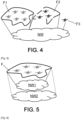
- three drone fleets protect the same NW network.
- These three fleets F1, F2, F3 have distinct ranges (and thus different intervention perimeters).
- Fleets protecting the same network can also have the same intervention perimeter.
- a single fleet can protect one or more underlying networks.
- a single fleet of F drones can protect two networks (NW1 and NW2). All or some of the drones making up the F fleet can simultaneously participate in mitigation operations on segments of these two networks.
- network identifiers called “network IDs”, are used to identify a network in an unambiguous manner.
- Each fleet is composed of one or more mobile objects.
- Each object is identified by a unique identifier called "object_id".
- This identifier can be an alias, a domain name, an IP address, a URI (Uniform Resource Identifier), an E.164 number such as MSISDN (Mobile Station ISDN Number), or other.
- the first fleet F1 (respectively, second F2 and third F3) is composed of 5 objects (respectively, 3 and 1).
- Fleet size, sizing i.e., the traffic capacity that can be carried/routed/processed by a fleet
- services offered i.e., the traffic capacity that can be carried/routed/processed by a fleet
- geographic reach etc.
- a single fleet can be composed of mobile objects of different types.
- a fleet can be composed of UAVs, UGVs (defined above), and/or autonomous cars. These different objects coordinate to execute the required mitigation tasks.
- a fleet can have at least one "mitigation server” service function or interface with one or more external mitigation servers. These mitigation servers can also be fixed servers or belong to another mobile fleet.
- the "mitigation server” function can be provided by a single software instance or be composed of several elementary service functions, using Service Function Chaining (SFC) techniques. These service functions can be embedded in separate physical nodes.
- SFC Service Function Chaining
- a fleet may have identical configurations (size, sizing, services, etc.).
- a fleet may be dynamically modified to include new objects or support new services. For example, performing a new mitigation function may require the introduction of an additional drone, increasing the fleet's processing and routing capacity, connecting to other networks, etc. These decisions may be made, for example, by an (external) controller responsible for managing the fleet, or by one or more "controller" functions on board some of the drones in the fleet.
- a fleet of mobile objects can be connected to one or more other networks different from the network it protects, for example to optimize traffic flow (e.g. 5G, 4G, WLAN network, etc.).
- networks different from the network it protects, for example to optimize traffic flow (e.g. 5G, 4G, WLAN network, etc.).
- Communication between two mobile objects of the same fleet can be direct (i.e. via associations without an intermediate network) or indirect (e.g. via a wide area network such as a 4G or 5G network).
- the selection of the communication mode is made according to the context of the communication (e.g. direct communication is used for the flow of attack traffic, while indirect communication can be used to instruct a mobile object to position itself in an intervention zone). Both communication modes can be maintained simultaneously.
- fleets can interconnect for coordination and efficiency purposes in the execution of monitoring and/or mitigation actions.
- a general method can begin for example with a step of detecting and triggering S-AM mitigation operations (for “ACTIVATION_MITIGATION”).
- a mitigation server decides on the actions to be taken so that a fleet of mobile objects called “mitigation” connects to the network where an attack has been detected (as presented later in reference to step S-RR for "NETWORK_ATTACHMENT"), but also on the mitigation actions to be executed (step S-AM).
- Mitigation actions include in in particular the identification of a traffic routing policy in the network which makes it possible to identify in particular the node(s) of the network to which the fleet must connect.
- connection and mitigation phases are not necessarily subject to a specific chronology: mitigation actions can be defined and prepared (for example, construction of new traffic filters, updating of the database maintained by the mitigation server and description of the attacks being processed in particular, etc.) without the intervention fleet being connected beforehand to the network where an attack was detected.
- ACT-AD security agents are activated within the network.
- One or more security agents may indeed be active in the network.
- the selection of network nodes embedding these active agents is a local decision for the network operator.
- these ACT-AD agents are responsible for analyzing traffic, interface counters, and other relevant events that may make traffic suspicious (frequent changes in route advertisements, a large number of ICMP (for "Internet Control Message Protocol") error messages, or others) and then determining whether assistance is necessary from a mitigation server, in the event of an attack detection (proven or not).
- ICMP Internet Control Message Protocol
- an agent can be embedded in a network node affected by an ongoing attack. Similarly, the agent can detect an attack that affects another network node. The node that detected the attack may or may not be involved in the execution of the mitigation plan.
- a node requiring mitigation intervention is a node typically identified in a mitigation plan as being the target, source or collateral victim of an attack, or a node involved in the implementation of this mitigation plan (for example, by executing a traffic redirection policy, by modifying its routing table).
- the network therefore requests SOS assistance, for example via one of the dedicated ACT-AD security agents it has on board.
- a network agent R1 sends a message named for example SOS (at step S-AM1) to indicate at least one suspected target (for example a node R2, an IP prefix, network resource, or others) to at least one mitigation server SM, here belonging to the network NW.
- SOS at step S-AM1
- the latter decides after analyzing the request to request at least one mobile mitigation fleet (referred to as "mobile fleet” in the following for the sake of simplification), for example a mobile fleet composed of drones.
- mobile fleet referred to as “mobile fleet” in the following for the sake of simplification
- network_id network identifier
- MITIGATE a mitigation request message
- MITIGATE MITIGATE
- Other information may be included in this MITIGATE message, such as a mitigation deadline (immediate or delayed, duration of intervention, etc.), or others.
- the MOB-SM server coordinates (possibly with other members of the mobile fleet) the optimal positioning of the mobile fleet so that at least one of the mobile objects (according to the connection engineering of the mobile fleet to the network, the engineering being able to be derived from the routing policy associated with the mitigation plan) of said fleet can connect to the NW network and the mobile fleet can execute the mitigation actions.
- the mobile object it is noted that it is sufficient for a mobile object to be positioned within radio range of the network node on which it must intervene.
- the server may have (locally or via an external entity) a location map of the various objects in the fleet (e.g. GPS coordinates, supported functions, charge, battery status) as well as the location of the nodes (elements) of the protected network. If the network nodes are static, such location is known to the network operator.
- the location map can be fed by the nodes themselves and/or by the objects in the fleet, by reporting their geographical positions.
- mobile objects can carry a GnSS receiver (for Global Navigation Satellite System) which allows them to signal their geographical position.
- GnSS receiver for Global Navigation Satellite System
- the nodes in the network can announce their geographical position using the resources of a dynamic routing protocol that they actively use, such as for example for the OSPF protocol the extensions described in the document A. Lindem et al., “OSPF Extensions for Advertising/Signaling Geo Location Information,” October 18, 2017 .
- the location map can also be fed by neighboring nodes and/or fleet objects neighboring the nodes and objects concerned, which establish adjacency tables for routing purposes. This can be envisaged for example when one of the nodes requiring mitigation intervention is not able to trace its geographical position.
- the adjacency tables linked to the activation of a dynamic routing protocol provide for each node (respectively each mobile object), the list of its neighboring nodes and/or its neighboring mobile objects.
- the mobile fleet thus connects to the network via one or more mobile objects, and according to one of the embodiments described later with reference to the following main step S-RR (“NETWORK_ATTACHMENT”).
- a mobile surveillance fleet itself detects an anomaly that requires mitigation actions.
- Three sub-variants are presented below as examples.
- the first sub-variant assumes that mitigation is provided by the same mobile surveillance fleet.
- the fleet decides that a mitigation action is necessary because after analyzing the traffic, the MOB-SM mitigation server in connection with this fleet selects at least one mobile object to connect to the NW network. This choice can also result from the decision not to involve another fleet, according to an intervention fleet selection procedure implemented by the MOB-SM mitigation server.
- GRAFT messages Other information may be included in GRAFT messages such as a connection deadline (immediate or delayed, connection duration, etc.), a geographic area, etc.
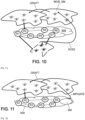
- a third sub-variant assumes that mitigation actions are triggered from another mobile mitigation fleet following a mitigation request message received from the monitoring fleet as illustrated in Figure 10 .
- a monitoring fleet is responsible for monitoring, analyzing and deciding whether to request another mitigation fleet.
- a SOS2 message similar to that of the figure 9 is sent to a mitigation fleet selected by the monitoring fleet for its capabilities to handle the type of attack observed, according to identification information, location of the intervention and description of the attack, which are communicated to this mitigation fleet by the monitoring fleet (via a GRAFT message as described previously).
- This mitigation fleet positions itself optimally according to the information communicated in the GRAFT message so that it can connect to the network and carry out mitigation operations. Then the mitigation fleet connects to the network as described further below with reference to the following main step S-RR (“NETWORK_ATTACHMENT”).
- an attack protection service decides on the basis of information provided by means other than an SOS message in particular (for example configuration, monitoring report, or other) to request at least one mitigation fleet.
- SOS security system
- the communications procedures and interactions with the network and its components are identical to those presented above.
- the geographical position of a mobile object such as a drone connecting to a network node is chosen to be in direct contact (a radio link, for example) with this node without going through an intermediate node which itself risks being attacked.
- the aforementioned general method may also include a second general step of connection to the S-RR network, for example.
- This is a step of connection to the network because, in order to implement mitigation actions, a fleet of mobile objects can be dispatched to the area and connect to the network according to one of the two modes described below.
- the GRAFT message (presented previously) is used to communicate to a mobile object the order to connect to a network, while a message named CEASE (network_id, list(local_node_id, list(peer_id)), ...) is used to order an object to disconnect from a network, as will be seen later in particular with reference to the S-DESAC step.
- CEASE network_id, list(local_node_id, list(peer_id)
- the POLICY message can also be used to interact with network nodes from the fleet.
- POLICY message Other information/instructions may be included in the POLICY message, such as a policy enforcement deadline (immediate or deferred, etc.).
- the mitigation actions consist of an extension of the capacity of a network node (i.e. of its resources), or even a partial bypass of a node or a network segment.
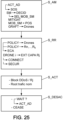
- the connection modes apply to other types of mitigation actions such as those described in the general main step S-ACT of the figure 25 (relating to “ACTIONS_MITIGATION”).
- the capacity extension can be local or “parallel” (also called “bypass” below).
- the connection of the mitigation fleet to the network is performed locally by the node identified in the connection order transmitted by the mitigation server in a GRAFT message.
- an order is transmitted to the fleet by the mitigation server so that it positions itself in the area concerned, if necessary. Then, the fleet connects to the network element indicated in the GRAFT message.
- Information to establish secure communication for example, certificates, secrets, hashes, encryption algorithms, etc.
- secure communication for example, certificates, secrets, hashes, encryption algorithms, etc.
- the orders communicated to one or more mobile objects to position themselves in the area concerned, as well as the orders communicated to one or more mobile objects to connect to the network can be formulated directly by the fleet (for example, by a mitigation server embedded within the fleet) following the detection of an anomaly, or formulated upon receipt of a MITIGATE or SOS or SOS2 message sent by one of the nodes of the network.
- the fleet of mobile objects i.e. drones here
- a capacity extension memory, processing means (processor, working memory, etc.), bandwidth, or others
- R2 bandwidth, or others
- One or more mobile objects may be requested when traffic is redirected to a fleet of mobile objects.
- the selection of the mobile object ("ingress", entry point into the fleet) may be carried out by the R2 element according to several modes such as those illustrated as examples respectively by the Figures 12 and 13 .
- legitimate traffic can for example be rerouted to R2 which then processes it according to the nominal network routing rules.
- the connection of the mitigation fleet to the network is carried out without involving the node that is the victim of an incident or an attack (R2 in the figure 14 , for example).
- R2 is in this example the attacked node which requires mitigation intervention.
- an order is transmitted to the mitigation fleet by the mitigation server so that it positions itself as close as possible to the area concerned if necessary (via a POLICY message). Then, the fleet connects to the network nodes indicated in the GRAFT message (these nodes are then different from the R2 node attacked and concerned by the mitigation intervention).
- the network nodes indicated in the GRAFT message these nodes are then different from the R2 node attacked and concerned by the mitigation intervention.
- two nodes (ingress, egress) are indicated per traffic direction (for "incoming” and "outgoing”).
- the same entry and exit nodes can be indicated for both directions (and thus the entry node for outgoing traffic is considered as the exit node for incoming traffic).
- the two input and output nodes are R1 and R4 respectively.
- the connection of the mitigation fleet to the network is effective (in other words here between the mitigation fleet and the nodes (ingress, egress) R1 and R4), and with reference to the example of the figure 14 , the fleet of mobile objects is seen as a capacity extension of the “R2” node which suffered the attack and required intervention.
- R1 and R4 For the distribution of traffic between "R2" and its extension (from the fleet of mobile objects), depending on the nature of the mitigation action to be performed for example.
- These strategies can be configured in advance on R1 and R4 by the network operator in the form of ECA ("Event Condition Action") policies, communicated by the fleet of mobile objects to R1 and R4 using POLICY messages.
- ECA Event Condition Action
- traffic can be sent directly to "R2” or be redirected to the fleet of mobile objects for processing. The redirection is local to R1 and R4 (for example, according to "Match-Action" instructions, indicating a load distribution of x% via R2 and (100-x)% via the fleet).
- One or more mobile objects may be requested when traffic is redirected to a fleet of mobile objects.
- the selection of the "ingress" mobile object (for entry point) may be performed by nodes R1 and R4 in several ways similar to those of R2 illustrated by any of the Figures 12 and 13 .
- the traffic is rerouted to R2 which then processes it according to the nominal routing rules of the network.
- Other actions can be applied (typically: blocking the traffic).
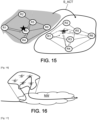
- FIG. 15 illustrates the example of a mitigation action which consists of replacing a network node which is subject to an attack (referenced R3 on the Figure 15 ).
- a mobile object e.g., a drone
- a mobile object has been ordered to connect as described above. This is how it establishes connections with all of R3's neighbors.
- POLICY messages are then sent to R1, R4, R5, and R6 to redirect traffic to this mobile object and disable their communication interfaces to R3.
- a software update, the installation of a security patch, etc. can be performed while preserving service continuity (legitimate traffic is rerouted to the mobile object while the failed node R3 is restored to its normal operation).
- the mitigation intervention on R3 can be performed via the mobile object itself. In this case, the mobile object also connects to R3; this order is received via a POLICY message (and not via the GRAFT message).
- the example of the figure 16 illustrates another example of mitigation action and more specifically the activation of a policy of interception of suspicious traffic as close as possible to the source of the DDoS attack.
- all or part of the traffic is redirected to the fleet of mobile objects which incorporates DDoS inspection and mitigation functions. These functions can be distributed among several mobile objects (e.g. drones).
- Non-suspect traffic is reinjected into the nominal network while DDoS traffic is deleted.
- Metadata characteristic of the attack is recorded by the fleet for later analysis of the dynamics of the attack (amplitude, duration, type of traffic, etc.) and to define the preventive measures to be applied to avoid similar attacks from occurring again on the network.
- Legitimate traffic is injected by grafting itself to the same node or to a different network node than the one used to intercept the traffic.
- the selection of the node to reinject the legitimate “egress” traffic is a fleet decision that takes into account the load of the node that suffered the DDoS attack (for example), the compensation of the processing delay within a DPS mitigation server in connection with the mobile fleet or the number of IP hops of the nominal path (as illustrated as an example on the Figure 17 , where the number of hops of the nominal path: four (R1-R2-R4-R6), is identical to that used via the mobile fleet (R1- two drone hops -R6)), etc.
- FIG. 18 Another variation is illustrated on the figure 18 where two fleets of mobile objects (drones) are involved to process and route legitimate traffic.
- This variant can be implemented, for example, when several nodes in a network have suffered an attack (infection of an operating system (or OS for Operating System) for example). In doing so, the network operator gives itself the time necessary for investigation and application of patches without interruption of service.
- OS Operating System
- FIG 19 illustrates yet another variant in which traffic selection policies are programmed into a network node. Legitimate traffic is routed according to the nominal rules, while suspicious traffic is redirected to a fleet of mobile objects (drones) which is responsible for analyzing it and blocking the DDoS traffic.
- this variant has the advantage of optimizing the use of network resources because the DDoS traffic is not routed through this network but blocked "upstream”.
- THE figures 20 And 21 show examples of policies applied to inbound or outbound traffic to bypass one or more network nodes following a denial of service attack generated by a node located in the network to be protected.
- the fleet of mobile objects is tasked with intercepting legitimate traffic and routing it to the Internet network ( figure 20 , outgoing traffic) or to machines connected to the NW network ( figure 21 , incoming traffic). Interception of incoming traffic assumes that specific routes are advertised by the fleet of mobile objects and denoted NW# to be able to receive traffic intended for the target NW network or the latter NW network does not advertise these routes to its neighbors. These routes are therefore more specific than those advertised by the NW network to guarantee their selection.
- next general step S-DESAC aims for example at a disconnection (DESACTIVATION) to terminate the mitigation operations via a mitigation fleet.
- DESACTIVATION a disconnection
- Several variants are possible to terminate the mitigation operations undertaken by a fleet and to disconnect this fleet from the network to be protected.
- the CEASE and POLICY messages introduced previously are used for this purpose.
- the nodes in the protected network and those in the fleet disconnect.
- Mobile objects in the fleet disconnect after receiving a CEASE message.
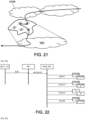
- an ACT-AD security agent is the initiator of the mitigation request.
- This agent sends an SOS message to the SM mitigation server (located in the NW network or outside, as seen previously).
- This SM mitigation server decides to request a mobile DPS service by sending a mitigation request message to one of the MOB-SM mitigation servers of the mobile DPS service, in the illustrated example.
- One of these servers handles the request and decides to connect a mobile fleet to the NW network using several mobile objects, in this case several drones (Drone#1, ...Drone#i); connection instructions are communicated to these drones using GRAFT messages.
- this MOB-SM mitigation server decides on the repositioning actions of certain drones or even configuration modifications.
- POLICY messages are sent to all or some of the drones of the mitigation fleet (Drone#j, ...Drone#k). Note that some drones in the first group (Drone#1, ...Drone#i) can also receive POLICY messages. There is no constraint on the order in which POLICY and GRAFT messages are sent.
- the MOB-SM mitigation server can communicate instructions to the nodes R1,.., Rs of this NW network. Depending on the attack progress and the mitigation actions, the mitigation server can decide on new mitigation actions to be executed by the fleet objects or the network nodes. protected. The mitigation server can terminate the procedure by ordering the drones (Drone#1, ... Drone#i) to disconnect from the network using CEASE messages.
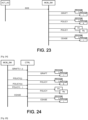
- the example of the figure 23 assumes that the MOB-SM mitigation server that receives the SOS message is the one that is able to decide which drones should connect to the network, which should reposition themselves, etc. The rest of the operations are identical to those of the figure 22 .
- Orders transmitted to a fleet of mobile objects by a mitigation server can be sent individually to the mobile objects of a fleet or be relayed by a fleet controller CTRL which is also one of the mobile objects of the fleet.
- the instructions sent to the CTRL controller can be aggregated like the GRAFT message (typically instructions targeting several mobile objects being communicated in the same message) or not (like POLICY messages).
- the controller is responsible for extracting (and completing) the instructions relating to each mobile object.
- the exchanges upstream of the MOB-SM mitigation server can be similar to those exchanged upstream of the MOB-SM server of the figure 22 or those exchanged upstream of the MOB-SM server of the figure 23 .
Landscapes
- Engineering & Computer Science (AREA)
- Computer Security & Cryptography (AREA)
- Computer Hardware Design (AREA)
- Computing Systems (AREA)
- General Engineering & Computer Science (AREA)
- Computer Networks & Wireless Communication (AREA)
- Signal Processing (AREA)
- Data Exchanges In Wide-Area Networks (AREA)
- Mobile Radio Communication Systems (AREA)
Applications Claiming Priority (3)
| Application Number | Priority Date | Filing Date | Title |
|---|---|---|---|
| FR1902620A FR3093837A1 (fr) | 2019-03-14 | 2019-03-14 | Mitigation d’attaques informatiques |
| EP20725855.9A EP3939232B1 (de) | 2019-03-14 | 2020-03-09 | Verminderung von rechnerangriffen |
| PCT/FR2020/050474 WO2020183100A1 (fr) | 2019-03-14 | 2020-03-09 | Mitigation d'attaques informatiques |
Related Parent Applications (2)
| Application Number | Title | Priority Date | Filing Date |
|---|---|---|---|
| EP20725855.9A Division-Into EP3939232B1 (de) | 2019-03-14 | 2020-03-09 | Verminderung von rechnerangriffen |
| EP20725855.9A Division EP3939232B1 (de) | 2019-03-14 | 2020-03-09 | Verminderung von rechnerangriffen |
Publications (2)
| Publication Number | Publication Date |
|---|---|
| EP4531348A2 true EP4531348A2 (de) | 2025-04-02 |
| EP4531348A3 EP4531348A3 (de) | 2025-06-11 |
Family
ID=67107853
Family Applications (2)
| Application Number | Title | Priority Date | Filing Date |
|---|---|---|---|
| EP25157833.2A Pending EP4531348A3 (de) | 2019-03-14 | 2020-03-09 | Abschwächung von computerangriffen |
| EP20725855.9A Active EP3939232B1 (de) | 2019-03-14 | 2020-03-09 | Verminderung von rechnerangriffen |
Family Applications After (1)
| Application Number | Title | Priority Date | Filing Date |
|---|---|---|---|
| EP20725855.9A Active EP3939232B1 (de) | 2019-03-14 | 2020-03-09 | Verminderung von rechnerangriffen |
Country Status (6)
| Country | Link |
|---|---|
| US (2) | US12206704B2 (de) |
| EP (2) | EP4531348A3 (de) |
| ES (1) | ES3036789T3 (de) |
| FR (1) | FR3093837A1 (de) |
| PL (1) | PL3939232T3 (de) |
| WO (1) | WO2020183100A1 (de) |
Families Citing this family (8)
| Publication number | Priority date | Publication date | Assignee | Title |
|---|---|---|---|---|
| FR3093837A1 (fr) * | 2019-03-14 | 2020-09-18 | Orange | Mitigation d’attaques informatiques |
| US11736466B2 (en) * | 2019-09-18 | 2023-08-22 | Bioconnect Inc. | Access control system |
| US11711379B2 (en) * | 2020-04-15 | 2023-07-25 | Crowdstrike, Inc. | Distributed digital security system |
| CN112468449B (zh) * | 2020-11-06 | 2022-11-01 | 中国电子科技集团公司电子科学研究院 | 一种反溯源安全受控入网通道资源优化配置方法 |
| FR3117727B1 (fr) * | 2020-12-14 | 2025-02-21 | Commissariat Energie Atomique | Procédé et dispositif de déploiement automatique d’un réseau de communication |
| US11836137B2 (en) | 2021-05-19 | 2023-12-05 | Crowdstrike, Inc. | Real-time streaming graph queries |
| CN116866243A (zh) * | 2022-03-28 | 2023-10-10 | 华为技术有限公司 | 流量回注方法及防护系统 |
| US12694146B2 (en) | 2024-10-09 | 2026-07-28 | Crowdstrike, Inc. | Multi-modal queries in a digital cybersecurity systems |
Family Cites Families (19)
| Publication number | Priority date | Publication date | Assignee | Title |
|---|---|---|---|---|
| US8958291B2 (en) * | 2009-10-09 | 2015-02-17 | At&T Intellectual Property I, L.P. | Data routing in hybrid wireless communication networks |
| US20110138463A1 (en) * | 2009-12-07 | 2011-06-09 | Electronics And Telecommunications Research Institute | Method and system for ddos traffic detection and traffic mitigation using flow statistics |
| US9336239B1 (en) * | 2011-06-27 | 2016-05-10 | Hrl Laboratories, Llc | System and method for deep packet inspection and intrusion detection |
| US20150011212A1 (en) * | 2013-05-16 | 2015-01-08 | Valentin Andrei | Managing bandwidth and connection costs for mobile devices |
| US20160036837A1 (en) * | 2014-08-04 | 2016-02-04 | Microsoft Corporation | Detecting attacks on data centers |
| US10762571B2 (en) * | 2014-09-02 | 2020-09-01 | Metropolitan Life Insurance Co. | Use of drones to assist with insurance, financial and underwriting related activities |
| US20160173527A1 (en) * | 2014-12-10 | 2016-06-16 | NxLabs Limited | Method and system for protecting against mobile distributed denial of service attacks |
| US10084752B2 (en) * | 2016-02-26 | 2018-09-25 | Microsoft Technology Licensing, Llc | Hybrid hardware-software distributed threat analysis |
| US11327475B2 (en) * | 2016-05-09 | 2022-05-10 | Strong Force Iot Portfolio 2016, Llc | Methods and systems for intelligent collection and analysis of vehicle data |
| US10785235B2 (en) * | 2016-06-14 | 2020-09-22 | Nucleon Ltd. | System and method for gathering botnet cyber intelligence |
| US20180007518A1 (en) * | 2016-07-01 | 2018-01-04 | David T. O'Berry | Drone Assisted Mesh Network For First Responders |
| US11692837B2 (en) * | 2017-10-18 | 2023-07-04 | Here Global B.V. | Automatic discovery of optimal routes for flying cars and drones |
| AU2018389266A1 (en) * | 2017-12-21 | 2020-07-02 | Alarm.Com Incorporated | Monitoring system for securing networks from hacker drones |
| US20190318596A1 (en) * | 2018-04-16 | 2019-10-17 | Mahindra N.A. Tech Center | System And Method For Identifying And Mitigating A Threat In A Facility |
| US11050785B2 (en) * | 2018-08-25 | 2021-06-29 | Mcafee, Llc | Cooperative mitigation of distributed denial of service attacks originating in local networks |
| US11747824B2 (en) * | 2019-03-07 | 2023-09-05 | The Aerospace Corporation | Systems and methods for threat response |
| FR3093837A1 (fr) * | 2019-03-14 | 2020-09-18 | Orange | Mitigation d’attaques informatiques |
| US11277337B2 (en) * | 2019-06-06 | 2022-03-15 | Cisco Technology, Inc. | Systems and methods for routing network traffic using labels |
| US12120631B2 (en) * | 2019-06-21 | 2024-10-15 | Telefonaktiebolaget Lm Ericsson (Publ) | Unmanned vehicle-assisted testing |
-
2019
- 2019-03-14 FR FR1902620A patent/FR3093837A1/fr not_active Withdrawn
-
2020
- 2020-03-09 US US17/439,267 patent/US12206704B2/en active Active
- 2020-03-09 PL PL20725855.9T patent/PL3939232T3/pl unknown
- 2020-03-09 EP EP25157833.2A patent/EP4531348A3/de active Pending
- 2020-03-09 EP EP20725855.9A patent/EP3939232B1/de active Active
- 2020-03-09 ES ES20725855T patent/ES3036789T3/es active Active
- 2020-03-09 WO PCT/FR2020/050474 patent/WO2020183100A1/fr not_active Ceased
-
2024
- 2024-12-10 US US18/975,474 patent/US20250126149A1/en active Pending
Non-Patent Citations (1)
| Title |
|---|
| A. LINDEM ET AL., OSPF EXTENSIONS FOR ADVERTISING/SIGNALING GEO LOCATION INFORMATION, 18 October 2017 (2017-10-18) |
Also Published As
| Publication number | Publication date |
|---|---|
| FR3093837A1 (fr) | 2020-09-18 |
| US12206704B2 (en) | 2025-01-21 |
| PL3939232T3 (pl) | 2025-09-08 |
| ES3036789T3 (en) | 2025-09-24 |
| EP3939232B1 (de) | 2025-04-23 |
| EP4531348A3 (de) | 2025-06-11 |
| US20220210185A1 (en) | 2022-06-30 |
| WO2020183100A1 (fr) | 2020-09-17 |
| EP3939232C0 (de) | 2025-04-23 |
| EP3939232A1 (de) | 2022-01-19 |
| US20250126149A1 (en) | 2025-04-17 |
Similar Documents
| Publication | Publication Date | Title |
|---|---|---|
| EP3939232B1 (de) | Verminderung von rechnerangriffen | |
| US12316554B2 (en) | Multi-perimeter firewall in the cloud | |
| US11949661B2 (en) | Systems and methods for selecting application connectors through a cloud-based system for private application access | |
| US12368697B2 (en) | Private service edge nodes in a cloud-based system for private application access | |
| US12155630B2 (en) | Systems and methods for providing private application access via client to client and server to client communication through a cloud-based system | |
| US11936623B2 (en) | Systems and methods for utilizing sub-clouds in a cloud-based system for private application access | |
| CN107409079B (zh) | 用于全局虚拟网络的系统和方法 | |
| US20230087129A1 (en) | Selective traffic processing in a distributed cloud computing network | |
| US10541907B2 (en) | Virtual dispersive networking systems and methods | |
| EP4066461A1 (de) | Verfahren zum koordinieren der abwehr eines cyberangriffs, zugehörige vorrichtung und system | |
| Birge-Lee et al. | Creating a secure underlay for the internet | |
| EP3857848B1 (de) | Verfahren zur zuordnung eines identifikators zu einem client-knoten, verfahren zur aufzeichnung eines identifikators, entsprechende vorrichtung, client-knoten, server und computerprogramme | |
| WO2020002853A1 (fr) | Procédés de gestion du trafic associé à un domaine client, serveur, nœud client et programme d'ordinateur correspondants | |
| WO2021074412A1 (fr) | Procede de connexion d'un noeud de communication, et noeud de communication correspondant | |
| Somwanshi et al. | Basic Concept Of Computer Network & Security | |
| EP3857847A1 (de) | Verfahren zur zusammenarbeit und zur anforderung der zusammenarbeit zwischen schutzdiensten, die mindestens einer domäne zugeordnet sind, entsprechende agenten und computerprogramm | |
| HK1252927B (en) | Multi-perimeter firewall in the cloud |
Legal Events
| Date | Code | Title | Description |
|---|---|---|---|
| PUAI | Public reference made under article 153(3) epc to a published international application that has entered the european phase |
Free format text: ORIGINAL CODE: 0009012 |
|
| STAA | Information on the status of an ep patent application or granted ep patent |
Free format text: STATUS: THE APPLICATION HAS BEEN PUBLISHED |
|
| AC | Divisional application: reference to earlier application |
Ref document number: 3939232 Country of ref document: EP Kind code of ref document: P |
|
| AK | Designated contracting states |
Kind code of ref document: A2 Designated state(s): AL AT BE BG CH CY CZ DE DK EE ES FI FR GB GR HR HU IE IS IT LI LT LU LV MC MK MT NL NO PL PT RO RS SE SI SK SM TR |
|
| PUAL | Search report despatched |
Free format text: ORIGINAL CODE: 0009013 |
|
| AK | Designated contracting states |
Kind code of ref document: A3 Designated state(s): AL AT BE BG CH CY CZ DE DK EE ES FI FR GB GR HR HU IE IS IT LI LT LU LV MC MK MT NL NO PL PT RO RS SE SI SK SM TR |
|
| RIC1 | Information provided on ipc code assigned before grant |
Ipc: H04L 9/40 20220101AFI20250506BHEP |
|
| STAA | Information on the status of an ep patent application or granted ep patent |
Free format text: STATUS: REQUEST FOR EXAMINATION WAS MADE |
|
| 17P | Request for examination filed |
Effective date: 20251125 |
|
| GRAP | Despatch of communication of intention to grant a patent |
Free format text: ORIGINAL CODE: EPIDOSNIGR1 |
|
| STAA | Information on the status of an ep patent application or granted ep patent |
Free format text: STATUS: GRANT OF PATENT IS INTENDED |
|
| INTG | Intention to grant announced |
Effective date: 20260506 |