EP4530990A1 - Verfahren und vorrichtung zur gesichtsausdrucksimulation, vorrichtung und speichermedium - Google Patents
Verfahren und vorrichtung zur gesichtsausdrucksimulation, vorrichtung und speichermedium Download PDFInfo
- Publication number
- EP4530990A1 EP4530990A1 EP23905576.7A EP23905576A EP4530990A1 EP 4530990 A1 EP4530990 A1 EP 4530990A1 EP 23905576 A EP23905576 A EP 23905576A EP 4530990 A1 EP4530990 A1 EP 4530990A1
- Authority
- EP
- European Patent Office
- Prior art keywords
- expression
- image
- facial
- coefficient
- processed
- Prior art date
- Legal status (The legal status is an assumption and is not a legal conclusion. Google has not performed a legal analysis and makes no representation as to the accuracy of the status listed.)
- Pending
Links
Images

Classifications
-
- G—PHYSICS
- G06—COMPUTING OR CALCULATING; COUNTING
- G06V—IMAGE OR VIDEO RECOGNITION OR UNDERSTANDING
- G06V40/00—Recognition of biometric, human-related or animal-related patterns in image or video data
- G06V40/10—Human or animal bodies, e.g. vehicle occupants or pedestrians; Body parts, e.g. hands
- G06V40/16—Human faces, e.g. facial parts, sketches or expressions
- G06V40/174—Facial expression recognition
-
- G—PHYSICS
- G06—COMPUTING OR CALCULATING; COUNTING
- G06T—IMAGE DATA PROCESSING OR GENERATION, IN GENERAL
- G06T13/00—Animation
- G06T13/20—Three-dimensional [3D] animation
- G06T13/40—Three-dimensional [3D] animation of characters, e.g. humans, animals or virtual beings
-
- G—PHYSICS
- G06—COMPUTING OR CALCULATING; COUNTING
- G06V—IMAGE OR VIDEO RECOGNITION OR UNDERSTANDING
- G06V10/00—Arrangements for image or video recognition or understanding
- G06V10/70—Arrangements for image or video recognition or understanding using pattern recognition or machine learning
- G06V10/77—Processing image or video features in feature spaces; using data integration or data reduction, e.g. principal component analysis [PCA] or independent component analysis [ICA] or self-organising maps [SOM]; Blind source separation
- G06V10/774—Generating sets of training patterns; Bootstrap methods, e.g. bagging or boosting
- G06V10/7747—Organisation of the process, e.g. bagging or boosting
-
- G—PHYSICS
- G06—COMPUTING OR CALCULATING; COUNTING
- G06V—IMAGE OR VIDEO RECOGNITION OR UNDERSTANDING
- G06V10/00—Arrangements for image or video recognition or understanding
- G06V10/70—Arrangements for image or video recognition or understanding using pattern recognition or machine learning
- G06V10/82—Arrangements for image or video recognition or understanding using pattern recognition or machine learning using neural networks
-
- G—PHYSICS
- G06—COMPUTING OR CALCULATING; COUNTING
- G06V—IMAGE OR VIDEO RECOGNITION OR UNDERSTANDING
- G06V20/00—Scenes; Scene-specific elements
- G06V20/40—Scenes; Scene-specific elements in video content
- G06V20/46—Extracting features or characteristics from the video content, e.g. video fingerprints, representative shots or key frames
-
- G—PHYSICS
- G06—COMPUTING OR CALCULATING; COUNTING
- G06V—IMAGE OR VIDEO RECOGNITION OR UNDERSTANDING
- G06V40/00—Recognition of biometric, human-related or animal-related patterns in image or video data
- G06V40/10—Human or animal bodies, e.g. vehicle occupants or pedestrians; Body parts, e.g. hands
- G06V40/16—Human faces, e.g. facial parts, sketches or expressions
- G06V40/168—Feature extraction; Face representation
- G06V40/171—Local features and components; Facial parts ; Occluding parts, e.g. glasses; Geometrical relationships
-
- G—PHYSICS
- G06—COMPUTING OR CALCULATING; COUNTING
- G06V—IMAGE OR VIDEO RECOGNITION OR UNDERSTANDING
- G06V40/00—Recognition of biometric, human-related or animal-related patterns in image or video data
- G06V40/10—Human or animal bodies, e.g. vehicle occupants or pedestrians; Body parts, e.g. hands
- G06V40/16—Human faces, e.g. facial parts, sketches or expressions
- G06V40/174—Facial expression recognition
- G06V40/176—Dynamic expression
Definitions
- the present disclosure relates to the technical field of image processing, and in particular to a facial expression simulation method and apparatus, a device and a storage medium.
- VR virtual reality
- the VR devices can generally only collect partial facial information.
- VR glasses can usually only collect users' eye area information, but cannot collect complete facial information.
- the users' complete facial expressions cannot be accurately simulated.
- one or more embodiments of the present disclosure provide a facial expression simulation method and apparatus, a device and a storage medium, which can improve the simulation accuracy of facial expressions.
- the present disclosure provides a facial expression simulation method, comprising: collecting a local facial image to be processed of a target object, and generating an expression coefficient corresponding to the local facial image to be processed; wherein the local facial image to be processed belongs to an expression image sequence, and the expression coefficient is determined on the basis of the position of the local facial image to be processed in the expression image sequence; and simulating a facial expression of the target object according to the expression coefficient.
- the present disclosure further provides a facial expression simulation apparatus, comprising: an expression coefficient generation unit, configured to collect a local facial image to be processed of a target object, and generate an expression coefficient corresponding to the local facial image to be processed; wherein the local facial image to be processed belongs to an expression image sequence, and the expression coefficient is determined on the basis of the position of the local facial image to be processed in the expression image sequence; and an expression simulation unit, configured to simulate a facial expression of the target object according to the expression coefficient.
- the present disclosure further provides an electronic device, comprising a memory and a processor, wherein the memory is configured to store a computer program which, when executed by the processor, implements the above-mentioned facial expression simulation method.
- the present disclosure further provides a computer-readable storage medium configured to store a computer program, wherein the computer program, when executed by a processor, implements the above-mentioned facial expression simulation method.
- the facial images collected through the virtual reality devices are usually not complete facial images, but local facial images.
- the virtual reality glasses often collect eye images. Obviously, if an entire facial expression of the user is simulated based only on the collected local facial images, there will be inaccuracy in the simulated facial expression.
- a supervisory signal for a human facial image can be obtained using a 3D Morphable Models (3DMM) algorithm, and then the human facial image can be mapped to the supervisory signal by means of a convolutional neural network.
- 3DMM 3D Morphable Models
- the supervisory signal will be inaccurate.
- algorithm capabilities in some scenarios, for some specific expression dimensions, it is difficult to obtain a supervisory signal of the corresponding expression coefficient from the human facial image, which in turn affects the subsequent expression driving effect. If the entire generation link of the supervisory signal is optimized, a great deal of investment will undoubtedly be consumed.
- one embodiment of the present disclosure provides a facial expression simulation method, which may set an accurate expression coefficient for a local facial image, and then perform model training using the local facial image carrying the expression coefficient, thus obtaining an expression coefficient prediction model.
- the expression coefficient prediction model may accurately predict the corresponding expression coefficient based on the input local facial image, so that subsequently, a correct facial expression can be simulated through the existing facial expression simulation algorithms.
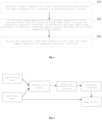
- the method may comprise the following steps.
- S11 acquiring a sample sequence of a target expression action, and dividing the sample sequence into a plurality of expression action intervals.
- the samples when samples for model training are prepared, the samples can be classified according to different expression actions.
- one expression action corresponds to a plurality of different stages in time sequence.
- the sample sequence of the target expression action may be obtained.
- the sample sequence may be either a video, or a plurality of video frames extracted from the video according to the playback time sequence of the video. In this way, the sample sequence may include a plurality of sample images, which may reflect the presentation process of the target expression action in time sequence.
- a plurality of corresponding key images may be labeled in the sample images according to a plurality of key nodes in the presentation process of the target expression action.
- the key nodes mentioned above may be summarized as: a start node of an expression action, a start node of maintaining the expression action, an end node of maintaining the expression action, and an end node of the expression action.
- the start node of maintaining the expression action may refer to a starting point of a period during which the expression action is maintained in a maximum state; and the end node of maintaining the expression action may refer to an ending point of the period during which the expression action is maintained in the maximum state.
- the plurality of key nodes may include a node of starting to frown, a start node of brow furrowing, an end node of brow furrowing, a node of stopping frowning, and the like, wherein the node of starting to frown refers to a node where a user goes from not frowning to frowning, the start node of brow furrowing refers to a start node where the user's eyebrows remain unchanged, the end node of brow furrowing refers to a node where the user's eyebrows begin to stretch, and the node of stopping frowning refers to a node where the user goes from frowning to not frowning.
- the sample images corresponding respectively to the key nodes may be used as labeled key images.
- the time sequence number of these key images in the sample sequence may be recorded.
- the time sequence number may be expressed in different ways.
- the time sequence number may be either a frame number of a key image in the sample sequence, or a time node corresponding to the key image in the sample sequence. The present disclosure does not limit the specific presentation form of the time sequence number.
- the above key images may also be automatically recognized from the sample images using a key point recognition algorithm.
- position information of a preset facial feature may be recognized from each sample image in the sample sequence, wherein the preset facial feature may be a facial feature included in the sample image, and the preset facial feature is a feature that can reflect an expression action.
- the preset facial feature may be eyes or eyebrows, so that an expression action such as blinking, frowning, eyebrow raise or the like may be captured by recognizing the preset facial feature.
- recognizing the preset facial feature it is possible to recognize a specified number of key points in the preset facial feature using the key point recognition technology, thereby determining position information of the key points in each sample image.
- a change trajectory of the preset facial feature in the sample sequence may be determined by summarizing the position information.
- a plurality of expression change critical nodes may be determined in an expression image sequence, wherein the expression change critical nodes may be used for division of the stages where an expression action is located.
- the expression change critical nodes may be a start node of the expression action, a start node of maintaining the expression action, an end node of maintaining the expression action, and an end node of the expression action, which are described earlier.
- the sample images corresponding to the expression change critical nodes may be used as the key images in the sample sequence.
- the time sequence number of the respective key images may also be determined, which may be either a frame number or a time node.
- the sample sequence may be divided into a plurality of expression action intervals using the key images.
- an expression action interval composed of the node of starting to frown and the start node of brow furrowing may represent a dynamic change process of the eyebrow position in the early stage of frowning
- an expression action interval composed of the start node of brow furrowing and the end node of brow furrowing may represent a process of the eyebrows being fixed
- an expression action interval composed of the end node of brow furrowing and the node of stopping frowning may represent a dynamic change process of the eyebrows in the frowning action stretching process.
- the sample images in the sample sequence may be collected using virtual reality devices, and thus the sample images may be local facial images obtained by shooting.
- the sample images may be local facial images obtained by shooting.
- key images corresponding to the action of a tongue sticking out cannot be labeled in the eye images.
- an overall facial image of the user wearing the virtual reality device may be captured through an external image collection device.
- a set of sample images formed by the local facial image and the overall facial image may be available.
- different facial images may be used for different expression actions. For example, in terms of frowning, the labeling and the time sequence number determination of the key images can be completed through the local facial image. But in terms of a tongue sticking out, it is necessary to combine the overall facial image therewith to complete the labeling and the time sequence number determination of the key images.
- different expression action intervals should correspond to different expression coefficients.
- different expression coefficient mapping strategies can be set for different expression action intervals.
- t represents the time sequence number of any sample image in the sample sequence
- BS(t) represents an expression coefficient corresponding to the sample image with the time sequence number t. It can be seen that different expression coefficient mapping strategies may be adopted for different expression action intervals, so that the expression coefficients corresponding to the sample images may be calculated.
- the target expression action interval in which the target sample image is located may be determined according to the time sequence number of the target sample image. Then, the expression coefficient corresponding to the target sample image may be generated according to the expression coefficient mapping strategy associated with the target expression action interval.
- a sample image for training may be a local facial image captured by the virtual reality device, and in the aforementioned embodiment, although the user's overall facial image is also captured, the overall facial image is mainly used for labeling the key image and determine the time sequence number of the key image so that an accurate expression coefficient can be calculated.
- the input sample image is usually a local facial image, and in this way, after training the expression coefficient prediction model, the local facial image to be predicted may be input into the model, so that the corresponding expression coefficient is output.
- One embodiment of the present disclosure further provides a facial expression simulation method.
- the method may comprise the following steps.
- S21 collecting a local facial image to be processed of a target object, and generating an expression coefficient corresponding to the local facial image to be processed; wherein the local facial image to be processed belongs to an expression image sequence, and the expression coefficient is determined on the basis of the position of the local facial image to be processed in the expression image sequence.
- the target object may be a user whose facial expression needs to be simulated, and the local facial image to be processed of the target object may be collected through the virtual reality device worn by the target object.
- the local facial image to be processed may be input into the expression coefficient prediction model trained in the aforementioned embodiment, so that the expression coefficient corresponding to the local facial image to be processed is output through the expression coefficient prediction model.
- the expression coefficient of the local facial image to be processed is related to the position of the local facial image to be processed in the expression image sequence.
- the advantage of this processing is that for each frame of local facial image collected by the virtual reality device, the corresponding expression coefficient can be generated in a timely manner through the expression coefficient prediction model, which can ensure that the subsequent facial expression simulation can have high timeliness.
- a video of the target object within a period of time may be collected through the virtual reality device, the video may include multiple frames of local facial images, and the duration of the video usually covers an entire process of an expression action.
- the video collected by the virtual reality device may be regarded as an expression image sequence composed of the multiple frames of local facial images.
- an expression coefficient corresponding to the local facial image may be generated according to the position of the local facial image in the expression image sequence.
- a plurality of key images may be determined in the expression image sequence.
- position information of a preset facial feature may be recognized in the respective local facial images of the expression image sequence, wherein the preset facial feature may be a facial feature included in the local facial images, and the preset facial feature is a feature that can reflect an expression action.
- the preset facial feature may be eyes or eyebrows, so that an expression action such as blinking, frowning, eyebrow raise or the like may be captured by recognizing the preset facial feature.
- recognizing the preset facial feature it is possible to recognize a specified number of key points in the preset facial feature using the key point recognition technology, thereby determining position information of the key points in each local facial image. For example, in performing recognition of eyes, it is possible to recognize 12 key points of the upper eyelid and 12 key points of the lower eyelid, and by recognizing these 24 key points, coordinates of the 24 key points in the local facial image may be obtained, and combination of these coordinates may constitute the position information of the preset facial feature.
- a change trajectory of the preset facial feature in the expression image sequence may be determined by summarizing the position information.
- a plurality of expression change critical nodes may be determined in an expression image sequence, wherein the expression change critical nodes may be used for division of the stages where an expression action is located.
- the expression change critical nodes may be a start node of the expression action, a start node of maintaining the expression action, an end node of maintaining the expression action, and an end node of the expression action, which are described in step S11.
- the local facial images corresponding to the expression change critical nodes may be used as the key images in the expression image sequence.
- the time sequence number of the respective key images may also be determined, which may be either a frame number or a time node.
- the time sequence relationship of the key images in the expression image sequence may characterize an action process of the target expression action, and the key images may be used to divide the expression image sequence into a plurality of expression action intervals.
- the expression action intervals may be associated with respective expression coefficient mapping strategies, and in this way, for any local facial image in an expression image sequence, the expression action interval in which the local facial image is located may be determined, and through the expression coefficient mapping strategy associated with the expression action interval, the expression coefficient corresponding to the local facial image may be generated.
- step S11 for the calculation formula of the expression coefficient, reference can be made to the description in step S11, which will not be repeated here.
- the facial expression of the target object may be simulated based on the expression coefficient.
- simulation of a facial expression usually requires expression coefficients of respective feature dimensions of a face.
- the corresponding facial expression can be simulated according to expression coefficients of 52 feature dimensions of a face.
- the virtual reality device collects a local facial image
- an expression coefficient is calculated for the local facial image based on an overall facial image during model training
- expression coefficients of other feature dimensions other than the local facial image may also be generated.
- the virtual reality device may only collect an eye image, but during model training, an overall facial image will be combined therewith to determine a key image and the corresponding expression coefficient will be calculated for the eye image based on the time sequence number of the key image, so that the calculated expression coefficient can reflect the expression action of a tongue sticking out.
- the expression coefficient characterizing the expression action of a tongue sticking out may be used as a label value of the eye image, so that when the trained model subsequently recognizes the input eye image, if the input eye image corresponds to the expression action of a tongue sticking out, the model can accurately output the expression coefficient characterizing the tongue sticking out.
- a default facial expression When simulating the overall facial expression of the target object, a default facial expression may be loaded first, and each facial feature dimension in the default facial expression may have an original expression coefficient.
- the default facial expression may be regarded as an expression template, which characterizes that the face of the target object currently does not have any expression action.
- the original expression coefficients of some of the facial feature dimensions may be corrected using the expression coefficient generated in step S21, so that the current expression action of the target object can be accurately simulated based on the corrected expression coefficients.
- an expression type characterized by the expression image sequence may be recognized, wherein different expression types may correspond to different facial feature dimensions that need to be corrected.
- the facial feature dimension that needs to be corrected may be a mouth feature dimension
- the facial feature dimension that needs to be corrected may be an eyebrow feature dimension.
- a target feature dimension corresponding to the expression type may be determined from a plurality of facial feature dimensions of the target object.
- the target feature dimension may be, for example, the above-mentioned mouth feature dimension, eyebrow feature dimension, or the like.
- an original expression coefficient of the target feature dimension may be corrected to an expression coefficient corresponding to the local facial image, thereby obtaining the corrected expression coefficients of the respective facial feature dimensions.
- the facial expression of the target object can be simulated.
- an accurate expression coefficient may be generated for a local facial image. Then the original expression coefficients for some facial feature dimensions may be corrected using the generated expression coefficient.
- the corrected expression coefficients are compatible with the existing 3DMM algorithm and can simulate a facial expression with high accuracy without significantly changing the algorithm link.
- the expression image sequence to which the local facial image to be processed belongs may be used in conjunction.
- a complete process of an expression action may be included.
- the same expression action often has the same or similar presentation process, and after determining the stage, in the entire expression action, where the local facial image to be processed is located, an accurate expression coefficient may be obtained.
- the facial expression that is consistent with an actual expression action can be simulated, thereby improving the facial expression simulation accuracy.
- one embodiment of the present disclosure further provides a facial expression simulation apparatus, comprising:
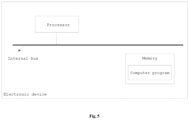
- the present disclosure further provides an electronic device, which comprises a memory and a processor, wherein the memory is configured to store a computer program which, when executed by the processor, implements the above-mentioned facial expression simulation method.
- a typical implementation device is a computer.
- the computer may be, for example, a personal computer, a laptop computer, a cellular phone, a camera phone, a smart phone, a personal digital assistant, a media player, a navigation device, an email device, a game console, a tablet computer, a wearable device, or a combination of any of these devices.
- the present disclosure further provides a computer-readable storage medium configured to store a computer program which, when executed by a processor, implements the above-mentioned facial expression simulation method.
- the processor may be a central processing unit (CPU).
- the processor may also be other generalpurpose processors, Digital Signal Processor (DSP), Application Specific Integrated Circuit (ASIC), Field-Programmable Gate Array (FPGA), or other programmable logic devices, discrete gate or transistor logic devices, discrete hardware components and other chips, or a combination of the above-mentioned types of chips.
- DSP Digital Signal Processor
- ASIC Application Specific Integrated Circuit
- FPGA Field-Programmable Gate Array
- the memory may be configured to store non-transitory software programs, non-transitory computer executable programs and modules, such as program instructions/modules corresponding to the method in the embodiments of the present disclosure.
- the processor executes various functional applications and data processing by running the non-transitory software programs, instructions and modules stored in the memory, that is, implements the method in the above method embodiments.
- the memory may include a program storage area and a data storage area, wherein the program storage area may store an operating system and an application program required for at least one function; the data storage area may store data created by the processor, etc.
- the memory may include high-speed random access memory and may also include non-volatile memory, such as at least one disk storage device, flash memory device, or other non-volatile solid-state storage device.
- the memory may optionally include a memory remotely disposed relative to the processor, and these remote memories may be connected to the processor via a network. Examples of the above-mentioned network include, but are not limited to, the Internet, an intranet, a local area network, a mobile communication network and combinations thereof.
- the storage medium may be a magnetic disk, an optical disk, a read-only memory (ROM), a random access memory (RAM), a flash memory, a hard disk drive (HDD) or a solid-state drive (SSD), etc.; the storage medium may also include a combination of the above-mentioned types of memory.
Landscapes
- Engineering & Computer Science (AREA)
- Theoretical Computer Science (AREA)
- Health & Medical Sciences (AREA)
- Physics & Mathematics (AREA)
- General Physics & Mathematics (AREA)
- General Health & Medical Sciences (AREA)
- Oral & Maxillofacial Surgery (AREA)
- Multimedia (AREA)
- Computer Vision & Pattern Recognition (AREA)
- Human Computer Interaction (AREA)
- Evolutionary Computation (AREA)
- Artificial Intelligence (AREA)
- Computing Systems (AREA)
- Databases & Information Systems (AREA)
- Medical Informatics (AREA)
- Software Systems (AREA)
- Processing Or Creating Images (AREA)
Applications Claiming Priority (2)
| Application Number | Priority Date | Filing Date | Title |
|---|---|---|---|
| CN202211632310.6A CN115937372B (zh) | 2022-12-19 | 2022-12-19 | 一种面部表情的模拟方法、装置、设备及存储介质 |
| PCT/CN2023/132621 WO2024131407A1 (zh) | 2022-12-19 | 2023-11-20 | 一种面部表情的模拟方法、装置、设备及存储介质 |
Publications (1)
| Publication Number | Publication Date |
|---|---|
| EP4530990A1 true EP4530990A1 (de) | 2025-04-02 |
Family
ID=86700674
Family Applications (1)
| Application Number | Title | Priority Date | Filing Date |
|---|---|---|---|
| EP23905576.7A Pending EP4530990A1 (de) | 2022-12-19 | 2023-11-20 | Verfahren und vorrichtung zur gesichtsausdrucksimulation, vorrichtung und speichermedium |
Country Status (4)
| Country | Link |
|---|---|
| US (1) | US20260011063A1 (de) |
| EP (1) | EP4530990A1 (de) |
| CN (1) | CN115937372B (de) |
| WO (1) | WO2024131407A1 (de) |
Families Citing this family (1)
| Publication number | Priority date | Publication date | Assignee | Title |
|---|---|---|---|---|
| CN115937372B (zh) * | 2022-12-19 | 2023-10-03 | 北京字跳网络技术有限公司 | 一种面部表情的模拟方法、装置、设备及存储介质 |
Family Cites Families (13)
| Publication number | Priority date | Publication date | Assignee | Title |
|---|---|---|---|---|
| CN106104633A (zh) * | 2014-03-19 | 2016-11-09 | 英特尔公司 | 面部表情和/或交互驱动的化身装置和方法 |
| CN108876879B (zh) * | 2017-05-12 | 2022-06-14 | 腾讯科技(深圳)有限公司 | 人脸动画实现的方法、装置、计算机设备及存储介质 |
| US10789753B2 (en) * | 2018-04-23 | 2020-09-29 | Magic Leap, Inc. | Avatar facial expression representation in multidimensional space |
| US10529113B1 (en) * | 2019-01-04 | 2020-01-07 | Facebook Technologies, Llc | Generating graphical representation of facial expressions of a user wearing a head mounted display accounting for previously captured images of the user's facial expressions |
| CN110390704B (zh) * | 2019-07-11 | 2021-02-12 | 深圳追一科技有限公司 | 图像处理方法、装置、终端设备及存储介质 |
| CN111144348A (zh) * | 2019-12-30 | 2020-05-12 | 腾讯科技(深圳)有限公司 | 图像处理方法、装置、电子设备及存储介质 |
| US12045925B2 (en) * | 2020-06-11 | 2024-07-23 | Microsoft Technology Licensing, Llc | Computing images of head mounted display wearer |
| CN113537056A (zh) * | 2021-07-15 | 2021-10-22 | 广州虎牙科技有限公司 | 虚拟形象驱动方法、装置、设备和介质 |
| CN114120389B (zh) * | 2021-09-09 | 2025-09-19 | 广州虎牙科技有限公司 | 网络训练及视频帧处理的方法、装置、设备及存储介质 |
| CN113781613A (zh) * | 2021-09-15 | 2021-12-10 | 广州虎牙科技有限公司 | 表情驱动方法、系统及计算机设备 |
| CN115086594B (zh) * | 2022-05-12 | 2025-09-19 | 阿里巴巴(中国)有限公司 | 虚拟会议处理方法、装置、设备和存储介质 |
| CN114821734B (zh) * | 2022-05-13 | 2025-07-18 | 北京沃东天骏信息技术有限公司 | 一种驱动虚拟人物表情的方法和装置 |
| CN115937372B (zh) * | 2022-12-19 | 2023-10-03 | 北京字跳网络技术有限公司 | 一种面部表情的模拟方法、装置、设备及存储介质 |
-
2022
- 2022-12-19 CN CN202211632310.6A patent/CN115937372B/zh active Active
-
2023
- 2023-11-20 US US18/881,194 patent/US20260011063A1/en active Pending
- 2023-11-20 WO PCT/CN2023/132621 patent/WO2024131407A1/zh not_active Ceased
- 2023-11-20 EP EP23905576.7A patent/EP4530990A1/de active Pending
Also Published As
| Publication number | Publication date |
|---|---|
| US20260011063A1 (en) | 2026-01-08 |
| WO2024131407A1 (zh) | 2024-06-27 |
| CN115937372B (zh) | 2023-10-03 |
| CN115937372A (zh) | 2023-04-07 |
Similar Documents
| Publication | Publication Date | Title |
|---|---|---|
| EP4009231A1 (de) | Verfahren, vorrichtung und gerät zum kennzeichnen von video-bildinformationen und speichermedium | |
| US10832039B2 (en) | Facial expression detection method, device and system, facial expression driving method, device and system, and storage medium | |
| CN108701216B (zh) | 一种人脸脸型识别方法、装置和智能终端 | |
| CN106295567B (zh) | 一种关键点的定位方法及终端 | |
| TW201903652A (zh) | 人臉活體檢測方法、裝置以及電子設備 | |
| WO2021083069A1 (zh) | 用于训练换脸模型的方法和设备 | |
| CN110610698B (zh) | 一种语音标注方法及装置 | |
| CN117336525A (zh) | 视频处理方法、装置、计算机设备及存储介质 | |
| CN111079507A (zh) | 一种行为识别方法及装置、计算机装置及可读存储介质 | |
| CN115713715A (zh) | 一种基于深度学习的人体行为识别方法及识别系统 | |
| EP4530990A1 (de) | Verfahren und vorrichtung zur gesichtsausdrucksimulation, vorrichtung und speichermedium | |
| JP6287827B2 (ja) | 情報処理装置、情報処理方法、及びプログラム | |
| CN110188630A (zh) | 一种人脸识别方法和相机 | |
| CN104317392B (zh) | 一种信息控制方法及电子设备 | |
| WO2023124869A1 (zh) | 用于活体检测的方法、装置、设备及存储介质 | |
| CN119342307A (zh) | 基于关键帧的动画视频生成方法、装置、设备及存储介质 | |
| CN109298783B (zh) | 基于表情识别的标注监控方法、装置及电子设备 | |
| EP3200092A1 (de) | Verfahren und endgerät zur implementierung von bildsequenzierung | |
| CN114463816A (zh) | 满意度确定方法、装置、处理器及电子设备 | |
| EP4641527A1 (de) | Expressionsansteuerungsverfahren und -vorrichtung, vorrichtung und speichermedium | |
| CN118283380A (zh) | 一种视频描述生成方法、装置、计算机设备及存储介质 | |
| CN118248126A (zh) | 三维扫描设备、控制方法、计算机程序产品及存储介质 | |
| CN118485819A (zh) | 一种关键点检测方法、装置、设备及存储介质 | |
| CN115457174A (zh) | 模型训练、动作映射方法、装置、电子设备及存储介质 | |
| CN112633129A (zh) | 视频分析方法、装置、电子设备及存储介质 |
Legal Events
| Date | Code | Title | Description |
|---|---|---|---|
| STAA | Information on the status of an ep patent application or granted ep patent |
Free format text: STATUS: THE INTERNATIONAL PUBLICATION HAS BEEN MADE |
|
| PUAI | Public reference made under article 153(3) epc to a published international application that has entered the european phase |
Free format text: ORIGINAL CODE: 0009012 |
|
| STAA | Information on the status of an ep patent application or granted ep patent |
Free format text: STATUS: REQUEST FOR EXAMINATION WAS MADE |
|
| 17P | Request for examination filed |
Effective date: 20241224 |
|
| AK | Designated contracting states |
Kind code of ref document: A1 Designated state(s): AL AT BE BG CH CY CZ DE DK EE ES FI FR GB GR HR HU IE IS IT LI LT LU LV MC ME MK MT NL NO PL PT RO RS SE SI SK SM TR |
|
| DAV | Request for validation of the european patent (deleted) | ||
| DAX | Request for extension of the european patent (deleted) |