EP4530882A1 - Graphbasierte speichererweiterung für grosse sprachmodelle - Google Patents
Graphbasierte speichererweiterung für grosse sprachmodelle Download PDFInfo
- Publication number
- EP4530882A1 EP4530882A1 EP23200747.6A EP23200747A EP4530882A1 EP 4530882 A1 EP4530882 A1 EP 4530882A1 EP 23200747 A EP23200747 A EP 23200747A EP 4530882 A1 EP4530882 A1 EP 4530882A1
- Authority
- EP
- European Patent Office
- Prior art keywords
- memory
- text
- query
- graph
- chunks
- Prior art date
- Legal status (The legal status is an assumption and is not a legal conclusion. Google has not performed a legal analysis and makes no representation as to the accuracy of the status listed.)
- Pending
Links
Images


Classifications
-
- G—PHYSICS
- G06—COMPUTING OR CALCULATING; COUNTING
- G06F—ELECTRIC DIGITAL DATA PROCESSING
- G06F16/00—Information retrieval; Database structures therefor; File system structures therefor
- G06F16/30—Information retrieval; Database structures therefor; File system structures therefor of unstructured textual data
- G06F16/33—Querying
- G06F16/3331—Query processing
- G06F16/334—Query execution
- G06F16/3347—Query execution using vector based model
-
- G—PHYSICS
- G06—COMPUTING OR CALCULATING; COUNTING
- G06N—COMPUTING ARRANGEMENTS BASED ON SPECIFIC COMPUTATIONAL MODELS
- G06N3/00—Computing arrangements based on biological models
- G06N3/02—Neural networks
- G06N3/04—Architecture, e.g. interconnection topology
- G06N3/045—Combinations of networks
- G06N3/0455—Auto-encoder networks; Encoder-decoder networks
-
- G—PHYSICS
- G06—COMPUTING OR CALCULATING; COUNTING
- G06F—ELECTRIC DIGITAL DATA PROCESSING
- G06F16/00—Information retrieval; Database structures therefor; File system structures therefor
- G06F16/30—Information retrieval; Database structures therefor; File system structures therefor of unstructured textual data
- G06F16/33—Querying
- G06F16/332—Query formulation
- G06F16/3329—Natural language query formulation
-
- G—PHYSICS
- G06—COMPUTING OR CALCULATING; COUNTING
- G06F—ELECTRIC DIGITAL DATA PROCESSING
- G06F16/00—Information retrieval; Database structures therefor; File system structures therefor
- G06F16/30—Information retrieval; Database structures therefor; File system structures therefor of unstructured textual data
- G06F16/36—Creation of semantic tools, e.g. ontology or thesauri
- G06F16/367—Ontology
Definitions
- the disclosure is in the field of assistance systems and assistance methods with memory engines that store and retrieve information, which is described and accessed in natural language.
- techniques for providing capabilities for generating responses to queries in a dynamic conversation are disclosed.
- General-purpose memory engines are used in systems, e.g., assistance systems, which store, retrieve, and use the retrieved information that can be described and accessed in natural language.
- Current implementations of such systems often use Deep Neural Networks (DNNs) and in particular Large Language Models (LLMs), i.e., DNNs trained on large corpora of Natural Language (NL) texts.
- LLMs comprise a large amount of knowledge about general facts and common-sense statements made available from their original training using natural language text sources.
- the strength of LLMs lies in the natural language user interface, their ability to resolve language-based uncertainties and to incorporate human common sense to fill in gaps that insufficiently constrained queries from a user may involve.
- LLMs exhibit deficiencies in terms of correctness, reliability, transparency, privacy, flexibility of the information used in and output by the LLM in response to queries provided by a user.
- LLMs exhibit weaknesses in particular with respect to managing additional, e.g., personal or proprietary, data. Since processing of natural language-based text by LLMs uses a kind of statistically guessed likelihood completion, LLMs regularly fail in addressing critical applications.
- An available extension uses the LLM as an interface for connecting the LLM with back-end databases, which include the additional data, e.g. sensitive information in a traditional memory structure.
- back-end databases Using conventional back-end databases in combination with LLMs combines the strengths of LLMs, which include natural language user interface, resolution of language-based uncertainties, and incorporation of human common sense to fill in the gaps inherent in queries with the strengths of more formal, schema-based databases.
- Back-end databases have the advantages of high reliability, traceability and proprietary access to sensitive information.
- the approach of using the LLM also as an interface to the back-end database, e.g., for generating queries in the language specific to the back-end database that include the additional data, may result in a bottleneck either due to limited pre-constructed queries or due to limitations in query generation.
- a mixed structure that bases on less formal databases uses a separate, natural-language oriented memory storage system that includes language embedding of text chunks.
- This approach uses language embedding in order to find a preselection of relevant text chunks (snippets) based on a determined similarity of a query with the chunks of text in the embedding space.
- the preselection provides identifiable chunks of text that contain text that is semantically similar and hence assumed relevant for answering the query.
- the (pre-) selected chunks of text are passed to the LLM for generating an answer to the query.
- the computer-implemented method according to the first aspect provides a solution, which overcomes the limitation of the known approaches.
- Proprietary external information does not merely consist of isolated snippets of information and chunks of text. Relations connecting the snippets of information capture a high proportion of the proprietary external information.
- the entire description of the event, the persons attending, their relationship, etc. may be contained in a single text chunk. Converting this chunk into an embedding vector, this information is likely to be found for a query like "With whom did X attend event Y?".
- the web of links and nodes in the graph-based memory covering relations between the individual snippets of information allows to infer this conclusion, benefit from the additional information included in the graph-based representation stored in and retrieved from the graph-based memory, due to not being included in a single snippet of information or chunk of text.
- the computer-implemented method comprises determining, by the processor, a measure representing a mapping of the chunks of text to the representation stored in the graph-based memory, and to adapt the process of generating the chunks of text and determining the mapping measure until the determined mapping measure meets a predetermined termination criterion.
- the agent is not using the proposed system for generating a response for a user or another agent different from the agent, who posed the query.
- the autonomous agent is querying its own internal memory in a sort of inner monologue because in order to retrieve particular information for reasoning, planning or action execution.
- token limit refers to the maximum number of tokens a LLM can process.
- the token limit combines the input tokens and the output tokens.
- the chunk-handling module CH further performs concatenating the chunks of text generated from the query as received from the user or agent and selected natural language chunks and passes the concatenated chunks of text to the response generation module RGM.
- step S7 the processor 21 further generates a third ranked list including the activated nodes stored in the graph-based memory GBM, selects the activated nodes of the third ranked list for further processing, and determines the chunks of text that correspond to the activated nodes of the third ranked list.
- a question-answering module QA implemented using the natural language processing module NLP generates a response to the query based on the given context of chunks of text that correspond to the activated nodes of the third ranked list.
- the question-answering module QA may be implemented using specifically trained language models or even general purpose LLMs.
- the response can easily be extended with citations for the sources, enabling full traceability.
- the graph-vector-text memory GVT includes the text chunk memory TCM, the vector embedding memory VEM, and the graph-based memory GBM.
- the text chunk memory TCM is a memory for storing and retrieving text chunks.
- the graph-based memory GBM stores information in the form of nodes interconnected by links, wherein each node includes a specific chunk of text representing a concept and each link is arranged between the source node and the target node of the nodes and each link represents a relationship between the respective concepts of the source node and the target node.
- the graph-based memory GBM may be implemented using knowledge graphs (KGs) in graph databases like Neo4j.
- the vector embedding memory VEM is a vector storage for storing and retrieving the vectors (embedding vectors). Each vector stored in the vector embedding memory VEM maintains a reference to the original text chunk from which it was generated, as well as a reference to the corresponding node in the graph-based memory GBM.
- vectors stored in the vector embedding memory VEM can refer to, e.g., trigger, nodes that are stored in the graph-based memory GBM.
- Implementations for the vector embedding memory VEM may base on currently existing vector stores or vector databases including ChromaDB or Pinecone.
- Neo4j includes a graph database that supports storing vector embeddings, and enables searching by embedding similarity using an implementation of the HNSW algorithm as disclosed by Hasbe, S.: Neo4j's Vector Search: Unlocking Deeper Insights for AI-Powered Applications, 2023 (https://neo4j.com/blog/vector-search-deeper-insights ).
- the query obtained by the system 20 includes natural language text (plain text) representing the input to the system 20.
- the text-embedding module TE generates the vector (embedding vector) based on the obtained query.
- the generated vector provides the basis for the similarity search in a vector representation including a plurality of vectors stored in the vector embedding memory VEM.
- the results of the similarity search in a vector representation include vector(s) that fulfill the similarity criteria of the similarity search.
- the resulting similar vector(s) directly correspond to (are associated with) text chunks stored in the text chunk memory TCM.
- the resulting similar vector(S) correspond to (are associated with) nodes of a graph representation stored in the graph-based memory GBM.
- the nodes of the graph based representation associated with the resulting similar vectors form the basis of an associative propagation search on the graph representation stored in the graph-based memory GBM.
- the associative propagation search on the graph representation may be performed iteratively until a termination criterion is met.
- the termination criterion may base on determining that sufficient information for responding to the query has been retrieved.
- the associative propagation search returns further nodes.
- the returned further nodes enable the system 20 to retrieve further relevant chunks of text from the text chunk memory TCM, which are stored in the text chunk memory in association with the further nodes.
- retrieved chunks of text are provided to the collector and response generating module RG.
- the entirety of retrieved chunks of text include chunks of text directly retrieved by the similarity search performed on the embedding memory VEM (hereinafter referred to as (retrieved) chunks of text) and additionally retrieved relevant chunks of text that are determined by graph propagation using the graph-based memory GBM (hereinafter referred to as further (retrieved) chunks of text).
- the collector and response-generating module RG collects all evidence, including in particular the retrieved chunks of text and the further retrieved chunks of text that were identified to be relevant via the associative propagation search process.
- the collector and response-generating module RG (response generating module RG) then generates the response to the obtained query and outputs the generated response to the user or agent posing the query.
- the generated response is in natural language text.
- Fig. 3 presents an overview of the architecture of a retrieval process leveraging relational information in an embodiment of the computer-implemented method.
- the received query is processed by the natural language processing modules NLP.
- the natural language processing modules NLP pass a resulting text including one or a plurality of chunks of texts on to the text-embedding module TE, which generates an embedding vector (vector) based on the chunk(s) of text.
- the geometry of the embedding vector space is well suited to capture a semantic proximity between the vectors constituting the vector space.
- the generated vector is subsequently used to query the vector embedding memory VEM for similarity with vectors stored in the vector embedding memory VEM.
- the vector embedding memory VEM returns a ranked list of the most similar vectors of the vectors stored in the vector embedding memory VEM.
- the returned most similar vectors represent the semantically closest vectors or concepts to the vector generated based on the text chunks(s) of the original query.
- Each vector returned by the vector embedding memory VEM comprises a reference to a corresponding node in the graph-based memory GBM.
- each vector returned by the vector embedding memory VEM triggers a specific concept corresponding to a node due to including a reference to a corresponding node in the graph-based memory GBM.
- the nodes corresponding to the concepts that are most related to the original query can be retrieved from the graph-based memory GBM based on the result of the similarity search conducted on the vectors stored in the vector embedding memory.
- the link structure stored in the graph-based memory GBM is used to retrieve further associated nodes and links from the graph-based memory GBM.
- the most relevant nodes including the nodes selected based directly on the similarity search conducted on the vectors stored in the vector embedding memory VEM and further nodes retrieved via the search along the links in the graph-based memory GBM are then used to retrieve related text chunks as further retrieved chunks of text from the text chunk memory TCM.
- the texts of the retrieved chunks of text are then compiled as a natural text background evidence, combined with the original query text, and metadata from the graph-based memory GBM for traceability of the further retrieved chunks of text, and passed to the response-generating module RG for generating the response based thereon.
- the texts of the retrieved chunks of text form the basis for formulating an answer to the original query provided to the system 20.
- the system 20 may augment the generated response with references to the chunks of text that are used as a basis for generating the response for enabling full traceability of chunks of text and the further chunks of text used as a basis for generating the response.
- the references may form augmentation information that may include metadata of the further retrieved chunks of text, e.g., an identifier associated with the respective chunk of text, and a source of the respective chunk of text.
- the references are advantageous for traceability of the retrieved further chunks of text, and the metadata like the identifier and the source of the chunk of text may be output to the response-generating module RG for augmenting the generated response.
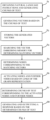
- the lower portion of fig. 3 provides more detail to the search process for relevant concepts in the graph-based memory GBM.
- the search process starts with determining nodes stored in the graph-based memory GBM based on a correspondence with the determined vectors of the first ranked list of matching vectors to generate a second ranked list of corresponding nodes.
- the search process proceeds with activating the corresponding nodes stored in the graph-based memory GBM and activating connected nodes based on links between the activated nodes and the other nodes in the graph-based memory GBM by applying e.g. a random walk algorithm or a personalized page-rank algorithm, however other types of graph-algorithms are also applicable like graph-traversal or activation-spread algorithms.
- the search process proceeds with generating a third ranked list including the activated nodes stored in the graph-based memory GB), selecting the activated nodes of the third ranked list for further processing, and then determining the chunks of text that correspond to the activated nodes of the third ranked list.
- Ranking the determined vectors in the first ranked list activated nodes in the second ranked list and the third ranked list may be performed by calculating respective importance scores and sorting the first, second, and third ranked list based on the calculated importance score.
- the importance score(s) may include numerical values, which describe a relevance of a vector or node for responding to the query at hand.
- the third ranked list represents then the input for determining the relevant chunks of text that correspond to the activated nodes of the third ranked list for further processing, in particular collecting the information for preparing a response to the query.
- Fig. 4 presents an overview on a high level of abstraction of an architecture of the proposed system 20.
- the system 20 of fig. 4 includes a processor 21, a data storage 23 (memory 23), an input/output interface 24, and a network interface 25, which are linked by a data bus 22.
- the input/output interface 24 may in particular provide a capability to obtain queries from other agents or a human user via speech or text.
- the input/output interface 24 may therefore represent an interface for connecting input/output devices 26 including, but not limited to keyboards, mouse, pointing devices, displays, microphones, loudspeakers in any combination.
- the input/output interface 24 may at least in part be implemented in software modules running on the processor 21.
- the processor 21 may be any type of controller or processor, and may even be embodied as one or more processors 21 adapted to perform the functionality discussed herein.
- the processor 21 may include using a single integrated circuit (IC), or may include use of a plurality of integrated circuits or other components connected, arranged or grouped together, such as controllers, microprocessors, digital signal processors (DSP), parallel processors, multiple core processors, custom ICs, application specific integrated circuits (ASIC), field programmable gate arrays (FPGAs), graphics processing units (GPUs), and further include adaptive computing ICs and associated memory, e.g., RAM, DRAM and ROM, and other ICs and components.
- DSP digital signal processor
- ASIC application specific integrated circuits
- FPGAs field programmable gate arrays
- GPUs graphics processing units
- adaptive computing ICs and associated memory e.g., RAM, DRAM and ROM, and other ICs and components.
- processor 21 should be understood to equivalently mean and include a single IC, or arrangement of custom ICs, ASICs, processors, microprocessors, controllers, FPGAs, adaptive computing ICs, or some other grouping of integrated circuits which perform the functions discussed for the computer-implemented method, with associated memory, such as microprocessor memory or additional RAM, DRAM, SDRAM, SRAM, MRAM, ROM, FLASH, EPROM or E2 PROM.
- the processor 25 with its associated memory may be adapted or configured via programming, FPGA interconnection, or hard-wiring to perform the methodology of the computer-implemented method.
- the method may be programmed and stored, in the processor 21 with its associated memory or memory 23, and other equivalent components, as a set of program instructions or other code for subsequent execution when the processor 21 is operative, e.g., powered on and functioning.
- the memory 23 which may include a data repository or database, may be embodied in any number of forms, including within any computer or other machine-readable data storage medium, memory device or other storage or communication device for storage or communication of information, including, but not limited to, a memory integrated circuit (IC), or memory portion of an integrated circuit (such as the resident memory within a or processor 21, whether volatile or non-volatile, whether removable or non-removable, including without limitation RAM, FLASH, DRAM, SDRAM, SRAM, MRAM, FeRAM, ROM, EPROM or E2 PROM, or any other form of memory device, such as a magnetic hard drive, an optical drive, a magnetic disk or tape drive, a hard disk drive, other machine-readable storage or memory media such as a floppy disk, a CDROM, a CD-RW, digital versatile disk (DVD) or other optical memory, or any other type of memory, storage medium, or data storage apparatus or circuit, know.
- a memory integrated circuit such as the resident memory within a or processor 21, whether volatile or non
- Such computer readable media includes any form of communication media which embodies computer readable instructions, data structures, program modules or other data in a data signal or modulated signal, such as an electromagnetic or optical carrier wave or other transport mechanism, including any information delivery media, which may encode data or other information in a signal, wired or wirelessly, including electromagnetic, optical, acoustic, RF or infrared signals, and so on.
- the memory 23 may be adapted to store various look up tables, parameters, coefficients, other information and data, programs or instructions of the software of the present disclosure, and other types of tables such as database tables.
- the memory 23 may in particular implement at least parts of the graph-vector-text memory GVT, the text chunk memory TCM, the vector embedding memory VEM, and the graph-based memory GBM.
- the text chunk memory TCM, the vector embedding memory VEM and the graph-based memory GBM are implemented in a single graph-vector-text memory GVT storing the graph, text chunk and embedding vector information altogether instead of being separated modules of computer programs.
- the processor 21 is programmed, using software and data structures of the disclosed computer-implemented method, for example, to perform the methodology of the present disclosure.
- the system and the computer-implemented method of the present invention may be embodied as software which provides such programming or other instructions, such as a set of instructions and/or metadata embodied within a computer readable medium, discussed above.
- metadata may also be utilized to define the various data structures of a look up table or a database.
- Such software may be in the form of source or object code, by way of example and without limitation. Source code further may be compiled into some form of instructions or object code (including assembly language instructions or configuration information).
- the software, source code or metadata of the present invention may be embodied as any type of code, such as C, C++, Python, SystemC, LISA, XML, Java, Brew, SQL and its variations (e.g., SQL 99 or proprietary versions of SQL), DB2, Oracle, or any other type of programming language which performs the functionality discussed herein, including various hardware definition or hardware modeling languages (e.g., Verilog, VHDL, RTL) and resulting database files (e.g., GDSII).
- code such as C, C++, Python, SystemC, LISA, XML, Java, Brew, SQL and its variations (e.g., SQL 99 or proprietary versions of SQL), DB2, Oracle, or any other type of programming language which performs the functionality discussed herein, including various hardware definition or hardware modeling languages (e.g., Verilog, VHDL, RTL) and resulting database files (e.g., GDSII).
- a "construct”, “program construct”, “software construct” or “software”, as used equivalently herein, means and refers to any programming language, of any kind, with any syntax or signatures, which provides or can be interpreted to provide the associated functionality or methodology specified (when instantiated or loaded into a processor or computer and executed, including the processor 21, for example).
- the software, metadata, or other source code of the present invention and any resulting bit file may be embodied within any tangible storage medium, such as any of the computer or other machine-readable data storage media, as computer-readable instructions, data structures, program modules or other data, such as discussed above with respect to the memory 175 , e.g., a floppy disk, a CDROM, a CD-RW, a DVD, a magnetic hard drive, an optical drive, or any other type of data storage apparatus or medium, as mentioned above.
- the processor 21 may in particular run software, which controls the processor 21 to perform the functions of the natural language processing module NLP, the text embedding module TE, the chunk handling module CH, the question-answering module QAM, for example.
- the network interface 25 provides the system 20 with the capability to link to external databases and servers via a communication network 27.
- the network interface 25 in particular enables to implement the system 20 in a spatially distributed manner by performing at least some of the individual method steps at least in part remote from the system 20.
- Agents operating in the real world may have a digital form (virtual agents) or an embodied form (physical agents). Both virtual and physical agents require the capability to store knowledge on their environment, common-sense knowledge, as well as individual memories and beliefs.
- the system 20 of the present disclosure may store information that is specific for an individual agent. The information may be rooted in hardware, but also in the personal preferences of a human owner (user) of the agent.
- Information for updating the knowledge base of the agent is often available in text or may at least be expressed in text form, often even in natural language text.
- Information for updating the knowledge base of the agent may include, e.g., at least some of descriptions of objects useful or at least relevant for addressing tasks and their purpose, of descriptions of humans including their characteristics and preferences, and a history of actions that occurred in the environment of the agent.
- the computer-implemented method and the system 20 may be used for incrementally updating the knowledge base of the agent, whether it is a physical agent or a virtual agent.
- the proposed memory structure architecture and the associated management of the memory architecture support an incremental update of a pre-trained knowledge base during an operational phase of the agent.
- agents include, but are not limited to, digital agents, e.g., Apple's Siri, as well as agents with robotic embodiments, such as personal assistance robots
- the computer-implemented method and the system 20 may support the process of automating workflows, which humans repeatedly execute with their computers, and enhance the capabilities of embodied agents that support mentally or physically impaired persons by anticipating their intentions and proactively executing helpful actions after executing a planning process for supportive actions. These intelligent agents, both virtual and physical agents, may benefit from incremental updates of their respective knowledge base. Integrating the system 20 and the computer-implemented method in an embodiment of such agents and assistance systems provides an advantageous application area of the disclosure.
- a single element or other unit may fulfill the functions of several entities or items recited in the claims.
- the mere fact that different dependent claims recite certain measures and features of the control circuit does not exclude that a combination of these measures and features cannot be combined in an advantageous implementation.
Landscapes
- Engineering & Computer Science (AREA)
- Theoretical Computer Science (AREA)
- Physics & Mathematics (AREA)
- Computational Linguistics (AREA)
- Data Mining & Analysis (AREA)
- General Engineering & Computer Science (AREA)
- General Physics & Mathematics (AREA)
- Mathematical Physics (AREA)
- Databases & Information Systems (AREA)
- Life Sciences & Earth Sciences (AREA)
- Artificial Intelligence (AREA)
- Evolutionary Computation (AREA)
- Health & Medical Sciences (AREA)
- Biomedical Technology (AREA)
- Biophysics (AREA)
- General Health & Medical Sciences (AREA)
- Molecular Biology (AREA)
- Computing Systems (AREA)
- Software Systems (AREA)
- Animal Behavior & Ethology (AREA)
- Human Computer Interaction (AREA)
- Information Retrieval, Db Structures And Fs Structures Therefor (AREA)
- Machine Translation (AREA)
Priority Applications (3)
| Application Number | Priority Date | Filing Date | Title |
|---|---|---|---|
| EP23200747.6A EP4530882A1 (de) | 2023-09-29 | 2023-09-29 | Graphbasierte speichererweiterung für grosse sprachmodelle |
| JP2024162082A JP7850210B2 (ja) | 2023-09-29 | 2024-09-19 | 大規模言語モデルのためのグラフに基づくメモリの拡張 |
| US18/898,607 US20250111204A1 (en) | 2023-09-29 | 2024-09-26 | Graph based Memory Extension for Large Language Models |
Applications Claiming Priority (1)
| Application Number | Priority Date | Filing Date | Title |
|---|---|---|---|
| EP23200747.6A EP4530882A1 (de) | 2023-09-29 | 2023-09-29 | Graphbasierte speichererweiterung für grosse sprachmodelle |
Publications (1)
| Publication Number | Publication Date |
|---|---|
| EP4530882A1 true EP4530882A1 (de) | 2025-04-02 |
Family
ID=88237445
Family Applications (1)
| Application Number | Title | Priority Date | Filing Date |
|---|---|---|---|
| EP23200747.6A Pending EP4530882A1 (de) | 2023-09-29 | 2023-09-29 | Graphbasierte speichererweiterung für grosse sprachmodelle |
Country Status (3)
| Country | Link |
|---|---|
| US (1) | US20250111204A1 (de) |
| EP (1) | EP4530882A1 (de) |
| JP (1) | JP7850210B2 (de) |
Cited By (1)
| Publication number | Priority date | Publication date | Assignee | Title |
|---|---|---|---|---|
| CN119988697A (zh) * | 2025-04-15 | 2025-05-13 | 北京大数据先进技术研究院 | 面向数据空间的数据检索增强生成方法、装置和设备 |
Families Citing this family (4)
| Publication number | Priority date | Publication date | Assignee | Title |
|---|---|---|---|---|
| US20240420391A1 (en) * | 2023-06-16 | 2024-12-19 | The Toronto-Dominion Bank | Intelligent dashboard search engine |
| US20250191366A1 (en) * | 2023-12-08 | 2025-06-12 | Hitachi, Ltd. | Method to extract video context from external description |
| US12554780B1 (en) * | 2025-01-31 | 2026-02-17 | Zoom Communications, Inc. | Hybrid retrieval augmented generation for rich document queries using a large language model |
| CN120541091B (zh) * | 2025-07-28 | 2025-10-31 | 上海特高信息技术有限公司 | 一种基于智能语义驱动的交互式ai报表生成方法与系统 |
Citations (2)
| Publication number | Priority date | Publication date | Assignee | Title |
|---|---|---|---|---|
| US20210158176A1 (en) * | 2019-11-22 | 2021-05-27 | Bank Of Montreal | Machine learning based database search and knowledge mining |
| US20230061906A1 (en) * | 2021-08-09 | 2023-03-02 | Samsung Electronics Co., Ltd. | Dynamic question generation for information-gathering |
Family Cites Families (3)
| Publication number | Priority date | Publication date | Assignee | Title |
|---|---|---|---|---|
| US10606846B2 (en) * | 2015-10-16 | 2020-03-31 | Baidu Usa Llc | Systems and methods for human inspired simple question answering (HISQA) |
| CN114757208B (zh) * | 2022-06-10 | 2022-10-21 | 荣耀终端有限公司 | 一种问答匹配方法及装置 |
| CN116680384B (zh) * | 2023-06-08 | 2025-10-03 | 科大讯飞股份有限公司 | 知识问答方法、装置、设备及存储介质 |
-
2023
- 2023-09-29 EP EP23200747.6A patent/EP4530882A1/de active Pending
-
2024
- 2024-09-19 JP JP2024162082A patent/JP7850210B2/ja active Active
- 2024-09-26 US US18/898,607 patent/US20250111204A1/en active Pending
Patent Citations (2)
| Publication number | Priority date | Publication date | Assignee | Title |
|---|---|---|---|---|
| US20210158176A1 (en) * | 2019-11-22 | 2021-05-27 | Bank Of Montreal | Machine learning based database search and knowledge mining |
| US20230061906A1 (en) * | 2021-08-09 | 2023-03-02 | Samsung Electronics Co., Ltd. | Dynamic question generation for information-gathering |
Non-Patent Citations (1)
| Title |
|---|
| WENHAO YU ET AL: "A Survey of Knowledge-Enhanced Text Generation", ARXIV.ORG, CORNELL UNIVERSITY LIBRARY, 201 OLIN LIBRARY CORNELL UNIVERSITY ITHACA, NY 14853, 9 October 2020 (2020-10-09), XP081782275 * |
Cited By (1)
| Publication number | Priority date | Publication date | Assignee | Title |
|---|---|---|---|---|
| CN119988697A (zh) * | 2025-04-15 | 2025-05-13 | 北京大数据先进技术研究院 | 面向数据空间的数据检索增强生成方法、装置和设备 |
Also Published As
| Publication number | Publication date |
|---|---|
| JP7850210B2 (ja) | 2026-04-22 |
| JP2025064989A (ja) | 2025-04-17 |
| US20250111204A1 (en) | 2025-04-03 |
Similar Documents
| Publication | Publication Date | Title |
|---|---|---|
| EP4530882A1 (de) | Graphbasierte speichererweiterung für grosse sprachmodelle | |
| US11347783B2 (en) | Implementing a software action based on machine interpretation of a language input | |
| US11727000B2 (en) | System and method for reducing resource usage in a data retrieval process | |
| US10942977B2 (en) | Systems and methods for targeting, reviewing, and presenting online social network data by evidence context | |
| US20210382923A1 (en) | Systems and methods of question answering against system of record utilizing natural language interpretation | |
| WO2024130219A1 (en) | Enterprise generative artificial intelligence architecture | |
| US20050278362A1 (en) | Knowledge discovery system | |
| EP3598436A1 (de) | Strukturierung und gruppierung von sprachanfragen | |
| Yang et al. | Shizishangpt: An agricultural large language model integrating tools and resources | |
| CN116450855A (zh) | 基于知识图谱的问答机器人的回复生成策略方法及系统 | |
| EP4659118A1 (de) | Speichern von einträgen in einem und abrufen von informationen aus einem objektspeicher | |
| CN119884389A (zh) | 一种使用大模型知识库进行工程数据治理及应用的方法 | |
| Rateria et al. | Transparent, low resource, and context-aware information retrieval from a closed domain knowledge base | |
| CN112347289A (zh) | 一种图像管理方法及终端 | |
| CN121256007B (zh) | 一种基于增强元数据的rag智能检索问答系统及方法 | |
| Shafi et al. | LLM-Therapist: A RAG-based multimodal behavioral therapist as healthcare assistant | |
| CN115905677B (zh) | 一种面向医疗领域的智能搜索系统 | |
| CN106021306A (zh) | 基于本体匹配的案例搜索系统 | |
| Li et al. | Deep learning for semantic matching: A survey | |
| Sangeetha et al. | Information retrieval system for laws | |
| Xu et al. | Unifying Large Language Models and Knowledge Graphs for Poultry Diseases Diagnosis | |
| Gómez et al. | Materialization of OWL ontologies from relational databases: a practical approach | |
| US12566782B1 (en) | Topic maps for constrained retrieval augmented generation | |
| Eswaraiah et al. | Text Information Retrieval using Hybrid BOAPSO Optimization Ontology-Based Semantic Model. | |
| Aloui et al. | A new approach for flexible queries using fuzzy ontologies |
Legal Events
| Date | Code | Title | Description |
|---|---|---|---|
| PUAI | Public reference made under article 153(3) epc to a published international application that has entered the european phase |
Free format text: ORIGINAL CODE: 0009012 |
|
| STAA | Information on the status of an ep patent application or granted ep patent |
Free format text: STATUS: THE APPLICATION HAS BEEN PUBLISHED |
|
| STAA | Information on the status of an ep patent application or granted ep patent |
Free format text: STATUS: REQUEST FOR EXAMINATION WAS MADE |
|
| AK | Designated contracting states |
Kind code of ref document: A1 Designated state(s): AL AT BE BG CH CY CZ DE DK EE ES FI FR GB GR HR HU IE IS IT LI LT LU LV MC ME MK MT NL NO PL PT RO RS SE SI SK SM TR |
|
| 17P | Request for examination filed |
Effective date: 20250312 |
|
| RAP3 | Party data changed (applicant data changed or rights of an application transferred) |
Owner name: HONDA MOTOR CO., LTD. |