EP4530782A1 - Ki-basierte alarmvorhersage in prozesssteuerungssystemen - Google Patents
Ki-basierte alarmvorhersage in prozesssteuerungssystemen Download PDFInfo
- Publication number
- EP4530782A1 EP4530782A1 EP23200606.4A EP23200606A EP4530782A1 EP 4530782 A1 EP4530782 A1 EP 4530782A1 EP 23200606 A EP23200606 A EP 23200606A EP 4530782 A1 EP4530782 A1 EP 4530782A1
- Authority
- EP
- European Patent Office
- Prior art keywords
- alarm
- information
- control
- threshold
- parameter
- Prior art date
- Legal status (The legal status is an assumption and is not a legal conclusion. Google has not performed a legal analysis and makes no representation as to the accuracy of the status listed.)
- Pending
Links
Images

Classifications
-
- G—PHYSICS
- G05—CONTROLLING; REGULATING
- G05B—CONTROL OR REGULATING SYSTEMS IN GENERAL; FUNCTIONAL ELEMENTS OF SUCH SYSTEMS; MONITORING OR TESTING ARRANGEMENTS FOR SUCH SYSTEMS OR ELEMENTS
- G05B23/00—Testing or monitoring of control systems or parts thereof
- G05B23/02—Electric testing or monitoring
- G05B23/0205—Electric testing or monitoring by means of a monitoring system capable of detecting and responding to faults
- G05B23/0259—Electric testing or monitoring by means of a monitoring system capable of detecting and responding to faults characterized by the response to fault detection
- G05B23/0267—Fault communication, e.g. human machine interface [HMI]
- G05B23/027—Alarm generation, e.g. communication protocol; Forms of alarm
-
- G—PHYSICS
- G08—SIGNALLING
- G08B—SIGNALLING SYSTEMS, e.g. PERSONAL CALLING SYSTEMS; ORDER TELEGRAPHS; ALARM SYSTEMS
- G08B25/00—Alarm systems in which the location of the alarm condition is signalled to a central station, e.g. fire or police telegraphic systems
- G08B25/008—Alarm setting and unsetting, i.e. arming or disarming of the security system
-
- G—PHYSICS
- G08—SIGNALLING
- G08B—SIGNALLING SYSTEMS, e.g. PERSONAL CALLING SYSTEMS; ORDER TELEGRAPHS; ALARM SYSTEMS
- G08B21/00—Alarms responsive to a single specified undesired or abnormal condition and not otherwise provided for
- G08B21/18—Status alarms
- G08B21/182—Level alarms, e.g. alarms responsive to variables exceeding a threshold
-
- G—PHYSICS
- G05—CONTROLLING; REGULATING
- G05B—CONTROL OR REGULATING SYSTEMS IN GENERAL; FUNCTIONAL ELEMENTS OF SUCH SYSTEMS; MONITORING OR TESTING ARRANGEMENTS FOR SUCH SYSTEMS OR ELEMENTS
- G05B2219/00—Program-control systems
- G05B2219/30—Nc systems
- G05B2219/31—From computer integrated manufacturing till monitoring
- G05B2219/31437—Monitoring, global and local alarms
Definitions
- the invention relates to a system and a method for managing alarms in a distributed control system, a computer program product, and a computer-readable medium.
- an "alarm system” is a standard feature that defines various alarms to alert operators to take corrective actions when predefined critical thresholds are exceeded.
- alarms are defined based on thresholds that may not be exceeded on different sensor measurements, e.g., temperature, flow, pressure, or level sensors.
- sensor measurements e.g., temperature, flow, pressure, or level sensors.
- an alarm is raised if any of these thresholds are exceeded. Plant engineering and operation can be accomplished by distributed control systems, which allows the implementation and control of the various parts and systems of a plant.
- the present invention relates to a method for managing alarms in a distributed control system.
- the method comprises the step of monitoring at least one process parameter.
- the method further comprises the step of activating an alarm if the process parameter exceeds an alarm threshold.
- the method further comprises the step of deactivating an alarm if the process parameter no longer exceeds the alarm threshold.
- the method further comprises the step of determining by an Al based alarm control system before the alarm is activated at least one predicted alarm information, which comprises information about if the alarm threshold will be exceeded.
- a distributed control system may be understood as a control system for a process or plant comprising usually one or more control loops, in which autonomous controllers are distributed throughout the system. Such distributed control systems may be computer supported. Even though the method of the present invention is described herein with respect to a distributed control system, the advantages of the method and system according to the invention may of course be applied also to any other suitable industrial process control system known to those skilled in the art.
- the monitoring of the at least one process parameter may occur continuously, e.g. without interruptions, or at given one or more time instances, e.g. with a certain duration. Further, the monitoring may be bound to further conditions. For instance, the monitoring of a process parameter may only start if a certain threshold of the process parameter is exceeded.
- the activation of the alarm may include a single activation once the alarm threshold is exceeded, a continuing activation and/or a repeated activation at one or more time instances, e.g. an activation over a certain time.
- the alarm may accordingly assume an "ACT" state, indicating an "active state” of the alarm. This state may be accordingly logged in alarm lists and alarm logs of the distributed control system.
- the alarm may be activated once a certain alarm threshold is exceeded. This may include a situation, wherein the process parameter rises over time and wherein the alarm threshold defines an upper limit up to which normal working conditions of the process parameter can be assumed.
- a process parameter can be understood as any entity, such as, for instance, physical or electrical conditions, relevant for a system operation.
- the process parameter may be a system pressure at which a plant's system operates and the alarm threshold may correspond to an upper limit of the pressure up to which a proper operation of a plant's system can be ensured.
- an alarm may be activated if the process parameter decreases over time and the threshold defines a lower limit down to which normal working condition of the process parameter can be assumed.
- the process parameter may be a current at which a plant's system operates and the alarm threshold may correspond to a lower limit down to which a proper operation of a plant's system can be ensured.
- An alarm threshold may be a predefined value for a process parameter above or below which an alarm may be issued. In other words, a process parameter moves outside a predefined "normal working condition" region, an alarm may be activated. Also more than one alarm threshold may be provided for one or more process parameters. Furthermore, also a plurality of upper and/or lower alarm thresholds may be provided and connected to different states of the alarm. Thus, different alarms may be activated, e.g. a "low-level-alarm", a “medium-level-alarm” and/or a "high-level-alarm", depending on how critical a monitored process parameter value is.
- the deactivation of the alarm may include the single deactivation once the alarm no longer exceeds the threshold, a continuing deactivation and/or a repeated deactivation at one or more time instances, e.g. a deactivation over a certain duration.
- the alarm may assume an "RTN" state when the alarm is deactivated indicating a "return to normal" operation. This state may be accordingly logged in alarm lists and alarm logs of the distributed control system.
- the determination of the at least one predicted alarm information may be performed continuously or at certain one or more predefined time instances. Further, the determination may be bound to further conditions. For instance, the determination may start only once a certain threshold of the process parameter is exceeded.
- the alarm may assume a "PRE" state, indicating a "prediction state", in which prediction information is determined by an Al based alarm control system. This state may be accordingly logged in alarm lists and alarm logs of the distributed control system.
- An Al based alarm control system may include any suitable Al-based software or algorithm and/or machine learning means suitable to provide a prediction or forecast information of the further development of the monitored process parameter.
- the Al based alarm control system may be trained by historical data and/or simulated data. Further, the Al based alarm control system may consider for the prediction any suitable parameter that may influence the future development of the monitored process parameter. Likewise, the Al based alarm control system may consider in its forecast any interaction with one or more other systems of the distributed control system and respective further process parameters that may have an impact of the future development of the monitored process parameter.
- the predicted alarm information may include a forecast or prediction regarding the timely development of the process parameter and may include the determination of a likelihood or probability if an alarm threshold will be exceeded.
- the predicted alarm information may also include a time information indicating a time when the process parameter is to be expected to exceed the alarm threshold.
- the predicted information may include a forecast about the level or value the process parameter may have at a future time, preferably considering certain conditions.
- the method further comprises the step of providing the predicted alarm information to a user, preferably before the alarm is activated.
- the user may not only be informed about the respective control parameter but may also be informed how the control parameter may be adapted to reduce the likelihood that the alarm threshold will be exceeded. This may also include the provision of one or more alternative options how to proceed further with the operation.
- an operator may be enabled to optimally adapt the one or more control parameters to positively influence the forecasted timely development of the process parameter.
- the selected valve not only the selected valve but also a selected optimal degree of opening of the selected valve may be provided.
- the method of the present invention may allow for an effective control and supervision of the distributed control system with respect to both, alarm information and predicted alarm information.
- the user may be provided with information about the monitored process parameter and the alarm threshold at which an alarm will be indicated.
- a predicted alarm information may be provided to a user on the same or a different screen or display, wherein the user may supervise or monitor the process parameter and its forecasted development.
- both information may be provided at the same time or at different times and/or on the same or different screens.
- the alarm information and/or the predicted alarm information may be explained to user by an "Explainable Al (XAI)".
- a user may be accordingly informed, e.g. by a warning on the screen, that a process parameter has exceeded the alarm threshold and/or will exceed the alarm threshold in the future. This may also include the provision of information about a probability or likelihood that the alarm threshold will be exceeded.
- alarms may be displayed e.g. as a red alarm icon next to a process display where the alarm occurred. This may include a label indicating the alarm, e.g. "HH” for a very critical "high-high” alarm. Similarly, there may be “L” (“low”) or “H” ("high”) alarms where process values are too low or too high. In addition, alarms may also be shown in alarm lists that show more information about the alarm such as its title and description and the logged time when the alarm occurred.
- the Al-based predicted alarms could be integrated into the operator screens and presented to the user, for instance, by adding a leading "P” for "predicted” before the labels in order to indicate that this is a predicted alarm.
- P leading "P” for "predicted” before the labels in order to indicate that this is a predicted alarm.
- P leading "P” for "predicted”
- PLL PLL
- additional information next to the alarm label may indicate, for example, the probability with which the predicted alarm will actually occur and/or the time when it will happen.
- the alarm lists could provide additional information about a predicted alarm, such as indicating in the alarm title text that this is a "predicted” alarm and not a "real" alarm”.
- the method further comprises the step of automatically adapting the control parameter to reduce the likelihood that the alarm threshold will be exceeded.
- An alarm may be prevented before it occurs without intervention of an operator.
- An automatic adaption may be understood as a change of one or more control parameters essentially without the interaction of a user. In this way, in particular in critical situations, an operator's relief can be ensured by a facilitated control of the distributed control system.
- the adaption of the control parameter may be performed at least semi-manually by an operator.
- the present invention also relates to a system for managing alarms in a distributed control system.
- the system further comprises an alarm control means, which is configured to activate an alarm if the process parameter exceeds an alarm threshold and to deactivate the alarm if the process parameter no longer exceeds the alarm threshold.
- the system further comprises an Al based alarm control system, which is configured to determine before the alarm is activated at least one predicted alarm information, which comprises information about if the alarm threshold will be exceeded.
- the process parameter monitoring means is not limited to a single device but may also include a plurality of hardware and/or software based means, such as one or more sensors, detectors etc. and their corresponding control(s) configured to allow a detection of a condition or state of the process parameter.
- the alarm control means may include a plurality of hardware and/or software based means suitable to activate an alarm if the process parameter exceeds the alarm threshold and to deactivate the alarm if the process parameter no longer exceeds the alarm threshold.
- This may include, for instance, any suitable alarm device(s) and their corresponding control(s) such as provision and control of alarm sirens and for visual alarms etc.
- the one or more alarm thresholds concerning one or more of the process parameters may be predefined and stored respective storage means of the system.
- the predicted alarm information may be a visual or acoustic information about the forecasted information, for instance if a certain process parameter will exceed an alarm threshold.
- the one or more process parameter may be any suitable parameter, such as for instance filling levels, mass flows, pressures, currents, temperatures etc., which may be monitored by respective detection means.
- a suitable range of normal operation maybe defined, which is accordingly bordered by respective upper and/or lower thresholds, indicating ranges of operation that should be preferably prevented.
- a pressure in a tank may be defined to operate normally between an upper and lower threshold. When the pressure exceeds the upper and/or lower threshold, an alarm may be issued.
- the Al based control system determines that the threshold will be exceeded a corresponding predicted alarm information may be provided.
- the predicted alarm information may preferably be provided before the threshold is exceeded and an alarm is issued. This may allow a user to take early countermeasures to avoid the activation of the alarm.
- the predicted alarm information may comprise information about a likelihood or probability, e.g. a percentage, indicating the chance that the threshold will be exceeded and an alarm will be activated. Further, the predicted alarm information may comprise a time information, indicating when the process parameter is predicted to exceed the threshold.
- the system according to the present invention may comprise a control unit, which is configured to adapt the control parameter to reduce the likelihood that the alarm threshold will be exceeded.
- Said control unit may include respective hardware and/or software means to allow a suitable adaption of the control parameter.
- the system according to the present invention may be particularly valuable for rare critical alarms. In these critical but rare cases, an operator may appreciate receiving an early warning that could help the operator to prevent that critical situation. Accordingly, the system according to the present invention may enable to prevent critical situations in an early stage, thus avoiding critical alarms and facilitating operation via the distributed control system.
- the system according to the present invention may also allow properly addressing also future situations, which have yet not occurred but which can be anticipated by the prediction/forecast of the Al based alarm control system, e.g. based on historical data, with which the Al based alarm control system has been trained.
- system further comprises an information means, which is configured to provide the predicted alarm information to a user, preferably before the alarm is activated.
- the predicted alarm information may be preferably provided before the alarm is activated.
- the user controlling or supervising one or more of the systems of the distributed control system may be allowed to take early suitable countermeasures to avoid a future alarm.
- the predicted alarm information is provided when a likelihood that the alarm threshold will be exceeded exceeds a predefined likelihood threshold.
- the system may avoid the provision of predicted alarm information when there is only a very low likelihood that the alarm threshold will be exceeded.
- an operator may only be provided with relevant predictions regarding future alarms, facilitating the operation of the system according to the present invention.
- an alarm which is unlikely to occur, i.e. has a low likelihood to occur, may not exceed the predefined likelihood threshold and may accordingly not be provided to a user.
- a likelihood or probability may be a percentage and may be dependent on further variables or conditions.
- a predicted alarm information may only be provided to a user when a likelihood that the monitored process parameter will exceed the alarm threshold is above 5%.
- the system is further configured to determine, preferably by the Al based alarm control system, at least one control parameter of the distributed control system that can be adapted to reduce a likelihood that the alarm threshold will be exceeded, and preferably to provide at least one control parameter information to the user, wherein the control parameter information comprises information about the control parameter and/or wherein the control parameter information comprises information about at least one suitable adaption of the control parameter to reduce the likelihood that the alarm threshold will be exceeded.
- system is further configured to provide at least one alarm information to the user when the alarm is activated, wherein the alarm information and the predicted alarm information are provided together or separately to the user.
- system of the present invention may allow for an effective control and supervision of the distributed control system.
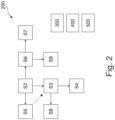
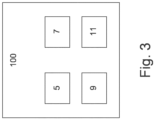
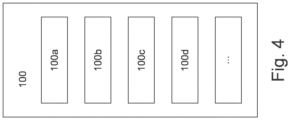
- the system comprises a plurality of control sub-systems, wherein each of the plurality of control sub-systems is addable to and/or removable from the distributed control system, wherein the Al based alarm control system is an Al based alarm control sub-system.
- each control sub-system may be understood as a "feature” or "service”, which could be selectively included in the system.
- Each control sub-system may be licensed, installed/uninstalled and run/stopped individually, depending on which services a user may desire. For instance, the respective subsystems may be selectable as options for installing in a system installer tool.
- the plurality of control subsystems may include basic or mandatory services, which are always included and run, and additional optional services.
- the Al based alarm control sub-system may be provided as an optional service to allow users to license and use this feature for enhancing the control of the distributed control system.
- the Al based alarm control sub-system may be provided in the installer tool in form of an "Al prediction alarm” installer feature as part of a larger installer feature that could include also different further additional Al-based features, such as an anomaly detection.
- a corresponding service may be listed as part of a service status viewer, indicating the selected/licensed and installed services. This may provide an improved monitoring and managing of the selected services for a user.
Landscapes
- Physics & Mathematics (AREA)
- General Physics & Mathematics (AREA)
- Engineering & Computer Science (AREA)
- Business, Economics & Management (AREA)
- Emergency Management (AREA)
- Computer Security & Cryptography (AREA)
- Human Computer Interaction (AREA)
- Automation & Control Theory (AREA)
- Testing And Monitoring For Control Systems (AREA)
Priority Applications (3)
| Application Number | Priority Date | Filing Date | Title |
|---|---|---|---|
| EP23200606.4A EP4530782A1 (de) | 2023-09-28 | 2023-09-28 | Ki-basierte alarmvorhersage in prozesssteuerungssystemen |
| CN202411350466.4A CN119717699A (zh) | 2023-09-28 | 2024-09-26 | 过程控制系统中的基于ai的警报预测 |
| US18/899,108 US20250111767A1 (en) | 2023-09-28 | 2024-09-27 | AI-Based Alarm Prediction in Process Control Systems |
Applications Claiming Priority (1)
| Application Number | Priority Date | Filing Date | Title |
|---|---|---|---|
| EP23200606.4A EP4530782A1 (de) | 2023-09-28 | 2023-09-28 | Ki-basierte alarmvorhersage in prozesssteuerungssystemen |
Publications (1)
| Publication Number | Publication Date |
|---|---|
| EP4530782A1 true EP4530782A1 (de) | 2025-04-02 |
Family
ID=88236425
Family Applications (1)
| Application Number | Title | Priority Date | Filing Date |
|---|---|---|---|
| EP23200606.4A Pending EP4530782A1 (de) | 2023-09-28 | 2023-09-28 | Ki-basierte alarmvorhersage in prozesssteuerungssystemen |
Country Status (3)
| Country | Link |
|---|---|
| US (1) | US20250111767A1 (de) |
| EP (1) | EP4530782A1 (de) |
| CN (1) | CN119717699A (de) |
Citations (2)
| Publication number | Priority date | Publication date | Assignee | Title |
|---|---|---|---|---|
| US20220382267A1 (en) * | 2021-05-28 | 2022-12-01 | Yokogawa Electric Corporation | Information processing device, display control method, and computer-readable recording medium |
| US20230034769A1 (en) * | 2020-04-16 | 2023-02-02 | Abb Schweiz Ag | Method for an Intelligent Alarm Management in Industrial Processes |
Family Cites Families (2)
| Publication number | Priority date | Publication date | Assignee | Title |
|---|---|---|---|---|
| US9959734B1 (en) * | 2017-04-24 | 2018-05-01 | John Figura | Predictive shock alert warning system for use in bodies of water |
| US12450519B2 (en) * | 2021-08-31 | 2025-10-21 | Oracle International Corporation | Root cause analysis for deterministic machine learning model |
-
2023
- 2023-09-28 EP EP23200606.4A patent/EP4530782A1/de active Pending
-
2024
- 2024-09-26 CN CN202411350466.4A patent/CN119717699A/zh active Pending
- 2024-09-27 US US18/899,108 patent/US20250111767A1/en active Pending
Patent Citations (2)
| Publication number | Priority date | Publication date | Assignee | Title |
|---|---|---|---|---|
| US20230034769A1 (en) * | 2020-04-16 | 2023-02-02 | Abb Schweiz Ag | Method for an Intelligent Alarm Management in Industrial Processes |
| US20220382267A1 (en) * | 2021-05-28 | 2022-12-01 | Yokogawa Electric Corporation | Information processing device, display control method, and computer-readable recording medium |
Also Published As
| Publication number | Publication date |
|---|---|
| CN119717699A (zh) | 2025-03-28 |
| US20250111767A1 (en) | 2025-04-03 |
Similar Documents
| Publication | Publication Date | Title |
|---|---|---|
| EP3500896B1 (de) | Verfahren zur überwachung und steuerung eines industriellen prozesses und prozesssteuerungssystem | |
| US10809704B2 (en) | Process performance issues and alarm notification using data analytics | |
| US10824963B2 (en) | Alarm handling system and method in plant process automation | |
| CN101946216B (zh) | 监测系统中用于警报抑制的设备和方法 | |
| CN107431717B (zh) | 用于网络安全风险事件的自动处置的装置和方法 | |
| JP6529690B1 (ja) | 支援装置、学習装置、及びプラント運転条件設定支援システム | |
| EP3627263A1 (de) | System und verfahren zur überwachung des technischen status einer technischen ausrüstung | |
| JP2014167706A (ja) | 監視装置および制御システム | |
| CN115427907B (zh) | 用于工业过程中的智能报警管理方法 | |
| EP3731201B1 (de) | Unterstützungssystem für einen bediener | |
| JP4635194B2 (ja) | 異常検知装置 | |
| CN106468909B (zh) | 过程控制警报审核 | |
| JP5827534B2 (ja) | 監視装置および監視方法 | |
| EP4530782A1 (de) | Ki-basierte alarmvorhersage in prozesssteuerungssystemen | |
| US20240211895A1 (en) | Maintenance scheduling device and maintenance scheduling method | |
| CN115803701A (zh) | 监视真空系统和控制对真空系统的监视 | |
| CN111289036A (zh) | 设备故障预警方法、装置、设备及系统 | |
| JP2021047523A (ja) | 異常予兆検知装置、方法及びプログラム | |
| EP3109806A1 (de) | Verfahren zur erzeugung von prognostischen warnungen und mensch-maschine-schnittstellenvorrichtung dafür | |
| JP7641538B2 (ja) | 異常検知装置、異常検知プログラム、及び学習装置 | |
| JP7416015B2 (ja) | 情報処理装置、アラーム予測方法およびアラーム予測プログラム | |
| JP7232028B2 (ja) | 運転監視装置および方法 | |
| CN118897522B (zh) | 一种基于虚拟键盘的智能报警信息管理终端控制方法 | |
| CN118859887B (zh) | 兼容多个dcs系统的自动化监控平台和方法 | |
| JP2006277247A (ja) | プラント異常監視システム及びプラント異常監視方法 |
Legal Events
| Date | Code | Title | Description |
|---|---|---|---|
| PUAI | Public reference made under article 153(3) epc to a published international application that has entered the european phase |
Free format text: ORIGINAL CODE: 0009012 |
|
| STAA | Information on the status of an ep patent application or granted ep patent |
Free format text: STATUS: THE APPLICATION HAS BEEN PUBLISHED |
|
| AK | Designated contracting states |
Kind code of ref document: A1 Designated state(s): AL AT BE BG CH CY CZ DE DK EE ES FI FR GB GR HR HU IE IS IT LI LT LU LV MC ME MK MT NL NO PL PT RO RS SE SI SK SM TR |
|
| STAA | Information on the status of an ep patent application or granted ep patent |
Free format text: STATUS: REQUEST FOR EXAMINATION WAS MADE |
|
| 17P | Request for examination filed |
Effective date: 20250826 |