EP4530442A2 - Reduced clearance interface between a fluid device and a rotating structure for a geartrain - Google Patents
Reduced clearance interface between a fluid device and a rotating structure for a geartrain Download PDFInfo
- Publication number
- EP4530442A2 EP4530442A2 EP24203724.0A EP24203724A EP4530442A2 EP 4530442 A2 EP4530442 A2 EP 4530442A2 EP 24203724 A EP24203724 A EP 24203724A EP 4530442 A2 EP4530442 A2 EP 4530442A2
- Authority
- EP
- European Patent Office
- Prior art keywords
- support structure
- shaft
- rotor
- geartrain
- engine assembly
- Prior art date
- Legal status (The legal status is an assumption and is not a legal conclusion. Google has not performed a legal analysis and makes no representation as to the accuracy of the status listed.)
- Pending
Links
Images





Classifications
-
- F—MECHANICAL ENGINEERING; LIGHTING; HEATING; WEAPONS; BLASTING
- F01—MACHINES OR ENGINES IN GENERAL; ENGINE PLANTS IN GENERAL; STEAM ENGINES
- F01D—NON-POSITIVE DISPLACEMENT MACHINES OR ENGINES, e.g. STEAM TURBINES
- F01D25/00—Component parts, details, or accessories, not provided for in, or of interest apart from, other groups
- F01D25/04—Antivibration arrangements
-
- F—MECHANICAL ENGINEERING; LIGHTING; HEATING; WEAPONS; BLASTING
- F01—MACHINES OR ENGINES IN GENERAL; ENGINE PLANTS IN GENERAL; STEAM ENGINES
- F01D—NON-POSITIVE DISPLACEMENT MACHINES OR ENGINES, e.g. STEAM TURBINES
- F01D25/00—Component parts, details, or accessories, not provided for in, or of interest apart from, other groups
- F01D25/08—Cooling; Heating; Heat-insulation
- F01D25/12—Cooling
-
- F—MECHANICAL ENGINEERING; LIGHTING; HEATING; WEAPONS; BLASTING
- F01—MACHINES OR ENGINES IN GENERAL; ENGINE PLANTS IN GENERAL; STEAM ENGINES
- F01D—NON-POSITIVE DISPLACEMENT MACHINES OR ENGINES, e.g. STEAM TURBINES
- F01D25/00—Component parts, details, or accessories, not provided for in, or of interest apart from, other groups
- F01D25/16—Arrangement of bearings; Supporting or mounting bearings in casings
- F01D25/162—Bearing supports
-
- F—MECHANICAL ENGINEERING; LIGHTING; HEATING; WEAPONS; BLASTING
- F01—MACHINES OR ENGINES IN GENERAL; ENGINE PLANTS IN GENERAL; STEAM ENGINES
- F01D—NON-POSITIVE DISPLACEMENT MACHINES OR ENGINES, e.g. STEAM TURBINES
- F01D25/00—Component parts, details, or accessories, not provided for in, or of interest apart from, other groups
- F01D25/16—Arrangement of bearings; Supporting or mounting bearings in casings
- F01D25/162—Bearing supports
- F01D25/164—Flexible supports; Vibration damping means associated with the bearing
-
- F—MECHANICAL ENGINEERING; LIGHTING; HEATING; WEAPONS; BLASTING
- F01—MACHINES OR ENGINES IN GENERAL; ENGINE PLANTS IN GENERAL; STEAM ENGINES
- F01D—NON-POSITIVE DISPLACEMENT MACHINES OR ENGINES, e.g. STEAM TURBINES
- F01D25/00—Component parts, details, or accessories, not provided for in, or of interest apart from, other groups
- F01D25/18—Lubricating arrangements
-
- F—MECHANICAL ENGINEERING; LIGHTING; HEATING; WEAPONS; BLASTING
- F02—COMBUSTION ENGINES; HOT-GAS OR COMBUSTION-PRODUCT ENGINE PLANTS
- F02C—GAS-TURBINE PLANTS; AIR INTAKES FOR JET-PROPULSION PLANTS; CONTROLLING FUEL SUPPLY IN AIR-BREATHING JET-PROPULSION PLANTS
- F02C7/00—Features, components parts, details or accessories, not provided for in, or of interest apart form groups F02C1/00 - F02C6/00; Air intakes for jet-propulsion plants
- F02C7/06—Arrangements of bearings; Lubricating
-
- F—MECHANICAL ENGINEERING; LIGHTING; HEATING; WEAPONS; BLASTING
- F02—COMBUSTION ENGINES; HOT-GAS OR COMBUSTION-PRODUCT ENGINE PLANTS
- F02C—GAS-TURBINE PLANTS; AIR INTAKES FOR JET-PROPULSION PLANTS; CONTROLLING FUEL SUPPLY IN AIR-BREATHING JET-PROPULSION PLANTS
- F02C7/00—Features, components parts, details or accessories, not provided for in, or of interest apart form groups F02C1/00 - F02C6/00; Air intakes for jet-propulsion plants
- F02C7/36—Power transmission arrangements between the different shafts of the gas turbine plant, or between the gas-turbine plant and the power user
-
- F—MECHANICAL ENGINEERING; LIGHTING; HEATING; WEAPONS; BLASTING
- F16—ENGINEERING ELEMENTS AND UNITS; GENERAL MEASURES FOR PRODUCING AND MAINTAINING EFFECTIVE FUNCTIONING OF MACHINES OR INSTALLATIONS; THERMAL INSULATION IN GENERAL
- F16H—GEARING
- F16H57/00—General details of gearing
- F16H57/02—Gearboxes; Mounting gearing therein
- F16H57/029—Gearboxes; Mounting gearing therein characterised by means for sealing the gearboxes, e.g. to improve airtightness
-
- F—MECHANICAL ENGINEERING; LIGHTING; HEATING; WEAPONS; BLASTING
- F16—ENGINEERING ELEMENTS AND UNITS; GENERAL MEASURES FOR PRODUCING AND MAINTAINING EFFECTIVE FUNCTIONING OF MACHINES OR INSTALLATIONS; THERMAL INSULATION IN GENERAL
- F16H—GEARING
- F16H57/00—General details of gearing
- F16H57/04—Features relating to lubrication or cooling or heating
- F16H57/0467—Elements of gearings to be lubricated, cooled or heated
- F16H57/0469—Bearings or seals
- F16H57/0471—Bearing
-
- F—MECHANICAL ENGINEERING; LIGHTING; HEATING; WEAPONS; BLASTING
- F05—INDEXING SCHEMES RELATING TO ENGINES OR PUMPS IN VARIOUS SUBCLASSES OF CLASSES F01-F04
- F05D—INDEXING SCHEME FOR ASPECTS RELATING TO NON-POSITIVE-DISPLACEMENT MACHINES OR ENGINES, GAS-TURBINES OR JET-PROPULSION PLANTS
- F05D2260/00—Function
- F05D2260/40—Transmission of power
- F05D2260/403—Transmission of power through the shape of the drive components
- F05D2260/4031—Transmission of power through the shape of the drive components as in toothed gearing
- F05D2260/40311—Transmission of power through the shape of the drive components as in toothed gearing of the epicyclical, planetary or differential type
-
- F—MECHANICAL ENGINEERING; LIGHTING; HEATING; WEAPONS; BLASTING
- F05—INDEXING SCHEMES RELATING TO ENGINES OR PUMPS IN VARIOUS SUBCLASSES OF CLASSES F01-F04
- F05D—INDEXING SCHEME FOR ASPECTS RELATING TO NON-POSITIVE-DISPLACEMENT MACHINES OR ENGINES, GAS-TURBINES OR JET-PROPULSION PLANTS
- F05D2260/00—Function
- F05D2260/96—Preventing, counteracting or reducing vibration or noise
-
- F—MECHANICAL ENGINEERING; LIGHTING; HEATING; WEAPONS; BLASTING
- F05—INDEXING SCHEMES RELATING TO ENGINES OR PUMPS IN VARIOUS SUBCLASSES OF CLASSES F01-F04
- F05D—INDEXING SCHEME FOR ASPECTS RELATING TO NON-POSITIVE-DISPLACEMENT MACHINES OR ENGINES, GAS-TURBINES OR JET-PROPULSION PLANTS
- F05D2260/00—Function
- F05D2260/98—Lubrication
-
- F—MECHANICAL ENGINEERING; LIGHTING; HEATING; WEAPONS; BLASTING
- F16—ENGINEERING ELEMENTS AND UNITS; GENERAL MEASURES FOR PRODUCING AND MAINTAINING EFFECTIVE FUNCTIONING OF MACHINES OR INSTALLATIONS; THERMAL INSULATION IN GENERAL
- F16H—GEARING
- F16H57/00—General details of gearing
- F16H57/04—Features relating to lubrication or cooling or heating
- F16H57/042—Guidance of lubricant
- F16H57/0421—Guidance of lubricant on or within the casing, e.g. shields or baffles for collecting lubricant, tubes, pipes, grooves, channels or the like
- F16H57/0424—Lubricant guiding means in the wall of or integrated with the casing, e.g. grooves, channels, holes
-
- F—MECHANICAL ENGINEERING; LIGHTING; HEATING; WEAPONS; BLASTING
- F16—ENGINEERING ELEMENTS AND UNITS; GENERAL MEASURES FOR PRODUCING AND MAINTAINING EFFECTIVE FUNCTIONING OF MACHINES OR INSTALLATIONS; THERMAL INSULATION IN GENERAL
- F16H—GEARING
- F16H57/00—General details of gearing
- F16H57/04—Features relating to lubrication or cooling or heating
- F16H57/042—Guidance of lubricant
- F16H57/0421—Guidance of lubricant on or within the casing, e.g. shields or baffles for collecting lubricant, tubes, pipes, grooves, channels or the like
- F16H57/0426—Means for guiding lubricant into an axial channel of a shaft
-
- F—MECHANICAL ENGINEERING; LIGHTING; HEATING; WEAPONS; BLASTING
- F16—ENGINEERING ELEMENTS AND UNITS; GENERAL MEASURES FOR PRODUCING AND MAINTAINING EFFECTIVE FUNCTIONING OF MACHINES OR INSTALLATIONS; THERMAL INSULATION IN GENERAL
- F16H—GEARING
- F16H57/00—General details of gearing
- F16H57/04—Features relating to lubrication or cooling or heating
- F16H57/042—Guidance of lubricant
- F16H57/043—Guidance of lubricant within rotary parts, e.g. axial channels or radial openings in shafts
-
- F—MECHANICAL ENGINEERING; LIGHTING; HEATING; WEAPONS; BLASTING
- F16—ENGINEERING ELEMENTS AND UNITS; GENERAL MEASURES FOR PRODUCING AND MAINTAINING EFFECTIVE FUNCTIONING OF MACHINES OR INSTALLATIONS; THERMAL INSULATION IN GENERAL
- F16H—GEARING
- F16H57/00—General details of gearing
- F16H57/04—Features relating to lubrication or cooling or heating
- F16H57/048—Type of gearings to be lubricated, cooled or heated
- F16H57/0482—Gearings with gears having orbital motion
- F16H57/0486—Gearings with gears having orbital motion with fixed gear ratio
Definitions
- This invention relates generally to a turbine engine and, more particularly, to a geartrain for the turbine engine.
- an engine assembly includes a geartrain, a rotating structure, a support structure and a bearing.
- the rotating structure is rotatable about an axis.
- the rotating structure forms a first component of the geartrain.
- the rotating structure includes a shaft and a rotating structure passage.
- the support structure circumscribes the shaft with a plenum, where the plenum is formed by and radially between the support structure and the shaft.
- the support structure includes a support structure passage.
- the plenum fluidly couples the support structure passage to the rotating structure passage.
- the bearing rotatably couples the shaft to the support structure.
- another engine assembly includes a geartrain, a rotating structure, a support structure and a bearing.
- the rotating structure is rotatable about an axis.
- the rotating structure forms a first component of the geartrain, and the rotating structure includes a shaft.
- the support structure circumscribes the shaft.
- the support structure includes a fluid damper radially outboard of and engaged with the shaft.
- the fluid damper is configured to damp movement of the shaft.
- the bearing is radially between the shaft and the support structure. The bearing rotatably couples the shaft to the support structure.
- another engine assembly includes a bladed rotor, a rotating structure, a geartrain, a rotating assembly, a support structure, a bearing and a lubricant circuit.
- the rotating structure is rotatable about an axis.
- the rotating structure includes a rotating structure passage.
- the rotating assembly includes a turbine rotor.
- the rotating assembly is configured to drive rotation of the bladed rotor and the rotating structure through the geartrain.
- the support structure circumscribes the rotating structure with a plenum, wherein the plenum is formed by and radially between the support structure and the rotating structure.
- the support structure includes a support structure passage. The plenum fluidly couples the support structure passage to the rotating structure passage.
- the bearing is radially between the rotating structure and the support structure.
- the bearing rotatably couples the rotating structure to the support structure.
- the lubricant circuit is configured to deliver lubricant to the geartrain and/or the bearing.
- the lubricant circuit includes the support structure passage, the plenum and the rotating structure passage.
- a lubricant plenum may extend radially outward from the shaft and into the fluid damper.
- the geartrain may be configured as or otherwise include an epicyclic gear system.
- the first component of the geartrain may be configured as or otherwise include a carrier of the epicyclic gear system.
- the engine assembly may also include a lubricant circuit configured to deliver lubricant to the geartrain.
- the lubricant circuit may include the support structure passage, the plenum and the rotating structure passage.
- the engine assembly may also include a lubricant circuit configured to deliver lubricant to the bearing.
- the lubricant circuit may include the support structure passage, the plenum and the rotating structure passage.
- the engine assembly may also include a lubricant conduit coupled to the support structure.
- the lubricant conduit may be configured to direct lubricant through the support structure passage and the plenum into the rotating structure passage.
- a portion of the support structure forming the plenum may be configured as a fluid damper for the shaft.
- the engine assembly may also include a first seal element and a second seal element.
- the first seal element may be radially between and engage the shaft and the support structure.
- the second seal element may be radially between and engage the shaft and the support structure.
- the plenum may extend axially between the first seal element and the second seal element.
- the plenum may be configured as or otherwise include an annular channel radially outboard and adjacent the shaft.
- the annular channel may extend radially into and axially within the support structure.
- the bearing may be configured as or otherwise include a rolling element bearing.
- the bearing may include an inner race, an outer race and a plurality of bearing elements.
- the inner race may be mounted to the shaft.
- the outer race may be mounted to the support structure.
- the bearing elements may be arranged circumferentially about the axis in an array. Each of the bearing elements may be radially between and engageable with the inner race and the outer race.
- the engine assembly may also include a stationary structure.
- the support structure may be connected to the stationary structure through a compliant coupling.
- the compliant coupling may be configured to facilitate radial shifting between the support structure and the stationary structure.
- the engine assembly may also include a radial stop connected to the stationary structure.
- the radial stop is configured to limit radial movement of the support structure.
- the radial stop may circumscribe the stationary structure and may be axially aligned with the bearing.
- a portion of the radial stop may form a fluid damper for the support structure.
- the fluid damper may be radially outboard of and axially overlap the bearing.
- the geartrain may be configured as or otherwise include an epicyclic gear system.
- the geartrain may be configured as or otherwise include a plurality of interconnected gear systems.
- the geartrain may include a sun gear, a ring gear, a plurality of intermediate gears and a carrier.
- the ring gear may circumscribe the sun gear.
- the intermediate gears may be arranged circumferentially about the axis in an array.
- Each of the intermediate gears may be radially between and meshed with the sun gear and the ring gear.
- Each of the intermediate gears may be rotatably mounted to the carrier.
- the first component of the geartrain may be configured as or otherwise include the carrier.
- the engine assembly may also include a propulsor rotor and a rotating assembly.
- the rotating assembly may include a turbine rotor.
- the rotating assembly may be configured to drive rotation of the propulsor rotor through the geartrain.
- the present invention may include any one or more of the individual features disclosed above and/or below alone or in any combination thereof.
- FIG. 1 schematically illustrates a propulsion system 20 for an aircraft.
- the aircraft may be an airplane, a helicopter, a drone (e.g., an unmanned aerial vehicle (UAV)), a spacecraft or any other manned or unmanned aerial vehicle or system.
- This aircraft may be configured as a vertical take-off and landing (VTOL) aircraft or a short take-off and vertical landing (STOVL) aircraft.
- the first mode may be a horizontal flight mode (e.g., a forward flight mode) where the first direction propulsion is substantially horizontal propulsive thrust; e.g., within five degrees (5°), ten degrees (10°), etc. of a horizontal axis.
- the second mode may be a vertical flight and/or hover mode where the second direction propulsion is substantially vertical propulsive lift; e.g., within five degrees (5°), ten degrees (10°), etc. of a vertical axis.
- the aircraft propulsion system may also be configured to generate both the first direction propulsion (e.g., horizontal propulsion) and the second direction propulsion (e.g., vertical propulsion) during a third mode (e.g., a transition mode) of operation.
- the aircraft propulsion system 20 of FIG. 1 includes one or more bladed propulsor rotors such as, for example, at least one bladed first propulsor rotor 22 and at least one bladed second propulsor rotor 24.
- the aircraft propulsion system 20 of FIG. 1 also includes a gas turbine engine with a core 26 configured to rotatably drive the one or more propulsor rotors - the first propulsor rotor 22 and/or the second propulsor rotor 24.
- the first propulsor rotor 22 may be configured as a ducted rotor such as a fan rotor.
- the first propulsor rotor 22 may alternatively be configured as an open rotor (e.g., an un-ducted rotor) such as a propeller rotor, a pusher fan rotor or the like.
- the first propulsor rotor 22 of FIG. 1 is rotatable about a first rotor axis 28. This first rotor axis 28 is an axial centerline of the first propulsor rotor 22 and may be horizontal when the aircraft is on ground and/or during level aircraft flight.
- the first propulsor rotor 22 includes at least a first rotor disk 29 (or a hub) and a plurality of first rotor blades 30 (one visible in FIG. 1 ); e.g., fan blades.
- the first rotor blades 30 are distributed circumferentially around the first rotor disk 29 in an annular array.
- Each of the first rotor blades 30 is connected to and projects radially (relative to the first rotor axis 28) out from the first rotor disk 29.
- the second propulsor rotor 24 may be configured as an open rotor such as a propeller rotor or a helicopter (e.g., main) rotor.
- the second propulsor rotor 24 may alternatively be configured as a ducted rotor such as a fan rotor; e.g., see dashed line duct.
- the second propulsor rotor 24 of FIG. 1 is rotatable about a second rotor axis 32. This second rotor axis 32 is an axial centerline of the second propulsor rotor 24 and may be vertical when the aircraft is on the ground and/or during level aircraft flight.
- the second rotor axis 32 is angularly offset from the first rotor axis 28 by an included angle 34; e.g., an acute angle or a right angle.
- This included angle 34 may be between sixty degrees (60°) and ninety degrees (90°); however, the present disclosure is not limited to such an exemplary relationship.
- the second propulsor rotor 24 includes at least a second rotor disk 36 (or a hub) and a plurality of second rotor blades 38; e.g., open rotor blades.
- the second rotor blades 38 are distributed circumferentially around the second rotor disk 36 in an annular array. Each of the second rotor blades 38 is connected to and projects radially (relative to the second rotor axis 32) out from the second rotor disk 36.
- the engine core 26 extends axially along a core axis 40 from a forward, upstream airflow inlet 42 into the engine core 26 to an aft, downstream combustion products exhaust 44 from the engine core 26.
- the core axis 40 may be an axial centerline of the engine core 26 and may be horizontal when the aircraft is on the ground and/or during level aircraft flight. This core axis 40 may be parallel (e.g., coaxial) with the first rotor axis 28 and, thus, angularly offset from the second rotor axis 32.
- the engine core 26 of FIG. 1 includes a compressor section 46, a combustor section 47 and a turbine section 48.
- the turbine section 48 of FIG. 1 includes a high pressure turbine (HPT) section 48A and a low pressure turbine (LPT) section 48B (also sometimes referred to as a power turbine section).
- HPPT high pressure turbine
- LPT low pressure turbine
- the engine sections 46-48B may be arranged sequentially along the core axis 40 within an engine housing 50.
- This engine housing 50 includes an inner case 52 (e.g., a core case) and an outer case 54 (e.g., a fan case).
- the inner case 52 may house one or more of the engine sections 46-48B; e.g., the engine core 26.
- the outer case 54 may house the first propulsor rotor 22.
- the outer case 54 of FIG. 1 also axially overlaps and extends circumferentially about (e.g., completely around) the inner case 52 thereby at least partially forming a (e.g., annular) bypass flowpath 56 radially between the inner case 52 and the outer case 54.
- Each of the engine sections 46, 48A, 48B includes a bladed rotor 58-60 within that respective engine section 46, 48A, 48B.
- Each of these engine rotors 58-60 includes a plurality of rotor blades arranged circumferentially around and connected to one or more respective rotor disks (or hubs).
- the rotor blades may be formed integral with or mechanically fastened, welded, brazed and/or otherwise attached to the respective rotor disk(s) (or hub(s)).
- the compressor rotor 58 is connected to the HPT rotor 59 through a high speed shaft 62. At least (or only) these engine components 58, 59 and 62 collectively form a high speed rotating assembly 64; e.g., a high speed spool. This high speed rotating assembly 64 is rotatable about the core axis 40.
- the LPT rotor 60 is connected to a low speed shaft 66. At least (or only) these engine components 60 and 66 collectively form a low speed rotating assembly 68; e.g., a low speed spool. This low speed rotating assembly 68 is rotatable about the core axis 40.
- the low speed rotating assembly 68 and, more particularly, its low speed shaft 66 may project axially through a bore of the high speed rotating assembly 64 and its high speed shaft 62.
- the aircraft propulsion system 20 of FIG. 1 and its turbine engine include a drivetrain 70 that couples the low speed rotating assembly 68 to the first propulsor rotor 22 and that couples the low speed rotating assembly 68 to the second propulsor rotor 24.
- the drivetrain 70 of FIG. 1 includes a geartrain 72, a transmission 76 and a gearing 78; e.g., bevel gearing.
- the drivetrain 70 of FIG. 1 also includes one or more shafts 80 and 82 and/or other intermediate torque transmission devices for coupling the low speed rotating assembly 68 and its low speed shaft 66 to the second propulsor rotor 24.
- the drivetrain 70 may also include one or more intermediate torque transmission devices for coupling the geartrain 72 to the first propulsor rotor 22; e.g., a first propulsor shaft 84.
- An input into the geartrain 72 is coupled to the low speed rotating assembly 68 and its low speed shaft 66, where the low speed rotating assembly 68 forms a power input for the geartrain 72.
- An output from the geartrain 72 is coupled to the first propulsor rotor 22 through the first propulsor shaft 84, where the first propulsor rotor 22 forms a power output (e.g., load) for the geartrain 72.
- An input into the transmission 76 may be coupled to the low speed rotating assembly 68 independent of the geartrain 72.
- the low speed rotating assembly 68 for example, may be coupled to the input of the geartrain 72 and the input of the transmission 76 in parallel.
- the input of the transmission 76 of FIG. 1 is (e.g., directly or indirectly) connected to the LPT rotor 60 through the low speed shaft 66; e.g., without passing through the geartrain 72.
- An output from the transmission 76 is connected to an input into the gearing 78 through the transmission output shaft 80.
- the transmission 76 may be configured to selectively couple (e.g., transfer mechanical power between) the low speed rotating assembly 68 and the transmission output shaft 80.
- the transmission 76 may be configured to decouple the low speed rotating assembly 68 from the transmission output shaft 80, thereby decoupling the low speed rotating assembly 68 from the second propulsor rotor 24.
- the transmission 76 may be configured to couple the low speed rotating assembly 68 with the transmission output shaft 80, thereby coupling the low speed rotating assembly 68 with the second propulsor rotor 24.
- the transmission 76 may be configured as a clutched transmission or a clutchless transmission.
- An output from the gearing 78 is connected to the second propulsor rotor 24 through the second propulsor shaft 82.
- This gearing 78 provides a coupling between the transmission output shaft 80 rotating about the axis 28, 40 and the second propulsor shaft 82 rotating about the second rotor axis 32.
- the gearing 78 may also provide a speed change mechanism between the transmission output shaft 80 and the second propulsor shaft 82.
- the gearing 78 may alternatively provide a 1:1 rotational coupling between the transmission output shaft 80 and the second propulsor shaft 82 such that these shafts 80 and 82 rotate at a common (e.g., the same) rotational velocity.
- the gearing 78 and the transmission output shaft 80 may be omitted where the functionality of the gearing 78 is integrated into the transmission 76.
- the transmission 76 may be omitted where decoupling of the second propulsor rotor 24 is not required and/or where an optional additional speed change between the low speed rotating assembly 68 and the second propulsor rotor 24 is not required.
- core air During operation of the aircraft propulsion system 20, air enters the engine core 26 through the core inlet 42. This air is directed into a (e.g., annular) core flowpath 86, which core flowpath 86 extends sequentially through the compressor section 46, the combustor section 47, the HPT section 48A and the LPT section 48B from the core inlet 42 to the core exhaust 44.
- the air within this core flowpath 86 may be referred to as core air.
- the core air is compressed by the compressor rotor 58 and directed into a (e.g., annular) combustion chamber 88 of a (e.g., annular) combustor 90 in the combustor section 47.
- Fuel is injected into the combustion chamber 88 through one or more fuel injectors 92 (one visible in FIG. 1 ) and mixed with the compressed core air to provide a fuel-air mixture.
- This fuel-air mixture is ignited and combustion products thereof flow through and sequentially cause the HPT rotor 59 and the LPT rotor 60 to rotate.
- the rotation of the HPT rotor 59 drives rotation of the high speed rotating assembly 64 and its compressor rotor 58.
- the rotation of the LPT rotor 60 drives rotation of the low speed rotating assembly 68.
- the rotation of the low speed rotating assembly 68 drives rotation of the first propulsor rotor 22 through the geartrain 72 during one or more modes of operation; e.g., the first, the second and the third modes of operation.
- the rotation of the low speed rotating assembly 68 drives rotation of the second propulsor rotor 24 (e.g., independent of the geartrain 72) during one or more modes of operation; e.g., the second and the third modes of operation.
- the transmission 76 may decouple the low speed rotating assembly 68 from the second propulsor rotor 24 such that the low speed rotating assembly 68 does not drive rotation of the second propulsor rotor 24.
- the second propulsor rotor 24 may thereby be stationary (or windmill) during the first mode of operation.
- the rotation of the first propulsor rotor 22 propels bypass air (separate from the core air) through the aircraft propulsion system 20 and its bypass flowpath 56 to provide the first direction propulsion; e.g., the forward, horizontal thrust.
- the rotation of the second propulsor rotor 24 propels additional air (separate from the core air and the bypass air) to provide the second direction propulsion; e.g., vertical lift.
- the aircraft may thereby takeoff, land and/or otherwise hover during the second and the third modes of operation, and the aircraft may fly forward or otherwise move during the first and the third modes of operation.
- the bypass air may also flow through the bypass flowpath 56 during the second and the third modes of operation; however, a quantity of the bypass air flowing through the bypass flowpath 56 during the second mode of operation may be de minimis as described below in further detail.
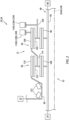
- the geartrain 72 may include multiple (e.g., epicyclic) interconnected gear systems 94 and 96.
- the first gear system 94 has a plurality of first gear system components including a first sun gear 98, a first ring gear 100, a plurality of first intermediate gears 102 and a first carrier 104.
- the first sun gear 98 is rotatable about a rotational axis 106 of the geartrain 72, which rotational axis 106 may be parallel (e.g., coaxial) with the axis 28, 40.
- the first ring gear 100 circumscribes the first sun gear 98 and the first intermediate gears 102.
- the first ring gear 100 is rotatable about the axis 28, 40, 106.
- the first intermediate gears 102 are arranged circumferentially about the axis 28, 40, 106 and the first sun gear 98 in an array.
- Each of the first intermediate gears 102 is disposed radially between and meshed with the first sun gear 98 and the first ring gear 100.
- Each of the first intermediate gears 102 is rotatably mounted to the first carrier 104.
- the first carrier 104 is rotatable about the axis 28, 40, 106.
- the second gear system 96 has a plurality of second gear system components including a second sun gear 108, a second ring gear 110, a plurality of second intermediate gears 112 and a second carrier 114.
- the second sun gear 108 is rotatable about the axis 28, 40, 106.
- the second ring gear 110 circumscribes the second sun gear 108 and the second intermediate gears 112.
- the second ring gear 110 is rotatable about the axis 28, 40, 106.
- the second intermediate gears 112 are arranged circumferentially about the axis 28, 40, 106 and the second sun gear 108 in an array.
- Each of the second intermediate gears 112 is disposed radially between and meshed with the second sun gear 108 and the second ring gear 110.
- Each of the second intermediate gears 112 is rotatably mounted to the second carrier 114.
- the second carrier 114 is rotatable about the axis 28, 40, 106.
- This second carrier 114 is coupled to (e.g., via an inter-gear system shaft and/or another drive element) and rotatable with the first ring gear 100, where the second carrier 114 and the first ring gear 100 are configured to rotate at a common rotational velocity.
- the first propulsor rotor 22 is coupled to the geartrain 72 and its second gear system 96 through the second ring gear 110.
- the first propulsor shaft 84 (and/or another drive element), for example, may couple the first propulsor rotor 22 to the second ring gear 110.
- the first propulsor shaft 84 of FIG. 2 extends between and is connected to the first propulsor rotor 22 and the second ring gear 110.
- the low speed rotating assembly 68 and its low speed shaft 66 are coupled to the geartrain 72 and its first gear system 94 through the first sun gear 98.
- the low speed rotating assembly 68 and its low speed shaft 66 are also coupled to the geartrain 72 and its second gear system 96 through the second sun gear 108.
- the first sun gear 98 and the second sun gear 108 of FIG. 2 are each (e.g., independently) connected to the low speed rotating assembly 68 and its low speed shaft 66.
- the low speed rotating assembly 68 and its LPT rotor 60 are configured to (e.g., independently) drive rotation of the first sun gear 98 and the second sun gear 108, where the first sun gear 98, the second sun gear 108 and the LPT rotor 60 are rotate at a common rotational velocity.
- the aircraft propulsion system 20 and its drivetrain 70 may include one or more brakes 116A and 116B (generally referred to as " 116") and/or one or more lock devices 118A and 118B (generally referred to as "118").
- the first brake 116A and/or the first lock device 118A may be located at a first location 120A, or another suitable location.
- the second brake 116B and/or the second lock device 118B may be located at a second location 120B, or another suitable location.
- the first brake 116A of FIG. 2 is configured to brake (e.g., slow and/or stop) rotation of the first carrier 104 about the axis 28, 40, 106.
- the second lock device 118B is configured to lock (e.g., fix, prevent) rotation of the first ring gear 100 and the second carrier 114 about the axis 28, 40, 106, for example, following the braking of the second carrier 114 to a zero rotational speed about the axis 28, 40, 106 using the second brake 116B.
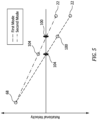
- the second carrier 114 is rotationally fixed (e.g., during the second mode of operation of FIG. 5 )
- a rotational speed of the first propulsor rotor 22 may decrease (compared to when the second carrier 114 is free to rotate).
- Reducing the rotational speed of the first propulsor rotor 22 during, for example, the second mode of operation reduces or substantially eliminates (e.g., de minimis ) the first direction propulsive thrust generated by the first propulsor rotor 22.
- Reducing first propulsor rotor thrust may, in turn, increase power available for driving rotation of the second propulsor rotor 24 and/or facilitate substantial second direction aircraft movement; e.g., without first direction aircraft movement.
- maintaining some rotation of the first propulsor rotor 22 may maintain lubrication of one or more bearings (e.g., bearings 122 in FIG. 2 ) supporting the first propulsor rotor 22 and/or prevent bearing related damage.
- shock loads may damage one of more internal components of the bearing.
- bearing damage may include, but are not limited to, brinelling and false brinelling.
- Maintaining some rotation of the first propulsor rotor 22 of FIG. 1 may also or alternatively prevent an exhaust backflow through the bypass flowpath 56 into the core inlet 42. Maintaining some rotation of the first propulsor rotor 22 may still also or alternatively prevent debris (e.g., sand, dirt, dust, etc.) from entering the core inlet 42 during the second mode of operation where the aircraft is more likely to be near the ground; e.g., for landing or takeoff.
- debris e.g., sand, dirt, dust, etc.
- the second brake 116B of FIG. 2 is configured to brake (e.g., slow and/or stop) rotation of the first ring gear 100 about the axis 28, 40, 106 and, thus, rotation of the second carrier 114 about the axis 28, 40, 106.
- the first lock device 118A is configured to lock (e.g., fix, prevent) rotation of the first carrier 104 about the axis 28, 40, 106.
- the geartrain 72 and its first gear system 94 and its second gear system 96 are configured to transfer additional power from the low speed rotating assembly 68 and its LPT rotor 60 to the first propulsor rotor 22 and any drivetrain element(s) therebetween (when included).
- This power transfer may be substantially all (e.g., minus losses in the drivetrain 70) of the power output from the low speed rotating assembly 68 and its LPT rotor 60 when the second propulsor rotor 24 is rotationally decoupled from the low speed rotating assembly 68; e.g., using the transmission 76 of FIG. 1 .
- the geartrain 72 may thereby provide a multi-speed transmission between the low speed rotating assembly 68 and the first propulsor rotor 22, where a speed ratio between the low speed rotating assembly 68 and the first propulsor rotor 22 during the second mode is less than a speed ratio between the low speed rotating assembly 68 and the first propulsor rotor 22 during the first mode.
- the first lock device 118A may be disengaged and/or the first brake 116A may be released (if currently applied).
- the second propulsor rotor 24 may thereby begin to rotate along with the already rotating first propulsor rotor 22.
- the second lock device 118B may be disengaged and/or the second brake 116B may be released (if currently applied).
- the first propulsor rotor 22 may thereby begin to rotate faster along with the already rotating second propulsor rotor 24.
- the drivetrain 70 may transfer (e.g., all, minus losses in the drivetrain 70) the power output from the low speed rotating assembly 68 and its LPT rotor 60 to (a) the first propulsor rotor 22 and the drivetrain element(s) therebetween and (b) the second propulsor rotor 24 and the drivetrain element(s) therebetween (e.g., independent of the geartrain 72 and its first gear system 94 and its second gear system 96).
- the drivetrain 70 may transfer (e.g., all, minus losses in the drivetrain 70) the power output from the low speed rotating assembly 68 and its LPT rotor 60 to (a) the first propulsor rotor 22 and the drivetrain element(s) therebetween and (b) the second propulsor rotor 24 and the drivetrain element(s) therebetween (e.g., independent of the geartrain 72 and its first gear system 94 and its second gear system 96).
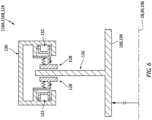
- the first brake 116A and/or the second brake 116B may each be configured as or otherwise include a disk brake 124.
- the disk brake 124 of FIG. 6 includes a brake rotor 126 and one or more brake pads 128.
- the brake rotor 126 is configured rotatable with the respective geartrain member 104, 100.
- the brake rotor 126 for example, may be connected to and rotatable with the respective geartrain member 104, 100, or another rotating element (directly or indirectly) rotatable with the respective geartrain member 104, 100.
- the brake pads 128 are anchored to a stationary structure 130, which may be part of the engine housing 50 and/or an airframe of the aircraft (see FIG. 1 ).
- the brake pads 128 may be actuated by one or more brake actuators 132 (e.g., hydraulic brake actuators) to move the brake pads 128 from an open position to a closed position.
- the brake pads 128 In the open position, the brake pads 128 are spaced from and do not engage (e.g., contact) the brake rotor 126 (see position of FIG. 6 ).
- the brake pads 128 In the closed position, the brake pads 128 engage (e.g., contact) and clamp onto (e.g., squeeze) the brake rotor 126. Frictional rubbing between the brake pads 128 and the brake rotor 126 is operable to brake rotation of the brake rotor 126 and, thus, the respective geartrain member 104, 100 (or another rotating element) connected thereto.
- first and the second brakes 116 of the present disclosure are not limited to such an exemplary disk brake configuration.
- first and/or the second brake 116B may alternatively be configured as another type of brake such as a drum brake or a set of clutch plates.
- the first lock device 118A and/or the second lock device 118B may each be configured as a splined lock device; e.g., a splined coupling.
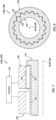
- the lock device 118 of FIG. 7 includes an inner lock element 134 (e.g., a splined shaft), an outer lock element 136 (e.g., a splined sleeve) and an actuator 138.
- the inner lock element 134 is rotatable about the axis 28, 40, 106.
- the outer lock element 136 is rotationally fixed about the axis 28, 40, 106.
- the actuator 138 is configured to move (e.g., axially translate) the outer lock element 136 along the axis 28, 40, 106 and the inner lock element 134 between an unlocked position (see dashed line in FIG. 7 ) and a locked position (see solid line in FIG. 7 ; see also FIG. 8 ).
- an unlocked position inner splines 140 of the outer lock element 136 are disengaged (e.g., spaced) from outer splines 142 of the inner lock element 134.
- the inner splines 140 of the outer lock element 136 are engaged (e.g., meshed) with the outer splines 142 of the inner lock element 134 (see also FIG. 8 ).
- the inner lock element 134 may rotate (e.g., freely, unencumbered by the outer lock element 136) about the axis 28, 40, 106.
- the outer lock element 136 is meshed with the inner lock element 134 and prevents rotation of the inner lock element 134 about the axis 28, 40, 106.
- the inner lock element 134 of the first lock device 118A may be configured as part of or may be attached (directly or indirectly) to the first carrier 104, or any other element rotatable therewith.
- the inner lock element 134 of the second lock device 118B may be configured as part of or may be attached (directly or indirectly) to the first ring gear 100, or any other element rotatable therewith. While the inner lock element 134 of FIGS. 7 and 8 is described as the rotating element and the outer lock element 136 is described as the rotationally fixed element, the operation of these elements may be switched in other embodiments.
- the inner lock element 134 may alternatively be configured as the rotationally fixed element and axially translatable by the actuator 138, and the outer lock element 136 may be configured as the rotating element.
- various other types of rotational lock devices are known in the art, and the present disclosure is not limited to any particular ones thereof.
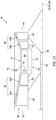
- FIG. 9 partially illustrates an assembly 144 for the aircraft propulsion system 20 and its turbine engine.
- This engine assembly 144 includes the geartrain 72, a rotating structure 146, a support structure 148 and a bearing 150.
- the engine assembly 144 of FIG. 9 also includes a fluid circuit 152 (e.g., a lubricant circuit) configured to deliver fluid (e.g., lubricant) to one or more components of the geartrain 72 and/or the bearing 150.
- a fluid circuit 152 e.g., a lubricant circuit
- the rotating structure 146 may form, or may otherwise be connected to and rotatable with, a component of the geartrain 72 / one of its gear systems 94, 96.
- the rotating structure 146 of FIG. 9 forms the first carrier 104.
- the rotating structure 146 of FIG. 9 in particular, includes the first carrier 104, a rotating structure shaft 154 and an internal rotating structure passage 156.
- the rotating structure shaft 154 is connected to (e.g., formed integral with or otherwise fixedly attached to) and rotatable with the first carrier 104.
- This rotating structure shaft 154 of FIG. 9 projects axially out (e.g., in an aft direction away from the geartrain 72 and towards the LPT rotor 60 of FIG. 1 ) from the first carrier 104 along the axis 28, 40, 106 to an axial distal end 158 of the rotating structure 146 and its rotating structure shaft 154.
- the rotating structure shaft 154 extends radially from a radial inner side 160 of the rotating structure 146 and its rotating structure shaft 154 to a radial outer side 162 of the rotating structure shaft 154.
- the rotating structure shaft 154 includes an inner bearing mount 164 and a fluid device land 166; e.g., a cylindrical outer surface.
- the inner bearing mount 164 is disposed axially between the fluid device land 166 and the rotating structure distal end 158; e.g., at or about the rotating structure distal end 158.
- the fluid device land 166 is disposed at the shaft outer side 162, axially between the inner bearing mount 164 and the first carrier 104.
- the rotating structure passage 156 includes an inlet port 168 (or multiple inlet ports arranged circumferentially about the axis 28, 40, 106) at the shaft outer side 162.
- the inlet port 168 of FIG. 9 forms an inlet opening to the rotating structure passage 156 in the fluid device land 166.
- the rotating structure passage 156 of FIG. 9 is disposed within the rotating structure 146 and its rotating structure shaft 154. This rotating structure passage 156 extends (e.g., axially) within the rotating structure 146 and its rotating structure shaft 154 away from its inlet port 168 (e.g., in opposing axial directions) and towards the geartrain 72 and/or the bearing 150.
- the support structure 148 is disposed radially outboard of the rotating structure shaft 154, where a radial inner side 170 of the support structure 148 radially faces the shaft outer side 160.
- the support structure 148 extends axially along and circumferentially about the axis 28, 40, 106 and the rotating structure shaft 154.
- the support structure 148 thereby axially overlaps and circumscribes the rotating structure shaft 154.
- the support structure 148 of FIG. 9 includes an outer bearing mount 172 and a fluid device 174.
- the outer bearing mount 172 is disposed radially outboard of and axially aligned with the inner bearing mount 164.
- the bearing 150 is disposed radially between and engaged with the inner bearing mount 164 and the outer bearing mount 172.
- This bearing 150 rotatably couples the rotating structure 146 and its rotating structure shaft 154 to the support structure 148.
- the bearing 150 of FIG. 9 is configured as a rolling element bearing.
- This bearing 150 includes an inner race 176, an outer race 178 and a plurality of bearing elements 180.
- the inner race 176 circumscribes and is mounted to the inner bearing mount 164; however, it is contemplated the inner race 176 may alternatively be configured integral with the rotating structure 146 and its rotating structure shaft 154.
- the outer race 178 is nested in a bore of and is mounted to the outer bearing mount 172; however, it is contemplated the outer race 178 may alternatively be configured integral with the support structure 148.
- the bearing elements 180 are arranged circumferentially about the axis 28, 40, 106 in an array, where the array of the bearing elements 180 circumscribes the inner race 176.
- Each bearing element 180 is disposed radially between and is engaged with (e.g., contacts) the inner race 176 and the outer race 178.
- the fluid device 174 is connected to (e.g., formed integral with or otherwise fixedly attached to) the outer bearing mount 172.
- the fluid device 174 may be configured as a fluid coupling and/or a fluid damper.
- the fluid device 174 of FIG. 9 for example, includes a support structure passage 182 and an annular channel 184.
- the support structure passage 182 extends radially (in a radial inward direction towards the axis 28, 40, 106) into the support structure 148 and its fluid device 174 to the channel 184.
- the channel 184 extends radially (in a radial outward direction away from the axis 28, 40, 106) into the support structure 148 and its fluid device 174 to the support structure passage 182.
- This channel 184 extends axially within the support structure 148 and its fluid device 174 between opposing axial sidewalls, and may have a larger axial width than the support structure passage 182.
- the channel 184 extends within the support structure 148 and its fluid device 174 circumferentially about (e.g., completely around) the axis 28, 40, 106.
- the fluid device 174 is axially aligned with the rotating structure shaft 154 and its fluid device landing 166.
- the fluid device 174 is also radially outboard of and radially adjacent (but, slightly radially spaced from) the rotating structure shaft 154 and its fluid device landing 166.
- a fluid plenum 186 e.g., an annular lubricant plenum
- This fluid plenum 186 includes the channel 184 as well as a radial clearance gap 188 between an inner surface of the fluid device 174 at its inner side 170 and the fluid device landing 166.
- the fluid plenum 186 and its clearance gap 188 are axially bounded by (e.g., extend axially between) a plurality of seal elements 190 and 192 (e.g., annular seal elements, seal rings, etc.), where each seal element 190, 192 is radially between and engaged with the fluid device 174 and the rotating structure shaft 154.
- the fluid plenum 186 fluidly couples the support structure passage 182 to the rotating structure passage 156.
- the fluid device 174 of FIG. 9 is further axially adjacent the bearing 150, and maybe arranged radially inboard of the outer bearing mount 172 and the attached outer race 178.
- the fluid circuit 152 of FIG. 9 includes a fluid conduit 194 (e.g., a lubricant conduit), the rotating structure passage 156, the support structure passage 182 and the fluid plenum 186.
- the fluid conduit 194 is fluidly coupled to the support structure passage 182.
- the fluid conduit 194 is configured to receive a flow of fluid such as lubricant from a fluid source 196 (e.g., a lubricant reservoir and/or a lubricant pump), and direct that fluid flow through the support structure passage 182 and the fluid plenum 186 and into the rotating structure passage 156.
- a fluid source 196 e.g., a lubricant reservoir and/or a lubricant pump
- the rotating structure passage 156 may then facilitate delivery of the fluid flow to one or more components of the geartrain 72 (e.g., the first carrier 104 and the first intermediate gears 102 of FIG. 2 ) and/or the bearing 150.
- the fluid device 174 provides the fluid coupling between the stationary fluid conduit 194 and the rotating structure passage 156.
- the fluid plenum 186 and its channel 184 may also be sized to provide fluidic damping for the rotating structure 146 and its rotating structure shaft 154.
- a radial height of the clearance gap 188 may be sized relatively small since the bearing 150 maintains a relative radial position between the rotating structure shaft 154 and the fluid device 174. Reducing the clearance gap 188 height and/or maintaining the relative position between the rotating structure shaft 154 and the fluid device 174 may also reduce likelihood for fluid leakage axially across the seal elements 190 and 192.
- the support structure 148 may be connected to a stationary structure 198 of the aircraft propulsion system 20 through a compliant coupling 200; e.g., an axial or tangential squirrel cage coupling, a spring coupling, etc.
- This compliant coupling 200 is configured to facilitate (e.g., slight) radial movement between the support structure 148 and the stationary structure 198, which may reduce bending moment loads, vibration loads, etc. on the rotating structure 146.
- a radial stop 202 e.g., a bumper
- the radial stop 202 of FIG. 9 is axially aligned with and circumscribes the outer bearing mount 172 and the bearing 150.
- the radial stop 202 is further (e.g., stiffly) connected to the stationary structure 198.
- a relative position between the radial stop 202 and the stationary structure 198 may remain unchanged even as the support structure 148 moves radially relative to the stationary structure 198.
- a radial gap between the radial stop 202 and the outer bearing mount 172 may be sized to tailor the radial movement of the support structure 148 and its outer bearing mount 172.
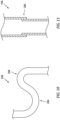
- the fluid conduit 194 may be configured with one or more bends 204. These bends 204 may be provided to facilitate the radial compliance / movement between the support structure 148 and the stationary structure 198. Referring to FIG. 11 , the fluid conduit 194 may also or alternatively be provided with a slip joint 206 to facilitate the radial compliance / movement between the support structure 148 and the stationary structure 198.
- the first sun gear 98 and the second sun gear 108 may each be independently connected (e.g., connected in parallel) to the low speed rotating assembly 68 and its low speed shaft 66. In other embodiments, however, the second sun gear 108 may be connected to the low speed rotating assembly 68 and its low speed shaft 66 through the first sun gear 98.
- the second sun gear 108 may be rotationally fixed to the first sun gear 98.
- the first sun gear 98 may be connected to the low speed rotating assembly 68 and its low speed shaft 66 through the second sun gear 108.
- the first sun gear 98 for example, may be rotationally fixed to the second sun gear 108.
- the low speed rotating assembly 68 and its low speed shaft 66 may be connected to the transmission 76 (see FIG. 1 ) and, thus, the second propulsor rotor 24 independent of (e.g., in parallel with) geartrain 72.
- the transmission 76 and, thus, the second propulsor rotor 24 may be coupled to the low speed rotating assembly 68 and its low speed shaft 66 through the first sun gear 98 or the second sun gear 108, but not though the rest of the first gear system 94 and the second gear system 96.
- the engine assembly 144 may also or alternatively include another fluid device 174'; e.g., a fluid coupling and/or a fluid damper.
- the fluid device 174' of FIG. 12 is integrated into the radial stop 202.
- This fluid device 174' is radially outboard of, axially aligned with and circumscribes the outer bearing mount 172 and the bearing 150.
- the fluid device 174' is axially aligned with the bearing 150; however, the present disclosure is not limited to such an exemplary arrangement.
- the fluid device 174' of FIG. 12 is radially engaged with the outer bearing mount 172.
- the fluid device 12 may have a similar configuration as the fluid device 174 described above, where features associated with the fluid device 174' are labeled with common identification numbers as the features associated with the fluid device 174, except further provided with an apostrophe ( ' ) following the identification number; e.g., 166', 182', 186', 190' and 192'.
- the low speed rotating assembly 68 may be configured without a compressor rotor.
- the low speed rotating assembly 68 may include a low pressure compressor (LPC) rotor 58' arranged within a low pressure compressor (LPC) section 46A of the compressor section 46.
- the compressor rotor 58 may be a high pressure compressor (HPC) rotor 58 within a high pressure compressor (HPC) section 46B of the compressor section 46.
- the engine core 26 may have various configurations other than those described above.
- the engine core 26, for example, may be configured with a single spool, with two spools (e.g., see FIGS. 1 and 12 ), or with more than two spools.
- the engine core 26 may be configured with one or more axial flow compressor sections, one or more radial flow compressor sections, one or more axial flow turbine sections and/or one or more radial flow turbine sections.
- the engine core 26 may be configured with any type or configuration of annular, tubular (e.g., CAN), axial flow and/or reverser flow combustor. The present disclosure therefore is not limited to any particular types or configurations of gas turbine engine cores.
- the engine core 26 of the present disclosure may drive more than the two propulsor rotors 22 and 24, or a single one of the propulsor rotors 22, 24 and/or one or more other mechanical loads; e.g., electric machines, electric generators, electric motors, etc.
- the aircraft propulsion system 20, for example, may include two or more of the first propulsor rotors 22 and/or two or more of the second propulsor rotors 24.
- the aircraft propulsion system 20 of FIG. 14 includes multiple second propulsor rotors 24 rotatably driven by the low speed rotating assembly 68. These second propulsor rotors 24 may rotate about a common axis.
- each second propulsor rotor 24 may rotate about a discrete axis where, for example, the second propulsor rotors 24 are laterally spaced from one another and coupled to the low speed rotating assembly 68 through a power splitting geartrain 208.
Landscapes
- Engineering & Computer Science (AREA)
- General Engineering & Computer Science (AREA)
- Mechanical Engineering (AREA)
- Chemical & Material Sciences (AREA)
- Combustion & Propulsion (AREA)
- Retarders (AREA)
- General Details Of Gearings (AREA)
Abstract
Description
- This invention relates generally to a turbine engine and, more particularly, to a geartrain for the turbine engine.
- Various types and configurations of geartrains and support systems for geartrains for an aircraft propulsion system are known in the art. While these known aircraft propulsion system geartrains and support systems have various benefits, there is still room in the art for improvement.
- According to an aspect of the present invention, an engine assembly is provided that includes a geartrain, a rotating structure, a support structure and a bearing. The rotating structure is rotatable about an axis. The rotating structure forms a first component of the geartrain. The rotating structure includes a shaft and a rotating structure passage. The support structure circumscribes the shaft with a plenum, where the plenum is formed by and radially between the support structure and the shaft. The support structure includes a support structure passage. The plenum fluidly couples the support structure passage to the rotating structure passage. The bearing rotatably couples the shaft to the support structure.
- According to another aspect of the present invention, another engine assembly is provided that includes a geartrain, a rotating structure, a support structure and a bearing. The rotating structure is rotatable about an axis. The rotating structure forms a first component of the geartrain, and the rotating structure includes a shaft. The support structure circumscribes the shaft. The support structure includes a fluid damper radially outboard of and engaged with the shaft. The fluid damper is configured to damp movement of the shaft. The bearing is radially between the shaft and the support structure. The bearing rotatably couples the shaft to the support structure.
- According to still another aspect of the present invention, another engine assembly is provided that includes a bladed rotor, a rotating structure, a geartrain, a rotating assembly, a support structure, a bearing and a lubricant circuit. The rotating structure is rotatable about an axis. The rotating structure includes a rotating structure passage. The rotating assembly includes a turbine rotor. The rotating assembly is configured to drive rotation of the bladed rotor and the rotating structure through the geartrain. The support structure circumscribes the rotating structure with a plenum, wherein the plenum is formed by and radially between the support structure and the rotating structure. The support structure includes a support structure passage. The plenum fluidly couples the support structure passage to the rotating structure passage. The bearing is radially between the rotating structure and the support structure. The bearing rotatably couples the rotating structure to the support structure. The lubricant circuit is configured to deliver lubricant to the geartrain and/or the bearing. The lubricant circuit includes the support structure passage, the plenum and the rotating structure passage.
- Optionally, and in accordance with any of the above, a lubricant plenum may extend radially outward from the shaft and into the fluid damper.
- Optionally, and in accordance with any of the above, the geartrain may be configured as or otherwise include an epicyclic gear system. The first component of the geartrain may be configured as or otherwise include a carrier of the epicyclic gear system.
- Optionally, and in accordance with any of the above, the engine assembly may also include a lubricant circuit configured to deliver lubricant to the geartrain. The lubricant circuit may include the support structure passage, the plenum and the rotating structure passage.
- Optionally, and in accordance with any of the above, the engine assembly may also include a lubricant circuit configured to deliver lubricant to the bearing. The lubricant circuit may include the support structure passage, the plenum and the rotating structure passage.
- Optionally, and in accordance with any of the above, the engine assembly may also include a lubricant conduit coupled to the support structure. The lubricant conduit may be configured to direct lubricant through the support structure passage and the plenum into the rotating structure passage.
- Optionally, and in accordance with any of the above, a portion of the support structure forming the plenum may be configured as a fluid damper for the shaft.
- Optionally, and in accordance with any of the above, the engine assembly may also include a first seal element and a second seal element. The first seal element may be radially between and engage the shaft and the support structure. The second seal element may be radially between and engage the shaft and the support structure. The plenum may extend axially between the first seal element and the second seal element.
- Optionally, and in accordance with any of the above, the plenum may be configured as or otherwise include an annular channel radially outboard and adjacent the shaft. The annular channel may extend radially into and axially within the support structure.
- Optionally, and in accordance with any of the above, the bearing may be configured as or otherwise include a rolling element bearing.
- Optionally, and in accordance with any of the above, the bearing may include an inner race, an outer race and a plurality of bearing elements. The inner race may be mounted to the shaft. The outer race may be mounted to the support structure. The bearing elements may be arranged circumferentially about the axis in an array. Each of the bearing elements may be radially between and engageable with the inner race and the outer race.
- Optionally, and in accordance with any of the above, the engine assembly may also include a stationary structure. The support structure may be connected to the stationary structure through a compliant coupling.
- Optionally, and in accordance with any of the above, the compliant coupling may be configured to facilitate radial shifting between the support structure and the stationary structure.
- Optionally, and in accordance with any of the above, the engine assembly may also include a radial stop connected to the stationary structure. The radial stop is configured to limit radial movement of the support structure. The radial stop may circumscribe the stationary structure and may be axially aligned with the bearing.
- Optionally, and in accordance with any of the above, a portion of the radial stop may form a fluid damper for the support structure. The fluid damper may be radially outboard of and axially overlap the bearing.
- Optionally, and in accordance with any of the above, the geartrain may be configured as or otherwise include an epicyclic gear system.
- Optionally, and in accordance with any of the above, the geartrain may be configured as or otherwise include a plurality of interconnected gear systems.
- Optionally, and in accordance with any of the above, the geartrain may include a sun gear, a ring gear, a plurality of intermediate gears and a carrier. The ring gear may circumscribe the sun gear. The intermediate gears may be arranged circumferentially about the axis in an array. Each of the intermediate gears may be radially between and meshed with the sun gear and the ring gear. Each of the intermediate gears may be rotatably mounted to the carrier. The first component of the geartrain may be configured as or otherwise include the carrier.
- Optionally, and in accordance with any of the above, the engine assembly may also include a propulsor rotor and a rotating assembly. The rotating assembly may include a turbine rotor. The rotating assembly may be configured to drive rotation of the propulsor rotor through the geartrain.
- The present invention may include any one or more of the individual features disclosed above and/or below alone or in any combination thereof.
- The foregoing features and the operation of the invention will become more apparent in light of the following description and the accompanying drawings.
-
-
FIG. 1 is a partial, schematic illustration of an aircraft propulsion system. -
FIG. 2 is a schematic illustration of a portion of a drivetrain with a geartrain. -
FIG. 3 is a schematic illustration of a first gear system of the geartrain coupled with various components of the aircraft propulsion system. -
FIG. 4 is a schematic illustration of a second gear system of the geartrain coupled with various components of the aircraft propulsion system. -
FIG. 5 is a graph depicting changes to rotational speeds during various modes of propulsion system operation. -
FIG. 6 is a partial, side sectional illustration of a rotating assembly configured with a brake. -
FIG. 7 is a partial, side sectional schematic illustration of a lock device. -
FIG. 8 is a cross-sectional illustration of the lock device ofFIG. 7 . -
FIG. 9 is a partial, side sectional schematic illustration of an assembly for aircraft propulsion system. -
FIGS. 10 and 11 are illustrations of portions of a fluid conduit with various radial compliant sections. -
FIG. 12 is a partial, side sectional schematic illustration of another assembly for aircraft propulsion system. -
FIG. 13 is a partial, schematic illustration of a gas turbine engine core. -
FIG. 14 is a partial, schematic illustration of a rotating structure coupled to and driving multiple propulsor rotors for generating propulsive lift. -
FIG. 1 schematically illustrates apropulsion system 20 for an aircraft. The aircraft may be an airplane, a helicopter, a drone (e.g., an unmanned aerial vehicle (UAV)), a spacecraft or any other manned or unmanned aerial vehicle or system. This aircraft may be configured as a vertical take-off and landing (VTOL) aircraft or a short take-off and vertical landing (STOVL) aircraft. Theaircraft propulsion system 20 ofFIG. 1 , for example, is configured to generate power for first direction propulsion (e.g., propulsive thrust) during a first mode of operation and to generate power for second direction propulsion (e.g., propulsive lift) during a second mode of operation, where the first direction is different than (e.g., angularly offset from) the second direction. The first mode may be a horizontal flight mode (e.g., a forward flight mode) where the first direction propulsion is substantially horizontal propulsive thrust; e.g., within five degrees (5°), ten degrees (10°), etc. of a horizontal axis. The second mode may be a vertical flight and/or hover mode where the second direction propulsion is substantially vertical propulsive lift; e.g., within five degrees (5°), ten degrees (10°), etc. of a vertical axis. Theaircraft propulsion system 20, of course, may also be configured to generate both the first direction propulsion (e.g., horizontal propulsion) and the second direction propulsion (e.g., vertical propulsion) during a third mode (e.g., a transition mode) of operation. - The
aircraft propulsion system 20 ofFIG. 1 includes one or more bladed propulsor rotors such as, for example, at least one bladedfirst propulsor rotor 22 and at least one bladedsecond propulsor rotor 24. Theaircraft propulsion system 20 ofFIG. 1 also includes a gas turbine engine with a core 26 configured to rotatably drive the one or more propulsor rotors - thefirst propulsor rotor 22 and/or thesecond propulsor rotor 24. - The
first propulsor rotor 22 may be configured as a ducted rotor such as a fan rotor. Of course, in other embodiments, thefirst propulsor rotor 22 may alternatively be configured as an open rotor (e.g., an un-ducted rotor) such as a propeller rotor, a pusher fan rotor or the like. Thefirst propulsor rotor 22 ofFIG. 1 is rotatable about a first rotor axis 28. This first rotor axis 28 is an axial centerline of thefirst propulsor rotor 22 and may be horizontal when the aircraft is on ground and/or during level aircraft flight. Thefirst propulsor rotor 22 includes at least a first rotor disk 29 (or a hub) and a plurality of first rotor blades 30 (one visible inFIG. 1 ); e.g., fan blades. Thefirst rotor blades 30 are distributed circumferentially around thefirst rotor disk 29 in an annular array. Each of thefirst rotor blades 30 is connected to and projects radially (relative to the first rotor axis 28) out from thefirst rotor disk 29. - The
second propulsor rotor 24 may be configured as an open rotor such as a propeller rotor or a helicopter (e.g., main) rotor. Of course, in other embodiments, thesecond propulsor rotor 24 may alternatively be configured as a ducted rotor such as a fan rotor; e.g., see dashed line duct. Thesecond propulsor rotor 24 ofFIG. 1 is rotatable about asecond rotor axis 32. Thissecond rotor axis 32 is an axial centerline of thesecond propulsor rotor 24 and may be vertical when the aircraft is on the ground and/or during level aircraft flight. Thesecond rotor axis 32 is angularly offset from the first rotor axis 28 by an includedangle 34; e.g., an acute angle or a right angle. This includedangle 34 may be between sixty degrees (60°) and ninety degrees (90°); however, the present disclosure is not limited to such an exemplary relationship. Thesecond propulsor rotor 24 includes at least a second rotor disk 36 (or a hub) and a plurality ofsecond rotor blades 38; e.g., open rotor blades. Thesecond rotor blades 38 are distributed circumferentially around thesecond rotor disk 36 in an annular array. Each of thesecond rotor blades 38 is connected to and projects radially (relative to the second rotor axis 32) out from thesecond rotor disk 36. - The
engine core 26 extends axially along a core axis 40 from a forward,upstream airflow inlet 42 into theengine core 26 to an aft, downstream combustion products exhaust 44 from theengine core 26. The core axis 40 may be an axial centerline of theengine core 26 and may be horizontal when the aircraft is on the ground and/or during level aircraft flight. This core axis 40 may be parallel (e.g., coaxial) with the first rotor axis 28 and, thus, angularly offset from thesecond rotor axis 32. Theengine core 26 ofFIG. 1 includes acompressor section 46, acombustor section 47 and aturbine section 48. Theturbine section 48 ofFIG. 1 includes a high pressure turbine (HPT)section 48A and a low pressure turbine (LPT)section 48B (also sometimes referred to as a power turbine section). - The engine sections 46-48B may be arranged sequentially along the core axis 40 within an
engine housing 50. Thisengine housing 50 includes an inner case 52 (e.g., a core case) and an outer case 54 (e.g., a fan case). Theinner case 52 may house one or more of the engine sections 46-48B; e.g., theengine core 26. Theouter case 54 may house thefirst propulsor rotor 22. Theouter case 54 ofFIG. 1 also axially overlaps and extends circumferentially about (e.g., completely around) theinner case 52 thereby at least partially forming a (e.g., annular)bypass flowpath 56 radially between theinner case 52 and theouter case 54. - Each of the
engine sections respective engine section - The
compressor rotor 58 is connected to theHPT rotor 59 through ahigh speed shaft 62. At least (or only) theseengine components speed rotating assembly 64; e.g., a high speed spool. This highspeed rotating assembly 64 is rotatable about the core axis 40. TheLPT rotor 60 is connected to alow speed shaft 66. At least (or only) theseengine components speed rotating assembly 68; e.g., a low speed spool. This lowspeed rotating assembly 68 is rotatable about the core axis 40. The lowspeed rotating assembly 68 and, more particularly, itslow speed shaft 66 may project axially through a bore of the highspeed rotating assembly 64 and itshigh speed shaft 62. - The
aircraft propulsion system 20 ofFIG. 1 and its turbine engine include adrivetrain 70 that couples the lowspeed rotating assembly 68 to thefirst propulsor rotor 22 and that couples the lowspeed rotating assembly 68 to thesecond propulsor rotor 24. Thedrivetrain 70 ofFIG. 1 includes ageartrain 72, atransmission 76 and agearing 78; e.g., bevel gearing. Thedrivetrain 70 ofFIG. 1 also includes one ormore shafts speed rotating assembly 68 and itslow speed shaft 66 to thesecond propulsor rotor 24. Thedrivetrain 70 may also include one or more intermediate torque transmission devices for coupling thegeartrain 72 to thefirst propulsor rotor 22; e.g., afirst propulsor shaft 84. - An input into the
geartrain 72 is coupled to the lowspeed rotating assembly 68 and itslow speed shaft 66, where the lowspeed rotating assembly 68 forms a power input for thegeartrain 72. An output from thegeartrain 72 is coupled to thefirst propulsor rotor 22 through thefirst propulsor shaft 84, where thefirst propulsor rotor 22 forms a power output (e.g., load) for thegeartrain 72. - An input into the
transmission 76 may be coupled to the lowspeed rotating assembly 68 independent of thegeartrain 72. The lowspeed rotating assembly 68, for example, may be coupled to the input of thegeartrain 72 and the input of thetransmission 76 in parallel. The input of thetransmission 76 ofFIG. 1 , in particular, is (e.g., directly or indirectly) connected to theLPT rotor 60 through thelow speed shaft 66; e.g., without passing through thegeartrain 72. An output from thetransmission 76 is connected to an input into thegearing 78 through thetransmission output shaft 80. - The
transmission 76 may be configured to selectively couple (e.g., transfer mechanical power between) the lowspeed rotating assembly 68 and thetransmission output shaft 80. During the first mode of operation, for example, thetransmission 76 may be configured to decouple the lowspeed rotating assembly 68 from thetransmission output shaft 80, thereby decoupling the lowspeed rotating assembly 68 from thesecond propulsor rotor 24. During the second mode of operation (and the third mode of operation), thetransmission 76 may be configured to couple the lowspeed rotating assembly 68 with thetransmission output shaft 80, thereby coupling the lowspeed rotating assembly 68 with thesecond propulsor rotor 24. Thetransmission 76 may be configured as a clutched transmission or a clutchless transmission. - An output from the
gearing 78 is connected to thesecond propulsor rotor 24 through thesecond propulsor shaft 82. Thisgearing 78 provides a coupling between thetransmission output shaft 80 rotating about the axis 28, 40 and thesecond propulsor shaft 82 rotating about thesecond rotor axis 32. Thegearing 78 may also provide a speed change mechanism between thetransmission output shaft 80 and thesecond propulsor shaft 82. Thegearing 78, however, may alternatively provide a 1:1 rotational coupling between thetransmission output shaft 80 and thesecond propulsor shaft 82 such that theseshafts gearing 78 and thetransmission output shaft 80 may be omitted where the functionality of thegearing 78 is integrated into thetransmission 76. In still other embodiments, thetransmission 76 may be omitted where decoupling of thesecond propulsor rotor 24 is not required and/or where an optional additional speed change between the lowspeed rotating assembly 68 and thesecond propulsor rotor 24 is not required. - During operation of the
aircraft propulsion system 20, air enters theengine core 26 through thecore inlet 42. This air is directed into a (e.g., annular)core flowpath 86, which core flowpath 86 extends sequentially through thecompressor section 46, thecombustor section 47, theHPT section 48A and theLPT section 48B from thecore inlet 42 to thecore exhaust 44. The air within thiscore flowpath 86 may be referred to as core air. - The core air is compressed by the
compressor rotor 58 and directed into a (e.g., annular)combustion chamber 88 of a (e.g., annular)combustor 90 in thecombustor section 47. Fuel is injected into thecombustion chamber 88 through one or more fuel injectors 92 (one visible inFIG. 1 ) and mixed with the compressed core air to provide a fuel-air mixture. This fuel-air mixture is ignited and combustion products thereof flow through and sequentially cause theHPT rotor 59 and theLPT rotor 60 to rotate. The rotation of theHPT rotor 59 drives rotation of the highspeed rotating assembly 64 and itscompressor rotor 58. The rotation of theLPT rotor 60 drives rotation of the lowspeed rotating assembly 68. The rotation of the lowspeed rotating assembly 68 drives rotation of thefirst propulsor rotor 22 through thegeartrain 72 during one or more modes of operation; e.g., the first, the second and the third modes of operation. The rotation of the lowspeed rotating assembly 68 drives rotation of the second propulsor rotor 24 (e.g., independent of the geartrain 72) during one or more modes of operation; e.g., the second and the third modes of operation. During the first mode of operation, thetransmission 76 may decouple the lowspeed rotating assembly 68 from thesecond propulsor rotor 24 such that the lowspeed rotating assembly 68 does not drive rotation of thesecond propulsor rotor 24. Thesecond propulsor rotor 24 may thereby be stationary (or windmill) during the first mode of operation. - During the first and the third modes of operation, the rotation of the
first propulsor rotor 22 propels bypass air (separate from the core air) through theaircraft propulsion system 20 and itsbypass flowpath 56 to provide the first direction propulsion; e.g., the forward, horizontal thrust. During the second and the third modes of operation, the rotation of thesecond propulsor rotor 24 propels additional air (separate from the core air and the bypass air) to provide the second direction propulsion; e.g., vertical lift. The aircraft may thereby takeoff, land and/or otherwise hover during the second and the third modes of operation, and the aircraft may fly forward or otherwise move during the first and the third modes of operation. The bypass air may also flow through thebypass flowpath 56 during the second and the third modes of operation; however, a quantity of the bypass air flowing through thebypass flowpath 56 during the second mode of operation may be de minimis as described below in further detail. - Referring to
FIG. 2 , thegeartrain 72 may include multiple (e.g., epicyclic)interconnected gear systems FIGS. 2 and3 , thefirst gear system 94 has a plurality of first gear system components including afirst sun gear 98, afirst ring gear 100, a plurality of firstintermediate gears 102 and afirst carrier 104. Thefirst sun gear 98 is rotatable about a rotational axis 106 of thegeartrain 72, which rotational axis 106 may be parallel (e.g., coaxial) with the axis 28, 40. Thefirst ring gear 100 circumscribes thefirst sun gear 98 and the first intermediate gears 102. Thefirst ring gear 100 is rotatable about the axis 28, 40, 106. The firstintermediate gears 102 are arranged circumferentially about the axis 28, 40, 106 and thefirst sun gear 98 in an array. Each of the firstintermediate gears 102 is disposed radially between and meshed with thefirst sun gear 98 and thefirst ring gear 100. Each of the firstintermediate gears 102 is rotatably mounted to thefirst carrier 104. Thefirst carrier 104 is rotatable about the axis 28, 40, 106. - Referring to
FIGS. 2 and4 , thesecond gear system 96 has a plurality of second gear system components including asecond sun gear 108, asecond ring gear 110, a plurality of secondintermediate gears 112 and asecond carrier 114. Thesecond sun gear 108 is rotatable about the axis 28, 40, 106. Thesecond ring gear 110 circumscribes thesecond sun gear 108 and the second intermediate gears 112. Thesecond ring gear 110 is rotatable about the axis 28, 40, 106. The secondintermediate gears 112 are arranged circumferentially about the axis 28, 40, 106 and thesecond sun gear 108 in an array. Each of the secondintermediate gears 112 is disposed radially between and meshed with thesecond sun gear 108 and thesecond ring gear 110. Each of the secondintermediate gears 112 is rotatably mounted to thesecond carrier 114. Thesecond carrier 114 is rotatable about the axis 28, 40, 106. Thissecond carrier 114 is coupled to (e.g., via an inter-gear system shaft and/or another drive element) and rotatable with thefirst ring gear 100, where thesecond carrier 114 and thefirst ring gear 100 are configured to rotate at a common rotational velocity. - Referring to
FIG. 2 , thefirst propulsor rotor 22 is coupled to thegeartrain 72 and itssecond gear system 96 through thesecond ring gear 110. The first propulsor shaft 84 (and/or another drive element), for example, may couple thefirst propulsor rotor 22 to thesecond ring gear 110. Thefirst propulsor shaft 84 ofFIG. 2 extends between and is connected to thefirst propulsor rotor 22 and thesecond ring gear 110. The lowspeed rotating assembly 68 and itslow speed shaft 66 are coupled to thegeartrain 72 and itsfirst gear system 94 through thefirst sun gear 98. The lowspeed rotating assembly 68 and itslow speed shaft 66 are also coupled to thegeartrain 72 and itssecond gear system 96 through thesecond sun gear 108. Thefirst sun gear 98 and thesecond sun gear 108 ofFIG. 2 , for example, are each (e.g., independently) connected to the lowspeed rotating assembly 68 and itslow speed shaft 66. With such an arrangement, the lowspeed rotating assembly 68 and itsLPT rotor 60 are configured to (e.g., independently) drive rotation of thefirst sun gear 98 and thesecond sun gear 108, where thefirst sun gear 98, thesecond sun gear 108 and theLPT rotor 60 are rotate at a common rotational velocity. - The
aircraft propulsion system 20 and itsdrivetrain 70 may include one ormore brakes more lock devices first brake 116A and/or thefirst lock device 118A may be located at afirst location 120A, or another suitable location. Thesecond brake 116B and/or thesecond lock device 118B may be located at asecond location 120B, or another suitable location. - The
first brake 116A ofFIG. 2 is configured to brake (e.g., slow and/or stop) rotation of thefirst carrier 104 about the axis 28, 40, 106. Thesecond lock device 118B is configured to lock (e.g., fix, prevent) rotation of thefirst ring gear 100 and thesecond carrier 114 about the axis 28, 40, 106, for example, following the braking of thesecond carrier 114 to a zero rotational speed about the axis 28, 40, 106 using thesecond brake 116B. When thesecond carrier 114 is rotationally fixed (e.g., during the second mode of operation ofFIG. 5 ), a rotational speed of thefirst propulsor rotor 22 may decrease (compared to when thesecond carrier 114 is free to rotate). - Reducing the rotational speed of the
first propulsor rotor 22 during, for example, the second mode of operation reduces or substantially eliminates (e.g., de minimis) the first direction propulsive thrust generated by thefirst propulsor rotor 22. Reducing first propulsor rotor thrust may, in turn, increase power available for driving rotation of thesecond propulsor rotor 24 and/or facilitate substantial second direction aircraft movement; e.g., without first direction aircraft movement. However, maintaining some rotation of thefirst propulsor rotor 22 may maintain lubrication of one or more bearings (e.g.,bearings 122 inFIG. 2 ) supporting thefirst propulsor rotor 22 and/or prevent bearing related damage. For example, when a component supported by a bearing is not rotating, shock loads may damage one of more internal components of the bearing. Examples of such bearing damage may include, but are not limited to, brinelling and false brinelling. Maintaining some rotation of thefirst propulsor rotor 22 ofFIG. 1 may also or alternatively prevent an exhaust backflow through thebypass flowpath 56 into thecore inlet 42. Maintaining some rotation of thefirst propulsor rotor 22 may still also or alternatively prevent debris (e.g., sand, dirt, dust, etc.) from entering thecore inlet 42 during the second mode of operation where the aircraft is more likely to be near the ground; e.g., for landing or takeoff. - The
second brake 116B ofFIG. 2 is configured to brake (e.g., slow and/or stop) rotation of thefirst ring gear 100 about the axis 28, 40, 106 and, thus, rotation of thesecond carrier 114 about the axis 28, 40, 106. Thefirst lock device 118A is configured to lock (e.g., fix, prevent) rotation of thefirst carrier 104 about the axis 28, 40, 106. With this arrangement, thegeartrain 72 and itsfirst gear system 94 and itssecond gear system 96 are configured to transfer additional power from the lowspeed rotating assembly 68 and itsLPT rotor 60 to thefirst propulsor rotor 22 and any drivetrain element(s) therebetween (when included). This power transfer may be substantially all (e.g., minus losses in the drivetrain 70) of the power output from the lowspeed rotating assembly 68 and itsLPT rotor 60 when thesecond propulsor rotor 24 is rotationally decoupled from the lowspeed rotating assembly 68; e.g., using thetransmission 76 ofFIG. 1 . Thegeartrain 72 may thereby provide a multi-speed transmission between the lowspeed rotating assembly 68 and thefirst propulsor rotor 22, where a speed ratio between the lowspeed rotating assembly 68 and thefirst propulsor rotor 22 during the second mode is less than a speed ratio between the lowspeed rotating assembly 68 and thefirst propulsor rotor 22 during the first mode. - To enter the third mode of operation from the first mode of operation, the
first lock device 118A may be disengaged and/or thefirst brake 116A may be released (if currently applied). Thesecond propulsor rotor 24 may thereby begin to rotate along with the already rotatingfirst propulsor rotor 22. Similarly, to enter the third mode of operation from the second mode of operation, thesecond lock device 118B may be disengaged and/or thesecond brake 116B may be released (if currently applied). Thefirst propulsor rotor 22 may thereby begin to rotate faster along with the already rotatingsecond propulsor rotor 24. When both of thefirst propulsor rotor 22 and thesecond propulsor rotor 24 are rotating / free to rotate, thedrivetrain 70 may transfer (e.g., all, minus losses in the drivetrain 70) the power output from the lowspeed rotating assembly 68 and itsLPT rotor 60 to (a) thefirst propulsor rotor 22 and the drivetrain element(s) therebetween and (b) thesecond propulsor rotor 24 and the drivetrain element(s) therebetween (e.g., independent of thegeartrain 72 and itsfirst gear system 94 and its second gear system 96). - Referring to
FIG. 6 , thefirst brake 116A and/or thesecond brake 116B may each be configured as or otherwise include adisk brake 124. Thedisk brake 124 ofFIG. 6 includes abrake rotor 126 and one ormore brake pads 128. Thebrake rotor 126 is configured rotatable with therespective geartrain member brake rotor 126, for example, may be connected to and rotatable with therespective geartrain member respective geartrain member brake pads 128 are anchored to astationary structure 130, which may be part of theengine housing 50 and/or an airframe of the aircraft (seeFIG. 1 ). Thebrake pads 128 may be actuated by one or more brake actuators 132 (e.g., hydraulic brake actuators) to move thebrake pads 128 from an open position to a closed position. In the open position, thebrake pads 128 are spaced from and do not engage (e.g., contact) the brake rotor 126 (see position ofFIG. 6 ). In the closed position, thebrake pads 128 engage (e.g., contact) and clamp onto (e.g., squeeze) thebrake rotor 126. Frictional rubbing between thebrake pads 128 and thebrake rotor 126 is operable to brake rotation of thebrake rotor 126 and, thus, therespective geartrain member 104, 100 (or another rotating element) connected thereto. The first and the second brakes 116 of the present disclosure, however, are not limited to such an exemplary disk brake configuration. For example, it is contemplated the first and/or thesecond brake 116B may alternatively be configured as another type of brake such as a drum brake or a set of clutch plates. - Referring to
FIG. 7 , thefirst lock device 118A and/or thesecond lock device 118B may each be configured as a splined lock device; e.g., a splined coupling. The lock device 118 ofFIG. 7 , for example, includes an inner lock element 134 (e.g., a splined shaft), an outer lock element 136 (e.g., a splined sleeve) and anactuator 138. Theinner lock element 134 is rotatable about the axis 28, 40, 106. Theouter lock element 136 is rotationally fixed about the axis 28, 40, 106. However, theactuator 138 is configured to move (e.g., axially translate) theouter lock element 136 along the axis 28, 40, 106 and theinner lock element 134 between an unlocked position (see dashed line inFIG. 7 ) and a locked position (see solid line inFIG. 7 ; see alsoFIG. 8 ). At the unlocked position,inner splines 140 of theouter lock element 136 are disengaged (e.g., spaced) fromouter splines 142 of theinner lock element 134. At the locked position, theinner splines 140 of theouter lock element 136 are engaged (e.g., meshed) with theouter splines 142 of the inner lock element 134 (see alsoFIG. 8 ). With this arrangement, when the lock device 118 is unlocked and itsouter lock element 136 is in the unlocked position, theinner lock element 134 may rotate (e.g., freely, unencumbered by the outer lock element 136) about the axis 28, 40, 106. However, when the lock device 118 is locked and itsouter lock element 136 is in the locked position ofFIG. 8 , theouter lock element 136 is meshed with theinner lock element 134 and prevents rotation of theinner lock element 134 about the axis 28, 40, 106. - Referring to
FIGS. 2 and7 , theinner lock element 134 of thefirst lock device 118A may be configured as part of or may be attached (directly or indirectly) to thefirst carrier 104, or any other element rotatable therewith. Theinner lock element 134 of thesecond lock device 118B may be configured as part of or may be attached (directly or indirectly) to thefirst ring gear 100, or any other element rotatable therewith. While theinner lock element 134 ofFIGS. 7 and 8 is described as the rotating element and theouter lock element 136 is described as the rotationally fixed element, the operation of these elements may be switched in other embodiments. In particular, theinner lock element 134 may alternatively be configured as the rotationally fixed element and axially translatable by theactuator 138, and theouter lock element 136 may be configured as the rotating element. Furthermore, various other types of rotational lock devices are known in the art, and the present disclosure is not limited to any particular ones thereof. -
FIG. 9 partially illustrates anassembly 144 for theaircraft propulsion system 20 and its turbine engine. Thisengine assembly 144 includes thegeartrain 72, arotating structure 146, asupport structure 148 and abearing 150. Theengine assembly 144 ofFIG. 9 also includes a fluid circuit 152 (e.g., a lubricant circuit) configured to deliver fluid (e.g., lubricant) to one or more components of thegeartrain 72 and/or thebearing 150. - The
rotating structure 146 may form, or may otherwise be connected to and rotatable with, a component of thegeartrain 72 / one of itsgear systems rotating structure 146 ofFIG. 9 , for example, forms thefirst carrier 104. Therotating structure 146 ofFIG. 9 , in particular, includes thefirst carrier 104, a rotatingstructure shaft 154 and an internalrotating structure passage 156. - The rotating
structure shaft 154 is connected to (e.g., formed integral with or otherwise fixedly attached to) and rotatable with thefirst carrier 104. Thisrotating structure shaft 154 ofFIG. 9 projects axially out (e.g., in an aft direction away from thegeartrain 72 and towards theLPT rotor 60 ofFIG. 1 ) from thefirst carrier 104 along the axis 28, 40, 106 to an axialdistal end 158 of therotating structure 146 and itsrotating structure shaft 154. The rotatingstructure shaft 154 extends radially from a radialinner side 160 of therotating structure 146 and itsrotating structure shaft 154 to a radialouter side 162 of therotating structure shaft 154. The rotatingstructure shaft 154 includes aninner bearing mount 164 and afluid device land 166; e.g., a cylindrical outer surface. Theinner bearing mount 164 is disposed axially between thefluid device land 166 and the rotating structuredistal end 158; e.g., at or about the rotating structuredistal end 158. Thefluid device land 166 is disposed at the shaftouter side 162, axially between theinner bearing mount 164 and thefirst carrier 104. - The
rotating structure passage 156 includes an inlet port 168 (or multiple inlet ports arranged circumferentially about the axis 28, 40, 106) at the shaftouter side 162. Theinlet port 168 ofFIG. 9 , in particular, forms an inlet opening to therotating structure passage 156 in thefluid device land 166. Therotating structure passage 156 ofFIG. 9 is disposed within the rotatingstructure 146 and itsrotating structure shaft 154. Thisrotating structure passage 156 extends (e.g., axially) within the rotatingstructure 146 and itsrotating structure shaft 154 away from its inlet port 168 (e.g., in opposing axial directions) and towards thegeartrain 72 and/or thebearing 150. - The
support structure 148 is disposed radially outboard of therotating structure shaft 154, where a radialinner side 170 of thesupport structure 148 radially faces the shaftouter side 160. Thesupport structure 148 extends axially along and circumferentially about the axis 28, 40, 106 and therotating structure shaft 154. Thesupport structure 148 thereby axially overlaps and circumscribes therotating structure shaft 154. Thesupport structure 148 ofFIG. 9 includes anouter bearing mount 172 and afluid device 174. - The
outer bearing mount 172 is disposed radially outboard of and axially aligned with theinner bearing mount 164. Thebearing 150 is disposed radially between and engaged with theinner bearing mount 164 and theouter bearing mount 172. This bearing 150 rotatably couples therotating structure 146 and itsrotating structure shaft 154 to thesupport structure 148. The bearing 150 ofFIG. 9 , for example, is configured as a rolling element bearing. Thisbearing 150 includes aninner race 176, anouter race 178 and a plurality of bearingelements 180. Theinner race 176 circumscribes and is mounted to theinner bearing mount 164; however, it is contemplated theinner race 176 may alternatively be configured integral with therotating structure 146 and itsrotating structure shaft 154. Theouter race 178 is nested in a bore of and is mounted to theouter bearing mount 172; however, it is contemplated theouter race 178 may alternatively be configured integral with thesupport structure 148. The bearingelements 180 are arranged circumferentially about the axis 28, 40, 106 in an array, where the array of the bearingelements 180 circumscribes theinner race 176. Each bearingelement 180 is disposed radially between and is engaged with (e.g., contacts) theinner race 176 and theouter race 178. - The
fluid device 174 is connected to (e.g., formed integral with or otherwise fixedly attached to) theouter bearing mount 172. Thefluid device 174 may be configured as a fluid coupling and/or a fluid damper. Thefluid device 174 ofFIG. 9 , for example, includes asupport structure passage 182 and anannular channel 184. Thesupport structure passage 182 extends radially (in a radial inward direction towards the axis 28, 40, 106) into thesupport structure 148 and itsfluid device 174 to thechannel 184. Thechannel 184 extends radially (in a radial outward direction away from the axis 28, 40, 106) into thesupport structure 148 and itsfluid device 174 to thesupport structure passage 182. Thischannel 184 extends axially within thesupport structure 148 and itsfluid device 174 between opposing axial sidewalls, and may have a larger axial width than thesupport structure passage 182. Thechannel 184 extends within thesupport structure 148 and itsfluid device 174 circumferentially about (e.g., completely around) the axis 28, 40, 106. - The
fluid device 174 is axially aligned with therotating structure shaft 154 and itsfluid device landing 166. Thefluid device 174 is also radially outboard of and radially adjacent (but, slightly radially spaced from) the rotatingstructure shaft 154 and itsfluid device landing 166. With this arrangement, a fluid plenum 186 (e.g., an annular lubricant plenum) is formed by and radially between therotating structure shaft 154 and thefluid device 174. Thisfluid plenum 186 includes thechannel 184 as well as aradial clearance gap 188 between an inner surface of thefluid device 174 at itsinner side 170 and thefluid device landing 166. Thefluid plenum 186 and itsclearance gap 188 are axially bounded by (e.g., extend axially between) a plurality ofseal elements 190 and 192 (e.g., annular seal elements, seal rings, etc.), where eachseal element fluid device 174 and therotating structure shaft 154. With this arrangement, thefluid plenum 186 fluidly couples thesupport structure passage 182 to therotating structure passage 156. Thefluid device 174 ofFIG. 9 is further axially adjacent thebearing 150, and maybe arranged radially inboard of theouter bearing mount 172 and the attachedouter race 178. - The
fluid circuit 152 ofFIG. 9 includes a fluid conduit 194 (e.g., a lubricant conduit), the rotatingstructure passage 156, thesupport structure passage 182 and thefluid plenum 186. Thefluid conduit 194 is fluidly coupled to thesupport structure passage 182. Thefluid conduit 194 is configured to receive a flow of fluid such as lubricant from a fluid source 196 (e.g., a lubricant reservoir and/or a lubricant pump), and direct that fluid flow through thesupport structure passage 182 and thefluid plenum 186 and into therotating structure passage 156. Therotating structure passage 156 may then facilitate delivery of the fluid flow to one or more components of the geartrain 72 (e.g., thefirst carrier 104 and the firstintermediate gears 102 ofFIG. 2 ) and/or thebearing 150. Here, thefluid device 174 provides the fluid coupling between the stationaryfluid conduit 194 and therotating structure passage 156. Thefluid plenum 186 and itschannel 184 may also be sized to provide fluidic damping for therotating structure 146 and itsrotating structure shaft 154. Moreover, by integrating thefluid device 174 into the same (e.g., monolithic, unitary) structure as theouter bearing mount 172, a radial height of theclearance gap 188 may be sized relatively small since thebearing 150 maintains a relative radial position between therotating structure shaft 154 and thefluid device 174. Reducing theclearance gap 188 height and/or maintaining the relative position between therotating structure shaft 154 and thefluid device 174 may also reduce likelihood for fluid leakage axially across theseal elements - In some embodiments, the
support structure 148 may be connected to astationary structure 198 of theaircraft propulsion system 20 through acompliant coupling 200; e.g., an axial or tangential squirrel cage coupling, a spring coupling, etc. Thiscompliant coupling 200 is configured to facilitate (e.g., slight) radial movement between thesupport structure 148 and thestationary structure 198, which may reduce bending moment loads, vibration loads, etc. on therotating structure 146. However, a radial stop 202 (e.g., a bumper) may be provided to limit this radial movement. Theradial stop 202 ofFIG. 9 , for example, is axially aligned with and circumscribes theouter bearing mount 172 and thebearing 150. Theradial stop 202 is further (e.g., stiffly) connected to thestationary structure 198. Thus, a relative position between theradial stop 202 and thestationary structure 198 may remain unchanged even as thesupport structure 148 moves radially relative to thestationary structure 198. A radial gap between theradial stop 202 and theouter bearing mount 172 may be sized to tailor the radial movement of thesupport structure 148 and itsouter bearing mount 172. - In some embodiments, referring to
FIG. 10 , thefluid conduit 194 may be configured with one or more bends 204. Thesebends 204 may be provided to facilitate the radial compliance / movement between thesupport structure 148 and thestationary structure 198. Referring toFIG. 11 , thefluid conduit 194 may also or alternatively be provided with a slip joint 206 to facilitate the radial compliance / movement between thesupport structure 148 and thestationary structure 198. - In some embodiments, referring to
FIG. 2 , thefirst sun gear 98 and thesecond sun gear 108 may each be independently connected (e.g., connected in parallel) to the lowspeed rotating assembly 68 and itslow speed shaft 66. In other embodiments, however, thesecond sun gear 108 may be connected to the lowspeed rotating assembly 68 and itslow speed shaft 66 through thefirst sun gear 98. Thesecond sun gear 108, for example, may be rotationally fixed to thefirst sun gear 98. In still other embodiments, thefirst sun gear 98 may be connected to the lowspeed rotating assembly 68 and itslow speed shaft 66 through thesecond sun gear 108. Thefirst sun gear 98, for example, may be rotationally fixed to thesecond sun gear 108. - In some embodiments, referring to
FIG. 2 , the lowspeed rotating assembly 68 and itslow speed shaft 66 may be connected to the transmission 76 (seeFIG. 1 ) and, thus, thesecond propulsor rotor 24 independent of (e.g., in parallel with) geartrain 72. In other embodiments, however, thetransmission 76 and, thus, thesecond propulsor rotor 24 may be coupled to the lowspeed rotating assembly 68 and itslow speed shaft 66 through thefirst sun gear 98 or thesecond sun gear 108, but not though the rest of thefirst gear system 94 and thesecond gear system 96. Thus, while power may be transferred from the lowspeed rotating assembly 68 to thesecond propulsor rotor 24 through the sun gear(s) 98 and/or 108, the output from thegeartrain 72 to thetransmission 76 may still rotate with the lowspeed rotating assembly 68 at a common rotational velocity. - In some embodiments, referring to
FIG. 12 , theengine assembly 144 may also or alternatively include another fluid device 174'; e.g., a fluid coupling and/or a fluid damper. The fluid device 174' ofFIG. 12 , for example, is integrated into theradial stop 202. This fluid device 174' is radially outboard of, axially aligned with and circumscribes theouter bearing mount 172 and thebearing 150. Here, the fluid device 174' is axially aligned with thebearing 150; however, the present disclosure is not limited to such an exemplary arrangement. The fluid device 174' ofFIG. 12 is radially engaged with theouter bearing mount 172. The fluid device 174' ofFIG. 12 may have a similar configuration as thefluid device 174 described above, where features associated with the fluid device 174' are labeled with common identification numbers as the features associated with thefluid device 174, except further provided with an apostrophe ( ' ) following the identification number; e.g., 166', 182', 186', 190' and 192'. - In some embodiments, referring to
FIG. 1 , the lowspeed rotating assembly 68 may be configured without a compressor rotor. In other embodiments, referring toFIG. 13 , the lowspeed rotating assembly 68 may include a low pressure compressor (LPC) rotor 58' arranged within a low pressure compressor (LPC)section 46A of thecompressor section 46. In such embodiments, thecompressor rotor 58 may be a high pressure compressor (HPC)rotor 58 within a high pressure compressor (HPC)section 46B of thecompressor section 46. - The engine core 26 (e.g., see
FIG. 1 ) may have various configurations other than those described above. Theengine core 26, for example, may be configured with a single spool, with two spools (e.g., seeFIGS. 1 and12 ), or with more than two spools. Theengine core 26 may be configured with one or more axial flow compressor sections, one or more radial flow compressor sections, one or more axial flow turbine sections and/or one or more radial flow turbine sections. Theengine core 26 may be configured with any type or configuration of annular, tubular (e.g., CAN), axial flow and/or reverser flow combustor. The present disclosure therefore is not limited to any particular types or configurations of gas turbine engine cores. Furthermore, it is contemplated theengine core 26 of the present disclosure may drive more than the twopropulsor rotors propulsor rotors aircraft propulsion system 20, for example, may include two or more of thefirst propulsor rotors 22 and/or two or more of thesecond propulsor rotors 24. For example, theaircraft propulsion system 20 ofFIG. 14 includes multiplesecond propulsor rotors 24 rotatably driven by the lowspeed rotating assembly 68. Thesesecond propulsor rotors 24 may rotate about a common axis. Alternatively, eachsecond propulsor rotor 24 may rotate about a discrete axis where, for example, thesecond propulsor rotors 24 are laterally spaced from one another and coupled to the lowspeed rotating assembly 68 through apower splitting geartrain 208. - While various embodiments of the present disclosure have been described, it will be apparent to those of ordinary skill in the art that many more embodiments and implementations are possible within the scope of the disclosure. For example, the present disclosure as described herein includes several aspects and embodiments that include particular features. Although these features may be described individually, it is within the scope of the present disclosure that some or all of these features may be combined with any one of the aspects and remain within the scope of the disclosure.
Claims (15)
- An engine assembly comprising:a geartrain;a rotating structure rotatable about an axis, the rotating structure forming a first component of the geartrain, and the rotating structure including a shaft and a rotating structure passage;a support structure circumscribing the shaft with a plenum formed by and radially between the support structure and the shaft, the support structure comprising a support structure passage, and the plenum fluidly coupling the support structure passage to the rotating structure passage; anda bearing rotatably coupling the shaft to the support structure.
- The engine assembly of claim 1, comprising a lubricant circuit configured to deliver lubricant to the geartrain and/or the bearing, the lubricant circuit including the support structure passage, the plenum and the rotating structure passage.
- The engine assembly of claim 1 or 2, further comprising a lubricant conduit coupled to the support structure, the lubricant conduit configured to direct lubricant through the support structure passage and the plenum into the rotating structure passage.
- The engine assembly of any preceding claim, wherein a portion of the support structure forming the plenum is configured as a fluid damper for the shaft.
- The engine assembly of any preceding claim, further comprising:a first seal element radially between and engaging the shaft and the support structure; anda second seal element radially between and engaging the shaft and the support structure, the plenum extending axially between the first seal element and the second seal element.
- The engine assembly of any preceding claim, wherein:the plenum comprises an annular channel radially outboard and adjacent the shaft; andthe annular channel extends radially into and axially within the support structure.
- The engine assembly of any preceding claim, wherein the bearing comprises a rolling element bearing.
- The engine assembly of any preceding claim, wherein the bearing includes:an inner race mounted to the shaft;an outer race mounted to the support structure; anda plurality of bearing elements arranged circumferentially about the axis in an array, each of the plurality of bearing elements radially between and engageable with the inner race and the outer race.
- The engine assembly of any preceding claim, further comprising a stationary structure, the support structure connected to the stationary structure through a compliant coupling.
- The engine assembly of claim 9, wherein the compliant coupling is configured to facilitate radial shifting between the support structure and the stationary structure.
- The engine assembly of claim 9 or 10, further comprising a radial stop connected to the stationary structure, wherein:the radial stop is configured to limit radial movement of the support structure; andthe radial stop circumscribes the stationary structure and is axially aligned with the bearing.
- The engine assembly of claim 11, wherein:a portion of the radial stop forms a fluid damper for the support structure; andthe fluid damper is radially outboard of and axially overlaps the bearing.
- The engine assembly of any preceding claim, wherein the geartrain comprises an epicyclic gear system and/or a plurality of interconnected gear systems.
- The engine assembly of any preceding claim, wherein the geartrain includes:a sun gear;a ring gear circumscribing the sun gear;a plurality of intermediate gears arranged circumferentially about the axis in an array, each of the plurality of intermediate gears radially between and meshed with the sun gear and the ring gear; anda carrier, each of the plurality of intermediate gears rotatably mounted to the carrier, and the first component of the geartrain comprising the carrier.
- The engine assembly of any preceding claim, further comprising:a propulsor rotor; anda rotating assembly comprising a turbine rotor, the rotating assembly configured to drive rotation of the propulsor rotor through the geartrain.
Applications Claiming Priority (1)
| Application Number | Priority Date | Filing Date | Title |
|---|---|---|---|
| US18/375,028 US12188551B1 (en) | 2023-09-29 | 2023-09-29 | Reduced clearance interface between a fluid device and a rotating structure for a geartrain |
Publications (2)
| Publication Number | Publication Date |
|---|---|
| EP4530442A2 true EP4530442A2 (en) | 2025-04-02 |
| EP4530442A3 EP4530442A3 (en) | 2025-05-14 |
Family
ID=92932961
Family Applications (1)
| Application Number | Title | Priority Date | Filing Date |
|---|---|---|---|
| EP24203724.0A Pending EP4530442A3 (en) | 2023-09-29 | 2024-09-30 | Reduced clearance interface between a fluid device and a rotating structure for a geartrain |
Country Status (2)
| Country | Link |
|---|---|
| US (1) | US12188551B1 (en) |
| EP (1) | EP4530442A3 (en) |
Family Cites Families (94)
| Publication number | Priority date | Publication date | Assignee | Title |
|---|---|---|---|---|
| DE1119675B (en) | 1960-06-14 | 1961-12-14 | M A N Turbomotoren G M B H | Engine arrangement for short or vertical take-off aircraft with lifting fan |
| US3678690A (en) | 1970-07-10 | 1972-07-25 | United Aircraft Corp | Convertible composite engine |
| DE2242048A1 (en) | 1972-08-26 | 1974-03-07 | Motoren Turbinen Union | TURBINE JET IN MULTI-FLOW AND MULTI-SHAFT DESIGN |
| US4791783A (en) | 1981-11-27 | 1988-12-20 | General Electric Company | Convertible aircraft engine |
| DE3532456A1 (en) * | 1985-09-11 | 1987-03-19 | Mtu Muenchen Gmbh | INTERMEDIATE SHAFT (INTERSHAFT) BEARING WITH SQUEEZE FILM DAMPING WITH OR WITHOUT SQUIRREL CAGE |
| US4651521A (en) | 1985-11-21 | 1987-03-24 | Avco Corporation | Convertible turbo-fan, turbo-shaft aircraft propulsion system |
| FR2609136B1 (en) | 1986-12-31 | 1989-12-01 | Camara Alpha | TORQUE EQUALIZER FOR CONTRAROTATIVE SHAFTS |
| US4936748A (en) | 1988-11-28 | 1990-06-26 | General Electric Company | Auxiliary power source in an unducted fan gas turbine engine |
| US5209428A (en) | 1990-05-07 | 1993-05-11 | Lockheed Corporation | Propulsion system for a vertical and short takeoff and landing aircraft |
| US5452988A (en) | 1994-04-28 | 1995-09-26 | Sundstrand Corporation | Blade pitch change mechanism |
| FR2775734B1 (en) | 1998-03-05 | 2000-04-07 | Snecma | METHOD AND DEVICE FOR REVERSE DRIVE FOR A MOTOR WITH VERY HIGH DILUTION RATES |
| US6270037B1 (en) | 1998-12-16 | 2001-08-07 | United Technologies Corporation | Rapid response attitude control logic for shaft-driven lift fan STOVL engine |
| US6269627B1 (en) | 1998-12-16 | 2001-08-07 | United Technologies Corporation | Rapid thrust response control logic for shaft-driven lift fan STOVL engine |
| US6619908B2 (en) | 2001-09-10 | 2003-09-16 | Pratt & Whitney Canada Corp. | Axial and radial seal arrangement |
| JP2003185001A (en) * | 2001-12-19 | 2003-07-03 | Aisin Ai Co Ltd | Lubricating device for transmission |
| US6758598B2 (en) * | 2002-08-23 | 2004-07-06 | Pratt & Whitney Canada Corp. | Integrated oil transfer sleeve and bearing |
| US7481062B2 (en) | 2005-12-30 | 2009-01-27 | Honeywell International Inc. | More electric aircraft starter-generator multi-speed transmission system |
| US7574854B2 (en) * | 2006-01-06 | 2009-08-18 | General Electric Company | Gas turbine engine assembly and methods of assembling same |
| US8534074B2 (en) | 2008-05-13 | 2013-09-17 | Rolls-Royce Corporation | Dual clutch arrangement and method |
| DE102009028612A1 (en) | 2009-08-18 | 2011-02-24 | Zf Friedrichshafen Ag | Wind turbine and method for controlling the operation of a wind turbine |
| FR2950381B1 (en) | 2009-09-18 | 2011-10-28 | Snecma | TURBOMACHINE WITH NON-CARINE CONTRAROTATIVE PROPELLERS |
| US8813469B2 (en) | 2010-10-12 | 2014-08-26 | United Technologies Corporation | Planetary gear system arrangement with auxiliary oil system |
| US8777793B2 (en) | 2011-04-27 | 2014-07-15 | United Technologies Corporation | Fan drive planetary gear system integrated carrier and torque frame |
| EP2535528B1 (en) | 2011-06-17 | 2021-04-28 | Raytheon Technologies Corporation | Turbofan engine bearing support |
| US9174741B2 (en) | 2012-07-09 | 2015-11-03 | Mcmaster University | Hybrid powertrain system |
| GB201222203D0 (en) * | 2012-12-11 | 2013-01-23 | Rolls Royce Deutschland | Lubricant system |
| US10094295B2 (en) | 2013-01-30 | 2018-10-09 | Pratt & Whitney Canada Corp. | Gas turbine engine with transmission |
| US8870699B2 (en) * | 2013-03-11 | 2014-10-28 | Pratt & Whitney Canada Corp. | Lubrication oil system for a reduction gearbox |
| US9452815B2 (en) | 2013-03-15 | 2016-09-27 | Michigan Marine Propulsion Systems, LLC | Contra-rotating propulsor for marine propulsion |
| US9290266B2 (en) | 2013-03-15 | 2016-03-22 | Bell Helicopter Textron Inc. | Speed control assembly and methods of using same |
| EP2994666B1 (en) | 2013-05-08 | 2019-01-09 | United Technologies Corporation | Fan drive gear system with improved misalignment capability |
| FR3008155B1 (en) | 2013-07-03 | 2016-10-07 | Snecma | MULTIPLE REDUCER TRANSMISSION BETWEEN A DRIVE SHAFT AND A PAIR OF COAXIAL PROPELLERS AT THIS TREE |
| US10138757B2 (en) | 2013-08-20 | 2018-11-27 | United Technologies Corporation | Bearing system for gas turbine engine |
| US10041498B2 (en) | 2013-08-29 | 2018-08-07 | United Technologies Corporation | Three spool geared turbofan with low pressure compressor drive gear system and mechanical controller |
| FR3011880B1 (en) * | 2013-10-10 | 2015-10-23 | Snecma | DEVICE FOR TRANSFERRING OIL BETWEEN TWO REFERENTIALS IN ROTATION IN RELATION TO EACH OTHER, AND AIRCRAFT TURBOMACHINE FOR AIRCRAFT WITH SUCH A DEVICE |
| FR3019224B1 (en) | 2014-03-27 | 2016-03-18 | Turbomeca | METHOD FOR ASSISTING A MULTI-ENGINE HELICOPTER SLEEPING TURBOMOTEUR AND ARCHITECTURE OF A PROPELLANT HELICOPTER SYSTEM COMPRISING AT LEAST ONE TURBOMOTEUR WHICH CAN BE ON SLEEP |
| US10731510B2 (en) * | 2014-05-16 | 2020-08-04 | Raython Technologies Group | Gas turbine engine with fluid damper |
| US9695710B2 (en) | 2014-09-08 | 2017-07-04 | United Technologies Corporation | Oil transfer bearing |
| GB201417505D0 (en) * | 2014-10-03 | 2014-11-19 | Rolls Royce Deutschland | A gas turbine architecture |
| US9701406B2 (en) | 2014-12-11 | 2017-07-11 | Bell Helicopter Textron Inc. | Convertible tiltrotor aircraft |
| AT516038B1 (en) | 2014-12-12 | 2016-02-15 | Set Sustainable Energy Technologies Gmbh | powertrain |
| US10215054B2 (en) | 2014-12-16 | 2019-02-26 | United Technologies Corporation | Secondary sealing system |
| US9878798B2 (en) | 2014-12-31 | 2018-01-30 | Rolls-Royce North American Technologies Inc. | Aircraft with counter-rotating turbofan engines |
| FR3035375B1 (en) | 2015-04-23 | 2018-07-27 | Safran Aircraft Engines | EPICYCLOIDAL GEAR TRAIN REDUCER FOR A TURBOMACHINE. |
| US10669946B2 (en) | 2015-06-05 | 2020-06-02 | Raytheon Technologies Corporation | Geared architecture for a gas turbine engine |
| US10578028B2 (en) | 2015-08-18 | 2020-03-03 | General Electric Company | Compressor bleed auxiliary turbine |
| US11015521B2 (en) | 2015-10-05 | 2021-05-25 | Safran Aircraft Engines | Aircraft propulsion assembly equipped with a main fan and with at least one offset fan |
| US10288163B2 (en) * | 2015-10-23 | 2019-05-14 | General Electric Company | Method and system for a planetary power gearbox static to rotating oil transfer supply |
| ITUA20162733A1 (en) | 2016-04-20 | 2017-10-20 | Ge Avio Srl | OIL TRANSFER UNIT TO TRANSFER OIL BETWEEN A STATIC PART AND A ROTATING PART |
| DE112016006843B4 (en) | 2016-05-12 | 2023-08-31 | Mitsubishi Heavy Industries Compressor Corporation | Variable speed acceleration mechanism |
| US20180009536A1 (en) | 2016-07-11 | 2018-01-11 | General Electric Company | Bleed flow extraction system for a gas turbine engine |
| US11073160B2 (en) | 2016-09-08 | 2021-07-27 | The United States Of America As Represented By The Secretary Of The Army | Adaptable articulating axial-flow compressor/turbine rotor blade |
| DE102016221969A1 (en) | 2016-11-09 | 2018-05-09 | Robert Bosch Gmbh | Carrier cup for a brake disc, brake disc device |
| US10113482B2 (en) | 2016-11-15 | 2018-10-30 | Pratt & Whitney Canada Corp. | Gearbox for gas turbine engine |
| US11174782B2 (en) | 2017-02-10 | 2021-11-16 | Pratt & Whitney Canada Corp. | Planetary gearbox for gas turbine engine |
| GB2562246B (en) | 2017-05-09 | 2019-09-25 | Rolls Royce Plc | A Geared gas turbine engine |
| US10822101B2 (en) | 2017-07-21 | 2020-11-03 | General Electric Company | Vertical takeoff and landing aircraft having a forward thrust propulsor |
| US10954813B2 (en) | 2017-08-18 | 2021-03-23 | Rolls-Royce Deutschland Ltd & Co Kg | Planetary gearbox system and method for operating a planetary gearbox system |
| JP6879865B2 (en) | 2017-08-28 | 2021-06-02 | 本田技研工業株式会社 | Multicopter |
| CN107856488B (en) | 2017-11-16 | 2023-12-19 | 四川省特种设备检验研究院 | Power transmission system of plug-in type hybrid electric flying car capable of taking off and landing vertically |
| FR3075874B1 (en) | 2017-12-22 | 2019-11-22 | Safran Aircraft Engines | REDUCING TURBOMACHINE FOR AN AIRCRAFT |
| US11168616B2 (en) | 2018-05-16 | 2021-11-09 | Raytheon Technologies Corporation | Hybrid electric fan with improved low pressure compressor |
| US10759545B2 (en) | 2018-06-19 | 2020-09-01 | Raytheon Technologies Corporation | Hybrid electric aircraft system with distributed propulsion |
| BE1026407B1 (en) | 2018-06-22 | 2020-01-28 | Safran Aero Boosters Sa | HYBRID TRANSMISSION TURBOMACHINE |
| US20200017229A1 (en) | 2018-07-13 | 2020-01-16 | Bell Helicopter Textron Inc. | Fan clutch for convertible engine |
| GB201814869D0 (en) | 2018-09-03 | 2018-10-31 | Rolls Royce Plc | Aircraft Propulsion System |
| US11199103B2 (en) | 2018-09-06 | 2021-12-14 | General Electric Company | Seal assembly for a turbomachine |
| US10830078B2 (en) | 2018-09-14 | 2020-11-10 | Raytheon Technologies Corporation | Shaft seal assembly for a turbine engine |
| US11891967B2 (en) | 2018-09-21 | 2024-02-06 | Safran Aircraft Engines | Turbofan comprising a power supply device to drive the compressor |
| US11077949B2 (en) | 2018-10-05 | 2021-08-03 | The Boeing Company | Dual turbine thermal management system (TMS) |
| US11566567B2 (en) | 2018-12-10 | 2023-01-31 | Raytheon Technologies Corporation | Low pressure compressor control for a gas turbine engine |
| US11015533B2 (en) | 2018-12-17 | 2021-05-25 | Raytheon Technologies Corporation | Fan and low pressure compressor geared to low speed spool of gas turbine engine |
| DE102018132544A1 (en) | 2018-12-17 | 2020-06-18 | Rolls-Royce Deutschland Ltd & Co Kg | Gas turbine engine and aircraft with a gas turbine engine |
| US11485503B2 (en) | 2019-03-29 | 2022-11-01 | Pratt & Whitney Canada Corp. | Hybrid aircraft propulsion power plants |
| US10876411B2 (en) | 2019-04-08 | 2020-12-29 | United Technologies Corporation | Non-axisymmetric end wall contouring with forward mid-passage peak |
| US10968748B2 (en) | 2019-04-08 | 2021-04-06 | United Technologies Corporation | Non-axisymmetric end wall contouring with aft mid-passage peak |
| US11226014B2 (en) * | 2019-04-18 | 2022-01-18 | Hamilton Sundstrand Corporation | Hydraulic clutch assemblies |
| GB201906526D0 (en) | 2019-05-09 | 2019-06-26 | Rolls Royce Plc | Hybrid electric aircraft propulsion system |
| US11519337B2 (en) | 2019-06-24 | 2022-12-06 | Pratt & Whitney Canada Corp. | Gas turbine auxiliary power unit |
| US10914234B1 (en) | 2019-08-23 | 2021-02-09 | Raytheon Technologies Corporation | Gas turbine engine and method for operating same |
| US11718395B2 (en) | 2019-09-13 | 2023-08-08 | Rolls-Royce Corporation | Electrically controlled vertical takeoff and landing aircraft system and method |
| GB201918281D0 (en) | 2019-12-12 | 2020-01-29 | Rolls Royce Plc | Aircraft hybrid propulsion system |
| US11377199B2 (en) | 2020-01-28 | 2022-07-05 | Pratt & Whitney Canada Corp. | Planetary gearbox for gas turbine engine |
| FR3113934B1 (en) | 2020-09-04 | 2022-10-28 | Safran Trans Systems | AIRCRAFT TURBOMACHINE MECHANICAL REDUCER |
| FR3120914B1 (en) | 2021-03-16 | 2025-03-07 | Safran Aircraft Engines | BLOWER MODULE EQUIPPED WITH AN OIL TRANSFER DEVICE |
| US20230228216A1 (en) | 2022-01-19 | 2023-07-20 | General Electric Company | Bleed flow assembly for a gas turbine engine |
| US20230228231A1 (en) | 2022-01-19 | 2023-07-20 | General Electric Company | Bleed flow assembly for a gas turbine engine |
| US12043405B2 (en) | 2022-05-26 | 2024-07-23 | Rtx Corporation | Selective power distribution for an aircraft propulsion system |
| US12092040B2 (en) | 2022-05-26 | 2024-09-17 | Rtx Corporation | Selective power distribution for an aircraft propulsion system |
| EP4282763B1 (en) | 2022-05-26 | 2025-03-05 | RTX Corporation | Selective power distribution for an aircraft propulsion system |
| US12492663B2 (en) | 2022-08-12 | 2025-12-09 | Rtx Corporation | Aircraft propulsion system geartrain |
| US11939926B2 (en) | 2022-08-16 | 2024-03-26 | Rtx Corporation | Selective power distribution for an aircraft propulsion system |
| US11952949B2 (en) | 2022-09-06 | 2024-04-09 | Rtx Corporation | Selective power distribution for an aircraft propulsion system |
| US12129802B2 (en) | 2022-09-06 | 2024-10-29 | Rtx Corporation | Selective power distribution for an aircraft propulsion system |
-
2023
- 2023-09-29 US US18/375,028 patent/US12188551B1/en active Active
-
2024
- 2024-09-30 EP EP24203724.0A patent/EP4530442A3/en active Pending
Also Published As
| Publication number | Publication date |
|---|---|
| US12188551B1 (en) | 2025-01-07 |
| EP4530442A3 (en) | 2025-05-14 |
Similar Documents
| Publication | Publication Date | Title |
|---|---|---|
| US12492663B2 (en) | Aircraft propulsion system geartrain | |
| EP4345007B1 (en) | Selective power distribution for an aircraft propulsion system | |
| US12092040B2 (en) | Selective power distribution for an aircraft propulsion system | |
| EP4282763B1 (en) | Selective power distribution for an aircraft propulsion system | |
| EP4283106B1 (en) | Selective power distribution for an aircraft propulsion system | |
| US12129802B2 (en) | Selective power distribution for an aircraft propulsion system | |
| EP4325088B1 (en) | Aircraft propulsion system geartrain | |
| EP4365429A1 (en) | Aircraft propulsion system geartrain | |
| EP4325087B1 (en) | Aircraft propulsion system geartrain | |
| US12188551B1 (en) | Reduced clearance interface between a fluid device and a rotating structure for a geartrain | |
| US12135076B1 (en) | Fluid device(s) for supporting rotating structure(s) of a turbine engine | |
| US12292107B2 (en) | Fluid damper for turbine engine geartrain assembly | |
| US12331683B2 (en) | Bearing arrangement for turbine engine geartrain | |
| EP4530458A1 (en) | Selective power distribution for an aircraft propulsion system | |
| EP4530455A1 (en) | Aircraft propulsion system with auxiliary turbine system | |
| US12158112B1 (en) | Selective power distribution for an aircraft propulsion system |
Legal Events
| Date | Code | Title | Description |
|---|---|---|---|
| PUAI | Public reference made under article 153(3) epc to a published international application that has entered the european phase |
Free format text: ORIGINAL CODE: 0009012 |
|
| STAA | Information on the status of an ep patent application or granted ep patent |
Free format text: STATUS: THE APPLICATION HAS BEEN PUBLISHED |
|
| AK | Designated contracting states |
Kind code of ref document: A2 Designated state(s): AL AT BE BG CH CY CZ DE DK EE ES FI FR GB GR HR HU IE IS IT LI LT LU LV MC ME MK MT NL NO PL PT RO RS SE SI SK SM TR |
|
| PUAL | Search report despatched |
Free format text: ORIGINAL CODE: 0009013 |
|
| AK | Designated contracting states |
Kind code of ref document: A3 Designated state(s): AL AT BE BG CH CY CZ DE DK EE ES FI FR GB GR HR HU IE IS IT LI LT LU LV MC ME MK MT NL NO PL PT RO RS SE SI SK SM TR |
|
| RIC1 | Information provided on ipc code assigned before grant |
Ipc: F01D 25/12 20060101ALI20250408BHEP Ipc: F01D 25/04 20060101ALI20250408BHEP Ipc: F01D 25/18 20060101ALI20250408BHEP Ipc: F01D 25/16 20060101AFI20250408BHEP |
|
| STAA | Information on the status of an ep patent application or granted ep patent |
Free format text: STATUS: REQUEST FOR EXAMINATION WAS MADE |
|
| 17P | Request for examination filed |
Effective date: 20251113 |