EP4530298A1 - Humane cd30-spezifische bindungsproteine und verwendungen davon - Google Patents
Humane cd30-spezifische bindungsproteine und verwendungen davon Download PDFInfo
- Publication number
- EP4530298A1 EP4530298A1 EP24202402.4A EP24202402A EP4530298A1 EP 4530298 A1 EP4530298 A1 EP 4530298A1 EP 24202402 A EP24202402 A EP 24202402A EP 4530298 A1 EP4530298 A1 EP 4530298A1
- Authority
- EP
- European Patent Office
- Prior art keywords
- antibody
- binding protein
- hcd30
- binding
- seq
- Prior art date
- Legal status (The legal status is an assumption and is not a legal conclusion. Google has not performed a legal analysis and makes no representation as to the accuracy of the status listed.)
- Withdrawn
Links
Images


Classifications
-
- C—CHEMISTRY; METALLURGY
- C07—ORGANIC CHEMISTRY
- C07K—PEPTIDES
- C07K16/00—Immunoglobulins [IGs], e.g. monoclonal or polyclonal antibodies
- C07K16/18—Immunoglobulins [IGs], e.g. monoclonal or polyclonal antibodies against material from animals or humans
- C07K16/28—Immunoglobulins [IGs], e.g. monoclonal or polyclonal antibodies against material from animals or humans against receptors, cell surface antigens or cell surface determinants
- C07K16/2878—Immunoglobulins [IGs], e.g. monoclonal or polyclonal antibodies against material from animals or humans against receptors, cell surface antigens or cell surface determinants against the NGF-receptor/TNF-receptor superfamily, e.g. CD27, CD30, CD40, CD95
-
- A—HUMAN NECESSITIES
- A61—MEDICAL OR VETERINARY SCIENCE; HYGIENE
- A61P—SPECIFIC THERAPEUTIC ACTIVITY OF CHEMICAL COMPOUNDS OR MEDICINAL PREPARATIONS
- A61P35/00—Antineoplastic agents
-
- C—CHEMISTRY; METALLURGY
- C07—ORGANIC CHEMISTRY
- C07K—PEPTIDES
- C07K2317/00—Immunoglobulins specific features
- C07K2317/20—Immunoglobulins specific features characterized by taxonomic origin
- C07K2317/24—Immunoglobulins specific features characterized by taxonomic origin containing regions, domains or residues from different species, e.g. chimeric, humanized or veneered
-
- C—CHEMISTRY; METALLURGY
- C07—ORGANIC CHEMISTRY
- C07K—PEPTIDES
- C07K2317/00—Immunoglobulins specific features
- C07K2317/30—Immunoglobulins specific features characterized by aspects of specificity or valency
- C07K2317/33—Crossreactivity, e.g. for species or epitope, or lack of said crossreactivity
-
- C—CHEMISTRY; METALLURGY
- C07—ORGANIC CHEMISTRY
- C07K—PEPTIDES
- C07K2317/00—Immunoglobulins specific features
- C07K2317/90—Immunoglobulins specific features characterized by (pharmaco)kinetic aspects or by stability of the immunoglobulin
- C07K2317/92—Affinity (KD), association rate (Ka), dissociation rate (Kd) or EC50 value
Definitions
- Embodiments of the present disclosure relate to antigen-binding affinity reagents for an analyte-of-interest.
- the present disclosure provides novel binding proteins (e.g., antibodies), including derivatives and fragments thereof, that target CD30.
- CD30 also known as Ki-1 antigen and TNFRSF8, is a 120 kDa type I transmembrane glycoprotein belonging to the TNF receptor superfamily ( Kennedy et al., 2006, Immunology 118:143-152 ).
- Mature human CD30 (hCD30) consists of a 361 amino acid (aa) extracellular domain (ECD) with six cysteine-rich repeats, a 28 aa transmembrane segment, and a 188 aa cytoplasmic domain.
- mouse and rat CD30 molecules lack 90 aa of the ECD and contain only three cysteine-rich repeats.
- human CD30 shares 53% and 49% aa sequence identity with mouse and rat CD30, respectively.
- CD30 is normally expressed on antigen-stimulated T-helper (Th) cells and B cells.
- Th antigen-stimulated T-helper
- B cells CD30 contributes to thymic negative selection by inducing the apoptotic cell death of CD4+CD8+ T cells.
- B cells CD30 ligation promotes cellular proliferation and antibody production in addition to the expression of CXCR4, CCL3, and CCL5.
- An 85-90 kilodalton (kDa) soluble form of CD30 is shed from the cell surface by tumor necrosis factor- ⁇ -converting enzyme (TACE)-mediated cleavage.
- Soluble CD30 retains the ability to bind CD30 ligand and functions as an inhibitor of normal CD30 signaling.
- Embodiments of the present disclosure include a binding protein directed against human CD30.
- the binding protein comprises a heavy chain variable region (V H ) comprising complementarity determining regions (CDRs) HCDR1, HCDR2, and HCDR3, wherein the HCDR1 comprises SEQ ID NO: 1, the HCDR2 comprises SEQ ID NO: 2, and the HCDR3 comprises SEQ ID NO: 3.
- the V H region comprises SEQ ID NO: 7.
- the binding protein is selected from the group consisting of: a monoclonal antibody, a human antibody, a humanized antibody, a single-domain antibody, and a chimeric antibody.
- the binding protein comprises an antibody fragment selected from the group consisting of Fab, Fab-C, Fab'-SH, Fv, scFv, (Fab') 2 , and VHH.
- the antibody binds hCD30 ligand/TNFSF8.
- the binding protein is an antibody, or an antigen-binding fragment thereof, and further comprises a light chain variable region (V L ) comprising complementarity determining regions (CDRs) LCDR1, LCDR2, and LCDR3, and wherein the LCDR1 comprises SEQ ID NO: 4, the LCDR2 comprises SEQ ID NO: 5, the LCDR3 comprises SEQ ID NO: 6. In some embodiments, the V L region comprises SEQ ID NO: 8.
- the binding protein binds hCD30 with a K D of about 5.1 nM or lower.
- the binding protein does not cross-react with mouse CD30 (mCD30).
- the binding protein comprises a detection moiety or a purification moiety.
- the binding protein binds an epitope from a hCD30 polypeptide having an amino acid sequence of SEQ ID NO: 9 corresponding to hCD30 isoform 1 (Uniprot Accession No. P28908-1); SEQ ID NO: 10 corresponding to hCD30 isoform 2 (Uniprot Accession No. P28908-2); and/or SEQ ID NO: 11 corresponding to hCD30 isoform 3 (Uniprot Accession No. P28908-3).
- Embodiments of the present disclosure also include a composition comprising any of the binding protein described herein.
- the binding protein is an antibody, or an antigen-binding fragment thereof, and the composition comprises (i) a mixture of identical antibodies, or (ii) a mixture of different antibodies.
- Embodiments of the present disclosure also include a polynucleotide comprising a nucleic acid sequence encoding any of the binding proteins described here.
- Embodiments of the present disclosure relate to antigen-binding affinity reagents for an analyte-of-interest, including but not limited to, a peptide, polypeptide, protein, amino acid, nucleic acid, polynucleotide, small molecule, lipid, carbohydrate, cell, organelle, etc.
- the present disclosure provides novel binding proteins (e.g., antibodies), including derivatives and fragments thereof, that target human CD30, which is involved in TNF/TNF ligand superfamily-related pathways.
- CD30 also known as Ki-1 antigen and TNFRSF8, is a 120 kDa type I transmembrane glycoprotein belonging to the TNF receptor superfamily.
- Mature human CD30 consists of a 361 amino acid (aa) extracellular domain (ECD) with six cysteine-rich repeats, a 28 aa transmembrane segment, and a 188 aa cytoplasmic domain.
- ECD extracellular domain
- mouse and rat CD30 molecules lack 90 aa of the ECD and contain only three cysteine-rich repeats.
- hCD30 shares 53% and 49% aa sequence identity with mouse and rat CD30, respectively.
- hCD30 Alternate splicing of hCD30 generates an isoform that includes only the C-terminal 132 aa of the cytoplasmic domain.
- hCD30 is normally expressed on antigen-stimulated Th cells and B cells.
- CD30 binds to CD30 ligand/TNFSF8 which is expressed on activated Th cells, monocytes, granulocytes and medullary thymic epithelial cells.
- CD30 signaling co-stimulates antigen-induced Th0 and Th2 proliferation and cytokine secretion but favors a Th2-biased immune response. In the absence of antigenic stimulation, CD30 can still induce T cell expression of IL-13.
- CD30 contributes to thymic negative selection by inducing the apoptotic cell death of CD4+CD8+ T cells.
- B cells CD30 ligation promotes cellular proliferation and antibody production in addition to the expression of CXCR4, CCL3, and CCL5.
- An 85-90 kDa soluble form of CD30 is shed from the cell surface by TACE-mediated cleavage.
- Soluble CD30 retains the ability to bind CD30 ligand and functions as an inhibitor of normal CD30 signaling.
- the protein encoded by this gene is a member of the TNF-receptor superfamily. This receptor is expressed by activated, but not by resting, T and B cells. TRAF2 and TRAF5 can interact with this receptor, and mediate the signal transduction that leads to the activation of NF- ⁇ B. Two alternatively spliced transcript variants of this gene encoding distinct isoforms have been reported.
- analyte generally refers to any molecule, compound, or substance that can be bound by one or more of the of the present disclosure.
- An analyte that can be bound by the antigen-binding affinity reagents of the present disclosure includes, but is not limited to, a peptide, polypeptide, protein, amino acid, nucleic acid, polynucleotide, small molecule, lipid, carbohydrate, cell, organelle, etc.
- an analyte exhibits antigenic and/or immunogenic properties in a subject; however, in other cases, an analyte does not exhibit any known antigenic and/or immunogenic properties.
- affinity reagent and “antigen-binding affinity reagent” as used herein generally refer to a binding protein or polypeptide containing one or more domains that bind an epitope or antigen of an analyte, where such domains are derived from, or have some degree of sequence identity with, a variable region of an antibody.
- the antibody can be a naturally-occurring antibody, a synthetic antibody, or a design engineered antibody.
- an immunoglobulin or antibody is a protein that comprises at least one complementarity determining region (CDR). The CDRs form the "hypervariable region" of an antibody, which is responsible for antigen binding (discussed further below).
- a whole antibody typically consists of four polypeptides: two identical copies of a heavy (H) chain polypeptide and two identical copies of a light (L) chain polypeptide.
- Each of the heavy chains contains one N-terminal variable (V H ) region and three C-terminal constant (C H1 , C H2 , and C H3 ) regions, and each light chain contains one N-terminal variable (V L ) region and one C-terminal constant (C L ) region.
- the light chains of antibodies can be assigned to one of two distinct types, either kappa ( ⁇ ) or lambda ( ⁇ ), based upon the amino acid sequences of their constant domains.
- each light chain is linked to a heavy chain by disulfide bonds, and the two heavy chains are linked to each other by disulfide bonds.
- the light chain variable region is aligned with the variable region of the heavy chain, and the light chain constant region is aligned with the first constant region of the heavy chain.
- the remaining constant regions of the heavy chains are aligned with each other.
- variable regions of each pair of light and heavy chains form the antigen-binding site of an antibody.
- the V H and V L regions have the same general structure, with each region comprising four framework (FW or FR) regions.
- framework region refers to the relatively conserved amino acid sequences within the variable region which are located between the CDRs.
- the framework regions form the ⁇ sheets that provide the structural framework of the variable region (see, e.g., C. A. Janeway et al. (eds.), Immunobiology, 5th Ed., Garland Publishing, New York, N.Y. (2001 )).
- the framework regions are connected by three CDRs.
- the three CDRs known as CDR1, CDR2, and CDR3, form the "hypervariable region" of an antibody, which is responsible for antigen binding.
- the CDRs form loops connecting, and in some cases comprising part of, the beta-sheet structure formed by the framework regions.
- the constant regions of the light and heavy chains are not directly involved in binding of the antibody to an antigen, the constant regions can influence the orientation of the variable regions.
- the constant regions also exhibit various effector functions, such as participation in antibody-dependent complement-mediated lysis or antibody-dependent cellular toxicity via interactions with effector molecules and cells.
- Each V H and V L is composed of three CDRs and four FRs, arranged from amino-terminus to carboxy-terminus in the following order: FR1, CDR1, FR2, CDR2, FR3, CDR3, FR4.
- Annotation of the FRs and CDRs was performed using the Kabat numbering scheme. Using this model, amino acid sequences of the variable region of the light ( ⁇ , ⁇ ) and heavy chain of antibodies, as well as the variable region of T cell receptors ( ⁇ , ⁇ , ⁇ , ⁇ ) were aligned and numbered.
- an antibody or other entity e.g., antigen binding domain
- an antibody or other entity e.g., antigen binding domain
- it preferentially recognizes the antigen in a complex matrices mixture of proteins and/or macromolecules e.g., biological samples, soil samples, water samples, biomanufacturing feed streams, industrial samples, and the like
- affinity which is substantially higher means affinity that is high enough to enable detection of an antigen or epitope which is distinguished from entities using a desired assay or measurement apparatus.
- binding affinity having a binding constant (K a ) of at least 10 7 M -1 (e.g., >10 7 M -1 , >10 8 M -1 , >10 9 M -1 , >10 10 M -1 , >10 11 M -1 , >10 12 M -1 , >10 13 M -1 , etc.).
- K a binding constant
- an antibody is capable of binding different antigens so long as the different antigens comprise that particular epitope.
- homologous proteins from different species may comprise the same epitope.
- fragment of an antibody refers to one or more fragments of an antibody that retain the ability to specifically bind to an antigen (see, generally, Holliger et al., Nat. Biotech., 23(9): 1126-1129 (2005 )). Any antigen-binding fragment of the antibody described herein is within the scope of the present disclosure.
- the antibody fragment desirably comprises, for example, one or more CDRs, the variable region (or portions thereof), the constant region (or portions thereof), or combinations thereof.
- antibody fragments include, but are not limited to, (i) a Fab fragment, which is a monovalent fragment consisting of the V L , V H , C L , and C H1 domains, (ii) a F(ab')2 fragment, which is a bivalent fragment comprising two Fab fragments linked by a disulfide bridge at the hinge region, (iii) a Fv fragment consisting of the V L and V H domains of a single arm of an antibody, (iv) a Fab' fragment, which results from breaking the disulfide bridge of an F(ab')2 fragment using mild reducing conditions, (v) a disulfide-stabilized Fv fragment (dsFv), and (vi) a domain antibody (dAb), which is an antibody single variable region domain (V H or V L ) polypeptide that specifically binds antigen.
- a Fab fragment which is a monovalent fragment consisting of the V L , V H , C L , and C H1
- monoclonal antibody refers to an antibody produced by a single clone of B lymphocytes that is directed against a single epitope on an antigen.
- Monoclonal antibodies typically are produced using hybridoma technology, as first described in Köhler and Milstein, Eur. J. Immunol., 5: 511-519 (1976 ).
- Monoclonal antibodies may also be produced using recombinant DNA methods (see, e.g., U.S. Patent 4,816,567 ), isolated from phage display antibody libraries (see, e.g., Clackson et al. Nature, 352: 624-628 (1991 )); and Marks et al., J. Mol.
- polyclonal antibodies are mixtures of antibodies that are secreted by different B cell lineages within an animal. Polyclonal antibodies are a collection of immunoglobulin molecules that recognize multiple epitopes on the same antigen.
- nucleic acid refers to a polymer or oligomer of pyrimidine and/or purine bases, preferably cytosine, thymine, and uracil, and adenine and guanine, respectively (See Albert L. Lehninger, Principles of Biochemistry, at 793-800 (Worth Pub. 1982 )).
- the terms encompass any deoxyribonucleotide, ribonucleotide, or peptide nucleic acid component, and any chemical variants thereof, such as methylated, hydroxymethylated, or glycosylated forms of these bases.
- the polymers or oligomers may be heterogenous or homogenous in composition, may be isolated from naturally occurring sources, or may be artificially or synthetically produced.
- the nucleic acids may be DNA or RNA, or a mixture thereof, and may exist permanently or transitionally in single-stranded or double-stranded form, including homoduplex, heteroduplex, and hybrid states.
- a nucleic acid or nucleic acid sequence comprises other kinds of nucleic acid structures such as, for instance, a DNA/RNA helix, peptide nucleic acid (PNA), morpholino nucleic acid (see, e.g., Braasch and Corey, Biochemistry, 41(14): 4503-4510 (2002 ) and U.S.
- Patent 5,034,506 locked nucleic acid (LNA; see Wahlestedt et al., Proc. Natl. Acad. Sci. U.S.A., 97: 5633-5638 (2000 )), cyclohexenyl nucleic acids (see Wang, J. Am. Chem. Soc., 122: 8595-8602 (2000 )), and/or a ribozyme.
- LNA locked nucleic acid
- 97: 5633-5638 2000
- cyclohexenyl nucleic acids see Wang, J. Am. Chem. Soc., 122: 8595-8602 (2000 )
- a ribozyme see Wang, J. Am. Chem. Soc., 122: 8595-8602 (2000 )
- nucleic acid and nucleic acid sequence may also encompass a chain comprising non-natural nucleotides, modified nucleotides, and/or non-nucleotide building blocks that can exhibit the same function as natural nucleotides (e.g., "nucleotide analogs").
- peptide refers to a polymeric form of amino acids of any length, which can include coded and non-coded amino acids, chemically or biochemically modified or derivatized amino acids, and polypeptides having modified peptide backbones.
- immunogen and “antigen” are used interchangeably herein and refer to any molecule, compound, or substance that induces an immune response in an animal (e.g., a mammal).
- An "immune response” can entail, for example, antibody production and/or the activation of immune effector cells.
- An antigen in the context of the disclosure can comprise any subunit, fragment, or epitope of any proteinaceous or non-proteinaceous (e.g., carbohydrate or lipid) molecule that provokes an immune response in a mammal.
- epitope means a sequence of an antigen that is recognized by an antibody or an antigen receptor.
- an epitope is a region of an antigen that is specifically bound by an antibody.
- an epitope may include chemically active surface groupings of molecules such as amino acids, sugar side chains, phosphoryl, or sulfonyl groups.
- an epitope may have specific three-dimensional structural characteristics (e.g., a "conformational” epitope) and/or specific charge characteristics.
- the antigen can be a protein or peptide of viral, bacterial, parasitic, fungal, protozoan, prion, cellular, or extracellular origin, which provokes an immune response in a mammal, preferably leading to protective immunity.
- the present disclosure includes an antibody directed against hCD30 peptides, or an antigen-binding fragment thereof, comprising a heavy chain variable region (V H ) comprising complementarity determining regions (CDRs) HCDR1, HCDR2, and HCDR3, and a light chain variable region (V L ) comprising complementarity determining regions (CDRs) LCDR1, LCDR2, and LCDR3.
- V H heavy chain variable region
- V L light chain variable region
- the HCDR1 comprises SEQ ID NO: 1
- the HCDR2 comprises SEQ ID NO: 2
- the HCDR1 comprises SEQ ID NO: 3
- the LCDR1 comprises SEQ ID NO: 4
- the LCDR2 comprises SEQ ID NO: 5
- LCDR3 comprises SEQ ID NO: 6.
- the V H comprises an amino acid sequence that is at least 90% identical to SEQ ID NO: 7. In some embodiments, the V H comprises an amino acid sequence that is at least 91% identical to SEQ ID NO: 7. In some embodiments, the V H comprises an amino acid sequence that is at least 92% identical to SEQ ID NO: 7. In some embodiments, the V H comprises an amino acid sequence that is at least 93% identical to SEQ ID NO: 7. In some embodiments, the V H comprises an amino acid sequence that is at least 94% identical to SEQ ID NO: 7. In some embodiments, the V H comprises an amino acid sequence that is at least 95% identical to SEQ ID NO: 7. In some embodiments, the V H comprises an amino acid sequence that is at least 96% identical to SEQ ID NO: 7.
- the V H comprises an amino acid sequence that is at least 97% identical to SEQ ID NO: 7. In some embodiments, the V H comprises an amino acid sequence that is at least 98% identical to SEQ ID NO: 7. In some embodiments, the V H comprises an amino acid sequence that is at least 99% identical to SEQ ID NO: 7. In some embodiments, the V H comprises an amino acid sequence that is 100% identical to SEQ ID NO: 7.
- the V L comprises an amino acid sequence that is at least 90% identical to SEQ ID NO: 8. In some embodiments, the V L comprises an amino acid sequence that is at least 91% identical to SEQ ID NO: 8. In some embodiments, the V L comprises an amino acid sequence that is at least 92% identical to SEQ ID NO: 8. In some embodiments, the V L comprises an amino acid sequence that is at least 93% identical to SEQ ID NO: 8. In some embodiments, the V H comprises an amino acid sequence that is at least 94% identical to SEQ ID NO: 8. In some embodiments, the V L comprises an amino acid sequence that is at least 95% identical to SEQ ID NO: 8. In some embodiments, the V L comprises an amino acid sequence that is at least 96% identical to SEQ ID NO: 8.
- the V L comprises an amino acid sequence that is at least 97% identical to SEQ ID NO: 8. In some embodiments, the V L comprises an amino acid sequence that is at least 98% identical to SEQ ID NO: 8. In some embodiments, the V L comprises an amino acid sequence that is at least 99% identical to SEQ ID NO: 8. In some embodiments, the V H comprises an amino acid sequence that is 100% identical to SEQ ID NO: 8.
- Nucleic acid or amino acid sequence "identity,” as described herein, can be determined by comparing a nucleic acid or amino acid sequence of interest to a reference nucleic acid or amino acid sequence. The percent identity is the number of nucleotides or amino acid residues that are the same (i.e., that are identical) as between the sequence of interest and the reference sequence divided by the length of the longest sequence (i.e., the length of either the sequence of interest or the reference sequence, whichever is longer).
- a number of mathematical algorithms for obtaining the optimal alignment and calculating identity between two or more sequences are known and incorporated into a number of available software programs.
- Such programs include CLUSTAL-W, T-Coffee, and ALIGN (for alignment of nucleic acid and amino acid sequences), BLAST programs (e.g., BLAST 2.1, BL2SEQ, and later versions thereof) and FASTA programs (e.g., FASTA3x, FAS TM , and SSEARCH) (for sequence alignment and sequence similarity searches).
- BLAST programs e.g., BLAST 2.1, BL2SEQ, and later versions thereof
- FASTA programs e.g., FASTA3x, FAS TM , and SSEARCH
- Sequence alignment algorithms also are disclosed in, for example, Altschul et al., J. Molecular Biol., 215(3): 403-410 (1990 ), Beigert et al., Proc. Natl. Acad. Sci.
- amino acids of the aforementioned anti-hCD30 antibodies, or antigen fragments thereof can be replaced or substituted with a different amino acid.
- An amino acid "replacement” or “substitution” refers to the replacement of one amino acid at a given position or residue by another amino acid at the same position or residue within a polypeptide sequence.
- Amino acids are broadly grouped as “aromatic” or “aliphatic.”
- An aromatic amino acid includes an aromatic ring. Examples of "aromatic" amino acids include histidine (H or His), phenylalanine (F or Phe), tyrosine (Y or Tyr), and tryptophan (W or Trp).
- Non-aromatic amino acids are broadly grouped as "aliphatic.”
- aliphatic amino acids include glycine (G or Gly), alanine (A or Ala), valine (V or Val), leucine (L or Leu), isoleucine (I or Ile), methionine (M or Met), serine (S or Ser), threonine (T or Thr), cysteine (C or Cys), proline (P or Pro), glutamic acid (E or Glu), aspartic acid (A or Asp), asparagine (N or Asn), glutamine (Q or Gln), lysine (K or Lys), and arginine (R or Arg).
- Aliphatic amino acids may be sub-divided into four sub-groups.
- the "large aliphatic non-polar sub-group” consists of valine, leucine, and isoleucine.
- the "aliphatic slightly-polar sub-group” consists of methionine, serine, threonine, and cysteine.
- the "aliphatic polar/charged sub-group” consists of glutamic acid, aspartic acid, asparagine, glutamine, lysine, and arginine.
- the "small-residue sub-group” consists of glycine and alanine.
- the group of charged/polar amino acids may be sub-divided into three sub-groups: the "positively-charged sub-group” consisting of lysine and arginine, the "negatively-charged sub-group” consisting of glutamic acid and aspartic acid, and the "polar sub-group” consisting of asparagine and glutamine.
- Aromatic amino acids may be sub-divided into two sub-groups: the "nitrogen ring sub-group” consisting of histidine and tryptophan and the "phenyl sub-group” consisting of phenylalanine and tyrosine.
- the amino acid replacement or substitution can be conservative, semi-conservative, or non-conservative.
- the phrase "conservative amino acid substitution” or “conservative mutation” refers to the replacement of one amino acid by another amino acid with a common property.
- a functional way to define common properties between individual amino acids is to analyze the normalized frequencies of amino acid changes between corresponding proteins of homologous organisms ( Schulz and Schirmer, Principles of Protein Structure, Springer-Verlag, New York (1979 )). According to such analyses, groups of amino acids may be defined where amino acids within a group exchange preferentially with each other, and therefore resemble each other most in their impact on the overall protein structure.
- conservative amino acid substitutions include substitutions of amino acids within the sub-groups described above, for example, lysine for arginine and vice versa such that a positive charge may be maintained, glutamic acid for aspartic acid and vice versa such that a negative charge may be maintained, serine for threonine such that a free -OH can be maintained, and glutamine for asparagine such that a free -NH 2 can be maintained.
- “Semi-conservative mutations” include amino acid substitutions of amino acids within the same groups listed above, but not within the same sub-group. For example, the substitution of aspartic acid for asparagine, or asparagine for lysine, involves amino acids within the same group, but different sub-groups.
- Non-conservative mutations involve amino acid substitutions between different groups, for example, lysine for tryptophan, or phenylalanine for serine, etc.
- one or more amino acids can be inserted into the anti-hCD30 antibodies, or antigen-binding fragments thereof (e.g., insertion into the heavy and/or light chain variable region amino acid sequence). Any number of any suitable amino acids can be inserted into the amino acid sequence of the antibody or antigen-binding fragment thereof. In this respect, at least one amino acid (e.g., 2 or more, 5 or more, or 10 or more amino acids), but not more than 20 amino acids (e.g., 18 or less, 15 or less, or 12 or less amino acids), can be inserted into the amino acid sequence of the antibody or antigen-binding fragment thereof.
- at least one amino acid e.g., 2 or more, 5 or more, or 10 or more amino acids
- 20 amino acids e.g., 18 or less, 15 or less, or 12 or less amino acids
- 1-10 amino acids may be inserted into the amino acid sequence of the monoclonal antibody or antigen-binding fragment thereof.
- the amino acid(s) can be inserted into antibody or antigen-binding fragment thereof in any suitable location.
- the amino acid(s) are inserted into a CDR (e.g., CDR1, CDR2, or CDR3) of the antibody or antigen-binding fragment thereof.
- an anti-hCD30 antibody, or antigen-binding fragments thereof are not limited to the specific amino acid sequences described herein. Indeed, an anti-hCD30 antibody or antigen-binding fragment thereof can comprise any heavy chain polypeptide or light chain polypeptide that competes with the anti-hCD30 antibodies or antigen-binding fragments thereof for conformational binding to hCD30.
- Antibody competition can be assayed using routine peptide competition assays such as, for example, ELISA, Western blot, or immunohistochemistry methods (see, e.g., U.S. Patents 4,828,981 and 8,568,992 ; and Braitbard et al., Proteome Sci., 4: 12 (2006 )).
- An anti-hCD30 antibody of the present disclosure may be a whole antibody, or an antigen-binding fragment of a whole antibody.
- antigen-binding antibody fragments encompassed by the present disclosure include, but are not limited to, F(ab') 2 , Fab', Fab, Fv, scFv, dsFv, dAb, and single chain binding polypeptides.
- Antibody fragments and their therapeutic utility are further described in, e.g., Nelson, A.L., MAbs. 2010 Jan-Feb; 2(1): 77-83 ; Joosten et al., Microbial Cell Factories volume 2, Article number: 1 (2003 ); and Bates A, Power CA., Antibodies (Basel).
- the anti-hCD30 antigen-binding fragment is a single-chain variable fragment (scFv), which is an engineered antibody generated by the fusion of the heavy (V H ) and light chains (V L ) of immunoglobulins through a short polypeptide linker.
- scFv single-chain variable fragment
- Single chain variable domain (Fv) fragments are used in the art in a variety of clinical and therapeutic applications, primarily due to their improved pharmacokinetic properties as compared to the parent monoclonal antibodies and the relative ease of producing them in large quantities at low cost ( Monnier et al., Antibodies 2013, 2(2), 193-208; doi.org/10.3390/antib2020193 ; and Safdan et al., Mol Med. 2016; 22: 258-270 .
- An anti-hCD30 antibody of the present disclosure may be a diabody.
- Diabodies are antibody fragments with two antigen-binding sites that may be bivalent or bispecific. See, for example, EP 404,097 ; WO 1993/01161 ; Hudson et al., Nat. Med. 9:129-134 (2003 ); and Hollinger et al., Proc. Natl. Acad. Sci. USA 90: 6444-6448 (1993 ). Triabodies and tetrabodies are also described in Hudson et al., Nat. Med. 9: 129-134 (2003 ).
- An anti-hCD30 antibody of the present disclosure may be a single-domain antibody (sdAb), also referred to as a nanobody or llamabody, which is an antibody fragment that comprises a single monomeric variable antibody domain (V H H).
- Single-domain antibodies are antibody fragments comprising all or a portion of the heavy chain variable domain or all or a portion of the light chain variable domain of an antibody.
- a single-domain antibody is a human single-domain antibody (Domantis, Inc., Waltham, Mass.; see, e.g., U.S. Pat. No. 6,248,516 B1 ).
- Antibody fragments can be made by various techniques, including but not limited to proteolytic digestion of an intact antibody as well as production by recombinant host cells (e.g., E. coli or phage), as described herein.
- the anti-hCD30 antibody is a whole antibody.
- a whole antibody comprises two identical copies of a heavy (H) chain polypeptide and two identical copies of a light (L) chain polypeptide.
- Each of the heavy chains contains one N-terminal variable (V H ) region and three C-terminal constant (C H1 , C H2 , and C H3 ) regions, and each light chain contains one N-terminal variable (V L ) region and one C-terminal constant (C L ).
- the heavy chain C-terminal constant region contains the fragment crystallizable (Fc) domain, which determines antibody class and is responsible for humoral and cellular effector functions.
- Antibodies are divided into five major classes (or "isotypes"), IgG, IgM, IgA, IgD and IgE, which differ in their function in the immune system.
- IgGs are the most abundant immunoglobulins in the blood, representing 60% of total serum antibodies in humans.
- IgG antibodies may be subclassified as IgG1, IgG2, IgG3, and IgG4, named in order of their abundance in serum (IgG1 being the most abundant) ( Vidarsson et al., Frontiers in Immunology. 5: 520 (2014 )).
- a whole anti-hCD30 monoclonal antibody described herein may be of any suitable class and/or subclass.
- the monoclonal antibody is of class IgG (e.g., IgG1, IgG2, IgG3, or IgG4).
- the monoclonal antibody may be an IgG1 antibody.
- the present disclosure also provides mixtures comprising one or more of the antigen-binding affinity reagents described herein.
- the mixture can be a homogenous mixture or solution, or the mixture can be a heterogenous mixture or solution.
- the mixture can include a single type of affinity reagent, or it can include more than one type of affinity reagent.
- a mixture of one or more of the antigen-binding affinity reagents of the present disclosure can be a mixture of monoclonal antibodies, polyclonal antibodies, humanized antibodies, chimeric antibodies, or single-domain antibodies, including any fragments thereof.
- a mixture of antigen-binding affinity reagents of the present disclosure can include two or more different monoclonal antibodies, polyclonal antibodies (e.g., combination of different polyclonal antibody mixtures), humanized antibodies, chimeric antibodies, and/or single-domain antibodies, including any combination thereof.
- the mixture can be a purified mixture of the antigen-binding affinity reagents of the present disclosure or a non-purified mixture of the antigen-binding affinity reagents of the present disclosure.
- the Fc domain mediates several effector functions of antibodies, such as binding to receptors on target cells and complement fixation (triggering effector functions that eliminate the antigen).
- the Fc domain may be modified or engineered to alter its effector functions.
- Fc domains may be modified to improve antibody-dependent cellular cytotoxicity (ADCC) and antibody-dependent cellular phagocytosis (ADCP), and to control serum half-life.
- the Fc domain of the anti-hCD30 antibody may be engineered to modulate affinity for an Fc receptor, such as Fcy receptors (FcyRs) and the neonatal Fc receptor (FcRn).
- FcyRs Fcy receptors
- FcRn neonatal Fc receptor
- optimization of the interactions between antibodies and FcyRs has emerged as a promising approach for enhancing the activity of therapeutic antibodies for the treatment of various diseases ( Mimoto et al., Curr. Pharm. Biotechnol. 17, 1298-1314 (2016 ); Lazar et al., Proc. Natl Acad. Sci.
- the Fc domain also may be modified to improve serum half-life, e.g., by engineering IgG Fc for higher FcRn binding ( Zalevsky et al., Nat. Biotechnol. 28, 157-159 (2010 ); and Dall'Acqua et al., J. Immunol. 169, 5171-5180 (2002 )).
- the Fc domain may be modified to create monovalency or antibody bispecificity for improving therapeutic potency.
- an Fc domain may be generated that does not form a homodimer but remains as a soluble monomer, mFc, that exhibits high affinity for FcyRI but no detectable binding to FcyRIIIa.
- a heterodimeric Fc domain may be generated to obtain bispecific properties for antigen binding to circumvent homodimer formation.
- Engineered Fc domains may be generated by inducing point mutations or by modifying glycosylation of the Fc domain ( Saunders, K.O., Front Immunol.
- the anti-hCD30 antibodies of the present disclosure can be a monoclonal antibody, a human antibody, a humanized antibody, and/or a chimeric antibody.
- the antibody is a fragment selected from the group consisting of Fab, Fab-C, Fab'-SH, Fv, scFv, (Fab') 2 fragments, and V H H fragments.
- the anti-hCD30 antibody is a monospecific antibody.
- the anti-hCD30 antibody is a bispecific antibody.
- the anti-hCD30 antibody comprises two or more single-domain antibodies that form a bivalent antibody, a trivalent antibody, or a tetravalent antibody that recognizes different epitopes on the same or different antigens.
- an anti-hCD30 antibody provided herein is a chimeric antibody.
- Certain chimeric antibodies are described, for example, in U.S. Pat. No. 4,816,567 ; and Morrison et al., Proc. Natl. Acad. Sci. USA. 81:6851-6855 (1984 ).
- a chimeric antibody comprises a non-human variable region (e.g., a variable domain derived from a mouse, rat, hamster, rabbit, or non-human primate, such as a monkey) and a human constant domain.
- a chimeric antibody is a "class switched" antibody in which the class or subclass has been changed from that of the parent antibody. Chimeric antibodies include antigen-binding fragments thereof.
- a chimeric antibody is a humanized antibody.
- a non-human antibody is humanized to reduce immunogenicity to humans, while retaining the specificity and affinity of the parental non-human antibody.
- a humanized antibody comprises one or more variable domains in which hypervariable regions (HVRs), for example, CDRs, (or portions thereof) are derived from a non-human antibody, and FRs (or portions thereof) are derived from human antibody sequences.
- HVRs hypervariable regions
- a humanized antibody optionally will also comprise at least a portion of a human constant region.
- some framework (FR) residues in a humanized antibody are substituted with corresponding residues from a non-human antibody (e.g., the antibody from which the HVR residues are derived), e.g., to restore or improve antibody specificity or affinity.
- a non-human antibody e.g., the antibody from which the HVR residues are derived
- an anti-hCD30 antibody of the present disclosure can be made into bivalent, trivalent, or tetravalent formats.
- an anti-hCD30 antibody of the present disclosure can be a bivalent, bispecific antibody with heteromeric heavy chains (e.g., Triomab, knobs-into-holes (KIH), Duobody, etc).
- An anti-hCD30 antibody of the present disclosure can be a tetravalent multispecific antibody comprised of IgGs with other binding domains fused to either the N- or C-termini of either the heavy or light chains (e.g., dual variable domain [DVD], IgG-scFv fusion, Mabtyrin (IgG with non-antibody binding scaffold "centyrin” fused to C-terminal end of heavy chains).
- An anti-hCD30 antibody of the present disclosure can be comprised of IgGs to which additional antigen combining sites have been added within the structure (e.g., two-in-one antibodies, MAT "Modular Antibody Technology" platform from F-Star).
- An anti-hCD30 antibody of the present disclosure can be an engineered antibody fragment linked by short peptide linkers which can be made into bivalent, trivalent, or tetravalent formats addressing two to three targets (e.g., bispecific T-cell engager (BiTE), Nanobody platform, dual-affinity re-targeting (DART) antibodies, "tandem antibody” structures (TandAbs)).
- targets e.g., bispecific T-cell engager (BiTE), Nanobody platform, dual-affinity re-targeting (DART) antibodies, "tandem antibody” structures (TandAbs)
- an anti-hCD30 antibody of the present disclosure can be comprised of chemically coupled IgGs.
- the present disclosure provides anti-hCD30 antibodies comprising various functional characteristics.
- the anti-hCD30 antibodies described herein bind an antigen on hCD30 (SEQ ID NO: 9), or a variant or isoform thereof, via interaction with its antigenic determinants (epitopes).
- the anti-hCD30 antibody binds hCD30 with a K D of about 5 nM or lower.
- the antibody does not cross-react with mCD30.
- Embodiments of the present disclosure also include a polynucleotide encoding any of the anti-hCD30 antibodies of the present disclosure, including polynucleotides comprising various degrees of nucleic acid sequence identity, as would be recognized by one of ordinary skill in the art based on the present disclosure.
- the present disclosure includes an expression vector comprising any of the polynucleotides encoding an anti-hCD30 antibody of the present disclosure.
- the vector can be, for example, a plasmid, episome, cosmid, viral vector (e.g., retroviral or adenoviral), or phage.
- Suitable vectors and methods of vector preparation are well known in the art (see, e.g., Sambrook et al., Molecular Cloning, a Laboratory Manual, 4th edition, Cold Spring Harbor Press, Cold Spring Harbor, N.Y. (2012 ), and Ausubel et al., Current Protocols in Molecular Biology, Greene Publishing Associates and John Wiley & Sons, New York, N.Y. (1994 )).
- the vector desirably comprises expression control sequences, such as promoters, enhancers, polyadenylation signals, transcription terminators, internal ribosome entry sites (IRES), and the like, that provide for the expression of the antibody-encoding nucleic sequence in a host cell.
- expression control sequences such as promoters, enhancers, polyadenylation signals, transcription terminators, internal ribosome entry sites (IRES), and the like, that provide for the expression of the antibody-encoding nucleic sequence in a host cell.
- Exemplary expression control sequences are known in the art and described in, for example, Goeddel, Gene Expression Technology: Methods in Enzymology, Vol. 185, Academic Press, San Diego, Calif. (1990 ).
- a vector comprising a nucleic acid sequence encoding an anti-hCD30 antibody or antigen-binding fragment thereof may be introduced into a host cell that is capable of expressing the polypeptides encoded thereby, including any suitable prokaryotic or eukaryotic cell.
- suitable prokaryotic cells include, but are not limited to, cells from the genera Bacillus (such as Bacillus subtilis and Bacillus brevis), Escherichia (such as E. coli), Pseudomonas, Streptomyces, Salmonella, and Envinia.
- Particularly useful prokaryotic cells include the various strains of Escherichia coli (e.g., K12, HB101 (ATCC No.
- Suitable eukaryotic cells include, for example, yeast cells, insect cells, and mammalian cells.
- yeast cells include those from the genera Hansenula, Kluyveromyces, Pichia, Rhinosporidium, Saccharomyces, and Schizosaccharomyces.
- suitable insect cells include Sf-9 and HIS cells (Invitrogen, Carlsbad, Calif.) and are described in, for example, Kitts et al., Biotechniques, 14: 810-817 (1993 ); Lucklow, Curr. Opin.
- suitable mammalian cells include, but are not limited to, Chinese hamster ovary cells (CHO) (ATCC No. CCL61), CHO DHFR-cells ( Urlaub et al., Proc. Natl. Acad. Sci. USA, 97: 4216-4220 (1980 )), human embryonic kidney (HEK) 293 or 293T cells (ATCC No. CRL1573), and 3T3 cells (ATCC No. CCL92).
- CHO Chinese hamster ovary cells
- CHO DHFR-cells Urlaub et al., Proc. Natl. Acad. Sci. USA, 97: 4216-4220 (1980 )
- human embryonic kidney (HEK) 293 or 293T cells ATCC No. CRL1573)
- 3T3 cells ATCC No. CCL92.
- Other suitable mammalian cell lines are the monkey COS-1 (ATCC No.
- CRL1650 and COS-7 cell lines (ATCC No. CRL1651), as well as the CV-1 cell line (ATCC No. CCL70).
- Further exemplary mammalian host cells include primate cell lines and rodent cell lines, including transformed cell lines. Normal diploid cells, cell strains derived from in vitro culture of primary tissue, as well as primary explants also are suitable.
- Other suitable mammalian cell lines include, but are not limited to, mouse neuroblastoma N2A cells, HeLa, mouse L-929 cells, and BHK or HaK hamster cell lines, all of which are available from the ATCC.
- the mammalian cell is a human cell.
- the vector can include means for attaching a detection moiety to an anti-hCD30 antibody of the present disclosure.
- the vector can include means for attaching a purification moiety to an anti-hCD30 antibody of the present disclosure.
- Exemplary detection and/or purification moieties/tags that can be coupled to an anti-hCD30 antibody of the present disclosure includes, but is not limited to, hemagglutinin (HA), c-Myc, V5, DYKDDDDK, His tag (e.g., 6x-HIS), Glutathione S-Transferase (GST), Maltose Binding Protein (MBP), a fluorophore (e.g., Green Fluorescent Protein (GFP), Red Fluorescent Protein (RFP), mCherry, a chromophore, and/or a luminescent peptide (e.g., luciferase).
- HA hemagglutinin
- c-Myc V5
- An anti-hCD30 antibody or antigen-binding fragment, described herein can be used in diagnostic or research applications.
- Research applications include, for example, methods that utilize the anti-hCD30 antibody and a label to detect hCD30 in a sample, e.g., in a human body fluid or in a cell or tissue extract.
- the anti-hCD30 antibody or antigen-binding fragment thereof may be employed in any suitable assay for measuring hCD30 in a sample for diagnostic and/or research purposes.
- Such assays include, but are not limited to, sandwich immunoassays, enzyme immunoassays (EIA), enzyme-linked immunosorbent assays (ELISA), lateral flow assays, competitive inhibition immunoassays (e.g., forward and reverse), competitive binding assays, Forster resonance energy transfer (FRET), one-step antibody detection assays, single molecule detection assays, radioimmunoassays (RIA), and FACS.
- sandwich immunoassays enzyme immunoassays (EIA), enzyme-linked immunosorbent assays (ELISA), lateral flow assays, competitive inhibition immunoassays (e.g., forward and reverse), competitive binding assays, Forster resonance energy transfer (FRET), one-step antibody detection assays, single molecule detection assays, radioimmunoassays (RIA), and FACS.
- EIA enzyme immunoassays
- ELISA enzyme-linked immunosorbent assays
- lateral flow assays e
- the anti-hCD30 antibody or antigen-binding fragment thereof can be provided in a kit, e.g., a packaged combination of reagents in predetermined amounts with instructions for performing an assay using the antibody (e.g., an assay that detects hCD30).
- a kit comprising the antibody or antigen-binding fragment described herein and instructions for use thereof.
- the instructions can be in paper form or computer-readable form, such as a disk, CD, DVD, etc.
- the kit can comprise a calibrator or control, and/or at least one container (e.g., tube, microtiter plates, or strips) for conducting an assay, and/or a buffer, such as an assay buffer or a wash buffer.
- the kit comprises all components, i.e., reagents, standards, buffers, diluents, etc., which are necessary to perform the assay.
- Other additives may be included in the kit, such as stabilizers, buffers (e.g., a blocking buffer or lysis buffer), and the like.
- the relative amounts of the various reagents can be varied to provide for concentrations in solution of the reagents which substantially optimize the sensitivity of the assay.
- the reagents may be provided as dry powders (typically lyophilized), including excipients which on dissolution will provide a reagent solution having the appropriate concentration.
- the present disclosure has multiple aspects, illustrated by the following non-limiting examples.
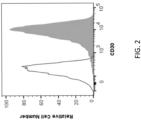
- Jurkat human acute T cell leukemia cell line (Clone E6-1, ATCC Catalog # TIB-152) was stained with Mouse Anti-Human CD30 Monoclonal Antibody (Clone 81316.11, filled histogram) or isotype control antibody (Catalog # MAB002, open histogram), followed by Phycoerythrin-conjugated Anti-Mouse IgG Secondary Antibody (Catalog # F0102B).
- Jurkat cells were harvested and washed two times in 2 mL of 1X flow staining buffer (FC001). The cells were resuspended in 1X flow staining buffer to a concentration of ⁇ 1.0 x 10 6 cells/mL. About 90 ⁇ L of the cell suspension was added to each flow tube. About 10 ⁇ L of either 25 ⁇ g/mL Msxh CD30 or MsIgG1 was added to the appropriate tube, and the tubes were vortexed and then incubated for 20 minutes at room temperature. Cells were washed two times in 2 mL of 1X flow staining buffer.
- FC001 1X flow staining buffer
- Table 1 Anti-hCD30 antibody sequences.
Landscapes
- Health & Medical Sciences (AREA)
- Chemical & Material Sciences (AREA)
- Organic Chemistry (AREA)
- Immunology (AREA)
- Life Sciences & Earth Sciences (AREA)
- Medicinal Chemistry (AREA)
- General Health & Medical Sciences (AREA)
- Biophysics (AREA)
- Biochemistry (AREA)
- Genetics & Genomics (AREA)
- Molecular Biology (AREA)
- Proteomics, Peptides & Aminoacids (AREA)
- Pharmacology & Pharmacy (AREA)
- Animal Behavior & Ethology (AREA)
- Nuclear Medicine, Radiotherapy & Molecular Imaging (AREA)
- Public Health (AREA)
- Veterinary Medicine (AREA)
- General Chemical & Material Sciences (AREA)
- Chemical Kinetics & Catalysis (AREA)
- Peptides Or Proteins (AREA)
Applications Claiming Priority (1)
| Application Number | Priority Date | Filing Date | Title |
|---|---|---|---|
| US18/475,892 US12122842B1 (en) | 2023-09-27 | 2023-09-27 | Human CD30-specific binding proteins and uses thereof |
Publications (1)
| Publication Number | Publication Date |
|---|---|
| EP4530298A1 true EP4530298A1 (de) | 2025-04-02 |
Family
ID=92909645
Family Applications (1)
| Application Number | Title | Priority Date | Filing Date |
|---|---|---|---|
| EP24202402.4A Withdrawn EP4530298A1 (de) | 2023-09-27 | 2024-09-25 | Humane cd30-spezifische bindungsproteine und verwendungen davon |
Country Status (2)
| Country | Link |
|---|---|
| US (1) | US12122842B1 (de) |
| EP (1) | EP4530298A1 (de) |
Citations (25)
| Publication number | Priority date | Publication date | Assignee | Title |
|---|---|---|---|---|
| US4816567A (en) | 1983-04-08 | 1989-03-28 | Genentech, Inc. | Recombinant immunoglobin preparations |
| US4828981A (en) | 1983-08-24 | 1989-05-09 | Synbiotics Corporation | Immunoassays for determining Dirofilaria immitis infection using antiidiotype monoclonal antibody reagents |
| EP0404097A2 (de) | 1989-06-22 | 1990-12-27 | BEHRINGWERKE Aktiengesellschaft | Bispezifische und oligospezifische, mono- und oligovalente Rezeptoren, ihre Herstellung und Verwendung |
| US5034506A (en) | 1985-03-15 | 1991-07-23 | Anti-Gene Development Group | Uncharged morpholino-based polymers having achiral intersubunit linkages |
| WO1993001161A1 (en) | 1991-07-11 | 1993-01-21 | Pfizer Limited | Process for preparing sertraline intermediates |
| US5480792A (en) | 1990-09-14 | 1996-01-02 | Biosite Diagnostics, Inc. | Antibodies to complexes of ligand receptors and ligands and their utility in ligand-receptor assays |
| US5525524A (en) | 1991-04-10 | 1996-06-11 | Biosite Diagnostics, Inc. | Crosstalk inhibitors and their uses |
| US5679526A (en) | 1989-01-10 | 1997-10-21 | Biosite Diagnostics Incorporated | Threshold ligand-receptor assay |
| US5821337A (en) | 1991-06-14 | 1998-10-13 | Genentech, Inc. | Immunoglobulin variants |
| US5824799A (en) | 1993-09-24 | 1998-10-20 | Biosite Diagnostics Incorporated | Hybrid phthalocyanine derivatives and their uses |
| US5851776A (en) | 1991-04-12 | 1998-12-22 | Biosite Diagnostics, Inc. | Conjugates and assays for simultaneous detection of multiple ligands |
| US5885527A (en) | 1992-05-21 | 1999-03-23 | Biosite Diagnostics, Inc. | Diagnostic devices and apparatus for the controlled movement of reagents without membrances |
| US5922615A (en) | 1990-03-12 | 1999-07-13 | Biosite Diagnostics Incorporated | Assay devices comprising a porous capture membrane in fluid-withdrawing contact with a nonabsorbent capillary network |
| US5939272A (en) | 1989-01-10 | 1999-08-17 | Biosite Diagnostics Incorporated | Non-competitive threshold ligand-receptor assays |
| US5947124A (en) | 1997-03-11 | 1999-09-07 | Biosite Diagnostics Incorporated | Diagnostic for determining the time of a heart attack |
| US6113855A (en) | 1996-11-15 | 2000-09-05 | Biosite Diagnostics, Inc. | Devices comprising multiple capillarity inducing surfaces |
| US6143576A (en) | 1992-05-21 | 2000-11-07 | Biosite Diagnostics, Inc. | Non-porous diagnostic devices for the controlled movement of reagents |
| US6248516B1 (en) | 1988-11-11 | 2001-06-19 | Medical Research Council | Single domain ligands, receptors comprising said ligands methods for their production, and use of said ligands and receptors |
| US6982321B2 (en) | 1986-03-27 | 2006-01-03 | Medical Research Council | Altered antibodies |
| US7087409B2 (en) | 1997-12-05 | 2006-08-08 | The Scripps Research Institute | Humanization of murine antibody |
| US7527791B2 (en) | 2004-03-31 | 2009-05-05 | Genentech, Inc. | Humanized anti-TGF-beta antibodies |
| US20100021479A1 (en) * | 2005-02-18 | 2010-01-28 | Medarex Inc. | Monoclonal Antibodies Against CD30 Lacking in Fucosyl Residues |
| US8568992B2 (en) | 2001-12-03 | 2013-10-29 | Amgen Fremont Inc. | Antibody categorization based on binding characteristics |
| WO2018092907A1 (ja) * | 2016-11-21 | 2018-05-24 | 国立研究開発法人医薬基盤・健康・栄養研究所 | エピトープ均質化抗体パネル、ならびにその作製方法および利用 |
| WO2020135426A1 (zh) * | 2018-12-24 | 2020-07-02 | 信达生物制药(苏州)有限公司 | 全人源的抗cd30单链抗体及其应用 |
Family Cites Families (4)
| Publication number | Priority date | Publication date | Assignee | Title |
|---|---|---|---|---|
| US5840300A (en) | 1995-09-11 | 1998-11-24 | Trustees Of The University Of Pennsylvania | Methods and compositions comprising single chain recombinant antibodies |
| WO1998030693A2 (en) | 1997-01-14 | 1998-07-16 | Human Genome Sciences, Inc. | Tumor necrosis factor receptor 5 |
| EP1471938A4 (de) * | 2002-01-09 | 2008-03-05 | Medarex Inc | Menschliche monoklonale antikörper gegen cd30 |
| CN113195542B (zh) | 2018-12-26 | 2024-05-24 | 南京传奇生物科技有限公司 | Cd30-结合部分、嵌合抗原受体及其用途 |
-
2023
- 2023-09-27 US US18/475,892 patent/US12122842B1/en active Active
-
2024
- 2024-09-25 EP EP24202402.4A patent/EP4530298A1/de not_active Withdrawn
Patent Citations (27)
| Publication number | Priority date | Publication date | Assignee | Title |
|---|---|---|---|---|
| US4816567A (en) | 1983-04-08 | 1989-03-28 | Genentech, Inc. | Recombinant immunoglobin preparations |
| US4828981A (en) | 1983-08-24 | 1989-05-09 | Synbiotics Corporation | Immunoassays for determining Dirofilaria immitis infection using antiidiotype monoclonal antibody reagents |
| US5034506A (en) | 1985-03-15 | 1991-07-23 | Anti-Gene Development Group | Uncharged morpholino-based polymers having achiral intersubunit linkages |
| US6982321B2 (en) | 1986-03-27 | 2006-01-03 | Medical Research Council | Altered antibodies |
| US6248516B1 (en) | 1988-11-11 | 2001-06-19 | Medical Research Council | Single domain ligands, receptors comprising said ligands methods for their production, and use of said ligands and receptors |
| US5679526A (en) | 1989-01-10 | 1997-10-21 | Biosite Diagnostics Incorporated | Threshold ligand-receptor assay |
| US5939272A (en) | 1989-01-10 | 1999-08-17 | Biosite Diagnostics Incorporated | Non-competitive threshold ligand-receptor assays |
| EP0404097A2 (de) | 1989-06-22 | 1990-12-27 | BEHRINGWERKE Aktiengesellschaft | Bispezifische und oligospezifische, mono- und oligovalente Rezeptoren, ihre Herstellung und Verwendung |
| US5922615A (en) | 1990-03-12 | 1999-07-13 | Biosite Diagnostics Incorporated | Assay devices comprising a porous capture membrane in fluid-withdrawing contact with a nonabsorbent capillary network |
| US5480792A (en) | 1990-09-14 | 1996-01-02 | Biosite Diagnostics, Inc. | Antibodies to complexes of ligand receptors and ligands and their utility in ligand-receptor assays |
| US5985579A (en) | 1990-09-14 | 1999-11-16 | Biosite Diagnostics, Inc. | Antibodies to complexes of ligand receptors and ligands and their utility in ligand-receptor assays |
| US5525524A (en) | 1991-04-10 | 1996-06-11 | Biosite Diagnostics, Inc. | Crosstalk inhibitors and their uses |
| US5851776A (en) | 1991-04-12 | 1998-12-22 | Biosite Diagnostics, Inc. | Conjugates and assays for simultaneous detection of multiple ligands |
| US5821337A (en) | 1991-06-14 | 1998-10-13 | Genentech, Inc. | Immunoglobulin variants |
| WO1993001161A1 (en) | 1991-07-11 | 1993-01-21 | Pfizer Limited | Process for preparing sertraline intermediates |
| US6143576A (en) | 1992-05-21 | 2000-11-07 | Biosite Diagnostics, Inc. | Non-porous diagnostic devices for the controlled movement of reagents |
| US5885527A (en) | 1992-05-21 | 1999-03-23 | Biosite Diagnostics, Inc. | Diagnostic devices and apparatus for the controlled movement of reagents without membrances |
| US6019944A (en) | 1992-05-21 | 2000-02-01 | Biosite Diagnostics, Inc. | Diagnostic devices and apparatus for the controlled movement of reagents without membranes |
| US5824799A (en) | 1993-09-24 | 1998-10-20 | Biosite Diagnostics Incorporated | Hybrid phthalocyanine derivatives and their uses |
| US6113855A (en) | 1996-11-15 | 2000-09-05 | Biosite Diagnostics, Inc. | Devices comprising multiple capillarity inducing surfaces |
| US5947124A (en) | 1997-03-11 | 1999-09-07 | Biosite Diagnostics Incorporated | Diagnostic for determining the time of a heart attack |
| US7087409B2 (en) | 1997-12-05 | 2006-08-08 | The Scripps Research Institute | Humanization of murine antibody |
| US8568992B2 (en) | 2001-12-03 | 2013-10-29 | Amgen Fremont Inc. | Antibody categorization based on binding characteristics |
| US7527791B2 (en) | 2004-03-31 | 2009-05-05 | Genentech, Inc. | Humanized anti-TGF-beta antibodies |
| US20100021479A1 (en) * | 2005-02-18 | 2010-01-28 | Medarex Inc. | Monoclonal Antibodies Against CD30 Lacking in Fucosyl Residues |
| WO2018092907A1 (ja) * | 2016-11-21 | 2018-05-24 | 国立研究開発法人医薬基盤・健康・栄養研究所 | エピトープ均質化抗体パネル、ならびにその作製方法および利用 |
| WO2020135426A1 (zh) * | 2018-12-24 | 2020-07-02 | 信达生物制药(苏州)有限公司 | 全人源的抗cd30单链抗体及其应用 |
Non-Patent Citations (61)
| Title |
|---|
| "Immunobiology", 2001, GARLAND PUBLISHING |
| "Uniprot", Database accession no. P28908-3 |
| ADAMCZYK ET AL., ANAL. CHIM. ACTA, vol. 579, no. 1, 2006, pages 61 - 67 |
| ALBERT L. LEHNINGER, PRINCIPLES OF BIOCHEMISTRY, 1982 |
| ALMAGROFRANSSON, FRONT. BIOSCI, vol. 13, 2008, pages 1619 - 1633 |
| ALTSCHUL ET AL., J. MOLECULAR BIOL., vol. 215, no. 3, 1990, pages 403 - 410 |
| ALTSCHUL ET AL., NUCLEIC ACIDS RES., vol. 25, no. 17, 1997, pages 3389 - 3402 |
| AUSUBEL ET AL.: "Gene Expression Technology: Methods in Enzymology", vol. 185, 1990, GREENE PUBLISHING ASSOCIATES AND JOHN WILEY & SONS |
| BATES APOWER CA, ANTIBODIES (BASEL)., vol. 8, no. 2, 2019, pages 28 |
| BEIGERT ET AL., PROC. NATL. ACAD. SCI. USA, vol. 106, no. 10, 2009, pages 3770 - 3775 |
| BRAASCHCOREY, BIOCHEMISTRY, vol. 41, no. 14, 2002, pages 4503 - 4510 |
| BRAITBARD ET AL., PROTEOME SCI, vol. 4, 2006, pages 12 |
| CARDARELLI PINA M ET AL: "Characterization of MDX-1401, a Human Anti-CD30 Antibody with Enhanced Effector Function, for Therapy of Malignant Lymphoma", BLOOD, W.B. SAUNDERS, AMSTERDAM, NL, vol. 112, no. 11, 16 November 2008 (2008-11-16), pages 1580, XP086680531, ISSN: 0006-4971, DOI: 10.1182/BLOOD.V112.11.1580.1580 * |
| CHOTHIA ET AL., J MOL BIOL, vol. 196, 1987, pages 901 - 917 |
| CLACKSON ET AL., NATURE, vol. 352, 1991, pages 624 - 628 |
| CRISTINA CALDAS ET AL: "Humanization of the anti-CD18 antibody 6.7: an unexpected effect of a framework residue in binding to antigen.", MOLECULAR IMMUNOLOGY, vol. 39, no. 15, 1 May 2003 (2003-05-01), pages 941 - 952, XP055025334, ISSN: 0161-5890, DOI: 10.1016/S0161-5890(03)00022-1 * |
| DALL'ACQUA ET AL., J. IMMUNOL., vol. 169, 2002, pages 5171 - 5180 |
| DALL'ACQUA ET AL., METHODS, vol. 36, 2005, pages 61 - 68 |
| DU J ET AL: "Molecular basis of recognition of human osteopontin by 23C3, a potential therapeutic antibody for treatment of rheumatoid arthritis", JOURNAL OF MOLECULAR BIOLOGY, ACADEMIC PRESS, UNITED KINGDOM, vol. 382, no. 4, 17 October 2008 (2008-10-17), pages 835 - 842, XP026805063, ISSN: 0022-2836, [retrieved on 20080731], DOI: 10.1016/J.JMB.2008.07.075 * |
| DURBIN ET AL.: "Biological Sequence Analysis: Probabilistic Models of Proteins and Nucleic Acids", 2009, CAMBRIDGE UNIVERSITY PRESS |
| GUSFIELD: "Algorithms on Strings, Trees and Sequences", 1997, CAMBRIDGE UNIVERSITY PRESS |
| HOLLIGER ET AL., NAT. BIOTECH., vol. 23, no. 9, 2005, pages 1126 - 1129 |
| HOLLINGER ET AL., PROC. NATL. ACAD. SCI. USA, vol. 90, 1993, pages 6444 - 6448 |
| HUDSON ET AL., NAT. MED., vol. 9, 2003, pages 129 - 134 |
| JIANHUA X ET AL: "Modification in framework region I results in a decreased affinity of chimeric anti-TAG72 antibody", MOLECULAR IMMUNOLOGY, PERGAMON, GB, vol. 28, no. 1-2, 1 January 1991 (1991-01-01), pages 141 - 148, XP023681971, ISSN: 0161-5890, [retrieved on 19910101], DOI: 10.1016/0161-5890(91)90097-4 * |
| JOOSTEN ET AL., MICROBIAL CELL FACTORIES, vol. 2, 2003 |
| KANG, T.HJUNG, S.T, EXP MOL MED, vol. 51, 2019, pages 1 - 9 |
| KELLEY, R.FMENG, Y.G.LIU ET AL., J BIOL CHEM, vol. 289, 2014, pages 3571 - 90 |
| KENNEDY ET AL., IMMUNOLOGY, vol. 118, 2006, pages 143 - 152 |
| KITTS ET AL., BIOTECHNIQUES, vol. 14, 1993, pages 810 - 817 |
| KLIMKA ET AL., BR. J. CANCER, vol. 83, 2000, pages 252 - 260 |
| KOHLERMILSTEIN, EUR. J. IMMUNOL., vol. 5, 1976, pages 511 - 519 |
| LAZAR ET AL., PROC. NATL ACAD. SCI. USA, vol. 103, 2006, pages 4005 - 4010 |
| LI ET AL., PROC NATL ACAD SCI U S A., vol. 114, 2017, pages 3485 - 90 |
| LIN ET AL., PROC NATL ACAD SCI U S A., vol. 112, 2015, pages 10611 - 6 |
| LONBERG, HANDB. EXP. PHARMACOL, vol. 181, 2008, pages 69 - 97 |
| LONBERG, NAT. BIOTECHNOL., vol. 23, no. 9, 2005, pages 1117 - 25 |
| LUCKLOW ET AL., J. VIROL, vol. 67, 1993, pages 4566 - 4579 |
| LUCKLOW, CURR. OPIN. BIOTECHNOL, vol. 4, 1993, pages 564 - 572 |
| MARKS ET AL., J. MOL. BIOL., vol. 222, 1991, pages 581 - 597 |
| MIMOTO ET AL., CURR. PHARM. BIOTECHNOL, vol. 17, 2016, pages 1298 - 1314 |
| MONNET ET AL., MABS, vol. 6, 2014, pages 422 - 36 |
| MONNIER ET AL., ANTIBODIES, vol. 2, no. 2, 2013, pages 193 - 208 |
| MORRISON ET AL., PROC. NATL. ACAD. SCI. USA., vol. 81, 1984, pages 6851 - 6855 |
| NELSON, A.L, MABS, vol. 2, no. 1, January 2010 (2010-01-01), pages 77 - 83 |
| NORDSTROM ET AL., BREAST CANCER RES., vol. 13, 2011, pages R123 |
| PADLAN, MOL. IMMUNOL, vol. 28, 1991, pages 489 - 498 |
| PANKA D J ET AL: "VARIABLE REGION FRAMEWORK DIFFERENCES RESULT IN DECREASED OR INCREASED AFFINITY OF VARIANT ANTI-DIGOXIN ANTIBODIES", PROCEEDINGS OF THE NATIONAL ACADEMY OF SCIENCES (PNAS), NATIONAL ACADEMY OF SCIENCES, vol. 85, no. 9, 1 May 1988 (1988-05-01), pages 3080 - 3084, XP000611718, ISSN: 0027-8424, DOI: 10.1073/PNAS.85.9.3080 * |
| QUEEN ET AL., PROC. NAT'L ACAD. SCI. USA, vol. 86, 1989, pages 10029 - 10033 |
| RICHARDS ET AL., MOL. CANCER THER, vol. 7, 2008, pages 2517 - 2527 |
| RIECHMANN ET AL., NATURE, vol. 332, 1988, pages 323 - 329 |
| SAFDARI ET AL., MOL MED, vol. 22, 2016, pages 258 - 270 |
| SAMBROOK ET AL.: "Molecular Cloning, a Laboratory Manual", 2012, COLD SPRING HARBOR PRESS |
| SAUNDERS, K.O, FRONT IMMUNOL, vol. 10, 2019, pages 1296 |
| SODING, BIOINFORMATICS, vol. 21, no. 7, 2005, pages 951 - 960 |
| URLAUB ET AL., PROC. NATL. ACAD. SCI. USA, vol. 97, 1980, pages 4216 - 4220 |
| VERED KUNIK ET AL: "Structural Consensus among Antibodies Defines the Antigen Binding Site", PLOS COMPUTATIONAL BIOLOGY, vol. 8, no. 2, 23 February 2012 (2012-02-23), pages e1002388, XP055123186, DOI: 10.1371/journal.pcbi.1002388 * |
| VIDARSSON ET AL., FRONTIERS IN IMMUNOLOGY, vol. 5, 2014, pages 520 |
| WAHLESTEDT ET AL., PROC. NATL. ACAD. SCI. U.S.A., vol. 97, 2000, pages 5633 - 5638 |
| WANG, J. AM. CHEM. SOC., vol. 122, 2000, pages 8595 - 8602 |
| ZALEVSKY ET AL., NAT. BIOTECHNOL., vol. 28, 2010, pages 157 - 159 |
Also Published As
| Publication number | Publication date |
|---|---|
| US12122842B1 (en) | 2024-10-22 |
Similar Documents
| Publication | Publication Date | Title |
|---|---|---|
| US20250034240A1 (en) | Il-18 binding molecules | |
| US11130814B2 (en) | Method of treating pustular psoriasis with antibodies directed against interleukin 36 receptor (IL-36R) | |
| KR101982899B1 (ko) | TL1a에 대한 항체 및 그의 용도 | |
| KR20150097670A (ko) | 인간 프로그램된 사멸 리간드 1 (pd-l1)과 결합하는 항체 | |
| US20200190177A1 (en) | Anti-tenascin c antibodies and uses thereof | |
| KR20180048571A (ko) | 항체 에피토프 | |
| US12122842B1 (en) | Human CD30-specific binding proteins and uses thereof | |
| CA3169633A1 (en) | Anti-idiotype antibodies binding to anti-cd123 antibodies or chimeric antigen receptors (cars) and methods of using the same | |
| WO2025071590A1 (en) | Human cd30-specific binding proteins and uses thereof | |
| HK40086847A (en) | Antibodies directed against interleukin 36 receptor (il-36r) | |
| CN120897928A (zh) | 针对犬il-4的犬抗体 | |
| HK40030914A (en) | Il-18 binding molecules | |
| HK1193621A (en) | Antibody binding to abca1 polypeptide | |
| HK1209136B (en) | Il-18 binding molecules | |
| EA045234B1 (ru) | АНТИТЕЛА, СВЯЗЫВАЮЩИЕСЯ С КОМПЛЕКСОМ, ВКЛЮЧАЮЩИМ ТРИМЕРНЫЙ TNFα, ИХ ПРИМЕНЕНИЕ И КОДИРУЮЩИЙ АНТИТЕЛА ПОЛИНУКЛЕОТИД |
Legal Events
| Date | Code | Title | Description |
|---|---|---|---|
| PUAI | Public reference made under article 153(3) epc to a published international application that has entered the european phase |
Free format text: ORIGINAL CODE: 0009012 |
|
| STAA | Information on the status of an ep patent application or granted ep patent |
Free format text: STATUS: THE APPLICATION HAS BEEN PUBLISHED |
|
| AK | Designated contracting states |
Kind code of ref document: A1 Designated state(s): AL AT BE BG CH CY CZ DE DK EE ES FI FR GB GR HR HU IE IS IT LI LT LU LV MC ME MK MT NL NO PL PT RO RS SE SI SK SM TR |
|
| STAA | Information on the status of an ep patent application or granted ep patent |
Free format text: STATUS: THE APPLICATION HAS BEEN WITHDRAWN |
|
| 18W | Application withdrawn |
Effective date: 20250910 |