EP4530251A1 - Entkarbonisierung einer chemischen anlage - Google Patents
Entkarbonisierung einer chemischen anlage Download PDFInfo
- Publication number
- EP4530251A1 EP4530251A1 EP23200364.0A EP23200364A EP4530251A1 EP 4530251 A1 EP4530251 A1 EP 4530251A1 EP 23200364 A EP23200364 A EP 23200364A EP 4530251 A1 EP4530251 A1 EP 4530251A1
- Authority
- EP
- European Patent Office
- Prior art keywords
- stream
- gas
- chemical plant
- permeate
- produce
- Prior art date
- Legal status (The legal status is an assumption and is not a legal conclusion. Google has not performed a legal analysis and makes no representation as to the accuracy of the status listed.)
- Pending
Links
Images
Classifications
-
- B—PERFORMING OPERATIONS; TRANSPORTING
- B01—PHYSICAL OR CHEMICAL PROCESSES OR APPARATUS IN GENERAL
- B01D—SEPARATION
- B01D53/00—Separation of gases or vapours; Recovering vapours of volatile solvents from gases; Chemical or biological purification of waste gases, e.g. engine exhaust gases, smoke, fumes, flue gases, aerosols
-
- B—PERFORMING OPERATIONS; TRANSPORTING
- B01—PHYSICAL OR CHEMICAL PROCESSES OR APPARATUS IN GENERAL
- B01D—SEPARATION
- B01D53/00—Separation of gases or vapours; Recovering vapours of volatile solvents from gases; Chemical or biological purification of waste gases, e.g. engine exhaust gases, smoke, fumes, flue gases, aerosols
- B01D53/14—Separation of gases or vapours; Recovering vapours of volatile solvents from gases; Chemical or biological purification of waste gases, e.g. engine exhaust gases, smoke, fumes, flue gases, aerosols by absorption
- B01D53/1456—Removing acid components
- B01D53/1475—Removing carbon dioxide
-
- B—PERFORMING OPERATIONS; TRANSPORTING
- B01—PHYSICAL OR CHEMICAL PROCESSES OR APPARATUS IN GENERAL
- B01D—SEPARATION
- B01D53/00—Separation of gases or vapours; Recovering vapours of volatile solvents from gases; Chemical or biological purification of waste gases, e.g. engine exhaust gases, smoke, fumes, flue gases, aerosols
- B01D53/22—Separation of gases or vapours; Recovering vapours of volatile solvents from gases; Chemical or biological purification of waste gases, e.g. engine exhaust gases, smoke, fumes, flue gases, aerosols by diffusion
-
- B—PERFORMING OPERATIONS; TRANSPORTING
- B01—PHYSICAL OR CHEMICAL PROCESSES OR APPARATUS IN GENERAL
- B01D—SEPARATION
- B01D53/00—Separation of gases or vapours; Recovering vapours of volatile solvents from gases; Chemical or biological purification of waste gases, e.g. engine exhaust gases, smoke, fumes, flue gases, aerosols
- B01D53/34—Chemical or biological purification of waste gases
- B01D53/46—Removing components of defined structure
- B01D53/62—Carbon oxides
-
- C—CHEMISTRY; METALLURGY
- C01—INORGANIC CHEMISTRY
- C01B—NON-METALLIC ELEMENTS; COMPOUNDS THEREOF; METALLOIDS OR COMPOUNDS THEREOF NOT COVERED BY SUBCLASS C01C
- C01B3/00—Hydrogen; Gaseous mixtures containing hydrogen; Separation of hydrogen from mixtures containing it; Purification of hydrogen; Reversible storage of hydrogen
- C01B3/02—Production of hydrogen; Production of gaseous mixtures containing hydrogen
- C01B3/32—Production of hydrogen; Production of gaseous mixtures containing hydrogen by reaction of gaseous or liquid organic compounds with gasifying agents, e.g. water, carbon dioxide or air
- C01B3/34—Production of hydrogen; Production of gaseous mixtures containing hydrogen by reaction of gaseous or liquid organic compounds with gasifying agents, e.g. water, carbon dioxide or air by reaction of hydrocarbons with gasifying agents
- C01B3/36—Production of hydrogen; Production of gaseous mixtures containing hydrogen by reaction of gaseous or liquid organic compounds with gasifying agents, e.g. water, carbon dioxide or air by reaction of hydrocarbons with gasifying agents using oxygen; using mixtures containing oxygen as gasifying agents
-
- C—CHEMISTRY; METALLURGY
- C01—INORGANIC CHEMISTRY
- C01B—NON-METALLIC ELEMENTS; COMPOUNDS THEREOF; METALLOIDS OR COMPOUNDS THEREOF NOT COVERED BY SUBCLASS C01C
- C01B3/00—Hydrogen; Gaseous mixtures containing hydrogen; Separation of hydrogen from mixtures containing it; Purification of hydrogen; Reversible storage of hydrogen
- C01B3/02—Production of hydrogen; Production of gaseous mixtures containing hydrogen
- C01B3/32—Production of hydrogen; Production of gaseous mixtures containing hydrogen by reaction of gaseous or liquid organic compounds with gasifying agents, e.g. water, carbon dioxide or air
- C01B3/34—Production of hydrogen; Production of gaseous mixtures containing hydrogen by reaction of gaseous or liquid organic compounds with gasifying agents, e.g. water, carbon dioxide or air by reaction of hydrocarbons with gasifying agents
- C01B3/38—Production of hydrogen; Production of gaseous mixtures containing hydrogen by reaction of gaseous or liquid organic compounds with gasifying agents, e.g. water, carbon dioxide or air by reaction of hydrocarbons with gasifying agents using catalysts
- C01B3/382—Processes with two or more reaction steps, of which at least one is catalytic, e.g. steam reforming and partial oxidation
-
- C—CHEMISTRY; METALLURGY
- C01—INORGANIC CHEMISTRY
- C01B—NON-METALLIC ELEMENTS; COMPOUNDS THEREOF; METALLOIDS OR COMPOUNDS THEREOF NOT COVERED BY SUBCLASS C01C
- C01B3/00—Hydrogen; Gaseous mixtures containing hydrogen; Separation of hydrogen from mixtures containing it; Purification of hydrogen; Reversible storage of hydrogen
- C01B3/02—Production of hydrogen; Production of gaseous mixtures containing hydrogen
- C01B3/32—Production of hydrogen; Production of gaseous mixtures containing hydrogen by reaction of gaseous or liquid organic compounds with gasifying agents, e.g. water, carbon dioxide or air
- C01B3/34—Production of hydrogen; Production of gaseous mixtures containing hydrogen by reaction of gaseous or liquid organic compounds with gasifying agents, e.g. water, carbon dioxide or air by reaction of hydrocarbons with gasifying agents
- C01B3/48—Production of hydrogen; Production of gaseous mixtures containing hydrogen by reaction of gaseous or liquid organic compounds with gasifying agents, e.g. water, carbon dioxide or air by reaction of hydrocarbons with gasifying agents followed by reaction of water vapour with carbon monoxide
-
- C—CHEMISTRY; METALLURGY
- C01—INORGANIC CHEMISTRY
- C01B—NON-METALLIC ELEMENTS; COMPOUNDS THEREOF; METALLOIDS OR COMPOUNDS THEREOF NOT COVERED BY SUBCLASS C01C
- C01B3/00—Hydrogen; Gaseous mixtures containing hydrogen; Separation of hydrogen from mixtures containing it; Purification of hydrogen; Reversible storage of hydrogen
- C01B3/50—Separation of hydrogen or hydrogen-containing gases from gaseous mixtures, e.g. purification
- C01B3/501—Separation of hydrogen or hydrogen-containing gases from gaseous mixtures, e.g. purification by diffusion
-
- C—CHEMISTRY; METALLURGY
- C07—ORGANIC CHEMISTRY
- C07C—ACYCLIC OR CARBOCYCLIC COMPOUNDS
- C07C29/00—Preparation of compounds having hydroxy or O-metal groups bound to a carbon atom not belonging to a six-membered aromatic ring
- C07C29/15—Preparation of compounds having hydroxy or O-metal groups bound to a carbon atom not belonging to a six-membered aromatic ring by reduction of oxides of carbon exclusively
- C07C29/151—Preparation of compounds having hydroxy or O-metal groups bound to a carbon atom not belonging to a six-membered aromatic ring by reduction of oxides of carbon exclusively with hydrogen or hydrogen-containing gases
- C07C29/1516—Multisteps
- C07C29/1518—Multisteps one step being the formation of initial mixture of carbon oxides and hydrogen for synthesis
-
- C—CHEMISTRY; METALLURGY
- C07—ORGANIC CHEMISTRY
- C07C—ACYCLIC OR CARBOCYCLIC COMPOUNDS
- C07C31/00—Saturated compounds having hydroxy or O-metal groups bound to acyclic carbon atoms
- C07C31/02—Monohydroxylic acyclic alcohols
- C07C31/04—Methanol
-
- B—PERFORMING OPERATIONS; TRANSPORTING
- B01—PHYSICAL OR CHEMICAL PROCESSES OR APPARATUS IN GENERAL
- B01D—SEPARATION
- B01D2257/00—Components to be removed
- B01D2257/50—Carbon oxides
- B01D2257/504—Carbon dioxide
-
- C—CHEMISTRY; METALLURGY
- C01—INORGANIC CHEMISTRY
- C01B—NON-METALLIC ELEMENTS; COMPOUNDS THEREOF; METALLOIDS OR COMPOUNDS THEREOF NOT COVERED BY SUBCLASS C01C
- C01B2203/00—Integrated processes for the production of hydrogen or synthesis gas
- C01B2203/02—Processes for making hydrogen or synthesis gas
- C01B2203/0205—Processes for making hydrogen or synthesis gas containing a reforming step
- C01B2203/0227—Processes for making hydrogen or synthesis gas containing a reforming step containing a catalytic reforming step
- C01B2203/0244—Processes for making hydrogen or synthesis gas containing a reforming step containing a catalytic reforming step the reforming step being an autothermal reforming step, e.g. secondary reforming processes
-
- C—CHEMISTRY; METALLURGY
- C01—INORGANIC CHEMISTRY
- C01B—NON-METALLIC ELEMENTS; COMPOUNDS THEREOF; METALLOIDS OR COMPOUNDS THEREOF NOT COVERED BY SUBCLASS C01C
- C01B2203/00—Integrated processes for the production of hydrogen or synthesis gas
- C01B2203/02—Processes for making hydrogen or synthesis gas
- C01B2203/025—Processes for making hydrogen or synthesis gas containing a partial oxidation step
- C01B2203/0255—Processes for making hydrogen or synthesis gas containing a partial oxidation step containing a non-catalytic partial oxidation step
-
- C—CHEMISTRY; METALLURGY
- C01—INORGANIC CHEMISTRY
- C01B—NON-METALLIC ELEMENTS; COMPOUNDS THEREOF; METALLOIDS OR COMPOUNDS THEREOF NOT COVERED BY SUBCLASS C01C
- C01B2203/00—Integrated processes for the production of hydrogen or synthesis gas
- C01B2203/04—Integrated processes for the production of hydrogen or synthesis gas containing a purification step for the hydrogen or the synthesis gas
- C01B2203/0405—Purification by membrane separation
-
- C—CHEMISTRY; METALLURGY
- C01—INORGANIC CHEMISTRY
- C01B—NON-METALLIC ELEMENTS; COMPOUNDS THEREOF; METALLOIDS OR COMPOUNDS THEREOF NOT COVERED BY SUBCLASS C01C
- C01B2203/00—Integrated processes for the production of hydrogen or synthesis gas
- C01B2203/04—Integrated processes for the production of hydrogen or synthesis gas containing a purification step for the hydrogen or the synthesis gas
- C01B2203/0415—Purification by absorption in liquids
-
- C—CHEMISTRY; METALLURGY
- C01—INORGANIC CHEMISTRY
- C01B—NON-METALLIC ELEMENTS; COMPOUNDS THEREOF; METALLOIDS OR COMPOUNDS THEREOF NOT COVERED BY SUBCLASS C01C
- C01B2203/00—Integrated processes for the production of hydrogen or synthesis gas
- C01B2203/04—Integrated processes for the production of hydrogen or synthesis gas containing a purification step for the hydrogen or the synthesis gas
- C01B2203/046—Purification by cryogenic separation
-
- C—CHEMISTRY; METALLURGY
- C01—INORGANIC CHEMISTRY
- C01B—NON-METALLIC ELEMENTS; COMPOUNDS THEREOF; METALLOIDS OR COMPOUNDS THEREOF NOT COVERED BY SUBCLASS C01C
- C01B2203/00—Integrated processes for the production of hydrogen or synthesis gas
- C01B2203/04—Integrated processes for the production of hydrogen or synthesis gas containing a purification step for the hydrogen or the synthesis gas
- C01B2203/0465—Composition of the impurity
- C01B2203/0475—Composition of the impurity the impurity being carbon dioxide
-
- C—CHEMISTRY; METALLURGY
- C01—INORGANIC CHEMISTRY
- C01B—NON-METALLIC ELEMENTS; COMPOUNDS THEREOF; METALLOIDS OR COMPOUNDS THEREOF NOT COVERED BY SUBCLASS C01C
- C01B2203/00—Integrated processes for the production of hydrogen or synthesis gas
- C01B2203/04—Integrated processes for the production of hydrogen or synthesis gas containing a purification step for the hydrogen or the synthesis gas
- C01B2203/0465—Composition of the impurity
- C01B2203/0495—Composition of the impurity the impurity being water
-
- C—CHEMISTRY; METALLURGY
- C01—INORGANIC CHEMISTRY
- C01B—NON-METALLIC ELEMENTS; COMPOUNDS THEREOF; METALLOIDS OR COMPOUNDS THEREOF NOT COVERED BY SUBCLASS C01C
- C01B2203/00—Integrated processes for the production of hydrogen or synthesis gas
- C01B2203/06—Integration with other chemical processes
- C01B2203/061—Methanol production
-
- C—CHEMISTRY; METALLURGY
- C01—INORGANIC CHEMISTRY
- C01B—NON-METALLIC ELEMENTS; COMPOUNDS THEREOF; METALLOIDS OR COMPOUNDS THEREOF NOT COVERED BY SUBCLASS C01C
- C01B2203/00—Integrated processes for the production of hydrogen or synthesis gas
- C01B2203/08—Methods of heating or cooling
- C01B2203/0872—Methods of cooling
- C01B2203/0888—Methods of cooling by evaporation of a fluid
- C01B2203/0894—Generation of steam
-
- C—CHEMISTRY; METALLURGY
- C01—INORGANIC CHEMISTRY
- C01B—NON-METALLIC ELEMENTS; COMPOUNDS THEREOF; METALLOIDS OR COMPOUNDS THEREOF NOT COVERED BY SUBCLASS C01C
- C01B2203/00—Integrated processes for the production of hydrogen or synthesis gas
- C01B2203/14—Details of the flowsheet
- C01B2203/146—At least two purification steps in series
Definitions
- the present invention relates to a method for reducing the carbon dioxide emissions of a chemical plant and thus enabling a lower carbon intensity product from that plant, and potentially an increase in production capacity.
- hydrocarbon-containing impurities are removed from the reaction system or desired product via a purge or a purification unit.
- This hydrocarbon-containing stream is often referred to as "off-gas", "fuel gas” or “purge gas”.
- off-gas fuel gas
- purge gas purification gas
- unwanted hydrocarbons are removed via a reaction loop purge or via a purification unit as an off-gas.
- the off-gas is combusted in a steam methane reformer (SMR) or one or more fired heaters as fuel for use elsewhere on the chemical plant.
- SMR steam methane reformer
- the CO 2 produced through burning the off-gas is not normally captured because it is at relatively low pressure. This CO 2 is therefore released to the atmosphere (sometimes referred to as flue gas) and contributes to the CO 2 emissions of the chemical plant and thus carbon intensity assigned to the desired product, e.g. H 2 , methanol, ammonia, ethylene, etc.
- WO2022/003312A1 describes a process for the production of hydrogen which involves: (i) steam reforming of a mixture comprising a hydrocarbon and steam at a steam-to-carbon ratio of at least 2.6 : 1 in a gas-heated reformer followed by autothermal reforming; (ii) water-gas shift; (iii) condensation of water; (iv) carbon dioxide separation; and (v) purification to separate a purified hydrogen gas and a fuel gas.
- the fuel gas is fed, as the sole fuel, to one or more fired heaters used to heat one or more process streams within the process.
- WO2022/003313A1 describes a similar concept to WO2022/003312A1 but instead of step (i) as described above the process involves subjecting a gaseous mixture comprising hydrocarbon and steam having a steam to carbon ratio of at least 0.9 : 1 to adiabatic pre-reforming in a pre-reformer followed by autothermal reforming in an autothermal reformer (ATR).
- a gaseous mixture comprising hydrocarbon and steam having a steam to carbon ratio of at least 0.9 : 1 to adiabatic pre-reforming in a pre-reformer followed by autothermal reforming in an autothermal reformer (ATR).
- ATR autothermal reformer
- WO2022/003312A1 and WO2022/003313A1 describe arrangements which are well suited to new build "grassroots" hydrogen plants.
- a "hydrogen plant” is a chemical plant in which H 2 is the desired product, as opposed to simply an intermediate as is the case in a methanol plant or an ammonia plant.
- H 2 is the desired product
- ammonia plant the capex of a grassroots chemical plant is high, there is a need for solutions which decarbonise existing chemical plants.
- WO2011/046680A1 discloses a method and apparatus for producing a hydrogen-containing product in which hydrocarbon-containing feed gas streams are reacted in a steam methane reformer of an existing hydrogen plant and a catalytic reactor that reacts hydrocarbons, oxygen and steam.
- the catalytic reactor is retrofitted to the existing hydrogen plant to increase hydrogen production.
- the resulting synthesis gas streams are combined, cooled, subjected to water-gas shift and then introduced into a production apparatus that can be a pressure swing adsorption unit.
- the amount of synthesis gas contained in a shifted stream made available to the production apparatus is increased by virtue of the combination of the synthesis gas streams to increase production of the hydrogen containing product.
- the catalytic reactor is operated such that the synthesis gas stream produced by such reactor is similar to that produced by the steam methane reformer and at a temperature that will reduce oxygen consumption within the catalytic reactor.
- the above described retrofit process involves adding a catalytic reactor into the main steam reforming section. This necessarily involves disrupting the main reforming section requiring plant downtime and is complex and expensive.
- the present invention provides an alternative solution to reducing the CO 2 emissions of a chemical plant and is applicable to a wide range of chemical plants where an off-gas is currently combusted as fuel.
- the present inventors have realised that the above problems can be solved by retrofitting the chemical plant by installing an off-gas treatment unit (OTU).
- OTU off-gas treatment unit
- the role of the OTU is to convert a hydrocarbon-containing fuel stream into a low carbon fuel which can be combusted instead of a hydrocarbon fuel.
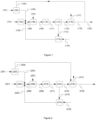
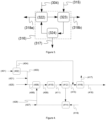
- the invention relates to a chemical plant comprising an off-gas treatment unit arranged to accept a hydrocarbon-containing fuel stream comprising hydrocarbons, steam, and hydrogen, the off-gas treatment unit comprising:
- the H 2 membrane separation unit is located upstream of the partial oxidation (POX) reactor or ATR.
- POX partial oxidation
- a purge stream from a methanol loop typically contains significant amounts of hydrogen along with unreformed methane and any inerts such as N 2 , and therefore in a preferred embodiment the hydrocarbon-containing fuel stream is produced using a purge stream from a methanol loop.
- a H 2 membrane separation unit may also be located downstream from the water-gas shift section and upstream from the CO 2 removal section within the OTU.
- the role of this membrane separation unit is to remove hydrogen produced during the water-gas shift stage(s).
- the introduction of a H 2 membrane in between stages of water-gas shift and CO 2 removal is described in WO2011/026943A1 .
- H 2 membrane separation unit at these location, the benefit of introducing a H 2 membrane separation unit at these location is twofold. Firstly, by removing H 2 upstream of the reforming section, volume flow to downstream operations is reduced thus making the equipment smaller which is preferable from a capex and opex perspective. Secondly, when a H 2 membrane separation unit is located downstream from the water-gas shift section and upstream from the CO 2 removal section, the CO 2 partial pressure of the retentate fuel is increased making CO 2 adsorption more efficient which is preferable from a capex and opex perspective.
- the option of fitting the OTU outside of the main reforming section offers several benefits. Firstly, it does not involve disrupting the main reforming section which is complex, expensive and requires plant downtime. Secondly, a single OTU, located wherever is most convenient and within practical pipeline distance of the plant(s) being decarbonised, can be used for the processing of several different off-gas stream from different locations throughout the plant. This option is therefore particularly attractive for a chemical plant or chemical manufacturing site, e.g. an oil refinery or petrochemicals complex, where there are several different hydrocarbon-containing off-gas streams which are used for fuel.
- a chemical plant or chemical manufacturing site e.g. an oil refinery or petrochemicals complex
- the invention in a second aspect relates to a process for converting a hydrocarbon-containing fuel stream into a low carbon fuel, wherein the process is carried out in an off-gas treatment unit as defined herein.
- the invention in a third aspect relates to method for retrofitting a chemical plant, comprising the step of installing an off-gas treatment unit as defined herein.
- arrangements according to the first aspect can be prepared by the retrofit method, the arrangement may also be useful for grassroots chemical plants.
- the present invention is applicable to a wide variety of chemical plants which produce at least one hydrocarbon-containing off-gas stream.
- hydrocarbon-containing fuel stream is used to refer to the stream containing hydrocarbons, steam and hydrogen, which is fed to the H 2 membrane separation unit.
- the hydrocarbon-containing fuel stream is made up from one or more hydrocarbon-containing off-gas streams, which may optionally have first been treated to remove contaminants, and optional addition of steam to adjust the steam to carbon ratio.
- the product stream from a reactor is treated to separate out a stream containing the desired product and a stream containing unreacted materials which is recycled to the reactor.
- a portion of the recycle stream is removed (a purge stream).
- the hydrocarbon-containing fuel stream is produced using one or more purge streams, for example a purge stream from a methanol loop.
- a hydrocarbon-containing stream from a purification unit e.g. a pressure-swing adsorption unit, is used to generate the hydrocarbon-containing fuel stream.
- the purification unit is a component of a steam reforming section comprising a steam methane reformer (e.g. in a hydrogen, methanol or ammonia plant).
- a hydrocarbon-containing stream from an ethylene cracker is used to generate the hydrocarbon-containing fuel stream.
- the role of the OTU is to convert the hydrocarbon-containing fuel stream into a low carbon fuel which can be used for heating duties.
- the low carbon fuel typically comprises ⁇ 90 vol% H 2 , such as ⁇ 95 vol% H 2 .
- the hydrocarbon-containing fuel stream may be prepared from a single hydrocarbon-containing off-gas stream or by combining two or more different hydrocarbon-containing off-gas streams.
- the latter option has the benefit that the OTU can be used to decarbonise multiple different off-gas streams from across the chemical plant. Where multiple different off-gas streams are used to prepare the hydrocarbon-containing fuel stream, these will typically first be combined in a fuel gas header.
- streams used to produce the hydrocarbon-containing fuel stream e.g. one or more off-gas streams and any supplementary fuel
- Purification may include for instance H 2 , Cl, Hg, sulfur removal, carbon monoxide removal, or CO 2 removal.
- the combined energy available from combusting the permeate and hydrogen product streams is less than that available from combusting the streams used to produce the hydrocarbon-containing fuel stream. This may not be problematic in all cases, but in some cases supplementary fuel is needed to compensated for the shortfall.
- the supplementary fuel is typically a natural gas stream. If necessary, the supplementary fuel may first be treated in a purification unit. The supplementary fuel may be used to produce the hydrocarbon-containing fuel stream or may be added to the retentate stream upstream of the reforming section.
- the OTU comprises a reforming section, a water-gas shift section, and a CO 2 removal section. These are described in detail in subsequent sections. Additional units (e.g. heat exchangers, steam removal etc%) may also be present in the OTU.
- Suitable H 2 membranes include those described in WO2011/026943A1 .
- the H 2 membrane separation unit generates a permeate stream and a retentate stream.
- the permeate stream is relatively rich in H 2 .
- the retentate stream is relatively depleted in H 2 and is fed to the reforming section.
- the permeate stream may be used as a low carbon fuel directly without further purification, e.g. CO 2 depletion. This may be the case if the low carbon fuel is produced with sufficiently high purity (e.g. ⁇ 95% H 2 such as ⁇ 97% H 2 ). Permeates with lower purity (e.g. 90-95% H 2 ) may be used without further CO 2 removal if the permeate stream is combined with the hydrogen product stream from the CO 2 removal section to produce a low carbon fuel stream with a sufficiently low CO 2 content.
- sufficiently high purity e.g. ⁇ 95% H 2 such as ⁇ 97% H 2
- Permeates with lower purity e.g. 90-95% H 2
- the permeate stream is combined with the hydrogen product stream from the CO 2 removal section to produce a low carbon fuel stream with a sufficiently low CO 2 content.
- the permeate stream may require CO 2 removal before being used as a low carbon fuel, for instance if the permeate is produced with low purity (e.g. ⁇ 90% H 2 ) or required extent of decarbonisation is high. This may be achieved by sending the permeate to the CO 2 removal section. If the permeate and the shifted gas stream (or dewatered shifted gas stream) are of sufficiently similar pressures then it is preferred that the permeate and the shifted gas stream are combined before being sent to the CO 2 removal section. This has the benefit that the CO 2 removal section only requires a single CO 2 separation unit which is advantageous for reasons of capex and opex.
- the permeate and the shifted gas stream are of sufficiently different pressures then it is preferred that the permeate stream and the shifted gas stream are fed to separate CO 2 absorption units within the CO 2 removal section, rather than adding the complexity, capex and opex for a permeate stream compressor.
- the reforming section comprises a partial oxidation reactor or an autothermal reformer to which the retentate stream is fed.
- the retentate stream may be combined with a supplementary fuel before being fed to the reforming section.
- supplementary stream(s) include natural gas or hydrocarbon-containing streams.
- Any supplementary feed stream(s) will typically first have undergone purification before being combined with the retentate stream. However, it is generally preferred that any supplementary fuel is added downstream of the hydrogen membrane separation unit.
- One of the properties of the mixture within the reformer is the steam to carbon ratio, defined as the ratio of steam to carbon atoms present as hydrocarbon.
- a mixture containing 75 mol% H 2 O and 25 mol% CH 4 has a steam to carbon ratio of 3.0 : 1
- a mixture containing 75 mol% H 2 O, 10 mol% CO and 15 mol% CH 4 has a steam to carbon ratio of 5.0 : 1 and so on.
- a steam to carbon ratio of at least 2.0 : 1 is required to theoretically convert all of the carbon present in hydrocarbons into CO 2 and H 2 .
- Steam to carbon ratios above 2.0 to 1 may be beneficial to ensure that sufficient steam is present for complete conversion of hydrocarbons in the mixture.
- the steam to carbon ratio is not more than 3.5 : 1. It is preferred that the steam to carbon ratio of the mixture within the reformer is from 0.5 : 1 to 3.5 : 1, such as 1.0 : 1 to 3.0 : 1.
- steam is added to the oxygen-containing stream fed to the POX reactor or ATR.
- Partial oxidation reactor (POX reactor) or autothermal reformer (A TR)
- the role of the POX reactor or ATR is to convert hydrocarbons in the retentate stream into hydrogen and carbon oxides through steam reforming reactions.
- An ATR generally comprises a burner disposed at the top of the reformer, to which the retentate stream and an oxygen-containing gas are fed, a combustion zone beneath the burner through which a flame extends, and a fixed bed of particulate steam reforming catalyst disposed below the combustion zone.
- the heat for the endothermic steam reforming reactions is therefore provided by combustion of a portion of hydrocarbon in the retentate stream.
- the retentate stream is typically fed to the top of the reformer and the oxygen-containing gas fed to the burner, mixing and combustion occur downstream of the burner generating a heated gas mixture the composition of which is brought to equilibrium as it passes through the steam reforming catalyst.
- Partial oxidation reactors are known and typically comprise a vessel to which the feed and an oxygen-containing gas are fed via a burner, analogous to that used in an autothermal reformer, disposed above a reaction chamber in which the partial combustion reactions take place. Unlike an autothermal reformer, a catalyst is not present in the vessel. Air, oxygen-enriched air or O 2 may be used as the oxygen-containing gas.
- the combustion temperature may be about 1300°C, or higher. Steam may be added to the feed and/or the oxygen containing gas to lower the combustion temperature and reduce soot formation.
- the idealised formula for this reaction applied to methane in the feed is as follows: 2 CH 4 + O 2 ⁇ 2 CO + 4 H 2
- the OTU comprises an ATR.
- the reforming section consists essentially of an autothermal reformer, by which it is meant that the reforming section does not include any other reforming units other than the ATR.
- the reforming section additionally comprises a gas-heated reformer which is used in conjunction with the POX reactor or ATR.
- the reforming section comprises an autothermal reformer and a gas-heated reformer.
- the skilled person will be familiar with the design of gas-heated reformers and detail of their arrangement and suitable catalysts are summarised in WO2022/003312A1 .
- the POX reactor or ATR and gas-heated reformer may be arranged in series or in parallel. When arranged in series, the retentate stream is fed to catalyst filled tubes in the gas-heated reformer (tube-side) where steam reforming reactions take place to produce a partially reformed gas stream.
- the partially reformed gas stream is fed to the POX reactor or ATR where further steam reforming reactions take place to produce a reformed gas stream.
- the reformed gas stream is fed to the shell of the gas-heated reformer to provide heat required for steam reforming taking place in the gas-heated reformer.
- a first portion of the retentate stream is fed to catalyst filled tubes in the gas-heated reformer (tube-side) where steam reforming reactions take place to produce a first partially reformed gas stream.
- a second portion of the retentate stream is fed to the POX reactor or ATR where steam reforming reactions take place to produce a second partially reformed gas stream.
- the first and second partially reformed gas streams are combined and used to provide heat required for steam reforming taking place in the gas-heated reformer.
- the WGS section includes a high-temperature shift vessel and the off-gas treatment unit is arranged such that the combined reforming feed (including the retentate and any purified additional hydrocarbon feed, e.g. natural gas) stream is pre-heated by heat exchange with a shifted gas stream generated by the high-temperature shift vessel.
- High-temperature shift is operated adiabatically in a shift vessel with inlet temperature in the range 300-400°C, preferably 320-360°C, typically over a bed of a reduced iron catalyst, such as chromia-promoted magnetite. Alternatively, a promoted zinc-aluminate catalyst may be used. This arrangement reduces or eliminates the need for additional fuel to pre-heat the retentate stream.
- the shifted gases from the high-temperature shift vessel provide all of the heating duty for the retentate stream.
- the stream exiting the reforming stage(s) is referred to herein as a reformed gas stream.
- the reformed gas stream is typically cooled before being fed to the WGS section.
- saturated steam is raised.
- the outlet gases from the POX reactor or ATR are used to generate superheated steam.
- the superheated steam may then be used to generate electricity, for example by expanding the superheated steam using a steam turbine with a connected alternator. This arrangement reduces the electricity import to the process.
- the WGS section includes one or more WGS shift stages and may include stages of high-temperature shift, medium-temperature shift, isothermal shift and low-temperature shift. These terms, as well as suitable catalysts therefor, are described in WO2022/003312A1 .
- the stream exiting the WGS unit is referred to as a shifted gas stream and ideally comprises CO 2 , H 2 , with the residual being unreformed hydrocarbons (predominantly methane), steam and inert gases.
- steam and/or water removal is carried out on the shifted gas stream to produce a dewatered shifted stream which is sent to the CO 2 removal section.
- the shifted stream is cooled to a temperature below the dew point so that the steam condenses. Suitable techniques for steam removal are described in WO2022/003312A1 .
- a second H 2 membrane separation unit may be located downstream from the water-gas shift section and upstream from the CO 2 removal section.
- the second hydrogen membrane separation unit is arranged to accept the shifted stream, or dewatered shifted stream, and produce a second permeate stream and a second retentate stream, and the CO 2 removal section is arranged to accept said second retentate stream.
- the terms "second" are used to distinguish these streams from the permeate stream and retentate stream generated by the H 2 membrane separation unit located upstream of the reforming section.
- the second permeate stream is produced with sufficiently high purity that it can be used as a low carbon fuel directly, without further purification.
- the CO 2 removal section accepts the shifted or dewatered shifted stream, and produces a CO 2 rich stream and a hydrogen product stream.
- the CO 2 removal section may also accept the permeate stream.
- the CO 2 removal section operates by means of a physical wash system, a reactive wash system or a cryogenic system.
- a reactive wash system is preferred, more preferably an amine wash system.
- the permeate stream may not be necessary to send the permeate stream for CO 2 removal if it is produced with sufficiently high purity or if it is combined with the purified hydrogen product stream to generate a low carbon fuel stream. It is preferred that the permeate stream is combined with the hydrogen product stream downstream from the CO 2 removal section to form a low carbon fuel stream.
- the permeate stream and the shifted gas stream are at suitably similar pressures then the permeate stream and the shifted gas stream may be combined before being fed to the CO 2 removal section.
- the benefit of this arrangement is that it only requires a single absorber column for the CO 2 removal unit, meaning lower capex and opex.
- the permeate stream and the shifted gas stream are at significantly different pressures then it is preferred that the permeate stream and the shifted gas stream are sent to separate CO 2 absorption vessels within the CO 2 removal section, referred to as a permeate CO 2 absorption vessel and a shifted gas CO 2 absorption vessel respectively.
- the shifted gas CO 2 absorption vessel operates at a higher pressure than the permeate CO 2 absorption vessel.
- Each absorption vessel may have its own regeneration vessel to desorb CO 2 from the CO 2 -laden absorption liquid and generate lean absorption liquid.
- the CO 2 -laden absorption liquid from each vessel may be fed to a common regeneration vessel.
- lean absorption liquid from a regeneration vessel is divided proportionally and fed to both the permeate CO 2 absorption vessel and the shifted gas CO 2 absorption vessel, and CO 2 -laden absorption liquid from the shifted gas CO 2 absorption vessel is fed to a regeneration vessel, which produces a CO 2 stream and a lean absorption liquid which is recycled to the permeate CO 2 absorption vessel.
- Circulating the absorption liquid through a single regeneration column is highly efficient. In this arrangement the operating pressure increases between the permeate and shifted gas CO 2 absorption vessels, which achieves more efficient CO 2 removal.
- the permeate stream and/or the hydrogen product stream are fed to a fuel gas header, from which the low carbon fuel is withdrawn as required.
- the CO 2 rich stream may be further purified if CO 2 is a desired product or may be sent for carbon capture and storage or utilisation.
- An example of utilisation is in the manufacture of methanol.
- the permeate stream and/or the hydrogen product stream may be used as a low carbon fuel.
- the chemical plant includes one or more burners in which the low carbon fuel is combusted e.g. to heat process stream within or outside of the OTU. It will be appreciated that fired heaters which originally combusted a hydrocarbon-containing fuel may need to be adapted to combust the low carbon fuel.
- the chemical plant comprises a steam methane reformer then it is preferred that the low carbon fuel is used as fuel for the steam methane reformer.
- the chemical plant includes a methanol synthesis section fed with a make-up gas stream.
- the permeate stream and/or the hydrogen product stream may be used to adjust hydrogen content of the make-up gas stream.
- a portion of the reformed gas stream may be used to produce the make-up gas stream.
- the low carbon fuel is typically handled in a fuel gas header at relatively low pressure e.g. 1-10 bara, such as 2-8 bara. This pressure is generally lower than the pressure at which the low carbon fuel stream is produced by the CO 2 removal section. It is therefore preferred that the low carbon fuel is depressurized and used to pressurize other streams, for example off-gas streams or the hydrocarbon-containing fuel stream. This may be achieved for instance by a combined gas expander, motor/generator and compressor.
- the above sections describe the arrangement of a chemical plant containing an OTU according to the invention.
- the retrofit method involves installing an OTU arranged as described above, such that a hydrocarbon-containing off-gas stream is converted into a low carbon fuel.
- the low carbon fuel may be used as fuel in a burner, e.g. to produce steam. It will be appreciated that the original burner may need to be replaced to be suitable for burning the low carbon fuel having a high H 2 content and the method may include installation of H 2 fuel burners for the low carbon fuel, and any other necessary modifications.
Landscapes
- Chemical & Material Sciences (AREA)
- Organic Chemistry (AREA)
- Chemical Kinetics & Catalysis (AREA)
- Engineering & Computer Science (AREA)
- Combustion & Propulsion (AREA)
- Inorganic Chemistry (AREA)
- Health & Medical Sciences (AREA)
- General Health & Medical Sciences (AREA)
- Analytical Chemistry (AREA)
- General Chemical & Material Sciences (AREA)
- Oil, Petroleum & Natural Gas (AREA)
- Biomedical Technology (AREA)
- Environmental & Geological Engineering (AREA)
- Hydrogen, Water And Hydrids (AREA)
- Separation Using Semi-Permeable Membranes (AREA)
Priority Applications (3)
| Application Number | Priority Date | Filing Date | Title |
|---|---|---|---|
| EP23200364.0A EP4530251A1 (de) | 2023-09-28 | 2023-09-28 | Entkarbonisierung einer chemischen anlage |
| GB2413771.3A GB2637376A (en) | 2023-09-28 | 2024-09-19 | Decarbonisation of a chemical plant |
| PCT/GB2024/052420 WO2025068678A1 (en) | 2023-09-28 | 2024-09-19 | Decarbonisation of a chemical plant |
Applications Claiming Priority (1)
| Application Number | Priority Date | Filing Date | Title |
|---|---|---|---|
| EP23200364.0A EP4530251A1 (de) | 2023-09-28 | 2023-09-28 | Entkarbonisierung einer chemischen anlage |
Publications (1)
| Publication Number | Publication Date |
|---|---|
| EP4530251A1 true EP4530251A1 (de) | 2025-04-02 |
Family
ID=88236553
Family Applications (1)
| Application Number | Title | Priority Date | Filing Date |
|---|---|---|---|
| EP23200364.0A Pending EP4530251A1 (de) | 2023-09-28 | 2023-09-28 | Entkarbonisierung einer chemischen anlage |
Country Status (3)
| Country | Link |
|---|---|
| EP (1) | EP4530251A1 (de) |
| GB (1) | GB2637376A (de) |
| WO (1) | WO2025068678A1 (de) |
Citations (8)
| Publication number | Priority date | Publication date | Assignee | Title |
|---|---|---|---|---|
| WO2011026943A1 (en) | 2009-09-04 | 2011-03-10 | Shell Internationale Research Maatschappij B.V. | Process to prepare a diluted hydrogen gas mixture |
| WO2011046680A1 (en) | 2009-10-14 | 2011-04-21 | Praxair Technology, Inc. | Hydrogen product method and apparatus |
| US20200307997A1 (en) * | 2017-11-22 | 2020-10-01 | L'Air Liquide, Société Anonyme pour I'Etude et I'Exploitation des Procédés Georges Claude | Process and device for the combined production of hydrogen and carbon dioxide from a hydrocarbon mixture |
| WO2022003313A1 (en) | 2020-06-30 | 2022-01-06 | Johnson Matthey Public Limited Company | Process for the production of hydrogen |
| WO2022003312A1 (en) | 2020-06-30 | 2022-01-06 | Johnson Matthey Public Limited Company | Process for producing hydrogen |
| EP4039639A1 (de) * | 2021-02-04 | 2022-08-10 | Casale Sa | Verfahren zur methanolherstellung |
| US20220306468A1 (en) * | 2021-03-29 | 2022-09-29 | Uop Llc | Integrated hydrogen production and bio-renewable conversion process |
| WO2024086065A1 (en) * | 2022-10-18 | 2024-04-25 | L'air Liquide, Societe Anonyme Pour L'etude Et L'exploitation Des Procedes Georges Claude | Process for producing low carbon hydrogen |
Family Cites Families (1)
| Publication number | Priority date | Publication date | Assignee | Title |
|---|---|---|---|---|
| WO2024246479A1 (en) * | 2023-05-26 | 2024-12-05 | Johnson Matthey Public Limited Company | Process for synthesising methanol |
-
2023
- 2023-09-28 EP EP23200364.0A patent/EP4530251A1/de active Pending
-
2024
- 2024-09-19 WO PCT/GB2024/052420 patent/WO2025068678A1/en active Pending
- 2024-09-19 GB GB2413771.3A patent/GB2637376A/en active Pending
Patent Citations (8)
| Publication number | Priority date | Publication date | Assignee | Title |
|---|---|---|---|---|
| WO2011026943A1 (en) | 2009-09-04 | 2011-03-10 | Shell Internationale Research Maatschappij B.V. | Process to prepare a diluted hydrogen gas mixture |
| WO2011046680A1 (en) | 2009-10-14 | 2011-04-21 | Praxair Technology, Inc. | Hydrogen product method and apparatus |
| US20200307997A1 (en) * | 2017-11-22 | 2020-10-01 | L'Air Liquide, Société Anonyme pour I'Etude et I'Exploitation des Procédés Georges Claude | Process and device for the combined production of hydrogen and carbon dioxide from a hydrocarbon mixture |
| WO2022003313A1 (en) | 2020-06-30 | 2022-01-06 | Johnson Matthey Public Limited Company | Process for the production of hydrogen |
| WO2022003312A1 (en) | 2020-06-30 | 2022-01-06 | Johnson Matthey Public Limited Company | Process for producing hydrogen |
| EP4039639A1 (de) * | 2021-02-04 | 2022-08-10 | Casale Sa | Verfahren zur methanolherstellung |
| US20220306468A1 (en) * | 2021-03-29 | 2022-09-29 | Uop Llc | Integrated hydrogen production and bio-renewable conversion process |
| WO2024086065A1 (en) * | 2022-10-18 | 2024-04-25 | L'air Liquide, Societe Anonyme Pour L'etude Et L'exploitation Des Procedes Georges Claude | Process for producing low carbon hydrogen |
Also Published As
| Publication number | Publication date |
|---|---|
| GB2637376A (en) | 2025-07-23 |
| WO2025068678A1 (en) | 2025-04-03 |
| GB202413771D0 (en) | 2024-11-06 |
Similar Documents
| Publication | Publication Date | Title |
|---|---|---|
| US20230174378A1 (en) | Process for producing hydrogen | |
| US8088185B2 (en) | System for producing hydrogen and carbon dioxide | |
| CN116133982B (zh) | 低碳氢燃料 | |
| WO2010022162A2 (en) | Systems and processes for producing ultrapure, high pressure hydrogen | |
| US20250002338A1 (en) | Low-carbon hydrogen process | |
| US20250223160A1 (en) | Process for producing hydrogen | |
| EP4587380A1 (de) | Atr-reformierung | |
| GB2620463A (en) | Process for producing hydrogen and method of retrofitting a hydrogen production unit | |
| GB2625646A (en) | Process for producing hydrogen | |
| US20250051159A1 (en) | Process for producing hydrogen and method of retrofitting a hydrogen production unit | |
| GB2625645A (en) | Process for producing hydrogen | |
| EP4720025A1 (de) | Verfahren zur synthese von methanol | |
| EP4530251A1 (de) | Entkarbonisierung einer chemischen anlage | |
| EP4385947A1 (de) | Entkarbonisierung einer chemischen anlage | |
| WO2022058585A1 (en) | Improving the purity of a co2-rich stream | |
| EP4385946A1 (de) | Entkarbonisierung einer chemischen anlage | |
| CA3268672A1 (en) | Decarbonisation of a chemical plant | |
| WO2025022083A1 (en) | Process for producing a synthesis gas | |
| WO2025257528A1 (en) | Low-carbon hydrogen process |
Legal Events
| Date | Code | Title | Description |
|---|---|---|---|
| PUAI | Public reference made under article 153(3) epc to a published international application that has entered the european phase |
Free format text: ORIGINAL CODE: 0009012 |
|
| STAA | Information on the status of an ep patent application or granted ep patent |
Free format text: STATUS: THE APPLICATION HAS BEEN PUBLISHED |
|
| AK | Designated contracting states |
Kind code of ref document: A1 Designated state(s): AL AT BE BG CH CY CZ DE DK EE ES FI FR GB GR HR HU IE IS IT LI LT LU LV MC ME MK MT NL NO PL PT RO RS SE SI SK SM TR |