EP4529246A1 - Relay communication method and apparatus, communication device, and storage medium - Google Patents
Relay communication method and apparatus, communication device, and storage medium Download PDFInfo
- Publication number
- EP4529246A1 EP4529246A1 EP22941939.5A EP22941939A EP4529246A1 EP 4529246 A1 EP4529246 A1 EP 4529246A1 EP 22941939 A EP22941939 A EP 22941939A EP 4529246 A1 EP4529246 A1 EP 4529246A1
- Authority
- EP
- European Patent Office
- Prior art keywords
- security procedure
- option
- terminal
- network element
- capability information
- Prior art date
- Legal status (The legal status is an assumption and is not a legal conclusion. Google has not performed a legal analysis and makes no representation as to the accuracy of the status listed.)
- Pending
Links
Images




Classifications
-
- H—ELECTRICITY
- H04—ELECTRIC COMMUNICATION TECHNIQUE
- H04L—TRANSMISSION OF DIGITAL INFORMATION, e.g. TELEGRAPHIC COMMUNICATION
- H04L63/00—Network architectures or network communication protocols for network security
- H04L63/20—Network architectures or network communication protocols for network security for managing network security; network security policies in general
-
- H—ELECTRICITY
- H04—ELECTRIC COMMUNICATION TECHNIQUE
- H04W—WIRELESS COMMUNICATION NETWORKS
- H04W8/00—Network data management
- H04W8/22—Processing or transfer of terminal data, e.g. status or physical capabilities
-
- H—ELECTRICITY
- H04—ELECTRIC COMMUNICATION TECHNIQUE
- H04L—TRANSMISSION OF DIGITAL INFORMATION, e.g. TELEGRAPHIC COMMUNICATION
- H04L63/00—Network architectures or network communication protocols for network security
- H04L63/20—Network architectures or network communication protocols for network security for managing network security; network security policies in general
- H04L63/205—Network architectures or network communication protocols for network security for managing network security; network security policies in general involving negotiation or determination of the one or more network security mechanisms to be used, e.g. by negotiation between the client and the server or between peers or by selection according to the capabilities of the entities involved
-
- H—ELECTRICITY
- H04—ELECTRIC COMMUNICATION TECHNIQUE
- H04W—WIRELESS COMMUNICATION NETWORKS
- H04W12/00—Security arrangements; Authentication; Protecting privacy or anonymity
- H04W12/03—Protecting confidentiality, e.g. by encryption
-
- H—ELECTRICITY
- H04—ELECTRIC COMMUNICATION TECHNIQUE
- H04W—WIRELESS COMMUNICATION NETWORKS
- H04W12/00—Security arrangements; Authentication; Protecting privacy or anonymity
- H04W12/06—Authentication
-
- H—ELECTRICITY
- H04—ELECTRIC COMMUNICATION TECHNIQUE
- H04W—WIRELESS COMMUNICATION NETWORKS
- H04W12/00—Security arrangements; Authentication; Protecting privacy or anonymity
- H04W12/08—Access security
-
- H—ELECTRICITY
- H04—ELECTRIC COMMUNICATION TECHNIQUE
- H04W—WIRELESS COMMUNICATION NETWORKS
- H04W60/00—Affiliation to network, e.g. registration; Terminating affiliation with the network, e.g. de-registration
-
- H—ELECTRICITY
- H04—ELECTRIC COMMUNICATION TECHNIQUE
- H04W—WIRELESS COMMUNICATION NETWORKS
- H04W76/00—Connection management
- H04W76/10—Connection setup
-
- H—ELECTRICITY
- H04—ELECTRIC COMMUNICATION TECHNIQUE
- H04W—WIRELESS COMMUNICATION NETWORKS
- H04W8/00—Network data management
- H04W8/005—Discovery of network devices, e.g. terminals
-
- H—ELECTRICITY
- H04—ELECTRIC COMMUNICATION TECHNIQUE
- H04W—WIRELESS COMMUNICATION NETWORKS
- H04W60/00—Affiliation to network, e.g. registration; Terminating affiliation with the network, e.g. de-registration
- H04W60/04—Affiliation to network, e.g. registration; Terminating affiliation with the network, e.g. de-registration using triggered events
-
- H—ELECTRICITY
- H04—ELECTRIC COMMUNICATION TECHNIQUE
- H04W—WIRELESS COMMUNICATION NETWORKS
- H04W8/00—Network data management
- H04W8/22—Processing or transfer of terminal data, e.g. status or physical capabilities
- H04W8/24—Transfer of terminal data
-
- H—ELECTRICITY
- H04—ELECTRIC COMMUNICATION TECHNIQUE
- H04W—WIRELESS COMMUNICATION NETWORKS
- H04W88/00—Devices specially adapted for wireless communication networks, e.g. terminals, base stations or access point devices
- H04W88/02—Terminal devices
- H04W88/04—Terminal devices adapted for relaying to or from another terminal or user
Definitions
- the present disclosure relates to but is not limited to the field of wireless communication technology, and more particularly relates to a method and an apparatus for relay communication, a communication device and a storage medium.
- Proximity Services of the fifth generation (5G) mobile communication technology
- CP control plane
- UP user plane
- PC5 communication between a remote UE and User-to-Network (U2N) Relay
- U2N Relay User-to-Network
- U2N Relay discovery before the relay communication there are also the proposal with two options of CP-based and UP-based security procedures.
- Embodiments of the present disclosure provide a method and apparatus for relay communication, a communication device and a storage medium.
- a method for relay communication is provided, which is performed by a first terminal.
- the method includes: sending capability information, in which the capability information indicates at least one of: supporting an option of a control plane (CP) based security procedure; or supporting an option of a user plane (UP) based security procedure, in which the security procedure includes a security procedure for relay discovery and/or relay communication.
- CP control plane
- UP user plane
- sending the capability information includes sending the capability information during a network registration procedure performed by the first terminal.
- the method further includes: receiving indication information, in which the indication information indicates an option of a security procedure selected by a first network element of the first terminal.
- the option of the security procedure includes one of: the option of the CP based security procedure; or the option of the UP based security procedure.
- receiving the indication information includes: receiving the indication information during a service authorization and information provisioning procedure.
- the method further includes: determining that the indication information is received, and triggering the security procedure.
- the method further includes: determining whether to execute the security procedure according to a comparison result between an option of a security procedure selected by a first network element of a first terminal and an option of a security procedure selected by a first network element of a second terminal.
- the first terminal and the second terminal are terminals for executing the security procedure.
- determining whether to execute the security procedure according to the comparison result between the option of the security procedure selected by the first network element of the first terminal and the option of the security procedure selected by the first network element of the second terminal includes: determining to execute the security procedure between the first terminal and the second terminal upon determining that the option of the security procedure selected by the first network element of the first terminal is the same as the option of the security procedure selected by the first network element of the second terminal; or determining not to execute the security procedure between the first terminal and the second terminal upon determining that the option of the security procedure selected by the first network element of the first terminal is different from the option of the security procedure selected by the first network element of the second terminal.
- triggering the security procedure includes: triggering a security procedure between the first terminal and a second terminal, in which an option of a security procedure selected by the first terminal is the same as an option of a security procedure selected by a first network element of the second terminal.
- the first network element is a policy control function (PCF).
- PCF policy control function
- a method for relay communication is provided, which is performed by a first network element.
- the method includes: receiving capability information, in which the capability information indicates at least one of: supporting an option of a CP based security procedure; or supporting an option of a UP based security procedure, in which the security procedure includes a security procedure for relay discovery and/or relay communication.
- receiving the capability information includes receiving the capability information during a network registration procedure performed by a first terminal.
- the method further includes: determining that the capability information is received, and selecting an option of a security procedure.
- the option of the security procedure includes one of: the option of the CP based security procedure; or the option of the UP based security procedure.
- the method further includes: sending indication information, in which the indication information indicates an option of a security procedure selected by the first network element.
- sending the indication information includes: sending the indication information during a service authorization and information provisioning procedure.
- the first network element is a PCF.
- an apparatus for relay communication which includes: a sending module configured to send capability information, in which the capability information indicates at least one of: supporting an option of a CP based security procedure; or supporting an option of a UP based security procedure, in which the security procedure includes a security procedure for relay discovery and/or relay communication.
- an apparatus for relay communication which includes: a receiving module configured to receive capability information, in which the capability information indicates at least one of: supporting an option of a CP based security procedure; or supporting an option of a UP based security procedure, in which the security procedure includes a security procedure for relay discovery and/or relay communication.
- a communication device including a processor and a memory storing instructions executable by the processor.
- the instructions are executed by the processor, the above method as described in any embodiment of the disclosure is implemented.
- a computer storage medium storing computer executable instructions.
- the computer executable instructions are executed by a processor, the above method as described in any embodiment of the disclosure is implemented.
- capability information is sent, in which the capability information indicates at least one of an option of a CP based security procedure, or supporting an option of a UP based security procedure; the security procedure includes a security procedure for relay discovery and/or relay communication.
- the network device can determine whether to select the option of the CP based security procedure or the option of the UP based security procedure based on the capability information. Compared with the situation where the network does not know the capability supported by the terminal, the relay communication mechanism is improved, and the reliability of relay communication is increased.
- first, second and third are used to describe various information, the information are not limited by these expressions. These expressions are merely used to differentiate the information of the same type from each other. For example, without departing from the scope of the present disclosure, first information may also be called as second information, and similarly second information may also be called as first information. Depending on the context, such a word as “if” may be construed as “when ", “in the case that " or “in response to determining that ".
- the wireless communication system is a communication system based on a mobile communication technology, which may include several user equipment (UE) 110 and several base stations 120.
- UE user equipment
- the UE 110 may be a device for providing voice and/or data connectivity to a user.
- the UE 110 may communicate with one or more core networks via a Radio Access Network (RAN).
- RAN Radio Access Network
- the UE 110 may be an Internet of Things (IoT) terminal, e.g., a sensor device or a mobile phone, or a computer having the IoT terminal, e.g., an immobile, portable, pocket-sized, handheld, built-in or vehicle-mounted device.
- the UE may be a Station (STA), a subscriber unit, a subscriber station, a mobile station, a mobile, a remote station, an access point, a remote terminal, an access terminal, a user terminal, a user agent, or a user device.
- STA Station
- the UE 110 may also be a device for an unmanned aerial vehicle.
- the UE 110 may also be a vehicle-mounted device, e.g., an electronic control unit having a wireless communication function, or a wireless terminal coupled to an external electronic control unit.
- the UE 110 may also be a roadside device, e.g., a street lamp or a signal lamp having a wireless communication function, or any other roadside devices.
- the base station 120 may be a base station (gNB) that adopts a centralized distributed architecture in a 5G system.
- gNB base station
- the base station 120 adopts the centralized distributed architecture it usually includes a central unit (CU) and at least two distributed units (DUs).
- the CU is provided with protocol stacks of a packet data convergence protocol (PDCP) layer, a radio link control (RLC) protocol layer, and a medium access control (MAC) layer.
- the DU is provided with a protocol stack of a physical (PHY) layer.
- PDCP packet data convergence protocol
- RLC radio link control
- MAC medium access control
- PHY physical
- a wireless connection may be established between the base station 120 and the UE 110 through a radio interface.
- the radio interface is a radio interface based on the fifth generation mobile communication network technology (5G) standard.
- the radio interface is a new radio interface.
- the radio interface may also be a radio interface based on a 5G next-generation mobile communication network technology standard.
- an end-to-end (E2E) connection may also be established between the UEs 11, for example, vehicle-to-vehicle (V2V) communication, vehicle to infrastructure (V2I) communication and vehicle to pedestrian (V2P) communication and other communication scenes in vehicle-to-everything (V2X) communication.
- V2V vehicle-to-vehicle
- V2I vehicle to infrastructure
- V2P vehicle to pedestrian
- V2X vehicle-to-everything
- the above-mentioned UE can be considered as the terminal in the following embodiments.
- the above wireless communication system may further include a network management device 130.
- the network management device 130 may be a core network device in a wireless communication system.
- the network management device 130 may be a mobility management entity (MME) in a 5G core network.
- MME mobility management entity
- the network management device may also be other core network devices, such as a policy and charging rules function (PCRF) or a user data management (UDM) server.
- PCRF policy and charging rules function
- UDM user data management
- an embodiment provides a method for relay communication, which performed by a first terminal, and the method includes the following step at 21.
- capability information is sent, in which the capability information indicates at least one of: supporting an option of a control plane (CP) based security procedure; or supporting an option of a user plane (UP) based security procedure.
- the security procedure includes a security procedure for relay discovery and/or relay communication.
- the terminal involved in the present disclosure may be but is not limited to a mobile phone, a wearable device, a vehicle-mounted terminal, a road side unit (RSU), a smart home terminal, an industrial sensor device and/or a medical device, etc.
- the terminal may be a reduced capability (Redcap) terminal or a NR terminal of a predetermined version (e.g., an NR terminal of R17 version).
- the first terminal in the present disclosure may be a relay terminal in relay communication, and the second terminal may be a remote terminal in relay communication.
- the first terminal in the present disclosure may be a remote terminal in relay communication
- the second terminal may be a relay terminal in relay communication.
- the network element involved in the present disclosure may be a policy control function (PCF).
- PCF policy control function
- a network element may be deployed independently as a communication node, or may be uniformly deployed in an existing network element.
- a network element may be understood as a logical node that may be flexibly deployed in a network, which is not limited herein.
- the first network element may be a PCF.
- the first terminal may send the capability information to the first network element (e.g., PCF) via a base station.
- the first network element e.g., PCF
- the base stations involved in the present disclosure may be various types of base stations, for example, a base station in a 5G mobile communication network or other evolved base station.
- the first terminal sends the capability information to a PCF of the first terminal via the base station, and the capability information indicates at least one of: supporting an option of a CP based security procedure; or supporting an option of a UP based security procedure; the security procedure includes a security procedure for relay discovery and/or relay communication.
- the first terminal sends the capability information to the PCF of the first terminal via the base station, and the capability information indicates at least one of: supporting an option of a CP based security procedure; or supporting an option of a UP based security procedure; the security procedure includes a security procedure for relay discovery and/or relay communication.
- capability information is sent, in which the capability information indicates at least one of: supporting an option of a CP based security procedure; or supporting an option of a UP based security procedure; the security procedure includes a security procedure for relay discovery and/or relay communication.
- Indication information is received, in which the indication information indicates an option of a security procedure selected by a first network element of the first terminal; the option of the security procedure includes one of: the option of the CP based security procedure or the option of the UP based security procedure.
- the first terminal sends capability information to the first network element, in which the capability information indicates at least one of: supporting the option of the CP based security procedure; or supporting the option of the UP based security procedure; the security procedure includes a security procedure for relay discovery and/or relay communication.
- the first network element determines that the capability information is received and selects an option of a security procedure, in which the option of the security procedure includes one of: the option of the CP based security procedure or the option of the UP based security procedure.
- the first network element sends indication information to the first terminal, in which the indication information indicates an option of a security procedure selected by the first network element of the first terminal.
- the first terminal receives the indication information.
- capability information is sent, in which the capability information indicates at least one of: supporting an option of a CP based security procedure; or supporting an option of a UP based security procedure; the security procedure includes a security procedure for relay discovery and/or relay communication.
- Indication information is received during a service authorization and information provisioning procedure, in which the indication information indicates an option of a security procedure selected by a first network element of the first terminal, and the option of the security procedure includes one of: the option of the CP based security procedure or the option of the UP based security procedure.
- capability information is sent, in which the capability information indicates at least one of: supporting an option of a CP based security procedure; or supporting an option of a UP based security procedure; the security procedure includes a security procedure for relay discovery and/or relay communication.
- Indication information is received, in which the indication information indicates an option of a security procedure selected by a first network element of the first terminal, and the option of the security procedure includes one of: the option of the CP based security procedure or the option of the UP based security procedure. It is determined that the indication information is received, and the security procedure is triggered.
- capability information is sent, in which the capability information indicates at least one of: supporting an option of a CP based security procedure; or supporting an option of a UP based security procedure; the security procedure includes a security procedure for relay discovery and/or relay communication.
- Indication information is received, in which the indication information indicates an option of a security procedure selected by a first network element of the first terminal; the option of the security procedure includes one of: the option of the CP based security procedure or the option of the UP based security procedure. It is determined that the indication information is received, and the security procedure is triggered.
- capability information is sent, in which the capability information indicates at least one of: supporting an option of a CP based security procedure; or supporting an option of a UP based security procedure; the security procedure includes a security procedure for relay discovery and/or relay communication.
- Indication information is received, in which the indication information indicates an option of a security procedure selected by a first network element of the first terminal, and the option of the security procedure includes one of: the option of the CP based security procedure or the option of the UP based security procedure. It is determined that the indication information is received, and the security procedure is triggered between the first terminal and the second terminal, in which an option of a security procedure selected by the first terminal is the same as an option of a security procedure selected by a first network element of the second terminal.
- This embodiment provides a method for relay communication, which includes the following steps at a1 to a9.
- the security procedure includes a security procedure for relay discovery and/or relay communication.
- the PCF of the relay terminal selects an option of a security procedure based on the capability information, in which the option of the security procedure includes one of: the option of the CP based security procedure or the option of the UP based security procedure.
- the security procedure includes a security procedure for relay discovery and/or relay communication.
- the PCF of the remote terminal selects a security procedure based on the capability information, in which the option of the security procedure includes one of: the option of the CP based security procedure, or the option of the UP based security procedure.
- the PCF of the relay terminal sends indication information to the relay terminal.
- the indication information indicates an option of a security procedure selected by the PCF of the relay terminal; and the option of the security procedure includes one of: the option of the CP based security procedure, or the option of the UP based security procedure.
- the PCF of the remote terminal sends indication information to the remote terminal.
- the indication information indicates an option of a security procedure selected by the PCF of the remote terminal; the option of the security procedure includes one of: the option of the CP based security procedure, or the option of the UP based security procedure.
- the relay terminal determines that the indication information is received and triggers the security procedure.
- the remote terminal determines that the indication information is received, and triggers the security procedure.
- the security procedures selected by the PCF of the relay terminal and the PCF of the remote terminal are consistent (both terminals use the CP based security procedure or both terminals use the UP based security procedure), the discovery procedure between the relay terminal and the remote terminal can proceed, as well as the subsequent relay communication procedure. If the security procedures selected by the PCF of the relay terminal and the PCF of the remote terminal are different (one terminal uses CP based security procedure and the other terminal uses UP based security procedure), the discovery procedure between the relay terminal and remote terminal cannot proceed. The remote terminal needs to further discover a relay terminal which uses the same security procedure. The relay terminal needs to further discover a remote terminal which uses the same security procedure.
- capability information is sent, in which the capability information indicates at least one of an option of a CP based security procedure, or supporting an option of a UP based security procedure; the security procedure includes a security procedure for relay discovery and/or relay communication.
- the network device can determine whether to select the option of the CP based security procedure or the option of the UP based security procedure based on the capability information. Compared with the situation where the network does not know the capability supported by the terminal, the relay communication mechanism is improved, and the reliability of relay communication is increased.
- an embodiment provides a method for relay communication, which performed by a first terminal, and the method includes the following step at 31.
- capability information is sent during a network registration procedure performed by the first terminal, in which the capability information indicates at least one of: supporting an option of a CP based security procedure; or supporting an option of a UP based security procedure.
- the security procedure includes a security procedure for relay discovery and/or relay communication.
- the first terminal sends capability information to a PCF of the first terminal via a base station, in which the capability information indicates at least one of: supporting an option of a CP based security procedure; or supporting an option of a UP based security procedure; and the security procedure includes a security procedure for relay discovery and/or relay communication.
- an embodiment provides a method for relay communication, which performed by a first terminal, and the method includes the following step at 41.
- indication information is received, in which the indication information indicates an option of a security procedure selected by a first network element of the first terminal, and the option of the security procedure includes one of: the option of the CP based security procedure; or the option of the UP based security procedure.
- the capability information is sent, in which the capability information indicates at least one of: supporting an option of a CP based security procedure; or supporting an option of a UP based security procedure; the security procedure includes a security procedure for relay discovery and/or relay communication.
- the indication information is received, in which the indication information indicates the option of the security procedure selected by the first network element of the first terminal, and the option of the security procedure includes one of: the option of the CP based security procedure; or the option of the UP based security procedure.
- an embodiment provides a method for relay communication, which performed by a first terminal, and the method includes the following step at 51.
- the indication information is received during a service authorization and information provisioning procedure, in which the indication information indicates an option of a security procedure selected by a first network element of the first terminal; and the option of the security procedure comprises one of: the option of the CP based security procedure; or the option of the UP based security procedure.
- the capability information is sent, in which the capability information indicates at least one of: supporting an option of a CP based security procedure; or supporting an option of a UP based security procedure; the security procedure includes a security procedure for relay discovery and/or relay communication.
- the indication information is received during the service authorization and information provisioning procedure, in which the indication information indicates the option of the security procedure selected by the first network element of the first terminal, and the option of the security procedure includes one of: the option of the CP based security procedure; or the option of the UP based security procedure.
- an embodiment provides a method for relay communication, which performed by a first terminal, and the method includes the following step at 61.
- capability information is sent, in which the capability information indicates at least one of: supporting an option of a CP based security procedure; or supporting an option of a UP based security procedure; the security procedure includes a security procedure for relay discovery and/or relay communication.
- Indication information is received, in which the indication information indicates an option of a security procedure selected by a first network element of the first terminal; the option of the security procedure includes one of: the option of the CP based security procedure or the option of the UP based security procedure. It is determined that the indication information is received, and the security procedure is triggered.
- an embodiment provides a method for relay communication, which performed by a first terminal.
- the first terminal and the second terminal are terminals for executing the security procedure.
- the method includes the following step at 71.
- capability information is sent, in which the capability information indicates at least one of: supporting an option of a CP based security procedure; or supporting an option of a UP based security procedure; the security procedure includes a security procedure for relay discovery and/or relay communication.
- Indication information is received, in which the indication information indicates an option of a security procedure selected by a first network element of the first terminal; the option of the security procedure includes one of: the option of the CP based security procedure or the option of the UP based security procedure. It is determined that the indication information is received, and the security procedure is triggered.
- an embodiment provides a method for relay communication, which is performed by a first terminal, and the method includes the following step at 81.
- the security procedure selected by the first network element of the first terminal upon determining that the option of the security procedure selected by the first network element of the first terminal is the same as the option of the security procedure selected by the first network element of the second terminal, it is determined to execute the security procedure between the first terminal and the second terminal.
- the option of the security procedure selected by the first network element of the first terminal is different from the option of the security procedure selected by the first network element of the second terminal, it is determined not to execute the security procedure between the first terminal and the second terminal.
- step 81 please refer to the description of step 71, which will not be repeated here.
- an embodiment provides a method for relay communication, which is performed by a first terminal, and the method includes the following step at 91.
- capability information is sent, in which the capability information indicates at least one of: supporting an option of a CP based security procedure; or supporting an option of a UP based security procedure; the security procedure includes a security procedure for relay discovery and/or relay communication.
- Indication information is received, in which the indication information indicates an option of a security procedure selected by a first network element of the first terminal; the option of the security procedure includes one of: the option of the CP based security procedure or the option of the UP based security procedure. It is determined that the indication information is received, and the security procedure is triggered. That is, the security procedure is triggered between the first terminal and the second terminal, in which an option of a security procedure selected by the first terminal is the same as an option of a security procedure selected by a first network element of the second terminal.
- an embodiment provides a method for relay communication, which is performed by a first network element, and the method includes the following step at 101.
- capability information is sent, in which the capability information indicates at least one of: supporting an option of a CP based security procedure; or supporting an option of a UP based security procedure.
- the security procedure includes a security procedure for relay discovery and/or relay communication.
- the terminal involved in the present disclosure may be but is not limited to a mobile phone, a wearable device, a vehicle-mounted terminal, a RSU, a smart home terminal, an industrial sensor device and/or a medical device, etc.
- the terminal may be a Redcap terminal or a NR terminal of a predetermined version (e.g., an NR terminal of R17 version).
- the first terminal in the present disclosure may be a relay terminal in relay communication, and the second terminal may be a remote terminal in relay communication.
- the first terminal in the present disclosure may be a remote terminal in relay communication
- the second terminal may be a relay terminal in relay communication.
- the network element involved in the present disclosure may be a PCF. It should be noted that the network elements capable of implementing the related technical solutions in the present disclosure are not limited to the above examples.
- a network element may be deployed independently as a communication node, or may be uniformly deployed in an existing network element.
- a network element may be understood as a logical node that may be flexibly deployed in a network, which is not limited herein.
- the first network element may be a PCF.
- the first network element may receive the capability information from the first terminal via a base station.
- the base stations involved in the present disclosure may be various types of base stations, for example, a base station in a 5G mobile communication network or other evolved base station.
- the PCF of the first terminal receives capability information from the first terminal via the base station, and the capability information indicates at least one of: supporting an option of a CP based security procedure; or supporting an option of a UP based security procedure; the security procedure includes a security procedure for relay discovery and/or relay communication.
- capability information is received, in which the capability information indicates at least one of: supporting an option of a CP based security procedure; or supporting an option of a UP based security procedure; the security procedure includes a security procedure for relay discovery and/or relay communication.
- Indication information is sent during a service authorization and information provisioning procedure, in which the indication information indicates an option of a security procedure selected by a first network element of the first terminal, and the option of the security procedure includes one of: the option of the CP based security procedure or the option of the UP based security procedure.
- capability information is received, in which the capability information indicates at least one of: supporting an option of a CP based security procedure; or supporting an option of a UP based security procedure; the security procedure includes a security procedure for relay discovery and/or relay communication.
- Indication information is sent, in which the indication information indicates an option of a security procedure selected by a first network element of the first terminal, and the option of the security procedure includes one of: the option of the CP based security procedure or the option of the UP based security procedure.
- the first terminal determines that the indication information is received, and triggers the security procedure.
- an embodiment provides a method for relay communication, which performed by a first network element, and the method includes the following step at 111.
- capability information is received during a network registration procedure performed by the first terminal, in which the capability information indicates at least one of: supporting an option of a CP based security procedure; or supporting an option of a UP based security procedure.
- the security procedure includes a security procedure for relay discovery and/or relay communication.
- a PCF of the first terminal receives the capability information from the first terminal via a base station, in which the capability information indicates at least one of: supporting an option of a CP based security procedure; or supporting an option of a UP based security procedure; and the security procedure includes a security procedure for relay discovery and/or relay communication.
- an embodiment provides a method for relay communication, which performed by a first network element, and the method includes the following step at 121.
- the option of a security procedure includes one of: the option of the CP based security procedure; or the option of the UP based security procedure.
- the capability information is received, in which the capability information indicates at least one of: supporting an option of a CP based security procedure; or supporting an option of a UP based security procedure; the security procedure includes a security procedure for relay discovery and/or relay communication. It is determined that the indication information is received and an option of a security procedure is selected, in which the option of the security procedure includes one of: the option of the CP based security procedure; or the option of the UP based security procedure.
- the indication information is sent, in which the indication information indicates the option of the security procedure selected by the first network element of the first terminal.
- the first terminal determines that the indication information is received, and triggers the security procedure.
- the first terminal determines, according to a comparison result between an option of a security procedure selected by a first network element of a first terminal and an option of a security procedure selected by a first network element of a second terminal, whether to execute the security procedure. For example, the first terminal determines to execute the security procedure between the first terminal and the second terminal, upon determining that the option of the security procedure selected by the first network element of the first terminal is the same as the option of the security procedure selected by the first network element of the second terminal. Alternatively, the first terminal determines not to execute the security procedure between the first terminal and the second terminal, upon determining that the option of the security procedure selected by the first network element of the first terminal is different from the option of the security procedure selected by the first network element of the second terminal.
- an embodiment provides a method for relay communication, which performed by a first network element, and the method includes the following step at 131.
- indication information is sent, in which the indication information indicates an option of a security procedure selected by a first network element of the first terminal.
- capability information is received, in which the capability information indicates at least one of: supporting an option of a CP based security procedure; or supporting an option of a UP based security procedure; the security procedure includes a security procedure for relay discovery and/or relay communication.
- Indication information is sent during a service authorization and information provisioning procedure, in which the indication information indicates an option of a security procedure selected by a first network element of the first terminal, and the option of the security procedure includes one of: the option of the CP based security procedure or the option of the UP based security procedure.
- the first terminal determines that the indication information is received, and triggers a security procedure between the first terminal and the second terminal; in which an option of a security procedure selected by the first terminal is the same as a security procedure selected by a first network element of the second terminal.
- an embodiment provides a method for relay communication, which performed by a first network element, and the method includes the following step at 141.
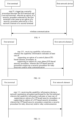
- an embodiment provides a method for relay communication, the method includes the following steps at 151-159.
- a relay terminal initiates a registration procedure.
- capability information is sent, in which the capability information indicates at least one of the following situations where the relay terminal supports an option of a CP based security procedure, or where the relay terminal supports an option of a UP based security procedure; the security procedure includes a security procedure for relay discovery and/or relay communication.
- the PCF of the relay terminal determines that the capability information is received, and selects an option of a security procedure for the relay terminal, in which the option of the security procedure includes one of: the option of the CP based security procedure or the option of the UP based security procedure.
- the remote terminal initiates a registration procedure.
- capability information is sent, in which the capability information indicates at least one of the following situations where the remote terminal supports the option of the CP based security procedure, or where the remote terminal supports the option of the UP based security procedure;
- the security procedure includes a security procedure for relay discovery and/or relay communication.
- the PCF of the remote terminal determines that the capability information is received and selects an option of a security procedure for the remote terminal, in which the option of the security procedure includes one of: the option of the CP based security procedure or the option of the UP based security procedure.
- the PCF of the relay terminal initiates a service authorization and information provisioning procedure of the relay terminal.
- the PCF sends indication information, in which the indication information indicates an option of a security procedure selected by the PCF of the relay terminal; and the option of the security procedure includes one of: the option of the CP based security procedure, or the option of the UP based security procedure.
- the relay terminal performs relay discovery and/or relay communication based on the option of the security procedure indicated by the indication information.
- the remote terminal performs relay discovery and/or relay communication based on the option of the security procedure indicated by the indication information.
- the remote terminal and the relay terminal may discover and communicate with each other. If the security procedures selected by the relay terminal and the remote terminal are different, the remote terminal and the relay terminal cannot discover and communicate with each other.
- an embodiment provides an apparatus for relay communication.
- the apparatus includes a sending module 161.
- the sending module 161 is configured to send capability information, in which the capability information indicates at least one of: supporting an option of a CP based security procedure; or supporting an option of a UP based security procedure, in which the security procedure includes a security procedure for relay discovery and/or relay communication.
- an embodiment provides an apparatus for relay communication.
- the apparatus includes a receiving module 171.
- the receiving module 171 is configured to receive capability information, in which the capability information indicates at least one of: supporting an option of a CP based security procedure; or supporting an option of a UP based security procedure, in which the security procedure includes a security procedure for relay discovery and/or relay communication.
- the present disclosure provides a communication device, including: a processor and a memory storing instructions executable by the processor. When the instructions are executed by the processor, the above method as described in any embodiment of the disclosure is implemented.
- the processor may be connected to the memory via a bus or the like to read the executable program stored in the memory.
- An embodiment of the present disclosure further provides a computer storage medium storing a computer executable program.
- the computer executable program is executed by a processor, the method as described in any embodiment of the present disclosure is implemented.
- an embodiment of the present disclosure provides a terminal.
- the terminal 800 includes at least one component selected from the group consisting of a processing component 802, a memory 804, a power source component 806, a multi-media component 808, an audio component 810, an Input/Output (I/O) interface 812, a sensor component 814, and a communication component 816.
- a processing component 802 a memory 804
- a power source component 806 a multi-media component 808, an audio component 810, an Input/Output (I/O) interface 812, a sensor component 814, and a communication component 816.
- I/O Input/Output
- the processing component 802 controls an entire operation of the terminal 800, e.g., operations associated with display, phone call, data communication, camera operation and recording operation.
- the processing component 802 includes one or more processors 820 to execute an instruction, so as to implement all of, or a part of, the steps of the above-mentioned method.
- the processing component 802 includes one or more modules for the interaction between the processing component 802 and the other component.
- the processing component 802 includes a multi-media module for the interaction between the multi-media component 808 and the processing component 802.
- the memory 804 is configured to store therein various types of data to support the operation of the terminal 800. Examples of such data include instructions for any application or method operated on the terminal 800, contact data, phonebook data, messages, pictures, video, etc.
- the memory 804 may be implemented in the form of any type of volatile or non-volatile memory devices, or their combination, such as a Static Random-Access Memory (SRAM), an Electrically-Erasable Programmable Read Only Memory (EEPROM), an Erasable Programmable Read Only Memory (EPROM), a Programmable Read Only Memory (PROM), a Read Only Memory (ROM), a magnetic memory, a flash memory, a magnetic disk, or an optical disk.
- SRAM Static Random-Access Memory
- EEPROM Electrically-Erasable Programmable Read Only Memory
- EPROM Erasable Programmable Read Only Memory
- PROM Programmable Read Only Memory
- ROM Read Only Memory
- the power source component 806 provides power to various components of the terminal 800.
- the power source component 806 may include a power management system, one or more power sources, and any other assemblies associated with the generation, management and distribution of power in the terminal 800.
- the multi-media component 808 includes a screen for providing an output interface between the terminal 800 and a user.
- the screen may include a Liquid Crystal Display (LCD) and a Touch Panel (TP).
- the screen may be implemented as a touch screen to receive input signals from the user.
- the touch panel includes one or more touch sensors to sense touches, swipes, and gestures on the touch panel.
- the touch sensor may not only sense a boundary of a touch or swipe action, but also sense a period of time and a pressure associated with the touch or swipe action.
- the multi-media component 808 includes a front-facing camera and/or a rear-facing camera.
- the front-facing camera and/or the rear-facing camera may receive external multi-media data.
- the front-facing camera and the rear-facing camera may be a fixed optical lens system or has focal length and optical zoom capability.
- the audio component 810 is configured to output and/or input audio signals.
- the audio component 810 includes a microphone (MIC) configured to receive an external audio signal when the terminal 800 is in an operating mode, such as a call mode, a recording mode, and a voice recognition mode.
- the received audio signal may be further stored in the memory 804 or transmitted via the communication component 816.
- the audio component 810 further includes a speaker to output audio signals.
- the I/O interface 812 provides an interface between the processing component 802 and peripheral interface modules, such as a keyboard, a click wheel, buttons, and the like.
- the buttons may include, but not limited to, a home button, a volume button, a starting button, and a locking button.
- the sensor component 813 includes one or more sensors to provide status assessments about various aspects of the terminal 800.
- the sensor component 813 may detect an open/closed status of the terminal 800, a relative positioning of components, e.g., the display and the keypad, of the terminal 800, a change in a position of the terminal 800 or an component of the terminal 800, a presence or absence of user contact with the terminal 800, an orientation or an acceleration/deceleration of the terminal 800, and a change in a temperature of the terminal 800.
- the sensor component 813 may include a proximity sensor configured to detect the presence of nearby objects without any physical contact.
- the sensor component 813 may also include a light sensor, such as a Complementary Metal Oxide Semiconductor (CMOS) or Charge-Coupled Device (CCD) image sensor, for use in imaging applications.
- CMOS Complementary Metal Oxide Semiconductor
- CCD Charge-Coupled Device
- the sensor component 813 may also include an accelerometer sensor, a gyroscope sensor, a magnetic sensor, a pressure sensor, or a temperature sensor.
- the terminal 800 may be implemented with one or more Application Specific Integrated Circuits (ASICs), Digital Signal Processors (DSPs), Digital Signal Processing Devices (DSPDs), Programmable Logic Devices (PLDs), Field Programmable Gate Arrays (FPGAs), controllers, micro-controllers, microprocessors or other electronic components, for performing the above-mentioned method.
- ASICs Application Specific Integrated Circuits
- DSPs Digital Signal Processors
- DSPDs Digital Signal Processing Devices
- PLDs Programmable Logic Devices
- FPGAs Field Programmable Gate Arrays
- controllers micro-controllers, microprocessors or other electronic components, for performing the above-mentioned method.
- a non-transitory computer-readable storage medium including instructions is also provided, such as the memory 804 including instructions.
- the instructions are executed by the processor 820 to complete the above methods.
- the non-transitory computer-readable storage medium may be a ROM, a random access memory (RAM), a CD-ROM, a magnetic tape, a floppy disk, and an optical data storage device.
- an embodiment of the disclosure provides a base station.
- the base station 900 is provided as a network side device.
- the base station 900 includes a processing component 922, which further includes one or more processors and memory resources represented by a memory 932 for storing instructions to be executed by the processing component 922, e.g., applications.
- the applications stored in the memory 932 may include one or more modules each corresponding to one group of instructions.
- the processing component 922 is configured to execute the instructions, so as to implement any method for the base station.
- the base station 900 further includes a power source component 926 configured to performed power management over the base station 900, a wired or wireless network interface 950 configured to couple the base station 900 to a network, and an Input/Output (I/O) interface 958.
- the base station 900 may be based on an operating system stored in the memory 932, e.g., Windows Server TM, Mac OS XTM, Unix TM, Linux TM, Free BSDTM, or the like.
Landscapes
- Engineering & Computer Science (AREA)
- Computer Networks & Wireless Communication (AREA)
- Signal Processing (AREA)
- Computer Security & Cryptography (AREA)
- Databases & Information Systems (AREA)
- Computer Hardware Design (AREA)
- Computing Systems (AREA)
- General Engineering & Computer Science (AREA)
- Mobile Radio Communication Systems (AREA)
Abstract
Description
- The present disclosure relates to but is not limited to the field of wireless communication technology, and more particularly relates to a method and an apparatus for relay communication, a communication device and a storage medium.
- In a security application of Proximity Services (ProSe) of the fifth generation (5G) mobile communication technology, there are two options of control plane (CP) based and user plane (UP) based solutions for establishing security for PC5 communication between a remote UE and User-to-Network (U2N) Relay, before which the Remote UE and U2N Relay need to discover each other. For U2N Relay discovery before the relay communication, there are also the proposal with two options of CP-based and UP-based security procedures.
- In the related art, when the UE initiates the discovery procedure or relay communication establishment procedure, how the UE could select between the CP-based and UP-based security procedures is a problem to be considered.
- Embodiments of the present disclosure provide a method and apparatus for relay communication, a communication device and a storage medium.
- According to a first aspect of embodiments of the present disclosure, a method for relay communication is provided, which is performed by a first terminal. The method includes: sending capability information, in which the capability information indicates at least one of: supporting an option of a control plane (CP) based security procedure; or supporting an option of a user plane (UP) based security procedure, in which the security procedure includes a security procedure for relay discovery and/or relay communication.
- In an embodiment, sending the capability information includes sending the capability information during a network registration procedure performed by the first terminal.
- In an embodiment, the method further includes: receiving indication information, in which the indication information indicates an option of a security procedure selected by a first network element of the first terminal. The option of the security procedure includes one of: the option of the CP based security procedure; or the option of the UP based security procedure.
- In an embodiment, receiving the indication information includes: receiving the indication information during a service authorization and information provisioning procedure.
- In an embodiment, the method further includes: determining that the indication information is received, and triggering the security procedure.
- In an embodiment, the method further includes: determining whether to execute the security procedure according to a comparison result between an option of a security procedure selected by a first network element of a first terminal and an option of a security procedure selected by a first network element of a second terminal. The first terminal and the second terminal are terminals for executing the security procedure.
- In an embodiment, determining whether to execute the security procedure according to the comparison result between the option of the security procedure selected by the first network element of the first terminal and the option of the security procedure selected by the first network element of the second terminal includes: determining to execute the security procedure between the first terminal and the second terminal upon determining that the option of the security procedure selected by the first network element of the first terminal is the same as the option of the security procedure selected by the first network element of the second terminal; or determining not to execute the security procedure between the first terminal and the second terminal upon determining that the option of the security procedure selected by the first network element of the first terminal is different from the option of the security procedure selected by the first network element of the second terminal.
- In an embodiment, triggering the security procedure includes: triggering a security procedure between the first terminal and a second terminal, in which an option of a security procedure selected by the first terminal is the same as an option of a security procedure selected by a first network element of the second terminal.
- In an embodiment, the first network element is a policy control function (PCF).
- According to a second aspect of embodiments of the present disclosure, a method for relay communication is provided, which is performed by a first network element. The method includes: receiving capability information, in which the capability information indicates at least one of: supporting an option of a CP based security procedure; or supporting an option of a UP based security procedure, in which the security procedure includes a security procedure for relay discovery and/or relay communication.
- In an embodiment, receiving the capability information includes receiving the capability information during a network registration procedure performed by a first terminal.
- In an embodiment, the method further includes: determining that the capability information is received, and selecting an option of a security procedure. The option of the security procedure includes one of: the option of the CP based security procedure; or the option of the UP based security procedure.
- In an embodiment, the method further includes: sending indication information, in which the indication information indicates an option of a security procedure selected by the first network element.
- In an embodiment, sending the indication information includes: sending the indication information during a service authorization and information provisioning procedure.
- In an embodiment, the first network element is a PCF.
- According to a third aspect of embodiments of the present disclosure, an apparatus for relay communication is provided, which includes: a sending module configured to send capability information, in which the capability information indicates at least one of: supporting an option of a CP based security procedure; or supporting an option of a UP based security procedure, in which the security procedure includes a security procedure for relay discovery and/or relay communication.
- According to a fourth aspect of embodiments of the present disclosure, an apparatus for relay communication is provided, which includes: a receiving module configured to receive capability information, in which the capability information indicates at least one of: supporting an option of a CP based security procedure; or supporting an option of a UP based security procedure, in which the security procedure includes a security procedure for relay discovery and/or relay communication.
- According to a fifth aspect of embodiments of the present disclosure, a communication device is provided, including a processor and a memory storing instructions executable by the processor. When the instructions are executed by the processor, the above method as described in any embodiment of the disclosure is implemented.
- According to a sixth aspect of embodiments of the present disclosure, a computer storage medium storing computer executable instructions is provided. When the computer executable instructions are executed by a processor, the above method as described in any embodiment of the disclosure is implemented.
- In the embodiments of the present disclosure, capability information is sent, in which the capability information indicates at least one of an option of a CP based security procedure, or supporting an option of a UP based security procedure; the security procedure includes a security procedure for relay discovery and/or relay communication. Here, since the capability information indicates the first terminal supports the option of the CP based security procedure and/or the option of the UP based security procedure, after receiving the capability information, the network device can determine whether to select the option of the CP based security procedure or the option of the UP based security procedure based on the capability information. Compared with the situation where the network does not know the capability supported by the terminal, the relay communication mechanism is improved, and the reliability of relay communication is increased.
-
-
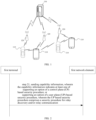
FIG. 1 is a structural diagram illustrating a wireless communication system according to an example embodiment of the present disclosure. -
FIG. 2 is a flowchart illustrating a method for relay communication according to an example embodiment of the present disclosure. -
FIG. 3 is a flowchart illustrating a method for relay communication according to an example embodiment of the present disclosure. -
FIG. 4 is a flowchart illustrating a method for relay communication according to an example embodiment of the present disclosure. -
FIG. 5 is a flowchart illustrating a method for relay communication according to an example embodiment of the present disclosure. -
FIG. 6 is a flowchart illustrating a method for relay communication according to an example embodiment of the present disclosure. -
FIG. 7 is a flowchart illustrating a method for relay communication according to an example embodiment of the present disclosure. -
FIG. 8 is a flowchart illustrating a method for relay communication according to an example embodiment of the present disclosure. -
FIG. 9 is a flowchart illustrating a method for relay communication according to an example embodiment of the present disclosure. -
FIG. 10 is a flowchart illustrating a method for relay communication according to an example embodiment of the present disclosure. -
FIG. 11 is a flowchart illustrating a method for relay communication according to an example embodiment of the present disclosure. -
FIG. 12 is a flowchart illustrating a method for relay communication according to an example embodiment of the present disclosure. -
FIG. 13 is a flowchart illustrating a method for relay communication according to an example embodiment of the present disclosure. -
FIG. 14 is a flowchart illustrating a method for relay communication according to an example embodiment of the present disclosure. -
FIG. 15 is a flowchart illustrating a method for relay communication according to an example embodiment of the present disclosure. -
FIG. 16 is a diagram illustrating an apparatus for relay communication according to an example embodiment of the present disclosure. -
FIG. 17 is a diagram illustrating an apparatus for relay communication according to an example embodiment of the present disclosure. -
FIG. 18 is a structural diagram illustrating a terminal according to an example embodiment of the present disclosure. -
FIG. 19 is a block diagram illustrating a base station according to an example embodiment of the present disclosure. - The present disclosure will be described hereinafter in details in conjunction with illustrative embodiments, and examples of the disclosure are shown in the drawings. Unless otherwise specified, identical numerals in different drawings represent identical or similar elements. The implementations in the following description do not include all implementations consistent with the embodiments of the present disclosure, and in contrast, they are merely examples of devices and methods consistent with some aspects of the embodiments of the present disclosure as specified in the appended claims.
- The terms used in the embodiments of the present disclosure are for illustrative purposes only, but do not intend to limit the present disclosure. Such a singular form as "one", "a/an" or "the/said" used in the embodiments of the present disclosure and the appended claims also intends to include a plural form, unless otherwise defined. It should be appreciated that, the expression "and/or" used in the context is meant to include any combination, or all possible combinations, of one or more associated items.
- It should be appreciated that, although such expressions as "first", "second" and "third" are used to describe various information, the information are not limited by these expressions. These expressions are merely used to differentiate the information of the same type from each other. For example, without departing from the scope of the present disclosure, first information may also be called as second information, and similarly second information may also be called as first information. Depending on the context, such a word as "if" may be construed as "when ...", "in the case that ..." or "in response to determining that ...".
- For the purpose of simplicity and ease of understanding, the terms used in this text to represent a size relationship are "greater than" or "less than". However, for those skilled in the art, it can be understood that the term "greater than" also encompasses the meaning of "greater than or equal to", and "less than" also encompasses the meaning of "less than or equal to".
- Referring to
FIG. 1 , it illustrates a structural diagram of a wireless communication system according to an embodiment of the present disclosure. As shown inFIG. 1 , the wireless communication system is a communication system based on a mobile communication technology, which may include several user equipment (UE) 110 andseveral base stations 120. - The
UE 110 may be a device for providing voice and/or data connectivity to a user. TheUE 110 may communicate with one or more core networks via a Radio Access Network (RAN). TheUE 110 may be an Internet of Things (IoT) terminal, e.g., a sensor device or a mobile phone, or a computer having the IoT terminal, e.g., an immobile, portable, pocket-sized, handheld, built-in or vehicle-mounted device. For example, the UE may be a Station (STA), a subscriber unit, a subscriber station, a mobile station, a mobile, a remote station, an access point, a remote terminal, an access terminal, a user terminal, a user agent, or a user device. TheUE 110 may also be a device for an unmanned aerial vehicle. TheUE 110 may also be a vehicle-mounted device, e.g., an electronic control unit having a wireless communication function, or a wireless terminal coupled to an external electronic control unit. Alternatively, theUE 110 may also be a roadside device, e.g., a street lamp or a signal lamp having a wireless communication function, or any other roadside devices. - The
base station 120 may be a network-side device in a wireless communication system. The wireless communication system may be the 5th generation (5G) system, also known as a new radio (NR) system or a 5G NR system. Alternatively, the wireless communication system may also be a next-generation system of the 5G system. The access network in the 5G system may be called a new generation-radio access network (NG-RAN). - The
base station 120 may be a base station (gNB) that adopts a centralized distributed architecture in a 5G system. When thebase station 120 adopts the centralized distributed architecture, it usually includes a central unit (CU) and at least two distributed units (DUs). The CU is provided with protocol stacks of a packet data convergence protocol (PDCP) layer, a radio link control (RLC) protocol layer, and a medium access control (MAC) layer. The DU is provided with a protocol stack of a physical (PHY) layer. The specific implementation of thebase station 120 is not limited by this embodiment of the disclosure. - A wireless connection may be established between the
base station 120 and theUE 110 through a radio interface. In different embodiments, the radio interface is a radio interface based on the fifth generation mobile communication network technology (5G) standard. For example, the radio interface is a new radio interface. Alternatively, the radio interface may also be a radio interface based on a 5G next-generation mobile communication network technology standard. - In some embodiments, an end-to-end (E2E) connection may also be established between the UEs 11, for example, vehicle-to-vehicle (V2V) communication, vehicle to infrastructure (V2I) communication and vehicle to pedestrian (V2P) communication and other communication scenes in vehicle-to-everything (V2X) communication.
- Here, the above-mentioned UE can be considered as the terminal in the following embodiments.
- In some embodiments, the above wireless communication system may further include a
network management device 130. -
Several base stations 120 are respectively connected to thenetwork management device 130. Thenetwork management device 130 may be a core network device in a wireless communication system. For example, thenetwork management device 130 may be a mobility management entity (MME) in a 5G core network. Alternatively, the network management device may also be other core network devices, such as a policy and charging rules function (PCRF) or a user data management (UDM) server. The implementation of thenetwork management device 130 is not limited by this embodiment of the disclosure. - In order to facilitate understanding of those skilled in the art, a plurality of implementations are listed in the embodiments of the present disclosure to clearly illustrate the technical solutions of the embodiments of the present disclosure. Those skilled in the art can understand that a plurality of embodiments provided in the embodiments of the present disclosure can be executed alone or in combination with the methods in other embodiments among the embodiments of the present disclosure, or can be executed alone or in combination with some methods in other related art. This is not limited by the embodiments of the present disclosure.
- As shown in
FIG. 2 , an embodiment provides a method for relay communication, which performed by a first terminal, and the method includes the following step at 21. - At 21, capability information is sent, in which the capability information indicates at least one of: supporting an option of a control plane (CP) based security procedure; or supporting an option of a user plane (UP) based security procedure. The security procedure includes a security procedure for relay discovery and/or relay communication.
- Here, the terminal involved in the present disclosure may be but is not limited to a mobile phone, a wearable device, a vehicle-mounted terminal, a road side unit (RSU), a smart home terminal, an industrial sensor device and/or a medical device, etc. In some embodiments, the terminal may be a reduced capability (Redcap) terminal or a NR terminal of a predetermined version (e.g., an NR terminal of R17 version). The first terminal in the present disclosure may be a relay terminal in relay communication, and the second terminal may be a remote terminal in relay communication. Alternatively, the first terminal in the present disclosure may be a remote terminal in relay communication, and the second terminal may be a relay terminal in relay communication.
- The network element involved in the present disclosure may be a policy control function (PCF). It should be noted that the network elements capable of implementing the related technical solutions in the present disclosure are not limited to the above examples. In some implementations of the present disclosure, a network element may be deployed independently as a communication node, or may be uniformly deployed in an existing network element. In short, a network element may be understood as a logical node that may be flexibly deployed in a network, which is not limited herein.
- In an embodiment, the first network element may be a PCF.
- In an embodiment, the first terminal may send the capability information to the first network element (e.g., PCF) via a base station.
- The base stations involved in the present disclosure may be various types of base stations, for example, a base station in a 5G mobile communication network or other evolved base station.
- In an embodiment, the first terminal sends the capability information to a PCF of the first terminal via the base station, and the capability information indicates at least one of: supporting an option of a CP based security procedure; or supporting an option of a UP based security procedure; the security procedure includes a security procedure for relay discovery and/or relay communication.
- In an embodiment, during a network registration procedure performed by the first terminal, the first terminal sends the capability information to the PCF of the first terminal via the base station, and the capability information indicates at least one of: supporting an option of a CP based security procedure; or supporting an option of a UP based security procedure; the security procedure includes a security procedure for relay discovery and/or relay communication.
- In an embodiment, capability information is sent, in which the capability information indicates at least one of: supporting an option of a CP based security procedure; or supporting an option of a UP based security procedure; the security procedure includes a security procedure for relay discovery and/or relay communication. Indication information is received, in which the indication information indicates an option of a security procedure selected by a first network element of the first terminal; the option of the security procedure includes one of: the option of the CP based security procedure or the option of the UP based security procedure.
- For example, the first terminal sends capability information to the first network element, in which the capability information indicates at least one of: supporting the option of the CP based security procedure; or supporting the option of the UP based security procedure; the security procedure includes a security procedure for relay discovery and/or relay communication. The first network element determines that the capability information is received and selects an option of a security procedure, in which the option of the security procedure includes one of: the option of the CP based security procedure or the option of the UP based security procedure. The first network element sends indication information to the first terminal, in which the indication information indicates an option of a security procedure selected by the first network element of the first terminal. The first terminal receives the indication information.
- In an embodiment, capability information is sent, in which the capability information indicates at least one of: supporting an option of a CP based security procedure; or supporting an option of a UP based security procedure; the security procedure includes a security procedure for relay discovery and/or relay communication. Indication information is received during a service authorization and information provisioning procedure, in which the indication information indicates an option of a security procedure selected by a first network element of the first terminal, and the option of the security procedure includes one of: the option of the CP based security procedure or the option of the UP based security procedure.
- In an embodiment, capability information is sent, in which the capability information indicates at least one of: supporting an option of a CP based security procedure; or supporting an option of a UP based security procedure; the security procedure includes a security procedure for relay discovery and/or relay communication. Indication information is received, in which the indication information indicates an option of a security procedure selected by a first network element of the first terminal, and the option of the security procedure includes one of: the option of the CP based security procedure or the option of the UP based security procedure. It is determined that the indication information is received, and the security procedure is triggered.
- In an embodiment, capability information is sent, in which the capability information indicates at least one of: supporting an option of a CP based security procedure; or supporting an option of a UP based security procedure; the security procedure includes a security procedure for relay discovery and/or relay communication. Indication information is received, in which the indication information indicates an option of a security procedure selected by a first network element of the first terminal; the option of the security procedure includes one of: the option of the CP based security procedure or the option of the UP based security procedure. It is determined that the indication information is received, and the security procedure is triggered. It is determined whether to execute the security procedure according to a comparison result between an option of a security procedure selected by a first network element of a first terminal and an option of a security procedure selected by a first network element of a second terminal. For example, upon determining that the option of the security procedure selected by the first network element of the first terminal is the same as the option of the security procedure selected by the first network element of the second terminal, it is determined to execute the security procedure between the first terminal and the second terminal. Alternatively, upon determining that the option of the security procedure selected by the first network element of the first terminal is different from the option of the security procedure selected by the first network element of the second terminal, it is determined not to execute the security procedure between the first terminal and the second terminal.
- In an embodiment, capability information is sent, in which the capability information indicates at least one of: supporting an option of a CP based security procedure; or supporting an option of a UP based security procedure; the security procedure includes a security procedure for relay discovery and/or relay communication. Indication information is received, in which the indication information indicates an option of a security procedure selected by a first network element of the first terminal, and the option of the security procedure includes one of: the option of the CP based security procedure or the option of the UP based security procedure. It is determined that the indication information is received, and the security procedure is triggered between the first terminal and the second terminal, in which an option of a security procedure selected by the first terminal is the same as an option of a security procedure selected by a first network element of the second terminal.
- In order to better understand the embodiments of the present disclosure, the technical solution of the present disclosure is further described below through an exemplary embodiment:
- This embodiment provides a method for relay communication, which includes the following steps at a1 to a9.
- At step a1, when the relay terminal registers with the network, capability information is sent to the PCF via the base station, in which the capability information indicates at least one of the following situations where the relay terminal supports an option of a CP based security procedure, or where the relay terminal supports an option of a UP based security procedure; the security procedure includes a security procedure for relay discovery and/or relay communication.
- At step a2, the PCF of the relay terminal selects an option of a security procedure based on the capability information, in which the option of the security procedure includes one of: the option of the CP based security procedure or the option of the UP based security procedure.
- At step a3, when the remote terminal registers with the network, capability information is sent to the PCF via the base station, in which the capability information indicates at least one of the following situations where the remote terminal supports the option of the CP based security procedure, or where the remote terminal supports the option of the UP based security procedure; the security procedure includes a security procedure for relay discovery and/or relay communication.
- At step a4, the PCF of the remote terminal selects a security procedure based on the capability information, in which the option of the security procedure includes one of: the option of the CP based security procedure, or the option of the UP based security procedure.
- At step a5, during the service authorization and information provisioning procedure of the relay terminal, the PCF of the relay terminal sends indication information to the relay terminal. The indication information indicates an option of a security procedure selected by the PCF of the relay terminal; and the option of the security procedure includes one of: the option of the CP based security procedure, or the option of the UP based security procedure.
- At step a6, during the service authorization and information provisioning procedure of the remote terminal, the PCF of the remote terminal sends indication information to the remote terminal. The indication information indicates an option of a security procedure selected by the PCF of the remote terminal; the option of the security procedure includes one of: the option of the CP based security procedure, or the option of the UP based security procedure.
- At step a7, the relay terminal determines that the indication information is received and triggers the security procedure.
- At step a8, the remote terminal determines that the indication information is received, and triggers the security procedure.
- At step a9, if the security procedures selected by the PCF of the relay terminal and the PCF of the remote terminal are consistent (both terminals use the CP based security procedure or both terminals use the UP based security procedure), the discovery procedure between the relay terminal and the remote terminal can proceed, as well as the subsequent relay communication procedure. If the security procedures selected by the PCF of the relay terminal and the PCF of the remote terminal are different (one terminal uses CP based security procedure and the other terminal uses UP based security procedure), the discovery procedure between the relay terminal and remote terminal cannot proceed. The remote terminal needs to further discover a relay terminal which uses the same security procedure. The relay terminal needs to further discover a remote terminal which uses the same security procedure.
- In the embodiments of the present disclosure, capability information is sent, in which the capability information indicates at least one of an option of a CP based security procedure, or supporting an option of a UP based security procedure; the security procedure includes a security procedure for relay discovery and/or relay communication. Here, since the capability information indicates the first terminal supports the option of the CP based security procedure and/or the option of the UP based security procedure, after receiving the capability information, the network device can determine whether to select the option of the CP based security procedure or the option of the UP based security procedure based on the capability information. Compared with the situation where the network does not know the capability supported by the terminal, the relay communication mechanism is improved, and the reliability of relay communication is increased.
- It should be noted that those skilled in the art may understand that the method in the embodiments of the present disclosure can be executed alone or together with some methods in the embodiments of the present disclosure or some methods in related art.
- As shown in
FIG. 3 , an embodiment provides a method for relay communication, which performed by a first terminal, and the method includes the following step at 31. - At 31, capability information is sent during a network registration procedure performed by the first terminal, in which the capability information indicates at least one of: supporting an option of a CP based security procedure; or supporting an option of a UP based security procedure. The security procedure includes a security procedure for relay discovery and/or relay communication.
- In an embodiment, during a network registration procedure performed by the first terminal, the first terminal sends capability information to a PCF of the first terminal via a base station, in which the capability information indicates at least one of: supporting an option of a CP based security procedure; or supporting an option of a UP based security procedure; and the security procedure includes a security procedure for relay discovery and/or relay communication.
- It should be noted that those skilled in the art may understand that the method in the embodiments of the present disclosure can be executed alone or together with some methods in the embodiments of the present disclosure or some methods in the related art.
- As shown in
FIG. 4 , an embodiment provides a method for relay communication, which performed by a first terminal, and the method includes the following step at 41. - At 41, indication information is received, in which the indication information indicates an option of a security procedure selected by a first network element of the first terminal, and the option of the security procedure includes one of: the option of the CP based security procedure; or the option of the UP based security procedure.
- In an embodiment, the capability information is sent, in which the capability information indicates at least one of: supporting an option of a CP based security procedure; or supporting an option of a UP based security procedure; the security procedure includes a security procedure for relay discovery and/or relay communication. The indication information is received, in which the indication information indicates the option of the security procedure selected by the first network element of the first terminal, and the option of the security procedure includes one of: the option of the CP based security procedure; or the option of the UP based security procedure.
- It should be noted that those skilled in the art may understand that the method in the embodiments of the present disclosure may be executed alone or together with some methods in the embodiments of the present disclosure or some methods in the related art.
- As shown in
FIG. 5 , an embodiment provides a method for relay communication, which performed by a first terminal, and the method includes the following step at 51. - At 51, the indication information is received during a service authorization and information provisioning procedure, in which the indication information indicates an option of a security procedure selected by a first network element of the first terminal; and the option of the security procedure comprises one of: the option of the CP based security procedure; or the option of the UP based security procedure.
- In an embodiment, the capability information is sent, in which the capability information indicates at least one of: supporting an option of a CP based security procedure; or supporting an option of a UP based security procedure; the security procedure includes a security procedure for relay discovery and/or relay communication. The indication information is received during the service authorization and information provisioning procedure, in which the indication information indicates the option of the security procedure selected by the first network element of the first terminal, and the option of the security procedure includes one of: the option of the CP based security procedure; or the option of the UP based security procedure.
- It should be noted that those skilled in the art may understand that the method in the embodiments of the present disclosure can be executed alone or together with some methods in the embodiments of the present disclosure or some methods in the related art.
- As shown in
FIG. 6 , an embodiment provides a method for relay communication, which performed by a first terminal, and the method includes the following step at 61. - At 61, it is determined that the instruction information is received, and the security procedure is triggered.
- In an embodiment, capability information is sent, in which the capability information indicates at least one of: supporting an option of a CP based security procedure; or supporting an option of a UP based security procedure; the security procedure includes a security procedure for relay discovery and/or relay communication. Indication information is received, in which the indication information indicates an option of a security procedure selected by a first network element of the first terminal; the option of the security procedure includes one of: the option of the CP based security procedure or the option of the UP based security procedure. It is determined that the indication information is received, and the security procedure is triggered.
- It should be noted that those skilled in the art may understand that the method in the embodiments of the present disclosure can be executed alone or together with some methods in the embodiments of the present disclosure or some methods in the related art.
- As shown in
FIG. 7 , an embodiment provides a method for relay communication, which performed by a first terminal. The first terminal and the second terminal are terminals for executing the security procedure. The method includes the following step at 71. - At 71, it is determined whether to execute the security procedure according to a comparison result between an option of a security procedure selected by a first network element of a first terminal and an option of a security procedure selected by a first network element of a second terminal
- In an embodiment, capability information is sent, in which the capability information indicates at least one of: supporting an option of a CP based security procedure; or supporting an option of a UP based security procedure; the security procedure includes a security procedure for relay discovery and/or relay communication. Indication information is received, in which the indication information indicates an option of a security procedure selected by a first network element of the first terminal; the option of the security procedure includes one of: the option of the CP based security procedure or the option of the UP based security procedure. It is determined that the indication information is received, and the security procedure is triggered. It is determined whether to execute the security procedure according to a comparison result between an option of a security procedure selected by a first network element of a first terminal and an option of a security procedure selected by a first network element of a second terminal. For example, upon determining that the option of the security procedure selected by the first network element of the first terminal is the same as the option of the security procedure selected by the first network element of the second terminal, it is determined to execute the security procedure between the first terminal and the second terminal. Alternatively, upon determining that the option of the security procedure selected by the first network element of the first terminal is different from the option of the security procedure selected by the first network element of the second terminal, it is determined not to execute the security procedure between the first terminal and the second terminal.
- It should be noted that those skilled in the art may understand that the method in the embodiments of the present disclosure can be executed alone or together with some methods in the embodiments of the present disclosure or some methods in the related art.
- As shown in
FIG. 8 , an embodiment provides a method for relay communication, which is performed by a first terminal, and the method includes the following step at 81. - At 81, upon determining that the option of the security procedure selected by the first network element of the first terminal is the same as the option of the security procedure selected by the first network element of the second terminal, it is determined to execute the security procedure between the first terminal and the second terminal. Alternatively, upon determining that the option of the security procedure selected by the first network element of the first terminal is different from the option of the security procedure selected by the first network element of the second terminal, it is determined not to execute the security procedure between the first terminal and the second terminal.
- For the description of
step 81, please refer to the description ofstep 71, which will not be repeated here. - It should be noted that those skilled in the art may understand that the method in the embodiments of the present disclosure may be executed alone or together with some methods in the embodiments of the present disclosure or some methods in the related art.
- As shown in
FIG. 9 , an embodiment provides a method for relay communication, which is performed by a first terminal, and the method includes the following step at 91. - At 91, the security procedure is triggered between the first terminal and the second terminal, in which an option of a security procedure selected by the first terminal is the same as an option of a security procedure selected by a first network element of the second terminal.
- In an embodiment, capability information is sent, in which the capability information indicates at least one of: supporting an option of a CP based security procedure; or supporting an option of a UP based security procedure; the security procedure includes a security procedure for relay discovery and/or relay communication. Indication information is received, in which the indication information indicates an option of a security procedure selected by a first network element of the first terminal; the option of the security procedure includes one of: the option of the CP based security procedure or the option of the UP based security procedure. It is determined that the indication information is received, and the security procedure is triggered. That is, the security procedure is triggered between the first terminal and the second terminal, in which an option of a security procedure selected by the first terminal is the same as an option of a security procedure selected by a first network element of the second terminal.
- It should be noted that those skilled in the art may understand that the method in the embodiments of the present disclosure may be executed alone or together with some methods in the embodiments of the present disclosure or some methods in the related art.
- As shown in
FIG. 10 , an embodiment provides a method for relay communication, which is performed by a first network element, and the method includes the following step at 101. - At 101, capability information is sent, in which the capability information indicates at least one of: supporting an option of a CP based security procedure; or supporting an option of a UP based security procedure. The security procedure includes a security procedure for relay discovery and/or relay communication.
- Here, the terminal involved in the present disclosure may be but is not limited to a mobile phone, a wearable device, a vehicle-mounted terminal, a RSU, a smart home terminal, an industrial sensor device and/or a medical device, etc. In some embodiments, the terminal may be a Redcap terminal or a NR terminal of a predetermined version (e.g., an NR terminal of R17 version). The first terminal in the present disclosure may be a relay terminal in relay communication, and the second terminal may be a remote terminal in relay communication. Alternatively, the first terminal in the present disclosure may be a remote terminal in relay communication, and the second terminal may be a relay terminal in relay communication.
- The network element involved in the present disclosure may be a PCF. It should be noted that the network elements capable of implementing the related technical solutions in the present disclosure are not limited to the above examples. In some implementations of the present disclosure, a network element may be deployed independently as a communication node, or may be uniformly deployed in an existing network element. In short, a network element may be understood as a logical node that may be flexibly deployed in a network, which is not limited herein.
- In an embodiment, the first network element may be a PCF.
- In an embodiment, the first network element (e.g., PCF) may receive the capability information from the first terminal via a base station.
- The base stations involved in the present disclosure may be various types of base stations, for example, a base station in a 5G mobile communication network or other evolved base station.
- In an embodiment, the PCF of the first terminal receives capability information from the first terminal via the base station, and the capability information indicates at least one of: supporting an option of a CP based security procedure; or supporting an option of a UP based security procedure; the security procedure includes a security procedure for relay discovery and/or relay communication.
- In an embodiment, during a network registration procedure performed by the first terminal, the PCF of the first terminal receives capability information from the first terminal via the base station, and the capability information indicates at least one of: supporting an option of a CP based security procedure; or supporting an option of a UP based security procedure; the security procedure includes a security procedure for relay discovery and/or relay communication.
- In an embodiment, capability information is received, in which the capability information indicates at least one of: supporting an option of a CP based security procedure; or supporting an option of a UP based security procedure; the security procedure includes a security procedure for relay discovery and/or relay communication. Indication information is sent, in which the indication information indicates an option of a security procedure selected by a first network element of the first terminal; the option of the security procedure includes one of: the option of the CP based security procedure or the option of the UP based security procedure.
- For example, the first terminal sends capability information to the first network element, in which the capability information indicates at least one of: supporting the option of the CP based security procedure; or supporting the option of the UP based security procedure; the security procedure includes a security procedure for relay discovery and/or relay communication. The first network element determines that the capability information is received and selects an option of a security procedure, in which the option of the security procedure includes one of: the option of the CP based security procedure or the option of the UP based security procedure. The first network element sends indication information to the first terminal, in which the indication information indicates an option of a security procedure selected by the first network element of the first terminal. The first terminal receives the indication information.
- In an embodiment, capability information is received, in which the capability information indicates at least one of: supporting an option of a CP based security procedure; or supporting an option of a UP based security procedure; the security procedure includes a security procedure for relay discovery and/or relay communication. Indication information is sent during a service authorization and information provisioning procedure, in which the indication information indicates an option of a security procedure selected by a first network element of the first terminal, and the option of the security procedure includes one of: the option of the CP based security procedure or the option of the UP based security procedure.
- In an embodiment, capability information is received, in which the capability information indicates at least one of: supporting an option of a CP based security procedure; or supporting an option of a UP based security procedure; the security procedure includes a security procedure for relay discovery and/or relay communication. Indication information is sent, in which the indication information indicates an option of a security procedure selected by a first network element of the first terminal, and the option of the security procedure includes one of: the option of the CP based security procedure or the option of the UP based security procedure. The first terminal determines that the indication information is received, and triggers the security procedure.
- In an embodiment, capability information is received, in which the capability information indicates at least one of: supporting an option of a CP based security procedure; or supporting an option of a UP based security procedure; the security procedure includes a security procedure for relay discovery and/or relay communication. It is determined that the capability information is received, and an option of a security procedure is selected, in which the option of the security procedure includes one of: the option of the CP based security procedure or the option of the UP based security procedure. Indication information is sent, in which the indication information indicates an option of a security procedure selected by a first network element of the first terminal. The first terminal determines that the indication information is received, and triggers the security procedure. The first terminal determines, according to a comparison result between an option of a security procedure selected by a first network element of a first terminal and an option of a security procedure selected by a first network element of a second terminal, whether to execute the security procedure. For example, the first terminal determines to execute the security procedure between the first terminal and the second terminal, upon determining that the option of the security procedure selected by the first network element of the first terminal is the same as the option of the security procedure selected by the first network element of the second terminal. Alternatively, the first terminal determines not to execute the security procedure between the first terminal and the second terminal, upon determining that the option of the security procedure selected by the first network element of the first terminal is different from the option of the security procedure selected by the first network element of the second terminal.
- In an embodiment, capability information is received, in which the capability information indicates at least one of: supporting an option of a CP based security procedure; or supporting an option of a UP based security procedure; the security procedure includes a security procedure for relay discovery and/or relay communication. Indication information is sent, in which the indication information indicates an option of a security procedure selected by a first network element of the first terminal, and the option of the security procedure includes one of: the option of the CP based security procedure or the option of the UP based security procedure. The first terminal determines that the indication information is received, and triggers the security procedure between the first terminal and the second terminal, in which an option of a security procedure selected by the first terminal is the same as an option of a security procedure selected by a first network element of the second terminal.
- It should be noted that those skilled in the art may understand that the method in the embodiments of the present disclosure may be executed alone or together with some methods in the embodiments of the present disclosure or some methods in the related art.
- As shown in
FIG. 11 , an embodiment provides a method for relay communication, which performed by a first network element, and the method includes the following step at 111. - At 111, capability information is received during a network registration procedure performed by the first terminal, in which the capability information indicates at least one of: supporting an option of a CP based security procedure; or supporting an option of a UP based security procedure. The security procedure includes a security procedure for relay discovery and/or relay communication.
- In an embodiment, during a network registration procedure performed by the first terminal, a PCF of the first terminal receives the capability information from the first terminal via a base station, in which the capability information indicates at least one of: supporting an option of a CP based security procedure; or supporting an option of a UP based security procedure; and the security procedure includes a security procedure for relay discovery and/or relay communication.
- It should be noted that those skilled in the art may understand that the method in the embodiments of the present disclosure can be executed alone or together with some methods in the embodiments of the present disclosure or some methods in the related art.
- As shown in
FIG. 12 , an embodiment provides a method for relay communication, which performed by a first network element, and the method includes the following step at 121. - At 121, it is determined that the indication information is received, and an option of a security procedure is selected, in which the option of the security procedure includes one of: the option of the CP based security procedure; or the option of the UP based security procedure.
- In an embodiment, the capability information is received, in which the capability information indicates at least one of: supporting an option of a CP based security procedure; or supporting an option of a UP based security procedure; the security procedure includes a security procedure for relay discovery and/or relay communication. It is determined that the indication information is received and an option of a security procedure is selected, in which the option of the security procedure includes one of: the option of the CP based security procedure; or the option of the UP based security procedure. The indication information is sent, in which the indication information indicates the option of the security procedure selected by the first network element of the first terminal. The first terminal determines that the indication information is received, and triggers the security procedure. The first terminal determines, according to a comparison result between an option of a security procedure selected by a first network element of a first terminal and an option of a security procedure selected by a first network element of a second terminal, whether to execute the security procedure. For example, the first terminal determines to execute the security procedure between the first terminal and the second terminal, upon determining that the option of the security procedure selected by the first network element of the first terminal is the same as the option of the security procedure selected by the first network element of the second terminal. Alternatively, the first terminal determines not to execute the security procedure between the first terminal and the second terminal, upon determining that the option of the security procedure selected by the first network element of the first terminal is different from the option of the security procedure selected by the first network element of the second terminal.
- It should be noted that those skilled in the art may understand that the method in the embodiments of the present disclosure may be executed alone or together with some methods in the embodiments of the present disclosure or some methods in the related art.
- As shown in
FIG. 13 , an embodiment provides a method for relay communication, which performed by a first network element, and the method includes the following step at 131. - At 131, indication information is sent, in which the indication information indicates an option of a security procedure selected by a first network element of the first terminal.
- In an embodiment, capability information is received, in which the capability information indicates at least one of: supporting an option of a CP based security procedure; or supporting an option of a UP based security procedure; the security procedure includes a security procedure for relay discovery and/or relay communication. Indication information is sent during a service authorization and information provisioning procedure, in which the indication information indicates an option of a security procedure selected by a first network element of the first terminal, and the option of the security procedure includes one of: the option of the CP based security procedure or the option of the UP based security procedure. The first terminal determines that the indication information is received, and triggers a security procedure between the first terminal and the second terminal; in which an option of a security procedure selected by the first terminal is the same as a security procedure selected by a first network element of the second terminal.
- It should be noted that those skilled in the art may understand that the method provided in the embodiments of the present disclosure may be executed alone or together with some methods in the embodiments of the present disclosure or some methods in the related art.
- As shown in
FIG. 14 , an embodiment provides a method for relay communication, which performed by a first network element, and the method includes the following step at 141. - At 141, the indication information is sent during a service authorization and information provisioning procedure.
- For the description of
step 141, please refer to the description ofstep 131, which will not be repeated here. - It should be noted that those skilled in the art may understand that the method in the embodiments of the present disclosure may be executed alone or together with some methods in the embodiments of the present disclosure or some methods in the related art.
- In order to better understand the embodiments of the present disclosure, the technical solution of the present disclosure is further described below through an exemplary embodiment:
- As shown in
FIG. 15 , an embodiment provides a method for relay communication, the method includes the following steps at 151-159. - At 151, a relay terminal initiates a registration procedure. During the registration procedure, capability information is sent, in which the capability information indicates at least one of the following situations where the relay terminal supports an option of a CP based security procedure, or where the relay terminal supports an option of a UP based security procedure; the security procedure includes a security procedure for relay discovery and/or relay communication.
- At 152, the PCF of the relay terminal determines that the capability information is received, and selects an option of a security procedure for the relay terminal, in which the option of the security procedure includes one of: the option of the CP based security procedure or the option of the UP based security procedure.
- At 153, the remote terminal initiates a registration procedure. During the registration procedure, capability information is sent, in which the capability information indicates at least one of the following situations where the remote terminal supports the option of the CP based security procedure, or where the remote terminal supports the option of the UP based security procedure; the security procedure includes a security procedure for relay discovery and/or relay communication.
- At 154, the PCF of the remote terminal determines that the capability information is received and selects an option of a security procedure for the remote terminal, in which the option of the security procedure includes one of: the option of the CP based security procedure or the option of the UP based security procedure.
- At 155, the PCF of the relay terminal initiates a service authorization and information provisioning procedure of the relay terminal. During the service authorization and information provisioning procedure, the PCF sends indication information, in which the indication information indicates an option of a security procedure selected by the PCF of the relay terminal; and the option of the security procedure includes one of: the option of the CP based security procedure, or the option of the UP based security procedure.
- At 156, the PCF of the remote terminal initiates the service authorization and information provisioning procedure of the remote terminal. During the service authorization and information provisioning procedure, the PCF sends indication information, in which the indication information indicates an option of a security procedure selected by the PCF of the remote terminal; the option of the security procedure includes one of: the option of the CP based security procedure, or the option of the UP based security procedure.
- At 157, the relay terminal performs relay discovery and/or relay communication based on the option of the security procedure indicated by the indication information.
- At 158, the remote terminal performs relay discovery and/or relay communication based on the option of the security procedure indicated by the indication information.
- At 159, if the security procedures selected by the relay terminal and the remote terminal are consistent, the remote terminal and the relay terminal may discover and communicate with each other. If the security procedures selected by the relay terminal and the remote terminal are different, the remote terminal and the relay terminal cannot discover and communicate with each other.
- As shown in
FIG. 16 , an embodiment provides an apparatus for relay communication. The apparatus includes a sendingmodule 161. - The sending
module 161 is configured to send capability information, in which the capability information indicates at least one of: supporting an option of a CP based security procedure; or supporting an option of a UP based security procedure, in which the security procedure includes a security procedure for relay discovery and/or relay communication. - It should be noted that those skilled in the art may understand that the method provided in the embodiments of the present disclosure may be executed alone or together with some methods in the embodiments of the present disclosure or some methods in the related art.
- As shown in
FIG. 17 , an embodiment provides an apparatus for relay communication. The apparatus includes a receivingmodule 171. - The receiving
module 171 is configured to receive capability information, in which the capability information indicates at least one of: supporting an option of a CP based security procedure; or supporting an option of a UP based security procedure, in which the security procedure includes a security procedure for relay discovery and/or relay communication. - It should be noted that those skilled in the art may understand that the method provided in the embodiments of the present disclosure may be executed alone or together with some methods in the embodiments of the present disclosure or some methods in the related art.
- The present disclosure provides a communication device, including: a processor and a memory storing instructions executable by the processor. When the instructions are executed by the processor, the above method as described in any embodiment of the disclosure is implemented.
- The processor may include various types of storage media, which are non-transitory computer storage media that can continue to memorize information stored thereon after the communication device is off power.
- The processor may be connected to the memory via a bus or the like to read the executable program stored in the memory.
- An embodiment of the present disclosure further provides a computer storage medium storing a computer executable program. When the computer executable program is executed by a processor, the method as described in any embodiment of the present disclosure is implemented.
- Regarding the apparatus in the above embodiment, the specific manner in which each module performs operations has been described in detail in the embodiment of the method, which will not be elaborated here.
- As shown in
FIG. 18 , an embodiment of the present disclosure provides a terminal. - Referring to
FIG. 18 , it illustrates a structural diagram of a terminal 800 according to an embodiment of the present disclosure. For example, the terminal 800 is a mobile phone, a computer, a digital broadcasting terminal device, a message transceiver device, a game console, a flat-panel device, medical equipment, fitness equipment, or a personal digital assistant. - As shown in
FIG. 18 , the terminal 800 includes at least one component selected from the group consisting of aprocessing component 802, amemory 804, apower source component 806, amulti-media component 808, anaudio component 810, an Input/Output (I/O)interface 812, asensor component 814, and acommunication component 816. - Generally, the
processing component 802 controls an entire operation of the terminal 800, e.g., operations associated with display, phone call, data communication, camera operation and recording operation. Theprocessing component 802 includes one ormore processors 820 to execute an instruction, so as to implement all of, or a part of, the steps of the above-mentioned method. In addition, theprocessing component 802 includes one or more modules for the interaction between theprocessing component 802 and the other component. For example, theprocessing component 802 includes a multi-media module for the interaction between themulti-media component 808 and theprocessing component 802. - The
memory 804 is configured to store therein various types of data to support the operation of the terminal 800. Examples of such data include instructions for any application or method operated on the terminal 800, contact data, phonebook data, messages, pictures, video, etc. Thememory 804 may be implemented in the form of any type of volatile or non-volatile memory devices, or their combination, such as a Static Random-Access Memory (SRAM), an Electrically-Erasable Programmable Read Only Memory (EEPROM), an Erasable Programmable Read Only Memory (EPROM), a Programmable Read Only Memory (PROM), a Read Only Memory (ROM), a magnetic memory, a flash memory, a magnetic disk, or an optical disk. - The
power source component 806 provides power to various components of the terminal 800. Thepower source component 806 may include a power management system, one or more power sources, and any other assemblies associated with the generation, management and distribution of power in theterminal 800. - The
multi-media component 808 includes a screen for providing an output interface between the terminal 800 and a user. In some embodiments of the present disclosure, the screen may include a Liquid Crystal Display (LCD) and a Touch Panel (TP). When the screen includes the touch panel, the screen may be implemented as a touch screen to receive input signals from the user. The touch panel includes one or more touch sensors to sense touches, swipes, and gestures on the touch panel. The touch sensor may not only sense a boundary of a touch or swipe action, but also sense a period of time and a pressure associated with the touch or swipe action. In some embodiments of the present disclosure, themulti-media component 808 includes a front-facing camera and/or a rear-facing camera. When the terminal 800 is in an operating mode, such as a shooting mode or a video mode, the front-facing camera and/or the rear-facing camera may receive external multi-media data. Each of the front-facing camera and the rear-facing camera may be a fixed optical lens system or has focal length and optical zoom capability. - The
audio component 810 is configured to output and/or input audio signals. For example, theaudio component 810 includes a microphone (MIC) configured to receive an external audio signal when the terminal 800 is in an operating mode, such as a call mode, a recording mode, and a voice recognition mode. The received audio signal may be further stored in thememory 804 or transmitted via thecommunication component 816. In some embodiments, theaudio component 810 further includes a speaker to output audio signals. - The I/
O interface 812 provides an interface between theprocessing component 802 and peripheral interface modules, such as a keyboard, a click wheel, buttons, and the like. The buttons may include, but not limited to, a home button, a volume button, a starting button, and a locking button. - The sensor component 813 includes one or more sensors to provide status assessments about various aspects of the terminal 800. For example, the sensor component 813 may detect an open/closed status of the terminal 800, a relative positioning of components, e.g., the display and the keypad, of the terminal 800, a change in a position of the terminal 800 or an component of the terminal 800, a presence or absence of user contact with the terminal 800, an orientation or an acceleration/deceleration of the terminal 800, and a change in a temperature of the terminal 800. The sensor component 813 may include a proximity sensor configured to detect the presence of nearby objects without any physical contact. The sensor component 813 may also include a light sensor, such as a Complementary Metal Oxide Semiconductor (CMOS) or Charge-Coupled Device (CCD) image sensor, for use in imaging applications. In some embodiments, the sensor component 813 may also include an accelerometer sensor, a gyroscope sensor, a magnetic sensor, a pressure sensor, or a temperature sensor.
- The
communication component 816 is configured to facilitate wired or wireless communication between the terminal 800 and other devices. The terminal 800 may access a wireless network based on a communication standard, such as Wi-Fi, 2G or 3G, or their combination. In an exemplary embodiment of the present disclosure, thecommunication component 816 receives a broadcast signal or broadcast associated information from an external broadcast management system via a broadcast channel. In an exemplary embodiment of the present disclosure, thecommunication component 816 further includes a Near Field Communication (NFC) module to facilitate short-range communication. For example, the NFC module may be implemented based on an RF Identification (RFID) technology, an Infrared Data Association (IrDA) technology, an Ultra-Wide Band (UWB) technology, a Blue Tooth (BT) technology, and other technologies. - In the exemplary embodiment of the present disclosure, the terminal 800 may be implemented with one or more Application Specific Integrated Circuits (ASICs), Digital Signal Processors (DSPs), Digital Signal Processing Devices (DSPDs), Programmable Logic Devices (PLDs), Field Programmable Gate Arrays (FPGAs), controllers, micro-controllers, microprocessors or other electronic components, for performing the above-mentioned method.
- In an example embodiment, a non-transitory computer-readable storage medium including instructions is also provided, such as the
memory 804 including instructions. The instructions are executed by theprocessor 820 to complete the above methods. The non-transitory computer-readable storage medium may be a ROM, a random access memory (RAM), a CD-ROM, a magnetic tape, a floppy disk, and an optical data storage device. - As shown in
FIG. 19 , an embodiment of the disclosure provides a base station. For example, thebase station 900 is provided as a network side device. As shown inFIG. 19 , thebase station 900 includes aprocessing component 922, which further includes one or more processors and memory resources represented by amemory 932 for storing instructions to be executed by theprocessing component 922, e.g., applications. The applications stored in thememory 932 may include one or more modules each corresponding to one group of instructions. In addition, theprocessing component 922 is configured to execute the instructions, so as to implement any method for the base station. - The
base station 900 further includes apower source component 926 configured to performed power management over thebase station 900, a wired orwireless network interface 950 configured to couple thebase station 900 to a network, and an Input/Output (I/O)interface 958. Thebase station 900 may be based on an operating system stored in thememory 932, e.g., Windows Server TM, Mac OS XTM, Unix TM, Linux TM, Free BSDTM, or the like. - Other embodiments of the present disclosure will be apparent to those skilled in the art from consideration of the specification and practice of the present disclosure disclosed here. This application is intended to cover any variations, uses, or adaptations of the disclosure following the general principles of the disclosure and including such departures from the disclosure as come within known or customary practice in the art. It is intended that the specification and examples be considered as exemplary only, with a true scope and spirit of the disclosure being indicated by the appended claims.
- It should be appreciated that, the present disclosure is not limited to the exact construction that has been described hereinabove and illustrated in the accompanying drawings, and that various modifications and changes can be made without departing from the scope of the disclosure. It is intended that the scope of the present disclosure only be limited by the appended claims.
Claims (18)
- A method for relay communication, performed by a first terminal, the method comprising:
sending capability information, wherein the capability information indicates at least one of:supporting an option of a control plane (CP) based security procedure; orsupporting an option of a user plane (UP) based security procedure, wherein the security procedure comprises a security procedure for relay discovery and/or relay communication. - The method according to claim 1, wherein sending the capability information comprises:
sending the capability information during a network registration procedure performed by the first terminal. - The method according to claim 1, further comprising:receiving indication information, wherein the indication information indicates an option of a security procedure selected by a first network element of the first terminal;wherein the option of the security procedure comprises one of: the option of the CP based security procedure; or the option of the UP based security procedure.
- The method according to claim 3, wherein receiving the indication information comprises:
receiving the indication information during a service authorization and information provisioning procedure. - The method according to claim 1, further comprising:
determining that the indication information is received, and triggering the security procedure. - The method according to claim 5, further comprising:determining whether to execute the security procedure according to a comparison result between an option of a security procedure selected by a first network element of the first terminal and an option of a security procedure selected by a first network element of a second terminal; andwherein the first terminal and the second terminal are terminals for executing the security procedure.
- The method according to claim 6, wherein determining whether to execute the security procedure according to the comparison result between the option of the security procedure selected by the first network element of the first terminal and the option of the security procedure selected by the first network element of the second terminal comprises:determining to execute the security procedure between the first terminal and the second terminal upon determining that the option of the security procedure selected by the first network element of the first terminal is the same as the option of the security procedure selected by the first network element of the second terminal; ordetermining not to execute the security procedure between the first terminal and the second terminal upon determining that the option of the security procedure selected by the first network element of the first terminal is different from the option of the security procedure selected by the first network element of the second terminal.
- The method according to claim 5, wherein triggering the security procedure comprises:
triggering a security procedure between the first terminal and a second terminal, wherein an option of a security procedure selected by the first terminal is the same as an option of a security procedure selected by a first network element of the second terminal. - A method for relay communication, performed by a first network element, the method comprising:
receiving capability information, wherein the capability information indicates at least one of:supporting an option of a control plane (CP) based security procedure; orsupporting an option of a user plane (UP) based security procedure, wherein the security procedure comprises a security procedure for relay discovery and/or relay communication. - The method according to claim 9, wherein receiving the capability information comprises:
receiving the capability information during a network registration procedure performed by a first terminal. - The method according to claim 9, further comprising:
determining that the capability information is received, and selecting an option of a security procedure, wherein the option of the security procedure comprises one of:the option of the CP based security procedure; orthe option of the UP based security procedure. - The method according to claim 11, further comprising:
sending indication information, wherein the indication information indicates an option of a security procedure selected by the first network element. - The method according to claim 12, wherein sending the indication information comprises:
sending the indication information during a service authorization and information provisioning procedure. - The method according to any one of claims 9 to 13, wherein the first network element is a policy control function (PCF).
- An apparatus for relay communication, comprising:
a sending module, configured to send capability information, wherein the capability information indicates at least one of:supporting an option of a control plane (CP) based security procedure; orsupporting an option of a user plane (UP) based security procedure, wherein the security procedure comprises a security procedure for relay discovery and/or relay communication. - An apparatus for relay communication, comprising:
a receiving module, configured to receive capability information, wherein the capability information indicates at least one of:supporting an option of a control plane (CP) based security procedure; orsupporting an option of a user plane (UP) based security procedure, wherein the security procedure comprises a security procedure for relay discovery and/or relay communication. - A communication device, comprising: a memory, and a processor connected to the memory, wherein when computer executable instructions stored in the memory are executed by the processor, the processor is configured to implement the method according to any one of claims 1 to 8 or the method according to any one of claims 9 to 14.
- A computer storage medium storing computer executable instructions which, when executed by a processor, the method according to any one of claims 1 to 8 or the method according to any one of claims 9 to 14 is implemented.
Applications Claiming Priority (1)
| Application Number | Priority Date | Filing Date | Title |
|---|---|---|---|
| PCT/CN2022/093147 WO2023220893A1 (en) | 2022-05-16 | 2022-05-16 | Relay communication method and apparatus, communication device, and storage medium |
Publications (2)
| Publication Number | Publication Date |
|---|---|
| EP4529246A1 true EP4529246A1 (en) | 2025-03-26 |
| EP4529246A4 EP4529246A4 (en) | 2025-03-26 |
Family
ID=
Also Published As
| Publication number | Publication date |
|---|---|
| WO2023220893A1 (en) | 2023-11-23 |
| US20250317725A1 (en) | 2025-10-09 |
| CN115552941A (en) | 2022-12-30 |
| CN115552941B (en) | 2026-01-23 |
| CN121692136A (en) | 2026-03-17 |
Similar Documents
| Publication | Publication Date | Title |
|---|---|---|
| US12245089B2 (en) | Handover processing method and apparatus | |
| US20230007720A1 (en) | Method and apparatus for processing radio link failure, and computer storage medium | |
| EP4329402A1 (en) | Method and apparatus for reporting terminal capability information, and communication device and storage medium | |
| CN110337835B (en) | Random access method and device, communication equipment and storage medium | |
| WO2023060490A1 (en) | Method and apparatus for reporting capability information, and communication device and storage medium | |
| US12225613B2 (en) | Method and apparatus for processing radio-link failure, and computer storage medium | |
| WO2024164337A1 (en) | Location service authorization method and apparatus, and communication device and storage medium | |
| US12543152B2 (en) | Paging collision processing methods and apparatuses, user equipment network device and storage medium | |
| WO2023130472A1 (en) | Early identification method and apparatus, communication device, and storage medium | |
| EP4380234A1 (en) | Cell reselection method and apparatus, communication device, and storage medium | |
| EP4351238A1 (en) | Method and apparatus for reporting terminal capability information, and communication device and storage medium | |
| US12402096B2 (en) | Communication processing method and apparatus, and computer storage medium | |
| US20250301389A1 (en) | Mobility event processing method and apparatus, and communication device and storage medium | |
| EP4510732A1 (en) | Resource configuration method and apparatus, and communication device and storage medium | |
| EP4529246A1 (en) | Relay communication method and apparatus, communication device, and storage medium | |
| US20250227663A1 (en) | Method for determining paging restriction rule, communication device, and storage medium | |
| WO2022110057A1 (en) | Wireless communication method and apparatus, and communication device and storage medium | |
| EP4589894A1 (en) | Wireless communication method and apparatus for proximity services (prose), and communication device and storage medium | |
| EP4572455A1 (en) | Ranging or sidelink positioning method and apparatus, communication device, and storage medium | |
| CN114731204B (en) | Method, device, communication equipment and storage medium for determining resource position of channel | |
| EP4432737A1 (en) | Access mode switching method and apparatus, communication device, and storage medium | |
| US20250261009A1 (en) | Measurement method and apparatus, communication device, and storage medium | |
| EP4561184A1 (en) | Information transmission method and apparatus, communication device, and storage medium | |
| WO2024207347A1 (en) | Information transmission method, apparatus and storage medium | |
| CN116267030A (en) | Method, device, communication device and storage medium for open range measurement capability |
Legal Events
| Date | Code | Title | Description |
|---|---|---|---|
| STAA | Information on the status of an ep patent application or granted ep patent |
Free format text: STATUS: THE INTERNATIONAL PUBLICATION HAS BEEN MADE |
|
| PUAI | Public reference made under article 153(3) epc to a published international application that has entered the european phase |
Free format text: ORIGINAL CODE: 0009012 |
|
| STAA | Information on the status of an ep patent application or granted ep patent |
Free format text: STATUS: REQUEST FOR EXAMINATION WAS MADE |
|
| 17P | Request for examination filed |
Effective date: 20241212 |
|
| A4 | Supplementary search report drawn up and despatched |
Effective date: 20250217 |
|
| AK | Designated contracting states |
Kind code of ref document: A1 Designated state(s): AL AT BE BG CH CY CZ DE DK EE ES FI FR GB GR HR HU IE IS IT LI LT LU LV MC MK MT NL NO PL PT RO RS SE SI SK SM TR |
|
| DAV | Request for validation of the european patent (deleted) | ||
| DAX | Request for extension of the european patent (deleted) | ||
| STAA | Information on the status of an ep patent application or granted ep patent |
Free format text: STATUS: EXAMINATION IS IN PROGRESS |
|
| 17Q | First examination report despatched |
Effective date: 20260102 |