EP4527941A2 - Kits zur genotypisierung - Google Patents
Kits zur genotypisierung Download PDFInfo
- Publication number
- EP4527941A2 EP4527941A2 EP25152557.2A EP25152557A EP4527941A2 EP 4527941 A2 EP4527941 A2 EP 4527941A2 EP 25152557 A EP25152557 A EP 25152557A EP 4527941 A2 EP4527941 A2 EP 4527941A2
- Authority
- EP
- European Patent Office
- Prior art keywords
- genotyping
- triphosphate
- polymerase
- probe
- sequence
- Prior art date
- Legal status (The legal status is an assumption and is not a legal conclusion. Google has not performed a legal analysis and makes no representation as to the accuracy of the status listed.)
- Withdrawn
Links
Images




Classifications
-
- C—CHEMISTRY; METALLURGY
- C12—BIOCHEMISTRY; BEER; SPIRITS; WINE; VINEGAR; MICROBIOLOGY; ENZYMOLOGY; MUTATION OR GENETIC ENGINEERING
- C12Q—MEASURING OR TESTING PROCESSES INVOLVING ENZYMES, NUCLEIC ACIDS OR MICROORGANISMS; COMPOSITIONS OR TEST PAPERS THEREFOR; PROCESSES OF PREPARING SUCH COMPOSITIONS; CONDITION-RESPONSIVE CONTROL IN MICROBIOLOGICAL OR ENZYMOLOGICAL PROCESSES
- C12Q1/00—Measuring or testing processes involving enzymes, nucleic acids or microorganisms; Compositions therefor; Processes of preparing such compositions
- C12Q1/68—Measuring or testing processes involving enzymes, nucleic acids or microorganisms; Compositions therefor; Processes of preparing such compositions involving nucleic acids
- C12Q1/6876—Nucleic acid products used in the analysis of nucleic acids, e.g. primers or probes
-
- C—CHEMISTRY; METALLURGY
- C12—BIOCHEMISTRY; BEER; SPIRITS; WINE; VINEGAR; MICROBIOLOGY; ENZYMOLOGY; MUTATION OR GENETIC ENGINEERING
- C12Q—MEASURING OR TESTING PROCESSES INVOLVING ENZYMES, NUCLEIC ACIDS OR MICROORGANISMS; COMPOSITIONS OR TEST PAPERS THEREFOR; PROCESSES OF PREPARING SUCH COMPOSITIONS; CONDITION-RESPONSIVE CONTROL IN MICROBIOLOGICAL OR ENZYMOLOGICAL PROCESSES
- C12Q1/00—Measuring or testing processes involving enzymes, nucleic acids or microorganisms; Compositions therefor; Processes of preparing such compositions
- C12Q1/68—Measuring or testing processes involving enzymes, nucleic acids or microorganisms; Compositions therefor; Processes of preparing such compositions involving nucleic acids
- C12Q1/6813—Hybridisation assays
- C12Q1/6827—Hybridisation assays for detection of mutation or polymorphism
- C12Q1/683—Hybridisation assays for detection of mutation or polymorphism involving restriction enzymes, e.g. restriction fragment length polymorphism [RFLP]
-
- C—CHEMISTRY; METALLURGY
- C12—BIOCHEMISTRY; BEER; SPIRITS; WINE; VINEGAR; MICROBIOLOGY; ENZYMOLOGY; MUTATION OR GENETIC ENGINEERING
- C12Q—MEASURING OR TESTING PROCESSES INVOLVING ENZYMES, NUCLEIC ACIDS OR MICROORGANISMS; COMPOSITIONS OR TEST PAPERS THEREFOR; PROCESSES OF PREPARING SUCH COMPOSITIONS; CONDITION-RESPONSIVE CONTROL IN MICROBIOLOGICAL OR ENZYMOLOGICAL PROCESSES
- C12Q1/00—Measuring or testing processes involving enzymes, nucleic acids or microorganisms; Compositions therefor; Processes of preparing such compositions
- C12Q1/68—Measuring or testing processes involving enzymes, nucleic acids or microorganisms; Compositions therefor; Processes of preparing such compositions involving nucleic acids
- C12Q1/6813—Hybridisation assays
- C12Q1/6834—Enzymatic or biochemical coupling of nucleic acids to a solid phase
-
- C—CHEMISTRY; METALLURGY
- C12—BIOCHEMISTRY; BEER; SPIRITS; WINE; VINEGAR; MICROBIOLOGY; ENZYMOLOGY; MUTATION OR GENETIC ENGINEERING
- C12Q—MEASURING OR TESTING PROCESSES INVOLVING ENZYMES, NUCLEIC ACIDS OR MICROORGANISMS; COMPOSITIONS OR TEST PAPERS THEREFOR; PROCESSES OF PREPARING SUCH COMPOSITIONS; CONDITION-RESPONSIVE CONTROL IN MICROBIOLOGICAL OR ENZYMOLOGICAL PROCESSES
- C12Q1/00—Measuring or testing processes involving enzymes, nucleic acids or microorganisms; Compositions therefor; Processes of preparing such compositions
- C12Q1/68—Measuring or testing processes involving enzymes, nucleic acids or microorganisms; Compositions therefor; Processes of preparing such compositions involving nucleic acids
- C12Q1/6806—Preparing nucleic acids for analysis, e.g. for polymerase chain reaction [PCR] assay
-
- C—CHEMISTRY; METALLURGY
- C12—BIOCHEMISTRY; BEER; SPIRITS; WINE; VINEGAR; MICROBIOLOGY; ENZYMOLOGY; MUTATION OR GENETIC ENGINEERING
- C12Q—MEASURING OR TESTING PROCESSES INVOLVING ENZYMES, NUCLEIC ACIDS OR MICROORGANISMS; COMPOSITIONS OR TEST PAPERS THEREFOR; PROCESSES OF PREPARING SUCH COMPOSITIONS; CONDITION-RESPONSIVE CONTROL IN MICROBIOLOGICAL OR ENZYMOLOGICAL PROCESSES
- C12Q1/00—Measuring or testing processes involving enzymes, nucleic acids or microorganisms; Compositions therefor; Processes of preparing such compositions
- C12Q1/68—Measuring or testing processes involving enzymes, nucleic acids or microorganisms; Compositions therefor; Processes of preparing such compositions involving nucleic acids
- C12Q1/6844—Nucleic acid amplification reactions
-
- C—CHEMISTRY; METALLURGY
- C12—BIOCHEMISTRY; BEER; SPIRITS; WINE; VINEGAR; MICROBIOLOGY; ENZYMOLOGY; MUTATION OR GENETIC ENGINEERING
- C12Q—MEASURING OR TESTING PROCESSES INVOLVING ENZYMES, NUCLEIC ACIDS OR MICROORGANISMS; COMPOSITIONS OR TEST PAPERS THEREFOR; PROCESSES OF PREPARING SUCH COMPOSITIONS; CONDITION-RESPONSIVE CONTROL IN MICROBIOLOGICAL OR ENZYMOLOGICAL PROCESSES
- C12Q1/00—Measuring or testing processes involving enzymes, nucleic acids or microorganisms; Compositions therefor; Processes of preparing such compositions
- C12Q1/68—Measuring or testing processes involving enzymes, nucleic acids or microorganisms; Compositions therefor; Processes of preparing such compositions involving nucleic acids
- C12Q1/6869—Methods for sequencing
-
- C—CHEMISTRY; METALLURGY
- C12—BIOCHEMISTRY; BEER; SPIRITS; WINE; VINEGAR; MICROBIOLOGY; ENZYMOLOGY; MUTATION OR GENETIC ENGINEERING
- C12Q—MEASURING OR TESTING PROCESSES INVOLVING ENZYMES, NUCLEIC ACIDS OR MICROORGANISMS; COMPOSITIONS OR TEST PAPERS THEREFOR; PROCESSES OF PREPARING SUCH COMPOSITIONS; CONDITION-RESPONSIVE CONTROL IN MICROBIOLOGICAL OR ENZYMOLOGICAL PROCESSES
- C12Q1/00—Measuring or testing processes involving enzymes, nucleic acids or microorganisms; Compositions therefor; Processes of preparing such compositions
- C12Q1/68—Measuring or testing processes involving enzymes, nucleic acids or microorganisms; Compositions therefor; Processes of preparing such compositions involving nucleic acids
- C12Q1/6869—Methods for sequencing
- C12Q1/6874—Methods for sequencing involving nucleic acid arrays, e.g. sequencing by hybridisation
-
- C—CHEMISTRY; METALLURGY
- C12—BIOCHEMISTRY; BEER; SPIRITS; WINE; VINEGAR; MICROBIOLOGY; ENZYMOLOGY; MUTATION OR GENETIC ENGINEERING
- C12Q—MEASURING OR TESTING PROCESSES INVOLVING ENZYMES, NUCLEIC ACIDS OR MICROORGANISMS; COMPOSITIONS OR TEST PAPERS THEREFOR; PROCESSES OF PREPARING SUCH COMPOSITIONS; CONDITION-RESPONSIVE CONTROL IN MICROBIOLOGICAL OR ENZYMOLOGICAL PROCESSES
- C12Q2521/00—Reaction characterised by the enzymatic activity
- C12Q2521/10—Nucleotidyl transfering
- C12Q2521/107—RNA dependent DNA polymerase,(i.e. reverse transcriptase)
-
- C—CHEMISTRY; METALLURGY
- C12—BIOCHEMISTRY; BEER; SPIRITS; WINE; VINEGAR; MICROBIOLOGY; ENZYMOLOGY; MUTATION OR GENETIC ENGINEERING
- C12Q—MEASURING OR TESTING PROCESSES INVOLVING ENZYMES, NUCLEIC ACIDS OR MICROORGANISMS; COMPOSITIONS OR TEST PAPERS THEREFOR; PROCESSES OF PREPARING SUCH COMPOSITIONS; CONDITION-RESPONSIVE CONTROL IN MICROBIOLOGICAL OR ENZYMOLOGICAL PROCESSES
- C12Q2521/00—Reaction characterised by the enzymatic activity
- C12Q2521/30—Phosphoric diester hydrolysing, i.e. nuclease
- C12Q2521/301—Endonuclease
-
- C—CHEMISTRY; METALLURGY
- C12—BIOCHEMISTRY; BEER; SPIRITS; WINE; VINEGAR; MICROBIOLOGY; ENZYMOLOGY; MUTATION OR GENETIC ENGINEERING
- C12Q—MEASURING OR TESTING PROCESSES INVOLVING ENZYMES, NUCLEIC ACIDS OR MICROORGANISMS; COMPOSITIONS OR TEST PAPERS THEREFOR; PROCESSES OF PREPARING SUCH COMPOSITIONS; CONDITION-RESPONSIVE CONTROL IN MICROBIOLOGICAL OR ENZYMOLOGICAL PROCESSES
- C12Q2521/00—Reaction characterised by the enzymatic activity
- C12Q2521/30—Phosphoric diester hydrolysing, i.e. nuclease
- C12Q2521/313—Type II endonucleases, i.e. cutting outside recognition site
-
- C—CHEMISTRY; METALLURGY
- C12—BIOCHEMISTRY; BEER; SPIRITS; WINE; VINEGAR; MICROBIOLOGY; ENZYMOLOGY; MUTATION OR GENETIC ENGINEERING
- C12Q—MEASURING OR TESTING PROCESSES INVOLVING ENZYMES, NUCLEIC ACIDS OR MICROORGANISMS; COMPOSITIONS OR TEST PAPERS THEREFOR; PROCESSES OF PREPARING SUCH COMPOSITIONS; CONDITION-RESPONSIVE CONTROL IN MICROBIOLOGICAL OR ENZYMOLOGICAL PROCESSES
- C12Q2525/00—Reactions involving modified oligonucleotides, nucleic acids, or nucleotides
- C12Q2525/10—Modifications characterised by
- C12Q2525/113—Modifications characterised by incorporating modified backbone
-
- C—CHEMISTRY; METALLURGY
- C12—BIOCHEMISTRY; BEER; SPIRITS; WINE; VINEGAR; MICROBIOLOGY; ENZYMOLOGY; MUTATION OR GENETIC ENGINEERING
- C12Q—MEASURING OR TESTING PROCESSES INVOLVING ENZYMES, NUCLEIC ACIDS OR MICROORGANISMS; COMPOSITIONS OR TEST PAPERS THEREFOR; PROCESSES OF PREPARING SUCH COMPOSITIONS; CONDITION-RESPONSIVE CONTROL IN MICROBIOLOGICAL OR ENZYMOLOGICAL PROCESSES
- C12Q2525/00—Reactions involving modified oligonucleotides, nucleic acids, or nucleotides
- C12Q2525/10—Modifications characterised by
- C12Q2525/131—Modifications characterised by incorporating a restriction site
-
- C—CHEMISTRY; METALLURGY
- C12—BIOCHEMISTRY; BEER; SPIRITS; WINE; VINEGAR; MICROBIOLOGY; ENZYMOLOGY; MUTATION OR GENETIC ENGINEERING
- C12Q—MEASURING OR TESTING PROCESSES INVOLVING ENZYMES, NUCLEIC ACIDS OR MICROORGANISMS; COMPOSITIONS OR TEST PAPERS THEREFOR; PROCESSES OF PREPARING SUCH COMPOSITIONS; CONDITION-RESPONSIVE CONTROL IN MICROBIOLOGICAL OR ENZYMOLOGICAL PROCESSES
- C12Q2563/00—Nucleic acid detection characterized by the use of physical, structural and functional properties
- C12Q2563/159—Microreactors, e.g. emulsion PCR or sequencing, droplet PCR, microcapsules, i.e. non-liquid containers with a range of different permeability's for different reaction components
-
- C—CHEMISTRY; METALLURGY
- C12—BIOCHEMISTRY; BEER; SPIRITS; WINE; VINEGAR; MICROBIOLOGY; ENZYMOLOGY; MUTATION OR GENETIC ENGINEERING
- C12Q—MEASURING OR TESTING PROCESSES INVOLVING ENZYMES, NUCLEIC ACIDS OR MICROORGANISMS; COMPOSITIONS OR TEST PAPERS THEREFOR; PROCESSES OF PREPARING SUCH COMPOSITIONS; CONDITION-RESPONSIVE CONTROL IN MICROBIOLOGICAL OR ENZYMOLOGICAL PROCESSES
- C12Q2565/00—Nucleic acid analysis characterised by mode or means of detection
- C12Q2565/50—Detection characterised by immobilisation to a surface
- C12Q2565/518—Detection characterised by immobilisation to a surface characterised by the immobilisation of the nucleic acid sample or target
-
- C—CHEMISTRY; METALLURGY
- C12—BIOCHEMISTRY; BEER; SPIRITS; WINE; VINEGAR; MICROBIOLOGY; ENZYMOLOGY; MUTATION OR GENETIC ENGINEERING
- C12Q—MEASURING OR TESTING PROCESSES INVOLVING ENZYMES, NUCLEIC ACIDS OR MICROORGANISMS; COMPOSITIONS OR TEST PAPERS THEREFOR; PROCESSES OF PREPARING SUCH COMPOSITIONS; CONDITION-RESPONSIVE CONTROL IN MICROBIOLOGICAL OR ENZYMOLOGICAL PROCESSES
- C12Q2565/00—Nucleic acid analysis characterised by mode or means of detection
- C12Q2565/50—Detection characterised by immobilisation to a surface
- C12Q2565/543—Detection characterised by immobilisation to a surface characterised by the use of two or more capture oligonucleotide primers in concert, e.g. bridge amplification
Definitions
- kit may be combined together in any desirable manner and/or configuration to achieve the benefits as described in this disclosure, including, for example, to achieve genotyping on a flow cell.
- genotyping oligonucleotides disclosed herein enable genotyping to take place on non-patterned flow cells or on patterned flow cells, and do not involve extra immobilization components, such as solid phase beads. Additionally, the genotyping oligonucleotides disclosed herein may be suitable for use with any flow cell surface that utilizes clonally amplified clusters.
- gDNA genomic DNA
- ranges provided herein include the stated range and any value or sub-range within the stated range, as if they were explicitly recited.
- a range represented by from about 2 mm to about 300 mm should be interpreted to include not only the explicitly recited limits of from about 2 mm to about 300 mm, but also to include individual values, such as about 15 mm, 22.5 mm, 245 mm, etc., and sub-ranges, such as from about 20 mm to about 225 mm, etc.
- Depositing Any suitable application technique, which may be manual or automated, and, in some instances, results in modification of the surface properties. Generally, depositing may be performed using vapor deposition techniques, coating techniques, grafting techniques, or the like. Some specific examples include chemical vapor deposition (CVD), spray coating (e.g., ultrasonic spray coating), spin coating, dunk or dip coating, doctor blade coating, puddle dispensing, flow through coating, aerosol printing, screen printing, microcontact printing, inkjet printing, or the like.
- CVD chemical vapor deposition
- spray coating e.g., ultrasonic spray coating
- spin coating dunk or dip coating
- doctor blade coating puddle dispensing
- Genomic DNA One or more chromosomal polymeric deoxyribonucleotide molecules occurring naturally in the nucleus of a eukaryotic cell or in a prokaryote, virus, mitochondrion or chloroplast and containing sequences that are naturally transcribed into RNA as well as sequences that are not naturally transcribed into RNA by the cell.
- a gDNA of a eukaryotic cell contains at least one centromere, two telomeres, one origin of replication, and one sequence that is not transcribed into RNA by the eukaryotic cell including, for example, an intron or transcription promoter.
- a gDNA of a prokaryotic cell contains at least one origin of replication and one sequence that is not transcribed into RNA by the prokaryotic cell including, for example, a transcription promoter.
- a eukaryotic genomic DNA can be distinguished from prokaryotic, viral or organellar genomic DNA, for example, according to the presence of introns in eukaryotic genomic DNA and absence of introns in the gDNA of the others.
- a short strand ranging from 10 to 30 nucleobases, that identifies the probe sequence in some examples of the genotyping oligonucleotide.
- Nucleic acid An oligomeric or polymeric form of nucleotides of any length, and may include deoxyribonucleotides, analogs thereof, or mixtures thereof. The term may refer to single stranded or double stranded oligonucleotides or polynucleotides.
- Nucleotide A nitrogen containing heterocyclic base (a nucleobase), a sugar, and one or more phosphate groups. Nucleotides are monomeric units of a nucleic acid sequence. In ribonucleotides (RNA), the sugar is a ribose, and in deoxyribonucleotides (DNA), the sugar is a deoxyribose, i.e., a sugar lacking a hydroxyl group that is present at the 2' position in ribose.
- the nitrogen containing heterocyclic base i.e., nucleobase
- nucleobase can be a purine base or a pyrimidine base.
- Purine bases include adenine (A) and guanine (G), and modified derivatives or analogs thereof.
- Pyrimidine bases include cytosine (C), thymine (T), and uracil (U), and modified derivatives or analogs thereof.
- the C-1 atom of deoxyribose is bonded to N-1 of a pyrimidine or N-9 of a purine.
- Naturally occurring nucleotides generally have a backbone containing phosphodiester bonds.
- a nucleic acid analog may have any of the phosphate backbone, the sugar, or the nucleobase altered. Examples of nucleic acid analogs include, for example, universal bases or phosphate-sugar backbone analogs, such as peptide nucleic acid (PNA).
- PNA peptide nucleic acid
- Nucleotide sequence section A portion of the genotyping oligonucleotide. Each portion of the genotyping oligonucleotide may be designed so that it is involved in specific process(es) in the method(s) disclosed herein.
- Primer A single stranded deoxyribonucleic acid sequence that can hybridize to a specific sequence.
- a primer is a capture primer.
- a capture primer may be present in depressions of a flow cell and can hybridize to a primer sequence of a genotyping oligonucleotide or an amplicon thereof. The capture primer can serve as a starting point for amplification and cluster generation.
- Another example of a primer is a sequencing primer.
- a sequencing primer can hybridize to a portion of a single stranded probe template in order to prime synthesis of at least a portion of the single stranded probe template.
- primers such as random primers
- Any primer can include any combination of nucleotides or analogs thereof.
- the primer length can be any number of bases long and can include a variety of non-natural nucleotides.
- the capture primer or the sequencing primer is a short strand, ranging from 10 to 60 nucleobases, or from 20 to 40 nucleobases.
- Priming Sequence Portion A priming site for sequencing of an index sequence portion, both of which are included in some examples of the genotyping oligonucleotide.
- Probe Sequence A specific section of the genotyping oligonucleotide that includes a nucleotide sequence which represents a target locus for genotyping.
- the probe sequence, or an amplicon thereof includes from 25 to 50 nucleobases having a specific order that is complementary to, and thus can hybridize to the target locus sequence.
- Single Stranded Probe Template A single stranded deoxyribonucleic acid sequence that is generated during clustering.
- the genotyping oligonucleotide serves as a template for cluster generation, and thus the single stranded probe templates are amplicons, or portions of amplicons of the genotyping oligonucleotide.
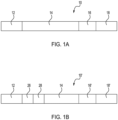
- Fig. 1A and Fig. 1B schematically depict two different examples of the genotyping oligonucleotides 10, 10 .
- Each of the genotyping oligonucleotides 10, 10 includes specific nucleotide sequence sections, which include a first primer sequence 12, a probe sequence 14, a restriction endonuclease site 16 or 16 , and a second primer sequence 18 or 18 .
- the example genotyping oligonucleotide 10 shown in Fig. 1A includes the first primer sequence 12 directly and covalently attached to the probe sequence 14, which is directly and covalently attached to the restriction endonuclease site 16, which is directly and covalently attached to the second primer sequence 18.
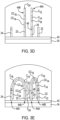
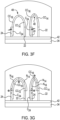
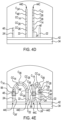
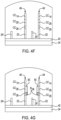
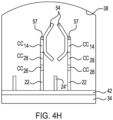
- An example of the method involving these genotyping oligonucleotides 10 is shown and described in reference to Fig. 3A through Fig. 3H .
- the second primer sequence 18 of the genotyping oligonucleotide 10 is at least partially complementary to the second capture primer 24 (see Fig. 2B ) that is present on the surface of a flow cell 20.
- Dat least partially complementary it is meant that a sufficient number of nucleobases in the second primer sequence 18 and in the second capture primer 24 are complementary so that hybridization can occur between the two 18, 24.
- the number, order, and type of nucleobases in the second primer sequence 18 depend upon the number, order, and type of nucleobases in the second capture primer 24.
- the second capture primer 24 has a universal sequence for capture and/or amplification purposes.
- An example of the second capture primer 24 includes P7 primers, examples of which are used on the surface of commercial flow cells sold by Illumina Inc. for sequencing, for example, on HISEQ , HISEQX , MISEQ , MISEQDX , MINISEQ , NEXTSEQD , NEXTSEQDXD , NOVASEQD , ISEQ TM , GENOME ANALYZERS , and other instrument platforms.
- the second capture primer 24 includes the following:
- the second capture primer 24 on the flow cell 20 also includes a cleavage site (see reference numeral 46 in Fig. 3A ).
- the cleavage site may be used to linearize bridged probe templates after cluster formation (described more in reference to Fig. 3E ).
- the chemistry of the cleavage site of the second capture primer 24 may be different from the chemistry of the restriction endonuclease site 16 of the genotyping nucleotide 10 so that premature digestion of the restriction endonuclease site 16 does not take place.
- the cleavage site and restriction endonuclease site 16 have separate and specific cleavage reactions. These reactions may be considered orthogonal, in that one reaction does not initiate, affect, or otherwise interfere with the other reaction.
- abasic sites may also be used.
- the chemically cleavable nucleobases, modified nucleobases, or linkers include 8-oxoguanine, a vicinal diol, a disulfide, a silane, an azobenzene, a photocleavable group, allyl T (a thymine nucleotide analog having an allyl functionality), allyl ethers, or an azido functional ether.
- Type IIS restriction enzymes are a specific group of enzymes that recognize asymmetric DNA sequences (e.g., the restriction endonuclease site 16 ) and cleave at a defined distance (e.g., from 1 nucleotide to about 20 nucleotides) outside of the recognition sequence.
- Some examples of Type IIS restriction enzymes that are not methyl sensitive are selected from the group consisting Bbvl (BseXI), Bmrl, Bvel (BspMI), etc.
- Some Type IIS restriction enzymes that are methyl sensitive are selected from the group consisting SfaNI, FoKI, HGAI, etc.
- Type IIS restriction enzyme may be used, depending upon the recognition sequence of the restriction endonuclease site 16 .
- Methyl and non-methyl sensitive enzymes are commercially available, for example, from New England BioLabs Inc., ThermoFisher Scientific, etc.
- any example of the second primer sequence 18 may be used.
- the restriction endonuclease site 16 may be introduced at any desirable position along the length of the second primer sequence 18 . The position may depend upon the position of a second restriction endonuclease site along the second capture primer 24 , the defined cleavage distance of the Type IIS restriction enzyme to be used, as well as where cleavage is desired along the genotyping oligonucleotide 10 (or an amplicon thereof).
- This cleavage takes place prior to a genotyping reaction (during linearization as discussed further herein), and renders the genotyping oligonucleotide 10 or an amplicon thereof ready for analysis of a target genotyping locus at a nucleobase of interest.
- a genotyping reaction a single stranded DNA sample, e.g., the target genotyping locus is hybridized, e.g., to the amplicon, and a single sequencing-by-synthesis reaction is performed to identify the nucleobase of interest.
- the amplicon should be cleaved at a defined position, where the next nucleobase to be sequenced is complementary to the nucleobase of interest.
- genotyping oligonucleotide 10, 10 may be prepared using oligonucleotide synthesis processes.
- the genotyping oligonucleotides 10, 10 may be used with any patterned flow cell 20. While not shown, it is to be understood that other non-patterned flow cells (e.g., which do not include depressions) that utilize the clustering chemistry disclosed herein may alternatively be used in the examples disclosed herein. With non-patterned flow cells, clusters may be identified using software.
- FIG. 2A An example of a patterned flow cell 20 is depicted in Fig. 2A , and an example of the patterned architecture within the flow cell 20 is shown in Fig. 2B .
- the flow cell 20 includes a substrate 30 that at least partially defines a lane or flow channel 32.
- the substrate 30 may be a single layer/material.
- suitable single layer substrates include epoxy siloxane, glass, modified or functionalized glass, plastics (including acrylics, polystyrene and copolymers of styrene and other materials, polypropylene, polyethylene, polybutylene, polyurethanes, polytetrafluoroethylene (such as TEFLON ® from Chemours), cyclic olefins/cyclo-olefin polymers (COP) (such as ZEONOR ® from Zeon), polyimides, etc.), nylon (polyamides), ceramics/ceramic oxides, silica, fused silica, or silica-based materials, aluminum silicate, silicon and modified silicon (e.g., boron doped p+ silicon), silicon nitride (Si 3 N 4 ), silicon oxide (SiO 2 ), tantalum pentoxide (Ta 2 O 5 ) or other tantalum oxide(s) (Ta
- the depressions 38 are defined in the single layer.
- the substrate 30 may also be a multi-layered substrate 30 .
- the multi-layered substrate 30 include glass or silicon, with a coating layer of tantalum oxide or another ceramic oxide at the surface.
- Other examples of the multi-layered substrate 30 may include a silicon-on-insulator (SOI) substrate.
- the multi-layered substrate 30 includes an underlying support 34 (e.g., glass or silicon) and a patterned material 36 positioned on the support 34.
- the patterned material 36 defines the depressions 38, which are separated by interstitial regions 40.
- the depressions 38 are located within each of the flow channel(s) 32.
- any material that can be selectively deposited, or deposited and patterned to form the depressions 38 and the interstitial regions 40 may be used for the patterned material 36.
- Example R groups for polyhedral oligomeric silsesquioxane include epoxy, azide/azido, a thiol, a polyethylene glycol), a norbornene, a tetrazine, acrylates, and/or methacrylates, or further, for example, alkyl, aryl, alkoxy, and/or haloalkyl groups.
- the resin composition disclosed herein may comprise one or more different cage or core structures as monomeric units.
- the flow cell 20 also includes flow channels 32. While several flow channels 32 are shown in Fig. 2A , it is to be understood that any number of channels 32 may be included in the flow cell 20 (e.g., a single channel 32, four channels 32 etc.). Each flow channel 32 is an area defined between two bonded components (e.g., the substrate 30, 30 and a lid or two substrates 30, 30 ), which can have fluids introduced thereto and removed therefrom. Each flow channel 32 may be isolated from each other flow channel 32 so that fluid introduced into any particular flow channel 32 does not flow into any adjacent flow channel 32. Some examples of the fluids introduced into the flow channels 32 may introduce reaction components (e.g., target genotyping locus library fragments, polymerases, etc.), washing solutions, etc.
- reaction components e.g., target genotyping locus library fragments, polymerases, etc.
- the flow channel 32 is defined between the substrate 30, 30 and a lid (not shown) or between the substrate 30, 30 and another substrate (not shown, but similar to substrate 30, 30 ).
- the lid or additional substrate may be bonded to at least a portion of the substrate 30, 30 , e.g., at some of the interstitial regions 40.
- the bond that is formed between the lid or additional substrate and the substrate 30, 30 may be a chemical bond, or a mechanical bond (e.g., using a fastener, etc.).
- the lid may be any material that is transparent to an excitation light that is directed toward the substrate 30, 30 .
- the lid may be glass (e.g., borosilicate, fused silica, etc.), plastic, or the like.
- a commercially available example of a suitable borosilicate glass is D 263 ® , available from Schott North America, Inc.
- Commercially available examples of suitable plastic materials, namely cyclo olefin polymers, are the ZEONOR ® products available from Zeon Chemicals L.P.
- the lid or additional substrate may be bonded to the substrate 30, 30 using any suitable technique, such as laser bonding, diffusion bonding, anodic bonding, eutectic bonding, plasma activation bonding, glass frit bonding, or others methods known in the art.
- a spacer layer may be used to bond the lid or additional substrate to the substrate 30, 30 .
- the spacer layer may be any material that will seal at least some of the substrate 30, 30 and the lid or additional substrate together.
- the spacer layer can be a radiation-absorbing material that aids in bonding.
- the flow channel 32 has a rectangular configuration.
- the length and width of the flow channel 32 may be smaller, respectively, than the length and width of the substrate 30, 30 so that a portion of the substrate surface surrounding the flow channel 32 is available for attachment to a lid (not shown) or another substrate 30, 30 .
- the width of each flow channel 32 can be at least about 1 mm, at least about 2.5 mm, at least about 5 mm, at least about 7 mm, at least about 10 mm, or more.
- the length of each lane/flow channel 32 can be at least about 10 mm, at least about 25 mm, at least about 50 mm, at least about 100 mm, or more.
- the width and/or length of each flow channel 32 can be greater than, less than or between the values specified above.
- the flow channel 32 is square (e.g., 10 mm x 10 mm).
- each flow channel 32 can be as small as a monolayer thick, for example, when microcontact, aerosol, or inkjet printing is used to deposit the spacer layer that defines the flow channel walls.
- the depth of the flow channel 32 may be larger, for example, when the flow channel 32 is partially defined in the substrate 30, 30 (e.g., via etching, lithography, etc.) so that a portion of the substrate and the spacer layer define the flow channel walls.
- the depth of each flow channel 32 can be about 1 ⁇ m, about 10 ⁇ m, about 50 ⁇ m, about 100 ⁇ m, or more. In an example, the depth may range from about 10 ⁇ m to about 100 ⁇ m.
- the depth may range from about 10 ⁇ m to about 30 ⁇ m. In still another example, the depth is about 5 ⁇ m or less. It is to be understood that the depth of each flow channel 32 can be greater than, less than or between the values specified above.
- the layout or pattern can be a random arrangement of depressions 38 and/or interstitial regions 40.
- the pattern may include stripes, swirls, lines, triangles, rectangles, circles, arcs, checks, diagonals, arrows, squares, and/or cross-hatches.
- the layout or pattern of the depressions 38 may be characterized with respect to the density of the depressions 38 (number of depressions 38) in a defined area.
- the depressions 38 may be present at a density of approximately 2 million per mm 2 .
- the density may be tuned to different densities including, for example, a density of about 100 per mm 2 , about 1,000 per mm 2 , about 0.1 million per mm 2 , about 1 million per mm 2 , about 2 million per mm 2 , about 5 million per mm 2 , about 10 million per mm 2 , about 50 million per mm 2 , or more, or less.
- the layout or pattern of the depressions 38 may also or alternatively be characterized in terms of the average pitch, or the spacing from the center of the depression 38 to the center of an adjacent depression 38 (center-to-center spacing) or from the left edge of one depression 38 to the right edge of an adjacent depression 38 (edge-to-edge spacing).
- the pattern can be regular, such that the coefficient of variation around the average pitch is small, or the pattern can be non-regular in which case the coefficient of variation can be relatively large.
- the average pitch can be, for example, about 50 nm, about 0.1 ⁇ m, about 0.5 ⁇ m, about 1 ⁇ m, about 5 ⁇ m, about 10 ⁇ m, about 100 ⁇ m, or more or less.
- the average pitch for a particular pattern of depressions 38 can be between one of the lower values and one of the upper values selected from the ranges above.
- the depressions 38 have a pitch (center-to-center spacing) of about 1.5 ⁇ m. While example average pitch values have been provided, it is to be understood that other average pitch values may be used.
- each depression 38 may be characterized by its volume, opening area, depth, and/or diameter.
- Each depression 38 can have any volume that is capable of confining a fluid.
- the minimum or maximum volume can be selected, for example, to accommodate the throughput (e.g., multiplexity), resolution, nucleotides, or analyte reactivity expected for downstream uses of the flow cell 20.
- the volume can be at least about 1 ⁇ 3 ⁇ m 3 , at least about 1 ⁇ 2 ⁇ m 3 , at least about 0.1 ⁇ m 3 , at least about 1 ⁇ m 3 , at least about 10 ⁇ m 3 , at least about 100 ⁇ m 3 , or more.
- the volume can be at most about 1 ⁇ 10 4 ⁇ m 3 , at most about 1 ⁇ 10 3 ⁇ m 3 , at most about 100 ⁇ m 3 , at most about 10 ⁇ m 3 , at most about 1 ⁇ m 3 , at most about 0.1 ⁇ m 3 , or less.
- the depth of each depression 38 can be large enough to house some of a polymeric hydrogel 42.
- the depth may be at least about 0.1 ⁇ m, at least about 0.5 ⁇ m, at least about 1 ⁇ m, at least about 10 ⁇ m, at least about 100 ⁇ m, or more.
- the depth can be at most about 1 ⁇ 10 3 ⁇ m, at most about 100 ⁇ m, at most about 10 ⁇ m, or less.
- the depth is about 0.4 ⁇ m.
- the depth of each depression 38 can be greater than, less than or between the values specified above.
- the diameter or length and width of each depression 38 can be at least about 50 nm, at least about 0.1 ⁇ m, at least about 0.5 ⁇ m, at least about 1 ⁇ m, at least about 10 ⁇ m, at least about 100 ⁇ m, or more.
- the diameter or length and width can be at most about 1 ⁇ 10 3 ⁇ m, at most about 100 ⁇ m, at most about 10 ⁇ m, at most about 1 ⁇ m, at most about 0.5 ⁇ m, at most about 0.1 ⁇ m, or less (e.g., about 50 nm).
- the diameter or length and width is about 0.4 ⁇ m.
- the diameter or length and width of each depression 38 can be greater than, less than or between the values specified above.
- a polymeric hydrogel 42 is positioned within each of the depressions 38.
- An example of the polymeric hydrogel 42 includes an acrylamide copolymer, such as poly(N-(5-azidoacetamidylpentyl)acrylamide-co-acrylamide, PAZAM.
- PAZAM and some other forms of the acrylamide copolymer are represented by the following structure (I): wherein:
- structure (I) is representative, and the monomeric subunits may be present in any order in the polymer structure (e.g., random, block, patterned, or a combination thereof).
- the molecular weight of PAZAM and other forms of the acrylamide copolymer may range from about 5 kDa to about 1500 kDa or from about 10 kDa to about 1000 kDa, or may be, in a specific example, about 312 kDa.
- PAZAM and other forms of the acrylamide copolymer are linear polymers. In some other examples, PAZAM and other forms of the acrylamide copolymer are lightly cross-linked polymers.
- structure (I) may include in addition to the recurring n and m features, where R D , R E , and R F are each H or a C1-C6 alkyl, and R G and R H are each a C1-C6 alkyl.
- q may be an integer in the range of 1 to 100,000.
- the recurring n feature in structure (I) may be replaced with a monomer including a heterocyclic azido group having structure (II): wherein R 1 is H or a C1-C6 alkyl; R 2 is H or a C1-C6 alkyl; L is a linker including a linear chain with 2 to 20 atoms selected from the group consisting of carbon, oxygen, and nitrogen and 10 optional substituents on the carbon and any nitrogen atoms in the chain; E is a linear chain including 1 to 4 atoms selected from the group consisting of carbon, oxygen and nitrogen, and optional substituents on the carbon and any nitrogen atoms in the chain; A is an N substituted amide with an H or a C1-C4 alkyl attached to the N; and Z is a nitrogen containing heterocycle. Examples of Z include 5 to 10 ring members present as a single cyclic structure or a fused structure. Some specific examples of Z include pyrrolidinyl, pyr
- the polymeric hydrogel 42 may include a recurring unit of each of structure (III) and (IV): wherein each of R 1a , R 2a , R 1b and R 2b is independently selected from hydrogen, an optionally substituted alkyl or optionally substituted phenyl; each of R 3a and R 3b is independently selected from hydrogen, an optionally substituted alkyl, an optionally substituted phenyl, or an optionally substituted C7-C14 aralkyl; and each L 1 and L 2 is independently selected from an optionally substituted alkylene linker or an optionally substituted heteroalkylene linker.
- polymeric hydrogel 42 may be used to form the polymeric hydrogel 42, as long as they are functionalized to graft the capture primers 22, 24 or 22, 24 thereto.
- suitable polymer layers include those having a colloidal structure, such as agarose; or a polymer mesh structure, such as gelatin; or a cross-linked polymer structure, such as polyacrylamide polymers and copolymers, silane free acrylamide (SFA), or an azidolyzed version of SFA.
- suitable polyacrylamide polymers may be synthesized from acrylamide and an acrylic acid or an acrylic acid containing a vinyl group, or from monomers that form [2+2] photo-cycloaddition reactions.
- suitable polymeric hydrogels 42 include mixed copolymers of acrylamides and acrylates.
- a variety of polymer architectures containing acrylic monomers may be utilized in the examples disclosed herein, such as branched polymers, including star polymers, star-shaped or star-block polymers, dendrimers, and the like.
- the monomers e.g., acrylamide, etc.
- a mixture of the polymeric hydrogel 42 may be generated and then applied to the substrate 30, 30 (including the depressions 38).
- the polymeric hydrogel 42 may be present in a mixture (e.g., with water or with ethanol and water). The mixture may then be applied to the substrate surfaces (including in the depressions 38) using spin coating, or dipping or dip coating, spray coating, or flow of the material under positive or negative pressure, or another suitable technique. These types of techniques blanketly deposit the polymeric hydrogel 42 on the substrate 30, 30 (e.g., in the depressions 38 and on interstitial regions 40 surrounding the depressions 38). Other selective deposition techniques (e.g. involving a mask, controlled printing techniques, etc.) may be used to specifically deposit the polymeric hydrogel 42 in the depressions 38 and not on the interstitial regions 40.
- the substrate surface (including the portion that is exposed in the depressions 38) may be activated, and then the mixture (including the polymeric hydrogel 42) may be applied thereto.
- a silane or silane derivative e.g., norbornene silane
- the substrate surface may be exposed to plasma ashing to generate surface-activating agent(s) (e.g., -OH groups) that can adhere to the polymeric hydrogel 42.
- the applied mixture may be exposed to a curing process.
- curing may take place at a temperature ranging from room temperature (e.g., from about 18°C to about 25°C) to about 95°C for a time ranging from about 1 millisecond to about several days.
- polishing may then be performed in order to remove the polymeric hydrogel 42 from the interstitial regions 40 at the perimeter of the depressions 38, while leaving the polymeric hydrogel 42 on the surface in the depressions 38 at least substantially intact.
Landscapes
- Chemical & Material Sciences (AREA)
- Life Sciences & Earth Sciences (AREA)
- Organic Chemistry (AREA)
- Proteomics, Peptides & Aminoacids (AREA)
- Zoology (AREA)
- Health & Medical Sciences (AREA)
- Engineering & Computer Science (AREA)
- Wood Science & Technology (AREA)
- Analytical Chemistry (AREA)
- Microbiology (AREA)
- Bioinformatics & Cheminformatics (AREA)
- Molecular Biology (AREA)
- Immunology (AREA)
- Biotechnology (AREA)
- Biophysics (AREA)
- Biochemistry (AREA)
- Physics & Mathematics (AREA)
- General Engineering & Computer Science (AREA)
- General Health & Medical Sciences (AREA)
- Genetics & Genomics (AREA)
- Chemical Kinetics & Catalysis (AREA)
- Measuring Or Testing Involving Enzymes Or Micro-Organisms (AREA)
- Apparatus Associated With Microorganisms And Enzymes (AREA)
Applications Claiming Priority (4)
| Application Number | Priority Date | Filing Date | Title |
|---|---|---|---|
| US202062981866P | 2020-02-26 | 2020-02-26 | |
| PCT/US2021/019410 WO2021173666A1 (en) | 2020-02-26 | 2021-02-24 | Kits for genotyping |
| EP21713210.9A EP3969613B1 (de) | 2020-02-26 | 2021-02-24 | Kits zur genotypisierung |
| EP23180094.7A EP4253559B1 (de) | 2020-02-26 | 2021-02-24 | Kits zur genotypisierung |
Related Parent Applications (3)
| Application Number | Title | Priority Date | Filing Date |
|---|---|---|---|
| EP21713210.9A Division EP3969613B1 (de) | 2020-02-26 | 2021-02-24 | Kits zur genotypisierung |
| EP23180094.7A Division EP4253559B1 (de) | 2020-02-26 | 2021-02-24 | Kits zur genotypisierung |
| EP23180094.7A Division-Into EP4253559B1 (de) | 2020-02-26 | 2021-02-24 | Kits zur genotypisierung |
Publications (2)
| Publication Number | Publication Date |
|---|---|
| EP4527941A2 true EP4527941A2 (de) | 2025-03-26 |
| EP4527941A3 EP4527941A3 (de) | 2025-05-14 |
Family
ID=77366861
Family Applications (3)
| Application Number | Title | Priority Date | Filing Date |
|---|---|---|---|
| EP23180094.7A Active EP4253559B1 (de) | 2020-02-26 | 2021-02-24 | Kits zur genotypisierung |
| EP25152557.2A Withdrawn EP4527941A3 (de) | 2020-02-26 | 2021-02-24 | Kits zur genotypisierung |
| EP21713210.9A Active EP3969613B1 (de) | 2020-02-26 | 2021-02-24 | Kits zur genotypisierung |
Family Applications Before (1)
| Application Number | Title | Priority Date | Filing Date |
|---|---|---|---|
| EP23180094.7A Active EP4253559B1 (de) | 2020-02-26 | 2021-02-24 | Kits zur genotypisierung |
Family Applications After (1)
| Application Number | Title | Priority Date | Filing Date |
|---|---|---|---|
| EP21713210.9A Active EP3969613B1 (de) | 2020-02-26 | 2021-02-24 | Kits zur genotypisierung |
Country Status (13)
| Country | Link |
|---|---|
| US (1) | US20210262028A1 (de) |
| EP (3) | EP4253559B1 (de) |
| JP (1) | JP7767154B2 (de) |
| KR (1) | KR20220145252A (de) |
| CN (1) | CN114144529B (de) |
| AU (1) | AU2021227206A1 (de) |
| BR (1) | BR112021026795A2 (de) |
| CA (1) | CA3145539A1 (de) |
| DK (1) | DK3969613T3 (de) |
| ES (1) | ES2960746T3 (de) |
| FI (1) | FI3969613T3 (de) |
| IL (1) | IL289118A (de) |
| MX (1) | MX2021015806A (de) |
Families Citing this family (2)
| Publication number | Priority date | Publication date | Assignee | Title |
|---|---|---|---|---|
| CN119654676A (zh) * | 2022-08-23 | 2025-03-18 | 徕卡显微系统Cms有限公司 | 连接物、标志物、捕获构建体和数据存储装置 |
| CN118006735B (zh) * | 2023-05-30 | 2025-07-04 | 深圳赛陆医疗科技有限公司 | 一种snp芯片及其制备方法和应用 |
Family Cites Families (10)
| Publication number | Priority date | Publication date | Assignee | Title |
|---|---|---|---|---|
| RU2565550C2 (ru) * | 2010-09-24 | 2015-10-20 | Те Борд Оф Трастиз Оф Те Лилэнд Стэнфорд Джуниор Юниверсити | Прямой захват, амплификация и секвенирование днк-мишени с использованием иммобилизированных праймеров |
| RU2698125C2 (ru) * | 2013-08-19 | 2019-08-22 | Эбботт Молекьюлар Инк. | Библиотеки для секвенирования нового поколения |
| US20150211061A1 (en) * | 2014-01-27 | 2015-07-30 | The General Hospital Corporation | Methods for determining a nucleotide sequence |
| AU2015269103B2 (en) * | 2014-06-06 | 2021-12-23 | Cornell University | Method for identification and enumeration of nucleic acid sequence, expression, copy, or DNA methylation changes, using combined nuclease, ligase, polymerase, and sequencing reactions |
| US10450562B2 (en) * | 2014-09-09 | 2019-10-22 | Igenomx International Genomics Corporation | Methods and compositions for rapid nucleic acid library preparation |
| DK3218511T3 (da) * | 2014-11-11 | 2020-07-20 | Illumina Cambridge Ltd | Fremgangsmåder og arrays til frembringelse og sekventering af monoklonale klynger af nukleinsyre |
| US10774374B2 (en) | 2015-04-10 | 2020-09-15 | Spatial Transcriptomics AB and Illumina, Inc. | Spatially distinguished, multiplex nucleic acid analysis of biological specimens |
| WO2018161019A1 (en) * | 2017-03-03 | 2018-09-07 | Counsyl, Inc. | Methods for optimizing direct targeted sequencing |
| CN110770354B (zh) * | 2017-04-19 | 2024-03-19 | 鹍远基因公司 | 用于文库构建和序列分析的组合物和方法 |
| EA202091673A1 (ru) * | 2018-01-29 | 2021-02-03 | Ст. Джуд Чилдрен'С Рисерч Хоспитал, Инк. | Способ амплификации нуклеиновых кислот |
-
2021
- 2021-02-24 MX MX2021015806A patent/MX2021015806A/es unknown
- 2021-02-24 EP EP23180094.7A patent/EP4253559B1/de active Active
- 2021-02-24 CN CN202180004121.1A patent/CN114144529B/zh active Active
- 2021-02-24 JP JP2021577075A patent/JP7767154B2/ja active Active
- 2021-02-24 DK DK21713210.9T patent/DK3969613T3/da active
- 2021-02-24 EP EP25152557.2A patent/EP4527941A3/de not_active Withdrawn
- 2021-02-24 KR KR1020217042262A patent/KR20220145252A/ko active Pending
- 2021-02-24 FI FIEP21713210.9T patent/FI3969613T3/fi active
- 2021-02-24 EP EP21713210.9A patent/EP3969613B1/de active Active
- 2021-02-24 AU AU2021227206A patent/AU2021227206A1/en active Pending
- 2021-02-24 ES ES21713210T patent/ES2960746T3/es active Active
- 2021-02-24 BR BR112021026795A patent/BR112021026795A2/pt unknown
- 2021-02-24 CA CA3145539A patent/CA3145539A1/en active Pending
- 2021-02-25 US US17/185,730 patent/US20210262028A1/en active Pending
- 2021-12-19 IL IL289118A patent/IL289118A/en unknown
Non-Patent Citations (1)
| Title |
|---|
| KEHAGIAS ET AL., MICROELECTRONIC ENGINEERING, vol. 86, 2009, pages 776 - 778 |
Also Published As
| Publication number | Publication date |
|---|---|
| DK3969613T3 (da) | 2024-01-08 |
| EP3969613B1 (de) | 2023-10-04 |
| ES2960746T3 (es) | 2024-03-06 |
| EP4527941A3 (de) | 2025-05-14 |
| EP4253559A3 (de) | 2023-10-25 |
| EP4253559A2 (de) | 2023-10-04 |
| EP3969613A1 (de) | 2022-03-23 |
| CA3145539A1 (en) | 2021-09-02 |
| JP2023514887A (ja) | 2023-04-12 |
| CN114144529A (zh) | 2022-03-04 |
| IL289118A (en) | 2022-02-01 |
| EP4253559C0 (de) | 2025-04-02 |
| JP7767154B2 (ja) | 2025-11-11 |
| BR112021026795A2 (pt) | 2022-02-15 |
| FI3969613T3 (fi) | 2023-10-06 |
| AU2021227206A1 (en) | 2022-01-27 |
| KR20220145252A (ko) | 2022-10-28 |
| US20210262028A1 (en) | 2021-08-26 |
| CN114144529B (zh) | 2025-04-29 |
| EP4253559B1 (de) | 2025-04-02 |
| MX2021015806A (es) | 2022-04-27 |
Similar Documents
| Publication | Publication Date | Title |
|---|---|---|
| US20230137106A1 (en) | Methods and compositions for paired end sequencing using a single surface primer | |
| CN107002117B (zh) | 核酸测序方法 | |
| CN105392897B (zh) | 靶序列的富集 | |
| JP2021118690A (ja) | 新規合成した遺伝子ライブラリ | |
| WO2021173666A1 (en) | Kits for genotyping | |
| EP3103885B1 (de) | Verfahren zur sequenzierung von nukleinsäuren | |
| CN106244578B (zh) | 用于对核酸进行测序的方法 | |
| US20240200113A1 (en) | Method and system for enzymatic synthesis of oligonucleotides | |
| US20250084477A1 (en) | Primer sets and methods and kits incorporating the primer sets | |
| US20250115900A1 (en) | Biotin-streptavidin cleavage composition and library fragment cleavage | |
| EP3969613B1 (de) | Kits zur genotypisierung | |
| AU2019402925B2 (en) | Methods for improving polynucleotide cluster clonality priority | |
| HK40123122A (en) | Kits for genotyping | |
| HK40093296A (en) | Kits for genotyping | |
| HK40093296B (en) | Kits for genotyping | |
| RU2835967C2 (ru) | Наборы для генотипирования | |
| HK40060387A (en) | Kits for genotyping | |
| HK40060387B (en) | Kits for genotyping | |
| WO2025264836A1 (en) | Methods for increasing sequencing quality of gc-rich regions | |
| WO2026059939A2 (en) | Methods and compositions for strand enrichment and template preparation for sequencing by expansion | |
| WO2026006314A9 (en) | Tagging target regions prior to nucleotide sequencing | |
| TW202340475A (zh) | 多核苷酸之酵素合成 |
Legal Events
| Date | Code | Title | Description |
|---|---|---|---|
| PUAI | Public reference made under article 153(3) epc to a published international application that has entered the european phase |
Free format text: ORIGINAL CODE: 0009012 |
|
| STAA | Information on the status of an ep patent application or granted ep patent |
Free format text: STATUS: THE APPLICATION HAS BEEN PUBLISHED |
|
| AC | Divisional application: reference to earlier application |
Ref document number: 3969613 Country of ref document: EP Kind code of ref document: P Ref document number: 4253559 Country of ref document: EP Kind code of ref document: P |
|
| AK | Designated contracting states |
Kind code of ref document: A2 Designated state(s): AL AT BE BG CH CY CZ DE DK EE ES FI FR GB GR HR HU IE IS IT LI LT LU LV MC MK MT NL NO PL PT RO RS SE SI SK SM TR |
|
| PUAL | Search report despatched |
Free format text: ORIGINAL CODE: 0009013 |
|
| AK | Designated contracting states |
Kind code of ref document: A3 Designated state(s): AL AT BE BG CH CY CZ DE DK EE ES FI FR GB GR HR HU IE IS IT LI LT LU LV MC MK MT NL NO PL PT RO RS SE SI SK SM TR |
|
| RIC1 | Information provided on ipc code assigned before grant |
Ipc: C12Q 1/6806 20180101AFI20250409BHEP |
|
| REG | Reference to a national code |
Ref country code: HK Ref legal event code: DE Ref document number: 40123122 Country of ref document: HK |
|
| STAA | Information on the status of an ep patent application or granted ep patent |
Free format text: STATUS: THE APPLICATION IS DEEMED TO BE WITHDRAWN |
|
| 18D | Application deemed to be withdrawn |
Effective date: 20251115 |