EP4524959A2 - Vorrichtung und verfahren zur bildschirmbezogenen audioobjekt-neuabbildung - Google Patents
Vorrichtung und verfahren zur bildschirmbezogenen audioobjekt-neuabbildung Download PDFInfo
- Publication number
- EP4524959A2 EP4524959A2 EP24210650.8A EP24210650A EP4524959A2 EP 4524959 A2 EP4524959 A2 EP 4524959A2 EP 24210650 A EP24210650 A EP 24210650A EP 4524959 A2 EP4524959 A2 EP 4524959A2
- Authority
- EP
- European Patent Office
- Prior art keywords
- screen
- audio
- metadata
- audio object
- nominal
- Prior art date
- Legal status (The legal status is an assumption and is not a legal conclusion. Google has not performed a legal analysis and makes no representation as to the accuracy of the status listed.)
- Pending
Links
Images




Classifications
-
- G—PHYSICS
- G10—MUSICAL INSTRUMENTS; ACOUSTICS
- G10L—SPEECH ANALYSIS TECHNIQUES OR SPEECH SYNTHESIS; SPEECH RECOGNITION; SPEECH OR VOICE PROCESSING TECHNIQUES; SPEECH OR AUDIO CODING OR DECODING
- G10L19/00—Speech or audio signals analysis-synthesis techniques for redundancy reduction, e.g. in vocoders; Coding or decoding of speech or audio signals, using source filter models or psychoacoustic analysis
- G10L19/04—Speech or audio signals analysis-synthesis techniques for redundancy reduction, e.g. in vocoders; Coding or decoding of speech or audio signals, using source filter models or psychoacoustic analysis using predictive techniques
- G10L19/16—Vocoder architecture
- G10L19/18—Vocoders using multiple modes
- G10L19/20—Vocoders using multiple modes using sound class specific coding, hybrid encoders or object based coding
-
- G—PHYSICS
- G10—MUSICAL INSTRUMENTS; ACOUSTICS
- G10L—SPEECH ANALYSIS TECHNIQUES OR SPEECH SYNTHESIS; SPEECH RECOGNITION; SPEECH OR VOICE PROCESSING TECHNIQUES; SPEECH OR AUDIO CODING OR DECODING
- G10L19/00—Speech or audio signals analysis-synthesis techniques for redundancy reduction, e.g. in vocoders; Coding or decoding of speech or audio signals, using source filter models or psychoacoustic analysis
- G10L19/008—Multichannel audio signal coding or decoding using interchannel correlation to reduce redundancy, e.g. joint-stereo, intensity-coding or matrixing
-
- H—ELECTRICITY
- H04—ELECTRIC COMMUNICATION TECHNIQUE
- H04N—PICTORIAL COMMUNICATION, e.g. TELEVISION
- H04N21/00—Selective content distribution, e.g. interactive television or video on demand [VOD]
- H04N21/20—Servers specifically adapted for the distribution of content, e.g. VOD servers; Operations thereof
- H04N21/23—Processing of content or additional data; Elementary server operations; Server middleware
- H04N21/233—Processing of audio elementary streams
-
- H—ELECTRICITY
- H04—ELECTRIC COMMUNICATION TECHNIQUE
- H04N—PICTORIAL COMMUNICATION, e.g. TELEVISION
- H04N21/00—Selective content distribution, e.g. interactive television or video on demand [VOD]
- H04N21/40—Client devices specifically adapted for the reception of or interaction with content, e.g. set-top-box [STB]; Operations thereof
- H04N21/43—Processing of content or additional data, e.g. demultiplexing additional data from a digital video stream; Elementary client operations, e.g. monitoring of home network or synchronising decoder's clock; Client middleware
- H04N21/431—Generation of visual interfaces for content selection or interaction; Content or additional data rendering
- H04N21/4318—Generation of visual interfaces for content selection or interaction; Content or additional data rendering by altering the content in the rendering process, e.g. blanking, blurring or masking an image region
-
- H—ELECTRICITY
- H04—ELECTRIC COMMUNICATION TECHNIQUE
- H04N—PICTORIAL COMMUNICATION, e.g. TELEVISION
- H04N21/00—Selective content distribution, e.g. interactive television or video on demand [VOD]
- H04N21/40—Client devices specifically adapted for the reception of or interaction with content, e.g. set-top-box [STB]; Operations thereof
- H04N21/43—Processing of content or additional data, e.g. demultiplexing additional data from a digital video stream; Elementary client operations, e.g. monitoring of home network or synchronising decoder's clock; Client middleware
- H04N21/439—Processing of audio elementary streams
-
- H—ELECTRICITY
- H04—ELECTRIC COMMUNICATION TECHNIQUE
- H04N—PICTORIAL COMMUNICATION, e.g. TELEVISION
- H04N21/00—Selective content distribution, e.g. interactive television or video on demand [VOD]
- H04N21/40—Client devices specifically adapted for the reception of or interaction with content, e.g. set-top-box [STB]; Operations thereof
- H04N21/45—Management operations performed by the client for facilitating the reception of or the interaction with the content or administrating data related to the end-user or to the client device itself, e.g. learning user preferences for recommending movies, resolving scheduling conflicts
- H04N21/4508—Management of client data or end-user data
- H04N21/4516—Management of client data or end-user data involving client characteristics, e.g. Set-Top-Box type, software version or amount of memory available
-
- H—ELECTRICITY
- H04—ELECTRIC COMMUNICATION TECHNIQUE
- H04N—PICTORIAL COMMUNICATION, e.g. TELEVISION
- H04N21/00—Selective content distribution, e.g. interactive television or video on demand [VOD]
- H04N21/80—Generation or processing of content or additional data by content creator independently of the distribution process; Content per se
- H04N21/81—Monomedia components thereof
- H04N21/8106—Monomedia components thereof involving special audio data, e.g. different tracks for different languages
-
- H—ELECTRICITY
- H04—ELECTRIC COMMUNICATION TECHNIQUE
- H04N—PICTORIAL COMMUNICATION, e.g. TELEVISION
- H04N21/00—Selective content distribution, e.g. interactive television or video on demand [VOD]
- H04N21/80—Generation or processing of content or additional data by content creator independently of the distribution process; Content per se
- H04N21/83—Generation or processing of protective or descriptive data associated with content; Content structuring
- H04N21/84—Generation or processing of descriptive data, e.g. content descriptors
-
- H—ELECTRICITY
- H04—ELECTRIC COMMUNICATION TECHNIQUE
- H04S—STEREOPHONIC SYSTEMS
- H04S3/00—Systems employing more than two channels, e.g. quadraphonic
- H04S3/008—Systems employing more than two channels, e.g. quadraphonic in which the audio signals are in digital form, i.e. employing more than two discrete digital channels
-
- H—ELECTRICITY
- H04—ELECTRIC COMMUNICATION TECHNIQUE
- H04S—STEREOPHONIC SYSTEMS
- H04S7/00—Indicating arrangements; Control arrangements, e.g. balance control
-
- H—ELECTRICITY
- H04—ELECTRIC COMMUNICATION TECHNIQUE
- H04S—STEREOPHONIC SYSTEMS
- H04S7/00—Indicating arrangements; Control arrangements, e.g. balance control
- H04S7/30—Control circuits for electronic adaptation of the sound field
-
- H—ELECTRICITY
- H04—ELECTRIC COMMUNICATION TECHNIQUE
- H04S—STEREOPHONIC SYSTEMS
- H04S7/00—Indicating arrangements; Control arrangements, e.g. balance control
- H04S7/30—Control circuits for electronic adaptation of the sound field
- H04S7/308—Electronic adaptation dependent on speaker or headphone connection
-
- G—PHYSICS
- G10—MUSICAL INSTRUMENTS; ACOUSTICS
- G10L—SPEECH ANALYSIS TECHNIQUES OR SPEECH SYNTHESIS; SPEECH RECOGNITION; SPEECH OR VOICE PROCESSING TECHNIQUES; SPEECH OR AUDIO CODING OR DECODING
- G10L19/00—Speech or audio signals analysis-synthesis techniques for redundancy reduction, e.g. in vocoders; Coding or decoding of speech or audio signals, using source filter models or psychoacoustic analysis
- G10L19/04—Speech or audio signals analysis-synthesis techniques for redundancy reduction, e.g. in vocoders; Coding or decoding of speech or audio signals, using source filter models or psychoacoustic analysis using predictive techniques
- G10L19/16—Vocoder architecture
- G10L19/167—Audio streaming, i.e. formatting and decoding of an encoded audio signal representation into a data stream for transmission or storage purposes
-
- H—ELECTRICITY
- H04—ELECTRIC COMMUNICATION TECHNIQUE
- H04R—LOUDSPEAKERS, MICROPHONES, GRAMOPHONE PICK-UPS OR LIKE ACOUSTIC ELECTROMECHANICAL TRANSDUCERS; DEAF-AID SETS; PUBLIC ADDRESS SYSTEMS
- H04R2499/00—Aspects covered by H04R or H04S not otherwise provided for in their subgroups
- H04R2499/10—General applications
- H04R2499/15—Transducers incorporated in visual displaying devices, e.g. televisions, computer displays, laptops
-
- H—ELECTRICITY
- H04—ELECTRIC COMMUNICATION TECHNIQUE
- H04S—STEREOPHONIC SYSTEMS
- H04S2400/00—Details of stereophonic systems covered by H04S but not provided for in its groups
- H04S2400/11—Positioning of individual sound objects, e.g. moving airplane, within a sound field
Definitions
- the present invention relates to audio signal processing, in particular, to an apparatus and a method for audio object remapping, and, more particularly, to an apparatus and a method for screen related audio object remapping.
- Audio objects are known. Audio objects may, e.g., be considered as sound tracks with associated metadata.
- the metadata may, e.g., describe the characteristics of the raw audio data, e.g., the desired playback position or the volume level.
- Geometric metadata can be used to define where an audio object should be rendered, e.g., angles in azimuth or elevation or absolute positions relative to a reference point, e.g., the listener.
- the metadata is stored or transmitted along with the object audio signals.
- MPEG Moving Picture Experts Group
- a system should be able to accept audio objects at the encoder input.
- the system should support signaling, delivery and rendering of audio objects and should enable user control of objects, e.g., for dialog enhancement, alternative language tracks and audio description language.
- the playback of spatial sound field-oriented audio to its linked visible objects is adapted by applying space warping processing.
- the decoder warps the sound field such that all sound objects in the direction of the screen are compressed or stretched according to the ratio of the sizes of the target and reference screens.
- a possibility is included to encode and transmit the reference size (or the viewing angle from a reference listening position) of the screen used in the content production as metadata together with the content.
- a fixed reference screen size is assumed in encoding and for decoding, and the decoder knows the actual size of the target screen.
- the decoder warps the sound field in such a manner that all sound objects in the direction of the screen are compressed or stretched according to the ratio of the size of the target screen and the size of the reference screen. So-called "two-segment piecewise linear" warping functions are used. The stretching is limited to the angular positions of sound items.
- the definition of the warping function is similar to the definition of the mapping function for screen-related remapping.
- the first and the third segment of the three-segment piecewise linear mapping function the mapping function could be defined as a two-segment piecewise linear function.
- HOA higher order ambisonics
- the warping function is only dependent on ratio of reference screen and reproduction screen, no definition for non-centered screens is provided.
- the object of the present invention is to provide improved concepts for audio and visual multimedia content integration employing existing multimedia reproduction setups.
- the object of the present invention is solved by an apparatus according to claim 1, by a decoder device according to claim 13, by a method according to claim 14 and by a computer program according to claim 15.
- the apparatus comprises an object metadata processor and an object renderer.
- the object renderer is configured to receive an audio object.
- the object metadata processor is configured to receive metadata, comprising an indication on whether the audio object is screen-related, and further comprising a first position of the audio object.
- the object metadata processor is configured to calculate a second position of the audio object depending on the first position of the audio object and depending on a size of a screen, if the audio object is indicated in the metadata as being screen-related.
- the object renderer is configured to generate the loudspeaker signals depending on the audio object and depending on position information.
- the object metadata processor is configured to feed the first position of the audio object as the position information into the object renderer, if the audio object is indicated in the metadata as being not screen-related. Furthermore, the object metadata processor is configured to feed the second position of the audio object as the position information into the object renderer, if the audio object is indicated in the metadata as being screen-related.
- the object metadata processor may, e.g., be configured to not calculate the second position of the audio object, if the audio object is indicated in the metadata as being not screen-related.
- the object renderer may, e.g., be configured to not determine whether the position information is the first position of the audio object or the second position of the audio object.
- the object renderer may, e.g., be configured to generate the loudspeaker signals further depending on the number of the loudspeakers of a playback environment.
- the object renderer may, e.g., be configured to generate the loudspeaker signals further depending on a loudspeaker position of each of the loudspeakers of the playback environment.
- the object metadata processor is configured to calculate the second position of the audio object depending on the first position of the audio object and depending on the size of the screen, if the audio object is indicated in the metadata as being screen-related, wherein the first position indicates the first position in a three-dimensional space, and wherein the second position indicates the second position in the three-dimensional space.
- the object metadata processor may, e.g., be configured to calculate the second position of the audio object depending on the first position of the audio object and depending on the size of the screen, if the audio object is indicated in the metadata as being screen-related, wherein the first position indicates a first azimuth, a first elevation and a first distance, and wherein the second position indicates a second azimuth, a second elevation and a second distance.
- the object metadata processor may, e.g., be configured to receive the metadata, comprising the indication on whether the audio object is screen-related as a first indication, and further comprising a second indication, if the audio object is screen-related, said second indication indicating whether the audio object is an on-screen object.
- the object metadata processor may, e.g., be configured to calculate the second position of the audio object depending on the first position of the audio object and depending on the size of the screen, such that the second position takes a first value on a screen area of the screen, if the second indication indicates that the audio object is an on-screen object.
- the object metadata processor may, e.g., be configured to calculate the second position of the audio object depending on the first position of the audio object and depending on the size of the screen, such that the second position takes a second value, which is either on the screen area or not on the screen area, if the second indication indicates that the audio object is not an on-screen object.
- the object metadata processor may, e.g., be configured to receive the metadata, comprising the indication on whether the audio object is screen-related as a first indication, and further comprising a second indication, if the audio object is screen-related, said second indication indicating whether the audio object is an on-screen object.
- the object metadata processor may, e.g., be configured to calculate the second position of the audio object depending on the first position of the audio object, depending on the size of the screen, and depending on a first mapping curve as the mapping curve, if the second indication indicates that the audio object is an on-screen object, wherein the first mapping curve defines a mapping of original object positions in a first value interval to remapped object positions in a second value interval.
- the object metadata processor may, e.g., be configured to calculate the second position of the audio object depending on the first position of the audio object, depending on the size of the screen, and depending on a second mapping curve as the mapping curve, if the second indication indicates that the audio object is not an on-screen object, wherein the second mapping curve defines a mapping of original object positions in the first value interval to remapped object positions in a third value interval, and wherein said second value interval is comprised by the third value interval, and wherein said second value interval is smaller than said third value interval.
- each of the first value interval and the second value interval and the third value interval may, e.g., be a value interval of azimuth angles, or each of the first value interval and the second value interval and the third value interval may, e.g., be a value interval of elevation angles.
- the object metadata processor may, e.g., be configured to calculate the second position of the audio object depending on at least one of a first linear mapping function and a second linear mapping function, wherein the first linear mapping function is defined to map a first azimuth value to a second azimuth value, wherein the second linear mapping function is defined to map a first elevation value to a second elevation value, wherein ⁇ left nominal indicates a left azimuth screen edge reference, wherein ⁇ right nominal indicates a right azimuth screen edge reference, wherein ⁇ top nominal indicates a top elevation screen edge reference, wherein ⁇ bottom nominal indicates a bottom elevation screen edge reference, wherein ⁇ left repro indicates a left azimuth screen edge of the screen, wherein ⁇ right repro indicates a right azimuth screen edge of the screen, wherein ⁇ top repro indicates a top elevation screen edge of the screen, wherein ⁇ bottom repro indicates a bottom elevation screen edge of the screen, wherein ⁇ indicates the first azimuth value, wherein ⁇ ' indicates the second azimuth value,
- a decoder device comprises a USAC decoder for decoding a bitstream to obtain one or more audio input channels, to obtain one or more input audio objects, to obtain compressed object metadata and to obtain one or more SAOC transport channels. Furthermore, the decoder device comprises an SAOC decoder for decoding the one or more SAOC transport channels to obtain a first group of one or more rendered audio objects. Moreover, the decoder device comprises an apparatus according to the embodiments described above.
- the apparatus comprises an object metadata decoder, being the object metadata processor of the apparatus according to the embodiments described above, and being implemented for decoding the compressed object metadata to obtain uncompressed metadata, and the apparatus further comprises the object renderer of the apparatus according to the embodiments described above, for rendering the one or more input audio objects depending on the uncompressed metadata to obtain a second group of one or more rendered audio objects.
- the decoder device comprises a format converter for converting the one or more audio input channels to obtain one or more converted channels.
- the decoder device comprises a mixer for mixing the one or more audio objects of the first group of one or more rendered audio objects, the one or more audio objects of the second group of one or more rendered audio objects and the one or more converted channels to obtain one or more decoded audio channels.
- the method comprises:
- the position information is the first position of the audio object, if the audio object is indicated in the metadata as being not screen-related.
- the position information is the second position of the audio object, if the audio object is indicated in the metadata as being screen-related.
- a computer program is provided, wherein the computer program is configured to implement the above-described method when being executed on a computer or signal processor.
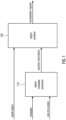
- Fig. 1 illustrates an apparatus for audio object remapping according to an embodiment.
- the apparatus comprises an object metadata processor 110 and an object renderer 120.
- the object renderer 120 is configured to receive an audio object.
- the object metadata processor 110 is configured to receive metadata, comprising an indication on whether the audio object is screen-related, and further comprising a first position of the audio object. Moreover, the object metadata processor 110 is configured to calculate a second position of the audio object depending on the first position of the audio object and depending on a size of a screen, if the audio object is indicated in the metadata as being screen-related.
- the object renderer 120 is configured to generate the loudspeaker signals depending on the audio object and depending on position information.
- the object metadata processor 110 is configured to feed the first position of the audio object as the position information into the object renderer 120, if the audio object is indicated in the metadata as being not screen-related.
- the object metadata processor 110 is configured to feed the second position of the audio object as the position information into the object renderer 120, if the audio object is indicated in the metadata as being screen-related.
- the object metadata processor 110 may, e.g., be configured to not calculate the second position of the audio object, if the audio object is indicated in the metadata as being not screen-related.
- the object renderer 120 may, e.g., be configured to not determine whether the position information is the first position of the audio object or the second position of the audio object.
- the object renderer 120 may, e.g., be configured to generate the loudspeaker signals further depending on the number of the loudspeakers of a playback environment.
- the object renderer 120 may, e.g., be configured to generate the loudspeaker signals further depending on a loudspeaker position of each of the loudspeakers of the playback environment.
- the object metadata processor 110 is configured to calculate the second position of the audio object depending on the first position of the audio object and depending on the size of the screen, if the audio object is indicated in the metadata as being screen-related, wherein the first position indicates the first position in a three-dimensional space, and wherein the second position indicates the second position in the three-dimensional space.
- the object metadata processor 110 may, e.g., be configured to receive the metadata, comprising the indication on whether the audio object is screen-related as a first indication, and further comprising a second indication, if the audio object is screen-related, said second indication indicating whether the audio object is an on-screen object.
- the object metadata processor 110 may, e.g., be configured to calculate the second position of the audio object depending on the first position of the audio object and depending on the size of the screen, such that the second position takes a first value on a screen area of the screen, if the second indication indicates that the audio object is an on-screen object.
- the object metadata processor 110 may, e.g., be configured to calculate the second position of the audio object depending on the first position of the audio object and depending on the size of the screen, such that the second position takes a second value, which is either on the screen area or not on the screen area, if the second indication indicates that the audio object is not an on-screen object.
- each of the first value interval and the second value interval and the third value interval may, e.g., be a value interval of azimuth angles, or each of the first value interval and the second value interval and the third value interval may, e.g., be a value interval of elevation angles.
- audio-objects audio signal associated with a position in the 3D space, e.g., azimuth, elevation and distance given
- audio signal associated with a position in the 3D space e.g., azimuth, elevation and distance given
- an object is signaled as screen-related (e.g., by a flag in the metadata), its position is remapped/recalculated with respect to the screen size according to a specific rule.
- Fig. 2 illustrates an object renderer according to an embodiment.
- Example metadata ObjectID Dynamic OAM Azimuth Elevation Gain Distance AllowOnOff AllowPositionInteractivity AllowGaininteractivity DefaultOnOff DefaultGain InteractivityMinGain InteractivtiyMaxGain Interactivity InteractivityMinAzOffset InteractivityMaxAzOffset InteractivityMinEIOffset InteractivityMaxEIOffset InteractivityMinDist Playout IsSpeakerRelatedGroup SpeakerConfig3D AzimuthScreenRelated ElevationScreenRelated ClosestSpeakerPlayout Content ContentKind ContentLanguage Group GroupiD GroupDescription GroupNumMembers GroupMembers Priority Switch Group SwitchGroupID SwitchGroupDescription SwitchGroupDefault SwitchGroupNumMembers SwitchGroup
- geometric metadata can be used to define how they should be rendered, e.g., angles in azimuth or elevation or absolute positions relative to a reference point, e.g., the listener.
- the renderer calculates loudspeaker signals on the basis of the geometric data and the available speakers and their position.
- Embodiments according to the present invention emerge from the above in the following manner.
- an additional metadata field controls how to interpret the geometric metadata: If the field is set to OFF the geometric metadata is interpreted by the renderer to compute loudspeaker signals.
- the nominal screen size or screen size used during production of the audio content could be send as metadata information.
- NominalScreenSize screen size used during production of the audio content could be send as metadata information.
- hasOnScreenObjects This flag specifies whether screen-related objects are present.
- isScreenRelatedObject This flag defines whether an object position is screen-relative (the position should be rendered differently, such that their position is remapped, but can still contain all valid angular values.
- isScreenRelativeObject there are two possibilities: Remapping of position, but it can still take all values (screen-relative) and remapping such that it can only contain values that are on the screen area (on-screen).
- the remapping is done in an object metadata processor that takes the local screen size into account and performs the mapping of the geometric metadata.
- Fig. 3 illustrates an object metadata processor according to an embodiment.
- the position data of the audio elements are remapped by the Object Metadata Processor.
- a curve is applied that maps the original azimuth and elevation angle of the position to a remapped azimuth and a remapped elevation angle
- the reference is the nominal screen size in the metadata or an assumed default screen size.
- a viewing angle defined in ITU-R REC-BT.2022 (General viewing conditions for subjective assessment of quality of SDTV and HDTV television pictures on flat panel displays) can be used.
- the remapped azimuth can take values between -180° and 180° and the remapped elevation can take values between -90° and 90°.
- the curve is defined such that the azimuth values between a default left edge azimuth and a default right edge azimuth are mapped (compressed or expanded) to the interval between the given left screen edge and the given right screen edge (and accordingly for the elevation).
- the other azimuth and elevation values are compressed or expanded accordingly, such that the whole range of values is covered.
- Fig. 4 illustrates azimuth remapping according to embodiments.
- the remapped azimuth and elevation can only take values that describe positions on the screen area (Azimuth(left screen edge) Azimuth(remapped) Azimuth(right screen edge) and Elevation(lower screen edge) Elevation(remapped) Elevation(upper screen edge)).
- Fig. 5 illustrates elevation remapping according to embodiments.
- the points -x1 and +x2 (which might be different or equal to +x1) of the curve where the gradient changes either be set as default values (default assumed standard screen size + position) or they can be present in the metadata (e.g., by the producer, who could then put the production screen size there).
- mapping functions can be used which do not consist of linear segments, but are curved instead.
- Additional metadata could control the way remapping, e.g., defining offsets or non-linear coefficients to account for panning behavior or the resolution of the hearing.
- Fig. 7 illustrates elevation remapping according to embodiments.
- the remapped azimuth and elevation can only take values that describe positions on the screen area (Azimuth(left screen edge) ⁇ Azimuth(remapped) ⁇ Azimuth(right screen edge) and Elevation(lower screen edge) ⁇ Elevation(remapped) ⁇ Elevation(upper screen edge)).
- Another possibility is to map the values of the rear hemisphere to the frontal hemisphere.
- Fig. 16 illustrates is a figure similar to Fig. 5 .
- a value interval on the abscissa axis from -90° to +90° and a value interval on the ordinate axis from -90° to +90° is illustrated.
- Fig. 17 illustrates is a figure similar to Fig. 7 .
- a value interval on the abscissa axis from -90° to +90° and a value interval on the ordinate axis from -90° to +90° is illustrated.
- OAM data associated object metadata
- the geometric positional data (OAM data before any position modification by user interaction has happened) may, e.g., be mapped to a different range of values by the definition and utilization of a mapping-function.
- the remapping may, e.g., change the geometric positional data as a pre-processing step to the rendering, such that the renderer is agnostic of the remapping and operates unchanged.
- the screen-size of a nominal reference screen (used in the mixing and monitoring process) and/or the local screen-size information in the playback room may, e.g., be taken into account for the remapping.
- default reference values may, e.g., be used, for example, assuming a 4k display and an optimal viewing distance.
- remapping shall, for example, not be applied.
- Two linear mapping functions may, for example, be defined for the remapping of the elevation and the azimuth values:
- the screen edges of the nominal screen size may, for example, be given by: ⁇ left nominal , ⁇ right nominal , ⁇ top nominal , ⁇ bottom nominal
- reproduction screen edges may, for example, be abbreviated by: ⁇ left repro , ⁇ right repro , ⁇ top repro , ⁇ bottom repro
- the isScreenRelativeObject flag is set to zero, then no screen-related element remapping is applied for the corresponding element and the geometric positional data (OAM data plus positional change by user interactivity) is directly used by the renderer to compute the playback signals.
- the positions of all screen-related elements may, e.g., be remapped according to the reproduction screen-size as an adaptation to the reproduction room. For example, if no reproduction screen-size information is given or no screen-related element exists, no remapping is applied.
- the remapping may, e.g., be defined by linear mapping functions that take the reproduction screen-size information in the playback room and screen-size information of a reference screen, e.g., used in the mixing and monitoring process, into account.
- An elevation mapping function may, e.g., be defined accordingly (see Fig. 14 ).
- the screen-related processing may, e.g., also take a zooming area for zooming into high-resolution video content into account.
- Screen-related processing may, e.g., only be defined for elements that are accompanied by dynamic position data and that are labeled as screen-related.
- Embodiments of the present invention may be employed in such a 3D audio codec system.
- the 3D audio codec system may, e.g., be based on an MPEG-D USAC Codec for coding of channel and object signals.
- MPEG SAOC Spatial Audio Object Coding
- three types of renderers may, e.g., perform the tasks of rendering objects to channels, rendering channels to headphones or rendering channels to a different loudspeaker setup.
- Fig. 8 and Fig. 9 show the different algorithmic blocks of the 3D-Audio system.
- Fig. 8 illustrates an overview of a 3D-audio encoder.
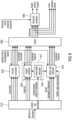
- Fig. 9 illustrates an overview of a 3D-Audio decoder according to an embodiment.
- a prerenderer 810 (also referred to as mixer) is illustrated.
- the prerenderer 810 (mixer) is optional.
- the prerenderer 810 can be optionally used to convert a Channel+Object input scene into a channel scene before encoding.
- the prerenderer 810 on the encoder side may, e.g., be related to the functionality of object renderer/mixer 920 on the decoder side, which is described below.
- Prerendering of objects ensures a deterministic signal entropy at the encoder input that is basically independent of the number of simultaneously active object signals. With prerendering of objects, no object metadata transmission is required. Discrete Object Signals are rendered to the Channel Layout that the encoder is configured to use. The weights of the objects for each channel are obtained from the associated object metadata (OAM).
- OAM object metadata
- the coding of objects is possible in different ways, depending on the rate/distortion requirements and the interactivity requirements for the renderer.
- the following object coding variants are possible:
- USAC decoder 910 conducts USAC decoding.
- a decoder device is provided, see Fig. 9 .
- the decoder device comprises a USAC decoder 910 for decoding a bitstream to obtain one or more audio input channels, to obtain one or more input audio objects, to obtain compressed object metadata and to obtain one or more SAOC transport channels.
- the decoder device comprises an SAOC decoder 915 for decoding the one or more SAOC transport channels to obtain a first group of one or more rendered audio objects.
- the apparatus 917 comprises an object renderer 920, e.g., being the object renderer 120 of the apparatus of Fig. 1 , for rendering the one or more input audio objects depending on the uncompressed metadata to obtain a second group of one or more rendered audio objects.
- an object renderer 920 e.g., being the object renderer 120 of the apparatus of Fig. 1 , for rendering the one or more input audio objects depending on the uncompressed metadata to obtain a second group of one or more rendered audio objects.
- the decoder device comprises a format converter 922 for converting the one or more audio input channels to obtain one or more converted channels.
- the decoder device comprises a mixer 930 for mixing the one or more audio objects of the first group of one or more rendered audio objects, the one or more audio objects of the second group of one or more rendered audio objects and the one or more converted channels to obtain one or more decoded audio channels.
- Fig. 9 a particular embodiment of a decoder device is illustrated.
- the SAOC encoder 815 (the SAOC encoder 815 is optional, see Fig. 8 ) and the SAOC decoder 915 (see Fig. 9 ) for object signals are based on MPEG SAOC technology.
- the additional parametric data exhibits a significantly lower data rate than required for transmitting all objects individually, making the coding very efficient.
- the SAOC encoder 815 takes as input the object/channel signals as monophonic waveforms and outputs the parametric information (which is packed into the 3D-Audio bitstream) and the SAOC transport channels (which are encoded using single channel elements and transmitted).
- the SAOC decoder 915 reconstructs the object/channel signals from the decoded SAOC transport channels and parametric information, and generates the output audio scene based on the reproduction layout, the decompressed object metadata information and optionally on the user interaction information.
- the metadata decoder 918 may, e.g., implement an object metadata processor according to one of the above-described embodiments.
- An object renderer e.g., object renderer 920 of Fig. 9 , utilizes the compressed object metadata to generate object waveforms according to the given reproduction format. Each object is rendered to certain output channels according to its metadata. The output of this block results from the sum of the partial results.
- the object renderer 920 may, e.g., be implemented according to one of the above-described embodiments.
- the channel based waveforms and the rendered object waveforms are mixed before outputting the resulting waveforms, e.g., by mixer 930 of Fig. 9 (or before feeding them to a postprocessor module like the binaural renderer or the loudspeaker renderer module).
- a binaural renderer module 940 may, e.g., produce a binaural downmix of the multichannel audio material, such that each input channel is represented by a virtual sound source.
- the processing is conducted frame-wise in QMF domain.
- the binauralization may, e.g., be based on measured binaural room impulse responses.
- a loudspeaker renderer 922 may, e.g., convert between the transmitted channel configuration and the desired reproduction format. It is thus called format converter 922 in the following.
- the format converter 922 performs conversions to lower numbers of output channels, e.g., it creates downmixes.
- the system automatically generates optimized downmix matrices for the given combination of input and output formats and applies these matrices in a downmix process.
- the format converter 922 allows for standard loudspeaker configurations as well as for random configurations with non-standard loudspeaker positions.
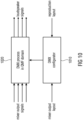
- Fig. 10 illustrates a structure of a format converter.
- the object renderer 920 may be configured to realize screen related audio object remapping as described with respect to one of the above-described plurality of embodiments that have been described with reference to Fig. 1 -Fig. 7 , or as described with respect to one of the plurality of the below-described embodiments that will be described with reference to Fig. 11 - Fig. 15 .
- user control of objects may, for example, employ descriptive metadata, e.g., information about the existence of object inside the bitstream and high-level properties of objects and may, for example, employ restrictive metadata, e.g., information on how interaction is possible or enabled by the content creator.
- descriptive metadata e.g., information about the existence of object inside the bitstream and high-level properties of objects
- restrictive metadata e.g., information on how interaction is possible or enabled by the content creator.
- signaling, delivery and rendering of audio objects may, for example, employ positional metadata, structural metadata, e.g., grouping and hierarchy of objects, an ability to render to specific speaker and to signal channel content as objects, and means to adapt object scene to screen size.
- Embodiments provide new metadata fields were developed in addition to the already defined geometrical position and level of the object in 3D space.
- the positions of the rendered sound sources may, e.g., be automatically scaled to the dimension of the reproduction.
- the standard rendering of the audio objects to the reproduction may, e.g., lead to a violation of the positional audio-visual coherence as sound source locations and the position of the visual originator of the sound may, for example, no longer be consistent.
- a possibility may, e.g., be employed to signal that audio objects are not intended for a fixed position in 3D space, but whose position should change with the size of a screen in the reproduction setup.
- a special treatment of these audio objects and a definition for a scene-scaling algorithm may, e.g., allow for a more immersive experience as the playback may, e.g., be optimized on local characteristics of the playback environment.
- a renderer or a preprocessing module may, e.g., take the local screen-size in the reproduction room into account, and may, e.g., thus preserve the relationship between audio and video in a movie or gaming context.
- the audio scene may, e.g., then be automatically scaled according to the reproduction setup, such that the positions of visual elements and the position of a corresponding sound source are in agreement.
- Positional audio-visual coherence for screens varying in size may, e.g., be maintained.
- dialogue and speech may, e.g., then be perceived from the direction of a speaker on the screen independent of the reproduction screen-size. This is then possible for standing sources as well as for moving sources where sound trajectories and movement of visual elements have to correspond.
- Fig. 13 illustrates an exemplary (re)mapping function for azimuth angles.
- some embodiments may, e.g, achieve a simple mapping function is defined that works in the angular domain (azimuth, elevation).
- some embodiments may, e.g., realize that the distance of objects is not changed, no "zooming" or virtual movement towards the screen or away from the screen is conducted, but a scaling just of the position of objects.
- some embodiments may, e.g., handle non-centered reproduction screens ( ⁇ left repro ⁇ ⁇ right repro and/or ⁇ top repro ⁇ ⁇ bottom repro ) as the mapping function is not only based on the screen-ratio, but takes into account azimuth and elevation of the screen edges
- mapping functions for on-screen objects may, e.g., define special mapping functions for on-screen objects.
- the mapping functions for azimuth and elevation may, e.g., be independent, so it may be chosen to remap only azimuth or elevation values.
- Fig. 11 illustrates rendering of object-based audio according to an embodiment.
- the audio objects may, e.g., be rendered on the playback side using the metadata and information about the playback environment. Such information is, e.g., the number of loudspeakers or the size of the screen.
- the renderer 1110 may, e.g., calculate loudspeaker signals on the basis of the geometric data and the available speakers and their positions.
- an object metadata (pre)processor 1210 according to an embodiment is described with reference to Fig. 12 .
- the object metadata processor 1210 is configured to conduct remapping that takes the local screen size into account and performs the mapping of the geometric metadata.
- a curve may, e.g., be applied that maps the original azimuth and elevation angle of the position to a remapped azimuth and a remapped elevation angle.
- the screen-size of a nominal reference screen, e.g., employed in the mixing and monitoring process, and local screen-size information in the playback room may, e.g., be taken into account for the remapping.
- a viewing angle defined in ITU-R REC-BT.2022 may, e.g., be used.
- two linear mapping functions may, e.g., defined for the remapping of the elevation and the azimuth values.
- the screen edges of the nominal screen size may, e.g., be given by: ⁇ left nominal , ⁇ right nominal , ⁇ top nominal , ⁇ bottom nominal
- reproduction screen edges may, e.g., be abbreviated by: ⁇ left repro , ⁇ right repro , ⁇ top repro , ⁇ bottom repro ,
- mapping function for the azimuth is depicted in Fig. 13 and the mapping function for the elevation is depicted in Fig. 14 .
- the points ⁇ left nominal , ⁇ right nominal , ⁇ top nominal , ⁇ bottom nominal of the curves where the gradient changes can either be set as default values (default assumed standard screen size and default assumed standard screen position) or they can be present in the metadata (e.g., by the producer, who could then put the production / monitoring screen size there).
- an additional metadata flag named "isScreenRelativeObject” is defined. This flag may, e.g., define, if an audio object should be processed/rendered in relation to the local reproduction screen-size.
- hasScreenRelativeObjects This flag specifies whether screen-relative objects are present.
- hasScreenSize This flag specifies whether a nominal screen size is defined. The definition is done via viewing angles corresponding to the screen edges.
- ⁇ left no min al 0.5 ⁇ bsScreenSizeAz
- ⁇ left no min al min max ⁇ left no min al , 0 , 180
- ⁇ right no min al ⁇ 0.5 ⁇ bsScreenSizeAz
- This field defines the elevation corresponding to
- a default reproduction screen size and a default reproduction screen position is assumed, or no mapping is applied, even if an object is marked as screen-related.
- non-linear mapping functions are employed. These mapping functions possible do not consist of linear segments, but are curved instead.
- additional metadata control the way of remapping, e.g., defining offsets or non-linear coefficients to account for panning behavior or the resolution of the hearing.
- Some embodiments realize independent processing of azimuth and elevation. Azimuth and elevation could be marked and processed as screen-related independently.
- Table 5 illustrates the syntax of ObjectMetadataConfig() according to such an embodiment.
- Some embodiments employ a definition of on-screen objects It may be distinguished between screen-related objects and on-screen objects.
- a possible syntax then could be the following of table 6: hasOnScreenObjects This flag specifies whether screen-related objects are present.
- isScreenRelatedObject This flag defines whether an object position is screen-relative (the position should be rendered differently, such that their position is remapped, but can still contain all valid angular values).
- isOnScreenObject This flag defines that if the corresponding object is "onscreen”. Objects where this flag is equal to 1 should be rendered differently, such that their position can only take values on the screen area.
- the remapped azimuth and elevation can only take values that describe positions on the screen area ( ⁇ left repro ⁇ ⁇ ′ ⁇ ⁇ right repro and ⁇ top repro ⁇ ⁇ ′ ⁇ ⁇ bottom repro ).
- Another possibility realized by some of the embodiments is to map the values of the rear hemisphere to the frontal hemisphere.
- the values between 180° and 180 ° ⁇ ⁇ left nominal are mapped to the values between 0° and ⁇ left repro .
- the right hemisphere and the elevation angles are treated the same way (dashed mapping function 1520 in Fig. 15 ).
- Fig. 15 illustrates remapping of azimuth angles (on-screen objects) according to these embodiments.
- the choice of the desired behavior could be signaled by additional metadata (e.g., a flag for "projecting" all on-screen objects intended for the rear ([180° and 180 ° ⁇ ⁇ left nominal ] and [-180° and ⁇ 180 ° ⁇ ⁇ right nominal ] onto the screen).
- additional metadata e.g., a flag for "projecting" all on-screen objects intended for the rear ([180° and 180 ° ⁇ ⁇ left nominal ] and [-180° and ⁇ 180 ° ⁇ ⁇ right nominal ] onto the screen).
- aspects have been described in the context of an apparatus, it is clear that these aspects also represent a description of the corresponding method, where a block or device corresponds to a method step or a feature of a method step. Analogously, aspects described in the context of a method step also represent a description of a corresponding block or item or feature of a corresponding apparatus.
- the inventive decomposed signal can be stored on a digital storage medium or can be transmitted on a transmission medium such as a wireless transmission medium or a wired transmission medium such as the Internet.
- embodiments of the invention can be implemented in hardware or in software.
- the implementation can be performed using a digital storage medium, for example a floppy disk, a DVD, a CD, a ROM, a PROM, an EPROM, an EEPROM or a FLASH memory, having electronically readable control signals stored thereon, which cooperate (or are capable of cooperating) with a programmable computer system such that the respective method is performed.
- a digital storage medium for example a floppy disk, a DVD, a CD, a ROM, a PROM, an EPROM, an EEPROM or a FLASH memory, having electronically readable control signals stored thereon, which cooperate (or are capable of cooperating) with a programmable computer system such that the respective method is performed.
- Some embodiments according to the invention comprise a non-transitory data carrier having electronically readable control signals, which are capable of cooperating with a programmable computer system, such that one of the methods described herein is performed.
- embodiments of the present invention can be implemented as a computer program product with a program code, the program code being operative for performing one of the methods when the computer program product runs on a computer.
- the program code may for example be stored on a machine readable carrier.
- inventions comprise the computer program for performing one of the methods described herein, stored on a machine readable carrier.
- an embodiment of the inventive method is, therefore, a computer program having a program code for performing one of the methods described herein, when the computer program runs on a computer.
- a further embodiment of the inventive methods is, therefore, a data carrier (or a digital storage medium, or a computer-readable medium) comprising, recorded thereon, the computer program for performing one of the methods described herein.
Landscapes
- Engineering & Computer Science (AREA)
- Signal Processing (AREA)
- Multimedia (AREA)
- Physics & Mathematics (AREA)
- Acoustics & Sound (AREA)
- Computational Linguistics (AREA)
- Health & Medical Sciences (AREA)
- Audiology, Speech & Language Pathology (AREA)
- Human Computer Interaction (AREA)
- Mathematical Physics (AREA)
- Databases & Information Systems (AREA)
- Stereophonic System (AREA)
Applications Claiming Priority (6)
| Application Number | Priority Date | Filing Date | Title |
|---|---|---|---|
| EP14161819 | 2014-03-26 | ||
| EP14196769.5A EP2928216A1 (de) | 2014-03-26 | 2014-12-08 | Vorrichtung und verfahren für bildschirmbezogene audioobjekt-neuabbildung |
| EP23167354.2A EP4254988B1 (de) | 2014-03-26 | 2015-03-25 | Vorrichtung und verfahren für bildschirmbezogene audioobjekt-neuabbildung |
| EP18248305.7A EP3487189B1 (de) | 2014-03-26 | 2015-03-25 | Vorrichtung und verfahren für bildschirmbezogene audioobjekt-neuabbildung |
| PCT/EP2015/056417 WO2015144766A1 (en) | 2014-03-26 | 2015-03-25 | Apparatus and method for screen related audio object remapping |
| EP15716439.3A EP3123741B1 (de) | 2014-03-26 | 2015-03-25 | Vorrichtung und verfahren für bildschirmbezogene audioobjekt-neuabbildung |
Related Parent Applications (4)
| Application Number | Title | Priority Date | Filing Date |
|---|---|---|---|
| EP15716439.3A Division EP3123741B1 (de) | 2014-03-26 | 2015-03-25 | Vorrichtung und verfahren für bildschirmbezogene audioobjekt-neuabbildung |
| EP23167354.2A Division EP4254988B1 (de) | 2014-03-26 | 2015-03-25 | Vorrichtung und verfahren für bildschirmbezogene audioobjekt-neuabbildung |
| EP23167354.2A Division-Into EP4254988B1 (de) | 2014-03-26 | 2015-03-25 | Vorrichtung und verfahren für bildschirmbezogene audioobjekt-neuabbildung |
| EP18248305.7A Division EP3487189B1 (de) | 2014-03-26 | 2015-03-25 | Vorrichtung und verfahren für bildschirmbezogene audioobjekt-neuabbildung |
Publications (2)
| Publication Number | Publication Date |
|---|---|
| EP4524959A2 true EP4524959A2 (de) | 2025-03-19 |
| EP4524959A3 EP4524959A3 (de) | 2025-04-09 |
Family
ID=52015948
Family Applications (5)
| Application Number | Title | Priority Date | Filing Date |
|---|---|---|---|
| EP14196769.5A Withdrawn EP2928216A1 (de) | 2014-03-26 | 2014-12-08 | Vorrichtung und verfahren für bildschirmbezogene audioobjekt-neuabbildung |
| EP23167354.2A Active EP4254988B1 (de) | 2014-03-26 | 2015-03-25 | Vorrichtung und verfahren für bildschirmbezogene audioobjekt-neuabbildung |
| EP18248305.7A Active EP3487189B1 (de) | 2014-03-26 | 2015-03-25 | Vorrichtung und verfahren für bildschirmbezogene audioobjekt-neuabbildung |
| EP24210650.8A Pending EP4524959A3 (de) | 2014-03-26 | 2015-03-25 | Vorrichtung und verfahren zur bildschirmbezogenen audioobjekt-neuabbildung |
| EP15716439.3A Active EP3123741B1 (de) | 2014-03-26 | 2015-03-25 | Vorrichtung und verfahren für bildschirmbezogene audioobjekt-neuabbildung |
Family Applications Before (3)
| Application Number | Title | Priority Date | Filing Date |
|---|---|---|---|
| EP14196769.5A Withdrawn EP2928216A1 (de) | 2014-03-26 | 2014-12-08 | Vorrichtung und verfahren für bildschirmbezogene audioobjekt-neuabbildung |
| EP23167354.2A Active EP4254988B1 (de) | 2014-03-26 | 2015-03-25 | Vorrichtung und verfahren für bildschirmbezogene audioobjekt-neuabbildung |
| EP18248305.7A Active EP3487189B1 (de) | 2014-03-26 | 2015-03-25 | Vorrichtung und verfahren für bildschirmbezogene audioobjekt-neuabbildung |
Family Applications After (1)
| Application Number | Title | Priority Date | Filing Date |
|---|---|---|---|
| EP15716439.3A Active EP3123741B1 (de) | 2014-03-26 | 2015-03-25 | Vorrichtung und verfahren für bildschirmbezogene audioobjekt-neuabbildung |
Country Status (19)
| Country | Link |
|---|---|
| US (5) | US10192563B2 (de) |
| EP (5) | EP2928216A1 (de) |
| JP (4) | JP6422995B2 (de) |
| KR (1) | KR101920356B1 (de) |
| CN (2) | CN111276153B (de) |
| AR (1) | AR099835A1 (de) |
| AU (1) | AU2015238354B2 (de) |
| BR (1) | BR112016022045B1 (de) |
| CA (1) | CA2943570C (de) |
| ES (3) | ES2953685T3 (de) |
| FI (1) | FI3487189T3 (de) |
| MX (1) | MX355455B (de) |
| MY (1) | MY184715A (de) |
| PL (3) | PL3123741T3 (de) |
| PT (2) | PT3123741T (de) |
| RU (1) | RU2683380C2 (de) |
| SG (1) | SG11201607953TA (de) |
| TW (1) | TWI595785B (de) |
| WO (1) | WO2015144766A1 (de) |
Families Citing this family (31)
| Publication number | Priority date | Publication date | Assignee | Title |
|---|---|---|---|---|
| EP2830052A1 (de) | 2013-07-22 | 2015-01-28 | Fraunhofer-Gesellschaft zur Förderung der angewandten Forschung e.V. | Audiodecodierer, Audiocodierer, Verfahren zur Bereitstellung von mindestens vier Audiokanalsignalen auf Basis einer codierten Darstellung, Verfahren zur Bereitstellung einer codierten Darstellung auf Basis von mindestens vier Audiokanalsignalen und Computerprogramm mit Bandbreitenerweiterung |
| EP2928216A1 (de) | 2014-03-26 | 2015-10-07 | Fraunhofer-Gesellschaft zur Förderung der angewandten Forschung e.V. | Vorrichtung und verfahren für bildschirmbezogene audioobjekt-neuabbildung |
| US9940937B2 (en) * | 2014-10-10 | 2018-04-10 | Qualcomm Incorporated | Screen related adaptation of HOA content |
| EP3206408B1 (de) | 2014-10-10 | 2020-12-30 | Sony Corporation | Codierungsvorrichtung und -verfahren, wiedergabevorrichtung und -verfahren und programm |
| CN106303897A (zh) * | 2015-06-01 | 2017-01-04 | 杜比实验室特许公司 | 处理基于对象的音频信号 |
| WO2016194563A1 (ja) * | 2015-06-02 | 2016-12-08 | ソニー株式会社 | 送信装置、送信方法、メディア処理装置、メディア処理方法および受信装置 |
| EP3324653B1 (de) * | 2015-07-16 | 2020-02-12 | Sony Corporation | Informationsverarbeitungsvorrichtung und -verfahren sowie programm |
| DE102015220595A1 (de) * | 2015-10-22 | 2017-04-27 | Robert Bosch Gmbh | Batteriezelle mit teilweise flexibel formbarer Wandung |
| EP3378240B1 (de) | 2015-11-20 | 2019-12-11 | Dolby Laboratories Licensing Corporation | System und verfahren zum rendering eines audioprogramms |
| US9854375B2 (en) * | 2015-12-01 | 2017-12-26 | Qualcomm Incorporated | Selection of coded next generation audio data for transport |
| KR102358283B1 (ko) * | 2016-05-06 | 2022-02-04 | 디티에스, 인코포레이티드 | 몰입형 오디오 재생 시스템 |
| CN117612539A (zh) | 2016-05-30 | 2024-02-27 | 索尼公司 | 视频音频处理设备、视频音频处理方法和存储介质 |
| US10979844B2 (en) | 2017-03-08 | 2021-04-13 | Dts, Inc. | Distributed audio virtualization systems |
| US10972859B2 (en) * | 2017-04-13 | 2021-04-06 | Sony Corporation | Signal processing apparatus and method as well as program |
| CN110537373B (zh) * | 2017-04-25 | 2021-09-28 | 索尼公司 | 信号处理装置和方法以及存储介质 |
| US10405126B2 (en) | 2017-06-30 | 2019-09-03 | Qualcomm Incorporated | Mixed-order ambisonics (MOA) audio data for computer-mediated reality systems |
| WO2019013400A1 (ko) * | 2017-07-09 | 2019-01-17 | 엘지전자 주식회사 | 비디오 화면 줌에 연동되는 오디오 출력 방법 및 출력 장치 |
| WO2019064719A1 (ja) * | 2017-09-28 | 2019-04-04 | 株式会社ソシオネクスト | 音響信号処理装置および音響信号処理方法 |
| WO2019149337A1 (en) * | 2018-01-30 | 2019-08-08 | Fraunhofer-Gesellschaft zur Förderung der angewandten Forschung e.V. | Apparatuses for converting an object position of an audio object, audio stream provider, audio content production system, audio playback apparatus, methods and computer programs |
| CN111801952A (zh) * | 2018-03-08 | 2020-10-20 | 索尼公司 | 信息处理装置、信息处理方法、信息处理系统和程序 |
| KR102637876B1 (ko) | 2018-04-10 | 2024-02-20 | 가우디오랩 주식회사 | 메타데이터를 이용하는 오디오 신호 처리 방법 및 장치 |
| JP7575947B2 (ja) * | 2018-07-02 | 2024-10-30 | ドルビー ラボラトリーズ ライセンシング コーポレイション | 没入的オーディオ信号を含むビットストリームを生成するための方法および装置 |
| SG11202012259RA (en) * | 2018-07-04 | 2021-01-28 | Sony Corp | Information processing device and method, and program |
| GB2577698A (en) | 2018-10-02 | 2020-04-08 | Nokia Technologies Oy | Selection of quantisation schemes for spatial audio parameter encoding |
| KR102471715B1 (ko) | 2019-12-02 | 2022-11-29 | 돌비 레버러토리즈 라이쎈싱 코오포레이션 | 채널-기반 오디오로부터 객체-기반 오디오로의 변환을 위한 시스템, 방법 및 장치 |
| US12470886B2 (en) | 2020-03-16 | 2025-11-11 | Nokia Technologies Oy | Rendering encoded 6DOF audio bitstream and late updates |
| US12382234B2 (en) | 2020-06-11 | 2025-08-05 | Dolby Laboratories Licensing Corporation | Perceptual optimization of magnitude and phase for time-frequency and softmask source separation systems |
| GB202014572D0 (en) * | 2020-09-16 | 2020-10-28 | Nokia Technologies Oy | Spatial audio parameter encoding and associated decoding |
| US11743670B2 (en) * | 2020-12-18 | 2023-08-29 | Qualcomm Incorporated | Correlation-based rendering with multiple distributed streams accounting for an occlusion for six degree of freedom applications |
| EP4243014A4 (de) | 2021-01-25 | 2024-07-17 | Samsung Electronics Co., Ltd. | Vorrichtung und verfahren zur verarbeitung eines mehrkanal-audiosignals |
| GB202118094D0 (en) * | 2021-12-14 | 2022-01-26 | Nokia Technologies Oy | A method and apparatus for AR scene modification |
Citations (1)
| Publication number | Priority date | Publication date | Assignee | Title |
|---|---|---|---|---|
| WO2004073352A1 (de) | 2003-02-12 | 2004-08-26 | Fraunhofer-Gesellschaft zur Förderung der angewandten Forschung e.V. | Vorrichtung und verfahren zum bestimmen einer wiedergabeposition |
Family Cites Families (20)
| Publication number | Priority date | Publication date | Assignee | Title |
|---|---|---|---|---|
| US20030007648A1 (en) * | 2001-04-27 | 2003-01-09 | Christopher Currell | Virtual audio system and techniques |
| DE10154932B4 (de) | 2001-11-08 | 2008-01-03 | Grundig Multimedia B.V. | Verfahren zur Audiocodierung |
| US7606372B2 (en) * | 2003-02-12 | 2009-10-20 | Fraunhofer-Gesellschaft Zur Foerderung Der Angewandten Forschung E.V. | Device and method for determining a reproduction position |
| US7548657B2 (en) * | 2005-06-25 | 2009-06-16 | General Electric Company | Adaptive video compression of graphical user interfaces using application metadata |
| JP5174527B2 (ja) * | 2008-05-14 | 2013-04-03 | 日本放送協会 | 音像定位音響メタ情報を付加した音響信号多重伝送システム、制作装置及び再生装置 |
| CN102099854B (zh) * | 2008-07-15 | 2012-11-28 | Lg电子株式会社 | 处理音频信号的方法和装置 |
| KR101387902B1 (ko) * | 2009-06-10 | 2014-04-22 | 한국전자통신연구원 | 다객체 오디오 신호를 부호화하는 방법 및 부호화 장치, 복호화 방법 및 복호화 장치, 그리고 트랜스코딩 방법 및 트랜스코더 |
| KR101805212B1 (ko) * | 2009-08-14 | 2017-12-05 | 디티에스 엘엘씨 | 객체-지향 오디오 스트리밍 시스템 |
| JP5576488B2 (ja) | 2009-09-29 | 2014-08-20 | フラウンホーファー−ゲゼルシャフト・ツール・フェルデルング・デル・アンゲヴァンテン・フォルシュング・アインゲトラーゲネル・フェライン | オーディオ信号デコーダ、オーディオ信号エンコーダ、アップミックス信号表現の生成方法、ダウンミックス信号表現の生成方法、及びコンピュータプログラム |
| CN102823273B (zh) * | 2010-03-23 | 2015-12-16 | 杜比实验室特许公司 | 用于局域化感知音频的技术 |
| EP2450880A1 (de) * | 2010-11-05 | 2012-05-09 | Thomson Licensing | Datenstruktur für Higher Order Ambisonics-Audiodaten |
| MY163427A (en) * | 2011-03-18 | 2017-09-15 | Fraunhofer-Gesellschaft Zur Forderung Der Angewandten Forschung E V | Frame Element Positioning in Frames of a Bitstream Representing Audio Content |
| KR20250047841A (ko) * | 2011-07-01 | 2025-04-04 | 돌비 레버러토리즈 라이쎈싱 코오포레이션 | 향상된 3d 오디오 오서링과 렌더링을 위한 시스템 및 툴들 |
| TWI651005B (zh) * | 2011-07-01 | 2019-02-11 | 杜比實驗室特許公司 | 用於適應性音頻信號的產生、譯碼與呈現之系統與方法 |
| EP2637427A1 (de) * | 2012-03-06 | 2013-09-11 | Thomson Licensing | Verfahren und Vorrichtung zur Wiedergabe eines Ambisonic-Audiosignals höherer Ordnung |
| EP2637327A1 (de) | 2012-03-09 | 2013-09-11 | Harman International Industries Ltd. | Audiomischkonsole mit Beleuchtungssteuerung und Verfahren zum Mischen mithilfe der Mischkonsole |
| US9190065B2 (en) * | 2012-07-15 | 2015-11-17 | Qualcomm Incorporated | Systems, methods, apparatus, and computer-readable media for three-dimensional audio coding using basis function coefficients |
| US9516446B2 (en) * | 2012-07-20 | 2016-12-06 | Qualcomm Incorporated | Scalable downmix design for object-based surround codec with cluster analysis by synthesis |
| EP2823650B1 (de) * | 2012-08-29 | 2020-07-29 | Huawei Technologies Co., Ltd. | Audiowiedergabesystem |
| EP2928216A1 (de) | 2014-03-26 | 2015-10-07 | Fraunhofer-Gesellschaft zur Förderung der angewandten Forschung e.V. | Vorrichtung und verfahren für bildschirmbezogene audioobjekt-neuabbildung |
-
2014
- 2014-12-08 EP EP14196769.5A patent/EP2928216A1/de not_active Withdrawn
-
2015
- 2015-03-16 TW TW104108296A patent/TWI595785B/zh active
- 2015-03-25 CN CN202010076120.5A patent/CN111276153B/zh active Active
- 2015-03-25 MX MX2016012286A patent/MX355455B/es active IP Right Grant
- 2015-03-25 PL PL15716439T patent/PL3123741T3/pl unknown
- 2015-03-25 AU AU2015238354A patent/AU2015238354B2/en active Active
- 2015-03-25 FI FIEP18248305.7T patent/FI3487189T3/fi active
- 2015-03-25 EP EP23167354.2A patent/EP4254988B1/de active Active
- 2015-03-25 JP JP2016559292A patent/JP6422995B2/ja active Active
- 2015-03-25 EP EP18248305.7A patent/EP3487189B1/de active Active
- 2015-03-25 SG SG11201607953TA patent/SG11201607953TA/en unknown
- 2015-03-25 AR ARP150100877A patent/AR099835A1/es active IP Right Grant
- 2015-03-25 ES ES18248305T patent/ES2953685T3/es active Active
- 2015-03-25 ES ES15716439T patent/ES2723965T3/es active Active
- 2015-03-25 CA CA2943570A patent/CA2943570C/en active Active
- 2015-03-25 PL PL18248305.7T patent/PL3487189T3/pl unknown
- 2015-03-25 WO PCT/EP2015/056417 patent/WO2015144766A1/en not_active Ceased
- 2015-03-25 PL PL23167354.2T patent/PL4254988T3/pl unknown
- 2015-03-25 ES ES23167354T patent/ES3009786T3/es active Active
- 2015-03-25 MY MYPI2016001725A patent/MY184715A/en unknown
- 2015-03-25 EP EP24210650.8A patent/EP4524959A3/de active Pending
- 2015-03-25 BR BR112016022045-5A patent/BR112016022045B1/pt active IP Right Grant
- 2015-03-25 PT PT15716439T patent/PT3123741T/pt unknown
- 2015-03-25 RU RU2016141642A patent/RU2683380C2/ru active
- 2015-03-25 KR KR1020167029805A patent/KR101920356B1/ko active Active
- 2015-03-25 CN CN201580026227.6A patent/CN106463128B/zh active Active
- 2015-03-25 PT PT182483057T patent/PT3487189T/pt unknown
- 2015-03-25 EP EP15716439.3A patent/EP3123741B1/de active Active
-
2016
- 2016-09-23 US US15/274,310 patent/US10192563B2/en active Active
-
2018
- 2018-10-16 JP JP2018194721A patent/JP6734343B2/ja active Active
- 2018-12-28 US US16/236,079 patent/US10854213B2/en active Active
-
2020
- 2020-07-09 JP JP2020118271A patent/JP7675506B2/ja active Active
- 2020-11-17 US US16/950,768 patent/US11527254B2/en active Active
-
2022
- 2022-11-18 US US18/057,188 patent/US11900955B2/en active Active
-
2023
- 2023-10-06 JP JP2023174101A patent/JP2023175947A/ja active Pending
-
2024
- 2024-01-18 US US18/416,775 patent/US12380903B2/en active Active
Patent Citations (1)
| Publication number | Priority date | Publication date | Assignee | Title |
|---|---|---|---|---|
| WO2004073352A1 (de) | 2003-02-12 | 2004-08-26 | Fraunhofer-Gesellschaft zur Förderung der angewandten Forschung e.V. | Vorrichtung und verfahren zum bestimmen einer wiedergabeposition |
Non-Patent Citations (1)
| Title |
|---|
| ACOUSTICAL ZOOMING BASED ON A PARAMETRIC SOUND FIELD REPRESENTATION, Retrieved from the Internet <URL:http://www.aes.org/tmpFiles/elib/20140814/15417.pdf> |
Also Published As
Similar Documents
| Publication | Publication Date | Title |
|---|---|---|
| US12380903B2 (en) | Apparatus and method for screen related audio object remapping | |
| HK40123737A (en) | Apparatus and method for screen related audio object remapping | |
| HK40097804A (en) | Apparatus and method for screen related audio object remapping | |
| HK40097804B (en) | Apparatus and method for screen related audio object remapping | |
| HK40007230B (en) | Apparatus and method for screen related audio object remapping | |
| HK40007230A (en) | Apparatus and method for screen related audio object remapping | |
| HK1233102A1 (en) | Apparatus and method for screen related audio object remapping | |
| HK1233102B (en) | Apparatus and method for screen related audio object remapping |
Legal Events
| Date | Code | Title | Description |
|---|---|---|---|
| PUAI | Public reference made under article 153(3) epc to a published international application that has entered the european phase |
Free format text: ORIGINAL CODE: 0009012 |
|
| STAA | Information on the status of an ep patent application or granted ep patent |
Free format text: STATUS: THE APPLICATION HAS BEEN PUBLISHED |
|
| REG | Reference to a national code |
Ref country code: DE Ref legal event code: R079 Free format text: PREVIOUS MAIN CLASS: G10L0019008000 Ipc: H04S0007000000 |
|
| PUAL | Search report despatched |
Free format text: ORIGINAL CODE: 0009013 |
|
| AC | Divisional application: reference to earlier application |
Ref document number: 3123741 Country of ref document: EP Kind code of ref document: P Ref document number: 3487189 Country of ref document: EP Kind code of ref document: P Ref document number: 4254988 Country of ref document: EP Kind code of ref document: P |
|
| AK | Designated contracting states |
Kind code of ref document: A2 Designated state(s): AL AT BE BG CH CY CZ DE DK EE ES FI FR GB GR HR HU IE IS IT LI LT LU LV MC MK MT NL NO PL PT RO RS SE SI SK SM TR |
|
| AK | Designated contracting states |
Kind code of ref document: A3 Designated state(s): AL AT BE BG CH CY CZ DE DK EE ES FI FR GB GR HR HU IE IS IT LI LT LU LV MC MK MT NL NO PL PT RO RS SE SI SK SM TR |
|
| RIC1 | Information provided on ipc code assigned before grant |
Ipc: H04S 3/00 20060101ALI20250304BHEP Ipc: H04S 7/00 20060101AFI20250304BHEP |
|
| STAA | Information on the status of an ep patent application or granted ep patent |
Free format text: STATUS: REQUEST FOR EXAMINATION WAS MADE |
|
| REG | Reference to a national code |
Ref country code: HK Ref legal event code: DE Ref document number: 40123737 Country of ref document: HK |
|
| 17P | Request for examination filed |
Effective date: 20251009 |