EP4524933A1 - Verriegelte umkehrrichtungsfunktion und anzeige - Google Patents
Verriegelte umkehrrichtungsfunktion und anzeige Download PDFInfo
- Publication number
- EP4524933A1 EP4524933A1 EP24194144.2A EP24194144A EP4524933A1 EP 4524933 A1 EP4524933 A1 EP 4524933A1 EP 24194144 A EP24194144 A EP 24194144A EP 4524933 A1 EP4524933 A1 EP 4524933A1
- Authority
- EP
- European Patent Office
- Prior art keywords
- preliminary
- aircraft
- turn direction
- turn
- heading
- Prior art date
- Legal status (The legal status is an assumption and is not a legal conclusion. Google has not performed a legal analysis and makes no representation as to the accuracy of the status listed.)
- Pending
Links
Images


Classifications
-
- G—PHYSICS
- G08—SIGNALLING
- G08G—TRAFFIC CONTROL SYSTEMS
- G08G5/00—Traffic control systems for aircraft
- G08G5/20—Arrangements for acquiring, generating, sharing or displaying traffic information
- G08G5/21—Arrangements for acquiring, generating, sharing or displaying traffic information located onboard the aircraft
-
- G—PHYSICS
- G08—SIGNALLING
- G08G—TRAFFIC CONTROL SYSTEMS
- G08G5/00—Traffic control systems for aircraft
- G08G5/20—Arrangements for acquiring, generating, sharing or displaying traffic information
- G08G5/23—Details of user output interfaces, e.g. information presented
-
- G—PHYSICS
- G08—SIGNALLING
- G08G—TRAFFIC CONTROL SYSTEMS
- G08G5/00—Traffic control systems for aircraft
- G08G5/30—Flight plan management
- G08G5/34—Flight plan management for flight plan modification
-
- G—PHYSICS
- G08—SIGNALLING
- G08G—TRAFFIC CONTROL SYSTEMS
- G08G5/00—Traffic control systems for aircraft
- G08G5/50—Navigation or guidance aids
- G08G5/53—Navigation or guidance aids for cruising
-
- G—PHYSICS
- G08—SIGNALLING
- G08G—TRAFFIC CONTROL SYSTEMS
- G08G5/00—Traffic control systems for aircraft
- G08G5/50—Navigation or guidance aids
- G08G5/55—Navigation or guidance aids for a single aircraft
Definitions
- the present invention generally relates to aviation instrumentation, and more particularly relates to a system and method for displaying a latched turn direction function and indication.
- a method for determining and displaying a turn direction for a heading entry for an aircraft comprising: entering a preliminary heading selection and a preliminary turn direction into an automated flight control system (AFCS) for an aircraft, where the preliminary turn direction is latched by the AFCS; displaying the preliminary heading selection and the preliminary turn direction to a pilot of the aircraft; entering a subsequent heading selection into the AFCS while the aircraft is engaged in turning to the preliminary heading selection in the preliminary turn direction; determining a shortest turn radius to the subsequent heading selection; determining if the shortest turn radius to the subsequent heading selection is the same direction and the preliminary turn direction that is latched by the AFCS; and displaying a notice to the pilot of the aircraft is the shortest turn radius to the subsequent heading selection is not the same direction and the preliminary turn direction that is latched by the AFCS.
- AFCS automated flight control system
- a system for determining and displaying a turn direction for a heading entry for an aircraft, comprising: an automated flight control system (AFCS) onboard the aircraft, where the AFCS, receives entry of a preliminary heading selection and a preliminary turn direction for the aircraft, latches the preliminary turn direction, turns the aircraft to the preliminary heading selection in the preliminary turn direction, receives entry of a subsequent heading selection the aircraft while the aircraft is engaged in turning to the preliminary heading selection in the preliminary turn direction, determines a shortest turn radius to the subsequent heading selection, determines if the shortest turn radius to the subsequent heading selection is the same direction and the preliminary turn direction that is latched by the AFCS; and a visual display device onboard the aircraft, where the visual display device, displays a notice to the pilot of the aircraft is the shortest turn radius to the subsequent heading selection is not the same direction and the preliminary turn direction that is latched by the AFCS.
- AFCS automated flight control system
- module refers to any hardware, software, firmware, electronic control component, processing logic, and/or processor device, individually or in any combination, including without limitation: application specific integrated circuit (ASIC), an electronic circuit, a processor (shared, dedicated, or group) and memory that executes one or more software or firmware programs, a combinational logic circuit, and/or other suitable components that provide the described functionality.
- ASIC application specific integrated circuit
- the provided system and method may be separate from, or integrated within, a preexisting mobile platform management system, avionics system, or aircraft flight management system (FMS).
- FMS aircraft flight management system
- a method and system for determining and displaying a turn to a heading entry for an aircraft has been developed.
- a preliminary heading selection and a preliminary turn direction are entered into an automated flight control system (AFCS) for an aircraft.
- the preliminary heading selection and the preliminary turn direction are displayed to a pilot of the aircraft.
- a subsequent heading selection is entered into the AFCS while the aircraft is engaged in turning to the preliminary heading selection in the preliminary turn direction.
- a shortest turn radius to the subsequent heading selection is determined.
- a determination is made if the shortest turn radius to the subsequent heading selection is the same direction and the preliminary turn direction and a notice is displayed to the pilot of the aircraft is the shortest turn radius to the subsequent heading selection is not the same direction and the preliminary turn direction.
- FIG. 1 a diagram 100 is shown of an in-flight aircraft 102 that contains an onboard FMS 104 along with a database that is accessed by the FMS 104 in accordance with one embodiment.
- the FMS 104 provides data for use and display to the crew on a visual display system 106.
- the database may be integrated as part of the FMS 104.
- the database may be located off board the aircraft on the ground and connected to the FMS 104 via a communications data link.
- the database may include a navigation database as well as performance characteristics database of the aircraft 102 for retrieval and use by the FMS 104.
- the FMS is a specialized computer that automates a variety of in-flight tasks such as in-flight management of the flight plan.
- various sensors such as global positioning system (GPS)
- GPS global positioning system
- the FMS determines the aircraft's position and guides the aircraft along its flight plan using its navigation database.
- the FMS is normally controlled through a visual display device such as a control display unit (CDU) which incorporates a small screen, a keyboard or a touchscreen.
- CDU control display unit
- the FMS displays the flight plan and other critical flight data to the aircrew during operation.
- the vehicle system 202 includes: the control module 204 that is operationally coupled to a communication system 206, an imaging system 208, a navigation system 210, a user input device 212, a display system 214, and a graphics system 216.
- the depicted vehicle system 202 is generally realized as an aircraft flight deck display system within a vehicle 200 that is an aircraft; however, the concepts presented here can be deployed in a variety of mobile platforms, such as land vehicles, spacecraft, watercraft, and the like. Accordingly, in various embodiments, the vehicle system 202 may be associated with or form part of larger aircraft management system, such as a flight management system (FMS).
- FMS flight management system
- the imaging system 208 comprises a radar based video camera system. Radar based systems emit pulses of electromagnetic radiation and listen for, or sense, associated return echoes. The radar system may generate an image or video based upon the sensed echoes. In another embodiment, the imaging system 208 may comprise a sonar system. The imaging system 208 uses methods other than visible light to generate images, and the sensing devices within the imaging system 208 are much more sensitive than a human eye. Consequently, the generated images may comprise objects, such as mountains, buildings, or ground objects, that a pilot might not otherwise see due to low visibility conditions.
- the imaging system 208 may be mounted in or near the nose of the aircraft (vehicle 200) and calibrated to align an imaging region with a viewing region of a primary flight display (PFD) or a Head Up display (HUD) rendered on the display system 214.
- the imaging system 208 may be configured so that a geometric center of its field of view (FOV) is aligned with or otherwise corresponds to the geometric center of the viewing region on the display system 214.
- FOV field of view
- the imaging system 208 may be oriented or otherwise directed substantially parallel to an anticipated line-of-sight for a pilot and/or crew member in the cockpit of the aircraft to effectively capture a forward looking cockpit view in the respective displayed image.
- the displayed images on the display system 214 are three dimensional, and the imaging system 208 generates a synthetic perspective view of terrain in front of the aircraft.
- the synthetic perspective view of terrain in front of the aircraft is generated to match the direct out-the-window view of a crew member, and may be based on the current position, attitude, and pointing information received from a navigation system 210, or other aircraft and/or flight management systems.
- Navigation system 210 is configured to provide real-time navigational data and/or information regarding operation of the aircraft.
- the navigation system 210 may be realized as a global positioning system (GPS), inertial reference system (IRS), or a radio-based navigation system (e.g., VHF omni-directional radio range (VOR) or long range aid to navigation (LORAN)), and may include one or more navigational radios or other sensors suitably configured to support operation of the navigation system 210, as will be appreciated in the art.
- the navigation system 210 is capable of obtaining and/or determining the current or instantaneous position and location information of the aircraft (e.g., the current latitude and longitude) and the current altitude or above ground level for the aircraft.
- the navigation system 210 includes inertial reference sensors capable of obtaining or otherwise determining the attitude or orientation (e.g., the pitch, roll, and yaw, heading) of the aircraft relative to earth.
- the user input device 212 is coupled to the control module 204, and the user input device 212 and the control module 204 are cooperatively configured to allow a user (e.g., a pilot, co-pilot, or crew member) to interact with the display system 214 and/or other elements of the vehicle system 202 in a conventional manner.
- the user input device 212 may include any one, or combination, of various known user input device devices including, but not limited to: a touch sensitive screen; a cursor control device (CCD) (not shown), such as a mouse, a trackball, or joystick; a keyboard; one or more buttons, switches, or knobs; a voice input system; and a gesture recognition system.
- CCD cursor control device
- the generated images from the imaging system 208 are provided to the control module 204 in the form of image data.
- the control module 204 is configured to receive the image data and convert and render the image data into display commands that command and control the renderings of the display system 214. This conversion and rendering may be performed, at least in part, by the graphics system 216.
- the graphics system 216 may be integrated within the control module 204; in other embodiments, the graphics system 216 may be integrated within the display system 214.
- the display system 214 responsive to receiving display commands from the control module 204, displays, renders, or otherwise conveys one or more graphical representations or displayed images based on the image data (i.e., sensor based images) and associated with operation of the vehicle 200, as described in greater detail below.
- images displayed on the display system 214 may also be responsive to processed user input that was received via a user input device 212.
- the display system 214 may include any device or apparatus suitable for displaying flight information or other data associated with operation of the aircraft in a format viewable by a user.
- Display methods include various types of computer generated symbols, text, and graphic information representing, for example, pitch, heading, flight path, airspeed, altitude, runway information, waypoints, targets, obstacle, terrain, and required navigation performance (RNP) data in an integrated, multi-color or monochrome form.
- the display system 214 may be part of, or include, a primary flight display (PFD) system, a panel-mounted head down display (HDD), a head up display (HUD), or a head mounted display system, such as a "near to eye display" system.
- PFD primary flight display
- HDD panel-mounted head down display
- HUD head up display
- a head mounted display system such as a "near to eye display" system.
- the display system 214 may comprise display devices that provide three dimensional or two dimensional images, and may provide synthetic vision imaging.
- display devices include cathode ray tube (CRT) displays, and flat panel displays such as LCD (liquid crystal displays) and TFT (thin film transistor) displays.
- CTR cathode ray tube
- LCD liquid crystal displays
- TFT thin film transistor
- control module 204 performs the functions of the vehicle system 202.
- the processor 250 and the memory 252 (having therein the program 262) form a novel processing engine that performs the described processing activities in accordance with the program 262, as is described in more detail below.
- the control module 204 generates display signals that command and control the display system 214.
- the control module 204 includes an interface 254, communicatively coupled to the processor 250 and memory 252 (via a bus), database 256, and an optional storage disk 258 or other memory storage device. In various embodiments, the control module 204 performs actions and other functions in accordance with other embodiments.
- the processor 250 may comprise any type of processor or multiple processors, single integrated circuits such as a microprocessor, or any suitable number of integrated circuit devices and/or circuit boards working in cooperation to carry out the described operations, tasks, and functions by manipulating electrical signals representing data bits at memory locations in the system memory, as well as other processing of signals.
- the memory 252, the database 256, or a disk 258 maintain data bits and may be utilized by the processor 250 as both storage and a scratch pad.
- the memory locations where data bits are maintained are physical locations that have particular electrical, magnetic, optical, or organic properties corresponding to the data bits.
- the memory 252 can be any type of suitable computer readable storage medium.
- the memory 252 may include various types of dynamic random access memory (DRAM) such as SDRAM, the various types of static RAM (SRAM), and the various types of non-volatile memory (PROM, EPROM, and flash).
- DRAM dynamic random access memory
- SRAM static RAM
- PROM non-volatile memory
- the memory 252 is located on and/or co-located on the same computer chip as the processor 250.
- the memory 252 stores the above-referenced instructions and applications 260 along with one or more configurable variables in stored variables 264.
- the database 256 and the disk 258 are computer readable storage media in the form of any suitable type of storage apparatus, including direct access storage devices such as hard disk drives, flash systems, floppy disk drives and optical disk drives.
- the database may include an airport database (comprising airport features) and a terrain database (comprising terrain features). In combination, the features from the airport database and the terrain database are referred to map features.
- Information in the database 256 may be organized and/or imported from an external source 220 during an initialization step of a process.
- the bus serves to transmit programs, data, status and other information or signals between the various components of the control module 204.
- the bus can be any suitable physical or logical means of connecting computer systems and components. This includes, but is not limited to, direct hard-wired connections, fiber optics, infrared and wireless bus technologies.
- the interface 254 enables communications within the control module 204, can include one or more network interfaces to communicate with other systems or components, and can be implemented using any suitable method and apparatus.
- the interface 254 enables communication from a system driver and/or another computer system.
- the interface 254 obtains data from external data source(s) 220 directly.
- the interface 254 may also include one or more network interfaces to communicate with technicians, and/or one or more storage interfaces to connect to storage apparatuses, such as the database 256.
- the vehicle system 202 may differ from the embodiment depicted in FIG. 2 .
- the vehicle system 202 can be integrated with an existing flight management system (FMS) or aircraft flight deck display.
- FMS flight management system
- the processor 250 loads and executes one or more programs, algorithms and rules embodied as instructions and applications 260 contained within the memory 252 and, as such, controls the general operation of the control module 204 as well as the vehicle system 202.
- the processor 250 specifically loads and executes the novel program 262.
- the processor 250 is configured to process received inputs (any combination of input from the communication system 206, the imaging system 208, the navigation system 210, and user input provided via user input device 212), reference the database 256 in accordance with the program 262, and generate display commands that command and control the display system 214 based thereon.
- FIG. 3 a diagram is shown of a diagram of a typical lateral navigational flight display 300 with a direction 302 and deviation 304 indicator in accordance with one embodiment.
- the heading direction and the turn direction may be entered manually by the pilot.
- the automated flight control system will automatically select a turn direction (e.g., usually the turn direction with the smallest radius from the current heading).
- the turn direction is initiated by instruction to the system and the turn direction is latched for a turn of greater than 180°.
- a depiction of the latched turn direction is displayed (e.g., a left arrow/chevron/etc.) on the horizontal situation indicator (HIS) on the flight display.
- HIS horizontal situation indicator
- ATC gives a modification to the final heading (i.e., continue left turn to heading of 100°).
- the aircraft would improperly turn right to intercept the new heading.
- the entry should command the aircraft to continue the left turn to the subsequently assigned heading.
- Present embodiments would make the determination to utilize the latched turn direction and would then take the shortest route/roll to the new heading. ( e.g.. if the final entered heading would be within 10 degrees of the current heading). This information would then be displayed to the pilot.
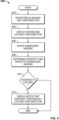
- a flowchart 400 is shown of a method for displaying a latched turn direction function and indication in accordance with one embodiment.
- a preliminary heading selection and a preliminary turn direction (which now becomes latched) are entered into an automated flight control system for an aircraft 402.
- the term "preliminary heading selection" and "preliminary turn direction” may also include an existing heading selection and existing turn direction which are currently active for the aircraft.
- the turn direction may default to a turn direction that may become a latched direction.
- the preliminary turn direction may or may not be the shortest turn radius for the aircraft to reach the preliminary heading selection.
- the preliminary heading selection and the preliminary latched turn direction are displayed to a pilot of the aircraft 404.
- a subsequent heading selection is entered into the automated flight control system while the aircraft is engaged in turning to the preliminary heading selection in the preliminary turn direction 406.
- a shortest turn radius to the subsequent heading selection is determined 408 and a determination is made if the shortest turn radius differs from the latched turn direction 410. If the latched turn direction is different from the shortest turn radius to subsequent heading selection (i.e., the aircraft will take the longer turn direction to reach the subsequent heading selection), a notification is displayed to the pilot of the aircraft 412.
- Skilled artisans may implement the described functionality in varying ways for each particular application, but such implementation decisions should not be interpreted as causing a departure from the scope of the present invention.
- an embodiment of a system or a component may employ various integrated circuit components, e.g., memory elements, digital signal processing elements, logic elements, look-up tables, or the like, which may carry out a variety of functions under the control of one or more microprocessors or other control devices.
- integrated circuit components e.g., memory elements, digital signal processing elements, logic elements, look-up tables, or the like, which may carry out a variety of functions under the control of one or more microprocessors or other control devices.
- DSP digital signal processor
- ASIC application specific integrated circuit
- FPGA field programmable gate array
- a general-purpose processor may be a microprocessor, but in the alternative, the processor may be any conventional processor, controller, microcontroller, or state machine.
- a processor may also be implemented as a combination of computing devices, e.g., a combination of a DSP and a microprocessor, a plurality of microprocessors, one or more microprocessors in conjunction with a DSP core, or any other such configuration.
- a software module may reside in RAM memory, flash memory, ROM memory, EPROM memory, EEPROM memory, registers, hard disk, a removable disk, a CD-ROM, or any other form of storage medium known in the art.
- An exemplary storage medium is coupled to the processor such that the processor can read information from, and write information to, the storage medium.
- the storage medium may be integral to the processor.
- the processor and the storage medium may reside in an ASIC.
- an embodiment of a system or a component may employ various integrated circuit components, e.g., memory elements, digital signal processing elements, logic elements, look-up tables, or the like, which may carry out a variety of functions under the control of one or more microprocessors or other control devices.
- integrated circuit components e.g., memory elements, digital signal processing elements, logic elements, look-up tables, or the like, which may carry out a variety of functions under the control of one or more microprocessors or other control devices.
- various elements of the systems described herein are essentially the code segments or instructions that perform the various tasks.
- the program or code segments can be stored in a processor-readable medium or transmitted by a computer data signal embodied in a carrier wave over a transmission medium or communication path.
- the "computer-readable medium”, “processor-readable medium”, or “machine-readable medium” may include any medium that can store or transfer information. Examples of the processor-readable medium include an electronic circuit, a semiconductor memory device, a ROM, a flash memory, an erasable ROM (EROM), a floppy diskette, a CD-ROM, an optical disk, a hard disk, a fiber optic medium, a radio frequency (RF) link, or the like.
- RF radio frequency
- the computer data signal may include any signal that can propagate over a transmission medium such as electronic network channels, optical fibers, air, electromagnetic paths, or RF links.
- the code segments may be downloaded via computer networks such as the Internet, an intranet, a LAN, or the like.
- modules Some of the functional units described in this specification have been referred to as "modules" in order to more particularly emphasize their implementation independence.
- functionality referred to herein as a module may be implemented wholly, or partially, as a hardware circuit comprising custom VLSI circuits or gate arrays, off-the-shelf semiconductors such as logic chips, transistors, or other discrete components.
- a module may also be implemented in programmable hardware devices such as field programmable gate arrays, programmable array logic, programmable logic devices, or the like. Modules may also be implemented in software for execution by various types of processors.
- An identified module of executable code may, for instance, comprise one or more physical or logical modules of computer instructions that may, for instance, be organized as an object, procedure, or function.
- the executables of an identified module need not be physically located together, but may comprise disparate instructions stored in different locations that, when joined logically together, comprise the module and achieve the stated purpose for the module.
- a module of executable code may be a single instruction, or many instructions, and may even be distributed over several different code segments, among different programs, and across several memory devices.
- operational data may be embodied in any suitable form and organized within any suitable type of data structure. The operational data may be collected as a single data set, or may be distributed over different locations including over different storage devices, and may exist, at least partially, merely as electronic signals on a system or network.
- the term “axial” refers to a direction that is generally parallel to or coincident with an axis of rotation, axis of symmetry, or centerline of a component or components.
- the "axial" direction may refer to the direction that generally extends in parallel to the centerline between the opposite ends or faces.
- the term “axial” may be utilized with respect to components that are not cylindrical (or otherwise radially symmetric).
- the "axial" direction for a rectangular housing containing a rotating shaft may be viewed as a direction that is generally parallel to or coincident with the rotational axis of the shaft.
- radially may refer to a direction or a relationship of components with respect to a line extending outward from a shared centerline, axis, or similar reference, for example in a plane of a cylinder or disc that is perpendicular to the centerline or axis.
- components may be viewed as “radially” aligned even though one or both of the components may not be cylindrical (or otherwise radially symmetric).
- the terms “axial” and “radial” (and any derivatives) may encompass directional relationships that are other than precisely aligned with (e.g., oblique to) the true axial and radial dimensions, provided the relationship is predominantly in the respective nominal axial or radial direction.
- the term “substantially” denotes within 5% to account for manufacturing tolerances.
- the term “about” denotes within 5% to account for manufacturing tolerances.
Landscapes
- Engineering & Computer Science (AREA)
- Aviation & Aerospace Engineering (AREA)
- Physics & Mathematics (AREA)
- General Physics & Mathematics (AREA)
- Traffic Control Systems (AREA)
Applications Claiming Priority (1)
| Application Number | Priority Date | Filing Date | Title |
|---|---|---|---|
| US18/461,155 US12475796B2 (en) | 2023-09-05 | 2023-09-05 | Latched turn direction function and indication |
Publications (1)
| Publication Number | Publication Date |
|---|---|
| EP4524933A1 true EP4524933A1 (de) | 2025-03-19 |
Family
ID=92302405
Family Applications (1)
| Application Number | Title | Priority Date | Filing Date |
|---|---|---|---|
| EP24194144.2A Pending EP4524933A1 (de) | 2023-09-05 | 2024-08-12 | Verriegelte umkehrrichtungsfunktion und anzeige |
Country Status (2)
| Country | Link |
|---|---|
| US (1) | US12475796B2 (de) |
| EP (1) | EP4524933A1 (de) |
Citations (3)
| Publication number | Priority date | Publication date | Assignee | Title |
|---|---|---|---|---|
| US6633810B1 (en) * | 2000-09-19 | 2003-10-14 | Honeywell International Inc. | Graphical system and method for defining pilot tasks, patterns and constraints |
| US20130345905A1 (en) * | 2012-06-25 | 2013-12-26 | Honeywell International Inc. | Avionics display system providing enhanced flight-plan management |
| US20150019047A1 (en) * | 2013-07-15 | 2015-01-15 | Honeywell International Inc. | Display systems and methods for providing displays having an integrated autopilot functionality |
Family Cites Families (8)
| Publication number | Priority date | Publication date | Assignee | Title |
|---|---|---|---|---|
| FR2905756B1 (fr) | 2006-09-12 | 2009-11-27 | Thales Sa | Procede et dispositif pour aeronef,d'evitement des collisions avec le terrain |
| FR2949897B1 (fr) | 2009-09-04 | 2012-08-03 | Thales Sa | Procede d'assistance au pilotage d'un aeronef et dispositif correspondant. |
| FR2968441B1 (fr) | 2010-12-07 | 2012-12-28 | Airbus Operations Sas | Procede et dispositif pour construire une trajectoire de vol optimale destinee a etre suivie par un aeronef. |
| US10302759B1 (en) * | 2013-03-05 | 2019-05-28 | The United States Of America As Represented By The Administrator Of The National Aeronautics And Space Administration | Automatic dependent surveillance broadcast (ADS-B) system with radar for ownship and traffic situational awareness |
| FR3028084B1 (fr) * | 2014-11-03 | 2020-12-25 | Sagem Defense Securite | Procede et dispositif de guidage d'un aeronef |
| US10768661B2 (en) | 2018-06-13 | 2020-09-08 | Goodrich Corporation | Automatic orientation of a display of a portable aircraft cargo control and monitor panel |
| CN110514208B (zh) | 2019-08-26 | 2021-12-03 | 广州极飞科技股份有限公司 | 飞行器的航向确定方法及装置、系统 |
| US11842629B2 (en) * | 2020-12-10 | 2023-12-12 | Honeywell International Inc. | Dynamic radar vectoring guidance methods and systems |
-
2023
- 2023-09-05 US US18/461,155 patent/US12475796B2/en active Active
-
2024
- 2024-08-12 EP EP24194144.2A patent/EP4524933A1/de active Pending
Patent Citations (3)
| Publication number | Priority date | Publication date | Assignee | Title |
|---|---|---|---|---|
| US6633810B1 (en) * | 2000-09-19 | 2003-10-14 | Honeywell International Inc. | Graphical system and method for defining pilot tasks, patterns and constraints |
| US20130345905A1 (en) * | 2012-06-25 | 2013-12-26 | Honeywell International Inc. | Avionics display system providing enhanced flight-plan management |
| US20150019047A1 (en) * | 2013-07-15 | 2015-01-15 | Honeywell International Inc. | Display systems and methods for providing displays having an integrated autopilot functionality |
Also Published As
| Publication number | Publication date |
|---|---|
| US20250078664A1 (en) | 2025-03-06 |
| US12475796B2 (en) | 2025-11-18 |
Similar Documents
| Publication | Publication Date | Title |
|---|---|---|
| US10446040B2 (en) | Safe speed advisories for flight deck interval management (FIM) paired approach (PA) systems | |
| US10796404B2 (en) | Aircraft systems and methods for adjusting a displayed sensor image field of view | |
| EP2980772B1 (de) | System und verfahren zur automatischen identifizierung von angezeigtem, von der flugsicherung erwähntem verkehr | |
| US10600328B2 (en) | Aircraft systems and methods for approach stabilization | |
| CN105608932A (zh) | 用于显示跑道进场信息的系统和方法 | |
| US11138892B2 (en) | TCAS coupled FMS | |
| EP3742421A1 (de) | Verfahren und system zur reaktivierung eines flugplans | |
| US12499770B2 (en) | System and method to intuitively represent the separation of aircraft traffic | |
| EP4421452A1 (de) | Schwebevektoranzeige für vertikalanflug- und landevorgänge | |
| EP4358067A1 (de) | Verfahren und systeme zur überprüfung von flugzeugprozedur anhand eines virtuellen cursors | |
| US12475796B2 (en) | Latched turn direction function and indication | |
| EP4564331A1 (de) | Verfahren und system zur bestimmung einer visuellen anflugführung für ein flugzeug | |
| US20250174136A1 (en) | Method and system for determing visual approach guidance for an aircraft | |
| US12555486B2 (en) | Augmented reality taxi assistant | |
| US10204523B1 (en) | Aircraft systems and methods for managing runway awareness and advisory system (RAAS) callouts | |
| US12536914B2 (en) | Method and system for taxi assist path generation based on guidance lines of an airport | |
| EP4592644A1 (de) | Verfahren und system zur berechnung der beschleunigungsentfernungsleistung für ein vtol-flugzeug während der anflug und landung | |
| EP3719450A1 (de) | Intelligenter und ergonomischer flugdeckarbeitsplatz | |
| EP4492359A1 (de) | System und verfahren zur intuitiven darstellung der trennung von flugzeugverkehr | |
| US20260064350A1 (en) | Mobile cockpit display system | |
| US12462690B2 (en) | System and method to display differential ground speed on a cockpit display | |
| EP4418239A1 (de) | System und verfahren zur anzeige der differentiellen bodengeschwindigkeit auf einer cockpitanzeige | |
| EP3767230A1 (de) | Verfahren und system zur anzeige von objektstandorten während einer such- und rettungsoperation |
Legal Events
| Date | Code | Title | Description |
|---|---|---|---|
| PUAI | Public reference made under article 153(3) epc to a published international application that has entered the european phase |
Free format text: ORIGINAL CODE: 0009012 |
|
| STAA | Information on the status of an ep patent application or granted ep patent |
Free format text: STATUS: THE APPLICATION HAS BEEN PUBLISHED |
|
| AK | Designated contracting states |
Kind code of ref document: A1 Designated state(s): AL AT BE BG CH CY CZ DE DK EE ES FI FR GB GR HR HU IE IS IT LI LT LU LV MC ME MK MT NL NO PL PT RO RS SE SI SK SM TR |
|
| P01 | Opt-out of the competence of the unified patent court (upc) registered |
Free format text: CASE NUMBER: APP_31464/2025 Effective date: 20250630 |
|
| STAA | Information on the status of an ep patent application or granted ep patent |
Free format text: STATUS: REQUEST FOR EXAMINATION WAS MADE |
|
| 17P | Request for examination filed |
Effective date: 20250821 |