EP4524809A1 - Vorrichtung und verfahren zur formalisierung einer unkontrollierten datenformateingabe - Google Patents
Vorrichtung und verfahren zur formalisierung einer unkontrollierten datenformateingabe Download PDFInfo
- Publication number
- EP4524809A1 EP4524809A1 EP23197088.0A EP23197088A EP4524809A1 EP 4524809 A1 EP4524809 A1 EP 4524809A1 EP 23197088 A EP23197088 A EP 23197088A EP 4524809 A1 EP4524809 A1 EP 4524809A1
- Authority
- EP
- European Patent Office
- Prior art keywords
- embedding
- data format
- input
- output
- engineering
- Prior art date
- Legal status (The legal status is an assumption and is not a legal conclusion. Google has not performed a legal analysis and makes no representation as to the accuracy of the status listed.)
- Pending
Links
Images

Classifications
-
- G—PHYSICS
- G06—COMPUTING OR CALCULATING; COUNTING
- G06F—ELECTRIC DIGITAL DATA PROCESSING
- G06F40/00—Handling natural language data
- G06F40/30—Semantic analysis
-
- G—PHYSICS
- G06—COMPUTING OR CALCULATING; COUNTING
- G06F—ELECTRIC DIGITAL DATA PROCESSING
- G06F16/00—Information retrieval; Database structures therefor; File system structures therefor
- G06F16/20—Information retrieval; Database structures therefor; File system structures therefor of structured data, e.g. relational data
- G06F16/25—Integrating or interfacing systems involving database management systems
- G06F16/258—Data format conversion from or to a database
-
- G—PHYSICS
- G06—COMPUTING OR CALCULATING; COUNTING
- G06F—ELECTRIC DIGITAL DATA PROCESSING
- G06F3/00—Input arrangements for transferring data to be processed into a form capable of being handled by the computer; Output arrangements for transferring data from processing unit to output unit, e.g. interface arrangements
- G06F3/01—Input arrangements or combined input and output arrangements for interaction between user and computer
- G06F3/02—Input arrangements using manually operated switches, e.g. using keyboards or dials
- G06F3/023—Arrangements for converting discrete items of information into a coded form, e.g. arrangements for interpreting keyboard generated codes as alphanumeric codes, operand codes or instruction codes
- G06F3/0233—Character input methods
-
- G—PHYSICS
- G06—COMPUTING OR CALCULATING; COUNTING
- G06F—ELECTRIC DIGITAL DATA PROCESSING
- G06F40/00—Handling natural language data
- G06F40/10—Text processing
- G06F40/12—Use of codes for handling textual entities
- G06F40/151—Transformation
-
- G—PHYSICS
- G06—COMPUTING OR CALCULATING; COUNTING
- G06F—ELECTRIC DIGITAL DATA PROCESSING
- G06F40/00—Handling natural language data
- G06F40/40—Processing or translation of natural language
- G06F40/55—Rule-based translation
-
- G—PHYSICS
- G06—COMPUTING OR CALCULATING; COUNTING
- G06F—ELECTRIC DIGITAL DATA PROCESSING
- G06F8/00—Arrangements for software engineering
- G06F8/10—Requirements analysis; Specification techniques
-
- G—PHYSICS
- G06—COMPUTING OR CALCULATING; COUNTING
- G06F—ELECTRIC DIGITAL DATA PROCESSING
- G06F8/00—Arrangements for software engineering
- G06F8/20—Software design
-
- G—PHYSICS
- G06—COMPUTING OR CALCULATING; COUNTING
- G06N—COMPUTING ARRANGEMENTS BASED ON SPECIFIC COMPUTATIONAL MODELS
- G06N20/00—Machine learning
-
- G—PHYSICS
- G06—COMPUTING OR CALCULATING; COUNTING
- G06N—COMPUTING ARRANGEMENTS BASED ON SPECIFIC COMPUTATIONAL MODELS
- G06N3/00—Computing arrangements based on biological models
- G06N3/02—Neural networks
- G06N3/04—Architecture, e.g. interconnection topology
- G06N3/045—Combinations of networks
-
- G—PHYSICS
- G06—COMPUTING OR CALCULATING; COUNTING
- G06N—COMPUTING ARRANGEMENTS BASED ON SPECIFIC COMPUTATIONAL MODELS
- G06N3/00—Computing arrangements based on biological models
- G06N3/02—Neural networks
- G06N3/08—Learning methods
-
- G—PHYSICS
- G06—COMPUTING OR CALCULATING; COUNTING
- G06N—COMPUTING ARRANGEMENTS BASED ON SPECIFIC COMPUTATIONAL MODELS
- G06N5/00—Computing arrangements using knowledge-based models
- G06N5/02—Knowledge representation; Symbolic representation
- G06N5/022—Knowledge engineering; Knowledge acquisition
-
- G—PHYSICS
- G06—COMPUTING OR CALCULATING; COUNTING
- G06F—ELECTRIC DIGITAL DATA PROCESSING
- G06F16/00—Information retrieval; Database structures therefor; File system structures therefor
- G06F16/30—Information retrieval; Database structures therefor; File system structures therefor of unstructured textual data
- G06F16/36—Creation of semantic tools, e.g. ontology or thesauri
- G06F16/367—Ontology
Definitions
- the present disclosure relates to a computer-implemented method and a device for formalizing an uncontrolled data format input.
- a computer-implemented method for formalizing an uncontrolled data format input comprises the following steps. Obtaining, by an input interface, an uncontrolled data format input. Determining, by an input processing algorithm an embedding of the obtained uncontrolled data format input in an embedding space resulting from a plurality of preprocessed embeddings, wherein the embedding is represented by an embedding vector, wherein the embedding vector comprises a plurality of vector entries specifying the embedding. Formalizing, by an output processing algorithm, a controlled data format output using the (above-determined) embedding. Outputting, by an output interface, the controlled data format output.
- formalizing describes a transformation or translation of the uncontrolled data format input, in particular in form of an embedding vector, into controlled data format output.
- formalizing comprises translating the embedding vector of engineering intention into an ontological representation that can be further processed in the engineering workflow.
- controlled data format comprises any of, but not exclusively: RDF, OWL, XML, JSON, AutomationML, modular type package, MTP, different relational database formats.
- the term "embedding”, as used herein, in other words is an abstract representation, in particular a latent semantic representation, of an input.
- the embedding is a vectorial representation, referred to as embedding vector, of an input.
- the embedding is a meaningful vectorial representation of words, sentences and/or formulations about engineering intentions.
- the embeddings are preferably obtained or learned by a natural language processing technique or from a language model.
- the controlled data format output comprises a data format, a schema or an ontology.
- the controlled data format output is a known target format that can be automatically further processed, in particular by other tools in an engineering workflow.
- the method allows formalizing a controlled data format output in ways representing the content of the uncontrolled data format input.
- the uncontrolled data format input can also comprise information that is represented in controlled data formats, but that are provided as uncontrolled input, for example the nicely-formatted and structured content of a JSON file but provided as plain text.
- the input processing algorithm comprises a neural network, referred to as an input layer.
- the output processing algorithm comprises a neural network, referred to as output layer.
- the embedding space is either (a) a pre-trained, state-of-the-art, open-source embedding obtained by means of a natural language processing algorithm, e.g., a large language model (LLM), or (b) a proprietarily trained embedding, obtained using domain-specific input and a standard NLP algorithm, or (c) either (a) or (b) plus a collection of preprocessed domain-specific concepts/terms/inputs, represented in their abstract / latent semantic representation that have already been determined by the input processing algorithm.
- these preprocessed embeddings in the embedding space may represent controlled/structured (e.g., ontological) representations of engineering or operations content.
- these preprocessed embeddings in this embedding space can be stored in a database of embeddings.
- specifying the embedding i.e., assigning it an n-dimensional vector (i.e., sort of a location) in the embedding space
- specifying the embedding can also be referred to as classifying the input (into the "region"/"bubble" of/around the "location").
- the vector is represented as a normalized vector.
- a transformer model further preferably comprising encoder model and decoder model, is provided.
- the determination of the embedding of the obtained uncontrolled data format input by the input processing algorithm corresponds to the encoder model.
- the abstract / latent semantic embedding representation is then used as an input for the decoder model to determine the controlled data format output.
- the method provides a pipeline of analyzing, classifying/computing and formalizing an uncontrolled data format input (like engineering or operations content) via an abstract / latent semantic representation (embedding) to a controlled data format output (like an ontological representation of the engineering or operations content) that can in particularly be used further in the engineering workflow.
- the uncontrolled data format input comprises engineering or operations related content.
- the engineering or operations related content comprises any one of engineering intentions, process engineering specifications, automation engineering specifications, engineering recipes, and operational specifications.
- the engineering or operations related content comprises any engineering knowledge during the entire "life cycle" of the engineering workflow. This for example starts from process engineering (e.g. chemical engineering), via automation engineering (e.g. automation- and control engineering), up to operations (i.e., when the plant is set up and in operation).
- engineering or operations related content comprises content that is relevant to the both the engineering phase and/or operational phase of an industrial process plant.
- the operational specifications comprise starting and/or stopping a service, or changing a recipe for a product.
- engineering or operations related content can be formalized into a controlled data format output that can be used further in engineering workflows.
- the engineering or operations content is provided in a format that can be processed and understood by any particular stakeholder in the engineering process.
- an information gap between the stakeholders, for example the automation engineers and the process engineers can be closed.
- determining, by the input processing algorithm, the embedding of the obtained uncontrolled data format input comprises identifying the engineering or operations content in the uncontrolled data format input and determining the embedding based on the identified engineering or operations content.
- the engineering or operations content extracted from the uncontrolled data format input by a machine learning model For example, if the engineering or operations content is contained in a natural language input or an uncontrolled text input, a natural language processing technique is used to identify the engineering or operations content from the uncontrolled data format input. The engineering or operations content is then used to determine values of a respective embedding vector representing the engineering or operations content.
- the uncontrolled data format input comprises a natural language input or an uncontrolled text input.
- the uncontrolled data format input comprises uncontrolled input in form of text and/or speech.
- the method transforms engineering or operations content, preferably natural language engineering intentions, to a formalized ontological engineering intention representation.
- the uncontrolled data format input can also comprise information that is represented in controlled data formats, but that are provided as uncontrolled input, for example the nicely-formatted and structured content of a JSON file but provided as plain text.
- the text contains also tables with numbers or other signs besides letters.
- the uncontrolled data format input in form of a text can comprise both text as in a poem or control narrative, but also unstructured text with numbers, variables, tables, etc. (i.e., anything that is not images/audio/video).
- determining, by the input processing algorithm, the embedding of the obtained uncontrolled data format input comprises identifying preprocessed embeddings in the embedding space, which are similar to the embedding with respect to a predetermined metric, and determining the embedding based on the similar preprocessed embeddings.
- the metric comprises a "cosine similarity" or other common NLP-relevant metrics, which capture the semantic similarity/closeness of natural language building blocks / structures / terms.
- the determining the embedding comprises analysing the obtained uncontrolled data format input to find the most-similar embedding among the preprocessed embedding.
- the embedding is determined, and then analyzed with respect to its location in the overall embedding space, e.g., in particular with respect to what other preprocessed embedding vectors are closest.
- the predetermined metric is preselected from a pool of predetermined metrics.
- the preprocessed embeddings represent controlled/structured (e.g., ontological) representations of engineering or operations content).
- the predetermined metric comprises a semantic meaningful metric.
- the metric comprises semantics, wherein the similar preprocessed embeddings are semantically similar, or in other words close, to the embedding.
- the most suitable, most-similar embedding among the preprocessed embeddings in the embedding space can be found.
- the term “near” or “close” relates to the metric, while the term “similar” relates to the semantic of the uncontrolled format data input.
- a dimension of the embedding vector is larger than 10, preferably larger than 50, further preferably larger than 100.
- Each embedding dimension can be considered as a feature/characteristic (or scale on this feature dimension, respectively), e.g., "how related is a concept to oil&gas industries vs. pharma&chem industries", “how related is a module functionality to separating vs. mixing some liquid material”, etc.
- a value of 0.9 (on a normalized scale from -1 to +1) of the first component would then mean that the current concept strongly relates to oil&gas (as opposed to pharma/chem), and a value of -0.2 of the second component would stand for the concept's relation to rather mixing than separating.
- the value also can mean that there is no such clear differentiation here, meaning that maybe the concept's relation to separating/mixing is not so important for the concept's semantic meaning.
- formalizing the controlled data format output using the embedding vector comprises mapping the embedding vector to the controlled data format output.
- mapping the embedding vector to the controlled data format output preferably comprises identifying such a group of similar embedding vectors and mapping the embedding vector to the controlled data format output associated with this similar group of embedding vectors.
- one embedding vector of such a group of embedding vectors can have been identified and obtained from the preprocessed embeddings in the embedding space, whereby these preprocessed embeddings in the embedding space may already represent controlled/structured (e.g., ontological) representations of engineering or operations content).
- the mapping comprises an explicit mapping, which in particular is obtained from a pre-defined domain knowledge representation (e.g., in an ontological format) by a domain expert.
- a pre-defined domain knowledge representation e.g., in an ontological format
- the mapping comprises a learned mapping, which is learned in a supervised learning setting. For example, based on pairs of embeddings, it is learned which input (i.e. embedding) leads to a similar output so that the controlled data format output can be learned.
- the groups are sub-specified so that the target space of the controlled data format output is reduced and less wrong/inaccurate controlled data format output is determined.
- the output processing algorithm comprises an output machine learning model that formalizes the controlled data format output.
- the output machine learning model comprises a decoder neural network.
- the output machine learning model is trained to formalize the controlled data format output using the embedding.
- the input processing algorithm comprises an input machine learning model that determines the embedding.
- the input machine learning model comprises an encoder neural network.
- the input machine learning model is trained to determine the embedding of the obtained uncontrolled data format input in the embedding space.
- the input machine learning model is trained such that the embeddings of semantically similar input are close to each other in the embedding space.
- the input machine learning model uses few-shot learning, wherein a limited number of labelled data for a new classification is available to make predictions for new classifications. Further preferably, the input machine learning model uses zero-shot learning, wherein no labelled data for a new classification is available to make predictions for new classifications.
- New uncontrolled data format input like engineering or operations content, for example engineering intentions, are represented in the same latent embedding space near to similar previously processed representations. Thus, the new uncontrolled data format input will be accordingly recognized and classified.
- the input machine learning model is based on a Large Language Model, LLM.
- LLM Large Language Model
- the LLM is based on Natural Language Processing, NLP, techniques.
- the system is trained and can be used to yield ontological engineering intent representations based on natural language engineering intention inputs, and based on their abstract / latent semantic interim representations (i.e., the embeddings).
- the trained models can be utilized in both directions, i.e., coming from the uncontrolled data format input, like natural language, and determining formalized controlled data format output, like ontological representations, and the other way around.
- This for example comprises to approach the embedding from "the other side", and thus convert ontological representations of engineering or operations content like engineering intentions into natural language representations of these engineering or operations contents.
- eBase format/tool E.g., the process automation industry use eBase to process their customer data.
- eBase representations differ from user to user and from application to application, and customer data also differ and cannot be always simply reproduced even with the same tool.
- the trained machine learning model converts the (one or more) eBase representation(s) into a latent embedding space representation, and e.g. computes similarity scores in this latent embedding space (eventually followed by automated controlled output format-based engineering thereafter).
- the NLP techniques based LLM takes natural language input, like engineering intentions, process and transform it, and produces formalized controlled data format output, like ontological representations of engineering intentions.
- the resulting formalized controlled data format output could be checked for consistency with an underlying target ontological model, e.g., the underlying P&AE or eBase ontological models.
- an underlying target ontological model e.g., the underlying P&AE or eBase ontological models.
- These consistency checks could evaluate if the resulting formalized controlled data format output, e.g., ontological engineering intention representations, are available (as concepts or relations or instances) in the underlying P&AE or eBase ontological models, and if they are not available there, then this information can be used as feedback for the output machine learning model, e.g., by means of using standard penalty methods in mathematical optimization.
- the formalization of the controlled data format output could be punished using constitutional AI methods (i.e., e.g., through having another ML model to supervise the underlying core LLM in the sense of Scaled Supervised Learning) if parts of the ontological representations (e.g. concepts or relations or instances) are not available in the underlying P&AE or eBase ontological models.
- constitutional AI methods i.e., e.g., through having another ML model to supervise the underlying core LLM in the sense of Scaled Supervised Learning
- parts of the ontological representations e.g. concepts or relations or instances
- the machine learning model may comprise a pre-trained open-source LLM, such as SentenceBERT, or Dolly, for computation of the embeddings, etc.
- the machine learning model (input and/or output) may comprise an open-source instruction-tuned LLM, that can be fine-tuned (e.g., on input-output schema) to yield ontological engineering intention representations.
- the machine learning model (input and/or output) may be obtained by fine-tuning a pre-trained instruction-tuned LLM, whereby the fine-tuning can be done using P&A Engineering-domain specific engineering data, control narratives, P&IDs, eBase content, documentation, etc.
- pre-trained LLM-based system pre-trained ML model and embeddings
- classification results e.g., for intention topic modelling
- small/no overhead i.e., fine-tuning using supervised ML and domain-specific P&AE intentions vocabulary
- a principal component analysis is used to reduce the dimensionality of the embeddings and thus allow to plot them in fewer dimensions.
- a user is provided with a first/preliminary (transparent/explainable) 2D visualization the system's output (i.e., the embedding-based mapping and formalization of his engineering intention) in order to then figure out whether his intention was correctly classified with similar intention formulations or into similar suitable intent clusters.
- the engineer figures that his intention was wrongly processed or classified, he may reformulate it before the system goes further in the wrong direction.
- an entire engineering intention e.g., a sentence
- single word embeddings may sometimes be easier matched with ontological concepts' embeddings/representations.
- the input machine learning model and/or the output machine learning model comprises a neural network.
- the neural network preferably comprises a transformer neural network, with an underlying encoder-decoder architecture and with one or more latent semantic representation layer(s), i.e. the embedding layer(s).
- a device for formalizing an uncontrolled data format input comprises the following.
- An input interface configured to obtain an uncontrolled data format input.
- An input processing algorithm configured to determine an embedding of the obtained uncontrolled data format input in an embedding space of a plurality of preprocessed embeddings, wherein the embedding is represented by an embedding vector, wherein the embedding vector comprises a plurality of vector entries specifying the embedding.
- An output processing algorithm configured to formalize a controlled data format output using the embedding.
- An output interface configured to output the controlled data format output.
- the input processing algorithm and the output processing algorithm are preferably provided by a processing unit.
- a computer program comprises instructions, which, when the program is executed by a computer, cause the computer to carry out the steps of a method, as described herein.
- a computer-readable medium comprising instructions which, when executed by a computer, cause the computer to carry out the steps of a method, as described herein.
- Fig. 1 illustrates a schematic view of a common workflow pipeline between a process engineer 100 and an automation engineer 200.
- the process engineer 100 determined engineering or operations content, like engineering intentions, during his workflow.
- This so called intent-based engineering 310 comprises for example intention modelling, intention formalization, abstract service & module representation and outputs specifications to serve as input for module pipeline generation 320.
- a module pipeline generation 320 is performed. This for example comprises generation of module pipelines, optimization & parameter turning as well as determining output specifications that describe plant topology to serve as input for an orchestration designer 330.
- an orchestration designer tool 330 is executed. This for example comprises further processing and manipulation of modules & plant topology (alarms, parametrization, etc) as well as providing functionality to create module instances and export everything to a target control system (e.g., 800xA or Freelance).
- a target control system e.g. 800xA or Freelance
- a semantic facilitation & integration layer 340 provides a common language, terminology & relationships, e.g., in the form of an underlying ontology, and thus may also comprise a common knowledge graph and common APIs, so that the workflow pipeline between the process engineer 100 and the automation engineer 200 can work without any inconsistencies and without losing any information.
- This workflow pipeline however so far needs manual input of a knowing engineering domain expert 100 and an ontology expert for producing the ontological engineering intent representations in 310, which is still very error-prone.
- Fig.2 illustrates a schematic general view of the main elements of an intent representation R.
- the intent representation R may contain information about the engineering intention, which is defined by properties and interrelations of an intentional element of the engineering intention, a goal of the engineering intention, a requirement of the engineering intention and an implementation of the engineering intention.
- the intent representation R is the basis for exchanging information about an engineering intention between the different stakeholders of the engineering workflow.
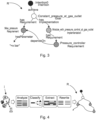
- Fig. 3 schematically shows an exemplary instantiation of an intent representation R.
- Fig. 3 shows an exemplary instantiation of an engineering intention of a process engineer, who wants to maintain constant pressure at a gas outlet.
- the intent representation R shows how complex the engineering intention of the process engineer gets by showing the interrelations and dependencies between the goal, comprising for example subgoals, the different necessary implementations and the different requirements.
- Fig. 4 schematically shows exemplary steps of a process of a formalization of an uncontrolled data format input into a formalized controlled data format output.
- the uncontrolled data format input in this case comprises an engineering or operations content in form of an engineering intent in natural language. This could for example be: "I want to build an oil-gas-water-separator” or "I want to maintain pressure”.
- a new process is provided that automatically processes the uncontrolled data format input and formalizes it into controlled data format output, in this case an intent representation R, that can be used by all stakeholders of the workflow pipeline shown in Fig. 1 .
- the uncontrolled data format input is analysed, and the content of the uncontrolled data format input is classified. Then the engineering intention is extracted, and the content of the uncontrolled data format input is rewritten in order to determine the intent representation R.
- NLP-model functionalities are merged into one further-advanced process for engineering intention recognition, classification & formalization. This should allow to automatically understand the engineering intention, classify the engineering intention and formalize the engineering intention, i.e., e.g., translate the engineering intention into an ontological representation.
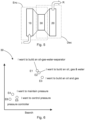
- Fig. 5 schematically shows a transformer architecture for formalizing uncontrolled data format input.
- the transformer architecture comprises an input interface that is configured to obtain an uncontrolled data format input, in this case comprising engineering or operations content in form of engineering intention I.
- An input processing algorithm carried out by a processing unit, provides an encoder Enc that determines an embedding E of the obtained uncontrolled data format input I in an embedding space 30 resulting from a plurality of preprocessed embeddings, wherein the embedding E is represented by an embedding vector, wherein the embedding vector comprises a plurality of vector entries specifying the embedding E.
- An output processing algorithm carried out by the processing unit, provides a decoder Dec that formalizes a controlled data format output using the embedding.
- the encoder Enc is provided by using an input machine learning model 10, for example comprising a Large Language Model, to determine the embedding vector from the uncontrolled data format input.
- the decoder Dec is provided by using an output machine learning model 20 to map the embedding vector of the uncontrolled data format input to a respective controlled data format output, like an ontological representation R of the engineering intention I.
- Fig. 6 schematically shows a very low-dimensional (2D) embedding space 30 with a plurality of embeddings E in form of embedding vectors (visualized as 2D points).
- the embeddings space 30 contains six embedding vectors E1-E6.
- the first embedding E1 is a representation of the uncontrolled data format input with the engineering intention "I want to build an oil-gas-water-separator”.
- the second embedding E2 is a representation of the uncontrolled data format input with the engineering intention “I want to separate oil, gas & water”.
- the third embedding E3 is a representation of the uncontrolled data format input with the engineering intention "I want to separate oil and gas”.
- the fourth embedding E4 is a representation of the uncontrolled data format input with the engineering intention "I want to maintain pressure”.
- the fifth embedding E5 is a representation of the uncontrolled data format input with the engineering intention "I want to control pressure”.
- the sixth embedding E6 is a representation of the uncontrolled data format input with the engineering intention "pressure controller”.
- the first to third embeddings E1-E3 are similar to each other in their semantic meanings and are therefore located close to each other in the embedding space.
- This group of the first to third embeddings E1-E3 could be classified together (as "has to do with the intention of separating oil, gas and water") and can be mapped to similar controlled data format outputs, in particular an ontological engineering intent representation.
- the fourth to sixth embeddings E4-E6 are similar to each other in their semantic meanings and are therefore also located close to each other in the embedding space.
- This group of the fourth to sixth embeddings E4-E6 could be classified together (as "has to do with the concept of a pressure controller") and when further processing in the above described process they could be transformed into similar controlled data format output, in particular again an ontological engineering intent representation.
- the determination of the embedding in form of an embedding vector in the embedding space allows to automatically formalize a controlled data format output using the embeddings based on an uncontrolled data format input.
Landscapes
- Engineering & Computer Science (AREA)
- Theoretical Computer Science (AREA)
- General Engineering & Computer Science (AREA)
- Physics & Mathematics (AREA)
- General Physics & Mathematics (AREA)
- Software Systems (AREA)
- Artificial Intelligence (AREA)
- Computational Linguistics (AREA)
- Data Mining & Analysis (AREA)
- General Health & Medical Sciences (AREA)
- Health & Medical Sciences (AREA)
- Evolutionary Computation (AREA)
- Databases & Information Systems (AREA)
- Computing Systems (AREA)
- Mathematical Physics (AREA)
- Audiology, Speech & Language Pathology (AREA)
- Biophysics (AREA)
- Biomedical Technology (AREA)
- Molecular Biology (AREA)
- Life Sciences & Earth Sciences (AREA)
- Human Computer Interaction (AREA)
- Computer Vision & Pattern Recognition (AREA)
- Medical Informatics (AREA)
- Stored Programmes (AREA)
- Editing Of Facsimile Originals (AREA)
- Storage Device Security (AREA)
Priority Applications (3)
| Application Number | Priority Date | Filing Date | Title |
|---|---|---|---|
| EP23197088.0A EP4524809A1 (de) | 2023-09-13 | 2023-09-13 | Vorrichtung und verfahren zur formalisierung einer unkontrollierten datenformateingabe |
| CN202411272151.2A CN119718093A (zh) | 2023-09-13 | 2024-09-11 | 用于形式化不受控数据格式输入的设备和方法 |
| US18/830,787 US20250086195A1 (en) | 2023-09-13 | 2024-09-11 | Device and Method for Formalizing an Uncontrolled Data Format Input |
Applications Claiming Priority (1)
| Application Number | Priority Date | Filing Date | Title |
|---|---|---|---|
| EP23197088.0A EP4524809A1 (de) | 2023-09-13 | 2023-09-13 | Vorrichtung und verfahren zur formalisierung einer unkontrollierten datenformateingabe |
Publications (1)
| Publication Number | Publication Date |
|---|---|
| EP4524809A1 true EP4524809A1 (de) | 2025-03-19 |
Family
ID=88020859
Family Applications (1)
| Application Number | Title | Priority Date | Filing Date |
|---|---|---|---|
| EP23197088.0A Pending EP4524809A1 (de) | 2023-09-13 | 2023-09-13 | Vorrichtung und verfahren zur formalisierung einer unkontrollierten datenformateingabe |
Country Status (3)
| Country | Link |
|---|---|
| US (1) | US20250086195A1 (de) |
| EP (1) | EP4524809A1 (de) |
| CN (1) | CN119718093A (de) |
Citations (2)
| Publication number | Priority date | Publication date | Assignee | Title |
|---|---|---|---|---|
| EP3407204A1 (de) * | 2017-05-26 | 2018-11-28 | General Electric Company | Verfahren und systeme zur übersetzung von anforderungen der natürlichen sprache in eine sprachäusserung mit semantischer modellierung |
| WO2020205048A1 (en) * | 2019-03-29 | 2020-10-08 | Microsoft Technology Licensing, Llc | Ontology entity type detection from tokenized utterance |
Family Cites Families (3)
| Publication number | Priority date | Publication date | Assignee | Title |
|---|---|---|---|---|
| US11068658B2 (en) * | 2016-12-07 | 2021-07-20 | Disney Enterprises, Inc. | Dynamic word embeddings |
| US20240394291A1 (en) * | 2023-05-23 | 2024-11-28 | Accenture Global Solutions Limited | Automated domain adaptation for semantic search using embedding vectors |
| US12248962B2 (en) * | 2023-06-13 | 2025-03-11 | Stripe, Inc. | Predicting service product adoption by customers and prospective customers |
-
2023
- 2023-09-13 EP EP23197088.0A patent/EP4524809A1/de active Pending
-
2024
- 2024-09-11 US US18/830,787 patent/US20250086195A1/en active Pending
- 2024-09-11 CN CN202411272151.2A patent/CN119718093A/zh active Pending
Patent Citations (2)
| Publication number | Priority date | Publication date | Assignee | Title |
|---|---|---|---|---|
| EP3407204A1 (de) * | 2017-05-26 | 2018-11-28 | General Electric Company | Verfahren und systeme zur übersetzung von anforderungen der natürlichen sprache in eine sprachäusserung mit semantischer modellierung |
| WO2020205048A1 (en) * | 2019-03-29 | 2020-10-08 | Microsoft Technology Licensing, Llc | Ontology entity type detection from tokenized utterance |
Non-Patent Citations (1)
| Title |
|---|
| BRANDT ET AL: "An ontology-based approach to knowledge management in design processes", COMPUTERS & CHEMICAL ENGINEERING, PERGAMON PRESS, OXFORD, GB, vol. 32, no. 1-2, 1 November 2007 (2007-11-01), pages 320 - 342, XP022324497, ISSN: 0098-1354, DOI: 10.1016/J.COMPCHEMENG.2007.04.013 * |
Also Published As
| Publication number | Publication date |
|---|---|
| US20250086195A1 (en) | 2025-03-13 |
| CN119718093A (zh) | 2025-03-28 |
Similar Documents
| Publication | Publication Date | Title |
|---|---|---|
| CN120046645A (zh) | 一种基于多模态大模型的智能体架构 | |
| Mullis et al. | Deep neural networks in natural language processing for classifying requirements by origin and functionality: An application of BERT in system requirements | |
| CN119474322A (zh) | 自适应性图数据库多模态电力知识问答方法及系统 | |
| CN120012784B (zh) | 项目文件风险分析方法及系统 | |
| CN116187323A (zh) | 一种数控机床领域知识图谱及其构建方法 | |
| CN119539065A (zh) | 一种工艺知识图谱的构建方法、装置及存储介质 | |
| CN120743980A (zh) | 自定义多级意图识别的检索增强生成系统及其方法 | |
| CN120893422A (zh) | 一种基于大模型的任务拆解方法 | |
| Seabra et al. | Dynamic multi-agent orchestration and retrieval for multi-source question-answer systems using large language models | |
| Ren et al. | Streamlining industrial robot maintenance: An intelligent voice query approach for enhanced efficiency | |
| EP4524809A1 (de) | Vorrichtung und verfahren zur formalisierung einer unkontrollierten datenformateingabe | |
| CN121233959A (zh) | 基于ai的用户体验数据采集-分析-评价的一体化方法 | |
| CN120930635A (zh) | 一种融合拼写与语义的中文文本智能纠错方法 | |
| CN120930599A (zh) | 一种基于大模型的企业尽调报告智能生成方法及系统 | |
| CN120873130A (zh) | 面向流程工业大模型的问题语义增强方法与装置 | |
| CN120911606A (zh) | 一种面向领导决策的智能数据问答与可视化系统及方法 | |
| US12153406B2 (en) | Method and system to generate control logic for performing industrial processes | |
| Kramer et al. | Tell your robot what to do: evaluation of natural language models for robot command processing | |
| Fuchs et al. | Exploring the potential of parallel drafting of building regulations | |
| CN119539725A (zh) | 一种文件的审核方法、系统及计算机设备 | |
| Kucejko et al. | Recommendation system for DFMEA analysis using neural network embeddings | |
| WO2023100587A1 (ja) | アノテーション装置及び方法 | |
| Bnouni Rhim et al. | NLP and logic reasoning for fully automating test | |
| CN120723897B (zh) | 基于结构语义图嵌入的多模态数学文献检索方法及系统 | |
| CN120705319B (zh) | 社会调查中的智能行业分类与编码方法及装置 |
Legal Events
| Date | Code | Title | Description |
|---|---|---|---|
| PUAI | Public reference made under article 153(3) epc to a published international application that has entered the european phase |
Free format text: ORIGINAL CODE: 0009012 |
|
| STAA | Information on the status of an ep patent application or granted ep patent |
Free format text: STATUS: THE APPLICATION HAS BEEN PUBLISHED |
|
| AK | Designated contracting states |
Kind code of ref document: A1 Designated state(s): AL AT BE BG CH CY CZ DE DK EE ES FI FR GB GR HR HU IE IS IT LI LT LU LV MC ME MK MT NL NO PL PT RO RS SE SI SK SM TR |
|
| STAA | Information on the status of an ep patent application or granted ep patent |
Free format text: STATUS: REQUEST FOR EXAMINATION WAS MADE |
|
| 17P | Request for examination filed |
Effective date: 20250826 |