EP4524710A2 - Datensicherheitsschutzverfahren, -vorrichtung und -system, sicherheitssteuerungsrahmen und speichermedium - Google Patents
Datensicherheitsschutzverfahren, -vorrichtung und -system, sicherheitssteuerungsrahmen und speichermedium Download PDFInfo
- Publication number
- EP4524710A2 EP4524710A2 EP23746522.4A EP23746522A EP4524710A2 EP 4524710 A2 EP4524710 A2 EP 4524710A2 EP 23746522 A EP23746522 A EP 23746522A EP 4524710 A2 EP4524710 A2 EP 4524710A2
- Authority
- EP
- European Patent Office
- Prior art keywords
- data
- file
- storage device
- mode
- storage
- Prior art date
- Legal status (The legal status is an assumption and is not a legal conclusion. Google has not performed a legal analysis and makes no representation as to the accuracy of the status listed.)
- Pending
Links
Images

















Classifications
-
- G—PHYSICS
- G06—COMPUTING OR CALCULATING; COUNTING
- G06F—ELECTRIC DIGITAL DATA PROCESSING
- G06F3/00—Input arrangements for transferring data to be processed into a form capable of being handled by the computer; Output arrangements for transferring data from processing unit to output unit, e.g. interface arrangements
- G06F3/06—Digital input from, or digital output to, record carriers, e.g. RAID, emulated record carriers or networked record carriers
- G06F3/0601—Interfaces specially adapted for storage systems
- G06F3/0602—Interfaces specially adapted for storage systems specifically adapted to achieve a particular effect
- G06F3/062—Securing storage systems
-
- G—PHYSICS
- G06—COMPUTING OR CALCULATING; COUNTING
- G06F—ELECTRIC DIGITAL DATA PROCESSING
- G06F3/00—Input arrangements for transferring data to be processed into a form capable of being handled by the computer; Output arrangements for transferring data from processing unit to output unit, e.g. interface arrangements
- G06F3/06—Digital input from, or digital output to, record carriers, e.g. RAID, emulated record carriers or networked record carriers
- G06F3/0601—Interfaces specially adapted for storage systems
- G06F3/0602—Interfaces specially adapted for storage systems specifically adapted to achieve a particular effect
- G06F3/062—Securing storage systems
- G06F3/0622—Securing storage systems in relation to access
-
- G—PHYSICS
- G06—COMPUTING OR CALCULATING; COUNTING
- G06F—ELECTRIC DIGITAL DATA PROCESSING
- G06F21/00—Security arrangements for protecting computers, components thereof, programs or data against unauthorised activity
- G06F21/60—Protecting data
- G06F21/602—Providing cryptographic facilities or services
-
- G—PHYSICS
- G06—COMPUTING OR CALCULATING; COUNTING
- G06F—ELECTRIC DIGITAL DATA PROCESSING
- G06F21/00—Security arrangements for protecting computers, components thereof, programs or data against unauthorised activity
- G06F21/70—Protecting specific internal or peripheral components, in which the protection of a component leads to protection of the entire computer
- G06F21/78—Protecting specific internal or peripheral components, in which the protection of a component leads to protection of the entire computer to assure secure storage of data
-
- G—PHYSICS
- G06—COMPUTING OR CALCULATING; COUNTING
- G06F—ELECTRIC DIGITAL DATA PROCESSING
- G06F3/00—Input arrangements for transferring data to be processed into a form capable of being handled by the computer; Output arrangements for transferring data from processing unit to output unit, e.g. interface arrangements
- G06F3/06—Digital input from, or digital output to, record carriers, e.g. RAID, emulated record carriers or networked record carriers
- G06F3/0601—Interfaces specially adapted for storage systems
- G06F3/0628—Interfaces specially adapted for storage systems making use of a particular technique
- G06F3/0629—Configuration or reconfiguration of storage systems
- G06F3/0637—Permissions
-
- G—PHYSICS
- G06—COMPUTING OR CALCULATING; COUNTING
- G06F—ELECTRIC DIGITAL DATA PROCESSING
- G06F3/00—Input arrangements for transferring data to be processed into a form capable of being handled by the computer; Output arrangements for transferring data from processing unit to output unit, e.g. interface arrangements
- G06F3/06—Digital input from, or digital output to, record carriers, e.g. RAID, emulated record carriers or networked record carriers
- G06F3/0601—Interfaces specially adapted for storage systems
- G06F3/0628—Interfaces specially adapted for storage systems making use of a particular technique
- G06F3/0638—Organizing or formatting or addressing of data
- G06F3/0643—Management of files
-
- G—PHYSICS
- G06—COMPUTING OR CALCULATING; COUNTING
- G06F—ELECTRIC DIGITAL DATA PROCESSING
- G06F3/00—Input arrangements for transferring data to be processed into a form capable of being handled by the computer; Output arrangements for transferring data from processing unit to output unit, e.g. interface arrangements
- G06F3/06—Digital input from, or digital output to, record carriers, e.g. RAID, emulated record carriers or networked record carriers
- G06F3/0601—Interfaces specially adapted for storage systems
- G06F3/0628—Interfaces specially adapted for storage systems making use of a particular technique
- G06F3/0638—Organizing or formatting or addressing of data
- G06F3/0644—Management of space entities, e.g. partitions, extents, pools
-
- G—PHYSICS
- G06—COMPUTING OR CALCULATING; COUNTING
- G06F—ELECTRIC DIGITAL DATA PROCESSING
- G06F3/00—Input arrangements for transferring data to be processed into a form capable of being handled by the computer; Output arrangements for transferring data from processing unit to output unit, e.g. interface arrangements
- G06F3/06—Digital input from, or digital output to, record carriers, e.g. RAID, emulated record carriers or networked record carriers
- G06F3/0601—Interfaces specially adapted for storage systems
- G06F3/0628—Interfaces specially adapted for storage systems making use of a particular technique
- G06F3/0655—Vertical data movement, i.e. input-output transfer; data movement between one or more hosts and one or more storage devices
-
- G—PHYSICS
- G06—COMPUTING OR CALCULATING; COUNTING
- G06F—ELECTRIC DIGITAL DATA PROCESSING
- G06F3/00—Input arrangements for transferring data to be processed into a form capable of being handled by the computer; Output arrangements for transferring data from processing unit to output unit, e.g. interface arrangements
- G06F3/06—Digital input from, or digital output to, record carriers, e.g. RAID, emulated record carriers or networked record carriers
- G06F3/0601—Interfaces specially adapted for storage systems
- G06F3/0668—Interfaces specially adapted for storage systems adopting a particular infrastructure
- G06F3/0671—In-line storage system
- G06F3/0673—Single storage device
-
- G—PHYSICS
- G06—COMPUTING OR CALCULATING; COUNTING
- G06F—ELECTRIC DIGITAL DATA PROCESSING
- G06F3/00—Input arrangements for transferring data to be processed into a form capable of being handled by the computer; Output arrangements for transferring data from processing unit to output unit, e.g. interface arrangements
- G06F3/06—Digital input from, or digital output to, record carriers, e.g. RAID, emulated record carriers or networked record carriers
- G06F3/0601—Interfaces specially adapted for storage systems
- G06F3/0668—Interfaces specially adapted for storage systems adopting a particular infrastructure
- G06F3/0671—In-line storage system
- G06F3/0673—Single storage device
- G06F3/0679—Non-volatile semiconductor memory device, e.g. flash memory, one time programmable memory [OTP]
-
- H—ELECTRICITY
- H04—ELECTRIC COMMUNICATION TECHNIQUE
- H04L—TRANSMISSION OF DIGITAL INFORMATION, e.g. TELEGRAPHIC COMMUNICATION
- H04L9/00—Cryptographic mechanisms or cryptographic arrangements for secret or secure communications; Network security protocols
- H04L9/32—Cryptographic mechanisms or cryptographic arrangements for secret or secure communications; Network security protocols including means for verifying the identity or authority of a user of the system or for message authentication, e.g. authorization, entity authentication, data integrity or data verification, non-repudiation, key authentication or verification of credentials
- H04L9/3234—Cryptographic mechanisms or cryptographic arrangements for secret or secure communications; Network security protocols including means for verifying the identity or authority of a user of the system or for message authentication, e.g. authorization, entity authentication, data integrity or data verification, non-repudiation, key authentication or verification of credentials involving additional secure or trusted devices, e.g. TPM, smartcard, USB or software token
-
- G—PHYSICS
- G06—COMPUTING OR CALCULATING; COUNTING
- G06F—ELECTRIC DIGITAL DATA PROCESSING
- G06F2212/00—Indexing scheme relating to accessing, addressing or allocation within memory systems or architectures
- G06F2212/10—Providing a specific technical effect
- G06F2212/1052—Security improvement
Definitions
- the present application relates to the field of information security technology, in particular to a data security protection method, device, system, security control framework and storage medium.
- Removable storage devices are widely used in daily work and life, but when removable storage devices are used to connect to computers for data processing operations such as data copying, data risks are easily generated. Removable storage devices and computers can be threats to each other's data security.
- the application provides a data security protection method applied to a target device, the target device is provided with a protection module comprising at least one protection mode for controlling read/write permission of a computer device on a storage device, and the method comprises:
- the data security protection method is suitable for the protection module, comprising:
- the intermediate device connects the computer device with the storage device.
- the application further provides a data security protection module applied to a target device, the target device is provided with a protection module comprising at least one protection mode for controlling read/write permission of a computer device on a storage device, and the module comprises:
- the application further provides a target device which is provided with a protection module and a first interface for connecting a storage device and a second interface for connecting a computer, wherein the protection module comprises at least one protection mode for configuring read/write permission of a computer device on the storage device;
- the application further provides a target device which is provided with a protection module integrated into a processor, the protection module comprises at least one protection mode for configuring read permissions of a computer device on a storage device;
- the application further provides a computer-readable storage medium on which a computer program is stored, and the steps of the data security protection method according to the first aspect are implemented when the computer program is executed by a processor.
- the application further provides a computer program product, and the steps of the data security protection method according to the first aspect are executed by a computer device when the computer program product is running on the computer device.
- Another embodiment of the present application provides an intermediate device.
- the intermediate device comprises:
- Another embodiment of the present application provides a device system, which comprises: a computer device, a storage device and an intermediate device provided by the above embodiment.
- a storage device which comprises:
- An embodiment of the present application further provides a storage device, which comprises:
- Still another embodiment of the present application provides a storage device.
- the storage device comprises:
- Still another embodiment of the present application provides a security control framework.
- This security control framework comprises:
- a protection module is arranged on the target device to control the read/write permission of the computer device on the storage device, so as to ensure the communication security between the storage devices, avoid the computer data security risk caused by the malicious storage device accessing the computer device, and avoid the data leakage of the storage device caused by the computer device maliciously accessing the private data of the storage device.
- the data interaction instruction sent by the computer device is controlled; If the data interaction instruction meets the permission requirements corresponding to the current protection mode, a response is made to the data interaction instruction to ensure that the computer device accesses the storage device in the current protection mode of the target device, so as to avoid data damage to the storage device caused by viruses on the computer device, and also to avoid data leakage caused by direct access to the storage device, thereby improving the data security of the storage device.
- the computer device can tamper with or delete the data in the storage device, or write malicious programs such as Trojan horses or viruses to the storage device; 2. Some private file data can be read and copied by the computer device, and even some deleted and hidden file data may be read and copied by the computer device, resulting in data leakage of the storage device. 3. There is also the possibility that the data in the storage device is stolen due to poor storage by the user of the storage device.
- the prior art is usually to install virus detection and anti-virus software in the computer to scan the files connected to the storage device; or to install storage device access control software, and storage devices that are not pre-registered will not be accessed.
- virus detection software or control software the cost is the high.
- installing software requires a part of computer resources and software costs;
- For users of storage devices it is not practical to install corresponding software on the connected computer in order to use it safely when accessing a computer.
- software also has limitations, and some viruses and Trojans cannot be effectively detected and killed.
- the process of installing software is also dangerous.
- the software needs to judge the hardware characteristic parameters of the connected device, if the software itself has code writing vulnerabilities (such as buffer overflow, etc.), the malicious device can attack the software by sending malicious hardware characteristic parameters to control the computer device maliciously.
- the connected device is a storage device or a mouse and keyboard device
- the device type is reported by the connected device itself (for example, the device that looks like a USB flash disk can be reported as a mass storage device type, or a mouse device type, or a keyboard device type, or a collection of the above device types)
- some malicious devices report the mouse and keyboard type to the computer device to maliciously operate the computer device.
- the prior art is mainly biased towards the protection of computer device, and there are few protection solutions for storage devices.
- the main reason is that the design of the storage device control chip generally cannot modify the security function of the storage device or install security software.
- There is a read-only storage device on the market although the data in the storage device cannot be tampered with, the data can still be read. It is also a storage device with data encryption function, however the encryption function of this storage device is easy to be cracked by reverse technology.
- USB communication rules USB is divided into master mode (computer) and slave mode (USB flash disk).
- master actively sends data interaction instructions to the slave, and the slave responds passively according to the data interaction instructions.
- enumeration is the process by which a computer reads the storage device.
- first it is to read the basic hardware parameters, including the parameters of hardware descriptors, configuration descriptors, port descriptors, and endpoint descriptors, and load the driver information according to different parameters to realize the connection of the hardware.
- Second it is to read the parameters of the removable storage device, such as the size of the capacity, whether it is read-only, etc.;
- the enumeration process of the operating system may not be strictly observed, but the data necessary for the enumeration of the removable storage device must be read.
- the root directory mentioned above is essentially the same as a specific folder, and the root directory is a special folder.
- a folder is essentially the same as a file, and a folder is just a special kind of file.
- a file with a file name of 'A.txt' can store content as "123456";
- a folder named 'showdir' stores information about folders or files in its directory. For example, the properties and the first sector address of the data of a file 'test.txt', or the properties and the first sector address of a folder 'test2'.
- Table 1 takes the FAT32 file system as an example (file information of A.txt): the start cluster number is 0x1d, and the first sector (the start sector address) can be obtained according to the calculation by the file system.
- the corresponding cluster chain can be obtained in the FAT table, and the sector addresses set of the file data can be obtained by calculating according to the cluster chain.
- the data for the sector address set is the content data of the file A.txt, such as the binary data of 123456 strings.
- Table 2 takes the FAT32 file system as an example (folder showdir): the start cluster number of the folder showdir is 0x09, and the corresponding first sector (start sector address) is 0x00010038 by calculating according to the file system of the storage device in this test (Note: for different file systems and storage devices, the calculated sector addresses are different).
- the corresponding cluster chain can be obtained in the FAT table, and the sector addresses set of the file data can be obtained by calculating according to the cluster chain.
- the data of the sector address set are information of the subfolders and files contained in the folder showdir, such as the information of the file A.txt or the subfolder information that is consistent with the data structure of the folder showdir.
- the first embodiment of the present application provides a protection module, which may be an independent device (also known as an intermediate device) for connecting a storage device with a computer device.
- a portable device can also be a USB guard interface that is fixed to a computer device. It can be called: portable USB flash disk hardware firewall, removable storage media data ferry device (manual confirmation mode), secure USBHUB, etc.
- removable storage media may include: USB flash disk, TF card, SD card, removable hard disk and so on.
- the protection module may also be a storage device with the corresponding function of the protection method provided by each embodiment of the present application, and the storage device may be called: a new type of security USB flash disk or a removable hard disk, a USB flash disk that can be split or a corresponding memory card (such as a TF card, an SD card, etc.).
- the storage device may also be: Devices where intermediate protection (USB interface), card reader (SD, TF card interface) and memory chip are all present, which can be used to select the physical data source to be accessed by sliding switches, touch screens, buttons, at least two selected interaction controls, etc.
- the storage device can also be a networked storage disk, which can switch between different network data sources.
- the protection module may have at least one protection mode, such as read-only mode, specific file mode, blank file mode, logical split disk mode, sector limited mode, file type restriction mode, encryption write mode, decryption readout mode, manual confirmation mode, hardware type access protection mode, data information protection mode for storage device, device privacy protection mode, backup mode, etc.
- protection mode such as read-only mode, specific file mode, blank file mode, logical split disk mode, sector limited mode, file type restriction mode, encryption write mode, decryption readout mode, manual confirmation mode, hardware type access protection mode, data information protection mode for storage device, device privacy protection mode, backup mode, etc.
- the protection module can be small in size, so that it can be carried around or fixed to the data interface (USB port) of the computer device or to the connection port of the storage device for a long time.
- the protection module can be an intermediate device for physical communication transmission between computer device and storage device, and control the security restriction or security modification of communication transmission data packets according to the user's settings, to protect the computer or the access storage device;
- the protection module adopting the technical solution provided in the embodiment of the present application can also be integrated into the storage device, and the intermediate device is not required.
- the storage device with integrated protection module or security master control chip can protect the data security of the storage device according to the user's settings.
- the communication data between the storage device and the computer device is transmitted after being controlled by the intermediate device, wherein the computer device and the storage device are isolated from each other, and each other cannot directly obtain data from each other.
- the intermediate device can be in the form of firmware without an operating system, and it is difficult for a computer device or storage device with malicious programs to modify the working logic of the intermediate device through vulnerabilities.
- the intermediate device can use standard communication protocols, which can match the mass storage device driver that comes with the operating system, and can connect most storage devices without installing drivers when connecting to computer devices.
- Users of intermediate devices can operate optional interaction controls such as buttons or switches on intermediate devices to carry out read-only mode, specific file mode, blank file mode, logical split disk mode, sector limited mode, file type restriction mode, encryption write mode, decryption readout mode, manual confirmation mode, hardware type access protection mode, data information protection mode of storage device, and device privacy protection mode of the storage device according to different usage scenarios such as writing data to or reading data to the removable storage device, backup mode, and other protection modes.
- the intermediate devices also have three auxiliary settings: file content data encryption, log retention, and extension settings.
- a protection module is arranged on the target device to configure the read/write permission of the computer device on the storage device, so as to ensure the communication security between the storage devices, avoid the computer data security risk caused by the malicious storage device accessing the computer device, and avoid the data leakage of the storage device caused by the computer device maliciously accessing the private data of the storage device, in addition, computer device can be free of the need to install security software, effectively avoiding the security risks existing in the installation of security software.
- the data interaction instruction sent by the computer device is controlled; If the data interaction instruction meets the permission requirements corresponding to the current protection mode, a response is made to the data interaction instruction to ensure that the computer device accesses the storage device in the current protection mode of the target device, so as to avoid data damage to the storage device caused by viruses on the computer device, and also to avoid data leakage caused by direct access to the storage device, and the protection module is arranged at the target device, which can effectively avoid malicious programs from cracking the protection mode of the protection module at the level of the computer's operating system, thereby improving the data security of the storage device.
- the target device is an intermediate device with a protection module that serves as an intermediate connection node when the storage device establishes a communication connection with the computer device.
- communication connections include both wired and wireless connections.
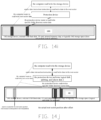
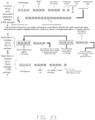
- FIG. 2a a structure diagram of an intermediate device is shown in FIG. 2a .
- the intermediate device 200 is provided with a first interface 201 and a second interface 202, wherein the first interface 201 is used for connecting a storage device, and the second interface 202 is used for connecting a computer device.
- the storage device is connected with the first interface 201 of the intermediate device and the second interface 202 of the intermediate device 200 is connected with the computer device.
- first interfaces can be more than one, so that the intermediate device can connect multiple storage devices at the same time.
- the first and second interfaces can be Universal Serial Bus (USB) interfaces.
- the first interface can also include eMMC (Embedded Multi Media Card) interface for direct access to SD card and TF card, etc., and can include SATA (Serial Advanced Technology Attachment) interface, NVMe (NVM Express), M.2 and other data interfaces for direct access to hard disks, flash memory, SSD storage devices, etc.
- SATA Serial Advanced Technology Attachment
- NVMe NVM Express
- M.2 M.2 and other data interfaces for direct access to hard disks, flash memory, SSD storage devices, etc.
- the protection module is arranged at an interface of the computer device for connecting the storage device.
- Another embodiment of the application provides an intermediate device (or module) connected between a computer and a removable storage device to solve the problem that a removable storage device (e.g., a USB flash disk, an SD card, a removable optical drive, a removable hard disk, etc.) is connected to a computer for copying data, because the current communication protocol and related technology do not restrict the data permissions, thereby generating the problem of data risk.
- a removable storage device e.g., a USB flash disk, an SD card, a removable optical drive, a removable hard disk, etc.
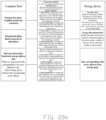
- interaction logic there are two kinds of interaction logic in the solution provided in the embodiment of the present application: one is the interaction logic as an intermediate device: a computer device sending instructions - > an intermediate device performing permission controls - > a storage device responding - > reading and writing an internal storage medium.
- the other is as an integrated device (such as a storage device with a protection module), and the interaction logic is reduced to: a computer device sending instructions - > a control chip of a storage device filtering and responding (Hardware integration: protection chip + control chip; Software integration: the control chip has a protection method module + read-write control module) - > reading and writing internal storage medium.
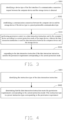
- Step S101 performing permission control on a data interaction instruction sent by the computer device according to a current protection mode of the target device, wherein the data interaction instruction is used for data interaction between the computer device and the storage device.
- step S101 may comprise: determine the current protection mode when receiving the data interaction instruction sent by the computer device, wherein the current protection mode is one of at least one protection mode preset by the protection module.
- performing permission control on the data interaction instruction sent by the computer device may specifically be:
- the data interaction instruction satisfies the permission requirement corresponding to the current protection mode, when the data source directed by the data interaction instruction is one of at least one data source specified by the current protection mode, and the operation type of the data interaction instruction on data in the data source conforms to an operation type specified by the current protection mode.
- the protection module is an intermediate device or a storage device, and the intermediate device or storage device is equipped with an interaction device, the method provided in this embodiment may also comprise the following steps:
- the above-mentioned interaction control with at least two selections is, e.g. a knob switch, a switch with multiple stop locations, a switch with multiple toggle positions, and so on.
- an intermediate device or a storage device with the protection module may also be free of an interaction device.
- the current protection mode can be pre-set or set in real time. Specifically, it can be set by toggling a switch, remote control, and computer configuration.
- the target device (such as the intermediate device or storage device with a protection module mentioned above) is provided with a physical switch to select the protection mode, and the current protection mode is selected by toggling the physical switch.
- the target device is provided with a communication unit such as Bluetooth, infrared, or ultra-wideband to be used to connect with the remote-control device, through which the current protection mode is selected.
- the target device communicates with a computer device with global permissions, through which the current protection mode is selected. It should be noted that for the computer configuration mode, it should be set before the storage device interacts with the computer device.
- the protection modes include but are not limited to whole-disk read-only mode, specific file read-write mode, address-limited read-write mode, file-limited read-write mode, decryption read mode, encryption write mode, and logical split disk mode.
- the whole-disk read-only mode indicates that all files in the storage device are allowed to be read; the read-write mode for specific files indicates that specific files in the storage device are allowed to be read and written; the address-limited read-write mode indicates that the files corresponding to the target sector address in the storage device are allowed to be read and written; the file-limited read-write mode indicates that the files with the characteristics of the target file in the storage device are allowed to be read and written, the decryption read mode indicates decrypting the data in the reading process; the encryption write mode indicates encrypting the data in the writing process; and the logical split disk mode indicates the mode in which the storage device is split and connected to the computer.
- the at least one protection mode may include, but is not limited to: read-only mode, specific file mode, blank file mode, sector limited mode, file type restriction mode, encryption write mode, decryption read mode, manual confirmation mode, logical split disk mode, hardware type access protection mode, data information protection mode for storage device, device privacy protection mode, backup mode, etc.
- Read-only mode the data source specified in the read-only mode is the overall data of the storage device, and the specified operation type is read-only type;
- the whole-disk read-only mode above can be understood as the read-only mode.
- the specified data source in the specific file mode is at least one specific file in the storage device, and the specified operation type is a read, write, or read-write type.
- Blank file mode the data source specified in the blank file mode is at least one blank file automatically created and/or manually created in the storage device, and the specified operation type is write type or read-write type.
- Sector limited mode the data source specified in the sector limited mode is at least one specific sector range in the storage device, and the specified operation type is a read type, a write type, or a read-write type.
- File type restriction mode The data source specified in the file type restriction mode is at least one specific type of file in the storage device, and the specified operation type is read, write, or read-write.
- Encryption write mode the data source specified in the encryption write mode is data in at least one first sector range, at least one first file and/or at least one type of file in the storage device, and the specified operation type is a write type.
- Decryption readout mode the data source specified in the decryption readout mode is the data in at least one second sector range in the storage device, at least one second file, and/or at least one type of file, and the specified operation type is a read type.
- the data source specified in the manual confirmation mode is the data in at least one third sector range in the storage device, at least one third file and/or at least one type of file, and the specified operation type is a read-write type.
- Logical split disk mode the data source specified in the logical split disk mode is at least one split disk in the storage device, and the specified operation type is a read type, or a write type, or a read-write type.
- Hardware type access protection mode the hardware type access protection mode does not have a specified data source, and in the hardware type access protection mode, determines whether the storage device is a specified device type.
- Data information protection mode for the storage device the data information protection mode for storage device does not have a specified data source, in the data information protection mode for the storage device, the data information of the storage device sent to the computer device is protectively processed, and the data information of the storage device after protective processing is sent to the computer device in the enumeration phase.
- Device privacy protection mode in which the device privacy protection mode does not specify a data source, and in the device privacy protection mode, the device privacy information sent to the computer device is protectively processed.
- protective processing may include, but is not limited to: protective processing for hardware characteristic parameters of storage devices (such as packaging, deletion, etc.), protective processing for storage information related parameters of storage devices, and protective processing for device information of storage devices (such as manufacturer information, etc.) to protect the device privacy of storage devices, etc.
- the backup mode does not have a specified data source
- the data written to the computer device is synchronously written to the specified backup storage area
- the protection module reads the data corresponding to sector addresses written by the computer device and writes them to the specified backup storage area before executing the write instruction, and/or the data of the important data sector of the connected storage device is backed up and stored in the specified backup storage area; If the restore is triggered, the data in the specified backup storage area is read out and written to the original data sectors of the storage device.
- Each of the above protection modes can also be combined in a variety of modes.
- the logical split disk mode, the specific file mode, and the sector limited mode can be combined, so that the current protection mode is the combined mode after the combination of these three modes.
- the permission control in the present embodiment is the process of controlling the data interaction between the computer device and the storage device based on the read-write range corresponding to the current protection mode. It should be understood as permission control in a broad sense, that is, as long as the purpose of controlling data interaction can be achieved, it belongs to the permission control defined in the embodiment of the present application.
- read/write permission include read-only, write-only, and read-write permissions.
- the read/write permission can be read-only, write-only, or read-write permission for different objects.
- the read/write permission is read-only for all files on the storage device.
- the read/write permission is at least one of read-only, write-only, and read-write permissions for the specific file. It is understandable that the read/write permission of other modes can be derived based on the above examples, and will not be repeated here.
- Step S102 responding to the data interaction instruction if the data interaction instruction satisfies the permission requirement corresponding to the current protection mode.
- a data interaction instruction includes a data read instruction sent by a computer device to read data from a storage device, and a data write instruction to write data to a storage device. It is understandable that when the read/write permission is the read permission, the data read instruction can be supported; When the read/write permission is the read permission, the data write instruction can be support; When the read/write permission is read-write, data read instruction and data write instruction can be supported.
- the target device is an intermediate device with a protection module
- the intermediate device receives data an interaction instruction sent by the computer device, and perform permission control on the data interaction instruction based on the current protection mode, and forwards the data interaction instruction to a storage device if the data interaction instruction meets the permission requirements, so that the storage device performs the read/write operation corresponding to the data interaction instruction.
- the target device is a storage device with a protection module
- the storage device receives data an interaction instruction sent by the computer device, and perform permission control on the data interaction instruction through the current protection mode of the protection module, and the storage device performs the read/write operation corresponding to the data interaction instruction if the data interaction instruction meets the permission requirements.
- the present application protects computer device and storage devices through a variety of protection modes, which can meet the application needs of users in different protection scenes; At the same time, the protection model of the target device is used to perform permission control and improve the security of computer devices and storage devices.
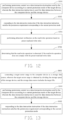
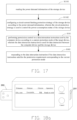
- FIG. 3 is a flow chart of the data security protection method of the second embodiment of the present application; The same steps as in FIG. 1 will not be repeated here. As shown in FIG. 3 , the method further comprises:
- the preset permissible communication types include, but are not limited to, the mass storage device type or other preset security types.
- the device type of the first interface can be determined by the read descriptor parameter. It is understandable that for the target device that is an intermediate device with a protection module, the descriptor parameters of the storage device are read from the storage device through the first interface of the intermediate device. For the target device that is a storage device with a protection module, the storage device can retrieve its pre-stored descriptor parameters.
- the target device is an intermediate device with a protection module
- the intermediate device is provided with a first interface for connecting a storage device and a second interface for connecting a computer device;
- the following is further comprised: detecting the communication connection request between the computer device and the storage device when the first interface is connected to the storage device, and the second interface is connected to the computer device.
- the intermediate device when an intermediate device is connected with a storage device and a computer device respectively, the intermediate device is powered on, and after analyzing the data information of the storage device and determining that it meets the requirements (such as determining that the storage device belongs to the device type specified in the current protection mode), the intermediate device sends an enumerable signal to the computer device, and then the computer device initiates an enumeration action to obtain the data information in the storage device. Based on the current protection mode, the intermediate device performs protective processing on the data information of the storage device, and feeds back the data information of the storage device after protective processing to the computer device, so as to establish a communication connection between the computer device and the storage device.
- the target device is a storage device with a protection module
- the following is further comprised: detecting the communication connection request with the computer device when the storage device is connected to the computer device.
- the computer device after the storage device is physically connected with a computer device, in order to realize data interaction between the two, the computer device sends a communication connection request to the storage device, or the storage device sends a communication connection request to the computer device, and listens to the communication connection request through the protection module on the storage device.
- the storage device may be implanted with malicious programs such as Trojan viruses in other ways for some reasons, and the storage device itself does not discover the malicious program when it is not powered on, after the storage device is physically connected with the computer device and the storage device is powered on, in order to ensure the security of the computer device, the communication connection request between the computer device and the storage device is listened to so that the storage device can be identified subsequently.
- malicious programs such as Trojan viruses
- the following is further comprised: interrupting the communication connection request if the device type is a preset prohibited communication type.
- the preset prohibited communication types include, but are not limited to, human interface device (HID), composite device with mass storage device (Mass Storage) and HID, or composite device types with other functions.
- a human interface device is a device class definition
- HID devices such as a keyboard, mouse, game controller, joystick, barcode reader, volume control on headphone/speaker, auxiliary display, sensor, etc.
- an interception information is also fed, and the interception information is used to indicate that the storage device is a prohibited communication device.
- the interception information is used to instruct the computer device to prompt via a drive letter string, for example, the computer device displays that the connected device is named "Rogue Device".
- the computer device displays that the connected device is named "Rogue Device”.
- indicator flashing or turning red means that the storage device currently connected to the storage device is forbidden device.
- the illegal device can be avoided from being disguised as a keyboard and mouse device and other access to the computer device by verifying the device type of the storage device, so as to avoid the illegal device from causing security risks to the computer device and improve the security of the computer device.
- the step S302 comprise: sending target hardware characteristic parameters of the storage device to the computer device, wherein the target hardware characteristic parameters are used to establish a communication connection between the computer device and the storage device.
- the target device when the target device is an intermediate device, the target hardware characteristic parameter of the storage device is obtained, and the target hardware characteristic parameter is forwarded to the computer device; when the target device is a storage device with a protection module, the pre-stored characteristic parameters of the target hardware are sent to the computer device.
- the hardware characteristic parameters are parameters used to characterize the characteristics of the storage device, which include but not limited to the device manufacturer and product ID, device attribute, class used by the interface (such as mass storage device), endpoint attribute (such as bulk transfer), character string, transmission rate, power demand, etc.
- the hardware characteristic parameters need to be verified.
- the computer device establishes a communication connection with the storage device according to the hardware characteristic parameters.
- the target hardware characteristic parameter may be a hardware characteristic parameter directly obtained from a storage device.
- the target hardware characteristic parameter may be a characteristic parameter after filtering the hardware characteristic parameter directly obtained by a storage device.
- the target hardware characteristic parameter may be a preset hardware characteristic parameter that matches the hardware characteristic parameter obtained directly by the storage device.
- the characteristic parameters of the target hardware may also be directly preset by the protection module.
- the sending the target hardware characteristic parameter of the storage device to the computer device comprises:
- a preset hardware characteristic parameter corresponding to the device type is obtained from a preset parameter template, and the preset hardware characteristic parameter replaces the hardware characteristic parameter obtained from the storage device as the target hardware characteristic parameter.
- the preset parameter template includes preset hardware characteristic parameters corresponding to different device types that can be read by a computer and allow communication to be established.
- the hardware characteristic parameters of the storage device are replaced and modified according to the hardware characteristic parameters corresponding to the device type, so as to protect the hardware characteristic parameters of the storage device from being acquired, so as to achieve secure access while protecting the privacy of storage devices.
- the sending the target hardware characteristic parameters of the storage device to the computer device comprises:
- the hardware characteristic parameters are screened to retain the target hardware characteristic parameters corresponding to the preset parameter types, and the screened target hardware characteristic parameters that meet the preset parameter types are sent to the computer device, and other parameters as unknown parameters are not sent to the computer device, so as to avoid sending illegal parameters of the storage device to the computer device, thereby ensuring the data security of the computer device.
- the embodiment of the present application provides a mechanism to simulate the characteristic parameters of the storage device, that is, the method provided by this embodiment may also comprise the following steps:
- step 13 "generating a second characteristic parameter that simulates the storage device based on the first characteristic parameter” comprises:
- the parameter template replacement described above further protects computer device and hardware features. That is, before formal connection to the computer, the parameter template is used to replace or screen. Using a fixed template can prevent malicious or unknown and risky parameters in the hardware descriptor of the connected storage device from attacking the computer. For example, a storage device may have malicious hardware parameters. When a computer is connected, security software with a buffer overflow vulnerability may execute malicious instructions contained in the malicious hardware parameters when detecting the descriptor. By replacing the parameter characteristics, the hardware parameter values such as the vendor ID, device ID, and character string of the connected storage device can also be modified through the protection module.
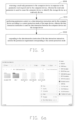
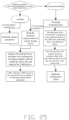
- FIG. 4 is a specific flow chart of step S101.
- step S101 comprises:
- the instruction type includes a data read instruction sent by the computer device for reading data in the storage device, or a data write instruction for writing data to a target location in the storage device.
- the protection module analyzes the data interaction instruction based on the preset analysis rules to identify the actual interaction function of the data interaction instruction, and determines the instruction type according to the actual interaction function, so that the instruction type can be used as the identification basis to directly effectively perform permission control on the data interaction instructions sent by the computer device, and prevent the data interaction instructions from illegally reading and writing the storage device through camouflage and other methods, thereby improving the security of the storage device.
- the current protection mode is a read-only mode for file A
- the instruction type corresponding to the read-only mode should be a data read instruction, so if the instruction type is a data write instruction for file A, this instruction type cannot satisfy the permission requirements of the current protection mode; if the instruction type is a data read instruction for file A, then this instruction type meets the permission requirements of the current protection mode.
- the protection mode is a read-only mode
- FIG. 5 is a flow chart showing the data security protection method of the third embodiment of the present application; The same steps as in FIG. 1 will not be repeated.
- the method further comprises: Step S501, returning a read-only parameter to the computer device in response to the parameter read request sent by the computer device, wherein the read-only parameter is used to cause the computer device to identify the storage device as a read-only device.
- the read-only parameter is used to cause the computer device to identify the storage device as a read-only device.
- the computer device establishes a communication connection with the storage device and reads the read-write status of the device from the storage device, in the read-only mode, the target device feeds back a read-only parameter to the computer device to indicate that the storage device is read-only device, so that the computer device can recognize it as a read-only device, and the computer device will send only data read instructions to the storage device under normal circumstances, and to reduce the number of invalid instructions sent other than data read instructions.
- the above read-only mode can be compatible with other read-write modes, such as any one of the whole-disk read-only mode, read-only mode under specific file read-write mode, read-only mode under limited read-write mode, and the read-only mode under the file limited read-write mode.
- the specific implementation effect of read-only mode Let the computer device identify a read-only device, and when the computer sends a request to obtain the read-write status of the device, the protection module feeds back the parameters of the read-only status. For example, when the computer device sends a configuration command (MODE 6) for obtaining the storage device, the protection module returns response information indicating that the storage device is a read-only device. The computer device will set the device as a read-only device at the driver layer, and does not allow data to be written.
- MODE 6 configuration command
- the protection module replies with parameter data with read-only status. For example, as a normal storage device (such as a USB flash disk), it will reply to the "0x03 0x00 0x00 0x00" status as read-write. In the read-only protection mode, replace the second bit (count from bit 0) with 0x08, and reply "0x03 0x00 0x08 0x00". After the computer device recognized the device, set it as a read-only device. For example, there is no button to create a folder on the interface, and the files of the computer device cannot be dragged and copied to the storage device.
- SCSI a smart universal interface standard
- UFI command block protocol
- the protection module performs whitelist filtering on all communication commands sent by the computer device, and only allows information related to initialization and reading data to be forwarded to the storage device. Other non-whitelisted information (such as SCSI or UFI command code which is 0x28 (write instruction)) is directly discarded; or information of write operation (such as SCSI or UFI command code which is 0x28 (write instruction)) is prohibited from sending to the storage device to ensure storage device is always in a non-writable status at the communication layer, which effectively prevents malicious software from forcibly writing data to the storage device by bypassing the restrictions of the operating system.
- non-whitelisted information such as SCSI or UFI command code which is 0x28 (write instruction)
- information of write operation such as SCSI or UFI command code which is 0x28 (write instruction)
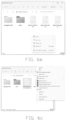
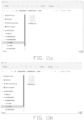
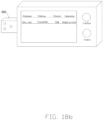
- FIGS. 6b-6d are example diagrams showing the whole-disk read-only mode.
- the intermediate device sets the connected removable storage medium to read-only
- there is no menu button for "creating" file in the called menu such as clicking the right mouse button, etc.
- FIG. 6c in the whole-disk read-only mode, there is no "delete” menu button in the called menu.
- the file cannot be edited and written, as shown in FIG. 6d , a prompt window is displayed.
- 6b, 6c , and 6d are at the operating system and are read-only configurations level based on read-only parameters. If the user writes forcibly, the protection module also intercepts the written data interaction instruction.
- the "whole-disk" of whole-disk read-only has a special meaning. It does not refer to the real whole hard disk, but refers to the "whole-disk" of a connected the data source. For example, in the following logical split disk and specific folder modes, it can also be set to only read.
- FIG. 7 is a flow chart of specific steps of step S102.
- the step S102 comprises: Step S601, performing read/write operation on the target file in the storage device in response to the data interaction instruction, wherein the read/write operation include at least one of a read operation and a write operation.
- the read operation includes reading the file data (that is, the data corresponding to sector address) in the target file, and returning the file data to the computer device;
- the write operation includes writing the data carried in the data interaction instruction to the target file (that is, the corresponding sector address).
- the target file is a file displayed on a computer device and allowed to be read and written by the computer device, including but not limited to a specific file based on sector mapping, a file corresponding to a preset sector address, and a file with preset file characteristics.
- the target device is an intermediate device
- the intermediate device forwards the data read instruction that meets the permission requirements to the storage device, so as to perform a read operation on the target file in the storage device.
- the target device is a storage device with a protection module
- the storage device performs a read operation in its target file according to the data read instruction.
- the target file is used as the object of the read-write operation, so as to limit the read-write operation of the computer device to the read-write range under the current protection mode, thereby realizing effective control of the read-write operation and improving the security of the computer device and the computer device.
- the step S601 includes:
- the target file is a specific file, which is a file that is pre-selected by the user or automatically created by the protection module and allowed to be read and written by the computer device, which can be displayed to the user on the computer device.
- Mapping a specific file to a target address refers to mapping the sector address of a specific file in a storage device to a target address.
- the target address may be a certain sector address in the target device, or a certain sector address in the storage device different from the specific file, or a certain sector address of other storage devices connected to the target device, so that the computer device can only recognize the existence of a specific file (that is, only the specific file is displayed to the user on the computer device), so that only the specific file can be read and written.
- a specific file that is, only the specific file is displayed to the user on the computer device
- the specific file should be explained in an expanded manner, and the specific file can be a minimum-level file (for example, an A.txt text file), and the specific file can also be a folder.
- the specific file can be pre-selected, for example, the user can select the file through a computer device with global permission, and the specific file can also be automatically created by the target device.
- the specific file when the storage device is connected to the computer device with global permission through the target device, the specific file can be put into a temporary sector area created by the target device to complete the file selection, so that the specific file can be mapped with the storage device.
- a specific file read-write mode includes at least one of read-only mode, write-only mode, and read-write mode for a specific file.
- the target device will screen the instruction type of the data interaction instruction sent by the computer device, and only execute the data read instruction. For other types of instructions other than read instruction included in the data interaction instructions, the other types of instructions are not executed and the information that the execution has been completed is fed back to the computer device. If the read-write mode of the specific file is the readable and writable mode for the specific file, the target device responds to both the read instruction and the write instruction in the data interaction instruction sent by the computer device.
- the target device pre-reads the sector address range of the root directory of the storage device (including the first address to the last address of the sector, and the order of address locations can be discontinuous) and the specific file's data sector address range.
- the protection module analyzes that the sector address to be read and written by the data interaction instruction is within the address range of the root directory, it will read and write within the address range corresponding to the specific file, while the data in the original root directory cannot be accessed.
- the read and write of specific files can be realized through the read and write limit: the target device prohibits read and write for the data area of the non-specific file by establishing the read and write limit area, and for other file s than the specific file, it is only allowed to write in blank data area.
- a specific file is selected and mapped to the target device so that the computer device can only recognize the existence of the specific file, preventing the computer device from directly reading or writing the data of the non-specific file in the storage device, thereby protecting the data security of the storage device.
- the method provided in this embodiment further includes the following steps:
- the user When it is set to the specific file read-write, the user first creates a fixed specific folder in the storage device, or the protection module automatically creates a fixed specific folder in the storage device, and can pre-store the folder or file data that needs to be read by the computer device, so that the computer device can read data, modify data or copy files, and can also set a read-only mode.
- the protection module When it is set to read and write to a blank folder, the protection module will automatically create a new folder in the storage device as a specific folder, so that the computer device can get the data of a "blank disk" when reading the root directory.
- the computer device can cause the computer device to intelligently read and write specific files or folders that the user allows to operate, or can automatically create a new blank folder for the computer device to only write new files, but cannot read existing files, etc.
- the available space is the remaining space of the actual storage device.
- the storage device not connected with the intermediate device or the storage device without the integrated protection module is directly connected to the computer device, and all the files in the root directory of the storage device are displayed first. Then click to open the "root directory/SAFEDIR.NEW/THEDIR.NEW” folder, and the files in this folder are displayed: THEFILE_1.txt, THEFILE_2.txt. Assuming that the solution provided by the embodiment of the present application is adopted, the "root directory/SAFEDIR.NEW/THEDIR.NEW/" folder is set as a specific folder.
- the method provided in this embodiment may also include the following steps: After the computer device establishes communication with the storage device and receiving a request from the computer device to read the root directory address of the storage device, determining address information of at least one specific file or file that has a mapping relationship with the root directory address based on the mapping relationship to read data corresponding to the address information.
- the addresses recorded by the root directory data of the storage device are: the 3rd cluster (recording the 4th cluster), the 4th cluster (recording the 5th cluster), and the 5th cluster (recording end mark).
- the addresses recorded in the specific folder data are: the 6th cluster (recording the 7th cluster), the 7th cluster (recording the 8th cluster), and the 8th cluster (recording end mark).
- the protection module reads the data of the file allocation table of the storage device, replaces it with being in the 3rd cluster (recording the 7th cluster) and return it.
- the computer when the computer reads the second cluster of the cluster linked list of the root directory data (the data of the first cluster can pass the mapping between sector addresses), it directly jumps to the cluster chain of the specific folder data (the second cluster of the specific folder) Cluster), further read the sector address of the specific folder data.
- the file system boot information generally stores the address (such as cluster number) of the content data of the first directory.
- the protection module reads the boot information sector data of the storage device, replaced the first directory address with being in the 6th cluster (recording the 7th cluster) and return it, so that the computer immediately takes the data beginning with the 6th cluster (the first cluster of the specific folder data) as the root directory data.
- the address information of the at least one specific file or folder includes: the first sector address of at least one specific file or folder; or the cluster or block information recorded in the file allocation table for at least one specific file or folder.
- the above-mentioned file system boot information sector address and file allocation table sector address are based on the file system and are obtained by the protection module pre-reading and analyzing data of the storage device.
- the target file includes an existing specific file or preset file of the storage device, or a file automatically generated before the computer device establishes a communication connection with the storage device.
- the existing characteristic file is a file permanently present in the storage device
- the preset file can be a blank file, that is, any existing data in the storage device will not be displayed in the preset file; the preset file can also be preset files containing non-critical data.
- the preset file can be automatically created before the storage device is connected to the computer device, or it can be an original blank folder of the storage device, or a temporary folder generated by the target device.
- the computer device may display the written data, or may not display the written data.
- the protection module automatically creates a fixed specific folder in the storage device.
- the execution subject protection module of the method provided in the embodiment of the present application also has the function of automatically creating a specific folder.
- the method provided in this embodiment also includes the following steps:
- the carrier of the protection module such as storage device, intermediate device, computer device, trusted device and other devices with interactive modules, will output prompt information whether to set a blank file or folder. If the user gives a confirmation instruction to the prompt information for setting a blank file or folder, a file or folder is created in the storage device as the specific file or folder corresponding to the specific file mode. If the user triggers a negative indication for the prompt information for setting a blank file or folder, it will wait for the user to designate at least one file or folder in the storage space as the specific file or folder corresponding to the specific file mode.
- the protection module provides the user with the option to choose to create a blank file as a specific file or folder, or to specify a file or folder as a specific file or folder, and the protection module determine a specific file or folder corresponding to the specific file pattern in the storage area according to the user's instruction.
- the protection module may also randomly determine an existing file or folder as the specific file or folder corresponding to the specific file mode.
- the protection module selects at least one file or folder conforming to the strategy or algorithm from the storage space as a specific file or folder corresponding to a specific file pattern; specific files or folders can be automatically created without human intervention based on a preset strategy (such as file paths and file names).
- this embodiment does not limit the specific implementation of the selection strategy or algorithm.
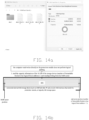
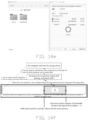
- FIGS. 9b and 9c show example diagrams corresponding to a specific folder in a specific file mode.
- FIGS. 9a and 9d show what can be seen from the perspective of global permissions (that is, no specific folder mapping, no specific folder mode), the purpose is to produce a contrast effect and reflect the difference between the solutions of this application.
- global permissions that is, no specific folder mapping, no specific folder mode
- This folder can be created by the user or automatically generated by the protection module.
- FIG. 9b shows an example of continuing to add a new file THEFILE_3_NEW.txt in a specific file mode (mapped to a fixed specific file).
- FIG. 9d shows the situation that the newly added THEFILE_3_NEW.txt file in the THEDIR.NEW folder can be seen from the perspective of global permissions (that is, no specific folder mapping is performed, and the specific folder mode is not enabled).
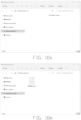
- FIGS. 10a, 10b , 10c and 10d show examples of blank folders corresponding to specific files in the specific file mode.
- the USB flash disk displayed on the interface of the computer device is empty, as shown in FIG. 10a .
- the USB flash drive has data, but because the specific folder is a blank folder, and it is mapped to the blank folder, so that the USB flash drive is empty and has no data from the perspective of the user of the computer device.
- FIG. 10b shows the situation of the NEWFILE_1 file created automatically or by the user when the current protection mode is a blank folder under the specific file mode.
- FIG. 10b is the corresponding situation when the USB flash drive is running for the first time, and the user can see the newly created blank file.
- FIG. 10c shows that when the current protection mode is a blank folder under the specific file mode, the USB flash drive runs for the second time (that is, the USB flash drive with the protection module or the USB flash drive connected with the intermediate device is connected to the computer device again), and the file NEWFILE_1 in the above-mentioned FIG. 10b is not visible.
- FIG. 10d shows the situation of the NEWFILE_2 file created automatically or by the user when the current protection mode is a blank folder under the specific file mode. Because it is newly created this time, the user can see the NEWFILE_2 file.
- FIGS. 11a and 11b show viewing NEWFILE_1 file and NEWFILE_2 file from the global permission perspective and the directories corresponding to the two created files.
- a subdirectory 1.NEW is automatically created under the NEWDIR.NEW directory of the USB flash disk, and there is a NEWFILE_1 file created by running the "blank folder mode" for the first time.
- the 2.NEW subdirectory is automatically created under the NEWDIR.NEW directory of the USB flash disk, and there is a NEWFILE_2 file created by running the "blank folder mode" for the second time.
- the logical split disk mode divides the storage space (such as available space) of the storage device when splitting the disk.
- the step S601 includes:
- sector limited read-write mode for storage device users, data in a specific sector range of the storage device can be protected from being read, modified or written (based on the sector range).
- specific sector data cannot be read, which can protect computer device from malicious data attacks.
- the specific implementation method is: When the computer device sends an interaction instruction to read sector data or write sector data to the protection module, the protection module judges whether the sector address operated by the interaction instruction conforms to the preset specific sector range rules, and executes it if it does doesn't execute if it does not comply.
- the protection module can return a response of successful execution, response of blank data, and response of other non-real data, so that the computer thinks that the execution is successful. In fact, the protection module does not actually operate the data of the storage device, so as to prevent the computer device from continuously attempting to operate because the operation fails.
- the specific sector range can be manually preset, for example, the sector range from 0 to 9999 can only be read, the sector range from 50000 to 69999 can only be written, and the sector range from 80000 to 99999 can neither be read nor written, and other sectors can be read and written.
- the specific sector range can also be automatically set by a protection module or an external device. For example, when further protecting read/write permission for specific file data (e.g. during preparation):
- the address limited read-write mode includes a read-only mode, a write-only mode, and a readable-writable mode for files within a preset sector address range.
- the preset sector address range includes all sector addresses that are allowed to be read and written by the computer device, which can be obtained by setting in advance.
- the protection module identifies the target sector address to be read and written in the data interaction instruction, and executes the read/write operation when the target sector address is within the preset sector address range, thereby controlling the computer device to be capable of reading and writing the sector address of data to protect the data security of the storage device.
- the target sector address of the file to be read and written by the data interaction instruction is the 0th to 499th sector of the storage device.
- the target sector address is not within the preset sector address range if the current address limited read-write mode allows reading and writing of sectors 0 to 499 of the storage device, the target sector address is within the preset sector address range.
- the allowable reading and writing range of the storage device can be limited to the preset sector address range, so as to meet certain scenarios that require limited reading and writing.
- the step S601 when the protection mode is a file-restricted read-write mode, the step S601 includes:
- the computer device is restricted from reading or writing files that meet the preset rules to the storage device.
- the preset rules of the file include file name, file type (such as file name naming rules, file suffix, file content corresponding Eigenvalues at specific locations, etc.
- the step S601 includes: For storage device users, the data of specific file types of storage devices can be protected from being read (for example, only DOC documents can be read, or PDF type files cannot be read), modified (for example, only DOC documents can be modified) , or prohibit reading PDF type files), delete (for example, prohibit deletion of DOC documents, or only delete PDF type files), create (for example, prohibit writing files whose file type is EXE executable file type, only create DOC documentation). For computer device users, it can protect computer device from malicious programs. For example, only PDF and DOC files need to be copied in daily work scenarios, and only PDF and DOC files in the storage device are allowed to be read or written. Other files Types (such as EXE executable files) are prohibited from being read, so as to prevent advanced Trojan horse virus files from bypassing security software restrictions and attacking computer device.
- EXE executable files are prohibited from being read, so as to prevent advanced Trojan horse virus files from bypassing security software restrictions and attacking computer device.
- the data interaction instruction satisfies the permission requirements corresponding to the current protection mode, and the data interaction instruction is to determine the sector address when reading or modifying file content data, read or write the data of the corresponding sector of the storage device and return;
- the data written by the computer device is A.txt and B.txt (marked as deleted) containing file information, or the written data is A.txt containing only file information, then it is judged that the computer device will delete B .txt file;
- the data written by the computer device is A.txt, C.txt (other attributes of the file remain unchanged), or the written data contains file information as A.txt, B.txt (deleted status), C.txt (other file attributes are consistent with B.txt), then it is judged that the computer device will modify the B.txt file name to C.txt;
- the data written by the computer device is A.txt and B.txt (data such as file creation time are inconsistent with the existing data of the storage device) that include file information, then it is judged that the computer device will modify the file attribute information of B.txt.
- Table 3 to Table 6 shows examples of judging creating a file, judging deleting a file, judging modifying a file name, and judging modifying a file attribute.
- the protection module pre-records the folder showdir (at least one or more or all folders, including the root directory, etc.) sector address set (at least one sector address).
- the protection module will pre-read the corresponding sector data for comparison and determination before performing the write operation, and execute the next step according to the preset protection mode operate.
- Table 3 An example of judging the creation of a file 1.
- the protection The set of recorded sector addresses includes: Set the set of sector module pre-records the folder showdir sector address collection 0x00010038 addresses to be identified by file operations 2.
- Data interaction instructions sent by computer device Write sector addresses include: 0x00010038 Hit the identified sector address
- Data written to sector addresses 0x00010038 are: 2e20202020202020201000a5f5b3
- the data written are: a856a8560000f6b3a8561b0000000000 A.txt , B.txt , and C.txt , total of 3 files 2e2e2020202020202020201000a5f5b3 a856a8560000f6b3a856000000000000000
- 42202020202020205458542010a10ab4 a856a8560000cdb3a8561c0007000000 41202020202020205458542010a40ab4 a856a8560000c863a8561d0006000000 43202020202020205
- the protection module reads the comparison data before performing the write operation
- Write sector addresses include: 0x00010038;
- the comparison data are: Data of sector addresses 0x00010038 are: A.txt , B.txt , total of 2 files 2e20202020202020201000a5f5b3 a856a8560000f6b3a8561b0000000000 2e2e202020202020201000a5f5b3 Comparison result: C.txt file data will be added to the original storage sector (or folder showdir).
- Protection module determining operation The computer device wants to create C.txt files to the folder showdir 5. The protection module performs the next operation according to the protection mode: whether creation is allowed, etc., or other protection mode is triggered, etc. Table 4. Example of judging deleting files 1.
- the protection module pre-records the folder showdir sector address collection
- the set of recorded sector addresses includes: 0x00010038 Set the set of sector addresses to be identified by file operations 2.
- Data interaction instructions sent by computer device to protection module (type 1) Write sector addresses include: 0x00010038 Hit the identified sector address
- Data written to sector addresses 0x00010038 are: 2e20202020202020201000a5f5b3
- the data written are: A.txt .
- Data interaction instructions sent by computer device to protection module (type 2) Write sector addresses include: 0x00010038 Hit the identified sector address
- Data written to sector addresses 0x00010038 are: 2e20202020202020201000a5f5b3
- the data written are: A.txt and C.txt, total of 2 files a856a8560000f6b3a8561b0000000000 2e2e202020202020201000a5f5b3 a856a8560000f6b3a856000000000000 41202020202020205458542010a40ab4 a856a8560000c863a8561d0006000000 432020202020202054585420109a8cb4 a856a8560000d1b3a85626000d000000 00000000000000000000 ...
- the protection module reads the comparison data before performing the write operation
- Write sector addresses include: 0x00010038;
- the comparison data are: Data of sector addresses 0x00010038 are: 2e20202020202020201000a5f5b3 A.txt , B.txt , and C.txt, total of 3 files a856a8560000f6b3a8561b0000000000 2e2e202020202020201000a5f5b3 a856a8560000f6b3a856000000000000000
- Comparison result B.txt file in the original storage sector space (or folder showdir) will be marked as deleted (Type 1) or B.txt file data will be cleared (Type 2) 42202020202020205458542010a10ab4 a856a8560000cdb3a8561c0007000000 41202020202020205458542010a40ab4 a856a8560000c863a8561d0006000000 43202020202020
- Protection module determining The computer device wants to delete B.txt files in the folder showdir 5. The protection module performs the next operation according to the protection mode: whether creation is allowed, etc., or other protection mode is triggered, etc. Table 5. Example of judging and modifying file names 1. The protection module pre-records the folder showdir sector address collection The set of recorded sector addresses includes: 0x00010038 Set the set of sector addresses to be identified by file operations 2.
- the data interaction instruction sent by the computer device to send the write data instruction Write sector addresses include: 0x00010038 Hit the identified sector address
- Data written to sector addresses 0x00010038 are: 2e20202020202020201000a5f5b3
- the data written are: A.txt and C.txt, total of 2 files a856a8560000f6b3a8561b0000000000 2e2e202020202020201000a5f5b3 a856a8560000f6b3a856000000000000 4320202020202020545854201095d31d a956a9560000cdb3a856370007000000 4120202020202020545854201098d31d a956a9560000c863a856380006000000 000000000000000000000000 ...
- the protection module reads the comparison data before performing the write operation
- Write sector addresses include: 0x00010038
- the comparison data are: A.txt and B.txt , total of 2 files
- Data written to sector addresses 0x00010038 are: 2e202020202020202020201000a5f5b3 a856a8560000f6b3a8561b0000000000
- Comparison result The B.txt file information in the original storage sector space (or folder showdir) is cleared, and C.txt file information is added.
- C. txt file information is the same except that the file name is inconsistent with the B.txt of the original file.
- the protection module pre-records the folder showdir sector address collection
- the set of recorded sector addresses includes: 0x00010038 Set the set of sector addresses to be identified by file operations 2.
- the data interaction instruction sent by the computer device to send the write data instruction Write sector addresses include: 0x00010038 Hit the identified sector address
- Data written to sector addresses 0x00010038 are: 2e20202020202020201000a5f5b3
- the data written are: A.txt and C.txt , total of 2 files a856a8560000f6b3a8561b0000000000 2e2e2020202020202020201000a5f5b3 a856a8560000f6b3a856000000000000 4120202020202017545854201063b265 a856a8560000c863a856270006000000 4220202020202020545854201068b2b5 a856a856000095b6a8562e000a000000000 0000000000000000000000000000
- the protection module reads the comparison data before performing the write operation
- Write sector addresses include: 0x00010038;
- the data comparison data are: A.txt and B.txt, total of 2 files
- Data of sector addresses 0x00010038 are: 2e20202020202020201000a5f5b3 a856a8560000f6b3a8561b0000000000 Comparison result:
- the file attributes of B.txt the 2e2e2020202020202020201000a5f5b3 a856a8560000f6b3a856000000000000000000000000000 original storage sector space (or folder showdir) is to be modified, and the modified attributes are file size and modification time.
- File data modifications may be required for modifying the file size and modification time attributes 4120202020202020545854201063b2b5 a856a8560000c863a856270006000000 4220202020202020545854201068b2b5 a856a8560000cdb3a8562e0007000000 000000000000000000000000 ... Null bytes to 512 bytes 4.
- Determine the operations of computer device Modify the file attributes of file B.txt and further determine that the file data is to be modified 5. Performs the next operation according to the protection mode: whether the file attributes or data can be modified or other protection mode can be triggered
- the attribute information to be modified can be attributes such as file size and time, and file data may also need to be modified. That is, the above step "if the file name of the first file contained in the data interaction instruction is the same as the file name of the second file in the corresponding sector address of the storage device, and the attribute information of the first file except the file name is different from that of the attribute information except the file name of the second file is different, determining that the computer device is to modify the attribute information except the file name of the second file to the attribute information except the file name of the first file" can be specifically is:
- the method provided by the embodiment of the application further comprises the following steps: based on the current protection mode, permission determination is performed on the operation to be performed by the computer device or other protection modes are triggered.
- the protection module determines whether to allow creation based on the current protection mode, or triggers other protection modes.
- the protection module When determining that the computer device is to delete the at least one pre-deleted file or determining that the computer device is to delete at least one file in the second file set that does not belong to the first file set, the protection module based on the current protection mode determines whether to allow deletion, or trigger other protection modes.
- the protection module determines whether to allow modification of the file name based on the current protection mode, or triggers other protected mode.
- the protection Based on the current protection mode, the module determines whether to allow modification of attribute information and/or modification of file data, or trigger other protection modes.
- the above other protection modes triggered may be at least one protection mode combined with the current protection mode, such as encryption write mode, manual confirmation mode, and the like.
- the type of file to be written has restrictions on creating files, modifying file attributes, deleting files, etc.: First, it can return an error status response, or return a successful execution response, or respond to blank data, or respond to other non-real data (for example, when the computer further reads verification, the protection returns the data written by it), so that the computer device thinks that the execution is successful, but in fact the protection module does not actually operate the data of the storage device, preventing the computer device from thinking that the operation failed and constantly trying to operate.
- the response may also include a determination of at least one protection mode, such as manual confirmation mode, encryption and decryption mode, and file abnormality mode.
- the address limited read-write mode includes a read-only mode, a write-only mode, and a read-write mode for files with a preset sector address characteristic.
- the preset file characteristics refer to the characteristic parameters of files that are preconfigured to allow computer device to read and write, including but not limited to file names, file suffixes, file types, file sizes, and preset sector data in file content data, hash value corresponding to a specific position in the preset sector data in the file (similar to a keyword comparison hit, for example, judging whether the 10th word on page 5 is 0x88, which is equivalent to judging whether the 10th byte in the 5th sector is 0x88) and other file characteristics.
- the file-limited read-write mode is specifically the read-only mode for the PDF file type, then when the read operation is performed, only the PDF file in the storage device is read, and other file types cannot be read.
- the target device automatically crawls the attributes of all file (such as file name, start sector address, etc.) in the storage device that are allowed to be accessed by the computer device according to preset rules of the corresponding file system, and establish the correspondence between the unique identifier of the file and the address of the starting sector.
- the read sector address of the computer device is the start address of a certain file, it considers that the file is to be read and written, and then inquires whether the file has the preset file characteristics.
- the preset file characteristic includes a first hash value corresponding to preset sector data in the file; based on the preset file characteristics, verifying the target file characteristics corresponding to the data interaction instruction, includes:
- the preset sector data is the data in the pre-selected sector.
- the preset sector is the first sector
- the second hash of the data of the first sector part where the target file to be read and written by the computer device is calculated.
- the second hash value is consistent with the first hash value
- the first hash v of ale of the preset sector data B in file A is 533c3057ec5801aa39e9257066890928.
- after verifying the characteristics of the target file corresponding to the data interaction instruction further comprises: hiding the target file if the characteristics of the target file do not conform to the preset file characteristics.
- hiding a file refers to making the computer device recognize the file.
- the way to hide the target file can be by modifying the real sector address (including the starting sector address, cluster (block) chain data, etc.) and file size of the target file, so that the computer device recognizes it as an empty file with a file size of 0 bytes, and the content data of the target file cannot be directly read; the content data in the target file can also be replaced by non-real data such as blank data in the process of returning the data packet; the target file can also be modified to delete status so that the computer device recognizes it as deleted and does not display the file.
- the replacement or modification in this embodiment is only a disguise, not a real modification of the data, but only a replacement or modification of the data displayed to the computer device.
- the computer device needs to read the file data of the storage device to display on the computing device. Then in the present embodiment, to hide the file by identifying the preset file characteristics of the file before the computer device is displayed, and it can be compatible with all the protection modes of the present application. That is, the file can be hidden in all protection modes, so that all the protection modes can be configured for permissions on the storage device after the hidden file, so that only the files that are not hidden in the storage device are read and written, so as to protect the security of the privacy data of the storage device.
- the step S601 includes:
- the protection module stores a key used for data encryption.
- the computer device sends a write instruction carrying the data to be written, and the data to be written is encrypted through the protection module to obtain the second target data, and then the second target data is written to the storage device.
- the target device when the target device is an intermediate device, the intermediate device responds to the write instruction and encrypts the data to be written through the protection module to obtain the second target data, and then forwards the second target data and the write instruction to the storage device, and the storage device writes the second target data according to a write instruction.
- the protection module verifies the identity of the user before data writing (it should be understood that verification may not be required in other embodiments), e.g., the user input the unlock password of the protection module, so that the protection module can call its pre-stored encryption key during the write operation.
- the storage device receives the write instruction, the storage device responds to the write instruction and encrypts the data to be written through the protection module to obtain the second target data and perform write operation on the second target data.
- the data to be written is encrypted by the protection module, so as to independently protect the data security of the storage device, and at the same time, the encryption key is stored in the protection module to realize separate storage of the key and data. Even after the storage device is lost, the data is difficult to be cracked, further improving data security.
- performing a read operation and/or write operation on the storage device in response to the data interaction instruction includes: feeding back second target data to the computer device in response to the data interaction instruction, where the second target data is data obtained by decrypting the data returned by the storage device in response to the data interaction instruction.
- the protection module stores a key for data decryption.
- the computer device For the scenario where the computer device needs to read the data in the storage device, the computer device sends a read instruction, obtains the target data in the storage device according to the read instruction, and decrypts the target data through the protection module to obtain the third target data.
- the key data for encryption or decryption is stored in the protection module, and the encryption or decryption operation is also performed by the protection module.
- the protection module and the storage device can be kept physically separated. When the storage device is lost, the key data cannot be obtained maliciously reversely (in the prior art, the key and the storage device are designed as a physical integration, which is easy to be reversely extracted key data, such as a USB flash disk with an encryption function);
- the key is not encrypted or decrypted by the computer, and the computer cannot obtain the key data, so as to prevent the key from being stolen after the computer is maliciously controlled (in the prior art, the key
- the key is stored in the computer, and the computer performs the encryption or decryption operation, e.g., the encryption or decryption software of the USB flash disk needs to be installed in the computer for encrypting the USB flash disk);
- the protection module knows the specific encrypted sector address range, and it is difficult to analyze for the computer reading directly through the storage device, such that
- the target device is an intermediate device
- the intermediate device forwards the read instruction to the storage device, and the storage device obtains the target data according to the read instruction to forward it to the intermediate device.
- the protection module of the intermediate device decrypts the target data to obtain the third target data, and forwards the third target data to the computer device.
- the protection module verifies the identity of the user before reading the data (it should be understood that verification may not be required in other embodiments), such as the user input an unlock password of protection module, so that the protection module can call the pre-stored decryption key during the read operation; after the computer device sends a read instruction, the storage device obtains the target data according to the read instruction, and decrypts the target data through the protection module to obtain the third target data, then return the third target data to the computer device.
- the data acquired by the storage device is decrypted by the protection module, so as to independently protect the data security of the storage device, and at the same time, the decryption key is stored in the protection module to realize separate storage of the key and data. Even after the storage device is lost, the data is difficult to be cracked, further improving data security.
- the decryption read mode and encryption write mode can be compatible with other protection modes, for example, the current protection mode can be a specific file read-write mode, decryption read mode and encryption write mode at the same time.
- the step S601 includes:
- the specific implementation method based on the preset rules of the data interaction instruction, the protection module judges whether the interaction instruction needs to be manually confirmed.
- Preset rules for data interaction instructions may include, but are not limited to:
- the advantage of this is that the user of the storage device can know the transmission process of writing or reading data or specific files, and has further fine-grained control over the sector data or specific file transmission in the storage device (which cannot be realized in the prior art, but only through read-only control); Computer device is prevented from performing operations on storage devices that users do not know, such as maliciously formatting storage devices, stealing and copying sensitive files, maliciously modifying sensitive files, or writing malicious program files, etc. At the same time, allowing computer device users to explicitly know the content of file data transmission can avoid the unreliability of computers or computer control software and antivirus software without computer software control or antivirus software.
- the manual confirmation mode is a mode that requires the user to participate in the confirmation during the data interaction process. That is, the data interaction instructions sent by the computer device need to be confirmed manually on the intermediate device or the storage device with the protection module.
- the protection module detects the read/write operation, it will prompt the user to perform confirmation on the read/write operation by turning on the light or displaying on the screen. After manual confirmation, the corresponding read/write operation is performed. It is understood that the manual confirmation mode is compatible with other protection modes.
- the target device is an intermediate device, whose schematic diagram is shown in FIG. 12 .
- the intermediate device displays the corresponding operation information.
- the confirmation option is clicked by the user, it means that the confirmation execution instruction is triggered, and the computer device is allowed to write data to the file abc.exe in the storage device.
- the cancel option is clicked, the operation is interrupted.
- this embodiment can monitor illegal behaviors in some scenarios through the manual confirmation mode, so as to avoid data leakage or security risks caused by computer device illegally reading and writing storage device without the user's knowledge, thereby improving the security of the storage device and computer device.
- the above-mentioned “responding to the data interaction instruction when the data source directed by the data interaction instruction is one of at least one of the data sources specified in the current protection mode and the operation type by the data interaction instruction on the data in the data source conforms to the operation type specified by the current protection mode" can be specifically:
- the read-only mode mentioned herein may include, but not limited to, a whole-disk read-only mode, a partial-disk read-only mode, and the like.
- the whole-disk read-only mode will be used as an example, that is, in some embodiments, if the protection mode is the whole-disk read-only mode, the step S601 includes: feeding back the third target data to the computer device in response to the data interaction instruction, wherein the data interaction instruction is a read instruction, and the first target data is data returned by the storage device in response to the read instruction.
- the whole-disk read-only mode is a mode that allows the computer device to read all file data in the storage device.
- the computer device wants to perform data interaction with the storage device, it will send a data interaction instruction. But in the whole-disk read-only mode, only when the read instruction meets the permission requirements, the target device will respond to the read instruction, and feedback the first target data to the computer device.
- the first target data is the data read from the storage device.
- the target device identifies the instruction type of the data interaction instruction and verifies it according to the read/write permission in the whole-disk read-only mode, when the data interaction instruction is a read instruction, the target device calls the first target data in the device, and send the first target data to the computer device.
- the data interaction instruction is not a read instruction, but for example a write instruction (such as instruction 2A of the SCSI protocol, which means write) or other types of instructions
- the data interaction instruction will not be forwarded to the target device.
- the protection module will not forward the data interaction instruction, and will send feedback information that the execution has been completed to the computer, so as to realize the restriction on the read/write permission of the computer.
- the data interaction between the storage device and the computer device is controlled through the whole-disk read-only mode, so as to prevent the computer device from modifying or deleting the data of the storage device, thereby protecting the data security of the storage device.
- FIG. 12 is a flow chart of the data security protection method of the fourth embodiment of the present application. The same steps as those in FIG. 1 will not be repeated. As shown in FIG. 12 , for the execution process of the read/write operation, the method further includes:
- the data interaction instructions sent by the computer are automatically verified. If they do not meet the rules, they will not be executed, or enter the manual confirmation mode for judgment.
- the specific implementation method mainly establishes rules, which mainly include but are not limited to:
- Corresponding handling based on abnormalities may include but not limited to: When the operation is prohibited, the protection module can return an error status response or a successful execution response, or respond to blank data, or respond to other non-real data, so that the computer thinks that the execution is successful, but in fact the protection module does not actually operate the data of the storage device, so as to prevent the computer from thinking that the operation failed and continuously trying to operate.
- the second is to switch to the process of the manual confirmation mode.
- the preset read-write rules include, but are not limited to, general read/write rules for sector addresses, read/write numbers of file, and the like.
- general read and write rules of the sector address usually start reading and writing from the first sector address, if the current read/write operation does not start reading and writing from the first sector address of the file, but starts reading and writing from other sectors, for example, the 100th sector to the 9999th sector of the data area are continuously read and written, it is considered that the read/write operation is abnormal.
- the read/write number of file since crawler-style read scans and reads all files in the storage device in batches, by setting the read number of file to, for example, 10, if more than 10, the read/write operation is considered to be abnormal.
- step "responding to the data interaction instruction" in the method provided by this embodiment may include:
- the above step 43 of "determining whether there is an abnormality based on the procedure information" may include at least one of the following:
- manual confirmation can be performed in combination with the manual confirmation mode, or information can be fed back to the computer device.
- the method provided in this embodiment also includes the following steps:
- FIG. 13 is a flow chart of the data security protection method of the fifth embodiment of the present application.
- the method also includes: Step S801, connecting a target sector range to the computer device as a storage data source, wherein the target sector range is obtained by dividing the storage space of the storage device, and the storage data source includes the target file.
- the storage device when the protection mode is the logical split disk mode, the storage device is logically split.
- the logical splitting is a process of dividing the storage space of the storage device based on the sector address of the storage device, which is different from the current system disk partition that only displays multiple partitions on a computer device but actually stores files in the same sector range.
- the sector address range of hard disk 1 is 0 to 999
- the system disk partition is performed on hard disk 1 to display hard drive 1 and hard drive 2 on the computer device, but the data of hard drive 1 and hard drive 2 are actually stored in the 0 to 999 sector address range of the hard disk 1, and the data of hard drive 1 or hard drive 2 can also be accessed at the same time.
- the logic division mode of the present embodiment is to divide the sector address range of the hard disk 1 into two sector address ranges of 0 to 499 and 500 to 999, which correspond to disk A and disk B respectively, and the data of disk A is stored in the sector address range of 0 to 499, the data of disk B is stored in the sector address range of 500 to 999, so that the data of disk A and the data of disk B do not affect each other in the underlying logic, for example, they can be formatted into different file system.
- the multiple sector ranges after dividing can be accessed to the computer device in the form of independent split disks, or can be accessed to the computer device in the form of files.
- the method provided in this embodiment further includes the following steps:
- the method provided in this embodiment also includes at least one of the following steps:
- the "preset disk splitting strategy" can be obtained locally; or obtain the preset disk splitting strategy from the network side server-side.
- the server-side in this application is a terminal that uses a network connection (such as using a TCP/IP connection, etc.) or a non-network connection (such as a point-to-point connection using Bluetooth, LoRA, etc.).
- a network connection such as using a TCP/IP connection, etc.
- a non-network connection such as a point-to-point connection using Bluetooth, LoRA, etc.
- the server-side can also be understood as servers deployed on the network side, virtual servers, clouds, server clusters, and so on.
- the sector in this application should be understood as the storage space address in a broad sense, that is, the area that divides the storage space of the storage device.
- the sector information includes but is not limited to the total number of sectors (sector address range) and each sector bytes etc.
- the logical split disk mode is compatible with all protection modes, that is, other protection modes are aimed at the target split disk connected to the computer device after the logical splitting, and the computer device cannot recognize other split disks that are not connected to the computer device. Therefore, the data interaction instructions sent by the computer device can only be oriented to the target split disk.
- the effect is similar to the "dual hard disk and dual system for computer" of the computer.
- the hard disk is switched to the internal network system or the external network system through the physical isolation card of the two hard disks, and the storage area and the system are independent of each other.
- the splitting here is to divide a storage device with only one physical storage area or logically one physical storage area, and logically divide it into two or more storage areas of any number and capacity.
- the capacity of the storage device is 2000k bytes, it is assumed that the storage device has two split disks after splitting, which are disk 1 and disk 2 respectively.
- the capacities of split disk 1 and split disk 2 are the same, for example, both are 1000k bytes.
- the total capacity displayed by the computer is 1000k bytes. Formatting disk 2 and copying data to it will not affect all the data in split disk 1. What needs to be added here is that the above sector range and total capacity data are examples for easy understanding, and the number will be much larger in actual scenarios.
- logical split disk The difference between logical split disk and a specific-folder read and write.
- the idea of realizing logical split disk is roughly the same as that of specific file read-write and blank folder. It mainly maps the sector addresses for read/write interaction instruction of a computer to the relevant sector addresses of a storage device.
- Specific folder read/write and blank folder are mainly to map the sector address of one file to the sector address of another file, wherein the file system, total storage capacity and remaining space are consistent with the original disk, and the file system cannot be formatted.
- the split disk mode does not consider specific files, but directly maps a sector address range, wherein the total storage capacity and remaining space are independent, and the file systems can be formatted separately.
- the first is to automatically divide the external storage into logical split disks (storage media splitting).
- storage media splitting In the form of an intermediate device or a card reader, any connected storage device is split.
- the protection module reads the basic information of the storage device (connected USB flash disk, SD card, TF card) in advance: the total number of sectors, the number of bytes in each sector, vendor and device ID, string information, etc.
- the capacity of the storage device (such as USB flash disk, etc.) is 16G
- the storage device is divided into 2 split disks by default, it will be automatically divided into 2 split disks of 8G; if the storage device is divided into 3 split disks by default, it will be divided into one 8G split disk and two 4G split disks; 16G and 2*8G for 32G, and 2*16G for 64G, etc.
- the second is to automatically divide the internal storage space (storage media splitting).
- storage media splitting As a form integrated in the removable storage device, one or more physical storage areas can be stored in the internal storage (FLASH) for logical splitting. Since the storage medium is fixed inside the device, and the storage physical capacity is known and fixed at the time of production, the above step of pre-reading the basic information of the storage device is omitted. Preset the basic information of the storage media device: the total number of sectors, the number of bytes in each sector, vendor ID and device ID, string descriptor, etc.
- the third is to split in the form of file mirroring.
- An image file is generated in the file system of the storage medium, and the content data of the image file is used as sector ranges for splitting the split disk. Map all sectors of the split disk directly to the content data of a specific file.
- the size of the split disk can be pre-set by means of file occupation. For example, a blank "split disk 1.dd" file of 16GB is generated, and at this time, the size of the split disk is 16G. It can also be written by appending file data when there is a need to read/write, and the size of the split disk is the size of the existing data on the split disk plus the total remaining space of the USB flash disk (or called blank data area), which can make full use of the data space of the storage device.
- the path of the split disk image file is "My USB flash disk ⁇ My folder ⁇ split disk 1.dd".
- the basic information corresponding to the split disk (the total number of sectors, the number of bytes in each sector, vendor ID and device ID, character string information, etc.) is preset.
- the protection module When using the split disk 1, when the computer enumerates, the protection module returns the basic information of the split disk, and when the computer reads and writes data, the protection module actually reads and writes the file content data of "split disk 1.dd" for mapping. For example, when the computer reads sector 0, it will return the address of the first sector of the content data of the "split disk 1.dd” file; when the computer reads the data corresponding to the sector address 100, it will return the data corresponding to the sector 100 of the file "split disk 1.dd”; when the computer writes data into the sector 200 to 300, then write the data into the data corresponding to the sector 200 to 300 of the "split disk 1.dd” file.
- the fourth is to split the disk through the network service (actually, it is connected to the network data source).
- the basic information corresponding to splitting is preset locally on the storage device or on the server-side: the total number of sectors, the number of bytes in each sector, vendor ID and device ID, string information, etc.
- the difference is that the image files generated and used are stored on the server-side.
- the networked protection module networked USB flash disk itself may not store data, or store a small amount of data (for optimizing the startup method, or the network configuration of the connected network server-side), and the networked USB flash disk is connected to the network server through wired or wireless methods, and sends the identification information of the networked USB disk.
- the identification symbol can be bound to three files: "split disk 1.dd” corresponding to Drive A, “split disk 2.dd” corresponding to Drive B, and “split disk 3.dd”corresponding to Drive C, which can be switched according to the data source.
- logical split disk mode division of connected storage devices (such as USB flash disk), division of internal storage media, division of image files stored in files, division of network image files), parameters that can customize descriptors are required, so that the computer can distinguish them into different storage devices (such as different USB flash disks), and the realization method is "configuration information" + "data source”.
- Configuration information includes: descriptor set and basic information.
- each split disk is directly independent of each other (the data source is independent, and the hardware characteristics can also be different), and the control is performed at the data communication layer.
- the computer only considers the connected storage device as the capacity of the split disk, and will not read the sector beyond the range. If it is forced to read sectors beyond the range of the split disk, the protection module will not execute the instruction.
- the solution provided by the embodiment of the present application may not depend on the type and kind of the storage device and the formatted file system, as long as a communication connection and read-write control can be established with the protection module, logical splitting can be realized.
- Data is stored in the server-side, and the protection module can switch data sources at any time according to different scenarios. Data reading and writing are all stored in the server-side, and the protection module is essentially just a front-end device. When the protection module is lost, the data is still stored in the server-side.
- the computer device cannot know the data source, and the protection module can use the built-in mobile cellular network, or the WiFi of the protection module user, etc., instead of connecting to the network via the computer, and the network traffic does not pass through the computer. Also, for the computer, it is impossible to intuitively control whether the data of the storage device is stored in the server-side or in the local storage medium of the protection module.
- the protection module of the embodiment of the present application is different from the existing network USB flash disk.
- Drive A can be formatted as FAT32 file system correspondingly, and there are files A.txt, B.txt; Drive B can be formatted as ExFAT file system, and there are files C.txt, D .txt, and can be directly connected to the computer for display.
- existing network USB flash drives can only select specific files to copy.
- image files such as "split disk 1.dd" mapped on the server-side can be database data, or the combination, splicing, and mapping of multiple files based on distributed storage technology, optimized storage, and CDN network acceleration, etc.
- the access mode of the target split disk can be set by toggling a switch, remote control, and computer configuration.
- the target device is provided with a physical switch to select the split disk, and the target split disk can be selected by toggling the physical switch.
- the target device is provided with a communication unit such as WiFi, Bluetooth, infrared, or ultra-wideband to be used to connect with the remote-control device, through which the target split disk is selected.
- the communication connection is performed through a computer device to select a target split disk through that computer device.
- the "dividing" in the “target sector range by dividing the storage space of the storage device” mentioned above, and the “splitting” in the “splitting the specific storage space of the storage device” mentioned above can be understood as a mapping strategy in essence in actual technology.
- the mapping strategy can be pre-configured. For the storage medium (or storage device), there is actually no change, and its disk capacity information, sector address read/write have not changed; It is only based on this mapping strategy in the protection module that the user sees the effect of splitting on the computer device side.
- the splitting of the specific storage space of the storage medium by the protection module is a virtual and conceptual splitting, and what is presented to the user on the computer device side is the splitting effect without any change on the storage medium.
- the sector address range of the storage device is divided to obtain the sector address range of each storage space.
- the preset number of split disks can be a preset value, or a quantity selected by the user in real time before logical splitting.
- the range splitting manner may be a manner of dividing the sector address of the storage device based on a preset range size, or a manner of dividing the sector address of the storage device based on a range size selected by the user in real time.
- the preset allocation quantity is a preset value
- the computer device and the storage device are connected in communication
- the target device is in the logical split disk mode
- the sector information of the storage device is divided into ranges according to the default value, so as to realize plug and play.
- FIGS. 14a , 14c , 14e , and 14g are example diagrams showing the logical split disk mode.
- FIG. 14a shows that the display value of the available space of the storage medium (such as a USB flash disk with a protection module or a USB flash disk connected with an intermediate device) is 14.9 GB (the theoretical available space is about 16 GB).
- FIG. 14b is a schematic diagram showing the storage space before logical splitting of the available space from a physical perspective, for example, from the 0x00 sector position to the end sector position (that is, the number of sectors corresponding to the available space or the last logical block address of the available space + 1).
- FIG. 14c shows the information related to the first logical split disk, such as capacity, file system, split disk unit size, remarks, etc., the quick format in the format option can also be checked, and the action of restoring to defaults can also be controlled to trigger through the "Restore Device Defaults", and so on.
- the example shown in FIG. 14c shows that the capacity of the first logical split disk is 7.47GB (theoretically it can be 8GB), the file system is FAT32 (default), and the allocated unit size is 4096 bytes.
- FIG. 14c is a formatting page displayed after the first logical split disk is selected.
- the formatting page shows that the capacity of the first logical split disk is 7.47GB (theoretical value is 8G).
- the first logical split disk can be reformatted.
- FIG. 14d is a schematic diagram showing an 8GB storage space corresponding to the first split disk from a physical perspective. Referring to FIGS. 14e and 14g , it shows the attribute information of the other two logical split disks, that is, two 4GB logical split disks, disk_02 and disk_03.
- FIG. 14f is a schematic diagram showing a 4GB storage space corresponding to the second split disk from a physical perspective.
- FIG. 14h is a schematic diagram showing a 4GB storage space corresponding to the third split disk from a physical perspective.
- the sector ranges corresponding to each disk are independent of each other, do not interfere with each other, and the data is isolated from each other.
- the file directories of the above three logical split disks are completely different, and cannot access each other.
- FIG. 14i is a schematic diagram showing responding to the computer reading and writing to the storage space in a specific folder mode when the protection module does not perform logical splitting. As shown in FIG. 14i , the dotted line indicates that the computer device wants to read/write the sector data of the root directory. In fact, after the protection module receives the data interaction instruction for reading/writing the sector data of the root directory sent by the computer, the protection module reads/writes specific folder directory sector data and return it.
- FIG. 14j is a schematic diagram showing that the current protection mode of the protection module is a combination mode of a logical split disk mode and a blank folder mode, and responds to the computer reading/writing the storage device in the case that the storage space is divided into three logical split disks under the combination mode of logical split disk mode and blank folder mode.
- the dotted line indicates that the computer device wants to read/write the sector data of the root directory, and the sector position of the root directory can be offset to the sector position corresponding to the second logical split disk.
- the protection module selects the split disk 2, and the protection module reads/writes the sector data of the specific folder directory on the split disk 2 and returns it.
- FIG. 15 is a flow chart of the data security protection method of the sixth embodiment of the present application. The same steps as in Fig. 1 will not be repeated, as shown in Fig. 15 , the method also includes: Step S901, connecting an image file to the computer device as the storage data source, and the image file is generated based on a preset mirroring policy.
- the preset mirroring policy can be obtained by creating a blank image file; it can also be obtained by copying an existing image file, and it can also be obtained by mirroring the data area of the storage device.
- a preset storage image file (which may be a blank file "split disk 1.dd” with a size of 16G) on the storage device to obtain the image file.
- a preset storage image file which may be a blank file "split disk 1.dd” with a size of 16G
- For the method of copying the existing image file saving the data of all sectors of the hard disk A of another storage device as the storage file of "hard disk A image file.dd", then "hard disk A image file.dd” is called hard disk A image file, then copy the "hard disk A image file.dd” to a storage device with storage capacity.
- the above "split disk 1.dd” or “hard disk A image file.dd” can be connected to the computer device as a data source.
- the size of the data range can be preset by means of file occupancy, for example, to generate a blank "split disk 1.dd" file with a size of 16G, then the data size of the range is 16G; it can also be written by appending file data when there is a need for read/write, then the size of the data range is the size of the existing data in the data range plus the total remaining space of the storage device (or called blank data region), so that the data space of the storage device can be fully utilized.
- the computer device reads/writes the storage data source in the form of a file: the file path corresponding to the data range is "E: ⁇ My folder ⁇ split disk 1.dd" in the USB flash disk, when reading/writing the split disk 1, the target device actually reads/writes the file data of "split disk 1.dd” for mapping.
- the computer device When the computer device reads the 0th data block, it will return the data from 0 to the following 512 bytes (the size of a single sector is 512 bytes) of the first address of the data of the file "split disk 1.dd", that is, return data of the file data block 0, and the file data is read/written in the fashion of (sector address ⁇ 512) operated by the computer device as the offset. If the computer can directly read/write the sector data corresponding to the file, then directly read/write the corresponding sector of the file.
- the sector address should be extended and interpreted as "file data block", that is, one file data block corresponds to one sector.
- reading sector 0 corresponds to reading file data block 0, that is, reading a total of 512 bytes of data from the first address of the file to the following 511 bytes
- writing sector 1 corresponds to writing file data block 1, which is equivalent to writing a total of 512 bytes of data from the 512 bytes of the file offset to the next 511 bytes.
- the subsequent steps will not be described in detail.
- FIG. 16 is a flow chart of the data security protection method of the seventh embodiment of the present application. The same steps as in FIG. 1 will not be repeated.
- the storage device is a networked storage device which is connected to a server-side, and the server-side contains a plurality of networked image files, as shown in FIG. 16 , the method further includes: Step S1001, connecting the target networked image file as a storage data source to the computer device, wherein the target networked image file is at least one of a plurality of the networked image files, and the storage data source contains the target file.
- the storage device is a networked storage device.
- the networked storage device may not store data or may store data, and it communicates with the server-side through a wired or wireless method, wherein the server-side includes multiple networked images files.
- the networked image file can be the data of the database, or the combination, patchwork and mapping of multiple files.
- the networked storage device is connected to the server-side, and sends identification information to the server-side.
- the server-side associates the corresponding networked image file according to the identification information of the networked storage device, and forwards the read/write requirements of the data interaction instruction (such as read or write operation, the sector address at which the operation starts, and the length of sector continuously read) to the server-side when the computer device sends a data interaction instruction.
- the server-side After the server-side receives the read/write requirements sent by the networked storage device, it returns the address of the sector file data block corresponding to the networked image file to realize the expansion of the data space of the networked storage device.
- the target networked image file corresponding to the networked storage device is switched and controlled at the server-side, so as to access the target networked image file to the computer device.
- the identification number of the networked storage device or the user's identification information (bound through account login)
- three networked image files “split disk 1.dd”, “split disk 2.dd” and “split disk 3.dd” are bound, so as to switch the data source connected to the computer device among the 3 networked image files.
- the target device is connected to the server-side, and the networked image file "split disk 1.dd" stored on the server-side is connected to the computer device, and the computer device sends data interaction instructions in a single sector size of 512 bytes. If the data interaction instruction is used to read the data of the 0th sector address and write data to the 1st sector address, then the protection module sends a request to the server-side, and the server-side converts the 0th sector to the first address of "split disk 1.dd", and convert the 1st sector to the 512th byte offset address of "split disk 1.dd".
- the server-side returns the data from 0th to 511th bytes of the first address of the image file "split disk 1.dd".
- the networked storage device of this embodiment can freely switch between different storage data sources without installing software tools on the computer device.
- the real address of the data source is invisible to the computer, and the data source is stored in the cloud.
- the data source can be canceled remotely, thereby improving the data security of the data storage device.
- the data corresponding to the specific offset address (or the data corresponding to the sector address corresponding to the file) of the file associated with the server-side is directly read/written, and the data is forwarded directly to the server-side or computer device in a forwarding manner, so that it is not limited by the storage space of the storage device itself, improving efficiency and increasing applicable scenarios.
- the descriptor set (and related configuration files) are used to distinguish data sources in different forms such as independent split disks, files and networked forms, so that computer devices can distinguish different storage devices.
- the "descriptor set” can be stored in a hidden location of the data source, for example, the last sector, and cannot be accessed by the computer as storage device data. It can also be stored on the server-side, or it can be stored in a sector or file stored in the built-in storage of the protection module.
- the intermediate device has a networking function to connect to the cloud or the storage module on the server-side.
- the step "responding to the data interaction instruction" in the solution provided by the embodiment of the present application includes: sending the data interaction instruction to the storage module on the network side, so that the storage module reads and/or writes corresponding data based on the data interaction instruction.
- the method further includes: in response to a verification instruction input by the user, connecting a target storage data source corresponding to the instruction type of the verification instruction to the computer device, wherein the target storage data source is at least one of a sector range, an image file, and a networked image file.
- the verification instruction is an instruction for determining that the selected target storage data source is connected to the computer device, and it may carry password information corresponding to the target storage data source.
- the target storage data source is connected to a computer device in the form of split disks
- split disk 1 corresponds to password A
- split disk 2 corresponds to password B
- the password to access all split disks at the same time is C.
- the instruction carries password A it is confirmed that the split disk 1 is connected to the computer device
- the instruction carries password B it is confirmed that the split disk 2 is connected to the computer device
- the instruction carries password C it is confirmed that the split disk 1 and split disk 2 are connected to the computer device at the same time.
- the user identity can be verified by a password when accessing the target sector range to determine that the selected target storage data source is accessed, thereby improving the security of the storage data source.
- FIG. 17 is a flow chart of the data security protection method of the eighth embodiment of the present application. The same steps as in Fig. 1 will not be repeated, as shown in Fig. 17 , the method also includes:
- the power demand information includes, but is not limited to, power current, power voltage, and circuit status
- circuit protection strategy includes protection strategy for storage device and protection strategy for computer device.
- the protection strategy is configured according to the power consumption current of the storage device.
- the path current between the second interface of the intermediate device connected to the computer device and the first interface of the intermediate device connected to the storage device does not exceed the power consumption current, or does not exceed the preset allowable upper limit (such as 10%) of power demand, or does not exceed a preset fixed value (such as 500 mA).
- the protection strategy is configured according to the circuit status of the storage device. For example, if the circuit status of the storage device is short-circuited or there is an instantaneous high current, the intermediate device disconnects the connection path to the first interface connected to the storage device, or increases the resistance to the first interface.
- the method further includes: generating an interaction log which is used to record processing records of the data interaction instruction sent by the computer.
- the processing records of the data interaction instruction sent by the computer device are stored in the interaction log, so as to facilitate subsequent auditing.
- the interaction log when the interaction log is read out, it can be configured as a read-only mode, so that it cannot be tampered with and ensures the reliability of the interaction log storage records.
- the step "responding to the data interaction instruction" may include:
- the advantage of the above-mentioned "synchronously writing the data written by the computer device into the specified backup storage area" is: when important data is copied on the computer device and the important data is found to have been maliciously written by another computer device, the data recovery can be performed through backup recovery.
- the protection module reading the data corresponding to the sector address written by the computer device and writes it into the specified backup storage area before executing the write instruction has the advantage that it is equivalent to retaining the original data before writing, after being maliciously deleted or modified by a computer, it can be restored from the backup storage area.
- data such as the boot sector, FAT table, and file item information are backed up in advance before the computer writes the data.
- the storage device cannot be accessed normally (for example, it prompts that it needs to be reformatted) or the file cannot be displayed or read/written, the data can be restored through the backup.
- the data protection method provided in the embodiment of the present application may further include the following steps:
- the important data sector can be set manually, for example, specified by the user through the interactive device, and the data sector specified by the user can be marked as an important sector.
- the important data sector is set by the protection module itself; or, the important data sector is selected based on a preset importance judging strategy, etc., which is not specifically limited in this embodiment.
- FIG. 18b shows a storage device integrated with a protection module having functions corresponding to the protection methods provided by various embodiments of the present application.
- the intermediate device shown in FIGS. 18a and 18b can display information that requires manual confirmation, such as file name, file type, file size, operation, etc., when it is in the manual confirmation mode.
- the user can confirm the operation through the "Confirm” control, and can also cancel the operation through the "Cancel” control.
- the user can manually operate on the panel of the intermediate device or storage device as shown in FIG. 18a or 18b :
- FIG. 19 shows several scenarios:
- one of the protection modes mentioned above is the logical split disk mode.
- the protection module will determine the logical split disk connected to the computer device based on the current protection mode (that is, logical data source).
- the protection module is arranged at the first storage device, and the first storage device is provided with at least one or more storage chips and interfaces for connecting at least one or more external second storage devices, and at least part of the interfaces on the first storage device are connected with the external second storage device; correspondingly, at least one data source specified by the current protection mode of the protection module may include but not limited to:
- the interaction process between the computer device and the protection module in the technical solutions provided by the various embodiments of the application may include but not limited to: preparation phase, enumeration phase and data interaction phase.
- the basic operating logic of the protection module can be briefly summarized as follows: The first phase, the physical storage data source (storage device) connection phase. According to selecting the physical data source, and establishing the physical connection.
- the protection module is an intermediate device, establishing a communication connection with the storage device.
- the storage device is an SD card, TF card, built-in memory chip, etc., establishing a communication connection according to its interface (such as SDIO, SPI, HSPI, etc.).
- the storage device is a USB flash disk
- the protection module establishes a communication connection according to its USB interface.
- the storage device is a hard disk, etc., the protection module performs connection according to its SATA, M.2 and other interfaces.
- the second phase a phase that the protection module reads the physical storage data source (storage device), which is the preparation phase mentioned above.
- storage devices can be pre-analyzed.
- the intermediate device has a protection module, and the computer device and the storage device are connected through the intermediate device; in this case, the protection module reads and analyzes the data of the storage device.
- the storage device is integrated with a protection module, and at this time, there is no need to read, and it is sufficient to directly analyze the data of the storage device.
- the data information of the storage device is analyzed. More specifically, the first is to read the descriptor.
- the protection module is an intermediate device and the physical data source is a storage device with a USB interface
- the device descriptor is a storage device with a USB interface
- the device descriptor is a storage device with a USB interface
- the device descriptor is a storage device with a USB interface
- the device descriptor is a storage device with a USB interface
- the storage information related parameters of the storage device For example, when the physical data source is a USB device, SD card, TF card, built-in memory chip, etc., read the storage space capacity (or available sector size), read-write permissions, etc.
- the protection mode is the logical split disk mode, the sector offset relationship is established according to the storage space.
- the fourth is, when the protection mode involves the file system, further read the relevant storage space data, such as when being the specific-folder read-write, obtain the address of the first sector of the root directory and the address of the first sector of the specific folder.
- the protection mode is a specific file mode
- search for relevant data for mapping such as the address of the first sector of the specific folder of the storage device (or create a new blank folder), the address of the root directory (first directory), and so on.
- the preparation step is successful, and the interface sends an enumeration signal to the computer device to enter the enumeration phase.
- the device type of the storage device is determined based on the data information of the storage device. This step is unique to the connection between a computer device and a storage device through an intermediate device with a protection module.
- the protection method provided in the present application may further include: in the preparation phase, the target device reads and analyzes the data information of the storage device. If the target device is a storage device, the method may further include: in the preparation phase, the protection module analyzes data information of the storage device.
- the preparation phase can be entered.
- the target device is an intermediate device, "the target device reads the data information of the storage device" in the corresponding above steps may include:
- analyzing data information may include:
- the third phase the enumeration phase.
- 3.1. In the enumeration phase, based on the current protection mode, processing the data information of the storage device to obtain the processed information; 3.2. Sending the processed information to the computer device so as to establish the communication connection between the computer device and storage device.
- processing the data information of the storage device to obtain the processed information may specifically include:
- the data information includes the first storage information related parameters
- the first storage information related parameters include but not limited to: the read-write status of a storage device, the total number of formattable blocks, the last logical block address, the number of bytes per sector, the maximum number of logical units, and device information.
- 2 is the data packet returned by the protection module to the computer device
- 3 is the status packet returned by the protection module to the computer device.
- the protection module modifies the read-write status parameter of the storage device, such as changing the read-write status 0x00 parameter to: 0x80 (representing read-only).
- the protection module directly returns a read-only (i.e., write-protected) status to the computer device.
- the protection module modifies the read-write status parameter during the data interaction process. This modification is located in the memory of the protection module, and does not modify the original read-write status parameters of the storage device, and the storage device does not need to have the modify permission to the read-write status parameters (for example, it is difficult to change the read-write status of an ordinary USB flash disk through modification).
- the computer device After the read-write status parameter is changed to the read-only (write-protected) status, the computer device "thinks" the storage device (such as a USB flash disk) as the read-only (write-protected) status, so that writing operations are prohibited in the man-machine interface.
- the storage device such as a USB flash disk
- 2 is the data packet returned by the protection module to the computer device
- 3 is the status packet returned by the protection module to the computer device.
- the protection module modifies the total number of formattable blocks of the storage device, such as modifying 0x01 DE 20 00 to 0x00 EF 10 00.
- the example shown in FIG. 22 is the modification of the disk capacity parameters of the storage device by the protection module in the logical split disk mode. Similarly, without modification, the protection module executes and feeds back the data packet containing 0x00 EF 10 00 to the computer device.
- the total number of formattable blocks can be used to calculate the maximum formattable capacity.
- the maximum formattable capacity the total number of formattable blocks * the byte length of each block.
- FIG. 22 is from the perspective of the data processing process
- FIG. 14d is from the physical perspective to explain the situation of the split disk 1.
- the protection module modifies during the data interaction process, and the modified data is only located in the memory of the protection module, and does not modify the original data of the storage device, and the storage device does not need to have the modify permission to the capacity information (for example, it is difficult to change the capacity information of an ordinary USB flash disk through modification).
- FIG. 23 shows an example of modifying the last logical block address.
- 2 is the data packet returned by the protection module to the computer device
- 3 is the status packet returned by the protection module to the computer device.
- the protection module modifies the last logical block address of the storage device, such as modifying 0x01 DE 1F FF to 0x00 EF 0F FF.
- the example shown in FIG. 22 is the modification of the disk capacity parameters of the storage device by the protection module in the logical split disk mode. Similarly, without modification, the protection module feeds back the data packet containing 0x00 EF 0F FF to the computer device.
- FIG. 24 shows an example modifying the privacy information of the device.
- 2 is the data packet returned by the protection module to the computer device
- 3 is the status packet returned by the protection module to the computer device.
- the relevant vendor information strings, product information strings, product version information strings, etc. in the data packet can be changed to 00...00.
- the protection module feeds back data packets of vendor information strings, product information strings, product version information strings, etc., that are 00...00 to the computer device.
- the computer device sends a data interaction instruction to request the protection module to acquire the hardware characteristic parameter (i.e., corresponding to the first characteristic parameter of the storage device mentioned above).
- the hardware characteristic parameter may include but not limited to: hardware descriptor, interface descriptor, port descriptor, endpoint descriptor, character string descriptor, and the like.
- the protection module Based on the data information obtained in the preparation phase, the protection module performs data processing on the first characteristic parameter in the data information in combination with the current protection mode, to obtain the second characteristic parameter and return the second characteristic parameter to the computer device. Further, the computer device continues to send data interaction instruction to request the protection module to acquire storage information related parameters of the storage device.
- the storage information related parameters may include but not limited to: read-write status of the device, the maximum formattable capacity and/or the total number of formattable blocks (not shown in the figure), the last logical block address, the number of bytes per sector, the maximum number of logical units, and the device information, and so on.
- the protection module Based on the data information obtained in the preparation phase, the protection module performs data processing on the first storage information related parameters in the data information in combination with the current protection mode, to obtain the second storage information related parameters and return the second storage information related parameters to the computer device.
- the enumeration phase can be further subdivided into: a sub-phase of establishing an interface connection and a sub-phase of reading storage device information.
- the sub-phase of establishing an interface connection 1.
- Access control according to the preset access control rules, reading the descriptor data of the storage device (that is, the first characteristic parameter mentioned above), and judging whether the preset requirements are met. If the preset requirements are met, allowing the computer device to establish a connection with the storage device; otherwise, prohibiting the computer device from establishing a connection with the storage device.
- Content modification according to the content modification rules (such as 3.1.1 mentioned above), returning the modified or replaced descriptor data to the computer device.
- the sub-phase of reading storage device information 1.
- Access control according to the preset access control rules, reading the storage information data of the storage device (i.e., the storage information related parameters mentioned above), and judging whether the preset requirements are met. If the preset requirements are met, allowing the computer device to establish a connection with the storage device; otherwise, prohibiting the computer device from establishing a connection with the storage device. 2.
- Content modification according to the content modification rules (such as 3.1.2a to 3.1.2c mentioned above), returning the modified or replaced storage information data to the computer device.
- the fourth phase the data interaction phase.
- the computer device sends a data interaction instruction (such as a read instruction) to the protection module, and the data interaction instruction may include: a read instruction and a sector address. If the sector address is prohibited from reading, the protection module does not send the data interaction instruction to the storage device. If the sector address complies with the rules (that is, readable), the sector address is modified to the sector address preset by the rules (such as logical split disk, specific folder read, etc.). The storage device returns data corresponding to the modified sector address (read data + read status). The protection module sends the data returned by the storage device to the computer device. Continuing to refer to refer to FIG.
- the computer device sends a data interaction instruction (such as a write instruction) to the protection module, and the data interaction instruction may include: a write instruction, a sector address, and data to be written. If the sector address is prohibited from writing, the protection module does not send a data interaction instruction to the storage device. If the sector address complies with the rules (that is, writable), the sector address is modified to the sector address preset by the rules (such as logical split disk, specific folder read/write, etc.). If the current protection module is in the encryption write mode, it is necessary to encrypt the data to be written before writing to the position corresponding to the modified sector address. The storage device returns the write status. The protection module sends the write status returned by the storage device to the computer device.
- a data interaction instruction such as a write instruction
- FIG. 20b is an illustration of the data interaction phase from three aspects.
- the data interaction phase judging whether the read/write sector address of the computer meets the preset requirements (as mentioned above, whether write is prohibited, read is prohibited, etc.) to perform access control. If the access control rules are met, the computer device is allowed to perform read/write operations on the sector address; otherwise, the computer device is prohibited from performing read/write operations on the sector address. Subsequently, address mapping is carried out, and according to the address mapping rule, that is, the sector address modification rule mentioned above, the data of the corresponding mapped sector address of the storage device is read/written, and the read data or write status is directly returned to the computer device.
- content modification can also be performed, that is, according to the content modification rules, the data of the corresponding sector address of the storage device is read/written and modified, and the read data or write status is returned to the computer device.
- the process of enumerating and reading the storage device by the computer may include but not limited to the following:
- FIGS. 28a to 28d illustrate examples of procedures of access control, respectively.
- FIG. 28a is a schematic diagram showing the control of "read instruction (single-sector read)", sector addresses, data packets, or statuses from the perspective of the data processing process.
- FIG. 28b shows a schematic diagram of the control of "read instruction (multi-sector sequential read)", sector addresses, data packets, or statuses from the perspective of the data processing process.
- FIG. 28c shows the control of "write instructions (single-sector write)", sector addresses, data packets, or statuses from a data processing perspective.
- FIG. 28d shows the control of "write instruction (multi-sector sequential writes)", sector addresses, data packets, or statuses from a data processing perspective.
- the instruction (or instruction packet, CBW packet) sent by the computer device taking the SCSI protocol as an example, 0x28 represents: READ (10) instruction, requesting to read the data corresponding to the sector address.
- the instruction also includes the operation sector address 00 00 00 00 and the number of operation sectors 00 01.
- the protection module combines the operation sector address 00 00 00 00 and the number of operation sectors 00 01. If it is judged that the read permission corresponding to the sector address is forbidden to read in the current protection mode, the actual read operation will not be performed, such as sector limit mode, logical split disk mode, etc.
- the current protection mode of the protection module is logical split disk mode, specific file mode, blank file mode, etc., then adjust the actual operation sector address (such as the mapping method mentioned above). If the current protection mode of the protection module is combined with other modes or judgments, other modes, such as decryption read mode, abnormal judgment, etc., are triggered. As shown in FIG. 28a , when the protection module responds to the instruction sent by the computer device, it judges whether the data of the sector to be read by the instruction meets the requirements of the current protection mode, such as the file type defined in the file type restriction mode. The protection module can modify the entire block or word by word based on the current protection mode. The modification may not modify the original data of the sector, such as decryption read mode, file type restriction mode, etc.
- the protection module can also perform auxiliary modification on the data (or data packet, DATA packet) to be returned to the computer device based on other modes, such as modifying the root directory address in a specific file mode.
- the protection module also returns status packets (or CSW packets). Specifically, it is possible to treat the byte a non-0x00 byte instead of the real packet, and directly return the status packet if without the operation permission to the operation sector address; or the non-real data packet shall be returned, and the status packet of the byte 0x00 shall be returned directly to cause the computer device to think that the read is successful. Referring to FIG. 28b , as shown in FIG.
- the instruction (or instruction packet, CBW packet) sent by the computer device, taking the SCSI protocol as an example, 0x28 represents: READ (10) instruction, requesting to read the data corresponding to the sector address.
- the instruction also includes the operation sector address 00 00 00 00 and the number of operation sectors 00 02. That is, FIG. 28b shows the control corresponding to the multi-sector continuous read instruction.
- the control process of the protection module is the same as that in FIG. 28a above, the only difference is that in FIG. 28b , in the process of continuous reading of multiple sectors, sector-by-sector operations can be performed.
- the instruction (or instruction packet, CBW packet) sent by the computer device, taking the SCSI protocol as an example, 0x2A represents: WRITE (10) instruction, requesting to write data into the sector address.
- the instruction includes the operation sector address 00 00 08 D8 and the number of operation sectors 00 01.
- the protection module combines the operation sector address 00 00 08 D8 and the number of operation sectors 00 01. If it is judged that the write permission corresponding to the sector address is forbidden to write in the current protection mode, the actual write operation will not be performed, such as sector limit mode, logical split disk mode, etc.
- the current protection mode of the protection module is logical split disk mode, specific file mode, blank file mode, etc., then adjust the actual operation sector address (such as the mapping method mentioned above). If the current protection mode of the protection module is combined with other modes or judgments, other modes, such as decryption read mode, abnormal judgment, etc., are triggered. As shown in FIG. 28c , when the protection module responds to the data packet (or DATA packet) sent by the computer device, it judges whether the sector to which the data is to be written the data meets the requirements of the current protection mode, such as the file type defined in the file type restriction mode, etc. The protection module can modify the entire block or word by word based on the current protection mode, such as encryption write mode, file type restriction mode, etc.
- the protection module also returns a status packet (or CSW packet) to the computer device. Specifically, it is possible to treat the byte a non-0x00 byte instead of the real packet, and directly return the status packet if without the write operation permission to the operation sector address; or the status packet of the byte 0x00 shall be returned directly to cause the computer device to think that the write is successful.
- the instruction (or instruction packet, CBW packet) sent by the computer device, taking the SCSI protocol as an example, 0x2A represents: WRITE (10) instruction, requesting to write data into the sector address.
- the instruction also includes the operation sector address 00 00 08 D8 and the number of operation sectors 00 02. That is, FIG.
- FIG. 28d shows the control corresponding to the multi-sector continuous write instruction.
- the control process of the protection module is the same as that in FIG. 28c above, the only difference is that in FIG. 28c , in the process of continuous writing of multiple sectors, sector-by-sector operations can be performed.
- the protection module adopts the hardware parameter characteristics of the connected device according to the settings, and the malicious program of the computer device cannot discover the existence of the protection module and cannot restrict the access of the protection module.
- the software of the protection module is in the form of no operating system or firmware, and the protection module is privileged and cannot be tampered with or deleted.
- the protection method is at the bottom of the communication between devices, and malicious programs cannot bypass the protection measures.
- the protection is durable and stable.
- the protection is controlled based on the underlying communication protocol.
- the protection function can be completed after the protection module leaves the factory, and there is no need for virus database upgrades and post-maintenance work.
- the coverage of protection is wide, and the protection can be provided from the physical layer, communication layer, and file system layer;
- the implementation of the specific protection mode Specific implementation methods: basic protection, connected device type judgment.
- the protection module simulates the control transmission instruction of the computer device through the USBO interface, and reads the device descriptor, configuration descriptor, interface descriptor, and endpoint description of the storage device. If the above-mentioned descriptor is obtained successfully, judgment is made according to the characteristics of normal mass storage devices (standard device types of storage devices such as USB flash disks and removable optical drives), such as the following judgment (judgment can have a single condition or a combination of conditions):
- the connected "storage device" may actually be a single-function input device such as a mouse and keyboard, or a device with a mouse and keyboard function and a mass storage function. In this case, the intermediate device terminates further communication with the storage device.
- the data read by the computer device from the protection module is completely consistent with the original removable storage device, and the computer device will not recognize the existence of intermediate devices, preventing malicious programs from intercepting intermediate devices.
- USBO of the intermediate device when a device is connected to USBO of the intermediate device, it is judged whether it conforms to the characteristics of a normal mass storage device, and if so, the hardware characteristics are obtained directly corresponding to the above-mentioned scenarios 3 to 6 in FIG. 19 parameters, and acquire the hardware characteristic parameters of the mass storage device corresponding to scenarios 1 to 2 in FIG. 19 above. Then, replace and fill the built-in device descriptor and configuration descriptor template with the vendor ID, device ID, string, etc. of the USBO device (that is, the storage medium); finally, connect the computer device to the USB1 end according to the hardware characteristic parameters to simulate that the USBO interface is connected with the device (that is, the storage medium).
- FIG. 26a is a collated diagram showing the related technical points of the technical solutions provided by each embodiment of the present application.
- FIG. 26b is a collated diagram showing some effects brought about by adopting the technical solutions provided by each embodiment of the present application.
- FIG. 27 shows another specific example in which the Scenario 1 corresponds to the scenario of split disk of storage media.
- the computer device sends data interaction instructions to the intermediate device, such as sending an instruction to read data at address 0 with a read length of 512 bytes; an instruction to write data to address 1 with a data of 0x1212... (512 bytes) and the length of the write data is 512 bytes.
- the intermediate device After the intermediate device receives it, it converts the data interaction instruction operation sector address, for example, converts address 0 to 1000, address 1 to 1001, and operates on the sector corresponding to the converted address, such as returning the data in address 1000 and writing data to address 1001 ... (512 bytes).
- the middle block may correspond to the protection module in the storage device, and the rightmost block in FIG. 27 is a storage device (such as a USB flash disk, a TF card, SD card, etc.) or storage media (such as a memory chip, memory chips, etc.).
- a storage device such as a USB flash disk, a TF card, SD card, etc.
- storage media such as a memory chip, memory chips, etc.
- Scenario 2 corresponds to the scenario of split disk of storage media files.
- the computer device sends data interaction instructions to the intermediate device, such as sending an instruction to read data at address 0 with a read length of 512 bytes; an instruction to write data to address 1 with a data of ... (512 bytes) and the length of the write data is 512 bytes.
- the intermediate device After the intermediate device receives it, it combines the address, the number of bytes per sector (for example, 512 bytes), and the calculation of the data length, and converts the operation sector address of the data interaction instruction into the address corresponding to the file data, such as converting to read/write operation on data of file U.dd.
- address 0 is converted to the address of sector 0 of the file data U.dd
- address 1 is converted to the address of sector 1 of the file data U.dd
- the file data U.dd is operated, such as returning data of sector 0 address of the file U.dd, write data 0x1212... (512 bytes) to sector address 1 of file data U.dd.
- the middle block may correspond to the protection module in the storage device
- the rightmost block in FIG. 27 is a storage device (such as a USB flash disk, TF card, SD card, etc.) or storage media (such as storage chips, memory chips, etc.).
- Scenario 3 corresponds to the scenario of storage medium file splitting (networking).
- the computer device sends read/write interaction instructions to the intermediate device, such as sending an instruction to read data at address 0 with a read length of 512 bytes; an instruction to write data to address 1 with a data of 0x1212... (512 bytes) and the length of the write data is 512 bytes.
- the intermediate device After the intermediate device receives it, it combines the address, the number of bytes per sector (for example, 512 bytes), and the data length to calculate, and converts the address of the data interaction instruction operation sector into the address corresponding to the data of the server-side (or the server-side converts it according to the forwarded data interaction instruction is converted according to the preset rules), for example, it is converted into a read and write operation on the file data U.dd on the server side-side.
- the intermediate device After the intermediate device receives it, it combines the address, the number of bytes per sector (for example, 512 bytes), and the data length to calculate, and converts the address of the data interaction instruction operation sector into the address corresponding to the data of the server-side (or the server-side converts it according to the forwarded data interaction instruction is converted according to the preset rules), for example, it is converted into a read and write operation on the file data U.dd on the server side-side.
- address 0 is converted to the address of sector 0 of the file data U.dd of the server-side
- address 1 is converted to the address of sector 1 of the file data U.dd of the server-side
- the file data U.dd of the server-side is operated, such as returning data of sector 0 address of the U.dd file of the server-side, write data 0x1212... (512 bytes) to sector address 1 of file data U.dd of the server-side.
- the middle block may correspond to a storage device with networking capability.
- the embodiment of the present application also provides a security control framework.
- read/write control of FIGS. 20a , 20b , 21 to 24 and FIG. 28a to FIG. 28d according to the business scenario, allowed/prohibited control, edition/modification, etc., are performed on the data interaction instructions, data and status in the preparation phase, enumeration phase, and data interaction phase for the purpose of control.
- the security control framework is a protection module located between computer device and storage device. Different protection methods can be configured and switched according to actual conditions according to the needs of protection scenes (or business scenarios). In the preparation phase, enumeration phase, and data interaction phase, the information security protection of computer device, storage device or computer device and storage device is realized. At the same time, the protection scenes of the security control framework can be used alone or in combination based on the protection modes of the present invention, and new protection scenes (protection modes) can also be created according to actual needs; Multiple protection scenes can be combined at the same time, or another protection scene can be triggered by the protection scene.
- protection method, protection mode and related embodiments of the present application can be configured and created based on the security control framework, or can exist independently according to the protection method.
- the security control framework includes:
- the configuration module is specifically configured for:
- the above “configuring the protection operation strategy corresponding to the protection scene” may include but not limited to at least one or more of:
- the security control framework provided in this embodiment may further include: a compiler module, configured to execute a corresponding software compiling strategy according to the configuration information to obtain security control software; wherein, the hardware device runs the security control software, so that the hardware device has functions corresponding to the steps in the data security protection method of any one of claims 1-44.
- the security control framework may not have a compiler module.
- the configuration information of the protection scene can be imported to the hardware device (such as a new type of USB flash drive or the intermediate device shown in FIG.
- the hardware device has the ability to compile, and executes the corresponding software compilation strategy according to the configuration information to generate security control software (or can become a security control program) so as to implement the functions corresponding to the protection modules mentioned in the above embodiments.
- Strategies in the preparation phase may include, but are not limited to: a data interaction instruction sending strategy, a data interaction instruction execution result strategy, and the like.
- the computer device establishes a communication connection with the protection module (enumeration of the computer host) to prepare for data interaction.
- the judged data interaction instruction is: configuring a request for establishing a connection sent by the computer device.
- USB standard requests, and data interaction instructions for obtaining device descriptors, configuration descriptors, interface descriptors, port descriptors, string descriptors, or other custom descriptors.
- the USB standard request data has 8 bytes in total and is divided into 5 parts.
- Standard request data Data item name 0th Byte RequestType 1st Byte Request 2nd - 3rd Byte Value 4th - 5th Byte Index 6th -75th Byte Length
- Example Data 0x80 0x60 0x00 0x01 0x00 0x00 0x12 0x00
- USB standard request when the Request (1st byte position) is 0x06, it is to obtain the device descriptor. For this reason, it can be judged whether the first byte position is 0x06, and when it matches, execute the processing strategy bound to the request for device descriptor.
- USB standard requests such as obtaining device descriptors, configuration descriptors, interface descriptors, port descriptors, string descriptors, etc.
- non-standard requests obtaining custom descriptors, etc.
- the data exchange between the computer device and the protection module is mainly that the computer device sends data exchange instructions related to read/write sector addresses to the protection equipment.
- Data interaction instructions include instruction data, data packet data and status packet data, such as read instruction and replied data packet, replied status packet; write instruction, written data packet and replied data packet.
- the judged data interaction instruction mainly corresponds to byte values of at least one or more specific data positions (or parameters). As all the data of 123 or 1234 in FIGS. 28a-28d .
- instruction 1 instruction (instruction package) (CBW package) sent by computer device
- CBW package instruction 1
- CPUW package instruction package
- the instruction 1 instruction (instruction (instruction package) (CBW package) sent by computer device)
- CBW package) mainly judge the total number of bytes transmitted, the direction of transmission, the LUN operated, the length of the instruction block, the operation instruction code, and the operating LUN, operation sector address, operation sector number.
- For one or more data packets judge the byte value of a specific position, or multiple byte values or hash values of a specific data range according to different scenarios.
- the status packet it mainly judges the number of remaining bytes and the error code executed.
- FIG. 28a shows a schematic diagram of controlling the sector address, data packet or status of the "read instruction (single sector read)" from the perspective of data processing.
- FIG. 28b shows a schematic diagram of the control of "read instruction (multi-sector sequential read)", sector addresses, data packets, or statuses from the perspective of the data processing process.
- FIG. 28c shows the control of "write instructions (single-sector write)", sector addresses, data packets, or statuses from a data processing perspective.
- FIG. 28d shows the control of "write instruction (multi-sector sequential writes)", sector addresses, data packets, or statuses from a data processing perspective.
- FIG. 29 is a schematic diagram showing the connection of a computer device, a protection module, and a storage device (such as a USB flash disk, a memory card, or a memory chip).
- a storage device such as a USB flash disk, a memory card, or a memory chip.
- the interface and protocol which are essentially the principle of "intermediate device or card reader”. Including our existing USB flash disk, removable hard disk, etc., they are actually just card readers with built-in storage chips.
- the technical logic is that the control chip converts the received SCSI instructions into SDIO or SPI instructions that can read/write storage media, and operate the data of the storage medium.
- the intermediate device needs to obtain the storage information in advance in the preparation phase.
- the device type simple mass storage device type
- HID simple mass storage device type
- control and storage are integrated together, for example, for the new USB flash disk according to the present invention, the storage information is fixed in advance, and there is no need to obtain it during the preparation phase.
- the capacity information needs to be modified, and if it is in the specific folder read/write mode, the file address also needs to be read.
- configuration information can be generated. Generate export configuration information and share it through data transmission (e.g., network transmission, point-to-point transmission, copy and paste), etc.
- the configuration information can be further modified according to different usage scenarios.
- the configuration information can be imported into the security control framework software or the security control framework hardware device, and the security control framework executes the corresponding security control strategies.
- software can be generated.
- the corresponding software compilation strategy is executed according to the configuration information written by itself or imported from the outside, and generate security control software (or firmware) for the protection scenarios in the configuration information.
- security control software or firmware
- Security control software or firmware
- security control framework software or firmware becomes a protection module, which runs on operating systems, hardware devices, control chips, memory chips and other devices.
- the permission control is performed on the data interaction instruction sent by the computer device, and the data interaction instruction is used for the computer device to perform data interaction with the storage device;
- Another embodiment of the present application provides an intermediate device.
- the intermediate device comprises:
- Another embodiment of the present application provides a device system, which comprises: a computer device, a storage device and an intermediate device provided by the above embodiment.
- a storage device which comprises:
- a storage device which comprises:
- Still another embodiment of the present application provides a storage device.
- the storage device comprises:
- FIG. 30 is a structure diagram of the data security protection module shown in an embodiment of the present application. For ease of illustration, only the parts related to this embodiment are shown.
- the data security protection module provided by application can be applied to a target device, the target device is provided with a protection module comprising at least one protection mode for controlling read/write permission of a computer device on a storage device, wherein the device comprises:
- the device further includes:
- the target device is an intermediate device with a protection module
- the intermediate device is provided with a first interface for connecting a storage device and a second interface for connecting a computer device;
- the device further comprised: a first detection unit configured for detecting the communication connection request between the computer device and the storage device when the first interface is connected to the storage device, and the second interface is connected to the computer device.
- the device further comprises: an interrupt unit configured for interrupting the communication connection request if the device type is a preset prohibited communication type.
- the establishing unit comprises: a sending subunit configured for sending target hardware characteristic parameters of the storage device to the computer device, wherein the target hardware characteristic parameters are used to establish a communication connection between the computer device and the storage device.
- the sending subunit is specifically configured for:
- the sending subunit is further configured for:
- control unit 1301 comprises:
- the protection mode is the read-only mode
- the device further comprises: a return unit configured for returning a read-only parameter to the computer device in response to the parameter read request sent by the computer device, wherein the read-only parameter is used to cause the computer device to identify the storage device as a read-only device.
- the response unit 1302 comprises: a response subunit configured for performing read/write operation on the target file in the storage device in response to the data interaction instruction, wherein the read/write operation include at least one of a read operation and a write operation.
- the response subunit is specifically configured for: feeding back the third target data to the computer device in response to the data interaction instruction, wherein the data interaction instruction is a read instruction, and the third target data is data returned by the storage device in response to the read instruction.
- the response subunit is specifically configured for:
- the target file includes an existing specific file or preset file of the storage device, or a file automatically generated before the computer device establishes a communication connection with the storage device.
- the response subunit is specifically configured for:
- the response subunit is specifically configured for:
- the response subunit is specifically configured for: if the characteristic of the target file does not conform to the characteristic of the preset file, hiding operation is performed on the target file.
- the preset file characteristic includes a first hash value corresponding to preset sector data in the file; the response subunit is specifically configured for:
- the response subunit is specifically configured for:
- the response subunit is specifically configured for: feeding back second target data to the computer device in response to the data interaction instruction, where the second target data is data obtained by decrypting the data returned by the storage device in response to the data interaction instruction.
- the response subunit is specifically configured for:
- the response subunit is specifically configured for:
- the device further includes: a first connecting unit configured for connecting a target sector range to the computer device as a storage data source, the target sector range is obtained by dividing the storage space of the storage device, and the storage data source includes the target file.
- the device further includes:
- the device further includes: a second connecting unit configured for connecting an image file to the computer device as the storage data source, and the image file is generated based on a preset mirroring policy.
- the storage device is a networked storage device which is connected to a server-side, and the server-side contains a plurality of networked image files
- the device further comprises: a third connecting unit configured for connecting the target networked image file as a storage data source to the computer device, wherein the target networked image file is at least one of a plurality of the networked image files, and the storage data source contains the target file.
- the device further comprises: a verification unit configured for connecting a target storage data source corresponding to the instruction type of the verification instruction to the computer device in response to a verification instruction input by the user, wherein the target storage data source is at least one of a sector range, an image file, and a networked image file.
- a verification unit configured for connecting a target storage data source corresponding to the instruction type of the verification instruction to the computer device in response to a verification instruction input by the user, wherein the target storage data source is at least one of a sector range, an image file, and a networked image file.
- the device further comprises:
- the device further comprises: a generation unit configured for generating an interaction log which is used to record processing records of the data interaction instruction sent by the computer.
- the above-mentioned data security protection module can implement the steps of the data security protection method provided in the embodiments.
- the options in the above method embodiments are also applicable to the present embodiment, and are not described in detail here.
- the contents of the above-mentioned method embodiments may be referred to for the rest of the embodiments of the present application, and in the present embodiments, they will not be repeated.
- FIG. 31 is a structure diagram of the target device provided by an embodiment of the present application.
- the target device 14 of this embodiment includes: at least one processor 140 (only one is shown in FIG. 14 ), a memory 141, and a computer program 142 stored in the memory 141 and can run on the at least one processor 140, wherein when the processor 140 executes the computer program 142, the steps in any of the above method embodiments are implemented.
- the target device 14 may be an intermediate device or a storage device with a protection module.
- the target device may include, but not limited to, a processor 140 and a memory 141.
- FIG. 31 is only an example of the target device 14, and does not constitute a limitation on the target device 14. It may include more or less components than those shown in the FIG., or may combine certain components, or different components, for example, may also include input and output devices, network access devices, and so on.
- the processor 140 may be a Central Processing Unit (CPU), and the processor 140 may also be other general-purpose processors, a Digital Signal Processor (DSP), an Application Specific Integrated Circuit (ASIC), a Field-Programmable Gate Array (FPGA) or other programmable logic devices, discrete gate or transistor logic devices, discrete hardware components, etc.
- DSP Digital Signal Processor
- ASIC Application Specific Integrated Circuit
- FPGA Field-Programmable Gate Array
- a general-purpose processor may be a microprocessor, or the processor may be any conventional processor, or the like.
- the storage 141 may be an internal storage unit of the target device 14 in some embodiments, such as a hard disk or memory of the target device 14.
- the memory 141 may also be an external storage device of the target device 14 in other embodiments, such as a plug-in hard disk, a Smart Media Card (SMC), a Secure Digital (SD) card, a Flash Card, etc., equipped on the target device 14.
- the storage 141 may also include both an internal storage unit of the target device 14 and an external storage device.
- the memory 141 is used to store operating systems, application programs, bootloader programs (BootLoader), data and other programs, such as program codes of the computer programs.
- the memory 141 can also be used to temporarily store data that has been output or will be output.
- an embodiment of the present application further provides a computer-readable storage medium on which computer programs are stored, wherein when the computer programs are executed by a processor, the steps in any of the above method embodiments are implemented.
- An embodiment of the present application provides a computer program product, and the steps of the above method embodiments are implemented by a target device when the computer program product is running on the target device.
- each block in the flowchart or block diagram may represent a module, a program segment or a part of codes, and the module, program segment or part of codes comprises one or more executable instructions for implementing specified logical functions.
- the functions noted in the block may occur out of the order noted in the FIGS. For example, two blocks in succession may, in fact, be executed substantially concurrently, or they may sometimes be executed in the reverse order, depending upon the functionality involved.
- the functions are implemented in the form of software function modules and sold or used as independent products, they can be stored in a computer-readable storage medium.
- the technical solution of the present application may be embodied in the form of a software product in essence, or the part that contributes to the prior art, or part of the technical solution, which is stored in a storage medium and includes instructions to enable a target device to perform all or part of the steps of the method described above in each embodiment of the present application.
- the aforementioned storage medium comprises: USB flash drive, removable hard disk, Read-Only Memory (ROM), Random Access Memory (RAM), (hard disk, SD card, TF card,) disk or CD and other media that can store program codes.
Landscapes
- Engineering & Computer Science (AREA)
- Theoretical Computer Science (AREA)
- Physics & Mathematics (AREA)
- General Engineering & Computer Science (AREA)
- General Physics & Mathematics (AREA)
- Human Computer Interaction (AREA)
- Computer Security & Cryptography (AREA)
- Computer Hardware Design (AREA)
- Software Systems (AREA)
- Health & Medical Sciences (AREA)
- Bioethics (AREA)
- General Health & Medical Sciences (AREA)
- Computer Networks & Wireless Communication (AREA)
- Signal Processing (AREA)
- Storage Device Security (AREA)
- Signal Processing For Digital Recording And Reproducing (AREA)
Applications Claiming Priority (3)
| Application Number | Priority Date | Filing Date | Title |
|---|---|---|---|
| CN202210504332 | 2022-05-10 | ||
| CN202210781724.9A CN115048681B (zh) | 2022-05-10 | 2022-07-04 | 数据安全保护方法、装置、目标设备及存储介质 |
| PCT/CN2023/093113 WO2023143646A2 (zh) | 2022-05-10 | 2023-05-09 | 数据安全保护方法、设备、系统、安全控制框架及存储介质 |
Publications (2)
| Publication Number | Publication Date |
|---|---|
| EP4524710A2 true EP4524710A2 (de) | 2025-03-19 |
| EP4524710A4 EP4524710A4 (de) | 2026-01-21 |
Family
ID=83165603
Family Applications (1)
| Application Number | Title | Priority Date | Filing Date |
|---|---|---|---|
| EP23746522.4A Pending EP4524710A4 (de) | 2022-05-10 | 2023-05-09 | Datensicherheitsschutzverfahren, -vorrichtung und -system, sicherheitssteuerungsrahmen und speichermedium |
Country Status (8)
| Country | Link |
|---|---|
| US (2) | US12566556B2 (de) |
| EP (1) | EP4524710A4 (de) |
| JP (1) | JP2025517181A (de) |
| KR (1) | KR20250005489A (de) |
| CN (3) | CN115048681B (de) |
| AU (1) | AU2023211422A1 (de) |
| TW (2) | TW202526682A (de) |
| WO (1) | WO2023143646A2 (de) |
Families Citing this family (13)
| Publication number | Priority date | Publication date | Assignee | Title |
|---|---|---|---|---|
| CN115048681B (zh) * | 2022-05-10 | 2024-02-20 | 黄建邦 | 数据安全保护方法、装置、目标设备及存储介质 |
| CN115665153A (zh) * | 2022-09-20 | 2023-01-31 | 成都安易迅科技有限公司 | 基于局域网的存储方法及装置、存储介质和电子设备 |
| CN117040945B (zh) * | 2023-10-10 | 2024-02-02 | 深圳安天网络安全技术有限公司 | 一种电子设备防护策略的确定方法、装置、介质及设备 |
| CN117272392B (zh) * | 2023-11-21 | 2024-03-15 | 国网四川省电力公司信息通信公司 | 用于终端的数据安全保护与备份控制方法和系统 |
| KR102795981B1 (ko) * | 2023-11-27 | 2025-04-30 | 쿤텍 주식회사 | 리소스 보안 방법 및 이를 수행하기 위한 컴퓨팅 장치 |
| TWI865277B (zh) * | 2023-12-29 | 2024-12-01 | 新唐科技股份有限公司 | 控制晶片及控制方法 |
| CN117828573A (zh) * | 2024-03-04 | 2024-04-05 | 深圳市领德创科技有限公司 | 一种基于指纹技术的智能加密u盘 |
| CN118427823B (zh) * | 2024-05-28 | 2025-01-10 | 国网重庆市电力公司电力科学研究院 | 基于硬盘存储芯片的病毒攻击行为处理方法及装置 |
| CN119538332A (zh) * | 2024-11-26 | 2025-02-28 | 安徽凌慧信息科技有限公司 | Usb设备的接入控制方法及系统 |
| CN120045493B (zh) * | 2025-04-27 | 2025-07-18 | 山东云海国创云计算装备产业创新中心有限公司 | 一种主机总线适配器、控制方法及其相关设备 |
| CN120264008B (zh) * | 2025-06-05 | 2025-10-28 | 山东云海国创云计算装备产业创新中心有限公司 | 服务器管理控制芯片、数据处理方法、服务器及存储介质 |
| CN120449224B (zh) * | 2025-07-09 | 2025-09-19 | 成都信息工程大学 | 一种大数据计算机安全防护装置 |
| CN120822235B (zh) * | 2025-09-17 | 2025-11-18 | 深圳市科金明电子股份有限公司 | 一种电子相框的数据安全存储方法及系统 |
Family Cites Families (33)
| Publication number | Priority date | Publication date | Assignee | Title |
|---|---|---|---|---|
| US9361243B2 (en) * | 1998-07-31 | 2016-06-07 | Kom Networks Inc. | Method and system for providing restricted access to a storage medium |
| KR100450080B1 (ko) | 2001-11-13 | 2004-10-06 | (주)지에스텔레텍 | 유에스비기반의 이동형 저장장치 및 그 제어방법 |
| CN100416517C (zh) * | 2004-02-23 | 2008-09-03 | 深圳市朗科科技有限公司 | 用于管理存储装置与主机设备间数据访问的方法 |
| US7712131B1 (en) | 2005-02-09 | 2010-05-04 | David Lethe | Method and apparatus for storage and use of diagnostic software using removeable secure solid-state memory |
| CN100370445C (zh) * | 2005-08-10 | 2008-02-20 | 北京中星微电子有限公司 | 一种基于文件分配表的数据传输装置和传输方法 |
| CN100464314C (zh) | 2006-03-23 | 2009-02-25 | 联想(北京)有限公司 | 一种数据透明保护的安全写系统和方法 |
| JP2007272357A (ja) | 2006-03-30 | 2007-10-18 | Toshiba Corp | ストレージクラスタシステム、データ処理方法、及びプログラム |
| US9455955B2 (en) * | 2006-05-17 | 2016-09-27 | Richard Fetik | Customizable storage controller with integrated F+ storage firewall protection |
| US7558907B2 (en) | 2006-10-13 | 2009-07-07 | Spansion Llc | Virtual memory card controller |
| CN101520854B (zh) * | 2008-02-29 | 2012-12-05 | 锐迪科微电子(上海)有限公司 | 一种智能存储卡及其数据安全控制系统和方法 |
| CN101403993B (zh) * | 2008-07-28 | 2012-10-17 | 清华大学深圳研究生院 | 数据安全保管设备和数据安全保管方法 |
| CN101692264A (zh) | 2009-09-25 | 2010-04-07 | 天津大学 | 利用隐藏分区与cpu序列号及软键盘的文件加密保护方法 |
| CN101692266A (zh) | 2009-09-25 | 2010-04-07 | 天津大学 | 利用隐藏分区与cpu id的高强度文件加密保护方法 |
| CN101789019B (zh) | 2010-02-11 | 2012-05-30 | 株洲南车时代电气股份有限公司 | 一种可移动磁盘在Windows下的控制方法 |
| US8661193B1 (en) | 2010-10-29 | 2014-02-25 | Western Digital Technologies, Inc. | Disk drive with partial sector management |
| US9239786B2 (en) * | 2012-01-18 | 2016-01-19 | Samsung Electronics Co., Ltd. | Reconfigurable storage device |
| RU2571380C2 (ru) * | 2013-12-27 | 2015-12-20 | Закрытое акционерное общество "Лаборатория Касперского" | Система и способ для изоляции ресурсов посредством использования ресурсных менеджеров |
| CN105354111A (zh) | 2015-10-29 | 2016-02-24 | 国电南瑞科技股份有限公司 | 一种适用于广域分布式实时数据库的冗余备份方法 |
| US10339317B2 (en) | 2015-12-18 | 2019-07-02 | Intel Corporation | Computing devices |
| CN105787392B (zh) * | 2016-02-29 | 2019-01-11 | 珠海市魅族通讯设备有限公司 | 一种数据读写控制方法及控制装置 |
| CN206479991U (zh) * | 2017-02-13 | 2017-09-08 | 荣健睿 | 移动硬盘 |
| CN107341415A (zh) * | 2017-07-27 | 2017-11-10 | 张家港市九华科技有限公司 | 一种具有硬件写保护功能的固态硬盘 |
| CN109214204B (zh) | 2018-07-13 | 2020-11-10 | 深圳大普微电子科技有限公司 | 数据处理方法和存储设备 |
| WO2020014869A1 (zh) * | 2018-07-17 | 2020-01-23 | 华为技术有限公司 | 处理i/o请求的方法及设备 |
| CN112631965A (zh) * | 2018-10-19 | 2021-04-09 | 华为技术有限公司 | 控制硬盘接入的方法和装置 |
| US20200151119A1 (en) * | 2018-11-08 | 2020-05-14 | Silicon Motion, Inc. | Method and apparatus for performing access control between host device and memory device |
| CN111400710A (zh) | 2020-03-13 | 2020-07-10 | 嘉兴群易信息科技有限公司 | 一种防护计算机系统安全的方法 |
| CN112083879B (zh) * | 2020-08-13 | 2023-04-07 | 杭州电子科技大学 | 一种固态硬盘存储空间物理分区隔离与隐藏方法 |
| CN112231678A (zh) * | 2020-09-02 | 2021-01-15 | 网神信息技术(北京)股份有限公司 | 存储设备的权限处理方法、装置、电子设备及存储介质 |
| CN112507319A (zh) * | 2020-11-23 | 2021-03-16 | 济南华芯算古信息科技有限公司 | 一种NVMe-oF存储系统的数据安全保护方法及装置 |
| CN112988515A (zh) * | 2021-03-18 | 2021-06-18 | 联想(北京)有限公司 | 一种信息处理方法、装置和电子设备 |
| CN113849138B (zh) * | 2021-12-01 | 2022-02-22 | 浙江齐安信息科技有限公司 | 安全管控装置 |
| CN115048681B (zh) * | 2022-05-10 | 2024-02-20 | 黄建邦 | 数据安全保护方法、装置、目标设备及存储介质 |
-
2022
- 2022-07-04 CN CN202210781724.9A patent/CN115048681B/zh active Active
-
2023
- 2023-05-09 CN CN202380010563.6A patent/CN117396872A/zh active Pending
- 2023-05-09 CN CN202410134793.XA patent/CN118113218B/zh active Active
- 2023-05-09 AU AU2023211422A patent/AU2023211422A1/en active Pending
- 2023-05-09 KR KR1020247040613A patent/KR20250005489A/ko active Pending
- 2023-05-09 WO PCT/CN2023/093113 patent/WO2023143646A2/zh not_active Ceased
- 2023-05-09 US US18/851,723 patent/US12566556B2/en active Active
- 2023-05-09 JP JP2024566634A patent/JP2025517181A/ja active Pending
- 2023-05-09 EP EP23746522.4A patent/EP4524710A4/de active Pending
- 2023-05-10 TW TW114107548A patent/TW202526682A/zh unknown
- 2023-05-10 TW TW112117416A patent/TWI878876B/zh active
-
2025
- 2025-08-22 US US19/307,130 patent/US20250390232A1/en active Pending
Also Published As
| Publication number | Publication date |
|---|---|
| AU2023211422A1 (en) | 2024-10-17 |
| TWI878876B (zh) | 2025-04-01 |
| CN115048681B (zh) | 2024-02-20 |
| US12566556B2 (en) | 2026-03-03 |
| CN118113218A (zh) | 2024-05-31 |
| US20250390232A1 (en) | 2025-12-25 |
| WO2023143646A3 (zh) | 2023-10-05 |
| US20250110648A1 (en) | 2025-04-03 |
| WO2023143646A2 (zh) | 2023-08-03 |
| TW202345023A (zh) | 2023-11-16 |
| CN118113218B (zh) | 2024-08-16 |
| TW202526682A (zh) | 2025-07-01 |
| JP2025517181A (ja) | 2025-06-03 |
| CN117396872A (zh) | 2024-01-12 |
| EP4524710A4 (de) | 2026-01-21 |
| CN115048681A (zh) | 2022-09-13 |
| KR20250005489A (ko) | 2025-01-09 |
Similar Documents
| Publication | Publication Date | Title |
|---|---|---|
| EP4524710A2 (de) | Datensicherheitsschutzverfahren, -vorrichtung und -system, sicherheitssteuerungsrahmen und speichermedium | |
| US8375151B1 (en) | Command portal for securely communicating and executing non-standard storage subsystem commands | |
| US9026683B1 (en) | Command portal for executing non-standard storage subsystem commands | |
| US20050034125A1 (en) | Multiple virtual devices | |
| KR20250065337A (ko) | 설비 접근 방법, 데이터 교환 방법 및 관련설비 | |
| US20070233727A1 (en) | Multiple Virtual Devices | |
| CN114270346B (zh) | 具有可变计算机文件系统的数据存储装置 | |
| CN106982428B (zh) | 一种安全配置方法,安全控制装置及安全配置装置 | |
| CA3252864A1 (en) | Data security protection method, device, system, server-side, and storage medium | |
| EP3979111B1 (de) | Vorrichtung und verfahren zum schutz eines dateisystems in einer hilfsspeichervorrichtung | |
| HK40108424A (zh) | 数据安全保护方法、设备、系统、服务端及介质 | |
| HK40108424B (zh) | 数据安全保护方法、设备、系统、服务端及介质 | |
| HK40075978B (zh) | 数据安全保护方法、装置、目标设备及存储介质 | |
| HK40075978A (en) | Data security protection method and device, target device and storage medium | |
| CN118504024A (zh) | 数据保护系统 | |
| IL299884A (en) | System and method for detecting malicious hardware activity | |
| KR20140026315A (ko) | 이동식 저장매체 보안시스템 및 그 방법 | |
| JP2006251989A (ja) | オペレーションシステムでネットワークに対応するデータ保護装置 |
Legal Events
| Date | Code | Title | Description |
|---|---|---|---|
| STAA | Information on the status of an ep patent application or granted ep patent |
Free format text: STATUS: THE INTERNATIONAL PUBLICATION HAS BEEN MADE |
|
| PUAI | Public reference made under article 153(3) epc to a published international application that has entered the european phase |
Free format text: ORIGINAL CODE: 0009012 |
|
| STAA | Information on the status of an ep patent application or granted ep patent |
Free format text: STATUS: REQUEST FOR EXAMINATION WAS MADE |
|
| 17P | Request for examination filed |
Effective date: 20241206 |
|
| AK | Designated contracting states |
Kind code of ref document: A2 Designated state(s): AL AT BE BG CH CY CZ DE DK EE ES FI FR GB GR HR HU IE IS IT LI LT LU LV MC ME MK MT NL NO PL PT RO RS SE SI SK SM TR |
|
| DAV | Request for validation of the european patent (deleted) | ||
| DAX | Request for extension of the european patent (deleted) | ||
| A4 | Supplementary search report drawn up and despatched |
Effective date: 20251218 |
|
| RIC1 | Information provided on ipc code assigned before grant |
Ipc: G06F 3/06 20060101AFI20251212BHEP Ipc: G06F 21/60 20130101ALI20251212BHEP Ipc: G06F 21/78 20130101ALI20251212BHEP Ipc: H04L 9/32 20060101ALI20251212BHEP |