EP4523703A1 - Pharmaceutical composition for treating or preventing cystic disease - Google Patents
Pharmaceutical composition for treating or preventing cystic disease Download PDFInfo
- Publication number
- EP4523703A1 EP4523703A1 EP23803601.6A EP23803601A EP4523703A1 EP 4523703 A1 EP4523703 A1 EP 4523703A1 EP 23803601 A EP23803601 A EP 23803601A EP 4523703 A1 EP4523703 A1 EP 4523703A1
- Authority
- EP
- European Patent Office
- Prior art keywords
- compound
- napi
- iib
- disease
- pharmaceutical composition
- Prior art date
- Legal status (The legal status is an assumption and is not a legal conclusion. Google has not performed a legal analysis and makes no representation as to the accuracy of the status listed.)
- Pending
Links
Images






Classifications
-
- A—HUMAN NECESSITIES
- A61—MEDICAL OR VETERINARY SCIENCE; HYGIENE
- A61K—PREPARATIONS FOR MEDICAL, DENTAL OR TOILETRY PURPOSES
- A61K31/00—Medicinal preparations containing organic active ingredients
- A61K31/33—Heterocyclic compounds
- A61K31/395—Heterocyclic compounds having nitrogen as a ring hetero atom, e.g. guanethidine or rifamycins
- A61K31/495—Heterocyclic compounds having nitrogen as a ring hetero atom, e.g. guanethidine or rifamycins having six-membered rings with two or more nitrogen atoms as the only ring heteroatoms, e.g. piperazine or tetrazines
- A61K31/50—Pyridazines; Hydrogenated pyridazines
- A61K31/5025—Pyridazines; Hydrogenated pyridazines ortho- or peri-condensed with heterocyclic ring systems
-
- A—HUMAN NECESSITIES
- A61—MEDICAL OR VETERINARY SCIENCE; HYGIENE
- A61P—SPECIFIC THERAPEUTIC ACTIVITY OF CHEMICAL COMPOUNDS OR MEDICINAL PREPARATIONS
- A61P1/00—Drugs for disorders of the alimentary tract or the digestive system
- A61P1/16—Drugs for disorders of the alimentary tract or the digestive system for liver or gallbladder disorders, e.g. hepatoprotective agents, cholagogues, litholytics
-
- A—HUMAN NECESSITIES
- A61—MEDICAL OR VETERINARY SCIENCE; HYGIENE
- A61K—PREPARATIONS FOR MEDICAL, DENTAL OR TOILETRY PURPOSES
- A61K31/00—Medicinal preparations containing organic active ingredients
- A61K31/16—Amides, e.g. hydroxamic acids
- A61K31/18—Sulfonamides
-
- A—HUMAN NECESSITIES
- A61—MEDICAL OR VETERINARY SCIENCE; HYGIENE
- A61K—PREPARATIONS FOR MEDICAL, DENTAL OR TOILETRY PURPOSES
- A61K31/00—Medicinal preparations containing organic active ingredients
- A61K31/185—Acids; Anhydrides, halides or salts thereof, e.g. sulfur acids, imidic, hydrazonic or hydroximic acids
- A61K31/19—Carboxylic acids, e.g. valproic acid
- A61K31/194—Carboxylic acids, e.g. valproic acid having two or more carboxyl groups, e.g. succinic, maleic or phthalic acid
-
- A—HUMAN NECESSITIES
- A61—MEDICAL OR VETERINARY SCIENCE; HYGIENE
- A61K—PREPARATIONS FOR MEDICAL, DENTAL OR TOILETRY PURPOSES
- A61K31/00—Medicinal preparations containing organic active ingredients
- A61K31/33—Heterocyclic compounds
- A61K31/38—Heterocyclic compounds having sulfur as a ring hetero atom
- A61K31/381—Heterocyclic compounds having sulfur as a ring hetero atom having five-membered rings
-
- A—HUMAN NECESSITIES
- A61—MEDICAL OR VETERINARY SCIENCE; HYGIENE
- A61K—PREPARATIONS FOR MEDICAL, DENTAL OR TOILETRY PURPOSES
- A61K31/00—Medicinal preparations containing organic active ingredients
- A61K31/33—Heterocyclic compounds
- A61K31/395—Heterocyclic compounds having nitrogen as a ring hetero atom, e.g. guanethidine or rifamycins
- A61K31/40—Heterocyclic compounds having nitrogen as a ring hetero atom, e.g. guanethidine or rifamycins having five-membered rings with one nitrogen as the only ring hetero atom, e.g. sulpiride, succinimide, tolmetin, buflomedil
- A61K31/403—Heterocyclic compounds having nitrogen as a ring hetero atom, e.g. guanethidine or rifamycins having five-membered rings with one nitrogen as the only ring hetero atom, e.g. sulpiride, succinimide, tolmetin, buflomedil condensed with carbocyclic rings, e.g. carbazole
- A61K31/404—Indoles, e.g. pindolol
-
- A—HUMAN NECESSITIES
- A61—MEDICAL OR VETERINARY SCIENCE; HYGIENE
- A61K—PREPARATIONS FOR MEDICAL, DENTAL OR TOILETRY PURPOSES
- A61K31/00—Medicinal preparations containing organic active ingredients
- A61K31/33—Heterocyclic compounds
- A61K31/395—Heterocyclic compounds having nitrogen as a ring hetero atom, e.g. guanethidine or rifamycins
- A61K31/435—Heterocyclic compounds having nitrogen as a ring hetero atom, e.g. guanethidine or rifamycins having six-membered rings with one nitrogen as the only ring hetero atom
- A61K31/44—Non condensed pyridines; Hydrogenated derivatives thereof
- A61K31/4418—Non condensed pyridines; Hydrogenated derivatives thereof having a carbocyclic group directly attached to the heterocyclic ring, e.g. cyproheptadine
-
- A—HUMAN NECESSITIES
- A61—MEDICAL OR VETERINARY SCIENCE; HYGIENE
- A61K—PREPARATIONS FOR MEDICAL, DENTAL OR TOILETRY PURPOSES
- A61K31/00—Medicinal preparations containing organic active ingredients
- A61K31/33—Heterocyclic compounds
- A61K31/395—Heterocyclic compounds having nitrogen as a ring hetero atom, e.g. guanethidine or rifamycins
- A61K31/435—Heterocyclic compounds having nitrogen as a ring hetero atom, e.g. guanethidine or rifamycins having six-membered rings with one nitrogen as the only ring hetero atom
- A61K31/44—Non condensed pyridines; Hydrogenated derivatives thereof
- A61K31/4427—Non condensed pyridines; Hydrogenated derivatives thereof containing further heterocyclic ring systems
- A61K31/4439—Non condensed pyridines; Hydrogenated derivatives thereof containing further heterocyclic ring systems containing a five-membered ring with nitrogen as a ring hetero atom, e.g. omeprazole
-
- A—HUMAN NECESSITIES
- A61—MEDICAL OR VETERINARY SCIENCE; HYGIENE
- A61K—PREPARATIONS FOR MEDICAL, DENTAL OR TOILETRY PURPOSES
- A61K31/00—Medicinal preparations containing organic active ingredients
- A61K31/33—Heterocyclic compounds
- A61K31/395—Heterocyclic compounds having nitrogen as a ring hetero atom, e.g. guanethidine or rifamycins
- A61K31/435—Heterocyclic compounds having nitrogen as a ring hetero atom, e.g. guanethidine or rifamycins having six-membered rings with one nitrogen as the only ring hetero atom
- A61K31/44—Non condensed pyridines; Hydrogenated derivatives thereof
- A61K31/445—Non condensed piperidines, e.g. piperocaine
- A61K31/451—Non condensed piperidines, e.g. piperocaine having a carbocyclic group directly attached to the heterocyclic ring, e.g. glutethimide, meperidine, loperamide, phencyclidine, piminodine
-
- A—HUMAN NECESSITIES
- A61—MEDICAL OR VETERINARY SCIENCE; HYGIENE
- A61K—PREPARATIONS FOR MEDICAL, DENTAL OR TOILETRY PURPOSES
- A61K31/00—Medicinal preparations containing organic active ingredients
- A61K31/33—Heterocyclic compounds
- A61K31/395—Heterocyclic compounds having nitrogen as a ring hetero atom, e.g. guanethidine or rifamycins
- A61K31/435—Heterocyclic compounds having nitrogen as a ring hetero atom, e.g. guanethidine or rifamycins having six-membered rings with one nitrogen as the only ring hetero atom
- A61K31/44—Non condensed pyridines; Hydrogenated derivatives thereof
- A61K31/445—Non condensed piperidines, e.g. piperocaine
- A61K31/4523—Non condensed piperidines, e.g. piperocaine containing further heterocyclic ring systems
- A61K31/454—Non condensed piperidines, e.g. piperocaine containing further heterocyclic ring systems containing a five-membered ring with nitrogen as a ring hetero atom, e.g. pimozide, domperidone
-
- A—HUMAN NECESSITIES
- A61—MEDICAL OR VETERINARY SCIENCE; HYGIENE
- A61K—PREPARATIONS FOR MEDICAL, DENTAL OR TOILETRY PURPOSES
- A61K31/00—Medicinal preparations containing organic active ingredients
- A61K31/33—Heterocyclic compounds
- A61K31/395—Heterocyclic compounds having nitrogen as a ring hetero atom, e.g. guanethidine or rifamycins
- A61K31/435—Heterocyclic compounds having nitrogen as a ring hetero atom, e.g. guanethidine or rifamycins having six-membered rings with one nitrogen as the only ring hetero atom
- A61K31/44—Non condensed pyridines; Hydrogenated derivatives thereof
- A61K31/445—Non condensed piperidines, e.g. piperocaine
- A61K31/4523—Non condensed piperidines, e.g. piperocaine containing further heterocyclic ring systems
- A61K31/4545—Non condensed piperidines, e.g. piperocaine containing further heterocyclic ring systems containing a six-membered ring with nitrogen as a ring hetero atom, e.g. pipamperone, anabasine
-
- A—HUMAN NECESSITIES
- A61—MEDICAL OR VETERINARY SCIENCE; HYGIENE
- A61K—PREPARATIONS FOR MEDICAL, DENTAL OR TOILETRY PURPOSES
- A61K31/00—Medicinal preparations containing organic active ingredients
- A61K31/33—Heterocyclic compounds
- A61K31/395—Heterocyclic compounds having nitrogen as a ring hetero atom, e.g. guanethidine or rifamycins
- A61K31/495—Heterocyclic compounds having nitrogen as a ring hetero atom, e.g. guanethidine or rifamycins having six-membered rings with two or more nitrogen atoms as the only ring heteroatoms, e.g. piperazine or tetrazines
- A61K31/496—Non-condensed piperazines containing further heterocyclic rings, e.g. rifampin, thiothixene or sparfloxacin
-
- A—HUMAN NECESSITIES
- A61—MEDICAL OR VETERINARY SCIENCE; HYGIENE
- A61K—PREPARATIONS FOR MEDICAL, DENTAL OR TOILETRY PURPOSES
- A61K31/00—Medicinal preparations containing organic active ingredients
- A61K31/33—Heterocyclic compounds
- A61K31/395—Heterocyclic compounds having nitrogen as a ring hetero atom, e.g. guanethidine or rifamycins
- A61K31/495—Heterocyclic compounds having nitrogen as a ring hetero atom, e.g. guanethidine or rifamycins having six-membered rings with two or more nitrogen atoms as the only ring heteroatoms, e.g. piperazine or tetrazines
- A61K31/4995—Pyrazines or piperazines forming part of bridged ring systems
-
- A—HUMAN NECESSITIES
- A61—MEDICAL OR VETERINARY SCIENCE; HYGIENE
- A61K—PREPARATIONS FOR MEDICAL, DENTAL OR TOILETRY PURPOSES
- A61K31/00—Medicinal preparations containing organic active ingredients
- A61K31/33—Heterocyclic compounds
- A61K31/395—Heterocyclic compounds having nitrogen as a ring hetero atom, e.g. guanethidine or rifamycins
- A61K31/495—Heterocyclic compounds having nitrogen as a ring hetero atom, e.g. guanethidine or rifamycins having six-membered rings with two or more nitrogen atoms as the only ring heteroatoms, e.g. piperazine or tetrazines
- A61K31/505—Pyrimidines; Hydrogenated pyrimidines, e.g. trimethoprim
- A61K31/517—Pyrimidines; Hydrogenated pyrimidines, e.g. trimethoprim ortho- or peri-condensed with carbocyclic ring systems, e.g. quinazoline, perimidine
-
- A—HUMAN NECESSITIES
- A61—MEDICAL OR VETERINARY SCIENCE; HYGIENE
- A61K—PREPARATIONS FOR MEDICAL, DENTAL OR TOILETRY PURPOSES
- A61K45/00—Medicinal preparations containing active ingredients not provided for in groups A61K31/00 - A61K41/00
-
- A—HUMAN NECESSITIES
- A61—MEDICAL OR VETERINARY SCIENCE; HYGIENE
- A61P—SPECIFIC THERAPEUTIC ACTIVITY OF CHEMICAL COMPOUNDS OR MEDICINAL PREPARATIONS
- A61P1/00—Drugs for disorders of the alimentary tract or the digestive system
- A61P1/18—Drugs for disorders of the alimentary tract or the digestive system for pancreatic disorders, e.g. pancreatic enzymes
-
- A—HUMAN NECESSITIES
- A61—MEDICAL OR VETERINARY SCIENCE; HYGIENE
- A61P—SPECIFIC THERAPEUTIC ACTIVITY OF CHEMICAL COMPOUNDS OR MEDICINAL PREPARATIONS
- A61P11/00—Drugs for disorders of the respiratory system
-
- A—HUMAN NECESSITIES
- A61—MEDICAL OR VETERINARY SCIENCE; HYGIENE
- A61P—SPECIFIC THERAPEUTIC ACTIVITY OF CHEMICAL COMPOUNDS OR MEDICINAL PREPARATIONS
- A61P13/00—Drugs for disorders of the urinary system
- A61P13/12—Drugs for disorders of the urinary system of the kidneys
-
- G—PHYSICS
- G01—MEASURING; TESTING
- G01N—INVESTIGATING OR ANALYSING MATERIALS BY DETERMINING THEIR CHEMICAL OR PHYSICAL PROPERTIES
- G01N33/00—Investigating or analysing materials by specific methods not covered by groups G01N1/00 - G01N31/00
- G01N33/48—Biological material, e.g. blood, urine; Haemocytometers
- G01N33/50—Chemical analysis of biological material, e.g. blood, urine; Testing involving biospecific ligand binding methods; Immunological testing
- G01N33/68—Chemical analysis of biological material, e.g. blood, urine; Testing involving biospecific ligand binding methods; Immunological testing involving proteins, peptides or amino acids
- G01N33/6872—Intracellular protein regulatory factors and their receptors, e.g. including ion channels
-
- G—PHYSICS
- G01—MEASURING; TESTING
- G01N—INVESTIGATING OR ANALYSING MATERIALS BY DETERMINING THEIR CHEMICAL OR PHYSICAL PROPERTIES
- G01N33/00—Investigating or analysing materials by specific methods not covered by groups G01N1/00 - G01N31/00
- G01N33/48—Biological material, e.g. blood, urine; Haemocytometers
- G01N33/50—Chemical analysis of biological material, e.g. blood, urine; Testing involving biospecific ligand binding methods; Immunological testing
- G01N33/68—Chemical analysis of biological material, e.g. blood, urine; Testing involving biospecific ligand binding methods; Immunological testing involving proteins, peptides or amino acids
- G01N33/6893—Chemical analysis of biological material, e.g. blood, urine; Testing involving biospecific ligand binding methods; Immunological testing involving proteins, peptides or amino acids related to diseases not provided for elsewhere
-
- G—PHYSICS
- G01—MEASURING; TESTING
- G01N—INVESTIGATING OR ANALYSING MATERIALS BY DETERMINING THEIR CHEMICAL OR PHYSICAL PROPERTIES
- G01N2800/00—Detection or diagnosis of diseases
- G01N2800/34—Genitourinary disorders
- G01N2800/347—Renal failures; Glomerular diseases; Tubulointerstitial diseases, e.g. nephritic syndrome, glomerulonephritis; Renovascular diseases, e.g. renal artery occlusion, nephropathy
-
- G—PHYSICS
- G01—MEASURING; TESTING
- G01N—INVESTIGATING OR ANALYSING MATERIALS BY DETERMINING THEIR CHEMICAL OR PHYSICAL PROPERTIES
- G01N2800/00—Detection or diagnosis of diseases
- G01N2800/52—Predicting or monitoring the response to treatment, e.g. for selection of therapy based on assay results in personalised medicine; Prognosis
Definitions
- the present invention relates to a pharmaceutical composition for treating or preventing a cystic disease, comprising a compound that inhibits a phosphate transporter as an active ingredient.
- the present invention also relates to a method for predicting a sensitivity of a patient having a cystic disease to a selective inhibitor of NaPi-IIb, and a method for treating or preventing a cystic disease.
- Cystic diseases include cystic kidney disease, pancreatic cystic disease, cystic liver, cystic lung disease, pancreatic cyst, or the like.
- PTD Polycystic kidney disease
- NPL 1 kidney function
- tolvaptan has been the only drug used to treat PKD, but side effects such as hepatotoxicity, polyuria, and the like have been reported (NPL 3). Thus, developments of new PKD treatments that reduce these problems have been desired.
- Phosphorus is an element that is present in every cell and accounts for 1% of body weight, and plays an essential role in life support such as cell energy metabolism.
- the concentration of phosphorus in the blood is regulated by bone formation and bone resorption in addition to absorption from the gastrointestinal tract and excretion from the kidney, and is regulated to a constant concentration.
- Phosphorus absorption in the gastrointestinal tract is mainly performed by NaPi-IIb (SLC34A2), a phosphate transporter (NPLs 4 and 5).
- Phosphorus in the blood is filtered in the glomeruli of the kidney and the required amount is reabsorbed mainly by NaPi-IIa (SLC34A1) and NaPi-IIc (SLC34A3) (NPLs 4 and 6) in the renal tubules.
- the kidney plays a very important role in the regulation of phosphorus in vivo, and in patients with end-stage renal failure and dialysis having impaired renal function, phosphorus accumulates in the body, causing an increase in blood phosphorus concentration, that is, hyperphosphatemia.
- the present inventors have studied considering the above problems, and as a result, have found that the phosphate transporter is highly expressed in the kidney tissue of patients with cystic disease.
- the present inventors have also found that compounds that inhibit phosphate transporters have an excellent effect in treating or preventing cystic diseases, and have completed the present invention.
- the present description encompasses the following disclosures of the invention.
- a pharmaceutical composition comprising a compound that inhibits a phosphate transporter as an active ingredient, for use in treating or preventing a cystic disease.
- a pharmaceutical composition for suppressing formation or expansion of a cyst comprising a compound that inhibits a phosphate transporter as an active ingredient.
- [A-3] The pharmaceutical composition according to [A-1] or [A-2], wherein the phosphate transporter is at least one selected from the group consisting of NaPi-IIa, NaPi-IIb, and NaPi-IIc.
- [A-4] The pharmaceutical composition according to any of [A-1] to [A-3], wherein the phosphate transporter is NaPi-IIb.
- [A-5] The pharmaceutical composition according to any of [A-1], [A-3] and [A-4], wherein the cystic disease is a disease in which NaPi-IIb is highly expressed in an organ developing the cystic disease.
- [A-7] The pharmaceutical composition according to any of [A-2] to [A-4], wherein NaPi-IIb is highly expressed in a cell of the cyst.
- [A-9] The pharmaceutical composition according to any of [A-1] to [A-8], wherein the compound is at least one selected from the group consisting of a low-molecular compound, a polypeptide, and a polynucleotide.
- [A-10] The pharmaceutical composition according to any of [A-1] to [A-9], wherein the compound is a low-molecular compound having a molecular weight of 2000 g/mol or less.
- [A-11] The pharmaceutical composition according to any of [A-1] to [A-9], wherein the compound is a low-molecular compound having a molecular weight of 1000 g/mol or less.
- [A-12] The pharmaceutical composition according to any of [A-1] to [A-9], wherein the compound is a polypeptide comprising an antibody.
- [A-13] The pharmaceutical composition according to any of [A-1] to [A-9], wherein the compound is an anti-phosphate transporter antibody.
- [A-14] The pharmaceutical composition according to any of [A-1] to [A-13], wherein the compound is at least one selected from the group consisting of an anti-NaPi-IIa antibody, an anti-NaPi-IIb antibody, and an anti-NaPi-IIc antibody.
- [A-15] The pharmaceutical composition according to any of [A-1] to [A-9], wherein the compound is an anti-NaPi-IIb antibody.
- [A-16] The pharmaceutical composition according to any of [A-1] to [A-9], wherein the compound is a polynucleotide selected from the group consisting of a ribozyme, an antisense molecule, an inhibitor oligonucleotide, an aptamer, a microRNA, and a small interfering RNA (siRNA).
- the compound is a polynucleotide selected from the group consisting of a ribozyme, an antisense molecule, an inhibitor oligonucleotide, an aptamer, a microRNA, and a small interfering RNA (siRNA).
- [A-17] The pharmaceutical composition according to any of [A-1] to [A-9], wherein the compound is a polynucleotide selected from the group consisting of an antisense molecule, a microRNA, and a small interfering RNA (siRNA).
- the compound is a polynucleotide selected from the group consisting of an antisense molecule, a microRNA, and a small interfering RNA (siRNA).
- [A-21] The pharmaceutical composition according to any of [A-1] to [A-20], wherein the compound is a compound that selectively inhibits the NaPi-IIb of the phosphate transporter.
- [A-22] The pharmaceutical composition according to any of [A-1] to [A-21], wherein the compound is a compound that selectively inhibits the NaPi-IIb of the phosphate transporter and has a 50% phosphate uptake inhibition concentration (IC 50 ) ratio in a cell expressing NaPi-IIb or Pit1 (IC 50 [Pit1]/IC 50 [NaPi-IIb]) of 10 or more.
- IC 50 phosphate uptake inhibition concentration
- [A-24] The pharmaceutical composition according to any of [A-1] to [A-23], wherein the compound has a 50% phosphate uptake inhibition concentration (IC 50 ) in a cell expressing the phosphate transporter of 10 ⁇ g/mol or less.
- IC 50 50% phosphate uptake inhibition concentration
- [A-25] The pharmaceutical composition according to any of [A-1] to [A-24], wherein the compound has a 50% phosphate uptake inhibition concentration (IC 50 ) in a cell expressing NaPi-IIb of 5 ⁇ g/mol or less.
- IC 50 50% phosphate uptake inhibition concentration
- [A-26] The pharmaceutical composition according to any of [A-1] to [A-25], wherein the compound has a 50% phosphate uptake inhibition concentration (IC 50 ) in a cell expressing human NaPi-IIb of 1 ⁇ g/mol or less.
- IC 50 50% phosphate uptake inhibition concentration
- [A-28] The pharmaceutical composition according to any of [A-1] to [A-26], wherein the compound is a compound selected from the group consisting of compounds represented by the formulas 1 to 4 above, or a salt thereof, or a solvate thereof.
- cystic disease is selected from the group consisting of cystic kidney disease, polycystic liver disease, cystic lung disease, and pancreatic cyst.
- [A-32] The pharmaceutical composition according to any of [A-2] to [A-30], wherein the cystic disease involves formation or expansion of a utricle in a kidney, a liver, a lung, or a pancreas.
- [A-33] The pharmaceutical composition according to any of [A-1] to [A-32] for inhibiting a phosphate transporter expressed in a kidney, a liver, a lung, or a pancreas.
- [A-34] The pharmaceutical composition according to any of [A-1] to [A-33] for use in treating or preventing cystic kidney disease.
- [A-35] The pharmaceutical composition according to any of [A-1] to [A-34] for use in treating or preventing polycystic kidney disease.
- [A-36] The pharmaceutical composition according to [A-35], wherein the polycystic kidney disease is autosomal dominant polycystic kidney disease.
- [B-1] A method for treating or preventing a cystic disease, comprising administering an effective amount of a compound that inhibits a phosphate transporter to a subject in need thereof.
- [B-2] A method for suppressing formation or expansion of a cyst, comprising administering an effective amount of a compound that inhibits a phosphate transporter to a subject in need thereof.
- [B-3] The method according to [B-1] or [B-2], wherein the phosphate transporter is at least one selected from the group consisting of NaPi-IIa, NaPi-IIb, and NaPi-IIc.
- cystic disease is a disease in which NaPi-IIb is highly expressed in an organ developing the cystic disease.
- [B-9] The method according to any of [B-1] to [B-8], wherein the compound is at least one selected from the group consisting of a low-molecular compound, a polypeptide, and a polynucleotide.
- [B-10] The method according to any of [B-1] to [B-9], wherein the compound is a low-molecular compound having a molecular weight of 2000 g/mol or less.
- [B-14] The method according to any of [B-1] to [B-13], wherein the compound is at least one selected from the group consisting of an anti-NaPi-IIa antibody, an anti-NaPi-IIb antibody, and an anti-NaPi-IIc antibody.
- [B-16] The method according to any of [B-1] to [B-9], wherein the compound is a polynucleotide selected from the group consisting of a ribozyme, an antisense molecule, an inhibitor oligonucleotide, an aptamer, a microRNA, and a small interfering RNA (siRNA).
- the compound is a polynucleotide selected from the group consisting of a ribozyme, an antisense molecule, an inhibitor oligonucleotide, an aptamer, a microRNA, and a small interfering RNA (siRNA).
- [B-17] The method according to any of [B-1] to [B-9], wherein the compound is a polynucleotide selected from the group consisting of an antisense molecule, a microRNA, and a small interfering RNA (siRNA).
- the compound is a polynucleotide selected from the group consisting of an antisense molecule, a microRNA, and a small interfering RNA (siRNA).
- [B-21] The method according to any of [B-1] to [B-20], wherein the compound is a compound that selectively inhibits the NaPi-IIb of the phosphate transporter.
- [B-22] The method according to any of [B-1] to [B-21], wherein the compound is a compound that selectively inhibits the NaPi-IIb of the phosphate transporter and has a 50% phosphate uptake inhibition concentration (IC 50 ) ratio in a cell expressing NaPi-IIb or Pit1 (IC 50 [Pit1]/IC 50 [NaPi-IIb]) of 10 or more.
- IC 50 50% phosphate uptake inhibition concentration
- [B-24] The method according to any of [B-1] to [B-23], wherein the compound has a 50% phosphate uptake inhibition concentration (IC 50 ) in a cell expressing the phosphate transporter of 10 ⁇ g/mol or less.
- IC 50 50% phosphate uptake inhibition concentration
- [B-26] The method according to any of [B-1] to [B-25], wherein the compound has IC 50 of inhibitory activity against human NaPi-IIb of 1 ⁇ g/mol or less.
- cystic disease is selected from the group consisting of cystic kidney disease, polycystic liver disease, cystic lung disease, and pancreatic cyst.
- [B-33] The method according to any of [B-1] to [B-32], wherein the compound inhibits a phosphate transporter expressed in a kidney, a liver, a lung, or a pancreas.
- [C-3] The use according to [C-1] or [C-2], wherein the phosphate transporter is at least one selected from the group consisting of NaPi-IIa, NaPi-IIb, and NaPi-IIc.
- cystic disease is a disease in which NaPi-IIb is highly expressed in an organ developing the cystic disease.
- [C-9] The use according to any of [C-1] to [C-8], wherein the compound is at least one selected from the group consisting of a low-molecular compound, a polypeptide, and a polynucleotide.
- [C-10] The use according to any of [C-1] to [C-9], wherein the compound is a low-molecular compound having a molecular weight of 2000 g/mol or less.
- [C-11] The use according to any of [C-1] to [C-9], wherein the compound is a low-molecular compound having a molecular weight of 1000 g/mol or less.
- [C-13] The use according to any of [C-1] to [C-9], wherein the compound is an anti-phosphate transporter antibody.
- [C-14] The use according to any of [C-1] to [C-13], wherein the compound is at least one selected from the group consisting of an anti-NaPi-IIa antibody, an anti-NaPi-IIb antibody, and an anti-NaPi-IIc antibody.
- [C-15] The use according to any of [C-1] to [C-9], wherein the compound is an anti-NaPi-IIb antibody.
- [C-17] The use according to any of [C-1] to [C-9], wherein the compound is a polynucleotide selected from the group consisting of an antisense molecule, a microRNA, and a small interfering RNA (siRNA).
- the compound is a polynucleotide selected from the group consisting of an antisense molecule, a microRNA, and a small interfering RNA (siRNA).
- [C-21] The use according to any of [C-1] to [C-20], wherein the compound is a compound that selectively inhibits the NaPi-IIb of the phosphate transporter.
- [C-22] The use according to any of [C-1] to [C-21], wherein the compound is a compound that selectively inhibits the NaPi-IIb of the phosphate transporter and has a 50% phosphate uptake inhibition concentration (IC 50 ) ratio in a cell expressing NaPi-IIb or Pit1 (IC 50 [Pit1]/IC 50 [NaPi-IIb]) of 10 or more.
- IC 50 50% phosphate uptake inhibition concentration
- [C-23] The use according to any of [C-1] to [C-22], wherein the compound is a compound that selectively inhibits the NaPi-IIb of the phosphate transporter and has an IC 50 ratio (IC 50 [Pit2]/IC 50 [NaPi-IIb]) of 10 or more.
- [C-24] The use according to any of [C-1] to [C-23], wherein the compound has a 50% phosphate uptake inhibition concentration (IC 50 ) in a cell expressing the phosphate transporter of 10 ⁇ g/mol or less.
- IC 50 50% phosphate uptake inhibition concentration
- [C-25] The use according to any of [C-1] to [C-24], wherein the compound has IC 50 of inhibitory activity against human NaPi-IIb of 5 ⁇ g/mol or less.
- [C-26] The use according to any of [C-1] to [C-25], wherein the compound has IC 50 of inhibitory activity against human NaPi-IIb of 1 ⁇ g/mol or less.
- [C-28] The use according to any of [C-1] to [C-20], wherein the compound is a compound selected from the group consisting of compounds represented by the formulas 1 to 4 above, or a salt thereof, or a solvate thereof.
- cystic disease is selected from the group consisting of cystic kidney disease, polycystic liver disease, cystic lung disease, and pancreatic cyst.
- [C-33] The use according to any of [C-1] to [C-32] for inhibiting a phosphate transporter expressed in a kidney, a liver, a lung, or a pancreas.
- [C-35] The use according to any of [C-1] to [C-34] for use in treating or preventing polycystic kidney disease.
- [D-1] A compound that inhibits a phosphate transporter, for use in treating or preventing a cystic disease.
- [D-2] A compound that inhibits a phosphate transporter, for use in suppressing formation or expansion of a renal cyst.
- [D-4] The compound according to any of [D-1] to [D-3], wherein the phosphate transporter is NaPi-IIb.
- cystic disease is a disease in which NaPi-IIb is highly expressed in an organ developing the cystic disease.
- [D-7] The compound according to any of [D-2] to [D-4], wherein NaPi-IIb is highly expressed in a cell of the cyst.
- [D-9] The compound according to any of [D-1] to [D-8], wherein the compound is at least one selected from the group consisting of a low-molecular compound, a polypeptide, and a polynucleotide.
- [D-10] The compound according to any of [D-1] to [D-9], wherein the compound is a low-molecular compound having a molecular weight of 2000 g/mol or less.
- [D-11] The compound according to any of [D-1] to [D-9], wherein the compound is a low-molecular compound having a molecular weight of 1000 g/mol or less.
- [D-12] The compound according to any of [D-1] to [D-9], wherein the compound is a polypeptide comprising an antibody.
- [D-13] The compound according to any of [D-1] to [D-9], wherein the compound is an anti-phosphate transporter antibody.
- [D-14] The compound according to any of [D-1] to [D-13], wherein the compound is at least one selected from the group consisting of an anti-NaPi-IIa antibody, an anti-NaPi-IIb antibody, and an anti-NaPi-IIc antibody.
- [D-15] The compound according to any of [D-1] to [D-9], wherein the compound is an anti-NaPi-IIb antibody.
- [D-16] The compound according to any of [D-1] to [D-9], wherein the compound is a polynucleotide selected from the group consisting of a ribozyme, an antisense molecule, an inhibitor oligonucleotide, an aptamer, a microRNA, and a small interfering RNA (siRNA).
- the compound is a polynucleotide selected from the group consisting of a ribozyme, an antisense molecule, an inhibitor oligonucleotide, an aptamer, a microRNA, and a small interfering RNA (siRNA).
- [D-17] The compound according to any of [D-1] to [D-9], wherein the compound is a polynucleotide selected from the group consisting of an antisense molecule, a microRNA, and a small interfering RNA (siRNA).
- the compound is a polynucleotide selected from the group consisting of an antisense molecule, a microRNA, and a small interfering RNA (siRNA).
- [D-21] The compound according to any of [D-1] to [D-20], wherein the compound is a compound that selectively inhibits the NaPi-IIb of the phosphate transporter.
- [D-22] The compound according to any of [D-1] to [D-21], wherein the compound is a compound that selectively inhibits the NaPi-IIb of the phosphate transporter and has a 50% phosphate uptake inhibition concentration (IC 50 ) ratio in a cell expressing NaPi-IIb or Pit1 (IC 50 [Pit1]/IC 50 [NaPi-IIb]) of 10 or more.
- IC 50 50% phosphate uptake inhibition concentration
- [D-23] The compound according to any of [D-1] to [D-22], wherein the compound is a compound that selectively inhibits the NaPi-IIb of the phosphate transporter and has an IC 50 ratio (IC 50 [Pit2]/IC 50 [NaPi-IIb]) of 10 or more.
- [D-24] The compound according to any of [D-1] to [D-23], wherein the compound has a 50% phosphate uptake inhibition concentration (IC 50 ) in a cell expressing the phosphate transporter of 10 ⁇ g/mol or less.
- IC 50 50% phosphate uptake inhibition concentration
- [D-25] The compound according to any of [D-1] to [D-24], wherein the compound has IC 50 of inhibitory activity against human NaPi-IIb of 5 ⁇ g/mol or less.
- [D-26] The compound according to any of [D-1] to [D-25], wherein the compound has IC 50 of inhibitory activity against human NaPi-IIb of 1 ⁇ g/mol or less.
- [D-27] The compound according to any of [D-1] to [D-20], wherein the compound is a compound selected from the group consisting of compounds represented by the formulas 1 to 11 above, or a salt thereof, or a solvate thereof.
- [D-28] The compound according to any of [D-1] to [D-20], wherein the compound is a compound selected from the group consisting of compounds represented by the formulas 1 to 4 above, or a salt thereof, or a solvate thereof.
- cystic disease is selected from the group consisting of cystic kidney disease, polycystic liver disease, cystic lung disease, and pancreatic cyst.
- [D-32] The compound according to any of [D-2] to [D-30], wherein the cystic disease involves formation or expansion of a utricle in a kidney, a liver, a lung, or a pancreas.
- [D-33] The compound according to any of [D-1] to [D-32] for inhibiting a phosphate transporter expressed in a kidney, a liver, a lung, or a pancreas.
- [D-34] The compound according to any of [D-1] to [D-33] for use in treating or preventing cystic kidney disease.
- [D-35] The compound according to any of [D-1] to [D-34] for use in treating or preventing polycystic kidney disease.
- [D-36] The compound according to [D-35], wherein the polycystic kidney disease is autosomal dominant polycystic kidney disease.
- [E-1] A method for predicting a benefit of a treatment with an agent in a patient having a cystic disease, the method comprising:
- [E-5] The method according to any of [E-1] to [E-4], wherein the inhibitor is a low-molecular compound, a polynucleotide, and a polypeptide.
- [E-6] The pharmaceutical composition according to any of [E-1] to [E-5], wherein the inhibitor is a low-molecular compound having a molecular weight of 2000 g/mol or less.
- [E-7] The pharmaceutical composition according to any of [E-1] to [E-6], wherein the inhibitor is a low-molecular compound having a molecular weight of 1000 g/mol or less.
- [E-10] The method according to any of [E-1] to [E-5], wherein the inhibitor is at least one selected from the group consisting of an anti-NaPi-IIa antibody, an anti-NaPi-IIb antibody, and an anti-NaPi-IIc antibody.
- [E-12] The method according to any of [E-1] to [E-5], wherein the inhibitor is a polynucleotide selected from the group consisting of a ribozyme, an antisense molecule, an inhibitor oligonucleotide, an aptamer, a microRNA, and a small interfering RNA (siRNA).
- the inhibitor is a polynucleotide selected from the group consisting of a ribozyme, an antisense molecule, an inhibitor oligonucleotide, an aptamer, a microRNA, and a small interfering RNA (siRNA).
- [E-13] The pharmaceutical composition according to any of [E-1] to [E-5], wherein the inhibitor is a polynucleotide selected from the group consisting of an antisense molecule, a microRNA, and a small interfering RNA (siRNA).
- the inhibitor is a polynucleotide selected from the group consisting of an antisense molecule, a microRNA, and a small interfering RNA (siRNA).
- [E-17] The method according to any of [E-1] to [E-16], wherein the inhibitor is a compound that selectively inhibits the NaPi-IIb of the phosphate transporter.
- [E-18] The method according to any of [E-1] to [E-17], wherein the compound is a compound that selectively inhibits the NaPi-IIb of the phosphate transporter and has a 50% phosphate uptake inhibition concentration (IC 50 ) ratio in a cell expressing NaPi-IIb or Pit1 (IC 50 [Pit1]/IC 50 [NaPi-IIb]) of 10 or more.
- IC 50 50% phosphate uptake inhibition concentration
- [E-20] The method according to any of [E-1] to [E-19], wherein the compound has a 50% phosphate uptake inhibition concentration (IC 50 ) in a cell expressing the phosphate transporter of 10 ⁇ g/mol or less.
- IC 50 50% phosphate uptake inhibition concentration
- [E-21] The method according to any of [E-1] to [E-20], wherein the compound has a 50% phosphate uptake inhibition concentration (IC 50 ) in a cell expressing NaPi-IIb of 5 ⁇ g/mol or less.
- IC 50 50% phosphate uptake inhibition concentration
- [E-22] The method according to any of [E-1] to [E-21], wherein the compound has a 50% phosphate uptake inhibition concentration (IC 50 ) in a cell expressing human NaPi-IIb of 1 ⁇ g/mol or less.
- IC 50 50% phosphate uptake inhibition concentration
- cystic disease is cystic kidney disease, polycystic liver disease, cystic lung disease, or pancreatic cyst.
- a pharmaceutical composition comprising a compound that inhibits a phosphate transporter as an active ingredient, for use in suppressing renal cystogenesis in a subject at risk for autosomal dominant polycystic kidney disease.
- [F-2] The pharmaceutical composition according to [F-1], wherein the subject has a confirmed familial occurrence of autosomal dominant polycystic kidney disease.
- [F-3] The pharmaceutical composition according to [F-1] or [F-2], wherein either of the parents of the subject is a patient having chromosomal dominant polycystic kidney disease.
- [F-7] The pharmaceutical composition according to any of [F-1] to [F-6], wherein the subject is confirmed to have three or more cysts in each kidney on both sides by CT, MRI, or ultrasound tomography.
- [F-9] The pharmaceutical composition according to any of [F-1] to [F-8], wherein the phosphate transporter is at least one selected from the group consisting of NaPi-IIa, NaPi-IIb, and NaPi-IIc.
- [F-11] The pharmaceutical composition according to any of [F-1] to [F-10], wherein NaPi-IIb is expressed in a kidney cell of a subject.
- [F-12] The pharmaceutical composition according to any of [F-1] to [F-11], wherein the compound is a compound that inhibits a phosphate transporter expressed in a kidney.
- [F-13] The pharmaceutical composition according to any of [F-1] to [F-12], wherein the compound is a low-molecular compound, a polynucleotide, and a polypeptide.
- [F-14] The pharmaceutical composition according to any of [F-1] to [F-13], wherein the compound is a low-molecular compound having a molecular weight of 2000 g/mol or less.
- [F-15] The pharmaceutical composition according to any of [F-1] to [F-13], wherein the compound is a low-molecular compound having a molecular weight of 1000 g/mol or less.
- [F-18] The pharmaceutical composition according to any of [F-1] to [F-13], wherein the compound is at least one selected from the group consisting of an anti-NaPi-IIa antibody, an anti-NaPi-IIb antibody, and an anti-NaPi-IIc antibody.
- [F-20] The pharmaceutical composition according to any of [F-1] to [F-13], wherein the compound is a polynucleotide selected from the group consisting of a ribozyme, an antisense molecule, an inhibitor oligonucleotide, an aptamer, a microRNA, and a small interfering RNA (siRNA).
- the compound is a polynucleotide selected from the group consisting of a ribozyme, an antisense molecule, an inhibitor oligonucleotide, an aptamer, a microRNA, and a small interfering RNA (siRNA).
- [F-24] The pharmaceutical composition according to any of [F-1] to [F-23], wherein the compound is a compound that selectively inhibits the NaPi-IIb of the phosphate transporter and has a 50% phosphate uptake inhibition concentration (IC 50 ) ratio in a cell expressing NaPi-IIb or Pit2 (IC 50 [Pit2]/IC 50 [NaPi-IIb]) of 10 or more.
- IC 50 phosphate uptake inhibition concentration
- [F-25] The pharmaceutical composition according to any of [F-1] to [F-24], wherein the compound has a 50% phosphate uptake inhibition concentration (IC 50 ) in a cell expressing the phosphate transporter of 10 ⁇ g/mol or less.
- IC 50 50% phosphate uptake inhibition concentration
- [E-27] The pharmaceutical composition according to any of [F-1] to [F-26], wherein the compound has a 50% phosphate uptake inhibition concentration (IC 50 ) in a cell expressing human NaPi-IIb of 1 ⁇ g/mol or less.
- IC 50 50% phosphate uptake inhibition concentration
- [F-28] The pharmaceutical composition according to any of [F-1] to [F-27], wherein the compound is a compound selected from the group consisting of compounds represented by the formulas 1 to 11 above, or a salt thereof, or a solvate thereof.
- [F-29] The pharmaceutical composition according to any of [F-1] to [F-28], wherein the compound is a compound selected from the group consisting of compounds represented by the formulas 1 to 4 above, or a salt thereof, or a solvate thereof.
- [G-1] A method of screening for a compound for use in treating or preventing a disease selected from cystic kidney disease, polycystic liver disease, cystic lung disease, and pancreatic cyst, the method comprising measuring inhibitory activity against a phosphate transporter.
- [G-2] A method of screening for a compound that suppresses cyst formation or cyst expansion in an organ of a mammal, the method comprising measuring an inhibitory activity against a phosphate transporter.
- [G-4] The method according to any of [G-1] to [G-3], wherein the phosphate transporter is at least one selected from the group consisting of NaPi-IIa, NaPi-IIb, and NaPi-IIc.
- [G-11] The method according to any of [G-1] to [G-10], wherein the inhibitory activity is a selective inhibitory activity against NaPi-IIb relative to Pit1 or Pit2.
- a pharmaceutical composition useful for treating or preventing a cystic disease and a medicament for treating or preventing a cystic disease are provided.
- a method for predicting a benefit of a treatment with an agent in a patient having a cystic disease is provided.
- the medicament for use in a treatment or prevention and the method for treating or preventing according to the present invention may be administered or applied to a human.
- the "to” that indicates a numerical range includes values of both ends thereof.
- a to B means the numerical range of A or more and B or less.
- the term “about”, when used in combination with a numeric value means the value range of +10% and -10% of the numeric value.
- the term “and/or” is meant to include every combination of the terms “and” and “or” appropriately combined.
- the term "A, B, and/or C” includes the following seven variations: (i) A, (ii) B, (iii) C, (iv) A and B, (v) A and C, (vi) B and C, and (vii) A, B, and C.
- the present invention provides a pharmaceutical composition
- a pharmaceutical composition comprising a compound that inhibits a phosphate transporter as an active ingredient, for use in treating or preventing a cystic disease or for suppressing formation or expansion of a cyst.
- the "phosphate transporter” is not particularly limited as long as it is involved in phosphorus metabolism in vivo. Examples thereof include transporters involved in reabsorption from the kidney, absorption from the gastrointestinal tract, and migration to and from bone and other tissues, and transporters involved in maintaining phosphorus metabolic homeostasis in vivo.
- the phosphate transporter include a sodium-dependent phosphate transporter.
- the sodium-dependent phosphate transporter is sometimes referred to as a sodium-phosphate cotransporter and encompasses phosphate transporters of type I, II, or III.
- examples of the phosphate transporter include NaPi-IIa, NaPi-IIb, NaPi-IIc, Pit1, and Pit2, and preferred examples include NaPi-IIb.
- the compound that inhibits a phosphate transporter is not particularly limited as long as it has an inhibitory activity against the phosphate transporter or inhibits the expression of the phosphate transporter.
- the compound that inhibits a phosphate transporter may also be referred to as a phosphate transporter inhibitor.
- the "treatment” means that the expansion of cyst in the organ of an individual is suppressed, the number of cyst cells is decreased, the proliferation of cyst cells is suppressed, the volume of cyst is decreased, the weight of cyst is decreased, the metastasis of cyst cells is suppressed, or various symptoms caused by cyst are ameliorated by the pharmaceutical composition of the present invention.
- the "prevention" in the present invention means a formation of cyst is suppressed, an increase in the number of cyst cells due to the re-proliferation of decreased cyst cells is prevented, a re-proliferation of cyst cells whose proliferation is suppressed is prevented, a re-increase of decreased cyst size is prevented, or a macroscopic reappearance of cyst that has macroscopically disappeared (or healed) due to topical treatment is prevented.
- the "pharmaceutical composition” means a mixture comprising particular ingredients in predetermined amounts or proportions.
- the pharmaceutical composition may comprise, in addition to an active ingredient, a pharmaceutically acceptable carrier.
- a pharmaceutically acceptable carrier means one or more solid or liquid excipient diluents or encapsulating materials suitable for administration to a mammal.
- pharmaceutically acceptable means that it is usable as a medicament in terms of efficacy, safety, or the like.
- a method of identifying a target molecule of an agent for treating or preventing a particular disease is provided.
- the target molecule can be identified, for example, by identifying a gene suitable as a target of an agent by a method comprising the following steps.
- the expression of NaPi-IIb can be confirmed, for example, according to the method described in NPL 10. More specifically, the expression can be confirmed by the methods described below.
- high expression of NaPi-IIb refers to, for example, the case where NaPi-IIb is expressed in 10% or more, 20% or more, 30% or more, 40% or more, 50% or more, 60% or more, 70% or more, 80% or more, or 90% or more of the area of the entire organ tissue image in a HE staining image of the organ tissue reflecting the result of the sequence analysis obtained by the above method.
- a disease involving NaPi-IIb means a cystic disease the development, progression and/or continuation of which involves NaPi-IIb.
- the "cystic disease the formation, progression and/or continuation of which involves NaPi-IIb” includes not only a cystic disease the formation, progression and/or continuation of which directly involves NaPi-IIb, but also of which indirectly involves NaPi-IIb.
- the cystic disease involving NaPi-IIb is not particularly limited to, but may mean, for example, a cystic disease the formation, progression and/or continuation of which involves an increase in NaPi-IIb.
- a cyst involving NaPi-IIb means a cyst the formation, expansion, progression and/or continuation of which involves NaPi-IIb.
- the "cyst the formation, expansion, progression and/or continuation of which involves NaPi-IIb” includes not only a cyst the formation, expansion, progression and/or continuation of which directly involves NaPi-IIb, but also of which indirectly involves NaPi-IIb.
- the cyst involving NaPi-IIb is not particularly limited to, but may mean, for example, a cyst the formation, expansion, progression and/or continuation of which involves an increase in NaPi-IIb.
- the compound that inhibits a phosphate transporter is not particularly limited and may be a known compound and may be a compound identified by screening as described below, but preferably at least one selected from the group consisting of a low-molecular compound, a polypeptide, and a polynucleotide.
- the polypeptide includes not only a full-length polypeptide encoded by a gene, but also a fragment thereof, a chemically synthesized polypeptide, a cyclic polypeptide, and a glycopeptide.
- the polypeptide also includes an antibody and an antigenic peptide, and the antibody may be a polyclonal antibody or a monoclonal antibody.
- the antibody includes, in addition to a complete antibody, an antibody fragment such as Fab, Fab', F(ab') 2 , Fv, scFv, sc(Fv) 2 , dsFv, a diabody, and the like, a multimer thereof, a low-molecular antibody in which a variable region of an antibody is bound, and an antibody-drug conjugate (ADC).
- the antibody is preferably an anti-phosphate transporter antibody, more preferably at least one selected from the group consisting of an anti-NaPi-IIa antibody, an anti-NaPi-IIb antibody, and an anti-NaPi-IIc antibody, and further preferably an anti-NaPi-IIb antibody.
- polynucleotide examples include a ribozyme, an antisense molecule, an inhibitor oligonucleotide, an aptamer, a microRNA, and a small interfering RNA (siRNA), and preferred examples include an antisense molecule, a microRNA, and siRNA.
- the polynucleotide includes not only a full-length polynucleotide, but also a fragment thereof and a synthesized polynucleotide.
- the unit of molecular weight in the present disclosure is "g/mol" (hereinafter, the unit of molecular weight may be omitted in the present specification).
- the compound is a compound having a molecular weight of 2000 g/mol or less, 1800 g/mol or less, 1600 g/mol or less, 1400 g/mol or less, 1200 g/mol or less, 1000 g/mol or less, 800 g/mol or less, 600 g/mol or less, 400 g/mol or less, or 200 g/mol or less.
- Specific examples thereof include the compounds described in WO2012/006475 , WO2011/136269 , WO2013/062065 , WO2013/082756 , WO2013/082751 and WO2013/129435 , salts thereof, or solvates thereof. More specific examples include the following compounds represented by formulas 1 to 11, or pharmaceutically acceptable salts thereof.
- the administration method thereof may be an orally method or a parenterally method.
- parenterally administration method include rectal, intravenous, intramuscular, subcutaneous, intracisternal, intravaginal, intraperitoneal, intravesical, or topical (infusion, powder, ointment, gel, or cream) administrations and inhalation (intraoral or nasal spray).
- dosage form thereof include a tablet, a capsule, a granule, a powder, a pill, aqueous and non-aqueous oral solutions and suspensions, and a parenteral solution filled in a container adapted to be subdivided into individual dosages.
- the dosage forms can also be adapted to a variety of administration methods encompassing modified release formulations such as subcutaneous grafting.
- the above formulations are manufactured by well-known methods using additives such as an excipient, a lubricant (coating agent), a binder, a disintegrant, a stabilizer, a flavoring agent, and a diluent.
- additives such as an excipient, a lubricant (coating agent), a binder, a disintegrant, a stabilizer, a flavoring agent, and a diluent.
- excipient examples include starches such as starch, potato starch, and corn starch, lactose, crystalline cellulose, and calcium hydrogen phosphate.
- the coating agent examples include ethyl cellulose, hydroxypropyl cellulose, hydroxypropyl methyl cellulose, shellac, talc, carnauba wax, and paraffin.
- binder examples include polyvinylpyrrolidone, macrogol, and compounds similar to the excipients.
- the stabilizer examples include parahydroxybenzoates such as methyl paraben and propyl paraben; alcohols such as chlorobutanol, benzyl alcohol, and phenylethyl alcohol; benzalkonium chloride; phenols such as phenol and cresol; thimerosal; dehydroacetic acid; and sorbic acid.
- parahydroxybenzoates such as methyl paraben and propyl paraben
- alcohols such as chlorobutanol, benzyl alcohol, and phenylethyl alcohol
- benzalkonium chloride examples include phenols such as phenol and cresol; thimerosal; dehydroacetic acid; and sorbic acid.
- flavoring agent examples include a sweetener, an acidulant, and a perfume, which are commonly used.
- solvents for producing a liquid agent examples include ethanol, phenol, chlorocresol, purified water, and distilled water.
- surfactant or emulsifier examples include polyoxyl 40 stearate and lauromacrogol.
- the amount used varies depending on the symptoms, age, body weight, relative health conditions, presence of other medications, administration method, or the like.
- the generally effective amount is preferably 1 to 20 mg per kg of body weight per day, more preferably 1 to 10 mg per kg of body weight, as an active ingredient (a compound described herein used as an active ingredient) in the case of an oral agent, and the daily amount used is preferably in the range of 60 to 1200 mg for an adult patient having a normal weight.
- the amount is not necessarily limited to these values.
- the inhibitory activity of a compound that inhibits a phosphate transporter can be confirmed by known measurement methods.
- the indicator to confirm the inhibitory activity may be a 50% phosphate uptake inhibition concentration (IC 50 ) in a cell expressing a phosphate transporter, for example, as measured by the method described in NPL 8. That is, it can be measured by the following method.
- the 50% phosphate uptake inhibition concentration (IC 50 ) in a cell expressing a phosphate transporter is 10 ⁇ M or less, 5 ⁇ M or less, or 1 ⁇ M or less. In one aspect of the present invention, the 50% phosphate uptake inhibition concentration (IC 50 ) in a cell expressing NaPi-IIb is 10 ⁇ M or less, 5 ⁇ M or less, or 1 ⁇ M or less.
- a compound that inhibits a phosphate transporter is a compound that selectively inhibits NaPi-IIb, and, for example, may be a compound that selectively inhibits NaPi-IIb relative to Pit1 or Pit2.
- Selectively inhibiting NaPi-IIb means, for example, a case in which a 50% phosphate uptake inhibition concentration (IC 50 ) ratio in a cell expressing Pit1, Pit2, or NaPi-IIb (IC 50 [Pit1]/IC 50 [NaPi-IIb]) and/or (IC 50 [Pit2]/IC 50 [NaPi-IIb]) is 10 or more, 100 or more, or 500 or more.
- IC 50 50% phosphate uptake inhibition concentration
- the compound that inhibits the phosphate transporter is a compound having IC 50 [Pit1]/IC 50 [NaPi-IIb] and/or IC 50 [Pit2]/IC 50 [NaPi-IIb] of 10 or more, 100 or more, or 500 or more.
- the compound used as an active ingredient in the pharmaceutical composition can be a salt thereof or a solvate thereof.
- the salt of the compound described herein can be a pharmaceutically acceptable salt.
- the salt of the compound described herein include an acid addition salt and a base addition salt.
- the acid addition salt examples include hydrochloride, hydrobromide, hydroiodide, phosphate, phosphonate, sulfate, or the like; sulfonates such as methane sulfonate, ethanesulfonate, benzenesulfonate, and p-toluenesulfonate; and carboxylates such as acetate, citrate, malate, tartrate, succinate, salicylate, maleate, fumarate, benzoate, malonate, glycolate, oxalate, glucuronate, adipate, glutarate, ketoglutarate, and hippurate.
- hydrochloride hydrobromide, hydroiodide, phosphate, phosphonate, sulfate, or the like
- sulfonates such as methane sulfonate, ethanesulfonate, benzenesulfonate, and p-toluene
- the base addition salt examples include alkali metal salts such as a sodium salt and a potassium salt; alkaline earth metal salts such as a magnesium salt and a calcium salt; ammonium salts such as an ammonium salt, an alkylammonium salt, a dialkylammonium salt, a trialkylammonium salt, and a tetraalkylammonium salt; and amino acid salts such as a lysine salt, an arginine salt, a glycine salt, a valine salt, a threonine salt, a serine salt, a proline salt, and an alanine salt. These salts are produced by bringing the compound in contact with an acid or base that can be used in the manufacture of a pharmaceutical product.
- alkali metal salts such as a sodium salt and a potassium salt
- alkaline earth metal salts such as a magnesium salt and a calcium salt
- ammonium salts such as an ammonium salt, an alkylam
- the solvate refers to one in which a compound, together with a solvent, forms a single molecular assembly, and is not particularly limited as long as the solvate is formed with a solvent acceptable for ingestion along with administration of a medicament.
- Specific examples of the solvate include not only a hydrate, an alcohol hydrate (such as ethanol hydrate, methanol hydrate, 1-propanol hydrate, 2-propanol hydrate, or the like), a solvate formed with a single solvent such as dimethyl sulfoxide, but also a solvate formed with a plurality of solvents per one molecule of compound, or a solvate formed with a plurality of types of solvents per one molecule of compound.
- the solvent is water
- the solvate is called a hydrate.
- the compounds described herein and salts thereof used as active ingredients in pharmaceutical compositions can be present as a number of tautomers, for example, keto and enol forms, imine and enamine forms, and a mixture thereof.
- the tautomer may be present in a solution as a mixture of tautomers. In a solid form, one tautomer is usually predominant.
- the present invention includes all tautomers of the compounds of the present invention.
- the compound, a salt thereof, or a solvate thereof described herein include all their stereoisomers (e.g., enantiomers, diastereomers (cis and trans geometric isomers)), racemates of the isomers, and other mixtures.
- the compound may have, for example, one or more asymmetric points, and the present invention includes racemic mixtures, diastereomeric mixtures, and enantiomers of such compounds.
- the compounds described herein used as an active ingredient in a pharmaceutical composition may comprise a non-naturally occurring percentage of isotopic atom in one or more atoms constituting such a compound.
- Compounds substituted with an isotope in a ratio different from the ratio of isotope in nature by substituting any atom in the compound with an atom having the same atomic number (proton number) and a different mass number (the sum of the number of protons and neutrons), i.e., compounds labeled with an isotopic atom, are also included in the present invention.
- Examples of the isotope element contained in the compound herein include a hydrogen atom, a carbon atom, a nitrogen atom, an oxygen atom, a phosphorus atom, a sulfur atom, a fluorine atom, and a chlorine atom, and they include 2 H, 3 H, 13 C, 14 C, 15 N, 17 O, 18 O, 31 P, 32 P, 35 S, 18 F , 36 Cl, and the like, respectively.
- the compounds labeled with an isotopic atom are useful as therapeutic or prophylactic agents, research reagents (e.g., assay reagents), and diagnostic agents (e.g., in vivo imaging diagnostics).
- the compound described herein used as an active ingredient in a pharmaceutical composition may be in the form of a prodrug.
- the "prodrug” means a derivative of a compound described herein that is used as an active ingredient in a pharmaceutical composition after administration under physiological conditions by enzymatically or non-enzymatically degradation to convert into the compound or a pharmaceutically acceptable salt thereof.
- the prodrug may be inactive when administered to a patient, but is converted in vivo and present as the compound having an inhibitory activity against a phosphate transporter.
- a prodrug is converted into a desired drug form at a specific pH or by the action of an enzyme.
- Typical prodrugs are compounds that produce free acids in vivo and compounds that have a hydrolyzable ester group.
- hydrolyzable ester group include, but are not limited to, groups represented by the formula -COORx, wherein Rx is selected from C 1-4 alkyl, C 2-7 alkanoyloxymethyl, 1-(C 4-9 alkanoyloxy)ethyl, 1-methyl-1-(C 5-10 alkanoyloxy)-ethyl, (C 3-6 alkoxy)carbonyloxymethyl, 1-[(C 4-7 alkoxy)carbonyloxy]ethyl, 1-methyl-1-[(C 5-8 alkoxy)carbonyloxy]ethyl, N-[(C 3-9 alkoxy)carbonyl]aminomethyl, 1-(N-[(C 4-10 alkoxy)carbonyl]amino)ethyl,
- the subject to which the compound, the salt or the solvate of the present disclosure is administered is an animal, preferably a mammal (e.g., a mouse, a rat, a rabbit, a dog, a monkey (e.g., a cynomolgus monkey) or a human), particularly preferably a human.
- the human may be an adult (of 18 years of age or older) or a child (under 18 years of age).
- the child is preferably, e.g., of 6 months of age or older.
- a pharmaceutical composition comprising a compound that inhibits a phosphate transporter can be used in a prevention or treatment of a cystic disease or in suppressing formation or expansion of a cyst.
- the cystic disease include cystic kidney disease, polycystic liver disease, cystic lung disease, and pancreatic cyst.
- the formation or expansion of a cyst may occur, for example, in a kidney, a liver, a lung, or a pancreas.
- a pharmaceutical composition comprising a compound that inhibits a phosphate transporter can be used in a treatment or prevention of cystic kidney disease including polycystic kidney disease, autosomal dominant polycystic kidney disease (ADPKD), or the like, or in suppressing formation or expansion of a renal cyst.
- cystic kidney diseases include, for example, multiple simple renal cyst, renal tubular acidosis, multicystic kidney, multicystic dysplastic kidney, multilocular cysts of the kidney, medullary cystic disease of the kidney, juvenile nephronophthisis, acquired cystic disease of the kidney, and autosomal recessive polycystic kidney disease.
- Polycystic kidney disease can be diagnosed, for example, by confirming the presence of multiple cysts in the kidneys on both sides by imaging (such as CT, MRI, or ultrasound tomography). In one aspect of the present invention, polycystic kidney disease is diagnosed when three or more, or five or more, cysts are confirmed in each kidney on both sides.
- the "effective amount” means a dose of a phosphate transporter inhibitor effective for treating or preventing a disease, particularly a cystic disease in the present invention, in an individual.
- the effective amount include, but are not limited to, a dose in the range of 0.0001 mg to 1000 mg, preferably 0.001 mg to 100 mg, and further preferably 0.01 to 50 mg per kg of body weight per dose, for example, every 1 to 10 weeks, preferably every 1 to 8 weeks, and even more preferably every 1 to 4 weeks.
- a method for predicting a benefit of a treatment with an agent in a patient having a cystic disease comprising confirming whether NaPi-IIb is expressed in a cell collected from an organ of the patient having a cystic disease in which a cyst has been formed is provided.
- the agent is an inhibitor of NaPi-IIb.
- a method for predicting a benefit of a treatment with an agent in a patient having cystic kidney disease comprising confirming whether NaPi-IIb is expressed in a kidney cell collected from the patient having cystic kidney disease.
- the agent is an inhibitor of NaPi-IIb.
- a cell obtained, for example, by renal biopsy can be used, and specifically, a cell obtained by needle biopsy under ultrasound guidance or open kidney biopsy can be used.
- a pharmaceutical composition comprising a compound that inhibits a phosphate transporter as an active ingredient, for use in suppressing renal cystogenesis.
- Renal cysts can be diagnosed, for example, by confirming them by image examining (such as ultrasound, CT, or MRI).
- the pharmaceutical composition is used in a subject having a risk of autosomal dominant polycystic kidney disease until the onset of cystic kidney disease.
- the pharmaceutical composition is used to suppress further renal cystogenesis, i.e., to suppress progression of the disease, even after the onset of cystic kidney disease.
- a compound that inhibits a phosphate transporter or a composition comprising the compound is administered to a subject having a confirmed familial occurrence of autosomal dominant polycystic kidney disease.
- the familial occurrence is confirmed by the presence or absence of patients among parents, siblings, grandfathers, grandmothers, uncles, aunts, cousins, and the like.
- a compound that inhibits a phosphate transporter is administered to a subject whose either parent is a patient of chromosomal dominant polycystic kidney disease.
- a compound that inhibits a phosphate transporter or a composition comprising the compound is administered to a subject having a defect in PKD1 or PKD2.
- the defect in PKD1 or PKD2 can be confirmed in a cell obtained from the subject by methods known to those skilled in the art.
- the subject has a defect in PKD1.
- the age of the subject to which a compound that inhibits a phosphate transporter or a composition comprising the compound is administered is not particularly limited, and may be, for example, 15 years of age or younger, and 16 years of age or older, 20 years of age or older, 25 years of age or older, 30 years of age or older, 35 years of age or older, 40 years of age or older, 45 years of age or older, 50 years of age or older, 60 years of age or older, or 70 years of age or older.
- the compound or composition is administered to a subject of 30 years of age or older.
- cystic disease described herein or the formation or expansion of cysts can be diagnosed or confirmed by examination methods known to those skilled in the art, such as CT, MRI, or ultrasound tomography.
- a compound that inhibits a phosphate transporter or a composition comprising the compound is administered to a subject confirmed to have one or two or more cysts in a particular organ, e.g., a kidney, a liver, a lung, or a pancreas.
- the subject of administration is a subject confirmed to have one or two or more cysts in a kidney.
- the compound or composition is administered to a subject confirmed to have three or more cysts in each kidney on both sides by CT, MRI, or ultrasound tomography.
- a method of screening for a compound for use in treating or preventing a disease selected from cystic disease, polycystic liver disease, cystic lung disease, or/and pancreatic cyst the method comprising measuring an inhibitory activity against a phosphate transporter is provided.
- a method of screening for a compound that suppresses cyst formation or cyst expansion in an organ of a mammal the method comprising measuring an inhibitory activity against a phosphate transporter is also provided.
- a compound that inhibits the phosphate transporter, screened for in the method of screening for a compound described above can be used to provide a pharmaceutical composition for treating or preventing a disease involving the phosphate transporter, selected from cystic diseases, polycystic liver disease, cystic lung disease, or/and pancreatic cyst and cystic kidney disease, the pharmaceutical composition containing a compound that inhibits the phosphate transporter as an active ingredient.
- test compounds applied to the method of screening for a compound used as an active ingredient in a pharmaceutical composition are not particularly limited, and examples thereof include at least one selected from the group consisting of a low-molecular compound, a polypeptide, and a polynucleotide listed above as the compound that inhibits a phosphate transporter described above. More specific examples of the test compounds include synthetic low-molecular compound libraries, gene library expression products, peptide libraries, siRNAs, antibodies, bacterial release materials, extracts and culture supernatants of cells (microorganisms, plant cells, animal cells), purified or partially-purified polypeptides, marine organisms, extracts from plants or animals, and random phage peptide display libraries. The test compounds may also be derivatives of a known phosphate transporter.
- the method of screening for a compound described above may comprise selecting a compound having an inhibitory activity against a phosphate transporter.
- the inhibitory activity against a phosphate transporter in the method of screening for a compound described above can be measured by known methods.
- the indicator to confirm the inhibitory activity may be a 50% phosphate uptake inhibition concentration (IC 50 ) in a cell expressing a phosphate transporter as described above.
- Test Example 1 Evaluation of 33 PO 4 uptake inhibition in a cell expressing human NaPi-IIb, human PiT1, or human PiT2
- human NaPi-IIb expression plasmids, human PiT1 expression plasmids, human PiT2 expression plasmids, and Fugene HD Transfection were added to CHO cells using a 96-well plate, and the plate was incubated in a CO 2 incubator for 16 hours.
- the medium was replaced with buffer A (145 mM choline chloride, 3 mM KCl, 1 mM CaCl 2 , 0.5 mM MgCl 2 , 5 mM glucose, 5 mM MES, (pH 6.5)), and then replaced with buffer B (145 mM NaCl, 3 mM KCl, 1 mM CaCl 2 , 0.5 mM MgCl 2 , 5 mM glucose, 5 mM MES (pH 6.5)) to which a test compound was added at the final concentration of 0.01, 0.03, 0.1, 0.3, 1, 3, 10, or 30 ⁇ M, buffer A to which DMSO was added, or buffer B to which DMSO was added.
- buffer A 145 mM choline chloride, 3 mM KCl, 1 mM CaCl 2 , 0.5 mM MgCl 2 , 5 mM glucose, 5 mM MES (pH 6.5)
- buffer B
- a 1/20 amount of buffer A containing 33 PO 4 (PerkinElmer Japan G.K.) was added and reacted at room temperature. After washing with ice-cooled buffer A, a liquid scintillator (MicroScint TM -20, item number 6013621, PerkinElmer Japan G.K.) was added, and the 33 PO 4 uptake amount was measured with the top count (Top Count NXT, PerkinElmer Japan G.K.). The inhibition rate was determined by the following formula. Here, a certain time was set to 10 minutes.
- Inhibition rate (%) (1 - ( 33 PO 4 uptake amount of test compound-added buffer B-treated well - 33 PO 4 uptake amount of DMSO-added buffer A-treated well)/( 33 PO 4 uptake amount of DMSO-added buffer B-treated well - 33 PO 4 of DMSO-added buffer A-treated well)) x 100
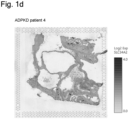
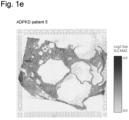
- NaPi-IIb mRNA levels in kidney tissues of human ADPKD patients were evaluated using Visium Spatial Gene Expression (10x Genomics). Tissues containing cysts were excised from kidney tissues removed from ADPKD patients and frozen blocks were made by OCT embedding. The frozen blocks were sliced and put on slides for Visium Gene Expression, and HE staining was performed. After obtaining the HE staining image, cDNA was generated and sequence analysis of short read sequence library was performed for cDNA using NovaSeq 6000 (Illumina, Inc). The result of sequence analysis was reflected in the HE staining image using Loupe Browser (10x Genomics).
- the number of each gene in each spot calculated by the sequence analysis was corrected by the number of housekeeping genes and the number of nucleic acids in each spot to obtain a value of the expression level of each gene.
- the HE staining images and NaPi-IIb expression levels are shown in Figs. 1a to 1f .
- the grayscale bars show NaPi-IIb expression levels, where 4.0 indicates log 2 2 4.0 , and 0.0 indicates log 2 2 0.0 .
- Test Example 3 Evaluation of NaPi-IIb expression levels in kidney tissue of PKD model mouse
- NaPi-IIb mRNA levels in kidney tissues of PC1 conditional knockout mice obtained by passage breeding of those produced at Lieden University
- DBA/2FG-pcy mouse hereinafter referred to as pcy mouse
- C57BL/6J mice CLA Japan, Inc.
- Tamoxifen was orally administered to PC1 conditional knockout mice at a dose of 3 mg/kg for 3 days from day 21 after birth, and the kidneys were removed 16 weeks after administration.
- kidneys were removed from 9-week-old individuals. Subsequent procedures were the same as in Test Example 2. Figs.
- FIGs. 2a to 2c are diagrams showing HE staining images and NaPi-IIb expression levels of kidney tissues of PC1 conditional knockout mouse, pcy mouse, and C57BL/6J mice.
- the grayscale bars show NaPi-IIb expression levels, where 4.0 indicates log 2 2 4.0 , and 0.0 indicates log 2 2 0.0 .
- Test Example 4 Evaluation of suppression effects on increase in renal volume and decrease in renal function in pcy mice
- the pcy mice a naturally occurring PKD model, were used to evaluate the effects of tolvaptan and compound 4 in Test Example 1 on (a) renal volume, (b) blood urea nitrogen (UN) concentration, (c) body weight, and (d) urine volume in pcy mice.
- mice 5 weeks of age at the start of this test were grouped into 3 groups of 13 mice each.
- Compound 4 or tolvaptan was administered to each of the test compound administration groups. The administration period was 5 weeks.
- Compound 4 was administered subcutaneously once daily and tolvaptan was administered subcutaneously at a weekly pace.
- Compound 4 was administered at 33-40 mg/kg per dose and tolvaptan was administered at 25-30 mg/kg per dose.
- Compound 4 and tolvaptan were administered after dissolved in 50% DMSO/50% glycerol.
- the 50% DMSO/50% glycerol was administered to the normal control group and the Vehicle group of pcy mice at 1 mL/kg.
- Blood urea nitrogen (UN) concentration was measured using L-type Waco UN (Fujifilm Wako Pure Chemical Corporation), as shown in Fig. 3b .
- mice body weight (Body weight (g) was measured every 7 days after the start of administration of the test compound, as shown in Fig. 3c .
- volume of urine (Urine volume (mL/day) was calculated from the specific gravity and measured weight of urine 5 weeks after the start of administration of the test compound, as shown in Fig. 3d .
- Test Example 5 Evaluation of inhibition effect on three-dimensional cyst formation using primary cells from kidney tissue of human ADPKD patient
- Primary cells were isolated from kidney tissues of human ADPKD patients. Under two-dimensions, the isolated cells were cultured for 2 days using DMEM/F-12 (Thermo Fisher Scientific, Inc.) supplemented with 10% FBS. Subsequently, three-dimensional culture was performed for 7 days using 3D Ready Atelocollagen (KOKEN CO., LTD.). During three-dimensional culture, 50 ⁇ M forskolin (Sigma-Aldrich Co. LLC) and ITS liquid media supplements (Sigma-Aldrich Co. LLC) were added as stimulating agents to some of the wells to form cysts, and a test compound was added at the final concentration of 30 ⁇ M. The test compound was also added to other wells at the final concentration of 30 ⁇ M.
- Inhibition rate (%) (1 - (volume of stimulating agent and test compound-added well - volume of stimulating agent-added and test compound-non added well)/(volume of stimulating agent-added and test compound-non added well - volume of stimulating agent and test compound-non added well)) x 100
- Fig. 4 shows three-dimensional photographed images of (a) stimulating agent and compound 4-non added well, (b) stimulating agent-added and compound 4-non added well, and (c) stimulating agent and compound 4-added well.
- Test Example 6 Evaluation of suppression effects on increase in renal volume and decrease in renal function in PC 1 conditional knockout mice
- PC1 conditional knockout mice a PKD model
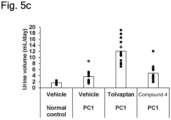
- test Example 1 The PC1 conditional knockout mice, a PKD model, were used to evaluate the effects of tolvaptan and compound 4 in Test Example 1 on (a) renal volume, (b) body weight, and (c) urine volume in PC1 conditional knockout mouse.
- Tamoxifen was orally administered to PC1 conditional knockout mice at a dose of 3 mg/kg for 3 days from day 21 after birth.
- the PC1 conditional knockout mice (5 weeks of age at the start of this test) were grouped into 3 groups of 15 mice each.
- Compound 4 or tolvaptan was administered as a single agent to the test compound administration group. The administration period was 16 weeks, and they were administered subcutaneously once daily.
- Compound 4 was administered at 33-40 mg/kg per dose and tolvaptan was administered at 25-30 mg/kg per dose.
- Compound 4 and tolvaptan were administered after dissolved in 50% DMSO/50% glycerol.
- Normal Control The 50% DMSO/50% glycerol was administered to the normal control group and the Vehicle group of PC1 conditional knockout mice at 1 mL/kg.
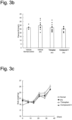
- mice body weight (Body weight (g)
- body weight (g) body weight of mice was measured every 7 days after the start of administration of the test compound.
- the results are shown in Fig. 5b .
- the volume of urine Urine volume (mL/day) was calculated from the specific gravity and measured weight of urine 16 weeks after the start of administration of the test compound. The results are shown in Fig. 5c .
Landscapes
- Health & Medical Sciences (AREA)
- Life Sciences & Earth Sciences (AREA)
- Chemical & Material Sciences (AREA)
- Medicinal Chemistry (AREA)
- General Health & Medical Sciences (AREA)
- Public Health (AREA)
- Pharmacology & Pharmacy (AREA)
- Animal Behavior & Ethology (AREA)
- Veterinary Medicine (AREA)
- Epidemiology (AREA)
- Engineering & Computer Science (AREA)
- Urology & Nephrology (AREA)
- Molecular Biology (AREA)
- General Chemical & Material Sciences (AREA)
- Bioinformatics & Cheminformatics (AREA)
- Organic Chemistry (AREA)
- Chemical Kinetics & Catalysis (AREA)
- Nuclear Medicine, Radiotherapy & Molecular Imaging (AREA)
- Hematology (AREA)
- Immunology (AREA)
- Biomedical Technology (AREA)
- Cell Biology (AREA)
- Analytical Chemistry (AREA)
- Physics & Mathematics (AREA)
- Food Science & Technology (AREA)
- Microbiology (AREA)
- General Physics & Mathematics (AREA)
- Biotechnology (AREA)
- Biochemistry (AREA)
- Proteomics, Peptides & Aminoacids (AREA)
- Pathology (AREA)
- Pulmonology (AREA)
- Gastroenterology & Hepatology (AREA)
- Pharmaceuticals Containing Other Organic And Inorganic Compounds (AREA)
Abstract
Description
- The present invention relates to a pharmaceutical composition for treating or preventing a cystic disease, comprising a compound that inhibits a phosphate transporter as an active ingredient. The present invention also relates to a method for predicting a sensitivity of a patient having a cystic disease to a selective inhibitor of NaPi-IIb, and a method for treating or preventing a cystic disease.
- Cystic diseases include cystic kidney disease, pancreatic cystic disease, cystic liver, cystic lung disease, pancreatic cyst, or the like.
- Polycystic kidney disease (PKD), one of the cystic diseases, is a hereditary disease in which many cysts are formed in the kidney. The growth of the cysts causes an increase in kidney volume and a decrease in kidney function (NPL 1).
- So far, tolvaptan has been the only drug used to treat PKD, but side effects such as hepatotoxicity, polyuria, and the like have been reported (NPL 3). Thus, developments of new PKD treatments that reduce these problems have been desired.
- Phosphorus is an element that is present in every cell and accounts for 1% of body weight, and plays an essential role in life support such as cell energy metabolism. The concentration of phosphorus in the blood is regulated by bone formation and bone resorption in addition to absorption from the gastrointestinal tract and excretion from the kidney, and is regulated to a constant concentration. Phosphorus absorption in the gastrointestinal tract is mainly performed by NaPi-IIb (SLC34A2), a phosphate transporter (
NPLs 4 and 5). Phosphorus in the blood is filtered in the glomeruli of the kidney and the required amount is reabsorbed mainly by NaPi-IIa (SLC34A1) and NaPi-IIc (SLC34A3) (NPLs 4 and 6) in the renal tubules. The kidney plays a very important role in the regulation of phosphorus in vivo, and in patients with end-stage renal failure and dialysis having impaired renal function, phosphorus accumulates in the body, causing an increase in blood phosphorus concentration, that is, hyperphosphatemia. - Inhibiting NaPi-IIb, which plays a large role in phosphorus absorption in the gastrointestinal tract, is believed to be able to lead to suppression of phosphorus absorption in the gastrointestinal tract similarly to phosphorus adsorbents, and reduce the concentration of phosphorus in the blood (
NPLs 5 and 7). To date, there have been some reports on NaPi-IIb inhibitors (PTLs 1 to 6,NPLs 8 and 9). -
- PTL 1: International Publication No.
WO2012/006475 - PTL 2: International Publication No.
WO2011/136269 - PTL 3: International Publication No.
WO2008/051980 - PTL 4: International Publication No.
WO2013/062065 - PTL 5: International Publication No.
WO2016/039458 - PTL 6: International Publication No.
WO2014/142273 -
- NPL 1: Vervloe, M., Nat Rev Nephrol. 2019 Feb;15(2):70-72
- NPL 2: Wu, M. et al., Kidney Dis 2016;2:128-135
- NPL 3: Blair, H.A, et al., Drugs. 2019 Feb;79(3):303-313
- NPL 4: Miyamoto, K. et al., J Pharm Sci. 2011 Sep; 100(9): 3719-30
- NPL 5: Sabbagh, Y. et al., J Am Soc Nephrol. 2009 Nov; 20(11): 2348-58
- NPL 6: Murer, H. et al., Pflugers Arch.2004 Feb;447(5):763-7
- NPL 7: Ohi, A. et al., Am J Physiol Renal Physiol. 2011 Nov; 301(5): F1105-13
- NPL 8: Tsuboi, Y., et al., Kidney International (2020) 98, 343-354
- NPL 9: Maruyama, S. et al., Kidney International Reports (2021) 6, 675-684
- NPL 10: Dixon EE., J Am Soc Nephrol. 2022 Feb;33(2):279-289
- It is an object of the present invention to provide a medicament for treating or preventing a cystic disease.
- The present inventors have studied considering the above problems, and as a result, have found that the phosphate transporter is highly expressed in the kidney tissue of patients with cystic disease. The present inventors have also found that compounds that inhibit phosphate transporters have an excellent effect in treating or preventing cystic diseases, and have completed the present invention. The present description encompasses the following disclosures of the invention.
- [A-1] A pharmaceutical composition comprising a compound that inhibits a phosphate transporter as an active ingredient, for use in treating or preventing a cystic disease.
- [A-2] A pharmaceutical composition for suppressing formation or expansion of a cyst, comprising a compound that inhibits a phosphate transporter as an active ingredient.
- [A-3] The pharmaceutical composition according to [A-1] or [A-2], wherein the phosphate transporter is at least one selected from the group consisting of NaPi-IIa, NaPi-IIb, and NaPi-IIc.
- [A-4] The pharmaceutical composition according to any of [A-1] to [A-3], wherein the phosphate transporter is NaPi-IIb.
- [A-5] The pharmaceutical composition according to any of [A-1], [A-3] and [A-4], wherein the cystic disease is a disease in which NaPi-IIb is highly expressed in an organ developing the cystic disease.
- [A-6] The pharmaceutical composition according to any of [A-1] and [A-3] to [A-5], wherein the cystic disease is a disease involving NaPi-IIb.
- [A-7] The pharmaceutical composition according to any of [A-2] to [A-4], wherein NaPi-IIb is highly expressed in a cell of the cyst.
- [A-8] The pharmaceutical composition according to any of [A-2] to [A-4] and [A-7], wherein the cyst is a cyst involving NaPi-IIb.
- [A-9] The pharmaceutical composition according to any of [A-1] to [A-8], wherein the compound is at least one selected from the group consisting of a low-molecular compound, a polypeptide, and a polynucleotide.
- [A-10] The pharmaceutical composition according to any of [A-1] to [A-9], wherein the compound is a low-molecular compound having a molecular weight of 2000 g/mol or less.
- [A-11] The pharmaceutical composition according to any of [A-1] to [A-9], wherein the compound is a low-molecular compound having a molecular weight of 1000 g/mol or less.
- [A-12] The pharmaceutical composition according to any of [A-1] to [A-9], wherein the compound is a polypeptide comprising an antibody.
- [A-13] The pharmaceutical composition according to any of [A-1] to [A-9], wherein the compound is an anti-phosphate transporter antibody.
- [A-14] The pharmaceutical composition according to any of [A-1] to [A-13], wherein the compound is at least one selected from the group consisting of an anti-NaPi-IIa antibody, an anti-NaPi-IIb antibody, and an anti-NaPi-IIc antibody.
- [A-15] The pharmaceutical composition according to any of [A-1] to [A-9], wherein the compound is an anti-NaPi-IIb antibody.
- [A-16] The pharmaceutical composition according to any of [A-1] to [A-9], wherein the compound is a polynucleotide selected from the group consisting of a ribozyme, an antisense molecule, an inhibitor oligonucleotide, an aptamer, a microRNA, and a small interfering RNA (siRNA).
- [A-17] The pharmaceutical composition according to any of [A-1] to [A-9], wherein the compound is a polynucleotide selected from the group consisting of an antisense molecule, a microRNA, and a small interfering RNA (siRNA).
- [A-18] The pharmaceutical composition according to any of [A-1] to [A-17], wherein the compound is at least one selected from the following (i) to (iii):
- (i) a low-molecular compound having a molecular weight of 2000 g/mol or less;
- (ii) an anti-NaPi-IIb antibody; and
- (iii) a polynucleotide selected from the group consisting of an antisense molecule, a microRNA, and a small interfering RNA (siRNA).
- [A-19] The pharmaceutical composition according to any of [A-1] to [A-18], wherein the compound is administered parenterally.
- [A-20] The pharmaceutical composition according to any of [A-1] to [A-11] and [A-18], wherein the compound is administered orally.
- [A-21] The pharmaceutical composition according to any of [A-1] to [A-20], wherein the compound is a compound that selectively inhibits the NaPi-IIb of the phosphate transporter.
- [A-22] The pharmaceutical composition according to any of [A-1] to [A-21], wherein the compound is a compound that selectively inhibits the NaPi-IIb of the phosphate transporter and has a 50% phosphate uptake inhibition concentration (IC50) ratio in a cell expressing NaPi-IIb or Pit1 (IC50[Pit1]/IC50[NaPi-IIb]) of 10 or more.
- [A-23] The pharmaceutical composition according to any of [A-1] to [A-22], wherein the compound is a compound that selectively inhibits the NaPi-IIb of the phosphate transporter and has a 50% phosphate uptake inhibition concentration (IC50) ratio in a cell expressing NaPi-IIb or Pit2 (IC50[Pit2]/IC50[NaPi-IIb]) of 10 or more.
- [A-24] The pharmaceutical composition according to any of [A-1] to [A-23], wherein the compound has a 50% phosphate uptake inhibition concentration (IC50) in a cell expressing the phosphate transporter of 10 µg/mol or less.
- [A-25] The pharmaceutical composition according to any of [A-1] to [A-24], wherein the compound has a 50% phosphate uptake inhibition concentration (IC50) in a cell expressing NaPi-IIb of 5 µg/mol or less.
- [A-26] The pharmaceutical composition according to any of [A-1] to [A-25], wherein the compound has a 50% phosphate uptake inhibition concentration (IC50) in a cell expressing human NaPi-IIb of 1 µg/mol or less.
- [A-27] The pharmaceutical composition according to any of [A-1] to [A-26], wherein the compound is selected from the group consisting of compounds represented by
formulas 1 to 11:


- [A-28] The pharmaceutical composition according to any of [A-1] to [A-26], wherein the compound is a compound selected from the group consisting of compounds represented by the
formulas 1 to 4 above, or a salt thereof, or a solvate thereof. - [A-29] The pharmaceutical composition according to any of [A-1] to [A-28], wherein the cystic disease is a disease in a mammal.
- [A-30] The pharmaceutical composition according to [A-29], wherein the mammal is a human.
- [A-31] The pharmaceutical composition according to any of [A-1] to [A-30], wherein the cystic disease is selected from the group consisting of cystic kidney disease, polycystic liver disease, cystic lung disease, and pancreatic cyst.
- [A-32] The pharmaceutical composition according to any of [A-2] to [A-30], wherein the cystic disease involves formation or expansion of a utricle in a kidney, a liver, a lung, or a pancreas.
- [A-33] The pharmaceutical composition according to any of [A-1] to [A-32] for inhibiting a phosphate transporter expressed in a kidney, a liver, a lung, or a pancreas.
- [A-34] The pharmaceutical composition according to any of [A-1] to [A-33] for use in treating or preventing cystic kidney disease.
- [A-35] The pharmaceutical composition according to any of [A-1] to [A-34] for use in treating or preventing polycystic kidney disease.
- [A-36] The pharmaceutical composition according to [A-35], wherein the polycystic kidney disease is autosomal dominant polycystic kidney disease.
- [A-37] The pharmaceutical composition according to any of [A-1] to [A-36] for use in suppressing formation or expansion of a renal cyst.
- [B-1] A method for treating or preventing a cystic disease, comprising administering an effective amount of a compound that inhibits a phosphate transporter to a subject in need thereof.
- [B-2] A method for suppressing formation or expansion of a cyst, comprising administering an effective amount of a compound that inhibits a phosphate transporter to a subject in need thereof.
- [B-3] The method according to [B-1] or [B-2], wherein the phosphate transporter is at least one selected from the group consisting of NaPi-IIa, NaPi-IIb, and NaPi-IIc.
- [B-4] The method according to any of [B-1] to [B-3], wherein the phosphate transporter is NaPi-IIb.
- [B-5] The method according to any of [B-1], [B-3] and [B-4], wherein the cystic disease is a disease in which NaPi-IIb is highly expressed in an organ developing the cystic disease.
- [B-6] The method according to any of [B-1] and [B-3] to [B-5], wherein the cystic disease is a disease involving NaPi-IIb.
- [B-7] The method according to any of [B-2] to [B-4], wherein NaPi-IIb is highly expressed in a cell of the cyst.
- [B-8] The method according to any of [B-2] to [B-4] and [B-7], wherein the cyst is a cyst involving NaPi-IIb.
- [B-9] The method according to any of [B-1] to [B-8], wherein the compound is at least one selected from the group consisting of a low-molecular compound, a polypeptide, and a polynucleotide.
- [B-10] The method according to any of [B-1] to [B-9], wherein the compound is a low-molecular compound having a molecular weight of 2000 g/mol or less.
- [B-11] The method according to any of [B-1] to [B-9], wherein the compound is a low-molecular compound having a molecular weight of 1000 g/mol or less.
- [B-12] The method according to any of [B-1] to [B-9], wherein the compound is a polypeptide comprising an antibody.
- [B-13] The method according to any of [B-1] to [B-9], wherein the compound is an anti-phosphate transporter antibody.
- [B-14] The method according to any of [B-1] to [B-13], wherein the compound is at least one selected from the group consisting of an anti-NaPi-IIa antibody, an anti-NaPi-IIb antibody, and an anti-NaPi-IIc antibody.
- [B-15] The method according to any of [B-1] to [B-9], wherein the compound is an anti-NaPi-IIb antibody.
- [B-16] The method according to any of [B-1] to [B-9], wherein the compound is a polynucleotide selected from the group consisting of a ribozyme, an antisense molecule, an inhibitor oligonucleotide, an aptamer, a microRNA, and a small interfering RNA (siRNA).
- [B-17] The method according to any of [B-1] to [B-9], wherein the compound is a polynucleotide selected from the group consisting of an antisense molecule, a microRNA, and a small interfering RNA (siRNA).
- [B-18] The method according to any of [B-1] to [B-17], wherein the compound is at least one selected from the following (i) to (iii):
- (i) a low-molecular compound having a molecular weight of 2000 g/mol or less;
- (ii) an anti-NaPi-IIb antibody; and
- (iii) a polynucleotide selected from the group consisting of an antisense molecule, a microRNA, and a small interfering RNA (siRNA).
- [B-19] The method according to any of [B-1] to [B-18], wherein the compound is administered parenterally.
- [B-20] The method according to any of [B-1] to [B-11] and [B-18], wherein the compound is administered orally.
- [B-21] The method according to any of [B-1] to [B-20], wherein the compound is a compound that selectively inhibits the NaPi-IIb of the phosphate transporter.
- [B-22] The method according to any of [B-1] to [B-21], wherein the compound is a compound that selectively inhibits the NaPi-IIb of the phosphate transporter and has a 50% phosphate uptake inhibition concentration (IC50) ratio in a cell expressing NaPi-IIb or Pit1 (IC50[Pit1]/IC50[NaPi-IIb]) of 10 or more.
- [B-23] The method according to any of [B-1] to [B-22], wherein the compound is a compound that selectively inhibits the NaPi-IIb of the phosphate transporter and has an IC50 ratio (IC50[Pit2]/IC50[NaPi-IIb]) of 10 or more.
- [B-24] The method according to any of [B-1] to [B-23], wherein the compound has a 50% phosphate uptake inhibition concentration (IC50) in a cell expressing the phosphate transporter of 10 µg/mol or less.
- [B-25] The method according to any of [B-1] to [B-24], wherein the compound has IC50 of inhibitory activity against human NaPi-IIb of 5 µg/mol or less.
- [B-26] The method according to any of [B-1] to [B-25], wherein the compound has IC50 of inhibitory activity against human NaPi-IIb of 1 µg/mol or less.
- [B-27] The method according to any of [B-1] to [B-20], wherein the compound is a compound selected from the group consisting of compounds represented by the
formulas 1 to 11 above, or a salt thereof, or a solvate thereof. - [B-28] The method according to any of [B-1] to [B-20], wherein the compound is a compound selected from the group consisting of compounds represented by the
formulas 1 to 4 above, or a salt thereof, or a solvate thereof. - [B-29] The method according to any of [B-1] to [B-28], wherein the subject is a mammal.
- [B-30] The method according to [B-29], wherein the mammal is a human.
- [B-31] The method according to any of [B-1] to [B-30], wherein the cystic disease is selected from the group consisting of cystic kidney disease, polycystic liver disease, cystic lung disease, and pancreatic cyst.
- [B-32] The method according to any of [B-2] to [B-30], wherein the cystic disease involves formation or expansion of a utricle in a kidney, a liver, a lung, or a pancreas.
- [B-33] The method according to any of [B-1] to [B-32], wherein the compound inhibits a phosphate transporter expressed in a kidney, a liver, a lung, or a pancreas.
- [B-34] The method according to any of [B-1] to [B-33] for use in treating or preventing cystic kidney disease.
- [B-35] The method according to any of [B-1] to [B-34] for treating or preventing polycystic kidney disease.
- [B-36] The method according to [B-35], wherein the polycystic kidney disease is autosomal dominant polycystic kidney disease.
- [B-37] The method according to any of [B-1] to [B-36] for suppressing formation or expansion of a renal cyst.
- [C-1] Use of a compound that inhibits a phosphate transporter, in a manufacture of a medicament for treating or preventing a cystic disease.
- [C-2] Use of a compound that inhibits a phosphate transporter, in a manufacture of a medicament for suppressing formation or expansion of a cyst.
- [C-3] The use according to [C-1] or [C-2], wherein the phosphate transporter is at least one selected from the group consisting of NaPi-IIa, NaPi-IIb, and NaPi-IIc.
- [C-4] The use according to any of [C-1] to [C-3], wherein the phosphate transporter is NaPi-IIb.
- [C-5] The use according to any of [C-1], [C-3] and [C-4], wherein the cystic disease is a disease in which NaPi-IIb is highly expressed in an organ developing the cystic disease.
- [C-6] The use according to any of [C-1] and [C-3] to [C-5], wherein the cystic disease is a disease involving NaPi-IIb.
- [C-7] The use according to any of [C-2] to [C-4], wherein NaPi-IIb is highly expressed in a cell of the cyst.
- [C-8] The use according to any of [C-2] to [C-4] and [C-7], wherein the cyst is a cyst involving NaPi-IIb.
- [C-9] The use according to any of [C-1] to [C-8], wherein the compound is at least one selected from the group consisting of a low-molecular compound, a polypeptide, and a polynucleotide.
- [C-10] The use according to any of [C-1] to [C-9], wherein the compound is a low-molecular compound having a molecular weight of 2000 g/mol or less.
- [C-11] The use according to any of [C-1] to [C-9], wherein the compound is a low-molecular compound having a molecular weight of 1000 g/mol or less.
- [C-12] The use according to any of [C-1] to [C-9], wherein the compound is a polypeptide comprising an antibody.
- [C-13] The use according to any of [C-1] to [C-9], wherein the compound is an anti-phosphate transporter antibody.
- [C-14] The use according to any of [C-1] to [C-13], wherein the compound is at least one selected from the group consisting of an anti-NaPi-IIa antibody, an anti-NaPi-IIb antibody, and an anti-NaPi-IIc antibody.
- [C-15] The use according to any of [C-1] to [C-9], wherein the compound is an anti-NaPi-IIb antibody.
- [C-16] The use according to any of [C-1] to [C-9], wherein the compound is a polynucleotide selected from the group consisting of a ribozyme, an antisense molecule, an inhibitor oligonucleotide, an aptamer, a microRNA, and a small interfering RNA (siRNA).
- [C-17] The use according to any of [C-1] to [C-9], wherein the compound is a polynucleotide selected from the group consisting of an antisense molecule, a microRNA, and a small interfering RNA (siRNA).
- [C-18] The use according to any of [C-1] to [C-17], wherein the compound is at least one selected from the following (i) to (iii):
- (i) a low-molecular compound having a molecular weight of 2000 g/mol or less;
- (ii) an anti-NaPi-IIb antibody; and
- (iii) a polynucleotide selected from the group consisting of an antisense molecule, a microRNA, and a small interfering RNA (siRNA).
- [C-19] The use according to any of [C-1] to [C-18], wherein the compound is administered parenterally.
- [C-20] The use according to any of [C-1] to [C-11] and [C-18], wherein the compound is administered orally.
- [C-21] The use according to any of [C-1] to [C-20], wherein the compound is a compound that selectively inhibits the NaPi-IIb of the phosphate transporter.
- [C-22] The use according to any of [C-1] to [C-21], wherein the compound is a compound that selectively inhibits the NaPi-IIb of the phosphate transporter and has a 50% phosphate uptake inhibition concentration (IC50) ratio in a cell expressing NaPi-IIb or Pit1 (IC50[Pit1]/IC50[NaPi-IIb]) of 10 or more.
- [C-23] The use according to any of [C-1] to [C-22], wherein the compound is a compound that selectively inhibits the NaPi-IIb of the phosphate transporter and has an IC50 ratio (IC50[Pit2]/IC50[NaPi-IIb]) of 10 or more.
- [C-24] The use according to any of [C-1] to [C-23], wherein the compound has a 50% phosphate uptake inhibition concentration (IC50) in a cell expressing the phosphate transporter of 10 µg/mol or less.
- [C-25] The use according to any of [C-1] to [C-24], wherein the compound has IC50 of inhibitory activity against human NaPi-IIb of 5 µg/mol or less.
- [C-26] The use according to any of [C-1] to [C-25], wherein the compound has IC50 of inhibitory activity against human NaPi-IIb of 1 µg/mol or less.
- [C-27] The use according to any of [C-1] to [C-20], wherein the compound is a compound selected from the group consisting of compounds represented by the
formulas 1 to 11 above, or a salt thereof, or a solvate thereof. - [C-28] The use according to any of [C-1] to [C-20], wherein the compound is a compound selected from the group consisting of compounds represented by the
formulas 1 to 4 above, or a salt thereof, or a solvate thereof. - [C-29] The use according to any of [C-1] to [C-28], wherein the cystic disease is a disease in a mammal.
- [C-30] The use according to [C-29], wherein the mammal is a human.
- [C-31] The use according to any of [C-1] to [C-30], wherein the cystic disease is selected from the group consisting of cystic kidney disease, polycystic liver disease, cystic lung disease, and pancreatic cyst.
- [C-32] The use according to any of [C-2] to [C-30], wherein the cystic disease involves formation or expansion of a utricle in a kidney, a liver, a lung, or a pancreas.
- [C-33] The use according to any of [C-1] to [C-32] for inhibiting a phosphate transporter expressed in a kidney, a liver, a lung, or a pancreas.
- [C-34] The use according to any of [C-1] to [C-33] for use in treating or preventing cystic kidney disease.
- [C-35] The use according to any of [C-1] to [C-34] for use in treating or preventing polycystic kidney disease.
- [C-36] The use according to [C-35], wherein the polycystic kidney disease is autosomal dominant polycystic kidney disease.
- [C-37] The use according to any of [C-1] to [C-36] for use in suppressing formation or expansion of a renal cyst.
- [D-1] A compound that inhibits a phosphate transporter, for use in treating or preventing a cystic disease.
- [D-2] A compound that inhibits a phosphate transporter, for use in suppressing formation or expansion of a renal cyst.
- [D-3] The compound according to [D-1] or [D-2], wherein the phosphate transporter is at least one selected from the group consisting of NaPi-IIa, NaPi-IIb, and NaPi-IIc.
- [D-4] The compound according to any of [D-1] to [D-3], wherein the phosphate transporter is NaPi-IIb.
- [D-5] The compound according to any of [D-1], [D-3] and [D-4], wherein the cystic disease is a disease in which NaPi-IIb is highly expressed in an organ developing the cystic disease.
- [D-6] The compound according to any of [D-1] and [D-3] to [D-5], wherein the cystic disease is a disease involving NaPi-IIb.
- [D-7] The compound according to any of [D-2] to [D-4], wherein NaPi-IIb is highly expressed in a cell of the cyst.
- [D-8] The compound according to any of [D-2] to [D-4] and [D-7], wherein the cyst is a cyst involving NaPi-IIb.
- [D-9] The compound according to any of [D-1] to [D-8], wherein the compound is at least one selected from the group consisting of a low-molecular compound, a polypeptide, and a polynucleotide.
- [D-10] The compound according to any of [D-1] to [D-9], wherein the compound is a low-molecular compound having a molecular weight of 2000 g/mol or less.
- [D-11] The compound according to any of [D-1] to [D-9], wherein the compound is a low-molecular compound having a molecular weight of 1000 g/mol or less.
- [D-12] The compound according to any of [D-1] to [D-9], wherein the compound is a polypeptide comprising an antibody.
- [D-13] The compound according to any of [D-1] to [D-9], wherein the compound is an anti-phosphate transporter antibody.
- [D-14] The compound according to any of [D-1] to [D-13], wherein the compound is at least one selected from the group consisting of an anti-NaPi-IIa antibody, an anti-NaPi-IIb antibody, and an anti-NaPi-IIc antibody.
- [D-15] The compound according to any of [D-1] to [D-9], wherein the compound is an anti-NaPi-IIb antibody.
- [D-16] The compound according to any of [D-1] to [D-9], wherein the compound is a polynucleotide selected from the group consisting of a ribozyme, an antisense molecule, an inhibitor oligonucleotide, an aptamer, a microRNA, and a small interfering RNA (siRNA).
- [D-17] The compound according to any of [D-1] to [D-9], wherein the compound is a polynucleotide selected from the group consisting of an antisense molecule, a microRNA, and a small interfering RNA (siRNA).
- [D-18] The compound according to any of [D-1] to [D-17], wherein the compound is at least one selected from the following (i) to (iii):
- (i) a low-molecular compound having a molecular weight of 2000 g/mol or less;
- (ii) an anti-NaPi-IIb antibody; and
- (iii) a polynucleotide selected from the group consisting of an antisense molecule, a microRNA, and a small interfering RNA (siRNA).
- [D-19] The compound according to any of [D-1] to [D-18], wherein the compound is administered parenterally.
- [D-20] The compound according to any of [D-1] to [D-11] and [D-18], wherein the compound is administered orally.
- [D-21] The compound according to any of [D-1] to [D-20], wherein the compound is a compound that selectively inhibits the NaPi-IIb of the phosphate transporter.
- [D-22] The compound according to any of [D-1] to [D-21], wherein the compound is a compound that selectively inhibits the NaPi-IIb of the phosphate transporter and has a 50% phosphate uptake inhibition concentration (IC50) ratio in a cell expressing NaPi-IIb or Pit1 (IC50[Pit1]/IC50[NaPi-IIb]) of 10 or more.
- [D-23] The compound according to any of [D-1] to [D-22], wherein the compound is a compound that selectively inhibits the NaPi-IIb of the phosphate transporter and has an IC50 ratio (IC50[Pit2]/IC50[NaPi-IIb]) of 10 or more.
- [D-24] The compound according to any of [D-1] to [D-23], wherein the compound has a 50% phosphate uptake inhibition concentration (IC50) in a cell expressing the phosphate transporter of 10 µg/mol or less.
- [D-25] The compound according to any of [D-1] to [D-24], wherein the compound has IC50 of inhibitory activity against human NaPi-IIb of 5 µg/mol or less.
- [D-26] The compound according to any of [D-1] to [D-25], wherein the compound has IC50 of inhibitory activity against human NaPi-IIb of 1 µg/mol or less.
- [D-27] The compound according to any of [D-1] to [D-20], wherein the compound is a compound selected from the group consisting of compounds represented by the
formulas 1 to 11 above, or a salt thereof, or a solvate thereof. - [D-28] The compound according to any of [D-1] to [D-20], wherein the compound is a compound selected from the group consisting of compounds represented by the
formulas 1 to 4 above, or a salt thereof, or a solvate thereof. - [D-29] The compound according to any of [D-1] to [D-28], wherein the cystic disease is a disease in a mammal.
- [D-30] The compound according to [D-29], wherein the mammal is a human.
- [D-31] The compound according to any of [D-1] to [D-30], wherein the cystic disease is selected from the group consisting of cystic kidney disease, polycystic liver disease, cystic lung disease, and pancreatic cyst.
- [D-32] The compound according to any of [D-2] to [D-30], wherein the cystic disease involves formation or expansion of a utricle in a kidney, a liver, a lung, or a pancreas.
- [D-33] The compound according to any of [D-1] to [D-32] for inhibiting a phosphate transporter expressed in a kidney, a liver, a lung, or a pancreas.
- [D-34] The compound according to any of [D-1] to [D-33] for use in treating or preventing cystic kidney disease.
- [D-35] The compound according to any of [D-1] to [D-34] for use in treating or preventing polycystic kidney disease.
- [D-36] The compound according to [D-35], wherein the polycystic kidney disease is autosomal dominant polycystic kidney disease.
- [D-37] The compound according to any of [D-1] to [D-36] for use in suppressing formation or expansion of a renal cyst.
- [E-1] A method for predicting a benefit of a treatment with an agent in a patient having a cystic disease, the method comprising:
- confirming whether NaPi-IIb is expressed in a cell collected from an organ of the patient in which a cyst has been formed; and
- determining the patient as a patient who would benefit from the treatment when the expression is confirmed,
- [E-2] The method according to [E-1], wherein the cystic disease is cystic kidney disease.
- [E-3] The method according to [E-1] or [E-2], wherein the cystic disease is polycystic kidney disease.
- [E-4] The method according to [E-3], wherein the polycystic kidney disease is autosomal dominant polycystic kidney disease.
- [E-5] The method according to any of [E-1] to [E-4], wherein the inhibitor is a low-molecular compound, a polynucleotide, and a polypeptide.
- [E-6] The pharmaceutical composition according to any of [E-1] to [E-5], wherein the inhibitor is a low-molecular compound having a molecular weight of 2000 g/mol or less.
- [E-7] The pharmaceutical composition according to any of [E-1] to [E-6], wherein the inhibitor is a low-molecular compound having a molecular weight of 1000 g/mol or less.
- [E-8] The method according to any of [E-1] to [E-5], wherein the inhibitor comprises an antibody or a binding fragment thereof.
- [E-9] The method according to any of [E-1] to [E-5], wherein the inhibitor is an anti-phosphate transporter antibody.
- [E-10] The method according to any of [E-1] to [E-5], wherein the inhibitor is at least one selected from the group consisting of an anti-NaPi-IIa antibody, an anti-NaPi-IIb antibody, and an anti-NaPi-IIc antibody.
- [E-11] The method according to any of [E-1] to [E-5], wherein the inhibitor is an anti-NaPi-IIb antibody.
- [E-12] The method according to any of [E-1] to [E-5], wherein the inhibitor is a polynucleotide selected from the group consisting of a ribozyme, an antisense molecule, an inhibitor oligonucleotide, an aptamer, a microRNA, and a small interfering RNA (siRNA).
- [E-13] The pharmaceutical composition according to any of [E-1] to [E-5], wherein the inhibitor is a polynucleotide selected from the group consisting of an antisense molecule, a microRNA, and a small interfering RNA (siRNA).
- [E-14] The pharmaceutical composition according to any of [E-1] to [E-5], wherein the inhibitor is at least one selected from the following (i) to (iii):
- (i) a low-molecular compound having a molecular weight of 2000 g/mol or less;
- (ii) an anti-NaPi-IIb antibody; and
- (iii) a polynucleotide selected from the group consisting of an antisense molecule, a microRNA, and a small interfering RNA (siRNA).
- [E-15] The method according to any of [E-1] to [E-14], wherein the inhibitor is administered parenterally.
- [E-16] The method according to any of [E-1] to [E-7] and [E-14], wherein the inhibitor is administered orally.
- [E-17] The method according to any of [E-1] to [E-16], wherein the inhibitor is a compound that selectively inhibits the NaPi-IIb of the phosphate transporter.
- [E-18] The method according to any of [E-1] to [E-17], wherein the compound is a compound that selectively inhibits the NaPi-IIb of the phosphate transporter and has a 50% phosphate uptake inhibition concentration (IC50) ratio in a cell expressing NaPi-IIb or Pit1 (IC50[Pit1]/IC50[NaPi-IIb]) of 10 or more.
- [E-19] The method according to any of [E-1] to [E-18], wherein the compound is a compound that selectively inhibits the NaPi-IIb of the phosphate transporter and has a 50% phosphate uptake inhibition concentration (IC50) ratio in a cell expressing NaPi-IIb or Pit2 (IC50[Pit2]/IC50[NaPi-IIb]) of 10 or more.
- [E-20] The method according to any of [E-1] to [E-19], wherein the compound has a 50% phosphate uptake inhibition concentration (IC50) in a cell expressing the phosphate transporter of 10 µg/mol or less.
- [E-21] The method according to any of [E-1] to [E-20], wherein the compound has a 50% phosphate uptake inhibition concentration (IC50) in a cell expressing NaPi-IIb of 5 µg/mol or less.
- [E-22] The method according to any of [E-1] to [E-21], wherein the compound has a 50% phosphate uptake inhibition concentration (IC50) in a cell expressing human NaPi-IIb of 1 µg/mol or less.
- [E-23] The method according to any of [E-1] to [E-19], wherein the inhibitor is a compound selected from the group consisting of compounds of the
formulas 1 to 11 above. - [E-24] The method according to any of [E-1] to [E-19], wherein the inhibitor is a compound selected from the group consisting of compounds of the
formulas 1 to 4 above. - [E-25] The method according to any of [E-1] to [E-24], wherein the cystic disease is a disease in a mammal.
- [E-26] The method according to [E-25], wherein the mammal is a human.
- [E-27] The method according to any of [E-1] to [E-26], wherein the cystic disease is cystic kidney disease, polycystic liver disease, cystic lung disease, or pancreatic cyst.
- [E-28] The method according to any of [E-2] to [E-26], wherein the cyst is a cyst developed in a kidney, a liver, a lung, or a pancreas.
- [E-29] The method according to any of [E-1] to [E-28], wherein the cell is a renal cell contained in a biological sample from the patient.
- [F-1] A pharmaceutical composition comprising a compound that inhibits a phosphate transporter as an active ingredient, for use in suppressing renal cystogenesis in a subject at risk for autosomal dominant polycystic kidney disease.
- [F-2] The pharmaceutical composition according to [F-1], wherein the subject has a confirmed familial occurrence of autosomal dominant polycystic kidney disease.
- [F-3] The pharmaceutical composition according to [F-1] or [F-2], wherein either of the parents of the subject is a patient having chromosomal dominant polycystic kidney disease.
- [F-4] The pharmaceutical composition according to any of [F-1] to [F-3], wherein the subject has a defect in PKD1 or PKD2.
- [F-5] The pharmaceutical composition according to any of [F-1] to [F-4], wherein the subject has a defect in PKD1.
- [F-6] The pharmaceutical composition according to any of [F-1] to [F-5], wherein the subject is 30 years of age or older.
- [F-7] The pharmaceutical composition according to any of [F-1] to [F-6], wherein the subject is confirmed to have three or more cysts in each kidney on both sides by CT, MRI, or ultrasound tomography.
- [F-8] The pharmaceutical composition according to any of [F-1] to [F-7], wherein the subject has been diagnosed as having autosomal dominant polycystic kidney disease.
- [F-9] The pharmaceutical composition according to any of [F-1] to [F-8], wherein the phosphate transporter is at least one selected from the group consisting of NaPi-IIa, NaPi-IIb, and NaPi-IIc.
- [F-10] The pharmaceutical composition according to any of [F-1] to [F-9], wherein the phosphate transporter is NaPi-IIb.
- [F-11] The pharmaceutical composition according to any of [F-1] to [F-10], wherein NaPi-IIb is expressed in a kidney cell of a subject.
- [F-12] The pharmaceutical composition according to any of [F-1] to [F-11], wherein the compound is a compound that inhibits a phosphate transporter expressed in a kidney.
- [F-13] The pharmaceutical composition according to any of [F-1] to [F-12], wherein the compound is a low-molecular compound, a polynucleotide, and a polypeptide.
- [F-14] The pharmaceutical composition according to any of [F-1] to [F-13], wherein the compound is a low-molecular compound having a molecular weight of 2000 g/mol or less.
- [F-15] The pharmaceutical composition according to any of [F-1] to [F-13], wherein the compound is a low-molecular compound having a molecular weight of 1000 g/mol or less.
- [F-16] The pharmaceutical composition according to any of [F-1] to [F-13], wherein the compound comprises an antibody or a binding fragment thereof.
- [F-17] The pharmaceutical composition according to any of [F-1] to [F-13], wherein the compound is an anti-phosphate transporter antibody.
- [F-18] The pharmaceutical composition according to any of [F-1] to [F-13], wherein the compound is at least one selected from the group consisting of an anti-NaPi-IIa antibody, an anti-NaPi-IIb antibody, and an anti-NaPi-IIc antibody.
- [F-19] The pharmaceutical composition according to any of [F-1] to [F-13], wherein the compound is an anti-NaPi-IIb antibody.
- [F-20] The pharmaceutical composition according to any of [F-1] to [F-13], wherein the compound is a polynucleotide selected from the group consisting of a ribozyme, an antisense molecule, an inhibitor oligonucleotide, an aptamer, a microRNA, and a small interfering RNA (siRNA).
- [F-21] The pharmaceutical composition according to any of [F-1] to [F-20], wherein the compound is administered parenterally.
- [F-22] The pharmaceutical composition according to any of [F-1] to [F-15], wherein the compound is administered orally.
- [F-23] The pharmaceutical composition according to any of [F-1] to [F-18], wherein the compound is a compound that selectively inhibits the NaPi-IIb of the phosphate transporter.
- [F-24] The pharmaceutical composition according to any of [F-1] to [F-23], wherein the compound is a compound that selectively inhibits the NaPi-IIb of the phosphate transporter and has a 50% phosphate uptake inhibition concentration (IC50) ratio in a cell expressing NaPi-IIb or Pit2 (IC50[Pit2]/IC50[NaPi-IIb]) of 10 or more.
- [F-25] The pharmaceutical composition according to any of [F-1] to [F-24], wherein the compound has a 50% phosphate uptake inhibition concentration (IC50) in a cell expressing the phosphate transporter of 10 µg/mol or less.
- [F-26] The pharmaceutical composition according to any of [F-1] to [F-25], wherein the compound has a 50% phosphate uptake inhibition concentration (IC50) in a cell expressing NaPi-IIb of 5 µg/mol or less.
- [E-27] The pharmaceutical composition according to any of [F-1] to [F-26], wherein the compound has a 50% phosphate uptake inhibition concentration (IC50) in a cell expressing human NaPi-IIb of 1 µg/mol or less.
- [F-28] The pharmaceutical composition according to any of [F-1] to [F-27], wherein the compound is a compound selected from the group consisting of compounds represented by the
formulas 1 to 11 above, or a salt thereof, or a solvate thereof. - [F-29] The pharmaceutical composition according to any of [F-1] to [F-28], wherein the compound is a compound selected from the group consisting of compounds represented by the
formulas 1 to 4 above, or a salt thereof, or a solvate thereof. - [G-1] A method of screening for a compound for use in treating or preventing a disease selected from cystic kidney disease, polycystic liver disease, cystic lung disease, and pancreatic cyst, the method comprising measuring inhibitory activity against a phosphate transporter.
- [G-2] A method of screening for a compound that suppresses cyst formation or cyst expansion in an organ of a mammal, the method comprising measuring an inhibitory activity against a phosphate transporter.
- [G-3] The method according to [G-2], wherein the organ is a pancreas.
- [G-4] The method according to any of [G-1] to [G-3], wherein the phosphate transporter is at least one selected from the group consisting of NaPi-IIa, NaPi-IIb, and NaPi-IIc.
- [G-5] The method according to any of [G-1] to [G-4], wherein the phosphate transporter is NaPi-IIb.
- [G-6] The method according to any of [G-1] to [G-5], wherein the disease is cystic kidney disease.
- [G-7] The method according to [G-6], wherein the cystic kidney disease is polycystic kidney disease.
- [G-8] The method according to [G-7], wherein the polycystic kidney disease is autosomal dominant polycystic kidney disease.
- [G-9] The method according to any of [G-1] to [G-8], wherein the disease is a disease in a mammal.
- [G-10] The method according to [G-9], wherein the mammal is a human.
- [G-11] The method according to any of [G-1] to [G-10], wherein the inhibitory activity is a selective inhibitory activity against NaPi-IIb relative to Pit1 or Pit2.
- In one aspect of the present invention, a pharmaceutical composition useful for treating or preventing a cystic disease and a medicament for treating or preventing a cystic disease are provided. In another aspect of the present invention, a method for predicting a benefit of a treatment with an agent in a patient having a cystic disease is provided.
-
-
Fig. 1a is a diagram showing a HE staining image and NaPi-IIb expression levels in a kidney tissue of an ADPKD patient. -
Fig. 1b is a diagram showing a HE staining image and NaPi-IIb expression levels in a kidney tissue of an ADPKD patient. -
Fig. 1c is a diagram showing a HE staining image and NaPi-IIb expression levels in a kidney tissue of an ADPKD patient. -
Fig. 1d is a diagram showing a HE staining image and NaPi-IIb expression levels in a kidney tissue of an ADPKD patient. -
Fig. 1e is a diagram showing a HE staining image and NaPi-IIb expression levels in a kidney tissue of an ADPKD patient. - Fig. If is a diagram showing a HE staining image and NaPi-IIb expression levels in a kidney tissue of an ADPKD patient.
-
Fig. 2a is a diagram showing a HE staining image and NaPi-IIb expression levels in a kidney tissue of a B6 mouse. (a) is the results of B6 mouse, (b) is the results of a PC1 Conditional KO mouse, and (c) is the results of a Pcy mouse. -
Fig. 2b is a diagram showing a HE staining image and NaPi-IIb expression levels in a kidney tissue of a PC1 conditional knockout mouse. -
Fig. 2c is a diagram showing a HE staining image and NaPi-IIb expression levels in a kidney tissue of a Pcy mouse. -
Fig. 3a shows the results of evaluating the effects of tolvaptan andcompound 4 on renal volume in a pcy mouse. -
Fig. 3b shows the results of evaluating the effects of tolvaptan andcompound 4 on blood urea nitrogen (UN) concentrations in a pcy mouse. -
Fig. 3c shows the results of evaluating the effects of tolvaptan andcompound 4 on body weight in a pcy mouse. -
Fig. 3d shows the results of evaluating the effects of tolvaptan andcompound 4 on urine volume in pcy mouse. -
Fig. 4 is three-dimensional photographed images of (a) stimulating agent and compound 4-non added well, (b) stimulating agent-added and compound 4-non added well, and (c) stimulating agent and compound 4-added well in cultured wells of a kidney tissue of a human ADPKD patient. -
Fig. 5a shows the results of evaluating the effects of tolvaptan andcompound 4 on renal volume in a PC1 conditional knockout mouse. -
Fig. 5b shows the results of evaluating the effects of tolvaptan andcompound 4 on body weight in a pcy mouse. -
Fig. 5c shows the results of evaluating the effects of tolvaptan andcompound 4 on urine volume in a pcy mouse. - Embodiments of the present invention will be described. However, the present invention is not limited to the following embodiments. The medicament for use in a treatment or prevention and the method for treating or preventing according to the present invention may be administered or applied to a human. As used herein, the "to" that indicates a numerical range includes values of both ends thereof. For example, "A to B" means the numerical range of A or more and B or less. As used herein, the term "about", when used in combination with a numeric value, means the value range of +10% and -10% of the numeric value. As used herein, the term "and/or" is meant to include every combination of the terms "and" and "or" appropriately combined. Specifically, for example, the term "A, B, and/or C" includes the following seven variations: (i) A, (ii) B, (iii) C, (iv) A and B, (v) A and C, (vi) B and C, and (vii) A, B, and C.
- The present invention provides a pharmaceutical composition comprising a compound that inhibits a phosphate transporter as an active ingredient, for use in treating or preventing a cystic disease or for suppressing formation or expansion of a cyst.
- In one aspect of the present invention, the "phosphate transporter" is not particularly limited as long as it is involved in phosphorus metabolism in vivo. Examples thereof include transporters involved in reabsorption from the kidney, absorption from the gastrointestinal tract, and migration to and from bone and other tissues, and transporters involved in maintaining phosphorus metabolic homeostasis in vivo. The phosphate transporter include a sodium-dependent phosphate transporter. The sodium-dependent phosphate transporter is sometimes referred to as a sodium-phosphate cotransporter and encompasses phosphate transporters of type I, II, or III.
- In one aspect of the present invention, examples of the phosphate transporter include NaPi-IIa, NaPi-IIb, NaPi-IIc, Pit1, and Pit2, and preferred examples include NaPi-IIb.
- In one aspect of the present invention, the compound that inhibits a phosphate transporter is not particularly limited as long as it has an inhibitory activity against the phosphate transporter or inhibits the expression of the phosphate transporter. As used herein, the compound that inhibits a phosphate transporter may also be referred to as a phosphate transporter inhibitor.
- In one aspect of the present invention, the "treatment" means that the expansion of cyst in the organ of an individual is suppressed, the number of cyst cells is decreased, the proliferation of cyst cells is suppressed, the volume of cyst is decreased, the weight of cyst is decreased, the metastasis of cyst cells is suppressed, or various symptoms caused by cyst are ameliorated by the pharmaceutical composition of the present invention. Also, in some embodiments, the "prevention" in the present invention means a formation of cyst is suppressed, an increase in the number of cyst cells due to the re-proliferation of decreased cyst cells is prevented, a re-proliferation of cyst cells whose proliferation is suppressed is prevented, a re-increase of decreased cyst size is prevented, or a macroscopic reappearance of cyst that has macroscopically disappeared (or healed) due to topical treatment is prevented.
- As used herein, the "pharmaceutical composition" means a mixture comprising particular ingredients in predetermined amounts or proportions.
- The pharmaceutical composition may comprise, in addition to an active ingredient, a pharmaceutically acceptable carrier. As used herein, the term "pharmaceutically acceptable carrier" means one or more solid or liquid excipient diluents or encapsulating materials suitable for administration to a mammal. As used herein, the term "pharmaceutically acceptable" means that it is usable as a medicament in terms of efficacy, safety, or the like.
- Examples of additives that can be used as the pharmaceutically acceptable carrier include sugars such as lactose, glucose, and sucrose; starches such as corn starch and potato starch; cellulose and derivatives such as sodium carboxymethyl cellulose, ethyl cellulose, and methyl cellulose; tragacanth gum powder; malt; gelatin; talc; solid lubricants such as stearic acid and magnesium stearate; calcium sulfate; vegetable oils such as peanut oil, cottonseed oil, sesame oil, olive oil, corn oil, and cocoa oil; polyvalent alcohols such as propylene glycol, glycerin, sorbitol, mannitol, and polyethylene glycol; alginate; emulsifiers such as TWEEN(R); wetting agents such as lecithin; coloring agents; flavoring agents; tableting agents; stabilizing agents; antioxidants; preservatives; pyrogen-free water; aqueous isotonic salt solutions; and phosphate buffers.
- In one aspect of the present invention, a method of identifying a target molecule of an agent for treating or preventing a particular disease is provided. The target molecule can be identified, for example, by identifying a gene suitable as a target of an agent by a method comprising the following steps.
- (1) identifying a gene that is a factor of a disease: the gene that is a factor of a disease can be identified by analyzing a differentially expressed gene (DEG) in tissues of a normal group and a pathologic group.
- (2) identifying a gene suitable as a target of an agent from the gene identified in (1): the gene suitable as a target of an agent can be identified from the gene that is a factor of the disease by combining multiple gene selection criteria. Examples of the gene selection criteria for selecting a gene suitable as a target of an agent include criteria that they are not genes related to innate immunity, acquired immunity, immune cells, and inflammation, criteria that they are not fibrosis-related genes associated with chronic inflammation, and criteria that they are genes related to membrane proteins. It is preferred that all of these gene selection criteria are met.
- In one aspect of the present invention, the expression of NaPi-IIb can be confirmed, for example, according to the method described in
NPL 10. More specifically, the expression can be confirmed by the methods described below. - 1) A tissue containing a cyst is cut out from an organ and frozen blocks are made by OCT embedding.
- 2) The frozen blocks are sliced and put on slides for Visium Gene Expression, and HE staining was performed.
- 3) After obtaining the HE staining image, cDNA is generated and next-generation sequence analysis is performed.
- 4) Sequence analysis of short read sequence library is performed for cDNA.
- 5) The result of sequence analysis is reflected in the HE staining image.
- 6) The number of each gene in each spot calculated by the sequence analysis is corrected by the number of housekeeping genes and the number of nucleic acids in each spot to obtain a value of the expression level of each gene.
- In one aspect of the present invention, high expression of NaPi-IIb refers to, for example, the case where NaPi-IIb is expressed in 10% or more, 20% or more, 30% or more, 40% or more, 50% or more, 60% or more, 70% or more, 80% or more, or 90% or more of the area of the entire organ tissue image in a HE staining image of the organ tissue reflecting the result of the sequence analysis obtained by the above method.
- In one aspect of the present invention, a disease involving NaPi-IIb means a cystic disease the development, progression and/or continuation of which involves NaPi-IIb. The "cystic disease the formation, progression and/or continuation of which involves NaPi-IIb" includes not only a cystic disease the formation, progression and/or continuation of which directly involves NaPi-IIb, but also of which indirectly involves NaPi-IIb. The cystic disease involving NaPi-IIb is not particularly limited to, but may mean, for example, a cystic disease the formation, progression and/or continuation of which involves an increase in NaPi-IIb.
- In one aspect of the present invention, a cyst involving NaPi-IIb means a cyst the formation, expansion, progression and/or continuation of which involves NaPi-IIb. The "cyst the formation, expansion, progression and/or continuation of which involves NaPi-IIb" includes not only a cyst the formation, expansion, progression and/or continuation of which directly involves NaPi-IIb, but also of which indirectly involves NaPi-IIb. The cyst involving NaPi-IIb is not particularly limited to, but may mean, for example, a cyst the formation, expansion, progression and/or continuation of which involves an increase in NaPi-IIb.
- In one aspect of the present invention, the compound that inhibits a phosphate transporter is not particularly limited and may be a known compound and may be a compound identified by screening as described below, but preferably at least one selected from the group consisting of a low-molecular compound, a polypeptide, and a polynucleotide.
- The polypeptide includes not only a full-length polypeptide encoded by a gene, but also a fragment thereof, a chemically synthesized polypeptide, a cyclic polypeptide, and a glycopeptide. The polypeptide also includes an antibody and an antigenic peptide, and the antibody may be a polyclonal antibody or a monoclonal antibody. The antibody includes, in addition to a complete antibody, an antibody fragment such as Fab, Fab', F(ab')2, Fv, scFv, sc(Fv)2, dsFv, a diabody, and the like, a multimer thereof, a low-molecular antibody in which a variable region of an antibody is bound, and an antibody-drug conjugate (ADC). The antibody is preferably an anti-phosphate transporter antibody, more preferably at least one selected from the group consisting of an anti-NaPi-IIa antibody, an anti-NaPi-IIb antibody, and an anti-NaPi-IIc antibody, and further preferably an anti-NaPi-IIb antibody.
- Examples of the polynucleotide include a ribozyme, an antisense molecule, an inhibitor oligonucleotide, an aptamer, a microRNA, and a small interfering RNA (siRNA), and preferred examples include an antisense molecule, a microRNA, and siRNA. The polynucleotide includes not only a full-length polynucleotide, but also a fragment thereof and a synthesized polynucleotide. The unit of molecular weight in the present disclosure is "g/mol" (hereinafter, the unit of molecular weight may be omitted in the present specification). According to one aspect of the present invention, the compound is a compound having a molecular weight of 2000 g/mol or less, 1800 g/mol or less, 1600 g/mol or less, 1400 g/mol or less, 1200 g/mol or less, 1000 g/mol or less, 800 g/mol or less, 600 g/mol or less, 400 g/mol or less, or 200 g/mol or less. Specific examples thereof include the compounds described in
WO2012/006475 ,WO2011/136269 ,WO2013/062065 ,WO2013/082756 ,WO2013/082751 andWO2013/129435 , salts thereof, or solvates thereof. More specific examples include the following compounds represented byformulas 1 to 11, or pharmaceutically acceptable salts thereof.

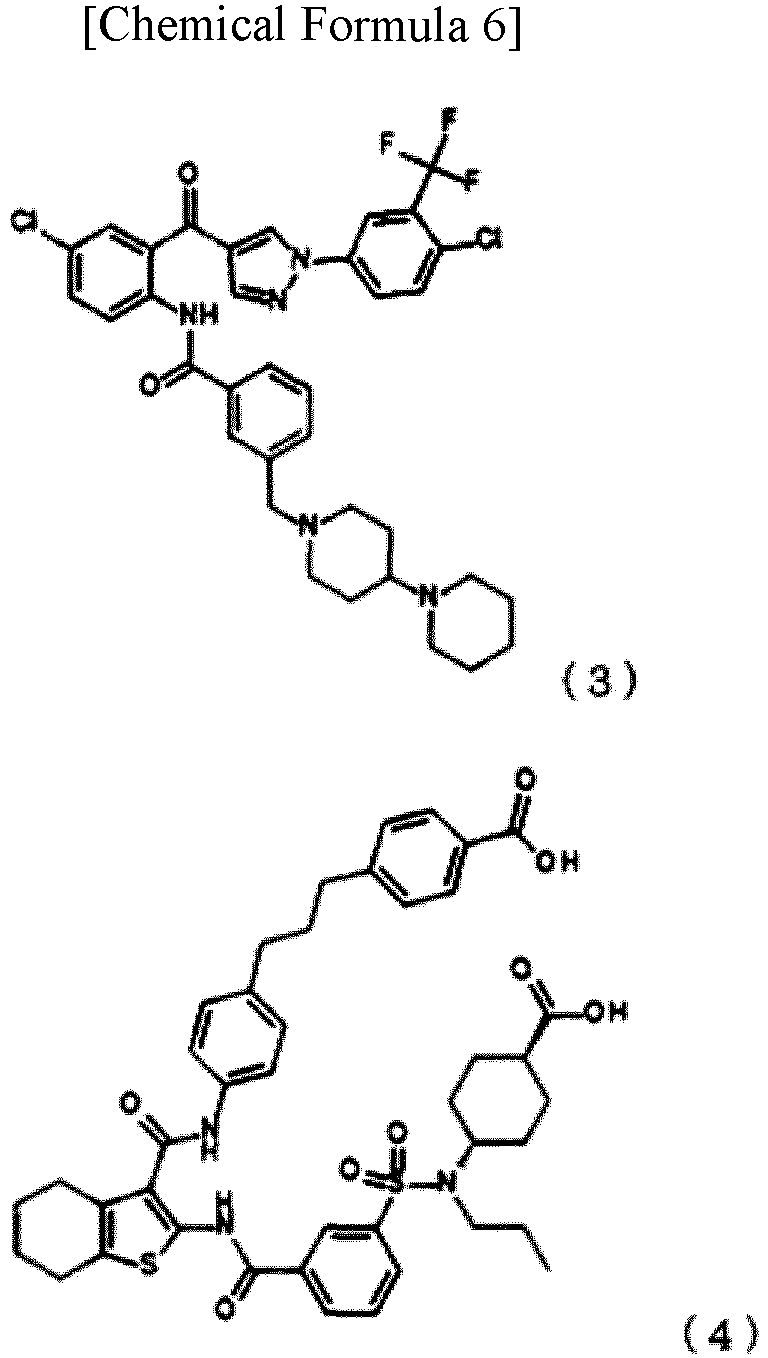


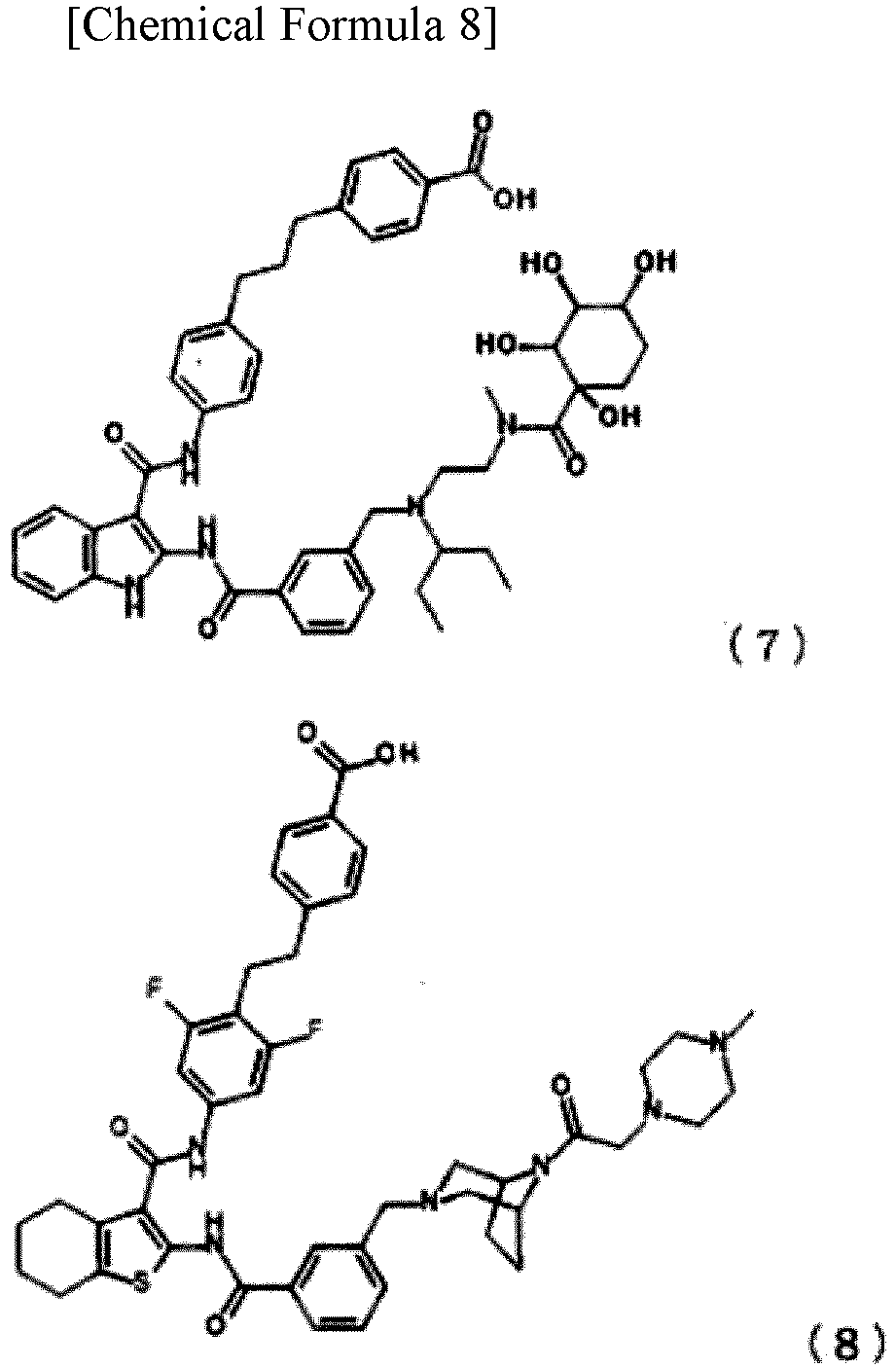


- When using the pharmaceutical composition of the present invention, the administration method thereof may be an orally method or a parenterally method. Examples of the parenterally administration method include rectal, intravenous, intramuscular, subcutaneous, intracisternal, intravaginal, intraperitoneal, intravesical, or topical (infusion, powder, ointment, gel, or cream) administrations and inhalation (intraoral or nasal spray). Examples of dosage form thereof include a tablet, a capsule, a granule, a powder, a pill, aqueous and non-aqueous oral solutions and suspensions, and a parenteral solution filled in a container adapted to be subdivided into individual dosages. The dosage forms can also be adapted to a variety of administration methods encompassing modified release formulations such as subcutaneous grafting.
- The above formulations are manufactured by well-known methods using additives such as an excipient, a lubricant (coating agent), a binder, a disintegrant, a stabilizer, a flavoring agent, and a diluent.
- Examples of the excipient include starches such as starch, potato starch, and corn starch, lactose, crystalline cellulose, and calcium hydrogen phosphate.
- Examples of the coating agent include ethyl cellulose, hydroxypropyl cellulose, hydroxypropyl methyl cellulose, shellac, talc, carnauba wax, and paraffin.
- Examples of the binder include polyvinylpyrrolidone, macrogol, and compounds similar to the excipients.
- Examples of the disintegrant include compounds similar to the excipient and chemically modified starches and celluloses such as croscarmellose sodium, carboxymethyl starch sodium, and crosslinked polyvinylpyrrolidone.
- Examples of the stabilizer include parahydroxybenzoates such as methyl paraben and propyl paraben; alcohols such as chlorobutanol, benzyl alcohol, and phenylethyl alcohol; benzalkonium chloride; phenols such as phenol and cresol; thimerosal; dehydroacetic acid; and sorbic acid.
- Examples of the flavoring agent include a sweetener, an acidulant, and a perfume, which are commonly used.
- Examples of solvents for producing a liquid agent include ethanol, phenol, chlorocresol, purified water, and distilled water.
- Examples of surfactant or emulsifier include
polyoxyl 40 stearate and lauromacrogol. - In one aspect of the present invention, when a pharmaceutical composition is used, the amount used varies depending on the symptoms, age, body weight, relative health conditions, presence of other medications, administration method, or the like. For example, for patients (warm-blooded animals, especially humans), the generally effective amount is preferably 1 to 20 mg per kg of body weight per day, more preferably 1 to 10 mg per kg of body weight, as an active ingredient (a compound described herein used as an active ingredient) in the case of an oral agent, and the daily amount used is preferably in the range of 60 to 1200 mg for an adult patient having a normal weight. However, the amount is not necessarily limited to these values.
- In one aspect of the present invention, the inhibitory activity of a compound that inhibits a phosphate transporter can be confirmed by known measurement methods. Here, the indicator to confirm the inhibitory activity may be a 50% phosphate uptake inhibition concentration (IC50) in a cell expressing a phosphate transporter, for example, as measured by the method described in
NPL 8. That is, it can be measured by the following method. - 1) Human NaPi-IIb-expressing plasmids, human PiT1-expressing plasmids, or human PiT2-expressing plasmids are transfected into CHO cells.
- 2) The medium is replaced with buffer A (145 mM choline chloride, 3 mM KCl, 1 mM CaCl2, 0.5 mM MgCl2, 5 mM glucose, 5 mM MES, (pH 6.5)), and then replaced with buffer B (145 mM NaCl, 3 mM KCl, 1 mM CaCl2, 0.5 mM MgCl2, 5 mM glucose, 5 mM MES (pH 6.5)) to which a test compound is added at the final concentration of 0.01, 0.03, 0.1, 0.3, 1, 3, 10, or 30 µM, buffer A to which DMSO is added, or buffer B to which DMSO is added.
- 3) After a certain time, a 1/20 amount of buffer A containing 33PO4 is added and reacted at room temperature.
- 4) After washing with ice-cooled buffer A, a liquid scintillator is added, and the 33PO4 uptake amount is measured. The inhibition rate can be determined by the following formula.
Inhibition rate (%) = (1 - (33PO4 uptake amount of test compound-added buffer B-treated well - 33PO4 uptake amount of DMSO-added buffer A-treated well)/(33PO4 uptake amount of DMSO-added buffer B-treated well - 33PO4 of DMSO-added buffer A-treated well)) x 100 - 5) The 50% 33PO4-uptake inhibition concentrations (IC50) (µM) in a cell expressing human NaPi-IIb, human PiT1, and human PiT2 are calculated from a straight line through two points sandwiching a 50% inhibition rate.
- In one aspect of the present invention, the 50% phosphate uptake inhibition concentration (IC50) in a cell expressing a phosphate transporter is 10 µM or less, 5 µM or less, or 1 µM or less. In one aspect of the present invention, the 50% phosphate uptake inhibition concentration (IC50) in a cell expressing NaPi-IIb is 10 µM or less, 5 µM or less, or 1 µM or less.
- In one aspect of the present invention, a compound that inhibits a phosphate transporter is a compound that selectively inhibits NaPi-IIb, and, for example, may be a compound that selectively inhibits NaPi-IIb relative to Pit1 or Pit2. Selectively inhibiting NaPi-IIb means, for example, a case in which a 50% phosphate uptake inhibition concentration (IC50) ratio in a cell expressing Pit1, Pit2, or NaPi-IIb (IC50[Pit1]/IC50[NaPi-IIb]) and/or (IC50[Pit2]/IC50[NaPi-IIb]) is 10 or more, 100 or more, or 500 or more.
- In one aspect of the present invention, the compound that inhibits the phosphate transporter is a compound having IC50[Pit1]/IC50[NaPi-IIb] and/or IC50[Pit2]/IC50[NaPi-IIb] of 10 or more, 100 or more, or 500 or more.
- In one aspect of the present invention, the compound used as an active ingredient in the pharmaceutical composition can be a salt thereof or a solvate thereof. The salt of the compound described herein can be a pharmaceutically acceptable salt. The salt of the compound described herein include an acid addition salt and a base addition salt. Examples of the acid addition salt include hydrochloride, hydrobromide, hydroiodide, phosphate, phosphonate, sulfate, or the like; sulfonates such as methane sulfonate, ethanesulfonate, benzenesulfonate, and p-toluenesulfonate; and carboxylates such as acetate, citrate, malate, tartrate, succinate, salicylate, maleate, fumarate, benzoate, malonate, glycolate, oxalate, glucuronate, adipate, glutarate, ketoglutarate, and hippurate. Examples of the base addition salt include alkali metal salts such as a sodium salt and a potassium salt; alkaline earth metal salts such as a magnesium salt and a calcium salt; ammonium salts such as an ammonium salt, an alkylammonium salt, a dialkylammonium salt, a trialkylammonium salt, and a tetraalkylammonium salt; and amino acid salts such as a lysine salt, an arginine salt, a glycine salt, a valine salt, a threonine salt, a serine salt, a proline salt, and an alanine salt. These salts are produced by bringing the compound in contact with an acid or base that can be used in the manufacture of a pharmaceutical product.
- In one aspect of the present invention, the solvate refers to one in which a compound, together with a solvent, forms a single molecular assembly, and is not particularly limited as long as the solvate is formed with a solvent acceptable for ingestion along with administration of a medicament. Specific examples of the solvate include not only a hydrate, an alcohol hydrate (such as ethanol hydrate, methanol hydrate, 1-propanol hydrate, 2-propanol hydrate, or the like), a solvate formed with a single solvent such as dimethyl sulfoxide, but also a solvate formed with a plurality of solvents per one molecule of compound, or a solvate formed with a plurality of types of solvents per one molecule of compound. When the solvent is water, the solvate is called a hydrate.
- The compounds described herein and salts thereof used as active ingredients in pharmaceutical compositions can be present as a number of tautomers, for example, keto and enol forms, imine and enamine forms, and a mixture thereof. The tautomer may be present in a solution as a mixture of tautomers. In a solid form, one tautomer is usually predominant. Although one tautomer may be described, the present invention includes all tautomers of the compounds of the present invention. The compound, a salt thereof, or a solvate thereof described herein include all their stereoisomers (e.g., enantiomers, diastereomers (cis and trans geometric isomers)), racemates of the isomers, and other mixtures. The compound may have, for example, one or more asymmetric points, and the present invention includes racemic mixtures, diastereomeric mixtures, and enantiomers of such compounds.
- The compounds described herein used as an active ingredient in a pharmaceutical composition may comprise a non-naturally occurring percentage of isotopic atom in one or more atoms constituting such a compound. Compounds substituted with an isotope in a ratio different from the ratio of isotope in nature by substituting any atom in the compound with an atom having the same atomic number (proton number) and a different mass number (the sum of the number of protons and neutrons), i.e., compounds labeled with an isotopic atom, are also included in the present invention. Examples of the isotope element contained in the compound herein include a hydrogen atom, a carbon atom, a nitrogen atom, an oxygen atom, a phosphorus atom, a sulfur atom, a fluorine atom, and a chlorine atom, and they include 2H, 3H, 13C, 14C, 15N, 17O, 18O, 31P, 32P, 35S, 18F , 36Cl, and the like, respectively. The compounds labeled with an isotopic atom are useful as therapeutic or prophylactic agents, research reagents (e.g., assay reagents), and diagnostic agents (e.g., in vivo imaging diagnostics). For the compounds as used herein, all the compounds containing radioactive or non-radioactive isotopic elements in any proportions are encompassed within the scope of the present invention. The compounds labeled with an isotopic atom can be produced by using reagents or solvents containing the corresponding isotopic atoms in a manner similar to the methods for producing unlabeled compounds.
- The compound described herein used as an active ingredient in a pharmaceutical composition may be in the form of a prodrug. As used herein, the "prodrug" means a derivative of a compound described herein that is used as an active ingredient in a pharmaceutical composition after administration under physiological conditions by enzymatically or non-enzymatically degradation to convert into the compound or a pharmaceutically acceptable salt thereof. The prodrug may be inactive when administered to a patient, but is converted in vivo and present as the compound having an inhibitory activity against a phosphate transporter.
- For example, a prodrug is converted into a desired drug form at a specific pH or by the action of an enzyme. Typical prodrugs are compounds that produce free acids in vivo and compounds that have a hydrolyzable ester group. Examples of such a hydrolyzable ester group include, but are not limited to, groups represented by the formula -COORx, wherein Rx is selected from C1-4 alkyl, C2-7 alkanoyloxymethyl, 1-(C4-9 alkanoyloxy)ethyl, 1-methyl-1-(C5-10 alkanoyloxy)-ethyl, (C3-6 alkoxy)carbonyloxymethyl, 1-[(C4-7 alkoxy)carbonyloxy]ethyl, 1-methyl-1-[(C5-8 alkoxy)carbonyloxy]ethyl, N-[(C3-9 alkoxy)carbonyl]aminomethyl, 1-(N-[(C4-10 alkoxy)carbonyl]amino)ethyl, 3-phthalidyl, 4-crotonolactonyl, gamma-butyrolacton-4-yl, [N,N-di(C1-2 alkyl)amino]C2-3 alkyl (e.g., N,N-dimethylaminoethyl), (carbamoyl)C1-2 alkyl, [N,N-di(C1-2 alkyl)carbamoyl]C1-2 alkyl, (piperidino)C2-3 alkyl, (pyrrolidino)C2-3 alkyl, or (morpholino)C2-3 alkyl.
- The subject to which the compound, the salt or the solvate of the present disclosure is administered is an animal, preferably a mammal (e.g., a mouse, a rat, a rabbit, a dog, a monkey (e.g., a cynomolgus monkey) or a human), particularly preferably a human. The human may be an adult (of 18 years of age or older) or a child (under 18 years of age). The child is preferably, e.g., of 6 months of age or older.
- In one aspect of the present invention, a pharmaceutical composition comprising a compound that inhibits a phosphate transporter can be used in a prevention or treatment of a cystic disease or in suppressing formation or expansion of a cyst. Examples of the cystic disease include cystic kidney disease, polycystic liver disease, cystic lung disease, and pancreatic cyst. The formation or expansion of a cyst may occur, for example, in a kidney, a liver, a lung, or a pancreas.
- In one aspect of the present invention, a pharmaceutical composition comprising a compound that inhibits a phosphate transporter can be used in a treatment or prevention of cystic kidney disease including polycystic kidney disease, autosomal dominant polycystic kidney disease (ADPKD), or the like, or in suppressing formation or expansion of a renal cyst. In addition to the diseases described above, the cystic kidney diseases include, for example, multiple simple renal cyst, renal tubular acidosis, multicystic kidney, multicystic dysplastic kidney, multilocular cysts of the kidney, medullary cystic disease of the kidney, juvenile nephronophthisis, acquired cystic disease of the kidney, and autosomal recessive polycystic kidney disease.
- Polycystic kidney disease can be diagnosed, for example, by confirming the presence of multiple cysts in the kidneys on both sides by imaging (such as CT, MRI, or ultrasound tomography). In one aspect of the present invention, polycystic kidney disease is diagnosed when three or more, or five or more, cysts are confirmed in each kidney on both sides.
- In one aspect of the present invention, the "effective amount" means a dose of a phosphate transporter inhibitor effective for treating or preventing a disease, particularly a cystic disease in the present invention, in an individual. Examples of the effective amount include, but are not limited to, a dose in the range of 0.0001 mg to 1000 mg, preferably 0.001 mg to 100 mg, and further preferably 0.01 to 50 mg per kg of body weight per dose, for example, every 1 to 10 weeks, preferably every 1 to 8 weeks, and even more preferably every 1 to 4 weeks.
- In one aspect of the present invention, the following aspects are provided.
- (1) A compound that inhibits NaPi-IIb for use in treating or preventing cystic kidney disease in a mammal, the compound being selected from the group consisting of the following (i) to (iii):
- (i) a low-molecular compound having a molecular weight of 2000 g/mol or less;
- (ii) an anti-NaPi-IIb antibody; and
- (iii) a polynucleotide selected from the group consisting of an antisense molecule, a microRNA, and a small interfering RNA (siRNA).
- (2) A compound that inhibits NaPi-IIb for use in suppressing renal cystogenesis in a mammal, the compound being selected from the group consisting of the following (i) to (iii):
- (i) a low-molecular compound having a molecular weight of 2000 g/mol or less;
- (ii) an anti-NaPi-IIb antibody; and
- (iii) a polynucleotide selected from the group consisting of an antisense molecule, a microRNA, and a small interfering RNA (siRNA).
- In one aspect of the present invention, a method for predicting a benefit of a treatment with an agent in a patient having a cystic disease, comprising confirming whether NaPi-IIb is expressed in a cell collected from an organ of the patient having a cystic disease in which a cyst has been formed is provided. Herein, the agent is an inhibitor of NaPi-IIb.
- In one aspect of the present invention, a method for predicting a benefit of a treatment with an agent in a patient having cystic kidney disease, comprising confirming whether NaPi-IIb is expressed in a kidney cell collected from the patient having cystic kidney disease is provided. Herein, the agent is an inhibitor of NaPi-IIb. As the kidney cell collected from the patient having cystic kidney disease, a cell obtained, for example, by renal biopsy can be used, and specifically, a cell obtained by needle biopsy under ultrasound guidance or open kidney biopsy can be used.
- In another aspect of the present invention, a pharmaceutical composition comprising a compound that inhibits a phosphate transporter as an active ingredient, for use in suppressing renal cystogenesis is provided. Renal cysts can be diagnosed, for example, by confirming them by image examining (such as ultrasound, CT, or MRI). In one aspect of the present invention, the pharmaceutical composition is used in a subject having a risk of autosomal dominant polycystic kidney disease until the onset of cystic kidney disease. In one aspect of the present invention, the pharmaceutical composition is used to suppress further renal cystogenesis, i.e., to suppress progression of the disease, even after the onset of cystic kidney disease.
- In one aspect of the present invention, a compound that inhibits a phosphate transporter or a composition comprising the compound is administered to a subject having a confirmed familial occurrence of autosomal dominant polycystic kidney disease. Here, the familial occurrence is confirmed by the presence or absence of patients among parents, siblings, grandfathers, grandmothers, uncles, aunts, cousins, and the like. In one subject of the present invention, a compound that inhibits a phosphate transporter is administered to a subject whose either parent is a patient of chromosomal dominant polycystic kidney disease.
- In one aspect of the present invention, a compound that inhibits a phosphate transporter or a composition comprising the compound is administered to a subject having a defect in PKD1 or PKD2. Here, the defect in PKD1 or PKD2 can be confirmed in a cell obtained from the subject by methods known to those skilled in the art. In one aspect of the present invention, the subject has a defect in PKD1.
- The age of the subject to which a compound that inhibits a phosphate transporter or a composition comprising the compound is administered is not particularly limited, and may be, for example, 15 years of age or younger, and 16 years of age or older, 20 years of age or older, 25 years of age or older, 30 years of age or older, 35 years of age or older, 40 years of age or older, 45 years of age or older, 50 years of age or older, 60 years of age or older, or 70 years of age or older. In one aspect of the present invention, the compound or composition is administered to a subject of 30 years of age or older.
- The cystic disease described herein or the formation or expansion of cysts can be diagnosed or confirmed by examination methods known to those skilled in the art, such as CT, MRI, or ultrasound tomography. In one aspect of the present invention, a compound that inhibits a phosphate transporter or a composition comprising the compound is administered to a subject confirmed to have one or two or more cysts in a particular organ, e.g., a kidney, a liver, a lung, or a pancreas. In one aspect of the present invention, the subject of administration is a subject confirmed to have one or two or more cysts in a kidney. Specifically, the compound or composition is administered to a subject confirmed to have three or more cysts in each kidney on both sides by CT, MRI, or ultrasound tomography.
- In one aspect of the present invention, a method of screening for a compound for use in treating or preventing a disease selected from cystic disease, polycystic liver disease, cystic lung disease, or/and pancreatic cyst, the method comprising measuring an inhibitory activity against a phosphate transporter is provided. In one aspect of the present invention, a method of screening for a compound that suppresses cyst formation or cyst expansion in an organ of a mammal, the method comprising measuring an inhibitory activity against a phosphate transporter is also provided. These screening methods are hereinafter sometimes referred to as "method of screening for a compound".
- A compound that inhibits the phosphate transporter, screened for in the method of screening for a compound described above can be used to provide a pharmaceutical composition for treating or preventing a disease involving the phosphate transporter, selected from cystic diseases, polycystic liver disease, cystic lung disease, or/and pancreatic cyst and cystic kidney disease, the pharmaceutical composition containing a compound that inhibits the phosphate transporter as an active ingredient.
- The test compounds applied to the method of screening for a compound used as an active ingredient in a pharmaceutical composition are not particularly limited, and examples thereof include at least one selected from the group consisting of a low-molecular compound, a polypeptide, and a polynucleotide listed above as the compound that inhibits a phosphate transporter described above. More specific examples of the test compounds include synthetic low-molecular compound libraries, gene library expression products, peptide libraries, siRNAs, antibodies, bacterial release materials, extracts and culture supernatants of cells (microorganisms, plant cells, animal cells), purified or partially-purified polypeptides, marine organisms, extracts from plants or animals, and random phage peptide display libraries. The test compounds may also be derivatives of a known phosphate transporter.
- The method of screening for a compound described above may comprise selecting a compound having an inhibitory activity against a phosphate transporter. The inhibitory activity against a phosphate transporter in the method of screening for a compound described above can be measured by known methods. The indicator to confirm the inhibitory activity may be a 50% phosphate uptake inhibition concentration (IC50) in a cell expressing a phosphate transporter as described above.
- In one aspect of the present invention, the following screening methods are provided.
- (1) A method of screening for a compound for use in treating or preventing cystic kidney disease in a mammal, the method comprising measuring inhibitory activity against NaPi-IIb, and selecting a compound having an inhibitory activity against NaPi-IIb.
- (2) A method of screening for a compound that suppresses cyst formation or cyst expansion in an organ of a mammal, the method comprising measuring inhibitory activity against NaPi-IIb, and selecting a compound having an inhibitory activity against NaPi-IIb, in an aspect of the present invention.
- (3) A method of screening for a compound that suppresses cyst formation or cyst expansion in a kidney of a mammal, the method comprising measuring inhibitory activity against NaPi-IIb, and selecting a compound having an inhibitory activity against NaPi-IIb, in an aspect of the present invention.
- Hereinafter, the present invention will be described in more detail using Examples, but the present invention is not limited to these Examples. All starting materials and reagents were obtained from commercial suppliers, or synthesized by known methods.
- For transient expression, human NaPi-IIb expression plasmids, human PiT1 expression plasmids, human PiT2 expression plasmids, and Fugene HD Transfection (Promega Corporation) were added to CHO cells using a 96-well plate, and the plate was incubated in a CO2 incubator for 16 hours. The medium was replaced with buffer A (145 mM choline chloride, 3 mM KCl, 1 mM CaCl2, 0.5 mM MgCl2, 5 mM glucose, 5 mM MES, (pH 6.5)), and then replaced with buffer B (145 mM NaCl, 3 mM KCl, 1 mM CaCl2, 0.5 mM MgCl2, 5 mM glucose, 5 mM MES (pH 6.5)) to which a test compound was added at the final concentration of 0.01, 0.03, 0.1, 0.3, 1, 3, 10, or 30 µM, buffer A to which DMSO was added, or buffer B to which DMSO was added. After a certain time, a 1/20 amount of buffer A containing 33PO4 (PerkinElmer Japan G.K.) was added and reacted at room temperature. After washing with ice-cooled buffer A, a liquid scintillator (MicroScint™-20, item number 6013621, PerkinElmer Japan G.K.) was added, and the 33PO4 uptake amount was measured with the top count (Top Count NXT, PerkinElmer Japan G.K.). The inhibition rate was determined by the following formula. Here, a certain time was set to 10 minutes. The phrase "a 1/20 amount of buffer A containing 33PO4 (PerkinElmer Japan G.K.) was added" refers to "buffer A containing 33PO4 (PerkinElmer Japan G.K.) was added in an amount of 1/ 20 of the amount of solution filling the medium".
-
Inhibition rate (%) = (1 - (33PO4 uptake amount of test compound-added buffer B-treated well - 33PO4 uptake amount of DMSO-added buffer A-treated well)/(33PO4 uptake amount of DMSO-added buffer B-treated well - 33PO4 of DMSO-added buffer A-treated well)) x 100 - The 50% 33PO4-uptake inhibition concentrations (IC50) (µM) in a cell expressing human NaPi-IIb, human PiT1, and human PiT2 were calculated from a straight line through two points sandwiching 50% inhibition rate. The results are shown in Table 1. It should be noted that
compounds [Table 1] [Table 1: Results of Test Example 1] Compound No. Structural formula Compound name Uptake Inhibition IC50 (µM) NaPi-IIb Pit1 Pit2 1 
4-[4,5-Dichloro-2-(trifluoromethyl)phenyl]-3-[5-(trifluoromethyl)pyridin-2-yl]sulfanyl-1H-1,2,4-triazol-5-one 7.9 - - 2 
(4aR)-N-(4-Bromo-3,5-difluorophenyl)-1-[(3-chloro-2-fluorophenyl)methyl]-4-hydroxy-4a-methyl-2-oxo-6,7-dihydro-5H-pyrrolo[1,2-b]pyridazine-3-carboxamide 2.9 - - 3 
N-[4-Chloro-2-[1-[4-chloro-3-(trifluoromethyl)phenyl]pyra zole-4-carbonyl]phenyl]-3-[(4-piperidin-1-ylpiperidin-1-yl)methyl]benzamide 3.8 >30 >30 4 
Disodium; 4-[3-[4-[[2-[[3-[(4-carboxylatocyclohexyl)-propylsulfamoyl]benzoyl]am ino]-4,5,6,7-tetrahydro-1-benzothiophene-3-carbonyl]amino]phenyl]prop yl]benzoic acid 0.031 >30 >30 - The results of the above tests confirmed the inhibitory effect of each test compound on 33PO4 uptake of human NaPi-IIb-expressing cells.
- NaPi-IIb mRNA levels in kidney tissues of human ADPKD patients were evaluated using Visium Spatial Gene Expression (10x Genomics). Tissues containing cysts were excised from kidney tissues removed from ADPKD patients and frozen blocks were made by OCT embedding. The frozen blocks were sliced and put on slides for Visium Gene Expression, and HE staining was performed. After obtaining the HE staining image, cDNA was generated and sequence analysis of short read sequence library was performed for cDNA using NovaSeq 6000 (Illumina, Inc). The result of sequence analysis was reflected in the HE staining image using Loupe Browser (10x Genomics). The number of each gene in each spot calculated by the sequence analysis was corrected by the number of housekeeping genes and the number of nucleic acids in each spot to obtain a value of the expression level of each gene. The HE staining images and NaPi-IIb expression levels are shown in
Figs. 1a to 1f . InFig. 1 , the grayscale bars show NaPi-IIb expression levels, where 4.0 indicateslog 224.0, and 0.0 indicateslog 220.0. - As the results of the above tests, highly expression of NaPi-IIb was confirmed in kidney tissues of human ADPKD patients.
- Test Example 3: Evaluation of NaPi-IIb expression levels in kidney tissue of PKD model mouse
- NaPi-IIb mRNA levels in kidney tissues of PC1 conditional knockout mice (obtained by passage breeding of those produced at Lieden University), DBA/2FG-pcy mouse (hereinafter referred to as pcy mouse) (KYUDO CO., LTD.) and C57BL/6J mice (CLEA Japan, Inc.) were confirmed using Visium Spatial Gene Expression (10x Genomics). Tamoxifen was orally administered to PC1 conditional knockout mice at a dose of 3 mg/kg for 3 days from
day 21 after birth, and the kidneys were removed 16 weeks after administration. For DBA/2FG-pcy and C57BL/6J mice, kidneys were removed from 9-week-old individuals. Subsequent procedures were the same as in Test Example 2.Figs. 2a to 2c are diagrams showing HE staining images and NaPi-IIb expression levels of kidney tissues of PC1 conditional knockout mouse, pcy mouse, and C57BL/6J mice. InFigs. 2a to 2c , the grayscale bars show NaPi-IIb expression levels, where 4.0 indicateslog 224.0, and 0.0 indicateslog 220.0. - As the results of the above tests, highly expression of NaPi-IIb was confirmed in kidney tissues of mouse PKD models.
- Test Example 4: Evaluation of suppression effects on increase in renal volume and decrease in renal function in pcy mice
- The pcy mice, a naturally occurring PKD model, were used to evaluate the effects of tolvaptan and
compound 4 in Test Example 1 on (a) renal volume, (b) blood urea nitrogen (UN) concentration, (c) body weight, and (d) urine volume in pcy mice. - The pcy mice (5 weeks of age at the start of this test) were grouped into 3 groups of 13 mice each.
Compound 4 or tolvaptan was administered to each of the test compound administration groups. The administration period was 5 weeks.Compound 4 was administered subcutaneously once daily and tolvaptan was administered subcutaneously at a weekly pace.Compound 4 was administered at 33-40 mg/kg per dose and tolvaptan was administered at 25-30 mg/kg per dose.Compound 4 and tolvaptan were administered after dissolved in 50% DMSO/50% glycerol. A group of mice of the parental line was provided as a normal control group (Normal Control) (N = 7). The 50% DMSO/50% glycerol was administered to the normal control group and the Vehicle group of pcy mice at 1 mL/kg. - The left renal volume (renal volume (mL)) of mice was calculated by the following
formula using echography 5 weeks after the start of administration of the test compound, as shown inFig. 3a .Renal volume (mL) = π x long diameter (mm) x short diameter (mm) x short diameter (mm) x 1000/6 - After that, blood was collected from the abdominal vena cava, plasma was collected, and euthanasia treatment was performed. Blood urea nitrogen (UN) concentration (Plasma UN (mg/L)) was measured using L-type Waco UN (Fujifilm Wako Pure Chemical Corporation), as shown in
Fig. 3b . - In addition, the body weight (Body weight (g)) of mice was measured every 7 days after the start of administration of the test compound, as shown in
Fig. 3c . Furthermore, the volume of urine (Urine volume (mL/day)) was calculated from the specific gravity and measured weight ofurine 5 weeks after the start of administration of the test compound, as shown inFig. 3d . - The results of the above tests confirmed that
compound 4 has the same degree of suppression effects on increase in renal volume and decrease in renal function as tolvaptan. It was also shown thatcompound 4 has less weight loss and no increase in urine volume compared to tolvaptan. - Test Example 5: Evaluation of inhibition effect on three-dimensional cyst formation using primary cells from kidney tissue of human ADPKD patient
- Primary cells were isolated from kidney tissues of human ADPKD patients. Under two-dimensions, the isolated cells were cultured for 2 days using DMEM/F-12 (Thermo Fisher Scientific, Inc.) supplemented with 10% FBS. Subsequently, three-dimensional culture was performed for 7 days using 3D Ready Atelocollagen (KOKEN CO., LTD.). During three-dimensional culture, 50 µM forskolin (Sigma-Aldrich Co. LLC) and ITS liquid media supplements (Sigma-Aldrich Co. LLC) were added as stimulating agents to some of the wells to form cysts, and a test compound was added at the final concentration of 30 µM. The test compound was also added to other wells at the final concentration of 30 µM. After 7 days of three-dimensional culture, it was fixed with 4% paraformaldehyde (Thermo Fisher Scientific, Inc.), and nucleic acid staining and cell membrane staining were performed with Hoechst 33342 (Thermo Fisher Scientific, Inc.) and CellLight Plasma Membrane-RFP, BacMam 2.0 (Thermo Fisher Scientific, Inc.). Three-dimensional imaging and volume analysis were performed using Operetta CLS and image analysis software Harmony (PerkinElmer Japan G.K.). The inhibition rate was determined by the following formula.
Inhibition rate (%) = (1 - (volume of stimulating agent and test compound-added well - volume of stimulating agent-added and test compound-non added well)/(volume of stimulating agent-added and test compound-non added well - volume of stimulating agent and test compound-non added well)) x 100 -
Fig. 4 shows three-dimensional photographed images of (a) stimulating agent and compound 4-non added well, (b) stimulating agent-added and compound 4-non added well, and (c) stimulating agent and compound 4-added well. Table 2 shows the average inhibition rate of each test compound (N = 3).[Table 2] [Table 2: Results of Test Example 5] Compound No. Inhibition rate (%) 1 98.2 2 100.0 3 100.0 4 94.4 - The results of the above tests confirmed the inhibitory effect of each test compound on high cyst formation.
- Test Example 6: Evaluation of suppression effects on increase in renal volume and decrease in renal function in
PC 1 conditional knockout mice - The PC1 conditional knockout mice, a PKD model, were used to evaluate the effects of tolvaptan and
compound 4 in Test Example 1 on (a) renal volume, (b) body weight, and (c) urine volume in PC1 conditional knockout mouse. - Tamoxifen was orally administered to PC1 conditional knockout mice at a dose of 3 mg/kg for 3 days from
day 21 after birth. The PC1 conditional knockout mice (5 weeks of age at the start of this test) were grouped into 3 groups of 15 mice each.Compound 4 or tolvaptan was administered as a single agent to the test compound administration group. The administration period was 16 weeks, and they were administered subcutaneously once daily.Compound 4 was administered at 33-40 mg/kg per dose and tolvaptan was administered at 25-30 mg/kg per dose.Compound 4 and tolvaptan were administered after dissolved in 50% DMSO/50% glycerol. A group of mice to which tamoxifen was not administered was provided as a normal control group (Normal Control) (N = 7). The 50% DMSO/50% glycerol was administered to the normal control group and the Vehicle group of PC1 conditional knockout mice at 1 mL/kg. - The left renal volume (renal volume (mL)) of mice was calculated by the following formula using echography 16 weeks after the start of administration of the test compound. The results are shown in
Fig. 5a .Renal volume (mL) = π x long diameter (mm) x short diameter (mm) x short diameter (mm) x 1000/6 - After that, euthanasia treatment was performed. In addition, the body weight (Body weight (g)) of mice was measured every 7 days after the start of administration of the test compound. The results are shown in
Fig. 5b . Furthermore, the volume of urine (Urine volume (mL/day)) was calculated from the specific gravity and measured weight of urine 16 weeks after the start of administration of the test compound. The results are shown inFig. 5c . - The results of the above tests confirmed the suppression effect of
compound 4 on increase in renal volume and decrease in renal function. It was also shown thatcompound 4 has less weight loss and no increase in urine volume compared to tolvaptan.
Claims (15)
- A pharmaceutical composition comprising a compound that inhibits a phosphate transporter as an active ingredient, for use in treating or preventing a cystic disease.
- A pharmaceutical composition comprising a compound that inhibits a phosphate transporter as an active ingredient, for suppressing formation or expansion of a cyst.
- The pharmaceutical composition according to claim 1 or 2, wherein the phosphate transporter is at least one selected from the group consisting of NaPi-IIa, NaPi-IIb, and NaPi-IIc.
- The pharmaceutical composition according to any one of claims 1 to 3, wherein the phosphate transporter is NaPi-IIb.
- The pharmaceutical composition according to any one of claims 1, 3 and 4, wherein the cystic disease is a disease involving NaPi-IIb.
- The pharmaceutical composition according to any one of claims 2 to 4, wherein the cyst is a cyst involving NaPi-IIb.
- The pharmaceutical composition according to any one of claims 1 to 6, wherein the compound is at least one selected from the group consisting of a low-molecular compound, a polypeptide, and a polynucleotide.
- The pharmaceutical composition according to any one of claims 1 to 7, wherein the compound is a compound selected from the group consisting of compounds represented by formulas 1 to 11:


- The pharmaceutical composition according to any one of claims 1 to 8, wherein the cystic disease is selected from the group consisting of cystic kidney disease, polycystic liver disease, cystic lung disease, and pancreatic cyst.
- The pharmaceutical composition according to any one of claims 2 to 4 and 6 to 9, wherein the cyst is a cyst that is formed or expanded in a kidney, a liver, a lung, or a pancreas.
- The pharmaceutical composition according to any one of claims 1 to 10, for use in treating or preventing cystic kidney disease.
- The pharmaceutical composition according to any one of claims 1 to 11, for use in treating or preventing polycystic kidney disease.
- A method for predicting a benefit of a treatment with an agent in a patient having a cystic disease, the method comprising:confirming whether NaPi-IIb is expressed in a cell collected from an organ of the patient in which a cyst has been formed; anddetermining the patient as a patient who would benefit from the treatment when the expression is confirmed,wherein the agent is an inhibitor of NaPi-IIb.
- A method of screening for a compound for use in treating or preventing a disease selected from cystic kidney disease, polycystic liver disease, cystic lung disease, and pancreatic cyst, the method comprising measuring an inhibitory activity against a phosphate transporter.
- A method of screening for a compound that suppresses formation or expansion of a cyst in an organ of a mammal, the method comprising measuring an inhibitory activity against a phosphate transporter.
Applications Claiming Priority (2)
| Application Number | Priority Date | Filing Date | Title |
|---|---|---|---|
| JP2022078491 | 2022-05-11 | ||
| PCT/JP2023/017706 WO2023219127A1 (en) | 2022-05-11 | 2023-05-11 | Pharmaceutical composition for treating or preventing cystic disease |
Publications (2)
| Publication Number | Publication Date |
|---|---|
| EP4523703A1 true EP4523703A1 (en) | 2025-03-19 |
| EP4523703A4 EP4523703A4 (en) | 2026-06-03 |
Family
ID=88730277
Family Applications (1)
| Application Number | Title | Priority Date | Filing Date |
|---|---|---|---|
| EP23803601.6A Pending EP4523703A4 (en) | 2022-05-11 | 2023-05-11 | Pharmaceutical composition for the treatment or prevention of cystic disease |
Country Status (5)
| Country | Link |
|---|---|
| US (1) | US20250302833A1 (en) |
| EP (1) | EP4523703A4 (en) |
| JP (1) | JPWO2023219127A1 (en) |
| CN (1) | CN119212723A (en) |
| WO (1) | WO2023219127A1 (en) |
Families Citing this family (1)
| Publication number | Priority date | Publication date | Assignee | Title |
|---|---|---|---|---|
| WO2025121320A1 (en) * | 2023-12-04 | 2025-06-12 | 国立大学法人山口大学 | Prophylactic or therapeutic agent for polycystic kidney disease |
Family Cites Families (14)
| Publication number | Priority date | Publication date | Assignee | Title |
|---|---|---|---|---|
| JPWO2003048134A1 (en) * | 2001-12-05 | 2005-04-14 | 日本たばこ産業株式会社 | Triazole compounds and pharmaceutical use thereof |
| US7119120B2 (en) * | 2001-12-26 | 2006-10-10 | Genzyme Corporation | Phosphate transport inhibitors |
| EP2076286B1 (en) | 2006-10-25 | 2016-03-09 | Wisconsin Alumni Research Foundation | Methods of reducing phosphate absorption using an anti-npt2b antibody |
| MX2012012421A (en) | 2010-04-28 | 2012-12-17 | Astellas Pharma Inc | Tetrahydrobenzothiophene compound. |
| EP2591354B1 (en) | 2010-07-07 | 2016-09-07 | Ardelyx, Inc. | Compounds and methods for inhibiting phosphate transport |
| EP2590656B1 (en) * | 2010-07-07 | 2017-11-15 | Ardelyx, Inc. | Compounds and methods for inhibiting phosphate transport |
| PL2772490T3 (en) | 2011-10-27 | 2016-11-30 | Aminoalkyl-substituted n-thienyl benzamide derivative | |
| WO2013082756A1 (en) | 2011-12-06 | 2013-06-13 | Leo Pharma A/S | Phosphate transport inhibitors ii |
| WO2013082751A1 (en) | 2011-12-06 | 2013-06-13 | Leo Pharma A/S | Phosphate transport inhibitors i |
| WO2013129435A1 (en) | 2012-02-28 | 2013-09-06 | 協和発酵キリン株式会社 | Fused thiophene derivative |
| AU2014230552B2 (en) * | 2013-03-13 | 2017-11-16 | Chugai Seiyaku Kabushiki Kaisha | Dihydropyridazine-3,5-dione derivative |
| TWI594975B (en) * | 2013-04-24 | 2017-08-11 | 第一三共股份有限公司 | Dicarboxylic acid compound |
| EP4374877A3 (en) | 2014-09-12 | 2024-07-17 | Chugai Seiyaku Kabushiki Kaisha | Pharmaceutical containing sodium-dependent phosphate transporter inhibitor and phosphorus adsorbent for use in the prevention, treatment or suppression of chronic kidney disease, arteriosclerosis associated with vascular calcification, or ectopic calcification. |
| MX376202B (en) * | 2016-08-15 | 2025-03-07 | Lilly Co Eli | Condensed thiophene derivatives useful as napi-iib inhibitors |
-
2023
- 2023-05-11 WO PCT/JP2023/017706 patent/WO2023219127A1/en not_active Ceased
- 2023-05-11 CN CN202380039498.XA patent/CN119212723A/en active Pending
- 2023-05-11 JP JP2024520482A patent/JPWO2023219127A1/ja active Pending
- 2023-05-11 EP EP23803601.6A patent/EP4523703A4/en active Pending
- 2023-05-11 US US18/864,051 patent/US20250302833A1/en active Pending
Also Published As
| Publication number | Publication date |
|---|---|
| CN119212723A (en) | 2024-12-27 |
| WO2023219127A1 (en) | 2023-11-16 |
| JPWO2023219127A1 (en) | 2023-11-16 |
| US20250302833A1 (en) | 2025-10-02 |
| EP4523703A4 (en) | 2026-06-03 |
Similar Documents
| Publication | Publication Date | Title |
|---|---|---|
| US11690812B2 (en) | Methods and compositions for the treatment of steatosis-associated disorders | |
| Stangier et al. | Absorption, metabolism, and excretion of intravenously and orally administered [14C] telmisartan in healthy volunteers | |
| KR101591206B1 (en) | A beta 1-42 specific monoclonal antibodies with therapeutic properties | |
| EP3753557B1 (en) | Preventive or therapeutic agent and pharmaceutical composition for inflammatory diseases or bone diseases | |
| JP2013533257A (en) | Treatment for blood cancer | |
| ES3004516T3 (en) | Methods of treating sjögren's syndrome using a bruton's tyrosine kinase inhibitor | |
| EA026959B1 (en) | Kit comprising a sap depleting agent and an anti-sap antibody and method for treating or preventing amyloidosis | |
| CA2872002A1 (en) | Pyrazole derivative and use thereof for medical purposes | |
| US20250302833A1 (en) | Pharmaceutical composition for treating or preventing cystic disease | |
| US20120149685A1 (en) | Composition and method for the treatment of tauopathies | |
| Del Moral et al. | Chronic cyclosporin A nephrotoxicity, P-glycoprotein overexpression, and relationships with intrarenal angiotensin II deposits | |
| WO2012068539A1 (en) | Use and composition of quercetin-3'-o-sulfate for therapeutic treatment | |
| CN115068480B (en) | Application of cyclin 42 small molecule inhibitor in preparation of medicines for treating chronic kidney disease | |
| EP4166137B1 (en) | Therapeutic agent for fatty liver disease | |
| EP4469094A1 (en) | Psma-targeted radiopharmaceuticals and checkpoint inhibitor combination therapy | |
| AU2020475870A1 (en) | Therapeutic agent for progressive disease caused by increase in eomes-positive cd4-positive t cells | |
| JP2023506450A (en) | Therapeutic compositions containing amyloid beta antibodies or vaccines for the prevention and treatment of diastolic dysfunction | |
| HK40115350A (en) | Pharmaceutical composition for treating or preventing cystic disease | |
| KR20190030691A (en) | Oxazine derivatives for use in the prevention of Alzheimer ' s disease in a risk patient | |
| CN106061940A (en) | Compounds for the treatment of diabetes and its associated diseases | |
| US7423009B2 (en) | Method for treatment of kidney diseases | |
| KR20230107866A (en) | Methods of treating systemic lupus erythematosus using BTK inhibitors | |
| AU2009201979A1 (en) | Use of nicotinic acid adenine dinucleotide phosphate or derivative thereof as agent for treating type-2 diabetes | |
| US12344583B2 (en) | Solid psilocin salts | |
| HK40089150A (en) | Therapeutic agent for fatty liver disease |
Legal Events
| Date | Code | Title | Description |
|---|---|---|---|
| STAA | Information on the status of an ep patent application or granted ep patent |
Free format text: STATUS: THE INTERNATIONAL PUBLICATION HAS BEEN MADE |
|
| PUAI | Public reference made under article 153(3) epc to a published international application that has entered the european phase |
Free format text: ORIGINAL CODE: 0009012 |
|
| STAA | Information on the status of an ep patent application or granted ep patent |
Free format text: STATUS: REQUEST FOR EXAMINATION WAS MADE |
|
| 17P | Request for examination filed |
Effective date: 20241210 |
|
| AK | Designated contracting states |
Kind code of ref document: A1 Designated state(s): AL AT BE BG CH CY CZ DE DK EE ES FI FR GB GR HR HU IE IS IT LI LT LU LV MC ME MK MT NL NO PL PT RO RS SE SI SK SM TR |
|
| DAV | Request for validation of the european patent (deleted) | ||
| DAX | Request for extension of the european patent (deleted) | ||
| REG | Reference to a national code |
Ref country code: DE Ref legal event code: R079 Free format text: PREVIOUS MAIN CLASS: A61K0045000000 Ipc: A61K0031381000 |
|
| A4 | Supplementary search report drawn up and despatched |
Effective date: 20260504 |
|
| RIC1 | Information provided on ipc code assigned before grant |
Ipc: A61K 31/381 20060101AFI20260424BHEP Ipc: A61K 45/00 20060101ALI20260424BHEP Ipc: A61K 31/18 20060101ALI20260424BHEP Ipc: A61K 31/404 20060101ALI20260424BHEP Ipc: A61K 31/4418 20060101ALI20260424BHEP Ipc: A61K 31/4439 20060101ALI20260424BHEP Ipc: A61K 31/4453 20060101ALI20260424BHEP Ipc: A61K 31/451 20060101ALI20260424BHEP Ipc: A61K 31/4545 20060101ALI20260424BHEP Ipc: A61K 31/4995 20060101ALI20260424BHEP Ipc: A61K 31/5025 20060101ALI20260424BHEP Ipc: A61K 31/517 20060101ALI20260424BHEP Ipc: A61P 1/16 20060101ALI20260424BHEP Ipc: A61P 1/18 20060101ALI20260424BHEP Ipc: A61P 11/00 20060101ALI20260424BHEP Ipc: A61P 13/12 20060101ALI20260424BHEP Ipc: G01N 33/15 20060101ALI20260424BHEP Ipc: G01N 33/50 20060101ALI20260424BHEP Ipc: A61K 31/454 20060101ALI20260424BHEP Ipc: G01N 33/68 20060101ALI20260424BHEP |