EP4523621A2 - Methods and apparatus for detecting and reacting to insufficient hypoglycemia response - Google Patents
Methods and apparatus for detecting and reacting to insufficient hypoglycemia response Download PDFInfo
- Publication number
- EP4523621A2 EP4523621A2 EP25154182.7A EP25154182A EP4523621A2 EP 4523621 A2 EP4523621 A2 EP 4523621A2 EP 25154182 A EP25154182 A EP 25154182A EP 4523621 A2 EP4523621 A2 EP 4523621A2
- Authority
- EP
- European Patent Office
- Prior art keywords
- insulin delivery
- glucose
- delivery pump
- sensor
- hypoglycemia
- Prior art date
- Legal status (The legal status is an assumption and is not a legal conclusion. Google has not performed a legal analysis and makes no representation as to the accuracy of the status listed.)
- Pending
Links
Images




Classifications
-
- A—HUMAN NECESSITIES
- A61—MEDICAL OR VETERINARY SCIENCE; HYGIENE
- A61M—DEVICES FOR INTRODUCING MEDIA INTO, OR ONTO, THE BODY; DEVICES FOR TRANSDUCING BODY MEDIA OR FOR TAKING MEDIA FROM THE BODY; DEVICES FOR PRODUCING OR ENDING SLEEP OR STUPOR
- A61M5/00—Devices for bringing media into the body in a subcutaneous, intra-vascular or intramuscular way; Accessories therefor, e.g. filling or cleaning devices, arm-rests
- A61M5/14—Infusion devices, e.g. infusing by gravity; Blood infusion; Accessories therefor
- A61M5/168—Means for controlling media flow to the body or for metering media to the body, e.g. drip meters, counters ; Monitoring media flow to the body
- A61M5/172—Means for controlling media flow to the body or for metering media to the body, e.g. drip meters, counters ; Monitoring media flow to the body electrical or electronic
- A61M5/1723—Means for controlling media flow to the body or for metering media to the body, e.g. drip meters, counters ; Monitoring media flow to the body electrical or electronic using feedback of body parameters, e.g. blood-sugar, pressure
-
- A—HUMAN NECESSITIES
- A61—MEDICAL OR VETERINARY SCIENCE; HYGIENE
- A61B—DIAGNOSIS; SURGERY; IDENTIFICATION
- A61B5/00—Measuring for diagnostic purposes; Identification of persons
- A61B5/145—Measuring characteristics of blood in vivo, e.g. gas concentration or pH-value ; Measuring characteristics of body fluids or tissues, e.g. interstitial fluid or cerebral tissue
- A61B5/14532—Measuring characteristics of blood in vivo, e.g. gas concentration or pH-value ; Measuring characteristics of body fluids or tissues, e.g. interstitial fluid or cerebral tissue for measuring glucose, e.g. by tissue impedance measurement
-
- A—HUMAN NECESSITIES
- A61—MEDICAL OR VETERINARY SCIENCE; HYGIENE
- A61M—DEVICES FOR INTRODUCING MEDIA INTO, OR ONTO, THE BODY; DEVICES FOR TRANSDUCING BODY MEDIA OR FOR TAKING MEDIA FROM THE BODY; DEVICES FOR PRODUCING OR ENDING SLEEP OR STUPOR
- A61M5/00—Devices for bringing media into the body in a subcutaneous, intra-vascular or intramuscular way; Accessories therefor, e.g. filling or cleaning devices, arm-rests
- A61M5/14—Infusion devices, e.g. infusing by gravity; Blood infusion; Accessories therefor
- A61M5/142—Pressure infusion, e.g. using pumps
- A61M5/14244—Pressure infusion, e.g. using pumps adapted to be carried by the patient, e.g. portable on the body
-
- G—PHYSICS
- G16—INFORMATION AND COMMUNICATION TECHNOLOGY [ICT] SPECIALLY ADAPTED FOR SPECIFIC APPLICATION FIELDS
- G16H—HEALTHCARE INFORMATICS, i.e. INFORMATION AND COMMUNICATION TECHNOLOGY [ICT] SPECIALLY ADAPTED FOR THE HANDLING OR PROCESSING OF MEDICAL OR HEALTHCARE DATA
- G16H20/00—ICT specially adapted for therapies or health-improving plans, e.g. for handling prescriptions, for steering therapy or for monitoring patient compliance
- G16H20/10—ICT specially adapted for therapies or health-improving plans, e.g. for handling prescriptions, for steering therapy or for monitoring patient compliance relating to drugs or medications, e.g. for ensuring correct administration to patients
- G16H20/17—ICT specially adapted for therapies or health-improving plans, e.g. for handling prescriptions, for steering therapy or for monitoring patient compliance relating to drugs or medications, e.g. for ensuring correct administration to patients delivered via infusion or injection
-
- G—PHYSICS
- G16—INFORMATION AND COMMUNICATION TECHNOLOGY [ICT] SPECIALLY ADAPTED FOR SPECIFIC APPLICATION FIELDS
- G16H—HEALTHCARE INFORMATICS, i.e. INFORMATION AND COMMUNICATION TECHNOLOGY [ICT] SPECIALLY ADAPTED FOR THE HANDLING OR PROCESSING OF MEDICAL OR HEALTHCARE DATA
- G16H40/00—ICT specially adapted for the management or administration of healthcare resources or facilities; ICT specially adapted for the management or operation of medical equipment or devices
- G16H40/60—ICT specially adapted for the management or administration of healthcare resources or facilities; ICT specially adapted for the management or operation of medical equipment or devices for the operation of medical equipment or devices
- G16H40/63—ICT specially adapted for the management or administration of healthcare resources or facilities; ICT specially adapted for the management or operation of medical equipment or devices for the operation of medical equipment or devices for local operation
-
- G—PHYSICS
- G16—INFORMATION AND COMMUNICATION TECHNOLOGY [ICT] SPECIALLY ADAPTED FOR SPECIFIC APPLICATION FIELDS
- G16H—HEALTHCARE INFORMATICS, i.e. INFORMATION AND COMMUNICATION TECHNOLOGY [ICT] SPECIALLY ADAPTED FOR THE HANDLING OR PROCESSING OF MEDICAL OR HEALTHCARE DATA
- G16H50/00—ICT specially adapted for medical diagnosis, medical simulation or medical data mining; ICT specially adapted for detecting, monitoring or modelling epidemics or pandemics
- G16H50/20—ICT specially adapted for medical diagnosis, medical simulation or medical data mining; ICT specially adapted for detecting, monitoring or modelling epidemics or pandemics for computer-aided diagnosis, e.g. based on medical expert systems
-
- G—PHYSICS
- G16—INFORMATION AND COMMUNICATION TECHNOLOGY [ICT] SPECIALLY ADAPTED FOR SPECIFIC APPLICATION FIELDS
- G16H—HEALTHCARE INFORMATICS, i.e. INFORMATION AND COMMUNICATION TECHNOLOGY [ICT] SPECIALLY ADAPTED FOR THE HANDLING OR PROCESSING OF MEDICAL OR HEALTHCARE DATA
- G16H50/00—ICT specially adapted for medical diagnosis, medical simulation or medical data mining; ICT specially adapted for detecting, monitoring or modelling epidemics or pandemics
- G16H50/50—ICT specially adapted for medical diagnosis, medical simulation or medical data mining; ICT specially adapted for detecting, monitoring or modelling epidemics or pandemics for simulation or modelling of medical disorders
-
- A—HUMAN NECESSITIES
- A61—MEDICAL OR VETERINARY SCIENCE; HYGIENE
- A61M—DEVICES FOR INTRODUCING MEDIA INTO, OR ONTO, THE BODY; DEVICES FOR TRANSDUCING BODY MEDIA OR FOR TAKING MEDIA FROM THE BODY; DEVICES FOR PRODUCING OR ENDING SLEEP OR STUPOR
- A61M5/00—Devices for bringing media into the body in a subcutaneous, intra-vascular or intramuscular way; Accessories therefor, e.g. filling or cleaning devices, arm-rests
- A61M5/14—Infusion devices, e.g. infusing by gravity; Blood infusion; Accessories therefor
- A61M5/142—Pressure infusion, e.g. using pumps
- A61M2005/14208—Pressure infusion, e.g. using pumps with a programmable infusion control system, characterised by the infusion program
-
- A—HUMAN NECESSITIES
- A61—MEDICAL OR VETERINARY SCIENCE; HYGIENE
- A61M—DEVICES FOR INTRODUCING MEDIA INTO, OR ONTO, THE BODY; DEVICES FOR TRANSDUCING BODY MEDIA OR FOR TAKING MEDIA FROM THE BODY; DEVICES FOR PRODUCING OR ENDING SLEEP OR STUPOR
- A61M2205/00—General characteristics of the apparatus
- A61M2205/50—General characteristics of the apparatus with microprocessors or computers
-
- A—HUMAN NECESSITIES
- A61—MEDICAL OR VETERINARY SCIENCE; HYGIENE
- A61M—DEVICES FOR INTRODUCING MEDIA INTO, OR ONTO, THE BODY; DEVICES FOR TRANSDUCING BODY MEDIA OR FOR TAKING MEDIA FROM THE BODY; DEVICES FOR PRODUCING OR ENDING SLEEP OR STUPOR
- A61M2205/00—General characteristics of the apparatus
- A61M2205/58—Means for facilitating use, e.g. by people with impaired vision
- A61M2205/581—Means for facilitating use, e.g. by people with impaired vision by audible feedback
-
- A—HUMAN NECESSITIES
- A61—MEDICAL OR VETERINARY SCIENCE; HYGIENE
- A61M—DEVICES FOR INTRODUCING MEDIA INTO, OR ONTO, THE BODY; DEVICES FOR TRANSDUCING BODY MEDIA OR FOR TAKING MEDIA FROM THE BODY; DEVICES FOR PRODUCING OR ENDING SLEEP OR STUPOR
- A61M2205/00—General characteristics of the apparatus
- A61M2205/58—Means for facilitating use, e.g. by people with impaired vision
- A61M2205/583—Means for facilitating use, e.g. by people with impaired vision by visual feedback
Definitions
- Subject matter disclosed herein relates to monitoring and/or controlling blood glucose levels in patients.
- the pancreas of a normal healthy person produces and releases insulin into the blood stream in response to elevated blood plasma glucose levels.
- Beta cells which reside in the pancreas, produce and secrete insulin into the blood stream as it is needed. If ⁇ -cells become incapacitated of die, a condition known as Type 1 diabetes mellitus (or in some cases, if ⁇ -cells produce insufficient quantities of insulin, a condition known as Type 2 diabetes), then insulin may be provided to a body from another source to maintain life or health.
- infusion pump therapy has been increasing in a number of medical situations, including for delivering insulin to diabetic individuals.
- external infusion pumps may be worn on a belt, in a pocket, or the like, and they can deliver insulin into a body via an infusion tube with a percutaneous needle or a cannula placed in subcutaneous tissue.
- Type 1 diabetic individuals in the United States were using infusion pump therapy.
- infusion pump therapy over 7% of the more than 900,000 Type 1 diabetic individuals in the U.S. are using infusion pump therapy.
- the percentage of Type 1 diabetic individuals that use an infusion pump is growing at a rate of over 2% each year.
- the number of Type 2 diabetic individuals is growing at 3% or more per year, and growing numbers of insulin-using Type 2 diabetic individuals are also adopting infusion pumps.
- physicians have recognized that continuous infusion can provide greater control of a diabetic individual's condition, so they too are increasingly prescribing it for patients.
- a closed-loop infusion pump system may include an infusion pump that is automatically and/or semi-automatically controlled to infuse insulin into a patient.
- the infusion of insulin may be controlled to occur at times and in amounts that are based, for example, on blood glucose measurements obtained from an embedded glucose sensor in real-time.
- Closed-loop infusion pump systems may also employ the delivery of glucose and/or glucagon, in addition to the delivery of insulin, for controlling blood-glucose levels of a patient (e.g., in a hypoglycemic context).
- Some embodiments of the present disclosure provide a method for providing blood glucose data.
- the method In response to a suspension of a continuous basal insulin delivery, by an insulin delivery pump, the method identifies a condition indicating continuing hypoglycemia that continues when basal insulin delivery is suspended; and performs an action, by the insulin delivery pump, based on identifying the condition.
- Some embodiments of the present disclosure provide a system for providing blood glucose data.
- the system includes an insulin delivery pump comprising a glucose delivery system, a glucagon delivery system, an insulin delivery system, and a glucose sensor system; and a controller comprising a system memory element and at least one processor, the controller communicatively coupled to the insulin delivery pump, and the controller configured to: in response to a suspension of a continuous basal insulin delivery, by the insulin delivery pump, identify a condition indicating continuing hypoglycemia that continues when basal insulin delivery is suspended; and initiate performance of an action, by the insulin delivery pump, based on identifying the condition.
- Some embodiments of the present disclosure provide an insulin delivery pump comprising a non-transitory, computer-readable medium containing instructions thereon, which, when executed by a processor, perform a method.
- the method predicts a hypoglycemic condition that is not rectifiable by suspending a continuous basal insulin delivery; and presents an alert, based on the hypoglycemic condition.
- An insulin delivery pump normally operates to: (i) provide a continuous delivery of basal insulin to a user of the pump, and (ii) provide a bolus (i.e., a single dose of a drug or other medicinal preparation given all at once) of insulin, on an as-needed basis.
- the insulin delivery pump detects anticipated hypoglycemic events and responds by suspending the continuous basal insulin delivery, in an attempt to prevent an upcoming hypoglycemic event. In certain circumstances, such suspension of basal insulin delivery is insufficient to prevent the hypoglycemic event.
- the insulin delivery pump can first predict the anticipated insufficient response, and second perform an action based on the anticipated insufficient response. Such actions may include presenting an alert, providing information for patient education, and/or providing a glucagon injection via the insulin delivery pump.
- a glucose trend is the rate of change for a series of blood glucose values, acquired over a period of time, from a single patient or user of an sensor augmented insulin delivery pump.
- Hypoglycemia is a low level of glucose in the bloodstream of the patient or user of the insulin delivery pump, and may be generally associated with blood glucose values below 70 milligrams per deciliter (mg/dL).
- An insulin on board (IOB) value is descriptive of the residual insulin activity following a bolus of insulin provided by the insulin delivery pump.
- a total daily dose (TDD) value is a quantity of insulin required by the user in a twenty-four (24) hour period.
- a missed hypoglycemic event is an occurrence of a time period of hypoglycemia that is not prevented, avoided, or corrected by suspension of a continuous delivery of basal insulin.
- blood-glucose measurements may be employed in a closed loop infusion system for regulating a rate of fluid infusion into a body.
- a control system may be adapted to regulate a rate of insulin, glucagon, and/or glucose infusion into a body of a patient based, at least in part, on a glucose concentration measurement taken from a body (e.g., from a glucose sensor and/or metered blood glucose measurement).
- a glucose concentration measurement taken from a body
- ⁇ -cell pancreatic beta cell
- such a system may enable a patient to control an infusion device for releasing insulin, glucagon or glucose into the patient's body for effective blood glucose management.
- such a system may be adapted to control infusion of insulin and/or glucagon so as to control/maintain a patient's blood glucose within a target range, thus reducing the risk that a patient's blood glucose level transitions to dangerous extreme levels in the absence of patient action.
- examples of closed-loop systems as described herein may be implemented in a hospital environment to monitor and/or control levels of glucose in a patient.
- examples of closed-loop systems as described herein may be implemented in non-hospital environments to monitor and/or control levels of glucose in a patient
- a patient or other non-medical professional may be responsible for interacting with a closed-loop system.
- a person with type 1 diabetes may manage their glycemia by monitoring blood glucose levels, controlling diet, exercise, and self-administering appropriate amounts of insulin at appropriate times. Deviations from such glycemic management, such as skipping an insulin bolus at meal time or underestimating the carbohydrate content of a meal may bring about prolonged hyperglycemia. Likewise, receiving too much insulin (e.g., by over-bolusing) for a given blood glucose level and/or meal may bring about severe hypoglycemia. Other external factors, such as exercise or stress, may also contribute to glycemic deviations.
- such a system may be adapted to control infusion of insulin and/or glucagon so as to control/maintain a patient's blood glucose within a target range, thus reducing the risk that a patient's blood glucose level transition to dangerous extreme levels.
- a mechanism may reduce the risk of hypoglycemia and hyperglycemia if a patient, non-medical professional or medical professional is not fully attentive to providing inputs to the system for effective glycemic management.
- a target or set-point glucose level may be established depending on a patient's particular physiology.
- a target or set-point glucose level may be defined based, at least in part, on guidelines established by the American Diabetes Association (ADA) and/or clinical judgment of a patient's physician.
- the ADA has recommended a pre-prandial blood glucose concentration of between 80-130 mg/dL, which is in the normal glycemic range.
- target or set-point glucose level may be fixed at 120 mg/dL.
- a target or set-point blood glucose concentration may vary over time depending on particular patient conditions. It should be understood, however, that these are merely examples of a target or set-point blood glucose concentration, and claimed subject matter is not limited in this respect.
- a closed-loop system may be employed to maintain a patient's glucose level in a range about a predetermined set-point or target level as described in U.S. Patent Appl. Ser. No. 12/820,944, filed on June 22, 2010 , and assigned to the assignee of claimed subject matter.
- insulin may be infused to the patient at a predetermined basal rate while the patient's glucose level is within the predetermined range. If the glucose level escapes that range, a different infusion rate may be applied based, at least in part, on the predetermined set-point or target level. For example, if the patient's glucose level exceeds the range, an insulin infusion rate may be increased.
- an insulin infusion rate may be reduced from the predetermined basal rate.
- extreme glycemic variations may be reduced or avoided altogether. This may provide a patient with improved glycemic control in circumstances in which they would otherwise be exposed to undesirable extremes of glycemia.
- particular embodiments may respond automatically in the absence of particular patient action (e.g., forgetting to bolus insulin to cover a meal) to prevent blood glucose from reaching extreme levels.
- a controller may employ any one of several control techniques for computing determining commands for a pump in attempt to maintain a patient's observed blood glucose concentration within a target range.
- a controller may employ a proportional-integral-derivative (PID) control algorithm in conjunction with controlling a patient's blood glucose level within a particular range as described in U.S. Patent Application Ser. No. 12/820,944, filed on June 22, 2010 , and assigned to the assignee of claimed subject matter.
- PID proportional-integral-derivative
- such a PID algorithm may, at least in part, predict a level of blood glucose in a patient at some set time in the future and, based on such a prediction, compute commands to be provided to an infusion pump. While such a PID algorithm may provide an effective technique for maintaining a patient's blood glucose within a target range, a PID algorithm may not fully consider health risks of a blood glucose level being outside of a target range from time to time.
- a predicted blood glucose level of a patient based, at least in part, on past blood glucose measurements and control signals to be applied to at least one infusion pump.
- a cost expression is determined based, at least in part, on the predicted blood glucose level.
- the control signals to be applied to the at least one infusion pump may then be affected so as to achieve a cost value according to said cost expression.
- that cost expression is determined based, at least in part, on a predicted duration that that the blood glucose is to be outside of a target range over some interval in the future. Accordingly, the control signals applied to the at least on infusion pump may be responsive to risks associated with the patient's blood glucose level being outside of the target range.
- insulin infusion therapy may be controlled, at least in part, by techniques for predicting a patient's blood glucose level or glycemic state at some point or time in the future (e.g., using a PID algorithm as discussed above).
- a "gly cemic state" may be determined based on one or more factors such as, for example, a blood glucose concentration.
- Algorithms may receive measurements or observations of a patient's blood glucose concentration from, for example, a continuous blood glucose monitoring device processing signals from a blood-glucose sensor inserted into subcutaneous tissue.
- merely predicting a blood glucose level at some time in the future may have limited utility in applying a therapy to a patient
- systems that predict a blood glucose concentration at some time in the future may merely provide a single blood glucose level prediction for a single instance in the future, and may not fully characterize a patient's glycemic state, or transitions from an initial glycemic state to a possible future glycemic state, for the purpose of applying an appropriate therapy.
- insulin infusion therapy may be affected or controlled by a prediction of a duration of time until a patient's current glycemic state or blood glucose level is to reach a target blood glucose concentration or glycemic state.
- this predicted duration may be based, at least in part, on observations of the patient's current blood glucose level according to signals received from a blood-glucose sensor. This predicted duration may then be used for determining how the patient's therapy may be altered by, for example, changing a rate of insulin infusion.
- Predicting a duration of time until a patient is to reach a particular blood glucose level starting from an initial state may enable techniques for characterizing a patient's glycemic state that may not be possible with predicting the patient's blood-glucose level in the future alone. Additionally, a predicted time until a patient reaches a particular glycemic state may enable an enhanced ability to for closed-loop insulin infusion systems.
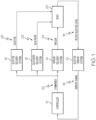
- FIG. 1 is a block diagram of an example closed-loop glucose control system in accordance with an embodiment.
- Particular embodiments may include a glucose sensor system 10, a controller 12, an insulin delivery system 14, a glucagon delivery system 13, and a glucose delivery system 15, as shown in FIG. 1 .
- glucose sensor system 10 may generate a sensor signal 16 representative of blood glucose levels 18 in body 20, and it may provide sensor signal 16 to controller 12.
- Controller 12 may receive sensor signal 16 and generate commands 22 that are communicated to insulin delivery system 14, glucagon delivery system 13, and/or glucose delivery system 15.
- Insulin delivery system 14 may receive commands 22 and infuse insulin 24 into body 20 in response to commands 22 Likewise, glucagon delivery system 13 may receive commands 22 and infuse glucagon 23 into body 20 in response to commands 22. Similarly, glucose delivery system 15 may receive commands 22 and provide glucose 25 into body 20 in response to commands 22.
- Glucose sensor system 10 may include a glucose sensor, sensor electrical components to provide power to a sensor and to generate sensor signal 16, a sensor communication system to carry sensor signal 16 to controller 12, and a sensor system housing for electrical components and a sensor communication system.
- a glucose sensor may measure blood glucose directly from a blood stream, indirectly via interstitial fluid using, e.g., a subcutaneous sensor, some combination thereof, and so forth, just to name a few examples.
- blood glucose “measured blood glucose”, “blood glucose concentration”, “measured blood glucose concentration”, and the like may refer to a glucose level, a blood glucose level, a blood glucose concentration, and so forth that has been obtained via any type of glucose sensor.
- Controller 12 may include electrical components and software to generate commands 22 for insulin delivery system 14, glucagon delivery system 13, and/or glucose delivery system 15 based on sensor signal 16. Controller 12 may also include a controller communication system to receive sensor signal 16 and provide commands 22 to insulin delivery system 14, glucagon delivery system 13, and/or glucose delivery system 15. In particular example implementations, controller 12 may include a user interface and/or operator interface (not shown) comprising a data input device and/or a data output device. Such a data output device may, for example, generate signals to initiate an alarm and/or include a display or printer for showing status of a controller 12 and/or a patient's vital indicators.
- Such a data input device may comprise dials, buttons, pointing devices, manual switches, alphanumeric keys, a touch-sensitive display, combinations thereof, and/or the like for receiving user and/or operator inputs.
- Such a data input device may be used for scheduling and/or initiating insulin bolus injections for meals, for example. It should be understood, however, that these are merely examples of input and output devices that may be a part of an operator and/or user interface and that claimed subject matter is not limited in these respects.
- Insulin delivery system 14 may include an infusion device and/or an infusion tube to infuse insulin 24 into body 20.
- glucagon delivery system 13 may include an infusion device and/or an infusion tube to infuse glucagon 23 into body 20.
- glucose delivery system 15 may include an infusion device and/or an infusion tube to infuse glucose 25 into body 20.
- insulin 24, glucagon 23, and/or glucose 25 may be infused into body 20 using a shared infusion tube.
- insulin 24, glucagon 23, and/or glucose 25 may be infused using an intravenous system for providing fluids to a patient (e.g., in a hospital or other medical environment). It should be understood, however, that certain example embodiments may include an insulin delivery system 14 without aglucagon delivery system 13 and/or without a glucose delivery system 15.
- an infusion device may include infusion electrical components to activate an infusion motor according to commands 22, an infusion communication system to receive commands 22 from controller 12, and an infusion device housing (not shown) to hold the infusion device.
- controller 12 may be housed in an infusion device housing, and an infusion communication system may comprise an electrical trace or a wire that carries commands 22 from controller 12 to an infusion device.
- controller 12 may be housed in a sensor system housing and a sensor communication system may comprise an electrical trace or a wire that carries sensor signal 16 from sensor electrical components to controller electrical components.
- controller 12 may have its own housing or may be included in a supplemental device.
- controller 12 may be co-located with an infusion device and a sensor system within a single housing.
- a sensor, a controller, and/or infusion communication systems may utilize a cable, a wire, a fiber optic line, RF, IR, or ultrasonic transmitters and receivers, combinations thereof, and/or the like instead of electrical traces, just to name a few examples.
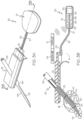
- Particular embodiments may include a sensor 26, a sensor set 28, a telemetered characteristic monitor 30, a sensor cable 32, an infusion device 34, an infusion tube 36, and an infusion set 38, any or all of which may be worn on a body 20 of a user or patient, as shown in FIG. 2 .
- telemetered characteristic monitor 30 may include a monitor housing 31 that supports a printed circuit board 33, battery or batteries 35, antenna (not shown), a sensor cable connector (not shown), and so forth.
- a sensing end 40 of sensor 26 may have exposed electrodes 42 that may be inserted through skin 46 into a subcutaneous tissue 44 of a user's body 20, as shown in FIGS. 3D and 4 . Electrodes 42 may be in contact with interstitial fluid (ISF) that is usually present throughout subcutaneous tissue 44.
- ISF interstitial fluid
- Sensor 26 may be held in place by sensor set 28, which may be adhesively secured to a user's skin 46, as shown in FIGS. 3C and 3D .
- Sensor set 28 may provide for a connector end 27 of sensor 26 to connect to a first end 29 of sensor cable 32.
- a second and 37 of sensor cable 32 may connect to monitor housing 31, Batteries 35 that may be included in monitor housing 31 provide power for sensor 26 and electrical components 39 on printed circuit board 33.
- Electrical components 39 may sample sensor signal 16 (e.g., of FIG. 1 ) and store digital sensor values (Dsig) in a memory.
- Digital sensor values Dsig may be periodically transmitted from a memory to controller 12, which may be included in an infusion device.
- a controller 12 may process digital sensor values Dsig and generate commands 22 (e.g., of FIG. 1 ) for infusion device 34.
- Infusion device 34 may respond to commands 22 and actuate a plunger 48 that forces insulin 24 (e.g., of FIG. 1 ) out of a reservoir 50 that is located inside an infusion device 34.
- Glucagon may be infused from a reservoir responsive to commands 22 using a similar and/or analogous device (not shown).
- glucose may be administered to a patient orally.
- a connector tip 54 of reservoir 50 may extend through infusion device housing 52, and a first end 51 of infusion tube 36 may be attached to connector tip 54.
- a second end 53 of infusion tube 36 may connect to infusion set 38 (e.g., of FIGS. 2 and 6 ).
- insulin 24 e.g., of FIG. 1
- Infusion set 38 may be adhesively attached to a user's skin 46.
- a cannula 56 may extend through skin 46 and terminate in subcutaneous tissue 44 to complete fluid communication between a reservoir 50 (e.g., of FIG. 5 ) and subcutaneous tissue 44 of a user's body 20.
- a closed-loop system in particular implementations may be a part of a hospital-based glucose management system.
- insulin therapy during intensive care has been shown to dramatically improve wound healing and reduce blood stream infections, renal failure, and polyneuropathy mortality, irrespective of whether subjects previously had diabetes (See, e.g., Van den Berghe G. et al. NEJM 345: 1359-67, 2001 )
- particular implementations may be used in a hospital setting to control a blood glucose level of a patient in intensive care.
- IV hookup may be implanted into a patient's arm while the patient is in an intensive care setting (e.g., ICU)
- an intensive care setting e.g., ICU
- IV catheters that are directly connected to a patient's vascular system for purposes of quickly delivering IV fluids, may also be used to facilitate blood sampling and direct infusion of substances (e.g., insulin, glucose, glucagon, etc.) into an intra-vascular space.
- glucose sensors may be inserted through an IV line to provide, e.g., real-time glucose levels from the blood stream. Therefore, depending on a type of hospital or other medical-facility based system, such alternative embodiments may not necessarily utilize all of the described system components. Examples of components that may be omitted include, but are not limited to, sensor 26, sensor set 28, telemetered characteristic monitor 30, sensor cable 32, infusion tube 36, infusion set 38, and so forth. Instead, standard blood glucose meters and/or vascular glucose sensors, such as those described in copending U.S. Patent No. 7,833,157 ; entitled "MULTILUMEN CATHETER", may be used to provide blood glucose values to an infusion pump control, and an existing IV connection may be used to administer insulin to an patient. Other alternative embodiments may also include fewer, more, and/or different components than those that are described herein and/or illustrated in the accompanying Drawings.
- a sensor and associated component(s) would be capable of providing a real time, noise-free measurement of a parameter, such as a blood glucose measurement, that a control system is intended to control.
- a parameter such as a blood glucose measurement
- a delay may arise from, for instance, a particular level of noise filtering that is applied to a sensor signal.
- Such delays and/or time lags in obtaining sensor glucose measurements may ultimately affect closed-loop operation. Accordingly, and as discussed in greater detail below, feedback control mechanisms using various approaches by application of a predicted duration of a blood glucose level being outside of a target range to better address a patient's glycemic health.
- FIG. 7 is a plot 700 of a trajectory of a blood glucose trend 702 including a period of hypoglycemia 704 that is not rectified by suspension of a continuous basal insulin delivery.
- the plot 700 shows the glucose trend 702 as a plurality of blood glucose levels 706, for a particular user, over time 708.
- the blood glucose levels 706 associated with the glucose trend 702 are obtained by blood glucose sensors of an insulin delivery pump.
- the glucose trend 702 increases from the origin to a glucose level 706 above 180 milligrams per deciliter (mg/dL), and then decreases to a glucose level 706 below 70 mg/dL.
- the glucose levels 706 below 70 mg/dL indicate low blood glucose for a duration of time between time t 2 and time t 3 (e.g., the period of hypoglycemia 704).
- the plot 700 also illustrates a continuous basal insulin delivery 710 that is suspended (i.e., the basal insulin delivery 710 stops) at time to, and remains suspended until time t 1 .
- the basal insulin plot is superimposed for consistency with the time scale, but is not measured according to the vertical scale.
- the basal insulin is plotted using Units per hour (Unit/h).
- the bolus insulin and insulin on board (IOB) are also plotted using Unit as the vertical scale.
- the purpose of the suspension is to address the decreasing blood glucose levels 706 that are shown by the glucose trend 702.
- the glucose trend 702 continues to decrease and remains in a hypoglycemic state for a duration of time 708 (e.g., the period of hypoglycemia 704), and the suspension of the basal insulin delivery 710 at time t 0 did not stop the occurrence of the period of hypoglycemia 704.
- the glucose trend 702 shows blood glucose levels 706 below 70 mg/dL until time t 3 , at which point the glucose trend 702 is increasing and passes through the 70 mg/dL threshold, at which point (e.g., time point t 3 ) the period of hypoglycemia 704 has ended.
- the plot 700 depicts one particular instance where suspension of the continuous basal insulin delivery 710 by itself is not enough to stop a period of hypoglycemia 704 from occurring.
- additional actions may be required to prevent a period of hypoglycemia, or to rectify a current period of hypoglycemia.
- An insulin delivery pump may take other actions to rectify the anticipated period of hypoglycemia, in combination with the suspension of the basal insulin delivery 710.
- the insulin delivery pump may provide a glucagon injection, or other type of blood glucose medication, or generate an alert so that a user can take additional actions (e.g., the user may choose to ingest fruit juice or blood glucose medication, in response to the alert).
- FIG. 8 is a flow chart that illustrates an exemplary embodiment of a process 800 for providing blood glucose data.
- the various tasks performed in connection with process 800 may be performed by software, hardware, firmware, or any combination thereof.
- the following description of process 800 may refer to elements mentioned above in connection with FIGS. 1-7 .
- portions of process 800 may be performed by different elements of the described system.
- process 800 may include any number of additional or alternative tasks, the tasks shown in FIG. 8 need not be performed in the illustrated order, and process 800 may be incorporated into a more comprehensive procedure or process having additional functionality not described in detail herein.
- one or more of the tasks shown in FIG. 8 could be omitted from an embodiment of the process 800 as long as the intended overall functionality remains intact.
- the process 800 identifies a problematic glucose trend that may lead to hypoglycemic levels, by an insulin delivery pump (step 802).
- the insulin delivery pump is communicatively coupled to a subcutaneous sensor, and is continuously monitoring blood glucose levels of the user of the insulin delivery pump via the subcutaneous sensor (as described previously, with regard to FIGS. 1-6 ).
- the insulin delivery pump is configured to obtain blood glucose levels for the user, via the subcutaneous sensors, at timed intervals. In some embodiments, however, the insulin delivery pump may be activated to obtain blood glucose levels in response to an input user request As the blood glucose levels are obtained, the process 800 continuously calculates a rate of change for the blood glucose levels.
- the rate of change for the blood glucose levels may be referred to as the glucose trend.
- a problematic glucose trend is a glucose trend which is decreasing at a rapid rate.
- a glucose trend that is decreasing at a rapid rate may be defined as a sensor rate of change below -1 milligrams per deciliter (mg/dL), per minute.
- the process 800 suspends a continuous basal insulin delivery, based on the problematic glucose trend (step 804).
- the insulin delivery pump is configured to automatically suspend basal insulin delivery when sensor glucose levels are predicted to approach a low limit, and to resume basal insulin delivery once sensor glucose levels recover.
- the insulin delivery pump functions to reduce hypoglycemic events and to reduce time spent in the hypoglycemic range.
- the process 800 predicts that sensor glucose levels will approach a low limit, based on the identified problematic glucose trend (step 802), and, in response, suspends basal insulin delivery.
- the process 800 then identifies a condition indicating a continuing hypoglycemia that continues when the basal insulin delivery is suspended (step 806).
- One suitable methodology for identifying the condition is described below with reference to FIG. 9 .
- a second suitable methodology for identifying the condition is described below with reference to FIG. 10 .
- the insulin delivery pump is aware of a predicted, upcoming hypoglycemic event, and the process 800 determines that the hypoglycemic event will continue after the insulin delivery pump reacts to the upcoming hypoglycemic event by suspending basal insulin delivery. In other words, the suspension of the basal insulin delivery is insufficient to prevent the period of hypoglycemia, and additional treatment is required to address the hypoglycemic event.
- the process 800 After identifying the condition (step 806), the process 800 performs an action, by the insulin delivery pump, based on identifying the condition (step 808).
- the action may include presenting an alert, by the insulin delivery pump.
- the alert may include an audio alert, a visual alert, or any combination thereof.
- Exemplary embodiments may include a "pop-up" message presented on a display of the insulin delivery pump, a voice communication informing the user of the condition, and/or an alarm that sounds when the condition is detected.
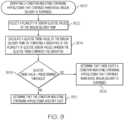
- FIG. 9 is a flow chart that illustrates an exemplary embodiment of a process 900 for identifying a condition indicating continuing hypoglycemia that continues when basal insulin delivery is suspended. It should be appreciated that the process 900 described in FIG. 9 represents one embodiment of step 806 described above in the discussion of FIG. 8 , including additional detail.
- the process 900 collects a plurality of sensor glucose values, by the insulin delivery pump (step 902), for purposes of determining a glucose trend which is used to detect missed hypoglycemic events.
- the glucose trend is one of the dominant factors of severity of impending hypoglycemia, and thus may be used to detect a hypoglycemic event during which suspension of basal insulin delivery is insufficient to prevent or rectify the hypoglycemic event.
- the glucose trend may also be referred to as a glucose rate of change and/or a glucose derivative.
- the process 900 calculates a glucose trend value by computing a derivative of the plurality of glucose sensor values, wherein the glucose trend comprises the derivative (step 904).
- the calculation of the derivative of the plurality of glucose sensor values is a commonly used glucose trend calculation technique that is well-known in the industry.
- the insulin delivery pump performs these calculations using an internally integrated controller or processor (see FIG. 1 ), and presents the results of the calculations via a display device communicatively coupled to the controller.
- the insulin delivery pump presents, via the display device, glucose trend information as one or more graphical elements (e.g., arrows).
- one arrow pointing up indicates that the glucose trend (i.e., glucose rate of change) is greater than 1mg/dL per minute, and one arrow pointing down indicates that the glucose trend is less than -1mg/dL per minute.
- glucose trend is generally readily available information that is provided by an insulin delivery pump.
- the process 900 determines whether the glucose trend value is less than a predetermined threshold (decision 906).
- the predetermined threshold is obtained by analyzing actual insulin delivery pump data, and identifying a threshold that indicates hypoglycemia, based on the analysis.
- the process 900 determines that the condition indicating continuing hypoglycemia does not exist (step 910). However, when the glucose trend value is less than the predetermined threshold (the "Yes” branch of 906), the process 900 determines that there exists a condition indicating continuing hypoglycemia that continues when basal insulin delivery is suspended (step 908). Here, the process 900 determines that blood glucose levels decrease to a point below a "suspension threshold" (i.e., a threshold point at which the insulin delivery pump suspends basal insulin delivery). Due to a rapid decrease in the glucose trend detected by the process 900, the process 900 predicts the existence of a condition in which blood glucose levels will continue to decrease, thereby inducing hypoglycemia.
- a "suspension threshold" i.e., a threshold point at which the insulin delivery pump suspends basal insulin delivery
- FIG. 10 is a flow chart that illustrates another exemplary embodiment of a process 1000 for identifying a condition indicating continuing hypoglycemia that continues when basal insulin delivery is suspended.
- the process 1000 described in FIG. 10 represents one embodiment of step 806 described above in the discussion of FIG. 8 , including additional detail.
- the process 1000 uses glucose trend values and insulin on board (IOB) values to identify the condition indicating continuing hypoglycemia that continues when basal insulin delivery is suspended. This is because the blood glucose trend and the IOB value are two fundamental conditions that can cause a hypoglycemic event. In other embodiments, there could be other states associated with a hypoglycemic event, such as a predicted glucose value or a plasma insulin value. However, the predicted glucose value and the plasma insulin value provide the same information for analysis. Blood glucose trend values and IOB values are used because the information is readily available from a standard insulin delivery pump and require no additional calculations.
- IOB insulin on board
- the process 1000 obtains an insulin on board (IOB) value, by the insulin delivery pump (step 1002), which is used to detect missed hypoglycemic events.
- An insulin on board (IOB) value is a quantity of insulin remaining in the body of the user following a bolus of insulin provided by the insulin delivery pump.
- the IOB value is one of the dominant factors of severity of impending hypoglycemia, and thus may be used to detect a hypoglycemic event during which suspension of basal insulin delivery is insufficient to prevent or rectify the hypoglycemic event.
- the insulin on board (IOB) value reflects the current effective insulin existing inside the body which will keep lowering blood glucose values. The higher the IOB value is, the faster blood glucose levels will drop.
- TDD total daily dose
- a total daily dose (TDD) value is a quantity of insulin required by the user in a twenty-four (24) hour period.
- TDD is a factor that reflects how sensitive the patient is to insulin. The higher the TDD value is, the more insulin the patient requires to compensate for blood glucose in the body of the patient.
- the process 1000 determines that the condition indicating continuing hypoglycemia does not exist (step 1010). However, when the IOB value is greater than the result (the "Yes” branch of 1006), the process 1000 determines that there exists a condition indicating continuing hypoglycemia that continues when basal insulin delivery is suspended (step 1008). Here, the process 1000 determines that blood glucose levels decrease to a point below a "suspension threshold" (i.e., a threshold point at which the insulin delivery pump suspends basal insulin delivery). Due to a large IOB value detected by the process 1000, the process 1000 predicts the existence of a condition in which blood glucose levels will continue to decrease, thereby inducing hypoglycemia.
- a "suspension threshold" i.e., a threshold point at which the insulin delivery pump suspends basal insulin delivery
- various elements of the systems described herein are essentially the code segments or instructions that perform the various tasks.
- the program or code segments can be stored in a processor-readable medium or transmitted by a computer data signal embodied in a carrier wave over a transmission medium or communication path.
- the "computer-readable medium”, “processor-readable medium”, or “machine-readable medium” may include any medium that can store or transfer information. Examples of the processor-readable medium include an electronic circuit, a semiconductor memory device, a ROM, a flash memory, an erasable ROM (EROM), a floppy diskette, a CD-ROM, an optical disk, a hard disk, a fiber optic medium, a radio frequency (RF) link, or the like.
- RF radio frequency
- the computer data signal may include any signal that can propagate over a transmission medium such as electronic network channels, optical fibers, air, electromagnetic paths, or RF links.
- the code segments may be downloaded via computer networks such as the Internet, an intranet, a LAN, or the like.
- Coupled means that one element/node/feature is directly or indirectly joined to (or directly or indirectly communicates with) another element/node/feature, and not necessarily mechanically.
- connected means that one element/node/feature is directly joined to (or directly communicates with) another element/node/feature, and not necessarily mechanically.
- modules Some of the functional units described in this specification have been referred to as "modules" in order to more particularly emphasize their implementation independence.
- functionality referred to herein as a module may be implemented wholly, or partially, as a hardware circuit comprising custom VLSI circuits or gate arrays, off-the-shelf semiconductors such as logic chips, transistors, or other discrete components.
- a module may also be implemented in programmable hardware devices such as field programmable gate arrays, programmable array logic, programmable logic devices, or the like. Modules may also be implemented in software for execution by various types of processors.
- An identified module of executable code may, for instance, comprise one or more physical or logical modules of computer instructions that may, for instance, be organized as an object, procedure, or function.
- the executables of an identified module need not be physically located together, but may comprise disparate instructions stored in different locations that, when joined logically together, comprise the module and achieve the stated purpose for the module.
- a module of executable code may be a single instruction, or many instructions, and may even be distributed over several different code segments, among different programs, and across several memory devices.
- operational data may be embodied in any suitable form and organized within any suitable type of data structure. The operational data may be collected as a single data set, or may be distributed over different locations including over different storage devices, and may exist, at least partially, merely as electronic signals on a system or network.
Landscapes
- Health & Medical Sciences (AREA)
- Engineering & Computer Science (AREA)
- Public Health (AREA)
- Biomedical Technology (AREA)
- General Health & Medical Sciences (AREA)
- Medical Informatics (AREA)
- Life Sciences & Earth Sciences (AREA)
- Primary Health Care (AREA)
- Epidemiology (AREA)
- Heart & Thoracic Surgery (AREA)
- Animal Behavior & Ethology (AREA)
- Veterinary Medicine (AREA)
- Pathology (AREA)
- Hematology (AREA)
- Vascular Medicine (AREA)
- Anesthesiology (AREA)
- Physics & Mathematics (AREA)
- Databases & Information Systems (AREA)
- Data Mining & Analysis (AREA)
- Diabetes (AREA)
- Medicinal Chemistry (AREA)
- Optics & Photonics (AREA)
- Emergency Medicine (AREA)
- Biophysics (AREA)
- Chemical & Material Sciences (AREA)
- Bioinformatics & Cheminformatics (AREA)
- Molecular Biology (AREA)
- Surgery (AREA)
- Business, Economics & Management (AREA)
- General Business, Economics & Management (AREA)
- Infusion, Injection, And Reservoir Apparatuses (AREA)
- External Artificial Organs (AREA)
- Measurement Of The Respiration, Hearing Ability, Form, And Blood Characteristics Of Living Organisms (AREA)
- Medicines That Contain Protein Lipid Enzymes And Other Medicines (AREA)
- Investigating Or Analysing Biological Materials (AREA)
Abstract
Description
- This PCT application claims the benefit of, and claims priority to:
United States Patent Application Serial Number 15/410,611. filed January 19, 2017United States provisional patent application serial number 62/417,843, filed November 4, 2016 - Subject matter disclosed herein relates to monitoring and/or controlling blood glucose levels in patients.
- The pancreas of a normal healthy person produces and releases insulin into the blood stream in response to elevated blood plasma glucose levels. Beta cells (β-cells), which reside in the pancreas, produce and secrete insulin into the blood stream as it is needed. If β-cells become incapacitated of die, a condition known as
Type 1 diabetes mellitus (or in some cases, if β-cells produce insufficient quantities of insulin, a condition known as Type 2 diabetes), then insulin may be provided to a body from another source to maintain life or health. - Traditionally, because insulin cannot be taken orally, insulin has been injected with a syringe. More recently, the use of infusion pump therapy has been increasing in a number of medical situations, including for delivering insulin to diabetic individuals. For example, external infusion pumps may be worn on a belt, in a pocket, or the like, and they can deliver insulin into a body via an infusion tube with a percutaneous needle or a cannula placed in subcutaneous tissue.
- As of 1995, less than 5% of
Type 1 diabetic individuals in the United States were using infusion pump therapy. Presently, over 7% of the more than 900,000Type 1 diabetic individuals in the U.S. are using infusion pump therapy. The percentage ofType 1 diabetic individuals that use an infusion pump is growing at a rate of over 2% each year. Moreover, the number of Type 2 diabetic individuals is growing at 3% or more per year, and growing numbers of insulin-using Type 2 diabetic individuals are also adopting infusion pumps. Additionally, physicians have recognized that continuous infusion can provide greater control of a diabetic individual's condition, so they too are increasingly prescribing it for patients. - A closed-loop infusion pump system may include an infusion pump that is automatically and/or semi-automatically controlled to infuse insulin into a patient. The infusion of insulin may be controlled to occur at times and in amounts that are based, for example, on blood glucose measurements obtained from an embedded glucose sensor in real-time. Closed-loop infusion pump systems may also employ the delivery of glucose and/or glucagon, in addition to the delivery of insulin, for controlling blood-glucose levels of a patient (e.g., in a hypoglycemic context).
- Some embodiments of the present disclosure provide a method for providing blood glucose data. In response to a suspension of a continuous basal insulin delivery, by an insulin delivery pump, the method identifies a condition indicating continuing hypoglycemia that continues when basal insulin delivery is suspended; and performs an action, by the insulin delivery pump, based on identifying the condition.
- Some embodiments of the present disclosure provide a system for providing blood glucose data. The system includes an insulin delivery pump comprising a glucose delivery system, a glucagon delivery system, an insulin delivery system, and a glucose sensor system; and a controller comprising a system memory element and at least one processor, the controller communicatively coupled to the insulin delivery pump, and the controller configured to: in response to a suspension of a continuous basal insulin delivery, by the insulin delivery pump, identify a condition indicating continuing hypoglycemia that continues when basal insulin delivery is suspended; and initiate performance of an action, by the insulin delivery pump, based on identifying the condition.
- Some embodiments of the present disclosure provide an insulin delivery pump comprising a non-transitory, computer-readable medium containing instructions thereon, which, when executed by a processor, perform a method. The method predicts a hypoglycemic condition that is not rectifiable by suspending a continuous basal insulin delivery; and presents an alert, based on the hypoglycemic condition.
- This summary is provided to introduce a selection of concepts in a simplified form that are further described below in the detailed description. This summary is not intended to identify key features or essential features of the claimed subject matter, nor is it intended to be used as an aid in determining the scope of the claimed subject matter.
- A more complete understanding of the subject matter may be derived by referring to the detailed description and claims when considered in conjunction with the following figures, wherein like reference numbers refer to similar elements throughout the figures.
-
FIG. 1 is a block diagram of a closed loop glucose control system in accordance with an embodiment; -
FIG. 2 is a front view of closed loop hardware located on a body in accordance with an embodiment; -
FIG. 3A is a perspective view of a glucose sensor system for use in accordance with an embodiment; -
FIG. 3B is a side cross-sectional view of the glucose sensor system ofFIG. 3A for an embodiment; -
FIG. 3C is a perspective view of a sensor set of a glucose sensor system ofFIG. 3A for an embodiment; -
FIG. 3D is a side cross-sectional view of a sensor set ofFIG. 3C for an embodiment; -
FIG. 4 is a cross sectional view of a sensing end of a sensor set ofFIG. 3D for an embodiment; -
FIG. 5 is a top view of an infusion device with a reservoir door in an open position, for use according to an embodiment; -
FIG. 6 is a side view of an infusion set with an insertion needle pulled out, for use according to an embodiment; -
FIG. 7 is a plot of a trajectory of a blood glucose trend including a period of hypoglycemia that is not rectified by suspension of a continuous basal insulin delivery -
FIG. 8 is a flow chart that illustrates an exemplary embodiment of a process for providing blood glucose data; -
FIG. 9 is a flow chart that illustrates an exemplary embodiment of a process for identifying a condition indicating continuing hypoglycemia that continues when basal insulin delivery is suspended; and -
FIG. 10 is a flow chart that illustrates another exemplary embodiment of a process for identify ing a condition indicating continuing hypoglycemia that continues when basal insulin delivery is suspended. - The following detailed description is merely illustrative in nature and is not intended to limit the embodiments of the subject matter or the application and uses of such embodiments. As used herein, the word "exemplary" means "serving as an example, instance, or illustration." Any implementation described herein as exemplary is not necessarily to be construed as preferred or advantageous over other implementations. Furthermore, there is no intention to be bound by any expressed or implied theory presented in the preceding technical field, background, brief summary or the following detailed description.
- The subject matter presented herein relates to apparatus and methods for predicting an insufficient response, by an insulin delivery pump, to a hypoglycemic event. An insulin delivery pump normally operates to: (i) provide a continuous delivery of basal insulin to a user of the pump, and (ii) provide a bolus (i.e., a single dose of a drug or other medicinal preparation given all at once) of insulin, on an as-needed basis. Under normal operation, the insulin delivery pump detects anticipated hypoglycemic events and responds by suspending the continuous basal insulin delivery, in an attempt to prevent an upcoming hypoglycemic event. In certain circumstances, such suspension of basal insulin delivery is insufficient to prevent the hypoglycemic event. In this scenario, the insulin delivery pump can first predict the anticipated insufficient response, and second perform an action based on the anticipated insufficient response. Such actions may include presenting an alert, providing information for patient education, and/or providing a glucagon injection via the insulin delivery pump.
- Certain terminologies are used with regard to the various embodiments of the present disclosure. A glucose trend is the rate of change for a series of blood glucose values, acquired over a period of time, from a single patient or user of an sensor augmented insulin delivery pump. Hypoglycemia is a low level of glucose in the bloodstream of the patient or user of the insulin delivery pump, and may be generally associated with blood glucose values below 70 milligrams per deciliter (mg/dL). An insulin on board (IOB) value is descriptive of the residual insulin activity following a bolus of insulin provided by the insulin delivery pump. A total daily dose (TDD) value is a quantity of insulin required by the user in a twenty-four (24) hour period. A missed hypoglycemic event is an occurrence of a time period of hypoglycemia that is not prevented, avoided, or corrected by suspension of a continuous delivery of basal insulin.
- In an exemplary glucose control system environment, blood-glucose measurements may be employed in a closed loop infusion system for regulating a rate of fluid infusion into a body. In particular embodiments, a control system may be adapted to regulate a rate of insulin, glucagon, and/or glucose infusion into a body of a patient based, at least in part, on a glucose concentration measurement taken from a body (e.g., from a glucose sensor and/or metered blood glucose measurement). In certain implementations, such a system may be designed to model a pancreatic beta cell (β-cell). Here, such a system may enable a patient to control an infusion device for releasing insulin, glucagon or glucose into the patient's body for effective blood glucose management. Here, such a system may be adapted to control infusion of insulin and/or glucagon so as to control/maintain a patient's blood glucose within a target range, thus reducing the risk that a patient's blood glucose level transitions to dangerous extreme levels in the absence of patient action.
- According to certain embodiments, examples of closed-loop systems as described herein may be implemented in a hospital environment to monitor and/or control levels of glucose in a patient. Alternatively, according to certain embodiments, examples of closed-loop systems as described herein may be implemented in non-hospital environments to monitor and/or control levels of glucose in a patient Here, a patient or other non-medical professional may be responsible for interacting with a closed-loop system.
- To maintain healthy glucose levels, a person with
type 1 diabetes may manage their glycemia by monitoring blood glucose levels, controlling diet, exercise, and self-administering appropriate amounts of insulin at appropriate times. Deviations from such glycemic management, such as skipping an insulin bolus at meal time or underestimating the carbohydrate content of a meal may bring about prolonged hyperglycemia. Likewise, receiving too much insulin (e.g., by over-bolusing) for a given blood glucose level and/or meal may bring about severe hypoglycemia. Other external factors, such as exercise or stress, may also contribute to glycemic deviations. - In a particular embodiment of a closed-loop system, such a system may be adapted to control infusion of insulin and/or glucagon so as to control/maintain a patient's blood glucose within a target range, thus reducing the risk that a patient's blood glucose level transition to dangerous extreme levels. Again, such a mechanism may reduce the risk of hypoglycemia and hyperglycemia if a patient, non-medical professional or medical professional is not fully attentive to providing inputs to the system for effective glycemic management.
- According to an embodiment, depending on a patient's particular physiology, a target or set-point glucose level may be established. For example, such a target or set-point glucose level may be defined based, at least in part, on guidelines established by the American Diabetes Association (ADA) and/or clinical judgment of a patient's physician. Here, for example, the ADA has recommended a pre-prandial blood glucose concentration of between 80-130 mg/dL, which is in the normal glycemic range. Alternatively, target or set-point glucose level may be fixed at 120 mg/dL. In yet another alternative, a target or set-point blood glucose concentration may vary over time depending on particular patient conditions. It should be understood, however, that these are merely examples of a target or set-point blood glucose concentration, and claimed subject matter is not limited in this respect.
- According to an embodiment, a closed-loop system may be employed to maintain a patient's glucose level in a range about a predetermined set-point or target level as described in
U.S. Patent Appl. Ser. No. 12/820,944, filed on June 22, 2010 - By maintaining a predetermined basal insulin infusion rate while the glucose level is within a target range, extreme glycemic variations may be reduced or avoided altogether. This may provide a patient with improved glycemic control in circumstances in which they would otherwise be exposed to undesirable extremes of glycemia. Here, while such a patient may remain in control of insulin infusion decisions, particular embodiments may respond automatically in the absence of particular patient action (e.g., forgetting to bolus insulin to cover a meal) to prevent blood glucose from reaching extreme levels.
- A controller may employ any one of several control techniques for computing determining commands for a pump in attempt to maintain a patient's observed blood glucose concentration within a target range. For example, a controller may employ a proportional-integral-derivative (PID) control algorithm in conjunction with controlling a patient's blood glucose level within a particular range as described in
U.S. Patent Application Ser. No. 12/820,944, filed on June 22, 2010 - Briefly, according to an embodiment, a predicted blood glucose level of a patient based, at least in part, on past blood glucose measurements and control signals to be applied to at least one infusion pump. A cost expression is determined based, at least in part, on the predicted blood glucose level. The control signals to be applied to the at least one infusion pump may then be affected so as to achieve a cost value according to said cost expression. In one particular implementation, that cost expression is determined based, at least in part, on a predicted duration that that the blood glucose is to be outside of a target range over some interval in the future. Accordingly, the control signals applied to the at least on infusion pump may be responsive to risks associated with the patient's blood glucose level being outside of the target range.
- As pointed out above, insulin infusion therapy may be controlled, at least in part, by techniques for predicting a patient's blood glucose level or glycemic state at some point or time in the future (e.g., using a PID algorithm as discussed above). In this context, a "gly cemic state" may be determined based on one or more factors such as, for example, a blood glucose concentration. Algorithms may receive measurements or observations of a patient's blood glucose concentration from, for example, a continuous blood glucose monitoring device processing signals from a blood-glucose sensor inserted into subcutaneous tissue. However, merely predicting a blood glucose level at some time in the future may have limited utility in applying a therapy to a patient For example, systems that predict a blood glucose concentration at some time in the future may merely provide a single blood glucose level prediction for a single instance in the future, and may not fully characterize a patient's glycemic state, or transitions from an initial glycemic state to a possible future glycemic state, for the purpose of applying an appropriate therapy.
- In another implementation, insulin infusion therapy may be affected or controlled by a prediction of a duration of time until a patient's current glycemic state or blood glucose level is to reach a target blood glucose concentration or glycemic state. Among other factors, this predicted duration may be based, at least in part, on observations of the patient's current blood glucose level according to signals received from a blood-glucose sensor. This predicted duration may then be used for determining how the patient's therapy may be altered by, for example, changing a rate of insulin infusion.
- Predicting a duration of time until a patient is to reach a particular blood glucose level starting from an initial state may enable techniques for characterizing a patient's glycemic state that may not be possible with predicting the patient's blood-glucose level in the future alone. Additionally, a predicted time until a patient reaches a particular glycemic state may enable an enhanced ability to for closed-loop insulin infusion systems.
- Turning now to the figures,
FIG. 1 is a block diagram of an example closed-loop glucose control system in accordance with an embodiment. Particular embodiments may include aglucose sensor system 10, acontroller 12, aninsulin delivery system 14, aglucagon delivery system 13, and aglucose delivery system 15, as shown inFIG. 1 . In certain exemplary embodiments,glucose sensor system 10 may generate asensor signal 16 representative ofblood glucose levels 18 inbody 20, and it may providesensor signal 16 tocontroller 12.Controller 12 may receivesensor signal 16 and generatecommands 22 that are communicated toinsulin delivery system 14,glucagon delivery system 13, and/orglucose delivery system 15.Insulin delivery system 14 may receivecommands 22 and infuseinsulin 24 intobody 20 in response tocommands 22 Likewise,glucagon delivery system 13 may receivecommands 22 and infuseglucagon 23 intobody 20 in response to commands 22. Similarly,glucose delivery system 15 may receivecommands 22 and provideglucose 25 intobody 20 in response to commands 22. -
Glucose sensor system 10 may include a glucose sensor, sensor electrical components to provide power to a sensor and to generatesensor signal 16, a sensor communication system to carrysensor signal 16 tocontroller 12, and a sensor system housing for electrical components and a sensor communication system. A glucose sensor may measure blood glucose directly from a blood stream, indirectly via interstitial fluid using, e.g., a subcutaneous sensor, some combination thereof, and so forth, just to name a few examples. As used herein, "blood glucose", "measured blood glucose", "blood glucose concentration", "measured blood glucose concentration", and the like may refer to a glucose level, a blood glucose level, a blood glucose concentration, and so forth that has been obtained via any type of glucose sensor. It should be understood, however that using a blood glucose sensor is only one particular technique for obtaining such observations or measurements, and that other techniques, such as measuring blood glucose inform observations of other body fluids (e.g., observations of the presence of glucose in interstitial fluid using a subcutaneous sensor), may be used without deviating from claimed subject matter. -
Controller 12 may include electrical components and software to generatecommands 22 forinsulin delivery system 14,glucagon delivery system 13, and/orglucose delivery system 15 based onsensor signal 16.Controller 12 may also include a controller communication system to receivesensor signal 16 and providecommands 22 toinsulin delivery system 14,glucagon delivery system 13, and/orglucose delivery system 15. In particular example implementations,controller 12 may include a user interface and/or operator interface (not shown) comprising a data input device and/or a data output device. Such a data output device may, for example, generate signals to initiate an alarm and/or include a display or printer for showing status of acontroller 12 and/or a patient's vital indicators. Such a data input device may comprise dials, buttons, pointing devices, manual switches, alphanumeric keys, a touch-sensitive display, combinations thereof, and/or the like for receiving user and/or operator inputs. Such a data input device may be used for scheduling and/or initiating insulin bolus injections for meals, for example. It should be understood, however, that these are merely examples of input and output devices that may be a part of an operator and/or user interface and that claimed subject matter is not limited in these respects. -
Insulin delivery system 14 may include an infusion device and/or an infusion tube to infuseinsulin 24 intobody 20. Similarly,glucagon delivery system 13 may include an infusion device and/or an infusion tube to infuseglucagon 23 intobody 20. Likewise,glucose delivery system 15 may include an infusion device and/or an infusion tube to infuseglucose 25 intobody 20. In alternative embodiments,insulin 24,glucagon 23, and/orglucose 25 may be infused intobody 20 using a shared infusion tube. In other alternative embodiments,insulin 24,glucagon 23, and/orglucose 25 may be infused using an intravenous system for providing fluids to a patient (e.g., in a hospital or other medical environment). It should be understood, however, that certain example embodiments may include aninsulin delivery system 14 withoutaglucagon delivery system 13 and/or without aglucose delivery system 15. - In particular embodiments, an infusion device (not explicitly identified in
FIG. 1 ) may include infusion electrical components to activate an infusion motor according tocommands 22, an infusion communication system to receivecommands 22 fromcontroller 12, and an infusion device housing (not shown) to hold the infusion device. - In particular embodiments,
controller 12 may be housed in an infusion device housing, and an infusion communication system may comprise an electrical trace or a wire that carries commands 22 fromcontroller 12 to an infusion device. In alternative embodiments,controller 12 may be housed in a sensor system housing and a sensor communication system may comprise an electrical trace or a wire that carriessensor signal 16 from sensor electrical components to controller electrical components. In other alternative embodiments,controller 12 may have its own housing or may be included in a supplemental device. In yet other alternative embodiments,controller 12 may be co-located with an infusion device and a sensor system within a single housing. In further alternative embodiments, a sensor, a controller, and/or infusion communication systems may utilize a cable, a wire, a fiber optic line, RF, IR, or ultrasonic transmitters and receivers, combinations thereof, and/or the like instead of electrical traces, just to name a few examples. -
FIGS. 2-6 illustrate glucose control systems in accordance with certain embodiments. Such glucose control systems may be used, for example, in controlling a patient's glucose level about a target range as discussed above. It should be understood, however, that these are merely examples of particular systems that may be used for controlling a patient's glucose level about a target range and that claimed subject matter is not limited in this respect.FIG. 2 is a front view of closed loop hardware located on a body in accordance with certain embodiments.FIGS. 3A-3D and4 show different views and portions of an exemplary glucose sensor system for use in accordance with certain embodiments.FIG. 5 is a top view of an infusion device with a reservoir door in an open position in accordance with certain embodiments.FIG. 6 is a side view of an infusion set with an insertion needle pulled out in accordance with certain embodiments. - Particular embodiments may include a
sensor 26, a sensor set 28, a telemeteredcharacteristic monitor 30, asensor cable 32, aninfusion device 34, aninfusion tube 36, and an infusion set 38, any or all of which may be worn on abody 20 of a user or patient, as shown inFIG. 2 . As shown inFIGS. 3A and 3B , telemeteredcharacteristic monitor 30 may include amonitor housing 31 that supports a printedcircuit board 33, battery orbatteries 35, antenna (not shown), a sensor cable connector (not shown), and so forth. A sensingend 40 ofsensor 26 may have exposedelectrodes 42 that may be inserted throughskin 46 into asubcutaneous tissue 44 of a user'sbody 20, as shown inFIGS. 3D and4 .Electrodes 42 may be in contact with interstitial fluid (ISF) that is usually present throughoutsubcutaneous tissue 44. -
Sensor 26 may be held in place by sensor set 28, which may be adhesively secured to a user'sskin 46, as shown inFIGS. 3C and 3D . Sensor set 28 may provide for aconnector end 27 ofsensor 26 to connect to afirst end 29 ofsensor cable 32. A second and 37 ofsensor cable 32 may connect to monitorhousing 31,Batteries 35 that may be included inmonitor housing 31 provide power forsensor 26 andelectrical components 39 on printedcircuit board 33.Electrical components 39 may sample sensor signal 16 (e.g., ofFIG. 1 ) and store digital sensor values (Dsig) in a memory. Digital sensor values Dsig may be periodically transmitted from a memory tocontroller 12, which may be included in an infusion device. - With reference to
FIGS. 1 ,2 , and5 , acontroller 12 may process digital sensor values Dsig and generate commands 22 (e.g., ofFIG. 1 ) forinfusion device 34.Infusion device 34 may respond tocommands 22 and actuate aplunger 48 that forces insulin 24 (e.g., ofFIG. 1 ) out of areservoir 50 that is located inside aninfusion device 34. Glucagon may be infused from a reservoir responsive tocommands 22 using a similar and/or analogous device (not shown). In alternative implementations, glucose may be administered to a patient orally. - In particular example embodiments, a
connector tip 54 ofreservoir 50 may extend throughinfusion device housing 52, and afirst end 51 ofinfusion tube 36 may be attached toconnector tip 54. Asecond end 53 ofinfusion tube 36 may connect to infusion set 38 (e.g., ofFIGS. 2 and6 ). With reference toFIG. 6 (andFIG. 1 ), insulin 24 (e.g., ofFIG. 1 ) may be forced throughinfusion tube 36 into infusion set 38 and into body 20 (e.g., ofFIG. 1 ). Infusion set 38 may be adhesively attached to a user'sskin 46. As part of infusion set 38, acannula 56 may extend throughskin 46 and terminate insubcutaneous tissue 44 to complete fluid communication between a reservoir 50 (e.g., ofFIG. 5 ) andsubcutaneous tissue 44 of a user'sbody 20. - In example alternative embodiments, as pointed out above, a closed-loop system in particular implementations may be a part of a hospital-based glucose management system. Given that insulin therapy during intensive care has been shown to dramatically improve wound healing and reduce blood stream infections, renal failure, and polyneuropathy mortality, irrespective of whether subjects previously had diabetes (See, e.g., Van den Berghe G. et al. NEJM 345: 1359-67, 2001), particular implementations may be used in a hospital setting to control a blood glucose level of a patient in intensive care. In such alternative embodiments, because an intravenous (IV) hookup may be implanted into a patient's arm while the patient is in an intensive care setting (e.g., ICU), a closed loop glucose control may be established that piggy-backs off an existing IV connection. Thus, in a hospital or other medical-facility based system, IV catheters that are directly connected to a patient's vascular system for purposes of quickly delivering IV fluids, may also be used to facilitate blood sampling and direct infusion of substances (e.g., insulin, glucose, glucagon, etc.) into an intra-vascular space.
- Moreover, glucose sensors may be inserted through an IV line to provide, e.g., real-time glucose levels from the blood stream. Therefore, depending on a type of hospital or other medical-facility based system, such alternative embodiments may not necessarily utilize all of the described system components. Examples of components that may be omitted include, but are not limited to,
sensor 26, sensor set 28, telemeteredcharacteristic monitor 30,sensor cable 32,infusion tube 36, infusion set 38, and so forth. Instead, standard blood glucose meters and/or vascular glucose sensors, such as those described in copendingU.S. Patent No. 7,833,157 ; entitled "MULTILUMEN CATHETER", may be used to provide blood glucose values to an infusion pump control, and an existing IV connection may be used to administer insulin to an patient. Other alternative embodiments may also include fewer, more, and/or different components than those that are described herein and/or illustrated in the accompanying Drawings. - Certain examples of system and/or environmental delays are described herein. Ideally, a sensor and associated component(s) would be capable of providing a real time, noise-free measurement of a parameter, such as a blood glucose measurement, that a control system is intended to control. However, in real-world implementations, there are typically physiological, chemical, electrical, algorithmic, and/or other sources of time delays that may contribute to a sensor measurement lagging behind an actual present value. Also, as noted herein, such a delay may arise from, for instance, a particular level of noise filtering that is applied to a sensor signal. Such delays and/or time lags in obtaining sensor glucose measurements may ultimately affect closed-loop operation. Accordingly, and as discussed in greater detail below, feedback control mechanisms using various approaches by application of a predicted duration of a blood glucose level being outside of a target range to better address a patient's glycemic health.
-
FIG. 7 is aplot 700 of a trajectory of ablood glucose trend 702 including a period ofhypoglycemia 704 that is not rectified by suspension of a continuous basal insulin delivery. Theplot 700 shows theglucose trend 702 as a plurality ofblood glucose levels 706, for a particular user, overtime 708. Theblood glucose levels 706 associated with theglucose trend 702 are obtained by blood glucose sensors of an insulin delivery pump. As shown, theglucose trend 702 increases from the origin to aglucose level 706 above 180 milligrams per deciliter (mg/dL), and then decreases to aglucose level 706 below 70 mg/dL. Theglucose levels 706 below 70 mg/dL indicate low blood glucose for a duration of time between time t2 and time t3 (e.g., the period of hypoglycemia 704). - The
plot 700 also illustrates a continuousbasal insulin delivery 710 that is suspended (i.e., thebasal insulin delivery 710 stops) at time to, and remains suspended until time t1. Here, the basal insulin plot is superimposed for consistency with the time scale, but is not measured according to the vertical scale. The basal insulin is plotted using Units per hour (Unit/h). The bolus insulin and insulin on board (IOB) are also plotted using Unit as the vertical scale. - The purpose of the suspension is to address the decreasing
blood glucose levels 706 that are shown by theglucose trend 702. However, in this example, theglucose trend 702 continues to decrease and remains in a hypoglycemic state for a duration of time 708 (e.g., the period of hypoglycemia 704), and the suspension of thebasal insulin delivery 710 at time t0 did not stop the occurrence of the period ofhypoglycemia 704. In this situation, theglucose trend 702 showsblood glucose levels 706 below 70 mg/dL until time t3, at which point theglucose trend 702 is increasing and passes through the 70 mg/dL threshold, at which point (e.g., time point t3) the period ofhypoglycemia 704 has ended. - The
plot 700 depicts one particular instance where suspension of the continuousbasal insulin delivery 710 by itself is not enough to stop a period ofhypoglycemia 704 from occurring. When this scenario occurs, additional actions may be required to prevent a period of hypoglycemia, or to rectify a current period of hypoglycemia. An insulin delivery pump may take other actions to rectify the anticipated period of hypoglycemia, in combination with the suspension of thebasal insulin delivery 710. For example, the insulin delivery pump may provide a glucagon injection, or other type of blood glucose medication, or generate an alert so that a user can take additional actions (e.g., the user may choose to ingest fruit juice or blood glucose medication, in response to the alert). -
FIG. 8 is a flow chart that illustrates an exemplary embodiment of aprocess 800 for providing blood glucose data. The various tasks performed in connection withprocess 800 may be performed by software, hardware, firmware, or any combination thereof. For illustrative purposes, the following description ofprocess 800 may refer to elements mentioned above in connection withFIGS. 1-7 . In practice, portions ofprocess 800 may be performed by different elements of the described system. It should be appreciated thatprocess 800 may include any number of additional or alternative tasks, the tasks shown inFIG. 8 need not be performed in the illustrated order, andprocess 800 may be incorporated into a more comprehensive procedure or process having additional functionality not described in detail herein. Moreover, one or more of the tasks shown inFIG. 8 could be omitted from an embodiment of theprocess 800 as long as the intended overall functionality remains intact. - First, the
process 800 identifies a problematic glucose trend that may lead to hypoglycemic levels, by an insulin delivery pump (step 802). The insulin delivery pump is communicatively coupled to a subcutaneous sensor, and is continuously monitoring blood glucose levels of the user of the insulin delivery pump via the subcutaneous sensor (as described previously, with regard toFIGS. 1-6 ). In certain embodiments, the insulin delivery pump is configured to obtain blood glucose levels for the user, via the subcutaneous sensors, at timed intervals. In some embodiments, however, the insulin delivery pump may be activated to obtain blood glucose levels in response to an input user request As the blood glucose levels are obtained, theprocess 800 continuously calculates a rate of change for the blood glucose levels. The rate of change for the blood glucose levels may be referred to as the glucose trend. A problematic glucose trend is a glucose trend which is decreasing at a rapid rate. In exemplary embodiments of the present disclosure, a glucose trend that is decreasing at a rapid rate may be defined as a sensor rate of change below -1 milligrams per deciliter (mg/dL), per minute. - Next, the
process 800 suspends a continuous basal insulin delivery, based on the problematic glucose trend (step 804). The insulin delivery pump is configured to automatically suspend basal insulin delivery when sensor glucose levels are predicted to approach a low limit, and to resume basal insulin delivery once sensor glucose levels recover. Thus, the insulin delivery pump functions to reduce hypoglycemic events and to reduce time spent in the hypoglycemic range. Here, theprocess 800 predicts that sensor glucose levels will approach a low limit, based on the identified problematic glucose trend (step 802), and, in response, suspends basal insulin delivery. - The
process 800 then identifies a condition indicating a continuing hypoglycemia that continues when the basal insulin delivery is suspended (step 806). One suitable methodology for identifying the condition is described below with reference toFIG. 9 . A second suitable methodology for identifying the condition is described below with reference toFIG. 10 . Here, the insulin delivery pump is aware of a predicted, upcoming hypoglycemic event, and theprocess 800 determines that the hypoglycemic event will continue after the insulin delivery pump reacts to the upcoming hypoglycemic event by suspending basal insulin delivery. In other words, the suspension of the basal insulin delivery is insufficient to prevent the period of hypoglycemia, and additional treatment is required to address the hypoglycemic event. - After identifying the condition (step 806), the
process 800 performs an action, by the insulin delivery pump, based on identifying the condition (step 808). The action may include presenting an alert, by the insulin delivery pump. The alert may include an audio alert, a visual alert, or any combination thereof. Exemplary embodiments may include a "pop-up" message presented on a display of the insulin delivery pump, a voice communication informing the user of the condition, and/or an alarm that sounds when the condition is detected. -
FIG. 9 is a flow chart that illustrates an exemplary embodiment of aprocess 900 for identifying a condition indicating continuing hypoglycemia that continues when basal insulin delivery is suspended. It should be appreciated that theprocess 900 described inFIG. 9 represents one embodiment ofstep 806 described above in the discussion ofFIG. 8 , including additional detail. First, theprocess 900 collects a plurality of sensor glucose values, by the insulin delivery pump (step 902), for purposes of determining a glucose trend which is used to detect missed hypoglycemic events. The glucose trend is one of the dominant factors of severity of impending hypoglycemia, and thus may be used to detect a hypoglycemic event during which suspension of basal insulin delivery is insufficient to prevent or rectify the hypoglycemic event. The glucose trend may also be referred to as a glucose rate of change and/or a glucose derivative. - Next, the
process 900 calculates a glucose trend value by computing a derivative of the plurality of glucose sensor values, wherein the glucose trend comprises the derivative (step 904). The calculation of the derivative of the plurality of glucose sensor values is a commonly used glucose trend calculation technique that is well-known in the industry. Generally, the insulin delivery pump performs these calculations using an internally integrated controller or processor (seeFIG. 1 ), and presents the results of the calculations via a display device communicatively coupled to the controller. In certain embodiments, the insulin delivery pump presents, via the display device, glucose trend information as one or more graphical elements (e.g., arrows). For example, one arrow pointing up indicates that the glucose trend (i.e., glucose rate of change) is greater than 1mg/dL per minute, and one arrow pointing down indicates that the glucose trend is less than -1mg/dL per minute. Thus, the glucose trend is generally readily available information that is provided by an insulin delivery pump. - The
process 900 then determines whether the glucose trend value is less than a predetermined threshold (decision 906). The predetermined threshold is obtained by analyzing actual insulin delivery pump data, and identifying a threshold that indicates hypoglycemia, based on the analysis. - When the glucose trend value is not less than the predetermined threshold (the "No" branch of 906), the
process 900 determines that the condition indicating continuing hypoglycemia does not exist (step 910). However, when the glucose trend value is less than the predetermined threshold (the "Yes" branch of 906), theprocess 900 determines that there exists a condition indicating continuing hypoglycemia that continues when basal insulin delivery is suspended (step 908). Here, theprocess 900 determines that blood glucose levels decrease to a point below a "suspension threshold" (i.e., a threshold point at which the insulin delivery pump suspends basal insulin delivery). Due to a rapid decrease in the glucose trend detected by theprocess 900, theprocess 900 predicts the existence of a condition in which blood glucose levels will continue to decrease, thereby inducing hypoglycemia. -
FIG. 10 is a flow chart that illustrates another exemplary embodiment of aprocess 1000 for identifying a condition indicating continuing hypoglycemia that continues when basal insulin delivery is suspended. It should be appreciated that theprocess 1000 described inFIG. 10 represents one embodiment ofstep 806 described above in the discussion ofFIG. 8 , including additional detail. Theprocess 1000 uses glucose trend values and insulin on board (IOB) values to identify the condition indicating continuing hypoglycemia that continues when basal insulin delivery is suspended. This is because the blood glucose trend and the IOB value are two fundamental conditions that can cause a hypoglycemic event. In other embodiments, there could be other states associated with a hypoglycemic event, such as a predicted glucose value or a plasma insulin value. However, the predicted glucose value and the plasma insulin value provide the same information for analysis. Blood glucose trend values and IOB values are used because the information is readily available from a standard insulin delivery pump and require no additional calculations. - First, the
process 1000 obtains an insulin on board (IOB) value, by the insulin delivery pump (step 1002), which is used to detect missed hypoglycemic events. An insulin on board (IOB) value is a quantity of insulin remaining in the body of the user following a bolus of insulin provided by the insulin delivery pump. The IOB value is one of the dominant factors of severity of impending hypoglycemia, and thus may be used to detect a hypoglycemic event during which suspension of basal insulin delivery is insufficient to prevent or rectify the hypoglycemic event. The insulin on board (IOB) value reflects the current effective insulin existing inside the body which will keep lowering blood glucose values. The higher the IOB value is, the faster blood glucose levels will drop. - Next, the
process 1000 computes a total daily dose (TDD) value divided by a factor, to generate a result (step 1004). A total daily dose (TDD) value is a quantity of insulin required by the user in a twenty-four (24) hour period. TDD is a factor that reflects how sensitive the patient is to insulin. The higher the TDD value is, the more insulin the patient requires to compensate for blood glucose in the body of the patient. - The
process 1000 then determines whether the IOB value is greater than the result (decision 1006). Here, theprocess 1000 is comparing the quantity of insulin remaining in the body (i.e., IOB) to the quantity of insulin required by the user in a 24-hour period (i.e., TDD), to predict a potential insufficient response to a hypoglycemic event. The TDD value reflects insulin sensitivity of the patient. Thus, the IOB value needs to be above the patient dependent factor to have a significant effect on compensating same amount of glucose. For example, an IOB value of 5 units is enough to drop the blood glucose levels very quickly for a patient with 20 units TDD, but will not have the same effect (e.g., will not drop blood glucose levels very quickly) for a patient with 60 units TDD. - When the IOB value is not greater than the result (the "No" branch of 1006), the
process 1000 determines that the condition indicating continuing hypoglycemia does not exist (step 1010). However, when the IOB value is greater than the result (the "Yes" branch of 1006), theprocess 1000 determines that there exists a condition indicating continuing hypoglycemia that continues when basal insulin delivery is suspended (step 1008). Here, theprocess 1000 determines that blood glucose levels decrease to a point below a "suspension threshold" (i.e., a threshold point at which the insulin delivery pump suspends basal insulin delivery). Due to a large IOB value detected by theprocess 1000, theprocess 1000 predicts the existence of a condition in which blood glucose levels will continue to decrease, thereby inducing hypoglycemia. - Techniques and technologies may be described herein in terms of functional and/or logical block components, and with reference to symbolic representations of operations, processing tasks, and functions that may be performed by various computing components or devices. Such operations, tasks, and functions are sometimes referred to as being computer-executed, computerized, software-implemented, or computer-implemented. In practice, one or more processor devices can carry out the described operations, tasks, and functions by manipulating electrical signals representing data bits at memory locations in the system memory, as well as other processing of signals. The memory locations where data bits are maintained are physical locations that have particular electrical, magnetic, optical, or organic properties corresponding to the data bits. It should be appreciated that the various block components shown in the figures may be realized by any number of hardware, software, and/or firmware components configured to perform the specified functions. For example, an embodiment of a system or a component may employ various integrated circuit components, e.g., memory elements, digital signal processing elements, logic elements, look-up tables, or the like, which may carry out a variety of functions under the control of one or more microprocessors or other control devices.
- When implemented in software or firmware, various elements of the systems described herein are essentially the code segments or instructions that perform the various tasks. The program or code segments can be stored in a processor-readable medium or transmitted by a computer data signal embodied in a carrier wave over a transmission medium or communication path. The "computer-readable medium", "processor-readable medium", or "machine-readable medium" may include any medium that can store or transfer information. Examples of the processor-readable medium include an electronic circuit, a semiconductor memory device, a ROM, a flash memory, an erasable ROM (EROM), a floppy diskette, a CD-ROM, an optical disk, a hard disk, a fiber optic medium, a radio frequency (RF) link, or the like. The computer data signal may include any signal that can propagate over a transmission medium such as electronic network channels, optical fibers, air, electromagnetic paths, or RF links. The code segments may be downloaded via computer networks such as the Internet, an intranet, a LAN, or the like.
- The following description refers to elements or nodes or features being "connected" or "coupled" together. As used herein, unless expressly stated otherwise, "coupled" means that one element/node/feature is directly or indirectly joined to (or directly or indirectly communicates with) another element/node/feature, and not necessarily mechanically. Likewise, unless expressly stated otherwise, "connected" means that one element/node/feature is directly joined to (or directly communicates with) another element/node/feature, and not necessarily mechanically. Thus, although each of the schematics shown in
FIGS. 1-6 depict one exemplary arrangement of elements, additional intervening elements, devices, features, or components may be present in an embodiment of the depicted subject matter. - For the sake of brevity, conventional techniques related to signal processing, data transmission, signaling, network control, and other functional aspects of the systems (and the individual operating components of the systems) may not be described in detail herein. Furthermore, the connecting lines shown in the various figures contained herein are intended to represent exemplary functional relationships and/or physical couplings between the various elements. It should be noted that many alternative or additional functional relationships or physical connections may be present in an embodiment of the subject matter.
- Some of the functional units described in this specification have been referred to as "modules" in order to more particularly emphasize their implementation independence. For example, functionality referred to herein as a module may be implemented wholly, or partially, as a hardware circuit comprising custom VLSI circuits or gate arrays, off-the-shelf semiconductors such as logic chips, transistors, or other discrete components. A module may also be implemented in programmable hardware devices such as field programmable gate arrays, programmable array logic, programmable logic devices, or the like. Modules may also be implemented in software for execution by various types of processors. An identified module of executable code may, for instance, comprise one or more physical or logical modules of computer instructions that may, for instance, be organized as an object, procedure, or function. Nevertheless, the executables of an identified module need not be physically located together, but may comprise disparate instructions stored in different locations that, when joined logically together, comprise the module and achieve the stated purpose for the module. Indeed, a module of executable code may be a single instruction, or many instructions, and may even be distributed over several different code segments, among different programs, and across several memory devices. Similarly, operational data may be embodied in any suitable form and organized within any suitable type of data structure. The operational data may be collected as a single data set, or may be distributed over different locations including over different storage devices, and may exist, at least partially, merely as electronic signals on a system or network.
- While at least one exemplary embodiment has been presented in the foregoing detailed description, it should be appreciated that a vast number of variations exist. It should also be appreciated that the exemplary embodiment or embodiments described herein are not intended to limit the scope, applicability, or configuration of the claimed subject matter in any way. Rather, the foregoing detailed description will provide those skilled in the art with a convenient road map for implementing the described embodiment or embodiments. It should be understood that various changes can be made in the function and arrangement of elements without departing from the scope defined by the claims, which includes known equivalents and foreseeable equivalents at the time of filing this patent application.
Further disclosed herein is the subject-matter of the following clauses - 1. A method for providing blood glucose data, the method comprising:
in response to a suspension of a continuous basal insulin delivery, by an insulin delivery pump,- identifying a condition indicating continuing hypoglycemia that continues when basal insulin delivery is suspended; and
- performing an action, by the insulin delivery pump, based on identifying the condition.
- 2. The method of
clause 1, further comprising:- identifying a glucose trend that may lead to hypoglycemic levels, by the insulin delivery pump; and
- suspending the continuous basal insulin delivery, based on the identified glucose trend.
- 3. The method of
clause 1 or 2, wherein identifying the condition further comprises:- calculating a glucose trend value, by the insulin delivery pump; and
- determining that the glucose trend value is less than a predetermined threshold, wherein the condition comprises the glucose trend value being less than the predetermined threshold;
- wherein, optionally, further comprising collecting a plurality of sensor glucose values, by the insulin delivery pump; wherein calculating the glucose trend value further comprises computing a derivative of the plurality of sensor glucose values, and wherein the glucose trend value comprises the derivative.
- 4. The method of
clause 1 or 2, wherein identifying the condition further comprises:- obtaining an insulin on board (IOB) value, by the insulin delivery pump;
- computing a total daily dose (TDD) value divided by a factor, to generate a result; and
- determining that the IOB value is greater than the result, wherein the condition comprises the IOB value being greater than the result
- 5. The method of any preceding clause, wherein performing the action further comprises:
- i) providing a glucagon injection, by the insulin delivery pump; or
- ii) presenting an alert; and wherein the alert optionally comprises at least one of an audio alert and a visual alert.
- 6. A computer program configured to cause an insulin delivery pump to execute a method according to any preceding clause.
- 7. A system for providing blood glucose data, the system comprising:
- an insulin delivery pump comprising a glucose delivery system, a glucagon delivery system, an insulin delivery system, and a glucose sensor system;
- a controller comprising a system memory element and at least one processor, the controller communicatively coupled to the insulin delivery pump, and the controller configured to:
in response to a suspension of a continuous basal insulin delivery, by the insulin delivery pump,- identify a condition indicating continuing hypoglycemia that continues when basal insulin delivery is suspended; and
- initiate performance of an action, by the insulin delivery pump, based on identifying the condition.
- 8. The system of clause 7, wherein the controller is integrated into the insulin delivery pump, and wherein the system comprises an integrated device including the controller and the insulin delivery pump.
- 9. The system of clause 7 or 8, wherein the controller is further configured to:
- identify a problematic glucose trend that may lead to hypoglycemic levels, via the insulin delivery pump; and
- suspend the continuous basal insulin delivery by the insulin delivery pump, based on the problematic glucose trend.
- 10. The system of clause 7, 8 or 9, wherein the controller is further configured to identify the condition by:
- calculating a glucose trend value, using the insulin delivery pump; and
- determining that the glucose trend value is less than a predetermined threshold, wherein the condition comprises the glucose trend value being less than the predetermined threshold; and
- wherein, optionally, the insulin delivery pump is further configured to collect a plurality of sensor glucose values; and wherein the controller is further configured to calculate the glucose trend value by computing a derivative of the plurality of sensor glucose values, and wherein the glucose trend value comprises the derivative.
- 11. The system of clause 7, 8 or 9, wherein the controller is further configured to:
- i) identify the condition by:
- obtaining an insulin on board (IOB) value, via the insulin delivery pump;
- computing a total daily dose (TDD) value divided by a factor, to generate a result; and
- determining that the IOB value is greater than the result, wherein the condition comprises the IOB value being greater than the result; or
- ii) initiate providing, by the insulin delivery pump, a glucagon injection, in response to identifying the condition; and wherein the action comprises providing the glucagon injection; or
- iii) present an alert comprising at least one of an audio alert and a visual alert, and wherein the action comprises presenting the alert.
- i) identify the condition by:
- 12. An insulin delivery pump comprising a non-transitory, computer-readable medium containing instructions thereon, which, when executed by a processor, perform a method comprising:
- predicting a hypoglycemic condition that is not rectifiable by suspending a continuous basal insulin delivery; and
- presenting an alert, based on the hypoglycemic condition.
- 13. The insulin delivery pump of
clause 12, wherein the method further comprises:- identifying a problematic glucose trend that may lead to hypoglycemic levels, by the insulin delivery pump; and
- suspending the continuous basal insulin delivery, based on the problematic glucose trend.
- 14. The insulin delivery pump of
clause - calculating a glucose trend value, by the insulin delivery pump; and
- determining that the glucose trend value is less than a predetermined threshold,
- collecting a plurality of sensor glucose values, by the insulin delivery pump;
- wherein calculating the glucose trend value further comprises computing a derivative of the plurality of sensor glucose values, and wherein the glucose trend value comprises the derivative.
- 15. The insulin delivery pump of
clause - obtaining an insulin on board (IOB) value, by the insulin delivery pump;
- computing a total daily dose (TDD) value divided by a factor, to generate a result: and
- determining that the IOB value is greater than the result, wherein the condition comprises the IOB value being greater than the result.
Claims (15)
- A method for predicting an insufficient response to a hypoglycemic event, the method comprising:
in response to a suspension of a continuous basal insulin delivery, by an insulin delivery pump that is configured to automatically suspend basal insulin delivery when sensor glucose levels are predicted to approach a low limit, identifying acondition indicating continuing hypoglycemia that continues when basal insulin delivery is suspended including:collecting, by the insulin delivery pump, a plurality of sensor glucose values,calculating, by the insulin delivery pump, a glucose trend value including computing a derivative of the plurality of sensor glucose values, wherein the glucose trend value comprises the derivative of the plurality of sensor glucose values,determining that the glucose trend value is less than a predetermined threshold, anddetermining that the condition indicating continuing hypoglycemia that continues when basal insulin delivery is suspended exists; andperforming an action, by the insulin delivery pump, based on identifying that the condition exists. - The method of Claim 1, further comprising:identifying, by an insulin delivery pump, a problematic glucose trend that leads to hypoglycemic levels; andsuspending, by the insulin delivery pump, the continuous basal insulin delivery based on the problematic glucose trend.
- The method of claim 2, wherein identifying the problematic glucose trend includes:obtaining blood glucose levels for the user at timed intervals, via a subcutaneous sensor,calculating a rate of change of the blood glucose levels.
- The method of one of claims 2 to 3, wherein the problematic glucose trend is a glucose trend which is decreasing with a rapid rate,
particularly wherein the method comprises predicting inducing hypoglycemia due to a rapid decrease in the glucose trend. - The method of claim 4, wherein the problematic glucose trend is below
- 1 milligrams per deciliter (mg/dl) per minute. - The method of any of claims 1 to 5, wherein performing the action further comprises:
presenting an alert; and wherein the alert optionally comprises at least one of an audio alert and a visual alert. - The method of any of claims 1 to 6, further comprising:
presenting, by the insulin delivery pump via a display device, glucose trend information as one or more graphical elements. - The method of any of claims 1 to 7, further comprising:
obtaining the predetermined threshold by analyzing actual insulin delivery pump data, and identifying a threshold that indicates hypoglycemia based on the analysis. - The method of any of claims 1 to 8, further comprising:
determining that the condition indicating continuing hypoglycemia does not exist when the glucose trend value is not less than the predetermined threshold. - The method of any of claims 1 to 9, further comprising:
using insulin on board (IOB) values to identify the condition indicating continuing hypoglycemia. - A computer program configured to cause an insulin delivery pump to execute a method according to any preceding claim.
- A system for predicting an insufficient response to a hypoglycemic event the system comprising:an insulin delivery pump comprising a glucose delivery system, a glucagon delivery system, an insulin delivery system, and a glucose sensor system;a controller comprising a system memory element and at least one processor, the controller communicatively coupled to the insulin delivery pump, and the controller configured to:
in response to a suspension of a continuous basal insulin delivery, by an insulin delivery pump that is configured to automatically suspend basal insulin delivery when sensor glucose levels are predicted to approach a low limit, identifying acondition indicating continuing hypoglycemia that continues when basal insulin delivery is suspended including:collecting, by the insulin delivery pump, a plurality of sensor glucose values,calculating, by the insulin delivery pump, a glucose trend value including computing a derivative of the plurality of sensor glucose values, wherein the glucose trend value comprises the derivative of the plurality of sensor glucose values,determining that the glucose trend value is less than a predetermined threshold, anddetermining that the condition indicating continuing hypoglycemia that continues when basal insulin delivery is suspended exists; andperforming an action, by the insulin delivery pump, based on identifying that the condition exists. - The system of Claim 12, wherein the controller is integrated into the insulin delivery pump, and wherein the system comprises an integrated device including the controller and the insulin delivery pump.
- The system of Claim 12 or 13, wherein the controller is further configured to:present an alert comprising at least one of an audio alert and a visual alert; andwherein the action comprises presenting the alert.
- An insulin delivery pump comprising anon-transitory, computer-readable medium containing instructions thereon, which, when executed by a processor, perform a method comprising:in response to a suspension of a continuous basal insulin delivery, by an insulin delivery pump that is configured to automatically suspend basal insulin delivery when sensor glucose levels are predicted to approach a low limit,
identifying acondition indicating continuing hypoglycemia that continues when basal insulin delivery is suspended including:collecting, by the insulin delivery pump, a plurality of sensor glucose values,calculating, by the insulin delivery pump, a glucose trend value including computing a derivative of the plurality of sensor glucose values, wherein the glucose trend value comprises the derivative of the plurality of sensor glucose values,determining that the glucose trend value is less than a predetermined threshold, anddetermining that the condition indicating continuing hypoglycemia thatcontinues when basal insulin delivery is suspended exists; andperforming an action, by the insulin delivery pump, based on identifying that the condition exists.
Applications Claiming Priority (4)
| Application Number | Priority Date | Filing Date | Title |
|---|---|---|---|
| US201662417843P | 2016-11-04 | 2016-11-04 | |
| US15/410,611 US11097051B2 (en) | 2016-11-04 | 2017-01-19 | Methods and apparatus for detecting and reacting to insufficient hypoglycemia response |
| EP17800673.0A EP3535758A1 (en) | 2016-11-04 | 2017-11-02 | Methods and apparatus for detecting and reacting to insufficient hypoglycemia response |
| PCT/US2017/059805 WO2018085600A1 (en) | 2016-11-04 | 2017-11-02 | Methods and apparatus for detecting and reacting to insufficient hypoglycemia response |
Related Parent Applications (1)
| Application Number | Title | Priority Date | Filing Date |
|---|---|---|---|
| EP17800673.0A Division EP3535758A1 (en) | 2016-11-04 | 2017-11-02 | Methods and apparatus for detecting and reacting to insufficient hypoglycemia response |
Publications (2)
| Publication Number | Publication Date |
|---|---|
| EP4523621A2 true EP4523621A2 (en) | 2025-03-19 |
| EP4523621A3 EP4523621A3 (en) | 2025-05-21 |
Family
ID=62065876
Family Applications (2)
| Application Number | Title | Priority Date | Filing Date |
|---|---|---|---|
| EP17800673.0A Ceased EP3535758A1 (en) | 2016-11-04 | 2017-11-02 | Methods and apparatus for detecting and reacting to insufficient hypoglycemia response |
| EP25154182.7A Pending EP4523621A3 (en) | 2016-11-04 | 2017-11-02 | Methods and apparatus for detecting and reacting to insufficient hypoglycemia response |
Family Applications Before (1)
| Application Number | Title | Priority Date | Filing Date |
|---|---|---|---|
| EP17800673.0A Ceased EP3535758A1 (en) | 2016-11-04 | 2017-11-02 | Methods and apparatus for detecting and reacting to insufficient hypoglycemia response |
Country Status (5)
| Country | Link |
|---|---|
| US (3) | US11097051B2 (en) |
| EP (2) | EP3535758A1 (en) |
| CN (1) | CN109891510B (en) |
| CA (1) | CA3040537A1 (en) |
| WO (1) | WO2018085600A1 (en) |
Families Citing this family (71)
| Publication number | Priority date | Publication date | Assignee | Title |
|---|---|---|---|---|
| US8417311B2 (en) | 2008-09-12 | 2013-04-09 | Optiscan Biomedical Corporation | Fluid component analysis system and method for glucose monitoring and control |
| US7751907B2 (en) | 2007-05-24 | 2010-07-06 | Smiths Medical Asd, Inc. | Expert system for insulin pump therapy |
| US8221345B2 (en) | 2007-05-30 | 2012-07-17 | Smiths Medical Asd, Inc. | Insulin pump based expert system |
| EP3868284A1 (en) | 2007-10-10 | 2021-08-25 | Optiscan Biomedical Corporation | Fluid component analysis system and method for glucose monitoring and control |
| US7959598B2 (en) | 2008-08-20 | 2011-06-14 | Asante Solutions, Inc. | Infusion pump systems and methods |
| US9867953B2 (en) | 2013-06-21 | 2018-01-16 | Tandem Diabetes Care, Inc. | System and method for infusion set dislodgement detection |
| US9561324B2 (en) | 2013-07-19 | 2017-02-07 | Bigfoot Biomedical, Inc. | Infusion pump system and method |
| GB2523989B (en) | 2014-01-30 | 2020-07-29 | Insulet Netherlands B V | Therapeutic product delivery system and method of pairing |
| US10737024B2 (en) | 2015-02-18 | 2020-08-11 | Insulet Corporation | Fluid delivery and infusion devices, and methods of use thereof |
| US10569016B2 (en) | 2015-12-29 | 2020-02-25 | Tandem Diabetes Care, Inc. | System and method for switching between closed loop and open loop control of an ambulatory infusion pump |
| WO2017123525A1 (en) | 2016-01-13 | 2017-07-20 | Bigfoot Biomedical, Inc. | User interface for diabetes management system |
| US10610643B2 (en) | 2016-01-14 | 2020-04-07 | Bigfoot Biomedical, Inc. | Occlusion resolution in medication delivery devices, systems, and methods |
| US10780223B2 (en) | 2016-01-14 | 2020-09-22 | Bigfoot Biomedical, Inc. | Adjusting insulin delivery rates |
| US12383166B2 (en) | 2016-05-23 | 2025-08-12 | Insulet Corporation | Insulin delivery system and methods with risk-based set points |
| US10765807B2 (en) | 2016-09-23 | 2020-09-08 | Insulet Corporation | Fluid delivery device with sensor |
| US11097051B2 (en) | 2016-11-04 | 2021-08-24 | Medtronic Minimed, Inc. | Methods and apparatus for detecting and reacting to insufficient hypoglycemia response |
| US11096624B2 (en) | 2016-12-12 | 2021-08-24 | Bigfoot Biomedical, Inc. | Alarms and alerts for medication delivery devices and systems |
| US10500334B2 (en) | 2017-01-13 | 2019-12-10 | Bigfoot Biomedical, Inc. | System and method for adjusting insulin delivery |
| EP3568862B1 (en) | 2017-01-13 | 2026-03-18 | Insulet Corporation | System and method for adjusting insulin delivery |
| EP3568860B1 (en) | 2017-01-13 | 2025-12-10 | Insulet Corporation | Insulin delivery methods, systems and devices |
| US10758675B2 (en) | 2017-01-13 | 2020-09-01 | Bigfoot Biomedical, Inc. | System and method for adjusting insulin delivery |
| WO2018132765A1 (en) | 2017-01-13 | 2018-07-19 | Mazlish Bryan | Insulin delivery methods, systems and devices |
| US10583250B2 (en) | 2017-01-13 | 2020-03-10 | Bigfoot Biomedical, Inc. | System and method for adjusting insulin delivery |
| CA3059985C (en) | 2017-05-05 | 2023-08-08 | Eli Lilly And Company | Closed loop control of physiological glucose |
| CA3085930A1 (en) | 2017-12-21 | 2019-06-27 | Eli Lilly And Company | Closed loop control of physiological glucose |
| USD928199S1 (en) | 2018-04-02 | 2021-08-17 | Bigfoot Biomedical, Inc. | Medication delivery device with icons |
| CN118750687A (en) | 2018-05-04 | 2024-10-11 | 英赛罗公司 | Safety constraints for drug delivery systems based on control algorithms |
| US12562251B1 (en) | 2018-05-09 | 2026-02-24 | Bigfoot Biomedical, Inc. | Computing architecture for assuring the provenance of medication therapy related parameters, and related systems, methods and devices |
| JP2021528758A (en) | 2018-06-22 | 2021-10-21 | イーライ リリー アンド カンパニー | Insulin and pramlintide delivery systems, methods, and devices |
| US20200077960A1 (en) * | 2018-09-12 | 2020-03-12 | Medtronic Minimed, Inc. | Systems and methods for alerting a user to detected effects of a recent therapy adjustment |
| JP2022501139A (en) | 2018-09-28 | 2022-01-06 | インスレット コーポレイション | Activity mode for artificial pancreas system |
| US11224693B2 (en) | 2018-10-10 | 2022-01-18 | Tandem Diabetes Care, Inc. | System and method for switching between medicament delivery control algorithms |
| US11565039B2 (en) | 2018-10-11 | 2023-01-31 | Insulet Corporation | Event detection for drug delivery system |
| USD920343S1 (en) | 2019-01-09 | 2021-05-25 | Bigfoot Biomedical, Inc. | Display screen or portion thereof with graphical user interface associated with insulin delivery |
| US11464908B2 (en) | 2019-02-18 | 2022-10-11 | Tandem Diabetes Care, Inc. | Methods and apparatus for monitoring infusion sites for ambulatory infusion pumps |
| CN114026653B (en) * | 2019-06-27 | 2025-12-30 | 伊莱利利公司 | System and method for detecting missed bolus doses |
| US11801344B2 (en) | 2019-09-13 | 2023-10-31 | Insulet Corporation | Blood glucose rate of change modulation of meal and correction insulin bolus quantity |
| US11935637B2 (en) | 2019-09-27 | 2024-03-19 | Insulet Corporation | Onboarding and total daily insulin adaptivity |
| US11654236B2 (en) | 2019-11-22 | 2023-05-23 | Tandem Diabetes Care, Inc. | Systems and methods for automated insulin delivery for diabetes therapy |
| US11957875B2 (en) | 2019-12-06 | 2024-04-16 | Insulet Corporation | Techniques and devices providing adaptivity and personalization in diabetes treatment |
| US11833329B2 (en) | 2019-12-20 | 2023-12-05 | Insulet Corporation | Techniques for improved automatic drug delivery performance using delivery tendencies from past delivery history and use patterns |
| JP7512395B2 (en) | 2020-01-06 | 2024-07-08 | インスレット コーポレイション | Predicting dietary and/or exercise behavior based on persistence residuals |
| EP4100958A1 (en) | 2020-02-03 | 2022-12-14 | Insulet Corporation | Use of fuzzy logic in predicting user behavior affecting blood glucose concentration |
| US11551802B2 (en) | 2020-02-11 | 2023-01-10 | Insulet Corporation | Early meal detection and calorie intake detection |
| US11547800B2 (en) | 2020-02-12 | 2023-01-10 | Insulet Corporation | User parameter dependent cost function for personalized reduction of hypoglycemia and/or hyperglycemia in a closed loop artificial pancreas system |
| US11986630B2 (en) * | 2020-02-12 | 2024-05-21 | Insulet Corporation | Dual hormone delivery system for reducing impending hypoglycemia and/or hyperglycemia risk |
| US11324889B2 (en) | 2020-02-14 | 2022-05-10 | Insulet Corporation | Compensation for missing readings from a glucose monitor in an automated insulin delivery system |
| US12495994B2 (en) | 2020-02-20 | 2025-12-16 | Insulet Corporation | Meal bolus subcategories in model based insulin therapy |
| US11607493B2 (en) | 2020-04-06 | 2023-03-21 | Insulet Corporation | Initial total daily insulin setting for user onboarding |
| US11911595B2 (en) | 2020-05-18 | 2024-02-27 | Tandem Diabetes Care, Inc. | Systems and methods for automated insulin delivery response to meal announcements |
| US12121700B2 (en) | 2020-07-22 | 2024-10-22 | Insulet Corporation | Open-loop insulin delivery basal parameters based on insulin delivery records |
| US11684716B2 (en) | 2020-07-31 | 2023-06-27 | Insulet Corporation | Techniques to reduce risk of occlusions in drug delivery systems |
| CN114099846A (en) * | 2020-08-26 | 2022-03-01 | 上海移宇科技股份有限公司 | Closed-loop artificial pancreas insulin infusion control system |
| US12569619B2 (en) | 2020-09-21 | 2026-03-10 | Insulet Corporation | Techniques for determining automated insulin delivery dosages |
| CN112120708A (en) * | 2020-09-24 | 2020-12-25 | 常州市第一人民医院 | Blood glucose monitoring intelligent device for developing and glucose-regulating 18F-FDG PET surviving cardiac muscle |
| EP4221588A1 (en) | 2020-09-30 | 2023-08-09 | Insulet Corporation | Secure wireless communications between a glucose monitor and other devices |
| US12128215B2 (en) | 2020-09-30 | 2024-10-29 | Insulet Corporation | Drug delivery device with integrated optical-based glucose monitor |
| WO2022115282A1 (en) * | 2020-11-24 | 2022-06-02 | Dexcom, Inc. | Detection of anomalous computing environment behavior using glucose |
| US11160925B1 (en) | 2021-01-29 | 2021-11-02 | Insulet Corporation | Automatic drug delivery system for delivery of a GLP-1 therapeutic |
| US12431229B2 (en) | 2021-03-10 | 2025-09-30 | Insulet Corporation | Medicament delivery device with an adjustable and piecewise analyte level cost component to address persistent positive analyte level excursions |
| US11904140B2 (en) | 2021-03-10 | 2024-02-20 | Insulet Corporation | Adaptable asymmetric medicament cost component in a control system for medicament delivery |
| US12592306B2 (en) | 2021-04-28 | 2026-03-31 | Insulet Corporation | Devices and methods for initialization of drug delivery devices using measured analyte sensor information |
| US12496398B2 (en) | 2021-05-28 | 2025-12-16 | Insulet Corporation | Threshold based automatic glucose control response |
| US12406760B2 (en) | 2021-06-07 | 2025-09-02 | Insulet Corporation | Exercise safety prediction based on physiological conditions |
| US12514980B2 (en) | 2021-06-30 | 2026-01-06 | Insulet Corporation | Adjustment of medicament delivery by a medicament delivery device based on menstrual cycle phase |
| US12521486B2 (en) | 2021-07-16 | 2026-01-13 | Insulet Corporation | Method for modification of insulin delivery during pregnancy in automatic insulin delivery systems |
| EP4409581A1 (en) | 2021-09-27 | 2024-08-07 | Insulet Corporation | Techniques enabling adaptation of parameters in aid systems by user input |
| US11439754B1 (en) | 2021-12-01 | 2022-09-13 | Insulet Corporation | Optimizing embedded formulations for drug delivery |
| EP4243030A1 (en) | 2022-03-09 | 2023-09-13 | Insulet Corporation | Adjusting medicament delivery parameters in an open loop medicament delivery mode |
| CN120457493A (en) | 2023-01-06 | 2025-08-08 | 英赛罗公司 | Automatic or manually initiated mealtime bolus delivery with subsequent automatic safety restraint relaxation |
| CN120679030A (en) * | 2024-12-31 | 2025-09-23 | 武汉联影智融医疗科技有限公司 | Device control method, insulin infusion device, program product, and closed-loop infusion system |
Citations (1)
| Publication number | Priority date | Publication date | Assignee | Title |
|---|---|---|---|---|
| US7833157B2 (en) | 2002-03-01 | 2010-11-16 | Medtronic Minimed, Inc. | Multilumen catheter |
Family Cites Families (227)
| Publication number | Priority date | Publication date | Assignee | Title |
|---|---|---|---|---|
| US5338157B1 (en) | 1992-09-09 | 1999-11-02 | Sims Deltec Inc | Systems and methods for communicating with ambulat |
| US5935099A (en) | 1992-09-09 | 1999-08-10 | Sims Deltec, Inc. | Drug pump systems and methods |
| US3631847A (en) | 1966-03-04 | 1972-01-04 | James C Hobbs | Method and apparatus for injecting fluid into the vascular system |
| FR2385406A1 (en) | 1977-03-28 | 1978-10-27 | Akzo Nv | ARTIFICIAL KIDNEY |
| DE2758368C2 (en) | 1977-12-28 | 1985-10-17 | Siemens AG, 1000 Berlin und 8000 München | Device for the pre-programmable infusion of liquids |
| DE2758467C2 (en) | 1977-12-28 | 1985-04-04 | Siemens AG, 1000 Berlin und 8000 München | Device for the pre-programmable infusion of liquids |
| US4559037A (en) | 1977-12-28 | 1985-12-17 | Siemens Aktiengesellschaft | Device for the pre-programmable infusion of liquids |
| FR2444064A1 (en) | 1978-12-15 | 1980-07-11 | Sodip Sa | MIXTURE OF VINYL CHLORIDE POLYMER AND POLYETHERURETHANE WITH A TERTIARY AND / OR AMMONIUM AMINE GROUP, IN PARTICULAR FOR A CONFORMED OBJECT FOR MEDICAL USE |
| US4373527B1 (en) | 1979-04-27 | 1995-06-27 | Univ Johns Hopkins | Implantable programmable medication infusion system |
| US4731051A (en) | 1979-04-27 | 1988-03-15 | The Johns Hopkins University | Programmable control means for providing safe and controlled medication infusion |
| DE3035670A1 (en) | 1980-09-22 | 1982-04-29 | Siemens AG, 1000 Berlin und 8000 München | DEVICE FOR INFUSING LIQUIDS IN HUMAN OR ANIMAL BODIES |
| US4494950A (en) | 1982-01-19 | 1985-01-22 | The Johns Hopkins University | Plural module medication delivery system |
| US4443218A (en) | 1982-09-09 | 1984-04-17 | Infusaid Corporation | Programmable implantable infusate pump |
| US4826810A (en) | 1983-12-16 | 1989-05-02 | Aoki Thomas T | System and method for treating animal body tissues to improve the dietary fuel processing capabilities thereof |
| US4685903A (en) | 1984-01-06 | 1987-08-11 | Pacesetter Infusion, Ltd. | External infusion pump apparatus |
| US4678408A (en) | 1984-01-06 | 1987-07-07 | Pacesetter Infusion, Ltd. | Solenoid drive apparatus for an external infusion pump |
| US4562751A (en) | 1984-01-06 | 1986-01-07 | Nason Clyde K | Solenoid drive apparatus for an external infusion pump |
| US5100380A (en) | 1984-02-08 | 1992-03-31 | Abbott Laboratories | Remotely programmable infusion system |
| US4550731A (en) | 1984-03-07 | 1985-11-05 | Cordis Corporation | Acquisition circuit for cardiac pacer |
| US4542532A (en) | 1984-03-09 | 1985-09-17 | Medtronic, Inc. | Dual-antenna transceiver |
| CA1254091A (en) | 1984-09-28 | 1989-05-16 | Vladimir Feingold | Implantable medication infusion system |
| US4781798A (en) | 1985-04-19 | 1988-11-01 | The Regents Of The University Of California | Transparent multi-oxygen sensor array and method of using same |
| US4671288A (en) | 1985-06-13 | 1987-06-09 | The Regents Of The University Of California | Electrochemical cell sensor for continuous short-term use in tissues and blood |
| US5003298A (en) | 1986-01-15 | 1991-03-26 | Karel Havel | Variable color digital display for emphasizing position of decimal point |
| US4731726A (en) | 1986-05-19 | 1988-03-15 | Healthware Corporation | Patient-operated glucose monitor and diabetes management system |
| US4803625A (en) | 1986-06-30 | 1989-02-07 | Buddy Systems, Inc. | Personal health monitor |
| EP0290683A3 (en) | 1987-05-01 | 1988-12-14 | Diva Medical Systems B.V. | Diabetes management system and apparatus |
| US5011468A (en) | 1987-05-29 | 1991-04-30 | Retroperfusion Systems, Inc. | Retroperfusion and retroinfusion control apparatus, system and method |
| US4809697A (en) | 1987-10-14 | 1989-03-07 | Siemens-Pacesetter, Inc. | Interactive programming and diagnostic system for use with implantable pacemaker |
| US5041086A (en) | 1987-12-04 | 1991-08-20 | Pacesetter Infusion, Ltd. | Clinical configuration of multimode medication infusion system |
| US5025374A (en) | 1987-12-09 | 1991-06-18 | Arch Development Corp. | Portable system for choosing pre-operative patient test |
| US4898578A (en) | 1988-01-26 | 1990-02-06 | Baxter International Inc. | Drug infusion system with calculator |
| GB2218831A (en) | 1988-05-17 | 1989-11-22 | Mark John Newland | Personal medical apparatus |
| US5153827A (en) | 1989-01-30 | 1992-10-06 | Omni-Flow, Inc. | An infusion management and pumping system having an alarm handling system |
| US5262035A (en) | 1989-08-02 | 1993-11-16 | E. Heller And Company | Enzyme electrodes |
| US5264105A (en) | 1989-08-02 | 1993-11-23 | Gregg Brian A | Enzyme electrodes |
| US5264104A (en) | 1989-08-02 | 1993-11-23 | Gregg Brian A | Enzyme electrodes |
| US5320725A (en) | 1989-08-02 | 1994-06-14 | E. Heller & Company | Electrode and method for the detection of hydrogen peroxide |
| US5101814A (en) | 1989-08-11 | 1992-04-07 | Palti Yoram Prof | System for monitoring and controlling blood glucose |
| US5050612A (en) | 1989-09-12 | 1991-09-24 | Matsumura Kenneth N | Device for computer-assisted monitoring of the body |
| US5108819A (en) | 1990-02-14 | 1992-04-28 | Eli Lilly And Company | Thin film electrical component |
| US5097122A (en) | 1990-04-16 | 1992-03-17 | Pacesetter Infusion, Ltd. | Medication infusion system having optical motion sensor to detect drive mechanism malfunction |
| US5080653A (en) | 1990-04-16 | 1992-01-14 | Pacesetter Infusion, Ltd. | Infusion pump with dual position syringe locator |
| US5165407A (en) | 1990-04-19 | 1992-11-24 | The University Of Kansas | Implantable glucose sensor |
| US5078683A (en) | 1990-05-04 | 1992-01-07 | Block Medical, Inc. | Programmable infusion system |
| US5262305A (en) | 1991-03-04 | 1993-11-16 | E. Heller & Company | Interferant eliminating biosensors |
| JPH04278450A (en) | 1991-03-04 | 1992-10-05 | Adam Heller | Biosensor and method for analyzing subject |
| US5593852A (en) | 1993-12-02 | 1997-01-14 | Heller; Adam | Subcutaneous glucose electrode |
| US5247434A (en) | 1991-04-19 | 1993-09-21 | Althin Medical, Inc. | Method and apparatus for kidney dialysis |
| US5322063A (en) | 1991-10-04 | 1994-06-21 | Eli Lilly And Company | Hydrophilic polyurethane membranes for electrochemical glucose sensors |
| US5284140A (en) | 1992-02-11 | 1994-02-08 | Eli Lilly And Company | Acrylic copolymer membranes for biosensors |
| JPH08275927A (en) | 1992-02-13 | 1996-10-22 | Seta:Kk | Homestay medical care system and medical device used in this system |
| US5788669A (en) | 1995-11-22 | 1998-08-04 | Sims Deltec, Inc. | Pump tracking system |
| US5376070A (en) | 1992-09-29 | 1994-12-27 | Minimed Inc. | Data transfer system for an infusion pump |
| US5879163A (en) | 1996-06-24 | 1999-03-09 | Health Hero Network, Inc. | On-line health education and feedback system using motivational driver profile coding and automated content fulfillment |
| US5918603A (en) | 1994-05-23 | 1999-07-06 | Health Hero Network, Inc. | Method for treating medical conditions using a microprocessor-based video game |
| US5913310A (en) | 1994-05-23 | 1999-06-22 | Health Hero Network, Inc. | Method for diagnosis and treatment of psychological and emotional disorders using a microprocessor-based video game |
| US5899855A (en) | 1992-11-17 | 1999-05-04 | Health Hero Network, Inc. | Modular microprocessor-based health monitoring system |
| US5997476A (en) | 1997-03-28 | 1999-12-07 | Health Hero Network, Inc. | Networked system for interactive communication and remote monitoring of individuals |
| US5307263A (en) | 1992-11-17 | 1994-04-26 | Raya Systems, Inc. | Modular microprocessor-based health monitoring system |
| US5832448A (en) | 1996-10-16 | 1998-11-03 | Health Hero Network | Multiple patient monitoring system for proactive health management |
| US5940801A (en) | 1994-04-26 | 1999-08-17 | Health Hero Network, Inc. | Modular microprocessor-based diagnostic measurement apparatus and method for psychological conditions |
| US5960403A (en) | 1992-11-17 | 1999-09-28 | Health Hero Network | Health management process control system |
| US5897493A (en) | 1997-03-28 | 1999-04-27 | Health Hero Network, Inc. | Monitoring system for remotely querying individuals |
| US5956501A (en) | 1997-01-10 | 1999-09-21 | Health Hero Network, Inc. | Disease simulation system and method |
| US6101478A (en) | 1997-04-30 | 2000-08-08 | Health Hero Network | Multi-user remote health monitoring system |
| US5933136A (en) | 1996-12-23 | 1999-08-03 | Health Hero Network, Inc. | Network media access control system for encouraging patient compliance with a treatment plan |
| US5371687A (en) | 1992-11-20 | 1994-12-06 | Boehringer Mannheim Corporation | Glucose test data acquisition and management system |
| ZA938555B (en) | 1992-11-23 | 1994-08-02 | Lilly Co Eli | Technique to improve the performance of electrochemical sensors |
| US5299571A (en) | 1993-01-22 | 1994-04-05 | Eli Lilly And Company | Apparatus and method for implantation of sensors |
| US5357427A (en) | 1993-03-15 | 1994-10-18 | Digital Equipment Corporation | Remote monitoring of high-risk patients using artificial intelligence |
| US5350411A (en) | 1993-06-28 | 1994-09-27 | Medtronic, Inc. | Pacemaker telemetry system |
| US5368562A (en) | 1993-07-30 | 1994-11-29 | Pharmacia Deltec, Inc. | Systems and methods for operating ambulatory medical devices such as drug delivery devices |
| DE4329229A1 (en) | 1993-08-25 | 1995-03-09 | Meditech Medizintechnik Gmbh | Adaptive controlled pump control, in particular for adaptive patient-controlled analgesia (APCA) |
| US5791344A (en) | 1993-11-19 | 1998-08-11 | Alfred E. Mann Foundation For Scientific Research | Patient monitoring system |
| US5497772A (en) | 1993-11-19 | 1996-03-12 | Alfred E. Mann Foundation For Scientific Research | Glucose monitoring system |
| US5660176A (en) | 1993-12-29 | 1997-08-26 | First Opinion Corporation | Computerized medical diagnostic and treatment advice system |
| US5594638A (en) | 1993-12-29 | 1997-01-14 | First Opinion Corporation | Computerized medical diagnostic system including re-enter function and sensitivity factors |
| FR2716286A1 (en) | 1994-02-16 | 1995-08-18 | Debiotech Sa | Installation of remote monitoring of controllable equipment. |
| US5543326A (en) | 1994-03-04 | 1996-08-06 | Heller; Adam | Biosensor including chemically modified enzymes |
| US5536249A (en) | 1994-03-09 | 1996-07-16 | Visionary Medical Products, Inc. | Pen-type injector with a microprocessor and blood characteristic monitor |
| US5630710A (en) | 1994-03-09 | 1997-05-20 | Baxter International Inc. | Ambulatory infusion pump |
| US5391250A (en) | 1994-03-15 | 1995-02-21 | Minimed Inc. | Method of fabricating thin film sensors |
| US5390671A (en) | 1994-03-15 | 1995-02-21 | Minimed Inc. | Transcutaneous sensor insertion set |
| US5569186A (en) | 1994-04-25 | 1996-10-29 | Minimed Inc. | Closed loop infusion pump system with removable glucose sensor |
| US5370622A (en) | 1994-04-28 | 1994-12-06 | Minimed Inc. | Proctective case for a medication infusion pump |
| US5482473A (en) | 1994-05-09 | 1996-01-09 | Minimed Inc. | Flex circuit connector |
| US5704366A (en) | 1994-05-23 | 1998-01-06 | Enact Health Management Systems | System for monitoring and reporting medical measurements |
| US5582593A (en) | 1994-07-21 | 1996-12-10 | Hultman; Barry W. | Ambulatory medication delivery system |
| US5569187A (en) | 1994-08-16 | 1996-10-29 | Texas Instruments Incorporated | Method and apparatus for wireless chemical supplying |
| US5505709A (en) | 1994-09-15 | 1996-04-09 | Minimed, Inc., A Delaware Corporation | Mated infusion pump and syringe |
| US5687734A (en) | 1994-10-20 | 1997-11-18 | Hewlett-Packard Company | Flexible patient monitoring system featuring a multiport transmitter |
| IE72524B1 (en) | 1994-11-04 | 1997-04-23 | Elan Med Tech | Analyte-controlled liquid delivery device and analyte monitor |
| US5573506A (en) | 1994-11-25 | 1996-11-12 | Block Medical, Inc. | Remotely programmable infusion system |
| US6749586B2 (en) | 1994-11-25 | 2004-06-15 | I-Flow Corporation | Remotely programmable infusion system |
| US5685844A (en) | 1995-01-06 | 1997-11-11 | Abbott Laboratories | Medicinal fluid pump having multiple stored protocols |
| US5586553A (en) | 1995-02-16 | 1996-12-24 | Minimed Inc. | Transcutaneous sensor insertion set |
| US5814015A (en) | 1995-02-24 | 1998-09-29 | Harvard Clinical Technology, Inc. | Infusion pump for at least one syringe |
| US5609060A (en) | 1995-04-28 | 1997-03-11 | Dentsleeve Pty Limited | Multiple channel perfused manometry apparatus and a method of operation of such a device |
| US5772635A (en) | 1995-05-15 | 1998-06-30 | Alaris Medical Systems, Inc. | Automated infusion system with dose rate calculator |
| US5665065A (en) | 1995-05-26 | 1997-09-09 | Minimed Inc. | Medication infusion device with blood glucose data input |
| US6018289A (en) | 1995-06-15 | 2000-01-25 | Sekura; Ronald D. | Prescription compliance device and method of using device |
| US5750926A (en) | 1995-08-16 | 1998-05-12 | Alfred E. Mann Foundation For Scientific Research | Hermetically sealed electrical feedthrough for use with implantable electronic devices |
| US5754111A (en) | 1995-09-20 | 1998-05-19 | Garcia; Alfredo | Medical alerting system |
| US6689265B2 (en) | 1995-10-11 | 2004-02-10 | Therasense, Inc. | Electrochemical analyte sensors using thermostable soybean peroxidase |
| US5972199A (en) | 1995-10-11 | 1999-10-26 | E. Heller & Company | Electrochemical analyte sensors using thermostable peroxidase |
| US5665222A (en) | 1995-10-11 | 1997-09-09 | E. Heller & Company | Soybean peroxidase electrochemical sensor |
| AUPN707195A0 (en) | 1995-12-12 | 1996-01-11 | University Of Melbourne, The | Field programmable intravenous infusion system |
| FI118509B (en) | 1996-02-12 | 2007-12-14 | Nokia Oyj | Method and apparatus for predicting glucose levels in the blood of a patient |
| FR2748588B1 (en) | 1996-05-07 | 1998-08-07 | Soc Et Tech Set | DEVICE COMPRISING AT LEAST ONE ARRAY OF NEURONES FOR DETERMINING THE QUANTITY OF A SUBSTANCE TO BE ADMINISTERED TO A PATIENT, IN PARTICULAR INSULIN |
| US5861018A (en) | 1996-05-28 | 1999-01-19 | Telecom Medical Inc. | Ultrasound transdermal communication system and method |
| US5885245A (en) | 1996-08-02 | 1999-03-23 | Sabratek Corporation | Medical apparatus with remote virtual input device |
| US5807336A (en) | 1996-08-02 | 1998-09-15 | Sabratek Corporation | Apparatus for monitoring and/or controlling a medical device |
| AU5252998A (en) | 1996-11-08 | 1998-05-29 | Linda L. Roman | System for providing comprehensive health care and support |
| AU5461298A (en) | 1996-12-04 | 1998-06-29 | Enact Health Management Systems | System for downloading and reporting medical information |
| US6043437A (en) | 1996-12-20 | 2000-03-28 | Alfred E. Mann Foundation | Alumina insulation for coating implantable components and other microminiature devices |
| US6032119A (en) | 1997-01-16 | 2000-02-29 | Health Hero Network, Inc. | Personalized display of health information |
| WO1998034314A1 (en) | 1997-01-31 | 1998-08-06 | Silverline Power Conversion, Llc | Uninterruptible power supply |
| AU6157898A (en) | 1997-02-06 | 1998-08-26 | E. Heller & Company | Small volume (in vitro) analyte sensor |
| US6009339A (en) | 1997-02-27 | 1999-12-28 | Terumo Cardiovascular Systems Corporation | Blood parameter measurement device |
| WO1998042407A1 (en) | 1997-03-27 | 1998-10-01 | Medtronic, Inc. | Concepts to implement medconnect |
| US5960085A (en) | 1997-04-14 | 1999-09-28 | De La Huerga; Carlos | Security badge for automated access control and secure data gathering |
| US5779665A (en) | 1997-05-08 | 1998-07-14 | Minimed Inc. | Transdermal introducer assembly |
| TW357517B (en) | 1997-05-29 | 1999-05-01 | Koji Akai | Monitoring system |
| US6558351B1 (en) | 1999-06-03 | 2003-05-06 | Medtronic Minimed, Inc. | Closed loop system for controlling insulin infusion |
| US7267665B2 (en) * | 1999-06-03 | 2007-09-11 | Medtronic Minimed, Inc. | Closed loop system for controlling insulin infusion |
| AU8165498A (en) | 1997-06-23 | 1999-01-04 | Enact Health Management Systems | Improved system for downloading and reporting medical information |
| US6130620A (en) | 1997-08-11 | 2000-10-10 | Electronic Monitoring Systems, Inc. | Remote monitoring system |
| WO1999010801A1 (en) | 1997-08-22 | 1999-03-04 | Apex Inc. | Remote computer control system |
| US6071391A (en) | 1997-09-12 | 2000-06-06 | Nok Corporation | Enzyme electrode structure |
| US5999849A (en) | 1997-09-12 | 1999-12-07 | Alfred E. Mann Foundation | Low power rectifier circuit for implantable medical device |
| US5999848A (en) | 1997-09-12 | 1999-12-07 | Alfred E. Mann Foundation | Daisy chainable sensors and stimulators for implantation in living tissue |
| US5917346A (en) | 1997-09-12 | 1999-06-29 | Alfred E. Mann Foundation | Low power current to frequency converter circuit for use in implantable sensors |
| US6259937B1 (en) | 1997-09-12 | 2001-07-10 | Alfred E. Mann Foundation | Implantable substrate sensor |
| AU9787498A (en) | 1997-10-02 | 1999-04-27 | Micromed Technology, Inc. | Implantable pump system |
| US6081736A (en) | 1997-10-20 | 2000-06-27 | Alfred E. Mann Foundation | Implantable enzyme-based monitoring systems adapted for long term use |
| US6119028A (en) | 1997-10-20 | 2000-09-12 | Alfred E. Mann Foundation | Implantable enzyme-based monitoring systems having improved longevity due to improved exterior surfaces |
| US6088608A (en) | 1997-10-20 | 2000-07-11 | Alfred E. Mann Foundation | Electrochemical sensor and integrity tests therefor |
| FI107080B (en) | 1997-10-27 | 2001-05-31 | Nokia Mobile Phones Ltd | measuring device |
| US6579690B1 (en) | 1997-12-05 | 2003-06-17 | Therasense, Inc. | Blood analyte monitoring through subcutaneous measurement |
| US6103033A (en) | 1998-03-04 | 2000-08-15 | Therasense, Inc. | Process for producing an electrochemical biosensor |
| US6134461A (en) | 1998-03-04 | 2000-10-17 | E. Heller & Company | Electrochemical analyte |
| EP1061972A1 (en) | 1998-03-16 | 2000-12-27 | Medtronic, Inc. | Hemostatic system and components for extracorporeal circuit |
| US5904708A (en) | 1998-03-19 | 1999-05-18 | Medtronic, Inc. | System and method for deriving relative physiologic signals |
| US6175752B1 (en) | 1998-04-30 | 2001-01-16 | Therasense, Inc. | Analyte monitoring device and methods of use |
| US6294281B1 (en) | 1998-06-17 | 2001-09-25 | Therasense, Inc. | Biological fuel cell and method |
| US6558320B1 (en) | 2000-01-20 | 2003-05-06 | Medtronic Minimed, Inc. | Handheld personal data assistant (PDA) with a medical device and method of using the same |
| US6554798B1 (en) | 1998-08-18 | 2003-04-29 | Medtronic Minimed, Inc. | External infusion device with remote programming, bolus estimator and/or vibration alarm capabilities |
| US6338790B1 (en) | 1998-10-08 | 2002-01-15 | Therasense, Inc. | Small volume in vitro analyte sensor with diffusible or non-leachable redox mediator |
| JP4469504B2 (en) | 1998-10-08 | 2010-05-26 | メドトロニック ミニメド インコーポレイテッド | Remote trait monitor system |
| US6591125B1 (en) | 2000-06-27 | 2003-07-08 | Therasense, Inc. | Small volume in vitro analyte sensor with diffusible or non-leachable redox mediator |
| FR2788771B1 (en) | 1999-01-22 | 2001-04-13 | Pf Medicament | NEWS 1,2-ALCOYL-1- [1- [ARYL (ALCOYL) OXYALCOYL] PIPERIDIN-4-YL] -3-ARYL ISOTHIOURE SUBSTITUTED, THEIR PREPARATION AND THEIR THERAPEUTIC APPLICATION |
| US20040158193A1 (en) | 1999-02-10 | 2004-08-12 | Baxter International Inc. | Medical apparatus using selective graphical interface |
| EP1135052A1 (en) | 1999-02-12 | 2001-09-26 | Cygnus, Inc. | Devices and methods for frequent measurement of an analyte present in a biological system |
| US6560741B1 (en) | 1999-02-24 | 2003-05-06 | Datastrip (Iom) Limited | Two-dimensional printed code for storing biometric information and integrated off-line apparatus for reading same |
| AU3245500A (en) | 1999-02-25 | 2000-09-14 | Minimed, Inc. | Test plug and cable for a glucose monitor |
| US6424847B1 (en) | 1999-02-25 | 2002-07-23 | Medtronic Minimed, Inc. | Glucose monitor calibration methods |
| US6360888B1 (en) | 1999-02-25 | 2002-03-26 | Minimed Inc. | Glucose sensor package system |
| US6752787B1 (en) | 1999-06-08 | 2004-06-22 | Medtronic Minimed, Inc., | Cost-sensitive application infusion device |
| US6654625B1 (en) | 1999-06-18 | 2003-11-25 | Therasense, Inc. | Mass transport limited in vivo analyte sensor |
| US7247138B2 (en) | 1999-07-01 | 2007-07-24 | Medtronic Minimed, Inc. | Reusable analyte sensor site and method of using the same |
| US6804558B2 (en) | 1999-07-07 | 2004-10-12 | Medtronic, Inc. | System and method of communicating between an implantable medical device and a remote computer system or health care provider |
| US6553263B1 (en) | 1999-07-30 | 2003-04-22 | Advanced Bionics Corporation | Implantable pulse generators using rechargeable zero-volt technology lithium-ion batteries |
| US6616819B1 (en) | 1999-11-04 | 2003-09-09 | Therasense, Inc. | Small volume in vitro analyte sensor and methods |
| WO2001036660A2 (en) | 1999-11-15 | 2001-05-25 | Therasense, Inc. | Transition metal complexes attached to a polymer via a flexible chain |
| US6484045B1 (en) | 2000-02-10 | 2002-11-19 | Medtronic Minimed, Inc. | Analyte sensor and method of making the same |
| US20030060765A1 (en) | 2000-02-16 | 2003-03-27 | Arthur Campbell | Infusion device menu structure and method of using the same |
| US6895263B2 (en) | 2000-02-23 | 2005-05-17 | Medtronic Minimed, Inc. | Real time self-adjusting calibration algorithm |
| US6485465B2 (en) | 2000-03-29 | 2002-11-26 | Medtronic Minimed, Inc. | Methods, apparatuses, and uses for infusion pump fluid pressure and force detection |
| US6623501B2 (en) | 2000-04-05 | 2003-09-23 | Therasense, Inc. | Reusable ceramic skin-piercing device |
| WO2001088524A1 (en) | 2000-05-12 | 2001-11-22 | Therasense, Inc. | Electrodes with multilayer membranes and methods of using and making the electrodes |
| PL365179A1 (en) | 2000-05-18 | 2004-12-27 | Alaris Medical Systems | Distributed remote asset and medication management drug delivery system |
| US6544173B2 (en) | 2000-05-19 | 2003-04-08 | Welch Allyn Protocol, Inc. | Patient monitoring system |
| US6659947B1 (en) | 2000-07-13 | 2003-12-09 | Ge Medical Systems Information Technologies, Inc. | Wireless LAN architecture for integrated time-critical and non-time-critical services within medical facilities |
| US20020055857A1 (en) | 2000-10-31 | 2002-05-09 | Mault James R. | Method of assisting individuals in lifestyle control programs conducive to good health |
| US6560471B1 (en) | 2001-01-02 | 2003-05-06 | Therasense, Inc. | Analyte monitoring device and methods of use |
| AU2002309528A1 (en) | 2001-04-02 | 2002-10-15 | Therasense, Inc. | Blood glucose tracking apparatus and methods |
| US6748250B1 (en) | 2001-04-27 | 2004-06-08 | Medoptix, Inc. | Method and system of monitoring a patient |
| US6676816B2 (en) | 2001-05-11 | 2004-01-13 | Therasense, Inc. | Transition metal complexes with (pyridyl)imidazole ligands and sensors using said complexes |
| US6932894B2 (en) | 2001-05-15 | 2005-08-23 | Therasense, Inc. | Biosensor membranes composed of polymers containing heterocyclic nitrogens |
| EP2330522A1 (en) | 2001-06-20 | 2011-06-08 | Tyco Healthcare Group LP | Method and system for integrated medical tracking |
| US20030208113A1 (en) | 2001-07-18 | 2003-11-06 | Mault James R | Closed loop glycemic index system |
| US6747556B2 (en) | 2001-07-31 | 2004-06-08 | Medtronic Physio-Control Corp. | Method and system for locating a portable medical device |
| US7025760B2 (en) | 2001-09-07 | 2006-04-11 | Medtronic Minimed, Inc. | Method and system for non-vascular sensor implantation |
| US6671554B2 (en) | 2001-09-07 | 2003-12-30 | Medtronic Minimed, Inc. | Electronic lead for a medical implant device, method of making same, and method and apparatus for inserting same |
| US6728576B2 (en) | 2001-10-31 | 2004-04-27 | Medtronic, Inc. | Non-contact EKG |
| US20050027182A1 (en) | 2001-12-27 | 2005-02-03 | Uzair Siddiqui | System for monitoring physiological characteristics |
| US20030212379A1 (en) | 2002-02-26 | 2003-11-13 | Bylund Adam David | Systems and methods for remotely controlling medication infusion and analyte monitoring |
| US20080172026A1 (en) * | 2006-10-17 | 2008-07-17 | Blomquist Michael L | Insulin pump having a suspension bolus |
| CA2482859C (en) | 2002-04-16 | 2010-02-09 | Carematix, Inc. | Method and apparatus for remotely monitoring the condition of a patient |
| WO2003094090A2 (en) | 2002-04-30 | 2003-11-13 | Baxter International Inc. | System and method for identifying data streams associated with medical equipment |
| US20040167465A1 (en) | 2002-04-30 | 2004-08-26 | Mihai Dan M. | System and method for medical device authentication |
| US7162289B2 (en) | 2002-09-27 | 2007-01-09 | Medtronic Minimed, Inc. | Method and apparatus for enhancing the integrity of an implantable sensor device |
| US7736309B2 (en) | 2002-09-27 | 2010-06-15 | Medtronic Minimed, Inc. | Implantable sensor method and system |
| US7138330B2 (en) | 2002-09-27 | 2006-11-21 | Medtronic Minimed, Inc. | High reliability multilayer circuit substrates and methods for their formation |
| US20040061232A1 (en) | 2002-09-27 | 2004-04-01 | Medtronic Minimed, Inc. | Multilayer substrate |
| EP1552146B1 (en) | 2002-10-09 | 2011-04-20 | Abbott Diabetes Care Inc. | Fluid delivery device, system and method |
| US20040074785A1 (en) | 2002-10-18 | 2004-04-22 | Holker James D. | Analyte sensors and methods for making them |
| US6931328B2 (en) | 2002-11-08 | 2005-08-16 | Optiscan Biomedical Corp. | Analyte detection system with software download capabilities |
| US20050038680A1 (en) | 2002-12-19 | 2005-02-17 | Mcmahon Kevin Lee | System and method for glucose monitoring |
| US20040122353A1 (en) | 2002-12-19 | 2004-06-24 | Medtronic Minimed, Inc. | Relay device for transferring information between a sensor system and a fluid delivery system |
| US6932584B2 (en) | 2002-12-26 | 2005-08-23 | Medtronic Minimed, Inc. | Infusion device and driving mechanism and process for same with actuator for multiple infusion uses |
| US7396330B2 (en) | 2003-01-07 | 2008-07-08 | Triage Data Networks | Wireless, internet-based medical-diagnostic system |
| AU2004224345B2 (en) | 2003-03-21 | 2010-02-18 | Welch Allyn, Inc. | Personal status physiologic monitor system and architecture and related monitoring methods |
| US7761261B2 (en) | 2003-04-08 | 2010-07-20 | Medic4All A.G. | Portable wireless gateway for remote medical examination |
| US7591801B2 (en) | 2004-02-26 | 2009-09-22 | Dexcom, Inc. | Integrated delivery device for continuous glucose sensor |
| US7519408B2 (en) | 2003-11-19 | 2009-04-14 | Dexcom, Inc. | Integrated receiver for continuous analyte sensor |
| US20050038331A1 (en) | 2003-08-14 | 2005-02-17 | Grayson Silaski | Insertable sensor assembly having a coupled inductor communicative system |
| JP5069472B2 (en) | 2004-02-19 | 2012-11-07 | コーニンクレッカ フィリップス エレクトロニクス エヌ ヴィ | Wireless medical monitoring method and related system and patient monitoring apparatus |
| JP2006065690A (en) | 2004-08-27 | 2006-03-09 | Ntt Docomo Inc | Device authentication apparatus, service control apparatus, service request apparatus, device authentication method, service control method, and service request method |
| JP5108522B2 (en) | 2004-11-12 | 2012-12-26 | コーニンクレッカ フィリップス エレクトロニクス エヌ ヴィ | Message integrity for secure communication of wireless medical devices |
| EP1815372A1 (en) | 2004-11-16 | 2007-08-08 | Koninklijke Philips Electronics N.V. | Time synchronization in wireless ad hoc networks of medical devices and sensors |
| US7547281B2 (en) * | 2005-02-01 | 2009-06-16 | Medtronic Minimed, Inc. | Algorithm sensor augmented bolus estimator for semi-closed loop infusion system |
| US20060293571A1 (en) | 2005-06-23 | 2006-12-28 | Skanda Systems | Distributed architecture for remote patient monitoring and caring |
| WO2007047279A1 (en) | 2005-10-18 | 2007-04-26 | Richards Cynthia C | Dispenser having a first pump for insulin and a second pump for glucose or glucagon |
| US20070135866A1 (en) | 2005-12-14 | 2007-06-14 | Welch Allyn Inc. | Medical device wireless adapter |
| EP2197521B1 (en) * | 2007-08-31 | 2016-04-13 | Leon Dejournett | Computerized blood glucose level adjustment system |
| EP2227132B1 (en) * | 2007-10-09 | 2023-03-08 | DexCom, Inc. | Integrated insulin delivery system with continuous glucose sensor |
| US20110118578A1 (en) * | 2009-11-17 | 2011-05-19 | Roche Diagnostics Operations, Inc. | Hypoglycemic treatment methods and systems |
| US8579879B2 (en) * | 2010-02-19 | 2013-11-12 | Medtronic Minimed, Inc. | Closed-loop glucose control startup |
| US10561785B2 (en) | 2010-06-22 | 2020-02-18 | Medtronic Minimed, Inc. | Method and/or system for closed-loop control of glucose to a treatment range |
| US10130767B2 (en) * | 2012-08-30 | 2018-11-20 | Medtronic Minimed, Inc. | Sensor model supervisor for a closed-loop insulin infusion system |
| US9227014B2 (en) * | 2013-02-07 | 2016-01-05 | The Board Of Trustees Of The Laland Stanford Junior University | Kalman filter based on-off switch for insulin pump |
| ES2895520T3 (en) * | 2013-10-21 | 2022-02-21 | Hoffmann La Roche | Control unit for infusion pump units, including a controlled intervention unit |
| US9750877B2 (en) | 2013-12-11 | 2017-09-05 | Medtronic Minimed, Inc. | Predicted time to assess and/or control a glycemic state |
| US10456086B2 (en) * | 2016-08-31 | 2019-10-29 | University Of Virginia Patent Foundation | Method, system and computer readable medium for predictive hypoglycemia detection for mild to moderate exercise |
| US11097051B2 (en) | 2016-11-04 | 2021-08-24 | Medtronic Minimed, Inc. | Methods and apparatus for detecting and reacting to insufficient hypoglycemia response |
-
2017
- 2017-01-19 US US15/410,611 patent/US11097051B2/en active Active
- 2017-11-02 CA CA3040537A patent/CA3040537A1/en active Pending
- 2017-11-02 EP EP17800673.0A patent/EP3535758A1/en not_active Ceased
- 2017-11-02 EP EP25154182.7A patent/EP4523621A3/en active Pending
- 2017-11-02 CN CN201780067796.4A patent/CN109891510B/en active Active
- 2017-11-02 WO PCT/US2017/059805 patent/WO2018085600A1/en not_active Ceased
-
2021
- 2021-08-04 US US17/394,121 patent/US12064599B2/en active Active
-
2024
- 2024-07-16 US US18/773,819 patent/US20240366874A1/en active Pending
Patent Citations (1)
| Publication number | Priority date | Publication date | Assignee | Title |
|---|---|---|---|---|
| US7833157B2 (en) | 2002-03-01 | 2010-11-16 | Medtronic Minimed, Inc. | Multilumen catheter |
Non-Patent Citations (1)
| Title |
|---|
| VAN DEN BERGHE G. ET AL., NEJM, vol. 345, 2001, pages 1359 - 67 |
Also Published As
| Publication number | Publication date |
|---|---|
| EP4523621A3 (en) | 2025-05-21 |
| US11097051B2 (en) | 2021-08-24 |
| CN109891510A (en) | 2019-06-14 |
| US20240366874A1 (en) | 2024-11-07 |
| EP3535758A1 (en) | 2019-09-11 |
| US12064599B2 (en) | 2024-08-20 |
| CA3040537A1 (en) | 2018-05-11 |
| WO2018085600A1 (en) | 2018-05-11 |
| US20210361866A1 (en) | 2021-11-25 |
| CN109891510B (en) | 2023-03-31 |
| US20180126073A1 (en) | 2018-05-10 |
Similar Documents
| Publication | Publication Date | Title |
|---|---|---|
| US12064599B2 (en) | Management of insufficient hypoglycemia response | |
| US11957459B2 (en) | Method and/or system for determining blood glucose reference sample times | |
| US12161840B2 (en) | Predicted time to assess and/or control a glycemic state | |
| US11896370B2 (en) | Method and/or system for assessing a patient's glycemic response | |
| EP2537110B1 (en) | Closed-loop glucose control startup | |
| US9750878B2 (en) | Closed-loop control of glucose according to a predicted blood glucose trajectory | |
| JP4987121B2 (en) | Closed loop / semi-closed loop therapy correction system | |
| EP2585133A1 (en) | Method and/or system for closed-loop control of glucose to a treatment range | |
| EP3079585B1 (en) | Apparatus for predicting time to assess and/or control a glycemic state |
Legal Events
| Date | Code | Title | Description |
|---|---|---|---|
| PUAI | Public reference made under article 153(3) epc to a published international application that has entered the european phase |
Free format text: ORIGINAL CODE: 0009012 |
|
| STAA | Information on the status of an ep patent application or granted ep patent |
Free format text: STATUS: REQUEST FOR EXAMINATION WAS MADE |
|
| 17P | Request for examination filed |
Effective date: 20250127 |
|
| AC | Divisional application: reference to earlier application |
Ref document number: 3535758 Country of ref document: EP Kind code of ref document: P |
|
| AK | Designated contracting states |
Kind code of ref document: A2 Designated state(s): AL AT BE BG CH CY CZ DE DK EE ES FI FR GB GR HR HU IE IS IT LI LT LU LV MC MK MT NL NO PL PT RO RS SE SI SK SM TR |
|
| PUAL | Search report despatched |
Free format text: ORIGINAL CODE: 0009013 |
|
| AK | Designated contracting states |
Kind code of ref document: A3 Designated state(s): AL AT BE BG CH CY CZ DE DK EE ES FI FR GB GR HR HU IE IS IT LI LT LU LV MC MK MT NL NO PL PT RO RS SE SI SK SM TR |
|
| RIC1 | Information provided on ipc code assigned before grant |
Ipc: G16H 50/20 20180101ALI20250414BHEP Ipc: A61M 5/172 20060101ALI20250414BHEP Ipc: A61M 5/142 20060101ALI20250414BHEP Ipc: G16H 20/17 20180101ALI20250414BHEP Ipc: A61B 5/145 20060101AFI20250414BHEP |