EP4521517A1 - Battery cell and manufacturing method of the same - Google Patents
Battery cell and manufacturing method of the same Download PDFInfo
- Publication number
- EP4521517A1 EP4521517A1 EP24164916.9A EP24164916A EP4521517A1 EP 4521517 A1 EP4521517 A1 EP 4521517A1 EP 24164916 A EP24164916 A EP 24164916A EP 4521517 A1 EP4521517 A1 EP 4521517A1
- Authority
- EP
- European Patent Office
- Prior art keywords
- exterior material
- battery cell
- notch portion
- notch
- electrode assembly
- Prior art date
- Legal status (The legal status is an assumption and is not a legal conclusion. Google has not performed a legal analysis and makes no representation as to the accuracy of the status listed.)
- Pending
Links
Images




Classifications
-
- H—ELECTRICITY
- H01—ELECTRIC ELEMENTS
- H01M—PROCESSES OR MEANS, e.g. BATTERIES, FOR THE DIRECT CONVERSION OF CHEMICAL ENERGY INTO ELECTRICAL ENERGY
- H01M50/00—Constructional details or processes of manufacture of the non-active parts of electrochemical cells other than fuel cells, e.g. hybrid cells
- H01M50/10—Primary casings; Jackets or wrappings
- H01M50/102—Primary casings; Jackets or wrappings characterised by their shape or physical structure
-
- H—ELECTRICITY
- H01—ELECTRIC ELEMENTS
- H01M—PROCESSES OR MEANS, e.g. BATTERIES, FOR THE DIRECT CONVERSION OF CHEMICAL ENERGY INTO ELECTRICAL ENERGY
- H01M50/00—Constructional details or processes of manufacture of the non-active parts of electrochemical cells other than fuel cells, e.g. hybrid cells
- H01M50/30—Arrangements for facilitating escape of gases
- H01M50/342—Non-re-sealable arrangements
- H01M50/3425—Non-re-sealable arrangements in the form of rupturable membranes or weakened parts, e.g. pierced with the aid of a sharp member
-
- H—ELECTRICITY
- H01—ELECTRIC ELEMENTS
- H01M—PROCESSES OR MEANS, e.g. BATTERIES, FOR THE DIRECT CONVERSION OF CHEMICAL ENERGY INTO ELECTRICAL ENERGY
- H01M10/00—Secondary cells; Manufacture thereof
- H01M10/05—Accumulators with non-aqueous electrolyte
- H01M10/052—Li-accumulators
-
- H—ELECTRICITY
- H01—ELECTRIC ELEMENTS
- H01M—PROCESSES OR MEANS, e.g. BATTERIES, FOR THE DIRECT CONVERSION OF CHEMICAL ENERGY INTO ELECTRICAL ENERGY
- H01M10/00—Secondary cells; Manufacture thereof
- H01M10/05—Accumulators with non-aqueous electrolyte
- H01M10/052—Li-accumulators
- H01M10/0525—Rocking-chair batteries, i.e. batteries with lithium insertion or intercalation in both electrodes; Lithium-ion batteries
-
- H—ELECTRICITY
- H01—ELECTRIC ELEMENTS
- H01M—PROCESSES OR MEANS, e.g. BATTERIES, FOR THE DIRECT CONVERSION OF CHEMICAL ENERGY INTO ELECTRICAL ENERGY
- H01M10/00—Secondary cells; Manufacture thereof
- H01M10/05—Accumulators with non-aqueous electrolyte
- H01M10/058—Construction or manufacture
-
- H—ELECTRICITY
- H01—ELECTRIC ELEMENTS
- H01M—PROCESSES OR MEANS, e.g. BATTERIES, FOR THE DIRECT CONVERSION OF CHEMICAL ENERGY INTO ELECTRICAL ENERGY
- H01M50/00—Constructional details or processes of manufacture of the non-active parts of electrochemical cells other than fuel cells, e.g. hybrid cells
- H01M50/10—Primary casings; Jackets or wrappings
- H01M50/147—Lids or covers
- H01M50/148—Lids or covers characterised by their shape
- H01M50/15—Lids or covers characterised by their shape for prismatic or rectangular cells
-
- H—ELECTRICITY
- H01—ELECTRIC ELEMENTS
- H01M—PROCESSES OR MEANS, e.g. BATTERIES, FOR THE DIRECT CONVERSION OF CHEMICAL ENERGY INTO ELECTRICAL ENERGY
- H01M50/00—Constructional details or processes of manufacture of the non-active parts of electrochemical cells other than fuel cells, e.g. hybrid cells
- H01M50/30—Arrangements for facilitating escape of gases
- H01M50/35—Gas exhaust passages comprising elongated, tortuous or labyrinth-shaped exhaust passages
- H01M50/367—Internal gas exhaust passages forming part of the battery cover or case; Double cover vent systems
-
- H—ELECTRICITY
- H01—ELECTRIC ELEMENTS
- H01M—PROCESSES OR MEANS, e.g. BATTERIES, FOR THE DIRECT CONVERSION OF CHEMICAL ENERGY INTO ELECTRICAL ENERGY
- H01M50/00—Constructional details or processes of manufacture of the non-active parts of electrochemical cells other than fuel cells, e.g. hybrid cells
- H01M50/10—Primary casings; Jackets or wrappings
- H01M50/102—Primary casings; Jackets or wrappings characterised by their shape or physical structure
- H01M50/103—Primary casings; Jackets or wrappings characterised by their shape or physical structure prismatic or rectangular
-
- Y—GENERAL TAGGING OF NEW TECHNOLOGICAL DEVELOPMENTS; GENERAL TAGGING OF CROSS-SECTIONAL TECHNOLOGIES SPANNING OVER SEVERAL SECTIONS OF THE IPC; TECHNICAL SUBJECTS COVERED BY FORMER USPC CROSS-REFERENCE ART COLLECTIONS [XRACs] AND DIGESTS
- Y02—TECHNOLOGIES OR APPLICATIONS FOR MITIGATION OR ADAPTATION AGAINST CLIMATE CHANGE
- Y02E—REDUCTION OF GREENHOUSE GAS [GHG] EMISSIONS, RELATED TO ENERGY GENERATION, TRANSMISSION OR DISTRIBUTION
- Y02E60/00—Enabling technologies; Technologies with a potential or indirect contribution to GHG emissions mitigation
- Y02E60/10—Energy storage using batteries
-
- Y—GENERAL TAGGING OF NEW TECHNOLOGICAL DEVELOPMENTS; GENERAL TAGGING OF CROSS-SECTIONAL TECHNOLOGIES SPANNING OVER SEVERAL SECTIONS OF THE IPC; TECHNICAL SUBJECTS COVERED BY FORMER USPC CROSS-REFERENCE ART COLLECTIONS [XRACs] AND DIGESTS
- Y02—TECHNOLOGIES OR APPLICATIONS FOR MITIGATION OR ADAPTATION AGAINST CLIMATE CHANGE
- Y02P—CLIMATE CHANGE MITIGATION TECHNOLOGIES IN THE PRODUCTION OR PROCESSING OF GOODS
- Y02P70/00—Climate change mitigation technologies in the production process for final industrial or consumer products
- Y02P70/50—Manufacturing or production processes characterised by the final manufactured product
Definitions
- the present disclosure relates to a battery cells and a manufacturing method of the same. Specifically, it relates to a battery cell having a groove-shaped notch portion and a method of manufacturing the same.
- a secondary battery is a battery that is made to convert electrical energy into chemical energy and store it so that it may be reused multiple times through charging and discharging.
- Secondary batteries are widely used across industries due to their economical and eco-friendly characteristics.
- lithium secondary batteries are widely used throughout industries, including portable devices that require high-density energy.
- the operating principle of lithium secondary batteries is an electrochemical oxidation-reduction reaction.
- the principle is that electricity is generated through the movement of lithium ions and charged in the reverse process.
- a phenomenon in which lithium ions in an anode escape therefrom and move to a cathode through an electrolyte and a separator is referred to as discharge.
- the opposite process of this phenomenon is referred to as charging.
- a problem that the present disclosure aims to solve is to provide a battery cell in which the internal pressure is controlled to exhibit improved stability.
- Another problem that the present disclosure aims to solve is to provide a battery cell manufacturing method in which a notch portion is manufactured integrally with an exterior material to exhibit improved production efficiency.
- the battery cell of the present disclosure can be widely applied in the field of green technology, such as electric vehicles, battery charging stations, solar power generation, and wind power generation using batteries.
- the battery cell of the present disclosure can be used in eco-friendly electric vehicles, hybrid vehicles, etc. to prevent climate change by suppressing air pollution and greenhouse gas emissions.
- a battery cell of the present disclosure includes: an electrode assembly including a cathode, an anode, and a separator; an exterior material accommodating the electrode assembly therein; a notch portion recessed from an inner surface of the exterior material toward the outside and defined in the form of a groove; and a protrusion portion corresponding to the notch portion on an outer surface of the exterior material disposed in an opposite direction of the inner surface and protruding toward the outside.
- the exterior material may include: a body portion accommodating the electrode assembly; and a cap portion including a cell tab that electrically connects the electrode assembly to the outside and covering the body portion; wherein the notch portion may be provided in the body portion.
- the exterior material may further include a venting portion formed by recession of at least one of the inner surface and the outer surface that is provided in a direction opposite to the inner surface, wherein the notch portion and the venting portion may be positioned to overlap along a recession direction in which the at least one surface is recessed.
- the venting portion may have a part provided in a stepped shape.
- the battery cell may further include a protrusion portion corresponding to the notch portion on an outer surface of the exterior material disposed in an opposite direction of the inner surface and protruding toward the outside.
- the notch portion may be formed to extend along one direction from the inner surface.
- the shapes of the notch portion and the protrusion portion may change based on the internal pressure of the exterior material.
- the notch portion and the protrusion portion may be opened.
- the length from the notch portion to the protrusion portion along a direction in which the notch portion is recessed may be 40% or less of the length of the exterior material.
- the notch portion may be provided in a plural number.
- the protrusion portion may protrude beyond an outer surface of the exterior material along a direction from an inner surface of the exterior material to an outer surface of the exterior material.
- the battery cell manufacturing method of the present disclosure includes: a notching step of providing a notch portion recessed from an inner surface of the exterior material toward the outside and defined in the form of a groove; an inserting step of inserting the electrode assembly into the body portion; and a covering step of covering an opening portion provided in the body portion by the cap portion.
- the battery cell manufacturing method of the present disclosure may further include a venting portion forming step of forming a venting portion by pressurizing at least one surface of an inner surface of the exterior material on which the notch portion is provided and an outer surface of the exterior material.
- the notching step may include: a forging step of forming a notch portion and a protrusion portion in an notch area of the exterior material; a bending step of bending the exterior material along a bent area of the exterior material; and a connecting step of connecting two different areas of the exterior material.
- a first pressurizing portion at least a part of which protrudes, may pressurize one surface of the exterior material
- a second pressurizing section one area of which is recessed, may pressurize the other surface of the exterior material.
- a battery cell with improved stability can be provided by adjusting the internal pressure.
- the invention of the present disclosure may provide a battery cell manufacturing method in which a notch portion is manufactured integrally with an exterior material to exhibit improved production efficiency.
- expressions such as “same” and “is the same” not only indicate a strictly identical state, but also indicate a state in which there is a difference in tolerance or the degree to which the same function is obtained.
- Each axis direction refers to both directions in which each axis extends.
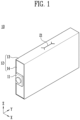
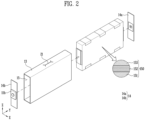
- FIGS. 1 and 2 show a battery cell 10 according to an embodiment of the present disclosure.
- a battery cell 10 described in the present specification refers to a secondary battery that may be repeatedly used by charging and discharging electrical energy.
- a battery cell may be a lithium secondary battery, but it is not limited thereto.
- Battery cells 10 may be classified into a pouch-type secondary battery, a prismatic secondary battery, or a cylindrical secondary battery depending on the shape.
- a prismatic secondary battery is shown as an example for convenience of explanation, but the present invention is not limited thereto.
- a battery cell 10 of the present disclosure includes: an electrode assembly 150 including a cathode, an anode, and a separator; an exterior material 12 accommodating the electrode assembly therein 150, a notch portion 20 ( FIG. 4 ) recessed from an inner surface of the exterior material 12 toward the outside in a direction to the electrode assembly 150 and defined in the form of a groove; and a protrusion portion 21.
- a battery cell 10 includes an electrode assembly 150.
- an electrode assembly 150 may include a cathode 151, an anode 153, and a separator 152.
- An electrode assembly 150 may be classified into a stack type, a winding type, a stack-folding type, and a Z-stacking type depending on the method by which a cathode 151, an anode 153, and a separator 152 are stacked.
- an electrode assembly 150 included in the battery cell 10 of the present disclosure is not limited.
- an electrode assembly 150 included in the battery cell of the present disclosure may be an electrode assembly 150 manufactured in any one method of a stack type, a winding type, a stack-folding type, and a Z-stacking type.
- a cathode 151 and an anode 153 may include a current collector.
- a cathode 151 may include a cathodecurrent collector
- an anode 153 may include an anode current collector.
- a current collector may include a known conductive material to an extent that it does not cause a chemical reaction within a lithium secondary battery.
- a current collector may include any one of stainless steel, nickel (Ni), aluminum (Al), titanium (Ti), copper (Cu), and alloys thereof, and may be provided in various forms such as a film, a sheet, a foil, and the like.
- a cathode 151 and an anode 153 may include an active material.
- a cathode 151 may include a cathode active material, and an anode may include an anode active material.
- a cathode active material is a material which lithium (Li) ions may be inserted into and extracted from, and an anode active material is a material which lithium ions may be adsorbed into and extracted from.
- a cathode active material may be lithium metal oxide
- an anode active material may be any one of a carbon-based material such as crystalline carbon, amorphous carbon, carbon composite, and carbon fiber, a lithium alloy, silicon (Si), and tin (Sn).
- a cathode 151 and an anode 153 may further include a binder and a conductive material to improve mechanical stability and electrical conductivity, respectively.
- a separator 152 may be configured to prevent an electrical short circuit between a cathode 151 and an anode 153 and to generate a flow of ions.
- the type of a separator is not particularly limited, but may include a porous polymer film.
- a separator may include a porous polymer film or a porous nonwoven fabric.
- An electrolyte may include an electrolyte solution.
- An electrolyte solution may be a non-aqueous electrolyte solution.
- An electrolyte solution may include a lithium salt and an organic solvent.
- An electrolyte solution may further include an additive.
- An additive may form a film on a cathode or an anode through a chemical reaction inside a battery. For example, a cathode interface film may be formed on a cathode, and an anode interface film may be formed on an anode.
- an exterior material 12 may accommodate an electrode assembly 150 therein.
- An exterior material 12 may accommodate an electrode assembly and an electrolyte solution therein.
- An exterior material 12 may be provided with an external insulating layer made of a polymer material, an internal adhesive layer, and a metal layer interposed between an external insulating layer and an internal adhesive layer.
- An exterior material 12 may include a material with high mechanical rigidity to protect a battery cell 10 from external shock.
- an exterior material may include an aluminum layer.
- An exterior material 12 may include a body portion 13 accommodating an electrode assembly; and a cap portion 14a, 14b covering a body portion 13.
- the cap portion 14 may include a cell tab 11 electrically connecting an electrode assembly to the outside.
- a body portion 13 may include an open opening portion 15.
- a body portion 13 may be open on both sides. Referring to FIG. 2 , both sides of a body portion 13 may be open toward the Y-direction.
- An electrode assembly and an electrolyte may be accommodated inside an exterior material 12 through an opening portion 15.
- a body portion 13 may be provided in a hexahedral shape so that both sides may be open along the Y-direction.
- a cap portion 14 may cover both open surfaces of a body portion 13.
- a body portion 13 and a cap portion 14 may be combined to close an accommodation space of an exterior material 12.
- a cap portion 14a, 14b may cover a body portion 13.
- a cap portion 14a, 14b may cover both open surfaces of a body portion 13 to protect components accommodated within a body portion 13.
- a body portion 13 and a cap portion 14a, 14b may be coupled or sealed with each other.
- a battery cell 10 may further include a cell tab 11 protruding toward the outside of an exterior material 12 for electrical connection to the outside.
- a cell tab 11 may be provided in a cap portion 14.
- a battery cell 10 may include a plurality of cap portions 14a, 14b and a plurality of cell tabs 11a, 11b. Each cell tab 11a, 11b may be provided in each of a plurality of cap portions 14a, 14b.
- a cell tab 11 may each be connected to a cathode and an anode of a battery cell 10.
- a cell tab 11 may include a cathode tab 11a connected to a cathode and an anode tab 11b connected to an anode.
- FIGS. 3 to 6 show a notch portion according to an embodiment of the present disclosure.
- a battery cell 10 of the present disclosure may include a protrusion portion 21 protruding toward the outside from an outer surface of an exterior material.
- a protrusion portion 21 may protrude beyond an outer surface of an exterior material.
- FIG. 4 shows an inner surface of a battery cell on which a notch portion is formed.
- a battery cell 10 of the present disclosure may include a notch portion 20 recessed from an inner surface of an exterior material 12 toward the outside and defined in the form of a groove.
- a notch portion 20 may be formed to overlap a protrusion portion 21 along a direction from the inside of a battery call toward the outside.
- a battery cell 10 of the present disclosure may include a notch portion 20 provided on one surface of an exterior material 12.
- a notch portion 20 may be provided on an inner surface of an exterior material 12.
- a notch portion 20 may be provided in a body portion 13 of an exterior material 12.
- a notch portion 20 may be defined in the form of a groove from an inner surface toward the outside.
- a notch portion 20 may be recessed from an inner surface toward the outside to be defined in the form of a groove.
- An exterior material 12 may include an internal space accommodating an electrode assembly.
- An inner surface of an exterior material 12 may form one side surface of an internal space. That is, a notch portion 20 may be formed by being recessed in a preset depth from the inside of an exterior material 12 toward the outside.
- a battery cell 10 of the present disclosure may adjust the internal pressure through a notch portion 20.
- a battery cell 10 may be used multiple times by repeatedly charging and discharging.
- the internal pressure of a battery cell 10 may increase due to a gas generated in this process. When a gas is continuously left without being discharging, a battery cell 10 may explode. Therefore, in order to use a battery cell 10 safely, it is necessary to properly adjust the pressure of a battery cell 10.
- a notch portion 20 may be provided on one side of an exterior material 12 so that a gas may be discharged through the notch portion 20.
- the shape of a notch portion 20 may change based on the internal pressure of an exterior material 12.
- the shape of a protrusion portion 21 may change based on the internal pressure of an exterior material 12.
- Fracture pressure refers to a pressure at which a notch portion 20 and a protrusion portion 21 may be fractured and opened.
- a notch portion 20 when the internal pressure of an exterior material 12 is lower than a fracture pressure, the shape of a notch portion 20 will be maintained.
- the shape of a notch portion 20 may change. Specifically, a notch portion 20 may be opened and a gas inside may be discharged to the outside, thereby causing the internal pressure to decrease.
- a notch portion 20 may be fractured even at a relatively low pressure compared to other areas of a battery cell. Through this, damage to a battery cell 10 can be prevented. Fracture of areas other than a notch portion 20 of a battery cell 10 may be prevented.
- a notch portion 20 may be formed to extend along one direction on an inner surface.
- a notch portion 20 may be formed to extend along the Y-direction. At least a part of a notch portion 20 may be formed to extend along one direction. Through this, both sides of a notch portion 20 will be spaced apart so that a gas inside can be easily discharged.
- a notch portion 20 may be provided in a plural number. Through this, the pressure of a battery cell 10 can be quickly lowered to prevent explosion of a battery cell 10.
- a battery cell 10 of the present disclosure may be provided with a notch portion 20 on an inner surface of an exterior material 12. Since a notch portion 20 is provided on an inner surface of an exterior material 12 rather than an outer surface, it can sensitively respond to pressure changes. When a notch portion 20 is provided on an outer surface, an inner surface is still provided as a flat surface and may not be opened even when the internal pressure changes. In other words, an open form that is different from design intention of a battery cell may be implemented.
- a notch portion 20 when a notch portion 20 is provided on an inner surface, upon a pressure increase, a notch portion 20 may be pressurized, causing a crack in a notch portion 20.
- a notch portion 20 provided on an inner surface will be easily opened.
- a notch portion 20 may be provided in a body portion 13.
- a notch portion 20 may be formed integrally with a body portion 13.
- a notch portion 20 may be formed through press processing in a preset area of a body portion 13, rather than being manufactured separately and then joined to a body portion 13.
- a body portion 13 may be formed to be thin by a cap portion 14a, 14b.
- a notch portion 20 may be formed in a body portion 13 to facilitate molding.
- a notch portion 20 may be molded in any area of a body portion. Through this, the range of position selection of a notch portion 20 will be expanded so that the position of a notch portion 20 may be freely changed according to a user's demand.
- a protrusion portion 21 may be provided on an outer surface of an exterior material 12.
- a protrusion portion 21 corresponds to a notch portion 20 and may protrude toward the outside.
- a notch portion 20 and a protrusion portion 21 may be formed to overlap along a direction from an inner surface of a body portion 13 toward an outer surface.
- a protrusion portion may protrude beyond an outer surface of an exterior material 12 along a direction from an inner surface of an exterior material 12 to an outer surface of the exterior material 12. Referring to FIGS. 5 and 6 , a protrusion portion 21 may be positioned farther from an inner surface of an exterior material 12 than an outer surface of the exterior material 12 along the Z-direction. Through this, a user can easily predict an open portion of an exterior material 12.
- a protrusion portion 21 may guide a fracture path of an exterior material.
- an outer surface of the exterior material may be fractured along the protrusion portion 21.
- a protrusion portion 21 may guide a damage path of an exterior material.
- the exterior material may be opened along a protrusion portion 21.
- a user can easily predict an open area of the exterior material through the protrusion portion 21 and limit the open area of the exterior material within a certain range.
- the length from the notch portion to the protrusion portion along the direction in which the notch portion is recessed may be 40% or less of the length of the exterior material.
- the thickness L1 of an exterior material 12 in which a notch portion 20 is formed may be 40% or less of the thickness L2 of an exterior material 12 on which a notch portion 20 is not formed.
- the length of an exterior material along the direction in which a notch portion 20 is recessed refers to the thickness of the exterior material.
- the thickness of an exterior material may refer to the thickness of the body portion 13.
- the thickness of an exterior material 12 may refer to the thickness of one surface of a body portion 13 in which a notch portion is formed.
- a body portion 13 may include a plurality of surfaces, and a notch portion 20 and a protrusion portion 21 may be formed on one of the plurality of surfaces.
- the length of an exterior material 12 compared to the length from a notch portion to a protrusion portion may refer to the thickness of any one surface of a body portion 13 in which a notch portion 20 and a protrusion portion 21 are formed.
- the length of a notch portion 20 and a protrusion portion 21 may be formed to be 40% or less of the thickness of an area of a body portion adjacent to the notch portion 20 and the protrusion portion 21.
- the notch portion 20 When the thickness of an exterior material in which a notch portion 20 is formed is formed to be thick, the notch portion 20 may not be fractured even when the pressure of a battery cell 10 increases. In addition, when the thickness of an exterior material in which a notch portion 20 is formed is formed to be thin, the notch portion 20 may be fractured, even when the pressure of a battery cell 10 increases relatively slightly, thereby causing inconvenience in use of the battery cell 10.
- a notch portion 20 must be set to have an appropriate thickness to prevent damage to a battery cell 10 and enable the battery cell 10 to be continuously used.
- a notch portion 20 and a protrusion portion 21 may be formed integrally with an exterior material 12.
- a notch portion 20 and a protrusion portion 21 may be manufactured through a press process in one area of an exterior material 12, rather than a notch portion 20 and a protrusion portion 21 are separately manufactured and then coupled with one area of an exterior material 12.
- a notch portion 20 and a protrusion portion 21 may include a same material as an exterior material 12.
- an exterior material 12 includes aluminum
- a notch portion 20 and a protrusion portion 21 may include aluminum. This is because a notch portion 20 and a protrusion portion 21 are formed integrally with an exterior material 12.
- a notch portion 20 and a protrusion portion 21 may include a same material as an exterior material 12, thereby stably protecting an electrode assembly 150 from an external pressure.
- FIGS. 7 to 9 show a battery cell according to another embodiment of the present disclosure.
- An exterior material 12 may further include a venting portion 30.
- a venting portion 30 may be formed as at least one surface of an inner surface of an exterior material 12 and an outer surface provided in a direction opposite to the inner surface is recessed.
- a notch portion and a venting portion may be positioned to overlap.
- a notch portion may be positioned within a venting portion.
- the thickness of one area of an exterior material provided with a venting portion may be relatively thin so that it may be fractured by a lower pressure compared to one area of an exterior material provided with no venting portion.
- a venting portion 30 may be positioned in a body portion 13 of an exterior material 12. As a result, a gas inside a battery cell may be discharged from a body portion 13.
- a battery cell 10 may be provided with a venting portion 30 having a thin thickness, thereby easily responding to a pressure change.
- a notch portion 20 may be positioned overlappingly with a venting portion 30 so that the notch portion 20 may respond more sensitively to a pressure change of a battery cell 10 than other areas.
- a venting portion may include a venting portion 30a provided on an outer surface of an exterior material 12 and a venting portion 30b provided on an inner surface of an exterior material 12.
- a notch portion 20 may be provided on an inner surface of a venting portion 30b.
- An area adjacent to a notch portion 20 may have a thin thickness, thereby sensitively responding to a pressure change.
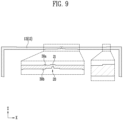
- a part of a venting portion 30b may be provided in a stepped shape.
- the recession depth of a venting portion 30b may vary depending on the direction in which it is recessed.
- a venting portion 30b may be provided in a stepped form so that the thickness of an exterior material 12 may be sequentially thinned. Through this, the thickness of an exterior material 12 can be finely adjusted so that a notch portion 20 can sensitively respond to a pressure change.
- a notch portion 20 may be formed to extend along one direction on an inner surface.
- a notch portion 20 may be provided in various shapes.
- a protrusion portion 21 corresponding to a notch portion 20 may also be provided in various shapes.
- At least a part of a notch portion 20 may be formed to extend along one direction. Through this, both sides of a notch portion 20 may be spaced apart so that a gas in the inside can be easily discharged.
- One side surface of a pressurizing portion that pressurizes an inner surface may be provided in a protruding shape. Through this, a protruding pressurizing portion can pressurize an inner surface to form a notch portion 20.
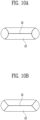
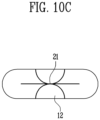
- FIGS. 10A to 10C show various embodiments of a notch portion of the present disclosure.
- a notch portion 20 may be provided in various shapes.
- a protrusion portion 21 corresponding to a notch portion 20 may also be provided in various shapes.
- a protrusion portion 21 may be provided as a line of which central area extends in one direction and one end and the other end of which have a curvature.
- a central area of a protrusion portion 21 may extend in one direction, and one end and the other end may be provided as a straight line.
- a central region of a protrusion portion 21 may extend in one direction and may further include a line having the shape of an arc.
- the shape of a protrusion portion 21 is not limited as long as it may be opened in a direction from an inner surface of an exterior material to an outer surface.
- FIGS. 11 and 12 show a battery cell manufacturing method according to an embodiment of the present disclosure.
- a battery cell 10 manufacturing method the according to the present disclosure includes: a notching step S30, an inserting step S50, and a covering step S70.
- a notch portion 20 and a protrusion portion 21 may be formed on one surface of an exterior material 12.
- a groove-shaped notch portion recessed from one side of an exterior material toward the outside may be formed.
- FIGS. 13 to 15 show each step of a battery cell manufacturing method according to an embodiment of the present disclosure.
- an exterior material 12 may include a notch area 12_1 and a bent area 12_2.
- a notch portion 20 and a protrusion portion 21 may be formed in a notch area 12_1.
- An exterior material may be bent along a bent area 12_2 to form an accommodation space therein.
- a plurality of bent areas 12_2 may be provided.
- a bent area 12_2 may be formed along one direction of an exterior material.
- a notch portion 20 and a protrusion portion 21 may be formed in a notch area 12_1 of an exterior material 12.
- a pressurizing portion 110, 120 may pressurize an exterior material 12 to forge the same.
- a pressurizing portion 110, 120 may pressurize both sides of an exterior material 12 to form a notch portion 20 and a protrusion portion 21.
- a pressurizing portion 110, 120 may pressurize a notch area 12_1 preset in an exterior material 12. Pressurizing portions 110, 120 may interpose an exterior material 12 therebetween and pressurize both sides of the exterior material 12. Through this, a notch portion 20 and a protrusion portion 21 having a thin thickness may be formed.
- a pressurizing portion 110, 120 may include a first pressurizing portion 110 with at least a part of one surface protruding and a second pressurizing portion 120 with one area recessed.
- a first pressurizing portion 110 may pressurize one surface of an exterior material 12 and a second pressurizing portion 120 may pressurize the other surface of the exterior material 12.
- the shapes of a notch portion 20 and a protrusion portion 21 may change depending on the shapes of a first pressurizing portion 110 and a second pressurizing portion 120.
- a bending step S33 may be performed.
- an exterior material may be bent along a bending area of the exterior material.
- an exterior material 12 may be bent.
- An exterior material 12 may be bent such that one edge of the exterior material 12 and the other edge opposite to the one edge meet together.
- an exterior material may be bent to form a hexahedral shape with both sides open.
- a connecting step S35 may be performed.
- different areas of an exterior material may be connected.
- a method of connecting exterior materials is not limited to any particular method. Exterior materials may be connected to each other through welding, joining (brazing), or gluing.
- exterior materials may be connected by laser 130.
- Laser may weld two edges of an exterior material. Through this, an internal space and an external space of an exterior material may be distinguished.
- a battery cell 10 manufacturing method the according to the present disclosure may further include a venting portion forming step S10.
- a venting portion forming step S10 a venting portion 30 may be formed by pressurizing at least one of an inner surface of an exterior material 12 and an outer surface of an exterior material 12.
- a pressurizing portion may form a venting portion by pressurizing one surface of an exterior material.
- a venting portion forming step S10 may be performed simultaneously with a notching step S30. While a notch is formed by pressurizing an exterior material 12 through a pressurizing portion of which one side protrudes, a venting portion 30 may be formed by recessing one area of the exterior material 12.
Landscapes
- Chemical & Material Sciences (AREA)
- Chemical Kinetics & Catalysis (AREA)
- Electrochemistry (AREA)
- General Chemical & Material Sciences (AREA)
- Engineering & Computer Science (AREA)
- Manufacturing & Machinery (AREA)
- Materials Engineering (AREA)
- Sealing Battery Cases Or Jackets (AREA)
- Gas Exhaust Devices For Batteries (AREA)
Abstract
A battery cell of the present disclosure includes an electrode assembly including a cathode, an anode, and a separator; an exterior material accommodating the electrode assembly therein; a notch portion recessed from an inner surface of the exterior material toward an outside and defined in the form of a groove; and a protrusion portion corresponding to the notch portion on an outer surface of the exterior material disposed in an opposite direction of the inner surface and protruding toward the outside.
Description
- The present disclosure relates to a battery cells and a manufacturing method of the same. Specifically, it relates to a battery cell having a groove-shaped notch portion and a method of manufacturing the same.
- A secondary battery is a battery that is made to convert electrical energy into chemical energy and store it so that it may be reused multiple times through charging and discharging. Secondary batteries are widely used across industries due to their economical and eco-friendly characteristics. In particular, among secondary batteries, lithium secondary batteries are widely used throughout industries, including portable devices that require high-density energy.
- The operating principle of lithium secondary batteries is an electrochemical oxidation-reduction reaction. In other words, the principle is that electricity is generated through the movement of lithium ions and charged in the reverse process. In the case of a lithium secondary battery, a phenomenon in which lithium ions in an anode escape therefrom and move to a cathode through an electrolyte and a separator is referred to as discharge. In addition, the opposite process of this phenomenon is referred to as charging.
- As the process of charging and discharging a secondary battery is repeated, a swelling phenomenon in which the internal pressure is increased and a large amount of heat is generated may occur. Since this swelling phenomenon may lead to explosion or fire, a method for controlling the internal pressure of secondary batteries is required.
- A problem that the present disclosure aims to solve is to provide a battery cell in which the internal pressure is controlled to exhibit improved stability.
- In addition, another problem that the present disclosure aims to solve is to provide a battery cell manufacturing method in which a notch portion is manufactured integrally with an exterior material to exhibit improved production efficiency.
- The battery cell of the present disclosure can be widely applied in the field of green technology, such as electric vehicles, battery charging stations, solar power generation, and wind power generation using batteries. In addition, the battery cell of the present disclosure can be used in eco-friendly electric vehicles, hybrid vehicles, etc. to prevent climate change by suppressing air pollution and greenhouse gas emissions.
- A battery cell of the present disclosure includes: an electrode assembly including a cathode, an anode, and a separator; an exterior material accommodating the electrode assembly therein; a notch portion recessed from an inner surface of the exterior material toward the outside and defined in the form of a groove; and a protrusion portion corresponding to the notch portion on an outer surface of the exterior material disposed in an opposite direction of the inner surface and protruding toward the outside.
- The exterior material may include: a body portion accommodating the electrode assembly; and a cap portion including a cell tab that electrically connects the electrode assembly to the outside and covering the body portion; wherein the notch portion may be provided in the body portion.
- The exterior material may further include a venting portion formed by recession of at least one of the inner surface and the outer surface that is provided in a direction opposite to the inner surface, wherein the notch portion and the venting portion may be positioned to overlap along a recession direction in which the at least one surface is recessed.
- The notch portion and the protrusion portion may be formed integrally with the exterior material.
- The notch portion and the protrusion portion may include a same material as the exterior material.
- The venting portion may have a part provided in a stepped shape.
- The battery cell may further include a protrusion portion corresponding to the notch portion on an outer surface of the exterior material disposed in an opposite direction of the inner surface and protruding toward the outside.
- The notch portion may be formed to extend along one direction from the inner surface.
- The shapes of the notch portion and the protrusion portion may change based on the internal pressure of the exterior material.
- When the internal pressure of the exterior material increases, the notch portion and the protrusion portion may be opened.
- The length from the notch portion to the protrusion portion along a direction in which the notch portion is recessed may be 40% or less of the length of the exterior material.
- The notch portion may be provided in a plural number.
- The protrusion portion may protrude beyond an outer surface of the exterior material along a direction from an inner surface of the exterior material to an outer surface of the exterior material.
- The battery cell manufacturing method of the present disclosure includes: a notching step of providing a notch portion recessed from an inner surface of the exterior material toward the outside and defined in the form of a groove; an inserting step of inserting the electrode assembly into the body portion; and a covering step of covering an opening portion provided in the body portion by the cap portion.
- The battery cell manufacturing method of the present disclosure may further include a venting portion forming step of forming a venting portion by pressurizing at least one surface of an inner surface of the exterior material on which the notch portion is provided and an outer surface of the exterior material.
- The notching step may include: a forging step of forming a notch portion and a protrusion portion in an notch area of the exterior material; a bending step of bending the exterior material along a bent area of the exterior material; and a connecting step of connecting two different areas of the exterior material.
- In the forging step, a first pressurizing portion, at least a part of which protrudes, may pressurize one surface of the exterior material, and a second pressurizing section, one area of which is recessed, may pressurize the other surface of the exterior material.
- Through an embodiment of the present disclosure a battery cell with improved stability can be provided by adjusting the internal pressure.
- In addition, the invention of the present disclosure may provide a battery cell manufacturing method in which a notch portion is manufactured integrally with an exterior material to exhibit improved production efficiency.
-
-
FIGS. 1 and2 show a battery cell according to an embodiment of the present disclosure. -
FIGS. 3 to 6 show a notch portion according to an embodiment of the present disclosure. -
FIGS. 7 to 9 show a battery cell according to another embodiment of the present disclosure. -
FIGS. 10A to 10C show various embodiments of a notch portion of the present disclosure. -
FIGS. 11 and12 show a battery cell manufacturing method according to an embodiment of the present disclosure. -
FIGS. 13 to 15 show each step of a battery cell manufacturing method according to an embodiment of the present disclosure. - Hereinafter, the present disclosure will be described in detail with reference to the attached drawings. This is merely illustrative, and the present disclosure is not limited to the specific embodiments described in an illustrative manner.
- Specific terms used in the present specification are merely for convenience of explanation and are not used to limit the illustrated embodiments.
- For example, expressions such as "same" and "is the same" not only indicate a strictly identical state, but also indicate a state in which there is a difference in tolerance or the degree to which the same function is obtained.
- For example, expressions representing relative or absolute arrangement such as "in a certain direction," "along a certain direction," "side by side," "perpendicularly," "at the center," "concentric," or "coaxial," not only strictly represent the arrangement, but also represent the state of relative displacement with a tolerance, or an angle or distance at which the same function is obtained.
- To explain the present disclosure, it will be described below based on a spatial orthogonal coordinate system with X, Y, and Z axes orthogonal to each other. Each axis direction (X-axis direction, Y-axis direction, Z-axis direction) refers to both directions in which each axis extends.
- The X-direction, Y-direction, and Z-direction mentioned below are for explanation so that the present disclosure may be clearly understood, and of course, the directions may be defined differently depending on where the reference is placed.
- The use of terms such as 'first, second, and third' in front of the components mentioned below is only to avoid confusion about the components to which they are referred and is irrelevant to the order, importance, or master-slave relationship between the components, etc. For example, an invention that includes only a second component without a first component may also be implemented.
- As used in this specification, singular expressions include plural expressions unless the context clearly dictates otherwise.
-
FIGS. 1 and2 show abattery cell 10 according to an embodiment of the present disclosure. - A
battery cell 10 described in the present specification refers to a secondary battery that may be repeatedly used by charging and discharging electrical energy. For example, a battery cell may be a lithium secondary battery, but it is not limited thereto. -
Battery cells 10 may be classified into a pouch-type secondary battery, a prismatic secondary battery, or a cylindrical secondary battery depending on the shape. Referring toFIG. 1 , in the present specification, a prismatic secondary battery is shown as an example for convenience of explanation, but the present invention is not limited thereto. - A
battery cell 10 of the present disclosure includes: anelectrode assembly 150 including a cathode, an anode, and a separator; anexterior material 12 accommodating the electrode assembly therein 150, a notch portion 20 (FIG. 4 ) recessed from an inner surface of theexterior material 12 toward the outside in a direction to theelectrode assembly 150 and defined in the form of a groove; and aprotrusion portion 21. - A
battery cell 10 includes anelectrode assembly 150. Referring toFIG. 2 , anelectrode assembly 150 may include acathode 151, ananode 153, and aseparator 152. Anelectrode assembly 150 may be classified into a stack type, a winding type, a stack-folding type, and a Z-stacking type depending on the method by which acathode 151, ananode 153, and aseparator 152 are stacked. - The type of an
electrode assembly 150 included in thebattery cell 10 of the present disclosure is not limited. In other words, anelectrode assembly 150 included in the battery cell of the present disclosure may be anelectrode assembly 150 manufactured in any one method of a stack type, a winding type, a stack-folding type, and a Z-stacking type. - A
cathode 151 and ananode 153 may include a current collector. Acathode 151 may include a cathodecurrent collector, and ananode 153 may include an anode current collector. A current collector may include a known conductive material to an extent that it does not cause a chemical reaction within a lithium secondary battery. For example, a current collector may include any one of stainless steel, nickel (Ni), aluminum (Al), titanium (Ti), copper (Cu), and alloys thereof, and may be provided in various forms such as a film, a sheet, a foil, and the like. - A
cathode 151 and ananode 153 may include an active material. Acathode 151 may include a cathode active material, and an anode may include an anode active material. A cathode active material is a material which lithium (Li) ions may be inserted into and extracted from, and an anode active material is a material which lithium ions may be adsorbed into and extracted from. For example, a cathode active material may be lithium metal oxide, and an anode active material may be any one of a carbon-based material such as crystalline carbon, amorphous carbon, carbon composite, and carbon fiber, a lithium alloy, silicon (Si), and tin (Sn). - In addition, a
cathode 151 and ananode 153 may further include a binder and a conductive material to improve mechanical stability and electrical conductivity, respectively. - A
separator 152 may be configured to prevent an electrical short circuit between acathode 151 and ananode 153 and to generate a flow of ions. The type of a separator is not particularly limited, but may include a porous polymer film. For example, a separator may include a porous polymer film or a porous nonwoven fabric. - An electrolyte may include an electrolyte solution. An electrolyte solution may be a non-aqueous electrolyte solution. An electrolyte solution may include a lithium salt and an organic solvent. An electrolyte solution may further include an additive. An additive may form a film on a cathode or an anode through a chemical reaction inside a battery. For example, a cathode interface film may be formed on a cathode, and an anode interface film may be formed on an anode.
- Referring to
FIG. 2 , anexterior material 12 may accommodate anelectrode assembly 150 therein. Anexterior material 12 may accommodate an electrode assembly and an electrolyte solution therein. Anexterior material 12 may be provided with an external insulating layer made of a polymer material, an internal adhesive layer, and a metal layer interposed between an external insulating layer and an internal adhesive layer. Anexterior material 12 may include a material with high mechanical rigidity to protect abattery cell 10 from external shock. For example, an exterior material may include an aluminum layer. - An
exterior material 12 may include abody portion 13 accommodating an electrode assembly; and acap portion body portion 13. Thecap portion 14 may include acell tab 11 electrically connecting an electrode assembly to the outside. - Referring to
FIG. 2 , abody portion 13 may include anopen opening portion 15. Abody portion 13 may be open on both sides. Referring toFIG. 2 , both sides of abody portion 13 may be open toward the Y-direction. An electrode assembly and an electrolyte may be accommodated inside anexterior material 12 through an openingportion 15. For example, abody portion 13 may be provided in a hexahedral shape so that both sides may be open along the Y-direction. Acap portion 14 may cover both open surfaces of abody portion 13. Abody portion 13 and acap portion 14 may be combined to close an accommodation space of anexterior material 12. - A
cap portion body portion 13. In other words, acap portion body portion 13 to protect components accommodated within abody portion 13. Abody portion 13 and acap portion - A
battery cell 10 may further include acell tab 11 protruding toward the outside of anexterior material 12 for electrical connection to the outside. Acell tab 11 may be provided in acap portion 14. Abattery cell 10 may include a plurality ofcap portions cell tabs 11a, 11b. Eachcell tab 11a, 11b may be provided in each of a plurality ofcap portions - A
cell tab 11 may each be connected to a cathode and an anode of abattery cell 10. Acell tab 11 may include a cathode tab 11a connected to a cathode and ananode tab 11b connected to an anode. -
FIGS. 3 to 6 show a notch portion according to an embodiment of the present disclosure. - Referring to
FIG. 3 , abattery cell 10 of the present disclosure may include aprotrusion portion 21 protruding toward the outside from an outer surface of an exterior material. Aprotrusion portion 21 may protrude beyond an outer surface of an exterior material. -
FIG. 4 shows an inner surface of a battery cell on which a notch portion is formed. Referring toFIG. 4 , abattery cell 10 of the present disclosure may include anotch portion 20 recessed from an inner surface of anexterior material 12 toward the outside and defined in the form of a groove. Anotch portion 20 may be formed to overlap aprotrusion portion 21 along a direction from the inside of a battery call toward the outside. - A
battery cell 10 of the present disclosure may include anotch portion 20 provided on one surface of anexterior material 12. Anotch portion 20 may be provided on an inner surface of anexterior material 12. Anotch portion 20 may be provided in abody portion 13 of anexterior material 12. - A
notch portion 20 may be defined in the form of a groove from an inner surface toward the outside. In other words, anotch portion 20 may be recessed from an inner surface toward the outside to be defined in the form of a groove. - An
exterior material 12 may include an internal space accommodating an electrode assembly. An inner surface of anexterior material 12 may form one side surface of an internal space. That is, anotch portion 20 may be formed by being recessed in a preset depth from the inside of anexterior material 12 toward the outside. - A
battery cell 10 of the present disclosure may adjust the internal pressure through anotch portion 20. Abattery cell 10 may be used multiple times by repeatedly charging and discharging. The internal pressure of abattery cell 10 may increase due to a gas generated in this process. When a gas is continuously left without being discharging, abattery cell 10 may explode. Therefore, in order to use abattery cell 10 safely, it is necessary to properly adjust the pressure of abattery cell 10. - A
notch portion 20 may be provided on one side of anexterior material 12 so that a gas may be discharged through thenotch portion 20. In other words, the shape of anotch portion 20 may change based on the internal pressure of anexterior material 12. In addition, the shape of aprotrusion portion 21 may change based on the internal pressure of anexterior material 12. - When the internal pressure of an
exterior material 12 increases and reaches a fracture pressure, anotch portion 20 and aprotrusion portion 21 may be opened. Fracture pressure refers to a pressure at which anotch portion 20 and aprotrusion portion 21 may be fractured and opened. - Therefore, when the internal pressure of an
exterior material 12 is lower than a fracture pressure, the shape of anotch portion 20 will be maintained. When the internal pressure of anexterior material 12 increases above a fracture pressure through continuous use of a battery cell, the shape of anotch portion 20 may change. Specifically, anotch portion 20 may be opened and a gas inside may be discharged to the outside, thereby causing the internal pressure to decrease. - A
notch portion 20 may be fractured even at a relatively low pressure compared to other areas of a battery cell. Through this, damage to abattery cell 10 can be prevented. Fracture of areas other than anotch portion 20 of abattery cell 10 may be prevented. - A
notch portion 20 may be formed to extend along one direction on an inner surface. For example, referring toFIG. 6 , anotch portion 20 may be formed to extend along the Y-direction. At least a part of anotch portion 20 may be formed to extend along one direction. Through this, both sides of anotch portion 20 will be spaced apart so that a gas inside can be easily discharged. - A
notch portion 20 may be provided in a plural number. Through this, the pressure of abattery cell 10 can be quickly lowered to prevent explosion of abattery cell 10. - In particular, a
battery cell 10 of the present disclosure may be provided with anotch portion 20 on an inner surface of anexterior material 12. Since anotch portion 20 is provided on an inner surface of anexterior material 12 rather than an outer surface, it can sensitively respond to pressure changes. When anotch portion 20 is provided on an outer surface, an inner surface is still provided as a flat surface and may not be opened even when the internal pressure changes. In other words, an open form that is different from design intention of a battery cell may be implemented. - On the other hand, when a
notch portion 20 is provided on an inner surface, upon a pressure increase, anotch portion 20 may be pressurized, causing a crack in anotch portion 20. When the internal pressure gradually increases and reaches a fracture pressure, anotch portion 20 provided on an inner surface will be easily opened. - A
notch portion 20 may be provided in abody portion 13. Anotch portion 20 may be formed integrally with abody portion 13. In other words, anotch portion 20 may be formed through press processing in a preset area of abody portion 13, rather than being manufactured separately and then joined to abody portion 13. - A
body portion 13 may be formed to be thin by acap portion notch portion 20 may be formed in abody portion 13 to facilitate molding. In addition, when anotch portion 20 is formed by press processing, anotch portion 20 may be molded in any area of a body portion. Through this, the range of position selection of anotch portion 20 will be expanded so that the position of anotch portion 20 may be freely changed according to a user's demand. - Referring to
FIGS. 5 and6 , aprotrusion portion 21 may be provided on an outer surface of anexterior material 12. Aprotrusion portion 21 corresponds to anotch portion 20 and may protrude toward the outside. In other words, anotch portion 20 and aprotrusion portion 21 may be formed to overlap along a direction from an inner surface of abody portion 13 toward an outer surface. - A protrusion portion may protrude beyond an outer surface of an
exterior material 12 along a direction from an inner surface of anexterior material 12 to an outer surface of theexterior material 12. Referring toFIGS. 5 and6 , aprotrusion portion 21 may be positioned farther from an inner surface of anexterior material 12 than an outer surface of theexterior material 12 along the Z-direction. Through this, a user can easily predict an open portion of anexterior material 12. - A
protrusion portion 21 may guide a fracture path of an exterior material. In other words, when anotch portion 20 is fractured on an inner surface of an exterior material, an outer surface of the exterior material may be fractured along theprotrusion portion 21. - A
protrusion portion 21 may guide a damage path of an exterior material. When anotch portion 20 is fractured and anexterior material 12 is thereby opened, the exterior material may be opened along aprotrusion portion 21. Ultimately, a user can easily predict an open area of the exterior material through theprotrusion portion 21 and limit the open area of the exterior material within a certain range. - The length from the notch portion to the protrusion portion along the direction in which the notch portion is recessed may be 40% or less of the length of the exterior material. In other words, referring to
FIG. 5 , the thickness L1 of anexterior material 12 in which anotch portion 20 is formed may be 40% or less of the thickness L2 of anexterior material 12 on which anotch portion 20 is not formed. - The length of an exterior material along the direction in which a
notch portion 20 is recessed refers to the thickness of the exterior material. When anotch portion 20 is formed in abody portion 13, the thickness of an exterior material may refer to the thickness of thebody portion 13. In addition, the thickness of anexterior material 12 may refer to the thickness of one surface of abody portion 13 in which a notch portion is formed. - A
body portion 13 may include a plurality of surfaces, and anotch portion 20 and aprotrusion portion 21 may be formed on one of the plurality of surfaces. At this time, the length of anexterior material 12 compared to the length from a notch portion to a protrusion portion may refer to the thickness of any one surface of abody portion 13 in which anotch portion 20 and aprotrusion portion 21 are formed. In other words, the length of anotch portion 20 and aprotrusion portion 21 may be formed to be 40% or less of the thickness of an area of a body portion adjacent to thenotch portion 20 and theprotrusion portion 21. - When the thickness of an exterior material in which a
notch portion 20 is formed is formed to be thick, thenotch portion 20 may not be fractured even when the pressure of abattery cell 10 increases. In addition, when the thickness of an exterior material in which anotch portion 20 is formed is formed to be thin, thenotch portion 20 may be fractured, even when the pressure of abattery cell 10 increases relatively slightly, thereby causing inconvenience in use of thebattery cell 10. - In other words, a
notch portion 20 must be set to have an appropriate thickness to prevent damage to abattery cell 10 and enable thebattery cell 10 to be continuously used. - A
notch portion 20 and aprotrusion portion 21 may be formed integrally with anexterior material 12. In other words, anotch portion 20 and aprotrusion portion 21 may be manufactured through a press process in one area of anexterior material 12, rather than anotch portion 20 and aprotrusion portion 21 are separately manufactured and then coupled with one area of anexterior material 12. - In addition, a
notch portion 20 and aprotrusion portion 21 may include a same material as anexterior material 12. For example, when anexterior material 12 includes aluminum, anotch portion 20 and aprotrusion portion 21 may include aluminum. This is because anotch portion 20 and aprotrusion portion 21 are formed integrally with anexterior material 12. Anotch portion 20 and aprotrusion portion 21 may include a same material as anexterior material 12, thereby stably protecting anelectrode assembly 150 from an external pressure. -
FIGS. 7 to 9 show a battery cell according to another embodiment of the present disclosure. - An
exterior material 12 may further include a ventingportion 30. A ventingportion 30 may be formed as at least one surface of an inner surface of anexterior material 12 and an outer surface provided in a direction opposite to the inner surface is recessed. - Along a recession direction in which a venting
portion 30 is recessed, a notch portion and a venting portion may be positioned to overlap. In other words, a notch portion may be positioned within a venting portion. - A venting
portion 30 is intended to make anexterior material 12 thin. Through this, when the internal pressure of abattery cell 10 increases, anotch portion 20 can be easily opened. - The thickness of one area of an exterior material provided with a venting portion may be relatively thin so that it may be fractured by a lower pressure compared to one area of an exterior material provided with no venting portion.
- In an embodiment, a venting
portion 30 may be positioned in abody portion 13 of anexterior material 12. As a result, a gas inside a battery cell may be discharged from abody portion 13. - A
battery cell 10 may be provided with a ventingportion 30 having a thin thickness, thereby easily responding to a pressure change. In particular, anotch portion 20 may be positioned overlappingly with a ventingportion 30 so that thenotch portion 20 may respond more sensitively to a pressure change of abattery cell 10 than other areas. - Referring to
FIG. 7 , a ventingportion 30 may be provided on an outer surface of anexterior material 12. The position of anotch portion 20 may be indirectly determined through the position of a ventingportion 30. Anotch portion 20 is provided on an inner surface and thus is not visually observed from the outside. Through this, the position withother battery cells 10 can be adjusted in consideration of gas emissions. - Referring to
FIG. 8 , a plurality of venting portions may be provided. A venting portion may include a ventingportion 30a provided on an outer surface of anexterior material 12 and a ventingportion 30b provided on an inner surface of anexterior material 12. In this case, anotch portion 20 may be provided on an inner surface of a ventingportion 30b. An area adjacent to anotch portion 20 may have a thin thickness, thereby sensitively responding to a pressure change. - Referring to
FIG. 9 , a part of a ventingportion 30b may be provided in a stepped shape. The recession depth of a ventingportion 30b may vary depending on the direction in which it is recessed. For example, a ventingportion 30b may be provided in a stepped form so that the thickness of anexterior material 12 may be sequentially thinned. Through this, the thickness of anexterior material 12 can be finely adjusted so that anotch portion 20 can sensitively respond to a pressure change. - A
notch portion 20 may be formed to extend along one direction on an inner surface. Anotch portion 20 may be provided in various shapes. Aprotrusion portion 21 corresponding to anotch portion 20 may also be provided in various shapes. - At least a part of a
notch portion 20 may be formed to extend along one direction. Through this, both sides of anotch portion 20 may be spaced apart so that a gas in the inside can be easily discharged. - One side surface of a pressurizing portion that pressurizes an inner surface may be provided in a protruding shape. Through this, a protruding pressurizing portion can pressurize an inner surface to form a
notch portion 20. -
FIGS. 10A to 10C show various embodiments of a notch portion of the present disclosure. - A
notch portion 20 may be provided in various shapes. Aprotrusion portion 21 corresponding to anotch portion 20 may also be provided in various shapes. Referring toFIG. 10A , aprotrusion portion 21 may be provided as a line of which central area extends in one direction and one end and the other end of which have a curvature. Referring toFIG. 10B , a central area of aprotrusion portion 21 may extend in one direction, and one end and the other end may be provided as a straight line. Referring toFIG. 10C , a central region of aprotrusion portion 21 may extend in one direction and may further include a line having the shape of an arc. The shape of aprotrusion portion 21 is not limited as long as it may be opened in a direction from an inner surface of an exterior material to an outer surface. - Hereinafter, a
battery cell 10 manufacturing method the according to the present disclosure will be described in detail. -
FIGS. 11 and12 show a battery cell manufacturing method according to an embodiment of the present disclosure. - Referring to
FIG. 11 , abattery cell 10 manufacturing method the according to the present disclosure includes: a notching step S30, an inserting step S50, and a covering step S70. - In a notching step S30, a
notch portion 20 and aprotrusion portion 21 may be formed on one surface of anexterior material 12. In a notching step S30, a groove-shaped notch portion recessed from one side of an exterior material toward the outside may be formed. - Referring to
FIG. 12 , a notching step S30 may include: a forging step S31, a bending step S33, and a connecting step S35. -
FIGS. 13 to 15 show each step of a battery cell manufacturing method according to an embodiment of the present disclosure. - Referring to
FIG. 13 , anexterior material 12 may include a notch area 12_1 and a bent area 12_2. Anotch portion 20 and aprotrusion portion 21 may be formed in a notch area 12_1. An exterior material may be bent along a bent area 12_2 to form an accommodation space therein. A plurality of bent areas 12_2 may be provided. A bent area 12_2 may be formed along one direction of an exterior material. - Referring to
FIG. 14 , in a forging step S31, anotch portion 20 and aprotrusion portion 21 may be formed in a notch area 12_1 of anexterior material 12. In a forging step S31, a pressurizingportion exterior material 12 to forge the same. In a forging step S31, a pressurizingportion exterior material 12 to form anotch portion 20 and aprotrusion portion 21. A pressurizingportion exterior material 12. Pressurizingportions exterior material 12 therebetween and pressurize both sides of theexterior material 12. Through this, anotch portion 20 and aprotrusion portion 21 having a thin thickness may be formed. - Referring to
FIG. 14 , a pressurizingportion first pressurizing portion 110 with at least a part of one surface protruding and asecond pressurizing portion 120 with one area recessed. Afirst pressurizing portion 110 may pressurize one surface of anexterior material 12 and asecond pressurizing portion 120 may pressurize the other surface of theexterior material 12. The shapes of anotch portion 20 and aprotrusion portion 21 may change depending on the shapes of afirst pressurizing portion 110 and asecond pressurizing portion 120. - After a forging step S31, a bending step S33 may be performed. In a bending step S33, an exterior material may be bent along a bending area of the exterior material. After a notch area 12_1 is forged by a pressurizing
portion exterior material 12 may be bent. Anexterior material 12 may be bent such that one edge of theexterior material 12 and the other edge opposite to the one edge meet together. For example, an exterior material may be bent to form a hexahedral shape with both sides open. - After a bending step S33, a connecting step S35 may be performed. In a connecting step, different areas of an exterior material may be connected. A method of connecting exterior materials is not limited to any particular method. Exterior materials may be connected to each other through welding, joining (brazing), or gluing.
- For example, referring to
FIG. 15 , exterior materials may be connected bylaser 130. Laser may weld two edges of an exterior material. Through this, an internal space and an external space of an exterior material may be distinguished. - Referring to
FIG. 11 , after a notching step S30, an inserting step S50 may be performed. An electrode assembly may be inserted into abody portion 13 through an inserting step S50. After an inserting step S50, a covering step S70 in which a cap portion covers an opening portion provided in a body portion may be performed. After an electrode assembly is inserted into abody portion 13, acap portion 14 may cover thebody portion 13. Through this, an electrode assembly can be stably accommodated inside anexterior material 12. - Referring to
FIG. 11 , abattery cell 10 manufacturing method the according to the present disclosure may further include a venting portion forming step S10. In a venting portion forming step S10, a ventingportion 30 may be formed by pressurizing at least one of an inner surface of anexterior material 12 and an outer surface of anexterior material 12. - A pressurizing portion may form a venting portion by pressurizing one surface of an exterior material. A venting portion forming step S10 may be performed simultaneously with a notching step S30. While a notch is formed by pressurizing an
exterior material 12 through a pressurizing portion of which one side protrudes, a ventingportion 30 may be formed by recessing one area of theexterior material 12. - The present disclosure may be modified and implemented in various forms, and its scope is not limited to the embodiments described above. Therefore, if a modified embodiment includes components of the present disclosure, it should be regarded as falling within the scope of the rights of the present disclosure.
Claims (15)
- A battery cell comprising:an electrode assembly including a cathode, an anode, and a separator;an exterior material accommodating the electrode assembly therein;a notch portion recessed from an inner surface of the exterior material toward an outside and defined in the form of a groove; anda protrusion portion corresponding to the notch portion on an outer surface of the exterior material disposed in an opposite direction of the inner surface and protruding toward the outside.
- The battery cell according to claim 1, wherein exterior material includes: a body portion accommodating the electrode assembly; and a cap portion including a cell tab that electrically connects the electrode assembly to the outside and covering the body portion, wherein the notch portion is be provided in the body portion.
- The battery cell according to claim 1 or clam 2, wherein the exterior material further includes a venting portion formed by recession of at least one of the inner surface and the outer surface that is provided in a direction opposite to the inner surface, wherein the notch portion and the venting portion are positioned to overlap along a recession direction in which the at least one surface is recessed.
- The battery cell according to claim 3, wherein the venting portion has a part provided in a stepped shape.
- The battery cell according to any one of the preceding claims, wherein the notch portion and the protrusion portion include a same material as the exterior material.
- The battery cell according to any one of the preceding claims, wherein the notch portion and the protrusion portion are formed integrally with the exterior material.
- The battery cell according to any one of the preceding claims, wherein the notch portion is formed to extend along one direction from the inner surface.
- The battery cell according to any one of the preceding claims, wherein the shapes of the notch portion and the protrusion portion change based on the internal pressure of the exterior material.
- The battery cell according to claim 8, wherein when the internal pressure of the exterior material increases, the notch portion and the protrusion portion are opened.
- The battery cell according to any one of the preceding claims, wherein the length from the notch portion to the protrusion portion along a direction in which the notch portion is recessed is 40% or less of the length of the exterior material.
- The battery cell according to any one of the preceding claims, wherein the protrusion portion protrudes beyond an outer surface of the exterior material along a direction from an inner surface of the exterior material to an outer surface of the exterior material.
- A battery cell manufacturing method, as a manufacturing method of a battery cell comprising an electrode assembly including a cathode, an anode, and a separator; and an exterior material including a body portion accommodating the electrode assembly and a cap portion covering the body portion, comprising:forming a groove-shaped notch portion recessed from one surface of the exterior material toward an outside;inserting the electrode assembly into the body portion; andcovering an opening portion disposed in the body portion by the cap portion.
- The battery cell manufacturing method according to claim 12, further comprising forming a venting portion by pressurizing at least one surface of an inner surface of the exterior material on which the notch portion is provided and an outer surface of the exterior material.
- The battery cell manufacturing method according to claim 12 or claim 13, wherein the forming the groove-shaped notch portion includes: forming a notch portion and a protrusion portion in an notch area of the exterior material; bending the exterior material along a bent area of the exterior material; and connecting two different areas of the exterior material.
- The battery cell manufacturing method according to claim 14, wherein in the forming a notch portion and a protrusion portion in an notch area of the exterior material, a first pressurizing portion, at least a part of which protrudes, pressurizes one surface of the exterior material, and a second pressurizing section, one area of which is recessed, may pressurize another surface of the exterior material.
Applications Claiming Priority (1)
| Application Number | Priority Date | Filing Date | Title |
|---|---|---|---|
| KR1020230120315A KR20250037914A (en) | 2023-09-11 | 2023-09-11 | Battery cell and manufacturing method of the same |
Publications (1)
| Publication Number | Publication Date |
|---|---|
| EP4521517A1 true EP4521517A1 (en) | 2025-03-12 |
Family
ID=90436489
Family Applications (1)
| Application Number | Title | Priority Date | Filing Date |
|---|---|---|---|
| EP24164916.9A Pending EP4521517A1 (en) | 2023-09-11 | 2024-03-20 | Battery cell and manufacturing method of the same |
Country Status (4)
| Country | Link |
|---|---|
| US (1) | US20250087822A1 (en) |
| EP (1) | EP4521517A1 (en) |
| KR (1) | KR20250037914A (en) |
| CN (1) | CN119601885A (en) |
Citations (5)
| Publication number | Priority date | Publication date | Assignee | Title |
|---|---|---|---|---|
| JP2004111155A (en) * | 2002-09-17 | 2004-04-08 | Alps Electric Co Ltd | Battery safety device and method of manufacturing the same |
| US20160079578A1 (en) * | 2014-09-12 | 2016-03-17 | Johnson Controls Technology Company | Hinged vent for electrochemical cell system and method |
| JP6020879B2 (en) * | 2012-03-29 | 2016-11-02 | 株式会社Gsユアサ | Exterior container, storage element |
| WO2023022340A1 (en) * | 2021-08-18 | 2023-02-23 | 주식회사 파인디앤씨 | Cap plate for secondary battery having vent structure, and method for manufacturing cap plate |
| KR20230073768A (en) * | 2021-11-19 | 2023-05-26 | 주식회사 파인디앤씨 | Can for secondary batteries having vent structure, and manufacturing mathod of the can |
-
2023
- 2023-09-11 KR KR1020230120315A patent/KR20250037914A/en active Pending
-
2024
- 2024-03-15 CN CN202410299136.0A patent/CN119601885A/en active Pending
- 2024-03-18 US US18/607,556 patent/US20250087822A1/en active Pending
- 2024-03-20 EP EP24164916.9A patent/EP4521517A1/en active Pending
Patent Citations (5)
| Publication number | Priority date | Publication date | Assignee | Title |
|---|---|---|---|---|
| JP2004111155A (en) * | 2002-09-17 | 2004-04-08 | Alps Electric Co Ltd | Battery safety device and method of manufacturing the same |
| JP6020879B2 (en) * | 2012-03-29 | 2016-11-02 | 株式会社Gsユアサ | Exterior container, storage element |
| US20160079578A1 (en) * | 2014-09-12 | 2016-03-17 | Johnson Controls Technology Company | Hinged vent for electrochemical cell system and method |
| WO2023022340A1 (en) * | 2021-08-18 | 2023-02-23 | 주식회사 파인디앤씨 | Cap plate for secondary battery having vent structure, and method for manufacturing cap plate |
| KR20230073768A (en) * | 2021-11-19 | 2023-05-26 | 주식회사 파인디앤씨 | Can for secondary batteries having vent structure, and manufacturing mathod of the can |
Also Published As
| Publication number | Publication date |
|---|---|
| US20250087822A1 (en) | 2025-03-13 |
| CN119601885A (en) | 2025-03-11 |
| KR20250037914A (en) | 2025-03-19 |
Similar Documents
| Publication | Publication Date | Title |
|---|---|---|
| EP3859851A1 (en) | Secondary battery | |
| EP4243163A1 (en) | Secondary battery | |
| US20210005936A1 (en) | Electrode assembly and secondary battery comprising same | |
| US11114729B2 (en) | Energy storage device and method of manufacturing energy storage device | |
| US20140023913A1 (en) | Prismatic secondary battery | |
| EP4362151A1 (en) | Battery cell and method of manufacturing same | |
| KR102411730B1 (en) | The Secondary Battery And The Battery Module | |
| KR101431726B1 (en) | Electrode Assembly of Improved Safety And Secondary Battery with the Same | |
| KR102869017B1 (en) | Lithium ion secondary battery and manufacturing method of the same | |
| US20250087822A1 (en) | Battery cell and manufacturing method of the same | |
| EP4517944A1 (en) | Battery cell | |
| EP4521520A1 (en) | Battery cell and manufacturing method of the same | |
| EP4517943A2 (en) | Battery cell and manufacturing method of the same | |
| EP4738548A1 (en) | Secondary battery and method for manufacturing the same | |
| EP4631643A1 (en) | Secondary battery | |
| US20260018652A1 (en) | Electrode assembly and battery cell including the same | |
| EP4553952A1 (en) | Battery module | |
| EP4714621A1 (en) | Die assembly for notching electrode plate of secondary battery and method of manufacturing die assembly | |
| EP4742426A1 (en) | Secondary battery and method for manufacturing the same | |
| EP4604278A1 (en) | Cap assembly and secondary battery including a cap assembly | |
| EP4604277A1 (en) | Secondary battery and method of manufacturing a secondary battery | |
| US20260074295A1 (en) | Electrode assembly for secondary battery and method for manufacturing the same | |
| US20260135271A1 (en) | Secondary battery and method for manufacturing the same | |
| US20250337003A1 (en) | Battery and method for manufacturing the battery | |
| US20260038955A1 (en) | Secondary battery and method for manufacturing the same |
Legal Events
| Date | Code | Title | Description |
|---|---|---|---|
| PUAI | Public reference made under article 153(3) epc to a published international application that has entered the european phase |
Free format text: ORIGINAL CODE: 0009012 |
|
| STAA | Information on the status of an ep patent application or granted ep patent |
Free format text: STATUS: REQUEST FOR EXAMINATION WAS MADE |
|
| 17P | Request for examination filed |
Effective date: 20240320 |
|
| AK | Designated contracting states |
Kind code of ref document: A1 Designated state(s): AL AT BE BG CH CY CZ DE DK EE ES FI FR GB GR HR HU IE IS IT LI LT LU LV MC ME MK MT NL NO PL PT RO RS SE SI SK SM TR |
|
| STAA | Information on the status of an ep patent application or granted ep patent |
Free format text: STATUS: EXAMINATION IS IN PROGRESS |
|
| 17Q | First examination report despatched |
Effective date: 20250725 |