EP4521320A1 - Temperature controller, server, air conditioning system and temperature setting method - Google Patents
Temperature controller, server, air conditioning system and temperature setting method Download PDFInfo
- Publication number
- EP4521320A1 EP4521320A1 EP24197932.7A EP24197932A EP4521320A1 EP 4521320 A1 EP4521320 A1 EP 4521320A1 EP 24197932 A EP24197932 A EP 24197932A EP 4521320 A1 EP4521320 A1 EP 4521320A1
- Authority
- EP
- European Patent Office
- Prior art keywords
- green electricity
- temperature
- temperature controller
- set temperature
- electricity index
- Prior art date
- Legal status (The legal status is an assumption and is not a legal conclusion. Google has not performed a legal analysis and makes no representation as to the accuracy of the status listed.)
- Pending
Links
Images

Classifications
-
- F—MECHANICAL ENGINEERING; LIGHTING; HEATING; WEAPONS; BLASTING
- F24—HEATING; RANGES; VENTILATING
- F24F—AIR-CONDITIONING; AIR-HUMIDIFICATION; VENTILATION; USE OF AIR CURRENTS FOR SCREENING
- F24F11/00—Control or safety arrangements
- F24F11/62—Control or safety arrangements characterised by the type of control or by internal processing, e.g. using fuzzy logic, adaptive control or estimation of values
- F24F11/63—Electronic processing
- F24F11/65—Electronic processing for selecting an operating mode
-
- F—MECHANICAL ENGINEERING; LIGHTING; HEATING; WEAPONS; BLASTING
- F24—HEATING; RANGES; VENTILATING
- F24F—AIR-CONDITIONING; AIR-HUMIDIFICATION; VENTILATION; USE OF AIR CURRENTS FOR SCREENING
- F24F11/00—Control or safety arrangements
- F24F11/89—Arrangement or mounting of control or safety devices
-
- G—PHYSICS
- G06—COMPUTING OR CALCULATING; COUNTING
- G06Q—INFORMATION AND COMMUNICATION TECHNOLOGY [ICT] SPECIALLY ADAPTED FOR ADMINISTRATIVE, COMMERCIAL, FINANCIAL, MANAGERIAL OR SUPERVISORY PURPOSES; SYSTEMS OR METHODS SPECIALLY ADAPTED FOR ADMINISTRATIVE, COMMERCIAL, FINANCIAL, MANAGERIAL OR SUPERVISORY PURPOSES, NOT OTHERWISE PROVIDED FOR
- G06Q10/00—Administration; Management
- G06Q10/06—Resources, workflows, human or project management; Enterprise or organisation planning; Enterprise or organisation modelling
- G06Q10/063—Operations research, analysis or management
- G06Q10/0631—Resource planning, allocation, distributing or scheduling for enterprises or organisations
- G06Q10/06314—Calendaring for a resource
-
- F—MECHANICAL ENGINEERING; LIGHTING; HEATING; WEAPONS; BLASTING
- F24—HEATING; RANGES; VENTILATING
- F24F—AIR-CONDITIONING; AIR-HUMIDIFICATION; VENTILATION; USE OF AIR CURRENTS FOR SCREENING
- F24F11/00—Control or safety arrangements
- F24F11/30—Control or safety arrangements for purposes related to the operation of the system, e.g. for safety or monitoring
-
- F—MECHANICAL ENGINEERING; LIGHTING; HEATING; WEAPONS; BLASTING
- F24—HEATING; RANGES; VENTILATING
- F24F—AIR-CONDITIONING; AIR-HUMIDIFICATION; VENTILATION; USE OF AIR CURRENTS FOR SCREENING
- F24F11/00—Control or safety arrangements
- F24F11/30—Control or safety arrangements for purposes related to the operation of the system, e.g. for safety or monitoring
- F24F11/46—Improving electric energy efficiency or saving
-
- F—MECHANICAL ENGINEERING; LIGHTING; HEATING; WEAPONS; BLASTING
- F24—HEATING; RANGES; VENTILATING
- F24F—AIR-CONDITIONING; AIR-HUMIDIFICATION; VENTILATION; USE OF AIR CURRENTS FOR SCREENING
- F24F11/00—Control or safety arrangements
- F24F11/30—Control or safety arrangements for purposes related to the operation of the system, e.g. for safety or monitoring
- F24F11/46—Improving electric energy efficiency or saving
- F24F11/47—Responding to energy costs
-
- F—MECHANICAL ENGINEERING; LIGHTING; HEATING; WEAPONS; BLASTING
- F24—HEATING; RANGES; VENTILATING
- F24F—AIR-CONDITIONING; AIR-HUMIDIFICATION; VENTILATION; USE OF AIR CURRENTS FOR SCREENING
- F24F11/00—Control or safety arrangements
- F24F11/50—Control or safety arrangements characterised by user interfaces or communication
- F24F11/56—Remote control
- F24F11/58—Remote control using Internet communication
-
- F—MECHANICAL ENGINEERING; LIGHTING; HEATING; WEAPONS; BLASTING
- F24—HEATING; RANGES; VENTILATING
- F24F—AIR-CONDITIONING; AIR-HUMIDIFICATION; VENTILATION; USE OF AIR CURRENTS FOR SCREENING
- F24F11/00—Control or safety arrangements
- F24F11/62—Control or safety arrangements characterised by the type of control or by internal processing, e.g. using fuzzy logic, adaptive control or estimation of values
-
- F—MECHANICAL ENGINEERING; LIGHTING; HEATING; WEAPONS; BLASTING
- F24—HEATING; RANGES; VENTILATING
- F24F—AIR-CONDITIONING; AIR-HUMIDIFICATION; VENTILATION; USE OF AIR CURRENTS FOR SCREENING
- F24F11/00—Control or safety arrangements
- F24F11/62—Control or safety arrangements characterised by the type of control or by internal processing, e.g. using fuzzy logic, adaptive control or estimation of values
- F24F11/63—Electronic processing
- F24F11/64—Electronic processing using pre-stored data
-
- G—PHYSICS
- G06—COMPUTING OR CALCULATING; COUNTING
- G06Q—INFORMATION AND COMMUNICATION TECHNOLOGY [ICT] SPECIALLY ADAPTED FOR ADMINISTRATIVE, COMMERCIAL, FINANCIAL, MANAGERIAL OR SUPERVISORY PURPOSES; SYSTEMS OR METHODS SPECIALLY ADAPTED FOR ADMINISTRATIVE, COMMERCIAL, FINANCIAL, MANAGERIAL OR SUPERVISORY PURPOSES, NOT OTHERWISE PROVIDED FOR
- G06Q10/00—Administration; Management
- G06Q10/06—Resources, workflows, human or project management; Enterprise or organisation planning; Enterprise or organisation modelling
- G06Q10/063—Operations research, analysis or management
- G06Q10/0637—Strategic management or analysis, e.g. setting a goal or target of an organisation; Planning actions based on goals; Analysis or evaluation of effectiveness of goals
-
- F—MECHANICAL ENGINEERING; LIGHTING; HEATING; WEAPONS; BLASTING
- F24—HEATING; RANGES; VENTILATING
- F24F—AIR-CONDITIONING; AIR-HUMIDIFICATION; VENTILATION; USE OF AIR CURRENTS FOR SCREENING
- F24F2110/00—Control inputs relating to air properties
- F24F2110/10—Temperature
-
- F—MECHANICAL ENGINEERING; LIGHTING; HEATING; WEAPONS; BLASTING
- F24—HEATING; RANGES; VENTILATING
- F24F—AIR-CONDITIONING; AIR-HUMIDIFICATION; VENTILATION; USE OF AIR CURRENTS FOR SCREENING
- F24F2140/00—Control inputs relating to system states
- F24F2140/60—Energy consumption
-
- H—ELECTRICITY
- H02—GENERATION; CONVERSION OR DISTRIBUTION OF ELECTRIC POWER
- H02J—ELECTRIC POWER NETWORKS; CIRCUIT ARRANGEMENTS OR SYSTEMS FOR SUPPLYING OR DISTRIBUTING ELECTRIC POWER; SYSTEMS FOR STORING ELECTRIC ENERGY
- H02J13/00—Circuit arrangements for providing remote monitoring or remote control of equipment in a power distribution network
- H02J13/13—Circuit arrangements for providing remote monitoring or remote control of equipment in a power distribution network characterised by the transmission of data to equipment in the power network
- H02J13/1331—Circuit arrangements for providing remote monitoring or remote control of equipment in a power distribution network characterised by the transmission of data to equipment in the power network using wireless data transmission
-
- H—ELECTRICITY
- H02—GENERATION; CONVERSION OR DISTRIBUTION OF ELECTRIC POWER
- H02J—ELECTRIC POWER NETWORKS; CIRCUIT ARRANGEMENTS OR SYSTEMS FOR SUPPLYING OR DISTRIBUTING ELECTRIC POWER; SYSTEMS FOR STORING ELECTRIC ENERGY
- H02J3/00—Circuit arrangements for AC mains or AC distribution networks
- H02J3/12—Arrangements for adjusting voltage in AC networks by changing a characteristic of the network load
- H02J3/14—Arrangements for adjusting voltage in AC networks by changing a characteristic of the network load by switching loads on to, or off from, the networks, e.g. progressively balanced loading
Definitions
- the carbon dioxide emissions generated by construction operations account for 27% of the global carbon dioxide emissions, and are about 10 gigatons of carbon dioxide, posing an unprecedented challenge to carbon reduction.
- a large proportion of carbon emissions are caused by electric appliances used for air-conditioning (controlling temperature), such as air conditioning systems, electric heaters, and floor heaters.
- the existing electric appliances used for controlling temperature cannot efficiently utilize green electricity.
- the temperature controller also adjusts the set temperature according to a trend prediction result of the green electricity index.
- the step of "according to a green electricity index of a power grid to which the temperature controller is connected, adjusting the set temperature of the temperature controller" includes:
- the present application provides an air conditioning system, the air conditioner system having a temperature controller provided in the first aspect of the present application, and/or a server provided in the second aspect of the present application.
- the electric appliance is used for cooling, and the step of "according to a green electricity index of a power grid to which the electric appliance is connected, adjusting the set temperature of the electric appliance" includes:
- the electric appliance is used for heating, and the step of "according to a green electricity index of a power grid to which the electric appliance is connected, adjusting the set temperature of the electric appliance" includes:
- the method further includes the following steps:
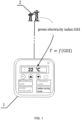
- an embodiment of the present application provides a temperature controller 1, the temperature controller is electrically connected to an electric appliance for controlling temperature (heating or cooling), and the set temperature thereof is used for controlling a target temperature of the electric appliance.
- the temperature controller 1 may be configured to operate in a carbon saving mode, and when operating in the carbon saving mode, the set temperature of the temperature controller 1 is adjusted according to a green electricity index GEI.
- the green electricity index GEI is the proportion of green electricity in a power grid to which the temperature controller 1 is connected.
- the green electricity can be more converted into cold energy or heat energy and stored in a building envelope or other mediums (e.g., circulating medium water).
- a building envelope or other mediums e.g., circulating medium water.
- the green electricity index GEI When the green electricity index GEI is low, i.e., when electric energy in the power grid is mainly thermal electricity, such as during the trough period of clean energy sources such as wind electricity and photovoltaic energy, by adjusting the set temperature of the temperature controller 1, the electricity consumption in the time period can be reduced. For example when the electric appliance performs cooling in summer, the set temperature of the temperature controller 1 can be appropriately increased to reduce electricity consumption; when the electric appliance performs heating in winter, the set temperature of the temperature controller 1 can be appropriately decreased to reduce electricity consumption.
- the carbon saving mode of the temperature controller 1 can relatively increase the output of the electric appliance when the green electricity index GEI is high, so as to store more electric power in the form of cold energy or heat energy; and when the green electricity index GEI is low, the stored cold energy or heat energy can be utilized, so as to appropriately reduce the output power of the electric appliance and reduce the use of thermal electricity.
- the so-called "carbon saving mode” is a mode in which the set temperature is adjusted according to the green electricity index GEI, in order to reduce carbon emissions.
- the surface of the temperature controller 1 may be provided with a key to trigger the entry into the carbon saving mode, or further be provided with a display unit to separately display the carbon saving mode; and in some other embodiments, the carbon saving mode may be entered on the basis of other triggering conditions, without limitation herein.
- determining the set temperature of the carbon saving mode may be performed locally at the temperature controller 1 or may run in a cloud terminal.
- determining the set temperature at a server 3 is introduced as an example, a person skilled in the art can understand that the same or similar steps or processes can also run locally at the temperature controller 1 in other embodiments of the present application.
- FIG. 2 is an architectural view of a system provided by the present embodiment.
- the system includes a temperature controller 1, a power grid, a server 3 and a power grid server 4.
- the temperature controller 1 may for example be one or more temperature controllers 1 in an air conditioning system of a building such as an office building, a shopping mall or the like.
- the air conditioning system is preferably connected to the mains supply and powered by the power grid, i.e., the temperature controller 1 is electrically connected to the power grid.
- the positioning module 13 is used for storing or determining the installation location information of the temperature controller 1, for example, being a memory for storing the installation location information of the air conditioning system; the installation location information is entered by an installer when installing the air conditioning system, or, the positioning module 13 may be a GPS module for detecting and determining the installation location information when it is required.
- the entity (entity) operating the power grid or a related entity is provided with the power grid server 4.
- a power grid to which the office building is connected is a power grid of the East China region
- the power grid server 4 is a power grid server 4 that provides information about the operation of the power grid of the East China region.
- the power grid server 4 summarizes various types of operational state information of the power grid and provides a port for the server 3 to communicate with it.
- the server 3 provided by the entity operating the air conditioning system may communicate with the power grid server 4 by means of the port.
- Power grids in different zones can have different green electricity indexes GEI, and in the present embodiment, according to the installation location information, the green electricity index GEI of the power grid to which the temperature controller 1 is connected can be found.
- the installation location information is the installation location information acquired by the positioning module 13 and uploaded to the server 3 by the communication module 11.
- the server 3 sends the installation location information to the power grid server 4 and sends a request to find the green electricity index GEI corresponding to the installation location information.
- the server 3 adjusts the set temperature on the basis of the green electricity index GEI, and then returns the updated set temperature T' to the temperature controller 1, and the updated set temperature T' is loaded by the temperature control module 15.
- FIG. 3 is a structural view of a server 3 in one or more embodiments of the present application.
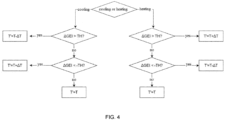
- FIG. 4 is a flowchart of a method for updating a set temperature executable by the server 3.
- the server 3 includes a processor 33, a memory 35 and a communication module 31, the memory 35 stores processor-readable instructions, and by running the processor-readable instructions, the processor 33 enables the server 3 to execute the process as shown in FIG. 4 . In the execution process, communication of the server 3 with other external devices is completed by the communication module 31.
- the method for updating a set temperature executed by the server 3 includes the following steps: S 1: the server 3 receives a current set temperature T of a temperature controller 1.
- the communication module 11 of the temperature controller 1 may send the current set temperature T to the server 3 at a specified time, or at a specified time interval, or in real time.
- the time for sending the current set temperature T being a specified time is illustrated as an example, for example, the temperature controller 1 entering the carbon saving mode may send the current set temperature T on the hour of each day, such as at 14:00, 15:00, and the like.
- the installation location information may be sent to the server 3 in step S1, or may be sent to the server 3 prior to step S1 and saved by the server 3 in a manner associated with an MAC address or other characteristic values of the temperature controller 1.
- step S2 is performed: a green electricity index GEI is determined.
- the green electricity index GEI may be acquired by means of the power grid server 4, the power grid server 4 is connected to the server 3 by means of communication, the server 3 sends a green electricity index request command (containing the installation location information of the temperature controller 1) to the power grid server 4, and the power grid server 4 receives the green electricity index request command and then sends the green electricity index GEI corresponding to the installation location information to the server 3, thereby determining the green electricity index GEI.
- a green electricity index request command containing the installation location information of the temperature controller 1
- the power grid server 4 receives the green electricity index request command and then sends the green electricity index GEI corresponding to the installation location information to the server 3, thereby determining the green electricity index GEI.
- the green electricity indexes GEI received at different moments are saved or cached by the server 3 associated with the MAC address of the temperature controller 1, and recorded as the historical record of the green electricity index GEI.
- the green electricity index GEI determined in step S2 may be the green electricity index GEI of the power grid at the current moment, or may be a green electricity index GEI' predicted according to the historical record for a future period of time.
- a model may be trained on the basis of the historical record of the green electricity index, and the predicted value of the green electricity index in the future period of time is determined according to the model. The training and application of the model may be accomplished at the power grid server 4 or at the server 3.
- step S3 is executed: according to the green electricity index GEI of the power grid to which the temperature controller 1 is connected, the set temperature of the temperature controller 1 is adjusted so as to obtain an updated set temperature T', where the green electricity index GEI is the proportion of green electricity in the power grid to which the temperature controller 1 is connected.
- step S3 further includes the following process.
- the information may be uploaded by the temperature controller 1 to the server 3, or may be determined by the server 3 according to a comparison between the current ambient temperature and the set temperature. For example, if the set temperature is lower than the current ambient temperature, it is determined that the air conditioning system is in cooling operation; if the set temperature is higher than the current ambient temperature, it is determined that the air conditioning system is in heating operation.
- the current seasonal information, installation location information, etc. can also be combined for determination.
- of the change amount ⁇ GEI of the green electricity index GEI is compared with a threshold TH.
- the threshold TH is set, and when the absolute value of the change amount of the green electricity index GEI is less than the threshold TH, the set temperature remains unchanged; when the absolute value of the change amount of the green electricity index GEI is greater than the threshold TH, the change tendency of the green electricity index GEI is judged.
- the threshold TH may be 10%, and if the ⁇ GEI is greater than 10%, the set temperature T is increased or decreased by ⁇ T (e.g., 2°C.) according to the change tendency, otherwise the set temperature remains unchanged.
- the change amount ⁇ GEI of the green electricity index GEI may be the difference between the current green electricity index GEI and the most recently recorded green electricity index GEI in the historical record, or the difference between the predicted value of the green electricity index GEI in a future period of time and the current green electricity index GEI, or any other change amount that may reflect the change trend of the green electricity index GEI.
- the change amount ⁇ GEI of the green electricity index GEI as the difference between the predicted value of the green electricity index GEI in a future period of time and the current green electricity index GEI, it is possible to allow for a certain time lag in the release of the green electricity index GEI and still be able to adjust the set temperature timely to reduce carbon emissions.
- the set temperature is decreased if the amount of increase in the green electricity index GEI exceeds a threshold, and the set temperature is increased if the amount of decrease in the green electricity index GEI exceeds a threshold.
- the air conditioning system controlled by the temperature controller 1 is in heating operation, the set temperature is increased if the amount of increase in the green electricity index GEI exceeds a threshold, and the set temperature is decreased if the amount of decrease in the green electricity index GEI exceeds the threshold.
- the amplitude of increase or decrease can be a fixed value, such as 1-3°F, or can be adjusted on the basis of the amount of change ⁇ GEI in the green electricity index.
- the set temperature is decreased, so that green electricity can be more converted into cold energy for storage.
- the stored cold energy can be used when the green electricity index GEI is low to meet the cooling demand when the green electricity index GEI is low, which increases the use of green electricity and decreases the use of thermal electricity, thereby reducing carbon emissions.
- the set temperature is increased, so that green electricity can be more converted into heat energy for storage.
- the stored heat energy can be used when the green electricity index GEI is low to meet the heating demand when the green electricity index GEI is low, which increases the use of green electricity and decreases the use of thermal electricity, thereby reducing carbon emissions.
- step S3 the updated set temperature T' is sent to the temperature controller 1, which is loaded and executed by the temperature control module 15 of the temperature controller 1.
- the server can centrally process and coordinate the calculation of the set temperature, flexibly adjust the set temperature of the temperature controller 1 according to the green electricity index GEI, and reduce carbon emissions.
- the flowchart of the method for updating the set temperature shown in FIG. 4 can also run in the temperature controller 1 or other electric appliances for controlling temperature to adjust the set temperature of the temperature controller 1 or other electric appliances for controlling temperature to reduce carbon emissions.
- the set temperature can also be adjusted on the basis of the result of comparison between the green electricity index GEI and a preset value. For example, when the green electricity index GEI is greater than a first preset value and the electric appliance is in a cooling mode, the set temperature is decreased; when the green electricity index GEI is less than the first preset value, the set temperature is increased or the set temperature remains unchanged.
- the electric appliance used for controlling temperature to which the temperature controller 1 in the embodiment of the present application is applied is not limited to the air conditioning system listed in the above embodiment, can also be other electric appliances for cooling and/or heating, and are not limited to household or industrial electric appliances for cooling and/or heating, such as refrigerators, storage cabinets, freezers, and other refrigeration appliances; alternatively, the electric appliance may be an electric heating shower or other industrial electric heating devices.
- the processor 33 may be a general-purpose processor, a processor core, a multiprocessor, a reconfigurable processor, a microcontroller, a digital signal processor (DSP), an application-specific integrated circuit (ASIC), a graphics processing unit (GPU), a field programmable gate array (FPGA), a programmable logic device (PLD), a controller, a state machine, gating logic, discrete hardware components or any other processing unit, as well as a combination of one or more processors mentioned above.
- DSP digital signal processor
- ASIC application-specific integrated circuit
- GPU graphics processing unit
- FPGA field programmable gate array
- PLD programmable logic device
- controller a state machine, gating logic, discrete hardware components or any other processing unit, as well as a combination of one or more processors mentioned above.
- the memory 35 can be an independent external memory, including but not limited to a random access memory (RAM), a read-only memory (ROM), a programmable read-only memory (PROM), an erasable programmable read-only memory (EPROM), and an electrically erasable programmable read-only memory (EEPROM).
- RAM random access memory
- ROM read-only memory
- PROM programmable read-only memory
- EPROM erasable programmable read-only memory
- EEPROM electrically erasable programmable read-only memory
- the present application may be provided as methods, systems, or computer program products. Therefore, the present application may adopt a complete hardware implementation method, a complete software implementation method, or a combination of software and hardware implementation methods.
- the present application may use a form of a computer program product implemented on one or more computer-usable storage media (including but not limited to a disk memory, CD-ROM, an optical memory, and the like) including computer-usable program codes. It will be appreciated that while the present embodiment exemplifies a plurality of technical subjects, the contents of the various technical subjects are combinable with each other.
Landscapes
- Engineering & Computer Science (AREA)
- Business, Economics & Management (AREA)
- Human Resources & Organizations (AREA)
- Combustion & Propulsion (AREA)
- Chemical & Material Sciences (AREA)
- Mechanical Engineering (AREA)
- General Engineering & Computer Science (AREA)
- Signal Processing (AREA)
- Physics & Mathematics (AREA)
- Strategic Management (AREA)
- Economics (AREA)
- Entrepreneurship & Innovation (AREA)
- Mathematical Physics (AREA)
- Fuzzy Systems (AREA)
- Educational Administration (AREA)
- Development Economics (AREA)
- Game Theory and Decision Science (AREA)
- Marketing (AREA)
- Operations Research (AREA)
- Quality & Reliability (AREA)
- Tourism & Hospitality (AREA)
- General Business, Economics & Management (AREA)
- General Physics & Mathematics (AREA)
- Theoretical Computer Science (AREA)
- Human Computer Interaction (AREA)
- Air Conditioning Control Device (AREA)
Abstract
The present application provides a temperature controller, a server, an air conditioning system and a temperature setting method. The temperature controller may be configured to operate in a carbon saving mode, and when operating in the carbon saving mode, the set temperature of the temperature controller is adjusted according to a green electricity index, and the green electricity index is the proportion of green electricity in a power grid to which the temperature controller is connected. When the proportion of the green electricity is high, i.e., the electric energy used is mainly from renewable energy sources, the set temperature is adjusted to produce more cold energy or heat energy for storage; and when the green electricity index decreases, the stored cold energy or heat energy can be used to meet the demand for cooling or heating, which ensures the comfort of a user and at the same time, decreases energy consumption, thereby reducing carbon emissions.
Description
- The present application relates to the field of heating or cooling devices, and particularly relates to a temperature controller, a server, an air conditioning system, and a temperature setting method.
- The electric energy in a power grid is divided into thermal electricity and green electricity on the basis of its source. The thermal electricity mainly refers to the electricity generated by thermal energy produced during combustion of solid, liquid, and gas fuels such as coal, petroleum, and natural gas. These fuels are all fossil fuels and are not renewable. Green electricity, also known as environment-friendly power, is electricity generated using renewable energy sources such as solar energy, wind energy, nuclear energy, hydro energy, biomass, and other resources.
- On the other hand, according to the statistics, the carbon dioxide emissions generated by construction operations account for 27% of the global carbon dioxide emissions, and are about 10 gigatons of carbon dioxide, posing an unprecedented challenge to carbon reduction. A large proportion of carbon emissions are caused by electric appliances used for air-conditioning (controlling temperature), such as air conditioning systems, electric heaters, and floor heaters. However, the existing electric appliances used for controlling temperature cannot efficiently utilize green electricity.
- Directing at the above problems, the present application provides a temperature controller, a server, an air conditioning system, and a temperature setting method for solving or alleviating part of the problems in the prior art.
- In the first aspect, the present application provides a temperature controller. The temperature controller may be configured to operate in a carbon saving mode, and when operating in the carbon saving mode, the set temperature of the temperature controller is adjusted according to a green electricity index, and the green electricity index is the proportion of green electricity in a power grid to which the temperature controller is connected.
- In an optional technical solution, the temperature controller includes a communication module, and when the temperature controller operates in the carbon saving mode, the communication module uploads a current set temperature and receives an updated set temperature based on the green electricity index.
- In an optional technical solution, the temperature controller further comprises a positioning module, the positioning module is used for storing or determining installation location information of the temperature controller, and the communication module also uploads the installation location information so as to find the green electricity index on the basis of the installation location information.
- In an optional technical solution, the communication module uploads the current set temperature and receives the updated set temperature at a specified time, or at a specified time interval, or in real time.
- In an optional technical solution, in a case that the temperature controller controls a cooling system, if the green electricity index increases, the set temperature is decreased, and if the green electricity index decreases, the set temperature is increased.
- In an optional technical solution, in a case that the temperature controller controls a heating system, if the green electricity index increases, the set temperature is increased, and if the green electricity index decreases, the set temperature is decreased.
- In an optional technical solution, the temperature controller also adjusts the set temperature according to a trend prediction result of the green electricity index.
- In the second aspect, the present application provides a server, comprising a processor and a memory, the memory storing processor-readable instructions, the processor performing, by running the processor-readable instructions, the following steps:
- receiving a current set temperature of a temperature controller;
- according to a green electricity index of a power grid to which the temperature controller is connected, adjusting the set temperature of the temperature controller so as to obtain an updated set temperature, the green electricity index being the proportion of green electricity in the power grid to which the temperature controller is connected; and
- sending the updated set temperature to the temperature controller.
- In an optional technical solution, the processor further performs, by running the processor-readable instructions, the following steps:
- receiving installation location information of the temperature controller; and
- on the basis of the installation location information, finding the green electricity index of the power grid to which the temperature controller is connected.
- In an optional technical solution, the step of "according to a green electricity index of a power grid to which the temperature controller is connected, adjusting the set temperature of the temperature controller" includes:
- in a case that the temperature controller controls a cooling system, and the green electricity index increases, decreasing the set temperature; and
- in a case that the temperature controller controls a cooling system, and the green electricity index decrease, increasing the set temperature.
- In an optional technical solution, the step of "according to a green electricity index of a power grid to which the temperature controller is connected, adjusting the set temperature of the temperature controller" includes:
- in a case that the temperature controller controls a heating system, and the green electricity index increases, increasing the set temperature; and
- in a case that the temperature controller controls a heating system, and the green electricity index decreases, decreasing the set temperature.
- In an optional technical solution, the processor further performs, by running the processor-readable instructions, the following steps:
- according to the historical record of the green electricity index of the power grid to which the temperature controller is connected, predicting the change tendency of the green electricity index to obtain a tendency prediction result; and
- in the step of "according to a green electricity index of a power grid to which the temperature controller is connected, adjusting the set temperature of the temperature controller", further according to the tendency prediction result, adjusting the set temperature.
- In the third aspect, the present application provides an air conditioning system, the air conditioner system having a temperature controller provided in the first aspect of the present application, and/or a server provided in the second aspect of the present application.
- In the fourth aspect, the present application provides a temperature setting method of an electric appliance for controlling temperature, including the following steps:
according to a green electricity index of a power grid to which the electric appliance is connected, adjusting the set temperature of the electric appliance, the green electricity index being the proportion of green electricity in the power grid to which the electric appliance is connected. - In an optical technical solution, the method further includes the following step: on the basis of the installation location information of the electric appliance, finding the green electricity index of the power grid to which the electric appliance is connected.
- In an optional technical solution, the electric appliance is used for cooling, and the step of "according to a green electricity index of a power grid to which the electric appliance is connected, adjusting the set temperature of the electric appliance" includes:
- in a case that the green electricity index increases, decreasing the set temperature; and
- in a case that the green electricity index decrease, increasing the set temperature.
- In an optional technical solution, the electric appliance is used for heating, and the step of "according to a green electricity index of a power grid to which the electric appliance is connected, adjusting the set temperature of the electric appliance" includes:
- in a case that the green electricity index increases, increasing the set temperature; and
- in a case that the green electricity index decrease, decreasing the set temperature.
- In an optional technical solution, the method further includes the following steps:
- according to the historical record of the green electricity index of the power grid to which the electric appliance is connected, predicting the change tendency of the green electricity index to obtain a tendency prediction result; and
- in the step of "according to a green electricity index of a power grid to which the electric appliance is connected, adjusting the set temperature of the electric appliance", further, according to the tendency prediction result, adjusting the set temperature.
- The temperature controller, the server, the air conditioning system, and the temperature setting method according to the present application can improve the utilization efficiency for green electricity and reduce carbon emissions.
- Certain exemplary embodiments will now be described in greater detail by way of example only and with reference to the accompanying drawings, in which:
-
FIG. 1 is a schematic view of a temperature controller operating in a carbon saving mode; -
FIG. 2 is an architectural view of a system; -
FIG. 3 is a structural view of a server; and -
FIG. 4 is a flowchart of a method for updating a set temperature executable by the server. - List of Reference Numerals: 1-temperature controller; 11-communication module; 13-positioning module; 15-temperature control module; 2-power grid; 3-server; 31-communication module; 33-processor; 35-memory; and 4-power grid server.
- The technical solutions in embodiments of the present application will be clearly and completely described below with reference to the accompanying drawings in the embodiments of the present application. Apparently, the described embodiments are merely some rather than all of the embodiments of the present application. Based on the embodiments in the present application, all other embodiments obtained by those of ordinary skill in the art without creative effort fall within the protection scope of the present application.
- As shown in
FIG. 1 , an embodiment of the present application provides atemperature controller 1, the temperature controller is electrically connected to an electric appliance for controlling temperature (heating or cooling), and the set temperature thereof is used for controlling a target temperature of the electric appliance. In the present embodiment, thetemperature controller 1 may be configured to operate in a carbon saving mode, and when operating in the carbon saving mode, the set temperature of thetemperature controller 1 is adjusted according to a green electricity index GEI. The green electricity index GEI is the proportion of green electricity in a power grid to which thetemperature controller 1 is connected. - When the proportion of the green electricity is high, i.e., when electric energy in the power grid is mainly from renewable energy sources, such as during the peak period of clean energy sources such as wind electricity and photovoltaic energy, by adjusting the set temperature of the
temperature controller 1, the green electricity can be more converted into cold energy or heat energy and stored in a building envelope or other mediums (e.g., circulating medium water). For example, when the electric appliance performs cooling in summer, the set temperature of thetemperature controller 1 can be appropriately decreased to store cold energy; when the electric appliance performs heating in winter, the set temperature of thetemperature controller 1 can be appropriately increased to store heat energy. - When the green electricity index GEI is low, i.e., when electric energy in the power grid is mainly thermal electricity, such as during the trough period of clean energy sources such as wind electricity and photovoltaic energy, by adjusting the set temperature of the
temperature controller 1, the electricity consumption in the time period can be reduced. For example when the electric appliance performs cooling in summer, the set temperature of thetemperature controller 1 can be appropriately increased to reduce electricity consumption; when the electric appliance performs heating in winter, the set temperature of thetemperature controller 1 can be appropriately decreased to reduce electricity consumption. - The carbon saving mode of the
temperature controller 1 can relatively increase the output of the electric appliance when the green electricity index GEI is high, so as to store more electric power in the form of cold energy or heat energy; and when the green electricity index GEI is low, the stored cold energy or heat energy can be utilized, so as to appropriately reduce the output power of the electric appliance and reduce the use of thermal electricity. By optimizing the temperature setting method of thetemperature controller 1 in the above manner, carbon emissions can be effectively reduced while meeting normal temperature control needs. - It is to be noted that: the so-called "carbon saving mode" is a mode in which the set temperature is adjusted according to the green electricity index GEI, in order to reduce carbon emissions. In some embodiments of the present application, the surface of the
temperature controller 1 may be provided with a key to trigger the entry into the carbon saving mode, or further be provided with a display unit to separately display the carbon saving mode; and in some other embodiments, the carbon saving mode may be entered on the basis of other triggering conditions, without limitation herein. - In one or more embodiments of the present application, determining the set temperature of the carbon saving mode may be performed locally at the
temperature controller 1 or may run in a cloud terminal. In the present embodiment, determining the set temperature at aserver 3 is introduced as an example, a person skilled in the art can understand that the same or similar steps or processes can also run locally at thetemperature controller 1 in other embodiments of the present application. -
FIG. 2 is an architectural view of a system provided by the present embodiment. The system includes atemperature controller 1, a power grid, aserver 3 and apower grid server 4. - The
temperature controller 1 may for example be one ormore temperature controllers 1 in an air conditioning system of a building such as an office building, a shopping mall or the like. The air conditioning system is preferably connected to the mains supply and powered by the power grid, i.e., thetemperature controller 1 is electrically connected to the power grid. - Referring to
FIG. 2 , thetemperature controller 1 has acommunication module 11 and apositioning module 13. Thecommunication module 11 may be a wireless communication module such as a WIFI module, and a Bluetooth module, or a wired communication module for establishing a communication connection with theserver 3 so as to upload a current set temperature T and receive an updated set temperature T'. - The
positioning module 13 is used for storing or determining the installation location information of thetemperature controller 1, for example, being a memory for storing the installation location information of the air conditioning system; the installation location information is entered by an installer when installing the air conditioning system, or, thepositioning module 13 may be a GPS module for detecting and determining the installation location information when it is required. - In order to monitor the operational state of the power grid, the entity (entity) operating the power grid or a related entity is provided with the
power grid server 4. For example, a power grid to which the office building is connected is a power grid of the East China region, and thepower grid server 4 is apower grid server 4 that provides information about the operation of the power grid of the East China region. Thepower grid server 4 summarizes various types of operational state information of the power grid and provides a port for theserver 3 to communicate with it. Theserver 3 provided by the entity operating the air conditioning system may communicate with thepower grid server 4 by means of the port. - Power grids in different zones can have different green electricity indexes GEI, and in the present embodiment, according to the installation location information, the green electricity index GEI of the power grid to which the
temperature controller 1 is connected can be found. The installation location information is the installation location information acquired by thepositioning module 13 and uploaded to theserver 3 by thecommunication module 11. Theserver 3 sends the installation location information to thepower grid server 4 and sends a request to find the green electricity index GEI corresponding to the installation location information. After thepower grid server 4 returns to theserver 3 the found green electricity index GEI, theserver 3 adjusts the set temperature on the basis of the green electricity index GEI, and then returns the updated set temperature T' to thetemperature controller 1, and the updated set temperature T' is loaded by thetemperature control module 15. -
FIG. 3 is a structural view of aserver 3 in one or more embodiments of the present application.FIG. 4 is a flowchart of a method for updating a set temperature executable by theserver 3. - Referring to
FIG. 3 , theserver 3 includes aprocessor 33, amemory 35 and acommunication module 31, thememory 35 stores processor-readable instructions, and by running the processor-readable instructions, theprocessor 33 enables theserver 3 to execute the process as shown inFIG. 4 . In the execution process, communication of theserver 3 with other external devices is completed by thecommunication module 31. - As shown in
FIG. 4 , the method for updating a set temperature executed by theserver 3 includes the following steps:
S 1: theserver 3 receives a current set temperature T of atemperature controller 1. - When the
temperature controller 1 enters the carbon saving mode, thecommunication module 11 of thetemperature controller 1 may send the current set temperature T to theserver 3 at a specified time, or at a specified time interval, or in real time. In the following, the time for sending the current set temperature T being a specified time is illustrated as an example, for example, thetemperature controller 1 entering the carbon saving mode may send the current set temperature T on the hour of each day, such as at 14:00, 15:00, and the like. - The installation location information may be sent to the
server 3 in step S1, or may be sent to theserver 3 prior to step S1 and saved by theserver 3 in a manner associated with an MAC address or other characteristic values of thetemperature controller 1. - After step S1, step S2 is performed: a green electricity index GEI is determined.
- Referring to
FIG. 2 , the green electricity index GEI may be acquired by means of thepower grid server 4, thepower grid server 4 is connected to theserver 3 by means of communication, theserver 3 sends a green electricity index request command (containing the installation location information of the temperature controller 1) to thepower grid server 4, and thepower grid server 4 receives the green electricity index request command and then sends the green electricity index GEI corresponding to the installation location information to theserver 3, thereby determining the green electricity index GEI. - In the present embodiment, the green electricity indexes GEI received at different moments are saved or cached by the
server 3 associated with the MAC address of thetemperature controller 1, and recorded as the historical record of the green electricity index GEI. The green electricity index GEI determined in step S2 may be the green electricity index GEI of the power grid at the current moment, or may be a green electricity index GEI' predicted according to the historical record for a future period of time. Specifically, a model may be trained on the basis of the historical record of the green electricity index, and the predicted value of the green electricity index in the future period of time is determined according to the model. The training and application of the model may be accomplished at thepower grid server 4 or at theserver 3. - After step S2, step S3 is executed: according to the green electricity index GEI of the power grid to which the
temperature controller 1 is connected, the set temperature of thetemperature controller 1 is adjusted so as to obtain an updated set temperature T', where the green electricity index GEI is the proportion of green electricity in the power grid to which thetemperature controller 1 is connected. - Continuing to refer to
FIG. 4 , step S3 further includes the following process. - First, determining whether the air conditioning system connected or controlled by the
temperature controller 1 is performing cooling or heating. The information may be uploaded by thetemperature controller 1 to theserver 3, or may be determined by theserver 3 according to a comparison between the current ambient temperature and the set temperature. For example, if the set temperature is lower than the current ambient temperature, it is determined that the air conditioning system is in cooling operation; if the set temperature is higher than the current ambient temperature, it is determined that the air conditioning system is in heating operation. In addition, the current seasonal information, installation location information, etc. can also be combined for determination. - Next, the absolute value | ΔGEI | of the change amount ΔGEI of the green electricity index GEI is compared with a threshold TH.
- In the present embodiment, in order to improve the stability of the set temperature and enhance the physical sensation of a user in the carbon saving mode, the threshold TH is set, and when the absolute value of the change amount of the green electricity index GEI is less than the threshold TH, the set temperature remains unchanged; when the absolute value of the change amount of the green electricity index GEI is greater than the threshold TH, the change tendency of the green electricity index GEI is judged. For example, the threshold TH may be 10%, and if the ΔGEI is greater than 10%, the set temperature T is increased or decreased by ΔT (e.g., 2°C.) according to the change tendency, otherwise the set temperature remains unchanged.
- It is to be noted that: the change amount ΔGEI of the green electricity index GEI may be the difference between the current green electricity index GEI and the most recently recorded green electricity index GEI in the historical record, or the difference between the predicted value of the green electricity index GEI in a future period of time and the current green electricity index GEI, or any other change amount that may reflect the change trend of the green electricity index GEI.
- By setting the change amount ΔGEI of the green electricity index GEI as the difference between the predicted value of the green electricity index GEI in a future period of time and the current green electricity index GEI, it is possible to allow for a certain time lag in the release of the green electricity index GEI and still be able to adjust the set temperature timely to reduce carbon emissions.
- When the air conditioning system controlled by the
temperature controller 1 is in cooling operation, the set temperature is decreased if the amount of increase in the green electricity index GEI exceeds a threshold, and the set temperature is increased if the amount of decrease in the green electricity index GEI exceeds a threshold. When the air conditioning system controlled by thetemperature controller 1 is in heating operation, the set temperature is increased if the amount of increase in the green electricity index GEI exceeds a threshold, and the set temperature is decreased if the amount of decrease in the green electricity index GEI exceeds the threshold. - "Increasing the set temperature" and "decreasing the set temperature" are performed on the basis of the current set temperature T. The amplitude of increase or decrease can be a fixed value, such as 1-3°F, or can be adjusted on the basis of the amount of change ΔGEI in the green electricity index.
- During cooling, if the amount of increase in the green electricity index GEI exceeds the threshold TH, the set temperature is decreased, so that green electricity can be more converted into cold energy for storage. The stored cold energy can be used when the green electricity index GEI is low to meet the cooling demand when the green electricity index GEI is low, which increases the use of green electricity and decreases the use of thermal electricity, thereby reducing carbon emissions.
- Similarly, during heating, if the amount of increase in the green electricity index GEI exceeds the threshold TH, the set temperature is increased, so that green electricity can be more converted into heat energy for storage. The stored heat energy can be used when the green electricity index GEI is low to meet the heating demand when the green electricity index GEI is low, which increases the use of green electricity and decreases the use of thermal electricity, thereby reducing carbon emissions.
- Continuing to refer to
FIG. 4 , after step S3, step S4 is performed, the updated set temperature T' is sent to thetemperature controller 1, which is loaded and executed by thetemperature control module 15 of thetemperature controller 1. - With the above method, the server can centrally process and coordinate the calculation of the set temperature, flexibly adjust the set temperature of the
temperature controller 1 according to the green electricity index GEI, and reduce carbon emissions. - In some embodiments of the present application, the flowchart of the method for updating the set temperature shown in
FIG. 4 can also run in thetemperature controller 1 or other electric appliances for controlling temperature to adjust the set temperature of thetemperature controller 1 or other electric appliances for controlling temperature to reduce carbon emissions. - In some other embodiments of the present application, the set temperature can also be adjusted on the basis of the result of comparison between the green electricity index GEI and a preset value. For example, when the green electricity index GEI is greater than a first preset value and the electric appliance is in a cooling mode, the set temperature is decreased; when the green electricity index GEI is less than the first preset value, the set temperature is increased or the set temperature remains unchanged.
- The electric appliance used for controlling temperature to which the
temperature controller 1 in the embodiment of the present application is applied is not limited to the air conditioning system listed in the above embodiment, can also be other electric appliances for cooling and/or heating, and are not limited to household or industrial electric appliances for cooling and/or heating, such as refrigerators, storage cabinets, freezers, and other refrigeration appliances; alternatively, the electric appliance may be an electric heating shower or other industrial electric heating devices. - In some embodiments, the
processor 33 may be a general-purpose processor, a processor core, a multiprocessor, a reconfigurable processor, a microcontroller, a digital signal processor (DSP), an application-specific integrated circuit (ASIC), a graphics processing unit (GPU), a field programmable gate array (FPGA), a programmable logic device (PLD), a controller, a state machine, gating logic, discrete hardware components or any other processing unit, as well as a combination of one or more processors mentioned above. Thememory 35 can be an independent external memory, including but not limited to a random access memory (RAM), a read-only memory (ROM), a programmable read-only memory (PROM), an erasable programmable read-only memory (EPROM), and an electrically erasable programmable read-only memory (EEPROM). The present embodiment does not limit the specific forms of theprocessor 33 and thememory 35. - Those skilled in the art should understand that some embodiments of the present application may be provided as methods, systems, or computer program products. Therefore, the present application may adopt a complete hardware implementation method, a complete software implementation method, or a combination of software and hardware implementation methods. In addition, the present application may use a form of a computer program product implemented on one or more computer-usable storage media (including but not limited to a disk memory, CD-ROM, an optical memory, and the like) including computer-usable program codes. It will be appreciated that while the present embodiment exemplifies a plurality of technical subjects, the contents of the various technical subjects are combinable with each other.
- The description above is only preferred embodiments of the present application and not intended to limit the present application. The scope of the invention is defined by the appended claims.
Claims (15)
- A temperature controller, wherein the temperature controller is able to be configured to operate in a carbon saving mode, and when operating in the carbon saving mode, the set temperature of the temperature controller is adjusted according to a green electricity index, and the green electricity index is the proportion of green electricity in a power grid to which the temperature controller is connected.
- The temperature controller according to claim 1, wherein the temperature controller comprises a communication module, and when the temperature controller operates in the carbon saving mode, the communication module uploads a current set temperature and receives an updated set temperature based on the green electricity index; and, optionally,wherein the temperature controller further comprises a positioning module used for storing or determining installation location information of the temperature controller;the communication module also uploads the installation location information so as to find the green electricity index on the basis of the installation location information.
- The temperature controller according to claim 2, wherein the communication module uploads the current set temperature and receives the updated set temperature at a specified time, or at a specified time interval, or in real time.
- The temperature controller according to any preceding claim, wherein in a case that the temperature controller controls a cooling system, if the green electricity index increases, the set temperature is decreased, and if the green electricity index decreases, the set temperature is increased; and/or
wherein in a case that the temperature controller controls a heating system, if the green electricity index increases, the set temperature is increased, and if the green electricity index decreases, the set temperature is decreased. - The temperature controller according to any preceding claim, wherein the temperature controller also adjusts the set temperature according to a trend prediction result of the green electricity index.
- A server, comprising:a processor, anda memory, the memory storing processor-readable instructions, the processor performing, by running the processor-readable instructions, the following steps:receiving a current set temperature of a temperature controller;according to a green electricity index of a power grid to which the temperature controller is connected, adjusting the set temperature of the temperature controller so as to obtain an updated set temperature, the green electricity index being the proportion of green electricity in the power grid to which the temperature controller is connected; andsending the updated set temperature to the temperature controller.
- The server according to claim 6, wherein the processor further performs, by running the processor-readable instructions, the following steps:receiving installation location information of the temperature controller; andon the basis of the installation location information, finding the green electricity index of the power grid to which the temperature controller is connected.
- The server according to claim 6, wherein the step of "according to a green electricity index of a power grid to which the temperature controller is connected, adjusting the set temperature of the temperature controller" comprises:in a case that the temperature controller controls a cooling system, and the green electricity index increases, decreasing the set temperature; andin a case that the temperature controller controls a cooling system, and the green electricity index decrease, increasing the set temperature;
and/orwherein the step of "according to a green electricity index of a power grid to which the temperature controller is connected, adjusting the set temperature of the temperature controller" comprises:in a case that the temperature controller controls a heating system, and the green electricity index increases, increasing the set temperature; andin a case that the temperature controller controls a heating system, and the green electricity index decreases, decreasing the set temperature. - The server according to any of claims 6 to 8, wherein the processor further performs, by running the processor-readable instructions, the following steps:according to the historical record of the green electricity index of the power grid to which the temperature controller is connected, predicting the change tendency of the green electricity index to obtain a tendency prediction result; andin the step of "according to a green electricity index of a power grid to which the temperature controller is connected, adjusting the set temperature of the temperature controller", further according to the tendency prediction result, adjusting the set temperature.
- An air conditioning system, wherein the air conditioning system has the temperature controller according to any one of claims 1-5, and/or, the air conditioning system has the server according to any one of claims 6-9.
- A temperature setting method of an electric appliance for air conditioning, comprising the following steps:
according to a green electricity index of a power grid to which the electric appliance is connected, adjusting the set temperature of the electric appliance, the green electricity index being the proportion of green electricity in the power grid to which the electric appliance is connected. - The temperature setting method of an electric appliance for controlling temperature according to claim 11, further comprising the following steps:
on the basis of installation location information of the electric appliance, finding the green electricity index of the power grid to which the electric appliance is connected. - The temperature setting method of an electric appliance for controlling temperature according to claim 11 or 12, whereinthe electric appliance is used for cooling,the step of "according to a green electricity index of a power grid to which the electric appliance is connected, adjusting the set temperature of the electric appliance" comprises:in a case that the green electricity index increases, decreasing the set temperature; andin a case that the green electricity index decreases, increasing the set temperature.
- The temperature setting method of an electric appliance for controlling temperature, according to any of claims 11 to 13, whereinthe electric appliance is used for heating,the step of "according to a green electricity index of a power grid to which the electric appliance is connected, adjusting the set temperature of the electric appliance" comprises:in a case that the green electricity index increases, increasing the set temperature; andin a case that the green electricity index decreases, decreasing the set temperature.
- The temperature setting method of an electric appliance for controlling temperature according to any of claims 11 to 14, further comprising the following steps,according to the historical record of the green electricity index of the power grid to which the electric appliance is connected, predicting the change tendency of the green electricity index to obtain a tendency prediction result; andin the step of "according to a green electricity index of a power grid to which the electric appliance is connected, adjusting the set temperature of the electric appliance", further, according to the tendency prediction result, adjusting the set temperature.
Applications Claiming Priority (1)
| Application Number | Priority Date | Filing Date | Title |
|---|---|---|---|
| CN202311156943.9A CN119573226A (en) | 2023-09-07 | 2023-09-07 | Thermostat, server, air conditioning system and temperature setting method |
Publications (1)
| Publication Number | Publication Date |
|---|---|
| EP4521320A1 true EP4521320A1 (en) | 2025-03-12 |
Family
ID=92633827
Family Applications (1)
| Application Number | Title | Priority Date | Filing Date |
|---|---|---|---|
| EP24197932.7A Pending EP4521320A1 (en) | 2023-09-07 | 2024-09-02 | Temperature controller, server, air conditioning system and temperature setting method |
Country Status (3)
| Country | Link |
|---|---|
| US (1) | US20250085014A1 (en) |
| EP (1) | EP4521320A1 (en) |
| CN (1) | CN119573226A (en) |
Citations (3)
| Publication number | Priority date | Publication date | Assignee | Title |
|---|---|---|---|---|
| US20150276253A1 (en) * | 2008-10-08 | 2015-10-01 | Rey Montalvo | Method and system for fully automated enterprise control of local power usage |
| US20160305678A1 (en) * | 2015-04-20 | 2016-10-20 | Alexandre PAVLOVSKI | Predictive building control system and method for optimizing energy use and thermal comfort for a building or network of buildings |
| US20220381471A1 (en) * | 2021-05-28 | 2022-12-01 | Johnson Controls Tyco IP Holdings LLP | Building control system with multi-objective control of carbon emissions and occupant comfort |
Family Cites Families (2)
| Publication number | Priority date | Publication date | Assignee | Title |
|---|---|---|---|---|
| CN114877508B (en) * | 2022-06-01 | 2023-09-01 | 国家电投集团东北电力有限公司大连大发能源分公司 | Renewable energy driven room temperature regulating system |
| CN115200167A (en) * | 2022-07-12 | 2022-10-18 | 珠海格力电器股份有限公司 | Intelligent air conditioner adjusting and controlling method and device, air conditioner and storage medium |
-
2023
- 2023-09-07 CN CN202311156943.9A patent/CN119573226A/en active Pending
- 2023-09-14 US US18/466,934 patent/US20250085014A1/en active Pending
-
2024
- 2024-09-02 EP EP24197932.7A patent/EP4521320A1/en active Pending
Patent Citations (3)
| Publication number | Priority date | Publication date | Assignee | Title |
|---|---|---|---|---|
| US20150276253A1 (en) * | 2008-10-08 | 2015-10-01 | Rey Montalvo | Method and system for fully automated enterprise control of local power usage |
| US20160305678A1 (en) * | 2015-04-20 | 2016-10-20 | Alexandre PAVLOVSKI | Predictive building control system and method for optimizing energy use and thermal comfort for a building or network of buildings |
| US20220381471A1 (en) * | 2021-05-28 | 2022-12-01 | Johnson Controls Tyco IP Holdings LLP | Building control system with multi-objective control of carbon emissions and occupant comfort |
Also Published As
| Publication number | Publication date |
|---|---|
| US20250085014A1 (en) | 2025-03-13 |
| CN119573226A (en) | 2025-03-07 |
Similar Documents
| Publication | Publication Date | Title |
|---|---|---|
| CN109059195B (en) | Control method and control system for central air conditioner for reducing load peak value of power grid | |
| US20120046798A1 (en) | Systems and Methods for Power Demand Management | |
| JP2023530628A (en) | Cooling equipment control method, cooling equipment control device, computer equipment and computer readable medium | |
| CN102687364A (en) | Operation planning method and method for operating heat-pump hot-water supply heating system | |
| CN107143967A (en) | One drags the control system of many photovoltaic cold storage of ice making air-conditionings | |
| WO2023071331A1 (en) | Control method for air source heat pump unit system and air source heat pump unit system | |
| CN114784811A (en) | Power demand response method and device | |
| CN105135606B (en) | Method and device for controlling air conditioner | |
| CN120160182A (en) | A control method for dynamic preheating and demand response of heat pumps for smart grid | |
| CN117646981A (en) | Method and system for air conditioning load participation in power grid peak regulation control based on switch control | |
| CN103512151A (en) | Method and device for having control over air conditioner installed in area | |
| CN107917502B (en) | Solar air conditioner control method and solar air conditioner | |
| CN112629072A (en) | Energy-saving control device of air source heat pump for coal-to-electricity users | |
| EP4521320A1 (en) | Temperature controller, server, air conditioning system and temperature setting method | |
| JP7175338B2 (en) | Controllers, air conditioning systems and programs | |
| CN117267910B (en) | Method, device, equipment and medium for flexibly adjusting load of central air-conditioning refrigeration system | |
| CN119393917A (en) | A residential air source heat pump trigeneration system based on nonlinear model predictive control (Nonlinear MPC) | |
| CN119333981A (en) | Control method, product, equipment and medium based on solar heat pump hot water system | |
| CN118009502A (en) | Control method, system, electronic device and medium of solar air conditioner | |
| CN110878973B (en) | Optimal adjustment method and device of building composite energy device | |
| CN114526537B (en) | Equipment energy-saving control method and device | |
| JP2005214476A (en) | Air conditioning control device and operation control method for air conditioning equipment | |
| CN119826306B (en) | A control method, controller, and air conditioning system for an air conditioning system. | |
| CN113834111B (en) | Control method of natural gas distributed energy system | |
| CN110953680A (en) | Air conditioner control method and system |
Legal Events
| Date | Code | Title | Description |
|---|---|---|---|
| PUAI | Public reference made under article 153(3) epc to a published international application that has entered the european phase |
Free format text: ORIGINAL CODE: 0009012 |
|
| STAA | Information on the status of an ep patent application or granted ep patent |
Free format text: STATUS: THE APPLICATION HAS BEEN PUBLISHED |
|
| AK | Designated contracting states |
Kind code of ref document: A1 Designated state(s): AL AT BE BG CH CY CZ DE DK EE ES FI FR GB GR HR HU IE IS IT LI LT LU LV MC ME MK MT NL NO PL PT RO RS SE SI SK SM TR |
|
| STAA | Information on the status of an ep patent application or granted ep patent |
Free format text: STATUS: REQUEST FOR EXAMINATION WAS MADE |
|
| 17P | Request for examination filed |
Effective date: 20250829 |