EP4520702A1 - Operating an elevator system in a special operating mode - Google Patents
Operating an elevator system in a special operating mode Download PDFInfo
- Publication number
- EP4520702A1 EP4520702A1 EP23195598.0A EP23195598A EP4520702A1 EP 4520702 A1 EP4520702 A1 EP 4520702A1 EP 23195598 A EP23195598 A EP 23195598A EP 4520702 A1 EP4520702 A1 EP 4520702A1
- Authority
- EP
- European Patent Office
- Prior art keywords
- car
- display portion
- floor
- elevator
- car call
- Prior art date
- Legal status (The legal status is an assumption and is not a legal conclusion. Google has not performed a legal analysis and makes no representation as to the accuracy of the status listed.)
- Pending
Links
Images

Classifications
-
- B—PERFORMING OPERATIONS; TRANSPORTING
- B66—HOISTING; LIFTING; HAULING
- B66B—ELEVATORS; ESCALATORS OR MOVING WALKWAYS
- B66B5/00—Applications of checking, fault-correcting, or safety devices in elevators
- B66B5/02—Applications of checking, fault-correcting, or safety devices in elevators responsive to abnormal operating conditions
- B66B5/021—Applications of checking, fault-correcting, or safety devices in elevators responsive to abnormal operating conditions the abnormal operating conditions being independent of the system
- B66B5/024—Applications of checking, fault-correcting, or safety devices in elevators responsive to abnormal operating conditions the abnormal operating conditions being independent of the system where the abnormal operating condition is caused by an accident, e.g. fire
-
- B—PERFORMING OPERATIONS; TRANSPORTING
- B66—HOISTING; LIFTING; HAULING
- B66B—ELEVATORS; ESCALATORS OR MOVING WALKWAYS
- B66B1/00—Control systems of elevators in general
- B66B1/34—Details, e.g. call counting devices, data transmission from car to control system, devices giving information to the control system
- B66B1/3415—Control system configuration and the data transmission or communication within the control system
-
- B—PERFORMING OPERATIONS; TRANSPORTING
- B66—HOISTING; LIFTING; HAULING
- B66B—ELEVATORS; ESCALATORS OR MOVING WALKWAYS
- B66B1/00—Control systems of elevators in general
- B66B1/34—Details, e.g. call counting devices, data transmission from car to control system, devices giving information to the control system
- B66B1/46—Adaptations of switches or switchgear
-
- B—PERFORMING OPERATIONS; TRANSPORTING
- B66—HOISTING; LIFTING; HAULING
- B66B—ELEVATORS; ESCALATORS OR MOVING WALKWAYS
- B66B3/00—Applications of devices for indicating or signalling operating conditions of elevators
-
- B—PERFORMING OPERATIONS; TRANSPORTING
- B66—HOISTING; LIFTING; HAULING
- B66B—ELEVATORS; ESCALATORS OR MOVING WALKWAYS
- B66B3/00—Applications of devices for indicating or signalling operating conditions of elevators
- B66B3/002—Indicators
- B66B3/004—Mechanical devices that can be illuminated
-
- B—PERFORMING OPERATIONS; TRANSPORTING
- B66—HOISTING; LIFTING; HAULING
- B66B—ELEVATORS; ESCALATORS OR MOVING WALKWAYS
- B66B3/00—Applications of devices for indicating or signalling operating conditions of elevators
- B66B3/002—Indicators
- B66B3/008—Displaying information not related to the elevator, e.g. weather, publicity, internet or TV
-
- B—PERFORMING OPERATIONS; TRANSPORTING
- B66—HOISTING; LIFTING; HAULING
- B66B—ELEVATORS; ESCALATORS OR MOVING WALKWAYS
- B66B5/00—Applications of checking, fault-correcting, or safety devices in elevators
-
- B—PERFORMING OPERATIONS; TRANSPORTING
- B66—HOISTING; LIFTING; HAULING
- B66B—ELEVATORS; ESCALATORS OR MOVING WALKWAYS
- B66B2201/00—Aspects of control systems of elevators
- B66B2201/10—Details with respect to the type of call input
- B66B2201/104—Call input for a preferential elevator car or indicating a special request
-
- B—PERFORMING OPERATIONS; TRANSPORTING
- B66—HOISTING; LIFTING; HAULING
- B66B—ELEVATORS; ESCALATORS OR MOVING WALKWAYS
- B66B2201/00—Aspects of control systems of elevators
- B66B2201/40—Details of the change of control mode
- B66B2201/46—Switches or switchgear
- B66B2201/4607—Call registering systems
- B66B2201/463—Wherein the call is registered through physical contact with the elevator system
Definitions
- Various examples generally relate to the field of elevator systems.
- some examples relate to a solution for operating an elevator system in a special operating mode.
- elevator systems and their elevators can be used also in special circumstances, for example, in case of fire alarms or evacuation situations.
- a fireman uses an elevator for transportation to a floor, it would be useful for the fireman to know additional information relating to the fire situation.
- evacuating people using the elevators it would be useful to know additional information relating to the evacuation.
- a method for providing operating mode related information in an elevator system comprising an elevator car.
- the method comprises determining that the elevator system operates in a special operating mode, the special operating mode comprising a fire alarm mode and/or an evacuation mode; determining content to be displayed on a non-functional display portion associated with the elevator car and a functional display portion associated with the elevator car based at least in part on the special operating mode; and causing display of the content on the non-functional display portion and the functional display portion.
- the elevator car comprises car call buttons, wherein the method further comprises causing at least one car call button of the car call buttons to apply a specific brightness level to indicate a floor call associated with the car call button, the brightness level indicating a priority of the floor call.
- determining that the elevator system operates in a special operating mode comprises determining that the elevator system operates in the special operating mode based at least in part on a signal indicating the fire alarm mode or the evacuation mode.
- the content displayed on the non-functional display portion comprises at least one of the following: a fire detector status; active alarms; an evacuation zone; a fire service access level; an evacuation exit floor; a designated landing; a status of a power supply; active floor calls; a period of activity of the active floor calls; and the number of people waiting in at least one floor.
- the content displayed on the functional display portion comprises at least one of the following: a selection possibility to drive the elevator car to a floor proposed by an elevator group controller; a selection possibility to make a car call to floors included in an evacuation zone; a selection possibility to make a car call to floors from which floor calls have been received; a selection possibility to make a car call to floors at which passengers have been detected; a selection possibility to make a car call to floors at which it is possible to open elevator doors; a selection possibility to make a car call to a first service access floor; and a selection possibility to make a car call to an evacuation exit floor.
- the non-functional display portion comprises a car display and the functional display portion comprises a touch-sensitive display.
- the non-functional display portion comprises a first portion of a display and the functional display portion comprises a second portion of the display.
- an apparatus for providing operating mode related information in an elevator system comprising an elevator car
- the apparatus comprising at least one processor and at least one memory storing instructions that, when executed by the at least one processor, cause the apparatus to at least perform: determining that the elevator system operates in a special operating mode, the special operating mode comprising a fire alarm mode and/or an evacuation mode; determining content to be displayed on a non-functional display portion associated with the elevator car and a functional display portion associated with the elevator car based at least in part on the special operating mode; and causing display of the content on the non-functional display portion and the functional display portion.
- the elevator car comprises car call buttons, wherein the at least one processor and the at least one memory store instructions that, when executed by the at least one processor, cause the apparatus to at least perform: causing at least one car call button of the car call buttons to blink at a blinking frequency to indicate a floor call associated with the car call button, the blinking frequency indicating a priority of the floor call.
- the elevator car comprises car call buttons, wherein the at least one processor and the at least one memory store instructions that, when executed by the at least one processor, cause the apparatus to at least perform: causing at least one car call button of the car call buttons to apply a specific brightness level to indicate a floor call associated with the car call button, the brightness level indicating a priority of the floor call.
- determining that the elevator system operates in a special operating mode comprises determining that the elevator system operates in the special operating mode based at least in part on a signal indicating the fire alarm mode or the evacuation mode.
- the content displayed on the non-functional display portion comprises at least one of the following: a fire detector status; active alarms; an evacuation zone; a fire service access level; an evacuation exit floor; a designated landing; a status of a power supply; active floor calls; a period of activity of the active floor calls; and the number of people waiting in at least one floor.
- the content displayed on the functional display portion comprises at least one of the following: a selection possibility to drive the elevator car to a floor proposed by an elevator group controller; a selection possibility to make a car call to floors included in an evacuation zone; a selection possibility to make a car call to floors from which floor calls have been received; a selection possibility to make a car call to floors at which passengers have been detected; a selection possibility to make a car call to floors at which it is possible to open elevator doors; a selection possibility to make a car call to a first service access floor; and a selection possibility to make a car call to an evacuation exit floor.
- the non-functional display portion comprises a car display and the functional display portion comprises a touch-sensitive display.
- the non-functional display portion comprises a first portion of a display and the functional display portion comprises a second portion of the display.
- an elevator car comprising at least one display configured to provide a non-functional display portion and a functional display portion; and an apparatus according to the second aspect.
- a computer program comprising instructions which, when the program is executed by at least one processor, cause an apparatus to perform the method of the first aspect.
- a computer-readable medium comprising a computer program comprising instructions which, when the program is executed by at least one processor, cause an apparatus to perform the method of the first aspect.
- an apparatus for providing operating mode related information in an elevator system comprising an elevator car.
- the apparatus comprises means for: determining that the elevator system operates in a special operating mode, the special operating mode comprising a fire alarm mode and/or an evacuation mode; determining content to be displayed on a non-functional display portion associated with the elevator car and a functional display portion associated with the elevator car based at least in part on the special operating mode; and causing display of the content on the non-functional display portion and the functional display portion.
- a non-functional display portion associated with an elevator car and a functional display portion associated with the elevator car can be used for providing additional information in a fire situation and/or an evacuation situation.
- the functional display portion may also enable a passenger, for example, a fireman, to control the elevator car in a special operating mode.
- FIG. 1 illustrates a flow diagram of a method according to an example embodiment.
- the example embodiment may provide a solution for providing operating mode related information in an elevator system comprising an elevator car.
- the method may be implemented, for example, by an apparatus, for example, an elevator controller or an elevator group controller or by some other controller of the elevator system.
- the elevator system may be determined that the elevator system operates in a special operating mode, the special operating mode comprising a fire alarm mode and/or an evacuation mode.
- the special operating mode may be determined, for example, in response to a signal indicating a fire alarm situation or an evacuation mode situation.
- content to be displayed on a non-functional display portion associated with the elevator car and on a functional display portion associated with the elevator car may be determined based at least in part on the special operating mode.
- the information to be displayed on the non-functional display portion may be informative and/or status information by its nature, i.e. information that does not require any selections to be made.
- the information to be displayed on the functional display portion may be information from which a user in the elevator car may make selections and/or floor calls, i.e. the functional display portion may provide selectable information.
- the non-functional display portion may comprise a non-touch sensitive display portion and the functional display portion may comprise a touch-sensitive display portion.
- the non-functional display portion and the functional display portion may be part of a single display. In another example embodiment, the non-functional display portion and the functional display portion may implemented as separate displays. In an example embodiment, the non-functional display portion may be a car display and the functional display portion may be a touch-sensitive display.
- the content may be caused to be displayed on the non-functional display portion and the functional display portion.
- This enables a solution in which information and selection possibilities may be dynamically presented on the non-functional display portion and the functional display portion based at least in part on the special operating mode. For example, in case of a fire alarm when evacuation is not needed, the information may be different than in a situation where also evacuation is needed. Furthermore, the information provided by the non-functional display portion and the functional display portion may dynamically change during the fire alarm mode and/or the evacuation mode.
- the elevator car may additionally comprise car call buttons. At least one car call button of the car call buttons may be configured to blink at a blinking frequency to indicate a floor call associated with the car call button, the blinking frequency indicating a priority of the floor call.
- the car call button having the highest blinking frequency may indicate a first issued floor call, i.e. the floor call that has been active for the longest time.
- the blinking frequency may indicate a priority order of floor calls received by an elevator group controller. As the elevator group controller is able to see an overall situation associated with multiple elevators, it can use this information when determining the priority of the floor calls.
- the car call button may be caused to apply a specific brightness level to indicate a floor call associated with the car call button.
- the brightness level associated with the car call button then indicates a priority of the floor call. For example, a higher brightness level of car call button may indicate a higher priority than a lower brightness level of car call button.
- the content displayed on the non-functional display portion may comprise at least one of the following: a fire detector status, active alarms, an evacuation zone; a fire service access level, an evacuation exit floor; a designated landing, a status of a power supply, active floor calls, a period of activity of the active floor calls, and the number of people waiting in at least one floor.
- the information displayed on the car display may be informative by its nature or status information.
- the car display may be configured to display information determined by an elevator controller or an elevator group controller using machine learning. For example, machine learning may be used to determine, based on information available relating to the fire and/or evacuation situation and information available to the elevator controller or an elevator group controller, what information should be displayed on the car display and in which order.
- the content displayed on the functional display portion may comprise at least one of the following: a selection possibility to drive the elevator car to a floor proposed by an elevator group controller, a selection possibility to make a car call to floors included in an evacuation zone, a selection possibility to make a car call to floors from which floor calls have been received, a selection possibility to make a car call to floors at which passengers have been detected, a selection possibility to make a car call to floors at which it is possible to open elevator doors, a selection possibility to make a car call to a first service access floor, and a selection possibility to make a car call to an evacuation exit floor.
- the touch-sensitive display may be configured to display information from which a user may make a selection.
- the touch-sensitive display may be configured to display a selection possibility that has been determined by an elevator controller or an elevator group controller using machine learning.
- machine learning may be used to determine, based on information available relating to the fire and/or evacuation situation and information available to the elevator controller or an elevator group controller, what information and selection possibilities should be displayed on the touch-sensitive display and in which order.
- FIG. 2 illustrates a block diagram of an apparatus 200 according to an example solution.
- the apparatus 200 may comprise, for example, an elevator controller or elevator group controller functionality.
- the apparatus 200 comprises one or more processors 202, and one or more memories 204 that comprise computer program code 206, and/or a communication interface 208 for wired and/or wireless communication.
- the apparatus 200 is depicted to include only one processor 202, the apparatus 200 may include more than one processor.
- the memory 204 is capable of storing instructions, such as an operating system and/or various applications.
- the processor 202 is capable of executing the stored instructions.
- the processor 202 may be embodied as a multi-core processor, a single core processor, or a combination of one or more multi-core processors and one or more single core processors.
- the processor 202 may be embodied as one or more of various processing devices, such as a coprocessor, a microprocessor, a controller, a digital signal processor (DSP), a processing circuitry with or without an accompanying DSP, or various other processing devices including integrated circuits such as, for example, an application specific integrated circuit (ASIC), a field programmable gate array (FPGA), a microcontroller unit (MCU), a hardware accelerator, a special-purpose computer chip, or the like.
- ASIC application specific integrated circuit
- FPGA field programmable gate array
- MCU microcontroller unit
- hardware accelerator a special-purpose computer chip, or the like.
- the processor 202 may be configured to execute hard-coded functionality.
- the processor 202 may be embodied as an executor of software instructions, wherein the instructions may specifically configure the processor 202 to perform the algorithms and/or operations described herein when the instructions are executed, for example, the steps discussed relating to FIG. 1 .
- the memory 204 may be embodied as one or more volatile memory devices, one or more non-volatile memory devices, and/or a combination of one or more volatile memory devices and non-volatile memory devices.
- the memory 204 may be embodied as semiconductor memories (such as mask ROM, PROM (programmable ROM), EPROM (erasable PROM), flash ROM, RAM (random access memory), etc.).
- the at least one memory 204 may store program instructions that, when executed by the at least one processor 202, cause the apparatus 200 to perform the functionality of the various embodiments discussed herein. Further, in an embodiment, at least one of the processor 202 and the memory 204 may constitute means for implementing the discussed functionality.
- the apparatus 200 may be configured to determine that the elevator system operates in a special operating mode, the special operating mode comprising a fire alarm mode and/or an evacuation mode, determine content to be displayed on a non-functional display portion associated with the elevator car and a functional display portion associated with the elevator car based at least in part on the special operating mode, and cause display of the content on the non-functional display portion and the functional display portion.
- a computer program may comprise instructions which, when the program is executed by the at least one processor 202, cause the apparatus 200 to perform any of the methods described above.
- a computer-readable medium may comprise the computer program.
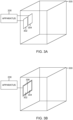
- FIG. 3A illustrates a system according to an example embodiment.
- the system comprises an elevator car 300 of an elevator system.
- the elevator car 300 comprises a non-functional display portion 302, for example, a car display and a functional display portion 304, for example, a touch-sensitive display 304.
- the system further comprises the apparatus 200 communicatively connected to the non-functional display portion 302 and the functional display portion 304.
- the apparatus 200 may be configured to determine that the elevator system operates in a special operating mode, the special operating mode comprising a fire alarm mode and/or an evacuation mode, determine content to be displayed on the non-functional display portion 302 and the functional display portion 304 based at least in part on the special operating mode, and cause display of the content on the non-functional display portion 302 and the functional display portion 304.
- FIG. 3B illustrates a system according to another example embodiment.
- the system comprises an elevator car 300 of an elevator system.
- the system illustrated in FIG. 3B differs from the system illustrated in FIG. 3A in that in FIG. 3B the non-functional display portion 302 and the functional display portion 304 have been implemented using a single display.
- Both the non-functional display portion 302 and the functional display portion 304 may be touch-sensitive but the touch-sensitive feature may be applied only in the functional display portion 304.
- the single display 306 may comprise separately a non-touch sensitive display portion 302 and a touch sensitive display portion 304.
- the examples discussed above may be implemented in software, hardware, application logic or a combination of software, hardware and application logic.
- the example devices can store information relating to various methods described herein. This information can be stored in one or more memories, such as a hard disk, a solid state drive (SSD), an optical disk, a magneto-optical disk, an RAM, and the like.
- One or more databases can store the information used to implement the examples.
- the databases can be organized using data structures (e.g., records, tables, arrays, fields, graphs, trees, lists, and the like) included in one or more memories or storage devices listed herein.
- the methods described with respect to the examples can include appropriate data structures for storing data collected and/or generated by the methods of the devices and subsystems of the examples in one or more databases.
- the components of the examples may include computer readable medium or memories for holding instructions programmed according to the teachings and for holding data structures, tables, records, and/or other data described herein.
- the application logic, software or an instruction set is maintained on any one of various conventional computer-readable media.
- a "computer-readable medium" may be any media or means that can contain, store, communicate, propagate or transport the instructions for use by or in connection with an instruction execution system, apparatus, or device, such as a computer.
- a computer-readable medium may include a computer-readable storage medium that may be any media or means that can contain or store the instructions for use by or in connection with an instruction execution system, apparatus, or device, such as a computer.
- a computer readable medium can include any suitable medium that participates in providing instructions to a processor for execution. Such a medium can take many forms, including but not limited to, non-volatile media, volatile media, transmission media, and the like.
Landscapes
- Engineering & Computer Science (AREA)
- Automation & Control Theory (AREA)
- Computer Networks & Wireless Communication (AREA)
- Mechanical Engineering (AREA)
- Maintenance And Inspection Apparatuses For Elevators (AREA)
Abstract
Description
- Various examples generally relate to the field of elevator systems. In particular, some examples relate to a solution for operating an elevator system in a special operating mode.
- In addition to normal use, elevator systems and their elevators can be used also in special circumstances, for example, in case of fire alarms or evacuation situations. When a fireman uses an elevator for transportation to a floor, it would be useful for the fireman to know additional information relating to the fire situation. Similarly, when evacuating people using the elevators, it would be useful to know additional information relating to the evacuation.
- The scope of protection sought for various example embodiments of the disclosure is set out by the independent claims. The example embodiments and features, if any, described in this specification that do not fall under the scope of the independent claims are to be interpreted as examples useful for understanding various example embodiments of the disclosure.
- According to a first aspect, there is provided a method for providing operating mode related information in an elevator system comprising an elevator car. The method comprises determining that the elevator system operates in a special operating mode, the special operating mode comprising a fire alarm mode and/or an evacuation mode; determining content to be displayed on a non-functional display portion associated with the elevator car and a functional display portion associated with the elevator car based at least in part on the special operating mode; and causing display of the content on the non-functional display portion and the functional display portion.
- In an implementation form of the first aspect, the elevator car comprises car call buttons, wherein the method further comprises causing at least one car call button of the car call buttons to blink at a blinking frequency to indicate a floor call associated with the car call button, the blinking frequency indicating a priority of the floor call.
- In an implementation form of the first aspect, the elevator car comprises car call buttons, wherein the method further comprises causing at least one car call button of the car call buttons to apply a specific brightness level to indicate a floor call associated with the car call button, the brightness level indicating a priority of the floor call.
- In an implementation form of the first aspect, determining that the elevator system operates in a special operating mode comprises determining that the elevator system operates in the special operating mode based at least in part on a signal indicating the fire alarm mode or the evacuation mode.
- In an implementation form of the first aspect, the content displayed on the non-functional display portion comprises at least one of the following: a fire detector status; active alarms; an evacuation zone; a fire service access level; an evacuation exit floor; a designated landing; a status of a power supply; active floor calls; a period of activity of the active floor calls; and the number of people waiting in at least one floor.
- In an implementation form of the first aspect, the content displayed on the functional display portion comprises at least one of the following: a selection possibility to drive the elevator car to a floor proposed by an elevator group controller; a selection possibility to make a car call to floors included in an evacuation zone; a selection possibility to make a car call to floors from which floor calls have been received; a selection possibility to make a car call to floors at which passengers have been detected; a selection possibility to make a car call to floors at which it is possible to open elevator doors; a selection possibility to make a car call to a first service access floor; and a selection possibility to make a car call to an evacuation exit floor.
- In an implementation form of the first aspect, the non-functional display portion comprises a car display and the functional display portion comprises a touch-sensitive display.
- In an implementation form of the first aspect, the non-functional display portion comprises a first portion of a display and the functional display portion comprises a second portion of the display.
- According to a second aspect, there is provided an apparatus for providing operating mode related information in an elevator system comprising an elevator car, the apparatus comprising at least one processor and at least one memory storing instructions that, when executed by the at least one processor, cause the apparatus to at least perform: determining that the elevator system operates in a special operating mode, the special operating mode comprising a fire alarm mode and/or an evacuation mode; determining content to be displayed on a non-functional display portion associated with the elevator car and a functional display portion associated with the elevator car based at least in part on the special operating mode; and causing display of the content on the non-functional display portion and the functional display portion.
- In an implementation form of the second aspect, the elevator car comprises car call buttons, wherein the at least one processor and the at least one memory store instructions that, when executed by the at least one processor, cause the apparatus to at least perform: causing at least one car call button of the car call buttons to blink at a blinking frequency to indicate a floor call associated with the car call button, the blinking frequency indicating a priority of the floor call.
- In an implementation form of the second aspect, the elevator car comprises car call buttons, wherein the at least one processor and the at least one memory store instructions that, when executed by the at least one processor, cause the apparatus to at least perform: causing at least one car call button of the car call buttons to apply a specific brightness level to indicate a floor call associated with the car call button, the brightness level indicating a priority of the floor call.
- In an implementation form of the second aspect, determining that the elevator system operates in a special operating mode comprises determining that the elevator system operates in the special operating mode based at least in part on a signal indicating the fire alarm mode or the evacuation mode.
- In an implementation form of the second aspect, the content displayed on the non-functional display portion comprises at least one of the following: a fire detector status; active alarms; an evacuation zone; a fire service access level; an evacuation exit floor; a designated landing; a status of a power supply; active floor calls; a period of activity of the active floor calls; and the number of people waiting in at least one floor.
- In an implementation form of the second aspect, the content displayed on the functional display portion comprises at least one of the following: a selection possibility to drive the elevator car to a floor proposed by an elevator group controller; a selection possibility to make a car call to floors included in an evacuation zone; a selection possibility to make a car call to floors from which floor calls have been received; a selection possibility to make a car call to floors at which passengers have been detected; a selection possibility to make a car call to floors at which it is possible to open elevator doors; a selection possibility to make a car call to a first service access floor; and a selection possibility to make a car call to an evacuation exit floor.
- In an implementation form of the second aspect, the non-functional display portion comprises a car display and the functional display portion comprises a touch-sensitive display.
- In an implementation form of the second aspect, the non-functional display portion comprises a first portion of a display and the functional display portion comprises a second portion of the display.
- According to a third aspect, there is provided an elevator car comprising at least one display configured to provide a non-functional display portion and a functional display portion; and an apparatus according to the second aspect.
- According to a fourth aspect, there is provided a computer program comprising instructions which, when the program is executed by at least one processor, cause an apparatus to perform the method of the first aspect.
- According to a fifth aspect, there is provided a computer-readable medium comprising a computer program comprising instructions which, when the program is executed by at least one processor, cause an apparatus to perform the method of the first aspect.
- According to a sixth aspect, there is provided an apparatus for providing operating mode related information in an elevator system comprising an elevator car. The apparatus comprises means for: determining that the elevator system operates in a special operating mode, the special operating mode comprising a fire alarm mode and/or an evacuation mode; determining content to be displayed on a non-functional display portion associated with the elevator car and a functional display portion associated with the elevator car based at least in part on the special operating mode; and causing display of the content on the non-functional display portion and the functional display portion.
- The accompanying drawings, which are included to provide a further understanding of the invention and constitute a part of this specification, illustrate examples of the invention and together with the description help to explain the principles of the invention. In the drawings:
-
FIG. 1 illustrates a flow diagram of a method according to an example embodiment. -
FIG. 2 illustrates a block diagram of an apparatus according to an example embodiment. -
FIG. 3A illustrates a system according to an example embodiment. -
FIG. 3B illustrates a system according to another example embodiment. - Various examples and embodiments discussed below illustrate a solution in which a non-functional display portion associated with an elevator car and a functional display portion associated with the elevator car can be used for providing additional information in a fire situation and/or an evacuation situation. The functional display portion may also enable a passenger, for example, a fireman, to control the elevator car in a special operating mode.
-
FIG. 1 illustrates a flow diagram of a method according to an example embodiment. The example embodiment may provide a solution for providing operating mode related information in an elevator system comprising an elevator car. The method may be implemented, for example, by an apparatus, for example, an elevator controller or an elevator group controller or by some other controller of the elevator system. - At 100, it may be determined that the elevator system operates in a special operating mode, the special operating mode comprising a fire alarm mode and/or an evacuation mode. The special operating mode may be determined, for example, in response to a signal indicating a fire alarm situation or an evacuation mode situation.
- At 102, content to be displayed on a non-functional display portion associated with the elevator car and on a functional display portion associated with the elevator car may be determined based at least in part on the special operating mode. The information to be displayed on the non-functional display portion may be informative and/or status information by its nature, i.e. information that does not require any selections to be made. The information to be displayed on the functional display portion may be information from which a user in the elevator car may make selections and/or floor calls, i.e. the functional display portion may provide selectable information. In an example embodiment, the non-functional display portion may comprise a non-touch sensitive display portion and the functional display portion may comprise a touch-sensitive display portion. In an example embodiment, the non-functional display portion and the functional display portion may be part of a single display. In another example embodiment, the non-functional display portion and the functional display portion may implemented as separate displays. In an example embodiment, the non-functional display portion may be a car display and the functional display portion may be a touch-sensitive display.
- At 104, the content may be caused to be displayed on the non-functional display portion and the functional display portion. This enables a solution in which information and selection possibilities may be dynamically presented on the non-functional display portion and the functional display portion based at least in part on the special operating mode. For example, in case of a fire alarm when evacuation is not needed, the information may be different than in a situation where also evacuation is needed. Furthermore, the information provided by the non-functional display portion and the functional display portion may dynamically change during the fire alarm mode and/or the evacuation mode.
- In an example embodiment, the elevator car may additionally comprise car call buttons. At least one car call button of the car call buttons may be configured to blink at a blinking frequency to indicate a floor call associated with the car call button, the blinking frequency indicating a priority of the floor call. This enables a passenger, for example, a fireman, to visually indicate which floor call has the highest priority. For example, the car call button having the highest blinking frequency may indicate a first issued floor call, i.e. the floor call that has been active for the longest time. In another example, the blinking frequency may indicate a priority order of floor calls received by an elevator group controller. As the elevator group controller is able to see an overall situation associated with multiple elevators, it can use this information when determining the priority of the floor calls. In another example, instead of using a blinking car call button, the car call button may be caused to apply a specific brightness level to indicate a floor call associated with the car call button. The brightness level associated with the car call button then indicates a priority of the floor call. For example, a higher brightness level of car call button may indicate a higher priority than a lower brightness level of car call button.
- In an example embodiment, the content displayed on the non-functional display portion may comprise at least one of the following: a fire detector status, active alarms, an evacuation zone; a fire service access level, an evacuation exit floor; a designated landing, a status of a power supply, active floor calls, a period of activity of the active floor calls, and the number of people waiting in at least one floor. In other words, the information displayed on the car display may be informative by its nature or status information. In an example embodiment, the car display may be configured to display information determined by an elevator controller or an elevator group controller using machine learning. For example, machine learning may be used to determine, based on information available relating to the fire and/or evacuation situation and information available to the elevator controller or an elevator group controller, what information should be displayed on the car display and in which order.
- In an example embodiment, the content displayed on the functional display portion may comprise at least one of the following: a selection possibility to drive the elevator car to a floor proposed by an elevator group controller, a selection possibility to make a car call to floors included in an evacuation zone, a selection possibility to make a car call to floors from which floor calls have been received, a selection possibility to make a car call to floors at which passengers have been detected, a selection possibility to make a car call to floors at which it is possible to open elevator doors, a selection possibility to make a car call to a first service access floor, and a selection possibility to make a car call to an evacuation exit floor. In other words, the touch-sensitive display may be configured to display information from which a user may make a selection. In an example embodiment, the touch-sensitive display may be configured to display a selection possibility that has been determined by an elevator controller or an elevator group controller using machine learning. For example, machine learning may be used to determine, based on information available relating to the fire and/or evacuation situation and information available to the elevator controller or an elevator group controller, what information and selection possibilities should be displayed on the touch-sensitive display and in which order.
-
FIG. 2 illustrates a block diagram of anapparatus 200 according to an example solution. Theapparatus 200 may comprise, for example, an elevator controller or elevator group controller functionality. Theapparatus 200 comprises one ormore processors 202, and one ormore memories 204 that comprisecomputer program code 206, and/or acommunication interface 208 for wired and/or wireless communication. Although theapparatus 200 is depicted to include only oneprocessor 202, theapparatus 200 may include more than one processor. In an example embodiment, thememory 204 is capable of storing instructions, such as an operating system and/or various applications. - Furthermore, the
processor 202 is capable of executing the stored instructions. In an example embodiment, theprocessor 202 may be embodied as a multi-core processor, a single core processor, or a combination of one or more multi-core processors and one or more single core processors. For example, theprocessor 202 may be embodied as one or more of various processing devices, such as a coprocessor, a microprocessor, a controller, a digital signal processor (DSP), a processing circuitry with or without an accompanying DSP, or various other processing devices including integrated circuits such as, for example, an application specific integrated circuit (ASIC), a field programmable gate array (FPGA), a microcontroller unit (MCU), a hardware accelerator, a special-purpose computer chip, or the like. In an example embodiment, theprocessor 202 may be configured to execute hard-coded functionality. In an example embodiment, theprocessor 202 may be embodied as an executor of software instructions, wherein the instructions may specifically configure theprocessor 202 to perform the algorithms and/or operations described herein when the instructions are executed, for example, the steps discussed relating toFIG. 1 . - The
memory 204 may be embodied as one or more volatile memory devices, one or more non-volatile memory devices, and/or a combination of one or more volatile memory devices and non-volatile memory devices. For example, thememory 204 may be embodied as semiconductor memories (such as mask ROM, PROM (programmable ROM), EPROM (erasable PROM), flash ROM, RAM (random access memory), etc.). - The at least one
memory 204 may store program instructions that, when executed by the at least oneprocessor 202, cause theapparatus 200 to perform the functionality of the various embodiments discussed herein. Further, in an embodiment, at least one of theprocessor 202 and thememory 204 may constitute means for implementing the discussed functionality. For example, theapparatus 200 may be configured to determine that the elevator system operates in a special operating mode, the special operating mode comprising a fire alarm mode and/or an evacuation mode, determine content to be displayed on a non-functional display portion associated with the elevator car and a functional display portion associated with the elevator car based at least in part on the special operating mode, and cause display of the content on the non-functional display portion and the functional display portion. A computer program may comprise instructions which, when the program is executed by the at least oneprocessor 202, cause theapparatus 200 to perform any of the methods described above. Furthermore, a computer-readable medium may comprise the computer program. -
FIG. 3A illustrates a system according to an example embodiment. The system comprises anelevator car 300 of an elevator system. Theelevator car 300 comprises anon-functional display portion 302, for example, a car display and afunctional display portion 304, for example, a touch-sensitive display 304. The system further comprises theapparatus 200 communicatively connected to thenon-functional display portion 302 and thefunctional display portion 304. Theapparatus 200 may be configured to determine that the elevator system operates in a special operating mode, the special operating mode comprising a fire alarm mode and/or an evacuation mode, determine content to be displayed on thenon-functional display portion 302 and thefunctional display portion 304 based at least in part on the special operating mode, and cause display of the content on thenon-functional display portion 302 and thefunctional display portion 304. -
FIG. 3B illustrates a system according to another example embodiment. The system comprises anelevator car 300 of an elevator system. The system illustrated inFIG. 3B differs from the system illustrated inFIG. 3A in that inFIG. 3B thenon-functional display portion 302 and thefunctional display portion 304 have been implemented using a single display. Both thenon-functional display portion 302 and thefunctional display portion 304 may be touch-sensitive but the touch-sensitive feature may be applied only in thefunctional display portion 304. In another example embodiment, thesingle display 306 may comprise separately a non-touchsensitive display portion 302 and a touchsensitive display portion 304. - The examples discussed above may be implemented in software, hardware, application logic or a combination of software, hardware and application logic. The example devices can store information relating to various methods described herein. This information can be stored in one or more memories, such as a hard disk, a solid state drive (SSD), an optical disk, a magneto-optical disk, an RAM, and the like. One or more databases can store the information used to implement the examples. The databases can be organized using data structures (e.g., records, tables, arrays, fields, graphs, trees, lists, and the like) included in one or more memories or storage devices listed herein. The methods described with respect to the examples can include appropriate data structures for storing data collected and/or generated by the methods of the devices and subsystems of the examples in one or more databases.
- The components of the examples may include computer readable medium or memories for holding instructions programmed according to the teachings and for holding data structures, tables, records, and/or other data described herein. In an example, the application logic, software or an instruction set is maintained on any one of various conventional computer-readable media. In the context of this document, a "computer-readable medium" may be any media or means that can contain, store, communicate, propagate or transport the instructions for use by or in connection with an instruction execution system, apparatus, or device, such as a computer. A computer-readable medium may include a computer-readable storage medium that may be any media or means that can contain or store the instructions for use by or in connection with an instruction execution system, apparatus, or device, such as a computer. A computer readable medium can include any suitable medium that participates in providing instructions to a processor for execution. Such a medium can take many forms, including but not limited to, non-volatile media, volatile media, transmission media, and the like.
- While there have been shown and described and pointed out fundamental novel features as applied to preferred examples thereof, it will be understood that various omissions and substitutions and changes in the form and details of the devices and methods described may be made by those skilled in the art without departing from the spirit of the disclosure. For example, it is expressly intended that all combinations of those elements and/or method steps which perform substantially the same function in substantially the same way to achieve the same results are within the scope of the disclosure. Moreover, it should be recognized that structures and/or elements and/or method steps shown and/or described in connection with any disclosed form or example may be incorporated in any other disclosed or described or suggested form as a general matter of design choice. Furthermore, in the claims means-plus-function clauses are intended to cover the structures described herein as performing the recited function and not only structural equivalents, but also equivalent structures.
- The applicant hereby discloses in isolation each individual feature described herein and any combination of two or more such features, to the extent that such features or combinations are capable of being carried out based on the present specification as a whole, in the light of the common general knowledge of a person skilled in the art, irrespective of whether such features or combinations of features solve any problems disclosed herein, and without limitation to the scope of the claims. The applicant indicates that the disclosed aspects/embodiments may consist of any such individual feature or combination of features. In view of the foregoing description it will be evident to a person skilled in the art that various modifications may be made within the scope of the disclosure.
Claims (15)
- A method for providing operating mode related information in an elevator system comprising an elevator car (300), the method comprising:determining that the elevator system operates in a special operating mode, the special operating mode comprising a fire alarm mode and/or an evacuation mode;determining content to be displayed on a non-functional display portion (302) associated with the elevator car (300) and a functional display portion associated with the elevator car (300) based at least in part on the special operating mode; andcausing display of the content on the non-functional display portion (302) and the functional display portion (302).
- The method according to claim 1, wherein the elevator car (300) comprises car call buttons (306), wherein the method further comprises:
causing at least one car call button of the car call buttons (306) to blink at a blinking frequency to indicate a floor call associated with the car call button, the blinking frequency indicating a priority of the floor call. - The method according to claim 1, wherein the elevator car (300) comprises car call buttons (306), wherein the method further comprises:
causing at least one car call button of the car call buttons (306) to apply a specific brightness level to indicate a floor call associated with the car call button, the brightness level indicating a priority of the floor call. - The method according to any one of claims 1 - 3, wherein determining that the elevator system operates in a special operating mode comprises determining that the elevator system operates in the special operating mode based at least in part on a signal indicating the fire alarm mode or the evacuation mode.
- The method according to any one of claims 1 - 4, wherein the content displayed on the non-functional display portion (302) comprises at least one of the following:a fire detector status;active alarms;an evacuation zone;a fire service access level;an evacuation exit floor;a designated landing;a status of a power supply;active floor calls;a period of activity of the active floor calls; andthe number of people waiting in at least one floor.
- The method according to any one of claims 1 - 5, wherein the content displayed on the functional display portion (304) comprises at least one of the following:a selection possibility to drive the elevator car (300) to a floor proposed by an elevator group controller;a selection possibility to make a car call to floors included in an evacuation zone;a selection possibility to make a car call to floors from which floor calls have been received;a selection possibility to make a car call to floors at which passengers have been detected;a selection possibility to make a car call to floors at which it is possible to open elevator doors;a selection possibility to make a car call to a first service access floor; anda selection possibility to make a car call to an evacuation exit floor.
- An apparatus (200) for providing operating mode related information in an elevator system comprising an elevator car (300), comprising:at least one processor (202); andat least one memory (204) storing instructions that, when executed by the at least one processor (200), cause the apparatus (200) to at least perform:determining that the elevator system operates in a special operating mode, the special operating mode comprising a fire alarm mode and/or an evacuation mode;determining content to be displayed on a non-functional display portion (302) associated with the elevator car (300) and a functional display portion (304) associated with the elevator car (300) based at least in part on the special operating mode; andcausing display of the content on the non-functional display portion (302) and the functional display portion (304).
- The apparatus according to claim 7, wherein the elevator car (300) comprises car call buttons (306), and wherein the at least one memory (204) storing instructions that, when executed by the at least one processor (200), cause the apparatus (200) to at least perform:
causing at least one car call button of the car call buttons (306) to blink at a blinking frequency to indicate a floor call associated with the car call button, the blinking frequency indicating a priority of the floor call. - The apparatus according to claim 7, wherein the elevator car (300) comprises car call buttons (306), wherein the at least one memory (204) storing instructions that, when executed by the at least one processor (200), cause the apparatus (200) to at least perform:
causing at least one car call button of the car call buttons (306) to apply a specific brightness level to indicate a floor call associated with the car call button, the brightness level indicating a priority of the floor call. - The apparatus according to any one of claims 7 - 9, wherein determining that the elevator system operates in a special operating mode comprises determining that the elevator system operates in the special operating mode based at least in part on a signal indicating the fire alarm mode or the evacuation mode.
- The apparatus according to any one of claims 7 - 10, wherein the content displayed on the non-functional display portion (302) comprises at least one of the following:a fire detector status;active alarms;an evacuation zone;a fire service access level;an evacuation exit floor;a designated landing;a status of a power supply;active floor calls;a period of activity of the active floor calls; andthe number of people waiting in at least one floor.
- The apparatus according to any one of claims 7 - 11, wherein the content displayed on the functional display portion (304) comprises at least one of the following:a selection possibility to drive the elevator car (300) to a floor proposed by an elevator group controller;a selection possibility to make a car call to floors included in an evacuation zone;a selection possibility to make a car call to floors from which floor calls have been received;a selection possibility to make a car call to floors at which passengers have been detected;a selection possibility to make a car call to floors at which it is possible to open elevator doors;a selection possibility to make a car call to a first service access floor; anda selection possibility to make a car call to an evacuation exit floor.
- The apparatus according to any one of claims 7 - 12, whereinthe non-functional display portion (302) comprises a car display and the functional display portion (304) comprises a touch-sensitive display; orthe non-functional display portion (302) comprises a first portion of a display and the functional display portion (304) comprises a second portion of the display.
- An elevator system comprising:an elevator car (300) comprising at least one display configured to provide a non-functional display portion (302) and a functional display portion (304); andan apparatus (200) according to any one of claims 7 - 13.
- A computer program comprising instructions which, when the program is executed by at least one processor, cause an apparatus (200) to perform the method of any one of claims 1 - 6.
Priority Applications (2)
| Application Number | Priority Date | Filing Date | Title |
|---|---|---|---|
| EP23195598.0A EP4520702A1 (en) | 2023-09-06 | 2023-09-06 | Operating an elevator system in a special operating mode |
| CN202411231383.3A CN119568853A (en) | 2023-09-06 | 2024-09-04 | Operating an elevator system in a special operating mode |
Applications Claiming Priority (1)
| Application Number | Priority Date | Filing Date | Title |
|---|---|---|---|
| EP23195598.0A EP4520702A1 (en) | 2023-09-06 | 2023-09-06 | Operating an elevator system in a special operating mode |
Publications (1)
| Publication Number | Publication Date |
|---|---|
| EP4520702A1 true EP4520702A1 (en) | 2025-03-12 |
Family
ID=87933859
Family Applications (1)
| Application Number | Title | Priority Date | Filing Date |
|---|---|---|---|
| EP23195598.0A Pending EP4520702A1 (en) | 2023-09-06 | 2023-09-06 | Operating an elevator system in a special operating mode |
Country Status (2)
| Country | Link |
|---|---|
| EP (1) | EP4520702A1 (en) |
| CN (1) | CN119568853A (en) |
Citations (4)
| Publication number | Priority date | Publication date | Assignee | Title |
|---|---|---|---|---|
| GB2293464A (en) * | 1994-09-05 | 1996-03-27 | Toshiba Kk | Elevator monitoring apparatus |
| EP2347984A2 (en) * | 2010-01-22 | 2011-07-27 | K-Solutions GmbH | Fire fighting hoist and status information |
| CN107117507A (en) * | 2017-05-16 | 2017-09-01 | 南通中尧特雷卡电梯产品有限公司 | A kind of touch-screen and the elevator console using the touch-screen |
| EP3228571A1 (en) * | 2016-04-06 | 2017-10-11 | Otis Elevator Company | Orchestration of an occupant evacuation operation using an elevator |
-
2023
- 2023-09-06 EP EP23195598.0A patent/EP4520702A1/en active Pending
-
2024
- 2024-09-04 CN CN202411231383.3A patent/CN119568853A/en active Pending
Patent Citations (4)
| Publication number | Priority date | Publication date | Assignee | Title |
|---|---|---|---|---|
| GB2293464A (en) * | 1994-09-05 | 1996-03-27 | Toshiba Kk | Elevator monitoring apparatus |
| EP2347984A2 (en) * | 2010-01-22 | 2011-07-27 | K-Solutions GmbH | Fire fighting hoist and status information |
| EP3228571A1 (en) * | 2016-04-06 | 2017-10-11 | Otis Elevator Company | Orchestration of an occupant evacuation operation using an elevator |
| CN107117507A (en) * | 2017-05-16 | 2017-09-01 | 南通中尧特雷卡电梯产品有限公司 | A kind of touch-screen and the elevator console using the touch-screen |
Also Published As
| Publication number | Publication date |
|---|---|
| CN119568853A (en) | 2025-03-07 |
Similar Documents
| Publication | Publication Date | Title |
|---|---|---|
| US10160618B2 (en) | Elevator evacuation system configured to account for prioritized evacuation | |
| CN103832900A (en) | Elevator group management system | |
| CN109890735B (en) | Estimating passenger number in elevator system | |
| ES2731458T3 (en) | Organization of an occupant evacuation operation using fixed target entry elements | |
| JP7151865B2 (en) | elevator system | |
| CN101370728B (en) | Elevator refuge supporting device | |
| JP2011057317A (en) | Rescue operation system of elevator | |
| US11214463B2 (en) | Peak traffic detection according to passenger traffic intensity | |
| US20130124220A1 (en) | Managing services with assignment settings | |
| US12391518B2 (en) | Control of multiple displays associated with an elevator system | |
| JP6018671B1 (en) | Group management control device for two-way elevator | |
| CN119568853A (en) | Operating an elevator system in a special operating mode | |
| JP6918906B2 (en) | Elevator control device and elevator control method | |
| WO2018122921A1 (en) | Recovery system | |
| KR102657840B1 (en) | Elevator control system and elevator control method for evacuation | |
| HK40121644A (en) | Operating an elevator system in a special operating mode | |
| EP3577639B1 (en) | System and method for facilitating user interactions with life safety systems | |
| JP6469314B1 (en) | Elevator system | |
| JP7733223B2 (en) | Non-contact operation panel control device, elevator and non-contact operation panel control method | |
| US20250230013A1 (en) | Elevator call allocation | |
| JP7800759B1 (en) | Elevator cleaning robot control system, elevator cleaning robot control method, and elevator cleaning robot control program | |
| JPH0318565A (en) | Calling device for elevator cage | |
| JP2685707B2 (en) | Elevator driving equipment | |
| HK1220431B (en) | Elevator evacuation system | |
| CN121078393A (en) | Method, device, electronic equipment and storage medium for processing request |
Legal Events
| Date | Code | Title | Description |
|---|---|---|---|
| PUAI | Public reference made under article 153(3) epc to a published international application that has entered the european phase |
Free format text: ORIGINAL CODE: 0009012 |
|
| STAA | Information on the status of an ep patent application or granted ep patent |
Free format text: STATUS: THE APPLICATION HAS BEEN PUBLISHED |
|
| AK | Designated contracting states |
Kind code of ref document: A1 Designated state(s): AL AT BE BG CH CY CZ DE DK EE ES FI FR GB GR HR HU IE IS IT LI LT LU LV MC ME MK MT NL NO PL PT RO RS SE SI SK SM TR |
|
| P01 | Opt-out of the competence of the unified patent court (upc) registered |
Free format text: CASE NUMBER: APP_17325/2025 Effective date: 20250409 |
|
| STAA | Information on the status of an ep patent application or granted ep patent |
Free format text: STATUS: REQUEST FOR EXAMINATION WAS MADE |
|
| 17P | Request for examination filed |
Effective date: 20250912 |