EP4518486A1 - Drahtloskommunikationsverfahren, benutzergerät und netzwerkvorrichtung - Google Patents
Drahtloskommunikationsverfahren, benutzergerät und netzwerkvorrichtung Download PDFInfo
- Publication number
- EP4518486A1 EP4518486A1 EP22942040.1A EP22942040A EP4518486A1 EP 4518486 A1 EP4518486 A1 EP 4518486A1 EP 22942040 A EP22942040 A EP 22942040A EP 4518486 A1 EP4518486 A1 EP 4518486A1
- Authority
- EP
- European Patent Office
- Prior art keywords
- rsd
- plmn
- rule
- policy
- network device
- Prior art date
- Legal status (The legal status is an assumption and is not a legal conclusion. Google has not performed a legal analysis and makes no representation as to the accuracy of the status listed.)
- Pending
Links
Images



Classifications
-
- H—ELECTRICITY
- H04—ELECTRIC COMMUNICATION TECHNIQUE
- H04W—WIRELESS COMMUNICATION NETWORKS
- H04W40/00—Communication routing or communication path finding
- H04W40/02—Communication route or path selection, e.g. power-based or shortest path routing
-
- H—ELECTRICITY
- H04—ELECTRIC COMMUNICATION TECHNIQUE
- H04W—WIRELESS COMMUNICATION NETWORKS
- H04W8/00—Network data management
- H04W8/22—Processing or transfer of terminal data, e.g. status or physical capabilities
-
- H—ELECTRICITY
- H04—ELECTRIC COMMUNICATION TECHNIQUE
- H04W—WIRELESS COMMUNICATION NETWORKS
- H04W84/00—Network topologies
- H04W84/02—Hierarchically pre-organised networks, e.g. paging networks, cellular networks, WLAN [Wireless Local Area Network] or WLL [Wireless Local Loop]
- H04W84/04—Large scale networks; Deep hierarchical networks
- H04W84/042—Public Land Mobile systems, e.g. cellular systems
Definitions
- a method for wireless communication includes: transmitting, by a UE, first information to a network device, wherein the first information indicates whether the UE supports a first capability, and the first capability includes at least one of the following items: receiving a UE policy rule corresponding to a non-home public land mobile network (HPLMN); or receiving UE policy rules corresponding to a plurality of public land mobile networks (PLMNs).
- HPLMN non-home public land mobile network
- PLMNs public land mobile networks
- a method for wireless communication includes: receiving, by a UE, a first indication from a network device, wherein the first indication indicates a corresponding relationship between one or more PLMN identifiers (PLMN IDs) and one or more UE policy rules.
- PLMN IDs PLMN identifiers
- a method for wireless communication includes: determining, by a UE, a matched first URSP rule, wherein the first URSP rule includes an RSD corresponding to a registered PLMN of the UE and an RSD corresponding to an equivalent PLMN of the registered PLMN; and establishing, by the UE, a PDU session with a network device by using the RSD corresponding to the equivalent PLMN in a case that the PDU session fails to be established by using the RSD corresponding to the registered PLMN.
- a method for wireless communication includes: transmitting, by a network device, a first indication to a UE, wherein the first indication indicates a corresponding relationship between one or more PLMN IDs and one or more UE policy rules.
- a method for wireless communication includes: determining, by a network device, whether to use the first PDU session, wherein the first PDU session is established using a first RSD, a PLMN corresponding to the first RSD includes an equivalent PLMN of a registered PLMN of the UE, and the first RSD belongs to a matched first URSP rule.
- a UE in an eleventh aspect, includes a processing unit, configured to determine a matched first URSP rule, wherein the first URSP rule includes a first RSD, a PLMN corresponding to the first RSD includes an equivalent PLMN of a registered PLMN of the UE, and a first PDU session is established between the UE and a network device using the first RSD; and wherein the processing unit is further configured to determine whether to use the first PDU session.
- a UE in a twelfth aspect, includes a processing unit, configured to determine a matched first URSP rule, wherein the first URSP rule includes an RSD corresponding to a registered PLMN of the UE and an RSD corresponding to an equivalent PLMN of the registered PLMN; and wherein the processing unit is configured to establish a PDU session with a network device by using the RSD corresponding to the equivalent PLMN in a case that a PDU session fails to be established by using the RSD corresponding to the registered PLMN.
- a network device in a thirteenth aspect, includes a reception unit, configured to receive first information from a UE, wherein the first information indicates whether the UE supports a first capability, and the first capability includes at least one of: receiving a UE policy rule corresponding to a non-home public land mobile network (HPLMN); or receiving UE policy rules corresponding to a plurality of PLMNs.
- HPLMN non-home public land mobile network
- a network device in a fourteenth aspect, includes a transmission unit, configured to transmit a first indication to a UE, wherein the first indication indicates a corresponding relationship between one or more PLMN IDs and one or more UE policy rules.
- a network device in a sixteenth aspect, includes:
- a processing unit configured to establish a PDU session with a UE by using an RSD corresponding to an equivalent PLMN in a case that a PDU session fails to be established by using an RSD corresponding to a registered PLMN of the UE,
- the RSD corresponding to the registered PLMN and the RSD corresponding to the equivalent PLMN belong to a matched first URSP rule, and the equivalent PLMN is an equivalent PLMN of the registered PLMN.
- a UE in a seventeenth aspect, includes a processor, a memory, and a communication interface, wherein the memory is configured to store one or more computer programs, and the processor, when loading and running the one or more computer programs stored in the memory, causes the UE to perform some or all of the steps of the methods described above.
- a network device in an eighteenth aspect, includes a processor, a memory, and a communication interface, wherein the memory is configured to store one or more computer programs, and the processor, when loading and running the one or more computer programs stored in the memory, causes the network device to perform some or all of the steps of the methods in the above aspects.
- a communication system is provided according to the embodiments of the present disclosure.
- the communication system includes the terminal and/or the network device described above.
- the communication system further includes other devices that interact with the terminal or the network device in the solutions provided by the embodiments of the present disclosure.
- a computer-readable storage medium stores one or more computer programs, wherein the one or more computer programs, when loaded and run by a terminal, cause the terminal to perform some or all of the steps of the methods in the above aspects.
- a computer program product in a twenty-first aspect, includes a non-transitory computer-readable storage medium storing one or more computer programs, wherein the one or more computer programs, when loaded and run by a terminal, cause the terminal to perform some or all of the steps of the methods in the above aspects.
- the computer program product is a software installation package.
- a chip is provided according to the embodiments of the present disclosure.
- the chip includes a memory and a processor, wherein the processor, when loading and running one or more computer programs from the memory, is caused to perform some or all of the steps described in the methods of the above aspects.
- the UPF network element 105, AMF network element 103, SMF network element 104, and PCF network element 106 are network elements of the 3GPP core network (referred to as core network elements).
- the UPF network element 105 is referred to as the user plane function network element, and used for the transmission of user data.
- Other network elements are referred to as control plane function network elements, and used for identification, authentication, registration management, session management, mobility management, policy control, and the like, to ensure the reliable and stable transmission of user data.
- the UE policy transmission result indicates whether the UE has successfully received the UE policy.
- the N1 message notification is referred to as the "manage UE policy complete" message.
- steps S220 and S260 include two messages, namely the request and the response to the request.
- the method shown in FIG. 2 only illustrates the requests of two steps and does not illustrate the responses to the two requests.
- the reason value of the "UE policy container” is introduced in the downlink NAS and uplink NAS messages.
- the UE policy container reason value is added to the payload container. Accordingly, after acquiring the UE policy container reason value, the AMF performs the transparent transmission function to transparently transmit the container to the UE or the PCF.
- the UE policy includes the UE route selection policy (URSP) and the access network discovery and selection policy (ANDSP), among others.
- URSP UE route selection policy
- ANDSP access network discovery and selection policy
- URSP indicates the binding relationship between application data and PDU sessions.
- URSP indicates what kind of PDU session the UE needs to establish to transmit application data.
- URSP includes one or more URSP rules. URSP rules are described below with reference to Table 1.
- Table 1 Structure of URSP Rules Information name Description Types Allowed to modify PCF in UE context Scope Rule precedence Determine the order of executing URSP rules in the UE Required Yes UE context Traffic descriptor This part defines the components of the traffic descriptor in URSP rules Required Application descriptor It consists of OSId and OSAppId Optionally Yes UE context IP descriptor Target IP 3-tuple (IP address or IPv6 network prefix, port number, protocol ID of protocols above IP) Optionally Yes UE context Domain descriptor Target fully qualified domain name (FQDN) Optionally Yes UE context Non-IP descriptor Descriptor of non-IP communication target information Optionally Yes UE context DNN This matches the DNN information provided by the application Optionally Yes UE context Connection Capabilities This matches the information provided by the UE application when requesting a network connection with specific capabilities Optionally Yes UE context Routing selection descriptor list List of RSDs, see Table 2 for RSD components Required
- each URSP rule in URSP has a different rule precedence.
- different URSP rules in URSP correspond to different rule precedences.
- Table 2 Structure of RSD Information name Description Types Allowed to modify PCF in UE context Scope RSD precedence Used to determine the order of using RSDs Required Yes UE context Route selection components
- This part defines the route selection components Required SSC mode selection Single value of SSC mode Optionally Yes UE context Network slice selection Single value or S-NSSAI list Optionally Yes UE context DNN selection Single value or DNN list Optionally Yes UE context PDU session type selection Single value of PDU session type Optionally Yes UE context Non-seamless offload indication Indicate whether to offload the communication of the matching application to non-3GPP access outside the PDU session Optionally Yes UE context Access type preference Indicate the preferred access type (3GPP or non-3GPP or multiple access) in the case that the UE establishes a PDU session for the matching application Optionally Yes UE context Route selection validation criteria This part defines the route validation criteria components Optionally Time window A time window that allows matching traffic, in the case that the current time is not within the time window, the RSD is considered invalid Optionally Yes
- RSD includes at least one of: the route selection descriptor (RSD) precedence, the route selection components, the session and service continuity mode selection (SSC mode selection), the network slice selection, the DNN selection, the PDU session type selection, the non-seamless offload indication, the access type preference, the route selection validation criteria, the time window, or the location criteria.
- RSD route selection descriptor
- SSC mode selection session and service continuity mode selection
- the network slice selection the DNN selection
- PDU session type selection the non-seamless offload indication
- the access type preference the route selection validation criteria
- time window or the location criteria.
- each piece of information in one RSD is a single value or contains multiple values.
- the values of S-NSSAI and DNN are one or more. Therefore, each RSD corresponds to one or more parameter combinations, with each parameter combination representing a set of PDU session characteristics.
- the traffic data corresponding to the traffic descriptor is transmitted in the PDU session corresponding to a parameter value combination of the RSD.
- the UE selects a parameter combination according to the corresponding RSD and initiates a PDU session establishment request.
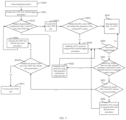
- the following uses the URSP rules shown in Table 1 and Table 2 as an example, in conjunction with FIG. 3 , to introduce a method for a UE to bind a PDU session for application data 1.
- the method shown in FIG. 3 includes steps S310 to S324.
- step S310 the UE detects application data 1.
- the traffic descriptor in the URSP rules is used to describe the characteristics of a type of application data.
- the URSP rule containing the traffic descriptor matches the application data 1.
- the UE uses the URSP rule when transmitting the application data 1.
- the URSP rule containing the traffic descriptor does not match the application data 1. In other words, the UE cannot use the URSP rule when transmitting the application data 1.
- the traffic descriptor configured with the range of IP@1 ⁇ 9 and the corresponding RSD in the URSP rule is used for data transmission of Weibo traffic.
- the UE has application data to transmit and the destination IP address of the IP data packet carrying the application data falls within the IP@1-9 range, it is considered that the application data matches the traffic descriptor of Weibo.
- the UE binds the matching application data packet to the corresponding PDU session for transmission according to the RSD in the URSP rule corresponding to the traffic descriptor.
- the traffic descriptor that matches the application data of IMS is IMS DNN.
- the URSP rule with the traffic descriptor being IMS DNN can use the PDU session corresponding to its RSD to transmit IMS application data.
- step S311 the UE examines the URSP rule with the highest rule precedence in the URSP.
- the UE uses the URSP rules in the URSP to check whether the characteristics of the application data match any traffic descriptor in a URSP rule.
- the order in which the UE checks is determined according to the rule precedence of the URSP rules, that is, the UE checks for matches in descending order of the rule precedence.
- the RSD list under the URSP rule is used for PDU session binding. Therefore, in step S311, the examination usually starts with the URSP rule with the rule precedence.
- step S312 the UE determines whether the TD in the examined URSP rule matches the characteristics of the application data 1.
- step S313 is executed.
- step S314 is executed.
- step S314 the UE determines whether the examined URSP rule (or the current URSP rule) is the URSP rule with the lowest rule precedence in the URSP.
- the UE executes step S316. In the case that the examined URSP rule is the URSP rule with the lowest rule precedence, the UE executes step S317.
- step S316 the UE selects the URSP rule with the next lower precedence from the URSP as the examined URSP rule and re-executes step S313.
- the URSP rule with the next lower precedence can be understood as the URSP rule with the precedence immediately below the URSP rule with the highest precedence.
- step S317 the UE determines not to use the URSP rule.
- step S315 the UE determines whether the RSD in the examined URSP rule matches the parameters of an already established PDU session.
- step S318 is executed.
- step S319 is executed.
- step S318 the UE establishes a PDU session using the RSD with the highest precedence in the examined URSP rule and executes step S320.
- step S319 the UE binds the application data 1 to the PDU session.
- the aforementioned PDU session is either the successfully matched PDU session from step S319 or the successfully established PDU session from step S320.
- the first URSP rule includes a traffic descriptor (TD), the TD matches a first traffic, and the processing unit is further configured to determine whether to transmit the data flow of the first traffic using the first PDU session.
- TD traffic descriptor
- FIG. 14 is a schematic diagram of a network device according to some embodiments of the present disclosure.
- the network device 1400 shown in FIG. 14 includes a reception unit 1410.
- the reception unit 1410 is configured to receive first information from a user equipment (UE); the first information indicates whether the UE supports a first capability, and the first capability includes at least one of the following items: receiving a UE policy rule corresponding to a non-HPLMN; or receiving UE policy rules corresponding to a plurality of PLMNs.
- UE user equipment
- the network device further includes the following unit.
- the first indication is carried in a UE policy containing the UE policy rule.
- the UE policy rule is transmitted by the UE to the AMF over a register request.
- the UE policy rule is transmitted by the AMF to the PCF over a UE policy control create request.
- FIG. 15 is a schematic diagram of a network device according to some embodiments of the present disclosure.
- the network device 1500 shown in FIG. 15 includes a transmission unit 1510.
- the transmission unit 1510 is configured to transmit first indication to a user equipment (UE); the first indication indicates the corresponding relationship between one or more PLMN IDs and one or more UE policy rules.
- UE user equipment
- the first indication is carried in a UE policy containing the UE policy rule.
- the UE policy rule is a URSP rule.
- the processing unit 1610 is configured to determine whether to use the first PDU session.
- the first PDU session is established using a first RSD, a PLMN corresponding to the first RSD includes an equivalent PLMN of a registered PLMN of the UE, and the first RSD belongs to a matched first URSP rule.
- the first condition includes at least one of the following conditions: the first URSP rule does not include an RSD corresponding to the registered PLMN; the first URSP rule includes an RSD corresponding to the registered PLMN, and a PDU session is not established between the UE and the network device using the RSD corresponding to the registered PLMN; or the first URSP rule includes an RSD corresponding to the registered PLMN, and a PDU session fails to be established between the UE and the network device using the RSD corresponding to the registered PLMN.
- the processing unit is further configured to determine not to use the first PDU session in the case that the second condition is satisfied.
- the second condition includes at least one of the following conditions: the first URSP rule includes an RSD corresponding to the registered PLMN; the first URSP rule includes an RSD corresponding to the registered PLMN, and a PDU session is not established between the UE and the network device using the RSD corresponding to the registered PLMN; or the first URSP rule includes an RSD corresponding to the registered PLMN, and a PDU session is established between the UE and the network device using the RSD corresponding to the registered PLMN.
- the first URSP rule includes a traffic descriptor (TD), the TD matches a first traffic, and the processing unit is further configured to determine whether to transmit the data flow of the first traffic using the first PDU session.
- TD traffic descriptor
- the network device 1600 shown in FIG. 16 is further configured to perform the following steps. That is, in the case that a PDU session fails to be established by using the RSD corresponding to the registered PLMN of the user equipment (UE), the processing unit 1610 establishes the PDU session with the UE using the RSD corresponding to the equivalent PLMN; the RSD corresponding to the registered PLMN and the RSD corresponding to the equivalent PLMN belong to the matched first URSP rule, and the equivalent PLMN is the equivalent PLMN of the registered PLMN.
- the processing unit 1610 establishes the PDU session with the UE using the RSD corresponding to the equivalent PLMN; the RSD corresponding to the registered PLMN and the RSD corresponding to the equivalent PLMN belong to the matched first URSP rule, and the equivalent PLMN is the equivalent PLMN of the registered PLMN.
- FIG. 17 is a schematic structural diagram of a communication apparatus according to some embodiments of the present disclosure.
- the dashed lines in FIG. 17 indicate that the unit or module is optional.
- the apparatus 1700 is configured to perform the methods described in the above method embodiments.
- the apparatus 1700 may be a chip, a UE, or a network device.
- the apparatus 1700 includes one or more processors 1710.
- the processor 1710 supports the apparatus 1700 to perform the methods described in the above method embodiments.
- the processor 1710 is a general-purpose processor or a specialized processor.
- the processor is a central processing unit (CPU).
- the processor is other general-purpose processors, digital signal processors (DSPs), application specific integrated circuits (ASICs), field programmable gate arrays (FPGAs) or other programmable logic devices, discrete gates or transistor logic devices, discrete hardware components, and the like.
- DSPs digital signal processors
- ASICs application specific integrated circuits
- FPGAs field programmable gate arrays
- the general-purpose processor is a microprocessor, or the processor is any conventional processor or the like.
- the apparatus 1700 further includes one or more memories 1720.
- the memory 1720 stores one or more programs thereon, and the one or more programs, when loaded and run by the processor 1710, cause the processor 1710 to perform the methods described in the above method embodiments.
- the memory 1720 is separate from the processor 1710 or integrated within the processor 1710.
- the apparatus 1700 further includes a transceiver 1730.
- the processor 1710 communicates with other devices or chips via the transceiver 1730.
- the processor 1710 performs data reception and transmission with other devices or chips via the transceiver 1730.
- a computer-readable storage medium is further provided in the embodiments of the present disclosure for storing one or more programs.
- the computer-readable storage medium is applicable to the terminal or the network device provided in the embodiments of the present disclosure, and the one or more programs, when loaded and run by a computer, cause the computer to perform the methods applicable to the terminal or the network device in the various embodiments of the present disclosure.
- a computer program product is further provided in the embodiments of the present disclosure.
- the computer program product includes one or more programs.
- the computer program product is applicable to the terminal or the network device provided in the embodiments of the present disclosure, and the one or more programs, when loaded and run by a computer, cause the computer to perform the methods applicable to the terminal or the network device in the various embodiments of the present disclosure.
- a computer program is further provided in the embodiments of the present disclosure.
- the computer program is applicable to the terminal or the network device provided in the embodiments of the present disclosure, and the computer program, when loaded and run by a computer, causes the computer to perform the methods applicable to the terminal or the network device in the various embodiments of the present disclosure.
- indication may refer to direct indication or indirect indication, or it may signify an associative relationship.
- a indicates B may mean that A indicates B directly, e.g., B may be acquired through A; or that A indicates B indirectly, e.g., A indicates C through which B may be acquired; or that an associative relationship is present between A and B.
- B corresponding to A means that B is associated with A, and B can be determined based on A. It should also be understood that "determining B based on A” does not mean “determining B based solely on A”; B can also be determined based on A and/or other information.
- the term "correspond” indicates a direct or indirect corresponding relationship between two items, or indicates an associative relationship between the two. It may also refer to relationships such as indicating and being indicated, and configuring and being configured.
- predefined or “preconfigured” can be implemented by prestoring the corresponding codes, tables, or other means for indicating relevant information in the devices (e.g., including UEs and network devices).
- the present disclosure does not limit the specific implementation methods thereof.
- predefined may refer to being defined in the protocol.
- the term "protocol” may refer to the standard protocol in the communication field, including, for example, the LTE protocol, the NR protocol, and related protocols applied in future communication systems, which is not limited in the present disclosure.
- the term "and/or” is merely a way to describe the associative relationship between associated objects, indicating that there are three possible relationships.
- “A and/or B” may represent: the existence of A alone, the simultaneous existence of A and B, and the existence of B alone.
- the character “/” herein generally indicates an “or” relationship between the associated objects before and after the "/”.
- the disclosed systems, apparatuses, and methods may be implemented in other ways.
- the above-described apparatus embodiments are merely illustrative.
- the division of the units is only a logical functional division, and in actual implementation, there may be other division methods.
- a plurality of units or components may be combined or integrated into another system, or some features may be omitted or not executed.
- the coupling, direct coupling, or communication connection between each other that is shown or discussed may be indirect coupling or communication connection through some interfaces, apparatuses, or units, and it may be in electrical, mechanical, or other forms.
- the units described as separate parts may or may not be physically separate, and parts displayed as units may or may not be physical units, that is, they may be located in one place or distributed across a plurality of network units. Some or all of the units may be selected according to actual needs to achieve the purpose of the solutions of the embodiments.
- the various functional units in the embodiments of the present disclosure may be integrated into one processing unit, or the various units may physically exist separately, or two or more units may be integrated into one unit.
- the above embodiments can be fully or partially implemented through software, hardware, firmware, or any combination thereof.
- it can be fully or partially implemented in the form of a computer program product.
- the computer program product includes one or more computer instructions.
- the one or more computer program instructions when loaded and executed on a computer, cause the computer to generate, fully or partially, the processes or functions according to the embodiments of the present disclosure.
- the computer may be a general-purpose computer, a specialized computer, a computer network, or any other programmable apparatus.
- the one or more computer instructions are stored in a computer-readable storage medium or transmitted from one computer-readable storage medium to another computer-readable storage medium.
- the one or more computer instructions are transmitted from one website, computer, server, or data center to another website, computer, server, or data center in a wired (such as coaxial cable, fiber optic, or digital subscriber line (DSL)) or wireless (such as infrared, wireless, or microwave) manner.
- the computer-readable storage medium may be any available medium accessible by a computer or may be a data storage device such as a server or a data center that includes one or more integrated available media.
- the available medium may be a magnetic medium (e.g., a floppy disk, hard disk, or magnetic tape), an optical medium (e.g., a digital video disk (DVD)), a semiconductor medium (e.g., a solid state disk (SSD)), and the like.
Landscapes
- Engineering & Computer Science (AREA)
- Computer Networks & Wireless Communication (AREA)
- Signal Processing (AREA)
- Databases & Information Systems (AREA)
- Mobile Radio Communication Systems (AREA)
Applications Claiming Priority (1)
| Application Number | Priority Date | Filing Date | Title |
|---|---|---|---|
| PCT/CN2022/093691 WO2023220998A1 (zh) | 2022-05-18 | 2022-05-18 | 无线通信的方法、用户设备及网络设备 |
Publications (2)
| Publication Number | Publication Date |
|---|---|
| EP4518486A1 true EP4518486A1 (de) | 2025-03-05 |
| EP4518486A4 EP4518486A4 (de) | 2025-07-02 |
Family
ID=88834204
Family Applications (1)
| Application Number | Title | Priority Date | Filing Date |
|---|---|---|---|
| EP22942040.1A Pending EP4518486A4 (de) | 2022-05-18 | 2022-05-18 | Drahtloskommunikationsverfahren, benutzergerät und netzwerkvorrichtung |
Country Status (4)
| Country | Link |
|---|---|
| US (1) | US20250056370A1 (de) |
| EP (1) | EP4518486A4 (de) |
| CN (2) | CN119032608A (de) |
| WO (1) | WO2023220998A1 (de) |
Families Citing this family (1)
| Publication number | Priority date | Publication date | Assignee | Title |
|---|---|---|---|---|
| WO2025167246A1 (zh) * | 2024-02-08 | 2025-08-14 | Oppo广东移动通信有限公司 | 用户面连接的确定方法、终端设备及网络设备 |
Family Cites Families (6)
| Publication number | Priority date | Publication date | Assignee | Title |
|---|---|---|---|---|
| CN110012500B (zh) * | 2012-07-15 | 2022-04-29 | 中兴通讯股份有限公司 | 测量报告的上报方法及装置 |
| US10524198B2 (en) * | 2018-05-18 | 2019-12-31 | Intel Corporation | UE indication to PCF whether or not to send UE policy |
| WO2020206677A1 (zh) * | 2019-04-12 | 2020-10-15 | Oppo广东移动通信有限公司 | 一种配置策略的方法及装置、网络设备、终端 |
| WO2021026744A1 (zh) * | 2019-08-12 | 2021-02-18 | Oppo广东移动通信有限公司 | 一种策略配置方法、网络设备、终端设备 |
| BR112021026850A2 (pt) * | 2019-09-12 | 2022-02-22 | Guangdong Oppo Mobile Telecommunications Corp Ltd | Método de comunicação sem fio, dispositivo terminal, dispositivo de rede e mídia de armazenamento legível por computador |
| KR20210055417A (ko) * | 2019-11-07 | 2021-05-17 | 삼성전자주식회사 | 무선 통신 시스템에서 가입자 정보를 이용하여 단말의 정책을 전송 및 수행하기 위한 방법 및 장치 |
-
2022
- 2022-05-18 CN CN202280094764.4A patent/CN119032608A/zh active Pending
- 2022-05-18 WO PCT/CN2022/093691 patent/WO2023220998A1/zh not_active Ceased
- 2022-05-18 EP EP22942040.1A patent/EP4518486A4/de active Pending
- 2022-05-18 CN CN202510064804.6A patent/CN119922531A/zh active Pending
-
2024
- 2024-10-29 US US18/930,204 patent/US20250056370A1/en active Pending
Also Published As
| Publication number | Publication date |
|---|---|
| US20250056370A1 (en) | 2025-02-13 |
| EP4518486A4 (de) | 2025-07-02 |
| CN119922531A (zh) | 2025-05-02 |
| CN119032608A (zh) | 2024-11-26 |
| WO2023220998A1 (zh) | 2023-11-23 |
Similar Documents
| Publication | Publication Date | Title |
|---|---|---|
| US12356491B2 (en) | Session management method, apparatus, and system | |
| US11356919B2 (en) | Handover method, mobility management network element, and communications system | |
| KR102738036B1 (ko) | 무선 통신 시스템에서 단말의 정책을 제공하는 방법 및 장치 | |
| CN109314917B (zh) | 网络切片选择策略更新方法、及装置 | |
| US12369030B2 (en) | Network slice allocation and network slice rejection | |
| KR20230007473A (ko) | 슬라이스 액세스 방법, 디바이스 및 시스템 | |
| US20220394566A1 (en) | Registration with accessibility and mobility management function re-allocation | |
| US20220361093A1 (en) | Network Slice Admission Control (NSAC) Discovery and Roaming Enhancements | |
| US20220346052A1 (en) | Support of network slicing for sms | |
| US20200280892A1 (en) | Session context handling method, network element, and terminal device | |
| US12267721B2 (en) | User equipment network slice information storage and packet data unit session establishment for new radio | |
| US10863555B2 (en) | Access method, apparatus, device, and system | |
| US20250310860A1 (en) | Dynamic Allocation of Network Slice Limits and On-Demand Network Slices | |
| WO2023143212A1 (zh) | 一种通信方法及装置 | |
| US20250056370A1 (en) | Method for wireless communication, user equipment, and network device | |
| JP7837435B2 (ja) | 通信方法及び通信装置 | |
| KR20240024286A (ko) | 온보딩을 수행하는 방법 및 장치 | |
| US20240292298A1 (en) | Method, device, and system for core network node re-allocation in wireless network | |
| KR20220163439A (ko) | 네트워크 요청 등록 절차 개시 | |
| US12021931B2 (en) | BSF service registration and discovery enhancement | |
| US12598107B2 (en) | Network slice quota management enhancements | |
| US20250088837A1 (en) | Removing requester nf type ambiguity in inter-plmn discoveries | |
| US20260089619A1 (en) | Wireless communication method, terminal device, and network device | |
| US20250142449A1 (en) | Centralized counting in multi service areas | |
| US20250031166A1 (en) | Method, apparatus and computer program |
Legal Events
| Date | Code | Title | Description |
|---|---|---|---|
| STAA | Information on the status of an ep patent application or granted ep patent |
Free format text: STATUS: THE INTERNATIONAL PUBLICATION HAS BEEN MADE |
|
| PUAI | Public reference made under article 153(3) epc to a published international application that has entered the european phase |
Free format text: ORIGINAL CODE: 0009012 |
|
| STAA | Information on the status of an ep patent application or granted ep patent |
Free format text: STATUS: REQUEST FOR EXAMINATION WAS MADE |
|
| 17P | Request for examination filed |
Effective date: 20241129 |
|
| AK | Designated contracting states |
Kind code of ref document: A1 Designated state(s): AL AT BE BG CH CY CZ DE DK EE ES FI FR GB GR HR HU IE IS IT LI LT LU LV MC MK MT NL NO PL PT RO RS SE SI SK SM TR |
|
| A4 | Supplementary search report drawn up and despatched |
Effective date: 20250603 |
|
| RIC1 | Information provided on ipc code assigned before grant |
Ipc: H04W 84/04 20090101ALN20250527BHEP Ipc: H04W 40/02 20090101ALI20250527BHEP Ipc: H04W 8/22 20090101ALI20250527BHEP Ipc: H04W 60/00 20090101ALI20250527BHEP Ipc: H04W 24/10 20090101ALI20250527BHEP Ipc: H04W 8/20 20090101ALI20250527BHEP Ipc: H04W 72/04 20230101AFI20250527BHEP |
|
| DAV | Request for validation of the european patent (deleted) | ||
| DAX | Request for extension of the european patent (deleted) | ||
| STAA | Information on the status of an ep patent application or granted ep patent |
Free format text: STATUS: EXAMINATION IS IN PROGRESS |
|
| 17Q | First examination report despatched |
Effective date: 20260122 |