EP4517482B1 - Systems and methods for providing electric power to an electronic device - Google Patents
Systems and methods for providing electric power to an electronic device Download PDFInfo
- Publication number
- EP4517482B1 EP4517482B1 EP23306445.0A EP23306445A EP4517482B1 EP 4517482 B1 EP4517482 B1 EP 4517482B1 EP 23306445 A EP23306445 A EP 23306445A EP 4517482 B1 EP4517482 B1 EP 4517482B1
- Authority
- EP
- European Patent Office
- Prior art keywords
- state
- electric power
- electronic device
- power
- fuse
- Prior art date
- Legal status (The legal status is an assumption and is not a legal conclusion. Google has not performed a legal analysis and makes no representation as to the accuracy of the status listed.)
- Active
Links
Images




Classifications
-
- G—PHYSICS
- G06—COMPUTING OR CALCULATING; COUNTING
- G06F—ELECTRIC DIGITAL DATA PROCESSING
- G06F1/00—Details not covered by groups G06F3/00 - G06F13/00 and G06F21/00
- G06F1/26—Power supply means, e.g. regulation thereof
- G06F1/28—Supervision thereof, e.g. detecting power-supply failure by out of limits supervision
-
- H—ELECTRICITY
- H02—GENERATION; CONVERSION OR DISTRIBUTION OF ELECTRIC POWER
- H02J—ELECTRIC POWER NETWORKS; CIRCUIT ARRANGEMENTS OR SYSTEMS FOR SUPPLYING OR DISTRIBUTING ELECTRIC POWER; SYSTEMS FOR STORING ELECTRIC ENERGY
- H02J9/00—Circuit arrangements for emergency or stand-by power supply, e.g. for emergency lighting
- H02J9/04—Circuit arrangements for emergency or stand-by power supply, e.g. for emergency lighting in which the distribution system is disconnected from the normal source and connected to a standby source
- H02J9/06—Circuit arrangements for emergency or stand-by power supply, e.g. for emergency lighting in which the distribution system is disconnected from the normal source and connected to a standby source with automatic change-over, e.g. UPS systems
- H02J9/068—Electronic means for switching from one power supply to another power supply, e.g. to avoid parallel connection
-
- G—PHYSICS
- G06—COMPUTING OR CALCULATING; COUNTING
- G06F—ELECTRIC DIGITAL DATA PROCESSING
- G06F1/00—Details not covered by groups G06F3/00 - G06F13/00 and G06F21/00
- G06F1/26—Power supply means, e.g. regulation thereof
- G06F1/30—Means for acting in the event of power-supply failure or interruption, e.g. power-supply fluctuations
-
- G—PHYSICS
- G06—COMPUTING OR CALCULATING; COUNTING
- G06F—ELECTRIC DIGITAL DATA PROCESSING
- G06F1/00—Details not covered by groups G06F3/00 - G06F13/00 and G06F21/00
- G06F1/26—Power supply means, e.g. regulation thereof
- G06F1/32—Means for saving power
- G06F1/3203—Power management, i.e. event-based initiation of a power-saving mode
- G06F1/3234—Power saving characterised by the action undertaken
- G06F1/3296—Power saving characterised by the action undertaken by lowering the supply or operating voltage
-
- H—ELECTRICITY
- H02—GENERATION; CONVERSION OR DISTRIBUTION OF ELECTRIC POWER
- H02H—EMERGENCY PROTECTIVE CIRCUIT ARRANGEMENTS
- H02H3/00—Emergency protective circuit arrangements for automatic disconnection directly responsive to an undesired change from normal electric working condition with or without subsequent reconnection ; integrated protection
- H02H3/02—Details
- H02H3/04—Details with warning or supervision in addition to disconnection, e.g. for indicating that protective apparatus has functioned
- H02H3/046—Signalling the blowing of a fuse
-
- H—ELECTRICITY
- H02—GENERATION; CONVERSION OR DISTRIBUTION OF ELECTRIC POWER
- H02J—ELECTRIC POWER NETWORKS; CIRCUIT ARRANGEMENTS OR SYSTEMS FOR SUPPLYING OR DISTRIBUTING ELECTRIC POWER; SYSTEMS FOR STORING ELECTRIC ENERGY
- H02J2105/00—Networks for supplying or distributing electric power characterised by their spatial reach or by the load
- H02J2105/40—Networks for supplying or distributing electric power characterised by their spatial reach or by the load characterised by the loads connecting to the networks or being supplied by the networks
- H02J2105/42—Home appliances
- H02J2105/425—Home appliances the loads being an Information and Communication Technology [ICT] facility
Definitions
- the present technology relates to systems and methods for electric power distribution.
- systems and methods for providing electric power to an electronic device through a monitored fuse state indicator are disclosed.
- a datacenter typically houses tens or hundreds of servers for load sharing and redundancy. Such large-scale server networks consume large amounts of electric power which makes electric power distribution a complex and error-prone task. Any manner of monitoring the power delivery and protecting integrity of the servers and the electric infrastructure of the datacenter is desirable.
- US 2021/376654 A1 and US 2020/019223 A1 disclose known systems and methods for providing power to electronic devices.
- Embodiments and examples of the present technology have been developed based on developers' appreciation of shortcomings associated with the prior art.
- a method for providing electric power to an electronic device includes receiving, from a power source and at a monitoring circuit electrically connected to the electronic device, electric power at a corresponding voltage, the electric power being received at a corresponding power input of the monitoring circuit, receiving, at a standby power input of the monitoring circuit, a first standby electric power at a first standby voltage, directing, by the monitoring circuit, the electric power to the electronic device through a corresponding fuse state indicator of the monitoring circuit, the fuse state indicator selectively connecting a corresponding power input to the electronic device and relying on the first standby electric power to operate, the fuse state indicator being configured to generate a fuse state signal indicative of a state thereof that can be selectively an alive state or a failure state, combining, by a logic combiner of the monitoring circuit, the fuse state signal with a signal indicative of a presence of the electric power at the power input of the monitoring circuit to form a main state signal that can be selectively an alive state or a failure
- the monitoring circuit relies on the standby electric power which enables fuse state indicators to operate and monitor a state of fuses once the electronic device is powered.
- the monitoring circuit may thus enable segregation between circumstances where no electric power is provided to the electronic device, and circumstances where one or more of the fuses are blown.
- the logic combiner is a first logic combiner
- the electric power is a plurality of electric powers, each electric power being received at a corresponding power input of the monitoring circuit.
- Directing the electric power to the electronic device through a corresponding fuse state indicator of the monitoring circuit includes directing, by the monitoring circuit, the plurality of electric powers to the electronic device through a plurality of corresponding fuse state indicators of the monitoring circuit, each fuse state indicator selectively connecting a corresponding one of the plurality of power inputs to the electronic device and relying on the first standby electric power to operate, each fuse assembly being configured to generate a corresponding fuse state signal.
- the method further includes, prior to combining the fuse state signal with the electric power, combining, by a second logic combiner of the monitoring circuit, the status signals of the plurality of fuse state indicators to form a combined fuse state signal, the first logic combiner being configured to combine the combined fuse state signal with the plurality of electric powers to obtain the main state signal.
- the first logic combiner has a first characteristic time during which a main state of the electronic device is set to an alive state upon establishment of the electric connection between the power source and the electronic device
- the second logic combiner has a second characteristic time during which the status of each fuse state indicator is set to an alive state upon establishment of the electric connection between the power source and the electronic device, the second characteristic time being greater than the first characteristic time
- the second characteristic time is between 5 and 15 times greater than the first characteristic time.
- the first standby voltage is 12Vsb.
- the method further includes, subsequent to receiving the first standby electric power, converting, by a converting module of the monitoring circuit, the first standby electric power into a second standby electric power.
- the second standby voltage is 3.3Vsb.
- the latch is a D-type latch.
- the method further includes, in response to the main state signal being in a failure state, operating a latch to maintain a failure state of the main state signal.
- the method 700 continues with receiving, at operation 720, at a standby power input of the monitoring circuit, a first standby electric power at a first standby voltage.
- the first standby voltage may be for example 12V sb .
- the method 700 may further include converting, subsequent to receiving the first standby electric power, by the monitoring circuit, the first standby electric power into a second standby electric power.
- the fuse state indicator may rely on a 3.3V sb generated from a voltage conversion of the 12V sb .
- the method 700 further includes combining, by a second logic combiner of the monitoring circuit such as the logic combiner 112, the status signals of the plurality of fuse state indicators to form a combined fuse state signal, the first logic combiner being configured to combine the combined fuse state signal with the plurality of electric powers to obtain the main state signal.
- a second logic combiner of the monitoring circuit such as the logic combiner 112
- the status signals of the plurality of fuse state indicators to form a combined fuse state signal
- the first logic combiner being configured to combine the combined fuse state signal with the plurality of electric powers to obtain the main state signal.
Landscapes
- Engineering & Computer Science (AREA)
- Theoretical Computer Science (AREA)
- Physics & Mathematics (AREA)
- General Engineering & Computer Science (AREA)
- General Physics & Mathematics (AREA)
- Business, Economics & Management (AREA)
- Emergency Management (AREA)
- Power Engineering (AREA)
- Power Sources (AREA)
Description
- The present technology relates to systems and methods for electric power distribution. In particular, systems and methods for providing electric power to an electronic device through a monitored fuse state indicator are disclosed.
- A datacenter typically houses tens or hundreds of servers for load sharing and redundancy. Such large-scale server networks consume large amounts of electric power which makes electric power distribution a complex and error-prone task. Any manner of monitoring the power delivery and protecting integrity of the servers and the electric infrastructure of the datacenter is desirable.
- Notably, the recent development of liquid cooling technologies to provide cooling to electric equipment has brought additional problematics. For example, a failure of the electric connectivity of the equipment may lead to electric current flowing in the cooling liquid, thereby causing electrolysis thereof. This may put the entire equipment at risk in case of presence of shortcut currents.
- Solutions for safe distribution of electric power from a power source to an electronic device with reduced electric current is thus desirable.
-
US 2021/376654 A1 andUS 2020/019223 A1 disclose known systems and methods for providing power to electronic devices. - Embodiments and examples of the present technology have been developed based on developers' appreciation of shortcomings associated with the prior art.
- In a first broad aspect of the present technology, there is provided a method for providing electric power to an electronic device. The method includes receiving, from a power source and at a monitoring circuit electrically connected to the electronic device, electric power at a corresponding voltage, the electric power being received at a corresponding power input of the monitoring circuit, receiving, at a standby power input of the monitoring circuit, a first standby electric power at a first standby voltage, directing, by the monitoring circuit, the electric power to the electronic device through a corresponding fuse state indicator of the monitoring circuit, the fuse state indicator selectively connecting a corresponding power input to the electronic device and relying on the first standby electric power to operate, the fuse state indicator being configured to generate a fuse state signal indicative of a state thereof that can be selectively an alive state or a failure state, combining, by a logic combiner of the monitoring circuit, the fuse state signal with a signal indicative of a presence of the electric power at the power input of the monitoring circuit to form a main state signal that can be selectively an alive state or a failure state and, in response to the main state signal being in a failure state, disconnecting the electronic device from the power source.
- Broadly speaking, the monitoring circuit relies on the standby electric power which enables fuse state indicators to operate and monitor a state of fuses once the electronic device is powered. The monitoring circuit may thus enable segregation between circumstances where no electric power is provided to the electronic device, and circumstances where one or more of the fuses are blown.
- In some non-limiting implementations, the logic combiner is a first logic combiner, the electric power is a plurality of electric powers, each electric power being received at a corresponding power input of the monitoring circuit. Directing the electric power to the electronic device through a corresponding fuse state indicator of the monitoring circuit includes directing, by the monitoring circuit, the plurality of electric powers to the electronic device through a plurality of corresponding fuse state indicators of the monitoring circuit, each fuse state indicator selectively connecting a corresponding one of the plurality of power inputs to the electronic device and relying on the first standby electric power to operate, each fuse assembly being configured to generate a corresponding fuse state signal. The method further includes, prior to combining the fuse state signal with the electric power, combining, by a second logic combiner of the monitoring circuit, the status signals of the plurality of fuse state indicators to form a combined fuse state signal, the first logic combiner being configured to combine the combined fuse state signal with the plurality of electric powers to obtain the main state signal.
- In some non-limiting implementations, the first logic combiner has a first characteristic time during which a main state of the electronic device is set to an alive state upon establishment of the electric connection between the power source and the electronic device, and the second logic combiner has a second characteristic time during which the status of each fuse state indicator is set to an alive state upon establishment of the electric connection between the power source and the electronic device, the second characteristic time being greater than the first characteristic time.
- In some non-limiting implementations, the second characteristic time is between 5 and 15 times greater than the first characteristic time.
- In some non-limiting implementations, the electronic device is a server of a datacenter, and the power source is electrically connected a power distribution unit for transmitting the electric power to the monitoring circuit.
- In some non-limiting implementations, the first standby voltage is 12Vsb.
- In some non-limiting implementations, the method further includes, subsequent to receiving the first standby electric power, converting, by a converting module of the monitoring circuit, the first standby electric power into a second standby electric power.
- In some non-limiting implementations, the second standby voltage is 3.3Vsb.
- In some non-limiting implementations, the latch is a D-type latch.
- In some non-limiting implementations, the method further includes, in response to the main state signal being in a failure state, operating a latch to maintain a failure state of the main state signal.
- In a second broad aspect of the present technology, there is provided a system for providing electric power to an electronic device. The system includes a power input configured to receive an electric power at a corresponding voltage from a power source, a standby power input configured to receive a first standby electric power at a first standby voltage from the power source, a fuse state indicator configured to receive a corresponding electric power from a corresponding power input and output the electric power to the electronic device, the fuse state indicator relying on the first standby electric power to operate, the fuse state indicator being configured to generate a fuse state signal indicative of a state thereof that can be selectively an alive state or a failure state, a logic combiner configured to combine the fuse state signal with a signal indicative of a presence of the electric power at the power input, the logic combiner being configured to generate a main state signal that can be selectively an alive state or a failure state; and a controller. The controller causes, in response to the main state signal being in a failure state, a disconnection of the electronic device from the power source.
- In some non-limiting implementations, the controller further causes, in response to the main state signal being in a failure state, a latch to be operated to maintain a failure state of the main state signal.
- In some non-limiting implementations, the logic combiner is a first logic combiner. The system further includes a plurality of power inputs, each power input being configured to receive a corresponding electric power at a correspond voltage from the power source, a plurality of fuse state indicator, each fuse state indicator being configured to receive the corresponding electric power from a corresponding one of the power inputs and output the electric power to the electronic device, a second logic combiner configured to combine the status signals of the plurality of fuse state indicators to form a combined fuse state signal, the first logic combiner being configured to combine the combined fuse state signal with the plurality of electric powers to obtain the main state signal.
- In some non-limiting implementations, the first logic combiner has a first characteristic time during which a main state of the electronic device is set to an alive state upon establishment of the electric connection between the power source and the electronic device, and the second logic combiner has a second characteristic time during which the status of each fuse state indicator is set to an alive state upon establishment of the electric connection between the power source and the electronic device, the second characteristic time being greater than the first characteristic time.
- In some non-limiting implementations, the first standby voltage is 12Vsb.
- In some non-limiting implementations, the system further includes a converting module to convert, subsequent to receiving the first standby electric power, the first standby electric power into a second standby electric power.
- In some non-limiting implementations, the second standby voltage is 3.3Vsb.
- In some non-limiting implementations, the latch is a D-type latch.
- In some non-limiting implementations, the system is mounted on a support board of the electronic device.
- In some non-limiting implementations, the electronic device is a server of a datacenter, and the power source is electrically connected a power distribution unit for transmitting the electric powers to the monitoring circuit
- In the context of the present specification, a "server" is a computer program that is running on appropriate hardware and is capable of receiving requests (e.g., from client devices) over a network, and carrying out those requests, or causing those requests to be carried out. The hardware may be one physical computer or one physical computer system, but neither is required to be the case with respect to the present technology. In the present context, the use of the expression a "server" is not intended to mean that every task (e.g., received instructions or requests) or any particular task will have been received, carried out, or caused to be carried out, by the same server (i.e., the same software and/or hardware); it is intended to mean that any number of software elements or hardware devices may be involved in receiving/sending, carrying out or causing to be carried out any task or request, or the consequences of any task or request; and all of this software and hardware may be one server or multiple servers, both of which are included within the expression "at least one server".
- In the context of the present specification, a "database" is any structured collection of data, irrespective of its particular structure, the database management software, or the computer hardware on which the data is stored, implemented or otherwise rendered available for use. A database may reside on the same hardware as the process that stores or makes use of the information stored in the database or it may reside on separate hardware, such as a dedicated server or plurality of servers.
- In the context of the present specification, the expression "information" includes information of any nature or kind whatsoever capable of being stored in a database. Thus information includes, but is not limited to audiovisual works (images, movies, sound records, presentations etc.), data (location data, numerical data, etc.), text (opinions, comments, questions, messages, etc.), documents, spreadsheets, lists of words, etc.
- In the context of the present specification, the expression "component" is meant to include software (appropriate to a particular hardware context) that is both necessary and sufficient to achieve the specific function(s) being referenced.
- In the context of the present specification, the expression "computer usable information storage medium" is intended to include media of any nature and kind whatsoever, including RAM, ROM, disks (CD-ROMs, DVDs, floppy disks, hard drivers, etc.), USB keys, solid state-drives, tape drives, etc.
- In the context of the present specification, unless expressly provided otherwise, an "indication" of an information element may be the information element itself or a pointer, reference, link, or other indirect mechanism enabling the recipient of the indication to locate a network, memory, database, or other computer-readable medium location from which the information element may be retrieved. For example, an indication of a document could include the document itself (i.e. its contents), or it could be a unique document descriptor identifying a data object with respect to a particular object storage device, or some other means of directing the recipient of the indication to a network location, memory address, database table, or other location where the data object may be accessed. As one skilled in the art would recognize, the degree of precision required in such an indication depends on the extent of any prior understanding about the interpretation to be given to information being exchanged as between the sender and the recipient of the indication. For example, if it is understood prior to a communication between a sender and a recipient that an indication of an information element will take the form of a database key for an entry in a particular table of a predetermined database containing the information element, then the sending of the database key is all that is required to effectively convey the information element to the recipient, even though the information element itself was not transmitted as between the sender and the recipient of the indication.
- In the context of the present specification, the words "first", "second", "third", etc. have been used as adjectives only for the purpose of allowing for distinction between the nouns that they modify from one another, and not for the purpose of describing any particular relationship between those nouns. Thus, for example, it should be understood that, the use of the terms "first server" and "third server" is not intended to imply any particular order, type, chronology, hierarchy or ranking (for example) of/between the server, nor is their use (by itself) intended imply that any "second server" must necessarily exist in any given situation. Further, as is discussed herein in other contexts, reference to a "first" element and a "second" element does not preclude the two elements from being the same actual real-world element. Thus, for example, in some instances, a "first" server and a "second" server may be the same software and/or hardware, in other cases they may be different software and/or hardware.
- Embodiments and examples of the present technology each have at least one of the above-mentioned objects and/or aspects, but do not necessarily have all of them. It should be understood that some aspects of the present technology that have resulted from attempting to attain the above-mentioned object may not satisfy this object and/or may satisfy other objects not specifically recited herein.
- In some cases, what are believed to be helpful examples of modifications to the present technology may also be set forth. This is done merely as an aid to understanding, and, again, not to define the scope or set forth the bounds of the present technology. These modifications are not an exhaustive list, and a person skilled in the art may make other modifications while nonetheless remaining within the scope of the present technology. Further, where no examples of modifications have been set forth, it should not be interpreted that no modifications are possible and/or that what is described is the sole manner of implementing that element of the present technology.
- Moreover, all statements herein reciting principles, aspects, and implementations of the present technology, as well as specific examples thereof, are intended to encompass both structural and functional equivalents thereof, whether they are currently known or developed in the future. Thus, for example, it will be appreciated by those skilled in the art that any block diagrams herein represents conceptual views of illustrative circuitry embodying the principles of the present technology. Similarly, it will be appreciated that any flowcharts, flow diagrams, state transition diagrams, pseudo-code, and the like represent various processes that may be substantially represented in non-transitory computer-readable media and so executed by a computer or processor, whether or not such computer or processor is explicitly shown.
- The functions of the various elements shown in the figures, including any functional block labeled as a "processor" or "processing unit", may be provided through the use of dedicated hardware as well as hardware capable of executing software in association with appropriate software. When provided by a processor, the functions may be provided by a single dedicated processor, by a single shared processor, or by a plurality of individual processors, some of which may be shared. In some examples of the present technology, the processor may be a general-purpose processor, such as a central processing unit (CPU) or a processor dedicated to a specific purpose, such as a digital signal processor (DSP). Moreover, explicit use of the term a "processor" should not be construed to refer exclusively to hardware capable of executing software, and may implicitly include, without limitation, application specific integrated circuit (ASIC), field programmable gate array (FPGA), read-only memory (ROM) for storing software, random access memory (RAM), and non-volatile storage. Other hardware, conventional and/or custom, may also be included.
- Software modules, or simply modules which are implied to be software, may be represented herein as any combination of flowchart elements or other elements indicating performance of process steps and/or textual description. Such modules may be executed by hardware that is expressly or implicitly shown. Moreover, it should be understood that module may include for example, but without being limitative, computer program logic, computer program instructions, software, stack, firmware, hardware circuitry or a combination thereof which provides the required capabilities.
- Additional and/or alternative features, aspects and advantages of embodiments and examples of the present technology will become apparent from the following description, the accompanying drawings and the appended claims.
- For a better understanding of the present technology, as well as other aspects and further features thereof, reference is made to the following description which is to be used in conjunction with the accompanying drawings, where:
-
Figure 1 is a schematic diagram of a monitoring circuit for distributing electric power to a load in accordance with non-limiting implementations of the present technology; -
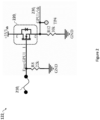
Figure 2 is an electric diagram of a fuse state indicator of the monitoring circuit ofFigure 1 in accordance with non-limiting implementations of the present technology; -
Figure 3 is an electric diagram of a logic combiner of the monitoring circuit ofFigure 1 in accordance with non-limiting implementations of the present technology; -
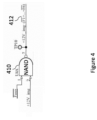
Figure 4 is an electric diagram of logical gates of the monitoring circuit ofFigure 1 in accordance with non-limiting implementations of the present technology; -
Figure 5 is an electric diagram of yet another logic combiner of the monitoring circuit ofFigure 1 in accordance with non-limiting implementations of the present technology; -
Figure 6 shows temporal charts of signals processed by the monitoring circuit ofFigure 1 in accordance with non-limiting implementations of the present technology; -
Figure 7 illustrates a flow diagram showing operations of a method for providing electric power to an electronic device in accordance with non-limiting implementations of the present technology; and -
Figure 8 is a block diagram of a controller in accordance with non-limiting implementations of the present technology. - It should also be noted that, unless otherwise explicitly specified herein, the drawings are not to scale.
- The examples and conditional language recited herein are principally intended to aid the reader in understanding the principles of the present technology and not to limit its scope to such specifically recited examples and conditions. It will be appreciated that those skilled in the art may devise various arrangements that, although not explicitly described or shown herein, nonetheless embody the principles of the present technology.
- Furthermore, as an aid to understanding, the following description may describe relatively simplified implementations of the present technology. As persons skilled in the art would understand, various implementations of the present technology may be of a greater complexity.
- With these fundamentals in place, we will now consider some non-limiting examples to illustrate various implementations of aspects of the present technology.
-
Figure 1 is a schematic diagram of amonitoring circuit 100 for distributing electric power from apower source 10 to anelectronic device 150. Thepower source 10 may be a power distribution unit (PDU) that provides one or more electric powers at different voltages. For example, thepower source 10 may provide a first electric power at 12V, a second electric power at 5V, a third electric power at 3.3V and a fourth electric at 12V standby, or "12Vsb". - In this implementation, the
electronic device 150 is aserver 150 of a datacenter. The load may be any other type of electronic device in alternative implementations of the present technology. Theserver 150 may be implemented as a conventional computer server. In an example of an embodiment of the present technology, theserver 150 may be implemented as a Dell™ PowerEdge™ Server running the Microsoft™ Windows Server™ operating system. Needless to say, theserver 150 may be implemented in any other suitable hardware, software, and/or firmware, or a combination thereof. Theserver 150 may be provided with air cooling equipment, water cooling equipment or any other suitable cooling equipment that provides cooling to the electronic components of theserver 150. - The
monitoring circuit 100 includes a plurality ofpower inputs 1201, 1202 (two of them being depicted onFigure 1 ) and directs the electric power to electronic components 1521, 1522 of theserver 150. To do so, the monitoring circuit includes alocal controller 110 and a plurality of fuse state indicators 1221, 1222 communicably connected therewith. In some embodiments, themonitoring circuit 100 includes eight (8) power inputs and eight (8) corresponding fuse state indicators. Only two of each are depicted for simplicity ofFigure 1 . It should be noted that two ormore power inputs 120 may receive a same electric power (e.g. 12V) from thepower source 10. Some of the fuse state indicators may not be electrically connected to electric components of theserver 150 and be used to assess if the power source provides the required electric powers. - Broadly speaking, each fuse state indicator 122 includes a fuse whose state can be either an "alive" state or a "failure" state. The state of the fuse of each fuse state indicators 122 is actively monitored by the local controller which may, in response to a fuse being in a failure state, disconnect the
server 150 from thepower source 10 to prevent any additional damages from occurring to theserver 150 and/or thepower source 10 and other equipment electrically connected therewith. In the event of a short circuit on another server electrically connected to thepower source 10, it may be important that thepower source 10 is not overloaded and can continue to supply power to the other servers (i.e. to avoid propagation of the failure). - In opposition to some other technologies relying on fuses, the
monitoring circuit 100 may actively detect which fuse is in a failure state. Said other technologies usually measure a voltage at an output of a fuse to detect a state thereof. However, there still may be confusion about, in case where no voltage is measured at the output of the fuse, whether the fuse is in a failure state, or if there is no electric power flowing there through. In both cases, this may generate an infinite reaction loop that inhibits the flow of electric current to the load to be powered through the fuse. - The monitoring circuit further receives, from the
power source 10, a standby electric power at astandby power input 120sb. As will be described in greater details herein after, the standby electric power is used to enable tolocal controller 110 to monitor the fuse state indicators 1221, 1222. In this implementation, the standby electric power is 12Vsb but this aspect is not limitative. -
Figure 2 is an electric diagram of a fuse state indicator 122i of themonitoring circuit 100 ofFigure 1 in accordance with non-limiting implementations of the present technology. The fuse state indicator 122i includes afuse 210i electrically connected to a metal-oxide-semiconductor field-effect transistor (MOSFET) 220i used as an electric switching device. - More specifically, the
MOSFET 220i is electrically connected to thefuse 210i atinput 1 and a 3V3sb inlet atinput 3. In this implementation, the monitoring circuit includes a voltage converter to convert a voltage of the standby electric power of 12Vsb into a 3.3Vsb standby electric power. This aspect is not limitative, other voltage values may be used for the standby electric powers used by themonitoring circuit 100. - In use, the
MOSFET 220i generate anoutput signal 230i indicative of a state of thefuse 210i, or "status signal" 230i. More specifically, thestatus signal 230i is 3V3sb in case where thefuse 210i is blown or at a pre-determined value based on the electric power received at thepower input 120i corresponding to the fuse state indicator 122i. As such, theMOSFET 220i rely on the standby electric power to provide thestatus signal 230i indicative of the state of thefuse 210i. -
Figure 3 is an electric diagram of thelogic combiner 112 of themonitoring circuit 100 in accordance with non-limiting implementations of the present technology. Thelogic combiner 112 receives status signals from each of the fuse states indicators and includes anNAND gate 310 for combining output signals thereof. In use, thegate 310 is electrically connected to the Ground (GND) and to a 3.3Vsb inlet to operate. Thegate 310 thus generates asignal 312 from the status signals. - In some implementations, the
logic combiner 112 further includes a resistor-capacitor circuit (RC circuit) 314 including a resistor R27 and a capacitor C17, and another ANDgate 316 receiving thesignal 312 through theRC circuit 314 and a 3.3Vsb inlet. In use, thegate 316 generates a combinedfuse state signal 318 denoted Fuses. As will be described in greater details herein after, theRC circuit 314 may disable or delay a generation of the combinedfuse state signal 318 during a loading time of the capacitor C17 upon establishment of the electric connection between thepower source 10 and theserver 150. -
Figure 4 is an electric diagram of a logical gate of thelogic combiner 112 in accordance with non-limiting implementations of the present technology. In these implementations, thelogic combiner 112 includes aNAND gate 410 that receives the combinedfuse state signal 318 and a status signal of a fuse state indicator that indicates the presence of a 12V electric power at a power input of themonitoring circuit 100. The voltage value (i.e. 12V) of the electric power is not limitative. One of the functions of thegate 410 is to check that all thefuses 210 are not blown and a presence of the 12V electric power that may be used to power some of the electronic components 152 of theserver 150. In other words, the status signal "12V img" is a status signal generated by one of the fuse state indicators. In some implementations, the status signal "12V img" is 12V in cases where the fuse of said fuse state indicator is not blown, and 3.3V in cases where the fuse is blown. Thegate 410 thus generates an adjusted combinedfuse state signal 412. -
Figure 5 is an electric diagram of thelogic combiner 114 of themonitoring circuit 100 in accordance with non-limiting implementations of the present technology. Thelogic combiner 114 includes alatch 514. In this implementation, thelatch 514 is a D-latch that receives the adjusted combined fuse state signal 412 from thegate 410 as a Clock Pulse (CP) input (see input 3), and the status signal "12V img" as a Data (D) input. Therefore, the output signal of thegate 410 is used to trigger a latching of the status signal "12V img" into the latch. Thelogic combiner 114 also includes aRC circuit 510 combined with an ANDgate 512 to generate a Read Enable (RD) input for thelatch 514. Therefore, theRC circuit 510 and thegate 512 are used to generate control signal that enables or disables the reading of data into the latch 514.Thelatch 514 also receives a 3.3Vsb signal as a Set-Disable" input that serves as a control signal to set or rest thelatch 514. - Broadly speaking, the
logic combiner 114 combines the adjusted combinedfuse state signal 412 with a signal indicative of a presence of the electric power at the power input of the monitoring circuit to form amain state signal 516 "srvOk" that can be selectively an alive state (i.e. high state) or a failure state (i.e. low state). Referring back toFigure 1 , themonitoring circuit 100 further includes aswitching mechanism 115 that can disconnect theserver 150 from thepower source 10 in case of the srvOk signal being in the failure state (i.e. detection of a failure of one of the fuse 210). For example, theswitching mechanism 115 may include a plurality of switches that can be actuated in parallel to disconnect theserver 150 from thepower source 10. - In some implementations, the srvOK signal must be high for the
monitoring circuit 100 to distribute electric power from the power source to theserver 150. In the event of a fault, (e.g. an open fuse 210), the srvOK signal must switch to the low state. However, when theserver 150 is electrically connected to themonitoring circuit 100 and thepower source 10, as themonitoring circuit 100 is not powered, the srvOK signal can only be in the low state, which may cause issues (e.g. blocking reception of the power supply from the power source 10) during insertion of theserver 150. - The
latch 514 is used to force the srvOK signal in the high state for a short time denoted T1 using theRC circuit 510 at the RD input thereof, so that the insertedserver 150 can receive electric power and start up. Therefore, when theserver 150 is inserted, themonitoring circuit 100 is supplied with the 12Vsb standby electric power which enables the fuse state indicators 122 to operate and monitor a state of thefuses 210. - In this embodiment, the detection of the state of the
fuses 210 is delayed by a time T2 with T2>T1 to ensure that in the event of an insertion failure at theserver 150, said detection is correctly executed and is not altered by the state of thelatch 514. It can be said that thelatch 514 acts as a memory and stores the detection state to indicate failure of afuse 210. -
Figure 6 shows temporal charts of voltages of signals processed by themonitoring circuit 100 in accordance with non-limiting implementations of the present technology. - Chart 610 shows a temporal evolution of the 3.3Vsb used to operate the components of the
monitoring circuit 100 such as thelogic combiners Figure 6 , themonitoring circuit 100 is electrically connected to thepower source 10 at t=t0. Thepower source 10 thus provides the standbyelectric power 12Vsb at t=t0 such that the 3.3Vsb signal rises at that time. - Chart 620 shows a temporal evolution of the voltage at
inlet 5 of thegate 316 of the logic combiner 112 (i.e. an output of the RC circuit 314). A characteristic time of theRC circuit 314 is noted τ1. In this illustrative example, τ1 is about 10ms. It can be said that theRC circuit 314 thus delays an establishment of the output of thegate 316. As a result, the "Fuses" signal is delayed and rises at t=t1 as shown onchart 630, which in turn causes the srvOk signal to rise at t=t1. - In response to the electrical connection of the
monitoring circuit 100 to thepower source 10 at t=t0, theinlet 2 of thegate 512 of thelogic combiner 114 receives a signal. Chart 640 shows a temporal evolution of said signal. A characteristic time of theRC circuit 510 is noted τ2. In this illustrative example, τ2 is about 7ms. It can be said that theRC circuit 510 thus delays an establishment of the output of thegate 512. - In this example, a failure of one of the
fuses 210 occurs at t=t2, as shown onchart 630 when the "Fuses" signal is down to zero, which in turn causes the srvOk signal to fall to zero at t=t2. In response, themonitoring circuit 100 actuates theswitching mechanism 115 to disconnect theserver 150 from thepower source 10. As shown onchart 660, the voltage at thepower inputs 120 of themonitoring circuit 100 is thus zero at t=t3 shortly after t2. - Chart 620 shows a temporal evolution of the voltage of the Clock Pulse (CP) input of the
latch 514, showing a clock rising edge at t=t3 to store the detection state to indicate that the srvOk in is the failure state. -
Figure 7 is a flow diagram of amethod 700 for providing electric power to an electronic device such as theserver 150 according to some examples of the present technology. In one or more aspects, themethod 700 or one or more steps thereof may be performed by a processor or a computer system, in the present example by thelocal controller 110. Themethod 700 or one or more steps thereof may be embodied in computer-executable instructions that are stored in a computer-readable medium, such as a non-transitory mass storage device, loaded into memory and executed by a CPU. Some steps or portions of steps in the flow diagram may be omitted or changed in order. - The
method 700 starts with receiving, atoperation 710, from a power source and at a monitoring circuit electrically connected to the electronic device, electric power at a corresponding voltage, the electric power being received at a corresponding power input of the monitoring circuit. For example and without limitations, the electronic device may be a server of a datacenter and the power source may be electrically connected a power distribution unit for transmitting the electric power to the monitoring circuit. - The
method 700 continues with receiving, atoperation 720, at a standby power input of the monitoring circuit, a first standby electric power at a first standby voltage. The first standby voltage may be for example 12Vsb. - The
method 700 continues with directing, atoperation 730, by the monitoring circuit, the electric power to the electronic device through a corresponding fuse state indicator of the monitoring circuit. In use, the fuse state indicator selectively connects a corresponding power input to the electronic device and relies on the first standby electric power to operate. The fuse state indicator generates a fuse state signal indicative of a state thereof that can be selectively an alive state or a failure state. - In some implementations, the
method 700 may further include converting, subsequent to receiving the first standby electric power, by the monitoring circuit, the first standby electric power into a second standby electric power. For example, the fuse state indicator may rely on a 3.3Vsb generated from a voltage conversion of the 12Vsb. - The
method 700 continues with combining, atoperation 740, by a logic combiner of the monitoring circuit such as thelogic combiner 114, the fuse state signal with a signal indicative of a presence of the electric power at the power input of the monitoring circuit to form a main state signal that can be selectively an alive state or a failure state. - In some implementations, the logic combiner is a first logic combiner, the electric power is a plurality of electric powers and each electric power being received at a corresponding power input of the monitoring circuit. The monitoring circuit may direct the plurality of electric powers to the electronic device through a plurality of corresponding fuse state indicators of the monitoring circuit, each fuse state indicator selectively connecting a corresponding one of the plurality of power inputs to the electronic device and relying on the first standby electric power to operate, each fuse assembly being configured to generate a corresponding fuse state signal.
- In these implementations, the
method 700 further includes combining, by a second logic combiner of the monitoring circuit such as thelogic combiner 112, the status signals of the plurality of fuse state indicators to form a combined fuse state signal, the first logic combiner being configured to combine the combined fuse state signal with the plurality of electric powers to obtain the main state signal. - In these implementations, the first logic combiner has a first characteristic time during which a main state of the electronic device is set to an alive state upon establishment of the electric connection between the power source and the electronic device. The second logic combiner has a second characteristic time during which the status of each fuse state indicator is set to an alive state upon establishment of the electric connection between the power source and the electronic device, the second characteristic time being greater than the first characteristic time. For example, the second characteristic time may be between 5 and 15 times greater than the first characteristic time.
- The
method 700 continues with assessing, atoperation 750, whether the main state signal is in a failure state. In response to the main state signal being in a failure state, themethod 700 includes operating, at sub-operation 752, a latch to maintain a failure state of the main state signal, and disconnecting, at sub-operation 754, the electronic device from the power source. For example, the latch may be a D-type latch. Other types of latch such as S-R latch, JK latch or any other suitable latch are contemplated alternative implementations. - While the above-described implementations have been described and shown with reference to particular steps performed in a particular order, it will be understood that these steps may be combined, sub-divided, or re-ordered without departing from the teachings of the present technology. At least some of the steps may be executed in parallel or in series. Accordingly, the order and grouping of the steps is not a limitation of the present technology.
- As an example,
Figure 8 is a schematic block diagram of thelocal controller 110 of themonitoring circuit 100 according to an example of the present technology. Thelocal controller 110 includes a processor or a plurality of cooperating processors (represented as aprocessor 810 for simplicity), a memory device or a plurality of memory devices (represented as amemory device 830 for simplicity), and an input/output interface 820 allowing thelocal controller 110 to communicate with other components of themonitoring circuit 100 and/or other components in communication with themonitoring circuit 100 such as thefuse state indicators 120, thepower source 10 and theserver 150. Theprocessor 810 is operatively connected to thememory device 830 and to the input/output interface 820. Thememory device 830 includes a storage for storingparameters 834. Thememory device 830 may comprise a non-transitory computer-readable medium for storingcode instructions 832 that are executable by theprocessor 810 to allow thelocal controller 110 to perform the various tasks allocated to thelocal controller 110 in themethod 700. - The
local controller 110 is operatively connected, via the input/output interface 920, to thefuse state indicators 120, thepower source 10 and theserver 150. Thelocal controller 110 executes thecode instructions 832 stored in thememory device 830 to implement the various above-described functions that may be present in a particular example.Figure 8 as illustrated represents a non-limiting example in which thelocal controller 110 orchestrates operations of themonitoring circuit 100. This particular example is not meant to limit the present disclosure and is provided for illustration purposes. - It should be noted that, in this implementation, the
local controller 110 may be implemented directly on theserver 150. - It is to be understood that the operations and functionality of the described
monitoring circuit 100, its constituent components, and associated processes may be achieved by any one or more of hardware-based, software-based, and firmware-based elements. Such operational alternatives do not, in any way, limit the scope of the present disclosure. - It should be expressly understood that not all technical effects mentioned herein need to be enjoyed in each and every example of the present technology.
- Modifications and improvements to the above-described implementations of the present technology may become apparent to those skilled in the art. The foregoing description is intended to be exemplary rather than limiting. The scope of the present technology is therefore intended to be limited solely by the scope of the appended claims.
Claims (15)
- A method (700) for providing electric power to an electronic device (150), the method comprising:receiving, from a power source and at a monitoring circuit (100) electrically connected to the electronic device (150), electric power at a corresponding voltage, the electric power being received at a corresponding power input of the monitoring circuit (100);receiving, at a standby power input (120sb) of the monitoring circuit (100), a first standby electric power at a first standby voltage;directing, by the monitoring circuit (100), the electric power to the electronic device (150) through a corresponding fuse state indicator (122) of the monitoring circuit (100), the fuse state indicator (122) selectively connecting a corresponding power input to the electronic device (150) and relying on the first standby electric power to operate, the fuse state indicator (122) being configured to generate a fuse state signal indicative of a state thereof that can be selectively an alive state or a failure state;combining, by a logic combiner (114) of the monitoring circuit (100), the fuse state signal with a signal indicative of a presence of the electric power at the power input of the monitoring circuit (100) to form a main state signal that can be selectively an alive state or a failure state; andin response to the main state signal being in a failure state:
disconnecting the electronic device (150) from the power source (10). - The method (700) of claim 1, wherein the logic combiner (112) is a first logic combiner, the electric power is a plurality of electric powers, each electric power being received at a corresponding power input of the monitoring circuit (100), anddirecting the electric power to the electronic device (150) through a corresponding fuse state indicator (122) of the monitoring circuit (100) comprises:
directing, by the monitoring circuit (100), the plurality of electric powers to the electronic device (150) through a plurality of corresponding fuse state indicators (122) of the monitoring circuit (100), each fuse state indicator (122) selectively connecting a corresponding one of the plurality of power inputs to the electronic device (150) and relying on the first standby electric power to operate, each fuse assembly being configured to generate a corresponding fuse state signal,the method further comprising, prior to combining the fuse state signal with the electric power:
combining, by a second logic combiner (112) of the monitoring circuit (100), the status signals of the plurality of fuse state indicators (122) to form a combined fuse state signal, the first logic combiner (114) being configured to combine the combined fuse state signal with the plurality of electric powers to obtain the main state signal. - The method (700) of claim 2, wherein:the first logic combiner (114) has a first characteristic time during which a main state of the electronic device (150) is set to an alive state upon establishment of the electric connection between the power source (10) and the electronic device (150), andthe second logic combiner (112) has a second characteristic time during which the status of each fuse state indicator (122) is set to an alive state upon establishment of the electric connection between the power source (10) and the electronic device (150), the second characteristic time being greater than the first characteristic time.
- The method (700) of claim 3, wherein the second characteristic time is between 5 and 15 times greater than the first characteristic time.
- The method (700) of any one of claims 1 to 4, wherein:the electronic device (150) is a server of a datacenter, andthe power source (10) is electrically connected a power distribution unit for transmitting the electric power to the monitoring circuit (100).
- The method (700) of any one of claims 1 to 5, wherein the first standby voltage is 12Vsb.
- The method (700) of any one of claims 1 to 6, further comprising, subsequent to receiving the first standby electric power:
converting, by a converting module of the monitoring circuit (100), the first standby electric power into a second standby electric power. - The method (700) of any one of claims 1 to 7, further comprising, in response to the main state signal being in a failure state, operating a latch (514) to maintain a failure state of the main state signal.
- A system (100) for providing electric power to an electronic device (150), the system comprising:a power input configured to receive an electric power at a corresponding voltage from a power source (10);a standby power input (120sb) configured to receive a first standby electric power at a first standby voltage from the power source (10);a fuse state indicator (122) configured to receive a corresponding electric power from a corresponding power input and output the electric power to the electronic device (150), the fuse state indicator (122) relying on the first standby electric power to operate, the fuse state indicator (122) being configured to generate a fuse state signal indicative of a state thereof that can be selectively an alive state or a failure state;a logic combiner (114) configured to combine the fuse state signal with a signal indicative of a presence of the electric power at the power input, the logic combiner (114) being configured to generate a main state signal that can be selectively an alive state or a failure state; anda controller (800) configured to, in response to the main state signal being in a failure state:
cause a disconnection of the electronic device (150) from the power source (10). - The system (100) of claim 9, wherein the logic combiner is a first logic combiner, and the system (100) further comprises:a plurality of power inputs, each power input being configured to receive a corresponding electric power at a correspond voltage from the power source (10);a plurality of fuse state indicator (122), each fuse state indicator (122) being configured to receive the corresponding electric power from a corresponding one of the power inputs and output the electric power to the electronic device (150),a second logic combiner (112) configured to combine the status signals of the plurality of fuse state indicators (122) to form a combined fuse state signal, the first logic combiner being configured to combine the combined fuse state signal with the plurality of electric powers to obtain the main state signal.
- The system (100) of claim 10, wherein:the first logic combiner (114) has a first characteristic time during which a main state of the electronic device (150) is set to an alive state upon establishment of the electric connection between the power source (10) and the electronic device (150), andthe second logic combiner has a second characteristic time during which the status of each fuse state indicator (122) is set to an alive state upon establishment of the electric connection between the power source (10) and the electronic device (150), the second characteristic time being greater than the first characteristic time.
- The system (100) of any one of claims 9 to 11, wherein the first standby voltage is 12Vsb.
- The system (100) of any one of claims 9 to 12, further comprising, subsequent to receiving the first standby electric power:
converting, by a converting module of the monitoring circuit (100), the first standby electric power into a second standby electric power. - The system (100) of any one of claims 9 to 13, wherein the controller (800) is further configured to, in response to the main state signal being in a failure state, cause a latch to maintain a failure state of the main state signal.
- The system (100) of any one of claims 9 to 14, wherein:the electronic device (150) is a server of a datacenter, andthe power source (10) is electrically connected a power distribution unit for transmitting the electric powers to the monitoring circuit (100).
Priority Applications (3)
| Application Number | Priority Date | Filing Date | Title |
|---|---|---|---|
| EP23306445.0A EP4517482B1 (en) | 2023-08-31 | 2023-08-31 | Systems and methods for providing electric power to an electronic device |
| US18/813,217 US20250079882A1 (en) | 2023-08-31 | 2024-08-23 | Systems and methods for providing electric power to an electronic device |
| CN202411210541.7A CN119536488A (en) | 2023-08-31 | 2024-08-30 | System and method for providing power to electronic devices |
Applications Claiming Priority (1)
| Application Number | Priority Date | Filing Date | Title |
|---|---|---|---|
| EP23306445.0A EP4517482B1 (en) | 2023-08-31 | 2023-08-31 | Systems and methods for providing electric power to an electronic device |
Publications (2)
| Publication Number | Publication Date |
|---|---|
| EP4517482A1 EP4517482A1 (en) | 2025-03-05 |
| EP4517482B1 true EP4517482B1 (en) | 2025-07-02 |
Family
ID=88017904
Family Applications (1)
| Application Number | Title | Priority Date | Filing Date |
|---|---|---|---|
| EP23306445.0A Active EP4517482B1 (en) | 2023-08-31 | 2023-08-31 | Systems and methods for providing electric power to an electronic device |
Country Status (3)
| Country | Link |
|---|---|
| US (1) | US20250079882A1 (en) |
| EP (1) | EP4517482B1 (en) |
| CN (1) | CN119536488A (en) |
Family Cites Families (6)
| Publication number | Priority date | Publication date | Assignee | Title |
|---|---|---|---|---|
| US9531285B2 (en) * | 2013-08-06 | 2016-12-27 | Chicony Power Technology Co., Ltd. | PFC power system with power managed main and standby voltage outputs |
| US10110058B2 (en) * | 2016-05-24 | 2018-10-23 | Chicony Power Technology Co., Ltd. | Power conversion device and method for preventing abnormal shutdown thereof |
| KR102498254B1 (en) * | 2017-11-14 | 2023-02-10 | 삼성전자주식회사 | Method for reducing standby-power and electronic device thereof |
| TWI652580B (en) * | 2018-04-13 | 2019-03-01 | 緯創資通股份有限公司 | Line collecting device and power supply method thereof |
| US10749334B2 (en) * | 2018-07-12 | 2020-08-18 | Ovh | Method and power distribution unit for preventing disjunctions |
| TWI751572B (en) * | 2020-06-02 | 2022-01-01 | 宏碁股份有限公司 | Backup power supply for electronic system |
-
2023
- 2023-08-31 EP EP23306445.0A patent/EP4517482B1/en active Active
-
2024
- 2024-08-23 US US18/813,217 patent/US20250079882A1/en active Pending
- 2024-08-30 CN CN202411210541.7A patent/CN119536488A/en active Pending
Also Published As
| Publication number | Publication date |
|---|---|
| CN119536488A (en) | 2025-02-28 |
| EP4517482A1 (en) | 2025-03-05 |
| US20250079882A1 (en) | 2025-03-06 |
Similar Documents
| Publication | Publication Date | Title |
|---|---|---|
| US7844866B2 (en) | Mechanism to report operating system events on an intelligent platform management interface compliant server | |
| US10042583B2 (en) | Device management method, device, and device management controller | |
| US8301920B2 (en) | Shared power domain dynamic load based power loss detection and notification | |
| US11847082B2 (en) | System and method for secure management of non-registered components of an information handling system using a baseboard management controller | |
| US20230229223A1 (en) | Method to allow for higher usable power capacity in a redundant power configuration | |
| US12411176B2 (en) | Circuit, method, and apparatus for diagnosing a fault, and computer readable storage medium | |
| US12339724B2 (en) | Power supply control method and apparatus, and server and non-volatile storage medium | |
| FI127498B (en) | RACK WITH AUTO RETURN AND AUTO RETURN METHOD FOR THE SAME | |
| CN117033063B (en) | Server liquid leakage processing method, system, device, electronic equipment and medium | |
| CN105051692A (en) | Automated failure handling through isolation | |
| US12355249B2 (en) | Systems and methods for distributing electric power from a multi-phasic power source to a plurality of electronic devices | |
| US10739837B2 (en) | Method and apparatus for power supply to processor | |
| EP4517482A1 (en) | Systems and methods for providing electric power to an electronic device | |
| US8533528B2 (en) | Fault tolerant power sequencer | |
| CN109325002B (en) | Text file processing method, device and system, electronic equipment and storage medium | |
| CN114252785A (en) | Control method of unmanned aerial vehicle, electronic equipment and storage medium | |
| US20230333622A1 (en) | Techniques for monitoring power device alarms | |
| EP4572050A1 (en) | Systems and methods for distributing electric power from a power distribution unit to an electric load | |
| CN105468495B (en) | Complicated formula can procedure logical control system device | |
| US12493069B2 (en) | Detecting motherboard power switch defects and LCD cable shorts | |
| US20260031179A1 (en) | Protection Circuit And Method For Protecting Protected Module, Storage Medium, And Electronic Device | |
| US12282368B2 (en) | Fault identification of multiple phase voltage regulator | |
| TWI391825B (en) | Processing module, operation system and processing method utilizing the same | |
| CN121614017A (en) | Power consumption control method and programmable logic device | |
| CN118358591A (en) | Vehicle visual safety detection method, device, equipment and storage medium |
Legal Events
| Date | Code | Title | Description |
|---|---|---|---|
| PUAI | Public reference made under article 153(3) epc to a published international application that has entered the european phase |
Free format text: ORIGINAL CODE: 0009012 |
|
| STAA | Information on the status of an ep patent application or granted ep patent |
Free format text: STATUS: REQUEST FOR EXAMINATION WAS MADE |
|
| 17P | Request for examination filed |
Effective date: 20240214 |
|
| AK | Designated contracting states |
Kind code of ref document: A1 Designated state(s): AL AT BE BG CH CY CZ DE DK EE ES FI FR GB GR HR HU IE IS IT LI LT LU LV MC ME MK MT NL NO PL PT RO RS SE SI SK SM TR |
|
| GRAP | Despatch of communication of intention to grant a patent |
Free format text: ORIGINAL CODE: EPIDOSNIGR1 |
|
| STAA | Information on the status of an ep patent application or granted ep patent |
Free format text: STATUS: GRANT OF PATENT IS INTENDED |
|
| RIC1 | Information provided on ipc code assigned before grant |
Ipc: G06F 1/30 20060101ALI20250417BHEP Ipc: G06F 1/28 20060101AFI20250417BHEP |
|
| GRAS | Grant fee paid |
Free format text: ORIGINAL CODE: EPIDOSNIGR3 |
|
| GRAA | (expected) grant |
Free format text: ORIGINAL CODE: 0009210 |
|
| STAA | Information on the status of an ep patent application or granted ep patent |
Free format text: STATUS: THE PATENT HAS BEEN GRANTED |
|
| INTG | Intention to grant announced |
Effective date: 20250502 |
|
| AK | Designated contracting states |
Kind code of ref document: B1 Designated state(s): AL AT BE BG CH CY CZ DE DK EE ES FI FR GB GR HR HU IE IS IT LI LT LU LV MC ME MK MT NL NO PL PT RO RS SE SI SK SM TR |
|
| REG | Reference to a national code |
Ref country code: GB Ref legal event code: FG4D |
|
| REG | Reference to a national code |
Ref country code: CH Ref legal event code: EP |
|
| P01 | Opt-out of the competence of the unified patent court (upc) registered |
Free format text: CASE NUMBER: APP_26964/2025 Effective date: 20250606 |
|
| REG | Reference to a national code |
Ref country code: DE Ref legal event code: R096 Ref document number: 602023004537 Country of ref document: DE |
|
| REG | Reference to a national code |
Ref country code: IE Ref legal event code: FG4D |
|
| PGFP | Annual fee paid to national office [announced via postgrant information from national office to epo] |
Ref country code: DE Payment date: 20250827 Year of fee payment: 3 |
|
| PGFP | Annual fee paid to national office [announced via postgrant information from national office to epo] |
Ref country code: FR Payment date: 20250819 Year of fee payment: 3 |
|
| REG | Reference to a national code |
Ref country code: NL Ref legal event code: MP Effective date: 20250702 |
|
| PG25 | Lapsed in a contracting state [announced via postgrant information from national office to epo] |
Ref country code: PT Free format text: LAPSE BECAUSE OF FAILURE TO SUBMIT A TRANSLATION OF THE DESCRIPTION OR TO PAY THE FEE WITHIN THE PRESCRIBED TIME-LIMIT Effective date: 20251103 |
|
| PG25 | Lapsed in a contracting state [announced via postgrant information from national office to epo] |
Ref country code: NL Free format text: LAPSE BECAUSE OF FAILURE TO SUBMIT A TRANSLATION OF THE DESCRIPTION OR TO PAY THE FEE WITHIN THE PRESCRIBED TIME-LIMIT Effective date: 20250702 |
|
| REG | Reference to a national code |
Ref country code: AT Ref legal event code: MK05 Ref document number: 1809954 Country of ref document: AT Kind code of ref document: T Effective date: 20250702 |
|
| PG25 | Lapsed in a contracting state [announced via postgrant information from national office to epo] |
Ref country code: IS Free format text: LAPSE BECAUSE OF FAILURE TO SUBMIT A TRANSLATION OF THE DESCRIPTION OR TO PAY THE FEE WITHIN THE PRESCRIBED TIME-LIMIT Effective date: 20251102 |
|
| PG25 | Lapsed in a contracting state [announced via postgrant information from national office to epo] |
Ref country code: NO Free format text: LAPSE BECAUSE OF FAILURE TO SUBMIT A TRANSLATION OF THE DESCRIPTION OR TO PAY THE FEE WITHIN THE PRESCRIBED TIME-LIMIT Effective date: 20251002 |
|
| REG | Reference to a national code |
Ref country code: LT Ref legal event code: MG9D |
|
| PG25 | Lapsed in a contracting state [announced via postgrant information from national office to epo] |
Ref country code: AT Free format text: LAPSE BECAUSE OF FAILURE TO SUBMIT A TRANSLATION OF THE DESCRIPTION OR TO PAY THE FEE WITHIN THE PRESCRIBED TIME-LIMIT Effective date: 20250702 |
|
| PG25 | Lapsed in a contracting state [announced via postgrant information from national office to epo] |
Ref country code: FI Free format text: LAPSE BECAUSE OF FAILURE TO SUBMIT A TRANSLATION OF THE DESCRIPTION OR TO PAY THE FEE WITHIN THE PRESCRIBED TIME-LIMIT Effective date: 20250702 |
|
| PG25 | Lapsed in a contracting state [announced via postgrant information from national office to epo] |
Ref country code: HR Free format text: LAPSE BECAUSE OF FAILURE TO SUBMIT A TRANSLATION OF THE DESCRIPTION OR TO PAY THE FEE WITHIN THE PRESCRIBED TIME-LIMIT Effective date: 20250702 |
|
| PG25 | Lapsed in a contracting state [announced via postgrant information from national office to epo] |
Ref country code: GR Free format text: LAPSE BECAUSE OF FAILURE TO SUBMIT A TRANSLATION OF THE DESCRIPTION OR TO PAY THE FEE WITHIN THE PRESCRIBED TIME-LIMIT Effective date: 20251003 |
|
| PG25 | Lapsed in a contracting state [announced via postgrant information from national office to epo] |
Ref country code: CZ Free format text: LAPSE BECAUSE OF FAILURE TO SUBMIT A TRANSLATION OF THE DESCRIPTION OR TO PAY THE FEE WITHIN THE PRESCRIBED TIME-LIMIT Effective date: 20250702 Ref country code: SE Free format text: LAPSE BECAUSE OF FAILURE TO SUBMIT A TRANSLATION OF THE DESCRIPTION OR TO PAY THE FEE WITHIN THE PRESCRIBED TIME-LIMIT Effective date: 20250702 |
|
| PG25 | Lapsed in a contracting state [announced via postgrant information from national office to epo] |
Ref country code: LV Free format text: LAPSE BECAUSE OF FAILURE TO SUBMIT A TRANSLATION OF THE DESCRIPTION OR TO PAY THE FEE WITHIN THE PRESCRIBED TIME-LIMIT Effective date: 20250702 |
|
| PG25 | Lapsed in a contracting state [announced via postgrant information from national office to epo] |
Ref country code: BG Free format text: LAPSE BECAUSE OF FAILURE TO SUBMIT A TRANSLATION OF THE DESCRIPTION OR TO PAY THE FEE WITHIN THE PRESCRIBED TIME-LIMIT Effective date: 20250702 Ref country code: PL Free format text: LAPSE BECAUSE OF FAILURE TO SUBMIT A TRANSLATION OF THE DESCRIPTION OR TO PAY THE FEE WITHIN THE PRESCRIBED TIME-LIMIT Effective date: 20250702 |
|
| PG25 | Lapsed in a contracting state [announced via postgrant information from national office to epo] |
Ref country code: RS Free format text: LAPSE BECAUSE OF FAILURE TO SUBMIT A TRANSLATION OF THE DESCRIPTION OR TO PAY THE FEE WITHIN THE PRESCRIBED TIME-LIMIT Effective date: 20251002 |
|
| PG25 | Lapsed in a contracting state [announced via postgrant information from national office to epo] |
Ref country code: ES Free format text: LAPSE BECAUSE OF FAILURE TO SUBMIT A TRANSLATION OF THE DESCRIPTION OR TO PAY THE FEE WITHIN THE PRESCRIBED TIME-LIMIT Effective date: 20250702 |
|
| PG25 | Lapsed in a contracting state [announced via postgrant information from national office to epo] |
Ref country code: RO Free format text: LAPSE BECAUSE OF FAILURE TO SUBMIT A TRANSLATION OF THE DESCRIPTION OR TO PAY THE FEE WITHIN THE PRESCRIBED TIME-LIMIT Effective date: 20250702 |
|
| PG25 | Lapsed in a contracting state [announced via postgrant information from national office to epo] |
Ref country code: SM Free format text: LAPSE BECAUSE OF FAILURE TO SUBMIT A TRANSLATION OF THE DESCRIPTION OR TO PAY THE FEE WITHIN THE PRESCRIBED TIME-LIMIT Effective date: 20250702 |
|
| PG25 | Lapsed in a contracting state [announced via postgrant information from national office to epo] |
Ref country code: DK Free format text: LAPSE BECAUSE OF FAILURE TO SUBMIT A TRANSLATION OF THE DESCRIPTION OR TO PAY THE FEE WITHIN THE PRESCRIBED TIME-LIMIT Effective date: 20250702 |
|
| PG25 | Lapsed in a contracting state [announced via postgrant information from national office to epo] |
Ref country code: IT Free format text: LAPSE BECAUSE OF FAILURE TO SUBMIT A TRANSLATION OF THE DESCRIPTION OR TO PAY THE FEE WITHIN THE PRESCRIBED TIME-LIMIT Effective date: 20250702 Ref country code: LU Free format text: LAPSE BECAUSE OF NON-PAYMENT OF DUE FEES Effective date: 20250831 |
|
| PG25 | Lapsed in a contracting state [announced via postgrant information from national office to epo] |
Ref country code: EE Free format text: LAPSE BECAUSE OF FAILURE TO SUBMIT A TRANSLATION OF THE DESCRIPTION OR TO PAY THE FEE WITHIN THE PRESCRIBED TIME-LIMIT Effective date: 20250702 Ref country code: SK Free format text: LAPSE BECAUSE OF FAILURE TO SUBMIT A TRANSLATION OF THE DESCRIPTION OR TO PAY THE FEE WITHIN THE PRESCRIBED TIME-LIMIT Effective date: 20250702 |
|
| PLBE | No opposition filed within time limit |
Free format text: ORIGINAL CODE: 0009261 |
|
| STAA | Information on the status of an ep patent application or granted ep patent |
Free format text: STATUS: NO OPPOSITION FILED WITHIN TIME LIMIT |