EP4516761A1 - Enamelled ceramic material with a low coefficient of thermal expansion - Google Patents
Enamelled ceramic material with a low coefficient of thermal expansion Download PDFInfo
- Publication number
- EP4516761A1 EP4516761A1 EP23795719.6A EP23795719A EP4516761A1 EP 4516761 A1 EP4516761 A1 EP 4516761A1 EP 23795719 A EP23795719 A EP 23795719A EP 4516761 A1 EP4516761 A1 EP 4516761A1
- Authority
- EP
- European Patent Office
- Prior art keywords
- frit
- glaze
- ceramic material
- thermal expansion
- low coefficient
- Prior art date
- Legal status (The legal status is an assumption and is not a legal conclusion. Google has not performed a legal analysis and makes no representation as to the accuracy of the status listed.)
- Pending
Links
Images



Classifications
-
- C—CHEMISTRY; METALLURGY
- C03—GLASS; MINERAL OR SLAG WOOL
- C03C—CHEMICAL COMPOSITION OF GLASSES, GLAZES OR VITREOUS ENAMELS; SURFACE TREATMENT OF GLASS; SURFACE TREATMENT OF FIBRES OR FILAMENTS MADE FROM GLASS, MINERALS OR SLAGS; JOINING GLASS TO GLASS OR OTHER MATERIALS
- C03C8/00—Enamels; Glazes; Fusion seal compositions being frit compositions having non-frit additions
- C03C8/02—Frit compositions, i.e. in a powdered or comminuted form
- C03C8/04—Frit compositions, i.e. in a powdered or comminuted form containing zinc
-
- C—CHEMISTRY; METALLURGY
- C03—GLASS; MINERAL OR SLAG WOOL
- C03C—CHEMICAL COMPOSITION OF GLASSES, GLAZES OR VITREOUS ENAMELS; SURFACE TREATMENT OF GLASS; SURFACE TREATMENT OF FIBRES OR FILAMENTS MADE FROM GLASS, MINERALS OR SLAGS; JOINING GLASS TO GLASS OR OTHER MATERIALS
- C03C3/00—Glass compositions
- C03C3/04—Glass compositions containing silica
- C03C3/076—Glass compositions containing silica with 40% to 90% silica, by weight
- C03C3/089—Glass compositions containing silica with 40% to 90% silica, by weight containing boron
- C03C3/091—Glass compositions containing silica with 40% to 90% silica, by weight containing boron containing aluminium
- C03C3/093—Glass compositions containing silica with 40% to 90% silica, by weight containing boron containing aluminium containing zinc or zirconium
-
- C—CHEMISTRY; METALLURGY
- C03—GLASS; MINERAL OR SLAG WOOL
- C03C—CHEMICAL COMPOSITION OF GLASSES, GLAZES OR VITREOUS ENAMELS; SURFACE TREATMENT OF GLASS; SURFACE TREATMENT OF FIBRES OR FILAMENTS MADE FROM GLASS, MINERALS OR SLAGS; JOINING GLASS TO GLASS OR OTHER MATERIALS
- C03C8/00—Enamels; Glazes; Fusion seal compositions being frit compositions having non-frit additions
-
- C—CHEMISTRY; METALLURGY
- C03—GLASS; MINERAL OR SLAG WOOL
- C03C—CHEMICAL COMPOSITION OF GLASSES, GLAZES OR VITREOUS ENAMELS; SURFACE TREATMENT OF GLASS; SURFACE TREATMENT OF FIBRES OR FILAMENTS MADE FROM GLASS, MINERALS OR SLAGS; JOINING GLASS TO GLASS OR OTHER MATERIALS
- C03C8/00—Enamels; Glazes; Fusion seal compositions being frit compositions having non-frit additions
- C03C8/14—Glass frit mixtures having non-frit additions, e.g. opacifiers, colorants, mill-additions
-
- C—CHEMISTRY; METALLURGY
- C04—CEMENTS; CONCRETE; ARTIFICIAL STONE; CERAMICS; REFRACTORIES
- C04B—LIME, MAGNESIA; SLAG; CEMENTS; COMPOSITIONS THEREOF, e.g. MORTARS, CONCRETE OR LIKE BUILDING MATERIALS; ARTIFICIAL STONE; CERAMICS; REFRACTORIES; TREATMENT OF NATURAL STONE
- C04B33/00—Clay-wares
- C04B33/02—Preparing or treating the raw materials individually or as batches
- C04B33/13—Compounding ingredients
- C04B33/14—Colouring matters
-
- C—CHEMISTRY; METALLURGY
- C04—CEMENTS; CONCRETE; ARTIFICIAL STONE; CERAMICS; REFRACTORIES
- C04B—LIME, MAGNESIA; SLAG; CEMENTS; COMPOSITIONS THEREOF, e.g. MORTARS, CONCRETE OR LIKE BUILDING MATERIALS; ARTIFICIAL STONE; CERAMICS; REFRACTORIES; TREATMENT OF NATURAL STONE
- C04B33/00—Clay-wares
- C04B33/24—Manufacture of porcelain or white ware
-
- C—CHEMISTRY; METALLURGY
- C04—CEMENTS; CONCRETE; ARTIFICIAL STONE; CERAMICS; REFRACTORIES
- C04B—LIME, MAGNESIA; SLAG; CEMENTS; COMPOSITIONS THEREOF, e.g. MORTARS, CONCRETE OR LIKE BUILDING MATERIALS; ARTIFICIAL STONE; CERAMICS; REFRACTORIES; TREATMENT OF NATURAL STONE
- C04B33/00—Clay-wares
- C04B33/32—Burning methods
- C04B33/34—Burning methods combined with glazing
-
- C—CHEMISTRY; METALLURGY
- C04—CEMENTS; CONCRETE; ARTIFICIAL STONE; CERAMICS; REFRACTORIES
- C04B—LIME, MAGNESIA; SLAG; CEMENTS; COMPOSITIONS THEREOF, e.g. MORTARS, CONCRETE OR LIKE BUILDING MATERIALS; ARTIFICIAL STONE; CERAMICS; REFRACTORIES; TREATMENT OF NATURAL STONE
- C04B35/00—Shaped ceramic products characterised by their composition; Ceramics compositions; Processing powders of inorganic compounds preparatory to the manufacturing of ceramic products
- C04B35/01—Shaped ceramic products characterised by their composition; Ceramics compositions; Processing powders of inorganic compounds preparatory to the manufacturing of ceramic products based on oxide ceramics
- C04B35/16—Shaped ceramic products characterised by their composition; Ceramics compositions; Processing powders of inorganic compounds preparatory to the manufacturing of ceramic products based on oxide ceramics based on silicates other than clay
- C04B35/18—Shaped ceramic products characterised by their composition; Ceramics compositions; Processing powders of inorganic compounds preparatory to the manufacturing of ceramic products based on oxide ceramics based on silicates other than clay rich in aluminium oxide
- C04B35/19—Alkali metal aluminosilicates, e.g. spodumene
-
- C—CHEMISTRY; METALLURGY
- C04—CEMENTS; CONCRETE; ARTIFICIAL STONE; CERAMICS; REFRACTORIES
- C04B—LIME, MAGNESIA; SLAG; CEMENTS; COMPOSITIONS THEREOF, e.g. MORTARS, CONCRETE OR LIKE BUILDING MATERIALS; ARTIFICIAL STONE; CERAMICS; REFRACTORIES; TREATMENT OF NATURAL STONE
- C04B41/00—After-treatment of mortars, concrete, artificial stone or ceramics; Treatment of natural stone
-
- C—CHEMISTRY; METALLURGY
- C04—CEMENTS; CONCRETE; ARTIFICIAL STONE; CERAMICS; REFRACTORIES
- C04B—LIME, MAGNESIA; SLAG; CEMENTS; COMPOSITIONS THEREOF, e.g. MORTARS, CONCRETE OR LIKE BUILDING MATERIALS; ARTIFICIAL STONE; CERAMICS; REFRACTORIES; TREATMENT OF NATURAL STONE
- C04B41/00—After-treatment of mortars, concrete, artificial stone or ceramics; Treatment of natural stone
- C04B41/009—After-treatment of mortars, concrete, artificial stone or ceramics; Treatment of natural stone characterised by the material treated
-
- C—CHEMISTRY; METALLURGY
- C04—CEMENTS; CONCRETE; ARTIFICIAL STONE; CERAMICS; REFRACTORIES
- C04B—LIME, MAGNESIA; SLAG; CEMENTS; COMPOSITIONS THEREOF, e.g. MORTARS, CONCRETE OR LIKE BUILDING MATERIALS; ARTIFICIAL STONE; CERAMICS; REFRACTORIES; TREATMENT OF NATURAL STONE
- C04B41/00—After-treatment of mortars, concrete, artificial stone or ceramics; Treatment of natural stone
- C04B41/45—Coating or impregnating, e.g. injection in masonry, partial coating of green or fired ceramics, organic coating compositions for adhering together two concrete elements
- C04B41/50—Coating or impregnating, e.g. injection in masonry, partial coating of green or fired ceramics, organic coating compositions for adhering together two concrete elements with inorganic materials
- C04B41/5022—Coating or impregnating, e.g. injection in masonry, partial coating of green or fired ceramics, organic coating compositions for adhering together two concrete elements with inorganic materials with vitreous materials
-
- C—CHEMISTRY; METALLURGY
- C04—CEMENTS; CONCRETE; ARTIFICIAL STONE; CERAMICS; REFRACTORIES
- C04B—LIME, MAGNESIA; SLAG; CEMENTS; COMPOSITIONS THEREOF, e.g. MORTARS, CONCRETE OR LIKE BUILDING MATERIALS; ARTIFICIAL STONE; CERAMICS; REFRACTORIES; TREATMENT OF NATURAL STONE
- C04B41/00—After-treatment of mortars, concrete, artificial stone or ceramics; Treatment of natural stone
- C04B41/80—After-treatment of mortars, concrete, artificial stone or ceramics; Treatment of natural stone of only ceramics
- C04B41/81—Coating or impregnation
- C04B41/85—Coating or impregnation with inorganic materials
- C04B41/86—Glazes; Cold glazes
-
- C—CHEMISTRY; METALLURGY
- C04—CEMENTS; CONCRETE; ARTIFICIAL STONE; CERAMICS; REFRACTORIES
- C04B—LIME, MAGNESIA; SLAG; CEMENTS; COMPOSITIONS THEREOF, e.g. MORTARS, CONCRETE OR LIKE BUILDING MATERIALS; ARTIFICIAL STONE; CERAMICS; REFRACTORIES; TREATMENT OF NATURAL STONE
- C04B2111/00—Mortars, concrete or artificial stone or mixtures to prepare them, characterised by specific function, property or use
- C04B2111/00474—Uses not provided for elsewhere in C04B2111/00
- C04B2111/00965—Uses not provided for elsewhere in C04B2111/00 for household applications, e.g. use of materials as cooking ware
-
- C—CHEMISTRY; METALLURGY
- C04—CEMENTS; CONCRETE; ARTIFICIAL STONE; CERAMICS; REFRACTORIES
- C04B—LIME, MAGNESIA; SLAG; CEMENTS; COMPOSITIONS THEREOF, e.g. MORTARS, CONCRETE OR LIKE BUILDING MATERIALS; ARTIFICIAL STONE; CERAMICS; REFRACTORIES; TREATMENT OF NATURAL STONE
- C04B2111/00—Mortars, concrete or artificial stone or mixtures to prepare them, characterised by specific function, property or use
- C04B2111/80—Optical properties, e.g. transparency or reflexibility
- C04B2111/82—Coloured materials
-
- C—CHEMISTRY; METALLURGY
- C04—CEMENTS; CONCRETE; ARTIFICIAL STONE; CERAMICS; REFRACTORIES
- C04B—LIME, MAGNESIA; SLAG; CEMENTS; COMPOSITIONS THEREOF, e.g. MORTARS, CONCRETE OR LIKE BUILDING MATERIALS; ARTIFICIAL STONE; CERAMICS; REFRACTORIES; TREATMENT OF NATURAL STONE
- C04B2235/00—Aspects relating to ceramic starting mixtures or sintered ceramic products
- C04B2235/02—Composition of constituents of the starting material or of secondary phases of the final product
- C04B2235/30—Constituents and secondary phases not being of a fibrous nature
- C04B2235/32—Metal oxides, mixed metal oxides, or oxide-forming salts thereof, e.g. carbonates, nitrates, (oxy)hydroxides, chlorides
- C04B2235/3201—Alkali metal oxides or oxide-forming salts thereof
- C04B2235/3203—Lithium oxide or oxide-forming salts thereof
-
- C—CHEMISTRY; METALLURGY
- C04—CEMENTS; CONCRETE; ARTIFICIAL STONE; CERAMICS; REFRACTORIES
- C04B—LIME, MAGNESIA; SLAG; CEMENTS; COMPOSITIONS THEREOF, e.g. MORTARS, CONCRETE OR LIKE BUILDING MATERIALS; ARTIFICIAL STONE; CERAMICS; REFRACTORIES; TREATMENT OF NATURAL STONE
- C04B2235/00—Aspects relating to ceramic starting mixtures or sintered ceramic products
- C04B2235/02—Composition of constituents of the starting material or of secondary phases of the final product
- C04B2235/30—Constituents and secondary phases not being of a fibrous nature
- C04B2235/32—Metal oxides, mixed metal oxides, or oxide-forming salts thereof, e.g. carbonates, nitrates, (oxy)hydroxides, chlorides
- C04B2235/3205—Alkaline earth oxides or oxide forming salts thereof, e.g. beryllium oxide
- C04B2235/3206—Magnesium oxides or oxide-forming salts thereof
-
- C—CHEMISTRY; METALLURGY
- C04—CEMENTS; CONCRETE; ARTIFICIAL STONE; CERAMICS; REFRACTORIES
- C04B—LIME, MAGNESIA; SLAG; CEMENTS; COMPOSITIONS THEREOF, e.g. MORTARS, CONCRETE OR LIKE BUILDING MATERIALS; ARTIFICIAL STONE; CERAMICS; REFRACTORIES; TREATMENT OF NATURAL STONE
- C04B2235/00—Aspects relating to ceramic starting mixtures or sintered ceramic products
- C04B2235/02—Composition of constituents of the starting material or of secondary phases of the final product
- C04B2235/30—Constituents and secondary phases not being of a fibrous nature
- C04B2235/32—Metal oxides, mixed metal oxides, or oxide-forming salts thereof, e.g. carbonates, nitrates, (oxy)hydroxides, chlorides
- C04B2235/3205—Alkaline earth oxides or oxide forming salts thereof, e.g. beryllium oxide
- C04B2235/3208—Calcium oxide or oxide-forming salts thereof, e.g. lime
-
- C—CHEMISTRY; METALLURGY
- C04—CEMENTS; CONCRETE; ARTIFICIAL STONE; CERAMICS; REFRACTORIES
- C04B—LIME, MAGNESIA; SLAG; CEMENTS; COMPOSITIONS THEREOF, e.g. MORTARS, CONCRETE OR LIKE BUILDING MATERIALS; ARTIFICIAL STONE; CERAMICS; REFRACTORIES; TREATMENT OF NATURAL STONE
- C04B2235/00—Aspects relating to ceramic starting mixtures or sintered ceramic products
- C04B2235/02—Composition of constituents of the starting material or of secondary phases of the final product
- C04B2235/30—Constituents and secondary phases not being of a fibrous nature
- C04B2235/32—Metal oxides, mixed metal oxides, or oxide-forming salts thereof, e.g. carbonates, nitrates, (oxy)hydroxides, chlorides
- C04B2235/3205—Alkaline earth oxides or oxide forming salts thereof, e.g. beryllium oxide
- C04B2235/3208—Calcium oxide or oxide-forming salts thereof, e.g. lime
- C04B2235/321—Dolomites, i.e. mixed calcium magnesium carbonates
-
- C—CHEMISTRY; METALLURGY
- C04—CEMENTS; CONCRETE; ARTIFICIAL STONE; CERAMICS; REFRACTORIES
- C04B—LIME, MAGNESIA; SLAG; CEMENTS; COMPOSITIONS THEREOF, e.g. MORTARS, CONCRETE OR LIKE BUILDING MATERIALS; ARTIFICIAL STONE; CERAMICS; REFRACTORIES; TREATMENT OF NATURAL STONE
- C04B2235/00—Aspects relating to ceramic starting mixtures or sintered ceramic products
- C04B2235/02—Composition of constituents of the starting material or of secondary phases of the final product
- C04B2235/30—Constituents and secondary phases not being of a fibrous nature
- C04B2235/32—Metal oxides, mixed metal oxides, or oxide-forming salts thereof, e.g. carbonates, nitrates, (oxy)hydroxides, chlorides
- C04B2235/3205—Alkaline earth oxides or oxide forming salts thereof, e.g. beryllium oxide
- C04B2235/3215—Barium oxides or oxide-forming salts thereof
-
- C—CHEMISTRY; METALLURGY
- C04—CEMENTS; CONCRETE; ARTIFICIAL STONE; CERAMICS; REFRACTORIES
- C04B—LIME, MAGNESIA; SLAG; CEMENTS; COMPOSITIONS THEREOF, e.g. MORTARS, CONCRETE OR LIKE BUILDING MATERIALS; ARTIFICIAL STONE; CERAMICS; REFRACTORIES; TREATMENT OF NATURAL STONE
- C04B2235/00—Aspects relating to ceramic starting mixtures or sintered ceramic products
- C04B2235/02—Composition of constituents of the starting material or of secondary phases of the final product
- C04B2235/30—Constituents and secondary phases not being of a fibrous nature
- C04B2235/32—Metal oxides, mixed metal oxides, or oxide-forming salts thereof, e.g. carbonates, nitrates, (oxy)hydroxides, chlorides
- C04B2235/3217—Aluminum oxide or oxide forming salts thereof, e.g. bauxite, alpha-alumina
- C04B2235/3218—Aluminium (oxy)hydroxides, e.g. boehmite, gibbsite, alumina sol
-
- C—CHEMISTRY; METALLURGY
- C04—CEMENTS; CONCRETE; ARTIFICIAL STONE; CERAMICS; REFRACTORIES
- C04B—LIME, MAGNESIA; SLAG; CEMENTS; COMPOSITIONS THEREOF, e.g. MORTARS, CONCRETE OR LIKE BUILDING MATERIALS; ARTIFICIAL STONE; CERAMICS; REFRACTORIES; TREATMENT OF NATURAL STONE
- C04B2235/00—Aspects relating to ceramic starting mixtures or sintered ceramic products
- C04B2235/02—Composition of constituents of the starting material or of secondary phases of the final product
- C04B2235/30—Constituents and secondary phases not being of a fibrous nature
- C04B2235/32—Metal oxides, mixed metal oxides, or oxide-forming salts thereof, e.g. carbonates, nitrates, (oxy)hydroxides, chlorides
- C04B2235/3284—Zinc oxides, zincates, cadmium oxides, cadmiates, mercury oxides, mercurates or oxide forming salts thereof
-
- C—CHEMISTRY; METALLURGY
- C04—CEMENTS; CONCRETE; ARTIFICIAL STONE; CERAMICS; REFRACTORIES
- C04B—LIME, MAGNESIA; SLAG; CEMENTS; COMPOSITIONS THEREOF, e.g. MORTARS, CONCRETE OR LIKE BUILDING MATERIALS; ARTIFICIAL STONE; CERAMICS; REFRACTORIES; TREATMENT OF NATURAL STONE
- C04B2235/00—Aspects relating to ceramic starting mixtures or sintered ceramic products
- C04B2235/02—Composition of constituents of the starting material or of secondary phases of the final product
- C04B2235/30—Constituents and secondary phases not being of a fibrous nature
- C04B2235/34—Non-metal oxides, non-metal mixed oxides, or salts thereof that form the non-metal oxides upon heating, e.g. carbonates, nitrates, (oxy)hydroxides, chlorides
- C04B2235/3409—Boron oxide, borates, boric acids, or oxide forming salts thereof, e.g. borax
-
- C—CHEMISTRY; METALLURGY
- C04—CEMENTS; CONCRETE; ARTIFICIAL STONE; CERAMICS; REFRACTORIES
- C04B—LIME, MAGNESIA; SLAG; CEMENTS; COMPOSITIONS THEREOF, e.g. MORTARS, CONCRETE OR LIKE BUILDING MATERIALS; ARTIFICIAL STONE; CERAMICS; REFRACTORIES; TREATMENT OF NATURAL STONE
- C04B2235/00—Aspects relating to ceramic starting mixtures or sintered ceramic products
- C04B2235/02—Composition of constituents of the starting material or of secondary phases of the final product
- C04B2235/30—Constituents and secondary phases not being of a fibrous nature
- C04B2235/36—Glass starting materials for making ceramics, e.g. silica glass
- C04B2235/365—Borosilicate glass
-
- C—CHEMISTRY; METALLURGY
- C04—CEMENTS; CONCRETE; ARTIFICIAL STONE; CERAMICS; REFRACTORIES
- C04B—LIME, MAGNESIA; SLAG; CEMENTS; COMPOSITIONS THEREOF, e.g. MORTARS, CONCRETE OR LIKE BUILDING MATERIALS; ARTIFICIAL STONE; CERAMICS; REFRACTORIES; TREATMENT OF NATURAL STONE
- C04B2235/00—Aspects relating to ceramic starting mixtures or sintered ceramic products
- C04B2235/02—Composition of constituents of the starting material or of secondary phases of the final product
- C04B2235/50—Constituents or additives of the starting mixture chosen for their shape or used because of their shape or their physical appearance
- C04B2235/54—Particle size related information
- C04B2235/5418—Particle size related information expressed by the size of the particles or aggregates thereof
- C04B2235/5427—Particle size related information expressed by the size of the particles or aggregates thereof millimeter or submillimeter sized, i.e. larger than 0,1 mm
-
- C—CHEMISTRY; METALLURGY
- C04—CEMENTS; CONCRETE; ARTIFICIAL STONE; CERAMICS; REFRACTORIES
- C04B—LIME, MAGNESIA; SLAG; CEMENTS; COMPOSITIONS THEREOF, e.g. MORTARS, CONCRETE OR LIKE BUILDING MATERIALS; ARTIFICIAL STONE; CERAMICS; REFRACTORIES; TREATMENT OF NATURAL STONE
- C04B2235/00—Aspects relating to ceramic starting mixtures or sintered ceramic products
- C04B2235/02—Composition of constituents of the starting material or of secondary phases of the final product
- C04B2235/50—Constituents or additives of the starting mixture chosen for their shape or used because of their shape or their physical appearance
- C04B2235/54—Particle size related information
- C04B2235/5463—Particle size distributions
- C04B2235/5481—Monomodal
-
- C—CHEMISTRY; METALLURGY
- C04—CEMENTS; CONCRETE; ARTIFICIAL STONE; CERAMICS; REFRACTORIES
- C04B—LIME, MAGNESIA; SLAG; CEMENTS; COMPOSITIONS THEREOF, e.g. MORTARS, CONCRETE OR LIKE BUILDING MATERIALS; ARTIFICIAL STONE; CERAMICS; REFRACTORIES; TREATMENT OF NATURAL STONE
- C04B2235/00—Aspects relating to ceramic starting mixtures or sintered ceramic products
- C04B2235/60—Aspects relating to the preparation, properties or mechanical treatment of green bodies or pre-forms
- C04B2235/608—Green bodies or pre-forms with well-defined density
-
- C—CHEMISTRY; METALLURGY
- C04—CEMENTS; CONCRETE; ARTIFICIAL STONE; CERAMICS; REFRACTORIES
- C04B—LIME, MAGNESIA; SLAG; CEMENTS; COMPOSITIONS THEREOF, e.g. MORTARS, CONCRETE OR LIKE BUILDING MATERIALS; ARTIFICIAL STONE; CERAMICS; REFRACTORIES; TREATMENT OF NATURAL STONE
- C04B2235/00—Aspects relating to ceramic starting mixtures or sintered ceramic products
- C04B2235/60—Aspects relating to the preparation, properties or mechanical treatment of green bodies or pre-forms
- C04B2235/61—Mechanical properties, e.g. fracture toughness, hardness, Young's modulus or strength
-
- C—CHEMISTRY; METALLURGY
- C04—CEMENTS; CONCRETE; ARTIFICIAL STONE; CERAMICS; REFRACTORIES
- C04B—LIME, MAGNESIA; SLAG; CEMENTS; COMPOSITIONS THEREOF, e.g. MORTARS, CONCRETE OR LIKE BUILDING MATERIALS; ARTIFICIAL STONE; CERAMICS; REFRACTORIES; TREATMENT OF NATURAL STONE
- C04B2235/00—Aspects relating to ceramic starting mixtures or sintered ceramic products
- C04B2235/70—Aspects relating to sintered or melt-casted ceramic products
- C04B2235/72—Products characterised by the absence or the low content of specific components, e.g. alkali metal free alumina ceramics
-
- C—CHEMISTRY; METALLURGY
- C04—CEMENTS; CONCRETE; ARTIFICIAL STONE; CERAMICS; REFRACTORIES
- C04B—LIME, MAGNESIA; SLAG; CEMENTS; COMPOSITIONS THEREOF, e.g. MORTARS, CONCRETE OR LIKE BUILDING MATERIALS; ARTIFICIAL STONE; CERAMICS; REFRACTORIES; TREATMENT OF NATURAL STONE
- C04B2235/00—Aspects relating to ceramic starting mixtures or sintered ceramic products
- C04B2235/70—Aspects relating to sintered or melt-casted ceramic products
- C04B2235/74—Physical characteristics
- C04B2235/77—Density
-
- C—CHEMISTRY; METALLURGY
- C04—CEMENTS; CONCRETE; ARTIFICIAL STONE; CERAMICS; REFRACTORIES
- C04B—LIME, MAGNESIA; SLAG; CEMENTS; COMPOSITIONS THEREOF, e.g. MORTARS, CONCRETE OR LIKE BUILDING MATERIALS; ARTIFICIAL STONE; CERAMICS; REFRACTORIES; TREATMENT OF NATURAL STONE
- C04B2235/00—Aspects relating to ceramic starting mixtures or sintered ceramic products
- C04B2235/70—Aspects relating to sintered or melt-casted ceramic products
- C04B2235/80—Phases present in the sintered or melt-cast ceramic products other than the main phase
-
- C—CHEMISTRY; METALLURGY
- C04—CEMENTS; CONCRETE; ARTIFICIAL STONE; CERAMICS; REFRACTORIES
- C04B—LIME, MAGNESIA; SLAG; CEMENTS; COMPOSITIONS THEREOF, e.g. MORTARS, CONCRETE OR LIKE BUILDING MATERIALS; ARTIFICIAL STONE; CERAMICS; REFRACTORIES; TREATMENT OF NATURAL STONE
- C04B2235/00—Aspects relating to ceramic starting mixtures or sintered ceramic products
- C04B2235/70—Aspects relating to sintered or melt-casted ceramic products
- C04B2235/96—Properties of ceramic products, e.g. mechanical properties such as strength, toughness, wear resistance
- C04B2235/9607—Thermal properties, e.g. thermal expansion coefficient
-
- C—CHEMISTRY; METALLURGY
- C04—CEMENTS; CONCRETE; ARTIFICIAL STONE; CERAMICS; REFRACTORIES
- C04B—LIME, MAGNESIA; SLAG; CEMENTS; COMPOSITIONS THEREOF, e.g. MORTARS, CONCRETE OR LIKE BUILDING MATERIALS; ARTIFICIAL STONE; CERAMICS; REFRACTORIES; TREATMENT OF NATURAL STONE
- C04B2235/00—Aspects relating to ceramic starting mixtures or sintered ceramic products
- C04B2235/70—Aspects relating to sintered or melt-casted ceramic products
- C04B2235/96—Properties of ceramic products, e.g. mechanical properties such as strength, toughness, wear resistance
- C04B2235/9607—Thermal properties, e.g. thermal expansion coefficient
- C04B2235/9615—Linear firing shrinkage
Definitions
- This specification refers to an invention that relates to the development of a ceramic material in the SiO 2 -Al 2 O 3 - Li 2 O system to be used as the main raw material (65% to 85%) in porcelain stoneware compositions for the manufacture of large format sheets (larger than 1.4 m), and which is also to be used as the main raw material in the manufacture of a glaze (85% to 95%) to provide the large format sheet with a waterproof, protective and decorative surface.
- the frit will give the set (body with glaze) a very low coefficient of thermal expansion (hereinafter referred to as CTE).
- the resulting composition can be processed in a conventional industrial ceramic kiln, so aspects such as melt viscosity or adhesion to the rollers have been taken into account during development.
- the glazed ceramic material can be used as a substitute for glass ceramic material used in the manufacture of induction hobs.
- This glazed ceramic material can be coloured (both the body and the glaze) and decorated (the glaze), thus adding a new feature to the traditional induction hob.
- the glazed ceramic material proposed can also be used for the manufacture of large-format slabs and as a kitchen worktop. In the latter case, if an induction generator is installed underneath, it provides the possibility of firing directly on top of the area where the generator has been installed, thus creating a single surface without the need to cut material to insert a hot plate or induction hob.
- This invention is suitable for use in the ceramic materials manufacturing industry.
- ceramic material compositions with a low coefficient of thermal expansion but they are generally composed of at least one frit in a weight percentage of between 10% and 50%, wherein the inorganic raw material comprises inosilicates in a weight percentage between 50% and 90%.
- Ceramic materials in general, have serious disadvantages in terms of thermal shock, i.e. they can break under drastic temperature changes.
- the present ceramic material the invention of which is proposed, has a very low coefficient of expansion that does not present this problem.
- ceramic materials with a high frit content to reduce their coefficient of expansion tend to have high pyroplasticity values (deformation at high temperature) and are therefore difficult to process in conventional ceramic kilns.
- a ceramic material with a low coefficient of thermal expansion whose formula consists of between 65% and 85% frit for large format sheets (>1.4 m / 6 to 30 mm thick) in the SiO 2 -Al 2 O 3 -Li 2 O system, and between 15 and 35% inorganic raw material (mixture of kaolin and clay) that does not contain inosilicates in its charge formula, that can be pressed in any thickness and format, and which is coated with a thin vitreous layer of glaze with a low coefficient of expansion, formulated with between 85% and 95% frit in the SiO 2 -Al 2 O 3 - Li 2 O system and between 5% and 15% kaolin and whose heat treatment - to which the whole set is subjected - is 1150°C in a variable total cycle duration according to the thickness of the pressed body and which can also be coloured and decorated on the surface.
- the proposed glazed ceramic material with a low coefficient of thermal expansion consists of a body formed by uniaxial pressing of an atomised powder by means of a hydraulic press, coated with a glaze on its exposed side and subsequently fired in a conventional industrial ceramic firing kiln.
- the atomised powder has been produced by drying, in an atomiser, a wet milled ceramic slip in a ball mill.
- the barbotine is composed of frit, clay, kaolin, water, deflocculant and a plasticising additive.
- Inorganic pigments can also be added as an option, depending on the desired colour of the fired body.
- the function of the frit is to reduce the coefficient of thermal expansion of the ceramic material.
- Clay and kaolin have a different function in each part of the process:
- the glaze proposed in this invention consists of a frit, very similar to that of the atomised glaze, and a kaolin.
- the frit has the same function both in the glaze and in the body (to reduce the coefficient of thermal expansion).
- the kaolin is added to frit and, after wet milling, a suspension with a certain viscosity is obtained.
- the glaze can be applied by means of an airless sprayer or a waterfall unit, and once fired it gives a waterproof, protective and decorative layer to the body.
- the glaze can also be decorated with coloured digital inorganic inks.
- the frit in the form of granules ground to a certain particle size distribution
- This surface can subsequently be machined or polished to obtain a smooth surface with a mirror shine.
- the frit is a mixture of inorganic chemicals obtained by the rapid cooling of a melt, converting the chemicals thus produced into insoluble glassy compounds in the form of granules.
- the different raw materials are mixed in a dry process.
- the mixture obtained is then placed in an alumina crucible and subjected to a thermal cycle in an electric laboratory furnace, which consists of heating from a temperature of 500°C up to the maximum temperature (1500- 1550°C), at a rate of 10°C/min.
- the crucible with the mixture is kept at maximum temperature for a minimum time determined according to the characteristics of the frit (30-45 minutes), after which the melt is cooled by pouring it over water, thus obtaining the frit.
- Quartz, kaolins, alumina hydroxides, lithium carbonates, barium carbonates, zinc oxides, boric acids, anatase, dolomites and calcium carbonates were used in the frit formulations.
- the ones obtained with the frit formulated for the preferred embodiment are the ones that best balance the desired properties (whiteness, translucency, low coefficient of expansion and a specific melting point).
- the frit starts to shrink at a temperature of 810°C. In the 900 - 1100°C temperature range, the frit undergoes crystallisation. The frit then continues to shrink up to a temperature of 1240°C. Softening takes place at 1280°C and melting at 1340°C. Table 2. Characteristic frit temperatures Characteristic Temperature Frit Start of contraction (T IC ) 810 End of contraction (T FC ) 1240 Softening (T R ) 1280 Sphere temperature (ST) 1290 Semisphere temperature (T 1 ⁇ 2 ) 1320 Melting temperature (MT) 1340
- the CTE of the frit has been determined by means of a dilatometer.
- the CTE measures the relative change in length or volume that occurs when a solid body changes temperature.
- Table 3 Dilatometric analysis of the frit body Property Frit ⁇ 50-300 ( ⁇ C -1 ) x 10 -7 9.7 ⁇ 300-500 ( ⁇ C -1 ) x 10 -7 19.7
- the raw body is formed by uniaxial pressing in a hydraulic press of an atomised powder obtained by drying, in an atomiser, a wet-milled ceramic slip in a ball mill.
- a deflocculant (0.7% on the dry solid) is used for milling, which will allow us to regulate the density and viscosity of the slip, thus enabling us to obtain a particle size curve of the atomised material suitable for the subsequent pressing stage.
- the barbotine Before spraying, the barbotine is mixed with a plasticising additive (1% on the dry solid), which will give the pressed body the appropriate mechanical resistance to withstand the transport process through the glazing and decoration line, prior to firing.
- a plasticising additive 1% on the dry solid
- the following table shows the particle size distribution of the spray-dried material and the characteristics of the pressed crude body ( Fig 2 . Particle size distribution of the atomised ceramic material ).
- Table 5 Raw properties of atomised pressed ceramic material Property Atomisation Rejection at 63 ⁇ m (%) 2.2 Humidity (%) 6.0 Pressure (kg/cm 2 ) 350 Bulk density (gr/cm 3 ) 1.812 Dry mechanical strength (kg/cm 2 ) 31.2
- the body reaches the vitrification temperature at 1140°C which is slightly lower than the maximum densification temperature (1150°C).
- the maximum density obtained is 2.329 g/cm 3 .
- the fired body of the preferred ceramic material provides a higher thermal expansion than the frit of the body alone, due to the worse reactivity of the silica and alumina from the clay and kaolin with the lithium present in the frit.
- the crystalline phases have been identified by X-ray diffraction (XRD) of the preferred ceramic material.
- Figure 4 shows the diffractogram obtained from the body sample, in which the peaks of maximum intensity of the identified phases have been labelled, as well as other characteristic reflections of lower intensity (the relative intensity of the pure phase is indicated in brackets). The following is noted:
- Figure 5 shows the dimensional variation of the atomised preferred ceramic material with firing temperature.
- the material begins to shrink significantly from 800°C and this shrinkage stops at 900°C. Between 900°C and 1100°C a certain stability of the material is observed, and from this temperature a second shrinkage begins. This dimensional behaviour is typical for materials with devitrification during firing, which takes place mainly in the stabilisation zone.
- X-ray diffraction was carried out on a piece fired at 1000°C, of one of the ceramic materials tested (not the preferred one) and cooled rapidly by quenching, and compared with a piece of the same material fired at 1135°C in a firing cycle with progressive cooling under the conditions of the usual firing cycles ( fig. 6 Diffractogram of the sample fired with progressive cooling (1135°C) and the sample fired at 1000°C and rapidly cooled ) .
- the sample at 1135°C shows a higher content of crystalline phases with lithium, specifically feldspar or lithium orthoclase.
- the sample rapidly cooled to 1000°C shows virgillite as lithium phases in addition to feldspar.
- the differences observed are due to the different thermal cycle used for each sample, in particular the maximum firing temperature (1135°C vs. 1000°C).
- the maximum firing temperature 1135°C vs. 1000°C.
- small amounts of quartz, rutile and spinel are detected in all samples.
- Fig. 7 shows a comparison between the diffractogram of pieces fired at 1000°C and 1135°C cooled by quenching. It can be seen that while at 1000°C Virgillite and lithium feldspar are detected, at 1135°C only the feldspar phase is detected, with Virgillite disappearing. This result is in agreement with the above and indicates that at low temperatures the formation of Virgillite is favoured, but at high temperatures only the feldspar phase is formed. Furthermore, with the temperature increase from 1000°C to 1135°C, devitrification is favoured, which seems to indicate that there is no significant dissolution of devitrified crystals at the product firing temperature (1135°C).
- the glaze frit has a higher melting point than the body frit, in order to reduce crystallisation during glaze firing.
- Glazes have been obtained through the application of this glaze, which provide suitable properties for use on glass ceramic hobs.
- the test was carried out using Gardco equipment and a green scouring pad (containing quartz as an abrasive), thus simulating the type of abrasion to which it will be subjected during use.
- the figures show an image of 12 explanatory graphs and diffractograms of the glazed ceramic material.
- the fired body has much lower coefficients of expansion than those of typical porcelain stoneware compositions (see table 8 ), although higher than those observed for commercial glass ceramic slabs. This may be because the crystaline phase formed is mainly lithium orthoclase, which has a higher thermal expansion than virgillite, which is the crystalline phase detected in commercial hobs.
- the glaze obtained with the frit * provides properties suitable for use on glass ceramic hobs (matt appearance, smooth texture, thermal shock resistance, stain resistance and high hardness).
Landscapes
- Chemical & Material Sciences (AREA)
- Engineering & Computer Science (AREA)
- Ceramic Engineering (AREA)
- Materials Engineering (AREA)
- Organic Chemistry (AREA)
- Structural Engineering (AREA)
- Dispersion Chemistry (AREA)
- Chemical Kinetics & Catalysis (AREA)
- Life Sciences & Earth Sciences (AREA)
- General Chemical & Material Sciences (AREA)
- Geochemistry & Mineralogy (AREA)
- Manufacturing & Machinery (AREA)
- Inorganic Chemistry (AREA)
- Glass Compositions (AREA)
Abstract
Description
- This specification refers to an invention that relates to the development of a ceramic material in the SiO2-Al2O3- Li2O system to be used as the main raw material (65% to 85%) in porcelain stoneware compositions for the manufacture of large format sheets (larger than 1.4 m), and which is also to be used as the main raw material in the manufacture of a glaze (85% to 95%) to provide the large format sheet with a waterproof, protective and decorative surface. The frit will give the set (body with glaze) a very low coefficient of thermal expansion (hereinafter referred to as CTE). In addition, the resulting composition can be processed in a conventional industrial ceramic kiln, so aspects such as melt viscosity or adhesion to the rollers have been taken into account during development. As it has a very low CTE, the glazed ceramic material can be used as a substitute for glass ceramic material used in the manufacture of induction hobs. This glazed ceramic material can be coloured (both the body and the glaze) and decorated (the glaze), thus adding a new feature to the traditional induction hob. The glazed ceramic material proposed can also be used for the manufacture of large-format slabs and as a kitchen worktop. In the latter case, if an induction generator is installed underneath, it provides the possibility of firing directly on top of the area where the generator has been installed, thus creating a single surface without the need to cut material to insert a hot plate or induction hob.
- This invention is suitable for use in the ceramic materials manufacturing industry.
- In the field of ceramic material processing, there are now ceramic material compositions with a low coefficient of thermal expansion (CTE) but they are generally composed of at least one frit in a weight percentage of between 10% and 50%, wherein the inorganic raw material comprises inosilicates in a weight percentage between 50% and 90%. There are also ceramic compositions suitable for metallic surfaces, or composed of sheets, usually of thermosetting composite material, and which may contain induction or electrical means of heating.
- Ceramic materials, in general, have serious disadvantages in terms of thermal shock, i.e. they can break under drastic temperature changes. The present ceramic material, the invention of which is proposed, has a very low coefficient of expansion that does not present this problem.
- Existing ceramic materials with a low coefficient of expansion require heat treatments at temperatures of between 1180°C and 1700°C for between 1 and 40 hours.
- Conversely, ceramic materials with a high frit content to reduce their coefficient of expansion tend to have high pyroplasticity values (deformation at high temperature) and are therefore difficult to process in conventional ceramic kilns.
- There is, to the best of this party's knowledge, no ceramic material consisting of 65 to 85% frit for the production of large format slabs or sheets that obtains a low coefficient of expansion.
- Until now, it has not been possible to achieve, as is proposed by the present invention, a ceramic material with a low coefficient of thermal expansion whose formula consists of between 65% and 85% frit for large format sheets (>1.4 m / 6 to 30 mm thick) in the SiO2-Al2O3-Li2O system, and between 15 and 35% inorganic raw material (mixture of kaolin and clay) that does not contain inosilicates in its charge formula, that can be pressed in any thickness and format, and which is coated with a thin vitreous layer of glaze with a low coefficient of expansion, formulated with between 85% and 95% frit in the SiO2-Al2O3- Li2O system and between 5% and 15% kaolin and whose heat treatment - to which the whole set is subjected - is 1150°C in a variable total cycle duration according to the thickness of the pressed body and which can also be coloured and decorated on the surface.
- The proposed glazed ceramic material with a low coefficient of thermal expansion consists of a body formed by uniaxial pressing of an atomised powder by means of a hydraulic press, coated with a glaze on its exposed side and subsequently fired in a conventional industrial ceramic firing kiln.
- The atomised powder has been produced by drying, in an atomiser, a wet milled ceramic slip in a ball mill. The barbotine is composed of frit, clay, kaolin, water, deflocculant and a plasticising additive. Inorganic pigments can also be added as an option, depending on the desired colour of the fired body.
- The function of the frit is to reduce the coefficient of thermal expansion of the ceramic material. Clay and kaolin have a different function in each part of the process:
- firstly, to facilitate the suspension of the barbotine, in order to be able to carry out the grinding and atomisation process with guarantees and,
- secondly, to provide the atomised product with the appropriate plasticity, which enables it to be easily pressed in a hydraulic press. Furthermore, the clay and kaolin allow the body to absorb part of the humidity of the glaze, maintaining the consistency of the piece in the glazing and decoration process.
- The glaze proposed in this invention consists of a frit, very similar to that of the atomised glaze, and a kaolin. The frit has the same function both in the glaze and in the body (to reduce the coefficient of thermal expansion). The kaolin is added to frit and, after wet milling, a suspension with a certain viscosity is obtained. The glaze can be applied by means of an airless sprayer or a waterfall unit, and once fired it gives a waterproof, protective and decorative layer to the body. The glaze can also be decorated with coloured digital inorganic inks.
- It is also possible to apply the frit in the form of granules (ground to a certain particle size distribution) directly onto the body, thus obtaining, after heat treatment, a waterproof and transparent glassy surface. This surface can subsequently be machined or polished to obtain a smooth surface with a mirror shine.
- The process for obtaining the ceramic material:
- 1. Characteristics of the frit.
- 2. Characteristics of the body.
- 2.1 Raw Body
- 2.2 Fired Body
- 2.2.1 Coefficient of expansion of the body.
- 2.2.2 Microstructural characterisation of the body.
- 2.2.3 Determination of the phases crystallising during firing and the influence of cooling.
- 3. Characteristics of the glaze
- The frit is a mixture of inorganic chemicals obtained by the rapid cooling of a melt, converting the chemicals thus produced into insoluble glassy compounds in the form of granules.
- To obtain the frits, the different raw materials are mixed in a dry process. The mixture obtained is then placed in an alumina crucible and subjected to a thermal cycle in an electric laboratory furnace, which consists of heating from a temperature of 500°C up to the maximum temperature (1500- 1550°C), at a rate of 10°C/min. The crucible with the mixture is kept at maximum temperature for a minimum time determined according to the characteristics of the frit (30-45 minutes), after which the melt is cooled by pouring it over water, thus obtaining the frit.
- The main components of the final frits tested, expressed as oxides, are presented below. The percentage of each oxide will depend on the desired flux values, whiteness, translucency and coefficient of thermal expansion to be achieved.
Table 1. Chemical analysis of the frits used. Rust % (by weight) SiO2 47.5-68.6 Al2O3 17.4-40.3 Li2O 3.8-11.8 B2O3 0.9-10.0 TiO2 0.0-4.0 CaO 0.0-1.9 MgO 0.0-1.3 ZnO 1.5-3.6 BaO 0.0-3.0 Na2O 0.0-0.7 K2O 0.0-0.3 Fe2O3 0.0-0.3 - Quartz, kaolins, alumina hydroxides, lithium carbonates, barium carbonates, zinc oxides, boric acids, anatase, dolomites and calcium carbonates were used in the frit formulations.
- Among the compositions tested (frit + clay and kaolin), the ones obtained with the frit formulated for the preferred embodiment are the ones that best balance the desired properties (whiteness, translucency, low coefficient of expansion and a specific melting point).
- The loading formula used is presented below:
Table 2. Loading formula of the frits Raw material % (by weight) Kaolin 10.1-16.9 Quartz 29.8-49.8 Aluminium Hydroxide 13.4-38.8 Lithium Carbonate 8.0-21.2 Barium carbonate 0.0-3.1 Zinc oxide 0.0-1.7 Boric acid 0.0-14.3 Dolomite 0.0-4.6 - Using a heating microscope, the shrinkage-temperature curve and the characteristic temperatures of the frit produced were determined (
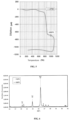
Fig. 1 Shrinkage curve and temperature). - The frit starts to shrink at a temperature of 810°C. In the 900 - 1100°C temperature range, the frit undergoes crystallisation. The frit then continues to shrink up to a temperature of 1240°C. Softening takes place at 1280°C and melting at 1340°C.
Table 2. Characteristic frit temperatures Characteristic Temperature Frit Start of contraction (TIC) 810 End of contraction (TFC) 1240 Softening (TR) 1280 Sphere temperature (ST) 1290 Semisphere temperature (T1\2) 1320 Melting temperature (MT) 1340 - The CTE of the frit has been determined by means of a dilatometer. The CTE measures the relative change in length or volume that occurs when a solid body changes temperature.
Table 3. Dilatometric analysis of the frit body Property Frit α50-300 (∘C-1) x 10-7 9.7 α300-500 (∘C-1) x 10-7 19.7 - The raw body is formed by uniaxial pressing in a hydraulic press of an atomised powder obtained by drying, in an atomiser, a wet-milled ceramic slip in a ball mill.
- A deflocculant (0.7% on the dry solid) is used for milling, which will allow us to regulate the density and viscosity of the slip, thus enabling us to obtain a particle size curve of the atomised material suitable for the subsequent pressing stage.
- Before spraying, the barbotine is mixed with a plasticising additive (1% on the dry solid), which will give the pressed body the appropriate mechanical resistance to withstand the transport process through the glazing and decoration line, prior to firing.
Table 4. Load formula of the ceramic material Raw material % (by weight) Clay 5-15 Kaolin 5-25 Frit 65-85 - The following table shows the particle size distribution of the spray-dried material and the characteristics of the pressed crude body (
Fig 2 . Particle size distribution of the atomised ceramic material).Table 5. Raw properties of atomised pressed ceramic material Property Atomisation Rejection at 63 µm (%) 2.2 Humidity (%) 6.0 Pressure (kg/cm2) 350 Bulk density (gr/cm3) 1.812 Dry mechanical strength (kg/cm2) 31.2 - In this section, the evolution of the bulk density during firing and the water absorption with the temperature of the preferred composition has been determined in order to establish the ideal temperature for firing the body (
Fig 3 . Evolution of the bulk density and water absorption of the body with firing temperature). - During firing, it can be observed that the body reaches the vitrification temperature at 1140°C which is slightly lower than the maximum densification temperature (1150°C). The maximum density obtained is 2.329 g/cm3.
-
Table 8. Dilatometric analysis of the fired body Sample Body Expansion at 700 oC(‰) 1.4 α50-300 (∘C-1) × 10-7 11 α300-500 (∘C-1) × 10-7 23 α500-650 (∘C-1) × 10-7 23 - It is observed that the fired body of the preferred ceramic material provides a higher thermal expansion than the frit of the body alone, due to the worse reactivity of the silica and alumina from the clay and kaolin with the lithium present in the frit.
- For the characterisation of the body, the crystalline phases have been identified by X-ray diffraction (XRD) of the preferred ceramic material.
-
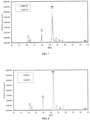
Figure 4 shows the diffractogram obtained from the body sample, in which the peaks of maximum intensity of the identified phases have been labelled, as well as other characteristic reflections of lower intensity (the relative intensity of the pure phase is indicated in brackets). The following is noted: - A lithium feldspar or lithium orthoclase (lithium silicoaluminate LiAlSi3O8) and, as minority phases, Mullite (Al6Si2O13), a Gahnite-type spinel (ZnAl2O4) and quartz (SiO2).
- The residual quartz detected is found in very low proportions and comes from clay and kaolin.
- Gahnite-type spinel must contain zinc present in the frit (
Fig 4 . X-ray diffraction of the fired body). -
Figure 5 shows the dimensional variation of the atomised preferred ceramic material with firing temperature. The material begins to shrink significantly from 800°C and this shrinkage stops at 900°C. Between 900°C and 1100°C a certain stability of the material is observed, and from this temperature a second shrinkage begins. This dimensional behaviour is typical for materials with devitrification during firing, which takes place mainly in the stabilisation zone. - To determine which phases develop during firing, X-ray diffraction was carried out on a piece fired at 1000°C, of one of the ceramic materials tested (not the preferred one) and cooled rapidly by quenching, and compared with a piece of the same material fired at 1135°C in a firing cycle with progressive cooling under the conditions of the usual firing cycles (
fig. 6 Diffractogram of the sample fired with progressive cooling (1135°C) and the sample fired at 1000°C and rapidly cooled). There are important differences between the two diffractions, and the sample at 1135°C shows a higher content of crystalline phases with lithium, specifically feldspar or lithium orthoclase. By contrast, the sample rapidly cooled to 1000°C shows virgillite as lithium phases in addition to feldspar. The differences observed are due to the different thermal cycle used for each sample, in particular the maximum firing temperature (1135°C vs. 1000°C). In addition to these phases, small amounts of quartz, rutile and spinel are detected in all samples. -
Fig. 7 shows a comparison between the diffractogram of pieces fired at 1000°C and 1135°C cooled by quenching. It can be seen that while at 1000°C Virgillite and lithium feldspar are detected, at 1135°C only the feldspar phase is detected, with Virgillite disappearing. This result is in agreement with the above and indicates that at low temperatures the formation of Virgillite is favoured, but at high temperatures only the feldspar phase is formed. Furthermore, with the temperature increase from 1000°C to 1135°C, devitrification is favoured, which seems to indicate that there is no significant dissolution of devitrified crystals at the product firing temperature (1135°C). - Finally, the influence of cooling rate on the devitrified phases is shown (
fig. 8 shows the diffractogram of the sample cooled slowly (1135°C L) and rapidly (1135°C R)) the conclusion is that slow cooling favours devitrification, probably due to the increase in the time that the specimen takes to cool down is at high temperature (>1135°C). - When testing the preferred frit that was used in the formulation of the body to produce the glaze, too much crystallisation is observed, giving a surface that is too rough. To solve this problem, a second preferred frit for the glaze was formulated, was formulated and a new glaze was obtained. This frit has a lower percentage of Al2O3 and a higher percentage of Li2O, ZnO, BaO, CaO and B2O3 than the frit with which the body was formulated.
- The glaze frit has a higher melting point than the body frit, in order to reduce crystallisation during glaze firing.
- The glaze formula finally used with this second preferred frit is as follows:
Table 9. Glaze loading formula Raw material % (by weight) Frit 85-95 Kaolin 5-15 - Glazes have been obtained through the application of this glaze, which provide suitable properties for use on glass ceramic hobs.
- Tests were carried out to determine the scratch and wear resistance of the glazes obtained. These results were compared with those obtained on a commercial glass ceramic hob.
- The results obtained in the determination of the scratch resistance of the glaze compared with those of a commercial glass ceramic hob are shown in table 10 below. It details the average critical load values determined from the micrographs of the scratches made (in
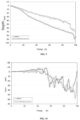
fig. 11 and 12 ) you can see the difference in the scratch made between the preferred glaze and the commercial glass ceramic hob, and from the scratch graphs for each of the samples tested (infig. 9 and 10 ) a comparative scratch graph between the preferred glaze and the commercial glass ceramic hob can be seen. The total deformation of the samples can be seen in the first graph and the plastic deformation in the second graph. The critical load is defined as the load value applied for which a change of mechanism occurs during scratching. In this case, different critical loads have been observed on the tested specimens, defined as follows: - Lc1: Crack initiation/scratch furrow.
- Lc2: Chipping initiation.
- Lc3: Cohesive failure of the material: Breakage in depth.
- Lc4: Appearance of chipping at the edges of the groove (spallations).
- The results obtained indicate that the preferential glaze developed shows a better scratch behaviour than that of a commercial glass ceramic hob, since the determined load values are higher.
- With regard to the wear resistance of the glaze obtained with the application of the one preferred, the test was carried out using Gardco equipment and a green scouring pad (containing quartz as an abrasive), thus simulating the type of abrasion to which it will be subjected during use.
- In
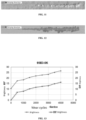
Fig. 13 andFig.14 the variation of the gloss of both samples with the wear cycles and the difference in gloss after each stage with respect to the initial gloss. Due to the higher dullness of the preferred glaze sample, the angle used to determine its gloss was 85°, while for the glass ceramic hob the measurements were made at an angle of 60°. In both cases an increase in gloss is observed, indicating that wear is polishing the material. On the basis of these results, it should be concluded that the glass ceramic hob has better wear resistance than the developed glaze, since the change in gloss experienced during the test is lower (11 gloss units after 4000 cycles on the commercial hob compared to 16 on the glaze made with the preferred glaze). This is because brightness measurements taken at an 85° angle have a higher sensitivity. Also, visually, the change in appearance following the test is higher in the commercial glass ceramic hob sample. Consequently, for practical purposes, it can be concluded that the sample with the preferred glaze has better wear behaviour mainly because its initial gloss is lower than that of the commercial glass ceramic hob. - The figures show an image of 12 explanatory graphs and diffractograms of the glazed ceramic material.
- Figure 1:
- Shows a graph of the shrinkage-temperature curve of the frit produced for the body. This is a curve of frit shrinkage as a function of temperature. Shrinkage is measured in percent (%) and temperature in degrees Celsius (°C).
- Figure 2:
- Shows a graph of the particle size distribution of the atomised ceramic material. It is a curve of the granulometric distribution of the atomised ceramic material where we have on the ordinates the percentage by weight measured in percent (%) for each sieve represented by its mesh size, measured at microns (µm), in abscissa.
- Figure 3:
- Shows the diagram of the ceramic material's stoneware. Evolution of the bulk density and water absorption of the body with the firing temperature. It is a curve of the diagram of the ceramic material's stoneware. We measure on the two ordinate axes the evolution of bulk density and water absorption as a function of temperature on the abscissa. The bulk density is measured in grams per cubic centimetre (gr/cm3), the water absorption in weight percentage (%) and the temperature in (°C).
- Figure 4:
- Shows a graph of the X-ray diffraction of the fired body of the ceramic material.
- Figure 5:
- It shows a graph of the dimensional variation of the raw body of the ceramic material with the firing temperature.
- Figure 6:
- Shows a diffractogram of the sample fired at 1135°C of one of the tested ceramic materials (not the preferred one) with progressive cooling and a sample of the same material fired at 1000°C and rapidly cooled.
- Figure 7:
- Shows a diffractogram of the sample fired at 1135°C of one of the tested ceramic materials (not the preferred one) and a sample of the same material fired at 1000°C and rapidly cooled.
- Figure 8:
- It shows a diffractogram of the fired sample of one of the tested ceramic materials (not the preferred one) at 1135°C and cooled slowly (1135°C S) and a sample of the same material fired at 1135°C and cooled rapidly (1135°C R).
- Figure 9:
- It shows a comparative scratch graph between the developed preferred glaze and a commercial glass ceramic hob (total deformation of the samples).
- Figure 10:
- Displays a comparative scratch chart between the preferred glaze developed and a commercial glass ceramic hob (plastic deformation of the specimens).
- Figure 11:
- It shows a micrograph of the scratch on the preferred glaze.
- Figure 12:
- Shows a micrograph of the scratch on a commercial glass ceramic hob.
- Figure 13:
- Shows the results obtained in the wear resistance test on Gardco equipment for the sample of the preferred glaze.
- Figure 14:
- Shows the results obtained in the test for wear resistance on Gardco equipment for the sample "commercial glass ceramic hob".
- For the manufacture of the preferred glazed ceramic material, the following procedure was followed:
- 1.- Firstly, the material that makes up the body was prepared by atomising the mixture of raw materials (80% frit body, 10% clay and 10% kaolin), wet milled in an alumina ball mill with the help of a deflocculant (sodium silicate at 0.7% by weight of the dry solid). After grinding and prior to atomisation, a plasticiser additive (sodium acrylate at 1% on the dry solid) was added to the barbotine.
- 2.- Secondly, the material composing the glaze was also prepared by wet milling in an alumina ball mill of the raw materials (95% glaze frit and 5% kaolin). A binder (sodium carboxymethyl cellulose) and a deflocculant (sodium tripolyphosphate) were introduced into the mill charge, both in a proportion of 0.3% by weight of the dry solid.
- 3.- The atomised material, with a humidity of 6.0%, was pressed in an industrial hydraulic press with a normal pressure of 350 Kg/cm2, dried in an industrial dryer, with a normal working cycle, and then glazed by spraying (airless). In order to increase the deposited weight compared to normal industrial conditions, a double application of the glaze was carried out using two consecutive booths. The grammage applied in each of these booths was 25g of suspension in a 30x30 cm2 piece, i.e. around 280 g/m2 suspension per booth.
- 4.- The glazed material was fired in an industrial oven, using a total firing cycle of 40 minutes, with a maximum temperature of 1150°C.
- With regard to the characterisation of the ceramic material obtained, which has been carried out at the present invention we can see, in the diagram of vitrification presented (
fig. 3 ), that the ceramic material obtained with the body frit reaches the vitrification temperature at 1140°C, which is slightly lower than the maximum densification temperature (1150°C). The maximum density obtained is high (2.329 gr/cm3), so the pieces have a low internal porosity. The fired pieces do not show pyroplastic deformation at the firing temperature. - The fired body has much lower coefficients of expansion than those of typical porcelain stoneware compositions (see table 8), although higher than those observed for commercial glass ceramic slabs. This may be because the crystaline phase formed is mainly lithium orthoclase, which has a higher thermal expansion than virgillite, which is the crystalline phase detected in commercial hobs.
- Finally, the glaze obtained with the frit * provides properties suitable for use on glass ceramic hobs (matt appearance, smooth texture, thermal shock resistance, stain resistance and high hardness).
| Sample | Lc1 | Lc2 | Lc3 | Lc4 |
| Preferred glaze (95%Frit-5% Kaolin) | - | 24 ± 5 | 54 ± 2 | - |
| Commercial glass | 5 ± 1 | 14 ± 1 | 26 ± 3 | 48 ± 3 |
Claims (9)
- Glazed ceramic material with a low coefficient of thermal expansion characterised by the fact that it is composed of a body and a glaze. The body formula contains between 65% and 85% frit in the SiO2-Al2O3- Li2O system and 15-35% inorganic feedstock, a mixture of kaolin and clay, which does not contain inosilicates in its filler formula, which can be pressed in large format sheets, larger than 1.40 m and between 6 and 30 mm thick, and which is coated with a thin vitreous layer of glaze, the glaze formula containing between 85% and 95% of frit in the SiO2-Al2O3- Li2O system and between 5% and 15% kaolin and for its use as a ceramic material, the whole is subjected to a heat treatment of less than 1200°C in a cycle of variable total duration depending on the thickness of the pressed body and which also allows it to be coloured and decorated on the surface, the specific composition of which is as follows:Composition of the body:
The body consists of:• Between 65% and 85% of frit in the SiO2-Al2O3- Li2O system to be used as the main raw material in porcelain stoneware compositions. The frit has the following composition expressed as a percentage of major oxides:Rust % (by weight) SiO2 47.5-68.6 Al2O3 17.4-40.3 Li2O 3.8-11.8 B2O3 0.9-10.0 CaO 0.0-1.9 MgO 0.0-1.3 ZnO 1.5-3.6 BaO 0.0-3.0 Raw material % (by weight) Kaolin 10.1-16.9 Quartz 29.8-49.8 Hydroxide Aluminium 13.4-38.8 Lithium Carbonate 8.0-21.2 Barium carbonate 0.0-3.1 Zinc oxide 0.0-1.7 Boric acid 0.0-14.3 Dolomite 0.0-4.6 • Between 15% and 35% "inorganic raw material" (mixture of kaolin and clay).
The body loading formula is as follows:Raw material % (by weight) Clay 5-15 Kaolin 5-25 Frit 65-85 Glaze composition:The glaze is composed of:• Between 85% and 95% frit in the SiO2-Al2O3- Li2O system to be used as the main raw material in glaze compositions. The chemical analysis of the frit, expressed in oxides, and its charge formula are given in the tables above.• Between 5% and 15% of "plastic inorganic raw material" (kaolin).Therefore, the glaze loading formula is as follows:
Glaze loading formulaRaw material % (by weight) Kaolin 5-15 Frit 85-95 - Glazed ceramic material with a low coefficient of thermal expansion, according to the first claim, characterised in that the coefficients of thermal expansion of the frit and the body are as follows:Dilatometric analysis of frit
Property Frit α50-300 (∘C-1) x 10-7 9.7 α300-500 (∘C-1) x 10-7 19.7 Dilatometric analysis of the fired bodySample Body Expansion at 700°C (%o) 1.4 α50-300 (∘C-1) x 10-7 11 α300-500 (∘C-1) x 10-7 23 α500-650 (oC-1) x 10-7 23 - Manufacture of glazed ceramic material with a low coefficient of thermal expansion, according to the first claim, characterised in that the product consists of a pressed atomised ceramic material, coated with a thin vitreous layer of glaze, subjected to a heat treatment of less than 1200C in a cycle of total duration, variable depending on the thickness of the pressed body.
- Glazed ceramic material with a low coefficient of thermal expansion, according to the first claim, characterised in that in order to obtain the low coefficient of expansion, the composition devitrifies, as the majority phase, a feldspar or orthoclase lithium (lithium silicoaluminate, LiAlSi3O8) and as minority phases Mullite (Al6Si2O13), a Gahnite-type spinel (ZnAl2O4) and quartz (SiO2).
- Glazed ceramic material with a low coefficient of thermal expansion, according to the first claim, characterised in that it can be coloured in mass through the addition of inorganic pigments such as Fe-Cr based Black with Hematite crystalline structure; Ti-W-Cr based Brown with Rutile crystalline structure; Fe-Cr-Al based Brown with Hematite crystal structure; Al-Mn based Pink with Corundum crystal structure; Ti-Sb-Cr based Orange with Rutile crystal structure or Zr-Si-V based Blue with Zircon crystal structure.
- Glazed ceramic material with a low coefficient of thermal expansion, according to the first claim, characterised in that its whiteness can be increased by the addition of aluminas and opacifiers such as zirconium silicate.
- Glazed ceramic material with a low coefficient of thermal expansion, according to the first claim, characterised by the fact that its glaze can be decorated with coloured digital inorganic inks.
- Use for the manufacture of glazed ceramic material with a low coefficient of thermal expansion, according to the first claim, characterised in that by containing 65 to 85% frit, a low coefficient of expansion is obtained for the manufacture of large format slabs >1.40 m / thickness 6 to 30 mm) in which the different whites and colours that can be developed from this material can be mixed throughout their mass (even in the form of veins imitating natural stone) without causing deformations or tensions in the final fired slab.
- Use for the manufacture of glazed ceramic material with a low coefficient of thermal expansion, according to the first claim, characterised in that the coefficient of thermal expansion and conduction of the fired piece allows the installation of an induction generator underneath it, allowing the possibility of firing directly on the area where the generator has been installed, thus creating a single surface, no need to cut the material to insert a hob or induction hob.
Applications Claiming Priority (2)
| Application Number | Priority Date | Filing Date | Title |
|---|---|---|---|
| ES202230397A ES2956017B2 (en) | 2022-04-29 | 2022-04-29 | GLAZED CERAMIC MATERIAL WITH A LOW COEFFICIENT OF THERMAL EXPANSION |
| PCT/IB2023/053346 WO2023209467A1 (en) | 2022-04-29 | 2023-04-03 | Enamelled ceramic material with a low coefficient of thermal expansion |
Publications (2)
| Publication Number | Publication Date |
|---|---|
| EP4516761A1 true EP4516761A1 (en) | 2025-03-05 |
| EP4516761A4 EP4516761A4 (en) | 2026-05-06 |
Family
ID=88518042
Family Applications (1)
| Application Number | Title | Priority Date | Filing Date |
|---|---|---|---|
| EP23795719.6A Pending EP4516761A4 (en) | 2022-04-29 | 2023-04-03 | ENAMELED CERAMIC MATERIAL WITH LOW THERMAL EXPANSION COEFFICIENT |
Country Status (7)
| Country | Link |
|---|---|
| US (1) | US20250289749A1 (en) |
| EP (1) | EP4516761A4 (en) |
| KR (1) | KR20250005973A (en) |
| CN (1) | CN118804903A (en) |
| CA (1) | CA3245309A1 (en) |
| ES (1) | ES2956017B2 (en) |
| WO (1) | WO2023209467A1 (en) |
Families Citing this family (1)
| Publication number | Priority date | Publication date | Assignee | Title |
|---|---|---|---|---|
| CN119841669B (en) * | 2024-11-20 | 2025-10-21 | 佛山欧神诺陶瓷有限公司 | Ceramic tile with enamel decorative effect on surface and preparation method thereof |
Family Cites Families (15)
| Publication number | Priority date | Publication date | Assignee | Title |
|---|---|---|---|---|
| BE756809A (en) * | 1969-09-29 | 1971-03-01 | Metallgesellschaft Ag | PROCESS FOR THE MANUFACTURING OF MOLDED PARTS AND COATINGS WITH LOW THERMAL EXPANSION IN LITHIUM PORCELAIN |
| US3804666A (en) * | 1971-12-13 | 1974-04-16 | Scm Corp | Glazed ceramic ware |
| DE3103438A1 (en) * | 1980-02-15 | 1982-04-08 | Corning Glass Works, 14830 Corning, N.Y. | GLASS FRIES AND Glazes |
| US4340645A (en) * | 1981-05-11 | 1982-07-20 | Mobay Chemical Corporation | Leadless glazes for whiteware |
| US5403787A (en) * | 1994-02-28 | 1995-04-04 | Corning Incorporated | Extruded ceramic honeycomb and method |
| US6846768B1 (en) * | 2003-03-26 | 2005-01-25 | Carlisle Foodservice Products, Incorporated | Methods and compositions for low thermal expansion ceramic |
| ES2393558T3 (en) * | 2007-05-29 | 2012-12-26 | Sociedad Anónima Minera Catalano-Aragonesa | Metallic enamel composition |
| CN101691313A (en) * | 2009-09-29 | 2010-04-07 | 河源万峰陶瓷有限公司 | Technology for producing glass ceramic composite boards |
| JP5374350B2 (en) * | 2009-12-14 | 2013-12-25 | 株式会社ノリタケカンパニーリミテド | White porcelain manufacturing method and glaze suitable therefor |
| JP5330979B2 (en) * | 2009-12-14 | 2013-10-30 | 株式会社ノリタケカンパニーリミテド | Inorganic material for thick decoration that supports white porcelain |
| CN105967643B (en) * | 2016-05-05 | 2019-01-29 | 德化县如瓷生活文化有限公司 | Medium temperature top grade tableware for daily use porcelain and preparation method thereof |
| ES2687800B1 (en) * | 2017-03-27 | 2019-08-06 | Torrecid Sa | COMPOSITION AND CONFORMING OF CERAMIC MATERIAL OF LOW COEFFICIENT OF THERMAL DILATATION AND ELEVATED RESISTANCE TO THERMAL SHOCK |
| DE202018102534U1 (en) * | 2017-12-22 | 2018-05-15 | Schott Ag | Transparent, colored lithium aluminum silicate glass-ceramic |
| CN109206013B (en) * | 2018-09-17 | 2021-05-18 | 泉州市陶瓷科学技术研究所 | Long-afterglow ceramic with non-cracking glaze and manufacturing process thereof |
| CN112645689A (en) * | 2021-01-05 | 2021-04-13 | 福建省德化鑫东宝瓷业有限公司 | Ceramic flowerpot prepared from waste raw materials and preparation process thereof |
-
2022
- 2022-04-29 ES ES202230397A patent/ES2956017B2/en active Active
-
2023
- 2023-04-03 CN CN202380024519.0A patent/CN118804903A/en active Pending
- 2023-04-03 CA CA3245309A patent/CA3245309A1/en active Pending
- 2023-04-03 US US18/860,391 patent/US20250289749A1/en active Pending
- 2023-04-03 WO PCT/IB2023/053346 patent/WO2023209467A1/en not_active Ceased
- 2023-04-03 KR KR1020247028584A patent/KR20250005973A/en active Pending
- 2023-04-03 EP EP23795719.6A patent/EP4516761A4/en active Pending
Also Published As
| Publication number | Publication date |
|---|---|
| KR20250005973A (en) | 2025-01-10 |
| ES2956017B2 (en) | 2024-12-30 |
| US20250289749A1 (en) | 2025-09-18 |
| ES2956017A1 (en) | 2023-12-11 |
| EP4516761A4 (en) | 2026-05-06 |
| CA3245309A1 (en) | 2025-06-13 |
| WO2023209467A1 (en) | 2023-11-02 |
| CN118804903A (en) | 2024-10-18 |
Similar Documents
| Publication | Publication Date | Title |
|---|---|---|
| CN114920457B (en) | High white background glaze, wear-resistant transparent glaze, wear-resistant full-polished glazed ceramic tile and preparation method | |
| CN111807704B (en) | Matte glaze applied to sanitary ceramics, sanitary ceramics applying matte glaze and preparation method of sanitary ceramics | |
| RU2385309C2 (en) | Glasing compound | |
| CN107417115B (en) | A kind of manufacturing method of high hardness and high wear-resistant glaze | |
| JP7476356B2 (en) | Manufacturing method of far infrared ceramic polished glaze tile with high wear resistance | |
| EP1971559B1 (en) | Glaze compositions | |
| CN115124244B (en) | Transparent frit, crystalline wear-resistant glaze, glazed brick and preparation method thereof | |
| WO1999057072A1 (en) | Tile glaze | |
| CN111943724A (en) | A kind of manufacturing method of matt transparent glaze porcelain piece | |
| CN108423993B (en) | A kind of meteorite glaze for building pottery and application method thereof | |
| CN113511922A (en) | Matte glaze for sanitary ceramics and preparation method of sanitary ceramics | |
| CN1190381C (en) | Nucleated glass composite material and process for preparing same | |
| CN111777432A (en) | Porcelain high-whiteness glazed tile and preparation method thereof | |
| CN115196944A (en) | Transparent opposite-grain through-body ceramic rock plate and preparation method thereof | |
| US20250289749A1 (en) | Enamelled Ceramic Material With a Low Coefficient Of Thermal Expansion | |
| KR102584536B1 (en) | ethod for manufacturing ceramics using a body composition for preventing blotting defects | |
| CN118652101A (en) | Ultra-white fabric, ultra-white luxury stone ceramic rock board and preparation method thereof | |
| EP3327092B1 (en) | Transparent matt ink for the protection of ceramic coatings | |
| CN114873917A (en) | Glaze, ceramic tile and preparation method of ceramic tile | |
| CN116874187B (en) | A Jun glaze suitable for sanitary ware production and its preparation method | |
| EP3584233A1 (en) | Composition and shaping of a ceramic material with low thermal expansion coefficient and high resistance to thermal shock | |
| CN115215546B (en) | A kind of mullite enhanced transparent glaze and its preparation method and application | |
| CN110713345A (en) | Enamel color material, preparation method and application in repairing enamel cultural relics painted on porcelain body | |
| CN114956871A (en) | Gray black polished thin rock plate made of double-peak graded glaze and preparation method of glaze | |
| EP4512788A1 (en) | Colourable translucent white ceramic compound based on a frit comprising calcium and sodium |
Legal Events
| Date | Code | Title | Description |
|---|---|---|---|
| STAA | Information on the status of an ep patent application or granted ep patent |
Free format text: STATUS: THE INTERNATIONAL PUBLICATION HAS BEEN MADE |
|
| PUAI | Public reference made under article 153(3) epc to a published international application that has entered the european phase |
Free format text: ORIGINAL CODE: 0009012 |
|
| STAA | Information on the status of an ep patent application or granted ep patent |
Free format text: STATUS: REQUEST FOR EXAMINATION WAS MADE |
|
| 17P | Request for examination filed |
Effective date: 20240715 |
|
| AK | Designated contracting states |
Kind code of ref document: A1 Designated state(s): AL AT BE BG CH CY CZ DE DK EE ES FI FR GB GR HR HU IE IS IT LI LT LU LV MC ME MK MT NL NO PL PT RO RS SE SI SK SM TR |
|
| DAV | Request for validation of the european patent (deleted) | ||
| DAX | Request for extension of the european patent (deleted) | ||
| REG | Reference to a national code |
Ref country code: DE Ref legal event code: R079 Free format text: PREVIOUS MAIN CLASS: C04B0033240000 Ipc: C04B0041500000 |
|
| A4 | Supplementary search report drawn up and despatched |
Effective date: 20260407 |
|
| RIC1 | Information provided on ipc code assigned before grant |
Ipc: C04B 41/50 20060101AFI20260330BHEP Ipc: C04B 41/00 20060101ALI20260330BHEP Ipc: C04B 33/24 20060101ALI20260330BHEP Ipc: C03C 3/093 20060101ALI20260330BHEP Ipc: C03C 8/04 20060101ALI20260330BHEP Ipc: C03C 8/14 20060101ALI20260330BHEP Ipc: C04B 33/14 20060101ALI20260330BHEP Ipc: C04B 33/34 20060101ALI20260330BHEP Ipc: C04B 35/19 20060101ALI20260330BHEP Ipc: C04B 41/86 20060101ALI20260330BHEP |