EP4513974A1 - Verfahren und vorrichtung zur bestimmung eines rsrp-schwellenwertparameters, kommunikationsvorrichtung und speichermedium - Google Patents
Verfahren und vorrichtung zur bestimmung eines rsrp-schwellenwertparameters, kommunikationsvorrichtung und speichermedium Download PDFInfo
- Publication number
- EP4513974A1 EP4513974A1 EP22937896.3A EP22937896A EP4513974A1 EP 4513974 A1 EP4513974 A1 EP 4513974A1 EP 22937896 A EP22937896 A EP 22937896A EP 4513974 A1 EP4513974 A1 EP 4513974A1
- Authority
- EP
- European Patent Office
- Prior art keywords
- type
- rsrp
- determining
- bias parameter
- configuration
- Prior art date
- Legal status (The legal status is an assumption and is not a legal conclusion. Google has not performed a legal analysis and makes no representation as to the accuracy of the status listed.)
- Pending
Links
Images


Classifications
-
- H—ELECTRICITY
- H04—ELECTRIC COMMUNICATION TECHNIQUE
- H04B—TRANSMISSION
- H04B7/00—Radio transmission systems, i.e. using radiation field
- H04B7/02—Diversity systems; Multi-antenna system, i.e. transmission or reception using multiple antennas
- H04B7/04—Diversity systems; Multi-antenna system, i.e. transmission or reception using multiple antennas using two or more spaced independent antennas
- H04B7/06—Diversity systems; Multi-antenna system, i.e. transmission or reception using multiple antennas using two or more spaced independent antennas at the transmitting station
- H04B7/0686—Hybrid systems, i.e. switching and simultaneous transmission
- H04B7/0695—Hybrid systems, i.e. switching and simultaneous transmission using beam selection
- H04B7/06952—Selecting one or more beams from a plurality of beams, e.g. beam training, management or sweeping
- H04B7/06964—Re-selection of one or more beams after beam failure
-
- H—ELECTRICITY
- H04—ELECTRIC COMMUNICATION TECHNIQUE
- H04B—TRANSMISSION
- H04B17/00—Monitoring; Testing
- H04B17/30—Monitoring; Testing of propagation channels
- H04B17/309—Measuring or estimating channel quality parameters
- H04B17/318—Received signal strength
-
- H—ELECTRICITY
- H04—ELECTRIC COMMUNICATION TECHNIQUE
- H04W—WIRELESS COMMUNICATION NETWORKS
- H04W24/00—Supervisory, monitoring or testing arrangements
- H04W24/02—Arrangements for optimising operational condition
-
- H—ELECTRICITY
- H04—ELECTRIC COMMUNICATION TECHNIQUE
- H04W—WIRELESS COMMUNICATION NETWORKS
- H04W74/00—Wireless channel access
- H04W74/08—Non-scheduled access, e.g. ALOHA
- H04W74/0833—Random access procedures, e.g. with 4-step access
-
- Y—GENERAL TAGGING OF NEW TECHNOLOGICAL DEVELOPMENTS; GENERAL TAGGING OF CROSS-SECTIONAL TECHNOLOGIES SPANNING OVER SEVERAL SECTIONS OF THE IPC; TECHNICAL SUBJECTS COVERED BY FORMER USPC CROSS-REFERENCE ART COLLECTIONS [XRACs] AND DIGESTS
- Y02—TECHNOLOGIES OR APPLICATIONS FOR MITIGATION OR ADAPTATION AGAINST CLIMATE CHANGE
- Y02D—CLIMATE CHANGE MITIGATION TECHNOLOGIES IN INFORMATION AND COMMUNICATION TECHNOLOGIES [ICT], I.E. INFORMATION AND COMMUNICATION TECHNOLOGIES AIMING AT THE REDUCTION OF THEIR OWN ENERGY USE
- Y02D30/00—Reducing energy consumption in communication networks
- Y02D30/70—Reducing energy consumption in communication networks in wireless communication networks
Definitions
- the present invention relates to, but is not limited to, the technical field of radio communication, and more particularly to a method and an apparatus for determining a parameter of a reference signal received power (RSRP) threshold, a communication device, and a storage medium.
- RSRP reference signal received power
- the MTC and NB-IoT device in the long term evolution (LTE) system of the fourth generation (4G) mobile communication technology, in order to support Internet of Things (IoT) applications, two major technologies of the machine type communication (MTC) and narrow band Internet of things (NB - IoT) are provided. These two technologies are targeted at relatively low-rate, high-latency scenarios.
- the NB-IoT device currently only supports a maximum rate of several hundred kbps.
- the MTC device currently only supports a maximum rate of a few Mbps.
- the device for the two technologies usually requires a rate of tens or hundreds Mbps and a relatively high requirement for the time delay. In this way, the MTC and NB-IoT device in the 4G LET cannot meet the requirements of the evolving IoT business.
- a new type of user equipment is provided to cover mid-range IoT devices.
- This new type of UE may be a reduced capability (RedCap) UE or a new radio light (NR-lite) UE.
- This new type of UE usually needs to meet one of the following requirements: low cost, low complexity, a certain degree of coverage enhancement, and power saving.
- an antenna structure of the RedCap UE has been reduced.
- the existing protocol does not provide limitations on how to correct a reference signal received power (RSRP) threshold.
- RSRP reference signal received power
- Embodiments of the present invention provide a method and apparatus for determining a parameter of an RSRP threshold, a communication device, and a storage medium.
- a method for determining a parameter of an RSRP threshold, performed by a network device includes: determining a bias parameter of an RSRP threshold of a first-type UE according to configuration-related information of the first-type UE, where the first-type UE is a UE of which an antenna structure is reduced with respect to a second-type UE.
- a method for determining a parameter of an RSRP threshold, performed by a first-type UE includes: determining a bias parameter of an RSRP threshold of the first-type UE according to configuration-related information of the first-type UE, where the first-type UE is a UE of which an antenna structure is reduced with respect to a second-type UE.
- an apparatus for determining a parameter of an RSRP threshold, applied to a network device includes: a first processing module configured to determine a bias parameter of an RSRP threshold of a first-type UE according to configuration-related information of the first-type UE, where the first-type UE is a UE of which an antenna structure is reduced with respect to a second-type UE.
- an apparatus for determining a parameter of an RSRP threshold, applied to a first-type UE includes: a second processing module configured to determine a bias parameter of an RSRP threshold of a first-type UE according to configuration-related information of the first-type UE, where the first-type UE is a UE of which an antenna structure is reduced with respect to a second-type UE.
- a communication device including: a processor; and a memory for storing executable instructions that, when executed by the processor, cause the method for determining the parameter of the RSRP threshold according to any embodiment of the present invention to be implemented.
- a computer storage medium having stored therein an executable program that, when executed by a processor, causes the method for determining the parameter of the RSRP threshold of any embodiment of the present invention to be implemented.
- the network device can determine the bias parameter of the RSRP threshold of the first-type UE according to the configuration-related information of the first-type UE.
- the first-type UE is a UE of which an antenna structure is reduced with respect to the second-type UE.
- the bias parameter of the RSRP threshold for the first-type UE with different configuration-related information may be accurately determined, so as to facilitate the first-type UE to determine an appropriate RSRP threshold for the first-type UE according to the bias parameter.
- a flexible configuration of the bias parameter for the first-type UE with different configuration-related information may be achieved.
- first, second and third may be used in the embodiments of the present invention for describing various information, these information should not be limited by these terms. These terms are only used for distinguishing information of the same type from others.
- first information may also be referred to as second information, and similarly, the second information may also be referred to as the first information, without departing from the scope of the embodiments of the present invention.
- the term “if” may be construed to mean “when” or “upon” or “in response to determining” depending on the context.
- the wireless communication system is a communication system based on cellular mobile communication technology, and the wireless communication system may include several UEs 110 and several base stations 120.
- a UE 110 may be a device that provides voice and/or data connectivity to a user.
- the UE 110 can communicate with one or more core networks via a radio access network (RAN), and the UE 110 may be an Internet of Things (IoT) UE, such as a sensor device, a mobile phone (or called a "cellular" phone) and a computer including an IoT UE.
- IoT Internet of Things
- the UE 110 may be a fixed device, a portable device, a pocket device, a hand-held device, a computer built-in device or a vehicle-mounted device.
- the UE 110 may be a station (STA), a subscriber unit, a subscriber station, a mobile station, a mobile, a remote station, an access point, a remote UE, an access UE, a user terminal, a user agent, a user device, or a user equipment.
- the UE 110 may also be a device of an unmanned aerial vehicle.
- the UE 110 may also be a vehicle-mounted device, for example, it may be a trip computer with a wireless communication function, or a wireless communication device connected externally to the trip computer.
- the UE 110 may also be a roadside device, for example, it may be a street lamp, a signal lamp, or other roadside devices with a wireless communication function.
- the base station 120 may be a network device in the wireless communication system.
- the wireless communication system may be the 4th generation (4G) mobile communication system, also known as a long term evolution (LTE) system, or the wireless communication system may be a 5G system, also called a new radio (NR) system or 5G NR system.
- the wireless communication system may be a next-generation system of the 5G system.
- An access network in the 5G system is called new generation-radio access network (NG-RAN).
- NG-RAN new generation-radio access network
- MTC machine type communication
- the base station 120 may be an evolved node B (eNB) in a 4G system.
- the base station 120 may be a next-generation node B (gNB) adopting a centralized and distributed architecture in the 5G system.
- the base station 120 adopts the centralized and distributed architecture it generally includes a central unit (CU) and at least two distributed units (DU).
- the centralized unit is provided with a protocol stack of a packet data convergence protocol (PDCP) layer, a radio link control (RLC) layer, a media access control (MAC) layer.
- the distributed unit is provided with a physical (PHY) layer protocol stack.
- PDCP packet data convergence protocol
- RLC radio link control
- MAC media access control
- PHY physical
- a wireless connection can be established between the base station 120 and the UE 110 through a wireless radio interface.
- the wireless radio interface is a wireless radio interface based on the fourth generation (4G) mobile communication network technology standard; or the wireless radio interface is a wireless radio interface based on the fifth generation (5G) mobile communication network technology standard, such as a new radio interface; or the wireless radio interface is a wireless radio interface based on a next-generation (from 5G) mobile communication network technology standard.
- an end-to-end (E2E) connection is established between the UEs 110, for example, vehicle to everything (V2X) communication, such as vehicle to vehicle (V2V) communication, vehicle to infrastructure (V2I) communication and vehicle to pedestrian (V2P) communication.
- V2X vehicle to everything
- V2V vehicle to vehicle
- V2I vehicle to infrastructure
- V2P vehicle to pedestrian
- the UE described above may be a terminal device in the embodiments described below.
- the above wireless communication system may further include a network management device 130.
- the network management device 130 may be a core network device in the wireless communication system, for example, the network management device 130 may be a mobility management entity (MME) in an evolved packet core (EPC) network.
- MME mobility management entity
- EPC evolved packet core
- the network management device may be other core network devices, such as a serving gateway (SGW), a public data network gateway (PGW), a policy and charging rule function (PCRF) unit or a home subscriber server (HSS), etc.
- SGW serving gateway
- PGW public data network gateway
- PCRF policy and charging rule function
- HSS home subscriber server
- the NR system defines a reference signal received power (RSRP) based on synchronization signal block (SSB) and channel state information-reference signal (CSI-RS).
- RSRP reference signal received power
- SSB synchronization signal block
- CSI-RS channel state information-reference signal
- the following RSRP threshold is defined: a reference signal received power threshold of a synchronization signal block (rsrp-ThresholdSSB); a reference signal received power threshold of channel state information-reference signal (rsrp-ThresholdCSI-RS); a reference signal received power threshold of a super uplink synchronization signal block (rsrp-ThresholdSSB-SUL); a reference signal received power threshold of a synchronization signal block for random access (msgA-RSRP-ThresholdSSB); a reference signal received power threshold for random access (msgA-RSRP-Threshold); a reference signal received power threshold for beam failure recovery (rsrp-ThresholdB
- each RSRP threshold may be used as follows.
- UE may select the SS block and corresponding PRACH resource for path-loss estimation and (re)transmission based on SS blocks that satisfy the threshold (see TS 38.213[13]).
- L1-RSRP threshold used for determining whether a candidate beam may be used by the UE to attempt contention-free random access to recover from beam failure (see TS 38.213[13], clause 6).
- the UE selects SUL carrier to perform random access based on this threshold (see TS 38.321[3], clause 5.1.1). The value applies to all the BWPs.
- the UE selects 2-step random access type to perform random access based on this threshold (see TS 38.321[3], clause 5.1.1).This field is only present if both 2-step and 4-step RA type are configured for the BWP.
- UE may select the SS block and corresponding PRACH resource for path-loss estimation and (re)transmission based on SS blocks that satisfy the threshold (see TS 38.213[13]).
- rsrp-ThresholdCSI-RS For rsrp-ThresholdCSI-RS, an RSRP threshold for selection of CSI-RS for 4-step RA type. If the random access procedure is initiated for beam failure recovery, rsrp-ThresholdCSI-RS is equal to rsrp-ThresholdSSB in BeamFailureRecoveryConfig IE.
- the UE selects the SSB and corresponding PRACH resource for path loss estimation and retransmission based on the SSB that meets the threshold (rsrp-ThresholdSSB); for rsrp-ThresholdSSB, the L1-RSRP threshold used for determining whether a candidate beam may be used by the UE to attempt contention-free random access to recover from beam failure; for rsrp-ThresholdSSB-SUL, the UE selects the SUL carrier to perform random access based on the threshold (rsrp-ThresholdSSB-SUL), the rsrp-ThresholdSSB-SUL is applicable to all bandwidths, and all bandwidths include at least one of: a bandwidth dedicated to a RedCap UE, a bandwidth dedicated to a common UE, and a bandwidth shared by a RedCap UE and a common UE; for msgA-RSRP-Threshold
- R17 newly introduces functions such as small data transmission (SDT) and/or coverage enhancement.
- SDT small data transmission
- the following thresholds are defined: an RSRP threshold for SDT initiation, used to initiate the SDT; an RSRP threshold for carrier selection of SDT, used to determine whether to perform SDT on SUL or NUL; an RSRP threshold for RACH type selection of SDT, used to determine whether to use 2-step RACH SDT or 4-step RACH SDT; an RSRP threshold for Msg.3 coverage enhancement, used to determine whether to use a coverage enhancement operation for Msg.3.
- the RedCap UE reduces the antenna structure, and the RedCap UE supports at least one of the following antenna structures.
- RedCap UE in FR1 supports an antenna structure of 2 receiving antennas or 1 receiving antenna.
- RedCap UE in FR2 supports an antenna structure of 2 receiving antennas; and each receiving antenna has N antenna elements or each receiving antenna contains N/2 antenna elements, where N is an integer greater than 1.
- the present invention provides a method for determining a parameter of an RSRP threshold performed by a network device, including the following step.
- a bias parameter of an RSRP threshold of a first-type UE is determined according to configuration-related information of the first-type UE.
- the first-type UE is a UE of which an antenna structure is reduced with respect to a second-type UE.
- the bias parameter may be specified by a communication protocol or determined by the network device. If the bias parameter is determined by the network device, the method further includes: sending, by the network device, configuration information indicating the bias parameter.
- the network device and the first-type UE may each determine a current corresponding bias parameter of the first-type UE according to the communication protocol.
- the network device determines the current bias parameter corresponding to the first-type UE according to the configuration-related information reported by the first-type UE.
- the network device determines the configuration-related information of the first-type UE, and determines the current corresponding bias parameter of the first-type UE according to the configuration-related information of the first-type UE.
- the bias parameter of the RSRP threshold of the first-type UE is used for the first-type UE to determine the RSRP threshold.
- the first-type UE may determine the RSRP threshold of the first-type UE according to the bias parameter of the first-type UE and an RSRP threshold of the second type UE.
- the RSRP threshold of the second UE may be, but is not limited to, an RSRP threshold used by a common UE specified in traditional 3GPP Release 15 and/or Release 16.
- the network device may be, but is not limited to, an access network device or a core network device.
- the access network device may include various types of base stations. For example, it may be a 2G base station, a 3G base station, a 4G base station, a 5G base station or other evolved base stations.
- the core network device may include, but is not limited to, various entities or network element functions of the core network.
- the second-type UE may be a common NR UE.
- the second-type UE includes, but is not limited to, an enhanced mobile bandwidth (eMBB) UE and/or an ultra-reliable delay communication (uRLLC) UE.
- eMBB enhanced mobile bandwidth
- uRLLC ultra-reliable delay communication
- it may be eMBB UE and/or uRLLC UE in a 5G NR system or other enhanced network systems.
- the first-type UE includes one of: a UE of which a number of receiving antennas is smaller than a number of receiving antennas of the second-type UE in a first frequency range; or a UE of which a number of antenna elements included in an antenna panel is smaller than that of the second-type UE in a second frequency range.
- the number of antenna elements included in the antenna panel of the first-type UE is smaller than that of the antenna panel of the second-type UE refers to that antenna elements included in each receiving antenna of the first-type UE is smaller than the number of antenna elements included in each receiving antenna of the second-type UE.
- the maximum value of the first frequency range is less than or equal to the minimum value of the second frequency range.
- the first frequency range includes FR1; and/or the second frequency range includes FR2.
- a frequency range corresponding to FR1 may be from 450MHz to 6000MHz; and a frequency range corresponding to FR2 may be from 24250MHz to 52600MHz.
- the first-type UE supports an antenna structure of one receiving antenna; the second-type UE supports an antenna structure of at least two receiving antennas.
- the first-type UE supports an antenna structure in which each receiving antenna includes a first number of antenna elements; and the second-type LTE supports an antenna structure in which each receiving antenna includes a second number of antenna elements, the first number is smaller than the second number.
- the first number is N/2, and the second number is N, where N is an even number greater than 0.
- the first-type UE and the second-type UE may be any other mobile terminals or fixed terminals, as long as the antenna structure of the first-type UE has been reduced compared with the antenna structure of the second-type UE.
- the first-type UE and the second-type UE are not limited in the present invention.
- both the first-type UE and the second-type UE may be mobile phones, computers, servers, wearable devices, game control platforms or multimedia devices.
- the first-type UE includes: RedCap UE and/or 5G NR-lite UE.
- the configuration-related information of the first-type UE includes at least one of: a measurement resource of the first-type UE; a frequency range in which the first-type UE is located; an RSRP threshold type of the first-type UE; or application scenario information used to determine an application scenario of the first-type UE.
- the measurement resource includes, but is not limited to, at least one of CSI-RS or SSB.
- the frequency range includes, but is not limited to, at least one of: a first frequency range or a second frequency range.
- the RSRP threshold type includes, but is not limited to, at least one of: rsrp-ThresholdSSB, used to allow the UE to determine whether it is allowed to select a PRACH resource corresponding to an SSB of which an RSRP is greater than rsrp-ThresholdSSB to perform an operation; rsrp-ThresholdCSI-RS, used to allow the UE to determine whether it is allowed to select a random access resource of which an RSRP is greater than rsrp-ThresholdCSI-RS to perform operation of beam recovery; msgA-RSRP-ThresholdSSB, used to allow the UE to determine whether it is allowed to select a PRACH resource of msgA corresponding to an SSB of which an RSRP is greater than msgA-RSRP-ThresholdSSB to perform an operation; msgA-RSRP-Threshold, used to allow the UE to determine whether to select a 2-step random
- the application scenarios include, but are not limited to, at least one of: a random access scenario, a beam recovery scenario, a small data transmission scenario, and a coverage enhancement scenario.
- the bias parameter of the RSRP threshold of the first-type UE may be determined by the network device based on the configuration-related information corresponding to different first-type UEs.
- the first-type UE is the UE that has been subjected to antenna structure reduction relative to the second-type UE.
- the bias parameters of the RSRP thresholds for the first-type UEs with different configuration-related information may be determined accurately, so as to facilitate the first-type UEs to determine an appropriate RSRP threshold for individual first-type UEs based on the bias parameters.
- a flexible configuration of the bias parameters for the first-type UEs with different configuration-related information can be achieved.
- determining the bias parameter of the RSRP threshold of the first-type UE according to the configuration-related information of the first-type UE includes: determining a same bias parameter according to different configuration-related information of the first-type UE; or determining different bias parameters according to different configuration-related information of the first-type UE.
- an embodiment of the present invention provides a method for determining a parameter of an RSRP threshold, performed by the network device, including the following step.
- configuration information is sent.
- the configuration information indicates the bias parameter corresponding to the configuration-related information of the first-type UE.
- the configuration information indicates at least one of: at least one frequency range and a bias parameter corresponding to the frequency range; at least one measurement resource and a bias parameter corresponding to the measurement resource; at least one RSRP threshold and a bias parameter corresponding to the RSRP threshold; or at least one application scenario information and a bias parameter corresponding to the application scenario information.
- the configuration information may be sent to the first-type UE from the network device, so as to facilitate the first-type UE to accurately determine a bias parameter for correcting the RSRP threshold corresponding to the first-type UE according to the configuration information and the configuration-related information of the first-type UE.
- a same bias parameter is determined according to different configuration-related information of the first-type UE; or different bias parameters are determined according to different configuration-related information of the first-type UE.
- the configuration-related information may be the configuration-related information in S21
- the bias parameter may be the bias parameter in S21
- Embodiments of the present invention provide a method for determining a parameter of an RSRP threshold, performed by a network device, including: determining the same bias parameter according to at least two different parameters in the configuration-related information of the first-type UE.
- the same bias parameter is determined according to differences in at least two of the measurement resource, the frequency range and the application scenario information for each RSRP threshold of the first-type UE.
- the network device configures the same bias parameter for the first-type UE under FR1 and using the SSB measurement resource and for the first-type UE under FR1 and using the CSI-RS measurement resource; or the network device configures the same bias parameter for the first-type UE under FR1 and using the SSB measurement resource in the small data transmission scenario and for the first-type UE under FR2 and using the CSI-RS measurement resource in the random access scenario; or the network device configures the same bias parameter for the first-type UE under FR1 and using an RSRP threshold of the CSI-RS measurement resource in the beam recovery scenario and for the first-type UE under FR2 and using an RSRP threshold of the SSB measurement resource in the random access scenario; and so on.
- the same bias parameter may be configured for the first-type UEs whose two random parameters in the configuration-related information are the same or different. That is, the same bias parameter may be configured for the first-type UE with at least two of the frequency range, the application scenario, the measurement resource, and the RSRP threshold type being the same.
- the network device can configure the same bias parameter for different configuration-related information of the first-type UE (at least part of the frequency range, the measurement resource, the application scenario, and the RSRP threshold type are different).
- this facilitates the management of the network device, and on the other hand, this also facilitates individual first-type UE to determine the RSRP threshold according to unified bias parameter in case of individual configuration-related information.
- This same bias parameter may be determined according to the communication protocol or determined by the network device.
- determining different bias parameters according to different configuration-related information of the first-type UE includes at least one of: determining the bias parameter to be a first bias parameter in response to the measurement resource of the first-type UE being a CSI-RS; or determining the bias parameter to be a second bias parameter in response to the measurement resource of the first-type UE being an SSB.
- the bias parameter of the first-type UE is determined to be offset1 according to the CSI-RS measurement resource of the first-type UE and the configuration information, and then the RSRP threshold of the first-type UE is determined to be H+offset1.
- the measurement resource of the first-type UE is SSB
- the bias parameter of the first-type UE is determined to be offset2 according to the SSB measurement resource of the first-type UE and the configuration information
- the RSRP threshold of the first-type UE is determined to be H+offset2.
- H is the RSRP threshold of the second-type UE.
- Embodiments of the present invention provide the method for determining the parameter of the RSRP threshold, performed by the network device, including: determining a corresponding bias parameter according to each RSRP threshold type of the first-type UE. At least two RSRP thresholds in each RSRP threshold type of the first-type UE correspond to different bias parameters.
- the network device configures a bias parameter for rsrp-ThresholdSSB in each RSRP threshold type of the first-type UE to be offset5, and a bias parameter for rsrp-ThresholdCSI-RS to be offset6.
- the network device configures a bias parameter for rsrp-ThresholdSSB and rsrp-ThresholdCSI-RS in each RSRP threshold type of the first-type UE to be offset5, a bias parameter for msgA-RSRP-ThresholdSSB to be offset6, and a bias parameter for the RSRP threshold for the SDT initiation and the RSRP threshold for the Msg.3 coverage enhancement to be offset7
- Embodiments of the present invention provide the method for determining the parameter of the RSRP threshold, performed by the network device, including: determining different bias parameters for individual RSRP thresholds of the first-type UE.
- the network device determines that bias parameters configured for rsrp-ThresholdSSB, rsrp-ThresholdCSI-RS, msgA-RSRP-ThresholdSSB, msgA-RSRP-Threshold, rsrp-ThresholdBFR, the RSRP threshold for the SDT initiation, the RSRP threshold for the carrier selection of SDT, the RSRP threshold for RACH type selection of SDT and the RSRP threshold for Msg.3 coverage enhancement in each RSRP threshold type of the first-type UE are offset5, offset6, offset7, offset8, offset9, offset10, offset11, offset12 and offset13, respectively.
- Embodiments of the present invention provide the method for determining the parameter of the RSRP threshold, performed by network device, including: sending configuration information, where the configuration information indicates that at least two RSRP thresholds in each RSRP threshold type are mapped to different bias parameters.
- Embodiments of the present invention provide the method for determining the parameter of the RSRP threshold, performed by network device, including: sending configuration information, where the configuration information indicates that individual RSRP thresholds are mapped to different bias parameters.
- the network device sends the configuration information to the first-type UE, where the configuration information may indicate, but is not limited to, at least one of: rsrp-ThresholdSSB mapped to offset5, and/or rsrp-ThresholdCSI-RS mapped to offset6; rsrp-ThresholdSSB mapped to offset5, rsrp-ThresholdCSI-RS mapped to offset6, and/or rsrp-ThresholdCSI-RS mapped to offset7; rsrp-ThresholdSSB and rsrp-ThresholdCSI-RS mapped to offset5, msgA-RSRP-ThresholdSSB mapped to offset6, the RSRP threshold for SDT initiation and the RSRP threshold for Msg.3 coverage enhancement mapped to offset7; or rsrp-ThresholdSSB mapped to offset5, rsrp-ThresholdCSI-RS mapped to offset6, msgA
- the network device may configure the first-type UE with different bias parameters for at least one RSRP and the remaining RSRPs in the different RSRPs, or configure the first-type UE with different bias parameters for each individual RSRP thresholds.
- the personalization and diversity of the bias parameter configured for each first-type UE can be improved, and an appropriate bias parameter can be configured for the first-type UE with different RSPR thresholds to correct the RSRP threshold.
- determining different bias parameters according to different configuration-related information of the first-type UE includes: determining different bias parameters for application scenario information corresponding to at least two application scenarios in individual application scenarios of the first-type UE.
- the application scenario includes at least one of: a random access scenario, including an application scenario where one of rsrp-ThresholdSSB, msgA-RSRP-ThresholdSSB, or msgA-RSRP-Threshold is used; a beam recovery scenario including an application scenario where one of rsrp-ThresholdCSI-RS or rsrp-ThresholdBFR is used; a small data transmission (SDT) scenario including an application scenario where one of an RSRP threshold for SDT initiation, an RSRP threshold for carrier selection of SDT, and an RSRP threshold for RACH type selection of SDT is used; or a coverage enhancement scenario including an application scenario where an RSRP threshold for Msg.3 coverage enhancement is used.
- SDT small data transmission
- all individual application scenarios correspond to different bias parameters; or some application scenarios in the individual application scenarios correspond to different bias parameters, and some application scenarios in the individual application scenarios correspond to the same bias parameter.
- the bias parameter may be determined according to the communication protocol or determined by the network device.
- Embodiments of the present invention provide the method for determining the parameter of the RSRP threshold, performed by the network device, including: determining different bias parameters for application scenario information corresponding to at least two application scenarios in the individual application scenarios of the first-type UE.
- the network device configures a bias parameter for the application scenario information corresponding to the random access scenario of the first-type UE to be offset1, and the network device configures a bias parameter for the application scenario information corresponding to the beam recovery scenario of the first-type UE to be offset2.
- the network device configures a bias parameter for the application scenario information corresponding to the random access scenario of the first-type UE to be offset1
- the network device configures a bias parameter for the application scenario information corresponding to the beam recovery scenario of the first-type UE to be offset2
- the network device configures a bias parameter for the application scenario information corresponding to the small data transmission scenario and the application scenario information corresponding to the coverage enhancement scenario of the first-type UE to be offset3 respectively.
- Embodiments of the present invention provide the method for determining the parameter of the RSRP threshold, performed by the network device, including: determining different bias parameters for application scenario information corresponding to each application scenario of the first-type UE.
- the network device configures a bias parameter for the application scenario information corresponding to the random access scenario of the first-type UE to be offset1
- the network device configures a bias parameter for the application scenario information corresponding to the beam recovery scenario of the first-type UE to be offset2
- the network device configures a bias parameter for the application scenario information corresponding to the small data transmission scenario of the first-type UE to be offset3
- the network device configures a bias parameter for the application scenario information corresponding to the coverage enhancement scenario of the first-type UE to be offset4.
- the bias parameter configured by the network device for the application scenario information of the random access scenario involving rsrp-ThresholdSSB, msgA-RSRP-ThresholdSSB, or msgA-RSRP-Threshold of the first-type UE is offset1, offset2, or offset3, respectively.
- Embodiments of the present invention provide the method for determining the parameter of the RSRP threshold, performed by the network device, including: sending the configuration information, where the configuration information indicates application scenario information corresponding to at least two application scenarios in the individual application scenarios, which corresponding to different bias parameters.
- the network device sends the configuration information
- the configuration information may indicate, but is not limited to, at least one of: the application scenario information of the random access scenario mapped to offset1, the application scenario information of the beam recovery scenario mapped to offset2, the application scenario information of the small data transmission scenario and the application scenario information of the coverage enhancement scenario mapped to offset3, or the application scenario information of the coverage enhancement scenario mapped to offset4.
- the application scenario information of the random access scenario involving rsrp-ThresholdSSB, msgA-RSRP-ThresholdSSB or msgA-RSRP-Threshold is mapped to offset1, offset2 or offset3, respectively, and/or the application scenario information of the beam recovery scenario involving rsrp-ThresholdCSI-RS or rsrp-ThresholdBFR is mapped to offset4 and offset5, respectively, and/or the application scenario information of the small data transmission scenario involving the RSRP threshold for the SDT initiation, the RSRP threshold for the carrier selection of the SDT or the RSRP threshold for the RACH type selection of the SDT is mapped to offset6, offset7 and offset8, respectively, and/or the application scenario information of the coverage enhancement scenario involving the RSRP threshold for Msg.3 coverage enhancement is mapped to offset9.
- the configuration information may indicate: the application scenario information of the random access scenario mapped to offset1, and the application scenario information of the for beam recovery scenario mapped to offset2; or the application scenario information of the random access scenario mapped to offset1, the application scenario information of the for beam recovery scenario mapped to offset2, and the application scenario information of the small data transmission scenario and the application scenario information of the coverage enhancement scenario mapped to offset3; or the application scenario information of the random access scenario mapped to offset1, the application scenario information of the for beam recovery scenario mapped to offset2, the application scenario information of the small data transmission scenario mapped to offset3, and the application scenario information of the coverage enhancement scenario mapped to offset4.
- the network device may configure the first-type UE with different bias parameters for at least one application scenario and the remaining application scenarios in the different application scenarios, or configure the first-type UE with different bias parameters for each individual application scenarios.
- the personalization and diversity of the bias parameter configured for each first-type UE can be improved, and an appropriate bias parameter can be configured for the first-type UE in different application scenarios to correct the RSRP threshold.
- embodiments of the present invention provides a method for determining a parameter of an RSRP threshold, performed by a network device, including the following step.
- the bias parameter is determined according to a communication protocol, a pre-configuration, or the configuration-related information.
- the network device may determine the bias parameter of the first-type UE according to the communication protocol and the configuration-related information of the first-type UE.
- the network device may determine the bias parameter of the first-type UE according to the configuration-related information of the first-type UE.
- the network device may determine the bias parameter of the first-type UE according to the pre-configuration.
- the bias parameter is a bias parameters in any of the above embodiments.
- the bias parameter may be the same bias parameter determined for different configuration-related information in the above embodiment, or the bias parameter may be a different bias parameter determined for different configuration-related information in the above embodiment.
- the bias parameter may be, but is not limited to, at least one of a first bias parameter, a second bias parameter, a third bias parameter, a fourth bias parameter, a bias parameter mapped to at least one RSRP threshold, and a bias parameter mapped to at least one frequency range, or a bias parameter mapped to at least one application scenario information.
- the bias parameters corresponding to individual pieces of configuration-related information of the first-type UE may be determined according to the communication protocol and the pre-configuration, thus improving the diversity of the bias parameter configuration and the applicability to more application scenarios.
- a method for determining a parameter of an RSRP threshold described below is performed by a UE, which is similar to the description of the above-mentioned method for determining the parameter of the RSRP threshold performed by the network device.
- Technical details not disclosed in the embodiments of the method for determining the parameter of the RSRP threshold performed by the UE may be referred to the description of the embodiments of the method for determining the parameter of the RSRP threshold performed by the network device, which will not be described in detail here.
- Embodiments of the present invention provide a method for determining a parameter of an RSRP threshold, performed by a first-type UE, including: a bias parameter of an RSRP threshold of the first-type UE is determined according to configuration-related information of the first-type UE.
- the first-type UE is a UE of which an antenna structure is reduced with respect to a second-type UE.
- determining the bias parameter of the RSRP threshold of the first-type UE according to configuration-related information of the first-type UE includes: determining the bias parameter corresponding to the configuration-related information of the first-type UE according to a communication protocol and the configuration-related information of the first-type UE.
- Embodiments of the present invention provide the method for determining the parameter of the RSRP threshold, performed by the first-type UE, including: determining the bias parameter corresponding to the configuration-related information of the first-type UE according to a communication protocol and the configuration-related information of the first-type UE.
- the method includes: receiving configuration information, where the configuration information indicates configuration-related information of the first-type UE and a corresponding bias parameter. Determining the bias parameter of the RSRP threshold of the first-type UE according to the configuration-related information of the first-type UE includes: determining the bias parameter of the first-type UE according to the configuration-related information of the first-type UE and the configuration information.
- embodiments of the present invention provide a method for determining a parameter of an RSRP threshold, performed by the first-type UE, including the following steps.
- configuration information is received, where the configuration information indicates a bias parameter corresponding to the configuration-related information of the first-type UE.
- Embodiments of the present invention provide the apparatus for determining the parameter of the RSRP threshold, performed by the first-type UE, including: the second processing module 61 configured to determine an RSRP threshold of the first-type UE according to an RSRP threshold of the second-type UE and the bias parameter of the first-type UE.
- Embodiments of the present invention provide the apparatus for determining the parameter of the RSRP threshold, performed by the first-type UE, including: the second processing module 61 configured to determine the RSRP threshold of the first-type UE of which the measurement resource is the SSB according to the RSRP threshold of the second-type UE and the second bias parameter.
- the configuration information indicates that application scenario information corresponding to at least two application scenarios in individual application scenarios is mapped to different bias parameters.
- Embodiments of the present invention provide the apparatus for determining the parameter of the RSRP threshold, performed by the first-type UE, including: the second processing module 61 configured to determine the bias parameter of the first-type UE to be a bias parameter corresponding to the application scenario information of the first-type UE according to the application scenario information of the first-type UE and the configuration information.
- Embodiments of the present invention provide a communication device, including: a processor; and a memory for storing processor-executable instructions.
- the processor is configured to run the executable instructions to perform the method for determining a parameter of an RSRP threshold according to any embodiment of the present invention.
- the communication device may include, but not limited to, at least one of a core network device, an access device or a UE.
- the processor may include various types of storage media, which are non-transitory computer storage media, and can continue to memorize and store information thereon after the communication device is powered off.
- Embodiments of the present invention further provide a computer storage medium.
- the computer storage medium stores a computer executable program.
- the executable program is executed by a processor, the method for determining the parameter of the RSRP threshold of any embodiment of the present invention (e.g., at least one of the methods shown in FIGS. 2 to 7 ) is implemented.
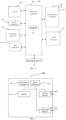
- FIG. 10 is a block diagram showing a UE 800 according to an illustrative embodiment.
- the UE 800 may be a mobile phone, a computer, a digital broadcast terminal, a messaging device, a game console, a tablet device, a medical device, a fitness device, a personal digital assistant, or the like.
- the UE 800 may include one or more of the following components: a processing component 802, a memory 804, a power component 806, a multimedia component 808, an audio component 810, an input/output (I/O) interface 812, a sensor component 814, and a communication component 816.
- a processing component 802 a memory 804, a power component 806, a multimedia component 808, an audio component 810, an input/output (I/O) interface 812, a sensor component 814, and a communication component 816.
- the processing component 802 typically controls overall operations of the UE 800, such as the operations associated with display, phone calls, data communications, camera operations, and recording operations.
- the processing component 802 may include one or more processors 820 to execute instructions to perform all or some of the steps in the above-described methods.
- the processing component 802 may include one or more modules which facilitate the interaction between the processing component 802 and other components.
- the processing component 802 may include a multimedia module to facilitate the interaction between the multimedia component 808 and the processing component 802.
- the memory 804 is configured to store various types of data to support the operation of the UE 800. Examples of such data include instructions for any applications or methods operated on the UE 800, contact data, phonebook data, messages, pictures, videos, etc.
- the memory 804 may be implemented using any type of volatile or non-volatile memory devices, or a combination thereof, such as a static random access memory (SRAM), an electrically erasable programmable read-only memory (EEPROM), an erasable programmable read-only memory (EPROM), a programmable read-only memory (PROM), a read-only memory (ROM), a magnetic memory, a flash memory, a magnetic disk or an optical disk.
- SRAM static random access memory
- EEPROM electrically erasable programmable read-only memory
- EPROM erasable programmable read-only memory
- PROM programmable read-only memory
- ROM read-only memory
- magnetic memory a magnetic memory
- flash memory a flash memory
- the power component 806 provides power to various components of the UE 800.
- the power component 806 may include a power management system, one or more power sources, and any other components associated with the generation, management, and distribution of power in the UE 800.
- the multimedia component 808 includes a screen providing an output interface between the UE 800 and the user.
- the screen may include a liquid crystal display (LCD) and a touch panel (TP). If the screen includes the touch panel, the screen may be implemented as a touch screen to receive input signals from the user.
- the touch panel includes one or more touch sensors to sense touches, swipes, and gestures on the touch panel. The touch sensors may not only sense a boundary of a touch or swipe action, but also sense a duration and a pressure associated with the touch or swipe action.
- the multimedia component 808 includes a front camera and/or a rear camera.
- the front camera and/or the rear camera may receive an external multimedia datum while the UE 800 is in an operation mode, such as a photographing mode or a video mode.
- an operation mode such as a photographing mode or a video mode.
- Each of the front camera and the rear camera may be a fixed optical lens system or have focus and optical zoom capability.
- the audio component 810 is configured to output and/or input audio signals.
- the audio component 810 includes a microphone (MIC) configured to receive an external audio signal when the UE 800 is in an operation mode, such as a call mode, a recording mode, and a voice recognition mode.
- the received audio signal may be further stored in the memory 804 or transmitted via the communication component 816.
- the audio component 810 further includes a speaker to output audio signals.
- the I/O interface 812 provides an interface between the processing component 802 and peripheral interface modules, such as keyboards, click wheels, buttons, and the like.
- the buttons may include, but are not limited to, a home button, a volume button, a starting button, and a locking button.
- the sensor component 814 includes one or more sensors to provide status assessments of various aspects of the UE 800. For instance, the sensor component 814 may detect an open/closed status of the UE 800, relative positioning of components, e.g., the display and the keypad, of the UE 800, a change in position of the UE 800 or a component of the UE 800, a presence or absence of user contact with the UE 800, an orientation or an acceleration/deceleration of the UE 800, and a change in temperature of the UE 800.
- the sensor component 814 may include a proximity sensor configured to detect the presence of nearby objects without any physical contact.
- the sensor component 814 may further include a light sensor, such as a CMOS or CCD image sensor, for use in imaging applications.
- the sensor component 814 may further include an accelerometer sensor, a gyroscope sensor, a magnetic sensor, a pressure sensor, or a temperature sensor.
- the communication component 816 is configured to facilitate communication, wired or wireless, between the UE 800 and other devices.
- the UE 800 may access a wireless network based on a communication standard, such as Wi-Fi, 4G, or 5G, or a combination thereof.
- the communication component 816 receives a broadcast signal or broadcast associated information from an external broadcast management system via a broadcast channel.
- the communication component 816 further includes a near field communication (NFC) module to facilitate short-range communications.
- NFC near field communication
- the NFC module may be implemented based on a radio frequency identifier (RFID) technology, an infrared data association (IrDA) technology, an ultra-wideband (UWB) technology, a Bluetooth (BT) technology, and other technologies.
- RFID radio frequency identifier
- IrDA infrared data association
- UWB ultra-wideband
- BT Bluetooth
- the UE 800 may be implemented with one or more of an application specific integrated circuits (ASIC), a digital signal processor (DSP), a digital signal processing device (DSPD), a programmable logic device (PLD), a field programmable gate array (FPGA), a controller, a micro-controller, a microprocessor, or other electronic elements, for performing the above-mentioned method.
- ASIC application specific integrated circuits
- DSP digital signal processor
- DSPD digital signal processing device
- PLD programmable logic device
- FPGA field programmable gate array
- controller a micro-controller, a microprocessor, or other electronic elements, for performing the above-mentioned method.
- non-transitory computer readable storage medium including instructions, such as included in the memory 804, executable by the processor 820 in the UE 800, for completing the above-mentioned method.
- the non-transitory computer-readable storage medium may be a ROM, a random access memory (RAM), a CD-ROM, a magnetic tape, a floppy disc, an optical data storage device, and the like.
- the base station 900 may be provided as a network device.
- the base station 900 includes a processing component 922, which further includes one or more processors, and memory resources represented by a memory 932 for storing instructions executable by the processing component 922, such as an application program.
- the application program stored in the memory 932 may include one or more modules each corresponding to a set of instructions.
- the processing component 922 is configured to execute instructions to perform any method applied to the base station as described above.
- the base station 900 may further include a power component 926 configured to perform power management of the base station 900, a wired or wireless network interface 950 configured to connect the base station 900 to a network, and an input/output (I/O) interface 958.
- the base station 900 may operate based on an operating system stored in the memory 932, such as Windows Server TM, Mac OS XTM, UnixTM, LinuxTM, FreeBSDTM, or the like.
Landscapes
- Engineering & Computer Science (AREA)
- Computer Networks & Wireless Communication (AREA)
- Signal Processing (AREA)
- Quality & Reliability (AREA)
- Physics & Mathematics (AREA)
- Electromagnetism (AREA)
- Mobile Radio Communication Systems (AREA)
Applications Claiming Priority (1)
| Application Number | Priority Date | Filing Date | Title |
|---|---|---|---|
| PCT/CN2022/088307 WO2023201660A1 (zh) | 2022-04-21 | 2022-04-21 | Rsrp门限参数确定方法、装置、通信设备及存储介质 |
Publications (2)
| Publication Number | Publication Date |
|---|---|
| EP4513974A1 true EP4513974A1 (de) | 2025-02-26 |
| EP4513974A4 EP4513974A4 (de) | 2025-06-11 |
Family
ID=83244897
Family Applications (1)
| Application Number | Title | Priority Date | Filing Date |
|---|---|---|---|
| EP22937896.3A Pending EP4513974A4 (de) | 2022-04-21 | 2022-04-21 | Verfahren und vorrichtung zur bestimmung eines rsrp-schwellenwertparameters, kommunikationsvorrichtung und speichermedium |
Country Status (3)
| Country | Link |
|---|---|
| EP (1) | EP4513974A4 (de) |
| CN (1) | CN115088289A (de) |
| WO (1) | WO2023201660A1 (de) |
Families Citing this family (1)
| Publication number | Priority date | Publication date | Assignee | Title |
|---|---|---|---|---|
| WO2024148621A1 (zh) * | 2023-01-13 | 2024-07-18 | Oppo广东移动通信有限公司 | 门限确定方法、装置、设备及存储介质 |
Family Cites Families (11)
| Publication number | Priority date | Publication date | Assignee | Title |
|---|---|---|---|---|
| CN101848532B (zh) * | 2009-03-24 | 2012-08-29 | 电信科学技术研究院 | 一种参考信号接收功率阈值的调整方法及设备 |
| WO2017071828A1 (en) * | 2015-10-30 | 2017-05-04 | Telecom Italia S.P.A. | Method and system for dynamically varying reference signals' power in a mobile radio network |
| AU2018435988A1 (en) * | 2018-08-10 | 2021-03-18 | Guangdong Oppo Mobile Telecommunications Corp., Ltd. | Reference signal measurement configuration method, terminal device, and network device |
| US12185375B2 (en) * | 2020-01-17 | 2024-12-31 | Asustek Computer Inc. | Method and apparatus for Random Access Channel (RACH)-based small data transmission procedure in a wireless communication system |
| US11659600B2 (en) * | 2020-02-28 | 2023-05-23 | Samsung Electronics Co., Ltd. | Method and apparatus for random access procedure |
| US12513550B2 (en) * | 2020-07-06 | 2025-12-30 | Beijing Xiaomi Mobile Software Co., Ltd. | Communication method, communication apparatus, and storage medium |
| CN113939037A (zh) * | 2020-07-13 | 2022-01-14 | 中国移动通信有限公司研究院 | 一种终端接入方法、终端及存储介质 |
| WO2022036339A2 (en) * | 2020-12-07 | 2022-02-17 | Futurewei Technologies, Inc. | Method and apparatus for identification of redcap ues |
| BR112023016854A2 (pt) * | 2021-02-24 | 2023-11-14 | Beijing Xiaomi Mobile Software Co Ltd | Método, aparelho e dispositivo para acessar uma rede, e, meio de armazenamento legível por computador não transitório |
| WO2022193303A1 (zh) * | 2021-03-19 | 2022-09-22 | 北京小米移动软件有限公司 | 一种随机接入方法、随机接入装置及存储介质 |
| US20240237081A1 (en) * | 2021-05-10 | 2024-07-11 | Beijing Xiaomi Mobile Software Co., Ltd. | Resource configuration method and apparatus, communication device, and storage medium |
-
2022
- 2022-04-21 EP EP22937896.3A patent/EP4513974A4/de active Pending
- 2022-04-21 WO PCT/CN2022/088307 patent/WO2023201660A1/zh not_active Ceased
- 2022-04-21 CN CN202280001357.4A patent/CN115088289A/zh active Pending
Also Published As
| Publication number | Publication date |
|---|---|
| WO2023201660A1 (zh) | 2023-10-26 |
| CN115088289A (zh) | 2022-09-20 |
| EP4513974A4 (de) | 2025-06-11 |
Similar Documents
| Publication | Publication Date | Title |
|---|---|---|
| CN112042224B (zh) | 切换小区的方法、装置、通信设备及存储介质 | |
| US20240163135A1 (en) | Configuration method and apparatus for joint channel estimation, and device and storage medium | |
| EP4665043A1 (de) | Verfahren und vorrichtung zur bestimmung einer direktzugriffsressource sowie kommunikationsvorrichtung und speichermedium | |
| US20240172021A1 (en) | Method for measurement gap processing | |
| CN112236977A (zh) | 参数配置方法、装置、通信设备和存储介质 | |
| CN115053473B (zh) | Rsrp门限确定方法、装置、通信设备及存储介质 | |
| CN110521236A (zh) | 信息处理方法、装置及计算机存储介质 | |
| US12317279B2 (en) | Methods for communication processing and user equipment | |
| EP4422282A1 (de) | Zellenneuauswahlverfahren und -vorrichtung, kommunikationsvorrichtung und speichermedium | |
| CN115443676A (zh) | 测量间隔预配置处理方法、装置、通信设备及存储介质 | |
| EP4513974A1 (de) | Verfahren und vorrichtung zur bestimmung eines rsrp-schwellenwertparameters, kommunikationsvorrichtung und speichermedium | |
| CN116602027A (zh) | 收发ncd-ssb的配置信息的方法、装置、通信设备及存储介质 | |
| WO2022120649A1 (zh) | 接入控制方法、装置、通信设备和介质 | |
| CN116368924B (zh) | 通信控制方法、系统及装置、通信设备及存储介质 | |
| CN117242806B (zh) | 无线传输的方法、装置、通信设备及存储介质 | |
| EP4271061A1 (de) | Kommunikationsverarbeitungsverfahren, vorrichtung, kommunikationsvorrichtung und speichermedium | |
| US20230199896A1 (en) | Method and apparatus for transferring service, communication device and storage medium | |
| CN114586450A (zh) | 切换bwp的方法、装置、通信设备及存储介质 | |
| EP4057551A1 (de) | Verfahren und vorrichtung zur konfiguration von downlink-steuerungsinformationen, kommunikationsvorrichtung und speichermedium | |
| WO2022110200A1 (zh) | 定时调整方法及装置、通信设备和存储介质 | |
| CN117242834B (zh) | 无线传输的方法、装置、通信设备及存储介质 | |
| CN112640559A (zh) | 无线传输的方法、装置、通信设备及存储介质 | |
| EP4561184A1 (de) | Informationsübertragungsverfahren und -vorrichtung, kommunikationsvorrichtung und speichermedium | |
| EP4510732A1 (de) | Ressourcenkonfigurationsverfahren und -vorrichtung sowie kommunikationsvorrichtung und speichermedium | |
| US20250261190A1 (en) | System information transmission method and apparatus, communication device, and storage medium |
Legal Events
| Date | Code | Title | Description |
|---|---|---|---|
| STAA | Information on the status of an ep patent application or granted ep patent |
Free format text: STATUS: THE INTERNATIONAL PUBLICATION HAS BEEN MADE |
|
| PUAI | Public reference made under article 153(3) epc to a published international application that has entered the european phase |
Free format text: ORIGINAL CODE: 0009012 |
|
| STAA | Information on the status of an ep patent application or granted ep patent |
Free format text: STATUS: REQUEST FOR EXAMINATION WAS MADE |
|
| 17P | Request for examination filed |
Effective date: 20241118 |
|
| AK | Designated contracting states |
Kind code of ref document: A1 Designated state(s): AL AT BE BG CH CY CZ DE DK EE ES FI FR GB GR HR HU IE IS IT LI LT LU LV MC MK MT NL NO PL PT RO RS SE SI SK SM TR |
|
| REG | Reference to a national code |
Ref country code: DE Ref legal event code: R079 Free format text: PREVIOUS MAIN CLASS: H04W0052000000 Ipc: H04B0017318000 |
|
| A4 | Supplementary search report drawn up and despatched |
Effective date: 20250514 |
|
| RIC1 | Information provided on ipc code assigned before grant |
Ipc: H04W 74/0833 20240101ALN20250508BHEP Ipc: H04B 7/06 20060101ALI20250508BHEP Ipc: H04B 17/318 20150101AFI20250508BHEP |
|
| DAV | Request for validation of the european patent (deleted) | ||
| DAX | Request for extension of the european patent (deleted) |