EP4513188A2 - Methods of identifying hiv patients sensitive to therapy with gp120 v3 glycan-directed antibodies - Google Patents
Methods of identifying hiv patients sensitive to therapy with gp120 v3 glycan-directed antibodies Download PDFInfo
- Publication number
- EP4513188A2 EP4513188A2 EP24210600.3A EP24210600A EP4513188A2 EP 4513188 A2 EP4513188 A2 EP 4513188A2 EP 24210600 A EP24210600 A EP 24210600A EP 4513188 A2 EP4513188 A2 EP 4513188A2
- Authority
- EP
- European Patent Office
- Prior art keywords
- hiv
- seq
- antibody
- antigen
- nos
- Prior art date
- Legal status (The legal status is an assumption and is not a legal conclusion. Google has not performed a legal analysis and makes no representation as to the accuracy of the status listed.)
- Pending
Links
Images


Classifications
-
- A—HUMAN NECESSITIES
- A61—MEDICAL OR VETERINARY SCIENCE; HYGIENE
- A61K—PREPARATIONS FOR MEDICAL, DENTAL OR TOILETRY PURPOSES
- A61K39/00—Medicinal preparations containing antigens or antibodies
- A61K39/12—Viral antigens
- A61K39/21—Retroviridae, e.g. equine infectious anemia virus
-
- A—HUMAN NECESSITIES
- A61—MEDICAL OR VETERINARY SCIENCE; HYGIENE
- A61K—PREPARATIONS FOR MEDICAL, DENTAL OR TOILETRY PURPOSES
- A61K45/00—Medicinal preparations containing active ingredients not provided for in groups A61K31/00 - A61K41/00
- A61K45/06—Mixtures of active ingredients without chemical characterisation, e.g. antiphlogistics and cardiaca
-
- A—HUMAN NECESSITIES
- A61—MEDICAL OR VETERINARY SCIENCE; HYGIENE
- A61K—PREPARATIONS FOR MEDICAL, DENTAL OR TOILETRY PURPOSES
- A61K31/00—Medicinal preparations containing organic active ingredients
- A61K31/33—Heterocyclic compounds
- A61K31/395—Heterocyclic compounds having nitrogen as a ring hetero atom, e.g. guanethidine or rifamycins
- A61K31/435—Heterocyclic compounds having nitrogen as a ring hetero atom, e.g. guanethidine or rifamycins having six-membered rings with one nitrogen as the only ring hetero atom
- A61K31/47—Quinolines; Isoquinolines
- A61K31/4738—Quinolines; Isoquinolines ortho- or peri-condensed with heterocyclic ring systems
- A61K31/4745—Quinolines; Isoquinolines ortho- or peri-condensed with heterocyclic ring systems condensed with ring systems having nitrogen as a ring hetero atom, e.g. phenantrolines
-
- A—HUMAN NECESSITIES
- A61—MEDICAL OR VETERINARY SCIENCE; HYGIENE
- A61K—PREPARATIONS FOR MEDICAL, DENTAL OR TOILETRY PURPOSES
- A61K31/00—Medicinal preparations containing organic active ingredients
- A61K31/33—Heterocyclic compounds
- A61K31/395—Heterocyclic compounds having nitrogen as a ring hetero atom, e.g. guanethidine or rifamycins
- A61K31/495—Heterocyclic compounds having nitrogen as a ring hetero atom, e.g. guanethidine or rifamycins having six-membered rings with two or more nitrogen atoms as the only ring heteroatoms, e.g. piperazine or tetrazines
- A61K31/505—Pyrimidines; Hydrogenated pyrimidines, e.g. trimethoprim
- A61K31/519—Pyrimidines; Hydrogenated pyrimidines, e.g. trimethoprim ortho- or peri-condensed with heterocyclic rings
-
- A—HUMAN NECESSITIES
- A61—MEDICAL OR VETERINARY SCIENCE; HYGIENE
- A61K—PREPARATIONS FOR MEDICAL, DENTAL OR TOILETRY PURPOSES
- A61K39/00—Medicinal preparations containing antigens or antibodies
- A61K39/395—Antibodies; Immunoglobulins; Immune serum, e.g. antilymphocytic serum
- A61K39/42—Antibodies; Immunoglobulins; Immune serum, e.g. antilymphocytic serum viral
-
- A—HUMAN NECESSITIES
- A61—MEDICAL OR VETERINARY SCIENCE; HYGIENE
- A61P—SPECIFIC THERAPEUTIC ACTIVITY OF CHEMICAL COMPOUNDS OR MEDICINAL PREPARATIONS
- A61P31/00—Antiinfectives, i.e. antibiotics, antiseptics, chemotherapeutics
- A61P31/12—Antivirals
- A61P31/14—Antivirals for RNA viruses
- A61P31/18—Antivirals for RNA viruses for HIV
-
- C—CHEMISTRY; METALLURGY
- C07—ORGANIC CHEMISTRY
- C07K—PEPTIDES
- C07K16/00—Immunoglobulins [IG], e.g. monoclonal or polyclonal antibodies
- C07K16/08—Immunoglobulins [IG], e.g. monoclonal or polyclonal antibodies against material from viruses
- C07K16/10—RNA viruses
- C07K16/112—Retroviridae (F), e.g. leukemia viruses
- C07K16/114—Lentivirus (G), e.g. human immunodeficiency virus [HIV], feline immunodeficiency virus [FIV] or simian immunodeficiency virus [SIV]
- C07K16/1145—Env proteins, e.g. gp41, gp110/120, gp160, V3, principal neutralising domain [PND] or CD4-binding site
-
- C—CHEMISTRY; METALLURGY
- C12—BIOCHEMISTRY; BEER; SPIRITS; WINE; VINEGAR; MICROBIOLOGY; ENZYMOLOGY; MUTATION OR GENETIC ENGINEERING
- C12Q—MEASURING OR TESTING PROCESSES INVOLVING ENZYMES, NUCLEIC ACIDS OR MICROORGANISMS; COMPOSITIONS OR TEST PAPERS THEREFOR; PROCESSES OF PREPARING SUCH COMPOSITIONS; CONDITION-RESPONSIVE CONTROL IN MICROBIOLOGICAL OR ENZYMOLOGICAL PROCESSES
- C12Q1/00—Measuring or testing processes involving enzymes, nucleic acids or microorganisms; Compositions therefor; Processes of preparing such compositions
- C12Q1/70—Measuring or testing processes involving enzymes, nucleic acids or microorganisms; Compositions therefor; Processes of preparing such compositions involving virus or bacteriophage
- C12Q1/701—Specific hybridization probes
- C12Q1/702—Specific hybridization probes for retroviruses
- C12Q1/703—Viruses associated with AIDS
-
- A—HUMAN NECESSITIES
- A61—MEDICAL OR VETERINARY SCIENCE; HYGIENE
- A61K—PREPARATIONS FOR MEDICAL, DENTAL OR TOILETRY PURPOSES
- A61K39/00—Medicinal preparations containing antigens or antibodies
- A61K2039/505—Medicinal preparations containing antigens or antibodies comprising antibodies
-
- A—HUMAN NECESSITIES
- A61—MEDICAL OR VETERINARY SCIENCE; HYGIENE
- A61K—PREPARATIONS FOR MEDICAL, DENTAL OR TOILETRY PURPOSES
- A61K39/00—Medicinal preparations containing antigens or antibodies
- A61K2039/55—Medicinal preparations containing antigens or antibodies characterised by the host/recipient, e.g. newborn with maternal antibodies
-
- C—CHEMISTRY; METALLURGY
- C07—ORGANIC CHEMISTRY
- C07K—PEPTIDES
- C07K2317/00—Immunoglobulins specific features
- C07K2317/30—Immunoglobulins specific features characterized by aspects of specificity or valency
- C07K2317/31—Immunoglobulins specific features characterized by aspects of specificity or valency multispecific
-
- C—CHEMISTRY; METALLURGY
- C07—ORGANIC CHEMISTRY
- C07K—PEPTIDES
- C07K2317/00—Immunoglobulins specific features
- C07K2317/30—Immunoglobulins specific features characterized by aspects of specificity or valency
- C07K2317/34—Identification of a linear epitope shorter than 20 amino acid residues or of a conformational epitope defined by amino acid residues
-
- C—CHEMISTRY; METALLURGY
- C07—ORGANIC CHEMISTRY
- C07K—PEPTIDES
- C07K2317/00—Immunoglobulins specific features
- C07K2317/50—Immunoglobulins specific features characterized by immunoglobulin fragments
- C07K2317/52—Constant or Fc region; Isotype
-
- C—CHEMISTRY; METALLURGY
- C07—ORGANIC CHEMISTRY
- C07K—PEPTIDES
- C07K2317/00—Immunoglobulins specific features
- C07K2317/50—Immunoglobulins specific features characterized by immunoglobulin fragments
- C07K2317/56—Immunoglobulins specific features characterized by immunoglobulin fragments variable (Fv) region, i.e. VH and/or VL
-
- C—CHEMISTRY; METALLURGY
- C07—ORGANIC CHEMISTRY
- C07K—PEPTIDES
- C07K2317/00—Immunoglobulins specific features
- C07K2317/70—Immunoglobulins specific features characterized by effect upon binding to a cell or to an antigen
- C07K2317/76—Antagonist effect on antigen, e.g. neutralization or inhibition of binding
-
- C—CHEMISTRY; METALLURGY
- C07—ORGANIC CHEMISTRY
- C07K—PEPTIDES
- C07K2317/00—Immunoglobulins specific features
- C07K2317/90—Immunoglobulins specific features characterized by (pharmaco)kinetic aspects or by stability of the immunoglobulin
- C07K2317/92—Affinity (KD), association rate (Ka), dissociation rate (Kd) or EC50 value
-
- C—CHEMISTRY; METALLURGY
- C12—BIOCHEMISTRY; BEER; SPIRITS; WINE; VINEGAR; MICROBIOLOGY; ENZYMOLOGY; MUTATION OR GENETIC ENGINEERING
- C12Q—MEASURING OR TESTING PROCESSES INVOLVING ENZYMES, NUCLEIC ACIDS OR MICROORGANISMS; COMPOSITIONS OR TEST PAPERS THEREFOR; PROCESSES OF PREPARING SUCH COMPOSITIONS; CONDITION-RESPONSIVE CONTROL IN MICROBIOLOGICAL OR ENZYMOLOGICAL PROCESSES
- C12Q2600/00—Oligonucleotides characterized by their use
- C12Q2600/106—Pharmacogenomics, i.e. genetic variability in individual responses to drugs and drug metabolism
-
- C—CHEMISTRY; METALLURGY
- C12—BIOCHEMISTRY; BEER; SPIRITS; WINE; VINEGAR; MICROBIOLOGY; ENZYMOLOGY; MUTATION OR GENETIC ENGINEERING
- C12Q—MEASURING OR TESTING PROCESSES INVOLVING ENZYMES, NUCLEIC ACIDS OR MICROORGANISMS; COMPOSITIONS OR TEST PAPERS THEREFOR; PROCESSES OF PREPARING SUCH COMPOSITIONS; CONDITION-RESPONSIVE CONTROL IN MICROBIOLOGICAL OR ENZYMOLOGICAL PROCESSES
- C12Q2600/00—Oligonucleotides characterized by their use
- C12Q2600/156—Polymorphic or mutational markers
-
- G—PHYSICS
- G01—MEASURING; TESTING
- G01N—INVESTIGATING OR ANALYSING MATERIALS BY DETERMINING THEIR CHEMICAL OR PHYSICAL PROPERTIES
- G01N2333/00—Assays involving biological materials from specific organisms or of a specific nature
- G01N2333/005—Assays involving biological materials from specific organisms or of a specific nature from viruses
- G01N2333/08—RNA viruses
- G01N2333/15—Retroviridae, e.g. bovine leukaemia virus, feline leukaemia virus, feline leukaemia virus, human T-cell leukaemia-lymphoma virus
- G01N2333/155—Lentiviridae, e.g. visna-maedi virus, equine infectious virus, FIV, SIV
- G01N2333/16—HIV-1, HIV-2
- G01N2333/163—Regulatory proteins, e.g. tat, nef, rev, vif, vpu, vpr, vpt, vpx
Definitions
- HIV infection and related diseases are a major public health problem worldwide.
- Most currently approved therapies for HIV infection target the viral reverse transcriptase, protease enzymes, and integrase but resistance of HIV to these existing drugs, long term toxicity, and lack of patient adherence to daily dosing regimens have proven to be problems associated with these therapies. Therefore, it is important to discover and develop new HIV drugs.
- the method entails identifying a subject infected with an HIV or a population of HIV expressing a gp120 comprising the following amino acid residues: i. N332glycan, D325 and T63; ii. N332glycan, D325 and L179; iii. N332glycan, D325 and T320; iv. N332glycan, D325 and H330; v. N332glycan, D325, T63 and L179; vi. N332glycan, D325, T63 and T320; vii. N332glycan, D325, T63 and H330; viii.
- the method entails identifying a subject infected with an HIV or a population of HIV expressing a gp120 comprising the following amino acid residues: i. N332glycan, D325 and T63; ii. N332glycan, D325 and L179; iii. N332glycan, D325 and T320; or iv. N332glycan, D325 and H330, wherein the amino acid positions are with reference to SEQ ID NO: 4.
- the method entails identifying a subject infected with an HIV or a population of HIV expressing a gp120 comprising the following amino acid residues: i. N332glycan, D325, T63 and L179; ii. N332glycan, D325, T63 and T320; iii. N332glycan, D325, T63 and H330; iv. N332glycan, D325, L179 and T320; v. N332glycan, D325, L179 and H330; or vi. N332glycan, D325, T320 and H330, wherein the amino acid positions are with reference to SEQ ID NO: 4.
- the method entails identifying a subject infected with an HIV or a population of HIV expressing a gp120 comprising the following amino acid residues: i. N332glycan, D325, L179, T320 and H330; ii. N332glycan, D325, T63, T320 and H330; iii. N332glycan, D325, T63, L179 and T320; or iv. N332glycan, D325, T63, L179 and H330, wherein the amino acid positions are with reference to SEQ ID NO: 4.
- the method entails identifying a subject infected with an HIV or a population of HIV expressing a gp120 comprising the following amino acid residues: i. N332glycan, D325, T63 and H330; ii. N332glycan, D325, T320 and H330; iii. N332glycan, D325, L179, T320 and H330; or iv. N332glycan, D325, T63, L179, T320 and H330, wherein the amino acid positions are with reference to SEQ ID NO: 4.
- the subject is infected with an HIV or a population of HIV expressing a gp120 further comprising one or more of the following amino acid residues: a glycan at amino acid residue 301 (glycan301); a lysine at amino acid residue 677 (K677); an amino acid residue other than tryptophan (e.g., A, C, D, E, F, G, H, I, K, L, M, N, P, Q, R, S, T, V or Y) at position 17 (not_W17); an amino acid residue other than arginine (e.g., A, C, D, E, F, G, H, I, K, L, M, N, P, Q, S, T, V, W or Y) at position 747 (not_R747); an insertion_321.01 (e.g., an insertion of any amino acid ( e.g., A, C, D, E, F, G, H, I, K, L,
- At least 90%, e.g., at least 91%, at least 92%, at least 93%, at least 94%, at least 95%, at least 96%, at least 97%, at least 98%, at least 99%, or 100%, of the HIV species in the population of HIV comprise the recited amino acid residues.
- the administered antibody or antigen-binding fragment thereof competes with or comprises VH and VL regions from an antibody selected from the group consisting of GS-9722 (elipovimab), GS-9721, PGT-121, PGT-121.66, PGT-121.414, PGT-122, PGT-123, PGT-124, PGT-125, PGT-126, PGT-128, PGT-130, PGT-133, PGT-134, PGT-135, PGT-136, PGT-137, PGT-138, PGT-139, 10-1074, 10-1074-J, VRC24, 2G12, BG18, 354BG8, 354BG18, 354BG42, 354BG33, 354BG129, 354BG188, 354BG411, 354BG426, DH270.1, DH270.6, PGDM12, VRC41.01, PGDM21, PCDN-33A, BF520.1 and VRC29.03.
- the antibody or antigen-binding fragment thereof competes with or comprises VH and VL regions from an antibody selected from the group consisting of GS-9722, GS-9721, PGT-121, PGT-121.66, PGT-121.414, PGT-124, PGT-134, GS-2872, 10-1074, 10-1074-J, PGT-122 and PGT-123.
- the methods comprise administering an antibody comprising an Fc region comprising one or more amino acid substitutions that extend serum half-life.
- the methods comprise administering an antibody comprising an Fc region comprising the following amino acids at the indicated positions (EU index numbering): i.
- the methods comprise administering an antibody comprising an Fc region comprising the following amino acids at the indicated positions (EU index numbering): i. Aspartate at position 239 and glutamate at position 332 (DE); ii. Aspartate at position 239, glutamate at position 332 and leucine at position 330 (DEL); iii. Aspartate at position 239, glutamate at position 332, alanine at position 236 (DEA); or iv.
- the methods comprise administering an antigen binding fragment.
- the antigen binding fragment is selected from the group consisting of scFv, Fab, Fab2, Fab', F(ab') 2 , Fv, and a diabody.
- the antibody is one or more arms of a multi-specific antibody, e.g., a bi-specific antibody.
- the human subject is acutely infected with HIV.
- the antibody is administered to a human subject having an HIV infection of Fiebig stage IV or earlier, e.g., Fiebig stage III, Fiebig stage II or Fiebig stage I. In some embodiments, the antibody is administered to a human subject who has not seroconverted. In some embodiments, the human subject is recently infected with HIV, e.g., within 1, 2, 3 or 4 weeks, or prior to detection, seroconversion or manifestation of symptoms. In some embodiments, the antibody is administered to a human subject having an HIV infection of Fiebig stage V or Fiebig stage VI. In some embodiments, the human subject is chronically infected with HIV. In some embodiments, the human subject is infected with HIV clade B viruses.
- the human subject is infected with HIV clade B viruses and the methods entail identifying a subject infected with an HIV or a population of HIV expressing a gp120 comprising the following amino acid residues: i. N332glycan, D325, T63 and H330; ii. N332glycan, D325, L179, T320 and H330; or iii. N332glycan, D325, T63, L179, T320 and H330.
- the human subject is infected with HIV clade A viruses.
- the human subject is infected with HIV clade C viruses.
- the methods further comprise administering to the subject one or more additional therapeutic agents for treating an HIV infection.
- the subject is not receiving antiretroviral therapy (ART) or ART is discontinued prior to administration of the antibody.
- ART is discontinued after one or more administrations of the antibody or antigen-binding fragment thereof.
- the methods further comprise administering one or more antiretroviral therapy (ART) agents to the subject.
- the methods further comprise administering to the subject a second antibody or antigen-binding fragment thereof that binds to an epitope or region of gp120 selected from the group consisting of: second variable loop (V2) and/or Env trimer apex; CD4 binding site (CD4bs); gp120/gp41 interface; or silent face of gp120.
- V2 second variable loop
- CD4bs CD4 binding site
- gp120/gp41 interface or silent face of gp120.
- the second antibody or antigen-binding fragment thereof binds to an epitope or region of gp120 in the second variable loop (V2) and/or Env trimer apex and competes with or comprises VH and VL regions from an antibody selected from the group consisting of PG9, PG16, PGC14, PGG14, PGT-142, PGT-143, PGT-144, PGT-145, CH01, CH59, PGDM1400, CAP256, CAP256-VRC26.08, CAP256-VRC26.09, CAP256-VRC26.25, PCT64-24E and VRC38.01.
- the second antibody or antigen-binding fragment thereof binds to an epitope or region of gp120 in the CD4 binding site (CD4bs) and competes with or comprises VH and VL regions from an antibody selected from the group consisting of b12, F105, VRC01, VRC07, VRC07-523, VRC03, VRC06, VRC06b01 VRC08, VRC0801, NIH45-46, GS-9723, GS-5423, 3BNC117, 3BNC60, VRC-PG04, PGV04; CH103, 44-VRC13.01, 1NC9, 12A12, N6, N6LS (VRC-HIVMAB091-00-AB), N49-P7, NC-Cowl, IOMA, CH235 and CH235.12, N49P6, N49P7, N49P11, N49P9 and N60P25.
- the second antibody or antigen-binding fragment thereof binds to an epitope or region of gp120 in the gp120/gp41 interface and competes with or comprises VH and VL regions from an antibody selected from the group consisting of PGT-151, CAP248-2B, 35O22, 8ANC195, ACS202, VRC34 and VRC34.01.
- the second antibody or antigen-binding fragment thereof binds to an epitope or region of the gp120 silent face and competes with or comprises VH and VL regions from antibody VRC-PG05.
- the second antibody or antigen-binding fragment thereof binds to an epitope or region of gp41 in the membrane proximal region (MPER) and competes with or comprises VH and VL regions from an antibody selected from the group consisting of 10E8, 10E8v4, 10E8-5R-100cF, 4E10, DH511.11P, 2F5, 7b2, and LN01.
- the second antibody or antigen-binding fragment thereof binds to an epitope or region of the gp41 fusion peptide and competes with or comprises VH and VL regions from an antibody selected from the group consisting of VRC34 and ACS202.
- the methods further comprise administering to the subject a TLR agonist.
- the TLR agonist is a TLR2 agonist, a TLR3 agonist, a TLR7 agonist, a TLR8 agonist or a TLR9 agonist.
- the TLR7 agonist is selected from the group consisting of vesatolimod, imiquimod, and resiquimod.
- the methods comprise multiple administrations of the antibody or antigen-binding fragment thereof, optionally with a TLR agonist, at predetermined intervals.
- the subject after one or more administrations of the antibody or antigen-binding fragment thereof, does not exhibit symptoms of HIV or AIDS in the absence of anti-retroviral treatment (ART) for at least 6 months, at least 1 year, at least 2 years, at least 3 years, at least 4 years, at least 5 years or longer.
- the subject after one or more administrations of the antibody, has an HIV viral load copies/ml blood of less than 500, e.g., less than 400, less than 300, less than 200, less than 100, less than 50, in the absence of anti-retroviral treatment (ART) for at least 6 months, at least 1 year, at least 2 years, at least 3 years, or more.
- V3 variable loop
- high mannose patch comprising a N332 oligomannose glycan.
- the methods comprise identifying in a biological sample from the human subject a gp120 comprising the following amino acid residues: a glycosylated asparagine at the position corresponding to amino acid residue position 332 (N332glycan), an aspartate at the position corresponding to amino acid residue position 325 (D325), and one or more amino acid residues selected from the group consisting of: a threonine at the position corresponding to amino acid residue position 63 (T63), a leucine at the position corresponding to amino acid residue position 179 (L179), a threonine at the position corresponding to amino acid residue position 320 (T320), and a histidine at the position corresponding to amino acid residue position 330 (H330), wherein the amino acid positions are with reference to SEQ ID NO: 4.
- the method entails identifying a subject infected with an HIV or a population of HIV expressing a gp120 comprising the following amino acid residues: i. N332glycan, D325 and T63; ii. N332glycan, D325 and L179; iii. N332glycan, D325 and T320; iv. N332glycan, D325 and H330; v. N332glycan, D325, T63 and L179; vi. N332glycan, D325, T63 and T320; vii. N332glycan, D325, T63 and H330; viii.
- the method entails identifying a subject infected with an HIV or a population of HIV expressing a gp120 comprising the following amino acid residues: i. N332glycan, D325 and T63; ii. N332glycan, D325 and L179; iii. N332glycan, D325 and T320; or iv. N332glycan, D325 and H330, wherein the amino acid positions are with reference to SEQ ID NO: 4.
- the method entails identifying a subject infected with an HIV or a population of HIV expressing a gp120 comprising the following amino acid residues: i. N332glycan, D325, T63 and L179; ii. N332glycan, D325, T63 and T320; iii. N332glycan, D325, T63 and H330; iv. N332glycan, D325, L179 and T320; v. N332glycan, D325, L179 and H330; or vi. N332glycan, D325, T320 and H330, wherein the amino acid positions are with reference to SEQ ID NO: 4.
- the method entails identifying a subject infected with an HIV or a population of HIV expressing a gp120 comprising the following amino acid residues: i. N332glycan, D325, L179, T320 and H330; ii. N332glycan, D325, T63, T320 and H330; iii. N332glycan, D325, T63, L179 and T320; or iv. N332glycan, D325, T63, L179 and H330, wherein the amino acid positions are with reference to SEQ ID NO: 4.
- the method entails identifying a subject infected with an HIV or a population of HIV expressing a gp120 comprising the following amino acid residues: i. N332glycan, D325, T63 and H330; ii. N332glycan, D325, T320 and H330; iii. N332glycan, D325, L179, T320 and H330; or iv. N332glycan, D325, T63, L179, T320 and H330, wherein the amino acid positions are with reference to SEQ ID NO: 4.
- the subject is infected with an HIV or a population of HIV expressing a gp120 further comprising one or more of the following amino acid residues: a glycan at amino acid residue 301 (glycan301); a lysine at amino acid residue 677 (K677); an amino acid residue other than tryptophan (e.g., A, C, D, E, F, G, H, I, K, L, M, N, P, Q, R, S, T, V or Y) at position 17 (not_W17); an amino acid residue other than arginine ( e.g ., A, C, D, E, F, G, H, I, K, L, M, N, P, Q, S, T, V, W or Y) at position 747 (not_R747); an insertion_321.01 (e.g., an insertion of any amino acid ( e.g., A, C, D, E, F, G, H, I, K, K,
- the antibody or antigen-binding fragment thereof competes with or comprises VH and VL regions from an antibody selected from the group consisting of GS-9722, GS-9721, PGT-121, PGT-121.66, PGT-121.414, PGT-122, PGT-123, PGT-124, PGT-125, PGT-126, PGT-128, PGT-130, PGT-133, PGT-134, PGT-135, PGT-136, PGT-137, PGT-138, PGT-139, 10-1074, 10-1074-J, VRC24, 2G12, BG18, 354BG8, 354BG18, 354BG42, 354BG33, 354BG129, 354BG188, 354BG411, 354BG426, DH270.1, DH270.6, PGDM12, VRC41.01, PGDM21, PCDN-33A, BF520.1 and VRC29.03.
- the antibody or antigen-binding fragment thereof competes with or comprises VH and VL regions from an antibody selected from the group consisting of GS-9722, GS-9721, PGT-121, PGT-121.66, PGT-121.414, PGT-124, PGT-134, GS-2872, 10-1074, 10-1074-J, PGT-122 and PGT-123.
- the human subject is acutely infected with HIV.
- the antibody is administered to a human subject having an HIV infection of Fiebig stage IV or earlier.
- the antibody is administered to a human subject who has not seroconverted.
- the human subject is recently infected with HIV.
- the antibody is administered to a human subject having an HIV infection of Fiebig stage V or Fiebig stage VI.
- the human subject is chronically infected with HIV.
- the human subject is infected with HIV clade B viruses.
- the human subject is infected with HIV clade B viruses and the methods entail identifying a subject infected with an HIV or a population of HIV expressing a gp120 comprising the following amino acid residues: i. N332glycan, D325, T63 and H330; ii. N332glycan, D325, L179, T320 and H330; or iii. N332glycan, D325, T63, L179, T320 and H330.
- the human subject is infected with HIV clade A viruses.
- the human subject is infected with HIV clade C viruses.
- the gp120 amino acids are identified in one or more gp120 polypeptide sequences expressed from an HIV or a population of HIV isolated from the subject. In some embodiments, the gp120 amino acids are identified in one or more gp120 polynucleotide sequences encoding a gp120 polypeptide from an HIV or a population of HIV isolated from the subject. In various embodiments, the methods entail performing next generation sequencing (NGS) on polynucleotide sequences encoding gp120 from a population of HIV.
- NGS next generation sequencing
- the gp120 variants are detected to a frequency level of about 1%, e.g., to a frequency level of about 0.5%, of the virus population.
- the gp120 amino acids are identified in one or more biological samples from the subject, wherein the one or more biological sample are obtained from blood, peripheral blood mononuclear cells (PBMCs), serum, plasma, semen or lymph nodes.
- the methods entail identifying a population of HIV RNA in a serum or plasma sample.
- the methods further comprise the step of obtaining one or more biological samples from the subject.
- two or more biological samples are obtained from the subject.
- two or more biological samples are obtained from the same tissue or fluid at two or more different time points.
- two or more biological samples are obtained from different tissues or fluids, or from different anatomical locations.
- It may also include an increase of at least 10%, at least 20%, at least 30%, at least 40%, at least 50%, at least 60%, at least 70%, at least 80%, at least 90%, at least 100%, at least 150%, at least 200%, at least 500%, or at least 1000% of an amount or level described herein.
- a “decreased” or “reduced” or “lesser” amount is typically a “statistically significant” amount, and may include a decrease that is about 1.1, 1.2, 1.3, 1.4, 1.5, 1.6 1.7, 1.8, 1.9, 2, 2.5, 3, 3.5, 4, 4.5, 5, 6, 7, 8, 9, 10, 15, 20, 30, 40, or 50 or more times (e.g., 100, 500, 1000 times) (including all integers and decimal points in between and above 1, e.g., 1.5, 1.6, 1.7. 1.8, etc.) an amount or level described herein.
- “Pharmaceutically acceptable carrier, diluent or excipient” includes without limitation any adjuvant, carrier, excipient, glidant, sweetening agent, diluent, preservative, dye/colorant, flavor enhancer, surfactant, wetting agent, dispersing agent, suspending agent, stabilizer, isotonic agent, solvent or emulsifier which has been approved by the United States Food and Drug Administration as being acceptable for use in humans or domestic animals.
- a “biological sample” or “sample” refers to any fluid, cellular or solid tissue sample from a subject that has or is suspected of having detectable HIV.
- a “subject,” “individual” or “patient” refers to any mammal, including humans and non-human primates. In particular embodiments, the mammal is human.
- buffer denotes a pharmaceutically acceptable excipient, which stabilizes the pH of a pharmaceutical preparation.
- Suitable buffers are well known in the art.
- Suitable pharmaceutically acceptable buffers include but are not limited to acetate-buffers, histidine-buffers, citrate-buffers, succinate-buffers, tris-buffers and phosphatebuffers.
- the concentration of the buffer is from about 0.01mM to about 1000 mM, about 0.1mM to about 1000 mM, about 0.1mM to about 500 mM, about 0.1 to about 200 mM, about 0.1 to about 100 mM, about 1 mM to about 1000 mM, about 1 mM to about 500 mM, about 1 mM to about 200 mM, about 1 mM to about 100 mM, about 1 mM to about 50 mM, about 2 mM to about 60 mM, about 4 mM to about 60 mM, or about 4 mM to about 40 mM, about 5 mM to about 20 mM, or about 5 mM to about 25 mM.
- “Pharmaceutical composition” refers to a formulation of a compound and a medium generally accepted in the art for the delivery of the biologically active compound to mammals, e.g., humans. Such a medium may include any pharmaceutically acceptable carriers, diluents or excipients therefore.
- Effective amount refers to that amount of an antibody or antigen-binding fragment thereof that, when administered alone or in combination with another therapeutic agent to a cell, tissue, or subject is sufficient to effect treatment or a beneficial result in the subject.
- the amount which constitutes an “effective amount” will vary depending on the antibody or antigen-binding fragment thereof and its specific use, and potentially also the condition and its severity, the manner of administration, and the age of the subject to be treated, but can be determined routinely by one of ordinary skill in the art having regard to his own knowledge and to this disclosure.
- a therapeutically effective dose further refers to that amount of the antibody or antigen-binding fragment thereof sufficient to treat, prevent or ameliorate an infection or disease condition or the progression of an infection or disease, and that amount sufficient to effect an increase in rate of treatment, healing, prevention or amelioration of such conditions.
- a therapeutically effective dose refers to that active ingredient alone.
- a therapeutically effective dose refers to combined amounts of the active ingredients that result in the therapeutic effect, whether administered in combination, serially or simultaneously.
- Treating covers the treatment of the disease, injury, or condition of interest, e.g., HIV-1 infection, in a subject, e.g., a mammal, such as a human, having the disease or condition of interest, and includes: (i) inhibiting progression of the disease, injury, or condition, i.e., arresting its development; (ii) reducing or relieving the disease, injury, or condition, i.e., causing regression of the disease or condition; or (iii) relieving the symptoms resulting from the disease, injury, or condition.
- the terms "disease,” “disorder,” and “condition” may be used interchangeably.
- inhibition As used herein, “inhibition,” “treatment,” “treating,” and “ameliorating” are used interchangeably and refer to, e.g ., stasis of symptoms, prolongation of survival, partial or full amelioration of symptoms, and partial or full eradication of a condition, disease or disorder.
- prevent includes (i) preventing or inhibiting the disease, injury, or condition from occurring in a subject, in particular, when such subject is predisposed to the condition but has not yet been diagnosed as having it; or (ii) reducing the likelihood that the disease, injury, or condition will occur in the subject.
- an antibody means an isolated or recombinant binding agent that comprises the necessary variable region sequences to specifically bind an antigenic epitope. Therefore, an antibody is any form of antibody or fragment thereof that exhibits the desired biological activity, e.g ., binding the specific target antigen. Thus, it is used in the broadest sense and specifically covers monoclonal antibodies (including full-length monoclonal antibodies), polyclonal antibodies, human antibodies, humanized antibodies, chimeric antibodies, nanobodies, diabodies, multispecific antibodies ( e.g ., bispecific antibodies), and antibody fragments including but not limited to scFv, Fab, and Fab2, so long as they exhibit the desired biological activity.
- human antibody refers to antibodies containing sequences of human origin, except for possible non-human CDR regions, and does not imply that the full structure of an Ig molecule be present, only that the antibody has minimal immunogenic effect in a human.
- Antibody fragments comprise a portion of an intact antibody, for example, the antigen-binding or variable region of the intact antibody.
- antibody fragments include Fab, Fab', F(ab ')2, and Fv fragments; diabodies; linear antibodies ( e.g ., Zapata et al., Protein Eng. 8(10): 1057-1062 (1995 )); single-chain antibody molecules ( e.g ., scFv); and multispecific antibodies formed from antibody fragments.
- Papain digestion of antibodies produces two identical antigen-binding fragments, called “Fab” fragments, each with a single antigen-binding site, and a residual "Fc” fragment, a designation reflecting the ability to crystallize readily.
- Pepsin treatment yields an F(ab ')2 fragment that has two antigen combining sites and is still capable of cross-linking antigen.
- Fv is the minimum antibody fragment which contains a complete antigenrecognition and -binding site. This region consists of a dimer of one heavy- and one light-chain variable domain in tight, non-covalent association. It is in this configuration that the three CDRS of each variable domain typically interact to define an antigen-binding site on the surface of the VH-VL dimer.
- the six CDRs collectively confer antigen-binding specificity to the antibody, although there are examples of antigen-binding specificity being maintained when one or more of the six CDRs are deleted or modified, e.g., by altering the amino acid sequence of the one or more CDRs, e.g., by amino acid insertion, deletion or substitution.
- variable domain or half of an Fv comprising only three CDRs specific for an antigen
- Residues other than those present in the CDRs may also be important for or play a role in antigen binding and/or specificity as shown for PGT121 and closely related somatic variants which interact with the gp120 antigen using residues in light chain framework 3 ( Julien et al. Science 342:1477-83 (2013 ); Julien et al. PLOS Pathog.
- hypervariable region refers to the amino acid residues of an antibody that are typically responsible for antigen-binding.
- the hypervariable region generally comprises amino acid residues from a "complementarity determining region" or "CDR" (e.g ., around about residues 24-34 (L1), 50-56 (L2) and 89-97 (L3) in the VL, and around about 31-35 (H1), 50-65 (H2) and 95-102 (H3) in the VH when numbered in accordance with the Kabat numbering system; Kabat et al., Sequences of Proteins of Immunological Interest, 5th Ed. Public Health Service, National Institutes of Health, Bethesda, Md.
- CDR complementarity determining region
- residues from a "hypervariable loop” e.g ., residues 24-34 (L1), 50-56 (L2) and 89-97 (L3) in the VL, and 26-32 (H1), 52-56 (H2) and 95-101 (H3) in the VH when numbered in accordance with the Chothia numbering system; Chothia and Lesk, J. Mol. Biol.
- residues from a "hypervariable loop" VCDR e.g ., residues 27-38 (L1), 56-65 (L2) and 105-120 (L3) in the VL, and 27-38 (H1), 56-65 (H2) and 105-120 (H3) in the VH when numbered in accordance with the IMGT numbering system; Lefranc, M.P. et al. Nucl. Acids Res. 27:209-212 (1999 ), Ruiz, M. e al. Nucl. Acids Res. 28:219-221 (2000 )).
- a "hypervariable loop" VCDR e.g ., residues 27-38 (L1), 56-65 (L2) and 105-120 (L3) in the VL, and 27-38 (H1), 56-65 (H2) and 105-120 (H3) in the VH when numbered in accordance with the IMGT numbering system; Lefranc, M.P. et al.
- the antibody has symmetrical insertions at one or more of the following points 28, 36 (L1), 63, 74-75 (L2) and 123 (L3) in the VL, and 28, 36 (H1), 63, 74-75 (H2) and 123 (H3) in the VH when numbered in accordance with AHo; Honneger, A. and Plunkthun, A. J. Mol. Biol. 309:657-670 (2001 )).
- the "Fab” fragment is a region on an antibody that binds to antigens. It is composed of one constant and one variable domain of each of the heavy and light chain. These domains shape the paratope - the antigen-binding site - at the amino terminal end of the monomer. The two variable domains bind the epitope on their specific antigens.
- Fab fragments differ from Fab' fragments by the addition of a few residues at the carboxy terminus of the heavy chain CH1 domain including one or more cysteines from the antibody hinge region.
- Fab '-SH is the designation herein for Fab' in which the cysteine residue(s) of the constant domains bear a free thiol group.
- F(ab ')2 antibody fragments originally were produced as pairs of Fab' fragments which have hinge cysteines between them. Other chemical couplings of antibody fragments are also known.
- immunoglobulins The "light chains" of antibodies (immunoglobulins) from any vertebrate species can be assigned to one of two clearly distinct types, called kappa and lambda, based on the amino acid sequences of their variable or constant domains. Depending on the amino acid sequence of the constant domain of their heavy chains, immunoglobulins can be assigned to different classes. There are five major classes of immunoglobulins: IgA, IgD, IgE, IgG, and IgM, and several of these may be further divided into subclasses (isotypes), e.g., IgG1, IgG2, IgG3, IgG4, IgA, and IgA2.
- immunoglobulins There are five major classes of immunoglobulins: IgA, IgD, IgE, IgG, and IgM, and several of these may be further divided into subclasses (isotypes), e.g., IgG1, IgG2, IgG3, I
- Single-chain Fv or “scFv” or “sFv” antibody fragments comprise the VH and VL domains of antibody, wherein these domains are present in a single polypeptide chain.
- the Fv polypeptide further comprises a polypeptide linker between the VH and VL domains, which enables the sFv to form the desired structure for antigen-binding.
- diabodies refers to small antibody fragments with two antigen-binding sites, which fragments comprise a heavy-chain variable domain (VH) connected to a light-chain variable domain (VL) in the same polypeptide chain (VH-VL).
- VH heavy-chain variable domain
- VL light-chain variable domain
- VH-VL polypeptide chain
- an "isolated” antibody or antigen-binding fragment thereof is one that has been identified and separated and/or recovered from a component of its natural environment. Contaminant components of its natural environment are materials that would interfere with diagnostic or therapeutic uses for the antibody, and may include enzymes, hormones, and other proteinaceous or nonproteinaceous solutes.
- the antibody will be purified (1) to greater than 95% by weight of antibody as determined by the Lowry method, for example, more than 99% by weight, (2) to a degree sufficient to obtain at least 15 residues of N-terminal or internal amino acid sequence by use of a spinning cup sequenator, or (3) to homogeneity by SDS-PAGE under reducing or nonreducing conditions using Coomassie blue or silver stain.
- Isolated antibody includes the antibody in situ within recombinant cells since at least one component of the antibody's natural environment will not be present. Ordinarily, however, isolated antibody will be prepared by at least one purification step.
- An antibody or antigen-binding fragment thereof that "specifically binds to” or is “specific for” a particular polypeptide or an epitope on a particular polypeptide is one that binds to that particular polypeptide or epitope on a particular polypeptide without substantially binding to any other polypeptide or polypeptide epitope.
- the antibody of the present disclosure specifically binds to an antigen, e.g., an HIV-1 gp120 polypeptide, with dissociation constant Kd equal to or lower than 100 nM, optionally lower than 10 nM, optionally lower than 1 nM, optionally lower than 0.5 nM, optionally lower than 0.1 nM, optionally lower than 0.01 nM, or optionally lower than 0.005 nM, in the form of monoclonal antibody, scFv, Fab, or other form of antibody measured at a temperature of about 4° C., 25° C., 37° C., or 42° C. Affinities of antibodies can be readily determined using conventional techniques, for example, those described by Scatchard et al.
- Binding properties of an antibody to antigens, cells or tissues thereof may generally be determined and assessed using immunodetection methods including, for example, immunofluorescence-based assays, such as immuno-histochemistry (IHC) and/or fluorescence- activated cell sorting (FACS).
- immunodetection methods including, for example, immunofluorescence-based assays, such as immuno-histochemistry (IHC) and/or fluorescence- activated cell sorting (FACS).
- an antibody that "internalizes" is one that is taken up by ( i.e., enters) the cell upon binding to an antigen on a mammalian cell ⁇ e.g., a cell surface polypeptide or receptor).
- the internalizing antibody will of course include antibody fragments, human or chimeric antibody, and antibody conjugates.
- internalization in vivo is contemplated.
- the number of antibody molecules internalized will be sufficient or adequate to kill a cell or inhibit its growth, especially an infected cell.
- the uptake of a single antibody molecule into the cell is sufficient to kill the target cell to which the antibody binds.
- certain toxins are highly potent in killing such that internalization of one molecule of the toxin conjugated to the antibody is sufficient to kill the infected cell.
- antagonist antibody is used in the broadest sense, and includes an antibody that partially or fully blocks, inhibits, or neutralizes a biological activity of an epitope, polypeptide, or cell that it specifically binds.
- Methods for identifying antagonist antibodies may comprise contacting a polypeptide or cell specifically bound by a candidate antagonist antibody with the candidate antagonist antibody and measuring a detectable change in one or more biological activities normally associated with the polypeptide or cell.
- an “antibody that inhibits the growth of infected cells” or a “growth inhibitory” antibody is one that binds to and results in measurable growth inhibition of infected cells expressing or capable of expressing an HIV1 epitope bound by an antibody.
- Preferred growth inhibitory antibodies inhibit growth of infected cells by greater than 20%, preferably from about 20% to about 50%, and even more preferably, by greater than 50% ( e.g., from about 50% to about 100%) as compared to the appropriate control, the control typically being infected cells not treated with the antibody being tested.
- Growth inhibition can be measured at an antibody concentration of about 0.1 to about 30 ⁇ g/ml or about 0.5 nM to about 200 nM in cell culture, where the growth inhibition is determined 1-10 days after exposure of the infected cells to the antibody. Growth inhibition of infected cells in vivo can be determined in various ways known in the art.
- the antibody is growth inhibitory in vivo if administration of the antibody at about 1 ⁇ g/kg to about 100 mg/kg body weight results in reduction the percent of infected cells or total number of infected cells within about 5 days to 3 months from the first administration of the antibody, preferably within about 5 to 30 days.
- An antibody that "induces apoptosis" is one which induces programmed cell death as determined by binding of annexin V, fragmentation of DNA, cell shrinkage, dilation of endoplasmic reticulum, cell fragmentation, and/or formation of membrane vesicles (called apoptotic bodies).
- the cell is an infected cell.
- phosphatidyl serine (PS) translocation can be measured by annexin binding; DNA fragmentation can be evaluated through DNA laddering; and nuclear/chromatin condensation along with DNA fragmentation can be evaluated by any increase in hypodiploid cells.
- PS phosphatidyl serine
- the antibody that induces apoptosis is one that results in about 2- to 50-fold, preferably about 5- to 50-fold, and most preferably about 10- to 50-fold, induction of annexin binding relative to untreated cell in an annexin binding assay.
- Antibody effector functions refer to those biological activities attributable to the Fc region (a native sequence Fc region or amino acid sequence variant Fc region) of an antibody, and vary with the antibody isotype. Examples of antibody effector functions include: Clq binding and complement dependent cytotoxicity; Fc receptor binding; antibody-dependent cell-mediated cytotoxicity (ADCC); phagocytosis ( e.g ., antibody-dependent cell-mediated phagocytosis (ADCP)); down regulation of cell surface receptors (e.g ., B cell receptor); and B cell activation.
- ADCC antibody-dependent cell-mediated cytotoxicity
- FcRs Fc receptors
- cytotoxic cells e.g ., Natural Killer (NK) cells, neutrophils, and macrophages
- NK Natural Killer
- the antibodies “arm” the cytotoxic cells and are required for such killing.
- FcR expression on hematopoietic cells is summarized in Table 4 on page 464 of Ravetch and Kinet, Annu. Rev. Immunol 9:457-92
- ADCC activity of a molecule of interest an in vitro ADCC assay, such as that described in U.S. Pat. No. 5,500,362 or U.S. Pat. No. 5,821,337 may be performed.
- Useful effector cells for such assays include peripheral blood mononuclear cells (PBMC) and Natural Killer (NK) cells.
- PBMC peripheral blood mononuclear cells
- NK Natural Killer
- ADCC activity of the antibody or antigen-binding fragment thereof may be assessed in vivo, e.g ., in an animal model such as that disclosed in Clynes et al., Proc. Natl. Acad. Sci. (USA) 95:652-656 (1998 ).
- Fc receptor or “FcR” describes a receptor that binds to the Fc region of an antibody.
- the FcR is a native sequence human FcR.
- a preferred FcR is one that binds an IgG antibody (a gamma receptor) and includes receptors of the FcyRI, FcyRII, and FcyRIII subclasses, including allelic variants and alternatively spliced forms of these receptors.
- FcyRII receptors include FcyRIIA (an “activating receptor”) and FcyRIIB (an “inhibiting receptor”), which have similar amino acid sequences that differ primarily in the cytoplasmic domains thereof, and FcyRIIC, which includes the FcyRIIB extracellular domain fused to an activating cytoplasmic region.
- Activating receptor FcyRIIA contains an immunoreceptor tyrosine- based activation motif (ITAM) in its cytoplasmic domain.
- Inhibiting receptor FcyRIIB contains an immunoreceptor tyrosine-based inhibition motif (ITIM) in its cytoplasmic domain (see review M. in Daeron, Annu. Rev. Immunol.
- FcRs are reviewed in Ravetch and Kinet, Annu. Rev. Immunol 9:457-92 (1991 ); Capel et al, Immunomethods 4:25-34 (1994 ); and de Haas et al, J. Lab. Clin. Med. 126:330-41 (1995 ).
- Other FcRs including those to be identified in the future, are encompassed by the term "FcR” herein.
- the term also includes the neonatal receptor, FcRn, which is responsible for the transfer of maternal IgGs to the fetus ( Guyer et al, J. Immunol. 117:587 (1976 ) and Kim et al, J. Immunol.
- Human effector cells are leukocytes that express one or more FcRs and perform effector functions. Preferably, the cells express at least FcyRIII and perform ADCC effector function. Examples of human leukocytes that mediate ADCC include PBMC, NK cells, monocytes, cytotoxic T cells and neutrophils; with PBMCs and NK cells being preferred.
- the effector cells may be isolated from a native source, e.g., from blood.
- “Complement dependent cytotoxicity” or “CDC” refers to the lysis of a target cell in the presence of complement. Activation of the classical complement pathway is initiated by the binding of the first component of the complement system (Clq) to antibodies (of the appropriate subclass) that are bound to their cognate antigen.
- a CDC assay e.g., as described in Gazzano-Santoro et al, J. Immunol. Methods 202: 163 (1996 ), may be performed.
- a “neutralizing antibody” is one that can neutralize the ability of that pathogen to initiate and/or perpetuate an infection in a host and/or in target cells in vitro. Described herein are neutralizing monoclonal human antibodies and antigen-binding fragments thereof, wherein the antibody recognizes an antigen from HIV, e.g., a gp120 polypeptide.
- a "neutralizing antibody” may inhibit the entry of HIV-1 virus, e.g., SF162 and/or JR-CSF, with a neutralization index >1.5 or >2.0 ( Kostrikis LG et al. / Virol. 1996; 70(1): 445-458 ).
- broad neutralizing antibodies are meant antibodies that neutralize more than one HIV-1 virus species (from diverse clades and different strains within a clade) in a neutralization assay.
- a broad neutralizing antibody may neutralize at least 2, 3, 4, 5, 6, 7, 8, 9 or more different strains of HIV-1, the strains belonging to the same or different clades.
- a broad neutralizing antibody may neutralize multiple HIV-1 species belonging to at least 2, 3, 4, 5, or 6 different clades.
- the inhibitory concentration of the monoclonal antibody may be less than about 0.0001 ⁇ g/ml, less than about 0.001 ⁇ g/ml, less than about 0.01 ⁇ g/ml, less than about 0.1 ⁇ g/ml, less than about 0.5 ⁇ g/ml, less than about 1.0 ⁇ g/ml, less than about 5 ⁇ g/ml, less than about 10 ⁇ g/ml, less than about 25 ⁇ g/ml, less than about 50 ⁇ g/ml, or less than about 100 ⁇ g/ml to neutralize about 50% of the input virus in the neutralization assay.
- HIV viruses are divided into specific groups, M, N, O and P, of which M is the "major” group and responsible for majority of HIV/AIDS globally. Based on their genetic sequence, Group M is further subdivided into subtypes (also called clades) with prevalence in distinct geographical locations.
- a Group M "subtype” or “clade” is a subtype of HIV-1 group M defined by genetic sequence data.
- Examples of Group M subtypes include Subtypes A-K. Some of the subtypes are known to be more virulent or are resistant to different medications.
- CRF12_BF for example, is a recombination between subtypes B and F.
- Subtype A is common in West Africa.
- Subtype B is the dominant form in Europe, the Americas, Japan, Thailand, and Australia.
- Subtype C is the dominant form in Southern Africa, Eastern Africa, India, Nepal, and parts of China.
- Subtype D is generally only seen in Eastern and central Africa. Subtype E has never been identified as a nonrecombinant, only recombined with subtype A as CRF01_AE. Subtype F has been found in central Africa, South America and Eastern Europe. Subtype G (and the CRF02_AG) have been found in Africa and central Europe. Subtype H is limited to central Africa. Subtype I was originally used to describe a strain that is now accounted for as CRF04_cpx, with the cpx for a "complex" recombination of several subtypes. Subtype J is primarily found in North, Central and West Africa, and the Caribbean Subtype K is limited to the Democratic Republic of Congo and Cameroon.
- subtypes are sometimes further split into sub-subtypes such as A1 and A2 or F1 and F2.
- strain CRF19 a recombinant of subtype A, subtype D and subtype G, with a subtype D protease was found to be strongly associated with rapid progression to AIDS in Cuba.
- HIV tropism refers to the specificity of an HIV virus for a particular host cell, determined in part by the interaction of viral surface structures with receptors present on the surface of the host cell. HIV tropism of a patient's virus may be measured, e.g. by sequencing analysis or by the TROFILE ® assay (monogrambio.com) ( see, e.g., Lee, et al, AIDS Res Hum Retroviruses. (2013) 29(6):979-84 ).
- HIV can infect a variety of cells such as CD4+ helper T cells and macrophages that express the CD4 molecule on their surface. HIV-1 entry to macrophages and T helper cells is mediated not only through interaction of the virion envelope glycoprotein, (e.g., gp120) with the CD4 molecule on the target cells but also with its chemokine coreceptors.
- Macrophage (M-tropic) strains of HIV-1, or non-syncitia-inducing strains (NSI) use the beta-chemokine receptor CCR5 for entry and are thus able to replicate in macrophages and CD4+ T-cells. These strains are called R5 viruses.
- This CCR5 coreceptor is used by almost all primary HIV-1 isolates regardless of viral genetic subtype.
- T-tropic isolates, or syncitia-inducing (SI) strains replicate in primary CD4+ T-cells as well as in macrophages and use the alpha-chemokine receptor, CSCR4, for entry.
- These strains are called X4 viruses.
- Viruses that use only the CCR5 receptor are termed R5, those that only use CXCR4 are termed X4, and those that use both, X4R5 or dual/mixed-tropism.
- R5 Viruses that use only the CCR5 receptor
- X4R5 those that only use CXCR4
- dual/mixed-tropism dual/mixed-tropism.
- the use of a coreceptor alone does not explain viral tropism, as not all R5 viruses are able to use CCR5 on macrophages for a productive infection.
- non-neutralizing antibodies which in certain embodiments are antibodies that bind to one or more strains of virus but do not neutralize the virus. However, in terms of Fc-mediated killing, the non-neutralizing antibody could still eliminate cells expressing viral antigens that are bound but not neutralized by the antibody. Thus, in certain embodiments, an antibody can bind a viral antigen and eliminate virally infected cells without neutralizing the virus.
- nucleic acid molecule refers to a polymeric form of nucleotides and includes both sense and anti-sense strands of RNA, cDNA, genomic DNA, and synthetic forms and mixed polymers of the above.
- a nucleotide refers to a ribonucleotide, deoxynucleotide or a modified form of either type of nucleotide, and combinations thereof.
- the terms also include, but is not limited to, single- and double-stranded forms of DNA.
- a polynucleotide e.g., a cDNA or mRNA
- a polynucleotide may include either or both naturally occurring and modified nucleotides linked together by naturally occurring and/or non-naturally occurring nucleotide linkages.
- the nucleic acid molecules may be modified chemically or biochemically or may contain non-natural or derivatized nucleotide bases, as will be readily appreciated by those of skill in the art.
- Such modifications include, for example, labels, methylation, substitution of one or more of the naturally occurring nucleotides with an analogue, internucleotide modifications such as uncharged linkages (e.g ., methyl phosphonates, phosphotriesters, phosphoramidates, carbamates, etc.), charged linkages ( e.g ., phosphorothioates, phosphorodithioates, etc.), pendent moieties ( e.g ., polypeptides), intercalators ( e.g ., acridine, psoralen, etc.), chelators, alkylators, and modified linkages ( e.g ., alpha anomeric nucleic acids, etc.).
- uncharged linkages e.g ., methyl phosphonates, phosphotriesters, phosphoramidates, carbamates, etc.
- charged linkages e.g ., phosphorothioates, phosphorodithio
- a reference to a nucleic acid sequence encompasses its complement unless otherwise specified.
- a reference to a nucleic acid molecule having a particular sequence should be understood to encompass its complementary strand, with its complementary sequence.
- the term also includes codon-optimized nucleic acids.
- operably linked refers to two or more nucleic acid sequence elements that are usually physically linked and are in a functional relationship with each other.
- a promoter is operably linked to a coding sequence if the promoter is able to initiate or regulate the transcription or expression of a coding sequence, in which case, the coding sequence should be understood as being "under the control of” the promoter.
- substitution denotes the replacement of one or more amino acids or nucleotides by different amino acids or nucleotides, respectively.
- nucleic acid refers to a nucleic acid molecule that has been separated from a component of its natural environment.
- An isolated nucleic acid includes a nucleic acid molecule contained in cells that ordinarily contain the nucleic acid molecule, but the nucleic acid molecule is present extrachromosomally or at a chromosomal location that is different from its natural chromosomal location.
- isolated nucleic acid encoding an antibody or fragment thereof' refers to one or more nucleic acid molecules encoding antibody heavy and light chains (or fragments thereof), including such nucleic acid molecule(s) in a single vector or separate vectors, and such nucleic acid molecule(s) present at one or more locations in a host cell.
- vector refers to a nucleic acid molecule capable of propagating another nucleic acid to which it is linked.
- the term includes the vector as a selfreplicating nucleic acid structure as well as the vector incorporated into the genome of a host cell into which it has been introduced.
- Certain vectors are capable of directing the expression of nucleic acids to which they are operatively linked. Such vectors are referred to
- a polynucleotide "variant,” as the term is used herein, is a polynucleotide that typically differs from a polynucleotide specifically disclosed herein in one or more substitutions, deletions, additions and/or insertions. Such variants may be naturally occurring or may be synthetically generated, for example, by modifying one or more of the polynucleotide sequences described herein and evaluating one or more biological activities of the encoded polypeptide as described herein and/or using any of a number of techniques well known in the art.
- a polypeptide "variant,” as the term is used herein, is a polypeptide that typically differs from a polypeptide specifically disclosed herein in one or more substitutions, deletions, additions and/or insertions. Such variants may be naturally occurring or may be synthetically generated, for example, by modifying one or more of the above polypeptide sequences of the invention and evaluating one or more biological activities of the polypeptide as described herein and/or using any of a number of techniques well known in the art.
- variants may also refer to any naturally occurring or engineered molecule comprising one or more nucleotide or amino acid mutations.
- the molecule is an antibody.
- somatic variants may encompass all related naturally occurring antibodies that are part of or derived from the same B-cell lineage.
- Engineered variants may encompass all single mutations or combinatorial mutations made to an antibody.
- Modifications may be made in the structure of the polynucleotides and polypeptides of the present invention and still obtain a functional molecule that encodes a variant or derivative polypeptide with desirable characteristics.
- a functional molecule that encodes a variant or derivative polypeptide with desirable characteristics.
- one skilled in the art will typically change one or more of the codons of the encoding DNA sequence.
- amino acids may be substituted for other amino acids in a protein structure without appreciable loss of its ability to bind other polypeptides (e.g., antigens) or cells. Since it is the binding capacity and nature of a protein that defines that protein's biological functional activity, certain amino acid sequence substitutions can be made in a protein sequence, and, of course, its underlying DNA coding sequence, and nevertheless obtain a protein with like properties. It is thus contemplated that various changes may be made in the polypeptide sequences of the disclosed antibodies and antigen-binding fragments thereof, or corresponding DNA sequences that encode said polypeptides without appreciable loss of their biological utility or activity.
- a polypeptide variant will contain one or more conservative substitutions.
- a "conservative substitution” is one in which an amino acid is substituted for another amino acid that has similar properties, such that one skilled in the art of peptide chemistry would expect the secondary structure and hydropathic nature of the polypeptide to be substantially unchanged.
- two sequences are said to be “identical” if the sequence of nucleotides or amino acids in the two sequences is the same when aligned for maximum correspondence, as described below. Comparisons between two sequences are typically performed by comparing the sequences over a comparison window to identify and compare local regions of sequence similarity.
- a “comparison window” as used herein refers to a segment of at least about 20 contiguous positions, usually 30 to about 75, 40 to about 50, in which a sequence may be compared to a reference sequence of the same number of contiguous positions after the two sequences are optimally aligned.
- Alignment of sequences for comparison may be conducted using the Megalign program in the Lasergene suite of bioinformatics software (DNASTAR, Inc., Madison, WI), using default parameters.
- This program embodies several alignment schemes described in the following references: Dayhoff, M.O. (1978) A model of evolutionary change in proteins - Matrices for detecting distant relationships. In Dayhoff, M.O. (ed.) Atlas of Protein Sequence and Structure, National Biomedical Research Foundation, Washington DC Vol. 5, Suppl. 3, pp. 345-358 ; Hein J. (1990) Unified Approach to Alignment and Phylogenes pp. 626-645 Methods in Enzymology vol.
- alignment of sequences for comparison may be conducted by the local identity algorithm of Smith and Waterman (1981) Add. APL. Math 2:482 , by the identity alignment algorithm of Needleman and Wunsch (1970) J. Mol. Biol. 48:443 , by the search for similarity methods of Pearson and Lipman (1988) Proc. Natl. Acad. Sci. USA 85: 2444 , by computerized implementations of these algorithms (GAP, BESTFIT, BLAST, FASTA, and TFASTA in the Wisconsin Genetics Software Package, Genetics Computer Group (GCG), 575 Science Dr., Madison, WI), or by inspection.
- BLAST and BLAST 2.0 are described in Altschul et al. (1977) Nucl. Acids Res. 25:3389-3402 and Altschul et al. (1990) J. Mol. Biol. 215:403-410 , respectively.
- BLAST and BLAST 2.0 can be used, for example with the parameters described herein, to determine percent sequence identity for the polynucleotides and polypeptides described herein.
- Software for performing BLAST analyses is publicly available through the National Center for Biotechnology Information.
- cumulative scores can be calculated using, for nucleotide sequences, the parameters M (reward score for a pair of matching residues; always >0) and N (penalty score for mismatching residues; always ⁇ 0). Extension of the word hits in each direction are halted when: the cumulative alignment score falls off by the quantity X from its maximum achieved value; the cumulative score goes to zero or below, due to the accumulation of one or more negative-scoring residue alignments; or the end of either sequence is reached.
- the BLAST algorithm parameters W, T and X determine the sensitivity and speed of the alignment.
- a scoring matrix can be used to calculate the cumulative score. Extension of the word hits in each direction are halted when: the cumulative alignment score falls off by the quantity X from its maximum achieved value; the cumulative score goes to zero or below, due to the accumulation of one or more negative-scoring residue alignments; or the end of either sequence is reached.
- the BLAST algorithm parameters W, T and X determine the sensitivity and speed of the alignment.
- the "percentage of sequence identity” is determined by comparing two optimally aligned sequences over a window of comparison of at least 20 positions, wherein the portion of the polynucleotide or polypeptide sequence in the comparison window may comprise additions or deletions (i.e., gaps) of 20 percent or less, usually 5 to 15 percent, or 10 to 12 percent, as compared to the reference sequences (which does not comprise additions or deletions) for alignment of the two sequences.
- the percentage is calculated by determining the number of positions at which the identical nucleic acid bases or amino acid residues occur in both sequences to yield the number of matched positions, dividing the number of matched positions by the total number of positions in the reference sequence (i.e., the window size) and multiplying the results by 100 to yield the percentage of sequence identity.
- Homology refers to the percentage of residues in the polynucleotide or polypeptide sequence variant that are identical to the non-variant sequence after aligning the sequences and introducing gaps, if necessary, to achieve the maximum percent homology.
- Binding affinity may refer to a binding dissociate constant (Kd) or an apparent affinity (e.g., EC50) value.
- the present methods are based, in part, on the unexpected discovery of HIV-infected patient populations who are responsive to the administration of an anti-HIV gp120 V3-glycan directed antibody or antigen-binding fragment thereof, in the absence of coadministration of additional anti-HIV antibodies directed against other HIV antigens (e.g ., gp41) or non-overlapping epitopes of the same HIV antigen (e.g ., directed against gp120 in the region of the CD4 binding site or V2 apex region).
- additional anti-HIV antibodies directed against other HIV antigens e.g ., gp41
- non-overlapping epitopes of the same HIV antigen e.g ., directed against gp120 in the region of the CD4 binding site or V2 apex region.
- Such patients are infected with a species of HIV having a gp120 protein that is bound by a V3-glycan directed antibody or antigen-binding fragment thereof.
- the methods entail identifying a human subject who is infected with an HIV or a population of HIV expressing a gp120 comprising: a glycosylated asparagine at the position corresponding to amino acid residue position 332 (N332glycan), an aspartate at the position corresponding to amino acid residue position 325 (D325), and one or more amino acid of: a threonine at the position corresponding to amino acid residue position 63 (T63), a leucine at the position corresponding to amino acid residue position 179 (L179), a threonine at the position corresponding to amino acid residue position 320 (T320), and a histidine at the position corresponding to amino acid residue position 330 (H330), wherein the amino acid positions are with reference to SEQ ID NO: 4 ( i.e., residues 1-511 of NCBI Ref Seq No. NP_057856.1).
- the glycan is an oligomannose.
- the patient is identified by receiving a report of the HIV species infecting the patient that identifies the HIV gp120 amino acids residues present at the designated amino acid positions of interest, e.g., at positions 332 and 325, and one or more amino acid positions from the group consisting of: 63, 179, 320 and 330, wherein the amino acid positions are with reference to SEQ ID NO: 4.
- the patient is identified by conducting one or more assays (e.g. , polynucleotide or polypeptide sequencing) to determine the amino acid sequence(s) of the gp120 or the amino acid residues present at the designated amino acid positions of interest of the gp120 protein(s) of the HIV species infecting the patient.
- Identification of the full length or partial sequences of the gp120 proteins obtained from the subject can be determined at the polynucleotide or polypeptide level.
- the amino acids present at the gp120 residue positions of interest are determined at the polypeptide level.
- the methods entail identifying a subject infected with an HIV or a population of HIV expressing a gp120 comprising N332glycan, D325 and T63, wherein the amino acid positions are with reference to SEQ ID NO: 4.
- the methods entail identifying a subject infected with an HIV or a population of HIV expressing a gp120 comprising N332glycan, D325 and L179, wherein the amino acid positions are with reference to SEQ ID NO: 4.
- the methods entail identifying a subject infected with an HIV or a population of HIV expressing a gp120 comprising N332glycan, D325 and T320, wherein the amino acid positions are with reference to SEQ ID NO: 4.
- the methods entail identifying a subject infected with an HIV or a population of HIV expressing a gp120 comprising N332glycan, D325 and H330, wherein the amino acid positions are with reference to SEQ ID NO: 4.
- the methods entail identifying a subject infected with an HIV or a population of HIV expressing a gp120 comprising N332glycan, D325, T63 and L179, wherein the amino acid positions are with reference to SEQ ID NO: 4.
- the methods entail identifying a subject infected with an HIV or a population of HIV expressing a gp120 comprising N332glycan, D325, T63 and T320, wherein the amino acid positions are with reference to SEQ ID NO: 4.
- the subject is infected with HIV clade B viruses.
- the methods entail identifying a subject infected with an HIV or a population of HIV expressing a gp120 comprising N332glycan, D325, T63 and H330, wherein the amino acid positions are with reference to SEQ ID NO: 4.
- the methods entail identifying a subject infected with an HIV or a population of HIV expressing a gp120 comprising N332glycan, D325, T63, L179, T320 and H330, wherein the amino acid positions are with reference to SEQ ID NO: 4.
- the methods entail identifying a subject infected with an HIV or a population of HIV expressing a gp120 comprising N332glycan, D325, T320 and H330, wherein the amino acid positions are with reference to SEQ ID NO: 4.
- the methods entail identifying a subject infected with an HIV or a population of HIV expressing a gp120 comprising N332glycan, D325, L179, T320 and H330, wherein the amino acid positions are with reference to SEQ ID NO: 4.
- the subject is infected with HIV clade A and/or HIV clade C viruses.
- the subject is infected with HIV clade A, clade B and/or HIV clade C viruses.
- the methods entail identifying a subject infected with an HIV or a population of HIV expressing a gp120 comprising N332glycan, D325, T63, L179 and T320, wherein the amino acid positions are with reference to SEQ ID NO: 4.
- the methods entail identifying a subject infected with an HIV or a population of HIV expressing a gp120 comprising N332glycan, D325, T63, L179 and H330, wherein the amino acid positions are with reference to SEQ ID NO: 4.
- the subject is infected with an HIV or a population of HIV expressing a gp120 further comprising one or more of the following amino acid residues: a glycan at amino acid residue 301 (glycan301); a lysine at amino acid residue 677 (K677); an amino acid residue other than tryptophan (Trp, W) ( e.g ., alanine (Ala, A); cysteine (Cys, C); aspartate or aspartic acid (Asp, D); glutamate or glutamic acid (Glu, E); phenylalanine (Phe, F); glycine (Gly, G); histidine (His, H); isoleucine (Ile, 1); lysine (Lys, K); leucine (Leu, L); methionine (Met, M); asparagine (Asn, N); proline (Pro, P); glutamine (Gln, Q); arginine (Arg,
- an insertion_321.01 e.g, an insertion of any amino acid (e.g.
- Envelope glycoprotein gp120 (or gp120) is a 120 kDa glycoprotein that is part of the outer layer of HIV. It presents itself as viral membrane spikes consisting of three molecules of gp120 linked together and anchored to the membrane by gp41 protein. Gp120 is essential for viral infection as it facilitates HIV entry into the host cell through its interaction with cell surface receptors. These receptors include DC-SIGN, Heparan Sulfate Proteoglycan, and the CD4 receptor. Binding to CD4 on helper T-cells induces the start of a cascade of conformational changes in gp120 and gp41 that lead to the fusion of the virus with the host cell membrane.
- Gp120 is encoded by the HIV env gene.
- the env gene encodes a gene product of around 850 amino acids.
- the primary env product is the protein gp160, which gets cleaved to gp120 (about 480 amino acids) and gp41 (about 345 amino acids) in the endoplasmic reticulum by the cellular protease furin.
- the V3 glycan site on gp120 is formed partly by a section of the CCR5 coreceptor site and partly by the surrounding camouflaging glycans (so-called "high mannose patch") ( Sok, et al., Immunity (2016) 45, 31-45 ).
- Broadly neutralizing antibodies (bnAbs) to the V3 glycan site are the most common of all Abs found in HIV infection ( Walker, et al., PLoS Pathog. (2010) 6:e1001028 (2010 ); Landais, et al., PLoSPathog. (2016) 12:e1005369 ; Georgiev, et al. Science (2013) 340:751-756 ).
- amino acid sequence of an exemplary gp160 polypeptide of HIV clone WITO is provided below (the V3 hypervariable loop is boldened and the N332 potential N-linked glycosylation site is boldened and underlined):
- amino acid sequence of an exemplary gp160 polypeptide of HIV clone identified in NCBI Ref Seq No. NP_057856.1 is provided below (the V3 hypervariable loop is boldened and the N332 potential N-linked glycosylation site is boldened and underlined):
- amino acid sequence of an exemplary gp120 polypeptide of HXB2 subtype B HIV-1 isolate (GenBank Accession No. K0345; corresponding to residues 1-511 of NCBI Ref Seq No. NP_057856.1) is provided below (the V3 hypervariable loop is boldened and the N332 potential N-linked glycosylation site is boldened and underlined; signal peptide is underlined):
- amino acid sequence of an exemplary gp120 polypeptide is provided below:
- amino acid sequence of another exemplary gp120 polypeptide is provided below:
- PNGSs N-linked glycosylation sites
- the HIV gp120 amino acid residues of interest are determined from HIV present or suspected to be present in a biological sample from the subject.
- the biological sample can be from a solid tissue or biological fluid of the subject known or suspected to contain HIV.
- the biological sample comprises or is from blood, peripheral blood mononuclear cells (PBMCs), serum, plasma, semen or lymph nodes.
- PBMCs peripheral blood mononuclear cells
- the biological sample comprises or is from bile, blood, blood plasma, serum, breast milk, feces, pus, saliva, sebum, semen, sweat, tears, urine, or vomit.
- the biological sample comprises solid tissue or biological fluid of the subject known or suspected to contain an HIV reservoir, e.g., solid tissues and/or biological fluids comprising latently HIV-infected CD4+ T cells (including memory and non-memory effector CD4+ T cells), hematopoietic progenitors of CD4+ T cells, ⁇ T cells (including memory and non-memory effector ⁇ T cells), natural killer (NK) cells, myeloid cells (including monocytes and macrophages), hematopoietic progenitors of myeloid cells and follicular dendritic cells.
- solid tissues and/or biological fluids comprising latently HIV-infected CD4+ T cells (including memory and non-memory effector CD4+ T cells), hematopoietic progenitors of CD4+ T cells, ⁇ T cells (including memory and non-memory effector ⁇ T cells), natural killer (NK) cells, myeloid cells (including monocytes and macrophage
- Anatomical reservoirs that may harbor latently HIV-infected cells include lymphoid tissues, the brain and the central nervous system, the gastrointestinal tract and the gut-associated lymphoid tissue (GALT), genital tract, lungs and skin. Tissues and cells found to harbor latently HIV infected cells and HIV reservoirs are described, e.g., in Kuo, et al., Curr Opin HIV AIDS. (2016) 13(2): 137-142 ; Mzingwane, et al., Rev Med Virol. (2017) Mar;27(2), doi: 10.1002/rmv.1924 (PMID 28128885 ); Churchill, et al., Nat Rev Microbiol. (2016) 14(1):55-60 ; Barton, et al., Trends Microbiol. (2016) 24(5):345-355 , which are hereby incorporated herein by reference in their entireties for all purposes.
- multiple biological samples are evaluated from a single patient.
- two or more biological samples from two or more different tissues or two or more different anatomical reservoirs are evaluated from a single patient.
- the human subject is an adult, a juvenile or an infant.
- the subject may be symptomatic (e.g. , viremic) or asymptomatic (e.g ., acutely infected or ART suppressed).
- the human subject is acutely infected or recently infected with HIV.
- the subject has not seroconverted.
- the human subject is chronically infected with HIV. The subject many or may not be receiving a regimen of antiretroviral therapy (ART).
- ART antiretroviral therapy
- Fiebig stages I-VI are based on a sequential gain in positive HIV-1 clinical diagnostic assays (viral RNA measured by PCR, p24 and p31 viral antigens measured by enzyme-linked immunosorbent assay (ELISA).
- p24 antigen is a viral core protein that transiently appears in the blood during the ramp-up phase once HIV-1 RNA levels rise above 10,000 copies/mL and before the development of detectable HIV antibodies.
- Fiebig stage I during ramp-up viremia, only HIV-1 RNA in the blood can be detected.
- Fiebig stage II commences about 7 days later, when results of tests to detect p24 antigen become positive.
- Fiebig stage III within about 5 days after p24 antigen test results become positive, IgM anti-HIV-1 antibodies can be detected with sufficiently sensitive enzyme immunoassays (EIAs) (e.g. , third-generation EIAs). Stage III typically occurs 1-2 weeks after the onset of acute retroviral symptoms.
- Fiebig stage IV represents the development of an indeterminate Western blot test and occurs about 3 days after EIA tests show positive results. Conversion to a clearly positive Western blot test, Fiebig stage V, generally occurs after another 7 days, or about 1 month after initial infection. Fiebig stages of HIV infection are described, e.g., in Fiebig, et al., AIDS.
- the biological sample evaluated is from a human subject having an HIV infection of Fiebig stage IV or earlier, e.g., Fiebig stage I, Fiebig stage II, Fiebig stage III or Fiebig stage IV. In some embodiments, the biological sample evaluated is from a human subject having an HIV infection of an HIV infection of Fiebig stage V or Fiebig stage VI.
- the methods further comprise the step of obtaining the biological sample from the subject.
- the methods entail receiving a report of the HIV gp120 amino acids residues present at the designated positions of interest, e.g., at 332 and 325, and one or more amino acid positions from the group consisting of: 63, 179, 320 and 330, wherein the amino acid positions are with reference to SEQ ID NO: 4.
- Determination of the amino acid residues at HIV gp120 sequences of a subject at the designated positions of interest, e.g., at 332 and 325, and one or more amino acid positions from the group consisting of: 63, 179, 320 and 330, wherein the amino acid positions are with reference to SEQ ID NO: 4, can be done at the polynucleotide or polypeptide level.
- HIV RNA or proviral DNA isolated from one or more biological samples can be sequenced using methods known in the art.
- HIV RNA or proviral DNA isolated from two or more biological samples of a subject are sequenced.
- the two or more biological samples are obtained from different tissue sources (e.g.
- the two or more biological samples are obtained at different time points, e.g., 1, 2, 3, 4, 5, 6, 7 or 8 weeks apart, 3, 4, 5, 6, 7, 8, 9, 10, 11 or 12 months apart.
- primers that anneal to and amplify the HIV env coding sequence, and particularly the V3 variable region of gp120 can be used.
- nested sets of primers can be used.
- the RNA is sequenced directly or reversetranscriptase polymerase chain reaction (RT-PCR) can be performed.
- RT-PCR reversetranscriptase polymerase chain reaction
- Sanger sequencing can be performed, e.g., when sequencing to determine amino acid residues in the V3 region, or when sequencing a sample from a patient in an early Fiebig stage of disease, e.g., prior to Fiebig stage III, e.g., Fiebig stages I or II.
- SGA single genome amplification
- SGA single genome amplification
- sequencing of plasma HIV virion RNA are described, e.g., in Salazar-Gonzalez, et al. (2008) J Virol 82:3952-3970 ; and Keele, et al., Proc Natl Acad Sci USA. (2008) 105(21):7552-7 .
- SGA single genome amplification
- Application of SGA to determining amino acid sequence variance in HIV gp120 sequences, and which can be employed in the herein described methods, is described, e.g., in Bar, et al., N Engl J Med. (2016) 375(21):2037-2050 ; and Mendoza, et al., Nature. (2018) 561(7724):479-484 .
- high throughput, Next Generation Sequencing (NGS), massively parallel or deep sequencing techniques are employed to sequence gp120, including at least the V3 variable region, from a population of HIV species in one or more biological samples from a single patient or subject.
- NGS Next Generation Sequencing
- massively parallel or deep sequencing techniques are employed to sequence gp120, including at least the V3 variable region, from a population of HIV species in one or more biological samples from a single patient or subject.
- multiple nucleic acid sequences encoding at least the V3 variable region of gp120 are sequenced and aligned.
- the full-length of gp120 is sequenced.
- Illustrative platforms for performing NGS sequencing that can be used for determining the gp120 sequences of HIV species in one or more biological samples from a patient include Illumina (Solexa) (illumina.com), Ion torrent: Proton / PGM sequencing (thermofisher.com), SOLiD (thermofisher.com), and Single Molecule, Real-Time (SMRT) Sequencing ( Pacific Biosciences, pacb.com).
- Illumina Solexa
- Ion torrent Proton / PGM sequencing
- SOLiD thermalofisher.com
- SMRT Real-Time Sequencing
- At least 90%, at least 91%, at least 92%, at least 93%, at least 94%, at least 95%, at least 96%, at least 97%, at least 98%, at least 99%, or 100%, of the sequenced V3 variable region of gp120 in a population of HIV obtained from one or more biological samples in a single patient comprise an amino acid sequence comprising a glycosylated asparagine at the position corresponding to amino acid residue position 332 (N332glycan), an aspartate at the position corresponding to amino acid residue position 325 (D325), and one or more of a threonine at the position corresponding to amino acid residue position 63 (T63), a leucine at the position corresponding to amino acid residue position 179 (L179), a threonine at the position corresponding to amino acid residue position 320 (T320), and a histidine at the position corresponding to amino acid residue position 330 (H330), wherein the amino acid positions are with reference to SEQ ID NO
- numbering of a given amino acid polymer or nucleic acid polymer “corresponds to”, is “corresponding to” or is “relative to” the numbering of a selected or reference amino acid polymer or nucleic acid polymer when the position of any given polymer component (e.g ., amino acid, nucleotide, also referred to generically as a “residue”) is designated by reference to the same or to an equivalent position (e.g ., based on an optimal alignment or a consensus sequence) in the selected amino acid or nucleic acid polymer, rather than by the actual numerical position of the component in the given polymer.
- any given polymer component e.g ., amino acid, nucleotide, also referred to generically as a "residue”
- an equivalent position e.g based on an optimal alignment or a consensus sequence
- HIV gp120 variants are detected to a frequency level about 1% (e.g., 1% mutant or variant frequency) of the virus population. In some embodiments, HIV gp120 variants are detected to a frequency level of about 0.5% of the virus population.
- reliable detection of variants at 1% frequency will require HIV RNA levels of at least 1000 copies/mL. See, e.g., Casadellà, et al., Virus Research 239 (2017) 69-81 ; Noguera-Julian, etal., J Infect Dis. (2017) 216(suppl_9):S829-S833 and Lee, et al., Sci Rep. (2020) 10(1): 1634 .
- the methods entail administration of an anti-HIV antibody or antigen-binding fragment thereof, or antigen binding molecule, that targets the V3 glycan binding region of gp120.
- HIV-1 is the main family of HIV and accounts for 95% of all infections worldwide. HIV-2 is mainly seen in a few West African countries.
- HIV viruses are divided into specific groups, M, N, O and P, of which M is the "major” group and responsible for majority of HIV/AIDS globally. Based on their genetic sequence, Group M is further subdivided into subtypes (also called clades) with prevalence in distinct geographical locations.
- a Group M "subtype” or “clade” is a subtype of HIV-1 group M defined by genetic sequence data.
- Examples of Group M subtypes include Subtypes A-K. Some of the subtypes are known to be more virulent or are resistant to different medications.
- CRF12_BF for example, is a recombination between subtypes B and F.
- Subtype A is common in West Africa.
- Subtype B is the dominant form in Europe, the Americas, Japan, Thailand, and Australia.
- Subtype C is the dominant form in Southern Africa, Eastern Africa, India, Nepal, and parts of China.
- Subtype D is generally only seen in Eastern and central Africa. Subtype E has never been identified as a nonrecombinant, only recombined with subtype A as CRF01_AE. Subtype F has been found in central Africa, South America and Eastern Europe. Subtype G (and the CRF02_AG) have been found in Africa and central Europe. Subtype H is limited to central Africa. Subtype I was originally used to describe a strain that is now accounted for as CRF04_cpx, with the cpx for a "complex" recombination of several subtypes. Subtype J is primarily found in North, Central and West Africa, and the Caribbean Subtype K is limited to the Democratic Republic of Congo and Cameroon.
- subtypes are sometimes further split into sub-subtypes such as A1 and A2 or F1 and F2.
- strain CRF19 a recombinant of subtype A, subtype D, and subtype G, with a subtype D protease was found to be strongly associated with rapid progression to AIDS in Cuba.
- This disclosure provides, inter alia, methods entailing administration of human anti-HIV neutralizing antibodies (e.g ., broadly neutralizing Abs) that target the V3-Glycan region of the gp120 polypeptide on the surface of HIV-infected cells.
- Human anti-HIV neutralizing antibodies e.g ., broadly neutralizing Abs
- Neutralizing antibodies against viral envelope proteins provide adaptive immune defense against HIV-1 exposure by blocking the infection of susceptible cells. Broad neutralization indicates that the antibodies can neutralize HIV-1 isolates from different clades.
- the anti-HIV gp120 V3 glycan directed antibodies or antigen-binding fragments described herein have cross-clade binding activity.
- the subject is administered an antibody or antigen-binding fragment thereof, or an antigen-binding molecule that binds to HIV gp120 protein within the V3 Glycan region, e.g. , an epitope or region of gp120 third variable loop (V3) and/or high mannose patch comprising a N332 oligomannose glycan.
- the administered antibody or antigen-binding fragment thereof, or an antigen-binding molecule binds to HIV-1 antigens expressed on a cell surface and eliminates or kills the infected cell.
- the administered antibody or antigen-binding fragment thereof, or an antigen-binding molecule is or is derived from human neutralizing antibodies (e.g ., monoclonal) that target HIV-1.
- human neutralizing antibodies e.g ., monoclonal
- a "neutralizing antibody” is one that can neutralize the ability of HIV to initiate and/or perpetuate an infection in a host and/or in target cells in vitro.
- the disclosure provides neutralizing monoclonal human antibodies, wherein the antibody recognizes an antigen from HIV, e.g., a gp120 polypeptide.
- a "neutralizing antibody” may inhibit the entry of HIV-1 virus, e.g., SF162 and/or JR-CSF, with a neutralization index >1.5 or >2.0 ( Kostrikis LG et al., J. Virol., 70(1): 445-458 (1996 )).
- the administered antibody or antigen-binding fragment thereof, or an antigen-binding molecule is or is derived from human broadly neutralizing antibodies (e.g ., monoclonal) that target HIV-1.
- broad neutralizing antibodies are meant antibodies that neutralize more than one HIV-1 virus species (from diverse clades and different strains within a clade) in a neutralization assay.
- a broad neutralizing antibody may neutralize at least 2, 3, 4, 5, 6, 7, 8, 9 or more different strains of HIV-1, the strains belonging to the same or different clades.
- a broad neutralizing antibody may neutralize multiple HIV-1 species belonging to at least 2, 3, 4, 5, or 6 different clades.
- the inhibitory concentration of the anti-HIV gp120 V3 glycan directed antibody or antigen-binding fragment may be less than about 0.0001 ⁇ g/ml, less than about 0.001 ⁇ g/ml, less than about 0.01 ⁇ g/ml, less than about 0.1 ⁇ g/ml, less than about 0.5 ⁇ g/ml, less than about 1.0 ⁇ g/ml, less than about 5 ⁇ g/ml, less than about 10 ⁇ g/ml, less than about 25 ⁇ g/ml, less than about 50 ⁇ g/ml, or less than about 100 ⁇ g/ml to neutralize about 50% of the input virus in the neutralization assay.
- Illustrative broadly neutralizing antibodies that bind to gp120 in the third variable loop (V3) and/or high mannose patch comprising a N332 oligomannose glycan and which can be used in the herein described methods include without limitation GS-9722 (elipovimab), GS-9721, PGT-121, PGT-121.66, PGT-121.414, PGT-122, PGT-123, PGT-124, PGT-125, PGT-126, PGT-128, PGT-130, PGT-133, PGT-134, PGT-135, PGT-136, PGT-137, PGT-138, PGT-139, 10-1074, 10-1074-J, VRC24, 2G12, BG18, 354BG8, 354BG18, 354BG42, 354BG33, 354BG129, 354BG188, 354BG411, 354BG426, DH270.1, DH270.6, PGDM12, VRC41.01, PGDM21, PCDN-
- V3 and/or high mannose patch comprising a N332 oligomannose glycan and which can be used in the herein described methods are described, e.g., in WO 2012/030904 ; WO 2014/063059 ; WO 2016/149698 ; WO 2017/106346 ; WO 2018/075564 , WO 2018/125813 ; WO 2018/237148 , WO 2019/226829 , WO 2020/023827 , WO2020/056145 and Kerwin, et al., JPharm Sci. 2020 Jan;109(1):233-246 , which are hereby incorporated herein by reference in their entireties for all purposes.
- CDRs complementarity determining regions
- the anti-HIV gp120 V3 glycan-directed antibody or antigen-binding fragment thereof comprises a VH comprising a VH-CDR1, a VH-CDR2, and a VH-CDR3; and a VL comprising a VL-CDR1, a VL-CDR2, and a second VH-CDR3; wherein the VH-CDR1, the VH-CDR2, the VH-CDR3 the VL-CDR1, the VL-CDR2, and the VH-CDR3 comprise the sequences set forth in: SEQ ID NOs.: 7, 8, 9, 10, 11 and 12; SEQ ID NOs.: 7, 13, 9, 10, 11 and 12; SEQ ID NOs.: 14, 15, 16, 17, 11 and 18; SEQ ID NOs.: 14, 19, 20, 17, 11 and 18; SEQ ID NOs.: 21, 22, 23, 24, 25 and 26; SEQ ID NOs.: 21, 22, 27, 24, 25 and 26; SEQ ID NOs.: 28, 29, 30, 31, 32 and 33
- the anti-HIV gp120 V3 glycan-directed antibody or antigen-binding fragment thereof comprises a VH comprising a VH-CDR1, a VH-CDR2, and a VH-CDR3; and a VL comprising a VL-CDR1, a VL-CDR2, and a second VH-CDR3; wherein the VH-CDR1, the VH-CDR2, the VH-CDR3 the VL-CDR1, the VL-CDR2, and the VH-CDR3 comprise the sequences set forth in: SEQ ID NOs.: 123, 124, 9, 10, 11 and 12; SEQ ID NOs.: 125, 126, 16, 17, 11 and 18; SEQ ID NOs.: 127, 128, 20, 17, 11 and 18; SEQ ID NOs.: 129, 130, 23, 24, 25 and 26; SEQ ID NOs.: 129, 130, 27, 24, 25 and 26; SEQ ID NOs.: 131, 132
- the anti-HIV gp120 V3 glycan-directed antibody or antigen-binding fragment thereof comprises a VH comprising a VH-CDR1, a VH-CDR2, and a VH-CDR3; and a VL comprising a VL-CDR1, a VL-CDR2, and a second VH-CDR3; wherein the VH-CDR1, the VH-CDR2, the VH-CDR3 the VL-CDR1, the VL-CDR2, and the VH-CDR3 comprise the sequences set forth in: SEQ ID NOs.: 160, 161, 162, 163, 164 and 12; SEQ ID NOs.: 165, 166, 167, 168, 164 and 18; SEQ ID NOs.: 165, 166, 461, 168, 164 and 18; SEQ ID NOs.: 169, 170, 171, 168, 164 and 18; SEQ ID NOs.: 172, 173, 174
- the anti-HIV gp120 V3 glycan-directed antibody or antigen-binding fragment thereof comprises a VH comprising a VH-CDR1, a VH-CDR2, and a VH-CDR3; and a VL comprising a VL-CDR1, a VL-CDR2, and a second VH-CDR3; wherein the VH-CDR1, the VH-CDR2, the VH-CDR3 the VL-CDR1, the VL-CDR2, and the VH-CDR3 comprise the sequences set forth in: SEQ ID NOs.: 248, 249, 250, 251, 252 and 253; SEQ ID NOs.: 248, 254, 250, 251 252 and 253; SEQ ID NOs.: 255, 256, 257, 258, 252 and 259; SEQ ID NOs.: 260, 261, 262, 258, 252 and 259; SEQ ID NOs.: 263, 264, 265, 26
- CDR sequences of an anti-HIV gp120 V3 glycan-directed antibody or antigen-binding fragment thereof useful in the methods described herein, are provided in Tables A1-A4.
- the anti-HIV gp120 V3 glycan-directed antibody or antigen-binding fragment thereof comprises VH and VL comprising amino acid sequences that are at least 80%, at least 85%, at least 90%, at least 91%, at least 92%, at least 93%, at least 94%, at least 95%, at least 96%, at least 97%, at least 98%, at least 99%, or 100%, identical to the amino acid sequences set forth, respectively, as selected from: SEQ ID NOs.: 400 and 401; SEQ ID NOs.: 402 and 403; SEQ ID NOs.: 402 and 404; SEQ ID NOs.: 462 and 463; SEQ ID NOs.: 464 and 465; SEQ ID NOs.: 405 and 406; SEQ ID NOs.: 466 and 467; SEQ ID NOs.: 407 and 408; SEQ ID NOs.: 409 and 410; SEQ ID NOs.: 411 and 412; SEQ ID NOs.:
- the anti-HIV gp120 V3 glycan directed antibody comprises VH and VL amino acid sequences that are at least 80%, at least 85%, at least 90%, at least 91%, at least 92%, at least 93%, at least 94%, at least 95%, at least 96%, at least 97%, at least 98%, or at least 99% identical to the amino acid sequences set forth below, respectively, and comprising one or more of the following amino acids at the indicated positions (position numbering according to Kabat): SEQ ID NOs.: 400 or 402, comprising one or more of: Ser-SerVal (SSV) or Thr-Gly-Val (TGV) at positions 82a-82c, Gln (Q) at position 39, Asn (N) at position 60, His (H) at position 68, any one of Lys (K), His (H) or Thr (T) at position 105, Leu (L) at position 2, Ala (A) at position 32, and/or Ala (A)
- the anti-HIV gp120 V3 glycan directed antibody comprises VH and VL amino acid sequences that are at least 80%, at least 85%, at least 90%, at least 91%, at least 92%, at least 93%, at least 94%, at least 95%, at least 96%, at least 97%, at least 98%, or at least 99% identical to the amino acid sequences set forth below, respectively, and comprising one or more of the following amino acids at the indicated positions (position numbering according to Kabat): SEQ ID NO.: 400 or 402, comprising one or more of: Thr-Gly-Val (TGV) at positions 82a-82c, Asn (N) at position 60, His (H) at position 68, any one of Lys (K), His (H) and/or Thr (T) at position 105; and SEQ ID NOs.: 401, 403 or 404 comprising one or more of: Gly (G) at position 67, Tyr (Y), Phe (F) or
- the Fc region or Fc domain of the anti-HIV gp120 V3 glycan directed antibody comprise amino acid modifications that promote an increased serum half-life of the anti- binding molecule. Mutations that increase the half-life of an antibody have been described.
- the Fc region or Fc domain of one or both of the CD3-targeting heavy chain and the HIV antigen-targeting heavy chain comprise a methionine to tyrosine substitution at position 252 (EU numbering), a serine to threonine substitution at position 254 (EU numbering), and a threonine to glutamic acid substitution at position 256 (EU numbering). See, e.g., U.S. Patent No. 7,658,921 .
- the Fc region or Fc domain of one or both of the CD3-targeting heavy chain and the HIV antigen-targeting heavy chain comprise an IgG constant domain comprising one, two, three or more amino acid substitutions of amino acid residues at positions 251-257, 285-290, 308-314, 385-389, and 428-436 (EU numbering).
- M428L and N434S (“LS”) substitutions can increase the pharmacokinetic half-life of the multi-specific antigen binding molecule.
- the Fc region or Fc domain of one or both of the CD3-targeting heavy chain and the HIV antigen-targeting heavy chain comprise a M428L and N434S substitution (EU numbering).
- the Fc region or Fc domain of one or both of the CD3-targeting heavy chain and the HIV antigen-targeting heavy chain comprise T250Q and M428L (EU numbering) mutations.
- the Fc region or Fc domain of one or both of the CD3-targeting heavy chain and the HIV antigen-targeting heavy chain comprise H433K and N434F (EU numbering) mutations.
- the Fc region or Fc domain of the anti-HIV gp120 V3 glycan directed antibody comprise post-translational and/or amino acid modifications that increase effector activity, e.g ., have improved FcyIIIa binding and increased antibody-dependent cellular cytotoxicity (ADCC).
- the Fc region or Fc domain of the anti-HIV gp120 V3 glycan directed antibody comprises DE modifications (i.e., S239D and I332E by EU numbering) in the Fc region.
- the Fc region or Fc domain of the anti-HIV gp120 V3 glycan directed antibody comprises DEL modifications (i.e., S239D, I332E and A330L by EU numbering) in the Fc region.
- the Fc region or Fc domain of the anti-HIV gp120 V3 glycan directed antibody comprises DEA modifications (i.e., S239D, I332E and G236A by EU numbering) in the Fc region.
- the Fc region or Fc domain of the anti-HIV gp120 V3 glycan directed antibody comprises DEAL modifications (i.e., S239D, I332E, G236A and A330L by EU numbering) in the Fc region.
- DEAL modifications i.e., S239D, I332E, G236A and A330L by EU numbering
- Additional amino acid modifications that increase effector activity include without limitation (EU numbering) F243L/R292P/Y300L/V305I/P396L; S298A/E333A/K334A; or L234Y/L235Q/G236W/S239M/H268D/D270E/S298A on a first Fc domain and D270E/K326D/A330M/K334E on a second Fc domain.
- Amino acid mutations that increase C1q binding and complement-dependent cytotoxicity include without limitation (EU numbering) S267E/H268F/S324T or K326W/E333S.
- Fc region mutations that enhance effector activity are reviewed in, e.g., Wang, et al., Protein Cell (2016) 9(1): 63-73 ; and Saunders, Front Immunol. (2019) 10:1296 .
- the anti-HIV gp120 V3 glycan directed antibody or antigen-binding fragment thereof has modified glycosylation, which, e.g ., may be introduced post-translationally or through genetic engineering.
- the anti-HIV gp120 V3 glycan directed antibody or antigen-binding fragment thereof is afucosylated, e.g ., at a glycosylation site present in the antibody or antigen-binding fragment thereof.
- Most approved monoclonal antibodies are of the IgG1 isotype, where two N-linked biantennary complex-type oligosaccharides are bound to the Fc region.
- the Fc region exercises the effector function of ADCC through its interaction with leukocyte receptors of the FcyR family.
- Afucosylated monoclonal antibodies are monoclonal antibodies engineered so that the oligosaccharides in the Fc region of the antibody do not have any fucose sugar units.
- the Fc region or Fc domain of the anti-HIV gp120 V3 glycan directed antibody can comprise post-translational and/or amino acid modifications for increasing serum half-life and enhancing effector activity.
- this disclosure provides a method for treating or preventing an HIV infection in a human subject having, or at risk of having, the HIV infection.
- the method comprises administering to the human subject a therapeutically effective amount of an anti-HIV gp120 V3 glycan directed antibody or antigen-binding fragment, as disclosed herein, or a pharmaceutical composition thereof, in combination with a therapeutically effective amount of one or more (e.g ., one, two, three, one or two, or one to three) additional therapeutic agents.
- a method for treating an HIV infection in a human subject having or at risk of having the infection comprising administering to the human subject a therapeutically effective amount of an antibody or antibodies disclosed herein, or a pharmaceutically acceptable salt thereof, in combination with a therapeutically effective amount of one or more (e.g ., one, two, three, one or two, or one to three) additional therapeutic agents.
- the anti-V3-glycan antibody or antigen-binding fragment thereof is co-administered with a second anti-HIV antibody.
- the anti-V3-glycan antibody or antigen-binding fragment thereof is co-administered with a second anti-HIV antibody that binds to an epitope or region of gp120 selected from the group consisting of: (i) second variable loop (V2) and/or Env trimer apex; (ii) CD4 binding site (CD4bs); (iii) gp120/gp41 interface; or (v) silent face of gp120.
- the combination therapy entails co-administration of an anti-V3-glycan antibody or antigen-binding fragment thereof and another anti-HIV broadly neutralizing antibody or bNAb (i.e. , a neutralizing antibody that neutralizes multiple HIV-1 viral strains).
- bNAb a neutralizing antibody that neutralizes multiple HIV-1 viral strains.
- bNAbs are known in the art and may be used as a combining therapeutic agent.
- Additional illustrative bNAbs of use include, those that comprise VH and VL that bind to or compete with an epitope or region of gp120 selected from the group consisting of: (i) second variable loop (V2) and/or Env trimer apex; (ii) CD4 binding site (CD4bs); (iii) gp120/gp41 interface; or (v) silent face of gp120.
- Illustrative bNAbs for use in anti-HIV antibody combination therapies include those that comprise VH and VL that bind to or compete with 2F5, 4E10, M66.6, CAP206-CH12, 10E8, 10E8v4, 10E8-5R-100cF, DH511.11P, 7b2, and LN01 (all of which bind the MPER of gp41); PG9, PG16, CH01-04 (all of which bind V1V2-glycan), 2G12 (which binds to outer domain glycan); b12, F105, VRC01, VRC07, VRC07-523, VRC03, VRC06, VRC06b01 VRC08, VRC0801, NIH45-46, GS-9723, GS-5423, 3BNC117, 3BNC60, VRC-PG04, PGV04; CH103, 44-VRC13.01, 1NC9, 12A12, N6, N6LS (VRC-HIVMAB
- the combination therapy includes an antibody that binds to an epitope or region of gp120 in the second variable loop (V2) and/or Env trimer apex and competes with or comprises CDRs and/or VH and VL regions from an antibody selected from the group consisting of PG9, PG16, PGC14, PGG14, PGT-142, PGT-143, PGT-144, PGT-145, CH01, CH59, PGDM1400, CAP256, CAP256-VRC26.08, CAP256-VRC26.09, CAP256-VRC26.25, PCT64-24E and VRC38.01.
- the combination therapy includes an antibody that binds to an epitope or region of gp120 in the CD4 binding site (CD4bs) and competes with or comprises CDRs and/or VH and VL regions from an antibody selected from the group consisting of b12, F105, VRC01, VRC07, VRC07-523, VRC03, VRC06, VRC06b01 VRC08, VRC0801, NIH45-46, GS-9723, GS-5423, 3BNC117, 3BNC60, VRC-PG04, PGV04; CH103, 44-VRC13.01, 1NC9, 12A12, N6, N6LS (VRC-HIVMAB091-00-AB), N49-P7, NC-Cow1, IOMA, CH235 and CH235.12, N49P6, N49P7, N49P11, N49P9 and N60P25.
- CD4bs CD4 binding site
- the combination therapy includes an antibody that binds to an epitope or region of gp120 in the gp120/gp41 interface and competes with or comprises CDRs and/or VH and VL regions from an antibody selected from the group consisting of PGT-151, CAP248-2B, 35022, 8ANC195, ACS202, VRC34 and VRC34.01.
- the combination therapy includes an antibody that binds to an epitope or region of the gp120 silent face and competes with or comprises second VH and VL regions from antibody VRC-PG05.
- the combination therapy includes an antibody that binds to an epitope or region of gp41 in the membrane proximal region (MPER) and competes with or comprises second VH and VL regions from an antibody selected from the group consisting of 10E8, 10E8v4, 10E8-5R-100cF, 4E10, DH511.11P, 2F5, 7b2, and LN01.
- MPER membrane proximal region
- the combination therapy includes an antibody that binds to an epitope or region of KLIC ("KLIC" disclosed as SEQ ID NO: 468), an immutable site of the transmembrane protein gp41 and competes with or comprises second VH and VL regions from Clone 3 human monoclonal antibody (Cl3hmAb) (Protheragen). See, e.g., Vanini, et al., AIDS. (1993) 7(2):167-74 .
- the combination therapy includes an antibody that binds to and epitope or region of the gp41 fusion peptide and competes with or comprises second VH and VL regions from an antibody selected from the group consisting of VRC34 and ACS202.
- the combination therapy includes a multi-specific, e.g., a bispecific or tri-specific antibody that binds to an HIV antigen.
- a multi-specific e.g., a bispecific or tri-specific antibody that binds to an HIV antigen.
- HIV bispecific and trispecific antibodies include MGD014, B12BiTe, BiIA-SG, TMB-bispecific, SAR-441236, VRC-01/PGDM-1400/10E8v4, 10E8.4/iMab, and 10E8v4/PGT121-VRC01.
- the bNAbs Prior to administration, the bNAbs may be improved to have enhanced drug-like-properties, reduced immunogenicity, enhanced ADCC, and suitable pharmacokinetic properties.
- Such antibodies were shown to bind to the HIV envelope glycoprotein expressed on the surface of virion or infected cells, and mediate both direct neutralization of the virus as well as potent NK, Monocyte and PBMC killing of these cells. This property allows the antibodies to treat HIV infections by neutralizing the virus, and also kill and eliminate latently HIV infected cells in infected individuals, potentially leading to a sterilizing cure for HIV.
- all antibodies administered in a combination anti-HIV antibody therapy can have Fc and/or post-translational modifications that increase serum half-life and/or enhance effector activity, as described above.
- the anti-HIV gp120 V3 glycan directed antibody or antigen-binding fragments, and optionally combined bNAbs can be in vivo delivered, e.g., expressed in vivo from administered mRNA or engineered B-cells.
- in vivo delivered bNAbs include AAV8-VRC07; mRNA encoding anti-HIV antibody VRC01; and engineered B-cells encoding 3BNC117 ( Hartweger et al, J. Exp. Med. 2019, 1301 ).
- a method for treating or preventing an HIV infection in a human having or at risk of having the infection comprising administering to the human a therapeutically effective amount of the anti-HIV gp120 V3 glycan directed antibody or antigen-binding fragments, as disclosed herein, in combination with a therapeutically effective amount of one or more (e.g., one, two, three, one or two, or one to three) additional therapeutic agents.
- a therapeutically effective amount of the anti-HIV gp120 V3 glycan directed antibody or antigen-binding fragments as disclosed herein, in combination with a therapeutically effective amount of one or more (e.g., one, two, three, one or two, or one to three) additional therapeutic agents.
- a method for treating an HIV infection in a human having or at risk of having the infection comprising administering to the human a therapeutically effective amount of the anti-HIV gp120 V3 glycan directed antibody or antigen-binding fragments, as disclosed herein, in combination with a therapeutically effective amount of one or more (e.g ., one, two, three, one or two, or one to three) additional therapeutic agents.
- compositions comprising the anti-HIV gp120 V3 glycan directed antibody or antigen-binding fragments, as disclosed herein, in combination with one or more (e.g ., one, two, three, one or two, or one to three) additional therapeutic agents, and a pharmaceutically acceptable carrier, diluent, or excipient are provided.
- provided are methods for treating an HIV infection comprising administering to a patient in need thereof a therapeutically effective amount of the anti-HIV gp120 V3 glycan directed antibody or antigen-binding fragment thereof, as described herein, in combination with a therapeutically effective amount of one or more additional therapeutic agents which are suitable for treating an HIV infection.
- the anti-HIV gp120 V3 glycan directed antibody or antigen-binding fragment thereof is combined with one, two, three, four, or more additional therapeutic agents. In certain embodiments, the anti-HIV gp120 V3 glycan directed antibody or antigen-binding fragment thereof is combined with two additional therapeutic agents. In other embodiments, the anti-HIV gp120 V3 glycan directed antibody or antigen-binding fragment thereof is combined with three additional therapeutic agents. In further embodiments, the anti-HIV gp120 V3 glycan directed antibody or antigen-binding fragment thereof is combined with four additional therapeutic agents.
- the one, two, three, four, or more additional therapeutic agents can be different therapeutic agents selected from the same class of therapeutic agents, ( e.g ., one or more anti-HIV broadly neutralizing antibodies), and/or they can be selected from different classes of therapeutic agents.
- the anti-HIV gp120 V3 glycan directed antibody or antigen-binding fragment thereof, as described herein, is co-administered with one or more additional therapeutic agents.
- Co-administration of an anti-HIV gp120 V3 glycan directed antibodies or antigen-binding fragments disclosed herein with one or more additional therapeutic agents generally refers to simultaneous or sequential administration of an anti-HIV gp120 V3 glycan directed antibodies or antigen-binding fragments disclosed herein and one or more additional therapeutic agents, such that therapeutically effective amounts of the anti-HIV gp120 V3 glycan directed antibodies or antigen-binding fragments disclosed herein and the one or more additional therapeutic agents are both present in the body of the patient.
- the combination may be administered in two or more administrations.
- Co-administration includes concurrent administration as well as administration of unit dosages of the anti-HIV gp120 V3 glycan directed antibody or antigen-binding fragment thereof, as described herein before or after administration of unit dosages of one or more additional therapeutic agents.
- the anti-HIV gp120 V3 glycan directed antibody or antigen-binding fragment thereof, as described herein may be administered within seconds, minutes, hours or days of the administration of the one or more additional therapeutic agents.
- a unit dose of an anti-HIV gp120 V3 glycan directed antibodies or antigen-binding fragments disclosed herein is administered first, followed within seconds, minutes, hours or days by administration of a unit dose of one or more additional therapeutic agents.
- a unit dose of one or more additional therapeutic agents is administered first, followed by administration of a unit dose of an anti-HIV gp120 V3 glycan directed antibodies or antigen-binding fragments disclosed herein within seconds, minutes, hours or days.
- a unit dose of an anti-HIV gp120 V3 glycan directed antibodies or antigen-binding fragments disclosed herein is administered first, followed, after a period of hours ( e.g ., 1-12 hours, 1-24 hours, 1-36 hours, 1-48 hours, 1-60 hours, 1-72 hours), by administration of a unit dose of one or more additional therapeutic agents.
- a unit dose of one or more additional therapeutic agents is administered first, followed, after a period of hours (e.g ., 1-12 hours, 1-24 hours, 1-36 hours, 1-48 hours, 1-60 hours, 1-72 hours), by administration of a unit dose of an anti-HIV gp120 V3 glycan directed antibodies or antigen-binding fragments disclosed herein.
- an anti-HIV gp120 V3 glycan directed antibodies or antigen-binding fragments disclosed herein is combined with one or more additional therapeutic agents in a unitary dosage form for simultaneous administration to a patient, for example as a solid, liquid or suspension dosage form for oral, intravenous, intramuscular or subcutaneous administration.
- the anti-HIV gp120 V3 glycan directed antibodies or antigen-binding fragments are formulated as a liquid solution or suspension which may optionally contain one or more other compounds useful for treating HIV.
- the liquid solution or suspension can contain another active ingredient for treating HIV, such as HIV protease inhibitors, HIV non-nucleoside or non-nucleotide inhibitors of reverse transcriptase, HIV nucleoside or nucleotide inhibitors of reverse transcriptase, HIV integrase inhibitors, HIV non-catalytic site (or allosteric) integrase inhibitors, pharmacokinetic enhancers, and combinations thereof.
- liquid solutions or suspensions are suitable for once daily, once weekly ( i.e. , QW), once bi-weekly ( i.e. once every other week, or once every two weeks or Q2W), once monthly ( i.e. , QM) or once bi-monthly dosing ( i.e. once every other month, or once every two months or Q2M) dosing or administration intervals.
- the anti-HIV gp120 V3 glycan directed antibodies or antigen-binding fragments are administered once daily, once weekly ( i.e. , QW), once bi-weekly ( i.e. once every other week, or once every two weeks or Q2W), once monthly ( i.e.
- QM once bi-monthly dosing ( i.e. once every other month, or once every two months or Q2M), once every three months ( i.e. , Q3M), once every four months ( i.e. , Q4M),
- the additional therapeutic agent may be an anti-HIV agent.
- HIV protease inhibitors HIV non-nucleoside or non-nucleotide inhibitors of reverse transcriptase, HIV nucleoside or nucleotide inhibitors of reverse transcriptase, HIV integrase inhibitors, HIV non-catalytic site (or allosteric) integrase inhibitors, HIV entry inhibitors, HIV maturation inhibitors, HIV capsid inhibitors, HIV Tat or Rev inhibitors, immunomodulators, ( e.g ., immunostimulators), immunotherapeutic agents, immunomodulators, immunotherapeutic agents, antibody-drug conjugates, gene modifiers, gene editors (such as CRISPR/Cas9, zinc finger nucleases, homing nucleases, synthetic nucleases, TALENs), cell therapies (such as chimeric antigen receptor T-cell, CAR-T, and engineered T-cell receptors, TCR-T, autologous T-cell therapies), latency
- the additional therapeutic agent is selected from the group consisting of combination drugs for HIV, other drugs for treating HIV, HIV protease inhibitors, HIV reverse transcriptase inhibitors, HIV integrase inhibitors, HIV non-catalytic site (or allosteric) integrase inhibitors, HIV entry (fusion) inhibitors, HIV maturation inhibitors, latency reversing agents, HIV capsid inhibitors, HIV Tat or Rev inhibitors, immunomodulators, (e.g ., immunostimulators), immunotherapeutic agents, immune-based therapies, PI3K inhibitors, HIV antibodies, and bispecific antibodies, and "antibody-like" therapeutic proteins, and combinations thereof.
- combination drugs for HIV other drugs for treating HIV, HIV protease inhibitors, HIV reverse transcriptase inhibitors, HIV integrase inhibitors, HIV non-catalytic site (or allosteric) integrase inhibitors, HIV entry (fusion) inhibitors, HIV maturation inhibitors, latency reversing agents, HIV capsid inhibitors, HIV Tat or
- the anti-HIV gp120 V3 glycan directed antibodies or antigen-binding fragments described herein are combined with one, two, three, four or more additional anti-HIV therapeutic agents.
- Example anti-HIV therapeutic agents that can be combined include without limitation ATRIPLA ® (efavirenz, tenofovir disoproxil fumarate, and emtricitabine); COMPLERA ® (EVIPLERA ® ; rilpivirine, tenofovir disoproxil fumarate, and emtricitabine); STRIBILD ® (elvitegravir, cobicistat, tenofovir disoproxil fumarate, and emtricitabine); TRUVADA ® (tenofovir disoproxil fumarate and emtricitabine; TDF +FTC); DESCOVY ® (tenofovir alafenamide and emtricitabine); ODEFSEY ® (tenofovir ala
- Examples of other drugs for treating HIV that can be combined with an agent of this disclosure include aspernigrin C, acemannan, alisporivir, BanLec, deferiprone, Gamimune, metenkefalin, naltrexone, Prolastin, REP 9, RPI-MN, VSSP, H1viral, SB-728-T, 1,5-dicaffeoylquinic acid, rHIV7-shl-TAR-CCR5RZ, AAV-eCD4-Ig gene therapy, MazF gene therapy, BlockAide, bevirimat derivatives, ABX-464, AG-1105, APH-0812, bryostatin analogs, BIT-225, CYT-107, CS-TATI-1, fluoro-beta-D-arabinose nucleic acid (FANA)-modified antisense oligonucleotides, FX-101, griffithsin, HGTV-43, HPH-116, HS-
- the anti-HIV gp120 V3 glycan directed antibodies or antigen-binding fragments described herein are combined with an HIV protease inhibitor.
- HIV protease inhibitors include amprenavir, atazanavir, brecanavir, darunavir, fosamprenavir, fosamprenavir calcium, indinavir, indinavir sulfate, lopinavir, nelfinavir, nelfinavir mesylate, ritonavir, saquinavir, saquinavir mesylate, tipranavir, AEBL-2, DG-17, GS-1156, TMB-657 (PPL-100), T-169, BL-008, MK-8122, TMB-607, GRL-02031 and TMC-310911.
- HIV ribonuclease H inhibitors HIV ribonuclease H inhibitors
- the anti-HIV gp120 V3 glycan directed antibodies or antigen-binding fragments described herein are combined with an HIV ribonuclease H inhibitor.
- HIV ribonuclease H inhibitors examples include NSC-727447.
- the anti-HIV gp120 V3 glycan directed antibodies or antigen-binding fragments described herein are combined with an HIV Nef inhibitor.
- HIV Nef inhibitors that can be combined with include FP-1.
- the anti-HIV gp120 V3 glycan directed antibodies or antigen-binding fragments described herein are combined with a non-nucleoside or non-nucleotide inhibitor.
- HIV non-nucleoside or non-nucleotide inhibitors of reverse transcriptase include dapivirine, delavirdine, delavirdine mesylate, doravirine, efavirenz, etravirine, lentinan, nevirapine, rilpivirine, ACC-007, ACC-008, AIC-292, F-18, KM-023, PC-1005, VM-1500A-LAI, PF-3450074, elsulfavirine (sustained release oral, HIV infection), elsulfavirine (long-acting injectable nanosuspension, HIV infection), and elsulfavirine (VM-1500).
- the anti-HIV gp120 V3 glycan directed antibodies or antigen-binding fragments described herein are combined with an HIV nucleoside or nucleotide inhibitor.
- HIV nucleoside or nucleotide inhibitors of reverse transcriptase include adefovir, adefovir dipivoxil, azvudine, emtricitabine, tenofovir, tenofovir alafenamide, tenofovir alafenamide fumarate, tenofovir alafenamide hemifumarate, tenofovir disoproxil, tenofovir disoproxil fumarate, tenofovir octadecyloxyethyl ester (AGX-1009), tenofovir disoproxil hemifumarate, VIDEX ® and VIDEX EC ® (didanosine, ddl), abacavir, abacavir, a
- the anti-HIV gp120 V3 glycan directed antibodies or antigen-binding fragments described herein are combined with an HIV integrase inhibitor.
- HIV integrase inhibitors include elvitegravir, elvitegravir (extended-release microcapsules), curcumin, derivatives of curcumin, chicoric acid, derivatives of chicoric acid, 3,5-dicaffeoylquinic acid, derivatives of 3,5-dicaffeoylquinic acid, aurintricarboxylic acid, derivatives of aurintricarboxylic acid, caffeic acid phenethyl ester, derivatives of caffeic acid phenethyl ester, tyrphostin, derivatives of tyrphostin, quercetin, derivatives of quercetin, raltegravir, PEGylated raltegravir, dolutegravir, JTK-351, bictegravir, AVX
- the anti-HIV gp120 V3 glycan directed antibodies or antigen-binding fragments described herein are combined with a HIV non-catalytic site, or allosteric, integrase inhibitor (NCINI).
- a HIV non-catalytic site, or allosteric, integrase inhibitor include CX-05045, CX-05168, and CX-14442.
- the anti-HIV gp120 V3 glycan directed antibodies or antigen-binding fragments described herein are combined with an HIV entry inhibitor.
- HIV entry (fusion) inhibitors include AAR-501, LBT-5001, cenicriviroc, CCR5 inhibitors, gp41 inhibitors, CD4 attachment inhibitors, gp120 inhibitors, gp160 inhibitors and CXCR4 inhibitors.
- the anti-HIV gp120 V3 glycan directed antibodies or antigen-binding fragments described herein are combined with a CCR5 inhibitor.
- CCR5 inhibitors include aplaviroc, vicriviroc, maraviroc, maraviroc (long-acting injectable nanoemulsion), cenicriviroc, leronlimab (PRO-140), adaptavir (RAP-101), nifeviroc (TD-0232), anti-GP120/CD4 or CCR5 bispecific antibodies, B-07, MB-66, polypeptide C25P, TD-0680, thioraviroc and vMIP (Haimipu).
- the anti-HIV gp120 V3 glycan directed antibodies or antigen-binding fragments described herein are combined with a CXCR4 inhibitor.
- CXCR4 inhibitors include plerixafor, ALT-1188, N15 peptide, and vMIP (Haimipu).
- the anti-HIV gp120 V3 glycan directed antibodies or antigen-binding fragments described herein are combined with a gp41 inhibitor.
- gp41 inhibitors include albuvirtide, enfuvirtide, birithsin (gp41/gp120/gp160 inhibitor), BMS-986197, enfuvirtide biobetter, enfuvirtide biosimilar, HIV-1 fusion inhibitors (P26-Bapc), ITV-1, ITV-2, ITV-3, ITV-4, CPT-31, Cl3hmAb, PIE-12 trimer and sifuvirtide.
- the anti-HIV gp120 V3 glycan directed antibodies or antigen-binding fragments described herein are combined with a CD4 attachment inhibitor.
- CD4 attachment inhibitors include ibalizumab and CADA analogs
- the anti-HIV gp120 V3 glycan directed antibodies or antigen-binding fragments described herein are combined with a gp120 inhibitor.
- gp120 inhibitors include anti-HIV microbicide, Radha-108 (receptol) 3B3-PE38, BanLec, bentonite-based nanomedicine, fostemsavir tromethamine, IQP-0831, VVX-004, and BMS-663068.
- the anti-HIV gp120 V3 glycan directed antibodies or antigen-binding fragments described herein are combined with a gp160 inhibitor.
- gp160 inhibitors that can be combined include fangchinoline.
- the anti-HIV gp120 V3 glycan directed antibodies or antigen-binding fragments described herein are combined with an HIV maturation inhibitor.
- HIV maturation inhibitors include BMS-955176, GSK-3640254 and GSK-2838232.
- the anti-HIV gp120 V3 glycan directed antibodies or antigen-binding fragments described herein are combined with an HIV latency reversing agent.
- latency reversing agents that can be combined with the one or more multi-specific antigen binding molecules, described herein, include IL-15 receptor agonists (e.g ., ALT-803; interleukin-15/Fc fusion protein ( e.g., XmAb24306); recombinant interleukin-15 (e.g ., AM0015, NIZ-985); pegylated IL-15 ( e.g., NKTR-255)); toll-like receptor (TLR) agonists (including TLR7 agonists, e.g., GS-9620 and TLR8 agonists, e.g., GS-9688), histone deacetylase (HDAC) inhibitors, proteasome inhibitors such as velcade, protein kinase C (PK
- TLR Toll-Like Receptor
- the anti-HIV gp120 V3 glycan directed antibodies or antigen-binding fragments described herein are combined with an agonist of a toll-like receptor (TLR), e.g., an agonist of TLR1 (NCBI Gene ID: 7096), TLR2 (NCBI Gene ID: 7097), TLR3 (NCBI Gene ID: 7098), TLR4 (NCBI Gene ID: 7099), TLR5 (NCBI Gene ID: 7100), TLR6 (NCBI Gene ID: 10333), TLR7 (NCBI Gene ID: 51284), TLR8 (NCBI Gene ID: 51311), TLR9 (NCBI Gene ID: 54106), and/or TLR10 (NCBI Gene ID: 81793).
- TLR toll-like receptor
- Example TLR7 agonists that can be co-administered or combined with the one or more multi-specific antigen binding molecules, described herein, include without limitation AL-034, DSP-0509, GS-9620 (vesatolimod), vesatolimod analogs, LHC-165, TMX-101 (imiquimod), GSK-2245035, resiquimod, DSR-6434, DSP-3025, IMO-4200, MCT-465, MEDI-9197, 3M-051, SB-9922, 3M-052, Limtop, TMX-30X, TMX-202, RG-7863, RG-7854, RG-7795, and the compounds disclosed in US20100143301 (Gilead Sciences ), US20110098248 (Gilead Sciences ), and US20090047249 (Gilead Sciences ), US20140045849 (Janssen ), US20140073642 (Janssen ), WO2014/056953 (Janssen
- TLR7/TLR8 agonist that can be co-administered is NKTR-262, telratolimod and BDB-001.
- Example TLR8 agonists that can be co-administered or combined with the one or more multi-specific antigen binding molecules, described herein, include without limitation E-6887, IMO-4200, IMO-8400, IMO-9200, MCT-465, MEDI-9197, motolimod, resiquimod, GS-9688, VTX-1463, VTX-763, 3M-051, 3M-052, and the compounds disclosed in US20140045849 (Janssen ), US20140073642 (Janssen ), WO2014/056953 (Janssen ), WO2014/076221 (Janssen ), WO2014/128189 (Janssen ), US20140350031 (Janssen ), WO2014/023813 (Janssen ), US20080234251 (Array Biopharma ), US20080
- Example TLR9 agonists that can be co-administered include without limitation AST-008, cobitolimod, CMP-001, IMO-2055, IMO-2125, litenimod, MGN-1601, BB-001, BB-006, IMO-3100, IMO-8400, IR-103, IMO-9200, agatolimod, DIMS-9054, DV-1079, DV-1179, AZD-1419, lefitolimod (MGN-1703), CYT-003, CYT-003-QbG10, tilsotolimod and PUL-042.
- TLR3 agonist examples include rintatolimod, poly-ICLC, RIBOXXON ® , Apoxxim, RIBOXXIM ® , IPH-33, MCT-465, MCT-475, and ND-1.1.
- TLR4 agonist examples include G-100, and GSK-1795091.
- the anti-HIV gp120 V3 glycan directed antibodies or antigen-binding fragments described herein are combined with an inhibitor of a histone deacetylase, e.g ., histone deacetylase 1, histone deacetylase 9 (HDAC9, HD7, HD7b, HD9, HDAC, HDAC7, HDAC7B, HDAC9B, HDAC9FL, HDRP, MITR; Gene ID: 9734).
- histone deacetylase e.g ., histone deacetylase 1, histone deacetylase 9 (HDAC9, HD7, HD7b, HD9, HDAC, HDAC7, HDAC7B, HDAC9B, HDAC9FL, HDRP, MITR; Gene ID: 9734).
- HDAC inhibitors include without limitation, abexinostat, ACY-241, AR-42, BEBT-908, belinostat, CKD-581, CS-055 (HBI-8000), CT-101, CUDC-907 (fimepinostat), entinostat, givinostat, mocetinostat, panobinostat, pracinostat, quisinostat (JNJ-26481585), resminostat, ricolinostat, romidepsin, SHP-141, TMB-ADC, valproic acid (VAL-001), vorinostat, tinostamustine, remetinostat, and entinostat.
- CDK Cyclin-Dependent Kinase
- the anti-HIV gp120 V3 glycan directed antibodies or antigen-binding fragments described herein are combined with an inhibitor or antagonist of a cyclin-dependent kinase (CDK), e.g ., cyclin dependent kinase 4 (CDK4; NCBI Gene ID: 1019), cyclin dependent kinase 6 (CDK6; NCBI Gene ID: 1021), cyclin dependent kinase 9 (CDK9; NCBI Gene ID: 1025).
- CDK4/CDK6/CDK9 inhibitor or antagonist is selected from the group consisting of VS2-370.
- the anti-HIV gp120 V3 glycan directed antibodies or antigen-binding fragments described herein are combined with an stimulator of interferon genes (STING).
- STING receptor agonist or activator is selected from the group consisting of ADU-S100 (MIW-815), SB-11285, MK-1454, SR-8291, AdVCA0848, GSK-532, SYN-STING, MSA-1, SR-8291, 5,6-dimethylxanthenone-4-acetic acid (DMXAA), cyclic-GAMP (cGAMP) and cyclic-di-AMP.
- the anti-HIV gp120 V3 glycan directed antibodies or antigen-binding fragments described herein are combined with an agonist of DExD/H-box helicase 58 (DDX58; a.k.a. , RIG-I, RIG1, RIGI, RLR-1, SGMRT2; NCBI Gene ID: 23586).
- the agents described herein are combined with a RIG-I modulator such as RGT-100, or NOD2 modulator, such as SB-9200 ( a.k.a. , GS 9992; inarigivir), and IR-103.
- RIG-I agonist is KIN1148, described by Hemann, et al., J Immunol May 1, 2016, 196 (1 Supplement) 76.1 . Additional RIG-I agonists are described, e.g ., in Elion, et al., Cancer Res. (2016) 78(21):6183-6195 ; and Liu, et al., J Virol. (2016) 90(20):9406-19 . RIG-I agonists are commercially available, e.g ., from Invivogen (invivogen.com).
- the anti-HIV gp120 V3 glycan directed antibodies or antigen-binding fragments described herein are combined with an anti-TIM-3 ( a.k.a. , hepatitis A virus cellular receptor 2 antibody (HAVCR2; NCBI Gene ID: 84868), such as TSR-022, LY-3321367, MBG-453, INCAGN-2390.
- an anti-TIM-3 a.k.a. , hepatitis A virus cellular receptor 2 antibody (HAVCR2; NCBI Gene ID: 84868)
- TSR-022 hepatitis A virus cellular receptor 2 antibody
- LY-3321367 LY-3321367
- MBG-453 INCAGN-2390.
- the anti-HIV gp120 V3 glycan directed antibodies or antigen-binding fragments described herein are combined with an anti-LAG-3 (Lymphocyte-activation) (NCBI Gene ID: 3902) antibody, such as relatlimab (ONO-4482), LAG-525, MK-4280, REGN-3767, INCAGN2385.
- LAG-3 Lymphocyte-activation
- the anti-HIV gp120 V3 glycan directed antibodies or antigen-binding fragments described herein are combined with a capsid inhibitor.
- capsid inhibitors that can be combined with an agent of this disclosure include capsid polymerization inhibitors or capsid disrupting compounds, HIV nucleocapsid p7 (NCp7) inhibitors such as azodicarbonamide, HIV p24 capsid protein inhibitors, GS-6207, GS-CA1, AVI-621, AVI-101, AVI-201, AVI-301, and AVI-CAN1-15 series, PF-3450074, and compounds described in Intl. Patent Publ. No. WO 2019/087016 .
- the anti-HIV gp120 V3 glycan directed antibodies or antigen-binding fragments described herein are combined with an immune-based therapy.
- immune-based therapies include toll-like receptor (TLR) modulators such as TLR1, TLR2, TLR3, TLR4, TLR5, TLR6, TLR7, TLR8, TLR9, TLR10, TLR11, TLR12, AND TLR13; programmed cell death protein 1 (PD-1) modulators; programmed death-ligand 1 (PD-L1) modulators; IL-15 modulators (e.g ., IL-15 receptor agonists ( e.g ., ALT-803; interleukin-15/Fc fusion protein ( e.g ., XmAb24306); recombinant interleukin-15 (e.g ., AM0015, NIZ-985); pegylated IL-15 ( e.g ., NKTR-255)); DermaVir; interleukin-7; plaquen
- TLR toll
- the anti-HIV gp120 V3 glycan directed antibodies or antigen-binding fragments described herein are combined with a TLR agonist.
- TLR agonists include without limitation: vesatolimod (GS-9620), lefitolimod, tilsotolimod, rintatolimod, DSP-0509, AL-034, G-100, cobitolimod, AST-008, motolimod, GSK-1795091, GSK-2245035, VTX-1463, GS-9688, LHC-165, BDB-001, RG-7854, telratolimod.
- the anti-HIV gp120 V3 glycan directed antibodies or antigen-binding fragments described herein are combined with one or more blockers or inhibitors of inhibitory immune checkpoint proteins or receptors and/or with one or more stimulators, activators or agonists of one or more stimulatory immune checkpoint proteins or receptors.
- Blockade or inhibition of inhibitory immune checkpoints can positively regulate T-cell or NK cell activation and prevent immune escape of infected cells.
- Activation or stimulation of stimulatory immune check points can augment the effect of immune checkpoint inhibitors in infective therapeutics.
- the immune checkpoint proteins or receptors regulate T cell responses (e.g ., reviewed in Xu, et al., J Exp Clin Cancer Res.
- the immune checkpoint proteins or receptors regulate NK cell responses (e.g ., reviewed in Davis, et al., Semin Immunol. (2017) 31:64-75 and Chiossone, et al., Nat Rev Immunol. (2016) 18(11):671-688 ).
- immune checkpoint proteins or receptors that can be combined with the anti-HIV gp120 V3 glycan directed antibodies or antigen-binding fragments described herein include without limitation CD27, CD70; CD40, CD40LG; CD47, CD48 (SLAMF2), transmembrane and immunoglobulin domain containing 2 (TMIGD2, CD28H), CD84 (LY9B, SLAMF5), CD96, CD160, MS4A1 (CD20), CD244 (SLAMF4); CD276 (B7H3); V-set domain containing T cell activation inhibitor 1 (VTCN1, B7H4); V-set immunoregulatory receptor (VSIR, B7H5, VISTA); immunoglobulin superfamily member 11 (IGSF11, VSIG3); natural killer cell cytotoxicity receptor 3 ligand 1 (NCR3LG1, B7H6); HERV-H LTR-associating 2 (HHLA2, B7H7); inducible T cell co-stimulator (ICOS, CD
- the anti-HIV gp120 V3 glycan directed antibodies or antigen-binding fragments described herein are combined with one or more blockers or inhibitors of one or more T-cell inhibitory immune checkpoint proteins or receptors.
- T-cell inhibitory immune checkpoint proteins or receptors include without limitation CD274 (CD274, PDL1, PD-L1); programmed cell death 1 ligand 2 (PDCD1LG2, PD-L2, CD273); programmed cell death 1 (PDCD1, PD1, PD-1); cytotoxic T-lymphocyte associated protein 4 (CTLA4, CD152); CD276 (B7H3); V-set domain containing T cell activation inhibitor 1 (VTCN1, B7H4); V-set immunoregulatory receptor (VSIR, B7H5, VISTA); immunoglobulin superfamily member 11 (IGSF11, VSIG3); TNFRSF14 (HVEM, CD270), TNFSF14 (HVEML); CD272 (B and T lymphocyte associated (
- the anti-HIV gp120 V3 glycan directed antibodies or antigen-binding fragments described herein are combined with one or more agonist or activators of one or more T-cell stimulatory immune checkpoint proteins or receptors.
- T-cell stimulatory immune checkpoint proteins or receptors include without limitation CD27, CD70; CD40, CD40LG; inducible T cell costimulator (ICOS, CD278); inducible T cell costimulator ligand (ICOSLG, B7H2); TNF receptor superfamily member 4 (TNFRSF4, OX40); TNF superfamily member 4 (TNFSF4, OX40L); TNFRSF9 (CD137), TNFSF9 (CD137L); TNFRSF18 (GITR), TNFSF18 (GITRL); CD80 (B7-1), CD28; nectin cell adhesion molecule 2 (NECTIN2, CD112); CD226 (DNAM-1); CD244 (2B4, SLAMF4), Poliovirus receptor (PVR
- the anti-HIV gp120 V3 glycan directed antibodies or antigen-binding fragments described herein are combined with one or more blockers or inhibitors of one or more NK-cell inhibitory immune checkpoint proteins or receptors.
- NK-cell inhibitory immune checkpoint proteins or receptors include without limitation killer cell immunoglobulin like receptor, three Ig domains and long cytoplasmic tail 1 (KIR, CD158E1); killer cell immunoglobulin like receptor, two Ig domains and long cytoplasmic tail 1 (KIR2DL1); killer cell immunoglobulin like receptor, two Ig domains and long cytoplasmic tail 2 (KIR2DL2); killer cell immunoglobulin like receptor, two Ig domains and long cytoplasmic tail 3 (KIR2DL3); killer cell immunoglobulin like receptor, three Ig domains and long cytoplasmic tail 1 (KIR3DL1); killer cell lectin like receptor C1 (KLRC1, NKG2A, CD159A); and killer cell
- the anti-HIV gp120 V3 glycan directed antibodies or antigen-binding fragments described herein are combined with one or more agonist or activators of one or more NK-cell stimulatory immune checkpoint proteins or receptors.
- NK-cell stimulatory immune checkpoint proteins or receptors include without limitation CD16, CD226 (DNAM-1); CD244 (2B4, SLAMF4); killer cell lectin like receptor K1 (KLRK1, NKG2D, CD314); SLAM family member 7 (SLAMF7). See, e.g ., Davis, et al., Semin Immunol. (2017) 31:64-75 ; Fang, et al., Semin Immunol. (2017) 31:37-54 ; and Chiossone, et al., Nat Rev Immunol. (2016) 18(11):671-688 .
- the one or more immune checkpoint inhibitors comprises a proteinaceous (e.g., antibody or fragment thereof, or antibody mimetic) inhibitor of PD-L1 (CD274), PD-1 (PDCD1) or CTLA4. In some embodiments, the one or more immune checkpoint inhibitors comprises a small organic molecule inhibitor of PD-L1 (CD274), PD-1 (PDCD1) or CTLA4.
- inhibitors of CTLA4 include without limitation ipilimumab, tremelimumab, BMS-986218, AGEN1181, AGEN1884, BMS-986249, MK-1308, REGN-4659, ADU-1604, CS-1002, BCD-145, APL-509, JS-007, BA-3071, ONC-392, AGEN-2041, JHL-1155, KN-044, CG-0161, ATOR-1144, PBI-5D3H5, BPI-002, as well as multi-specific inhibitors FPT-155 (CTLA4/PD-L1/CD28), PF-06936308 (PD-1/ CTLA4), MGD-019 (PD-1/CTLA4), KN-046 (PD-1/CTLA4), MEDI-5752 (CTLA4/PD-1), XmAb-20717 (PD-1/CTLA4), and AK-104 (CTLA4/PD-1).
- inhibitors of PD-L1 (CD274) or PD-1 (PDCD1) include without limitation pembrolizumab, nivolumab, cemiplimab, pidilizumab, AMP-224, MEDI0680 (AMP-514), spartalizumab, atezolizumab, avelumab, durvalumab, BMS-936559, CK-301, PF-06801591, BGB-A317 (tislelizumab), GLS-010 (WBP-3055), AK-103 (HX-008), AK-105, CS-1003, HLX-10, MGA-012, BI-754091, AGEN-2034, JS-001 (toripalimab), JNJ-63723283, genolimzumab (CBT-501), LZM-009, BCD-100, LY-3300054, SHR-1201, SHR-1210 (cam
- the small molecule inhibitor of CD274 or PDCD1 is selected from the group consisting of GS-4224, GS-4416, INCB086550 and MAX10181.
- the small molecule inhibitor of CTLA4 comprises BPI-002.
- the antibodies or antigen-binding fragments as described herein are combined with anti-TIGIT antibodies, such as BMS-986207, RG-6058, AGEN-1307
- TNF Receptor Superfamily (TNFRSF) Member Agonists or Activators
- the anti-HIV gp120 V3 glycan directed antibodies or antigen-binding fragments described herein are combined with an agonist of one or more TNF receptor superfamily (TNFRSF) members, e.g ., an agonist of one or more of TNFRSF1A (NCBI Gene ID: 7132), TNFRSF1B (NCBI Gene ID: 7133), TNFRSF4 (OX40, CD134; NCBI Gene ID: 7293), TNFRSF5 (CD40; NCBI Gene ID: 958), TNFRSF6 (FAS, NCBI Gene ID: 355), TNFRSF7 (CD27, NCBI Gene ID: 939), TNFRSF8 (CD30, NCBI Gene ID: 943), TNFRSF9 (4-1BB, CD137, NCBI Gene ID: 3604), TNFRSF10A (CD261, DR4, TRAILR1, NCBI Gene ID: 8797), TNFRSF10B (CD262, DR5, TRAILR2,
- Example anti-TNFRSF4 (OX40) antibodies that can be co-administered include without limitation, MEDI6469, MEDI6383, MEDI0562 (tavolixizumab), MOXR0916, PF-04518600, RG-7888, GSK-3174998, INCAGN1949, BMS-986178, GBR-8383, ABBV-368, and those described in WO2016179517 , WO2017096179 , WO2017096182 , WO2017096281 , and WO2018089628 .
- Example anti-TNFRSF5 (CD40) antibodies that can be co-administered include without limitation RG7876, SEA-CD40, APX-005M and ABBV-428.
- the anti-TNFRSF7 (CD27) antibody varlilumab (CDX-1127) is co-administered.
- Example anti-TNFRSF9 (4-1BB, CD137) antibodies that can be co-administered include without limitation urelumab, utomilumab (PF-05082566), AGEN2373 and ADG-106.
- Example anti-TNFRSF18 (GITR) antibodies that can be co-administered include without limitation, MEDI1873, FPA-154, INCAGN-1876, TRX-518, BMS-986156, MK-1248, GWN-323, and those described in WO2017096179 , WO2017096276 , WO2017096189 , and WO2018089628 .
- an antibody, or fragment thereof, co-targeting TNFRSF4 (OX40) and TNFRSF18 (GITR) is co-administered.
- Such antibodies are described, e.g., in WO2017096179 and WO2018089628 .
- the anti-HIV gp120 V3 glycan directed antibodies or antigen-binding fragments described herein are combined with an interleukin receptor agonist, such as IL-2, IL-7, IL-15, IL-10, IL-12 agonists; examples of IL-2 receptor agonists such as proleukin (aldesleukin, IL-2); pegylated IL-2 ( e.g., NKTR-214); modified variants of IL-2 ( e.g., THOR-707), bempegaldesleukin, AIC-284, ALKS-4230, CUI-101, Neo-2/15; IL-15 receptor agonists, such as ALT-803, NKTR-255, and hetIL-15, interleukin-15/Fc fusion protein, AM-0015, NIZ-985, SO-C101, IL-15 Synthorin (pegylated IL-15), P-22339, and a IL-15 -PD-1 fusion protein
- interleukin receptor agonists examples include interferon alfa; interferon alfa-2b; interferon alfa-n3; pegylated interferon alfa; interferon gamma; Flt3 agonists such as CDX-301; gepon; normferon, peginterferon alfa-2a, peginterferon alfa-2b, RPI-MN.
- the anti-HIV gp120 V3 glycan directed antibodies or antigen-binding fragments described herein are combined with a bi-specific NK-cell engager (BiKE) or a tri-specific NK-cell engager (TriKE) (e.g ., not having an Fc) or bi-specific antibody (e.g., having an Fc) against an NK cell activating receptor, e.g., CD16A, C-type lectin receptors (CD94/NKG2C, NKG2D, NKG2E/H and NKG2F), natural cytotoxicity receptors (NKp30, NKp44 and NKp46), killer cell C-type lectin-like receptor (NKp65, NKp80), Fc receptor FcyR (which mediates antibody-dependent cell cytotoxicity), SLAM family receptors (e.g ., 2B4, SLAM6 and SLAM7), killer cell immunoglobulin-like receptors (KIR) (K
- Illustrative anti-CD16 bi-specific antibodies, BiKEs or TriKEs that can be co-administered include AFM26 (BCMA/CD16A) and AFM-13 (CD16/CD30).
- the anti-CD16 binding bi-specific molecules may or may not have an Fc.
- BiKEs and TriKEs are described, e.g ., in Felices, et al., Methods Mol Biol. (2016) 1441:333-346 ; Fang, et al., Semin Immunol. (2017) 31:37-54 .
- Examples of a trispecific NK cell engager (TRiKE) include OXS-3550, and CD16-IL-15-B7H3 TriKe.
- the anti-HIV gp120 V3 glycan directed antibodies or antigen-binding fragments described herein are combined with a PI3K inhibitor.
- PI3K inhibitors include idelalisib, alpelisib, buparlisib, CAI orotate, copanlisib, duvelisib, gedatolisib, neratinib, panulisib, perifosine, pictilisib, pilaralisib, puquitinib mesylate, rigosertib, rigosertib sodium, sonolisib, taselisib, AMG-319, AZD-8186, BAY-1082439, CLR-1401, CLR-457, CUDC-907, DS-7423, EN-3342, GSK-2126458, GSK-2269577, GSK-2636771, INCB-040093, LY-302341
- the anti-HIV gp120 V3 glycan directed antibodies or antigen-binding fragments described herein are combined with an alpha-4/beta-7 antagonist.
- alpha-4/beta-7 antagonists include PTG-100, TRK-170, abrilumab, etrolizumab, carotegrast methyl, and vedolizumab.
- the anti-HIV gp120 V3 glycan directed antibodies or antigen-binding fragments described herein are combined with a pharmacokinetic enhancer.
- pharmacokinetic enhancers include cobicistat and ritonavir.
- Examples of additional therapeutic agents include the compounds disclosed in WO 2004/096286 (Gilead Sciences ); WO 2006/015261 (Gilead Sciences ); WO 2006/110157 (Gilead Sciences ); WO 2012/003497 (Gilead Sciences ); WO 2012/003498 (Gilead Sciences ); WO 2012/145728 (Gilead Sciences ); WO 2013/006738 (Gilead Sciences ); WO 2013/159064 (Gilead Sciences ); WO 2014/100323 (Gilead Sciences ), US 2013/0165489 (University of Pennsylvania ), US 2014/0221378 (Japan Tobacco ), US 2014/0221380 (Japan Tobacco ); WO 2009/062285 (Boehringer Ingelheim ); WO 2010/130034 (Boehringer Ingelheim ); WO 2013/006792 (Pharma Resources ), US 20140221356 (Gilead Sciences ), US 20100143301 (
- the anti-HIV gp120 V3 glycan directed antibodies or antigen-binding fragments described herein are combined with one, two, three, four or more additional therapeutic agents selected from ATRIPLA ® (efavirenz, tenofovir disoproxil fumarate, and emtricitabine); COMPLERA ® (EVIPLERA ® ; rilpivirine, tenofovir disoproxil fumarate, and emtricitabine); STRIBILD ® (elvitegravir, cobicistat, tenofovir disoproxil fumarate, and emtricitabine); TRUVADA ® (tenofovir disoproxil fumarate and emtricitabine; TDF +FTC); DESCOVY ® (tenofovir alafenamide and emtricitabine); ODEFSEY ® (tenofovir alafenamide, emtricitabine, and ril
- the anti-HIV gp120 V3 glycan directed antibodies or antigen-binding fragments described herein are combined with an HIV nucleoside or nucleotide inhibitor of reverse transcriptase and an HIV non-nucleoside inhibitor of reverse transcriptase.
- the anti-HIV gp120 V3 glycan directed antibodies or antigen-binding fragments described herein are combined with an HIV nucleoside or nucleotide inhibitor of reverse transcriptase, and an HIV protease inhibiting compound.
- the anti-HIV gp120 V3 glycan directed antibodies or antigen-binding fragments described herein are combined with an HIV nucleoside or nucleotide inhibitor of reverse transcriptase, an HIV non-nucleoside inhibitor of reverse transcriptase, and a pharmacokinetic enhancer.
- the anti-HIV gp120 V3 glycan directed antibodies or antigen-binding fragments described herein are combined with at least one HIV nucleoside inhibitor of reverse transcriptase, an integrase inhibitor, and a pharmacokinetic enhancer.
- the anti-HIV gp120 V3 glycan directed antibodies or antigen-binding fragments described herein are combined with two HIV nucleoside or nucleotide inhibitors of reverse transcriptase.
- the anti-HIV gp120 V3 glycan directed antibodies or antigen-binding fragments described herein are combined with abacavir sulfate, tenofovir, tenofovir disoproxil, tenofovir disoproxil fumarate, tenofovir disoproxil hemifumarate, tenofovir alafenamide, or tenofovir alafenamide hemifumarate.
- the anti-HIV gp120 V3 glycan directed antibodies or antigen-binding fragments described herein are combined with tenofovir, tenofovir disoproxil, tenofovir disoproxil fumarate, tenofovir alafenamide, or tenofovir alafenamide hemifumarate.
- the anti-HIV gp120 V3 glycan directed antibodies or antigen-binding fragments described herein are combined with a first additional therapeutic agent selected from the group consisting of abacavir sulfate, tenofovir, tenofovir disoproxil, tenofovir disoproxil fumarate, tenofovir alafenamide, and tenofovir alafenamide hemifumarate, and a second additional therapeutic agent selected from the group consisting of emtricitabine and lamivudine.
- a first additional therapeutic agent selected from the group consisting of abacavir sulfate, tenofovir, tenofovir disoproxil, tenofovir disoproxil fumarate, tenofovir alafenamide, and tenofovir alafenamide hemifumarate
- a second additional therapeutic agent selected from the group consisting of emtricitabine and lamivudi
- the anti-HIV gp120 V3 glycan directed antibodies or antigen-binding fragments described herein are combined with a first additional therapeutic agent selected from the group consisting of tenofovir, tenofovir disoproxil, tenofovir disoproxil fumarate, tenofovir alafenamide, and tenofovir alafenamide hemifumarate, and a second additional therapeutic agent, wherein the second additional therapeutic agent is emtricitabine.
- the anti-HIV gp120 V3 glycan directed antibodies or antigen-binding fragments described herein are combined with one or more additional therapeutic agents in a therapeutically effective dosage amount in the range of e.g., from 1 mg to 50 mg, 75 mg, 100mg, 150 mg, 200 mg, 250 mg, 300 mg, 400 mg, 500 mg, 1000 mg or 1500 mg of the anti-HIV gp120 V3 glycan directed antibody or antigen-binding fragment.
- the anti-HIV gp120 V3 glycan directed antibodies or antigen-binding fragments described herein are combined with one or more additional therapeutic agents in a therapeutically effective dosage amount in the range of e.g., from about 0.1 mg/kg to about 0.5 mg/kg, 1 mg/kg, 2 mg/kg, 3 mg/kg, 4 mg/kg, 5 mg/kg, 8 mg/kg, 10 mg/kg, 15 mg/kg, 20 mg/kg, 25 mg/kg, 30 mg/kg, 35 mg/kg, 40 mg/kg, 45 mg/kg or 50 mg/kg of the anti-HIV gp120 V3 glycan directed antibody or antigen-binding fragment.
- the anti-HIV gp120 V3 glycan directed antibodies or antigen-binding fragments described herein are combined with one or more additional therapeutic agents in a therapeutically effective dosage amount in the range of e.g., from about 5 mg to about 10 mg, 20 mg, 25 mg, 50 mg, 100 mg, 125 mg, 150 mg, 250 mg, 300 mg, 500 mg, 1000 mg or 1500 mg of the anti-HIV gp120 V3 glycan directed antibody or antigen-binding fragment.
- the anti-HIV gp120 V3 glycan directed antibodies or antigen-binding fragments described herein are combined with 5-30 mg tenofovir alafenamide fumarate, tenofovir alafenamide hemifumarate, or tenofovir alafenamide, and 200 mg emtricitabine.
- the anti-HIV gp120 V3 glycan directed antibodies or antigen-binding fragments described herein are combined with 5-10, 5-15, 5-20, 5-25, 25-30, 20-30, 15-30, or 10-30 mg tenofovir alafenamide fumarate, tenofovir alafenamide hemifumarate, or tenofovir alafenamide, and 200 mg emtricitabine.
- the anti-HIV gp120 V3 glycan directed antibodies or antigen-binding fragments described herein are combined with 10 mg tenofovir alafenamide fumarate, tenofovir alafenamide hemifumarate, or tenofovir alafenamide, and 200 mg emtricitabine. In certain embodiments, the anti-HIV gp120 V3 glycan directed antibodies or antigen-binding fragments described herein are combined with 25 mg tenofovir alafenamide fumarate, tenofovir alafenamide hemifumarate, or tenofovir alafenamide, and 200 mg emtricitabine.
- the anti-HIV gp120 V3 glycan directed antibodies or antigen-binding fragments described herein are combined with the agents provided herein in any dosage amount of the anti-HIV gp120 V3 glycan directed antibodies or antigen-binding fragments (e.g ., from 1 mg to 500 mg of the anti-HIV gp120 V3 glycan directed antibodies or antigen-binding fragments, as described herein) the same as if each combination of dosages were specifically and individually listed.
- the anti-HIV gp120 V3 glycan directed antibodies or antigen-binding fragments described herein are combined with 200-400 mg tenofovir disoproxil fumarate, tenofovir disoproxil hemifumarate, or tenofovir disoproxil, and 200 mg emtricitabine.
- the anti-HIV gp120 V3 glycan directed antibodies or antigen-binding fragments described herein are combined with 200-250, 200-300, 200-350, 250-350, 250-400, 350-400, 300-400, or 250-400 mg tenofovir disoproxil fumarate, tenofovir disoproxil hemifumarate, or tenofovir disoproxil, and 200 mg emtricitabine.
- the anti-HIV gp120 V3 glycan directed antibodies or antigen-binding fragments described herein are combined with 300 mg tenofovir disoproxil fumarate, tenofovir disoproxil hemifumarate, or tenofovir disoproxil, and 200 mg emtricitabine.
- the anti-HIV gp120 V3 glycan directed antibodies or antigen-binding fragments may be combined with the agents provided herein in any dosage amount ( e.g ., from 1 mg to 500 mg of the anti-HIV gp120 V3 glycan directed antibodies or antigen-binding fragments) the same as if each combination of dosages were specifically and individually listed.
- the anti-HIV gp120 V3 glycan directed antibodies or antigen-binding fragments described herein can be co-administered with a long-acting HIV inhibitor.
- drugs that are being developed as long acting HIV inhibitors include without limitation: cabotegravir LA, rilpivirine LA, any integrase LA, VM-1500 LAI, maraviroc (LAI), tenofovir implant, MK-8591 implant, long-acting dolutegravir.
- kits comprise the anti-HIV gp120 V3 glycan directed antibodies or antigen-binding fragments described herein in combination with one or more (e.g ., one, two, three, one or two, or one to three) additional therapeutic agents.
- the anti-HIV gp120 V3 glycan directed antibodies or antigen-binding fragments described herein are combined with an HIV vaccine.
- HIV vaccines include peptide vaccines, recombinant subunit protein vaccines, live vector vaccines, DNA vaccines, HIV MAG DNA vaccines, CD4-derived peptide vaccines, vaccine combinations, adenoviral vector vaccines ( e.g ., Ad5, Ad26 or Ad35), simian adenovirus (chimpanzee, gorilla, rhesus i.e ., rhAd), adeno-associated virus vector vaccines, chimpanzee adenoviral vaccines ( e.g ., ChAdOX1, ChAd68, ChAd3, ChAd63, ChAd83, ChAd155, ChAd157, Pan5, Pan6, Pan7, Pan9), Coxsackieviruses based vaccines, enteric virus based vaccines, Gorilla adeno
- HIV vaccines include without limitation anti-CD40.Env-gp140 vaccine, Ad4-EnvC150, BG505 SOSIP.664 gp140 adjuvanted vaccine, BG505 SOSIP.GT1.1 gp140 adjuvanted vaccine, Chimigen HIV vaccine, ConM SOSIP.v7 gp140, rgp120 (AIDSVAX), ALVAC HIV (vCP1521)/AIDSVAX B/E (gp120) (RV144), monomeric gp120 HIV-1 subtype C vaccine, MPER-656 liposome subunit vaccine, Remune, ITV-1, Contre Vir, Ad5-ENVA-48, DCVax-001 (CDX-2401), Vacc-4x, Vacc-C5, VAC-3S, multiclade DNA recombinant adenovirus-5 (rAd5), rAd5 gag-pol env A/B/C vaccine, Pennvax-G, Pennvax-GP, Pennvax-G/MVA-
- DNA.HTI and MVA.HTI VRC-HIVDNA016-00-VP + VRC-HIVADV014-00-VP, INO-6145, JNJ-9220, gp145 C.6980; eOD-GT8 60mer based vaccine, PD-201401, env (A, B, C, A/E)/gag (C) DNA Vaccine, gp120 (A,B,C,A/E) protein vaccine, PDPHV-201401, Ad4-EnvCN54, EnvSeq-1 Envs HIV-1 vaccine (GLA-SE adjuvanted), HIV p24gag prime-boost plasmid DNA vaccine, HIV-1 iglb12 neutralizing VRC-01 antibody-stimulating anti-CD4 vaccine, MVA-BN HIV-1 vaccine regimen, UBI HIV gp120, mRNA based prophylactic vaccines, VPI-211, and TBL-1203HI.
- the anti-HIV gp120 V3 glycan directed antibodies or antigen-binding fragments described herein are combined with a birth control or contraceptive regimen.
- Therapeutic agents used for birth control include cyproterone acetate, desogestrel, dienogest, drospirenone, estradiol valerate, ethinyl Estradiol, ethynodiol, etonogestrel, levomefolate, levonorgestrel, lynestrenol, medroxyprogesterone acetate, mestranol, mifepristone, misoprostol, nomegestrol acetate, norelgestromin, norethindrone, noretynodrel, norgestimate, ormeloxifene, segestersone acetate, ulipristal acetate, and any combinations thereof.
- the anti-HIV gp120 V3 glycan directed antibodies or antigen-binding fragments described herein are combined with a gene or cell therapy regimen.
- Gene therapy and cell therapy include without limitation the genetic modification to silence a gene; genetic approaches to directly kill the infected cells; the infusion of immune cells designed to replace most of the patient's own immune system to enhance the immune response to infected cells, or activate the patient's own immune system to kill infected cells, or find and kill the infected cells; genetic approaches to modify cellular activity to further alter endogenous immune responsiveness against the infection.
- Examples of cell therapy include LB-1903,ENOB-HV-01, GOVX-B01, and SupT1 cell based therapy.
- Examples of dendritic cell therapy include AGS-004.
- CCR5 gene editing agents include SB-728T.
- CCR5 gene inhibitors include Cal-1.
- C34-CCR5/C34-CXCR4 expressing CD4-positive T-cells are co-administered with the anti-HIV gp120 V3 glycan directed antibodies or antigen-binding fragments.
- the anti-HIV gp120 V3 glycan directed antibodies or antigen-binding fragments are co-administered with AGT-103-transduced autologous T-cell therapy or AAV-eCD4-Ig gene therapy.
- the anti-HIV gp120 V3 glycan directed antibodies or antigen-binding fragments described herein are combined with a gene editor, e.g., an HIV targeted gene editor.
- the genome editing system can be selected from the group consisting of: a CRISPR/Cas9 complex, a zinc finger nuclease complex, a TALEN complex, a homing endonucleases complex, and a meganuclease complex.
- An illustrative HIV targeting CRISPR/Cas9 system includes without limitation EBT-101.
- the anti-HIV gp120 V3 glycan directed antibodies or antigen-binding fragments described herein can be co-administered with a population of immune effector cells engineered to express a chimeric antigen receptor (CAR), wherein the CAR comprises an HIV antigen binding domain.
- the HIV antigen include an HIV envelope protein or a portion thereof, gp120 or a portion thereof, a CD4 binding site on gp120, the CD4-induced binding site on gp120, N glycan on gp120, the V2 of gp120, the membrane proximal region on gp41.
- the immune effector cell is a T-cell or an NK cell.
- the T-cell is a CD4+ T-cell, a CD8+ T-cell, or a combination thereof.
- Cells can be autologous or allogeneic.
- HIV CAR-T include convertibleCAR-T, VC-CAR-T, anti-CD4 CART-cell therapy, autologous hematopoietic stem cells genetically engineered to express a CD4 CAR and the C46 peptide.
- the anti-HIV gp120 V3 glycan directed antibodies or antigen-binding fragments described herein are combined with a population of TCR-T-cells.
- TCR-T-cells are engineered to target HIV derived peptides present on the surface of virus-infected cells.
- kits for performing the diagnostic and treatment methods comprising primers for amplifying and sequencing at least the gp120 V3 glycan region of HIV species in a biological sample.
- the kit comprises a suite or set of nested primers for amplifying and sequencing at least the gp120 V3 glycan region of HIV species in a biological sample.
- the kit comprises a pair of primers or a set of nested primers for amplifying and sequencing the full length gp120.
- the kit comprises sample preparation, nucleic acid quantification, amplification and/or sequencing reagents, e.g ., nucleic acid isolation reagents to isolate RNA and/or DNA, protein denaturation solvents, buffers, dNTPs, reverse transcriptase enzyme, polymerase enzyme, and/or detection labels.
- the kit comprises library preparation reagents, e.g ., barcode reagents and/or target specific primers.
- the kit comprises an analysis guide and/or software, e.g ., to facilitate practicing the diagnostic methods, described herein.
- the kit comprises instructions for sequencing at least the gp120 V3 glycan region of HIV species in a biological sample and detecting or identifying HIV species expressing a gp120 comprising: a glycosylated asparagine at the position corresponding to amino acid residue position 332 (N332glycan), an aspartate at the position corresponding to amino acid residue position 325 (D325), and one or more amino acid of: a threonine at the position corresponding to amino acid residue position 63 (T63), a leucine at the position corresponding to amino acid residue position 179 (L179), a threonine at the position corresponding to amino acid residue position 320 (T320), and a histidine at the position corresponding to amino acid residue position 330 (H330), wherein the amino acid positions are with reference to SEQ ID NO: 4 ( i.e. , residues 1-511 of NCBI Ref Seq No. NP_057856.1), as described herein.
- the kit comprises one or more pharmaceutical packs comprising one or more containers (e.g ., vials, ampules, pre-loaded syringes) containing one or more of the ingredients of the pharmaceutical compositions described herein, such as an antibody, or antigen-binding fragment thereof, against the HIV gp120 V3 glycan region, or one or more polynucleotides encoding such antibody or antigen-binding fragment, as provided herein.
- the kits contain a pharmaceutical composition described herein.
- the kit comprises one or more containers comprising an antibody, or antigen-binding fragment thereof, against the HIV gp120 V3 glycan region, or one or more polynucleotides encoding such antibody or antigen-binding fragment, in an aqueous solution or in lyophilized form.
- a container comprising an antibody, or antigen-binding fragment thereof, against the HIV gp120 V3 glycan region, or one or more polynucleotides encoding such antibody or antigen-binding fragment, in an aqueous solution or in lyophilized form.
- Optionally associated with such container(s) can be a notice in the form prescribed by a governmental agency regulating the manufacture, use or sale of pharmaceuticals or biological products, which notice reflects approval by the agency of manufacture, use or sale for human administration.
- This Example demonstrates identification of Env genotypes associated with viral susceptibility to neutralization by PGT121 and its derivative, GS-9722 (elipovimab), for prescreening of HIV-infected subjects for susceptibility to PGT121/GS-9722.
- the positive predictive value i.e. , probability Env is sensitive to PGT121/GS-9722 when genotype is present
- sensitivity i.e.
- Residues that were statistically associated with susceptibility to PGT121/GS-9722 and/or previously are reported to be associated with PGT121 susceptibility are listed in Table 2, ranked by descending PPV.
- residues previously reported to confer susceptibility to PGT121 307I, 295 PNGS and 300 PNGS were not statistically associated with susceptibility to PGT121/GS-9722 in this clade B dataset.
- residues previously reported to confer susceptibility to PGT121 307I, 295 PNGS and 300 PNGS were not statistically associated with susceptibility to PGT121/GS-9722 in this clade B dataset.
- genotypic determinants Since an epitope is comprised of more than one residue, combinations of genotypic determinants that were statistically associated with susceptibility to PGT121/ GS-9722 were evaluated to see if combining individual genotypic determinants improved the PPV by preferentially enriching true positives over false positives. Consideration was also given to sensitivity since genotypes with low sensitivity will require screening of a larger number of subjects in order to enroll sufficient number of subjects in clinical trials.
- the combination genotypes that provided the highest PPV and sensitivity are listed in Table 3 and displayed in Figure 1 .
- Several combination genotypes that incorporated previously unreported genotypes associated with susceptibility to PGT121/GS-9722 neutralization provided higher PPV than was achievable using only previously described genotypes.
- the highest PPV obtained was 98.4% (for viruses containing the amino acids N332 glycan/D325/H330/T63/T320/L179), which represents a 57% increase over the positive predictive value of 62.6% with no genotype selection.
- n.a. 1 Virus genotype indicates the presence of specific amino acid residues translated from the HIV envelope gene 3 None, indicates 206 subtype B viruses without selection for specific amino acids in the HIV envelope gene * indicates genotypes comprised of residues previously reported in the literature to be associated with susceptibility to PGT121. See, e.g., Julg et al, Sci Tr ⁇ nsl Med. (2017) 9(408 ).
- the combination genotypes for PGT121/GS-9722 in Table 3 for clade B were used to determine PPV, sensitivity and prevalence for clade A (Table 4) and clade C (Table 5) using neutralization data and corresponding Env sequence for 66 clade A Envs and 258 clade C Envs.
- the clade A and clade C datasets were publicly-available data obtained from the Los Alamos HIV Sequence Database.
- the highest PPV obtained for clade A was 93.8% (for viruses containing the amino acids N332glycan/D325/H330/T320/L179), which represents an 88% increase over the positive predictive value of 50% with no genotype selection.
- the highest PPV obtained for clade C was 89.3% (for viruses containing the amino acids N332glycan/D325/H330/T320/L179), which represents a 53% increase over the positive predictive value of 58.5% with no genotype selection.
- 10-1074 is a broadly neutralizing antibody that targets the V3 glycan region of HIV gp120 and that is related to PGT121/GS-9722. See , e.g. , Mouquet, et al., Proc Natl Acad Sci U S A. 2012 Nov 20;109(47):E3268-77 and Walker, et al., Nature. 2011 Sep 22;477(7365):466-70 .
- the combination genotypes for PGT121/GS-9722 in Table 3 were used to determine PPV, sensitivity and prevalence for 10-1074 using neutralization data and corresponding Env sequence for 315 clade B Envs (Table 7).
- the 315 clade B dataset consisted of 143 clade B Envs isolated from viremic subjects enrolled in Gilead-sponsored clinical trials and 172 clade B Envs from publicly-available data obtained from the Los Alamos HIV Sequence Database.
- the highest PPV obtained was 100% (for viruses containing the amino acids N332glycan/D325/H330/T63/T320/L179), which represents a 61% increase over the positive predictive value of 62.2% with no genotype selection.
- genotypic algorithms were applied to analyze pre-ART plasma samples from HIV infected individuals from the Zurich Primary HIV Infection Cohort Study (ZPHI) to predict whether they would be sensitive to GS-9722 treatment.
- ZPHI Zurich Primary HIV Infection Cohort Study
- a total of 92 individual plasma samples were analyzed in a NGS assay of the HIV envelope gene (GenoSure HIV Envelope RNA Assay, Monogram Biosciences, South San Francisco, CA). Subjects were characterized as positive for a given genotype if the derived virus sequences contained the amino acids specified by the algorithm without sequence variability (zero sequence variability on the specified positions).
- virus swarms from pre-ART plasma samples from ZPHI were cloned and evaluated in a GS-9722 neutralization assay (PhenoSense HIV Entry Assay, Monogram Biosciences, South San Francisco, CA).
- Virus was derived from 29 clade B samples with positive predictive values of 80.7% or higher. The derived viruses were characterized as GS-9722 sensitive when IC50s were 1 ⁇ g/ml or below.
- the invention also provides the following numbered embodiments.
Landscapes
- Health & Medical Sciences (AREA)
- Life Sciences & Earth Sciences (AREA)
- Chemical & Material Sciences (AREA)
- Virology (AREA)
- Organic Chemistry (AREA)
- General Health & Medical Sciences (AREA)
- Medicinal Chemistry (AREA)
- Immunology (AREA)
- Veterinary Medicine (AREA)
- Public Health (AREA)
- Pharmacology & Pharmacy (AREA)
- Animal Behavior & Ethology (AREA)
- Molecular Biology (AREA)
- Proteomics, Peptides & Aminoacids (AREA)
- Engineering & Computer Science (AREA)
- Epidemiology (AREA)
- AIDS & HIV (AREA)
- Zoology (AREA)
- Wood Science & Technology (AREA)
- Microbiology (AREA)
- Genetics & Genomics (AREA)
- Biophysics (AREA)
- Biochemistry (AREA)
- Bioinformatics & Cheminformatics (AREA)
- Communicable Diseases (AREA)
- Physics & Mathematics (AREA)
- General Engineering & Computer Science (AREA)
- General Chemical & Material Sciences (AREA)
- Nuclear Medicine, Radiotherapy & Molecular Imaging (AREA)
- Oncology (AREA)
- Analytical Chemistry (AREA)
- Biotechnology (AREA)
- Tropical Medicine & Parasitology (AREA)
- Chemical Kinetics & Catalysis (AREA)
- Mycology (AREA)
- Hematology (AREA)
- Peptides Or Proteins (AREA)
- Medicines Containing Antibodies Or Antigens For Use As Internal Diagnostic Agents (AREA)
- Medicines That Contain Protein Lipid Enzymes And Other Medicines (AREA)
- Pharmaceuticals Containing Other Organic And Inorganic Compounds (AREA)
Abstract
Description
- This application claims the benefit under 35 U.S.C. § 119(e) of
U.S. provisional application no. 62/850,994, filed on May 21, 2019 - The instant application contains a Sequence Listing which has been submitted electronically in ASCII format and is hereby incorporated by reference in its entirety. Said ASCII copy, created on April 27, 2020, is named 1289PF_SL.txt and is 199,543 bytes in size.
- Human immunodeficiency virus (HIV) infection and related diseases are a major public health problem worldwide. Most currently approved therapies for HIV infection target the viral reverse transcriptase, protease enzymes, and integrase but resistance of HIV to these existing drugs, long term toxicity, and lack of patient adherence to daily dosing regimens have proven to be problems associated with these therapies. Therefore, it is important to discover and develop new HIV drugs.
-
WO 2009/066702 ,WO 2012/030904 ,WO 2014/063059 ,WO 2016/149698 ,WO 2017/106346 ;WO 2018/075564 andWO 2018/125813 , McCoy, Retrovirology (2018) 15:70; Sok and Burton, Nat Immunol. 2018 19(11):1179-1188; Possas, et al., Expert Opin Ther Pat. 2018 Jul;28(7):551-560; and Stephenson and Barouch, Curr HIV/AIDS Rep (2016) 13:31-37 describe human anti-HIV antibodies derived from memory B cells of HIV-infected donors, which target the V3 glycan region of gp120, and are capable of inhibiting infection by HIV-1 species from a plurality of clades. The therapeutic use of the antibodies may be limited due to the need to identify patients infected with HIV-1 species that can be targeted by HIV gp120 V3 glycan region antibodies. - Provided are methods of identifying patients most likely to benefit from therapy with an antibody targeting the V3 glycan region of HIV gp120.
- Accordingly, in one aspect, provided are methods treating or preventing HIV in a human subject in need thereof, the method comprising: a) Identifying a human subject who is infected with an HIV or a population of HIV expressing a gp120 comprising the following amino acid residues: a glycosylated asparagine at the position corresponding to amino acid residue position 332 (N332glycan), an aspartate at the position corresponding to amino acid residue position 325 (D325), and one or more amino acid residues selected from the group consisting of: a threonine at the position corresponding to amino acid residue position 63 (T63), a leucine at the position corresponding to amino acid residue position 179 (L179), a threonine at the position corresponding to amino acid residue position 320 (T320), and a histidine at the position corresponding to amino acid residue position 330 (H330), wherein the amino acid positions are with reference to SEQ ID NO: 4; and b) Administering to the subject an effective amount of an antibody or antigen-binding fragment thereof that competes with or comprises VH and VL regions that bind to an epitope of gp120 within the third variable loop (V3) and/or high mannose patch comprising a N332 oligomannose glycan. In some embodiments, the method entails identifying a subject infected with an HIV or a population of HIV expressing a gp120 comprising the following amino acid residues: i. N332glycan, D325 and T63; ii. N332glycan, D325 and L179; iii. N332glycan, D325 and T320; iv. N332glycan, D325 and H330; v. N332glycan, D325, T63 and L179; vi. N332glycan, D325, T63 and T320; vii. N332glycan, D325, T63 and H330; viii. N332glycan, D325, L179 and T320; ix. N332glycan, D325, L179 and H330; x. N332glycan, D325, T320 and H330; xi. N332glycan, D325, T63, T320 and H330; xii. N332glycan, D325, T63, L179 and T320; xiii. N332glycan, D325, T63, L179 and H330; xiv. N332glycan, D325, L179, T320 and H330; or xv. N332glycan, D325, T63, L179, T320 and H330, wherein the amino acid positions are with reference to SEQ ID NO: 4. In some embodiments, the method entails identifying a subject infected with an HIV or a population of HIV expressing a gp120 comprising the following amino acid residues: i. N332glycan, D325 and T63; ii. N332glycan, D325 and L179; iii. N332glycan, D325 and T320; or iv. N332glycan, D325 and H330, wherein the amino acid positions are with reference to SEQ ID NO: 4. In some embodiments, the method entails identifying a subject infected with an HIV or a population of HIV expressing a gp120 comprising the following amino acid residues: i. N332glycan, D325, T63 and L179; ii. N332glycan, D325, T63 and T320; iii. N332glycan, D325, T63 and H330; iv. N332glycan, D325, L179 and T320; v. N332glycan, D325, L179 and H330; or vi. N332glycan, D325, T320 and H330, wherein the amino acid positions are with reference to SEQ ID NO: 4. In some embodiments, the method entails identifying a subject infected with an HIV or a population of HIV expressing a gp120 comprising the following amino acid residues: i. N332glycan, D325, L179, T320 and H330; ii. N332glycan, D325, T63, T320 and H330; iii. N332glycan, D325, T63, L179 and T320; or iv. N332glycan, D325, T63, L179 and H330, wherein the amino acid positions are with reference to SEQ ID NO: 4. In some embodiments, the method entails identifying a subject infected with an HIV or a population of HIV expressing a gp120 comprising the following amino acid residues: i. N332glycan, D325, T63 and H330; ii. N332glycan, D325, T320 and H330; iii. N332glycan, D325, L179, T320 and H330; or iv. N332glycan, D325, T63, L179, T320 and H330, wherein the amino acid positions are with reference to SEQ ID NO: 4. In some embodiments, the subject is infected with an HIV or a population of HIV expressing a gp120 further comprising one or more of the following amino acid residues: a glycan at amino acid residue 301 (glycan301); a lysine at amino acid residue 677 (K677); an amino acid residue other than tryptophan (e.g., A, C, D, E, F, G, H, I, K, L, M, N, P, Q, R, S, T, V or Y) at position 17 (not_W17); an amino acid residue other than arginine (e.g., A, C, D, E, F, G, H, I, K, L, M, N, P, Q, S, T, V, W or Y) at position 747 (not_R747); an insertion_321.01 (e.g., an insertion of any amino acid (e.g., A, C, D, E, F, G, H, I, K, L, M, N, P, Q, R, S, T, V, W or Y) between position G321 and K322); a glutamic acid at position 429 (E429); a glutamine at position 442 (Q442); an arginine at position 335 (R335); an isoleucine at position 165 (I165); a serine at position 393 (S393); an isoleucine at position 307 (1307); a glycan at position 295 (295 glycan); and/or an asparagine at position 300 (N300), wherein the amino acid positions are with reference to SEQ ID NO: 4. In some embodiments, at least 90%, e.g., at least 91%, at least 92%, at least 93%, at least 94%, at least 95%, at least 96%, at least 97%, at least 98%, at least 99%, or 100%, of the HIV species in the population of HIV comprise the recited amino acid residues. In some embodiments, the administered antibody or antigen-binding fragment thereof competes with or comprises VH and VL regions from an antibody selected from the group consisting of GS-9722 (elipovimab), GS-9721, PGT-121, PGT-121.66, PGT-121.414, PGT-122, PGT-123, PGT-124, PGT-125, PGT-126, PGT-128, PGT-130, PGT-133, PGT-134, PGT-135, PGT-136, PGT-137, PGT-138, PGT-139, 10-1074, 10-1074-J, VRC24, 2G12, BG18, 354BG8, 354BG18, 354BG42, 354BG33, 354BG129, 354BG188, 354BG411, 354BG426, DH270.1, DH270.6, PGDM12, VRC41.01, PGDM21, PCDN-33A, BF520.1 and VRC29.03. In some embodiments, the antibody or antigen-binding fragment thereof competes with or comprises VH and VL regions from an antibody selected from the group consisting of GS-9722, GS-9721, PGT-121, PGT-121.66, PGT-121.414, PGT-124, PGT-134, GS-2872, 10-1074, 10-1074-J, PGT-122 and PGT-123. In some embodiments, the methods comprise administering an antibody comprising an Fc region comprising one or more amino acid substitutions that extend serum half-life. In some embodiments, the methods comprise administering an antibody comprising an Fc region comprising the following amino acids at the indicated positions (EU index numbering): i. Tyrosine at position 252, threonine at position 254 and glutamic acid at position 256 (YTE); or ii. Leucine at position 428 and serine at position 434 (LS). In some embodiments, the methods comprise administering an antibody comprising an Fc region comprising the following amino acids at the indicated positions (EU index numbering): i. Aspartate at position 239 and glutamate at position 332 (DE); ii. Aspartate at position 239, glutamate at position 332 and leucine at position 330 (DEL); iii. Aspartate at position 239, glutamate at position 332, alanine at position 236 (DEA); or iv. Aspartate at position 239, glutamate at position 332, alanine at position 236 and leucine at position 330 (DEAL). In some embodiments, the methods comprise administering an antigen binding fragment. In some embodiments, the antigen binding fragment is selected from the group consisting of scFv, Fab, Fab2, Fab', F(ab')2, Fv, and a diabody. In some embodiments, the antibody is one or more arms of a multi-specific antibody, e.g., a bi-specific antibody. In some embodiments, the human subject is acutely infected with HIV. In some embodiments, the antibody is administered to a human subject having an HIV infection of Fiebig stage IV or earlier, e.g., Fiebig stage III, Fiebig stage II or Fiebig stage I. In some embodiments, the antibody is administered to a human subject who has not seroconverted. In some embodiments, the human subject is recently infected with HIV, e.g., within 1, 2, 3 or 4 weeks, or prior to detection, seroconversion or manifestation of symptoms. In some embodiments, the antibody is administered to a human subject having an HIV infection of Fiebig stage V or Fiebig stage VI. In some embodiments, the human subject is chronically infected with HIV. In some embodiments, the human subject is infected with HIV clade B viruses. In some embodiments, the human subject is infected with HIV clade B viruses and the methods entail identifying a subject infected with an HIV or a population of HIV expressing a gp120 comprising the following amino acid residues: i. N332glycan, D325, T63 and H330; ii. N332glycan, D325, L179, T320 and H330; or iii. N332glycan, D325, T63, L179, T320 and H330. In some embodiments, the human subject is infected with HIV clade A viruses. In some embodiments, the human subject is infected with HIV clade C viruses. In some embodiments, the methods further comprise administering to the subject one or more additional therapeutic agents for treating an HIV infection. In some embodiments, the subject is not receiving antiretroviral therapy (ART) or ART is discontinued prior to administration of the antibody. In some embodiments, ART is discontinued after one or more administrations of the antibody or antigen-binding fragment thereof. In some embodiments, the methods further comprise administering one or more antiretroviral therapy (ART) agents to the subject. In some embodiments, the methods further comprise administering to the subject a second antibody or antigen-binding fragment thereof that binds to an epitope or region of gp120 selected from the group consisting of: second variable loop (V2) and/or Env trimer apex; CD4 binding site (CD4bs); gp120/gp41 interface; or silent face of gp120. In some embodiments, the second antibody or antigen-binding fragment thereof binds to an epitope or region of gp120 in the second variable loop (V2) and/or Env trimer apex and competes with or comprises VH and VL regions from an antibody selected from the group consisting of PG9, PG16, PGC14, PGG14, PGT-142, PGT-143, PGT-144, PGT-145, CH01, CH59, PGDM1400, CAP256, CAP256-VRC26.08, CAP256-VRC26.09, CAP256-VRC26.25, PCT64-24E and VRC38.01. In some embodiments, the second antibody or antigen-binding fragment thereof binds to an epitope or region of gp120 in the CD4 binding site (CD4bs) and competes with or comprises VH and VL regions from an antibody selected from the group consisting of b12, F105, VRC01, VRC07, VRC07-523, VRC03, VRC06, VRC06b01 VRC08, VRC0801, NIH45-46, GS-9723, GS-5423, 3BNC117, 3BNC60, VRC-PG04, PGV04; CH103, 44-VRC13.01, 1NC9, 12A12, N6, N6LS (VRC-HIVMAB091-00-AB), N49-P7, NC-Cowl, IOMA, CH235 and CH235.12, N49P6, N49P7, N49P11, N49P9 and N60P25. In some embodiments, the second antibody or antigen-binding fragment thereof binds to an epitope or region of gp120 in the gp120/gp41 interface and competes with or comprises VH and VL regions from an antibody selected from the group consisting of PGT-151, CAP248-2B, 35O22, 8ANC195, ACS202, VRC34 and VRC34.01. In some embodiments, the second antibody or antigen-binding fragment thereof binds to an epitope or region of the gp120 silent face and competes with or comprises VH and VL regions from antibody VRC-PG05. In some embodiments, the second antibody or antigen-binding fragment thereof binds to an epitope or region of gp41 in the membrane proximal region (MPER) and competes with or comprises VH and VL regions from an antibody selected from the group consisting of 10E8, 10E8v4, 10E8-5R-100cF, 4E10, DH511.11P, 2F5, 7b2, and LN01. In some embodiments, the second antibody or antigen-binding fragment thereof binds to an epitope or region of the gp41 fusion peptide and competes with or comprises VH and VL regions from an antibody selected from the group consisting of VRC34 and ACS202. In some embodiments, the methods further comprise administering to the subject a TLR agonist. In some embodiments, the TLR agonist is a TLR2 agonist, a TLR3 agonist, a TLR7 agonist, a TLR8 agonist or a TLR9 agonist. In some embodiments, the TLR7 agonist is selected from the group consisting of vesatolimod, imiquimod, and resiquimod. In some embodiments, the methods comprise multiple administrations of the antibody or antigen-binding fragment thereof, optionally with a TLR agonist, at predetermined intervals. In some embodiments, after one or more administrations of the antibody or antigen-binding fragment thereof, the subject does not exhibit symptoms of HIV or AIDS in the absence of anti-retroviral treatment (ART) for at least 6 months, at least 1 year, at least 2 years, at least 3 years, at least 4 years, at least 5 years or longer. In some embodiments, after one or more administrations of the antibody, the subject has an HIV viral load copies/ml blood of less than 500, e.g., less than 400, less than 300, less than 200, less than 100, less than 50, in the absence of anti-retroviral treatment (ART) for at least 6 months, at least 1 year, at least 2 years, at least 3 years, or more.
- In another aspect, provided are methods of identifying a human subject infected with an HIV or a population of HIV sensitive to an antibody or antigen-binding fragment thereof that competes with or comprises VH and VL regions that bind to an epitope of gp120 within the third variable loop (V3) and/or high mannose patch comprising a N332 oligomannose glycan. In some embodiments, the methods comprise identifying in a biological sample from the human subject a gp120 comprising the following amino acid residues: a glycosylated asparagine at the position corresponding to amino acid residue position 332 (N332glycan), an aspartate at the position corresponding to amino acid residue position 325 (D325), and one or more amino acid residues selected from the group consisting of: a threonine at the position corresponding to amino acid residue position 63 (T63), a leucine at the position corresponding to amino acid residue position 179 (L179), a threonine at the position corresponding to amino acid residue position 320 (T320), and a histidine at the position corresponding to amino acid residue position 330 (H330), wherein the amino acid positions are with reference to SEQ ID NO: 4. In some embodiments, the method entails identifying a subject infected with an HIV or a population of HIV expressing a gp120 comprising the following amino acid residues: i. N332glycan, D325 and T63; ii. N332glycan, D325 and L179; iii. N332glycan, D325 and T320; iv. N332glycan, D325 and H330; v. N332glycan, D325, T63 and L179; vi. N332glycan, D325, T63 and T320; vii. N332glycan, D325, T63 and H330; viii. N332glycan, D325, L179 and T320; ix. N332glycan, D325, L179 and H330; x. N332glycan, D325, T320 and H330; xi. N332glycan, D325, T63, T320 and H330; xii. N332glycan, D325, T63, L179 and T320; xiii. N332glycan, D325, T63, L179 and H330; xiv. N332glycan, D325, L179, T320 and H330; or xv. N332glycan, D325, T63, L179, T320 and H330, wherein the amino acid positions are with reference to SEQ ID NO: 4. In some embodiments, the method entails identifying a subject infected with an HIV or a population of HIV expressing a gp120 comprising the following amino acid residues: i. N332glycan, D325 and T63; ii. N332glycan, D325 and L179; iii. N332glycan, D325 and T320; or iv. N332glycan, D325 and H330, wherein the amino acid positions are with reference to SEQ ID NO: 4. In some embodiments, the method entails identifying a subject infected with an HIV or a population of HIV expressing a gp120 comprising the following amino acid residues: i. N332glycan, D325, T63 and L179; ii. N332glycan, D325, T63 and T320; iii. N332glycan, D325, T63 and H330; iv. N332glycan, D325, L179 and T320; v. N332glycan, D325, L179 and H330; or vi. N332glycan, D325, T320 and H330, wherein the amino acid positions are with reference to SEQ ID NO: 4. In some embodiments, the method entails identifying a subject infected with an HIV or a population of HIV expressing a gp120 comprising the following amino acid residues: i. N332glycan, D325, L179, T320 and H330; ii. N332glycan, D325, T63, T320 and H330; iii. N332glycan, D325, T63, L179 and T320; or iv. N332glycan, D325, T63, L179 and H330, wherein the amino acid positions are with reference to SEQ ID NO: 4. In some embodiments, the method entails identifying a subject infected with an HIV or a population of HIV expressing a gp120 comprising the following amino acid residues: i. N332glycan, D325, T63 and H330; ii. N332glycan, D325, T320 and H330; iii. N332glycan, D325, L179, T320 and H330; or iv. N332glycan, D325, T63, L179, T320 and H330, wherein the amino acid positions are with reference to SEQ ID NO: 4. In some embodiments, the subject is infected with an HIV or a population of HIV expressing a gp120 further comprising one or more of the following amino acid residues: a glycan at amino acid residue 301 (glycan301); a lysine at amino acid residue 677 (K677); an amino acid residue other than tryptophan (e.g., A, C, D, E, F, G, H, I, K, L, M, N, P, Q, R, S, T, V or Y) at position 17 (not_W17); an amino acid residue other than arginine (e.g., A, C, D, E, F, G, H, I, K, L, M, N, P, Q, S, T, V, W or Y) at position 747 (not_R747); an insertion_321.01 (e.g., an insertion of any amino acid (e.g., A, C, D, E, F, G, H, I, K, L, M, N, P, Q, R, S, T, V, W or Y) between position G321 and K322); a glutamic acid at position 429 (E429); a glutamine at position 442 (Q442); an arginine at position 335 (R335); an isoleucine at position 165 (I165); a serine at position 393 (S393); an isoleucine at position 307 (I307); a glycan at position 295 (295 glycan); and/or an asparagine at position 300 (N300), wherein the amino acid positions are with reference to SEQ ID NO: 4. In some embodiments, the antibody or antigen-binding fragment thereof competes with or comprises VH and VL regions from an antibody selected from the group consisting of GS-9722, GS-9721, PGT-121, PGT-121.66, PGT-121.414, PGT-122, PGT-123, PGT-124, PGT-125, PGT-126, PGT-128, PGT-130, PGT-133, PGT-134, PGT-135, PGT-136, PGT-137, PGT-138, PGT-139, 10-1074, 10-1074-J, VRC24, 2G12, BG18, 354BG8, 354BG18, 354BG42, 354BG33, 354BG129, 354BG188, 354BG411, 354BG426, DH270.1, DH270.6, PGDM12, VRC41.01, PGDM21, PCDN-33A, BF520.1 and VRC29.03. In some embodiments, the antibody or antigen-binding fragment thereof competes with or comprises VH and VL regions from an antibody selected from the group consisting of GS-9722, GS-9721, PGT-121, PGT-121.66, PGT-121.414, PGT-124, PGT-134, GS-2872, 10-1074, 10-1074-J, PGT-122 and PGT-123. In some embodiments, the human subject is acutely infected with HIV. In some embodiments, the antibody is administered to a human subject having an HIV infection of Fiebig stage IV or earlier. In some embodiments, the antibody is administered to a human subject who has not seroconverted. In some embodiments, the human subject is recently infected with HIV. In some embodiments, the antibody is administered to a human subject having an HIV infection of Fiebig stage V or Fiebig stage VI. In some embodiments, the human subject is chronically infected with HIV. In some embodiments, the human subject is infected with HIV clade B viruses. In some embodiments, the human subject is infected with HIV clade B viruses and the methods entail identifying a subject infected with an HIV or a population of HIV expressing a gp120 comprising the following amino acid residues: i. N332glycan, D325, T63 and H330; ii. N332glycan, D325, L179, T320 and H330; or iii. N332glycan, D325, T63, L179, T320 and H330. In some embodiments, the human subject is infected with HIV clade A viruses. In some embodiments, the human subject is infected with HIV clade C viruses.
- With respect to further embodiments of the methods described herein, in some embodiments, the gp120 amino acids are identified in one or more gp120 polypeptide sequences expressed from an HIV or a population of HIV isolated from the subject. In some embodiments, the gp120 amino acids are identified in one or more gp120 polynucleotide sequences encoding a gp120 polypeptide from an HIV or a population of HIV isolated from the subject. In various embodiments, the methods entail performing next generation sequencing (NGS) on polynucleotide sequences encoding gp120 from a population of HIV. In some embodiments, the gp120 variants are detected to a frequency level of about 1%, e.g., to a frequency level of about 0.5%, of the virus population. In some embodiments, the gp120 amino acids are identified in one or more biological samples from the subject, wherein the one or more biological sample are obtained from blood, peripheral blood mononuclear cells (PBMCs), serum, plasma, semen or lymph nodes. In some embodiments, the methods entail identifying a population of HIV RNA in a serum or plasma sample. In some embodiments, the methods further comprise the step of obtaining one or more biological samples from the subject. In some embodiments, two or more biological samples are obtained from the subject. In some embodiments, two or more biological samples are obtained from the same tissue or fluid at two or more different time points. In some embodiments, two or more biological samples are obtained from different tissues or fluids, or from different anatomical locations.
- The words "a" and "an" denote one or more, unless specifically noted.
- By "about" is meant a quantity, level, value, number, frequency, percentage, dimension, size, amount, weight or length that varies by as much as 30, 25, 20, 15, 10, 9, 8, 7, 6, 5, 4, 3, 2 or 1% to a reference quantity, level, value, number, frequency, percentage, dimension, size, amount, weight or length. In any embodiment discussed in the context of a numerical value used in conjunction with the term "about," it is specifically contemplated that the term about can be omitted.
- Unless the context requires otherwise, throughout the present specification and claims, the word "comprise" and variations thereof, such as, "comprises" and "comprising" are to be construed in an open, inclusive sense, that is as "including, but not limited to". Where the terms "comprise" or "comprising" are used herein, it is understood that the disclosure further includes embodiments wherein these terms are replaced with "consist of" or "consist essentially of" or "consisting of" or "consisting essentially of."
- By "consisting of" is meant including, and limited to, whatever follows the phrase "consisting of." Thus, the phrase "consisting of" indicates that the listed elements are required or mandatory, and that no other elements may be present.
- By "consisting essentially of" is meant including any elements listed after the phrase, and limited to other elements that do not interfere with or contribute to the activity or action specified in the disclosure for the listed elements. Thus, the phrase "consisting essentially of" indicates that the listed elements are required or mandatory, but that other elements are optional and may or may not be present depending upon whether or not they affect the activity or action of the listed elements.
- Reference throughout this specification to "one embodiment" or "an embodiment" means that a particular feature, structure or characteristic described in connection with the embodiment is included in at least one embodiment described herein. Thus, the appearances of the phrases "in one embodiment" or "in an embodiment" in various places throughout this specification are not necessarily all referring to the same embodiment. Furthermore, the particular features, structures, or characteristics may be combined in any suitable manner in one or more embodiments.
- An "increased" or "enhanced" amount is typically a "statistically significant" amount, and may include an increase that is 1.1, 1.2, 1.3, 1.4, 1.5, 1.6, 1.7, 1.8, 1.9, 2, 2.5, 3, 3.5, 4, 4.5, 5, 6, 7, 8, 9, 10, 15, 20, 30, 40, or 50 or more times (e.g., 100, 500, 1000 times) (including all integers and decimal points in between and above 1, e.g., 2.1, 2.2, 2.3, 2.4, etc.) an amount or level described herein. It may also include an increase of at least 10%, at least 20%, at least 30%, at least 40%, at least 50%, at least 60%, at least 70%, at least 80%, at least 90%, at least 100%, at least 150%, at least 200%, at least 500%, or at least 1000% of an amount or level described herein.
- A "decreased" or "reduced" or "lesser" amount is typically a "statistically significant" amount, and may include a decrease that is about 1.1, 1.2, 1.3, 1.4, 1.5, 1.6 1.7, 1.8, 1.9, 2, 2.5, 3, 3.5, 4, 4.5, 5, 6, 7, 8, 9, 10, 15, 20, 30, 40, or 50 or more times (e.g., 100, 500, 1000 times) (including all integers and decimal points in between and above 1, e.g., 1.5, 1.6, 1.7. 1.8, etc.) an amount or level described herein. It may also include a decrease of at least 10%, at least 20%, at least 30%, at least 40%, at least 50%, at least 60%, at least 70%, at least 80%, or at least 90%, at least 100%, at least 150%, at least 200%, at least 500%, or at least 1000% of an amount or level described herein.
- A "composition" can comprise an active agent, e.g., a contrast agent and a carrier, inert or active, e.g., a pharmaceutically acceptable carrier, diluent or excipient. A composition may be a pharmaceutical composition. In particular embodiments, the compositions are sterile, substantially free of endotoxins or non-toxic to recipients at the dosage or concentration employed.
- "Pharmaceutically acceptable carrier, diluent or excipient" includes without limitation any adjuvant, carrier, excipient, glidant, sweetening agent, diluent, preservative, dye/colorant, flavor enhancer, surfactant, wetting agent, dispersing agent, suspending agent, stabilizer, isotonic agent, solvent or emulsifier which has been approved by the United States Food and Drug Administration as being acceptable for use in humans or domestic animals.
- A "biological sample" or "sample" refers to any fluid, cellular or solid tissue sample from a subject that has or is suspected of having detectable HIV.
- A "subject," "individual" or "patient" refers to any mammal, including humans and non-human primates. In particular embodiments, the mammal is human.
- The term "buffer" as used herein denotes a pharmaceutically acceptable excipient, which stabilizes the pH of a pharmaceutical preparation. Suitable buffers are well known in the art. Suitable pharmaceutically acceptable buffers include but are not limited to acetate-buffers, histidine-buffers, citrate-buffers, succinate-buffers, tris-buffers and phosphatebuffers. In certain embodiments, the concentration of the buffer is from about 0.01mM to about 1000 mM, about 0.1mM to about 1000 mM, about 0.1mM to about 500 mM, about 0.1 to about 200 mM, about 0.1 to about 100 mM, about 1 mM to about 1000 mM, about 1 mM to about 500 mM, about 1 mM to about 200 mM, about 1 mM to about 100 mM, about 1 mM to about 50 mM, about 2 mM to about 60 mM, about 4 mM to about 60 mM, or about 4 mM to about 40 mM, about 5 mM to about 20 mM, or about 5 mM to about 25 mM.
- "Optional" or "optionally" means that the subsequently described event of circumstances may or may not occur, and that the description includes instances where said event or circumstance occurs and instances in which it does not.
- "Pharmaceutical composition" refers to a formulation of a compound and a medium generally accepted in the art for the delivery of the biologically active compound to mammals, e.g., humans. Such a medium may include any pharmaceutically acceptable carriers, diluents or excipients therefore.
- "Effective amount" or "therapeutically effective amount" refers to that amount of an antibody or antigen-binding fragment thereof that, when administered alone or in combination with another therapeutic agent to a cell, tissue, or subject is sufficient to effect treatment or a beneficial result in the subject. The amount which constitutes an "effective amount" will vary depending on the antibody or antigen-binding fragment thereof and its specific use, and potentially also the condition and its severity, the manner of administration, and the age of the subject to be treated, but can be determined routinely by one of ordinary skill in the art having regard to his own knowledge and to this disclosure. A therapeutically effective dose further refers to that amount of the antibody or antigen-binding fragment thereof sufficient to treat, prevent or ameliorate an infection or disease condition or the progression of an infection or disease, and that amount sufficient to effect an increase in rate of treatment, healing, prevention or amelioration of such conditions. When applied to an individual antibody or antigen-binding fragment thereof administered alone, a therapeutically effective dose refers to that active ingredient alone. When applied to a combination, a therapeutically effective dose refers to combined amounts of the active ingredients that result in the therapeutic effect, whether administered in combination, serially or simultaneously.
- "Treat," "treating" or "treatment" as used herein covers the treatment of the disease, injury, or condition of interest, e.g., HIV-1 infection, in a subject, e.g., a mammal, such as a human, having the disease or condition of interest, and includes: (i) inhibiting progression of the disease, injury, or condition, i.e., arresting its development; (ii) reducing or relieving the disease, injury, or condition, i.e., causing regression of the disease or condition; or (iii) relieving the symptoms resulting from the disease, injury, or condition. As used herein, the terms "disease," "disorder," and "condition" may be used interchangeably. As used herein, "inhibition," "treatment," "treating," and "ameliorating" are used interchangeably and refer to, e.g., stasis of symptoms, prolongation of survival, partial or full amelioration of symptoms, and partial or full eradication of a condition, disease or disorder.
- As used herein, "prevent" or "prevention" includes (i) preventing or inhibiting the disease, injury, or condition from occurring in a subject, in particular, when such subject is predisposed to the condition but has not yet been diagnosed as having it; or (ii) reducing the likelihood that the disease, injury, or condition will occur in the subject.
- As used herein, the term "antibody" means an isolated or recombinant binding agent that comprises the necessary variable region sequences to specifically bind an antigenic epitope. Therefore, an antibody is any form of antibody or fragment thereof that exhibits the desired biological activity, e.g., binding the specific target antigen. Thus, it is used in the broadest sense and specifically covers monoclonal antibodies (including full-length monoclonal antibodies), polyclonal antibodies, human antibodies, humanized antibodies, chimeric antibodies, nanobodies, diabodies, multispecific antibodies (e.g., bispecific antibodies), and antibody fragments including but not limited to scFv, Fab, and Fab2, so long as they exhibit the desired biological activity.
- The term "human antibody" refers to antibodies containing sequences of human origin, except for possible non-human CDR regions, and does not imply that the full structure of an Ig molecule be present, only that the antibody has minimal immunogenic effect in a human.
- "Antibody fragments" comprise a portion of an intact antibody, for example, the antigen-binding or variable region of the intact antibody. Examples of antibody fragments include Fab, Fab', F(ab ')2, and Fv fragments; diabodies; linear antibodies (e.g., Zapata et al., Protein Eng. 8(10): 1057-1062 (1995)); single-chain antibody molecules (e.g., scFv); and multispecific antibodies formed from antibody fragments. Papain digestion of antibodies produces two identical antigen-binding fragments, called "Fab" fragments, each with a single antigen-binding site, and a residual "Fc" fragment, a designation reflecting the ability to crystallize readily. Pepsin treatment yields an F(ab ')2 fragment that has two antigen combining sites and is still capable of cross-linking antigen.
- "Fv" is the minimum antibody fragment which contains a complete antigenrecognition and -binding site. This region consists of a dimer of one heavy- and one light-chain variable domain in tight, non-covalent association. It is in this configuration that the three CDRS of each variable domain typically interact to define an antigen-binding site on the surface of the VH-VL dimer. Generally, the six CDRs collectively confer antigen-binding specificity to the antibody, although there are examples of antigen-binding specificity being maintained when one or more of the six CDRs are deleted or modified, e.g., by altering the amino acid sequence of the one or more CDRs, e.g., by amino acid insertion, deletion or substitution. In addition, even a single variable domain (or half of an Fv comprising only three CDRs specific for an antigen) has the ability to recognize and bind antigen, although at a lower affinity than the entire binding site. Residues other than those present in the CDRs may also be important for or play a role in antigen binding and/or specificity as shown for PGT121 and closely related somatic variants which interact with the gp120 antigen using residues in light chain framework 3 (Julien et al. Science 342:1477-83 (2013); Julien et al. PLOS Pathog. 9: e1003342 (2013)) These residues in part arise from an unusual three amino acid insertion which extends an otherwise short surface loop in PGT121 and related somatic variants (e.g. PGT122, PGT123, PGT124, PGT133, PGT134, 10-1074) that contacts both the N332 linked glycan and protein residues on HIV Env, effectively forming an additional (e.g. a fourth) complementarity determining region (CDR) loop in the PGT121 light chain between
LC CDRs - The term "hypervariable region" refers to the amino acid residues of an antibody that are typically responsible for antigen-binding. The hypervariable region generally comprises amino acid residues from a "complementarity determining region" or "CDR" (e.g., around about residues 24-34 (L1), 50-56 (L2) and 89-97 (L3) in the VL, and around about 31-35 (H1), 50-65 (H2) and 95-102 (H3) in the VH when numbered in accordance with the Kabat numbering system; Kabat et al., Sequences of Proteins of Immunological Interest, 5th Ed. Public Health Service, National Institutes of Health, Bethesda, Md. (1991)); and/or those residues from a "hypervariable loop" (e.g., residues 24-34 (L1), 50-56 (L2) and 89-97 (L3) in the VL, and 26-32 (H1), 52-56 (H2) and 95-101 (H3) in the VH when numbered in accordance with the Chothia numbering system; Chothia and Lesk, J. Mol. Biol. 196:901-917 (1987)); and/or those residues from a "hypervariable loop" VCDR (e.g., residues 27-38 (L1), 56-65 (L2) and 105-120 (L3) in the VL, and 27-38 (H1), 56-65 (H2) and 105-120 (H3) in the VH when numbered in accordance with the IMGT numbering system; Lefranc, M.P. et al. Nucl. Acids Res. 27:209-212 (1999), Ruiz, M. e al. Nucl. Acids Res. 28:219-221 (2000)). Optionally, the antibody has symmetrical insertions at one or more of the following points 28, 36 (L1), 63, 74-75 (L2) and 123 (L3) in the VL, and 28, 36 (H1), 63, 74-75 (H2) and 123 (H3) in the VH when numbered in accordance with AHo; Honneger, A. and Plunkthun, A. J. Mol. Biol. 309:657-670 (2001)).
- The "Fab" fragment is a region on an antibody that binds to antigens. It is composed of one constant and one variable domain of each of the heavy and light chain. These domains shape the paratope - the antigen-binding site - at the amino terminal end of the monomer. The two variable domains bind the epitope on their specific antigens. Fab fragments differ from Fab' fragments by the addition of a few residues at the carboxy terminus of the heavy chain CH1 domain including one or more cysteines from the antibody hinge region. Fab '-SH is the designation herein for Fab' in which the cysteine residue(s) of the constant domains bear a free thiol group. F(ab ')2 antibody fragments originally were produced as pairs of Fab' fragments which have hinge cysteines between them. Other chemical couplings of antibody fragments are also known.
- The "light chains" of antibodies (immunoglobulins) from any vertebrate species can be assigned to one of two clearly distinct types, called kappa and lambda, based on the amino acid sequences of their variable or constant domains. Depending on the amino acid sequence of the constant domain of their heavy chains, immunoglobulins can be assigned to different classes. There are five major classes of immunoglobulins: IgA, IgD, IgE, IgG, and IgM, and several of these may be further divided into subclasses (isotypes), e.g., IgG1, IgG2, IgG3, IgG4, IgA, and IgA2.
- "Single-chain Fv" or "scFv" or "sFv" antibody fragments comprise the VH and VL domains of antibody, wherein these domains are present in a single polypeptide chain. In some embodiments, the Fv polypeptide further comprises a polypeptide linker between the VH and VL domains, which enables the sFv to form the desired structure for antigen-binding.
- The term "diabodies" refers to small antibody fragments with two antigen-binding sites, which fragments comprise a heavy-chain variable domain (VH) connected to a light-chain variable domain (VL) in the same polypeptide chain (VH-VL). By using a linker that is too short to allow pairing between the two domains on the same chain, the domains are forced to pair with the complementary domains of another chain and create two antigen-binding sites. Diabodies are described more fully in, for example,
EP 404,097 WO 93/11161 - An "isolated" antibody or antigen-binding fragment thereof is one that has been identified and separated and/or recovered from a component of its natural environment. Contaminant components of its natural environment are materials that would interfere with diagnostic or therapeutic uses for the antibody, and may include enzymes, hormones, and other proteinaceous or nonproteinaceous solutes. In some embodiments, the antibody will be purified (1) to greater than 95% by weight of antibody as determined by the Lowry method, for example, more than 99% by weight, (2) to a degree sufficient to obtain at least 15 residues of N-terminal or internal amino acid sequence by use of a spinning cup sequenator, or (3) to homogeneity by SDS-PAGE under reducing or nonreducing conditions using Coomassie blue or silver stain. Isolated antibody includes the antibody in situ within recombinant cells since at least one component of the antibody's natural environment will not be present. Ordinarily, however, isolated antibody will be prepared by at least one purification step.
- An antibody or antigen-binding fragment thereof that "specifically binds to" or is "specific for" a particular polypeptide or an epitope on a particular polypeptide is one that binds to that particular polypeptide or epitope on a particular polypeptide without substantially binding to any other polypeptide or polypeptide epitope. In some embodiments, the antibody of the present disclosure specifically binds to an antigen, e.g., an HIV-1 gp120 polypeptide, with dissociation constant Kd equal to or lower than 100 nM, optionally lower than 10 nM, optionally lower than 1 nM, optionally lower than 0.5 nM, optionally lower than 0.1 nM, optionally lower than 0.01 nM, or optionally lower than 0.005 nM, in the form of monoclonal antibody, scFv, Fab, or other form of antibody measured at a temperature of about 4° C., 25° C., 37° C., or 42° C. Affinities of antibodies can be readily determined using conventional techniques, for example, those described by Scatchard et al. (Ann. N. Y. Acad. Sci. USA 51: 660 (1949), ELISA assays, biolayer interferometry (BLI) assays, and surface plasmon resonance (SPR) assays). Binding properties of an antibody to antigens, cells or tissues thereof may generally be determined and assessed using immunodetection methods including, for example, immunofluorescence-based assays, such as immuno-histochemistry (IHC) and/or fluorescence- activated cell sorting (FACS).
- As used herein, an antibody that "internalizes" is one that is taken up by (i.e., enters) the cell upon binding to an antigen on a mammalian cell {e.g., a cell surface polypeptide or receptor). The internalizing antibody will of course include antibody fragments, human or chimeric antibody, and antibody conjugates. For certain therapeutic applications, internalization in vivo is contemplated. The number of antibody molecules internalized will be sufficient or adequate to kill a cell or inhibit its growth, especially an infected cell. Depending on the potency of the antibody or antibody conjugate, in some instances, the uptake of a single antibody molecule into the cell is sufficient to kill the target cell to which the antibody binds. For example, certain toxins are highly potent in killing such that internalization of one molecule of the toxin conjugated to the antibody is sufficient to kill the infected cell.
- The term "antagonist" antibody is used in the broadest sense, and includes an antibody that partially or fully blocks, inhibits, or neutralizes a biological activity of an epitope, polypeptide, or cell that it specifically binds. Methods for identifying antagonist antibodies may comprise contacting a polypeptide or cell specifically bound by a candidate antagonist antibody with the candidate antagonist antibody and measuring a detectable change in one or more biological activities normally associated with the polypeptide or cell.
- An "antibody that inhibits the growth of infected cells" or a "growth inhibitory" antibody is one that binds to and results in measurable growth inhibition of infected cells expressing or capable of expressing an HIV1 epitope bound by an antibody. Preferred growth inhibitory antibodies inhibit growth of infected cells by greater than 20%, preferably from about 20% to about 50%, and even more preferably, by greater than 50% (e.g., from about 50% to about 100%) as compared to the appropriate control, the control typically being infected cells not treated with the antibody being tested. Growth inhibition can be measured at an antibody concentration of about 0.1 to about 30 µg/ml or about 0.5 nM to about 200 nM in cell culture, where the growth inhibition is determined 1-10 days after exposure of the infected cells to the antibody. Growth inhibition of infected cells in vivo can be determined in various ways known in the art. The antibody is growth inhibitory in vivo if administration of the antibody at about 1 µg/kg to about 100 mg/kg body weight results in reduction the percent of infected cells or total number of infected cells within about 5 days to 3 months from the first administration of the antibody, preferably within about 5 to 30 days.
- An antibody that "induces apoptosis" is one which induces programmed cell death as determined by binding of annexin V, fragmentation of DNA, cell shrinkage, dilation of endoplasmic reticulum, cell fragmentation, and/or formation of membrane vesicles (called apoptotic bodies). Preferably the cell is an infected cell. Various methods are available for evaluating the cellular events associated with apoptosis. For example, phosphatidyl serine (PS) translocation can be measured by annexin binding; DNA fragmentation can be evaluated through DNA laddering; and nuclear/chromatin condensation along with DNA fragmentation can be evaluated by any increase in hypodiploid cells. Preferably, the antibody that induces apoptosis is one that results in about 2- to 50-fold, preferably about 5- to 50-fold, and most preferably about 10- to 50-fold, induction of annexin binding relative to untreated cell in an annexin binding assay.
- Antibody "effector functions" refer to those biological activities attributable to the Fc region (a native sequence Fc region or amino acid sequence variant Fc region) of an antibody, and vary with the antibody isotype. Examples of antibody effector functions include: Clq binding and complement dependent cytotoxicity; Fc receptor binding; antibody-dependent cell-mediated cytotoxicity (ADCC); phagocytosis (e.g., antibody-dependent cell-mediated phagocytosis (ADCP)); down regulation of cell surface receptors (e.g., B cell receptor); and B cell activation.
- "Antibody-dependent cell-mediated cytotoxicity" or "ADCC" refers to a form of cytotoxicity in which secreted or exogenously administered Ig bound to Fc receptors (FcRs) present on certain cytotoxic cells (e.g., Natural Killer (NK) cells, neutrophils, and macrophages) enable these cytotoxic effector cells to bind specifically to an antigen-bearing target cell and subsequently kill the target cell with cytotoxins. The antibodies "arm" the cytotoxic cells and are required for such killing. The primary cells for mediating ACC, NK cells, express FcyRIII only, whereas monocytes express FcyRI, FcyRII and FcyRIII. FcR expression on hematopoietic cells is summarized in Table 4 on page 464 of Ravetch and Kinet, Annu. Rev. Immunol 9:457-92
- (1991). To assess ADCC activity of a molecule of interest, an in vitro ADCC assay, such as that described in
U.S. Pat. No. 5,500,362 orU.S. Pat. No. 5,821,337 may be performed. Useful effector cells for such assays include peripheral blood mononuclear cells (PBMC) and Natural Killer (NK) cells. Alternatively, or additionally, ADCC activity of the antibody or antigen-binding fragment thereof may be assessed in vivo, e.g., in an animal model such as that disclosed in Clynes et al., Proc. Natl. Acad. Sci. (USA) 95:652-656 (1998). - "Fc receptor" or "FcR" describes a receptor that binds to the Fc region of an antibody. In certain embodiments, the FcR is a native sequence human FcR. Moreover, a preferred FcR is one that binds an IgG antibody (a gamma receptor) and includes receptors of the FcyRI, FcyRII, and FcyRIII subclasses, including allelic variants and alternatively spliced forms of these receptors. FcyRII receptors include FcyRIIA (an "activating receptor") and FcyRIIB (an "inhibiting receptor"), which have similar amino acid sequences that differ primarily in the cytoplasmic domains thereof, and FcyRIIC, which includes the FcyRIIB extracellular domain fused to an activating cytoplasmic region. Activating receptor FcyRIIA contains an immunoreceptor tyrosine- based activation motif (ITAM) in its cytoplasmic domain. Inhibiting receptor FcyRIIB contains an immunoreceptor tyrosine-based inhibition motif (ITIM) in its cytoplasmic domain (see review M. in Daeron, Annu. Rev. Immunol. 15:203-234 (1997)). FcRs are reviewed in Ravetch and Kinet, Annu. Rev. Immunol 9:457-92 (1991); Capel et al, Immunomethods 4:25-34 (1994); and de Haas et al, J. Lab. Clin. Med. 126:330-41 (1995). Other FcRs, including those to be identified in the future, are encompassed by the term "FcR" herein. The term also includes the neonatal receptor, FcRn, which is responsible for the transfer of maternal IgGs to the fetus (Guyer et al, J. Immunol. 117:587 (1976) and Kim et al, J. Immunol. 24:249 (1994)), and which plays a role in salvaging IgG from lysosomal degradation by FcRn dependent recycling following endocytosis. FcRn binding following pinocytosis in endothelial cells has been shown to be important for sustaining the prolonged pharmacokinetic half-life of antibodies. Assessment of pH dependent human FcRn binding of antibodies in vitro may be performed to provide a prediction of potential for favorable clinical pharmacokinetics (Datta-Mannan and Wroblewski, Drug Metab. Dispos. 42:1867-1872 (2014)).
- "Human effector cells" are leukocytes that express one or more FcRs and perform effector functions. Preferably, the cells express at least FcyRIII and perform ADCC effector function. Examples of human leukocytes that mediate ADCC include PBMC, NK cells, monocytes, cytotoxic T cells and neutrophils; with PBMCs and NK cells being preferred. The effector cells may be isolated from a native source, e.g., from blood.
- "Complement dependent cytotoxicity" or "CDC" refers to the lysis of a target cell in the presence of complement. Activation of the classical complement pathway is initiated by the binding of the first component of the complement system (Clq) to antibodies (of the appropriate subclass) that are bound to their cognate antigen. To assess complement activation, a CDC assay, e.g., as described in Gazzano-Santoro et al, J. Immunol. Methods 202: 163 (1996), may be performed.
- A "neutralizing antibody" is one that can neutralize the ability of that pathogen to initiate and/or perpetuate an infection in a host and/or in target cells in vitro. Described herein are neutralizing monoclonal human antibodies and antigen-binding fragments thereof, wherein the antibody recognizes an antigen from HIV, e.g., a gp120 polypeptide. In certain embodiments, a "neutralizing antibody" may inhibit the entry of HIV-1 virus, e.g., SF162 and/or JR-CSF, with a neutralization index >1.5 or >2.0 (Kostrikis LG et al. / Virol. 1996; 70(1): 445-458). By "broadly neutralizing antibodies" are meant antibodies that neutralize more than one HIV-1 virus species (from diverse clades and different strains within a clade) in a neutralization assay. A broad neutralizing antibody may neutralize at least 2, 3, 4, 5, 6, 7, 8, 9 or more different strains of HIV-1, the strains belonging to the same or different clades. In particular embodiments, a broad neutralizing antibody may neutralize multiple HIV-1 species belonging to at least 2, 3, 4, 5, or 6 different clades. In certain embodiments, the inhibitory concentration of the monoclonal antibody may be less than about 0.0001 µg/ml, less than about 0.001 µg/ml, less than about 0.01 µg/ml, less than about 0.1 µg/ml, less than about 0.5 µg/ml, less than about 1.0 µg/ml, less than about 5 µg/ml, less than about 10 µg/ml, less than about 25 µg/ml, less than about 50 µg/ml, or less than about 100 µg/ml to neutralize about 50% of the input virus in the neutralization assay.
- HIV viruses are divided into specific groups, M, N, O and P, of which M is the "major" group and responsible for majority of HIV/AIDS globally. Based on their genetic sequence, Group M is further subdivided into subtypes (also called clades) with prevalence in distinct geographical locations.
- A Group M "subtype" or "clade" is a subtype of HIV-1 group M defined by genetic sequence data. Examples of Group M subtypes include Subtypes A-K. Some of the subtypes are known to be more virulent or are resistant to different medications. There are also "circulating recombinant forms" or CRFs derived from recombination between viruses of different subtypes, which are each given a number. CRF12_BF, for example, is a recombination between subtypes B and F. Subtype A is common in West Africa. Subtype B is the dominant form in Europe, the Americas, Japan, Thailand, and Australia. Subtype C is the dominant form in Southern Africa, Eastern Africa, India, Nepal, and parts of China. Subtype D is generally only seen in Eastern and central Africa. Subtype E has never been identified as a nonrecombinant, only recombined with subtype A as CRF01_AE. Subtype F has been found in central Africa, South America and Eastern Europe. Subtype G (and the CRF02_AG) have been found in Africa and central Europe. Subtype H is limited to central Africa. Subtype I was originally used to describe a strain that is now accounted for as CRF04_cpx, with the cpx for a "complex" recombination of several subtypes. Subtype J is primarily found in North, Central and West Africa, and the Caribbean Subtype K is limited to the Democratic Republic of Congo and Cameroon. These subtypes are sometimes further split into sub-subtypes such as A1 and A2 or F1 and F2. In 2015, the strain CRF19, a recombinant of subtype A, subtype D and subtype G, with a subtype D protease was found to be strongly associated with rapid progression to AIDS in Cuba.
- "HIV tropism" refers to the specificity of an HIV virus for a particular host cell, determined in part by the interaction of viral surface structures with receptors present on the surface of the host cell. HIV tropism of a patient's virus may be measured, e.g. by sequencing analysis or by the TROFILE® assay (monogrambio.com) (see, e.g., Lee, et al, AIDS Res Hum Retroviruses. (2013) 29(6):979-84).
- HIV can infect a variety of cells such as CD4+ helper T cells and macrophages that express the CD4 molecule on their surface. HIV-1 entry to macrophages and T helper cells is mediated not only through interaction of the virion envelope glycoprotein, (e.g., gp120) with the CD4 molecule on the target cells but also with its chemokine coreceptors. Macrophage (M-tropic) strains of HIV-1, or non-syncitia-inducing strains (NSI) use the beta-chemokine receptor CCR5 for entry and are thus able to replicate in macrophages and CD4+ T-cells. These strains are called R5 viruses. This CCR5 coreceptor is used by almost all primary HIV-1 isolates regardless of viral genetic subtype. T-tropic isolates, or syncitia-inducing (SI) strains replicate in primary CD4+ T-cells as well as in macrophages and use the alpha-chemokine receptor, CSCR4, for entry. These strains are called X4 viruses. Viruses that use only the CCR5 receptor are termed R5, those that only use CXCR4 are termed X4, and those that use both, X4R5 or dual/mixed-tropism. However, the use of a coreceptor alone does not explain viral tropism, as not all R5 viruses are able to use CCR5 on macrophages for a productive infection.
- Also described herein are "non-neutralizing antibodies," which in certain embodiments are antibodies that bind to one or more strains of virus but do not neutralize the virus. However, in terms of Fc-mediated killing, the non-neutralizing antibody could still eliminate cells expressing viral antigens that are bound but not neutralized by the antibody. Thus, in certain embodiments, an antibody can bind a viral antigen and eliminate virally infected cells without neutralizing the virus.
- The term "nucleic acid molecule" refers to a polymeric form of nucleotides and includes both sense and anti-sense strands of RNA, cDNA, genomic DNA, and synthetic forms and mixed polymers of the above. In particular embodiments, a nucleotide refers to a ribonucleotide, deoxynucleotide or a modified form of either type of nucleotide, and combinations thereof. The terms also include, but is not limited to, single- and double-stranded forms of DNA. In addition, a polynucleotide, e.g., a cDNA or mRNA, may include either or both naturally occurring and modified nucleotides linked together by naturally occurring and/or non-naturally occurring nucleotide linkages. The nucleic acid molecules may be modified chemically or biochemically or may contain non-natural or derivatized nucleotide bases, as will be readily appreciated by those of skill in the art. Such modifications include, for example, labels, methylation, substitution of one or more of the naturally occurring nucleotides with an analogue, internucleotide modifications such as uncharged linkages (e.g., methyl phosphonates, phosphotriesters, phosphoramidates, carbamates, etc.), charged linkages (e.g., phosphorothioates, phosphorodithioates, etc.), pendent moieties (e.g., polypeptides), intercalators (e.g., acridine, psoralen, etc.), chelators, alkylators, and modified linkages (e.g., alpha anomeric nucleic acids, etc.). The above term is also intended to include any topological conformation, including single-stranded, double-stranded, partially duplexed, triplex, hairpinned, circular and padlocked conformations. A reference to a nucleic acid sequence encompasses its complement unless otherwise specified. Thus, a reference to a nucleic acid molecule having a particular sequence should be understood to encompass its complementary strand, with its complementary sequence. The term also includes codon-optimized nucleic acids.
- The term "operably linked" refers to two or more nucleic acid sequence elements that are usually physically linked and are in a functional relationship with each other. For instance, a promoter is operably linked to a coding sequence if the promoter is able to initiate or regulate the transcription or expression of a coding sequence, in which case, the coding sequence should be understood as being "under the control of" the promoter.
- A "substitution," as used herein, denotes the replacement of one or more amino acids or nucleotides by different amino acids or nucleotides, respectively.
- An "isolated" nucleic acid refers to a nucleic acid molecule that has been separated from a component of its natural environment. An isolated nucleic acid includes a nucleic acid molecule contained in cells that ordinarily contain the nucleic acid molecule, but the nucleic acid molecule is present extrachromosomally or at a chromosomal location that is different from its natural chromosomal location.
- "Isolated nucleic acid encoding an antibody or fragment thereof' refers to one or more nucleic acid molecules encoding antibody heavy and light chains (or fragments thereof), including such nucleic acid molecule(s) in a single vector or separate vectors, and such nucleic acid molecule(s) present at one or more locations in a host cell.
- The term "vector," as used herein, refers to a nucleic acid molecule capable of propagating another nucleic acid to which it is linked. The term includes the vector as a selfreplicating nucleic acid structure as well as the vector incorporated into the genome of a host cell into which it has been introduced. Certain vectors are capable of directing the expression of nucleic acids to which they are operatively linked. Such vectors are referred to
- A polynucleotide "variant," as the term is used herein, is a polynucleotide that typically differs from a polynucleotide specifically disclosed herein in one or more substitutions, deletions, additions and/or insertions. Such variants may be naturally occurring or may be synthetically generated, for example, by modifying one or more of the polynucleotide sequences described herein and evaluating one or more biological activities of the encoded polypeptide as described herein and/or using any of a number of techniques well known in the art.
- A polypeptide "variant," as the term is used herein, is a polypeptide that typically differs from a polypeptide specifically disclosed herein in one or more substitutions, deletions, additions and/or insertions. Such variants may be naturally occurring or may be synthetically generated, for example, by modifying one or more of the above polypeptide sequences of the invention and evaluating one or more biological activities of the polypeptide as described herein and/or using any of a number of techniques well known in the art.
- The term "variant" may also refer to any naturally occurring or engineered molecule comprising one or more nucleotide or amino acid mutations. In one embodiment, the molecule is an antibody. For example, somatic variants may encompass all related naturally occurring antibodies that are part of or derived from the same B-cell lineage. Engineered variants may encompass all single mutations or combinatorial mutations made to an antibody.
- Modifications may be made in the structure of the polynucleotides and polypeptides of the present invention and still obtain a functional molecule that encodes a variant or derivative polypeptide with desirable characteristics. When it is desired to alter the amino acid sequence of a polypeptide to create an equivalent, or even an improved, variant or portion of a polypeptide of the invention, one skilled in the art will typically change one or more of the codons of the encoding DNA sequence.
- For example, certain amino acids may be substituted for other amino acids in a protein structure without appreciable loss of its ability to bind other polypeptides (e.g., antigens) or cells. Since it is the binding capacity and nature of a protein that defines that protein's biological functional activity, certain amino acid sequence substitutions can be made in a protein sequence, and, of course, its underlying DNA coding sequence, and nevertheless obtain a protein with like properties. It is thus contemplated that various changes may be made in the polypeptide sequences of the disclosed antibodies and antigen-binding fragments thereof, or corresponding DNA sequences that encode said polypeptides without appreciable loss of their biological utility or activity.
- In many instances, a polypeptide variant will contain one or more conservative substitutions. A "conservative substitution" is one in which an amino acid is substituted for another amino acid that has similar properties, such that one skilled in the art of peptide chemistry would expect the secondary structure and hydropathic nature of the polypeptide to be substantially unchanged.
- When comparing polynucleotide and polypeptide sequences, two sequences are said to be "identical" if the sequence of nucleotides or amino acids in the two sequences is the same when aligned for maximum correspondence, as described below. Comparisons between two sequences are typically performed by comparing the sequences over a comparison window to identify and compare local regions of sequence similarity. A "comparison window" as used herein, refers to a segment of at least about 20 contiguous positions, usually 30 to about 75, 40 to about 50, in which a sequence may be compared to a reference sequence of the same number of contiguous positions after the two sequences are optimally aligned.
- Alignment of sequences for comparison may be conducted using the Megalign program in the Lasergene suite of bioinformatics software (DNASTAR, Inc., Madison, WI), using default parameters. This program embodies several alignment schemes described in the following references: Dayhoff, M.O. (1978) A model of evolutionary change in proteins - Matrices for detecting distant relationships. In Dayhoff, M.O. (ed.) Atlas of Protein Sequence and Structure, National Biomedical Research Foundation, Washington DC Vol. 5, Suppl. 3, pp. 345-358; Hein J. (1990) Unified Approach to Alignment and Phylogenes pp. 626-645 Methods in Enzymology vol. 183, Academic Press, Inc., San Diego, CA; Higgins, D.G. and Sharp, P.M. (1989) CABIOS 5: 151-153; Myers, E.W. and Muller W. (1988) CABIOS 4:11-17; Robinson, E.D. (1971) Comb. Theor 77: 105; Santou, N. Nes, M. (1987) Mol. Biol. Evol. 4:406-425; Sneath, P.H.A. and Sokal, R.R. (1973) Numerical Taxonomy - the Principles and Practice of Numerical Taxonomy, Freeman Press, San Francisco, CA; Wilbur, W.J. and Lipman, D.J. (1983) Proc. Natl. Acad., Sci. USA 80:726-730.
- Alternatively, alignment of sequences for comparison may be conducted by the local identity algorithm of Smith and Waterman (1981) Add. APL. Math 2:482, by the identity alignment algorithm of Needleman and Wunsch (1970) J. Mol. Biol. 48:443, by the search for similarity methods of Pearson and Lipman (1988) Proc. Natl. Acad. Sci. USA 85: 2444, by computerized implementations of these algorithms (GAP, BESTFIT, BLAST, FASTA, and TFASTA in the Wisconsin Genetics Software Package, Genetics Computer Group (GCG), 575 Science Dr., Madison, WI), or by inspection.
- One example of algorithms that are suitable for determining percent sequence identity and sequence similarity are the BLAST and BLAST 2.0 algorithms, which are described in Altschul et al. (1977) Nucl. Acids Res. 25:3389-3402 and Altschul et al. (1990) J. Mol. Biol. 215:403-410, respectively. BLAST and BLAST 2.0 can be used, for example with the parameters described herein, to determine percent sequence identity for the polynucleotides and polypeptides described herein. Software for performing BLAST analyses is publicly available through the National Center for Biotechnology Information.
- In one illustrative example, cumulative scores can be calculated using, for nucleotide sequences, the parameters M (reward score for a pair of matching residues; always >0) and N (penalty score for mismatching residues; always <0). Extension of the word hits in each direction are halted when: the cumulative alignment score falls off by the quantity X from its maximum achieved value; the cumulative score goes to zero or below, due to the accumulation of one or more negative-scoring residue alignments; or the end of either sequence is reached. The BLAST algorithm parameters W, T and X determine the sensitivity and speed of the alignment. The BLASTN program (for nucleotide sequences) uses as defaults a word length (W) of 11, and expectation (E) of 10, and the BLOSUM62 scoring matrix (see Henikoff and Henikoff (1989) Proc. Natl. Acad. Sci. USA 89: 10915) alignments, (B) of 50, expectation (E) of 10, M=5, N=-4 and a comparison of both strands.
- For amino acid sequences, a scoring matrix can be used to calculate the cumulative score. Extension of the word hits in each direction are halted when: the cumulative alignment score falls off by the quantity X from its maximum achieved value; the cumulative score goes to zero or below, due to the accumulation of one or more negative-scoring residue alignments; or the end of either sequence is reached. The BLAST algorithm parameters W, T and X determine the sensitivity and speed of the alignment.
- In one approach, the "percentage of sequence identity" is determined by comparing two optimally aligned sequences over a window of comparison of at least 20 positions, wherein the portion of the polynucleotide or polypeptide sequence in the comparison window may comprise additions or deletions (i.e., gaps) of 20 percent or less, usually 5 to 15 percent, or 10 to 12 percent, as compared to the reference sequences (which does not comprise additions or deletions) for alignment of the two sequences. The percentage is calculated by determining the number of positions at which the identical nucleic acid bases or amino acid residues occur in both sequences to yield the number of matched positions, dividing the number of matched positions by the total number of positions in the reference sequence (i.e., the window size) and multiplying the results by 100 to yield the percentage of sequence identity.
- "Homology" refers to the percentage of residues in the polynucleotide or polypeptide sequence variant that are identical to the non-variant sequence after aligning the sequences and introducing gaps, if necessary, to achieve the maximum percent homology.
- "Binding affinity" may refer to a binding dissociate constant (Kd) or an apparent affinity (e.g., EC50) value.
-
-
Figure 1 illustrates the number of screened subjects from the Zurich Primary HIV Infection Cohort Study with a genotype predicting sensitivity to GS-9722 (elipovimab). Pre-ART plasma samples from 92 individuals were analyzed in the GenoSure HIV Envelope RNA Assay. "None," indicates all screened individuals without selection for specific amino acids in the HIV envelope gene. Amino acid positions indicated for each category. -
Figure 2 illustrates the number of screened clade B subjects from the Zurich Primary HIV Infection Cohort Study with a genotype predicting sensitivity to GS-9722. Pre-ART plasma samples from 59 clade B infected individuals were analyzed in the GenoSure HIV Envelope RNA Assay. "None," indicates all screened individuals without selection for specific amino acids in the HIV envelope gene. Amino acid positions indicated for each category. -
Figure 3 illustrates the sensitivity to GS-9722 for swarm viruses derived from pre-ART plasma samples from the Zurich Primary HIV Infection Cohort Study. Virus from 29 samples with positive predictive values of 80.7% or higher were analyzed in the PHENOSENSE® HIV Entry Assay (Monogram Biosciences). Amino acid positions indicated for each category. -
Figure 4 illustrates the sensitivity to GS-9722 for viruses subcloned from swarm viruses derived from pre-ART plasma samples from the Zurich Primary HIV Infection Cohort Study. Twenty individual viruses from four pre-ART plasma samples, where swarm viruses were predicted sensitive by genotyping and tested sensitive by phenotyping, were analyzed in the PHENOSENSE® HIV Entry Assay (Monogram Biosciences). Solid line indicates IC50 for swarm virus. - The present methods are based, in part, on the unexpected discovery of HIV-infected patient populations who are responsive to the administration of an anti-HIV gp120 V3-glycan directed antibody or antigen-binding fragment thereof, in the absence of coadministration of additional anti-HIV antibodies directed against other HIV antigens (e.g., gp41) or non-overlapping epitopes of the same HIV antigen (e.g., directed against gp120 in the region of the CD4 binding site or V2 apex region). Such patients are infected with a species of HIV having a gp120 protein that is bound by a V3-glycan directed antibody or antigen-binding fragment thereof.
- Generally, the methods entail identifying a human subject who is infected with an HIV or a population of HIV expressing a gp120 comprising: a glycosylated asparagine at the position corresponding to amino acid residue position 332 (N332glycan), an aspartate at the position corresponding to amino acid residue position 325 (D325), and one or more amino acid of: a threonine at the position corresponding to amino acid residue position 63 (T63), a leucine at the position corresponding to amino acid residue position 179 (L179), a threonine at the position corresponding to amino acid residue position 320 (T320), and a histidine at the position corresponding to amino acid residue position 330 (H330), wherein the amino acid positions are with reference to SEQ ID NO: 4 (i.e., residues 1-511 of NCBI Ref Seq No. NP_057856.1). In various embodiments, the glycan is an oligomannose.
- In some embodiments, the patient is identified by receiving a report of the HIV species infecting the patient that identifies the HIV gp120 amino acids residues present at the designated amino acid positions of interest, e.g., at positions 332 and 325, and one or more amino acid positions from the group consisting of: 63, 179, 320 and 330, wherein the amino acid positions are with reference to SEQ ID NO: 4. In some embodiments, the patient is identified by conducting one or more assays (e.g., polynucleotide or polypeptide sequencing) to determine the amino acid sequence(s) of the gp120 or the amino acid residues present at the designated amino acid positions of interest of the gp120 protein(s) of the HIV species infecting the patient. Identification of the full length or partial sequences of the gp120 proteins obtained from the subject can be determined at the polynucleotide or polypeptide level. In some embodiments, the amino acids present at the gp120 residue positions of interest are determined at the polypeptide level.
- In various embodiments, the methods entail identifying a subject infected with an HIV or a population of HIV expressing a gp120 comprising N332glycan, D325 and T63, wherein the amino acid positions are with reference to SEQ ID NO: 4.
- In various embodiments, the methods entail identifying a subject infected with an HIV or a population of HIV expressing a gp120 comprising N332glycan, D325 and L179, wherein the amino acid positions are with reference to SEQ ID NO: 4.
- In various embodiments, the methods entail identifying a subject infected with an HIV or a population of HIV expressing a gp120 comprising N332glycan, D325 and T320, wherein the amino acid positions are with reference to SEQ ID NO: 4.
- In various embodiments, the methods entail identifying a subject infected with an HIV or a population of HIV expressing a gp120 comprising N332glycan, D325 and H330, wherein the amino acid positions are with reference to SEQ ID NO: 4.
- In various embodiments, the methods entail identifying a subject infected with an HIV or a population of HIV expressing a gp120 comprising N332glycan, D325, T63 and L179, wherein the amino acid positions are with reference to SEQ ID NO: 4.
- In various embodiments, the methods entail identifying a subject infected with an HIV or a population of HIV expressing a gp120 comprising N332glycan, D325, T63 and T320, wherein the amino acid positions are with reference to SEQ ID NO: 4.
- In some embodiments, the subject is infected with HIV clade B viruses. In various embodiments, the methods entail identifying a subject infected with an HIV or a population of HIV expressing a gp120 comprising N332glycan, D325, T63 and H330, wherein the amino acid positions are with reference to SEQ ID NO: 4. In various embodiments, the methods entail identifying a subject infected with an HIV or a population of HIV expressing a gp120 comprising N332glycan, D325, T63, L179, T320 and H330, wherein the amino acid positions are with reference to SEQ ID NO: 4.
- In various embodiments, the methods entail identifying a subject infected with an HIV or a population of HIV expressing a gp120 comprising N332glycan, D325, T320 and H330, wherein the amino acid positions are with reference to SEQ ID NO: 4.
- In various embodiments, the methods entail identifying a subject infected with an HIV or a population of HIV expressing a gp120 comprising N332glycan, D325, L179, T320 and H330, wherein the amino acid positions are with reference to SEQ ID NO: 4. In some embodiments, the subject is infected with HIV clade A and/or HIV clade C viruses. In some embodiments, the subject is infected with HIV clade A, clade B and/or HIV clade C viruses.
- In various embodiments, the methods entail identifying a subject infected with an HIV or a population of HIV expressing a gp120 comprising N332glycan, D325, T63, L179 and T320, wherein the amino acid positions are with reference to SEQ ID NO: 4.
- In various embodiments, the methods entail identifying a subject infected with an HIV or a population of HIV expressing a gp120 comprising N332glycan, D325, T63, L179 and H330, wherein the amino acid positions are with reference to SEQ ID NO: 4.
- In some embodiments, the subject is infected with an HIV or a population of HIV expressing a gp120 further comprising one or more of the following amino acid residues: a glycan at amino acid residue 301 (glycan301); a lysine at amino acid residue 677 (K677); an amino acid residue other than tryptophan (Trp, W) (e.g., alanine (Ala, A); cysteine (Cys, C); aspartate or aspartic acid (Asp, D); glutamate or glutamic acid (Glu, E); phenylalanine (Phe, F); glycine (Gly, G); histidine (His, H); isoleucine (Ile, 1); lysine (Lys, K); leucine (Leu, L); methionine (Met, M); asparagine (Asn, N); proline (Pro, P); glutamine (Gln, Q); arginine (Arg, R); serine (Ser, S); Threonine (Thr, T); valine (Val, V) or tyrosine (Tyr, Y)) at position 17 (not_W17); an amino acid residue other than arginine (e.g., A, C, D, E, F, G, H, I, K, L, M, N, P, Q, S, T, V, W or Y) at position 747 (not_R747); an insertion_321.01(e.g, an insertion of any amino acid (e.g., A, C, D, E, F, G, H, I, K, L, M, N, P, Q, R, S, T, V, W or Y) between position G321 and K322); a glutamic acid at position 429 (E429); a glutamine at position 442 (Q442); an arginine at position 335 (R335); an isoleucine at position 165 (I165); a serine at position 393 (S393); an isoleucine at position 307 (I307); a glycan at position 295 (295 glycan); and/or an asparagine at position 300 (N300), wherein the amino acid positions are with reference to SEQ ID NO: 4. gp120
- Envelope glycoprotein gp120 (or gp120) is a 120 kDa glycoprotein that is part of the outer layer of HIV. It presents itself as viral membrane spikes consisting of three molecules of gp120 linked together and anchored to the membrane by gp41 protein. Gp120 is essential for viral infection as it facilitates HIV entry into the host cell through its interaction with cell surface receptors. These receptors include DC-SIGN, Heparan Sulfate Proteoglycan, and the CD4 receptor. Binding to CD4 on helper T-cells induces the start of a cascade of conformational changes in gp120 and gp41 that lead to the fusion of the virus with the host cell membrane.
- Gp120 is encoded by the HIV env gene. The env gene encodes a gene product of around 850 amino acids. The primary env product is the protein gp160, which gets cleaved to gp120 (about 480 amino acids) and gp41 (about 345 amino acids) in the endoplasmic reticulum by the cellular protease furin.
- The V3 glycan site on gp120 is formed partly by a section of the CCR5 coreceptor site and partly by the surrounding camouflaging glycans (so-called "high mannose patch") (Sok, et al., Immunity (2016) 45, 31-45). Broadly neutralizing antibodies (bnAbs) to the V3 glycan site are the most common of all Abs found in HIV infection (Walker, et al., PLoS Pathog. (2010) 6:e1001028 (2010); Landais, et al., PLoSPathog. (2016) 12:e1005369; Georgiev, et al. Science (2013) 340:751-756). A consensus sequence of the V3 region of gp120 (Milich et al., J Virol., 67(9):5623-5634 (1993) is provided below:
CTRPNNNTRKSIHIGPGRAFYTTGEIIGDIRQAHC (SEQ ID NO: 1). - The amino acid sequence of an exemplary gp160 polypeptide of HIV clone WITO is provided below (the V3 hypervariable loop is boldened and the N332 potential N-linked glycosylation site is boldened and underlined):


- The amino acid sequence of an exemplary gp160 polypeptide of HIV clone identified in NCBI Ref Seq No. NP_057856.1 is provided below (the V3 hypervariable loop is boldened and the N332 potential N-linked glycosylation site is boldened and underlined):
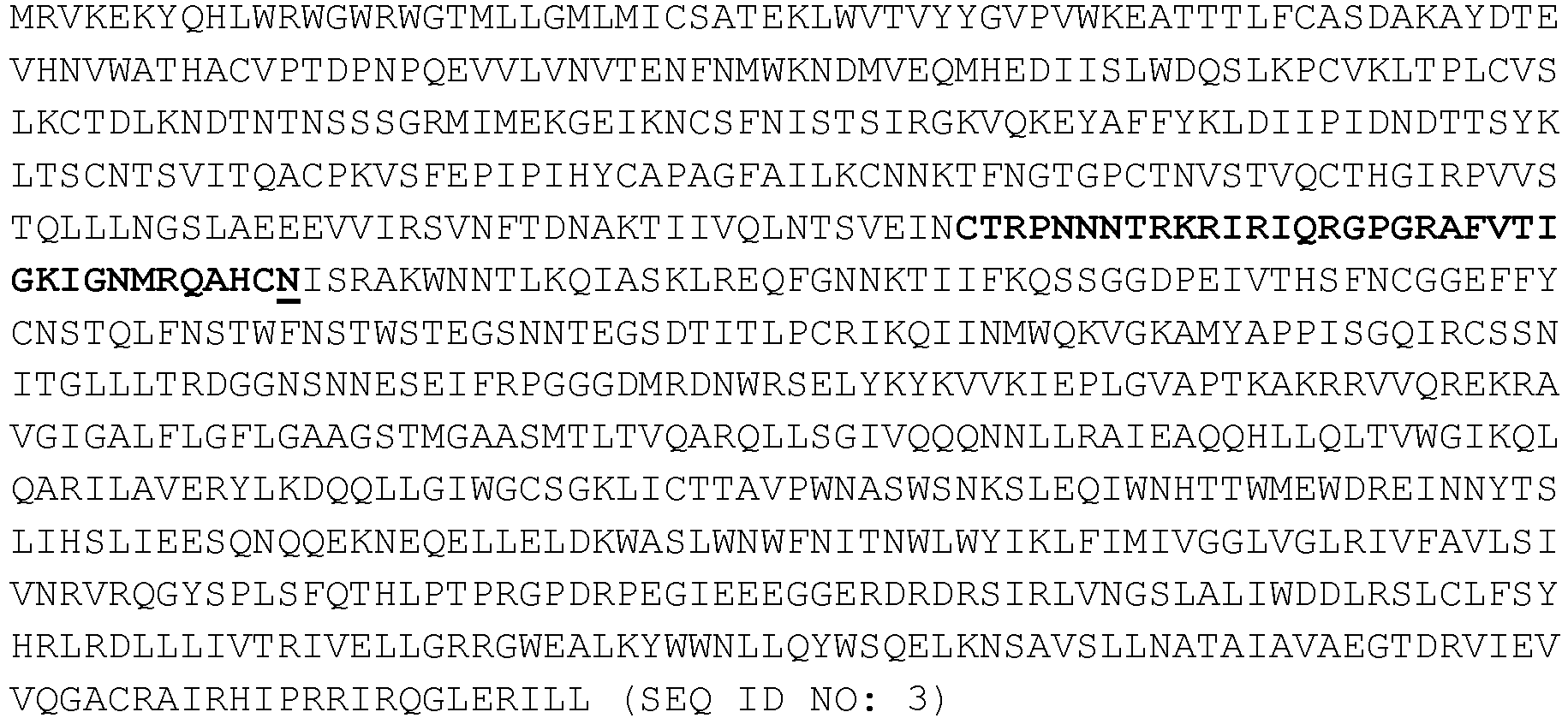
- The amino acid sequence of an exemplary gp120 polypeptide of HXB2 subtype B HIV-1 isolate (GenBank Accession No. K0345; corresponding to residues 1-511 of NCBI Ref Seq No. NP_057856.1) is provided below (the V3 hypervariable loop is boldened and the N332 potential N-linked glycosylation site is boldened and underlined; signal peptide is underlined):

- The amino acid sequence of an exemplary gp120 polypeptide is provided below:
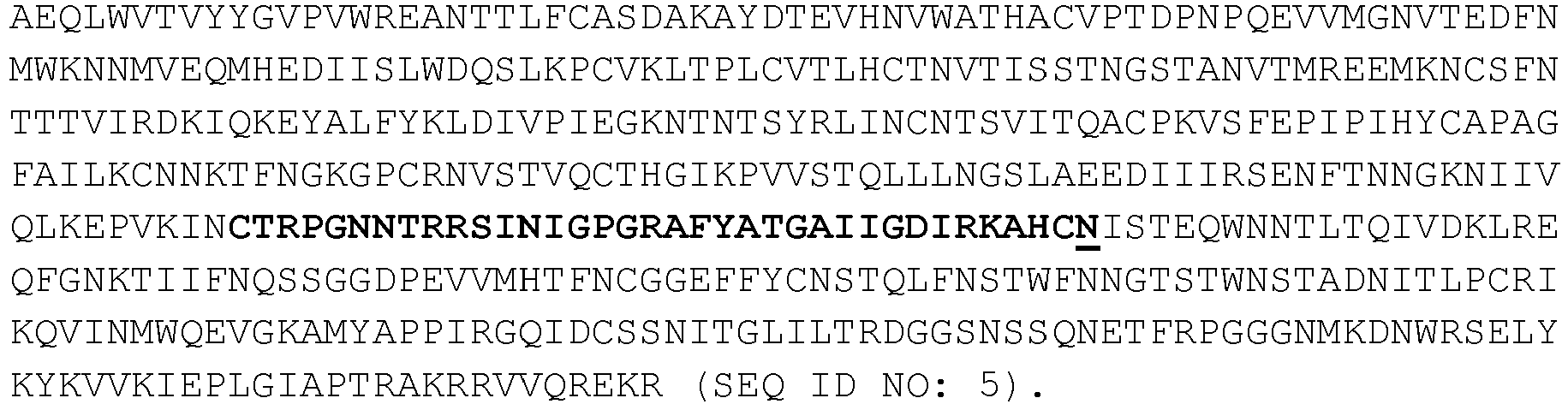
- The amino acid sequence of another exemplary gp120 polypeptide (see, bioafrica.net/proteomics/ENV-GP120prot.html) is provided below:

- Genomic diversity among independent human immunodeficiency virus type 1 (HIV-1) isolates, to a lesser degree among sequential isolates from the same patients, and even within a single patient isolate is a well-known feature of HIV-1. Although this sequence heterogeneity is distributed throughout the genome, most of the heterogeneity is located in the env gene. Comparison of predicted amino acid sequences from several different isolates has shown that sequence heterogeneity is clustered in five variable regions (designated V1 through V5) of the surface glycoprotein, gp120. The V3 region, although only 35 amino acids long, exhibits considerable sequence variability. Interestingly, despite this variability, the V3 region includes determinants that mediate interactions with CD4+ cells. The increase in gp120 variability results in higher levels of viral replication, suggesting an increase in viral fitness in individuals infected by diverse HIV-1 variants. Variability in potential N-linked glycosylation sites (PNGSs) also result in increased viral fitness. PNGSs allow for the binding of long-chain carbohydrates to the high variable regions of gp120. Thus, the number of PNGSs in env might affect the fitness of the virus by providing more or less sensitivity to neutralizing antibodies.
- The HIV gp120 amino acid residues of interest are determined from HIV present or suspected to be present in a biological sample from the subject. The biological sample can be from a solid tissue or biological fluid of the subject known or suspected to contain HIV. In various embodiments, the biological sample comprises or is from blood, peripheral blood mononuclear cells (PBMCs), serum, plasma, semen or lymph nodes. In some embodiments, the biological sample comprises or is from bile, blood, blood plasma, serum, breast milk, feces, pus, saliva, sebum, semen, sweat, tears, urine, or vomit. In patients whose virus levels are suppressed, e.g., by antiretroviral (ART) therapy, the biological sample comprises solid tissue or biological fluid of the subject known or suspected to contain an HIV reservoir, e.g., solid tissues and/or biological fluids comprising latently HIV-infected CD4+ T cells (including memory and non-memory effector CD4+ T cells), hematopoietic progenitors of CD4+ T cells, γδT cells (including memory and non-memory effector γδT cells), natural killer (NK) cells, myeloid cells (including monocytes and macrophages), hematopoietic progenitors of myeloid cells and follicular dendritic cells. Anatomical reservoirs that may harbor latently HIV-infected cells include lymphoid tissues, the brain and the central nervous system, the gastrointestinal tract and the gut-associated lymphoid tissue (GALT), genital tract, lungs and skin. Tissues and cells found to harbor latently HIV infected cells and HIV reservoirs are described, e.g., in Kuo, et al., Curr Opin HIV AIDS. (2018) 13(2): 137-142; Mzingwane, et al., Rev Med Virol. (2017) Mar;27(2), doi: 10.1002/rmv.1924 (PMID 28128885); Churchill, et al., Nat Rev Microbiol. (2016) 14(1):55-60; Barton, et al., Trends Microbiol. (2016) 24(5):345-355, which are hereby incorporated herein by reference in their entireties for all purposes.
- In some embodiments, multiple biological samples are evaluated from a single patient. For example, in some embodiments two or more biological samples from two or more different tissues or two or more different anatomical reservoirs are evaluated from a single patient.
- In various embodiments, the human subject is an adult, a juvenile or an infant. The subject may be symptomatic (e.g., viremic) or asymptomatic (e.g., acutely infected or ART suppressed). In some embodiments, the human subject is acutely infected or recently infected with HIV. In certain embodiments, the subject has not seroconverted. In some embodiments, the human subject is chronically infected with HIV. The subject many or may not be receiving a regimen of antiretroviral therapy (ART).
- Patients can be categorized into Fiebig stages I-VI, which are based on a sequential gain in positive HIV-1 clinical diagnostic assays (viral RNA measured by PCR, p24 and p31 viral antigens measured by enzyme-linked immunosorbent assay (ELISA). p24 antigen is a viral core protein that transiently appears in the blood during the ramp-up phase once HIV-1 RNA levels rise above 10,000 copies/mL and before the development of detectable HIV antibodies. In Fiebig stage I, during ramp-up viremia, only HIV-1 RNA in the blood can be detected. Fiebig stage II commences about 7 days later, when results of tests to detect p24 antigen become positive. In Fiebig stage III, within about 5 days after p24 antigen test results become positive, IgM anti-HIV-1 antibodies can be detected with sufficiently sensitive enzyme immunoassays (EIAs) (e.g., third-generation EIAs). Stage III typically occurs 1-2 weeks after the onset of acute retroviral symptoms. Fiebig stage IV represents the development of an indeterminate Western blot test and occurs about 3 days after EIA tests show positive results. Conversion to a clearly positive Western blot test, Fiebig stage V, generally occurs after another 7 days, or about 1 month after initial infection. Fiebig stages of HIV infection are described, e.g., in Fiebig, et al., AIDS. (2003) 17(13):1871-9; Cohen, et al., J Infect Dis. (2010) 202 Suppl 2: S270-7; and McMichael, et al., Nature Reviews Immunology (2010) 10:11-23, which are hereby incorporated herein by reference in their entireties for all purposes. In some embodiments, the biological sample evaluated is from a human subject having an HIV infection of Fiebig stage IV or earlier, e.g., Fiebig stage I, Fiebig stage II, Fiebig stage III or Fiebig stage IV. In some embodiments, the biological sample evaluated is from a human subject having an HIV infection of an HIV infection of Fiebig stage V or Fiebig stage VI.
- In some embodiments, the methods further comprise the step of obtaining the biological sample from the subject. In some embodiments, the methods entail receiving a report of the HIV gp120 amino acids residues present at the designated positions of interest, e.g., at 332 and 325, and one or more amino acid positions from the group consisting of: 63, 179, 320 and 330, wherein the amino acid positions are with reference to SEQ ID NO: 4.
- Determination of the amino acid residues at HIV gp120 sequences of a subject at the designated positions of interest, e.g., at 332 and 325, and one or more amino acid positions from the group consisting of: 63, 179, 320 and 330, wherein the amino acid positions are with reference to SEQ ID NO: 4, can be done at the polynucleotide or polypeptide level. At the level of the polynucleotide, HIV RNA or proviral DNA isolated from one or more biological samples can be sequenced using methods known in the art. In some embodiments, HIV RNA or proviral DNA isolated from two or more biological samples of a subject are sequenced. In some embodiments, the two or more biological samples are obtained from different tissue sources (e.g., blood, peripheral blood mononuclear cells, lymph nodes and/or semen). In some embodiments, the two or more biological samples are obtained at different time points, e.g., 1, 2, 3, 4, 5, 6, 7 or 8 weeks apart, 3, 4, 5, 6, 7, 8, 9, 10, 11 or 12 months apart.
- As appropriate, primers that anneal to and amplify the HIV env coding sequence, and particularly the V3 variable region of gp120, can be used. In some embodiments, nested sets of primers can be used. In various embodiments, the RNA is sequenced directly or reversetranscriptase polymerase chain reaction (RT-PCR) can be performed. In some embodiments, Sanger sequencing can be performed, e.g., when sequencing to determine amino acid residues in the V3 region, or when sequencing a sample from a patient in an early Fiebig stage of disease, e.g., prior to Fiebig stage III, e.g., Fiebig stages I or II. In various embodiments, single genome amplification (SGA) and sequencing is performed. Methods for single genome amplification (SGA) and sequencing of plasma HIV virion RNA, are described, e.g., in Salazar-Gonzalez, et al. (2008) J Virol 82:3952-3970; and Keele, et al., Proc Natl Acad Sci USA. (2008) 105(21):7552-7. Application of SGA to determining amino acid sequence variance in HIV gp120 sequences, and which can be employed in the herein described methods, is described, e.g., in Bar, et al., N Engl J Med. (2016) 375(21):2037-2050; and Mendoza, et al., Nature. (2018) 561(7724):479-484. In various embodiments, high throughput, Next Generation Sequencing (NGS), massively parallel or deep sequencing techniques are employed to sequence gp120, including at least the V3 variable region, from a population of HIV species in one or more biological samples from a single patient or subject. In such cases, multiple nucleic acid sequences encoding at least the V3 variable region of gp120 are sequenced and aligned. In some embodiments, the full-length of gp120 is sequenced. Illustrative platforms for performing NGS sequencing that can be used for determining the gp120 sequences of HIV species in one or more biological samples from a patient include Illumina (Solexa) (illumina.com), Ion torrent: Proton / PGM sequencing (thermofisher.com), SOLiD (thermofisher.com), and Single Molecule, Real-Time (SMRT) Sequencing (Pacific Biosciences, pacb.com). Methods for isolating and sequencing HIV gp120, including at least the V3 glycan region, from patients, and which can be applied in the present methods, are described in, e.g., Shioda, et al., J Virol. (1997) 71(7):4871-81; Colon, et al., J Virol Antivir Res. (2015) 4(3). pii: 143 (PMID: 27358904); Kafando, et al., PLoS One. (2017) 12(12):e0189999; Hebberecht, et al., PLoS One. (2018) 13(4):e0195679, Andrews, et al., Sci Rep. (2018) 8(1):5743 and Landais, et al. Immunity. (2017) 47(5):990-1003. As appropriate, shorter sequence reads of the nucleic acid sequences ("contigs") can be assembled into longer sequences, including at least the V3 variable region of gp120. Methods of contig assembly of HIV genomic sequences that can be applied in the present methods are described, e.g., in Huang, et al., Bioinformation. (2018) 14(8):449-454; Hiener, et al., J Vis Exp. (2018) Oct 16;(140). doi: 10.3791/58016; and Wymant, et al., Virus Evol. (2018) May 18;4(1):vey007. doi: 10.1093/ve/vey007.
- In some embodiments, at least 90%, at least 91%, at least 92%, at least 93%, at least 94%, at least 95%, at least 96%, at least 97%, at least 98%, at least 99%, or 100%, of the sequenced V3 variable region of gp120 in a population of HIV obtained from one or more biological samples in a single patient comprise an amino acid sequence comprising a glycosylated asparagine at the position corresponding to amino acid residue position 332 (N332glycan), an aspartate at the position corresponding to amino acid residue position 325 (D325), and one or more of a threonine at the position corresponding to amino acid residue position 63 (T63), a leucine at the position corresponding to amino acid residue position 179 (L179), a threonine at the position corresponding to amino acid residue position 320 (T320), and a histidine at the position corresponding to amino acid residue position 330 (H330), wherein the amino acid positions are with reference to SEQ ID NO: 4. As used herein, numbering of a given amino acid polymer or nucleic acid polymer "corresponds to", is "corresponding to" or is "relative to" the numbering of a selected or reference amino acid polymer or nucleic acid polymer when the position of any given polymer component (e.g., amino acid, nucleotide, also referred to generically as a "residue") is designated by reference to the same or to an equivalent position (e.g., based on an optimal alignment or a consensus sequence) in the selected amino acid or nucleic acid polymer, rather than by the actual numerical position of the component in the given polymer. In some embodiments, HIV gp120 variants are detected to a frequency level about 1% (e.g., 1% mutant or variant frequency) of the virus population. In some embodiments, HIV gp120 variants are detected to a frequency level of about 0.5% of the virus population. As a rule of thumb, reliable detection of variants at 1% frequency will require HIV RNA levels of at least 1000 copies/mL. See, e.g., Casadellà, et al., Virus Research 239 (2017) 69-81; Noguera-Julian, etal., J Infect Dis. (2017) 216(suppl_9):S829-S833 and Lee, et al., Sci Rep. (2020) 10(1): 1634.
- In certain embodiments, the methods entail administration of an anti-HIV antibody or antigen-binding fragment thereof, or antigen binding molecule, that targets the V3 glycan binding region of gp120.
- HIV-1 is the main family of HIV and accounts for 95% of all infections worldwide. HIV-2 is mainly seen in a few West African countries.
- HIV viruses are divided into specific groups, M, N, O and P, of which M is the "major" group and responsible for majority of HIV/AIDS globally. Based on their genetic sequence, Group M is further subdivided into subtypes (also called clades) with prevalence in distinct geographical locations.
- A Group M "subtype" or "clade" is a subtype of HIV-1 group M defined by genetic sequence data. Examples of Group M subtypes include Subtypes A-K. Some of the subtypes are known to be more virulent or are resistant to different medications. There are also "circulating recombinant forms" or CRFs derived from recombination between viruses of different subtypes, which are each given a number. CRF12_BF, for example, is a recombination between subtypes B and F. Subtype A is common in West Africa. Subtype B is the dominant form in Europe, the Americas, Japan, Thailand, and Australia. Subtype C is the dominant form in Southern Africa, Eastern Africa, India, Nepal, and parts of China. Subtype D is generally only seen in Eastern and central Africa. Subtype E has never been identified as a nonrecombinant, only recombined with subtype A as CRF01_AE. Subtype F has been found in central Africa, South America and Eastern Europe. Subtype G (and the CRF02_AG) have been found in Africa and central Europe. Subtype H is limited to central Africa. Subtype I was originally used to describe a strain that is now accounted for as CRF04_cpx, with the cpx for a "complex" recombination of several subtypes. Subtype J is primarily found in North, Central and West Africa, and the Caribbean Subtype K is limited to the Democratic Republic of Congo and Cameroon. These subtypes are sometimes further split into sub-subtypes such as A1 and A2 or F1 and F2. In 2015, the strain CRF19, a recombinant of subtype A, subtype D, and subtype G, with a subtype D protease was found to be strongly associated with rapid progression to AIDS in Cuba.
- This disclosure provides, inter alia, methods entailing administration of human anti-HIV neutralizing antibodies (e.g., broadly neutralizing Abs) that target the V3-Glycan region of the gp120 polypeptide on the surface of HIV-infected cells. Neutralizing antibodies against viral envelope proteins provide adaptive immune defense against HIV-1 exposure by blocking the infection of susceptible cells. Broad neutralization indicates that the antibodies can neutralize HIV-1 isolates from different clades. Thus, the anti-HIV gp120 V3 glycan directed antibodies or antigen-binding fragments described herein have cross-clade binding activity.
- In certain embodiments of the methods described herein, the subject is administered an antibody or antigen-binding fragment thereof, or an antigen-binding molecule that binds to HIV gp120 protein within the V3 Glycan region, e.g., an epitope or region of gp120 third variable loop (V3) and/or high mannose patch comprising a N332 oligomannose glycan. In certain embodiments, the administered antibody or antigen-binding fragment thereof, or an antigen-binding molecule binds to HIV-1 antigens expressed on a cell surface and eliminates or kills the infected cell.
- In certain embodiments, the administered antibody or antigen-binding fragment thereof, or an antigen-binding molecule, is or is derived from human neutralizing antibodies (e.g., monoclonal) that target HIV-1. A "neutralizing antibody" is one that can neutralize the ability of HIV to initiate and/or perpetuate an infection in a host and/or in target cells in vitro. The disclosure provides neutralizing monoclonal human antibodies, wherein the antibody recognizes an antigen from HIV, e.g., a gp120 polypeptide. In certain embodiments, a "neutralizing antibody" may inhibit the entry of HIV-1 virus, e.g., SF162 and/or JR-CSF, with a neutralization index >1.5 or >2.0 (Kostrikis LG et al., J. Virol., 70(1): 445-458 (1996)).
- In some embodiments, the administered antibody or antigen-binding fragment thereof, or an antigen-binding molecule, is or is derived from human broadly neutralizing antibodies (e.g., monoclonal) that target HIV-1. By "broadly neutralizing antibodies" are meant antibodies that neutralize more than one HIV-1 virus species (from diverse clades and different strains within a clade) in a neutralization assay. A broad neutralizing antibody may neutralize at least 2, 3, 4, 5, 6, 7, 8, 9 or more different strains of HIV-1, the strains belonging to the same or different clades. In particular embodiments, a broad neutralizing antibody may neutralize multiple HIV-1 species belonging to at least 2, 3, 4, 5, or 6 different clades. In certain embodiments, the inhibitory concentration of the anti-HIV gp120 V3 glycan directed antibody or antigen-binding fragment may be less than about 0.0001 µg/ml, less than about 0.001 µg/ml, less than about 0.01 µg/ml, less than about 0.1 µg/ml, less than about 0.5 µg/ml, less than about 1.0 µg/ml, less than about 5 µg/ml, less than about 10 µg/ml, less than about 25 µg/ml, less than about 50 µg/ml, or less than about 100 µg/ml to neutralize about 50% of the input virus in the neutralization assay.
- Illustrative broadly neutralizing antibodies that bind to gp120 in the third variable loop (V3) and/or high mannose patch comprising a N332 oligomannose glycan and which can be used in the herein described methods include without limitation GS-9722 (elipovimab), GS-9721, PGT-121, PGT-121.66, PGT-121.414, PGT-122, PGT-123, PGT-124, PGT-125, PGT-126, PGT-128, PGT-130, PGT-133, PGT-134, PGT-135, PGT-136, PGT-137, PGT-138, PGT-139, 10-1074, 10-1074-J, VRC24, 2G12, BG18, 354BG8, 354BG18, 354BG42, 354BG33, 354BG129, 354BG188, 354BG411, 354BG426, DH270.1, DH270.6, PGDM12, VRC41.01, PGDM21, PCDN-33A, BF520.1 and VRC29.03. Additional broadly neutralizing antibodies that bind to gp120 in the third variable loop (V3) and/or high mannose patch comprising a N332 oligomannose glycan and which can be used in the herein described methods are described, e.g., in
WO 2012/030904 ;WO 2014/063059 ;WO 2016/149698 ;WO 2017/106346 ;WO 2018/075564 ,WO 2018/125813 ;WO 2018/237148 ,WO 2019/226829 ,WO 2020/023827 ,WO2020/056145 and Kerwin, et al., JPharm Sci. 2020 Jan;109(1):233-246, which are hereby incorporated herein by reference in their entireties for all purposes. - Illustrative sequences of complementarity determining regions (CDRs) of the antibody or antigen-binding fragments, targeting HIV gp120 V3 glycan region, are provided in Tables A1-A4. Illustrative sequences of the VH and VL of the antibody or antigen-binding fragments, targeting HIV gp120 V3 glycan region, are provided in Table B.
Table A1 - CDRs (Kabat) for Anti-HIV gp120 V3 Glycan-Directed Antibodies or Antigen-Binding Fragments Thereof Ab Name VH - CDR1 VH - CDR2 VH - CDR3 VL - CDR1 VL - CDR2 VL - CDR3 1 DSYWS SEQ ID NO:7 YVHKSGDTNYSPSLKS SEQ ID NO:8 
GEKSLGSRAVQ SEQ ID NO: 10 NNQDRPS SEQ ID NO: 11 
2 DSYWS SEQ ID NO:7 YVHKSGDTNYNPSLKS SEQ ID NO:13 
GEKSLGSRAVQ SEQ ID NO: 10 NNQDRPS SEQ ID NO: 11 
3 NYYWT SEQ ID NO: 14 YISDRESATYNPSLNS SEQ ID NO:15 
GRQALGSRAVQ SEQ ID NO: 17 NNQDRPS SEQ ID NO: 11 
4 NYYWT SEQ ID NO: 14 YISDRETTTYNPSLNS SEQ ID NO:19 
GRQALGSRAVQ SEQ ID NO: 17 NNQDRPS SEQ ID NO: 11 
5 GRFWS SEQ ID NO: 21 YFSDTDRSEYNPSLRS SEQ ID NO:22 
GERSRGSRAVQ SEQ ID NO: 24 NNQDRPA SEQ ID NO: 25 
6 GRFWS SEQ ID NO: 21 YFSDTDRSEYNPSLRS SEQ ID NO:22 
GERSRGSRAVQ SEQ ID NO: 24 NNQDRPA SEQ ID NO: 25 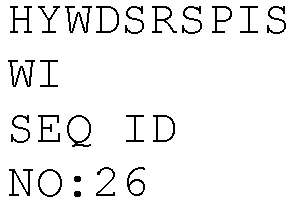
7 DNYWS SEQ ID NO:28 YVHDSGDTNYNPSLKS SEQ ID NO:29 
GEESLGSRSVI SEQ ID NO: 31 NNNDRPS SEQ ID NO: 32 
8 DAYWS SEQ ID NO: 34 YVHHSGDTNYNPSLKR SEQ ID NO:35 
GKESIGSRAVQ SEQ ID NO: 37 NNQDRPA SEQ ID NO: 25 
9 ACTYFWG SEQ ID NO:39 

NGTATNFVS SEQ ID NO: 42 GVDKRPP SEQ ID NO: 43 GSLVGNWDVI SEQ ID NO: 44 10 ACDYFWG SEQ ID NO: 45 

TGTSNRFVS SEQ ID NO: 48 GVNKRPS SEQ ID NO: 49 SSLVGNWDVI SEQ ID NO:50 11 ACDYFWG SEQ ID NO: 45 

TGNINNFVS SEQ ID NO: 53 GVNKRPS SEQ ID NO: 49 GSLAGNWDW SEQ ID NO: 54 12 ACNSFWG SEQ ID NO:55 

TGTSNNFVS SEQ ID NO: 58 DVNKRPS SEQ ID NO: 59 GSLVGNWDVI SEQ ID NO:44 13 GCDYFWG SEQ ID NO: 61 

TGTSNNFVS SEQ ID NO: 58 GVNKRPS SEQ ID NO: 49 GSLVGNWDVI SEQ ID NO:44 14 TGHYYWG SEQ ID NO: 64 HIHYTTAVLHNPSLKS SEQ ID NO:65 

EVNKRPS SEQ ID NO: 68 SSLFGRWDVV SEQ ID NO: 69 15 


RASQNVKNNLA SEQ ID NO: 73 DASSRAG SEQ ID NO: 74 QQYEEWPRT SEQ ID NO: 75 16 
SIHWRGTTHYNAPFRG SEQ ID NO:77 
RASQSVKNNLA SEQ ID NO: 79 DTSSRAS SEQ ID NO: 80 QQYEEWPRT SEQ ID NO: 75 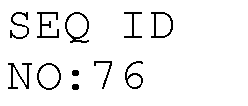

17 
SIHWRGTTHYKESLRR SEQ ID NO:82 
RASQNINKNLA SEQ ID NO: 84 ETYSKIA SEQ ID NO: 62 QQYEEWPRT SEQ ID NO: 75 18 SDHSWT SEQ ID NO: 85 DIHYNGATTYNPSLRS SEQ ID NO:86 
SGAPLTSRFTY SEQ ID NO: 88 RSSQRSS SEQ ID NO: 89 
19 SDHSWT SEQ ID NO: 85 DVHYNGDNTYNPSLRG SEQ ID NO:91 
SGPPLASRYTY SEQ ID NO: 93 RDRQFPS SEQ ID NO: 94 
20 SDHSWT SEQ ID NO: 85 DVHYNGDTTYNPSLRG SEQ ID NO:96 
SGPPLASRYTY SEQ ID NO: 93 RDRQFPS SEQ ID NO: 94 
21 SDHSWT SEQ ID NO: 85 DIHYNGATTYNPSLRS SEQ ID NO:86 
SGAALTSRFTY SEQ ID NO: 97 RTSQRSS SEQ ID NO: 98 
22 SDHSWT SEQ ID NO: 85 DIHYGGDITYNPSLRS SEQ ID NO:99 
SGPPLASRYCY SEQ ID NO:101 RDRQFSS SEQ ID NO:102 
23 SDHSWT SEQ ID NO: 85 DIHYGGDITYNPSLRS SEQ ID NO:99 
SGPPLASRYCY SEQ ID NO:101 RDRQFSS SEQ ID NO:102 

24 SDHSWT SEQ ID NO: 85 DIHYGGDITYNPSLRS SEQ ID NO:99 
SGPPLATRYCY SEQ ID NO:104 RDRQFSS SEQ ID NO:102 
25 SDHSWT SEQ ID NO: 85 DIHYNGDKTYNPSLRG SEQ ID NO:105 
SGPPLASRYTY SEQ ID NO: 93 RDRQFPS SEQ ID NO: 94 
26 SDHSWT SEQ ID NO: 85 DIHYGGDITYNPSLRS SEQ ID NO:99 
SGPPLASRYCY SEQ ID NO:101 RDRQFSS SEQ ID NO:102 
27 DYAMA SEQ ID NO:108 

RASHFIANYVN SEQ ID NO:111 ESSTLQR SEQ ID NO:112 QQSHSPPVT SEQ ID NO:113 28 DYAMA SEQ ID NO:108 

RASHFIANYVN SEQ ID NO:111 QSWTLNR SEQ ID NO: 116 QQSHSPPLS SEQ ID NO:117 29 DYAMA SEQ ID NO:108 

RASHFIANYVN SEQ ID NO:111 ESSTLNR SEQ ID NO: 120 QQSHSPPVS SEQ ID NO:121 Table A2 - CDRs (Chothia) for Anti-HIV gp120 V3 Glycan-Directed Antibodies or Antigen-Binding Fragments Thereof Ab Name VH - CDR1 VH - CDR2 VH - CDR3 VL - CDR1 VL - CDR2 VL - CDR3 30 GASISD SEQ ID NO:123 YVHKSGDTN SEQ ID NO:124 
GEKSLGSRAVQ SEQ ID NO:10 

31 GDSMNN SEQ ID NO:125 YISDRESAT SEQ ID NO:126 
GRQALGSRAVQ SEQ ID NO:17 
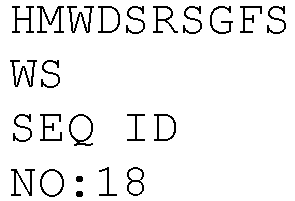
32 GGSISN SEQ ID NO:127 YISDRETTT SEQ ID NO:128 
GRQALGSRAVQ SEQ ID NO:17 

33 NGSVSG SEQ ID NO:129 YFSDTDRSE SEQ ID NO:130 
GERSRGSRAVQ SEQ ID NO:24 

34 NGSVSG SEQ ID NO:129 YFSDTDRSE SEQ ID NO:130 
GERSRGSRAVQ SEQ ID NO:24 

35 GTLVRD SEQ ID NO: 131 YVHDSGDTN SEQ ID NO:132 
GEESLGSRSVI SEQ ID NO:31 

36 GASIND SEQ ID NO:133 YVHHSGDTN SEQ ID NO:134 
GKESIGSRAVQ SEQ ID NO:37 

37 GESTGACT SEQ ID NO:135 

NGTATNFVS SEQ ID NO:42 
GSLVGNWDVI SEQ ID NO: 44 38 GDSTAACD SEQ ID NO:137 

TGTSNRFVS SEQ ID NO:48 
SSLVGNWDVI SEQ ID NO:50 39 GDSTAACD SEQ ID NO:137 

TGNINNFVS SEQ ID NO:53 
GSLAGNWDW SEQ ID NO: 54 40 GDSTAACN SEQ ID NO: 139 

TGTSNNFVS SEQ ID NO:58 
GSLVGNWDVI SEQ ID NO: 44 41 GDSTAGCD SEQ ID NO:141 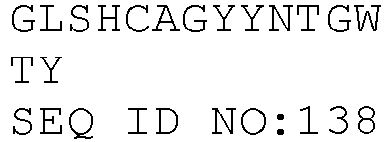

TGTSNNFVS SEQ ID NO:58 
GSLVGNWDVI SEQ ID NO: 44 42 GESINTGH SEQ ID NO:142 HIHYTTAVL SEQ ID NO:143 


SSLFGRWDVV SEQ ID NO: 69 43 
SIHWRGRTTH SEQ ID NO:145 
RASQNVKNNLA SEQ ID NO:73 
QQYEEWPRT SEQ ID NO:75 44 
SIHWRGTTH SEQ ID NO:147 
RASQSVKNNLA SEQ ID NO:79 
QQYEEWPRT SEQ ID NO: 75 45 
SIHWRGTTH SEQ ID NO:147 
RASQNINKNLA SEQ ID NO:84 
QQYEEWPRT SEQ ID NO: 75 46 QDSRPSDH SEQ ID NO: 149 HYNGA SEQ ID NO:150 
SGAPLTSRFTY SEQ ID NO:88 

47 NDSRPSDH SEQ ID NO: 151 HYNGA SEQ ID NO:150 
SGAPLTSRFTY SEQ ID NO:88 

48 GDSRPSDH SEQ ID NO:152 HYNGD SEQ ID NO:153 
SGPPLASRYTY SEQ ID NO:93 

49 NDSRPSDH SEQ ID NO: 151 HYNGA SEQ ID NO:150 
SGAALTSRFTY SEQ ID NO:97 

50 GDSRPSDH SEQ ID NO:152 HYGGD SEQ ID NO:122 
SGPPLASRYCY SEQ ID NO:101 

51 GDSRPSDH SEQ ID NO:152 HYGGD SEQ ID NO:122 
SGPPLASRYCY SEQ ID NO:101 

52 GDSRPSDH SEQ ID NO:152 HYGGD SEQ ID NO:122 
SGPPLATRYCY SEQ ID NO:104 

53 GDSRPSDH SEQ ID NO:152 HYGGD SEQ ID NO:122 
SGPPLASRYCY SEQ ID NO:101 

54 GFYFPDY SEQ ID NO:154 RGWAYGGS SEQ ID NO:155 
RASHFIANYVN SEQ ID NO:111 
QQSHSPPVT SEQ ID NO:113 55 DFYFPDY SEQ ID NO: 156 RGWAYGQA SEQ ID NO:157 
RASHFIANYVN SEQ ID NO:111 
QQSHSPPLS SEQ ID NO:117 56 DFYFPDY SEQ ID NO:158 RGWAYGQS SEQ ID NO:159 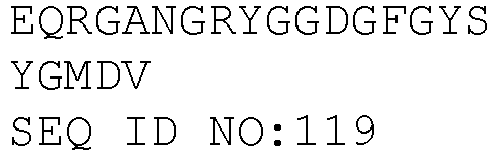
RASHFIANYVN SEQ ID NO:111 
QQSHSPPVS SEQ ID NO:121 Table A3 - CDRs (IMGT) for Anti-HIV gp120 V3 Glycan-Directed Antibodies or Antigen-Binding Fragments Thereof Ab Name VH - CDR1 VH - CDR2 VH - CDR3 VL - CDR1 VL - CDR2 VL - CDR3 57 GASISDSY SEQ ID NO:160 VHKSGDT SEQ ID NO:161 
SLGSRA SEQ ID NO:163 NNQ SEQ ID NO:164 
58 GDSMNNYY SEQ ID NO:165 ISDRESA SEQ ID NO:166 
ALGSRA SEQ ID NO:168 NNQ SEQ ID NO:164 
180 GDSMNNYY SEQ ID NO:165 ISDRESA SEQ ID NO:166 
ALGSRA SEQ ID NO:168 NNQ SEQ ID NO:164 
59 GGSISNYY SEQ ID NO:169 ISDRETT SEQ ID NO:170 
ALGSRA SEQ ID NO:168 NNQ SEQ ID NO:164 
60 NGSVSGRF SEQ ID NO:172 FSDTDRS SEQ ID NO:173 
SRGSRA SEQ ID NO:175 NNQ SEQ ID NO:164 
61 NGSVSGRF SEQ ID NO:172 FSDTDRS SEQ ID NO:173 
SRGSRA SEQ ID NO:175 NNQ SEQ ID NO:164 
62 GTLVRDNY SEQ ID NO:177 VHDSGDT SEQ ID NO:178 
SIGSRA SEQ ID NO:180 NNQ SEQ ID NO:164 
63 GASINDAY SEQ ID NO:181 VHHSGDT SEQ ID NO:182 
SLGSRS SEQ ID NO:184 NNN SEQ ID NO:185 
64 

ARFDGEVLVYNHWPKPAWVDL SEQ ID NO:188 ATNF SEQ ID NO:189 GVD SEQ ID NO:190 GSLVGNWDVI SEQ ID NO: 44 65 
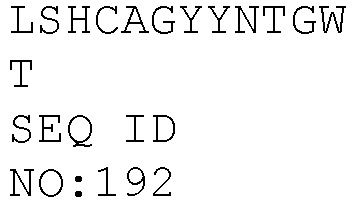
ARFDGEVLVYHDWPKPAWVDL SEQ ID NO:193 SNRF SEQ ID NO:194 GVN SEQ ID NO:195 SSLVGNWDVI SEQ ID NO: 50 66 
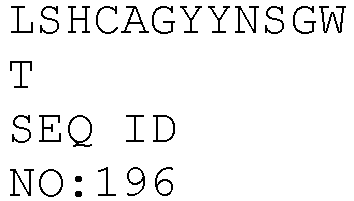
ARFGGDVLVYHDWPKPAWVDL SEQ ID NO:197 INNF SEQ ID NO:198 GVN SEQ ID NO:195 GSLAGNWDW SEQ ID NO:54 67 

ARFGGEVLRYTDWPKPAWVDL SEQ ID NO:201 SNNF SEQ ID NO:202 DVN SEQ ID NO:399 GSLVGNWDVI SEQ ID NO: 44 68 

ARFDGEVLVYNDWPKPAWVDL SEQ ID NO:205 SNNF SEQ ID NO:202 GVN SEQ ID NO:195 GSLVGNWDVI SEQ ID NO: 44 69 
IHYTTAV SEQ ID NO:207 VRSGGDILYYYEWQKPHWFSP SEQ ID NO:208 SSDIGGWNF SEQ ID NO:209 EVN SEQ ID NO:210 SSLFGRWDVV SEQ ID NO:69 70 
IHWRGRTT SEQ ID NO:212 ARHKYHDIFRWPVAGWFDP SEQ ID NO:213 QNVKNN SEQ ID NO:214 DAS SEQ ID NO:215 QQYEEWPRT SEQ ID NO: 75 71 
IHWRGTT SEQ ID NO:217 VKHKYHDIVMWPIAGWFDP SEQ ID NO:218 QSVKNN SEQ ID NO:219 DTS SEQ ID NO:220 QQYEEWPRT SEQ ID NO: 75 72 
IHWRGTT SEQ ID NO:217 ARHRHHDVFMLVPIAGWFDV SEQ ID NO:60 QNINKN SEQ ID NO:223 ETY SEQ ID NO:224 QQYEEWPRT SEQ ID NO: 75 73 QDSRPSDHS SEQ ID NO:225 IHYNGAT SEQ ID NO:226 NAIRIYGVVALGEWFHYGMDV SEQ ID NO:87 PLTSRF SEQ ID NO:227 RSS SEQ ID NO:228 QSSDTSDSYKM SEQ ID NO:90 74 NDSRPSDHS SEQ ID NO:229 IHYNGAT SEQ ID NO:226 NAIRIYGVVALGEWFHYGMDV SEQ ID NO:87 PLTSRF SEQ ID NO:227 RSS SEQ ID NO:228 QSSDTSDSYKM SEQ ID NO:90 75 GDSRPSDHS SEQ ID NO:230 VHYNGDN SEQ ID NO:231 NVIRVFGVISLGEWFHYGMDV SEQ ID NO:92 PLASRY SEQ ID NO:232 RDR SEQ ID NO:233 QSSDTSDSYKM SEQ ID NO:90 76 GDSRPSDHS SEQ ID NO:230 VHYNGDT SEQ ID NO:234 NVIRVFGVISLGEWFHYGMDV SEQ ID NO:92 PLASRY SEQ ID NO:232 RDR SEQ ID NO:233 QSSDTSDSYKM SEQ ID NO:90 77 NDSRPSDHS SEQ ID NO:229 IHYNGAT SEQ ID NO:226 NAIRIYGVVALGEWFHYGMDV SEQ ID NO:87 ALTSRF SEQ ID NO:235 RTS SEQ ID NO:398 QSSDTSDSYKM SEQ ID NO:90 78 SEQ ID NO: 230 IHYGGDI SEQ ID NO: 236 NVIRVFGVIALGEWFHYGMDV SEQ ID NO:100 PLASRY SEQ ID NO:232 RDR SEQ ID NO:233 QSSDINDSYKM SEQ ID NO: 95 79 GDSRPSDHS SEQ ID NO:230 IHYGGDI SEQ ID NO:236 NVIRVFGVIALGEWFHYGMDV SEQ ID NO:100 PLASRY SEQ ID NO:232 RDR SEQ ID NO:233 QSSDTSDSFKM SEQ ID NO:103 80 GDSRPSDHS SEQ ID NO:230 IHYGGDI SEQ ID NO:236 NVIRVFGVIALGEWFHYGMDV SEQ ID NO:100 PLATRY SEQ ID NO:237 RDR SEQ ID NO:233 QSSDTSDSYKM SEQ ID NO:90 81 GDSRPSDHS SEQ ID NO:230 IHYNGDK SEQ ID NO:238 NVIRVFGVISLGEWFHYGMDV SEQ ID NO:92 PLASRY SEQ ID NO:232 RDR SEQ ID NO:233 QSSDTSDSYKM SEQ ID NO:90 82 GDSRPSDHS SEQ ID NO:230 IHYGGDI SEQ ID NO:236 NVIRVFGVIALGEWFHYGMDV SEQ ID NO:100 PLASRY SEQ ID NO:232 RDR SEQ ID NO:233 QSSDNSDSFKM SEQ ID NO:107 83 GFYFPDYA SEQ ID NO:239 MRGWAYGGSA SEQ ID NO:240 EQRNKDYRYGQEGFGYSYGMDV SEQ ID NO:110 HFIANY SEQ ID NO:241 ESS SEQ ID NO:242 QQSHSPPVT SEQ ID NO:113 84 DFYFPDYA SEQ ID NO:243 IRGWAYGQAA SEQ ID NO:244 EQRGGDGRYSGDGFGYPYGMDV SEQ ID NO:115 HFIANY SEQ ID NO:241 QSW SEQ ID NO:245 QQSHSPPLS SEQ ID NO:117 85 DFYFPDYA SEQ ID NO:243 IRGWAYGQSA SEQ ID NO:246 EQRGANGRYGGDGFGYSYGMDV SEQ ID NO:119 HFIANY SEQ ID NO:241 ESS SEQ ID NO:247 QQSHSPPVS SEQ ID NO:121 Table A4 - CDRs (Honegger) for Anti-HIV gp120 V3 Glycan-Directed Antibodies or Antigen-Binding Fragments Thereof Ab Name VH - CDR1 VH - CDR2 VH - CDR3 VL - CDR1 VL - CDR2 VL - CDR3 86 VSGASISDSY SEQ ID NO:248 

EKSLGSRA SEQ ID NO:251 NNQDRPSGIPER SEQ ID NO:252 WDSRVPTKW SEQ ID NO:253 87 VSGASISDSY SEQ ID NO:248 
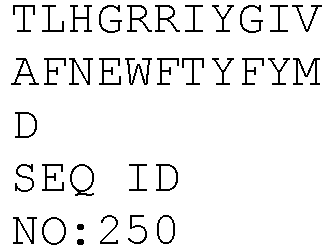
EKSLGSRA SEQ ID NO:251 NNQDRPSGIPER SEQ ID NO:252 WDSRVPTKW SEQ ID NO:253 88 VSGDSMNNYY SEQ ID NO:255 

RQALGSRA SEQ ID NO: 258 NNQDRPSGIPER SEQ ID NO:252 WDSRSGFSW SEQ ID NO:259 89 VSGGSISNYY SEQ ID NO:260 

RQALGSRA SEQ ID NO: 258 NNQDRPSGIPER SEQ ID NO:252 WDSRSGFSW SEQ ID NO:259 90 VSNGSVSGRF SEQ ID NO:263 

ERSRGSRA SEQ ID NO:266 NNQDRPAGVSER SEQ ID NO:267 WDSRSPISW SEQ ID NO:268 91 VSNGSVSGRF SEQ ID NO:263 

ERSRGSRA SEQ ID NO:266 NNQDRPAGVSER SEQ ID NO:267 WDSRSPISW SEQ ID NO:268 
92 VSGASINDAY SEQ ID NO:269 

KESIGSRA SEQ ID NO:272 NNQDRPAGVPER SEQ ID NO:273 YDARGGTNW SEQ ID NO:274 93 VSGTLVRDNY SEQ ID NO:275 

EESLGSRS SEQ ID NO:278 NNNDRPSGIPDR SEQ ID NO:279 WDSRRPTNW SEQ ID NO:280 94 VSGESTGACTYF SEQ ID NO:281 

GTATNF SEQ ID NO:284 GVDKRPPGVPDR SEQ ID NO:285 LVGNWDV SEQ ID NO:286 95 VSGDSTAACDYF SEQ ID NO:287 

GTSNRF SEQ ID NO:290 GVNKRPSGVPDR SEQ ID NO:291 LVGNWDV SEQ ID NO:286 96 VSGDSTAACDYF SEQ ID NO:287 

GNINNF SEQ ID NO:294 GVNKRPSGVPDR SEQ ID NO:295 LAGNWDV SEQ ID NO:296 97 VSGDSTAACNSF SEQ ID NO:297 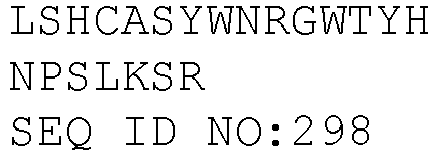

GTSNNF SEQ ID NO:300 DVNKRPSGVPDR SEQ ID NO:301 LVGNWDV SEQ ID NO:286 98 VSGDSTAGCDYF SEQ ID NO:302 

GTSNNF SEQ ID NO:300 GVNKRPSGVPDR SEQ ID NO:295 LVGNWDV SEQ ID NO:286 99 VSGESINTGHYY SEQ ID NO:304 


EVNKRPSGVPGR SEQ ID NO:308 LFGRWDV SEQ ID NO:309 100 


ASQNVKNN SEQ ID NO:313 DASSRAGGIPDR SEQ ID NO:314 YEEWPR SEQ ID NO:315 101 


ASQSVKNN SEQ ID NO:319 DTSSRASGIPAR SEQ ID NO:320 YEEWPR SEQ ID NO:315 102 


ASQNINKN SEQ ID NO:324 ETYSKIAAFPAR SEQ ID NO:325 YEEWPR SEQ ID NO:315 103 VSQDSRPSDHS SEQ ID NO:326 

GAPLTSRF SEQ ID NO:329 RSSQRSSGWSGR SEQ ID NO:330 SDTSDSYK SEQ ID NO:331 104 VSNDSRPSDHS SEQ ID NO:332 

GAPLTSRF SEQ ID NO:329 RSSQRSSGWSGR SEQ ID NO:330 SDTSDSYK SEQ ID NO:331 105 VFGDSRPSDHS SEQ ID NO:333 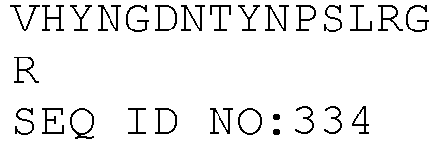

GPPLASRY SEQ ID NO:336 RDRQFPSGVSGR SEQ ID NO:337 SDTSDSYK SEQ ID NO:338 106 VFGDSRPSDHS SEQ ID NO:333 

GPPLASRY SEQ ID NO:336 RDRQFPSGVSGR SEQ ID NO:337 SDTSDSYK SEQ ID NO:338 107 VSNDSRPSDHS SEQ ID NO:332 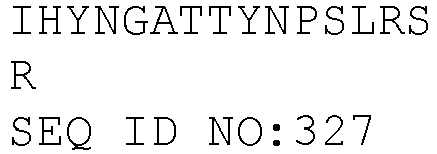
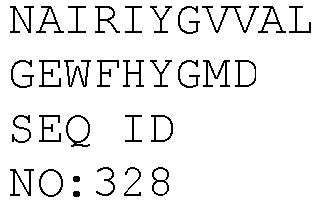
GAALTSRF SEQ ID NO:340 RTSQRSSGWSGR SEQ ID NO:341 SDTSDSYK SEQ ID NO:338 108 ISGDSRPSDHS SEQ ID NO:342 

GPPLASRY SEQ ID NO:336 RDRQFSSGMSGR SEQ ID NO:345 SDINDSYK SEQ ID NO:346 109 ISGDSRPSDHS SEQ ID NO:342 

GPPLASRY SEQ ID NO:336 RDRQFSSGISGR SEQ ID NO:347 SDTSDSFK SEQ ID NO:348 110 ISGDSRPSDHS SEQ ID NO:342 

GPPLATRY SEQ ID NO:349 RDRQFSSGVSGR SEQ ID NO:350 SDTSDSYK SEQ ID NO:338 111 VFGDSRPSDHS SEQ ID NO:333 

GPPLASRY SEQ ID NO:336 RDRQFPSGVSGR SEQ ID NO:337 SDTSDSYK SEQ ID NO:338 112 ISGDSRPSDHS SEQ ID NO:342 

GPPLASRY SEQ ID NO:336 RDRQFSSGISGR SEQ ID NO:347 SDNSDSFK SEQ ID NO:352 113 ASGFYFPDYA SEQ ID NO:353 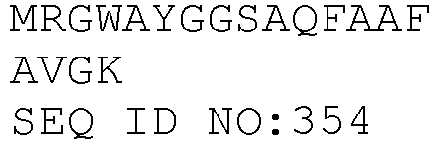

ASHFIANY SEQ ID NO:356 ESSTLQRGVPSR SEQ ID NO:357 SHSPPV SEQ ID NO:358 114 AFDFYFPDYA SEQ ID NO:359 

ASHFIANY SEQ ID NO:356 QSWTLNRGIPSR SEQ ID NO:362 SHSPPL SEQ ID NO:363 115 AFDFYFPDYA SEQ ID NO:359 

ASHFIANY SEQ ID NO:356 ESSTLNRGVPSR SEQ ID NO:366 SHSPPV SEQ ID NO:358 Ab Name SEQ ID NO VH SEQ ID NO VL 150 400 
401 
151 402 
403 


181 462 
463 
182 464 
465 
152 402 
404 
153 405 
406 
183 466 
467 
154 407 
408 
155 409 
410 


156 411 
412 
157 413 
414 
158 415 
416 
159 417 
418 
160 419 
420 
161 421 
422 
162 423 
424 


163 425 
426 
164 427 
428 
165 429 
430 
166 431 
432 
167 433 
434 
168 435 
436 
169 437 
438 


170 439 
440 
171 441 
442 
172 443 
444 
173 445 
446 
174 447 
448 
175 449 
450 
176 451 
452 


177 453 
454 
178 455 
456 
179 457 
458 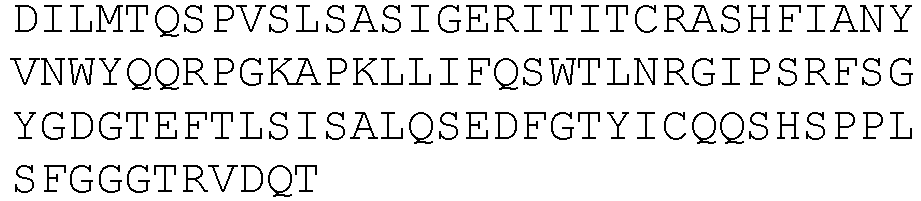
180 459 
460 
- In some embodiments, the anti-HIV gp120 V3 glycan-directed antibody or antigen-binding fragment thereof comprises a VH comprising a VH-CDR1, a VH-CDR2, and a VH-CDR3; and a VL comprising a VL-CDR1, a VL-CDR2, and a second VH-CDR3; wherein the VH-CDR1, the VH-CDR2, the VH-CDR3 the VL-CDR1, the VL-CDR2, and the VH-CDR3 comprise the sequences set forth in: SEQ ID NOs.: 7, 8, 9, 10, 11 and 12; SEQ ID NOs.: 7, 13, 9, 10, 11 and 12; SEQ ID NOs.: 14, 15, 16, 17, 11 and 18; SEQ ID NOs.: 14, 19, 20, 17, 11 and 18; SEQ ID NOs.: 21, 22, 23, 24, 25 and 26; SEQ ID NOs.: 21, 22, 27, 24, 25 and 26; SEQ ID NOs.: 28, 29, 30, 31, 32 and 33; SEQ ID NOs.: 34, 35, 36, 37, 25 and 38; SEQ ID NOs.: 39, 40, 41, 42, 43 and 44; SEQ ID NOs.: 45, 46, 47, 48, 49 and 50; SEQ ID NOs.: 45, 51, 52, 53, 49 and 54; SEQ ID NOs.: 55, 56, 57, 58, 59 and 44; SEQ ID NOs.: 61, 46, 63, 58, 49 and 44; SEQ ID NOs.: 64, 65, 66, 67, 68 and 69; SEQ ID NOs.: 70, 71, 72, 73, 74 and 75; SEQ ID NOs.: 76, 77, 78, 79, 80 and 75; SEQ ID NOs.: 81, 82, 83, 84, 85 and 75; SEQ ID NOs.: 85, 86, 87, 88, 89 and 90; SEQ ID NOs.: 85, 91, 92, 93, 94 and 90; SEQ ID NOs.: 85, 96, 92, 93, 94 and 90; SEQ ID NOs.: 85, 86, 87, 97, 98 and 90; SEQ ID NOs.: 85, 99, 100, 101, 102 and 95; SEQ ID NOs.: 85, 99, 100, 101, 102 and 103; SEQ ID NOs.: 85, 99, 100, 104, 102 and 90; SEQ ID NOs.: 85, 105, 92, 93, 94 and 90; SEQ ID NOs.: 85, 99, 100, 101, 102 and 107; SEQ ID NOs.: 108, 109, 110, 111, 112, 113; SEQ ID NOs.: 108, 114, 115, 111, 116 and 117; or SEQ ID NOs.: 108, 118, 119, 111, 120 and 121 (CDRs according to Kabat).
- In some embodiments, the anti-HIV gp120 V3 glycan-directed antibody or antigen-binding fragment thereof comprises a VH comprising a VH-CDR1, a VH-CDR2, and a VH-CDR3; and a VL comprising a VL-CDR1, a VL-CDR2, and a second VH-CDR3; wherein the VH-CDR1, the VH-CDR2, the VH-CDR3 the VL-CDR1, the VL-CDR2, and the VH-CDR3 comprise the sequences set forth in: SEQ ID NOs.: 123, 124, 9, 10, 11 and 12; SEQ ID NOs.: 125, 126, 16, 17, 11 and 18; SEQ ID NOs.: 127, 128, 20, 17, 11 and 18; SEQ ID NOs.: 129, 130, 23, 24, 25 and 26; SEQ ID NOs.: 129, 130, 27, 24, 25 and 26; SEQ ID NOs.: 131, 132, 30, 31, 32 and 33; SEQ ID NOs.: 133, 134, 36, 37, 25 and 38; SEQ ID NOs.: 135, 136, 41, 42, 43 and 44; SEQ ID NOs.: 137, 138, 47, 48, 49 and 50; SEQ ID NOs.: 137, 138, 52, 53, 49 and 54; SEQ ID NOs.: 139, 56, 57, 58, 59 and 44; SEQ ID NOs.: 141, 138, 63, 58, 49 and 44; SEQ ID NOs.: 142, 143, 66, 67, 68 and 69; SEQ ID NOs.: 144, 145, 72, 73, 74 and 75; SEQ ID NOs.: 146, 147, 78, 79, 80 and 75; SEQ ID NOs.: 146, 147, 83, 84, 85 and 75; SEQ ID NOs.: 149, 150, 87, 88, 89 and 90; SEQ ID NOs.: 151, 150, 87, 88, 89 and 90; SEQ ID NOs.: 152, 153, 92, 93, 94 and 90; SEQ ID NOs.: 151, 150, 87, 97, 98 and 90; SEQ ID NOs.: 152, 153, 100, 101, 102 and 95; SEQ ID NOs.: 152, 153, 100, 101, 102 and 103; SEQ ID NOs.: 152, 153, 100, 104, 102 and 90; SEQ ID NOs.: 152, 153, 100, 101, 102 and 107; SEQ ID NOs.: 154, 155, 110, 111, 116 and 117; SEQ ID NOs.: 156, 157, 115, 111, 116 and 117; or SEQ ID NOs.: 158, 159, 119, 111, 120 and 121 (CDRs according to Chothia).
- In some embodiments, the anti-HIV gp120 V3 glycan-directed antibody or antigen-binding fragment thereof comprises a VH comprising a VH-CDR1, a VH-CDR2, and a VH-CDR3; and a VL comprising a VL-CDR1, a VL-CDR2, and a second VH-CDR3; wherein the VH-CDR1, the VH-CDR2, the VH-CDR3 the VL-CDR1, the VL-CDR2, and the VH-CDR3 comprise the sequences set forth in: SEQ ID NOs.: 160, 161, 162, 163, 164 and 12; SEQ ID NOs.: 165, 166, 167, 168, 164 and 18; SEQ ID NOs.: 165, 166, 461, 168, 164 and 18; SEQ ID NOs.: 169, 170, 171, 168, 164 and 18; SEQ ID NOs.: 172, 173, 174, 175, 164 and 26; SEQ ID NOs.: 172, 173, 176, 175, 164 and 26; SEQ ID NOs.: 177, 178, 179, 180, 164 and 38; SEQ ID NOs.: 181, 182, 183, 184, 185 and 33; SEQ ID NOs.: 186, 187, 188, 189, 190 and 44; SEQ ID NOs.: 191, 192, 193, 194, 195 and 50; SEQ ID NOs.: 191, 196, 197, 198, 195 and 54; SEQ ID NOs.: 199, 200, 201, 202, 399 and 44; SEQ ID NOs.: 203, 204, 205, 202, 195 and 44; SEQ ID NOs.: 206, 207, 208, 209, 210 and 69; 211, 212, 213, 214, 215 and 75; SEQ ID NOs.: 216, 217, 218, 219, 220 and 75; SEQ ID NOs.: 221, 217, 83, 223, 224 and 75; SEQ ID NOs.: 225, 226, 87, 227, 228 and 90; SEQ ID NOs.: 229, 226, 87, 227, 228 and 90; SEQ ID NOs.: 230, 231, 92, 232, 233 and 90; SEQ ID NOs.: 230, 234, 92, 232, 233 and 90; SEQ ID NOs.: 229, 226, 87, 235, 398 and 90; SEQ ID NOs.: 230, 236, 100, 232, 233 and 95; SEQ ID NOs.: 230, 236, 100, 232, 233 and 103; SEQ ID NOs.: 230, 236, 100, 237, 233 and 90; SEQ ID NOs.: 230, 238, 92, 232, 233 and 107; SEQ ID NOs.: 239, 240, 110, 241, 242 and 113; SEQ ID NOs.: 243, 244, 115, 241, 245 and 117; or SEQ ID NOs.: 243, 246, 119, 241, 247 and 121 (CDRs according to IMGT).
- In some embodiments, the anti-HIV gp120 V3 glycan-directed antibody or antigen-binding fragment thereof comprises a VH comprising a VH-CDR1, a VH-CDR2, and a VH-CDR3; and a VL comprising a VL-CDR1, a VL-CDR2, and a second VH-CDR3; wherein the VH-CDR1, the VH-CDR2, the VH-CDR3 the VL-CDR1, the VL-CDR2, and the VH-CDR3 comprise the sequences set forth in: SEQ ID NOs.: 248, 249, 250, 251, 252 and 253; SEQ ID NOs.: 248, 254, 250, 251 252 and 253; SEQ ID NOs.: 255, 256, 257, 258, 252 and 259; SEQ ID NOs.: 260, 261, 262, 258, 252 and 259; SEQ ID NOs.: 263, 264, 265, 266, 267 and 268; SEQ ID NOs.: 263, 264, 397, 266, 267 and 268; SEQ ID NOs.: 269, 270, 271, 272, 273 and 274; SEQ ID NOs.: 275, 276, 277, 278, 279 and 280; SEQ ID NOs.: 281, 282, 283, 284, 285 and 286; SEQ ID NOs.: 287, 288, 289, 290, 291 and 286; SEQ ID NOs.: 287, 292, 293, 294, 295 and 296; SEQ ID NOs.: 297, 298, 299, 300, 301 and 286; SEQ ID NOs.: 302, 288, 303, 300, 295 and 286; SEQ ID NOs.: 304, 305, 306, 307, 308 and 309; SEQ ID NOs.: 310, 311, 312, 313, 314 and 315; SEQ ID NOs.: 316, 316, 318, 319, 320 and 315; SEQ ID NOs.: 321, 322, 323, 324, 325 and 315; 326, 327, 328, 329, 330 and 331; SEQ ID NOs.: 332, 327, 328, 329, 330 and 331; SEQ ID NOs.: 333, 334, 335, 336, 337 and 338; SEQ ID NOs.: 333, 339, 335, 336, 337 and 338; SEQ ID NOs.: 332, 327, 328, 340, 341 and 338; SEQ ID NOs.: 342, 343, 344, 336, 345 and 346; SEQ ID NOs.: 342, 343, 344, 336, 347 and 348; SEQ ID NOs.: 342, 343, 344, 349, 350 and 338; SEQ ID NOs.: 333, 351, 335, 336, 337 and 338; SEQ ID NOs.: 342, 343, 344, 336, 347 and 352; SEQ ID NOs: 353, 354, 355, 356, 357 and 358; SEQ ID NOs: 359, 360, 361, 356, 362 and 363; or SEQ ID NOs: 359, 364, 365, 356, 366 and 358. (CDRs according to Honegger).
- Illustrative embodiments of CDR sequences of an anti-HIV gp120 V3 glycan-directed antibody or antigen-binding fragment thereof, useful in the methods described herein, are provided in Tables A1-A4.
- In some embodiments, the anti-HIV gp120 V3 glycan-directed antibody or antigen-binding fragment thereof comprises VH and VL comprising amino acid sequences that are at least 80%, at least 85%, at least 90%, at least 91%, at least 92%, at least 93%, at least 94%, at least 95%, at least 96%, at least 97%, at least 98%, at least 99%, or 100%, identical to the amino acid sequences set forth, respectively, as selected from: SEQ ID NOs.: 400 and 401; SEQ ID NOs.: 402 and 403; SEQ ID NOs.: 402 and 404; SEQ ID NOs.: 462 and 463; SEQ ID NOs.: 464 and 465; SEQ ID NOs.: 405 and 406; SEQ ID NOs.: 466 and 467; SEQ ID NOs.: 407 and 408; SEQ ID NOs.: 409 and 410; SEQ ID NOs.: 411 and 412; SEQ ID NOs.: 413 and 414; SEQ ID NOs.: 415 and 416; SEQ ID NOs.: 417 and 418; SEQ ID NOs.: 419 and 420; SEQ ID NOs.: 421 and 422; SEQ ID NOs.: 423 and 424; SEQ ID NOs.: 425 and 426; SEQ ID NOs.: 427 and 428; SEQ ID NOs.: 429 and 430; SEQ ID NOs.: 431 and 432; SEQ ID NOs.: 433 and 434; SEQ ID NOs.: 435 and 436; SEQ ID NOs.: 437 and 438; SEQ ID NOs.: 439 and 440; SEQ ID NOs.: 441 and 442; SEQ ID NOs.: 443 and 444; SEQ ID NOs.: 445 and 446; SEQ ID NOs.: 447 and 448; SEQ ID NOs.: 449 and 450; SEQ ID NOs.: 451 and 452; SEQ ID NOs.: 453 and 454; SEQ ID NOs.: 455 and 456; SEQ ID NOs.: 457 and 458; or SEQ ID NOs.: 459 and 460. Illustrative embodiments of variable domain VH and VL sequences of an anti-HIV gp120 V3 glycan-directed antibody or antigen-binding fragment thereof, useful in the methods described herein, are provided in Table B.
- In some embodiments, the anti-HIV gp120 V3 glycan directed antibody comprises VH and VL amino acid sequences that are at least 80%, at least 85%, at least 90%, at least 91%, at least 92%, at least 93%, at least 94%, at least 95%, at least 96%, at least 97%, at least 98%, or at least 99% identical to the amino acid sequences set forth below, respectively, and comprising one or more of the following amino acids at the indicated positions (position numbering according to Kabat): SEQ ID NOs.: 400 or 402, comprising one or more of: Ser-SerVal (SSV) or Thr-Gly-Val (TGV) at positions 82a-82c, Gln (Q) at position 39, Asn (N) at position 60, His (H) at position 68, any one of Lys (K), His (H) or Thr (T) at position 105, Leu (L) at position 2, Ala (A) at position 32, and/or Ala (A) at position 95; and SEQ ID NOs.: 401, 403 or 404 comprising one or more of: Gly (G) at position 67, Tyr (Y), Phe (F) or Thr (T) at position 67a, Arg (R) at position 67b, Pro (P) at position 67c, and/or Lys (K) at position 103. In some embodiments, the anti-HIV gp120 V3 glycan directed antibody comprises VH and VL amino acid sequences that are at least 80%, at least 85%, at least 90%, at least 91%, at least 92%, at least 93%, at least 94%, at least 95%, at least 96%, at least 97%, at least 98%, or at least 99% identical to the amino acid sequences set forth below, respectively, and comprising one or more of the following amino acids at the indicated positions (position numbering according to Kabat): SEQ ID NO.: 400 or 402, comprising one or more of: Thr-Gly-Val (TGV) at positions 82a-82c, Asn (N) at
position 60, His (H) at position 68, any one of Lys (K), His (H) and/or Thr (T) at position 105; and SEQ ID NOs.: 401, 403 or 404 comprising one or more of: Gly (G) at position 67, Tyr (Y), Phe (F) or Thr (T) at position 67a, Arg (R) at position 67b, Pro (P) at position 67c. - In some embodiments, the Fc region or Fc domain of the anti-HIV gp120 V3 glycan directed antibody comprise amino acid modifications that promote an increased serum half-life of the anti- binding molecule. Mutations that increase the half-life of an antibody have been described. In one embodiment, the Fc region or Fc domain of one or both of the CD3-targeting heavy chain and the HIV antigen-targeting heavy chain comprise a methionine to tyrosine substitution at position 252 (EU numbering), a serine to threonine substitution at position 254 (EU numbering), and a threonine to glutamic acid substitution at position 256 (EU numbering). See, e.g.,
U.S. Patent No. 7,658,921 . This type of mutant, designated as a "YTE mutant" exhibits a four-fold increased half-life relative to wild-type versions of the same antibody (Dall'Acqua, et al., J Biol Chem, 281: 23514-24 (2006); Robbie, et al., Antimicrob Agents Chemotherap., 57(12):6147-6153 (2013)). In certain embodiments, the Fc region or Fc domain of one or both of the CD3-targeting heavy chain and the HIV antigen-targeting heavy chain comprise an IgG constant domain comprising one, two, three or more amino acid substitutions of amino acid residues at positions 251-257, 285-290, 308-314, 385-389, and 428-436 (EU numbering). Alternatively, M428L and N434S ("LS") substitutions can increase the pharmacokinetic half-life of the multi-specific antigen binding molecule. In other embodiments, the Fc region or Fc domain of one or both of the CD3-targeting heavy chain and the HIV antigen-targeting heavy chain comprise a M428L and N434S substitution (EU numbering). In other embodiments, the Fc region or Fc domain of one or both of the CD3-targeting heavy chain and the HIV antigen-targeting heavy chain comprise T250Q and M428L (EU numbering) mutations. In other embodiments, the Fc region or Fc domain of one or both of the CD3-targeting heavy chain and the HIV antigen-targeting heavy chain comprise H433K and N434F (EU numbering) mutations. - In some embodiments, the Fc region or Fc domain of the anti-HIV gp120 V3 glycan directed antibody comprise post-translational and/or amino acid modifications that increase effector activity, e.g., have improved FcyIIIa binding and increased antibody-dependent cellular cytotoxicity (ADCC). In some embodiments, the Fc region or Fc domain of the anti-HIV gp120 V3 glycan directed antibody comprises DE modifications (i.e., S239D and I332E by EU numbering) in the Fc region. In some embodiments, the Fc region or Fc domain of the anti-HIV gp120 V3 glycan directed antibody comprises DEL modifications (i.e., S239D, I332E and A330L by EU numbering) in the Fc region. In some embodiments, the Fc region or Fc domain of the anti-HIV gp120 V3 glycan directed antibody comprises DEA modifications (i.e., S239D, I332E and G236A by EU numbering) in the Fc region. In some embodiments, the Fc region or Fc domain of the anti-HIV gp120 V3 glycan directed antibody comprises DEAL modifications (i.e., S239D, I332E, G236A and A330L by EU numbering) in the Fc region. See, e.g.,
U.S. Patent Nos. 7,317,091 ;7,662,925 ;8,039,592 ;8,093,357 ;8,093,359 ;8,383,109 ;8,388,955 ;8,735,545 ;8,858,937 ;8,937,158 ;9,040,041 9,353,187 10,184,000 10,584,176 - In other embodiments, the anti-HIV gp120 V3 glycan directed antibody or antigen-binding fragment thereof has modified glycosylation, which, e.g., may be introduced post-translationally or through genetic engineering. In some embodiments, the anti-HIV gp120 V3 glycan directed antibody or antigen-binding fragment thereof is afucosylated, e.g., at a glycosylation site present in the antibody or antigen-binding fragment thereof. Most approved monoclonal antibodies are of the IgG1 isotype, where two N-linked biantennary complex-type oligosaccharides are bound to the Fc region. The Fc region exercises the effector function of ADCC through its interaction with leukocyte receptors of the FcyR family. Afucosylated monoclonal antibodies are monoclonal antibodies engineered so that the oligosaccharides in the Fc region of the antibody do not have any fucose sugar units.
- In some embodiments, as appropriate, the Fc region or Fc domain of the anti-HIV gp120 V3 glycan directed antibody can comprise post-translational and/or amino acid modifications for increasing serum half-life and enhancing effector activity.
- In certain embodiments, this disclosure provides a method for treating or preventing an HIV infection in a human subject having, or at risk of having, the HIV infection. The method comprises administering to the human subject a therapeutically effective amount of an anti-HIV gp120 V3 glycan directed antibody or antigen-binding fragment, as disclosed herein, or a pharmaceutical composition thereof, in combination with a therapeutically effective amount of one or more (e.g., one, two, three, one or two, or one to three) additional therapeutic agents. In one embodiment, a method for treating an HIV infection in a human subject having or at risk of having the infection is provided, the method comprising administering to the human subject a therapeutically effective amount of an antibody or antibodies disclosed herein, or a pharmaceutically acceptable salt thereof, in combination with a therapeutically effective amount of one or more (e.g., one, two, three, one or two, or one to three) additional therapeutic agents.
- In some embodiments, the anti-V3-glycan antibody or antigen-binding fragment thereof is co-administered with a second anti-HIV antibody. In some embodiments, the anti-V3-glycan antibody or antigen-binding fragment thereof is co-administered with a second anti-HIV antibody that binds to an epitope or region of gp120 selected from the group consisting of: (i) second variable loop (V2) and/or Env trimer apex; (ii) CD4 binding site (CD4bs); (iii) gp120/gp41 interface; or (v) silent face of gp120. The foregoing epitopes or regions of gp120 bound by broadly neutralizing antibodies are described, e.g., in McCoy, Retrovirology (2018) 15:70; Sok and Burton, Nat Immunol. 2018 19(11):1179-1188; Possas, et al., Expert Opin Ther Pat. 2018 Jul;28(7):551-560; and Stephenson and Barouch, Curr HIV/AIDS Rep (2016) 13:31-37, which are hereby incorporated herein by reference in their entirety for all purposes.
- In some embodiments, the combination therapy entails co-administration of an anti-V3-glycan antibody or antigen-binding fragment thereof and another anti-HIV broadly neutralizing antibody or bNAb (i.e., a neutralizing antibody that neutralizes multiple HIV-1 viral strains). Various bNAbs are known in the art and may be used as a combining therapeutic agent. Additional illustrative bNAbs of use include, those that comprise VH and VL that bind to or compete with an epitope or region of gp120 selected from the group consisting of: (i) second variable loop (V2) and/or Env trimer apex; (ii) CD4 binding site (CD4bs); (iii) gp120/gp41 interface; or (v) silent face of gp120. Illustrative bNAbs for use in anti-HIV antibody combination therapies include those that comprise VH and VL that bind to or compete with 2F5, 4E10, M66.6, CAP206-CH12, 10E8, 10E8v4, 10E8-5R-100cF, DH511.11P, 7b2, and LN01 (all of which bind the MPER of gp41); PG9, PG16, CH01-04 (all of which bind V1V2-glycan), 2G12 (which binds to outer domain glycan); b12, F105, VRC01, VRC07, VRC07-523, VRC03, VRC06, VRC06b01 VRC08, VRC0801, NIH45-46, GS-9723, GS-5423, 3BNC117, 3BNC60, VRC-PG04, PGV04; CH103, 44-VRC13.01, 1NC9, 12A12, N6, N6LS (VRC-HIVMAB091-00-AB), N49-P7, NC-Cow1, IOMA, CH235 and CH235.12, N49P6, N49P7, N49P11, N49P9 and N60P25 (all of which bind to the CD4 binding site).
- In some embodiments, the combination therapy includes an antibody that binds to an epitope or region of gp120 in the second variable loop (V2) and/or Env trimer apex and competes with or comprises CDRs and/or VH and VL regions from an antibody selected from the group consisting of PG9, PG16, PGC14, PGG14, PGT-142, PGT-143, PGT-144, PGT-145, CH01, CH59, PGDM1400, CAP256, CAP256-VRC26.08, CAP256-VRC26.09, CAP256-VRC26.25, PCT64-24E and VRC38.01.
- In some embodiments, the combination therapy includes an antibody that binds to an epitope or region of gp120 in the CD4 binding site (CD4bs) and competes with or comprises CDRs and/or VH and VL regions from an antibody selected from the group consisting of b12, F105, VRC01, VRC07, VRC07-523, VRC03, VRC06, VRC06b01 VRC08, VRC0801, NIH45-46, GS-9723, GS-5423, 3BNC117, 3BNC60, VRC-PG04, PGV04; CH103, 44-VRC13.01, 1NC9, 12A12, N6, N6LS (VRC-HIVMAB091-00-AB), N49-P7, NC-Cow1, IOMA, CH235 and CH235.12, N49P6, N49P7, N49P11, N49P9 and N60P25.
- In some embodiments, the combination therapy includes an antibody that binds to an epitope or region of gp120 in the gp120/gp41 interface and competes with or comprises CDRs and/or VH and VL regions from an antibody selected from the group consisting of PGT-151, CAP248-2B, 35022, 8ANC195, ACS202, VRC34 and VRC34.01.
- In some embodiments, the combination therapy includes an antibody that binds to an epitope or region of the gp120 silent face and competes with or comprises second VH and VL regions from antibody VRC-PG05.
- In some embodiments, the combination therapy includes an antibody that binds to an epitope or region of gp41 in the membrane proximal region (MPER) and competes with or comprises second VH and VL regions from an antibody selected from the group consisting of 10E8, 10E8v4, 10E8-5R-100cF, 4E10, DH511.11P, 2F5, 7b2, and LN01. In some embodiments, the combination therapy includes an antibody that binds to an epitope or region of KLIC ("KLIC" disclosed as SEQ ID NO: 468), an immutable site of the transmembrane protein gp41 and competes with or comprises second VH and VL regions from
Clone 3 human monoclonal antibody (Cl3hmAb) (Protheragen). See, e.g., Vanini, et al., AIDS. (1993) 7(2):167-74. - In some embodiments, the combination therapy includes an antibody that binds to and epitope or region of the gp41 fusion peptide and competes with or comprises second VH and VL regions from an antibody selected from the group consisting of VRC34 and ACS202.
- In some embodiments, the combination therapy includes a multi-specific, e.g., a bispecific or tri-specific antibody that binds to an HIV antigen. Examples of HIV bispecific and trispecific antibodies include MGD014, B12BiTe, BiIA-SG, TMB-bispecific, SAR-441236, VRC-01/PGDM-1400/10E8v4, 10E8.4/iMab, and 10E8v4/PGT121-VRC01.
- Prior to administration, the bNAbs may be improved to have enhanced drug-like-properties, reduced immunogenicity, enhanced ADCC, and suitable pharmacokinetic properties. Such antibodies were shown to bind to the HIV envelope glycoprotein expressed on the surface of virion or infected cells, and mediate both direct neutralization of the virus as well as potent NK, Monocyte and PBMC killing of these cells. This property allows the antibodies to treat HIV infections by neutralizing the virus, and also kill and eliminate latently HIV infected cells in infected individuals, potentially leading to a sterilizing cure for HIV.
- In various embodiments, all antibodies administered in a combination anti-HIV antibody therapy can have Fc and/or post-translational modifications that increase serum half-life and/or enhance effector activity, as described above.
- In various embodiments, the anti-HIV gp120 V3 glycan directed antibody or antigen-binding fragments, and optionally combined bNAbs, can be in vivo delivered, e.g., expressed in vivo from administered mRNA or engineered B-cells. Examples of in vivo delivered bNAbs include AAV8-VRC07; mRNA encoding anti-HIV antibody VRC01; and engineered B-cells encoding 3BNC117 (Hartweger et al, J. Exp. Med. 2019, 1301).
- In certain embodiments, a method for treating or preventing an HIV infection in a human having or at risk of having the infection is provided, comprising administering to the human a therapeutically effective amount of the anti-HIV gp120 V3 glycan directed antibody or antigen-binding fragments, as disclosed herein, in combination with a therapeutically effective amount of one or more (e.g., one, two, three, one or two, or one to three) additional therapeutic agents. In one embodiment, a method for treating an HIV infection in a human having or at risk of having the infection is provided, comprising administering to the human a therapeutically effective amount of the anti-HIV gp120 V3 glycan directed antibody or antigen-binding fragments, as disclosed herein, in combination with a therapeutically effective amount of one or more (e.g., one, two, three, one or two, or one to three) additional therapeutic agents.
- In one embodiment, pharmaceutical compositions comprising the anti-HIV gp120 V3 glycan directed antibody or antigen-binding fragments, as disclosed herein, in combination with one or more (e.g., one, two, three, one or two, or one to three) additional therapeutic agents, and a pharmaceutically acceptable carrier, diluent, or excipient are provided.
- In certain embodiments, provided are methods for treating an HIV infection, comprising administering to a patient in need thereof a therapeutically effective amount of the anti-HIV gp120 V3 glycan directed antibody or antigen-binding fragment thereof, as described herein, in combination with a therapeutically effective amount of one or more additional therapeutic agents which are suitable for treating an HIV infection.
- In certain embodiments, the anti-HIV gp120 V3 glycan directed antibody or antigen-binding fragment thereof is combined with one, two, three, four, or more additional therapeutic agents. In certain embodiments, the anti-HIV gp120 V3 glycan directed antibody or antigen-binding fragment thereof is combined with two additional therapeutic agents. In other embodiments, the anti-HIV gp120 V3 glycan directed antibody or antigen-binding fragment thereof is combined with three additional therapeutic agents. In further embodiments, the anti-HIV gp120 V3 glycan directed antibody or antigen-binding fragment thereof is combined with four additional therapeutic agents. The one, two, three, four, or more additional therapeutic agents can be different therapeutic agents selected from the same class of therapeutic agents, (e.g., one or more anti-HIV broadly neutralizing antibodies), and/or they can be selected from different classes of therapeutic agents.
- In certain embodiments, the anti-HIV gp120 V3 glycan directed antibody or antigen-binding fragment thereof, as described herein, is co-administered with one or more additional therapeutic agents. Co-administration of an anti-HIV gp120 V3 glycan directed antibodies or antigen-binding fragments disclosed herein with one or more additional therapeutic agents generally refers to simultaneous or sequential administration of an anti-HIV gp120 V3 glycan directed antibodies or antigen-binding fragments disclosed herein and one or more additional therapeutic agents, such that therapeutically effective amounts of the anti-HIV gp120 V3 glycan directed antibodies or antigen-binding fragments disclosed herein and the one or more additional therapeutic agents are both present in the body of the patient. When administered sequentially, the combination may be administered in two or more administrations.
- Co-administration includes concurrent administration as well as administration of unit dosages of the anti-HIV gp120 V3 glycan directed antibody or antigen-binding fragment thereof, as described herein before or after administration of unit dosages of one or more additional therapeutic agents. For example, the anti-HIV gp120 V3 glycan directed antibody or antigen-binding fragment thereof, as described herein, may be administered within seconds, minutes, hours or days of the administration of the one or more additional therapeutic agents. In some embodiments, a unit dose of an anti-HIV gp120 V3 glycan directed antibodies or antigen-binding fragments disclosed herein is administered first, followed within seconds, minutes, hours or days by administration of a unit dose of one or more additional therapeutic agents. Alternatively, a unit dose of one or more additional therapeutic agents is administered first, followed by administration of a unit dose of an anti-HIV gp120 V3 glycan directed antibodies or antigen-binding fragments disclosed herein within seconds, minutes, hours or days. In other embodiments, a unit dose of an anti-HIV gp120 V3 glycan directed antibodies or antigen-binding fragments disclosed herein is administered first, followed, after a period of hours (e.g., 1-12 hours, 1-24 hours, 1-36 hours, 1-48 hours, 1-60 hours, 1-72 hours), by administration of a unit dose of one or more additional therapeutic agents. In yet other embodiments, a unit dose of one or more additional therapeutic agents is administered first, followed, after a period of hours (e.g., 1-12 hours, 1-24 hours, 1-36 hours, 1-48 hours, 1-60 hours, 1-72 hours), by administration of a unit dose of an anti-HIV gp120 V3 glycan directed antibodies or antigen-binding fragments disclosed herein.
- In certain embodiments, an anti-HIV gp120 V3 glycan directed antibodies or antigen-binding fragments disclosed herein is combined with one or more additional therapeutic agents in a unitary dosage form for simultaneous administration to a patient, for example as a solid, liquid or suspension dosage form for oral, intravenous, intramuscular or subcutaneous administration.
- In certain embodiments, the anti-HIV gp120 V3 glycan directed antibodies or antigen-binding fragments are formulated as a liquid solution or suspension which may optionally contain one or more other compounds useful for treating HIV. In certain embodiments, the liquid solution or suspension can contain another active ingredient for treating HIV, such as HIV protease inhibitors, HIV non-nucleoside or non-nucleotide inhibitors of reverse transcriptase, HIV nucleoside or nucleotide inhibitors of reverse transcriptase, HIV integrase inhibitors, HIV non-catalytic site (or allosteric) integrase inhibitors, pharmacokinetic enhancers, and combinations thereof.
- In certain embodiments, such liquid solutions or suspensions are suitable for once daily, once weekly (i.e., QW), once bi-weekly (i.e. once every other week, or once every two weeks or Q2W), once monthly (i.e., QM) or once bi-monthly dosing (i.e. once every other month, or once every two months or Q2M) dosing or administration intervals. In some embodiments, the anti-HIV gp120 V3 glycan directed antibodies or antigen-binding fragments are administered once daily, once weekly (i.e., QW), once bi-weekly (i.e. once every other week, or once every two weeks or Q2W), once monthly (i.e., QM), once bi-monthly dosing (i.e. once every other month, or once every two months or Q2M), once every three months (i.e., Q3M), once every four months (i.e., Q4M),
- In the above embodiments, the additional therapeutic agent may be an anti-HIV agent. HIV protease inhibitors, HIV non-nucleoside or non-nucleotide inhibitors of reverse transcriptase, HIV nucleoside or nucleotide inhibitors of reverse transcriptase, HIV integrase inhibitors, HIV non-catalytic site (or allosteric) integrase inhibitors, HIV entry inhibitors, HIV maturation inhibitors, HIV capsid inhibitors, HIV Tat or Rev inhibitors, immunomodulators, (e.g., immunostimulators), immunotherapeutic agents, immunomodulators, immunotherapeutic agents, antibody-drug conjugates, gene modifiers, gene editors (such as CRISPR/Cas9, zinc finger nucleases, homing nucleases, synthetic nucleases, TALENs), cell therapies (such as chimeric antigen receptor T-cell, CAR-T, and engineered T-cell receptors, TCR-T, autologous T-cell therapies), latency reversing agents, compounds that target the HIV capsid, immune-based therapies, phosphatidylinositol 3-kinase (PI3K) inhibitors, HIV antibodies, bispecific antibodies and "antibody-like" therapeutic proteins, HIV p17 matrix protein inhibitors, IL-13 antagonists, peptidyl-prolyl cis-trans isomerase A modulators, protein disulfide isomerase inhibitors, complement C5a receptor antagonists, DNA methyltransferase inhibitor, Fatty acid synthase inhibitor, HIV vif gene modulators, Vif dimerization antagonists, HIV-1 viral infectivity factor inhibitors, TAT protein inhibitors, HIV-1 Nef modulators (e.g., Nef inhibitors), Hck tyrosine kinase modulators, mixed lineage kinase-3 (MLK-3) inhibitors, HIV-1 splicing inhibitors, Rev protein inhibitors, integrin antagonists, nucleoprotein inhibitors, splicing factor modulators, COMM domain containing protein 1 modulators, HIV ribonuclease H inhibitors, retrocyclin modulators, CDK-4 inhibitors, CDK-6 inhibitors, CDK-9 inhibitors, dendritic ICAM-3 grabbing nonintegrin 1 inhibitors, HIV GAG protein inhibitors, HIV POL protein inhibitors, Complement Factor H modulators, ubiquitin ligase inhibitors, deoxycytidine kinase inhibitors, cyclin dependent kinase inhibitors, proprotein convertase PC9 stimulators, ATP dependent RNA helicase DDX3X inhibitors, reverse transcriptase priming complex inhibitors, G6PD and NADH-oxidase inhibitors, mTOR complex 1 inhibitors, mTOR complex 2 inhibitors, P-Glycoprotein modulators, TAT protein inhibitors, prolylendopeptidase inhibitors, Phospholipase A2 inhibitors, pharmacokinetic enhancers, HIV gene therapy, TNF alpha ligand inhibitors, IFN antagonists, HIV vaccines, and combinations thereof.
- In some embodiments, the additional therapeutic agent is selected from the group consisting of combination drugs for HIV, other drugs for treating HIV, HIV protease inhibitors, HIV reverse transcriptase inhibitors, HIV integrase inhibitors, HIV non-catalytic site (or allosteric) integrase inhibitors, HIV entry (fusion) inhibitors, HIV maturation inhibitors, latency reversing agents, HIV capsid inhibitors, HIV Tat or Rev inhibitors, immunomodulators, (e.g., immunostimulators), immunotherapeutic agents, immune-based therapies, PI3K inhibitors, HIV antibodies, and bispecific antibodies, and "antibody-like" therapeutic proteins, and combinations thereof.
- In certain embodiments, the anti-HIV gp120 V3 glycan directed antibodies or antigen-binding fragments described herein are combined with one, two, three, four or more additional anti-HIV therapeutic agents. Example anti-HIV therapeutic agents that can be combined include without limitation ATRIPLA® (efavirenz, tenofovir disoproxil fumarate, and emtricitabine); COMPLERA® (EVIPLERA®; rilpivirine, tenofovir disoproxil fumarate, and emtricitabine); STRIBILD® (elvitegravir, cobicistat, tenofovir disoproxil fumarate, and emtricitabine); TRUVADA® (tenofovir disoproxil fumarate and emtricitabine; TDF +FTC); DESCOVY® (tenofovir alafenamide and emtricitabine); ODEFSEY® (tenofovir alafenamide, emtricitabine, and rilpivirine); GENVOYA® (tenofovir alafenamide, emtricitabine, cobicistat, and elvitegravir); BIKTARVY (bictegravir + emtricitabine + tenofovir alafenamide), adefovir; adefovir dipivoxil; cobicistat; emtricitabine; tenofovir; tenofovir alafenamide and elvitegravir; tenofovir disoproxil; tenofovir disoproxil fumarate; tenofovir alafenamide; tenofovir alafenamide hemifumarate; TRIUMEQ® (dolutegravir, abacavir, and lamivudine); dolutegravir, abacavir sulfate, and lamivudine; raltegravir; PEGylated raltegravir; raltegravir and lamivudine; maraviroc; tenofovir + emtricitabine + maraviroc, enfuvirtide; ALUVIA® (KALETRA®; lopinavir and ritonavir); COMBIVIR® (zidovudine and lamivudine; AZT+3TC); EPZICOM® (LIVEXA®; abacavir sulfate and lamivudine; ABC+3TC); TRIZIVIR® (abacavir sulfate, zidovudine, and lamivudine; ABC+AZT+3TC); atazanavir and cobicistat; atazanavir sulfate and cobicistat; atazanavir sulfate and ritonavir; darunavir; darunavir and cobicistat; dolutegravir and rilpivirine; dolutegravir and rilpivirine hydrochloride; dolutegravir, abacavir sulfate, and lamivudine; lamivudine, nevirapine, and zidovudine; raltegravir and lamivudine; doravirine, lamivudine, and tenofovir disoproxil fumarate; doravirine, lamivudine, and tenofovir disoproxil; dolutegravir + lamivudine, lamivudine + abacavir + zidovudine, lamivudine + abacavir, lamivudine + tenofovir disoproxil fumarate, lamivudine + zidovudine + nevirapine, lopinavir + ritonavir, lopinavir + ritonavir + abacavir + lamivudine, lopinavir + ritonavir + zidovudine + lamivudine, tenofovir + lamivudine, and tenofovir disoproxil fumarate + emtricitabine + rilpivirine hydrochloride, lopinavir , ritonavir, zidovudine and lamivudine; cabotegravir + rilpivirine; elpida (elsulfavirine; VM-1500; VM-1500A); rilpivirine; rilpivirine hydrochloride; atazanavir sulfate and cobicistat; atazanavir and cobicistat; darunavir and cobicistat; atazanavir; atazanavir sulfate; dolutegravir; elvitegravir; ritonavir; atazanavir sulfate and ritonavir; darunavir; lamivudine; prolastin; fosamprenavir; fosamprenavir calcium efavirenz; efavirenz, lamivudine, and emtricitabine; etravirine; nelfinavir; nelfinavir mesylate; interferon; didanosine; stavudine; indinavir; indinavir sulfate; tenofovir and lamivudine; zidovudine; nevirapine; saquinavir; saquinavir mesylate; aldesleukin; zalcitabine; tipranavir; amprenavir; delavirdine; delavirdine mesylate; Radha-108 (receptol); lamivudine and tenofovir disoproxil fumarate; efavirenz, lamivudine, and tenofovir disoproxil fumarate; phosphazid; lamivudine, nevirapine, and zidovudine; abacavir; and abacavir sulfate.
- [04] Examples of other drugs for treating HIV that can be combined with an agent of this disclosure include aspernigrin C, acemannan, alisporivir, BanLec, deferiprone, Gamimune, metenkefalin, naltrexone, Prolastin, REP 9, RPI-MN, VSSP, H1viral, SB-728-T, 1,5-dicaffeoylquinic acid, rHIV7-shl-TAR-CCR5RZ, AAV-eCD4-Ig gene therapy, MazF gene therapy, BlockAide, bevirimat derivatives, ABX-464, AG-1105, APH-0812, bryostatin analogs, BIT-225, CYT-107, CS-TATI-1, fluoro-beta-D-arabinose nucleic acid (FANA)-modified antisense oligonucleotides, FX-101, griffithsin, HGTV-43, HPH-116, HS-10234, hydroxychloroquine, IMB-10035, IMO-3100, IND-02, JL-18008, LADAVRU, MK-1376, MK-2048, MK-4250, MK-8507, MK-8558, MK-8591 (islatravir), NOV-205, OB-002H, ODE-Bn-TFV, M1-TFV, PA-1050040 (PA-040), PC-707, PGN-007, QF-036, S-648414, SCY-635, SB-9200, SCB-719, TR-452, TEV-90110, TEV-90112, TEV-90111, TEV-90113, RN-18, DIACC-1010, Fasnall, Immuglo, 2-CLIPS peptide, HRF-4467, thrombospondin analogs, TBL-1004HI, VG-1177, xl-081, rfhSP-D, [18F]-MC-225, URMC-099-C, RES-529, and VIR-576.
- In certain embodiments, the anti-HIV gp120 V3 glycan directed antibodies or antigen-binding fragments described herein are combined with an HIV protease inhibitor. Examples of HIV protease inhibitors include amprenavir, atazanavir, brecanavir, darunavir, fosamprenavir, fosamprenavir calcium, indinavir, indinavir sulfate, lopinavir, nelfinavir, nelfinavir mesylate, ritonavir, saquinavir, saquinavir mesylate, tipranavir, AEBL-2, DG-17, GS-1156, TMB-657 (PPL-100), T-169, BL-008, MK-8122, TMB-607, GRL-02031 and TMC-310911.
- In certain embodiments, the anti-HIV gp120 V3 glycan directed antibodies or antigen-binding fragments described herein are combined with an HIV ribonuclease H inhibitor. Examples of HIV ribonuclease H inhibitors that can be combined include NSC-727447.
- In certain embodiments, the anti-HIV gp120 V3 glycan directed antibodies or antigen-binding fragments described herein are combined with an HIV Nef inhibitor. Examples of HIV Nef inhibitors that can be combined with include FP-1.
- In certain embodiments, the anti-HIV gp120 V3 glycan directed antibodies or antigen-binding fragments described herein are combined with a non-nucleoside or non-nucleotide inhibitor. Examples of HIV non-nucleoside or non-nucleotide inhibitors of reverse transcriptase include dapivirine, delavirdine, delavirdine mesylate, doravirine, efavirenz, etravirine, lentinan, nevirapine, rilpivirine, ACC-007, ACC-008, AIC-292, F-18, KM-023, PC-1005, VM-1500A-LAI, PF-3450074, elsulfavirine (sustained release oral, HIV infection), elsulfavirine (long-acting injectable nanosuspension, HIV infection), and elsulfavirine (VM-1500).
- In certain embodiments, the anti-HIV gp120 V3 glycan directed antibodies or antigen-binding fragments described herein are combined with an HIV nucleoside or nucleotide inhibitor. Examples of HIV nucleoside or nucleotide inhibitors of reverse transcriptase include adefovir, adefovir dipivoxil, azvudine, emtricitabine, tenofovir, tenofovir alafenamide, tenofovir alafenamide fumarate, tenofovir alafenamide hemifumarate, tenofovir disoproxil, tenofovir disoproxil fumarate, tenofovir octadecyloxyethyl ester (AGX-1009), tenofovir disoproxil hemifumarate, VIDEX® and VIDEX EC® (didanosine, ddl), abacavir, abacavir sulfate, alovudine, apricitabine, censavudine, didanosine, elvucitabine, festinavir, fosalvudine tidoxil, CMX-157, dapivirine, doravirine, etravirine, OCR-5753, tenofovir disoproxil orotate, fozivudine tidoxil, lamivudine, phosphazid, stavudine, zalcitabine, zidovudine, rovafovir etalafenamide (GS-9131), GS-9148, MK-8504, MK-8591, MK-858, VM-2500 and KP-1461.
- In certain embodiments, the anti-HIV gp120 V3 glycan directed antibodies or antigen-binding fragments described herein are combined with an HIV integrase inhibitor. Examples of HIV integrase inhibitors include elvitegravir, elvitegravir (extended-release microcapsules), curcumin, derivatives of curcumin, chicoric acid, derivatives of chicoric acid, 3,5-dicaffeoylquinic acid, derivatives of 3,5-dicaffeoylquinic acid, aurintricarboxylic acid, derivatives of aurintricarboxylic acid, caffeic acid phenethyl ester, derivatives of caffeic acid phenethyl ester, tyrphostin, derivatives of tyrphostin, quercetin, derivatives of quercetin, raltegravir, PEGylated raltegravir, dolutegravir, JTK-351, bictegravir, AVX-15567, cabotegravir (long-acting injectable), diketo quinolin-4-1 derivatives, integrase-LEDGF inhibitor, ledgins, M-522, M-532, MK-0536, NSC-310217, NSC-371056, NSC-48240, NSC-642710, NSC-699171, NSC-699172, NSC-699173, NSC-699174, stilbenedisulfonic acid, T-169, STP-0404, VM-3500 and cabotegravir.
- In certain embodiments, the anti-HIV gp120 V3 glycan directed antibodies or antigen-binding fragments described herein are combined with a HIV non-catalytic site, or allosteric, integrase inhibitor (NCINI). Examples of HIV non-catalytic site, or allosteric, integrase inhibitors (NCINI) include CX-05045, CX-05168, and CX-14442.
- In certain embodiments, the anti-HIV gp120 V3 glycan directed antibodies or antigen-binding fragments described herein are combined with an HIV entry inhibitor. Examples of HIV entry (fusion) inhibitors include AAR-501, LBT-5001, cenicriviroc, CCR5 inhibitors, gp41 inhibitors, CD4 attachment inhibitors, gp120 inhibitors, gp160 inhibitors and CXCR4 inhibitors.
- In certain embodiments, the anti-HIV gp120 V3 glycan directed antibodies or antigen-binding fragments described herein are combined with a CCR5 inhibitor. Examples of CCR5 inhibitors include aplaviroc, vicriviroc, maraviroc, maraviroc (long-acting injectable nanoemulsion), cenicriviroc, leronlimab (PRO-140), adaptavir (RAP-101), nifeviroc (TD-0232), anti-GP120/CD4 or CCR5 bispecific antibodies, B-07, MB-66, polypeptide C25P, TD-0680, thioraviroc and vMIP (Haimipu).
- In certain embodiments, the anti-HIV gp120 V3 glycan directed antibodies or antigen-binding fragments described herein are combined with a CXCR4 inhibitor. Examples of CXCR4 inhibitors include plerixafor, ALT-1188, N15 peptide, and vMIP (Haimipu).
- In certain embodiments, the anti-HIV gp120 V3 glycan directed antibodies or antigen-binding fragments described herein are combined with a gp41 inhibitor. Examples of gp41 inhibitors include albuvirtide, enfuvirtide, griffithsin (gp41/gp120/gp160 inhibitor), BMS-986197, enfuvirtide biobetter, enfuvirtide biosimilar, HIV-1 fusion inhibitors (P26-Bapc), ITV-1, ITV-2, ITV-3, ITV-4, CPT-31, Cl3hmAb, PIE-12 trimer and sifuvirtide.
- In certain embodiments, the anti-HIV gp120 V3 glycan directed antibodies or antigen-binding fragments described herein are combined with a CD4 attachment inhibitor. Examples of CD4 attachment inhibitors include ibalizumab and CADA analogs
- In certain embodiments, the anti-HIV gp120 V3 glycan directed antibodies or antigen-binding fragments described herein are combined with a gp120 inhibitor. Examples of gp120 inhibitors include anti-HIV microbicide, Radha-108 (receptol) 3B3-PE38, BanLec, bentonite-based nanomedicine, fostemsavir tromethamine, IQP-0831, VVX-004, and BMS-663068.
- In certain embodiments, the anti-HIV gp120 V3 glycan directed antibodies or antigen-binding fragments described herein are combined with a gp160 inhibitor. Examples of gp160 inhibitors that can be combined include fangchinoline.
- In certain embodiments, the anti-HIV gp120 V3 glycan directed antibodies or antigen-binding fragments described herein are combined with an HIV maturation inhibitor. Examples of HIV maturation inhibitors include BMS-955176, GSK-3640254 and GSK-2838232.
- In certain embodiments, the anti-HIV gp120 V3 glycan directed antibodies or antigen-binding fragments described herein are combined with an HIV latency reversing agent. Examples of latency reversing agents that can be combined with the one or more multi-specific antigen binding molecules, described herein, include IL-15 receptor agonists (e.g., ALT-803; interleukin-15/Fc fusion protein (e.g., XmAb24306); recombinant interleukin-15 (e.g., AM0015, NIZ-985); pegylated IL-15 (e.g., NKTR-255)); toll-like receptor (TLR) agonists (including TLR7 agonists, e.g., GS-9620 and TLR8 agonists, e.g., GS-9688), histone deacetylase (HDAC) inhibitors, proteasome inhibitors such as velcade, protein kinase C (PKC) activators, Smyd2 inhibitors, BET-bromodomain 4 (BRD4) inhibitors, ionomycin, IAP antagonists (inhibitor of apoptosis proteins, such as APG-1387, LBW-242), SMAC mimetics (including TL32711, LCL161, GDC-0917, HGS1029, AT-406), Debio-1143, PMA, SAHA (suberanilohydroxamic acid, or suberoyl, anilide, and hydroxamic acid), NIZ-985, IL-15 modulating antibodies, (including IL-15, IL-15 fusion proteins and IL-15 receptor agonists, e.g., ALT-803), JQ1, disulfiram, amphotericin B, and ubiquitin inhibitors such as largazole analogs, APH-0812, and GSK-343. Examples of HDAC inhibitors include romidepsin, vorinostat, and panobinostat. Examples of PKC activators include indolactam, prostratin, ingenol B, and DAG-lactones.
- In certain embodiments, the anti-HIV gp120 V3 glycan directed antibodies or antigen-binding fragments described herein are combined with an agonist of a toll-like receptor (TLR), e.g., an agonist of TLR1 (NCBI Gene ID: 7096), TLR2 (NCBI Gene ID: 7097), TLR3 (NCBI Gene ID: 7098), TLR4 (NCBI Gene ID: 7099), TLR5 (NCBI Gene ID: 7100), TLR6 (NCBI Gene ID: 10333), TLR7 (NCBI Gene ID: 51284), TLR8 (NCBI Gene ID: 51311), TLR9 (NCBI Gene ID: 54106), and/or TLR10 (NCBI Gene ID: 81793). Example TLR7 agonists that can be co-administered or combined with the one or more multi-specific antigen binding molecules, described herein, include without limitation AL-034, DSP-0509, GS-9620 (vesatolimod), vesatolimod analogs, LHC-165, TMX-101 (imiquimod), GSK-2245035, resiquimod, DSR-6434, DSP-3025, IMO-4200, MCT-465, MEDI-9197, 3M-051, SB-9922, 3M-052, Limtop, TMX-30X, TMX-202, RG-7863, RG-7854, RG-7795, and the compounds disclosed in
US20100143301 (Gilead Sciences ),US20110098248 (Gilead Sciences ), andUS20090047249 (Gilead Sciences ),US20140045849 (Janssen ),US20140073642 (Janssen ),WO2014/056953 (Janssen ),WO2014/076221 (Janssen ),WO2014/128189 (Janssen ),US20140350031 (Janssen ),WO2014/023813 (Janssen ),US20080234251 (Array Biopharma ),US20080306050 (Array Biopharma ),US20100029585 (Ventirx Pharma ),US20110092485 (Ventirx Pharma ),US20110118235 (Ventirx Pharma ),US20120082658 (Ventirx Pharma ),US20120219615 (Ventirx Pharma ),US20140066432 (Ventirx Pharma ),US20140088085 (Ventirx Pharma ),US20140275167 (Novira Therapeutics ), andUS20130251673 (Novira Therapeutics ). An TLR7/TLR8 agonist that can be co-administered is NKTR-262, telratolimod and BDB-001. Example TLR8 agonists that can be co-administered or combined with the one or more multi-specific antigen binding molecules, described herein, include without limitation E-6887, IMO-4200, IMO-8400, IMO-9200, MCT-465, MEDI-9197, motolimod, resiquimod, GS-9688, VTX-1463, VTX-763, 3M-051, 3M-052, and the compounds disclosed inUS20140045849 (Janssen ),US20140073642 (Janssen ),WO2014/056953 (Janssen ),WO2014/076221 (Janssen ),WO2014/128189 (Janssen ),US20140350031 (Janssen ),WO2014/023813 (Janssen ),US20080234251 (Array Biopharma ),US20080306050 (Array Biopharma ),US20100029585 (Ventirx Pharma ),US20110092485 (Ventirx Pharma ),US20110118235 (Ventirx Pharma ),US20120082658 (Ventirx Pharma ),US20120219615 (Ventirx Pharma ),US20140066432 (Ventirx Pharma ),US20140088085 (Ventirx Pharma ),US20140275167 (Novira Therapeutics ), andUS20130251673 (Novira Therapeutics ). Example TLR9 agonists that can be co-administered include without limitation AST-008, cobitolimod, CMP-001, IMO-2055, IMO-2125, litenimod, MGN-1601, BB-001, BB-006, IMO-3100, IMO-8400, IR-103, IMO-9200, agatolimod, DIMS-9054, DV-1079, DV-1179, AZD-1419, lefitolimod (MGN-1703), CYT-003, CYT-003-QbG10, tilsotolimod and PUL-042. Examples of TLR3 agonist include rintatolimod, poly-ICLC, RIBOXXON®, Apoxxim, RIBOXXIM®, IPH-33, MCT-465, MCT-475, and ND-1.1. Examples of TLR4 agonist include G-100, and GSK-1795091. - In certain embodiments, the anti-HIV gp120 V3 glycan directed antibodies or antigen-binding fragments described herein are combined with an inhibitor of a histone deacetylase, e.g.,
histone deacetylase 1, histone deacetylase 9 (HDAC9, HD7, HD7b, HD9, HDAC, HDAC7, HDAC7B, HDAC9B, HDAC9FL, HDRP, MITR; Gene ID: 9734). Examples of HDAC inhibitors include without limitation, abexinostat, ACY-241, AR-42, BEBT-908, belinostat, CKD-581, CS-055 (HBI-8000), CT-101, CUDC-907 (fimepinostat), entinostat, givinostat, mocetinostat, panobinostat, pracinostat, quisinostat (JNJ-26481585), resminostat, ricolinostat, romidepsin, SHP-141, TMB-ADC, valproic acid (VAL-001), vorinostat, tinostamustine, remetinostat, and entinostat. - In certain embodiments, the anti-HIV gp120 V3 glycan directed antibodies or antigen-binding fragments described herein are combined with an inhibitor or antagonist of a cyclin-dependent kinase (CDK), e.g., cyclin dependent kinase 4 (CDK4; NCBI Gene ID: 1019), cyclin dependent kinase 6 (CDK6; NCBI Gene ID: 1021), cyclin dependent kinase 9 (CDK9; NCBI Gene ID: 1025). In some embodiments, the CDK4/CDK6/CDK9 inhibitor or antagonist is selected from the group consisting of VS2-370.
- In some embodiments, the anti-HIV gp120 V3 glycan directed antibodies or antigen-binding fragments described herein are combined with an stimulator of interferon genes (STING). In some embodiments, the STING receptor agonist or activator is selected from the group consisting of ADU-S100 (MIW-815), SB-11285, MK-1454, SR-8291, AdVCA0848, GSK-532, SYN-STING, MSA-1, SR-8291, 5,6-dimethylxanthenone-4-acetic acid (DMXAA), cyclic-GAMP (cGAMP) and cyclic-di-AMP.
- In certain embodiments, the anti-HIV gp120 V3 glycan directed antibodies or antigen-binding fragments described herein are combined with an agonist of DExD/H-box helicase 58 (DDX58; a.k.a., RIG-I, RIG1, RIGI, RLR-1, SGMRT2; NCBI Gene ID: 23586). In some embodiments, the agents described herein are combined with a RIG-I modulator such as RGT-100, or NOD2 modulator, such as SB-9200 (a.k.a., GS 9992; inarigivir), and IR-103. An illustrative RIG-I agonist is KIN1148, described by Hemann, et al., J Immunol May 1, 2016, 196 (1 Supplement) 76.1. Additional RIG-I agonists are described, e.g., in Elion, et al., Cancer Res. (2018) 78(21):6183-6195; and Liu, et al., J Virol. (2016) 90(20):9406-19. RIG-I agonists are commercially available, e.g., from Invivogen (invivogen.com).
- In certain embodiments, the anti-HIV gp120 V3 glycan directed antibodies or antigen-binding fragments described herein are combined with an anti-TIM-3 (a.k.a., hepatitis A virus
cellular receptor 2 antibody (HAVCR2; NCBI Gene ID: 84868), such as TSR-022, LY-3321367, MBG-453, INCAGN-2390. In some embodiments, the anti-HIV gp120 V3 glycan directed antibodies or antigen-binding fragments described herein are combined with an anti-LAG-3 (Lymphocyte-activation) (NCBI Gene ID: 3902) antibody, such as relatlimab (ONO-4482), LAG-525, MK-4280, REGN-3767, INCAGN2385. - In certain embodiments, the anti-HIV gp120 V3 glycan directed antibodies or antigen-binding fragments described herein are combined with a capsid inhibitor. Examples of capsid inhibitors that can be combined with an agent of this disclosure include capsid polymerization inhibitors or capsid disrupting compounds, HIV nucleocapsid p7 (NCp7) inhibitors such as azodicarbonamide, HIV p24 capsid protein inhibitors, GS-6207, GS-CA1, AVI-621, AVI-101, AVI-201, AVI-301, and AVI-CAN1-15 series, PF-3450074, and compounds described in Intl. Patent Publ. No.
WO 2019/087016 . - In certain embodiments, the anti-HIV gp120 V3 glycan directed antibodies or antigen-binding fragments described herein are combined with an immune-based therapy. Examples of immune-based therapies include toll-like receptor (TLR) modulators such as TLR1, TLR2, TLR3, TLR4, TLR5, TLR6, TLR7, TLR8, TLR9, TLR10, TLR11, TLR12, AND TLR13; programmed cell death protein 1 (PD-1) modulators; programmed death-ligand 1 (PD-L1) modulators; IL-15 modulators (e.g., IL-15 receptor agonists (e.g., ALT-803; interleukin-15/Fc fusion protein (e.g., XmAb24306); recombinant interleukin-15 (e.g., AM0015, NIZ-985); pegylated IL-15 (e.g., NKTR-255)); DermaVir; interleukin-7; plaquenil (hydroxychloroquine); proleukin (aldesleukin, IL-2); interferon alfa; interferon alfa-2b; interferon alfa-n3; pegylated interferon alfa; interferon gamma; hydroxyurea; mycophenolate mofetil (MPA) and its ester derivative mycophenolate mofetil (MMF); ribavirin; polymer polyethyleneimine (PEI); gepon; IL-12; WF-10; VGV-1; MOR-22; BMS-936559; CYT-107, normferon, peginterferon alfa-2a, peginterferon alfa-2b, RPI-MN, STING modulators, RIG-I modulators, NOD2 modulators, SB-9200, and IR-103.
- In certain embodiments, the anti-HIV gp120 V3 glycan directed antibodies or antigen-binding fragments described herein are combined with a TLR agonist. Examples of TLR agonists include without limitation: vesatolimod (GS-9620), lefitolimod, tilsotolimod, rintatolimod, DSP-0509, AL-034, G-100, cobitolimod, AST-008, motolimod, GSK-1795091, GSK-2245035, VTX-1463, GS-9688, LHC-165, BDB-001, RG-7854, telratolimod.
- In various embodiments, the anti-HIV gp120 V3 glycan directed antibodies or antigen-binding fragments described herein are combined with one or more blockers or inhibitors of inhibitory immune checkpoint proteins or receptors and/or with one or more stimulators, activators or agonists of one or more stimulatory immune checkpoint proteins or receptors. Blockade or inhibition of inhibitory immune checkpoints can positively regulate T-cell or NK cell activation and prevent immune escape of infected cells. Activation or stimulation of stimulatory immune check points can augment the effect of immune checkpoint inhibitors in infective therapeutics. In various embodiments, the immune checkpoint proteins or receptors regulate T cell responses (e.g., reviewed in Xu, et al., J Exp Clin Cancer Res. (2018) 37: 110). In various embodiments, the immune checkpoint proteins or receptors regulate NK cell responses (e.g., reviewed in Davis, et al., Semin Immunol. (2017) 31:64-75 and Chiossone, et al., Nat Rev Immunol. (2018) 18(11):671-688).
- Examples of immune checkpoint proteins or receptors that can be combined with the anti-HIV gp120 V3 glycan directed antibodies or antigen-binding fragments described herein include without limitation CD27, CD70; CD40, CD40LG; CD47, CD48 (SLAMF2), transmembrane and immunoglobulin domain containing 2 (TMIGD2, CD28H), CD84 (LY9B, SLAMF5), CD96, CD160, MS4A1 (CD20), CD244 (SLAMF4); CD276 (B7H3); V-set domain containing T cell activation inhibitor 1 (VTCN1, B7H4); V-set immunoregulatory receptor (VSIR, B7H5, VISTA); immunoglobulin superfamily member 11 (IGSF11, VSIG3); natural killer cell cytotoxicity receptor 3 ligand 1 (NCR3LG1, B7H6); HERV-H LTR-associating 2 (HHLA2, B7H7); inducible T cell co-stimulator (ICOS, CD278); inducible T cell costimulator ligand (ICOSLG, B7H2); TNF receptor superfamily member 4 (TNFRSF4, OX40); TNF superfamily member 4 (TNFSF4, OX40L); TNFRSF8 (CD30), TNFSF8 (CD30L); TNFRSF10A (CD261, DR4, TRAILR1), TNFRSF9 (CD137), TNFSF9 (CD137L); TNFRSF10B (CD262, DR5, TRAILR2), TNFRSF10 (TRAIL); TNFRSF14 (HVEM, CD270), TNFSF14 (HVEML); CD272 (B and T lymphocyte associated (BTLA)); TNFRSF17 (BCMA, CD269), TNFSF13B (BAFF); TNFRSF18 (GITR), TNFSF18 (GITRL); MHC class I polypeptide-related sequence A (MICA); MHC class I polypeptide-related sequence B (MICB); CD274 (CD274, PDL1, PD-L1); programmed cell death 1 (PDCD1, PD1, PD-1); cytotoxic T-lymphocyte associated protein 4 (CTLA4, CD152); CD80 (B7-1), CD28; nectin cell adhesion molecule 2 (NECTIN2, CD112); CD226 (DNAM-1); Poliovirus receptor (PVR) cell adhesion molecule (PVR, CD155); PVR related immunoglobulin domain containing (PVRIG, CD112R); T cell immunoreceptor with Ig and ITIM domains (TIGIT); T cell immunoglobulin and mucin domain containing 4 (TIMD4; TIM4); hepatitis A virus cellular receptor 2 (HAVCR2, TIMD3, TIM3); galectin 9 (LGALS9); lymphocyte activating 3 (LAG3, CD223); signaling lymphocytic activation molecule family member 1 (SLAMF1, SLAM, CD150); lymphocyte antigen 9 (LY9, CD229, SLAMF3); SLAM family member 6 (SLAMF6, CD352); SLAM family member 7 (SLAMF7, CD319); UL16 binding protein 1 (ULBP1); UL16 binding protein 2 (ULBP2); UL16 binding protein 3 (ULBP3); retinoic acid early transcript 1E (RAET1E; ULBP4); retinoic acid early transcript 1G (RAET1G; ULBP5); retinoic acid early transcript 1L (RAET1L; ULBP6); lymphocyte activating 3 (CD223); killer cell immunoglobulin like receptor, three Ig domains and long cytoplasmic tail 1 (KIR, CD158E1); killer cell lectin like receptor C1 (KLRC1, NKG2A, CD159A); killer cell lectin like receptor K1 (KLRK1, NKG2D, CD314); killer cell lectin like receptor C2 (KLRC2, CD159c, NKG2C); killer cell lectin like receptor C3 (KLRC3, NKG2E); killer cell lectin like receptor C4 (KLRC4, NKG2F); killer cell immunoglobulin like receptor, two Ig domains and long cytoplasmic tail 1 (KIR2DL1); killer cell immunoglobulin like receptor, two Ig domains and long cytoplasmic tail 2 (KIR2DL2); killer cell immunoglobulin like receptor, two Ig domains and long cytoplasmic tail 3 (KIR2DL3); killer cell immunoglobulin like receptor, three Ig domains and long cytoplasmic tail 1 (KIR3DL1); killer cell lectin like receptor D1 (KLRD1); and SLAM family member 7 (SLAMF7).
- In various embodiments, the anti-HIV gp120 V3 glycan directed antibodies or antigen-binding fragments described herein are combined with one or more blockers or inhibitors of one or more T-cell inhibitory immune checkpoint proteins or receptors. Illustrative T-cell inhibitory immune checkpoint proteins or receptors include without limitation CD274 (CD274, PDL1, PD-L1); programmed cell death 1 ligand 2 (PDCD1LG2, PD-L2, CD273); programmed cell death 1 (PDCD1, PD1, PD-1); cytotoxic T-lymphocyte associated protein 4 (CTLA4, CD152); CD276 (B7H3); V-set domain containing T cell activation inhibitor 1 (VTCN1, B7H4); V-set immunoregulatory receptor (VSIR, B7H5, VISTA); immunoglobulin superfamily member 11 (IGSF11, VSIG3); TNFRSF14 (HVEM, CD270), TNFSF14 (HVEML); CD272 (B and T lymphocyte associated (BTLA)); PVR related immunoglobulin domain containing (PVRIG, CD112R); T cell immunoreceptor with Ig and ITIM domains (TIGIT); lymphocyte activating 3 (LAG3, CD223); hepatitis A virus cellular receptor 2 (HAVCR2, TIMD3, TIM3); galectin 9 (LGALS9); killer cell immunoglobulin like receptor, three Ig domains and long cytoplasmic tail 1 (KIR, CD158E1); killer cell immunoglobulin like receptor, two Ig domains and long cytoplasmic tail 1 (KIR2DL1); killer cell immunoglobulin like receptor, two Ig domains and long cytoplasmic tail 2 (KIR2DL2); killer cell immunoglobulin like receptor, two Ig domains and long cytoplasmic tail 3 (KIR2DL3); and killer cell immunoglobulin like receptor, three Ig domains and long cytoplasmic tail 1 (KIR3DL1). In various embodiments, the anti-HIV gp120 V3 glycan directed antibodies or antigen-binding fragments described herein are combined with one or more agonist or activators of one or more T-cell stimulatory immune checkpoint proteins or receptors. Illustrative T-cell stimulatory immune checkpoint proteins or receptors include without limitation CD27, CD70; CD40, CD40LG; inducible T cell costimulator (ICOS, CD278); inducible T cell costimulator ligand (ICOSLG, B7H2); TNF receptor superfamily member 4 (TNFRSF4, OX40); TNF superfamily member 4 (TNFSF4, OX40L); TNFRSF9 (CD137), TNFSF9 (CD137L); TNFRSF18 (GITR), TNFSF18 (GITRL); CD80 (B7-1), CD28; nectin cell adhesion molecule 2 (NECTIN2, CD112); CD226 (DNAM-1); CD244 (2B4, SLAMF4), Poliovirus receptor (PVR) cell adhesion molecule (PVR, CD155). See, e.g., Xu, et al., J Exp Clin Cancer Res. (2018) 37:110.
- In various embodiments, the anti-HIV gp120 V3 glycan directed antibodies or antigen-binding fragments described herein are combined with one or more blockers or inhibitors of one or more NK-cell inhibitory immune checkpoint proteins or receptors. Illustrative NK-cell inhibitory immune checkpoint proteins or receptors include without limitation killer cell immunoglobulin like receptor, three Ig domains and long cytoplasmic tail 1 (KIR, CD158E1); killer cell immunoglobulin like receptor, two Ig domains and long cytoplasmic tail 1 (KIR2DL1); killer cell immunoglobulin like receptor, two Ig domains and long cytoplasmic tail 2 (KIR2DL2); killer cell immunoglobulin like receptor, two Ig domains and long cytoplasmic tail 3 (KIR2DL3); killer cell immunoglobulin like receptor, three Ig domains and long cytoplasmic tail 1 (KIR3DL1); killer cell lectin like receptor C1 (KLRC1, NKG2A, CD159A); and killer cell lectin like receptor D1 (KLRD1, CD94). In various embodiments, the anti-HIV gp120 V3 glycan directed antibodies or antigen-binding fragments described herein are combined with one or more agonist or activators of one or more NK-cell stimulatory immune checkpoint proteins or receptors. Illustrative NK-cell stimulatory immune checkpoint proteins or receptors include without limitation CD16, CD226 (DNAM-1); CD244 (2B4, SLAMF4); killer cell lectin like receptor K1 (KLRK1, NKG2D, CD314); SLAM family member 7 (SLAMF7). See, e.g., Davis, et al., Semin Immunol. (2017) 31:64-75; Fang, et al., Semin Immunol. (2017) 31:37-54; and Chiossone, et al., Nat Rev Immunol. (2018) 18(11):671-688.
- In some embodiments, the one or more immune checkpoint inhibitors comprises a proteinaceous (e.g., antibody or fragment thereof, or antibody mimetic) inhibitor of PD-L1 (CD274), PD-1 (PDCD1) or CTLA4. In some embodiments, the one or more immune checkpoint inhibitors comprises a small organic molecule inhibitor of PD-L1 (CD274), PD-1 (PDCD1) or CTLA4.
- Examples of inhibitors of CTLA4 that can be co-administered include without limitation ipilimumab, tremelimumab, BMS-986218, AGEN1181, AGEN1884, BMS-986249, MK-1308, REGN-4659, ADU-1604, CS-1002, BCD-145, APL-509, JS-007, BA-3071, ONC-392, AGEN-2041, JHL-1155, KN-044, CG-0161, ATOR-1144, PBI-5D3H5, BPI-002, as well as multi-specific inhibitors FPT-155 (CTLA4/PD-L1/CD28), PF-06936308 (PD-1/ CTLA4), MGD-019 (PD-1/CTLA4), KN-046 (PD-1/CTLA4), MEDI-5752 (CTLA4/PD-1), XmAb-20717 (PD-1/CTLA4), and AK-104 (CTLA4/PD-1).
- Examples of inhibitors of PD-L1 (CD274) or PD-1 (PDCD1) that can be co-administered include without limitation pembrolizumab, nivolumab, cemiplimab, pidilizumab, AMP-224, MEDI0680 (AMP-514), spartalizumab, atezolizumab, avelumab, durvalumab, BMS-936559, CK-301, PF-06801591, BGB-A317 (tislelizumab), GLS-010 (WBP-3055), AK-103 (HX-008), AK-105, CS-1003, HLX-10, MGA-012, BI-754091, AGEN-2034, JS-001 (toripalimab), JNJ-63723283, genolimzumab (CBT-501), LZM-009, BCD-100, LY-3300054, SHR-1201, SHR-1210 (camrelizumab), Sym-021, ABBV-181 (budigalimab), PD1-PIK, BAT-1306, (MSB0010718C), CX-072, CBT-502, TSR-042 (dostarlimab), MSB-2311, JTX-4014, BGB-A333, SHR-1316, CS-1001 (WBP-3155, KN-035, IBI-308 (sintilimab), HLX-20, KL-A167, STI-A1014, STI-A1015 (IMC-001), BCD-135, FAZ-053, TQB-2450, MDX1105-01, GS-4224, GS-4416, INCB086550, MAX10181, as well as multi-specific inhibitors FPT-155 (CTLA4/PD-L1/CD28), PF-06936308 (PD-1/ CTLA4), MGD-013 (PD-1/LAG-3), FS-118 (LAG-3/PD-L1) MGD-019 (PD-1/CTLA4), KN-046 (PD-1/CTLA4), MEDI-5752 (CTLA4/PD-1), RO-7121661 (PD-1/TIM-3), XmAb-20717 (PD-1/CTLA4), AK-104 (CTLA4/PD-1), M7824 (PD-L1/TGFβ-EC domain), CA-170 (PD-L1/VISTA), CDX-527 (CD27/PD-L1), LY-3415244 (TIM3/PDL1), and INBRX-105 (4-1BB/PDL1).
- In some embodiments, the small molecule inhibitor of CD274 or PDCD1 is selected from the group consisting of GS-4224, GS-4416, INCB086550 and MAX10181. In some embodiments, the small molecule inhibitor of CTLA4 comprises BPI-002.
- In various embodiments, the antibodies or antigen-binding fragments as described herein are combined with anti-TIGIT antibodies, such as BMS-986207, RG-6058, AGEN-1307
- In various embodiments, the anti-HIV gp120 V3 glycan directed antibodies or antigen-binding fragments described herein are combined with an agonist of one or more TNF receptor superfamily (TNFRSF) members, e.g., an agonist of one or more of TNFRSF1A (NCBI Gene ID: 7132), TNFRSF1B (NCBI Gene ID: 7133), TNFRSF4 (OX40, CD134; NCBI Gene ID: 7293), TNFRSF5 (CD40; NCBI Gene ID: 958), TNFRSF6 (FAS, NCBI Gene ID: 355), TNFRSF7 (CD27, NCBI Gene ID: 939), TNFRSF8 (CD30, NCBI Gene ID: 943), TNFRSF9 (4-1BB, CD137, NCBI Gene ID: 3604), TNFRSF10A (CD261, DR4, TRAILR1, NCBI Gene ID: 8797), TNFRSF10B (CD262, DR5, TRAILR2, NCBI Gene ID: 8795), TNFRSF10C (CD263, TRAILR3, NCBI Gene ID: 8794), TNFRSF10D (CD264, TRAILR4, NCBI Gene ID: 8793), TNFRSF11A (CD265, RANK, NCBI Gene ID: 8792), TNFRSF11B (NCBI Gene ID: 4982), TNFRSF12A (CD266, NCBI Gene ID: 51330), TNFRSF13B (CD267, NCBI Gene ID: 23495), TNFRSF13C (CD268, NCBI Gene ID: 115650), TNFRSF16 (NGFR, CD271, NCBI Gene ID: 4804), TNFRSF17 (BCMA, CD269, NCBI Gene ID: 608), TNFRSF18 (GITR, CD357, NCBI Gene ID: 8784), TNFRSF19 (NCBI Gene ID: 55504), TNFRSF21 (CD358, DR6, NCBI Gene ID: 27242), and TNFRSF25 (DR3, NCBI Gene ID: 8718).
- Example anti-TNFRSF4 (OX40) antibodies that can be co-administered include without limitation, MEDI6469, MEDI6383, MEDI0562 (tavolixizumab), MOXR0916, PF-04518600, RG-7888, GSK-3174998, INCAGN1949, BMS-986178, GBR-8383, ABBV-368, and those described in
WO2016179517 ,WO2017096179 ,WO2017096182 ,WO2017096281 , andWO2018089628 . - Example anti-TNFRSF5 (CD40) antibodies that can be co-administered include without limitation RG7876, SEA-CD40, APX-005M and ABBV-428.
- In some embodiments, the anti-TNFRSF7 (CD27) antibody varlilumab (CDX-1127) is co-administered.
- Example anti-TNFRSF9 (4-1BB, CD137) antibodies that can be co-administered include without limitation urelumab, utomilumab (PF-05082566), AGEN2373 and ADG-106.
- Example anti-TNFRSF18 (GITR) antibodies that can be co-administered include without limitation, MEDI1873, FPA-154, INCAGN-1876, TRX-518, BMS-986156, MK-1248, GWN-323, and those described in
WO2017096179 ,WO2017096276 ,WO2017096189 , andWO2018089628 . In some embodiments, an antibody, or fragment thereof, co-targeting TNFRSF4 (OX40) and TNFRSF18 (GITR) is co-administered. Such antibodies are described, e.g., inWO2017096179 andWO2018089628 . - In certain embodiments, the anti-HIV gp120 V3 glycan directed antibodies or antigen-binding fragments described herein are combined with an interleukin receptor agonist, such as IL-2, IL-7, IL-15, IL-10, IL-12 agonists; examples of IL-2 receptor agonists such as proleukin (aldesleukin, IL-2); pegylated IL-2 (e.g., NKTR-214); modified variants of IL-2 (e.g., THOR-707), bempegaldesleukin, AIC-284, ALKS-4230, CUI-101, Neo-2/15; IL-15 receptor agonists, such as ALT-803, NKTR-255, and hetIL-15, interleukin-15/Fc fusion protein, AM-0015, NIZ-985, SO-C101, IL-15 Synthorin (pegylated IL-15), P-22339, and a IL-15 -PD-1 fusion protein N-809; examples of IL-7 include CYT-107.
- Examples of additional interleukin receptor agonists that can be combined with the anti-HIV gp120 V3 glycan directed antibodies or antigen-binding fragments described herein include interferon alfa; interferon alfa-2b; interferon alfa-n3; pegylated interferon alfa; interferon gamma; Flt3 agonists such as CDX-301; gepon; normferon, peginterferon alfa-2a, peginterferon alfa-2b, RPI-MN.
- In various embodiments, the anti-HIV gp120 V3 glycan directed antibodies or antigen-binding fragments described herein are combined with a bi-specific NK-cell engager (BiKE) or a tri-specific NK-cell engager (TriKE) (e.g., not having an Fc) or bi-specific antibody (e.g., having an Fc) against an NK cell activating receptor, e.g., CD16A, C-type lectin receptors (CD94/NKG2C, NKG2D, NKG2E/H and NKG2F), natural cytotoxicity receptors (NKp30, NKp44 and NKp46), killer cell C-type lectin-like receptor (NKp65, NKp80), Fc receptor FcyR (which mediates antibody-dependent cell cytotoxicity), SLAM family receptors (e.g., 2B4, SLAM6 and SLAM7), killer cell immunoglobulin-like receptors (KIR) (KIR-2DS and KIR-3DS), DNAM-1 and CD137 (4-1BB). Illustrative anti-CD16 bi-specific antibodies, BiKEs or TriKEs that can be co-administered include AFM26 (BCMA/CD16A) and AFM-13 (CD16/CD30). As appropriate, the anti-CD16 binding bi-specific molecules may or may not have an Fc. BiKEs and TriKEs are described, e.g., in Felices, et al., Methods Mol Biol. (2016) 1441:333-346; Fang, et al., Semin Immunol. (2017) 31:37-54. Examples of a trispecific NK cell engager (TRiKE) include OXS-3550, and CD16-IL-15-B7H3 TriKe.
- In certain embodiments, the anti-HIV gp120 V3 glycan directed antibodies or antigen-binding fragments described herein are combined with a PI3K inhibitor. Examples of PI3K inhibitors include idelalisib, alpelisib, buparlisib, CAI orotate, copanlisib, duvelisib, gedatolisib, neratinib, panulisib, perifosine, pictilisib, pilaralisib, puquitinib mesylate, rigosertib, rigosertib sodium, sonolisib, taselisib, AMG-319, AZD-8186, BAY-1082439, CLR-1401, CLR-457, CUDC-907, DS-7423, EN-3342, GSK-2126458, GSK-2269577, GSK-2636771, INCB-040093, LY-3023414, MLN-1117, PQR-309, RG-7666, RP-6530, RV-1729, SAR-245409, SAR-260301, SF-1126, TGR-1202, UCB-5857, VS-5584, XL-765, and ZSTK-474.
- In certain embodiments, the anti-HIV gp120 V3 glycan directed antibodies or antigen-binding fragments described herein are combined with an alpha-4/beta-7 antagonist. Examples of Integrin alpha-4/beta-7 antagonists include PTG-100, TRK-170, abrilumab, etrolizumab, carotegrast methyl, and vedolizumab.
- In certain embodiments, the anti-HIV gp120 V3 glycan directed antibodies or antigen-binding fragments described herein are combined with a pharmacokinetic enhancer. Examples of pharmacokinetic enhancers include cobicistat and ritonavir.
- Examples of additional therapeutic agents include the compounds disclosed in
WO 2004/096286 (Gilead Sciences );WO 2006/015261 (Gilead Sciences );WO 2006/110157 (Gilead Sciences );WO 2012/003497 (Gilead Sciences );WO 2012/003498 (Gilead Sciences );WO 2012/145728 (Gilead Sciences );WO 2013/006738 (Gilead Sciences );WO 2013/159064 (Gilead Sciences );WO 2014/100323 (Gilead Sciences ),US 2013/0165489 (University of Pennsylvania ),US 2014/0221378 (Japan Tobacco ),US 2014/0221380 (Japan Tobacco );WO 2009/062285 (Boehringer Ingelheim );WO 2010/130034 (Boehringer Ingelheim );WO 2013/006792 (Pharma Resources ),US 20140221356 (Gilead Sciences ),US 20100143301 (Gilead Sciences ) andWO 2013/091096 (Boehringer Ingelheim ). - In a particular embodiment, the anti-HIV gp120 V3 glycan directed antibodies or antigen-binding fragments described herein are combined with one, two, three, four or more additional therapeutic agents selected from ATRIPLA® (efavirenz, tenofovir disoproxil fumarate, and emtricitabine); COMPLERA® (EVIPLERA®; rilpivirine, tenofovir disoproxil fumarate, and emtricitabine); STRIBILD® (elvitegravir, cobicistat, tenofovir disoproxil fumarate, and emtricitabine); TRUVADA® (tenofovir disoproxil fumarate and emtricitabine; TDF +FTC); DESCOVY® (tenofovir alafenamide and emtricitabine); ODEFSEY® (tenofovir alafenamide, emtricitabine, and rilpivirine); GENVOYA® (tenofovir alafenamide, emtricitabine, cobicistat, and elvitegravir); adefovir; adefovir dipivoxil; cobicistat; emtricitabine; tenofovir; tenofovir disoproxil; tenofovir disoproxil fumarate; tenofovir alafenamide; tenofovir alafenamide hemifumarate; TRIUMEQ® (dolutegravir, abacavir, and lamivudine); dolutegravir, abacavir sulfate, and lamivudine; raltegravir; raltegravir and lamivudine; maraviroc; enfuvirtide; ALUVIA® (KALETRA®; lopinavir and ritonavir); COMBIVIR® (zidovudine and lamivudine; AZT+3TC); EPZICOM® (LIVEXA®; abacavir sulfate and lamivudine; ABC+3TC); TRIZIVIR® (abacavir sulfate, zidovudine, and lamivudine; ABC+AZT+3TC); rilpivirine; rilpivirine hydrochloride; atazanavir sulfate and cobicistat; atazanavir and cobicistat; darunavir and cobicistat; atazanavir; atazanavir sulfate; dolutegravir; elvitegravir; ritonavir; atazanavir sulfate and ritonavir; darunavir; lamivudine; prolastin; fosamprenavir; fosamprenavir calcium efavirenz; etravirine; nelfinavir; nelfinavir mesylate; interferon; didanosine; stavudine; indinavir; indinavir sulfate; tenofovir and lamivudine; zidovudine; nevirapine; saquinavir; saquinavir mesylate; aldesleukin; zalcitabine; tipranavir; amprenavir; delavirdine; delavirdine mesylate; Radha-108 (receptol); lamivudine and tenofovir disoproxil fumarate; efavirenz, lamivudine, and tenofovir disoproxil fumarate; phosphazid; lamivudine, nevirapine, and zidovudine; abacavir; and abacavir sulfate.
- It will be appreciated by one of skill in the art that the additional therapeutic agents listed above may be included in more than one of the classes listed above. The particular classes are not intended to limit the functionality of those compounds listed in those classes.
- In a specific embodiment, the anti-HIV gp120 V3 glycan directed antibodies or antigen-binding fragments described herein are combined with an HIV nucleoside or nucleotide inhibitor of reverse transcriptase and an HIV non-nucleoside inhibitor of reverse transcriptase. In another specific embodiment, the anti-HIV gp120 V3 glycan directed antibodies or antigen-binding fragments described herein are combined with an HIV nucleoside or nucleotide inhibitor of reverse transcriptase, and an HIV protease inhibiting compound. In an additional embodiment, the anti-HIV gp120 V3 glycan directed antibodies or antigen-binding fragments described herein are combined with an HIV nucleoside or nucleotide inhibitor of reverse transcriptase, an HIV non-nucleoside inhibitor of reverse transcriptase, and a pharmacokinetic enhancer. In certain embodiments, the anti-HIV gp120 V3 glycan directed antibodies or antigen-binding fragments described herein are combined with at least one HIV nucleoside inhibitor of reverse transcriptase, an integrase inhibitor, and a pharmacokinetic enhancer. In another embodiment, the anti-HIV gp120 V3 glycan directed antibodies or antigen-binding fragments described herein are combined with two HIV nucleoside or nucleotide inhibitors of reverse transcriptase.
- In a particular embodiment, the anti-HIV gp120 V3 glycan directed antibodies or antigen-binding fragments described herein are combined with abacavir sulfate, tenofovir, tenofovir disoproxil, tenofovir disoproxil fumarate, tenofovir disoproxil hemifumarate, tenofovir alafenamide, or tenofovir alafenamide hemifumarate.
- In a particular embodiment, the anti-HIV gp120 V3 glycan directed antibodies or antigen-binding fragments described herein are combined with tenofovir, tenofovir disoproxil, tenofovir disoproxil fumarate, tenofovir alafenamide, or tenofovir alafenamide hemifumarate.
- In a particular embodiment, the anti-HIV gp120 V3 glycan directed antibodies or antigen-binding fragments described herein are combined with a first additional therapeutic agent selected from the group consisting of abacavir sulfate, tenofovir, tenofovir disoproxil, tenofovir disoproxil fumarate, tenofovir alafenamide, and tenofovir alafenamide hemifumarate, and a second additional therapeutic agent selected from the group consisting of emtricitabine and lamivudine.
- In a particular embodiment, the anti-HIV gp120 V3 glycan directed antibodies or antigen-binding fragments described herein are combined with a first additional therapeutic agent selected from the group consisting of tenofovir, tenofovir disoproxil, tenofovir disoproxil fumarate, tenofovir alafenamide, and tenofovir alafenamide hemifumarate, and a second additional therapeutic agent, wherein the second additional therapeutic agent is emtricitabine.
- In certain embodiments, the anti-HIV gp120 V3 glycan directed antibodies or antigen-binding fragments described herein are combined with one or more additional therapeutic agents in a therapeutically effective dosage amount in the range of e.g., from 1 mg to 50 mg, 75 mg, 100mg, 150 mg, 200 mg, 250 mg, 300 mg, 400 mg, 500 mg, 1000 mg or 1500 mg of the anti-HIV gp120 V3 glycan directed antibody or antigen-binding fragment. In certain embodiments, the anti-HIV gp120 V3 glycan directed antibodies or antigen-binding fragments described herein are combined with one or more additional therapeutic agents in a therapeutically effective dosage amount in the range of e.g., from about 0.1 mg/kg to about 0.5 mg/kg, 1 mg/kg, 2 mg/kg, 3 mg/kg, 4 mg/kg, 5 mg/kg, 8 mg/kg, 10 mg/kg, 15 mg/kg, 20 mg/kg, 25 mg/kg, 30 mg/kg, 35 mg/kg, 40 mg/kg, 45 mg/kg or 50 mg/kg of the anti-HIV gp120 V3 glycan directed antibody or antigen-binding fragment. In certain embodiments, the anti-HIV gp120 V3 glycan directed antibodies or antigen-binding fragments described herein are combined with one or more additional therapeutic agents in a therapeutically effective dosage amount in the range of e.g., from about 5 mg to about 10 mg, 20 mg, 25 mg, 50 mg, 100 mg, 125 mg, 150 mg, 250 mg, 300 mg, 500 mg, 1000 mg or 1500 mg of the anti-HIV gp120 V3 glycan directed antibody or antigen-binding fragment.
- In certain embodiments, the anti-HIV gp120 V3 glycan directed antibodies or antigen-binding fragments described herein are combined with 5-30 mg tenofovir alafenamide fumarate, tenofovir alafenamide hemifumarate, or tenofovir alafenamide, and 200 mg emtricitabine. In certain embodiments, the anti-HIV gp120 V3 glycan directed antibodies or antigen-binding fragments described herein are combined with 5-10, 5-15, 5-20, 5-25, 25-30, 20-30, 15-30, or 10-30 mg tenofovir alafenamide fumarate, tenofovir alafenamide hemifumarate, or tenofovir alafenamide, and 200 mg emtricitabine. In certain embodiments, the anti-HIV gp120 V3 glycan directed antibodies or antigen-binding fragments described herein are combined with 10 mg tenofovir alafenamide fumarate, tenofovir alafenamide hemifumarate, or tenofovir alafenamide, and 200 mg emtricitabine. In certain embodiments, the anti-HIV gp120 V3 glycan directed antibodies or antigen-binding fragments described herein are combined with 25 mg tenofovir alafenamide fumarate, tenofovir alafenamide hemifumarate, or tenofovir alafenamide, and 200 mg emtricitabine. In some embodiments, the anti-HIV gp120 V3 glycan directed antibodies or antigen-binding fragments described herein are combined with the agents provided herein in any dosage amount of the anti-HIV gp120 V3 glycan directed antibodies or antigen-binding fragments (e.g., from 1 mg to 500 mg of the anti-HIV gp120 V3 glycan directed antibodies or antigen-binding fragments, as described herein) the same as if each combination of dosages were specifically and individually listed.
- In certain embodiments, the anti-HIV gp120 V3 glycan directed antibodies or antigen-binding fragments described herein are combined with 200-400 mg tenofovir disoproxil fumarate, tenofovir disoproxil hemifumarate, or tenofovir disoproxil, and 200 mg emtricitabine. In certain embodiments, the anti-HIV gp120 V3 glycan directed antibodies or antigen-binding fragments described herein are combined with 200-250, 200-300, 200-350, 250-350, 250-400, 350-400, 300-400, or 250-400 mg tenofovir disoproxil fumarate, tenofovir disoproxil hemifumarate, or tenofovir disoproxil, and 200 mg emtricitabine. In certain embodiments, the anti-HIV gp120 V3 glycan directed antibodies or antigen-binding fragments described herein are combined with 300 mg tenofovir disoproxil fumarate, tenofovir disoproxil hemifumarate, or tenofovir disoproxil, and 200 mg emtricitabine. The anti-HIV gp120 V3 glycan directed antibodies or antigen-binding fragments may be combined with the agents provided herein in any dosage amount (e.g., from 1 mg to 500 mg of the anti-HIV gp120 V3 glycan directed antibodies or antigen-binding fragments) the same as if each combination of dosages were specifically and individually listed.
- In some embodiments, the anti-HIV gp120 V3 glycan directed antibodies or antigen-binding fragments described herein can be co-administered with a long-acting HIV inhibitor. Examples of drugs that are being developed as long acting HIV inhibitors include without limitation: cabotegravir LA, rilpivirine LA, any integrase LA, VM-1500 LAI, maraviroc (LAI), tenofovir implant, MK-8591 implant, long-acting dolutegravir.
- In one embodiment, kits comprise the anti-HIV gp120 V3 glycan directed antibodies or antigen-binding fragments described herein in combination with one or more (e.g., one, two, three, one or two, or one to three) additional therapeutic agents.
- In certain embodiments, the anti-HIV gp120 V3 glycan directed antibodies or antigen-binding fragments described herein are combined with an HIV vaccine. Examples of HIV vaccines include peptide vaccines, recombinant subunit protein vaccines, live vector vaccines, DNA vaccines, HIV MAG DNA vaccines, CD4-derived peptide vaccines, vaccine combinations, adenoviral vector vaccines (e.g., Ad5, Ad26 or Ad35), simian adenovirus (chimpanzee, gorilla, rhesus i.e., rhAd), adeno-associated virus vector vaccines, chimpanzee adenoviral vaccines (e.g., ChAdOX1, ChAd68, ChAd3, ChAd63, ChAd83, ChAd155, ChAd157, Pan5, Pan6, Pan7, Pan9), Coxsackieviruses based vaccines, enteric virus based vaccines, Gorilla adenovirus vaccines, lentiviral vector based vaccine, bi-segmented or tri-segmented arenavirus based vaccines (e.g., LCMV, Pichinde), trimer-based HIV-1 vaccine, measles virus based vaccine, flavivirus vector based vaccines, tobacco mosaic virus vector based vaccine, Varicella-zoster virus based vaccine, Human parainfluenza virus 3 (PIV3) based vaccines, poxvirus based vaccine (modified vaccinia virus Ankara (MVA), orthopoxvirus-derived NYVAC, and avipoxvirus-derived ALVAC (canarypox virus) strains); fowlpox virus based vaccine, rhabdovirus-based vaccines, such as Vesicular stomatitis virus (VSV) and marabavirus; recombinant human CMV (rhCMV) based vaccine, alphavirus-based vaccines, such as semliki forest virus, venezuelan equine encephalitis virus and sindbis virus (see, e.g., Lauer, et al., Clin Vaccine Immunol. (2017) 24(1): e00298-16); LNP formulated mRNA based therapeutic vaccines; and LNP-formulated self-replicating RNA/self-amplifying RNA vaccines.
- Examples of HIV vaccines include without limitation anti-CD40.Env-gp140 vaccine, Ad4-EnvC150, BG505 SOSIP.664 gp140 adjuvanted vaccine, BG505 SOSIP.GT1.1 gp140 adjuvanted vaccine, Chimigen HIV vaccine, ConM SOSIP.v7 gp140, rgp120 (AIDSVAX), ALVAC HIV (vCP1521)/AIDSVAX B/E (gp120) (RV144), monomeric gp120 HIV-1 subtype C vaccine, MPER-656 liposome subunit vaccine, Remune, ITV-1, Contre Vir, Ad5-ENVA-48, DCVax-001 (CDX-2401), Vacc-4x, Vacc-C5, VAC-3S, multiclade DNA recombinant adenovirus-5 (rAd5), rAd5 gag-pol env A/B/C vaccine, Pennvax-G, Pennvax-GP, Pennvax-G/MVA-CMDR, HIV-TriMix-mRNA vaccine, HIV-LAMP-vax, Ad35, Ad35-GRIN, NAcGM3/VSSP ISA-51, poly-ICLC adjuvanted vaccines, TatImmune, GTU-multiHIV (FIT-06), ChAdV63.HIVconsv, gp140[delta]V2.TV1+MF-59, rVSVIN HIV-1 gag vaccine, SeV-EnvF, SeV-Gag vaccine, AT-20, DNK-4, ad35-Grin/ENV, TBC-M4, HIVAX, HIV AX-2, N123-VRC-34.01 inducing epitope-based HIV vaccine, NYVAC-HIV-PT1, NYVAC-HIV-PT4, DNA-HIV-PT123, rAAV1-PG9DP, GOVX-B11, GOVX-B21, GOVX-C55, TVI-HIV-1, Ad-4 (Ad4-env Clade C+Ad4-mGag), Paxvax, EN41-UGR7C, EN41-FPA2, ENOB-HV-11, PreVaxTat, AE-H, MYM-V101, CombiHIVvac, ADVAX, MYM-V201, MVA-CMDR, MagaVax, DNA-Ad5 gag/pol/nef/nev (HVTN505), MVATG-17401, ETV-01, CDX-1401, DNA and Sev vectors vaccine expressing SCaVII, rcAD26.MOS1.HIV-Env, Ad26.Mod.HIV vaccine, Ad26.Mod.HIV + MVA mosaic vaccine + gp140, AGS-004, AVX-101, AVX-201, PEP-6409, SAV-001, ThV-01, TL-01, TUTI-16, VGX-3300, VIR-1111, IHV-001, and virus-like particle vaccines such as pseudovirion vaccine, CombiVICHvac, LFn-p24 B/C fusion vaccine, GTU-based DNA vaccine, HIV gag/pol/nef/env DNA vaccine, anti-TAT HIV vaccine, conjugate polypeptides vaccine, dendritic-cell vaccines, gag-based DNA vaccine, GI-2010, gp41 HIV-1 vaccine, HIV vaccine (PIKA adjuvant), I i-key/MHC class II epitope hybrid peptide vaccines, ITV-2, ITV-3, ITV-4, LIPO-5, multiclade Env vaccine, MVA vaccine, Pennvax-GP, pp71-deficient HCMV vector HIV gag vaccine, recombinant peptide vaccine (HIV infection), NCI, rgp160 HIV vaccine, RNActive HIV vaccine, SCB-703, Tat Oyi vaccine, TBC-M4, therapeutic HIV vaccine, UBI HIV gp120, Vacc-4x + romidepsin, variant gp120 polypeptide vaccine, rAd5 gag-pol env A/B/C vaccine, . DNA.HTI and MVA.HTI, VRC-HIVDNA016-00-VP + VRC-HIVADV014-00-VP, INO-6145, JNJ-9220, gp145 C.6980; eOD-GT8 60mer based vaccine, PD-201401, env (A, B, C, A/E)/gag (C) DNA Vaccine, gp120 (A,B,C,A/E) protein vaccine, PDPHV-201401, Ad4-EnvCN54, EnvSeq-1 Envs HIV-1 vaccine (GLA-SE adjuvanted), HIV p24gag prime-boost plasmid DNA vaccine, HIV-1 iglb12 neutralizing VRC-01 antibody-stimulating anti-CD4 vaccine, MVA-BN HIV-1 vaccine regimen, UBI HIV gp120, mRNA based prophylactic vaccines, VPI-211, and TBL-1203HI.
- In certain embodiments, the anti-HIV gp120 V3 glycan directed antibodies or antigen-binding fragments described herein are combined with a birth control or contraceptive regimen. Therapeutic agents used for birth control (contraceptive) include cyproterone acetate, desogestrel, dienogest, drospirenone, estradiol valerate, ethinyl Estradiol, ethynodiol, etonogestrel, levomefolate, levonorgestrel, lynestrenol, medroxyprogesterone acetate, mestranol, mifepristone, misoprostol, nomegestrol acetate, norelgestromin, norethindrone, noretynodrel, norgestimate, ormeloxifene, segestersone acetate, ulipristal acetate, and any combinations thereof.
- In certain embodiments, the anti-HIV gp120 V3 glycan directed antibodies or antigen-binding fragments described herein are combined with a gene or cell therapy regimen. Gene therapy and cell therapy include without limitation the genetic modification to silence a gene; genetic approaches to directly kill the infected cells; the infusion of immune cells designed to replace most of the patient's own immune system to enhance the immune response to infected cells, or activate the patient's own immune system to kill infected cells, or find and kill the infected cells; genetic approaches to modify cellular activity to further alter endogenous immune responsiveness against the infection. Examples of cell therapy include LB-1903,ENOB-HV-01, GOVX-B01, and SupT1 cell based therapy. Examples of dendritic cell therapy include AGS-004. CCR5 gene editing agents include SB-728T. CCR5 gene inhibitors include Cal-1. In some embodiments, C34-CCR5/C34-CXCR4 expressing CD4-positive T-cells are co-administered with the anti-HIV gp120 V3 glycan directed antibodies or antigen-binding fragments. In some embodiments, the anti-HIV gp120 V3 glycan directed antibodies or antigen-binding fragments are co-administered with AGT-103-transduced autologous T-cell therapy or AAV-eCD4-Ig gene therapy.
- In certain embodiments, the anti-HIV gp120 V3 glycan directed antibodies or antigen-binding fragments described herein are combined with a gene editor, e.g., an HIV targeted gene editor. In various embodiments, the genome editing system can be selected from the group consisting of: a CRISPR/Cas9 complex, a zinc finger nuclease complex, a TALEN complex, a homing endonucleases complex, and a meganuclease complex. An illustrative HIV targeting CRISPR/Cas9 system includes without limitation EBT-101.
- In some embodiments, the anti-HIV gp120 V3 glycan directed antibodies or antigen-binding fragments described herein can be co-administered with a population of immune effector cells engineered to express a chimeric antigen receptor (CAR), wherein the CAR comprises an HIV antigen binding domain. The HIV antigen include an HIV envelope protein or a portion thereof, gp120 or a portion thereof, a CD4 binding site on gp120, the CD4-induced binding site on gp120, N glycan on gp120, the V2 of gp120, the membrane proximal region on gp41. The immune effector cell is a T-cell or an NK cell. In some embodiments, the T-cell is a CD4+ T-cell, a CD8+ T-cell, or a combination thereof. Cells can be autologous or allogeneic. Examples of HIV CAR-T include convertibleCAR-T, VC-CAR-T, anti-CD4 CART-cell therapy, autologous hematopoietic stem cells genetically engineered to express a CD4 CAR and the C46 peptide.
- In certain embodiments, the anti-HIV gp120 V3 glycan directed antibodies or antigen-binding fragments described herein are combined with a population of TCR-T-cells. TCR-T-cells are engineered to target HIV derived peptides present on the surface of virus-infected cells.
- Further provided are kits for performing the diagnostic and treatment methods, as described herein. In some embodiments, the kit comprises primers for amplifying and sequencing at least the gp120 V3 glycan region of HIV species in a biological sample. In some embodiments, the kit comprises a suite or set of nested primers for amplifying and sequencing at least the gp120 V3 glycan region of HIV species in a biological sample. In some embodiments, the kit comprises a pair of primers or a set of nested primers for amplifying and sequencing the full length gp120. In some embodiments, the kit comprises sample preparation, nucleic acid quantification, amplification and/or sequencing reagents, e.g., nucleic acid isolation reagents to isolate RNA and/or DNA, protein denaturation solvents, buffers, dNTPs, reverse transcriptase enzyme, polymerase enzyme, and/or detection labels. In some embodiments, the kit comprises library preparation reagents, e.g., barcode reagents and/or target specific primers. In some embodiments, the kit comprises an analysis guide and/or software, e.g., to facilitate practicing the diagnostic methods, described herein. In some embodiments, the kit comprises instructions for sequencing at least the gp120 V3 glycan region of HIV species in a biological sample and detecting or identifying HIV species expressing a gp120 comprising: a glycosylated asparagine at the position corresponding to amino acid residue position 332 (N332glycan), an aspartate at the position corresponding to amino acid residue position 325 (D325), and one or more amino acid of: a threonine at the position corresponding to amino acid residue position 63 (T63), a leucine at the position corresponding to amino acid residue position 179 (L179), a threonine at the position corresponding to amino acid residue position 320 (T320), and a histidine at the position corresponding to amino acid residue position 330 (H330), wherein the amino acid positions are with reference to SEQ ID NO: 4 (i.e., residues 1-511 of NCBI Ref Seq No. NP_057856.1), as described herein.
- In one embodiment, the kit comprises one or more pharmaceutical packs comprising one or more containers (e.g., vials, ampules, pre-loaded syringes) containing one or more of the ingredients of the pharmaceutical compositions described herein, such as an antibody, or antigen-binding fragment thereof, against the HIV gp120 V3 glycan region, or one or more polynucleotides encoding such antibody or antigen-binding fragment, as provided herein. In some instances, the kits contain a pharmaceutical composition described herein. In some embodiments, the kit comprises one or more containers comprising an antibody, or antigen-binding fragment thereof, against the HIV gp120 V3 glycan region, or one or more polynucleotides encoding such antibody or antigen-binding fragment, in an aqueous solution or in lyophilized form. Optionally associated with such container(s) can be a notice in the form prescribed by a governmental agency regulating the manufacture, use or sale of pharmaceuticals or biological products, which notice reflects approval by the agency of manufacture, use or sale for human administration.
- The following examples are offered to illustrate, but not to limit the claimed invention.
- This Example demonstrates identification of Env genotypes associated with viral susceptibility to neutralization by PGT121 and its derivative, GS-9722 (elipovimab), for prescreening of HIV-infected subjects for susceptibility to PGT121/GS-9722.
- High level of sequence diversity in the HIV envelope gene makes prescreening of subjects in clinical trials for broadly neutralizing antibodies (bNAbs) attractive to increase the likelihood of a high response rate. To identify an Env genotype that is predictive of viral susceptibility to PGT121 and GS-9722, we examined the PGT121 and GS-9722 neutralization data and corresponding Env sequence for 206 clade B Envs.
- GS-9722 is a engineered variant of PGT121 that maintains the same neutralization activity as PGT121, as evidenced by a highly statistically significant correlation of PGT121 and GS-9722 neutralization IC50s among 397 HIV strains tested with PGT121 and GS-9722 (r2=0.9698, P<0.0001). We therefore combined the GS-9722 neutralization data obtained on 140 clade B Envs isolated from viremic subjects enrolled in Gilead-sponsored clinical trials, with publicly-available PGT121 neutralization data obtained from the Los Alamos HIV Sequence Database (n=66) to increase the statistical power.
- Full length Env amino acid sequences were aligned using ClustalW and manually adjusted upon visual inspection. To identify genotypes associated with sensitivity to neutralization by PGT121/GS-9722, we compared the frequency of amino acids and potential N-linked glycosylation sites (PNGS) at each residue among PGT121/GS-9722-sensitive viruses to the frequency in PGT121/GS-9722-resistant viruses by Fisher's exact test. An N-linked glycosylation motif is N-X-S/T, where X is any residue except proline. Neutralization sensitivity to PGT121/GS-9722 was defined as IC50 <1 µg/mL. For residues that were statistically significantly associated with sensitivity to PGT121/GS-9722, the positive predictive value (PPV; i.e., probability Env is sensitive to PGT121/GS-9722 when genotype is present) and sensitivity (i.e., probability that the genotype is present when Env is sensitive to PGT121/GS-9722) were calculated as described below:
Table 1 2 x 2 Table Used to Calculate PPV, NPV, Sensitivity and Specificity for Genotypic Determinants of PGT121/GS-9722 Sensitivity PGT121/GS-9722 sensitive PGT121/GS-9722 resistant Genotype (+) a c Genotype (-) b d 

- A Mann-Whitney test was also applied to identify determinants of susceptibility independent of the 1 µg/mL cut-off for defining Envs as "susceptible" vs "resistant".
- Residues that were statistically associated with susceptibility to PGT121/GS-9722 and/or previously are reported to be associated with PGT121 susceptibility are listed in Table 2, ranked by descending PPV. Of the residues previously reported to confer susceptibility to PGT121, 307I, 295 PNGS and 300 PNGS were not statistically associated with susceptibility to PGT121/GS-9722 in this clade B dataset. We identified many previously unreported residues to be significantly associated with susceptibility to PGT121/GS-9722.
Table 2 Individual genotypes associated with susceptibility to PGT121/GS-9722 neutralization among clade B Envs Virus genotype1 PPV Sensitivity Fisher's Exact P value Mann-Whitney P value K677 78.8 31.8 0.005 0.002 not_W17 75.3 47.3 0.0031 0.0001 332 glycan* 75.1 98.4 0.0001 0.0001 not_R747 74.4 51.9 0.0023 0.0075 insertion_321.01 73.8 45.7 0.0118 0.0365 E429 71.7 80.6 0.0001 0.0001 Q442 70.7 50.4 0.0423 0.0155 T63 69.6 86.8 0.0002 0.0009 R335 69.3 47.3 0.1092 0.0035 H330* 68.9 87.6 0.0003 0.0009 i165 68.3 66.7 0.0397 0.1486 D325* 67.3 89.1 0.0037 0.0033 T320 66.5 86.0 0.0266 0.0193 L179 66.0 81.4 0.0855 0.0123 S393 65.2 82.9 0.1529 0.0165 301 glycan* 64.5 98.4 0.0158 0.0147 i307* 64.1 91.5 0.2443 0.5291 295 glycan* 63.9 76.7 0.617 0.1188 N300* 61.9 74.4 0.7423 0.0629 no selection 62.6 100 na na 1Virus genotype, indicates the presence of specific amino acid residues translated from the HIV envelope gene
* Residue reported in the literature to confer susceptibility to PGT121 neutralization (Julg et al, Set Trαnsl Med. (2017) 9(408)). - Since an epitope is comprised of more than one residue, combinations of genotypic determinants that were statistically associated with susceptibility to PGT121/ GS-9722 were evaluated to see if combining individual genotypic determinants improved the PPV by preferentially enriching true positives over false positives. Consideration was also given to sensitivity since genotypes with low sensitivity will require screening of a larger number of subjects in order to enroll sufficient number of subjects in clinical trials.
- The combination genotypes that provided the highest PPV and sensitivity are listed in Table 3 and displayed in
Figure 1 . Several combination genotypes that incorporated previously unreported genotypes associated with susceptibility to PGT121/GS-9722 neutralization provided higher PPV than was achievable using only previously described genotypes. The highest PPV obtained was 98.4% (for viruses containing the amino acids N332 glycan/D325/H330/T63/T320/L179), which represents a 57% increase over the positive predictive value of 62.6% with no genotype selection.Table 3 Individual and combination genotypes associated with susceptibility to PGT121/GS-9722 neutralization among clade B Envs Virus genotype1 PPV Sensitivity Fisher's Exact P value Mann-Whitney P value N332glycan/D325/H330/T63/T320/L179 98.4 47.3 0.0001 0.0001 N332glycan/D325/H330/T63/T320 93.7 57.4 0.0001 0.0001 N332glycan/D325/H330/T320/L179 93.3 54.3 0.0001 n.a. N332glycan/D325/H330/T63 91.6 67.4 0.0001 0.0001 N332glycan/D325/H330/T320 86.1 67.4 0.0001 0.0001 332PNGS/301PNGS/D325/H330* 83.9 76.7 0.0001 0.0001 N332glycan/D325/H330* 83.5 78.3 0.0001 0.0001 N332glycan/D325* 80.7 87.6 0.0001 0.0001 glycan332 75.1 98.4 0.0001 0.0001 glycan301 64.5 98.4 0.0158 0.0147 D325 67.3 89.1 0.0037 0.0033 H330 68.9 87.6 0.0003 0.0009 T63 69.6 86.8 0.0002 0.0009 T320 66.5 86 0.0266 0.0193 L179 66 81.4 0.0855 0.0123 no selection2 62.6 100 n.a. n.a. 1 Virus genotype, indicates the presence of specific amino acid residues translated from the HIV envelope gene
3 None, indicates 206 subtype B viruses without selection for specific amino acids in the HIV envelope gene
* indicates genotypes comprised of residues previously reported in the literature to be associated with susceptibility to PGT121. See, e.g., Julg et al, Sci Trαnsl Med. (2017) 9(408). - The combination genotypes for PGT121/GS-9722 in Table 3 for clade B were used to determine PPV, sensitivity and prevalence for clade A (Table 4) and clade C (Table 5) using neutralization data and corresponding Env sequence for 66 clade A Envs and 258 clade C Envs. The clade A and clade C datasets were publicly-available data obtained from the Los Alamos HIV Sequence Database. The highest PPV obtained for clade A was 93.8% (for viruses containing the amino acids N332glycan/D325/H330/T320/L179), which represents an 88% increase over the positive predictive value of 50% with no genotype selection. The highest PPV obtained for clade C was 89.3% (for viruses containing the amino acids N332glycan/D325/H330/T320/L179), which represents a 53% increase over the positive predictive value of 58.5% with no genotype selection.
Table 4 Individual and combination genotypes associated with susceptibility to PGT121 neutralization among clade A Envs Virus genotype1 PPV Sensitivity Prevalence N332glycan/D325/H330/T63/T320/L179 92.9 39.4 21.2 N332glycan/D325/H330/T63/T320 70.8 51.5 36.4 N332glycan/D325/H330/T63 69.2 54.6 39.4 N332glycan/D325/H330/T320/L179 93.8 45.5 24.2 N332glycan/D325/H330/T320 73.1 57.6 39.4 N332glycan/D325/H330 71.4 60.6 42.4 N332glycan/D325 68.8 66.7 48.5 glycan332 68.4 78.8 57.6 no selection 250 100 100 1 Virus genotype, indicates the presence of specific amino acid residues translated from the HIV envelope gene
2 None, indicates 66 clade A viruses without selection for specific amino acids in the HIV envelope geneTable 5 Individual and combination genotypes associated with susceptibility to PGT121 neutralization among clade C Envs Virus genotype1 PPV Sensitivity Prevalence N332glycan/D325/H330/T63/T320/L179 81.8 6.0 4.3 N332glycan/D325/H330/T63/T320 85.7 8.0 5.4 N332glycan/D325/H330/T63 86.7 8.6 5.8 N332glycan/D325/H330/T320/L179 89.3 44.4 29.1 N332glycan/D325/H330/T320 88.0 62.9 41.9 N332glycan/D325/H330 86.6 72.9 49.2 N332glycan/D325 81.1 82.1 59.3 glycan332 73.7 92.7 73.6 no selection2 58.5 100 100 1 Virus genotype, indicates the presence of specific amino acid residues translated from the HIV envelope gene
2 None, indicates 258 clade C viruses without selection for specific amino acids in the HIV envelope gene - The prevalence of individual amino acids (T63, L179, T320, D325, H330, N332, NotP333 and S/T334) used in the PGT121/GS-9722 combination genotypes were determined for the clade A, clade B and clade C virus sequences (Table 6). All amino acids show prevalence above 60% in clade B, in clade A except for L179 (51.5%), and in clade C except for T63 (10.1%).
Table 6 Prevalence of individual amino acids in clade A, clade B and clade C viruses Position Prevalence1 clade A clade B clade C T63 84.8 78.2 10.1 L179 51.5 77.2 63.2 T320 89.4 81.1 86 D325 80.3 83 80.2 H330 72.7 79.6 75.2 N332 66.7 86.9 83.7 NotP333 100 100 100 S/T334 62.1 84 77.6 1 Analysis based on the 66 clade A, 206 clade B and 258 clade C viruses from the PGT121/GS-9722 datasets - 10-1074 is a broadly neutralizing antibody that targets the V3 glycan region of HIV gp120 and that is related to PGT121/GS-9722. See, e.g., Mouquet, et al., Proc Natl Acad Sci U S A. 2012 and Walker, et al., Nature. 2011 Sep 22;477(7365):466-70. The combination genotypes for PGT121/GS-9722 in Table 3 were used to determine PPV, sensitivity and prevalence for 10-1074 using neutralization data and corresponding Env sequence for 315 clade B Envs (Table 7). The 315 clade B dataset consisted of 143 clade B Envs isolated from viremic subjects enrolled in Gilead-sponsored clinical trials and 172 clade B Envs from publicly-available data obtained from the Los Alamos HIV Sequence Database. The highest PPV obtained was 100% (for viruses containing the amino acids N332glycan/D325/H330/T63/T320/L179), which represents a 61% increase over the positive predictive value of 62.2% with no genotype selection.
Table 7 Individual and combination genotypes associated with susceptibility to 10-1074 neutralization among clade B Envs Virus genotype1 PPV Sensitivity Prevalence N332glycan/D325/H330/T63/T320/L179 100.0 38.8 24.1 N332glycan/D325/H330/T63/T320 99.0 51.5 32.4 N332glycan/D325/H330/T63 98.5 65.8 41.6 N332glycan/D325/H330/T320/L179 96.8 46.4 29.8 N332glycan/D325/H330/T320 94.4 59.7 39.4 N332glycan/D325/H330* 93.6 75.0 49.8 N332glycan/D325 92.2 84.7 57.1 glycan332 86.9 98.0 70.2 no selection2 62.2 100 100 1 Virus genotype, indicates the presence of specific amino acid residues translated from the HIV envelope gene
2 None, indicates 315 clade B viruses without selection for specific amino acids in the HIV envelope gene - Subsequently, the highest scoring genotypic algorithms (Table 3) were applied to analyze pre-ART plasma samples from HIV infected individuals from the Zurich Primary HIV Infection Cohort Study (ZPHI) to predict whether they would be sensitive to GS-9722 treatment. A total of 92 individual plasma samples were analyzed in a NGS assay of the HIV envelope gene (GenoSure HIV Envelope RNA Assay, Monogram Biosciences, South San Francisco, CA). Subjects were characterized as positive for a given genotype if the derived virus sequences contained the amino acids specified by the algorithm without sequence variability (zero sequence variability on the specified positions). With these criteria, 47/92, 37/92, 32/92, 27/92, 22/92, and 16/92 subjects were predicted to be sensitivity to GS-9722 (
Figure 1 ) with corresponding positive predictive values of 80.7%, 83.5%, 86.1%, 91.6%, 93.7%, and 98.4%, respectively (Table 3). For clade B infected subjects (59 of the 92 subjects), 35/59, 27/59, 22/59, 23/59, 18/59, and 12/59 were predicted to be sensitivity to GS-9722 (Figure 2 ) with corresponding positive predictive values of 80.7%, 83.5%, 86.1%, 91.6%, 93.7%, and 98.4%, respectively (Table 3). - The 100% conservation (zero sequence variability on the specified positions) of the individual amino acids (T63, L179, T320, D325, H330, N332, NotP333 and S/T334) used in the combination genotypes for GS-9722 sensitivity prediction was determined for pre-ART plasma samples for all subjects (n=92) and for the subset of subjects infected with clade B (n=59), (Table 8).
Table 8 100% conservation of individual amino acids in ZPHI subjects Position 100% conservation (% of subjects) All subjects Clade B infected subjects T63 64 75 L179 59 58 T320 86 85 D325 70 73 H330 65 71 N332 76 85 NotP333 100 100 S/T334 74 85 1 Analysis based on 92 (all subjects) and 59 (clade B subjects) pre-ART plasma samples from ZPHI individuals - To confirm the genotypic prediction for sensitivity to GS-9722, virus swarms from pre-ART plasma samples from ZPHI were cloned and evaluated in a GS-9722 neutralization assay (PhenoSense HIV Entry Assay, Monogram Biosciences, South San Francisco, CA). Virus was derived from 29 clade B samples with positive predictive values of 80.7% or higher. The derived viruses were characterized as GS-9722 sensitive when IC50s were 1 µg/ml or below. With these criteria, 25/29, 20/22, 16/18, 18/20, 14/16, and 10/11 viruses were confirmed to be sensitivity to GS-9722 (
Figure 2 ) with corresponding positive predictive values of 80.7%, 83.5%, 86.1%, 91.6%, 93.7%, and 98.4%, respectively (Table 3). - To further confirm the genotypic prediction and phenotypic sensitivity to GS-9722, 20 individual viruses from 4 virus swarms from pre-ART plasma samples from ZPHI were subcloned and evaluated in a GS-9722 neutralization assay (PhenoSense HIV Entry Assay, Monogram Biosciences, South San Francisco, CA). All individual viruses were sensitive to GS-9722 with comparable IC50s to the swarm virus (
Figure 4 ). - It is understood that the examples and embodiments described herein are for illustrative purposes only and that various modifications or changes in light thereof will be suggested to persons skilled in the art and are to be included within the spirit and purview of this application and scope of the appended claims. All publications, patents, and patent applications cited herein are hereby incorporated by reference in their entirety for all purposes.
- The invention also provides the following numbered embodiments.
- 1. A method of treating or preventing HIV in a human subject in need thereof, the method comprising:
- a) Identifying a human subject who is infected with an HIV or a population of HIV expressing a gp120 comprising the following amino acid residues: N332glycan, D325, and one or more amino acid residues selected from the group consisting of T63, L179, T320, and H330, wherein the amino acid positions are with reference to SEQ ID NO: 4; and
- b) Administering to the subject an effective amount of an antibody or antigen-binding fragment thereof that competes with or comprises VH and VL regions that bind to an epitope of gp120 within the third variable loop (V3) and/or high mannose patch comprising a N332 oligomannose glycan.
- 2. The method of
embodiment 1, comprising identifying a subject infected with an HIV or a population of HIV expressing a gp120 comprising the following amino acid residues:- i. N332glycan, D325 and T63;
- ii. N332glycan, D325 and L179;
- iii. N332glycan, D325 and T320;
- iv. N332glycan, D325 and H330;
- v. N332glycan, D325, T63 and L179;
- vi. N332glycan, D325, T63 and T320;
- vii. N332glycan, D325, T63 and H330;
- viii. N332glycan, D325, L179 and T320;
- ix. N332glycan, D325, L179 and H330;
- x. N332glycan, D325, T320 and H330;
- xi. N332glycan, D325, T63, T320 and H330;
- xii. N332glycan, D325, T63, L179 and T320;
- xiii. N332glycan, D325, T63, L179 and H330;
- xiv. N332glycan, D325, L179, T320 and H330; or
- xv. N332glycan, D325, T63, L179, T320 and H330.
- 3. The method of
embodiment 1, comprising identifying a subject infected with an HIV or a population of HIV expressing a gp120 comprising the following amino acid residues:- i. N332glycan, D325 and T63;
- ii. N332glycan, D325 and L179;
- iii. N332glycan, D325 and T320; or
- iv. N332glycan, D325 and H330.
- 4. The method of any one of
embodiments 1 to 2, comprising identifying a subject infected with an HIV or a population of HIV expressing a gp120 comprising the following amino acid residues:- i. N332glycan, D325, T63 and L179;
- ii. N332glycan, D325, T63 and T320;
- iii. N332glycan, D325, T63 and H330;
- iv. N332glycan, D325, L179 and T320;
- v. N332glycan, D325, L179 and H330; or
- vi. N332glycan, D325, T320 and H330.
- 5. The method of any one of
embodiments 1 to 5, comprising identifying a subject infected with an HIV or a population of HIV expressing a gp120 comprising the following amino acid residues:- i. N332glycan, D325, L179, T320 and H330;
- ii. N332glycan, D325, T63, T320 and H330;
- iii. N332glycan, D325, T63, L179 and T320; or
- iv. N332glycan, D325, T63, L179 and H330.
- 6. The method of any one of
embodiments 1 to 5, comprising identifying a subject infected with an HIV or a population of HIV expressing a gp120 comprising the following amino acid residues:- i. N332glycan, D325, T63 and H330;
- ii. N332glycan, D325, T320 and H330;
- iii. N332glycan, D325, L179, T320 and H330; or
- iv. N332glycan, D325, T63, L179, T320 and H330.
- 7. The method of any one of
embodiments 1 to 6, wherein the subject is infected with an HIV or a population of HIV expressing a gp120 further comprising one or more of the following amino acid residues:- i. glycan301;
- ii. K677;
- iii. not_W17;
- iv. not_R747;
- v. insertion _321.01;
- vi. E429;
- vii. Q442;
- viii. R335;
- ix. I165;
- x. S393;
- xi. I307;
- xii. 295 glycan; and/or
- xiii. N300.
- 8. The method of any one of
embodiments 1 to 7, wherein at least 90%, e.g., at least 91%, at least 92%, at least 93%, at least 94%, at least 95%, at least 96%, at least 97%, at least 98%, at least 99%, or 100%, of the HIV species in the population of HIV comprise the recited amino acid residues. - 9. The method of any one of
embodiments 1 to 8, wherein the administered antibody or antigen-binding fragment thereof competes with or comprises VH and VL regions from an antibody selected from the group consisting of GS-9722, GS-9721, PGT-121, PGT-121.66, PGT-121.414, PGT-122, PGT-123, PGT-124, PGT-125, PGT-126, PGT-128, PGT-130, PGT-133, PGT-134, PGT-135, PGT-136, PGT-137, PGT-138, PGT-139, GS-2872, 10-1074, 10-1074-J, VRC24, 2G12, BG18, 354BG8, 354BG18, 354BG42, 354BG33, 354BG129, 354BG188, 354BG411, 354BG426, DH270.1, DH270.6, PGDM12, VRC41.01, PGDM21, PCDN-33A, BF520.1 and VRC29.03. - 10. The method of any one of
embodiments 1 to 9, wherein the antibody or antigen-binding fragment thereof competes with or comprises VH and VL regions from an antibody selected from the group consisting of GS-9722, GS-9721, PGT-121, PGT-121.66, PGT-121.414, PGT-124, PGT-134, GS-2872, 10-1074, 10-1074-J, PGT-122 and PGT-123. - 11. The method of any one of
embodiments 1 to 10, wherein the antibody comprises an Fc region comprising the following amino acids at the indicated positions (EU index numbering):- i. Tyrosine at position 252, threonine at position 254 and glutamic acid at position 256 (YTE); or
- ii. Leucine at position 428 and serine at position 434 (LS).
- 12. The method of any one of
embodiments 1 to 11, wherein the antibody comprises an Fc region comprising the following amino acids at the indicated positions (EU index numbering):- i. Aspartate at position 239 and glutamate at position 332 (DE);
- ii. Aspartate at position 239, glutamate at position 332 and leucine at position 330 (DEL);
- iii. Aspartate at position 239, glutamate at position 332, alanine at position 236 (DEA); or
- iv. Aspartate at position 239, glutamate at position 332, alanine at position 236 and leucine at position 330 (DEAL).
- 13. The method of any one of
embodiments 1 to 10, comprising administering an antigen binding fragment. - 14. The method of embodiment 13, wherein the antigen binding fragment is selected from the group consisting of scFv, Fab, Fab2, Fab', F(ab')2, Fv, and a diabody.
- 15. The method of any one of
embodiments 1 to 14, wherein the antibody is a multi-specific antibody. - 16. The method of any one of
embodiments 1 to 15, wherein the human subject is acutely infected with HIV. - 17. The method of embodiment 16, wherein the antibody is administered to a human subject having an HIV infection of Fiebig stage IV or earlier.
- 18. The method of embodiment 16, wherein the antibody is administered to a human subject who has not seroconverted.
- 19. The method of any one of
embodiments 1 to 15, wherein the human subject is recently infected with HIV. - 20. The method of embodiment 19, wherein the antibody is administered to a human subject having an HIV infection of Fiebig stage V or Fiebig stage VI.
- 21. The method of any one of
embodiments 1 to 15, wherein the human subject is chronically infected with HIV. - 22. The method of any one of
embodiments 1 to 21, wherein the human subject is infected with HIV clade B viruses. - 23. The method of embodiment 22, comprising identifying a subject infected with an HIV or a population of HIV expressing a gp120 comprising the following amino acid residues:
- i. N332glycan, D325, T63 and H330;
- ii. N332glycan, D325, L179, T320 and H330; or
- iii. N332glycan, D325, T63, L179, T320 and H330.
- 24. The method of any one of
embodiments 1 to 23, wherein the human subject is infected with HIV clade A viruses. - 25. The method of any one of
embodiments 1 to 24, wherein the human subject is infected with HIV clade C viruses. - 26. The method of any one of
embodiments 1 to 25, further comprising administering to the subject one or more additional therapeutic agents for treating an HIV infection. - 27. The method of any one of
embodiments 1 to 26, wherein the subject is not receiving antiretroviral therapy (ART) or ART is discontinued prior to administration of the antibody. - 28. The method of any one of
embodiments 1 to 26, wherein ART is discontinued after one or more administrations of the antibody or antigen-binding fragment thereof. - 29. The method of any one of
embodiments 1 to 26, further comprising administering one or more antiretroviral therapy (ART) agents to the subject. - 30. The method of any one of
embodiments 1 to 29, further comprising administering to the subject a second antibody or antigen binding fragment thereof that binds to an epitope or region of gp120 selected from the group consisting of:- i. second variable loop (V2) and/or Env trimer apex;
- ii. CD4 binding site (CD4bs);
- iii. gp120/gp41 interface; or
- iv. silent face of gp120.
- 31. The method of
embodiment 30, wherein the second antibody or antigen-binding fragment thereof binds to an epitope or region of gp120 in the second variable loop (V2) and/or Env trimer apex and competes with or comprises VH and VL regions from an antibody selected from the group consisting of PG9, PG16, PGC14, PGG14, PGT-142, PGT-143, PGT-144, PGT-145, CH01, CH59, PGDM1400, CAP256, CAP256-VRC26.08, CAP256-VRC26.09, CAP256-VRC26.25, PCT64-24E and VRC38.01. - 32. The method of
embodiment 30, wherein the second antibody or antigen-binding fragment thereof binds to an epitope or region of gp120 in the CD4 binding site (CD4bs) and competes with or comprises VH and VL regions from an antibody selected from the group consisting of b12, F105, VRC01, VRC07, VRC07-523, VRC03, VRC06, VRC06b01 VRC08, VRC0801, NIH45-46, GS-9723, GS-5423, 3BNC117, 3BNC60, VRC-PG04, PGV04; CH103, 44-VRC13.01, 1NC9, 12A12, N6, N6LS (VRC-HIVMAB091-00-AB), N49-P7, NC-Cowl, IOMA, CH235 and CH235.12, N49P6, N49P7, N49P11, N49P9 and N60P25. - 33. The method of
embodiment 30, wherein the second antibody or antigen-binding fragment thereof binds to an epitope or region of gp120 in the gp120/gp41 interface and competes with or comprises VH and VL regions from an antibody selected from the group consisting of PGT-151, CAP248-2B, 35O22, 8ANC195, ACS202, VRC34 and VRC34.01. - 34. The method of
embodiment 30, wherein the second antibody or antigen-binding fragment thereof binds to an epitope or region of the gp120 silent face and competes with or comprises VH and VL regions from antibody VRC-PG05. - 35. The method of
embodiment 30, wherein the second antibody or antigen-binding fragment thereof binds to an epitope or region of gp41 in the membrane proximal region (MPER) and competes with or comprises VH and VL regions from an antibody selected from the group consisting of 10E8, 10E8v4, 10E8-5R-100cF, 4E10, DH511.11P, 2F5, 7b2, and LN01. - 36. The method of
embodiment 30, wherein the second antibody or antigen-binding fragment thereof binds to an epitope or region of the gp41 fusion peptide and competes with or comprises VH and VL regions from an antibody selected from the group consisting of VRC34 and ACS202. - 37. The method of any one of
embodiments 1 to 36, further comprising administering to the subject a TLR agonist. - 38. The method of embodiment 37, wherein the TLR agonist is a TLR2 agonist, a TLR3 agonist, a TLR7 agonist, a TLR8 agonist or a TLR9 agonist.
- 39. The method of embodiment 38, wherein the TLR7 agonist is selected from the group consisting of vesatolimod, imiquimod, and resiquimod.
- 40. The method of any one of
embodiments 1 to 39, comprising multiple administrations of the antibody or antigen-binding fragment thereof, optionally with a TLR agonist, at predetermined intervals. - 41. The method of any one of
embodiments 1 to 40, wherein, after one or more administrations of the antibody or antigen-binding fragment thereof, the subject does not exhibit symptoms of HIV or AIDS in the absence of anti-retroviral treatment (ART) for at least 6 months, at least 1 year, at least 2 years, at least 3 years, or more. - 42. The method of any one of
embodiments 1 to 41, wherein, after one or more administrations of the antibody, the subject has a viral load copies/ml blood of less than 500, e.g., less than 400, less than 300, less than 200, less than 100, less than 50, in the absence of anti-retroviral treatment (ART) for at least 6 months, at least 1 year, at least 2 years, at least 3 years, or more. - 43. A method of identifying a human subject infected with an HIV or a population of HIV sensitive to an antibody or antigen-binding fragment thereof that competes with or comprises VH and VL regions that bind to an epitope of gp120 within the third variable loop (V3) and/or high mannose patch comprising a N332 oligomannose glycan, the method comprising identifying in a biological sample from the human subject an HIV expressing a gp120 comprising the following amino acid residues: N332glycan, D325, and one or more amino acid residues selected from the group consisting of T63, L179, T320, and H330, wherein the amino acid positions are with reference to SEQ ID NO: 4.
- 44. The method of embodiment 43, wherein the subject is infected with an HIV or a population of HIV expressing a gp120 comprising the following amino acid residues:
- i. N332glycan, D325 and T63;
- ii. N332glycan, D325 and L179;
- iii. N332glycan, D325 and T320;
- iv. N332glycan, D325 and H330;
- v. N332glycan, D325, T63 and L179;
- vi. N332glycan, D325, T63 and T320;
- vii. N332glycan, D325, T63 and H330;
- viii. N332glycan, D325, L179 and T320;
- ix. N332glycan, D325, L179 and H330;
- x. N332glycan, D325, T320 and H330;
- xi. N332glycan, D325, T63, T320 and H330;
- xii. N332glycan, D325, T63, L179 and T320;
- xiii. N332glycan, D325, T63, L179 and H330;
- xiv. N332glycan, D325, L179, T320 and H330; or
- xv. N332glycan, D325, T63, L179, T320 and H330.
- 45. The method of any one of embodiments 43 to 44, wherein the subject is infected with an HIV or a population of HIV expressing a gp120 comprising the following amino acid residues:
- i. N332glycan, D325 and T63;
- ii. N332glycan, D325 and L179;
- iii. N332glycan, D325 and T320; or
- iv. N332glycan, D325 and H330.
- 46. The method of any one of embodiments 43 to 45, wherein the subject is infected with an HIV or a population of HIV expressing a gp120 comprising the following amino acid residues:
- i. N332glycan, D325, T63 and L179;
- ii. N332glycan, D325, T63 and T320;
- iii. N332glycan, D325, T63 and H330;
- iv. N332glycan, D325, L179 and T320;
- v. N332glycan, D325, L179 and H330; or
- vi. N332glycan, D325, T320 and H330.
- 47. The method of any one of embodiments 43 to 46, comprising identifying a subject infected with an HIV or a population of HIV expressing a gp120 comprising the following amino acid residues:
- i. N332glycan, D325, L179, T320 and H330;
- ii. N332glycan, D325, T63, T320 and H330;
- iii. N332glycan, D325, T63, L179 and T320; or
- iv. N332glycan, D325, T63, L179 and H330.
- 48. The method of any one of embodiments 43 to 47, comprising identifying a subject infected with an HIV or a population of HIV expressing a gp120 comprising the following amino acid residues:
- i. N332glycan, D325, T63 and H330;
- ii. N332glycan, D325, T320 and H330;
- iii. N332glycan, D325, L179, T320 and H330; or
- iv. N332glycan, D325, T63, L179, T320 and H330.
- 49. The method of any one of embodiments 43 to 48, comprising identifying a subject infected with an HIV or a population of HIV expressing a gp120 comprising the following amino acid residues:
- i. glycan301;
- ii. K677;
- iii. not_W17;
- iv. not_R747;
- v. insertion_321.01;
- vi. E429;
- vii. Q442;
- viii. R335;
- ix. I165;
- x. S393;
- xi. I307;
- xii. 295 glycan; and/or
- xiii. N300
- 50. The method of any one of embodiments 43 to 49, wherein at least 90%, e.g., at least 91%, at least 92%, at least 93%, at least 94%, at least 95%, at least 96%, at least 97%, at least 98%, at least 99%, or 100%, of the HIV species in the population of HIV comprise the recited amino acid residues.
- 51. The method of any one of embodiments 43 to 50, wherein the antibody or antigen-binding fragment thereof competes with or comprises VH and VL regions from an antibody selected from the group consisting of GS-9722, GS-9721, PGT-121, PGT-121.66, PGT-121.414, PGT-122, PGT-123, PGT-124, PGT-125, PGT-126, PGT-128, PGT-130, PGT-133, PGT-134, PGT-135, PGT-136, PGT-137, PGT-138, PGT-139, 10-1074, 10-1074-J, VRC24, 2G12, BG18, 354BG8, 354BG18, 354BG42, 354BG33, 354BG129, 354BG188, 354BG411, 354BG426, DH270.1, DH270.6, PGDM12, VRC41.01, PGDM21, PCDN-33A, BF520.1 and VRC29.03.
- 52. The method of any one of embodiments 43 to 51, wherein the antibody or antigen-binding fragment thereof competes with or comprises VH and VL regions from an antibody selected from the group consisting of GS-9722, GS-9721, PGT-121, PGT-121.66, PGT-121.414, PGT-124, PGT-134, GS-2872, 10-1074, 10-1074-J, PGT-122 and PGT-123.
- 53. The method of any one of embodiments 43 to 52, wherein the human subject is acutely infected with HIV.
- 54. The method of embodiment 53, wherein the antibody is administered to a human subject having an HIV infection of Fiebig stage IV or earlier.
- 55. The method of embodiment 53, wherein the antibody is administered to a human subject who has not seroconverted.
- 56. The method of any one of embodiments 43 to 52, wherein the human subject is recently infected with HIV.
- 57. The method of embodiment 56, wherein the antibody is administered to a human subject having an HIV infection of Fiebig stage V or Fiebig stage VI.
- 58. The method of any one of embodiments 43 to 52, wherein the human subject is chronically infected with HIV.
- 59. The method of any one of embodiments 43 to 58, wherein the human subject is infected with HIV clade B viruses.
- 60. The method of embodiment 59, comprising identifying a subject infected with an HIV or a population of HIV expressing a gp120 comprising the following amino acid residues:
- i. N332glycan, D325, T63 and H330;
- ii. N332glycan, D325, L179, T320 and H330; or
- iii. N332glycan, D325, T63, L179, T320 and H330.
- 61. The method of any one of embodiments 43 to 60, wherein the human subject is infected with HIV clade A viruses.
- 62. The method of any one of embodiments 43 to 61, wherein the human subject is infected with HIV clade C viruses.
- 63. The method of any one of
embodiments 1 to 63, wherein the gp120 amino acids are identified in one or more gp120 polypeptide sequences expressed from an HIV or a population of HIV isolated from the subject. - 64. The method of any one of
embodiments 1 to 64, wherein the gp120 amino acids are identified in one or more gp120 polynucleotide sequences from an HIV or a population of HIV isolated from the subject. - 65. The method of embodiment 64, comprising performing next generation sequencing (NGS) on polynucleotide sequences encoding gp120 from a population of HIV.
- 66. The method of embodiment 65, wherein gp120 variants are detected to a frequency level of about 1% of the virus population.
- 67. The method of any one of
embodiments 1 to 66, wherein the gp120 amino acids are identified in one or more biological samples from the subject, wherein the one or more biological sample are obtained from blood, peripheral blood mononuclear cells (PBMCs), serum, plasma, semen or lymph nodes. - 68. The method of any one of
embodiments 1 to 67, comprising identifying a population of HIV RNA in a serum or plasma sample. - 69. The method of any one of
embodiments 1 to 68, further comprising the step of obtaining one or more biological samples from the subject. - 70. The method of embodiment 69, wherein two or more biological samples are obtained from the subject.
- 71. The method of
embodiment 70, wherein the two or more biological samples are obtained from the same tissue or fluid at two or more different time points. - 72. The method of
embodiment 70, wherein the two or more biological samples are obtained from different tissues or fluids, or from different anatomical locations.
Claims (15)
- An antibody or antigen-binding fragment thereof that comprises VH and VL regions that bind to an epitope of gp120 within the third variable loop (V3) and/or high mannose patch comprising a N332 oligomannose glycan for use in a method of treating or preventing HIV in a human subject in need thereof, wherein the human subject is infected with an HIV or a population of HIV expressing a gp120 comprising the following amino acid residues: N332glycan, D325, and one or more amino acid residues selected from the group consisting of T63, T320, and H330, wherein the amino acid positions are with reference to SEQ ID NO: 4.
- The antibody or antigen-binding fragment thereof for use of claim 1, wherein the human subject is infected with an HIV or a population of HIV expressing a gp120 comprising the following amino acid residues:i. N332glycan, D325 and T63;ii. N332glycan, D325 and T320;iii. N332glycan, D325 and H330;iv. N332glycan, D325, T63 and T320;v. N332glycan, D325, T63 and H330;vi. N332glycan, D325, T320 and H330; orvii. N332glycan, D325, T63, T320 and H330.
- The antibody or antigen-binding fragment thereof for use of claim 1 or 2, wherein:a) at least 90%, e.g., at least 91%, at least 92%, at least 93%, at least 94%, at least 95%, at least 96%, at least 97%, at least 98%, at least 99%, or 100%, of the HIV species in the population of HIV comprise the recited amino acid residues;b) the antibody or antigen-binding fragment thereof comprises a VH and a VL comprising the amino acid sequences set forth, respectively, in:i. SEQ ID NOs.: 400 and 401;ii. SEQ ID NOs.: 402 and 403;iii. SEQ ID NOs.: 402 and 404;iv. SEQ ID NOs.: 462 and 463;v. SEQ ID NOs.: 464 and 465;vi. SEQ ID NOs.: 405 and 406;vii. SEQ ID NOs.: 466 and 467;viii. SEQ ID NOs.: 407 and 408;ix. SEQ ID NOs.: 409 and 410;x. SEQ ID NOs.: 411 and 412;xi. SEQ ID NOs.: 413 and 414; orxii. SEQ ID NOs.: 415 and 416;c) the antibody comprises an Fc region comprising the following amino acids at the indicated positions (EU index numbering):i. Tyrosine at position 252, threonine at position 254 and glutamic acid at position 256 (YTE); orii. Leucine at position 428 and serine at position 434 (LS); and/ord) the antibody comprises an Fc region comprising the following amino acids at the indicated positions (EU index numbering):i. Aspartate at position 239 and glutamate at position 332 (DE);ii. Aspartate at position 239, glutamate at position 332 and leucine at position 330 (DEL);iii. Aspartate at position 239, glutamate at position 332, alanine at position 236 (DEA); oriv. Aspartate at position 239, glutamate at position 332, alanine at position 236 and leucine at position 330 (DEAL).
- The antibody or antigen-binding fragment thereof for use of any one of claims 1 to 3, wherein:a) the method comprises administering an antigen binding fragment, optionally wherein the antigen binding fragment is selected from the group consisting of scFv, Fab, Fab2, Fab', F(ab')2, Fv, and a diabody;b) the antibody is a multi-specific antibody; and/orc) the human subject:i) is acutely infected with HIV, optionally wherein:A) the antibody is administered to a human subject having an HIV infection of Fiebig stage IV or earlier; orB) the antibody is administered to a human subject who has not seroconverted;ii) is recently infected with HIV, optionally wherein the antibody is administered to a human subject having an HIV infection of Fiebig stage V or Fiebig stage VI; oriii) is chronically infected with HIV.
- The antibody or antigen-binding fragment thereof for use of any one of claims 1 to 4, wherein:a) the human subject is infected with HIV clade B viruses optionally wherein the human subject is infected with an HIV or a population of HIV expressing a gp120 comprising the following amino acid residues: N332glycan, D325, T63 and H330;b) the human subject is infected with HIV clade A viruses;c) the human subject is infected with HIV clade C viruses; and/ord) the method further comprises administering to the subject one or more additional therapeutic agents for treating an HIV infection.
- The antibody or antigen-binding fragment thereof for use of any one of claims 1 to 5, wherein:a) the subject is not receiving antiretroviral therapy (ART) or ART is discontinued prior to administration of the antibody;b) ART is discontinued after one or more administrations of the antibody or antigen-binding fragment thereof; orc) the method further comprises administering one or more antiretroviral therapy (ART) agents to the subject.
- The antibody or antigen-binding fragment thereof for use of any one of claims 1 to 6, further comprising administering to the subject a second antibody or antigen binding fragment thereof that binds to an epitope or region of gp120 selected from the group consisting of:i. second variable loop (V2) and/or Env trimer apex;ii. CD4 binding site (CD4bs);iii. gp120/gp41 interface; oriv. silent face of gp120;optionally wherein,a) the second antibody or antigen-binding fragment thereof binds to an epitope or region of gp120 in the second variable loop (V2) and/or Env trimer apex and competes with or comprises VH and VL regions from an antibody selected from the group consisting of PG9, PG16, PGC14, PGG14, PGT-142, PGT-143, PGT-144, PGT-145, CH01, CH59, PGDM1400, CAP256, CAP256-VRC26.08, CAP256-VRC26.09, CAP256-VRC26.25, PCT64-24E and VRC38.01;b) the second antibody or antigen-binding fragment thereof binds to an epitope or region of gp120 in the CD4 binding site (CD4bs) and competes with or comprises VH and VL regions from an antibody selected from the group consisting of b12, F105, VRC01, VRC07, VRC07-523, VRC03, VRC06, VRC06b01 VRC08, VRC0801, NIH45-46, GS-9723, GS-5423, 3BNC117, 3BNC60, VRC-PG04, PGV04; CH103, 44-VRC13.01, 1NC9, 12A12, N6, N6LS (VRC-HIVMAB091-00-AB), N49-P7, NC-Cow1, IOMA, CH235 and CH235.12, N49P6, N49P7, N49P11, N49P9 and N60P25;c) the second antibody or antigen-binding fragment thereof binds to an epitope or region of gp120 in the gp120/gp41 interface and competes with or comprises VH and VL regions from an antibody selected from the group consisting of PGT-151, CAP248-2B, 35022, 8ANC195, ACS202, VRC34 and VRC34.01;d) the second antibody or antigen-binding fragment thereof binds to an epitope or region of the gp120 silent face and competes with or comprises VH and VL regions from antibody VRC-PG05;e) the second antibody or antigen-binding fragment thereof binds to an epitope or region of gp41 in the membrane proximal region (MPER) and competes with or comprises VH and VL regions from an antibody selected from the group consisting of 10E8, 10E8v4, 10E8-5R-100cF, 4E10, DH511.11P, 2F5, 7b2, and LN01; orf) the second antibody or antigen-binding fragment thereof binds to an epitope or region of the gp41 fusion peptide and competes with or comprises VH and VL regions from an antibody selected from the group consisting of VRC34 and ACS202.
- The antibody or antigen-binding fragment thereof for use of any one of claims 1 to 7, wherein:a) the method further comprising administering to the subject a TLR agonist, optionally wherein the TLR agonist is a TLR2 agonist, a TLR3 agonist, a TLR7 agonist, a TLR8 agonist or a TLR9 agonist, for example wherein the TLR7 agonist is selected from the group consisting of vesatolimod, imiquimod, and resiquimod;b) the method comprises multiple administrations of the antibody or antigen-binding fragment thereof, optionally with a TLR agonist, at predetermined intervals;c) after one or more administrations of the antibody or antigen-binding fragment thereof, the subject does not exhibit symptoms of HIV or AIDS in the absence of anti-retroviral treatment (ART) for at least 6 months, at least 1 year, at least 2 years, at least 3 years, or more; and/ord) after one or more administrations of the antibody, the subject has a viral load copies/ml blood of less than 500, e.g., less than 400, less than 300, less than 200, less than 100, less than 50, in the absence of anti-retroviral treatment (ART) for at least 6 months, at least 1 year, at least 2 years, at least 3 years, or more.
- A method of identifying a human subject infected with an HIV or a population of HIV sensitive to an antibody or antigen-binding fragment thereof that competes with or comprises VH and VL regions that bind to an epitope of gp120 within the third variable loop (V3) and/or high mannose patch comprising a N332 oligomannose glycan, the method comprising identifying in a biological sample from the human subject an HIV expressing a gp120 comprising the following amino acid residues: N332glycan, D325, and one or more amino acid residues selected from the group consisting of T63, T320, and H330, wherein the amino acid positions are with reference to SEQ ID NO: 4.
- The method of claim 9, wherein the subject is infected with an HIV or a population of HIV expressing a gp120 comprising the following amino acid residues:i. N332glycan, D325 and T63;ii. N332glycan, D325 and T320;iii. N332glycan, D325 and H330;iv. N332glycan, D325, T63 and H330;v. N332glycan, D325, T320 and H330; orvi. N332glycan, D325, T63, T320 and H330.
- The method of claim 9 or 10, wherein:a) at least 90%, e.g., at least 91%, at least 92%, at least 93%, at least 94%, at least 95%, at least 96%, at least 97%, at least 98%, at least 99%, or 100%, of the HIV species in the population of HIV comprise the recited amino acid residues; and/orb) the antibody or antigen-binding fragment thereof comprises a VH and a VL comprising the amino acid sequences set forth, respectively, in:i. SEQ ID NOs.: 400 and 401;ii. SEQ ID NOs.: 402 and 403;iii. SEQ ID NOs.: 402 and 404;iv. SEQ ID NOs.: 462 and 463;v. SEQ ID NOs.: 464 and 465;vi. SEQ ID NOs.: 405 and 406;vii. SEQ ID NOs.: 466 and 467;viii. SEQ ID NOs.: 407 and 408;ix. SEQ ID NOs.: 409 and 410;x. SEQ ID NOs.: 411 and 412;xi. SEQ ID NOs.: 413 and 414; orxii. SEQ ID NOs.: 415 and 416.
- The method of any one of claims 9 to 11, wherein:a) the human subject is acutely infected with HIV, optionally wherein the antibody is administered to a human subject:i) having an HIV infection of Fiebig stage IV or earlier; orii) who has not seroconverted;b) the human subject is recently infected with HIV, optionally wherein the antibody is administered to a human subject having an HIV infection of Fiebig stage V or Fiebig stage VI; orc) the human subject is chronically infected with HIV.
- The method of any one of claims 9 to 12, wherein:a) the human subject is infected with HIV clade B viruses, optionally wherein the method comprises identifying a subject infected with an HIV or a population of HIV expressing a gp120 comprising the following amino acid residues: N332glycan, D325, T63 and H330;b) the human subject is infected with HIV clade A viruses; and/orc) the human subject is infected with HIV clade C viruses.
- The antibody or antigen-binding fragment thereof for use of any one of claims 1 to 8 or the method of any one of claims 9 to 13, wherein:a) the gp120 amino acids are identified in one or more gp120 polypeptide sequences expressed from an HIV or a population of HIV isolated from the subject;b) the gp120 amino acids are identified in one or more gp120 polynucleotide sequences from an HIV or a population of HIV isolated from the subject, optionally wherein the method comprises performing next generation sequencing (NGS) on polynucleotide sequences encoding gp120 from a population of HIV, for example wherein gp120 variants are detected to a frequency level of about 1% of the virus population; and/orc) the gp120 amino acids are identified in one or more biological samples from the subject, wherein the one or more biological sample are obtained from blood, peripheral blood mononuclear cells (PBMCs), serum, plasma, semen or lymph nodes.
- The antibody or antigen-binding fragment thereof for use of any one of claims 1 to 8 or the method of any one of claims 9 to 14,a) comprising identifying a population of HIV RNA in a serum or plasma sample; and/orb) further comprising the step of obtaining one or more biological samples from the subject, optionally wherein two or more biological samples are obtained from the subject, for example wherein the two or more biological samples are obtained from:i) the same tissue or fluid at two or more different time points; orii) different tissues or fluids, or from different anatomical locations.
Applications Claiming Priority (3)
| Application Number | Priority Date | Filing Date | Title |
|---|---|---|---|
| US201962850994P | 2019-05-21 | 2019-05-21 | |
| EP20730900.6A EP3972645B9 (en) | 2019-05-21 | 2020-05-18 | Methods of identifying hiv patients sensitive to therapy with gp120 v3 glycan-directed antibodies |
| PCT/US2020/033470 WO2020236753A1 (en) | 2019-05-21 | 2020-05-18 | Methods of identifying hiv patients sensitive to therapy with gp120 v3 glycan-directed antibodies |
Related Parent Applications (2)
| Application Number | Title | Priority Date | Filing Date |
|---|---|---|---|
| EP20730900.6A Division EP3972645B9 (en) | 2019-05-21 | 2020-05-18 | Methods of identifying hiv patients sensitive to therapy with gp120 v3 glycan-directed antibodies |
| EP20730900.6A Division-Into EP3972645B9 (en) | 2019-05-21 | 2020-05-18 | Methods of identifying hiv patients sensitive to therapy with gp120 v3 glycan-directed antibodies |
Publications (2)
| Publication Number | Publication Date |
|---|---|
| EP4513188A2 true EP4513188A2 (en) | 2025-02-26 |
| EP4513188A3 EP4513188A3 (en) | 2025-05-28 |
Family
ID=70978665
Family Applications (2)
| Application Number | Title | Priority Date | Filing Date |
|---|---|---|---|
| EP20730900.6A Active EP3972645B9 (en) | 2019-05-21 | 2020-05-18 | Methods of identifying hiv patients sensitive to therapy with gp120 v3 glycan-directed antibodies |
| EP24210600.3A Pending EP4513188A3 (en) | 2019-05-21 | 2020-05-18 | Methods of identifying hiv patients sensitive to therapy with gp120 v3 glycan-directed antibodies |
Family Applications Before (1)
| Application Number | Title | Priority Date | Filing Date |
|---|---|---|---|
| EP20730900.6A Active EP3972645B9 (en) | 2019-05-21 | 2020-05-18 | Methods of identifying hiv patients sensitive to therapy with gp120 v3 glycan-directed antibodies |
Country Status (11)
| Country | Link |
|---|---|
| US (2) | US12102677B2 (en) |
| EP (2) | EP3972645B9 (en) |
| JP (4) | JP7355852B2 (en) |
| KR (1) | KR102795413B1 (en) |
| CN (4) | CN119591699A (en) |
| AU (2) | AU2020277332B2 (en) |
| CA (1) | CA3134313A1 (en) |
| ES (1) | ES2994803T3 (en) |
| PL (1) | PL3972645T3 (en) |
| TW (2) | TWI762925B (en) |
| WO (1) | WO2020236753A1 (en) |
Families Citing this family (4)
| Publication number | Priority date | Publication date | Assignee | Title |
|---|---|---|---|---|
| JP7659628B2 (en) * | 2020-11-11 | 2025-04-09 | ギリアード サイエンシーズ, インコーポレイテッド | Methods for identifying HIV patients susceptible to treatment with antibodies directed against the gp120 CD4 binding site - Patents.com |
| JP2024500322A (en) * | 2020-12-07 | 2024-01-09 | ヴィーブ、ヘルスケア、カンパニー | combination therapy |
| CN117320722A (en) | 2021-04-28 | 2023-12-29 | 埃尼奥制药公司 | Use of FXR agonists as combination therapy strongly potentiates the effects of TLR3 agonists |
| WO2024044477A1 (en) | 2022-08-26 | 2024-02-29 | Gilead Sciences, Inc. | Dosing and scheduling regimen for broadly neutralizing antibodies |
Citations (64)
| Publication number | Priority date | Publication date | Assignee | Title |
|---|---|---|---|---|
| EP0404097A2 (en) | 1989-06-22 | 1990-12-27 | BEHRINGWERKE Aktiengesellschaft | Bispecific and oligospecific, mono- and oligovalent receptors, production and applications thereof |
| WO1993011161A1 (en) | 1991-11-25 | 1993-06-10 | Enzon, Inc. | Multivalent antigen-binding proteins |
| US5500362A (en) | 1987-01-08 | 1996-03-19 | Xoma Corporation | Chimeric antibody with specificity to human B cell surface antigen |
| US5821337A (en) | 1991-06-14 | 1998-10-13 | Genentech, Inc. | Immunoglobulin variants |
| WO2004096286A2 (en) | 2003-04-25 | 2004-11-11 | Gilead Sciences, Inc. | Antiviral phosphonate analogs |
| WO2006015261A2 (en) | 2004-07-27 | 2006-02-09 | Gilead Sciences, Inc. | Nucleoside phosphonate conjugates as anti hiv agents |
| US7317091B2 (en) | 2002-03-01 | 2008-01-08 | Xencor, Inc. | Optimized Fc variants |
| US20080234251A1 (en) | 2005-08-19 | 2008-09-25 | Array Biopharma Inc. | 8-Substituted Benzoazepines as Toll-Like Receptor Modulators |
| US20080306050A1 (en) | 2005-08-19 | 2008-12-11 | Array Biopharma Inc. | Aminodiazepines as Toll-Like Receptor Modulators |
| US20090047249A1 (en) | 2007-06-29 | 2009-02-19 | Micheal Graupe | Modulators of toll-like receptor 7 |
| WO2009062285A1 (en) | 2007-11-16 | 2009-05-22 | Boehringer Ingelheim International Gmbh | Inhibitors of human immunodeficiency virus replication |
| US20100029585A1 (en) | 2008-08-01 | 2010-02-04 | Howbert J Jeffry | Toll-like receptor agonist formulations and their use |
| US7658921B2 (en) | 2000-12-12 | 2010-02-09 | Medimmune, Llc | Molecules with extended half-lives, compositions and uses thereof |
| US7662925B2 (en) | 2002-03-01 | 2010-02-16 | Xencor, Inc. | Optimized Fc variants and methods for their generation |
| US20100143301A1 (en) | 2008-12-09 | 2010-06-10 | Gilead Sciences, Inc. | Modulators of toll-like receptors |
| WO2010130034A1 (en) | 2009-05-15 | 2010-11-18 | Boehringer Ingelheim International Gmbh | Inhibitors of human immunodeficiency virus replication |
| US20110092485A1 (en) | 2009-08-18 | 2011-04-21 | Ventirx Pharmaceuticals, Inc. | Substituted benzoazepines as toll-like receptor modulators |
| US20110098248A1 (en) | 2009-10-22 | 2011-04-28 | Gilead Sciences, Inc. | Modulators of toll-like receptors |
| US20110118235A1 (en) | 2009-08-18 | 2011-05-19 | Ventirx Pharmaceuticals, Inc. | Substituted benzoazepines as toll-like receptor modulators |
| US8039592B2 (en) | 2002-09-27 | 2011-10-18 | Xencor, Inc. | Optimized Fc variants and methods for their generation |
| WO2012003497A1 (en) | 2010-07-02 | 2012-01-05 | Gilead Sciences, Inc. | Napht- 2 -ylacetic acid derivatives to treat aids |
| WO2012003498A1 (en) | 2010-07-02 | 2012-01-05 | Gilead Sciences, Inc. | 2 -quinolinyl- acetic acid derivatives as hiv antiviral compounds |
| WO2012030904A2 (en) | 2010-08-31 | 2012-03-08 | Theraclone Sciences, Inc. | Human immunodeficiency virus (hiv)-neutralizing antibodies |
| US20120082658A1 (en) | 2010-10-01 | 2012-04-05 | Ventirx Pharmaceuticals, Inc. | Methods for the Treatment of Allergic Diseases |
| US20120219615A1 (en) | 2010-10-01 | 2012-08-30 | The Trustees Of The University Of Pennsylvania | Therapeutic Use of a TLR Agonist and Combination Therapy |
| WO2012145728A1 (en) | 2011-04-21 | 2012-10-26 | Gilead Sciences, Inc. | Benzothiazole compounds and their pharmaceutical use |
| WO2013006738A1 (en) | 2011-07-06 | 2013-01-10 | Gilead Sciences, Inc. | Compounds for the treatment of hiv |
| WO2013006792A1 (en) | 2011-07-07 | 2013-01-10 | Pharmaresources (Shanghai) Co., Ltd. | Antiviral compounds |
| US8388955B2 (en) | 2003-03-03 | 2013-03-05 | Xencor, Inc. | Fc variants |
| US20130165489A1 (en) | 2010-05-03 | 2013-06-27 | The Trustees Of The University Of Pennsylvania | Small Molecule Modulators of HIV-1 Capsid Stability and Methods Thereof |
| WO2013091096A1 (en) | 2011-12-20 | 2013-06-27 | Boehringer Ingelheim International Gmbh | Condensed triclyclic compounds as inhibitors of hiv replication |
| US20130251673A1 (en) | 2011-12-21 | 2013-09-26 | Novira Therapeutics, Inc. | Hepatitis b antiviral agents |
| WO2013159064A1 (en) | 2012-04-20 | 2013-10-24 | Gilead Sciences, Inc. | Benzothiazol- 6 -yl acetic acid derivatives and their use for treating an hiv infection |
| WO2014023813A1 (en) | 2012-08-10 | 2014-02-13 | Janssen R&D Ireland | Alkylpyrimidine derivatives for the treatment of viral infections and further diseases |
| US20140045849A1 (en) | 2011-04-08 | 2014-02-13 | David McGowan | Pyrimidine derivatives for the treatment of viral infections |
| US20140066432A1 (en) | 2011-01-12 | 2014-03-06 | James Jeffry Howbert | Substituted Benzoazepines As Toll-Like Receptor Modulators |
| US20140073642A1 (en) | 2011-05-18 | 2014-03-13 | Janssen R&D Ireland | Quinazoline derivatives for the treatment of viral infections and further diseases |
| US20140088085A1 (en) | 2011-01-12 | 2014-03-27 | Array Biopharma, Inc | Substituted Benzoazepines As Toll-Like Receptor Modulators |
| WO2014056953A1 (en) | 2012-10-10 | 2014-04-17 | Janssen R&D Ireland | Pyrrolo[3,2-d]pyrimidine derivatives for the treatment of viral infections and other diseases |
| WO2014063059A1 (en) | 2012-10-18 | 2014-04-24 | Rockefeller University (The) | Broadly-neutralizing anti-hiv antibodies |
| WO2014076221A1 (en) | 2012-11-16 | 2014-05-22 | Janssen R&D Ireland | Heterocyclic substituted 2-amino-quinazoline derivatives for the treatment of viral infections |
| WO2014100323A1 (en) | 2012-12-21 | 2014-06-26 | Gilead Sciences, Inc. | Polycyclic-carbamoylpyridone compounds and their pharmaceutical use |
| US20140221378A1 (en) | 2012-12-27 | 2014-08-07 | Japan Tobacco Inc. | SUBSTITUTED SPIROPYRIDO[1,2-a]PYRAZINE DERIVATIVE AND PHARMACEUTICAL USE OF SAME AS HIV INTEGRASE INHIBITOR |
| WO2014128189A1 (en) | 2013-02-21 | 2014-08-28 | Janssen R&D Ireland | 2-aminopyrimidine derivatives for the treatment of viral infections |
| US20140275167A1 (en) | 2013-03-12 | 2014-09-18 | Novira Therapeutics, Inc. | Hepatitis b antiviral agents |
| US20140350031A1 (en) | 2012-02-08 | 2014-11-27 | Janssen R&D Ireland | Piperidino-pyrimidine derivatives for the treatment of viral infections |
| US8937158B2 (en) | 2003-03-03 | 2015-01-20 | Xencor, Inc. | Fc variants with increased affinity for FcγRIIc |
| US9040041B2 (en) | 2005-10-03 | 2015-05-26 | Xencor, Inc. | Modified FC molecules |
| WO2016149698A2 (en) | 2015-03-19 | 2016-09-22 | Duke University | Hiv-1 neutralizing antibodies and uses thereof (v3 antibodies) |
| WO2016179517A1 (en) | 2015-05-07 | 2016-11-10 | Agenus Inc. | Anti-ox40 antibodies and methods of use thereof |
| WO2017096179A1 (en) | 2015-12-02 | 2017-06-08 | Agenus Inc. | Antibodies and methods of use thereof |
| WO2017096182A1 (en) | 2015-12-03 | 2017-06-08 | Agenus Inc. | Anti-ox40 antibodies and methods of use thereof |
| WO2017096189A1 (en) | 2015-12-02 | 2017-06-08 | Agenus Inc. | Anti-gitr antibodies and methods of use thereof |
| WO2017096276A1 (en) | 2015-12-02 | 2017-06-08 | Agenus Inc. | Anti-gitr antibodies and methods of use thereof |
| WO2017096281A1 (en) | 2015-12-02 | 2017-06-08 | Agenus Inc. | Anti-ox40 antibodies and methods of use thereof |
| WO2017106346A2 (en) | 2015-12-15 | 2017-06-22 | Gilead Sciences, Inc. | Human immunodeficiency virus neutralizing antibodies |
| WO2018075564A1 (en) | 2016-10-17 | 2018-04-26 | University Of Maryland, College Park | Multispecific antibodies targeting human immunodeficiency virus and methods of using the same |
| WO2018089628A1 (en) | 2016-11-09 | 2018-05-17 | Agenus Inc. | Anti-ox40 antibodies, anti-gitr antibodies, and methods of use thereof |
| WO2018125813A1 (en) | 2016-12-27 | 2018-07-05 | The Rockefeller University | Broadly neutralizing anti-hiv-1 antibodies and methods of use thereof |
| WO2018237148A1 (en) | 2017-06-21 | 2018-12-27 | Gilead Sciences, Inc. | Multispecific antibodies that target hiv gp120 and cd3 |
| WO2019087016A1 (en) | 2017-10-30 | 2019-05-09 | Glaxosmithkline Intellectual Property Development Limited | Compounds useful in hiv therapy |
| WO2019226829A1 (en) | 2018-05-22 | 2019-11-28 | Beth Israel Deaconess Medical Center, Inc. | Antibody therapies for human immunodeficiency virus (hiv) |
| WO2020023827A1 (en) | 2018-07-27 | 2020-01-30 | International Aids Vaccine Initiative | Engineered antibodies to hiv env |
| WO2020056145A1 (en) | 2018-09-14 | 2020-03-19 | The Rockefeller University | Anti-hiv antibody 10-1074 variants |
Family Cites Families (12)
| Publication number | Priority date | Publication date | Assignee | Title |
|---|---|---|---|---|
| JP2001286499A (en) * | 2000-04-05 | 2001-10-16 | Yoshitaka Toda | Medical supply for knee arthropathy |
| AU2003300870A1 (en) * | 2002-12-11 | 2004-06-30 | The Scripps Research Institute | Immunogenic mutant human immunodeficiency virus gp120 polypeptides, and methods of using same |
| US20050014230A1 (en) * | 2003-07-16 | 2005-01-20 | Ccl Holding Co., Ltd. | Preparation of fully human antibodies |
| WO2008039983A2 (en) * | 2006-09-28 | 2008-04-03 | President And Fellows Of Harvard College | Methods and compositions using mutant gp120 |
| EP2230250B1 (en) | 2007-11-19 | 2015-11-04 | Kumamoto University | Anti-hiv monoclonal antibody |
| CN116948019A (en) * | 2011-05-17 | 2023-10-27 | 洛克菲勒大学 | Human immunodeficiency virus neutralizing antibodies and methods of use thereof |
| WO2013055908A1 (en) * | 2011-10-12 | 2013-04-18 | The Scripps Research Institute | An hiv-1 gp120 mini v3 loop and uses thereof |
| EP3052132B1 (en) * | 2013-09-30 | 2020-07-29 | Beth Israel Deaconess Medical Center, Inc. | Antibody therapies for human immunodeficiency virus (hiv) |
| SMT202000255T1 (en) * | 2015-03-20 | 2020-07-08 | The United States Of America As Represented By The Secretary Department Of Health And Human Services | Neutralizing antibodies to gp120 and their use |
| CA3003878A1 (en) * | 2015-11-03 | 2017-05-11 | The United States Of America, As Represented By The Secretary, Department Of Health And Human Services | Neutralizing antibodies to hiv-1 gp41 and their use |
| CA3091437A1 (en) | 2018-02-21 | 2019-08-29 | The United States Of America, As Represented By The Secretary, Department Of Health And Human Services | Neutralizing antibodies to hiv-1 env and their use |
| HUE071524T2 (en) | 2018-07-03 | 2025-09-28 | Gilead Sciences Inc | Antibodies that target hiv gp120 and methods of use |
-
2020
- 2020-05-08 TW TW109115301A patent/TWI762925B/en active
- 2020-05-08 TW TW111111716A patent/TW202231277A/en unknown
- 2020-05-18 CN CN202411817668.5A patent/CN119591699A/en active Pending
- 2020-05-18 KR KR1020217041323A patent/KR102795413B1/en active Active
- 2020-05-18 PL PL20730900.6T patent/PL3972645T3/en unknown
- 2020-05-18 EP EP20730900.6A patent/EP3972645B9/en active Active
- 2020-05-18 EP EP24210600.3A patent/EP4513188A3/en active Pending
- 2020-05-18 CA CA3134313A patent/CA3134313A1/en active Pending
- 2020-05-18 AU AU2020277332A patent/AU2020277332B2/en active Active
- 2020-05-18 CN CN202610131591.9A patent/CN122005785A/en active Pending
- 2020-05-18 ES ES20730900T patent/ES2994803T3/en active Active
- 2020-05-18 JP JP2021569063A patent/JP7355852B2/en active Active
- 2020-05-18 WO PCT/US2020/033470 patent/WO2020236753A1/en not_active Ceased
- 2020-05-18 US US16/877,292 patent/US12102677B2/en active Active
- 2020-05-18 CN CN202510850905.6A patent/CN120718141A/en active Pending
- 2020-05-18 CN CN202080037770.7A patent/CN113874037B/en active Active
-
2023
- 2023-01-24 JP JP2023008786A patent/JP7599510B2/en active Active
-
2024
- 2024-06-05 JP JP2024091552A patent/JP7789125B2/en active Active
- 2024-07-17 US US18/775,289 patent/US20250041401A1/en active Pending
- 2024-12-18 AU AU2024278560A patent/AU2024278560A1/en active Pending
-
2025
- 2025-09-05 JP JP2025147818A patent/JP2025175053A/en active Pending
Patent Citations (75)
| Publication number | Priority date | Publication date | Assignee | Title |
|---|---|---|---|---|
| US5500362A (en) | 1987-01-08 | 1996-03-19 | Xoma Corporation | Chimeric antibody with specificity to human B cell surface antigen |
| EP0404097A2 (en) | 1989-06-22 | 1990-12-27 | BEHRINGWERKE Aktiengesellschaft | Bispecific and oligospecific, mono- and oligovalent receptors, production and applications thereof |
| US5821337A (en) | 1991-06-14 | 1998-10-13 | Genentech, Inc. | Immunoglobulin variants |
| WO1993011161A1 (en) | 1991-11-25 | 1993-06-10 | Enzon, Inc. | Multivalent antigen-binding proteins |
| US7658921B2 (en) | 2000-12-12 | 2010-02-09 | Medimmune, Llc | Molecules with extended half-lives, compositions and uses thereof |
| US7662925B2 (en) | 2002-03-01 | 2010-02-16 | Xencor, Inc. | Optimized Fc variants and methods for their generation |
| US8093357B2 (en) | 2002-03-01 | 2012-01-10 | Xencor, Inc. | Optimized Fc variants and methods for their generation |
| US7317091B2 (en) | 2002-03-01 | 2008-01-08 | Xencor, Inc. | Optimized Fc variants |
| US10184000B2 (en) | 2002-09-27 | 2019-01-22 | Xencor, Inc. | Optimized Fc variants and methods for their generation |
| US8383109B2 (en) | 2002-09-27 | 2013-02-26 | Xencor, Inc. | Optimized Fc variants and methods for their generation |
| US8093359B2 (en) | 2002-09-27 | 2012-01-10 | Xencor, Inc. | Optimized Fc variants and methods for their generation |
| US9353187B2 (en) | 2002-09-27 | 2016-05-31 | Xencor, Inc. | Optimized FC variants and methods for their generation |
| US8039592B2 (en) | 2002-09-27 | 2011-10-18 | Xencor, Inc. | Optimized Fc variants and methods for their generation |
| US8858937B2 (en) | 2002-09-27 | 2014-10-14 | Xencor, Inc. | Optimized Fc variants and methods for their generation |
| US10584176B2 (en) | 2003-03-03 | 2020-03-10 | Xencor, Inc. | Fc variants with increased affinity for FcγRIIc |
| US8735545B2 (en) | 2003-03-03 | 2014-05-27 | Xencor, Inc. | Fc variants having increased affinity for fcyrllc |
| US8937158B2 (en) | 2003-03-03 | 2015-01-20 | Xencor, Inc. | Fc variants with increased affinity for FcγRIIc |
| US8388955B2 (en) | 2003-03-03 | 2013-03-05 | Xencor, Inc. | Fc variants |
| WO2004096286A2 (en) | 2003-04-25 | 2004-11-11 | Gilead Sciences, Inc. | Antiviral phosphonate analogs |
| WO2006015261A2 (en) | 2004-07-27 | 2006-02-09 | Gilead Sciences, Inc. | Nucleoside phosphonate conjugates as anti hiv agents |
| WO2006110157A2 (en) | 2004-07-27 | 2006-10-19 | Gilead Sciences, Inc. | Nucleoside phosphonate conjugates as anti hiv agents |
| US20080306050A1 (en) | 2005-08-19 | 2008-12-11 | Array Biopharma Inc. | Aminodiazepines as Toll-Like Receptor Modulators |
| US20080234251A1 (en) | 2005-08-19 | 2008-09-25 | Array Biopharma Inc. | 8-Substituted Benzoazepines as Toll-Like Receptor Modulators |
| US9040041B2 (en) | 2005-10-03 | 2015-05-26 | Xencor, Inc. | Modified FC molecules |
| US20090047249A1 (en) | 2007-06-29 | 2009-02-19 | Micheal Graupe | Modulators of toll-like receptor 7 |
| WO2009062285A1 (en) | 2007-11-16 | 2009-05-22 | Boehringer Ingelheim International Gmbh | Inhibitors of human immunodeficiency virus replication |
| US20100029585A1 (en) | 2008-08-01 | 2010-02-04 | Howbert J Jeffry | Toll-like receptor agonist formulations and their use |
| US20100143301A1 (en) | 2008-12-09 | 2010-06-10 | Gilead Sciences, Inc. | Modulators of toll-like receptors |
| WO2010130034A1 (en) | 2009-05-15 | 2010-11-18 | Boehringer Ingelheim International Gmbh | Inhibitors of human immunodeficiency virus replication |
| US20110118235A1 (en) | 2009-08-18 | 2011-05-19 | Ventirx Pharmaceuticals, Inc. | Substituted benzoazepines as toll-like receptor modulators |
| US20110092485A1 (en) | 2009-08-18 | 2011-04-21 | Ventirx Pharmaceuticals, Inc. | Substituted benzoazepines as toll-like receptor modulators |
| US20110098248A1 (en) | 2009-10-22 | 2011-04-28 | Gilead Sciences, Inc. | Modulators of toll-like receptors |
| US20130165489A1 (en) | 2010-05-03 | 2013-06-27 | The Trustees Of The University Of Pennsylvania | Small Molecule Modulators of HIV-1 Capsid Stability and Methods Thereof |
| WO2012003497A1 (en) | 2010-07-02 | 2012-01-05 | Gilead Sciences, Inc. | Napht- 2 -ylacetic acid derivatives to treat aids |
| WO2012003498A1 (en) | 2010-07-02 | 2012-01-05 | Gilead Sciences, Inc. | 2 -quinolinyl- acetic acid derivatives as hiv antiviral compounds |
| WO2012030904A2 (en) | 2010-08-31 | 2012-03-08 | Theraclone Sciences, Inc. | Human immunodeficiency virus (hiv)-neutralizing antibodies |
| US20120219615A1 (en) | 2010-10-01 | 2012-08-30 | The Trustees Of The University Of Pennsylvania | Therapeutic Use of a TLR Agonist and Combination Therapy |
| US20120082658A1 (en) | 2010-10-01 | 2012-04-05 | Ventirx Pharmaceuticals, Inc. | Methods for the Treatment of Allergic Diseases |
| US20140088085A1 (en) | 2011-01-12 | 2014-03-27 | Array Biopharma, Inc | Substituted Benzoazepines As Toll-Like Receptor Modulators |
| US20140066432A1 (en) | 2011-01-12 | 2014-03-06 | James Jeffry Howbert | Substituted Benzoazepines As Toll-Like Receptor Modulators |
| US20140045849A1 (en) | 2011-04-08 | 2014-02-13 | David McGowan | Pyrimidine derivatives for the treatment of viral infections |
| WO2012145728A1 (en) | 2011-04-21 | 2012-10-26 | Gilead Sciences, Inc. | Benzothiazole compounds and their pharmaceutical use |
| US20140073642A1 (en) | 2011-05-18 | 2014-03-13 | Janssen R&D Ireland | Quinazoline derivatives for the treatment of viral infections and further diseases |
| WO2013006738A1 (en) | 2011-07-06 | 2013-01-10 | Gilead Sciences, Inc. | Compounds for the treatment of hiv |
| WO2013006792A1 (en) | 2011-07-07 | 2013-01-10 | Pharmaresources (Shanghai) Co., Ltd. | Antiviral compounds |
| WO2013091096A1 (en) | 2011-12-20 | 2013-06-27 | Boehringer Ingelheim International Gmbh | Condensed triclyclic compounds as inhibitors of hiv replication |
| US20130251673A1 (en) | 2011-12-21 | 2013-09-26 | Novira Therapeutics, Inc. | Hepatitis b antiviral agents |
| US20140350031A1 (en) | 2012-02-08 | 2014-11-27 | Janssen R&D Ireland | Piperidino-pyrimidine derivatives for the treatment of viral infections |
| WO2013159064A1 (en) | 2012-04-20 | 2013-10-24 | Gilead Sciences, Inc. | Benzothiazol- 6 -yl acetic acid derivatives and their use for treating an hiv infection |
| WO2014023813A1 (en) | 2012-08-10 | 2014-02-13 | Janssen R&D Ireland | Alkylpyrimidine derivatives for the treatment of viral infections and further diseases |
| WO2014056953A1 (en) | 2012-10-10 | 2014-04-17 | Janssen R&D Ireland | Pyrrolo[3,2-d]pyrimidine derivatives for the treatment of viral infections and other diseases |
| WO2014063059A1 (en) | 2012-10-18 | 2014-04-24 | Rockefeller University (The) | Broadly-neutralizing anti-hiv antibodies |
| WO2014076221A1 (en) | 2012-11-16 | 2014-05-22 | Janssen R&D Ireland | Heterocyclic substituted 2-amino-quinazoline derivatives for the treatment of viral infections |
| US20140221356A1 (en) | 2012-12-21 | 2014-08-07 | Gilead Sciences, Inc. | Polycyclic-carbamoylpyridone compounds and their pharmaceutical use |
| WO2014100323A1 (en) | 2012-12-21 | 2014-06-26 | Gilead Sciences, Inc. | Polycyclic-carbamoylpyridone compounds and their pharmaceutical use |
| US20140221380A1 (en) | 2012-12-27 | 2014-08-07 | Japan Tobacco Inc. | SUBSTITUTED SPIROPYRIDO[1,2-a]PYRAZINE DERIVATIVE AND PHARMACEUTICAL USE OF SAME AS HIV INTEGRASE INHIBITOR |
| US20140221378A1 (en) | 2012-12-27 | 2014-08-07 | Japan Tobacco Inc. | SUBSTITUTED SPIROPYRIDO[1,2-a]PYRAZINE DERIVATIVE AND PHARMACEUTICAL USE OF SAME AS HIV INTEGRASE INHIBITOR |
| WO2014128189A1 (en) | 2013-02-21 | 2014-08-28 | Janssen R&D Ireland | 2-aminopyrimidine derivatives for the treatment of viral infections |
| US20140275167A1 (en) | 2013-03-12 | 2014-09-18 | Novira Therapeutics, Inc. | Hepatitis b antiviral agents |
| WO2016149698A2 (en) | 2015-03-19 | 2016-09-22 | Duke University | Hiv-1 neutralizing antibodies and uses thereof (v3 antibodies) |
| WO2016179517A1 (en) | 2015-05-07 | 2016-11-10 | Agenus Inc. | Anti-ox40 antibodies and methods of use thereof |
| WO2017096179A1 (en) | 2015-12-02 | 2017-06-08 | Agenus Inc. | Antibodies and methods of use thereof |
| WO2017096189A1 (en) | 2015-12-02 | 2017-06-08 | Agenus Inc. | Anti-gitr antibodies and methods of use thereof |
| WO2017096281A1 (en) | 2015-12-02 | 2017-06-08 | Agenus Inc. | Anti-ox40 antibodies and methods of use thereof |
| WO2017096276A1 (en) | 2015-12-02 | 2017-06-08 | Agenus Inc. | Anti-gitr antibodies and methods of use thereof |
| WO2017096182A1 (en) | 2015-12-03 | 2017-06-08 | Agenus Inc. | Anti-ox40 antibodies and methods of use thereof |
| WO2017106346A2 (en) | 2015-12-15 | 2017-06-22 | Gilead Sciences, Inc. | Human immunodeficiency virus neutralizing antibodies |
| WO2018075564A1 (en) | 2016-10-17 | 2018-04-26 | University Of Maryland, College Park | Multispecific antibodies targeting human immunodeficiency virus and methods of using the same |
| WO2018089628A1 (en) | 2016-11-09 | 2018-05-17 | Agenus Inc. | Anti-ox40 antibodies, anti-gitr antibodies, and methods of use thereof |
| WO2018125813A1 (en) | 2016-12-27 | 2018-07-05 | The Rockefeller University | Broadly neutralizing anti-hiv-1 antibodies and methods of use thereof |
| WO2018237148A1 (en) | 2017-06-21 | 2018-12-27 | Gilead Sciences, Inc. | Multispecific antibodies that target hiv gp120 and cd3 |
| WO2019087016A1 (en) | 2017-10-30 | 2019-05-09 | Glaxosmithkline Intellectual Property Development Limited | Compounds useful in hiv therapy |
| WO2019226829A1 (en) | 2018-05-22 | 2019-11-28 | Beth Israel Deaconess Medical Center, Inc. | Antibody therapies for human immunodeficiency virus (hiv) |
| WO2020023827A1 (en) | 2018-07-27 | 2020-01-30 | International Aids Vaccine Initiative | Engineered antibodies to hiv env |
| WO2020056145A1 (en) | 2018-09-14 | 2020-03-19 | The Rockefeller University | Anti-hiv antibody 10-1074 variants |
Non-Patent Citations (83)
| Title |
|---|
| "GenBank", Database accession no. K0345 |
| "NCBI", Database accession no. NP_057856.1 |
| ALTSCHUL ET AL., J. MOL. BIOL., vol. 215, 1990, pages 403 - 410 |
| ALTSCHUL ET AL., NUCL. ACIDS RES., vol. 25, 1977, pages 3389 - 3402 |
| ANDREWS ET AL., SCI REP., vol. 8, no. 1, 2018, pages 5743 |
| BAR ET AL., N ENGLJ MED., vol. 375, no. 21, 2016, pages 2037 - 2050 |
| BARTON ET AL., TRENDS MICROBIOL., vol. 24, no. 5, 2016, pages 345 - 355 |
| CAPEL ET AL., IMMUNOMETHODS, vol. 4, 1994, pages 25 - 34 |
| CASADELLA ET AL., VIRUS RESEARCH, vol. 239, 2017, pages 69 - 81 |
| CHIOSSONE ET AL., NAT REV IMMUNOL., vol. 18, no. 11, 2018, pages 671 - 688 |
| CHOTHIALESK, J. MOL. BIOL., vol. 196, 1987, pages 901 - 917 |
| CHURCHILL ET AL., NAT REV MICROBIOL., vol. 14, no. 1, 2016, pages 55 - 60 |
| CLYNES ET AL., PROC. NATL. ACAD. SCI. (USA, vol. 95, 1998, pages 652 - 656 |
| COHEN ET AL., J INFECT DIS., vol. 202, 2010, pages 270 - 7 |
| COLON ET AL., J VIROL ANTIVIR RES., vol. 4, no. 3, 2015, pages 143 |
| DAERON, ANNU. REV. IMMUNOL., vol. 15, 1997, pages 203 - 234 |
| DALL' ACQUA ET AL., J BIOL CHEM, vol. 281, 2006, pages 23514 - 24 |
| DATTA-MANNANWROBLEWSKI, DRUG METAB. DISPOS., vol. 42, 2014, pages 1867 - 1872 |
| DAVIS ET AL., SEMIN IMMUNOL., vol. 31, 2017, pages 37 - 54 |
| DE HAAS ET AL., J. LAB. CLIN. MED., vol. 126, 1995, pages 330 - 41 |
| ELION ET AL., CANCER RES., vol. 78, no. 21, 2018, pages 6183 - 6195 |
| FELICES ET AL., METHODS MOL BIOL., vol. 1441, 2016, pages 333 - 346 |
| FIEBIG ET AL., AIDS, vol. 17, no. 13, 2003, pages 1871 - 9 |
| GAZZANO-SANTORO ET AL., J. IMMUNOL. METHODS, vol. 202, 1996, pages 163 |
| GEORGIEV ET AL., SCIENCE, vol. 340, 2013, pages 1477 - 756 |
| GUYER ET AL., J. IMMUNOL., vol. 117, 1976, pages 587 |
| HARTWEGER ET AL., J. EXP. MED., 2019, pages 1301 |
| HEBBERECHT ET AL., PLOS ONE., vol. 13, no. 4, 2018, pages 0195679 |
| HEMANN ET AL., J IMMUNOL, vol. 196, no. 1, 1 May 2016 (2016-05-01), pages 76 |
| HENIKOFFHENIKOFF, PROC. NATL. ACAD. SCI. USA, vol. 89, 1989, pages 10915 |
| HIENER ET AL., J VIS EXP., 16 October 2018 (2018-10-16) |
| HIGGINS, D.G. AND SHARP, P.M., CABIOS, vol. 5, 1989, pages 151 - 153 |
| HOLLINGER ET AL., PROC. NATL. ACAD. SCI. USA, vol. 90, 1993, pages 6444 - 6448 |
| HONNEGER, A.PLUNKTHUN, A., J. MOL. BIOL., vol. 309, 2001, pages 657 - 670 |
| HUANG ET AL., BIOINFORMATION, vol. 14, no. 8, 2018, pages 449 - 454 |
| JULIEN ET AL., PLOS PATHOG., vol. 9, 2013, pages 1003342 |
| KAFANDO ET AL., PLOS ONE., vol. 12, no. 12, 2017, pages 0189999 |
| KEELE ET AL., PROC NATL ACAD SCI USA., vol. 105, no. 21, 2008, pages 7552 - 7 |
| KERWIN ET AL., J PHARM SCI., vol. 109, no. 1, January 2020 (2020-01-01), pages 233 - 246 |
| KIM ET AL., J. IMMUNOL., vol. 24, 1994, pages 249 |
| KOSTRIKIS LG ET AL., J. VIROL., vol. 70, no. 1, 1996, pages 445 - 458 |
| KOSTRIKIS LG ET AL., VIROL, vol. 70, no. 1, 1996, pages 445 - 458 |
| KUO ET AL., CURR OPIN HIV AIDS., vol. 13, no. 2, 2018, pages 137 - 142 |
| LANDAIS ET AL., IMMUNITY., vol. 47, no. 5, 2017, pages 990 - 1003 |
| LANDAIS ET AL., PLOS PATHOG., vol. 12, 2016, pages 1005369 |
| LAUER ET AL., CLIN VACCINE IMMUNOL., vol. 24, no. 1, 2017, pages 00298 - 16 |
| LEE ET AL., AIDS RES HUM RETROVIRUSES., vol. 29, no. 6, 2013, pages 979 - 84 |
| LEE ET AL., SCI REP., vol. 10, no. 1, 2020, pages 1634 |
| LEFRANC, M.P. ET AL., NUCL. ACIDS RES., vol. 27, 1999, pages 209 - 212 |
| LIU ET AL., J VIROL., vol. 90, no. 20, 2016, pages 9406 - 19 |
| MCCOY, RETROVIROLOGY, vol. 15, 2018, pages 70 |
| MCMICHAEL ET AL., NATURE REVIEWS IMMUNOLOGY, vol. 10, 2010, pages 11 - 23 |
| MENDOZA ET AL., NATURE, vol. 561, no. 7724, 2018, pages 479 - 484 |
| MILICH ET AL., J VIROL., vol. 67, no. 9, 1993, pages 5623 - 5634 |
| MOUQUET ET AL., PROC NATL ACAD SCI USA., vol. 109, no. 47, 20 November 2012 (2012-11-20), pages 3268 - 77 |
| MYERS, E.W.MULLER W., CABIOS, vol. 4, 1988, pages 11 - 17 |
| MZINGWANE ET AL., REV MED VIROL., vol. 27, no. 2, March 2017 (2017-03-01) |
| NEEDLEMANWUNSCH, J. MOL. BIOL., vol. 48, 1970, pages 443 |
| NOGUERA-JULIAN ET AL., J INFECT DIS., vol. 216, no. 9, 2017, pages 829 - 833 |
| PEARSONLIPMAN, PROC. NATL. ACAD. SCI. USA, vol. 85, 1988, pages 2444 |
| POSSAS ET AL., EXPERT OPIN THER PAT., vol. 28, no. 7, July 2018 (2018-07-01), pages 551 - 560 |
| RAVETCHKINET, ANNU. REV. IMMUNOL, vol. 9, 1991, pages 457 - 92 |
| ROBBIE ET AL., ANTIMICROB AGENTS CHEMOTHERAP., vol. 57, no. 12, 2013, pages 6147 - 6153 |
| ROBINSON, E.D., COMB. THEOR, vol. 77, 1971, pages 105 |
| RUIZ, M, NUCL. ACIDS RES., vol. 28, 2000, pages 219 - 221 |
| SALAZAR-GONZALEZ ET AL., J VIROL, vol. 82, 2008, pages 3952 - 3970 |
| SANTOU, N. NES, M., MOL. BIOL. EVOL., vol. 4, 1987, pages 406 - 425 |
| SAUNDERS, FRONT IMMUNOL., vol. 10, 2019, pages 1296 |
| SCATCHARD ET AL., ANN. N. Y. ACAD. SCI. USA, vol. 51, 1949, pages 660 |
| SHIODA ET AL., J VIROL., vol. 71, no. 7, 1997, pages 4871 - 81 |
| SMITHWATERMAN, ADD. APL. MATH, vol. 2, 1981, pages 482 |
| SNEATH, P.H.A.SOKAL, R.R.: "Numerical Taxonomy - the Principles and Practice of Numerical Taxonomy", 1973, FREEMAN PRESS |
| SOK ET AL., IMMUNITY, vol. 45, 2016, pages 31 - 45 |
| SOKBURTON, NAT IMMUNOL., vol. 19, no. 11, 2018, pages 1179 - 1188 |
| STEPHENSONBAROUCH, CURR HIV/AIDS REP, vol. 13, 2016, pages 31 - 37 |
| VANINI ET AL., AIDS, vol. 7, no. 2, 1993, pages 167 - 74 |
| WALKER ET AL., NATURE, vol. 477, no. 7365, 22 September 2011 (2011-09-22), pages 466 - 70 |
| WALKER ET AL., PLOS PATHOG., vol. 6, 2010, pages 1001028 |
| WANG ET AL., PROTEIN CELL, vol. 9, no. 1, 2018, pages 63 - 73 |
| WILBUR, W.J. AND LIPMAN, D.J., PROC. NATL. ACAD., SCI. USA, vol. 80, 1983, pages 726 - 730 |
| WYMANT ET AL., VIRUS EVOL., vol. 4, no. 1, 18 May 2018 (2018-05-18), pages 007 |
| XU ET AL., J EXP CLIN CANCER RES., vol. 37, 2018, pages 110 |
| ZAPATA ET AL., PROTEIN ENG., vol. 8, no. 10, 1995, pages 1057 - 1062 |
Also Published As
| Publication number | Publication date |
|---|---|
| CN119591699A (en) | 2025-03-11 |
| TW202231277A (en) | 2022-08-16 |
| CN120718141A (en) | 2025-09-30 |
| JP2022533709A (en) | 2022-07-25 |
| AU2020277332B2 (en) | 2024-09-26 |
| US20200368347A1 (en) | 2020-11-26 |
| CN122005785A (en) | 2026-05-12 |
| AU2024278560A1 (en) | 2025-01-16 |
| EP4513188A3 (en) | 2025-05-28 |
| JP2025175053A (en) | 2025-11-28 |
| JP7789125B2 (en) | 2025-12-19 |
| PL3972645T3 (en) | 2025-03-24 |
| CA3134313A1 (en) | 2020-11-26 |
| US20250041401A1 (en) | 2025-02-06 |
| TW202110481A (en) | 2021-03-16 |
| AU2020277332A1 (en) | 2022-01-20 |
| KR20220010006A (en) | 2022-01-25 |
| EP3972645C0 (en) | 2024-11-06 |
| US12102677B2 (en) | 2024-10-01 |
| KR102795413B1 (en) | 2025-04-16 |
| ES2994803T3 (en) | 2025-01-31 |
| JP7355852B2 (en) | 2023-10-03 |
| ES2994803T9 (en) | 2025-07-10 |
| EP3972645A1 (en) | 2022-03-30 |
| CN113874037A (en) | 2021-12-31 |
| JP2024113085A (en) | 2024-08-21 |
| WO2020236753A1 (en) | 2020-11-26 |
| EP3972645B1 (en) | 2024-11-06 |
| JP2023041770A (en) | 2023-03-24 |
| EP3972645B9 (en) | 2025-04-16 |
| TWI762925B (en) | 2022-05-01 |
| JP7599510B2 (en) | 2024-12-13 |
| CN113874037B (en) | 2026-02-06 |
Similar Documents
| Publication | Publication Date | Title |
|---|---|---|
| US20250041401A1 (en) | Methods of identifying hiv patients sensitive to therapy with gp120 v3 glycan-directed antibodies | |
| JP2024107366A (en) | Methods for identifying HIV patients susceptible to treatment with antibodies directed against the gp120 CD4 binding site - Patents.com | |
| HK40122784A (en) | Methods of identifying hiv patients sensitive to therapy with gp120 v3 glycan-directed antibodies | |
| HK40100080B (en) | Methods of identifying hiv patients sensitive to therapy with gp120 cd4 binding site-directed antibodies | |
| HK40100080A (en) | Methods of identifying hiv patients sensitive to therapy with gp120 cd4 binding site-directed antibodies | |
| HK40070195A (en) | Methods of identifying hiv patients sensitive to therapy with gp120 v3 glycan-directed antibodies | |
| HK40070195B (en) | Methods of identifying hiv patients sensitive to therapy with gp120 v3 glycan-directed antibodies | |
| HK40061191A (en) | Methods of identifying hiv patients sensitive to therapy with gp120 v3 glycan-directed antibodies |
Legal Events
| Date | Code | Title | Description |
|---|---|---|---|
| PUAI | Public reference made under article 153(3) epc to a published international application that has entered the european phase |
Free format text: ORIGINAL CODE: 0009012 |
|
| STAA | Information on the status of an ep patent application or granted ep patent |
Free format text: STATUS: THE APPLICATION HAS BEEN PUBLISHED |
|
| AC | Divisional application: reference to earlier application |
Ref document number: 3972645 Country of ref document: EP Kind code of ref document: P |
|
| AK | Designated contracting states |
Kind code of ref document: A2 Designated state(s): AL AT BE BG CH CY CZ DE DK EE ES FI FR GB GR HR HU IE IS IT LI LT LU LV MC MK MT NL NO PL PT RO RS SE SI SK SM TR |
|
| REG | Reference to a national code |
Ref country code: DE Ref legal event code: R079 Free format text: PREVIOUS MAIN CLASS: G01N0033569000 Ipc: A61K0039420000 |
|
| PUAL | Search report despatched |
Free format text: ORIGINAL CODE: 0009013 |
|
| AK | Designated contracting states |
Kind code of ref document: A3 Designated state(s): AL AT BE BG CH CY CZ DE DK EE ES FI FR GB GR HR HU IE IS IT LI LT LU LV MC MK MT NL NO PL PT RO RS SE SI SK SM TR |
|
| RIC1 | Information provided on ipc code assigned before grant |
Ipc: A61K 39/00 20060101ALI20250422BHEP Ipc: C12Q 1/70 20060101ALI20250422BHEP Ipc: G01N 33/569 20060101ALI20250422BHEP Ipc: A61P 31/18 20060101ALI20250422BHEP Ipc: A61K 39/42 20060101AFI20250422BHEP |
|
| REG | Reference to a national code |
Ref country code: HK Ref legal event code: DE Ref document number: 40122784 Country of ref document: HK |
|
| STAA | Information on the status of an ep patent application or granted ep patent |
Free format text: STATUS: REQUEST FOR EXAMINATION WAS MADE |
|
| 17P | Request for examination filed |
Effective date: 20251127 |