EP4512913A1 - Grain-oriented electromagnetic steel sheet and production method therefor - Google Patents
Grain-oriented electromagnetic steel sheet and production method therefor Download PDFInfo
- Publication number
- EP4512913A1 EP4512913A1 EP23791915.4A EP23791915A EP4512913A1 EP 4512913 A1 EP4512913 A1 EP 4512913A1 EP 23791915 A EP23791915 A EP 23791915A EP 4512913 A1 EP4512913 A1 EP 4512913A1
- Authority
- EP
- European Patent Office
- Prior art keywords
- steel sheet
- less
- base
- coating
- mass
- Prior art date
- Legal status (The legal status is an assumption and is not a legal conclusion. Google has not performed a legal analysis and makes no representation as to the accuracy of the status listed.)
- Pending
Links
Images

Classifications
-
- C—CHEMISTRY; METALLURGY
- C23—COATING METALLIC MATERIAL; COATING MATERIAL WITH METALLIC MATERIAL; CHEMICAL SURFACE TREATMENT; DIFFUSION TREATMENT OF METALLIC MATERIAL; COATING BY VACUUM EVAPORATION, BY SPUTTERING, BY ION IMPLANTATION OR BY CHEMICAL VAPOUR DEPOSITION, IN GENERAL; INHIBITING CORROSION OF METALLIC MATERIAL OR INCRUSTATION IN GENERAL
- C23C—COATING METALLIC MATERIAL; COATING MATERIAL WITH METALLIC MATERIAL; SURFACE TREATMENT OF METALLIC MATERIAL BY DIFFUSION INTO THE SURFACE, BY CHEMICAL CONVERSION OR SUBSTITUTION; COATING BY VACUUM EVAPORATION, BY SPUTTERING, BY ION IMPLANTATION OR BY CHEMICAL VAPOUR DEPOSITION, IN GENERAL
- C23C22/00—Chemical surface treatment of metallic material by reaction of the surface with a reactive liquid, leaving reaction products of surface material in the coating, e.g. conversion coatings, passivation of metals
- C23C22/05—Chemical surface treatment of metallic material by reaction of the surface with a reactive liquid, leaving reaction products of surface material in the coating, e.g. conversion coatings, passivation of metals using aqueous solutions
- C23C22/06—Chemical surface treatment of metallic material by reaction of the surface with a reactive liquid, leaving reaction products of surface material in the coating, e.g. conversion coatings, passivation of metals using aqueous solutions using aqueous acidic solutions with pH less than 6
- C23C22/07—Chemical surface treatment of metallic material by reaction of the surface with a reactive liquid, leaving reaction products of surface material in the coating, e.g. conversion coatings, passivation of metals using aqueous solutions using aqueous acidic solutions with pH less than 6 containing phosphates
- C23C22/08—Orthophosphates
-
- C—CHEMISTRY; METALLURGY
- C22—METALLURGY; FERROUS OR NON-FERROUS ALLOYS; TREATMENT OF ALLOYS OR NON-FERROUS METALS
- C22C—ALLOYS
- C22C38/00—Ferrous alloys, e.g. steel alloys
- C22C38/02—Ferrous alloys, e.g. steel alloys containing silicon
-
- C—CHEMISTRY; METALLURGY
- C21—METALLURGY OF IRON
- C21D—MODIFYING THE PHYSICAL STRUCTURE OF FERROUS METALS; GENERAL DEVICES FOR HEAT TREATMENT OF FERROUS OR NON-FERROUS METALS OR ALLOYS; MAKING METAL MALLEABLE, e.g. BY DECARBURISATION OR TEMPERING
- C21D1/00—General methods or devices for heat treatment, e.g. annealing, hardening, quenching or tempering
- C21D1/26—Methods of annealing
-
- C—CHEMISTRY; METALLURGY
- C21—METALLURGY OF IRON
- C21D—MODIFYING THE PHYSICAL STRUCTURE OF FERROUS METALS; GENERAL DEVICES FOR HEAT TREATMENT OF FERROUS OR NON-FERROUS METALS OR ALLOYS; MAKING METAL MALLEABLE, e.g. BY DECARBURISATION OR TEMPERING
- C21D1/00—General methods or devices for heat treatment, e.g. annealing, hardening, quenching or tempering
- C21D1/74—Methods of treatment in inert gas, controlled atmosphere, vacuum or pulverulent material
- C21D1/76—Adjusting the composition of the atmosphere
-
- C—CHEMISTRY; METALLURGY
- C21—METALLURGY OF IRON
- C21D—MODIFYING THE PHYSICAL STRUCTURE OF FERROUS METALS; GENERAL DEVICES FOR HEAT TREATMENT OF FERROUS OR NON-FERROUS METALS OR ALLOYS; MAKING METAL MALLEABLE, e.g. BY DECARBURISATION OR TEMPERING
- C21D3/00—Diffusion processes for extraction of non-metals; Furnaces therefor
- C21D3/02—Extraction of non-metals
- C21D3/04—Decarburising
-
- C—CHEMISTRY; METALLURGY
- C21—METALLURGY OF IRON
- C21D—MODIFYING THE PHYSICAL STRUCTURE OF FERROUS METALS; GENERAL DEVICES FOR HEAT TREATMENT OF FERROUS OR NON-FERROUS METALS OR ALLOYS; MAKING METAL MALLEABLE, e.g. BY DECARBURISATION OR TEMPERING
- C21D6/00—Heat treatment of ferrous alloys
- C21D6/008—Heat treatment of ferrous alloys containing Si
-
- C—CHEMISTRY; METALLURGY
- C21—METALLURGY OF IRON
- C21D—MODIFYING THE PHYSICAL STRUCTURE OF FERROUS METALS; GENERAL DEVICES FOR HEAT TREATMENT OF FERROUS OR NON-FERROUS METALS OR ALLOYS; MAKING METAL MALLEABLE, e.g. BY DECARBURISATION OR TEMPERING
- C21D8/00—Modifying the physical properties of ferrous metals or ferrous alloys by deformation combined with, or followed by, heat treatment
- C21D8/12—Modifying the physical properties of ferrous metals or ferrous alloys by deformation combined with, or followed by, heat treatment during manufacturing of articles with special electromagnetic properties
- C21D8/1216—Modifying the physical properties of ferrous metals or ferrous alloys by deformation combined with, or followed by, heat treatment during manufacturing of articles with special electromagnetic properties characterised by the working steps
- C21D8/1222—Hot rolling
-
- C—CHEMISTRY; METALLURGY
- C21—METALLURGY OF IRON
- C21D—MODIFYING THE PHYSICAL STRUCTURE OF FERROUS METALS; GENERAL DEVICES FOR HEAT TREATMENT OF FERROUS OR NON-FERROUS METALS OR ALLOYS; MAKING METAL MALLEABLE, e.g. BY DECARBURISATION OR TEMPERING
- C21D8/00—Modifying the physical properties of ferrous metals or ferrous alloys by deformation combined with, or followed by, heat treatment
- C21D8/12—Modifying the physical properties of ferrous metals or ferrous alloys by deformation combined with, or followed by, heat treatment during manufacturing of articles with special electromagnetic properties
- C21D8/1216—Modifying the physical properties of ferrous metals or ferrous alloys by deformation combined with, or followed by, heat treatment during manufacturing of articles with special electromagnetic properties characterised by the working steps
- C21D8/1233—Cold rolling
-
- C—CHEMISTRY; METALLURGY
- C21—METALLURGY OF IRON
- C21D—MODIFYING THE PHYSICAL STRUCTURE OF FERROUS METALS; GENERAL DEVICES FOR HEAT TREATMENT OF FERROUS OR NON-FERROUS METALS OR ALLOYS; MAKING METAL MALLEABLE, e.g. BY DECARBURISATION OR TEMPERING
- C21D8/00—Modifying the physical properties of ferrous metals or ferrous alloys by deformation combined with, or followed by, heat treatment
- C21D8/12—Modifying the physical properties of ferrous metals or ferrous alloys by deformation combined with, or followed by, heat treatment during manufacturing of articles with special electromagnetic properties
- C21D8/1244—Modifying the physical properties of ferrous metals or ferrous alloys by deformation combined with, or followed by, heat treatment during manufacturing of articles with special electromagnetic properties characterised by the heat treatment
- C21D8/1255—Modifying the physical properties of ferrous metals or ferrous alloys by deformation combined with, or followed by, heat treatment during manufacturing of articles with special electromagnetic properties characterised by the heat treatment with diffusion of elements, e.g. decarburising, nitriding
-
- C—CHEMISTRY; METALLURGY
- C21—METALLURGY OF IRON
- C21D—MODIFYING THE PHYSICAL STRUCTURE OF FERROUS METALS; GENERAL DEVICES FOR HEAT TREATMENT OF FERROUS OR NON-FERROUS METALS OR ALLOYS; MAKING METAL MALLEABLE, e.g. BY DECARBURISATION OR TEMPERING
- C21D8/00—Modifying the physical properties of ferrous metals or ferrous alloys by deformation combined with, or followed by, heat treatment
- C21D8/12—Modifying the physical properties of ferrous metals or ferrous alloys by deformation combined with, or followed by, heat treatment during manufacturing of articles with special electromagnetic properties
- C21D8/1244—Modifying the physical properties of ferrous metals or ferrous alloys by deformation combined with, or followed by, heat treatment during manufacturing of articles with special electromagnetic properties characterised by the heat treatment
- C21D8/1261—Modifying the physical properties of ferrous metals or ferrous alloys by deformation combined with, or followed by, heat treatment during manufacturing of articles with special electromagnetic properties characterised by the heat treatment following hot rolling
-
- C—CHEMISTRY; METALLURGY
- C21—METALLURGY OF IRON
- C21D—MODIFYING THE PHYSICAL STRUCTURE OF FERROUS METALS; GENERAL DEVICES FOR HEAT TREATMENT OF FERROUS OR NON-FERROUS METALS OR ALLOYS; MAKING METAL MALLEABLE, e.g. BY DECARBURISATION OR TEMPERING
- C21D8/00—Modifying the physical properties of ferrous metals or ferrous alloys by deformation combined with, or followed by, heat treatment
- C21D8/12—Modifying the physical properties of ferrous metals or ferrous alloys by deformation combined with, or followed by, heat treatment during manufacturing of articles with special electromagnetic properties
- C21D8/1244—Modifying the physical properties of ferrous metals or ferrous alloys by deformation combined with, or followed by, heat treatment during manufacturing of articles with special electromagnetic properties characterised by the heat treatment
- C21D8/1272—Final recrystallisation annealing
-
- C—CHEMISTRY; METALLURGY
- C21—METALLURGY OF IRON
- C21D—MODIFYING THE PHYSICAL STRUCTURE OF FERROUS METALS; GENERAL DEVICES FOR HEAT TREATMENT OF FERROUS OR NON-FERROUS METALS OR ALLOYS; MAKING METAL MALLEABLE, e.g. BY DECARBURISATION OR TEMPERING
- C21D8/00—Modifying the physical properties of ferrous metals or ferrous alloys by deformation combined with, or followed by, heat treatment
- C21D8/12—Modifying the physical properties of ferrous metals or ferrous alloys by deformation combined with, or followed by, heat treatment during manufacturing of articles with special electromagnetic properties
- C21D8/1277—Modifying the physical properties of ferrous metals or ferrous alloys by deformation combined with, or followed by, heat treatment during manufacturing of articles with special electromagnetic properties involving a particular surface treatment
-
- C—CHEMISTRY; METALLURGY
- C21—METALLURGY OF IRON
- C21D—MODIFYING THE PHYSICAL STRUCTURE OF FERROUS METALS; GENERAL DEVICES FOR HEAT TREATMENT OF FERROUS OR NON-FERROUS METALS OR ALLOYS; MAKING METAL MALLEABLE, e.g. BY DECARBURISATION OR TEMPERING
- C21D8/00—Modifying the physical properties of ferrous metals or ferrous alloys by deformation combined with, or followed by, heat treatment
- C21D8/12—Modifying the physical properties of ferrous metals or ferrous alloys by deformation combined with, or followed by, heat treatment during manufacturing of articles with special electromagnetic properties
- C21D8/1277—Modifying the physical properties of ferrous metals or ferrous alloys by deformation combined with, or followed by, heat treatment during manufacturing of articles with special electromagnetic properties involving a particular surface treatment
- C21D8/1283—Application of a separating or insulating coating
-
- C—CHEMISTRY; METALLURGY
- C21—METALLURGY OF IRON
- C21D—MODIFYING THE PHYSICAL STRUCTURE OF FERROUS METALS; GENERAL DEVICES FOR HEAT TREATMENT OF FERROUS OR NON-FERROUS METALS OR ALLOYS; MAKING METAL MALLEABLE, e.g. BY DECARBURISATION OR TEMPERING
- C21D9/00—Heat treatment, e.g. annealing, hardening, quenching or tempering, adapted for particular articles; Furnaces therefor
- C21D9/46—Heat treatment, e.g. annealing, hardening, quenching or tempering, adapted for particular articles; Furnaces therefor for sheet metals
-
- C—CHEMISTRY; METALLURGY
- C22—METALLURGY; FERROUS OR NON-FERROUS ALLOYS; TREATMENT OF ALLOYS OR NON-FERROUS METALS
- C22C—ALLOYS
- C22C38/00—Ferrous alloys, e.g. steel alloys
- C22C38/002—Ferrous alloys, e.g. steel alloys containing In, Mg, or other elements not provided for in one single group C22C38/001 - C22C38/60
-
- C—CHEMISTRY; METALLURGY
- C22—METALLURGY; FERROUS OR NON-FERROUS ALLOYS; TREATMENT OF ALLOYS OR NON-FERROUS METALS
- C22C—ALLOYS
- C22C38/00—Ferrous alloys, e.g. steel alloys
- C22C38/004—Very low carbon steels, i.e. having a carbon content of less than 0,01%
-
- C—CHEMISTRY; METALLURGY
- C22—METALLURGY; FERROUS OR NON-FERROUS ALLOYS; TREATMENT OF ALLOYS OR NON-FERROUS METALS
- C22C—ALLOYS
- C22C38/00—Ferrous alloys, e.g. steel alloys
- C22C38/008—Ferrous alloys, e.g. steel alloys containing tin
-
- C—CHEMISTRY; METALLURGY
- C22—METALLURGY; FERROUS OR NON-FERROUS ALLOYS; TREATMENT OF ALLOYS OR NON-FERROUS METALS
- C22C—ALLOYS
- C22C38/00—Ferrous alloys, e.g. steel alloys
- C22C38/04—Ferrous alloys, e.g. steel alloys containing manganese
-
- C—CHEMISTRY; METALLURGY
- C22—METALLURGY; FERROUS OR NON-FERROUS ALLOYS; TREATMENT OF ALLOYS OR NON-FERROUS METALS
- C22C—ALLOYS
- C22C38/00—Ferrous alloys, e.g. steel alloys
- C22C38/12—Ferrous alloys, e.g. steel alloys containing tungsten, tantalum, molybdenum, vanadium, or niobium
-
- C—CHEMISTRY; METALLURGY
- C22—METALLURGY; FERROUS OR NON-FERROUS ALLOYS; TREATMENT OF ALLOYS OR NON-FERROUS METALS
- C22C—ALLOYS
- C22C38/00—Ferrous alloys, e.g. steel alloys
- C22C38/16—Ferrous alloys, e.g. steel alloys containing copper
-
- C—CHEMISTRY; METALLURGY
- C22—METALLURGY; FERROUS OR NON-FERROUS ALLOYS; TREATMENT OF ALLOYS OR NON-FERROUS METALS
- C22C—ALLOYS
- C22C38/00—Ferrous alloys, e.g. steel alloys
- C22C38/18—Ferrous alloys, e.g. steel alloys containing chromium
- C22C38/22—Ferrous alloys, e.g. steel alloys containing chromium with molybdenum or tungsten
-
- C—CHEMISTRY; METALLURGY
- C22—METALLURGY; FERROUS OR NON-FERROUS ALLOYS; TREATMENT OF ALLOYS OR NON-FERROUS METALS
- C22C—ALLOYS
- C22C38/00—Ferrous alloys, e.g. steel alloys
- C22C38/18—Ferrous alloys, e.g. steel alloys containing chromium
- C22C38/34—Ferrous alloys, e.g. steel alloys containing chromium with more than 1.5% by weight of silicon
-
- C—CHEMISTRY; METALLURGY
- C22—METALLURGY; FERROUS OR NON-FERROUS ALLOYS; TREATMENT OF ALLOYS OR NON-FERROUS METALS
- C22C—ALLOYS
- C22C38/00—Ferrous alloys, e.g. steel alloys
- C22C38/60—Ferrous alloys, e.g. steel alloys containing lead, selenium, tellurium, or antimony, or more than 0.04% by weight of sulfur
-
- C—CHEMISTRY; METALLURGY
- C23—COATING METALLIC MATERIAL; COATING MATERIAL WITH METALLIC MATERIAL; CHEMICAL SURFACE TREATMENT; DIFFUSION TREATMENT OF METALLIC MATERIAL; COATING BY VACUUM EVAPORATION, BY SPUTTERING, BY ION IMPLANTATION OR BY CHEMICAL VAPOUR DEPOSITION, IN GENERAL; INHIBITING CORROSION OF METALLIC MATERIAL OR INCRUSTATION IN GENERAL
- C23C—COATING METALLIC MATERIAL; COATING MATERIAL WITH METALLIC MATERIAL; SURFACE TREATMENT OF METALLIC MATERIAL BY DIFFUSION INTO THE SURFACE, BY CHEMICAL CONVERSION OR SUBSTITUTION; COATING BY VACUUM EVAPORATION, BY SPUTTERING, BY ION IMPLANTATION OR BY CHEMICAL VAPOUR DEPOSITION, IN GENERAL
- C23C22/00—Chemical surface treatment of metallic material by reaction of the surface with a reactive liquid, leaving reaction products of surface material in the coating, e.g. conversion coatings, passivation of metals
-
- C—CHEMISTRY; METALLURGY
- C23—COATING METALLIC MATERIAL; COATING MATERIAL WITH METALLIC MATERIAL; CHEMICAL SURFACE TREATMENT; DIFFUSION TREATMENT OF METALLIC MATERIAL; COATING BY VACUUM EVAPORATION, BY SPUTTERING, BY ION IMPLANTATION OR BY CHEMICAL VAPOUR DEPOSITION, IN GENERAL; INHIBITING CORROSION OF METALLIC MATERIAL OR INCRUSTATION IN GENERAL
- C23C—COATING METALLIC MATERIAL; COATING MATERIAL WITH METALLIC MATERIAL; SURFACE TREATMENT OF METALLIC MATERIAL BY DIFFUSION INTO THE SURFACE, BY CHEMICAL CONVERSION OR SUBSTITUTION; COATING BY VACUUM EVAPORATION, BY SPUTTERING, BY ION IMPLANTATION OR BY CHEMICAL VAPOUR DEPOSITION, IN GENERAL
- C23C22/00—Chemical surface treatment of metallic material by reaction of the surface with a reactive liquid, leaving reaction products of surface material in the coating, e.g. conversion coatings, passivation of metals
- C23C22/73—Chemical surface treatment of metallic material by reaction of the surface with a reactive liquid, leaving reaction products of surface material in the coating, e.g. conversion coatings, passivation of metals characterised by the process
- C23C22/74—Chemical surface treatment of metallic material by reaction of the surface with a reactive liquid, leaving reaction products of surface material in the coating, e.g. conversion coatings, passivation of metals characterised by the process for obtaining burned-in conversion coatings
-
- C—CHEMISTRY; METALLURGY
- C23—COATING METALLIC MATERIAL; COATING MATERIAL WITH METALLIC MATERIAL; CHEMICAL SURFACE TREATMENT; DIFFUSION TREATMENT OF METALLIC MATERIAL; COATING BY VACUUM EVAPORATION, BY SPUTTERING, BY ION IMPLANTATION OR BY CHEMICAL VAPOUR DEPOSITION, IN GENERAL; INHIBITING CORROSION OF METALLIC MATERIAL OR INCRUSTATION IN GENERAL
- C23G—CLEANING OR DE-GREASING OF METALLIC MATERIAL BY CHEMICAL METHODS OTHER THAN ELECTROLYSIS
- C23G1/00—Cleaning or pickling metallic material with solutions or molten salts
- C23G1/02—Cleaning or pickling metallic material with solutions or molten salts with acid solutions
- C23G1/08—Iron or steel
-
- C—CHEMISTRY; METALLURGY
- C23—COATING METALLIC MATERIAL; COATING MATERIAL WITH METALLIC MATERIAL; CHEMICAL SURFACE TREATMENT; DIFFUSION TREATMENT OF METALLIC MATERIAL; COATING BY VACUUM EVAPORATION, BY SPUTTERING, BY ION IMPLANTATION OR BY CHEMICAL VAPOUR DEPOSITION, IN GENERAL; INHIBITING CORROSION OF METALLIC MATERIAL OR INCRUSTATION IN GENERAL
- C23G—CLEANING OR DE-GREASING OF METALLIC MATERIAL BY CHEMICAL METHODS OTHER THAN ELECTROLYSIS
- C23G1/00—Cleaning or pickling metallic material with solutions or molten salts
- C23G1/02—Cleaning or pickling metallic material with solutions or molten salts with acid solutions
- C23G1/08—Iron or steel
- C23G1/081—Iron or steel solutions containing H2SO4
-
- C—CHEMISTRY; METALLURGY
- C23—COATING METALLIC MATERIAL; COATING MATERIAL WITH METALLIC MATERIAL; CHEMICAL SURFACE TREATMENT; DIFFUSION TREATMENT OF METALLIC MATERIAL; COATING BY VACUUM EVAPORATION, BY SPUTTERING, BY ION IMPLANTATION OR BY CHEMICAL VAPOUR DEPOSITION, IN GENERAL; INHIBITING CORROSION OF METALLIC MATERIAL OR INCRUSTATION IN GENERAL
- C23G—CLEANING OR DE-GREASING OF METALLIC MATERIAL BY CHEMICAL METHODS OTHER THAN ELECTROLYSIS
- C23G1/00—Cleaning or pickling metallic material with solutions or molten salts
- C23G1/02—Cleaning or pickling metallic material with solutions or molten salts with acid solutions
- C23G1/08—Iron or steel
- C23G1/083—Iron or steel solutions containing H3PO4
-
- C—CHEMISTRY; METALLURGY
- C23—COATING METALLIC MATERIAL; COATING MATERIAL WITH METALLIC MATERIAL; CHEMICAL SURFACE TREATMENT; DIFFUSION TREATMENT OF METALLIC MATERIAL; COATING BY VACUUM EVAPORATION, BY SPUTTERING, BY ION IMPLANTATION OR BY CHEMICAL VAPOUR DEPOSITION, IN GENERAL; INHIBITING CORROSION OF METALLIC MATERIAL OR INCRUSTATION IN GENERAL
- C23G—CLEANING OR DE-GREASING OF METALLIC MATERIAL BY CHEMICAL METHODS OTHER THAN ELECTROLYSIS
- C23G1/00—Cleaning or pickling metallic material with solutions or molten salts
- C23G1/02—Cleaning or pickling metallic material with solutions or molten salts with acid solutions
- C23G1/08—Iron or steel
- C23G1/085—Iron or steel solutions containing HNO3
-
- H—ELECTRICITY
- H01—ELECTRIC ELEMENTS
- H01F—MAGNETS; INDUCTANCES; TRANSFORMERS; SELECTION OF MATERIALS FOR THEIR MAGNETIC PROPERTIES
- H01F1/00—Magnets or magnetic bodies characterised by the magnetic materials therefor; Selection of materials for their magnetic properties
- H01F1/01—Magnets or magnetic bodies characterised by the magnetic materials therefor; Selection of materials for their magnetic properties of inorganic materials
- H01F1/03—Magnets or magnetic bodies characterised by the magnetic materials therefor; Selection of materials for their magnetic properties of inorganic materials characterised by their coercivity
- H01F1/12—Magnets or magnetic bodies characterised by the magnetic materials therefor; Selection of materials for their magnetic properties of inorganic materials characterised by their coercivity of soft-magnetic materials
- H01F1/14—Magnets or magnetic bodies characterised by the magnetic materials therefor; Selection of materials for their magnetic properties of inorganic materials characterised by their coercivity of soft-magnetic materials metals or alloys
- H01F1/147—Alloys characterised by their composition
- H01F1/14766—Fe-Si based alloys
- H01F1/14775—Fe-Si based alloys in the form of sheets
- H01F1/14783—Fe-Si based alloys in the form of sheets with insulating coating
-
- C—CHEMISTRY; METALLURGY
- C21—METALLURGY OF IRON
- C21D—MODIFYING THE PHYSICAL STRUCTURE OF FERROUS METALS; GENERAL DEVICES FOR HEAT TREATMENT OF FERROUS OR NON-FERROUS METALS OR ALLOYS; MAKING METAL MALLEABLE, e.g. BY DECARBURISATION OR TEMPERING
- C21D2201/00—Treatment for obtaining particular effects
- C21D2201/05—Grain orientation
-
- Y—GENERAL TAGGING OF NEW TECHNOLOGICAL DEVELOPMENTS; GENERAL TAGGING OF CROSS-SECTIONAL TECHNOLOGIES SPANNING OVER SEVERAL SECTIONS OF THE IPC; TECHNICAL SUBJECTS COVERED BY FORMER USPC CROSS-REFERENCE ART COLLECTIONS [XRACs] AND DIGESTS
- Y02—TECHNOLOGIES OR APPLICATIONS FOR MITIGATION OR ADAPTATION AGAINST CLIMATE CHANGE
- Y02P—CLIMATE CHANGE MITIGATION TECHNOLOGIES IN THE PRODUCTION OR PROCESSING OF GOODS
- Y02P10/00—Technologies related to metal processing
- Y02P10/20—Recycling
Definitions
- the present invention relates to a grain-oriented electrical steel sheet.
- the present invention relates to the grain-oriented electrical steel sheet excellent in coating adhesion without relying on a forsterite film, and a method for manufacturing the same.
- a grain-oriented electrical steel sheet is used mainly in a transformer.
- a transformer is continuously excited over a long period of time from installation to disuse such that energy loss continuously occurs. Therefore, energy loss occurring when the transformer is magnetized by an alternating current, specifically, iron loss is a main index that determines the performance of the transformer.
- a method of applying tension to a steel sheet is effective for reducing iron loss.
- an insulation coating is formed on a surface of the grain-oriented electrical steel sheet.
- the coating applies the tension to the grain-oriented electrical steel sheet, and thereby, reduces the iron loss as a single steel sheet.
- the coating ensures interlaminar electrical insulation when the grain-oriented electrical steel sheets are utilized after being laminated, and thereby, reduces the iron loss as an iron core.
- a forsterite film which is an oxide film including Mg is formed on a surface of a base steel sheet, and then, the insulation coating is formed on a surface of the forsterite film.
- the coating on the base steel sheet includes the forsterite film and the insulation coating.
- Each of the forsterite film and the insulation coating has both a function of insuring the electrical insulation and applying the tension to the base steel sheet.
- the forsterite film is formed, during final annealing in which secondary recrystallization is caused in the steel sheet, by reacting an annealing separator mainly containing magnesia (MgO) with silicon dioxide (SiO 2 ) formed on the base steel sheet during decarburization annealing, in heat treatment at 900 to 1200°C for 20 hours or more.
- an annealing separator mainly containing magnesia (MgO) with silicon dioxide (SiO 2 ) formed on the base steel sheet during decarburization annealing, in heat treatment at 900 to 1200°C for 20 hours or more.
- the insulation coating is formed by applying coating solution including, for instance, phosphate and colloidal silica to the steel sheet after final annealing, and by baking and drying it at 350 to 1150°C for 5 seconds or more.
- coating solution including, for instance, phosphate and colloidal silica
- the coating performs the functions of ensuring the insulation and applying the tension to the base steel sheet, sufficient adhesion is required between the coating and the base steel sheet.
- the above adhesion has been mainly ensured by the anchor effect derived from the unevenness of an interface between the base steel sheet and the forsterite film.
- the unevenness of the interface becomes an obstacle of movement of a magnetic domain wall when the grain-oriented electrical steel sheet is magnetized, and thus, the unevenness is also a factor that hinders the reduction of iron loss.
- Patent Documents 1 to 3 disclose a technique to form the insulation coating even in a state in which the surface of the base steel sheet does not have the forsterite thereon and is made to be smooth in order to further reduce the iron loss.
- the forsterite film is removed by pickling or the like and then the surface of the base steel sheet is smoothened by chemical polishing or electrolytic polishing.
- the formation of the forsterite film itself is suppressed by using an annealing separator containing alumina (Al 2 O 3 ) and thereby the surface of the base steel sheet is smoothened.
- the formation of the forsterite film itself is suppressed by using an annealing separator containing bismuth chloride and thereby the surface of the base steel sheet is smoothened.
- Patent Documents 4 to 6 disclose a technique to improve the coating adhesion even when the surface of the base steel sheet is made to be smooth.
- the final annealing is performed using the annealing separator containing alumina, annealing is performed to form an oxide layer by controlling a thermal history and oxygen partial pressure, and then the insulation coating is formed.
- the intermediate oxide layer of an externally oxidized SiO 2 is formed on the base steel sheet, and the insulation coating is formed on the intermediate oxide layer.
- the Patent Document 4 attempts to improve the coating adhesion by making an element such as Mn solid-soluted in the intermediate oxide layer.
- the final annealing is performed using the annealing separator containing bismuth chloride or the like, pickling treatment is performed, heat treatment is performed by controlling oxygen concentration and dew point, and then the insulation coating is formed.
- the Patent Document 5 protrusions and recesses of etch pits are formed on the surface of the base steel sheet, a silica-containing oxide layer and an iron-based oxide layer are formed on the base steel sheet, and the insulation coating is formed on the iron-based oxide layer.
- the Patent Document 5 attempts to improve the coating adhesion by the protrusions and recesses of etch pits of the surface of the base steel sheet.
- the final annealing is performed using the annealing separator containing bismuth chloride or the like, and then the insulation coating containing metal compounds and the insulation coating not containing metal compounds are formed.
- an intermediate layer is formed on the base steel sheet, and the insulation coating is formed on the intermediate layer. The Patent Document 6 attempts to improve the coating adhesion by optimally controlling each of manufacture processes.
- the technique has a problem that it is difficult to obtain the coating adhesion necessary for reducing the iron loss.
- Patent Documents 4 to 6 it is attempted to improve the coating adhesion without relying on the forsterite film. Even with the techniques, Although the coating adhesion is improved to a certain extent by the techniques. However, if the coating adhesion can be improved by a technique different from those of Patent Documents 4 to 6, options are industrially increased, which is preferable.
- An object of the invention is to provide the grain-oriented electrical steel sheet excellent in the coating adhesion without relying on the forsterite film, and the method for manufacturing the same.
- An aspect of the present invention employs the following.
- the grain-oriented electrical steel sheet excellent in the coating adhesion without relying on the forsterite film, and the method for manufacturing the same.
- the forsterite film is made not to exist, the surface of the base steel sheet is smooth, and the base steel sheet and the insulation coating are preferably controlled, so that the coating adhesion is excellent. Therefore, it is possible to preferably improve the iron loss.
- the present invention is not limited only to the configuration which is disclosed in the embodiment, and various modifications are possible without departing from the aspect of the present invention.
- the limitation range as described below includes a lower limit and an upper limit thereof. However, the value expressed by "more than” or “less than” does not include in the limitation range.
- the magnetic domain wall can easily move at the time that the grain-oriented electrical steel sheet is magnetized, and thus, the iron loss is improved.
- the technique has a problem that it is difficult to obtain the coating adhesion necessary for reducing the iron loss.
- the present inventors have made a thorough investigation, and as a result, found the grain-oriented electrical steel sheet excellent in the coating adhesion without relying on the forsterite film.
- the grain-oriented electrical steel sheet according to the present embodiment is described in detail.
- Figure 1 is a cross-sectional illustration showing the grain-oriented electrical steel sheet according to present embodiment.
- the grain-oriented electrical steel sheet 1 according to present embodiment includes a base steel sheet 11 and an insulation coating 12 arranged in contact with the base steel sheet 11 when viewing a cross section whose cutting direction is parallel to a thickness direction and perpendicular to a transverse direction.
- the layer structure in which the insulation coating 12 is arranged in contact with the base steel sheet 11 indicates that the forsterite film does not exist and indicates that the base steel sheet 11 includes the smooth surface (smooth surface equivalent to cold-rolled steel sheet).
- a base steel sheet internal region is regarded as a range from 100 to 200 nm toward the base steel sheet 11 along the thickness direction based on an interface between the base steel sheet 11 and the insulation coating 12
- an insulation coating internal region is regarded as a range from 50 to 150 nm toward the insulation coating 12 along the thickness direction based on the interface
- I base is regarded as an average quantitative value of Fe in mass% in the base steel sheet internal region
- I coating is regarded as an average quantitative value of Fe in mass% in the insulation coating internal region
- the I base and the I coating satisfy 0.010 ⁇ I coating / I base ⁇ 0.50.
- the grain-oriented electrical steel sheet according to the present embodiment is secured by arranging the insulation coating in contact with the base steel sheet (by making the forsterite not to exist), and also, the adhesion between the base steel sheet and the insulation coating is secured by controlling the average quantitative value of Fe in the base steel sheet internal region and the average quantitative value of Fe in the insulation coating internal region. Therefore, the grain-oriented electrical steel sheet according to the present embodiment is excellent in the iron loss.
- the presence or absence of the base steel sheet and the insulation coating may be confirmed by observing a cross section whose cutting direction is parallel to the thickness direction and perpendicular to the transverse direction.
- the cross section may be observed with a transmission electron microscope (TEM).
- a test piece is cut out by focused ion beam (FIB) processing such that the cutting direction is parallel to the thickness direction and perpendicular to the transverse direction, and the cross-sectional structure of this cross section is observed with the TEM at a magnification at which each layer enters the observed visual field.
- the cross-sectional structure is observed in a plurality of continuous visual fields. For instance, observation may be performed in a visual field of 1 ⁇ m or more ⁇ 1 ⁇ m or more, preferably in a visual field of approximately 10 ⁇ m ⁇ 8 ⁇ m.
- the condition may be an acceleration voltage of 200 kV. In the case of observation in only one visual field, it is difficult to obtain average information of the steel sheet, and thus, it may be determined by observing ten locations randomly selected and separated from each other.
- each layer in the cross-sectional structure line analysis is performed along the thickness direction by energy dispersive x-ray spectroscopy (EDS) provided in the TEM, and quantitative analysis of the chemical composition at each layer is performed.
- EDS energy dispersive x-ray spectroscopy
- the elements to be quantitatively analyzed are five elements: Fe, P, Si, O, and Mg.
- a region in the form of a layer existing at the deepest position in the thickness direction and having an Fe content of 80 atom% or more excluding measurement noise is determined to be a base steel sheet, and a region excluding the base steel sheet is determined to be other layers.
- the region that is the base steel sheet When the region that is the base steel sheet is determined, precipitates, inclusions, pores, and the like included in each layer are not considered as determination objects, and but the region that satisfies the quantitative analysis results as a matrix is determined as the base steel sheet. For instance, when it is confirmed from a bright field image, a dark field image, or a line analysis result that precipitates, inclusions, pores, or the like exist on the scanning line of the line analysis, this region is not considered for the determination, and the quantitative analysis results as the matrix is utilized for the determination.
- the precipitates, inclusions, and pores can be distinguished from the matrix by contrast, and can be distinguished from the matrix by the amounts of constituent elements based on the quantitative analysis results.
- the base steel sheet it is preferable to determine the base steel sheet at a position where precipitates, inclusions, and pores are not included on the scanning line of the line analysis.
- a region in which the Fe content is less than 80 atom%, the P content is 5 atom% or more, and the O content is 30 atom% or more, excluding measurement noise, is determined to be the insulation coating (phosphoric acid-based coating).
- the insulation coating phosphoric acid-based coating.
- aluminum, magnesium, nickel, and the like derived from phosphate may be contained in the phosphoric acid-based coating in addition to the above three elements that are elements for determining the phosphoric acid-based coating.
- silicon derived from colloidal silica may be contained.
- the region that is the phosphoric acid-based coating When the region that is the phosphoric acid-based coating is determined, precipitates, inclusions, pores, and the like included in each coating are not considered as determination objects, and the region that satisfies the quantitative analysis results as a matrix is determined as the phosphoric acid-based coating. For instance, when it is confirmed from a bright field image, a dark field image, or a line analysis result that precipitates, inclusions, pores, or the like exist on the scanning line of the line analysis, this region is not considered for the determination, and the quantitative analysis results as the matrix is utilized for the determination.
- the precipitates, inclusions, and pores can be distinguished from the matrix by contrast, and can be distinguished from the matrix by the amounts of constituent elements based on the quantitative analysis results.
- the grain-oriented electrical steel sheet according to the present embodiment does not include an intermediate ceramic layer such as a forsterite film or an externally oxidized film, when the layer structure is determined by the above method, the base steel sheet and the insulation coating arranged in contact with the base steel sheet are confirmed.
- the base steel sheet has a thickness of 0.17 to 0.29 mm, and the insulation coating has a thickness of 0.5 to 10 ⁇ m.
- the forsterite film is confirmed between the base steel sheet and the insulation coating (phosphoric acid-based coating) determined by the above method.
- This forsterite film satisfies, for instance, as an average of the entire coating, that the Fe content is less than 80 atom% on average, the P content is less than 5 atom% on average, the Si content is 5 atom% or more on average, the O content is 30 atom% or more on average, and the Mg content is 10 atom% or more on average.
- the quantitative analysis result of the forsterite film is a quantitative analysis result as a matrix that does not include analysis results of precipitates, inclusions, pores, and the like contained in the forsterite film.
- the forsterite film when the forsterite film is determined, it is preferable to determine the forsterite film at a position where precipitates, inclusions, and pores are not included on the scanning line of the line analysis.
- the forsterite film has a thickness of 0.1 to 10 ⁇ m.
- the electrical steel sheet includes an externally oxidized film as the intermediate ceramic layer
- the externally oxidized film is confirmed between the base steel sheet and the insulation coating (phosphoric acid-based coating) determined by the above method.
- This externally oxidized film satisfies, for instance, as an average of the entire oxide film, that the Fe content is less than 80 atom% on average, the P content is less than 5 atom% on average, the Si content is 20 atom% or more on average, the O content is 30 atom% or more on average, and the Mg content is less than 10 atom% on average.
- the quantitative analysis result of the externally oxidized film is a quantitative analysis result as a matrix that does not include analysis results of precipitates, inclusions, pores, and the like contained in the externally oxidized film.
- the externally oxidized film it is preferable to determine the externally oxidized film at a position where precipitates, inclusions, and pores are not included on the scanning line of the line analysis.
- the externally oxidized film has a thickness of 2 to 500 nm.
- the base steel sheet and the insulation coating determined above satisfy the following features.
- I base which is the average quantitative value (mass%) of Fe in the base steel sheet internal region of the range from 100 to 200 nm toward the base steel sheet along the thickness direction based on the interface between the base steel sheet and the insulation coating
- I coating which is the average quantitative value (mass%) of Fe in the insulation coating internal region of the range from 50 to 150 nm toward the insulation coating along the thickness direction based on the interface satisfy 0.010 ⁇ I coating / I base ⁇ 0.50, the adhesion between the base steel sheet and the insulation coating is improved.
- the technical reason thereof is presumed to be as described below.
- the insulation coating does not include Fe.
- I coating / I base becomes less than 0.010.
- I coating / I base is elaborated to be 0.010 to 0.50 by optimally controlling an atmosphere during a heating stage and a soaking stage of a thermal oxidation annealing and by optimally controlling an atmosphere during an insulation coating forming.
- the grain-oriented electrical steel sheet according to the present embodiment by controlling I coating / I base as explained above, Fe included in the vicinity of the interface of the insulating coating and Fe included in the vicinity of the interface of the base steel sheet chemically interact with each other, and thereby, the coating adhesion is improved.
- Fe included in the insulation coating internal region is likely to form Fe-Al alloy layer.
- the coating adhesion is improved if I coating / I base satisfies the above condition, the morphology of Fe included in the insulation coating internal region is not particularly limited in the grain-oriented electrical steel sheet according to this embodiment.
- I coating / I base is 0.010 or more, the coating adhesion is improved.
- I coating / I base is preferably 0.05 or more and more preferably 0.10 or more.
- I coating / I base is more than 0.50, Fe is excessively concentrated in the coating, inclusions such as Fe oxides are formed, and the inclusions may act as origin of coating delamination. As a result, the coating adhesion deteriorates.
- I coating / I base is to be 0.50 or less.
- I coating / I base is preferably 0.45 or less, more preferably 0.40 or less, and more preferably 0.35 or less.
- the average quantitative value of Fe in the base steel sheet internal region and the average quantitative value of Fe in the insulation coating internal region may be confirmed as described below.
- the line analysis is performed along the thickness direction by EDS provided in the TEM, and quantitative analysis of the base steel sheet internal region and the insulation coating internal region is performed.
- the elements to be quantitatively analyzed are five elements of Fe, P, Si, O, and Mg.
- I base which is the average quantitative value (mass%) of Fe in the base steel sheet internal region of the range from 100 to 200 nm toward the base steel sheet along the thickness direction based on the interface
- I coating which is the average quantitative value (mass%) of Fe in the insulation coating internal region of the range from 50 to 150 nm toward the insulation coating along the thickness direction based on the interface
- a measurement length may be 1000 nm and a step width of the line analysis may be 5 nm or 10 nm.
- the interface between the insulating coating and the base steel sheet is preferably within a range of 100 to 500 nm.
- the ten observation locations when viewing the cross section at ten observation locations which are separated from each other on a sheet surface, it is preferable that the ten observation locations include five or more of a location where the value of I coating / I base is 0.010 to 0.50.
- the feature of I coating / I base is controlled in a wide range with respect to the sheet surface of the grain-oriented electrical steel sheet, and as a result, the coating adhesion is preferably improved.
- the number of observation locations where the value of I coating / I base is 0.010 to 0.50 is preferably eight or more.
- the upper limit of the observation locations where the value of I coating / I base is 0.010 to 0.50 is not particularly limited, and may be ten because a larger number of observation locations is preferable.
- the number of observation locations where the value of I coating / I base is 0.010 to 0.50 may be nine or less.
- a coating residual area fraction when the grain-oriented electrical steel sheet is wound around a cylinder having a diameter of 20 mm and bent 180° is preferably 85% or more, more preferably 90% or more, and more preferably 95% or more.
- the upper limit of the coating residual area fraction is not particularly limited, but it may be, for instance, 100%.
- the coating residual area fraction may be evaluated by a coating residual fraction when the test piece is wound around a cylinder having a diameter of 20 mm and bent 180°.
- the area fraction of the coating residual surface in the area of the steel sheet in contact with the cylinder may be calculated and the area of the steel sheet in contact with a roll is determined by calculation.
- the area of the residual surface may be determined by capturing a photograph of the steel sheet after the test and performing image analysis on the captured image.
- the base steel sheet contains a basic element as a chemical composition, contains an optional element as necessary, and the balance includes Fe and impurities.
- the base steel sheet may include, as a chemical composition, by mass%
- the base steel sheet may contain, as a chemical composition, by mass%, at least one selected from the group consisting of
- Si is a basic element for the base steel sheet.
- the Si content is preferably 3.10% or more, and more preferably 3.20% or more.
- the Si content is more than 4.0%, the steel sheet is embrittled, and the passability is remarkably deteriorated during manufacture, and thus the Si content is 4.0% or less.
- the Si content is preferably 3.70% or less, more preferably 3.60% or less, and more preferably 3.50% or less.
- Mn manganese
- MnS or MnSe functioning as an inhibitor is hardly formed, secondary recrystallization does not sufficiently proceed, and favorable magnetic characteristics cannot be obtained. Therefore, the Mn content is 0.010% or more.
- the Mn content is preferably 0.030% or more, and more preferably 0.050% or more.
- the Mn content is more than 0.50%, the steel undergoes phase transformation during secondary recrystallization annealing, secondary recrystallization does not sufficiently proceed, and favorable magnetic characteristics cannot be obtained, and therefore the Mn content is 0.50% or less.
- the Mn content is preferably 0.20% or less, more preferably 0.15% or less, and more preferably 0.10% or less.
- C is an optional element for the base steel sheet.
- C is contained in a steel piece (slab), but when C excessively remains in the base steel sheet after the final annealing, favorable iron loss characteristics may not be obtained. Therefore, the C content of the base steel sheet may be 0.010% or less.
- the C content is preferably 0.0050% or less, and more preferably 0.0030% or less.
- the lower limit of the C content of the base steel sheet is not particularly limited, and it may be 0%. However, since it is not industrially easy to control the C content to 0%, the C content may be more than 0% or 0.00010% or more.
- N nitrogen
- N is an optional element for the base steel sheet.
- N is contained in a steel piece (slab), but when N excessively remains in the base steel sheet after the final annealing, magnetic characteristics may be adversely affected. Therefore, the N content of the base steel sheet may be 0.010% or less.
- the N content is preferably 0.0090% or less, and more preferably 0.0080% or less.
- the lower limit of the N content of the base steel sheet is not particularly limited, and it may be 0%. However, since N forms AlN and has an effect as an inhibitor at the time of secondary recrystallization, the N content may be more than 0% or 0.00010% or more.
- Acid-soluble Al (aluminum) (sol.Al) is an optional element for the base steel sheet. Acid-soluble Al is contained in a steel piece (slab), but when acid-soluble Al excessively remains in the base steel sheet after the final annealing, magnetic characteristics may be adversely affected. Therefore, the acid-soluble Al content of the base steel sheet may be 0.020% or less. The acid-soluble Al content is preferably 0.0150% or less, and more preferably 0.010% or less. On the other hand, the lower limit of the acid-soluble Al content of the base steel sheet is not particularly limited, and it may be 0%. However, since acid-soluble Al forms AlN and has an effect as an inhibitor at the time of secondary recrystallization, the acid-soluble Al content may be more than 0% or 0.00010% or more.
- P phosphorus
- the P content is an optional element for the base steel sheet.
- the P content exceeds 0.040%, the workability of the steel sheet may be significantly deteriorated. Therefore, the P content may be 0.040% or less.
- the P content is preferably 0.030% or less, and more preferably 0.020% or less.
- the lower limit of the P content is not particularly limited, and it may be 0%. However, since P has an effect of improving the texture and improving the magnetic characteristics of the steel sheet, the P content may be more than 0% or 0.0020% or more.
- S and Se are optional elements for the base steel sheet.
- S and Se are contained in a steel piece (slab), but when S and Se excessively remain in the base steel sheet after the final annealing, magnetic characteristics may be adversely affected. Therefore, the total amount of S and Se of the base steel sheet may be 0.010% or less.
- the lower limit of the total amount of S and Se of the base steel sheet is not particularly limited, and it may be 0%. However, since S and Se form MnS or MnSe and have an effect as an inhibitor at the time of secondary recrystallization, the total amount of S and Se may be more than 0% or 0.0050% or more.
- Sn (tin) is an optional element for the base steel sheet.
- the Sn content may be 0.50% or less.
- the Sn content is preferably 0.30% or less, and more preferably 0.150% or less.
- the lower limit of the Sn content is not particularly limited, and it may be 0%. However, since Sn has an effect of improving magnetic characteristics by increasing the development degree of the Goss orientation, the Sn content may be more than 0% or 0.0050% or more.
- Cu copper
- the Cu content is an optional element for the base steel sheet.
- the Cu content exceeds 0.50%, the steel sheet may be embrittled during hot rolling. Therefore, the Cu content may be 0.50% or less.
- the Cu content is preferably 0.30% or less, and more preferably 0.10% or less.
- the lower limit of the Cu content is not particularly limited, and it may be 0%. However, since Cu has an effect of improving magnetic characteristics by increasing the development degree of the Goss orientation, the Cu content may be more than 0% or 0.010% or more.
- Cr Cr
- Cr Cr
- the Cr content is an optional element for the base steel sheet.
- the Cr content is more than 0.50%, an Cr oxide is formed, and magnetic characteristics may be adversely affected. Therefore, the Cr content may be 0.50% or less.
- the Cr content is preferably 0.30% or less, and more preferably 0.10% or less.
- the lower limit of the Cr content is not particularly limited, and it may be 0%. However, since Cr has an effect of improving magnetic characteristics by increasing the development degree of the Goss orientation, the Cr content may be more than 0% or 0.010% or more.
- Sb antimony
- the Sb content is an optional element for the base steel sheet.
- the Sb content is more than 0.50%, magnetic characteristics may be adversely affected. Therefore, the Sb content may be 0.50% or less.
- the Sb content is preferably 0.30% or less, and more preferably 0.10% or less.
- the lower limit of the Sb content is not particularly limited, and it may be 0%. However, since Sb functions as an inhibitor and has an effect of stabilizing secondary recrystallization, the Sb content may be more than 0% or 0.010% or more.
- Mo mobdenum
- Mo is an optional element for the base steel sheet.
- the Mo content may be 0.10% or less.
- the Mo content is preferably 0.08% or less, and more preferably 0.05% or less.
- the lower limit of the Mo content is not particularly limited, and it may be 0%. However, since Mo has an effect of improving magnetic characteristics by increasing the development degree of the Goss orientation, the Mo content may be more than 0% or 0.0050% or more.
- Bi bismuth
- the Bi content may be 0.10% or less.
- the Bi content is preferably 0.050% or less, more preferably 0.020% or less, and more preferably 0.0010% or less.
- the lower limit of the Bi content is not particularly limited, and it may be 0%. However, since Bi has an effect of improving magnetic characteristics, the Bi content may be more than 0% or 0.00050% or more.
- the chemical composition of the base steel sheet described above may be measured by a general analysis method.
- the chemical composition may be measured by using ICP-AES (Inductively Coupled Plasma-Atomic Emission Spectrometer: inductively coupled plasma emission spectroscopy spectrometry).
- the acid soluble Al may be measured by ICP-AES using filtrate after heating and dissolving the sample in acid.
- C and S may be measured by the infrared absorption method after combustion
- N may be measured by the thermal conductometric method after fusion in a current of inert gas
- O may be measured by, for instance, the non-dispersive infrared absorption method after fusion in a current of inert gas.
- the chemical composition is a component of the base steel sheet.
- the grain-oriented electrical steel sheet which is a measurement sample, includes an insulation coating or the like on the surface
- the chemical composition is measured after removing the coating or the like by the method described below.
- the grain oriented electrical steel sheet with the coating may be immersed in hot alkaline solution.
- the insulation coating from the grain oriented electrical steel sheet by immersing the steel sheet in sodium hydroxide aqueous solution which includes 30 to 50 mass% of NaOH and 50 to 70 mass% of H 2 O at 80 to 90°C for 5 to 10 minutes, washing it with water, and then, drying it.
- the immersing time in sodium hydroxide aqueous solution may be adjusted depending on the thickness of the insulation coating.
- the grain-oriented electrical steel sheet according to the present embodiment does not include a forsterite film
- the grain-oriented electrical steel sheet in which the insulation coating is removed by the above method may be immersed in hot hydrochloric acid.
- it is possible to remove the forsterite film by previously investigating the preferred concentration of hydrochloric acid for removing the forsterite film to be dissolved, immersing the steel sheet in the hydrochloric acid with the above concentration (for instance, 30 to 40 mass% of HCl) at 80 to 90°C for 1 to 5 minutes, washing it with water, and then, drying it.
- film and coating are removed by selectively using the solution, for example, the alkaline solution is used for removing the insulation coating, and the hydrochloric acid is used for removing the forsterite film.
- the method for manufacturing the grain-oriented electrical steel sheet according to the embodiment is not limited to the following method.
- the following manufacturing method is an instance for manufacturing the oriented electrical steel sheet according to the embodiment.
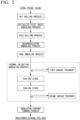
- FIG. 2 is a flow chart showing a method for manufacturing the grain-oriented electrical steel sheet according to the present embodiment.
- a method for manufacturing the grain-oriented electrical steel sheet according to the present embodiment mainly includes: a hot rolling process of performing hot rolling on slab (steel piece) having a predetermined chemical composition to obtain a hot-rolled steel sheet, a hot-rolled steel sheet annealing process of annealing the hot-rolled steel sheet to obtain a hot-rolled annealed sheet, a cold rolling process of performing one-time cold rolling or a plurality of times of cold rolling including annealing on the hot-rolled annealed sheet to obtain a cold-rolled steel sheet, a decarburization annealing process of performing decarburization annealing on the cold-rolled steel sheet to obtain a decarburization-annealed steel sheet, a final annealing process of applying an annealing separator to the decarburization-annealed steel sheet and performing final annealing to obtain final-annealed sheet,
- the method for manufacturing the grain-oriented electrical steel sheet according to the present embodiment includes:
- a steel piece for instance, a steel ingot such as a slab
- a predetermined chemical composition is hot rolled.
- the slab (steel piece) subjected to the hot rolling process may include, as a chemical composition, by mass%,
- the slab may contain, as a chemical composition, by mass%, at least one selected from the group consisting of
- Si is a basic element for the steel piece (slab).
- the Si content is 3.0% or more.
- the Si content is preferably 3.10% or more, and more preferably 3.20% or more.
- the Si content is more than 4.0%, the steel sheet is embrittled, and the passability is remarkably deteriorated during manufacture, and thus the Si content is 4.0% or less.
- the Si content is preferably 3.70% or less, more preferably 3.60% or less, and more preferably 3.50% or less.
- Mn manganese
- MnS or MnSe functioning as an inhibitor is hardly formed, secondary recrystallization does not sufficiently proceed, and favorable magnetic characteristics cannot be obtained. Therefore, the Mn content is 0.010% or more.
- the Mn content is preferably 0.030% or more, and more preferably 0.050% or more.
- the Mn content is more than 0.50%, the steel undergoes phase transformation during secondary recrystallization annealing, secondary recrystallization does not sufficiently proceed, and favorable magnetic characteristics cannot be obtained, and therefore the Mn content is 0.50% or less.
- the Mn content is preferably 0.20% or less, more preferably 0.15% or less, and more preferably 0.10% or less.
- C is a basic element for the steel piece (slab). C is included for the purpose of increasing the development degree of the Goss orientation in secondary recrystallization.
- the C content necessary for improving the magnetic characteristics is 0.020% or more, preferably 0.040% or more as a slab. However, excessive residual of C in a final product may be a factor of iron loss deterioration. Therefore, it is necessary to perform the decarburization treatment in the decarburization annealing process, but when C is contained in the slab in an amount exceeding 0.20%, the decarburization treatment becomes difficult.
- the C content is 0.20% or less, preferably 0.15% or less, and more preferably 0.10% or less as a slab.
- N nitrogen
- Slab steel piece
- N is an element necessary for forming AlN as an inhibitor and increasing the development degree of the Goss orientation during secondary recrystallization.
- the N content necessary for inhibitor formation is 0.0020% or more, preferably 0.0040% or more, and more preferably 0.0060% or more as a slab.
- a slab when the N content is more than 0.020%, blisters (pores) are generated in the steel sheet during cold rolling, the strength of the steel sheet increases, and passability during manufacture may be deteriorated.
- the N content is 0.020% or less, preferably 0.015% or less, and more preferably 0.010% or less as a slab.
- excessive residual of N in a final product may be a cause of magnetism deterioration. Therefore, N needs to be purified at the time of final annealing.
- Acid-soluble Al (aluminum) (sol.Al) is a basic element for the steel piece (slab). Acid-soluble Al is an element necessary for forming AlN as an inhibitor and increasing the magnetic characteristics.
- the acid-soluble Al content is 0.010% or more, preferably 0.015 or more, and more preferably 0.020% or more as a slab. On the other hand, when acid-soluble Al is excessively contained in the slab, embrittlement may be remarkable.
- the acid-soluble Al content is 0.050% or less, preferably 0.040% or less, and more preferably 0.030% or less as a slab.
- acid-soluble Al needs to be purified from the base steel sheet during final annealing.
- P phosphorus
- the P content is an optional element for the steel piece (slab).
- the P content may be 0.040% or less.
- the P content is preferably 0.030% or less, and more preferably 0.020% or less.
- the lower limit of the P content is not particularly limited, and it may be 0%. However, since P has an effect of improving the texture and improving the magnetic characteristics of the steel sheet, the P content may be more than 0% or 0.0020% or more.
- S (sulfur) and Se (selenium) are basic elements for the steel piece (slab).
- S and Se are elements that form MnS, which is an inhibitor.
- the total amount of S and Se is 0.0010% or more, preferably 0.010% or more, and more preferably 0.020% or more as a slab.
- the total amount of S and Se exceeding 0.040% is a cause of hot embrittlement, and hot rolling may be difficult.
- the total amount of S and Se is 0.040% or less, preferably 0.0350% or less, and more preferably 0.030% or less as a slab. Excessive residual of S and Se in a final product may also be a cause of magnetism deterioration. Therefore, S and Se also need to be purified from the base steel sheet during final annealing.
- Sn (tin) is an optional element for the steel piece (slab).
- the Sn content may be 0.50% or less.
- the Sn content is preferably 0.30% or less, and more preferably 0.150% or less.
- the lower limit of the Sn content is not particularly limited, and it may be 0%. However, since Sn has an effect of improving magnetic characteristics by increasing the development degree of the Goss orientation, the Sn content may be more than 0% or 0.0050% or more.
- Cu is an optional element for the steel piece (slab).
- the Cu content exceeds 0.50%, the steel sheet may be embrittled during hot rolling. Therefore, the Cu content may be 0.50% or less.
- the Cu content is preferably 0.30% or less, and more preferably 0.10% or less.
- the lower limit of the Cu content is not particularly limited, and it may be 0%. However, since Cu has an effect of improving magnetic characteristics by increasing the development degree of the Goss orientation, the Cu content may be more than 0% or 0.010% or more.
- Cr Cr
- the Cr content is an optional element for the steel piece (slab).
- the Cr content is more than 0.50%, an Cr oxide is formed, and magnetic characteristics may be adversely affected. Therefore, the Cr content may be 0.50% or less.
- the Cr content is preferably 0.30% or less, and more preferably 0.10% or less.
- the lower limit of the Cr content is not particularly limited, and it may be 0%. However, since Cr has an effect of improving magnetic characteristics by increasing the development degree of the Goss orientation, the Cr content may be more than 0% or 0.010% or more.
- Mo mobdenum
- the Mo content is an optional element for the steel piece (slab).
- the Mo content may be 0.10% or less.
- the Mo content is preferably 0.08% or less, and more preferably 0.05% or less.
- the lower limit of the Mo content is not particularly limited, and it may be 0%. However, since Mo has an effect of improving magnetic characteristics by increasing the development degree of the Goss orientation, the Mo content may be more than 0% or 0.0050% or more.
- Bi bismuth
- the Bi content may be 0.10% or less.
- the Bi content is preferably 0.050% or less, more preferably 0.020% or less, and more preferably 0.0010% or less.
- the lower limit of the Bi content is not particularly limited, and it may be 0%. However, since Bi has an effect of improving magnetic characteristics, the Bi content may be more than 0% or 0.00050% or more.
- the steel piece (slab) subjected to the hot rolling process may contain impurities.
- the impurities correspond to elements which are contaminated during industrial manufacture of steel from ores and scrap that are used as a raw material of steel, or from environment of a manufacturing process.
- the chemical composition of the steel piece (slab) subjected to the hot rolling process may be measured by the same method as for the chemical composition of the base steel sheet described above.
- the steel piece is heat-treated.
- the heating temperature may be, for instance, 1200°C or higher and 1600°C or lower.
- the lower limit of the heating temperature is preferably 1280°C, and the upper limit of the heating temperature is preferably 1500°C.
- the heated steel piece is then hot rolled.
- the sheet thickness of the hot-rolled steel sheet after the hot rolling is preferably, for instance, in a range of 2.0 mm or more and 3.0 mm or less.
- the hot-rolled steel sheet obtained in the hot rolling process is annealed.
- recrystallization occurs in the steel sheet, and finally favorable magnetic characteristics can be achieved.
- the conditions of the hot-rolled steel sheet annealing are not particularly limited, but for instance, the hot-rolled steel sheet may be annealed in a temperature range of 900 to 1200°C for ten seconds to five minutes.
- the surface of the hot-rolled annealed sheet may be pickled after the hot-rolled steel sheet annealing and before cold rolling.
- the hot-rolled annealed sheet after the hot-rolled steel sheet annealing process is subjected to one-time cold rolling or a plurality of times of cold rolling including intermediate annealing.
- the hot-rolled annealed sheet has a favorable steel sheet shape by the hot-rolled steel sheet annealing, it is possible to reduce the possibility of fracture of the steel sheet in the first cold rolling.
- the heating method of the intermediate annealing is not particularly limited.
- the cold rolling may be performed three or more times including intermediate annealing, but since the manufacturing cost increases, it is preferable to perform the cold rolling once or twice.
- the final cold rolling reduction (cumulative cold rolling ratio without intermediate annealing or cumulative cold rolling ratio after intermediate annealing) in the cold rolling may be, for instance, in a range of 80% or more and 95% or less.
- the sheet thickness of the cold-rolled steel sheet subjected to the cold rolling is usually the sheet thickness (final sheet thickness) of the base steel sheet of the grain-oriented electrical steel sheet to be finally manufactured.
- the sheet thickness of the cold-rolled steel sheet after the cold rolling is preferably, for instance, in a range of 0.17 mm or more and 0.29 mm or less.
- the cold-rolled steel sheet obtained in the cold rolling process is decarburization-annealed.
- C contained in the cold-rolled steel sheet is removed, and primary recrystallization occurs.
- the decarburization annealing is preferably performed in a wet atmosphere in order to remove C contained in the cold-rolled steel sheet, and for instance, annealing may be performed in a wet atmosphere in a temperature range of 700 to 1000°C for ten seconds to ten minutes.
- a nitriding treatment may be performed after the decarburization annealing and before application of the annealing separator.
- the decarburization-annealed steel sheet after the decarburization annealing is subjected to the nitriding treatment to manufacture a nitriding-treated steel sheet.
- annealing may be performed in a temperature range of 700 to 850°C for 10 to 60 seconds in an atmosphere containing a gas having nitriding ability such as hydrogen, nitrogen, and ammonia.
- an annealing separator is applied to the decarburization-annealed steel sheet obtained in the decarburization annealing process and final annealing is performed.
- the annealing may be performed for a long time in a state where the steel sheet is wound in a coil shape.
- an annealing separator is applied to the decarburization-annealed steel sheet and dried before the final annealing.
- the annealing separator contains a magnesia (MgO), an alumina (Al 2 O 3 ), and a bismuth chloride.
- the annealing separator includes 20 to 99.5 mass% of an alumina, 0.5 to 20 mass% of a bismuth chloride, and the balance including a magnesia and impurities as percent solid.
- the bismuth chloride may be a bismuth oxychloride (BiOCl), a bismuth trichloride (BiCl 3 ), or the like.
- the annealing conditions of the final annealing are not particularly limited, and known conditions may be appropriately adopted.
- the decarburization-annealed steel sheet to which the annealing separator may be applied and dried is held in a temperature range of 1000°C or more and 1300°C or less for 10 hours or more and 60 hours or less.
- the atmosphere at the time of the final annealing may be, for instance, a nitrogen atmosphere or a mixed atmosphere of nitrogen and hydrogen.
- the surface of the final-annealed sheet may be washed to perform powder removal.
- the atmosphere at the time of the final annealing may be changed to a hydrogen atmosphere to perform a purification treatment.
- a purification treatment elements such as Al, N, S, and Se contained in the steel sheet as a steel composition are discharged to the outside of the system, and the steel sheet is purified.
- the final-annealed sheet obtained in the final annealing process is subjected to thermal oxidation annealing (heat treatment).
- the first surface treatment may be performed before the heat treatment, or the second surface treatment may be performed after the heat treatment.
- the final-annealed sheet obtained in the final annealing process may be subjected to the first surface treatment as necessary.
- pickling conditions are not particularly limited, but for instance, the final-annealed sheet may be immersed in an acid (first treatment solution) having a specific concentration.
- the first treatment solution may contain at least one of a hydrochloric acid, a sulfuric acid, a nitric acid, and a phosphoric acid, and has a total acid concentration of 1 to 20 mass% and a solution temperature of 50 to 90°C.
- the surface treatment of the final-annealed sheet may be performed for 3 to 60 seconds using the first treatment solution.
- each of the above conditions may be controlled in a complex and inseparable manner. For instance, when the pickling strength is increased for some conditions among the above conditions, the active state of the surface and the smooth state of the surface may be compatible by changing the pickling strength so as to be weakened for the other conditions among the above conditions. Since those skilled in the art can execute surface control including pickling behavior, it is possible to control the surface state by combining the above conditions in consideration of the effect of the above conditions on the pickling strength.
- the total acid concentration of the first treatment solution when the total acid concentration of the first treatment solution is less than 1 mass%, it is difficult to bring the surface of the final-annealed sheet into an active surface state.
- the total acid concentration of the first treatment solution when the total acid concentration of the first treatment solution is more than 20 mass%, etch pits are likely to be formed on the surface of the final-annealed sheet.
- the solution temperature of the first treatment solution is lower than 50°C, an active surface state cannot be obtained, and when the solution temperature of the first treatment solution is higher than 90°C, etch pits are likely to be formed.
- the treatment time of the first surface treatment is less than 3 seconds, an active surface state cannot be obtained, and when the treatment time of the first surface treatment is more than 60 seconds, etch pits are likely to be formed.
- the final-annealed sheet after the final annealing process or the final-annealed sheet after the first surface treatment is subjected to the thermal oxidation annealing.
- the temperature of the final-annealed sheet is heated from a room temperature, and the heat treatment is performed within a temperature range of 800 to 1100°C, and the heating stage from a room temperature to a heating control temperature within a temperature range of 600 to 1000°C and the soaking stage at a soaking temperature within a temperature range of 800 to 1100°C are individually controlled.
- the steel sheet is heated under controlled from a room temperature to a temperature range of 600 to 1000°C in an atmosphere such that an oxygen concentration is 1.0 to 25 vol%.
- the heating condition it is possible to preferably control the I base which is an average quantitative value of Fe in the base steel sheet internal region and the I coating which is an average quantitative value of Fe in the insulation coating internal region in the end.
- the oxygen concentration is to be 1.0 vol% or more.
- the oxygen concentration is preferably 3 vol% or more, and more preferably 5 vol% or more.
- the oxygen concentration is to be 25 vol% or less.
- the oxygen concentration is preferably 18 vol% or less, and more preferably 16 vol% or less.
- an atmosphere in the heating stage may be air.
- the heating control temperature is to be 600°C or more.
- the heating control temperature is preferably 650°C or more, and more preferably 700°C or more.
- the heating control temperature is to be 1000°C or less.
- the heating control temperature is preferably 950°C or less, and more preferably 900°C or less.
- the heating rate in the heating stage is not particularly limited, but the heating rate is preferably 10°C/sec or more, and the heating rate is preferably 100°C/sec or less.
- the soaking stage soaking is performed on the steel sheet for 5 to 200 seconds in a temperature range of 800 to 1100°C in an atmosphere such that an oxygen concentration is less than 1.0 vol% and an oxidation degree PH 2 O/PH 2 is 0.0001 to 10.
- the I base which is an average quantitative value of Fe in the base steel sheet internal region
- the I coating which is an average quantitative value of Fe in the insulation coating internal region in the end.
- the oxygen concentration is less than 1.0 vol%.
- the oxygen concentration is preferably 0.5 vol% or less, and more preferably 0.1 vol% or less.
- the lower limit of the oxygen concentration is not particularly limited, and is preferably as small as possible.
- the oxygen concentration may be 1.0 ⁇ 10 -20 vol% or more.
- the oxygen concentration is preferably 1.0 ⁇ 10 -19 vol% or more, and more preferably 1.0 ⁇ 10 -18 vol% or more.
- the oxidation degree PH 2 O/PH 2 is 10 or less.
- the oxidation degree PH 2 O/PH 2 is preferably 0.25 or less, and more preferably 0.10 or less.
- the lower limit of the oxygen concentration is not particularly limited, and may be 0. However, it is practically difficult to obtain the atmosphere, and thus, the substantial lower limit may be 0.0001.
- the oxidation degree PH 2 O/PH 2 is preferably 0.0010 or more, and more preferably 0.0050 or more.
- the oxidation degree PH 2 O/PH 2 can be defined by the ratio of water vapor partial pressure PH 2 O to the hydrogen partial pressure PH 2 in the annealing atmosphere. Also, the oxidation degree PH 2 O/PH 2 can be derived from the hydrogen concentration and the dew point in the annealing atmosphere.
- the soaking temperature is 800°C or higher.
- the soaking temperature is preferably 830°C or higher, and more preferably 860°C or higher.
- the soaking temperature is 1100°C or lower.
- the soaking temperature is preferably 1050°C or lower, and more preferably 1000°C or lower.
- the soaking time is 5 seconds or more.
- the soaking time is preferably 10 seconds or more, and more preferably 15 seconds or more.
- the soaking time is 200 seconds or less.
- the soaking time is preferably 150 seconds or less, and more preferably 100 seconds or less.
- heating conditions or cooling conditions from the heating control temperature to the soaking temperature are not particularly limited. For instance, after reaching the heating control temperature, heating or cooling may be conducted in the same atmosphere as in the soaking stage.
- the thermal oxidation-annealed sheet after the heat treatment may be subjected to the second surface treatment as necessary.
- pickling conditions are not particularly limited, but for instance, the thermal oxidation-annealed sheet may be immersed in an acid (second treatment solution) having a specific concentration.
- the second treatment solution may contain at least one of a hydrochloric acid, a sulfuric acid, a nitric acid, and a phosphoric acid, and has a total acid concentration of 1 to 10 mass% and a solution temperature of 50 to 90°C.
- the surface treatment of the thermal oxidation-annealed sheet may be performed for 3 to 60 seconds using the second treatment solution.
- each of the above conditions may be controlled in a complex and inseparable manner. For instance, when the pickling strength is increased for some conditions among the above conditions, the pickling of the oxide and the smooth state of the surface may be compatible by changing the pickling strength so as to be weakened for the other conditions among the above conditions. Since those skilled in the art can execute surface control including pickling behavior, it is possible to control the surface state by combining the above conditions in consideration of the effect of the above conditions on the pickling strength.
- the total acid concentration of the second treatment solution when the total acid concentration of the second treatment solution is less than 1 mass%, it is difficult to pickle the residual oxide on the surface of the thermal oxidation-annealed sheet.
- the total acid concentration of the second treatment solution when the total acid concentration of the second treatment solution is more than 10 mass%, etch pits are likely to be formed on the surface of the thermal oxidation-annealed sheet.
- the solution temperature of the second treatment solution is lower than 50°C, pickling of the residual oxide is difficult, and when the solution temperature of the second treatment solution is higher than 90°C, etch pits are likely to be formed.
- the treatment time of the second surface treatment is less than 3 seconds, pickling of the residual oxide is difficult, and when the treatment time of the second surface treatment is more than 60 seconds, etch pits are likely to be formed.
- the insulation coating forming solution is applied to the thermal oxidation-annealed sheet after the thermal oxidation annealing process, and a heat treatment is performed. By this heat treatment, the insulation coating is formed on the surface of the thermal oxidation-annealed sheet.
- the insulation coating forming solution may contain colloidal silica and phosphate.
- the insulation coating forming solution preferably does not contain chromium.
- the insulation coating applies the tension to the grain-oriented electrical steel sheet, and thereby, reduces the iron loss as a single steel sheet. Moreover, the insulation coating ensures interlaminar electrical insulation when the grain-oriented electrical steel sheets are utilized after being laminated, and thereby, reduces the iron loss as an iron core.
- the oxidation degree PH 2 O/PH 2 is 10 or less.
- the oxidation degree PH 2 O/PH 2 is preferably 7.5 or less, and more preferably 5.0 or less.
- the oxidation degree PH 2 O/PH 2 is 0.10 or more.
- the oxidation degree PH 2 O/PH 2 is preferably 0.3 or more, and more preferably 0.5 or more.
- the soaking temperature is 700°C or higher.
- the soaking temperature is preferably 750°C or higher, and more preferably 800°C or higher.
- the soaking temperature is 1000°C or lower.
- the soaking temperature is preferably 950°C or lower, and more preferably 900°C or lower.
- the soaking time is 5 seconds or more.
- the soaking time is preferably 10 seconds or more, and more preferably 15 seconds or more.
- the soaking time is 200 seconds or less.
- the soaking time is preferably 150 seconds or less, and more preferably 100 seconds or less.
- the average quantitative value of Fe in the base steel sheet internal region and the average quantitative value of Fe in the insulation coating internal region are favorably controlled by containing a Bi chloride in the annealing separator, by preferably controlling the heating conditions or the soaking conditions in the thermal oxidation annealing process, and by preferably controlling the heat treatment conditions in the insulation coating forming process.
- the insulation coating preferably adheres to the base steel sheet.
- flattening annealing for shape correction may be performed as necessary. By performing flattening annealing on the steel sheet, the iron loss can be further reduced.
- the magnetic domain control treatment may be performed as necessary before the insulation coating forming process or after the insulation coating forming process. By performing the magnetic domain control treatment, the iron loss of the grain-oriented electrical steel sheet can be further reduced.
- linear or dotted groove parts extending in a direction intersecting the rolling direction may be formed at predetermined intervals along the rolling direction.
- linear or dotted stress strain parts extending in a direction intersecting the rolling direction may be formed at predetermined intervals along the rolling direction. The width of the 180° magnetic domain is narrowed (180° magnetic domain is refined) by the magnetic domain control treatment.
- a mechanical groove forming method using a gear or the like a chemical groove forming method of forming a groove by electrolytic etching, a thermal groove forming method by laser irradiation, or the like can be applied.
- a stress strain part laser beam irradiation, electron beam irradiation, or the like can be applied.
- condition in the examples is an example condition employed to confirm the operability and the effects of the present invention, so that the present invention is not limited to the example condition.
- the present invention can employ various types of conditions as long as the conditions do not depart from the scope of the present invention and can achieve the object of the present invention.
- a slab (steel piece) having a chemical composition shown in Table 1 was heated to 1350°C and subjected to hot rolling to obtain a hot-rolled steel sheet having a sheet thickness of 2.3 mm, and this hot-rolled steel sheet was annealed at 1100°C for 120 seconds and pickled. Thereafter, a cold-rolled steel sheet having a final sheet thickness was obtained by performing one-time cold rolling or a plurality of times of cold rolling including intermediate annealing. The cold-rolled steel sheet was subjected to decarburization annealing at 830°C for 140 seconds in a wet hydrogen atmosphere. After the decarburization annealing, a nitriding treatment was performed for Test No. 23 to Test No. 29 shown in Tables.
- the annealing separator shown in Tables 3 to 6 was applied to the obtained decarburization-annealed steel sheet and dried.
- an alumina and a bismuth chloride represent contents as percent solid, and the balance represents a magnesia and impurities.
- final annealing was performed by holding at 1200°C for 20 hours.
- the final annealing atmosphere was a mixed atmosphere of nitrogen and hydrogen, and then a hydrogen atmosphere. After the final annealing, the steel sheet was washed to remove an excessive annealing separator.
- the obtained final-annealed sheet was subjected to the heat treatment (heating stage and soaking stage) under the conditions shown in Tables 3 to 10 as thermal oxidation annealing.
- the first surface treatment and the second surface treatment were also performed.
- heating control temperature in the tables indicates the higher temperature in the temperature range controlled during the heating process.
- heating control temperature was different from the soaking temperature in the thermal oxidation annealing process, after reaching the heating control temperature, heating or cooling was conducted in the same atmosphere as in the soaking stage.
- An insulation coating forming solution containing colloidal silica and a phosphate was applied to the surface of the obtained thermal oxidation-annealed sheet, and an insulation coating was formed under the conditions shown in Tables 7 to 10, thereby manufacturing a grain-oriented electrical steel sheet.
- a weight of the insulation coating was 4 to 6 g/m 2 .
- Magnetic domain control treatment of irradiating the obtained grain-oriented electrical steel sheet with a laser beam was performed.
- the chemical composition of the base steel sheet, the average quantitative value of Fe in the base steel sheet internal region, the average quantitative value of Fe in the insulation coating internal region, and the like were confirmed based on the above-described method. With respect to the steel sheet in which the intermediate ceramic layer was "present", the evaluation was not conducted. In addition, the coating adhesion and the magnetic characteristics of the obtained grain-oriented electrical steel sheets Nos. 1 to 54 were evaluated.
- the coating adhesion was evaluated by a coating residual area fraction when the test piece is wound around a cylinder having a diameter of 20 mm and bent 180°.
- the area fraction of the residual surface of the coating in the area of the steel sheet in contact with the cylinder was calculated.
- the area of the steel sheet in contact with the roll was determined by calculation.
- the area of the residual surface was determined by capturing a photograph of the steel sheet after the test and performing image analysis on the captured image.
- the test piece was evaluated according to a single sheet tester (SST).
- Iron loss W17/50 W/kg defined as a power loss per unit weight (1 kg) of the steel sheet was measured under the conditions of an AC frequency of 50 Hz and an excitation magnetic flux density of 1.7 T. The case where iron loss W17/50 was less than 0.75 W/kg was determined as acceptable.
- magnetic flux density B8 (T) in the rolling direction was measured by applying a magnetic field of 800 A/m to the test piece.
- "absence" of the intermediate ceramic layer in the layer structure in the tables indicates that a forsterite film or the like as an intermediate ceramic layer is not present, the insulation coating is arranged in contact with the base steel sheet, and the base steel sheet includes a smooth surface.
- "presence” of the intermediate ceramic layer indicates that there is an intermediate ceramic layer such as a forsterite film that adversely affects magnetic characteristics. The intermediate ceramic layer deteriorates the magnetic characteristics.
- "I coating / I base " in the tables indicates a ratio of the I coating which is an average quantitative value of Fe in the insulation coating internal region to the I base which is an average quantitative value of Fe in the base steel sheet internal region.
- "presence frequency in 10 visual fields” in the tables represents the number of locations where "I coating / I base " is 0.010 to 0.50 when viewing the cross section at ten observation locations which are separated from each other on a sheet surface.
- Test Nos. 1 to 54 the present invention examples were excellent in coating adhesion and iron loss characteristics without relying on a forsterite film.
- comparative examples were not excellent in surface smoothness, coating adhesion, or iron loss characteristics.
- the present invention it is possible to provide the grain-oriented electrical steel sheet excellent in the coating adhesion without relying on the forsterite film, and the method for manufacturing the same.
- the forsterite film is made not to exist, the surface of the base steel sheet is smooth, and the base steel sheet and the insulation coating are preferably controlled, so that the coating adhesion is excellent. Therefore, it is possible to preferably improve the iron loss. Accordingly, the present invention has significant industrial applicability.
Landscapes
- Chemical & Material Sciences (AREA)
- Engineering & Computer Science (AREA)
- Materials Engineering (AREA)
- Mechanical Engineering (AREA)
- Metallurgy (AREA)
- Organic Chemistry (AREA)
- Physics & Mathematics (AREA)
- Crystallography & Structural Chemistry (AREA)
- Thermal Sciences (AREA)
- Electromagnetism (AREA)
- Manufacturing & Machinery (AREA)
- General Chemical & Material Sciences (AREA)
- Chemical Kinetics & Catalysis (AREA)
- Dispersion Chemistry (AREA)
- Power Engineering (AREA)
- Manufacturing Of Steel Electrode Plates (AREA)
- Chemical Treatment Of Metals (AREA)
- Soft Magnetic Materials (AREA)
Abstract
Description
- The present invention relates to a grain-oriented electrical steel sheet. In particular, the present invention relates to the grain-oriented electrical steel sheet excellent in coating adhesion without relying on a forsterite film, and a method for manufacturing the same.
- Priority is claimed on
Japanese Patent Application No. 2022-070072, filed April 21, 2022 - A grain-oriented electrical steel sheet is used mainly in a transformer. A transformer is continuously excited over a long period of time from installation to disuse such that energy loss continuously occurs. Therefore, energy loss occurring when the transformer is magnetized by an alternating current, specifically, iron loss is a main index that determines the performance of the transformer.
- In order to reduce iron loss of a grain-oriented electrical steel sheet, various methods have been developed. For instance, a method of highly aligning grains in the {110} <001> orientation called Goss orientation in a crystal structure, a method of increasing the content of a solid solution element such as Si that increases electric resistance in a steel sheet, and a method of reducing the thickness of a steel sheet are exemplified.
- In addition, it is known that a method of applying tension to a steel sheet is effective for reducing iron loss. Thus, in general, in order to reduce the iron loss, an insulation coating is formed on a surface of the grain-oriented electrical steel sheet. The coating applies the tension to the grain-oriented electrical steel sheet, and thereby, reduces the iron loss as a single steel sheet. Moreover, the coating ensures interlaminar electrical insulation when the grain-oriented electrical steel sheets are utilized after being laminated, and thereby, reduces the iron loss as an iron core.
- For instance, as the grain-oriented electrical steel sheet with the coating, a forsterite film which is an oxide film including Mg is formed on a surface of a base steel sheet, and then, the insulation coating is formed on a surface of the forsterite film. In this case, the coating on the base steel sheet includes the forsterite film and the insulation coating. Each of the forsterite film and the insulation coating has both a function of insuring the electrical insulation and applying the tension to the base steel sheet.
- The forsterite film is formed, during final annealing in which secondary recrystallization is caused in the steel sheet, by reacting an annealing separator mainly containing magnesia (MgO) with silicon dioxide (SiO2) formed on the base steel sheet during decarburization annealing, in heat treatment at 900 to 1200°C for 20 hours or more.
- The insulation coating is formed by applying coating solution including, for instance, phosphate and colloidal silica to the steel sheet after final annealing, and by baking and drying it at 350 to 1150°C for 5 seconds or more.
- In order that the coating performs the functions of ensuring the insulation and applying the tension to the base steel sheet, sufficient adhesion is required between the coating and the base steel sheet.
- Conventionally, the above adhesion has been mainly ensured by the anchor effect derived from the unevenness of an interface between the base steel sheet and the forsterite film. However, in recent years, it has been found that the unevenness of the interface becomes an obstacle of movement of a magnetic domain wall when the grain-oriented electrical steel sheet is magnetized, and thus, the unevenness is also a factor that hinders the reduction of iron loss.
- For instance,
Patent Documents 1 to 3 disclose a technique to form the insulation coating even in a state in which the surface of the base steel sheet does not have the forsterite thereon and is made to be smooth in order to further reduce the iron loss. - In the technique disclosed in the
Patent Document 1, the forsterite film is removed by pickling or the like and then the surface of the base steel sheet is smoothened by chemical polishing or electrolytic polishing. In the technique disclosed in the Patent Document 2, the formation of the forsterite film itself is suppressed by using an annealing separator containing alumina (Al2O3) and thereby the surface of the base steel sheet is smoothened. In the technique disclosed in the Patent Document 3, the formation of the forsterite film itself is suppressed by using an annealing separator containing bismuth chloride and thereby the surface of the base steel sheet is smoothened. - These techniques can smoothen the surface of the base steel sheet, but have a problem that it is difficult to obtain coating adhesion after the insulation coating is formed. When the coating adhesion is not obtained, it is difficult to apply the tension to the base steel sheet, and it is difficult to ensure the electrical insulation between the laminated steel sheets.
- For instance, Patent Documents 4 to 6 disclose a technique to improve the coating adhesion even when the surface of the base steel sheet is made to be smooth.
- In the technique disclosed in the Patent Document 4, the final annealing is performed using the annealing separator containing alumina, annealing is performed to form an oxide layer by controlling a thermal history and oxygen partial pressure, and then the insulation coating is formed. In the Patent Document 4, the intermediate oxide layer of an externally oxidized SiO2 is formed on the base steel sheet, and the insulation coating is formed on the intermediate oxide layer. The Patent Document 4 attempts to improve the coating adhesion by making an element such as Mn solid-soluted in the intermediate oxide layer.
- In the technique disclosed in the Patent Document 5, the final annealing is performed using the annealing separator containing bismuth chloride or the like, pickling treatment is performed, heat treatment is performed by controlling oxygen concentration and dew point, and then the insulation coating is formed. In the Patent Document 5, protrusions and recesses of etch pits are formed on the surface of the base steel sheet, a silica-containing oxide layer and an iron-based oxide layer are formed on the base steel sheet, and the insulation coating is formed on the iron-based oxide layer. The Patent Document 5 attempts to improve the coating adhesion by the protrusions and recesses of etch pits of the surface of the base steel sheet.
- In the technique disclosed in the Patent Document 6, the final annealing is performed using the annealing separator containing bismuth chloride or the like, and then the insulation coating containing metal compounds and the insulation coating not containing metal compounds are formed. In the Patent Document 6, an intermediate layer is formed on the base steel sheet, and the insulation coating is formed on the intermediate layer. The Patent Document 6 attempts to improve the coating adhesion by optimally controlling each of manufacture processes.
-
- Patent Document 1:
Japanese Unexamined Patent Application, First Publication No. S49-096920 - Patent Document 2:
Japanese Unexamined Patent Application, First Publication No. H06-049534 - Patent Document 3:
Japanese Unexamined Patent Application, First Publication No. H07-054155 - Patent Document 4:
PCT International Publication No. WO2020/012666 - Patent Document 5:
PCT International Publication No. WO2020/149345 - Patent Document 6:
PCT International Publication No. WO2020/149325 - As described above, in order to reduce the iron loss of the grain-oriented electrical steel sheet, it is effective to make the forsterite film not to exist and then to smooth the surface of the base steel sheet of the grain-oriented electrical steel sheet. However, the technique has a problem that it is difficult to obtain the coating adhesion necessary for reducing the iron loss.
- In the techniques disclosed in Patent Documents 4 to 6, it is attempted to improve the coating adhesion without relying on the forsterite film. Even with the techniques, Although the coating adhesion is improved to a certain extent by the techniques. However, if the coating adhesion can be improved by a technique different from those of Patent Documents 4 to 6, options are industrially increased, which is preferable.
- The present invention has been made in consideration of the above-mentioned situations. An object of the invention is to provide the grain-oriented electrical steel sheet excellent in the coating adhesion without relying on the forsterite film, and the method for manufacturing the same.
- An aspect of the present invention employs the following.
-
- (1) A grain-oriented electrical steel sheet according to an aspect of the present invention includes:
- a base steel sheet; and an insulation coating arranged in contact with the base steel sheet, wherein
- the base steel sheet includes, as a chemical composition, by mass%,
- 3.0 to 4.0% of Si,
- 0.010 to 0.50% of Mn, and
- a balance including Fe and impurities,
- when viewing a cross section whose cutting direction is parallel to a thickness direction and perpendicular to a transverse direction, a base steel sheet internal region is regarded as a range from 100 to 200 nm toward the base steel sheet along the thickness direction based on an interface between the base steel sheet and the insulation coating, an insulation coating internal region is regarded as a range from 50 to 150 nm toward the insulation coating along the thickness direction based on the interface, Ibase is regarded as an average quantitative value of Fe in mass% in the base steel sheet internal region, and I coating is regarded as an average quantitative value of Fe in mass% in the insulation coating internal region,
- the I base and the I coating satisfy 0.010 ≤ I coating / I base ≤ 0.50.
- (2) In the grain-oriented electrical steel sheet according to (1),
- the base steel sheet may further include, as the chemical composition, by mass%,
- 0.010% or less of C,
- 0.010% or less of N,
- 0.020% or less of acid-soluble Al,
- 0.040% or less of P,
- 0.010% or less in total of S and Se,
- 0.50% or less of Sn,
- 0.50% or less of Cu,
- 0.50% or less of Cr,
- 0.50% or less of Sb,
- 0.10% or less of Mo, and
- 0.10% or less of Bi.
- (3) In the grain-oriented electrical steel sheet according to (1) or (2),
when viewing the cross section at ten observation locations which are separated from each other on a sheet surface, the ten observation locations may include five or more of a location where the I base and the I coating satisfy 0.010 ≤ I coating / Ibase ≤ 0.50. - (4) A method for manufacturing the grain-oriented electrical steel sheet according to any one of (1) to (3) includes:
- a hot rolling process; a hot-rolled steel sheet annealing process; a cold rolling process; a decarburization annealing process; a final annealing process; a thermal oxidation annealing process; and an insulation coating forming process, wherein
- in the final annealing process,
- an annealing separator including 20 to 99.5 mass% of an alumina, 0.5 to 20 mass% of a bismuth chloride, and a balance including a magnesia and impurities as percent solid is applied to the steel sheet after the decarburization annealing process, the annealing separator is dried, and then the final annealing is performed, and
- in the thermal oxidation annealing process,
- as a heating stage, the steel sheet after the final annealing process is control-heated from a room temperature to a temperature range of 600 to 1000°C in an atmosphere such that an oxygen concentration is 1.0 to 25 vol%, and
- as a soaking stage, the steel sheet after the heating stage is soaked for 5 to 200 seconds in a temperature range of 800 to 1100°C in an atmosphere such that an oxygen concentration is less than 1.0 vol% and an oxidation degree PH2O/PH2 is 0.0001 to 10, and
- in the insulation coating forming process,
- the steel sheet after the thermal oxidation annealing process is applied an insulation coating forming solution to and is soaked for 5 to 200 seconds in a temperature range of 700 to 1000°C in an atmosphere such that an oxidation degree PH2O/PH2 is 0.10 to 10.
- (5) In the method for manufacturing the grain-oriented electrical steel sheet according to (4),
- in the thermal oxidation annealing process,
- as a first surface treatment, the steel sheet after the final annealing process may be immersed for 3 to 60 seconds in a first treatment solution such that at least one of a hydrochloric acid, a sulfuric acid, a nitric acid, and a phosphoric acid is included, a total acid concentration is 1 to 20 mass%, and a solution temperature is 50 to 90°C, and
- as a heat treatment, the steel sheet after the first surface treatment may be heated and soaked.
- (6) In the method for manufacturing the grain-oriented electrical steel sheet according to (4) or (5),
- in the thermal oxidation annealing process,
- as a second surface treatment, the steel sheet after being heated and soaked may be immersed for 3 to 60 seconds in a second treatment solution such that at least one of a hydrochloric acid, a sulfuric acid, a nitric acid, and a phosphoric acid is included, a total acid concentration is 1 to 10 mass%, and a solution temperature of 50 to 90°C.
- According to the above aspects of the present invention, it is possible to provide the grain-oriented electrical steel sheet excellent in the coating adhesion without relying on the forsterite film, and the method for manufacturing the same. In the grain-oriented electrical steel sheet, the forsterite film is made not to exist, the surface of the base steel sheet is smooth, and the base steel sheet and the insulation coating are preferably controlled, so that the coating adhesion is excellent. Therefore, it is possible to preferably improve the iron loss.
-
-
Figure 1 is a cross-sectional illustration showing a grain-oriented electrical steel sheet according to an embodiment of the present invention. -
Figure 2 is a flow chart showing a method for manufacturing the grain-oriented electrical steel sheet according to the embodiment. - Hereinafter, a preferable embodiment of the present invention is described in detail. However, the present invention is not limited only to the configuration which is disclosed in the embodiment, and various modifications are possible without departing from the aspect of the present invention. In addition, the limitation range as described below includes a lower limit and an upper limit thereof. However, the value expressed by "more than" or "less than" does not include in the limitation range.
- As described above, when the forsterite film is made not to exist and the surface of the base steel sheet of the grain-oriented electrical steel sheet is made to be smooth, the magnetic domain wall can easily move at the time that the grain-oriented electrical steel sheet is magnetized, and thus, the iron loss is improved. However, the technique has a problem that it is difficult to obtain the coating adhesion necessary for reducing the iron loss.
- The present inventors have made a thorough investigation, and as a result, found the grain-oriented electrical steel sheet excellent in the coating adhesion without relying on the forsterite film. Hereinafter, the grain-oriented electrical steel sheet according to the present embodiment is described in detail.
-
Figure 1 is a cross-sectional illustration showing the grain-oriented electrical steel sheet according to present embodiment. As shown inFigure 1 , the grain-orientedelectrical steel sheet 1 according to present embodiment includes abase steel sheet 11 and aninsulation coating 12 arranged in contact with thebase steel sheet 11 when viewing a cross section whose cutting direction is parallel to a thickness direction and perpendicular to a transverse direction. Herein, the layer structure in which theinsulation coating 12 is arranged in contact with thebase steel sheet 11 indicates that the forsterite film does not exist and indicates that thebase steel sheet 11 includes the smooth surface (smooth surface equivalent to cold-rolled steel sheet). In addition, in the grain-orientedelectrical steel sheet 1 according to the present embodiment, when viewing the cross section, a base steel sheet internal region is regarded as a range from 100 to 200 nm toward thebase steel sheet 11 along the thickness direction based on an interface between thebase steel sheet 11 and theinsulation coating 12, an insulation coating internal region is regarded as a range from 50 to 150 nm toward theinsulation coating 12 along the thickness direction based on the interface, I base is regarded as an average quantitative value of Fe in mass% in the base steel sheet internal region, and I coating is regarded as an average quantitative value of Fe in mass% in the insulation coating internal region, the I base and the I coating satisfy 0.010 ≤ I coating / I base ≤ 0.50. - As described above, in order to improve the iron loss, it is effective to make the magnetic domain wall move easily by smoothing the surface of the base steel sheet, and also, effective to apply the tension to the base steel sheet and to ensure the electrical insulation between the laminated steel sheets by steadily adhering the insulation coating to the base steel sheet. In the grain-oriented electrical steel sheet according to the present embodiment, the surface smoothness of the base steel sheet is secured by arranging the insulation coating in contact with the base steel sheet (by making the forsterite not to exist), and also, the adhesion between the base steel sheet and the insulation coating is secured by controlling the average quantitative value of Fe in the base steel sheet internal region and the average quantitative value of Fe in the insulation coating internal region. Therefore, the grain-oriented electrical steel sheet according to the present embodiment is excellent in the iron loss.
- The presence or absence of the base steel sheet and the insulation coating may be confirmed by observing a cross section whose cutting direction is parallel to the thickness direction and perpendicular to the transverse direction. For instance, the cross section may be observed with a transmission electron microscope (TEM).
- Specifically, at first, a test piece is cut out by focused ion beam (FIB) processing such that the cutting direction is parallel to the thickness direction and perpendicular to the transverse direction, and the cross-sectional structure of this cross section is observed with the TEM at a magnification at which each layer enters the observed visual field. When each layer does not enter the observed visual field, the cross-sectional structure is observed in a plurality of continuous visual fields. For instance, observation may be performed in a visual field of 1 µm or more × 1 µm or more, preferably in a visual field of approximately 10 µm × 8 µm. In addition, the condition may be an acceleration voltage of 200 kV. In the case of observation in only one visual field, it is difficult to obtain average information of the steel sheet, and thus, it may be determined by observing ten locations randomly selected and separated from each other.
- For specifying each layer in the cross-sectional structure, line analysis is performed along the thickness direction by energy dispersive x-ray spectroscopy (EDS) provided in the TEM, and quantitative analysis of the chemical composition at each layer is performed. The elements to be quantitatively analyzed are five elements: Fe, P, Si, O, and Mg.
- From the quantitative analysis result by the TEM-EDS, a region in the form of a layer existing at the deepest position in the thickness direction and having an Fe content of 80 atom% or more excluding measurement noise is determined to be a base steel sheet, and a region excluding the base steel sheet is determined to be other layers.
- When the region that is the base steel sheet is determined, precipitates, inclusions, pores, and the like included in each layer are not considered as determination objects, and but the region that satisfies the quantitative analysis results as a matrix is determined as the base steel sheet. For instance, when it is confirmed from a bright field image, a dark field image, or a line analysis result that precipitates, inclusions, pores, or the like exist on the scanning line of the line analysis, this region is not considered for the determination, and the quantitative analysis results as the matrix is utilized for the determination. Herein, the precipitates, inclusions, and pores can be distinguished from the matrix by contrast, and can be distinguished from the matrix by the amounts of constituent elements based on the quantitative analysis results. Herein, when the base steel sheet is determined, it is preferable to determine the base steel sheet at a position where precipitates, inclusions, and pores are not included on the scanning line of the line analysis.
- With respect to the region excluding the base steel sheet determined above, from the quantitative analysis result by the TEM-EDS, a region in which the Fe content is less than 80 atom%, the P content is 5 atom% or more, and the O content is 30 atom% or more, excluding measurement noise, is determined to be the insulation coating (phosphoric acid-based coating). Herein, aluminum, magnesium, nickel, and the like derived from phosphate may be contained in the phosphoric acid-based coating in addition to the above three elements that are elements for determining the phosphoric acid-based coating. In addition, silicon derived from colloidal silica may be contained.
- When the region that is the phosphoric acid-based coating is determined, precipitates, inclusions, pores, and the like included in each coating are not considered as determination objects, and the region that satisfies the quantitative analysis results as a matrix is determined as the phosphoric acid-based coating. For instance, when it is confirmed from a bright field image, a dark field image, or a line analysis result that precipitates, inclusions, pores, or the like exist on the scanning line of the line analysis, this region is not considered for the determination, and the quantitative analysis results as the matrix is utilized for the determination. Herein, the precipitates, inclusions, and pores can be distinguished from the matrix by contrast, and can be distinguished from the matrix by the amounts of constituent elements based on the quantitative analysis results. Herein, when the phosphoric acid-based coating is determined, it is preferable to determine the phosphoric acid-based coating at a position where precipitates, inclusions, and pores are not included on the scanning line of the line analysis.
- Since the grain-oriented electrical steel sheet according to the present embodiment does not include an intermediate ceramic layer such as a forsterite film or an externally oxidized film, when the layer structure is determined by the above method, the base steel sheet and the insulation coating arranged in contact with the base steel sheet are confirmed. For instance, the base steel sheet has a thickness of 0.17 to 0.29 mm, and the insulation coating has a thickness of 0.5 to 10 µm.
- However, when the electrical steel sheet includes a forsterite film as the intermediate ceramic layer, the forsterite film is confirmed between the base steel sheet and the insulation coating (phosphoric acid-based coating) determined by the above method. This forsterite film satisfies, for instance, as an average of the entire coating, that the Fe content is less than 80 atom% on average, the P content is less than 5 atom% on average, the Si content is 5 atom% or more on average, the O content is 30 atom% or more on average, and the Mg content is 10 atom% or more on average. Herein, the quantitative analysis result of the forsterite film is a quantitative analysis result as a matrix that does not include analysis results of precipitates, inclusions, pores, and the like contained in the forsterite film. Herein, when the forsterite film is determined, it is preferable to determine the forsterite film at a position where precipitates, inclusions, and pores are not included on the scanning line of the line analysis. In general, the forsterite film has a thickness of 0.1 to 10 µm.
- Similarly, when the electrical steel sheet includes an externally oxidized film as the intermediate ceramic layer, the externally oxidized film is confirmed between the base steel sheet and the insulation coating (phosphoric acid-based coating) determined by the above method. This externally oxidized film satisfies, for instance, as an average of the entire oxide film, that the Fe content is less than 80 atom% on average, the P content is less than 5 atom% on average, the Si content is 20 atom% or more on average, the O content is 30 atom% or more on average, and the Mg content is less than 10 atom% on average. Herein, the quantitative analysis result of the externally oxidized film is a quantitative analysis result as a matrix that does not include analysis results of precipitates, inclusions, pores, and the like contained in the externally oxidized film. Herein, when the externally oxidized film is determined, it is preferable to determine the externally oxidized film at a position where precipitates, inclusions, and pores are not included on the scanning line of the line analysis. In general, the externally oxidized film has a thickness of 2 to 500 nm.
- In the grain-oriented electrical steel sheet according to the present embodiment, the base steel sheet and the insulation coating determined above satisfy the following features.
- Specifically, when I base which is the average quantitative value (mass%) of Fe in the base steel sheet internal region of the range from 100 to 200 nm toward the base steel sheet along the thickness direction based on the interface between the base steel sheet and the insulation coating and I coating which is the average quantitative value (mass%) of Fe in the insulation coating internal region of the range from 50 to 150 nm toward the insulation coating along the thickness direction based on the interface satisfy 0.010 ≤ I coating / I base ≤ 0.50, the adhesion between the base steel sheet and the insulation coating is improved. The technical reason thereof is presumed to be as described below.
- In general, the insulation coating does not include Fe. For instance, in a typical grain-oriented electrical steel sheet, I coating / I base becomes less than 0.010. Whereas, in the grain-oriented electrical steel sheet according to the present embodiment, I coating / I base is elaborated to be 0.010 to 0.50 by optimally controlling an atmosphere during a heating stage and a soaking stage of a thermal oxidation annealing and by optimally controlling an atmosphere during an insulation coating forming.
- In the grain-oriented electrical steel sheet according to the present embodiment, by controlling I coating / I base as explained above, Fe included in the vicinity of the interface of the insulating coating and Fe included in the vicinity of the interface of the base steel sheet chemically interact with each other, and thereby, the coating adhesion is improved. Thus, in the grain-oriented electrical steel sheet according to the present embodiment, contrary to the conventional technique, it is important to increase Fe included in the vicinity of the interface of the insulating coating, and then, to comprehensively control the average quantitative value (mass%) of Fe in the insulation coating internal region and the average quantitative value of Fe in the base steel sheet internal region.
- Herein, in the grain-oriented electrical steel sheet according to the present embodiment, Fe included in the insulation coating internal region is likely to form Fe-Al alloy layer. However, since the coating adhesion is improved if I coating / I base satisfies the above condition, the morphology of Fe included in the insulation coating internal region is not particularly limited in the grain-oriented electrical steel sheet according to this embodiment.
- As explained above, when I coating / I base is 0.010 or more, the coating adhesion is improved. I coating / I base is preferably 0.05 or more and more preferably 0.10 or more. On the other hand, when I coating / I base is more than 0.50, Fe is excessively concentrated in the coating, inclusions such as Fe oxides are formed, and the inclusions may act as origin of coating delamination. As a result, the coating adhesion deteriorates. Thus, I coating / I base is to be 0.50 or less. I coating / I base is preferably 0.45 or less, more preferably 0.40 or less, and more preferably 0.35 or less.
- The average quantitative value of Fe in the base steel sheet internal region and the average quantitative value of Fe in the insulation coating internal region may be confirmed as described below. For instance, in the same manner as described above, the line analysis is performed along the thickness direction by EDS provided in the TEM, and quantitative analysis of the base steel sheet internal region and the insulation coating internal region is performed. The elements to be quantitatively analyzed are five elements of Fe, P, Si, O, and Mg.
- Specifically, on the basis of the interface between the base steel sheet and the insulation coating determined by the above method and on the basis of the quantitative analysis result of the above line analysis, I base which is the average quantitative value (mass%) of Fe in the base steel sheet internal region of the range from 100 to 200 nm toward the base steel sheet along the thickness direction based on the interface and Icoating which is the average quantitative value (mass%) of Fe in the insulation coating internal region of the range from 50 to 150 nm toward the insulation coating along the thickness direction based on the interface may be obtained. For instance, a measurement length may be 1000 nm and a step width of the line analysis may be 5 nm or 10 nm. When the starting point (0 nm) of the line analysis is in the base steel sheet, the interface between the insulating coating and the base steel sheet is preferably within a range of 100 to 500 nm.
- In addition, in the grain-oriented electrical steel sheet according to the present embodiment, when viewing the cross section at ten observation locations which are separated from each other on a sheet surface, it is preferable that the ten observation locations include five or more of a location where the value of I coating / I base is 0.010 to 0.50. When the condition is satisfied, the feature of I coating / I base is controlled in a wide range with respect to the sheet surface of the grain-oriented electrical steel sheet, and as a result, the coating adhesion is preferably improved.
- The number of observation locations where the value of I coating / I base is 0.010 to 0.50 is preferably eight or more. The upper limit of the observation locations where the value of I coating / I base is 0.010 to 0.50 is not particularly limited, and may be ten because a larger number of observation locations is preferable. The number of observation locations where the value of I coating / I base is 0.010 to 0.50 may be nine or less.
- In addition, in the grain-oriented electrical steel sheet according to the present embodiment, a coating residual area fraction when the grain-oriented electrical steel sheet is wound around a cylinder having a diameter of 20 mm and bent 180° is preferably 85% or more, more preferably 90% or more, and more preferably 95% or more. The upper limit of the coating residual area fraction is not particularly limited, but it may be, for instance, 100%.
- The coating residual area fraction may be evaluated by a coating residual fraction when the test piece is wound around a cylinder having a diameter of 20 mm and bent 180°. The area fraction of the coating residual surface in the area of the steel sheet in contact with the cylinder may be calculated and the area of the steel sheet in contact with a roll is determined by calculation. The area of the residual surface may be determined by capturing a photograph of the steel sheet after the test and performing image analysis on the captured image.
- In addition, in the grain-oriented electrical steel sheet according to the present embodiment, the base steel sheet contains a basic element as a chemical composition, contains an optional element as necessary, and the balance includes Fe and impurities.
- For instance, the base steel sheet may include, as a chemical composition, by mass%
- 3.0 to 4.0% of Si,
- 0.010 to 0.50% of Mn,
- 0 to 0.010% of C,
- 0 to 0.010% of N,
- 0 to 0.020% of acid-soluble Al,
- 0 to 0.040% of P,
- 0 to 0.010% in total of S and Se,
- 0 to 0.50% of Sn,
- 0 to 0.50% of Cu,
- 0 to 0.50% of Cr,
- 0 to 0.50% of Sb,
- 0 to 0.10% of Mo,
- 0 to 0.10% of Bi, and
- a balance including Fe and impurities.
- In addition, the base steel sheet may contain, as a chemical composition, by mass%, at least one selected from the group consisting of
- 0.0050 to 0.50% of Sn,
- 0.010 to 0.50% of Cu,
- 0.010 to 0.50% of Cr,
- 0.010 to 0.50% of Sb,
- 0.0050 to 0.10% of Mo, and
- 0.00050 to 0.10% of Bi.
- Si (silicon) is a basic element for the base steel sheet. When the Si content is less than 3.0%, the eddy-current loss cannot be sufficiently reduced, so that favorable magnetic characteristics cannot be obtained. Therefore, the Si content is 3.0% or more. The Si content is preferably 3.10% or more, and more preferably 3.20% or more. On the other hand, when the Si content is more than 4.0%, the steel sheet is embrittled, and the passability is remarkably deteriorated during manufacture, and thus the Si content is 4.0% or less. The Si content is preferably 3.70% or less, more preferably 3.60% or less, and more preferably 3.50% or less.
- Mn (manganese) is a basic element for the base steel sheet. When the Mn content is less than 0.010%, MnS or MnSe functioning as an inhibitor is hardly formed, secondary recrystallization does not sufficiently proceed, and favorable magnetic characteristics cannot be obtained. Therefore, the Mn content is 0.010% or more. The Mn content is preferably 0.030% or more, and more preferably 0.050% or more. On the other hand, when the Mn content is more than 0.50%, the steel undergoes phase transformation during secondary recrystallization annealing, secondary recrystallization does not sufficiently proceed, and favorable magnetic characteristics cannot be obtained, and therefore the Mn content is 0.50% or less. The Mn content is preferably 0.20% or less, more preferably 0.15% or less, and more preferably 0.10% or less.
- C (carbon) is an optional element for the base steel sheet. C is contained in a steel piece (slab), but when C excessively remains in the base steel sheet after the final annealing, favorable iron loss characteristics may not be obtained. Therefore, the C content of the base steel sheet may be 0.010% or less. The C content is preferably 0.0050% or less, and more preferably 0.0030% or less. On the other hand, the lower limit of the C content of the base steel sheet is not particularly limited, and it may be 0%. However, since it is not industrially easy to control the C content to 0%, the C content may be more than 0% or 0.00010% or more.
- N (nitrogen) is an optional element for the base steel sheet. N is contained in a steel piece (slab), but when N excessively remains in the base steel sheet after the final annealing, magnetic characteristics may be adversely affected. Therefore, the N content of the base steel sheet may be 0.010% or less. The N content is preferably 0.0090% or less, and more preferably 0.0080% or less. On the other hand, the lower limit of the N content of the base steel sheet is not particularly limited, and it may be 0%. However, since N forms AlN and has an effect as an inhibitor at the time of secondary recrystallization, the N content may be more than 0% or 0.00010% or more.
- Acid-soluble Al (aluminum) (sol.Al) is an optional element for the base steel sheet. Acid-soluble Al is contained in a steel piece (slab), but when acid-soluble Al excessively remains in the base steel sheet after the final annealing, magnetic characteristics may be adversely affected. Therefore, the acid-soluble Al content of the base steel sheet may be 0.020% or less. The acid-soluble Al content is preferably 0.0150% or less, and more preferably 0.010% or less. On the other hand, the lower limit of the acid-soluble Al content of the base steel sheet is not particularly limited, and it may be 0%. However, since acid-soluble Al forms AlN and has an effect as an inhibitor at the time of secondary recrystallization, the acid-soluble Al content may be more than 0% or 0.00010% or more.
- P (phosphorus) is an optional element for the base steel sheet. When the P content exceeds 0.040%, the workability of the steel sheet may be significantly deteriorated. Therefore, the P content may be 0.040% or less. The P content is preferably 0.030% or less, and more preferably 0.020% or less. On the other hand, the lower limit of the P content is not particularly limited, and it may be 0%. However, since P has an effect of improving the texture and improving the magnetic characteristics of the steel sheet, the P content may be more than 0% or 0.0020% or more.
- S (sulfur) and Se (selenium) are optional elements for the base steel sheet. S and Se are contained in a steel piece (slab), but when S and Se excessively remain in the base steel sheet after the final annealing, magnetic characteristics may be adversely affected. Therefore, the total amount of S and Se of the base steel sheet may be 0.010% or less. On the other hand, the lower limit of the total amount of S and Se of the base steel sheet is not particularly limited, and it may be 0%. However, since S and Se form MnS or MnSe and have an effect as an inhibitor at the time of secondary recrystallization, the total amount of S and Se may be more than 0% or 0.0050% or more.
- Sn (tin) is an optional element for the base steel sheet. When the Sn content is more than 0.50%, secondary recrystallization becomes unstable, and magnetic characteristics may be adversely affected. Therefore, the Sn content may be 0.50% or less. The Sn content is preferably 0.30% or less, and more preferably 0.150% or less. On the other hand, the lower limit of the Sn content is not particularly limited, and it may be 0%. However, since Sn has an effect of improving magnetic characteristics by increasing the development degree of the Goss orientation, the Sn content may be more than 0% or 0.0050% or more.
- Cu (copper) is an optional element for the base steel sheet. When the Cu content exceeds 0.50%, the steel sheet may be embrittled during hot rolling. Therefore, the Cu content may be 0.50% or less. The Cu content is preferably 0.30% or less, and more preferably 0.10% or less. On the other hand, the lower limit of the Cu content is not particularly limited, and it may be 0%. However, since Cu has an effect of improving magnetic characteristics by increasing the development degree of the Goss orientation, the Cu content may be more than 0% or 0.010% or more.
- Cr (chromium) is an optional element for the base steel sheet. When the Cr content is more than 0.50%, an Cr oxide is formed, and magnetic characteristics may be adversely affected. Therefore, the Cr content may be 0.50% or less. The Cr content is preferably 0.30% or less, and more preferably 0.10% or less. On the other hand, the lower limit of the Cr content is not particularly limited, and it may be 0%. However, since Cr has an effect of improving magnetic characteristics by increasing the development degree of the Goss orientation, the Cr content may be more than 0% or 0.010% or more.
- Sb (antimony) is an optional element for the base steel sheet. When the Sb content is more than 0.50%, magnetic characteristics may be adversely affected. Therefore, the Sb content may be 0.50% or less. The Sb content is preferably 0.30% or less, and more preferably 0.10% or less. On the other hand, the lower limit of the Sb content is not particularly limited, and it may be 0%. However, since Sb functions as an inhibitor and has an effect of stabilizing secondary recrystallization, the Sb content may be more than 0% or 0.010% or more.
- Mo (molybdenum) is an optional element for the base steel sheet. When the Mo content is more than 0.10%, a problem may occur in the rollability of the steel sheet. Therefore, the Mo content may be 0.10% or less. The Mo content is preferably 0.08% or less, and more preferably 0.05% or less. On the other hand, the lower limit of the Mo content is not particularly limited, and it may be 0%. However, since Mo has an effect of improving magnetic characteristics by increasing the development degree of the Goss orientation, the Mo content may be more than 0% or 0.0050% or more.
- Bi (bismuth) is an optional element for the base steel sheet. When the Bi content is more than 0.10%, the passability during cold rolling may be deteriorated. In addition, when the purification at the time of the final annealing is insufficient and Bi remains excessively, the magnetic characteristics may be adversely affected. Therefore, the Bi content may be 0.10% or less. The Bi content is preferably 0.050% or less, more preferably 0.020% or less, and more preferably 0.0010% or less. On the other hand, the lower limit of the Bi content is not particularly limited, and it may be 0%. However, since Bi has an effect of improving magnetic characteristics, the Bi content may be more than 0% or 0.00050% or more.
- The base steel sheet of the grain-oriented electrical steel sheet according to the present embodiment may contain impurities. Herein, the impurities correspond to elements which are contaminated during industrial manufacture of steel from ores and scrap that are used as a raw material of steel, or from environment of a manufacturing process.
- The chemical composition of the base steel sheet described above may be measured by a general analysis method. For instance, the chemical composition may be measured by using ICP-AES (Inductively Coupled Plasma-Atomic Emission Spectrometer: inductively coupled plasma emission spectroscopy spectrometry). Herein, the acid soluble Al may be measured by ICP-AES using filtrate after heating and dissolving the sample in acid. In addition, C and S may be measured by the infrared absorption method after combustion, N may be measured by the thermal conductometric method after fusion in a current of inert gas, and O may be measured by, for instance, the non-dispersive infrared absorption method after fusion in a current of inert gas.
- Herein, the chemical composition is a component of the base steel sheet. When the grain-oriented electrical steel sheet, which is a measurement sample, includes an insulation coating or the like on the surface, the chemical composition is measured after removing the coating or the like by the method described below.
- For instance, as a method for removing the insulation coating, the grain oriented electrical steel sheet with the coating may be immersed in hot alkaline solution. Specifically, it is possible to remove the insulation coating from the grain oriented electrical steel sheet by immersing the steel sheet in sodium hydroxide aqueous solution which includes 30 to 50 mass% of NaOH and 50 to 70 mass% of H2O at 80 to 90°C for 5 to 10 minutes, washing it with water, and then, drying it. Moreover, the immersing time in sodium hydroxide aqueous solution may be adjusted depending on the thickness of the insulation coating.
- In addition, although the grain-oriented electrical steel sheet according to the present embodiment does not include a forsterite film, when it is desired to remove the forsterite film, the grain-oriented electrical steel sheet in which the insulation coating is removed by the above method may be immersed in hot hydrochloric acid. Specifically, it is possible to remove the forsterite film by previously investigating the preferred concentration of hydrochloric acid for removing the forsterite film to be dissolved, immersing the steel sheet in the hydrochloric acid with the above concentration (for instance, 30 to 40 mass% of HCl) at 80 to 90°C for 1 to 5 minutes, washing it with water, and then, drying it. In general, film and coating are removed by selectively using the solution, for example, the alkaline solution is used for removing the insulation coating, and the hydrochloric acid is used for removing the forsterite film.
- Next, a method for manufacturing the grain-oriented electrical steel sheet according to the present embodiment is described. Herein, the method for manufacturing the grain-oriented electrical steel sheet according to the embodiment is not limited to the following method. The following manufacturing method is an instance for manufacturing the oriented electrical steel sheet according to the embodiment.
-
Figure 2 is a flow chart showing a method for manufacturing the grain-oriented electrical steel sheet according to the present embodiment. A method for manufacturing the grain-oriented electrical steel sheet according to the present embodiment mainly includes: a hot rolling process of performing hot rolling on slab (steel piece) having a predetermined chemical composition to obtain a hot-rolled steel sheet, a hot-rolled steel sheet annealing process of annealing the hot-rolled steel sheet to obtain a hot-rolled annealed sheet, a cold rolling process of performing one-time cold rolling or a plurality of times of cold rolling including annealing on the hot-rolled annealed sheet to obtain a cold-rolled steel sheet, a decarburization annealing process of performing decarburization annealing on the cold-rolled steel sheet to obtain a decarburization-annealed steel sheet, a final annealing process of applying an annealing separator to the decarburization-annealed steel sheet and performing final annealing to obtain final-annealed sheet, a thermal oxidation annealing process of performing thermal oxidation annealing on the final-annealed sheet to obtain a thermal oxidation-annealed sheet, and an insulation coating forming process of applying an insulation coating forming solution to the thermal oxidation-annealed sheet and performing a heat treatment to form an insulation coating on a surface of the thermal oxidation-annealed sheet. - Specifically, the method for manufacturing the grain-oriented electrical steel sheet according to the present embodiment includes:
- the hot rolling process, the hot-rolled steel sheet annealing process, the cold rolling process, the decarburization annealing process, the final annealing process, the thermal oxidation annealing process, and the insulation coating forming process, in which
- in the final annealing process,
- an annealing separator including 20 to 99.5 mass% of an alumina, 0.5 to 20 mass% of a bismuth chloride, and the balance including a magnesia and impurities as percent solid is applied to the steel sheet after the decarburization annealing process, the annealing separator is dried, and then the final annealing is performed, and
- in the thermal oxidation annealing process,
- as a heating stage, the steel sheet after the final annealing process is control-heated from a room temperature to a temperature range of 600 to 1000°C in an atmosphere such that an oxygen concentration is 1.0 to 25 vol%, and
- as a soaking stage, the steel sheet after the heating stage is soaked for 5 to 200 seconds in a temperature range of 800 to 1100°C in an atmosphere such that an oxygen concentration is less than 1.0 vol% and an oxidation degree PH2O/PH2 is 0.0001 to 10, and
- in the insulation coating forming process,
- the steel sheet after the thermal oxidation annealing process is applied an insulation coating forming solution to and is soaked for 5 to 200 seconds in a temperature range of 700 to 1000°C in an atmosphere such that an oxidation degree PH2O/PH2 is 0.10 to 10.
- Each of the above process will be described in detail. Herein, in the following description, in a case where the conditions of each process are not described, known conditions may be appropriately applied.
- In the hot rolling process, a steel piece (for instance, a steel ingot such as a slab) having a predetermined chemical composition is hot rolled. For instance, the slab (steel piece) subjected to the hot rolling process may include, as a chemical composition, by mass%,
- 3.0 to 4.0% of Si,
- 0.010 to 0.50% of Mn,
- 0.020 to 0.20% of C,
- 0.0020 to 0.020% of N,
- 0.010 to 0.050% of acid-soluble Al,
- 0 to 0.040% of P,
- 0.0010 to 0.040% in total of S and Se,
- 0 to 0.50% of Sn,
- 0 to 0.50% of Cu,
- 0 to 0.50% of Cr,
- 0 to 0.50% of Sb,
- 0 to 0.10% of Mo,
- 0 to 0.10% of Bi, and
- a balance including Fe and impurities.
- In addition, the slab (steel piece) may contain, as a chemical composition, by mass%, at least one selected from the group consisting of
- 0.0050 to 0.50% of Sn,
- 0.010 to 0.50% of Cu,
- 0.010 to 0.50% of Cr,
- 0.010 to 0.50% of Sb,
- 0.0050 to 0.10% of Mo, and
- 0.00050 to 0.10% of Bi.
- Si (silicon) is a basic element for the steel piece (slab). When the Si content is less than 3.0%, the eddy-current loss cannot be sufficiently reduced, so that favorable magnetic characteristics cannot be obtained. Therefore, the Si content is 3.0% or more. The Si content is preferably 3.10% or more, and more preferably 3.20% or more. On the other hand, when the Si content is more than 4.0%, the steel sheet is embrittled, and the passability is remarkably deteriorated during manufacture, and thus the Si content is 4.0% or less. The Si content is preferably 3.70% or less, more preferably 3.60% or less, and more preferably 3.50% or less.
- Mn (manganese) is a basic element for the steel piece (slab). When the Mn content is less than 0.010%, MnS or MnSe functioning as an inhibitor is hardly formed, secondary recrystallization does not sufficiently proceed, and favorable magnetic characteristics cannot be obtained. Therefore, the Mn content is 0.010% or more. The Mn content is preferably 0.030% or more, and more preferably 0.050% or more. On the other hand, when the Mn content is more than 0.50%, the steel undergoes phase transformation during secondary recrystallization annealing, secondary recrystallization does not sufficiently proceed, and favorable magnetic characteristics cannot be obtained, and therefore the Mn content is 0.50% or less. The Mn content is preferably 0.20% or less, more preferably 0.15% or less, and more preferably 0.10% or less.
- C (carbon) is a basic element for the steel piece (slab). C is included for the purpose of increasing the development degree of the Goss orientation in secondary recrystallization. The C content necessary for improving the magnetic characteristics is 0.020% or more, preferably 0.040% or more as a slab. However, excessive residual of C in a final product may be a factor of iron loss deterioration. Therefore, it is necessary to perform the decarburization treatment in the decarburization annealing process, but when C is contained in the slab in an amount exceeding 0.20%, the decarburization treatment becomes difficult. The C content is 0.20% or less, preferably 0.15% or less, and more preferably 0.10% or less as a slab.
- N (nitrogen) is a basic element for the steel piece (slab). N is an element necessary for forming AlN as an inhibitor and increasing the development degree of the Goss orientation during secondary recrystallization.
- The N content necessary for inhibitor formation is 0.0020% or more, preferably 0.0040% or more, and more preferably 0.0060% or more as a slab. On the other hand, as a slab, when the N content is more than 0.020%, blisters (pores) are generated in the steel sheet during cold rolling, the strength of the steel sheet increases, and passability during manufacture may be deteriorated. The N content is 0.020% or less, preferably 0.015% or less, and more preferably 0.010% or less as a slab. Similarly to C, excessive residual of N in a final product may be a cause of magnetism deterioration. Therefore, N needs to be purified at the time of final annealing.
- Acid-soluble Al (aluminum) (sol.Al) is a basic element for the steel piece (slab). Acid-soluble Al is an element necessary for forming AlN as an inhibitor and increasing the magnetic characteristics. The acid-soluble Al content is 0.010% or more, preferably 0.015 or more, and more preferably 0.020% or more as a slab. On the other hand, when acid-soluble Al is excessively contained in the slab, embrittlement may be remarkable. The acid-soluble Al content is 0.050% or less, preferably 0.040% or less, and more preferably 0.030% or less as a slab. Similarly to N, acid-soluble Al needs to be purified from the base steel sheet during final annealing.
- P (phosphorus) is an optional element for the steel piece (slab). When the P content exceeds 0.040%, the workability of the steel sheet may be significantly deteriorated. Therefore, the P content may be 0.040% or less. The P content is preferably 0.030% or less, and more preferably 0.020% or less. On the other hand, the lower limit of the P content is not particularly limited, and it may be 0%. However, since P has an effect of improving the texture and improving the magnetic characteristics of the steel sheet, the P content may be more than 0% or 0.0020% or more.
- S (sulfur) and Se (selenium) are basic elements for the steel piece (slab). S and Se are elements that form MnS, which is an inhibitor. The total amount of S and Se is 0.0010% or more, preferably 0.010% or more, and more preferably 0.020% or more as a slab. On the other hand, as a slab, the total amount of S and Se exceeding 0.040% is a cause of hot embrittlement, and hot rolling may be difficult. The total amount of S and Se is 0.040% or less, preferably 0.0350% or less, and more preferably 0.030% or less as a slab. Excessive residual of S and Se in a final product may also be a cause of magnetism deterioration. Therefore, S and Se also need to be purified from the base steel sheet during final annealing.
- Sn (tin) is an optional element for the steel piece (slab). When the Sn content is more than 0.50%, secondary recrystallization becomes unstable, and magnetic characteristics may be adversely affected. Therefore, the Sn content may be 0.50% or less. The Sn content is preferably 0.30% or less, and more preferably 0.150% or less. On the other hand, the lower limit of the Sn content is not particularly limited, and it may be 0%. However, since Sn has an effect of improving magnetic characteristics by increasing the development degree of the Goss orientation, the Sn content may be more than 0% or 0.0050% or more.
- Cu (copper) is an optional element for the steel piece (slab). When the Cu content exceeds 0.50%, the steel sheet may be embrittled during hot rolling. Therefore, the Cu content may be 0.50% or less. The Cu content is preferably 0.30% or less, and more preferably 0.10% or less. On the other hand, the lower limit of the Cu content is not particularly limited, and it may be 0%. However, since Cu has an effect of improving magnetic characteristics by increasing the development degree of the Goss orientation, the Cu content may be more than 0% or 0.010% or more.
- Cr (chromium) is an optional element for the steel piece (slab). When the Cr content is more than 0.50%, an Cr oxide is formed, and magnetic characteristics may be adversely affected. Therefore, the Cr content may be 0.50% or less. The Cr content is preferably 0.30% or less, and more preferably 0.10% or less. On the other hand, the lower limit of the Cr content is not particularly limited, and it may be 0%. However, since Cr has an effect of improving magnetic characteristics by increasing the development degree of the Goss orientation, the Cr content may be more than 0% or 0.010% or more.
- Sb (antimony) is an optional element for the steel piece (slab). When the Sb content is more than 0.50%, magnetic characteristics may be adversely affected. Therefore, the Sb content may be 0.50% or less. The Sb content is preferably 0.30% or less, and more preferably 0.10% or less. On the other hand, the lower limit of the Sb content is not particularly limited, and it may be 0%. However, since Sb functions as an inhibitor and has an effect of stabilizing secondary recrystallization, the Sb content may be more than 0% or 0.010% or more.
- Mo (molybdenum) is an optional element for the steel piece (slab). When the Mo content is more than 0.10%, a problem may occur in the rollability of the steel sheet. Therefore, the Mo content may be 0.10% or less. The Mo content is preferably 0.08% or less, and more preferably 0.05% or less. On the other hand, the lower limit of the Mo content is not particularly limited, and it may be 0%. However, since Mo has an effect of improving magnetic characteristics by increasing the development degree of the Goss orientation, the Mo content may be more than 0% or 0.0050% or more.
- Bi (bismuth) is an optional element for the steel piece (slab). When the Bi content is more than 0.10%, the passability during cold rolling may be deteriorated. In addition, when the purification at the time of the final annealing is insufficient and Bi remains excessively, the magnetic characteristics may be adversely affected. Therefore, the Bi content may be 0.10% or less. The Bi content is preferably 0.050% or less, more preferably 0.020% or less, and more preferably 0.0010% or less. On the other hand, the lower limit of the Bi content is not particularly limited, and it may be 0%. However, since Bi has an effect of improving magnetic characteristics, the Bi content may be more than 0% or 0.00050% or more.
- The steel piece (slab) subjected to the hot rolling process may contain impurities. Herein, the impurities correspond to elements which are contaminated during industrial manufacture of steel from ores and scrap that are used as a raw material of steel, or from environment of a manufacturing process. In addition, the chemical composition of the steel piece (slab) subjected to the hot rolling process may be measured by the same method as for the chemical composition of the base steel sheet described above.
- In the hot rolling process, at first, the steel piece is heat-treated. the heating temperature may be, for instance, 1200°C or higher and 1600°C or lower. The lower limit of the heating temperature is preferably 1280°C, and the upper limit of the heating temperature is preferably 1500°C. The heated steel piece is then hot rolled. The sheet thickness of the hot-rolled steel sheet after the hot rolling is preferably, for instance, in a range of 2.0 mm or more and 3.0 mm or less.
- In the hot-rolled steel sheet annealing process, the hot-rolled steel sheet obtained in the hot rolling process is annealed. By performing the hot-rolled steel sheet annealing, recrystallization occurs in the steel sheet, and finally favorable magnetic characteristics can be achieved. The conditions of the hot-rolled steel sheet annealing are not particularly limited, but for instance, the hot-rolled steel sheet may be annealed in a temperature range of 900 to 1200°C for ten seconds to five minutes. In addition, the surface of the hot-rolled annealed sheet may be pickled after the hot-rolled steel sheet annealing and before cold rolling.
- In the cold rolling process, the hot-rolled annealed sheet after the hot-rolled steel sheet annealing process is subjected to one-time cold rolling or a plurality of times of cold rolling including intermediate annealing. Herein, since the hot-rolled annealed sheet has a favorable steel sheet shape by the hot-rolled steel sheet annealing, it is possible to reduce the possibility of fracture of the steel sheet in the first cold rolling. In addition, when the intermediate annealing is performed during the cold rolling, the heating method of the intermediate annealing is not particularly limited. In addition, the cold rolling may be performed three or more times including intermediate annealing, but since the manufacturing cost increases, it is preferable to perform the cold rolling once or twice.
- The final cold rolling reduction (cumulative cold rolling ratio without intermediate annealing or cumulative cold rolling ratio after intermediate annealing) in the cold rolling may be, for instance, in a range of 80% or more and 95% or less. By controlling the final cold rolling reduction within the above range, the development degree in the { 110 } <001> orientation can be finally increased, and destabilization of secondary recrystallization can be suppressed. Herein, the sheet thickness of the cold-rolled steel sheet subjected to the cold rolling is usually the sheet thickness (final sheet thickness) of the base steel sheet of the grain-oriented electrical steel sheet to be finally manufactured. The sheet thickness of the cold-rolled steel sheet after the cold rolling is preferably, for instance, in a range of 0.17 mm or more and 0.29 mm or less.
- In the decarburization annealing process, the cold-rolled steel sheet obtained in the cold rolling process is decarburization-annealed. By this decarburization annealing, C contained in the cold-rolled steel sheet is removed, and primary recrystallization occurs. The decarburization annealing is preferably performed in a wet atmosphere in order to remove C contained in the cold-rolled steel sheet, and for instance, annealing may be performed in a wet atmosphere in a temperature range of 700 to 1000°C for ten seconds to ten minutes.
- In addition, a nitriding treatment may be performed after the decarburization annealing and before application of the annealing separator. In the nitriding treatment, the decarburization-annealed steel sheet after the decarburization annealing is subjected to the nitriding treatment to manufacture a nitriding-treated steel sheet. For instance, annealing may be performed in a temperature range of 700 to 850°C for 10 to 60 seconds in an atmosphere containing a gas having nitriding ability such as hydrogen, nitrogen, and ammonia.
- In the final annealing process, an annealing separator is applied to the decarburization-annealed steel sheet obtained in the decarburization annealing process and final annealing is performed. For the final annealing, the annealing may be performed for a long time in a state where the steel sheet is wound in a coil shape. In order to prevent the coiled steel sheet from being burned during the final annealing, an annealing separator is applied to the decarburization-annealed steel sheet and dried before the final annealing.
- The annealing separator contains a magnesia (MgO), an alumina (Al2O3), and a bismuth chloride. The annealing separator includes 20 to 99.5 mass% of an alumina, 0.5 to 20 mass% of a bismuth chloride, and the balance including a magnesia and impurities as percent solid. The bismuth chloride may be a bismuth oxychloride (BiOCl), a bismuth trichloride (BiCl3), or the like.
- The annealing conditions of the final annealing are not particularly limited, and known conditions may be appropriately adopted. For instance, in the final annealing, the decarburization-annealed steel sheet to which the annealing separator may be applied and dried is held in a temperature range of 1000°C or more and 1300°C or less for 10 hours or more and 60 hours or less. The atmosphere at the time of the final annealing may be, for instance, a nitrogen atmosphere or a mixed atmosphere of nitrogen and hydrogen. In addition, after the final annealing, the surface of the final-annealed sheet may be washed to perform powder removal.
- By this final annealing, secondary recrystallization occurs in the steel sheet, and the crystal orientation is oriented to the {110}<001> orientation. In this secondary recrystallization structure, the magnetization easy axes are aligned in the rolling direction, and the grains are coarse. Due to this secondary recrystallization structure, excellent magnetic characteristics can be obtained. Herein, in the present embodiment, since the annealing separator contains a bismuth chloride, the formation of the forsterite film is suppressed, and the surface of the final-annealed sheet becomes smooth.
- In addition, the atmosphere at the time of the final annealing may be changed to a hydrogen atmosphere to perform a purification treatment. By this purification treatment, elements such as Al, N, S, and Se contained in the steel sheet as a steel composition are discharged to the outside of the system, and the steel sheet is purified.
- In the thermal oxidation annealing process, the final-annealed sheet obtained in the final annealing process is subjected to thermal oxidation annealing (heat treatment). In addition, the first surface treatment may be performed before the heat treatment, or the second surface treatment may be performed after the heat treatment.
- The final-annealed sheet obtained in the final annealing process may be subjected to the first surface treatment as necessary. In the first surface treatment, pickling conditions are not particularly limited, but for instance, the final-annealed sheet may be immersed in an acid (first treatment solution) having a specific concentration. The first treatment solution may contain at least one of a hydrochloric acid, a sulfuric acid, a nitric acid, and a phosphoric acid, and has a total acid concentration of 1 to 20 mass% and a solution temperature of 50 to 90°C. The surface treatment of the final-annealed sheet may be performed for 3 to 60 seconds using the first treatment solution.
- In the first surface treatment, the surface of the final-annealed sheet is brought into an active surface state, but on the other hand, it is preferable to perform the surface treatment under a condition that etch pits are not formed on the surface of the final-annealed sheet. Therefore, each of the above conditions may be controlled in a complex and inseparable manner. For instance, when the pickling strength is increased for some conditions among the above conditions, the active state of the surface and the smooth state of the surface may be compatible by changing the pickling strength so as to be weakened for the other conditions among the above conditions. Since those skilled in the art can execute surface control including pickling behavior, it is possible to control the surface state by combining the above conditions in consideration of the effect of the above conditions on the pickling strength.
- Herein, when the total acid concentration of the first treatment solution is less than 1 mass%, it is difficult to bring the surface of the final-annealed sheet into an active surface state. On the other hand, when the total acid concentration of the first treatment solution is more than 20 mass%, etch pits are likely to be formed on the surface of the final-annealed sheet. Similarly, when the solution temperature of the first treatment solution is lower than 50°C, an active surface state cannot be obtained, and when the solution temperature of the first treatment solution is higher than 90°C, etch pits are likely to be formed. Similarly, when the treatment time of the first surface treatment is less than 3 seconds, an active surface state cannot be obtained, and when the treatment time of the first surface treatment is more than 60 seconds, etch pits are likely to be formed.
- In the heat treatment, the final-annealed sheet after the final annealing process or the final-annealed sheet after the first surface treatment is subjected to the thermal oxidation annealing. In this heat treatment, the temperature of the final-annealed sheet is heated from a room temperature, and the heat treatment is performed within a temperature range of 800 to 1100°C, and the heating stage from a room temperature to a heating control temperature within a temperature range of 600 to 1000°C and the soaking stage at a soaking temperature within a temperature range of 800 to 1100°C are individually controlled.
- In the heating stage, the steel sheet is heated under controlled from a room temperature to a temperature range of 600 to 1000°C in an atmosphere such that an oxygen concentration is 1.0 to 25 vol%. By controlling the heating condition to the above condition, it is possible to preferably control the I base which is an average quantitative value of Fe in the base steel sheet internal region and the I coating which is an average quantitative value of Fe in the insulation coating internal region in the end.
- When the oxygen concentration is less than 1.0 vol%, it is difficult to control I coating / I base to the above range. Thus, the oxygen concentration is to be 1.0 vol% or more. The oxygen concentration is preferably 3 vol% or more, and more preferably 5 vol% or more. On the other hand, when the oxygen concentration is more than 25 vol%, it is also difficult to control I coating / I base to the above range. Thus, the oxygen concentration is to be 25 vol% or less. The oxygen concentration is preferably 18 vol% or less, and more preferably 16 vol% or less. For instance, an atmosphere in the heating stage may be air.
- Similarly, when the heating control temperature is less than 600°C, it is difficult to control I coating / I base to the above range. Thus, the heating control temperature is to be 600°C or more. The heating control temperature is preferably 650°C or more, and more preferably 700°C or more. On the other hand, when the heating control temperature is more than 1000°C, it is also difficult to control I coating / I base to the above range. Thus, the heating control temperature is to be 1000°C or less. The heating control temperature is preferably 950°C or less, and more preferably 900°C or less.
- The heating rate in the heating stage is not particularly limited, but the heating rate is preferably 10°C/sec or more, and the heating rate is preferably 100°C/sec or less.
- In the soaking stage, soaking is performed on the steel sheet for 5 to 200 seconds in a temperature range of 800 to 1100°C in an atmosphere such that an oxygen concentration is less than 1.0 vol% and an oxidation degree PH2O/PH2 is 0.0001 to 10. By controlling the soaking condition to the above condition, it is possible to preferably control the I base which is an average quantitative value of Fe in the base steel sheet internal region and the I coating which is an average quantitative value of Fe in the insulation coating internal region in the end.
- When the oxygen concentration is 1.0 vol% or more, it is difficult to control I coating / I base to the above range. Therefore, the oxygen concentration is less than 1.0 vol%. The oxygen concentration is preferably 0.5 vol% or less, and more preferably 0.1 vol% or less. On the other hand, the lower limit of the oxygen concentration is not particularly limited, and is preferably as small as possible. However, since it is industrially difficult to control the oxygen concentration to 0 vol%, the oxygen concentration may be 1.0 × 10⁻²⁰ vol% or more. The oxygen concentration is preferably 1.0 × 10⁻¹⁹ vol% or more, and more preferably 1.0 × 10⁻¹⁸ vol% or more.
- Similarly, when the oxidation degree PH2O/PH2 is 10 or more, it is difficult to control I coating / I base to the above range. Therefore, the oxidation degree PH2O/PH2 is 10 or less. The oxidation degree PH2O/PH2 is preferably 0.25 or less, and more preferably 0.10 or less. On the other hand, the lower limit of the oxygen concentration is not particularly limited, and may be 0. However, it is practically difficult to obtain the atmosphere, and thus, the substantial lower limit may be 0.0001. The oxidation degree PH2O/PH2 is preferably 0.0010 or more, and more preferably 0.0050 or more. The oxidation degree PH2O/PH2 can be defined by the ratio of water vapor partial pressure PH2O to the hydrogen partial pressure PH2 in the annealing atmosphere. Also, the oxidation degree PH2O/PH2 can be derived from the hydrogen concentration and the dew point in the annealing atmosphere.
- Similarly, when the soaking temperature is less than 800°C, it is difficult to control I coating / I base to the above range. Therefore, the soaking temperature is 800°C or higher. The soaking temperature is preferably 830°C or higher, and more preferably 860°C or higher. On the other hand, when the soaking temperature is higher than 1100°C, it is also difficult to control I coating / I base to the above range. Therefore, the soaking temperature is 1100°C or lower. The soaking temperature is preferably 1050°C or lower, and more preferably 1000°C or lower.
- Similarly, when the soaking time is less than 5 seconds, it is difficult to control I coating / I base to the above range. Therefore, the soaking time is 5 seconds or more. The soaking time is preferably 10 seconds or more, and more preferably 15 seconds or more. On the other hand, when the soaking time is more than 200 seconds, it is also difficult to control I coating / I base to the above range. Therefore, the soaking time is 200 seconds or less. The soaking time is preferably 150 seconds or less, and more preferably 100 seconds or less.
- Herein, in a case where the heating control temperature in the heating stage is different from the soaking temperature in the soaking stage, heating conditions or cooling conditions from the heating control temperature to the soaking temperature are not particularly limited. For instance, after reaching the heating control temperature, heating or cooling may be conducted in the same atmosphere as in the soaking stage.
- The thermal oxidation-annealed sheet after the heat treatment may be subjected to the second surface treatment as necessary. In the second surface treatment, pickling conditions are not particularly limited, but for instance, the thermal oxidation-annealed sheet may be immersed in an acid (second treatment solution) having a specific concentration. The second treatment solution may contain at least one of a hydrochloric acid, a sulfuric acid, a nitric acid, and a phosphoric acid, and has a total acid concentration of 1 to 10 mass% and a solution temperature of 50 to 90°C. The surface treatment of the thermal oxidation-annealed sheet may be performed for 3 to 60 seconds using the second treatment solution.
- In the second surface treatment, the residual oxide and the like on the surface of the thermal oxidation-annealed sheet are pickled, but on the other hand, it is preferable to perform the surface treatment under a condition that etch pits are not formed on the surface of the thermal oxidation-annealed sheet. Therefore, each of the above conditions may be controlled in a complex and inseparable manner. For instance, when the pickling strength is increased for some conditions among the above conditions, the pickling of the oxide and the smooth state of the surface may be compatible by changing the pickling strength so as to be weakened for the other conditions among the above conditions. Since those skilled in the art can execute surface control including pickling behavior, it is possible to control the surface state by combining the above conditions in consideration of the effect of the above conditions on the pickling strength.
- Herein, when the total acid concentration of the second treatment solution is less than 1 mass%, it is difficult to pickle the residual oxide on the surface of the thermal oxidation-annealed sheet. On the other hand, when the total acid concentration of the second treatment solution is more than 10 mass%, etch pits are likely to be formed on the surface of the thermal oxidation-annealed sheet. Similarly, when the solution temperature of the second treatment solution is lower than 50°C, pickling of the residual oxide is difficult, and when the solution temperature of the second treatment solution is higher than 90°C, etch pits are likely to be formed. Similarly, when the treatment time of the second surface treatment is less than 3 seconds, pickling of the residual oxide is difficult, and when the treatment time of the second surface treatment is more than 60 seconds, etch pits are likely to be formed.
- In the insulation coating forming process, the insulation coating forming solution is applied to the thermal oxidation-annealed sheet after the thermal oxidation annealing process, and a heat treatment is performed. By this heat treatment, the insulation coating is formed on the surface of the thermal oxidation-annealed sheet. For instance, the insulation coating forming solution may contain colloidal silica and phosphate. The insulation coating forming solution preferably does not contain chromium.
- The insulation coating applies the tension to the grain-oriented electrical steel sheet, and thereby, reduces the iron loss as a single steel sheet. Moreover, the insulation coating ensures interlaminar electrical insulation when the grain-oriented electrical steel sheets are utilized after being laminated, and thereby, reduces the iron loss as an iron core.
- The insulation coating is formed by applying an insulation coating forming solution containing at least one of phosphate and colloidal silica as a main component to the surface of the thermal oxidation-annealed sheet and being soaked for 5 to 200 seconds in a temperature range of 700 to 1000°C in an atmosphere such that an oxidation degree PH2O/PH2 is 0.10 to 10.
- As the phosphate, a phosphate such as Ca, Al, or Sr is preferable, and among them, an aluminum phosphate is more preferable. The colloidal silica is not particularly limited to colloidal silica having a specific property. The particle size is not particularly limited to a specific particle size, but is preferably 200 nm (number average particle size) or less. For instance, it may be 5 to 30 nm. When the particle size exceeds 200 nm, colloidal silica may settle in the coating solution.
- When the oxidation degree PH2O/PH2 is more than 10, it is difficult to control I coating / I base to the above range. Therefore, the oxidation degree PH2O/PH2 is 10 or less. The oxidation degree PH2O/PH2 is preferably 7.5 or less, and more preferably 5.0 or less. On the other hand, when the oxidation degree PH2O/PH2 is less than 0.10, it is also difficult to control I coating / I base to the above range. Therefore, the oxidation degree PH2O/PH2 is 0.10 or more. The oxidation degree PH2O/PH2 is preferably 0.3 or more, and more preferably 0.5 or more.
- Similarly, when the soaking temperature is less than 700°C, it is difficult to control I coating / I base to the above range. Therefore, the soaking temperature is 700°C or higher. The soaking temperature is preferably 750°C or higher, and more preferably 800°C or higher. On the other hand, when the soaking temperature is higher than 1000°C, it is also difficult to control I coating / I base to the above range. Therefore, the soaking temperature is 1000°C or lower. The soaking temperature is preferably 950°C or lower, and more preferably 900°C or lower.
- Similarly, when the soaking time is less than 5 seconds, it is difficult to control I coating / I base to the above range. Therefore, the soaking time is 5 seconds or more. The soaking time is preferably 10 seconds or more, and more preferably 15 seconds or more. On the other hand, when the soaking time is more than 200 seconds, it is also difficult to control I coating / I base to the above range. Therefore, the soaking time is 200 seconds or less. The soaking time is preferably 150 seconds or less, and more preferably 100 seconds or less.
- In the present embodiment, the average quantitative value of Fe in the base steel sheet internal region and the average quantitative value of Fe in the insulation coating internal region are favorably controlled by containing a Bi chloride in the annealing separator, by preferably controlling the heating conditions or the soaking conditions in the thermal oxidation annealing process, and by preferably controlling the heat treatment conditions in the insulation coating forming process. As a result, although the forsterite film does not exist and the insulation coating is arranged in contact with the base steel sheet (the base steel sheet has smooth surface equivalent to cold-rolled steel sheet), the insulation coating preferably adheres to the base steel sheet.
- After the formation of the insulation coating, flattening annealing for shape correction may be performed as necessary. By performing flattening annealing on the steel sheet, the iron loss can be further reduced.
- In the present embodiment, the magnetic domain control treatment may be performed as necessary before the insulation coating forming process or after the insulation coating forming process. By performing the magnetic domain control treatment, the iron loss of the grain-oriented electrical steel sheet can be further reduced.
- When the magnetic domain control treatment is performed before the insulation coating forming process, linear or dotted groove parts extending in a direction intersecting the rolling direction may be formed at predetermined intervals along the rolling direction. In addition, when the magnetic domain control treatment is performed after the insulation coating forming process, linear or dotted stress strain parts extending in a direction intersecting the rolling direction may be formed at predetermined intervals along the rolling direction. The width of the 180° magnetic domain is narrowed (180° magnetic domain is refined) by the magnetic domain control treatment.
- In the case of forming the groove parts, a mechanical groove forming method using a gear or the like, a chemical groove forming method of forming a groove by electrolytic etching, a thermal groove forming method by laser irradiation, or the like can be applied. In addition, in the case of forming a stress strain part, laser beam irradiation, electron beam irradiation, or the like can be applied.
- Hereinafter, the effects of an aspect of the present invention are described in detail with reference to the following examples. However, the condition in the examples is an example condition employed to confirm the operability and the effects of the present invention, so that the present invention is not limited to the example condition. The present invention can employ various types of conditions as long as the conditions do not depart from the scope of the present invention and can achieve the object of the present invention.
- A slab (steel piece) having a chemical composition shown in Table 1 was heated to 1350°C and subjected to hot rolling to obtain a hot-rolled steel sheet having a sheet thickness of 2.3 mm, and this hot-rolled steel sheet was annealed at 1100°C for 120 seconds and pickled. Thereafter, a cold-rolled steel sheet having a final sheet thickness was obtained by performing one-time cold rolling or a plurality of times of cold rolling including intermediate annealing. The cold-rolled steel sheet was subjected to decarburization annealing at 830°C for 140 seconds in a wet hydrogen atmosphere. After the decarburization annealing, a nitriding treatment was performed for Test No. 23 to Test No. 29 shown in Tables.
- The annealing separator shown in Tables 3 to 6 was applied to the obtained decarburization-annealed steel sheet and dried. Herein, in the tables, an alumina and a bismuth chloride represent contents as percent solid, and the balance represents a magnesia and impurities. Thereafter, final annealing was performed by holding at 1200°C for 20 hours. The final annealing atmosphere was a mixed atmosphere of nitrogen and hydrogen, and then a hydrogen atmosphere. After the final annealing, the steel sheet was washed to remove an excessive annealing separator.
- The obtained final-annealed sheet was subjected to the heat treatment (heating stage and soaking stage) under the conditions shown in Tables 3 to 10 as thermal oxidation annealing. As necessary, as shown in Tables 3 to 10, the first surface treatment and the second surface treatment were also performed. Herein, "heating control temperature" in the tables indicates the higher temperature in the temperature range controlled during the heating process. Moreover, in a case where the heating control temperature was different from the soaking temperature in the thermal oxidation annealing process, after reaching the heating control temperature, heating or cooling was conducted in the same atmosphere as in the soaking stage.
- An insulation coating forming solution containing colloidal silica and a phosphate was applied to the surface of the obtained thermal oxidation-annealed sheet, and an insulation coating was formed under the conditions shown in Tables 7 to 10, thereby manufacturing a grain-oriented electrical steel sheet. A weight of the insulation coating was 4 to 6 g/m2. Magnetic domain control treatment of irradiating the obtained grain-oriented electrical steel sheet with a laser beam was performed.
- For the obtained grain-oriented electrical steel sheets Nos. 1 to 54, the chemical composition of the base steel sheet, the average quantitative value of Fe in the base steel sheet internal region, the average quantitative value of Fe in the insulation coating internal region, and the like were confirmed based on the above-described method. With respect to the steel sheet in which the intermediate ceramic layer was "present", the evaluation was not conducted. In addition, the coating adhesion and the magnetic characteristics of the obtained grain-oriented electrical steel sheets Nos. 1 to 54 were evaluated.
- The coating adhesion was evaluated by a coating residual area fraction when the test piece is wound around a cylinder having a diameter of 20 mm and bent 180°. The area fraction of the residual surface of the coating in the area of the steel sheet in contact with the cylinder was calculated. The area of the steel sheet in contact with the roll was determined by calculation. The area of the residual surface was determined by capturing a photograph of the steel sheet after the test and performing image analysis on the captured image. The case where the coating residual area fraction was 95% or more was evaluated as Excellent (EX), the case where the coating residual area fraction was 90% or more and less than 95% was evaluated as VeryGood (VG), the case where the coating residual area fraction was 85% or more and less than 90% was evaluated as Good (G), and the case where the coating residual area fraction was less than 85% was evaluated as Poor. The case where the coating residual area fraction was 85% or more was determined as acceptable.
- For the iron loss characteristics, the test piece was evaluated according to a single sheet tester (SST). Iron loss W17/50 (W/kg) defined as a power loss per unit weight (1 kg) of the steel sheet was measured under the conditions of an AC frequency of 50 Hz and an excitation magnetic flux density of 1.7 T. The case where iron loss W17/50 was less than 0.75 W/kg was determined as acceptable. Herein, for the magnetic flux density, magnetic flux density B8 (T) in the rolling direction was measured by applying a magnetic field of 800 A/m to the test piece.
- The manufacturing conditions, manufacturing results, and evaluation results are shown in Tables 1 to 14. Herein, "-" of the chemical composition in the tables indicates that no alloying element is intentionally added, and "-" in those other than the chemical composition in the tables indicates not performed or not applicable.
- In addition, "absence" of the intermediate ceramic layer in the layer structure in the tables indicates that a forsterite film or the like as an intermediate ceramic layer is not present, the insulation coating is arranged in contact with the base steel sheet, and the base steel sheet includes a smooth surface. In addition, "presence" of the intermediate ceramic layer indicates that there is an intermediate ceramic layer such as a forsterite film that adversely affects magnetic characteristics. The intermediate ceramic layer deteriorates the magnetic characteristics. In addition, "I coating / I base" in the tables indicates a ratio of the I coating which is an average quantitative value of Fe in the insulation coating internal region to the I base which is an average quantitative value of Fe in the base steel sheet internal region. In addition, "presence frequency in 10 visual fields" in the tables represents the number of locations where "I coating / I base" is 0.010 to 0.50 when viewing the cross section at ten observation locations which are separated from each other on a sheet surface.
- Among Test Nos. 1 to 54, the present invention examples were excellent in coating adhesion and iron loss characteristics without relying on a forsterite film. On the other hand, among Test Nos. 1 to 54, comparative examples were not excellent in surface smoothness, coating adhesion, or iron loss characteristics.
[Table 1] STEEL TYPE MANUFACTURING CONDITIONS CHEMICAL COMPOSITION OF STEEL PIECE (SLAB) (UNIT: mass%, BALANCE CONSISTING OF Fe AND IMPURITIES) Si Mn C N sol. Al P S + Se Sn Cu Cr Sb Mo Bi a 3.25 0.05 0.03 0.005 0.03 0.01 0.020 - - - - - - b 3.25 0.10 0.03 0.006 0.02 0.01 0.020 - - - - - - c 3.30 0.15 0.06 0.008 0.02 0.02 0.024 - - - - - - d 3.30 0.10 0.08 0.011 0.03 0.02 0.025 0.10 0.10 0.05 - 0.01 0.035 e 3.40 0.08 0.09 0.009 0.03 0.01 0.023 - 0.15 0.06 - - 0.008 f 3.40 0.15 0.09 0.012 0.04 0.02 0.020 0.15 0.25 - 0.02 0.03 0.005 g 3.45 0.07 0.07 0.008 0.02 0.01 0.023 - 0.02 0.05 - - 0.008 h 3.55 0.08 0.07 0.008 0.02 0.01 0.022 - 0.02 0.05 - - 0.008 i 3.63 0.08 0.08 0.008 0.02 0.01 0.022 - 0.08 0.06 - - 0.007 j 3.25 0.07 0.07 0.008 0.02 0.01 0.023 - 0.02 0.05 - - 0.005 k 3.35 0.08 0.07 0.008 0.02 0.01 0.022 - 0.02 0.05 - - 0.005 l 3.40 0.08 0.08 0.008 0.02 0.01 0.022 - 0.08 0.06 - - 0.005 [Table 2] STEEL TYPE MANUFACTURING RESULTS CHEMICAL COMPOSITION OF BASE STEEL SHEET OF GRAIN-ORIENTED ELECTRICAL STEEL SHEET (UNIT: mass%, BALANCE CONSISTING OF Fe AND IMPURITIES) Si Mn C N sol. Al P S + Se Sn Cu Cr Sb Mo Bi a 3.15 0.04 <0.002 <0.002 <0.001 0.01 <0.002 - - - - - - b 3.15 0.09 <0.002 <0.002 <0.001 0.01 <0.002 - - - - - - c 3.17 0.13 <0.002 <0.002 <0.001 0.02 <0.002 - - - - - - d 3.18 0.09 <0.002 <0.002 <0.001 0.02 <0.002 0.10 0.10 0.05 - 0.01 <0.002 e 3.22 0.06 <0.002 <0.002 <0.001 0.01 <0.002 - 0.15 0.06 - - <0.002 f 3.30 0.10 <0.002 <0.002 <0.001 0.02 <0.002 0.15 0.25 - 0.02 0.03 <0.002 g 3.31 0.07 <0.002 <0.002 <0.001 0.01 <0.002 - 0.02 0.05 - - <0.002 h 3.45 0.08 <0.002 <0.002 <0.001 0.01 <0.002 - 0.02 0.05 - - <0.002 i 3.51 0.08 <0.002 <0.002 <0.001 0.01 <0.002 - 0.08 0.06 - - <0.002 j 3.25 0.07 <0.002 <0.002 <0.001 0.01 <0.002 - 0.02 0.05 - - <0.002 k 3.35 0.08 <0.002 <0.002 <0.001 0.01 <0.002 - 0.02 0.05 - - <0.002 l 3.40 0.08 <0.002 <0.002 <0.001 0.01 <0.002 - 0.08 0.06 - - <0.002 [Table 3] No. STEEL TYPE MANUFACTURING CONDITIONS SHEET THICKNESS OF COLD-ROLLED STEEL SHEET FINAL ANNEALING THERMAL OXIDATION ANNEALING ANNEALING SEPARATOR FIRST SURFACE TREATMENT HEATING STAGE ALUMINA AS PERCENT SOLID BISMUTH CHLORIDE BALANCE mass% FIRST TREATMENT SOLUTION TREATMENT TIME ATMOSPHERE OXYGEN CONCENTRATION HEATING CONTROL TEMPERATURE TYPE PERCENT SOLID ACID TYPE ACID CONCENTRATION TEMPERATURE mm mass % mass% mass% °C sec. vol% °C 1 a 0.23 80 BiOCl 5 15 - - - - 2 600 2 a 0.23 80 BiOCl 5 15 - - - - 20 980 3 b 0.23 80 BiOCl 5 15 SULFURIC ACID 5 80 25 5 680 4 b 0.20 80 BiOCl 5 15 SULFURIC ACID 5 80 25 5 680 5 c 0.20 80 BiOCl 5 15 - - - - 17 930 6 d 0.20 90 BiOCl 5 5 - - - - 17 930 7 e 0.20 90 BiOCl 5 5 SULFURIC ACID 5 80 15 14 820 8 f 0.20 90 BiOCl 5 5 SULFURIC ACID 9 85 20 14 820 9 a 0.23 90 BiOCl 5 5 SULFURIC ACID 10 60 5 0.5 800 10 a 0.23 70 BiOCl 10 20 SULFURIC ACID 10 60 5 20 550 11 b 0.23 70 BiOCl 10 20 SULFURIC ACID 10 60 5 20 1050 12 b 0.23 70 BiOCl 10 20 SULFURIC ACID 10 60 5 20 750 13 c 0.23 70 BiOCl 10 20 SULFURIC ACID 10 60 5 20 750 14 d 0.23 50 BiOCl 10 40 SULFURIC ACID 10 70 10 15 850 [Table 4] No. STEEL TYPE MANUFACTURING CONDITIONS SHEET THICKNESS OF COLD-ROLLED STEEL SHEET FINAL ANNEALING THERMAL OXIDATION ANNEALING ANNEALING SEPARATOR FIRST SURFACE TREATMENT HEATING STAGE ALUMINA AS PERCENT SOLID BISMUTH CHLORIDE BALANCE FIRST TREATMENT SOLUTION TREATMENT TIME ATMOSPHERE OXYGEN CONCENTRATION HEATING CONTROL TEMPERATURE TYPE PERCENT SOLID ACID TYPE ACID CONCENTRATION TEMPERATURE mm mass% mass% mass% mass% °C sec. vol% °C 15 e 0.23 50 BiOCl 10 40 SULFURIC ACID 10 70 10 15 850 16 f 0.23 50 BiOCl 10 40 SULFURIC ACID 10 70 10 15 850 17 a 0.23 50 BiOCl 10 40 SULFURIC ACID 10 70 10 15 850 18 a 0.23 60 BiOCl 15 25 SULFURIC ACID 15 75 15 10 900 19 b 0.23 60 BiOCl 15 25 SULFURIC ACID 15 75 15 10 900 20 b 0.23 60 BiOCl 15 25 SULFURIC ACID 15 75 15 10 900 21 c 0.23 60 BiOCl 5 35 SULFURIC ACID 15 75 15 10 900 22 d 0.23 60 BiOCl 5 35 SULFURIC ACID 15 75 15 10 900 23 a 0.23 18 BiOCl 10 72 - - - - 20 850 24 a 0.23 23 BiOCl 10 67 - - - - 20 850 25 b 0.23 50 BiOCl 10 40 - - - - 20 850 26 b 0.23 95 BiOCl 5 0 - - - - 20 840 27 c 0.23 100 - 0 0 - - - - 20 840 28 c 0.23 10 - 0 90 - - - - 20 840 [Table 5] No. STEEL TYPE MANUFACTURING CONDITIONS SHEET THICKNESS OF COLD-ROLLED STEEL SHEET FINAL ANNEALING THERMAL OXIDATION ANNEALING ANNEALING SEPARATOR FIRST SURFACE TREATMENT HEATING STAGE ALUMINA AS PERCENT SOLID BISMUTH CHLORIDE BALANCE FIRST TREATMENT SOLUTION TREATMENT TIME ATMOSPHERE OXYGEN CONCENTRATION HEATING CONTROL TEMPERATURE TYPE PERCENT SOLID ACID TYPE ACID CONCENTRATION TEMPERATURE mm mass% mass% mass% mass% °C sec. vol% °C 29 d 0.23 60 BiOCl 0.3 39.7 - - - - 15 800 30 e 0.23 60 BiOCl 0.7 39.3 - - - - 15 800 31 f 0.23 60 BiOCl 5 35 - - - - 15 800 32 a 0.23 60 BiOCl 18 22 - - - - 15 800 33 a 0.23 60 BiOCl 22 18 - - - - 20 980 34 b 0.23 60 BiCl3 10 30 - - - - 20 980 35 b 0.23 60 BiOCl 5 35 - - - - 20 980 36 c 0.23 60 BiOCl 5 35 - - - - 20 980 37 c 0.23 60 BiOCl 5 35 - - - - 20 980 38 a 0.23 60 BiOCl 5 35 - - - - 20 980 39 a 0.23 60 BiOCl 5 35 - - - - - - 40 a 0.19 90 BiCl3 10 0 HYDROCHLORIC ACID 10 60 10 25 880 41 b 0.19 90 BiCl3 10 0 NITRIC ACID 3 70 15 20 820 42 c 0.19 80 BiCl3 10 10 PHOSPHORIC ACID 10 60 10 15 840 [Table 6] No. STEEL TYPE MANUFACTURING CONDITIONS SHEET THICKNESS OF COLD-ROLLED STEEL SHEET FINAL ANNEALING THERMAL OXIDATION ANNEALING ANNEALING SEPARATOR FIRST SURFACE TREATMENT HEATING STAGE ALUMINA AS PERCENT SOLID BISMUTH CHLORIDE BALANCE FIRST TREATMENT SOLUTION TREATMENT TIME ATMOSPHERE OXYGEN CONCENTRATION HEATING CONTROL TEMPERATURE TYPE PERCENT SOLID ACID TYPE ACID CONCENTRATION TEMPERATURE mm mass% mass% mass% mass% °C sec. vol% °C 43 d 0.19 80 BiOCl 10 10 HYDROCHLORIC ACID 12 60 10 15 890 44 e 0.19 50 BiOCl 15 35 NITRIC ACID 7 70 20 20 870 45 f 0.19 50 BiOCl 15 35 PHOSPHORIC ACID 15 70 15 25 830 46 f 0.20 75 BiOCl 10 15 - - - - 15 800 47 a 0.23 90 BiOCl 5 5 SULFURIC ACID 10 60 5 0.5 800 48 g 0.23 60 BiOCl 0.7 39.3 - - - - 20 650 49 h 0.23 60 BiOCl 5 35 - - - - 20 650 50 i 0.23 60 BiOCl 18 22 - - - - 20 650 51 j 0.23 60 BiOCl 0.7 39.3 - - - - 20 700 52 k 0.23 60 BiOCl 5 35 - - - - 20 700 53 l 0.23 60 BiOCl 18 22 - - - - 20 700 54 l 0.23 60 BiOCl 18 22 - - - - 20 700 [Table 7] No. STEEL TYPE MANUFACTURING CONDITIONS THERMAL OXIDATION ANNEALING INSULATION COATING FORMING HEATING STAGE SECOND SURFACE TREATMENT ATMOSPHERE PH2O /PH2 SOAKING TEMPERATURE SOAKING TIME ATMOSPHERE SOAKING TEMPERATURE SOAKING TIME SECOND TREATMENT SOLUTION TREATMENT TIME OXYGEN CONCENTRATION PH2O /PH2 ACID TYPE ACID CONCENTRATION TEMPERATURE vol% °C sec. mass% °C sec. °C sec. 1 a <0.01 0.0005 800 5 - - - - 0.20 720 5 2 a <0.01 0.3325 1100 200 - - - - 8.00 980 180 3 b <0.01 0.0034 830 10 - - - - 0.30 780 10 4 b <0.01 0.0034 840 10 - - - - 0.30 780 10 5 c <0.01 0.1550 1020 120 SULFURIC ACID 3 75 15 7.50 950 150 6 d <0.01 0.1550 1010 120 SULFURIC ACID 5 80 20 7.0 950 150 7 e <0.01 0.0950 900 60 SULFURIC ACID 1 70 5 1.45 820 30 8 f <0.01 0.0950 900 60 SULFURIC ACID 3 75 15 0.65 880 30 9 a <0.01 0.0515 780 30 SULFURIC ACID 5 60 10 2.55 850 30 10 a <0.01 0.0515 800 15 SULFURIC ACID 5 60 10 2.55 850 30 11 b <0.01 0.0515 800 15 SULFURIC ACID 5 60 10 2.55 850 30 12 b <0.01 0.0515 750 15 SULFURIC ACID 5 60 10 2.55 850 30 13 c <0.01 0.0034 1120 15 SULFURIC ACID 5 60 10 2.55 850 45 14 d <0.01 0.0034 900 3 SULFURIC ACID 10 80 20 3.45 900 45 [Table 8] No. STEEL TYPE MANUFACTURING CONDITIONS THERMAL OXIDATION ANNEALING INSULATION COATING FORMING HEATING STAGE SECOND SURFACE TREATMENT ATMOSPHERE PH2O /PH2 SOAKING TEMPERATURE SOAKING TIME ATMOSPHERE SOAKING TEMPERATURE SOAKING TIME SECOND TREATMENT SOLUTION TREATMENT TIME OXYGEN CONCENTRATION PH2O /PH2 ACID TYPE ACID CONCENTRATION TEMPERATURE vol% °C sec. mass% °C sec. °C sec. 15 e <0.01 0.0034 900 210 SULFURIC ACID 10 80 20 3.45 900 45 16 f <0.01 12.7120 900 30 SULFURIC ACID 10 80 20 3.45 900 45 17 a <0.01 0.0034 900 30 SULFURIC ACID 10 80 20 3.45 650 45 18 a <0. 01 0.0166 1000 50 SULFURIC ACID 3 85 15 4.12 1010 80 19 b <0.01 0.0166 1000 50 SULFURIC ACID 3 85 15 4.12 800 3 20 b <0.01 0.0166 1000 50 SULFURIC ACID 3 85 15 4.12 800 210 21 c <0.01 0.0166 1000 50 SULFURIC ACID 3 85 15 0.05 800 80 22 d <0.01 0.0166 1000 50 SULFURIC ACID 3 85 15 15.66 800 80 23 a <0.01 0.3325 1100 150 - - - - 1.45 980 180 24 a <0.01 0.3325 1100 150 - - - - 1.45 980 180 25 b <0.01 0.3325 1100 200 - - - - 1.45 980 180 26 b <0.01 0.3325 1100 200 - - - - 1.45 980 180 27 c <0.01 0.3325 1100 200 - - - - 1.45 980 180 28 c <0.01 0.3325 1100 170 - - - - 1.45 980 180 [Table 9] No. STEEL TYPE MANUFACTURING CONDITIONS THERMAL OXIDATION ANNEALING INSULATION COATING FORMING HEATING STAGE SECOND SURFACE TREATMENT ATMOSPHERE PH2O /PH2 SOAKING TEMPERATURE SOAKING TIME ATMOSPHERE SOAKING TEMPERATURE SOAKING TIME SECOND TREATMENT SOLUTION TREATMENT TIME OXYGEN CONCENTRATION PH2O /PH2 ACID TYPE ACID CONCENTRATION TEMPERATURE vol% °C sec. mass% °C sec. °C sec. 29 d <0.01 0.3325 1100 170 - - - - 1.45 980 180 30 e <0.01 0.3325 1100 170 - - - - 1.45 980 180 31 f <0.01 0.3325 1100 170 - - - - 1.45 980 180 32 a <0.01 0.3325 1100 5 - - - - 2.55 980 180 33 a <0.01 0.3325 1100 5 - - - - 2.55 980 180 34 b <0.01 0.3325 1100 5 - - - - 2.55 980 180 35 b <0.01 0.2500 880 30 - - - - 2.55 980 180 36 c <0.01 0.2500 880 30 - - - - 2.55 980 180 37 c <0.01 0.2500 880 30 - - - - 2.55 980 180 38 a <0.01 0.2500 880 30 - - - - 2.55 980 180 39 a - - - - - - - - 2.55 980 180 40 a <0.01 0.0050 900 20 - - - - 0.40 790 20 41 b <0.01 0.0050 900 20 - - - - 0.40 790 20 42 c <0.01 0.0070 900 20 - - - - 0.30 790 20 [Table 10] No. STEEL TYPE MANUFACTURING CONDITIONS THERMAL OXIDATION ANNEALING INSULATION COATING FORMING HEATING STAGE SECOND SURFACE TREATMENT ATMOSPHERE PH2O /PH2 SOAKING TEMPERATURE SOAKING TIME ATMOSPHERE SOAKING TEMPERATURE SOAKING TIME SECOND TREATMENT SOLUTION TREATMENT TIME OXYGEN CONCENTRATION PH2O /PH2 ACID TYPE ACID CONCENTRATION TEMPERATURE vol% °C sec. mass % °C sec. °C sec. 43 d <0.01 0.0700 860 15 HYDROCHLORIC ACID 5 70 5 1.43 840 30 44 e <0.01 0.0800 860 15 NITRIC ACID 5 70 5 1.42 840 30 45 f <0.01 0.0700 860 15 PHOSPHORIC ACID 5 60 10 0.67 840 30 46 f 1.2 0.2500 880 20 - - - - 1.45 900 30 47 a <0.01 0.0515 900 30 SULFURIC ACID 5 60 10 2.55 850 30 48 g <0.01 0.0169 880 10 - - - - 1.46 850 10 49 h <0.01 0.0169 880 10 - - - - 1.46 850 10 50 i <0.01 0.0169 880 15 - - - - 1.46 850 20 51 j <0.01 0.0169 880 10 - - - - 1.46 850 10 52 k <0.01 0.0169 880 10 - - - - 1.46 850 10 53 l <0.01 0.0169 880 15 - - - - 1.46 850 20 54 l <0.01 0.0169 880 15 - - - - 1.46 850 20 [Table 11] No. STEEL TYPE MANUFACTURING RESULTS EVALUATION RESULTS EVALUATION LAYER STRUCTURE Icoating /Ibase PRESENCE FREQUENCY IN 10 VISUAL FIELDS MAGNETIC FLUX DENSITY B8 IRON LOSS W17/50 COATING ADHESION BASE STEEL SHEET INTERMEDIATE CERAMIC LAYER INSULATION COATING T W/kg 1 a PRESENCE ABSENCE PRESENCE 0. 032 4 1.94 0.64 G INVENTIVE EXAMPLE 2 a PRESENCE ABSENCE PRESENCE 0. 040 4 1.94 0.65 G INVENTIVE EXAMPLE 3 b PRESENCE ABSENCE PRESENCE 0. 050 8 1.95 0.62 VG INVENTIVE EXAMPLE 4 b PRESENCE ABSENCE PRESENCE 0. 051 8 1.95 0.61 VG INVENTIVE EXAMPLE 5 c PRESENCE ABSENCE PRESENCE 0. 073 8 1.96 0.60 VG INVENTIVE EXAMPLE 6 d PRESENCE ABSENCE PRESENCE 0.070 8 1.96 0.59 VG INVENTIVE EXAMPLE 7 e PRESENCE ABSENCE PRESENCE 0. 340 10 1.97 0.58 EX INVENTIVE EXAMPLE 8 f PRESENCE ABSENCE PRESENCE 0. 257 10 1.97 0.59 EX INVENTIVE EXAMPLE 9 a PRESENCE ABSENCE PRESENCE 0. 005 - 1.94 0.76 Poor COMPARATIVE EXAMPLE 10 a PRESENCE ABSENCE PRESENCE 0. 005 - 1.93 0.75 Poor COMPARATIVE EXAMPLE 11 b PRESENCE ABSENCE PRESENCE 0. 005 - 1.92 0.77 Poor COMPARATIVE EXAMPLE 12 b PRESENCE ABSENCE PRESENCE 0.003 - 1. 92 0. 78 Poor COMPARATIVE EXAMPLE 13 c PRESENCE ABSENCE PRESENCE 0. 004 - 1. 93 0. 76 Poor COMPARATIVE EXAMPLE 14 d PRESENCE ABSENCE PRESENCE 0. 003 - 1.93 0. 75 Poor COMPARATIVE EXAMPLE [Table 12] No. STEEL TYPE MANUFACTURING RESULTS EVALUATION RESULTS EVALUATION LAYER STRUCTURE Icoating /Ibase PRESENCE FREQUENCY IN 10 VISUAL FIELDS MAGNETIC FLUX DENSITY B8 IRON LOSS W17/50 COATING ADHESION BASE STEEL SHEET INTERMEDIATE CERAMIC LAYER INSULATION COATING T W/kg 15 e PRESENCE ABSENCE PRESENCE 0. 002 - 1. 94 0. 77 Poor COMPARATIVE EXAMPLE 16 f PRESENCE ABSENCE PRESENCE 0. 590 - 1. 95 0. 76 Poor COMPARATIVE EXAMPLE 17 a PRESENCE ABSENCE PRESENCE 0.517 - 1. 93 0. 75 Poor COMPARATIVE EXAMPLE 18 a PRESENCE ABSENCE PRESENCE 0.632 - 1. 92 0. 75 Poor COMPARATIVE EXAMPLE 19 b PRESENCE ABSENCE PRESENCE 0. 001 - 1. 95 0. 76 Poor COMPARATIVE EXAMPLE 20 b PRESENCE ABSENCE PRESENCE 0. 673 - 1. 93 0. 75 Poor COMPARATIVE EXAMPLE 21 c PRESENCE ABSENCE PRESENCE 0. 003 - 1. 92 0. 76 Poor COMPARATIVE EXAMPLE 22 d PRESENCE ABSENCE PRESENCE 0. 842 - 1. 93 0. 77 Poor COMPARATIVE EXAMPLE 23 a PRESENCE PRESENCE PRESENCE - - 1. 90 0. 77 G COMPARATIVE EXAMPLE 24 a PRESENCE ABSENCE PRESENCE 0. 031 3 1. 94 0.68 G INVENTIVE EXAMPLE 25 b PRESENCE ABSENCE PRESENCE 0. 034 2 1. 93 0.69 G INVENTIVE EXAMPLE 26 b PRESENCE ABSENCE PRESENCE 0. 044 3 1. 94 0.67 G INVENTIVE EXAMPLE 27 c PRESENCE ABSENCE PRESENCE 0. 005 - 1. 90 0. 82 Poor COMPARATIVE EXAMPLE 28 c PRESENCE PRESENCE PRESENCE - - 1. 91 0. 79 G COMPARATIVE EXAMPLE [Table 13] No. STEEL TYPE MANUFACTURING RESULTS EVALUATION RESULTS EVALUATION LAYER STRUCTURE Icoating /Ibase PRESENCE FREQUENCY IN 10 VISUAL FIELDS MAGNETIC FLUX DENSITY B8 IRON LOSS W17/50 COATING ADHESION BASE STEEL SHEET INTERMEDIATE CERAMIC LAYER INSULATION COATING T W/kg 29 d PRESENCE PRESENCE PRESENCE - - 1. 90 0. 78 G COMPARATIVE EXAMPLE 30 e PRESENCE ABSENCE PRESENCE 0. 036 4 1. 95 0. 68 G INVENTIVE EXAMPLE 31 f PRESENCE ABSENCE PRESENCE 0.028 3 1.94 0. 68 G INVENTIVE EXAMPLE 32 a PRESENCE ABSENCE PRESENCE 0. 045 4 1.93 0.67 G INVENTIVE EXAMPLE 33 a PRESENCE ABSENCE PRESENCE 0. 003 - 1. 84 1. 01 Poor COMPARATIVE EXAMPLE 34 b PRESENCE ABSENCE PRESENCE 0. 043 4 1.93 0.67 G INVENTIVE EXAMPLE 35 b PRESENCE ABSENCE PRESENCE 0.038 4 1. 94 0. 69 G INVENTIVE EXAMPLE 36 c PRESENCE ABSENCE PRESENCE 0.028 4 1.94 0. 66 G INVENTIVE EXAMPLE 37 c PRESENCE ABSENCE PRESENCE 0. 024 3 1. 95 0.67 G INVENTIVE EXAMPLE 38 a PRESENCE ABSENCE PRESENCE 0. 039 4 1. 93 0. 68 G INVENTIVE EXAMPLE 39 a PRESENCE ABSENCE PRESENCE 0. 002 1. 92 0.72 Poor COMPARATIVE EXAMPLE 40 a PRESENCE ABSENCE PRESENCE 0. 055 7 1. 95 0. 63 VG INVENTIVE EXAMPLE 41 b PRESENCE ABSENCE PRESENCE 0. 062 8 1.95 0. 63 VG INVENTIVE EXAMPLE 42 c PRESENCE ABSENCE PRESENCE 0. 067 8 1.96 0. 64 VG INVENTIVE EXAMPLE [Table 14] No. STEEL TYPE MANUFACTURING RESULTS EVALUATION RESULTS EVALUATION LAYER STRUCTURE Icoating /Ibase PRESENCE FREQUENCY IN 10 VISUAL FIELDS MAGNETIC FLUX DENSITY B8 IRON LOSS W17/50 COATING ADHESION BASE STEEL SHEET INTERMEDIATE CERAMIC LAYER INSULATION COATING T W/kg 43 d PRESENCE ABSENCE PRESENCE 0. 254 10 1.97 0. 61 EX INVENTIVE EXAMPLE 44 e PRESENCE ABSENCE PRESENCE 0.318 10 1.97 0. 60 EX INVENTIVE EXAMPLE 45 f PRESENCE ABSENCE PRESENCE 0. 327 10 1. 96 0.60 EX INVENTIVE EXAMPLE 46 f PRESENCE ABSENCE PRESENCE 0.584 - 1. 91 0. 75 Poor COMPARATIVE EXAMPLE 47 a PRESENCE ABSENCE PRESENCE 0.008 - 1.94 0. 77 Poor COMPARATIVE EXAMPLE 48 g PRESENCE ABSENCE PRESENCE 0.036 6 1. 96 0. 64 G INVENTIVE EXAMPLE 49 h PRESENCE ABSENCE PRESENCE 0. 028 8 1. 96 0. 63 G INVENTIVE EXAMPLE 50 i PRESENCE ABSENCE PRESENCE 0. 045 6 1. 95 0. 65 G INVENTIVE EXAMPLE 51 j PRESENCE ABSENCE PRESENCE 0. 036 7 1. 95 0.68 G INVENTIVE EXAMPLE 52 k PRESENCE ABSENCE PRESENCE 0. 028 5 1. 94 0.66 G INVENTIVE EXAMPLE 53 l PRESENCE ABSENCE PRESENCE 0. 045 7 1. 96 0.64 G INVENTIVE EXAMPLE 54 l PRESENCE ABSENCE PRESENCE 0.045 8 1. 97 0.64 G INVENTIVE EXAMPLE - According to the above aspects of the present invention, it is possible to provide the grain-oriented electrical steel sheet excellent in the coating adhesion without relying on the forsterite film, and the method for manufacturing the same. In the grain-oriented electrical steel sheet, the forsterite film is made not to exist, the surface of the base steel sheet is smooth, and the base steel sheet and the insulation coating are preferably controlled, so that the coating adhesion is excellent. Therefore, it is possible to preferably improve the iron loss. Accordingly, the present invention has significant industrial applicability.
-
- 1
- Grain-oriented electrical steel sheet
- 11
- Base steel sheet
- 12
- Insulation coating
Claims (6)
- A grain-oriented electrical steel sheet comprising a base steel sheet and an insulation coating arranged in contact with the base steel sheet, characterized in thatthe base steel sheet includes, as a chemical composition, by mass%,3.0 to 4.0% of Si,0.010 to 0.50% of Mn, anda balance including Fe and impurities, andwhen viewing a cross section whose cutting direction is parallel to a thickness direction and perpendicular to a transverse direction,a base steel sheet internal region is regarded as a range from 100 to 200 nm toward the base steel sheet along the thickness direction based on an interface between the base steel sheet and the insulation coating,an insulation coating internal region is regarded as a range from 50 to 150 nm toward the insulation coating along the thickness direction based on the interface,I base is regarded as an average quantitative value of Fe in mass% in the base steel sheet internal region, andI coating is regarded as an average quantitative value of Fe in mass% in the insulation coating internal region,the I base and the I coating satisfy 0.010 ≤ I coating / I base ≤ 0.50.
- The grain-oriented electrical steel sheet according to claim 1, whereinthe base steel sheet further includes, as the chemical composition, by mass%,0.010% or less of C,0.010% or less of N,0.020% or less of acid-soluble Al,0.040% or less of P,0.010% or less in total of S and Se,0.50% or less of Sn,0.50% or less of Cu,0.50% or less of Cr,0.50% or less of Sb,0.10% or less of Mo, and0.10% or less of Bi.
- The grain-oriented electrical steel sheet according to claim 1 or 2, wherein
when viewing the cross section at ten observation locations which are separated from each other on a sheet surface, the ten observation locations include five or more of a location where the I base and the I coating satisfy 0.010 ≤ I coating / I base ≤ 0.50. - A method for manufacturing the grain-oriented electrical steel sheet according to claim 1 or 2,the method comprising: a hot rolling process; a hot-rolled steel sheet annealing process; a cold rolling process; a decarburization annealing process; a final annealing process; a thermal oxidation annealing process; and an insulation coating forming process, whereinin the final annealing process,an annealing separator including 20 to 99.5 mass% of an alumina, 0.5 to 20 mass% of a bismuth chloride, and a balance including a magnesia and impurities as percent solid is applied to the steel sheet after the decarburization annealing process, the annealing separator is dried, and then the final annealing is performed,in the thermal oxidation annealing process,as a heating stage, the steel sheet after the final annealing process is control-heated from a room temperature to a temperature range of 600 to 1000°C in an atmosphere such that an oxygen concentration is 1.0 to 25 vol%, andas a soaking stage, the steel sheet after the heating stage is soaked for 5 to 200 seconds in a temperature range of 800 to 1100°C in an atmosphere such that an oxygen concentration is less than 1.0 vol% and an oxidation degree PH2O/PH2 is 0.0001 to 10, andin the insulation coating forming process,the steel sheet after the thermal oxidation annealing process is applied an insulation coating forming solution to and is soaked for 5 to 200 seconds in a temperature range of 700 to 1000°C in an atmosphere such that an oxidation degree PH2O/PH2 is 0.10 to 10.
- The method for manufacturing the grain-oriented electrical steel sheet according to claim 4, whereinin the thermal oxidation annealing process,as a first surface treatment, the steel sheet after the final annealing process is immersed for 3 to 60 seconds in a first treatment solution such that at least one of a hydrochloric acid, a sulfuric acid, a nitric acid, and a phosphoric acid is included, a total acid concentration is 1 to 20 mass%, and a solution temperature is 50 to 90°C, andas a heat treatment, the steel sheet after the first surface treatment is heated and soaked.
- The method for manufacturing the grain-oriented electrical steel sheet according to claim 4, whereinin the thermal oxidation annealing process,as a second surface treatment, the steel sheet after being heated and soaked is immersed for 3 to 60 seconds in a second treatment solution such that at least one of a hydrochloric acid, a sulfuric acid, a nitric acid, and a phosphoric acid is included, a total acid concentration is 1 to 10 mass%, and a solution temperature of 50 to 90°C.
Applications Claiming Priority (2)
| Application Number | Priority Date | Filing Date | Title |
|---|---|---|---|
| JP2022070072 | 2022-04-21 | ||
| PCT/JP2023/015731 WO2023204267A1 (en) | 2022-04-21 | 2023-04-20 | Grain-oriented electromagnetic steel sheet and production method therefor |
Publications (2)
| Publication Number | Publication Date |
|---|---|
| EP4512913A1 true EP4512913A1 (en) | 2025-02-26 |
| EP4512913A4 EP4512913A4 (en) | 2025-08-20 |
Family
ID=88419965
Family Applications (1)
| Application Number | Title | Priority Date | Filing Date |
|---|---|---|---|
| EP23791915.4A Pending EP4512913A4 (en) | 2022-04-21 | 2023-04-20 | GRAIN-ORIENTED ELECTROMAGNETIC STEEL SHEET AND MANUFACTURING METHOD THEREFOR |
Country Status (6)
| Country | Link |
|---|---|
| US (1) | US20250250658A1 (en) |
| EP (1) | EP4512913A4 (en) |
| JP (1) | JP7872528B2 (en) |
| KR (1) | KR20240164540A (en) |
| CN (1) | CN119032192A (en) |
| WO (1) | WO2023204267A1 (en) |
Family Cites Families (15)
| Publication number | Priority date | Publication date | Assignee | Title |
|---|---|---|---|---|
| JPS5224499B2 (en) | 1973-01-22 | 1977-07-01 | ||
| JPH075973B2 (en) * | 1985-04-08 | 1995-01-25 | 川崎製鉄株式会社 | Manufacturing method of ultra-low iron loss unidirectional silicon steel sheet |
| JP2706020B2 (en) | 1992-08-05 | 1998-01-28 | 新日本製鐵株式会社 | Method for producing grain-oriented silicon steel sheet |
| JP2664333B2 (en) | 1993-06-07 | 1997-10-15 | 新日本製鐵株式会社 | Manufacturing method for ultra-low iron loss grain-oriented electrical steel sheets |
| JP3272210B2 (en) * | 1995-09-13 | 2002-04-08 | 新日本製鐵株式会社 | Method for forming insulating film on unidirectional silicon steel sheet |
| JPH11343579A (en) * | 1998-04-02 | 1999-12-14 | Kawasaki Steel Corp | Ultra-low iron loss unidirectional silicon steel sheet and method for producing the same |
| JP4116702B2 (en) | 1998-07-21 | 2008-07-09 | 新日本製鐵株式会社 | Method for producing grain-oriented electrical steel sheet |
| JP4041289B2 (en) * | 2001-04-12 | 2008-01-30 | 新日本製鐵株式会社 | Method for forming insulating coating on electrical steel sheet |
| KR102044326B1 (en) * | 2017-12-26 | 2019-11-13 | 주식회사 포스코 | Grain oriented electrical steel sheet, and method for manufacturing grain oriented electrical steel sheet |
| CN112449656A (en) | 2018-07-13 | 2021-03-05 | 日本制铁株式会社 | Grain-oriented electromagnetic steel sheet and method for producing same |
| PL3913077T3 (en) | 2019-01-16 | 2024-04-08 | Nippon Steel Corporation | Method for producing grain oriented electrical steel sheet |
| KR102555134B1 (en) * | 2019-01-16 | 2023-07-14 | 닛폰세이테츠 가부시키가이샤 | Grain-oriented electrical steel sheet and manufacturing method thereof |
| EP3913109B1 (en) * | 2019-01-16 | 2023-12-13 | Nippon Steel Corporation | Grain-oriented electrical steel sheet and method for manufacturing same |
| WO2020162611A1 (en) * | 2019-02-08 | 2020-08-13 | 日本製鉄株式会社 | Grain-oriented electrical steel sheet, method for forming insulative coating film for grain-oriented electrical steel sheet, and method for manufacturing grain-oriented electrical steel sheet |
| JP7520690B2 (en) | 2020-10-26 | 2024-07-23 | 株式会社ジャパンディスプレイ | Display device |
-
2023
- 2023-04-20 KR KR1020247033994A patent/KR20240164540A/en active Pending
- 2023-04-20 WO PCT/JP2023/015731 patent/WO2023204267A1/en not_active Ceased
- 2023-04-20 EP EP23791915.4A patent/EP4512913A4/en active Pending
- 2023-04-20 US US18/855,607 patent/US20250250658A1/en active Pending
- 2023-04-20 JP JP2024516306A patent/JP7872528B2/en active Active
- 2023-04-20 CN CN202380034209.7A patent/CN119032192A/en active Pending
Also Published As
| Publication number | Publication date |
|---|---|
| CN119032192A (en) | 2024-11-26 |
| JP7872528B2 (en) | 2026-06-10 |
| WO2023204267A1 (en) | 2023-10-26 |
| US20250250658A1 (en) | 2025-08-07 |
| KR20240164540A (en) | 2024-11-19 |
| EP4512913A4 (en) | 2025-08-20 |
| JPWO2023204267A1 (en) | 2023-10-26 |
Similar Documents
| Publication | Publication Date | Title |
|---|---|---|
| EP4321634A1 (en) | Grain-oriented electromagnetic steel sheet and method for forming insulating film | |
| EP3922754A1 (en) | Grain-oriented electrical steel sheet, method for forming insulative coating film for grain-oriented electrical steel sheet, and method for manufacturing grain-oriented electrical steel sheet | |
| EP4512914A1 (en) | Grain-oriented electromagnetic steel sheet and method for manufacturing same | |
| EP4321635A1 (en) | Grain-oriented electrical steel sheet and method for forming insulating film | |
| CN113302316B (en) | Directional electromagnetic steel plate and manufacturing method thereof | |
| EP3913107B1 (en) | Grain-oriented electrical steel sheet and method for manufacturing same | |
| EP3913109A1 (en) | Grain-oriented electrical steel sheet and method for manufacturing same | |
| EP4321636A1 (en) | Grain-oriented electrical steel sheet and method for forming insulating film | |
| EP3922737B1 (en) | Grain oriented electrical steel sheet, forming method for insulation coating of grain oriented electrical steel sheet, and producing method for grain oriented electrical steel sheet | |
| EP4506487A1 (en) | Grain-oriented electromagnetic steel sheet and method for forming insulating film | |
| EP4350033A1 (en) | Grain-oriented electromagnetic steel sheet | |
| EP4621089A1 (en) | Grain-oriented electromagnetic steel sheet and method for producing same | |
| EP4592411A1 (en) | Grain-oriented electrical steel sheet | |
| EP4506486A1 (en) | Grain-oriented electrical steel sheet and formation method for insulating coating film | |
| EP4512912A1 (en) | Grain-oriented electromagnetic steel sheet and production method therefor | |
| US20250250658A1 (en) | Grain-oriented electrical steel sheet and method for manufacturing same | |
| RU2844738C2 (en) | Sheet of electrical steel with oriented grain structure and method of its production | |
| RU2843024C2 (en) | Sheet of electrical steel with oriented grain structure and method of its production | |
| RU2844053C2 (en) | Sheet of electrical steel with oriented grain structure and method of its production | |
| EP4696811A1 (en) | Grain-oriented electromagnetic steel sheet and method for forming insulating coating film | |
| EP4696810A1 (en) | Grain-oriented electromagnetic steel sheet and method for forming insulating coating | |
| EP4667618A1 (en) | Grain-ofiented electrical steel sheet, and method for forming intermediate layer and insulating coating film of grain-ofiented electrical steel sheet | |
| EP4696813A1 (en) | Grain-oriented electrical steel sheet and method for forming insulating coating film | |
| RU2825096C2 (en) | Sheet of anisotropic electrical steel and method of forming insulating coating | |
| EP4696819A1 (en) | Grain-oriented electrical steel sheet and method for forming insulating coating |
Legal Events
| Date | Code | Title | Description |
|---|---|---|---|
| STAA | Information on the status of an ep patent application or granted ep patent |
Free format text: STATUS: THE INTERNATIONAL PUBLICATION HAS BEEN MADE |
|
| PUAI | Public reference made under article 153(3) epc to a published international application that has entered the european phase |
Free format text: ORIGINAL CODE: 0009012 |
|
| STAA | Information on the status of an ep patent application or granted ep patent |
Free format text: STATUS: REQUEST FOR EXAMINATION WAS MADE |
|
| 17P | Request for examination filed |
Effective date: 20241104 |
|
| AK | Designated contracting states |
Kind code of ref document: A1 Designated state(s): AL AT BE BG CH CY CZ DE DK EE ES FI FR GB GR HR HU IE IS IT LI LT LU LV MC ME MK MT NL NO PL PT RO RS SE SI SK SM TR |
|
| DAV | Request for validation of the european patent (deleted) | ||
| DAX | Request for extension of the european patent (deleted) | ||
| A4 | Supplementary search report drawn up and despatched |
Effective date: 20250718 |
|
| RIC1 | Information provided on ipc code assigned before grant |
Ipc: C21D 8/12 20060101AFI20250714BHEP Ipc: C23C 22/08 20060101ALI20250714BHEP Ipc: C23C 22/74 20060101ALI20250714BHEP Ipc: C22C 38/02 20060101ALI20250714BHEP Ipc: C23G 1/08 20060101ALI20250714BHEP Ipc: C22C 38/12 20060101ALI20250714BHEP Ipc: C22C 38/34 20060101ALI20250714BHEP Ipc: C22C 38/22 20060101ALI20250714BHEP Ipc: C21D 9/46 20060101ALI20250714BHEP Ipc: C21D 6/00 20060101ALI20250714BHEP Ipc: C22C 38/00 20060101ALI20250714BHEP Ipc: C22C 38/16 20060101ALI20250714BHEP Ipc: C21D 1/26 20060101ALI20250714BHEP Ipc: C21D 1/76 20060101ALI20250714BHEP Ipc: C22C 38/04 20060101ALI20250714BHEP Ipc: C22C 38/60 20060101ALI20250714BHEP Ipc: H01F 1/147 20060101ALI20250714BHEP Ipc: C23C 22/00 20060101ALI20250714BHEP Ipc: C21D 3/04 20060101ALI20250714BHEP |