EP4512888A1 - High-protein microalgal biomass having excellent pepsin digestibility, culture method and use thereof - Google Patents
High-protein microalgal biomass having excellent pepsin digestibility, culture method and use thereof Download PDFInfo
- Publication number
- EP4512888A1 EP4512888A1 EP23791980.8A EP23791980A EP4512888A1 EP 4512888 A1 EP4512888 A1 EP 4512888A1 EP 23791980 A EP23791980 A EP 23791980A EP 4512888 A1 EP4512888 A1 EP 4512888A1
- Authority
- EP
- European Patent Office
- Prior art keywords
- biomass
- microalgae
- weight
- schizochytrium
- preparation
- Prior art date
- Legal status (The legal status is an assumption and is not a legal conclusion. Google has not performed a legal analysis and makes no representation as to the accuracy of the status listed.)
- Pending
Links
Images


Classifications
-
- C—CHEMISTRY; METALLURGY
- C12—BIOCHEMISTRY; BEER; SPIRITS; WINE; VINEGAR; MICROBIOLOGY; ENZYMOLOGY; MUTATION OR GENETIC ENGINEERING
- C12N—MICROORGANISMS OR ENZYMES; COMPOSITIONS THEREOF; PROPAGATING, PRESERVING, OR MAINTAINING MICROORGANISMS; MUTATION OR GENETIC ENGINEERING; CULTURE MEDIA
- C12N1/00—Microorganisms; Compositions thereof; Processes of propagating, maintaining or preserving microorganisms or compositions thereof; Processes of preparing or isolating a composition containing a microorganism; Culture media therefor
- C12N1/12—Unicellular algae; Culture media therefor
-
- C—CHEMISTRY; METALLURGY
- C12—BIOCHEMISTRY; BEER; SPIRITS; WINE; VINEGAR; MICROBIOLOGY; ENZYMOLOGY; MUTATION OR GENETIC ENGINEERING
- C12N—MICROORGANISMS OR ENZYMES; COMPOSITIONS THEREOF; PROPAGATING, PRESERVING, OR MAINTAINING MICROORGANISMS; MUTATION OR GENETIC ENGINEERING; CULTURE MEDIA
- C12N1/00—Microorganisms; Compositions thereof; Processes of propagating, maintaining or preserving microorganisms or compositions thereof; Processes of preparing or isolating a composition containing a microorganism; Culture media therefor
- C12N1/06—Lysis of microorganisms
-
- C—CHEMISTRY; METALLURGY
- C12—BIOCHEMISTRY; BEER; SPIRITS; WINE; VINEGAR; MICROBIOLOGY; ENZYMOLOGY; MUTATION OR GENETIC ENGINEERING
- C12N—MICROORGANISMS OR ENZYMES; COMPOSITIONS THEREOF; PROPAGATING, PRESERVING, OR MAINTAINING MICROORGANISMS; MUTATION OR GENETIC ENGINEERING; CULTURE MEDIA
- C12N1/00—Microorganisms; Compositions thereof; Processes of propagating, maintaining or preserving microorganisms or compositions thereof; Processes of preparing or isolating a composition containing a microorganism; Culture media therefor
- C12N1/12—Unicellular algae; Culture media therefor
- C12N1/125—Unicellular algae isolates
-
- C—CHEMISTRY; METALLURGY
- C12—BIOCHEMISTRY; BEER; SPIRITS; WINE; VINEGAR; MICROBIOLOGY; ENZYMOLOGY; MUTATION OR GENETIC ENGINEERING
- C12P—FERMENTATION OR ENZYME-USING PROCESSES TO SYNTHESISE A DESIRED CHEMICAL COMPOUND OR COMPOSITION OR TO SEPARATE OPTICAL ISOMERS FROM A RACEMIC MIXTURE
- C12P1/00—Preparation of compounds or compositions, not provided for in groups C12P3/00 - C12P39/00, by using microorganisms or enzymes
-
- C—CHEMISTRY; METALLURGY
- C12—BIOCHEMISTRY; BEER; SPIRITS; WINE; VINEGAR; MICROBIOLOGY; ENZYMOLOGY; MUTATION OR GENETIC ENGINEERING
- C12P—FERMENTATION OR ENZYME-USING PROCESSES TO SYNTHESISE A DESIRED CHEMICAL COMPOUND OR COMPOSITION OR TO SEPARATE OPTICAL ISOMERS FROM A RACEMIC MIXTURE
- C12P21/00—Preparation of peptides or proteins
-
- C—CHEMISTRY; METALLURGY
- C12—BIOCHEMISTRY; BEER; SPIRITS; WINE; VINEGAR; MICROBIOLOGY; ENZYMOLOGY; MUTATION OR GENETIC ENGINEERING
- C12R—INDEXING SCHEME ASSOCIATED WITH SUBCLASSES C12C - C12Q, RELATING TO MICROORGANISMS
- C12R2001/00—Microorganisms ; Processes using microorganisms
- C12R2001/89—Algae ; Processes using algae
Definitions
- the present invention relates to high-protein microalgal biomass having excellent pepsin digestibility, its culture method and uses thereof.
- Korean Patent No. 1564829 discloses a formulated feed composition for fish farming containing microalgae byproducts.
- the present inventors have developed a new protein source comprising omega-3 fatty acids which are useful fatty acids produced through fermentation of Thraustochytrid-based microalgae. Furthermore, they have found a composition having pepsin digestibility and have proposed a new sustainable and environmentally friendly protein source.
- One embodiment of the present application provides biomass derived from the Schizochytrium sp. microalgae having excellent pepsin digestibility comprising 46 % or more of total amino acids based on the biomass dry weight.
- Another embodiment of the present application provides a feed composition comprising the biomass derived from the Schizochytrium sp. microalgae.
- a food composition comprising the biomass derived from the Schizochytrium sp. microalgae.
- Schizochytrium sp. microalgae having excellent pepsin digestibility comprising total amino acids of 46 % by weight or more compared to the biomass dry weight.
- Thraustochytrid means microalgae of the Thraustochytriales order.
- Schizochytrium sp is one of species names belonging to the Thraustochytriaceae family of the Thraustochytriales order, and may be interchangeably used with "Schizochytrium sp. (genus Schizochytrium ).”
- microalgae is small algae that cannot be seen with naked eyes and can only be seen through a microscope, and means a living organism that floats and lives freely in water. There are various types in the microalgae, and it includes strains that cannot photosynthesize and grow only as heterotrophs.
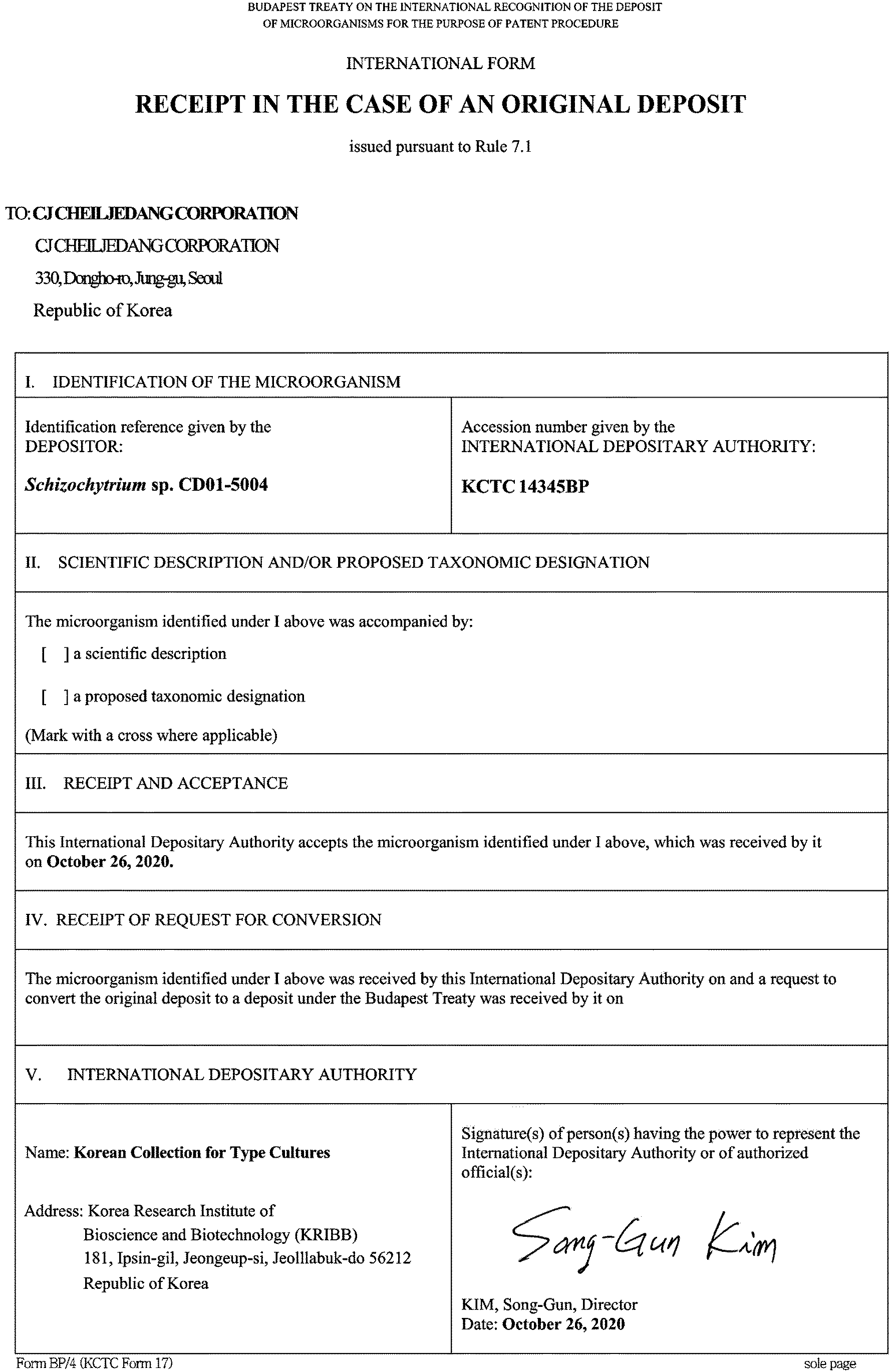
- the Schizochytrium sp. microalgae may be Schizochytrium sp. CD01-5004 strain deposited with accession number KCTC14345BP, but not limited thereto.
- biomass means an energy source of an organism such as a plant, an animal, a microorganism which can be used as chemical energy, that is, bioenergy, and also means the weight or energy amount of a specific organism that exists within a unit time and space ecologically.
- the biomass may comprise a compound secreted by cells, but not limited thereto, and contain not only extracellular substances but also cells and/or intracellular contents.
- the biomass may be Schizochytrium sp.
- microalgae itself, a culture product thereof, a dry matter thereof, a lysate thereof or a product produced by culturing or fermenting the microalgae, or may be a concentrate or dry matter of the biomass, but not limited thereto.
- the "Culture product" of the Schizochytrium sp. microalgae refers to a product produced by culturing the microalgae, and specifically, it may be a culture solution comprising microalgae or culture filtrate in which microalgae is removed in the culture solution, but not limited thereto.
- the "Dry matter" of the Schizochytrium sp. microalgae culture is one in which moisture is removed in the microalgae culture, and for example, it may be a dry microbial cell form of the microalgae, but not limited thereto.
- the "lysate" of the dry matter collectively calls the result of lysing the dry matter from which moisture is removed in the microalgae culture product, and for example, it may be dry microbial cell powder, but not limited thereto.
- the culture product of the Schizochytrium sp. microalgae may be prepared according to a culture method known in the art by inoculating the microalgae in a microalgae culture medium, and the dry matter of the culture product and lysate thereof may also be prepared according to a treatment or drying method of microalgae or a culture medium known in the art.
- the biomass derived from the Schizochytrium sp. microalgae may comprise total amino acids of 46 % by weight or more, 48 % by weight or more, 49 % by weight or more, 50 % by weight or more, or 52 % by weight or more, 46 to 60 % by weight, 46 to 55 % by weight, 46 to 53 % by weight, 48 to 53 % by weight, 50 to 55 % by weight, 52 to 55 % by weight, 52 to 53 % by weight, 52.5 to 55 % by weight or 52.5 to 53 % by weight based on the biomass dry weight, and the upper limit may be 80 % by weight or less, 75 % by weight or less, 70 % by weight or less, or 65 % by weight or less, but not limited thereto.
- the biomass derived from the Schizochytrium sp. microalgae may comprise crude protein of 60 % by weight or more, 64 % by weight or more, 67 % by weight or more, or 70 % by weight or more, 60 to 85 % by weight, 60 to 80 % by weight, 64 to 80 % by weight, 64 to 78 % by weight, 67 to 80 % by weight, 67 to 78 % by weight, 67 to 75 % by weight, 67 to 70 % by weight, 69 to 80 % by weight, 69 to 78 % by weight, 65 to 70 % by weight or 69 to 70 % by weight, based on the biomass dry weight, and the upper limit may be 85 % by weight or less, 80 % by weight or less, 78 % by weight or less, but not limited thereto.
- the biomass derived from the Schizochytrium sp. microalgae may comprise crude fat of 5 % by weight or more, 7 % by weight or more, 9 % by weight or more, 10 % by weight or more, 14 % by weight or more, 20 % by weight or more, 1 to 20 % by weight, 4 to 23 % by weight, 9 to 25 % by weight, 9 to 23 % by weight, 5 to 18 % by weight, 10 to 18 % by weight, 10 to 15 % by weight, 12 to 18 % by weight, 12 to 15 % by weight or 13 to 15 % by weight based on the biomass dry weight.
- crude protein may be interchangeably used with “crude-protein”, and means a protein obtained by measuring total nitrogen in general analysis of food and feed, and multiplying this by 6.25 (reciprocal of the average nitrogen content of protein, 1/0.16).
- crude fat means a component extracted with ether using a Soxhlet extractor in general analysis of food and feed
- crude fat content may be interchangeably used with “crude fat amount” or “total lipid” or “total fatty acid.”
- DHA docosahexaenoic acid
- EPA eicosapentaenoic acid
- cervonic acid cervonic acid
- the biomass derived from the Schizochytrium sp. microalgae may comprise docosahexaenoic acid (DHA) of 39 % by weight or more, 40 % by weight or more, 41 % by weight or more, 45 % by weight or more, 49 % by weight or more, 50 % by weight or more, 39 to 60 % by weight, 39 to 55 % by weight, 39 to 50 % by weight, 42 to 55 % by weight, 42 to 50 % by weight, 43 to 55 % by weight, 43 to 50 % by weight, 45 to 50 % by weight, 47 to 50 % by weight or 49 to 50 % by weight based on the total crude fat content.
- DHA docosahexaenoic acid
- the biomass derived from the Schizochytrium sp. microalgae may comprise eicosapentaenoic acid (EPA) of 0.5 % by weight or more, 1.0 % by weight or more, 1.5 % by weight or more, 2.0 % by weight or more, 2.1 % by weight or more, 3.5 % by weight or more, 0.5 % by weight to 15.0 % by weight, 0.5 % by weight to 10.0 % by weight, 0.5 % by weight to 5.0 % by weight, 0.5 % by weight to 3.0 % by weight, 1.0 % by weight to 3.0 % by weight, 1.9 % by weight to 3.0 % by weight, 1.9 % by weight to 2.5 % by weight or 1.9 % by weight to 2.2 % by weight based on the total crude fat content.
- EPA eicosapentaenoic acid
- the biomass derived from the Schizochytrium sp. microalgae may comprise omega-3 fatty acid of 41 % by weight or more, 42 % by weight or more, 50 % by weight or more, 42 to 55 % by weight, 42 to 52 % by weight, 43 to 55 % by weight, 43 to 52 % by weight, 49 to 55 % by weight or 49 to 52 % by weight based on the total crude fat content.
- the biomass derived from the Schizochytrium sp. microalgae may have pepsin digestibility of 68.7 % or more, 69 % or more, 70 % or more, 73 % or more, 75 % or more, 77 % or more, 80 % or more, 83 % or more, 89 % or more, 69 % to 95 % , 69 % to 90 % , 70 % to 95 % , 70 % to 90 % , 73 % to 95 % , or 73 % to 90 % , 75 % to 95 % , 75 % to 90 % , 85 % to 95 % , 85 % to 90 % , 87 % to 95 % , 87 % to 90 % , 89 % to 95 % or 89 % to 90 % .
- pepsin digestibility is used for quality analysis of an animal protein raw material, and means an indicator that can compare how much digestion has been done in a certain environment using pepsin extracted from animal stomach.
- the biomass may be cultured by the culture method of Schizochytrium sp. microalgae according to one aspect.
- compositions comprising biomass derived from the Schizochytrium sp. microalgae having excellent pepsin digestibility comprising total amino acids of 46 % by weight or more based on the biomass dry weight.
- the composition may be characterized by excellent pepsin digestibility, and may be used for food and/or feed preparation.
- feed composition comprising biomass derived from the Schizochytrium sp. microalgae having excellent pepsin digestibility comprising total amino acids of 46 % by weight or more based on the biomass dry weight.
- the biomass derived from the Schizochytrium sp. microalgae is as described above.
- feed composition refers to feed fed to animals.
- the feed composition refers to a material that supplies organic or inorganic nutritional components necessary for maintaining lives of animals or producing meat, milk, and the like.
- the feed composition may further comprise nutritional components for maintaining lives of animals or producing meat, milk, and the like.
- the feed composition may be prepared as various forms of feed known in the art, and specifically, concentrated feed, supplementary feed and/or special feed may be included.
- feed additive includes a material added to feed on a purpose of various effects such as nutrient supplement and prevention of body weight loss, enhancement of digestion availability of fibers in feed, oil quality improvement, prevention of reproduction disorder and fertility improvement, summer high-temperature stress prevention, and the like.
- the feed additive of the present application corresponds to supplementary feed under Control of Livestock and Fish Feed, and may further comprise a mineral matter preparation such as sodium bicarbonate, bentonite, magnesium oxide, complex minerals, and the like, a mineral preparation which is a trace mineral matter such as zinc, copper, cobalt, selenium and the like, a vitamin preparation such as carotene, vitamin E, vitamins A, D, E, nicotinic acid, vitamin B complexes and the like, a protected amino acid preparation such as methionine, lysine and the like, a protected fatty acid preparation such as fatty acid calcium salts, and the like, a living cell such as probiotics (lactic acid bacteria preparations), yeast culture, mold fermented products, and the like, a yeast preparation and the like.
- a mineral matter preparation such as sodium bicarbonate, bentonite, magnesium oxide, complex minerals, and the like
- a mineral preparation which is a trace mineral matter such as zinc, copper, cobalt, selenium and the
- a food composition comprising biomass derived from the Schizochytrium sp. microalgae having excellent pepsin digestibility comprising total amino acids of 46 % by weight or more compared to the biomass dry weight.
- the biomass derived from the Schizochytrium sp. microalgae is as described above.
- food composition includes all forms such as functional food, nutritional supplement, health food and food additives and the like, and the food composition of the type may be prepared in various forms according to a common method known in the art.
- composition of the present application may be administered to animals alone or in combination with other feed additives in an edible carrier.
- the composition may be easily administered to animals as top dressing or directly mixed with feed or as an oral formulation separate from feed.
- a pharmaceutically acceptable edible carrier as well known in the art.
- Such edible carrier can be solid or liquid, for example, corn starch, lactose, sucrose, soybean flake, peanut oil, olive oil, sesame oil and propylene glycol.
- a solid carrier can be used, the composition may be top dressing in a tablet, capsule, powder, troche or sugar-containing tablet or microdispersible form.
- a liquid carrier is used, the composition may be a formulation of a gelatin soft capsule, or syrup or suspension, emulsion or solution.
- composition of the present application may comprise, for example, a preservative, a stabilizer, a wetting agent or an emulsifier, a cryoprotectant, or an excipient, or the like.
- the cryoprotectant may be one or more selected from the group consisting of glycerol, trehalose, maltodextrin, nonfat dry milk and starch.
- the preservative, stabilizer or excipient may be comprised in the composition in an effective amount sufficient to reduce deterioration of Schizochytrium sp. microalgae comprised in the composition.
- the cryoprotectant may be comprised in the composition in an effective amount sufficient to reduce deterioration of Schizochytrium sp. microalgae comprised in the composition when the composition is in a dried state.
- composition may be used as being added to feed of animals by immersing, spraying or mixing.
- the composition of the present application can be applied to various animal diets, including mammals, birds, fish, crustaceans, cephalopods, reptiles and amphibians, but not limited thereto.
- the mammal may include pigs, cows, sheep, goats, laboratory rodents or pets or the like
- the bird may include poultry
- the poultry may comprise chickens, turkeys, ducks, geese, pheasant or quail, and the like, but not limited thereto.
- the fish may include commercial livestock fish and its fry, ornamental fish and the like
- the crustacean may include shrimp, barnacles and the like, but not limited thereto.
- the composition may be applied to a diet of a rotifer, which is a zooplankton.
- a culture method of Schizochytrium sp. microalgae comprising; culturing Schizochytrium sp. microalgae under a condition in which a concentration of a residual carbon source in a culture solution is maintained at 6% or less based on the total culture solution.
- the Schizochytrium sp. microalgae may be Schizochytrium sp. microalgae CD01-5004 strain deposited with accession number KCTC14345BP, but not limited thereto.
- the biomass derived from the Schizochytrium sp. microalgae is as described above.
- culturing means growing the microalgae under an appropriately controlled environmental condition.
- the culturing process of the present application may be performed according to an appropriate medium and a culture condition known in the art. Such culturing process may be easily adjusted and used by those skilled in the art according to microalgae to be selected.
- culture solution may mean a medium for culturing microalgae, and may mean that a medium for culturing microalgae further comprises microalgae and/or a product produced by microalgae.
- the culture condition in the step of culturing Schizochytrium sp. microalgae may be specifically performed under a condition in which the concentration of the residual carbon source in the culture solution is maintained at 6 % or less, 5 % or less, 4 % or less, 3 % or less, or 2 % or less based on the total culture solution.
- culturing the Schizochytrium sp. microalgae of the present application may be performed under a heterotrophic condition, but not limited thereto.
- heterotrophic is a nutritional method which depends on an organic matter obtained from outside the body as an energy source or nutrient source, and is a term corresponding to autotrophic, and may be interchangeably used with the term 'dark culture.
- the culturing Schizochytrium sp. microalgae is not particularly limited thereto, but may be performed by a known batch culture method, continuous culture method, fed-batch culture method or the like.
- the medium used in the culturing of the microalgae of the present application and other culture conditions may use any one as long as it is a medium used for common culturing of microalgae without particular limitation.
- the microalgae of the present application may be cultured while adjusting temperature, pH and the like under an aerobic condition in a common medium containing suitable carbon sources, nitrogen sources, phosphorus sources, inorganic compounds, amino acids and/or vitamins and the like.
- appropriate pH for example, pH 5 to 9, specifically, pH 5 to 8
- a basic compound e.g.: sodium hydroxide, potassium hydroxide or ammonia
- an acidic compound e.g.: phosphoric acid or sulfuric acid
- the medium used in the culturing Schizochytrium sp. microalgae of the present application may be MJW01 medium, but not limited thereto.
- the carbon source comprised in the medium used in the culturing Schizochytrium sp. microalgae of the present application may be at least one selected from the group consisting of glucose, fructose, maltose, galactose, mannose, sucrose, arabinose, xylose and glycerol, and specifically, it may be at least one selected from the group consisting of glucose, fructose and sucrose, but not limited thereto.
- the nitrogen source comprised in the medium used in the culturing Schizochytrium sp. microalgae of the present application may be at least one selected from the group consisting of urea, ammonia water, ammonium sulfate ((NH 4 ) 2 SO 4 ), yeast extract, peptone, sodium nitrate (NaNO 3 ), but it is not limited thereto as long as it is a nitrogen source used for culturing microalgae.
- potassium dihydrogen phosphate, dipotassium hydrogen phosphate, a sodium-containing salt corresponding thereto, and the like may be comprised individually or comprised in combination, but not limited thereto.
- the medium used in the step of culturing the Schizochytrium sp. microalgae may comprise yeast extract 0.01 to 5 g/L, KH 2 PO 4 1.0 to 3.0 g/L, and K 2 HPO 4 5 to 20 g/L, but not limited thereto.
- the culturing temperature may be maintained at 20 to 45°C or 25 to 40°C, and it may be cultured for about 10 to 70 hours, but not limited thereto.
- the method for culturing the Schizochytrium sp. microalgae can increase pepsin digestibility by increasing the total amino acid content based on the microalgae biomass dry weight by supplying the concentration of residual carbon sources in the culture medium to be maintained within a range of 6 % or less at maximum based on the total culture medium.
- the present invention has developed an alternative protein source that can replace fishmeal through a microalgae-based fermentation process.
- the composition proposed in the present invention not only has a high protein content, but also contains omega-3 fatty acids which are useful fatty acids similar to fishmeal, so that it can directly replace fishmeal when formulating feed.
- the high-protein microalgae biomass presented in the present invention shows high pepsin digestibility of 70 % or more, as a result of pepsin digestibility analysis, so there are advantages in that even if the mixing ratio in feed increases, it does not negatively affect the overall digestibility, and there is no problem of environmental pollution as it is a protein source produced based on microalgae, and it can be stably produced by minimizing influence of external environment.
- Schizochytrium sp. CD01-5004 strain deposited with accession number KCTC14345BP belonging to Thraustochytrid -based microalgae was used.
- the strain was cultured in a 250 mL flask comprising sterilized MJW01 medium (Glucose 30 g/L, MgSO 4 ⁇ 7H 2 O 3.0 g/L, Na 2 SO 4 10 g/L, NaCl 1.0 g/L, yeast extract 9.0 g/L, MSG ⁇ 1H 2 O 1.0 g/L, NaNO 3 1.0 g/L, KH 2 PO 4 0.1 g/L, K 2 HPO 4 0.5 g/L, CaCl 2 0.5 g/L, vitamin mixed solution 10 ml/L) under the condition of 26°C, 200 rpm for 30 hours.
- MJW01 medium Glucose 30 g/L, MgSO 4 ⁇ 7H 2 O 3.0 g/L, Na 2 SO 4
- Comparative example 1 Preparation of biomass by culturing strain under condition of 7 ⁇ 9% (w/v ratio) of carbon source concentration compared to culture solution
- the seed cultured strain was aliquoted in a 5L fermenter including sterilized MJW01 medium (Glucose 30 g/L, MgSO 4 ⁇ 7H 2 O 3.0 g/L, Na 2 SO 4 10 g/L, NaCl 1.0 g/L, yeast extract 0.5 g/L, MSG ⁇ 1H 2 O 1.0 g/L, NaNO 3 5.0 g/L, KH 2 PO 4 1.5 g/L, K 2 HPO 4 10 g/L, CaCl 2 0.5 g/L, vitamin mixed solution 10 ml/L), thereby conducting culturing under the condition of 28°C, 300 rpm, 0.6 vvm, pH 6.8.
- MJW01 medium Glucose 30 g/L, MgSO 4 ⁇ 7H 2 O 3.0 g/L, Na 2 SO 4 10 g/L, NaCl 1.0 g/L, yeast extract 0.5 g/L, MSG ⁇ 1H 2 O 1.0
- Example 2 Preparation of biomass by culturing strain under condition of 2 ⁇ 5% (w/v ratio) of carbon source condition at maximum compared to culture solution
- Example 3 Preparation of biomass by culturing strain under condition of 4 ⁇ 7 % (w/v ratio) of carbon source condition at maximum compared to culture solution
- hydrolysis reaction was performed at 80°C by adding 8.3M hydrochloric acid solution to dry cells of each microalgae 2g of Comparative example 1, and Example 1 to Example 3. Then, after adding ethyl ether 30 mL and petroleum ether 20 mL, a process of mixing for 30 seconds and centrifuging was repeated 3 times or more. The separated solvent layer was transferred to a round flask of which weight was measured in advance, and then it was put into a container from which the solvent and residual moisture were removed through nitrogen purging and dried.
- the total oil content was calculated, and the omega-3 (DHA and EPA) content comprised in the oil was measured by gas chromatography after progressing pre-treatment with methanolic 0.5N NaOH and 14 % trifluoroborane methanol (BF 3 )
- Example 1 could increase the total amino acid content in the microalgae biomass, but the crude fat content was increased, by maintaining the concentration of the residual carbon source in the culture solution within a low range of 0 ⁇ 2 % during the culturing process.
- Example 2 during processing the culturing, the concentration of the carbon source remained in the culture solution was adjusted by 2 ⁇ 5 % .
- the concentration of the carbon source was maintained within a range of 2 ⁇ 5 % in Example 2, the crude protein content was maintained at a level of 70 % , and the crude fat content was shown in a middle range of Comparative example 1 and Example 1.
- the total amino acid content in the biomass showed the highest value among the culture conditions as 52.78 % .
- Example 3 during progressing the culturing, the concentration of the carbon source remained in the culture solution was maintained within a range of 4 ⁇ 7 % . It was confirmed that when the concentration of the carbon source was maintained within a range of 4 ⁇ 7 % in Example 3, the crude protein content was shown as 77.20 % , and the total amino acid content was shown as 52.18 % , and the crude fat content was shown as 12.20 % , so it showed the highest crude protein content among the culture conditions.
- the pepsin digestibility of protein is an important indicator for using microalgae biomass as feed and food.
- analysis was conducted according to the pepsin digestibility analysis method.
- the pepsin digestibility of each dry biomass obtained in Comparative example 1, and Example 1 to Example 3 above was measured by the method disclosed in Association of Official Analytical Chemists, 1990, Official Method of Analysis 971.09 to derive the pepsin digestibility using Equation 1 below.
- Equation 1 The Kjeldahl nitrogen content of Equation 1 was calculated by conducting the method disclosed in the analysis of crude protein utilizing Kjeldahl automatic analyzer of Experimental example 1-3.
- Pepsin digestibility % 100 * A ⁇ B / A
Landscapes
- Life Sciences & Earth Sciences (AREA)
- Engineering & Computer Science (AREA)
- Chemical & Material Sciences (AREA)
- Health & Medical Sciences (AREA)
- Biotechnology (AREA)
- Organic Chemistry (AREA)
- Wood Science & Technology (AREA)
- Zoology (AREA)
- Genetics & Genomics (AREA)
- Bioinformatics & Cheminformatics (AREA)
- General Health & Medical Sciences (AREA)
- Microbiology (AREA)
- General Engineering & Computer Science (AREA)
- Biochemistry (AREA)
- Biomedical Technology (AREA)
- Medicinal Chemistry (AREA)
- Tropical Medicine & Parasitology (AREA)
- Virology (AREA)
- Cell Biology (AREA)
- Botany (AREA)
- Mycology (AREA)
- Chemical Kinetics & Catalysis (AREA)
- General Chemical & Material Sciences (AREA)
- Molecular Biology (AREA)
- Preparation Of Compounds By Using Micro-Organisms (AREA)
- Fodder In General (AREA)
- Micro-Organisms Or Cultivation Processes Thereof (AREA)
- Feed For Specific Animals (AREA)
- Coloring Foods And Improving Nutritive Qualities (AREA)
Abstract
The present invention relates to high-protein microalgal biomass having excellent pepsin digestibility, a culture method and use thereof. A composition disclosed in the present invention has a high protein content, but also contains omega-3 fatty acids, which are useful fatty acids similar to those in fish meal, and thus can directly replace fish meal when mixing animal feed.
Description
- The present application claims the benefit of the priority based on
Korean Patent Application No. 10-2022-0047721 filed on April 18, 2022 - The present invention relates to high-protein microalgal biomass having excellent pepsin digestibility, its culture method and uses thereof.
- Fishmeal is a protein source that is widely used in fish feed as well as feed for various livestock species. However, development of a new protein source that can replace fishmeal is required as environmental pollution problems such as regulations on catches, heavy metals and microplastics have recently been raised.
- In addition, there is a recent trend to reduce the FIFO (Fish in/Fish out) ratio raised in the field of fish feed, and in addition, as the amount of catch varies depending on government policy or climate, there is a growing demand for an improved protein source in terms of sustainability.
- Until now, various new protein sources have been proposed as substitutes for fishmeal, but there was a problem in that they could not replace omega-3 fatty acids, and the like which are effective substances contained in fishmeal. Furthermore, a green algae-based whole cell type protein presented so fat has a problem in that it is practically difficult to comprise a large proportion in the feed mixing ratio because the digestibility is greatly reduced. In this regard,
Korean Patent No. 1564829 - Accordingly, as a result of research to solve these problems, the present inventors have developed a new protein source comprising omega-3 fatty acids which are useful fatty acids produced through fermentation of Thraustochytrid-based microalgae. Furthermore, they have found a composition having pepsin digestibility and have proposed a new sustainable and environmentally friendly protein source.
- One embodiment of the present application provides biomass derived from the Schizochytrium sp. microalgae having excellent pepsin digestibility comprising 46% or more of total amino acids based on the biomass dry weight.
- Another embodiment of the present application provides a feed composition comprising the biomass derived from the Schizochytrium sp. microalgae.
- Other embodiment of the present application provides a food composition comprising the biomass derived from the Schizochytrium sp. microalgae.
- Other embodiment of the present application provides a method for culturing Schizochytrium sp. microalgae, comprising; culturing Schizochytrium sp. microalgae under a condition in which a concentration of a residual carbon source in a culture solution is maintained at 6% or less compared to the total culture solution.
- Each description and embodiment disclosed in the present application can also be applied to each other description and embodiment. In other words, all combinations of various elements disclosed in the present application fall within the scope of the present application. In addition, the scope of the present application is not be construed as being limited by specific description described below. In addition, those skilled in the art will recognize or confirm many equivalents to specific aspects of the present application described in the present application using only an ordinary experiment. Moreover, such equivalents are intended to be comprised in the present application.
- One embodiment of the present application provides Schizochytrium sp. microalgae having excellent pepsin digestibility comprising total amino acids of 46 % by weight or more compared to the biomass dry weight.
- The term used in the present description, "Thraustochytrid" means microalgae of the Thraustochytriales order. In addition, the term used in the present description, "Schizochytrium sp." is one of species names belonging to the Thraustochytriaceae family of the Thraustochytriales order, and may be interchangeably used with "Schizochytrium sp. (genus Schizochytrium)." Moreover, the term "microalgae" is small algae that cannot be seen with naked eyes and can only be seen through a microscope, and means a living organism that floats and lives freely in water. There are various types in the microalgae, and it includes strains that cannot photosynthesize and grow only as heterotrophs.
- The Schizochytrium sp. microalgae may be Schizochytrium sp. CD01-5004 strain deposited with accession number KCTC14345BP, but not limited thereto.
- The term used in the present description, "biomass" means an energy source of an organism such as a plant, an animal, a microorganism which can be used as chemical energy, that is, bioenergy, and also means the weight or energy amount of a specific organism that exists within a unit time and space ecologically. In addition, the biomass may comprise a compound secreted by cells, but not limited thereto, and contain not only extracellular substances but also cells and/or intracellular contents. In the present application, the biomass may be Schizochytrium sp. microalgae itself, a culture product thereof, a dry matter thereof, a lysate thereof or a product produced by culturing or fermenting the microalgae, or may be a concentrate or dry matter of the biomass, but not limited thereto.
- Herein, the "Culture product" of the Schizochytrium sp. microalgae refers to a product produced by culturing the microalgae, and specifically, it may be a culture solution comprising microalgae or culture filtrate in which microalgae is removed in the culture solution, but not limited thereto. The "Dry matter" of the Schizochytrium sp. microalgae culture is one in which moisture is removed in the microalgae culture, and for example, it may be a dry microbial cell form of the microalgae, but not limited thereto. In addition, the "lysate" of the dry matter collectively calls the result of lysing the dry matter from which moisture is removed in the microalgae culture product, and for example, it may be dry microbial cell powder, but not limited thereto. The culture product of the Schizochytrium sp. microalgae may be prepared according to a culture method known in the art by inoculating the microalgae in a microalgae culture medium, and the dry matter of the culture product and lysate thereof may also be prepared according to a treatment or drying method of microalgae or a culture medium known in the art.
- The biomass derived from the Schizochytrium sp. microalgae may comprise total amino acids of 46 % by weight or more, 48 % by weight or more, 49 % by weight or more, 50 % by weight or more, or 52 % by weight or more, 46 to 60 % by weight, 46 to 55 % by weight, 46 to 53 % by weight, 48 to 53 % by weight, 50 to 55 % by weight, 52 to 55 % by weight, 52 to 53 % by weight, 52.5 to 55 % by weight or 52.5 to 53 % by weight based on the biomass dry weight, and the upper limit may be 80 % by weight or less, 75 % by weight or less, 70 % by weight or less, or 65 % by weight or less, but not limited thereto.
- The biomass derived from the Schizochytrium sp. microalgae may comprise crude protein of 60 % by weight or more, 64 % by weight or more, 67 % by weight or more, or 70 % by weight or more, 60 to 85 % by weight, 60 to 80 % by weight, 64 to 80 % by weight, 64 to 78 % by weight, 67 to 80 % by weight, 67 to 78 % by weight, 67 to 75 % by weight, 67 to 70 % by weight, 69 to 80 % by weight, 69 to 78 % by weight, 65 to 70 % by weight or 69 to 70 % by weight, based on the biomass dry weight, and the upper limit may be 85 % by weight or less, 80 % by weight or less, 78 % by weight or less, but not limited thereto.
- The biomass derived from the Schizochytrium sp. microalgae may comprise crude fat of 5 % by weight or more, 7 % by weight or more, 9 % by weight or more, 10 % by weight or more, 14 % by weight or more, 20 % by weight or more, 1 to 20 % by weight, 4 to 23 % by weight, 9 to 25 % by weight, 9 to 23 % by weight, 5 to 18 % by weight, 10 to 18 % by weight, 10 to 15 % by weight, 12 to 18 % by weight, 12 to 15 % by weight or 13 to 15 % by weight based on the biomass dry weight.
- The term used in the present description, "crude protein" may be interchangeably used with "crude-protein", and means a protein obtained by measuring total nitrogen in general analysis of food and feed, and multiplying this by 6.25 (reciprocal of the average nitrogen content of protein, 1/0.16).
- The term used in the present description, "crude fat" means a component extracted with ether using a Soxhlet extractor in general analysis of food and feed, and "crude fat content" may be interchangeably used with "crude fat amount" or "total lipid" or "total fatty acid."
- The term used in the present description, "docosahexaenoic acid (DHA)" is one of polyunsaturated fatty acids having the chemical formula of C22H32O2, and corresponds to omega-3 fatty acids together with eicosapentaenoic acid (EPA), and the common name is cervonic acid, and may also be written in abbreviation as 22:6 n-3.
- The term used in the present description, "eicosapentaenoic acid (EPA)" is one of polyunsaturated fatty acids having the chemical formula of C20H30O2, and corresponds to omega-3 fatty acids together with ALA and DHA, and may also be written in abbreviation as 20:5 n-3.
- The biomass derived from the Schizochytrium sp. microalgae may comprise docosahexaenoic acid (DHA) of 39 % by weight or more, 40 % by weight or more, 41 % by weight or more, 45 % by weight or more, 49 % by weight or more, 50 % by weight or more, 39 to 60 % by weight, 39 to 55 % by weight, 39 to 50 % by weight, 42 to 55 % by weight, 42 to 50 % by weight, 43 to 55 % by weight, 43 to 50 % by weight, 45 to 50 % by weight, 47 to 50 % by weight or 49 to 50 % by weight based on the total crude fat content.
- The biomass derived from the Schizochytrium sp. microalgae may comprise eicosapentaenoic acid (EPA) of 0.5 % by weight or more, 1.0 % by weight or more, 1.5 % by weight or more, 2.0 % by weight or more, 2.1 % by weight or more, 3.5 % by weight or more, 0.5 % by weight to 15.0 % by weight, 0.5 % by weight to 10.0 % by weight, 0.5 % by weight to 5.0 % by weight, 0.5 % by weight to 3.0 % by weight, 1.0 % by weight to 3.0 % by weight, 1.9 % by weight to 3.0 % by weight, 1.9 % by weight to 2.5 % by weight or 1.9 % by weight to 2.2 % by weight based on the total crude fat content.
- The biomass derived from the Schizochytrium sp. microalgae may comprise omega-3 fatty acid of 41 % by weight or more, 42 % by weight or more, 50 % by weight or more, 42 to 55 % by weight, 42 to 52 % by weight, 43 to 55 % by weight, 43 to 52 % by weight, 49 to 55 % by weight or 49 to 52 % by weight based on the total crude fat content.
- The biomass derived from the Schizochytrium sp. microalgae may have pepsin digestibility of 68.7% or more, 69% or more, 70% or more, 73% or more, 75% or more, 77% or more, 80% or more, 83% or more, 89% or more, 69% to 95%, 69% to 90%, 70% to 95%, 70% to 90%, 73% to 95%, or 73% to 90%, 75% to 95%, 75% to 90%, 85% to 95%, 85% to 90%, 87% to 95%, 87% to 90%, 89% to 95% or 89% to 90%.
- The term used in the present description, "pepsin digestibility" is used for quality analysis of an animal protein raw material, and means an indicator that can compare how much digestion has been done in a certain environment using pepsin extracted from animal stomach.
- The biomass may be cultured by the culture method of Schizochytrium sp. microalgae according to one aspect.
- Another aspect of the present application provides a composition comprising biomass derived from the Schizochytrium sp. microalgae having excellent pepsin digestibility comprising total amino acids of 46 % by weight or more based on the biomass dry weight.
- The composition may be characterized by excellent pepsin digestibility, and may be used for food and/or feed preparation.
- Other aspect of the present application provides a feed composition comprising biomass derived from the Schizochytrium sp. microalgae having excellent pepsin digestibility comprising total amino acids of 46 % by weight or more based on the biomass dry weight.
- The biomass derived from the Schizochytrium sp. microalgae is as described above.
- The term used in the present description, "feed composition" refers to feed fed to animals. The feed composition refers to a material that supplies organic or inorganic nutritional components necessary for maintaining lives of animals or producing meat, milk, and the like. The feed composition may further comprise nutritional components for maintaining lives of animals or producing meat, milk, and the like. The feed composition may be prepared as various forms of feed known in the art, and specifically, concentrated feed, supplementary feed and/or special feed may be included.
- The term used in the present description, "feed additive" includes a material added to feed on a purpose of various effects such as nutrient supplement and prevention of body weight loss, enhancement of digestion availability of fibers in feed, oil quality improvement, prevention of reproduction disorder and fertility improvement, summer high-temperature stress prevention, and the like. The feed additive of the present application corresponds to supplementary feed under Control of Livestock and Fish Feed, and may further comprise a mineral matter preparation such as sodium bicarbonate, bentonite, magnesium oxide, complex minerals, and the like, a mineral preparation which is a trace mineral matter such as zinc, copper, cobalt, selenium and the like, a vitamin preparation such as carotene, vitamin E, vitamins A, D, E, nicotinic acid, vitamin B complexes and the like, a protected amino acid preparation such as methionine, lysine and the like, a protected fatty acid preparation such as fatty acid calcium salts, and the like, a living cell such as probiotics (lactic acid bacteria preparations), yeast culture, mold fermented products, and the like, a yeast preparation and the like.
- Other aspect of the present application provides a food composition comprising biomass derived from the Schizochytrium sp. microalgae having excellent pepsin digestibility comprising total amino acids of 46 % by weight or more compared to the biomass dry weight.
- The biomass derived from the Schizochytrium sp. microalgae is as described above.
- The term used in the present description, "food composition" includes all forms such as functional food, nutritional supplement, health food and food additives and the like, and the food composition of the type may be prepared in various forms according to a common method known in the art.
- The composition of the present application may further comprise a dry component consisting of grains, for example, ground or crushed wheat, oats, barley, corn and rice; vegetable protein feed, for example, feed using beans and sunflower as a major component; animal protein feed, for example, blood meal, meat meal, bone meal and fish meal; sugar and dairy products, for example, various kinds of powdered milk and whey powder, and the like, and in addition, it may further comprise a nutritional supplement, a digestion and absorption enhancer, a growth promoter, and the like.
- The composition of the present application may be administered to animals alone or in combination with other feed additives in an edible carrier. In addition, the composition may be easily administered to animals as top dressing or directly mixed with feed or as an oral formulation separate from feed. When the composition is administered with feed separately, it may be prepared as an immediate release or sustained release formulation, in combination with a pharmaceutically acceptable edible carrier as well known in the art. Such edible carrier can be solid or liquid, for example, corn starch, lactose, sucrose, soybean flake, peanut oil, olive oil, sesame oil and propylene glycol. When a solid carrier is used, the composition may be top dressing in a tablet, capsule, powder, troche or sugar-containing tablet or microdispersible form. When a liquid carrier is used, the composition may be a formulation of a gelatin soft capsule, or syrup or suspension, emulsion or solution.
- The composition of the present application may comprise, for example, a preservative, a stabilizer, a wetting agent or an emulsifier, a cryoprotectant, or an excipient, or the like. The cryoprotectant, may be one or more selected from the group consisting of glycerol, trehalose, maltodextrin, nonfat dry milk and starch.
- The preservative, stabilizer or excipient may be comprised in the composition in an effective amount sufficient to reduce deterioration of Schizochytrium sp. microalgae comprised in the composition. In addition, the cryoprotectant may be comprised in the composition in an effective amount sufficient to reduce deterioration of Schizochytrium sp. microalgae comprised in the composition when the composition is in a dried state.
- The composition may be used as being added to feed of animals by immersing, spraying or mixing.
- The composition of the present application can be applied to various animal diets, including mammals, birds, fish, crustaceans, cephalopods, reptiles and amphibians, but not limited thereto. For example, the mammal may include pigs, cows, sheep, goats, laboratory rodents or pets or the like, and the bird may include poultry, and the poultry may comprise chickens, turkeys, ducks, geese, pheasant or quail, and the like, but not limited thereto. In addition, the fish may include commercial livestock fish and its fry, ornamental fish and the like, and the crustacean may include shrimp, barnacles and the like, but not limited thereto. Furthermore, the composition may be applied to a diet of a rotifer, which is a zooplankton.
- Other aspect of the present application provides a culture method of Schizochytrium sp. microalgae, comprising; culturing Schizochytrium sp. microalgae under a condition in which a concentration of a residual carbon source in a culture solution is maintained at 6% or less based on the total culture solution.
- The Schizochytrium sp. microalgae may be Schizochytrium sp. microalgae CD01-5004 strain deposited with accession number KCTC14345BP, but not limited thereto.
- The biomass derived from the Schizochytrium sp. microalgae is as described above.
- The term used in the present description, "culturing" means growing the microalgae under an appropriately controlled environmental condition. The culturing process of the present application may be performed according to an appropriate medium and a culture condition known in the art. Such culturing process may be easily adjusted and used by those skilled in the art according to microalgae to be selected.
- The term used in the present description, "culture solution" may mean a medium for culturing microalgae, and may mean that a medium for culturing microalgae further comprises microalgae and/or a product produced by microalgae.
- The culture condition in the step of culturing Schizochytrium sp. microalgae may be specifically performed under a condition in which the concentration of the residual carbon source in the culture solution is maintained at 6% or less, 5% or less, 4% or less, 3% or less, or 2% or less based on the total culture solution.
- Specifically, culturing the Schizochytrium sp. microalgae of the present application may be performed under a heterotrophic condition, but not limited thereto.
- The term used in the present description, "heterotrophic" is a nutritional method which depends on an organic matter obtained from outside the body as an energy source or nutrient source, and is a term corresponding to autotrophic, and may be interchangeably used with the term 'dark culture.'
- The culturing Schizochytrium sp. microalgae, is not particularly limited thereto, but may be performed by a known batch culture method, continuous culture method, fed-batch culture method or the like. The medium used in the culturing of the microalgae of the present application and other culture conditions may use any one as long as it is a medium used for common culturing of microalgae without particular limitation. Specifically, the microalgae of the present application may be cultured while adjusting temperature, pH and the like under an aerobic condition in a common medium containing suitable carbon sources, nitrogen sources, phosphorus sources, inorganic compounds, amino acids and/or vitamins and the like.
- Specifically, appropriate pH (for example,
pH 5 to 9, specifically,pH 5 to 8) may be adjusted using a basic compound (e.g.: sodium hydroxide, potassium hydroxide or ammonia) or an acidic compound (e.g.: phosphoric acid or sulfuric acid), but not limited thereto. - The medium used in the culturing Schizochytrium sp. microalgae of the present application may be MJW01 medium, but not limited thereto.
- The carbon source comprised in the medium used in the culturing Schizochytrium sp. microalgae of the present application may be at least one selected from the group consisting of glucose, fructose, maltose, galactose, mannose, sucrose, arabinose, xylose and glycerol, and specifically, it may be at least one selected from the group consisting of glucose, fructose and sucrose, but not limited thereto.
- The nitrogen source comprised in the medium used in the culturing Schizochytrium sp. microalgae of the present application may be at least one selected from the group consisting of urea, ammonia water, ammonium sulfate ((NH4)2SO4), yeast extract, peptone, sodium nitrate (NaNO3), but it is not limited thereto as long as it is a nitrogen source used for culturing microalgae.
- In the medium used in the culturing Schizochytrium sp. microalgae of the present application, as a phosphorus source, potassium dihydrogen phosphate, dipotassium hydrogen phosphate, a sodium-containing salt corresponding thereto, and the like may be comprised individually or comprised in combination, but not limited thereto.
- The medium used in the step of culturing the Schizochytrium sp. microalgae may comprise yeast extract 0.01 to 5 g/L, KH2PO4 1.0 to 3.0 g/L, and K2HPO4 5 to 20 g/L, but not limited thereto.
- In addition, the culturing temperature may be maintained at 20 to 45°C or 25 to 40°C, and it may be cultured for about 10 to 70 hours, but not limited thereto.
- The method for culturing the Schizochytrium sp. microalgae can increase pepsin digestibility by increasing the total amino acid content based on the microalgae biomass dry weight by supplying the concentration of residual carbon sources in the culture medium to be maintained within a range of 6% or less at maximum based on the total culture medium.
- The present invention has developed an alternative protein source that can replace fishmeal through a microalgae-based fermentation process. The composition proposed in the present invention not only has a high protein content, but also contains omega-3 fatty acids which are useful fatty acids similar to fishmeal, so that it can directly replace fishmeal when formulating feed. Furthermore, the high-protein microalgae biomass presented in the present invention shows high pepsin digestibility of 70% or more, as a result of pepsin digestibility analysis, so there are advantages in that even if the mixing ratio in feed increases, it does not negatively affect the overall digestibility, and there is no problem of environmental pollution as it is a protein source produced based on microalgae, and it can be stably produced by minimizing influence of external environment.
-
-
FIG. 1 is a diagram showing the correlation coefficient between the pepsin digestibility of the microalgae dry biomass and crude fat content in the biomass for each culture condition (mean ± standard deviation, n=4). -
FIG. 2 is a diagram showing the correlation coefficient between the pepsin digestibility of the microalgae dry biomass and crude protein content in the biomass for each culture condition (mean ± standard deviation, n=4). -
FIG. 3 is a diagram showing the correlation coefficient between the pepsin digestibility of the microalgae dry biomass and omega-3 fatty acid content compared to the crude fat weight in the biomass for each culture condition (mean ± standard deviation, n=4). -
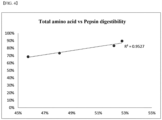
FIG. 4 is a diagram showing the correlation coefficient between the pepsin digestibility of the microalgae dry biomass and total amino acid content in the biomass for each culture condition (mean ± standard deviation, n=4). - Hereinafter, the present invention will be described in more detail by examples. These examples are intended only to illustrate the present invention more specifically, and it will be obvious to those skilled in the art that the scope of the present invention is not limited by these examples according to the gist of the present invention.
- Schizochytrium sp. CD01-5004 strain deposited with accession number KCTC14345BP belonging to Thraustochytrid-based microalgae was used. The strain was cultured in a 250 mL flask comprising sterilized MJW01 medium (Glucose 30 g/L, MgSO4·7H2O 3.0 g/L, Na2SO4 10 g/L, NaCl 1.0 g/L, yeast extract 9.0 g/L, MSG·1H2O 1.0 g/L, NaNO3 1.0 g/L, KH2PO4 0.1 g/L, K2HPO4 0.5 g/L, CaCl2 0.5 g/L, vitamin
mixed solution 10 ml/L) under the condition of 26°C, 200 rpm for 30 hours. - The seed cultured strain was aliquoted in a 5L fermenter including sterilized MJW01 medium (Glucose 30 g/L, MgSO4·7H2O 3.0 g/L, Na2SO4 10 g/L, NaCl 1.0 g/L, yeast extract 0.5 g/L, MSG·1H2O 1.0 g/L, NaNO3 5.0 g/L, KH2PO4 1.5 g/L, K2HPO4 10 g/L, CaCl2 0.5 g/L, vitamin
mixed solution 10 ml/L), thereby conducting culturing under the condition of 28°C, 300 rpm, 0.6 vvm, pH 6.8. During conducting culturing (45 hours), it was supplied so that the concentration of the residual carbon source in the culture solution was maintained within a range of 7∼9% (w/v ratio) compared to the total culture solution. Culturing was continued while supplying a nitrogen source from immediately after initiation of the culturing until the end of the culturing. In order to maintain the appropriate nitrogen source concentration, the supply of the nitrogen source was supplied to the culture solution by repeating on/off. As the carbon source, glucose was used, and as the nitrogen source, ammonium sulfate was used. After completing the culturing, by freeze-drying or drum drying of a microbial cell culture solution, dry biomass of Comparative example 1 as a control group was obtained. - During culturing was continued (45 hours) while maintaining the composition of the culture condition (control condition, control group) MJW01 medium of Comparative example 1, it was supplied so that the residual carbon source concentration in the culture solution was maintained within a range of 0~2% (w/v ratio) compared to the total culture solution. The rest culture conditions were culturing by the same method as Comparative example 1 to obtain dry biomass of Example 1.
- During culturing was continued (45 hours) while maintaining the composition of the culture condition (control condition, control group) MJW01 medium of Comparative example 1, it was supplied so that the residual carbon source concentration in the culture solution was maintained within a range of 2~5% (w/v ratio) compared to the total culture solution. The rest culture conditions were culturing by the same method as Comparative example 1 to obtain dry biomass of Example 3.
- During culturing was continued (45 hours) while maintaining the composition of the culture condition (control condition, control group) MJW01 medium of Comparative example 1, it was supplied so that the residual carbon source concentration in the culture solution was maintained within a range of 4~7% (w/v ratio) compared to the total culture solution.
- In order to analyze the crude fat content and fatty acid content of each dry biomass obtained in Comparative example 1, and Example 1 to Example 3 above, the following experiment was performed.
- Specifically, hydrolysis reaction was performed at 80°C by adding 8.3M hydrochloric acid solution to dry cells of each microalgae 2g of Comparative example 1, and Example 1 to Example 3. Then, after adding
ethyl ether 30 mL andpetroleum ether 20 mL, a process of mixing for 30 seconds and centrifuging was repeated 3 times or more. The separated solvent layer was transferred to a round flask of which weight was measured in advance, and then it was put into a container from which the solvent and residual moisture were removed through nitrogen purging and dried. By measuring the weight of the oil remained after drying the solvent, the total oil content was calculated, and the omega-3 (DHA and EPA) content comprised in the oil was measured by gas chromatography after progressing pre-treatment with methanolic 0.5N NaOH and 14% trifluoroborane methanol (BF3) - In order to analyze the crude protein content of each dry biomass obtained in Comparative example 1, and Example 1 to Example 3 above, utilizing Kjeldahl automatic analyzer, the following experiment was performed.
- Specifically, dry biomass of each microalgae sample obtained in Comparative example 1, and Example 1 to Example 3 was placed in a tube for analysis of Kjeldahl device (Kjeldahl system, Kjeltec 2100), and after degrading in a decomposer by adding a sulfur phase and a catalyst, a decomposition tube was mounted on an auto sampler. By the method of cooling and collecting gas ammonia generated by heat distillation with caustic soda and steam in the Kjeldahl device and then titrating it with hydrochloric acid to automatically calculate the nitrogen content, the crude protein content of the microalgae dry biomass was measured.
- In order to analyze the amino acid content of each dry biomass obtained in Comparative example 1, and Example 1 to Example 3 above, the following experiment was performed.
- Specifically, after acid hydrolysis of each microalgae dried microbial cell 0.5-1 g of Comparative example 1, and Example 1 to Example 3, total amino acid analysis was performed using liquid chromatography. The analysis result of the individual amino acid was standardized with the amount of the used microalgae dried microbial cells to calculate the content ratio of the individual amino acid in the dried microbial cell, and by adding the content ratios of all amino acids detected as a result of the analysis, the total amino acid content ratio in the microbial cell was calculated.
- The result of analyzing the components of each dry biomass obtained in Comparative example 1, and Example 1 to Example 3 by the methods of Experimental example 1-1 to Experimental example 1-3 was shown in Table 1.
[Table 1] Crude protein /biomass Total amino acid/bioma ss Crude fat /biomass DHA /crude fat EPA /crude fat Omega-3 fatty acid /crude fat Compara tive example 1 70.50% 45.75% 8.50% 46.25% 1.77% 48.02% Example 1 64.10% 48.10% 22.80% 40.51% 1.86% 42.37% Example 2 69.90% 52.78% 14.40% 49.40% 2.11% 51.51% Example 3 77.20% 52.18% 12.20% 42.47% 1.06% 43.53% - As a result, as shown in Table 1, when comparing Comparative example 1 and Example 1, it was confirmed that Example 1 could increase the total amino acid content in the microalgae biomass, but the crude fat content was increased, by maintaining the concentration of the residual carbon source in the culture solution within a low range of 0~2% during the culturing process.
- In Example 2, during processing the culturing, the concentration of the carbon source remained in the culture solution was adjusted by 2~5%. When comparing the component contents of Comparative example 1 and Example 2, it was confirmed that in case of maintaining the concentration of the carbon source was maintained within a range of 2~5% in Example 2, the crude protein content was maintained at a level of 70%, and the crude fat content was shown in a middle range of Comparative example 1 and Example 1. In particular, it was shown that the total amino acid content in the biomass showed the highest value among the culture conditions as 52.78%.
- In Example 3, during progressing the culturing, the concentration of the carbon source remained in the culture solution was maintained within a range of 4~7%. It was confirmed that when the concentration of the carbon source was maintained within a range of 4~7% in Example 3, the crude protein content was shown as 77.20%, and the total amino acid content was shown as 52.18%, and the crude fat content was shown as 12.20%, so it showed the highest crude protein content among the culture conditions.
- Since the digestibility of protein is an important indicator for using microalgae biomass as feed and food, analysis was conducted according to the pepsin digestibility analysis method. In order to analyze the pepsin digestibility of microalgae dry biomass by culture condition, the pepsin digestibility of each dry biomass obtained in Comparative example 1, and Example 1 to Example 3 above was measured by the method disclosed in Association of Official Analytical Chemists, 1990, Official Method of Analysis 971.09 to derive the pepsin digestibility using Equation 1 below.
- Specifically, 150 mL of 0.2% pepsin hydrochloric acid solution previously heated to 42 to 45°C was added to 1 g of each dry biomass sample, and it was digested while shaking in a 45°C constant temperature water bath for 16 hours, and then filtered with No. 2A filter paper. After washing fluoride with warm water, the crude protein content of the fluoride and filter paper was obtained by Kjeldahl analysis, and the result was shown in Table 2 below.
- The Kjeldahl nitrogen content of Equation 1 was calculated by conducting the method disclosed in the analysis of crude protein utilizing Kjeldahl automatic analyzer of Experimental example 1-3.

- *A: % content of Kjeldahl nitrogen of original sample (Kjeldahl nitrogen in the original sample)
- *B: % content of Kjeldahl nitrogen insoluble in acid pepsin solution (Kjeldahl nitrogen insoluble in acid pepsin solution)
- As a result, as shown in Table 2, it was shown that the pepsin digestibility of microalgae dry biomass of Comparative example 1 was relatively low as 68.6%. However, as a result of modifying the biomass component ratio by changing the culture condition, it was confirmed that high pepsin digestibility was shown as the pepsin digestibility of the microalgae dry biomass of Example 1 was 73.40%, and the pepsin digestibility of the microalgae dry biomass of Example 2 was 89.62%, and the pepsin digestibility of the microalgae dry biomass of Example 3 was 83.20%.
- As a result of modifying the biomass component ratio through the change of the culture condition in Experimental example 2 above, it was confirmed that the pepsin digestibility was increased, and thus, it was confirmed which indicator among the components of the biomass had a correlation with the pepsin digestibility.
- Specifically, correlation coefficients between the crude fat content, crude protein content, omega-3 fatty acid/crude content and total amino acid content and pepsin digestibility of each dry biomass obtained in Comparative example 1, and Example 1 to Example 3 were derived, and the result was shown in
FIG. 1 to FIG. 4 . - As a result, as shown in
FIG. 1 to FIG. 3 , it was shown that the omega-3 fatty acid content compared to the crude fat content, crude protein and crude fat weights among the biomass components had no significant correlation. On the other hand, as shown inFIG. 4 , it was shown that there was significant correlation between the total amino acid content in the biomass and pepsin digestibility (R2=0.9527). Since total amino acids is a concept which is included in the crude protein content, the crude protein content and total amino acids are known as values that fluctuate in proportion, but it can be confirmed that as described in the present invention, even if the crude protein content is similar, the total amino acid content can be changed depending on the fermentation condition, and the pepsin digestibility increases as the total amino acid content in the biomass increases. - Name of depository authority: Korea Research Institute of Bioscience and Biotechnology, Korean Collection for Type Cultures (KCTC) Accession number: KCTC14345BP Date of deposit: 20201026
| Pepsin digestibility | |
| Comparative example 1 | 68.59% |
| Example 1 | 73.40% |
| Example 2 | 89.62% |
| Example 3 | 83.2% |
Claims (19)
- A preparation method of biomass derived from the Schizochytrium sp. microalgae, comprising: culturing Schizochytrium sp. microalgae under a condition in which a concentration of a residual carbon source in a culture solution is maintained at 7% or less based on the total culture solution.
- The preparation method of biomass derived from the Schizochytrium sp. microalgae according to claim 1, wherein the Schizochytrium sp. microalgae is Schizochytrium sp. CD01-5004 strain deposited with accession number KCTC14345BP.
- The preparation method of biomass derived from the Schizochytrium sp. microalgae according to claim 1, wherein the culturing is performed in MJW01 medium.
- The preparation method of biomass derived from the Schizochytrium sp. microalgae according to claim 1, wherein the carbon source of the medium is at least one selected from the group consisting of glucose, fructose and sucrose.
- The preparation method of biomass derived from the Schizochytrium sp. microalgae according to claim 1, wherein the medium comprises at least one selected from the group consisting of urea, ammonia water, ammonium sulfate, yeast extract, peptone and sodium nitrate as a nitrogen source.
- The preparation method of biomass derived from the Schizochytrium sp. microalgae according to claim 1, wherein the medium comprises yeast extract 0.01 to 5 g/L, KH2PO4 1.0 to 3.0 g/L, and K2HPO4 5 to 20 g/L.
- The preparation method of biomass derived from the Schizochytrium sp. microalgae according to claim 1, wherein the culturing is performed for 10 to 70 hours.
- The preparation method of biomass derived from the Schizochytrium sp. microalgae according to claim 1, wherein the microalgae culturing method increases the pepsin digestibility by increasing the total amino acid content based on the microalgae dry weight.
- The preparation method of biomass derived from the Schizochytrium sp. microalgae according to claim 1, wherein the pepsin digestibility is 70% or more.
- A biomass derived from the Schizochytrium sp. microalgae having excellent pepsin digestibility prepared by the preparation method of claim 1.
- The biomass according to claim 10, wherein the Schizochytrium sp. microalgae is Schizochytrium sp. CD01-5004 strain deposited with accession number KCTC14345BP.
- The biomass according to claim 10, wherein the biomass contains 60 % by weight or more of crude protein based on the biomass dry weight.
- The biomass according to claim 10, wherein the biomass contains 4 % by weight to 23 % by weight of crude fat based on the biomass dry weight.
- The biomass according to claim 10, wherein the biomass contains 40 % by weight or more of docosahexaenoic acid based on the total crude fat weight.
- The biomass according to claim 10, wherein the biomass contains 0.5 % by weight or more of eicosapentaenoic acid based on the total crude fat weight.
- The biomass according to claim 10, wherein the biomass contains 41 % by weight or more of omega-3 fatty acid based on the total crude fat weight.
- The biomass according to claim 10, wherein the biomass has 70% or more of pepsin digestibility.
- A feed composition comprising the biomass derived from the Schizochytrium sp. microalgae of claim 10.
- A food composition comprising the biomass derived from the Schizochytrium sp. microalgae of claim 10.
Applications Claiming Priority (2)
| Application Number | Priority Date | Filing Date | Title |
|---|---|---|---|
| KR1020220047721A KR102838363B1 (en) | 2022-04-18 | 2022-04-18 | Microalgal biomass containing high protein with excellent pepsin digestibility, culturing method and use thereof |
| PCT/KR2023/001183 WO2023204396A1 (en) | 2022-04-18 | 2023-01-26 | High-protein microalgal biomass having excellent pepsin digestibility, culture method and use thereof |
Publications (2)
| Publication Number | Publication Date |
|---|---|
| EP4512888A1 true EP4512888A1 (en) | 2025-02-26 |
| EP4512888A4 EP4512888A4 (en) | 2026-04-01 |
Family
ID=88420238
Family Applications (1)
| Application Number | Title | Priority Date | Filing Date |
|---|---|---|---|
| EP23791980.8A Pending EP4512888A4 (en) | 2022-04-18 | 2023-01-26 | PROTEIN-RICH MICROALGAE BIOMASS WITH EXCELLENT PEPSIN DIGESTION, CULTIVATION METHOD AND USE OF IT |
Country Status (14)
| Country | Link |
|---|---|
| US (1) | US20250129325A1 (en) |
| EP (1) | EP4512888A4 (en) |
| JP (1) | JP7793802B2 (en) |
| KR (1) | KR102838363B1 (en) |
| CN (1) | CN118829721A (en) |
| AR (1) | AR128991A1 (en) |
| AU (1) | AU2023256399B2 (en) |
| CA (1) | CA3241365A1 (en) |
| CL (1) | CL2024003150A1 (en) |
| MX (1) | MX2024012766A (en) |
| PY (1) | PY2321518A (en) |
| TW (1) | TWI858534B (en) |
| UY (1) | UY40227A (en) |
| WO (1) | WO2023204396A1 (en) |
Family Cites Families (14)
| Publication number | Priority date | Publication date | Assignee | Title |
|---|---|---|---|---|
| US5340742A (en) * | 1988-09-07 | 1994-08-23 | Omegatech Inc. | Process for growing thraustochytrium and schizochytrium using non-chloride salts to produce a microfloral biomass having omega-3-highly unsaturated fatty acids |
| KR101068520B1 (en) * | 2009-10-07 | 2011-09-28 | 대상 주식회사 | Strains for producing omega-3 unsaturated fatty acids containing high content of docosahexaenoic acid and methods for producing omega-3 unsaturated fatty acids using the same |
| KR101220498B1 (en) * | 2011-02-28 | 2013-01-10 | 한국과학기술원 | Method of Producing Microbial Intracellular Products from Volatile Fatty Acids |
| CN102899254B (en) * | 2012-09-13 | 2014-09-03 | 温州大学 | Shizochytrium sp. and method of high density fermentation production of DHA by using same |
| FR3015516B1 (en) * | 2013-12-19 | 2016-01-22 | Roquette Freres | PROCESS FOR ENHANCING DHA BIOMASS OF MICROALGUES OF THE GENUS THRAUSTOCHYTRIUM |
| KR101564829B1 (en) | 2014-02-05 | 2015-10-30 | 강릉원주대학교산학협력단 | Assorted feed composition comprising microalgae byproduct for farming a fish |
| FR3031984B1 (en) * | 2015-01-27 | 2019-05-24 | Roquette Freres | PROCESS FOR ENRICHING THE BIOMASS OF MICROALGUES OF THE GENUS TRAUSTOCHYTRIUM IN DHA AND IN AMINO ACIDS ARG AND GLU |
| FR3038913B1 (en) * | 2015-07-17 | 2020-05-01 | Fermentalg | THRAUSTOCHYTRIDE BIOMASS, CULTURE METHOD AND USES |
| KR101847551B1 (en) * | 2016-11-04 | 2018-04-10 | 전북대학교산학협력단 | Mutant microalgae Schizochytrium sp. SHG104 strain having high productivity of carotenoid-type antioxidant pigment and bio-oil containing DHA and uses thereof |
| KR102100650B1 (en) * | 2018-06-29 | 2020-04-16 | 씨제이제일제당 주식회사 | Novel microalgal strain of Thraustochytrium genus, and producing polyunsaturated fatty acids using the same |
| KR20200074047A (en) * | 2018-12-13 | 2020-06-24 | 파이코일바이오텍코리아 (주) | Methods for producing functional oils containing high arachidonic acid and EPA and DHA content |
| CN110982705B (en) * | 2019-12-19 | 2024-05-28 | 通威股份有限公司 | Fermentation process of schizochytrium limacinum |
| KR102614551B1 (en) * | 2020-12-07 | 2023-12-15 | 씨제이제일제당 주식회사 | Method for preparing biomass comprising protein and omega-3 fatty acids from single microalgae, and the biomass prepared therefrom |
| KR102550213B1 (en) * | 2020-12-07 | 2023-06-30 | 씨제이제일제당 주식회사 | Novel strains of Schizochytrium sp. and method for producing polyunsaturated fatty acid using the same |
-
2022
- 2022-04-18 KR KR1020220047721A patent/KR102838363B1/en active Active
-
2023
- 2023-01-26 CN CN202380022969.6A patent/CN118829721A/en active Pending
- 2023-01-26 US US18/833,735 patent/US20250129325A1/en active Pending
- 2023-01-26 AU AU2023256399A patent/AU2023256399B2/en active Active
- 2023-01-26 CA CA3241365A patent/CA3241365A1/en active Pending
- 2023-01-26 JP JP2024545166A patent/JP7793802B2/en active Active
- 2023-01-26 EP EP23791980.8A patent/EP4512888A4/en active Pending
- 2023-01-26 WO PCT/KR2023/001183 patent/WO2023204396A1/en not_active Ceased
- 2023-02-06 TW TW112104141A patent/TWI858534B/en active
- 2023-03-24 PY PY202302321518A patent/PY2321518A/en unknown
- 2023-04-04 AR ARP230100838A patent/AR128991A1/en unknown
- 2023-04-18 UY UY0001040227A patent/UY40227A/en unknown
-
2024
- 2024-10-15 MX MX2024012766A patent/MX2024012766A/en unknown
- 2024-10-17 CL CL2024003150A patent/CL2024003150A1/en unknown
Also Published As
| Publication number | Publication date |
|---|---|
| CN118829721A (en) | 2024-10-22 |
| TWI858534B (en) | 2024-10-11 |
| KR102838363B1 (en) | 2025-07-23 |
| KR20230148659A (en) | 2023-10-25 |
| PY2321518A (en) | 2023-10-19 |
| UY40227A (en) | 2023-09-29 |
| TW202342729A (en) | 2023-11-01 |
| AR128991A1 (en) | 2024-07-03 |
| JP7793802B2 (en) | 2026-01-05 |
| CA3241365A1 (en) | 2023-10-26 |
| AU2023256399B2 (en) | 2025-11-27 |
| WO2023204396A1 (en) | 2023-10-26 |
| US20250129325A1 (en) | 2025-04-24 |
| AU2023256399A1 (en) | 2024-06-13 |
| CL2024003150A1 (en) | 2025-02-28 |
| EP4512888A4 (en) | 2026-04-01 |
| JP2025505439A (en) | 2025-02-26 |
| MX2024012766A (en) | 2024-11-08 |
Similar Documents
| Publication | Publication Date | Title |
|---|---|---|
| AU2021398406B2 (en) | Novel schizochytrium sp. strain and polyunsaturated fatty acid production method using same | |
| JP7717157B2 (en) | Method for producing biomass containing protein and omega-3 fatty acids from a single microalga and biomass produced thereby | |
| HU229062B1 (en) | Process for preparing docosahexaenoic acid and docosapentaenoic acid | |
| CN108026503A (en) | Biomass, culture method and use of protein-rich thraustochytrium | |
| US20250129325A1 (en) | High-protein microalgal biomass having excellent pepsin digestibility, culture method and use thereof | |
| JP2004147620A (en) | Fortified feed | |
| RU2851050C2 (en) | High-protein microalgae biomass characterised by high peptin digestibility, method of cultivation and its application | |
| RU2834749C1 (en) | Method of producing biomass containing protein and omega-3 fatty acids from one microalgae and biomass obtained thereby | |
| TWI876762B (en) | Novel strain of schizochytrium sp. strain and a method for producing oil containing arachidonic acid using the same | |
| RU2827970C1 (en) | New strain of schizochytrium species and method of producing polyunsaturated fatty acids using thereof | |
| KR102919409B1 (en) | Novel strain of Schizochytrium sp. strain and a method for producing oil containing omega-3 using the same | |
| CA3198557C (en) | Novel schizochytrium sp. strain and polyunsaturated fatty acid production method using same | |
| EP4431594A1 (en) | Novel strain of schizochytrium sp. with easy intracellular oil extraction and method for producing oil containing omega3 using same | |
| US20260002114A1 (en) | Novel schizochytrium sp. strain for producing biomass containing high protein content, antioxidant pigments and omega-3 fatty acids, and use thereof | |
| KR20250126197A (en) | Methods for manufacturing nutritional enhancement of live feed using a nutrient-rich Microalgae Schizochytrium sp. Biomass | |
| CN121941418A (en) | Eel feed using schizochytrium microalgae and preparation method thereof |
Legal Events
| Date | Code | Title | Description |
|---|---|---|---|
| STAA | Information on the status of an ep patent application or granted ep patent |
Free format text: STATUS: THE INTERNATIONAL PUBLICATION HAS BEEN MADE |
|
| PUAI | Public reference made under article 153(3) epc to a published international application that has entered the european phase |
Free format text: ORIGINAL CODE: 0009012 |
|
| STAA | Information on the status of an ep patent application or granted ep patent |
Free format text: STATUS: REQUEST FOR EXAMINATION WAS MADE |
|
| 17P | Request for examination filed |
Effective date: 20240521 |
|
| AK | Designated contracting states |
Kind code of ref document: A1 Designated state(s): AL AT BE BG CH CY CZ DE DK EE ES FI FR GB GR HR HU IE IS IT LI LT LU LV MC ME MK MT NL NO PL PT RO RS SE SI SK SM TR |
|
| DAV | Request for validation of the european patent (deleted) | ||
| DAX | Request for extension of the european patent (deleted) | ||
| A4 | Supplementary search report drawn up and despatched |
Effective date: 20260302 |