EP4512441A2 - System und verfahren zur erzeugung von batteriealarmen in infusionsvorrichtungen - Google Patents
System und verfahren zur erzeugung von batteriealarmen in infusionsvorrichtungen Download PDFInfo
- Publication number
- EP4512441A2 EP4512441A2 EP24223861.6A EP24223861A EP4512441A2 EP 4512441 A2 EP4512441 A2 EP 4512441A2 EP 24223861 A EP24223861 A EP 24223861A EP 4512441 A2 EP4512441 A2 EP 4512441A2
- Authority
- EP
- European Patent Office
- Prior art keywords
- battery
- voltage
- rechargeable battery
- capacity
- alarm
- Prior art date
- Legal status (The legal status is an assumption and is not a legal conclusion. Google has not performed a legal analysis and makes no representation as to the accuracy of the status listed.)
- Pending
Links
Images


Classifications
-
- A—HUMAN NECESSITIES
- A61—MEDICAL OR VETERINARY SCIENCE; HYGIENE
- A61M—DEVICES FOR INTRODUCING MEDIA INTO, OR ONTO, THE BODY; DEVICES FOR TRANSDUCING BODY MEDIA OR FOR TAKING MEDIA FROM THE BODY; DEVICES FOR PRODUCING OR ENDING SLEEP OR STUPOR
- A61M5/00—Devices for bringing media into the body in a subcutaneous, intra-vascular or intramuscular way; Accessories therefor, e.g. filling or cleaning devices, arm-rests
- A61M5/14—Infusion devices, e.g. infusing by gravity; Blood infusion; Accessories therefor
- A61M5/142—Pressure infusion, e.g. using pumps
-
- A—HUMAN NECESSITIES
- A61—MEDICAL OR VETERINARY SCIENCE; HYGIENE
- A61M—DEVICES FOR INTRODUCING MEDIA INTO, OR ONTO, THE BODY; DEVICES FOR TRANSDUCING BODY MEDIA OR FOR TAKING MEDIA FROM THE BODY; DEVICES FOR PRODUCING OR ENDING SLEEP OR STUPOR
- A61M5/00—Devices for bringing media into the body in a subcutaneous, intra-vascular or intramuscular way; Accessories therefor, e.g. filling or cleaning devices, arm-rests
- A61M5/14—Infusion devices, e.g. infusing by gravity; Blood infusion; Accessories therefor
- A61M5/168—Means for controlling media flow to the body or for metering media to the body, e.g. drip meters, counters ; Monitoring media flow to the body
- A61M5/172—Means for controlling media flow to the body or for metering media to the body, e.g. drip meters, counters ; Monitoring media flow to the body electrical or electronic
-
- G—PHYSICS
- G01—MEASURING; TESTING
- G01R—MEASURING ELECTRIC VARIABLES; MEASURING MAGNETIC VARIABLES
- G01R19/00—Arrangements for measuring currents or voltages or for indicating presence or sign thereof
- G01R19/003—Measuring mean values of current or voltage during a given time interval
-
- G—PHYSICS
- G01—MEASURING; TESTING
- G01R—MEASURING ELECTRIC VARIABLES; MEASURING MAGNETIC VARIABLES
- G01R31/00—Arrangements for testing electric properties; Arrangements for locating electric faults; Arrangements for electrical testing characterised by what is being tested not provided for elsewhere
- G01R31/36—Arrangements for testing, measuring or monitoring the electrical condition of accumulators or electric batteries, e.g. capacity or state of charge [SoC]
- G01R31/3644—Constructional arrangements
- G01R31/3646—Constructional arrangements for indicating electrical conditions or variables, e.g. visual or audible indicators
-
- G—PHYSICS
- G01—MEASURING; TESTING
- G01R—MEASURING ELECTRIC VARIABLES; MEASURING MAGNETIC VARIABLES
- G01R31/00—Arrangements for testing electric properties; Arrangements for locating electric faults; Arrangements for electrical testing characterised by what is being tested not provided for elsewhere
- G01R31/36—Arrangements for testing, measuring or monitoring the electrical condition of accumulators or electric batteries, e.g. capacity or state of charge [SoC]
- G01R31/3644—Constructional arrangements
- G01R31/3647—Constructional arrangements for determining the ability of a battery to perform a critical function, e.g. cranking
-
- G—PHYSICS
- G01—MEASURING; TESTING
- G01R—MEASURING ELECTRIC VARIABLES; MEASURING MAGNETIC VARIABLES
- G01R31/00—Arrangements for testing electric properties; Arrangements for locating electric faults; Arrangements for electrical testing characterised by what is being tested not provided for elsewhere
- G01R31/36—Arrangements for testing, measuring or monitoring the electrical condition of accumulators or electric batteries, e.g. capacity or state of charge [SoC]
- G01R31/367—Software therefor, e.g. for battery testing using modelling or look-up tables
-
- G—PHYSICS
- G01—MEASURING; TESTING
- G01R—MEASURING ELECTRIC VARIABLES; MEASURING MAGNETIC VARIABLES
- G01R31/00—Arrangements for testing electric properties; Arrangements for locating electric faults; Arrangements for electrical testing characterised by what is being tested not provided for elsewhere
- G01R31/36—Arrangements for testing, measuring or monitoring the electrical condition of accumulators or electric batteries, e.g. capacity or state of charge [SoC]
- G01R31/382—Arrangements for monitoring battery or accumulator variables, e.g. SoC
- G01R31/3842—Arrangements for monitoring battery or accumulator variables, e.g. SoC combining voltage and current measurements
-
- G—PHYSICS
- G01—MEASURING; TESTING
- G01R—MEASURING ELECTRIC VARIABLES; MEASURING MAGNETIC VARIABLES
- G01R31/00—Arrangements for testing electric properties; Arrangements for locating electric faults; Arrangements for electrical testing characterised by what is being tested not provided for elsewhere
- G01R31/36—Arrangements for testing, measuring or monitoring the electrical condition of accumulators or electric batteries, e.g. capacity or state of charge [SoC]
- G01R31/385—Arrangements for measuring battery or accumulator variables
-
- H—ELECTRICITY
- H01—ELECTRIC ELEMENTS
- H01M—PROCESSES OR MEANS, e.g. BATTERIES, FOR THE DIRECT CONVERSION OF CHEMICAL ENERGY INTO ELECTRICAL ENERGY
- H01M10/00—Secondary cells; Manufacture thereof
- H01M10/42—Methods or arrangements for servicing or maintenance of secondary cells or secondary half-cells
- H01M10/48—Accumulators combined with arrangements for measuring, testing or indicating the condition of cells, e.g. the level or density of the electrolyte
- H01M10/488—Cells or batteries combined with indicating means for external visualization of the condition, e.g. by change of colour or of light density
-
- H—ELECTRICITY
- H02—GENERATION; CONVERSION OR DISTRIBUTION OF ELECTRIC POWER
- H02J—ELECTRIC POWER NETWORKS; CIRCUIT ARRANGEMENTS OR SYSTEMS FOR SUPPLYING OR DISTRIBUTING ELECTRIC POWER; SYSTEMS FOR STORING ELECTRIC ENERGY
- H02J7/00—Circuit arrangements for charging or discharging batteries or for supplying loads from batteries
- H02J7/40—Circuit arrangements for charging or discharging batteries or for supplying loads from batteries characterised by the exchange of charge or discharge related data
-
- H—ELECTRICITY
- H02—GENERATION; CONVERSION OR DISTRIBUTION OF ELECTRIC POWER
- H02J—ELECTRIC POWER NETWORKS; CIRCUIT ARRANGEMENTS OR SYSTEMS FOR SUPPLYING OR DISTRIBUTING ELECTRIC POWER; SYSTEMS FOR STORING ELECTRIC ENERGY
- H02J7/00—Circuit arrangements for charging or discharging batteries or for supplying loads from batteries
- H02J7/80—Circuit arrangements for charging or discharging batteries or for supplying loads from batteries including monitoring or indicating arrangements
- H02J7/82—Control of state of charge [SOC]
-
- H—ELECTRICITY
- H02—GENERATION; CONVERSION OR DISTRIBUTION OF ELECTRIC POWER
- H02J—ELECTRIC POWER NETWORKS; CIRCUIT ARRANGEMENTS OR SYSTEMS FOR SUPPLYING OR DISTRIBUTING ELECTRIC POWER; SYSTEMS FOR STORING ELECTRIC ENERGY
- H02J7/00—Circuit arrangements for charging or discharging batteries or for supplying loads from batteries
- H02J7/80—Circuit arrangements for charging or discharging batteries or for supplying loads from batteries including monitoring or indicating arrangements
- H02J7/84—Control of state of health [SOH]
-
- H—ELECTRICITY
- H04—ELECTRIC COMMUNICATION TECHNIQUE
- H04L—TRANSMISSION OF DIGITAL INFORMATION, e.g. TELEGRAPHIC COMMUNICATION
- H04L67/00—Network arrangements or protocols for supporting network services or applications
- H04L67/01—Protocols
- H04L67/12—Protocols specially adapted for proprietary or special-purpose networking environments, e.g. medical networks, sensor networks, networks in vehicles or remote metering networks
-
- A—HUMAN NECESSITIES
- A61—MEDICAL OR VETERINARY SCIENCE; HYGIENE
- A61M—DEVICES FOR INTRODUCING MEDIA INTO, OR ONTO, THE BODY; DEVICES FOR TRANSDUCING BODY MEDIA OR FOR TAKING MEDIA FROM THE BODY; DEVICES FOR PRODUCING OR ENDING SLEEP OR STUPOR
- A61M5/00—Devices for bringing media into the body in a subcutaneous, intra-vascular or intramuscular way; Accessories therefor, e.g. filling or cleaning devices, arm-rests
- A61M5/14—Infusion devices, e.g. infusing by gravity; Blood infusion; Accessories therefor
- A61M5/142—Pressure infusion, e.g. using pumps
- A61M2005/14204—Pressure infusion, e.g. using pumps with gas-producing electrochemical cell
-
- A—HUMAN NECESSITIES
- A61—MEDICAL OR VETERINARY SCIENCE; HYGIENE
- A61M—DEVICES FOR INTRODUCING MEDIA INTO, OR ONTO, THE BODY; DEVICES FOR TRANSDUCING BODY MEDIA OR FOR TAKING MEDIA FROM THE BODY; DEVICES FOR PRODUCING OR ENDING SLEEP OR STUPOR
- A61M2205/00—General characteristics of the apparatus
- A61M2205/02—General characteristics of the apparatus characterised by a particular materials
- A61M2205/0216—Materials providing elastic properties, e.g. for facilitating deformation and avoid breaking
-
- A—HUMAN NECESSITIES
- A61—MEDICAL OR VETERINARY SCIENCE; HYGIENE
- A61M—DEVICES FOR INTRODUCING MEDIA INTO, OR ONTO, THE BODY; DEVICES FOR TRANSDUCING BODY MEDIA OR FOR TAKING MEDIA FROM THE BODY; DEVICES FOR PRODUCING OR ENDING SLEEP OR STUPOR
- A61M2205/00—General characteristics of the apparatus
- A61M2205/05—General characteristics of the apparatus combined with other kinds of therapy
- A61M2205/054—General characteristics of the apparatus combined with other kinds of therapy with electrotherapy
-
- A—HUMAN NECESSITIES
- A61—MEDICAL OR VETERINARY SCIENCE; HYGIENE
- A61M—DEVICES FOR INTRODUCING MEDIA INTO, OR ONTO, THE BODY; DEVICES FOR TRANSDUCING BODY MEDIA OR FOR TAKING MEDIA FROM THE BODY; DEVICES FOR PRODUCING OR ENDING SLEEP OR STUPOR
- A61M2205/00—General characteristics of the apparatus
- A61M2205/18—General characteristics of the apparatus with alarm
-
- A—HUMAN NECESSITIES
- A61—MEDICAL OR VETERINARY SCIENCE; HYGIENE
- A61M—DEVICES FOR INTRODUCING MEDIA INTO, OR ONTO, THE BODY; DEVICES FOR TRANSDUCING BODY MEDIA OR FOR TAKING MEDIA FROM THE BODY; DEVICES FOR PRODUCING OR ENDING SLEEP OR STUPOR
- A61M2205/00—General characteristics of the apparatus
- A61M2205/33—Controlling, regulating or measuring
- A61M2205/3327—Measuring
-
- A—HUMAN NECESSITIES
- A61—MEDICAL OR VETERINARY SCIENCE; HYGIENE
- A61M—DEVICES FOR INTRODUCING MEDIA INTO, OR ONTO, THE BODY; DEVICES FOR TRANSDUCING BODY MEDIA OR FOR TAKING MEDIA FROM THE BODY; DEVICES FOR PRODUCING OR ENDING SLEEP OR STUPOR
- A61M2205/00—General characteristics of the apparatus
- A61M2205/33—Controlling, regulating or measuring
- A61M2205/3331—Pressure; Flow
-
- A—HUMAN NECESSITIES
- A61—MEDICAL OR VETERINARY SCIENCE; HYGIENE
- A61M—DEVICES FOR INTRODUCING MEDIA INTO, OR ONTO, THE BODY; DEVICES FOR TRANSDUCING BODY MEDIA OR FOR TAKING MEDIA FROM THE BODY; DEVICES FOR PRODUCING OR ENDING SLEEP OR STUPOR
- A61M2205/00—General characteristics of the apparatus
- A61M2205/33—Controlling, regulating or measuring
- A61M2205/3368—Temperature
-
- A—HUMAN NECESSITIES
- A61—MEDICAL OR VETERINARY SCIENCE; HYGIENE
- A61M—DEVICES FOR INTRODUCING MEDIA INTO, OR ONTO, THE BODY; DEVICES FOR TRANSDUCING BODY MEDIA OR FOR TAKING MEDIA FROM THE BODY; DEVICES FOR PRODUCING OR ENDING SLEEP OR STUPOR
- A61M2205/00—General characteristics of the apparatus
- A61M2205/35—Communication
- A61M2205/3546—Range
- A61M2205/3553—Range remote, e.g. between patient's home and doctor's office
-
- A—HUMAN NECESSITIES
- A61—MEDICAL OR VETERINARY SCIENCE; HYGIENE
- A61M—DEVICES FOR INTRODUCING MEDIA INTO, OR ONTO, THE BODY; DEVICES FOR TRANSDUCING BODY MEDIA OR FOR TAKING MEDIA FROM THE BODY; DEVICES FOR PRODUCING OR ENDING SLEEP OR STUPOR
- A61M2205/00—General characteristics of the apparatus
- A61M2205/35—Communication
- A61M2205/3546—Range
- A61M2205/3561—Range local, e.g. within room or hospital
-
- A—HUMAN NECESSITIES
- A61—MEDICAL OR VETERINARY SCIENCE; HYGIENE
- A61M—DEVICES FOR INTRODUCING MEDIA INTO, OR ONTO, THE BODY; DEVICES FOR TRANSDUCING BODY MEDIA OR FOR TAKING MEDIA FROM THE BODY; DEVICES FOR PRODUCING OR ENDING SLEEP OR STUPOR
- A61M2205/00—General characteristics of the apparatus
- A61M2205/35—Communication
- A61M2205/3546—Range
- A61M2205/3569—Range sublocal, e.g. between console and disposable
-
- A—HUMAN NECESSITIES
- A61—MEDICAL OR VETERINARY SCIENCE; HYGIENE
- A61M—DEVICES FOR INTRODUCING MEDIA INTO, OR ONTO, THE BODY; DEVICES FOR TRANSDUCING BODY MEDIA OR FOR TAKING MEDIA FROM THE BODY; DEVICES FOR PRODUCING OR ENDING SLEEP OR STUPOR
- A61M2205/00—General characteristics of the apparatus
- A61M2205/35—Communication
- A61M2205/3576—Communication with non implanted data transmission devices, e.g. using external transmitter or receiver
- A61M2205/3584—Communication with non implanted data transmission devices, e.g. using external transmitter or receiver using modem, internet or Bluetooth®
-
- A—HUMAN NECESSITIES
- A61—MEDICAL OR VETERINARY SCIENCE; HYGIENE
- A61M—DEVICES FOR INTRODUCING MEDIA INTO, OR ONTO, THE BODY; DEVICES FOR TRANSDUCING BODY MEDIA OR FOR TAKING MEDIA FROM THE BODY; DEVICES FOR PRODUCING OR ENDING SLEEP OR STUPOR
- A61M2205/00—General characteristics of the apparatus
- A61M2205/50—General characteristics of the apparatus with microprocessors or computers
-
- A—HUMAN NECESSITIES
- A61—MEDICAL OR VETERINARY SCIENCE; HYGIENE
- A61M—DEVICES FOR INTRODUCING MEDIA INTO, OR ONTO, THE BODY; DEVICES FOR TRANSDUCING BODY MEDIA OR FOR TAKING MEDIA FROM THE BODY; DEVICES FOR PRODUCING OR ENDING SLEEP OR STUPOR
- A61M2205/00—General characteristics of the apparatus
- A61M2205/82—Internal energy supply devices
- A61M2205/8206—Internal energy supply devices battery-operated
-
- H—ELECTRICITY
- H01—ELECTRIC ELEMENTS
- H01M—PROCESSES OR MEANS, e.g. BATTERIES, FOR THE DIRECT CONVERSION OF CHEMICAL ENERGY INTO ELECTRICAL ENERGY
- H01M2220/00—Batteries for particular applications
- H01M2220/30—Batteries in portable systems, e.g. mobile phone, laptop
-
- H—ELECTRICITY
- H02—GENERATION; CONVERSION OR DISTRIBUTION OF ELECTRIC POWER
- H02J—ELECTRIC POWER NETWORKS; CIRCUIT ARRANGEMENTS OR SYSTEMS FOR SUPPLYING OR DISTRIBUTING ELECTRIC POWER; SYSTEMS FOR STORING ELECTRIC ENERGY
- H02J2105/00—Networks for supplying or distributing electric power characterised by their spatial reach or by the load
- H02J2105/40—Networks for supplying or distributing electric power characterised by their spatial reach or by the load characterised by the loads connecting to the networks or being supplied by the networks
- H02J2105/46—Medical devices, medical implants or life supporting devices
Definitions
- IV intravenous
- infusion pumps provide controlled fluid medication or drug infusion where the fluid can be administered at a precise rate that keeps a medication/drug concentration within a therapeutic margin and out of an unnecessary or possibly toxic range.
- the infusion pumps provide appropriate medication/drug delivery to a patient at a controllable rate, which does not require frequent attention.
- Infusion pumps may facilitate administration of intravenous therapy to patients both in and outside of a clinical setting.
- doctors have found that in many instances patients can return to substantially normal lives, provided that they receive periodic or continuous intravenous administration of medication, drugs, or other fluids such as saline.
- therapies requiring this kind of administration are antibiotic therapy, chemotherapy, pain control therapy, nutritional therapy, and several other types that are known by those skilled in the art.
- patients receive multiple daily therapies.
- Certain medical conditions require infusion of drugs in a solution over relatively short periods such as from thirty minutes to two hours. These conditions and others have collectively promoted the development of increasingly lightweight, portable or ambulatory infusion pumps that can be worn by a patient and are capable of administering a continuous supply of medication at a desired rate, or providing several doses of medication at scheduled intervals.
- infusion pumps include elastomeric pumps, which squeeze solution from flexible containers, such as balloons, into IV tubing for delivery to a patient.
- infusion pumps may include spring-loaded pumps that pressurize solution containers or reservoirs.
- Certain pump designs utilize cartridges containing flexible compartments that are squeezed by pressure rollers for discharging the solutions.
- known infusion pumps include peristaltic pumps having finger actuators or a roller actuator that apply pressure to IV tubing for delivering fluid from a fluid container to a patient.
- Infusion pumps utilizing syringes are also known. These syringe pumps use a drive mechanism to move a plunger of a syringe to deliver a fluid to a patient.
- these infusion pumps include a housing adapted to receive a syringe assembly, a drive mechanism adapted to move the syringe plunger, and a pump control unit having a variety of operating controls.
- the battery gas gauge IC provides data regarding a current status of the battery, including its remaining voltage or capacity.
- the battery gas gauge IC can also measure a battery cell voltage, a temperature, and a current to determine the remaining voltage or capacity of the battery, e.g., by determining a total charge going into and coming out of the battery, and by determining an internal impedance of the battery.
- the calculated impedance of the battery can be compared to battery impedance profiles stored in the battery gas gauge IC to estimate the remaining voltage or capacity of the battery.
- this estimated remaining voltage or capacity can often be erroneous, due to factors that are not known to the battery gas gauge IC.
- the power management software of the infusion system may use this erroneous remaining voltage or capacity, reported by the battery gas gauge IC, to calculate the remaining runtime of the infusion system ("run-time remaining"), which is the amount of time the infusion system can continue to deliver medication to the patient until the battery is fully depleted.
- the run-time remaining value can be used to determine when "low”, “very low”, and "depleted” battery alarms should be issued.
- the run-time remaining value may also be inaccurate. This leads to situations where battery alarms indicating low levels of battery voltage or capacity are issued at incorrect times, leading to situations where the infusion pump cannot run for as long as needed after battery alarms are issued. This can lead to undesirable clinical outcomes, such as an unexpected interruption of an infusion therapy.
- a margin of time is often added to the calculated run-time remaining value in order to ensure that the infusion system can run for a desired length of time.
- this added margin can often result in shutting down the system even when there may still be remaining voltage or capacity left in the battery.
- the present disclosure provides a new and innovative method and system for detecting remaining battery voltage or capacity and generating alarms based on the detection.
- the device utilizing the disclosed method and system for the detection and the alarming of remaining battery voltage or capacity is an infusion pump.
- the infusion pump may comprise a peristaltic pump, a syringe pump, or an ambulatory pump configured to deliver a medication to a patient. It should be appreciated that the device is in various embodiments, any type of medical device, or any other suitable device having a rechargeable battery.
- the disclosed method includes using software run by an infusion device to monitor the remaining battery voltage or capacity and generate alarms if the remaining battery voltage or capacity falls below predetermined thresholds (e.g., if the remaining battery voltage or capacity indicates "low battery,” “very low battery,” or a “depleted battery”).
- the software may comprise instructions stored in a memory of the infusion device, and may be executable by one or more processors of the infusion device.
- the infusion device may derive its power from a rechargeable battery, and may receive various data from the rechargeable battery e.g., via sensors.
- the infusion device may receive in real-time, at predetermined intervals of time, measurements including a voltage of the rechargeable battery, a change in the voltage over the predetermined interval of time, an average current associated with the rechargeable battery, a temperature of the rechargeable battery, and/or a remaining voltage or capacity reported by a battery gas gauge integrated circuit ("IC") associated with the rechargeable battery.
- the received measurements may be used to generate a feature vector.
- the method may further comprise deploying the feature vector into a neural network previously trained to determine an actual remaining voltage or capacity of the rechargeable battery.
- the trained neural network may comprise weight factors and biases calculated for a plurality of paths through a plurality of layers (e.g., an input layer, a plurality of hidden layers, and an output layer).
- the neural network may be trained from a training dataset comprising the above measurements from reference data (e.g., the above measurements from other rechargeable batteries) with known and actual remaining capacities.
- the infusion device is configured to determine an indicia of the actual remaining voltage or capacity of the rechargeable battery in real-time based on the measurements it received at a given interval of time.
- the indicia of the actual remaining voltage or capacity may indicate whether the actual remaining voltage or capacity satisfies a predetermined threshold for a low battery voltage or capacity, a very low battery voltage or capacity, and/or a depleted battery voltage or capacity.
- the infusion device may generate an alarm if one or more of these thresholds are met.
- determining remaining battery voltage or capacity through the artificial neural network, and generating alarms based accordingly is significantly more accurate and reliable than conventional methods.
- the systems and methods disclosed herein reduce the time and effort spent towards mitigating the effect of inaccurate or erroneous indications of remaining battery voltage or capacity found using conventional methods.
- An additional benefit of the disclosed method includes an improvement to medical care of the patient, as there will be less interruptions in infusion therapy as a result of unreliable indications of battery depletion.
- an infusion device in a first aspect of the present disclosure, which may be combined with any other aspect listed herein unless specified otherwise, includes a rechargeable battery having a gas gauge integrated circuit ("IC"), one or more processors, and memory storing instructions that, when executed by the one or more processors, cause the one or more processors to receive, at predetermined intervals of time in real-time, measurements comprising a voltage of the rechargeable battery, a change in the voltage over the predetermined interval of time, an average current associated with the rechargeable battery, a temperature of the rechargeable battery, and a remaining voltage or capacity reported by the gas gauge IC.
- IC gas gauge integrated circuit
- the one or more processors are also configured to generate a feature vector comprising the voltage, the change in the voltage, the average current, the temperature, the remaining voltage or capacity reported by the gas gauge IC, and a full charge voltage or capacity of the rechargeable battery and apply the feature vector to a trained neural network to determine an actual remaining voltage or capacity of the rechargeable battery.
- the trained neural network comprises weight factors and biases for calculating a plurality of paths through a plurality of layers.
- the one or more processors are further configured to generate, in real-time, an alarm indicating that the actual remaining voltage or capacity of the rechargeable battery is below a predetermined threshold when the actual remaining voltage or capacity of the rechargeable battery is below the predetermined threshold.
- the predetermined threshold includes a first threshold corresponding to a low battery state, a second threshold corresponding to a very low battery state, and a third threshold corresponding to a depleted battery state.
- the trained neural network is configured to use the feature vector to determine if any of the first, second, or third thresholds are satisfied, when the first threshold is reached and the second threshold is not reached, indicate the low battery state for the alarm, when the first and second thresholds are reached and the third threshold is not reached, indicate the very low battery state for the alarm, and when the first, second, and third thresholds are reached, indicate the depleted battery state for the alarm.
- the low battery state corresponds to 30 minutes before the depleted battery state is reached and the very low battery state corresponds to 15 minutes before the depleted battery state is reached.
- the one or more processors are configured to display an indication of the alarm on a user interface.
- an infusion device includes a rechargeable battery having a gas gauge integrated circuit ("IC"), a user interface, a battery sensor, one or more processors, and memory storing a plurality of trained neural networks for different rechargeable battery types and instructions that, when executed by the one or more processors, cause the one or more processors to receive from the gas gauge IC information indicative of a type of the rechargeable and select one of the trained neural networks based on the information from the gas gauge IC.
- IC gas gauge integrated circuit
- the one or more processors are also configured to at least one of receive or determine, at predetermined intervals of time in real-time, measurements comprising a voltage of the rechargeable battery from the battery sensor, a change in the voltage over the predetermined interval of time, an average current associated with the rechargeable battery from the battery sensor, a temperature of the rechargeable battery from the battery sensor, and a remaining voltage or capacity reported by the gas gauge IC.
- the one or more processors are further configured to generate a feature vector comprising the voltage, the change in the voltage, the average current, the temperature, the remaining voltage or capacity reported by the gas gauge IC, and a full charge voltage or capacity of the rechargeable battery and apply the feature vector to the selected trained neural network to determine an actual remaining voltage or capacity of the rechargeable battery.
- the trained neural network comprises weight factors and biases for calculating a plurality of paths through a plurality of layers.
- the one or more processors are additionally configured to generate, in real-time, an alarm indicating that the actual remaining voltage or capacity of the rechargeable battery is below a predetermined threshold when the actual remaining voltage or capacity of the rechargeable battery is below the predetermined threshold.
- the predetermined threshold includes a first threshold corresponding to a low battery state, a second threshold corresponding to a very low battery state, and a third threshold corresponding to a depleted battery state.
- the trained neural network is configured to use the feature vector to determine if any of the first, second, or third thresholds are satisfied, when the first threshold is reached and the second threshold is not reached, indicate the low battery state for the alarm, when the first and second thresholds are reached and the third threshold is not reached, indicate the very low battery state for the alarm, and when the first, second, and third thresholds are reached, indicate the depleted battery state for the alarm.
- the one or more processors are configured to display an indication of the alarm on the user interface.
- an infusion system includes a server configured to generate a plurality of trained neural networks and an infusion device communicatively coupled to the server via a network.
- the infusion device includes a rechargeable battery having a gas gauge integrated circuit ("IC"), one or more processors, and memory storing instructions that, when executed by the one or more processors, cause the one or more processors to receive at least one trained neural network from the server.
- the received trained neural network comprises weight factors and biases for calculating a plurality of paths through a plurality of layers.
- the one or more processors are also configured to receive, at predetermined intervals of time in real-time, measurements comprising a voltage of the rechargeable battery, a change in the voltage over the predetermined interval of time, an average current associated with the rechargeable battery, a temperature of the rechargeable battery, and a remaining voltage or capacity reported by the gas gauge IC.
- the one or more processors are further configured to generate a feature vector comprising the voltage, the change in the voltage, the average current, the temperature, the remaining voltage or capacity reported by the gas gauge IC, and a full charge voltage or capacity of the rechargeable battery, apply the feature vector to the received trained neural network to determine an actual remaining voltage or capacity of the rechargeable battery, and generate, in real-time, an alarm indicating that the actual remaining voltage or capacity of the rechargeable battery is below a predetermined threshold when the actual remaining voltage or capacity of the rechargeable battery is below the predetermined threshold.
- the server is configured to generate the plurality of trained neural networks for different rechargeable battery types, receive an indication of a rechargeable battery type of the infusion device, select a trained neural network that corresponds to the rechargeable battery type at the infusion device, and transmit the selected trained neural network to the infusion device.
- the server is configured to, for each rechargeable battery type, generate, for each of a plurality of reference data obtained during discharging of reference batteries, a reference feature vector comprising a reference voltage of a reference battery, a change in the reference voltage over a predetermined interval of time, a reference average current associated with the reference battery, a reference temperature associated with the reference battery, and a reference remaining voltage or capacity reported by a battery gas gauge integrated circuit ("IC") associated with the reference battery.
- IC battery gas gauge integrated circuit
- the server is also configured to, for each rechargeable battery type, associate, for each of the plurality of reference data, the reference feature vector with a corresponding output vector indicating an actual reference remaining voltage or capacity and train, using the associated reference feature vectors, one of the neural networks to determine the actual remaining voltage or capacity of the rechargeable battery type.
- the predetermined threshold includes a first threshold corresponding to a low battery state, a second threshold corresponding to a very low battery state, and a third threshold corresponding to a depleted battery state.
- the received trained neural network is configured to use the feature vector to determine if any of the first, second, or third thresholds are satisfied, when the first threshold is reached and the second threshold is not reached, indicate the low battery state for the alarm, when the first and second thresholds are reached and the third threshold is not reached, indicate the very low battery state for the alarm, and when the first, second, and third thresholds are reached, indicate the depleted battery state for the alarm.
- the one or more processors are configured to transmit the alarm to a server via the network.
- the one or more processors are configured to display an indication of the alarm on the user interface.
- any of the structure, functionality, and alternatives disclosed in connection with any one or more of Figs. 1 to 7 may be combined with any other structure, functionality, and alternatives disclosed in connection with any other one or more of Figs. 1 to 7 .
- an infusion system configured to use a trained neural network to determine when a battery reaches a low state, a very low state, and a depletion state.
- Low remaining battery voltage levels may include “low,” “very low,” and “depleted” remaining battery voltage levels, each of which may trigger an alarm if detected.
- FDA United States Food and Drug Administration
- batteries may vary as a result of different initial conditions and discharging characteristics, false alarms are often observed, e.g., due to false measurements of remaining battery capacities.
- Disclosed herein are novel and nonobvious systems and methods for battery alarms and remaining battery voltage detection using neural network models, which significantly improve known battery alarm and remaining battery voltage detection systems, and make infusion devices safer for patients.
- the disclosed method combines the benefits of a more accurate and reliable reporting of battery voltage while reducing or eliminating time and labor typically spent to calibrate faulty indications of remaining battery voltage.
- the disclosed method also improves patient care as a result of less interruptions during an infusion therapy.
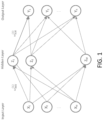
- FIG. 1 is a flow diagram illustrating an example artificial neural network, in accordance with an exemplary embodiment of the present disclosure.
- the artificial neural network which is utilized in the present disclosure, includes an input layer, one or more hidden layers, and an output layer.
- the input layer may include nodes (e.g., Xi, X 2 , ... X N ) corresponding to a plurality of battery parameters.
- six battery parameters may be used, which may result in a neural network structure having six input nodes.
- Each hidden layer may include a plurality of nodes for optimization (e.g., Zi, Z 2 ... Z M ). The optimization may occur by way of forward propagation, back propagation, and a calibration of weights and biases.
- the neural network may include a single hidden layer comprising eight nodes for optimization.
- the output layer may generate one or more output parameters (e.g., Y 1 , Y 2 , ... Y K ).
- the neural network model may include three output nodes to correspond to three respective output parameters, representing indications of "low,” “very low,” and "depleted” remaining battery capacities. Since the input data from a battery may be continuous and accumulated, the three sets of output data can be consolidated into one neural network model.
- each node may receive a combination of one or more input variables, e.g., from nodes of the preceding layer.
- the neural network model may comprise a nonlinear function from a set of input variables ⁇ x i ⁇ to a set of output variables ⁇ y k ⁇ .
- training a neural network may involve minimizing the error function, also called a loss function, by a mean square error (“MSE”) method.
- MSE mean square error
- initial weight factors and biases are randomly selected and/or initialized.
- the weight factors can be revised before the next iteration starts.
- the neural network model may be considered trained when the predefined tolerance has been achieved (e.g., the loss is lower than the predefined tolerance).
- ⁇ E ⁇ ⁇ MN 1 ⁇ E ⁇ y K ⁇ ⁇ y K ⁇ Z M ⁇ ⁇ Z M ⁇ ⁇ MN 1
- ⁇ is the learning step size
- ⁇ ji 1 + is the updated weight factor.
- the number of back-propagation iterations for a neural network model to detect and generate alarms for remaining battery voltage is approximately 5000 iterations. In some embodiments, the number of iterations is limited to 5000 to prevent a situation of "over-training" the model where the model becomes overly tuned to the specific training data set.
- the following features may be used to obtain and build input data for the neural network model: a time stamp (e.g., for further calculations); a measurement of a voltage (e.g., to be used directly as an input value for the neural network model); a measurement of current (e.g., for further filtering of the input data); a measurement of temperature (e.g., to be used directly as an input value for the neural network model); a measurement of an average current (e.g., to be used directly as an input value for the neural network model); a remaining voltage (e.g., to be used directly as an input value for the neural network model); and a full charge voltage of the battery (e.g., to be used directly as an input value for the neural network model, for example, to indicate a battery state of health, and/or to provide an indication of battery age).
- a time stamp e.g., for further calculations
- a measurement of a voltage e.g., to be used directly as an input value for the neural network model
- the sample time stamp may be used along with the voltage to create a measurement of a change in voltage over an interval of time (e.g., "delta milli-volts per second"), which can be used directly as an input value for the neural network model.
- the change in voltage may be used to provide the neural network model with a sense of rate of change over time.
- the "current” feature may be used to determine when a rechargeable battery switched from a charging mode to a discharging mode. Understanding this switch may be important to build the neural network model, as it primarily involves the discharging portion of the cycle.
- the "remaining voltage” feature can be used to find the point where the battery is depleted (e.g., where the "remaining voltage or capacity" is zero or near zero). From this point, additional training fields can be added to denote when the low battery, very low battery, and depleted battery alarms should occur. Since these samples were taken on a 2-minute cycle, some adjustments can be made to further improve the timing of the alarms.
- the alarm indicating a "depleted battery” may be issued 4 minutes from the zero “remaining voltage point.
- the alarm indicating "very low battery” may start 14 minutes from the alarm for "depleted battery.”
- the alarm indicating "low battery” may start 30 minutes before the alarm for "depleted battery.”
- the final preprocessed training data may include, but is not limited to, the following fields: a voltage; a change in voltage over an interval of time (e.g., delta mili-volts per second); an average current; a temperature; a remaining voltage; a full charge voltage (e.g., a battery state of health); a "low battery” alarm indication; a "very low battery” alarm indication; and a "depleted battery” alarm indication.
- the first six fields represent features for corresponding input values in Fig. 2
- the final three fields represent features for the output values shown in Fig. 3 , as described further below.
- Fig. 2 is a diagram illustrating an input data matrix for using an artificial neural network for detecting and generating alarms based on remaining battery voltage, according to an embodiment of the present disclosure.
- the six columns represent six features for input data that can be captured periodically from an infusion pump, e.g., in real-time.
- X[i,j] represents input vectors including voltage, a change or difference in voltage over intervals of time (e.g., every second), an average current, a remaining battery voltage (e.g., as calculated by a battery gas gauge IC), a battery temperature, and a full charge voltage (battery state of health).
- the input data for these features may be sampled (e.g., received via sensors) at predetermined time intervals (e.g., every two minutes).
- Fig. 3 is a diagram showing the corresponding target vectors for the input data matrix of Fig. 2 , according to an embodiment of the present disclosure.
- Y[i,j] represents all target vectors including low, very low, and depleted battery status.
- Y[i,j] may equal zero when the respective status is false, but Y[i,j] may equal one when the respective status is true.
- Fig. 4 is a flow chart illustrating an example method for training a neural network for detecting and generating alarms for remaining battery voltage, according an embodiment of the present disclosure.
- a reference feature vector may be received for each of a plurality of reference training data.
- the reference training data may be obtained during discharging of one or more reference batteries.
- the reference training data set may be a subset (e.g., half) of the test data set.
- Each reference feature vector may comprise a predetermined number of inputs, for example, a reference voltage of a reference battery; a change in the reference voltage over a predetermined interval of time; a reference average current associated with the reference battery; a reference temperature associated with the reference battery; and a reference remaining voltage reported by a battery gas gauge integrated circuit ("IC") associated with the reference battery.
- IC battery gas gauge integrated circuit
- each received reference vector may comprise six inputs.
- the training method may include inputting the corresponding target value vectors ("output vectors") for the reference feature vectors.
- each target value vector may provide an indicia of the remaining battery voltage for the corresponding input data.
- the target value may indicate whether the remaining battery voltage meets the thresholds for a "low battery,” "very low battery,” or a "depleted battery” indication.
- the reference feature vectors may be associated with their corresponding output vectors.
- the neural network model may be trained using the associated reference feature vectors to output weight factors and biases for each path of the neural network model.
- the training may include an iterative process comprising a feed forward propagation through the layers of the neural network model, a calculation of a loss function, and a backpropagation through the layers of the neural network model.
- the training method may initialize by randomly generating weights and biases. After errors are minimized (e.g., the loss is within a tolerance level), the training method may return weight factors and biases for each path. These weight factors and biases associated with the trained neural network may be stored, e.g., for use in applying the trained neural network as shown in Fig. 5 .
- Fig. 5 is a flow chart illustrating an example method for applying a trained neural network for detecting and generating alarms for remaining battery voltage, according an embodiment of the present disclosure.
- Fig. 5 illustrates a feed-forward computation using real-time battery data.
- an infusion device being powered by a rechargeable battery may receive, at predetermined intervals of time in real-time, measurements comprising: a voltage of the rechargeable battery, a change in the voltage over the predetermined interval of time, an average current associated with the rechargeable battery, a temperature of the rechargeable battery, and a remaining voltage or capacity reported by a battery gas gauge integrated circuit ("IC").
- the six types of input data may be used to form input feature vectors with preconditioning.
- the infusion device may also identify and retrieve the stored weight factors and biases from the training method of Fig. 4 (e.g., parameters ⁇ ji and b j ).
- the six-feature input vectors and stored weight factors and biases may be inputted into a neural network to generate an indicia of actual remaining voltage or capacity of the rechargeable battery (e.g., whether the rechargeable battery has "low battery,” “very low battery,” or "depleted battery” status).
- the application of the neural network model may involve performing feed-forward computations, computing inputs at each node of the hidden layer, and computing activation functions at each node.
- an infusion device selects a trained neural network and corresponding weight factors/biases parameters ⁇ ji and b j based on a known type of battery.
- the battery gas gauge IC may transmit an identifier of a type of battery, which may specify a model number, manufacturer, version, etc.
- the infusion device uses the battery information from the battery gas gauge IC to select the corresponding rained neural network and corresponding weight factors/biases parameters ⁇ ji and b j , which may be stored locally or remotely at a server.
- systems and methods of the present disclosure help to overcome the inaccuracies of using the battery's internal gas gauge IC to measure remaining battery voltage or capacity and generate alerts.
- these inaccuracies made it necessary to add a margin to the calculated run-time remaining value so that the battery could be guaranteed to have enough energy to allow an infusion to continue for the required amount of time after a low or very low battery alarm was issued.
- a desired outcome of using the neural network model discussed in the present disclosure is to reduce or eliminate the need for this margin.
- the disclosed methods for detecting and generating alarms for remaining battery voltage or capacity enables the infusion system to run for a longer period of time on battery power. To examine this possibility, the existing cache of battery alarm time data was analyzed as shown in the below table below
- the previous known algorithm used in the infusion system has a significant difference between when it issues the battery alarms versus the ideal time at which those alarms should be issued.
- the previous known algorithm issues the low battery alarm when the battery is 78 minutes from empty.
- the low battery alarm would be issued when the battery's time until empty is equal to 33 minutes (30 minutes of infusion run-time, plus an additional 3 minutes when the infusion system is alarming before it shuts down completely). This is 45 minutes of additional run-time on battery that is lost due to the margin that is needed for the previous known algorithm.
- the times at which the disclosed method utilizing the disclosed neural network model issued the battery alarms correlated very closely to the times issued by an ideal algorithm.
- the disclosed approach can be considered to match the ideal case most of the time.
- Using the neural network can allow a reduction in the run-time remaining margin, and therefore a longer run-time on battery.
- Fig. 6 is a diagram of an infusion device 600 that is configured to use a trained neural network 602 to perform the method of Fig. 5 , according to an example embodiment of the present disclosure.
- the infusion device 600 is an infusion pump, such as a syringe pump, an ambulatory pump, or a peristaltic pump.
- the infusion device 600 is connected to a rack 604 for support.
- the infusion device 600 is configured to receive IV tubing 606.
- a cover 608 of the infusion device 600 opens, enabling the IV tubing 606 to be inserted.
- a first end of the IV tubing 606a is fluidly coupled to a fluid container that holds a drug, medication, or other fluid for an infusion treatment.
- a second end of the IV tubing 606b is fluidly coupled to a patient via an intravenous connection.
- the infusion device 600 includes a user interface 610 for receiving operator inputs (e.g., a flow rate) such as the one or more parameters discussed above.
- the user interface 610 also displays information including a status of an infusion treatment and alarms/alerts indicative of a low battery including the "low" battery alert, the "very low” battery alert, and the "depleted" battery alert.
- the user interface 610 includes a touchscreen and a keypad. In other embodiments, the user interface 610 may include only a touchscreen or a keypad.
- the infusion device 600 of Fig. 6 also includes a processor 612, a memory 614, and a communication module 616. While one processor 612 is shown, the infusion device 600 may include a plurality of processors.
- the processor 612 includes a controller, a logic device, etc. configured to execute the trained neural network 602 (e.g., an algorithm) stored in the memory 614.
- the processor 612 is also configured to execute one or more instructions stored in the memory 614 that, when executed by the processor 612, cause the processor 612 to perform the operations described herein to provide an infusion treatment.
- the memory 614 includes any memory device including read only memory, flash memory, random access memory, a hard disk drive, a solid state drive, etc.
- the communication module 616 is configured for wireless and/or wired communication with a network, such as the Internet, a cellular network, and/or a local hospital network.
- the communication module 616 may be configured, for example, for Wi-Fi or Ethernet communication.
- the communication module 616 is configured to receive the trained neural network 602 (including weight factors/biases parameters ⁇ ji and b j ) from a server or clinician computer via a network.
- the processor 612 may perform the method of Fig. 5 to train the neural network 602.
- the communication module 616 may also receive one or more parameters specifying an infusion treatment to be performed. Further, the communication module 616 may transmit alert or alarm messages to a server when a low battery is detected.
- the infusion device 600 of Fig. 6 further includes a drive mechanism 618, a motor 620, a battery/power regulator 622, and a battery gas gauge IC 624. Together, the drive mechanism 618 and the motor 620 comprise a pumping mechanism.
- the processor 612 is configured to transmit signals or commands to the motor 620, which cause the motor 620 to rotate or otherwise operate in a certain direction and speed. The movement or rotation of a drive shaft of the motor 620 causes the drive mechanism 618 to actuate or otherwise provide force on the IV tubing 606 (or a fluid container in alternative embodiments where a fluid container is placed inside the infusion device).
- the drive mechanism 618 may include finger actuators or a rotary actuator that apply pressure on the IV tubing 606 to deliver fluid from the fluid container to a patient for an infusion treatment.
- the drive mechanism 618 and the motor 620 are collectively configured to provide precise control of fluid delivery between 0.1 milliliters/hour up to 1000 milliliters/hour.
- the drive mechanism 618 may include a piston or other actuator that pushes on a plunger of a syringe.
- the motor 620 may rotate a drive screw, which causes the drive mechanism 618 to apply force on the plunger.
- the battery/power regulator 622 is configured to provide electrical power for the infusion device 600.
- a power regulator converts outlet based AC power into DC power.
- a battery provides constant DC power.
- the battery is rechargeable battery via the AC power.
- the battery gas gauge IC 624 transmits information regarding the battery 622 to the processor 612.
- the information may include a type of the battery 622, which is used for selecting the trained neural network 602 from the memory 614.
- the information also includes remaining voltage/capacity of the battery 622.
- the information may further include measurements including a voltage of the rechargeable battery, a change in the voltage over the predetermined interval of time, an average current associated with the rechargeable battery, and/or a temperature of the rechargeable battery.
- the processor 612 determines or receives in real-time at predetermined intervals of time, measurements including a voltage of the rechargeable battery 622, a change in the voltage over the predetermined interval of time, an average current associated with the rechargeable battery, and/or a temperature of the rechargeable battery.
- the processor 612 applies the received information as inputs to the trained neural network 602 and receives an output indicative of a status of the battery 622. Generally, the status indicates that the battery 622 has sufficient charge.
- the trained neural network 602 outputs the low battery, very low battery, or depleted battery status when the inputs are indicative of that battery state.
- the processor 612 is configured to display an alarm/alert to indicate when the low battery, very low battery, or depleted battery status is present. Further, the processor 612 uses the communication module 616 to transmit the battery alarm/alert to a network.
- the processor 612 may include one or more sensors 626 for measuring one or more of a voltage of the rechargeable battery 622, a change in the voltage over the predetermined interval of time, an average current associated with the rechargeable battery, and/or a temperature of the rechargeable battery. In other instances, the sensors 626 are provided in proximity to the battery 622 and communicatively coupled to the processor 612. The sensors 626 may include a voltage meter, a current meter, and/or a temperature gauge. In some instances the voltage meter and the current meter may be integrated with the processor 612 while the temperature gauge is provided in proximity to the battery 622.
- the processor 612 compares the battery status output from the trained neural network 602 to a time remaining for an infusion treatment. If the battery status indicates that the battery will be depleted before the infusion treatment is timed to end, the processor 612 may generate a more pronounced alarm on the user interface 610 and/or for transmission to the network to indicate an infusion treatment will not be adequately completed.
- the processor 612 performs a battery state determination during infusion treatments and when infusion treatments are not in progress.
- the trained neural network 602 uses the change in battery voltage over time to assess how quickly the battery 622 is being drained, which corresponds to whether an infusion treatment is being performed.
- the processor 612 performs the battery state determination at periodic intervals, such as every 50 milliseconds, 100 milliseconds, 500 milliseconds, 1 second, 2 seconds, 5 seconds, 30 seconds, 1 minute, etc.
- the depleted battery state corresponds to a battery voltage where the gas gauge IC 624 prevents any further drain from the battery 622.
- the gas gauge IC 624 may prevent further current drain when the battery 622 has at least some charge, such as 0.5 volts or 0.1 volts.
- the processor 612 may cause the infusion device 600 to enter a fail-safe mode after the depleted battery state is reached.
- the fail-safe mode may include a controlled powering down of the infusion device 600.
- Fig. 7 is a diagram of an infusion system 700 configured to perform the operations described in connection with Fig. 4 , according to an example embodiment of the present disclosure.
- the infusion system 700 includes the infusion device 600 of Fig. 6 .
- the infusion system 700 also includes a server 702 that is connected to the infusion device 600 via a network 704, which may include any cellular, wide area, and/or local area network.
- the server 702 may be part of a heath information system and include a clinician computer.
- the server 702 receives reference training data 706, such as the reference feature vectors discussed above.
- the training data 706 may be input into the server 702 from manually obtained data. Additionally or alternatively, the training data 706 may be received from one or more infusion devices including the infusion device 600.
- the server 702 is configured to create one or more trained neural networks 602 for types of batteries using the training data 706.
- the server 702 may transmit the trained neural networks 602 to the infusion device 600 via the network 704.
- the server 702 may receive battery type information from the infusion device 600 (via the gas gauge IC 624) before a treatment is to be begin.
- the server 702 selects the trained neural network 602 that matches or corresponds to the received battery information and transmits the selected trained neural network 602 (and weight factors/biases parameters ⁇ ji and b j ) to the infusion device 600 for battery state detection.
Landscapes
- Engineering & Computer Science (AREA)
- Health & Medical Sciences (AREA)
- Physics & Mathematics (AREA)
- General Physics & Mathematics (AREA)
- Power Engineering (AREA)
- General Health & Medical Sciences (AREA)
- Anesthesiology (AREA)
- Biomedical Technology (AREA)
- Heart & Thoracic Surgery (AREA)
- Hematology (AREA)
- Life Sciences & Earth Sciences (AREA)
- Animal Behavior & Ethology (AREA)
- Vascular Medicine (AREA)
- Public Health (AREA)
- Veterinary Medicine (AREA)
- Chemical Kinetics & Catalysis (AREA)
- Chemical & Material Sciences (AREA)
- Manufacturing & Machinery (AREA)
- Electrochemistry (AREA)
- General Chemical & Material Sciences (AREA)
- Medical Informatics (AREA)
- Computing Systems (AREA)
- Computer Networks & Wireless Communication (AREA)
- Signal Processing (AREA)
- Infusion, Injection, And Reservoir Apparatuses (AREA)
- Tests Of Electric Status Of Batteries (AREA)
- Charge And Discharge Circuits For Batteries Or The Like (AREA)
Applications Claiming Priority (3)
| Application Number | Priority Date | Filing Date | Title |
|---|---|---|---|
| US202063132177P | 2020-12-30 | 2020-12-30 | |
| EP21848481.4A EP4272008B1 (de) | 2020-12-30 | 2021-12-30 | System und verfahren zur erzeugung von batteriealarmen in infusionsvorrichtungen |
| PCT/US2021/065701 WO2022147263A1 (en) | 2020-12-30 | 2021-12-30 | System and method for generating battery alarms in infusion devices |
Related Parent Applications (2)
| Application Number | Title | Priority Date | Filing Date |
|---|---|---|---|
| EP21848481.4A Division EP4272008B1 (de) | 2020-12-30 | 2021-12-30 | System und verfahren zur erzeugung von batteriealarmen in infusionsvorrichtungen |
| EP21848481.4A Division-Into EP4272008B1 (de) | 2020-12-30 | 2021-12-30 | System und verfahren zur erzeugung von batteriealarmen in infusionsvorrichtungen |
Publications (2)
| Publication Number | Publication Date |
|---|---|
| EP4512441A2 true EP4512441A2 (de) | 2025-02-26 |
| EP4512441A3 EP4512441A3 (de) | 2025-05-14 |
Family
ID=80050763
Family Applications (2)
| Application Number | Title | Priority Date | Filing Date |
|---|---|---|---|
| EP24223861.6A Pending EP4512441A3 (de) | 2020-12-30 | 2021-12-30 | System und verfahren zur erzeugung von batteriealarmen in infusionsvorrichtungen |
| EP21848481.4A Active EP4272008B1 (de) | 2020-12-30 | 2021-12-30 | System und verfahren zur erzeugung von batteriealarmen in infusionsvorrichtungen |
Family Applications After (1)
| Application Number | Title | Priority Date | Filing Date |
|---|---|---|---|
| EP21848481.4A Active EP4272008B1 (de) | 2020-12-30 | 2021-12-30 | System und verfahren zur erzeugung von batteriealarmen in infusionsvorrichtungen |
Country Status (11)
| Country | Link |
|---|---|
| US (2) | US12042628B2 (de) |
| EP (2) | EP4512441A3 (de) |
| JP (1) | JP2024501977A (de) |
| KR (1) | KR20230128051A (de) |
| CN (1) | CN116670523A (de) |
| AU (1) | AU2021413229A1 (de) |
| CA (1) | CA3205991A1 (de) |
| CO (1) | CO2023008642A2 (de) |
| ES (1) | ES3014411T3 (de) |
| MX (1) | MX2023007903A (de) |
| WO (1) | WO2022147263A1 (de) |
Families Citing this family (4)
| Publication number | Priority date | Publication date | Assignee | Title |
|---|---|---|---|---|
| CN116670523A (zh) * | 2020-12-30 | 2023-08-29 | 巴克斯特国际公司 | 用于在输注设备中生成电池警报的系统和方法 |
| AU2022309839A1 (en) * | 2021-07-12 | 2024-01-04 | Baxter Healthcare Sa | Systems for multi-level thermal management of electronic devices |
| US20250205416A1 (en) * | 2023-12-20 | 2025-06-26 | Baxter International Inc. | Infusion therapy device with occlusion detection |
| CN121348053B (zh) * | 2025-12-18 | 2026-04-21 | 蜀汇乾鲲科技有限公司 | 一种集成电路主板的性能检测分析方法及系统 |
Family Cites Families (34)
| Publication number | Priority date | Publication date | Assignee | Title |
|---|---|---|---|---|
| SE501934C2 (sv) | 1993-09-30 | 1995-06-26 | Asea Brown Boveri | Förfarande och anordning för att identifiera enkla jordfel |
| US5764034A (en) * | 1996-04-10 | 1998-06-09 | Baxter International Inc. | Battery gauge for a battery operated infusion pump |
| US6064180A (en) * | 1996-10-29 | 2000-05-16 | General Motors Corporation | Method and apparatus for determining battery state-of-charge using neural network architecture |
| CN1199050C (zh) * | 1998-05-28 | 2005-04-27 | 丰田自动车株式会社 | 电池充电状态的估计装置及电池恶化估计方法 |
| JP4038788B2 (ja) * | 2002-02-22 | 2008-01-30 | アクソンデータマシン株式会社 | バッテリの残存容量判定方法と、その装置 |
| CN100570388C (zh) * | 2003-12-18 | 2009-12-16 | 株式会社Lg化学 | 使用神经网络评估电池的充电状态的设备和方法 |
| US7437644B2 (en) * | 2004-10-29 | 2008-10-14 | Codman Neuro Sciences Sárl | Automatic self-testing of an internal device in a closed system |
| WO2008038202A2 (en) * | 2006-09-26 | 2008-04-03 | Koninklijke Philips Electronics N.V. | Remaining time indication for a rechargeable implantable medical device |
| US20080167531A1 (en) | 2007-01-05 | 2008-07-10 | Cardiac Pacemakers, Inc. | System and method to monitor battery status in an implantable medical device |
| JP2008232758A (ja) * | 2007-03-19 | 2008-10-02 | Nippon Soken Inc | 二次電池の内部状態検出装置及びニューラルネット式状態量推定装置 |
| US8287514B2 (en) | 2007-09-07 | 2012-10-16 | Asante Solutions, Inc. | Power management techniques for an infusion pump system |
| US7935105B2 (en) * | 2007-09-07 | 2011-05-03 | Asante Solutions, Inc. | Data storage for an infusion pump system |
| EP2250513B1 (de) * | 2008-01-18 | 2014-12-17 | Medtronic, Inc. | Schätzung der verbleibenden batterielebensdauer in einer implantierbaren medizinischen einrichtung |
| US8193766B2 (en) | 2008-04-30 | 2012-06-05 | Medtronic, Inc. | Time remaining to charge an implantable medical device, charger indicator, system and method therefore |
| US9018893B2 (en) * | 2011-03-18 | 2015-04-28 | Medtronic Minimed, Inc. | Power control techniques for an electronic device |
| US9857430B2 (en) * | 2012-10-15 | 2018-01-02 | Battery Technology Holdings, Llc | Tester for equipment, apparatus or component with distributed processing function |
| US10569015B2 (en) * | 2013-12-02 | 2020-02-25 | Bigfoot Biomedical, Inc. | Infusion pump system and method |
| CN105814446B (zh) * | 2014-01-14 | 2019-07-23 | 费森尤斯维尔公司 | 用于确定电池的剩余运行时间的方法和装置 |
| US9333291B2 (en) * | 2014-01-16 | 2016-05-10 | Hospira, Inc. | Infusion pump battery capacity management and battery charge alert system and method |
| US10879708B2 (en) * | 2016-07-22 | 2020-12-29 | Eos Energy Storage, Llc | Battery management system |
| CN110462916B (zh) * | 2017-03-31 | 2023-06-20 | 株式会社杰士汤浅国际 | 蓄电元件管理装置以及蓄电元件管理方法 |
| KR102613749B1 (ko) * | 2017-05-03 | 2023-12-13 | 가부시키가이샤 한도오따이 에네루기 켄큐쇼 | 신경망, 전력 저장 시스템, 차량, 및 전자 기기 |
| US11205912B2 (en) * | 2017-07-25 | 2021-12-21 | Semiconductor Energy Laboratory Co., Ltd. | Power storage system, electronic device, vehicle, and estimation method |
| US11171498B2 (en) * | 2017-11-20 | 2021-11-09 | The Trustees Of Columbia University In The City Of New York | Neural-network state-of-charge estimation |
| US11637331B2 (en) * | 2017-11-20 | 2023-04-25 | The Trustees Of Columbia University In The City Of New York | Neural-network state-of-charge and state of health estimation |
| WO2019181727A1 (ja) * | 2018-03-20 | 2019-09-26 | 株式会社Gsユアサ | 異常要因判定装置、劣化判定装置、コンピュータプログラム、劣化判定方法及び異常要因判定方法 |
| CN108872866B (zh) * | 2018-06-04 | 2021-02-05 | 桂林电子科技大学 | 一种锂离子电池荷电状态动态评估与长效预测融合方法 |
| CN109283469A (zh) * | 2018-09-21 | 2019-01-29 | 四川长虹电器股份有限公司 | 电池管理系统故障预测方法、装置及可读存储介质 |
| KR102065120B1 (ko) * | 2018-09-27 | 2020-02-11 | 경북대학교 산학협력단 | 신경회로망 기반 배터리 잔존량 추정방법 및 장치 |
| JP6860172B2 (ja) * | 2018-10-26 | 2021-04-14 | Necプラットフォームズ株式会社 | 充電制御装置、機器、充電制御方法、充電制御プログラム |
| JP7169519B2 (ja) * | 2018-12-26 | 2022-11-11 | トヨタ自動車株式会社 | 電池容量推定方法、および電池容量推定システム |
| JP7310137B2 (ja) * | 2018-12-28 | 2023-07-19 | 株式会社Gsユアサ | データ処理装置、データ処理方法、及びコンピュータプログラム |
| US10996726B1 (en) * | 2019-12-05 | 2021-05-04 | Dell Products, L.P. | Runtime update of battery coefficients |
| CN116670523A (zh) * | 2020-12-30 | 2023-08-29 | 巴克斯特国际公司 | 用于在输注设备中生成电池警报的系统和方法 |
-
2021
- 2021-12-30 CN CN202180087794.8A patent/CN116670523A/zh active Pending
- 2021-12-30 WO PCT/US2021/065701 patent/WO2022147263A1/en not_active Ceased
- 2021-12-30 CA CA3205991A patent/CA3205991A1/en active Pending
- 2021-12-30 KR KR1020237025566A patent/KR20230128051A/ko active Pending
- 2021-12-30 US US17/566,090 patent/US12042628B2/en active Active
- 2021-12-30 MX MX2023007903A patent/MX2023007903A/es unknown
- 2021-12-30 JP JP2023539274A patent/JP2024501977A/ja active Pending
- 2021-12-30 AU AU2021413229A patent/AU2021413229A1/en not_active Withdrawn
- 2021-12-30 EP EP24223861.6A patent/EP4512441A3/de active Pending
- 2021-12-30 ES ES21848481T patent/ES3014411T3/es active Active
- 2021-12-30 EP EP21848481.4A patent/EP4272008B1/de active Active
-
2023
- 2023-06-29 CO CONC2023/0008642A patent/CO2023008642A2/es unknown
-
2024
- 2024-07-22 US US18/779,744 patent/US12589203B2/en active Active
Also Published As
| Publication number | Publication date |
|---|---|
| JP2024501977A (ja) | 2024-01-17 |
| MX2023007903A (es) | 2023-07-11 |
| KR20230128051A (ko) | 2023-09-01 |
| WO2022147263A1 (en) | 2022-07-07 |
| AU2021413229A1 (en) | 2023-07-06 |
| CN116670523A (zh) | 2023-08-29 |
| CO2023008642A2 (es) | 2023-07-31 |
| EP4512441A3 (de) | 2025-05-14 |
| EP4272008A1 (de) | 2023-11-08 |
| CA3205991A1 (en) | 2022-07-07 |
| US20220203028A1 (en) | 2022-06-30 |
| ES3014411T3 (en) | 2025-04-22 |
| US12589203B2 (en) | 2026-03-31 |
| US12042628B2 (en) | 2024-07-23 |
| EP4272008B1 (de) | 2025-02-12 |
| US20240374821A1 (en) | 2024-11-14 |
Similar Documents
| Publication | Publication Date | Title |
|---|---|---|
| US12589203B2 (en) | System and method for generating battery alarms in infusion devices | |
| AU2020204039B2 (en) | Advance diagnosis of infusion device operating mode viability | |
| US12485224B2 (en) | Safe correction boluses | |
| US20260102562A1 (en) | Systems and methods for occlusion detection in infusion pumps | |
| CN110151192A (zh) | 一种用于血糖监控与预警的辅助医疗系统及其使用方法 | |
| US20250050014A1 (en) | Drug injector monitoring device and method | |
| Karthik et al. | Multiple Syringe Infusion Pump for Immobilized Patients | |
| CN121490180A (zh) | 胰岛素贮存器设置期间的无传感器柱塞检测的方法 | |
| CN121490181A (zh) | 用于提高能量效率和可预测性的基础、临时基础和方波大剂量输送的方法 | |
| CN121502403A (zh) | 无传感器堵塞检测的方法 | |
| CN121490186A (zh) | 胰岛素疗法期间补偿胰岛素贮存器摩擦的方法 | |
| WO2025245528A1 (en) | Devices, systems, and methods for automated operation of infusion pumps with mobile devices | |
| CA3239838A1 (en) | Optimizing embedded formulations for drug delivery | |
| Barazandegan et al. | Model-based detection of organ dysfunction and faults in insulin infusion devices for type 2 diabetic patients | |
| HK40008528A (en) | Method and device for risk-based control-to-range |
Legal Events
| Date | Code | Title | Description |
|---|---|---|---|
| PUAI | Public reference made under article 153(3) epc to a published international application that has entered the european phase |
Free format text: ORIGINAL CODE: 0009012 |
|
| STAA | Information on the status of an ep patent application or granted ep patent |
Free format text: STATUS: REQUEST FOR EXAMINATION WAS MADE |
|
| 17P | Request for examination filed |
Effective date: 20241231 |
|
| AC | Divisional application: reference to earlier application |
Ref document number: 4272008 Country of ref document: EP Kind code of ref document: P |
|
| AK | Designated contracting states |
Kind code of ref document: A2 Designated state(s): AL AT BE BG CH CY CZ DE DK EE ES FI FR GB GR HR HU IE IS IT LI LT LU LV MC MK MT NL NO PL PT RO RS SE SI SK SM TR |
|
| PUAL | Search report despatched |
Free format text: ORIGINAL CODE: 0009013 |
|
| AK | Designated contracting states |
Kind code of ref document: A3 Designated state(s): AL AT BE BG CH CY CZ DE DK EE ES FI FR GB GR HR HU IE IS IT LI LT LU LV MC MK MT NL NO PL PT RO RS SE SI SK SM TR |
|
| RIC1 | Information provided on ipc code assigned before grant |
Ipc: A61M 5/14 20060101AFI20250407BHEP |
|
| GRAP | Despatch of communication of intention to grant a patent |
Free format text: ORIGINAL CODE: EPIDOSNIGR1 |
|
| STAA | Information on the status of an ep patent application or granted ep patent |
Free format text: STATUS: GRANT OF PATENT IS INTENDED |