EP4509116A1 - Method for preparing medical hydrogel - Google Patents
Method for preparing medical hydrogel Download PDFInfo
- Publication number
- EP4509116A1 EP4509116A1 EP23763381.3A EP23763381A EP4509116A1 EP 4509116 A1 EP4509116 A1 EP 4509116A1 EP 23763381 A EP23763381 A EP 23763381A EP 4509116 A1 EP4509116 A1 EP 4509116A1
- Authority
- EP
- European Patent Office
- Prior art keywords
- chitosan
- hydrogel
- medical hydrogel
- acid
- medical
- Prior art date
- Legal status (The legal status is an assumption and is not a legal conclusion. Google has not performed a legal analysis and makes no representation as to the accuracy of the status listed.)
- Pending
Links
Images


Classifications
-
- A—HUMAN NECESSITIES
- A61—MEDICAL OR VETERINARY SCIENCE; HYGIENE
- A61K—PREPARATIONS FOR MEDICAL, DENTAL OR TOILETRY PURPOSES
- A61K9/00—Medicinal preparations characterised by special physical form
- A61K9/06—Ointments; Bases therefor; Other semi-solid forms, e.g. creams, sticks, gels
-
- A—HUMAN NECESSITIES
- A61—MEDICAL OR VETERINARY SCIENCE; HYGIENE
- A61L—METHODS OR APPARATUS FOR STERILISING MATERIALS OR OBJECTS IN GENERAL; DISINFECTION, STERILISATION OR DEODORISATION OF AIR; CHEMICAL ASPECTS OF BANDAGES, DRESSINGS, ABSORBENT PADS OR SURGICAL ARTICLES; MATERIALS FOR BANDAGES, DRESSINGS, ABSORBENT PADS OR SURGICAL ARTICLES
- A61L26/00—Chemical aspects of, or use of materials for, wound dressings or bandages in liquid, gel or powder form
- A61L26/0061—Use of materials characterised by their function or physical properties
- A61L26/008—Hydrogels or hydrocolloids
-
- A—HUMAN NECESSITIES
- A61—MEDICAL OR VETERINARY SCIENCE; HYGIENE
- A61K—PREPARATIONS FOR MEDICAL, DENTAL OR TOILETRY PURPOSES
- A61K47/00—Medicinal preparations characterised by the non-active ingredients used, e.g. carriers or inert additives; Targeting or modifying agents chemically bound to the active ingredient
- A61K47/30—Macromolecular organic or inorganic compounds, e.g. inorganic polyphosphates
- A61K47/36—Polysaccharides; Derivatives thereof, e.g. gums, starch, alginate, dextrin, hyaluronic acid, chitosan, inulin, agar or pectin
-
- A—HUMAN NECESSITIES
- A61—MEDICAL OR VETERINARY SCIENCE; HYGIENE
- A61L—METHODS OR APPARATUS FOR STERILISING MATERIALS OR OBJECTS IN GENERAL; DISINFECTION, STERILISATION OR DEODORISATION OF AIR; CHEMICAL ASPECTS OF BANDAGES, DRESSINGS, ABSORBENT PADS OR SURGICAL ARTICLES; MATERIALS FOR BANDAGES, DRESSINGS, ABSORBENT PADS OR SURGICAL ARTICLES
- A61L15/00—Chemical aspects of, or use of materials for, bandages, dressings or absorbent pads
- A61L15/16—Bandages, dressings or absorbent pads for physiological fluids such as urine or blood, e.g. sanitary towels, tampons
- A61L15/42—Use of materials characterised by their function or physical properties
- A61L15/60—Liquid-swellable gel-forming materials, e.g. super-absorbents
-
- A—HUMAN NECESSITIES
- A61—MEDICAL OR VETERINARY SCIENCE; HYGIENE
- A61L—METHODS OR APPARATUS FOR STERILISING MATERIALS OR OBJECTS IN GENERAL; DISINFECTION, STERILISATION OR DEODORISATION OF AIR; CHEMICAL ASPECTS OF BANDAGES, DRESSINGS, ABSORBENT PADS OR SURGICAL ARTICLES; MATERIALS FOR BANDAGES, DRESSINGS, ABSORBENT PADS OR SURGICAL ARTICLES
- A61L26/00—Chemical aspects of, or use of materials for, wound dressings or bandages in liquid, gel or powder form
- A61L26/0009—Chemical aspects of, or use of materials for, wound dressings or bandages in liquid, gel or powder form containing macromolecular materials
- A61L26/0023—Polysaccharides
-
- C—CHEMISTRY; METALLURGY
- C08—ORGANIC MACROMOLECULAR COMPOUNDS; THEIR PREPARATION OR CHEMICAL WORKING-UP; COMPOSITIONS BASED THEREON
- C08B—POLYSACCHARIDES; DERIVATIVES THEREOF
- C08B37/00—Preparation of polysaccharides not provided for in groups C08B1/00 - C08B35/00; Derivatives thereof
- C08B37/0006—Homoglycans, i.e. polysaccharides having a main chain consisting of one single sugar, e.g. colominic acid
- C08B37/0024—Homoglycans, i.e. polysaccharides having a main chain consisting of one single sugar, e.g. colominic acid beta-D-Glucans; (beta-1,3)-D-Glucans, e.g. paramylon, coriolan, sclerotan, pachyman, callose, scleroglucan, schizophyllan, laminaran, lentinan or curdlan; (beta-1,6)-D-Glucans, e.g. pustulan; (beta-1,4)-D-Glucans; (beta-1,3)(beta-1,4)-D-Glucans, e.g. lichenan; Derivatives thereof
- C08B37/0027—2-Acetamido-2-deoxy-beta-glucans; Derivatives thereof
- C08B37/003—Chitin, i.e. 2-acetamido-2-deoxy-(beta-1,4)-D-glucan or N-acetyl-beta-1,4-D-glucosamine; Chitosan, i.e. deacetylated product of chitin or (beta-1,4)-D-glucosamine; Derivatives thereof
-
- C—CHEMISTRY; METALLURGY
- C08—ORGANIC MACROMOLECULAR COMPOUNDS; THEIR PREPARATION OR CHEMICAL WORKING-UP; COMPOSITIONS BASED THEREON
- C08L—COMPOSITIONS OF MACROMOLECULAR COMPOUNDS
- C08L5/00—Compositions of polysaccharides or of their derivatives not provided for in groups C08L1/00 or C08L3/00
- C08L5/08—Chitin; Chondroitin sulfate; Hyaluronic acid; Derivatives thereof
-
- A—HUMAN NECESSITIES
- A61—MEDICAL OR VETERINARY SCIENCE; HYGIENE
- A61K—PREPARATIONS FOR MEDICAL, DENTAL OR TOILETRY PURPOSES
- A61K9/00—Medicinal preparations characterised by special physical form
- A61K9/0012—Galenical forms characterised by the site of application
- A61K9/0014—Skin, i.e. galenical aspects of topical compositions
Definitions
- the present disclosure relates to a method of preparing a medical hydrogel.
- Wound dressings are required to have a property that promotes wound healing.
- Hydrogel-like wound dressings capable of providing a moist environment to a wound site have been reported to promote formation of a granulation tissue and re-epithelialization at the wound site, thereby promoting healing.
- Chitosan is a natural polysaccharide that shows antibacterial action and wound-healing effect. Because of its properties, chitosan has been widely used as a wound dressing material. However, since chitosan is poorly soluble in water at physiological pHs, preparation of a hydrogel-like chitosan wound dressing is difficult. On the other hand, although a chitosan derivative that is water-soluble at a physiological pH has been reported, preparation of a hydrogel from the chitosan derivative requires use of a cross-linking agent such as glutaraldehyde. In this case, biological toxicity of the cross-linking agent remaining in the gel may be problematic.
- a cross-linking agent such as glutaraldehyde
- Patent Literature 1 a method of preparing a chitosan-derived hydrogel without using additives harmful to the living body has been proposed (Patent Literature 1).
- Patent Literature 1 a hydrogel having no biological toxicity was prepared by freezing and thawing of an aqueous solution containing an aldonic acid-modified chitosan.
- Patent Literature 1 International Publication No. WO 2012/105685
- Patent Literature 1 when the hydrogel is used for medical applications such as wound dressings, sterilization is required after the preparation of the hydrogel, which means that the process requires the steps of freezing, thawing, and sterilization.
- the present disclosure was made in view of the above problem, and an objective of the disclosure is to provide a method of preparing a medical hydrogel whose sterilization and gelling can be achieved by a simple method.
- the method of preparing a medical hydrogel according to the present disclosure is
- the high-pressure steam sterilization is preferably carried out at not less than 121°C for 15 minutes to 2 hours.
- the chitosan has a deacetylation rate of 70 to 90%, and the chitosan derivative has an introduction rate of the aldonic acid of 5 to 60%.
- the aldonic acid is preferably gluconic acid.
- the resulting medical hydrogel preferably has a fibrous structure.
- the present disclosure can provide a method of preparing a hydrogel whose sterilization and gelling can be achieved by a simple method.
- a method of preparing a medical hydrogel according to the present embodiment is described below.
- the medical hydrogel obtained by the preparation method according to the present embodiment is used as a wound dressing that produces a therapeutic effect on wound surfaces of cut wounds, lacerated wounds, contused wounds, burns, bedsores, and the like by maintaining the moist environment and promoting the cell proliferation on the wound surfaces.
- the method of preparing a medical hydrogel according to the present embodiment is a method of preparing a medical hydrogel derived from a chitosan derivative containing aldonic acid bound by dehydration condensation to an amino group of a glucosamine unit of chitosan, the method including placing an aqueous solution containing the chitosan derivative in a mold having a predetermined shape, and then subjecting the aqueous solution to high-pressure steam sterilization, to obtain a sterile medical hydrogel having the predetermined shape.
- the chitosan used to synthesize the chitosan derivative is a deacetylated product of chitin.
- the conversion (deacetylation reaction) of chitin to chitosan does not proceed completely, and the sugar chain partially includes N-acetylglucosamine.
- Commercially available chitosans usually have a deacetylation rate within the range of 50 to 100%, often have a deacetylation rate of about 70 to 90%.
- the chitosan used in relation to the present embodiment means a chitosan having a deacetylation rate of 50 to 100%, and therefore, encompasses chitosans whose deacetylation rates are not 100%.
- the aldonic acid used to synthesize the chitosan derivative used in the present embodiment is a general term of a derivative obtained by oxidizing a monosaccharide, the derivative being a carboxylic acid containing a carboxyl group derived by conversion of the formyl group at the 1-position of aldose.
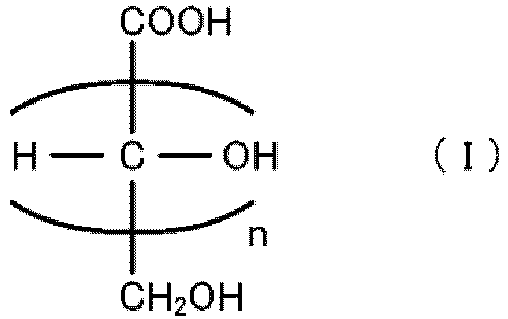
- the aldonic acid can be represented by, for example, Formula (I) below.
- Formula (I) n is an integer of 2 to 4.
- aldonic acid used to synthesize the chitosan derivative used in the present embodiment is gluconic acid. Threonic acid or xylonic acid can also be preferably used. Further, any of the carboxylic acids that are known as aldonic acids may be used, and examples of such carboxylic acids include galactonic acid, mannonic acid, lyxonic acid, erythronic acid, ribonic acid, arabinonic acid, allonic acid, altronic acid, gulonic acid, idonic acid, and talonic acid.
- the chitosan derivative used in the present embodiment can be generally represented, as shown in Formula (II) below, as a chitosan derivative containing repeat units (repeating units) each including a part where aldonic acid is bound to the amino group of a glucosamine unit and a part where an acetylglucosamine unit is remaining.
- n is an integer of 2 to 4.
- the chitosan derivative used in the present embodiment can be generally represented as a chitosan derivative containing the repeat unit shown in Formula (III) below.
- the chitosan derivative used in the present embodiment can be synthesized by subjecting aldonic acid to condensation dehydration reaction with chitosan, to bind (introduce) the aldonic acid to the amino group at the 2-position of glucosamine units of the chitosan.
- the aldonic acid is generally reacted as an appropriate salt (for example, Na salt).
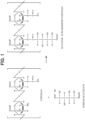
- FIG. 1 illustrates a synthesis scheme for a case where gluconic acid is used as the aldonic acid.
- the condensation dehydration reaction can be carried out at room temperature under acidic conditions using a condensing agent (dehydration-condensation agent).
- a condensing agent dehydration-condensation agent
- Preferred examples of the condensing agent in the condensation dehydration reaction between the chitosan and the aldonic acid include, but are not limited to, 1-ethyl-3-(3-dimethylaminopropyl)carbodiimide hydrochloride (EDC), which functions to activate the carboxyl group of the aldonic acid, and N-hydroxysuccinimide (NHS), which functions to suppress side reactions.
- EDC 1-ethyl-3-(3-dimethylaminopropyl)carbodiimide hydrochloride
- NHS N-hydroxysuccinimide
- the rate of introduction of the aldonic acid such as gluconic acid into the chitosan can be adjusted by changing the amount of the aldonic acid used relative to the chitosan, and changing the amount of the condensing agent used. By increasing the relative amount of the aldonic acid used, and increasing the amount of the condensing agent used, the introduction rate can be increased.
- the rate of introduction of the aldonic acid in the chitosan derivative used in the present embodiment is, for example, 5 to 60%.
- Equation (A) The rate of introduction of the aldonic acid such as gluconic acid (into the chitosan) is represented by Equation (A) below.
- Aldonic acid introduction rate % Y / X + Y ⁇ 100
- Equation (A) X is the amount of substance (number of moles) of glucosamine units contained in the chitosan-introduced product, and Y is the amount of substance (number of moles) of aldonic acid-introduced glucosamine units contained in the chitosan derivative.
- the introduction rate can be calculated by dissolving the chitosan derivative (aldonic acid-modified chitosan) in an appropriate concentration of aqueous hydrochloric acid solution, and then adding an equimolar concentration, with respect to the hydrochloric acid, of aqueous sodium hydroxide solution to the resulting solution while measuring the change in the electrical conductivity.
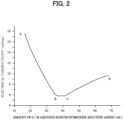
- the amount of substance of the sodium hydroxide added to the aqueous solution in B to C in FIG. 2 corresponds to the amount of substance of glucosamine units that are not modified with gluconic acid. Therefore, the gluconic acid introduction rate can be determined by calculating the amount of substance of glucosamine units in each of gluconic acid-modified chitosan and gluconic acid-unmodified chitosan by this measurement method, and comparing the calculated amounts of substance.
- an aqueous solution containing the chitosan derivative synthesized as described above is placed in a mold having a predetermined shape, and subjected to high-pressure steam sterilization.
- gelling of the aqueous solution containing the chitosan derivative occurs, and at the same time, sterilization can be achieved, resulting in formation of a biocompatible medical hydrogel having a predetermined shape.
- the high-pressure steam sterilization can be carried out using an autoclave.
- the temperature and the time for this treatment are not limited as long as the sterilization is possible.
- the treatment may be carried out at 2 atm at not less than 121°C for not less than 15 minutes as in common autoclave sterilization, or may also be carried out for 20 minutes to 2 hours.
- the aqueous solution containing the chitosan derivative can be obtained by dissolving a dry powder of the above-described chitosan derivative in an aqueous acidic solution such as an aqueous hydrochloric acid solution, and then adding an alkali such as sodium hydroxide thereto to neutralize the resulting solution to a pH that is almost neutral (pH 7).
- the content of the chitosan derivative in the aqueous solution is not limited as long as the chitosan derivative is sufficiently dissolved in the aqueous solution, and may be, for example, 1 to 5% (weight/volume).
- the medical hydrogel formed as described above is an elastic hydrogel.
- the resulting medical hydrogel can have various shapes suitable for its intended use, such as a sheet-like shape or a spherical shape.
- the medical hydrogel has excellent biocompatibility since, as described above, it is obtained using no cross-linking agent at all, and using no additives harmful to the living body.
- a medical hydrogel having higher mechanical strength can be obtained.
- the higher the mechanical strength of the medical hydrogel the more easily it can be handled when, for example, the medical hydrogel is processed into a size suitable for the size of a wound surface, or is attached to an external material for retaining the medical hydrogel on a wound surface.
- a medical hydrogel having a mechanical strength suitable for its intended use can be obtained.
- the medical hydrogel is produced without freezing and thawing of the aqueous solution containing the chitosan derivative. Therefore, the resulting medical hydrogel has a fibrous and dense internal structure. Chitosan contained in medical hydrogels is degraded by enzymes in the body fluid that exudes from the wound. However, the enzymatic degradation takes a long time in medical hydrogels having a fibrous and dense structure. Therefore, the medical hydrogel according to the present embodiment can remain on the wound surface for a long period of time, thereby accelerating the wound healing.
- a medical hydrogel can be obtained by the single step of subjecting the aqueous solution containing the chitosan derivative to high-pressure steam sterilization. Therefore, the embodiment is advantageous in that the medical hydrogel can be prepared by a very simple method. Furthermore, a medical hydrogel suitable for its intended use can be easily prepared in medical institutions and the like where an autoclave is available.
- gluconic acid-modified chitosan Three kinds of dry powders of gluconic acid-modified chitosan were prepared at different raw material ratios. These gluconic acid-modified chitosans are referred to as GC8, GC26, and GC54, respectively.
- the gluconic acid introduction rate was then calculated for each of GC8, GC26, and GC54.
- the gluconic acid introduction rate was calculated as mentioned above by dissolving 0.2 g of the dry powder of gluconic acid-modified chitosan in 40 ml of 0.1 M aqueous hydrochloric acid solution, and adding 0.1 M aqueous sodium hydroxide solution to the resulting aqueous solution while measuring the change in the electrical conductivity.
- Table 1 shows the preparation conditions and the gluconic acid introduction rate of each gluconic acid-modified chitosan.
- Table 1 Chitosan (g) GA(g) EDC(g) NHS(g) Gluconic acid introduction rate (%) GC8 10 2.69 2.37 0.74 8 GC26 10 5.38 4.73 1.42 26 GC54 5 10.77 9.46 2.84 54
- the aqueous gluconic acid-modified chitosan solution was placed in a glass container having a cylindrical shape with an inner diameter of 15 mm, and then the container was sealed. The container was then placed in an autoclave, and high-pressure steam sterilization (121°C, 2 atm) was carried out. The treatment time was set to 20 minutes, 60 minutes, or 120 minutes, respectively.
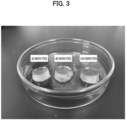
- FIG. 3 is a photograph of GC54 hydrogel as a representative.
- Each medical hydrogel obtained as described above was subjected to measurement of the compressive strength.
- Each medical hydrogel was placed in a glass container, and a compression test was carried out by lowering an indenter having a diameter of 10 mm at 5 mm/min from above. The compressive strength was measured at the time when the strain reached 10%.
- GC8 hydrogel hardly showed differences in the compressive strength among the cases with the different lengths of the treatment time.
- GC26 hydrogel and GC54 hydrogel tended to show higher compressive strength as the treatment time increased. It was found that medical hydroxy gels having higher mechanical strength can be obtained as the gluconic acid introduction rate increases, and as the treatment time of the high-pressure steam sterilization increases.
- aqueous gluconic acid-modified chitosan solution using the dry powder of GC54 described above was placed in a metal mold, and frozen at 20°C for 12 hours. Thereafter, the frozen product was left to stand at room temperature to thaw it, to produce a medical hydrogel (hereinafter referred to as GC54FM hydrogel).
- FIG. 5 is the SEM image of GC54 hydrogel.
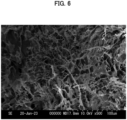
- FIG. 6 is the SEM image of GC54FM hydrogel.
- the GC54FM hydrogel Since freezing and thawing were carried out in the production of the GC54FM hydrogel, the GC54FM hydrogel showed a large number of pores formed due to ice crystals generated during the freezing. On the other hand, since freezing and thawing were not carried out in the production of the GC54 hydrogel, the GC54 hydrogel did not show pores like those in the GC54FM hydrogel, and exhibited a fibrous and dense structure.
- the medical hydrogel can be used as a wound dressing for use in the treatment of wound surfaces of cut wounds, lacerated wounds, contused wounds, burns, bedsores, and the like.
Landscapes
- Health & Medical Sciences (AREA)
- Chemical & Material Sciences (AREA)
- Life Sciences & Earth Sciences (AREA)
- General Health & Medical Sciences (AREA)
- Epidemiology (AREA)
- Animal Behavior & Ethology (AREA)
- Public Health (AREA)
- Veterinary Medicine (AREA)
- Engineering & Computer Science (AREA)
- Materials Engineering (AREA)
- Medicinal Chemistry (AREA)
- Dispersion Chemistry (AREA)
- Chemical Kinetics & Catalysis (AREA)
- Polymers & Plastics (AREA)
- Organic Chemistry (AREA)
- Pharmacology & Pharmacy (AREA)
- Hematology (AREA)
- Molecular Biology (AREA)
- Biochemistry (AREA)
- Inorganic Chemistry (AREA)
- Materials For Medical Uses (AREA)
- Polysaccharides And Polysaccharide Derivatives (AREA)
Abstract
Description
- The present disclosure relates to a method of preparing a medical hydrogel.
- Wound dressings are required to have a property that promotes wound healing. Hydrogel-like wound dressings capable of providing a moist environment to a wound site have been reported to promote formation of a granulation tissue and re-epithelialization at the wound site, thereby promoting healing.
- Chitosan is a natural polysaccharide that shows antibacterial action and wound-healing effect. Because of its properties, chitosan has been widely used as a wound dressing material. However, since chitosan is poorly soluble in water at physiological pHs, preparation of a hydrogel-like chitosan wound dressing is difficult. On the other hand, although a chitosan derivative that is water-soluble at a physiological pH has been reported, preparation of a hydrogel from the chitosan derivative requires use of a cross-linking agent such as glutaraldehyde. In this case, biological toxicity of the cross-linking agent remaining in the gel may be problematic.
- In view of such circumstances, a method of preparing a chitosan-derived hydrogel without using additives harmful to the living body has been proposed (Patent Literature 1). In Patent Literature 1, a hydrogel having no biological toxicity was prepared by freezing and thawing of an aqueous solution containing an aldonic acid-modified chitosan.
- Patent Literature 1: International Publication No.
WO 2012/105685 - In Patent Literature 1, when the hydrogel is used for medical applications such as wound dressings, sterilization is required after the preparation of the hydrogel, which means that the process requires the steps of freezing, thawing, and sterilization.
- The present disclosure was made in view of the above problem, and an objective of the disclosure is to provide a method of preparing a medical hydrogel whose sterilization and gelling can be achieved by a simple method.
- The method of preparing a medical hydrogel according to the present disclosure is
- a method of preparing a medical hydrogel derived from a chitosan derivative containing aldonic acid bound by dehydration condensation to an amino group of a glucosamine unit of chitosan,
- the method including placing an aqueous solution containing the chitosan derivative in a mold having a predetermined shape, and then subjecting the aqueous solution to high-pressure steam sterilization, to obtain a sterile medical hydrogel having the predetermined shape.
- The high-pressure steam sterilization is preferably carried out at not less than 121°C for 15 minutes to 2 hours.
- Preferably, the chitosan has a deacetylation rate of 70 to 90%, and the chitosan derivative has an introduction rate of the aldonic acid of 5 to 60%.
- The aldonic acid is preferably gluconic acid.
- The resulting medical hydrogel preferably has a fibrous structure.
- The present disclosure can provide a method of preparing a hydrogel whose sterilization and gelling can be achieved by a simple method.
-
-
FIG. 1 is a diagram illustrating a synthesis scheme for a chitosan derivative; -
FIG. 2 is a graph illustrating the gluconic acid introduction rate in a chitosan derivative; -
FIG. 3 is a photograph of medical hydrogels prepared in Examples; -
FIG. 4 is a graph illustrating the compressive strength of medical hydrogels prepared in Examples; -
FIG. 5 is a photograph of an SEM image of GC54 hydrogel; and -
FIG. 6 is a photograph of an SEM image of GC54FM hydrogel. - A method of preparing a medical hydrogel according to the present embodiment is described below. The medical hydrogel obtained by the preparation method according to the present embodiment is used as a wound dressing that produces a therapeutic effect on wound surfaces of cut wounds, lacerated wounds, contused wounds, burns, bedsores, and the like by maintaining the moist environment and promoting the cell proliferation on the wound surfaces.
- The method of preparing a medical hydrogel according to the present embodiment is a method of preparing a medical hydrogel derived from a chitosan derivative containing aldonic acid bound by dehydration condensation to an amino group of a glucosamine unit of chitosan, the method including placing an aqueous solution containing the chitosan derivative in a mold having a predetermined shape, and then subjecting the aqueous solution to high-pressure steam sterilization, to obtain a sterile medical hydrogel having the predetermined shape.
- In the present and other embodiments, the chitosan used to synthesize the chitosan derivative is a deacetylated product of chitin. As is well known, the conversion (deacetylation reaction) of chitin to chitosan does not proceed completely, and the sugar chain partially includes N-acetylglucosamine. Commercially available chitosans usually have a deacetylation rate within the range of 50 to 100%, often have a deacetylation rate of about 70 to 90%.
- Unless otherwise specified, the chitosan used in relation to the present embodiment means a chitosan having a deacetylation rate of 50 to 100%, and therefore, encompasses chitosans whose deacetylation rates are not 100%.
- The aldonic acid used to synthesize the chitosan derivative used in the present embodiment is a general term of a derivative obtained by oxidizing a monosaccharide, the derivative being a carboxylic acid containing a carboxyl group derived by conversion of the formyl group at the 1-position of aldose. The aldonic acid can be represented by, for example, Formula (I) below. In Formula (I), n is an integer of 2 to 4.
- A preferred example of the aldonic acid used to synthesize the chitosan derivative used in the present embodiment is gluconic acid. Threonic acid or xylonic acid can also be preferably used. Further, any of the carboxylic acids that are known as aldonic acids may be used, and examples of such carboxylic acids include galactonic acid, mannonic acid, lyxonic acid, erythronic acid, ribonic acid, arabinonic acid, allonic acid, altronic acid, gulonic acid, idonic acid, and talonic acid.
- As can be understood from the above description, the chitosan derivative used in the present embodiment can be generally represented, as shown in Formula (II) below, as a chitosan derivative containing repeat units (repeating units) each including a part where aldonic acid is bound to the amino group of a glucosamine unit and a part where an acetylglucosamine unit is remaining. In Formula (II), n is an integer of 2 to 4.

- Thus, when the aldonic acid is gluconic acid, the chitosan derivative used in the present embodiment can be generally represented as a chitosan derivative containing the repeat unit shown in Formula (III) below.

- The chitosan derivative used in the present embodiment can be synthesized by subjecting aldonic acid to condensation dehydration reaction with chitosan, to bind (introduce) the aldonic acid to the amino group at the 2-position of glucosamine units of the chitosan. The aldonic acid is generally reacted as an appropriate salt (for example, Na salt).
FIG. 1 illustrates a synthesis scheme for a case where gluconic acid is used as the aldonic acid. - The condensation dehydration reaction can be carried out at room temperature under acidic conditions using a condensing agent (dehydration-condensation agent). Preferred examples of the condensing agent in the condensation dehydration reaction between the chitosan and the aldonic acid include, but are not limited to, 1-ethyl-3-(3-dimethylaminopropyl)carbodiimide hydrochloride (EDC), which functions to activate the carboxyl group of the aldonic acid, and N-hydroxysuccinimide (NHS), which functions to suppress side reactions.
- The rate of introduction of the aldonic acid such as gluconic acid into the chitosan can be adjusted by changing the amount of the aldonic acid used relative to the chitosan, and changing the amount of the condensing agent used. By increasing the relative amount of the aldonic acid used, and increasing the amount of the condensing agent used, the introduction rate can be increased. The rate of introduction of the aldonic acid in the chitosan derivative used in the present embodiment is, for example, 5 to 60%.
- The rate of introduction of the aldonic acid such as gluconic acid (into the chitosan) is represented by Equation (A) below.

- In Equation (A), X is the amount of substance (number of moles) of glucosamine units contained in the chitosan-introduced product, and Y is the amount of substance (number of moles) of aldonic acid-introduced glucosamine units contained in the chitosan derivative.
- The introduction rate can be calculated by dissolving the chitosan derivative (aldonic acid-modified chitosan) in an appropriate concentration of aqueous hydrochloric acid solution, and then adding an equimolar concentration, with respect to the hydrochloric acid, of aqueous sodium hydroxide solution to the resulting solution while measuring the change in the electrical conductivity.
- This measurement method is described below in more detail by way of
FIG. 2 for the case of gluconic acid-modified chitosan (which may be hereinafter simply referred to as GC), which is obtained using gluconic acid as the aldonic acid. When 0.1 M sodium hydroxide is added to 0.1 M aqueous hydrochloric acid solution containing gluconic acid-modified chitosan dissolved therein, H+ in the solution decreases due to neutralization reaction, resulting in a decrease in the electrical conductivity of the aqueous solution (A to B inFIG. 2 ). Upon the completion of the neutralization reaction, protonated amino groups in the glucosamine units begin to undergo deprotonation, and the electrical conductivity does not change until the completion of the deprotonation (B to C inFIG. 2 ). Upon the completion of the deprotonation, OH- in the aqueous solution increases, resulting in an increase in the electrical conductivity (C to D inFIG. 2 ). Here, the amount of substance of the sodium hydroxide added to the aqueous solution in B to C inFIG. 2 corresponds to the amount of substance of the protonated amino groups in the glucosamine units. Taking into account the fact that the amino groups in most glucosamine units are protonated in this aqueous hydrochloric acid solution, the amount of substance of the sodium hydroxide added to the aqueous solution in B to C inFIG. 2 corresponds to the amount of substance of glucosamine units that are not modified with gluconic acid. Therefore, the gluconic acid introduction rate can be determined by calculating the amount of substance of glucosamine units in each of gluconic acid-modified chitosan and gluconic acid-unmodified chitosan by this measurement method, and comparing the calculated amounts of substance. - In the present embodiment, an aqueous solution containing the chitosan derivative synthesized as described above is placed in a mold having a predetermined shape, and subjected to high-pressure steam sterilization. By this, gelling of the aqueous solution containing the chitosan derivative occurs, and at the same time, sterilization can be achieved, resulting in formation of a biocompatible medical hydrogel having a predetermined shape.
- The high-pressure steam sterilization can be carried out using an autoclave. The temperature and the time for this treatment are not limited as long as the sterilization is possible. The treatment may be carried out at 2 atm at not less than 121°C for not less than 15 minutes as in common autoclave sterilization, or may also be carried out for 20 minutes to 2 hours.
- The aqueous solution containing the chitosan derivative can be obtained by dissolving a dry powder of the above-described chitosan derivative in an aqueous acidic solution such as an aqueous hydrochloric acid solution, and then adding an alkali such as sodium hydroxide thereto to neutralize the resulting solution to a pH that is almost neutral (pH 7). The content of the chitosan derivative in the aqueous solution is not limited as long as the chitosan derivative is sufficiently dissolved in the aqueous solution, and may be, for example, 1 to 5% (weight/volume).
- The medical hydrogel formed as described above is an elastic hydrogel. In accordance with the shape of the mold used, the resulting medical hydrogel can have various shapes suitable for its intended use, such as a sheet-like shape or a spherical shape. Further, the medical hydrogel has excellent biocompatibility since, as described above, it is obtained using no cross-linking agent at all, and using no additives harmful to the living body.
- Further, by using a chitosan derivative having a higher aldonic acid introduction rate, and by increasing the time of the high-pressure steam sterilization, a medical hydrogel having higher mechanical strength can be obtained. The higher the mechanical strength of the medical hydrogel, the more easily it can be handled when, for example, the medical hydrogel is processed into a size suitable for the size of a wound surface, or is attached to an external material for retaining the medical hydrogel on a wound surface. Thus, a medical hydrogel having a mechanical strength suitable for its intended use can be obtained.
- In the present embodiment, the medical hydrogel is produced without freezing and thawing of the aqueous solution containing the chitosan derivative. Therefore, the resulting medical hydrogel has a fibrous and dense internal structure. Chitosan contained in medical hydrogels is degraded by enzymes in the body fluid that exudes from the wound. However, the enzymatic degradation takes a long time in medical hydrogels having a fibrous and dense structure. Therefore, the medical hydrogel according to the present embodiment can remain on the wound surface for a long period of time, thereby accelerating the wound healing.
- As described above, in the present embodiment, a medical hydrogel can be obtained by the single step of subjecting the aqueous solution containing the chitosan derivative to high-pressure steam sterilization. Therefore, the embodiment is advantageous in that the medical hydrogel can be prepared by a very simple method. Furthermore, a medical hydrogel suitable for its intended use can be easily prepared in medical institutions and the like where an autoclave is available.
- After dissolving 2-morpholinoethanesulfonic acid in 300 ml of distilled water at a concentration of 23.5 mM (pH 4.0), 3.0 g of chitosan (trade name, "Chitosan LL"; deacetylation rate, 80%; manufactured by Yaizu Suisankagaku Industry Co., Ltd.) was dissolved in the resulting solution, and 1M aqueous hydrochloric acid solution was added thereto to adjust the pH to 4.0. As shown in Table 1, sodium gluconate (hereinafter simply referred to as GA), 1-ethyl-3-(3-dimethylaminopropyl) carbodiimide hydrochloride (hereinafter simply referred to as EDC), and N-hydroxysuccinimide (hereinafter simply referred to as NHS) were dissolved in this aqueous solution, and the resulting solution was stirred at room temperature for 24 hours, to introduce gluconic acid to the amino group at the 2-position of glucosamine units of chitosan (see
FIG. 2 ). - Subsequently, 1M aqueous sodium hydroxide solution was added to the reaction solution to adjust the pH to 8.0, and then 99.5% ethanol was added thereto to precipitate gluconic acid-modified chitosan and unreacted sodium gluconate, followed by collecting the resulting precipitate by centrifugation. Thereafter, the precipitate was sealed in a dialysis membrane, and immersed in distilled water for 1 week to remove sodium gluconate. In this process, the distilled water was replaced twice a day. Subsequently, the precipitate and the aqueous solution in the dialysis membrane were collected, and 99.5% ethanol was added thereto to precipitate gluconic acid-modified chitosan, followed by collecting the resulting precipitate. Thereafter, freeze-drying was performed to obtain a dry powder of gluconic acid-modified chitosan, which was then stored.
- Three kinds of dry powders of gluconic acid-modified chitosan were prepared at different raw material ratios. These gluconic acid-modified chitosans are referred to as GC8, GC26, and GC54, respectively. The gluconic acid introduction rate was then calculated for each of GC8, GC26, and GC54. The gluconic acid introduction rate was calculated as mentioned above by dissolving 0.2 g of the dry powder of gluconic acid-modified chitosan in 40 ml of 0.1 M aqueous hydrochloric acid solution, and adding 0.1 M aqueous sodium hydroxide solution to the resulting aqueous solution while measuring the change in the electrical conductivity. Table 1 shows the preparation conditions and the gluconic acid introduction rate of each gluconic acid-modified chitosan.
Table 1 Chitosan (g) GA(g) EDC(g) NHS(g) Gluconic acid introduction rate (%) GC8 10 2.69 2.37 0.74 8 GC26 10 5.38 4.73 1.42 26 GC54 5 10.77 9.46 2.84 54 - The dry powder of each gluconic acid-modified chitosan synthesized as described above was added to distilled water (2.0% [weight/volume]). The powder was then completely dissolved by adding 0.1 M aqueous hydrochloric acid solution thereto. Subsequently, 0.1 M or 1.0 M aqueous sodium hydroxide solution was added thereto to adjust the pH to 7.0.
- The aqueous gluconic acid-modified chitosan solution was placed in a glass container having a cylindrical shape with an inner diameter of 15 mm, and then the container was sealed. The container was then placed in an autoclave, and high-pressure steam sterilization (121°C, 2 atm) was carried out. The treatment time was set to 20 minutes, 60 minutes, or 120 minutes, respectively.
- As a result, all aqueous gluconic acid-modified chitosan solutions prepared with any of the treatment times showed gelling to produce medical hydrogels (hereinafter referred to as GC8 hydrogel, GC26 hydrogel, and GC54 hydrogel, respectively).
FIG. 3 is a photograph of GC54 hydrogel as a representative. - Each medical hydrogel obtained as described above was subjected to measurement of the compressive strength. Each medical hydrogel was placed in a glass container, and a compression test was carried out by lowering an indenter having a diameter of 10 mm at 5 mm/min from above. The compressive strength was measured at the time when the strain reached 10%.
- The results are illustrated in
FIG. 4 . GC8 hydrogel hardly showed differences in the compressive strength among the cases with the different lengths of the treatment time. On the other hand, GC26 hydrogel and GC54 hydrogel tended to show higher compressive strength as the treatment time increased. It was found that medical hydroxy gels having higher mechanical strength can be obtained as the gluconic acid introduction rate increases, and as the treatment time of the high-pressure steam sterilization increases. - An aqueous gluconic acid-modified chitosan solution using the dry powder of GC54 described above was placed in a metal mold, and frozen at 20°C for 12 hours. Thereafter, the frozen product was left to stand at room temperature to thaw it, to produce a medical hydrogel (hereinafter referred to as GC54FM hydrogel).
- Scanning electron microscope (SEM) images of GC54 hydrogel and GC54FM hydrogel were captured.
FIG. 5 is the SEM image of GC54 hydrogel.FIG. 6 is the SEM image of GC54FM hydrogel. - Since freezing and thawing were carried out in the production of the GC54FM hydrogel, the GC54FM hydrogel showed a large number of pores formed due to ice crystals generated during the freezing. On the other hand, since freezing and thawing were not carried out in the production of the GC54 hydrogel, the GC54 hydrogel did not show pores like those in the GC54FM hydrogel, and exhibited a fibrous and dense structure.
- The foregoing describes some example embodiments for explanatory purposes. Although the foregoing discussion has presented specific embodiments, persons skilled in the art will recognize that changes may be made in form and detail without departing from the broader spirit and scope of the invention. Accordingly, the specification and drawings are to be regarded in an illustrative rather than a restrictive sense. This detailed description, therefore, is not to be taken in a limiting sense, and the scope of the invention is defined only by the included claims, along with the full range of equivalents to which such claims are entitled.
- This application claims the benefit of
Japanese Patent Application No. 2022-30659, filed on March 1, 2022 - The medical hydrogel can be used as a wound dressing for use in the treatment of wound surfaces of cut wounds, lacerated wounds, contused wounds, burns, bedsores, and the like.
Claims (5)
- A method of preparing a medical hydrogel, the medical hydrogel being derived from a chitosan derivative containing aldonic acid bound by dehydration condensation to an amino group of a glucosamine unit of chitosan,
the method comprising placing an aqueous solution containing the chitosan derivative in a mold having a predetermined shape, and then subjecting the aqueous solution to high-pressure steam sterilization, to obtain a sterile medical hydrogel having the predetermined shape. - The method of preparing a medical hydrogel according to claim 1, wherein the high-pressure steam sterilization is carried out at not less than 121°C for 15 minutes to 2 hours.
- The method of preparing a medical hydrogel according to claim 1, wherein the chitosan has a deacetylation rate of 70 to 90%, and the chitosan derivative has an introduction rate of the aldonic acid of 5 to 60%.
- The method of preparing a medical hydrogel according to claim 1, wherein the aldonic acid is gluconic acid.
- The method of preparing a medical hydrogel according to claim 1, wherein the resulting medical hydrogel has a fibrous structure.
Applications Claiming Priority (2)
| Application Number | Priority Date | Filing Date | Title |
|---|---|---|---|
| JP2022030659 | 2022-03-01 | ||
| PCT/JP2023/006946 WO2023167123A1 (en) | 2022-03-01 | 2023-02-27 | Method for preparing medical hydrogel |
Publications (2)
| Publication Number | Publication Date |
|---|---|
| EP4509116A1 true EP4509116A1 (en) | 2025-02-19 |
| EP4509116A4 EP4509116A4 (en) | 2025-05-21 |
Family
ID=87883616
Family Applications (1)
| Application Number | Title | Priority Date | Filing Date |
|---|---|---|---|
| EP23763381.3A Pending EP4509116A4 (en) | 2022-03-01 | 2023-02-27 | PROCESS FOR PREPARING MEDICAL HYDROGEL |
Country Status (4)
| Country | Link |
|---|---|
| US (1) | US20250161529A1 (en) |
| EP (1) | EP4509116A4 (en) |
| CN (1) | CN118785928A (en) |
| WO (1) | WO2023167123A1 (en) |
Families Citing this family (1)
| Publication number | Priority date | Publication date | Assignee | Title |
|---|---|---|---|---|
| JP7635955B1 (en) * | 2023-08-17 | 2025-02-26 | 国立大学法人 鹿児島大学 | Hydrogel for treating body cavity injury and body cavity injury treatment kit |
Family Cites Families (2)
| Publication number | Priority date | Publication date | Assignee | Title |
|---|---|---|---|---|
| WO2012105685A1 (en) | 2011-02-04 | 2012-08-09 | 国立大学法人九州大学 | Hydrogel produced from chitosan derivative |
| JP7454239B2 (en) | 2020-08-07 | 2024-03-22 | 日本シグマックス株式会社 | knee supporter |
-
2023
- 2023-02-27 WO PCT/JP2023/006946 patent/WO2023167123A1/en not_active Ceased
- 2023-02-27 CN CN202380023919.XA patent/CN118785928A/en active Pending
- 2023-02-27 US US18/843,155 patent/US20250161529A1/en active Pending
- 2023-02-27 EP EP23763381.3A patent/EP4509116A4/en active Pending
Also Published As
| Publication number | Publication date |
|---|---|
| JPWO2023167123A1 (en) | 2023-09-07 |
| EP4509116A4 (en) | 2025-05-21 |
| WO2023167123A1 (en) | 2023-09-07 |
| US20250161529A1 (en) | 2025-05-22 |
| CN118785928A (en) | 2024-10-15 |
Similar Documents
| Publication | Publication Date | Title |
|---|---|---|
| JP5907489B2 (en) | Hydrogels derived from chitosan derivatives | |
| US9220676B2 (en) | Injectable in-situ crosslinked hydrogel and methods of making and using thereof | |
| EP1753787B1 (en) | Method of covalently linking hyaluronan and chitosan | |
| EP1137670B1 (en) | Cross-linking process of carboxylated polysaccharides | |
| EP1144459B2 (en) | Cross-linked hyaluronic acids and medical uses thereof | |
| Le Tien et al. | N-acylated chitosan: hydrophobic matrices for controlled drug release | |
| JP6437916B2 (en) | Medicine containing cationized chitosan | |
| US20040265389A1 (en) | Degradable gel and method for producing the same | |
| JPWO2000027889A1 (en) | Functional chitosan derivatives | |
| WO2000049084A1 (en) | Hyaluronic acid gel composition, process for producing the same, and medical material containing the same | |
| JPH08269102A (en) | Endotoxin-free beta-1,3-glucan, its production and gel material for medical purpose | |
| IE903903A1 (en) | Compositions containing derivatives of chitin for preventing adhesion | |
| EP4509116A1 (en) | Method for preparing medical hydrogel | |
| Mincheva et al. | Hydrogels from chitosan crosslinked with poly (ethylene glycol) diacid as bone regeneration materials | |
| EP2844310B1 (en) | Shape-memory cross-linked polysaccharides | |
| CN107915850B (en) | Selenium-containing chitosan hydrogel and preparation method, degradation method and application thereof | |
| CN105251051B (en) | A kind of surface has material and the preparation and application of antibiotic property and biocompatibility concurrently | |
| Sacourbaravi et al. | Preparation and characterization of gallic acid-incorporated ZIF-11@ sodium alginate/poly (vinylalcohol) nanocomposite hydrogels for antibacterial and wound healing applications | |
| KR20240039631A (en) | Antioxidant hydrogel containing chitooligosaccharide-gentisic acid derivatives | |
| Sutthisawatkul et al. | Self-healing quercetin loaded hyaluronic dialdehyde conjugated aminoethyl-β-cyclodextrin and chitosan hydrogel via Schiff base reaction for enhanced anti-inflammatory activity | |
| JP5083493B2 (en) | Moisturizer and external preparation for skin using the same | |
| JP7635955B1 (en) | Hydrogel for treating body cavity injury and body cavity injury treatment kit | |
| JP2002155103A (en) | ENDOTOXIN-FREE beta-1,3-GLUCAN, METHOD FOR THE SAME AND MEDICAL GEL MATERIAL | |
| KR20220106283A (en) | A wound dressing based on auto crosslinking hyalironic acid derivatives | |
| JP5646164B2 (en) | Branched chitosan derivative |
Legal Events
| Date | Code | Title | Description |
|---|---|---|---|
| STAA | Information on the status of an ep patent application or granted ep patent |
Free format text: STATUS: THE INTERNATIONAL PUBLICATION HAS BEEN MADE |
|
| PUAI | Public reference made under article 153(3) epc to a published international application that has entered the european phase |
Free format text: ORIGINAL CODE: 0009012 |
|
| STAA | Information on the status of an ep patent application or granted ep patent |
Free format text: STATUS: REQUEST FOR EXAMINATION WAS MADE |
|
| 17P | Request for examination filed |
Effective date: 20240826 |
|
| AK | Designated contracting states |
Kind code of ref document: A1 Designated state(s): AL AT BE BG CH CY CZ DE DK EE ES FI FR GB GR HR HU IE IS IT LI LT LU LV MC ME MK MT NL NO PL PT RO RS SE SI SK SM TR |
|
| A4 | Supplementary search report drawn up and despatched |
Effective date: 20250417 |
|
| RIC1 | Information provided on ipc code assigned before grant |
Ipc: A61L 15/60 20060101ALI20250411BHEP Ipc: C08B 37/08 20060101ALI20250411BHEP Ipc: A61K 47/36 20060101ALI20250411BHEP Ipc: A61L 26/00 20060101ALI20250411BHEP Ipc: A61K 9/06 20060101AFI20250411BHEP |
|
| DAV | Request for validation of the european patent (deleted) | ||
| DAX | Request for extension of the european patent (deleted) | ||
| GRAP | Despatch of communication of intention to grant a patent |
Free format text: ORIGINAL CODE: EPIDOSNIGR1 |
|
| STAA | Information on the status of an ep patent application or granted ep patent |
Free format text: STATUS: GRANT OF PATENT IS INTENDED |