EP4507153A1 - Internally serial battery and electric apparatus - Google Patents
Internally serial battery and electric apparatus Download PDFInfo
- Publication number
- EP4507153A1 EP4507153A1 EP22961779.0A EP22961779A EP4507153A1 EP 4507153 A1 EP4507153 A1 EP 4507153A1 EP 22961779 A EP22961779 A EP 22961779A EP 4507153 A1 EP4507153 A1 EP 4507153A1
- Authority
- EP
- European Patent Office
- Prior art keywords
- battery
- battery unit
- active material
- energy density
- positive active
- Prior art date
- Legal status (The legal status is an assumption and is not a legal conclusion. Google has not performed a legal analysis and makes no representation as to the accuracy of the status listed.)
- Granted
Links
Images

Classifications
-
- H—ELECTRICITY
- H01—ELECTRIC ELEMENTS
- H01M—PROCESSES OR MEANS, e.g. BATTERIES, FOR THE DIRECT CONVERSION OF CHEMICAL ENERGY INTO ELECTRICAL ENERGY
- H01M50/00—Constructional details or processes of manufacture of the non-active parts of electrochemical cells other than fuel cells, e.g. hybrid cells
- H01M50/40—Separators; Membranes; Diaphragms; Spacing elements inside cells
- H01M50/46—Separators, membranes or diaphragms characterised by their combination with electrodes
-
- H—ELECTRICITY
- H01—ELECTRIC ELEMENTS
- H01M—PROCESSES OR MEANS, e.g. BATTERIES, FOR THE DIRECT CONVERSION OF CHEMICAL ENERGY INTO ELECTRICAL ENERGY
- H01M4/00—Electrodes
- H01M4/02—Electrodes composed of, or comprising, active material
- H01M4/36—Selection of substances as active materials, active masses, active liquids
- H01M4/48—Selection of substances as active materials, active masses, active liquids of inorganic oxides or hydroxides
- H01M4/485—Selection of substances as active materials, active masses, active liquids of inorganic oxides or hydroxides of mixed oxides or hydroxides for inserting or intercalating light metals, e.g. LiTi2O4 or LiTi2OxFy
-
- H—ELECTRICITY
- H01—ELECTRIC ELEMENTS
- H01M—PROCESSES OR MEANS, e.g. BATTERIES, FOR THE DIRECT CONVERSION OF CHEMICAL ENERGY INTO ELECTRICAL ENERGY
- H01M10/00—Secondary cells; Manufacture thereof
- H01M10/05—Accumulators with non-aqueous electrolyte
- H01M10/052—Li-accumulators
- H01M10/0525—Rocking-chair batteries, i.e. batteries with lithium insertion or intercalation in both electrodes; Lithium-ion batteries
-
- H—ELECTRICITY
- H01—ELECTRIC ELEMENTS
- H01M—PROCESSES OR MEANS, e.g. BATTERIES, FOR THE DIRECT CONVERSION OF CHEMICAL ENERGY INTO ELECTRICAL ENERGY
- H01M10/00—Secondary cells; Manufacture thereof
- H01M10/05—Accumulators with non-aqueous electrolyte
- H01M10/054—Accumulators with insertion or intercalation of metals other than lithium, e.g. with magnesium or aluminium
-
- H—ELECTRICITY
- H01—ELECTRIC ELEMENTS
- H01M—PROCESSES OR MEANS, e.g. BATTERIES, FOR THE DIRECT CONVERSION OF CHEMICAL ENERGY INTO ELECTRICAL ENERGY
- H01M10/00—Secondary cells; Manufacture thereof
- H01M10/05—Accumulators with non-aqueous electrolyte
- H01M10/056—Accumulators with non-aqueous electrolyte characterised by the materials used as electrolytes, e.g. mixed inorganic/organic electrolytes
-
- H—ELECTRICITY
- H01—ELECTRIC ELEMENTS
- H01M—PROCESSES OR MEANS, e.g. BATTERIES, FOR THE DIRECT CONVERSION OF CHEMICAL ENERGY INTO ELECTRICAL ENERGY
- H01M10/00—Secondary cells; Manufacture thereof
- H01M10/05—Accumulators with non-aqueous electrolyte
- H01M10/056—Accumulators with non-aqueous electrolyte characterised by the materials used as electrolytes, e.g. mixed inorganic/organic electrolytes
- H01M10/0564—Accumulators with non-aqueous electrolyte characterised by the materials used as electrolytes, e.g. mixed inorganic/organic electrolytes the electrolyte being constituted of organic materials only
- H01M10/0565—Polymeric materials, e.g. gel-type or solid-type
-
- H—ELECTRICITY
- H01—ELECTRIC ELEMENTS
- H01M—PROCESSES OR MEANS, e.g. BATTERIES, FOR THE DIRECT CONVERSION OF CHEMICAL ENERGY INTO ELECTRICAL ENERGY
- H01M10/00—Secondary cells; Manufacture thereof
- H01M10/05—Accumulators with non-aqueous electrolyte
- H01M10/056—Accumulators with non-aqueous electrolyte characterised by the materials used as electrolytes, e.g. mixed inorganic/organic electrolytes
- H01M10/0564—Accumulators with non-aqueous electrolyte characterised by the materials used as electrolytes, e.g. mixed inorganic/organic electrolytes the electrolyte being constituted of organic materials only
- H01M10/0566—Liquid materials
- H01M10/0567—Liquid materials characterised by the additives
-
- H—ELECTRICITY
- H01—ELECTRIC ELEMENTS
- H01M—PROCESSES OR MEANS, e.g. BATTERIES, FOR THE DIRECT CONVERSION OF CHEMICAL ENERGY INTO ELECTRICAL ENERGY
- H01M10/00—Secondary cells; Manufacture thereof
- H01M10/05—Accumulators with non-aqueous electrolyte
- H01M10/058—Construction or manufacture
- H01M10/0585—Construction or manufacture of accumulators having only flat construction elements, i.e. flat positive electrodes, flat negative electrodes and flat separators
-
- H—ELECTRICITY
- H01—ELECTRIC ELEMENTS
- H01M—PROCESSES OR MEANS, e.g. BATTERIES, FOR THE DIRECT CONVERSION OF CHEMICAL ENERGY INTO ELECTRICAL ENERGY
- H01M10/00—Secondary cells; Manufacture thereof
- H01M10/42—Methods or arrangements for servicing or maintenance of secondary cells or secondary half-cells
- H01M10/4235—Safety or regulating additives or arrangements in electrodes, separators or electrolyte
-
- H—ELECTRICITY
- H01—ELECTRIC ELEMENTS
- H01M—PROCESSES OR MEANS, e.g. BATTERIES, FOR THE DIRECT CONVERSION OF CHEMICAL ENERGY INTO ELECTRICAL ENERGY
- H01M4/00—Electrodes
- H01M4/02—Electrodes composed of, or comprising, active material
- H01M4/36—Selection of substances as active materials, active masses, active liquids
- H01M4/48—Selection of substances as active materials, active masses, active liquids of inorganic oxides or hydroxides
- H01M4/52—Selection of substances as active materials, active masses, active liquids of inorganic oxides or hydroxides of nickel, cobalt or iron
- H01M4/525—Selection of substances as active materials, active masses, active liquids of inorganic oxides or hydroxides of nickel, cobalt or iron of mixed oxides or hydroxides containing iron, cobalt or nickel for inserting or intercalating light metals, e.g. LiNiO2, LiCoO2 or LiCoOxFy
-
- H—ELECTRICITY
- H01—ELECTRIC ELEMENTS
- H01M—PROCESSES OR MEANS, e.g. BATTERIES, FOR THE DIRECT CONVERSION OF CHEMICAL ENERGY INTO ELECTRICAL ENERGY
- H01M4/00—Electrodes
- H01M4/02—Electrodes composed of, or comprising, active material
- H01M4/36—Selection of substances as active materials, active masses, active liquids
- H01M4/58—Selection of substances as active materials, active masses, active liquids of inorganic compounds other than oxides or hydroxides, e.g. sulfides, selenides, tellurides, halogenides or LiCoFy; of polyanionic structures, e.g. phosphates, silicates or borates
- H01M4/5825—Oxygenated metallic salts or polyanionic structures, e.g. borates, phosphates, silicates, olivines
-
- H—ELECTRICITY
- H01—ELECTRIC ELEMENTS
- H01M—PROCESSES OR MEANS, e.g. BATTERIES, FOR THE DIRECT CONVERSION OF CHEMICAL ENERGY INTO ELECTRICAL ENERGY
- H01M4/00—Electrodes
- H01M4/02—Electrodes composed of, or comprising, active material
- H01M4/36—Selection of substances as active materials, active masses, active liquids
- H01M4/58—Selection of substances as active materials, active masses, active liquids of inorganic compounds other than oxides or hydroxides, e.g. sulfides, selenides, tellurides, halogenides or LiCoFy; of polyanionic structures, e.g. phosphates, silicates or borates
- H01M4/583—Carbonaceous material, e.g. graphite-intercalation compounds or CFx
- H01M4/587—Carbonaceous material, e.g. graphite-intercalation compounds or CFx for inserting or intercalating light metals
-
- H—ELECTRICITY
- H01—ELECTRIC ELEMENTS
- H01M—PROCESSES OR MEANS, e.g. BATTERIES, FOR THE DIRECT CONVERSION OF CHEMICAL ENERGY INTO ELECTRICAL ENERGY
- H01M50/00—Constructional details or processes of manufacture of the non-active parts of electrochemical cells other than fuel cells, e.g. hybrid cells
- H01M50/40—Separators; Membranes; Diaphragms; Spacing elements inside cells
- H01M50/409—Separators, membranes or diaphragms characterised by the material
- H01M50/446—Composite material consisting of a mixture of organic and inorganic materials
-
- H—ELECTRICITY
- H01—ELECTRIC ELEMENTS
- H01M—PROCESSES OR MEANS, e.g. BATTERIES, FOR THE DIRECT CONVERSION OF CHEMICAL ENERGY INTO ELECTRICAL ENERGY
- H01M50/00—Constructional details or processes of manufacture of the non-active parts of electrochemical cells other than fuel cells, e.g. hybrid cells
- H01M50/50—Current conducting connections for cells or batteries
- H01M50/528—Fixed electrical connections, i.e. not intended for disconnection
-
- H—ELECTRICITY
- H01—ELECTRIC ELEMENTS
- H01M—PROCESSES OR MEANS, e.g. BATTERIES, FOR THE DIRECT CONVERSION OF CHEMICAL ENERGY INTO ELECTRICAL ENERGY
- H01M2220/00—Batteries for particular applications
- H01M2220/20—Batteries in motive systems, e.g. vehicle, ship, plane
-
- H—ELECTRICITY
- H01—ELECTRIC ELEMENTS
- H01M—PROCESSES OR MEANS, e.g. BATTERIES, FOR THE DIRECT CONVERSION OF CHEMICAL ENERGY INTO ELECTRICAL ENERGY
- H01M2300/00—Electrolytes
- H01M2300/0017—Non-aqueous electrolytes
- H01M2300/0065—Solid electrolytes
-
- H—ELECTRICITY
- H01—ELECTRIC ELEMENTS
- H01M—PROCESSES OR MEANS, e.g. BATTERIES, FOR THE DIRECT CONVERSION OF CHEMICAL ENERGY INTO ELECTRICAL ENERGY
- H01M2300/00—Electrolytes
- H01M2300/0088—Composites
- H01M2300/0091—Composites in the form of mixtures
-
- Y—GENERAL TAGGING OF NEW TECHNOLOGICAL DEVELOPMENTS; GENERAL TAGGING OF CROSS-SECTIONAL TECHNOLOGIES SPANNING OVER SEVERAL SECTIONS OF THE IPC; TECHNICAL SUBJECTS COVERED BY FORMER USPC CROSS-REFERENCE ART COLLECTIONS [XRACs] AND DIGESTS
- Y02—TECHNOLOGIES OR APPLICATIONS FOR MITIGATION OR ADAPTATION AGAINST CLIMATE CHANGE
- Y02E—REDUCTION OF GREENHOUSE GAS [GHG] EMISSIONS, RELATED TO ENERGY GENERATION, TRANSMISSION OR DISTRIBUTION
- Y02E60/00—Enabling technologies; Technologies with a potential or indirect contribution to GHG emissions mitigation
- Y02E60/10—Energy storage using batteries
Definitions
- This application relates to the field of secondary batteries, and in particular, to an internal series battery and an electrical device.
- this application provides an internal series battery having both a high energy density and good safety performance, and an electrical device.
- the internal series battery includes:
- the battery units are connected in series through the intermediate current collectors.
- the internal series battery has both a high energy density and good safety performance.
- a ratio of the number of the second battery unit to the total number of the battery units is (1 -2):3.
- the number of the second battery unit is within the foregoing range, so that the energy density and safety performance of the internal series battery may be reasonably adjusted, and the internal series battery has good comprehensive performance.
- the energy density of the first battery unit is greater than the energy density of the second battery unit.
- a battery system with a large energy density has relatively poor thermal stability and a large risk of thermal failure.
- the energy density of the first battery unit is greater than the energy density of the second battery unit, which is advantageous to exertion of a theoretical energy density of the internal series battery, and the internal series battery has a high energy density, good dynamic performance, and good thermal stability.
- an energy density of a negative active material of the first battery unit is greater than an energy density of a negative active material of the second battery unit.
- a negative active material with a large energy density typically has average thermal stability, while a negative active material with an average energy density typically has good thermal stability.
- the internal series battery has both a high energy density and good thermal stability.
- the negative active material of each first battery unit independently includes at least one of a silicon-based material, a tin-based material, and a lithium metal; and the foregoing negative active material has a high theoretical energy density, but has average material thermal stability, the first battery unit uses the foregoing negative active material, and the battery units at the two ends of the series module have high energy densities, so that the internal series battery can have thermal stability while improving the energy density.
- the negative active material of each second battery unit independently includes at least one of artificial graphite, natural graphite, soft carbon, hard carbon, and lithium titanium oxide.
- the foregoing negative active material has an average theoretical energy density, but has good thermal stability, and the second battery unit uses the foregoing negative active material, which can ensure that the battery units inside the series module have good thermal stability and are not prone to thermal runaway.
- an energy density of a positive active material of the first battery unit is greater than an energy density of a positive active material of the second battery unit;
- the internal series battery has both a high energy density and thermal stability.
- each first battery unit independently includes a lithium-ion battery positive active material; and each second battery unit independently includes a sodium-ion battery positive material.
- a lithium-ion battery system has a higher energy density than a sodium-ion battery system.
- the compacted density of the positive active material layer of the first battery unit is less than the compacted density of the positive active material layer of the second battery unit, so that the first battery unit has relatively large internal resistance and generates more heat, which can increase temperatures of the battery units at the two ends, thereby increasing the energy densities of the battery units at the two ends; and the second battery unit has relatively small internal resistance and generates less heat, which can reduce a risk of thermal runaway of the battery unit in the middle. Therefore, the series battery has both a high energy density and good thermal stability.
- the energy density of the first battery unit is less than the energy density of the second battery unit.
- a battery system with a small energy density has good mechanical safety.
- the battery units at the two ends have small energy densities, but have good impact resistance, and the second battery unit has a high energy density, but has average mechanical safety.
- the internal series battery has both a high energy density and good mechanical safety.
- an energy density of a negative active material of the first battery unit is less than an energy density of a negative active material of the second battery unit.
- a negative active material with a large energy density typically has average mechanical strength, while a negative active material with an average energy density typically has good mechanical strength.
- the negative active material of each first battery unit independently includes at least one of artificial graphite, natural graphite, soft carbon, hard carbon, and lithium titanium oxide; and the foregoing negative material has an average theoretical energy density, but has good mechanical strength, the first battery unit uses the foregoing negative material, and the battery units at the two ends of the series module have good mechanical safety and are not prone to a deformation failure.
- the negative active material of each second battery unit independently includes at least one of a silicon-based material, a tin-based material, and a lithium metal.
- the foregoing negative material has a high theoretical energy density, but has average mechanical strength, and the second battery unit uses the foregoing negative material, which can ensure that the battery units inside the series module have high energy densities, so that the internal series battery has a high energy density.
- an energy density of a positive active material of the first battery unit is less than an energy density of a positive active material of the second battery unit;
- the internal series battery has both a high energy density and mechanical safety.
- each first battery unit independently includes a sodium-ion battery positive active material; and each second battery unit independently includes a lithium-ion battery positive material.
- the lithium-ion battery system has a higher energy density than the sodium-ion battery system, but has relatively poor mechanical safety. Through reasonable selection and design of the foregoing positive active materials, the internal series battery has both a high energy density and mechanical safety.
- a solid electrolyte layer of the second battery unit includes a high-safety additive
- the high-safety additive can enhance cycle stability and thermal stability of a secondary battery.
- the series module typically has a higher internal temperature than temperatures at the two ends.
- the high-safety additive in a solid electrolyte of the second battery unit the battery units inside the series module have good cycle stability and thermal stability, thereby reducing a risk of thermal runaway of the whole internal series battery, and enhancing cycle stability of the internal series battery.
- a solid electrolyte of the first battery unit has ionic conductivity of greater than 1 ⁇ 10 -3 S/cm at 25°C; and a solid electrolyte of the second battery unit has ionic conductivity of less than or equal to 1 ⁇ 10 -3 S/cm at 25°C.
- the series module typically has a higher internal temperature than temperatures at the two ends.
- this application further provides an electrical device.
- the electrical device includes the foregoing internal series battery in the first aspect.
- the battery units are connected in series through the intermediate current collectors, and the internal series battery has low internal resistance, and a high energy density and power density, and can be used as a power supply of various electrical devices to meet electrical demands of the electrical devices.
- an implementation of this application provides an internal series battery 1.
- the internal series battery includes: a series module 10, a positive current collector 20, and a negative current collector 30.
- the series module 10 includes battery units 110 and intermediate current collectors 120.
- the number of the battery units 110 is greater than or equal to 3. It may be understood that according to demands for an energy density and a power density of the internal series battery 1, the number of the battery units 110 is 3, 4, 5, 6, or more.
- Each of the battery units 110 includes a positive active material layer 111, a solid electrolyte layer 112, and a negative active material layer 113 that are stacked.
- Each of the intermediate current collectors 120 is disposed between the corresponding two adjacent battery units 110, and the two adjacent battery units 110 are connected in series through the intermediate current collector 120.
- the adjacent battery units 110 are connected in series through the intermediate current collectors 120, which has the advantages of modularity, efficient stacking manufacturing, low internal resistance, low cost, and the like, as compared with conventional external series battery cells.
- the positive current collector 20 is located at one end of the series module 10 and electrically connected to the positive active material layer of the battery unit 110 at the end.
- the negative current collector 30 is located at the other end of the series module 10 and electrically connected to the negative active material layer of the battery unit 110 at the end.
- the battery units 110 include a first battery unit 110 a and a second battery unit 110b.
- An energy density of the first battery unit 110a is the same as an energy density of any one of the battery units at two ends of the series module.
- An energy density of the second battery unit 110b is different from energy densities of the battery units at the two ends of the series module.
- the battery units 110 are connected in series through the intermediate current collectors 120.
- the internal series battery 1 has both a high energy density and good safety performance.
- the positive active material layer includes a positive active material.
- the positive active material when a battery unit is a lithium-ion battery, may be a positive active material that is well known for use in the lithium-ion battery in the art.
- the positive active material may include at least one of the following materials: olivine-structured lithium-containing phosphate, lithium transition metal oxide, and a modified compound thereof.
- this application is not limited to such materials, and other conventional materials usable as a positive active material of a battery may further be used. Of such positive active materials, one may be used alone, or at least two may be used in combination.
- lithium transition metal oxide may include, but are not limited to, at least one of lithium cobalt oxide (such as LiCoO 2 ), lithium nickel oxide (such as LiNiO 2 ), lithium manganese oxide (such as LiMnO 2 , and LiMn 2 O 4 ), lithium nickel cobalt oxide, lithium manganese cobalt oxide, lithium nickel manganese oxide, lithium nickel cobalt manganese oxide (such as LiNi 1/3 Co 1/3 Mn 1/3 O 2 (briefly referred to as NCM333), LiNi 0.5 Co 0.2 Mn 0.3 O 2 (briefly referred to as NCM523), LiNi 0.5 Co 0.25 Mn 0.25 O 2 (briefly referred to as NCM211), LiNi 0.6 Co 0.2 Mn 0.2 O 2 (briefly referred to as NCM622), LiNi 0.8 Co 0.1 Mn 0.1 O 2 (briefly referred to as NCM811), lithium nickel cobalt aluminum oxide (such as LiNi 0.85 Co 0.15 Al 0.05 O 2 ), lithium
- Examples of the olivine-structured lithium-containing phosphate may include, but are not limited to, at least one of lithium iron phosphate (such as LiFePO 4 (briefly referred to as LFP)), a composite of lithium iron phosphate and carbon, lithium manganese phosphate (such as LiMnPO 4 ), a composite of lithium manganese phosphate and carbon, lithium manganese iron phosphate, or a composite of lithium manganese iron phosphate and carbon.
- lithium iron phosphate such as LiFePO 4 (briefly referred to as LFP)
- LiMnPO 4 lithium manganese phosphate
- LiMnPO 4 lithium manganese phosphate and carbon
- lithium manganese iron phosphate such as LiMnPO 4
- the positive active material when a battery unit is a sodium-ion battery, may be a positive active material that is well known for use in the sodium-ion battery in the art.
- positive active materials one may be used alone, or at least two may be used in combination.
- a positive active substance may be selected from sodium iron oxide (NaFeO 2 ), sodium cobalt oxide (NaCoO 2 ), sodium chromium oxide (NaCrO 2 ), sodium manganese oxide (NaMnO 2 ), sodium nickel oxide (NaNiO 2 ), sodium nickel titanium oxide (NaNi 1/2 Ti 1/2 O 2 ), sodium nickel manganese oxide (NaNi 1/2 Mn 1/2 O 2 ), sodium iron manganese oxide (Na 2/3 Fe 1/3 Mn 2/3 O 2 ), sodium nickel cobalt manganese oxide (NaNi 1/3 CO 1/3 Mn 1/3 O 2 ), a sodium iron phosphate compound (NaFePO 4 ), a sodium manganese phosphate compound (NaMnPO 4 ), a sodium cobalt phosphate compound (NaCoPO 4 ), a Prussian blue material, a polyanionic material (phosphate, fluorophosphate, pyrophosphate, and sulfate), and the like.
- this application is
- the positive active material layer further optionally includes a binder.
- the binder may include at least one of polyvinylidene fluoride (PVDF), polytetrafluoroethylene (PTFE), poly(vinylidene fluoride-co-tetrafluoroethylene-co-propylene), poly(vinylidene fluoride-co-hexafluoropropylene-co-tetrafluoroethylene, poly(tetrafluoroethylene-co-hexafluoropropylene), and fluorinated acrylate resin.
- the positive active material layer further optionally includes a conductive agent.
- the conductive agent may include at least one of superconducting carbon, acetylene black, carbon black, Ketjen black, carbon dots, carbon nanotubes, graphene and carbon nanofibers.
- the negative active material layer includes a negative active material.
- the negative active material may be a negative active material that is well known for use in the battery in the art.
- the negative active material may include at least one of the following materials: artificial graphite, natural graphite, soft carbon, hard carbon, a silicon-based material, a tin-based material, lithium titanium oxide, and the like.
- the silicon-based material may be at least one selected from simple-substance silicon, a silicon-oxygen compound, a silicon-carbon composite, a silicon-nitrogen composite, and silicon alloy.
- the tin-based material may be at least one selected from simple-substance tin, tin-oxygen compound, or tin alloy.
- this application is not limited to such materials, and other conventional materials usable as a negative active material of a battery may further be used. Of such negative active materials, one may be used alone, or at least two may be used in combination.
- the negative active material layer further optionally includes a binder.
- the binder may be at least one selected from styrene-butadiene rubber (SBR), polyacrylic acid (PAA), sodium polyacrylate (PAAS), polyacrylamide (PAM), polyvinyl alcohol (PVA), sodium alginate (SA), polymethacrylic acid (PMAA), and carboxymethyl chitosan (CMCS).
- the negative active material layer further optionally includes a conductive agent.
- the conductive agent may be at least one selected from superconductive carbon, acetylene black, carbon black, Ketjen black, carbon dots, carbon nanotubes, graphene, and carbon nanofibers.
- the negative active material layer further optionally includes other agents, such as a thickener (for example, sodium carboxymethyl cellulose (CMC-Na)).
- a thickener for example, sodium carboxymethyl cellulose (CMC-Na)
- the solid electrolyte layer serves to conduct ions between the positive active material layer and the negative active material layer.
- the solid electrolyte layer includes a polymer body and an electrolyte salt.
- a mass ratio of the polymer body to the electrolyte salt is (20-80):(80-20).
- the polymer body may be at least one selected from a polyether polymer, a polyolefin polymer, a polynitrile polymer, and a polycarboxylate polymer.
- the polyether polymer includes at least one of polyethylene oxide (PEO), polypropylene oxide (PPO), polyethylene glycol (PEG), polyethylene glycol dimethyl ether (PEGDME), and polysiloxane.
- the polyolefin polymer includes at least one of polyethylene (PE), polypropylene (PP), polyvinylidene fluoride (PVDF), poly(polyvinylidene fluoride-co-hexafluoropropylene) (PVDF-HFP), polytetrafluoroethylene (PTFE), and polyvinyl chloride (PVC).
- the polynitrile polymer includes at least one of polyacrylonitrile (PAN) and poly(melamine).
- the polycarboxylate polymer includes at least one of polymethyl methacrylate (PMMA) and polymethyl acrylate (PMA).
- a polycarboxylate polymer includes at least one of polypropylene carbonate) (PC) and poly(ethylene carbonate) (PEC).
- the electrolyte salt may be at least one selected from lithium hexafluorophosphate, lithium tetrafluoroborate, lithium perchlorate, lithium hexafluoroarsenate, lithium bisfluorosulfonimide, lithium bistrifluoromethanesulfonimide, lithium trifluoromethanesulfonate, lithium bis(oxalato)borate, lithium difluorophosphate, lithium difluoro(oxalato)borate, lithium difluoro(bisoxalato)phosphate, and lithium tetrafluoro(oxalato)phosphate.
- the intermediate current collector may be a metal foil or a composite current collector.
- the metal foil may be a stainless steel foil or a titanium foil.
- the intermediate current collector may also be an aluminum foil.
- the composite current collector may include a first metal layer and a second metal layer.
- the first metal layer includes aluminum, aluminum alloy, and the like.
- the second metal layer includes copper, copper alloy, and the like.
- one side of the first metal layer of the intermediate current collector is close to the positive active material layer of one of the adjacent battery units, and one side of the second metal layer of the intermediate current collector is close to the negative active material layer of the other of the adjacent battery units.
- the positive current collector may be a metal foil or a composite current collector.
- the metal foil may be an aluminum foil.
- the composite current collector may include a polymer material substrate and a metal layer formed on at least one surface of the polymer material substrate.
- the composite current collector may be formed by forming a metal material (aluminum, aluminum alloy, nickel, nickel alloy, titanium, titanium alloy, silver, silver alloy, and the like) on the polymer material substrate (such as polypropylene (PP), polyethylene terephthalate (PET), polybutylene terephthalate (PBT), polystyrene (PS), or polyethylene (PE)).
- PP polypropylene
- PET polyethylene terephthalate
- PBT polybutylene terephthalate
- PS polystyrene
- PE polyethylene
- the negative current collector may be a metal foil or a composite current collector.
- a metal foil a copper foil may be used.
- the composite current collector may include a polymer material substrate and a metal layer formed on at least one surface of the polymer material substrate.
- the composite current collector may be formed by forming a metal material (copper, copper alloy, nickel, nickel alloy, titanium, titanium alloy, silver, silver alloy, and the like) on the polymer material substrate (such as polypropylene (PP), polyethylene terephthalate (PET), polybutylene terephthalate (PBT), polystyrene (PS), or polyethylene (PE)).
- PP polypropylene
- PET polyethylene terephthalate
- PBT polybutylene terephthalate
- PS polystyrene
- PE polyethylene
- a ratio of the number of the second battery unit to the total number of the battery units is (1-2):3.
- the number of the second battery unit is within the foregoing range, so that the energy density and safety performance of the internal series battery may be reasonably adjusted, and the internal series battery has good comprehensive performance.
- a battery unit inside the internal series battery 1 has a higher temperature than battery units at the two ends, and the internal battery unit has better energy density exertion and dynamic performance; but at the same time, the internal battery unit has a higher risk of thermal runaway.
- the energy density of the first battery unit 110a is greater than the energy density of the second battery unit 110b.
- a battery system with a large energy density has relatively poor thermal stability and a large risk of thermal failure.
- the energy density of the first battery unit 110a is greater than the energy density of the second battery unit 110b, which is advantageous to exertion of the theoretical energy density of the internal series battery 1, and the internal series battery 1 has a high energy density, good dynamic performance, and good thermal stability.
- the energy density of the negative active material of the first battery unit 110a is greater than the energy density of the negative active material of the second battery unit 110b.
- a negative active material with a large energy density typically has average thermal stability, while a negative active material with an average energy density typically has good thermal stability.
- the internal series battery 1 has both a high energy density and good thermal stability.
- each first battery unit 110a independently includes at least one of a silicon-based material, a tin-based material, and a lithium metal; and the foregoing negative active material has a high theoretical energy density, but has average material thermal stability, the first battery unit 110a uses the foregoing negative active material, and the battery units at the two ends of the series module 10 have high energy densities, so that the internal series battery 1 can have thermal stability while improving the energy density.
- each second battery unit 110b independently includes at least one of artificial graphite, natural graphite, soft carbon, hard carbon, and lithium titanium oxide.
- the foregoing negative active material has an average theoretical energy density, but has good thermal stability, and the second battery unit 110b uses the foregoing negative active material, which can ensure that the battery units inside the series module 10 have good thermal stability and are not prone to thermal runaway.
- the energy density of the positive active material of the first battery unit 110a is greater than the energy density of the positive active material of the second battery unit 110b.
- the internal series battery 1 has both a high energy density and thermal stability.
- the positive active materials such as LiNi x Co y Mn z O 2 and lithium cobalt oxide have high energy densities, and the positive active materials such as LiFe a Mn b PO 4 , Li 3 V 2 (PO 4 ) 3 , and lithium manganese oxide have low energy densities. Therefore, by reasonably designing the energy densities of the positive active materials in the first battery unit 110a and the second battery unit 110b, the internal series battery 1 has both a high energy density and thermal stability.
- the first battery unit 110a uses high-nickel LiNi x Co y Mn z O 2
- the second battery unit 110b uses low-nickel LiNi x Co y Mn z O 2 , such that the energy density of the positive active material of the first battery unit 110a is greater than the energy density of the positive active material of the second battery unit 110b.
- the internal series battery 1 has both a high energy density and thermal stability.
- each first battery unit 110a independently includes a lithium-ion battery positive active material; and each second battery unit 110b independently includes a sodium-ion battery positive material.
- the lithium-ion battery system has a higher energy density compared to the sodium-ion battery system.
- the internal series battery 1 has safety performance while having a high energy density.
- the LiNi x Co y Mn z O 2 material has a high energy density, and the compacted density of the positive active material layer of the first battery unit 110a is less than the compacted density of the positive active material layer of the second battery unit 110b, so that the first battery unit 110a has relatively large internal resistance and generates more heat, which can increase temperatures of the battery units 110 at the two ends, thereby increasing the energy densities of the battery units 110 at the two ends; and the second battery unit 110b has relatively small internal resistance and generates less heat, which can reduce a risk of thermal runaway of the battery unit 110 in the middle. Therefore, the internal series battery 1 has both a high energy density and good thermal stability.
- the positive active material LiNi x Co y Mn z O 2 of each first battery unit 110a includes a monocrystal particle and a polycrystal particle; a mass ratio of the monocrystal particle to the polycrystal particle ranges from (1:9) to (4:6), optionally, (1.5:8.5) to (2.5:7.5); the positive active material LiNi x Co y Mn z O 2 of each second battery unit 110b includes a monocrystal particle and a polycrystal particle; and a mass ratio of the monocrystal particle to the polycrystal particle is less than 1:9 or greater than 4:6.
- the energy density of the internal series battery 1 is increased by connecting the plurality of battery units 110 in series. However, once the internal series battery 1 is impacted and destroyed, the hazard is also high, so the mechanical safety requirement for the internal series battery 1 is also high.
- the energy density of the first battery unit 110a is less than the energy density of the second battery unit 110b.
- a battery system with a small energy density has good mechanical safety.
- the battery units 110 at the two ends have small energy densities, but have good impact resistance, and the second battery unit 110b has a high energy density, but has average mechanical safety.
- the internal series battery 1 has both a high energy density and good mechanical safety.
- the energy density of the negative active material of the first battery unit 110a is less than the energy density of the negative active material of the second battery unit 110b.
- a negative active material with a large energy density typically has average mechanical strength, while a negative active material with an average energy density typically has good mechanical strength.
- the internal series battery 1 has both a high energy density and good mechanical safety.
- each first battery unit 110a independently includes at least one of artificial graphite, natural graphite, soft carbon, hard carbon, and lithium titanium oxide.
- the foregoing negative material has an average theoretical energy density, but has good mechanical strength, the first battery unit 110a uses the foregoing negative material, and the battery units at the two ends of the series module 10 have good mechanical safety and are not prone to a deformation failure.
- each second battery unit 110b independently includes at least one of a silicon-based material, a tin-based material, and a lithium metal.
- the foregoing negative material has a high theoretical energy density, but has average mechanical strength, and the second battery unit 110b uses the foregoing negative material, which can ensure that the battery units 110 inside the series module 10 have high energy densities, so that the internal series battery 1 has a high energy density.
- the energy density of the positive active material of the first battery unit 110a is less than the energy density of the positive active material of the second battery unit 110b.
- the positive active materials such as LiNi x Co y Mn z O 2 and lithium cobalt oxide have high energy densities, but have average mechanical safety, and the positive active materials such as LiFe a Mn b PO 4 , Li 3 V 2 (PO 4 ) 3 , and lithium manganese oxide have low energy densities, but have good mechanical safety.
- the internal series battery 1 has both a high energy density and mechanical safety.
- the first battery unit 110a uses low-nickel LiNi x Co y Mn z O 2
- the second battery unit 110b uses high-nickel LiNi x Co y Mn z O 2 , such that the energy density of the positive active material of the first battery unit 110a is less than the energy density of the positive active material of the second battery unit 110b.
- the internal series battery 1 has both a high energy density and mechanical safety.
- the internal series battery 1 has both a high energy density and mechanical safety.
- each first battery unit 110a independently includes a sodium-ion battery positive active material; and each second battery unit 110b independently includes a lithium-ion battery positive material.
- the lithium-ion battery system has a higher energy density compared to the sodium-ion battery system, but has relatively poor mechanical safety.
- the internal series battery 1 has both a high energy density and mechanical safety.
- a solid electrolyte layer 112 of the second battery unit 110b includes a high-safety additive.
- the high-safety additive can enhance cycle stability and thermal stability of the secondary battery.
- the series module 10 typically has a higher internal temperature than temperatures at the two ends.
- the high-safety additive includes at least one of phosphate ester and fluorocarbonate.
- the phosphate ester includes at least one of trimethyl phosphate and triethyl phosphate.
- the fluorocarbonate includes at least one of methyl difluoroacetate and ethyl difluoroacetate.
- a solid electrolyte layer of the first battery unit 110a has ionic conductivity of greater than 1 ⁇ 10 -3 S/cm at 25°C; and the solid electrolyte layer of the second battery unit 110b has ionic conductivity of less than or equal to 1 ⁇ 10 -3 S/cm at 25°C.
- the series module typically has a higher internal temperature than temperatures at the two ends, so that the dynamic performance of the battery units at the two ends is typically not as good as the dynamic performance of the battery units inside the series module.
- the ionic conductivity of the solid electrolyte layer may be tested according to the following method: (1) Cut the solid electrolyte layer into a round sheet with a diameter of 19 mm, and perform drying for later use. (2) Assemble the round sheet into a "standard stainless steel washer/electrolyte/standard stainless steel washer” CR2032 button experimental battery in an inert gas glove box, with a battery packaging pressure of 5 MPa, and preserve at 25°C for 1 h.
- the electrical device includes the internal series battery provided by this application.
- the internal series battery may be used as a power supply of the electrical device, and may also be used as an energy storage unit of the electrical device.
- the electrical device may include, but not limited to, a mobile device (such as a mobile phone or a laptop computer), an electric vehicle (such as a battery electric vehicle, a hybrid electric vehicle, a plug-in hybrid electric vehicle, an electric bicycle, an electric scooter, an electric golf cart, or an electric truck), an electric train, a ship and a satellite, or an energy storage system.
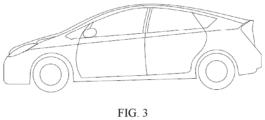
- FIG. 3 is an example of the electrical device.
- the electrical device is a battery electric vehicle, a hybrid electric vehicle, a plug-in hybrid electric vehicle, or the like.
- a device may be a mobile phone, a tablet computer, a laptop computer, or the like.
- the internal series battery in the embodiments is prepared according to the following steps: Prepare a composite electrode plate: Coat a surface of one side of a stainless steel foil of an intermediate current collector with a positive slurry evenly, and coat a surface of the other side of the intermediate current collector with a negative slurry evenly; and perform drying and cold pressing to obtain the composite electrode plate, where the composite electrode plate includes a positive active material layer, the intermediate current collector, and a negative active material layer that are stacked.
- Prepare a solid electrolyte layer Mix a polymer body, an electrolyte salt and a solvent at 25°C evenly, and then perform drying and hot pressing to obtain the solid electrolyte layer.
- Prepare an internal series battery Stak the prepared single-sided positive electrode plate, solid electrolyte layer, composite electrode plate and single-sided negative electrode plate according to the design of the internal series battery in an order of single-sided positive electrode plate, solid electrolyte layer, composite electrode plate, solid electrolyte layer, composite electrode plate,..., composite electrode plate, solid electrolyte layer, and single-sided negative electrode plate, and perform roll forming to obtain a battery assembly. Put the battery assembly in a package shell, and perform welding, packaging and other procedures to prepare the internal series battery.
- the positive active material layer, the solid electrolyte layer and the negative active material layer that are stacked form a battery unit, and there are four battery units in the internal series battery.
- the internal series battery includes a first battery unit, a second battery unit, a second battery unit, and a first battery unit that are stacked. That is, the first battery units are at two ends of a series module, and the second battery units are battery units inside the series module.
- the thermal stability test uses a hot box test to obtain a temperature at which the internal series battery fails (catching a fire, exploding).
- the specific steps are: with an initial temperature of 25°C, heat the internal series battery to 100°C at 5°C/min, and perform standing for 30 minutes; perform heating at 5°C/min and perform heat preservation for 30 minutes every 5°C until the internal series battery fails, and record a failure time of the internal series battery and a temperature of an internal battery unit at which a thermal failure of the internal series battery occurs.
- the mechanical safety test is used to test a failure deformation amount of an internal series battery by squeezing the internal series battery.
- a single battery unit surfaces of a positive active layer and a negative active material layer of the single battery unit are attached to a current collector respectively, and then a conventional secondary battery may be obtained.
- the performance of the single battery unit may also be tested through the method in the foregoing test part.
- an NCM811 positive active material layer is composed of: NCM811, PVDF, and carbon black as a conductive agent at a mass ratio of 97:2:1.
- An NCM333 positive active material layer is composed of: NCM333, PVDF, and carbon black as a conductive agent at a mass ratio of 97:2:1.
- An LFP positive active material layer is composed of: LFP, PVDF, and carbon black as a conductive agent at a mass ratio of 97:2:1.
- An NCM811 (having a mass ratio of monocrystal to polycrystal of 8:2) positive active material layer is composed of: monocrystal NCM811, polycrystal NCM811, PVDF, and carbon black as a conductive agent at a mass ratio of 77.6:19.4: 2:1, with a compacted density of 3.3 g/cm 3 .
- An NCM811 (having a mass ratio of monocrystal to polycrystal of 2:8) positive active material layer is composed of: monocrystal NCM811, polycrystal NCM811, PVDF, and carbon black as a conductive agent at a mass ratio of 19.4:77.6: 2:1, with a compacted density of 3.4 g/cm 3 .
- a Na 2 MnFe(CN) 6 positive active material layer is composed of: Na 2 MnFe(CN) 6 , PVDF, and carbon black as a conductive agent at a mass ratio of 97:2:1.
- a silicon-based negative active material layer is composed of: a silicon-based material, carbon black as a conductive agent, styrene-butadiene rubber (SBR) as a binder, and sodium carboxymethyl cellulose (CMC-Na) as a thickener at a mass ratio of 97:0.5:1.25:1.25.
- a graphite negative active material layer is composed of: graphite, carbon black as a conductive agent, styrene-butadiene rubber (SBR) as a binder, and sodium carboxymethyl cellulose (CMC-Na) as a thickener at a mass ratio of 97:0.5:1.25:1.25.
- a hard carbon negative active material layer is composed of: hard carbon, carbon black as a conductive agent, styrene-butadiene rubber (SBR) as a binder, and sodium carboxymethyl cellulose (CMC-Na) as a thickener at a mass ratio of 97:0.5:1.25:1.25.
- APEO-LiTFSI solid electrolyte layer is composed of: PEO and LiTFSI at a mass ratio of 25:75.
- a Na- ⁇ -Al 2 O 3 solid electrolyte layer is composed of: Na- ⁇ -Al 2 O 3 at a mass percentage of 100%.
- Embodiments 1-1 to 1-12 by adjusting the compositions of the first battery unit and the second battery unit, the internal series battery in Embodiments 1-1 to 1-12 has an energy density ranging from 280 Wh/kg to 370 Wh/kg, and an internal temperature ranging from 130°C to 190°C when failing, and the internal series battery has both a high energy density and good thermal stability.
- the compositions of the first battery unit and the second battery unit are the same, and it is difficult for the obtained internal series battery to have both a high energy density and good thermal stability.
- an NCM811 positive active material layer is composed of: NCM811, PVDF, and carbon black as a conductive agent at a mass ratio of 97:2:1.
- An NCM333 positive active material layer is composed of: NCM333, PVDF, and carbon black as a conductive agent at a mass ratio of 97:2:1.
- An LFP positive active material layer is composed of: LFP, PVDF, and carbon black as a conductive agent at a mass ratio of 97:2:1.
- a Na 2 MnFe(CN) 6 positive active material layer is composed of: Na 2 MnFe(CN) 6 , PVDF, and carbon black as a conductive agent at a mass ratio of 97:2:1.
- a silicon-based negative active material layer is composed of: a silicon-based material, carbon black as a conductive agent, styrene-butadiene rubber (SBR) as a binder, and sodium carboxymethyl cellulose (CMC-Na) as a thickener at a mass ratio of 97:0.5:1.25:1.25.
- a graphite negative active material layer is composed of: graphite, carbon black as a conductive agent, styrene-butadiene rubber (SBR) as a binder, and sodium carboxymethyl cellulose (CMC-Na) as a thickener at a mass ratio of 97:0.5:1.25:1.25.
- a hard carbon negative active material layer is composed of: hard carbon, carbon black as a conductive agent, styrene-butadiene rubber (SBR) as a binder, and sodium carboxymethyl cellulose (CMC-Na) as a thickener at a mass ratio of 97:0.5:1.25:1.25.
- a PEO-LiTFSI solid electrolyte layer is composed of: PEO and LiTFSI at a mass ratio of 25:75.
- a Na- ⁇ -Al 2 O 3 solid electrolyte layer is composed of: Na- ⁇ -Al 2 O 3 at a mass percentage of 100%.
- the internal series battery in Embodiments 2-1 to 2-10 has an energy density ranging from 262 Wh/kg to 368 Wh/kg, and a failure deformation amount ranging from 23% to 40%, and the internal series battery has both a high energy density and good mechanical safety.
- the internal series battery in Embodiment 2-1 to Embodiment 2-10 has better comprehensive performance than that in Comparative Embodiments 1-1 to 1-5.
- the internal series battery in Embodiment 3-1 to Embodiment 3-4 differs from that in Embodiment 1-1 in that there is a difference in composition and ionic conductivity of the solid electrolyte layer.
- a PEO-LiTFSI solid electrolyte layer with conductivity of 1 mS/cm is composed of: PEO and LiTFSI at a mass ratio of 25:75.
- a PEO-LiTFSI solid electrolyte layer with conductivity of 3 mS/cm is composed of: EC as a plasticizer, PEO and LiTFSI at a mass ratio of 20:20:60.
- Table 3 Sequenc e number Solid electrolyte layer of first battery unit Solid electrolyte layer of second battery unit Energ y densi ty (Wh/ kg) Rate perform ance (2 C vs 0.33 C, %) Ther mal stabil ity (°C) Ionic conducti vity (mS/cm) High-safety additive (content) Ionic conducti vity (mS/cm) High-safety additive (content) Embodi ment 1-1 1 / 1 / 330 80 180 Embodi ment 3-1 3 / 1 Ethyl difluoroac etate (5wt%) 345 83 200 Embodi ment 3-2 3 / 3 / 350 85 140 Embodi ment 3-3 3 Ethyl di
- Embodiment 3-2 From related data in Table 3, as can be seen from Embodiment 3-2, the ionic conductivity of the solid electrolyte layer has an impact on the energy density, rate performance and thermal stability of the internal series battery. When the solid electrolyte layer has large ionic conductivity, the internal series battery has good energy density and rate performance, but the thermal stability of the internal series battery is decreased. As can be seen from the comparison of Embodiments 3-2 to 3-4, the high-safety additive can improve the thermal stability of the internal series battery.
- the solid electrolyte layer of the first battery unit has ionic conductivity of 3 mS/cm, no high-safety additive is added, the solid electrolyte layer of the second battery unit has ionic conductivity of 1 mS/cm, ethyl difluoroacetate is added, and the prepared internal series battery has an energy density of 345 Wh/kg, rate performance of 83%, and an internal temperature of 200°C when failing.
- the internal series battery in Embodiment 3-1 has better comprehensive performance compared to the internal series battery in Embodiments 3-2 to 3-4.
Landscapes
- Chemical & Material Sciences (AREA)
- Chemical Kinetics & Catalysis (AREA)
- Electrochemistry (AREA)
- General Chemical & Material Sciences (AREA)
- Engineering & Computer Science (AREA)
- Manufacturing & Machinery (AREA)
- Inorganic Chemistry (AREA)
- Materials Engineering (AREA)
- General Physics & Mathematics (AREA)
- Physics & Mathematics (AREA)
- Condensed Matter Physics & Semiconductors (AREA)
- Composite Materials (AREA)
- Dispersion Chemistry (AREA)
- Crystallography & Structural Chemistry (AREA)
- Secondary Cells (AREA)
- Battery Electrode And Active Subsutance (AREA)
Abstract
Description
- This application relates to the field of secondary batteries, and in particular, to an internal series battery and an electrical device.
- With rapid development of electric vehicles, energy storage systems, etc., requirements for an energy density and a power density of a secondary battery in the market are getting higher and higher. In a conventional technology, a plurality of secondary batteries are typically connected in series to meet demands of increasing the energy density and the power density. However, series connection of the plurality of secondary batteries leads to a high risk of thermal runaway and has a high requirement for mechanical safety of the batteries; and it is difficult for the conventional series batteries to meet demands of both the energy density and safety performance.
- In view of the foregoing problems, this application provides an internal series battery having both a high energy density and good safety performance, and an electrical device.
- One aspect of this application provides an internal series battery. The internal series battery includes:
- a series module, including battery units and intermediate current collectors; the number of the battery units being greater than or equal to 3, each of the battery units including a positive active material layer, a solid electrolyte layer, and a negative active material layer that are stacked; and each of the intermediate current collectors being disposed between the corresponding two adjacent battery units, and the two adjacent battery units being connected in series through the intermediate current collector;
- a positive current collector, located at one end of the series module and electrically connected to the positive active material layer of the battery unit at the end; and
- a negative current collector, located at the other end of the series module and electrically connected to the negative active material layer of the battery unit at the end,
- wherein the battery units include a first battery unit and a second battery unit; an energy density of the first battery unit is the same as an energy density of any one of the battery units at two ends of the series module; and an energy density of the second battery unit is different from energy densities of the battery units at the two ends of the series module.
- In the internal series battery according to an implementation of this application, the battery units are connected in series through the intermediate current collectors. Through reasonable design of the first battery unit and the second battery unit with different energy densities, the internal series battery has both a high energy density and good safety performance.
- In some embodiments, a ratio of the number of the second battery unit to the total number of the battery units is (1 -2):3. The number of the second battery unit is within the foregoing range, so that the energy density and safety performance of the internal series battery may be reasonably adjusted, and the internal series battery has good comprehensive performance.
- In some embodiments, the energy density of the first battery unit is greater than the energy density of the second battery unit. Typically, a battery system with a large energy density has relatively poor thermal stability and a large risk of thermal failure. The energy density of the first battery unit is greater than the energy density of the second battery unit, which is advantageous to exertion of a theoretical energy density of the internal series battery, and the internal series battery has a high energy density, good dynamic performance, and good thermal stability.
- In some embodiments, an energy density of a negative active material of the first battery unit is greater than an energy density of a negative active material of the second battery unit. A negative active material with a large energy density typically has average thermal stability, while a negative active material with an average energy density typically has good thermal stability. Through reasonable selection and design of the negative active materials of the battery units, the internal series battery has both a high energy density and good thermal stability.
- Optionally, the negative active material of each first battery unit independently includes at least one of a silicon-based material, a tin-based material, and a lithium metal; and the foregoing negative active material has a high theoretical energy density, but has average material thermal stability, the first battery unit uses the foregoing negative active material, and the battery units at the two ends of the series module have high energy densities, so that the internal series battery can have thermal stability while improving the energy density.
- Optionally, the negative active material of each second battery unit independently includes at least one of artificial graphite, natural graphite, soft carbon, hard carbon, and lithium titanium oxide. The foregoing negative active material has an average theoretical energy density, but has good thermal stability, and the second battery unit uses the foregoing negative active material, which can ensure that the battery units inside the series module have good thermal stability and are not prone to thermal runaway.
- In some embodiments, an energy density of a positive active material of the first battery unit is greater than an energy density of a positive active material of the second battery unit;
- optionally, the positive active material of each first battery unit independently includes at least one of LiNixCoyMnzO2 and lithium cobalt oxide, wherein x + y + z = 1, 0 < x < 1, 0 < y < 1, and 0 < z < 1; and the positive active material of each second battery unit independently includes at least one of LiFeaMnbPO4, Li3V2(PO4)3, and lithium manganese oxide, wherein a + b = 1, 0 ≤ a ≤ 1, and 0 ≤ b ≤ 1; and
- optionally, the positive active material of each first battery unit independently includes LiNixCoyMnzO2, wherein x + y + z = 1, 0.8 ≤ x < 1, 0 < y < 0.2, and 0 < z < 0.2; and the positive active material of each second battery unit independently includes LiNixCoyMnzO2, wherein x + y + z = 1, 0 < x < 0.8, 0 < y < 1, and 0 < z < 1.
- By reasonably designing the energy densities of the positive active materials in the first battery unit and the second battery unit, the internal series battery has both a high energy density and thermal stability.
- In some embodiments, each first battery unit independently includes a lithium-ion battery positive active material; and each second battery unit independently includes a sodium-ion battery positive material. A lithium-ion battery system has a higher energy density than a sodium-ion battery system. Through reasonable selection and design of the foregoing positive active materials, the internal series battery has safety performance while having a high energy density.
- In some embodiments, positive active materials of each first battery unit and each second battery unit independently include LiNixCoyMnzO2, wherein x + y + z = 1, 0 < x < 1, 0 < y < 1, and 0 < z < 1; and a compacted density of a positive active material layer of the first battery unit is less than a compacted density of a positive active material layer of the second battery unit. The compacted density of the positive active material layer of the first battery unit is less than the compacted density of the positive active material layer of the second battery unit, so that the first battery unit has relatively large internal resistance and generates more heat, which can increase temperatures of the battery units at the two ends, thereby increasing the energy densities of the battery units at the two ends; and the second battery unit has relatively small internal resistance and generates less heat, which can reduce a risk of thermal runaway of the battery unit in the middle. Therefore, the series battery has both a high energy density and good thermal stability.
- In some embodiments, the energy density of the first battery unit is less than the energy density of the second battery unit. Typically, a battery system with a small energy density has good mechanical safety. Through reasonable design of the energy densities of the first battery unit and the second battery unit, the battery units at the two ends have small energy densities, but have good impact resistance, and the second battery unit has a high energy density, but has average mechanical safety. Through reasonable selection of the battery units, the internal series battery has both a high energy density and good mechanical safety.
- In some embodiments, an energy density of a negative active material of the first battery unit is less than an energy density of a negative active material of the second battery unit. A negative active material with a large energy density typically has average mechanical strength, while a negative active material with an average energy density typically has good mechanical strength. Through reasonable selection and design of the negative active materials of the battery units, the internal series battery has both a high energy density and good mechanical safety.
- Optionally, the negative active material of each first battery unit independently includes at least one of artificial graphite, natural graphite, soft carbon, hard carbon, and lithium titanium oxide; and the foregoing negative material has an average theoretical energy density, but has good mechanical strength, the first battery unit uses the foregoing negative material, and the battery units at the two ends of the series module have good mechanical safety and are not prone to a deformation failure.
- Optionally, the negative active material of each second battery unit independently includes at least one of a silicon-based material, a tin-based material, and a lithium metal. The foregoing negative material has a high theoretical energy density, but has average mechanical strength, and the second battery unit uses the foregoing negative material, which can ensure that the battery units inside the series module have high energy densities, so that the internal series battery has a high energy density.
- In some embodiments, an energy density of a positive active material of the first battery unit is less than an energy density of a positive active material of the second battery unit;
- optionally, the positive active material of each first battery unit independently includes at least one of LiFeaMnbPO4, Li3V2(PO4)3, and lithium manganese oxide, wherein a + b = 1, 0 ≤ a ≤ 1, and 0 ≤ b ≤ 1; and the positive active material of each second battery unit independently includes at least one of LiNixCoyMnzO2 and lithium cobalt oxide, wherein x + y + z = 1, 0 < x < 1, 0 < y < 1, and 0 < z < 1; and
- optionally, the positive active material of each first battery unit independently includes LiNixCoyMnzO2, wherein x + y + z = 1, 0 < x < 0.8, 0 < y < 1, and 0 < z < 1; and the positive active material of each second battery unit independently includes LiNixCoyMnzO2, wherein x + y + z = 1, 0.8 ≤ x < 1,0 < y < 0.2, and 0 < z < 0.2.
- By reasonably designing the energy densities of the positive active materials in the first battery unit and the second battery unit, the internal series battery has both a high energy density and mechanical safety.
- In some embodiments, each first battery unit independently includes a sodium-ion battery positive active material; and each second battery unit independently includes a lithium-ion battery positive material. The lithium-ion battery system has a higher energy density than the sodium-ion battery system, but has relatively poor mechanical safety. Through reasonable selection and design of the foregoing positive active materials, the internal series battery has both a high energy density and mechanical safety.
- In some embodiments, a solid electrolyte layer of the second battery unit includes a high-safety additive;
- optionally, the high-safety additive includes at least one of phosphate ester and fluorocarbonate;
- optionally, the phosphate ester includes at least one of trimethyl phosphate and triethyl phosphate; and
- optionally, the fluorocarbonate includes at least one of methyl difluoroacetate and ethyl difluoroacetate.
- The high-safety additive can enhance cycle stability and thermal stability of a secondary battery. The series module typically has a higher internal temperature than temperatures at the two ends. By adding the high-safety additive in a solid electrolyte of the second battery unit, the battery units inside the series module have good cycle stability and thermal stability, thereby reducing a risk of thermal runaway of the whole internal series battery, and enhancing cycle stability of the internal series battery.
- In some embodiments, a solid electrolyte of the first battery unit has ionic conductivity of greater than 1 × 10⁻³ S/cm at 25°C; and a solid electrolyte of the second battery unit has ionic conductivity of less than or equal to 1 × 10⁻³ S/cm at 25°C. The series module typically has a higher internal temperature than temperatures at the two ends. By reasonably designing the ionic conductivity of the first battery unit and the second battery unit, the internal series battery has small internal resistance and has good rate performance.
- In a second aspect, this application further provides an electrical device. The electrical device includes the foregoing internal series battery in the first aspect. According to the foregoing internal series battery, the battery units are connected in series through the intermediate current collectors, and the internal series battery has low internal resistance, and a high energy density and power density, and can be used as a power supply of various electrical devices to meet electrical demands of the electrical devices.
- Details of one or more embodiments of this application are set forth in the accompanying drawings and descriptions below, and other features, objectives and advantages of this application will be apparent from the specification, the accompanying drawings and the claims.
-
-
FIG. 1 is a schematic structural diagram of an internal series battery according to an implementation of this application; -
FIG. 2 is a schematic structural diagram of an internal series battery according to an implementation of this application; and -
FIG. 3 is a schematic diagram of an electrical device using an internal series battery as a power supply according to an implementation of this application. - Reference numerals in the drawings:
1. Internal series battery; 10. Series module; 110. Battery unit; 110a. First battery unit; 110b. Second battery unit; 111. Positive active material layer; 112. Solid electrolyte layer; 113. Negative active material layer; 120. Intermediate current collector; 20. Positive current collector; and 30. Negative current collector. - In order to better describe and illustrate those embodiments and/or examples of the invention disclosed herein, reference may be made to one or more accompanying drawings. Additional details or examples used to describe the accompanying drawings shall not be regarded as limiting the scope of any one of the disclosed invention, the currently described embodiments and/or examples, and these currently understood optimal modes of the invention.
- For ease of understanding this application, this application will be more fully described below with reference to related accompanying drawings. Preferred embodiments of this application are given in the accompanying drawings. However, this application may be implemented in many different forms and is not limited to the embodiments described herein. Rather, these embodiments are provided for the purpose of providing a more thorough understanding of the disclosure of this application.
- Unless otherwise defined, all technical and scientific terms used herein have the same meanings as commonly understood by a person skilled in the technical field to which this application pertains. The terms used herein in the specification of this application are merely for the purpose of describing specific embodiments and are not intended to limit this application. The term "and/or" used herein includes any and all combinations of one or more of the related listed items.
- Referring to
FIG. 1 and FIG. 2 , an implementation of this application provides aninternal series battery 1. The internal series battery includes: aseries module 10, a positivecurrent collector 20, and a negativecurrent collector 30. - The
series module 10 includesbattery units 110 and intermediate current collectors 120. - The number of the
battery units 110 is greater than or equal to 3. It may be understood that according to demands for an energy density and a power density of theinternal series battery 1, the number of thebattery units 110 is 3, 4, 5, 6, or more. - Each of the
battery units 110 includes a positiveactive material layer 111, asolid electrolyte layer 112, and a negativeactive material layer 113 that are stacked. Each of the intermediate current collectors 120 is disposed between the corresponding twoadjacent battery units 110, and the twoadjacent battery units 110 are connected in series through the intermediate current collector 120. Theadjacent battery units 110 are connected in series through the intermediate current collectors 120, which has the advantages of modularity, efficient stacking manufacturing, low internal resistance, low cost, and the like, as compared with conventional external series battery cells. - The positive
current collector 20 is located at one end of theseries module 10 and electrically connected to the positive active material layer of thebattery unit 110 at the end. - The negative
current collector 30 is located at the other end of theseries module 10 and electrically connected to the negative active material layer of thebattery unit 110 at the end. - The
battery units 110 include afirst battery unit 110 a and asecond battery unit 110b. An energy density of thefirst battery unit 110a is the same as an energy density of any one of the battery units at two ends of the series module. An energy density of thesecond battery unit 110b is different from energy densities of the battery units at the two ends of the series module. - In the
internal series battery 1 according to the implementation of this application, thebattery units 110 are connected in series through the intermediate current collectors 120. Through reasonable design of thefirst battery unit 110a and thesecond battery unit 110b with different energy densities, theinternal series battery 1 has both a high energy density and good safety performance. - The positive active material layer includes a positive active material.
- In some embodiments, when a battery unit is a lithium-ion battery, the positive active material may be a positive active material that is well known for use in the lithium-ion battery in the art. As an example, the positive active material may include at least one of the following materials: olivine-structured lithium-containing phosphate, lithium transition metal oxide, and a modified compound thereof. However, this application is not limited to such materials, and other conventional materials usable as a positive active material of a battery may further be used. Of such positive active materials, one may be used alone, or at least two may be used in combination. Examples of the lithium transition metal oxide may include, but are not limited to, at least one of lithium cobalt oxide (such as LiCoO2), lithium nickel oxide (such as LiNiO2), lithium manganese oxide (such as LiMnO2, and LiMn2O4), lithium nickel cobalt oxide, lithium manganese cobalt oxide, lithium nickel manganese oxide, lithium nickel cobalt manganese oxide (such as LiNi1/3Co1/3Mn1/3O2 (briefly referred to as NCM333), LiNi0.5Co0.2Mn0.3O2 (briefly referred to as NCM523), LiNi0.5Co0.25Mn0.25O2 (briefly referred to as NCM211), LiNi0.6Co0.2Mn0.2O2 (briefly referred to as NCM622), LiNi0.8Co0.1Mn0.1O2 (briefly referred to as NCM811), lithium nickel cobalt aluminum oxide (such as LiNi0.85Co0.15Al0.05O2), or a modified compound thereof. Examples of the olivine-structured lithium-containing phosphate may include, but are not limited to, at least one of lithium iron phosphate (such as LiFePO4 (briefly referred to as LFP)), a composite of lithium iron phosphate and carbon, lithium manganese phosphate (such as LiMnPO4), a composite of lithium manganese phosphate and carbon, lithium manganese iron phosphate, or a composite of lithium manganese iron phosphate and carbon.
- In some embodiments, when a battery unit is a sodium-ion battery, the positive active material may be a positive active material that is well known for use in the sodium-ion battery in the art. As an example, of such positive active materials, one may be used alone, or at least two may be used in combination. A positive active substance may be selected from sodium iron oxide (NaFeO2), sodium cobalt oxide (NaCoO2), sodium chromium oxide (NaCrO2), sodium manganese oxide (NaMnO2), sodium nickel oxide (NaNiO2), sodium nickel titanium oxide (NaNi1/2Ti1/2O2), sodium nickel manganese oxide (NaNi1/2Mn1/2O2), sodium iron manganese oxide (Na2/3Fe1/3Mn2/3O2), sodium nickel cobalt manganese oxide (NaNi1/3CO1/3Mn1/3O2), a sodium iron phosphate compound (NaFePO4), a sodium manganese phosphate compound (NaMnPO4), a sodium cobalt phosphate compound (NaCoPO4), a Prussian blue material, a polyanionic material (phosphate, fluorophosphate, pyrophosphate, and sulfate), and the like. However, this application is not limited to such materials, and other conventional well-known materials usable as the positive active substance of the sodium-ion battery may further be used.
- In some embodiments, the positive active material layer further optionally includes a binder. As an example, the binder may include at least one of polyvinylidene fluoride (PVDF), polytetrafluoroethylene (PTFE), poly(vinylidene fluoride-co-tetrafluoroethylene-co-propylene), poly(vinylidene fluoride-co-hexafluoropropylene-co-tetrafluoroethylene, poly(tetrafluoroethylene-co-hexafluoropropylene), and fluorinated acrylate resin.
- In some embodiments, the positive active material layer further optionally includes a conductive agent. As an example, the conductive agent may include at least one of superconducting carbon, acetylene black, carbon black, Ketjen black, carbon dots, carbon nanotubes, graphene and carbon nanofibers.
- The negative active material layer includes a negative active material.
- In some embodiments, the negative active material may be a negative active material that is well known for use in the battery in the art. As an example, the negative active material may include at least one of the following materials: artificial graphite, natural graphite, soft carbon, hard carbon, a silicon-based material, a tin-based material, lithium titanium oxide, and the like. The silicon-based material may be at least one selected from simple-substance silicon, a silicon-oxygen compound, a silicon-carbon composite, a silicon-nitrogen composite, and silicon alloy. The tin-based material may be at least one selected from simple-substance tin, tin-oxygen compound, or tin alloy. However, this application is not limited to such materials, and other conventional materials usable as a negative active material of a battery may further be used. Of such negative active materials, one may be used alone, or at least two may be used in combination.
- In some embodiments, the negative active material layer further optionally includes a binder. The binder may be at least one selected from styrene-butadiene rubber (SBR), polyacrylic acid (PAA), sodium polyacrylate (PAAS), polyacrylamide (PAM), polyvinyl alcohol (PVA), sodium alginate (SA), polymethacrylic acid (PMAA), and carboxymethyl chitosan (CMCS).
- In some embodiments, the negative active material layer further optionally includes a conductive agent. The conductive agent may be at least one selected from superconductive carbon, acetylene black, carbon black, Ketjen black, carbon dots, carbon nanotubes, graphene, and carbon nanofibers.
- In some embodiments, the negative active material layer further optionally includes other agents, such as a thickener (for example, sodium carboxymethyl cellulose (CMC-Na)).
- The solid electrolyte layer serves to conduct ions between the positive active material layer and the negative active material layer. In some embodiments, the solid electrolyte layer includes a polymer body and an electrolyte salt. In some embodiments, a mass ratio of the polymer body to the electrolyte salt is (20-80):(80-20).
- As an example, the polymer body may be at least one selected from a polyether polymer, a polyolefin polymer, a polynitrile polymer, and a polycarboxylate polymer. The polyether polymer includes at least one of polyethylene oxide (PEO), polypropylene oxide (PPO), polyethylene glycol (PEG), polyethylene glycol dimethyl ether (PEGDME), and polysiloxane. The polyolefin polymer includes at least one of polyethylene (PE), polypropylene (PP), polyvinylidene fluoride (PVDF), poly(polyvinylidene fluoride-co-hexafluoropropylene) (PVDF-HFP), polytetrafluoroethylene (PTFE), and polyvinyl chloride (PVC). The polynitrile polymer includes at least one of polyacrylonitrile (PAN) and poly(melamine). The polycarboxylate polymer includes at least one of polymethyl methacrylate (PMMA) and polymethyl acrylate (PMA). A polycarboxylate polymer includes at least one of polypropylene carbonate) (PC) and poly(ethylene carbonate) (PEC).
- As an example, the electrolyte salt may be at least one selected from lithium hexafluorophosphate, lithium tetrafluoroborate, lithium perchlorate, lithium hexafluoroarsenate, lithium bisfluorosulfonimide, lithium bistrifluoromethanesulfonimide, lithium trifluoromethanesulfonate, lithium bis(oxalato)borate, lithium difluorophosphate, lithium difluoro(oxalato)borate, lithium difluoro(bisoxalato)phosphate, and lithium tetrafluoro(oxalato)phosphate.
- In some embodiments, the intermediate current collector may be a metal foil or a composite current collector. For example, the metal foil may be a stainless steel foil or a titanium foil. For a battery unit in the sodium-ion battery system, the intermediate current collector may also be an aluminum foil.
- The composite current collector may include a first metal layer and a second metal layer. The first metal layer includes aluminum, aluminum alloy, and the like. The second metal layer includes copper, copper alloy, and the like. In the series module, one side of the first metal layer of the intermediate current collector is close to the positive active material layer of one of the adjacent battery units, and one side of the second metal layer of the intermediate current collector is close to the negative active material layer of the other of the adjacent battery units.
- In some embodiments, the positive current collector may be a metal foil or a composite current collector. For example, the metal foil may be an aluminum foil. The composite current collector may include a polymer material substrate and a metal layer formed on at least one surface of the polymer material substrate. The composite current collector may be formed by forming a metal material (aluminum, aluminum alloy, nickel, nickel alloy, titanium, titanium alloy, silver, silver alloy, and the like) on the polymer material substrate (such as polypropylene (PP), polyethylene terephthalate (PET), polybutylene terephthalate (PBT), polystyrene (PS), or polyethylene (PE)).
- In some embodiments, the negative current collector may be a metal foil or a composite current collector. For example, as the metal foil, a copper foil may be used. The composite current collector may include a polymer material substrate and a metal layer formed on at least one surface of the polymer material substrate. The composite current collector may be formed by forming a metal material (copper, copper alloy, nickel, nickel alloy, titanium, titanium alloy, silver, silver alloy, and the like) on the polymer material substrate (such as polypropylene (PP), polyethylene terephthalate (PET), polybutylene terephthalate (PBT), polystyrene (PS), or polyethylene (PE)).
- In some embodiments, a ratio of the number of the second battery unit to the total number of the battery units is (1-2):3. The number of the second battery unit is within the foregoing range, so that the energy density and safety performance of the internal series battery may be reasonably adjusted, and the internal series battery has good comprehensive performance.
- Since the plurality of
battery units 110 are connected in series, a battery unit inside theinternal series battery 1 has a higher temperature than battery units at the two ends, and the internal battery unit has better energy density exertion and dynamic performance; but at the same time, the internal battery unit has a higher risk of thermal runaway. - In some embodiments, the energy density of the
first battery unit 110a is greater than the energy density of thesecond battery unit 110b. Typically, a battery system with a large energy density has relatively poor thermal stability and a large risk of thermal failure. The energy density of thefirst battery unit 110a is greater than the energy density of thesecond battery unit 110b, which is advantageous to exertion of the theoretical energy density of theinternal series battery 1, and theinternal series battery 1 has a high energy density, good dynamic performance, and good thermal stability. - In some embodiments, the energy density of the negative active material of the
first battery unit 110a is greater than the energy density of the negative active material of thesecond battery unit 110b. A negative active material with a large energy density typically has average thermal stability, while a negative active material with an average energy density typically has good thermal stability. Through reasonable selection and design of the negative active materials of thebattery units 110, theinternal series battery 1 has both a high energy density and good thermal stability. - Optionally, the negative active material of each
first battery unit 110a independently includes at least one of a silicon-based material, a tin-based material, and a lithium metal; and the foregoing negative active material has a high theoretical energy density, but has average material thermal stability, thefirst battery unit 110a uses the foregoing negative active material, and the battery units at the two ends of theseries module 10 have high energy densities, so that theinternal series battery 1 can have thermal stability while improving the energy density. - Optionally, the negative active material of each
second battery unit 110b independently includes at least one of artificial graphite, natural graphite, soft carbon, hard carbon, and lithium titanium oxide. The foregoing negative active material has an average theoretical energy density, but has good thermal stability, and thesecond battery unit 110b uses the foregoing negative active material, which can ensure that the battery units inside theseries module 10 have good thermal stability and are not prone to thermal runaway. - In some embodiments, the energy density of the positive active material of the
first battery unit 110a is greater than the energy density of the positive active material of thesecond battery unit 110b. By reasonably designing the energy densities of the positive active materials in thefirst battery unit 110a and thesecond battery unit 110b, theinternal series battery 1 has both a high energy density and thermal stability. - Optionally, the positive active material of each
first battery unit 110a independently includes at least one of LiNixCoyMnzO2 and lithium cobalt oxide, where x + y + z = 1, 0 < x < 1, 0 < y < 1, and 0 < z < 1; and the positive active material of eachsecond battery unit 110b independently includes at least one of LiFeaMnbPO4, Li3V2(PO4)3, and lithium manganese oxide, where a + b = 1, 0 ≤ a ≤ 1, and 0 ≤ b ≤ 1. The positive active materials such as LiNixCoyMnzO2 and lithium cobalt oxide have high energy densities, and the positive active materials such as LiFeaMnbPO4, Li3V2(PO4)3, and lithium manganese oxide have low energy densities. Therefore, by reasonably designing the energy densities of the positive active materials in thefirst battery unit 110a and thesecond battery unit 110b, theinternal series battery 1 has both a high energy density and thermal stability. - Optionally, the positive active material of each
first battery unit 110a independently includes LiNixCoyMnzO2, where x + y + z = 1, 0.8 ≤ x < 1, 0 < y < 0.2, and 0 < z < 0.2; and the positive active material of eachsecond battery unit 110b independently includes LiNixCoyMnzO2, where x + y + z = 1, 0 < x < 0.8, 0 < y < 1, and 0 < z < 1. Thefirst battery unit 110a uses high-nickel LiNixCoyMnzO2, and thesecond battery unit 110b uses low-nickel LiNixCoyMnzO2, such that the energy density of the positive active material of thefirst battery unit 110a is greater than the energy density of the positive active material of thesecond battery unit 110b. By reasonably designing the energy densities of the positive active materials in thefirst battery unit 110a and thesecond battery unit 110b, theinternal series battery 1 has both a high energy density and thermal stability. - In some embodiments, each
first battery unit 110a independently includes a lithium-ion battery positive active material; and eachsecond battery unit 110b independently includes a sodium-ion battery positive material. The lithium-ion battery system has a higher energy density compared to the sodium-ion battery system. Through reasonable selection and design of the foregoing positive active materials, theinternal series battery 1 has safety performance while having a high energy density. - In some embodiments, positive active materials of each
first battery unit 110a and eachsecond battery unit 110b independently include LiNixCoyMnzO2, where x + y + z = 1, 0 < x < 1, 0 < y < 1, and 0 < z < 1; and a compacted density of a positive active material layer of thefirst battery unit 110a is less than a compacted density of a positive active material layer of thesecond battery unit 110b. The LiNixCoyMnzO2 material has a high energy density, and the compacted density of the positive active material layer of thefirst battery unit 110a is less than the compacted density of the positive active material layer of thesecond battery unit 110b, so that thefirst battery unit 110a has relatively large internal resistance and generates more heat, which can increase temperatures of thebattery units 110 at the two ends, thereby increasing the energy densities of thebattery units 110 at the two ends; and thesecond battery unit 110b has relatively small internal resistance and generates less heat, which can reduce a risk of thermal runaway of thebattery unit 110 in the middle. Therefore, theinternal series battery 1 has both a high energy density and good thermal stability. Further, the positive active material LiNixCoyMnzO2 of eachfirst battery unit 110a includes a monocrystal particle and a polycrystal particle; a mass ratio of the monocrystal particle to the polycrystal particle ranges from (1:9) to (4:6), optionally, (1.5:8.5) to (2.5:7.5); the positive active material LiNixCoyMnzO2 of eachsecond battery unit 110b includes a monocrystal particle and a polycrystal particle; and a mass ratio of the monocrystal particle to the polycrystal particle is less than 1:9 or greater than 4:6. - The energy density of the
internal series battery 1 is increased by connecting the plurality ofbattery units 110 in series. However, once theinternal series battery 1 is impacted and destroyed, the hazard is also high, so the mechanical safety requirement for theinternal series battery 1 is also high. - In some embodiments, the energy density of the
first battery unit 110a is less than the energy density of thesecond battery unit 110b. Typically, a battery system with a small energy density has good mechanical safety. Through reasonable design of the energy densities of thefirst battery unit 110a and thesecond battery unit 110b, thebattery units 110 at the two ends have small energy densities, but have good impact resistance, and thesecond battery unit 110b has a high energy density, but has average mechanical safety. Through reasonable selection of thebattery units 110, theinternal series battery 1 has both a high energy density and good mechanical safety. - In some embodiments, the energy density of the negative active material of the
first battery unit 110a is less than the energy density of the negative active material of thesecond battery unit 110b. A negative active material with a large energy density typically has average mechanical strength, while a negative active material with an average energy density typically has good mechanical strength. Through reasonable selection and design of the negative active materials of thebattery units 110, theinternal series battery 1 has both a high energy density and good mechanical safety. - Optionally, the negative active material of each
first battery unit 110a independently includes at least one of artificial graphite, natural graphite, soft carbon, hard carbon, and lithium titanium oxide. The foregoing negative material has an average theoretical energy density, but has good mechanical strength, thefirst battery unit 110a uses the foregoing negative material, and the battery units at the two ends of theseries module 10 have good mechanical safety and are not prone to a deformation failure. - Optionally, the negative active material of each
second battery unit 110b independently includes at least one of a silicon-based material, a tin-based material, and a lithium metal. The foregoing negative material has a high theoretical energy density, but has average mechanical strength, and thesecond battery unit 110b uses the foregoing negative material, which can ensure that thebattery units 110 inside theseries module 10 have high energy densities, so that theinternal series battery 1 has a high energy density. - In some embodiments, the energy density of the positive active material of the
first battery unit 110a is less than the energy density of the positive active material of thesecond battery unit 110b. - Optionally, the positive active material of each
first battery unit 110a independently includes at least one of LiFeaMnbPO4, Li3V2(PO4)3, and lithium manganese oxide, where a + b = 1, 0 ≤ a ≤ 1, and 0 ≤ b ≤ 1; and the positive active material of eachsecond battery unit 110b independently includes LiNixCoyMnzO2 and lithium cobalt oxide, where x + y + z = 1, 0 < x < 1, 0 < y < 1, and 0 < z < 1. The positive active materials such as LiNixCoyMnzO2 and lithium cobalt oxide have high energy densities, but have average mechanical safety, and the positive active materials such as LiFeaMnbPO4, Li3V2(PO4)3, and lithium manganese oxide have low energy densities, but have good mechanical safety. By reasonably designing the energy densities of the positive active materials in thefirst battery unit 110a and thesecond battery unit 110b, theinternal series battery 1 has both a high energy density and mechanical safety. - Optionally, the positive active material of each
first battery unit 110a independently includes LiNixCoyMnzO2, where x + y + z = 1, 0 < x < 0.8, 0 < y < 1, and 0 < z < 1; and the positive active material of eachsecond battery unit 110b independently includes LiNixCoyMnzO2, where x + y + z = 1, 0.8 ≤ x < 1, 0 < y < 0.2, and 0 < z < 0.2. Thefirst battery unit 110a uses low-nickel LiNixCoyMnzO2, and thesecond battery unit 110b uses high-nickel LiNixCoyMnzO2, such that the energy density of the positive active material of thefirst battery unit 110a is less than the energy density of the positive active material of thesecond battery unit 110b. By reasonably designing the energy densities of the positive active materials in thefirst battery unit 110a and thesecond battery unit 110b, theinternal series battery 1 has both a high energy density and mechanical safety. - By reasonably designing the energy densities of the positive active materials in the
first battery unit 110a and thesecond battery unit 110b, theinternal series battery 1 has both a high energy density and mechanical safety. - In some embodiments, each
first battery unit 110a independently includes a sodium-ion battery positive active material; and eachsecond battery unit 110b independently includes a lithium-ion battery positive material. The lithium-ion battery system has a higher energy density compared to the sodium-ion battery system, but has relatively poor mechanical safety. Through reasonable selection and design of the foregoing positive active materials, theinternal series battery 1 has both a high energy density and mechanical safety. - In some embodiments, a
solid electrolyte layer 112 of thesecond battery unit 110b includes a high-safety additive. The high-safety additive can enhance cycle stability and thermal stability of the secondary battery. Theseries module 10 typically has a higher internal temperature than temperatures at the two ends. By adding the high-safety additive in a solid electrolyte of thesecond battery unit 110b, the battery units inside the series module have good cycle stability and thermal stability, thereby reducing a risk of thermal runaway of the whole internal series battery, and enhancing cycle stability of the internal series battery. - In some embodiments, the high-safety additive includes at least one of phosphate ester and fluorocarbonate.
- In some embodiments, the phosphate ester includes at least one of trimethyl phosphate and triethyl phosphate.
- In some embodiments, the fluorocarbonate includes at least one of methyl difluoroacetate and ethyl difluoroacetate.
- In some embodiments, a solid electrolyte layer of the
first battery unit 110a has ionic conductivity of greater than 1 × 10⁻³ S/cm at 25°C; and the solid electrolyte layer of thesecond battery unit 110b has ionic conductivity of less than or equal to 1 × 10⁻³ S/cm at 25°C. The series module typically has a higher internal temperature than temperatures at the two ends, so that the dynamic performance of the battery units at the two ends is typically not as good as the dynamic performance of the battery units inside the series module. By reasonably designing the ionic conductivity of thefirst battery unit 110a and thesecond battery unit 110b , the whole internal series battery has small internal resistance and good rate performance. Specifically, the ionic conductivity of the solid electrolyte layer may be tested according to the following method: (1) Cut the solid electrolyte layer into a round sheet with a diameter of 19 mm, and perform drying for later use. (2) Assemble the round sheet into a "standard stainless steel washer/electrolyte/standard stainless steel washer" CR2032 button experimental battery in an inert gas glove box, with a battery packaging pressure of 5 MPa, and preserve at 25°C for 1 h. (3) Use an electrochemical workstation to measure to obtain a corresponding Nyquist plot according to electrochemical impedance spectroscopy (EIS), with an environment temperature T (in a unit of °C), a test frequency range of 1 MHz to 100 mHz, and a disturbance voltage of 10 mV. (4) After the test, disassemble the battery, measure a thickness L (in a unit of cm) of the round sheet and an area S (in a unit of cm2) of the standard washer, fit the Nyquist plot to obtain resistance R (in a unit of Ω), and calculate ionic conductivity σ(in a unit of S/cm) of a solid electrolyte at the temperature of T according to a formula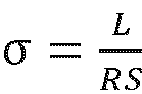
- In addition, this application further provides an electrical device. The electrical device includes the internal series battery provided by this application. The internal series battery may be used as a power supply of the electrical device, and may also be used as an energy storage unit of the electrical device. The electrical device may include, but not limited to, a mobile device (such as a mobile phone or a laptop computer), an electric vehicle (such as a battery electric vehicle, a hybrid electric vehicle, a plug-in hybrid electric vehicle, an electric bicycle, an electric scooter, an electric golf cart, or an electric truck), an electric train, a ship and a satellite, or an energy storage system.
-
FIG. 3 is an example of the electrical device. The electrical device is a battery electric vehicle, a hybrid electric vehicle, a plug-in hybrid electric vehicle, or the like. As another example, a device may be a mobile phone, a tablet computer, a laptop computer, or the like. - The embodiments of this application are illustrated below. The embodiments described below are exemplary merely for the purpose of explaining this application, and shall not be construed as limiting this application. Where specific technologies or conditions are not indicated in the embodiments, follow technologies or conditions described in documents in the art or a product specification. Reagents or instruments used without indication of manufacturers are conventional products that are commercially available.
- The internal series battery in the embodiments is prepared according to the following steps:
Prepare a composite electrode plate: Coat a surface of one side of a stainless steel foil of an intermediate current collector with a positive slurry evenly, and coat a surface of the other side of the intermediate current collector with a negative slurry evenly; and perform drying and cold pressing to obtain the composite electrode plate, where the composite electrode plate includes a positive active material layer, the intermediate current collector, and a negative active material layer that are stacked. - Prepare a single-sided positive electrode plate: Coat a surface of one side of an aluminum foil of a positive current collector with a positive slurry evenly; and perform drying and cold pressing to obtain the single-sided positive electrode plate.
- Prepare a single-sided negative electrode plate: Coat a surface of one side of a copper foil of a negative current collector with a negative slurry evenly; and perform drying and cold pressing to obtain the single-sided negative electrode plate.
- Prepare a solid electrolyte layer: Mix a polymer body, an electrolyte salt and a solvent at 25°C evenly, and then perform drying and hot pressing to obtain the solid electrolyte layer.
- Prepare an internal series battery: Stak the prepared single-sided positive electrode plate, solid electrolyte layer, composite electrode plate and single-sided negative electrode plate according to the design of the internal series battery in an order of single-sided positive electrode plate, solid electrolyte layer, composite electrode plate, solid electrolyte layer, composite electrode plate,..., composite electrode plate, solid electrolyte layer, and single-sided negative electrode plate, and perform roll forming to obtain a battery assembly. Put the battery assembly in a package shell, and perform welding, packaging and other procedures to prepare the internal series battery. The positive active material layer, the solid electrolyte layer and the negative active material layer that are stacked form a battery unit, and there are four battery units in the internal series battery. The internal series battery includes a first battery unit, a second battery unit, a second battery unit, and a first battery unit that are stacked. That is, the first battery units are at two ends of a series module, and the second battery units are battery units inside the series module.
- Charge an internal series battery to an upper limit voltage at 0.33 C, turn to charging at a constant voltage until a charging current is decreased to 0.05 C, perform standing for 30 minutes, perform discharging to a lower limit voltage at 0.33 C, and record discharge energy E (Wh) and discharge capacity C0 (Ah). Weigh the internal series battery, and record the weight W (kg) of the internal series battery. Energy density = E/W (Wh/kg).
- The thermal stability test uses a hot box test to obtain a temperature at which the internal series battery fails (catching a fire, exploding). The specific steps are: with an initial temperature of 25°C, heat the internal series battery to 100°C at 5°C/min, and perform standing for 30 minutes; perform heating at 5°C/min and perform heat preservation for 30 minutes every 5°C until the internal series battery fails, and record a failure time of the internal series battery and a temperature of an internal battery unit at which a thermal failure of the internal series battery occurs.
- The mechanical safety test is used to test a failure deformation amount of an internal series battery by squeezing the internal series battery. In a stacking direction of battery units, pressing one end of the internal series battery at a squeezing speed of 2 mm/s using a semi-cylinder with a radius of 75 mm, continuously preform squeezing until the internal series battery fails (catching a fire, exploding), and record a displacement of the semi-cylinder at this time, where failure deformation amount (%) = semi-cylinder displacement/length of internal series battery in stacking direction of battery units.
- Charge an internal series battery to an upper limit voltage at 0.33 C, turn to charging at a constant voltage until a charging current is decreased to 0.05 C, perform standing for 30 minutes, perform discharging to a lower limit voltage at 2 C, and record discharge capacity C1 (Ah). Rate performance is represented by a capacity retention rate, and capacity retention rate = C1 / C0 (%).
- For a single battery unit, surfaces of a positive active layer and a negative active material layer of the single battery unit are attached to a current collector respectively, and then a conventional secondary battery may be obtained. The performance of the single battery unit may also be tested through the method in the foregoing test part.
- For design of an internal series battery in Embodiment 1-1 to Embodiment 1-12 and Comparative Embodiment 1-1 to Comparative Embodiment 1-5, see Table 1.
- In Table 1, an NCM811 positive active material layer is composed of: NCM811, PVDF, and carbon black as a conductive agent at a mass ratio of 97:2:1. An NCM333 positive active material layer is composed of: NCM333, PVDF, and carbon black as a conductive agent at a mass ratio of 97:2:1. An LFP positive active material layer is composed of: LFP, PVDF, and carbon black as a conductive agent at a mass ratio of 97:2:1. An NCM811 (having a mass ratio of monocrystal to polycrystal of 8:2) positive active material layer is composed of: monocrystal NCM811, polycrystal NCM811, PVDF, and carbon black as a conductive agent at a mass ratio of 77.6:19.4: 2:1, with a compacted density of 3.3 g/cm3. An NCM811 (having a mass ratio of monocrystal to polycrystal of 2:8) positive active material layer is composed of: monocrystal NCM811, polycrystal NCM811, PVDF, and carbon black as a conductive agent at a mass ratio of 19.4:77.6: 2:1, with a compacted density of 3.4 g/cm3. A Na2MnFe(CN)6 positive active material layer is composed of: Na2MnFe(CN)6, PVDF, and carbon black as a conductive agent at a mass ratio of 97:2:1. A silicon-based negative active material layer is composed of: a silicon-based material, carbon black as a conductive agent, styrene-butadiene rubber (SBR) as a binder, and sodium carboxymethyl cellulose (CMC-Na) as a thickener at a mass ratio of 97:0.5:1.25:1.25. A graphite negative active material layer is composed of: graphite, carbon black as a conductive agent, styrene-butadiene rubber (SBR) as a binder, and sodium carboxymethyl cellulose (CMC-Na) as a thickener at a mass ratio of 97:0.5:1.25:1.25. A hard carbon negative active material layer is composed of: hard carbon, carbon black as a conductive agent, styrene-butadiene rubber (SBR) as a binder, and sodium carboxymethyl cellulose (CMC-Na) as a thickener at a mass ratio of 97:0.5:1.25:1.25. APEO-LiTFSI solid electrolyte layer is composed of: PEO and LiTFSI at a mass ratio of 25:75. A Na-β-Al2O3 solid electrolyte layer is composed of: Na-β-Al2O3 at a mass percentage of 100%.
Table 1 Seque nce numb er First battery unit Second battery unit Ene rgy den sity (W h/k g) The rma l stab ility (°C) Positive active materia l layer Solid electrolyte layer Neg ativ e acti ve mat erial laye r Positive active materia l layer Solid electrolyte layer Neg ativ e acti ve mat erial laye r Comp ositio n Ionic condu ctivity (mS/c m) Comp ositio n Ionic condu ctivity (mS/c m) Embo dimen t 1-1 NCM8 11 PEO-LiTFS I 1 Silic on-base d LFP PEO-LiTFS I 1 Gra phit e 330 180 Embo dimen t 1-2 NCM8 11 PEO-LiTFS I 1 Gra phit e LFP PEO-LiTFS I 1 Gra phit e 310 190 Embo dimen t 1-3 NCM8 11 PEO-LiTFS I 1 Silic on-base d LFP PEO-LiTFS I 1 Silic on-base d 335 170 Embo dimen t 1-4 NCM8 11 PEO-LiTFS I 1 Silic on-base d NCM3 33 PEO-LiTFS I 1 Gra phit e 350 145 Embo dimen t 1-5 NCM8 11 PEO-LiTFS I 1 Gra phit e NCM3 33 PEO-LiTFS I 1 Gra phit e 331 157 Embo dimen t 1-6 NCM8 11 PEO-LiTFS I 1 Silic on-base d NCM3 33 PEO-LiTFS I 1 Silic on-base d 358 130 Embo dimen t 1-7 NCM8 11, having a mass ratio of monocr ystal to polycry stal of 8:2 PEO-LiTFS I 1 Silic on-base d NCM8 11, having a mass ratio of monocr ystal to polycry stal of 2:8 PEO-LiTFS I 1 Gra phit e 350 150 Embo dimen t 1-8 NCM8 11, having a mass ratio of monocr ystal to polycry stal of 8:2 PEO-LiTFS I 1 Gra phit e NCM8 11, having a mass ratio of monocr ystal to polycry stal of 2:8 PEO-LiTFS I 1 Gra phit e 335 159 Embo dimen t 1-9 NCM8 11, having a mass ratio of monocr ystal to polycry stal of 8:2 PEO-LiTFS I 1 Silic on-base d NCM8 11, having a mass ratio of monocr ystal to polycry stal of 2:8 PEO-LiTFS I 1 Silic on-base d 357 138 Embo dimen t 1-10 NCM8 11 PEO-LiTFS I 1 Silic on-base d Na2Mn Fe(CN) 6 Na-β-Al2O3 1 Har d carb on 300 170 Embo dimen t 1-11 NCM8 11 PEO-LiTFS I 1 Gra phit e Na2Mn Fe(CN) 6 Na-β-Al2O3 1 Har d carb on 280 180 Embo dimen t 1-12 NCM8 11 PEO-LiTFS I 1 Silic on-base d NCM8 11 PEO-LiTFS I 1 Gra phit e 370 150 Comp arativ e Embo dimen t 1-1 NCM8 11 PEO-LiTFS I 1 Silic on-base d NCM8 11 PEO-LiTFS I 1 Silic on-base d 385 130 Comp arativ e Embo dimen t 1-2 NCM8 11 PEO-LiTFS I 1 Gra phit e NCM8 11 PEO-LiTFS I 1 Gra phit e 358 165 Comp arativ e Embo dimen t 1-3 LFP PEO-LiTFS I 1 Silic on-base d LFP PEO-LiTFS I 1 Silic on-base d 220 225 Comp arativ e Embo dimen t 1-4 LFP PEO-LiTFS I 1 Gra phit e LFP PEO-LiTFS I 1 Gra phit e 200 240 Comp arativ e Embo dimen t 1-5 Na2Mn Fe(CN) 6 Na-β-Al2O3 1 Har d carb on Na2Mn Fe(CN) 6 Na-β-Al2O3 1 Har d carb on 150 180 - It can be seen from related data in Table 1 that in Embodiments 1-1 to 1-12, by adjusting the compositions of the first battery unit and the second battery unit, the internal series battery in Embodiments 1-1 to 1-12 has an energy density ranging from 280 Wh/kg to 370 Wh/kg, and an internal temperature ranging from 130°C to 190°C when failing, and the internal series battery has both a high energy density and good thermal stability. In the internal series battery in Comparative Embodiments 1-1 to 1-5, the compositions of the first battery unit and the second battery unit are the same, and it is difficult for the obtained internal series battery to have both a high energy density and good thermal stability.
- For design of an internal series battery in Embodiment 2-1 to Embodiment 2-9, see Table 2.
- In Table 2, an NCM811 positive active material layer is composed of: NCM811, PVDF, and carbon black as a conductive agent at a mass ratio of 97:2:1. An NCM333 positive active material layer is composed of: NCM333, PVDF, and carbon black as a conductive agent at a mass ratio of 97:2:1. An LFP positive active material layer is composed of: LFP, PVDF, and carbon black as a conductive agent at a mass ratio of 97:2:1. A Na2MnFe(CN)6 positive active material layer is composed of: Na2MnFe(CN)6, PVDF, and carbon black as a conductive agent at a mass ratio of 97:2:1. A silicon-based negative active material layer is composed of: a silicon-based material, carbon black as a conductive agent, styrene-butadiene rubber (SBR) as a binder, and sodium carboxymethyl cellulose (CMC-Na) as a thickener at a mass ratio of 97:0.5:1.25:1.25. A graphite negative active material layer is composed of: graphite, carbon black as a conductive agent, styrene-butadiene rubber (SBR) as a binder, and sodium carboxymethyl cellulose (CMC-Na) as a thickener at a mass ratio of 97:0.5:1.25:1.25. A hard carbon negative active material layer is composed of: hard carbon, carbon black as a conductive agent, styrene-butadiene rubber (SBR) as a binder, and sodium carboxymethyl cellulose (CMC-Na) as a thickener at a mass ratio of 97:0.5:1.25:1.25. A PEO-LiTFSI solid electrolyte layer is composed of: PEO and LiTFSI at a mass ratio of 25:75. A Na-β-Al2O3 solid electrolyte layer is composed of: Na-β-Al2O3 at a mass percentage of 100%.
Table 2 Seque nce numbe r First battery unit Second battery unit Ene rgy den sity (Wh /kg) Mech anical safety (%) Positive active material layer Solid electrolyte layer Neg ativ e acti ve mat erial laye r Positive active material layer Solid electrolyte layer Neg ativ e acti ve mat erial laye r Comp osition Ionic condu ctivity (mS/c m) Comp osition Ionic condu ctivity (mS/c m) Embo dimen t 2-1 LFP PEO-LiTFS I 1 Gra phit e NCM81 1 PEO-LiTFS I 1 Silic on-base d 310 35 Embo dimen t 2-2 LFP PEO-LiTFS I 1 Gra phit e NCM81 1 PEO-LiTFS I 1 Gra phit e 299 40 Embo dimen t 2-3 LFP PEO-LiTFS I 1 Silic on-base d NCM81 1 PEO-LiTFS I 1 Silic on-base d 315 29 Embo dimen t 2-4 NCM33 3 PEO-LiTFS I 1 Gra phit e NCM81 1 PEO-LiTFS I 1 Silic on-base d 320 28 Embo dimen t 2-5 NCM33 3 PEO-LiTFS I 1 Gra phit e NCM81 1 PEO-LiTFS I 1 Gra phit e 311 34 Embo dimen t 2-6 NCM33 3 PEO-LiTFS I 1 Silic on-base d NCM81 1 PEO-LiTFS I 1 Silic on-base d 328 23 Embo dimen t 2-7 Na2Mn Fe(CN) 6 Na-β-Al2O3 1 Har d carb on NCM81 1 PEO-LiTFS I 1 Silic on-base d 270 30 Embo dimen t 2-8 Na2Mn Fe(CN) 6 Na-β-Al2O3 1 Har d carb on NCM81 1 PEO-LiTFS I 1 Gra phit e 262 34 Embo dimen t 2-9 NCM81 1 PEO-LiTFS I 1 Gra phit e NCM81 1 PEO-LiTFS I 1 Silic on-base d 368 29 Comp arative Embo dimen t 1-1 NCM81 1 PEO-LiTFS I 1 Silic on-base d NCM81 1 PEO-LiTFS I 1 Silic on-base d 380 25 Comp arative Embo dimen t 1-2 NCM81 1 PEO-LiTFS I 1 Gra phit e NCM81 1 PEO-LiTFS I 1 Gra phit e 359 33 Comp arative Embo dimen t 1-3 LFP PEO-LiTFS I 1 Silic on-base d LFP PEO-LiTFS I 1 Silic on-base d 215 31 Comp arative Embo dimen t 1-4 LFP PEO-LiTFS I 1 Gra phit e LFP PEO-LiTFS I 1 Gra phit e 200 35 Comp arative Embo dimen t 1-5 Na2Mn Fe(CN) 6 Na-β-Al2O3 1 Har d carb on Na2Mn Fe(CN) 6 Na-β-Al2O3 1 Har d carb on 150 30 - It can be seen from related data in Table 2 that in Embodiments 2-1 to 2-10, by adjusting the compositions of the first battery unit and the second battery unit, the internal series battery in Embodiments 2-1 to 2-10 has an energy density ranging from 262 Wh/kg to 368 Wh/kg, and a failure deformation amount ranging from 23% to 40%, and the internal series battery has both a high energy density and good mechanical safety. The internal series battery in Embodiment 2-1 to Embodiment 2-10 has better comprehensive performance than that in Comparative Embodiments 1-1 to 1-5.
- The internal series battery in Embodiment 3-1 to Embodiment 3-4 differs from that in Embodiment 1-1 in that there is a difference in composition and ionic conductivity of the solid electrolyte layer. For design of an internal series battery in Embodiment 3-1 to Embodiment 3-4, see Table 3. In Embodiment 3-1 to Embodiment 3-4, a PEO-LiTFSI solid electrolyte layer with conductivity of 1 mS/cm is composed of: PEO and LiTFSI at a mass ratio of 25:75. A PEO-LiTFSI solid electrolyte layer with conductivity of 3 mS/cm is composed of: EC as a plasticizer, PEO and LiTFSI at a mass ratio of 20:20:60.
Table 3 Sequenc e number Solid electrolyte layer of first battery unit Solid electrolyte layer of second battery unit Energ y densi ty (Wh/ kg) Rate perform ance (2 C vs 0.33 C, %) Ther mal stabil ity (°C) Ionic conducti vity (mS/cm) High-safety additive (content) Ionic conducti vity (mS/cm) High-safety additive (content) Embodi ment 1-1 1 / 1 / 330 80 180 Embodi ment 3-1 3 / 1 Ethyl difluoroac etate (5wt%) 345 83 200 Embodi ment 3-2 3 / 3 / 350 85 140 Embodi ment 3-3 3 Ethyl difluoroac etate (5wt%) 3 Ethyl difluoroac etate (5wt%) 350 85 170 Embodi ment 3-4 1 Ethyl difluoroac etate (5wt%) 1 Ethyl difluoroac etate (5wt%) 330 80 189 - From related data in Table 3, as can be seen from Embodiment 3-2, the ionic conductivity of the solid electrolyte layer has an impact on the energy density, rate performance and thermal stability of the internal series battery. When the solid electrolyte layer has large ionic conductivity, the internal series battery has good energy density and rate performance, but the thermal stability of the internal series battery is decreased. As can be seen from the comparison of Embodiments 3-2 to 3-4, the high-safety additive can improve the thermal stability of the internal series battery. In the internal series battery in Embodiment 3-1, the solid electrolyte layer of the first battery unit has ionic conductivity of 3 mS/cm, no high-safety additive is added, the solid electrolyte layer of the second battery unit has ionic conductivity of 1 mS/cm, ethyl difluoroacetate is added, and the prepared internal series battery has an energy density of 345 Wh/kg, rate performance of 83%, and an internal temperature of 200°C when failing. The internal series battery in Embodiment 3-1 has better comprehensive performance compared to the internal series battery in Embodiments 3-2 to 3-4.
- Various technical features of the foregoing embodiments may be combined arbitrarily, and all possible combinations of the various technical features of the foregoing embodiments have not been described for the sake of concise description; however, as long as there is no conflict in the combinations of these technical features, they shall all be regarded as falling within the scope of this specification.
- The foregoing embodiments express only several implementations of this application, which are described specifically and in detail, but are not to be construed as limiting the scope of the invention patent. It is hereby indicated that for a person of ordinary skill in the art, many variations and improvements may further be made without departing from the conception of this application, all of which fall within the scope of protection of this application. Therefore, the scope of protection of this application patent shall be determined by the appended claims.
Claims (14)
- An internal series battery, comprising:a series module, comprising battery units and intermediate current collectors; the number of the battery units being greater than or equal to 3, and each of the battery units comprising a positive active material layer, a solid electrolyte layer, and a negative active material layer that are stacked; and each of the intermediate current collectors being disposed between the corresponding two adjacent battery units, and the two adjacent battery units being connected in series through the intermediate current collector;a positive current collector, located at one end of the series module and electrically connected to the positive active material layer of the battery unit at the end; anda negative current collector, located at the other end of the series module and electrically connected to the negative active material layer of the battery unit at the end,wherein the battery units comprise a first battery unit and a second battery unit; an energy density of the first battery unit is the same as an energy density of any one of the battery units at two ends of the series module; and an energy density of the second battery unit is different from energy densities of the battery units at the two ends of the series module.
- The internal series battery according to claim 1, wherein a ratio of the number of the second battery unit to the total number of the battery units is (1-2):3.
- The internal series battery according to claim 1 or 2, wherein the energy density of the first battery unit is greater than the energy density of the second battery unit.
- The internal series battery according to any one of claims 1 to 3, wherein an energy density of a negative active material of the first battery unit is greater than an energy density of a negative active material of the second battery unit;optionally, the negative active material of each first battery unit independently comprises at least one of a silicon-based material, a tin-based material, and a lithium metal; andoptionally, the negative active material of each second battery unit independently comprises at least one of artificial graphite, natural graphite, soft carbon, hard carbon, and lithium titanium oxide.
- The internal series battery according to any one of claims 1 to 4, wherein an energy density of a positive active material of the first battery unit is greater than an energy density of a positive active material of the second battery unit;optionally, the positive active material of each first battery unit independently comprises at least one of LiNixCoyMnzO2 and lithium cobalt oxide, wherein x + y + z= 1, 0 < x < 1, 0 < y < 1, and 0 < z < 1; and the positive active material of each second battery unit independently comprises at least one of LiFeaMnbPO4, Li3V2(PO4)3, and lithium manganese oxide, wherein a + b = 1, 0 ≤ a ≤ 1, and 0 ≤ b ≤ 1; andoptionally, the positive active material of each first battery unit independently comprises LiNixCoyMnzO2, wherein x + y + z = 1, 0.8 ≤ x < 1, 0 < y < 0.2, and 0 < z < 0.2; and the positive active material of each second battery unit independently comprises LiNixCoyMnzO2, wherein x + y + z = 1, 0 < x < 0.8, 0 < y < 1, and 0 < z < 1.
- The internal series battery according to claim 3, wherein each first battery unit independently comprises a lithium-ion battery positive active material; and each second battery unit independently comprises a sodium-ion battery positive material.
- The internal series battery according to claim 1 or 2, wherein positive active materials of each first battery unit and each second battery unit independently comprise LiNixCoyMnzO2, wherein x + y + z = 1, 0 < x < 1, 0 < y < 1, and 0 < z < 1; and a compacted density of a positive active material layer of the first battery unit is less than a compacted density of a positive active material layer of the second battery unit.
- The internal series battery according to claim 1 or 2, wherein the energy density of the first battery unit is less than the energy density of the second battery unit.
- The internal series battery according to any one of claims 1, 2 and 8, wherein an energy density of a negative active material of the first battery unit is less than an energy density of a negative active material of the second battery unit;optionally, the negative active material of each first battery unit independently comprises at least one of artificial graphite, natural graphite, soft carbon, hard carbon, and lithium titanium oxide; andoptionally, the negative active material of each second battery unit independently comprises at least one of a silicon-based material, a tin-based material, and a lithium metal.
- The internal series battery according to any one of claims 1, 2, 8 and 9, wherein an energy density of a positive active material of the first battery unit is less than an energy density of a positive active material of the second battery unit;optionally, the positive active material of each first battery unit independently comprises at least one of LiFeaMnbPO4, Li3V2(PO4)3, and lithium manganese oxide, wherein a + b = 1, 0 ≤ a ≤ 1, and 0 ≤ b ≤ 1; and the positive active material of each second battery unit independently comprises at least one of LiNixCoyMnzO2 and lithium cobalt oxide, wherein x + y + z = 1, 0 < x < 1, 0 < y < 1, and 0 < z < 1; andoptionally, the positive active material of each first battery unit independently comprises LiNixCoyMnzO2, wherein x + y + z = 1, 0 < x < 0.8, 0 < y < 1, and 0 < z < 1; and the positive active material of each second battery unit independently comprises LiNixCoyMnzO2, wherein x + y + z = 1, 0.8 ≤ x < 1, 0 < y < 0.2, and 0 < z < 0.2.
- The internal series battery according to claim 8, wherein each first battery unit independently comprises a sodium-ion battery positive active material; and each second battery unit independently comprises a lithium-ion battery positive material.
- The internal series battery according to any one of claims 1 to 11, wherein a solid electrolyte layer of the second battery unit comprises a high-safety additive;optionally, the high-safety additive comprises at least one of phosphate ester and fluorocarbonate;optionally, the phosphate ester comprises at least one of trimethyl phosphate and triethyl phosphate; andoptionally, the fluorocarbonate comprises at least one of methyl difluoroacetate and ethyl difluoroacetate.
- The internal series battery according to any one of claims 1 to 12, wherein a solid electrolyte of the first battery unit has ionic conductivity of greater than 1 × 10⁻³ S/cm at 25°C; and a solid electrolyte of the second battery unit has ionic conductivity of less than or equal to 1 × 10⁻³ S/cm at 25°C.
- An electrical device, comprising the internal series battery according to any one of claims 1 to 13.
Applications Claiming Priority (1)
| Application Number | Priority Date | Filing Date | Title |
|---|---|---|---|
| PCT/CN2022/125328 WO2024077591A1 (en) | 2022-10-14 | 2022-10-14 | Internally serial battery and electric apparatus |
Publications (3)
| Publication Number | Publication Date |
|---|---|
| EP4507153A1 true EP4507153A1 (en) | 2025-02-12 |
| EP4507153A4 EP4507153A4 (en) | 2025-07-30 |
| EP4507153B1 EP4507153B1 (en) | 2026-03-25 |
Family
ID=90668511
Family Applications (1)
| Application Number | Title | Priority Date | Filing Date |
|---|---|---|---|
| EP22961779.0A Active EP4507153B1 (en) | 2022-10-14 | 2022-10-14 | Internally serial battery and electric apparatus |
Country Status (4)
| Country | Link |
|---|---|
| US (1) | US20250070390A1 (en) |
| EP (1) | EP4507153B1 (en) |
| CN (1) | CN118613983A (en) |
| WO (1) | WO2024077591A1 (en) |
Family Cites Families (15)
| Publication number | Priority date | Publication date | Assignee | Title |
|---|---|---|---|---|
| JP3491539B2 (en) * | 1998-10-13 | 2004-01-26 | ダイソー株式会社 | Polymer solid electrolyte and its use |
| KR101237106B1 (en) * | 2008-06-04 | 2013-02-25 | 파나소닉 주식회사 | Assembled battery |
| TWI558059B (en) * | 2013-07-30 | 2016-11-11 | Lg化學股份有限公司 | Battery management apparatus and method |
| US10128528B2 (en) * | 2014-01-02 | 2018-11-13 | Johnson Controls Technology Company | Combinatorial chemistries for matching multiple batteries |
| JP6887088B2 (en) * | 2017-04-04 | 2021-06-16 | パナソニックIpマネジメント株式会社 | Stacked all-solid-state battery and its manufacturing method |
| WO2020007474A1 (en) * | 2018-07-05 | 2020-01-09 | Volvo Truck Corporation | A method of controlling a battery system in a vehicle |
| WO2020059550A1 (en) * | 2018-09-18 | 2020-03-26 | 富士フイルム株式会社 | Production method for all-solid secondary battery layered member, and production method for all-solid secondary battery |
| JP7366574B2 (en) * | 2019-04-10 | 2023-10-23 | 本田技研工業株式会社 | Solid electrolyte sheets, all solid batteries, separators and lithium ion batteries |
| CN114982011B (en) * | 2020-12-24 | 2024-04-05 | 宁德时代新能源科技股份有限公司 | Battery module, manufacturing method and equipment thereof, battery pack and electricity utilization device |
| EP4295429A1 (en) * | 2021-02-19 | 2023-12-27 | Advanced Battery Concepts, LLC | Method for forming a reusable battery assembly |
| CN117581401A (en) * | 2021-07-12 | 2024-02-20 | 松下知识产权经营株式会社 | Current collectors and batteries |
| JPWO2023089875A1 (en) * | 2021-11-16 | 2023-05-25 | ||
| CN114284548A (en) * | 2021-12-22 | 2022-04-05 | 远景动力技术(江苏)有限公司 | Battery cell of all-solid-state battery, all-solid-state battery and electronic equipment |
| WO2023130215A1 (en) * | 2022-01-04 | 2023-07-13 | 宁德时代新能源科技股份有限公司 | Hybrid series-connected battery module, battery pack and electrical apparatus |
| CN217035901U (en) * | 2022-01-17 | 2022-07-22 | 星恒电源股份有限公司 | Internal series solid-state battery and solid-state battery pack |
-
2022
- 2022-10-14 EP EP22961779.0A patent/EP4507153B1/en active Active
- 2022-10-14 CN CN202280089702.4A patent/CN118613983A/en active Pending
- 2022-10-14 WO PCT/CN2022/125328 patent/WO2024077591A1/en not_active Ceased
-
2024
- 2024-11-15 US US18/948,671 patent/US20250070390A1/en active Pending
Also Published As
| Publication number | Publication date |
|---|---|
| US20250070390A1 (en) | 2025-02-27 |
| WO2024077591A1 (en) | 2024-04-18 |
| EP4507153A4 (en) | 2025-07-30 |
| CN118613983A (en) | 2024-09-06 |
| EP4507153B1 (en) | 2026-03-25 |
Similar Documents
| Publication | Publication Date | Title |
|---|---|---|
| US20230261175A1 (en) | Positive electrode active material and related electrode sheet, secondary battery, battery module, battery pack and apparatus thereof | |
| KR101378235B1 (en) | Lithium secondary battery | |
| US20220393227A1 (en) | Battery module, battery pack, power consumption apparatus, and manufacturing method and manufacturing device of battery module | |
| EP2113957A1 (en) | Positive electrode for lithium secondary cell and lithium secondary cell using the same | |
| US11791460B2 (en) | Electrode assembly, secondary battery, battery module, battery pack and power consuming device | |
| EP4246647A1 (en) | Electrolyte, secondary battery, and electric device | |
| EP4503173A1 (en) | Negative electrode plate and preparation method therefor, secondary battery, battery module, battery pack, and electric device | |
| EP4235832A1 (en) | Positive electrode composite material for lithium-ion secondary battery, positive electrode, and battery | |
| CN102427123A (en) | Lithium-ion secondary battery and positive electrode sheet thereof | |
| EP4287331A1 (en) | Secondary battery, battery module, battery pack, and electrical device | |
| EP4611102A1 (en) | Secondary battery and electric device | |
| US20220069355A1 (en) | Lithium metal battery | |
| EP4510278A1 (en) | Lithium ion battery having improved electrolyte viscosity and cb value and electric device | |
| EP4489106B1 (en) | Negative electrode sheet, battery cell, battery pack, and electricity-consumption device | |
| JP2018170145A (en) | Positive electrode and lithium ion secondary battery | |
| EP3641026B1 (en) | Secondary battery | |
| EP4297139A1 (en) | Secondary battery, battery module, battery pack, and electrical apparatus | |
| WO2025201024A1 (en) | Secondary battery, manufacturing method therefor and electronic apparatus | |
| EP4199146A1 (en) | Negative electrode sheet, secondary battery, battery module, battery pack, and electric device | |
| EP4579817A1 (en) | Positive electrode sheet, secondary battery and electric device | |
| EP4258383A1 (en) | Positive electrode sheet, secondary battery, battery module, battery pack, electric device, and method for balancing internal voltage difference of battery | |
| EP3869586A1 (en) | Negative electrode for lithium ion secondary battery, and lithium ion secondary battery | |
| EP4507153B1 (en) | Internally serial battery and electric apparatus | |
| EP4170746B1 (en) | Negative electrode active material for nonaqueous electrolyte secondary battery, and nonaqueous electrolyte secondary battery | |
| JP7764621B2 (en) | Negative electrode sheet, secondary battery, battery module, battery pack, and power consumption device |
Legal Events
| Date | Code | Title | Description |
|---|---|---|---|
| STAA | Information on the status of an ep patent application or granted ep patent |
Free format text: STATUS: THE INTERNATIONAL PUBLICATION HAS BEEN MADE |
|
| PUAI | Public reference made under article 153(3) epc to a published international application that has entered the european phase |
Free format text: ORIGINAL CODE: 0009012 |
|
| STAA | Information on the status of an ep patent application or granted ep patent |
Free format text: STATUS: REQUEST FOR EXAMINATION WAS MADE |
|
| 17P | Request for examination filed |
Effective date: 20241106 |
|
| AK | Designated contracting states |
Kind code of ref document: A1 Designated state(s): AL AT BE BG CH CY CZ DE DK EE ES FI FR GB GR HR HU IE IS IT LI LT LU LV MC ME MK MT NL NO PL PT RO RS SE SI SK SM TR |
|
| A4 | Supplementary search report drawn up and despatched |
Effective date: 20250702 |
|
| RIC1 | Information provided on ipc code assigned before grant |
Ipc: H02J 7/00 20060101AFI20250626BHEP Ipc: H01M 10/0562 20100101ALI20250626BHEP Ipc: H01M 4/485 20100101ALI20250626BHEP Ipc: H01M 4/525 20100101ALI20250626BHEP Ipc: H01M 4/58 20100101ALI20250626BHEP Ipc: H01M 4/587 20100101ALI20250626BHEP Ipc: H01M 10/0525 20100101ALI20250626BHEP Ipc: H01M 10/054 20100101ALI20250626BHEP Ipc: H01M 10/0585 20100101ALI20250626BHEP Ipc: H01M 10/00 20060101ALI20250626BHEP |
|
| DAV | Request for validation of the european patent (deleted) | ||
| DAX | Request for extension of the european patent (deleted) | ||
| GRAP | Despatch of communication of intention to grant a patent |
Free format text: ORIGINAL CODE: EPIDOSNIGR1 |
|
| STAA | Information on the status of an ep patent application or granted ep patent |
Free format text: STATUS: GRANT OF PATENT IS INTENDED |
|
| INTG | Intention to grant announced |
Effective date: 20260108 |
|
| GRAS | Grant fee paid |
Free format text: ORIGINAL CODE: EPIDOSNIGR3 |
|
| GRAA | (expected) grant |
Free format text: ORIGINAL CODE: 0009210 |
|
| STAA | Information on the status of an ep patent application or granted ep patent |
Free format text: STATUS: THE PATENT HAS BEEN GRANTED |
|
| AK | Designated contracting states |
Kind code of ref document: B1 Designated state(s): AL AT BE BG CH CY CZ DE DK EE ES FI FR GB GR HR HU IE IS IT LI LT LU LV MC ME MK MT NL NO PL PT RO RS SE SI SK SM TR |
|
| REG | Reference to a national code |
Ref country code: CH Ref legal event code: F10 Free format text: ST27 STATUS EVENT CODE: U-0-0-F10-F00 (AS PROVIDED BY THE NATIONAL OFFICE) Effective date: 20260325 Ref country code: GB Ref legal event code: FG4D |
|
| REG | Reference to a national code |
Ref country code: DE Ref legal event code: R096 Ref document number: 602022033237 Country of ref document: DE |
|
| REG | Reference to a national code |
Ref country code: IE Ref legal event code: FG4D |