EP4506213A1 - Recycling system and wire harness - Google Patents
Recycling system and wire harness Download PDFInfo
- Publication number
- EP4506213A1 EP4506213A1 EP24185656.6A EP24185656A EP4506213A1 EP 4506213 A1 EP4506213 A1 EP 4506213A1 EP 24185656 A EP24185656 A EP 24185656A EP 4506213 A1 EP4506213 A1 EP 4506213A1
- Authority
- EP
- European Patent Office
- Prior art keywords
- information
- wire harness
- removal
- conductor
- identification tag
- Prior art date
- Legal status (The legal status is an assumption and is not a legal conclusion. Google has not performed a legal analysis and makes no representation as to the accuracy of the status listed.)
- Granted
Links
Images




Classifications
-
- B—PERFORMING OPERATIONS; TRANSPORTING
- B60—VEHICLES IN GENERAL
- B60R—VEHICLES, VEHICLE FITTINGS, OR VEHICLE PARTS, NOT OTHERWISE PROVIDED FOR
- B60R16/00—Electric or fluid circuits specially adapted for vehicles and not otherwise provided for; Arrangement of elements of electric or fluid circuits specially adapted for vehicles and not otherwise provided for
- B60R16/02—Electric or fluid circuits specially adapted for vehicles and not otherwise provided for; Arrangement of elements of electric or fluid circuits specially adapted for vehicles and not otherwise provided for electric constitutive elements
- B60R16/0207—Wire harnesses
-
- G—PHYSICS
- G06—COMPUTING OR CALCULATING; COUNTING
- G06Q—INFORMATION AND COMMUNICATION TECHNOLOGY [ICT] SPECIALLY ADAPTED FOR ADMINISTRATIVE, COMMERCIAL, FINANCIAL, MANAGERIAL OR SUPERVISORY PURPOSES; SYSTEMS OR METHODS SPECIALLY ADAPTED FOR ADMINISTRATIVE, COMMERCIAL, FINANCIAL, MANAGERIAL OR SUPERVISORY PURPOSES, NOT OTHERWISE PROVIDED FOR
- G06Q10/00—Administration; Management
- G06Q10/30—Administration of product recycling or disposal
-
- G—PHYSICS
- G06—COMPUTING OR CALCULATING; COUNTING
- G06Q—INFORMATION AND COMMUNICATION TECHNOLOGY [ICT] SPECIALLY ADAPTED FOR ADMINISTRATIVE, COMMERCIAL, FINANCIAL, MANAGERIAL OR SUPERVISORY PURPOSES; SYSTEMS OR METHODS SPECIALLY ADAPTED FOR ADMINISTRATIVE, COMMERCIAL, FINANCIAL, MANAGERIAL OR SUPERVISORY PURPOSES, NOT OTHERWISE PROVIDED FOR
- G06Q50/00—Information and communication technology [ICT] specially adapted for implementation of business processes of specific business sectors, e.g. utilities or tourism
- G06Q50/04—Manufacturing
-
- H—ELECTRICITY
- H01—ELECTRIC ELEMENTS
- H01B—CABLES; CONDUCTORS; INSULATORS; SELECTION OF MATERIALS FOR THEIR CONDUCTIVE, INSULATING OR DIELECTRIC PROPERTIES
- H01B7/00—Insulated conductors or cables characterised by their form
- H01B7/36—Insulated conductors or cables characterised by their form with distinguishing or length marks
-
- Y—GENERAL TAGGING OF NEW TECHNOLOGICAL DEVELOPMENTS; GENERAL TAGGING OF CROSS-SECTIONAL TECHNOLOGIES SPANNING OVER SEVERAL SECTIONS OF THE IPC; TECHNICAL SUBJECTS COVERED BY FORMER USPC CROSS-REFERENCE ART COLLECTIONS [XRACs] AND DIGESTS
- Y02—TECHNOLOGIES OR APPLICATIONS FOR MITIGATION OR ADAPTATION AGAINST CLIMATE CHANGE
- Y02W—CLIMATE CHANGE MITIGATION TECHNOLOGIES RELATED TO WASTEWATER TREATMENT OR WASTE MANAGEMENT
- Y02W30/00—Technologies for solid waste management
- Y02W30/50—Reuse, recycling or recovery technologies
- Y02W30/82—Recycling of waste of electrical or electronic equipment [WEEE]
Definitions
- the present disclosure relates to a recycling system used for recycling a wire harness, and the wire harness.
- the procedure includes removing the exterior of the wire harness.
- the procedure includes crushing the wire harness(cutting into small pieces).
- the procedure includes performing gravity separation which separates a resin (coating for an electric wire and the like) and a metal (including a non-ferrous metal).
- the procedure includes performing magnetic separation or shape separation which separate a metal and a non-ferrous metal.
- the material mainly recycled in the wire harness is a conductor (a non-ferrous metal) used in the core wire of the electric wire.
- a conductor a non-ferrous metal used in the core wire of the electric wire.
- conductors there are several types of conductors used in the wire harness (copper, copper alloy, aluminum, aluminum alloy, and the like), and the conductor is selected according to the wire diameter and the application.
- miscellaneous copper does not meet the specification for the automotive electric wire. Therefore, in order to reuse (horizontally recycle) the miscellaneous copper as the electric wire (the core wire) of a new wire harness, a dedicated step is required to melt and refine the miscellaneous copper to extract pure copper. Melting and refining the miscellaneous copper requires a large amount of energy, which increases the amount of CO2 emissions and requires the use of chemicals that have a large environmental impact.
- the present disclosure provides a recycling system that can obtain a highly pure electric wire material free of impurities through recycling, and a wire harness.
- a recycling system for a wire harness in which a plurality of electric wires are bundled includes: a data server configured to store recycle information of the wire harness, the recycle information including conductor information indicating a type of a conductor used for the electric wires and removal information indicating a removal object to be removed from the electric wires; and an identification tag reading device configured to read an identification tag attached to the wire harness and acquire the recycle information from the data server.
- a wire harness in which a plurality of electric wires are bundled includes: an identification tag attached to the wire harness and including access information to a data server.
- the access information is readable information for accessing the data server configured to store recycle information of the wire harness, the recycle information including conductor information indicating a type of a conductor used for the electric wires and removal information indicating a removal object to be removed from the electric wires.
- the present disclosure is implemented as described above, it is possible to sort the conductor of the electric wire by the type based on the conductor information, and it is possible to easily remove the component and the portion that contain anything other than pure copper or pure aluminum based on the removal information, thereby obtaining a highly pure electric wire material free of impurities.
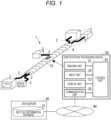
- the present embodiment is a recycling system that supports recycling of a wire harness 1.
- the recycling system includes an identification tag reading device 20 and a data server 30.
- the wire harness 1 includes a plurality of bundled electric wires 2, and a connector 3, and a terminal and various boxes such as a junction box and a fuse box (which are not shown) are connected to the electric wires 2.
- the wire harness 1 is wrapped with a tape 4 or a tube (not shown) in order to bundle and protect the electric wire 2. Further, the wire harness 1 is also connected to other components, such as a grommet, a wiring clip, and a protector (not shown).
- the identification tag 10 is attached to the wire harness 1.
- the identification tag 10 is code information such as a two-dimensional barcode.
- the identification tag 10 includes access information to the data server 30 and specific information (a harness ID, a product number, a lot code, an individual number, a manufacturing date, a shipping date, and the like) for specifying the wire harness 1.
- the identification tag 10 may be a wireless tag such as an RFID.
- the identification tag reading device 20 is a device that reads the specific information and the access information from the identification tag 10, and may be, for example, a handheld code reader.
- the identification tag reading device 20 includes a reading unit 21, a communication unit 22, a display unit 23, an input unit 24, and a control unit 25.
- the reading unit 21 irradiates the identification tag 10 with light and receives the reflected light thereof or the like to read the specific information and the access information.
- the communication unit 22 has a data communication function of transmitting and receiving various types of information to and from the data server 30 via a network 40 such as the Internet.
- the display unit 23 is implemented by a liquid crystal display or the like, and displays various types of information received from the data server 30.
- the input unit 24 includes various operation keys, and receives a reading instruction of the identification tag 10, a switching instruction of various types of information displayed on the display unit 23, and the like.
- the control unit 25 is an arithmetic processing circuit such as a microcomputer including a central processing unit (CPU), a read only memory (ROM), a random access memory (RAM), and the like.
- the ROM stores a control program for controlling the operation of the identification tag reading device 20.
- the control unit 25 reads the control program stored in the ROM and loads the control program into the RAM to control the identification tag reading device 20.
- the data server 30 is an information processing device having a communication function via the network 40.
- the data server 30 publishes a recycle information database 31 on the network 40 such as the Internet as the recycle information.
- the content of the data server 30 can be appropriately updated on the supplier side of the wire harness 1, and more detailed information can be added.
- the recycle information stored in the recycle information database 31 is various types of information for performing efficient recycling processing of the wire harness 1.
- the recycle information is, for example, information such as "the harness ID”, “the manufacturing date”, “the shipping date”, “the shape data”, “the electric wire material”, “the number of connectors”, “the starting point”, “the connector position”, and “the joint position”.
- the "harness ID”, the "manufacturing date”, and the “shipping date” are stored as the specific information for specifying the wire harness 1.
- the "shape data” is stored as checking information for checking the wire harness 1 to be recycled.
- the "electric wire material” is stored as conductor information indicating the type of the conductor used for the electric wire 2.
- the "number of connectors”, the "starting point”, the "connector position”, and the “joint position” are stored as removal information indicating the position of the removal object to be removed from the electric wire 2.
- the recycle information database 31 may store information such as "whether a plated electric wire is present", “the material ratio of a copper alloy or an aluminum alloy”, and “the material of a component such as a connector or a terminal, and whether the component is surface-treated (plated)".
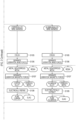
- FIG. 3 shows a recycling step using the recycling system according to the present embodiment.
- the wire harness 1 to be recycled is an inventory disposal item and a collected item used in a scrapped automobile or the like.
- a reading step of reading the access information and the specific information of the identification tag 10 attached to the wire harness 1 using the identification tag reading device 20 is executed (step S101).
- the identification tag reading device 20 accesses the data server 30 based on the access information, acquires the recycle information of the wire harness 1 based on the specific information, and displays the acquired recycle information on the display unit 23.
- the next step is a sorting step of sorting the wire harness 1 by the type of the conductor used in the electric wire 2, based on the conductor information included in the recycle information displayed on the display unit 23 (step S102).
- the type of the conductor is sorted from pure copper, pure aluminum, a copper alloy, and an aluminum alloy.
- the reading step and the sorting step may be automated using a device or the like that reads the identification tag 10 of the wire harness 1 conveyed on the conveyor and that sorts the wire harness 1 by the type of the conductor.
- a reading step of reading the access information and the specific information of the identification tag 10 attached to the wire harness 1 whose conductor is pure copper using the identification tag reading device 20 is executed (step S103).
- the identification tag reading device 20 accesses the data server 30 based on the access information, acquires the recycle information of the wire harness 1 based on the specific information, and displays the conductor information and the removal information included in the acquired recycle information on the display unit 23.
- the display content may be switched on the identification tag reading device 20 side.
- the dedicated identification tag reading device 20 may be prepared for each step.
- the next step is a removal step of removing a removal object containing a material other than the material (the pure copper) of the electric wire 2 based on the recycle information (the removal information) displayed on the display unit 23 (step S104).
- the removal information is information for specifying the position of the removal component, and includes the "starting point", the "connector position", and the "joint position".
- the "starting point” indicates a component that serves as a reference for specifying the position of the removal object, for example, the identification tag 10, the relay box (R/B), or the grommet.
- the "connector position” is information for specifying the position of the connector 3 to be removed, and indicates the direction and the distance from the "starting point”. As shown in FIG.
- the "joint position” indicates a joint portion to be removed, such as an internal branch portion (a joint portion using a plating or the like by a crimping terminal) or a side branch portion (a portion where an option connector or the like is wrapped with the tape 4 or a tube).
- the removal information may include the "terminal position", the "box position", and the like as a component to be removed.
- the recycle information database 31 may provide the visual information as shown in FIG. 5A as the removal information.
- the recycle information database 31 stores the visual information such as an image or a video representing the shape of the wire harness 1, and provides the visual information to the identification tag reading device 20. Based on the visual information, the starting point and the efficient arrangement of the wire harness 1 can be easily grasped.
- the recycle information database 31 may provide the visual information as shown in FIGS. 5B and 5C as the removal information.
- the recycle information database 31 stores the visual information such as the image and the video indicating the removal object of the wire harness 1, and provides the visual information to the identification tag reading device 20. According to the visual information, the removal object can be easily grasped, and the work efficiency can be improved.
- the electric wire 2 from which the removal object is removed in the removal step is subjected to a fine crushing step (step S105) of cutting the electric wire 2 into small pieces, and then to a conductor separation step (step S106) of separating the electric wire 2 by vibration, a wind force, or the like.
- a fine crushing step step S105
- a conductor separation step step S106
- metals pure copper and a ferrous metal
- other materials such as a resin, a plastic, a tape, and others.
- the metals (the pure copper and the ferrous metal) after the conductor separation step are subjected to an iron separation step (step S107) of performing separation by vibration, a magnetic force, or the like to separate the pure copper and the ferrous metal.
- the pure copper separated through the conductor separation step becomes a highly pure electric wire material free of impurities. Therefore, the separated pure copper can be directly used for horizontal recycling without consuming extra energy and labor.
- the pure aluminum is obtained through the conductor separation step.
- the wire harness 1 whose conductor is a copper alloy is subjected to the fine crushing step (step S105) of directly cutting the wire harness 1 into small pieces, and then to the conductor separation step (step S106) of separating the wire harness 1 by vibration, a wind force, or the like.
- the conductor separation step metals (a copper alloy and a ferrous metal) are separated from other materials such as the resin, the plastic, the tape, and others.
- the metals (the copper alloy and the ferrous metal) after the conductor separation step are subjected to the iron separation step (step S107) of performing separation by vibration, a magnetic force, or the like to separate the copper alloy and the ferrous metal.
- the copper alloy separated in the iron separation step may be recycled as pure copper by performing an electrical refining step (step S108).
- step S108 since the step is performed in the state of being separated into the copper alloy, it is also possible to reduce the amount of electric power usage and the amount of use of the chemical that has a large environmental impact.
- the wire harness 1 whose conductor is an aluminum alloy is subjected to the fine crushing step (step S105) of directly cutting the wire harness 1 into small pieces, and then to the conductor separation step (step S106) of separating the wire harness 1 by vibration, a wind force, or the like.
- the conductor separation step metals (an aluminum alloy and a ferrous metal) are separated from other materials such as the resin, the plastic, the tape, and others.
- the metals (the aluminum alloy and the ferrous metal) after the conductor separation step are subjected to the iron separation step (step S107) of performing separation by vibration, a magnetic force, or the like to separate the aluminum alloy and the ferrous metal.
- the aluminum alloy subjected to the iron separation step may be recycled as pure aluminum by performing the electrolytic extraction step (step S109).
- step S109 since the step is performed in the state of being separated into the aluminum alloy, it is also possible to reduce the amount of electric power usage and the amount of use of the chemical that has a large environmental impact.
- the ferrous metal separated in the iron separation step for each material sorted in the sorting step is recycled as high grade steel by performing a blast furnace refining step (step S110) of melting the ferrous metal using a blast furnace, so that the impurities can be discharged as slag.
- the separated ferrous metal is recycled as low grade steel by performing an electric furnace refining step (step S111) of melting the ferrous metal using an electric furnace, so that the impurities can be discharged as slag.
- the present embodiment is a recycling system for a wire harness 1 in which a plurality of electric wires 2 are bundled.
- the recycling system includes: a data server 30 configured to store conductor information and removal information as recycle information of the wire harness 1; and an identification tag reading device 20 configured to acquire the recycle information from the data server 30.
- the conductor information indicates the type of the conductor used for the electric wire 2.
- the removal information indicates a removal object to be removed from the electric wire 2.
- the removal information includes position information indicating a position of the removal object.
- the removal information includes a direction and a distance from a starting point.
- the removal information includes visual information representing a shape of the wire harness 1.
- the removal information includes visual information indicating the removal object.
- the removal object can be visually grasped, and the work efficiency of the step of removing the removal object can be improved.
- the present embodiment is a wire harness 1 in which a plurality of electric wires 2 are bundled.
- An identification tag 10 including access information to a data server 30 is attached to the wire harness 1.
- the data server 30 stores, as recycle information, conductor information indicating a type of a conductor used for the electric wire 2 and removal information indicating a position of a removal object to be removed from the electric wire 2.
- the recycle information can be accessed only by reading the identification tag 10, and the wire harness 1 can be easily sorted by the type of the conductor of the electric wire 2.
Landscapes
- Business, Economics & Management (AREA)
- Engineering & Computer Science (AREA)
- Human Resources & Organizations (AREA)
- Physics & Mathematics (AREA)
- Theoretical Computer Science (AREA)
- General Physics & Mathematics (AREA)
- Economics (AREA)
- Marketing (AREA)
- General Business, Economics & Management (AREA)
- Strategic Management (AREA)
- Tourism & Hospitality (AREA)
- General Health & Medical Sciences (AREA)
- Primary Health Care (AREA)
- Health & Medical Sciences (AREA)
- Manufacturing & Machinery (AREA)
- Life Sciences & Earth Sciences (AREA)
- Sustainable Development (AREA)
- Entrepreneurship & Innovation (AREA)
- Operations Research (AREA)
- Quality & Reliability (AREA)
- Mechanical Engineering (AREA)
- Insulated Conductors (AREA)
- Electric Cable Installation (AREA)
Abstract
Description
- The present disclosure relates to a recycling system used for recycling a wire harness, and the wire harness.
- Generally, a wire harness is recycled in the following procedure.
- As a first step, the procedure includes removing the exterior of the wire harness.
- As a second step, the procedure includes crushing the wire harness(cutting into small pieces).
- As a third step, the procedure includes performing gravity separation which separates a resin (coating for an electric wire and the like) and a metal (including a non-ferrous metal).
- As a fourth step, the procedure includes performing magnetic separation or shape separation which separate a metal and a non-ferrous metal.
- The material mainly recycled in the wire harness is a conductor (a non-ferrous metal) used in the core wire of the electric wire. There are several types of conductors used in the wire harness (copper, copper alloy, aluminum, aluminum alloy, and the like), and the conductor is selected according to the wire diameter and the application.
- In the recycling step, when crushing and separation are carried out as described above, the types of conductors cannot be separated. Therefore, the entire amount of separated conductors is recycled as miscellaneous copper or miscellaneous metals.
- The miscellaneous copper does not meet the specification for the automotive electric wire. Therefore, in order to reuse (horizontally recycle) the miscellaneous copper as the electric wire (the core wire) of a new wire harness, a dedicated step is required to melt and refine the miscellaneous copper to extract pure copper. Melting and refining the miscellaneous copper requires a large amount of energy, which increases the amount of CO2 emissions and requires the use of chemicals that have a large environmental impact.
- It has been proposed to attach, to a wire harness, a medium (a non-contact IC tag) to which electronic data necessary for recycling, such as the content of a constituent material, is input, and to perform recycling processing suitable for the constituent material (for example, see
JP2002-313165A - The present disclosure provides a recycling system that can obtain a highly pure electric wire material free of impurities through recycling, and a wire harness.
- According to an illustrative aspect of the present disclosure, a recycling system for a wire harness in which a plurality of electric wires are bundled, includes: a data server configured to store recycle information of the wire harness, the recycle information including conductor information indicating a type of a conductor used for the electric wires and removal information indicating a removal object to be removed from the electric wires; and an identification tag reading device configured to read an identification tag attached to the wire harness and acquire the recycle information from the data server.
- According to another illustrative aspect of the present disclosure, a wire harness in which a plurality of electric wires are bundled, includes: an identification tag attached to the wire harness and including access information to a data server. The access information is readable information for accessing the data server configured to store recycle information of the wire harness, the recycle information including conductor information indicating a type of a conductor used for the electric wires and removal information indicating a removal object to be removed from the electric wires.
- Since the present disclosure is implemented as described above, it is possible to sort the conductor of the electric wire by the type based on the conductor information, and it is possible to easily remove the component and the portion that contain anything other than pure copper or pure aluminum based on the removal information, thereby obtaining a highly pure electric wire material free of impurities.
-
-
FIG. 1 is a diagram showing a system configuration of a recycling system according to the present disclosure; -
FIG. 2 is a diagram showing a database example of a data server shown inFIG. 1 ; -
FIG. 3 is a diagram showing a recycling step using the recycling system shown inFIG. 1 ; -
FIG. 4 is a diagram showing a joint portion to be removed; and -
FIGS. 5A to 5C are diagrams showing an example of providing removal information shown inFIG. 2 as visual information. - Hereinafter, an embodiment of the present disclosure (hereinafter simply referred to as an "embodiment") will be described in detail with reference to the drawings.
- The present embodiment is a recycling system that supports recycling of a
wire harness 1. With reference toFIG. 1 , the recycling system includes an identificationtag reading device 20 and adata server 30. - The
wire harness 1 includes a plurality of bundledelectric wires 2, and aconnector 3, and a terminal and various boxes such as a junction box and a fuse box (which are not shown) are connected to theelectric wires 2. Thewire harness 1 is wrapped with atape 4 or a tube (not shown) in order to bundle and protect theelectric wire 2. Further, thewire harness 1 is also connected to other components, such as a grommet, a wiring clip, and a protector (not shown). - An
identification tag 10 is attached to thewire harness 1. Theidentification tag 10 is code information such as a two-dimensional barcode. Theidentification tag 10 includes access information to thedata server 30 and specific information (a harness ID, a product number, a lot code, an individual number, a manufacturing date, a shipping date, and the like) for specifying thewire harness 1. Theidentification tag 10 may be a wireless tag such as an RFID. - The identification
tag reading device 20 is a device that reads the specific information and the access information from theidentification tag 10, and may be, for example, a handheld code reader. The identificationtag reading device 20 includes areading unit 21, acommunication unit 22, adisplay unit 23, aninput unit 24, and acontrol unit 25. - The
reading unit 21 irradiates theidentification tag 10 with light and receives the reflected light thereof or the like to read the specific information and the access information. - The
communication unit 22 has a data communication function of transmitting and receiving various types of information to and from thedata server 30 via anetwork 40 such as the Internet. - The
display unit 23 is implemented by a liquid crystal display or the like, and displays various types of information received from thedata server 30. - The
input unit 24 includes various operation keys, and receives a reading instruction of theidentification tag 10, a switching instruction of various types of information displayed on thedisplay unit 23, and the like. - The
control unit 25 is an arithmetic processing circuit such as a microcomputer including a central processing unit (CPU), a read only memory (ROM), a random access memory (RAM), and the like. The ROM stores a control program for controlling the operation of the identificationtag reading device 20. Thecontrol unit 25 reads the control program stored in the ROM and loads the control program into the RAM to control the identificationtag reading device 20. - The
data server 30 is an information processing device having a communication function via thenetwork 40. Thedata server 30 publishes arecycle information database 31 on thenetwork 40 such as the Internet as the recycle information. The content of thedata server 30 can be appropriately updated on the supplier side of thewire harness 1, and more detailed information can be added. - As shown in
FIG. 2 , the recycle information stored in therecycle information database 31 is various types of information for performing efficient recycling processing of thewire harness 1. The recycle information is, for example, information such as "the harness ID", "the manufacturing date", "the shipping date", "the shape data", "the electric wire material", "the number of connectors", "the starting point", "the connector position", and "the joint position". The "harness ID", the "manufacturing date", and the "shipping date" are stored as the specific information for specifying thewire harness 1. The "shape data" is stored as checking information for checking thewire harness 1 to be recycled. The "electric wire material" is stored as conductor information indicating the type of the conductor used for theelectric wire 2. The "number of connectors", the "starting point", the "connector position", and the "joint position" are stored as removal information indicating the position of the removal object to be removed from theelectric wire 2. In addition, therecycle information database 31 may store information such as "whether a plated electric wire is present", "the material ratio of a copper alloy or an aluminum alloy", and "the material of a component such as a connector or a terminal, and whether the component is surface-treated (plated)". -
FIG. 3 shows a recycling step using the recycling system according to the present embodiment. Thewire harness 1 to be recycled is an inventory disposal item and a collected item used in a scrapped automobile or the like. In recycling, first, a reading step of reading the access information and the specific information of theidentification tag 10 attached to thewire harness 1 using the identificationtag reading device 20 is executed (step S101). The identificationtag reading device 20 accesses thedata server 30 based on the access information, acquires the recycle information of thewire harness 1 based on the specific information, and displays the acquired recycle information on thedisplay unit 23. - The next step is a sorting step of sorting the
wire harness 1 by the type of the conductor used in theelectric wire 2, based on the conductor information included in the recycle information displayed on the display unit 23 (step S102). In the present embodiment, the type of the conductor is sorted from pure copper, pure aluminum, a copper alloy, and an aluminum alloy. The reading step and the sorting step may be automated using a device or the like that reads theidentification tag 10 of thewire harness 1 conveyed on the conveyor and that sorts thewire harness 1 by the type of the conductor. - The subsequent recycling steps for the wire harnesses 1 whose conductors are pure copper and pure aluminum are similar. Therefore, the recycling step for the
wire harness 1 whose conductor is pure copper will be described below. - A reading step of reading the access information and the specific information of the
identification tag 10 attached to thewire harness 1 whose conductor is pure copper using the identificationtag reading device 20 is executed (step S103). The identificationtag reading device 20 accesses thedata server 30 based on the access information, acquires the recycle information of thewire harness 1 based on the specific information, and displays the conductor information and the removal information included in the acquired recycle information on thedisplay unit 23. In the reading step in steps S101 and S103, the display content may be switched on the identificationtag reading device 20 side. The dedicated identificationtag reading device 20 may be prepared for each step. - The next step is a removal step of removing a removal object containing a material other than the material (the pure copper) of the
electric wire 2 based on the recycle information (the removal information) displayed on the display unit 23 (step S104). - The removal information is information for specifying the position of the removal component, and includes the "starting point", the "connector position", and the "joint position". The "starting point" indicates a component that serves as a reference for specifying the position of the removal object, for example, the
identification tag 10, the relay box (R/B), or the grommet. The "connector position" is information for specifying the position of theconnector 3 to be removed, and indicates the direction and the distance from the "starting point". As shown inFIG. 4 , the "joint position" indicates a joint portion to be removed, such as an internal branch portion (a joint portion using a plating or the like by a crimping terminal) or a side branch portion (a portion where an option connector or the like is wrapped with thetape 4 or a tube). In addition, the removal information may include the "terminal position", the "box position", and the like as a component to be removed. - The
recycle information database 31 may provide the visual information as shown inFIG. 5A as the removal information. In this case, therecycle information database 31 stores the visual information such as an image or a video representing the shape of thewire harness 1, and provides the visual information to the identificationtag reading device 20. Based on the visual information, the starting point and the efficient arrangement of thewire harness 1 can be easily grasped. - Further, the
recycle information database 31 may provide the visual information as shown inFIGS. 5B and 5C as the removal information. In this case, therecycle information database 31 stores the visual information such as the image and the video indicating the removal object of thewire harness 1, and provides the visual information to the identificationtag reading device 20. According to the visual information, the removal object can be easily grasped, and the work efficiency can be improved. - The
electric wire 2 from which the removal object is removed in the removal step is subjected to a fine crushing step (step S105) of cutting theelectric wire 2 into small pieces, and then to a conductor separation step (step S106) of separating theelectric wire 2 by vibration, a wind force, or the like. In the conductor separation step, metals (pure copper and a ferrous metal) are separated from other materials such as a resin, a plastic, a tape, and others. - The metals (the pure copper and the ferrous metal) after the conductor separation step are subjected to an iron separation step (step S107) of performing separation by vibration, a magnetic force, or the like to separate the pure copper and the ferrous metal.
- The pure copper separated through the conductor separation step becomes a highly pure electric wire material free of impurities. Therefore, the separated pure copper can be directly used for horizontal recycling without consuming extra energy and labor. In the
wire harness 1 whose conductor is pure aluminum, the pure aluminum is obtained through the conductor separation step. - The
wire harness 1 whose conductor is a copper alloy is subjected to the fine crushing step (step S105) of directly cutting thewire harness 1 into small pieces, and then to the conductor separation step (step S106) of separating thewire harness 1 by vibration, a wind force, or the like. In the conductor separation step, metals (a copper alloy and a ferrous metal) are separated from other materials such as the resin, the plastic, the tape, and others. - The metals (the copper alloy and the ferrous metal) after the conductor separation step are subjected to the iron separation step (step S107) of performing separation by vibration, a magnetic force, or the like to separate the copper alloy and the ferrous metal.
- The copper alloy separated in the iron separation step may be recycled as pure copper by performing an electrical refining step (step S108). In this case, since the step is performed in the state of being separated into the copper alloy, it is also possible to reduce the amount of electric power usage and the amount of use of the chemical that has a large environmental impact.
- The
wire harness 1 whose conductor is an aluminum alloy is subjected to the fine crushing step (step S105) of directly cutting thewire harness 1 into small pieces, and then to the conductor separation step (step S106) of separating thewire harness 1 by vibration, a wind force, or the like. In the conductor separation step, metals (an aluminum alloy and a ferrous metal) are separated from other materials such as the resin, the plastic, the tape, and others. - The metals (the aluminum alloy and the ferrous metal) after the conductor separation step are subjected to the iron separation step (step S107) of performing separation by vibration, a magnetic force, or the like to separate the aluminum alloy and the ferrous metal.
- The aluminum alloy subjected to the iron separation step may be recycled as pure aluminum by performing the electrolytic extraction step (step S109). In this case, since the step is performed in the state of being separated into the aluminum alloy, it is also possible to reduce the amount of electric power usage and the amount of use of the chemical that has a large environmental impact.
- The ferrous metal separated in the iron separation step for each material sorted in the sorting step is recycled as high grade steel by performing a blast furnace refining step (step S110) of melting the ferrous metal using a blast furnace, so that the impurities can be discharged as slag. The separated ferrous metal is recycled as low grade steel by performing an electric furnace refining step (step S111) of melting the ferrous metal using an electric furnace, so that the impurities can be discharged as slag.
- As described above, the present embodiment is a recycling system for a
wire harness 1 in which a plurality ofelectric wires 2 are bundled. The recycling system includes: adata server 30 configured to store conductor information and removal information as recycle information of thewire harness 1; and an identificationtag reading device 20 configured to acquire the recycle information from thedata server 30. The conductor information indicates the type of the conductor used for theelectric wire 2. The removal information indicates a removal object to be removed from theelectric wire 2. - According to this configuration, it is possible to sort the conductor of the
electric wire 2 by the type based on the conductor information, and it is possible to easily remove the component and the portion that contain anything other than the pure copper or the pure aluminum based on the removal information. Accordingly, it is possible to obtain a highly pure electric wire material free of impurities, and it is possible to directly use the electric wire material for horizontal recycling without consuming extra energy and labor. Horizontal recycling is possible by eliminating the step of improving the purity and using a step optimized for each conductor material, which can be useful in manufacturing the environmentallyfriendly wire harness 1. - Further, in the present embodiment, the removal information includes position information indicating a position of the removal object.
- According to this configuration, since the position of the removal object is known, it is possible to more easily remove the component and the portion that contain anything other than the pure copper or the pure aluminum.
- Further, in the present embodiment, the removal information includes a direction and a distance from a starting point.
- According to this configuration, it is easy to specify the positions of the component and the portion that contain anything other than the pure copper or the pure aluminum.
- Further, in the present embodiment, the removal information includes visual information representing a shape of the
wire harness 1. - According to this configuration, it is possible to visually grasp the arrangement of the
wire harness 1 and to improve the work efficiency. - Further, in the present embodiment, the removal information includes visual information indicating the removal object.
- According to this configuration, the removal object can be visually grasped, and the work efficiency of the step of removing the removal object can be improved.
- The present embodiment is a
wire harness 1 in which a plurality ofelectric wires 2 are bundled. Anidentification tag 10 including access information to adata server 30 is attached to thewire harness 1. Thedata server 30 stores, as recycle information, conductor information indicating a type of a conductor used for theelectric wire 2 and removal information indicating a position of a removal object to be removed from theelectric wire 2. - According to this configuration, the recycle information can be accessed only by reading the
identification tag 10, and thewire harness 1 can be easily sorted by the type of the conductor of theelectric wire 2. - The present disclosure has been described above based on the embodiment. This embodiment is merely an example, and it will be understood by those skilled in the art that various modifications are possible in the combination of the components, and that the modifications are also within the scope of the present disclosure.
Claims (6)
- A recycling system for a wire harness (1) in which a plurality of electric wires (2) are bundled, the recycling system comprising:a data server (30) configured to store recycle information of the wire harness (1), the recycle information including conductor information indicating a type of a conductor used for the electric wires (2) and removal information indicating a removal object to be removed from the electric wires (2); andan identification tag reading device (20) configured to read an identification tag (10) attached to the wire harness (1) and acquire the recycle information from the data server (30).
- The recycling system according to claim 1, wherein
the removal information includes position information indicating a position of the removal object. - The recycling system according to claim 2, wherein
the position information includes a direction and a distance from a starting point of the removal object. - The recycling system according to any one of claims 1 to 3, wherein
the removal information includes visual information representing a shape of the wire harness (1). - The recycling system according to any one of claims 1 to 4, wherein
the removal information includes visual information indicating the removal object. - A wire harness (1) in which a plurality of electric wires (2) are bundled, the wire harness (1) comprising:an identification tag (10) attached to the wire harness (1) and including access information to a data server (30), whereinthe access information is readable information for accessing the data server (30) configured to store recycle information of the wire harness (1), the recycle information including conductor information indicating a type of a conductor used for the electric wires (2) and removal information indicating a removal object to be removed from the electric wires (2).
Applications Claiming Priority (1)
| Application Number | Priority Date | Filing Date | Title |
|---|---|---|---|
| JP2023129832A JP7755622B2 (en) | 2023-08-09 | 2023-08-09 | Recycling system and wire harnesses |
Publications (2)
| Publication Number | Publication Date |
|---|---|
| EP4506213A1 true EP4506213A1 (en) | 2025-02-12 |
| EP4506213B1 EP4506213B1 (en) | 2025-08-13 |
Family
ID=91759628
Family Applications (1)
| Application Number | Title | Priority Date | Filing Date |
|---|---|---|---|
| EP24185656.6A Active EP4506213B1 (en) | 2023-08-09 | 2024-07-01 | Recycling system and wire harness |
Country Status (2)
| Country | Link |
|---|---|
| EP (1) | EP4506213B1 (en) |
| JP (1) | JP7755622B2 (en) |
Citations (7)
| Publication number | Priority date | Publication date | Assignee | Title |
|---|---|---|---|---|
| EP0648643A1 (en) * | 1993-10-19 | 1995-04-19 | Sumitomo Wiring Systems, Ltd. | Automotive wiring harness |
| JPH11260151A (en) * | 1998-03-10 | 1999-09-24 | Sumitomo Wiring Syst Ltd | Wire harness |
| JP2002313165A (en) | 2001-04-16 | 2002-10-25 | Auto Network Gijutsu Kenkyusho:Kk | Wire Harness |
| JP2002313164A (en) * | 2001-04-16 | 2002-10-25 | Auto Network Gijutsu Kenkyusho:Kk | Recycling method of wire harness |
| JP2016189271A (en) * | 2015-03-30 | 2016-11-04 | 株式会社オートネットワーク技術研究所 | Wire harness module and wire harness module management system |
| US20200251238A1 (en) * | 2017-10-26 | 2020-08-06 | Furukawa Electric Co., Ltd. | Coated carbon nanotube electric wire, method for producing same, and method for detecting identification mark |
| CN111695649A (en) * | 2019-03-14 | 2020-09-22 | 日立金属株式会社 | Wiring assisting device and wiring assisting method for wire harness |
Family Cites Families (2)
| Publication number | Priority date | Publication date | Assignee | Title |
|---|---|---|---|---|
| JP2000194299A (en) * | 1998-12-25 | 2000-07-14 | Hitachi Maxell Ltd | Display board |
| JP2001067404A (en) * | 1999-08-26 | 2001-03-16 | Hitachi Ltd | Product disassembly work support system |
-
2023
- 2023-08-09 JP JP2023129832A patent/JP7755622B2/en active Active
-
2024
- 2024-07-01 EP EP24185656.6A patent/EP4506213B1/en active Active
Patent Citations (7)
| Publication number | Priority date | Publication date | Assignee | Title |
|---|---|---|---|---|
| EP0648643A1 (en) * | 1993-10-19 | 1995-04-19 | Sumitomo Wiring Systems, Ltd. | Automotive wiring harness |
| JPH11260151A (en) * | 1998-03-10 | 1999-09-24 | Sumitomo Wiring Syst Ltd | Wire harness |
| JP2002313165A (en) | 2001-04-16 | 2002-10-25 | Auto Network Gijutsu Kenkyusho:Kk | Wire Harness |
| JP2002313164A (en) * | 2001-04-16 | 2002-10-25 | Auto Network Gijutsu Kenkyusho:Kk | Recycling method of wire harness |
| JP2016189271A (en) * | 2015-03-30 | 2016-11-04 | 株式会社オートネットワーク技術研究所 | Wire harness module and wire harness module management system |
| US20200251238A1 (en) * | 2017-10-26 | 2020-08-06 | Furukawa Electric Co., Ltd. | Coated carbon nanotube electric wire, method for producing same, and method for detecting identification mark |
| CN111695649A (en) * | 2019-03-14 | 2020-09-22 | 日立金属株式会社 | Wiring assisting device and wiring assisting method for wire harness |
Also Published As
| Publication number | Publication date |
|---|---|
| JP2025025239A (en) | 2025-02-21 |
| EP4506213B1 (en) | 2025-08-13 |
| JP7755622B2 (en) | 2025-10-16 |
Similar Documents
| Publication | Publication Date | Title |
|---|---|---|
| US6226617B1 (en) | Product disposal system | |
| CN105511727A (en) | Message processing method and device | |
| Costa et al. | Improving visibility using RFID–the case of a company in the automotive sector | |
| EP4506213B1 (en) | Recycling system and wire harness | |
| Krauchi et al. | End-of-life impacts of pervasive computing | |
| Morimoto et al. | Methodological study of evaluating the traceability of neodymium based on the global substance flow analysis and Monte Carlo simulation | |
| JP2025025240A (en) | Recycling system and wire harnesses | |
| JP2006294382A (en) | Battery separation and identification method and identification method | |
| Liu et al. | An efficient disassembly process generation method for large quantities of waste smartphones | |
| US7212936B2 (en) | Method, system and computer program product for automated discovery and presentation of the direction of flow through components represented in a drawing set | |
| US20200195101A1 (en) | Automated recovery of rare earth permanent magnets from electric machines | |
| Ihne et al. | Approach for advanced mechanical recycling strategies of rare earth magnets applied in traction drives | |
| Brahmst | Copper in end-of-life vehicle recycling | |
| JP2025025241A (en) | Recycling method and wire harness | |
| Bandara et al. | Closing the lifecycle of rare earth magnets: discovery of neodymium in slag from steel mills | |
| EP1251036B1 (en) | Wire harness | |
| Bacher et al. | Future Trends in WEEE Composition and Treatment-A Review Report | |
| Lewis | Lithium-ion battery consultation report | |
| CN113034066A (en) | Intelligent stock bin management method and device and computer storage medium | |
| EP1321191A2 (en) | Method for recycling waste wire harness | |
| Kanciak et al. | Assessment of the potential for remanufacturing of a washing machine with focus on critical raw materials | |
| RECYCLING | E-book helps recycling operations meet China’s new national standard | |
| KR102421225B1 (en) | Apparatus and method for checking connector | |
| JPH10144148A (en) | Equipment wire bundle | |
| VISION | A CIRCULAR EUROPEAN CRITICAL RAW MATERIALS MANAGEMENT SYSTEM: THE 2023 PLAYBOOK |
Legal Events
| Date | Code | Title | Description |
|---|---|---|---|
| PUAI | Public reference made under article 153(3) epc to a published international application that has entered the european phase |
Free format text: ORIGINAL CODE: 0009012 |
|
| STAA | Information on the status of an ep patent application or granted ep patent |
Free format text: STATUS: REQUEST FOR EXAMINATION WAS MADE |
|
| 17P | Request for examination filed |
Effective date: 20240701 |
|
| AK | Designated contracting states |
Kind code of ref document: A1 Designated state(s): AL AT BE BG CH CY CZ DE DK EE ES FI FR GB GR HR HU IE IS IT LI LT LU LV MC ME MK MT NL NO PL PT RO RS SE SI SK SM TR |
|
| GRAP | Despatch of communication of intention to grant a patent |
Free format text: ORIGINAL CODE: EPIDOSNIGR1 |
|
| STAA | Information on the status of an ep patent application or granted ep patent |
Free format text: STATUS: GRANT OF PATENT IS INTENDED |
|
| INTG | Intention to grant announced |
Effective date: 20250425 |
|
| GRAS | Grant fee paid |
Free format text: ORIGINAL CODE: EPIDOSNIGR3 |
|
| GRAA | (expected) grant |
Free format text: ORIGINAL CODE: 0009210 |
|
| STAA | Information on the status of an ep patent application or granted ep patent |
Free format text: STATUS: THE PATENT HAS BEEN GRANTED |
|
| AK | Designated contracting states |
Kind code of ref document: B1 Designated state(s): AL AT BE BG CH CY CZ DE DK EE ES FI FR GB GR HR HU IE IS IT LI LT LU LV MC ME MK MT NL NO PL PT RO RS SE SI SK SM TR |
|
| REG | Reference to a national code |
Ref country code: GB Ref legal event code: FG4D |
|
| REG | Reference to a national code |
Ref country code: CH Ref legal event code: EP |
|
| REG | Reference to a national code |
Ref country code: DE Ref legal event code: R096 Ref document number: 602024000456 Country of ref document: DE |
|
| REG | Reference to a national code |
Ref country code: IE Ref legal event code: FG4D |
|
| REG | Reference to a national code |
Ref country code: NL Ref legal event code: MP Effective date: 20250813 |
|
| PG25 | Lapsed in a contracting state [announced via postgrant information from national office to epo] |
Ref country code: IS Free format text: LAPSE BECAUSE OF FAILURE TO SUBMIT A TRANSLATION OF THE DESCRIPTION OR TO PAY THE FEE WITHIN THE PRESCRIBED TIME-LIMIT Effective date: 20251213 |
|
| PG25 | Lapsed in a contracting state [announced via postgrant information from national office to epo] |
Ref country code: NO Free format text: LAPSE BECAUSE OF FAILURE TO SUBMIT A TRANSLATION OF THE DESCRIPTION OR TO PAY THE FEE WITHIN THE PRESCRIBED TIME-LIMIT Effective date: 20251113 |
|
| REG | Reference to a national code |
Ref country code: LT Ref legal event code: MG9D |
|
| PG25 | Lapsed in a contracting state [announced via postgrant information from national office to epo] |
Ref country code: PT Free format text: LAPSE BECAUSE OF FAILURE TO SUBMIT A TRANSLATION OF THE DESCRIPTION OR TO PAY THE FEE WITHIN THE PRESCRIBED TIME-LIMIT Effective date: 20251215 |
|
| PG25 | Lapsed in a contracting state [announced via postgrant information from national office to epo] |
Ref country code: FI Free format text: LAPSE BECAUSE OF FAILURE TO SUBMIT A TRANSLATION OF THE DESCRIPTION OR TO PAY THE FEE WITHIN THE PRESCRIBED TIME-LIMIT Effective date: 20250813 |
|
| PG25 | Lapsed in a contracting state [announced via postgrant information from national office to epo] |
Ref country code: HR Free format text: LAPSE BECAUSE OF FAILURE TO SUBMIT A TRANSLATION OF THE DESCRIPTION OR TO PAY THE FEE WITHIN THE PRESCRIBED TIME-LIMIT Effective date: 20250813 Ref country code: NL Free format text: LAPSE BECAUSE OF FAILURE TO SUBMIT A TRANSLATION OF THE DESCRIPTION OR TO PAY THE FEE WITHIN THE PRESCRIBED TIME-LIMIT Effective date: 20250813 |
|
| PG25 | Lapsed in a contracting state [announced via postgrant information from national office to epo] |
Ref country code: GR Free format text: LAPSE BECAUSE OF FAILURE TO SUBMIT A TRANSLATION OF THE DESCRIPTION OR TO PAY THE FEE WITHIN THE PRESCRIBED TIME-LIMIT Effective date: 20251114 |
|
| PG25 | Lapsed in a contracting state [announced via postgrant information from national office to epo] |
Ref country code: SE Free format text: LAPSE BECAUSE OF FAILURE TO SUBMIT A TRANSLATION OF THE DESCRIPTION OR TO PAY THE FEE WITHIN THE PRESCRIBED TIME-LIMIT Effective date: 20250813 |
|
| PG25 | Lapsed in a contracting state [announced via postgrant information from national office to epo] |
Ref country code: LV Free format text: LAPSE BECAUSE OF FAILURE TO SUBMIT A TRANSLATION OF THE DESCRIPTION OR TO PAY THE FEE WITHIN THE PRESCRIBED TIME-LIMIT Effective date: 20250813 |
|
| PG25 | Lapsed in a contracting state [announced via postgrant information from national office to epo] |
Ref country code: PL Free format text: LAPSE BECAUSE OF FAILURE TO SUBMIT A TRANSLATION OF THE DESCRIPTION OR TO PAY THE FEE WITHIN THE PRESCRIBED TIME-LIMIT Effective date: 20250813 Ref country code: BG Free format text: LAPSE BECAUSE OF FAILURE TO SUBMIT A TRANSLATION OF THE DESCRIPTION OR TO PAY THE FEE WITHIN THE PRESCRIBED TIME-LIMIT Effective date: 20250813 |
|
| PG25 | Lapsed in a contracting state [announced via postgrant information from national office to epo] |
Ref country code: RS Free format text: LAPSE BECAUSE OF FAILURE TO SUBMIT A TRANSLATION OF THE DESCRIPTION OR TO PAY THE FEE WITHIN THE PRESCRIBED TIME-LIMIT Effective date: 20251113 |
|
| PG25 | Lapsed in a contracting state [announced via postgrant information from national office to epo] |
Ref country code: ES Free format text: LAPSE BECAUSE OF FAILURE TO SUBMIT A TRANSLATION OF THE DESCRIPTION OR TO PAY THE FEE WITHIN THE PRESCRIBED TIME-LIMIT Effective date: 20250813 |
|
| REG | Reference to a national code |
Ref country code: AT Ref legal event code: MK05 Ref document number: 1824368 Country of ref document: AT Kind code of ref document: T Effective date: 20250813 |
|
| PG25 | Lapsed in a contracting state [announced via postgrant information from national office to epo] |
Ref country code: SM Free format text: LAPSE BECAUSE OF FAILURE TO SUBMIT A TRANSLATION OF THE DESCRIPTION OR TO PAY THE FEE WITHIN THE PRESCRIBED TIME-LIMIT Effective date: 20250813 |
|
| PG25 | Lapsed in a contracting state [announced via postgrant information from national office to epo] |
Ref country code: DK Free format text: LAPSE BECAUSE OF FAILURE TO SUBMIT A TRANSLATION OF THE DESCRIPTION OR TO PAY THE FEE WITHIN THE PRESCRIBED TIME-LIMIT Effective date: 20250813 |
|
| PG25 | Lapsed in a contracting state [announced via postgrant information from national office to epo] |
Ref country code: AT Free format text: LAPSE BECAUSE OF FAILURE TO SUBMIT A TRANSLATION OF THE DESCRIPTION OR TO PAY THE FEE WITHIN THE PRESCRIBED TIME-LIMIT Effective date: 20250813 |
|
| PG25 | Lapsed in a contracting state [announced via postgrant information from national office to epo] |
Ref country code: IT Free format text: LAPSE BECAUSE OF FAILURE TO SUBMIT A TRANSLATION OF THE DESCRIPTION OR TO PAY THE FEE WITHIN THE PRESCRIBED TIME-LIMIT Effective date: 20250813 |
|
| PG25 | Lapsed in a contracting state [announced via postgrant information from national office to epo] |
Ref country code: CZ Free format text: LAPSE BECAUSE OF FAILURE TO SUBMIT A TRANSLATION OF THE DESCRIPTION OR TO PAY THE FEE WITHIN THE PRESCRIBED TIME-LIMIT Effective date: 20250813 |
|
| PG25 | Lapsed in a contracting state [announced via postgrant information from national office to epo] |
Ref country code: EE Free format text: LAPSE BECAUSE OF FAILURE TO SUBMIT A TRANSLATION OF THE DESCRIPTION OR TO PAY THE FEE WITHIN THE PRESCRIBED TIME-LIMIT Effective date: 20250813 Ref country code: SK Free format text: LAPSE BECAUSE OF FAILURE TO SUBMIT A TRANSLATION OF THE DESCRIPTION OR TO PAY THE FEE WITHIN THE PRESCRIBED TIME-LIMIT Effective date: 20250813 |