EP4503545A1 - Verfahren und vorrichtung zur aushandlung der fähigkeit eines dienstes der erweiterten realität, netzwerkelement, benutzergerät und speichermedium - Google Patents
Verfahren und vorrichtung zur aushandlung der fähigkeit eines dienstes der erweiterten realität, netzwerkelement, benutzergerät und speichermedium Download PDFInfo
- Publication number
- EP4503545A1 EP4503545A1 EP22934050.0A EP22934050A EP4503545A1 EP 4503545 A1 EP4503545 A1 EP 4503545A1 EP 22934050 A EP22934050 A EP 22934050A EP 4503545 A1 EP4503545 A1 EP 4503545A1
- Authority
- EP
- European Patent Office
- Prior art keywords
- augmented reality
- reality service
- capability
- network
- service
- Prior art date
- Legal status (The legal status is an assumption and is not a legal conclusion. Google has not performed a legal analysis and makes no representation as to the accuracy of the status listed.)
- Pending
Links
Images


Classifications
-
- H—ELECTRICITY
- H04—ELECTRIC COMMUNICATION TECHNIQUE
- H04W—WIRELESS COMMUNICATION NETWORKS
- H04W76/00—Connection management
- H04W76/10—Connection setup
- H04W76/12—Setup of transport tunnels
-
- H—ELECTRICITY
- H04—ELECTRIC COMMUNICATION TECHNIQUE
- H04W—WIRELESS COMMUNICATION NETWORKS
- H04W8/00—Network data management
- H04W8/22—Processing or transfer of terminal data, e.g. status or physical capabilities
-
- H—ELECTRICITY
- H04—ELECTRIC COMMUNICATION TECHNIQUE
- H04L—TRANSMISSION OF DIGITAL INFORMATION, e.g. TELEGRAPHIC COMMUNICATION
- H04L12/00—Data switching networks
- H04L12/02—Details
- H04L12/14—Charging, metering or billing arrangements for data wireline or wireless communications
- H04L12/1403—Architecture for metering, charging or billing
- H04L12/1407—Policy-and-charging control [PCC] architecture
-
- H—ELECTRICITY
- H04—ELECTRIC COMMUNICATION TECHNIQUE
- H04L—TRANSMISSION OF DIGITAL INFORMATION, e.g. TELEGRAPHIC COMMUNICATION
- H04L41/00—Arrangements for maintenance, administration or management of data switching networks, e.g. of packet switching networks
- H04L41/50—Network service management, e.g. ensuring proper service fulfilment according to agreements
- H04L41/5003—Managing SLA; Interaction between SLA and QoS
-
- H—ELECTRICITY
- H04—ELECTRIC COMMUNICATION TECHNIQUE
- H04W—WIRELESS COMMUNICATION NETWORKS
- H04W28/00—Network traffic management; Network resource management
- H04W28/02—Traffic management, e.g. flow control or congestion control
- H04W28/0268—Traffic management, e.g. flow control or congestion control using specific QoS parameters for wireless networks, e.g. QoS class identifier [QCI] or guaranteed bit rate [GBR]
-
- H—ELECTRICITY
- H04—ELECTRIC COMMUNICATION TECHNIQUE
- H04W—WIRELESS COMMUNICATION NETWORKS
- H04W60/00—Affiliation to network, e.g. registration; Terminating affiliation with the network, e.g. de-registration
- H04W60/04—Affiliation to network, e.g. registration; Terminating affiliation with the network, e.g. de-registration using triggered events
-
- H—ELECTRICITY
- H04—ELECTRIC COMMUNICATION TECHNIQUE
- H04W—WIRELESS COMMUNICATION NETWORKS
- H04W76/00—Connection management
- H04W76/10—Connection setup
-
- H—ELECTRICITY
- H04—ELECTRIC COMMUNICATION TECHNIQUE
- H04W—WIRELESS COMMUNICATION NETWORKS
- H04W76/00—Connection management
- H04W76/10—Connection setup
- H04W76/15—Setup of multiple wireless link connections
Definitions
- the present invention relates to a technology, and more particularly, to a method and apparatus for negotiating an augmented reality service support capability, a user equipment (UE), and a storage medium.
- UE user equipment
- XR services such as cloud augmented reality (AR)/virtual reality (VR), cloud games, and video-based machine or unmanned aerial vehicle remote control
- XR services involve multi-modal data flows.
- Multi-modal data is data that describes the input of the same service/application from the same device or different devices, which may be output to one or more destination equipment.
- Data flows in multi-modal data often have some or even strong correlation, such as synchronization of audio and video streams, synchronization of tactile and visual sense, etc.
- the data flows of such media services themselves, between data flows, and the need for network transmission for these service data flows share common features, and the effective identification and utilization of these features will be more conducive to network and service transmission, control, as well as to service provisioning and user experience.
- the current 5GS system adopts the quality of service (QoS) mechanism to deal with various data services including XR services, fails to fully consider the characteristics of XR media services and multi-modal services, and there is no corresponding QoS and policy mechanism to meet the corresponding service requirements.
- QoS quality of service
- the network In order to support the transmission of XRM services and multi-modal data flows, the network first needs to be able to identify the corresponding device and service data and determine the functional support of the network and equipment.
- the current 5GS system function also does not support such requirements, and there is no corresponding technical solution for reference.
- embodiments of the present invention provide a method and apparatus for negotiating an augmented reality service support capability, a network element, a user equipment, and a storage medium.
- a method for negotiating an augmented reality service support capability includes: receiving a session management (SM) context creation request, and determining whether a network supports an augmented reality service; and sending to a second network element a response indicating whether the network supports the augmented reality service; where the SM context creation request carries a first cell, and the first cell carries a capability of a user equipment (UE) to support the augmented reality service.
- SM session management
- the first cell includes 5G session management (SGSM) core network capability, or a protocol configuration option (PCO).
- SGSM 5G session management
- PCO protocol configuration option
- the method further includes: determining and judging whether the network supports the augmented reality service of the PDU session according to at least one of subscription information, a network support capability, and a local policy.
- the capability of whether the network supports the augmented reality service is carried in an SM context creation response or an update response and is sent to the second network element.
- the method in response to the network supporting an augmented reality service, the method further includes: locally executing a decision of the policy and charging rule; or executing the policy control function PCF selection; based on the selected PCF, determining an augmented reality service rule, or determining a data flow policy and charging control (PCC) rule for supporting the augmented reality service.
- PCC data flow policy and charging control
- the method further includes: sending a protocol data unit PDU session establishment acception information to the second network element, where the PDU session establishment acception information carries a quality of service (QoS) parameter for supporting an augmented reality service.
- QoS quality of service
- a method for negotiating an augmented reality service support capability includes: receiving, by the network side function, a protocol data unit (PDU) session establishment request sent by a user equipment (UE), determining, by the network side function, whether a network supports an augmented reality service in a session establishment process in response to session establishment request information carrying a capability of the UE to support the augmented reality service, and sending a non-access stratum (NAS) message to the UE, where the NAS message carries a response of whether to support the augmented reality service.
- PDU protocol data unit
- UE user equipment
- NAS non-access stratum
- the session establishment request information carrying the capability of the UE to support the augmented reality service includes: the session establishment request carrying a 5GSM core network capability, and the 5GSM core network capability comprising the capability of the UE to support the augmented reality service.
- the session establishment request information carrying the capability of the UE to support the augmented reality service includes: the session establishment request carrying a PCO, and the PCO includes the capability of the UE to support the augmented reality service.
- the network side functionality includes a first network element, where the first network element receives a session management (SM) context creation request, determines whether the network supports an augmented reality service; and sends to a second network element a response indicating whether the network supports the augmented reality service; where the SM context creation request carries a first cell, and the first cell carries the capability of a user equipment (UE) to support the augmented reality service; a PDU session establishment acception information is sent to the second network element, where the PDU session establishment acception information carries a QoS parameter for supporting an augmented reality service.
- SM session management
- the first network element determines and judges whether the network supports the augmented reality service of the PDU session according to at least one of subscription information, a network support capability, and a local policy; sends to the second network element the capability that whether the network supports an augmented reality service.
- the method further includes: in a case where it is determined that the network supports the augmented reality service, the first network element locally executes the decision of the policy and charging rule; or executes PCF selection, determining a virtual reality service rule based on the selected PCF, or determining a data flow PCC rule for supporting the virtual reality service.
- the network side functionality includes a second network element; where the second network element receives a PDU session establishment request sent by a UE, selects a first network element based on the PDU session establishment request, and sends an SM context creation request to the selected first network element; the SM context request carries the capability of the UE to support the augmented reality service; and after receiving the PDU session establishment acception information returned by the first network element, the second network element sends the PDU session identifier and the PDU session establishment acception information to the UE via a NAS message.
- the second network element stores the capability of the UE to support the augmented reality service as a PDU session level context in a UE context.
- a method for negotiating an augmented reality service support capability includes: sending a PDU session establishment request, where the PDU session establishment request carries a first cell, and the first cell carries the capability of the UE to support the augmented reality service; receiving a NAS message sent by a network side, where the NAS message carries a response of whether the network supports an augmented reality service.
- the first cell includes 5GSM core network capability or PCO.
- a method for negotiating an augmented reality service support capability includes: receiving a registration request, determining, by the second network element, whether a network supports an augmented reality service in response to the registration request carrying a capability of the UE to support the augmented reality service, and sending registration acception information to the UE, where the registration acception information carries a response of whether to support the augmented reality service.
- the determining whether the network supports the augmented reality service includes: determining whether the network supports the augmented reality service according to at least one of subscription information, a network support capability, and a local policy.
- the method further includes: sending a group identifier of an augmented reality service to the UE through a third network element or directly, where the group identifier is used to associate a plurality of UEs of an augmented reality service group, or associate a plurality of augmented reality service sessions of a single UE, or associate a plurality of data flows of a single UE session.
- the method further includes: executing the augmented reality service with cooperation of a policy decision and a QoS authorization of the augmented reality service of the network side function network element.
- a method for negotiating an augmented reality service support capability performed by a network side function, the method includes: receiving, by the network side function, a registration request from a user equipment (UE), determining, by the network side function element, whether a network supports an augmented reality service in response to the registration request carrying a network augmented reality service support capability, and sending registration acception information to the UE, where the registration acception information carries a response of whether to support the augmented reality service.
- UE user equipment
- the network side functionality includes a second network element and a third network element, where a third network element receives a registration request sent by a UE, and selects a second network element; the registration request carries the capability of whether the UE supports an augmented reality service; the registration request is sent to the selected second network element; the second network element determines whether the network supports an augmented reality service, and sends registration acception information to the UE via the third network element; the registration acception information carries the capability of whether the network supports an augmented reality service.
- determining whether the network supports the augmented reality service includes: determining, by the second network element, whether the network supports the augmented reality service according to at least one of subscription information, a network support capability, and a local policy.
- the method further includes: sending, by the second network element, a group identifier of the augmented reality service to the UE via a third network element or directly, where the group identifier is used to associate a plurality of UEs of an augmented reality service group, or associate a plurality of augmented reality service sessions of a single UE, or associate a plurality of data flows of a single UE session.
- the method further includes: executing augmented reality service with cooperation of a policy decision and a QoS authorization of the augmented reality service of the network side function network element.
- a method for negotiating an augmented reality service support capability includes: sending a registration request to a network side, where the registration request carries a capability of supporting an augmented reality service; and receiving registration acception information returned by the network side, where the registration acception information carries a response of whether to support the augmented reality service.
- the method further includes: receiving a group identifier of the augmented reality service sent by the network side, where the group identifier is used to associate a plurality of UEs of an augmented reality service group, or associate a plurality of augmented reality service sessions of a single UE, or associate a plurality of data flows of a single UE session.
- the method further includes: sending, by the network side, the group identifier of the augmented reality service sent to the UE directly or via forwarding by a ratio access network (RAN).
- RAN ratio access network
- the method further includes: storing a group identifier of the augmented reality service received.
- an apparatus for negotiating an augmented reality service support capability includes: a receiving unit configured to receive an SM context creation request; where the SM context creation request carries a first cell, and the first cell carries the capability of a user equipment (UE) to support the augmented reality service; a determining unit configured to determine whether a network supports the augmented reality service; and a sending unit configured to send a response of whether the network supports the augmented reality service to the second network element.
- UE user equipment
- the first cell includes a 5GSM core network capability, or a protocol configuration option PCO.
- the determining unit is further configured to: determine and judge whether the network supports the augmented reality service of the PDU session according to at least one of subscription information, a network support capability, and a local policy.
- an apparatus for negotiating an augmented reality service support capability includes: a receiving unit configured to receive a PDU session establishment request sent by a UE; a determining unit configured to determine whether a network supports an augmented reality service in a session establishment process in response to the session establishment request information carrying the capability of the UE to support the augmented reality service; and a sending unit configured to send a non-access stratum (NAS) message to a UE, where the NAS message carries a response of whether to support the augmented reality service.
- NAS non-access stratum
- the session establishment request information carrying the capability of the UE to support the augmented reality service includes: the session establishment request carries a 5GSM core network capability, and the 5GSM core network capability contains the capability of the UE to support the augmented reality service.
- the session establishment request information carrying the capability of the UE to support the augmented reality service includes: the session establishment request carries a PCO, and the PCO includes the capability of the UE to support the augmented reality service.
- an apparatus for negotiating an augmented reality service support capability includes: a sending unit configured to send a PDU session establishment request; the PDU session establishment request carries a first cell, and the first cell carries the capability of the UE to support the augmented reality service; and a receiving unit configured to receive the NAS message sent by the network side, where the response of whether the augmented reality service is supported is carried.
- the first cell includes 5GSM core network capability or PCO.
- an apparatus for negotiating an augmented reality service support capability includes: a receiving unit configured to receive a registration request sent by a third network element; a determining unit configured to determine whether a network supports an augmented reality service in response to the registration request carrying a capability of the UE to support the augmented reality service; a sending unit configured to send registration acception information to the UE via the third network element, where the registration request carries a response of whether the augmented reality service is supported.
- the determining unit is further configured to: determining whether the network supports the augmented reality service according to at least one of subscription information, a network support capability, and a local policy.
- the sending unit is further configured to: send a group identifier of an augmented reality service to a UE through a third network element or directly, where the group identifier is used to associate a plurality of UEs of an augmented reality service group, or associate a plurality of augmented reality service sessions of a single UE, or associate a plurality of data flows of a single UE session, and execute the augmented reality service with cooperation of a policy decision and a QoS authorization of the augmented reality service.
- an apparatus for negotiating an augmented reality service support capability includes: a receiving unit configured to receive a registration request; a determining unit configured to determine whether the network supports the augmented reality service in response to the registration request carrying the capability of whether the network supports the augmented reality service; and a sending unit configured to send registration acception information to the UE, where the registration acception information carries a capability of whether to support the augmented reality service.
- an apparatus for negotiating an augmented reality service support capability includes: a sending unit configured to send a registration request to a third network element, where the registration request carries a capability of supporting an augmented reality service; and a receiving unit configured to receive registration acception information returned by the third network element, where the registration request carries a response of whether to support an augmented reality service.
- the receiving unit is further configured to: receive a group identifier of an augmented reality service forwarded by the third network element, where the group identifier is used to associate a plurality of UEs of an augmented reality service group, or associate a plurality of augmented reality service sessions of a single UE, or associate a plurality of data flows of a single UE session.
- a first network element including a processor, a memory, and an executable program stored on the memory and capable of being executed by the processor.
- the processor is configured to execute the executable program to perform steps of the method for negotiating the augmented reality service support capability.
- a user equipment including a processor, a transceiver, a memory, and an executable program stored on the memory and capable of being executed by the processor.
- the processor is configured to execute the executable program to perform steps of the method for negotiating the augmented reality service support capability.
- a storage medium having stored thereon an executable program that, when executed by a processor, causes the steps of the method for negotiating an augmented reality service support capability to be implemented.
- the technical solution of the embodiments of the present invention provides a capability support and negotiation mechanism for an XRM service and a multi-modal data service for a user equipment, so that an operation network provides corresponding XRM service support for the UE supporting the XRM service and the multi-modal data service, provides the XRM service with a better QoS for the UE, and improves a user experience.
- first, second, third, etc. may be used in describing various information in embodiments of the present invention, such information should not be limited to these terms. These terms are only used to distinguish one type of information from another. For example, first information may also be referred to as second information, and similarly, second information may also be referred to as first information, without departing from the scope of embodiments of the present invention. Depending on the context, the word “if' as used herein may be interpreted as “at” or “when” or "in response to a determining”.
- the wireless communication system is a communication system based on cellular mobile communication technology, and the wireless communication system may include: several terminals 11 and several base stations 12.
- the terminal 11 may be an equipment providing voice and/or data connectivity to a user.
- the terminal 11 may communicate with one or more core networks via a radio access network (RAN) and may be an Internet of Things terminal, such as a sensor equipment, a mobile phone (or "cellular" phone), and a computer having an Internet of Things terminal, which may be, for example, a fixed, portable, pocket, handheld, computer-built, or vehicle-mounted apparatus.
- RAN radio access network
- RAN radio access network
- RAN radio access network
- Internet of Things terminal such as a sensor equipment, a mobile phone (or "cellular" phone), and a computer having an Internet of Things terminal, which may be, for example, a fixed, portable, pocket, handheld, computer-built, or vehicle-mounted apparatus.
- STA Station
- subscriber unit subscriber station
- mobile station mobile, remote station
- access point remote terminal
- access terminal user terminal
- user agent user device
- UE user equipment
- the terminal 11 may be the equipment of an unmanned aerial vehicle.
- the terminal 11 may be vehicle-mounted equipment, for example, a driving computer having a wireless communication function or wireless communication equipment externally connected to the driving computer.
- the terminal 11 may be roadside equipment, such as a street lamp, signal lamp, or other roadside equipment having a wireless communication function.
- the base station 12 may be network side equipment in a wireless communication system.
- the wireless communication system can be the 4th generation mobile communication (4G) system, also known as a long term evolution (LTE) system; alternatively, the wireless communication system may be a 5G system, also known as a new radio (NR) system or a 5G NR system.
- the wireless communication system may be any generation system.
- the access network in the 5G system may be referred to as NG-RAN (New Generation-Radio Access Network); alternatively, the MTC system.
- NG-RAN New Generation-Radio Access Network
- the base station 12 may be an evolved base station (eNB) used in a 4G system.
- the base station 12 may be a gNB in a 5G system using a centralized distributed architecture.
- the base station 12 typically includes a central unit (CU) and at least two distributed units (DU).
- CU central unit
- DU distributed units
- a protocol stack of a packet data convergence protocol (PDCP) layer, a radio link layer control protocol (RLC) layer, and a media access control (MAC) layer is provided in the concentration unit; the distribution unit is provided with a physical (PHY) layer protocol stack, and the embodiments of the present invention do not limit the specific implementation of the base station 12.
- PDCP packet data convergence protocol
- RLC radio link layer control protocol
- MAC media access control
- PHY physical
- a wireless connection can be established between the base station 12 and the terminal 11 via a wireless air interface.
- the wireless air interface is a wireless air interface based on a fourth generation mobile communication network technology (4G) standard; alternatively, the wireless air interface is a wireless air interface based on a fifth generation mobile communication network technology (5G) standard, for example, the wireless air interface is a new air interface; alternatively, the wireless air interface may be a wireless air interface based on 5G's next generation mobile communication network technology standard.
- an E2E (End to End) connection may also be established between terminals 11; scenarios such as V2V (vehicle to vehicle) communication, V2I (vehicle to infrastructure) communication, and V2P (vehicle to pedestrian) communication in vehicle to everything (V2X).
- V2V vehicle to vehicle
- V2I vehicle to infrastructure
- V2P vehicle to pedestrian
- the wireless communication system may further include network management equipment 13.
- Executive subjects to which embodiments of the present invention relate include, but are not limited to: a terminal (i.e., a user equipment, UE) in a cellular mobile communication system, and a base station for cellular mobile communication, etc.
- a terminal i.e., a user equipment, UE
- a base station for cellular mobile communication, etc.
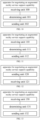
- FIG. 2 is a flow chart of a method for negotiating an augmented reality service support capability according to an example embodiment. As shown in FIG. 2 , the method for negotiating an augmented reality service support capability of an embodiment of the present invention is applied to a first network element, and the method for negotiating an augmented reality service support capability includes the following processing steps.
- a session management (SM) context creation request is received, and it is determined whether a network supports an augmented reality service.
- SM session management
- the first network element may include a session management function (SMF).
- SMF session management function
- other network elements of the core network may also be enabled as the first network element in the case where the function of the SMF is implemented by other network elements.
- other network elements of other network elements of the core network are configured with corresponding functions of the first network element of the embodiments of the present invention, they may also be enabled as the first network element.
- the augmented reality service specifically includes an XRM service such as a virtual reality service (VR) and an augmented reality service (AR), and also includes a multi-modal service.
- an XRM service such as a virtual reality service (VR) and an augmented reality service (AR)
- VR virtual reality service
- AR augmented reality service
- the SM context creation request carries a first cell
- the first cell carries the capability of a user equipment (UE) to support an augmented reality service.
- the first cell includes 5GSM core network capability or PCO.
- the first network element may determine and judge whether the network supports the augmented reality service of the PDU session according to at least one of subscription information, a network support capability, and a local policy.
- a response of whether the network supports the augmented reality service is sent.
- a first network element sends a response of whether a network supports an augmented reality service to a second network element
- the second network element may be an AMF.
- a person skilled in the art would understand that other network elements of the core network can also be enabled as a second network element in the case where the function of the AMF is implemented by the other network elements.
- other network elements of the core network are configured with corresponding functions of the second network element of the embodiments of the present invention, they may also be enabled as second network elements.
- the capability of whether the network supports the augmented reality service is carried in an SM context creation response or an update response and is sent to the second network element.
- the SMF determines that the network supports an augmented reality service or a multi-modal service, sending protocol data unit (PDU) session establishment acception information to the second network element, where the PDU session establishment acception information carries a quality of service (QoS) parameter for supporting the augmented reality service or the multi-modal service.
- PDU protocol data unit
- the network in the case where it is determined that the network supports the augmented reality service or the multi-modal service, it may further include: locally executing a decision on the policy and charging rule at SMF.
- executing a policy control function PCF selection based on the selected PCF, an augmented reality service rule or a multi-modal service rule is determined, or a data flow PCC rule for supporting an augmented reality service or a multi-modal service is determined.
- FIG. 3 is a flow chart illustrating a method for negotiating an augmented reality service support capability according to an example embodiment, and the method for negotiating an augmented reality service support capability of an embodiment of the present invention is performed by a network side function, including the following processing steps.
- the network side function receives the PDU session establishment request sent by the UE.
- the network side function determines whether the network supports the augmented reality service in the session establishment process.
- the network side function sends a non-access stratum (NAS) message to the UE, carrying a response of whether the augmented reality service is supported.
- NAS non-access stratum
- the session establishment request information carrying the capability of the UE to support the augmented reality service includes: the session establishment request carries a 5GSM core network capability, and the 5GSM core network capability contains the capability of the UE to support the augmented reality service.
- the session establishment request information carrying the capability of the UE to support the augmented reality service includes: the session establishment request carries a PCO, and the PCO includes the capability of the UE to support the augmented reality service.
- the network side function includes a first network element and a second network element, where the first network element includes an SMF, and the second network element may include an AMF, etc.
- the first network element receives a session management (SM) context creation request, determines whether the network supports an augmented reality service; and sends to a second network element a response indicating whether the network supports the augmented reality service; where the SM context creation request carries a first cell, and the first cell carries the capability of a user equipment (UE) to support the augmented reality service; a PDU session establishment acception information is sent to the second network element, where the PDU session establishment acception information carries a QoS parameter for supporting an augmented reality service.
- SM session management
- the first network element determines and judges whether the network supports the augmented reality service of the PDU session according to at least one of subscription information, a network support capability, and a local policy; sends to the second network element the capability that whether the network supports an augmented reality service.
- the first network element locally executes the decision of the policy and charging rule; or executes PCF selection, determining a virtual reality service rule based on the selected PCF, or determining a data flow PCC rule for supporting the virtual reality service.
- the second network element receives a PDU session establishment request sent by a UE, selects a first network element based on the PDU session establishment request, and sends an SM context creation request to the selected first network element; the SM context request carries the capability of the UE to support the augmented reality service; and after receiving the PDU session establishment acception information returned by the first network element, the second network element sends the PDU session identifier and the PDU session establishment acception information to the UE via a NAS message.
- the second network element stores the capability of the UE to support the augmented reality service as a PDU session level context in a UE context.
- a second network element receives a PDU session establishment request sent by a UE, selects a first network element based on the PDU session establishment request, and sends an SM context creation request to the selected first network element; the first network element sends to the second network element the capability of whether the network supports an augmented reality service; after authenticating the PDU session, the first network element locally executes a decision of the policy and charging rule; or executes PCF selection, and determines an augmented reality service rule or a multi-modal service rule or determines a data flow PCC rule for supporting the augmented reality service or the multi-modal service based on the selected PCF; PDU session establishment acception information sent by the first network element to the second network element, where the PDU session establishment acception information carries a QoS parameter for supporting an augmented reality service or a multi-modal service; the second network element sends the PDU session identifier and the PDU session establishment acception information to the UE via the NAS message.
- the method may further include: the first network element locally executes a decision of the policy and charging rule; or executing PCF selection, determining a virtual reality service rule or a multi-modal service rule based on the selected PCF, or determining a data flow PCC rule for supporting the virtual reality service or the multi-modal service.
- the second network element stores the capability of the UE to support the augmented reality service or the multi-modal service as a PDU session level context in a UE context.
- whether the capability of whether the network supports the augmented reality service is carried in an SM context creation response or an update response, and is sent to the second network element.
- the PDU session establishment acception information further includes at least one of the following information: augmented reality service rules or multi-modal service rules; QoS rules that support augmented reality services and multi-modal services.
- FIG. 4 is a flow chart of a method for negotiating an augmented reality service support capability according to an example embodiment. As shown in FIG. 4 , the method for negotiating an augmented reality service support capability according to an embodiment of the present invention is performed by a UE, and includes the following processing steps.
- the UE sends a PDU session establishment request.
- the PDU session establishment request carries a first cell, and the first cell carries the capability of the UE to support the augmented reality service; the first cell includes 5GSM core network capability or PCO.
- the UE receives the NAS message sent by the network side.
- the NAS message carries a response whether the network supports an augmented reality service or a multi-modal service.
- FIG. 5 is a flow chart of a method for negotiating an augmented reality service support capability according to an example embodiment, and as shown in FIG. 5 , the method for negotiating an augmented reality service capability of an embodiment of the present invention is performed by a second network element, including the following processing steps.
- the second network element receives a registration request sent by the third network element.
- the registration request carries a response whether the augmented reality service or the multi-modal service is supported.
- the second network element determines whether the network supports the augmented reality service or the multi-modal service.
- determining whether a network supports an augmented reality service or a multi-modal service may include: determining whether the network supports an augmented reality service or a multi-modal service according to at least one of subscription information, a network support capability, and a local policy.
- the second network element sends registration acception information to the UE via the third network element or directly.
- the registration acception information carries the capability of whether the network supports the augmented reality service.
- message interaction can be executed between a UE and a core network element via a RAN, and the core network element can also directly send relevant messages to the UE for direct communication with the UE.
- embodiments of the present invention may further include: sending a group identifier of an augmented reality service or a multi-modal service to a UE via a third network element or directly; the group identifier being used to associate a plurality of UEs of an augmented reality service or a multi-modal service group, or a plurality of augmented reality service or multi-modal service sessions of a single UE, or a plurality of data flows of a single UE session, and executing the augmented reality service or the multi-modal service with cooperation of a policy decision and a QoS authorization of the augmented reality service or the multi-modal service of the network side function network element, such as SMF and/or PCF.
- the network side function network element such as SMF and/or PCF.
- FIG. 6 is a flow chart of an augmented reality service capability negotiation method according to an according to an example embodiment, and as shown in FIG. 6 , the method for negotiating an augmented reality service support capability of an embodiment of the present invention is performed by a network side function, including the following processing steps.
- the network side function receives a registration request.
- the network side function determines whether the network supports the augmented reality service or the multi-modal service.
- the network side function sends registration acception information to the UE.
- the registration acception information carries the capability of whether the network supports the augmented reality service.
- the network side function includes a second network element and a third network element, where the second network element includes an AMF, and the third network element includes an access network such as a RAN or AN.
- a third network element receives a registration request sent by a UE, and selects a second network element; the registration request carries the capability of whether the UE supports an augmented reality service; the registration request is sent to the selected second network element; the second network element determines whether the network supports an augmented reality service or a multi-modal service, and sends registration acception information to the UE via the third network element; the registration acception information carries the capability of whether the network supports the augmented reality service.
- the determining whether a network supports an augmented reality service or a multi-modal service includes: the second network element determining whether the network supports an augmented reality service or a multi-modal service according to at least one of subscription information, a network support capability, and a local policy.
- the method of the embodiments of the present invention may further include: the second network element sending a group identifier of an augmented reality service or a multi-modal service to a UE via a third network element or directly; the group identifier being used to associate a plurality of UEs of an augmented reality service or a multi-modal service group, or a plurality of augmented reality service or multi-modal service sessions of a single UE, or a plurality of data flows of a single UE session.
- the augmented reality service or the multi-modal service is executed in cooperation with the policy decision and the QoS authorization of the augmented reality service or the multi-modal service of the cooperated network side functional network such as SMF and/or PCF.
- FIG. 7 is a flow chart of a method for negotiating an augmented reality service support capability according to an example embodiment. As shown in FIG. 7 , the method for negotiating an augmented reality service support capability according to an embodiment of the present invention is performed by a UE, and includes the following processing steps.
- the UE sends a registration request to the third network element.
- the registration request carries the capability of supporting an augmented reality service.
- the UE receives registration acception information returned by the third network element.
- the registration request carries a response of whether to support an augmented reality service or a multi-modal service.
- a UE when a UE receives a group identifier of an augmented reality service or a multi-modal service forwarded by the third network element; the group identifier being used to associate a plurality of UEs of an augmented reality service or a multi-modal service group, or a plurality of augmented reality service or multi-modal service sessions of a single UE, or a plurality of data flows of a single UE session.
- the UE on the basis of the foregoing steps, it is also possible to include: the UE storing the received group identifier of the augmented reality service or the multi-modal service; the UE carrying the group identifier of the augmented reality service or the multi-modal service in the PDU session establishment request message sent to the second network element.
- the group identifier of the augmented reality service sent by the network side is forwarded through the RAN or directly sent by the network side function.
- the embodiments of the present invention enables the network to correctly identify the capability support of the UE for the XRM service and the multi-modal data and also enables the UE to accurately acquire the corresponding capability support of the network, so as to facilitate the identification and QoS coordination of the XRM service and the multi-modal data supported by the UE and the network.
- both the UE and the 5GC network support the XRM service and the multi-modal service
- the execution of the XRM service and the multi-modal service can be guaranteed, for example, the UE requests to establish a XRM and multi-modal session, the network determines to support the function and successfully establishes the session, the UE executes a corresponding service policy provided by the network, and executes QoS association and transmission of a XRM service data flow, so as to satisfy the QoS of the XRM service and the multi-modal service, such as guaranteed flow bit rate (GFBR), packet delay budget (PDB), maximum data burst size (MDBV) matching, etc. of the corresponding XRM and the multi-modal service.
- GFBR guaranteed flow bit rate
- PDB packet delay budget
- MDBV maximum data burst size
- the service policy includes an XRM rule/a multi-modal service rule, or a data flow PCC rule for associating with the XRM and the multi-modal service, for example, enhancing a UE policy supporting the XRM multi-modal service, etc.
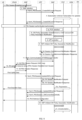
- FIG. 8 is a flow chart illustrating a virtual reality service capability negotiation method according to an example embodiment, and as shown in FIG. 8 , the virtual reality service capability negotiation method according to an embodiment of the present invention includes the following processing steps.
- step 1 the UE sends a PDU session establishment request to an access and mobility management function (AMF) through a radio access network (RAN) or an access network (AN).
- AMF access and mobility management function
- RAN radio access network
- AN access network
- the UE sends a Non-Access Stratum (NAS) message to the AMF to initiate a PDU session establishment procedure requested by the UE.
- An N1 session management container (N1 SM container) carries a PDU session establishment request message; the PDU session establishment request message carries 5GSM capability information; and the 5GSM Capability information includes XRM service/multi-modal service capability.
- N1 SM container carries a PDU session establishment request message; the PDU session establishment request message carries 5GSM capability information; and the 5GSM Capability information includes XRM service/multi-modal service capability.
- the UE can inform the network that the UE supports the XRM service/multi-modal service feature.
- the AMF stores the XRM service/multi-modal service capability supported by the UE as a PDU session level context in the UE context based on the PDU session establishment request message.
- a corresponding SMF is selected for the PDU session establishment request.
- the AMF sends an establishment session management (SM) context request message to the selected SMF, where the SM context request message carries the N1 SM container in step 1, and the N1 SM container includes a 5GSM core network capability including a XRM service/a multi-modal service capability.
- SM establishment session management
- the service management function checks the subscription data to retrieve/update the subscription. For example, determining whether the PDU session establishment request complies with the user subscription and local policy, and determining whether the network supports the XRM service/multi-modal service. If not, the PDU session establishment for the XRM service/multi-modal service is rejected, or the session establishment is received based on the local policy but the XRM service/multi-modal service is not supported.
- step 5 the SMF sends to the AMF a message corresponding to establish an SM context or an update response message; if session PDU establishment is rejected, carrying a corresponding rejection reason value; alternatively, if the support of the XRM service/multi-modal service is denied, a corresponding cause value is carried indicating that the 5GC does not support the XRM service/multi-modal service.
- step 6 the core network executes authentication and authentication on the PDU session.
- step 7 if the PDU session uses dynamic policy and charging control (PCC), then the SMF executes PCF selection; executing SM policy association establishment or SMF initiated SM policy association modification with PCF; otherwise, the SMF executes a local policy; the PDU session requests to support a XRM service/multi-modal service, and SMF and PCF generate/activate a corresponding XRM rule/multi-modal data rule according to application information provided by a subscription and an application function (AF), or generate/activate a data flow PCC rule enhanced to support a XRM and multi-modal session, for example, associating a XRM service data flow, associating with a XRM service and a multi-modal service QoS, including GFBR, PDB and MDBV matching of a XRM and a multi-modal service data flow, etc.
- PCC dynamic policy and charging control
- step 8 the SM executes the user plane function (UPF) selection.
- UPF user plane function
- step 9 a SMF initial SM policy association modification is executed.
- step 10 the SMF sends an N4 session establishment/modification request to the PCF; the PCF sends an N4 session establishment/modification response to the SMF.
- the SMF sends an N1N2 message (Namf_Communication_N1N2MessageTransfer) to the AMF
- N1 SM container carries PDU session establishment acception information
- the Accept carries relevant QoS parameters supporting an XRM service/a multi-modal service
- the PDU session establishment acception information may also carry a corresponding XRM rule/multi-modal data rule, or a QoS rule for supporting XRM and multi-modal services, for the UE to execute association of a XRM service data flow and execute QoS matching of the XRM and multi-modal data flows.
- step 12 the AMF sends an N2 PDU session request message (a NAS message) to the ® AN, the AMF sends the NAS message to the RAN, and the N2 PDU session request message carries a PDU session ID and a session accept message.
- N2 PDU session request message (a NAS message)
- step 13 the ® AN sends a PDU session establishment accept message to the UE to initiate an access network AN-specific resource setup, and the RAN forwards the NAS message in step 12 to the UE for the UE to execute.
- step 14 the RAN sends an N2 PDU session response message to the AMF.
- the first uplink data is sent to the UPF.
- step 15 the AMF sends Nsmf PDUSession UpdateSMContext Request to SMF.
- step 16 the AMF sends an N4 session Establishment/modification request to the UPF; the UPF sends an N4 session establishment/modification response to the AMF.
- AMF initiates registration with UDM.
- step 17 the SMF sends Nsmf_PDUSession_UpdateSMContext Response to AMF.
- step 18 the SMF sends Nsmf_PDUSession_SMContextStatusNotify to AMF.
- step 19 the SMF executes the Ipv6 address configuration for the UE.
- step 20 the UPF initiates a SMF initial SM policy SMF initiated SM Policy Association Modification.
- step 21 unsubscription between SMF and UDP.
- the foregoing process can be understood with reference to the session establishment and update process of TS23.502 4.3.2.2.
- the UE indicates in a protocol configuration option (PCO) whether the UE supports XRM service capabilities/multi-mode service capabilities in a registration request message, e.g. in an initial registration and mobility registration update as part of the UE 5GMM core network capabilities.
- PCO protocol configuration option
- the capability of the UE to support the XRM service/multi-mode data service may be included in the PCO of the PDU session establishment request message.
- the processing of the other steps is the same as the aforementioned processing flow.
- step 11 if the UE indicates that the XRM service/multi-modal data service is supported in the PCO in the PDU session establishment request, and the XRM service/multi-mode data service is enabled for the PDU session, then SMF notifies UE XRM via AMF that the service/multi-modal data service is enabled in PCO in the PDU session establishment accept. That is, the SMF may provide the XRM Service/Multimodal Data Service Configuration Information to the UE in the PCO.
- SMF negotiates XRM business/multi-mode data service support with PCF. If the PCF supports the XRM service/multi-mode data service and accepts it, the SMF indicates to the UE in the PCO that the XRM service/multi-mode data service can be used.
- the XRM/multi-modal capability can also be provided to a network in a UE registration process, and the network can execute group association of a plurality of UEs corresponding to the XRM/multi-modal service, or multi-session group association within a single UE, or QoS association between a plurality of data flows of a session within a single UE, and coordinate policy decision and QoS authorization of the XRM/multi-modal service so as to support the execution of the XRM/multi-modal service.
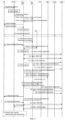
- FIG. 9 is a flow chart illustrating a virtual reality service capability negotiation method according to an example embodiment, and as shown in FIG. 9 , the virtual reality service capability negotiation method according to an embodiment of the present invention includes the following processing steps.
- Step 1 the UE sends a registration request message to the ® AN, where the registration request message carries UE mobility management core network capability (MM core network capability) information, and the UE MM core network capability includes the capability support of the XRM service/multi-modal service.
- MM core network capability UE mobility management core network capability
- step 2 the ® AN selects a corresponding AMF for the UE.
- step 3 the ® AN sends a registration request of the UE to the AMF via an N2 message, where the N2 message carries information about the registration request in step 1.
- the AMF stores the corresponding UE MM core network capability in the UE context.
- the AMF decides whether to support the XRM service/multi-modal service according to information decisions such as subscription information, a network support capability, and a local policy.
- step 4 the newly selected AMF sends a Namf_Communication_UEContextTransfer to the old AMF.
- step 5 the old AMF sends a Namf_Communication_UEContextTransfer Response to the new AMF.
- step 6 the new AMF sends an identity request to the UE.
- step 7 the UE sends an identity response to the new AMF.
- step 8 the new AMF makes an AUSF selection.
- step 9 the network side executes Authentication/Security authentication on the UE.
- step 10 the new AMF sends a Namf_Communication _Registration Status Update to the old AMF.
- step 11 an identity request/response is executed between the new AMF and the UE.
- step 12 the new AMF sends N5g-eir_Equipment Identity Check_Get to EIR.
- step 13 the new AMF makes a UDM selection.
- step 14 Nudm_UECM_Registration, nudm_SDM_Get and Nudm_SDM_Subscribe are executed between the new AMF and the core network.
- the core network sends Nudm_UECM_Deregistration Notification to the old AMF, and the old AMF sends Nudm_SDM_Unsubscribe to the core network.
- step 15 the new AMF makes a PCF selection.
- step 16 the AM policy Association Establishment/Modification is executed between the new AMF and the selected PCF.
- step 17 the new AMF sends Nsmf_PDUSession_UpdateSMContext/Nsmf_ PDUSession _ReleaseSMContext to SMF.
- step 18 the new AMF sends a UE Context Modification Request to the N3IWF/TNGF/W AGF.
- step 19 the N3IWF/TNGF/W_AGF sends a send UE Context Modification Response to the new AMF.
- the new AMF sends Nudm_UECM_Registration to the UDM and receives Nudm_UECM_DeregistrationNotify sent by the UDM, and the new AMF sends Nudm _SDM_Unsubscribe to the UDM.
- step 21 the new AMF sends a registration accept to the UE.
- UE Policy Association Establishment is executed between the new AMF and the PCF.
- step 22 the UE sends a registration complete message to the new AMF.
- step 23 the new AMF sends a Nudm_SDM_Info to the UDM, and the UDM sends an N2 message to the new AMF.
- step 24 Nudm_UECM_Update is executed between the new AMF and the UDM.
- step 25 network Slice-Specific Authentication and Authorization is executed between the new AMF and the UE.
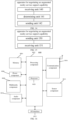
- FIG. 10 is a schematic diagram illustrating a component structure of an apparatus for negotiating an augmented reality service support capability according to an example embodiment.
- the augmented reality service capability negotiation apparatus includes: a receiving unit 100 configured to receive an SM context creation request; where the SM context creation request carries a first cell, and the first cell carries the capability of a user equipment (UE) to support the augmented reality service; a determining unit 101 configured to determine whether the network supports an augmented reality service; a sending unit 102 configured to send a response to the second network element whether the network supports the augmented reality service.
- UE user equipment
- the first network element includes SMF, etc.
- the first cell includes a 5GSM core network capability, or a protocol configuration option PCO.
- the determining unit 101 is further configured to determine and judge whether the network supports the augmented reality service of the PDU session according to at least one of subscription information, a network support capability, and a local policy.
- the capability of whether the network supports the augmented reality service is carried in an SM context creation response or an update response and is sent to the second network element.
- the apparatus further includes: a policy execution unit (not shown in FIG. 10 ) configured to locally execute a decision of the policy and charging rule in response to the network supporting an augmented reality service; or executing a policy control function PCF selection; based on the selected PCF, an augmented reality service rule or a multi-modal service rule is determined, or a data flow PCC rule for supporting an augmented reality service is determined.
- a policy execution unit (not shown in FIG. 10 ) configured to locally execute a decision of the policy and charging rule in response to the network supporting an augmented reality service
- a policy control function PCF selection based on the selected PCF, an augmented reality service rule or a multi-modal service rule is determined, or a data flow PCC rule for supporting an augmented reality service is determined.
- the sending unit 102 is further configured to: send protocol data unit (PDU) session establishment acception information to the second network element; the PDU session establishment acception information carries a quality of service (QoS) parameter for supporting an augmented reality service or a multi-modal service.
- PDU protocol data unit
- QoS quality of service
- the receiving unit 100, the determining unit 101, the sending unit 102, the policy execution unit, etc. may be implemented by one or more of a central processing unit (CPU), a graphics processing unit (GPU), a base processor (BP), an application specific integrated circuit (ASIC), a digital signal processor (DSP), a programmable logic device (PLD), a complex programmable logic device (CPLD), a field-programmable gate array (FPGA), general-purpose processor, a controller, a micro controller unit (MCU), a microprocessor, or other electronic component implementations may also be implemented in conjunction with one or more radio frequency (RF) antennas to execute the steps of the method for negotiating an augmented reality service support capability of the preceding embodiments.
- RF radio frequency
- FIG. 11 is a schematic diagram illustrating a component structure of an apparatus for negotiating an augmented reality service support capability according to an example embodiment.
- the augmented reality service capability negotiation apparatus includes: a receiving unit 110 configured to receive a PDU session establishment request sent by a UE; a determining unit 111 configured to determine whether the network supports an augmented reality service or a multi-modal service in a session establishment process in response to the session establishment request information carrying the capability of the UE to support the augmented reality service; a sending unit 112 configured to send a non-access stratum (NAS) message to the UE, where the NAS message carries a response of whether to support the augmented reality service or a multi-modal service.
- NAS non-access stratum
- the session establishment request information carrying the capability of the UE to support the augmented reality service includes: the session establishment request carries a 5GSM core network capability, and the 5GSM core network capability contains the capability of the UE to support the augmented reality service.
- the session establishment request information carrying the capability of the UE to support the augmented reality service includes: the session establishment request carries a PCO, and the PCO includes the capability of the UE to support the augmented reality service.
- the receiving unit 110, the determining unit 111, the sending unit 112, etc. may be implemented by one or more of a central processing unit (CPU), a graphics processing unit (GPU), a base processor (BP), an application specific integrated circuit (ASIC), a digital signal processor (DSP), a programmable logic device (PLD), a complex programmable logic device (CPLD), a field-programmable gate array (FPGA), a general-purpose processor, a controller, a micro controller unit (MCU), a microprocessor, or other electronic component implementations may also be implemented in conjunction with one or more radio frequency (RF) antennas to execute the steps of the method for negotiating an augmented reality service support capability of the preceding embodiments.
- RF radio frequency
- FIG. 12 is a schematic diagram illustrating a component structure of an apparatus for negotiating an augmented reality service support capability according to an example embodiment.
- the augmented reality service capability negotiation apparatus includes: a sending unit 120 configured to send a PDU session establishment request; the PDU session establishment request carries a first cell, and the first cell carries the capability of the UE to support the augmented reality service; and a receiving unit 121 configured to receive the NAS message sent by the network side, where the response of whether the augmented reality service or the multi-modal service is supported is carried.
- the first cell includes a 5GSM core network capability or a PCO.
- the sending unit 120, the receiving unit 121, etc. may be implemented by one or more of a central processing unit (CPU), a graphics processing unit (GPU), a base processor (BP), an application specific integrated circuit (ASIC), a digital signal processor (DSP), a programmable logic device (PLD), a complex programmable logic device (CPLD), a field-programmable gate array (FPGA), a general-purpose processor, a controller, a micro controller unit (MCU), a microprocessor, or other electronic component implementations may also be implemented in conjunction with one or more radio frequency (RF) antennas to execute the steps of the method for negotiating an augmented reality service support capability of the preceding embodiments.
- RF radio frequency
- FIG. 13 is a schematic diagram illustrating a component structure of an apparatus for negotiating an augmented reality service support capability according to an example embodiment.
- the augmented reality service capability negotiation apparatus includes: a receiving unit 130 configured to receive a registration request sent by a third network element; a determining unit 131 configured to determine whether the network supports an augmented reality service or a multi-modal service in response to the registration request carrying the capability of the UE to support the augmented reality service; a sending unit 132 configured to send registration acception information to the UE via the third network element, where the registration request carries a response of whether the augmented reality service or the multi-modal service is supported.
- the determining unit 131 is further configured to: determine whether the network supports an augmented reality service or a multi-modal service according to at least one of subscription information, a network support capability, and a local policy.
- the sending unit 132 is further configured to: send a group identifier of an augmented reality service or a multi-modal service to a UE via a third network element; the group identifier being used to associate a plurality of UEs of an augmented reality service or a multi-modal service group, or a plurality of augmented reality service or multi-modal service sessions of a single UE, or a plurality of data flows of a single UE session, and execute augmented reality services or multi-modal services with cooperation of a policy decision and a QoS authorization for augmented reality services or multi-modal services.
- the sending unit 130, the determining unit 131, the receiving unit 132, etc. may be implemented by one or more of a central processing unit (CPU), a graphics processing unit (GPU), a base processor (BP), an application specific integrated circuit (ASIC), a digital signal processor (DSP), programmable logic device (PLD), a complex programmable logic device (CPLD), a field-programmable gate array (FPGA), a general-purpose processor, a controller, a micro controller unit (MCU), a microprocessor, or other electronic component implementations may also be implemented in conjunction with one or more radio frequency (RF) antennas to execute the steps of the method for negotiating an augmented reality service support capability of the preceding embodiments.
- RF radio frequency
- FIG. 14 is a schematic diagram illustrating a component structure of an apparatus for negotiating an augmented reality service support capability according to an example embodiment.
- the augmented reality service capability negotiation apparatus includes: a receiving unit 140 configured to receive a registration request; a determining unit 141 configured to determine whether the network supports an augmented reality service or a multi-modal service in response to the registration request carrying the capability of whether the network supports the augmented reality service; and a sending unit 142 configured to send registration acception information to the UE, carrying the capability of supporting the augmented reality service.
- the receiving unit 140, the determining unit 141, the sending unit 142, etc. may be implemented by one or more of a central processing unit (CPU), a graphics processing unit (GPU), a base processor (BP), an application specific integrated circuit (ASIC), a digital signal processor (DSP), a programmable logic device (PLD), a complex programmable logic device (CPLD), a field-programmable gate array (FPGA), a general-purpose processor, a controller, a micro controller unit (MCU), a microprocessor, or other electronic component implementations may also be implemented in conjunction with one or more radio frequency (RF) antennas to execute the steps of the method for negotiating an augmented reality service support capability of the preceding embodiments.
- RF radio frequency
- FIG. 15 is a schematic diagram illustrating a component structure of an apparatus for negotiating an augmented reality service support capability according to an example embodiment.
- the augmented reality service capability negotiation apparatus includes: a sending unit 150 configured to send a registration request to a third network element, where the registration request carries the capability of supporting an augmented reality service; and a receiving unit 151 configured to receive registration acception information returned by the third network element, where the registration request carries a response of whether to support an augmented reality service or a multi-modal service.
- the receiving unit 151 is further configured to: receive a group identifier of an augmented reality service or a multi-modal service forwarded by the third network element; use the group identifier for associating a plurality of UEs of an augmented reality service or a multi-modal service group, or for associating a plurality of augmented reality services or multi-modal service sessions of a single UE, or for associating a plurality of data flows of a single UE session; and execute augmented reality services or multi-modal services with cooperation of a policy decision and a QoS authorization for augmented reality services or multi-modal services.
- the sending unit 150, the receiving unit 151, etc. may be implemented by one or more of a central processing unit (CPU), a graphics processing unit (GPU), a base processor (BP), an application specific integrated circuit (ASIC), a digital signal processor (DSP), a programmable logic device (PLD), a complex programmable logic device (CPLD), a field-programmable gate array (FPGA), a general-purpose processor, a controller, a micro controller unit (MCU), a microprocessor, or other electronic component implementations may also be implemented in conjunction with one or more radio frequency (RF) antennas to execute the steps of the method for negotiating an augmented reality service support capability of the preceding embodiments.
- RF radio frequency
- FIG. 16 is a block diagram of a user equipment 8000, according to an example embodiment.
- the user equipment 8000 may be a mobile phone, a computer, a digital broadcast terminal, a messaging device, a game console, a tablet device, a medical device, an exercise device, a personal digital assistant, etc.
- the user equipment 8000 may include one or more of the following cells: a processing cell 8002, a memory 8004, a power cell 8006, a multimedia cell 8008, an audio cell 8010, an input/output (I/O) interface 8012, a sensor cell 8014, and a communication cell 8016.
- the processing cell 8002 typically controls the overall operation of the user equipment 8000, such as operations associated with display, telephone calls, data communications, camera operations, and recording operations.
- Processing cell 8002 may include one or more processors 8020 to execute instructions to execute all or part of the steps of the method for negotiating an augmented reality service support capability described above.
- processing cell 8002 may include one or more modules to facilitate interaction between processing cell 8002 and other cells.
- processing cell 8002 may include a multimedia module to facilitate interaction between multimedia cell 8008 and processing cell 8002.
- Memory 8004 is configured to store various types of data to support operation at equipment 8000. Examples of such data include instructions for any application or method operating on user equipment 8000, contact data, phonebook data, messages, pictures, videos, etc.
- the memory 8004 may be implemented by any type or combination of volatile and non-volatile memory devices, such as static random access memory (SRAM), electrically erasable programmable read-only memory (EEPROM), erasable programmable read-only memory (EPROM), programmable read-only memory (PROM), read-only memory (ROM), magnetic memory, flash memory, magnetic or optical disks.
- SRAM static random access memory
- EEPROM electrically erasable programmable read-only memory
- EPROM erasable programmable read-only memory
- PROM programmable read-only memory
- ROM read-only memory
- magnetic memory flash memory, magnetic or optical disks.
- the power cell 8006 provides power to the various cells of the user equipment 8000.
- the power cells 8006 may include a power management system, one or more power sources, and other cells associated with generating, managing, and distributing power for the user equipment 8000.
- the multimedia cell 8008 includes a screen providing an output interface between the user equipment 8000 and the user.
- the screen may include a liquid crystal display (LCD) and a touch panel (TP). If the screen includes a touch panel, the screen may be implemented as a touch screen to receive input signals from a user.
- the touch panel includes one or more touch sensors to sense touches, slides, and gestures on the touch panel. Touch sensors may not only sense the boundaries of a touch or slide action but also detect the duration and pressure associated with the touch or slide operation.
- the multimedia cell 8008 includes a front camera and/or a back camera. When the equipment 8000 is in an operation mode, such as a photographing mode or a video mode, the front camera and/or the rear camera may receive external multimedia data. Each of the front camera and the rear camera may be a fixed optical lens system or have a focal length and an optical zoom capability.
- the audio cell 8010 is configured to output and/or input audio signals.
- the audio cell 8010 includes a MIC configured to receive external audio signals when the user equipment 8000 is in an operating mode, such as a calling mode, a recording mode, and a speech recognition mode.
- the received audio signal may be further stored in memory 8004 or sent via communication cell 8016.
- the audio cell 8010 further includes a speaker for outputting an audio signal.
- I/O interface 8012 provides an interface between processing cells 8002 and peripheral interface modules, which may be keyboards, click wheels, buttons, etc. These buttons may include, but are not limited to: home button, volume button, start button, and lock button.
- the sensor cell 8014 includes one or more sensors for providing the user equipment 8000 with an assessment of the status of various aspects.
- the sensor cell 8014 may detect the on/off state of the device 8000, and the relative locating of the cells, such as the display and keypad of the user equipment 8000, the sensor cell 8014 may also detect changes in the position of the user equipment 8000 or one of the cells in the user equipment 8000, the presence or absence of user contact with the user equipment 8000, the orientation or acceleration/deceleration of the user equipment 8000, and temperature changes of the user equipment 8000.
- the sensor cell 8014 may include a proximity sensor configured to detect the presence of a nearby object in the absence of any physical contact.
- the sensor cell 8014 may also include a light sensor, such as a CMOS or CCD image sensor, for use in imaging applications.
- the sensor cell 8014 may also include an acceleration sensor, a gyroscope sensor, a magnetic sensor, a pressure sensor, or a temperature sensor.
- the communication cell 8016 is configured to facilitate wired or wireless communication between the user equipment 8000 and other devices.
- the user equipment 8000 may access a wireless network based on a communication standard, such as Wi-Fi, 2G or 3G, or a combination thereof.
- the communication cell 8016 receives a broadcast signal or broadcast-related information from an external broadcast management system via a broadcast channel.
- communication cell 8016 also includes a near-field communication (NFC) module to facilitate short-range communication.
- NFC near-field communication
- the NFC module may be implemented based on RFID technology, IrDA technology, UWB technology, (BT) technology, and other technologies.
- user equipment 8000 may be implemented by one or more an application-specific integrated circuit (ASIC), a digital signal processor (DSP), a digital signal processing device (DSPD), a programmable logic device (PLD), a field programmable gate array (FPGA), a controller, a micro-controller, a microprocessor, or other electronic components for executing the steps of the method for negotiating an augmented reality service support capability described above.
- ASIC application-specific integrated circuit
- DSP digital signal processor
- DSPD digital signal processing device
- PLD programmable logic device
- FPGA field programmable gate array
- controller a micro-controller, a microprocessor, or other electronic components for executing the steps of the method for negotiating an augmented reality service support capability described above.
- a non-transitory computer-readable storage medium including instructions, such as a memory 8004 including instructions executable by a processor 8020 of user equipment 8000 to execute the steps of the method for negotiating an augmented reality service support capability described above.
- the non-transitory computer-readable storage medium may be an ROM, a random access memory (RAM), a CD-ROM, a magnetic tape, a floppy disk, an optical data storage equipment, etc.
- the embodiments of the present invention also provide a first network element, including a processor, a transceiver, a memory, and an executable program stored on the memory and capable of being run by the processor, and the processor, when running the executable program, executes the steps of the method for negotiating an augmented reality service support capability of the preceding embodiments.
- the embodiments of the present invention also provide a second network element, including a processor, a transceiver, a memory, and an executable program stored on the memory and capable of being run by the processor, and the processor, when running the executable program, executes the steps of the method for negotiating an augmented reality service support capability of the preceding embodiments.
- the embodiments of the present invention also recite a terminal, including a processor, a transceiver, a memory, and an executable program stored on the memory and capable of being run by the processor, the processor running the executable program to execute the steps of the method for negotiating an augmented reality service support capability of the preceding embodiments.
- the embodiments of the present invention also describe a storage medium having an executable program stored thereon, the executable program being performed by a processor to execute the steps of the method for negotiating an augmented reality service support capability of the preceding embodiments.
Landscapes
- Engineering & Computer Science (AREA)
- Computer Networks & Wireless Communication (AREA)
- Signal Processing (AREA)
- Databases & Information Systems (AREA)
- Mobile Radio Communication Systems (AREA)
Applications Claiming Priority (1)
| Application Number | Priority Date | Filing Date | Title |
|---|---|---|---|
| PCT/CN2022/083874 WO2023184195A1 (zh) | 2022-03-29 | 2022-03-29 | 支持增强现实业务能力协商方法及装置、网元、ue及存储介质 |
Publications (2)
| Publication Number | Publication Date |
|---|---|
| EP4503545A1 true EP4503545A1 (de) | 2025-02-05 |
| EP4503545A4 EP4503545A4 (de) | 2025-03-26 |
Family
ID=88198462
Family Applications (1)
| Application Number | Title | Priority Date | Filing Date |
|---|---|---|---|
| EP22934050.0A Pending EP4503545A4 (de) | 2022-03-29 | 2022-03-29 | Verfahren und vorrichtung zur aushandlung der fähigkeit eines dienstes der erweiterten realität, netzwerkelement, benutzergerät und speichermedium |
Country Status (4)
| Country | Link |
|---|---|
| US (1) | US20250203347A1 (de) |
| EP (1) | EP4503545A4 (de) |
| CN (1) | CN117157956A (de) |
| WO (1) | WO2023184195A1 (de) |
Families Citing this family (4)
| Publication number | Priority date | Publication date | Assignee | Title |
|---|---|---|---|---|
| CN117715242B (zh) * | 2023-12-15 | 2024-05-28 | 之江实验室 | 一种数据传输方法、系统、存储介质以及电子设备 |
| CN118077244A (zh) * | 2024-01-10 | 2024-05-24 | 上海移远通信技术股份有限公司 | 无线通信方法、通信设备及终端设备 |
| WO2025166487A1 (zh) * | 2024-02-05 | 2025-08-14 | 富士通株式会社 | 配置多模态业务相关信息的方法、装置和通信系统 |
| CN119967487A (zh) * | 2024-07-24 | 2025-05-09 | 中国电信股份有限公司 | 业务控制方法、装置、设备、介质和产品 |
Family Cites Families (8)
| Publication number | Priority date | Publication date | Assignee | Title |
|---|---|---|---|---|
| CN102843349B (zh) * | 2011-06-24 | 2018-03-27 | 中兴通讯股份有限公司 | 实现移动增强现实业务的方法及系统、终端及服务器 |
| CN108027664B (zh) * | 2015-09-28 | 2021-05-28 | 微软技术许可有限责任公司 | 统一的虚拟现实平台 |
| CN109818769A (zh) * | 2017-11-21 | 2019-05-28 | 华为技术有限公司 | 发送信息的方法和装置 |
| CN109996303B (zh) * | 2017-12-29 | 2021-06-01 | 华为技术有限公司 | 一种系统切换的方法及通信实体 |
| CN110972218B (zh) * | 2018-09-30 | 2021-04-09 | 华为技术有限公司 | 一种通信方法及装置 |
| KR20220123261A (ko) * | 2020-02-17 | 2022-09-06 | 엘지전자 주식회사 | Ps 데이터 오프와 관련된 통신 |
| WO2021187881A1 (en) * | 2020-03-19 | 2021-09-23 | Lg Electronics Inc. | Network support indication for ue provided pdu session pair information |
| CN113747510B (zh) * | 2020-05-28 | 2025-08-15 | 华为技术有限公司 | 通信方法及装置 |
-
2022
- 2022-03-29 EP EP22934050.0A patent/EP4503545A4/de active Pending
- 2022-03-29 US US18/848,863 patent/US20250203347A1/en active Pending
- 2022-03-29 WO PCT/CN2022/083874 patent/WO2023184195A1/zh not_active Ceased
- 2022-03-29 CN CN202280000988.4A patent/CN117157956A/zh active Pending
Also Published As
| Publication number | Publication date |
|---|---|
| EP4503545A4 (de) | 2025-03-26 |
| CN117157956A (zh) | 2023-12-01 |
| WO2023184195A1 (zh) | 2023-10-05 |
| US20250203347A1 (en) | 2025-06-19 |
Similar Documents
| Publication | Publication Date | Title |
|---|---|---|
| CN115087059B (zh) | 小区重选方法及装置、通信设备 | |
| EP4503545A1 (de) | Verfahren und vorrichtung zur aushandlung der fähigkeit eines dienstes der erweiterten realität, netzwerkelement, benutzergerät und speichermedium | |
| JP2023520478A (ja) | 構成情報伝送方法および装置、通信機器および記憶媒体 | |
| US20230075773A1 (en) | Information transmission method and apparatus, and communication device and storage medium | |
| CN116349383A (zh) | Pdu会话方法及装置、通信设备及存储介质 | |
| CN114128361B (zh) | 定位参考信号配置方法及装置、用户设备、存储介质 | |
| CN116391437A (zh) | 信息传输方法、装置、通信设备及存储介质 | |
| WO2024164340A1 (zh) | Qos监控结果的订阅方法、装置、通信设备及存储介质 | |
| US20250113240A1 (en) | Access type-based slice event subscription reporting methods and apparatus, and storage medium | |
| US12349019B2 (en) | Beam switching method and apparatus, and network device, terminal and storage medium | |
| US20240244557A1 (en) | Method and apparatus for transmitting capability indication information, communication device, and storage medium | |
| US20250081086A1 (en) | Information transmission method and apparatus, and communication device, and storage medium | |
| US20250048072A1 (en) | Information transmission methods, communication devices, and storage media | |
| EP4057551B1 (de) | Verfahren und vorrichtung zur konfiguration von downlink-steuerungsinformationen, kommunikationsvorrichtung und speichermedium | |
| CN111096046B (zh) | 接入方式确定方法、装置及通信设备 | |
| EP4503731A1 (de) | Verfahren, vorrichtung und speichermedium zur auswahl einer dienstbasierten sitzungsverwaltungsfunktion für erweiterte realität | |
| WO2024007274A1 (zh) | 接纳控制方法、装置、通信设备及存储介质 | |
| CN114731562B (zh) | 小区重选优先级确定方法及装置、终端及存储介质 | |
| EP4665069A1 (de) | Pdu-sitzungsverfahren und -vorrichtung, kommunikationsvorrichtung und speichermedium | |
| US20250159586A1 (en) | Information transmission method and apparatus, and communication device and storage medium | |
| EP4561184A1 (de) | Informationsübertragungsverfahren und -vorrichtung, kommunikationsvorrichtung und speichermedium | |
| CN115606242B (zh) | 服务质量指示确定方法、装置、通信设备和存储介质 | |
| US20240357550A1 (en) | Method and device of processing information | |
| CN115804153A (zh) | 接纳控制方法、装置、通信设备及存储介质 | |
| WO2023178703A1 (zh) | 个人物联网网络建立方法及装置、网元、ue及存储介质 |
Legal Events
| Date | Code | Title | Description |
|---|---|---|---|
| STAA | Information on the status of an ep patent application or granted ep patent |
Free format text: STATUS: THE INTERNATIONAL PUBLICATION HAS BEEN MADE |
|
| PUAI | Public reference made under article 153(3) epc to a published international application that has entered the european phase |
Free format text: ORIGINAL CODE: 0009012 |
|
| STAA | Information on the status of an ep patent application or granted ep patent |
Free format text: STATUS: REQUEST FOR EXAMINATION WAS MADE |
|
| 17P | Request for examination filed |
Effective date: 20241028 |
|
| AK | Designated contracting states |
Kind code of ref document: A1 Designated state(s): AL AT BE BG CH CY CZ DE DK EE ES FI FR GB GR HR HU IE IS IT LI LT LU LV MC MK MT NL NO PL PT RO RS SE SI SK SM TR |
|
| A4 | Supplementary search report drawn up and despatched |
Effective date: 20250226 |
|
| RIC1 | Information provided on ipc code assigned before grant |
Ipc: H04W 76/15 20180101ALI20250220BHEP Ipc: H04W 76/12 20180101ALI20250220BHEP Ipc: H04L 41/5003 20220101ALI20250220BHEP Ipc: H04L 41/50 20220101AFI20250220BHEP |
|
| DAV | Request for validation of the european patent (deleted) | ||
| DAX | Request for extension of the european patent (deleted) |