EP4498754A2 - Verfahren und systeme zur handhabung von multimedia-broadcast-multicast-diensten (mbms) in einem drahtlosen netzwerk - Google Patents
Verfahren und systeme zur handhabung von multimedia-broadcast-multicast-diensten (mbms) in einem drahtlosen netzwerk Download PDFInfo
- Publication number
- EP4498754A2 EP4498754A2 EP24217889.5A EP24217889A EP4498754A2 EP 4498754 A2 EP4498754 A2 EP 4498754A2 EP 24217889 A EP24217889 A EP 24217889A EP 4498754 A2 EP4498754 A2 EP 4498754A2
- Authority
- EP
- European Patent Office
- Prior art keywords
- mbms
- gateway
- client
- mbms bearer
- service
- Prior art date
- Legal status (The legal status is an assumption and is not a legal conclusion. Google has not performed a legal analysis and makes no representation as to the accuracy of the status listed.)
- Pending
Links
Images







Classifications
-
- H—ELECTRICITY
- H04—ELECTRIC COMMUNICATION TECHNIQUE
- H04W—WIRELESS COMMUNICATION NETWORKS
- H04W24/00—Supervisory, monitoring or testing arrangements
- H04W24/08—Testing, supervising or monitoring using real traffic
-
- H—ELECTRICITY
- H04—ELECTRIC COMMUNICATION TECHNIQUE
- H04W—WIRELESS COMMUNICATION NETWORKS
- H04W24/00—Supervisory, monitoring or testing arrangements
- H04W24/10—Scheduling measurement reports ; Arrangements for measurement reports
-
- H—ELECTRICITY
- H04—ELECTRIC COMMUNICATION TECHNIQUE
- H04W—WIRELESS COMMUNICATION NETWORKS
- H04W4/00—Services specially adapted for wireless communication networks; Facilities therefor
- H04W4/06—Selective distribution of broadcast services, e.g. multimedia broadcast multicast service [MBMS]; Services to user groups; One-way selective calling services
-
- H—ELECTRICITY
- H04—ELECTRIC COMMUNICATION TECHNIQUE
- H04W—WIRELESS COMMUNICATION NETWORKS
- H04W76/00—Connection management
- H04W76/10—Connection setup
- H04W76/11—Allocation or use of connection identifiers
-
- H—ELECTRICITY
- H04—ELECTRIC COMMUNICATION TECHNIQUE
- H04W—WIRELESS COMMUNICATION NETWORKS
- H04W76/00—Connection management
- H04W76/10—Connection setup
- H04W76/12—Setup of transport tunnels
-
- H—ELECTRICITY
- H04—ELECTRIC COMMUNICATION TECHNIQUE
- H04W—WIRELESS COMMUNICATION NETWORKS
- H04W76/00—Connection management
- H04W76/40—Connection management for selective distribution or broadcast
-
- H—ELECTRICITY
- H04—ELECTRIC COMMUNICATION TECHNIQUE
- H04W—WIRELESS COMMUNICATION NETWORKS
- H04W88/00—Devices specially adapted for wireless communication networks, e.g. terminals, base stations or access point devices
- H04W88/16—Gateway arrangements
Definitions
- the disclosure relates to Mission Critical (MC) services. More particularly, the disclosure relates to systems and methods of supporting Multimedia Broadcast Multicast Services (MBMS) features for Mission Critical Service (MCX) clients residing on non 3rd Generation Partnership Project (3GPP) devices accessing an MC system through an MC Gateway (GW) User Equipment (UE) as specified in 3GPP TR 23.700-79.
- MBMS Multimedia Broadcast Multicast Services
- 5G mobile communication technologies define broad frequency bands such that high transmission rates and new services are possible, and can be implemented not only in “Sub 6GHz” bands such as 3.5GHz, but also in “Above 6GHz” bands referred to as mmWave including 28GHz and 39GHz.
- 6G mobile communication technologies referred to as Beyond 5G systems
- terahertz bands for example, 95GHz to 3THz bands
- IIoT Industrial Internet of Things
- IAB Integrated Access and Backhaul
- DAPS Dual Active Protocol Stack
- 5G baseline architecture for example, service based architecture or service based interface
- NFV Network Functions Virtualization
- SDN Software-Defined Networking
- MEC Mobile Edge Computing
- multi-antenna transmission technologies such as Full Dimensional MIMO (FD-MIMO), array antennas and large-scale antennas, metamaterial-based lenses and antennas for improving coverage of terahertz band signals, high-dimensional space multiplexing technology using OAM (Orbital Angular Momentum), and RIS (Reconfigurable Intelligent Surface), but also full-duplex technology for increasing frequency efficiency of 6G mobile communication technologies and improving system networks, AI-based communication technology for implementing system optimization by utilizing satellites and AI (Artificial Intelligence) from the design stage and internalizing end-to-end AI support functions, and next-generation distributed computing technology for implementing services at levels of complexity exceeding the limit of UE operation capability by utilizing ultra-high-performance communication and computing resources.
- FD-MIMO Full Dimensional MIMO
- OAM Organic Angular Momentum
- RIS Reconfigurable Intelligent Surface
- a network provider can broadcast group communications for mission critical services more efficiently than compared to a unicast technology.
- the MC clients can reside on non-3GPP devices and access an MC system through an MC gateway UE. Basically, these devices would not be able to avail the MBMS services, since they do not have access to a 3GPP network. Since the MC gateway UE has access to a 3GPP network, the MC gateway UE shall receive the communications over an MBMS bearer and forward the same to the MC clients behind it.
- an aspect of the disclosure is to provide systems and methods of supporting Multimedia Broadcast Multicast Services (MBMS) features for mission critical (MC) service (MCX) clients residing on non 3rd generation partnership project (3GPP) devices accessing an MC System through an MC Gateway user equipment (UE) as specified in 3GPP TR 23.700-79.
- MBMS Multimedia Broadcast Multicast Services
- 3GPP 3rd generation partnership project
- UE MC Gateway user equipment
- the proposed methods assist the MC clients residing on non-3GPP devices to receive an MC communication over MBMS bearer without wasting network resources, hence, the MC system can operate in an efficient way to improve MBMS services.
- the proposed methods require only minimal or no changes at an MC service server side in order to support MC communication over the MBMS bearer for the MC clients residing on non 3GPP devices.
- MBMS Multimedia Broadcast Multicast Services
- the method includes receiving, by a mission critical (MC) gateway (GW) user equipment (UE), an MC gateway MBMS bearer announcement from an MC client in response to receiving information associated with an MBMS bearer and a service description associated with the MBMS bearer from an MC service server.
- the MC GW MBMS bearer announcement comprises MBMS bearer related information.
- the method includes storing, by the MC gateway UE, information associated with an identifier at the MC gateway UE in response to receiving the MC gateway MBMS bearer announcement from the MC client.
- the MC gateway UE uses the identifier and the information to activate for monitoring the MBMS bearer by the MC gateway UE. Further, the method includes sending, by the MC GW UE, an MBMS listening status report to the MC client based on the MC GW MBMS bearer announcement. Further, the method includes establishing, by the MC gateway UE, a communication channel with the MC client based on a parameter to receive an MC service data from the MC gateway UE, wherein the MC gateway UE forwards the MC service data to the MC client.
- the method includes sending, by the MC gateway UE, an MC GW MBMS bearer quality report to the MC client. Further, the method includes receiving, by the MC gateway UE, the MBMS listening status report from the MC client based on the MC GW MBMS bearer quality report to send or forward to the MC service server.
- the MBMS listening status report comprises at least one of an MC GW MBMS bearer quality report and information about neighboring MBMS bearer.
- the method includes receiving, by the MC gateway UE, an MC GW MapGroupToBearer request message from the MC client in response to receiving a MapGroupToBearer message, at the MC client, from an MC service server over a previously activated MBMS bearer, where the MC GW MapGroupToBearer request message comprises details comprised in the MapGroupToBearer message.
- the method includes maintaining, by the MC gateway UE, an association between a GW MC service identity (ID) and corresponding MBMS sub channel based on the MC GW MapGroupToBearer request message.
- ID GW MC service identity
- the method includes sending, by the MC gateway UE, an MC GW MapGroupToBearer response message to the MC client based on the MC GW MapGroupToBearer request message, where the MC GW MapGroupToBearer response message comprises details of non 3rd generation partnership project (3GPP) transport communication related parameters. Further, the method includes establishing, by the MC client, the communication channel with the MC gateway UE based on the non 3GPP transport communication related parameters to receive an MC service group communication data from the MC gateway UE. Further, the method includes sending, by the MC gateway UE, a downlink media received over the MBMS bearer to the MC client.
- 3GPP 3rd generation partnership project
- the method includes receiving, by the MC gateway UE, an MBMS suspension indication message from a network, where the MBMS suspension reporting instruction message is included in an MBMS bearer announcement message. Further, the method includes sending, by the MC gateway UE, an MC GW MBMS suspension indication to the MC client, where the MC client sends an MBMS suspension report to the MC service server via the MC gateway UE based on the MBMS suspension reporting instruction message and the MC GW MBMS suspension indication.
- the MC client resides on a non-3GPP device.
- the MapGroupToBearer message comprises association information between at least one event and the MBMS bearer, where the MapGroupToBearer message comprises an MC service group ID, information about a media stream identifier of the activated MBMS bearer, and an identifier of the MBMS bearer broadcasting the at least one event.
- the MC GW UE sends the MBMS listening status report to the MC client upon determining that the MC GW UE is entering or is in a service area of at least one announced Temporary Mobile Group Identity (TMGI) to indicate that the MC GW UE can receive the media or signaling or application data over the MBMS bearer.
- TMGI Temporary Mobile Group Identity
- method for handling MBMS in a wireless network includes sending, by an MC client, an MC GW MBMS bearer announcement to an MC gateway UE in response to receiving information associated with an MBMS bearer and a service description associated with the MBMS bearer from an MC service server.
- the MC GW MBMS bearer announcement comprises MBMS bearer related information.
- the method includes receiving, by the MC client, an MBMS listening status report from the MC gateway UE based on the MC GW MBMS bearer announcement.
- the method includes establishing, by the MC client, a communication channel with the MC gateway UE based on at least one parameter to receive MC service data from the MC gateway UE.
- the MC gateway UE forwards the MC service data to the MC client over the communication channel.
- the method includes sharing, by the MC client, the MBMS listening status report to the MC service server based on the MC GW MBMS listening status report, wherein the MBMS listening status report indicates that the MC service client receives the media over the MBMS bearer.
- the method includes receiving, by the MC client, an MC GW MBMS bearer quality report from the MC gateway UE. Further, the method includes sharing, by the MC client, the MBMS listening status report to the MC service server based on the MC GW MBMS bearer quality report, wherein the MBMS listening status report comprises at least one of an MC GW MBMS bearer quality report and information about neighboring MBMS bearer.
- the method includes receiving, by the MC client, a MapGroupToBearer message from the MC service server over a previously activated MBMS bearer. Further, the method includes sending, by the MC client, an MC GW MapGroupToBearer request message to the MC gateway UE, wherein the MC GW MapGroupToBearer request message comprises details comprised in the MapGroupToBearer message. Further, the method includes receiving, by the MC client, an MC GW MapGroupToBearer response message from the MC gateway UE based on the MC GW MapGroupToBearer request message, wherein the MC GW MapGroupToBearer response message comprises details of non 3GPP transport communication related parameters.
- the method includes establishing, by the MC client, the communication channel with the MC gateway UE based on the non 3GPP transport communication related parameters to receive an MC service group communication data from the MC gateway UE. Further, the method includes receiving, by the MC client, a downlink media from the MC gateway UE.
- the method includes receiving, by the MC client, an MBMS suspension reporting instruction message from the MC service server, wherein the MBMS suspension reporting instruction message is included in an MBMS bearer announcement message. Further, the method includes receiving, by the MC client, an MC GW MBMS suspension indication from the MC gateway UE. Further, the method includes sending, by the MC client, an MBMS suspension report to the MC service server via the MC gateway UE based on the MBMS suspension reporting instruction message and the MC GW MBMS suspension indication.
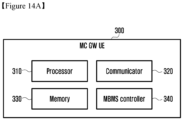
- the embodiments herein provide an MC GW UE for handling MBMS in a wireless network.
- the MC GW UE includes an MBMS controller coupled with a memory and a processor.
- the MBMS controller is configured to receive an MC gateway MBMS bearer announcement from an MC client in response to receiving information associated with an MBMS bearer and a service description associated with the MBMS bearer from an MC service server.
- the MC GW MBMS bearer announcement comprises MBMS bearer related information.
- the MBMS controller is configured to store information associated with an identifier at the MC gateway UE in response to receiving the MC gateway MBMS bearer announcement from the MC client.
- the MC gateway UE uses the identifier and the information to activate monitoring of the MBMS bearer by the MC gateway UE. Further, the MBMS controller is configured to send an MBMS listening status report to the MC client based on the MC GW MBMS bearer announcement. Further, the MBMS controller is configured to establish a communication channel with the MC client based on a parameter to receive the MC service data from the MC gateway UE. The MC gateway UE forwards the MC service data to the MC client over the communication channel.
- the embodiments herein provide an MC client for handling MBMS in a wireless network.
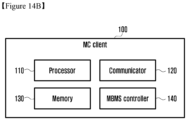
- the MC client includes an MBMS controller coupled with a memory and a processor.
- the MBMS controller is configured to send an MC GW MBMS bearer announcement to an MC gateway UE in response to receiving information associated with an MBMS bearer and a service description associated with the MBMS bearer from an MC service server, wherein the MC GW MBMS bearer announcement comprises MBMS bearer related information.
- the MBMS controller is configured to receive an MBMS listening status report from the MC gateway UE based on the MC GW MBMS bearer announcement.
- the MBMS controller is configured to establish a communication channel with the MC gateway UE based on at least one parameter to receive MC service data from the MC gateway UE.
- the MC gateway UE forwards the MC service data to the MC client over the communication channel.
- Procedures covered in this patent aids the MC clients residing on non-3 GPP devices to receive the MC communication over MBMS bearer. If these procedures were not supported in standards, then the MC system will always have to establish unicast communication with the MC clients residing on non-3GPP devices through MC gateway UE which leads to wastage of network resources and more over the air traffic. Also this invention proposed methods which requires only minimal or no changes at the MC service server side in order to support MC communication over MBMS bearer for the MC clients residing on non 3GPP devices. Changes required for supporting MBMS are confined between the MC clients and the MC gateway UE.
- the embodiments herein achieve methods for handling Multimedia Broadcast Multicast Services (MBMS) in a wireless network.
- the method includes receiving, by a mission critical (MC) gateway (GW) user equipment (UE), an MC gateway MBMS bearer announcement from an MC client in response to receiving information associated with an MBMS bearer and a service description associated with the MBMS bearer from an MC service server.
- the MC GW MBMS bearer announcement comprises MBMS bearer related information.
- the method includes storing, by the MC gateway UE, information associated with an identifier at the MC gateway UE in response to receiving the MC gateway MBMS bearer announcement from the MC client.
- the MC gateway UE uses the identifier and the information to activate for monitoring the MBMS bearer by the MC gateway UE. Further, the method includes sending, by the MC GW UE, an MBMS listening status report to the MC client based on the MC GW MBMS bearer announcement. Further, the method includes establishing, by the MC gateway UE, a communication channel with the MC client based on a parameter to receive an MC service data from the MC gateway UE, wherein the MC gateway UE forwards the MC service data to the MC client.
- the proposed methods assist the MC clients residing on non-3GPP devices to receive an MC communication over MBMS bearer without wasting network resources, hence, the MC system can operate in an efficient way to improve MBMS services.
- Some of the proposed methods require only minimal or no changes at an MC service server side in order to support MC communication over the MBMS bearer for the MC clients residing on non 3rd generation partnership project (3GPP) devices.
- FIGS. 1A , 1B , 2A , 2B , 3 to 13 , 14A , 14B , 15 , and 16 where similar reference characters denote corresponding features consistently throughout the figures, there are shown at least one embodiment.
- the MC gateway UE (300) resides on the device, which has access a 3GPP network and it acts a bridge connecting the MC clients (100) on the non 3GPP devices (200) and the MC system. From hereafter, the term MC clients (100) when used herein, it always refers to the MC clients (100) residing on the non 3GPP devices (200).
- Embodiments herein disclose information flows and procedures for MBMS usage that applies to MC services and how the MC gateway UE (300) can be allowed to use the MBMS bearer for Mission critical services related communications and forward the data received over the MBMS bearer to the intended MC clients (100) it is serving.
- Embodiments herein discuss the following approaches and the related procedures for supporting MBMS usage for the MC clients (100) residing on the non 3GPP devices (200):
- the MC servers intending to use the MBMS bearer for communication do not have to keep track of the MC clients (100) residing on the non 3GPP devices (200) and treat them specially during the MBMS bearer usage.
- 3GPP TS 23.280 Clause 10.7.3.1 specifies the procedures for using the pre-established MBMS bearers.
- the MC service server (400) pre-establishes MBMS bearer(s) in certain pre-configured areas before the initiation of the group communication session.
- the pre-established MBMS bearer(s) is used for the downlink (DL) media transmission.
- Approach 1 propose how the pre-established MBMS bearer can be used when there are MC clients (100) accessing the MC system via the MC gateway UE (300) and without any changes at the MC system side.
- the MC system will be totally transparent about the fact that there are MC clients (100) which are residing on the non 3GPP devices (200).
- the MC system pre-establishes the MBMS bearers and announces the same to the MC clients (100).
- the MC clients (100) Whenever the MC clients (100) receives the MBMS bearer announcement for the pre-stablished MBMS bearer from the MC system, the MC clients (100) stores temporary mobile group identities (TMGIs), service area and other info about the MBMS bearer(s), the MC service UE starts to monitor the TMGI(s). Since the MC client (100) is residing on the non 3GPP devices (200), it sends the MC GW location reporting configuration to the MC gateway UE (300) in order to fetch the details of the location information related to a 3GPP access network (MBMS Service Area Identities (MBMS SAIs), MBMS single frequency network (MBSFN)) from the MC gateway UE (300).
- MBMS Service Area Identities MBMS SAIs
- MMS single frequency network MMS single frequency network
- the MC client can monitor whether they are entering into any of the MBMS SAIs received in the MBMS bearer announcement from the MC System. On detection of entering into the MBMS Service Area, the MC client (100) requests the MC gateway UE (300) to start listening on the MBMS bearer by sending the required details.
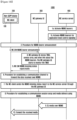
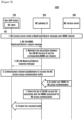
- FIG. 1A illustrates the procedure of how an MC client requests an MC gateway UE to start listening on the MBMS bearer according to an embodiment of the disclosure.
- the MC client (100) starts monitoring the MBMS service areas based on the location information received from the MC gateway UE (300).
- the MC client (100) has been configured with the necessary parameters needed for connectivity with the MC gateway UE (300).
- the MC client (100) has been receiving the 3GPP access network related location information from the MC gateway UE (300).
- the MC service server (400) determines to activate the MBMS bearer.
- the activation of the MBMS bearer is done on the MB2-C reference point and according to 3GPP TS 23.468.
- the bearer will be used for the MC communication media.
- the MC service server (400) may also activate an MBMS bearer dedicated for application level control signaling.
- the activation of the MBMS bearer is done on MB2-C reference point and according to 3GPP TS 23.468.
- the MC service server (400) passes the MBMS bearer info for the service description associated with the pre-established MBMS bearer to the MC service client through the MC gateway UE (300).
- the MC service server (400) may pass the MBMS bearer info for the service description associated with the pre-established floor control MBMS bearer to the MC service client.
- the MC service client obtains the TMGI, identifying the MBMS bearer, from the service description.
- the MC client (100) stores the MBMS bearer related information and starts monitoring whether it is entering into any of MBMS service areas received in the MBMS bearer announcement.
- the MC client (100) that enters or is in the service area of at least one announced TMGI MC client (100) requests the MC gateway UE (300) to start listening on the MBMS bearer by sending MC GW MBMS listening request containing the details of the MBMS bearer.
- the MC gateway UE (300) confirms the MC client (100) that it is able to listen on the MBMS bearer by sending the MC GW MBMS listening status report/notify.
- the MC GW MBMS listening status report also contains the details of the non 3GPP transport communication related parameters.
- the MC client (100) establishes the communication channel with the MC gateway UE (300) based on the parameters received in operation 5 to receive the MC service data from the MC gateway UE (300).
- the MC gateway UE (300) forwards the MC service data it received over the MBMS bearer from the MC service server (400) to the MC client (100) over the communication channel.
- the MC Client (100) sends the MBMS listening status report to the MC service server (400) indicating that it is able to receive the media over MBMS, whereby the MC service server (400) may decide to use the MBMS bearer instead of unicast bearer for MC communication sessions
- the MC gateway UE (300) forwards the received media to the MC client (100).
- the communication mechanism could be Unicast, multicast or broadcast.
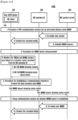
- FIG. 1B illustrates the procedure of how an MC client shares the details of MBMS service announcement to an MC gateway UE according to an embodiment of the disclosure.
- the MC client (100) do not have to monitor the location information to detect whether it is entering into the MBMS service area or not.
- the MC gateway UE (300) monitors and starts listening on the MBMS bearer.
- the MC client (100) has been configured with the necessary parameters needed for connectivity with the MC gateway UE (300).
- the MC service server (400) determines to activate MBMS bearer.
- the activation of the MBMS bearer is done on the MB2-C reference point and according to 3GPP TS 23.468.
- the bearer will be used for the MC communication media.
- the MC service server (400) may also activate an MBMS bearer dedicated for application level control signaling.
- the activation of the MBMS bearer is done on MB2-C reference point and according to 3GPP TS 23.468.
- the MC service server (400) passes the MBMS bearer info for the service description associated with the pre-established MBMS bearer to the MC service client through the MC gateway UE (300).
- the MC service server (400) may pass the MBMS bearer info for the service description associated with the pre-established floor control MBMS bearer to the MC service client.
- the MC client (100) sends the MC GW MBMS Bearer announcement to the MC gateway UE (300) containing the MBMS bearer related information.
- the MC gateway UE (300) stores the information associated with the TMGI(s).
- the MC gateway UE (300) uses the TMGI and other MBMS bearer related information to activate the monitoring of the MBMS bearer by the MC gateway UE (300).
- the MC gateway UE (300) that enters or is in the service area of at least one announced TMGI notifies to the MC client (100) that it can receive media over MBMS by sending the MC GW MBMS listening status report/notify.
- the MC GW MBMS listening status report also contains the details of the non 3GPP transport communication related parameters.
- the MC client (100) establishes the communication channel with the MC gateway UE (300) based on the parameters received in operation 5 to receive the MC service data from the MC gateway UE (300).
- the MC gateway UE (300) forwards the MC service data it received over the MBMS bearer from the MC service server (400) to the MC client (100) over the communication channel.
- the MC Client (100) sends the MBMS listening status report to the MC Server indicating that it is able to receive the media over the MBMS, whereby the MC service server (400) may decide to use the MBMS bearer instead of unicast bearer for MC communication sessions.
- the MC gateway UE (300) forwards the received media to the MC client (100).
- the communication mechanism could be Unicast, multicast or broadcast.
- Dynamic MBMS bearer establishment procedure flows are same as the pre-established bearer announcement procedures but with the following difference: the MBMS bearer establishment is initiated before the start of the MC service communication set up or it is initiated after the MC service communication is set up.
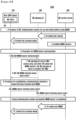
- FIGS. 2A and 2B illustrate the mechanism of dynamic MBMS bearer establishments.
- FIG. 2A illustrates the procedure of how an MC client requests an MC gateway UE to start listening on the MBMS bearer according to an embodiment of the disclosure.
- the MC client (100) starts monitoring the MBMS service areas based on the location information received from MC gateway UE (300).
- the MC client (100) has been configured with the necessary parameters needed for connectivity with the MC gateway UE (300).
- the MC client (100) has been receiving the 3GPP access network related location information from MC gateway UE (300).
- the downlink data is sent by unicast delivery.
- the MC gateway UE (300) forwards the MC service group communication data to the MC client (100).
- the MC service server (400) establishes the MBMS bearer(s) for the group communication session according to the procedures defined in 3GPP TS 23.468. Service description associated with the MBMS bearer(s) is returned from the broadcast multimedia service center (BM-SC).
- BM-SC broadcast multimedia service center
- the MC service server (400) provides service description information associated with the MBMS bearer to the MC client (100) residing on the non 3GPP devices
- the MC client (100) obtains the TMGI from the announcement message. This message may be sent on an application level control signaling bearer.
- the MC client (100) stores the MBMS bearer related information and starts monitoring whether it is entering into any of MBMS service areas received in the MBMS bearer announcement.
- the MC client (100) that enters or is in the service area of at least one announced TMGI, requests the MC gateway UE (300) to start listening on the MBMS bearer by sending MC GW MBMS listening request containing the details of the MBMS bearer.
- the MC gateway UE (300) confirms the MC client (100) that it is able to listen on the MBMS bearer by sending the MC GW MBMS listening status report/notify.
- the MC GW MBMS listening status report also contains the details of the non 3GPP transport communication related parameters.
- the MC client (100) establishes the communication channel with the MC gateway UE (300) based on the parameters received in operation 8 to receive the MC service data from the MC gateway UE (300).
- the MC gateway UE (300) forwards the MC service data it received over the MBMS bearer from the MC service server (400) to the MC client over the communication channel.
- the MC client (100) sends the MBMS listening status report to the MC service server (400) indicating that it is able to receive the media over the MBMS, whereby the MC service server (400) may decide to use the MBMS bearer instead of unicast bearer for the MC communication sessions.
- the MC gateway UE (300) forwards the received media to the MC client (100).
- FIG. 2B illustrates the procedure of how an MC client shares the details of MBMS service announcement to an MC gateway UE according to an embodiment of the disclosure.
- the MC client 100
- the MC gateway UE 300
- monitors and starts listening on the MBMS bearer
- the MC client (100) has been configured with the necessary parameters needed for connectivity with the MC gateway UE (300).
- the downlink data is sent by unicast delivery.
- the MC gateway UE (300) forwards the MC service group communication data to the MC client (100).
- the MC service server (400) establishes the MBMS bearer(s) for the group communication session according to the procedures defined in 3GPP TS 23.468. Service description associated with the MBMS bearer(s) is returned from the BM-SC.
- the MC service server (400) provides the service description information associated with the MBMS bearer to the MC client (100) residing on the non 3GPP devices (200) via the MC gateway UE (300).
- the MC client (100) obtains the TMGI from the announcement message. This message may be sent on an application level control signaling bearer.
- the MC client (100) sends the MC GW MBMS bearer announcement to the MC gateway UE (300) containing the MBMS bearer related information.
- the MC gateway UE (300) stores the information associated with the TMGI(s).
- the MC gateway UE (300) uses the TMGI and other MBMS bearer related information to activate the monitoring of the MBMS bearer by the MC gateway UE (300).
- the MC gateway UE (300) that enters or is in the service area of at least one announced TMGI notifies to the MC client (100) that it can receive media over MBMS by sending the MC GW MBMS listening status report/notify.
- the MC GW MBMS Listening Status Report also contains the details of the non 3GPP transport communication related parameters.
- the MC client (100) establishes the communication channel with the MC gateway UE (300) based on the parameters received in operation 8 to receive the MC service data from the MC gateway UE (300).
- the MC gateway UE (300) forwards the MC service data it received over the MBMS bearer from the MC service server (400) to the MC client (100) over the communication channel.
- the MC Client (100) sends the MBMS listening status report to the MC server indicating that it is able to receive the media over MBMS, whereby the MC service server (400) may decide to use the MBMS bearer instead of unicast bearer for MC communication sessions.
- the MC gateway UE (300) forwards the received media to the MC client (100).
- the MC gateway UE (300) is the entity which has access to the 3GPP access network and can listen on the MBMS bearers on behalf of the MC clients (100) it is serving. These MC clients (100) can be either located in the MC gateway UE (300) or in the non 3GPP devices (200) connected to the MC gateway UE (300) via the non-3GPP access.
- the MBMS bearer is used for MC communication, details of the MBMS bearer are sent to the MC clients (100).
- the MC gateway UE (300) is unaware of MBMS bearer details until it is shared by the MC Clients (100).
- the MC client (100) needs to share the MBMS bearer control messages to the MC gateway UE (300) to allow the MC gateway UE (300) to handle the MBMS transmission on behalf of MC clients (100). Following messages which are received from MC server by the MC clients' (100) needs to be shared with the MC gateway UE (300):
- Table 1 describes the information flow from the MC client (100) to the MC gateway UE (300) for the MC GW MBMS bearer announcement.
- TMGI M TMGI information List of service area identifier M A list of service area identifier for the applicable MBMS broadcast area.
- SDP Session Description Protocol
- ROHC Robust Header Compression
- Table 2 describes the information flow from the MC gateway UE (300) to the MC Client (100) for the MC GW MBMS listening status report/notify.
- MBMS listening status(s) M The MBMS listening status per TMGI.
- the reception quality level per TMGI Non 3GPP transport channel establishment parameters O This elements contains the details of the non 3GPP channel establishment parameters (Internet protocol (IP) address, Port etc.,) which is used by the MC gateway UE to forward the MC service communication data received over 3GPP MBMS bearer to the MC client These parameters are implementation specific and are dependent on the non 3GPP transport mechanism used between the MC client and MC gateway UE. This parameter shall be present mandatorily if the MBMS bearer listening status is success.
- IP Internet protocol
- Table 3 describes the information flow to associate an MC push to talk (MCPTT) group communication to an MBMS bearer. It is sent from the MC client (100) hosting MCPTT service to the MC gateway UE (300).
- Information element Stat us Description MC GW service ID M The GW MC service ID of the MC service user.
- MCPTT group ID M This element identifies the MCPTT group, in which the call is started.
- Media stream identifier M This element identifies the media stream of the SDP used for the group call (e.g. MBMS subchannel).
- TMGI M The MBMS bearer identifier.
- Table 4 describes the information flow to associate an MCVideo group communication to an MBMS bearer. It is sent from the MC client (100) hosting MCVideo service to the MC gateway UE (300).
- Information element Stat us Description MC GW service ID M The GW MC service ID of the MC service user.
- MCVideo group ID M This element identifies the MCVideo group, in which the call is started.
- Media stream identifier (video) M This element identifies the media stream of the SDP used for the Video group call (e.g. MBMS subchannel).
- Media stream identifier (audio) O This element identifies the audio media stream of the SDP used for the Video group call (e.g. MBMS subchannel). This is used if separate codecs are used for video and audio.
- TMGI M The MBMS bearer identifier
- the MC GW MapGroupToBearer contains all the information needed for the MC gateway UE (300) to identify the different the different group communications over the same MBMS bearer.
- Table 5 describes the information to be sent from MC client (100) to the MC gateway UE (300).
- Information element Stat us Description MC GW service ID M The GW MC service ID of the MC service user.
- MC Service group ID M This element identifies the MC service group, in which the MC group communication is started.
- MBMS subchannel details M This element contains the details of the MBMS sub channel to be used for the MC group communication. It includes media identifiers, port numbers and IP address etc., TMGI M The MBMS bearer identifier
- Table 6 describes the information flow from the MC gateway UE (300) to the MC client (100) for the MC GW MBMS bearer suspension indication.
- MBMS M The MBMS suspension suspension status(s) status per TMGI.
- Table 7 describes the information flow from the MC gateway UE (300) to the MC client (100) for the MC GW MapGroupToBearer Response.
- Non 3GPP transport channel establishment parameters M This elements contains the details of the non 3GPP channel establishment parameters (IP address, Port etc.,) which is used by the MC gateway UE to forward the MC service Group communication data received over 3GPP MBMS bearer to the MC client These parameters are implementation specific and are dependent on the non 3GPP transport mechanism used between the MC client and MC gateway UE
- Table 8 describes the information flow from the MC client (100) to the MC gateway UE (300) for the MC GW MBMS bearer Listening Request.
- Information element Stat us Description TMGI M TMGI information List of service area identifier M A list of service area identifier for the applicable MBMS broadcast area.
- ROHC information O Indicate the usage of ROHC and provide the parameters of the ROHC channel to signal to the ROHC decoder.
- Table 9 describes the information flow from the MC gateway UE (300) to the MC client (100) for the MC GW MBMS bearer quality report.
- MBMS listening status(s) M The MBMS listening status per TMGI.
- MBMS reception quality level O The reception quality level per TMGI
- the MC service server (400) may use an MBMS bearer for application level control signaling, according to this subclause.
- An MBMS bearer for application level control signaling is typically used for the purposes beyond the benefit for using MBMS for resource efficiency, e.g., for improved MC service performance (KPIs), handling of high load scenarios.
- the MBMS bearer for application level control signaling may be used to transmit the following messages:
- the MBMS bearer for application level control signaling is activated in a service area that is larger than the estimated service for media bearers.
- the service area for the media bearers mainly based on counting of group members in each defined service area.
- the MBMS bearer for application level control signaling is also activated with a quality of service (QoS) that is better than MBMS media bearers since the packet loss requirements are much stricter.
- QoS quality of service
- the MC client (100) shall not send responses to group-addressed application level control signaling unless instructed or configured to respond.
- the procedure depicted in FIG. 3 shows only one of the receiving MC service clients using an MBMS bearer.
- the MC client (100) has been configured with the necessary parameters needed for connectivity with the MC gateway UE (300).
- the MC client (100) successfully completed service authorization via MC gateway UE (300).
- the MC client (100) shared the MBMS bearer details to the MC gateway UE (300) and the MC gateway UE (300) started listening on the MBMS bearer.
- the MC gateway UE (300) that enters or is in the service area of at least one announced TMGI and starts listening on the MBMS bearer.
- the MC gateway UE (300) notifies the MC client (100) that it can receive data over MBMS by sending the MC GW MBMS Listening Status Report/Notify.
- the MC GW MBMS Listening Status Report also contains the details of the non 3GPP transport communication related parameters.
- the MC client (100) sends the MBMS listening status report to the MC service server (400) indicating that it is able to receive the application level control messages over MBMS, whereby the MC service server (400) may decide to use the MBMS bearer instead of unicast bearer for MC communication sessions
- the MC client (100) establishes the communication channel with the MC gateway UE (300) based on the parameters received in operation 3 to receive the MC service data from the MC gateway UE (300).
- the MC gateway UE (300) forwards the MC service data it received over the MBMS bearer from the MC service server (400) to the MC client (100) over the communication channel.
- the MC gateway forwards the MC application control messages to the MC client (100) over the communication channel as established in operation 4.
- Communication channel between MC client and MC gateway UE (300) Between the MC client (100) and the MC gateway UE (300), the communication mechanism could be Unicast, multicast or broadcast. Embodiments herein propose that the MC client (100) should be conveyed whether the data traffic is received over unicast or multicast by the MC gateway UE (300). If the MC gateway UE (300) uses the multicast channel on the non 3GPP transport to forward the data traffic received over MBMS channel on the 3GPP transport, then it is implicitly known to the MC client (100) that this data traffic is received over MBMS channel and it can handle the data traffic accordingly.
- the channel between the MC gateway UE (300) and MC client (100) for delivering the multicast data can either be unicast or multicast based on the non-3GPP transport being used for communication between MC client (100) and MC gateway UE (300). Since the MBMS traffic may be encrypted, having a different channel to send the MBMS traffic to the MC clients (100) will help in applying the appropriate encryption keys to decrypt the packets.
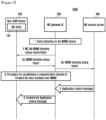
- Embodiments herein foresee at least 3 channels (socket communication) to be established between MC client (100) and MC gateway UE (300) for handling the data traffic, which is depicted in FIG. 4 and details are as below:
- MapGroupToBearer messages When the MC client (100) detects that the data received from MC service server (400) is MapGroupToBearer message and if the MC client (100) participates in the group session or communication identified by the MapGroupToBearer message then it should inform the details contained in the MapGroupToBearer message to the MC gateway UE (300) by sending MC GW MapGroupToBearer.
- the association of group call, the MBMS bearer and the MC GW service ID of the MC client (100) is known to the MC gateway UE (300), it can forward the data received over MBMS bearer accordingly.
- the MC gateway UE (300) shall maintain the list of the MC clients (100) that sent the MC GW MapGroupToBearer message and forward the data received over the MBMS subchannel identified by the MC GW MapGroupToBearer message only to those MC clients (100).
- FIG. 5 describes this procedure and the detailed operations are as below according to an embodiment of the disclosure.
- the MC client (100) shares the details of the MBMS bearer announcement with the MC gateway UE (300).
- the MBMS bearer is activated and the MC gateway UE (300) starts listening the MBMS bearer.
- the MC group communication is initiated and the MC service server (400) decides to use the MBMS bearer for call.
- the MC service server (400) will send a MapGroupToBearer message over a previously activated MBMS bearer to all users that will receive the call over an MBMS bearer.
- the MapGroupToBearer message includes association information between the group call and MBMS bearer.
- the MapGroupToBearer message includes MC service group ID and information about the media stream identifier of the activated MBMS bearer and may include the identifier (i.e., the TMGI) of the MBMS bearer broadcasting the call.
- Operation 2 if the MC client (100) is participating in the MC group communication identified by the MapGroupToBearer message, it sends the details contained in the MapGroupToBearer message to the MC gateway UE (300) through MC GW MapGroupToBearer request message.
- the MC gateway on receiving the MC GW MapGroupToBearer request message from the MC client (100), it maintains the association between the GW MC Service ID and the corresponding MBMS sub channel.
- the MC gateway UE (300) sends the MC GW MapGroupToBearer response message to the MC client (100), which contains the details of the non 3GPP transport communication related parameters.
- the MC client (100) establishes the communication channel with the MC gateway UE (300) based on the parameters received in operation 4 to receive the MC service group communication data from the MC gateway UE (300).
- the MC service server (400) sends the downlink media for the group communication session over the MBMS bearer.
- the MC gateway UE (300) checks which MC clients (100) should receive the media of the MC group communication based on Operation 3.
- the MC gateway UE (300) forwards the downlink media to the intended MC clients (100) over the communication channel established as in operation 5.
- the MC gateway UE (300) shall use the dedicated channel established between the MC client (100) and the MC gateway UE (300) for sending the multicast traffic.
- This channel could be either multicast or unicast and is left to the implementation technology of transport channel between the MC clients (100) and the MC gateway UE (300).
- the MC service server (400) can choose to instruct some MC clients (100) to send the MBMS bearer suspension report when notified by the radio access network (RAN) (500).
- RAN radio access network
- the MC gateway UE (300) would be the one listening on the MBMS bearers.
- the RAN (500) decides to suspend the MBMS bearer it indicates the MC gateway UE (300).
- the MC gateway UE (300) in turn has to notify the MC clients (100) it is serving, so that the MC clients (100) can report the same to the MC service server (400). This procedure is applicable only if the MC client (100) is instructed to report the MBMS bearer suspension.
- the MC gateway can choose to notify the MC clients (100) it is serving, whenever the RAN (500) suspends the MBMS bearer.
- the MC clients (100) can then decide to send the MBMS bearer suspension report to the MC service server (400) only, if they are instructed by the MC service server (400).
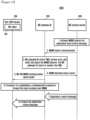
- FIG. 6 describes the procedure for how MC clients report the MBMS bearer suspension to an MC service server according to an embodiment of the disclosure.
- the MC client (100) is requested by the MC service server (400) to send an MBMS suspension report.
- This request for MBMS suspension report can be included in the MBMS bearer announcement and the MC service server (400) may choose to only send this request for MBMS suspension report to a subset of MC clients (100).
- the MC service server (400) sends an MBMS suspension reporting instruction to the MC client (100) residing on the non 3GPP device (200).
- This message may be included in the MBMS bearer announcement message and may be sent both on a unicast bearer and a multicast bearer.
- the RAN (500) decides to suspend the MBMS bearer, according to existing procedures in 3GPP TS 36.300.
- an MBMS suspension indication is sent to the MC gateway UE (300) in the multicast channel (MCH) Scheduling Information (MSI), according to existing procedures in 3GPP TS 36.300.
- MCH multicast channel
- MSI Scheduling Information
- the MC gateway UE (300) detect the MBMS suspension and sends an MC GW MBMS suspension indication to the MC client (100) residing on the non 3GPP device (200).
- the MC service client that is not instructed to send an MBMS suspension report shall detect the MBMS suspension indication from the RAN (500) (operation 4).
- An MC service client shall in this case not send other types of report (e.g., MBMS listening reports).
- the same procedure can be applied at MBMS resumption or other MBMS events that may be detected by the MC gateway UE (300).
- the MC gateway UE (300) Since the MC gateway UE (300) is listening on the MBMS bearer on behalf of the MC clients (100), it has to report the MBMS bearer quality to the MC clients (100), so that the MC clients (100) can report the same to the MC service server (400).
- the MC gateway UE (300) monitors the MBMS bearer to receive MC service media.
- the MC gateway UE (300) Based on the received quality (e.g., radio level quality, transport level quality), the MC gateway UE (300) needs to inform the MC clients (100) which asked the MC gateway UE (300) to listen on MBMS bearer, that the MC gateway UE (300) is able to receive the MC service media on the MBMS bearer with sufficient quality or not able to receive the MC service media on the MBMS bearer with sufficient quality so that the MC clients (100) can inform the MC Service server (400) accordingly. Furthermore, based on the received quality, the MC gateway UE (300) may notify the MC clients (100) at which MBMS reception quality level it has received the MC service media on the MBMS bearer.
- the MC gateway UE (300) may notify the MC clients (100) at which MBMS reception quality level it has received the MC service media on the MBMS bearer.
- the reason for this is that an MC gateway UE (300) that has entered an area with significantly degraded MBMS quality, might not even notice that an MC service communication is ongoing, meanwhile the MC server assumes that the MC service client can receive the media being broadcasted.
- the MBMS bearer quality for example as an equivalent BLER (Block Error Rate) when no data is sent is implementation specific. This estimation can be dependent on for example the modulation and coding scheme (MCS) and measurements from the reference signals from the eNB(s). Other metrics (e.g., real-time transport protocol (RTP) packet loss) may be used to estimate the MBMS bearer quality.
- MCS modulation and coding scheme
- RTP real-time transport protocol
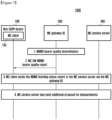
- FIG. 7 depicts a procedure of detecting MBMS bearer quality, according to an embodiment of the disclosure.
- an MC gateway UE (300) follows the procedure as described in 3GPP TS 23.280 Section 10.7.3.6 to determine the MBMS bearer quality.
- MC gateway UE (300) informs the MC client (100) about the MBMS bearer quality and the MC client informs the same to the MC service server (400).
- FIG. 7 describes this procedure.
- the MC gateway UE (300) is located in the MBMS broadcasting area.
- the MC gateway UE (300) monitors SIB-13 (or SIB-20) and (SC-) MCCH to receive the modulation and coding scheme.
- the MC gateway UE (300) monitors the cell specific reference signal and when MBSFN transmission is used, the MBSFN specific reference signals.
- Operation 1 here the MC gateway UE (300) follows the Operation 1 of the procedure as described in 3GPP TS 23.280 Section 10.7.3.6.2 for the MC service UE. Instead of reporting the bearer quality to the MC service server (400), it has to inform all the MC clients (100) which has asked the MC gateway UE (300) to listen on the particular MBMS bearer.
- the MC gateway UE (300) sends the MC GW MBMS bearer quality report to the MC client (100).
- the threshold is used to define the MBMS listening status, which indicates if the MBMS bearer quality has been acceptable or not to receive a specific MC service media. If the MBMS bearer quality is mapped to a different MBMS reception quality level, the MC gateway UE (300) may send an MBMS Bearer Quality report including the MBMS reception quality level to the MC client (100).
- the MC client (100) sends the MBMS listening status report to the MC service server (400) via the MC gateway UE (300) containing the information received in the MC GW MBMS bearer quality report.
- the MC service server (400) may send additional proposal for measurements; e.g., information about neighboring MBMS bearers.
- This message may be an MBMS bearer announcement message.
- the MC system sends the MBMS bearer announcements and updates to the MC gateway UE (300) directly.
- This approach requires that MC gateway UE (300) to be addressable by the MC system.
- embodiments herein assume that MC gateway UE (300) is addressable by the MC service server (400) and the MC gateway UE (300) needs to support and handle the following information flows which are defined in TS 23.280.
- the MC gateway UE (300) In order to support the usage of MBMS bearer for the MC clients (100) residing on the non 3GPP devices (200), the MC gateway UE (300) needs to support the procedures and information flows applicable for MC service UE as defined in clause 10.7 of TS 23.380 with the following clarifications: The MC gateway UE (300) needs to be assigned with the MC service ID and configured with minimal information required for it to be authenticated and authorized with MC system for supporting MBMS bearer usage.
- the MC service server (400) shall be able to address the MC gateway UE (300) using the MC service ID for exchanging the requests and responses related to the MBMS bearer usage.
- the MC service server (400) shall maintain the list of MC gateway UEs (300) and per MC gateway UE (300), the list of MC clients (100) resides on the non 3GPP devices (200) and accesses the MC system via the MC gateway UE (300).
- the MC service server (400) can choose to send the information related to MBMS bearer announcements, updates to the MBMS bearer announcements, suspension of MBMS bearer, mapping of MC service group communication with MBMS bearer etc. to the MC gateway UE (300) instead of sending to the individual MC clients (100) (residing on the non 3GPP devices (200)) which are accessing the MC system via this MC gateway UE (300).
- the MC service server (400) shall always send this information to the MC gateway UE (300) over the unicast channel, so that the MC gateway UE (300) need not process the data received over MBMS bearer. It just forwards the data received over the MBMS bearer to the MC clients (100) it is serving. Also, the MC gateway UE (300) does not have to configured with the security keys for decrypting the data received over MBMS bearer.
- the MC service server (400) on receiving the MBMS bearer suspension report from the MC gateway UE (300), the MC service server (400) considers it as if it is received from all the MC clients (100) residing on the non 3GPP devices (200) and accessing the MC system through the MC gateway UE (300) for any decision making purpose.
- the MC clients (100) shall ignore the MBMS bearer announcements, MBMS bearer updates, and MapGroupToBearer messages, which are received over the MBMS bearer since these messages are to be handled by the MC gateway UE (300).
- the MBMS bearer announcement (as defined in 10.7.2.1 of TS 23.280), which is currently being sent from the MC service server (400) to the MC service client (199) needs to be sent to the MC gateway UE (300).
- the MBMS listening status report (as defined in 10.7.2.2 of TS 23.280) has to be sent by the MC gateway UE (300) to the MC service server (400).
- the MBMS suspension reporting instruction (as defined in 10.7.2.3 of TS 23.280) has to be sent from MC service server (400) to the MC gateway UE (300) over unicast bearer.
- the MapGroupToBearer message as defined in TS 23.379 for MCPTT and in TS 23.281 for MCVideo shall be sent from MC service server (400) to the MC gateway UE (300). This needs to be sent to the MC gateway UE (300) over the unicast bearer.
- the MC Service server (400) shall maintain the mapping of MC gateway UE (300) and the list of the MC clients (100) being served by the MC gateway UE (300). Whenever MC service server (400) has to establish, update or suspend the MBMS bearer, it can send the corresponding messages to the MC gateway UE (300). When the MC gateway UE (300) sends the MBMS listening status report to the MC service server (400), the MC service server (400) shall consider this message as received from all the MC clients (100) that the MC gateway UE (300) is serving for any decision making purpose.
- the MC service server (400) can choose to send that information only to the MC gateway UE (300) instead of sending it to the individual MC clients (100), which are residing on the non 3GPP devices (200) and accessing the MC system via this MC gateway UE (300).
- the MC service server (400) pre-establishes MBMS bearer(s) in certain pre-configured areas before the initiation of the group communication session.
- the pre-established MBMS bearer(s) is used for the DL media transmission.
- MBMS bearer(s) is pre-established.
- the MC group communication session using MBMS bearer can start. Both the media packets as well as the application level control signaling (e.g., floor control messages) to the receiving MC service clients are sent on the MBMS bearer.
- the application level control signaling e.g., floor control messages
- a separate MBMS bearer could be used for the application level control messages, due to different bearer characteristic requirements.
- FIG. 8 depicts a scenario wherein only one of a receiving MC client residing on non 3GPP device and MC gateway UE using an MBMS bearer, according to an embodiment of the disclosure.
- the procedure, depicted in FIG. 8 shows only one of a receiving MC client (100) residing on a non 3GPP device (200) and an MC gateway UE (300) using an MBMS bearer. There might also be MC service clients in the same MC group communication session that receive the communication on unicast bearers.
- the MC Gateway completed the required authentication and authorization with the MC system so that it is addressable directly by the MC service server (400).
- the MC service server (400) maintains the list of MC gateway UEs (300) and the list of MC clients (100) residing on the non 3GPP devices (200), which accesses the MC system via the MC gateway UE (300).
- the participating users are already affiliated.
- the MC service server (400) determines to activate MBMS bearer.
- the activation of the MBMS bearer is done on the MB2-C reference point and according to 3GPP TS 23.468. This bearer will be used for the MC communication media.
- the MC service server (400) may also activate an MBMS bearer dedicated for application level control signaling.
- the activation of the MBMS bearer is done on MB2-C reference point and according to 3GPP TS 23.468.
- the procedure to determine the activation of MBMS bearers is implementation specific.
- the MC service server (400) passes the MBMS bearer info for the service description associated with the pre-established MBMS bearer to the MC gateway UE (300).
- the MC gateway UE (300) obtains the TMGI, identifying the MBMS bearer, from the service description.
- the MC service server (400) may pass the MBMS bearer info for the service description associated with the pre-established floor control MBMS bearer to the MC gateway UE (300).
- the MC gateway UE (300) obtains the TMGI, identifying the MBMS bearer, from the service description.
- Operations 2a and 2b can be done in one MBMS bearer announcement message.
- the MC service server (400) can choose to send the MBMS bearer announcement only to the MC gateway UE (300) instead of sending to all the MC clients (100) it is serving or to both the MC gateway UE (300) and the MC clients (100) residing on the non 3GPP devices (200) and accessing the MC system through the MC gateway UE (300).
- the MC gateway UE (300) stores the information associated with the TMGI(s).
- the MC gateway UE (300) uses the TMGI and other MBMS bearer related information to activate the monitoring of the MBMS bearer by the MC gateway UE (300).
- the MC gateway UE (300) that enters or is in the service area of at least one announced TMGI indicates to the MC service server (400) that the MC gateway UE (300) is able to receive media over MBMS, whereby the MC service server (400) may decide to use the MBMS bearer instead of unicast bearer for MC communication sessions.
- MC service server (400) shall treat the MBMS listening status report received from the MC gateway UE (300) as if it is received from all the MC clients (100) residing on the non 3GPP devices (200) and accessing the MC system through this MC gateway UE (300).
- Operation 4 is optional for the MC gateway UE (300) on subsequent MBMS bearer announcements.
- the MC gateway UE (300) confirms the MC client (100) that it is able to listen on the MBMS bearer by sending the MC GW MBMS Listening Status Report/Notify.
- the MC GW MBMS listening status report also contains the details of the non 3GPP transport communication related parameters.
- the MC client (100) establishes the communication channel with the MC gateway UE (300) based on the parameters received in operation 5 to receive the MC service data from the MC gateway UE (300). This allows MC gateway UE (300) to forward the MC service data it received over the MBMS bearer from the MC service server (400) to the MC client (100) over this communication channel.
- the MC gateway UE (300) then forwards the received data to the MC clients (100) residing on the non 3GPP devices (200) over the communication channel established in Operation 6.
- FIG. 9 depicts a scenario in which the MC service server uses a unicast bearer for communication with the UE on a DL at a start of a group communication session, according to an embodiment of the disclosure.
- an MC service server (400) uses a unicast bearer for communication with a UE on a DL at a start of a group communication session.
- the MC service server (400) decides to use an MBMS bearer for the DL media transmission
- the MC service server (400) establishes an MBMS bearer using the procedures defined in 3GPP TS 23.468.
- the MC service server (400) provides the MBMS service description information associated with MBMS bearer(s), obtained from the BM-SC, to the MC gateway UE (300).
- the MC gateway UE (300) starts using the MBMS bearer(s) to receive DL media.
- the MC gateway completed the required authentication and authorization with the MC system so that it is addressable directly by the MC service server (400).
- the MC service server (400) maintains the list of MC gateway UEs (300) and the list of MC clients (100) residing on the non 3GPP devices (200) which accesses the MC system via the MC gateway UE (300).
- the participating users are already affiliated.
- the downlink data is sent by unicast delivery.
- the MC gateway UE (300) forwards the downlink data to the MC client (100).
- the MC service server (400) establishes the MBMS bearer(s) for the group communication session according to the procedures defined in 3GPP TS 23.468. Service description associated with the MBMS bearer(s) is returned from the BM-SC.
- the MC service server (400) provides service description information associated with the MBMS bearer to the MC gateway UE (300).
- the MC gateway UE (300) obtains the TMGI from the announcement message. This message may be sent on an application level control signaling bearer.
- the MC service server (400) can choose to send the MBMS bearer announcement only to the MC gateway UE (300) instead of sending to all the MC clients (100) it is serving or to both the MC gateway UE (300) and the MC clients (100) residing on the non 3GPP devices (200) and accessing the MC system through this MC gateway UE (300).
- the MC gateway UE (300) starts monitoring data over MBMS associated with the TMGI, while in the service area associated with the TMGI.
- the MC gateway UE (300) detects that it is able to receive data over MBMS associated with the TMGI.
- the MC gateway notifies the MC service server (400) the MBMS listening status associated to the monitored TMGI, (e.g., that it is successfully receiving the TMGI).
- the MC gateway UE (300) may also notify the MBMS reception quality level of the TMGI.
- MC service server (400) shall treat the MBMS listening status report received from the MC gateway UE (300) as if it is received from all the MC clients (100) residing on the non 3GPP devices (200) and accessing the MC system through the MC gateway UE (300).
- the MC service server (400) stops sending media data over unicast way to the MC client (100).
- the MBMS reception quality level may be used by the MC service server (400) to make an efficient decision to switch again to a unicast transmission or to take measures to prepare such a switch (e.g., when the quality level indicates that the reception quality of the MBMS bearer is decreasing or reaching an insufficient quality level for the reception of MC services).
- the MC gateway UE (300) confirms the MC client (100) that it is able to listen on the MBMS bearer by sending the MC GW MBMS Listening Status Report/Notify.
- the MC GW MBMS Listening Status Report also contains the details of the non 3GPP transport communication related parameters.
- the MC client (100) establishes the communication channel with the MC gateway UE (300) based on the parameters received in operation 9 to receive the MC service data from the MC gateway UE (300). This allows the MC gateway UE (300) to forward the MC service data it received over the MBMS bearer from the MC service server (400) to the MC client (100) over this communication channel.
- the MC service server (400) sends the downlink media for the group communication session over the MBMS.
- the MC gateway UE (300) then forwards the received data to the MC clients (100) residing on the non 3GPP devices (200) over the communication channel as established in operation 10.
- FIG. 10 depicts a scenario, in which a group session is setup before a group communication start, according to an embodiment of the disclosure.
- the MBMS bearer can be used for MC service group communications.
- One MBMS bearer is not permanently associated to one specific group or group communication.
- the MC service server (400) shall send the association information between group communication and the MBMS bearer to the MC gateway UE (300).
- the group communication setup procedure indicates the media stream or media streams within one MBMS bearer that is used for the specific MC service group communication.
- this temporary association information of the MC service group call to specific resources on an MBMS bearer is undone.
- the procedure in FIG. 10 requires that the group session is setup before the group communication start. This eliminates the need for the receiving clients to continuously use the unicast bearer. Prior to this the MBMS bearer is activated and announced to the MC gateway UE (300).
- the mapping between the 3GPP transport side MBMS bearer association with the MC service group communication and the non-3GPP transport side communication channel association with MC service group communication There needs to be the mapping between the 3GPP transport side MBMS bearer association with the MC service group communication and the non-3GPP transport side communication channel association with MC service group communication.
- the communication channel could be either multicast or unicast.
- the MC clients (100) receiving the multicast data from the MC gateway UE (300) would be able to associate the received data to a particular MC service group communication and process them accordingly.
- the MC GW MapgroupToBearer message is used to establish this association.
- Table 10 describes the information flow from the MC gateway UE (300) to the MC client (100) for the MC GW MapGroupToBearer.
- Information element Stat us Description MC Service Group ID M MC Service Group ID in which group communication is started
- Non 3GPP transport channel establishment parameters M This elements contains the details of the non 3GPP channel establishment parameters (IP address, Port etc.,) which is used by the MC gateway UE to forward the MC service Group communication data received over 3GPP MBMS bearer to the MC client
- IP address, Port etc. is used by the MC gateway UE to forward the MC service Group communication data received over 3GPP MBMS bearer to the MC client
- the MC service server (400) will send a MapGroupToBearer message over the previously activated MBMS bearer to all users that will receive the MC service group over the MBMS bearer.
- the MapGroupToBearer message includes association information between the MC service group communication and the MBMS bearer.
- the MapGroupToBearer message includes the MC service group ID and information about the media stream identifier or media stream identifiers of the activated MBMS bearer and may include the identifier (i.e., the TMGI) of the MBMS bearer broadcasting the MC service group communication.
- the MC gateway UE (300) sends the MC GW MBMS MapGroupToBearer to the MC client (100) containing the information received in MapGroupToBearer message and also the details of the communication channel association on non 3GPP transport side between the MC client (100) and the MC gateway UE (300).
- the MC client (100) establishes the communication channel with MC gateway UE (300) to receive the MC service group data sent over the MBMS channel on the 3GPP transport side.
- This communication channel could be unicast or multicast and is left to the implementation.
- the MC gateway UE (300) forwards the received media over the MBMS bearer to the MC client (100) using the communication channel established as in operation 4.
- the MC gateway UE (300) Since the MC gateway UE (300) is listening on the MBMS bearer, it has to report the MBMS bearer quality to the MC service server (400).
- the MC gateway UE (300) monitors an MBMS bearer to receive MC service media. Based on the received quality (e.g., radio level quality, transport level quality), the MC gateway UE (300) needs to inform the MC service server (400), that the MC gateway UE (300) is able to receive the MC service media on the MBMS bearer with sufficient quality or not. Furthermore, based on the received quality, the MC gateway UE (300) may notify the MC service server (400) at which the MBMS reception quality level it has received the MC service media on the MBMS bearer.
- the received quality e.g., radio level quality, transport level quality
- the MC gateway UE (300) needs to inform the MC service server (400), that the MC gateway UE (300) is able to
- the reason for this is that an MC gateway UE (300) that has entered an area with significantly degraded MBMS quality, might not even notice that an MC service communication is ongoing, meanwhile the MC server assumes that the MC gateway UE (300) can receive the media being broadcasted.
- the MBMS bearer quality for example as an equivalent BLER (Block Error Rate) when no data is sent is implementation specific. This estimation can be dependent on for example the modulation and coding scheme (MCS) and measurements from the reference signals from the eNB(s). Other metrics (e.g., RTP packet loss) may be used to estimate the MBMS bearer quality.
- MCS modulation and coding scheme
- RTP packet loss RTP packet loss
- the MC gateway UE (300) follows the procedure as described in 10.7.3.6 of TS 23.280 and it acts as the MC service UE.
- the MC service server (400) On receiving the MBMS listening status report from the MC gateway UE (300), the MC service server (400) considers as if it has received the MBMS listening status report from all the MC clients (100) which are accessing the MC system via this MC gateway UE (300) and to which the established MBMS bearer is applicable.
- FIG. 11 depicts the process of detecting MBMS bearer quality, according to an embodiment of the disclosure.
- Embodiments herein propose that the MC gateway UE (300) follows the procedure as described in 3GPP TS 23.280 Section 10.7.3.6 to determine the MBMS bearer quality.
- the MC gateway UE (300) informs the MC service server (400) about the MBMS bearer quality.
- FIG. 11 describes this procedure.
- the MC gateway UE (300) is located in the MBMS broadcasting area.
- the MC gateway UE (300) monitors SIB-13 (or SIB-20) and (SC-) MCCH to receive the modulation and coding scheme.
- the MC gateway UE (300) monitors the cell specific reference signal and when MBSFN transmission is used, the MBSFN specific reference signals.
- operation 1 the MC gateway UE (300) determines the MBMS bearer quality.
- operation 2 the MC gateway UE (300) sends the MBMS listening status report including the MBMS reception quality level to the MC service server (400).
- the MC service server (400) sends the MBMS bearer announcement to the MC gateway UE (300) based on the MBMS listening status report.
- the MC gateway UE (300) follows the Operation 1 of the procedure as described in 3GPP TS 23.280 Section 10.7.3.6.2 for the MC service UE. Instead of reporting the bearer quality to the MC service server (400) it has to inform all the MC clients (100) which has asked the MC gateway UE (300) to listen on the particular MBMS bearer.
- the MC gateway UE (300) sends an MC GW MBMS listening status report to the MC client (100).
- the threshold is used to define the MBMS listening status, which indicates if the MBMS bearer quality has been acceptable or not to receive a specific MC service media. If the MBMS bearer quality is mapped to a different MBMS reception quality level, the MC gateway UE (300) may send an MBMS listening status report including the MBMS reception quality level to the MC client (100).
- the MC client (100) sends the MBMS Listening Status report to the MC Service server (400) via the MC gateway UE (300) containing the information received in the MC GW MBMS Listening status report.
- the MC service server (400) may send additional proposal for measurements; e.g., information about neighboring MBMS bearers.
- This message may be an MBMS bearer announcement message.
- the MC service server (400) can choose to instruct MC gateway UE (300) to send the MBMS bearer suspension report when notified by the RAN (500).
- the RAN (500) decides to suspend the MBMS bearer it indicates the MC gateway UE (300).
- the MC gateway can then decide to send the MBMS bearer suspension report to the MC service server (400) only if they are instructed by the MC service server (400).
- the MC service server (400) On receiving the MBMS bearer suspension report from the MC gateway UE (300), the MC service server (400) considers it as if it is received from all the MC clients (100) residing on the non 3GPP devices (200) and accessing the MC system through this MC gateway UE (300) for any decision making purpose.
- FIG. 12 describes the procedure for how an MC gateway UE reports the MBMS bearer suspension to the MC server when instructed according to an embodiment of the disclosure.
- the MC gateway UE (300) is requested by the MC service server (400) to send an MBMS suspension report.
- This request for MBMS suspension report can be included in the MBMS bearer announcement.
- the MC service server (400) sends the MBMS suspension reporting instruction to the MC gateway UE (300).
- This message may be included in the MBMS bearer announcement message and may be sent both on a unicast bearer and a multicast bearer.
- the RAN (500) decides to suspend the MBMS bearer, according to existing procedures in 3GPP TS 36.300.
- the MBMS suspension indication is sent to the MC gateway UE (300) in the MSI (MCH Scheduling Information), according to existing procedures in 3GPP TS 36.300.
- the MC gateway UE (300) detect the MBMS suspension and sends MBMS suspension report to the MC Service server (400).
- the MC service server (400) may use an MBMS bearer for application level control signaling, according to this subclause.
- An MBMS bearer for application level control signaling is typically used for the purposes beyond the benefit for using MBMS for resource efficiency, e.g., for improved MC service performance (KPIs), handling of high load scenarios.
- KPIs MC service performance
- the MBMS bearer for application level control signaling may be used to transmit the following messages:
- the MBMS bearer for application level control signaling is activated in a service area that is larger than the estimated service for media bearers.
- the service area for the media bearers mainly based on counting of group members in each defined service area.
- the MBMS bearer for application level control signaling is also activated with a QoS that is better than MBMS media bearers since the packet loss requirements are much stricter.
- the MC client (100) shall not send responses to group-addressed application level control signaling unless instructed or configured to respond.
- FIG. 13 depicts a procedure, wherein only one of the receiving MC service clients uses an MBMS bearer, according to an embodiment of the disclosure.
- the procedure in FIG. 13 shows only one of the receiving MC service clients using the MBMS bearer.
- the MC service server (400) determines to activate MBMS bearer for application level control signaling,
- the activation of the MBMS bearer is done on the MB2-C reference point and according to 3GPP TS 23.468.
- the MC service server (400) passes the MBMS bearer info for the service description associated MBMS bearer to the MC gateway UE (300).
- the MC gateway UE (300) obtains the TMGI, identifying the MBMS bearer, from the service description.
- the MC gateway UE (300) stores the information associated with the TMGI.
- the MC gateway UE (300) uses the TMGI and other MBMS bearer related information to activate the monitoring of the MBMS bearer.
- the MC gateway UE (300) that enters or is in the service area of the announced TMGI indicates to the MC service server (400) that the MC gateway UE (300) is able to receive application level control messages over the MBMS bearer.
- the MC gateway UE (300) may also indicate at which MBMS reception quality level it has received the MC service media on the MBMS bearer. Hence, the MC service server (400) may decide to use the MBMS bearer for MC application control messages.
- the MC Gateway UE (300) informs the MC client (100) that it is able to listen on the MBMS bearer by sending the MC GW MBMS Listening Status Report/Notify.
- the MC GW MBMS listening status report also contains the details of the non 3GPP transport communication related parameters.
- the MC client (100) establishes the communication channel with the MC gateway UE (300) based on the parameters received in operation 5 to receive the MC service data from the MC gateway UE (300). This allows MC gateway UE (300) to forward the MC service data it received over the MBMS bearer from the MC service server (400) to the MC client (100) over the communication channel.
- the MC gateway forwards the MC application control messages to the MC client (100) over the communication channel as established in operation 6.
- Embodiments herein enable the MC system to operate in an efficient way and harness the benefit of using MBMS services.
- FIG. 14A illustrates various hardware components of the MC GW UE, according to embodiments as disclosed herein.
- the MC GW UE (300) includes a processor (310), a communicator (320), a memory (330) and an MBMS controller (340).
- the processor (310) is coupled with the communicator (320), the memory (330) and the MBMS controller (340).
- the MBMS controller (340) receives the MC gateway MBMS bearer announcement from the MC client (100) in response to receiving information associated with the MBMS bearer and the service description associated with the MBMS bearer from the MC service server (400).
- the MC GW MBMS bearer announcement includes the MBMS bearer related information.
- the MBMS controller (340) stores information associated with the identifier at the MC gateway UE (300) in response to receiving the MC gateway MBMS bearer announcement from the MC client (100).
- the MC gateway UE (300) uses the identifier and the information to activate for monitoring the MBMS bearer by the MC gateway UE (300).
- the MBMS controller (340) sends the MBMS listening status report to the MC client (100) based on the MC GW MBMS bearer announcement. Further, the MBMS controller (340) establishes the communication channel with the MC client (100) based on the parameter to receive the MC service data from the MC gateway UE (300). The MC gateway UE (300) forwards the MC service data to the MC client (100).
- the MBMS controller (340) sends the MC GW MBMS bearer quality report to the MC client (100). Further, the MBMS controller (340) receives the MBMS listening status report from the MC client (100) based on the MC GW MBMS bearer quality report to send or forward to the MC service server (400).
- the MBMS listening status report comprises the MC GW MBMS bearer quality report and the information about the neighboring MBMS bearer.
- the MBMS controller (340) receives the MC GW MapGroupToBearer request message from the MC client (100) in response to receiving the MapGroupToBearer message, at the MC client (100), from the MC service server (400) over the previously activated MBMS bearer.
- the MC GW MapGroupToBearer request message comprises details comprises in the MapGroupToBearer message.
- the MBMS controller (340) maintains the association between the GW MC service ID and corresponding MBMS sub channel based on the MC GW MapGroupToBearer request message.
- the MBMS controller (340) sends the MC GW MapGroupToBearer response message to the MC client (100) based on the MC GW MapGroupToBearer request message.
- the MC GW MapGroupToBearer response message comprises details of non 3GPP transport communication related parameters. Further, the MBMS controller (340) establishes the communication channel with the MC client (100) based on the non 3GPP transport communication related parameters to receive an MC service group communication data from the MC gateway UE (300). Further, the MBMS controller (340) sends the downlink media received over the MBMS bearer to the MC client (100).
- the MBMS controller (340) receives the MBMS suspension indication message from the wireless network (1000).
- the MBMS suspension reporting instruction message is included in the MBMS bearer announcement message.
- the MBMS controller (340) sends the MC GW MBMS suspension indication to the MC client (100).
- the MC client (100) sends the MBMS suspension report to the MC service server (400) via the MC gateway UE (300) based on the MBMS suspension reporting instruction message and the MC GW MBMS suspension indication.
- the MBMS controller (340) is physically implemented by analog or digital circuits such as logic gates, integrated circuits, microprocessors, microcontrollers, memory circuits, passive electronic components, active electronic components, optical components, hardwired circuits, or the like, and may optionally be driven by firmware.
- the processor (310) is configured to execute instructions stored in the memory (330) and to perform various processes.
- the communicator (320) is configured for communicating internally between internal hardware components and with external devices via one or more networks.
- the memory (330) also stores instructions to be executed by the processor (310).
- the memory (330) may include non-volatile storage elements. Examples of such non-volatile storage elements may include magnetic hard discs, optical discs, floppy discs, flash memories, or forms of electrically programmable memories (EPROM) or electrically erasable and programmable (EEPROM) memories.
- EPROM electrically programmable memories
- EEPROM electrically erasable and programmable
- the memory (330) may, in some examples, be considered a non-transitory storage medium.
- non-transitory may indicate that the storage medium is not embodied in a carrier wave or a propagated signal. However, the term “non-transitory” should not be interpreted that the memory (330) is non-movable. In certain examples, a non-transitory storage medium may store data that can, over time, change (e.g., in Random Access Memory (RAM) or cache).
- RAM Random Access Memory
- At least one of the pluralities of modules/controller may be implemented through the Artificial Intelligence (AI) model using a data driven controller (not shown).
- the data driven controller can be a Machine learning (ML) model based controller and AI model based controller.
- a function associated with the AI model may be performed through the non-volatile memory, the volatile memory, and the processor (310).
- the processor (310) may include one or a plurality of processors.
- processors may be a general purpose processor, such as a central processing unit (CPU), an application processor (AP), or the like, a graphics-only processing unit such as a graphics processing unit (GPU), a visual processing unit (VPU), and/or an AI-dedicated processor such as a neural processing unit (NPU).
- CPU central processing unit
- AP application processor
- GPU graphics processing unit
- VPU visual processing unit
- NPU neural processing unit
- the one or a plurality of processors control the processing of the input data in accordance with a predefined operating rule or AI model stored in the non-volatile memory and the volatile memory.
- the predefined operating rule or artificial intelligence model is provided through training or learning.
- a predefined operating rule or AI model of a desired characteristic is made by applying a learning algorithm to a plurality of learning data.
- the learning may be performed in a device itself in which AI according to an embodiment is performed, and/o may be implemented through a separate server/system.
- the AI model may comprise of a plurality of neural network layers. Each layer has a plurality of weight values, and performs a layer operation through calculation of a previous layer and an operation of a plurality of weights.
- Examples of neural networks include, but are not limited to, convolutional neural network (CNN), deep neural network (DNN), recurrent neural network (RNN), restricted Boltzmann Machine (RBM), deep belief network (DBN), bidirectional recurrent deep neural network (BRDNN), generative adversarial networks (GAN), and deep Q-networks.
- the learning algorithm is a method for training a predetermined target device (for example, a robot) using a plurality of learning data to cause, allow, or control the target device to make a determination or prediction.
- Examples of learning algorithms include, but are not limited to, supervised learning, unsupervised learning, semi-supervised learning, or reinforcement learning.
- FIG. 14A shows various hardware components of the MC GW UE (300) but it is to be understood that other embodiments are not limited thereon according to an embodiment of the disclosure.
- the MC GW UE (300) may include less or more number of components.
- the labels or names of the components are used only for illustrative purpose and does not limit the scope of the disclosure.
- One or more components can be combined together to perform same or substantially similar function in the MC GW UE (300).
- FIG. 14B illustrates various hardware components of the MC client (100), according to an embodiment of the disclosure.
- the MC client (100) includes a processor (110), a communicator (120), a memory (130) and an MBMS controller (140).
- the processor (110) is coupled with the communicator (120), the memory (130) and the MBMS controller (140).
- the MBMS controller (140) sends the MC GW MBMS bearer announcement to the MC gateway UE (300) in response to receiving information associated with the MBMS bearer and the service description associated with the MBMS bearer from the MC service server (400). Based on the MC GW MBMS bearer announcement, the MBMS controller (140) receives the MBMS listening status report from the MC gateway UE (300). Further, the MBMS controller (140) establishes the communication channel with the MC gateway UE (300) based on at least one parameter to receive MC service data from the MC gateway UE (300).
- the MBMS controller (140) shares the MBMS listening status report to the MC service server (400) based on the MC GW MBMS listening status report.
- the MBMS listening status report indicates that the MC client (100) receives the media over the MBMS bearer.
- the MBMS controller (140) receives the MC GW MBMS bearer quality report from the MC gateway UE (300). Based on the MC GW MBMS bearer quality report, the MBMS controller (140) shares the MBMS listening status report to the MC service server (400).
- the MBMS listening status report includes at least one of the MC GW MBMS bearer quality report and information about neighboring MBMS bearer.
- the MBMS controller (140) receives the MapGroupToBearer message from the MC service server (400) over the previously activated MBMS bearer. Further, the MBMS controller (140) sends the MC GW MapGroupToBearer request message to the MC gateway UE (300). The MC GW MapGroupToBearer request message includes details comprised in the MapGroupToBearer message. Based on the MC GW MapGroupToBearer request message, the MBMS controller (140) receives the MC GW MapGroupToBearer response message from the MC gateway UE (300). The MC GW MapGroupToBearer response message comprises details of non 3GPP transport communication related parameters.
- the MBMS controller (140) establishes the communication channel with the MC gateway UE (300) based on the non 3GPP transport communication related parameters to receive an MC service group communication data from the MC gateway UE (300). Further, the MBMS controller (140) receives the downlink media from the MC gateway UE (300).
- the MBMS controller (140) receives the MBMS suspension reporting instruction message from the MC service server (400).
- the MBMS suspension reporting instruction message is included in the MBMS bearer announcement message.
- the MBMS controller (140) receives the MC GW MBMS suspension indication from the MC gateway UE (300).
- the MBMS controller (140) sends the MBMS suspension report to the MC service server (400) via the MC gateway UE (300) based on the MBMS suspension reporting instruction message and the MC GW MBMS suspension indication.
- the MBMS controller (140) is physically implemented by analog or digital circuits such as logic gates, integrated circuits, microprocessors, microcontrollers, memory circuits, passive electronic components, active electronic components, optical components, hardwired circuits, or the like, and may optionally be driven by firmware.
- the processor (110) is configured to execute instructions stored in the memory (130) and to perform various processes.
- the communicator (120) is configured for communicating internally between internal hardware components and with external devices via one or more networks.
- the memory (130) also stores instructions to be executed by the processor (110).
- the memory (130) may include non-volatile storage elements. Examples of such non-volatile storage elements may include magnetic hard discs, optical discs, floppy discs, flash memories, or forms of electrically programmable memories (EPROM) or electrically erasable and programmable (EEPROM) memories.
- EPROM electrically programmable memories
- EEPROM electrically erasable and programmable
- the memory (130) may, in some examples, be considered a non-transitory storage medium.
- non-transitory may indicate that the storage medium is not embodied in a carrier wave or a propagated signal. However, the term “non-transitory” should not be interpreted that the memory (130) is non-movable. In certain examples, a non-transitory storage medium may store data that can, over time, change (e.g., in Random Access Memory (RAM) or cache).
- RAM Random Access Memory
- the pluralities of modules/controller may be implemented through the AI model using a data driven controller (not shown).
- the data driven controller can be a ML model based controller and AI model based controller.
- a function associated with the AI model may be performed through the non-volatile memory, the volatile memory, and the processor (110).
- the processor (110) may include one or a plurality of processors.
- one or a plurality of processors may be a general purpose processor, such as a central processing unit (CPU), an application processor (AP), or the like, a graphics-only processing unit such as a graphics processing unit (GPU), a visual processing unit (VPU), and/or an AI-dedicated processor such as a neural processing unit (NPU).
- the one or a plurality of processors control the processing of the input data in accordance with a predefined operating rule or AI model stored in the non-volatile memory and the volatile memory.
- the predefined operating rule or artificial intelligence model is provided through training or learning.
- a predefined operating rule or AI model of a desired characteristic is made by applying a learning algorithm to a plurality of learning data.
- the learning may be performed in a device itself in which AI according to an embodiment is performed, and/o may be implemented through a separate server/system.
- the AI model may comprise of a plurality of neural network layers. Each layer has a plurality of weight values, and performs a layer operation through calculation of a previous layer and an operation of a plurality of weights.
- Examples of neural networks include, but are not limited to, convolutional neural network (CNN), deep neural network (DNN), recurrent neural network (RNN), restricted Boltzmann Machine (RBM), deep belief network (DBN), bidirectional recurrent deep neural network (BRDNN), generative adversarial networks (GAN), and deep Q-networks.
- the learning algorithm is a method for training a predetermined target device (for example, a robot) using a plurality of learning data to cause, allow, or control the target device to make a determination or prediction.
- Examples of learning algorithms include, but are not limited to, supervised learning, unsupervised learning, semi-supervised learning, or reinforcement learning.
- FIG. 14B shows various hardware components of the MC client (100) but it is to be understood that other embodiments are not limited thereon.
- the MC client (100) may include less or more number of components.
- the labels or names of the components are used only for illustrative purpose and does not limit the scope of the disclosure.
- One or more components can be combined together to perform same or substantially similar function in the MC client (100).
- FIG. 15 is a flow chart illustrating a method, implemented by an MC GW UE, for handling an MBMS in a wireless network, according to an embodiment of the disclosure.
- the operations (1502-1508) are handled by the MBMS controller (340).
- the method includes receiving the MC gateway MBMS bearer announcement from the MC client (100) in response to receiving information associated with the MBMS bearer and the service description associated with the MBMS bearer from the MC service server (400).
- the MC GW MBMS bearer announcement includes the MBMS bearer related information.
- method includes storing the information associated with the identifier at the MC gateway UE (300) in response to receiving the MC gateway MBMS bearer announcement from the MC client (100), where the MC gateway UE (300) uses the identifier and the information to activate for monitoring the MBMS bearer by the MC gateway UE (300).
- method includes sending the MBMS listening status report to the MC client (100) based on the MC GW MBMS bearer announcement.
- the method includes establishing the communication channel with the MC client (100) based on the parameter to receive the MC service data from the MC gateway UE (300).
- the MC gateway UE (300) forwards the MC service data to the MC client (100).
- FIG. 16 is a flow chart illustrating a method, implemented by an MC client, for handling an MBMS in a wireless network, according to an embodiment of the disclosure.
- the operations (1602-1606) of flow chart 1600 are handled by the MBMS controller (140).
- the method includes sending the MC GW MBMS bearer announcement to the MC gateway UE (300) in response to receiving information associated with the MBMS bearer and the service description associated with the MBMS bearer from the MC service server (400).
- the MC GW MBMS bearer announcement includes the MBMS bearer related information.
- the method includes receiving the MBMS listening status report from the MC gateway UE (300) based on the MC GW MBMS bearer announcement.
- the method includes establishing the communication channel with the MC gateway UE (300) based on the at least one parameter to receive MC service data from the MC gateway UE (300).
- the MC gateway UE (300) forwards the MC service data to the MC client (100) over the communication channel.
- the embodiments disclosed herein can be implemented through at least one software program running on at least one hardware device and performing network management functions to control the elements.
- the elements can be at least one of a hardware device, or a combination of hardware device and software module.
- a method for handling Multimedia Broadcast Multicast Services (MBMS) in a wireless network comprising:
- the method of Aspect 3 wherein the MC GW UE sends the MBMS listening status report to the MC client upon determining that the MC GW UE is entering or is in a service area of at least one announced Temporary Mobile Group Identity (TMGI) to indicate that the MC GW UE receives the media over the MBMS bearer.
- TMGI Temporary Mobile Group Identity
- a method for handling Multimedia Broadcast Multicast Services (MBMS) in a wireless network comprising:
- the MC GW UE comprising:
Landscapes
- Engineering & Computer Science (AREA)
- Computer Networks & Wireless Communication (AREA)
- Signal Processing (AREA)
- Multimedia (AREA)
- Mobile Radio Communication Systems (AREA)
- Two-Way Televisions, Distribution Of Moving Picture Or The Like (AREA)
Applications Claiming Priority (3)
| Application Number | Priority Date | Filing Date | Title |
|---|---|---|---|
| IN202141027411 | 2021-06-18 | ||
| EP22825397.7A EP4327573B1 (de) | 2021-06-18 | 2022-06-20 | Verfahren und systeme zur handhabung von multimedia-broadcast-multicast-diensten (mbms) in einem drahtlosen netzwerk |
| PCT/KR2022/008717 WO2022265474A1 (en) | 2021-06-18 | 2022-06-20 | Methods and systems for handling multimedia broadcast multicast services (mbms) in wireless network |
Related Parent Applications (2)
| Application Number | Title | Priority Date | Filing Date |
|---|---|---|---|
| EP22825397.7A Division EP4327573B1 (de) | 2021-06-18 | 2022-06-20 | Verfahren und systeme zur handhabung von multimedia-broadcast-multicast-diensten (mbms) in einem drahtlosen netzwerk |
| EP22825397.7A Division-Into EP4327573B1 (de) | 2021-06-18 | 2022-06-20 | Verfahren und systeme zur handhabung von multimedia-broadcast-multicast-diensten (mbms) in einem drahtlosen netzwerk |
Publications (2)
| Publication Number | Publication Date |
|---|---|
| EP4498754A2 true EP4498754A2 (de) | 2025-01-29 |
| EP4498754A3 EP4498754A3 (de) | 2025-03-26 |
Family
ID=84492136
Family Applications (2)
| Application Number | Title | Priority Date | Filing Date |
|---|---|---|---|
| EP24217889.5A Pending EP4498754A3 (de) | 2021-06-18 | 2022-06-20 | Verfahren und systeme zur handhabung von multimedia-broadcast-multicast-diensten (mbms) in einem drahtlosen netzwerk |
| EP22825397.7A Active EP4327573B1 (de) | 2021-06-18 | 2022-06-20 | Verfahren und systeme zur handhabung von multimedia-broadcast-multicast-diensten (mbms) in einem drahtlosen netzwerk |
Family Applications After (1)
| Application Number | Title | Priority Date | Filing Date |
|---|---|---|---|
| EP22825397.7A Active EP4327573B1 (de) | 2021-06-18 | 2022-06-20 | Verfahren und systeme zur handhabung von multimedia-broadcast-multicast-diensten (mbms) in einem drahtlosen netzwerk |
Country Status (4)
| Country | Link |
|---|---|
| US (2) | US12349230B2 (de) |
| EP (2) | EP4498754A3 (de) |
| KR (1) | KR20240022450A (de) |
| WO (1) | WO2022265474A1 (de) |
Families Citing this family (3)
| Publication number | Priority date | Publication date | Assignee | Title |
|---|---|---|---|---|
| WO2024248302A1 (en) * | 2023-06-02 | 2024-12-05 | Samsung Electronics Co., Ltd. | Method and apparatus for remote device status monitoring in mission-critical communications |
| CN119729484A (zh) * | 2023-09-28 | 2025-03-28 | 华为技术有限公司 | 一种通信方法及装置 |
| WO2025149468A1 (en) * | 2024-01-12 | 2025-07-17 | Telefonaktiebolaget Lm Ericsson (Publ) | Quality of service for mission-critical client using mission-critical gateway ue |
Family Cites Families (4)
| Publication number | Priority date | Publication date | Assignee | Title |
|---|---|---|---|---|
| CN1266898C (zh) | 2004-03-29 | 2006-07-26 | 华为技术有限公司 | 一种实现多媒体广播/组播服务业务激活的方法 |
| EP2293605B1 (de) | 2009-09-02 | 2016-11-09 | HTC Corporation | Verfahren zur Abwicklung der Übertragung und des Empfangs eines Multimedia-Broadcast- und -Multicast-Dienstes und zugehörige Kommunikationsvorrichtung |
| EP3613226B1 (de) * | 2017-05-15 | 2022-09-28 | Samsung Electronics Co., Ltd. | Verfahren und system zur meldung des zustandes von mitgliedern von gruppen eines missionskritischen dienstes (mcx) |
| CN113455028A (zh) * | 2019-02-18 | 2021-09-28 | 瑞典爱立信有限公司 | 基于mbms多级承载质量指示符的动态mbms/单播承载建立 |
-
2022
- 2022-06-20 EP EP24217889.5A patent/EP4498754A3/de active Pending
- 2022-06-20 EP EP22825397.7A patent/EP4327573B1/de active Active
- 2022-06-20 WO PCT/KR2022/008717 patent/WO2022265474A1/en not_active Ceased
- 2022-06-20 KR KR1020237036121A patent/KR20240022450A/ko active Pending
- 2022-06-21 US US17/845,408 patent/US12349230B2/en active Active
-
2025
- 2025-06-04 US US19/228,086 patent/US20250301534A1/en active Pending
Also Published As
| Publication number | Publication date |
|---|---|
| US20220408521A1 (en) | 2022-12-22 |
| EP4498754A3 (de) | 2025-03-26 |
| EP4327573C0 (de) | 2025-01-15 |
| EP4327573A1 (de) | 2024-02-28 |
| EP4327573A4 (de) | 2024-02-28 |
| US12349230B2 (en) | 2025-07-01 |
| EP4327573B1 (de) | 2025-01-15 |
| KR20240022450A (ko) | 2024-02-20 |
| WO2022265474A1 (en) | 2022-12-22 |
| US20250301534A1 (en) | 2025-09-25 |
Similar Documents
| Publication | Publication Date | Title |
|---|---|---|
| EP4498754A2 (de) | Verfahren und systeme zur handhabung von multimedia-broadcast-multicast-diensten (mbms) in einem drahtlosen netzwerk | |
| CN110035398B (zh) | 基于lte多媒体广播多播业务的群组通信方法及用户设备 | |
| US20090168680A1 (en) | Multiple multicast data stream delivery in a communication network | |
| US20250008602A1 (en) | Method and ue for medium access control (mac) reset and other rrc procedures in nr mbs communication | |
| US12363796B2 (en) | Method and apparatus for transmission mode switching in wireless communication system | |
| US20240155340A1 (en) | Method and system for handling key distribution for multicast and broadcast services in wireless network | |
| US12439247B2 (en) | Method and system for controlling ad-hoc group communication with security context for mission critical services | |
| CN113455028A (zh) | 基于mbms多级承载质量指示符的动态mbms/单播承载建立 | |
| US20220338069A1 (en) | Method and device for notifying mbs state | |
| US20230300782A1 (en) | A method and apparatus for location management in a wireless network | |
| US20250386397A1 (en) | Method and apparatus for managing multicast broadcast service session in a wireless communication system | |
| US20240292490A1 (en) | Method and device for processing pdu session associated with mbs session in wireless communication system | |
| US20230189296A1 (en) | Apparatus and method to provide paging priority in multicast service supporting network | |
| CN118303131A (zh) | 无线通信系统中服务数据适配协议实体管理的方法和系统 | |
| US20250080984A1 (en) | Method and system for supporting protection of mbs traffic in wireless communication system | |
| US12375576B2 (en) | Methods and systems to push notification messages in seal notification management service | |
| US20240179581A1 (en) | A method and apparatus for providing multicast broadcast services in a telecommunication network | |
| US20240357696A1 (en) | Method and apparatus for waking terminal for multicast session activation | |
| US20260032767A1 (en) | Managing discontinuous reception of multicast and/or broadcast services | |
| US20250301338A1 (en) | Method and apparatus for provisioning real-time communication service in wireless communication system | |
| US20260020100A1 (en) | Managing multicast discontinuous reception configuration | |
| EP3549308B1 (de) | Ermöglichung der übertragung von streaming-inhalten unter verwendung von punkt-zu-mehrpunkt-bereitstellung | |
| WO2022141087A1 (zh) | 一种广播多播业务的传输方法 | |
| CN119497068A (zh) | 一种通信方法及相关设备 | |
| CN121240037A (zh) | 多播服务方法、装置、设备、介质及计算机程序产品 |
Legal Events
| Date | Code | Title | Description |
|---|---|---|---|
| PUAI | Public reference made under article 153(3) epc to a published international application that has entered the european phase |
Free format text: ORIGINAL CODE: 0009012 |
|
| STAA | Information on the status of an ep patent application or granted ep patent |
Free format text: STATUS: REQUEST FOR EXAMINATION WAS MADE |
|
| 17P | Request for examination filed |
Effective date: 20241205 |
|
| AC | Divisional application: reference to earlier application |
Ref document number: 4327573 Country of ref document: EP Kind code of ref document: P |
|
| AK | Designated contracting states |
Kind code of ref document: A2 Designated state(s): AL AT BE BG CH CY CZ DE DK EE ES FI FR GB GR HR HU IE IS IT LI LT LU LV MC MK MT NL NO PL PT RO RS SE SI SK SM TR |
|
| REG | Reference to a national code |
Ref country code: DE Ref legal event code: R079 Free format text: PREVIOUS MAIN CLASS: H04W0076120000 Ipc: H04W0004080000 |
|
| PUAL | Search report despatched |
Free format text: ORIGINAL CODE: 0009013 |
|
| AK | Designated contracting states |
Kind code of ref document: A3 Designated state(s): AL AT BE BG CH CY CZ DE DK EE ES FI FR GB GR HR HU IE IS IT LI LT LU LV MC MK MT NL NO PL PT RO RS SE SI SK SM TR |
|
| RIC1 | Information provided on ipc code assigned before grant |
Ipc: H04W 76/12 20180101ALI20250217BHEP Ipc: H04W 76/11 20180101ALI20250217BHEP Ipc: H04W 4/06 20090101ALI20250217BHEP Ipc: H04L 65/40 20220101ALI20250217BHEP Ipc: H04W 24/10 20090101ALI20250217BHEP Ipc: H04W 88/16 20090101ALI20250217BHEP Ipc: H04W 76/40 20180101ALI20250217BHEP Ipc: H04W 4/08 20090101AFI20250217BHEP |
|
| GRAP | Despatch of communication of intention to grant a patent |
Free format text: ORIGINAL CODE: EPIDOSNIGR1 |
|
| STAA | Information on the status of an ep patent application or granted ep patent |
Free format text: STATUS: GRANT OF PATENT IS INTENDED |
|
| GRAJ | Information related to disapproval of communication of intention to grant by the applicant or resumption of examination proceedings by the epo deleted |
Free format text: ORIGINAL CODE: EPIDOSDIGR1 |
|
| STAA | Information on the status of an ep patent application or granted ep patent |
Free format text: STATUS: REQUEST FOR EXAMINATION WAS MADE |
|
| INTG | Intention to grant announced |
Effective date: 20260216 |
|
| INTC | Intention to grant announced (deleted) | ||
| GRAP | Despatch of communication of intention to grant a patent |
Free format text: ORIGINAL CODE: EPIDOSNIGR1 |
|
| STAA | Information on the status of an ep patent application or granted ep patent |
Free format text: STATUS: GRANT OF PATENT IS INTENDED |