EP4498677A2 - Procédé et appareil de décodage de flux binaire vidéo, procédé et appareil de génération de flux binaire vidéo, support de stockage et dispositif électronique - Google Patents
Procédé et appareil de décodage de flux binaire vidéo, procédé et appareil de génération de flux binaire vidéo, support de stockage et dispositif électronique Download PDFInfo
- Publication number
- EP4498677A2 EP4498677A2 EP24219572.5A EP24219572A EP4498677A2 EP 4498677 A2 EP4498677 A2 EP 4498677A2 EP 24219572 A EP24219572 A EP 24219572A EP 4498677 A2 EP4498677 A2 EP 4498677A2
- Authority
- EP
- European Patent Office
- Prior art keywords
- slice
- parameter
- video picture
- picture
- bitstream
- Prior art date
- Legal status (The legal status is an assumption and is not a legal conclusion. Google has not performed a legal analysis and makes no representation as to the accuracy of the status listed.)
- Pending
Links
Images


Classifications
-
- H—ELECTRICITY
- H04—ELECTRIC COMMUNICATION TECHNIQUE
- H04N—PICTORIAL COMMUNICATION, e.g. TELEVISION
- H04N21/00—Selective content distribution, e.g. interactive television or video on demand [VOD]
- H04N21/80—Generation or processing of content or additional data by content creator independently of the distribution process; Content per se
- H04N21/81—Monomedia components thereof
- H04N21/816—Monomedia components thereof involving special video data, e.g 3D video
-
- H—ELECTRICITY
- H04—ELECTRIC COMMUNICATION TECHNIQUE
- H04N—PICTORIAL COMMUNICATION, e.g. TELEVISION
- H04N19/00—Methods or arrangements for coding, decoding, compressing or decompressing digital video signals
- H04N19/10—Methods or arrangements for coding, decoding, compressing or decompressing digital video signals using adaptive coding
- H04N19/102—Methods or arrangements for coding, decoding, compressing or decompressing digital video signals using adaptive coding characterised by the element, parameter or selection affected or controlled by the adaptive coding
- H04N19/119—Adaptive subdivision aspects, e.g. subdivision of a picture into rectangular or non-rectangular coding blocks
-
- H—ELECTRICITY
- H04—ELECTRIC COMMUNICATION TECHNIQUE
- H04N—PICTORIAL COMMUNICATION, e.g. TELEVISION
- H04N19/00—Methods or arrangements for coding, decoding, compressing or decompressing digital video signals
- H04N19/10—Methods or arrangements for coding, decoding, compressing or decompressing digital video signals using adaptive coding
- H04N19/134—Methods or arrangements for coding, decoding, compressing or decompressing digital video signals using adaptive coding characterised by the element, parameter or criterion affecting or controlling the adaptive coding
- H04N19/167—Position within a video image, e.g. region of interest [ROI]
-
- H—ELECTRICITY
- H04—ELECTRIC COMMUNICATION TECHNIQUE
- H04N—PICTORIAL COMMUNICATION, e.g. TELEVISION
- H04N19/00—Methods or arrangements for coding, decoding, compressing or decompressing digital video signals
- H04N19/10—Methods or arrangements for coding, decoding, compressing or decompressing digital video signals using adaptive coding
- H04N19/169—Methods or arrangements for coding, decoding, compressing or decompressing digital video signals using adaptive coding characterised by the coding unit, i.e. the structural portion or semantic portion of the video signal being the object or the subject of the adaptive coding
- H04N19/17—Methods or arrangements for coding, decoding, compressing or decompressing digital video signals using adaptive coding characterised by the coding unit, i.e. the structural portion or semantic portion of the video signal being the object or the subject of the adaptive coding the unit being an image region, e.g. an object
- H04N19/174—Methods or arrangements for coding, decoding, compressing or decompressing digital video signals using adaptive coding characterised by the coding unit, i.e. the structural portion or semantic portion of the video signal being the object or the subject of the adaptive coding the unit being an image region, e.g. an object the region being a slice, e.g. a line of blocks or a group of blocks
-
- H—ELECTRICITY
- H04—ELECTRIC COMMUNICATION TECHNIQUE
- H04N—PICTORIAL COMMUNICATION, e.g. TELEVISION
- H04N19/00—Methods or arrangements for coding, decoding, compressing or decompressing digital video signals
- H04N19/44—Decoders specially adapted therefor, e.g. video decoders which are asymmetric with respect to the encoder
-
- H—ELECTRICITY
- H04—ELECTRIC COMMUNICATION TECHNIQUE
- H04N—PICTORIAL COMMUNICATION, e.g. TELEVISION
- H04N19/00—Methods or arrangements for coding, decoding, compressing or decompressing digital video signals
- H04N19/50—Methods or arrangements for coding, decoding, compressing or decompressing digital video signals using predictive coding
- H04N19/59—Methods or arrangements for coding, decoding, compressing or decompressing digital video signals using predictive coding involving spatial sub-sampling or interpolation, e.g. alteration of picture size or resolution
-
- H—ELECTRICITY
- H04—ELECTRIC COMMUNICATION TECHNIQUE
- H04N—PICTORIAL COMMUNICATION, e.g. TELEVISION
- H04N19/00—Methods or arrangements for coding, decoding, compressing or decompressing digital video signals
- H04N19/50—Methods or arrangements for coding, decoding, compressing or decompressing digital video signals using predictive coding
- H04N19/597—Methods or arrangements for coding, decoding, compressing or decompressing digital video signals using predictive coding specially adapted for multi-view video sequence encoding
-
- H—ELECTRICITY
- H04—ELECTRIC COMMUNICATION TECHNIQUE
- H04N—PICTORIAL COMMUNICATION, e.g. TELEVISION
- H04N19/00—Methods or arrangements for coding, decoding, compressing or decompressing digital video signals
- H04N19/70—Methods or arrangements for coding, decoding, compressing or decompressing digital video signals characterised by syntax aspects related to video coding, e.g. related to compression standards
-
- H—ELECTRICITY
- H04—ELECTRIC COMMUNICATION TECHNIQUE
- H04N—PICTORIAL COMMUNICATION, e.g. TELEVISION
- H04N19/00—Methods or arrangements for coding, decoding, compressing or decompressing digital video signals
- H04N19/85—Methods or arrangements for coding, decoding, compressing or decompressing digital video signals using pre-processing or post-processing specially adapted for video compression
-
- H—ELECTRICITY
- H04—ELECTRIC COMMUNICATION TECHNIQUE
- H04N—PICTORIAL COMMUNICATION, e.g. TELEVISION
- H04N21/00—Selective content distribution, e.g. interactive television or video on demand [VOD]
- H04N21/20—Servers specifically adapted for the distribution of content, e.g. VOD servers; Operations thereof
- H04N21/23—Processing of content or additional data; Elementary server operations; Server middleware
- H04N21/234—Processing of video elementary streams, e.g. splicing of video streams or manipulating encoded video stream scene graphs
- H04N21/2343—Processing of video elementary streams, e.g. splicing of video streams or manipulating encoded video stream scene graphs involving reformatting operations of video signals for distribution or compliance with end-user requests or end-user device requirements
- H04N21/23439—Processing of video elementary streams, e.g. splicing of video streams or manipulating encoded video stream scene graphs involving reformatting operations of video signals for distribution or compliance with end-user requests or end-user device requirements for generating different versions
-
- H—ELECTRICITY
- H04—ELECTRIC COMMUNICATION TECHNIQUE
- H04N—PICTORIAL COMMUNICATION, e.g. TELEVISION
- H04N21/00—Selective content distribution, e.g. interactive television or video on demand [VOD]
- H04N21/20—Servers specifically adapted for the distribution of content, e.g. VOD servers; Operations thereof
- H04N21/23—Processing of content or additional data; Elementary server operations; Server middleware
- H04N21/235—Processing of additional data, e.g. scrambling of additional data or processing content descriptors
- H04N21/2353—Processing of additional data, e.g. scrambling of additional data or processing content descriptors specifically adapted to content descriptors, e.g. coding, compressing or processing of metadata
-
- H—ELECTRICITY
- H04—ELECTRIC COMMUNICATION TECHNIQUE
- H04N—PICTORIAL COMMUNICATION, e.g. TELEVISION
- H04N21/00—Selective content distribution, e.g. interactive television or video on demand [VOD]
- H04N21/40—Client devices specifically adapted for the reception of or interaction with content, e.g. set-top-box [STB]; Operations thereof
- H04N21/47—End-user applications
- H04N21/472—End-user interface for requesting content, additional data or services; End-user interface for interacting with content, e.g. for content reservation or setting reminders, for requesting event notification, for manipulating displayed content
- H04N21/4728—End-user interface for requesting content, additional data or services; End-user interface for interacting with content, e.g. for content reservation or setting reminders, for requesting event notification, for manipulating displayed content for selecting a Region Of Interest [ROI], e.g. for requesting a higher resolution version of a selected region
-
- H—ELECTRICITY
- H04—ELECTRIC COMMUNICATION TECHNIQUE
- H04N—PICTORIAL COMMUNICATION, e.g. TELEVISION
- H04N21/00—Selective content distribution, e.g. interactive television or video on demand [VOD]
- H04N21/60—Network structure or processes for video distribution between server and client or between remote clients; Control signalling between clients, server and network components; Transmission of management data between server and client, e.g. sending from server to client commands for recording incoming content stream; Communication details between server and client
- H04N21/65—Transmission of management data between client and server
- H04N21/658—Transmission by the client directed to the server
- H04N21/6587—Control parameters, e.g. trick play commands, viewpoint selection
Definitions
- the H.265/HEVC standard allows inclusion of one or more slices in a tile, and in such case, a tile may be used as a slice group (or a slice set).
- the H.265/HEVC standard also allows inclusion of one or more tiles in a slice, and in such case, a slice may be used as a tile group (or a tile set).
- the picture corresponding to the bitstream to be extracted refers to a video picture obtained by decoding the bitstream to be extracted
- the picture corresponding to the sub bitstream refers to a video picture obtained by decoding the sub bitstream.
- the picture corresponding to the sub bitstream is a picture region in the picture corresponding to the bitstream to be extracted.
- the picture corresponding to the sub bitstream may also be formed by two or more nonadjacent regions in the picture corresponding to the bitstream to be extracted.
- a method of coding starting position coordinate information of a slice in a picture in the related art increases the calculation complexity of a process of determining a starting position coordinate of the slice in a sub bitstream and also increases the complexity of a process of overwriting the starting position coordinate of the slice in a sub bitstream extraction process.
- these shortcomings of the methods in the related art increase the implementation complexity of an apparatus for processing a bitstream and reduce the bitstream processing efficiency.
- a method for generating a video bitstream which may include that: a first parameter is set according to a starting position of a first slice in a video picture; and the first parameter is written into a bitstream of a picture-layer data unit of the video picture.
- an apparatus for decoding a video bitstream may include: a first acquisition module, configured to acquire a first parameter of a reference position of a slice in a video picture; a second acquisition module, configured to acquire a second parameter of the slice, the second parameter being used for determining a starting position of the slice in the video picture; and a calculation module, configured to calculate a starting position coordinate parameter of the slice in the video picture according to the first parameter and the second parameter.
- an apparatus for generating a video bitstream may include: a setting module, configured to set a first parameter according to a starting position of a first slice in a video picture; and a generation module, configured to write the first parameter into a bitstream of a picture-layer data unit of the video picture.
- a storage medium in which a computer program may be stored, the computer program being configured to execute, when running, the operations in any abovementioned method embodiment.
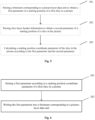
- a first parameter of a reference position of a slice in a picture is acquired.
- a second parameter of the slice is acquired, the second parameter being used for determining a starting position of the slice in the video picture.
- a starting position coordinate parameter of the slice in the video picture is calculated according to the first parameter and the second parameter.
- an executer of the operations may be, but not limited to, an apparatus for processing a video bitstream like a related apparatus for generating a bitstream and a receiving and playing apparatus in a video communication application, for example, a mobile phone, a computer, a server, a set-top box, a portable mobile terminal, a digital camera, a television broadcast system device, a content delivery network device and a media server.
- the operation that the first parameter of the reference position of the slice in the video picture is acquired includes that: one or more first bitstreams corresponding to a picture-layer data unit in the video bitstream are parsed; and the first parameter is acquired from the one or more first bitstreams.
- multiple first bitstreams are obtained by parsing, and the operation that the first parameter is acquired from the multiple first bitstreams includes that: the multiple first bitstreams are parsed to obtain multiple first parameters; identification information related to the picture-layer data unit and/or a reference relationship between multiple picture-layer data units are/is acquired; and one first parameter among the multiple first parameters is determined according to the identification information and/or the reference relationship.
- the finally determined first parameter may be complete and may also be obtained by combining the multiple first parameters.
- the identification information related to the picture-layer data unit is used for indicating the first parameter used in the process of calculating the starting position coordinate parameter of the slice in the video picture.
- the picture-layer data unit includes at least one of the following data units: a Video Parameter Set (VPS), a Sequence Parameter Set (SPS), a Picture Parameter Set (PPS), a sequence header, a picture header, a slice header and a picture-layer auxiliary information unit.
- VPS Video Parameter Set
- SPS Sequence Parameter Set
- PPS Picture Parameter Set
- sequence header a sequence header
- picture header a slice header
- slice header a picture-layer auxiliary information unit.
- the operation that the second parameter of the slice is acquired includes that: slice-layer header information of the video bitstream is parsed; and the second parameter is acquired from the slice-layer header information.
- the operation that the starting position coordinate parameter of the slice in the video picture is calculated according to the first parameter and the second parameter includes that:
- a calculation method for SliceAddressY may be changed, and in such case, the operation that the starting position coordinate parameter of the slice in the video picture is calculated according to the first parameter and the second parameter includes that:
- FIG. 2 is a flowchart of a method for generating a video bitstream according to an embodiment of the present invention. As shown in Fig. 2 , the flow includes the following operations.
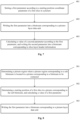
- a first parameter is set according to a starting position of a first slice in a video picture.
- the first parameter is written into a bitstream of a picture-layer data unit of the video picture.
- the method may further include that: a second parameter is calculated according to a starting position coordinate parameter of a slice in the video picture and the first parameter, and the second parameter is written into a bitstream corresponding to slice-layer header information, the second parameter being used for determining a starting position of the slice in the video picture.
- the operation that the first parameter is set according to the starting position of the first slice in the video picture includes that: a picture region where a picture corresponding to a sub bitstream is located in a picture corresponding to a bitstream to be extracted is determined, the picture corresponding to the sub bitstream being the video picture; and the starting position of the first slice in the video picture is determined, and the first parameter is calculated according to the starting position, the starting position of the first slice being a starting position coordinate of the first slice in the video picture in the picture corresponding to the bitstream to be extracted.
- the computer software product is stored in a storage medium (for example, a Read-Only Memory (ROM)/Random Access Memory (RAM), a magnetic disk and an optical disk), including a plurality of instructions configured to enable a terminal device (which may be a mobile phone, a computer, a server, a network device or the like) to execute the method of each embodiment of the present invention.
- a storage medium for example, a Read-Only Memory (ROM)/Random Access Memory (RAM), a magnetic disk and an optical disk
- a terminal device which may be a mobile phone, a computer, a server, a network device or the like
- the embodiment also provides an apparatus for decoding a video bitstream and an apparatus for generating a video bitstream, which are configured to implement the abovementioned embodiment and exemplary implementation modes.
- module used below may be a combination of software and/or hardware capable of realizing a preset function.
- the apparatuses described in the following embodiment are preferably implemented with software, implementation with hardware or a combination of the software and the hardware is also possible and conceivable.
- Fig. 3 is a structure block diagram of an apparatus for decoding a video bitstream according to an embodiment of the present invention. As shown in Fig. 3 , the apparatus includes:
- Fig. 4 is a structure block diagram of an apparatus for generating a video bitstream according to an embodiment of the present invention. As shown in Fig. 4 , the apparatus includes:
- each module may be implemented through software or hardware and, under the latter condition, may be implemented in, but not limited to, the following manner: the modules are all positioned in the same processor, or the modules are positioned in different processors in any combination form respectively.
- the embodiment is an exemplary embodiment of the present application, and is adopted to explain and describe the solutions of the present application in combination with exemplary implementation modes in detail.
- a video that a video picture belongs to may be a high-resolution video or a video of another style.
- the high-resolution video refers to a picture sequence formed by high-resolution pictures
- the high-resolution pictures may be video pictures with a high resolution such as high-definition video pictures, ultra-high-definition video pictures, panoramic video pictures and 360-degree video pictures.
- a bitstream refers to a bitstream generated by coding a high-resolution video by a video coder and also refers to a transmission stream and/or media file obtained by system-layer processing over the bitstream generated by coding the high-resolution video by the video coder and including the bitstream generated by coding the high-resolution video by the video coder, and the bitstream may be decoded to obtain the high-resolution video.
- System-layer processing refers to an encapsulation operation over the video bitstream. For example, the video bitstream is encapsulated into the transmission stream as a data load, or the video bitstream is encapsulated into the media file as a load.
- System-layer processing also includes encapsulating the transmission stream or media file including the video bitstream into a stream for transmission or a file for storage as a data load.
- a data unit generated by system-layer processing is also called a system-layer data unit, and information (for example, header information of the system-layer data unit) added into the system-layer data unit in the process of encapsulating the data load by system-layer processing is called system-layer information.
- a sub bitstream refers to a partial bitstream obtained by an extraction operation over a bitstream
- the sub bitstream may be decoded to obtain a video picture
- the video picture may be a picture with a resolution lower than a high-resolution video picture obtained by decoding the bitstream
- the video picture may include part of the content in the high-resolution video picture.
- the embodiment provides methods and apparatuses for decoding a video picture bitstream and generating a bitstream, including a method and apparatus for decoding a bitstream and a method and apparatus for generating a bitstream.
- the method for decoding the bitstream includes that: a bitstream corresponding to a picture-layer data unit is parsed to obtain a first parameter of a starting position of a first slice in a picture; slice-layer header information is parsed to obtain a second parameter of a starting position of a slice in the picture; and a starting position coordinate parameter of the slice in the picture is calculated according to the first parameter and the second parameter.
- the method for generating the bitstream includes that: a first parameter is set according to a starting position coordinate parameter of a first slice in a picture, and the first parameter is written into a bitstream corresponding to a picture-layer data unit. Therefore, operations of recalculating a starting position of a slice in a picture in a sub bitstream obtained by extraction in a bitstream extraction process and overwriting starting position information of the slice in slice header information may be avoided, and the processing efficiency of an apparatus for processing a bitstream is improved.
- the embodiment also includes the following implementation modes.
- Fig. 5 is a schematic diagram of a decoding method according to the implementation mode, as shown in Fig. 5 , by use of a method of the implementation mode, a bitstream is decoded mainly through the following operations.
- a bitstream corresponding to a picture-layer data unit is parsed to obtain a first parameter of a starting position of a first slice in a picture.
- the picture-layer unit includes data used in a picture decoding process, and the data is used for decoding one or more slices in the picture.
- the picture-layer unit includes one or more of the following data units in the video bitstream: a Network Abstraction Layer (NAL) unit header; a parameter set; a sequence header; a picture header; a slice header; and an auxiliary information unit of the video bitstream (for example, Supplemental Enhancement Information (SEI) and Video Usability Information (VUI)).
- NAL Network Abstraction Layer
- SEI Supplemental Enhancement Information
- VUI Video Usability Information
- the first parameter is used for indicating a reference coordinate position of the picture.
- a method for arranging the first parameter in the bitstream is shown in Table 1.
- Table 1 Method for Arranging First Parameter in Bitstream ... ...
- Each syntax unit in Table 1 has the following semantics.
- pic slice address_info_present flag 1
- pic slice address_info_present flag 1
- pic slice address_info_present flag 0
- pic slice address_info x0 and pic slice address_info_y0 0
- pic_slice_address_info_stride_width is equal to a width of the picture
- pic_slice_address_info_stride_height is equal to a height of the picture.
- the value of pic slice address_info_present flag is obtained by an entropy decoding method corresponding to u(1).
- pic slice address_info x0, pic slice address_info_y0, pic_slice_address_info_stride_width and pic_slice_address_info_stride_height are used for calculating the address of the slice in the picture.
- the first parameter may not include pic_slice_address_info_stride_height, i.e., pic_slice_address_info_stride_height may not be contained in the bitstream.
- bit numbers of the four parameters in the bitstream are as follows: the bit numbers corresponding to pic slice address_info x0 and pic_slice_address_info_stride_width are equal to Ceil(Log2(PicWidth)), and the bit numbers corresponding to pic slice address_info_y0 and pic_slice_address_info_stride_height are equal to Ceil(Log2(PicHeight)). PicWidth is the width of the picture, and PicHeight is the height of the picture.
- Mathematical functions Ceil(x) and Log2(x) are the same as mathematical functions with the same names defined in the H.265/HEVC standard.
- counting units of pic slice address_info x0, pic slice address_info_y0, pic_slice_address_info_stride_width and pic_slice_address_info_stride_height in Table 1 are sample (sample point).
- the size of the block division unit may also be used as the counting unit.
- the undermentioned representation method for second parameters slice_address_x and slice_address_y in the slice header information in the bitstream is similar.
- the adopted counting unit is sample (sample point).
- the bitstream may exist in one or more picture-layer units.
- a parameter in one parameter set may cover a corresponding parameter in one or more other parameter sets that the parameter set directly or indirectly refers to.
- the parameter in the slice header information may cover a corresponding parameter in one or more parameter sets that the slice directly or indirectly refers to.
- parameters in the other parameter sets may be covered by parameters in the specified parameter sets according to a preset coverage manner, or a parameter to be adopted is determined according to one or two of identification information in the parameter set and identification information in the slice header information.
- the finally adopted first parameter may further be determined in the decoding process according to a flag bit in the bitstream or the identification information.
- slice header information is parsed to obtain a second parameter of a starting position of a slice in the picture.
- the second parameter is used for indicating a coordinate position of the slice.
- a method for arranging the second parameter in the bitstream is shown in Table 2.
- a bitstream corresponding to the second parameter is in a bitstream corresponding to a slice header information unit.
- Table 2 Method for Arranging Second Parameter in Bitstream ... ... Descriptor slice_address_x ue(v) slice_address_y ue(v) ... ... ⁇
- Each syntax unit in Table 2 has the following semantics: slice_address_x and slice_address_y are used for calculating an address of the slice in the picture.
- bit numbers of the two parameters in the bitstream are as follows: the bit number corresponding to slice_address_x is equal to Ceil(Log2(PicWidth)), and the bit number corresponding to slice_address_y is Ceil(Log2(PicHeight)). PicWidth is the width of the picture, and PicHeight is the height of the picture.
- the mathematical functions Ceil(x) and Log2(x) are the same as the mathematical functions with the same names defined in the H.265/HEVC standard.
- a starting position coordinate parameter of the slice in the picture is calculated according to the first parameter and the second parameter.
- Fig. 6 is a schematic diagram of a bitstream generation method according to the implementation mode, as shown in Fig. 6 , by use of a method of the implementation mode, a bitstream is generated mainly through the following operations.
- a first parameter is set according to a starting position coordinate parameter of a first slice in a picture.
- the first parameter is written into a bitstream corresponding to a picture-layer data unit.
- the corresponding parameter is written into the bitstream by use of the structure for arranging the first parameter in the bitstream as shown in Table 1.
- bitstream generated by the bitstream generation method of implementation mode 2 may be decoded by the decoding method of implementation mode 1.
- the bitstream generation method in the implementation mode may further be subdivided into two conditions: a video picture is coded to generate a bitstream and bitstream extraction is performed on an existing bitstream to generate a sub bitstream. Operations for bitstream generation under the two conditions will be described in the following implementation modes respectively.
- Fig. 7 is a schematic diagram of a method for coding a video picture to generate a bitstream according to an implementation mode.
- the structure for arranging the first parameter in the bitstream as shown in Table 1 is used, and the first parameter is coded in a parameter set.
- the structure for arranging the second parameter in the bitstream as shown in Table 2 is used, and the second parameter is coded in slice header information.
- a bitstream generated by the bitstream generation method of implementation mode 3 may be decoded by the decoding method of implementation mode 1.
- a first parameter is set according to a starting position coordinate parameter of a first slice in a picture.
- (pic slice address_info x0, pic slice address_info_y0) is set as a coordinate of a left upper sample (sample point) of a first coding block in the first slice in the picture in the picture.
- the left upper sample (sample point) of the first coding block in the first slice in the picture is a left upper sample (sample point) of the picture
- values of (pic slice address_info x0, pic slice address_info_y0) may be set to be (0, 0).
- a value of pic_slice_address_info_stride_width is set to be a value of a width of the picture.
- a value of pic_slice_address_info_stride_height is set to be a value of a height of the picture.
- the first parameter is written into a bitstream corresponding to a picture-layer data unit.
- pic slice address_info_present flag when the values of (pic slice address_info x0, pic slice address_info_y0) are (0, 0) and the values of pic_slice_address_info_stride_width and pic_slice_address_info_stride_height are equal to the width and height of the picture respectively, namely values of four syntax elements related to the first parameter are equal to default values when the value of pic slice address_info_present flag is 0, the value of pic slice address_info_present flag may be set to be 0.
- the value of pic slice address_info_present flag may be set to be 1, and the values of the four syntax elements related to the first parameter are coded in the bitstream.
- pic slice address_info_present flag and the values (when the value of pic slice address_info_present flag is 1) of the four syntax elements related to the first parameter are written into one or more data units in the bitstream by use of an entropy coding method corresponding to a descriptor of each syntax unit in Table 1.
- the data unit in the bitstream may be one or more of a VPS, an SPS, a PPS and one or more other parameter sets (for example, an Adaptive Parameter Set (APS)) available for one or more slices in the picture.
- the bitstream generation method of the implementation mode is required to ensure that a correct first parameter can be obtained in a decoding process by use of the decoding method of implementation mode 1.
- the correct first parameter refers to a first parameter used by the bitstream generation method in a bitstream generation process.
- a value of a second parameter is calculated according to the first parameter, and the second parameter is written into a bitstream corresponding to slice header information.
- a coordinate (SliceAddrX, SliceAddrY) of a left upper sample (sample point) of a first coding block of a slice in the picture is determined.
- a value of slice_address_x is set to be a numerical value that can be calculated according to formula (1) in implementation mode 1 and is equal to a value of SliceAddrX. For example, when the values of (pic slice address_info x0, pic slice address_info_y0) are (0, 0), the value of slice_address_x is set to be equal to the value of SliceAddrX.
- a value of slice_address_y is set to be a numerical value that can be calculated according to formula (2) in implementation mode 1 and is equal to a value of SliceAddrY. For example, when the values of (pic slice address_info x0, pic slice address_info_y0) are (0, 0), the value of slice_address_y is set to be equal to the value of SliceAddrY.
- the values of the syntax elements slice_address_x and slice_address_y related to the second parameter are written into the bitstream corresponding to the slice header information by use of an entropy coding method corresponding to a descriptor of each syntax unit in Table 2.
- Fig. 8 is a schematic diagram of a method for extracting a video bitstream to generate a bitstream according to an implementation mode.
- an input bitstream of a bitstream extraction process is called a "bitstream to be extracted” or an "original bitstream”
- an output bitstream of the bitstream extraction process is called a "sub bitstream”.
- a picture corresponding to the bitstream to be extracted (or “a picture corresponding to the original bitstream”) refers to a restored picture obtained by decoding the bitstream to be extracted (or the original bitstream)
- a picture corresponding to the sub bitstream refers to a restored picture obtained by decoding the sub bitstream.
- the "bitstream to be extracted” (or the "original bitstream” may be a bitstream obtained by coding a video picture through the method of implementation mode 3 and may also be a sub bitstream obtained by performing bitstream extraction through the methods of the implementation mode and implementation mode 5.
- the structure for arranging the first parameter in the bitstream as shown in Table 1 is used, and the first parameter is recoded (or called "overwritten") in a parameter set of the sub bitstream in the extraction process.
- the structure for arranging the second parameter in the bitstream as shown in Table 2 is used, and the second parameter in slice header information in the bitstream to be extracted is not required to be overwritten in the extraction process, so that the complexity of recalculating a starting position for a slice in the sub bitstream and coding the starting position in the bitstream extraction process is reduced, and the efficiency of the bitstream extraction process is improved.
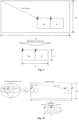
- Fig. 9 is an example diagram of a bitstream extraction implementation process according to an implementation mode.
- a picture corresponding to a bitstream to be extracted is a picture with a width of w0 and a height of h0
- two picture regions R0 and R1 form a picture (with a width of w1 and a height of h1) corresponding to a sub bitstream.
- a left upper pixel of a first coding block (or decoding block) in a first slice in the region R0 is S0
- a left upper pixel of a first coding block (or decoding block) in a first slice in the region R1 is S1.
- a coordinate of S0 in the picture corresponding to the bitstream to be extracted is (px0, py0), and a coordinate value of S0 may be obtained by the method for calculating (SliceAddrX, SliceAddrY) in implementation mode 1 according to a first parameter in the bitstream to be extracted and a second parameter. It is to be noted that the implementation mode is also applicable to the condition that the picture corresponding to the sub bitstream includes only the region R0 or more regions besides R0 and R1.
- a picture region where a picture region corresponding to a sub bitstream is located in a picture corresponding to a bitstream to be extracted is determined.
- a picture corresponding to the sub bitstream is a picture formed according to a manner that "R0 is on the left and R1 is on the right" in Fig. 9 and having the width of w1 and the height of h1.
- the picture region where the picture region corresponding to the sub bitstream is located in the picture corresponding to the bitstream to be extracted may be determined according to auxiliary information related to the motion-constrained slice group set in the bitstream and a viewing requirement of a user.
- R0 and R1 correspond to one or more motion-constrained slice group sets available for bitstream extraction respectively.
- the picture region where the picture region corresponding to the sub bitstream is located in the picture corresponding to the bitstream to be extracted may be determined according to auxiliary information related to an MCTS in the bitstream and the viewing requirement of the user.
- R0 and R1 correspond to one or more MCTSs available for bitstream extraction respectively.
- a starting position of a first slice in a picture corresponding to the sub bitstream is determined, and a value of a first parameter is calculated.
- the value of the first parameter of the sub bitstream is determined by the following method:
- the first parameter is written into a bitstream corresponding to a picture-layer data unit.
- bitstream extraction is performed on the bitstream to be extracted by an existing method to obtain the sub bitstream.
- bitstream extraction process a syntax unit corresponding to the first parameter in a PPS applied to the sub bitstream is recoded.
- bitstream extraction performed on an example shown in c0 by the method of implementation mode 4 is described.
- Fig. 10 is a schematic diagram showing the application of the solution of the embodiments in a 360-degree panoramic video.
- the 360-degree panoramic video is a spherical video, and a viewer is in the center of sphere.
- a viewing region selected by the viewer is regions R1 and R0.
- a bitstream to be extracted is generated by an existing 360-degree panoramic video coding method.
- the spherical video is converted into an ordinary two-dimensional video, and then the two-dimensional video is coded by a video coder.
- the two-dimensional video is decoded by a video decoder, and is reconverted to the spherical video so that a terminal can provide the spherical video to a user.
- the user views a certain region in the 360-degree panoramic video. Therefore, for saving a transmission bandwidth, the region viewed by the user may be determined according to a viewing angle of the user, a sub bitstream corresponding to the region viewed by the user is extracted from the bitstream to be extracted, and the sub bitstream is sent to the receiver.
- the receiver decodes the sub bitstream, reconverts a picture obtained by decoding the sub bitstream to a picture corresponding to the viewed region in the spherical video according to auxiliary information (which may be auxiliary information contained in the video bitstream and may also be auxiliary information contained in a system layer) and provides the picture to the user.
- auxiliary information which may be auxiliary information contained in the video bitstream and may also be auxiliary information contained in a system layer
- the 360-degree panoramic video i.e., the spherical video
- the region R0 and the region R1 are at a left picture boundary and right picture boundary of the two-dimensional picture respectively.
- a left upper pixel of a first coding block (or decoding block) in a first slice in the region R0 is S0
- a left upper pixel of a first coding block (or decoding block) in a first slice in the region R1 is S1.
- a coordinate of S0 in the two-dimensional picture is (px0, py0), and a coordinate of S1 in the two-dimensional picture is (px1, py1).
- Coordinate value of S0 and S1 may be obtained by the method for calculating (SliceAddrX, SliceAddrY) in implementation mode 1 according to a first parameter in the bitstream to be extracted and second parameters in the corresponding slices.
- the region viewed by the viewer is the region R1 and region R0 on the sphere. Therefore, the picture corresponding to the sub bitstream is formed in the manner that "R0 is on the left and R1 is on the right".
- the embodiment is adopted to describe a method for extracting a bitstream to generate a bitstream in the example shown in Fig. 10 .
- the following operations are included.
- a picture region where a picture region corresponding to a sub bitstream is located in a picture corresponding to a bitstream to be extracted is determined.
- a picture corresponding to the sub bitstream is a picture formed in a manner that "R0 is on the left and R1 is on the right" and having a width of w1 and a height of h1.
- a starting position of a first slice in a picture corresponding to the sub bitstream is determined, and a value of a first parameter is calculated.
- a starting position of the region R0 is equivalently required to be changed from S0 to Sx.
- S0 and Sx correspond to the same sample (sample point) on the sphere.
- a value of the first parameter of the sub bitstream is required to be determined as follows:
- the first parameter is written into a bitstream corresponding to a picture-layer data unit.
- bitstream extraction is performed on the bitstream to be extracted by an existing method to obtain the sub bitstream.
- bitstream extraction process a syntax unit corresponding to the first parameter in a PPS applied to the sub bitstream is recoded.
- the first parameter is written into the bitstream corresponding to the PPS of the sub bitstream by the method of operation 402 in implementation mode 3.
- the implementation mode provides an implementation mode of an electronic system, which includes one or more undermentioned electronic devices, configured to process or generate a media bitstream or media file including a video bitstream.
- the electronic device decodes the video bitstream by the method of implementation mode 1 or performs bitstream extraction by the methods of implementation mode 4 and implementation mode 1.
- the electronic device may perform sub bitstream extraction on the media bitstream or media file using the H.265/HEVC standard by the method of implementation mode 2 or perform sub bitstream extraction by the methods of implementation mode 4 and implementation mode 2.
- the electronic device may perform sub bitstream extraction on the media bitstream or media file using the H.264/AVC standard by the method of implementation mode 3, or perform sub bitstream extraction by the methods of implementation mode 4 and implementation mode 3.
- the electronic device of the implementation mode may be a related apparatus for generating a bitstream and a receiving and playing apparatus in a video communication application, for example, a mobile phone, a computer, a server, a set-top box, a portable mobile terminal, a digital camera, a television broadcast system device, a content delivery network device and a media server.
- a mobile phone for example, a mobile phone, a computer, a server, a set-top box, a portable mobile terminal, a digital camera, a television broadcast system device, a content delivery network device and a media server.
- the embodiment of the present invention also provides a storage medium, in which a computer program is stored, the computer program being configured to execute, when running, the operations in any abovementioned method embodiment.
- the storage medium may be configured to store a computer program configured to execute the following operations.
- a second parameter of the slice is acquired, the second parameter being used for determining a starting position of the slice in the video picture.
- a starting position coordinate parameter of the slice in the video picture is calculated according to the first parameter and the second parameter.
- the storage medium may include, but not limited to, various medium capable of storing computer programs such as a U disk, a ROM, a RAM, a mobile hard disk, a magnetic disk or an optical disk.
- the embodiment of the present invention also provides an electronic device, which includes a memory and a processor.
- a computer program is stored in the memory.
- the processor is configured to run the computer program to execute the operations in any abovementioned method embodiment.
- the electronic device may further include a transmission device and an input/output device.
- the transmission device is connected with the processor, and the input/output device is connected with the processor.
- the processor in the embodiment may be configured to execute the following operations through the computer program.
- a second parameter of the slice is acquired, the second parameter being used for determining a starting position of the slice in the video picture.
- a starting position coordinate parameter of the slice in the video picture is calculated according to the first parameter and the second parameter.
- examples in the embodiment may refer to the examples described in the abovementioned embodiments and optional implementation modes and will not be elaborated in the embodiment.
- each module or each step of the present invention may be implemented through a universal computing device. They may be concentrated in a single computing device or distributed in a network formed by multiple computing devices. In at least one exemplary embodiment, they may be implemented by program codes executable for the computing devices and thus may be stored in a storage device for execution with the computing devices. Moreover, in some cases, the shown or described operations may be executed in sequences different from those described here, or may form various integrated circuit modules respectively, or multiple modules or operations therein may form a single integrated circuit module for implementation. Therefore, the present invention is not limited to any specific hardware and software combination.
Landscapes
- Engineering & Computer Science (AREA)
- Multimedia (AREA)
- Signal Processing (AREA)
- Databases & Information Systems (AREA)
- Human Computer Interaction (AREA)
- Library & Information Science (AREA)
- Compression Or Coding Systems Of Tv Signals (AREA)
Applications Claiming Priority (3)
| Application Number | Priority Date | Filing Date | Title |
|---|---|---|---|
| CN201810023101.9A CN110022481B (zh) | 2018-01-10 | 2018-01-10 | 视频码流的解码、生成方法及装置、存储介质、电子装置 |
| PCT/CN2018/122052 WO2019137171A1 (fr) | 2018-01-10 | 2018-12-19 | Procédé et appareil pour décoder un flux binaire vidéo, procédé et appareil pour générer un flux binaire vidéo, support de stockage et dispositif électronique |
| EP18900484.9A EP3739898A4 (fr) | 2018-01-10 | 2018-12-19 | Procédé et appareil pour décoder un flux binaire vidéo, procédé et appareil pour générer un flux binaire vidéo, support de stockage et dispositif électronique |
Related Parent Applications (1)
| Application Number | Title | Priority Date | Filing Date |
|---|---|---|---|
| EP18900484.9A Division EP3739898A4 (fr) | 2018-01-10 | 2018-12-19 | Procédé et appareil pour décoder un flux binaire vidéo, procédé et appareil pour générer un flux binaire vidéo, support de stockage et dispositif électronique |
Publications (2)
| Publication Number | Publication Date |
|---|---|
| EP4498677A2 true EP4498677A2 (fr) | 2025-01-29 |
| EP4498677A3 EP4498677A3 (fr) | 2025-04-02 |
Family
ID=67188097
Family Applications (2)
| Application Number | Title | Priority Date | Filing Date |
|---|---|---|---|
| EP18900484.9A Ceased EP3739898A4 (fr) | 2018-01-10 | 2018-12-19 | Procédé et appareil pour décoder un flux binaire vidéo, procédé et appareil pour générer un flux binaire vidéo, support de stockage et dispositif électronique |
| EP24219572.5A Pending EP4498677A3 (fr) | 2018-01-10 | 2018-12-19 | Procédé et appareil de décodage de flux binaire vidéo, procédé et appareil de génération de flux binaire vidéo, support de stockage et dispositif électronique |
Family Applications Before (1)
| Application Number | Title | Priority Date | Filing Date |
|---|---|---|---|
| EP18900484.9A Ceased EP3739898A4 (fr) | 2018-01-10 | 2018-12-19 | Procédé et appareil pour décoder un flux binaire vidéo, procédé et appareil pour générer un flux binaire vidéo, support de stockage et dispositif électronique |
Country Status (6)
| Country | Link |
|---|---|
| US (1) | US11146799B2 (fr) |
| EP (2) | EP3739898A4 (fr) |
| JP (1) | JP7332605B2 (fr) |
| KR (1) | KR102869320B1 (fr) |
| CN (1) | CN110022481B (fr) |
| WO (1) | WO2019137171A1 (fr) |
Families Citing this family (5)
| Publication number | Priority date | Publication date | Assignee | Title |
|---|---|---|---|---|
| CN110493604A (zh) * | 2019-08-28 | 2019-11-22 | 成都索贝数码科技股份有限公司 | 一种基于gpu集群实现8k hevc实时编码的方法 |
| US11716488B2 (en) * | 2019-09-20 | 2023-08-01 | Qualcomm Incorporated | Subpicture signaling in high-level syntax for video coding |
| US11356698B2 (en) | 2019-12-30 | 2022-06-07 | Tencent America LLC | Method for parameter set reference constraints in coded video stream |
| CN115191115B (zh) * | 2020-02-24 | 2025-06-13 | 字节跳动有限公司 | 视频处理方法及装置、比特流存储及生成方法、介质 |
| CN112473130A (zh) * | 2020-11-26 | 2021-03-12 | 成都数字天空科技有限公司 | 场景渲染方法、装置、集群、存储介质及电子设备 |
Family Cites Families (15)
| Publication number | Priority date | Publication date | Assignee | Title |
|---|---|---|---|---|
| CN101313578B (zh) * | 2005-09-26 | 2011-10-19 | 韩国电子通信研究院 | 用于在可伸缩视频编码中定义和重构感兴趣区域的方法和装置 |
| JP4314315B1 (ja) * | 2008-03-31 | 2009-08-12 | 株式会社東芝 | 情報処理装置および復号制御方法 |
| CN103202015B (zh) * | 2010-09-30 | 2016-08-03 | 富士通株式会社 | 动态图像加密装置及动态图像加密方法 |
| EP2472867A1 (fr) * | 2010-12-30 | 2012-07-04 | Advanced Digital Broadcast S.A. | Codage et décodage de vidéos à vues multiples |
| CN102595119B (zh) * | 2011-01-14 | 2014-03-12 | 华为技术有限公司 | 条带编码方法及装置、条带解码方法及装置 |
| WO2013077236A1 (fr) * | 2011-11-21 | 2013-05-30 | Canon Kabushiki Kaisha | Dispositif de codage d'image, procédé de codage d'image, dispositif de décodage d'image, procédé de décodage d'image et support de stockage |
| CN103313048B (zh) * | 2012-03-14 | 2017-12-22 | 中兴通讯股份有限公司 | 自适应控制算术编码上下文编码模式bin数量的方法 |
| JP6214235B2 (ja) * | 2012-07-02 | 2017-10-18 | キヤノン株式会社 | ファイル生成方法、ファイル生成装置、及びプログラム |
| CN103780920B (zh) * | 2012-10-17 | 2018-04-27 | 华为技术有限公司 | 处理视频码流的方法及装置 |
| CN104838654B (zh) * | 2012-12-06 | 2018-11-06 | 索尼公司 | 解码装置、解码方法以及程序 |
| KR101879519B1 (ko) * | 2013-07-29 | 2018-07-17 | 코닌클리즈케 케이피엔 엔.브이. | 타일 비디오 스트림을 클라이언트에게 제공하는 방법 |
| HK1223471A1 (zh) * | 2013-10-08 | 2017-07-28 | 夏普株式会社 | 图像解码装置、图像编码装置以及编码数据变换装置 |
| HK1223472A1 (zh) * | 2013-10-10 | 2017-07-28 | 夏普株式会社 | 图像解码装置 |
| CN105323597B (zh) * | 2014-08-04 | 2019-03-08 | 中国电信股份有限公司 | Mp4文件播放方法、处理方法和装置以及播放系统 |
| GB2550912B (en) | 2016-05-27 | 2019-09-04 | Canon Kk | Method, device and computer program for encapsulating and parsing timed media data |
-
2018
- 2018-01-10 CN CN201810023101.9A patent/CN110022481B/zh active Active
- 2018-12-19 US US16/957,760 patent/US11146799B2/en active Active
- 2018-12-19 EP EP18900484.9A patent/EP3739898A4/fr not_active Ceased
- 2018-12-19 EP EP24219572.5A patent/EP4498677A3/fr active Pending
- 2018-12-19 KR KR1020207020328A patent/KR102869320B1/ko active Active
- 2018-12-19 JP JP2020538715A patent/JP7332605B2/ja active Active
- 2018-12-19 WO PCT/CN2018/122052 patent/WO2019137171A1/fr not_active Ceased
Also Published As
| Publication number | Publication date |
|---|---|
| EP3739898A1 (fr) | 2020-11-18 |
| JP2021510281A (ja) | 2021-04-15 |
| EP3739898A4 (fr) | 2020-12-23 |
| US11146799B2 (en) | 2021-10-12 |
| WO2019137171A1 (fr) | 2019-07-18 |
| CN110022481A (zh) | 2019-07-16 |
| EP4498677A3 (fr) | 2025-04-02 |
| KR20200107975A (ko) | 2020-09-16 |
| KR102869320B1 (ko) | 2025-10-13 |
| US20200351507A1 (en) | 2020-11-05 |
| CN110022481B (zh) | 2023-05-02 |
| JP7332605B2 (ja) | 2023-08-23 |
Similar Documents
| Publication | Publication Date | Title |
|---|---|---|
| US12206883B2 (en) | Description of image composition with HEVC still image file format | |
| EP4498677A2 (fr) | Procédé et appareil de décodage de flux binaire vidéo, procédé et appareil de génération de flux binaire vidéo, support de stockage et dispositif électronique | |
| US11172239B2 (en) | Media information processing method and apparatus | |
| EP4078963B1 (fr) | Indication de hauteur de tranche vidéo dans des sous-images vidéo | |
| US12058446B2 (en) | Method and system of image processing with composition and display of regions of interest | |
| KR20200019718A (ko) | 이미지 처리 방법, 단말기, 및 서버 | |
| US11336965B2 (en) | Method and apparatus for processing video bitstream, network device, and readable storage medium | |
| KR102334628B1 (ko) | 360도 비디오의 영역 정보 전달 방법 및 장치 | |
| US20200228837A1 (en) | Media information processing method and apparatus | |
| US20210281882A1 (en) | Compact description of region-wise packing information | |
| US12323569B2 (en) | Method and apparatus for processing multi-view video with region information from view group | |
| US12100116B2 (en) | Rank information in immersive media processing | |
| CN115623217B (zh) | 一种图像预处理方法、装置及系统 | |
| EP4591566A1 (fr) | Structures dynamiques pour codage de données volumétriques | |
| TW202005378A (zh) | 操作影像處理裝置的方法及影像處理裝置 |
Legal Events
| Date | Code | Title | Description |
|---|---|---|---|
| PUAI | Public reference made under article 153(3) epc to a published international application that has entered the european phase |
Free format text: ORIGINAL CODE: 0009012 |
|
| STAA | Information on the status of an ep patent application or granted ep patent |
Free format text: STATUS: THE APPLICATION HAS BEEN PUBLISHED |
|
| AC | Divisional application: reference to earlier application |
Ref document number: 3739898 Country of ref document: EP Kind code of ref document: P |
|
| AK | Designated contracting states |
Kind code of ref document: A2 Designated state(s): AL AT BE BG CH CY CZ DE DK EE ES FI FR GB GR HR HU IE IS IT LI LT LU LV MC MK MT NL NO PL PT RO RS SE SI SK SM TR |
|
| REG | Reference to a national code |
Ref country code: DE Ref legal event code: R079 Free format text: PREVIOUS MAIN CLASS: H04N0019167000 Ipc: H04N0021472800 |
|
| PUAL | Search report despatched |
Free format text: ORIGINAL CODE: 0009013 |
|
| AK | Designated contracting states |
Kind code of ref document: A3 Designated state(s): AL AT BE BG CH CY CZ DE DK EE ES FI FR GB GR HR HU IE IS IT LI LT LU LV MC MK MT NL NO PL PT RO RS SE SI SK SM TR |
|
| RIC1 | Information provided on ipc code assigned before grant |
Ipc: H04N 21/6587 20110101ALI20250221BHEP Ipc: H04N 19/597 20140101ALI20250221BHEP Ipc: H04N 19/174 20140101ALI20250221BHEP Ipc: H04N 19/119 20140101ALI20250221BHEP Ipc: H04N 19/167 20140101ALI20250221BHEP Ipc: H04N 21/81 20110101ALI20250221BHEP Ipc: H04N 21/235 20110101ALI20250221BHEP Ipc: H04N 19/70 20140101ALI20250221BHEP Ipc: H04N 21/4728 20110101AFI20250221BHEP |
|
| STAA | Information on the status of an ep patent application or granted ep patent |
Free format text: STATUS: REQUEST FOR EXAMINATION WAS MADE |
|
| 17P | Request for examination filed |
Effective date: 20250929 |